


Second Gen (2003-2016, 2016- )


10:12 pm
If you have ceased all reading of non-amateur reporting it will be of no interest to you to click over to the Christian Science Monitor’s web site and its excellent canvassing of a large number of media outlets on this story about the missing 380 tons of explosives. Those both in pajamas and in the know certainly know that it had nothing to do with the Rumsfeld plan to invade Iraq with the least resources possible. The CSM round-up includes this interesting juxaposition:
The BBC points out two seemingly contradictory reports from NBC.
NBC television reported that one of its correspondents was embedded with the 101st Airborne Division which temporarily took control of the base on 10 April 2003 but did not find any of the explosives.
However, other US outlets, including NBC’s own news website, quoted Pentagon officials who said a search of the site after the US-led invasion had revealed the explosives to be intact.
The White House pointed to the NBC television report Monday as evidence the explosives may have disappeared before the war or before US troops arrived at the site, reports AP.
Some actual facts that are interesting include these:
IAEA spokeswoman Melissa Fleming said inspectors last saw the explosives in January 2003 when they took an inventory and placed fresh seals on the bunkers. The same AP report points out that Ms. Fleming said inspectors visited the site again in March 2003, but didn’t view the explosives because the seals were not broken.
We know from the first Gulf War that the British SAS were on the ground weeks before the invasion of Kuwait desert rat style, securing what needed securing. Surely they were up to the same thing this time. We also know that the US and UK had Iraq coated in surveillance planes right up to the mid-March and – surely to God – they must have had one plane dedicated to this spot.
So when did the locked up munitions go missing? When exactly was it that no one was looking?
Now, INDC points out as a fact that there was a million tons of ordinance floating around – though the story cited for that fact actually speaks of something a litle different ammunition (bullets to rockets) as opposed to a pure large playdough-like glob of elemental BOOM!!! So, given that, who cares about the odd 380 tons of easy-to-use easy-to-mould easy-to-hide explosive. Hmm…who might…hmm…not US soldiers on the ground…and certainly not insurgents. Let it go. Keep moving. I note that the Commissar is silent on the tale.
Later: …and just like that the Commissar waits and waits – then jumps in with facts. Excellent work, Tovarich.
One important exception to the bar on use of copyrighted material is found in section 29.1 of Part III of the Copyright Act R.S.C. 1985, c. C-42, entitled “Infringement of Copyright and Moral Rights and Exceptions to Infringement”.
Fair dealing for the purpose of criticism or review does not infringe copyright if the following are mentioned:
(a) the source; and
(b) if given in the source, the name of the
(i) author, in the case of a work,
(ii) performer, in the case of a performer’s performance,
(iii) maker, in the case of a sound recording, or
(iv) broadcaster, in the case of a communication signal.
This provision ought to be used and explored in the context of discussion of music on the web.
Here is a portion of the ruling in Hagerv. ECW Press Ltd., a case before the Canadian Federal Court, Trial Division in 1998 on section 29.1.
I turn then to the meaning of “for the purpose of criticism” in section 29.1. I note first, that “criticism” is coupled with “review”. The principle of statutory interpretation noscitur a sociis would suggest that the two words are likely related. One relationship is that for the criticism or review to occur there need to be excerpts from and references to the works being criticized or reviewed. Also, when criticizing or reviewing any given work it may be necessary to use quotes from others for comparative purposes.
Among the definitions of the word “criticism” found in the Oxford English Dictionary , 2nd ed. (1989) are:
Criticism:…
The art of estimating the qualities and character of literary or artistic work; the function or work of a critic. . . . spec. The critical science which deals with the text, character, composition, and origin of literary documents…
The jurisprudence has established that it is not merely the text or composition of a work that may be the object of criticism but also the ideas set out therein. Hubbard v Vosper, [1972] 1 All ER 1023 (C.A.) is most often cited as setting out the relevant tests.
Here is a web site from Heritage Canada’s web site in which the effect of Digital Rights Management (DRM) technology is discussed including on the exceptions to copyright protection, including the section 29.1 right of review:
Canadian copyright legislation also contains a fair dealing defence to claims of copyright infringement when a work is used for the purpose of private study, research, review, criticism, or news reporting and the manner of the use is fair. Other specific exceptions exist in the case of educational institutions, libraries, archives and museums, computer programs, incidental inclusions, ephemeral recordings, and sound recordings. It is true that Canadian courts have tended to apply exceptions to copyright infringement narrowly. Still — and this is the crucial point — the exercise of any exception presumes the ability to access a work. DRMs that prevent or severely limit access to a digital work render impossible an ability to exercise and enjoy the benefits of any exceptions allowed by law.
While he did not create the music I have listened to most of my life, he did a great deal to determine who I heard and perhaps how I heard it. A moment for the life and work of BBC radio host John Peel who has died.
Just look at the results of Steve‘s magical touch over at the sister-station, A Good Beer Blog. Love it.
Now on A Good Beer Blog:
Spitzbergen and O’Hanlon’s.
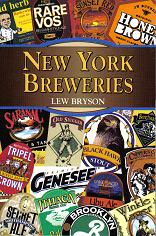 I like the books of Lew Bryson and have relied on them during a few family trips we have taken into the States this year. Before you call the Chidren’s Aid, one thing Lew does in his guides which make them valuable from the get go is his focus on the practical so the entry in New York Breweries for beautiful Ommegang nears Cooperstown also lets you know about the Howe Caverns nearby as well as other family friendly attractions, places to eat and places to stay. If a brewery also makes pop…or is it soda… he tells you which ones are good.
He is also fairly prudent in his reviews. If a beer is not the best, he lets you know without running the place down. His two books and, I trust, the pending third, Virginia, Maryland & Delaware Breweries, take a comprehensive approach rather than just telling you about his favorites. As a result, it tracks the state of the industry while also letting you know the highlights, right down to facts like the one on page 13 of Pennsylvania Breweries, Vol. 2 about the Eternal Tap at the Straub in St. Mary’s, a family operation since the 1870s. Anyone can got to the keg washing room and pour a couple of beers. No asking. Free.
Lew also runs a web site which adds dimension to his paperbacks. First, he posts updates to the books. When doing this, he adds updates rather than replaces them so that if a brewery has notes needing adding every few months they are all still there. Breweries which closed are not deleted. Again, we get a sense of the industry as it grows and changes. Next, he gives you a sense of his upcoming work with excerpts on his mid-Atlantic breweries page – he knows that the book that is scheduled for May 2005 is one that people want to know about now. [I am hoping he goes north for the Breweries of New England next.] Then, he maintains both a monthly web column and links to some of his published work in magazines and newspapers. Have a look around, there’s lots more there.
All in all, a comprehensive vision of one man’s relationship with malt, hops and yeast. Friendly, positive and well researched. And he answers emails.
…Everybody wants a rock to wind a piece of string around…
The weird thing about They Might Be Giants is their lyrics provide the comebacks you really want to say during contract negotiations. You don’t really want to tell someone to go to h-e-double-hockey-sticks. You want to tell them to build a birdhouse in their soul. At least I do.
