
It’s A Thursday In May And Here’s Your Greener Than Green Cheery Beery News Notes

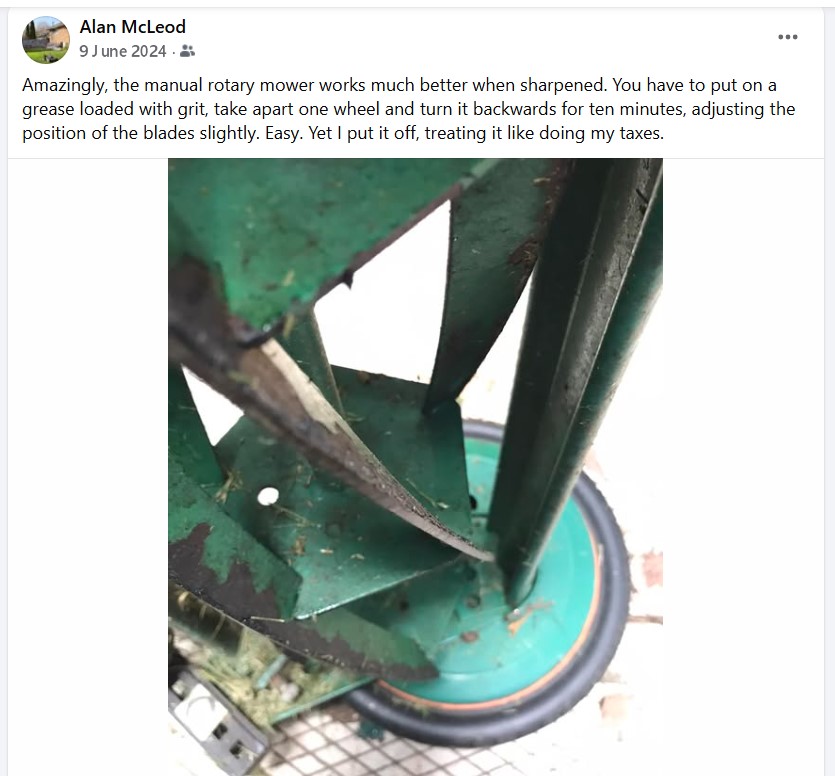
The tide has turned. The seasons have shifted. The dandelions have popped. The penny has dropped. It  is time. So the Beast has been released. I say Beast but it’s really Beast II, Son of the Beast. The Beast is still back there, there at the back of the shed. An over a decade old rotary mower that took five times longer to do the job, was a pain to sharpen and was retired last spring. It’s a terrible thing being cheap and lazy for so many years. Now, my lawn is mowed care of a combination of hydroelecric and nuclear power. Science.

What is going on? Well first up, Alistair is about to travel from Virginia back to the UK and shares a complaint that’s been complained since time itself began – how to narrow down where to go for a pint when the information online is just not there:

My biggest challenge though, and I am sure there are reasons for this, but with so many tied houses in the English part of my trip, it does get really frustrating when there is a shared platform with generic information, and almost universally no list of what is on cask in a given pub – this goes for chains like Wetherspoons as well. Yes, the many Fullers pubs in the city have elegant, beautifully designed websites, but again I can’t find out which beers of the Fullers Brewery range are available, making it pot luck to stumble across less regularly seen beers (at least from what I have been told) such as London Porter. I don’t want to single out Fullers, as I have seen the same with Shepherd Neame, Greene King, and Nicholsons, though several Young’s pubs tend to have at least a list, and occasionally pricing as well.

Is it a realistic expectation after decades of this sort of thing to expect every pub to logging what’s on tap?  I dunno. The failure seems to be the proof. Elsewhere, Pivní Filosof® is back after a few years of quietude. And Max is again on the move with his second post of spring 2026 looking for good beer by tram, with all sorts of obstacles placed in the way… like bad beer scenes:

Here comes the first tram, #5 heading to Vozovna Zižkov. I get on and start counting the stops. Fuck! Hlavní nádraží. All I can remember around there are the two overpriced spots in the station itself, and U Staré Pošty in Opletalova, a hospoda I’ve never liked for some reason. I get off, already resigned to the idea of having a Pilnser Urquell U Staré Pošty, when I tell myself ‘fuck it! I will cheat’, and change direction, towards the the tunnel that now connects the train station with Žižkov and the new building complex that has sprouted there in the last decade or so. Yeah, I’m cheating, in my own challenge, which I play alone – if you disapprove, good luck finding a better beer blog…

[Ed.: I thought he was talking about me. He wasn’t!] Offering a definite upgrade in locales, David Jesudason has the feature in Pellicle this week, a portrait of The Golden Smog of Stockton-on-Tees, County Durham, a pub which started life under the current owners with its own set of more serious challenges:

Their eyes even passed over the anti-fascist football sticker saying “our club, our rules.” When they spoke of how local shops were closing, they didn’t blame globalisation, politicians, or even the internet—the fault was with “immigration”. It was 2014, and owner John Christie sighed after overhearing their chat, wondering if this was the life he had now forged for himself. He had trained as a mechanic and joined the army; after leaving, he opened the pub in a former headstone shop. His goal was building a welcoming, inclusive space founded on his socialist ideals. Was he about to be dragged into their world First, he considered kicking them out. Then he paused. It dawned on him that if they went to another pub, their views would likely be re-enforced, or amplified in an echo chamber. It was at this moment that the unwritten manifesto of the Smog started to take shape in his mind.

On a larger and indoubtably less successful scale of internationalissimmo, we are all now just a few weeks away from World Cup madness. Perhaps not surprisingly, hotel reservations are below expectations. Here in Canada, we have a few of the games – and there’ll no doubt be any number of beer related stories in the coming weeks as there usually are when this rolls around – but this one  about Ermedin Demirovic is one of the best so far:

Back to Demirovic. As everyone will remember, before his country’s World Cup qualification play-off final against Italy at the end of March, Stuttgart’s Bosnia and Herzegovina international forward promised to buy everyone in the city a beer if he and his team-mates made it through. They did, beating the Italians on penalties following a 1-1 draw, and last Monday, Demirovic kept his promise. The event was staged near the Neckarstadion in collaboration with a local brewery, and more than 2,500 people turned up. “I didn’t expect so many of you to come,” Demirovic told the fans who took part. 

Sticking with the people of the grassy pitch, Boak and Bailey unpacked their findings on the disappearance of the retired fitba player as publican:

Historically, you could expect to retire from football before you were, say, 35 years old, with a lot of life left to live. And unlike today, even top flight footballers probably wouldn’t retire rich, even if they did have a little money put away. So, you’d need to find some kind of work. We can well imagine that running a pub was appealing because it’s a job that seems fun adjacent. Back to those headlines above: there’s also a sense that you could parlay your fame as a footballer into publicity for your new venture. Who wouldn’t want to be served pints by a local hero? (And perhaps tut at their fall from grace, and marvel at how fat they were getting, how red faced…)

I guess a key difference between then and now are the far higher wages paid to players in recent decades during their career. As a late teen, my father started out his working life at the firm of Hasties, a marine engineering firm in Greenock. In the lunch room he sat at the same table as local hero and Scottish national team star Billy Campbell whose career was cut short by illness and was given a job. A kindness from the owner, a local supporter.

Something else that is also retired but more often noted is a well priced pint in an London pub. Perhaps a well-trod topic but there was an interestingly specific grip in Tuesday’s daily (free) newsletter from The Telegraph:

We all knew the moment would come, but it was still a shock to read that we had entered the era of the £10 pint. Long gone are the days of venturing out with a tenner, sure of enjoying a few pints of bitter, and perhaps even having enough cash left over for a scallop from the chippy. No, bars in London today are charging as much as £11 for a pint of Moretti and £8 for a half of Heineken. There’s probably no going back – the rising cost of pints is an irreversible trend, like SUVs or smashed avocado – but mercifully you can find relics of the old, pre-£10 world, mostly outside London. Indeed, soon after the news broke, I raised a £3.50 glass of Gunpowder Mild in honour of reasonably priced pints in a pub in Clitheroe, Lancashire.

Hmm… how long ago a scallop and chips was going for the price of the leftovers from a few pints? I also wonder what the price travel to Clitheroe from London is, you know, to save that £6.50. Here are a few notes:

Note #1: Beer skates and sabres.
Note #2: Sue them, Yoko. Sue.
Note #3: Data-less trends are the best trends.

And Ray of B+B has done some solid hypothesizing over at Patreon in a piece entitled “Beer from the Witchwood” about the meaning of Jethro Tull’s album Songs from the Wood:

It’s from an article by Nick Freeman about music inspired by the mythic power of English woods and forests and it feels like a missing link between the Society for the Preservation of Beers from the Wood and Ray’s suggestion from a couple of years ago that real ale and folk horror feel somehow connected: “I don’t think it’s any coincidence that the Campaign for Real Ale, The Wicker Man and the English Morris dancing revival all landed at about the same time.” We think Freeman is right: the title of the album is a definite reference to the concept of ‘beers from the wood’. And on the cover, Ian Anderson looks like an extra from The Blood on Satan’s Claw or Witchfinder General.

Now don’t get me wrong. I think he’s on the right track. But… I am not sure. Not sure of the directness of the relationship* even if an indirect** one could be perfectly admissible. With something of a similar theme, ATJ has been making things up, including his recollections of a perfect beer fest:

I will admit that this summer beer festival is a composite of several I have attended. Some had great lagered beers and well-conditioned cask and an encouragement of children to play and provide a lightness of being, some had excellent food and at one even the Morris made sense to me. Then there was the one which included a beer garden, plus shaded woodland and a cooling river running alongside, plenty of sunshine, a genial intoxication and the amity of friends as well as meeting new people, children and dogs. So if you do know of a beer festival in the summer that has all of this please let me know.

And there is some odd financial news out of Belgian based macro gak producer ABInBev which has been finding sofa nickles and dimes in unexpected places:

Shares in AB InBev gained as much as 6.8% in early trading, adding to a more than 14% rise over the past 12 months. Strong beer demand in Mexico, Colombia and Peru drove volumes in the region up 4.8% in the period, offsetting a 3.1% decline in North America and a 0.4% drop in the region that includes China, amid a broad-based reduction in drinking. Revenue also rose in no-alcohol beer and in the non-beer segment.

Speaking of what is or is not, legal steps are being taken in Montreal to fight against a scourge… or perhaps a few scourges:

A Montreal microbrewery owner says he is being unfairly targeted by Quebec’s Alcohol, Racing, and Gaming Commission (RACJ). Le Saint-Bock, on St-Denis Street, brews specialty beers infused with candy flavours. The commission is accusing him of marketing to minors. “People like this kind of beer,” said Martin Guimond, owner of Le Saint-Bock. “It’s different, but there’s a market for people who don’t like beer and want to have a beer that tastes like candy.” Candy flavoured alcoholic drinks is a trend that other major breweries are hopping on as well. Coors has released a line of slushie flavoured seltzers, and the SAQ now sells a Popsicle vodka soda. “They have never been sued. But me, yes,” Guimond said.

Candy beer. Really? It’s this sort of thing that does make one wonder if there is anything left that can reliabily be called craft. And, speaking of which, Jeff posted about the latest move by the BA to buff up the image of US craft’s prospects, reporting (under a somewhat sheepish portrait of Bart Wilson) on a presentation by his leadership himself:

Two comments struck me. In his opening statement, Bart tried to strike a positive note, saying “This year the vibe is positive. It feels like we’re coming out the other side.” Then, near the end of the breakfast, he encouraged us to consider writing more “happy stories.” For the most part, the session yielded little new information. And, despite these comments, I wasn’t picking up a lot of positive news. Bart is no longer the just-the-facts BA economist who reports the numbers. Now he’s the head of a trade organization in a wobbling industry.

Wobbling indeed. I expect there are still some experts who will be moved by such puff even as production is down 17% over a five year trend to the end of last year.*** But the vibes? They are good. We read “… going to see growth this year – very, very strong growth…” Oh, that was 2021.  And in 2024 it was all about “mood management” and the niche.  Heavens. Stan connects more dots. And Brew York shares another observation:

One of the most positive numbers in the report — that independent breweries’ market share increased by 0.1 percentage points over last year — should be taken with a grain of salt. The Brewers Association’s classification of craft beer means that three breweries owned by MillerCoors for most of 2024 are now considered craft in 2025 after being acquired by the large but independent brewery holding company Tilray. Niche brands that are more likely to market themselves like big beer, like Garage Beer and Outlaw Light, are also defined as craft.

That reference to Tilray is interesting. Fourth biggest US craft brewer in 2025. But we must remember that according to the current version of the shifting sands that are the BA’s definition of “craft brewer” the requirements of actually being, you know, a “brewer” includes the principle that a firm must have “have as its primary business purpose the resale of the brand or brands it controls.” Primary. According to Tilray’s most recent financial statement, its craft beer holdings represent 27% of its activities after its cannabis (31%) and pharmaceutical operations (40%). So… not really that primary. Probably fits squarely in the definition, however, in special BA-nglish. But, you know, happy stories!

That is it for now. Let’s keep an eye out for happy realities instead. With any luck, the tomatoes will start finding their place in the garden and please check out Boak and Bailey who are posting every Saturday and adding to their fabulously entertaining footnotes week after week at Patreon. And look out for more of Stan’s new “One Link, One Paragraph” format. Then hunt out something in someone’s archives! Leave oblique comments on someone’s post from 2009!! Listen to a few of Lew’s podcasts and get your emailed issue of Episodes of my Pub Life by David Jesudason on certain Fridays. And Phil Mellows is at the BritishBeerBreaks. Once a month, as noted, Will Hawkes issues his London Beer City newsletter and do sign up for Katie’s wonderful self-governing totes autonomous website featuring The Gulp, too.  Ben’s Beer and Badword seems to be on pause since November but there is reading at The Glass which is going back to being a blog. Any more? We have Ontario’s own A Quick Beer and All About Beer is still offering a range of podcasts – and there’s also Mike Seay’s The Perfect Pour. Plus follow the venerable Full Pint podcast! And there’s the Craft Beer Channel on Youtube. Check out the archives of the Beer Ladies Podcast.

*Ian Anderson, creative lead of Jethro Tull had a busy 1976. In addition to making (and producing) Songs from the Wood, he got married a rather rich lady and moved into lodgings at Pophleys Estate which sat on 500 acres. The main house was up for sale in 2009 on a lot of 13 acres and was described as being supprounded by “a large belt of woodland” so it could be in addition to the era’s folk-rock theme these songs of his might also be from his wood.
**According to Richard Boston in “Beer and Skittles” at page 95 the Society for the Preservation of Beer from the Wood was founded in 1963. Songs from the Wood came out in 1977. So a bit past the folk-rock revival and four years after The Wicker Man hit the cinemas. During this time – and here is the thing – we move from the era of the First Doctor to Fourth. From Gerry and the Pacemakers to the Sex Pistols. My birth to my teens. Yet if detective shows set in England have taught us anything, it’s always the green man behind the scenes and everyone is down the pub sonner or later.
***And… the numbers are already again down another 2% in 2026, just one third into the year.

Your Mindblowingly Fabulous Beery News Notes For The Start Of The Best Two-Thirds Of The Year

April showers bring May flowers yet they are at the heart of what makes the most cruel month. I don’t get it. It’s good that we can put the whole thing behind us. Along with the payment of what was dues on the taxes. Done. And stuff like will it be a blizzard warning or one for a tornado? Now it’s time to put the feet up a bit. Check out what’s going on, like seeing who is passing through in the migration. Saw these Red-breasted Mergansers down at the shore this week. Bet they’ve dealt with their tax filings. Yup, best to tra-la for th new month starting tomorrow. Tra-la-ing is not to be dismissed. Shout it out or even sing aloud. Try it as an excuse on your boss in a meeting, for that particularly difficult clerk at a store or even on your in-laws! An all purpose response to any situation. Until, of course – WHAMMO – June shows up. Back to the grindstone in June.

Speaking of the seasons, Knut got a bit poetic in his wanderings around the hopyards of Poperinge in Western Belgium:

It’s springtime, even in northern Europe. I have harvested the first edible plants of the season, aromatic wild garlic. German restaurants are preparing for the Spargelzeit, when fresh asparagus dominate the menus. But beer ingredients also follow the seasons. From a beer perspective, the fields of barley are turning from gray to green. And in a belt from the English Home Counties via Flanders and Bavaria to Bohemia, the hop fields are showing their first shoots.

I had no idea that hops grow 20 centimeters per day. He’s got even more facts and figures on the start of the hop ag year.  Jen Blair was in a different place but, still, also full of the revelations when she considered the airport Cheez-it which led to some interesting thoughts about sensory perception:

You can imagine my delight when I boarded another flight a few months later to discover that Delta now offered Cheez-Its as an in-flight snack. A few years ago, Delta partnered with the then Atlanta-based SweetWater Brewing Company to create an IPA specifically formulated for flight, with reduced bitterness and increased perceived hop aroma. I wondered if they had done the same with Cheez-It. And here we have arrived at the Cheez-It sensory experiment. I had an upcoming flight to Colorado for World Beer Cup judging, and so did another friend flying in from Montana. I texted her to buy a bag of Cheez-Its at the airport, but not to open them because they were for Cheez-It sensory when we met up in Colorado.

She even proposed the identification of a “Cheez-It equilibrium” point in the atmosphere which is, obviously, quite excellent. I am tagging this under the “Science” category.  More science now… but with a political twist… out of the UK with the news… with a sports twists… that the country is running out of carbon dioxide… cause by a global crisis twist:

Fans of the beautiful game shouldn’t panic about the beer running out during this year’s World Cup — yet. Business Secretary Peter Kyle tried to reassure Brits Thursday that they’ll be able to enjoy a pint during this summer’s football tournament. It comes amid reports officials are drawing up contingency plans for a shortage of the carbon dioxide used to make fizzy drinks as the Strait of Hormuz closure bites. Directly questioned about whether Brits will be able to get a beer during the summer World Cup, which starts on June 11, Kyle said: “At this moment, this is not a concern for our economy, okay? I can reassure people of that.”

He “…tried to reassure…” Hmm… Not a concern “…at this moment…” Hmm… Commercial CO2 appears to be a by-product of gas and oil production so we up and over here have a bunch. Still sticking with the serious objective stuff, The Western Producer recently shared an update on the market for Canadian malt barley exports:

… about a year ago, Canadian barley prices started to fall as China resumed purchases from Australia after a lengthy trade spat. That pushed a lot of Canadian barley out of the Chinese market. And then Canada harvested a bumper crop of barley in 2025. Farmers produced 9.73 million tonnes, a 19 per cent improvement over the previous year, putting even more downward pressure on prices. “Prices have been a lot more competitive in the global market,” said Watts. At the same time, French malting barley prices climbed higher due to a short crop in that key exporting nation. Those events, combined with years of continued market development work, encouraged Colombia to reconsider Canadian supplies, and they were happy with that decision.

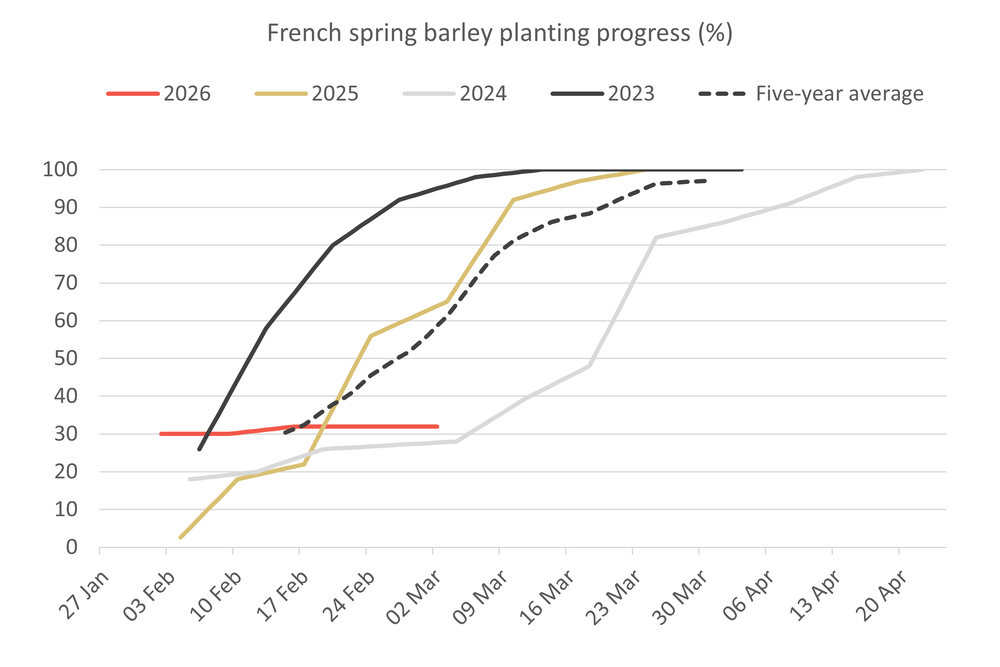
International harvest intrigue reigns. France is looking at another rough spring 2026 as far as barley planting goes, too.  That flat red line on that graph under the thumbnail tells the tale. And the competition is ahead of French farmers. On the other side of the planet, the Austrialian 2025/26 crop is “23 percent higher than last year and 21 percent above the five-year average.” Meanwhile… geopolitics can get one into some very odd places. As you think on that, here are some notes:

Note #1: Bun photography.
Note #2: “Rub my Dad’s bottom….”
Note #3: “…surprising health benefit…”

You know, I think the craft beer recovery needs to be measured in the returned of a staffed up BA because I really don’t get where anyone is going with the “return to 2012” narrative. But Dave Infante reporting from the Craft Brewers Conference for VinePair gives another angle on the boost to mood:

 Survivorship bias dictates that the brewers that made it to CBC 2026 are likely to seem the most bullish; after all, if they weren’t, they may have stayed home to save money and manpower. At the risk of sounding indelicate here, I also suspect that the segment’s years of closures have helped cull the herd of both excess numbers and outsized negativity. A dying brewery can only die once, after all, and with outfits that were never built for this market getting pushed out of it, those that remain stand to benefit from more focus and less vicarious angst.

We are told that history is written by the victors but, I guess, we have to ask in this market what is “victory” when overall US craft production is down 9% over the last two years and down 17%* since hitting a peak in 2019? Speaking of questions… is the use of “lifestyle” as a descriptor ever not a red flag? Consider this PR blurb about a new beer-like substance:

Carlsberg Britvic premium beer marketing controller Rebecca Allen revealed that the 4.5% ABV beer is strategic in answering the trends of the moment and admitted that “the timing reflects a broader shift in drinking culture, where boundaries between categories are increasingly blurred and consumers are more open to hybrid, lifestyle led propositions”. Allen told db: “1664 Rosé takes its name from its distinctive flavour profile, a refreshing berry flavoured beer. The ‘rosé’ cue reflects both its taste and its visual appeal, positioning it as a lighter, fruit-forward beer.”

What style of life is being referenced? And where has that style led the life of the consumer in question? Speaking of style, Ron has given us a few background insider sorta notes on his presentation flow while on the road, working it in Chile:

For my talk, I speak a couple of sentences and then the interpreter translates them into Spanish. It interrupts my flow a bit. But does give me a chance to drink some beer while the interpreter is taking.  My talk is about Irish Porter and Stout. I should probably update it. I wrote it a while ago and have since got hold of a lot more Irish brewing records. In particular, examples of heading, the sort of Kräusen used in Ireland. I get through my beer so quickly, I have to request a refill. That’s a first. Just making sure my throat doesn’t get too dry. Wouldn’t want to get hoarse. Usually, I only get to take a sip or two, as I keep rattling away. When I’m done, I sell a few more books. Which is good. I’m nicely building up dosh in my PayPal account. Dolores will be so happy. Why have I never brought books with me to sell before? Because I’m an idiot. That’s why.

When Dolores is happy, I am happy. Conversely, there’s bad news out of the other end of Lake Ontario as the Toronto Festival of Beer has gone under** and has left creditors and suppliers holding the bag according to CTV News:

Applying to work for the festival was costly, Kowalik noted, as she and her partner spent $1,000 on the entry fee and an additional $200 on liability insurance. She says they both took time off from their day jobs to work since the festival started on Friday. Over the course of the weekend, Kowalik said they went through all 20 cases of beer that they brought up, amounting to a total of just over $2,000. 

The story shares a twist on beer fest tokens. Because the festival sells them and not the breweries, the money paid for the beer tokens does not go to the brewers. Kiss it goodbye. Anyone owed money can call into to the bankruptcy meeting this afternoon at 3 pm. But seeing who else is on that list of creditors, the news may not be good. For $2,000,000 in liabilities there’s only $8,000 in assets.

On the Burton Union question, we have had Laura H in (t)DB on challenges posed to the survival of the Marston brewing kit and also providing CAMRA with a backgrounder on the history of the system. Now, a Mr. M. Curtis has visited the part of the whole which became lodged at Thornbridge and reported back:

Fixed to the head of each oak barrel is a large, cast iron “X”, painted black. If this seems familiar it’s because, for a time, an illustration of three such barrels, stacked in a triangle formation, formed the logo of Marston’s Brewing Company in Burton-upon-Trent, Staffordshire. Still in operation, today Marston’s brewery is owned and operated by British-Danish conglomerate, Carlsberg Britvic. In January 2024 Carlsberg Britvic—then known as the Carlsberg Marston’s Brewing Company—decided to retire the remaining four working union sets at Marston’s. Once used to brew what was once some of the most well-known ale brands in the country, including Marston’s Pedigree and Owd Roger, the brewery’s website famously used to state: “No Burton Unions, No Pedigree. End of.” Now, it seemed certain this storied piece of British brewing history, first invented in 1838, was due to be consigned to the dustbin of time and memory.

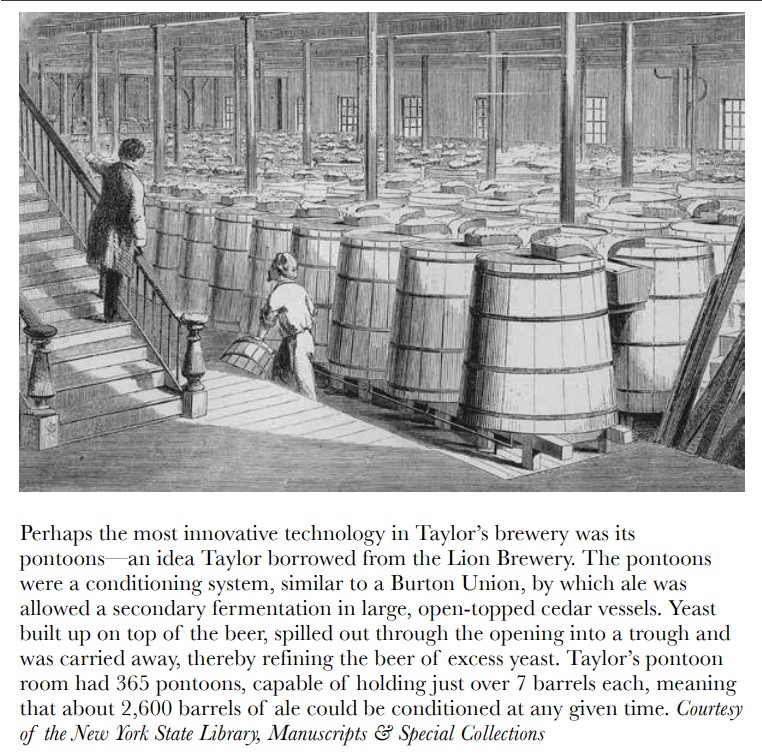
I was going to say that it is too bad that the United States has little similar interest in its brewing history as we could see the mid -1800s pontoon room of Taylor of Albany recreated even if in part but then was saddened to see that the link in my post of 2016 to Martyn’s at Zythophile failed. It’s all there at the Wayback Machine site. But the key word search does not seem to work and Martyn did not use a URL system that included the date. So you can hunt out his post at your leisure. In the alternative, I can only direct you to the work of a couple of rough sorts, Messers Gravina and McLeod, at page 80 of their opus on, in and abouts Albany which you can review under that thumbnail to the right… well, your right my left.

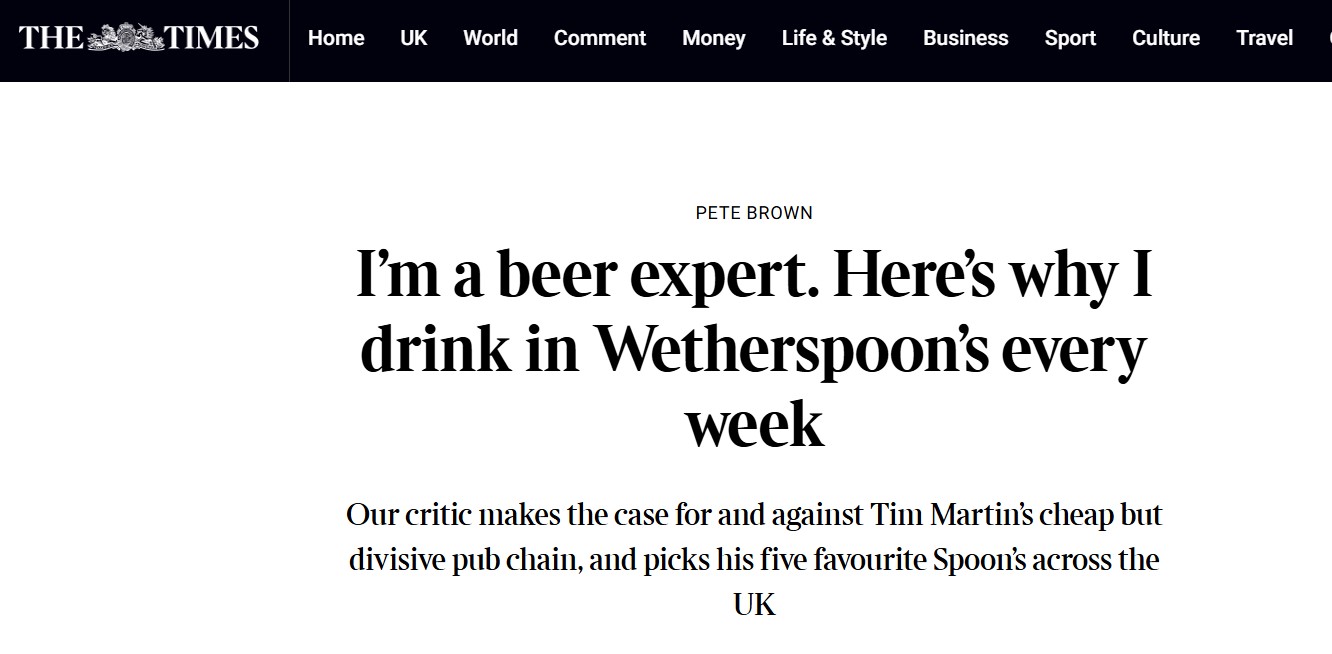
Lastly, following up on observations on the word “critic” in beer writing a couple of weeks ago, The Times also appears to be confused as the sub-header for one story this week describes Pete Brown as “our critic” and then he himself states as follows:

Of all the arguments the beer world loves to have, there can’t be many topics more divisive than JD Wetherspoon pubs.  Critics attack them as a refuge for those too old and/or drunk to mind the harsh lighting. Supporters say this is just snobbery, and what’s wrong with cheap beer? Critics believe the beer is cheap because it’s bought “short-dated”, or about to go off. Supporters ask where else can you get a meal and a pint for under a tenner now?  The thing is, both sides are right. Except that the beer isn’t short-dated and never has been.

“Critic” is not a synonym for detractor.  Pete isn’t the one who created this. But as Stan reminded us, the “…critic’s job, nine-tenths of it, is to make way for the good by demolishing the bad” as it was put by Kenneth Tynan. What is it about general beer culture that is uncomfortable with the common form of two handed discussion and intelligent criticism with a bit of peer review thrown in for good measure? Oh well.

That’s it for now. Report upon your tra-la-ing in the comments if you like. Until we meet again, please check out Boak and Bailey who are posting every Saturday and adding to their fabulously entertaining footnotes week after week at Patreon. And look out for more of Stan’s new “One Link, One Paragraph” format. Then hunt out something in someone’s archives! Leave oblique comments on someone’s post from 2009!! Listen to a few of Lew’s podcasts and get your emailed issue of Episodes of my Pub Life by David Jesudason on certain Fridays. And Phil Mellows is at the BritishBeerBreaks. Once a month, as noted, Will Hawkes issues his London Beer City newsletter and do sign up for Katie’s wonderful self-governing totes autonomous website featuring The Gulp, too.  Ben’s Beer and Badword seems to be on pause since November but there is reading at The Glass which is going back to being a blog. Any more? We have Ontario’s own A Quick Beer and All About Beer is still offering a range of podcasts – and there’s also Mike Seay’s The Perfect Pour. Plus follow the venerable Full Pint podcast! And there’s the Craft Beer Channel on Youtube. Check out the archives of the Beer Ladies Podcast. See you in May!

*26.3 bbls in 2019 compared to 21.9 bbls in 2025. What’s the degree of collapse that will send a message to the PR trade, one wonders. 
**Sixteen years ago, Jordan shared his thoughts on the unappetizing event.


The Very Last… Summative Even… Fresh Yet Thoughtful Beery News Notes For Winter 2025-26

Spring!  Tomorrow is spring!! On a Friday even. How swell. The sort of moment that always reminds me of some lyric or another from Old Blue Eyes himself:

Spring is here
Why doesn’t my heart go dancing?
Spring is here
Why isn’t the waltz entrancing?
No desire, no ambition leads me
Maybe it’s because nobody needs me?

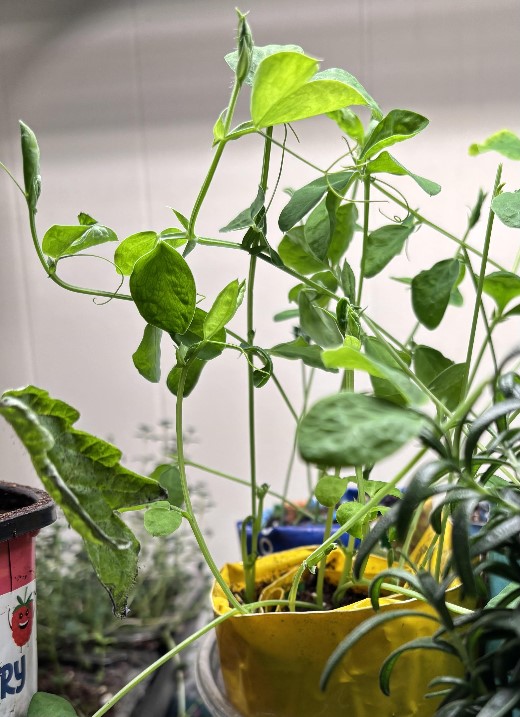
Wow. Not what I was expecting… gee, Frank. Lighten up a bit, wouldja? Me, I am all zippiddy doo dah myself. Look at those sweet peas under the grow lamp! The waltz entrances. Hmm. Why Frank? Why? Could it be it’s the fading night life scene that the man once knew and loved that has him lost and wandering, as the news The New York Times shared this week tells us:

…it’s a complicated prospect for restaurants, which traditionally make their highest profit margins on alcohol sales. Preparing food requires perishable ingredients and a large amount of labor, while alcohol is shelf stable and, except at the most dizzying heights of mixology, requires less work than cooking. As independent restaurants struggle with higher costs of all kinds — rent, labor, ingredients — the hollowing out of the most profitable part of the menu couldn’t come at a worse time. According to David Henkes, a senior principal at the food service research firm Technomic, alcohol sales are slumping in every category of the restaurant industry, from fine dining to casual establishments, with 31 percent of operators reporting “severe declines” in alcohol sales in 2025.

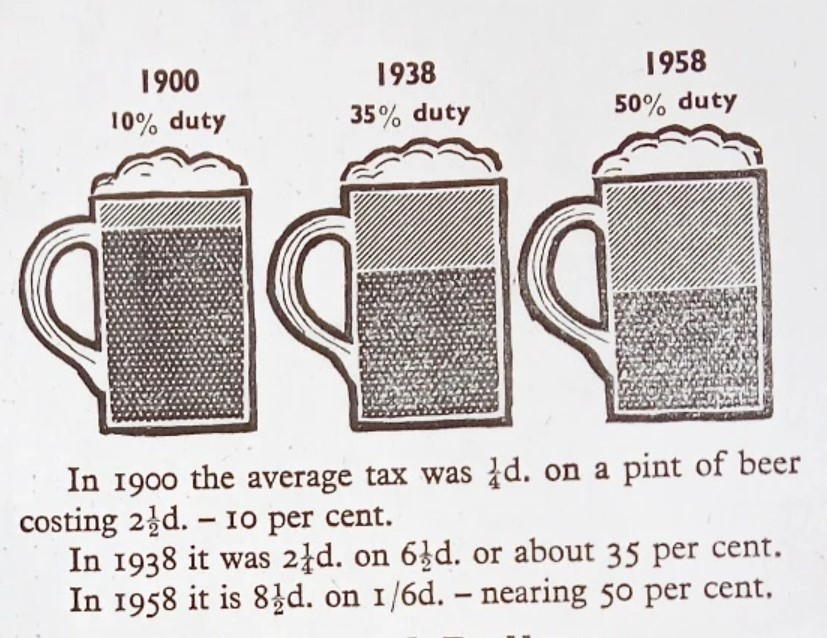
Yikes! We always here about the younger folk laying off the hootch – but even the set that clinks and drinks is clinking a lot less. But when was it ever the way it used to be? 1910 apparently. Nigel Sadler posted some images from The Times ‘Beer in Britain’s Supplement from April 1958, including the fascinating tale of the creation of the Hops Marketing Board as well as this infographic on the increase in duties on beer from 10% in 1910 to 50% in 1958.  Winning two World Wars as your empire collapses will do that for you.

Note#1: Michael Caine before he was famous.

Boak and Bailey unpacked their approach to writing a bit this week as they closed down one of their outlets, a newsletter by Substack where they unpacked their personal impressions perhaps a bit more. They shared that approach on one post this week, describing a scene Ray encountered when he would out and about with pals:

You know how you sometimes know something is going on, even before you see anything yourself, because people around become restless and twitchy? Even before the sword dancers entered the pub people noticed them in a group, standing outside peering in. Then their leaders, white haired with red neckerchiefs, entered and negotiated permission with the bemused young bar staff. Dancers and musicians shuffled in and found space for their display among the drinkers and diners. Then, off they went, stamping and twirling with berzerker energy, accompanied by fiddle and recorder… There were whoops and applause after the final somersault and, after they’d jogged out of the pub in single file, it felt as if the crowd had been injected with fresh energy. Between amusement, disbelief and admiration, it woke everyone up.

Whoops!* I have no idea what and who these sword dancers are. Clearly not, you know, the Highland lassies. Is this some sort of militant branch of the Morris dancer set? Speaking of militant hobbies, Phil Cook has been tracking the use of beer related answers to crossword clues in The New York Times and has released his report on the 2025 season:

The over-reliance on ale and ipa (and their plurals) has increased. They were about a quarter of last year’s references; now it’s 40%. That kind of frequency means there’s an impossible choice between repeating the same clue over and over, or reaching for one that’s only less common because it’s not very good. ale appeared on successive days several times — often with grim setups like ‘Pub drink’ or ‘Pub order’ — and one bleak fortnight3 had five of them, interspersed with two ipas, none with great clues.

I’m a Monday and Mini sort of crossword guy so I don’t see as much of this but Phil’s obsessive dedication to detail is impressive which backs observations like “there weren’t any debuts of new terms that seemed to signal any kind of shift in the zeitgeist.” Perhaps this year we will see a four letter answer for the clue “going out of style” which offers direction in at least two ways.

Speaking of style, Gary Gillman had his research on the founding of the green beer phenomenon in the USA published in Craft Beer & Brewing, reaching back ever so slightly into the 1800s:

In 1899, Milwaukee’s Pabst Brewery already was well known for its Blue Ribbon Beer, its bottles at that time festooned with a real blue ribbon. That year, as a marketing gambit, Pabst replaced the blue ribbon with a green one on a portion of its beer packaged ahead of the holiday. It also put a shamrock on the label in lieu of the usual hop leaf, with marketing that proclaimed, “Hibernians to celebrate St. Patrick’s Day.” (That’s according to Printer’s Ink, an advertising trade journal from that time.) However, the beer itself was the usual pale lager—it wasn’t colored for the special day. 

Which brings us to three more notes on St Paddy’s Day:

Note #2: “…all good-humoured, not messy yet…
Note #3: “…a local bar owner to invite me to meet him for “a chat…
Note #4: “...I’ve seen things you people wouldn’t believe…
Note #5: “…Liverpool is carnage…

Those last two notes are more along the lines of what was experienced the weekend before the day over in Waterloo, Ontario – a university city:

People living at Oakwood Manor, an apartment building near Marshall Street, said large crowds surrounded the building. Residents described partygoers climbing over fences, knocking some down entirely and leaving garbage behind. “They’re destroying private property, but they don’t care,” said Debra Hines, who lives in the area. Residents also said they saw people urinating in the parking lot. “They were [also] coming and stepping on people’s cars,” said Janet Peterson, another resident. Bridget Kocher, who also lives in the building said the repeated street parties leave residents confined to their homes several times a year.

Kids today! On a far more civil note, we don’t write about homebrewers enough. Something the coming recession will cure I am sure. But the Windsor & Eton Homebrewers Club described how the group did some compare and contrast of a few clones and made some… well, to be honest, observations on the state of Pilsner Urquell in the retail marketplace:

 I wish no disrespect or sleight to the founding fathers of Pilsner, but we were scratching our heads a bit. We used Pilsner Urquell as our reference for all our clones.  We found PU to have great bready richness with a great soft rounded mouthfeel.  A slightly sulphur smell and flavour – as is characteristic and a touch of ester, but also we found it with a sticky almost stodgy sweetness, not crisp as we were expecting.  However, it transpires that Ian found some bottled Urquell somewhere up North, which was apparently much better, so maybe the canned Asda variety isn’t a good comparator?

Frankly, I had already bookmarked this piece by Kieran Haslett-Moore from well before the Beer Nut unleashed the stinging taunts urging folk take notice of the death of the themed pub, once a cross-cultural cornerstone:

At the start of this year the Wellington Belgian Beer Café, Leuven, announced it was closing its doors after 25 years. Back in 2000, Lion started to brew Stella Artois under license and all of a sudden Belgian beer culture was in vogue. Leuven in Wellington and De Post in Auckland both opened, offering the full tourist-style Belgian beer experience with mussels, frits, draught Stella, Hoegaarden, Leffe and assorted bottled beers from the lowlands… At the start of this year the Wellington Belgian Beer Café, Leuven, announced it was closing its doors after 25 years….  In 2004 Christchurch got Café Torenhof which limped on after the earthquakes before running out of steam in 2020… Café Torenhof lives on in the way your great aunt does because you inherited her Welsh dresser and it sits in the corner of the living room. When the Christchurch café closed, its interior kit was sold to Craftwork in Oamaru…

While things go out of style, other things arise as Ruvani shared recently when she discussed the “Spaghett”:

For those not already in the know, a Spaghett is a simple two or three ingredient (depending who you ask) beer cocktail involving a light lager, a bright bittersweet amaro and either a slice or splash of fresh lemon (optional). The OG Spaghett consists of a Miller High Life bottle minus an inch or two and topped off with Aperol and lemon… a ‘poor person’s Aperol Spritz’ where the champagne is replaced with the Champagne of Beers. Until recently Spaghett enjoyed under-the-radar industry-insider status but a combination of social media and the cost-of-living-crisis have brought it into the mainstream, as drinkers nationwide are discovering the delicious pop of tangy, herbaceous aperitivo against clean, gently sweet and super-carbonated light lager finished up with a refreshingly sharp citrus twist.

Jeff published a piece on the ABSs of malt this week or, more specifically, the question of whether a base malt’s flavor come from the barley variety or the malting process:

 …it’s better to think of malting and brewing as connected processes. If you recall our previous conversation, the maltster has many choices to make, all related to the “biochemical levers” Matt referenced. It’s very much like the choices a brewer makes on mash pH, mash temperature, the number of rests and so on. It’s not like there’s a “correct” mash temperature; brewers make choices based on what they want out of a beer. The same is true with malting, and it’s why one brewery might choose a malt where one set of choices was made, while another brewery would want a different set. 

Speaking of grain, there was a Kernza sighting this week, about a year and a half since the last time the branding for thinopyrum intermedium passed by my eye. The Guardian reported on its use as Deschutes:

The secret ingredient is a grain called Kernza. It’s a perennial wheatgrass with a slightly nutty flavor and a climate-friendly reputation. Deschutes teamed up with the outdoor clothing brand Patagonia to craft a new beer using the grain. When asked how customers react, brewer Ben Kehs laughs: “They say what’s Kernza?” Kernza has deep roots that pull carbon from the atmosphere and require less water. There is less tilling and fuel use because it doesn’t have to be replanted each year. Kernza can be used as an alternative to barley, which along with hops and water, is one of beer’s three core ingredients. “All of them in one degree or another I would say,” Kehs explains when asked which ingredients face climate threats.

Finally and speaking of the exotic, Ron has been back in Brazil judging at a competition where he seems to have been quite happy with the set up:

I have my usual breakfast. Call me Mr. Boring. I don’t care. It’s what I want to eat. And I’ll fucking eat it. That’s the great thing about being old. Not really having to give a fuck what anyone thinks…  I’m on the same judging table as yesterday, with Suzanne and Alan. I’m happy with that. We rattled through the flights yesterday. Coming to a consensus without much argument. Which saves much time. And annoyance. Especially annoyance. The last thing I need is extra stress… After lunch, there’s a real treat. Non-alcoholic beers. Six samples. All three sour styles are pretty good. With the Catharina Sour the pick of the bunch. The best non-alcoholic beer I’ve ever drunk. Which may be quite a low bar. Or was. It’s been raised considerably now. That was much better than expected. Some flights of alcoholic beers were far worse. Not sure what that tells us. There’s then a long wait for the pre-BOS. Like two fucking hours. Such fun sitting and sweating. Watching Match of the Day helps pass a little time. 

Good to see that while his language hasn’t mellowed, his relationship to booze has. And he’s learned a bit of Portuguese on these trips, too.**

Is that it? That’s it! Another week and another winter moves into the history books. While we see what the spring may offer, please check out Boak and Bailey who are posting every Saturday and adding to their fabulously entertaining footnotes week after week at Patreon. And look out for more of Stan’s new “One Link, One Paragraph” format. Then hunt out something in someone’s archives! Leave oblique comments on someone’s post from 2009!! Listen to a few of Lew’s podcasts and get your emailed issue of Episodes of my Pub Life by David Jesudason on certain Fridays. And Phil Mellows is at the BritishBeerBreaks. Once a month, as noted, Will Hawkes issues his London Beer City newsletter and do sign up for Katie’s wonderful self-governing totes autonomous website featuring The Gulp, too.  Ben’s Beer and Badword seems to be on pause since November but there is reading at The Glass which is going back to being a blog. Any more? We have Ontario’s own A Quick Beer and All About Beer is still offering a range of podcasts – and there’s also Mike Seay’s The Perfect Pour. Plus follow the venerable Full Pint podcast! And there’s the Craft Beer Channel on Youtube. Check out the archives of the Beer Ladies Podcast.

*Remember: you can’t have whoops without an oops!
**Ron’s honesty when on these things is what makes his reports so worthwhile if only as a deterrent: “I’m so fucking knacked. We’ve judged so many beers today. And lots of strong ones. I never want to drink beer again. I’m so done with it. I just want to drink some cachaça and sleep.” 

The Beery News Notes For The Threat Of Frost And The Yanks And Jays In What Might Just Be A Post-Passion World

Well, since we last met… yes, fine… the Red Sox lost last Thursday. But then the Yankees (who beat the Sox… my Sox) got their own butts kicked in the first two games of the next series by the Jays who took it all in game four last night which… sorta made me feel… schadenfreudig? Is that the word? I dunno. Or is it dünno? Anyway, the other word on my mind is frost. I will only know at sunrise this Thursday morning if the sheets and covers that I threw over the tomatoes and basil and beans did the job. (Update: -0.3C at 6 am!) But it is autumn. And it doesn’t matter if there is no frost for the two weeks after today if the frost came today. Most years, with luck, I can coax something or another to keep on growing right up to November. With luck.

Speaking of words, on Tuesday Jeff wrote about the doom and gloom in the beer trade, reviving some thoughts from 2013 as he did – a discussion in one way about perceptions that the choice of words convey as much as the context. The context being if one is on the way up or the way down. This week’s news notes seem to carry a bit of the weight of those sorts of perceptions so I feel like this sort of preamble is needed to remind ourselves that it’s just the point in time we find ourselves in. We need to reflect. To consider our lot. Sorta how I feel when I look at the black leaves of a tomato patch after a killing frost. When I reflect. And swear a little. So I will perhaps a bit intentionally mix the bad news with some things that are lighter and see what happens. Good thing there’s plenty to read.

First, about that cyberattack* in Japan on Asahi that I mentioned last week. It seems that it has been resolved but I hadn’t appreciated how it create quite serious issues for the broader Japanese bevvy and snacking market:

Most of the Asahi Group’s factories in Japan were brought to a standstill after the attack hit its ordering and delivering systems on Monday. Major Japanese retailers, including 7-Eleven and FamilyMart, have now warned customers to expect shortages of Asahi products… Asahi is the biggest brewer in Japan, but it also makes soft drinks and food products, as well as supplying own-brand goods to other retailers… In its latest statement, Asahi said that as a result of containment measures following the attack, ordering and shipment systems in Japan had been affected and it was also unable to receive emails from external sources.

Speaking of containment, consider Mr. Gladman on two types of entryways to basement bars and how their architecture guides the experience:

The street-steps-door type of basement bar usually has windows somewhere on its street-facing wall and so maintains a connection to the city outside (Type A Basement Bar in the Gladman Taxonomy of Bars…)  Bars like this can be hard to find even if you know about them… It’s a tiny adventure that ends with a delicious reward. These bars are often unpretentious and cosy — everyone is hunkered down together, hidden away in a prime spot, unnoticed by the schmoes passing by just a few feet above. The other, street-door-steps type of basement bar (Type B) is even more concealed at street level, often offering just a small sign above a door. Within this lurks a clipboard-wielding, radio-headset-wearing guardian, like Cerberus at the gates to a boozy underworld. Once you’re in, it’s often entirely devoid of natural light. It is its own world, womb-like and all encompassing.

Not so many people walking down these sorts of steps in Brazil – both Type A and B – which is reasonable given the news:

…the market has a new worry: the crisis caused by contamination of distilled beverages with methanol. For now, it’s not possible to determine the impact of this on the beer industry going forward. On the one hand, bars are emptier and parties have been canceled due to the negative repercussions of the contamination. On the other hand, greater consumer concern about cocktails has led to a strong shift toward beer, seen as safer.

My dive bar tourist trip to Rio is now officially cancelled. But more weclome might be a stop at The Dog and Bell in Deptford, London which is the subject of this week’s feature in Pellicle penned… or perhaps rather keyboard clicked by Will Hawkes:

This backstreet boozer in a historically unglamorous part of town has not only survived the pub cull of the past few decades, it has thrived. Indeed, few London pubs are currently more fashionable. How? Well, for all the Dog and Bell’s singularity, its story tracks the evolution of pubs in modern London from the 1970s, when they were ubiquitous, to now, our frantic, distracting era of Instagram Guinness and event culture, when a simple pint in the pub is no longer good enough reason to get off the sofa. It’s been a long journey, but at every key junction over the past 50 years this charismatic pub has taken the right turn. 

A loving portrait of a welcome local and perhaps unexpected gem. Conversely, I don’t expect to be following in the footsteps of  Jason Wilson who brought an extreme level of exactitude to the consideration of an extremely expensive beverage – coffee that costs $30,000 a kilo:

Each sip I tried—and we were served small sips because of the limited amount of this coffee—had its own personality. Each producer and variety had a different flavor profile, mouthfeel, aroma, even color. While some may regard coffee tastings like this one as snobby or ridiculous, I appreciate the intense mindfulness and attention to detail coffee fanatics have. In one sip of coffee, there are flowers, fruits, foods, and even songs. I tried each of them for myself, then read the judge descriptions from the Best of Panama auction to compare thoughts. Some may disagree, but I try to treat it as if there is no right and wrong, just opinions.

And, speaking of opinions, Boak and Bailey posted a bit of a questionaire on the status of Belgian beer culture, asking folk for their thoughts about whether the beers and pubs they encountered on a recent trip were (my words) out of date duds or treasures at risk:

There’s also something about how the beers we tried on this recent trip didn’t seem to have evolved from Belgian brewing tradition so much as they were inspired directly by American-led homebrewing culture. It’s really weird to drink a Belgian-brewed saison and think, huh, this tastes like one of those ‘farmhouse IPAs’ people were making back home in about 2012. When we think of newer Belgian breweries we do like, it’s because they’ve found a way to push the parameters while still producing beer that tastes and feels Belgian.

This generous sort of the asking of the questions is a very useful tool of one is wanting to advance one’s education. Seek the views of others to check your own assumptions. Among the responses, the particularly well-placed Eoghan provided a lot of insight from the local point of view:

I don’t disagree that Belgium has one of the richest and most diverse beer cultures in Europe, and it is a small miracle that so many idiosyncratic beer traditions managed to survive the tumultuous 20th century – more tumultuous here in Belgium than they maybe allow for. But it was their proposition that Belgian beer culture is defined by evolution not revolution that prompted my little piece of anachronistic time travel above. It is true that Belgian brewers – to borrow an idea I first stole from fellow Belgophile Joe Stange – are past masters at co-opting and finetuning wider brewing trends to make them palatable in Belgium. My contention is, however, that the history of Belgian beer is more of a Hegelian dialectic, a process of thesis-antithesis-synthesis evidenced less by evolution that by periods of stability punctuated by significant, discombobulating ruptures.

See, that is great. Fascinating – and I don’t even know what half of that up there means! Another thing I don’t know is whether a Spanish beer brewed in Britian in a British brewery owned by a Spanish brewing firm is Spanish or not:

This week Damm will make its first meaningful manufacturing foray outside Iberia when it opens a brewery in Bedford. The move represents an investment of almost €100 million (£87 million) and will create scores of jobs. The company is going to great lengths to ensure its UK-brewed beers taste the same as those made in Barcelona by sticking to the original recipe and investing in the equipment to ensure the product is identical.

Hmm… I still don’t know. But if we are sticking with the examination of not only how things became what that are but also what are these things in themselves, there is no better assessor than The Beer Nut who wrote about the recent final edition of the annual Borefts beerfest:

Two brewery stands at the 2025 Borefts Beer Festival seemed to have almost continuous queues. One of them I could understand: the New England legend Hill Farmstead. Early on day one I tried the barrel-aged coffee porter they brought, The Birth of Tragedy… This isn’t the sort of beer I associate with Hill Farmstead but it has been created with the same level of expertise. Canadian brewery Badlands was next to them and was, if anything, even more popular with the crowds. I had never heard of them so had no idea what the fuss was about. After they sold out and closed up early on the first day, I made sure to be there early on the second… [After trying two of their beers…] I was none the wiser regarding the Badlands fuss. They didn’t seem to be doing things particularly different to a thousand other microbreweries..

So, there you have both broader analysis of the cultures of beer as well as specific examination of each beer, drip by drip in the common context of the fest. All cheery and interesting exercises in digging around and thinking about beer. David Jesudason dug into another chestnut for the Wine & Spirit Education Trust, unpacking what’s called IPA but what he calls “IPA”:

The first ‘IPAs’ – note quotation marks – were sent out on East India Company boats in the 1760s and were strong, highly hopped ales due to India’s warm climate: the hops’ antimicrobial properties combined with the high alcohol level aimed to prevent spoilage. These were a cross between a bitter and a barleywine and by the time they arrived in India the hop character had vanished into the Bay of Bengal. They were said to taste more like champagne than beer. In reality, they were a world away from a modern IPA. Samuel Allsopp was the first to market them as Indian Pale Ales – and tie them to colonial decadence – after he copied Londoner George Hodgson’s recipe but crucially brewed them in Burton, where the minerals in the water further emphasized the beer’s hop character. These were bitter British ales or similar to heavily hopped autumn stock beers.

And Laura Hadland took on a task that I wish more writers who focus on beer attempt – discussing wine:

The lights were low for a chic soiree organised by Wines of Hungary at Vagabond Wines in Birmingham yesterday. Twenty five producers were showcasing their wines to an enthused audience of trade, media and more. I had an hour to work my way round the hit list that I had prepared in advance – nowhere near enough time. Especially since the winemakers and their sales teams were so enthusiastic about their wares that they all insisted on having us try every single one.

My experience of Hungarian wine started with some pretty hefty even harsh Bulls Blood out by the town’s water resevoir in high school but I now hoard sweet Tokaji which I never seem to get around to opening as fast as I find them. Of course, that means my wake might be worth the trip as my fam gives them away along with my record collection.

ATJ shared more serious thoughts on mortality in his piece “Funeral Pints” where the swirling thoughts at a time of loss were steadied with gratitude by a bracing pint among others in a pub:

The clunk of loose change as it goes into a pitcher, ‘thank you very much William’, ‘not a problem’, a stooped man with a face that reminds me of a thinner version of WC Fields.’ ‘Here he is.’ ‘He ain’t got a jacket.’ ‘What’s it to you,’ comes the reply. ‘He was dressed up as a boy scout yesterday,’ says another voice. The man with the long face who photographed his breakfast is having a talk with himself, while elsewhere pints are piling up on tables. Tattoos, chewing, chomping, swallowing, gulping, laughing, ‘listen mate’, finger pointed without malice. We’d better get to the funeral.

The drink finds a place in so many moments. And does the job. Even now at a time which we are subject to so much that feels like wave upon wave of a grim big picture, like this data* from Beer Marketers’ Insights:

Craft beer trends (ex non-alc) steepened over the summer to volume -8.4% and $$ -6.4%; several pts below total beer volume -5.6% and $$ down 5.1% for 18 wks thru Sep 20 vs yr ago. And when comparing craft’s yr-to-date sales thru Sep 20 vs the same period in 2023, the # of craft vendors (-10%), sub-brands (-13%) and SKUs (-12.5%) are all down double digits.**

From that view of the general, for the double, Jeff also wrote on a specific application in his obit* of Upright, a favourite brewery facing its end:

Craft brewing has spent a huge amount of time navel-gazing over what it means to have a clear vision. This often bled into marketing bromides, as breweries repackaged derivative products as original and creative. That development led to some of the cynicism that marks the mood today. Upright did have a clear vision, however—and Alex seemed almost immune to commercial considerations. Upright always felt more like a sixth-generation Belgian or Franconian brewery than an American craft brewery to me.

A wonderful remembrance of the soon to be no more. Summing up based on all the above, can we draw conclusions? Well we could ask ourselves (yet again*) whether the function of good beer writing to support the industry or to more broadly understand the trade and culture. By way of illustration, consider this:

“…The Guild’s board members are all driven by our shared passion for the beer industry and those who work within it. We’re proud to represent the very best of beer and cider communicators, who are such an important asset to the wider industry…”

A familiar line that’s become cliché and so nothing against the particular speaker. A prominant popular theme voiced for the best part of two decades, perhaps until somewhat recently. I mention that in the context of this article in The New York Times which is, yes, yet another obit* for US craft beer but, perhaps unusually, one that contains some interesting admissions:

This summer, 21st Amendment believed it had found a way to keep at least some of its operations going. It planned to bring in a new partner and start buying smaller craft beer brands that it would brew in San Leandro. But in late August, the lender pulled the plug on that idea. In late September, 21st Amendment closed its flagship brewpub in San Francisco. The San Leandro location is expected to shutter by the end of this month. “We were driven by our passion for craft brewing, and we got so caught up in it that we had blinders around what the reality is for craft brewing right now,” said Shaun O’Sullivan, a co-founder of 21st Amendment. “We’re a cautionary tale right now to anybody who wants to grind down and open up their own place. It’s just not a good time.”

So is / was “passion” an “important asset” or a form of those “blinders“? Whether in business or in writing. Maybe both. What ever happened to well-earned hard-bitten steely-eyed objectivity? Why did we not foresee, just as the rise casinos and later lotto tickets stripped gambling of its vice, how craft beer was infantalizing booze with kiddie friendly fruit flavours in brightly coloured cans – and even converting every tavern into potential seminar spaces.*** I blame the “don’t judge the tastes of others” line. Who writes without hoping to offer incisive opinion? You know, if the beer writers, by error or omission, participated in priming the passion pump with boosterisms during the era of irrational exhuberence… is it not reasonable to consider that the oeuvre itself aided in the downturn to some degree?****  That’s sorta summed up by that old nugget, the one about the rising tide raising all boats that we heard so much about. We also know that the tide falls. Twice a day. Every day. But most folk forgot* to mention that.*****

Doesn’t mean, however, that we can’t learn lessons from the downturn. We might even consider ourselves now “post-passion” in our relation to beer and beer writing. That would be good. Without, you know, sponsored articles or A.I. articles****** or even A.I. sponsored A.I. articles.* That would be better. Based on the above we can see people can and will doubledown and keep digging around, questioning conventions and asking the right questions about what is and what isn’t the good stuff in all this beery culture.******* I’m sure we can. Well, you all can. I just read this stuff.

That’s a lot. And there’s still the footnotes below. While you are chewing on all this, please also check out Boak and Bailey every Saturday and sign up for their entertaining footnotes, too. Look out for Stan when he feels the urge now that he’s retired from Monday slot… maybe … maybe not. Then listen to a few of that now newly refreshed Lew’s podcasts and get your emailed issue of Episodes of my Pub Life by David Jesudason on certain Fridays. And Phil Mellows is at the BritishBeerBreaks. Once a month, as noted, Will Hawkes issues his London Beer City newsletter and do sign up for Katie’s wonderful self-governing totes autonomous website featuring The Gulp, too.  Ben’s Beer and Badword has been on hiatus since April but the archives are out there with the all the sweary Mary! There is new reading at The Glass which is going back to being a blog. Any more? We have Ontario’s own A Quick Beer and All About Beer is still offering a range of podcasts – and there’s also Mike Seay’s The Perfect Pour. Plus follow the venerable Full Pint podcast! And there’s the Craft Beer Channel on Youtube. Check out the archives of the Beer Ladies Podcast. That’s quite good and after a break they may well be are back every month! Such is life. Such is beer podcasting and newslettering… which, as Ray says, are blogs! And he’s right.

*YIKES!!!
**At least it’s not as bad as in Russia: “In the first half of 2025, retail beer sales in Russia fell by 16.3 percent year-on-year… Due to the increase in excise taxes (they increased by 15.4 percent at the beginning of the year), the cost increased accordingly. In 2023, the average price per liter of beer was 120 rubles, in 2024 — 129 rubles, and at the end of July 2025 it reached 151 rubles per liter — prices have increased by more than a quarter (26 percent) since 2023, Nielsen added.
***The signs outside the craft beer bars said “Off-flavour Seminars Every Tuesday!” I thought of that when reading this passage from “The Engines and Empires of New York City Gambling”by Adam Gopnik, The New Yorker, August 4,  2025: “Gambling, too, now divides the world between those who know enough to make it boring and those who—bored—prefer not to know. They play and lose anyway. Thrilling games, like thrilling cities, thrive on enigmatic imperfections: the small market anomalies that quants scour for an edge, the tells and giveaways that reward the observant and elude the rest. Once all is understood, all is dull. Gambling may once have belonged to the Devil, but I assure you it does no longer. The arrival of organized gambling in its casino form has stripped away even the faded glamour of old miscreants like Rothstein and St. Clair. When, at last, detailed renderings of the proposed Caesars Palace emerged, they were hilariously decorous, showing not crowds of modern Harry the Horses and Nathan Detroits but elegantly dressed men and women in dignified black, playing in poker rooms that looked ready to host a seminar.
****And to be sure we can also lay much at the door of the evangelizing homogenizing craft industry conference seminars which took a page from time share symposiums. Imperial Pilsner anyone? Everyone?
*****Did I ever mention I spent school years right into undergrad next to the Bay of Fundy? Nevermind. Perhaps now’s the time for the trade’s comms people to adopt of the “Big Yellow Taxi” message – “drink craft: you don’t know what you’ve got ’til it’s gone.” It could work. Something might.
******Can’t wait for that market sector‘s crash! It’s all relative.
*******BTW there was some great beer writing advice set out in last Saturday’s footnotes from B+B: “Prop Up The Bar is a new blog to us. It’s a proper old-fashioned blog, full of massive photos that haven’t been edited and typos. It’s made us think again that the professionalisation of blogging arguably didn’t do it any favours and has perhaps discouraged people from just having a go, like Nick C, using their blog as a diary. In that context, props are due to Martin Taylor whose blog is well written and well researched, but never feels as if it’s taking itself massively seriously. (Yes, we know, we should watch and learn.) It signals that, actually, you can just have adventures and quickly write them up.

Now That We’ve Cleared Up The “St. Paddy’s / St. Patty’s” Day Confusion, Here’s The Beery News Notes

I like a good breakfast sandwich as much as the next guy but I have to say I have never elevated a disk shaped sausage to sainthood. For me, Peanuts sort of established who Patty is before she grew up to be the bassist of The Bangles under an alias. So the whole “Patty v. Paddy” thing flies by me and, anyway, I tend to use the long form.  Which is fine because, you know, we ourselves are Scottish. Which is what we told pals who invited us out to drink on a Monday night when we took a pass. Our new PM probably better knew what to do when celebrating that I did. But I think Liam, however, he of Ireland, has established an alternative answer to the puzzle of how to deal with the day. That’s a hop shoot omlette right there:

I’ve experimented with cooking hop shoots before, but this is my first time to force them in the dark. Blanched and lightly fried, and served on an omelette with pecorino and black pepper. Great texture, like asparagus but more of a delicate mangetout or green bean flavour. I’m impressed …

For a more traditional tribute to Patrick, check out The Loop for a true Americana dive bar version. I wonder what the equivalent elsewhere could be? I know who we could ask. Perhaps Retired Martin who advised on the question of what one can do when there’s a spare 25 minutes to be spent at the train station in Doncaster, all by way of very tightly focused photo essay:

I would buy a book called “What Would Paul Mudge Do ?”. He certainly wouldn’t get his beer in a takeaway milk bottle to drink on the 18:22, oh no. He’d have a pint from one of Sheffield’s cask champions. But a man doesn’t travel from South Yorkshire to South Yorkshire to drink South Yorkshire beers, so I had a pint from Tallinn. And admired the seating in what is a lovely, but slightly too small, station pub.

Admittedly, you need to go back to link each sentence to an image but it’s a nice tidy narrative if you ask me. Speaking of tidy narratives, Pete Brown‘s latest column for The Times has taken a step up, using the space so far dedicated to a newbie guide to share, instead, a vignette on a player in the trade – the beer buyer:

The Waitrose beer buyer Jourdan Gabbini, 31, from Wokingham in Berkshire, genuinely loves beer and obviously enjoys his job. His ambition is to create “a bottle shop within a shop” that doesn’t just stack up the beer but helps people engage with and explore it, in part by highlighting brewers that are local to each store. This can be frustrating when a beer you like isn’t available in your manor. But that means another local brewer is getting the benefit. Gabbini has the freedom to develop real relationships with brewers. Last year he even co-created a new beer with the Lost and Grounded brewery in Bristol and Caravan Coffee Roasters — a coffee pale ale that was exclusive to Waitrose.

Speaking of booze sales, Lew dipped his toe into the tariff dispute and examined the Canadian response when it comes to the policies implimented up here by our government run liquor trade:

The most common reaction has been pure Canada: a non-smiling “Elbows up!”, echoing Mr. Hockey, Saskatchewan-born Gordie Howe, a player who took no shit off anyone. Anyone who tried to slash Howe was getting a fast elbow to the head. Canada’s ready for this, and they’re not kidding. The angry Americans are right about one thing. The Canadian response of taking everything off the shelves, leaving only blank space behind, is disproportionate and goes further than the American tariffs. This doesn’t just affect day-to-day, month-on-month sales. This kind of action also attacks something much more valuable: the brand. Raise the price while leaving the bottles on the shelf, and you paradoxically make people think about the brand more, maybe even realize how much they ARE willing to spend to get it. But take the bottles away, leaving an empty shelf with a “BUY CANADIAN INSTEAD” sign, and the American product becomes invisible.

Lew says, quite reasonably, that this degree of response is because Canada is facing an existential crisis. I don’t actually think that’s the full story. I have loads of pals and more blood family in the USA than here in Canada but, you know, gotta tell you… we’re not going anywhere. And we’re not some sort of jilted pal. Trump just fucking pissed us off. When I played soccer in university, my Scottish father (a much better player in his own youth) would say “don’t wake the sleeping dog.” Well, we’re up now.  And we are drinking our own damn rye. Even the cheap stuff that tastes like gasoline.

Speaking of these the finer things, Nigel Sadler pointed me to an interesting 1991 Belgian beer rating guide posted by the beer importers James Clay and Sons on Bluesky:

This clever guide evaluated beers based on ABV, Sourness, Sweetness, Bitterness, and predominant flavour, which then generated a five digit code that could easily give a picture of the key characteristics.

Here are the five images (1,2,3,4,5) in case your are not part of the Bluesky way of life. I add them not just to scrape the data but to illustrate a couple of points. First, I have long thought the overbearing BJCP system was clumsy and created poorly transferrable information in a simple but meaningful way. This does that. Second, being a real nerd, I immediately recognized that this five digit system mirrors the SINPO code used by long distance radio listener nerds. The SINPO code not only succinctly frames the transient quality of a radio transmission heard well beyond the intended broadcast range but it is also understood across cultural and language gaps. Simple, neutral and still data rich. So it’s gold when you are sending your QSL reception report looking for a postcard, right? What? No! No, it’s really cool. It really is. No, you’re the big fat loser.

Getting back to where we started, Ron has been to Brazil again and, much to my delight, has posted a photo essay – a montage if you will – of many of his breakfasts as well as what it is like to be an Englishman in Rio for Carnaval:

Many not so much lightly-dressed as slightly-dressed partygoers walk by. I’ve never seen so many men in fishnet tights and tutus. It has a bit of a Gay Pride air about it. Some of the party people pause to pick up Pils. Always the Pils. There’s a merry buzz. Everyone is going to a party. I can feel their crackling anticipation as they laugh and drink their way down the road. Anticipation of a good time. A really good time. I’m starting to quite like this Carnaval thing. Everyone is in a really good mood. Even a miserable old git like me.

Over at VinePair, Joshua M. Bernstein told the tale of the rise and fall of Magic Hat #9, a once hudely popular beer out of Vermont:

Johnson built a moderate-strength pale ale infused with apricot essence, and the mysteriously named #9 hit Burlington taps in summer 1995. The beer was designed to disappear come fall, but calls from angry bar owners threatening to stop carrying Magic Hat beers led Newman to turn #9 into a year-round release. “It was never intended to do anything,” Newman says. “We were just trying to find a way to sell beer.” The beer thrived on neglect and even disdain. “Beer geeks at the time f(u)cking hated it, but the more they hated it, the better the sales were,” Newman says, adding that #9 was nobody’s favorite beer at the brewery. Magic Hat initially spent scant dollars to support #9. “I could argue that we spent the first two years doing absolutely nothing to help it grow, almost working to kill it,” Newman says. “And then one day we went, ‘What the f(u)ck are we thinking here?’ And so we got on the bandwagon and it just kept growing.”

There was a time when Magic Hat was way ahead of its time and attracted the dollars of border crossing beer nerds like me over a decade and a half ago, looking for their latest Odd Notion seasonals. I seem to have had some on New Years Eve 2004. In October 2005, I review another mixed case of their and… I mentioned that I didn’t exactly love the #9. I thought it was supposed to be peach but Oskar in the comments said “No. 9 used to be much higher quality, with a REAL apricot taste” so I wasn’t wrong wrong. Just wrong.

Speaking of travel, Katie spent a week on the Isle of Man. She didn’t mention seeing Kelly… but she did write a lovely piece at her space The Glug about solo dining at The Boat Yard in the town of Peel:

The menu is as fishy as I dreamed it would be, and while I’d normally order something picky or snacky or fried for a starter, I couldn’t think of anything nicer on such a cold night than a bowl of chowder. It came hot and creamy, filled with Manx kipper and mussels, and a healthy incorporation of curly parsley. Slurping it felt like warmth and health and happiness. To drink, I had a glass of champagne. And then another. How incredibly off-putting of me, to ignore wine tasting regulations and all common decency, but I wanted some Champagne, so I had some. End of story. If you want to fight me about it, I‘ll meet you outside. Doing champagne by the glass is not ideal for any hospitality venue, and I apologised for being so awkward. Then I apologised for apologising. My lovely host was gregarious: “You deserve to have what you like,” she said. I wondered if had I been with other people she might not have added life coaching to my menu free of charge, but I appreciated it nonetheless. And anyway, I did like it very much, because it was rich and biscuity, with a squeeze of lemon sherbet.

Smoky kipper chowder and glasses of champagne. That’s it right there. Yup.

Note: Martyn captured on the audio talking about the porter. And the book. The book that launches very soon.

And David Jesudason has managed to make me homesick for a place I have never been.  Much of my family lives along the 128 bus route east of Edinburgh and I worked in Poland for a while when I was in my twenties. So this portrait of the The Persevere in Edinburgh’s historic port of Leith has me longing… and (again) hungry:

…it retains those born and bred in Edinburgh’s historically working class Leith district, especially sports lovers who might glance at the horse racing before a match. While it also serves as a home away from home for many of the Polish diaspora who have been linked to the port since 1939. This is seen in the pub’s owners, Lublin-born Dorota Czerniec-Radowska and her husband Konrad Rochowski, and the kitchen they have run since 2015 which pumps out delicacies, such as plate-sized schnitzels and comforting white sausage (Żurek) soup. You can eat these in the pub or the restaurant-style section, known as the Percy (also the affectionate nickname given to the pub by its regulars,) where paintings of Dorota and Konrad’s hometown are displayed.

One of the pleasures of Poland was learning how useful my childhood training in the rolling of an “r” and the roughening of a “ch” were.* And, as with the Korean food, the reassembling of similar ingredients was also a welcome surprise. Next time I am there, I should make of point of being here… there… at this pub.

Note: a reminder for next week. It’s another end of the month edition of The Session… and Gary jumped the gun but gives us a good example as we prepare. Matty C is hosting:

For the March 2025 edition of The Session I’m asking participants to produce a piece of critical writing about beer or pubs. This could be a review of a beer you’ve enjoyed, or perhaps one you haven’t. A pub you’re fond of, or maybe one that has room for improvement. You could write about a beer experience (or lack of) in a setting such as a restaurant, or even produce a critique that focuses on a particular aspect of beer or pub culture. The aim is not to be judgemental, subjective or to showcase any particular bias; this is not some finger-wagging exercise. Whereas criticism involves building an argument about why you think something is simply good or bad, critique involves taking a more holistic approach, using carefully researched and considered analysis to build a reasoned, objective, and possibly even entertaining take that benefits readers by giving them good quality information to consider.

I am still working out how this isn’t a distinction without a difference as building a good argument always requires considered analysis. But I look forward to the submissions.

Did you now that some common foods do not qualify as no-alc? Well you will now thanks to the exceedingly tenuous argument placed into the discourse by the lobbyists of the The British Beer and Pub Association:

Advocates argue that the current limit not only confuses consumers but also restricts the development of innovative alcohol-free products. According to the BBPA, raising the threshold would help the UK’s brewing sector thrive in the rapidly growing no and low alcohol market, while providing consumers with more clarity and choice. The BBPA’s findings highlight that burger rolls can contain up to 1.2% ABV, while malt loaf can reach 0.7%, and ripe bananas can hit 0.5%. These levels are considered negligible and occur naturally due to fermentation, yet remain higher than the current 0.05% threshold for alcohol-free beer. The government’s consultation is set to conclude later this year, with the industry eagerly awaiting the outcome.

Eagerly. Not “patiently” or even simply “awaiting” but eagerly.

That’s it. Lots of interesting stuff to read as it turned out. While you await eagerly for more next week, please check out Boak and Bailey every Saturday (WHILE YOU CAN!!! They are holidaying in April and May) and Stan going strong again each and every Monday. Then listen to Lew’s podcast and get your emailed issue of Episodes of my Pub Life by David Jesudason on the (sometimes even but never) odd Fridays. And maybe The British Food History Podcast. And Phil Mellows is at the BritishBeerBreaks. Once a month, Will Hawkes issues his London Beer City newsletter and do sign up for Katie’s wonderful newsletterThe Gulp, too. The Share looks to be back with a revival. Ben’s Beer and Badword is out there with the all the sweary Mary! And check out the Atlantic Canada Beer Blog‘s weekly roundup. There is new reading at The Glass which is going back to being a blog. Any more? Check out the Beer Ladies Podcast. That’s quite good and they are revving up for a new year. And the BOAS podcast for the bro-ly. And the long standing Beervana podcast …except they have now stood down.  Plus We Are Beer People. The Boys Are From Märzen podcast appears suspended as does BeerEdge, too. VinePair packed in Taplines as well. All gone. But not Ontario’s own A Quick Beer featuring… Michigan! There is more from the DaftAboutCraft podcast, too.  All About Beer has sponsored trade possy podcasts and there’s also The Perfect Pour. Plus follow the venerable Full Pint podcast. And the Craft Beer Channel on Youtube.  The Moon Under Water is gone which is not surprising as the ask was $10 a month. Pete Brown’s one cost a fifth of that – but only had the one post. Such is life.

*My late toddler trauma includes being told “Whales and Wales are not homonyms!!!” as a parent’s hand was placed before my mouth to catch the whisp of an “h” that was so critical to the continuation of the culture. 

The Thursday Beery News Notes Perfectly Fit For Any Aspiring Oligarch

I would have thought Mr. Putin’s habit of defenestration would have made the prospect of being an oligarch less than attractive. I would think the real position to aspire to is the one where you don’t need the job, no one thinks you can do the job, you don’t even necessarily fit the job – but sooner or later the job comes to you. Consider Mr. Churchill above in 1932, as above, during his wilderness years. Yet immune to Prohibition when visiting friends overseas.

Is good beer entering a wilderness as we move into in this new political cycle? You know, the one dubbed by the Finns as the start of WWIII? Is that fair? I do fear that people are grasping for the return of something loved but lost as opposed to bracing for the shock of the new, like with this bit of advice:

Most of the category’s biggest threats have greater scale, but aren’t local, and that advantage must be exploited more. By directly engaging with neighbors through the hosting of events, sponsorships, and collaborating with other local businesses, breweries can build a sense of community that money can’t buy. Customers are more likely to support businesses they feel a connection to, so the more organizations that can be included, the more loyalty will compound.

What’s that? 2017 is calling? Fine. This sort of rehash strikes me as unhelpful, a sort of dreamy tariff-free wish for another time. Is that helpful?  I was thinking about that when I read this on Blues Guy from wine writer Jamie Goode:

If you are a wine writer it’s really good to talk about the wines and how good they are (assuming they are) rather than concentrating on the business difficulties, the challenging market etc.! Your audience doesn’t need to know this, and it might end up putting a dampener on sales

It strikes me as a similar sort of thing. Hedging. Hedgy even. Whatever is coming is not going to benefit from tales half told or Obama-era building communities of buyers, you know, just as the money tighten. Compare that from this sort of starker statement from Beer Board about the state of diversity in US draft beer sales in 2024:

Not all brands contribute equally to volume or revenue: the top four draft brands drive about 2.5 times more sales than the next eleven brands, and 15 times more than the long tail.

Compare… hop water?  As if. Yup, better to be blunter, bolder and perhaps even less pleasant. Like these top beer review panel notes of the week: “Ray quite liked but Jess almost spat out in disgust.” And as we consider Rachel Hendry‘s recent thoughts on her own writing:

Not so sexy, is it, to say things like I spent a lot of time on a project that didn’t go anywhere which now feels kinda embarrassing or I had some ideas that I thought were good but actually maybe they kinda sucked.  The sadness and the strops were short lived because a) in the grand scheme of everything writing about wine really isn’t that important and b) I am a firm believer that failure is a good thing. Experiencing rejection means you were brave enough to put yourself out there in the first place, and that’s a win in itself. I like my weird and uncategorisable approaches to wine, I’ve worked hard on developing my style and ways of thinking and I’m not willing to compromise that, to conform my voice into something more mainstream.  

A big fat double “Viva Viva!!” to that, Rachel. Be you. And congratulations on what every good drinks writer really needs – a job!

Consider, too, Katie who considered her relationship with the champers and thought of her favourite pal shown in thumbnail to the rights:

The lovely woman in The Gulp’s header image is taken from a 19th century German oil painting called “Maid Secretly Drinking Champers” (possibly not its original name). She has cleared away the glasses from her Lady’s table, and in the hallway, hidden from view, she downs the last remaining dregs of the bubbles. Her head is tipped right back to catch every drop, her cheeks flush with excitement, knowing she is tasting something out of her reach — and yet is literally in her grasp regularly. I couldn’t think of a more appropriate image for this newsletter.

(Good news, Katie. Champagne sales are down and prices may follow.) Katie’s piece reminded me that I have an acquaintance who was a sommelier 40 years ago and told of us how he sometimes stopped midway on the back service stairway, sipping the last dribs from a 1948 or 1963 that he had served someone then famous now forgotten at some swanky London restaurant also then famous now forgotten. What he knew is what I think Katie’s hero knew. Look at the tray. There’s more in the other two glasses on the tray. There’s more.

Speaking of good news, Jessica Mason is on the mend and too the time to tell the very odd tale of a burglery in India:

The store, based in Tiruttani in India’s Tamil Nadu’s Tiruvallur district, had been locked by supervisors on Saturday night, but when staff returned on Sunday they found evidence of people having drilled through the wall to enter the premises. According to local reports, the money that was being kept in the shop and housed in stacked iron boxes had been completely left untouched with the thieves choosing to consume the alcohol available instead. Much to the shop owner’s surprise, the money in iron boxes inside the shop had been ignored with the miscreants favouring the beer instead and leaving just a collection of empty bottles behind from their night time escapade.

How civil!  Similarly note: “…this is already the best stop on the A1…”

There are other glimmers of good. Boak and Bailey considered the demise of pub food this week when they were asked to recommend a spot for that purpose. I have to say, if I am in a pub these days it is more likely as not that I am eating a meal. And sometimes, yes, I am disappointed. As they have been – until they gave a heads up:

It’s interesting how often we find ourselves in pubs that no longer serve food and hear people ask at the bar: “Is the kitchen open?” They haven’t updated their mental model from before the pandemic. Trying to answer the question we’d been asked, we debated The Barley Mow a bit – it does have food, but when is it served? We couldn’t find this out online and nobody wanted to phone to ask. In the end, we suggested a 10-minute walk into town where The Old Fish Market, a rather corporate Fuller’s pub, is still selling the 1990s gastropub dream. Our correspondent was very happy with apparently excellent crispy pork belly and roasted vegetables.

Is this reflective of a turnaround for at least the corporate chain pubs of Britain? Spoons has been booming a bit:

The pub chain also posted a 4.6% increase in like-for-like sales for the second quarter, bolstered by a 6.1% rise during the critical three-week Christmas period. But as the tills rang merrily, the company’s future increasingly appears “at the mercy of politicians,” with cost pressures mounting. Chairman Tim Martin, addressing the results, said that sales during the Christmas period were particularly strong, showing customer loyalty to Wetherspoons’ value-oriented proposition. Martin said: “Sales during the Christmas period were robust, highlighting the resilience of our approach in challenging times.”

And even further away, The Beer Nut decided to channel his inner Ron and headed to Brazil, living to tell the tale:

It’s hard to beat a bit of sunshine and warmth in the midst of the winter gloom. Last month’s New Year jaunt certainly provided that, with a week or so in sunny, and rainy, but most of all warm, São Paulo, Brazil’s largest city. It’s a city that sprawls like few others, so I’m definitely not in a position to provide you with a guide to the best beer places. This week’s posts are just about what I drank, and most of that came from the supermarkets. I did get to a handful of bars, however. Just around the corner from where I was staying, and a stone’s throw from Paulista, the city’s grand main boulevard, was a small and bustling open-fronted restaurant and bar called Asterix, specialising in beers from local outfits.

A similar story seems to be taking place in Korea where small local beers are selling well in small local stores thanks to some regulatory reforms:

The market shares of local craft beers were particularly notable in convenience stores and major retail stores. In convenience stores, craft beer cans accounted for 0.18 percent of the market share in 2019. The figure jumped to 5.3 percent in 2022. The number of domestic craft beer brands also increased. At convenience stores, the number of brands increased from 26 in 2019 to 154 in 2023. Their prices also dropped from as high as over 3,700 won ($2.57) per can to 2,765 won.

So things are moving. The now gainfully employed Rachel Hendry provided us with the Pellicle feature this week, the story of “celebrity” wine branding (with pithy* observations that are equally applicable to beer) helpfully using the case** study of Dolly Parton wine so I know what to avoid:

I’d expected her wines to shimmer and sparkle like she does, for the rosé to taste like sugared rose petals and juicy segments of watermelon, the Prosecco to be effervescent with freshly zested limes and the soft perfume of wildflowers catching in the breeze. I was let down. But how do other celebrity wines compare? There’s nothing celebrities love more than making a rosé, so I try a few out of interest. Gary Barlow has one that is proudly “organic,” whatever the fuck that means these days. The wine is made from Tempranillo grapes grown in Spain’s Castile region and tastes astringent and acidic, the fruit is too intense, like softly rotting strawberries and the stringy white pith of a grapefruit.

Not at all like softly rotting strawberries, we see that Hop Queries is out for this month, Stan’s newsletter on the bitter and smelly aspects of brewing. He linked to an IG post from Crosby Hops that shared some stats on the demise of these hops varieties:

Cashmere: Down 60% in 2 years; Comet: Down 64% since 2022; Mt. Hood: 142 acres remain in Oregon; Mt. Rainier: No longer reported in Washington; Sabro®: Down 69% since 2022; Talus®: Down 78% since 2022; Triumph, Zappa™, Ahtanum® No reported acreage for 2 years…

The first is just an unfortunate name choice for any Canadian… but Mt Hood? That was always my hop to hate 20 years ago. Rough gak. Who owns those last 142 acres anyway?

And who doesn’t love a good schism? I know I do. That’s why I was so very pleased to see that the homebrewers of America are walking out on the craft brewers of America when both are facing something of a slump:

Today, the American Homebrewers Association® (AHA) filed for incorporation in Colorado and seated a founding board of directors in steps to become an independent 501(c). Founded in 1978, the AHA has operated as a division under the umbrella of the Brewers Association—the not-for-profit trade association dedicated to small and independent American craft brewers—since 1983. With these actions, the AHA will operate as a nonprofit organization autonomous from the Brewers Association, its parent organization, by the end of 2025.

Why? If we think of divorces, the roots of these sorts of things often go back to alcohol or debt. Well, we can rule out the first given, in this case, the solvent actually is – or at least was – the bond. Hmm… “very much needed“? So… what happened? Were doors slammed? Pointy fingers pointed??? Gossip is greatly apperciated. Comments are open.

Speaking of the end times, some but perhaps not that many noticed the release of this year’s Ontario Brewing Awards – but Jordan did and he made a game of it:

Since the Ontario Brewing Awards were this week, I thought I’d go back and figure out who has actually won the most OBAs over time. I awarded 5 points for Best in Show, 3 for Gold, 2 for Silver, 1 for Bronze or People’s Choice, and 0.5 for honorable mention.

Finally, a reminder. Yes, there are health warnings. But more to the point, there are habits. If you are listening to those who talk of “neo-temperance” you may be missing a mood change that has nothing to do with lobbyists or public health officials.  That handy dandy thumbnail is from a YouGov survey of drinking habits in the USA over the last 12 months.  I am not really the audience as I would appear to be a purple or two and the rest all greys.  But if more people are purples than reds as appears to be the case, then habits are continuing on the decline. Rooting for booze is not a strong strategy. Blame whatever you want recreationally but hedge your business bets accordingly regardless.

There. As the courtier oligarch start to sweat and borders get fuzzier, please check out Boak and Bailey every Saturday and Stan going strong again each and every Monday. Then listen to Lew’s podcast and get your emailed issue of Episodes of my Pub Life by David Jesudason on the (sometimes even but never) odd Fridays. And Phil Mellows is at the BritishBeerBreaks. Once a month, Will Hawkes issues his London Beer City newsletter and do sign up for Katie’s wonderful newsletterThe Gulp, too. The Share looks to be back with a revival. Ben’s Beer and Badword is out there with the all the sweary Mary! And check out the Atlantic Canada Beer Blog‘s weekly roundup. There is new reading at The Glass which is going back to being a blog. Any more? Check out the Beer Ladies Podcast. That’s quite good and they are revving up for a new year. And the BOAS podcast for the bro-ly. And the long standing Beervana podcast …except they have now stood down.  Plus We Are Beer People. The Boys Are From Märzen podcast appears suspended as does BeerEdge, too. VinePair packed in Taplines as well. All gone. But not Ontario’s own A Quick Beer. There is more from the DaftAboutCraft podcast, too.  All About Beer has sponsored trade possy podcasts and there’s also The Perfect Pour. Plus follow the venerable Full Pint podcast. And the Craft Beer Channel on Youtube.  The Moon Under Water is gone which is not surprising as the ask was $10 a month. Pete Brown’s one cost a fifth of that but only had the one post. Such is life.

*Pun!
**Another pun!!

Beer. News. Notes. Phrases. Words. Selections. Pretentious. Minimalist. Heading. Formats.

What a week! I had no idea that I’d make it to this Wednesday evening when upon I do scribble out these notes. And it’s not even sun up before I’m out the door, although the moon apparently has a decent view up there looking east.  And the reading takes a bit more digging. But as B+B wrote:

…we embraced that: let’s focus on some smaller, more unusual pieces from old skool blogs and old-fashioned Web 1.0 hobby sites. That’s good stuff, too.*****

Agreed. Enough complaining. Let’s get at it. I do like this entry in Every Pub in Dublin if only for its lack of information:

I just walked in and looked for it. And found it relatively easily, as its basically just straight back from the front door, albeit well into the hotel. It’s quite a fancy hotel bar, but nothing incredibly special. I doubt many people ever go here just to drink, what with the Baggot Street and Haddington Road pubs nearby, but you *could*.

Even more of a deterrant to drinking in Dublin is this explanation by Lisa Grimm of the environs of her pub of the week, The Circular:

…the first stone bridge was built here over the Grand Canal in 1795, replacing an earlier wooden structure, and its resemblance to Venice’s Ponte Di Rialto gave the bridge, as well as the surrounding area, its better-known name. There are stories of a Black Shuck-type dog stalking the underside of the bridge, with some tales more specifically citing the devil himself appearing as a black dog in the area. Indeed, devilish attachments (literally) continued with a stone ‘devil’ head formerly being affixed to the bridge – though whether the stories or the sculpture came first is open to investigation. 

Satan himself! Yikes. [You know, I just thought it was a song by The Darkness.] On a more positive or at least not as terrifying note, there was a good bit of writing from Jessica Mason this week on a fairly singular business decision seeing one craft brewer and wine cidery to join up on distribution:

On-trade customers can now buy Red Fin cider products directly from Siren, packed in the brewery’s 30l stainless steel kegs. Two Red Fin ciders are available alongside Siren’s beers to help publicans consolidate their beer and cider deliveries. Further benefits include the option for pubs to take advantage of collaborative brand activations and events as well as custom installations. According to the business owners the new partnership isn’t financial and neither company has a stake in the other. However, the independent businesses describe it as “strategic”.

Sensible. E.P. Taylor would be pleased by the effort to cut what he would have called waste – the failure to find harmoneous deals on the non-profit making expenses. Seeing what is around you with fresh eyes was also the subject of a great interview early one morning this past weekend on CBC Ontario’s Fresh Air on a South African brewery working to support local traditional brewing:

Reitumetse Kholumo is the founder of Kwela Brews in South Africa. She recently won a pitch competition at Queen’s University for her venture.She told us how she is using the prize money to empower women and protect the Indigenous tradition of sorghum beer.

More here on Kwela Brews in this Forbes Africa article from last year. There were two other articles that caught my eye this week which touched on beer and colonialism. First, in New Zealand recently there has been controversy about the naming of a beer after a Māori navigator:

Te Aro Brewing named its Kupe New Zealand IPA after the Polynesian navigator as part of its Age of Discovery series – a limited range of beers showcasing historical explorers including Christopher Columbus and Ferdinand Magellan…  Both complaints argued the association of Kupe exploited, degraded, denigrated, and demeaned his mana and, therefore, that of his descendants and the people and places associated with him….”I’m really upset about it because our tupuna is being used as a platform for promoting alcohol, and his name being used on the [packaging] says we agree to this, and we don’t,” she said. “Culture should not be used in that form; whether it be Māori, whether it be other indigenous peoples, or whether it be our community – our babies are having to walk past that every single day… that advertising, that promotion… Peka said she wanted to acknowledge the people that had used their voice to make a difference for the whānau, community and cultures within Aotearoa.”  

I will leave it to you to look up the meaning of manu, tupuna and whānau like I did. The other story is the article this week in Pellicle by David Nilsen on the colonial and Indigenous legacies of brewing in Quito, Ecuador – that capital of a nation facing many serious issues. Elsewhere** we have seen how the perspectives from beer writers on a visit have posed, shall we say, challenges but this artlcle manages this well, if a bit obliquely:

…that rural connection has, sadly, not always helped chicha’s image in Quito as the city tries uncomfortably to balance its Indigenous heritage with its cosmopolitan aspirations. “A lot of people here grew up knowing about chicha, with their aunt or grandmother making it,” he says. “For many years, it had a stigma as a drink that was only for the lower classes living in the country. In Quito, as craft brewers became more knowledgeable about fermentation, they became more interested in reclaiming and revitalising this from their heritage.”

David sets it out for your consideration. We see the colonial hand moving in many ways in the article. The taprooms with the IPA.  The central presence of the monestary and the museum. The application of science upon an Indigenous practice without space for a voice speaking for the pre-contact and continuing original culture as we heard the Māori perspective above. There is much packed into this piece.

Building on the least serious or perhaps most recent form of those intrustions from abroad, in Britian apparently SIBA is sick of “craft beer”…  if only as a term:

Small breweries in the UK are ditching the term “craft beer” in favour of “indie beer”, warning that global corporations have bamboozled many drinkers into believing that formerly independent brands are still artisanal hidden gems. In a survey by YouGov that marks a new phase of the bitter war over what constitutes “craft beer”, consumers were asked to say whether 10 beer brands were made by “independent craft breweries”… More than three-quarters of those surveyed said they felt consumers were being “misled”…

CAMRA is in on the campaign as well. So is “craft” now a dirty word in Britain? Is it dead… again? Hmm… and there was also an interesting choice of words in an interesting paid advertorial this week in Politico, “sponsor generated content” it says. By Julia Leferman of the Brewers of Europe. Why is this bit of lobbyist comms interesting? Because of this passage:

Brewers are empowering consumers with the tools to take responsible decisions. This is about choice: if people don’t wish to, or simply shouldn’t, consume alcohol, they can still participate in the social experience of sharing a beer with friends and family. At the same time, brewers have pioneered initiatives in education and community engagement to encourage a better drinking culture and help reduce alcohol-related harm.

Could you imagine a North American trade organization place “alcohol” and “harm” that closely? Speaking of choice of words, Stan stood up for flavoured beer this week, building on the use of “beer flavoured beer” and admitting at least one of his sins:

I was wrong to use the term. It can be used to exclude, wielded as a weapon by drinkers who imply they know something others do not. “I can appreciate beer-flavored beer, the complex flavors that result from the interaction of malt and yeast in a simple helles. You are not worthy.” More obviously, it also excludes many, many, many flavors. In fact, some drinkers do not like the flavors in what they’ve come to know as beer-flavored beer. A survey of consumers in non-alcoholic beers in Northern California found they did not care for the “beer like” aroma, taste or mouthfeel they associate with non-alcoholic beers that were intended to mimic alcohol-containing lagers.

Let us be honest. Flavours that come from adjuncts are just not that interesting.  The infinity that four ingredients can provide is enough for me. That’s brewing skill enough to draw me in. To be fair,² Stan did mention that he “would not drink a peanut butter chocolate merlot, but I would like to try the peanut butter chocolate porter from Schell’s.” I wonder what it would taste like? Oh, I know. Peanut butter and chocolate! Brilliant. I am not going to judge – but masking the taste of beer by adding other things to it is in the fine tradition of alco-pops. Fine. I judged. But has any industry succeeded long term by focusing on newbie marketing? One – candy. And I get that it’s a business decision to chase that market but it does seem interesting to me how that trend has tracked in parallel in recent years with the stalling and contraction of interest in good beer. A curse. A pox. Jeff has more, much of what I don’t buy given the tone of sheer presentist congratulationism.**** Still, it’s not that far off my favourite version of the phrase is 1998’s “beer-flavoured water” to describe PBR.

Consider this as something of a contrapunct to all that, entirely thoughtful words from Rachel Hendry (h/t to KM) within her thoughts this week on “Wine and Cider”:

When trees are knocked down, when orchards are treated poorly in the name of higher yields, when cider is infantilised and drinks are manipulated and artificially mimicked in order to make more money for big brands, very few of us win. Where lack of care destroys, care itself transforms. Those who take the more romantic approach, who approach the trees and their fruit and the ecosystems around it with care, who make their drinks to showcase the amazing things that apples have to say once fermented, who pick and press and pour and produce with such ferocity of respect and reverence, well our lands and our lives are better for it. We owe them so much.

I like that. A lot. Romance as integrity. As opposed to infantilism. See above. Maybe. Perhaps quite conversely but still about the language, when they are not bored (at least according to a poll run by the imported and apparently not boring brand Kingfisher) British lager drinkers appear to be really angry with brewers:

One person described a 3.4 percent strength beer as a ‘f**king shandy’, while another lamented Grolsch as a ‘once decent’ tipple, and said he’d been a fan of the old five percent mix. He wondered who the 3.4 percent beer was aimed at, while a third declared: “Grolsch, now alternatively known as p**s.” Someone else said the downgrade made Grolsch into a ‘run of the mill session lager’ that was ‘certainly no longer premium’.

Another sort of infantilisation, I suppose. Potty mouth. Still… journalism FTW. Note: Britons are also livid over noisy upgraded beer gardens and ugly view blocking teepees in upgraded beer gardens.

Finally, Stan** went someway to answer my question when he indicated that the NAGBW attracted 269 submissions from 96 entrants this year. I wonder if that is an increase or decrease? As the scope of the focus narrowed to those who “cover” the beer industry, one can’t help make comparisons*** with the often seemingly more vibrant and ecclectic awards from the British Guild of Beer Writers. Where is the Hawkes? Where is the Jesudason? Yet… I was really pleased to see the first place wine for the fabulous Courtney Iseman for her “Secondary Fermentation — New York City’s Strong Rope Brewery and the East Coast Cask Revival” in Pellicle last December. A writer of fine strong words like “craft beer cringe” and “toxic fandom“, I remember when I saw the title of her winning piece I thoughtplease reference Gotham Imbiber… please oh please” and yup there is was. Proper job. Proper recognition.

That’s enough. How many links do you need? Until the boo-tastic edition next Thursday, for more beery news check out Boak and Bailey every Saturday and Stan going strong again each and every Monday. Then listen to Lew’s podcast (if he ever does one) and get your emailed issue of Episodes of my Pub Life by David Jesudason on the (now very) odd Fridays. And Phil Mellows is at the BritishBeerBreaks. Once a month, Will Hawkes issues his London Beer City newsletter and do sign up for Katie’s wonderful newsletterThe Gulp, too. Ben’s Beer and Badword is out there with the sweary Mary! And check out the Atlantic Canada Beer Blog‘s weekly roundup. There is new reading at The Glass which is going back to being a blog. Any more? Check out the Beer Ladies Podcast. That’s quite good and they are revving up for a new year. And the BOAS podcast for the bro-ly. And the long standing Beervana podcast …except they have now stood down.  Plus We Are Beer People. The Boys Are From Märzen podcast appears suspended as does BeerEdge, too. But not Ontario’s own A Quick Beer. There is more from DaftAboutCraft‘s podcast, too.  All About Beer has podcasts and there’s also The Perfect Pour. Plus follow the venerable Full Pint podcast. And the Craft Beer Channel on Youtube.  The Moon Under Water is gone which is not surprising as the ask was $10 a month. Pete Brown’s one cost a fifth of that but only had the one post.

*For example, the stunning white-washing of German atrocities in Brazil or the naive deflection of the genocide by American Revolutionaries against the Haudenosaunee in New York.
**For the double!
***Hmm… maybe “best in the world, if it is focused on the trade side, written in English, relevant to an American perspective and, yes, written by one who submitted“… perhaps?
****That’s a new one… I like it… BUT THESE FOOTNOTES AREN’T EVEN IN ORDER!!!!
*****Evanescent“!?!? Really???? At least it isn’t “quotidian”… if there were every a inflationary ten dollar word that is never needed and rarely used correctly it’s friggin’ “quotidian”… sheesh… yet also**. See also this sort of devaluation of a concept… no one at all is shocked by a beer trade fact… no one cares…
²Am I ever not?

The “We Are Only Now Actually Halfway Through Summer 2024 This Week” Beery News Notes


Midsummer. This week. It’s now been 48 days since the summer solstice and the autumnal equinox is still a whole 45 days away. Mid. Summer. I blame public education for the false impression. The months of harvest are really just getting in gear. Moved: school should only be held in the months which are not summer gardening months. Approved. And Pete‘s #1 beer is exactly right. Beer after garden or yard work. Except… beer during garden or yard work. Or after coming back from the hardware store, I suppose.

What’s up? First off, I know my people can be a dour lot but I have never heard of it being a selling point in the hospitality trade until now in Inverness:

Dog Falls Brewing Co has applied for change of use to convert the long-closed Semi-Chem chemists’ to a beer “taproom” selling its product and other selected beers – but without music or entertainment. The brewery through planning agents Davidson Baxter Partnership Ltd, say in a supporting document to Highland Council: “The concept revolves around experiencing fresh beer from Dog Falls and selected other breweries in a setting where locals and visitors can talk, laugh, and interact with each other rather than being distracted by loud music or entertainment.” Dog Fall proprietor Bob Masson explained the concept further saying: “We want to encourage a convivial atmosphere among the customers without the entertainment add-on…

Got that? No need to repeat the point again. No entertainment. None. Nada. Don’t be looking to be entertained at this place. No way. Don’t. Not apparently related at all, I have never really needed twenty-four drinking each day in my life. Once forty years ago I got hammered starting at 4:30 am but that is only because I was a campus police officer at my small college and I arrested a guy breaking into cars at 3:30 am. After the fist fight in the wee hours and after handing the over to the actual cops, me nerves were a bit shot. So when I was offered unending tequila sunrises by my pal Bruce who was also technically my managing supervisor at that moment, I took up the opportunity.  Anyway, all that is to say, by way of intro, that the entire City of Montreal is now acting like my pal Bruce and is offering drinks around the clock for interesting reasons – and the BBC took notice:

Montreal will become the first city in Canada to allow 24-hour drinking. In Toronto venues have to close by 2am, and it is 3am in Vancouver. In the US, Las Vegas and New Orleans have long allowed bars and clubs to stay open all night. While in New York the cut off time is 4am, and in Los Angeles it is 2am. On the other side of the Atlantic, pubs in London still typically close at 11pm… Ms Alneus agrees. She says the fact that so many bars and clubs all currently close at 3am presents problems for the police. She believes by allowing 24-hour drinking, those venues that don’t wish to stay open all night will be able to close at different times across the night.

I will be over there in a few weeks but I am pretty sure I won’t be checking out that scene.  Yet a few hours after the party ends, in the UK for some on the move it starts up:

“Whether it’s 3am, 6am or 5pm, we all know that having a pre-holiday beer is a true British tradition. “Most of the time it’s a Fosters or a Carling and we all know they don’t exactly hit the spot. So, we decided to work with a local brewery and create the ultimate breakfast beer – the first of your holidays that matches perfectly with breaky.” Further findings from the research also revealed that a large majority of Brits (72%) believed a beer pre-10am is a “must” on our holidays.

Really? Honestly, I though it was just Ron. He’s been on the road in South America, as mentioned a couple of weeks ago, but he has finally gotten around to sharing the deets as well as the breakfast buffet experiences not to mention the glimpses into family life on holidays:

It’s quite chilly inside. Feeling a little cold, I put my coat back on. And notice no-one else has taken theirs off. They aren’t great on indoor heating here in Santiago. There’s a TV showing non-stop heavy metal videos… “Would you like to climb Mount Fuji, Dad?” Alexei asks. “No.” “Why not?” “For obvious fucking reasons. Like age and not wanting to die on a fucking mountain.” “If you weren’t old and scared, wouldn’t you want to climb it?” “No. I probably wouldn’t be able to breathe at the top of it.” “Well, apart from that?” “Just leave it.” After our first drink, it’s time for food.

In opposition to both Montreal and Ron, TDB reports that India is continuing its tightening of the prohibitions against liquor advertising after it became clear that there were efforts to circumvent the ban which already “outlaws direct advertising” by adding laws against “surrogate commercials and the sponsoring of events…” Examples:

Carlsberg would no longer be permitted to promotes its Tuborg drinking water in India by showing film stars at a rooftop party using the slogan “Tilt Your World”, which echoes its beer commercials. Nor would Diageo’s YouTube ad for its non-alcoholic Black & White ginger ale [which] features the iconic black-and-white terriers used to promote the scotch whisky brand of the same name.

Speaking of things that make you go “…hmmm…“, Jeff did some interesting data collection this week which has raise questions about some other data collection:

I found many of the breweries were no longer around. It wasn’t a marginal number. Despite the ambiguities in identifying what a brewery is, the number I ended up with was about 30% less than the Brewers Association’s official tally. For a number of reasons, this may be higher in Oregon than elsewhere: we have a more mature market, which means a lot more breweries have taprooms, which confounds things, and we also have more breweries closing because competition is so fierce. Nevertheless, it seems almost certain that the number of breweries in the US is thousands fewer than the regularly-cited figure of 10,000.

Which leads one to ask, of course, if that number is that wobbly – what else is? I mean, it’s not like any of this stuff is peer reviewed and footnoted.

Displaying far more solidity, The  Guardian had a pretty good interview with ‘Spoon owner, Tim Martin, who shared some interesting information about his approach to business including this early decision:

He wanted to be a barrister and studied law at Nottingham University, but was paralysed by a fear of public speaking. “I went to my first law of contract lecture and the professor started asking questions, so I didn’t go back. It made me very nervous. It sounds pathetic but you can get these little phobias.” The solution, it turned out, was getting into the pub trade, which he did in 1979 with the opening of Martin’s Free House. The JD Wetherspoon name came later, a mashup of JD Hogg, a character in The Dukes of Hazzard, and Wetherspoon, the name of a teacher who did not think much of  him.

And Jessica Mason has taken a cheeky approach to a piece which at the outset appeared to be about the place of fruity hazy IPAs in your fridge this summer as illustrated by one brand’s offering of something that is “effortlessly drinkable with a fresh watermelon taste and a pink haze” – and then is smartly turned on its head with the help of a couple of colleagues:

Tierney-Jones explained: “There’s a market for them and beer should have an element of fun but personally I tend to regard them as baby food for adults, the infantilisation of a great and noble beverage, it’d be a bit like a great wine producing chateau around Bordeaux adding mangoes or preserved lemons to their vintages.” Author and beer writer Pete Brown added: “I talk to so many brewers who say they brew hazy, fruity beers because that’s what the market wants. Then I look at the total share that hazy, fruity beers have in the market and think….’really? Looks to me like they want Guinness and ‘Spanish’ lager’.”

Brutal. Speaking of honest truths, Martyn has a book he wants you to buy and, as always, I was most obedient to the call. It sounds a bit like a reverse engineering of that earlier Jacksonian idea of classics:

There are certain classical examples within each group, and some of these have given rise to generally-accepted styles, whether regional or international. If a brewer specifically has the intention of reproducing a classical beer, then he is working within a style.

I say a reversal as Martyn is taking each of these eighty beers and expanding on their inherent implications – and not without peril as he explains:

One big problem with writing a book about beer with one foot firmly in the present is that the present is constantly changing. After I submitted the manuscript, it was announced that the Anchor brewery in San Francisco was shutting down. I hesitated for some time over whether to take the chapter on steam beer out, decided it was too interesting a style to ignore, and was saved by the announcement that the brewery had – at the time of writing – found a buyer. Similarly the chapter on Gale’s Prize Old Ale had to be rewritten twice, first after the closure of the Dark Star brewery, where POA was revived, and then after the closure of the Meantime brewery, where the brewing of POA was transferred. 

Speaking of wordcraft – and for the double – Jeff wrote about a subject that never has left me with much satisfaction – authenticity. What is that you say? He summarizes: “Authenticity is a self-referential quality. We associate ourselves with products that have the social currency of authenticity because it reflects well on us. We become authentic when we consume the right products.” It has always seem circular like that to me. A vessel of an adjective into which pretty much anything  can be placed. And Stan provide some more context particular to one beer related point:

In 2003, Holt and Cameron created a commercial that features a character they called The Tinkerer, who finds an old bicycle at a garage sale, carefully restores it, and then happily rides it into the Colorado countryside.  They outline their strategy for New Belgium in a chapter called “Fat Tire: Crossing the Cultural Chasm” within their book, “Cultural Strategy: Using Innovative Ideologies to Build Breakthrough Brands”… The word authentic comes up in most chapters, but usually as a given and without a definition of what it means to be authentic. What is clear is how important whatever they label authenticity is to those focused on marketing.

This has not been my sneaking suspicion so much as my clear understanding for years. I think we three are all on the same page so we can be honest. The call to generic authenticity is a useful call to nothingness, a warming abstraction which is is nothing more than a vacant space for marketeers. The sibling of “effortlessly drinkable” when you think about it. This is where we are. Craft beer has long abandoned the firmer footholds of traditional techniques and smaller scale* – but will current welcome interest in Czech lager and perhaps a building upwards blip in English cask now act as a counterweight to the mess big craft has made of itself?  If so, isn’t there a better word then authenticity? Perhaps credible. A credible rendition of something is a simple direct take – in the X=Y sense – without adding any intermediate generic analytical steps. I’d much rather have a credible take on a Světlý Ležák than an authentic one. Must now consider the other applications for the word in the beer world.

Finally, Matthew has written a personal essay about the pubs of his hometown of Lincoln and how his parents’ divorce when we was a teen affected his relationship them. To do that, he visits his Mum to spend a day about town:

The day starts off well. Mum has a hairdresser’s appointment on the other side of town and has offered me a lift. This means I have to leave early, burdening me with an extra hour to kill before the pubs open. No matter, I thought, this would give me a rare opportunity to play tourist in my birthplace. Mum, however, is running late, so puts her foot down. She banks hard down a side street, hitting 40 in a 20 zone. I grip my seat, before reassuring myself that she has spent her entire life driving on these roads, and probably knows them better than anyone. She drops me off close to my first stop and reminds me I need to be home before 7pm. It’s her choir practice this evening and she wants to make sure I’m back in time for tea.

We’ll have to tune in next week to find out if he made it back in time for tea. See, he ends the story in the last pub. I just hope his Mum wasn’t late for choir practice.

Enough! Here are the credits, the stats the recommends and the footnotes and the many ways to find good reading about beer and similar stuff via any number of social media and other forms of comms connections.** Want to keep up with the news before next Thursday? Check out Boak and Bailey every Saturday and Stan back each Monday… with a top drawer effort this week. Elsewhere go look at then listen to Lew’s podcast. And get your emailed issue of Episodes of my Pub Life by this year’s model citizen David Jesudason on the odd Fridays. And Phil Mellows is at the BritishBeerBreaks. Once a month, Will Hawkes issues his London Beer City newsletter and do sign up for Katie’s now revitalised and wonderful newsletterThe Gulp, too. Ben’s Beer and Badword is back with all the sweary Mary he can think of! And check out the Atlantic Canada Beer Blog‘s weekly roundup. There is new reading at The Glass which is going back to being a blog in this weeks best medium as message news. Any more? Yes! Check to see the highly recommended Beer Ladies Podcast. That’s quite good. And the BOAS podcast for the bro-ly. And the long standing Beervana podcast …except they have now stood down.  Plus We Are Beer People. The Boys Are From Märzen podcast appears suspended as does BeerEdge, too. But not Ontario’s own A Quick Beer. There is more from DaftAboutCraft‘s podcast, too.  All About Beer has introduced a few podcasts… but some may be losing steam… until… Lew’s interview! And there’s also The Perfect Pour. Plus follow the venerable Full Pint podcast. And the Craft Beer Channel on Youtube.  The Moon Under Water… is gone which is not surprising as the ask was $10 a month. Pete Brown’s costs a fifth of that but is writing for 47 readers over there. There was also the Beer O’clock Show but that was gone after a ten year run but returned renewed and here is the link! Errr… nope, it is gone again.

*A movement perhaps so spent that there’s only one move left – a Hall of Fame for the same approved names to give themselves a good old pat on the back! Will the nominating committee weigh each candidates downsides along with the PR pluses? Will “Sex for Sam” be to this HOF be what the steriod era is to another?  If not, what is the committee doing? Something authentic perhaps.
**This week’s update on my own emotional rankings? Facebook still in first (given especially as it is focused on my 300 closest friends and family) then we have BlueSky (132) rising up to maybe… probably… likely pass Mastodon (930) in value… then the seemingly doomed trashy Twex (4,483) hovering somewhere well above my largely ignored Instagram (160), crap Threads (52) with Substack Notes (1) really dragging up the rear.

Fine… The Dog Days Of Summer Beery News Notes Have Begun

Is it me? It’s not you… is it? No, it’s beer. When beer sales peak, the news gets a bit sleepy or at least played out as expected. LCBO strike got settled. Beer in Canada is still expensive. Biden stepped aside. The French fascists were humilated… again. Sure, the back channel comments about the winding up of GBH continue to flow in – but nothing I would share to you lot. Some write for pay. Me, I write for gossip. I think Martin captured the zeitgeist of the week perfectly with this image above from his trip to take in the delights of the Church of St Mary Magdalene in Yarm.

Which leads to the question of the week, as posed by Stan on Monday when he responded to my comment last week that I think of him as my ever absent desk editor:

I am embarrassed, flattered, and a little surprised (perhaps skeptical) by the idea he does the sifting for me. The takeaway, to his credit, is a reminder of something all writers should remember: who the heck they think they are writing for.

Who or what do you write for? The reader? The commissioning editor? The next commissioning editor? The bills? The long dead relative who told you that you’d never amount to anything? I joke about things but I really have only been writing for myself for years. The beer trade is a benign sideshow that lets me explore ideas in an innocuous way. Ideas about life, business, quality, ethics… the whole shebang. It’s all right there. By the way, did you know a shebang was a rough hut of the Civil War era or a frontier settler? Me neither. One has to be careful about certain words.

Speaking of words, Jordan was out there recently wandering lonely as a cloud, not hunting out daffodils so much as dandelions to do some unpacking, dissecting and extractions to ‘splain a thing or two:

Dandelion has GLVs (hexenol), but that is to be expected since it has green leaves. It’s complex in that the different parts of the plant have their own properties. Harold McGee refers to the component smells as “light, fresh, and watery,” but we’re thinking about the entirety of the palate and not just the aroma. In terms of aroma, we have some of the same makeup as clover. Phenylethanol and benzaldehyde. There’s also Nerolidol, which is slightly woody and barky, which makes sense when you think of the rigidity of the stem. When the stem breaks, the dandelion’s defense method is to secrete latex, which is found mostly in the root system of the plant. The latex is not only bitter, but alkaloid, and polyphenolic. If you pick a dandelion to hold under someone’s chin, you’re going to get aroma from both the flower and the stem.

Yes, yes… outside of the Greater Toronto Area kids used buttercups to hold to a chins. But the point is made. There is science right there. Smelly tasty  science. Yes, there. And there as well…. ‘s’tru’. Even if “…phenylethanol and benzaldehyde… There’s also Nerolidol… “ sounds like a particularly challenging point in a Gilbert and Sullivan libretto.

Before the doors close, GBH published an interesting story by  Yolanda Evans on the practice of giving “libation” globally and also particularly in Black American culture:

“I think hip-hop just popularized [libations] in a way where we were given the language to talk about the celebrations of life that maybe we didn’t have before,” says Gates. “It’s not specific to a particular generation—hip-hop only happened 50 years ago, while we’ve been in this country for centuries,” she adds. In some ways, the genre transformed the ritual from a private and personal thing to an act so popular it eventually became removed from its roots—eventually, people everywhere, and especially in the African-American community, would pour one out for their homies without knowing they’re performing an old boozy ritual with roots that go back several thousands of years.

The piece expands much on the 2015 article in VinePair and, for me, it’s an interesting exploration a familiar thing because we Highland Scots do it, too. But it’s part of what my Reverend father would call the greater  “heedrum hodrum” aka the pre-Christian rituals that hang on. But in that context it’s not so much about remembrance as thinning the ether between here and there, now and then. Want to have a moment with Grannie to share a thought? Pour a little of the good stuff on the ground.

Tasting note of the week: “…distressingly grey…

Speaking of VinePair, David Jesudason wrote an interesting piece for that fine journal in which his powers are on full display. I love how he places himself in stories, rejecting that more formulaic approach that we suffer along with too often. Consider this passage:

He’s all for mixing Guinness when done well but prefers to use bottled Guinness over widget beer cans or draft kegs in pubs for logistic reasons, such as lower carbonation. “Bottled Guinness has a different bite, of course,” he adds. When I press-gang Gaurav Khanna, the publican at the desi pub Gladstone in south London, into mixing numerous Guinness with soft drinks, he at first struggles with wastage caused by the stout’s carbonation. After a few pints mixed with Irn-Bru and some Gonsters, though, he nailed it. (At the end of the session we had to negotiate hard over my tab because we lost count of the amount of Guinness that was “tasted,” drunk or discarded.)

But no mention of stout and port, 2012’s sensation. Why?

News out of the UK related to the affirmation of the new government’s intention to impliment its predecessor’s public venue protection standards in Martyn’s law. Sarah Neish in The Drinks Business shared the likely implications for pubs and other parts of the UK hospitality industry:

… premises are unlikely to be expected to undertake physical alterations or fork out for additional equipment… measures are expected to include: Evacuation – how to get people out of the building; Invacuation – how to bring people into the premises to keep them safe or how to move them to safe parts of the building; Lockdown – how to secure the premises against attackers, e.g. locking doors, closing shutters and using barriers to prevent access; and Communication – how to alert staff and customers, and move people away from danger. “Additionally staff will need to understand these measures sufficiently to carry them out if needed,” Grimsey tells db, which suggests there will need to be an element of staff training for front-of-house employees of Standard Tier venues.

Sensible stuff. These are different times. Speak of these times, Katie wrote an explanation of “underconsumption core” this week in her newsletter The Gulp, a concept which may explain my dedicate use of a dull manual rotary lawnmower:

Underconsumption core exists because even the most exuberant of haulfluencers are starting to feel the constrictions of what is basically a national money shortage. When Broccoli is £1.20 a head in Lidl (one pound twenty pence!! for broccoli!!), there are many other things that have to get cut from our monthly budgets. Nights out become more infrequent. Takeaways become frozen pizzas. Beer turns into slabs of whatever tinnies are on offer at Tesco. We do what we can to keep ourselves afloat when the weekly shop increases by more than 20% over a year.

Reality. It may be a variation on another thing – the return to basic beer. Don’t tell Forbes, by the way, which published a piece by one of the 198,349 beer columnists (no, not AI generated at all, no way) they seem to have on the payroll that offered this astounding statement:

Researchers highlighted the increasing popularity of craft beer and the emergence of more independent breweries, reflecting evolving consumer preferences, especially among younger consumers of legal drinking age in local markets. These breweries are often at the forefront of innovation, offering more flavors and styles that appeal particularly to millennials and Generation Z.

Right. Back on planet Earth, when someone not really at the core of a scene like the former style director of Esquire, Charlie Teasdale, takes the time to give craft beer a mocking kick it is starting to feel like the proper response is, what… pity?*

… like supporting a football team through a massive, slightly grubby commercial takeover, I stayed the course. I never wavered in my dedication to stupidly named pale ales and unorthodox beers. Even a jug of pseudo-craft – a beer brewed by a corporate outfit but marketed as a local endeavour – was better than, say, a Moretti or a Heineken. They were for drinkers, and I was a gourmand.

VinePair may well have gone next level… again, joining this latest pile-on according to Maggie Hennessy. And whereas Mr. Teasdale has moved back to popular lagers, Ms. H is touting something called “lifestyle” beer but mainly to beat the word “hipster” wtith a very big stick… over and over.** Strike me as all a bit of excessively early liminal labeling syndrome. Perhaps best to leave this phenomenon alone until it all settles down a bit and clarifies. By contrast, Courtney Iseman slides a more deftly phased zing in the larger context of her very comprehnensive survey of the use of rice by better brewers:

That industry maturation, and the decreased pressures of toxic fandom—no one’s boycotting your brewery anymore if you sell shares to a corporate overlord, nor if you put rice in your beer—has allowed craft brewers more freedom to find a place for the grain.

Toxic fandom! We are now a long way from the “beer community” fibbery. [Note: as stated in the story, it was the craft brewers were the ones who shit on rice but now it’s us beer buyers who were being toxic for taking up the brewers’s PR (touted by beer writers) as the great cause.] Ron don’t care. Ron is spending much of the month with family in South America. He is sending in posts from the field that look like he’s tied up the radio operator and highjacked a distant railway station deep inland, relying on only direct current and Morse Code to send out terse missives like this one entitled “Loving Santiago“:

The kids, too. We get to ride the metro everywhere. They drink beer, I drink pisco sour. We get to shiver together in the unheated pubs. It’s like being back in the 1970s. But in a good way. Montevideo tomorrow.

That’s the whole post? So unRon, Ron is being. Where the hell are the breakfast buffet photos, Ron?!?!?!

Speaking of a buffet, Rachel Hendry has studied the world of (call them what you will) thin bits of potato fried in oil and shared the extensive results in Pellicle this week. I particularly like the polite “don’t be an arsehole” notice to readers:

I have then chosen ten styles and flavours to explore within each section, with more precise pairings given as examples for each. I have defined crisps as a potato or potato adjacent snack that tends to be found behind the bar or in the crisp aisles of a shop, and I have defined beer styles as you might see indicated on the list displayed in a pub or taproom. There is only so much one woman can cover and I have forgiven myself for the detail and genres missed. I trust you to have the grace to forgive me, too.

And… when did PBR become hipster cool? I was interested for what I consider pre-hipster reasons in 2006. This 2014 HuffPost article traces the story… with graphs!

…something changed, and PBR was suddenly the hipster’s choice at bars and barbecues everywhere. Sales jumped by 20.3 percent in 2009 and continued to rise steadily over the next few years, according to Beer Marketer’s Insights. By 2013, Americans drank more than 90 million gallons of PBR, according to data from Euromonitor, which is nearly 200 percent more than they did in 2004.

“Rise Steadily” is one of those hints that the tipping point people can just remain seated.

Fine. That is it. And with that this and those other thats too … now we roll the credits… well, the credits, the stats the recommends and the footnotes and the many ways to find good reading about beer and similar stuff via any number of social media and other forms of comms connections.** Want to keep up with the news before next Thursday? Check out Boak and Bailey every Saturday and Stan on the job each and every Monday. Elsewhere go look at then listen to Lew’s podcast. And get your emailed issue of Episodes of my Pub Life by this year’s model citizen David Jesudason on the odd Fridays. And Phil Mellows is at the BritishBeerBreaks. Once a month, Will Hawkes issues his London Beer City newsletter and do sign up for Katie’s now revitalised and wonderful newsletterThe Gulp, too. Ben’s Beer and Badword is back with all the sweary Mary he can think of! And check out the Atlantic Canada Beer Blog‘s weekly roundup. There is new reading at The Glass which is going back to being a blog in this weeks best medium as message news. Any more? Yes! Check to see the highly recommended Beer Ladies Podcast. That’s quite good. And the BOAS podcast for the bro-ly soon celebrating a 10th anniversary… or really a 9 1/2th given the timeline . And the long standing Beervana podcast …except they have now stood down.  Plus We Are Beer People. The Boys Are From Märzen podcast appears suspended as does BeerEdge, too. But not Ontario’s own A Quick Beer. There is more from DaftAboutCraft‘s podcast, too.  All About Beer has introduced a few podcasts… but some may be losing steam… until… Lew’s interview! And there’s also The Perfect Pour. Plus follow the venerable Full Pint podcast. And the Craft Beer Channel on Youtube.  The Moon Under Water… is gone which is not surprising as the ask was $10 a month. Pete Brown’s costs a fifth of that but is writing for 47 readers over there. There was also the Beer O’clock Show but that was gone after a ten year run but returned renewed and here is the link! Errr… nope, it is gone again.

*h/t The Tand.
**Stan gave sound advice (see what I did there?): “I think the relationship, if there is one, between hip and hipster has me confused. Were the bike messengers who drank PBR hip, hipsters, or something else? What PBR itself ever hip?
***This week’s update on my own emotional rankings? Facebook still in first (given especially as it is focused on my 300 closest friends and family) then we have BlueSky (132) rising up to maybe… probably… pass Mastodon (932) in value… then the seemingly doomed trashy Twex (4,485) hovering somewhere well above my largely ignored Instagram (160), crap Threads (52) with Substack Notes (1) really dragging up the rear. 

The Slightly More Exciting But Definitely Final Beery News Notes For January 2024

Can you believe this month? What a month, you know, as months go. Last week it was in the -20C range with the wind chill but now it looks like we are preparing for spring. Nutso. Just remembered I planted tulip bulbs out there in the fall. Hope the squirrels enjoy them. What’s that? You don’t care about that and want some beer news? Let’s go!

Perhaps unexpectedly or at least unusually for me, a listicle of sorts right off the top. This week VinePair published a very interesting article which caught me eye. It proposed a list of “The Most Overrated Beer Styles” in which they included the following – hazy IPAs; heavily fruited smoothie beers; New Zealand pilsners; sweet, opaque double IPAs; non-alcoholic beers; lactose-heavy beers; pastry stouts, kettle sours, and sour IPAs. Notice something? I would suggest that these are also the most heavily promoted styles of beer over the last few years. This is not a list of obscure faddy fan favourites. This is sorta basically something like the US Brewers Association’s recommended focus in model business plan 2018-present. It is, isn’t it. “Brew these and you will hit the ground running!” Hmm. Isn’t that a little problematic?

Another interesting but problematico trendo to note – fewer people want malting barley:

Beer sales in the United States declined in 2023, and that, combined with a robust supply of barley on hand has resulted in a decreased demand for malting barley, Mark Black, Malteurop North American procurement and trial manager, told farmers… Younger people are drinking seltzer, mixed drinks and other liquors instead of beer, said Black, who works for Malteurop in Great Falls, Montana. Draught beer sales have decreased by as much as 20% and during the first half of 2023, craft beer sales dropped by 2% and commercial beer sales by 3%, he said. Malteurop had not yet offered farmers 2024 contracts as of Jan. 16, 2024, but that could happen “any day,” Black said on Jan. 16.

Whatever is going on… has gone on… it doesn’t seem to be really about Dry January.  This was made even clearer by a comment made by Richard Hughes, head of the UK’s Office for Budget Responsibility as reported in The Telegraph this week:

Clean-living youngsters threaten to blow a multibillion-pound hole in public finances as alcohol and tobacco tax income declines, the head of the spending watchdog has warned. Richard Hughes, head of the Office for Budget Responsibility (OBR), has questioned whether assumptions about future tax income from what are often dubbed “sin taxes” are realistic. He told the House of Lords Economic Affairs Committee: “There are some bits of the tax system which are themselves not sustainable. In a few decades’ time we won’t collect any fuel duty because every car will be electric, and they don’t pay any fuel duty. “Nowadays, you have to ask whether young people are drinking and smoking enough for us to be collecting alcohol and tobacco duties at the current rate that we are.”

Wow. See also this story in The Guardian which leads one to consider how perhaps those pesky sober kids are further undermining the ecomomics of concert venues.   With that as the background context, in their monthly newsletter Boak and Bailey asked about what they frame as a “healthy beer culture”:

When it comes to beer styles, despite the dominance of c.4% hazy pale ales, we reckon we could go out this afternoon and find decent, locally-brewed versions of almost any beer style we fancy, from best bitter to Rauchbier. If it feels unhealthy, despite all that, perhaps it’s down to how the direction of travel skews our perceptions. A growing scene feels healthier than one that’s consolidating, or shrinking, even if what’s left is objectively better (terms and conditions apply) than at any point in the preceding 70 or so years.

According to those sorts of considerations, I probably have never lived in a healthy beer culture. The selection just isn’t there. Which is fine. The considerations appear to be what you might find in a larger city than the one I live in. Plus brewery closing and consolidations give a bit of a tone to the whole experience. And perhaps the concept really doesn’t translate well as English-speaking Canadians are far more excited by the retro doughnuts at Timmies than any innovations in beer.

Perhaps considering a Dutchie himself, Jordan wrote somewhat relatedly about being an observer also looking for a healthy beer culture while at a no- lo-alc beer fest:

Entering the festival, I noticed something that bothered me: with a small amount of alcohol on board, a crowd undulates. There is a little flux to the crowd, and pathways form as people try to get to the booths. I would attribute this to the slight loosening quality alcohol has and the urgency of people wanting to use up their tickets. Because of that people develop an awareness of their surroundings. In this instance, people stood firmly planted and clear-eyed and generally didn’t get out of each other’s way. For the most part, they talked to the people they showed up with. There was live music, but not much toe tapping. It reminded me of nothing so much as a United Church Tea Social; a genre of social activity that certainly provides fellowship but infrequently gets referred to as a banger. It led me to wonder, “What is the purpose of a beer festival?”

And Ron was also waxing anthorpological but also in a sorta retro doughnut way when he looked back to what people in 1970 thought the futre fifty years out looked like for brewing:

…neither of those predictions turned out to be true. Whitbread’s ill-fated Luton plant probably wasn’t the best example of a new brewery to pick. Bass Charrington genuinely had a plan of serving the whole of the UK from just two breweries. Neither did concentrated wort factories appear. So, 100% miss in the first paragraph. The other extreme – small, local continuous fermentation plants – didn’t happen, either. Mostly because continuous fermentation couldn’t be got to work. At least, it couldn’t be made to produce beer people actually wanted to drink.

One thing happened this week that folk in 1970’s UK brewing industry may well have assumed would have been gone long before 2024. Carlsberg Marstons is mothballing the Burton Union system that had been been used less and less in recent years. As Ed reported:

I used to work with an ex-Marston’s head brewer. Even in his time most Pedigree was brewed in stainless fermenters. They kept the unions for yeast propagation but did use the beer too. Owd Roger was the only beer made entirely in the unions as they’re the smallest fermenters.

Jessica Mason summarized the situation: “The move by CMBC has been cited as a bid to cut costs, along with the decline of the cask ale market meaning that brewing using them no longer makes fiscal sense, is reportedly a way for the brewing giant to move with the times.” Plenty of outcry – but what is to be done with outdated tech? Is there anyone lobbying for the return of the “ponto” system? Nope. “Inevitable” says The Mudge. One of the things small scale brewers can do is replicate mini-systems like the one operating Burton Union left (we are told) that can be found at California’s Firestone Walker. It would be interesting to know if that is effectively subsidized by other forms of production.

On the upside, Jeff published a lovely photo essay of his wanderings around U Fleků in Prague and a bit of the Old Town neighborhood that surrounds it including the clickable one right there to the right. Next door, almost… not really, Will Hawkes wrote about Störtebeker Braumanufaktur for Pellicle this week:

This is a North German brewery, an East Germany brewery, a Hanseatic brewery, a brewery right on the edge of Germany—and yet, in a nation where per capita beer consumption has been falling for years, it is remarkably successful, having tripled production to 350,000 hectolitres (close to 62 million pints) in the past decade. From packaging to non-alcoholic beer, Störtebeker is as confident and innovative as many German breweries are conservative.

Speaking of the new, there’s exciting archaeological news out of the studies from the recently announced findings of a BCE Ecuadorian civilization. Along wih canals and public urban architecture, they found brewing as explained by James Evison in TDB:

…it is believed that jugs discovered were used to consume “chicha”, a type of sweet beer. The beer, which has a full name of Chicha de jora, is a corn beer which is prepared by germinating maize, extracting the malt sugars and boiling the wort, like a traditional barley beer, and then fermenting it in large vessels. These were traditionally large pieces of eathenware, and would be fermented for several days before consumption.

You know and I know that I do mention wine regularly. And not only because the Pope said so.  No, even as a good Scots Presbyterian I regularly look to learn more and more from wine writers including from Jancis Robinson’s books and opinion pieces. And this review posted at her website of an unexpected restaurant experience really struck me as a warm and thoughtful bit of review writing:

Named after a city in the province of Shanxi, north China, the restaurant offers a broad window frontage (one panel of which had been smashed when I lunched there recently), and a sign for Hungry Panda riders (the Chinese delivery service) of which at least a dozen came in to collect their orders while I was there. The interior of the restaurant is long, deep and slightly more modern and comfortable than many in Chinatown. Although it was only 12.30 pm, it was already crowded with many Asians of whom the majority appear to be smartly dressed young women. The waiting staff are also young and, again unlike too many of their counterparts in Chinatown, smiling, extremely charming and willing to communicate.

More positivity in the Reuters report that the Austrian Beer Party is aiming at gaining a seat in upcoming parliamentary elections:

It ran in the last parliamentary election in 2019 and secured just 0.1% of the vote but its leader Dominik Wlazny, a 37-year-old doctor and rock musician with the stage name Marco Pogo, came third in 2022’s presidential election with 8.3%. To enter parliament, a party needs 4% of the vote… The Beer Party’s egalitarian message also appeals to left-wing voters: the leader of the opposition Social Democrats, Andreas Babler, has said he voted for Wlazny in the last presidential election.

Just for Stan: “16th Century Astronomer Tycho Brahe Had a Drunken Pet Moose“!

And some good health news from Polkville aka The Hammer where the Drunk Polkaroo discusses not being quite as drunk:

Somehow, fate intervened again, and I was let go from a toxic, degenerate workplace that had helped me manifest the very worst of who I was each and every day, a path leading me to an early end and a decidedly tarnished one at that. I took a few weeks this summer to just be, to let go of a lot of the internal self hatred that often manifested itself in way too many drinks and seek perhaps a new path forward. I found a job that was exactly what I needed, a place where my most valuable asset was myself and slowly began to climb up and poke my head out of the hole I had created over the last half decade. I felt that it was time to find a way to change my own relationship with this character I had created and when Covid finally came calling on December 9th, 2023, I put down my phone, my glass and stopped the tap for the first time in 8 years.

Good. Really good. We see a fair number of people in beer that are not doing well and the culture… well, the culture isn’t exactly about interventions… is it. Happily, we have watched Norm get healthy after a very close call. My own issues were not related to my innards so much as blowing out my knee and all the carbs. I’ve now lost over 10% of my total weight as I work away at being better to myself. Others haven’t been so lucky. All the best for the Polk as he goes forward. This stuff isn’t just messing around.

Finally and somewhat to the contrary (even if also in the eastern Lake Erie-Niagara-western Lake Ontario zone as Polkalopolis), your moment of zen from last Sunday night’s NFL game between the Bills and the Chiefs. Note: the gentleman featured in this excellent New York Post (…via USA Today via Reuters…) photo is (i) a pro football player himself as a Philadelphia Eagle, (ii) the brother of one of the stars of Kansas City Chiefs, the visiting teams but (iii) he still adopted the natural plumage behaviours of the fan base of the home team, the Buffalo Bills. Already a contender for the best beer photo of 2024.*

There. Sweet product placement, too. That’s it for now. So once again… roll the credits… well, the credits, the stats the recommends and the footnotes. There is a lot going on down here and, remember, ye who read this far down, look to see if I have edited these closing credits and endnotes (as I always do), you can check out the many ways to find good reading about beer and similar stuff via any number of social media and other forms of comms connections. This week’s update on my emotional rankings? Facebook still in first (given especially as it is focused on my 300 closest friends and family) then we have BlueSky (up one to 113 rising up to maybe… probably… likely pass Mastodon (static at 911) in value… then the seemingly doomed trashy Twex (4,438 – another week with a gain!) hovering somewhere above or around my largely ignored Instagram (creeping – literally – down to 164), with sorta unexpectly crap Threads (43) and not at all unexpectedly bad Substack Notes (1) really dragging up the rear – and that deservedly dormant Patreon presence of mine just sitting there. I now have admitted my dispair for Mastodon in terms of beer chat and accept that BlueSky is the leader in “the race to replace” Twex. Even so and all in all, while it is #Gardening Mastodon that still wins, I still include these links to these good folk over there waiting to discuss beer with you:

Alan McLeod | A Good Beer Blog (… me…)
Stan Hieronymus | The Man!
Boak & Bailey | The B² experience
Curmudgeon Ale Works | Jonathon is Brewing
Katie Mather | Shiny Biscuit and Corto
David Jesudason | “Desi Pubs” (2023) author
BeoirFest | They say “Let’s Talk Beer”
Ron Pattinson | The RonAlongAThon Himself
Al Reece AKA Velky Al | Fuggled
Jennifer Jordan | US hops historian
Andreas Krennmair | Vienna beer and lager historian
Beer Ladies Podcast | Lisa Grimm and colleagues
The Bar Towel | Toronto’s chat zone for beer lovers
Chicago Beer Society | Folk in Chicago getting social over beer
Jay Brooks | Brookston Beer Bulletin
Joe Stange | Belgian beer expert, beer magazine editor
Cider Bar | Barry makes Kertelreiter cider
Laura Hadland | CAMRA historian and beer writer
Brian Alberts | US beer historian
Jon Abernathy | The Beer Site
Maureen Ogle | US Beer Historian
Lars Garshol | Norwegian Beer Historian and Kveik Hunter
James Beeson | Beeson on Beer
Carla Jean | MAINER!!!
Thandi Guilherme | Beer Ladies Podcast Co-host
Lisa Grimm | Beer Ladies Podcast Co-host
Roy of Quare Swally | Beery ramblings from Northern Ireland
Rob Talksbeer | Podcaster and Youtuber
Anthony Gladman | UK Drinks Writer
Jeff Alworth | Manna Of Beervana
Northwest Beer Guide | Fairly self explanatory… but not NW Latvia…
Evan Rail | Prague based GBH editor, freelance writer, NYT etc.
Todd Alström | 50% of the Alströms
Jacob Berg | Beer talking librarian

And remember to check the blogs, newsletters and even podcasts (really? barely! This era’s 8-track tapes!) to stay on top of things including the proud and public and certainly more weekly recommendations in the New Year from Boak and Bailey every Saturday and Stan back at his spot for 2024 on Mondays. Look at me – I forgot to link to Lew’s podcast. Fixed. Get your emailed issue of Episodes of my Pub Life by this year’s model citizen David Jesudason on the odd Fridays. And Phil Mellows is at the BritishBeerBreaks. Once a month, Will Hawkes issues his London Beer City newsletter and do sign up for Katie’s now revitalised and wonderful newsletterThe Gulp, too. Ben’s Beer and Badword is back with all the sweary Mary he can think of! And check out the Atlantic Canada Beer Blog‘s weekly roundup. There is new reading at The Glass which is going back to being a blog in this weeks best medium as message news. Any more? Yes! Check to see the highly recommended Beer Ladies Podcast. That’s quite good. And the long standing Beervana podcast . There is the Boys Are From Märzen podcast too and Ontario’s own A Quick Beer. There is more from DaftAboutCraft‘s podcast, too.  All About Beer has introduced a podcast… but also seems to be losing steam. And there’s also The Perfect Pour. Plus follow the venerable Full Pint podcast. And the Craft Beer Channel on Youtube and remember BeerEdge, too, and The Moon Under Water… if you have $10 a month for this sort of thing… I don’t. Pete Brown’s costs a fifth of that. There was also the Beer O’clock Show but that was gone after a ten year run but returned renewed and here is the link!

*You may also play “Where’s Waldo” with Taylor Swift in the same image. She may be in there.