
Your Scattered Beery News Notes For The Lunar The Low The Looney And Perhaps Even The Ludicrous

Happy lunar loop de loop week. It’s hard to find a glimmer of good in an ugly world but the Artemis II mission into outer space did its best to try.  As has the prospects of the Two-Tailed Dog Party in this weekend’s elections in Hungary. Coming in at a solid 3.27% of the vote last time around, their past platform gives a bit of hope:

The party platform promised eternal life, world peace, a one-day workweek, two sunsets a day (in assorted colours), lower gravity, free beer, and low taxes. Other electoral pledges have included building a mountain on the Great Hungarian Plain.

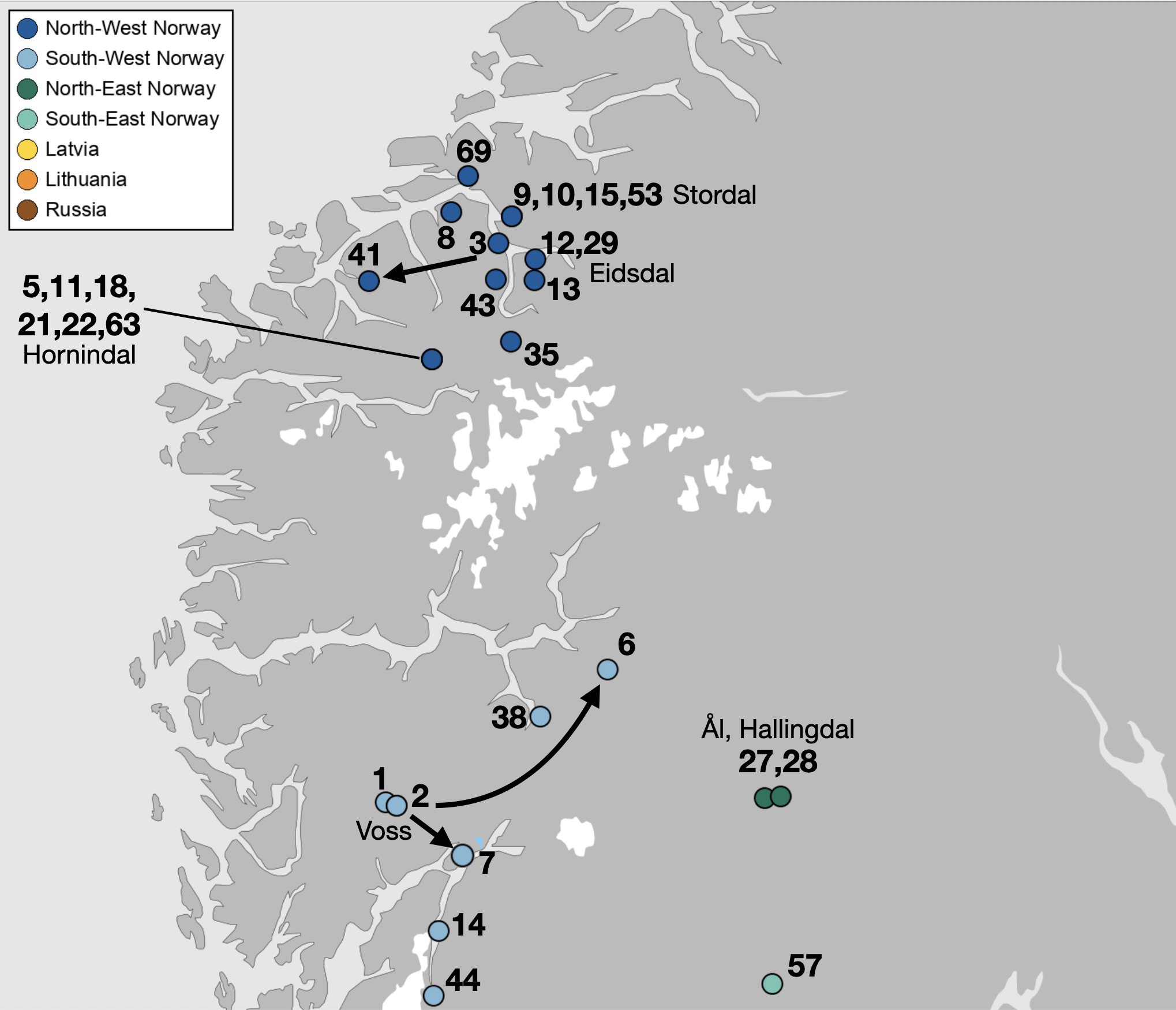
Will the space craft land? Will greater freedom return to Hungary?  Will the ceasefire hold? These are the questions for the week to come. Until then, some beer news. First up, Lars announced the publication of a study of farmhouse yeasts of northern Europe, the culmination of years of work and a number of challenges:

The paper was done by the Verstrepen lab at the VIB-KU Leuven Center for Microbiology, the same place that did the famous paper giving us the first view of the family tree for brewer’s yeast. Work on the paper started in September 2017, when I mailed off the first batch of yeast cultures to Leuven. It had gotten quite far when covid caused Belgium to shut down so hard that everyone must work from home, and obviously you can’t do lab work at home. By the time restrictions had lifted several people had moved on to other jobs, and the paper sat languishing until Peter Bircham decided to pick it up again. He and I worked on it for a while, until Peter moved to New Zealand. Eventually, once he was settled there, a Gang of Four got it moving once more, and last year we finally submitted it.

This is very important stuff and a worthy outcome for all his years of effort. The study describes seven cultures or zones rather than strains as these “cultures have been reused by farmhouse brewers for at least centuries, quite possibly millennia, so they consist of lots of different strains.” The, as illusrated by the map under that thumbnail, the study describes how each culture relates within its zone. Super neato. Lars has also been out skiiing in shorts, too.

Staying in Scandenavia, Knut has shared a profile of a pub in Sweden. Ruckel Beer Bar, where he spent part of Good Friday productively:

Ruckel means shack or hovel in English, a description or the building they took over when they were starting the brewery. I doubt the premises they have moved into with their new pub fit the ruckel description, but they have certainly put in many hours to make an inviting pub, split into various zones for eating, drinking and hanging out.

Ruckle is a new and quite attractive word, at least for me. Not surprisingly, with an old Scandenavian connection, too. I have, on the other hand, heard of other old things like the Cooper’s Hill cheese roll as well as Royal Shrovetide Football but never before did I hear of the Hallaton Bottle Kicking each Easter:

[a] brutal competition between rivals trying to wrestle barrels over a mile-long stretch of countryside. Hallaton Bottle Kicking is an ancient tradition, held each Easter Monday, in the village of Hallaton and neighbouring Medbourne… One “bottle”, which is a wooden cask much better suited to the rigours of the scrum than any glass item would be, is then decorated in red and white then paraded to the top of the village where the contest between Hallaton and Medbourne begins. The game is a best of three, with two “bottles” containing beer and the third completely wooden decorated bottle – which is referred to as the dummy. The outdoor sport is played across about a mile of open land and the two teams attempt to move the bottles over to the opposing team’s parish at each end of the area.

As noted in the B+B Patreon notes from last weekend, Eoghan alerted us to the closing of De Kulminator in Antwerp, a famous yet quirky beer bar with a vast selection of old bottles that created an odd test question that must be answered to qualify for entry:

Apparently they asked you what you wanted to do there – if you said drink a beer, no entry. If you said “enjoy a beer”, open sesame. But as I said, I never ran the gauntlet

One newspaper declared (testing your Dutch, not mine) “Het beste biercafé ter wereld is niet meer.” I think you can get the drift. Yet one Mr. W. Hawkes askedWhat will they do with all that manky old beer?” Boak and Bailey visited in happier days in 2010, paying the price accordingly, as did The Beer Nut in 2017. Relatedly perhaps, Eric Asimov in The New York Times shared his observations on the shift in the sweet price point for best value in wine:

Good wines can come from anywhere and anybody. The value is in identifying these little-known producers and regions before they are more widely discovered, and prices go up. That requires a fair amount of trial and error and taking chances on the unknown. How long will $15 to $20 remain the sweet spot for these sorts of wine values? It’s a lot harder to find them today. While I will continue to take on this particular challenge, it’s fairer to say $20 to $30 today is what $15 to $20 used to be. But that conversation is restricted to the least expensive value rung… That underscores a key rule of value hunting: The greater the splurge, regardless of the price, the less inclined you are to explore and the more you want a sure thing.

Do we talk of value with good beer in a similar way? Does manky old ale have value? Perhaps a few do but through the arc of the rise and fall craft beer over the last twenty years, the wider market never really established the sort of constructs that provide some confidence in relative value that we see with wine. Too often commentators seem content go back to the same shallows that may have helped set up good beer for its cultural nosedive in the first place. Even as so many beers were presented and consumed as near clones of each other in an oligopolistic manner, little attention was given to advising consumers about which beer could be swapped out for what at, say 50% or 80% of the cost.  Could that change now that the kid (if not boxing) gloves are off? As you think on that, here are some notes:

Note #1: Perhaps don’t cheat on your forensic expert wife.
Note #2: “Broken toilet, no showers and farts“… yet not a pub.
Note #3: “Trends continue to oscillate week-to-week…

And… we are back. Following up on that last note, discussions in investment circles are indicating… or at least suggesting… or maybe only postulating that the price of shares in brewing corporations may have hit bottom and are (…potentially…) ready to rise:

The central question is whether shipments will finally catch up to depletions. Analysts note that consumption trends accelerated throughout the December-February period and continued improving in March, but shipment data through February hasn’t yet reflected this strength. Multiple Wall Street firms cite distributor feedback indicating momentum has returned, particularly in scanner data showing March beer volumes up 6.5%.

At that point in the marketplace, the trends are most relevant for macro brewing. Will you invest? For What’s Brewing, Laura Hadland shared an experience at Heineken where the mega brewery approaches the task at hand from an unexpected angle:

I was baffled as to why the tour guide was giving us the in-depth view on its malt and the hallowed Heineken-A yeast, but nobody was talking about hops. At all. I even asked the question explicitly: what hops do you use? The tour guide didn’t know. Neither did the colleague that she ran off to ask. It was only when I (luckily) found myself in the company of global master brewer Willem Van Waeberghe, that I discovered the answer. The answer was, it doesn’t matter. In the Netherlands, Heineken sources hops from the US, but its licensed brewers around the world can source whatever they want. All the hops are added at the start of the boil for bitterness only. They never have a second hop addition. All of Heineken’s flavour, which is perhaps a little fruity, a touch herbaceous with just the tiniest note of aniseed, comes from the yeast esters.

Conversely perhaps, as reported by Kendall Jones, tiny Big Block Brewing in Washington State has found new flavours in old hops:

​“We got a bunch of ladders and laid them down over the blackberries and used them to get into the hops,” says Julum. “A lot of cuts and scrapes later, we had enough hops to make a batch of beer. The problem was that Sammamish State Park was in the process of removing all of the invasive species from the land, and hops are an invasive species, so we needed to do more than pick the hop flowers. We had to dig up the rhizomes so we could replant them”… Likely, Ezra Meeker was the source of the original rhizomes, as he was for so many farmers in the area at that time. Meeker primarily cultivated English Cluster hops. The Monohon hops are very likely a descendant of that variety. 

Well, likely by the time those hop rhizomes hit the continent’s Pacific side, Cluster-esque might be the better way of putting it. And Colbier Brew Co., a “Bootle-based brewery” is the subject of this week’s feature in Pellicle. “Bootle” is also another old word for a dwelling which may well be a cut above a “ruckle” but none of that is part of the story as told by Rebecca Crowe who first encounters a beer by Colbier named Falsetto:

As a lover of the darkest pint of cask beer available, the ideal of white stout is like a unicorn to me, and I must find it. Eventually, I receive a message from the team at Doctor Duncan’s, a pub on Queen’s Square near Lime Street station, who tell me it’s in their cellar and that it’ll be on soon. When I finally get a pint of Falsetto in front of me, I’m entranced by its bitter, chocolate notes. Close your eyes, and you’d swear you were drinking a dark beer, albeit not as unctuous and creamy-tasting as Colbier’s oatmeal stout, Nocturne. However, the bitterness and innovative nature of a white stout is the perfect signifier of what this Bootle-based brewery likes to do.

White stout, eh? Something like myself, I suppose. Enough of that. Next, a tale of crime at the government liquor store back home in Nova Scotia:

In 21 years of policing, RCMP Sgt. Serge Landry says he’d never seen anything like what was seized from a home in Dartmouth, N.S., just before last Christmas. After a two-month investigation into significant alcohol thefts from NSLC stores in the Halifax region, officers seized more than 450 bottles of hard alcohol worth almost $20,000 from a home on Floral Avenue. Police even seized a ledger detailing the alcohol being delivered to the home and what had been resold. “I’ve never seen it to this scale,” said Landry.

Not just alcohol. Hard alcohol. Always been this way. As a lad, I remember a summer job painting a house next to the one run by the bootlegger. Steady traffic on a Sunday afternoon, back when the government store was shut. And there was the other job at the senior’s house when one resident born before the First World War ratted out another of a similar age for running the ice delivery warehouse which contained a bootlegging operation out of the middle of the warehouse, amongst the walls of neatly stacked ice blocks.

Finally, following up on last week’s story on the effect of Gulf War III on the cost of beer packaging in India, NPR is reporting this week on another pressure that might arise as global aluminum supplies have also been affected:

Aluminum prices recently hit a four-year high, after Iran struck two large smelters of the metal in the Middle East. Both of them were major suppliers to the United States. Aluminum, which is on the list of 60 minerals deemed critical by the U.S. government, is widely used for beer and soda cans, in cars and packaging.

Well, that is it for now. Crisis and crime yet exploration, each in its way human-kind caused. And another possible positive week for the beer trade. Beer likes peace.  As we wait for the results, please check out Boak and Bailey who are posting every Saturday and adding to their fabulously entertaining footnotes week after week at Patreon. And look out for more of Stan’s new “One Link, One Paragraph” format. Then hunt out something in someone’s archives! Leave oblique comments on someone’s post from 2009!! Listen to a few of Lew’s podcasts and get your emailed issue of Episodes of my Pub Life by David Jesudason on certain Fridays. And Phil Mellows is at the BritishBeerBreaks. Once a month, as noted, Will Hawkes issues his London Beer City newsletter and do sign up for Katie’s wonderful self-governing totes autonomous website featuring The Gulp, too.  Ben’s Beer and Badword seems to be on pause since November but there is reading at The Glass which is going back to being a blog. Any more? We have Ontario’s own A Quick Beer and All About Beer is still offering a range of podcasts – and there’s also Mike Seay’s The Perfect Pour. Plus follow the venerable Full Pint podcast! And there’s the Craft Beer Channel on Youtube. Check out the archives of the Beer Ladies Podcast. See you next week!

I Declare! These Beery News Notes Are Extra Interesting! Fascinating Even!! Aren’t They… They Are, Right??

Is this fascinating? I think about that at certain quiet moments. I mean I do my best but I can’t answer that question. Only you can. That is the one thing writers don’t talk that much about. The readers. 1.7% of me fully believes that any attention I receive in response to these scratchings is by sociologists asking “why?!?!?” But that is fine. They… like you… are readers. You will weigh the evidence and make your judgement. We just have to remember as our friend Laura H. learned this very week: “it was revelatory to them that beer people exist.” As least I acknowledge you exist. I do. That’s gotta be worth sumthin’.

Where to start? Big news from the seven seas to start with. I love this story about a brewery on a boat, continuing the fine tradition reaching back to the 1660s and again in the 1850s. Except this time it was not Arctic explorers wiliing away the winters when the seas were frozen, as Jessica Mason reports:

…the cruise’s bar manager Giulio Giannini said: “Basically, we desalinate seawater through osmosis. The resulting water is pure H2O, nothing more. From there, the entire brewing process begins.” According to Giannini, all production takes place entirely on the vessel, this encompasses milling and brewing right through to fermentation and maturation. A feat that puts the task into the realms of challenging, but not impossible. Speaking to the drinks business, beer fan Mark Cole admitted that, for him, the move to house a microbrewery onboard “might make me actually consider a cruise,” showing that the positives for the sector are that it will help broaden the audience for cruises in general, attracting beer drinkers.

Would that swing the decision to take a cruise for you?  All a bit too busy for me. Me, I am more attracted by these excellent observations of a moment of quiet from ATJ:

I am not the first person in the bar, there is another drinker to the right of me, sitting on a banquette against the wall, next to the fire burning in the grate, white wispy hair hoping to reach his shoulders, perhaps a memory of his youth as a rocker. His glass is half full, beer, amber and what he has drunk so far has left a playful trace of lacing on the glass. He is not reading, neither looking at his phone; he is just looking ahead, and doesn’t seem to have that eagerness on his face, a pushing forward of the upper part of his body, that might indicated that he wants to talk. He seems happy with the stillness of the bar, and like him I am also contented.

I like the stillness of a bar. It’s like taking a nap but you aren’t even at home. Speaking of things that aren’t like other things, I was lobbied to review what I had already noticed, Ben Gibbs‘ piece (at his newsletter with the excellent URL “soberboozersclub”) on alcohol free beer being offered by Bathams:

Alcohol free beer often arrives with messaging attached to it. Moderation and improvement. It’s framed as a better choice, or at least a more considered one. That language doesn’t land here. These pubs aren’t built around self-improvement, they’re built on ritual. The same pint, the same place, the same faces, the same small actions repeated over time until you don’t have to think about it anymore. For anything new to settle into that environment it has to feel ordinary. That is what Bathams alcohol free does. It sits on the bar without drawing attention to itself. It arrives in the same shape and occupies the same space in your hand. Nothing else in the room shifts to accommodate it.

That fits. Just as being “still” means quiet is can also suggest continuity.  Next, Knut. Knut? Knut! Knut was once a travel correspondent for this here publication, back when we had a few more voices than just me. Recently, Knut has picked up his pen again… or his keyboard I suppose… and has been writing on his newsletter, this time about the difference between what was Norwegian March Beer, then Easter Beer, then Spring Beer and then Export Beer:

The name was later changed to Påskebrygg (“Easter Brew”), and the sales period ran from March 1 to March 31. The name Påskebrygg met strong opposition from Christian groups, particularly the organization Kristenfolkets Edruelighetsråd (the Christian Temperance Council). The brewing industry decided to change the name, stating that it wished to respect the feelings of those who supposedly took offense at it. The motives in the ads and the bottle labels focused on a new activity – domestic ski tourism. We enter a new period with more leasure and, at least for some people, more disposable income. Following a naming competition, the beer was released in 1939 under the name Vårøl (“Spring Beer”). Påskebrygg and Vårøl were sold from 1934 to 1940. In the postwar years, Eksportøl (“Export Beer”) became their successor.

Make sense? Good. Me, I miss my tenuous access to Easter Beer. What else is going on? I need to pick up tips from Retired Martin who has been on the road again, this time wandering around Cologne, Germany – or, rather, standing around:

I knew I had to visit Gaststätte Lommerzheim (“Lommi’s“) at some point, why not now ? “It’s like the Hare and Hounds” I tell Matt. Frankly, you queue for opening, either for lunch (11) or teatime (4.30), or you miss out. James and Matthew weren’t convinced by the appeal of standing outside a suspect looking building on an unpromising street for a quarter of an hour when nicer looking open options called out across the Rhine. But as we chatted to two lads who’d travelled from Chicago (again !) with Lommies top of their list they began to succumb. And then at 16:30 the back door (the one marked “Keller”) opened, leaving those of us staring at the front door to make a dash for a table.

Staying in Germany but waiting much longer in the line up, Andreas Krennmair has been able to clarify a question that has bothered him for sometime about Munich’s Oktoberfest:

…the current restrictions on beer at Oktoberfest, namely that it can only be from one of the “traditional” breweries from Munich whose beer conforms to the Oktoberfestbier PGI regulations, which requires them to have a well going several hundred metres deep down, are not rooted in the festival’s own history. It is essentially a form of regulatory capture to make it exclusive to Munich’s big 6 beer brands that has been successfully defended in court before.

Andreas located documents showing that in 1895 there were 19 breweries with stalls at the festival. It’s a scam! Fight the power!! Leaving Germany with a few last stops, Franz Hofer wrote this week about the breweries in the towns and villages along the trainline crossing the border between Munich and Salzburg – like Privatbrauerei Schnitzlbaumer in Traunstein:

Renovated recently, Schnitzlbaumer boasts vaulted ceilings and large feature windows with views of the valley. The bar is backlit in that early 2000s atmospheric kind of way, and copper kettles glimmer in the subdued light. It’s a nice, airy space perfect for whiling away the early evening with a few beers. As for those beers… the best of the lot is their Weissbier, a richly textured beer that, with its elegant notes of banana custard and sprinkle of allspice, drinks almost like a Vitus. For what it’s worth, Schnitzlbaumer’s beers aren’t my favourite among Traunstein’s three breweries — a few hits, a few misses.

Reading that, I suddenly realize I only picked that passage so I and now you can say Schnitzlbaumer. Schnitzlbaumer. Schnitzlbaumer. As I approach retirement, I am never that surprised what I knucklehead I am. (Was that why the boss gave me that big pat on the back?) Still, probably more likely to see me on a train holiday like that compared to a cruise. But that’s me.

Note #1: A.I. sourced? Or just drifty and even a bit presumptuous?
Note #2: “It’s like K-Pop…
Note #3: OK Zedder.

For me, beer is like sports. Some folk drill down into the OBP, SLG and OPS of baseball players. Me? I just liked the Expos and now just like the Red Sox. They have sucked. They have won it all. So I do find it odd when beer writers call those at a different level of fandom abstraction “mansplainers” when they are clearly just shit talkers. If we accept that people like what they like they will also talk shit about what they like. ‘Twas ever so. In fact, there is so much shit talked about beer one can wonder where the facts may be found. But sometimes a study is revealing in terms of both ends of the research as Pete showed this week in his review of 15 mass market mainly lighter beers:

Many drinkers do unite in insisting that all the big multinational brands taste the same. This is not true. Some taste faintly of beer. Others taste of nothing. A sad few taste so bad, you wonder if you might have run over the brewer’s dog years ago and they’ve been plotting their revenge ever since. Nonetheless, I’ve tried all the most popular beers myself and ranked them from best (or least worst) to worst. Here’s hoping this helps you next time you’re faced with nothing but the usual pub suspects. 

The findings are solid. Asahi is “clean and crisp, designed to cut through fatty fried food“, #3 Guinness “kept well… it is much better than this faint praise suggests” and #4 Heineken is a “little sweet, but it has integrity.” One thing I have always disagreed with is the idea that light beers are distinct from good beers. As homebrewers know, making something subtle is both more difficult and more rewarding than a bombastic brew. I’m quite happy with anything on the upper end of Pete’s list.

Going for something a bit more haute, Alistair checked one tick off his list when he headed to the hills of Virginia and Alpine Goat Brewing:

To get to Alpine Goat there is a little bouncing along a gravel track, but the views from the brewery and its beer garden over to the Shenandoah National Park are more than worth it. Seriously, if there is a more picturesque brewery in Virginia, I haven’t been there yet. Having packed the kids off with a ball, frisbee, and boomerang to snag a table with space for them to play, we went to the bar and naturally I ordered the pilsner…

Frisbee and boomerang? Lordly. Next, why did I think “PelliProtz!!!” when I checked my emails this morning?  Because this week’s feature in Pellicle is by Roger Protz who wrote about Bodger’s, a barley wine from The Chiltern Brewery which has been branded in honour of Roger Protz:

A “bodger” today means someone who does a shoddy job, cuts all available corners, takes the money and runs. But centuries ago, in rural Buckinghamshire, it meant something quite different. It referred to craftsmen who built chain-link fences for farmers to safeguard their crops and animals. Bodger’s, a barley wine from The Chiltern Brewery, celebrates that tradition. As mentioned, the brewery has recently released a special edition of the beer—one with my name and image on the label. It’s Chiltern’s generous way of thanking me for my support towards the brewery, and the wider independent brewing sector, over a writing career that has spanned several decades. The beer is a powerful 8.4% ABV, and has helped to restore a beer style with its roots in the 18th and 19th centuries.

Worthy. And I see that Katie Mather made the news this week, sharing her analysis of the differences with recent brewery closings in the UK with Jo Gilbert:

Speaking to Drinks Retailing, beer expert Katie Mather noted that “each brewery has different issues.” Regarding Molson Coors’ acquisition and subsequent closure of Sharp’s, she said: “This is a common pattern in the beer industry. Small breweries are picked up by bigger ones to extract value and ultimately crash the brand into obscurity.” Conversely, she added: “Brewdog was gutted by its owners’ greed and hubris and, sadly, it’s the workers let go on a 15-minute Teams call and the ordinary people who thought they’d be able to make some money from Equity For Punks who are left with nothing.”

Correct. And there is a great story of another sort death of craft brewing’s irrational and perhaps also manufactured exhuberence in the stock valuation of Boston Beer over the last five years, as reported in Seeking Alpha:

And there’s even another sort of interesting change in the beer market in Korea these days, too, as reported in The Korea Times:

A man in his 20s agreed, noting the appeal. “Japanese beer has a premium feel,” he said. “When I want something different from what I usually drink, Japanese beer is my first choice.” The current boom stands in sharp contrast to recent years. In 2018, Japan exported 12.5 billion yen (about 118.2 billion won) worth of beer to Korea. Exports then plunged to 900 million yen (about 8.5 billion won) in 2020 following the launch of the ‘No Japan’ boycott. The movement began in 2019 after Tokyo restricted exports of vital semiconductor materials, viewed by Korea as an economic retaliation against a Korean Supreme Court ruling that ordered Japanese companies to compensate victims of colonial-era forced labor. 

Finally, speaking of politics and division, the Minocqua Brewing Company in Wisconsin has made an offer that one day is guaranteed to pay off:

“Our notorious offer of free beer when ‘he’ dies is still on the table, and for all those who thought that internationally viral post was a little too dark or ‘classless,’ here’s exhibit ‘A’ on what’s good for the goose is good for the gander,” the statement there read. “For the Fox News and Daily Mail reporters who shamed us cuz he’s ‘still the President,’ will you be shaming ‘Shitler’ as well about his most recent post?”… The brewery added an update, “we meant the Madison Taproom because that’s open all year, if he dies in the summer, then it’s gonna be the Minocqua Taproom.”

That’s a date! I mean it would seem petty and even crass but, jeese, how many other breweries are going to do the same thing? Do you agree? Is going low a no go? As you consider that, please check out Boak and Bailey who are posting every Saturday and adding to their fabulously entertaining footnotes week after week at Patreon. And look out for more of Stan’s new “One Link, One Paragraph” format. Then hunt out something in someone’s archives! Leave oblique comments on someone’s post from 2009!! Listen to a few of Lew’s podcasts and get your emailed issue of Episodes of my Pub Life by David Jesudason on certain Fridays. And Phil Mellows is at the BritishBeerBreaks. Once a month, as noted, Will Hawkes issues his London Beer City newsletter and do sign up for Katie’s wonderful self-governing totes autonomous website featuring The Gulp, too.  Ben’s Beer and Badword seems to be on pause since November but there is reading at The Glass which is going back to being a blog. Any more? We have Ontario’s own A Quick Beer and All About Beer is still offering a range of podcasts – and there’s also Mike Seay’s The Perfect Pour. Plus follow the venerable Full Pint podcast! And there’s the Craft Beer Channel on Youtube. Check out the archives of the Beer Ladies Podcast. See you next week when I will be retired. Hence that photo up there. If you come back next week we’ll play a game called “did Al just screw up his future finances putting him in the poor house by when he hits 76 in 2039?” Oh. Me. Nerves.

Your Thursday Beery News Notes For The Week Of The Green And The Black

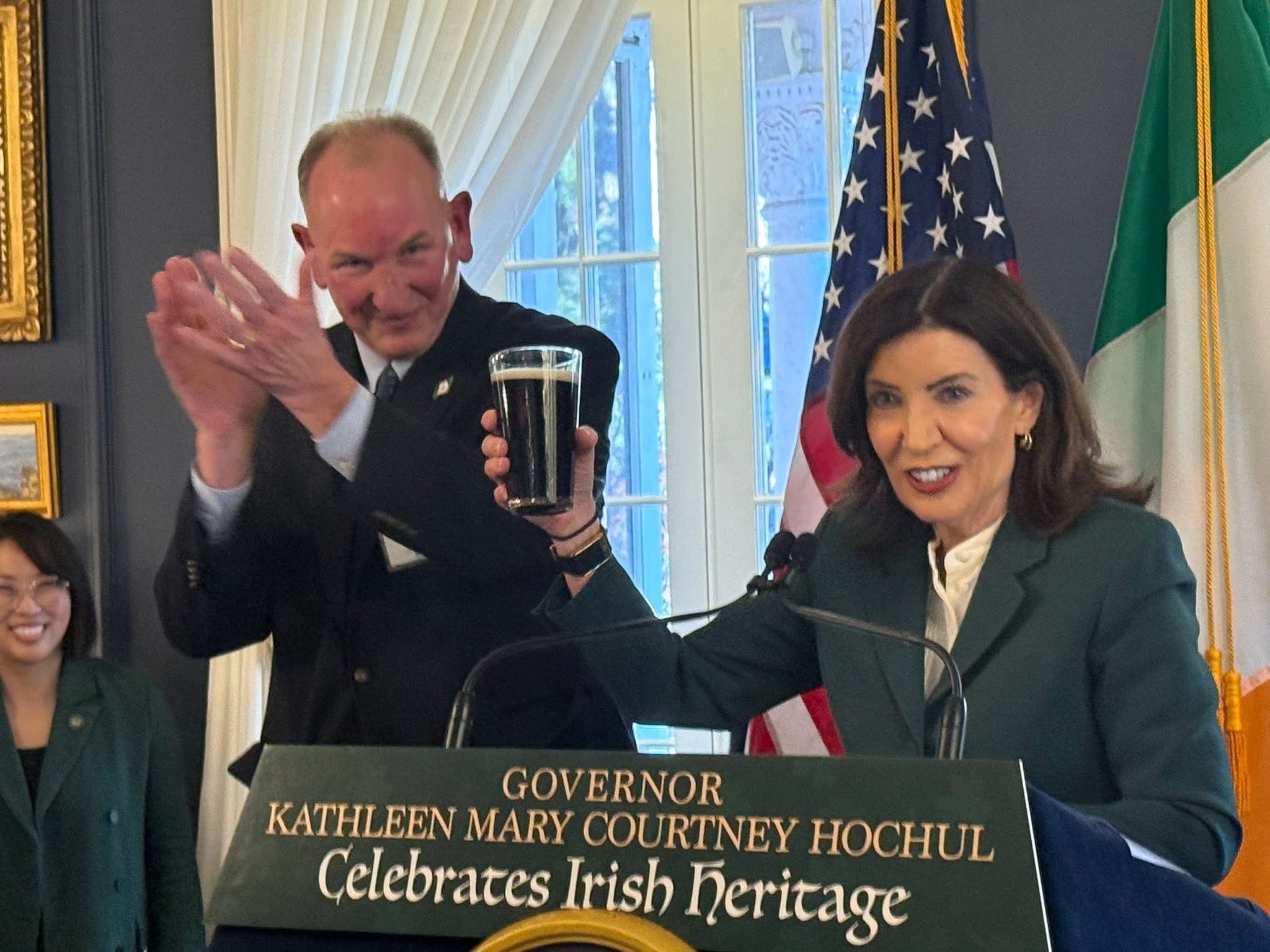
It’s that time of year. When being born of Scottish parents means nothing. Nothing!!! I think that is what Governor Kathleen Mary Courtney was actually saying when my FB pal (and fellow garlic grower) Sean took this photo at the Executive Manstion in NYC the other day. The Governor even has a pint of stout. Stout is in. Everybody says so. And see me, I am buying that black can of the 0% stuff quite happily. But what even is a stout? Does the Beer Nut have clarity on the question he might share? Let’s see:

Though a full 7% ABV, it looked a little thin on pouring, and is red-brown in the glass, rather than black, with a fast-fading head. The aroma is sweet, with lots of caramel plus an aniseed-candy herbal side. It’s not thin, I’m happy to say, but it doesn’t quite reach the realm of creaminess, and I wouldn’t have guessed it’s as strong as it is. The flavour is plain. Chocolate forms the centre and then doesn’t go anywhere especially interesting from there. There’s a little buttery toffee and a slightly acrid smoky side. Some coffee roast would have been nice; likewise proper hop bittering to take the edge off all the sugar, but neither materialises. 

That’s helpful. It’s not that. It’s not that. And it’s really not that. But still it sells. One question we saw this week on the question of stout is this: why are the Irish turning to Beamish in their hunt for stout? Well, one reason certainly makes common sense:

Another undeniable draw is that Beamish is often the cheapest stout available in pubs.  A pub in Dublin, a county where pints have become infamously expensive, recently advertised a pint of Beamish for only €5.40. Ciarán said the drink is generally at least 50c cheaper than other stouts, one of the reasons he said students have always been fond of it. Another Beamish fan, Richard, thinks the popularity of the stout solely comes down to its price and availability. “It’s consistently €1 or 50c cheaper than Guinness,” he said, adding that as it is owned by Heineken it is also widely available in bars. “I don’t think they’re doing anything special other than being a small bit cheaper,” he added.

Always looking for value is The Tand who has found renewed blogging energy with five posts so far in March after taking a break since last November. Which post to choose as a classic of the man’s oeovre? Consider these comments on the Hand and Marigold in Bermondsey and how they reflects both his careful observations and his established standards:

The pub itself is handsome, well laid out inside and the staff in my experience are helpful. Glasses are oversized ensuring a full pint and the cask beer is well-chosen, and by and large has been in very good condition when we’ve visited. Perhaps it is the times we’ve chosen, but it hasn’t been very busy when we call in, but us being a bit older (ahem) it tends to be during the day.  They are however extending it by opening a room downstairs, so hopefully it is doing fine. One observation is that twice we’ve called in winter and both times the pub has been pretty cold.  Maybe that’s a money saving exercise, but it doesn’t really do it for me.  I expect to be warm in the pub.

It’s good to know what you want and what you like. Conversely, a check with the archives tells me that as early as 2011 I was somewhat ambivalent when it came to Innis & Gunn beers. After fifteen years, has the rest of the marketplace has caught up? We have learned that the administrators have begun to break up the assets:

The brand and its intellectual property has been included in a £4.5 million sale to Tennent’s lager owner C&C Group. However, the Perth brewery at Inveralmond Place is not included as part of this deal. C&C Group was a minority shareholder of Innis & Gunn and brewed its lager. Administrators said the collapse of the company was due to a combination of factors including a “decline in consumer spending and rising cost pressures”. “It is with deep regret that redundancies will need to be made,” they said in a statement. “The administrators would like to thank all the employees of the companies for their hard work.”

Imran Rahman-Jones had fonder memories from a happier time for I&G:

My introduction to craft beer came from my eldest brother. In the late 2000s, when I was still a teenager, small brown bottles started appearing on the top shelf of the fridge. He’d discovered this Edinburgh brewery called Innis & Gunn and their bourbon barrel-aged beers. I was allowed to try a few sips and was surprised at what hit my tongue. My experience with beer up until then had been the odd warm can of Carlsberg in the park, or a taste of my dad’s bitter, which rarely breached the 4% ABV mark. This stuff was intense and alcoholic, like drinking boozy butterscotch. I could only really get through half a glass.

Maybe it was the moment. Boozy butterscotch was sort of where I was going, too. Was I wrong? Or was it an acquired taste? What even is that?

Is there a more backhanded compliment, a more passive-aggressive judgment, a more of kiss-of-death phrase, than “Well, I guess that’s an acquired taste”? It’s also rather centering of a certain type of American suburban taste mindset. I mean, if you grew up in another culture, black salty licorice, anchovy, sea urchin, espresso, fish sauce, huitlacoche, kimchi, vegemite, lutefisk, curry and scores of other so-called “acquired tastes” would not be acquired tastes at all. They would be innate. I grew up eating Scrapple, for god’s sake—an “acquired taste” for anyone but a person born in the Philadelphia metro area. Anyway, my point is this: Try pastis. Open your mind. Grow up. Make peace with your childhood dislike of black jellybeans.

I had no idea. I thought everyone went through a boring sophmoric late teen phase, reading Hemingway and drinking Pernod in the 1980s. You know, the one that preceded the boring sophmoric late teen phase, reading Waugh and drinking Pimms in the 1980s?  What!!?!! It was only me?!?!? Time for notes as I cope with that realization.

Note #1: “Drinking trash NA beers so you don’t have to…
Note #2: no, not regulations and, no, nothing set.
Note #3: “…it is just a widget.

It may be just a widget but the unexpected upswing in widgettery seems to be continuing according to BMI:

…craft beer remains up 0.3% by $$ with volume down just 1.6% yr-to-date thru Feb 22 in Circana multi-outlet + convenience data. That’s still lagging total beer, which grew 1.6% by $$ with volume off just 0.1%. So craft shed 0.1 share. But trends are much healthier for craft and total beer than they were thruout last yr…

Still… “where’s the Allagash White?” asks Michael Stein in DC:

So what’s replaced Allagash White? Hard to say exactly. What wasn’t there in 2021? Unsure. And what’s there in 2026? Now that question I’ve got answers to. There’s Mickey’s Fine Malt Liquor and there’s Schlitz Bull Ice. There’s Coors Banquet and Coors Light. There’s Pabst Blue Ribbon, and there’s Steel Reserve. And while I just listed six brands, there’s only two breweries that own these / have these brands as subsidiaries: MolsonCoors and Pabst. There’s Modelo, Modelo Michelada, Budweiser, Bud Light, Busch Light, Michelob Ultra, Devils Backbone, and Stella Artois. These are all owned by Anheuser Busch InBev. Then there’s Lagunitas, Tecate, Heineken, and Heineken Silver. Guess who owns all these?

That’s a bit of reality right there. But not everyone wants the real when it comes to drinking, as B+B found out:

We were astonished recently to see someone sitting in the pub wearing a virtual reality (VR) headset waving two controllers around to manipulate objects in a virtual world.It just looked so weird and incongruous. His eyes were covered for one thing which immediately gets you into uncanny territory. Then there was the vigour and weirdness of his movements… At one point, he got up to go for a cigarette while still wearing the headset. We later learned that he could, in fact, see the entire room through the magic of augmented reality – something subtly different to virtual reality. But in the moment, it really looked as if he’d just decided to stroll through a busy pub while effectively blindfolded.

Young people today!  At least this isn’t the sort of thing that’s being seen in Bermondsey according to The Londoner:

If you speak to any of the owners on the mile, they now draw an almost church-and-state style separation between the “beer people” and the “Saturday crowd”. The former are who the Mile first started for: the craft beer nerds who can tell the difference between different subspecies of Sussex hops. The latter come in and ask for eight pints of lager before throwing up in your urinal. The problem is, the latter far outweigh the former — to the tune of thousands a week. The chaos they bring can be extreme: swastikas carved into toilet doors, glasses filled with vomit left on tables, old ladies in dry robes getting into fights. One bar manager tells me they’ve dealt with at least two different punters defecating on the floor, in one case in protest at being denied service. 

It’s enough to take a pass. Speaking of which, has the era of a dry generation youth moved on, leaving their kid brothers and sisters the opportunity to redefine their lifestyle? The Guardian reports from the UK:

Binge drinking rates among gen Z have risen sharply since their teenage years, according to research that challenges their reputation as “generation sensible”. Almost seven in 10 (68%) 23-year-olds reported binge drinking in the past year, while nearly a third (29%) said they did so at least monthly, up from 10% at age 17. While drug use is relatively limited in the teenage years, by their 20s almost half (49%) have used cannabis and a third (32%) have tried harder drugs such as cocaine, ketamine and ecstasy, analysis by University College London (UCL) found.

Assumptions refuted?  It isn’t always that clear. Whenever that old myth is trotted out that before a certain point beer was foul, smoky and dark – despite all evidence – I wonder what people are missing. Well, not dissimilarly,  science has now determined that contrary to previous assumptions, early humans were good cooks:

… at least some people living in Europe between 5,000 and 8,000 years ago were deft chefs. Stone Age cooks skilfully combined meat, fish, fruit and vegetables in cooked meals that followed local recipes, according to new research. Using chemical analysis and sophisticated microscopes, researchers…  examined residues found on 58 pieces of pottery unearthed at 13 sites across northern and eastern Europe dating from the last millennia of the Stone Age, before the dawn of the Bronze Age. The residues survive as charred “foodcrusts” left on pots and bowls. Mixed in with meat, mainly freshwater fish and shellfish, scientists found “wild grasses and legumes, fleshy fruits or berries, green vegetables and roots/tubers from plant species”. These plants included barley, wild oats, types of brome grass and other wild greens such as goosefoot, pigweed and saltbush leaves, as well as viburnum berries such as guelder rose berries.

An interesting perspective. And, from the “too much fucking perspective” file, human trafficking in the fields of Champagne has hit the courts in France with sentences upheld on appeal:

Convicted in the first instance to four years in prison, two of which were suspended, the main defendant, who headed the former wine service company Anavim, had her sentence confirmed for human trafficking, concealed work, and employment of foreigners without authorization. This woman in her forties from Kyrgyzstan was kept in detention. Her lieutenants, two thirty-somethings mainly in charge of recruitment, saw their sentences slightly reduced to one year in prison with a suspended sentence each. The court of appeal ordered the defendants to pay 4,000 euros to each of the 53 victims for their moral damage. However, the company of the winegrower who had called on Anavim for harvesting, the SARL Cerseuillat de la Gravelle, was acquitted on appeal.

While one can acknowledge the acquittal, one would also want to ask whether there has been an unjust enrichment of all those who received the benefit of the trade in these slave-made wines. Especially as inspectors had “found conditions that seriously endangered workers’ health, safety and dignity. The local prefecture later closed the site after finding makeshift bedding, filthy toilets and common areas, and dangerous electrical installations.” Bastards.

Finishing up on a happier note, the feature in Pellicle this week is by Will Hawkes, a portrait of the Sutton Arms in Clerkenwell, London:

The door at the Sutton Arms swings open and six Americans come bounding in like cocker spaniels just off the leash. After securing a table in the corner, they send emissaries to the bar. Lunchtime food options (“I’ll do a minted lamb pie”) and beers, from pints of cask ale to a half of Vault City’s triple-fruited mango sour, are discussed, and promptly purchased. Landlord Jack Duignan, who has stepped behind the bar to help out, takes in the scene. “Where are you from?” he asks, his gaze focused on the pint he’s pouring. “America,” one replies, perhaps a touch cagily. A pause. “Well I didn’t think you were fucking French!” Jack retorts. There’s momentary silence, then a burst of exuberant laughter, then clarification: Missouri, “right in the centre.”

Such language! And me a preacher’s son. I don’t know how people cope. As you consider that, please check out Boak and Bailey who are posting every Saturday and adding to their fabulously entertaining footnotes week after week at Patreon. And look out for more of Stan’s new “One Link, One Paragraph” format. Then hunt out something in someone’s archives! Leave oblique comments on someone’s post from 2009!! Listen to a few of Lew’s podcasts and get your emailed issue of Episodes of my Pub Life by David Jesudason on certain Fridays. And Phil Mellows is at the BritishBeerBreaks. Once a month, as noted, Will Hawkes issues his London Beer City newsletter and do sign up for Katie’s wonderful self-governing totes autonomous website featuring The Gulp, too.  Ben’s Beer and Badword seems to be on pause since November but there is reading at The Glass which is going back to being a blog. Any more? We have Ontario’s own A Quick Beer and All About Beer is still offering a range of podcasts – and there’s also Mike Seay’s The Perfect Pour. Plus follow the venerable Full Pint podcast! And there’s the Craft Beer Channel on Youtube. Check out the archives of the Beer Ladies Podcast.

Well… Welcome To Your “It Is March And The Good Times Are Here Again!!!” Beery News Notes

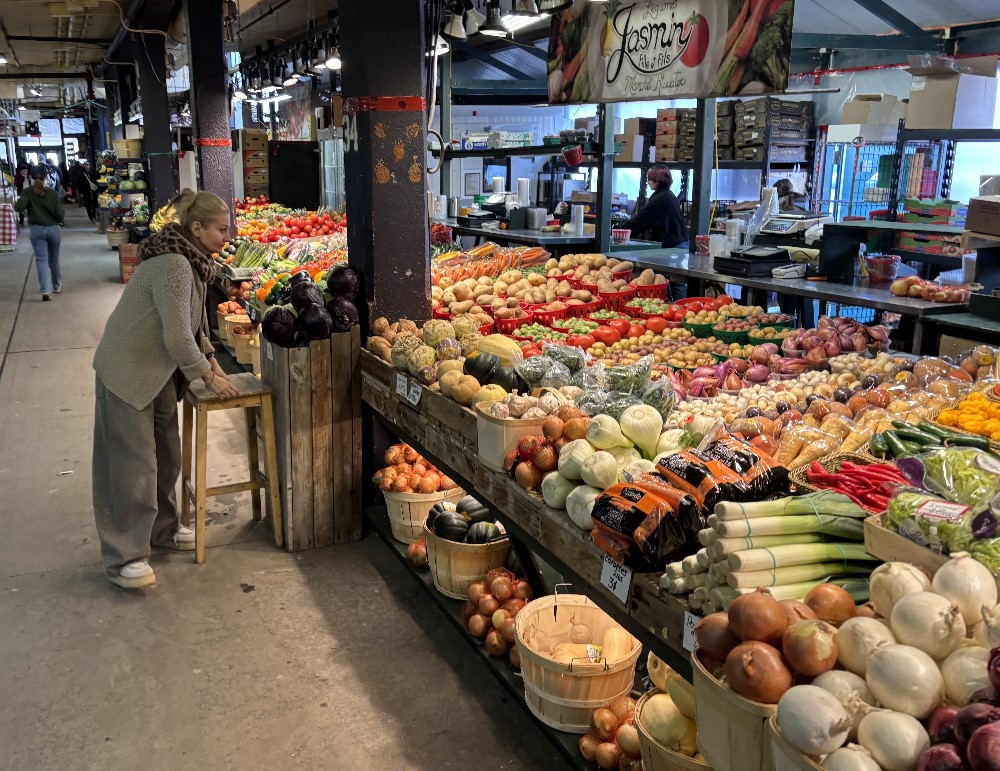
For well over 20 years, I have lost my marbles over March arriving as it did again last Sunday.   I may have created that image to the right in 2004. Such a clever boy! So well centered. Why do I love March, you ask? Not the green beer. Maybe not the green grass which might pop out soon. It’s the first seeds in the soil. The green green peas in loam. Soon, my precious. Soon. Otherwise, this is a bit of a scattered mix this week as I rush. See, I played taxi driver for folk going to a concert, spending about 21 hours in Montreal Tuesday to Wednesday. On the way out, hit Atwater Market as usual. Got my chicken cretons. Got my duck rillettes. The toast won’t know what hit it. And when toast wins, the beery news update suffers. Such is the way of the world.

Enough about me! First up, Jeff* has shared a retrospective on his writing career and how important blogging was to getting to the next step. Twenty years ago he started on a path (like Matty C a decade ago) towards  a number of leaps of faith. Leaps I avoided. I have my name on four modest books but didn’t see a future in that direction. Me, I can show you instead the bridge I had a large part in building. But they can show you publishing sales figures that put food on the table. It’s good to see that we were all right in our different choices.

Speaking of Matty C, for “Get ‘Er Brewed” he looked around his particular environment through the last holiday season and asked where the future may lie for a trade facing tough times:

I can face the hard facts and admit pubs are dealing with some of the worst trading conditions they’ve ever known. But I also believe that they will continue to persist, whether that’s through innovation and listening to what their customers want from them, or by sheer bloody-mindedness. Despite all the doomsaying I consider that there are still positives for pub owners. However, in order to extract these an equally optimistic outlook is required from publicans. Yes, prices are going to have to go up. Customers are going to have to get used to them and measure their spending accordingly. But I don’t think this will mean that people will stop using pubs, and that they’ll simply vanish off the face of the earth.

I tihnk that is a good baseline position to take. Beer does not go out of style even during an inflationary period… or even in a very localized deflationary one. The BBC had a story about another sort of good value care of one pub in Leeds:

A pub which was told selling a pint of beer for 25p during a promotion was “irresponsible” and a breach of its licence has instead begun giving them away. Leeds city centre pub Whitelocks offered customers their first pint of revived 1970s pale ale brand Double Diamond at the retro price as part of the four-day scheme, which began on Thursday. However publican Edward Mason said the council pulled the plug on the offer later the same day, saying it was in breach of mandatory licence conditions on minimum alcohol pricing. After seeking legal advice and discussing it with the local authority on Friday, the pub then commenced offering the initial pint for nothing. Unlike Scotland or Wales, England does not have a defined minimum price for alcohol.

A bit more scientifically we see that Kendall Jones at the Washington Beer Blog ran a very detailed survey on the place of IPA in his readership’s current mindset and had a significant response:

A few weeks ago, I posted a survey about IPA to gauge how people feel about craft beer’s most popular style. I was wondering if breweries are hitting the mark. Do the beers align with what people want? Have people’s preferences changed? Stuff like that. If you haven’t taken the survey, it’s still up there gathering data. I encourage you to participate! When the survey received 1,000 responses, I gathered the data. I will continue to do so as time moves on, but this report covers that first round of responses. Likely, this round of data comes from a pretty enthusiastic craft beer crowd, not the general beer-drinking public. Take that for what it is. In addition to the results, we also collected a large number of comments, which we rounded up at the end.

One of the particular results that surprised others is the result that Kendall noted: “Really? Nearly 80% of respondents say they understand the differences among IPA styles. I am not sure 80% of professional brewers understand the differences between IPA styles.”  This can certainly reflect the Washington marketplace as well as his readership but I do wonder if there is a difference between detecting the difference between styles and understanding them. I mean I can tell a Black IPA from a White IPA but I still left with questions like “why?” as well as “WHY????”  Go have a look and even add your responses as the survey is still open.  This is an excellent example of how a blog excels at some many sorts of beery writing that other formats can’t touch.

Speaking of excellence, Boak and Bailey placed another sort of question out into the ether – “Do you really want to visit the best pub in town?“:

Before Christmas we found ourselves in a pub surrounded by a group of people grumbling about the seating, the atmosphere, the beer, and everything else. It became apparent that a couple of members of the group had put together an itinerary for a crawl based on their preference for craft beer. We felt quite sorry for them as they tried to enjoy their pints while surrounded by moaning pals – but then what did they expect? What’s funny, we suppose, is that much of the discomfort and discontentment described in the various anecdotes above could be avoided if people just went to normal pubs, of which most towns and cities have plenty.

There is a lot to unpack in the phrase “the excellent is the enemy of the good” and this might be a very instructive context. I mean, I have sat myself in the Cafe Royal and it is utterly wonderful. But could it ever be as “mine” as many other pubs and tavs and dives have been over the years?

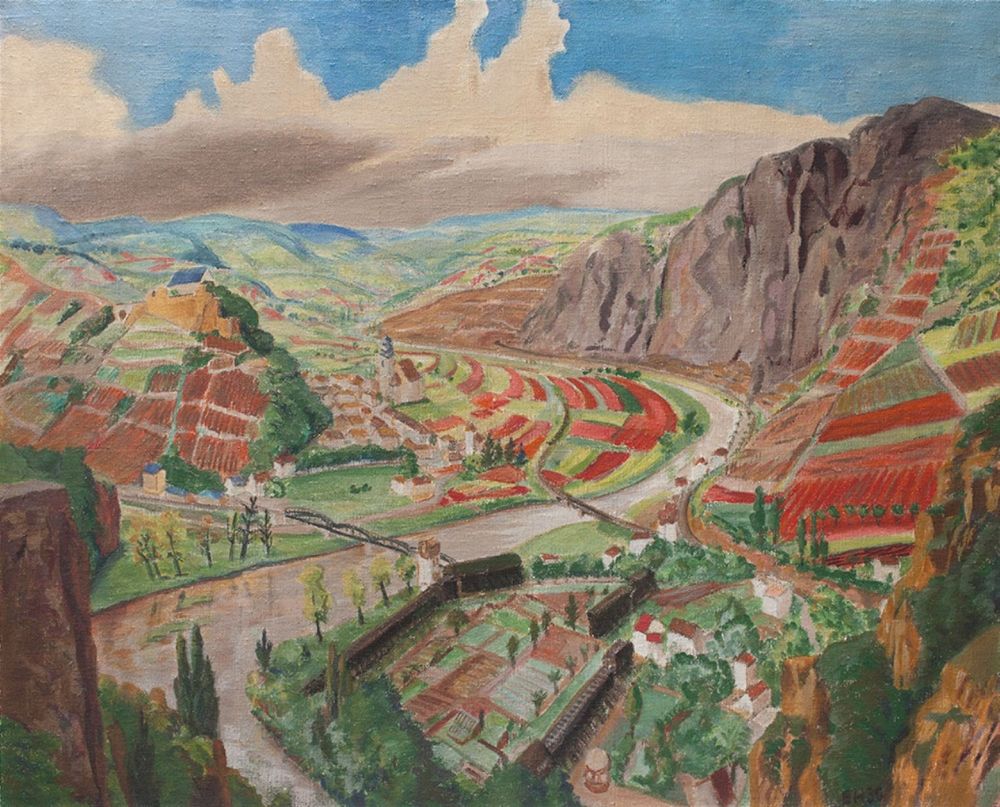
Also excellent and perhaps for Katie in particular, I saved this image of the Nahe Valley that pass by my eye this week. Shared by the AAWE, the no doubt authentic colours are surreal:

Erich Heckel (German 1883-1970), Landscape in the Nahe Valley, 1930. Many vineyards. Heckel was a painter and printmaker, and a founding member of the group “Die Brücke.”

According to the wikiborg, in 1937 the Nazi Party declared his work “degenerate” and confiscated his work, destroying much of it. Good to see one that was saved. Time for notes!

Note #1: Ottawa’s Kippisippi to close.
Note #2: BrewDog sale confused yet swift.
Note #3: 1690 brewing text restored.
Note #4: 1978 Joe Piscopo sighting.
Note #5: “Beer with Pals” is the best one.
Note #6: the A.I. bot that wrote this clearly has no idea what “craft beer” is or is it the guy interviewed who doesn’t.

What’s next? Well, I suppose the big news is the surprise takeover of a deadend business location:

A brewery has been allowed to open a new beer café in a former funeral directors site. West Suffolk councillors have given Charles O’Reilly planning permission to turn the former funeral directors at The Shutters, in St John’s Street, Bury St Edmunds, into a beer café and tap room, during a development control committee meeting earlier today… Jane Marjoram, a resident, recognised the importance of such establishments but told councillors the area was a ‘quiet, friendly community’.

 “Very quiet…” said Jane as they leaned forward winking at the committee members. What else? Oh. Yet another, yawn, tale of a forgotten wine cellar under a golf course (h/tKM):

“So we’re thinking it’s just a drain that needs digging out and clearing and repairing but as we dug deeper the chasm underneath just opened up.” Steve said he and his colleagues then noticed a brick structure. He was able to climb inside and look around with a torch and found dozens of empty glass wine bottles. “They’re all odd shapes and stuff so they’re obviously extremely old bottles,” he said.

Speaking of being under, similarly attractive are the summaries of the US beer market in 2025, as this from BMI:

US beer shipments were down more than 5% to ~183 mil bbls for full year 2025 vs 2024, Beer Inst, TTB and US Dept of Commerce data suggests. That amounts to a 10-mil-bbl drop in one year, the 2d tuffest decline in US beer history (post-prohibition) only behind brutal yr in 2023 when shipments sank 5.2%, 10.8 mil bbls. But unlike 2023, beer price increases didn’t come close to offsetting volume loss with CPI for beer at home up just 1.1% for the year, suggesting brewers’ collective revenue likely posted the largest drop ever in a single year post-prohibition.

And Stan raised shared an interesting observation that I suspect might well be connected to those stats:

“If it is beer flavored beer it comes from the brewing side. If it is not, it comes from the marketing side. (FW’s) Michelada did not come from the brewing side,” answered Firestone Walker brewmaster Matt Brynildson.

More grim news. Yet… here was have another trip to France care of Anaïs Lecoq in this week’s Pellicle which unpacks another cultural touchstone, the bar Pari Mutuel Urbain or PMU:

A rade was originally slang for a bar counter, though it’s come to define a popular neighbourhood bar with a somewhat dated look, but a warm and lively atmosphere. Do not imagine the brown-wood aesthetics of a British pub: Think mosaic tiles on the floor, flashy paint on the walls, a Formica bar dented by years of glasses sliding across it, and worn-out faux-leather booths. … The bar PMU is the epitome of the rade. These spaces will never be advertised as places worth visiting if you’re a tourist. You won’t find them listed as hotspots on the internet, because they don’t look good enough for an aesthetically pleasing Instagram feed. Their history, deeply rooted in the working class, labour struggles, and immigrant communities, is not designed for glossy consumption. 

And also yet yet… in this comparison of health effects in The Harvard Gazette at least beer does not find itself at the bottom of the beverage ladder:

The mixed picture for alcohol consumption was in contrast to what panelists agreed is a much clearer one for soda, energy drinks, and other sugar-sweetened beverages, including sugary fruit juices. A 12-ounce can of a popular soda brand has 10 teaspoons of sugar, an amount almost nobody would add to a cup of coffee or tea, Rimm said. Sugar-sweetened beverage consumption is linked to rising obesity, which itself raises cancer risk, and diabetes, which increases risk of heart attack and stroke. “When you compare a soda to water, or soda to coffee, or soda to tea, whatever you’re comparing it to always wins,” Rimm said.

Finally and… finally especially for me, one more inter-provincial trade barrier has fallen and, for me at least, an important one. Soon I will be able to directly buy Nova Scotian beer from the homeland of my youth and have it shipped to me here in Ontario the homeland of my… umm… post-youth:

Ontario and Nova Scotia have agreed to let their residents buy alcohol directly from the other’s province, part of the premiers’ ongoing work to bolster interprovincial trade. Producers of beer, wine and spirits can start applying Tuesday to the province’s liquor corporation for authorizations to do the direct-to-consumer sales, a process the premiers say will only take a matter of days. Ontario Premier Doug Ford says strengthening interprovincial trade is a way to counter the effects of U.S. President Donald Trump’s economic attacks on Canada. Nova Scotia Premier Tim Houston says… knocking down interprovincial trade barriers is “a bit like whack-a-mole,” but that direct alcohol sales is a great one to tackle because it is so visible for consumers and producers.

Please sign up every single Nova Scotian producer, please. Then I will be able to hover the fickle finger of fate over your webstores.

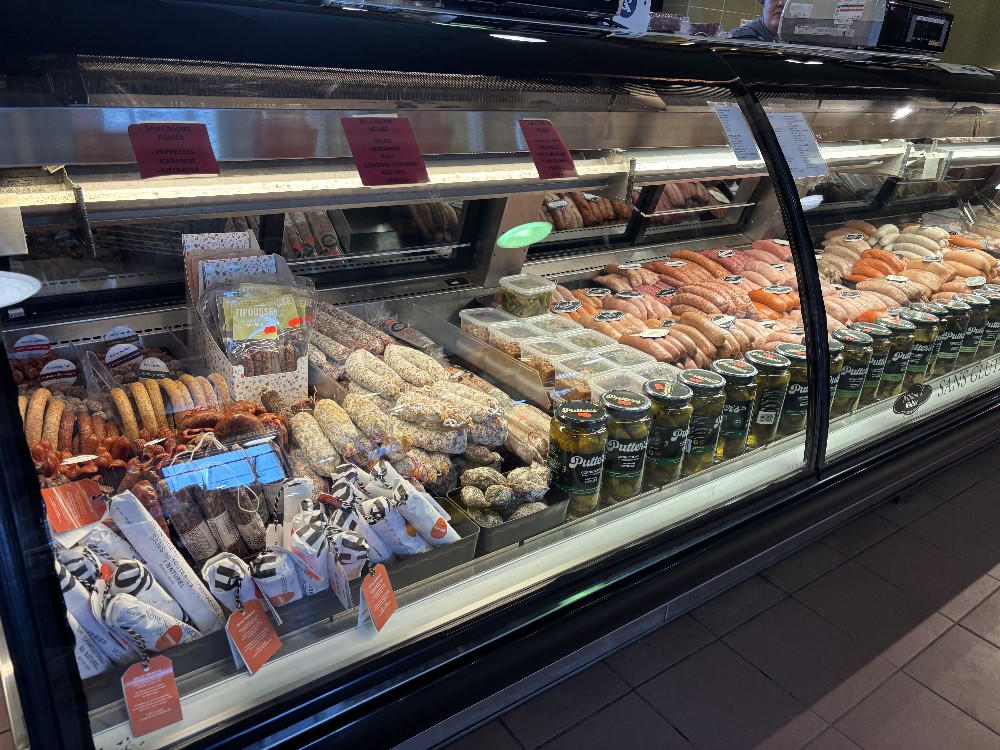
There. I achieved my second goal this week. After buying sausages at Atwater Market, that is. I largely avoided mentioning the new assets added to the Tilray portfolio, the second strangest story involved those assets after… you know.  From this point on, it is all now officially just a boring story at least in my office. So with that until next week, please check out Boak and Bailey who are posting every Saturday and adding to their fabulously entertaining footnotes week after week at Patreon. And look out for more of Stan’s new “One Link, One Paragraph” format. Then hunt out something in someone’s archives! Leave oblique comments on someone’s post from 2009!! Listen to a few of Lew’s podcasts and get your emailed issue of Episodes of my Pub Life by David Jesudason on certain Fridays. And Phil Mellows is at the BritishBeerBreaks. Once a month, as noted, Will Hawkes issues his London Beer City newsletter and do sign up for Katie’s wonderful self-governing totes autonomous website featuring The Gulp, too.  Ben’s Beer and Badword seems to be on pause since November but there is reading at The Glass which is going back to being a blog. Any more? We have Ontario’s own A Quick Beer and All About Beer is still offering a range of podcasts – and there’s also Mike Seay’s The Perfect Pour. Plus follow the venerable Full Pint podcast! And there’s the Craft Beer Channel on Youtube. Check out the archives of the Beer Ladies Podcast.

*He also shared his thoguhts on the weird we have witnessed over the last two decades.

Your “Don’t Let The Door Hit You On The Way Out, February 2026” Edition Of The Beery News Notes

cat on carpet before a TV screen with hockey players playingFebruary does one decent thing each year. It is short. We were also one goal short the other day. But that is a different thing. Canada is outraged to the point of almost saying something. In our house, the cat spoke for us all. Stunned disbelief twinned with a day dream about what was in the food bowl in the next room. I hope we get over it …soon. Even Trump was oddly gracious. In passing during the State of the Union he said of the gold medal win “…they beat a fantastic Canadian team in overtime, as everybody saw. ” Hardly triumpalist gloating.  The cat’s reaction was the same: “…food bowl… food bowl…

Let’s jump into it, shall we? Katie M has shared thoughts over at The Gulp on her return to a favourite spot, The Highland Laddie, in the perhaps less than loved city of Leeds. Being related to generations of Highland laddies and perhaps being accused of being one on occassion, I am won over by the headline. But there is more, a hidden elder gem amongst a brutalist landscape:

The room smells of the woodburning stove and warming comfort food, and as the rain sets in for the night outside, I get the distinct feeling I could spend the whole evening here. But it is 4.30pm and I have somewhere else to be. My evening plans end earlier than I expected them to, and so instead of heading back to my room at Leeds’ premier drag showbar directly, I pop into The Highland Laddie for another pint. I like to play-act at being a regular in pubs that make the effort to make me wish I was one. I order a pint, poured just as black and white as the last, and watch the pub slowly close down around me with the exercised ease of a team who have hospo work in their bones. The rush is over and the tables are free for all until closing; a small group of students are drinking cider on the table opposite and talking about current affairs in broken soundbites. I get my book out and settle into my corner banquet for a cosy hour before heading back.

Lovely. Bear with me. More on pubs. It’s a bit pub heavy this week. Frankly. Let’s move to a happy sort of seasonal note from Sean of Tom’s Tap in Crewe:

I must say the sun being out and being able to pay suppliers is infinitely preferable to it pissing down and having to ring them to say you can’t because it rained all weekend. Thanks to everyone who came in this weekend, you made a difference.

Sun’s out, sales up. Interestingly, the effects of the poor weather elsewhere in England had another decidedly opposite result:

After a record-breaking start to the year for rainfall, some businesses in Richmond, North Yorkshire, claim that rather than deter customers, the weather has encouraged them to spend time inside and open their wallets. Daniel Williams, landlord of The Town Hall pub said takings at the start of 2026 were up 20% compared to previous years. “The weather being as terrible as it is has really helped us – people are looking to escape the horrible weather, so we certainly can’t complain at the moment,” he said. “We’ll get massive groups in because they’ll have come out for a walk, got sick of the walk and then come into us, so it’s been very positive for business I’d say.”

Pouring rain? Sales… up.  David J wrote excellently for CAMRA’s publication What’s Brewing about the theory of social cohesion and the British pub:

Alcohol has its many downsides as I can attest having a childhood punctuated by my father’s alcoholism, but it lowers people’s inhibitions making them willing to talk. It’s why you’re more likely to spark up a conversation over an interesting cask beer instead of waxing lyrical to the person next to you about the smooth flavour of an Arabica coffee bean… The other argument that “local shops perform similar functions” to pubs may have an element of truth. I do chat a lot with a friend who works in a deli near me and I’m very fortunate to do so. And fortunate is a key word because this is a rare gift that not many areas have: a thriving high street with varied shops.

Got the urge to chat? Go to the pub. But cultures differ. We still have towns with maybe fewer shops but there are some plus active bakers and butchers over here as well as a cultural cornerstone of a coffee chain. One unexplored question that always nags me about the argument is this: what’s with all the inhibition in Britain?  I’ve never been more accosted by conversation sparkers than at a church supper – but maybe that’s because I was a minister’s kid and was an easy target. Outside of session, even court work was always a chatty chummy time when I was a young lawyer… even if the humour leaned towards the grim.  I wonder if there is a causation question at play. Yet… David also recently wrote about the pub in a time of mourning and it may help answer it from a subtler point of view: it is the place, by choice or tradition, where such things happen so that is where they happen. See? I get my learning from my reading.

So… don’t know what to say? The pub helps. Yet, and perhaps again conversely, Pete B. wrote a great piece in The Times on the joy – and value – of cans of beer at home:

“The 4-pack pint can is most popular format for lager buyers in convenience stores, growing at 9.4 per cent over the last year. People in convenience stores are usually on-the-go. The pint can feels like good value, especially as they’re quite often price-marked packs.” This value deal seems important. We are spending less on alcohol, something which applies to our supermarket shopping too — beer sales at the supermarket were down £371 million to £7.37 billion last year. And drinkers know that beer in pubs is more expensive than in supermarkets. If you can see that four pints is costing you £6.95, it brings a pint in a pub — which in the UK costs on average about £5 — into much sharper perspective…

To review. Highland Laddie? Comfy. Sun’s out, sales up. Pouring rain? Sales… up.  Got the urge to chat? Go to the pub. Don’t know what to say? The pub helps. If you have the means. If not? A tin at home. An antidote to funflation.

Note #1: Tune in later today for Jeff’s talk in US beer.
Note #2: Sharps Brewery in Corwall to close.
Note #3: “…disturbing accounts of industrial accidents…”

Terroir in cider? NO! There is clearly an “i” in the sentence. Not terror. Terrior. That’s the theme of the article what Barry himself guided us all to in Cider Review which wonderfully traces the history of the concept in depth, like in this passage which reveals the hidden truth:

Terroir as a term also took a sharp diversion through the 17th and 18th centuries. This is why, despite their veneer of modernity, a gulf of time and meaning separate early references to regionality in cider from the modern cider terroir conversation. To taste terroir – linguistically still a reference to land – was to experience a crude character shaped by natural setting. Even for Le Paulmier, it was often something inelegant or dirty; gôut de terroir, lauded by vintners today,was essentially a mouthful of soil. Provincial vineyards, at the mercy of their rural, unsophisticated settings, could only ever offer ‘terroir wines’ fit for the peasantry, themselves made rude and rough by that same land. By contrast, the carefully cultivated vineyards of the Île-de-France (the area around Paris) were free from terroir, producing elegant ‘cru wines’ reserved for the nobility.

Hah! Terroir meant dirty after all!! And, sticking with the agri, Laura Hadland wote about sustainability in the British vineyard for The Vinyard including this from Gary Smith, CEO of Silverhand Estate, the first UK vineyard to reach carbon-negative status, without the use of any carbon offsetting:

… we wanted to do more to ensure our land was at its absolute optimum. That meant going one step further and educating ourselves on regenerative farming. The sustainability aspect plays a huge part in this because through the work we do across both the vineyard and our arable lands we are acutely conscious of the impact each has upon the other. Learning how to work both business and land harmoniously has seen a huge benefit to our estate’s ecosystem. As a result the quality of all of our produce has improved – not just grapes, but our lamb, beef and estate-grown fruit and vegetables from our kitchen garden.

That’s how I run my 65 x 100 foot estate. Tomato seedlings are doing very well, thanks for asking!

Remember a few weeks ago when booze was back? Apparently, like the steady rains in Richmond mentioned above, things can change – if BMI is correct about the US beer market:

After a strong first 4 weeks of the year, with $$ up 3.5% and even volume up 2%, trends got considerably softer in the last 2 weeks in Circana multi-outlet + convenience data. Volume down 4.5% in latest week thru Feb 8, Super Bowl Sunday, following a 6% drop the week before. By 6 weeks in, sometimes trends for the year are already well established. But with these big early gyrations, that’s not the case so far in 2026.

In the follow up to the unendingly uninteresting story about the garage sale of the bits and pieces of BrewDog, there was a bit of a flitter on the social medias about (i) I told you so in 2011 and (ii) when was it exactly that the brewery defined itself as a den of arseholes? My candidate is this from July 2010:

Am I supposed to cheer along with the giving of the finger to 99.998% of customers for the sake of marketing? Or is this supposed to be Dada beer? Who cares. All I know is I am far less inclined to buy any BrewDog beer. Why? Because of this short sentence:

A response to the haters.

“Haters”? Good Lord. Are you twelve? This has to be the stupidest new usage of a word that has been imposed upon the language and there is far too much use of it in craft beer circles. It denies the right to disagree. It tells us to stop thinking and start following. You call in to question my freedom from being your sycophant, I call into question your business model.

While it is not important as to this moment, it is interesting to see how the co-opting of language was so contrived at the time… so curated. “Haters” as a term was a bit new to the mainstream. The comments in response noted the novelty. And a year and a half later, NPR wrote about how “haters” had become common, an appropriation from hiphop. Not quite a coining but planned. Probably triggering the criticism loop was itself the plan. Which led to the unhappy fanboys which led to the “investing” which led to the fat bank accounts for owners of what was in the end an unprofitable brewery. Quite a business model.

Speaking of my people, over on FB at the Scottish Rugby Family page which I have followed since seeing the tartaned ones thrash Canada in 2024 and meeting the admins in the pub, there was an important question asked of the group ahead of another Six Nations game away:

How’s the principality for getting a hip flask in?

I say important because not enough is written about sneeking booze in where it is not welcome. It’s part of the culture. Comments ranged “give it to your child to carry in” to a discussion on the various characteristics of the sporran. My favourite example is from 1977, I witnessed a gent in wide leg jeans semi-disrobe the there before we his neighbours at the goal end stand at Rugby Park in Kilmarnock. Concern was soon lifted once we realized he was not planning a career as a streaker but had duct taped two 1.5 litre bottles of Mateus to his calves. He soon drained the lot (which much impressed my Rev. Dad) and was arrested on the pitch early on in the second half – but that is beside the point. The point is we need a body of literature around this. An Oxford Companion to Sneaking In Booze.

Pellicle‘s feature this week is bay David Nilsen. It’s a visit to a Chicago landmark and homage to Belgium, Hopleaf Bar:

Michael didn’t want to recreate Cadieux Cafe exactly, but he did take it as proof that a bar cut from a different cloth could succeed if it found its audience. He took a design cue from European bars when laying out the space, a labyrinth of brick and burnished wood that’s adorned with signs from Belgian beer brands, both extant and erstwhile. He decided to install bookshelves rather than televisions. He subscribed the bar to periodicals like the New York Review of Books, Harper’s, the Atlantic, and London Review of Books. Essentially, he decided to create the anti-sports bar.

Finally, for Stan… a drunk chimps story:

There are many reasons why you might not want a wild chimpanzee to be operating heavy machinery. Now scientists have uncovered a new one: the ape may well fail a sobriety test. A study has shown that chimps living in the forests of Uganda regularly ingest enough naturally occurring alcohol to register levels that, in some workplaces, would trigger disciplinary action. The findings offer the strongest physiological evidence yet for the theory about why humans like alcohol, known as the “drunken monkey hypothesis”.

Having lived through two rounds of Planet of the Apes movies, I can confirm that I do not want chimpanzees on heavy machinery for any number or reasons. That it is for now. Until next week, please check out Boak and Bailey who are posting every Saturday and adding to their fabulously entertaining footnotes week after week at Patreon. And look out for more of Stan’s new “One Link, One Paragraph” format. Then hunt out something in someone’s archives! Leave oblique comments on someone’s post from 2009!! Listen to a few of Lew’s podcasts and get your emailed issue of Episodes of my Pub Life by David Jesudason on certain Fridays. And Phil Mellows is at the BritishBeerBreaks. Once a month, as noted, Will Hawkes issues his London Beer City newsletter and do sign up for Katie’s wonderful self-governing totes autonomous website featuring The Gulp, too.  Ben’s Beer and Badword seems to be on pause since November but there is reading at The Glass which is going back to being a blog. Any more? We have Ontario’s own A Quick Beer and All About Beer is still offering a range of podcasts – and there’s also Mike Seay’s The Perfect Pour. Plus follow the venerable Full Pint podcast! And there’s the Craft Beer Channel on Youtube. Check out the archives of the Beer Ladies Podcast.

The “Happy False Thanksgiving Week !” Edition Of The Thursday Beery News Notes

We started watching the Ken Burns documentary on The American Revolution – which is a bit of a weird experience for someone living in a city settled by Loyalists. To be fair, regular mention is made of the experience of people enslaved in the third quarter of the 1700s as well as the fact that Indigenous nations were facing further dislocation. But the usual balance of one-third Revolutionary/Patriot, one-third Loyalist/Tory and one third just wanting the whole thing to go away doesn’t yet seem to be the guiding principle.* We’ll wait for further review after the next few episodes but seeing as we are (i) seven weeks after True Thanksgiving and (ii) a week out from “The Day before Black Friday” – aka the true start of the holiday madness – we’ll still raise a glass and wish you readers to the south a happy turkey day next week. The results of my own micro-colonial style dried bean harvest picked this very week is offered in solidarity.

Plenty of good reading this week. Let’s start a bit further back in history. Merryn gave the heads up that there was report published on the making of malt in the Paleolithic including at archaeological sites in Greece and Iraq:

The authors concluded that there was diversity and complexity of plant preparation at both sites, based upon the condition of the plant macrofossils that they found. People were processing wild pulses, nuts, grasses and cereals using several techniques, including crushing, pounding and grinding as well as soaking, steeping and mashing. Although many were made from pulses and nuts, some of the carbonised food fragments resembled charred bread-like foods or finely ground cereal meals, similar to those found at Neolithic and later prehistoric sites.

More recently – though personally it feels about as long ago – once upon a time about twenty years ago, Rogue had good representation on the shelves of Ontario’s LCBO with their reviews** being a regular topic around here. From 2004 to 2012 or so it was personal favourite, then a nation and then it was, for folk like me and Ed, a bit of a disappointment that lost my patonage. And now it is gone, as Jeff records in yet another brewery obit.

The news that Rogue had suddenly slammed shut the doors on all their pubs and breweries is growing more shocking the longer we have to consider it. As recently as last year, Rogue was still one of the largest breweries in the US—50th, according to the Brewers Association’s most recent report. It had been declining a bit in relative numbers on that list, but apparently still selling quite a bit of beer. It wasn’t a new start-up managing risky gambles, either. Rogue has been around 37 years, over three decades of them in their large brewery in Newport… These kinds of breweries don’t just close up in the dark of night. And the way the announcement was handled, with nary a word to the press and crudely-scrawled “closed” signs on the doors of their properties made it all the more surreal.

Interesting. “Crudely Scrawled” was the name of my punk ban in high school back in ’79. Little known fact.*** Chronologically speaking, Ben wrotes about the next stage in Ontario’s beer retailing history tightly following the entry of Rogue into the market – the era of the chosen of Toronto:

We – and by we I mean the brewers, the sales reps, the owners and the collective, foaming-at-the-mouth weirdos on the fringes — we beer writers and nerdy zealots with ink-stained tasting note Moleskins and Untappd obsessions — were a tribe of rabid gatekeepers. We knew what craft beer meant and, brother, if you were trying to fake it, you’d get fucked six ways to the weekend.  Pretenders were roughly shown the door — given a tongue-lashing by a frothy-mouthed and petulant Jordan St John at a beer festival, thoroughly trounced in posts on that esteemed journal of record, blogTO, or – worse – eviscerated in the merciless hellscape that was bartowel. Authenticity was the only currency worth a damn, and it was guarded and fawned over like a dusty six-pack of Westvleteren purchased from Brock Shepherd when he closed Burger Bar. Many a contract brewer was sent packing, red ink on their balance sheet, a case of Hogtown Brewery glassware rattling under their arms and their tail between their legs. But every revolution devours its children. And the fever broke. 

Then came fruit flavouring, then kettle sours and then it all went to fruity IPA Hell. And then… we’re here! The end. And where is here now – and what level of Hell is this now? According to Mudge, it’s Malebolge Level 3.4:

…the latest domino to fall is Fosters Lager, whose makers Heineken have announced that its strength will be reduced from 3.7% ABV to 3.4% with effect from February next year. It’s perhaps surprising to remember that it was 4.0% as recently as early 2023. Heineken claim that this is due to the drinking public demanding lower-strength beers, but in reality that is totally disingenuous, and the underlying reason is obviously the immense saving in beer duty. The British beer market was once dominated by what were regarded as “ordinary strength” session beers in the 3.6-4.0% strength range. But, over the past couple of years, since the duty cut-off at 3.4% was introduced, this entire sector has been pretty much wiped out, at least as far as keg beers are concerned. Carlsberg, Fosters, John Smith’s, Worthington, Boddingtons and Tetley have all been cut, leaving Carling as the last mass-market beer standing at 4.0%.

And in addition to the increasing weakness of the stuff, Pete asked us to consider the increasing price:

By March 2020 the average price of a pint of lager in the UK, according to the Office for National Statistics, had hit £3.75. In January 2025 it reached £4.83 and soon breached £5. Maybe those men in Stockport aren’t going to the pub any more. But what about everyone else? How much is too much for a pint? “I think we’re already through the barrier,” says Kate Nicholls, who chairs the trade organisation UKHospitality. “The £5 pint was a watershed for a lot of people. It’s different around the country, of course — it’s already more than £10 a pint at some London venues — but people everywhere are staying at home and pubs are closing. Our main competition is the sofa.”

And he shared a follow up cartoon in The Guardian on the same theme. Being a great indoorsman myself, the sofa has been a big part of my life so, yes, a night it the pub has been a rarer sort of event even for me. Drinks on top of meals while looking across the table at kids who all are card carrying drinking adults does put a chill on the thrill of a night out. Special occasions only. Miself out and about, reporting from the entertainments, Ed says “Quarts are Back!”:

I have been delighted to see the return of beer served in quart measures, albeit in plastic skiffs at concert venues. But sadly the word quart has become archaic in British English, and there was some confusion when I asked for two pints at the bar. Did I want two separate pints or two pints in one container? If we bring back the work quart this wouldn’t be a problem.  The quarts were advertised by a sign behind the bar encouraging people to “Upgrade to a two pint cup”. My humble suggestion is that they could start the re-education by simply adding “(quart)” to the sign after “two pint”. I’m sure people would soon catch on, after all we’ve managed to get by a random mix of metric and imperial measurements for decades.

That’s the whole post! As he is named, so he writes. Briefly. And as with sofas, so too I am with quarts. Though it has been a few years since I pulled my 1850s pewter pot down from the shelf. In the upper Ottawa Valley of the 1990s, one could refer a night out in the pub (before there ever were any kids!) as “going pinting” which led to uproarious laughter one day when I said I was “going quarting” as a lot of plain old beers like 50 or Laurentide could be bought just over the river in Quebec at a dep by the box of six… or was it by twelves?

So quarts are back… but you know who isn’t coming back? “Billy No Mates” sure ain’t – if it’s later than 9 pm and he’s trying to get into the Alibi in the suburbs of Manchester:

In an Instagram post founder and owner Carl Peter said the policy is in place ‘for the safety of guests’ and to prevent groups being ‘mithered’ by solo drinkers and to protect them from a ‘nightmare’ should ‘something happen to them’. After then citing an example where a hopeful customer described the policy as ‘discrimination’ and a disagreement about ‘being woke’, Carl said: “Sorry mate, you’re very easily offended. Are you single? Do you mean it’s because you’re single? Is that what you think this is saying?” The clip also shows an image of the bar’s entrance policy sign, which reads: “No single entry. After 9pm, Alibi does not permit single entry. If you are with guests already inside the venue, please contact them in advance of entry. This is for the safety of all guests.”

Seems like a nice spot, a cocktails bar featuring karaoke. Sounds like a simple “no arseholes” policy to me. Conversely but also in Greater Manchester, look who they did let in… pub quiz cheats!!!

Huddled around their tables, locals poured into The Barking Dog each week to take on a pub quiz – but one thing was amiss. The same team kept winning the prize of a £30 bar tab, leaving regulars scratching their heads and some stopped turning up in protest. Then, a twist. Bosses at the pub in Urmston, Greater Manchester, said they received an anonymous tip-off and caught the team “cheating red-handed” when players were spotted whispering into their smartwatches to get answers.

Along with the barred cheats, the union sets of Marston are now wandering around and may have even gone into hiding, as Laura Hadland illustrates in her report from Glasgow:

The business experienced significant financial distress, despite its recent injection of crowdsourced funds. Gareth Young, the brewery’s founder, has confirmed that Epochal has ceased trading, as efforts over the last six months to find a brewery partner to help revive the brand, have been unsuccessful. The company from which Epochal rented their Payne Street location, Cairn Business Solutions, reclaimed the unit in April 2025, taking back the keys and claiming ownership of the goods and equipment inside – including the historic union – due to a significant accrual of unpaid rent. The union itself remains safe inside the warehouse. 

Safe inside. That’s me. Man of the sofa. Which reminds me – the bumper crop this week now means I have to offer a few quick notes:

Note #1: pro-level whisky tasting.
Note #2: pro-level tariff fighting.
Note #3: “The Generosity of Beer People at the Bar“.
Note #4: “Eating and drinking in South Tyrol“.

Pellicle‘s feature this week is also about one sort of pub, the much mentioned often at the receiving end of comment – but perhaps not so fully unpacked thing, the micropub… specifically The Dodo in London operated by Lucy Do all as portrayed by Joey Leskin:

What makes a micropub? Lucy defines it clearly: “Micropubs are fiercely independent, supporting not only breweries but producers from graphic designers to crisp makers.” They have limited capacity and typically reject TVs and loud music, prizing conversation as the main form of entertainment. The forming of community is inherent and inevitable, with patrons unlikely to sit in isolated silence because—simply put—everyone is physically close. Over time, a community of ambassadors for The Dodo has emerged, calling themselves (with some irony) The Hanwell Massive. They’re easy to spot: Donning Dodo T-shirts at every beer festival, they span age, race and gender, and represent an almost cult-like following. Lucy laughs at the cult comparison, but knows it’s not that inaccurate.

A pretty attractive concept. Totally foreign to these parts. As foreign as those backstreet Tokyo ramen dives on TikTok. As foreign… as a very foreign thing.

While I am a fully signed up member of the Flag Institute,**** Boak and Bailey’s observations at Patreon about the English flag as poltical symbol in pubs was a good reminder that some foreign things are not as charming but it may be something that is undergoing change:

One of our local establishments has been flying several such flags as long as we’ve known it. Then, in around September, the management chose to take them down. Whatever was going on nationally they wanted no part of. The George on the Isle of Dogs wasn’t flying its own flag either, and The Alex in Canning Town was also unadorned. In reality, we’ve seen very little flag flying anywhere, except in the occasional outlying Bristol suburb. Even on the Isle of Dogs it seemed to be emanating from a single house with the concentration of flags reaching a bizarre intensity in and around its back yard. Presumbaly just one slightly odd person who really ought to get out more.

You want to get out? You should – and when you do you should take the advice that was a starling revelation within seven seconds of me reading the following words of Courtney Iseman at Hugging the Bar after two seconds of an intial mindless “yeah right… pfft!” reaction:

Just this past month or so, I’ve been upstate New York; in New Hope, Pennsylvania and nearby areas in New Jersey; and around New England—western to eastern Massachusetts, New Hampshire, and Portland, Maine. At 90 percent of those bars, you’re much more likely to find vanilla appearing in more than one cocktail, and an overall menu so loaded with fruit that it’s clear the alcohol is supposed to be all but hidden. As a drinks writer, it’s an important reminder of how small our scopes can get when they should be sprawling—sure, savory cocktails are absolutely a trend, but it’s important to remember it’s not what the average Joe is sipping on. As a savory cocktail lover who involuntarily gags at the mere thought of a sweet drink, I wish this trend were indeed to grow further.

Why my strong reaction? My dream of a global savory porridge industry.**** Cheddar cheese with rosemary tips mixed in a steaming bowl of Quaker Oats. Bacony Red River cereal with brie and basil. Why not? Why is this not a thing? Something to have with a savory cocktail. Something… to pair…

That’s it. Another week goes by. As you contemplate my unfortunate sharing of thoughts on the Loyalists, sofa dwellers, flag collecting and savory oats,**** please also check out, Boak and Bailey on this and every Saturday and then sign up for their entertaining footnotes, too. Look out for Stan when he feels the urge now that he’s retired from Monday slot… maybe … maybe not. Then listen to a few of Lew’s podcasts and get your emailed issue of Episodes of my Pub Life by David Jesudason on certain Fridays. And Phil Mellows is at the BritishBeerBreaks. Once a month, as noted, Will Hawkes issues his London Beer City newsletter and do sign up for Katie’s wonderful self-governing totes autonomous website featuring The Gulp, too.  Ben’s Beer and Badword has returned from his break since April so you can embrace the sweary Mary! There is reading at The Glass which is going back to being a blog. Any more? We have Ontario’s own A Quick Beer and All About Beer is still offering a range of podcasts – and there’s also Mike Seay’s The Perfect Pour. Plus follow the venerable Full Pint podcast! And there’s the Craft Beer Channel on Youtube. Check out the archives of the Beer Ladies Podcast. That’s quite good and after a break they may well be are back every month!

*One of my American cousins is making fun of me for this position.
**Remember reviews?  Like “the ten imperial stouts I had this weekend“? Lordy!
***Because the logo was so hard to read! Total lie. Totes fibafibironies.
****Neeeeeeeeeeeeeeeeeeeeeeeeeeeeeerd!!!

The Mid-November Shock Of The First Real Freeze Runs Through These Beery News Notes

Remember all those sunny garden shots? Just a week ago?  The wonderful colours?  The ripening fruit?  Well, it’s now sky shit season and looks to stay that way for another four if not five months. Snow, winds off the lake, freezing rains. Commisserations welcome in the comments. It was also Remembrance Day on Tuesday so plenty to be solemn about for a stretch before the holiday season really begins. I took and posted that photo twenty years ago now,* of a Second World War RCN officer waiting for the service at Navy Memorial Park here by our waterfront.

We start with a look to the past. Boak and Bailey showed their stuff again this week with an excellent post seeking out the source of the beer with the branding “Rustic Ale“:

A slight surprise there might be that ‘rustic’ clearly did not indicate that the beer would be strong or rough, like Spingo. But at about 3.5% ABV, Rustic Ale would be considered at the lower end of session strength even today, never mind before the First World War. Elsewhere there are instances of the phrase ‘rustic ale’ being used not as a brand name but to describe the type of beer drunk in country inns, by country folk. The earliest of these references we could find is from 1855. Another, from 1909, suggests that healthy country girls (think Honoria Glossop) “will face her glass of rustic ale like a young farmer”.

Excellent. And Breandán Kearney wrote about lost Belgian styles for The Brussels Times Sunday magazine and the steps which have been taken to revive them:

Seef or Seefbier, for example, once the pride of Antwerp, vanished with the collapse of small urban breweries during the First World War. A decade ago, Johan Van Dyck claimed to have uncovered an old recipe for a seef beer which he reincarnated with a barley, wheat, and oat grainbill and a creamy, unfiltered profile. In recreating it, Van Dyck reignited city pride with a new generation of drinkers. In Lier, the brown-amber ale caves was revived by a local heritage guild, which commissioned it to be recreated from archival recipes (but only for serving in cafés within the town walls). And then there’s uitzet, a mixed fermentation brown ale from East Flanders that local brewers such as DOK Brewing Co, have tried to recreate in Ghent.

You know, I’ve been told I have a creamy unfiltered profile. Speaking of diligent research, Ron has pulled back the curtain and shared an update on his methodology:

I finally bit the bullet yesterday. Adding an extra column to my main beer gravity spreadsheet.  I’d been planning on doing it for a couple of years. And had started using a new format table for any gravities I harvest. But it was getting out of hand. It was over 2,000 lines. And when I wanted to look up beers from a specific brewery, I had to search in both tables. Time to merge the two. It itself, that wasn’t particularly difficult. Just add the column to the main table and tack the entries from the temporary table on the end. Except, most of the entries now had a blank column. Which I’ll have to add. Quite a palaver, in a table of 25,000 entries. I started the work yesterday. And have completed maybe 25%. It’s dull, tedious work. But it will be worth it, when I’m done. In case you’re wondering, the column is the town where the brewery is located…

A-HAH!! I knew it. I knew all these beers were from places. And, I understand, they are made… in ways. On that point, here we have first The Beer Nut  and then Stan noticing The Beer Nut on the effect of Thornbridge’s conservation of one part of Marston’s Burton Union brewing set.

TBN: “With luck, one of England’s many fine beer writers will be able to explain what difference the equipment actually makes to the product, beyond the press releases and collaborations.”

SH: “I’m inclined to believe the claims that using the system changes the beer. You might even be able to run a study which compares otherwise identical beers fermented in stainless steel and in the union. Or wood versus the union.”

Two of the best sets of tastebuds in the scribbling set right there. Perhaps the point is simply to continue the use of the way. Interesting notes from one commentator: “notoriously laborious to clean and have higher racking losses than other systems” but “they help in the maintenance of a healthy and regular pitching yeast.” So there may well be value in the way even if it isn’t necessarily translated to the glass.

Pellicle‘s feature this week sent shivers. Not because the piece by Joel Hart about the Mort Subite in Altrincham, a Manchester suburb, was anything but a great portrait of a well loved tavern. But because I had one of the worst drunks ever – followed by a two day hangover – drinking in a place by that name in Paris when I was young and stupid in 1986. Fortunately for me, the five guys from Gascony (spoilers) offering to throttle me did not realize I was with the pack of very large gents in the corner. Events ensued. To the contrary, on Manchester’s version we read:

…it’s quieter, broodier, and more intimate. “I’ve lost hours of time in there,” says Chris Bardsley, who runs Altrincham beer spots The Beacon on Shaw’s Road and Batch Bottlestore in King’s Court. “You’re in there, you don’t see the outside world, you’re just caught in it.”

Glad I wasn’t caught in it, if I am being honest. Back to the question of the tasty, photographer Sean McEmerson provided us with an fabulously detailed essay on the making of green hop beer from Hukins Hops in Tenterden, Kent:

At Hukins Hops, the team carefully assesses each variety across their sprawling, 50-acre farm, checking the hops’ ripeness before deciding when to harvest. Over the last few years, that process has only become more difficult as the UK’s climate has grown more unpredictable. This summer, Kent—one of the country’s key hop-growing regions—experienced record-breaking temperatures during a rolling series of heatwaves. The result was an earlier-than-expected harvest. “Lots of factors contribute to how long harvest takes—machine breakdowns, picking weather, staff, and drying capacity”, Glenn Whatman from Hukins tells me. “This year we had an average crop due to the drought in June, but the machine ran as smoothly as ever and the picking team persevered through torrid weather”.

I had no idea hop pickers’ hands became tarred with resin. Speaking of photo essays, Martin has returned to his winter quarters in Rye, England and took a stroll to see Jeff at the Ypres Castle Inn:

Jeff greets me at the bar, where I sit and watch the magic of a great pub unfold over the next hour. Louie (sp. ?) is the star today, another of Jeff’s great staff team, but all the customers seem lovely too. Not serving food helps. Children bring their empty glasses back to the bar and say “Thank you“. Their proud parents say “Well done“. I say “Well done“, too, perhaps a little enthusiastically. I’m not normally comfortable sitting at the bar, but watching a great pub like the Ypres in full flow on a Saturday evening is a thing of wonder.

Somewhat to the contrary – or perhaps in ignorance of the above – the stomp on craft continues. Auto scene reporter Ben Shimkus was in the The Daily Mail with his autopsy of US craft beer under a “hipster” inclusive headline, dipping heavily into the finger-pointy zingers bucket as he did:

America’s craft beer phase seems to be fizzling out. Expensive beers flavored with ‘notes of citrus and pine’ or brewed with an extra batch of hops are losing favor in US grocery stores and bars. Instead, giant beer brands featuring utilitarian flavors and low prices are all the rage. There might be a charming reason why: Millennial-aged craft beer fans have grown up… the lower-cost seeking has had a damaging impact on America’s microbrewery industry, which dominated younger parts of the US and attracted cornhole players. Dozens of sites have permanently shut down.

Is that tone really necessary? Well, besides “cornhole players” which has always been a self-inflicted wound as far as I can tell. No, the pile on is getting to feel like, you know, making fun of people who just really like their cats.** Perhaps the trade friendly euphemisms like “consolidation” and “mature market” are usefully kinder descriptors for the slump.

A saner explanation of the current situation has been provided by Ron Emler in The Drinks Business – with an particular focus on China:

For the past couple of years, it has been the group mantra from big booze bosses that the current downturn in sales is cyclical rather than structural. But the cracks in that corporate front are widening. No longer can the combined effects of squeezed wallets, the rise of cannabis-infused offerings, the increasing uptake of weight loss drugs which reduce the desire for alcohol and the lifestyle choices being taken by Gen Z be dismissed out of hand as inconsequential in the longer term… According to Morningstar senior analyst Jennifer Song, China’s younger generation rejects the “intense sensation of high-alcohol baijiu”. She said: “We believe expanding low-alcohol baijiu offerings is a long-term trend, driven by demographic change and rising health awareness.”

Jason Wilson takes the broader issue from another angle, the problem posed to premium categories when there is common access to things which have been formerly accepted as luxuries:

The problem right now is that “fancy goods are everywhere,” according to The Economist… I wonder if wine needs to try so hard to present itself as more of an experience than a thing. After all, simply opening a bottle of wine—on a sunny day in the park, during a late night conversation on a roof deck, on a lazy, decadent afternoon in bed—is the prelude to experience. The drinking of the wine in a place with people is the experience. We would do well to remember that. Perhaps it’s more a matter of shifting perspective, framing, and being open to more possibilities.

So do we need to – or should we – buy as much booze to still be interested in the stuff? If you’ve read the stuff posted around here very much over the years you will know that has been always been a question in my head. Do we consumers ally ourselves with producers at all costs? Or are we wanting a decent pint at a decent price? Or both? Should alcohol to play a smaller but healthier role in life or does one root for a business rebound back to the irrational exuberence of craft beer a decade ago? Or even further back even to the 1980s when understanding hard to find beer conveyed a certain status, as Boak and Bailey recently considered. Sometimes the enthusiasts’ approach to beer writing strikes me as similar to the unrequited yearning for the experience of being young again. Were there longings for Rustic Ale in the years after it faded, too?

Speaking of longings, Jeff is looking for an explanation of the price of NA beer building on last week’s note from hereabouts on the update from BMI on the price of the stuff:

In the past decade, non-alcoholic beer has gone through an important upgrade over the old Clausthaler era. Breweries started taking it seriously, and the quality, while still not as good as regular beer, is vastly better than it used to be. Athletic demonstrated that there was a market out there for N/A beer made in modern craft styles. The big question is how big that market will become in the U.S. Here I am a lot more bearish than the industry, for these reasons. It’s a premium-priced product that is inferior in taste to regular beer or other non-alc alternatives. The proliferation of N/A brands is hurting rather than helping, too. With the flood into the market, people are exposed to more of the poor examples. A novelty factor in being able to buy a N/A hazy buoyed the industry, but I have a real question if that’s sustainable.

Is any of it sustainable? And… what is it that would be sustained? Not a small question so we can leave it there for now. Until next week, I will be focusing all my energy at the Grey Cup game and shouting at the sky… and once again thanking my luck for the pack of gents in that corner of that bar. As I do, please also check out, Boak and Bailey on this and every Saturday and then sign up for their entertaining footnotes, too. Look out for Stan when he feels the urge now that he’s retired from Monday slot… maybe … maybe not. Then listen to a few of Lew’s podcasts and get your emailed issue of Episodes of my Pub Life by David Jesudason on certain Fridays. And Phil Mellows is at the BritishBeerBreaks. Once a month, as noted, Will Hawkes issues his London Beer City newsletter and do sign up for Katie’s wonderful self-governing totes autonomous website featuring The Gulp, too.  Ben’s Beer and Badword has returned from his break since April so you can embrace the sweary Mary! There is reading at The Glass which is going back to being a blog. Any more? We have Ontario’s own A Quick Beer and All About Beer is still offering a range of podcasts – and there’s also Mike Seay’s The Perfect Pour. Plus follow the venerable Full Pint podcast! And there’s the Craft Beer Channel on Youtube. Check out the archives of the Beer Ladies Podcast. That’s quite good and after a break they may well be are back every month!

*Lordy…
**By the way, ours finally killed a goddamn mouse after over ten years so there was a smidge of respect – but it wasn’t like I ran to the grocery to buy kitty treats or anything. I have standarrds. I still keep a portrait of the late great slayer of mice Mrs. Beaton (1999-2012) on my office desk. Frobie got all the attention but Beaon was the killer.

The Beery News Notes For The November Lull Marking The Five-Sixths Mark of 2025

It’s Canada up here and I gotta tell you we have entered the lull.  Pals who work in the hospitality trade in these parts know that between Halloween last week and Remembrance Day next week there is a bit of a drop as we perhaps contemplate some bigger things. Like tightening up the house before the snow flies. Like those final chores to put the garden to bed. Like finding about 35 pounds of tomatoes under just one frikkin’ tarp. Holy smokes. Any recipe suggestions for green tomato chutney can be left in the comments and will be seriously considered… given the circumstances.

First up, I liked this recent brief New Yorker review of Barcade, a joint video game and craft beer bar:

If you play it right, a visit to the new, FiDi outpost of Barcade—the hybrid arcade and craft-beer bar that originated in Williamsburg twenty-one years ago—leads to a quasi-inter-dimensional portal. Your first move, after entering, is to advance to the stone countertop on your left. Survey the chalkboard menu, rich in I.P.A.s, and choose according to your mettle. If that means the Evil Twin Pink Pineapple, prepare for a goblet of roseate brew whose tartness zaps the mouth like a laser. Explore your surroundings. 

I particularly like how the intergallactic laser theme is the tie between the beer and the games. Ten years ago, the same bar was featured in a Jack Black vignette in the same mag but the only the food was mentioned:

He took a bite of his burger, and his eyebrows soared imperatively: “Dude, this Barcade burger? Awesome!” 

Reaching even further back, Liam shared the results of some recent research on efforts by Guinness in 1896 to exert control over the Irish stout market:

This appears to be a damning (if clunkily written*) indictment of a new policy by the Guinness brewery to force those who choose to use the Guinness label to only bottle their stout porter and no other. These days this might be dismissed by many with a shrug and a comment about Guinness just being Guinness but it appears that at the time the other breweries in the city were rather incensed by this behaviour to the point where they issued what could be seen as a full page proclamation under the title ‘Protest of the Dublin brewing Trade Against the New Guinness Label’ where they called out Guinness on what the claimed to be its attempt to establish a monopoly under the guise of wishing to stop adulteration, plus the mislabelling of others’ product as their own.

And The Beer Nut was also sharing this week, this from BlueSky: “What psychopath thought jackfruit Maibock was a good idea?” Indeed. The perils of judging. Possibly relatedly but quite possibly not, David Jesudason pointed me to another peril related to beer scribbling under UK law that I had not been aware of – the taxman cometh:

In news that will have seen some beer writers crying into their gifted Fuller’s Vintage Ales, HMRC has recently clarified that content creators must declare all donations as income on their self-assessment tax return. That’s right. Those crates of beer, jets to foreign breweries and VIP festival passes will now have to be taxed at their market value. (Disclaimer: this is HMRC so some of the guidelines are as muddy as a drain pour smoothie IPA.) It’s caused a few privileged writers to heroically proclaim that they are now refusing unpaid press trips and goodie bags. These virtuous announcements can only mean that a period of austerity will have to be endured; if you see a downtrodden freelance scribe at the bar, maybe buy them a half.

Yup, tax dodging is a serious thing as the makers of Campari have recently found out:

The Italian authorities allege that the holding company, Lagfin, which is controlled by the Garavoglia family, committed tax fraud. The value of the shares seized equates to the tax in question. They will be held until the case is resolved. Lagfin controls 51.3% of the shares in Campari and 38.8% of the voting rights of Davide Campari Milano NV, which is now registered in the Netherlands. The drinks group moved its formal registration to Amsterdam in 2020 to benefit from advantageous tax laws and to exercise tighter control of the company through Dutch company law.

Oopsies!! I have to admit, this next story has me a bit confused. It appears to be an assertion that the British Beer and Pubs Association (BBPA) that the sum total of Britons’ feelings of loneliness relate to the closure of pubs, relying on numbers which appear to exceed perceptions of societal isolation during the pandemic lockdowns:

Research, gathered from new polling by the British Beer and Pubs Association (BBPA) has shown that two out of three (67%) people see pubs as “vital” in the fight against isolation. According to the results, one in three (33%) revealed that they, or someone they know, have experienced increased loneliness as a direct result of losing their local pub… According to the most recent Office of National Statistics (ONS) figures from October 2025, it was discovered that 26% of Brits report feeling lonely at least some of the time, a figure that has remained consistently high since records began in 2020, during the Covid pandemic.

CAMRA presented the same line. I suppose the pandemic is far enough in the past now that co-opting it for commercial purposes isn’t seen as an appropriation of, you know… death. What an odd way to present the poll. Surely, then, it was just coincidence that the NYT had a story on the dangers of placing trust in single issue poll results:

Policy proposals very often overperform in issue polls, according to a recent study that looked at available polling and ballot measure data across 11 topics from 1958 to 2020. The findings apply to both liberal and conservative causes. The more popular a policy is in polls, data showed, the more likely it is to underperform on Election Day. These polls distort our democracy in important ways. Political parties shape their agendas and priorities based on polls that appear to overestimate support for these ideas in the real world. This can make politicians more extreme; if they believe their causes have public support, they will be less likely to moderate.

[You know, I should quote from “a recent study” more often. They’re great.] Still… loneliness for the pub of youth? Makes sense. Was all this the reason that Matty L came out of cryo-hiberation (literarily speaking) and wrote a portrait of a particular Preston pub in peril? Probably not:

The sole survivor of a Victorian terrace, it’s on the side of of a Y-junction, surrounded by sketchy-to-cross roads and large retail units,  There’s very little chance a bog-standard pub with a bog standard drink selection would survive long there, and indeed the vast majority of pubs in the area have closed down in the last 30 years.  Luckily, at this time the whole “craft beer” thing was taking off.  Rich duly installed microbrewed cask ales on the pump, and probably Preston’s first ever “craft keg” selection on the taps.  It duly opened in May 2014, to so much local publicity that even I went there for the opening… I assume keeping all these balls in the air must get exhausting after a decade or so, and a couple of days ago Rich announced he was moving on from The Moorbrook in January.  As such, the future of the pub is up in the air…  

And Boak and Bailey also had a honest evaluation of – and even a yearning for – one former favourite pub near them in Bristol, the Swan with Two Necks:

The bogs at the Swan aren’t its best feature (soap and water on this visit, but no dryer) and the roast potatoes aren’t exhibition quality. But who cares when (a) the atmosphere and (b) the beer list are so bloody good? We think there was certainly a wobble over the summer when punters were thin on the ground and the management was having to disentangle itself from a reliance on beers from Moor. But, yeah, it’s still a great pub, and it’s definitely going to be in our 2026 Bristol pub guide.

No dryer? Me, I take an old fashioned handkerchief for such moments. Because I am old. On a similar theme in terms of noticing the details, ATJ also wrote of a moment at anthother pub past:

The fluffy cockerpoo wagged its tail as it looked at me, while I noticed a couple sitting at the bar; meanwhile a bulky man in Irish rugby shirt rushed past to the gents, disturbing the dog. The music had changed and it was now an almost electro version of (Don’t Fear) The Reaper. Outside the light continued its fall from grace and it was time for me to go to the Albion.

I could quite easily be lonely for those sorts of things, too, I suppose. Maybe. The cockerpoo. A bulky man?!? Speaking of one’s local, Jeff shared a recollection of running into both Evan and diacetyl in Prague:

Typical for any immigrant who lives in an adopted city long enough, Evan long ago absorbed the preferences of Czech drinkers. One of these was an indifference to diacetyl. Or perhaps more accurately, an agnosticism to it. He explained it to me as we sipped buttery pale lagers at his local. Czechs don’t take a position on diacetyl. Like any drinking public, Czechs have certain considerations about what makes a good beer. It should have some meat on its bones, some hop bite in the finish. It should be crystal clear. Above all, it should encourage another sip, another half-liter, and another after that. Diacetyl is just not one of the things it must have or must exclude.

Exactly. What is accepted is real but real is such a cultural construct. For example, we see that Pellicle published a set of top tips for the English pub goer from the good crew that gathers at the magazine – but a few of these have me scratching the old brain bucket. First, the intro in which the scene is set:

….a certain level of pub decorum must also be preserved. All good pubs have unwritten codes of conduct that, over time, become instilled in the people who use them regularly. It is the responsibility of those who live by these codes to pass them on to others. Pubs are for everyone—but not everyone who visits a pub is aware of the particulars that make it hospitable for patrons and staff alike.

I think it is important that we are talking about “codes” rather than a code as a few of the rules the article suggest seem to be particularly placed – and some even may contradict each other. We see that it is important not to shush (“…what possesses people to enter lively social spaces and insist on monastic silence?“) yet don’t take that lively noise too far (“…put your device on silent…“)  Also, know what you want to drink based on the menu (“…the majority of your questions may be dispensed by the clearly legible and reasonably sized board directly in your line of sight…“) but don’t order a cocktail even if it’s on the menu (“…but some pubs have a cocktail menu,” I hear you whimper. It doesn’t matter…“) . Further, I’ve worked in pubs and, yes, dropped many glasses and even a full case of beer bottles and still clap a little bit when a glass smashes. Sorry David. The article is very helpful in many ways, including a warning that there is a minefield awaiting just past the pub door for those unlucky enough to be unfamiliar with the particular local variant of the code.

See, we each have all our ways, we tribes. For further example of this, I would suggest that “fake wine” is such a dirty phrase for that regulatory cultural wonder that is “Canadian wine“:

Free Trade? California, Washington and Oregon are out of the wine business in Canada. They were taken off the shelves because of President Trump’s trade war.  Yet becuase of a series of past trade agreements, more than fifty million gallons of quote, “Canadian wine” is shipped into the U.S. each year that isn’t made with grapes – it’s made with grain alcohol at a cost of $1.08 a gallon. This so-called ‘Canadian wine’ is shipped into the U.S. and is blended into spirits products. It’s a cheap alcohol base used with vermouth, some port-style wines, wine-based cocktails, wine-based margaritas, and wine-based spirits replacements. It’s blended into distilled spirits products “with natural flavors.”

What is it? Seems to be the base for RTD alcopops and crap like Fireball and Southern Comfort. The stuff my kids snuck and chugged in high school. Also seems to fit right in with “Canadian bacon” and “Canadian tuxedo.” Bulk base booze. Vino del Norte! Viva!!

Speaking of “what is it?” Beer Marketers’ Insights has an interesting observation on the NA* beer market – the price at retail is dropping:

…it’s notable that biggest change is in hottest segment. Avg NA beer prices down 72 cents, almost 2% for 4 weeks, while category $$ sales still up 15% and volume up 17% in this data set. That includes a nearly $1 per case drop for Athletic and almost a $4 per case drop for Heineken 0.0. Athletic is still almost $42 per case and Heineken NA is at almost $39 per case. So they ain’t exactly cheap. Corona NA down a couple bucks per case too. Some of that’s due to mix shifts toward larger pack sizes. Some due to recent promo activity on brands like Heineken 0.0. But could some of these price cuts also be because of pressure created by Michelob Ultra Zero, avg price of $32.36 in last 4 weeks?

Finally, an update on a story I posted in 2010.** A story wherein I included these very quoted words: “Allsopp. That name will live for ages in the recollection of all Polars…” Recollect no more, Polars:

A brewer plans to open up a 150-year-old bottle of beer, made for an Arctic expedition, so a modern version can be created. The original Allsopp’s Arctic Ale was bottled in Burton-upon-Trent for Sir George Nares, when he set out to reach the North Pole in 1875. It was later discovered in a box in a garage in Gobowen, Shropshire, and sold at auction for £3,300 in 2015. The buyer was Dougal Gunn Sharp, founder and master brewer of Edinburgh-based Innis & Gunn, and he now plans to use the ale to seed a new limited-edition beer.

What will it be? Will they also rely on their Sylvester warming apparatus as part of the brewing process? Merryn noted another attempted recreation has already occurred. One may have to wait to find out this time to learn if it is reasonably authentic or “inspired by.” God save us from the beers labled  as “inspired by.

That is it. Next time, the post-lull madness begins. In the meantime, please also check out, Boak and Bailey on this and every Saturday and then sign up for their entertaining footnotes, too. Look out for Stan when he feels the urge now that he’s retired from Monday slot… maybe … maybe not. Then listen to a few of Lew’s podcasts and get your emailed issue of Episodes of my Pub Life by David Jesudason on certain Fridays. And Phil Mellows is at the BritishBeerBreaks. Once a month, as noted, Will Hawkes issues his London Beer City newsletter and do sign up for Katie’s wonderful self-governing totes autonomous website featuring The Gulp, too.  Ben’s Beer and Badword has returned from his break since April so you can embrace the sweary Mary! There is reading at The Glass which is going back to being a blog. Any more? We have Ontario’s own A Quick Beer and All About Beer is still offering a range of podcasts – and there’s also Mike Seay’s The Perfect Pour. Plus follow the venerable Full Pint podcast! And there’s the Craft Beer Channel on Youtube. Check out the archives of the Beer Ladies Podcast. That’s quite good and after a break they may well be are back every month!

*Not Actually?
**Notable also was this recent news item about 1890s brewing in Margate that pairs well with my 2016 story of Margage brewing in the 17th and 18th centuries: “This town much consists of brewers of a certain heady ale, and they deal much in malt…

Your Super (Not All That Scary) Boo-tastic (But Without Any Fake Blood Splatters) Halloween Week Beery New Notes

Frosts? Yup. Green tomatoes brought in? Check. Furnace? On. It’s that time of year. Darker beers. Browner liquors. Higher natural gas bills. I feel a bit like the unnamed gent in the painting, “A Man with a Pint” from 1932 by Fred Elwell. Layered clothes. Sitting in a lower light. Pointing at things in newspapers and telling the person across the table about it. I feel badly for the lad. He just missed out on the first wave of beer blogging by about seventy years so, given that, all he could do was sit in pubs, pointing at things in newspapers and telling the folk who were with him about it.

Before we get into the newsy news, perhaps speaking of him… and even maybe me, The Guardian shared a story this week on hangovers and aging and what’s going on:

The liver breaks down alcohol with the help of enzymes, but as we get older it produces fewer of them, meaning toxic byproducts such as acetaldehyde – the compound responsible for many hangover symptoms – linger in the body. It’s not just the liver. The body’s water content drops by about 5% after the age of 55, partly because levels of muscle, where a lot of it is stored, decrease. Less water means alcohol is more concentrated in the bloodstream, and dehydration caused by its diuretic qualities – a key culprit behind hangover headaches and grogginess – hits harder. Kidney function also declines with age, slowing the removal of waste products. “You get this buildup of waste products in the body that have a longer circulating time to exert their effects…”

Tell me about it! Scary. Getting back to with the ghosts and ghouls theme, The Beer Nut has put on his STASH KILLER! costume this week and has put together an exploding can special post:

I don’t know why I even had these. It certainly wasn’t with the intention of seeing if they improved with age: the styles involved aren’t really built for that. This summer’s warm weather resulted in some warped cans, and I lost a few which ruptured, so I took that as a signal to try these out before they explode completely… For the most part, these were better than I expected. While of course I don’t recommend that anyone age pale ales or hoppy lagers in the hope of improving them, not least because of the risk of explosion, it seems it takes a lot to properly ruin a beer once it’s in its aluminium jacket.

BREAKING PERRY NEWS!!! A solid rebuttal from Barry Masterson this week in Cider Review on a statement by cidermakers Westons declaring that perry is dead!! and using the term “pear cider” instead:

One would think it is incumbent upon established (and let’s admit, pretty large) producers like Westons to protect and promote the uniqueness of perry, not wash it away for the sake of a quick sales boost. The move is especially troubling coming from a company that touts its family history and traditional production methods. You cannot claim authenticity while simultaneously erasing the very tradition that underpins your reputation. Rather than declare perry “dead,” Westons should lead the way in educating new drinkers about its heritage and distinctiveness. Younger consumers are curious, discerning, and increasingly interested in authenticity and provenance.

Quite right. We can’t even get perry in Ontario – but I wouldn’t be buying anything called “pear cider” if it was for sale here. Strikes me, like “Canadian Sherry” or “California Burgundy”, as a sign… and a sign that says “beware!“* By the way, James Beeson wrote the story in The Grocer about Weston’s decision to change the name and dumbdown the drink – and is now getting grief from a key trade association which seems to be a bit confused about the difference between publishing a story and being the topic of a story:

In response to the article “Perry is ‘dead’ declares cidermaker Westons” published by The Grocer on the 21st October 2025, the Three Counties Cider and Perry Association (TCCPA) launch their Perry is Alive campaign. Westons’ justification for their removal of perry from their labelling is to increase their sales figures. The TCCPA believe this dismissal and removal of language to be damaging and a danger to the relationship drinkers have with the rich history and heritage of perry, pears and the land they come from.

And it’s all about the orchards this week as Pellicle‘s feature is a portrait of Virginia’s Diane Flynt of Foggy Ridge Orchards penned by my fellow Tartan Army follower, Alistair Reece:**

Sitting on the patio overlooking the lush verdant slopes of the orchards, the creek—from which mist rises in the morning, the inspiration for the cidery’s name—in the distance, Diane and I talk about apples, farming, and the making of cider. “It’s not just apple cider varieties—that’s one thing—it’s apples grown for cider,” she tells me. “When I bought Goldrush, I paid in advance for my apples and said ‘I will buy every apple on that tree, but I do not want you to pick them until they are falling off the tree.’ That’s growing apples for cider—they have to be dead ripe on the tree.”

That right there is a nice nugget of knowledge. And, speaking of the sensible, there was a measurably more reasonable response*** to that NYT item was this by Tom Dietrich in Craft Brewing Business on the four steps to “save” craft including one approach to improving the branding:

A big reason “wacky” beer names exist is because the beer trademark landscape is more crazy and crowded than a New Found Glory mosh pit (millennial reference alert!). If you’re applying to register a beer mark, your mark can’t be the same as or similar to any other mark for (a) beers and breweries, (b) wine and wineries, (c) any other spirits or alcoholic beverages or mixers, and (d) bar and restaurant services… In a crowded industry where creative names are increasingly hard to come by, understanding how to lawfully identify, clear, and acquire abandoned trademarks can be a competitive edge. 

Another sensible nugget of knowledge. And, continuing the theme, while the periodic column from Pete Brown in The Times can be a bit structured given its tight bit of space some weeks, this time his theme of twelve great London pubs with £5 pints provided for a bit more leeway for neatly balanced comment:

This reinvention of the happy hour is surprisingly widespread. Every pub in the Brewhouse & Kitchen chain has its own on-site brewery. The two currently open in London, at Hoxton and Highbury Corner, fill up in the evenings, when pints cost £6-8. But to get people in during the day, the pubs sell their own cask ales — usually a best bitter and a session IPA — for £3.50 before 6pm…  “We have to recognise what session drinkers can afford.” Most pubs aren’t trying to rip you off. They know that cheaper pints mean more customers. It’s far easier to find the £5-ish pint in north, east, and southeast London than in the west… But if you explore, especially via Overground rather than Tube, you’ll find pints in London at prices that make even a Yorkshireman happy.

Good advice. See also Ruvani at Beer Professor and her sensible recommendations for everyday beers. Exercise your right to choose when to drink. And what! Or where!! Like Martin who enjoyed himself at the posh confines of Ye Olde Bell in Nottinghamshire: “You need to walk past several interception points where you feel you might be asked “Can I HELP you Sir…” Or like Katie who was in Koblenz, studying the scenery:

I stare into the shiny window of a cigar cellar for quite a while before turning down a side street to find Spritz Atelier, a brand new bar specialising in fancy cocktails. I order one made with a local quince liquor called Kowelenzer Schängelche and watch from the window as a man finishes his workday with a take-out spritz of his own. He sips from the straw as he pushes his bike down the cobbled street, before disappearing out of sight.

You don’t even have to be there to choose whether you would want to be there. Consider Boak and Bailey‘s thoughts on the Prospect of Whitby as genius loci:

A few weeks ago, Ray visited The Prospect of Whitby with friends and had the usual experience of too many tourists crammed sharing a generally uninspiring chain pub atmosphere. Even in that context, though, there’s something magical about drinking a pint of Old Peculier while looking out over the water while the novelty noose set up for the amusement of visitors swings in your peripheral vision. It gets better again when you detour up the side of the pub, pass through a gate, down some hazardous steps, and onto the beach at low tide. There, the full power of The Prospect really hits you. Not least because you’ve seen this view a thousand times.

Changing themes with wanton abandon, I am enjoying this year’s continuing strained arguments about youth today. Like this in The Morning Adverstiser, taking the “drinking differently” approach:

While younger consumers remain less likely to drink than older age groups Lumina’s data shows more 18- to 24- year olds now describe themselves as drinking ‘often’ or ‘sometimes’ and fewer arre opting out completely. The long term fall in alcohol participation has plateaued.

The article goes on to then describe how younger people are, you know, still less drinking of alcohol. Don’t get me wrong. It’s obvious that turning social settings like pubs and tavs into something other than boozers is healthier and economically beneficial. I am all for skittles. But drinking low to no alcohol beers is not maintaining “alcohol participation.“**** It’s reducing it while maintaining social participation which, as I say, is really good. Anyone who actually believe the clinky-clinky is a fundamental social bond or, you know, builds community as the wise said in 2014 is fantasizing.

Which reminds me of something else. Over on FB, a memory from twelve whole years popped up in my feed this week and it gave me some perspective on that whole “the young folk ain’t drinking craft no more” story. Look at the brown graph in the lower left. It was created with data from the British food and marketing trade associations. In 2013 I was irritated by the incompetent bar lengths in the graph. In 2025, I am more interested in the percentages.  Keeping in mind these are UK figures, they indicated that two-thirds of craft beer drinkers at the time were over 35. Those people are all over 47 now.  Only just over 5% of people who were 21 to 25 at the time admitted to drinking craft beer. So when was this time when “the young folk drinking craft“?***** (This diagram from 2014 might suggest the same was not the case in the New York of the very next year. Maybe.)****** But whatever it was then, Stan is wondering if a key aspect of what made craft interesting back then has disappeared:

Will Curtin said the brewing landscape has changed significantly over the years, and believes that the traditional “garage brewery” model may be waning. “I think sort of the age of a garage brewery is sort of, if not gone, going,” he said.

I wonder if the cause of the going is not so much the loss as the lack of a compelling replacement. Whatever happened to the shock of the new? Well, unless you are in Spain next year, when drivers may get a shock:

Tourists, be warned:  Spain is proposing stricter drink-driving laws, and they could be enforced by the end of the year. The country’s Dirección General de Tráfico (DGT) wants to introduce new alcohol rules for all drivers — including those on bicycles and e-scooters — by the end of the year. The aim is for a universal alcohol limit of 0.2g per litre in the blood or 0.1mg per litre in breath. That would mean almost zero alcohol consumption before getting behind the wheel. Even a small glass of wine or beer could put you over the threshold.

That’d be one-quarter of the limit we face here in Canada. Be prepared. You can practice the pronunciation of these handy phrases for your next trip to Spain: “Propietario! ¿Duermo en tu cobertizo? Hmm ¿Tal vez debajo de tu árbol?

One last thing before we go. There was a call for papers from the people of Beeronomics:

The 2026 Beeronomics Conference will take place at ESSCA School of Management, Bordeaux, France, 24-27 June. Main panels and sessions will be held at the ESSCA Bordeaux Campus. The Conference Organising Committee, led by Gabriel Weber and Maik Huettinger, welcomes all high-quality research on the economics of beer and brewing. With a strong interest in interdisciplinary research, we are looking for submissions covering topics including…*******

Check it out, people. And with that, we are done. Adios and farewell to October! Next week the World Series will be over, Halloween will be in the past and I probably will have ripped up and rammed all the tomato plants in the compost bin. In the meantime, please also check out, Boak and Bailey on this and every Saturday and then sign up for their entertaining footnotes, too. Look out for Stan when he feels the urge now that he’s retired from Monday slot… maybe … maybe not. Then listen to a few of Lew’s podcasts and get your emailed issue of Episodes of my Pub Life by David Jesudason on certain Fridays. And Phil Mellows is at the BritishBeerBreaks. Once a month, as noted, Will Hawkes issues his London Beer City newsletter and do sign up for Katie’s wonderful self-governing totes autonomous website featuring The Gulp, too.  Ben’s Beer and Badword has returned from his break since April so you can embrace the sweary Mary! There is reading at The Glass which is going back to being a blog. Any more? We have Ontario’s own A Quick Beer and All About Beer is still offering a range of podcasts – and there’s also Mike Seay’s The Perfect Pour. Plus follow the venerable Full Pint podcast! And there’s the Craft Beer Channel on Youtube. Check out the archives of the Beer Ladies Podcast. That’s quite good and after a break they may well be are back every month!

*See: Perth Pink.
**Note: not aka Alice DuRiz!
***Just for example, see same publication in 2023 making the pretty much the same point but in 2025: “HOW DARE THEY!!!
****Customer: “I’d like to participate in some alcohol please” Bartender: “I shall be delighted to perloin you said chemical…” (Mutual winkies) CURTAIN!!!
*****By the way, New Buffalo seems to have stopped brewing a year after they published the diagram before getting caught into a legal dispute.
******You know, sometimes a parenthetical sentence is a good as a footnote. No, it really is.
*******… topics including (i) trends and driving forces in local and global beer production, consumption, and distribution; (ii) management, marketing, market structure and industrial dynamics, individual beer choice, health and well-being; (iii) policy and regulations related to the beer brewing industry; (iv) impact of beer on society and culture (v) environmental issues affecting beer and brewing and (vi) other stuff like food industry and alternatives to beer. You could write something about one of those. Birdeaux is nice in June. Why not? Give it a go.

Your Beery News Notes That Entirely Capitivate… Yet Offer No Real Clues To Get Outta Here… Not Even A Key Or Nuttin’

August planting is underway. With any luck there will be peas in late September and October. And maybe baby carrots. You always think that the plantin’ is done once you are in full pickin’ mode… but no. No way. Still ten weeks to a frost that kills. Or more. Plenty of time for peas. By the way, I learned something through the month and a half of drought, humidity and heat that now seem to have finally broken. Tomatoes do not turn colour until it cools a bit. So while the peas are doing there bit it’s now also time to hit the sauce… no, not that sort of sauce. Sauce sauce!

OK – fine. What else is going on around here. Oh, yes – one of the main differentiations between beer drinking cultures found in nation to nation is the local tipping habit. Here in Canada we tip but we are left to our own decision as to how much. But, more generally, it’s not just the tip but the markups added on. I could be a tax or two, a mandatory service tip but… an administrative fee? That’s what seems to have started in the UK where, as reported in The Times, one pub is adding 4% to the price of a beer for the premium service of giving the beer to you:

The Well & Boot is banking on customers not noticing the difference between £7.65 for a pint of beer and £7.96 for a pint of beer, and it’s a safe bet. Once you’ve paid £7.65 for a pint your subconscious is already doing everything it can to suppress the pain, just to allow you to enjoy it…  Is it a rip-off? I don’t know. Pint number two — all in the name of research, obviously, was a Guinness — and that one was brought to the table, at which point a 4 per cent charge for table service is quite good value. All the other customers were having a lunchtime meal, ordered and brought to the table, so 4 per cent for that sort of service is extremely cheap.

The pub is in London as I understand in a transit hub Waterloo Station. So you are already dealing with captive audience pricing of a sort. But that base price is nuts.* You know, if I were you… I would walk a few steps to Mamuska! which, yes I disclose, is run by a college pal but also the beer is a little cheaper – but you can order a Placki Ziemniaczane to go with it!  Ask for Ian, say you know Big Al and you may get a slap on the back, too. There. You’re set.

What else… well, some bad news for those of you rootin’ for booze. The NYT reports that US drinking has hit an all time low – and its not just the kiddies this time:

The Gallup poll found an especially pronounced drop in drinking among middle-aged respondents: Just 56 percent of respondents 35 to 54 said they drank alcohol, falling from 70 percent in 2024. That “suggests the message is sinking in across the board, not just with young people,” said Johannes Thrul, an associate professor at the Johns Hopkins Bloomberg School of Public Health. The share of adults 55 and older who said they consumed alcohol increased slightly from 2024 to 2025, but is still lower than in 2023. Only 50 percent of those aged 18 to 34 said they drank alcohol, the same as in 2024 and down from 59 percent in 2023.

Jeff has his own thoughts but clearly people are not doing their part. Perhaps relatedly, Mr. Mudge wrote about the planned drop in acceptable blood alcohol limit from .08 to .05 in England and he argues against it:

Whatever the safety implications, such a policy would inevitably have a significant effect on the pub trade. While those who inhabit an urban bubble may be reluctant to acknowledge it, nationwide there are a very large number of pubs to which a majority of customers travel by car. There will be several thousand where that accounts for over 90% of their trade. Every week, hundreds of thousands of people drive to pubs and consume alcohol within the legal limit. Yes. a few customers do break the law, as people still will with a lower limit. But, given the severe potential consequences, the vast majority of drivers abide by it, and indeed generally leave a wide margin below it. 

Sadly, having practiced criminal law including as duty counsel, I can report that deaths from drunk drivers aren’t statistical matters. Neither is crime. We can as easily say “every week, hundreds of thousands of people go about and and all aspects of their lives within legal limits.” In all cases, crime is perpetrated by the few and upon the not quite so few but in each case the act and loss is a singular event. As a result, deterrence is one of the greatest benefits of criminal law. So making driving under the influence itself a crime deters many – indeed by a wide margin – from taking the step that, yes, only sometimes leads to tragedy just because some asshole decided to take the chance.

And, as reported in the Morning Advertiser, BrewDog has pushed back on the story that is has lost access to customers at about 2,000 pubs with industry voices speaking out from both sides of the fence:

“Wetherspoon trades with Brewdog on the basis of a long-term contract, which is the normal case for our regular suppliers. “BrewDog has always been a reliable trading partner and draught Punk IPA, available in almost all of our pubs, continues to be a popular craft beer, as do their bottled products; Hazy Jane, Elvis Juice and Punk AF.” All pubs within the Tim Martin-chaired business serve one BrewDog product on draught and a number of BrewDog bottled drinks too. Meanwhile, a spokesperson for Star Pubs said: “We have not supplied BrewDog products to our pubs since the end of 2023.”

PR v PR. On this side of the Atlantic but not dissimilarly, there were two interesting stories last week from Beer Marketers’ Insights, the first one being about an outreach from a group of AM distributors saying without at all be coaxed that AB is great. Then, in summary from the weekly newsletters, the response from other AB distributors:

None echoed the endorsements so pervasive on the call. Most saw this as an AB-directed initiative. “This has AB written all over it,” said one AB distrib. Another remarked: “This reminds me of the current state of politics. Everyone is scared to say something negative, knowing they will be attacked by a party at some point. If you praise your allegiance to the party, then you will be rewarded.” Some responses were angry and disbelieving that so many distribs espoused a party line. “I can’t believe what’s occurring,” said one long-term observer. “I was just appalled.”  

A free press is a wonderful thing. Speaking of appalled, have you seen the prices of things?  Sam Tierney wrote this very week thusly:

Mexican 2-row seemed mildly interesting until I saw that it was 30% more expensive than domestic or Canadian. In this economy!?! I can get German pils for that price.

And aluminum is, again, a topic at the check out this week. The Brewers Association issued a notice on the addition of beer can tops to the list of things subject to US tariffs this week noting “The Brewers Association continues to monitor developments around aluminum trade policy…” Hurrah! My two cents were these:

Consider us. Canada exports 88% of bulk aluminum the US uses. It’s sent south, gets hit with a 50% US tariff, turned into packaging, cans come back north and get another 25% tariff from Canada. So the 75% tariff will see us redevelop our can factories. Not sure the US can replace our bulk aluminum.

So, US consumers should not expect any relief soon unless someone gets into the bauxite smelting game and can replicate Quebec’s cheap hydro power to fuel the industrial process at scale. Up here, we just need to retool the manufacturing line.**

Speaking about shopping, Lew Bryson has announced that this week’s offering at Seen Through a Glass is going to be about…

Next episode will be about the great local grocery stores in central PA, everything from four aisle markets to ten-store chains with full-service butcher shops and fresh seafood. They aren’t Whole Foods or Wegmans, but they’re not 7-11s either, and they’re out here where central PA actually lives. Let’s go shopping!

Excitement reigns! Back when people published (and bought) books about beer, Lew’s guides were great support of family trips when the kids were little. Not because I would drink my face off but he included shopping and side trip hints that kept everyone happy. How else would I have learned about the garbage plate?

Note: traditional German naked ass wine. Not sure I want naked ass wine but now I know I could if I would even if I won’t.

Luxembourg! How many of you have clamoured in the comments and emails for more Luxembourgian news. Well, Jessica M found a way this week to fill that need:

Brasserie Nationale de Luxembourg, the country’s largest brewing company, has told bar operators that they will soon be able to stock beers from craft brewers without violating their contracts. While leading breweries Brasserie Nationale de Luxembourg and the AB InBev-owned Diekirch currently own many of the venues and the attached alcohol licences, it gives them exclusivity rights for stock, but things may change in the coming months. According to Finance Ministry, the country’s two largest breweries hold about a third of the nearly 3,300 bar licences and 40% of the alcohol licenses in use.

Freedom!!! Sorta. For the double, Jeff raised an eyebrow to the first list of entrants into the Craft Beer Hall of Fame:

I dunno. A “landmark” anything is always going to be a semantic/definitional category. If I were to consider American brewing in the past half century, I’d be looking at where we are and how we got here. Only one of the beers on this list played a role in that. Steam beer is a basically defunct 19th century style. Witbier is a commercial success, no thanks to Celis (Blue Moon and Allagash get the credit there.) Boston Lager was another commercial success, but the beer was also just an all-malt European-style lager (as the brewery has always proudly proclaimed).

I would add backdating to any lucid notion of “craft”, a term only widely adopted a bit over 20 years ago. If it is anything, Boston Lager is a micro… even if it’s now a macro micro.  It reflects the 1980s intention to mimic imports, not to take on big beer. But, also, where is Pete’s Wicked Ale, a top seller until it wasn’t? Does “fame” in this case really speak more to the identifiability of the brewery owners who survived?  If so, that’s craft for you.

Finally, in the weekly feature, Rachel Hendry brings it all back to where it matters, the individual experience. And she frames it with one of the most humble aspects of the beer fan’s joys – the beer mat:

A small pile sits on my desk whilst I write: vintage Double Diamond and Babycham given to me as gifts by friends—‘I saw these and thought of you’—a Beamish emblem from a trip to see family in Ireland; another of a brewery I associate with a recent romantic encounter. When I am nervous I trace their cardboard circumferences with my finger. They punctuate the bar I work in, propping up tables, ripped into shreds by skittish or destructive hands, knocked to the floor, stolen as mementos. They see so much, these beer mats. They suffer for it. It wasn’t always like this.

What a lovely bit of writing. For more of that, please also check out Boak and Bailey every Saturday and sign up for their entertaining footnotes, too. Look out for Stan when he feels the urge now that he’s retired from Monday slot… maybe … maybe not. Then listen to a few of that now newly refreshed Lew’s podcasts and get your emailed issue of Episodes of my Pub Life by David Jesudason on certain Fridays. And Phil Mellows is at the BritishBeerBreaks. Once a month, Will Hawkes issues his London Beer City newsletter and do sign up for Katie’s wonderful self-governing totes autonomous website featuring The Gulp, too.  Ben’s Beer and Badword is out there with the all the sweary Mary! And check out the Atlantic Canada Beer Blog‘s weekly roundup. There is new reading at The Glass which is going back to being a blog. Any more? We have Ontario’s own A Quick Beer featuring visits to places like… MichiganAll About Beer offers a range of podcasts and there’s also The Perfect Pour. Plus follow the venerable Full Pint podcast! And there’s the Craft Beer Channel on Youtube. Check out the archives of the Beer Ladies Podcast. That’s quite good and after a break they may well be are back every month! Such is life. Such is beer podcasting and newslettering… which, as Ray says, are blogs! And he’s right.

*Yet, I wouldn’t notice at all if the pint was served at this gem Martin visited in Edinburgh.
**Did you know that 25% of the world’s bauxite comes from Guinea? Me neither. Trump has, it is worth noting, not tariffed Guinea. 15% for New Guinea. 15% for Equitorial Guinea. None for Guinea. Perhaps he thinks he did.