
The Calamitous Yet Humorous Dangers Of The Tavern In 1820s Nova Scotia

A few years ago – fourteen if you are counting – I posted a short post on about the “houses of entertainment” as described in Western and Eastern Rambles: Travel Sketches of Nova Scotia.* These sketches were originally published in The Nova Scotian in 1828-31 by newspaper owner Joseph Howe (and edited by my undergrad CanLit prof.) I was reminded of that 2012 post of mine when I was researching and decided to add something clever (and original) to this post I was writing about the description of Nova Scotia’s “houses of entertainment” of Pictou County’s as described in 1821‘s Letters of Mephibosheth Stepsure to the Editors of the Acadian Recorder by Thomas McCulloch.** (That’s an old and largely gratuitous photo of Lorrain’s Hotel of Pictou built in the 1820s for dubious context.) But when I went to search for online discussions of the book by Howe I was presented with that old forgotten post of mine via Lord Goog. Shortcut achieved, thanks very much to Mr. 49 Year Old Me.

So…there are a few things to mention about the two texts. They are both columns in colonial newspapers. They are also by date pre-Victorian and in tone pre-temperance, practically speaking. By this I mean that they are Georgian and as such frame personal failure due to alcohol misuse as a matter of individual character flaw as opposed to larger societal ill. By way of example certainly at the frontier, we can witness the events of 12 and, I suppose, 13 August 1827 at Guelph on the celebration by the local great and good of the King’s birthday:

…all sat down and enjoyed a hearty meal. “After the cloth was removed,” toasts were drunk to everybody and every conceivable thing, the liquors, of all imaginable descriptions, being passed round in buckets, from which each man helped himself by means of tin cups, about two hundred of which had been supplied for the occasion… those who remained continued to celebrate the day in an exceedingly hilarious manner, most of them, who had not succumbed to an overpowering somnolency, celebrating the night too, many of them being found next morning reposing on the ground in the market place, in loving proximity to the liquor pails, in which conveniently floated the tin cups…

Dead drunk they were – but all for a good cause on a special occassion. Howe, just a couple of years later, avoided that sort of liquor soaking when he saw the madcap night life offered to the stage coach traveller who arrived in what was and is now still Kentville, NS:

…hardly do you get into the village before some long-legged Merchant pops you into a gig and gallops you away to church – or some other sinner of the same stamp gets you into his house, from which it is no easy matter to escape. You may run about, like Blair‘s soul, knocking at every outlet but in vain – Port stands sentry in one place – Madeira in another, while Claret, at the head of Bacchus’s light infantry, fairly cuts you off from every retreat…***

Kentville then was apparently as awash as Guelph had been – but was so on any given day. “Not for me!” says Howe. Still, McCulloch in his Stepsure Letters takes the question of boozing to another level of piety or at least ridicule.  His fictional essays are a satire on the rise and fall of various sorts of leading men in rural Pictou County, leaning apparently on the message in Proverbs 12:11:

He who works his land will have abundant food, but he who chases fantasies lacks judgment.

For McCulloch, it is not booze that ruins a life so much as an avaricious ambition that takes someone off the farm. That leads inevitably to ruinous financial decisions and, then, recourse to the bottle. Take for example the formerly sober and prosperous farmer Caleb Castup who, through his taking on new political ambitions, became the local commissioner of roads leading work crews to open up the forest…

… he was a man of some consequence… [and] … his respectability required himself to lodge in Mr. Soakem’s tavern. Here… he would spend his evenings with Mr. Soakem, and those who frequented his house. To make a long tale short, from being a sober, industrious man, he became a mere sot, and his boys are getting on after him as fast as they can. The farm, from neglect, became of no use to his family. The sudden decrease of our revenue, also, made his profit by the roads a mere song, when one day, as he was passing the sheriffs, that gentleman invited him to walk in…****

The joke about the sheriff inviting him “to walk in” is the same joke in many of the letters. Castup is incarcerated for his debts. But not after bringing ruin upon his family:

…home had no charms. At first, when he would come home to Mrs. Castup, intoxicated, she considered it merely as a state in which all are occasionally are, and it gave her no uneasiness, “But frequent repetitions. produced weeping and entreaties, and at last reproaches, And it was even said, though I cannot affirm it, that they proceeded as far as a battle. Certain it is, that, between poverty and quarrelling, home was a torment to them both. His family, also, and a fine family they were, are fit for nothing else but strolling about and drinking; and poor Mrs. Castup curses the day which made her husband a commissioner of roads…*****

Hardy har har. Note: she cursed not the day he took up drink but the day he obtained the position of a government official. Occasional intoxication gave no uneasiness. Note also: one of the fellow jailed inmates of Mr. Castup was Mr. Soakem the tavernkeeper himself. His story began similarly:

Like the rest of us, he began the world by settling upon a farm. At first, he was a hard working man, and soon made himself comfortable. But he was very eager to be rich, and he would frequently compare his hard labor with his little gains, as he called them.******

Greed, you see, is the curse of the farmer and as a result the cause of disaster for the farmer’s family. Ambition also makes you uppity:

…when Mr. Soakem was abroad, in order to maintain his reputation, he would stop at every tavern on the road, and show how a gentleman ought to behave. In the mean time, the young people were left to manage both the farm and the house of entertainment. This was more than they could well do; and, besides, not very consistent with sober and industrious habits…  travellers, understanding how things stood, passed on to the New Inn about half a mile distant. In short Mr. Soakem’s gradually became like the habitation of the wicked, he was rarely in it himself; his children were always strolling about ; and no traveller came near it; when, at last, one day the sheriff calling and finding him at home, remarked, that he must now be very lonely, and insisted upon introducing him to the company…*******

There are others in that company held at the Sheriff Holdfast’s house. The farmer turned logger. The farmer who becomes a merchant. The farmer turned gypsum exporter. All go broke and end up jailed for debt. Much to the chuckles of the agricultural readers of the Acadian Recorder who knew their place is at home on the land – and who knew how to mind their manners. And who didn’t stroll about! Another thing about that company of those jailed by the sheriff indicates to me that the key vice in all this isn’t the drinking. Consider this:

when I arrived at the sheriffs, I found Mr. Soakem, with eyes like collops, poring upon the cards, and the grog before him.********

…and also this passage when the author of these letters responds to the newspaper’s readers who are upset with him:

I am reviled at home as well as discredited abroad. Sheriffs lodgers, in particular, are very angry at what I have written about their grog drinking and Mr. Holdfast’s kindly treatment. So far from being sensible of this gentleman’s good offices, Mr. Pat O’Rafferty declares that he is a perfect Polyphemus; only he does not eat them, when ho has got them into his den.*********

The sheriff serves grog to the inmates! And lets them read the newspaper. And then write letters to the editor. How civil. One last thing. Both the Howe and McCulloch texts use the phrase “house of entertainment” in parallel with “tavern”, the latter being the descriptor last mentioned in my post on The Ports. It appears both are the accepted and even legal language of the time as this passage about the application process and an objection at the hearing from the local parson Mr Drone suggests:

…he applied to the magistrates. He told them that taverns are at best but necessary nuisances, and ought not to be multiplied. He bid them look round the township, and see how many had been ruined by living in their neighbourhood. And as he got on, becoming gradually more earnest, he said they had received his Majesty’s commission for better purposes, than to grant a license to every fool who chose to ruin himself and his family; that they were the guardians of good order; and, that, if they placed temptations in the way of the unwary, they were the partakers of other men’s sins; and might assure themselves that the gall and wormwood would be shared between them. Our magistrates have always been in the practice of giving licenses to all who request them. The town, they say, needs the license money; and, if the taverns increase too much, those who keep them will get tired of the business, They were, therefore, not well pleased that Parson Drone should interfere, and pretend to instruct them in their official duties, They never meddled with his preaching, and he had no right to interfere with them. Hence, partly at the solicitation of Mr. Soakem, and partly from opposition to the parson, the license was granted.**********

Hah! So the magistrates are mocked. The parson is mocked and certainly the greedy are mocked. That is the humour of the colonial Georgians of the 1820s. Thus endeth the sermon. Both for Parson Drone and, for today, myself.

*My physical copy is Howe, J, Ed.:Parks M.G.(1973) Western and Eastern Rambles: Travel Sketches of Nova Scotia, (U of Toronto Press, Toronto). I took Canadian Literature from Professor Parks of Dalhousie University in 1982-83.
**My physical copy is McCulloch, T. (1960) The Stepsure Letters, (McClelland and Stewart, Toronto). McCulloch founded Pictou Academy in 1816. It’s still the town’s high school and in the fall of 1979, my Truro soccer team of C.E.C. played them only for the game to be called when our striker, sick and tired of being hacked by one of the brave Pictonians, applied his black belt in judo to flip and hammer the thug. I played centre back and had a fabulous view of the incident. Mayhem ensued. Don’t asked me about the later Truro Town v. Pictou Town men’s league game from around the summer of 1984. Don’t!!
***Howe, p.78.
****McCulloch, p.36.
*****Ibid., pp.36-37.
******Ibid., p.29.
*******IbiddityIb, p.31.
********Idib, p.32.
*********IbbyDibbyDooo, pp.40-41.
**********(!!!)IbbyDibbyDone, pp.29-30. Drone had previously dealt directly with Soakem only to be told “Mr. Soakem em. was not convinced. Houses of entertainment were necessary, and might be very decently kept by religious people.” Please refer to Lamentations 3:19 on the whole “gall and wormwood” thing.
Quick Note: An Hour At The Portsmouth Tavern, Kingston, Ontario

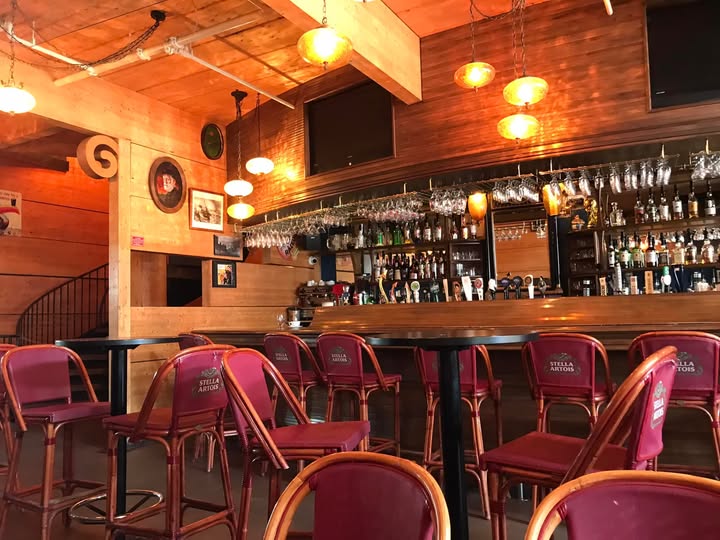
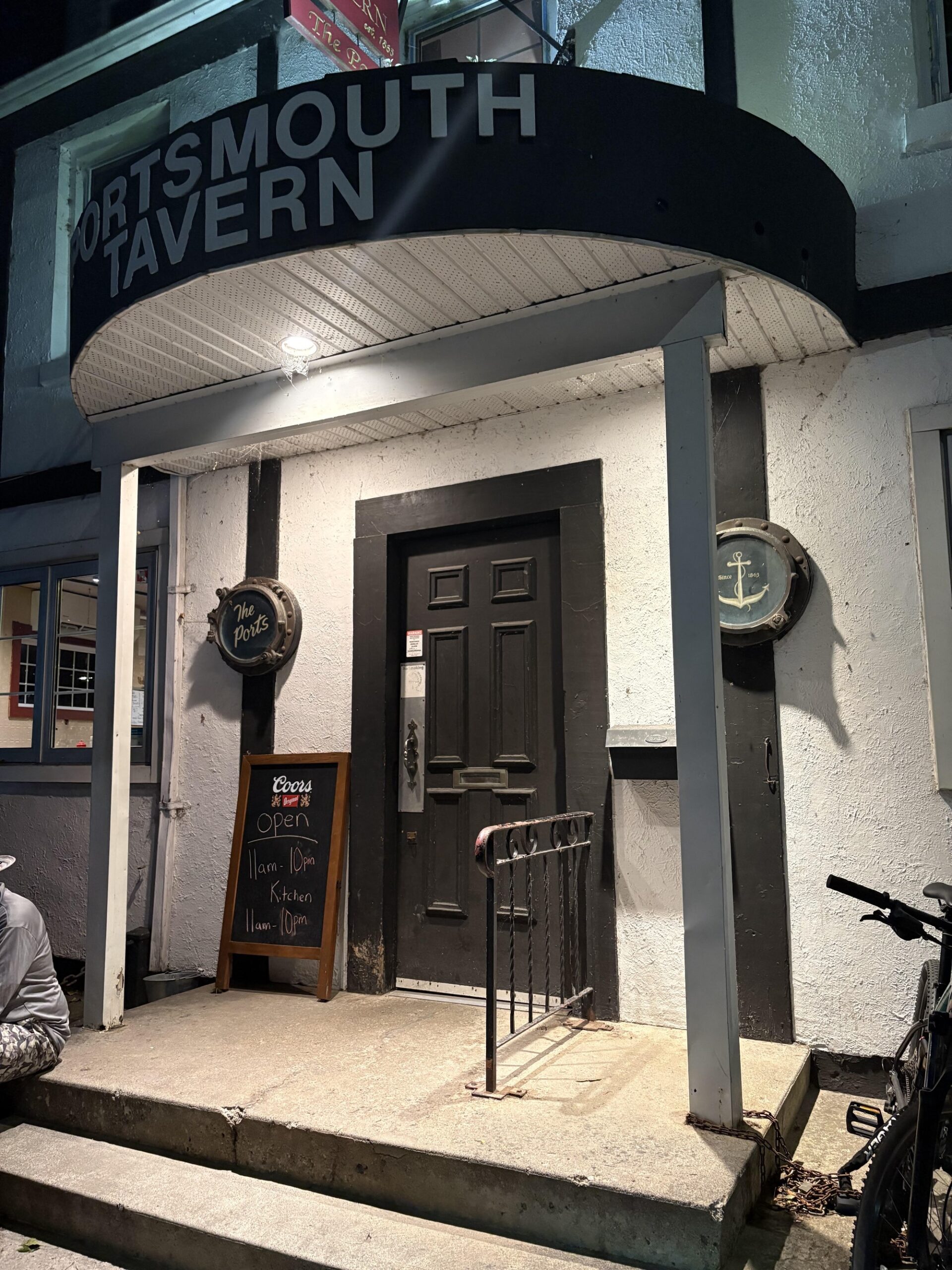
An old friend from work is joining me in the ranks of we, the gratefully unemployed and idle pensioners. To mark the event, I was invited on a small pubcrawl the other day playing my role as, I suppose, the ghost of retirement to come. A happy time out sat at long tables filled with glasses and pitchers of beer beside friends and former co-workers. We ended up at the Portsmouth Tavern, established circa 1863… which is pretty early for Ontario. Pre-Confederation. Once upon a time, I wrote about the drinking spots in my fair city including the older Queens Inn (est 1839) and Royal Tavern (est 1851) both of which have had breaks in operations in recent years. “The Ports” continues to serve beer after 163 years.

Me, I grew up in Nova Scotia, that eastern province that is almost entirely encircled by the Atlantic. The common word for public house back there back then was tavern or “tav” for short. Like the old Midtown Tavern in Halifax. Tavern is the same word used by Thomas Raddall in his 1965 portraint of the city Halifax: Warden of the North. The word originally was supposed to indicate a better sort of establishment – with tables and wine – to distingushing taverns from, as Raddall describes in the 1760s:

…the other side of Halifax, the brothels, the drinking dens, the underworld which nourished itself on the vices of the troops and the fleet.*

Kingston was established as a military town up after the American Revolution on the site of French Fort Frontenac (1673-1759) as something of a bookend to Halifax, serving as the westernmost military bastion of British North America deep inland here at the eastern tip of Lake Ontario. When I moved here in 2003 I was expecting a similar tavern culture but modernity had intervened. There were plenty of drinking spots but instead there were mainly bar restaurants called roadhouses, big screen sports bars, ditto band dance bars, swell cocktail bars and even the first brewpub in Ontario. Not a lot of the same sort of beer pounding taverns that I was familiar with back in Nova Scotia – or even up in the lumber towns of the Ottawa Valley where we had also lived. Places with communal tables, cheap beer, cheap food and a clientel that reached across all strata – college students, military, business folk. Young and old. Tavs.

That night earlier this week, the Ports was clearly a tav. I had been there before when we lived nearer. Even once after a college football game when the Queens University bagpipe band led fans in, pipes a’blaring. That was loud.  But this was loud as well. Not with music, just the happy talking… err… shouting I suppose. My ear were actually ringing the next morning it was so pretty loud. Still, not nuts. It was only 9 pm. A tav should be loud. It was also very well staffed. Packed but clean, well lit with empty glasses cleared away quickly. We had had dinner at another place earlier, where the bar was stacked with dirty glasses and the cans were rank. It was justifiably dead.

When I paid my bill on the way out, I got called “hon'” by someone less than half my age. “We good” she said with a thumbs up. The beer was a buck cheaper too. We good.

*Raddall, T.H. (1965) Halifax: Warden of the North, (Doubleday, New York), p.64.

Your Clear and Crisp Mid-July 2026 Beery News Notes For A Smoky Smoggy Thursday

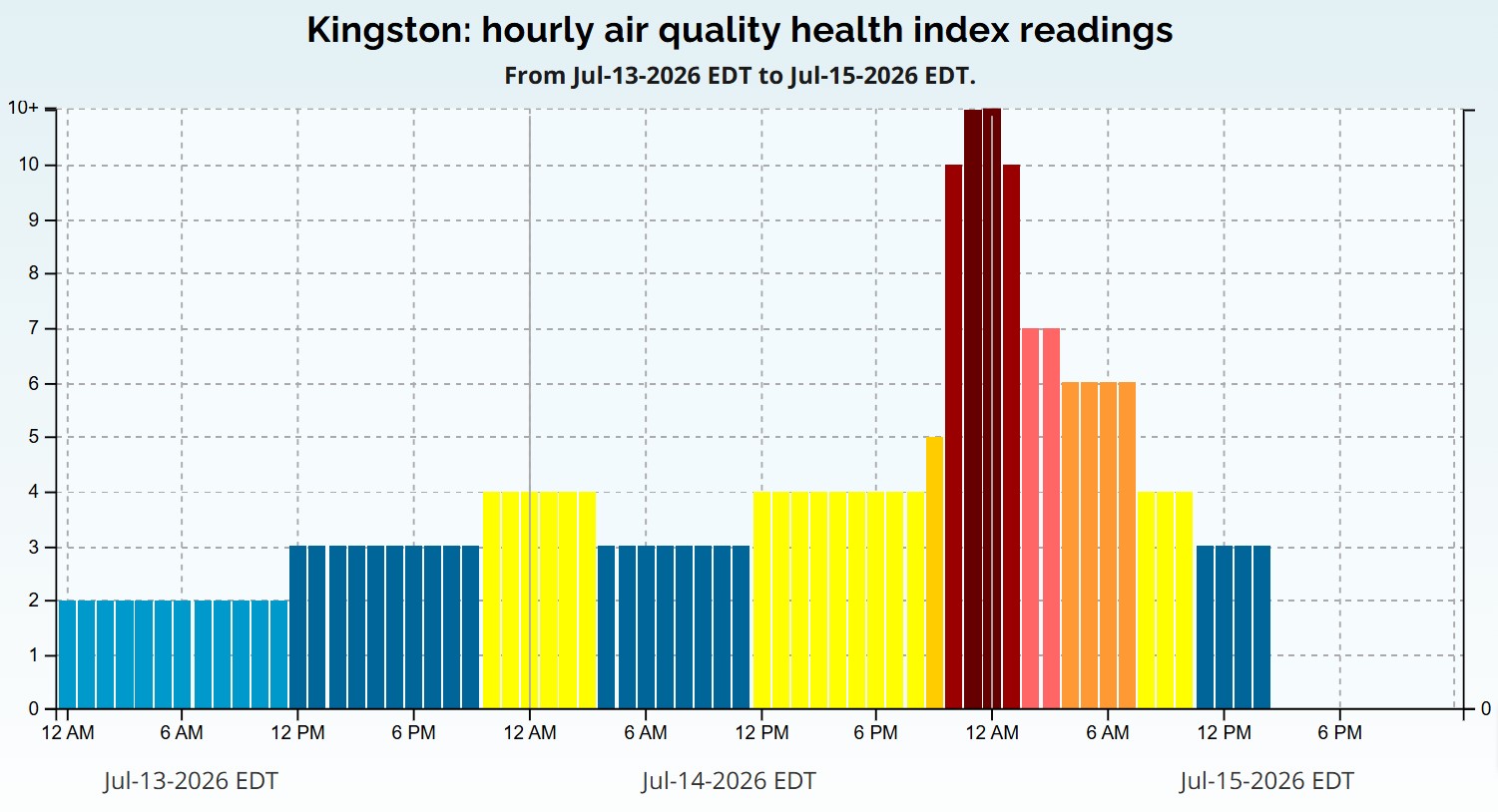
Wednesday morning news said that Toronto had the worst air quality on the planet. Around here at the other end of the big lake, Tuesday at 11:30 pm was a bit nuts, too. Getting out of the car after picking up the kid from work, it was like I was leaning right over the BBQ as I was smoking ribs. Good enough reason to stay in and watch whatever was on TV yesterday afternoon.  Oh, the Falklands Friendly was on. My linguistic imperialists against my hemisphere mates. Unlike others, I stuck to water and the other NA stuff myself.

You know, Eoghan has done an excellent bit of work with his series on the nations of the World Cup as can be spotted in his city of Brussels. He is coming soon to the conclusion and, on Tuesday, he turned to… Belgium itself! But where to look for the heart of Belgium in Brussels?

It was obvious. Here is a street, a narrow alley that rolls down a steep incline from Gare Centrale before skirting the Grand Place and emptying out behind Boulevard Anspach, charting centuries of Brussels history, architecture and patrimony. A street that might once have been the core of a Brussels nightlife district centred around the Îlot Sacré (the Holy Islet) – frequented by Jacques Brel, Jan Mulder, and the rest of the city’s post-war demi monde – but which has long since been converted into a holding pen, a quarantine zone, for the tourists that visit the city so that the rest of us can get on with our lives unencumbered by their nuisances.

And, keeping with the games, Boak and Bailey looked back to the World Cup of 1966 and found the promise of a financial boom from those games faded fast:

In 2026, it’s quite normal for pubs to have television screens and for people to gather there to watch big football matches together. Last night, even our local craft beer taproom was rearranged to accommodate an enormous screen. Back in 1966, though, the idea of TVs in pubs was fairly new, and pubs with TVs were relatively unusual. As a result, one story at the time was about how the tournament was causing pubs to lose business.

This is something that seems to have repeated now sixty years later in Toronto: “… demand for accommodations in the city is down as more rooms stood empty during the first two weeks of the World Cup than in the same time last year….The Guardian reports things have gone a bit better for British pubs if card use stats are to be trusted:

Pubs have experienced the biggest boost, thanks in part to football fans taking advantage of extended opening hours, Barclays’ consumer spending report found. England’s group stage victory over Panama emerged as the busiest day of 2026 so far, with takings five times higher than the daily average for the year. On a year-on-year basis, England’s draw with Ghana resulted in the biggest uplift, as card users in pubs spent 244% more than they did on the same day in 2025, possibly because of a relative lack of action that gave fans time to go to the bar. The round of 16 victory over Mexico registered a 201.5% increase, measured over Sunday and Monday to reflect the game kicking off in the small hours.

US sales also have increased but by a much more modest 5.5%. But at least there seems to be actual interest… as opposed to the new beer out of Belarus:

“Minsk Capital,” whose design incorporates Belarusian state symbols, received contradictory reviews from buyers. Some consumers praise the drink, while others, on the contrary, criticize it for “excessive lightness and dilution.” “Light beer water from Trokhsosensky, but without the taste of socks and other drawbacks,” user Dmitry shared his opinion on the website of the “Krasnoye & Beloye” online store.

Speaking of authoritarian regimes, this week’s story in The Times on the health and safety record at BrewDog* surprises me in a couple of ways:

The company complied with the enforcement orders in 2023, but former employees allege that previous instances, where rules were broken, were not reported to the authorities. These allegations are denied. Watt’s lawyer stressed that under the former chief executive’s tenure, BrewDog’s safety records were better than the industry average. With respect to the enforcement notices, the lawyer said that BrewDog worked constructively with the HSE, invested several millions of pounds, implemented required improvements and that both notices were complied with and subsequently closed.

First, if as the story says, Watt was terminated in 2024 it strikes me as odd that his personal lawyer in 2026 is commenting on corporate activities prior to the termination. Does he have access to the records? Second… again… where is Mr. Dickie in all this? Why is his view never sought – let alone his role referenced. He was CEO at the time in question.

UPDATE: Watching CBC late night news at the end of Wednesday, this story out of Nova Scotia caught my eye:

Alcohol producers in Nova Scotia will soon have more options to get their bottles and cans into the hands of consumers after the provincial government said Wednesday it would be loosening restrictions on the industry. Under the changes, wineries, breweries, cideries and distilleries will be allowed to cross-sell as of early August, meaning they can stock their stores with products from another producer. The second change, expected this fall, will allow producers to open retail stores without having a production facility on site.

This is a great set of regulatory amendments that should put a lot of good drinks into the hands of a lot of curious people.  I really like the idea of local wines being sold in brewery taprooms for takeaway as well as vice versa.

Elsewhere, recent reputable talk of the pub in a Lidl grocery store in Northern Ireland inspired Cian Duffy of Every Pub in Dublin to explore the history of drinking in such shops due to the local licensing laws:

You can try cut the definition of a “supermarket pub” lots of ways, but I can assure you that Ireland has had basically all of them; with Dublin covering most bases. Even after deliberately excluding the extremely common (but not in Dublin) pubs-with-shops where the shop is now quite big, and weird cases like a co-op supermarket with an actual but rarely open bar (Inishkeel co-op Glenties); we have lots of examples. These include the direct equivalent of Lidl Dundonald – a supermarket chain opening a pub to run as an off-licence; but also a supermarket chain operating multiple pubs while awaiting redevelopment, a supermarket chain running supermarkets *in* pubs; and some edge cases including Lidl themselves holding planning and a licence in Dublin.

Interesting stuff! Here’s some notes:

Note #1: Laura has been keeping her eye on the Crooked House story.
Note #2: “Dangerously sessionable, as they say in all the best beer bars.”
Note #3: The best no-alcohol beers really should have a bit of alcohol.
Note #4: Clearly a definitive guide…

There were some interesting reactions to one brewery’s initiative on cask ale as discussed in the Morning Advertiser by Nick Payne of Brains:

…people want change. Now, if you sign a deal for four or five years, you’re not changing that keg range. What does cask give you? It enables you to change your beer and, potentially, you can have a different beer on every three days.

Nigel Stadler shared that when I left brewery sales in 2015 “a lot of cask customers were actually fed up with constant rotation of beers” and John Keeling addedAgree. I like staying on the same beer.” I would have thought that one of the great lessons of US craft beer’s years’ long contraction is that chasing the tail of change is not a winning route to building loyalty.

Aslo learning lessons, Alistair has done his “oft, when on my couch I lie” looking back at his recent trip home to the UK and has shared a few conclusions:

The main thought that has pottered and re-pottered around my noggin is just what a fantastic place the British pub is, whether that incarnation is in Inverness or Westminster. Of course every serious beer drinking country has it’s pubs, from Ireland to Czechia, and all stops in between, people love to drink in communal locations rather than just getting battered at home. Perhaps it’s that there isn’t an undercurrent of puritanical shame about going for a pint or two and just hanging out, there doesn’t need to be a purpose or an excuse to go for a drink. Anyway, back to British pubs – and of course this is all just subjective – but being, still, even at nearly 51, a rather introverted person, I find it interesting that going into a British pub is the easiest thing in the world for me. 

Over at his newsletter, Knut has been praising the updated ninth edition of the Good Beer Guide Belgium by Tim Skelton – and shared this bit of a tid, more nug than nugget:

Yvan de Baets, brewmaster at Brasserie de la Senne, outlines the changes in the Belgian beer scene over the years since the last edition of the book. “There are way too many beers,” he says. “Around 40% of the brewers in Belgium are fake, contract-brewers or bierfirma’s….. By taking no entrepreneurial risks themselves, the imposters are further flooding an over-saturated market, hurting the real honest brewer…”

Never the fake, Jeff has been reviewing the latest policy statements from the succinctly named Oregon Health Authority (OHA) on risks associated with alcohol intake and sought to leverage what I might suggest is a difference without a distinction, finding space between these two statements:

…the more alcohol one consumes, the greater their risk of cancer…

…risk may start to increase around one or fewer drinks per day…”

For him, the first from the OHA indicates “gone is any talk of moderation” while the second from the US Surgeon General indicates is “quite a bit different.” Me, with respect, I seem them as being pretty similar statements. The constituency that may inhabit any gap between the two would be those who drink less than a drink a day. Fortunately, that includes me according to my stats. Most people involved with beer at the key personal identifier level, however, aren’t like me. Jeff was clearly saying that the harms of booze are real, don’t get me wrong. But it is not the job of organizations like the OHA to balance health interests against the goals of other community sectors. Does one consider the possible slur by association against the poor pumpkin growers of the early 80s? No.

One last thing. Ron is treking through central Canada looking for the Laurentian Elite of beery experiences.

I’ve only been to Toronto before so I’m totally clueless about the other three cities. If you fancy meeting up and buying me some beer, get in touch. I’,m a sociable fellow and always enjoy meeting new people. Hopefully, it’s not going to be too warm in Canada. Andrew really doesn’t cope with heat well. When we were in Japan a few years back, several times I thought he was going to drop dead. 

I gave him some suggestions (did I?… Irene‘s in Ottawa after that CFL game, Ron!) but do add a comments or two under his post if you can think of anything else he could do. Err… I hope the smoke clears…

That’s it for now. When next we meet, the World Cup will be a memory just like the breathable air of yore. As you think on that, please check out Boak and Bailey posting on Saturday and adding to their fabulously entertaining footnotes week after week at Patreon. And do look out for more of Stan’s new “One Link, One Paragraph” format.  Then hunt out something in someone’s archives! Leave oblique comments on someone’s post from 2009!! Listen to a few of Lew’s podcasts and get your emailed issue of Episodes of my Pub Life by David Jesudason on certain Fridays. And Phil Mellows is at the BritishBeerBreaks. Once a month, Will Hawkes issues his London Beer City newsletter – but it may not be pay per view. Do sign up for Katie’s wonderful self-governing totes autonomous website featuring The Gulp, too.  Ben’s Beer and Badword remains on pause but there is reading at The Glass which is going back to being a blog. Any more? We have Ontario’s own A Quick Beer and All About Beer is still offering a range of podcasts – and there’s also Mike Seay’s The Perfect Pour. Plus follow the venerable Full Pint podcast! And there’s the Craft Beer Channel on Youtube as well as the archives of the Beer Ladies Podcast.

*PS: who cares…

Your Scattered Beery News Notes For The Lunar The Low The Looney And Perhaps Even The Ludicrous

Happy lunar loop de loop week. It’s hard to find a glimmer of good in an ugly world but the Artemis II mission into outer space did its best to try.  As has the prospects of the Two-Tailed Dog Party in this weekend’s elections in Hungary. Coming in at a solid 3.27% of the vote last time around, their past platform gives a bit of hope:

The party platform promised eternal life, world peace, a one-day workweek, two sunsets a day (in assorted colours), lower gravity, free beer, and low taxes. Other electoral pledges have included building a mountain on the Great Hungarian Plain.

Will the space craft land? Will greater freedom return to Hungary?  Will the ceasefire hold? These are the questions for the week to come. Until then, some beer news. First up, Lars announced the publication of a study of farmhouse yeasts of northern Europe, the culmination of years of work and a number of challenges:

The paper was done by the Verstrepen lab at the VIB-KU Leuven Center for Microbiology, the same place that did the famous paper giving us the first view of the family tree for brewer’s yeast. Work on the paper started in September 2017, when I mailed off the first batch of yeast cultures to Leuven. It had gotten quite far when covid caused Belgium to shut down so hard that everyone must work from home, and obviously you can’t do lab work at home. By the time restrictions had lifted several people had moved on to other jobs, and the paper sat languishing until Peter Bircham decided to pick it up again. He and I worked on it for a while, until Peter moved to New Zealand. Eventually, once he was settled there, a Gang of Four got it moving once more, and last year we finally submitted it.

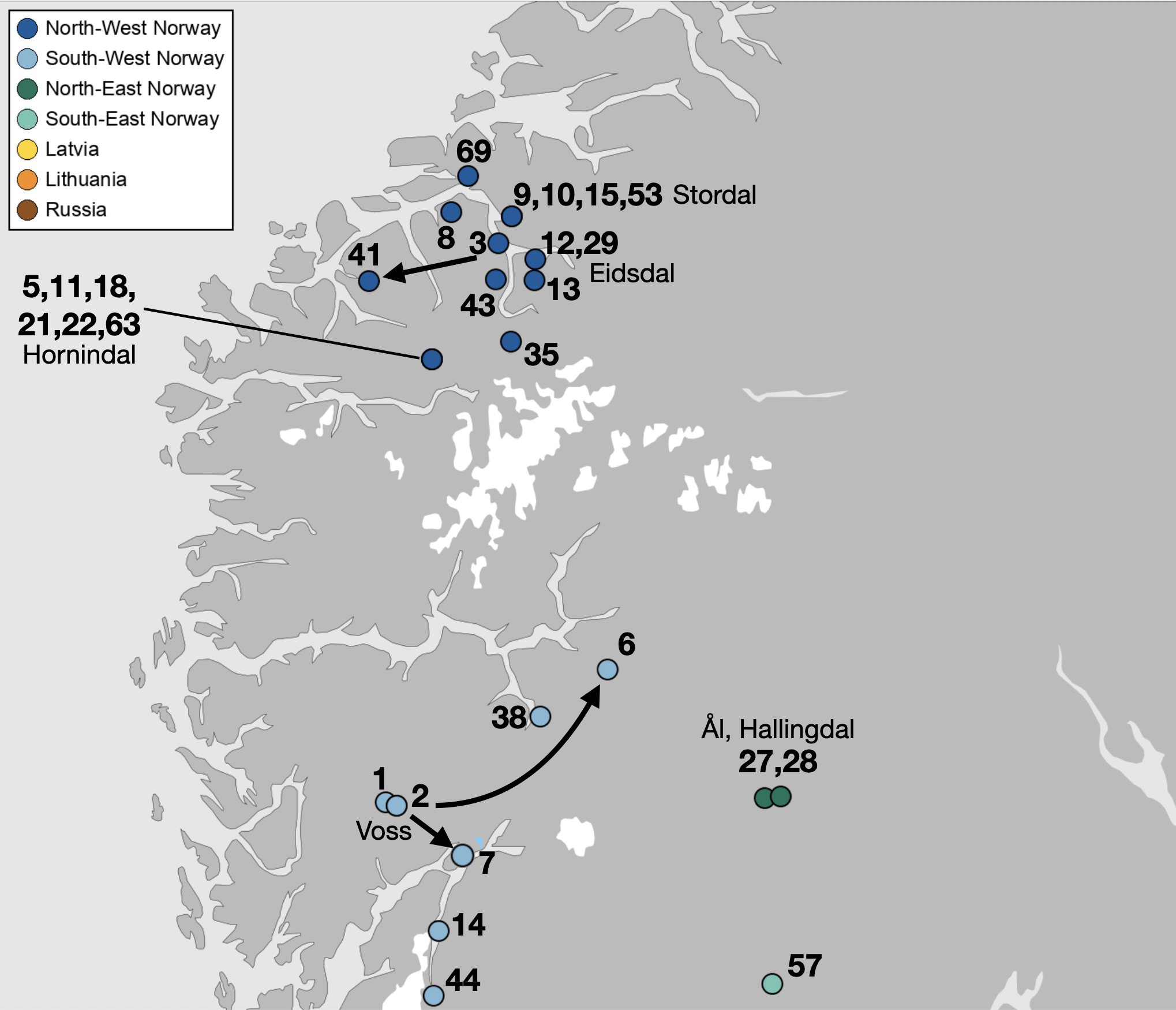
This is very important stuff and a worthy outcome for all his years of effort. The study describes seven cultures or zones rather than strains as these “cultures have been reused by farmhouse brewers for at least centuries, quite possibly millennia, so they consist of lots of different strains.” The, as illusrated by the map under that thumbnail, the study describes how each culture relates within its zone. Super neato. Lars has also been out skiiing in shorts, too.

Staying in Scandenavia, Knut has shared a profile of a pub in Sweden. Ruckel Beer Bar, where he spent part of Good Friday productively:

Ruckel means shack or hovel in English, a description or the building they took over when they were starting the brewery. I doubt the premises they have moved into with their new pub fit the ruckel description, but they have certainly put in many hours to make an inviting pub, split into various zones for eating, drinking and hanging out.

Ruckle is a new and quite attractive word, at least for me. Not surprisingly, with an old Scandenavian connection, too. I have, on the other hand, heard of other old things like the Cooper’s Hill cheese roll as well as Royal Shrovetide Football but never before did I hear of the Hallaton Bottle Kicking each Easter:

[a] brutal competition between rivals trying to wrestle barrels over a mile-long stretch of countryside. Hallaton Bottle Kicking is an ancient tradition, held each Easter Monday, in the village of Hallaton and neighbouring Medbourne… One “bottle”, which is a wooden cask much better suited to the rigours of the scrum than any glass item would be, is then decorated in red and white then paraded to the top of the village where the contest between Hallaton and Medbourne begins. The game is a best of three, with two “bottles” containing beer and the third completely wooden decorated bottle – which is referred to as the dummy. The outdoor sport is played across about a mile of open land and the two teams attempt to move the bottles over to the opposing team’s parish at each end of the area.

As noted in the B+B Patreon notes from last weekend, Eoghan alerted us to the closing of De Kulminator in Antwerp, a famous yet quirky beer bar with a vast selection of old bottles that created an odd test question that must be answered to qualify for entry:

Apparently they asked you what you wanted to do there – if you said drink a beer, no entry. If you said “enjoy a beer”, open sesame. But as I said, I never ran the gauntlet

One newspaper declared (testing your Dutch, not mine) “Het beste biercafé ter wereld is niet meer.” I think you can get the drift. Yet one Mr. W. Hawkes askedWhat will they do with all that manky old beer?” Boak and Bailey visited in happier days in 2010, paying the price accordingly, as did The Beer Nut in 2017. Relatedly perhaps, Eric Asimov in The New York Times shared his observations on the shift in the sweet price point for best value in wine:

Good wines can come from anywhere and anybody. The value is in identifying these little-known producers and regions before they are more widely discovered, and prices go up. That requires a fair amount of trial and error and taking chances on the unknown. How long will $15 to $20 remain the sweet spot for these sorts of wine values? It’s a lot harder to find them today. While I will continue to take on this particular challenge, it’s fairer to say $20 to $30 today is what $15 to $20 used to be. But that conversation is restricted to the least expensive value rung… That underscores a key rule of value hunting: The greater the splurge, regardless of the price, the less inclined you are to explore and the more you want a sure thing.

Do we talk of value with good beer in a similar way? Does manky old ale have value? Perhaps a few do but through the arc of the rise and fall craft beer over the last twenty years, the wider market never really established the sort of constructs that provide some confidence in relative value that we see with wine. Too often commentators seem content go back to the same shallows that may have helped set up good beer for its cultural nosedive in the first place. Even as so many beers were presented and consumed as near clones of each other in an oligopolistic manner, little attention was given to advising consumers about which beer could be swapped out for what at, say 50% or 80% of the cost.  Could that change now that the kid (if not boxing) gloves are off? As you think on that, here are some notes:

Note #1: Perhaps don’t cheat on your forensic expert wife.
Note #2: “Broken toilet, no showers and farts“… yet not a pub.
Note #3: “Trends continue to oscillate week-to-week…

And… we are back. Following up on that last note, discussions in investment circles are indicating… or at least suggesting… or maybe only postulating that the price of shares in brewing corporations may have hit bottom and are (…potentially…) ready to rise:

The central question is whether shipments will finally catch up to depletions. Analysts note that consumption trends accelerated throughout the December-February period and continued improving in March, but shipment data through February hasn’t yet reflected this strength. Multiple Wall Street firms cite distributor feedback indicating momentum has returned, particularly in scanner data showing March beer volumes up 6.5%.

At that point in the marketplace, the trends are most relevant for macro brewing. Will you invest? For What’s Brewing, Laura Hadland shared an experience at Heineken where the mega brewery approaches the task at hand from an unexpected angle:

I was baffled as to why the tour guide was giving us the in-depth view on its malt and the hallowed Heineken-A yeast, but nobody was talking about hops. At all. I even asked the question explicitly: what hops do you use? The tour guide didn’t know. Neither did the colleague that she ran off to ask. It was only when I (luckily) found myself in the company of global master brewer Willem Van Waeberghe, that I discovered the answer. The answer was, it doesn’t matter. In the Netherlands, Heineken sources hops from the US, but its licensed brewers around the world can source whatever they want. All the hops are added at the start of the boil for bitterness only. They never have a second hop addition. All of Heineken’s flavour, which is perhaps a little fruity, a touch herbaceous with just the tiniest note of aniseed, comes from the yeast esters.

Conversely perhaps, as reported by Kendall Jones, tiny Big Block Brewing in Washington State has found new flavours in old hops:

​“We got a bunch of ladders and laid them down over the blackberries and used them to get into the hops,” says Julum. “A lot of cuts and scrapes later, we had enough hops to make a batch of beer. The problem was that Sammamish State Park was in the process of removing all of the invasive species from the land, and hops are an invasive species, so we needed to do more than pick the hop flowers. We had to dig up the rhizomes so we could replant them”… Likely, Ezra Meeker was the source of the original rhizomes, as he was for so many farmers in the area at that time. Meeker primarily cultivated English Cluster hops. The Monohon hops are very likely a descendant of that variety. 

Well, likely by the time those hop rhizomes hit the continent’s Pacific side, Cluster-esque might be the better way of putting it. And Colbier Brew Co., a “Bootle-based brewery” is the subject of this week’s feature in Pellicle. “Bootle” is also another old word for a dwelling which may well be a cut above a “ruckle” but none of that is part of the story as told by Rebecca Crowe who first encounters a beer by Colbier named Falsetto:

As a lover of the darkest pint of cask beer available, the ideal of white stout is like a unicorn to me, and I must find it. Eventually, I receive a message from the team at Doctor Duncan’s, a pub on Queen’s Square near Lime Street station, who tell me it’s in their cellar and that it’ll be on soon. When I finally get a pint of Falsetto in front of me, I’m entranced by its bitter, chocolate notes. Close your eyes, and you’d swear you were drinking a dark beer, albeit not as unctuous and creamy-tasting as Colbier’s oatmeal stout, Nocturne. However, the bitterness and innovative nature of a white stout is the perfect signifier of what this Bootle-based brewery likes to do.

White stout, eh? Something like myself, I suppose. Enough of that. Next, a tale of crime at the government liquor store back home in Nova Scotia:

In 21 years of policing, RCMP Sgt. Serge Landry says he’d never seen anything like what was seized from a home in Dartmouth, N.S., just before last Christmas. After a two-month investigation into significant alcohol thefts from NSLC stores in the Halifax region, officers seized more than 450 bottles of hard alcohol worth almost $20,000 from a home on Floral Avenue. Police even seized a ledger detailing the alcohol being delivered to the home and what had been resold. “I’ve never seen it to this scale,” said Landry.

Not just alcohol. Hard alcohol. Always been this way. As a lad, I remember a summer job painting a house next to the one run by the bootlegger. Steady traffic on a Sunday afternoon, back when the government store was shut. And there was the other job at the senior’s house when one resident born before the First World War ratted out another of a similar age for running the ice delivery warehouse which contained a bootlegging operation out of the middle of the warehouse, amongst the walls of neatly stacked ice blocks.

Finally, following up on last week’s story on the effect of Gulf War III on the cost of beer packaging in India, NPR is reporting this week on another pressure that might arise as global aluminum supplies have also been affected:

Aluminum prices recently hit a four-year high, after Iran struck two large smelters of the metal in the Middle East. Both of them were major suppliers to the United States. Aluminum, which is on the list of 60 minerals deemed critical by the U.S. government, is widely used for beer and soda cans, in cars and packaging.

Well, that is it for now. Crisis and crime yet exploration, each in its way human-kind caused. And another possible positive week for the beer trade. Beer likes peace.  As we wait for the results, please check out Boak and Bailey who are posting every Saturday and adding to their fabulously entertaining footnotes week after week at Patreon. And look out for more of Stan’s new “One Link, One Paragraph” format. Then hunt out something in someone’s archives! Leave oblique comments on someone’s post from 2009!! Listen to a few of Lew’s podcasts and get your emailed issue of Episodes of my Pub Life by David Jesudason on certain Fridays. And Phil Mellows is at the BritishBeerBreaks. Once a month, as noted, Will Hawkes issues his London Beer City newsletter and do sign up for Katie’s wonderful self-governing totes autonomous website featuring The Gulp, too.  Ben’s Beer and Badword seems to be on pause since November but there is reading at The Glass which is going back to being a blog. Any more? We have Ontario’s own A Quick Beer and All About Beer is still offering a range of podcasts – and there’s also Mike Seay’s The Perfect Pour. Plus follow the venerable Full Pint podcast! And there’s the Craft Beer Channel on Youtube. Check out the archives of the Beer Ladies Podcast. See you next week!

Well… Welcome To Your “It Is March And The Good Times Are Here Again!!!” Beery News Notes

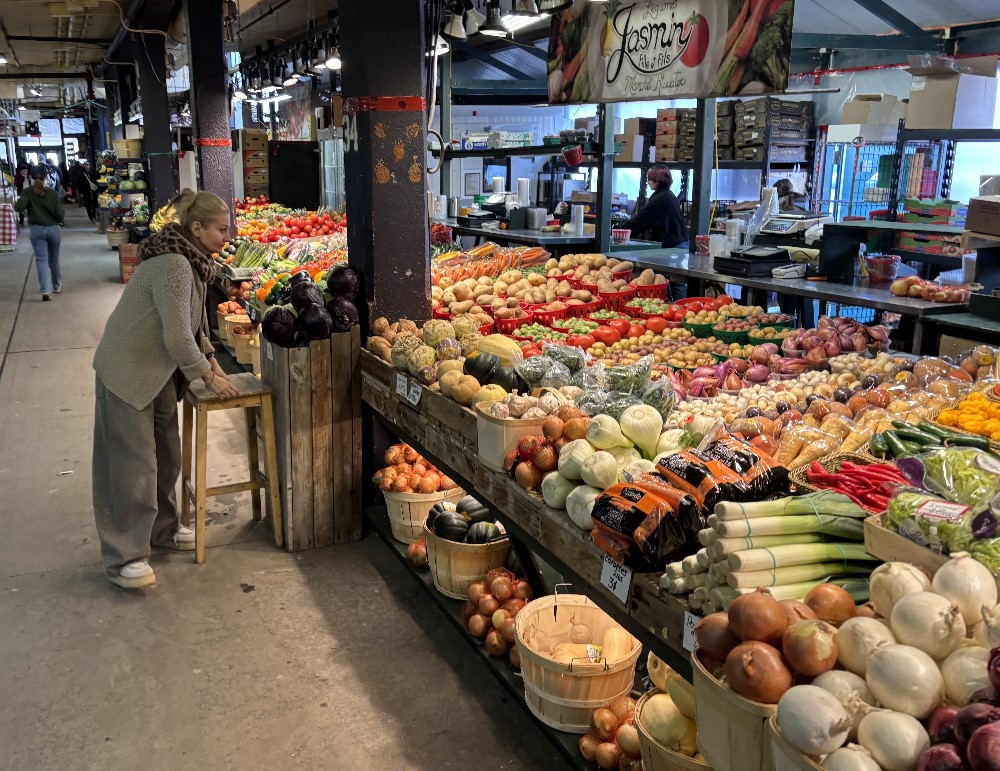
For well over 20 years, I have lost my marbles over March arriving as it did again last Sunday.   I may have created that image to the right in 2004. Such a clever boy! So well centered. Why do I love March, you ask? Not the green beer. Maybe not the green grass which might pop out soon. It’s the first seeds in the soil. The green green peas in loam. Soon, my precious. Soon. Otherwise, this is a bit of a scattered mix this week as I rush. See, I played taxi driver for folk going to a concert, spending about 21 hours in Montreal Tuesday to Wednesday. On the way out, hit Atwater Market as usual. Got my chicken cretons. Got my duck rillettes. The toast won’t know what hit it. And when toast wins, the beery news update suffers. Such is the way of the world.

Enough about me! First up, Jeff* has shared a retrospective on his writing career and how important blogging was to getting to the next step. Twenty years ago he started on a path (like Matty C a decade ago) towards  a number of leaps of faith. Leaps I avoided. I have my name on four modest books but didn’t see a future in that direction. Me, I can show you instead the bridge I had a large part in building. But they can show you publishing sales figures that put food on the table. It’s good to see that we were all right in our different choices.

Speaking of Matty C, for “Get ‘Er Brewed” he looked around his particular environment through the last holiday season and asked where the future may lie for a trade facing tough times:

I can face the hard facts and admit pubs are dealing with some of the worst trading conditions they’ve ever known. But I also believe that they will continue to persist, whether that’s through innovation and listening to what their customers want from them, or by sheer bloody-mindedness. Despite all the doomsaying I consider that there are still positives for pub owners. However, in order to extract these an equally optimistic outlook is required from publicans. Yes, prices are going to have to go up. Customers are going to have to get used to them and measure their spending accordingly. But I don’t think this will mean that people will stop using pubs, and that they’ll simply vanish off the face of the earth.

I tihnk that is a good baseline position to take. Beer does not go out of style even during an inflationary period… or even in a very localized deflationary one. The BBC had a story about another sort of good value care of one pub in Leeds:

A pub which was told selling a pint of beer for 25p during a promotion was “irresponsible” and a breach of its licence has instead begun giving them away. Leeds city centre pub Whitelocks offered customers their first pint of revived 1970s pale ale brand Double Diamond at the retro price as part of the four-day scheme, which began on Thursday. However publican Edward Mason said the council pulled the plug on the offer later the same day, saying it was in breach of mandatory licence conditions on minimum alcohol pricing. After seeking legal advice and discussing it with the local authority on Friday, the pub then commenced offering the initial pint for nothing. Unlike Scotland or Wales, England does not have a defined minimum price for alcohol.

A bit more scientifically we see that Kendall Jones at the Washington Beer Blog ran a very detailed survey on the place of IPA in his readership’s current mindset and had a significant response:

A few weeks ago, I posted a survey about IPA to gauge how people feel about craft beer’s most popular style. I was wondering if breweries are hitting the mark. Do the beers align with what people want? Have people’s preferences changed? Stuff like that. If you haven’t taken the survey, it’s still up there gathering data. I encourage you to participate! When the survey received 1,000 responses, I gathered the data. I will continue to do so as time moves on, but this report covers that first round of responses. Likely, this round of data comes from a pretty enthusiastic craft beer crowd, not the general beer-drinking public. Take that for what it is. In addition to the results, we also collected a large number of comments, which we rounded up at the end.

One of the particular results that surprised others is the result that Kendall noted: “Really? Nearly 80% of respondents say they understand the differences among IPA styles. I am not sure 80% of professional brewers understand the differences between IPA styles.”  This can certainly reflect the Washington marketplace as well as his readership but I do wonder if there is a difference between detecting the difference between styles and understanding them. I mean I can tell a Black IPA from a White IPA but I still left with questions like “why?” as well as “WHY????”  Go have a look and even add your responses as the survey is still open.  This is an excellent example of how a blog excels at some many sorts of beery writing that other formats can’t touch.

Speaking of excellence, Boak and Bailey placed another sort of question out into the ether – “Do you really want to visit the best pub in town?“:

Before Christmas we found ourselves in a pub surrounded by a group of people grumbling about the seating, the atmosphere, the beer, and everything else. It became apparent that a couple of members of the group had put together an itinerary for a crawl based on their preference for craft beer. We felt quite sorry for them as they tried to enjoy their pints while surrounded by moaning pals – but then what did they expect? What’s funny, we suppose, is that much of the discomfort and discontentment described in the various anecdotes above could be avoided if people just went to normal pubs, of which most towns and cities have plenty.

There is a lot to unpack in the phrase “the excellent is the enemy of the good” and this might be a very instructive context. I mean, I have sat myself in the Cafe Royal and it is utterly wonderful. But could it ever be as “mine” as many other pubs and tavs and dives have been over the years?

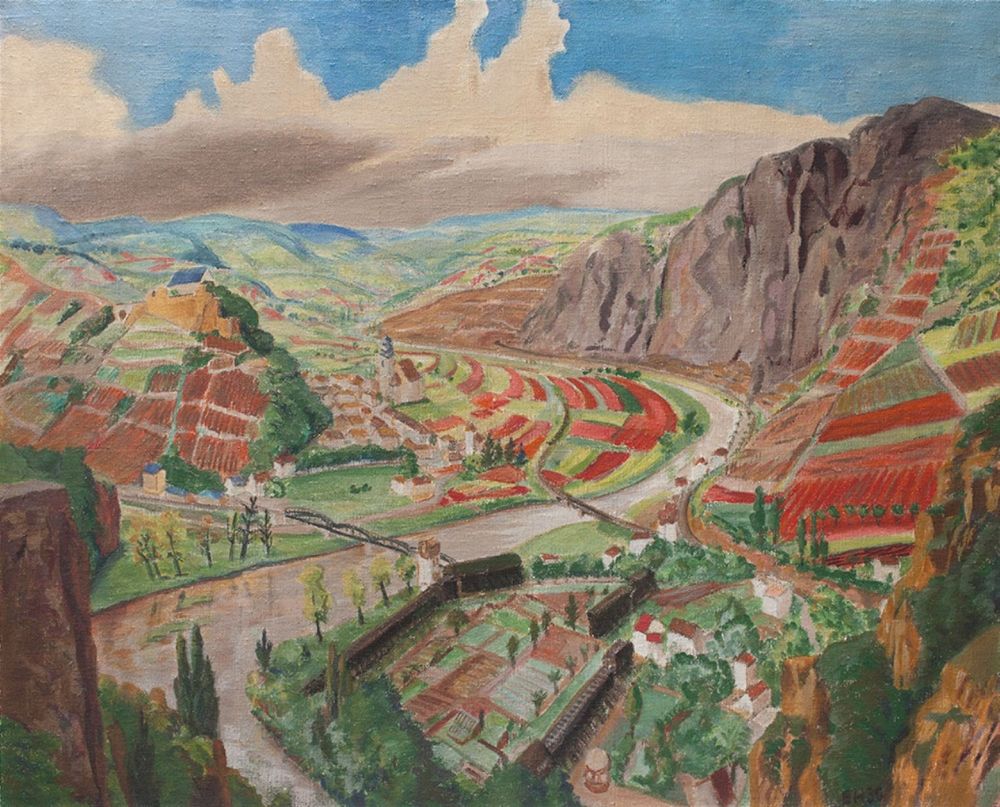
Also excellent and perhaps for Katie in particular, I saved this image of the Nahe Valley that pass by my eye this week. Shared by the AAWE, the no doubt authentic colours are surreal:

Erich Heckel (German 1883-1970), Landscape in the Nahe Valley, 1930. Many vineyards. Heckel was a painter and printmaker, and a founding member of the group “Die Brücke.”

According to the wikiborg, in 1937 the Nazi Party declared his work “degenerate” and confiscated his work, destroying much of it. Good to see one that was saved. Time for notes!

Note #1: Ottawa’s Kippisippi to close.
Note #2: BrewDog sale confused yet swift.
Note #3: 1690 brewing text restored.
Note #4: 1978 Joe Piscopo sighting.
Note #5: “Beer with Pals” is the best one.
Note #6: the A.I. bot that wrote this clearly has no idea what “craft beer” is or is it the guy interviewed who doesn’t.

What’s next? Well, I suppose the big news is the surprise takeover of a deadend business location:

A brewery has been allowed to open a new beer café in a former funeral directors site. West Suffolk councillors have given Charles O’Reilly planning permission to turn the former funeral directors at The Shutters, in St John’s Street, Bury St Edmunds, into a beer café and tap room, during a development control committee meeting earlier today… Jane Marjoram, a resident, recognised the importance of such establishments but told councillors the area was a ‘quiet, friendly community’.

 “Very quiet…” said Jane as they leaned forward winking at the committee members. What else? Oh. Yet another, yawn, tale of a forgotten wine cellar under a golf course (h/tKM):

“So we’re thinking it’s just a drain that needs digging out and clearing and repairing but as we dug deeper the chasm underneath just opened up.” Steve said he and his colleagues then noticed a brick structure. He was able to climb inside and look around with a torch and found dozens of empty glass wine bottles. “They’re all odd shapes and stuff so they’re obviously extremely old bottles,” he said.

Speaking of being under, similarly attractive are the summaries of the US beer market in 2025, as this from BMI:

US beer shipments were down more than 5% to ~183 mil bbls for full year 2025 vs 2024, Beer Inst, TTB and US Dept of Commerce data suggests. That amounts to a 10-mil-bbl drop in one year, the 2d tuffest decline in US beer history (post-prohibition) only behind brutal yr in 2023 when shipments sank 5.2%, 10.8 mil bbls. But unlike 2023, beer price increases didn’t come close to offsetting volume loss with CPI for beer at home up just 1.1% for the year, suggesting brewers’ collective revenue likely posted the largest drop ever in a single year post-prohibition.

And Stan raised shared an interesting observation that I suspect might well be connected to those stats:

“If it is beer flavored beer it comes from the brewing side. If it is not, it comes from the marketing side. (FW’s) Michelada did not come from the brewing side,” answered Firestone Walker brewmaster Matt Brynildson.

More grim news. Yet… here was have another trip to France care of Anaïs Lecoq in this week’s Pellicle which unpacks another cultural touchstone, the bar Pari Mutuel Urbain or PMU:

A rade was originally slang for a bar counter, though it’s come to define a popular neighbourhood bar with a somewhat dated look, but a warm and lively atmosphere. Do not imagine the brown-wood aesthetics of a British pub: Think mosaic tiles on the floor, flashy paint on the walls, a Formica bar dented by years of glasses sliding across it, and worn-out faux-leather booths. … The bar PMU is the epitome of the rade. These spaces will never be advertised as places worth visiting if you’re a tourist. You won’t find them listed as hotspots on the internet, because they don’t look good enough for an aesthetically pleasing Instagram feed. Their history, deeply rooted in the working class, labour struggles, and immigrant communities, is not designed for glossy consumption. 

And also yet yet… in this comparison of health effects in The Harvard Gazette at least beer does not find itself at the bottom of the beverage ladder:

The mixed picture for alcohol consumption was in contrast to what panelists agreed is a much clearer one for soda, energy drinks, and other sugar-sweetened beverages, including sugary fruit juices. A 12-ounce can of a popular soda brand has 10 teaspoons of sugar, an amount almost nobody would add to a cup of coffee or tea, Rimm said. Sugar-sweetened beverage consumption is linked to rising obesity, which itself raises cancer risk, and diabetes, which increases risk of heart attack and stroke. “When you compare a soda to water, or soda to coffee, or soda to tea, whatever you’re comparing it to always wins,” Rimm said.

Finally and… finally especially for me, one more inter-provincial trade barrier has fallen and, for me at least, an important one. Soon I will be able to directly buy Nova Scotian beer from the homeland of my youth and have it shipped to me here in Ontario the homeland of my… umm… post-youth:

Ontario and Nova Scotia have agreed to let their residents buy alcohol directly from the other’s province, part of the premiers’ ongoing work to bolster interprovincial trade. Producers of beer, wine and spirits can start applying Tuesday to the province’s liquor corporation for authorizations to do the direct-to-consumer sales, a process the premiers say will only take a matter of days. Ontario Premier Doug Ford says strengthening interprovincial trade is a way to counter the effects of U.S. President Donald Trump’s economic attacks on Canada. Nova Scotia Premier Tim Houston says… knocking down interprovincial trade barriers is “a bit like whack-a-mole,” but that direct alcohol sales is a great one to tackle because it is so visible for consumers and producers.

Please sign up every single Nova Scotian producer, please. Then I will be able to hover the fickle finger of fate over your webstores.

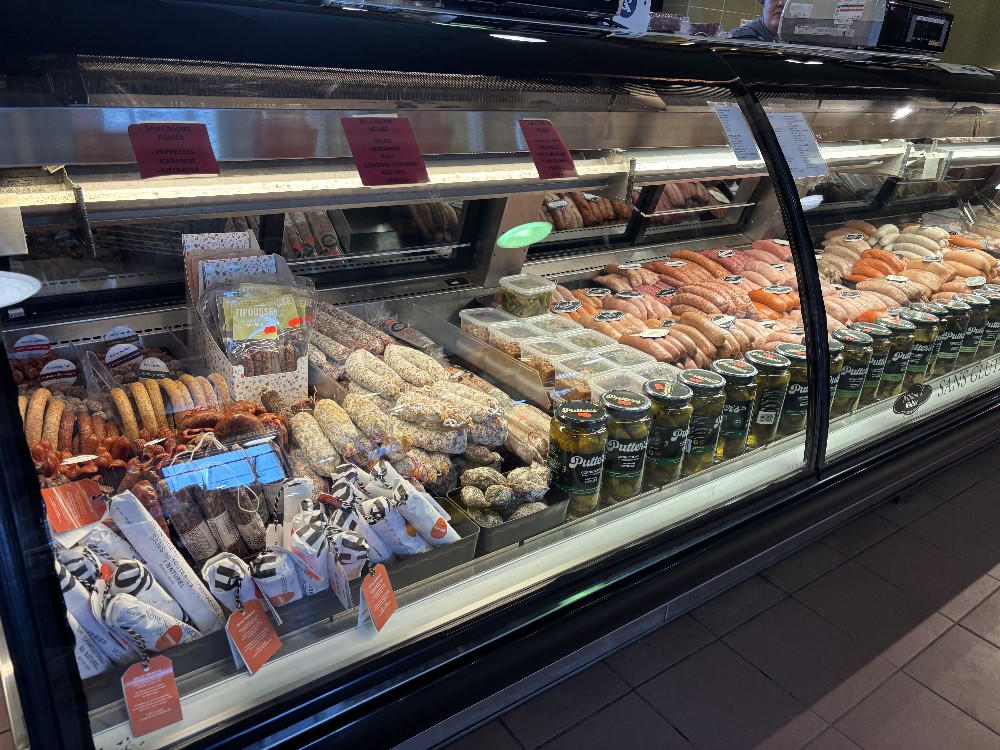
There. I achieved my second goal this week. After buying sausages at Atwater Market, that is. I largely avoided mentioning the new assets added to the Tilray portfolio, the second strangest story involved those assets after… you know.  From this point on, it is all now officially just a boring story at least in my office. So with that until next week, please check out Boak and Bailey who are posting every Saturday and adding to their fabulously entertaining footnotes week after week at Patreon. And look out for more of Stan’s new “One Link, One Paragraph” format. Then hunt out something in someone’s archives! Leave oblique comments on someone’s post from 2009!! Listen to a few of Lew’s podcasts and get your emailed issue of Episodes of my Pub Life by David Jesudason on certain Fridays. And Phil Mellows is at the BritishBeerBreaks. Once a month, as noted, Will Hawkes issues his London Beer City newsletter and do sign up for Katie’s wonderful self-governing totes autonomous website featuring The Gulp, too.  Ben’s Beer and Badword seems to be on pause since November but there is reading at The Glass which is going back to being a blog. Any more? We have Ontario’s own A Quick Beer and All About Beer is still offering a range of podcasts – and there’s also Mike Seay’s The Perfect Pour. Plus follow the venerable Full Pint podcast! And there’s the Craft Beer Channel on Youtube. Check out the archives of the Beer Ladies Podcast.

*He also shared his thoguhts on the weird we have witnessed over the last two decades.

Your “The Thaw Cometh! The Thaw Cometh!!” Mid-February Edition Of These Beery News Notes

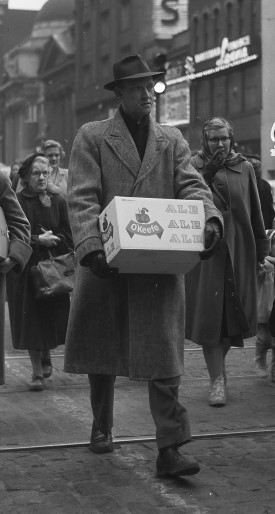
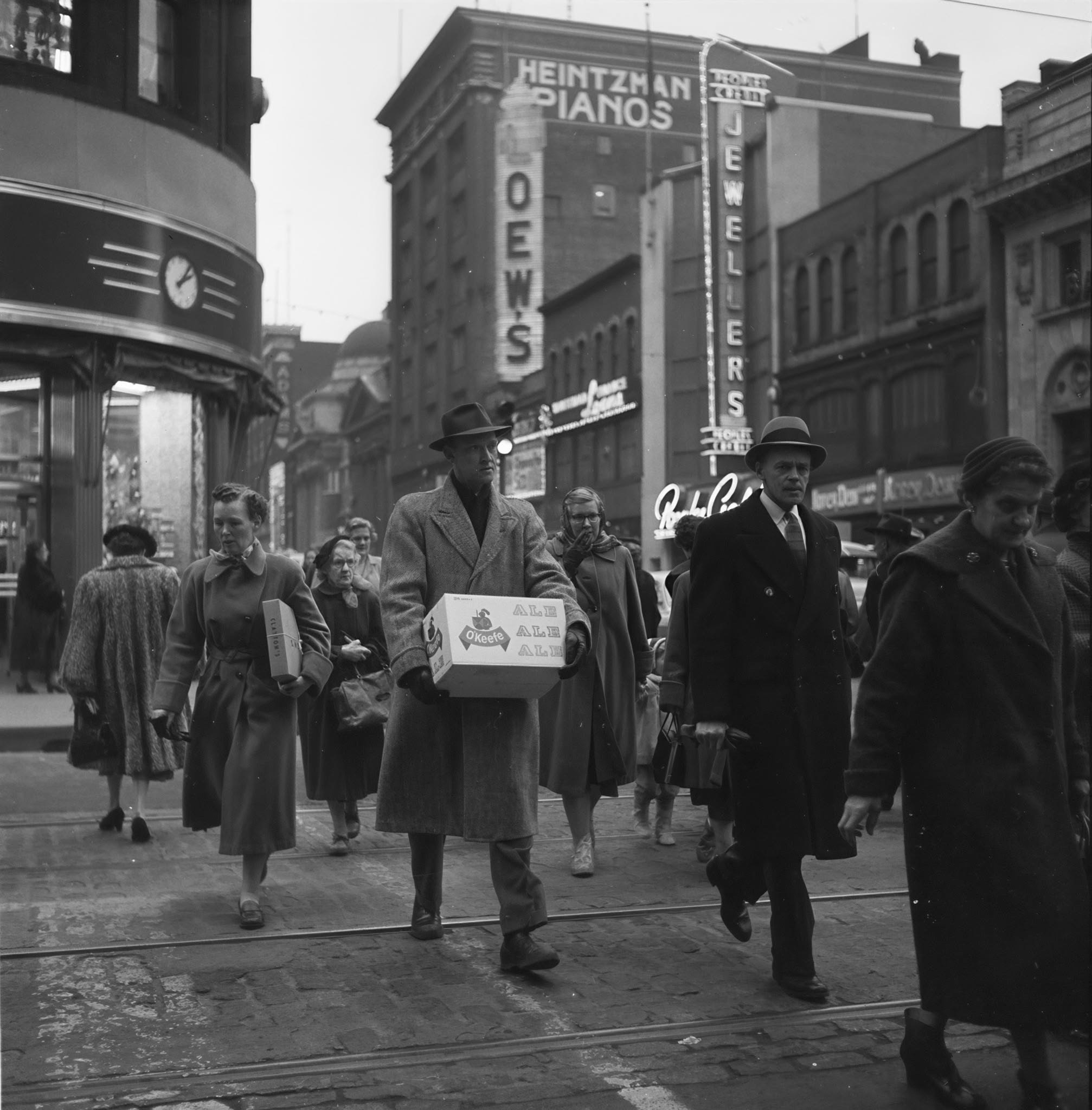
Now that the temperatures have moderated from -30C at dawn way up to -3C, the nation asks itself what the hell was all that? There is no answer to the question. Fortunately, there is a second question: how to still look dapper in a Canadian winter while lugging a lot of beer? Well, this gent can help. First, walk around in one of Toronto’s well loved black and white neighbourhoods where people must wear vintage clothing. Then, bottle your homebrewed beer only in second hand O’Keefe quarts you have nicked from the upper bric-a-brac shelves of old taverns. Finally, invest in an industrial quality paper packaging printing press you keep in the basement solely for the recreation of 1950s brewery boxes. Easy! Speaking of being on one’s feet, Boak and Bailey have written about how they didn’t do a Dry January so much as a very mobile one, a habit that has continued well into February:

We didn’t set out to make a mission of this, but we realised about halfway through January that, as it happened, we hadn’t yet made a repeat visit. That made us wonder if we could keep it up for the remaining few weeks. We were particularly conscious that we’d tended to stick to tried and trusted favourites last year. In fact, in 2025, over a quarter of our logged Bristol pub visits were to just two pubs – The King’s Head and The Swan with Two Necks. You might have noticed the word ‘logged’ and be wondering exactly what that means. Well, Jess, an accountant and spreadsheet nerd, of course keeps track of every pub we visit.

What a good realization! We have nothing like that possiblity here so much replicate 1950s Toronto to amuse ourselves but this comes a very good second. In the US of A, something else appears to be amuse or perhaps console according to BMI :

Beer posted positive $$ growth in 4 of the last 5 wks, and Jan 2026 is on track to be beer’s best monthly trend in years, at least in these channels. Including wine & spirit RTDs in the mix brightens the picture even more; broader beer + RTD category $$ grew more than 5% with wine & spirit RTDs adding close to 2 full pts in scans. 

Booze up! And somewhat similarly Ed stood up for the honour of Guinness this week with a response to what he called a a hatchet job on the Guinness’ Open Gate brewery in London published by The Guardian:

For some reason restaurant critics put the boot in more than any other type of reviewer… I was going to the brewery as part of the CIBD Southern section’s AGM, but first we had to do the business part to do at Diageo’s HQ.  I don’t know what deal the CIBD had done with Diageo or if we were subsidised, but we paid a tenner. This gave us pie and mash, which was nice, and a pint of Guinness (brewed in Dublin). I was keen to have somethng brewed on site though, so I had a hazy IPA next, which was nice enough. I think the ABV was a bit hefty, as on top of the three pints of Guinness I’d had I was defintely feeling pissed by the time I’d fininished it. So there you have it. The Guardian journo’s main complaint seemed to be that you had to take a lift to the toilets.

For others, the trip to the pub and then to the toilet is even easier. They are visiting the pub virtually from home, a remote non-work arrangement of sorts:

The 24-year-old from Yeovil, Somerset, regularly tunes into the feed from Morgan’s Arcade Bar in Carlisle, Cumbria – despite never having been there or anywhere near. What hooks Katie in is seeing different people come and go: the women enjoying a work party, the couple singing along with the musician, the young lad trying to chat up a girl at the bar… On some nights Morgan’s Arcade Bar, which can only fit around 60 people in it, has up to 5,000 viewers on its livestream at any one time. But like other bar streams, it has been subject to bans and restrictions for reasons they don’t quite understand. Bar owner Morgan Taylor has been streaming for nearly nine months. He noticed a huge rise in viewers over Christmas, then a few weeks ago his account was deleted.

Cass Enright got out of the house and on the road in his latest installment of A Quick Beer takes us to Montreal – a favourite destination of mine – and revisits some of the great brewpubs there in a video with this intro:

Join us on a step back in time as we have A Quick Beer at three of Montreal’s original brewpubs! Discover the enduring charms of Dieu du Ciel!, L’amère à boire, and Le Cheval Blanc, three spots that have been serving up delicious beer for decades. Although Montreal offers many modern breweries and taprooms nowadays, some of our fondest beery memories over the years have been here, and they’re all still going strong.

For me, it’s L’Barouf on rue St-Denis. If you are ever looking for me, check there. Also all about winnowing the better and the best, Pete shared some firm thoughts in his column in The Times this week, always welcome sight:

My beef is not with hazy pales — those original examples were pretty good. But if you don’t need to worry about balance or clarity in the beer, and you’re throwing in enough hops to cover up any off-flavours from brewing mistakes, a hazy IPA is very easy for a mediocre brewer to make. From a drinker’s point of view, if you grew up with soft drinks and don’t like the taste of actual beer, it’s perfect. It’s also great for Instagram — everyone can see you’re not drinking a boring, mainstream beer. But instead you’re drinking a boring craft beer. A boring, one-dimensional alcoholic fruit smoothie in a gaudy can with hop monsters or skeletons on it. If I wanted to drink sour grapefruit juice, I’d buy some Tropicana and leave it in the sun for a bit. 

The many botches of “craft” is a venerable topic which even comes with its own primodrial gospel but it is true that for all its eager keener passion craft never seems to fail to find a way to fail.  Nice to see that we have a paper of record confirming what Pete called the “sustained decline.” Viva crystal malt! Viva!! Viva!!! And Phil Mellows guided me to this article in The Caterer on the why to Pete’s what including this suggested impetus:

“…we are beginning to see the movement of some younger adult drinkers towards nostalgia brands, and given our history and heritage, we feel well-placed to meet this trend through some marketing and awareness driving activity.” Brookfield Drinks has launched a trial bringing long-established premium Scottish lager Kestrel back on draught. Brookfield managing director Nigel McNally says: “We’ve shown that a brand that’s nostalgic, like Kestrel, can be repositioned and revitalised. “Most pubs are serving the same products, and the trade’s been guilty of allowing brands which aren’t authentic onto the bar. Alcohol by volume (abv) have also come down, and I think overall customers feel they’ve been short-changed. A return to brands with heritage and nostalgia is offering customers a point of difference.”

Nostalgia and getting short changed? One must be on one’s toes. Which is related to Lars’ new maxim: “if you don’t know how the beer is made then, no matter what the beer is named, you have no idea what kind of beer it is.

Speaking of no knowing, The Beer Nut made a confession this week that I suspect is made on behalf of many of us:

Anyone who pays attention to trends within microbrewing will have noticed in recent years the explosion in variety of proprietary hop products. I don’t think these assorted extracts and powders and boosters were ever meant to have a consumer-facing role, but brewers seem to love them, and love letting us know that they’ve used them. Does that get them a discount from the supplier? I wouldn’t be surprised. For my part, I can’t help wondering if these enhancers actually enhance the beers in any real way. I’ve certainly never identified any pattern among them: which ones to look out for and which ones aren’t worth the paper their patents were filed on.

Note #1: Ludlow prices!!!
Note #2: Laura’s top tap rooms.
Note #3: Jeff doxxed.
Note #4: Burton Union Pr0n!
Note #5: Actually, no you can’t. You’d die.

The British Royal Navy has recently announced it is cutting booze rations in the service, limiting intake to 14 unit per week while on board. The Telegraph in its emailed newsletter presented a few responses to the news from readers:

Jenny Jones, however, recalled an age of largesse: “Many years ago in Malta, my husband and I were invited on board a Royal Navy ship that was giving a party. The atmosphere was convivial and, thanks to attentive stewards, I was able to enjoy several gin and tonics before dinner. “On departing, it seemed to me that the gangway had become a lot steeper. Back on dry land, our host asked how many drinks I’d had. When I said three, he told me that in fact I’d had nine, as naval tots are about triple the size of what one would get in a pub.”

Ah, Jenny Jones… what’s that? Not the same one? Fine. Me, I was once invited with a gang up the plank and onto a Canadian navy ship helpfully docked a walk from the Halifax taverns by a pal’s navy boyfriend. Among the minty green paid we worked our way though a number of 25 cent beers. I expect that sort of service is no longer offered.

The feature this week at Pellicle was written by Newt Albiston who shares his thoughts on drinking in Epping, just north of Greater London the tough town where he grew up which lives with division:

The day I return to Epping, my first trip home in some time, I can feel the tension, and the hesitance. The high street is pretty quiet, and there are lingering looks as I make my way past the various coffee chains and charity shops. Signs of the change in mood are everywhere: Union flags fly at half-mast on lamp posts, as if to declare the death of Britain as she once was, shadowed by the residue of torn-off patriotic stickers. Although I am instantly greeted by familiar faces when I walk into The Duke, the tension is still present in the quietness of the venue.

I like this: “…no fancy ginger beer or small-batch kombuch…” Perhaps related to The Duke, Stan guided us to a question this week – “what’s that smell?” Or rather…

“Olfaction helps shape our cultures, although it often does so unknowingly or without us noticing,” says (Inger) Leemans, who led the Odeuropa project. “When we talk about cultural heritage, we can think about religious rituals, but we can also think about specific scents that we’ve been cherishing and living with for a long time.”

Cherish. Hmm… I spent a good chunk of my teens in Truro, NS where the smell wasn’t always cherished and I am mindful of that reference The Breweries of Kingston & The St. Lawrence Valley by Steve Gates to a brewery a couple hundred years ago near my current place of work at City Hall which doubled as a pig sty. The next brewery to the north itself had a manure pit.  My point is that there were no scents without the full sensory array around it. Did 1890s Mild pair well with coal dust? Did Porter marry well with the pong of streets filled with horses? Perhaps we can never know.

And Charlotte Cook, brewer and scribbler, at took us along to Asturias, Spain for Everyday Drinking and shared her thoughts on the food and the cider:

When you taste the intensely rich stew, you can understand why cider rather than wine prevails in the north—the sour and fizzy is needed to cut through, cleanse the palate, and prepare you to dive in again. Cider is omnipresent in Asturias. As you walk around the town center of Oviedo on a Sunday morning, as families returning from church mix with football fans heading to an entirely different type of cathedra, cider is everywhere. Before 11 am, people will be drinking a bottle of cider for the table. Spaniards are famed for their ability to drink until the wee hours and still make it to work, school, or church as if nothing has happened. And having a little tipple of cider in the morning isn’t seen as such a stain on your character as it is at home.

Finally, some very heartfelt tributes were shared after the news of the death of beer writer Des de Moor like this from David J:

I think a lot about the pints we had one night in South London where he held court, sang songs and was so warm to everyone.

Pete also remembered Des the singer:

Des was a man of many layers. Years after the event, I discover my first interaction with him was buying the 12” remix of Charlton Heston by Stump – that was him, as half of the Irresistible Force. He made the Popbitch newsletter as Secretary of the Ramblers Association (moor, geddit?)… He was a great singer, a walking encylopedia. An absolute stalwart of judging the World Beer Awards. Never once heard him angry, pissed off, or anything other than kind and decent.

There are many more. His Wikipedia bio explains his musical side. Here he is singing Bowie and, here, an earlier solo album. By all accounts a wonderful guy. A sad loss.

Until next time, please check out Boak and Bailey who are posting every Saturday and adding to their fabulously entertaining footnotes week after week at Patreon. And look out for more of Stan’s new “One Link, One Paragraph” format. Then hunt out something in someone’s archives! Leave oblique comments on someone’s post from 2009!! Listen to a few of Lew’s podcasts and get your emailed issue of Episodes of my Pub Life by David Jesudason on certain Fridays. And Phil Mellows is at the BritishBeerBreaks. Once a month, as noted, Will Hawkes issues his London Beer City newsletter and do sign up for Katie’s wonderful self-governing totes autonomous website featuring The Gulp, too.  Ben’s Beer and Badword seems to be on pause since November but there is reading at The Glass which is going back to being a blog. Any more? We have Ontario’s own A Quick Beer and All About Beer is still offering a range of podcasts – and there’s also Mike Seay’s The Perfect Pour. Plus follow the venerable Full Pint podcast! And there’s the Craft Beer Channel on Youtube. Check out the archives of the Beer Ladies Podcast.

The Session #148: What Shall I Sing Thee?

It was a busy week. Youngest’s grad. Visitors with various ways. Kids setting out on adventures. Serious stuff at work. So Friday evening became a quite quiet and I found myself looking for some thing for something to do, dusting a little as I went along. I found a few things but not the thing I was looking for. Grandfather-in-law’s cufflink sets. An original 1977 Luke Skywalker Speeder toy. And I found a letter.

The letter was mailed by me in March 1986 from The Netherlands to a pal back home. Thirty-nine years ago. He gave it back to me at some point, we can’t remember when. And in the envelope, among other things, was a page written by a gang of us, starting out our backpacking trip together in the year after graduating undergrad. Before we split up and heading to our next stops, we passed the paper and pen around one Paris hotel room a few weeks before the letter was mailed. We wrote as we drank and told the friend back in Canada how he was missing out and how he was missed. Rude. Half-wasted. Stupid. Funny. Not funny. Juvenile. Here in my hand at 62, a window opened back to us all being in our early twenties. To be honest, I don’t miss being that young guy at loose ends even with all that freedom. But being with that gang of pals? It was great. Which brings me to my point.

We were a group of pub people in those years. Actually tavern people. A distinction. And we were a we. Seventeen years ago for the 15th edition of The Session I wrote a bit about it in response to the topic “How Did It All Start For You?“:

I was trying to think of auspicious moments on my early years with good beer. I am a lucky guy who, at 45, started in my university years interest in beer in early 80’s Halifax, a seaport town, that was interested in beer and drink and donairs and whether Keith’s or Moosehead was better house draught. A place where one could say “it’s a drinker” on a lovely day and know by midnight you’d be amongst 50 pals in the taverns, pubs and beverage rooms of our fair city’s waterfront.

And in those taverns… well, some of those taverns… there was singing. It’s one of the things I miss most about getting older and moving away. I have never encountered the same sort of tavern singing culture. I wrote about that in response to The Session #9. On a Saturday afternoon you could go to the Lower Deck or that other place nearby, Peddlers, where Kenny MacKay – whose Dad was a music teacher in my high school – led his band The All Stars. He led the crowd, too. A couple hundred people in a sing-a-long of folk songs and current pop hits. All while drinking pitchers.

And once in a while a sort of quiz broke out. Not the advertised organized thing that Laura may have had in mind when she posed the question for this month’s edition. But it was a quiz and it was a reasonably regular thing if you were at the right place at the right time: singing challenges. One challenge was to out sing Kenny. I was actually pretty good at this one, being a Minister’s kid who was in church and school choirs for, at that point, much of my life. It went like this. Kenny would be singing along and then he would stop and hold the note. And so would the whole room. Folk would drop away as they sputtered out their last breath. Once at the back of the Lower Deck I beat Kenny by a fair bit. I won. Hoorays and whoops before we sat and continued the serious business of draining our pitchers of draught.

So, yes, a challenge but not really a quiz. But there were quizzes even if those were rarer. Don’t get me wrong. We would regularly sit around and debate facts like “did that song come out before this song?” or “what exacly was the cubic centimeter size of that 1974 car your Dad owned?” The quiz master was always our brainy pal Jon as he sat (and still sits) somewhere affably on a spectrum or two. He could (and can) pull data out of the air better than anyone I have ever met. Pre-internet this was a vitally important presence in one’s life. Because it was always backed up with a “I remember how that particular song came out in June 1972 because we were in the station wagon going to Kitchener when I first heard it and Dad bought a new car in August.” He was our first computer.

Once on a rare night, the two tavern entertainments – singing and puzzling – came together. An example was the night the tavern became obsessed with TV show music and for half an hour or so it was a ping pong game of tables taking turns to sing and then counter-sing their best recollections of songs from The Flintstones. “There’s a place I know where the cool cats go call Bedrock.. twich twich.” Or The Wayouts song. We were getting near the end of the night when we realized the staff were all at the back watching us. We apologized for keeping them from closing but as it turned out they were having fun just listening. We tumbled out of the place, singing as we climbed the hill home.

So – singing trivia. That’s my perfect pub quiz. Could it be recreated? In the internet era? Maybe. If you put the phones away. And as long as you have your own Big Jonny in the room to pass judgement and point out the winners.

The Last Thoughtful Yet Wistful Beery News Notes For The Election 2025

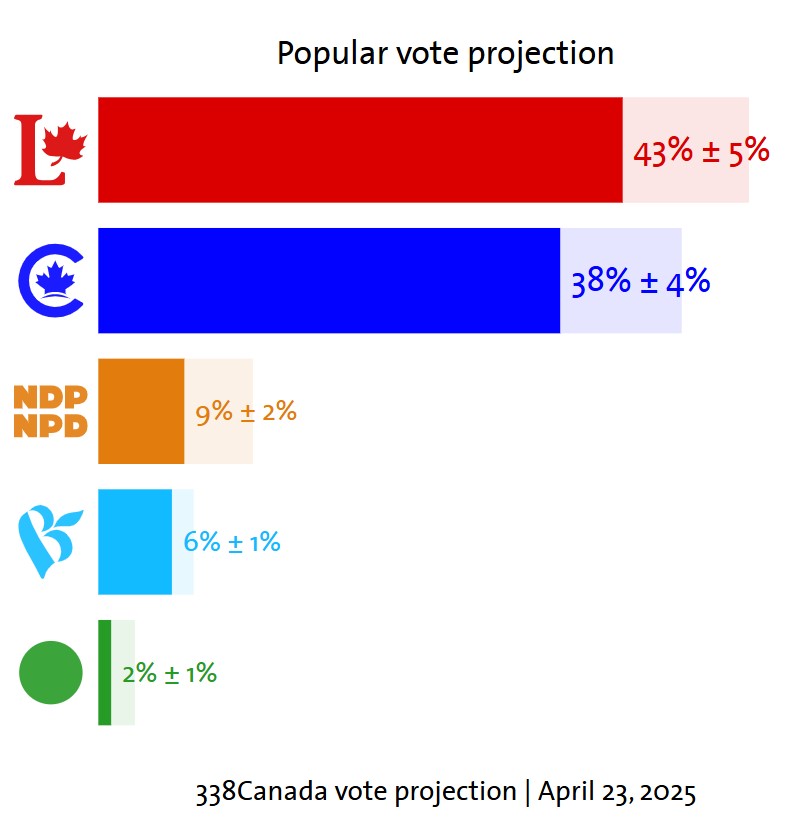
Well, it has been fun. Most of the polls remain to lean towards the non-politician globally recognized economist as opposed to the guy who’s been mostly a grievence mongering backbench MP since he was 24. I make no comment otherwise. As you can understand in my position, I must remain strictly neutral in these matters as a member of the media. And how could I not be, given the vital vegemite v. plastic straw level of fundamental policy divide we are faced with as a nation.

No, we need to set that aside. Let’s start off with something pleasant. Travel is always nice. Getting away. We all like to get away. Yet traveling can be difficult. You may want to find something new but the new has to be sufficiently familiar to fit into if not expectations at least your range of capacity to enjoy it. I’ve been following Boak and Bailey’s travels east with interest and have some sympathy for their experience in two pubs in Sibiu, a Romanian city I had never heard of, the first being…

…an odd place called Butoiul de aur, which had a bit of a middle class suburban lounge-bar feel. Then the karaoke started and it began to feel more like a party pub. Local beer Nembeer is either not very good or was not well cared for there. It all tasted rather like our first forays into home brewing. The best of the options was Amarilla (5.2%) which had a promising aroma and some good flavours among the off ones. We were initially excited to discover Kombinat, which appeared to be a Czech inspired Brewpub. But it turned out to be mostly a Staropramen outlet. Their eponymous house beer was fine – vaguely Czech in its maltiness, but not particularly distinguished.

Not particularly distinguished. Something like myself, I am told. You know, I am not sure I could write “some good flavours among the off ones” let alone be patient enough to unravel the threads to discern the difference. Me, I’d be the last one to sign up for anything called an “off-taste seminar” given that it’s basically the beery equivalent of a college course on shitty paintings. No, once I encounter the gak, all thoughts stop.

Also on the road but just a bit to the northwest of B+B, ATJ shared thoughts on things Bambergian… Bambergese… Bamberger:**

Beer to me is an open book about travel, people, friendships, memories, family, history, architecture, bars and pubs, breweries and the harmonic nature of the liquid in your glass. It is about how a landscape can shape the beers that people drink and about how it can be something more than refreshment, and even provide a guide to life and living as thorough as literature, poetry, music or meditation. This was why returning to Bamberg once more unleashed a surge of joy within, a feeling that I also experience when I go to the lagerlands of Bohemia and Bavaria, or drink beer in a brown cafe in Flanders, walk into a rural pub in England or spend time searching for soul-shaking beer in somewhere like Bologna or Barcelona.

Ripe words yet they capture a mood I very much recognize. Twenty years ago, I would have such a surge of joy walking into Finger Lake Beverages in Ithaca, New York that I made myself walk the aisles for five minutes before I could stop and touch any of the offerings.

And furtherer wester still, two feature writers with The Daily Star took themselves on a trip to four east end London’s dubbed roughest pub crawl:

The Manor Arms was empty, with a smell of must and TCP hanging in the air. One bloke sat down at the end of the bar chatting away to a gruff man in a cap pulling the pints. ‘“F*** this, f*** that. It’s the f****** credit union,” said the bartender. “Oh that thing you said would never happen?” “Yeah that f****** thing, hahahahah.” Spurs were on the telly, we both loved that, watching our beloved, beleaguered club fight against Hoffenheim to the soundtrack of Danny Dyre-esque ‘awwwiiiittte’s… The barman, it turns out, was a Spurs fan too. “Typical Germans, if that’s a penalty, my d***s a goldfish,” he said as a Hoffenheim player fell in the box. Men kept walking in with bags of vodka and salmon. “Not for me mate,” our new companion, Graham, behind the bar would say. “Know wot mean?” We didn’t really, but we loved him. Out the blokes would walk with their bags of salmon, deflated, venturing back into the inky blackness to find a more willing buyer. It couldn’t have been more relaxed, more comfortable. Neither of us had had a chat with a barman this good in months.

I know that feeling, too, having once been offered tantalizing beef steaks, discretely offered by a long  coated gent who pulled them from the front of his trousers, all wrapped and labeled and clearly freshly stolen from the grocery store near to the formerly named Ladies Beverage Room in my Halifax of the 1980s.

But forget all that. If one is to believe Reuters, the next big beer tourism destination is going to be Sweden – certainly once news of these changes to the drinking laws get better known:

Under current rules, shops in the Nordic country can only sell drinks with up to 3.5 percent alcohol. For stronger drinks, consumers must head to Systembolaget, the state-run alcohol chain which operates 450 outlets across Sweden. The stores have limited opening hours, don’t advertise alcohol or discount drinks. The government’s so-called “farm sale” law for alcoholic beverages of all strengths takes effect in June and runs for six years before a mandatory evaluation. The law states visitors must have paid, can buy only small “souvenir-style” amounts and have to listen to “a lecture” with an educational element.

Party Party!! Ja! Ja!! Jaaaa!!! What else is going on? Did you hear about these tariff things? No really, they’re a thing now and apparently the wine makers of Bordeaux have had to face some facts this year with the threats and realities:

Trump’s threat of 200 percent tariffs caused dismay in Bordeaux. “Châteaux will close,” said one proprietor. “Négociants will close.” And of course it would cause chaos in the US wine market as well, with many casualties. That was why few believed that he would do it: the damage to US commerce would be too great. And there was a lot of lobbying against tariffs, too: restaurants, sommeliers and retailers had got together to explain the problem. In the end, the tariff on the EU was set at 20 percent – for now. On a practical level, Bordeaux has also been shipping a lot of wine to the US recently. Most leading châteaux have ensured that they have somewhere between six months and a year’s stock already there.

Speaking of managing traditions in times of the new, The Mudge posted a good piece on Thornbridge’s use of one of the Union sets to create some premium and tradititonal ales:

…in a world of heavily-hopped New World IPAs, the question must be asked whether these relatively understated beers in a classic English style will make a mark. Ordering online, these beers came to almost £4 a bottle, so they are probably something better regarded as an occasional treat rather than a regular drink, especially when Jaipur can be obtained from Morrisons at 4 for £7.

Can an occasional treat sustain itself? Even the new has been losing its sheen more and more it seems. Beer Business Insider sends out a cryptically condensed email every week with some pretty frank comment including a ticker tape style summary of fairly recent movements in the US booze trade, in this case to mid-April:

Wine volume down double digits, 9.6% for 4 weeks, several points worse than 26 weeks (-6%) or 52 weeks (-5%). Craft volume down 9% for 4 weeks, $$ down 8%. Craft down 5% for 26 weeks. And volume of spirits-centric seltzers suddenly dropped 6.8% last 4 weeks. Down 3% for 12 weeks. Recall, High Noon is two-thirds of spirits-centric seltzers. It fell 6.6% and 12.8% last 2 weeks. What’s going on?

Yikes… I think. That many numbers makes me all woozy and giggly. Perhaps relatedly, The New York Times had an interesting story about how, for a city that claims to never sleep, it is getting harder to get a license to sell booze late at night:

…some bar owners say closing times have trended earlier in recent years, with lively venues like Carousel, which opened in 2023, shutting down at 2 a.m. Most operators agree that today’s customers are drinking less than previous generations, and that they’re going out earlier… Late-night liquor licenses, once an expectation in nightlife-heavy neighborhoods, have become increasingly difficult to obtain, especially in areas where bars bump up against brownstones. Early birds and night owls have already clashed over outdoor dining programs and summer concerts. “The 4 a.m., seven-days-a-week license is becoming ararer commodity,” said Terrence Flynn, a liquor licensing attorney who has represented hundreds of bar owners in New York City since 1985.

Next up, Jeff posted a post called “Convergence” but I might have called it “Overlap” given, you know, how I see these things: there are no neat and tidy boxes of styles. Yet the drive to be the first to label something as a thing is a real thing but it is not a good thing. But that’s just me. Let’s see what Jeff had to say:

Until I poured out a can of Pure Project’s Neon Bloom, however, it hadn’t occurred to me that pilsners and pales were converging. We’ve had a nice run of warm, sunny weather in Portland, and midway through the first can I enjoyed—thanks to a four-pack sent from San Diego—I realized I was having an experience shift. The beer smelled and tasted like a hoppy ale, but I was slugging it down like a lager. I paused to give it some attention and realize, purely from the sensory experience, that it drank very much like a WC pilsner.

OK, that makes sense. But, and this gets a little ranty and a little tedious, this is not a new issue or even one about pale v. lager so much as continuation of, how should I put it, hmm…  the downward spiral. See, if style means anything, pale ale should lead with grainy texture framed or even cut by the hopping. Lagers should speak one way or another to roundness of malt, again framed to various degrees by hops and even other malts. IPAs are supposed to be where the hops shine but, instead, they suck all the oxygen out of the room.** But, given IPA sells, well here we are. I would also note Stan’s comment:

Bob Kunz and Tim McDonnell of Highland Park Brewery may or may not have invented West Coast Pilsner, but it appears that Kunz was the first to give it a name. Their Timbo Pils pretty much embodies the style. Last October, Timbo won a gold medal at the Great American Beer Festival . . . in the American-style Pale Ale competition.

Clearly an evil roams upon the land and it’s name is style. Interestingly, this had coincided with the collapse of actual independence in US craft.

Finally, I really liked this article in Pellicle if only for the early inclusion seven lines in of the word Coreff, a word I encountered last January when the same author, Anaïs Lecoq, wrote about that beer of Breton.  Rather than a straight up Part II, this week we have a next chapter on the guide to the beer culture of that part of France:

Strolling effortlessly behind the massive wooden bar, Élise is the first thing you’ll notice when pushing the door of Tavarn Ty Élise—Élise’s house if you translate it into English—in Plouyé, a small village in Central Brittany, France.  Her pub has been a staple for the community since 1978. That’s when Élise’s mum, Anna, bought the place for her daughter after the owner retired. “I was 21 and had no intention of tending a bar,” Élise says. “I was a seasonal worker and I liked my freedom, but I still said yes.” Watching her doing her thing, you would think she’s been there her whole life. She hasn’t.

WIll there be further chapters, a three and even a four? I hope so. One last thing – tomorrow is the next edition of The Session, hosted by Ding and on the question of value. Value?

Value most certainly does not necessarily correlate with cheap either (although it could), rather it means when I part with the cash, no matter how large or small the amount, does what I receive in return meet or exceed the value of said cash? Subjective? Sure, but we all have our own sense of value.

Value! Oh, I am digging into the archives for that one. That’s all for this week. Until we meet in May after all the votes are counted net Monday and after all the taxes are submitted next Wednesday, please check out Boak and Bailey every Saturday (…as long as all their holiday fun doesn’t get in the way…) and Stan (….who is also going on his own holiday break so may not be there…) each and every Monday.*** Then listen to a few of the now rarely refreshed Lew’s podcasts and get your emailed issue of Episodes of my Pub Life by David Jesudason on the (sometimes even but never) odd Fridays. And maybe The British Food History Podcast. Maybe? And Phil Mellows is at the BritishBeerBreaks. Once a month, Will Hawkes issues his London Beer City newsletter and do sign up for Katie’s wonderful newsletterThe Gulp, too.  Ben’s Beer and Badword is out there with the all the sweary Mary! And check out the Atlantic Canada Beer Blog‘s weekly roundup. There is new reading at The Glass which is going back to being a blog. Any more? We have Ontario’s own A Quick Beer featuring visits to places like… MichiganAll About Beer has given space to some trade possy podcasts and there’s also The Perfect Pour. Plus follow the venerable Full Pint podcast with an episode just last month!. And there’s the Craft Beer Channel on Youtube. Check out the archives of the Beer Ladies Podcast. That’s quite good but, hmm, they’ve also gone quiet this year. The rest of these are largely dead. And the long standing Beervana podcast …except they have now stood down.  As has We Are Beer People. The Share looked to be back with a revival but now its gone quiet. And the Boys Are From Märzen podcast appears suspended as does BeerEdge, too. VinePair packed in Taplines as well. All dead and gone.  There is more from the DaftAboutCraft podcast, too. Nope – that ended a year ago.   The Moon Under Water is gone – which is not surprising as the ask was $10 a month. Pete Brown’s one cost a fifth of that – but only had the one post. Such is life. Such is beer podcasting and newlettering!

*Bamberger would be a good name for a smash burger place.
**That is why the label “IPA” is both meaningless and helpful as it gets slapped on anything that wants to hide yet still sell. From candy coated Willy Wonka nightmares to innocence of light lagers and simple pales ales it’s all IPA.
***I heard Stan as well as Boak and Bailey held a vote in secret and decided I could hold the fort, that I really didn’t need a holiday. O. M. G.

The First Beery News Notes For December 2024

The countdown is on! I already feel like Ed Grimley and it’s only the fifth of the month. I am too excited. That rotten cold I had is finally in the past and now I am seeing holiday things everywhere, like in the red and green scene at one pub’s outdoor washroom posted by Beer Nouveau. How cheery. Retired Martin* also included an exposé on the outside gents in one post this week:

No, I don’t know what “To the huts” means, either.

Speaking of cheer, are you having an office party?  The Times says they are in mortal danger from, frankly, sensible updates to the law. I say that as a lawyer given I have never been to such madly lavish and deeply souced Christmas parties as those put on by private law firms. But that was decades ago. Here is what is going on now:

Employers that are found to have failed to do so could face claims for unlimited compensation at tribunals. Lawyers are advising that financial services businesses in the City of London — renowned for alcohol-fuelled Christmas parties — “should be particularly mindful of the new rules”… Updated guidance published in September by the Equality and Human Rights Commission emphasised that workplaces must take an active approach to assessing risk. That translates to an obligation to identify any action to clamp down on possible sexual harassment and the requirement for regular reviews of systems.

This lines up with what is… or rather isn’t… happening in New Jersey whether because of cell phones and social media, workplace harassment, remote working arrangements or lower interest in excessive drinking. Did you know some offices bizarrely arrange for staff to buy holiday party gifts for ownership? And perhaps not oddly, given Russia’s foolishly and murderously self-inflicted economic collapse, but holiday office parties are being cancelled there too. Apparently, there are after effects of this sort of thing well beyond the office:

A new low-alcohol beer has been launched by a train operator in a bid to tackle the number of passengers having drunk accidents during the festive period. The Safety Thirst beer, at 0.5% alcohol, will be stocked onboard Avanti West Coast services, which run on the West Coast Main Line between London Euston and Scotland. The company said the pale ale will create a “more enjoyable travel experience” and help passengers “drink responsibly”. 

The Tand doesn’t need no stinkin’ office parties for his jolly holidays. Because he found his perfect beer:

…I probably don’t score beers as much as I ought to, but I regularly do. I am probably quite a strict scorer, given that I judge beer in competitions and also that over the years, I know what its what.  So, that’s a long winded way of saying, until now, I have never given a five. So let’s get to the point. It had to happen and last Friday, in an infrequent visit to our local Wetherspoons, I gave a beer a five. What was it I hear you scream? Well, perhaps not surprisingly given the quality of the brewer and the beer, it was Thornbridge Jaipur. Why a five? Well, this was perfectly brewed, clear and untainted with no off flavours, at a perfect temperature and was bursting with condition. The body and mouthfeel were perfect. The glass was spotless. In my mind I went over everything. Could it be improved in a normal pub environment? Not as far as I could tell. It was, simply, faultless.

Boom! What’s the news from the ag markets? Oh… as we have heard out of Oregon, the hops news coming out of Germany is not good:

Declining beer consumption worldwide is hurting German hops growers, who face lower prices and possible farm closures amid a dip in demand for the bitter crop. A strong hops harvest in 2024 means that Germany has regained the crown as the world’s top producer of hops, but prices have slid. According to the German Hop Industry Association, 2024 is the 11th year in a row in which more hops were produced than required.

And, speaking of not boom,  Canada’s barley supplies appear to be very close to a 25 year low:

With the 700,000-metric-ton (mt) projection being only slightly higher than 542,800 mt remaining after the devastating drought of 2021, there is little room for error…. Given the drought stress experienced and the lowering of yield estimates by provincial counterparts, it is widely anticipated that final production estimates from Statistics Canada will be lower on Dec. 5. The problem is, even a 3% cut in production would take 228,000 mt off the ending stocks (all else equal), leaving them below the 2021-22 level.

In addition to drought, prices and planted acreage of barley were both down in 2024, too. If you want to obsess over this on a regular basis, check out the tables and charts of the Canadian Grain Commission’s weekly stats.  And that’s all the malt news this week… NO IT ISN’T!! The Maltsters Association of Great Britain also issued an update on the 2024 numbers:

The UK malting barley harvest is now complete and the overall picture is one of reasonable quality and good supply. Winter malting barley can be summarised as variable with predominantly low nitrogen crops and grain retention levels similar to 2023. Winter barley yields are recorded at 10-15% less than the 5-year average. Conversely, the spring barley harvest in the UK has seen low nitrogen crops throughout all regions with good retention levels and yields described as better than average.

I’ve been described as better than average, too.  A step up from that but facing similar climate and market pressures, traditional sake makers in Japan are heartened by UNESCO intangible cultural heritage designation for their brewing techniques:

“It’s still quite warm, even though it’s almost December. The price of rice is high and the harvest is poor, which has made sake-brewing (this year) very challenging”… The centuries-old method of making sake is unique for its three-step preparation, or “San-Dan-Jikomi”, of allowing multiple fermentation processes to progress simultaneously in a single container… While sake has lost ground as a regular drink, Maesako said it remains impossible to separate from Japanese culture. “We have sake at celebrations, at New Year’s, and also on sad occasions, like funerals,” he said. “The culture of Japanese sake is the culture of Japan itself.” The brewing technique is expected to be formally endorsed at a UNESCO committee session in Paraguay this week.

More on San-Dan-Jikomi AKA Sandan Jikomi here. Reuters posted a photo essay on the process in addition to the story quoted from above.

Panic!! PANIC!!! They are running out of Guinness:

The BBC understands that Diageo is allocating supplies on a weekly basis to make sure it has enough stock to meet demand over Christmas. A Diageo spokesperson said: “Over the past month we have seen exceptional consumer demand for Guinness in Great Britain. “We have maximised supply and we are working proactively with our customers to manage the distribution to trade as efficiently as possible.”

You know things are going to hell when folk use “proactively” in a press release. Always the actively pro, I think it’s fair to say that The Beer Nut has not always enjoyed the Canadian craft beers that have passed his way. It was good, then, to read how a couple of brewers from my old home in Nova Scotia didn’t disappoint even if one offering didn’t necessarily thrill either:

This is solidly made and workmanlike, but don’t expect fireworks. While I’m not saying that breweries running since 1997 have a particular safe-and-steady way of making their beer, this IPA suggests that there might be something to the theory. It’s not an exciting beer, but I’d say it’s a dependable one.

Boak and Bailey followed up on the recent news of a number of cask brands being discontinued with a consideration of how many brands had existed. Turns out not all that long given a number of constantly moving factors:

When we think of cask ale brands that have been around longer than that a few contenders spring to mind. Hook Norton Old Hooky dates back only to 1977. Adnams Broadside was launched in 1972. Fuller’s London Pride came to the market in 1959. And Marston’s Pedigree was introduced in 1952. You might make an argument for Bass which is not only still available but also having something of a resurgence in popularity. But it’s also, really, just the name of a defunct brewery. And that famous ‘first trademark’ was actually for ‘Bass & Co’s Pale Ale’, which is not what’s on the pump clips today.

Years ago, I noodled around looking up when the first branding attached itself to brewing, when the dissassociation of what is on the label from what is in the glass began. I can’t find the links but if you spend a little time over at Ron’s, you pick up quickly that beers up to a certain point in the middle 1800s were identified as gradations of a brewery’s output like this, not the individually animated distinct personalities in themselves we know as brands. Walk back through time. Trademarks get legislative protection in the UK starting in the 1860s. In the US, we see in the 1820s that beer being shipped out of the local market gets named with adjectives like “cream” added to impress buyers with the superior qualities of the product. A generation before in New York City of the 1790s you see beers sold by style and city of origin much like you would have seen in Britain 120 years before that.  That all being the case, if you think you’ll miss the brand now maybe buy the t-shirt. You’ll probably be able to find a similar drink all the same. As the same B+B wrote in their footnotes:

Perhaps it’s studying beer history that does it – you get used to the idea that beers and brands come and go as tastes change. And if we ran a smaller brewery such as Butcombe or Cheddar Ales, we’d be rubbing our hands in glee, because this would seem to leave a gap in the market for beers which are trad, but not boring. Perhaps we’re being naive, though.

BREAKING!  I had no idea that you had to “stamp” a beer sold in a bar in Quebec. Soon it will be over:

According to the microbreweries, the obligation to affix stamps to their cans and glass bottles is both unnecessary and time-consuming… Since 1971, the law has required a duty stamp to be affixed to all beer sold in restaurants and bars. The original aim was to prevent smuggling and tax evasion. Some microbreweries have recently been visited by police officers who have come to check that the labelling on the stamps complies with the law. Microbreweries that contravene the current law face fines of between $500 and $7,500. The minister was at pains to reassure, saying that a fined business could be forgiven.

BREAKING! I have no idea who these people are:

But how did a ‘celebrity’ couple come to take over this regionally-renowned boutique bar? For that, you’d have to go right back to when it first opened, in 2016. “Katy kept saying she wanted to move somewhere in the countryside but where you can also get a gin and tonic,” Adam says. “So I said: ‘That’s Knutsford.’ I spent so long persuading her to move here. Eventually she agreed and the day we moved in was the day this place opened.”

For VinePair and without any reference to Knutsford, Kate Bernot has unpacked the potential damage Trump’s proposed tariffs will do to the clinky drinky markets in a welcome greater level of detail than we too often see:

The global supply chain means that U.S. companies are heavily reliant on imported materials. For the beverage industry, aluminum is the most significant. Canada exports 75 percent of its aluminum production to the U.S., and domestic production here simply can’t replace that volume. It would take years, Uhrich says, to even begin construction on new aluminum plants, let alone to supply what U.S. alcohol companies need. Beer is obviously the most vulnerable to rising aluminum costs: Two-thirds of U.S. beer is packaged in cans. There’s simply no way, Uhrich says, that further tariffs wouldn’t drive up the cost of domestic beer as a result of costlier materials.

Canadian malt in Canadian cans – US craft! Finally, for the double in The Times, Pete Brown gave a primer on some of the newbie questions that folk who don’t know much about beer are going to ask. It’s an interesting use of the space but the paper must be concerned that there are reader lacking superficial understandings of beer such as this:

Every single menu and every single recipe in the history of humanity is based on one simple truth: some flavours go together better on the palate than others. It would be absurd to think that beer is somehow an exception to this. Beer actually has a broader range of flavour than wine. The caramelisation in a pint of bitter goes perfectly with roast beef. A Belgian-style wheat beer works well with anything you might squeeze some lemon juice over. And stout with a gooey chocolate dessert is so good, so simple, that it’s almost cheating. Just remember to pair light with light and strong with strong, that there’s no right or wrong and that it’s supposed to be fun.

Well, I suppose Christmas is the time for merry chestnuts. At least it’s better than sucking up to your commissioning editor!

That’s it! It’s been a busy week in the real world and that is where I live. Until next Thursday, please check out Boak and Bailey every Saturday and Stan going strong again each and every Monday. Then listen to Lew’s podcast and get your emailed issue of Episodes of my Pub Life by David Jesudason on the (never ever) odd Fridays. And Phil Mellows is at the BritishBeerBreaks. Once a month, Will Hawkes issues his London Beer City newsletter and do sign up for Katie’s wonderful newsletterThe Gulp, too. Ben’s Beer and Badword is out there with the all the sweary Mary! And check out the Atlantic Canada Beer Blog‘s weekly roundup. There is new reading at The Glass which is going back to being a blog. Any more? Check out the Beer Ladies Podcast. That’s quite good and they are revving up for a new year. And the BOAS podcast for the bro-ly. And the long standing Beervana podcast …except they have now stood down.  Plus We Are Beer People. The Boys Are From Märzen podcast appears suspended as does BeerEdge, too. But not Ontario’s own A Quick Beer. There is more from the DaftAboutCraft podcast, too.  All About Beer has podcasts and there’s also The Perfect Pour. Plus follow the venerable Full Pint podcast. And the Craft Beer Channel on Youtube.  The Moon Under Water is gone which is not surprising as the ask was $10 a month. Pete Brown’s one cost a fifth of that but only had the one post. Such is life.

*Check out his walk aroung Rye too.

The “Happy Canadian Thanksgiving To You!” “Err… What????” Edition Of These Beery News Notes

Did you know that the entire meal is American. That’s the dirty secret of Canadian Thanksgiving. It’s not even ours. Roast Turkey. Mashed Potatoes. Stuffing and cranberry sauce. Pumpkin pie. Food as seen on cable TV. At least I will have my own damn carrots like those up there. And my own beets. Hmm… if the menu was really Canadian what would it be? I dunno. A big ass butter tart at the end maybe. And a roasted wild goose. Where I lived out east a couple of decades ago there were church hall community suppers serving hunter-shot local wild goose. They even created a special regulation to allow it. But only at church suppers. Fat chance with even that being allowed now. Frigging Ohio. Me, I’d have it with Fin du Monde. Suits the times these days.

What else is going on? I am pretty sure that when I were a lad no one cared about if me and the lads preferred beer or wine. I do find the obsession with Gen Z’s taste in booze a bit odd but let’s let the NYT explain their latest cultural findings as to why wine is doing well with them:

Farah Sheikh-Ogoe, who until August was a bartender at Moonflower, a wine bar in the West Village, said that many of the young customers she encountered were drinking, but drinking less. “It’s a little bit more of like, I’m going to be thoughtful about what I’m consuming,’” Ms. Sheikh said. Drinking wine isn’t like taking a shot of vodka or slamming a margarita, said Carson Bennett, a 24-year-old freelance writer and waiter in Brooklyn. “It’s something to sit and savor.” “I think of watching ‘Ratatouille’ and the way that they drink wine,” she continued. “It is a sort of event.”

Big H/T to the person I forgot to note who mentioned that reliance on a cartoon you saw as a child shaping your adult drinking preferences is all a bit heewhooheehaahaa.

And it is interesting to see some serious format changes coming to both the Great British Beer Festival (GBBF) next year and the Great American Beer Festival (GABF) next week. The first is run by CAMRA, a UK lobby group for the beer buying public, while the second is run by the Brewers Association, the USA trade association for brewers other than the really big brewers. The change coming to the GBBF is its move from London to new venue in the reasonably accessible city of Birmingham. The changes coming to the GABF were summarized this week by Andy Crouch who indicated in All About Beer that they were driven by the realities of “emptier aisles and far fewer attendees” in recent years:

Attendees at the 2024 festival will experience six distinct areas. They include “Prost!,” a German inspired biergarten featuring decor paying homage to Oktoberfest, live polka bands playing traditional Bavarian music, and a stein-holding contest. “Score!” is a sports-themed area that will host Lucha Libre Mexican Wrestling and Mechanical Bull Riding. “Fright” is a Halloween-themed area welcoming costumed festival attendees. “Blast Off” offers “liquid innovations and on-trend flavors from international and domestic breweries,” according to the BA. This includes the United Nations taproom, which hosts classic beers from around the globe. 

The event is held in the BA’s hometown of Denver, which makes for interesting logistical challenges. There would be three main classes of attendee: (i) locals, (ii) people in the trade one way or another using their expense accounts or tax write-offs and (iii) beer fans affluent enough to pay to attend. If you are heading any distance to Denver, you would need to have at least $1,000 to spend on the weekend – $220 for the pass, $250 for the plane, $400-600 for three nights at hotels and the balance for food, taxis and the after parties. By contrast, the GBBF pass to the new location in Birmingham costs £9.50 a day and there are four modestly priced trains an hour arriving from the old HQ in London. But even at that budget, the event still has B+B questioning whether to attend according to last week’s footnotes:

The news of the return of the Great British Beer Festival did somewhat gladden our hearts, even though we don’t really like beer festivals, and haven’t always had a great time at GBBF. It just felt as if something was missing from the calendar this year when it didn’t happen. All the old problems will no doubt still apply, however: how do you make a big, drafty conference centre feel anything like as pleasant as a pub?

Somehow I don’t believe they were thinking of “Lucha Libre Mexican Wrestling and Mechanical Bull Riding” as the solution to that conundrum. Yee. Haw. We shall wait on reports from these events before issuing our final condemnations… err… thoughts.

And, just as Hurricane Milton hits, the tough news continues to come out of the aftermath of Hurricane Helene but I was watching for this story:

As communities across the Southeast respond to the catastrophic damage of Hurricane Helene, Anheuser-Busch is actively supporting relief and recovery efforts across the region. Together with our wholesaler partners, we are working alongside the American Red Cross to provide clean, safe drinking water to communities impacted by the Category 4 hurricane… At the request of the American Red Cross, [for example] Anheuser-Busch and its wholesaler partner KW Associates LLC delivered three truckloads (150,000+ cans) of emergency drinking water to Greenville, South Carolina on Wednesday, October 3. 

Good stuff. Similarly, we read about this as well as this at a smaller scale from one craft brewery:

Workers at Holy City Brewing have temporarily shifted their focus from brewing beer to canning water, aiming to provide clean drinking water to those affected by Hurricane Helene in Western North Carolina. “We haven’t really canned water, so we’ll see how fast we can run it,” said Owner Chris Brown. “Water’s a little bit different from beer. So, we can run the pressures a little lower. We’re not worried about carbonation.” The brewery’s team quickly adapted to the new task, processing between 200 and 250 cases of water… “We kind of had to scrounge some cans together…” 

More will be needed in Florida no doubt.

On a happier topic, in their weekly newletter feature called “WHAHWEDRUNK!!!” (or maybe something else) B+B wrote about one beer that made for a neat and tidy tiny essay:

We spent last weekend in London, and honestly, we keep thinking we should go somewhere other than The Pembury Tavern and drink something other than Five Points Best. But really, when it’s become one of the best beers in the country, why bother? To be fair, both of us tried the Best at a couple of London pubs that weren’t The Pembury, and it was just as good. On the face of it, it’s a really traditional bitter, but there are a few tweaks that make it next level good. There’s a honeyed, biscuityness in the malt; and a slice of orange, Fuller’s style, alongside the hard bitterness. If we were going to make comparisons it would be something like Bathams, or the various Boddington’s clones we’ve had over the years. But like Bathams, it also tastes like its own thing.

(I wish I was known for my honeyed biscuityness.) Moving on briskly, at the end of last week there was this news from the world of art, an incident in the LAM museum in the Netherlands:

An elevator technician, filling in for a regular worker, mistakenly threw away Alexandre Lavet’s All the Good Times We Spent Together (2016), thinking it was trash. The artwork, two hand-painted beer cans meant to evoke memories of friendship, had been intentionally placed inside an elevator shaft to mimic something casually left behind. LAM, known for its food-themed art and unconventional displays, places pieces in unexpected locations to encourage visitors to view ordinary objects differently. “Our goal is to make people see the mundane in a new light,” said museum director Sietske van Zanten in a statement. The technician, unaware of the museum’s approach, discarded the piece in good faith.

Empty Can Performance Art Note: a Nova Scotian tradition continues – though in my day we would leave an empty there any old day of the year.

In the political realm, Kamala Harris had a beer on TV this week:

When they go low, she goes high. Miller High Life to be precise. Kamala Harris, the Democratic presidential nominee, took her election campaign to late night television on Tuesday by cracking open a can of the lager with host Stephen Colbert. The moment set her apart from Joe Biden and Donald Trump – both, famously, teetotallers.

Speaking again of the dry among us, apparently Canada’s game coming to Utah has triggered a Canadian response:

Not only did the Utah Hockey Club begin its tenure in Salt Lake City with a 5–2 win over the Chicago Blackhawks on Tuesday night, but also the NHL’s newest fan base arrived at the season opener with a thirst for hockey. And, well, good times. According to The Salt Lake Tribune, Delta Center sold a record-breaking number of beverages, with beer sales climbing over $120,000—more than any other previous NBA or NHL event in that venue, which has served as the home to the Utah Jazz since 1991. The beer prices weren’t cheap, either. A Michelob Ultra, which was $13 at the Jazz’s preseason tilt the night before, sold for $15 for the arena’s NHL debut.

I once had professional occassion to review the effect of the Belleville Bulls coming to town for a Friday night OHL game and I can assure you that the right crowd can sell a lot of beer.

Interesting that just as Ontario has opened up beer and wine sales in cornerstores the nanny state social engineering Tories posing as pretendy libertarians of Alberta have come out against the very same idea:

…the Smith government now says it’s not happening, in part, because they think most Albertans do not want beer and wine and ready-to-drink cocktails and coolers sold in convenience stores and grocery stores…  The minister for red tape reduction said those opposed felt there were already lots of liquor stores. “They weren’t being teetotallers in any way, suggesting we need less access to liquor. They seemed to feel we had good access”… There is a report on what the UCP politicians heard. It is not going to be made public.

Noooo… not them… not “in any way”… no way… not a chance…

Speaking conversely of “yes, yes, yes” David Jesudason had a great feature in Pellicle this week. I like that Wednesday publication deadling thing by the way. You can imagine why. Anyway, David wrote about the subtitled “Harcourt, Altrincham’s Hong Kong Inspired Pub”:

“Because we’ve got the traditional Chinese character outside [on the sign] the locals didn’t expect us to be a pub,” Priscilla says. “They thought we were a Chinese restaurant.” “Some people thought maybe we’re just a restaurant serving some beers.” When customers who were sceptical about the food smelt the dishes being brought through, however, it turns out they couldn’t resist temptation. Harcourt reminds me of a great desi pub in that it mixes an important aspect of Asian culture in a British bar setting, offering a unique welcome so that the visitor believes they are visiting a home away from home. The best of Britain. The best of Hong Kong. The best of Manchester.

And finally… well, eventually finally… Matty C wrote an opinion piece on the ongoing debate in the UK about the pint and the proper serving size:

Lets say, for argument’s sake, that legislation was introduced where the pint was scrapped and only third, half and two-third measures remained. If, as the study states, beer consumption was reduced by 10%, then so too would sales volumes, and indeed, revenues shrink by the same amount. The trend in pub closures already indicates how fine a line hospitality businesses are walking in terms of operating sustainably. Any reduction in revenue would surely only hasten the demise of those already teetering on the brink, which, as evidence suggests, is a high proportion of operators.

It is an opinion piece so must naturally invite response. So I shall. First, however, a couple of weeks ago, I shared (or at least I hope I shared) my thoughts that the conspiracy theory about the lazy use of the “guy drinks beer from pint glass” is a bit much. It’s like the North American use of a martini glass (olive and all) in the style of a “banned!” sign. Wine bottles are common here, too. I don’t take these as a slight against wine*… or olives for that matter. Stock images are what they are. They offer continuity and a clue to what’s been written. Even if you don’t agree with what’s been written.

The other arguments often trotted out against the rejecting pinting or quarting for that matter are also well known. Unfortunately. Too many of them are simply not winners. If your best argument is “NEO-PROHIBITION!!” you’ve pretty much wasted the readers time. Same about “things should still be like twenty years ago!“… or even like 1824. And sorry to break the news… again… but medical science advances and public health measures are simply a couple of of those undeniably good things modernity has gifted us.

There are, however, some other good arguments to be made. Try the tax burden. Try other regulatory burdens and the supply chain markups. Try discussing the freedom to choose to drink. Matt does that. And maybe add in a (coherent) relative risk argument. Matt approached that* but then veered towards study sample size and a methodology complaint.  The best of these pieces also address the reality that people have so many more options for their entertainment purchasing power than 40 or even 20 years ago. That isn’t changing. Folk are passing on the pub for many reasons but they are choosing to be elsewhere.

And, for me, the “save the pubs!” argument included in the passage quoted above is – frankly – wishery and honestly even slightly corporate if we unpack it a bit. First, my liver is not an cash cow for anyone’s business. See, it’s an argument that big doughnut makers and the ciggie trade can also make. “Save the sugary snack bakeries!!” No one wants those team mates on the bench. And then lastly there’s that tie of these sin trades to Matt’s bias against the working classes. I am not liking this one – even if in classist England it is a reality. Because isn’t that easily reframed as “working class people ought to compromise their health to ensure pub and brewery owners maintain profitability“? Is that the argument? How can’t it not be? Me no like.

But you may see things differently. Get blog and let your yap trap clap. There. That’s my opinion. If Matthew gets to hoist an opinion so can I! Cancel your subscriptions. See if I care. Why you look to see how in fact to cancel your subscription, for more beery news check out Boak and Bailey every Saturday and there is a promise that Stan may be back from his autumnal break starting (not last Monday but surely) this very Monday. Then listen to Lew’s podcast and get your emailed issue of Episodes of my Pub Life by David Jesudason on the odd Fridays. And Phil Mellows is at the BritishBeerBreaks. Once a month, Will Hawkes issues his London Beer City newsletter and do sign up for Katie’s wonderful newsletterThe Gulp, too. Ben’s Beer and Badword is thereback with the sweary Mary! And check out the Atlantic Canada Beer Blog‘s weekly roundup. There is new reading at The Glass which is going back to being a blog. Any more? Check out the Beer Ladies Podcast. That’s quite good. And the BOAS podcast for the bro-ly. And the long standing Beervana podcast …except they have now stood down.  Plus We Are Beer People. The Boys Are From Märzen podcast appears suspended as does BeerEdge, too. But not Ontario’s own A Quick Beer. There is more from DaftAboutCraft‘s podcast, too.  All About Beer has podcasts and there’s also The Perfect Pour. Plus follow the venerable Full Pint podcast. And the Craft Beer Channel on Youtube.  The Moon Under Water is gone which is not surprising as the ask was $10 a month. Pete Brown’s one cost a fifth of that but only had the one post.

*But, let’s all be honest, the 250 ml wine glass is a bit nuts. A third of a bottle. 30 ml of pure alcohol. Gulp. Gulp. Nudder plz. Standard wine bottles have five or six sensible servings.