
Your Alluring Beery News Notes For The Magical Week When The Cowbirds Returned…

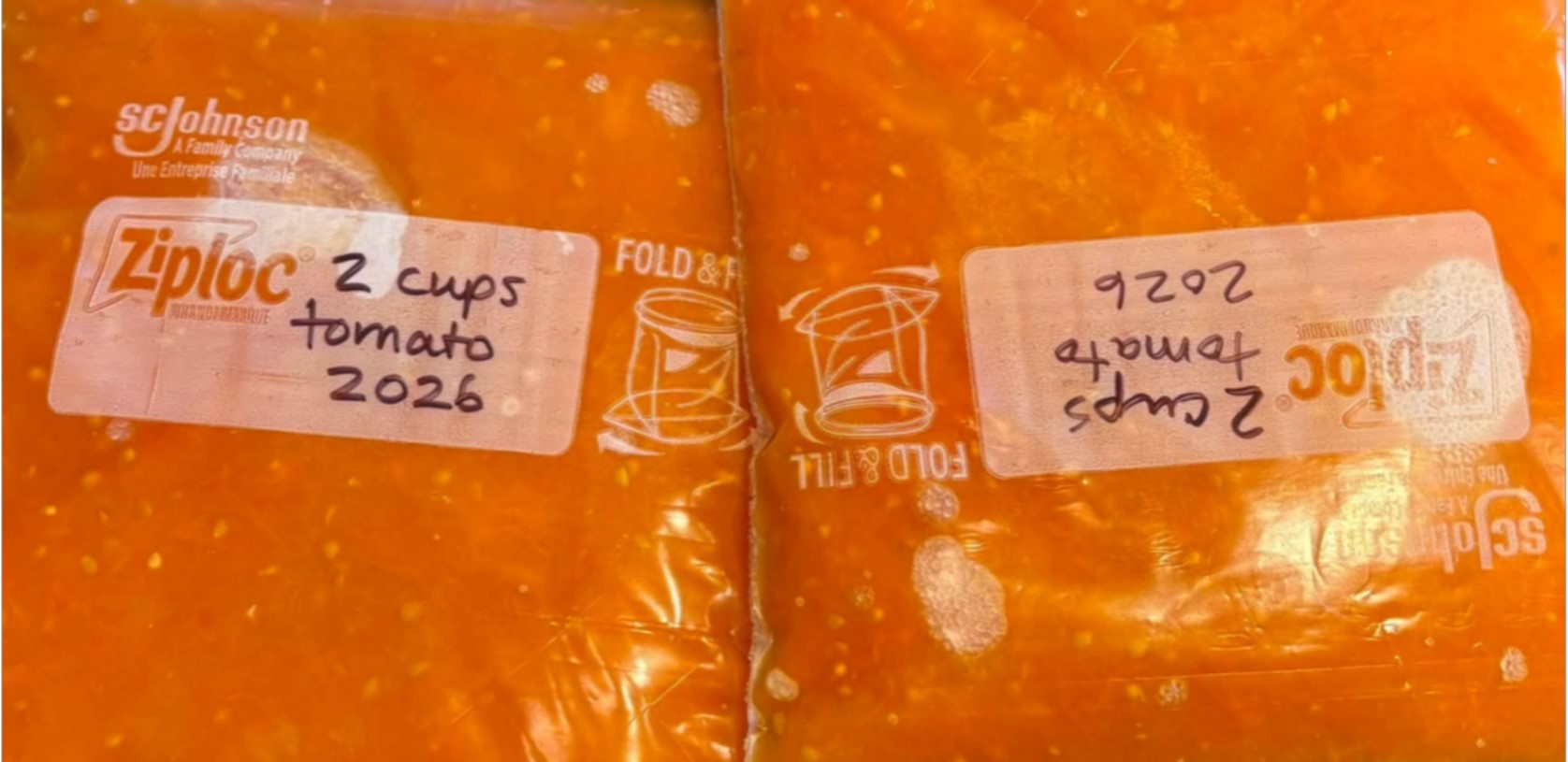
We all know that the swallows Capistrano in California and it’s all yada yada yada, right? But here – the Cowbirds are back. Yes!  See… I have an app on the phone that identifies birdcalls and sitting in the parking lot of a municipal park the other day it clearly picked up the squeek of Brown-headed Cowbirds, the parasitical arseholes of the birding world. Isn’t nature wonderful! Well, it is inside. The cukes and tomatoes still face a few light frosts keeping them indoors. That middle plant? Tumeric. Just stick a chunk of rhizome in a peat pot and keep the soil damp. Easy. Peasy.

What else is going on? First up, hot news out of Iowa this week and Ms. M. Ogle may have let a cat out of a bag over at BlueSky:

This is so sweet! @dsquareddigest.bsky.social defends Budweiser in part by relying on my book. (The essay is from 2007.) PS: I’m currently working on a 20th anniversary edition w new material. Release late summer.

Fine, that does seem a bit intentional. So save up your pennies for that wee treat later this year. The Tand himself likes a similar sort of straight forward discussion as he wrote about this week:

Way back in the past I wrote about how the modern mannerism “You all right there” at the bar had become a kind of of substitute for previous greetings such as “what can I get you?” or “what would you like?” For the record, it was a short blogpost, as this one will be, and it was over fifteen years ago and, inevitably, in the way of things, it has got worse. Fifteen years ago, I was by my measure of the day an old git – and I quote myself there. Nowadays I’m an even older old git and while generally good natured, I am slightly wound up, inwardly at least by how bar staff have become even more slapdash.

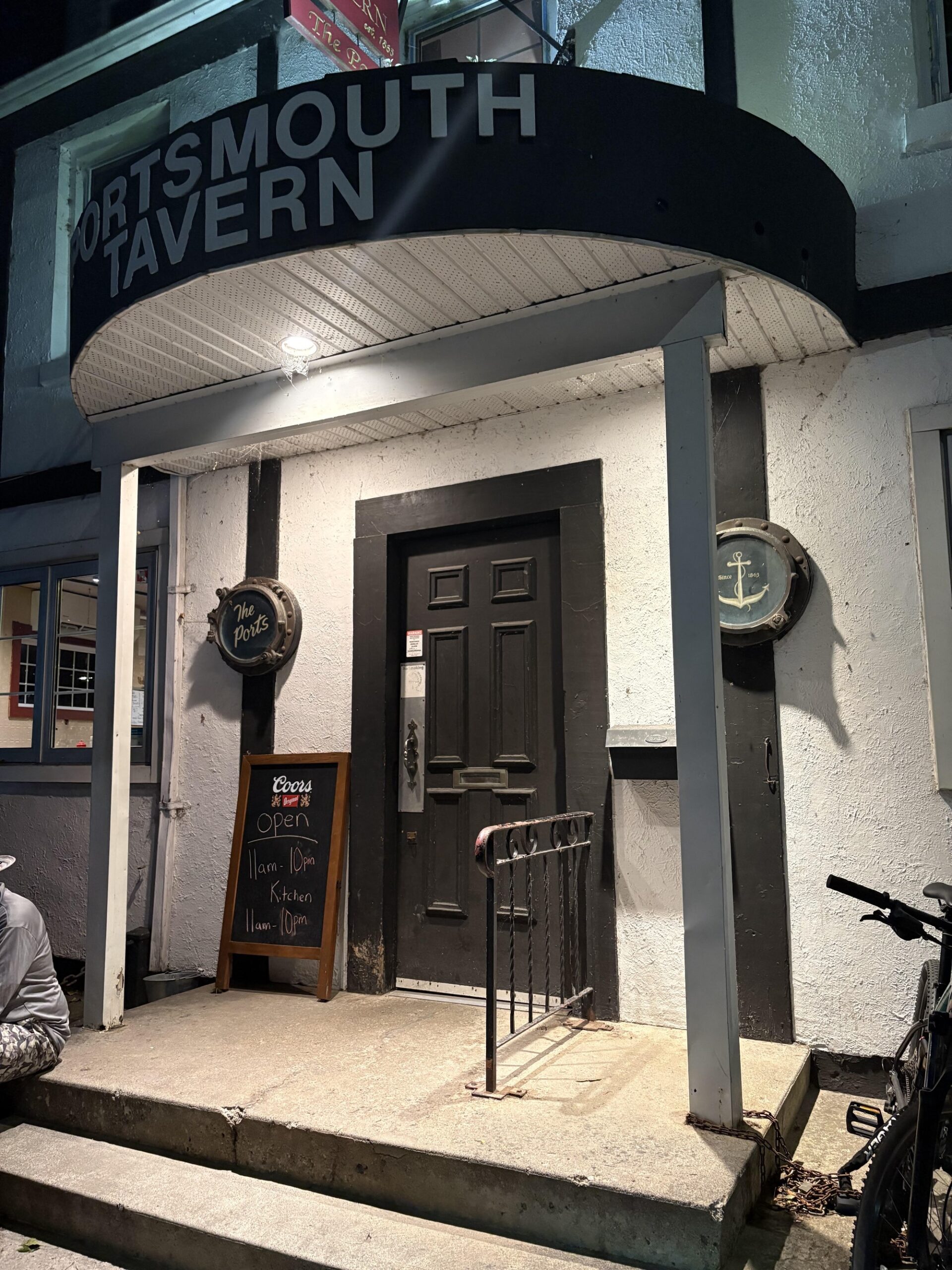
Perhaps this is what distinguishes a UK pub from the sort of port town tavern I was raised in.  I would not necessarily want to engage with the guy on the other side of the bar as, when I did, his side of the conversation could be more like “you call that a tip?” or “I got kids, you know…”  Speaking of which, it seems pretty obvious to me, if IKEA can sell discount meatballs to those waiting for the shopping for even more napkins and sidetables to be over, that a discount grocery store should be able to make a little something on the side by selling macro lager in a somewhat unattractive setting to those silently waiting for the groceries to be gathered:

German discount grocery chain Lidl has begun building its first ever pub, which is expected to open this summer. The pub and its associated liquor store, located in Northern Ireland, will offer Lidl’s range of wines, beers, ciders, spirits and liqueurs, according to the retailer. The premises will be located in the eastern Belfast suburb of Dundonald, next to one of Lidl’s existing stores, it said in a statement. The pub will be able to seat 60 people and will have a floor space of 60 squar meters (646 square feet).

As John Milton told us centuries ago, they are also served who would otherwise only stand and wait. Not waiting around at all is Katie M. who has justifiably strong feelings about the quality of news coverage of pub life in the UK, as she unpacked this week:

Pubs and beer will never receive the coverage they deserve in the national press because they are seen as lesser, until they elevate themselves to the point of being better than a mere public house. I agree with Sitwell that the Laddie is superlative, “a quite magnificent thrill” but I also note that he mentions one drink throughout the entire review, a pint of Guinness, despite the location being a pub and not a restaurant. Oh, I am so sick of Guinness getting all the headlines (sorry Padraig, it’s nothing personal.) The whisky selection! The wine list! The cask on offer at this place! It’s all carefully chosen by experts in their field with purpose and delight. It deserves at least a casual reference.  I love pubs. Millions of British and Irish people love pubs. So why are we still being offered so little in terms of pub and beer coverage? 

On perhaps a related note, I realized I had noticed something that I should have noticed before. When describing folk writing about beer and pubs, news media tend to describe them as “our beer expert“* while every other columnist on restaurants, theatre, music etc is the newspaper’s “critic.” Why is that and what does it suggest? Do they lack a certain edge that one sees, for example, in Boak and Bailey‘s honest and detailed weekly reviews? Would a news paper ever publish the words “somewhat muddy in appearance and flavour, like one of our own attempts at home brewing“? And when a paper clearly seems to have at least two, they never acknowledge the other one. Always “our beer expert” in the singular. Hmm…

The Irish Times has raised an issue about non-alcohol beers that is not discussed. We have heard and accept that the cost of production is no less than traditional brewing but what is not discussed is now it is often not taxed in the same way:

…walk up to a bar in Ireland and order an excise-free, non-alcoholic beer and you’ll pay close to the same as you would for the full-strength equivalent. This has been a bugbear for consumers for years. Three years ago, in a written Dáil answer, the then minister for finance, Michael McGrath, said pricing of these drinks was a matter for retailers and publicans. “This should reflect the fact that no excise applies to such products as well as other factors,” he said. A pint of standard beer comes with a 54 cent excise rate attached – its zero-alcohol partner does not… “The challenge with non-alcoholic beers is that there’s not much transparency here. A lot of this is very opaque and the private business of manufacturers.”

I have become a regular purchaser of NA Guinness but, thinking about it, I have no idea what role taxation plays in the final price. Speaking of things I never knew nuttin’ about, this very week Mr. R. Protz has opened my eyes to an even more troubling aspect of the beer related media:

While breweries & publicans struggle in a tough climate, trad beer writers work hard for lean pickings, a most lucrative “career in beer” is viral boozing. Jon May boasts “the best job in the world” earns £100k a year livestreaming drinking 10 pints a day. Downside: his health concerns.

Downside #2: taking advice from a drunk moron.  Upside: won’t last that long.  Lars may well have provided a hint as to the perfect soundtrack for these sorts of things.

Jeff gave us a summary of the Brewers Association stats for 2025 and it appears things ended up worse than expected:

Total craft production fell 5.1%, accelerating the decline last year of 3.9%.Overall beer sales declined slightly more, at 5.7%, allowing the craft segment to tick up to 13.3% of the total beer market. That’s way worse than the overall beer market did last year, when it declined only 1.2%. In terms of dollars, craft constitutes a quarter of the dollars earned on beer, unchanged from last year. The overall number of American breweries fell by 218 in the past year to 9,578 according to the Brewers Association (but please note that that figure is almost certainly overstated.)

Even with some pretty sad number twisting attempts, that’s a combined drop in production of over 9% for 2024-25.  And 2024 was not the beginning as (we recall from a footnote) craft production at that point had already “declined for the 3d year in a row and 4th year outta 5…” Didn’t expect an accelleration in the decline. But, again, has BMI seen the bottom?  Still… if there is a change coming, could it include a division between efficient and hand made beers? I saw a glimmer of this when Knut interviewed Nikklas, the brewer of Sweden’s Hops ‘n Leon who shared a thought that might lean towards a future schism in the making:

…we prefer bottles for our beer. I feel it also sends a message that this is craft. I feel that cans symbolize something more industrial.

A revival of small scale traditional brewing might be interesting. Remember the good old days, I say. Well, the big news out of the March 8 1917 edititon of the Cape Vincent Eagle was the bootleggers. We discussed bootlegging last week but this bourbon-less era during tariff time has me on the look out for The Ontario Temperance Act of 1916 remained in force until 1927 whereas US Prohibition was the law across the river from 1920 to 1933. The ban on both sides of the border only lasted for seven years. Not that there wasn’t booze moving even during those days. One must always remember the testimony of Mr. Aikens , the man with “a host of friends” according to the Royal Customs Commission of 1927. But it is not all old news. A form of prohibition still exists as Drew in Boston noticed this week. Yup, bars at the Red Sox’s home of Fenway Park came under scruity for serving minors (aka young adults in an unfree state):

The state Alcoholic Beverages Control Commission has ordered Game On Sports Cafe, 72-82 Lansdowne St., to give up its liquor license for five days starting April 20 and Fenway Johnnie’s, 96-98 Brookline Ave., to give up its license for four days starting April 27, after inspectors found both serving underage drinkers with fake IDs. But Fenway Johnnie’s shut for good earlier this month, so, oh, well. The Game On suspension stems from a visit around 10:30 p.m. on Oct. 4, 2024 by state inspectors –  who found 17 people under 21 with drinks, from Coors Lite and Michelob Ultra to various vodka and whiskey-based concoctions.

Imagine being twenty years old and legally barred from drinking a Michelob Ultra!  Time for notes!

Note #1: Ramble On.
Note #2: “Had any bourbon lately?’
Note #3: Katie M. on the pubs and breweries of Cumbria.
Note #4: ATJ on travel and beer.

I miss Bourbon. Have I ever mentioned that? What else might I be missing? Ruvani’s piece about ranch water was published this week in Austin Monthly. Ranch water? She explains the drink’s background:

Founded by late local restaurateur Kevin Williamson in 1998, his original Ranch Water recipe hit the menu in February 1999, based on a concoction Williamson invented on hunting trips with his father, mixing tequila and lime in his water bottle topped off with crisp chilled Topo Chico. Williamson correctly surmised that his own refreshing treat would slake the thirst of other parched Texans and worked up his original recipe with two parts reposado tequila, one part orange liqueur (Ranch 616 uses Sauza Hornitos and Jalisco 1562, respectively), and one part lime, served over ice with a freshly popped frosty Topo Chico on the side to be poured to taste.

Not to be confused with Topo Gigio, Topo Chico is a mineral water from Mexico.

Finally, in their newletter to subscribers, Pellicle has announced some plans and asked for additional support:

Last month the team gathered in London to begin looking at the bigger picture, and discussed everything from the look and feel of the website (you might have noticed a little update to the homepage), the results of the survey you all kindly completed and how best to implement those findings, and—most importantly of all—to start making serious plans to launch issue one of our print publication….  You may also have seen we’ve recently ramped up our subscription drive, which is an important part of this.  Growing our subscriber numbers remains the most sustainable way to grow the resources we have at our disposal. More subscribers doesn’t just mean a print magazine. It means better rates for our contributors, proper support for our team as their workload increases, and potentially even the chance to invest in some of the kinds of content you indicated you might like to see in our survey: guides, short form writing, op-eds, personal essays, and travel stories. Our aim is to hit 1000 subscribers this year, which would mean growing our current number by around a third.

I cut and paste that much of a snipet out as I am myself a supporter. I root for them. Even as I have yet to figure out if Pellicle is a survivor or the conqueror in the beer publication field. The business model is prudent and realistic. The content is varied and often excellent. There’s good reason it gets so many links in these weekly round ups. And it still aspires to be more. Sign up. While I myself am at a heigher tier, their entry level subscription is just $2.50 a month via Paypal.

And that is it for now. As I adjust to the life of the idle and alive of a certain age, I will keep plugging away at these updates as best I can. For more, please check out Boak and Bailey who are posting every Saturday and adding to their fabulously entertaining footnotes week after week at Patreon. And look out for more of Stan’s new “One Link, One Paragraph” format. Then hunt out something in someone’s archives! Leave oblique comments on someone’s post from 2009!! Listen to a few of Lew’s podcasts and get your emailed issue of Episodes of my Pub Life by David Jesudason on certain Fridays. And Phil Mellows is at the BritishBeerBreaks. Once a month, as noted, Will Hawkes issues his London Beer City newsletter and do sign up for Katie’s wonderful self-governing totes autonomous website featuring The Gulp, too.  Ben’s Beer and Badword seems to be on pause since November but there is reading at The Glass which is going back to being a blog. Any more? We have Ontario’s own A Quick Beer and All About Beer is still offering a range of podcasts – and there’s also Mike Seay’s The Perfect Pour. Plus follow the venerable Full Pint podcast! And there’s the Craft Beer Channel on Youtube. Check out the archives of the Beer Ladies Podcast. See you next week!

*By contrast and fine example, Laura is The Telegraph’s “regular correspondent” which seems much more satisfactory.


Your Scattered Beery News Notes For The Lunar The Low The Looney And Perhaps Even The Ludicrous

Happy lunar loop de loop week. It’s hard to find a glimmer of good in an ugly world but the Artemis II mission into outer space did its best to try.  As has the prospects of the Two-Tailed Dog Party in this weekend’s elections in Hungary. Coming in at a solid 3.27% of the vote last time around, their past platform gives a bit of hope:

The party platform promised eternal life, world peace, a one-day workweek, two sunsets a day (in assorted colours), lower gravity, free beer, and low taxes. Other electoral pledges have included building a mountain on the Great Hungarian Plain.

Will the space craft land? Will greater freedom return to Hungary?  Will the ceasefire hold? These are the questions for the week to come. Until then, some beer news. First up, Lars announced the publication of a study of farmhouse yeasts of northern Europe, the culmination of years of work and a number of challenges:

The paper was done by the Verstrepen lab at the VIB-KU Leuven Center for Microbiology, the same place that did the famous paper giving us the first view of the family tree for brewer’s yeast. Work on the paper started in September 2017, when I mailed off the first batch of yeast cultures to Leuven. It had gotten quite far when covid caused Belgium to shut down so hard that everyone must work from home, and obviously you can’t do lab work at home. By the time restrictions had lifted several people had moved on to other jobs, and the paper sat languishing until Peter Bircham decided to pick it up again. He and I worked on it for a while, until Peter moved to New Zealand. Eventually, once he was settled there, a Gang of Four got it moving once more, and last year we finally submitted it.

This is very important stuff and a worthy outcome for all his years of effort. The study describes seven cultures or zones rather than strains as these “cultures have been reused by farmhouse brewers for at least centuries, quite possibly millennia, so they consist of lots of different strains.” The, as illusrated by the map under that thumbnail, the study describes how each culture relates within its zone. Super neato. Lars has also been out skiiing in shorts, too.

Staying in Scandenavia, Knut has shared a profile of a pub in Sweden. Ruckel Beer Bar, where he spent part of Good Friday productively:

Ruckel means shack or hovel in English, a description or the building they took over when they were starting the brewery. I doubt the premises they have moved into with their new pub fit the ruckel description, but they have certainly put in many hours to make an inviting pub, split into various zones for eating, drinking and hanging out.

Ruckle is a new and quite attractive word, at least for me. Not surprisingly, with an old Scandenavian connection, too. I have, on the other hand, heard of other old things like the Cooper’s Hill cheese roll as well as Royal Shrovetide Football but never before did I hear of the Hallaton Bottle Kicking each Easter:

[a] brutal competition between rivals trying to wrestle barrels over a mile-long stretch of countryside. Hallaton Bottle Kicking is an ancient tradition, held each Easter Monday, in the village of Hallaton and neighbouring Medbourne… One “bottle”, which is a wooden cask much better suited to the rigours of the scrum than any glass item would be, is then decorated in red and white then paraded to the top of the village where the contest between Hallaton and Medbourne begins. The game is a best of three, with two “bottles” containing beer and the third completely wooden decorated bottle – which is referred to as the dummy. The outdoor sport is played across about a mile of open land and the two teams attempt to move the bottles over to the opposing team’s parish at each end of the area.

As noted in the B+B Patreon notes from last weekend, Eoghan alerted us to the closing of De Kulminator in Antwerp, a famous yet quirky beer bar with a vast selection of old bottles that created an odd test question that must be answered to qualify for entry:

Apparently they asked you what you wanted to do there – if you said drink a beer, no entry. If you said “enjoy a beer”, open sesame. But as I said, I never ran the gauntlet

One newspaper declared (testing your Dutch, not mine) “Het beste biercafé ter wereld is niet meer.” I think you can get the drift. Yet one Mr. W. Hawkes askedWhat will they do with all that manky old beer?” Boak and Bailey visited in happier days in 2010, paying the price accordingly, as did The Beer Nut in 2017. Relatedly perhaps, Eric Asimov in The New York Times shared his observations on the shift in the sweet price point for best value in wine:

Good wines can come from anywhere and anybody. The value is in identifying these little-known producers and regions before they are more widely discovered, and prices go up. That requires a fair amount of trial and error and taking chances on the unknown. How long will $15 to $20 remain the sweet spot for these sorts of wine values? It’s a lot harder to find them today. While I will continue to take on this particular challenge, it’s fairer to say $20 to $30 today is what $15 to $20 used to be. But that conversation is restricted to the least expensive value rung… That underscores a key rule of value hunting: The greater the splurge, regardless of the price, the less inclined you are to explore and the more you want a sure thing.

Do we talk of value with good beer in a similar way? Does manky old ale have value? Perhaps a few do but through the arc of the rise and fall craft beer over the last twenty years, the wider market never really established the sort of constructs that provide some confidence in relative value that we see with wine. Too often commentators seem content go back to the same shallows that may have helped set up good beer for its cultural nosedive in the first place. Even as so many beers were presented and consumed as near clones of each other in an oligopolistic manner, little attention was given to advising consumers about which beer could be swapped out for what at, say 50% or 80% of the cost.  Could that change now that the kid (if not boxing) gloves are off? As you think on that, here are some notes:

Note #1: Perhaps don’t cheat on your forensic expert wife.
Note #2: “Broken toilet, no showers and farts“… yet not a pub.
Note #3: “Trends continue to oscillate week-to-week…

And… we are back. Following up on that last note, discussions in investment circles are indicating… or at least suggesting… or maybe only postulating that the price of shares in brewing corporations may have hit bottom and are (…potentially…) ready to rise:

The central question is whether shipments will finally catch up to depletions. Analysts note that consumption trends accelerated throughout the December-February period and continued improving in March, but shipment data through February hasn’t yet reflected this strength. Multiple Wall Street firms cite distributor feedback indicating momentum has returned, particularly in scanner data showing March beer volumes up 6.5%.

At that point in the marketplace, the trends are most relevant for macro brewing. Will you invest? For What’s Brewing, Laura Hadland shared an experience at Heineken where the mega brewery approaches the task at hand from an unexpected angle:

I was baffled as to why the tour guide was giving us the in-depth view on its malt and the hallowed Heineken-A yeast, but nobody was talking about hops. At all. I even asked the question explicitly: what hops do you use? The tour guide didn’t know. Neither did the colleague that she ran off to ask. It was only when I (luckily) found myself in the company of global master brewer Willem Van Waeberghe, that I discovered the answer. The answer was, it doesn’t matter. In the Netherlands, Heineken sources hops from the US, but its licensed brewers around the world can source whatever they want. All the hops are added at the start of the boil for bitterness only. They never have a second hop addition. All of Heineken’s flavour, which is perhaps a little fruity, a touch herbaceous with just the tiniest note of aniseed, comes from the yeast esters.

Conversely perhaps, as reported by Kendall Jones, tiny Big Block Brewing in Washington State has found new flavours in old hops:

​“We got a bunch of ladders and laid them down over the blackberries and used them to get into the hops,” says Julum. “A lot of cuts and scrapes later, we had enough hops to make a batch of beer. The problem was that Sammamish State Park was in the process of removing all of the invasive species from the land, and hops are an invasive species, so we needed to do more than pick the hop flowers. We had to dig up the rhizomes so we could replant them”… Likely, Ezra Meeker was the source of the original rhizomes, as he was for so many farmers in the area at that time. Meeker primarily cultivated English Cluster hops. The Monohon hops are very likely a descendant of that variety. 

Well, likely by the time those hop rhizomes hit the continent’s Pacific side, Cluster-esque might be the better way of putting it. And Colbier Brew Co., a “Bootle-based brewery” is the subject of this week’s feature in Pellicle. “Bootle” is also another old word for a dwelling which may well be a cut above a “ruckle” but none of that is part of the story as told by Rebecca Crowe who first encounters a beer by Colbier named Falsetto:

As a lover of the darkest pint of cask beer available, the ideal of white stout is like a unicorn to me, and I must find it. Eventually, I receive a message from the team at Doctor Duncan’s, a pub on Queen’s Square near Lime Street station, who tell me it’s in their cellar and that it’ll be on soon. When I finally get a pint of Falsetto in front of me, I’m entranced by its bitter, chocolate notes. Close your eyes, and you’d swear you were drinking a dark beer, albeit not as unctuous and creamy-tasting as Colbier’s oatmeal stout, Nocturne. However, the bitterness and innovative nature of a white stout is the perfect signifier of what this Bootle-based brewery likes to do.

White stout, eh? Something like myself, I suppose. Enough of that. Next, a tale of crime at the government liquor store back home in Nova Scotia:

In 21 years of policing, RCMP Sgt. Serge Landry says he’d never seen anything like what was seized from a home in Dartmouth, N.S., just before last Christmas. After a two-month investigation into significant alcohol thefts from NSLC stores in the Halifax region, officers seized more than 450 bottles of hard alcohol worth almost $20,000 from a home on Floral Avenue. Police even seized a ledger detailing the alcohol being delivered to the home and what had been resold. “I’ve never seen it to this scale,” said Landry.

Not just alcohol. Hard alcohol. Always been this way. As a lad, I remember a summer job painting a house next to the one run by the bootlegger. Steady traffic on a Sunday afternoon, back when the government store was shut. And there was the other job at the senior’s house when one resident born before the First World War ratted out another of a similar age for running the ice delivery warehouse which contained a bootlegging operation out of the middle of the warehouse, amongst the walls of neatly stacked ice blocks.

Finally, following up on last week’s story on the effect of Gulf War III on the cost of beer packaging in India, NPR is reporting this week on another pressure that might arise as global aluminum supplies have also been affected:

Aluminum prices recently hit a four-year high, after Iran struck two large smelters of the metal in the Middle East. Both of them were major suppliers to the United States. Aluminum, which is on the list of 60 minerals deemed critical by the U.S. government, is widely used for beer and soda cans, in cars and packaging.

Well, that is it for now. Crisis and crime yet exploration, each in its way human-kind caused. And another possible positive week for the beer trade. Beer likes peace.  As we wait for the results, please check out Boak and Bailey who are posting every Saturday and adding to their fabulously entertaining footnotes week after week at Patreon. And look out for more of Stan’s new “One Link, One Paragraph” format. Then hunt out something in someone’s archives! Leave oblique comments on someone’s post from 2009!! Listen to a few of Lew’s podcasts and get your emailed issue of Episodes of my Pub Life by David Jesudason on certain Fridays. And Phil Mellows is at the BritishBeerBreaks. Once a month, as noted, Will Hawkes issues his London Beer City newsletter and do sign up for Katie’s wonderful self-governing totes autonomous website featuring The Gulp, too.  Ben’s Beer and Badword seems to be on pause since November but there is reading at The Glass which is going back to being a blog. Any more? We have Ontario’s own A Quick Beer and All About Beer is still offering a range of podcasts – and there’s also Mike Seay’s The Perfect Pour. Plus follow the venerable Full Pint podcast! And there’s the Craft Beer Channel on Youtube. Check out the archives of the Beer Ladies Podcast. See you next week!

And, Just Like That, We Are In Q2 2026… Can August Be Far Behind?

Springtime.  That’s what this is supposed to be right now. Yes, my Red Sox are out there choking as the season begins and, yes, my Leafs are out there choking as the season winds down. So the calendar looks like it’s on the right page for sure. But… where is that first sweater and shorts day I have been looking forward to? When will I be able to rake the lawn. Raking the lawn is an important old guy task. It leads to people leaving you alone, unsure why the lawn needs raking. You tell them “breaks up the thatch!” but they don’t know that’s just code. Code for there’s a couple of beer tucked away in the shed. Ah… the shed. See you soon!

Meanwhile, in Pellicle last Friday, David Bailey‘s* cartoon featured the various postures seen at the pub bar. Is it ageist to say the one that struck me as most accurate was the one to the right? As a newly minted retired guy I can say these sorts of things. Isn’t that how it works? Like raking the lawn. Because you need to break up that thatch, right?

Next up, Katie wrote about one of my favourite cities due as much to the depot for bus route 128 to the villages of the fam as anything. But, Ms. M. does know a good spot when she sees one and this week we read about her thoughts at the sight of Kay’s Bar:

Once a wine and spirits shop in a nefarious part of town where the streets ran toxic with sewage and the tenements were cramped and filthy, Kay’s Bar is now uncommonly beautiful. Like most cobbled and higgledy-piggledy neighbourhoods in the UK, Jamaica Street has a “dirty past” as local pub writer Imran Rahman-Jones puts it, but now it feels pleasantly historic, and the low stone buildings around us are picturesque. When our group comes upon the pub in the early hours of dusk, the side doorway glowing golden in the darkening blue.

As the son of a son of MacKenzie Street by Cappielow in Greenock, I recognize the lineage.

Beer writers talk lots about being judges but not a lot about being amongst the judged, the position which carries a lot more weight to my mind. But this week Alistair wrote about entering and receiving the results of three beers he entered into competition:

There is a large amount of irony, given what I just said about crystal malt, in the fact that this used 5 types of crystal malt, 15, 40, 60, 120, and 260, as well as dose of chocolate wheat. Hence I named this Crystal Conjunction. It’s kind if hilarious then that one judge commented that the “absence of balancing caramels and light roast/chocolate impact the overall character”. Literally all the specialty malts were crystal or chocolate malts. Obviously mild is not something that is wildly common, heck it might as well as an endangered species over here, but I have come across a concept many times in the US that a mild is basically an uber session stout – which is simply not true, the range of possibility within mild makes it a beer you can take in so many directions, as borne out by the BJCP guidelines themselves.

And Jeff was on the otherside of the glass, having judged at the Oregon Beer Awards with this interesting comments on process:

In judging these beers, you do take style into account, along with the brewery’s submitted notes on the beer. If you have a beer that just lists a style, you judge it both as an example of that style and how well it competes against the other beers at the table. If the brewery has added a note, you include that in your calculation. A beer might be dinged for being a poor example of its style but elevated for being just an awesome beer or vice versa. If the brewery says it has hibiscus or rye malt or is “American-style,” we would expect it to taste like rye, hibiscus, or elevated hops. You take all of that into account.

Speaking of the limits of the aphorism “judge not lest ye be judged” we are advised that this is not an April Fool’s Day spoof:

Tilray Brands is partnering with the Magnum Ice Cream Company to launch Popsicle Hard, a ready-to-drink cocktail inspired by the frozen treat brand’s classic flavors. The noncarbonated beverages are beginning to roll out nationwide in 12-can variety packs. Popsicle Hard has a 5% alcohol-by-volume rate and is available in cherry, orange and grape flavors. Tilray is producing the drinks through a licensing agreement with Magnum Ice Cream, which was spun out from Unilever at the end of last year. 

Ah, fads… or was that a spoof! Perhaps with about 97.38% more integrity, this week Boak and Bailey investigated the resurgence of Bass on cask in English pubs this week and found hope in the new enthusiasm:

What makes us think that it might, on balance, be good news is that it’s good to see people – and especially younger drinkers – expressing enthusiasm for cask ale. The Bristol Flyer on Gloucester Road in Bristol is one of those perfectly fine vaguely gastro, vaguely loungey pubs. The quality of the beer has been up and down over the years but recently it’s been serving excellent Bass. Jess often ends up there for one social event or another and on a recent visit was amazed when the hip young barperson said, with full emotion, “Oh, great choice, I love Bass, I drink it all the time! And it’s been flying out since we started selling it.” At The Crown we’ve similarly seen groups of hipsterish young men ordering rounds of Bass, getting their Bass club cards stamped, and generally embracing their identity as Bass Guys.

Bass Masters would be my choice of terms… had others not moved in on the opportunity. And if you asked how big Guinness is in the US these days… would this be the sort of response you’d have expected, as reported by BMI?

Import lagers are nearly 97% of all imported beer in US scans, per NIQ xAOC + Liquor + Conv data for 52 wks thru Mar 7, Bump Williams Consulting’s Dan Wandel found in latest data deep dive, following up on his past analysis of American lagers. Guinness stouts and Belgian ales make up most of the rest, growing nicely these days. 

I wonder if 2026 Guinness regrets the Baltimore closure in 2023.  As you ponder that, here are some notes:

Note #1: do you have a third condiment?
Note #2: is using the word “founder’ just cringy or worse?
Note #3: don’t forget to have fun.
Note #4: are you still hunting the next great beer?

Are you back? Good. Franz D. Hofer has been attracting attention with his wanderings out and about and then his writings all about it at A Tempest in a Tankard – but now he has joined the collective with his first piece at Pellicle, a study of things Zoiglly… Zoiglich?… Zoigl-riffic!

Tucked away in the dense woodland of northeastern Bavaria, the Oberpfalz is the cradle of Zoigl culture. Zoigl is more than a kind of beer. It’s an ethos, a resolute defence of a slower way of life in the face of our contemporary desire for on-demand pleasures.  Zoigl begins life in the communal brewhouse, a holdover from the late Middle Ages. More than seventy towns in the Oberpfalz presided over communal brewhouses in the 19th century. Today, only five remain: Windischeschenbach, Neuhaus, Falkenberg, Mitterteich, and Eslarn. Residents in possession of historical brewing rights take turns from week to week brewing beer that they’ll ferment in their cellars and serve for a few days every month in their Zoiglstuben. You’ll know the beer’s ready when they hang a six-pointed Zoigl star from the façade.

Carry on with the medieval history, according to The Times and some eggheads, turns out that Pinot Noir is effectively a clone of itself going back to the 1400s:

Scientific proof has now been found that pinot noir grapes, used to make red Burgundies in France, have survived unchanged at least since the Middle Ages. A 600-year-old grape seed found in the latrine of a medieval hospital in Valenciennes, northern France, has been identified as genetically identical to modern pinot noir through DNA analysis, according to a study… By taking cuttings rather than growing from seed, winemakers can produce a new plant that is genetically identical to the mother vine. For the study, the researchers sequenced the genomes of 54 grape seeds dating from about 2,000 BC to the Middle Ages. The oldest seeds were from wild vines in southern France. Domesticated vines appeared in the region much later, between 625 and 500 BC, when Greek colonists introduced viticulture in France.

On a more serious and immediate note, if you want an easy measurement of the effect of the third Gulf War in my adulthood, Jessica Mason for DB has surveyed the consequences on India’s beer trade:

In a recent report via Reuters, the Brewers Association of India openly revealed that glass bottle prices have risen by around 20%. Added to this, packaging such as beer cartons have doubled while labels and tape have also become price affected. Gas shortages are now also forcing a raft of glass bottle makers to slow or stop their operations. Plus, aluminium can suppliers are also signalling that there will possibly be imminent reductions in the lead up to summer… “Beer businesses are particularly vulnerable when oil and gas prices rise because the impact is felt at several different points in the chain,” Molly Monks, insolvency expert at Parker Walsh, recently told db. 

Hmm. You know… I have this creeping feeling that we are at March 5, 2020 unaware of the full impact of what is about to hit. With that cheery note, finally, as heavily hinted, I have joined the idle undead. I hope to be not quite as idle long term but these days my pj bottoms are finding new life in the am to pm zone. Can’t rake lawn thatch every day. So…. what to do… while way the hours pressing the fish doorbell? Or instead of that maybe this, drawn from an anecdote about Japanese writer Haruki Murakami:

…long before he became a famous writer, he ran a jazz café in Tokyo, called Peter Cat. People would come in, quietly drink an espresso or sip a single malt and listen to Miles Davis and Charles Mingus LPs on a great sound system. If anyone talked too loudly, or maybe at all, the other customers shot disapproving glares. The point wasn’t to yak or troll for a companion; it was to just sit there and listen attentively without distraction. Bars like that, known as jazz kissa, were popular back in the 1970s when Peter Cat was at the height of its fame. Now, according to National Geographic, they’re spreading to cities around the world…

I like the sound of that sorta place… but what about this place? As part of my inward thoughts, I reached out to B+B on what I might do with this space and these blistered bloody digits of mine.  They shared a number of ideas via email and these two particularly struck me:

We also remembered the work you were doing around pre-1800 beer styles and brewing, which does feel overlooked. All those Derby Ales and Pimlico Ales and Dorchester Ales and the like. There’s such a strong pull towards writing about Victorians and later that this period — with sources that are harder to find an interpret — feels overlooked. We also tend to pounce on any work anyone does with meaningful analysis of data and stats. So much beer writing is about feelings and experience but numbers often reveal deep truths.

Both have the common theme of avoiding the easier path. My challenge with the first (like the 1600s Lambeth Ale or 1700s Dorchester posts) is it feels like the rise of the internet oligarchs has made easy (and free) access to reasonable organized data bases more difficult than ten years ago. I will have to investigate. The second? It’s the math. I always thought that when I was aggregating any sort of numbers and seeing what I could squeeze out of them, well, my grade 12 math teacher was standing nearby reminding me of my couragous 53 as a final exam mark. So whenever I ran some sort of beery data or another through Excel sheets I usually received “ERROR! ERROR!! ERROR!!!” responses. So… any requests? Perhaps “Shut ‘er down, Al!”? or “Take up knitting, you fool!!!” Who knows. Comments greatly appreciated.

Well, that was that. The week that was. A bit of a hard week on the nerves. Until the day I got to sleep in. That was good. We see how the next week goes. In the meantime,  please check out Boak and Bailey who are posting every Saturday and adding to their fabulously entertaining footnotes week after week at Patreon. And look out for more of Stan’s new “One Link, One Paragraph” format. Then hunt out something in someone’s archives! Leave oblique comments on someone’s post from 2009!! Listen to a few of Lew’s podcasts and get your emailed issue of Episodes of my Pub Life by David Jesudason on certain Fridays. And Phil Mellows is at the BritishBeerBreaks. Once a month, as noted, Will Hawkes issues his London Beer City newsletter and do sign up for Katie’s wonderful self-governing totes autonomous website featuring The Gulp, too.  Ben’s Beer and Badword seems to be on pause since November but there is reading at The Glass which is going back to being a blog. Any more? We have Ontario’s own A Quick Beer and All About Beer is still offering a range of podcasts – and there’s also Mike Seay’s The Perfect Pour. Plus follow the venerable Full Pint podcast! And there’s the Craft Beer Channel on Youtube. Check out the archives of the Beer Ladies Podcast. See you next week!

*No relation.


I Declare! These Beery News Notes Are Extra Interesting! Fascinating Even!! Aren’t They… They Are, Right??

Is this fascinating? I think about that at certain quiet moments. I mean I do my best but I can’t answer that question. Only you can. That is the one thing writers don’t talk that much about. The readers. 1.7% of me fully believes that any attention I receive in response to these scratchings is by sociologists asking “why?!?!?” But that is fine. They… like you… are readers. You will weigh the evidence and make your judgement. We just have to remember as our friend Laura H. learned this very week: “it was revelatory to them that beer people exist.” As least I acknowledge you exist. I do. That’s gotta be worth sumthin’.

Where to start? Big news from the seven seas to start with. I love this story about a brewery on a boat, continuing the fine tradition reaching back to the 1660s and again in the 1850s. Except this time it was not Arctic explorers wiliing away the winters when the seas were frozen, as Jessica Mason reports:

…the cruise’s bar manager Giulio Giannini said: “Basically, we desalinate seawater through osmosis. The resulting water is pure H2O, nothing more. From there, the entire brewing process begins.” According to Giannini, all production takes place entirely on the vessel, this encompasses milling and brewing right through to fermentation and maturation. A feat that puts the task into the realms of challenging, but not impossible. Speaking to the drinks business, beer fan Mark Cole admitted that, for him, the move to house a microbrewery onboard “might make me actually consider a cruise,” showing that the positives for the sector are that it will help broaden the audience for cruises in general, attracting beer drinkers.

Would that swing the decision to take a cruise for you?  All a bit too busy for me. Me, I am more attracted by these excellent observations of a moment of quiet from ATJ:

I am not the first person in the bar, there is another drinker to the right of me, sitting on a banquette against the wall, next to the fire burning in the grate, white wispy hair hoping to reach his shoulders, perhaps a memory of his youth as a rocker. His glass is half full, beer, amber and what he has drunk so far has left a playful trace of lacing on the glass. He is not reading, neither looking at his phone; he is just looking ahead, and doesn’t seem to have that eagerness on his face, a pushing forward of the upper part of his body, that might indicated that he wants to talk. He seems happy with the stillness of the bar, and like him I am also contented.

I like the stillness of a bar. It’s like taking a nap but you aren’t even at home. Speaking of things that aren’t like other things, I was lobbied to review what I had already noticed, Ben Gibbs‘ piece (at his newsletter with the excellent URL “soberboozersclub”) on alcohol free beer being offered by Bathams:

Alcohol free beer often arrives with messaging attached to it. Moderation and improvement. It’s framed as a better choice, or at least a more considered one. That language doesn’t land here. These pubs aren’t built around self-improvement, they’re built on ritual. The same pint, the same place, the same faces, the same small actions repeated over time until you don’t have to think about it anymore. For anything new to settle into that environment it has to feel ordinary. That is what Bathams alcohol free does. It sits on the bar without drawing attention to itself. It arrives in the same shape and occupies the same space in your hand. Nothing else in the room shifts to accommodate it.

That fits. Just as being “still” means quiet is can also suggest continuity.  Next, Knut. Knut? Knut! Knut was once a travel correspondent for this here publication, back when we had a few more voices than just me. Recently, Knut has picked up his pen again… or his keyboard I suppose… and has been writing on his newsletter, this time about the difference between what was Norwegian March Beer, then Easter Beer, then Spring Beer and then Export Beer:

The name was later changed to Påskebrygg (“Easter Brew”), and the sales period ran from March 1 to March 31. The name Påskebrygg met strong opposition from Christian groups, particularly the organization Kristenfolkets Edruelighetsråd (the Christian Temperance Council). The brewing industry decided to change the name, stating that it wished to respect the feelings of those who supposedly took offense at it. The motives in the ads and the bottle labels focused on a new activity – domestic ski tourism. We enter a new period with more leasure and, at least for some people, more disposable income. Following a naming competition, the beer was released in 1939 under the name Vårøl (“Spring Beer”). Påskebrygg and Vårøl were sold from 1934 to 1940. In the postwar years, Eksportøl (“Export Beer”) became their successor.

Make sense? Good. Me, I miss my tenuous access to Easter Beer. What else is going on? I need to pick up tips from Retired Martin who has been on the road again, this time wandering around Cologne, Germany – or, rather, standing around:

I knew I had to visit Gaststätte Lommerzheim (“Lommi’s“) at some point, why not now ? “It’s like the Hare and Hounds” I tell Matt. Frankly, you queue for opening, either for lunch (11) or teatime (4.30), or you miss out. James and Matthew weren’t convinced by the appeal of standing outside a suspect looking building on an unpromising street for a quarter of an hour when nicer looking open options called out across the Rhine. But as we chatted to two lads who’d travelled from Chicago (again !) with Lommies top of their list they began to succumb. And then at 16:30 the back door (the one marked “Keller”) opened, leaving those of us staring at the front door to make a dash for a table.

Staying in Germany but waiting much longer in the line up, Andreas Krennmair has been able to clarify a question that has bothered him for sometime about Munich’s Oktoberfest:

…the current restrictions on beer at Oktoberfest, namely that it can only be from one of the “traditional” breweries from Munich whose beer conforms to the Oktoberfestbier PGI regulations, which requires them to have a well going several hundred metres deep down, are not rooted in the festival’s own history. It is essentially a form of regulatory capture to make it exclusive to Munich’s big 6 beer brands that has been successfully defended in court before.

Andreas located documents showing that in 1895 there were 19 breweries with stalls at the festival. It’s a scam! Fight the power!! Leaving Germany with a few last stops, Franz Hofer wrote this week about the breweries in the towns and villages along the trainline crossing the border between Munich and Salzburg – like Privatbrauerei Schnitzlbaumer in Traunstein:

Renovated recently, Schnitzlbaumer boasts vaulted ceilings and large feature windows with views of the valley. The bar is backlit in that early 2000s atmospheric kind of way, and copper kettles glimmer in the subdued light. It’s a nice, airy space perfect for whiling away the early evening with a few beers. As for those beers… the best of the lot is their Weissbier, a richly textured beer that, with its elegant notes of banana custard and sprinkle of allspice, drinks almost like a Vitus. For what it’s worth, Schnitzlbaumer’s beers aren’t my favourite among Traunstein’s three breweries — a few hits, a few misses.

Reading that, I suddenly realize I only picked that passage so I and now you can say Schnitzlbaumer. Schnitzlbaumer. Schnitzlbaumer. As I approach retirement, I am never that surprised what I knucklehead I am. (Was that why the boss gave me that big pat on the back?) Still, probably more likely to see me on a train holiday like that compared to a cruise. But that’s me.

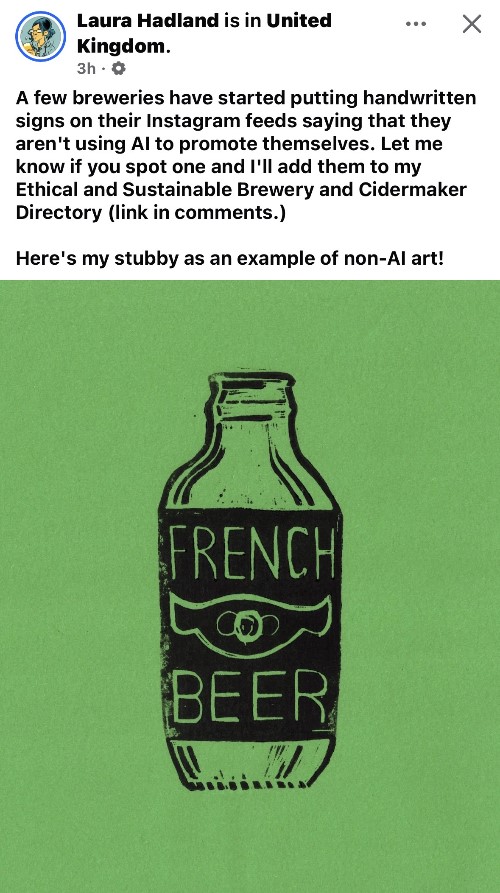
Note #1: A.I. sourced? Or just drifty and even a bit presumptuous?
Note #2: “It’s like K-Pop…
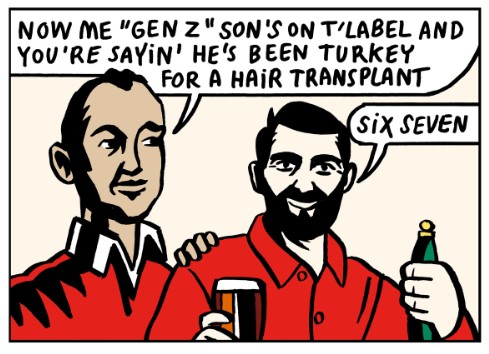
Note #3: OK Zedder.

For me, beer is like sports. Some folk drill down into the OBP, SLG and OPS of baseball players. Me? I just liked the Expos and now just like the Red Sox. They have sucked. They have won it all. So I do find it odd when beer writers call those at a different level of fandom abstraction “mansplainers” when they are clearly just shit talkers. If we accept that people like what they like they will also talk shit about what they like. ‘Twas ever so. In fact, there is so much shit talked about beer one can wonder where the facts may be found. But sometimes a study is revealing in terms of both ends of the research as Pete showed this week in his review of 15 mass market mainly lighter beers:

Many drinkers do unite in insisting that all the big multinational brands taste the same. This is not true. Some taste faintly of beer. Others taste of nothing. A sad few taste so bad, you wonder if you might have run over the brewer’s dog years ago and they’ve been plotting their revenge ever since. Nonetheless, I’ve tried all the most popular beers myself and ranked them from best (or least worst) to worst. Here’s hoping this helps you next time you’re faced with nothing but the usual pub suspects. 

The findings are solid. Asahi is “clean and crisp, designed to cut through fatty fried food“, #3 Guinness “kept well… it is much better than this faint praise suggests” and #4 Heineken is a “little sweet, but it has integrity.” One thing I have always disagreed with is the idea that light beers are distinct from good beers. As homebrewers know, making something subtle is both more difficult and more rewarding than a bombastic brew. I’m quite happy with anything on the upper end of Pete’s list.

Going for something a bit more haute, Alistair checked one tick off his list when he headed to the hills of Virginia and Alpine Goat Brewing:

To get to Alpine Goat there is a little bouncing along a gravel track, but the views from the brewery and its beer garden over to the Shenandoah National Park are more than worth it. Seriously, if there is a more picturesque brewery in Virginia, I haven’t been there yet. Having packed the kids off with a ball, frisbee, and boomerang to snag a table with space for them to play, we went to the bar and naturally I ordered the pilsner…

Frisbee and boomerang? Lordly. Next, why did I think “PelliProtz!!!” when I checked my emails this morning?  Because this week’s feature in Pellicle is by Roger Protz who wrote about Bodger’s, a barley wine from The Chiltern Brewery which has been branded in honour of Roger Protz:

A “bodger” today means someone who does a shoddy job, cuts all available corners, takes the money and runs. But centuries ago, in rural Buckinghamshire, it meant something quite different. It referred to craftsmen who built chain-link fences for farmers to safeguard their crops and animals. Bodger’s, a barley wine from The Chiltern Brewery, celebrates that tradition. As mentioned, the brewery has recently released a special edition of the beer—one with my name and image on the label. It’s Chiltern’s generous way of thanking me for my support towards the brewery, and the wider independent brewing sector, over a writing career that has spanned several decades. The beer is a powerful 8.4% ABV, and has helped to restore a beer style with its roots in the 18th and 19th centuries.

Worthy. And I see that Katie Mather made the news this week, sharing her analysis of the differences with recent brewery closings in the UK with Jo Gilbert:

Speaking to Drinks Retailing, beer expert Katie Mather noted that “each brewery has different issues.” Regarding Molson Coors’ acquisition and subsequent closure of Sharp’s, she said: “This is a common pattern in the beer industry. Small breweries are picked up by bigger ones to extract value and ultimately crash the brand into obscurity.” Conversely, she added: “Brewdog was gutted by its owners’ greed and hubris and, sadly, it’s the workers let go on a 15-minute Teams call and the ordinary people who thought they’d be able to make some money from Equity For Punks who are left with nothing.”

Correct. And there is a great story of another sort death of craft brewing’s irrational and perhaps also manufactured exhuberence in the stock valuation of Boston Beer over the last five years, as reported in Seeking Alpha:

And there’s even another sort of interesting change in the beer market in Korea these days, too, as reported in The Korea Times:

A man in his 20s agreed, noting the appeal. “Japanese beer has a premium feel,” he said. “When I want something different from what I usually drink, Japanese beer is my first choice.” The current boom stands in sharp contrast to recent years. In 2018, Japan exported 12.5 billion yen (about 118.2 billion won) worth of beer to Korea. Exports then plunged to 900 million yen (about 8.5 billion won) in 2020 following the launch of the ‘No Japan’ boycott. The movement began in 2019 after Tokyo restricted exports of vital semiconductor materials, viewed by Korea as an economic retaliation against a Korean Supreme Court ruling that ordered Japanese companies to compensate victims of colonial-era forced labor. 

Finally, speaking of politics and division, the Minocqua Brewing Company in Wisconsin has made an offer that one day is guaranteed to pay off:

“Our notorious offer of free beer when ‘he’ dies is still on the table, and for all those who thought that internationally viral post was a little too dark or ‘classless,’ here’s exhibit ‘A’ on what’s good for the goose is good for the gander,” the statement there read. “For the Fox News and Daily Mail reporters who shamed us cuz he’s ‘still the President,’ will you be shaming ‘Shitler’ as well about his most recent post?”… The brewery added an update, “we meant the Madison Taproom because that’s open all year, if he dies in the summer, then it’s gonna be the Minocqua Taproom.”

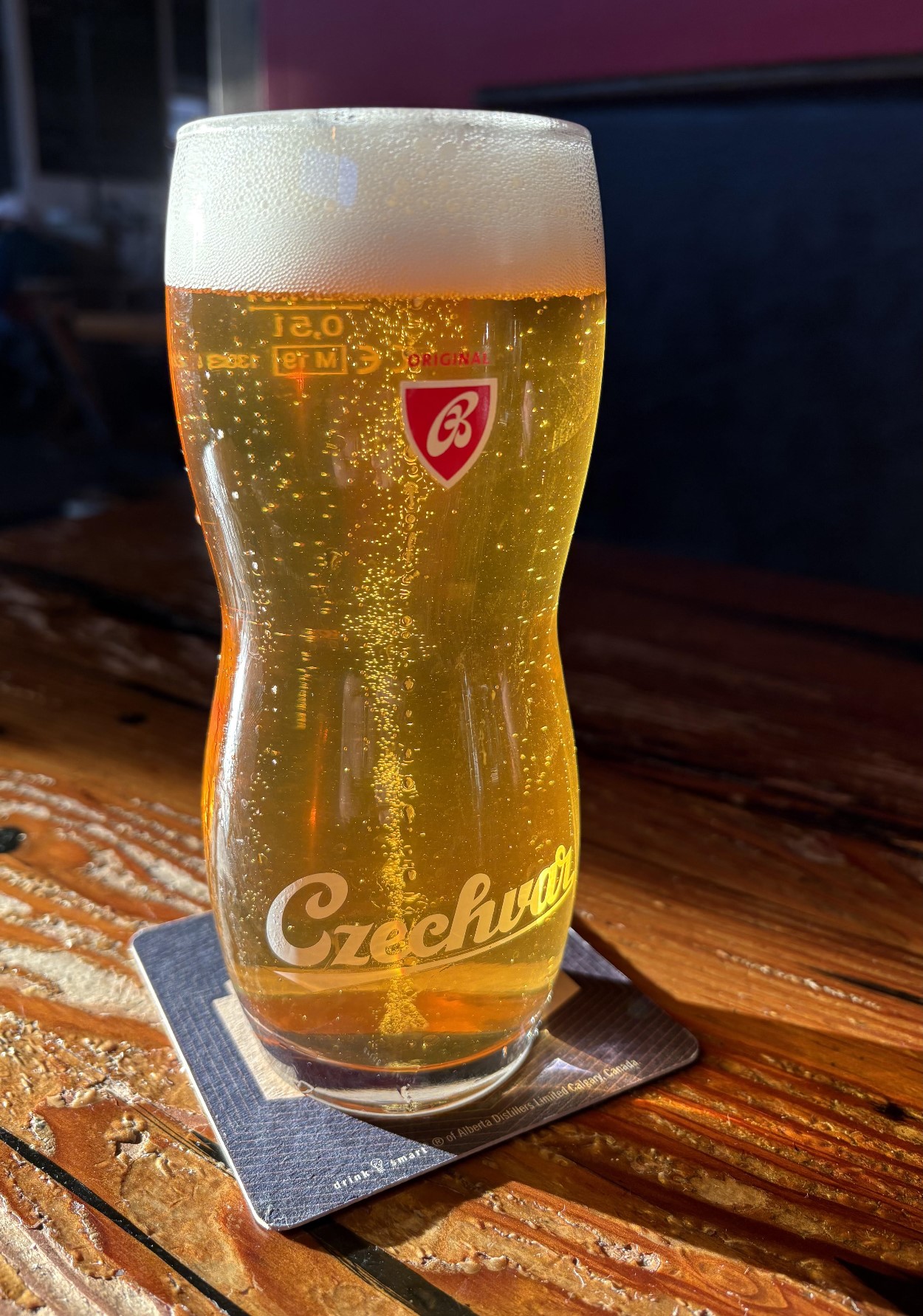
That’s a date! I mean it would seem petty and even crass but, jeese, how many other breweries are going to do the same thing? Do you agree? Is going low a no go? As you consider that, please check out Boak and Bailey who are posting every Saturday and adding to their fabulously entertaining footnotes week after week at Patreon. And look out for more of Stan’s new “One Link, One Paragraph” format. Then hunt out something in someone’s archives! Leave oblique comments on someone’s post from 2009!! Listen to a few of Lew’s podcasts and get your emailed issue of Episodes of my Pub Life by David Jesudason on certain Fridays. And Phil Mellows is at the BritishBeerBreaks. Once a month, as noted, Will Hawkes issues his London Beer City newsletter and do sign up for Katie’s wonderful self-governing totes autonomous website featuring The Gulp, too.  Ben’s Beer and Badword seems to be on pause since November but there is reading at The Glass which is going back to being a blog. Any more? We have Ontario’s own A Quick Beer and All About Beer is still offering a range of podcasts – and there’s also Mike Seay’s The Perfect Pour. Plus follow the venerable Full Pint podcast! And there’s the Craft Beer Channel on Youtube. Check out the archives of the Beer Ladies Podcast. See you next week when I will be retired. Hence that photo up there. If you come back next week we’ll play a game called “did Al just screw up his future finances putting him in the poor house by when he hits 76 in 2039?” Oh. Me. Nerves.

The Very Last… Summative Even… Fresh Yet Thoughtful Beery News Notes For Winter 2025-26

Spring!  Tomorrow is spring!! On a Friday even. How swell. The sort of moment that always reminds me of some lyric or another from Old Blue Eyes himself:

Spring is here
Why doesn’t my heart go dancing?
Spring is here
Why isn’t the waltz entrancing?
No desire, no ambition leads me
Maybe it’s because nobody needs me?

Wow. Not what I was expecting… gee, Frank. Lighten up a bit, wouldja? Me, I am all zippiddy doo dah myself. Look at those sweet peas under the grow lamp! The waltz entrances. Hmm. Why Frank? Why? Could it be it’s the fading night life scene that the man once knew and loved that has him lost and wandering, as the news The New York Times shared this week tells us:

…it’s a complicated prospect for restaurants, which traditionally make their highest profit margins on alcohol sales. Preparing food requires perishable ingredients and a large amount of labor, while alcohol is shelf stable and, except at the most dizzying heights of mixology, requires less work than cooking. As independent restaurants struggle with higher costs of all kinds — rent, labor, ingredients — the hollowing out of the most profitable part of the menu couldn’t come at a worse time. According to David Henkes, a senior principal at the food service research firm Technomic, alcohol sales are slumping in every category of the restaurant industry, from fine dining to casual establishments, with 31 percent of operators reporting “severe declines” in alcohol sales in 2025.

Yikes! We always here about the younger folk laying off the hootch – but even the set that clinks and drinks is clinking a lot less. But when was it ever the way it used to be? 1910 apparently. Nigel Sadler posted some images from The Times ‘Beer in Britain’s Supplement from April 1958, including the fascinating tale of the creation of the Hops Marketing Board as well as this infographic on the increase in duties on beer from 10% in 1910 to 50% in 1958.  Winning two World Wars as your empire collapses will do that for you.

Note#1: Michael Caine before he was famous.

Boak and Bailey unpacked their approach to writing a bit this week as they closed down one of their outlets, a newsletter by Substack where they unpacked their personal impressions perhaps a bit more. They shared that approach on one post this week, describing a scene Ray encountered when he would out and about with pals:

You know how you sometimes know something is going on, even before you see anything yourself, because people around become restless and twitchy? Even before the sword dancers entered the pub people noticed them in a group, standing outside peering in. Then their leaders, white haired with red neckerchiefs, entered and negotiated permission with the bemused young bar staff. Dancers and musicians shuffled in and found space for their display among the drinkers and diners. Then, off they went, stamping and twirling with berzerker energy, accompanied by fiddle and recorder… There were whoops and applause after the final somersault and, after they’d jogged out of the pub in single file, it felt as if the crowd had been injected with fresh energy. Between amusement, disbelief and admiration, it woke everyone up.

Whoops!* I have no idea what and who these sword dancers are. Clearly not, you know, the Highland lassies. Is this some sort of militant branch of the Morris dancer set? Speaking of militant hobbies, Phil Cook has been tracking the use of beer related answers to crossword clues in The New York Times and has released his report on the 2025 season:

The over-reliance on ale and ipa (and their plurals) has increased. They were about a quarter of last year’s references; now it’s 40%. That kind of frequency means there’s an impossible choice between repeating the same clue over and over, or reaching for one that’s only less common because it’s not very good. ale appeared on successive days several times — often with grim setups like ‘Pub drink’ or ‘Pub order’ — and one bleak fortnight3 had five of them, interspersed with two ipas, none with great clues.

I’m a Monday and Mini sort of crossword guy so I don’t see as much of this but Phil’s obsessive dedication to detail is impressive which backs observations like “there weren’t any debuts of new terms that seemed to signal any kind of shift in the zeitgeist.” Perhaps this year we will see a four letter answer for the clue “going out of style” which offers direction in at least two ways.

Speaking of style, Gary Gillman had his research on the founding of the green beer phenomenon in the USA published in Craft Beer & Brewing, reaching back ever so slightly into the 1800s:

In 1899, Milwaukee’s Pabst Brewery already was well known for its Blue Ribbon Beer, its bottles at that time festooned with a real blue ribbon. That year, as a marketing gambit, Pabst replaced the blue ribbon with a green one on a portion of its beer packaged ahead of the holiday. It also put a shamrock on the label in lieu of the usual hop leaf, with marketing that proclaimed, “Hibernians to celebrate St. Patrick’s Day.” (That’s according to Printer’s Ink, an advertising trade journal from that time.) However, the beer itself was the usual pale lager—it wasn’t colored for the special day. 

Which brings us to three more notes on St Paddy’s Day:

Note #2: “…all good-humoured, not messy yet…
Note #3: “…a local bar owner to invite me to meet him for “a chat…
Note #4: “...I’ve seen things you people wouldn’t believe…
Note #5: “…Liverpool is carnage…

Those last two notes are more along the lines of what was experienced the weekend before the day over in Waterloo, Ontario – a university city:

People living at Oakwood Manor, an apartment building near Marshall Street, said large crowds surrounded the building. Residents described partygoers climbing over fences, knocking some down entirely and leaving garbage behind. “They’re destroying private property, but they don’t care,” said Debra Hines, who lives in the area. Residents also said they saw people urinating in the parking lot. “They were [also] coming and stepping on people’s cars,” said Janet Peterson, another resident. Bridget Kocher, who also lives in the building said the repeated street parties leave residents confined to their homes several times a year.

Kids today! On a far more civil note, we don’t write about homebrewers enough. Something the coming recession will cure I am sure. But the Windsor & Eton Homebrewers Club described how the group did some compare and contrast of a few clones and made some… well, to be honest, observations on the state of Pilsner Urquell in the retail marketplace:

 I wish no disrespect or sleight to the founding fathers of Pilsner, but we were scratching our heads a bit. We used Pilsner Urquell as our reference for all our clones.  We found PU to have great bready richness with a great soft rounded mouthfeel.  A slightly sulphur smell and flavour – as is characteristic and a touch of ester, but also we found it with a sticky almost stodgy sweetness, not crisp as we were expecting.  However, it transpires that Ian found some bottled Urquell somewhere up North, which was apparently much better, so maybe the canned Asda variety isn’t a good comparator?

Frankly, I had already bookmarked this piece by Kieran Haslett-Moore from well before the Beer Nut unleashed the stinging taunts urging folk take notice of the death of the themed pub, once a cross-cultural cornerstone:

At the start of this year the Wellington Belgian Beer Café, Leuven, announced it was closing its doors after 25 years. Back in 2000, Lion started to brew Stella Artois under license and all of a sudden Belgian beer culture was in vogue. Leuven in Wellington and De Post in Auckland both opened, offering the full tourist-style Belgian beer experience with mussels, frits, draught Stella, Hoegaarden, Leffe and assorted bottled beers from the lowlands… At the start of this year the Wellington Belgian Beer Café, Leuven, announced it was closing its doors after 25 years….  In 2004 Christchurch got Café Torenhof which limped on after the earthquakes before running out of steam in 2020… Café Torenhof lives on in the way your great aunt does because you inherited her Welsh dresser and it sits in the corner of the living room. When the Christchurch café closed, its interior kit was sold to Craftwork in Oamaru…

While things go out of style, other things arise as Ruvani shared recently when she discussed the “Spaghett”:

For those not already in the know, a Spaghett is a simple two or three ingredient (depending who you ask) beer cocktail involving a light lager, a bright bittersweet amaro and either a slice or splash of fresh lemon (optional). The OG Spaghett consists of a Miller High Life bottle minus an inch or two and topped off with Aperol and lemon… a ‘poor person’s Aperol Spritz’ where the champagne is replaced with the Champagne of Beers. Until recently Spaghett enjoyed under-the-radar industry-insider status but a combination of social media and the cost-of-living-crisis have brought it into the mainstream, as drinkers nationwide are discovering the delicious pop of tangy, herbaceous aperitivo against clean, gently sweet and super-carbonated light lager finished up with a refreshingly sharp citrus twist.

Jeff published a piece on the ABSs of malt this week or, more specifically, the question of whether a base malt’s flavor come from the barley variety or the malting process:

 …it’s better to think of malting and brewing as connected processes. If you recall our previous conversation, the maltster has many choices to make, all related to the “biochemical levers” Matt referenced. It’s very much like the choices a brewer makes on mash pH, mash temperature, the number of rests and so on. It’s not like there’s a “correct” mash temperature; brewers make choices based on what they want out of a beer. The same is true with malting, and it’s why one brewery might choose a malt where one set of choices was made, while another brewery would want a different set. 

Speaking of grain, there was a Kernza sighting this week, about a year and a half since the last time the branding for thinopyrum intermedium passed by my eye. The Guardian reported on its use as Deschutes:

The secret ingredient is a grain called Kernza. It’s a perennial wheatgrass with a slightly nutty flavor and a climate-friendly reputation. Deschutes teamed up with the outdoor clothing brand Patagonia to craft a new beer using the grain. When asked how customers react, brewer Ben Kehs laughs: “They say what’s Kernza?” Kernza has deep roots that pull carbon from the atmosphere and require less water. There is less tilling and fuel use because it doesn’t have to be replanted each year. Kernza can be used as an alternative to barley, which along with hops and water, is one of beer’s three core ingredients. “All of them in one degree or another I would say,” Kehs explains when asked which ingredients face climate threats.

Finally and speaking of the exotic, Ron has been back in Brazil judging at a competition where he seems to have been quite happy with the set up:

I have my usual breakfast. Call me Mr. Boring. I don’t care. It’s what I want to eat. And I’ll fucking eat it. That’s the great thing about being old. Not really having to give a fuck what anyone thinks…  I’m on the same judging table as yesterday, with Suzanne and Alan. I’m happy with that. We rattled through the flights yesterday. Coming to a consensus without much argument. Which saves much time. And annoyance. Especially annoyance. The last thing I need is extra stress… After lunch, there’s a real treat. Non-alcoholic beers. Six samples. All three sour styles are pretty good. With the Catharina Sour the pick of the bunch. The best non-alcoholic beer I’ve ever drunk. Which may be quite a low bar. Or was. It’s been raised considerably now. That was much better than expected. Some flights of alcoholic beers were far worse. Not sure what that tells us. There’s then a long wait for the pre-BOS. Like two fucking hours. Such fun sitting and sweating. Watching Match of the Day helps pass a little time. 

Good to see that while his language hasn’t mellowed, his relationship to booze has. And he’s learned a bit of Portuguese on these trips, too.**

Is that it? That’s it! Another week and another winter moves into the history books. While we see what the spring may offer, please check out Boak and Bailey who are posting every Saturday and adding to their fabulously entertaining footnotes week after week at Patreon. And look out for more of Stan’s new “One Link, One Paragraph” format. Then hunt out something in someone’s archives! Leave oblique comments on someone’s post from 2009!! Listen to a few of Lew’s podcasts and get your emailed issue of Episodes of my Pub Life by David Jesudason on certain Fridays. And Phil Mellows is at the BritishBeerBreaks. Once a month, as noted, Will Hawkes issues his London Beer City newsletter and do sign up for Katie’s wonderful self-governing totes autonomous website featuring The Gulp, too.  Ben’s Beer and Badword seems to be on pause since November but there is reading at The Glass which is going back to being a blog. Any more? We have Ontario’s own A Quick Beer and All About Beer is still offering a range of podcasts – and there’s also Mike Seay’s The Perfect Pour. Plus follow the venerable Full Pint podcast! And there’s the Craft Beer Channel on Youtube. Check out the archives of the Beer Ladies Podcast.

*Remember: you can’t have whoops without an oops!
**Ron’s honesty when on these things is what makes his reports so worthwhile if only as a deterrent: “I’m so fucking knacked. We’ve judged so many beers today. And lots of strong ones. I never want to drink beer again. I’m so done with it. I just want to drink some cachaça and sleep.” 

Your Thursday Beery News Notes For The Week Of The Green And The Black

It’s that time of year. When being born of Scottish parents means nothing. Nothing!!! I think that is what Governor Kathleen Mary Courtney was actually saying when my FB pal (and fellow garlic grower) Sean took this photo at the Executive Manstion in NYC the other day. The Governor even has a pint of stout. Stout is in. Everybody says so. And see me, I am buying that black can of the 0% stuff quite happily. But what even is a stout? Does the Beer Nut have clarity on the question he might share? Let’s see:

Though a full 7% ABV, it looked a little thin on pouring, and is red-brown in the glass, rather than black, with a fast-fading head. The aroma is sweet, with lots of caramel plus an aniseed-candy herbal side. It’s not thin, I’m happy to say, but it doesn’t quite reach the realm of creaminess, and I wouldn’t have guessed it’s as strong as it is. The flavour is plain. Chocolate forms the centre and then doesn’t go anywhere especially interesting from there. There’s a little buttery toffee and a slightly acrid smoky side. Some coffee roast would have been nice; likewise proper hop bittering to take the edge off all the sugar, but neither materialises. 

That’s helpful. It’s not that. It’s not that. And it’s really not that. But still it sells. One question we saw this week on the question of stout is this: why are the Irish turning to Beamish in their hunt for stout? Well, one reason certainly makes common sense:

Another undeniable draw is that Beamish is often the cheapest stout available in pubs.  A pub in Dublin, a county where pints have become infamously expensive, recently advertised a pint of Beamish for only €5.40. Ciarán said the drink is generally at least 50c cheaper than other stouts, one of the reasons he said students have always been fond of it. Another Beamish fan, Richard, thinks the popularity of the stout solely comes down to its price and availability. “It’s consistently €1 or 50c cheaper than Guinness,” he said, adding that as it is owned by Heineken it is also widely available in bars. “I don’t think they’re doing anything special other than being a small bit cheaper,” he added.

Always looking for value is The Tand who has found renewed blogging energy with five posts so far in March after taking a break since last November. Which post to choose as a classic of the man’s oeovre? Consider these comments on the Hand and Marigold in Bermondsey and how they reflects both his careful observations and his established standards:

The pub itself is handsome, well laid out inside and the staff in my experience are helpful. Glasses are oversized ensuring a full pint and the cask beer is well-chosen, and by and large has been in very good condition when we’ve visited. Perhaps it is the times we’ve chosen, but it hasn’t been very busy when we call in, but us being a bit older (ahem) it tends to be during the day.  They are however extending it by opening a room downstairs, so hopefully it is doing fine. One observation is that twice we’ve called in winter and both times the pub has been pretty cold.  Maybe that’s a money saving exercise, but it doesn’t really do it for me.  I expect to be warm in the pub.

It’s good to know what you want and what you like. Conversely, a check with the archives tells me that as early as 2011 I was somewhat ambivalent when it came to Innis & Gunn beers. After fifteen years, has the rest of the marketplace has caught up? We have learned that the administrators have begun to break up the assets:

The brand and its intellectual property has been included in a £4.5 million sale to Tennent’s lager owner C&C Group. However, the Perth brewery at Inveralmond Place is not included as part of this deal. C&C Group was a minority shareholder of Innis & Gunn and brewed its lager. Administrators said the collapse of the company was due to a combination of factors including a “decline in consumer spending and rising cost pressures”. “It is with deep regret that redundancies will need to be made,” they said in a statement. “The administrators would like to thank all the employees of the companies for their hard work.”

Imran Rahman-Jones had fonder memories from a happier time for I&G:

My introduction to craft beer came from my eldest brother. In the late 2000s, when I was still a teenager, small brown bottles started appearing on the top shelf of the fridge. He’d discovered this Edinburgh brewery called Innis & Gunn and their bourbon barrel-aged beers. I was allowed to try a few sips and was surprised at what hit my tongue. My experience with beer up until then had been the odd warm can of Carlsberg in the park, or a taste of my dad’s bitter, which rarely breached the 4% ABV mark. This stuff was intense and alcoholic, like drinking boozy butterscotch. I could only really get through half a glass.

Maybe it was the moment. Boozy butterscotch was sort of where I was going, too. Was I wrong? Or was it an acquired taste? What even is that?

Is there a more backhanded compliment, a more passive-aggressive judgment, a more of kiss-of-death phrase, than “Well, I guess that’s an acquired taste”? It’s also rather centering of a certain type of American suburban taste mindset. I mean, if you grew up in another culture, black salty licorice, anchovy, sea urchin, espresso, fish sauce, huitlacoche, kimchi, vegemite, lutefisk, curry and scores of other so-called “acquired tastes” would not be acquired tastes at all. They would be innate. I grew up eating Scrapple, for god’s sake—an “acquired taste” for anyone but a person born in the Philadelphia metro area. Anyway, my point is this: Try pastis. Open your mind. Grow up. Make peace with your childhood dislike of black jellybeans.

I had no idea. I thought everyone went through a boring sophmoric late teen phase, reading Hemingway and drinking Pernod in the 1980s. You know, the one that preceded the boring sophmoric late teen phase, reading Waugh and drinking Pimms in the 1980s?  What!!?!! It was only me?!?!? Time for notes as I cope with that realization.

Note #1: “Drinking trash NA beers so you don’t have to…
Note #2: no, not regulations and, no, nothing set.
Note #3: “…it is just a widget.

It may be just a widget but the unexpected upswing in widgettery seems to be continuing according to BMI:

…craft beer remains up 0.3% by $$ with volume down just 1.6% yr-to-date thru Feb 22 in Circana multi-outlet + convenience data. That’s still lagging total beer, which grew 1.6% by $$ with volume off just 0.1%. So craft shed 0.1 share. But trends are much healthier for craft and total beer than they were thruout last yr…

Still… “where’s the Allagash White?” asks Michael Stein in DC:

So what’s replaced Allagash White? Hard to say exactly. What wasn’t there in 2021? Unsure. And what’s there in 2026? Now that question I’ve got answers to. There’s Mickey’s Fine Malt Liquor and there’s Schlitz Bull Ice. There’s Coors Banquet and Coors Light. There’s Pabst Blue Ribbon, and there’s Steel Reserve. And while I just listed six brands, there’s only two breweries that own these / have these brands as subsidiaries: MolsonCoors and Pabst. There’s Modelo, Modelo Michelada, Budweiser, Bud Light, Busch Light, Michelob Ultra, Devils Backbone, and Stella Artois. These are all owned by Anheuser Busch InBev. Then there’s Lagunitas, Tecate, Heineken, and Heineken Silver. Guess who owns all these?

That’s a bit of reality right there. But not everyone wants the real when it comes to drinking, as B+B found out:

We were astonished recently to see someone sitting in the pub wearing a virtual reality (VR) headset waving two controllers around to manipulate objects in a virtual world.It just looked so weird and incongruous. His eyes were covered for one thing which immediately gets you into uncanny territory. Then there was the vigour and weirdness of his movements… At one point, he got up to go for a cigarette while still wearing the headset. We later learned that he could, in fact, see the entire room through the magic of augmented reality – something subtly different to virtual reality. But in the moment, it really looked as if he’d just decided to stroll through a busy pub while effectively blindfolded.

Young people today!  At least this isn’t the sort of thing that’s being seen in Bermondsey according to The Londoner:

If you speak to any of the owners on the mile, they now draw an almost church-and-state style separation between the “beer people” and the “Saturday crowd”. The former are who the Mile first started for: the craft beer nerds who can tell the difference between different subspecies of Sussex hops. The latter come in and ask for eight pints of lager before throwing up in your urinal. The problem is, the latter far outweigh the former — to the tune of thousands a week. The chaos they bring can be extreme: swastikas carved into toilet doors, glasses filled with vomit left on tables, old ladies in dry robes getting into fights. One bar manager tells me they’ve dealt with at least two different punters defecating on the floor, in one case in protest at being denied service. 

It’s enough to take a pass. Speaking of which, has the era of a dry generation youth moved on, leaving their kid brothers and sisters the opportunity to redefine their lifestyle? The Guardian reports from the UK:

Binge drinking rates among gen Z have risen sharply since their teenage years, according to research that challenges their reputation as “generation sensible”. Almost seven in 10 (68%) 23-year-olds reported binge drinking in the past year, while nearly a third (29%) said they did so at least monthly, up from 10% at age 17. While drug use is relatively limited in the teenage years, by their 20s almost half (49%) have used cannabis and a third (32%) have tried harder drugs such as cocaine, ketamine and ecstasy, analysis by University College London (UCL) found.

Assumptions refuted?  It isn’t always that clear. Whenever that old myth is trotted out that before a certain point beer was foul, smoky and dark – despite all evidence – I wonder what people are missing. Well, not dissimilarly,  science has now determined that contrary to previous assumptions, early humans were good cooks:

… at least some people living in Europe between 5,000 and 8,000 years ago were deft chefs. Stone Age cooks skilfully combined meat, fish, fruit and vegetables in cooked meals that followed local recipes, according to new research. Using chemical analysis and sophisticated microscopes, researchers…  examined residues found on 58 pieces of pottery unearthed at 13 sites across northern and eastern Europe dating from the last millennia of the Stone Age, before the dawn of the Bronze Age. The residues survive as charred “foodcrusts” left on pots and bowls. Mixed in with meat, mainly freshwater fish and shellfish, scientists found “wild grasses and legumes, fleshy fruits or berries, green vegetables and roots/tubers from plant species”. These plants included barley, wild oats, types of brome grass and other wild greens such as goosefoot, pigweed and saltbush leaves, as well as viburnum berries such as guelder rose berries.

An interesting perspective. And, from the “too much fucking perspective” file, human trafficking in the fields of Champagne has hit the courts in France with sentences upheld on appeal:

Convicted in the first instance to four years in prison, two of which were suspended, the main defendant, who headed the former wine service company Anavim, had her sentence confirmed for human trafficking, concealed work, and employment of foreigners without authorization. This woman in her forties from Kyrgyzstan was kept in detention. Her lieutenants, two thirty-somethings mainly in charge of recruitment, saw their sentences slightly reduced to one year in prison with a suspended sentence each. The court of appeal ordered the defendants to pay 4,000 euros to each of the 53 victims for their moral damage. However, the company of the winegrower who had called on Anavim for harvesting, the SARL Cerseuillat de la Gravelle, was acquitted on appeal.

While one can acknowledge the acquittal, one would also want to ask whether there has been an unjust enrichment of all those who received the benefit of the trade in these slave-made wines. Especially as inspectors had “found conditions that seriously endangered workers’ health, safety and dignity. The local prefecture later closed the site after finding makeshift bedding, filthy toilets and common areas, and dangerous electrical installations.” Bastards.

Finishing up on a happier note, the feature in Pellicle this week is by Will Hawkes, a portrait of the Sutton Arms in Clerkenwell, London:

The door at the Sutton Arms swings open and six Americans come bounding in like cocker spaniels just off the leash. After securing a table in the corner, they send emissaries to the bar. Lunchtime food options (“I’ll do a minted lamb pie”) and beers, from pints of cask ale to a half of Vault City’s triple-fruited mango sour, are discussed, and promptly purchased. Landlord Jack Duignan, who has stepped behind the bar to help out, takes in the scene. “Where are you from?” he asks, his gaze focused on the pint he’s pouring. “America,” one replies, perhaps a touch cagily. A pause. “Well I didn’t think you were fucking French!” Jack retorts. There’s momentary silence, then a burst of exuberant laughter, then clarification: Missouri, “right in the centre.”

Such language! And me a preacher’s son. I don’t know how people cope. As you consider that, please check out Boak and Bailey who are posting every Saturday and adding to their fabulously entertaining footnotes week after week at Patreon. And look out for more of Stan’s new “One Link, One Paragraph” format. Then hunt out something in someone’s archives! Leave oblique comments on someone’s post from 2009!! Listen to a few of Lew’s podcasts and get your emailed issue of Episodes of my Pub Life by David Jesudason on certain Fridays. And Phil Mellows is at the BritishBeerBreaks. Once a month, as noted, Will Hawkes issues his London Beer City newsletter and do sign up for Katie’s wonderful self-governing totes autonomous website featuring The Gulp, too.  Ben’s Beer and Badword seems to be on pause since November but there is reading at The Glass which is going back to being a blog. Any more? We have Ontario’s own A Quick Beer and All About Beer is still offering a range of podcasts – and there’s also Mike Seay’s The Perfect Pour. Plus follow the venerable Full Pint podcast! And there’s the Craft Beer Channel on Youtube. Check out the archives of the Beer Ladies Podcast.

Well… Welcome To Your “It Is March And The Good Times Are Here Again!!!” Beery News Notes

For well over 20 years, I have lost my marbles over March arriving as it did again last Sunday.   I may have created that image to the right in 2004. Such a clever boy! So well centered. Why do I love March, you ask? Not the green beer. Maybe not the green grass which might pop out soon. It’s the first seeds in the soil. The green green peas in loam. Soon, my precious. Soon. Otherwise, this is a bit of a scattered mix this week as I rush. See, I played taxi driver for folk going to a concert, spending about 21 hours in Montreal Tuesday to Wednesday. On the way out, hit Atwater Market as usual. Got my chicken cretons. Got my duck rillettes. The toast won’t know what hit it. And when toast wins, the beery news update suffers. Such is the way of the world.

Enough about me! First up, Jeff* has shared a retrospective on his writing career and how important blogging was to getting to the next step. Twenty years ago he started on a path (like Matty C a decade ago) towards  a number of leaps of faith. Leaps I avoided. I have my name on four modest books but didn’t see a future in that direction. Me, I can show you instead the bridge I had a large part in building. But they can show you publishing sales figures that put food on the table. It’s good to see that we were all right in our different choices.

Speaking of Matty C, for “Get ‘Er Brewed” he looked around his particular environment through the last holiday season and asked where the future may lie for a trade facing tough times:

I can face the hard facts and admit pubs are dealing with some of the worst trading conditions they’ve ever known. But I also believe that they will continue to persist, whether that’s through innovation and listening to what their customers want from them, or by sheer bloody-mindedness. Despite all the doomsaying I consider that there are still positives for pub owners. However, in order to extract these an equally optimistic outlook is required from publicans. Yes, prices are going to have to go up. Customers are going to have to get used to them and measure their spending accordingly. But I don’t think this will mean that people will stop using pubs, and that they’ll simply vanish off the face of the earth.

I tihnk that is a good baseline position to take. Beer does not go out of style even during an inflationary period… or even in a very localized deflationary one. The BBC had a story about another sort of good value care of one pub in Leeds:

A pub which was told selling a pint of beer for 25p during a promotion was “irresponsible” and a breach of its licence has instead begun giving them away. Leeds city centre pub Whitelocks offered customers their first pint of revived 1970s pale ale brand Double Diamond at the retro price as part of the four-day scheme, which began on Thursday. However publican Edward Mason said the council pulled the plug on the offer later the same day, saying it was in breach of mandatory licence conditions on minimum alcohol pricing. After seeking legal advice and discussing it with the local authority on Friday, the pub then commenced offering the initial pint for nothing. Unlike Scotland or Wales, England does not have a defined minimum price for alcohol.

A bit more scientifically we see that Kendall Jones at the Washington Beer Blog ran a very detailed survey on the place of IPA in his readership’s current mindset and had a significant response:

A few weeks ago, I posted a survey about IPA to gauge how people feel about craft beer’s most popular style. I was wondering if breweries are hitting the mark. Do the beers align with what people want? Have people’s preferences changed? Stuff like that. If you haven’t taken the survey, it’s still up there gathering data. I encourage you to participate! When the survey received 1,000 responses, I gathered the data. I will continue to do so as time moves on, but this report covers that first round of responses. Likely, this round of data comes from a pretty enthusiastic craft beer crowd, not the general beer-drinking public. Take that for what it is. In addition to the results, we also collected a large number of comments, which we rounded up at the end.

One of the particular results that surprised others is the result that Kendall noted: “Really? Nearly 80% of respondents say they understand the differences among IPA styles. I am not sure 80% of professional brewers understand the differences between IPA styles.”  This can certainly reflect the Washington marketplace as well as his readership but I do wonder if there is a difference between detecting the difference between styles and understanding them. I mean I can tell a Black IPA from a White IPA but I still left with questions like “why?” as well as “WHY????”  Go have a look and even add your responses as the survey is still open.  This is an excellent example of how a blog excels at some many sorts of beery writing that other formats can’t touch.

Speaking of excellence, Boak and Bailey placed another sort of question out into the ether – “Do you really want to visit the best pub in town?“:

Before Christmas we found ourselves in a pub surrounded by a group of people grumbling about the seating, the atmosphere, the beer, and everything else. It became apparent that a couple of members of the group had put together an itinerary for a crawl based on their preference for craft beer. We felt quite sorry for them as they tried to enjoy their pints while surrounded by moaning pals – but then what did they expect? What’s funny, we suppose, is that much of the discomfort and discontentment described in the various anecdotes above could be avoided if people just went to normal pubs, of which most towns and cities have plenty.

There is a lot to unpack in the phrase “the excellent is the enemy of the good” and this might be a very instructive context. I mean, I have sat myself in the Cafe Royal and it is utterly wonderful. But could it ever be as “mine” as many other pubs and tavs and dives have been over the years?

Also excellent and perhaps for Katie in particular, I saved this image of the Nahe Valley that pass by my eye this week. Shared by the AAWE, the no doubt authentic colours are surreal:

Erich Heckel (German 1883-1970), Landscape in the Nahe Valley, 1930. Many vineyards. Heckel was a painter and printmaker, and a founding member of the group “Die Brücke.”

According to the wikiborg, in 1937 the Nazi Party declared his work “degenerate” and confiscated his work, destroying much of it. Good to see one that was saved. Time for notes!

Note #1: Ottawa’s Kippisippi to close.
Note #2: BrewDog sale confused yet swift.
Note #3: 1690 brewing text restored.
Note #4: 1978 Joe Piscopo sighting.
Note #5: “Beer with Pals” is the best one.
Note #6: the A.I. bot that wrote this clearly has no idea what “craft beer” is or is it the guy interviewed who doesn’t.

What’s next? Well, I suppose the big news is the surprise takeover of a deadend business location:

A brewery has been allowed to open a new beer café in a former funeral directors site. West Suffolk councillors have given Charles O’Reilly planning permission to turn the former funeral directors at The Shutters, in St John’s Street, Bury St Edmunds, into a beer café and tap room, during a development control committee meeting earlier today… Jane Marjoram, a resident, recognised the importance of such establishments but told councillors the area was a ‘quiet, friendly community’.

 “Very quiet…” said Jane as they leaned forward winking at the committee members. What else? Oh. Yet another, yawn, tale of a forgotten wine cellar under a golf course (h/tKM):

“So we’re thinking it’s just a drain that needs digging out and clearing and repairing but as we dug deeper the chasm underneath just opened up.” Steve said he and his colleagues then noticed a brick structure. He was able to climb inside and look around with a torch and found dozens of empty glass wine bottles. “They’re all odd shapes and stuff so they’re obviously extremely old bottles,” he said.

Speaking of being under, similarly attractive are the summaries of the US beer market in 2025, as this from BMI:

US beer shipments were down more than 5% to ~183 mil bbls for full year 2025 vs 2024, Beer Inst, TTB and US Dept of Commerce data suggests. That amounts to a 10-mil-bbl drop in one year, the 2d tuffest decline in US beer history (post-prohibition) only behind brutal yr in 2023 when shipments sank 5.2%, 10.8 mil bbls. But unlike 2023, beer price increases didn’t come close to offsetting volume loss with CPI for beer at home up just 1.1% for the year, suggesting brewers’ collective revenue likely posted the largest drop ever in a single year post-prohibition.

And Stan raised shared an interesting observation that I suspect might well be connected to those stats:

“If it is beer flavored beer it comes from the brewing side. If it is not, it comes from the marketing side. (FW’s) Michelada did not come from the brewing side,” answered Firestone Walker brewmaster Matt Brynildson.

More grim news. Yet… here was have another trip to France care of Anaïs Lecoq in this week’s Pellicle which unpacks another cultural touchstone, the bar Pari Mutuel Urbain or PMU:

A rade was originally slang for a bar counter, though it’s come to define a popular neighbourhood bar with a somewhat dated look, but a warm and lively atmosphere. Do not imagine the brown-wood aesthetics of a British pub: Think mosaic tiles on the floor, flashy paint on the walls, a Formica bar dented by years of glasses sliding across it, and worn-out faux-leather booths. … The bar PMU is the epitome of the rade. These spaces will never be advertised as places worth visiting if you’re a tourist. You won’t find them listed as hotspots on the internet, because they don’t look good enough for an aesthetically pleasing Instagram feed. Their history, deeply rooted in the working class, labour struggles, and immigrant communities, is not designed for glossy consumption. 

And also yet yet… in this comparison of health effects in The Harvard Gazette at least beer does not find itself at the bottom of the beverage ladder:

The mixed picture for alcohol consumption was in contrast to what panelists agreed is a much clearer one for soda, energy drinks, and other sugar-sweetened beverages, including sugary fruit juices. A 12-ounce can of a popular soda brand has 10 teaspoons of sugar, an amount almost nobody would add to a cup of coffee or tea, Rimm said. Sugar-sweetened beverage consumption is linked to rising obesity, which itself raises cancer risk, and diabetes, which increases risk of heart attack and stroke. “When you compare a soda to water, or soda to coffee, or soda to tea, whatever you’re comparing it to always wins,” Rimm said.

Finally and… finally especially for me, one more inter-provincial trade barrier has fallen and, for me at least, an important one. Soon I will be able to directly buy Nova Scotian beer from the homeland of my youth and have it shipped to me here in Ontario the homeland of my… umm… post-youth:

Ontario and Nova Scotia have agreed to let their residents buy alcohol directly from the other’s province, part of the premiers’ ongoing work to bolster interprovincial trade. Producers of beer, wine and spirits can start applying Tuesday to the province’s liquor corporation for authorizations to do the direct-to-consumer sales, a process the premiers say will only take a matter of days. Ontario Premier Doug Ford says strengthening interprovincial trade is a way to counter the effects of U.S. President Donald Trump’s economic attacks on Canada. Nova Scotia Premier Tim Houston says… knocking down interprovincial trade barriers is “a bit like whack-a-mole,” but that direct alcohol sales is a great one to tackle because it is so visible for consumers and producers.

Please sign up every single Nova Scotian producer, please. Then I will be able to hover the fickle finger of fate over your webstores.

There. I achieved my second goal this week. After buying sausages at Atwater Market, that is. I largely avoided mentioning the new assets added to the Tilray portfolio, the second strangest story involved those assets after… you know.  From this point on, it is all now officially just a boring story at least in my office. So with that until next week, please check out Boak and Bailey who are posting every Saturday and adding to their fabulously entertaining footnotes week after week at Patreon. And look out for more of Stan’s new “One Link, One Paragraph” format. Then hunt out something in someone’s archives! Leave oblique comments on someone’s post from 2009!! Listen to a few of Lew’s podcasts and get your emailed issue of Episodes of my Pub Life by David Jesudason on certain Fridays. And Phil Mellows is at the BritishBeerBreaks. Once a month, as noted, Will Hawkes issues his London Beer City newsletter and do sign up for Katie’s wonderful self-governing totes autonomous website featuring The Gulp, too.  Ben’s Beer and Badword seems to be on pause since November but there is reading at The Glass which is going back to being a blog. Any more? We have Ontario’s own A Quick Beer and All About Beer is still offering a range of podcasts – and there’s also Mike Seay’s The Perfect Pour. Plus follow the venerable Full Pint podcast! And there’s the Craft Beer Channel on Youtube. Check out the archives of the Beer Ladies Podcast.

*He also shared his thoguhts on the weird we have witnessed over the last two decades.

Your “Don’t Let The Door Hit You On The Way Out, February 2026” Edition Of The Beery News Notes

cat on carpet before a TV screen with hockey players playingFebruary does one decent thing each year. It is short. We were also one goal short the other day. But that is a different thing. Canada is outraged to the point of almost saying something. In our house, the cat spoke for us all. Stunned disbelief twinned with a day dream about what was in the food bowl in the next room. I hope we get over it …soon. Even Trump was oddly gracious. In passing during the State of the Union he said of the gold medal win “…they beat a fantastic Canadian team in overtime, as everybody saw. ” Hardly triumpalist gloating.  The cat’s reaction was the same: “…food bowl… food bowl…

Let’s jump into it, shall we? Katie M has shared thoughts over at The Gulp on her return to a favourite spot, The Highland Laddie, in the perhaps less than loved city of Leeds. Being related to generations of Highland laddies and perhaps being accused of being one on occassion, I am won over by the headline. But there is more, a hidden elder gem amongst a brutalist landscape:

The room smells of the woodburning stove and warming comfort food, and as the rain sets in for the night outside, I get the distinct feeling I could spend the whole evening here. But it is 4.30pm and I have somewhere else to be. My evening plans end earlier than I expected them to, and so instead of heading back to my room at Leeds’ premier drag showbar directly, I pop into The Highland Laddie for another pint. I like to play-act at being a regular in pubs that make the effort to make me wish I was one. I order a pint, poured just as black and white as the last, and watch the pub slowly close down around me with the exercised ease of a team who have hospo work in their bones. The rush is over and the tables are free for all until closing; a small group of students are drinking cider on the table opposite and talking about current affairs in broken soundbites. I get my book out and settle into my corner banquet for a cosy hour before heading back.

Lovely. Bear with me. More on pubs. It’s a bit pub heavy this week. Frankly. Let’s move to a happy sort of seasonal note from Sean of Tom’s Tap in Crewe:

I must say the sun being out and being able to pay suppliers is infinitely preferable to it pissing down and having to ring them to say you can’t because it rained all weekend. Thanks to everyone who came in this weekend, you made a difference.

Sun’s out, sales up. Interestingly, the effects of the poor weather elsewhere in England had another decidedly opposite result:

After a record-breaking start to the year for rainfall, some businesses in Richmond, North Yorkshire, claim that rather than deter customers, the weather has encouraged them to spend time inside and open their wallets. Daniel Williams, landlord of The Town Hall pub said takings at the start of 2026 were up 20% compared to previous years. “The weather being as terrible as it is has really helped us – people are looking to escape the horrible weather, so we certainly can’t complain at the moment,” he said. “We’ll get massive groups in because they’ll have come out for a walk, got sick of the walk and then come into us, so it’s been very positive for business I’d say.”

Pouring rain? Sales… up.  David J wrote excellently for CAMRA’s publication What’s Brewing about the theory of social cohesion and the British pub:

Alcohol has its many downsides as I can attest having a childhood punctuated by my father’s alcoholism, but it lowers people’s inhibitions making them willing to talk. It’s why you’re more likely to spark up a conversation over an interesting cask beer instead of waxing lyrical to the person next to you about the smooth flavour of an Arabica coffee bean… The other argument that “local shops perform similar functions” to pubs may have an element of truth. I do chat a lot with a friend who works in a deli near me and I’m very fortunate to do so. And fortunate is a key word because this is a rare gift that not many areas have: a thriving high street with varied shops.

Got the urge to chat? Go to the pub. But cultures differ. We still have towns with maybe fewer shops but there are some plus active bakers and butchers over here as well as a cultural cornerstone of a coffee chain. One unexplored question that always nags me about the argument is this: what’s with all the inhibition in Britain?  I’ve never been more accosted by conversation sparkers than at a church supper – but maybe that’s because I was a minister’s kid and was an easy target. Outside of session, even court work was always a chatty chummy time when I was a young lawyer… even if the humour leaned towards the grim.  I wonder if there is a causation question at play. Yet… David also recently wrote about the pub in a time of mourning and it may help answer it from a subtler point of view: it is the place, by choice or tradition, where such things happen so that is where they happen. See? I get my learning from my reading.

So… don’t know what to say? The pub helps. Yet, and perhaps again conversely, Pete B. wrote a great piece in The Times on the joy – and value – of cans of beer at home:

“The 4-pack pint can is most popular format for lager buyers in convenience stores, growing at 9.4 per cent over the last year. People in convenience stores are usually on-the-go. The pint can feels like good value, especially as they’re quite often price-marked packs.” This value deal seems important. We are spending less on alcohol, something which applies to our supermarket shopping too — beer sales at the supermarket were down £371 million to £7.37 billion last year. And drinkers know that beer in pubs is more expensive than in supermarkets. If you can see that four pints is costing you £6.95, it brings a pint in a pub — which in the UK costs on average about £5 — into much sharper perspective…

To review. Highland Laddie? Comfy. Sun’s out, sales up. Pouring rain? Sales… up.  Got the urge to chat? Go to the pub. Don’t know what to say? The pub helps. If you have the means. If not? A tin at home. An antidote to funflation.

Note #1: Tune in later today for Jeff’s talk in US beer.
Note #2: Sharps Brewery in Corwall to close.
Note #3: “…disturbing accounts of industrial accidents…”

Terroir in cider? NO! There is clearly an “i” in the sentence. Not terror. Terrior. That’s the theme of the article what Barry himself guided us all to in Cider Review which wonderfully traces the history of the concept in depth, like in this passage which reveals the hidden truth:

Terroir as a term also took a sharp diversion through the 17th and 18th centuries. This is why, despite their veneer of modernity, a gulf of time and meaning separate early references to regionality in cider from the modern cider terroir conversation. To taste terroir – linguistically still a reference to land – was to experience a crude character shaped by natural setting. Even for Le Paulmier, it was often something inelegant or dirty; gôut de terroir, lauded by vintners today,was essentially a mouthful of soil. Provincial vineyards, at the mercy of their rural, unsophisticated settings, could only ever offer ‘terroir wines’ fit for the peasantry, themselves made rude and rough by that same land. By contrast, the carefully cultivated vineyards of the Île-de-France (the area around Paris) were free from terroir, producing elegant ‘cru wines’ reserved for the nobility.

Hah! Terroir meant dirty after all!! And, sticking with the agri, Laura Hadland wote about sustainability in the British vineyard for The Vinyard including this from Gary Smith, CEO of Silverhand Estate, the first UK vineyard to reach carbon-negative status, without the use of any carbon offsetting:

… we wanted to do more to ensure our land was at its absolute optimum. That meant going one step further and educating ourselves on regenerative farming. The sustainability aspect plays a huge part in this because through the work we do across both the vineyard and our arable lands we are acutely conscious of the impact each has upon the other. Learning how to work both business and land harmoniously has seen a huge benefit to our estate’s ecosystem. As a result the quality of all of our produce has improved – not just grapes, but our lamb, beef and estate-grown fruit and vegetables from our kitchen garden.

That’s how I run my 65 x 100 foot estate. Tomato seedlings are doing very well, thanks for asking!

Remember a few weeks ago when booze was back? Apparently, like the steady rains in Richmond mentioned above, things can change – if BMI is correct about the US beer market:

After a strong first 4 weeks of the year, with $$ up 3.5% and even volume up 2%, trends got considerably softer in the last 2 weeks in Circana multi-outlet + convenience data. Volume down 4.5% in latest week thru Feb 8, Super Bowl Sunday, following a 6% drop the week before. By 6 weeks in, sometimes trends for the year are already well established. But with these big early gyrations, that’s not the case so far in 2026.

In the follow up to the unendingly uninteresting story about the garage sale of the bits and pieces of BrewDog, there was a bit of a flitter on the social medias about (i) I told you so in 2011 and (ii) when was it exactly that the brewery defined itself as a den of arseholes? My candidate is this from July 2010:

Am I supposed to cheer along with the giving of the finger to 99.998% of customers for the sake of marketing? Or is this supposed to be Dada beer? Who cares. All I know is I am far less inclined to buy any BrewDog beer. Why? Because of this short sentence:

A response to the haters.

“Haters”? Good Lord. Are you twelve? This has to be the stupidest new usage of a word that has been imposed upon the language and there is far too much use of it in craft beer circles. It denies the right to disagree. It tells us to stop thinking and start following. You call in to question my freedom from being your sycophant, I call into question your business model.

While it is not important as to this moment, it is interesting to see how the co-opting of language was so contrived at the time… so curated. “Haters” as a term was a bit new to the mainstream. The comments in response noted the novelty. And a year and a half later, NPR wrote about how “haters” had become common, an appropriation from hiphop. Not quite a coining but planned. Probably triggering the criticism loop was itself the plan. Which led to the unhappy fanboys which led to the “investing” which led to the fat bank accounts for owners of what was in the end an unprofitable brewery. Quite a business model.

Speaking of my people, over on FB at the Scottish Rugby Family page which I have followed since seeing the tartaned ones thrash Canada in 2024 and meeting the admins in the pub, there was an important question asked of the group ahead of another Six Nations game away:

How’s the principality for getting a hip flask in?

I say important because not enough is written about sneeking booze in where it is not welcome. It’s part of the culture. Comments ranged “give it to your child to carry in” to a discussion on the various characteristics of the sporran. My favourite example is from 1977, I witnessed a gent in wide leg jeans semi-disrobe the there before we his neighbours at the goal end stand at Rugby Park in Kilmarnock. Concern was soon lifted once we realized he was not planning a career as a streaker but had duct taped two 1.5 litre bottles of Mateus to his calves. He soon drained the lot (which much impressed my Rev. Dad) and was arrested on the pitch early on in the second half – but that is beside the point. The point is we need a body of literature around this. An Oxford Companion to Sneaking In Booze.

Pellicle‘s feature this week is bay David Nilsen. It’s a visit to a Chicago landmark and homage to Belgium, Hopleaf Bar:

Michael didn’t want to recreate Cadieux Cafe exactly, but he did take it as proof that a bar cut from a different cloth could succeed if it found its audience. He took a design cue from European bars when laying out the space, a labyrinth of brick and burnished wood that’s adorned with signs from Belgian beer brands, both extant and erstwhile. He decided to install bookshelves rather than televisions. He subscribed the bar to periodicals like the New York Review of Books, Harper’s, the Atlantic, and London Review of Books. Essentially, he decided to create the anti-sports bar.

Finally, for Stan… a drunk chimps story:

There are many reasons why you might not want a wild chimpanzee to be operating heavy machinery. Now scientists have uncovered a new one: the ape may well fail a sobriety test. A study has shown that chimps living in the forests of Uganda regularly ingest enough naturally occurring alcohol to register levels that, in some workplaces, would trigger disciplinary action. The findings offer the strongest physiological evidence yet for the theory about why humans like alcohol, known as the “drunken monkey hypothesis”.

Having lived through two rounds of Planet of the Apes movies, I can confirm that I do not want chimpanzees on heavy machinery for any number or reasons. That it is for now. Until next week, please check out Boak and Bailey who are posting every Saturday and adding to their fabulously entertaining footnotes week after week at Patreon. And look out for more of Stan’s new “One Link, One Paragraph” format. Then hunt out something in someone’s archives! Leave oblique comments on someone’s post from 2009!! Listen to a few of Lew’s podcasts and get your emailed issue of Episodes of my Pub Life by David Jesudason on certain Fridays. And Phil Mellows is at the BritishBeerBreaks. Once a month, as noted, Will Hawkes issues his London Beer City newsletter and do sign up for Katie’s wonderful self-governing totes autonomous website featuring The Gulp, too.  Ben’s Beer and Badword seems to be on pause since November but there is reading at The Glass which is going back to being a blog. Any more? We have Ontario’s own A Quick Beer and All About Beer is still offering a range of podcasts – and there’s also Mike Seay’s The Perfect Pour. Plus follow the venerable Full Pint podcast! And there’s the Craft Beer Channel on Youtube. Check out the archives of the Beer Ladies Podcast.

And… Finally… Here’s “The Baseball Is Back!!” Edition Of Your Beery News Notes

I mean, let’s face it. The Winter Olympics are all well and good. And the World Cup will fill that gap in June, sure. But… baseball. Baseball: the sport that demands the best in athletes and then asks them to sit around for half the game. When they aren’t standing around in the field. It’s great, isn’t it!  Though, we should also take this moment to remember one of the great Olympic moments from, what, sixteen years ago now when Canada’s gold medal winners took the opportunity to turn the hockey rink into a tavern. And on that topic, here’s a Winter Olympics fact I hadn’t heard before and one that isn’t apparently winning any medals:

The only beer available for purchase at the 2026 Olympic Games is Corona Extra, a Mexican pale lager. This is due to the Olympics only allowing one company to sell its products at the Games, and this time it was Corona who was able to secure a deal. It’s a controversy that may hit closer to home for a lot of Olympic spectators, more so than a few foul-mouthed curlers ever could. It’s fair to say that Corona may not be the most popular beer for fans in Europe, as a photo of a Czech hockey fan went viral last week for his disappointed look while holding his Corona beer.

What a great choice. For the five athletes at the games representing Mexico, I suppose. What else is going on? Plenty to read out there on the chop-shop job coming for BrewDog but The Guardian had a good angle on the pending effect on those who each gave a bit when a lot was needed (or at least wanted with little or now strings attached) early on:

BrewDog’s army of “punk” shareholders have voiced anger and frustration after the Scottish brewer confirmed plans for a possible sale that could render their investments worthless. So-called “equity punks” who spoke to the Guardian or posted on BrewDog’s shareholder forum expressed disappointment and accused the company, which has traded on its upstart ethos, of treatment “bordering on contempt”. One said the plan showed that the small investors, who helped to kickstart BrewDog’s growth after it was founded in 2007, meant nothing to the company.

While the effect on individual EP investors can be quite significant, I mention this mainly as a pretext for posting that 2013 parody up there of the plan from one M. Lawrence at Seeing the Lizards.  Speaking of just saying no, The New York Times has run a four-part series by Pete Wells on getting your consumption back to a healthier level and finished off with a back at life with alcohol as well as a look forward:

Sometimes it seemed to me that I had a richer, more rewarding relationship with alcohol than I did with all but a handful of humans. It was an inexhaustible field of study, an incandescent companion during great meals, a reliable consolation on dull ones. And it brought me close to my real friends, at least some of them, some of the time. Over time, though, the rewards had become more equivocal and harder to justify. It wasn’t just the weight I gained, a predictable result of having a cocktail each night followed by about three glasses of wine or beer. They were, by this point, undeniable signs that my liver was overworked. I slept badly with all that alcohol in my system, too, and it got worse as time went on. …

You may be happy to know that he still enjoys his martinis – even if there are fewer of them: “…feeling the hair on the back of my neck stand up as the first sip takes hold, I feel like I’ve been reunited with an old friend…” Another old friend, Liam, reached back just a few decades for his post on the earlier trendy years for NA beer in Ireland, Smithwick’s Alcohol Free Bitter:

The launch was accompanied by newspaper competitions plus promotions, and a strange and repeated focus on how the beer, at 0.5% abv, contained less alcohol than orange juice! Reviews of the product at the time varied a little but it seems to have been generally well received for what it was, with reviewers commenting on how it (ironically) ‘packed a real bite and had good flavour’ and how they could drink it in a pub all night,  although it was also said to be ‘quite gassy and sweet.’ Others said it was ‘pretty good. Smells right and tastes of hops. Quite rich and smooth to drink.’

AKA gak. More positively, Matty C shared his thoughts on some upsides he’s seen in the brewing trade so far in 2026:

A couple of years ago, conversations in beer often centred around the idea that there’s “light at the end of the tunnel”. In reality, I don’t think that chance of daylight is coming anytime soon. Instead, we’ve got to admire the glimmers that are somehow managing to shine through the cracks in the walls around us when we can. Good beer is still being made, and good pubs are still open to sell it in – I’ve seen the proof! 

One of his examples was the tenacity of Jaipur: “… beer, packed with flavour and served at a high strength – seemingly the antithesis of what you would expect to succeed….” Which reminded me of how, in response to recent racist comment from an English oligarch, in The Times Sathnam Sanghera wrote about one of the foundations of the Britain of today:

…the fact that it ran the biggest empire in human history explains lots about Britain beyond its multiculturalism. It explains the popularity of curry. A significant amount of the mahogany furniture, ivory and jewels in our stately homes and royal palaces. Our propensity to travel. A certain amount of our wealth. Our political posturing on the international scene. Our national drink in the form of tea, and our national tipples in the form of pale ale, rum and the gin and tonic. The fact that we don’t feel the need to learn foreign languages because we encouraged/forced large parts of the world to take up English.

Empire of booze! Which, in turn, reminds me of Manitoba’s fabulous Premier Wab Kinew and his cheery fight for my right to Crown Royal after a bit of internal trade tension with Ontario’s Uncle Doug:

Cheers to you Doug Ford for keeping Crown Royal on LCBO shelves . Thanks for doing the right thing. Just like Canadian whiskey, good results take a little bit of time. This is a good day for folks in Gimli, Manitoba and a good day for people in Ontario too. Standing up for workers together is always a big win for Team Canada.

PWK won a lot of support with this bit of good humoured social media savvy. Crown Royal also got about 5,783 times the value of yet another newsletter by email telling breweries about the importance of storytelling.

Note #1: a desperate plea for beer based salad dressings.
Note #2: pairing beer and cussing.
Note #3: democracy in inaction?

Speaking of newsletters by email about storytelling, Will Hawkes was back at the end of last week with his February edition of London Beer City in which he considered the concept of the Irish Pub as illustrated by one new spot, Moylett’s in Clapton:

…I’m confused. What’s Irish about it? According to a report in Broadsheet, the focus is on what owner Moylett calls “the holy trinity of food, music and socialising” – a worthy list, no doubt, although it does seem to be leaving out something quite important (Guinness is £5.50 a pint, btw). As a term, “Irish Pub” is surprisingly hard to define, and particularly in London (and other British cities, arguably, but we’ll put them to one side for now). In much of the rest of the world – indeed, even in London, particularly its once O’Neills-heavy suburbs – the Irish pub is a 1990s phenomenon: flat-packed dark wood decor, pints of Guinness and food options that are often only very vaguely Irish (satay sticks, curry, chicken wings of varying heat levels; Spice Bags are less common, although you can get them at Moylett’s). But Irish pubs in London are, historically at least, quite different, and much less easy to pin down. 

Similarly but further afield, ATJ shared his thoughts on Cologne/Köln, the river there and its crossers:

…leaving Hauptbahnhof I crossed the Rhine, slow-moving, the colour of mud, upon which an elongated, snub-nosed barge was slowly making its way downstream. I stopped and took a photo, a snapshot of slothfulness perhaps and continued along the historic Hohenzollern Bridge. It was crammed with people through which bicycles and the occasional skateboarder cleaved their way, imperious and ‘get out of my way’ seemingly stamped on their features. Some people, were in groups whose colours defined their tribal affiliations — red and white for FC Köln, black and white for Eintracht Frankfurt. Sporting rivals presumably…

And here’s a new insult for craft beer.  If Jeff’s exhaustive listicle is correct, IPA is what it is all about and what it says is “meh, new money..“:

When it comes to beer, the etiquette guru revealed that “new money” consumers “don’t touch the more traditional ales or stouts – it’s all about IPAs that set you back at least £5 a pint. Anything involving the word ‘traditional’ simply doesn’t feature in your vocabulary. “If it doesn’t sound trendy, artisanal, limited-edition, or come with a deliberately obscure name, you simply aren’t interested.”

I actually find it really funny that anyone thinks anything related to beer is about new or old money… other than owning the brewery that great-grandpa built I suppose.  Almost as good as if grandpa owned a country… which is a seque to the next tale of skulduggery – perhaps – in China’s Jilin province:

The marketing materials identify the beer as produced by Rason Ryongson General Processing Factory in the Rason Special Economic Zone, located near North Korea’s borders with China and Russia. …[T]he Chinese distributor is Yanbian Xinyuequan Trading Co., Ltd. The company is based in Yanbian Korean Autonomous Prefecture in Jilin Province, a key gateway for cross-border trade with North Korea. Additional social media posts show boxes bearing the Pado label being unloaded from trucks and delivered to local restaurants in Jilin Province, indicating the beer has entered local distribution channels “…[N]ame changes are largely driven by export considerations, particularly to reduce the risk of sanctions-related flagging when the product circulates in Chinese wholesale or grey market channels…”

Mmmm… grey market North Korean Pado beer…  Quite the opposite in every way are Boak and Bailey who asked about what a drinker wants from a pub’s internet presence.

… we want to know what beer the pub is serving today, right now. Working that out can be surprisingly tricky. Again, Instagram or Facebook can help, but it’s often more reliable to snoop on Untappd and see what’s been logged in the past 24 hours. Pub websites are rarely of any use for this at all, presumably because updating a website feels like a big job, and a job for the Big Computer at that, so it just doesn’t happen.

Great comments followed… but I wonder if the easier solution is a camera aimed at the chalk board at the bar which is already updated daily… all sorta a la last week‘s remote pub experience story. It worked for the Cambridge coffee pot cam. The best way to get a job done is to find a way to make it a not-a-job job.

Finally, the Pellicle feature this week is accompanied by many photos with many many strings of bunting. It’s a story about Steam Machine Brewing of  County Durham – but without saying the word it’s really all about the bunting. Not including reflections in the windows (which would be unethical, of course) I counted thirty-six strings of bunting. That’s a significant contribution.

That’s it! That is all for now. But we are one step closer to spring. Pre-season Grapefruit League baseball on the TV time. Huh. Zah. Until next week, please check out Boak and Bailey who are posting every Saturday and adding to their fabulously entertaining footnotes week after week at Patreon. And look out for more of Stan’s new “One Link, One Paragraph” format. Then hunt out something in someone’s archives! Leave oblique comments on someone’s post from 2009!! Listen to a few of Lew’s podcasts and get your emailed issue of Episodes of my Pub Life by David Jesudason on certain Fridays. And Phil Mellows is at the BritishBeerBreaks. Once a month, as noted, Will Hawkes issues his London Beer City newsletter and do sign up for Katie’s wonderful self-governing totes autonomous website featuring The Gulp, too.  Ben’s Beer and Badword seems to be on pause since November but there is reading at The Glass which is going back to being a blog. Any more? We have Ontario’s own A Quick Beer and All About Beer is still offering a range of podcasts – and there’s also Mike Seay’s The Perfect Pour. Plus follow the venerable Full Pint podcast! And there’s the Craft Beer Channel on Youtube. Check out the archives of the Beer Ladies Podcast.

Your “The Thaw Cometh! The Thaw Cometh!!” Mid-February Edition Of These Beery News Notes

Now that the temperatures have moderated from -30C at dawn way up to -3C, the nation asks itself what the hell was all that? There is no answer to the question. Fortunately, there is a second question: how to still look dapper in a Canadian winter while lugging a lot of beer? Well, this gent can help. First, walk around in one of Toronto’s well loved black and white neighbourhoods where people must wear vintage clothing. Then, bottle your homebrewed beer only in second hand O’Keefe quarts you have nicked from the upper bric-a-brac shelves of old taverns. Finally, invest in an industrial quality paper packaging printing press you keep in the basement solely for the recreation of 1950s brewery boxes. Easy! Speaking of being on one’s feet, Boak and Bailey have written about how they didn’t do a Dry January so much as a very mobile one, a habit that has continued well into February:

We didn’t set out to make a mission of this, but we realised about halfway through January that, as it happened, we hadn’t yet made a repeat visit. That made us wonder if we could keep it up for the remaining few weeks. We were particularly conscious that we’d tended to stick to tried and trusted favourites last year. In fact, in 2025, over a quarter of our logged Bristol pub visits were to just two pubs – The King’s Head and The Swan with Two Necks. You might have noticed the word ‘logged’ and be wondering exactly what that means. Well, Jess, an accountant and spreadsheet nerd, of course keeps track of every pub we visit.

What a good realization! We have nothing like that possiblity here so much replicate 1950s Toronto to amuse ourselves but this comes a very good second. In the US of A, something else appears to be amuse or perhaps console according to BMI :

Beer posted positive $$ growth in 4 of the last 5 wks, and Jan 2026 is on track to be beer’s best monthly trend in years, at least in these channels. Including wine & spirit RTDs in the mix brightens the picture even more; broader beer + RTD category $$ grew more than 5% with wine & spirit RTDs adding close to 2 full pts in scans. 

Booze up! And somewhat similarly Ed stood up for the honour of Guinness this week with a response to what he called a a hatchet job on the Guinness’ Open Gate brewery in London published by The Guardian:

For some reason restaurant critics put the boot in more than any other type of reviewer… I was going to the brewery as part of the CIBD Southern section’s AGM, but first we had to do the business part to do at Diageo’s HQ.  I don’t know what deal the CIBD had done with Diageo or if we were subsidised, but we paid a tenner. This gave us pie and mash, which was nice, and a pint of Guinness (brewed in Dublin). I was keen to have somethng brewed on site though, so I had a hazy IPA next, which was nice enough. I think the ABV was a bit hefty, as on top of the three pints of Guinness I’d had I was defintely feeling pissed by the time I’d fininished it. So there you have it. The Guardian journo’s main complaint seemed to be that you had to take a lift to the toilets.

For others, the trip to the pub and then to the toilet is even easier. They are visiting the pub virtually from home, a remote non-work arrangement of sorts:

The 24-year-old from Yeovil, Somerset, regularly tunes into the feed from Morgan’s Arcade Bar in Carlisle, Cumbria – despite never having been there or anywhere near. What hooks Katie in is seeing different people come and go: the women enjoying a work party, the couple singing along with the musician, the young lad trying to chat up a girl at the bar… On some nights Morgan’s Arcade Bar, which can only fit around 60 people in it, has up to 5,000 viewers on its livestream at any one time. But like other bar streams, it has been subject to bans and restrictions for reasons they don’t quite understand. Bar owner Morgan Taylor has been streaming for nearly nine months. He noticed a huge rise in viewers over Christmas, then a few weeks ago his account was deleted.

Cass Enright got out of the house and on the road in his latest installment of A Quick Beer takes us to Montreal – a favourite destination of mine – and revisits some of the great brewpubs there in a video with this intro:

Join us on a step back in time as we have A Quick Beer at three of Montreal’s original brewpubs! Discover the enduring charms of Dieu du Ciel!, L’amère à boire, and Le Cheval Blanc, three spots that have been serving up delicious beer for decades. Although Montreal offers many modern breweries and taprooms nowadays, some of our fondest beery memories over the years have been here, and they’re all still going strong.

For me, it’s L’Barouf on rue St-Denis. If you are ever looking for me, check there. Also all about winnowing the better and the best, Pete shared some firm thoughts in his column in The Times this week, always welcome sight:

My beef is not with hazy pales — those original examples were pretty good. But if you don’t need to worry about balance or clarity in the beer, and you’re throwing in enough hops to cover up any off-flavours from brewing mistakes, a hazy IPA is very easy for a mediocre brewer to make. From a drinker’s point of view, if you grew up with soft drinks and don’t like the taste of actual beer, it’s perfect. It’s also great for Instagram — everyone can see you’re not drinking a boring, mainstream beer. But instead you’re drinking a boring craft beer. A boring, one-dimensional alcoholic fruit smoothie in a gaudy can with hop monsters or skeletons on it. If I wanted to drink sour grapefruit juice, I’d buy some Tropicana and leave it in the sun for a bit. 

The many botches of “craft” is a venerable topic which even comes with its own primodrial gospel but it is true that for all its eager keener passion craft never seems to fail to find a way to fail.  Nice to see that we have a paper of record confirming what Pete called the “sustained decline.” Viva crystal malt! Viva!! Viva!!! And Phil Mellows guided me to this article in The Caterer on the why to Pete’s what including this suggested impetus:

“…we are beginning to see the movement of some younger adult drinkers towards nostalgia brands, and given our history and heritage, we feel well-placed to meet this trend through some marketing and awareness driving activity.” Brookfield Drinks has launched a trial bringing long-established premium Scottish lager Kestrel back on draught. Brookfield managing director Nigel McNally says: “We’ve shown that a brand that’s nostalgic, like Kestrel, can be repositioned and revitalised. “Most pubs are serving the same products, and the trade’s been guilty of allowing brands which aren’t authentic onto the bar. Alcohol by volume (abv) have also come down, and I think overall customers feel they’ve been short-changed. A return to brands with heritage and nostalgia is offering customers a point of difference.”

Nostalgia and getting short changed? One must be on one’s toes. Which is related to Lars’ new maxim: “if you don’t know how the beer is made then, no matter what the beer is named, you have no idea what kind of beer it is.

Speaking of no knowing, The Beer Nut made a confession this week that I suspect is made on behalf of many of us:

Anyone who pays attention to trends within microbrewing will have noticed in recent years the explosion in variety of proprietary hop products. I don’t think these assorted extracts and powders and boosters were ever meant to have a consumer-facing role, but brewers seem to love them, and love letting us know that they’ve used them. Does that get them a discount from the supplier? I wouldn’t be surprised. For my part, I can’t help wondering if these enhancers actually enhance the beers in any real way. I’ve certainly never identified any pattern among them: which ones to look out for and which ones aren’t worth the paper their patents were filed on.

Note #1: Ludlow prices!!!
Note #2: Laura’s top tap rooms.
Note #3: Jeff doxxed.
Note #4: Burton Union Pr0n!
Note #5: Actually, no you can’t. You’d die.

The British Royal Navy has recently announced it is cutting booze rations in the service, limiting intake to 14 unit per week while on board. The Telegraph in its emailed newsletter presented a few responses to the news from readers:

Jenny Jones, however, recalled an age of largesse: “Many years ago in Malta, my husband and I were invited on board a Royal Navy ship that was giving a party. The atmosphere was convivial and, thanks to attentive stewards, I was able to enjoy several gin and tonics before dinner. “On departing, it seemed to me that the gangway had become a lot steeper. Back on dry land, our host asked how many drinks I’d had. When I said three, he told me that in fact I’d had nine, as naval tots are about triple the size of what one would get in a pub.”

Ah, Jenny Jones… what’s that? Not the same one? Fine. Me, I was once invited with a gang up the plank and onto a Canadian navy ship helpfully docked a walk from the Halifax taverns by a pal’s navy boyfriend. Among the minty green paid we worked our way though a number of 25 cent beers. I expect that sort of service is no longer offered.

The feature this week at Pellicle was written by Newt Albiston who shares his thoughts on drinking in Epping, just north of Greater London the tough town where he grew up which lives with division:

The day I return to Epping, my first trip home in some time, I can feel the tension, and the hesitance. The high street is pretty quiet, and there are lingering looks as I make my way past the various coffee chains and charity shops. Signs of the change in mood are everywhere: Union flags fly at half-mast on lamp posts, as if to declare the death of Britain as she once was, shadowed by the residue of torn-off patriotic stickers. Although I am instantly greeted by familiar faces when I walk into The Duke, the tension is still present in the quietness of the venue.

I like this: “…no fancy ginger beer or small-batch kombuch…” Perhaps related to The Duke, Stan guided us to a question this week – “what’s that smell?” Or rather…

“Olfaction helps shape our cultures, although it often does so unknowingly or without us noticing,” says (Inger) Leemans, who led the Odeuropa project. “When we talk about cultural heritage, we can think about religious rituals, but we can also think about specific scents that we’ve been cherishing and living with for a long time.”

Cherish. Hmm… I spent a good chunk of my teens in Truro, NS where the smell wasn’t always cherished and I am mindful of that reference The Breweries of Kingston & The St. Lawrence Valley by Steve Gates to a brewery a couple hundred years ago near my current place of work at City Hall which doubled as a pig sty. The next brewery to the north itself had a manure pit.  My point is that there were no scents without the full sensory array around it. Did 1890s Mild pair well with coal dust? Did Porter marry well with the pong of streets filled with horses? Perhaps we can never know.

And Charlotte Cook, brewer and scribbler, at took us along to Asturias, Spain for Everyday Drinking and shared her thoughts on the food and the cider:

When you taste the intensely rich stew, you can understand why cider rather than wine prevails in the north—the sour and fizzy is needed to cut through, cleanse the palate, and prepare you to dive in again. Cider is omnipresent in Asturias. As you walk around the town center of Oviedo on a Sunday morning, as families returning from church mix with football fans heading to an entirely different type of cathedra, cider is everywhere. Before 11 am, people will be drinking a bottle of cider for the table. Spaniards are famed for their ability to drink until the wee hours and still make it to work, school, or church as if nothing has happened. And having a little tipple of cider in the morning isn’t seen as such a stain on your character as it is at home.

Finally, some very heartfelt tributes were shared after the news of the death of beer writer Des de Moor like this from David J:

I think a lot about the pints we had one night in South London where he held court, sang songs and was so warm to everyone.

Pete also remembered Des the singer:

Des was a man of many layers. Years after the event, I discover my first interaction with him was buying the 12” remix of Charlton Heston by Stump – that was him, as half of the Irresistible Force. He made the Popbitch newsletter as Secretary of the Ramblers Association (moor, geddit?)… He was a great singer, a walking encylopedia. An absolute stalwart of judging the World Beer Awards. Never once heard him angry, pissed off, or anything other than kind and decent.

There are many more. His Wikipedia bio explains his musical side. Here he is singing Bowie and, here, an earlier solo album. By all accounts a wonderful guy. A sad loss.

Until next time, please check out Boak and Bailey who are posting every Saturday and adding to their fabulously entertaining footnotes week after week at Patreon. And look out for more of Stan’s new “One Link, One Paragraph” format. Then hunt out something in someone’s archives! Leave oblique comments on someone’s post from 2009!! Listen to a few of Lew’s podcasts and get your emailed issue of Episodes of my Pub Life by David Jesudason on certain Fridays. And Phil Mellows is at the BritishBeerBreaks. Once a month, as noted, Will Hawkes issues his London Beer City newsletter and do sign up for Katie’s wonderful self-governing totes autonomous website featuring The Gulp, too.  Ben’s Beer and Badword seems to be on pause since November but there is reading at The Glass which is going back to being a blog. Any more? We have Ontario’s own A Quick Beer and All About Beer is still offering a range of podcasts – and there’s also Mike Seay’s The Perfect Pour. Plus follow the venerable Full Pint podcast! And there’s the Craft Beer Channel on Youtube. Check out the archives of the Beer Ladies Podcast.