 “Bud By The Bay“
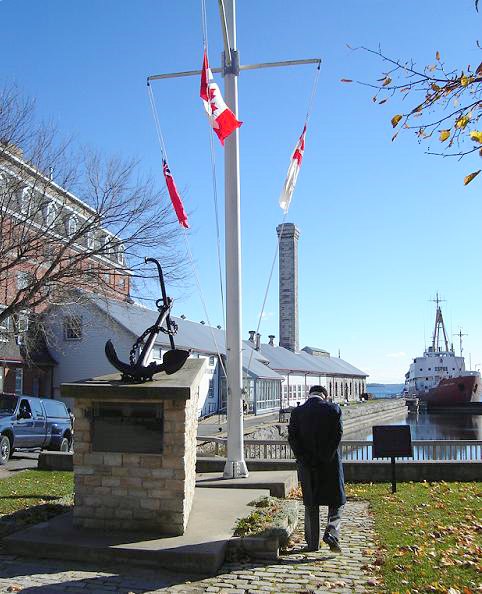
Welcome to autumn. The burning of fossil fuels within my home has already begun. And the wearing of more layers. It’s madness all this circling of the sun. A few days ago, it was too hot. Now… I wonder if it will be too hot ever again. I think deep thoughts like that from time to time because, as the poet wrote, I am a sensitive man. So sensitive that I took a photo of the scene above when I came upon a can of Bud sitting quite upright by a familar path, looking out upon the waters. I am also, apparently, a student these days. Forty five years after starting the FYP program at Kings College (aka Bings Bollege), I signed up for the new mini version. So I must be extra clever this week having studied Ajax for minutes on end. Right? Well, we and the gods shall now have to see if anything actually sinks in.
What’s up in beer news? First up: when did the copper age end and the bronze age begin… in Bulgaria? What ever the label, apparently there was wheat ale brewing 6,500 years ago in that corner of Europe:
Bulgarian archaeologists found evidence that beer was produced at “Provadia-Solnitsata” (5600–4350 BC)-Europe’s oldest salt-production and urban center. This was announced by the leader of the archaeological works, Academician Vasil Nikolov, who presented the team’s summer findings to journalists, BTA reported. According to Nikolov, this likely represents the earliest production of the beverage in the region and possibly in all of Europe. He noted that botanist Elena Marinova contributed to the discovery. A broken vessel was found containing wheat that had sprouted in the manner required to produce malt. The vessel was discovered in a house that had burned down.
I know that Merryn will be pleased with that sort of residual organics analysis. I like that the house burned down. Breweries were always burning down around here 240 years ago. Good sign.
Perhaps another good sign is how, as Jessica Mason reports, it seems that the Canadian and US administations’ mutual tariffs on aluminum products are having an important effect… though likely not the one the White House intended:
Southern Ontario’s Caravan Bev Co’s owner Shane Vear had also admitted that he also imports and distributes Chinese cans and since then his business has risen 30% since last year. Vancouver Island’s Strait & Narrow president Yuri Akeroyd told the publication that his company moved most of its can purchases to China over the past eight months and insisted that the decision was about “survival”. Akeroyd also stated that “cost” was not the only reason for the shift and added that following nearly two years of policy swings that buying from overseas felt “less volatile”.
Import… get it? Fine. Well, there is someone out there seeking to promote stability. You know the guy working on the creation of cybermen or some other sort of robot army.
Speaking of laying waste, VinePair published a great article by Aaron Goldfarb on the regret and shame and bad feelings and waste of one’s life you can feel when you have a cellar full of beer that was promised to age:
I was saving these beers for some special occasion. But plenty of special occasions came and went and I never drank them. And there they sit: too worthless now to sell, too heavy to haul upstairs on a whim, too fraught to simply throw away because tossing them would mean admitting my wife was right a decade ago, when she kept asking why I needed to buy more beer when I already had so much. I only had one choice, and Leslie’s advice kept ringing in my head: “They’ve all passed their prime, and at this point you might as well just crack them.”
I think it was about ten years ago the I gave away most of the “important” beers I started aging about twent years ago. I probably have more down there in the cellar like my two panic bottles of Girardin Gueuze. I don’t even want to think what they are like given I bought them in the first term of the Obama administration. Another more serious sort of crime against booze was discussed by Jason Wilson this week with a seriously hefty fine on the line:
On September 10th, the federal government announced that Southern Glazer’s Wine & Spirits—which controls about one third of all U.S. wine and spirits distribution—agreed to pay $12.5 million in fines over bribery and false invoicing practices. Southern Glazer’s entered into a “non-prosecution agreement” with federal prosecutors for “executives and employees funding and concealing improper payments and benefits to employees of alcohol retailers, including chain grocery stores in California and elsewhere.”
Wilson shares the opinon that the fine is a “rounding error” for the firm that takes in $26 billion USD a year and especially insufficient for an eight year long pattern of infraction. He calls for drinkers to rise up! As you think on that call to action, here’s some notes! Here’s some notes as you plan the revolution.
Note #1: Matty C on some hop parlance.
Note #2: “…3.5% more than in the same period last year…”
Note #3: part beer shop, part radio station.
Note #4: Lars has a new book – The Power of Beer!
What else is going on? Well, David Nilsen in CB&B has provided us with a helpful primer on the French hop industry:
When we think of French hops, we typically think of Strisselspalt, a delicate Noble-adjacent hop with fine herbal-floral aromas and restrained bittering. That classic variety took up most of the Alsace’s 400 hectares under trellis until nearly 20 years ago, and most of that crop was contracted to Anheuser Busch. When InBev purchased the company in 2008, it also abruptly terminated the Strisselspalt contract. That not only meant an immediate loss of sales, but it also left the French hop industry with a visibility problem. Few brewers were familiar with French hops because Anheuser Busch had been using most of them. Yet the rhizomes for a possible future had already been planted. Hop France had begun a hop-breeding program in 2001 with the primary purpose of improving—or replacing—the bittering performance of Strisselspalt…
Frikkin Strisselspalt…. just… don’t ask. And from New Zealand, Kieran Haslett-Moore has shared the idyllic story of a beer fest by a southern sea:
The sun is setting over the alps and is catching the clouds, setting them alight with glorious flaming reds set against the over ripe blue of the heavens. The spectacle is a Salvador Dali painting animated to reality. Beneath the spectacle of the natural world sits one from the realm of human endeavour. Cobbled streets of ornate Victorian white stone have weathered 150 years of southern ocean storms and Kiwi lust for the wrecking ball. Within two of the old buildings Bruxelles Oamaru is in full swing. It is like there is a portal from the sleepy southern town straight into the back streets of Brussels. Goblets of oaky spontaneous ale, various tart, fruited concoctions, lemon-flavoured blonde ales, saison and even a Belgian stout are drunk, discussed and enjoyed.
What a scene. It’s like good beer was starting fresh all over again. Similar too was the report from Imran Rahman-Jones who has been slumming by the Mediterranean:
I am writing this from the heel of Italy’s boot, otherwise known as Puglia, where it’s still shorts weather and the Nivea factor 50 continues to be sprayed every few hours. The Italian beer here has generally ranged from “not to my taste” to “objectively poor”, with a couple falling into the “very nice served ice-cold but make sure you get it finished before it starts tasting of anything” category. The supermarkets here seem to have as many German and Belgian beers on the shelves as Italian ones. It seems Italy has, like France, decided it should stick to doing what it does better than anyone else (wine), and happily imports the good beer from its European friends.
Blunt but now doubt accurate. And, to be fair, there is a place for the utility of a well placed “very nice served ice-cold but make sure you get it finished before it starts tasting of anything” beer. Similarly, there were some refreshingly simple business truths this week from at Breweries in Pennsylvania:
If you’re walking into an industry with a high failure rate, you should probably be ready to face that day when it comes. The data is telling you that you will most likely close… it shouldn’t then come as a surprise. The craft beer boom of 2017/2018 in PA had a lot of different impacts. While most of them were positive (more locally made beer on the market, more jobs added to communities), we are seeing a fair share of negatives as well. One of the biggest downsides of the rise in craft beer are people who probably should have never entered the world of small business ownership. From cutting costs, employee mistreatment (*cough* Bald Birds/ Tired Hands *cough*) and just closing with no notice the industry is still riddled with poorly run businesses.
Naming names and pointing fingures?!?! How refreshing. And professor and historian Dr. Dan Malleck has posted some thoughts on the relatively low risk of harm caused by moderate alcohol intake over at LinkedIn:
For many people, drinking does have value. I don’t need to re-litigate this, but from socialization, to creativity, to relaxation, alcohol brings value to many people’s lives. Even if you just really like the taste, there is a value. (Is there a risk? Yes, just like a risk in driving excessive speeds, eating way too much beef, chronic sun exposure, or … getting really into cutting wood (I guess) there is a harm of excess.) The difference here is when we talk about alcohol we always need to frame it harm-forward. We can’t just say it’s ok to drink without saying something like “but know your limit” or “if you are worried about your drinking, seek help.” That’s an interesting social convention that we don’t have to use when offering people a ride, cooking them a steak, inviting them to go for a walk, or asking them to help you cut some wood.
It’s a lucid argument but it does invite my mind to wander towards the consideration of the other non-intoxicating pursuits in life that also may enhance socialization, creativity and to relaxation. Are there such medical studies on the risks associated with birdwatching? Doubt it. On napping? Not so much. And if we are being honest, I would worry if socialization, creativity and relaxation were mainly enjoyed by someone after a drink or two. We need to, yes, think of relative risk but really be thinking of relative risk/benefit.
Finally and for the double, David Nilsen has the feature in Pellicle this week, a portrait of Off Color Brewing in Chicago:
Off Color opened in 2013 with two beers: Troublesome—a classic, unfruited gose—and Scurry, a kottbusser. Launching with two obscure German styles was less a statement of defiance than an indication of intent: They were going to brew delicious, approachable beer, but it wasn’t going to be everyone else’s delicious, approachable beer. As unorthodox as Off Color’s beer was, it was matched by the quirky, black-and-white label art. Craft beer branding at the time was rarely subtle, and John and Dave opted for contrast from the prismatic norm rather than competing with a cornucopia of colorful labels. “We ended up on black-and-white just because it really stands out on liquor store shelves,” John says.
Well, that is it for now. It’s been a bit of a quiet week or at least one that had distraction. For me the main one being the arrival of a team of masons who responded to the call and spent a couple of days parging, capping and rebuilding the front step which (in accordance with the Ontario’s Building Code circa 1964) houses the cold room that houses my stash. As with the furnace and the roof, I know enough about concrete to avoid my own advice and certainly my skills. And it always amazes me when capable folk arrive at the house, totally fix problems that visit one’s mind in the hours before dawn night after night – and only want money. Isn’t money great? Now I can get back to just worrying if I have enough for the next crisis.
As you think on that, please look to Boak and Bailey’s postings on each and every Saturday along with the coincidenal and fabulously entertaining footnotes week after week at Patreon. They do put in the effort. And do look out for more of Stan’s “One Link, One Paragraph” format. Then it’s your turn. Read and recommend, please. Scour the world for news tips – then let me know. Then hunt out something in someone’s archives! Leave oblique comments on someone’s post from 2009!! Listen to a few of Lew’s podcasts and get your emailed issue of Episodes of my Pub Life by David Jesudason on certain Fridays. And Phil Mellows is at the BritishBeerBreaks. Once a month, Will Hawkes issues his London Beer City newsletter. Do sign up for Katie’s wonderful self-governing totes autonomous website featuring The Gulp, too. Ben’s Beer and Badword remains on pause but there is reading at The Glass which is going back to being a blog. Any more? We have Ontario’s own A Quick Beer and All About Beer is still offering a range of podcasts – and there’s also Mike Seay’s The Perfect Pour. Plus follow the venerable Full Pint podcast! And there’s the Craft Beer Channel on Youtube as well as the archives of the Beer Ladies Podcast. What else?
*No footnotes this week. Not one.