Your Beery News Notes For The Turned Of The Leaves And The Turning On Of The Furnace

Well, it was +2C at dawn on Tuesday morning which encouraged a return to bed* and then a first firing up of the furnace. Even though it warmed up as the sun popped out, one needs to listen for clangs and sniff for smells on a day when the heating isn’t a necessity. All’s well but probably should get it serviced. Clangs and smells are not the height of mechanical engineering testing. Right after someone looks into that new loud rumble from the dryer. It’s enough to drive one to drink. Which I did.

It’s also the time of year for the return to the tavern instead of the patio, I suppose. Though I always find October unsettling, especially as the American obsession with Halloween is creeping into everything earlier and earlier. And I am not just talking the noxious pumpkin spice this and that. Ghosts. Everywhere a ghost. Including at breweries like the Lemps of St. Louis:

The most famous spirit is the Lavender Lady, believed to be Lillian Handlan, Billy Lemp’s glamorous first wife. Her love of lavender clothing earned her the nickname, and visitors still claim to smell lavender perfume in empty rooms. Then there is the darkest tale on the tour: the legend of a hidden Lemp child with a disability, kept out of sight in the attic and given a cruel nickname by storytellers. Historians have never found records proving he existed, but guests swear they see a small face peering from the attic windows. The brewery has its own ghost stories. Paranormal teams lead visitors into the dark basements of the old Bottle Works, where the cave system once chilled Lemp lager. Investigators tell of shadow figures, cold spots and the echo of tragedies that unfolded in those damp stone rooms.

Lordy. We Canadians are still resisting and partially immune from these things, spending October instead by caulking, patching and sealing in anticipation of the blizzards to come. Regularly checking in on the attic insulation also, you know, helps ensure children are not lost up there. Duh.

News? News about beer?? Fine. Well, Guinness is retreating further from the US market, closing the Guinness Baltimore Open Gate on November 1, 2026 – which is all a bit strange given the recent boom in the brand’s fortunes. Jacob in DC pointed out one thing that may have been indicative:

Here’s a take: the beers coming off Guinness’ 10 bbl system didn’t make it to DC, which is flabbergasting. Diageo is a giant company and they never put their cans or kegs into DC distro beyond Baltimore Blonde and a milk stout in 2019! It’s malpractice! There’s a giant market just south of you!

Jeff on the other coast has more info – including his own loss of a sponsor – that ties to the broader situation owner Diageo faces according to the 2026 annual report:

Overall, spirits were down 5% and beer was up 9%. These results have spurred Diageo, under its new CEO Dave Lewis, to make cuts—none of them delicate. This is apparently characteristic of “Drastic Dave,” a former Tesco CEO  who built a reputation for “cost-cutting.” (Corporations believe that euphemism softens the blow, but I wonder how it feels to workers to be called a mere, dispensable “cost”?) Diageo has eliminated nearly 2,000 jobs this year (6.4% of its total workforce). The company plans to cut more than $1 billion more, and the U.S. has been hit especially hard: 36% of the staff at Diageo’s North America headquarters were recently fired as a part of the effort.

I suppose I am doing my bit for Diago with my now established taste for a Guinness 0 beside a shot of Crown Royal but I appear to be one of a shrinking cohort. It’s too bad. It’s both very tasty and points a pointy finger in a meaningful direction.

On the theme of international booze trade restructuring, Evan Rail has investigated the expansion of the wine bar for VinePair and reported on a few themes:

… the global “restaurant as wine bar” trend has another quirk, often putting much more emphasis on natural, skin-contact, and low-intervention bottles. “It’s a particular kind of direction of wine bars, rather than ‘wine’ in general,” he says. Beyond the list, de Vries says that the global “wine bar” trend has a few particular characteristics that include high quality food in smaller portions that are designed around sharing, as well as a special approach at the front of house. “What we see in this trend in these types of bars, even though they’re restaurants as well, is a different type of service,” he says. “It signals a social experience. It’s just more casual and more open.” The design and atmosphere is often different, too, with a greater focus on conversation and conviviality. In short, the trend is not just about nomenclature. It’s an entire worldview.

I don’t think I have willingly gone into anything labled a wine bar. I’ve checked the price lists. And the stash is so helpful in these matters at an actual fraction of the price. That’s a key factor for development of wine in fact, bars as one of Evan’s sources noted: “…it’s probably more efficient to serve glasses — multiple glasses — than have people buy bottles. You’re going to get a better markup on your glasses of wine.” I am not unsympathetic but I am also fond of my sofa at such moments, too. Time for some notes!

Note #1: Pellicle interviewed Mirella Amato.
Note #2: An obituary for a soon-to-depart Brussels favourite.
Note #3: We called them the yips… or the itch.
Note #4: More Guinness cocktails!
Note #5: Gary on Irn-Bru.

Out and about, NPR had a very good article this week on how to go about eating in a Munich tavern, preferably well before noon:

…Weissbier — or wheat beer — helps wash down a breakfast of boiled veal sausages, sweet mustard and a giant pretzel. Four pale, cylindrical Weisswurst arrive in a big tureen. There’s two ways of eating them. One is zuzeln, which involves cutting the head off of the sausage and then just sucking the meat out. The other is the old-fashioned knife and fork. Both involve removing the sausage skin, which you are not supposed to eat… Master butcher Andreas Gassner…  makes about 1,200 sausages a day. Even more during Oktoberfest, when they deliver 18,000 Weisswurschtl — as Bavarians call the sausages — for breakfast in the beer tents on the first weekend alone… The trick, he says, is to try it without mustard first to get the unadulterated, full flavor profile of the sausage. He advises giving it a good sniff, too. 

As the old saying goes, furnaces and sausages. I am now better educated. But I am not sure I could perform a zuzeln with any grace were sitting at one of those tables facing down the Weisswurst. More seriously and viewing the other side of the bar where the work is done, David J. has written for CAMRA about the losses workers suffer when breweries and bars shut, starting with this portrait:

A few years ago, a neighbour was telling me about her new job in a local bar a bus ride away. Despite a tough childhood marked by the transient nature of care homes and foster parents, kindness was her default setting and I found her bluntness – which jarred with some of the other people in the street – easy to read. I rectified my mistake and took the 171 to Catford only to discover that I was not the only person to enjoy her company and she was firmly embedded in the community, woven into the tapestry of this pub’s framework. I’d never seen her laughing so much. A few months later, I was awoken late at night by loud music from her flat and had to knock at the door. When she answered she apologised, turned the music down and revealed she had been blowing off steam as the pub was now closed leaving her unemployed. Eventually, I saw her again at her new place of work but this job of delivering leaflets caused her no merriment and her downcast appearance was a stark contrast to when I saw her behind the bar that time.

It’s a very compelling thought on how extended the idea of “community” can be – and one that I’ve not considered given all the talk of how tough it can be working in the trade. On another element that draws the drinker, The Beer Nut raised an interesting question on nationalism and international beer styles:

Though a full 5% ABV it’s a bit thin, and the carbonation is lacking. The flavour is clean, however, with the coriander taking the lead. The fruity esters are minimal, which is good, though the orange peel element is relegated to the finish, and it would be better if that were more prominent. It’s a bit simple, overall, though I guess that’s the nature of the style: had it been brimming with complexity, it wouldn’t be a proper witbier. This is a proper witbier, and if you are looking for an Irish-brewed Hoegaarden substitute, it’s well suited. I don’t think it’s an improvement on the original, though.

I compare this to a post at LinkedIn from Mr. B in which he draws upon the current trade climate to make a related point:

… there are a whole lot of great local brands that I simply don’t see getting support from local bars and restaurants, especially those that claim to be community-minded independents. I understand that small production brands often cost a bit more than do the big brands, and that they’re not positioned to offer the same sort of incentives. I even get that there is an educational aspect to stocking local brands, since a lot of customers won’t be familiar with them. But I also know that when a customer at a bar discovers something new and exciting, they will frequently return to that bar or restaurant with friends and colleagues to show off their new find and/or see what else there is to discover…

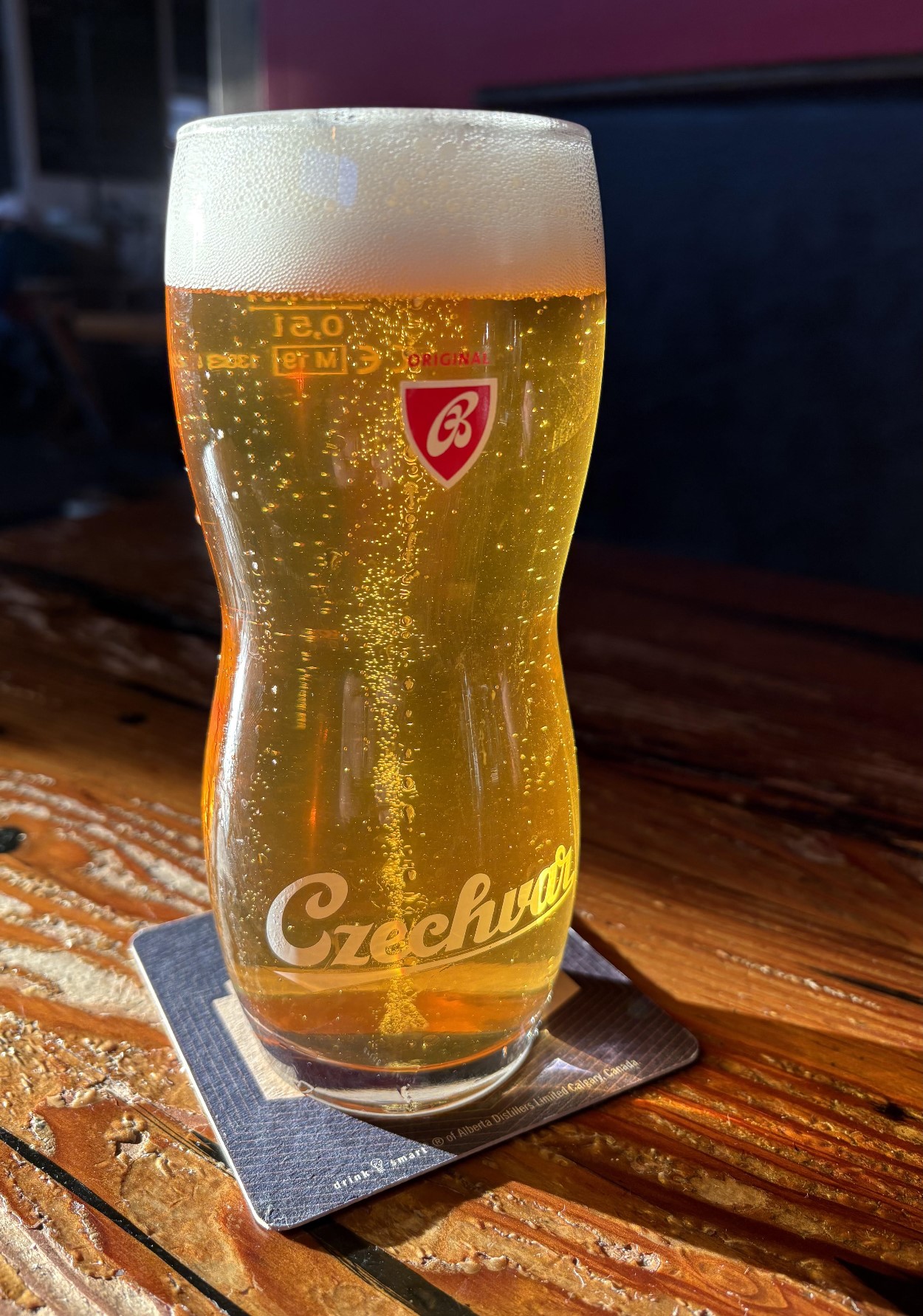
My initial thought was this when I thought of the two observations:  was the Irish witbeer “new and exciting“? I am very much compelled by the current Buy Canadian efforts and, to be clear, both TBN and Mr. B have a vastly greater experience with a wide range of the clinky and the drinky. But I am not sure how often I have had a beer very often that was both “new and exciting“.** That Czechvar up there? Pretty tasty, for sure. I liked the glass, the momentary beam of autumn light, the rich pale malt… but was I excited? Interested, for sure. But to what degree? Then… would I have been more interested if it was brewed locally? I am not criticizing their language so much examining my own response. Frankly, its the veal saltibocco at Red House West that I’ve now ordered the last three times was the showstopper that will bring me back again. But that was a really good beer, too.

Imran Rahman-Jones has a handy reminder about the decisions that go into creating what attracts the particularly desired crowd:

A bar set in an old church should feel exciting and conjure some sort of cosy nostalgia. Unfortunately, any reminders of this building’ history have been covered up by a series of design choices made by – presumably – the same designer who has decorated every chain pub in the country. A number of generic neon signs adorn the walls in between a few large screens showing sport, while the booths around the outside feel impersonal. The decision to hang plastic pot plants upside down from the ceiling is interesting. However, I am keenly aware this is not built for me. In more self-reflective moments, I think myself fairly conservative when it comes to pubs. I say I want a “timeless” feel, but what I actually mean is that I want to pretend I’ve come to some point in the past when I enter a pub. I want to feel a sense of history. Cold Town House does not give me that, and that’s fine.

On the point of local, however, I am very compelled by the idea of small patch and urban vinyards. My 65 x 100 foot patch includes two Pinot Noir vines as well as a number of unproductive Voigniers. So this piece in Pellicle by Urvashi Roe is very much my thing:

Will Davenport, winemaker at Davenport Vineyard, has been with the project since the beginning. His role is to transform the grapes into wine at his winery in Kent.  ​​​​“​​​Forty Hall’s vines grow on a south-facing site in dry, sandy, and flinty soil over London clay,” Will says. “This means the grapes don’t typically dry out with that deep-rooted water source. ​​​Being in London means it’s generally a few degrees warmer than other vineyards in England, helping the grapes to ripen while retaining that acidity which gives the wine its freshness. They’ve also chosen Ortega and Bacchus, which are varieties that perform well​​​.”​​​​ 

And perhaps Katie has also shared something that I would find “new and exciting” after her visit to manage a bout of pre-flight jitters given its proximity to the bizarre:

The Sussex Arms is a pub completely devoted to the Concorde. For some reason. And I’ve come here for a pint to try a bit of immersion therapy. The tables are chrome and purple-ish glass. The décor is airport-themed, with a live updating LED board showing which aircraft are preparing to land right now in London’s four airports—incredibly addictive viewing. There’s fuselage on the wall and on the ceiling, and arrivals boards behind the bar. The “Business Class Lounge” sign looks remarkably real. Most spectacularly, though, is the central seating area, a conversation pit made from seats from the Concorde. Pet Shop Boys plays on the jukebox nobody has pumped money into since I got here. They look less plush than I expected them to.

Wonderful. Consider, too, what draws Ron to judging around the world:

After pottering around in my room for a while, and fiddling with my new phone, I flop downstairs for breakfast at 9:00. Without a great deal of enthusiasm. A standard buffet is so much better. Letting me pretend to be healthy while eating bacon by adding a dash of fruit. I get an egg and bacon sandwich again. And a milky coffee. Most of the judges are already downstairs judging. I sit by John Palmer and Noelle. We have a pleasant chat. Which is why I do these trips. The social aspects. Meeting people whose eyes don’t glaze over when I blab about 19th-century UK beer taxes. Or are at least polite enough to feign interest.

Finally but still speaking of the interesting versus the disconcerting, returning to David made a good observation on one of the perils of NA beer – especially the craft manufactured offerings:

As a side issue to AF, I have to avoid high sugar drinks as I’m prone to diabetes. Usually the macro ones have zero sugar but craft ones (in general) or top fermented ones can be high. Erdinger Alkoholfrei has 18 grams of sugar per 500ml bottle.

He was responding to B+B’s stated grounds for their use of the NA brews:

The first AF beer that we recall finding pleasant to drink – as in, we occasionally crave it – is Bristol Beer Factory’s Clear Head. It still has some of the typical flaws but, crucially, nothing that reads to us an off-flavour, and its hop aroma is actually pleasing. On the right occasion, it can be quite refreshing. We still find most AF beers unsatisfying or even unpleasant. We’re baffled, for example, by the lie that Schneider alcohol-free Weizen is any good when it is, in fact, like drinking Cup-a-Soup. In recent months, however, as perhaps our alcohol tolerance has taken yet another turn for the worse – we’re both now in our late forties – there have been occasions when AF beer has been a vital part of our tactical approach to a session.

[Cup-a-Soup! Lovely.] It’s all a very reasonably rational argument. But if I am not drinking alcohol – which is by far most of the time – I find other things to drink. I am perfectly happy with a pint of water between pints, too. Or along side even. I had one with that Czechvar. Tipping accordingly of course. Plus I had a Guinness 0 at the pre-tav dump of a bar the other week and was pretty shocked to see it cost four times retail.***

That’s a lot this week. Indicative of a man putting off chores because it’s no longer shorts and t-shirt weather out there. Maybe tomorrow. You bet. Until I make up my mind and for more fabulous observations of the Cup-a-Soup sort and so much more, please check out Boak and Bailey’s postings on each and every Saturday along with the coincidenal and fabulously entertaining footnotes week after week at Patreon. They do put in the effort. And do look out for more of Stan’s “One Link, One Paragraph” format. Then it’s your turn. Read and recommend, please. Scour the world for news tips – then let me know. Then hunt out something in someone’s archives! Leave oblique comments on someone’s post from 2009!! Listen to a few of Lew’s podcasts and get your emailed issue of Episodes of my Pub Life by David Jesudason on certain Fridays. And Phil Mellows is at the BritishBeerBreaks. Once a month, Will Hawkes issues his London Beer City newsletter. Do sign up for Katie’s wonderful self-governing totes autonomous website featuring The Gulp, too.  Ben’s Beer and Badword remains on pause but there is reading at The Glass which is going back to being a blog. Any more? We have Ontario’s own A Quick Beer and All About Beer is still offering a range of podcasts – and there’s also Mike Seay’s The Perfect Pour. Plus follow the venerable Full Pint podcast! And there’s the Craft Beer Channel on Youtube as well as the archives of the Beer Ladies Podcast. What else?

*Look, I was in the work force for 47 years so I am not having any of that sort of response.
**I stared at the belly and butt of a flycatcher this week. There are many. Which was it? The little notch in the tail. That slight yellow to the chest’s edge by the wing. I am not sure a beer has taken my focus. Sure, the sauce of that veal saltimbocco does but, you know, that’s pretty much a given.
***You may have noticed a theme this week – I am cheap. Am I? Maybe. But I simply can’t see how my life is improved by significantly increasing my outlay by increasing heading out to an establishment everytime I want a sip. Which is honestly not all that often anymore. How do you all do it? And have you ever tried flycatcher spotting instead? 

The Perhaps Abbreviated “Who’s That In The Kitchen?” Edition Of Your Beery News Notes

You know how it goes. August means guests. So I have not been as idle as it relates to the beer reading and the beer writing. These are pastimes which demand a special type of slacking. One cannot succeed as a dedicated beer scribbler without setting aside the time to be inordinately idle, what in any other pursuit appears to be the disfunctions of a wastetrel.* Plus, when not hosting I have spent much of the week working with the twine and the secaturs. That right there? That was my view Wednesday morning. A deeply woven mess of tomato plants stuck on hands and knees in the patch where I had poured four year old kitchen compost. Lordy, how it grew. Now the tangle has been untanged and all they need to do is produce fruit. Let’s go bees!

There was possibly tougher news in Bigger Ag than my aching back from Stan this week as the forest fires in the Pacific Northwest are threatening the hop crop:

Monday, the Oregon Hop Growers Association issued a press release that began… “’After a few tough years with hop acreages declining as beer sales dipped, Oregon hop growers are especially excited about this year’s hop harvest. The mild spring resulted in ideal growing conditions for the hops, meaning we’re expecting great flavor and aroma,’ said Michelle Palacios, executive director of the Oregon Hop Growers Association.” What could go wrong? Smoke, as growers and brewers learned with the 2020 harvest. Wildfires in Central and Eastern Washington triggered an air quality alert in the Yakima Valley this week. It is also higher today in Oregon’s Willamette Valley, although forecasts are for more favorable conditions soon.

With that difference of focus, I’d say Stan’s concerns might not lead to the hoped for great flavour. Drew, exercising his wag skills, suggested “Celebration might have to be a rauchbier this year.” Speaking of is / not is,  Pellicle‘s feature this week is by Martin Dixon, the story of one of the more venerable NA beers, Maisel’s Weisse Alkoholfrei which has been produced for over twenty-five years:

Instead of choosing between the two commonly used methods to create alcohol-free beer—removing alcohol by an industrial process, which is straightforward but can be harsh; or stopping fermentation early, which gives the beer a fuller flavour but leaves a sweet, worty taste—the brewery used both approaches. Today, two beers are brewed (one a dealcoholised version, and one a lower-strength version) and blended to create Maisel’s Weisse Alkoholfrei. The beer is now roughly a third of Maisel’s business, and its surprise success has given the brewery new financial freedom.

Relatedly perhaps, here’s a new angle on beer and health – beer mats for better mental health:

Man Time’s Flip the Mat campaign is now under way, with the first mats being delivered to pubs, clubs and community venues across Stone and the surrounding area. Volunteer Allan has been visiting local venues with the mats, including The Poste of Stone in Granville Square, where Man Time holds its weekly meetings. One side of each mat displays the Flip the Mat campaign message. Turning it over reveals information encouraging people to talk about the difficulties they may be facing. The reverse also carries a QR code linking directly to the Man Time website, where people can find details about the group and a range of local and national support services.

And on a similar theme, in the weaving back and forth on the question of booze and health, the question of merriment as health pops up as a foundational principle on the pro side. They never seem to interview the hungover** when making these arguments but it has gotten to the point that The New York Times itself has undertaken some investigative journalism on the point sending Ginia Bellafante into the heart of Bourbon country:

“You’d be surprised by how many people around here don’t drink,” our waitress shared with us later. My dinner companion worked for the Louisville mayor’s office. She had given up drinking several years ago in the name of better sleep and general well-being, leaving her vulnerable to the joke that she was part of the problem in a city where the national retreat from alcohol was driving a list of anxieties. I had come to Louisville to gauge the collateral effects of this growing aversion, a reality propelled by science, supported by surveys and punctuated by my own experience as a host who had noticed that a longstanding dictum of entertaining — the allotment of a half bottle of wine per guest — no longer applied. For all the benefits of cutting back, certain rituals were vanishing…

The Beer Nut, of course a ritualist if ever there was one, is having none of it and took the time to examine the offerings from Marks and Sparks this week, with some observations on the claims made on the packaging:

First it’s an extremely straight-up Helles Lager, stating what it is in large capital letters on the 33cl can. It’s brewed by Cornish brewery Harbour, which does a few contractual things of this nature, as I recall. 4.5% ABV seems a little inauthentically low, and it poured without a proper head, which it definitely should not. There isn’t much aroma, but it seems broadly on-style: a snap of cracker with a hint of lemon zest. I was thirsty, so half the glass went in one gulp… In all honesty, how it tastes was not a major concern for me, but out of respect for you, specifically, I will say that it’s very plain stuff. There’s a slightly hot fruitiness, suggesting the same sort of careless brewing flaw that made it headless, but you’d barely notice that. I can’t remember how much it cost, but I’m assuming not much. Drink it cold; lie back and think of anywhere but Germany.

Cold is good. Are we prisoners of the archetype? Is a pub ever modern? To me a pub needs pubbiness or its a taproom, bar or gastro to one degree or another. B+B, however, have been more seriously on the case and reported back on refurbishment and what is considered by the redevelopers as key these days:

… when they do try to lean into the history of their buildings, they do so without much taste or sensitivity. These days, that means whacking “Ye Olde Pube” and “Gin Emporium” on the walls in bad fonts that come preloaded with Microsoft Word. The other key component of a modern old-fashioned pub is, of course, decent beer. The Kings Head, The Crown Inn and The Pembury all have interesting ranges, served in great condition, often in particularly nice glassware. The 10-sided 1930s-style pint glasses with which The Kings Head relaunched seem to have disappeared (stolen, we assume) but there are a couple of authentic 1930s half-pint glasses in the same style.

As you think on that, here’s some notes:

Notes #1:  “…and commissioned by AB InBev…”
Notes #2: Half price beer with a Mitch obit.
Note #3: A beer drinking elk?!?!

Ron himself as well as his sons have traveled to my fair neck of the woods – or at least he’s been neck adjacent – recently and has begun to report on holidaying in a forest fire smoke zone, wanders Toronto, finds a diner that also sells gin and goes to a cellar dweller’s ball game where Chicago beats the hometown Blue Jays badly:

It’s another high-scoring game. The White Sox get five runs in one innings. Then three in another. Then four. The Blue Jays hit several home runs. But with no-one on the bases, they only get a single run… A bloke a few seats along does try to get a chant going a few times. “Let’s go Blue Jays.” He shouts. It’s not the most inspiring of calls. A couple of times he does get others to join in. Until the stadium starts blasting music out again. With the Blue Jays way behind, the crowd starts thinning out after the seventh innings. We leave during the last innings. Mostly because I wanted to be sure of getting to the Steam Whistle Brewery over the road before it closes.

Ron and Sons will report on stops further east in the coming days.

The Guardian published a very handy primer on how the UK is going through a shrinkflation related to beer – now dubbed a but clumsily as “drinkflation” even though it does not relate to all drinks – and especially handy as it relates to the economics involved:

I don’t know what that amounts to. For a 4.0% beer it’s about 41p a pint. Whereas a 3.4% beer is subject to a duty of just £9.96 per litre of pure alcohol, or about 19p a pint.
That’s quite a difference, but what if people don’t like Carling’s new weak beer? The company claims the 3.4% version actually ranked “higher for overall taste” in consumer tests. It also laid the groundwork for the reduction by introducing a stronger and more expensive Black Label version in February, at 4.7%, creating a “value-premium price ladder” within the brand.
Do say: “Alcohol duty must strike a difficult balance between raising revenue and improving health.”
Don’t say: “3.4%? My urine is stronger than that.”

But, see, you said it, Ms. G. You can’t really say “don’t say it” and then go ahead and say the exactly that  one thing you say you shouldn’t say. Really. You might say there ought to be a law about these things in Britain but we also learned in that self same publication this week that:

Parliament is “Britain’s last alcohol-soaked workplace” where MPs are offered free drinks as early as midday despite alcohol-related scandals, a report has revealed. Drinking is commonplace and some MPs have had their stomachs pumped after consuming so much alcohol that they ended up in hospital, one disclosed.

Yikes! So… maybe less booze is not such a bad thing in one’s glass. Is there less booze in Maryland? Michael Stein in DC Beer went on an interesting investigation and reported out this week on the unused 100,000 barrels of capavity left behind when Flying Dog was bought by FX Matt who shut down the Maryland brewery and moved production to Beautica… err… Utica, New York***:

So, did those 100,000 barrels of 2017 go to the macros? Some did, some didn’t. The Brewers Association of Maryland’s latest data has just under 7,500 barrels brewed in Frederick County in 2025. That’s less than 10% of what Flying Dog was brewing by themselves when they left the state.  Maryland not only lost 100,000 barrels of Flying Dog, they lost DuClaw, and much of Guinness’ Baltimore Blonde production. In The New Brewer, DuClaw was listed in 2020 as brewing 18,250 barrels. That is a sizable amount for the majority of 9,578 craft brewers today, who annually make significantly less than that.

That’s it for now. Not a big week, I gotta get back out to the yard. As I struggle, please check out Boak and Bailey posting on Saturday and adding to their fabulously entertaining footnotes week after week at Patreon. And do look out for more of Stan’s “One Link, One Paragraph” format.  Then hunt out something in someone’s archives! Leave oblique comments on someone’s post from 2009!! Listen to a few of Lew’s podcasts and get your emailed issue of Episodes of my Pub Life by David Jesudason on certain Fridays. And Phil Mellows is at the BritishBeerBreaks. Once a month, Will Hawkes issues his London Beer City newsletter. Do sign up for Katie’s wonderful self-governing totes autonomous website featuring The Gulp, too.  Ben’s Beer and Badword remains on pause but there is reading at The Glass which is going back to being a blog. Any more? We have Ontario’s own A Quick Beer and All About Beer is still offering a range of podcasts – and there’s also Mike Seay’s The Perfect Pour. Plus follow the venerable Full Pint podcast! And there’s the Craft Beer Channel on Youtube as well as the archives of the Beer Ladies Podcast.

*So you know what that means? Yup, extended quotes. Cut and past. That’s my game. Anything to nudge the weekly work past 2300 words. There, 1322 words to Tuesday at 7:45 am. It’s all on track. 
**As I tell the kids, one borrows joy from the future to have boozy joy in the present. With diminishing effect over time.
***I keep telling them that I have the perfect slogan for the city!

The First And So Far Most Februariest Beery News Notes Of 2024

Here we are. The second month of the year. Even though it sorta sucks around here, February is at least proof that dreary January isn’t forever. Sky watcher Jordan noticed, too. Sky watcher. I saw this weird blinding light up there just yesterday afternoon. It was strange. Everyone I know is looking forward to this month, solely to put January behind them. Was it that bad? It was. It really was. TGIF, baby. You know, January’s taking on a certain societal pong. It’s now the crappiest month of the year, isn’t it. Why? Well, perhaps as a first bit of evidence, Cookie puts his foot down about Dry January:

Boozing is part of culture. December is culturally a month of excessive consumption. January is always quiet. This has been a seasonal norm for centuries. Imagine the guy renting deckchairs on the beach, moaning that it’s quiet in winter. Hospitality is seasonal.

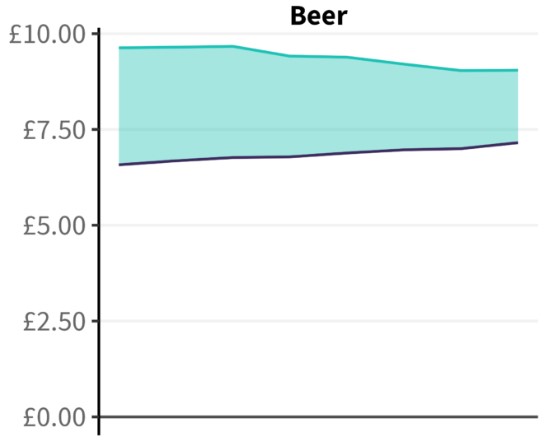
That is a reasonable argument. At least a reasonable baseline. Do people believe it? There have been a number of unfortunate tales of businesses doing badly, blaming the times, blaming others and bad luck, blaming the general cutting back. Can we call these exuberance hangovers?* It is a now problem or a back then one? As this handy graph illustrates, there are even exuberences in some sorts of exuberence avoidance, like in the no/lo marketplace:

The pattern was similar for spirits, with people paying more for no/lo spirits, on average, than standard spirits. Again, the gap has narrowed over time, after an initial ‘noisier’ period when the no/lo spirits market was extremely small. There was relatively little difference between the prices paid for no/lo and standard ciders in pubs, bars, clubs, and nightclubs, with no/lo cider being 5% more expensive on average in 2021. Wine was notably different to the other categories, with prices paid for no/lo wine remaining consistently around 25% lower than standard wine.

You are going to have to read that article for the graph to make any sense. But it looks so good I am just leaving it there. I also thought of this question of inordinate enthusiam when I read Jessica Mason‘s piece on the response of certain minority shareholders of Black Sheep Brewing at the brewery’s  reorganization by new investor the private quity firm, Breal:

Regarding Breal’s interests in Black Sheep, Sturdy admitted in his letter that he was “glad that most of the jobs of the employees in the company were saved” despite news of redundancies and closures circulating, but queried “how the directors are fit and proper persons to run the new company”. Describing the issue, he highlighted… “most of us are not rich, but are hard working loyal people, including employees of the old company, farmers, licensees and local tradesmen”. He said: “Coincidentally the CEO owned no shares in the company at this time. The MD and export director owned 6,256 and 11,050 shares respectively” and added: “In my view these deals should be outlawed.”

I mean I get it – and there are the empty pocketed suppliers to think of too. A very January-ish story. The month of general public lament. I noticed that The New York Times published stories on the dangers to mental health by taking lots of things as well as on the various other dangers of cannabis however taken. Having given up on dope around 1981, I am a bit amazed that this is newsworthy because it is simply so. Not news. But then the same paper of record published something I found actually new and noteworthy: businesses responding to the challenges of these times head on, by undertaking all sorts of intentional narrowing in beer selection:

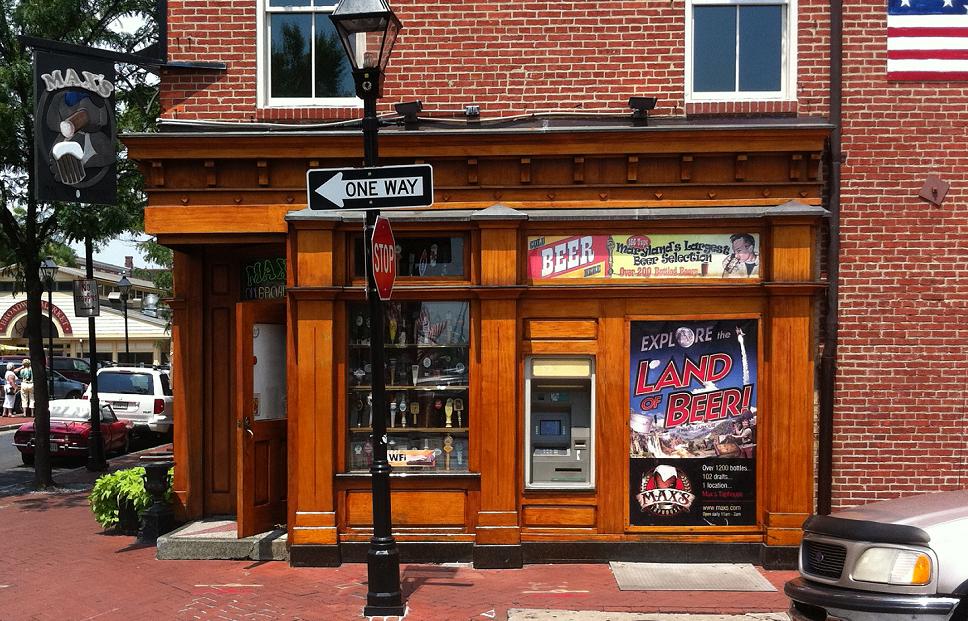
“I don’t need five pilsners,” said Olivier Rassinoux, the vice president of restaurant and bar at Patina Restaurant Group, which is headquartered in Buffalo. At Patina’s Banners Kitchen & Tap, a 72-tap sports bar in Boston, the bar turned two taps over to kegged margaritas last year and plans to add additional draft cocktails and wine. Max’s Taphouse, a Baltimore beer institution since 1986, is buying smaller kegs to fill its 113 taps and reducing its extensive cellar of large-format bottled beers. They’ve fallen out of fashion, and lingering bottles are “turning into nostalgic keepsakes,” said Jason Scheerer, the general manager.

Ahhh… Max’s.  Got the kid a sweet tee there in 2012. He was 12. Fits him now. Better to be clever and cautious than closed. Relatedly, in his newsletter Everyday Drinking, after describing another sort of exuberance  (his own recent training as a honey sommelier care of the American Honey Tasting Society) Jason Wilson posed the question that has parallel this era of gratification through certification:

…over the past decade, there’s been a creeping wine-ification in every realm of gourmet endeavor. Now, in our era of hyper-credentialism, there’s almost no sphere of connoisseurship without a knowledgeable, certified taste expert, someone who’s completed serious coursework and passed an exam. A two-day tea sommelier certification course (followed by eight weeks of home study) from the International Tea Masters Association costs $1,725. A five-day olive oil sommelier certification program in New York costs $2,800. A nine-day water sommelier certification program at the Doemens Academy in Germany costs more than $3,000 (travel not included). These programs prepare you to be a taste authority, a sensory expert, an arbiter and evangelist in the field, though you’re likely not producing anything.

That’s a lot. Was it also too much? Did we ever need all these niche claims to authority? Enthusiasts with paper. Is that also an exuberance passing out of fashion? Didn’t we have enough of authority when we decided to take a pass on the off-taste lessons and beer pairing dinners?  Speaking of excesses, Stan published his latest edititon of Hop Queries and gave a vivid picture of of the excess hop production facing the industry:

A surplus of hops continues to hang like a dark cloud over producers and suppliers in the Northwest. Last week at the American Hop Convention, John I. Haas CEO Tom Davis told growers that as a group they need to remove an additional 9,000 to 10,000 acres of aroma hops from of production. Idling about 6,000 acres (including approximately 9,000 acres of aroma hops) in 2023 had no meaningful impact on inventory reduction. The estimated 35-to-40-million-pound aroma hop surplus has not changed… In the Czech Republic, the third largest hop producing country in the world, growers harvest about 12,000 acres, almost all of them planted with aroma varieties. Eliminating 10,000 acres would be much like eliminating all Czech production. It would reduce acreage to not much more than farmers strung in 2015…

Very much conversely, Lucy Corne had an excellent piece published in GBH about a small, succinct and successful Ontario-Rwanda project which I knew a bit about when it was first started by Beau’s Brewing** in far eastern Ontario – but one which I had lost track before it took a distinct turn just about 17 words after this part of the story below:

Beauchesne thought it sounded like a good fit, though it would present obvious challenges. “It was so much more out of our comfort zone than we had intended,” he says. “We flew down to Rwanda to meet Fina and to check out the business climate. The last thing we wanted was to start a project that had no chance of succeeding. I came back inspired. And also scared shitless.” Burying his fears, Beauchesne dove into the project, launching a crowdfunding campaign which reached its $100,000 target within two months. Over the next year, locations were scouted around Kigali, business plans were drawn up, and the team at Beau’s started working on recipes using traditional Rwandan brewing ingredients, including cassava and bananas.

And the very epitome of a balanced approach, the Tand published a neat a tidy story of a beer crawl in London the highligth of which was his vignette of busy normality:

This is an Irish style pub – without the umpteen intrusive televisions – and was severely rammed with after work drinkers.  Nonetheless, the service was swift and cheerfully efficient, but it was so busy I could see little of the bar. I’m pretty sure there was no cask and I wouldn’t have had it anyway here, as everyone seemed to be guzzling Guinness.  If you can’t beat them, join them is sometimes not a bad motto.  The Guinness was the best I have ever had in London. Perhaps a tad cold, but certainly the best since I was last in Belfast, and at least a match for Mulligans in Manchester.   So we had another. Seemed the right thing to do, especially since the same barman who’d served me, when collecting glasses, saw us standing in a corner and shifted some office workers who’d purloined the table that should have been there.  Thus seated, we enjoyed the busy scene even more.

Note: one sort of beer, not 113 taps. And what a great heaving description. Balance was also a theme in Lily Waite‘s piece in Pellicle this week, a portrait of Ideal Day Family Brewery, a back to basics brewery situated in a rural English business cooperative:

Set in a central run of low-slung converted stone barns around a well-tended courtyard, and a number of other slightly less hashtag-aesthetic, more utilitarian farm buildings around the site, the various businesses work together in harmony. The hospitality centred ones all invariably use produce from the farm: the restaurant’s whole ethos is farm-to-table; the cafe uses and sells the produce; James uses wheat and barley grown on the farm and various miscellany from the kitchen garden in his beers. 

And in his newsletter Episodes of My Pub Life, David Jesudason reflected on being included in a Deutsche Welle broadcast to share his thoughts on speakin of how things really were, looking back with clarity through his studies of the imperial roots of IPA while giving us a bit of an insight into his process:

I’m really proud of this podcast put together by DW (the German equivalent of the BBC) on the thorny subject of the IPA’s colonial legacy. It came about after the producer Sam Baker stumbled upon my first piece for Good Beer Hunting, which changed how we looked at how IPAs were marketed. (I have mixed feelings about that article as none of my subsequent ones for GBH ever reached the same mass audience.) The Don’t Drink the Milk podcast seeks to explain a subject ubiquitous but misunderstood. The IPA episode had a huge scope with numerous recordings in different countries but is easily accessible for listeners new to the subject of empire. It placed mine and beer writer Pete Brown’s stories central to the narrative and even gave international listeners a flavour of what the Gladstone in Borough is like. It’s what I want Radio 4 to be when I switch it on – and then quickly turn off as I feel alienated by a lot of the subject matter...

Reality checked. Finally and as reported in December, Jeff was invited to speak at a beerfest in Budapest. In his reportage from the scene, he posted something like that chapter in the middle of Hobbes’ Leviathan that cuts so quickly to the point that the rest of the book is a bit unnecesary. In sum, it is a summary – but to my mind some bits might need a wee edit like this:

What’s different is the internet—now information moves far more quickly. In the U.S., it took brewers 15-30 years (depending on the region) to develop native beer. Brewers weren’t even making the beer they imitated properly because most had never been to Europe and they had no information about how to make those beers.

There’s a couple of things. First, the US has given birth to many beer styles that would please any nativist. The cream ales, cream beers, steam beers or (the most obvious winner of the race… if it were a race) macro lagers have each had their day just as Pete’s Wicked Ale and then extreme beers have more recently. And Albany, Kentucky and California have all sent their distinct offspring out into the world. Which is why I prefer “regional” to “national” as the adjective in these matter.

Second, even though there weren’t 100 microbreweries and brewpubs in the USA until around 1988 (making them an oddity for most of the decade) in the 1980s there is no question that US craft brewers had access to plenty of information about brewing the good beer they were imitating. There were imported books and magazines as well as beer supply stores and beers of the world bars as meeting places. We see from one document that there were festivals like the Great American Beer Festival in 1982 at Boulder Colorado where Fred Eckhardt, Michael Jackson, Ken Grossman, Michael Lewis, Bill Newman and Charlie Papazian met with British brewers who all spoke and no doubt spoke with each other and anyone else who cared to listen. We learn from another primary record from 1986 that Michael Jackson was delighted with the Winter Ale brewed by Bill Newman at Albany, New York. Newman had learned his stills during the months in 1979 he worked under the tutelage of the father of the British independent brewery movement, the recently departed Peter Austin, at his Ringwood Brewery in Hampshire England.  Alan Pugsley of Shipyard also trained under Austin and then trained others. Greg Noonan later of the Vermont Brewery was out there researching his first book “Brewing Lager Beer” before 1986, the same year the Buffalo Brewpub was opened by Kevin Townsell who “imports his malt from England via Canada, and gets hops, a fragrant vine that determines aroma and bitterness levels, from the Yakima Valley.” And, of course, Bert Grant had been in the brewing trade since the 1940s working his way up at E.P. Taylor’s Carling brewery in Toronto before later emigrating and opening Yakima Brewing in 1982. Suffice it to say, they all had the information. And shared it. And understood what they were doing.

That’s a lot. The clear and unclear. The plain and the cluttered. The unexpected and the shoulda seen coming. Ways that are fair while others are rough. Enough!! Once again… roll the credits… well, the credits, the stats the recommends and the footnotes. There is a lot going on down here and, remember, ye who read this far down, look to see if I have edited these closing credits and endnotes (as I always do), you can check out the many ways to find good reading about beer and similar stuff via any number of social media and other forms of comms connections. This week’s update on my emotional rankings? Facebook still in first (given especially as it is focused on my 300 closest friends and family) then we have BlueSky (up again to 116 rising up to maybe… probably… likely pass Mastodon (static at 911) in value… then the seemingly doomed trashy Twex (4,437 – down one) hovering somewhere above or around my largely ignored Instagram (down to 163), with sorta unexpectly crap Threads (43) and not at all unexpectedly bad Substack Notes (1) really dragging up the rear – and that deservedly dormant Patreon presence of mine just sitting there. I now have admitted my dispair for Mastodon in terms of beer chat, relocated the links and finally accept that BlueSky is the leader in “the race to replace” Twex even while way behind.

Fear not! While some apps perform better than other we can always check the blogs, newsletters and even podcasts (really? barely! This era’s 8-track tapes!)*** to stay on top of things including the proud and public and certainly more weekly recommendations in the New Year from Boak and Bailey every Saturday and Stan back at his spot for 2024 on Mondays. Look at me – I forgot to link to Lew’s podcast. Fixed. Get your emailed issue of Episodes of my Pub Life by this year’s model citizen David Jesudason on the odd Fridays. And Phil Mellows is at the BritishBeerBreaks. Once a month, Will Hawkes issues his London Beer City newsletter and do sign up for Katie’s now revitalised and wonderful newsletter, The Gulp, too. Ben’s Beer and Badword is back with all the sweary Mary he can think of! And check out the Atlantic Canada Beer Blog‘s weekly roundup. There is new reading at The Glass which is going back to being a blog in this weeks best medium as message news. Any more? Yes! Check to see the highly recommended Beer Ladies Podcast. That’s quite good. And the long standing Beervana podcast . There is the Boys Are From Märzen podcast too and Ontario’s own A Quick Beer. There is more from DaftAboutCraft‘s podcast, too.  All About Beer has introduced a podcast… but also seems to be losing steam. And there’s also The Perfect Pour. Plus follow the venerable Full Pint podcast. And the Craft Beer Channel on Youtube and remember BeerEdge, too, and The Moon Under Water… if you have $10 a month for this sort of thing… I don’t. Pete Brown’s costs a fifth of that. There was also the Beer O’clock Show but that was gone after a ten year run but returned renewed and here is the link!

*any number of the misheard lyrics of “Video Killed the Radio Star” may apply – we did country wine! Plus I knew a guy called Hubert. That explains everything.
**Disclosure: Steve B has been in my house at least twice and drank my beer…
***Thesis: podcasts and newsletters are a great way to minimize correction, criticism and citation by others so… playgrounds for affirmation. Antithesis: then why do I /you quote from them, numbskull?

Putting The Cat Under The Cow For #MoneyMakerMarch

I didn’t plan to make every post for #MoneyMakerMarch build upon an idea set out in William Least Heat Moon’s foundational article on the micro brewing movement, “A Glass of Handmade” from the Nov’ 1987 issue of The Atlantic, but today I thought of this passage:

The New Albion Brewing Company, of Sonoma, California, the first true American micro, went under because it began bottling before it was financially able to produce beer in quantity. In distribution Jonah must face the leviathan. An industrial brewer can make distribution very difficult for a small brewer (sometimes by illegal means). One solution: eliminate distribution altogether by running beer from the maturation tank to the customer’s glass, or, as The Venerable said, “Put the cat under the milk cow.”

What a fabulous image. Put the cat under the cow. And what was the boom of brewpubs in the late 1980s is now the boom in taprooms. So, it was with huge interest that I followed up on Stan’s tweet this morning leading to a post at the The Mad Fermentationist, the semi-official news outlet of Sapwood Cellars of Columbia, Md. on just exactly how they are making money running their brewing and taproom operations to maximize a reasonable return. And what honesty do they bring to the discussion:

Most of our IPAs and DIPAs work out to $100-150 per ½ bbl keg. Self-distributing these beers for $200-250 there would be no way to make enough to cover rent, pay ourselves, and fund expansion. However, being a retailer of our own beers means we get $800-900 for that same keg sold by the glass and growler. It makes sense for us to charge a reasonable price ($7-8 for a 14 oz pour in a 17 oz glass) and have consumers return rather than charge a dollar or two more and end up having to self-distribute kegs (with the added effort).

Read the whole thing. Then consider how this is an example of open book brewery operations, giving secrets away to the competition. And to the drinker.  Now I know that $.80 of Whirlfloc and six cents of Zinc Sulfate Heptahydrate go into every 10 barrels of their Pillowfort ale. Didn’t before. There is really no reason for any brewery not to take this step in eager transparency. They even go so far as to say that while other breweries stick to percentage markups, they do not. Competitive advantage? It is now.

Any other open book brewers out there? Let me know so we can spotlight them as part of #MoneyMakerMarch. Meantime, go read the post. It’s fabulous.

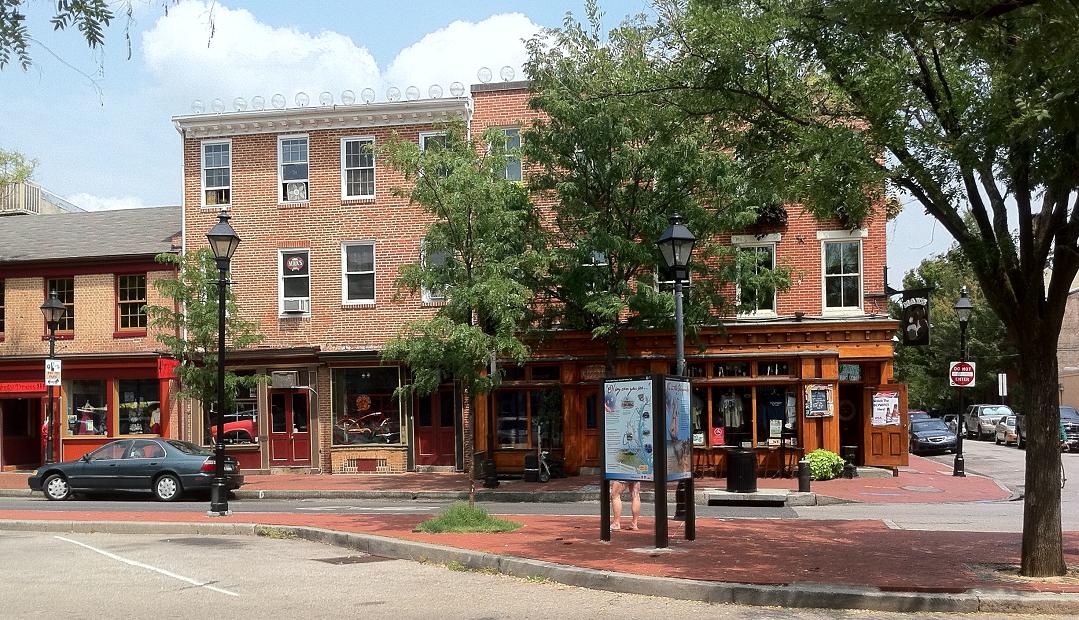
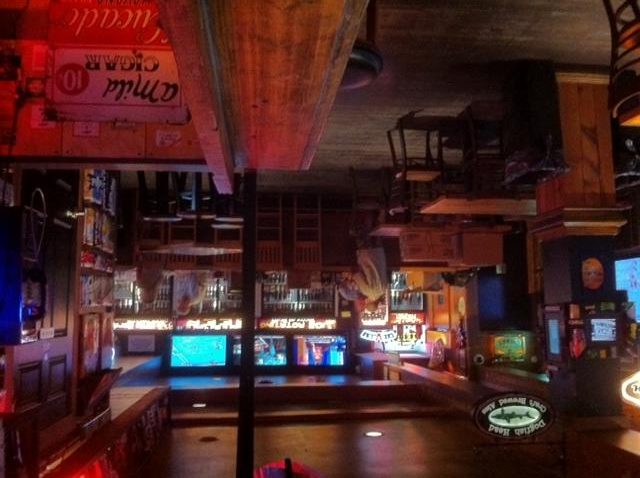
Maryland: Max’s Taphouse, Fells Point, Baltimore

Baltimore has given me a very good argument for its place as a beer destination and no other spot has made the case as clearly as Max’s Taphouse. We stopped in with the kids after taking the tour of Fort McHenry and crossing back across the harbor all by water taxi. The Fells Point area is a bit like the old port of Portland, Maine with the neighbourhood bars, funky shops and interesting restaurants. Max’s sits in the middle of it. I had a cask Red Sky saison from Clipper City as well as the recently released Union Duckpin Pale Ale.


Liked them both. The bar service meant a chat with the tender was in order and, like most sentences he hears all day, it was mainly about the stock – cask, taps, bottles and even stored un-chilled beer. He also explained that they did off license sales in Maryland as well as growler sales. If I wanted one of the special beers to take away, they just needed a few minutes for someone to go retrieve it from storage. The free state indeed.

But it’s not just this one bar. You go into most any bar and there are local beers on tap. Every few blocks in the center of town seems to have a reputable bar. We were at Joe Squared pizza for supper and there were a row of Duclaw taps. I had their double IPA as well as a blonde. Both very tasty and, at five bucks a shaker glass, not overly priced. Max’s was pretty reasonably priced as well now that I think of it.

We are already planning to come back and explore the city a bit more deeply. Sure, you will get the “you watched The Wire, right” line from half the people you tell you are heading to Baltimore but for a good beer holiday with family and kids, the Inner Harbor can’t be beat. Next time, the Orioles will be in town, too.

“…107 Tons Of Beer And Six Tons Of Canary Wine…”

Later this summer, we are spending a few days in Baltimore. Looking forward to it in many ways including things beery… including brewing history. We know a bit about Baltimore and beer already. See, in the 1620s there was a brewery at the first Lord Baltimore’s colony at Ferryland, Newfoundland. And in their voyage of 1633-34, the Ark and Dove apparently carried 107 tons of beer and six tons of Canary wine to what would be the second Lord Baltimore’s colony at St. Mary’s City, Maryland. It would appear likely, then, that the pattern of settlement in the latter might include replication of provision seen in the former for that necessity for the community, brewing.

But can I find a list of the ships’ stores? Not a chance. There is a book The Flowering of the Maryland Palatinate from 1961 that appears to have a reference at page 15. There may even be a list of provisions in this article from the state’s historical society. But Lord Goog is either not so wicked or has not yet found a way to make a buck at displaying these full documents to me. Drag. You would think that lists of ship’s stores from early modern period trans-Atlantic sailing would be the hot item of the internets. The 1670s evidence is there for northern Canada. But Maryland? No. I blame Gen Y. I often do. I know it is easy but that’s why blaming them makes so much sense.

Baltimore Pit Beef For Christmas


Highlight of the last bit of 2007 (and have you realized that we are 3/4s though the first decade of the 21st century?) is going to be a trip to Baltimore. I got invited last Christmas to write a chapter of a book called Beer and Philosophy and now we are invited to the book launch.

Being a 20 watt bulb in the brightly lit world that is beer writing has a few perks and none is so perkier [Ed.: wow, did that came out wrong!] than the genial clan of more senior writers who will answer important questions like the one I posed to Lew Bryson about where to find the best BBQ in Baltimore:

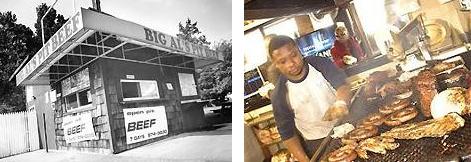
The thing you want in Bawlmer is pit beef, a sinfully delish pile of rare, juicy beef piled high on a roll. There are several of these joints out on Pulaski Highway (like in this catty review: I liked Chaps, so there, nyah. I understand Big Al’s is closed now…sigh. More at this Chowhound link which also makes reference to the Double T local chain of diners (WELL worth your time for breakfast, my friend) and while some of them are not in the most savory of locations, the beef is nothing but. Pit beef is kinda like spiedies in that for some odd reason it’s never really traveled, but is definitely worshipful in situ.

Fabulous. Having already, in 2007, checked the wonderful western NY sandwich called a “weck” off my list of local US foods, the prospect of pit beef adds another layer of glowing orange to my vision of the next Yule. I found a great article from 2000 in the New York Times that further elaborates the concept:

Pit beef is Baltimore’s version of barbecue: beef grilled crusty on the outside, rare and juicy inside and heaped high on a sandwich. Several things make it distinctive in the realm of American barbecue. For starters, pit beef is grilled, not smoked, so it lacks the heavy hickory or mesquite flavor characteristic of Texas- or Kansas City-style barbecue. It is also ideally served rare, which would be unthinkable for a Texas-style brisket. Baltimore pit bosses use top round, not brisket, and to make this flavorful but tough cut of beef tender, they shave it paper-thin on a meat slicer.

Then there’s the bread: the proper way to serve pit beef is on a kaiser roll or, more distinctively, on rye bread. The caraway seeds in the rye reflect the Eastern European ancestry of many Baltimoreans in this part of town and add an aromatic, earthy flavor to the beef. Finally, there is the sauce. No ketchup, brown sugar and liquid smoke, as you would find in Kansas City. No Texas-style chili hellfire or piquant vinegar sauces in the style of North Carolina. The proper condiment for Baltimore pit beef is horseradish sauce — as much as you can bear without crying. And speaking of crying, you need slices of crisp, pungent white onion to make the sandwich complete.

This is all so excellent. One of my gripes as a Canadian is that there are few actual local foods. We can speak of Quebec cuisine (whether lowly comforting poutine or the selection of game that you do not get in English speaking Canada) and we can think of the seafood of Atlantic Canada but these are entire ranges of food based on local resources. A phenomenon at far too high a level. No, what I love about traveling in the US is that local thing on a bun that is made only in that neighbourhood or those couple of counties: Rochester’s garbage plate or the various regional BBQs of the Carolina, the pinnacle of one of which Lew encountered this week. Where is our Fat Boy fish sandwich with a wild blueberry frappe? Our humble hot or our bap and square? Where is our Chocolate Boston – which I have learned is made even more over the top at Purity Dairy by placing an entire sundae on top of a milk shake?