Your Actual… No Really… It’s Already Mid-Summer Beery New Notes For A Thursday

Here was are. Even though full seven months will soon be behind us, the mid-year slide now begins. So you take the little day trips in the sun instead of those little afternoon naps that you might have had in June, back when there was plenty of time. Have you had enough ice cream yet? No, have more. Go get some! You could run those hiking shorts you’ve worn all summer through the wash first, though.  And read your Scriptures as you wait for the spin cycle to conclude – or at least Ecclesiastes 8:15:

Then I commended mirth, because a man hath no better thing under the sun, than to eat, and to drink, and to be merry: for that shall abide with him of his labour the days of his life, which God giveth him under the sun.

Good advice as we face the coming of August and the shortening of days. What else is going on? First up in booze news, that one time staple of waiting rooms thoughout North America, Time magazine, had an article at the end of last week about another “only zero is safe” health statement – this time by the Dutch Health Council – and the author Tim Brinkhof makes observation which I might have thought would have beeen aired before:

As populations age, healthcare systems become overburdened, and governments fail to sufficiently expand or change those systems, preventing preventable diseases is more vital than ever. But herein also lie some of the issues that de-normalizing alcohol consumption brings to light, including its overlap with other, equally pernicious public health crises. In many countries, alcohol consumption has already been decreasing for years, especially among young people. Yet, despite the dwindling popularity of both alcohol and cigarettes, various cancers, not to mention other serious conditions like diabetes and depression, have all been on the rise—again, especially in young people. 

So if we do live in an increasingly poisoned global eco-system where skills and social interaction become less and less valued, there may be plenty of other causes of harm which at least place the clinky and drinky in context. Not a comfort but at least perhaps an excuse. And the world might just need all the excuses it can get these days.

And, in another form of concession, Knut has noted a small relaxation of Norway’s liquor laws with a few odd requirements to move some transactions out of the

“The Government wants to make it possible for tourists and visitors to enjoy more complete and integrated travel experiences. We are therefore proposing that alcohol producers be allowed to sell their products directly to visitors,” according to John Christian Vestre, Minister of Health… A license to sell self-produced alcoholic beverages may only be granted if visitors are offered a paid visitor experience with an educational component, designed to increase knowledge about the production process, products, or local traditions. The scheme would also include limits on the amount that may be sold to each visitor during a single visit.

So, it would appear that you would have to pay to take the same educational experience each time that you go to the producer’s location to buy something to drink. Perhaps similarly odd is the tale of regulation out of Wisconsin as a politically active brewery, Minocqua Brewing Company, has received notice from the state’s Department of Revenue that its license is being revoked. Owner Kirk Bangstad is insensed:

Bangstad said the DOR is “trying to shut down the state’s most progressive brewery for violations that can only be described as laughable.” He said in the post that he received the letter two weeks ago, and the brewery has tried to rectify issues identified by a DOR agent over six months. Bangstad provided a chart explaining what violations were allegedly in the document from the DOR. Those include unauthorized running of a retail outlet, violation of shipping laws and untaxed beer possession in an unpermitted warehouse… Bangstad, who admits to owing taxes to the state, says the “punishment doesn’t fit the ‘crime.’” He says the revocation is tied to organizations against his political leanings, and claims his beer has been boycotted by distributors and stores because of his political statements.

Careful readers keeping notes will recall the news last March that the brewery announced that beers would be free on the day that President Trump dies. Could have been that. Or calling the guy Shitler.

Back on track, Pellicle’s feature this week is by ATJ who finds himself in Italy, face to face with thirty years of Tipopils:

When he opened the brewpub, it was only the third in Italy. In the same year, Teo Musso opened Baladin in the nearby region of Piedmont, to the west of Milan. Things weren’t easy, as there were no suppliers of raw materials for smaller breweries. Agostino’s father’s connections in the brewing industry got him certain supplies, including brewer’s yeast; up until then, he had been using baker’s yeast, which he admits “wasn’t that good.” He also initially faced resistance from locals, with some saying that Tipopils was served too warm. He recalls an elderly local threatening him with a stick, bellowing that Italy was a wine country, before adding “I don’t drink your beer!”

Bellowing!!! More subdued news out of Ireland as reported by Jessica Mason in Drinks Business which leads to some interesting consideration of the local standards used to measure the what is a global retraction of interest in beer:

According to the latest figures from the Drinks Industry Group of Ireland (DIGI), Ireland’s average alcohol consumption per adult fell by 2.1% last year to 9.30 litres of pure alcohol (LPA). This marks a drop of more than one third (35.6%) since consumption peaked in 2001.  The data has revealed that consumption habits are changing in Ireland and although beer was the most popular alcoholic drink of choice for Irish consumers last year, with a 42.1% market share, it actually experienced a 2.7% drop in total volume sales. Wine’s popularity has more than doubled since 2000 and … spirits saw a small lift in volume of 0.2%, giving it a 22.4% share of the market…

Notice the LPA measurement standard. Annual litres of pure alcohol consumed per capita. A handy and hard to fudge measurement.* In a market where brewers are reducing strength quite aggressively to fit into taxation schemes while reducing input expenses, it would appear to me to mean that where the average strength of a pint drops, the number of pints sold may stay steady even while annual LPA may drop. If NA beers are included that could have quite an effect of the figure.

And David J. used another term this week that I was not familiar with – white label beer – which I take to be the equivalent of what we would call a grocer or restaurant chain’s house brand:

After a taster I could tell it was a very familiar tipple, and the locals shared my raised eyebrow. I took the plunge though mainly out of embarrassment in a busy bar. I slowly realised this was a pint of Greene King IPA and at £5.50 was probably the most expensive one I’ve bought. It was the drink my father loved, and I had the same nostalgic East Anglian hit with every sip. It’s just as Directors Bitter-fan Alan Partridge would say “They’ve rebadged it; you fool!” Now you would think this pint (which was superbly conditioned) would lead me to write an article hoping to spark universal outrage especially as it is nearly £4 cheaper nearby. But I asked an experienced publican for his thoughts and he said, “it’s naff, so I don’t do it, but honestly drinkers love seeing it”.

There was a time over a decade ago when a certain consulting brewer in Ontario worked with a number of craft startups who, not surprisingly, collectively offered a range of pale ales with surprisingly similar and unsurprisingly uninspiring taste. Still, my only thought is that these sorts of things are only offensive if the price point is offensive.

Speaking of offensive and price point, apparently wars and tariffs as rolled out by the US adminisration has not done wonders for Boston Beer‘s bottom line:

Freight rates rose more than 35% year over year, adding pressure even as lower volumes helped offset some shipment costs. Aluminum, energy and tariff exposure also remain concerns. Boston Beer expects tariff costs of $20 million to $30 million for 2026, which could limit the upside from pricing and productivity.

I love finance talk. Always seeking the positive: “lower volumes helped offset some shipment costs.” Interesting, too, is that the article didn’t mention beer at all. Unless that is what is meant by “older growth engines are losing momentum“… maybe.

Tariffs are of course also an issue here in Canada which this story just up the eastern seaboard out of New Brunswick on the situation faced by Moosehead illustrates:

About 10 per cent of Moose­head beer is shipped to the U.S., but with a 50 per cent tar­iff it will be a “chal­lenge” to con­vince Amer­ic­ans to buy New Brun­swick beer, accord­ing to Andrew Oland, pres­id­ent and CEO of Saint John-based Moose­head Brew­er­ies. “We ship a fair amount of beer to the U.S., and if these (tar­iffs) actu­ally go through, it’s going to reduce if not elim­in­ate the amount that we’re ship­ping to the U.S.,” Oland said in an inter­view. “At the same time, I’d say we all know that we’re in a very com­plex situ­ation with a very volat­ile trad­ing part­ner. It can change tomor­row.”

I haven’t sought out any Moosehead brews since they cancelled Ten-Penny but I do see that their lager is now on sale so… who knows. As we consider that, here’s some notes:

Note #1: “The viaduct is a dominating presence.
Note #2: Gin with your afternoon tea isn’t at all about boozing. No way.
Note #3: Imran Rahman-Jones has a survey for you to fill out.
Note #4: “The French commitment to le pic-nic must be addressed.

Via Jeff via Stan, we read a tale of contrition from the beer columnist with the Duluth News Tribune, Dave Hoops, including but not at all limited to these admissions:

I wrote about brewers as geniuses and drinkers as audiences. I wrote about taprooms as destinations, not workplaces. I wrote about “the market” as if it were weather, not rent, debt, distribution contracts, burnout, stainless steel leases, tap handles fought over inch by inch… The older I get, the more I think the local scene was never a scene. It was a set of favors, habits, arguments, second chances, borrowed jockey boxes, anniversary parties, charity kegs, bad batches forgiven and good batches remembered, people showing up because showing up was the point. I used to fly past that in search of the new thing, the national thing, the beer people elsewhere were already talking about. I should have stayed longer with the room I was in.

Relatedly, a very stretched stretch. Still, I do now have a sudden hankering for a Landlord. Similarly, I have a hankering for a Hoegaarden what with this from The Tand and this as well from Boak and Bailey:

We got out of the food and beer pairing game years ago, having failed to be convinced by the supposed miraculous effects of matching food and beer – especially if the food has any oomph. What we do tend to find, however, is that Witbier goes with almost anything. And by ‘goes with’ we mean that it remains tasty and enjoyable in its own right; rarely gets in the way of the food; and often enhances it. We’re always pleased to find Hitachino Nest White Ale on the menu at Japanese restaurants, for example. And, of course, there’s always Hoegaarden, our old pal, which contrary to what you might have heard is still an excellent beer.

Max went on another march from pub to pub in Czechia. I think of these things as being urban pub crawls but, as illustrated, he finds himself in some pretty remote spots:

I could have easily had a second or third serving, but right ahead of me was the hardest part of this hike, the fairly steep slope, the uphill one. It wasn’t very long, just 3 km, but I’m still not in the shape I wish I was. The climb surprisingly went well, I managed without even slowing down my pace. It must have helped that it was all in the woods, and beautiful, with no sign of civilisation to be heard or seen. The rest of the way to my destination, however, would be somewhat less fun. Not because it was ugly, far from it, but because it was almost all in the blazing sun…

Speaking of pub crawls, Martin reminds us that sometimes the march comes up short in other ways:

Dodington is really just a gorgeous long street that takes you out of town… and there’s nothing to actually DO…

And finally, Will Hawkes has adjusted his monthly newsletter London Beer City to provide a free monthly sampler story and an annual subscription to the entire publication for a mere £10. The first free offering is the story of a pub in the city’s Docklands between the wars:

It’s October 1933 and you’re on the corner of the West India Dock Road and King Street, in the heart of London’s Docklands. On your right is a pub with a sign reading, simply, “Charlie Brown’s”. And across the road, almost in the shadow of the London & Blackwall Railway’s low-slung brick viaduct, is another pub with another sign, which also reads “Charlie Brown’s.” How could this be? The answer lies in the story of Limehouse, a slice of dockside East London that, for more than 30 years at the start of the 20th century, was the capital’s most feverishly fetishized neighbourhood. Why? Because, since the 1880s, Limehouse had been London’s first Chinatown – and that brought with it extraordinary public interest, fuelled by prurience and racism.

That’s it. Next up, August. Back to School TV ads and a scramble to make something of the weeks of summer that remain. As you fret, please check out Boak and Bailey posting on Saturday and adding to their fabulously entertaining footnotes week after week at Patreon. And do look out for more of Stan’s “One Link, One Paragraph” format.  Then hunt out something in someone’s archives! Leave oblique comments on someone’s post from 2009!! Listen to a few of Lew’s podcasts and get your emailed issue of Episodes of my Pub Life by David Jesudason on certain Fridays. And Phil Mellows is at the BritishBeerBreaks. Once a month, Will Hawkes issues his London Beer City newsletter. Do sign up for Katie’s wonderful self-governing totes autonomous website featuring The Gulp, too.  Ben’s Beer and Badword remains on pause but there is reading at The Glass which is going back to being a blog. Any more? We have Ontario’s own A Quick Beer and All About Beer is still offering a range of podcasts – and there’s also Mike Seay’s The Perfect Pour. Plus follow the venerable Full Pint podcast! And there’s the Craft Beer Channel on Youtube as well as the archives of the Beer Ladies Podcast.

*Well, it should be hard to fudge but in the methodology section of the report by by Anthony Foley, Associate Professor Emeritus at Dublin City University,  it appears that there are deemed strengths applied for each category of clinky-drinky: “The aggregate alcohol contents of the different beverages are based on 5% alcohol by volume for cider and 12.5% alcohol content for wine.” Happy to be corrected.

Another Fabulous Set Of Thursday Beery News Notes For The Marvelous Month Of May

Was I always a May-man? Attending graduation ceremonies were never my thing when I was young or when the kids were. I spent most of the time, as with the movies, counting up the crowd’s investment in cut flowers… coming as I did from that family business. But it is otherwise extremey pleasant, what with the windows open and the furnace off, the idle mowing and the slow pace of digging and planting as well as the imagining (but not yet doing) of projects needing to get accomplished before the snow flies. The weeks before the biting bugs, the forest fire smoke, the doing of the projects. The weather now warm enough for a beer outside. Or, you know, maybe a bit of gin… Ahh… gin time.

What else is going on. What’s that? WHAAATTT IS THAT ?!?!? Freakish news out of France this week as reported in The Times:

For centuries, wine drinking has been at the heart of French identity. Now, however, in a development that will have traditionalists spluttering, it has emerged that last year for the first time, the French drank more beer than wine. Beer consumption outstripped that of wine by ten million litres, according to figures released this week by the International Organisation of Vine and Wine… Martin Cubertafond, of Sciences Po university, said wine was usually served at formal family meals at home, but the number of single-parent families had risen. More than two thirds of households now consist of only one or two people. Big Sunday lunches at which a bottle naturally appears are less common. “Wine isn’t an option with takeouts or lunches that take less than 30 minutes,” Cubertafond said.

I suppose that is a point – gathering around the table is less of a regular occassion – but France’s wine industry was as much built on workers drinking it out of jam jars as the haute stuff. Me thinks there needs to be a “Viva Les Plonks!!” ad campaign. Everywhere. All the time.

Tighten your seat belt. We are off on a bit of a quest this week. Where else in the world are we headed? Next up, Ed wrote us all a note this week, telling a story of Ried brewery in Ried im Innkreis, Austria in which he shared many pictures of stainless steel objects before disclosing this vital bit of information if you were to follow in his footsteps:

We stopped for refreshments after the tour in the bräustüberl (brewery tap). I can’t say I was disappointed the grey sausages ran out before I got to them, the brown sausages I had were fine. They looked like frankfurters to me, but having once caused outrage in Italy by incorrectly calling something salami I’m not taking any chances. 

When have we all not been disappointed with the grey sausages. Moving along and further afield, Ruvani has also been on the road and reported back this week in great detail on her trip I believe in April to Tblisi Georgia including these notes from Agara Brewing:

Beer styles keep it straight with two notable exceptions: the ubiquitous tomato gose (the owner tells me the style originates from Russia) and a tarragon sour whose moss-green appearance may be unusual but harbours an exceptional gentle umami flavour that had me coming back for more. Tarragon is, we are told, a very popular flavour here and it works perfectly with a subtle kettle sour base. While the WCIPA was a bit on the heavy and sweet side, the tomato gose leaned into a strong garlic-herb profile giving it full gespacho characteristics. While pretty far out of the way, I’d consider this a must if hitting up the incredible Abkhazian regional cuisine at nearby Amra, the only restaurant to serve this variety of food from this contested area in Tbilisi. Being in the sticks isn’t always a bad thing (Londoners will know the importance of having proper local craft beer sources) and while you can Wolt it, it’d definitely recommend a short taxi ride out to the mothership. Side note, this is not a tourist area – be prepared for some staring.

Ubiquitous Tomato Gose” would make for a good folk tune title. No really. Now… have you been in the Faroes? I haven’t. My ancestors may have but I have no record of their wanderings that a’way. Well wonder what the wander would be like not more as Knut has reported from the scene:

There are towns with a more thriving nightlife than Torshavn in the Faroe Islands, so don’t go there for a stag weekend. But I found a little gem of a café that combines local food and drink with international inspiration – and a nod to big brother Denmark… Think upmarket versions of Danish smørrebrød. There are vegetarian options, roast beef, cheese – and my favorite, Fiskaflak vid turrum fiski – Fried fillet of haddock, remoulade, pickled onion, capers, dill, and a lovely and tasty garnish of shredded dried fish.

Mmm… a tasty garnish. Sounds a bit “grey sausages” to me. Similarly perhaps, wine in cans has apparently discovered a need to tell its own happy story* which is definitely veering off the “Viva Les Plonks!” initiative:

Some of my favorite accounts are, like, the Metropolitan Museum of Art, which is one of our best accounts. It’s such an amazing cultural institution, and it’s so cool that people are walking around seeing the greatest art of all time, and drinking our wines. We’re in places where it’s really fun for people to drink. And we’re in alignment with our target customer: a cool, interesting person who likes cool, interesting stuff, and is involved in cool, interesting cultural or social events.

I too like cool interesting stuff. And bottles. From a single vantage point, Emma Inch revisited a space in 2006, 2016 and 2026 and found traces as well as distinctions:

Sometimes, it’s in those places where there is the most life, that the most phantoms are to be found: the pubs in which you waited alone for a lover who no longer loved you back; the pubs in which you laughed out loud at the joy of discovering an understanding of new flavours; and the pubs in which you found a surge of celebration and a sense of belonging. Some pubs – given time – can do all of those things, but maybe not all at once. Because the truth is, though very different pubs, The Princess Victoria, Craft Beer Co., and Crossbar are, in fact, the same place. They each have the same walls, the same doorways, the same windows, and they each occupy the selfsame patch of ground. I don’t just mean metaphorically: they’re spatially identical though, of course temporally, they might as well be eons apart.

A bit further west, Liam posted a lovely vignette on settling into another unfamilar pub in Cork … errr Carlow on a Saturday night, giving this photo of the banal a lovely context:

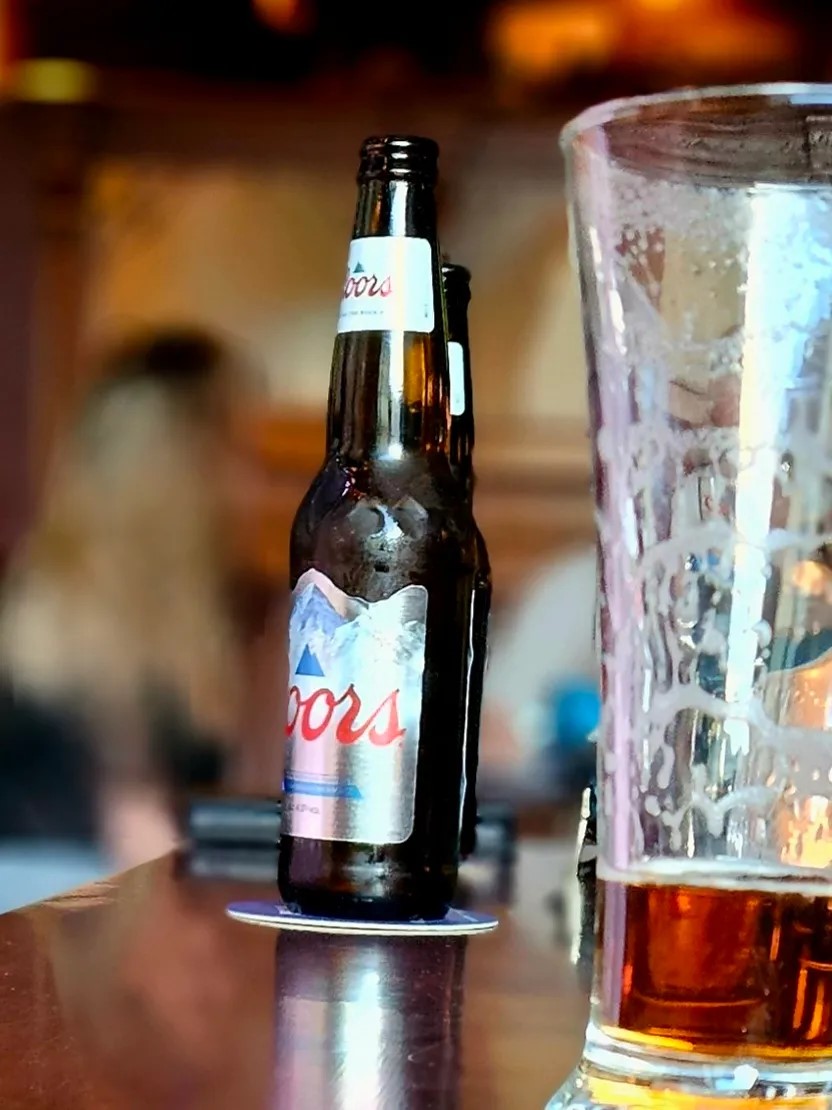
Decompressing in the ‘oldest’ pub in the town, after trying 3 others for a quiet seat. My Macardle’s is pushing it on the best before date, and why I normally go for one from the fridge these days. At this stage it could be Pliny the Elder for all my palate would know, so it’s back to rituals. Two little old ladies have joined me, pleasantly smelling of lavender and gardenia. I think I may be in there Saturday night spot! They are drinking Coors from the bottle and bitching about other pubs, and I think they’re great…

Viva ladies smelling of lavender and gardenia! Speaking of which in words but perhaps not in experience, Matt Gross introduces us to the prospects of what is unexpectedly presented as a favourite NYC bar:

Until a few years ago, there was a bar in my Brooklyn neighborhood called Lavender Lake. It was named, of course, for the adjacent Gowanus Canal, famous as one of the most polluted waterways in the United States, where we treat polluting our waterways as a competitive sport, like baseball and tax evasion. For well over a century, nearby oil depots dumped their waste into the canal, hard rains pushed sewage overflow into it, and generous citizens did their part by tossing in handguns, bodies, and automobiles. Over time, the Gowanus developed an unmistakable aroma, not to mention a variety of hues that earned it that nickname: Lavender Lake.The bar was about what you’d expect a canal-side bar with a name like Lavender Lake to be. Affordable, dark, crowded, with a back deck that looked out on the canal, suffused with various odors.

Perhaps also suffused with odors, from late last week (and for Stan) in France the deer are drunk and causing traffic issues as reported in The New York Times:

It is inebriation season for wild animals, according to the agency, the Gendarmerie de Saône-et-Loire, which is based in a rural region in central-eastern France. “In the spring, some wild animals consume buds, fermented fruits, or decaying vegetation — and may exhibit completely unpredictable behavior,” the agency wrote last week on social media. The police force noted that tipsy animals can quickly cause collisions if humans are not vigilant. To prove this point, the authorities in the picturesque Burgundy region, known for its berries and wines, posted a video of what appeared to be a very drunk deer that has captured international attention.

I think in my youth, “inebriation season for wild animals” meant something different. Here’s some notes:

Note #1: doesn’t this look a lot like this?
Note #2: “…the low-priced, unprofitable, “unpretty,” côc…”
Note #3: “…Nielsen data that shows a 6% drop in beer for 4 weeks thru 5/2…

Building on that last point, I saw this interesting admission and even a fresh new retroactive pivot at Food in Canada in this story on the challenges facing brewers including this passage focussing on Toronto’s Collective Arts:

“We started in craft beer 13 years ago, but from the get-go, we always believed our brand would expand beyond craft beer,” says Toni Shelton, VP brand and strategy. “We have options for everyone, wherever they are in their drinking habits.” Today, Collective Arts’ portfolio includes craft beer, non-alcoholic beer, ready-to-drink cocktails, spirits, cider and wellness beverages. Its foray into the latter started with sparkling waters that were initially designed as mixers. Positive feedback led the company to position them as standalone refreshments, which eventually evolved into Botany, Collective Arts’ functional wellness brand.

This seems to suggest that the way forward for craft beer is to make “not craft beer” and that, in fact, that was always the understanding as in 2013 it was possible to guage the market and plan for the future. I seem to have misplaced my Believe-o-Meter so I will have to get back to you on that one.

As foreshadowed, I went out a bought a bottle of gin last Monday, reminded by this comment below in The Telegraph’sDevil’s Advocate” column** by Evgenia Siokos:

Gin can’t even defend its own integrity. You would never have it neat, as you would a good reposado or even, in exceptional circumstances, vodka; I recommend Black Cow or Tito’s. From the hobgoblin-green shape of Gordon’s – loved by Queen Elizabeth, the late Queen Mother; hated by teenagers left hanging over the porcelain – to its other wily guises – sloe gin, pink gin, dry gin, craft gin – all gin is beyond salvation.

Heavens. You would think Ms. Siokos was thinking of Sambuca. No good has ever come of Sambuca, as one old pal says. The eldest is in the Western Hemisphere for the next ten days so one must have gin. May, after all, is the beginning of gin season.

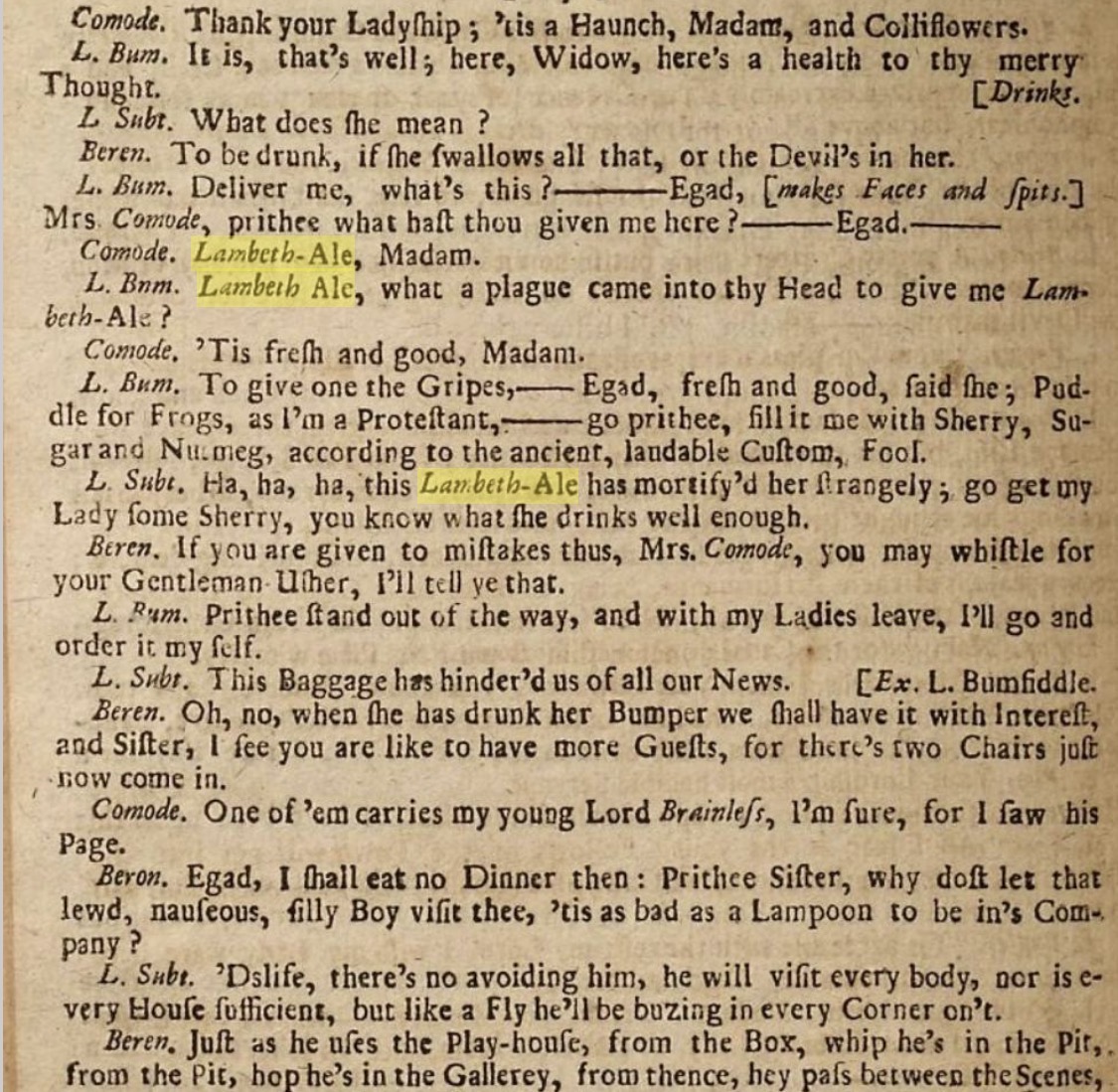
Further back in time and perhaps due to the news that Jeff shared, from the archives attentive readers will recall a few posts on a 1600s beer called Lambeth Ale which left a bit of a puzzle as to what it was. It was included in lists like that of John Lock from 1679 but I believe I found only a few references to what it tastes like other than coy mentions like “she is pert and small like Lambeth ale” and that it may have been bottled and kept like champagne. Lordy.  I’ve come across one more reference in The Marriage-Hater Matched, a rude Restoration comedy by Thomas D’Urfey from 1693 where the character Lady Bumfiddle vigourously objects to be being served it:

Lady Bumfiddle: Deliver me, what’s this? [Makes faces and spits.] Egad. Mrs. Commode, prithee what hast thou given me here ? Egad!
Commode: Lambeth-Ale, Madam.
Lady Bumfiddle: Lambeth Ale, what a plague came into thy Head to give me Lambeth Ale?
Commode: T’is fresh and good, Madam.
Lady Bumfiddle: To give one the gripes! Egad, fresh and good, said she. Puddle for Frogs, as I’m a Protestant. Go, prithee, fill it me with sherry, sugar and nutmeg, according to the ancient, laudable custom, Fool.
L. Subt: Ha, ha, ha, this Lambeth Ale has mortified her strangely. Go get my Lady some sherry, you know what she drinks well enough.***

Is “puddle for frogs” a slur for drink fit for a Frenchman? It was, after all, the middle of the Nine Years War.**** And is Lambeth so fresh light and bubbly that it is newish and continental and not at all an ancient custom? Is it… hipster beer circa 1693? Seeing as Pepys drank it in the 1660s I don’t see that being the case but I’d love to learn more.

Speaking of sherry, in 2005 – that’s (yikes) 21 years ago – I joked about starting another blog on the benefits of that fine wine. And here, just like that, Pellicle is featuring the drinking in its natural setting with this piece by Michael Fabro reporting from Jerez:

I arrive at half past one on a mild spring afternoon. Javi, the bartender, taps his knuckles on the old wooden bartop, a bulería—the last act of a flamenco show—still sounding in his ears. “Copa de fino, porfa,” I ask. I’m a bit early and the impending rush has not yet begun. For the moment, it’s me and a group of three Spanish guys, content with drinks in their hands after slipping out of work early. Some traditions haven’t changed. The walls are decorated with metre-high posters of bullfighters and portraits of great flamenco singers from decades gone by, alongside religious imagery. The Virgin’s weeping eyes stare back at me as I sip fino from my small vasito.

One last thing. Again a reminder that there will be an edition of The Session next month celebrating Martyn Cornell’s final book Porter and Stout: A Complete History. Boak and Bailey will share an update soon on when you need to get your thoughts organized in preparation. Which means you, please, need to keep an eye on Boak and Bailey postings every Saturday and adding to their fabulously entertaining footnotes week after week at Patreon. And do look out for more of Stan’s new “One Link, One Paragraph” format. Then hunt out something in someone’s archives! Leave oblique comments on someone’s post from 2009!! Listen to a few of Lew’s podcasts and get your emailed issue of Episodes of my Pub Life by David Jesudason on certain Fridays. And Phil Mellows is at the BritishBeerBreaks. Once a month, Will Hawkes issues his London Beer City newsletter and do sign up for Katie’s wonderful self-governing totes autonomous website featuring The Gulp, too.  Ben’s Beer and Badword remains on pause but there is reading at The Glass which is going back to being a blog. Any more? We have Ontario’s own A Quick Beer and All About Beer is still offering a range of podcasts – and there’s also Mike Seay’s The Perfect Pour. Plus follow the venerable Full Pint podcast! And there’s the Craft Beer Channel on Youtube as well as the archives of the Beer Ladies Podcast.

*“Happy stories!” is the gift that will give all year.
**Shared via the free daily newletter summary.
***Yes, I modernized the puncuation and replaced the long “s” with a standard one. My BA’85 in English complained but shut up after I asked what it had ever done for me.
****Fine – I missed the whole “Nine Years War” stuff, too. 1693 was not exactly when one would be chucking around Francophile sayings.

Your Thursday Beery News Notes For The Week Of The Green And The Black

It’s that time of year. When being born of Scottish parents means nothing. Nothing!!! I think that is what Governor Kathleen Mary Courtney was actually saying when my FB pal (and fellow garlic grower) Sean took this photo at the Executive Manstion in NYC the other day. The Governor even has a pint of stout. Stout is in. Everybody says so. And see me, I am buying that black can of the 0% stuff quite happily. But what even is a stout? Does the Beer Nut have clarity on the question he might share? Let’s see:

Though a full 7% ABV, it looked a little thin on pouring, and is red-brown in the glass, rather than black, with a fast-fading head. The aroma is sweet, with lots of caramel plus an aniseed-candy herbal side. It’s not thin, I’m happy to say, but it doesn’t quite reach the realm of creaminess, and I wouldn’t have guessed it’s as strong as it is. The flavour is plain. Chocolate forms the centre and then doesn’t go anywhere especially interesting from there. There’s a little buttery toffee and a slightly acrid smoky side. Some coffee roast would have been nice; likewise proper hop bittering to take the edge off all the sugar, but neither materialises. 

That’s helpful. It’s not that. It’s not that. And it’s really not that. But still it sells. One question we saw this week on the question of stout is this: why are the Irish turning to Beamish in their hunt for stout? Well, one reason certainly makes common sense:

Another undeniable draw is that Beamish is often the cheapest stout available in pubs.  A pub in Dublin, a county where pints have become infamously expensive, recently advertised a pint of Beamish for only €5.40. Ciarán said the drink is generally at least 50c cheaper than other stouts, one of the reasons he said students have always been fond of it. Another Beamish fan, Richard, thinks the popularity of the stout solely comes down to its price and availability. “It’s consistently €1 or 50c cheaper than Guinness,” he said, adding that as it is owned by Heineken it is also widely available in bars. “I don’t think they’re doing anything special other than being a small bit cheaper,” he added.

Always looking for value is The Tand who has found renewed blogging energy with five posts so far in March after taking a break since last November. Which post to choose as a classic of the man’s oeovre? Consider these comments on the Hand and Marigold in Bermondsey and how they reflects both his careful observations and his established standards:

The pub itself is handsome, well laid out inside and the staff in my experience are helpful. Glasses are oversized ensuring a full pint and the cask beer is well-chosen, and by and large has been in very good condition when we’ve visited. Perhaps it is the times we’ve chosen, but it hasn’t been very busy when we call in, but us being a bit older (ahem) it tends to be during the day.  They are however extending it by opening a room downstairs, so hopefully it is doing fine. One observation is that twice we’ve called in winter and both times the pub has been pretty cold.  Maybe that’s a money saving exercise, but it doesn’t really do it for me.  I expect to be warm in the pub.

It’s good to know what you want and what you like. Conversely, a check with the archives tells me that as early as 2011 I was somewhat ambivalent when it came to Innis & Gunn beers. After fifteen years, has the rest of the marketplace has caught up? We have learned that the administrators have begun to break up the assets:

The brand and its intellectual property has been included in a £4.5 million sale to Tennent’s lager owner C&C Group. However, the Perth brewery at Inveralmond Place is not included as part of this deal. C&C Group was a minority shareholder of Innis & Gunn and brewed its lager. Administrators said the collapse of the company was due to a combination of factors including a “decline in consumer spending and rising cost pressures”. “It is with deep regret that redundancies will need to be made,” they said in a statement. “The administrators would like to thank all the employees of the companies for their hard work.”

Imran Rahman-Jones had fonder memories from a happier time for I&G:

My introduction to craft beer came from my eldest brother. In the late 2000s, when I was still a teenager, small brown bottles started appearing on the top shelf of the fridge. He’d discovered this Edinburgh brewery called Innis & Gunn and their bourbon barrel-aged beers. I was allowed to try a few sips and was surprised at what hit my tongue. My experience with beer up until then had been the odd warm can of Carlsberg in the park, or a taste of my dad’s bitter, which rarely breached the 4% ABV mark. This stuff was intense and alcoholic, like drinking boozy butterscotch. I could only really get through half a glass.

Maybe it was the moment. Boozy butterscotch was sort of where I was going, too. Was I wrong? Or was it an acquired taste? What even is that?

Is there a more backhanded compliment, a more passive-aggressive judgment, a more of kiss-of-death phrase, than “Well, I guess that’s an acquired taste”? It’s also rather centering of a certain type of American suburban taste mindset. I mean, if you grew up in another culture, black salty licorice, anchovy, sea urchin, espresso, fish sauce, huitlacoche, kimchi, vegemite, lutefisk, curry and scores of other so-called “acquired tastes” would not be acquired tastes at all. They would be innate. I grew up eating Scrapple, for god’s sake—an “acquired taste” for anyone but a person born in the Philadelphia metro area. Anyway, my point is this: Try pastis. Open your mind. Grow up. Make peace with your childhood dislike of black jellybeans.

I had no idea. I thought everyone went through a boring sophmoric late teen phase, reading Hemingway and drinking Pernod in the 1980s. You know, the one that preceded the boring sophmoric late teen phase, reading Waugh and drinking Pimms in the 1980s?  What!!?!! It was only me?!?!? Time for notes as I cope with that realization.

Note #1: “Drinking trash NA beers so you don’t have to…
Note #2: no, not regulations and, no, nothing set.
Note #3: “…it is just a widget.

It may be just a widget but the unexpected upswing in widgettery seems to be continuing according to BMI:

…craft beer remains up 0.3% by $$ with volume down just 1.6% yr-to-date thru Feb 22 in Circana multi-outlet + convenience data. That’s still lagging total beer, which grew 1.6% by $$ with volume off just 0.1%. So craft shed 0.1 share. But trends are much healthier for craft and total beer than they were thruout last yr…

Still… “where’s the Allagash White?” asks Michael Stein in DC:

So what’s replaced Allagash White? Hard to say exactly. What wasn’t there in 2021? Unsure. And what’s there in 2026? Now that question I’ve got answers to. There’s Mickey’s Fine Malt Liquor and there’s Schlitz Bull Ice. There’s Coors Banquet and Coors Light. There’s Pabst Blue Ribbon, and there’s Steel Reserve. And while I just listed six brands, there’s only two breweries that own these / have these brands as subsidiaries: MolsonCoors and Pabst. There’s Modelo, Modelo Michelada, Budweiser, Bud Light, Busch Light, Michelob Ultra, Devils Backbone, and Stella Artois. These are all owned by Anheuser Busch InBev. Then there’s Lagunitas, Tecate, Heineken, and Heineken Silver. Guess who owns all these?

That’s a bit of reality right there. But not everyone wants the real when it comes to drinking, as B+B found out:

We were astonished recently to see someone sitting in the pub wearing a virtual reality (VR) headset waving two controllers around to manipulate objects in a virtual world.It just looked so weird and incongruous. His eyes were covered for one thing which immediately gets you into uncanny territory. Then there was the vigour and weirdness of his movements… At one point, he got up to go for a cigarette while still wearing the headset. We later learned that he could, in fact, see the entire room through the magic of augmented reality – something subtly different to virtual reality. But in the moment, it really looked as if he’d just decided to stroll through a busy pub while effectively blindfolded.

Young people today!  At least this isn’t the sort of thing that’s being seen in Bermondsey according to The Londoner:

If you speak to any of the owners on the mile, they now draw an almost church-and-state style separation between the “beer people” and the “Saturday crowd”. The former are who the Mile first started for: the craft beer nerds who can tell the difference between different subspecies of Sussex hops. The latter come in and ask for eight pints of lager before throwing up in your urinal. The problem is, the latter far outweigh the former — to the tune of thousands a week. The chaos they bring can be extreme: swastikas carved into toilet doors, glasses filled with vomit left on tables, old ladies in dry robes getting into fights. One bar manager tells me they’ve dealt with at least two different punters defecating on the floor, in one case in protest at being denied service. 

It’s enough to take a pass. Speaking of which, has the era of a dry generation youth moved on, leaving their kid brothers and sisters the opportunity to redefine their lifestyle? The Guardian reports from the UK:

Binge drinking rates among gen Z have risen sharply since their teenage years, according to research that challenges their reputation as “generation sensible”. Almost seven in 10 (68%) 23-year-olds reported binge drinking in the past year, while nearly a third (29%) said they did so at least monthly, up from 10% at age 17. While drug use is relatively limited in the teenage years, by their 20s almost half (49%) have used cannabis and a third (32%) have tried harder drugs such as cocaine, ketamine and ecstasy, analysis by University College London (UCL) found.

Assumptions refuted?  It isn’t always that clear. Whenever that old myth is trotted out that before a certain point beer was foul, smoky and dark – despite all evidence – I wonder what people are missing. Well, not dissimilarly,  science has now determined that contrary to previous assumptions, early humans were good cooks:

… at least some people living in Europe between 5,000 and 8,000 years ago were deft chefs. Stone Age cooks skilfully combined meat, fish, fruit and vegetables in cooked meals that followed local recipes, according to new research. Using chemical analysis and sophisticated microscopes, researchers…  examined residues found on 58 pieces of pottery unearthed at 13 sites across northern and eastern Europe dating from the last millennia of the Stone Age, before the dawn of the Bronze Age. The residues survive as charred “foodcrusts” left on pots and bowls. Mixed in with meat, mainly freshwater fish and shellfish, scientists found “wild grasses and legumes, fleshy fruits or berries, green vegetables and roots/tubers from plant species”. These plants included barley, wild oats, types of brome grass and other wild greens such as goosefoot, pigweed and saltbush leaves, as well as viburnum berries such as guelder rose berries.

An interesting perspective. And, from the “too much fucking perspective” file, human trafficking in the fields of Champagne has hit the courts in France with sentences upheld on appeal:

Convicted in the first instance to four years in prison, two of which were suspended, the main defendant, who headed the former wine service company Anavim, had her sentence confirmed for human trafficking, concealed work, and employment of foreigners without authorization. This woman in her forties from Kyrgyzstan was kept in detention. Her lieutenants, two thirty-somethings mainly in charge of recruitment, saw their sentences slightly reduced to one year in prison with a suspended sentence each. The court of appeal ordered the defendants to pay 4,000 euros to each of the 53 victims for their moral damage. However, the company of the winegrower who had called on Anavim for harvesting, the SARL Cerseuillat de la Gravelle, was acquitted on appeal.

While one can acknowledge the acquittal, one would also want to ask whether there has been an unjust enrichment of all those who received the benefit of the trade in these slave-made wines. Especially as inspectors had “found conditions that seriously endangered workers’ health, safety and dignity. The local prefecture later closed the site after finding makeshift bedding, filthy toilets and common areas, and dangerous electrical installations.” Bastards.

Finishing up on a happier note, the feature in Pellicle this week is by Will Hawkes, a portrait of the Sutton Arms in Clerkenwell, London:

The door at the Sutton Arms swings open and six Americans come bounding in like cocker spaniels just off the leash. After securing a table in the corner, they send emissaries to the bar. Lunchtime food options (“I’ll do a minted lamb pie”) and beers, from pints of cask ale to a half of Vault City’s triple-fruited mango sour, are discussed, and promptly purchased. Landlord Jack Duignan, who has stepped behind the bar to help out, takes in the scene. “Where are you from?” he asks, his gaze focused on the pint he’s pouring. “America,” one replies, perhaps a touch cagily. A pause. “Well I didn’t think you were fucking French!” Jack retorts. There’s momentary silence, then a burst of exuberant laughter, then clarification: Missouri, “right in the centre.”

Such language! And me a preacher’s son. I don’t know how people cope. As you consider that, please check out Boak and Bailey who are posting every Saturday and adding to their fabulously entertaining footnotes week after week at Patreon. And look out for more of Stan’s new “One Link, One Paragraph” format. Then hunt out something in someone’s archives! Leave oblique comments on someone’s post from 2009!! Listen to a few of Lew’s podcasts and get your emailed issue of Episodes of my Pub Life by David Jesudason on certain Fridays. And Phil Mellows is at the BritishBeerBreaks. Once a month, as noted, Will Hawkes issues his London Beer City newsletter and do sign up for Katie’s wonderful self-governing totes autonomous website featuring The Gulp, too.  Ben’s Beer and Badword seems to be on pause since November but there is reading at The Glass which is going back to being a blog. Any more? We have Ontario’s own A Quick Beer and All About Beer is still offering a range of podcasts – and there’s also Mike Seay’s The Perfect Pour. Plus follow the venerable Full Pint podcast! And there’s the Craft Beer Channel on Youtube. Check out the archives of the Beer Ladies Podcast.

Well… Welcome To Your “It Is March And The Good Times Are Here Again!!!” Beery News Notes

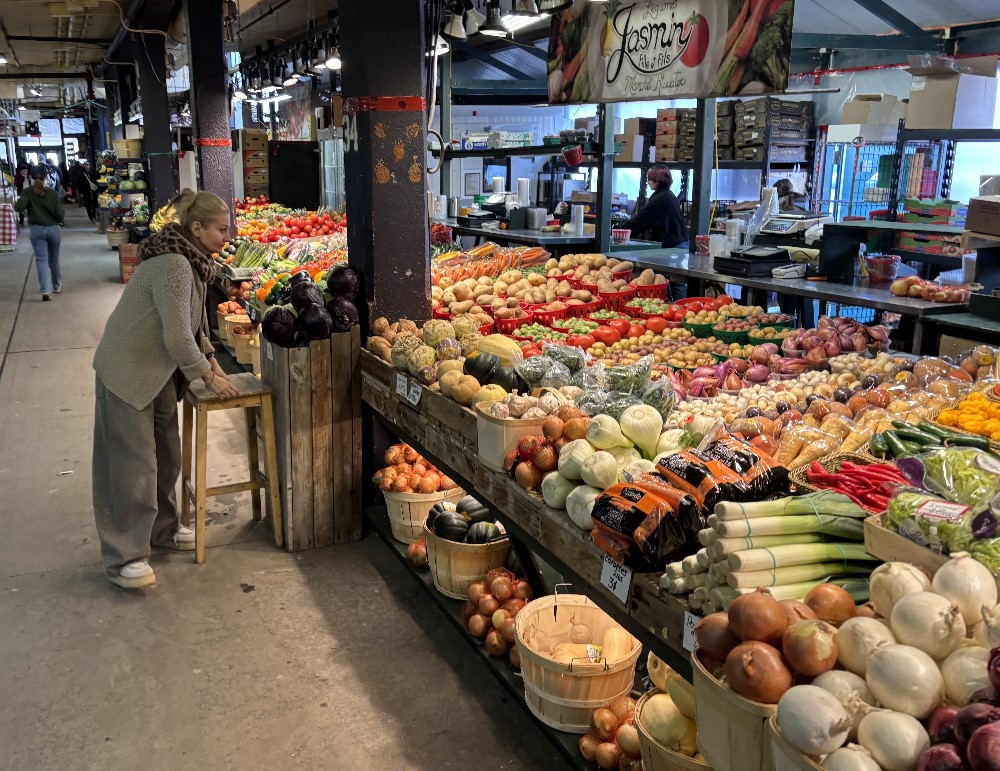
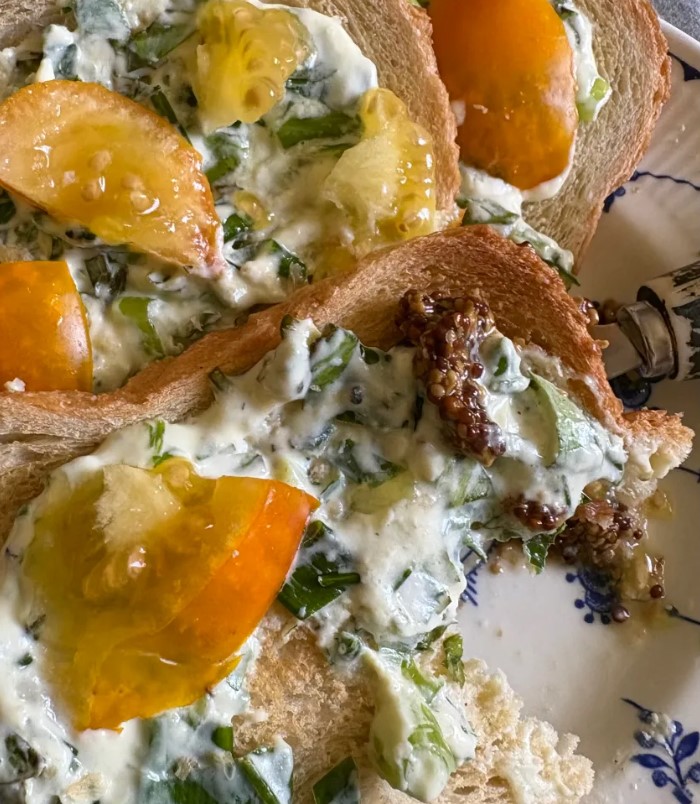
For well over 20 years, I have lost my marbles over March arriving as it did again last Sunday.   I may have created that image to the right in 2004. Such a clever boy! So well centered. Why do I love March, you ask? Not the green beer. Maybe not the green grass which might pop out soon. It’s the first seeds in the soil. The green green peas in loam. Soon, my precious. Soon. Otherwise, this is a bit of a scattered mix this week as I rush. See, I played taxi driver for folk going to a concert, spending about 21 hours in Montreal Tuesday to Wednesday. On the way out, hit Atwater Market as usual. Got my chicken cretons. Got my duck rillettes. The toast won’t know what hit it. And when toast wins, the beery news update suffers. Such is the way of the world.

Enough about me! First up, Jeff* has shared a retrospective on his writing career and how important blogging was to getting to the next step. Twenty years ago he started on a path (like Matty C a decade ago) towards  a number of leaps of faith. Leaps I avoided. I have my name on four modest books but didn’t see a future in that direction. Me, I can show you instead the bridge I had a large part in building. But they can show you publishing sales figures that put food on the table. It’s good to see that we were all right in our different choices.

Speaking of Matty C, for “Get ‘Er Brewed” he looked around his particular environment through the last holiday season and asked where the future may lie for a trade facing tough times:

I can face the hard facts and admit pubs are dealing with some of the worst trading conditions they’ve ever known. But I also believe that they will continue to persist, whether that’s through innovation and listening to what their customers want from them, or by sheer bloody-mindedness. Despite all the doomsaying I consider that there are still positives for pub owners. However, in order to extract these an equally optimistic outlook is required from publicans. Yes, prices are going to have to go up. Customers are going to have to get used to them and measure their spending accordingly. But I don’t think this will mean that people will stop using pubs, and that they’ll simply vanish off the face of the earth.

I tihnk that is a good baseline position to take. Beer does not go out of style even during an inflationary period… or even in a very localized deflationary one. The BBC had a story about another sort of good value care of one pub in Leeds:

A pub which was told selling a pint of beer for 25p during a promotion was “irresponsible” and a breach of its licence has instead begun giving them away. Leeds city centre pub Whitelocks offered customers their first pint of revived 1970s pale ale brand Double Diamond at the retro price as part of the four-day scheme, which began on Thursday. However publican Edward Mason said the council pulled the plug on the offer later the same day, saying it was in breach of mandatory licence conditions on minimum alcohol pricing. After seeking legal advice and discussing it with the local authority on Friday, the pub then commenced offering the initial pint for nothing. Unlike Scotland or Wales, England does not have a defined minimum price for alcohol.

A bit more scientifically we see that Kendall Jones at the Washington Beer Blog ran a very detailed survey on the place of IPA in his readership’s current mindset and had a significant response:

A few weeks ago, I posted a survey about IPA to gauge how people feel about craft beer’s most popular style. I was wondering if breweries are hitting the mark. Do the beers align with what people want? Have people’s preferences changed? Stuff like that. If you haven’t taken the survey, it’s still up there gathering data. I encourage you to participate! When the survey received 1,000 responses, I gathered the data. I will continue to do so as time moves on, but this report covers that first round of responses. Likely, this round of data comes from a pretty enthusiastic craft beer crowd, not the general beer-drinking public. Take that for what it is. In addition to the results, we also collected a large number of comments, which we rounded up at the end.

One of the particular results that surprised others is the result that Kendall noted: “Really? Nearly 80% of respondents say they understand the differences among IPA styles. I am not sure 80% of professional brewers understand the differences between IPA styles.”  This can certainly reflect the Washington marketplace as well as his readership but I do wonder if there is a difference between detecting the difference between styles and understanding them. I mean I can tell a Black IPA from a White IPA but I still left with questions like “why?” as well as “WHY????”  Go have a look and even add your responses as the survey is still open.  This is an excellent example of how a blog excels at some many sorts of beery writing that other formats can’t touch.

Speaking of excellence, Boak and Bailey placed another sort of question out into the ether – “Do you really want to visit the best pub in town?“:

Before Christmas we found ourselves in a pub surrounded by a group of people grumbling about the seating, the atmosphere, the beer, and everything else. It became apparent that a couple of members of the group had put together an itinerary for a crawl based on their preference for craft beer. We felt quite sorry for them as they tried to enjoy their pints while surrounded by moaning pals – but then what did they expect? What’s funny, we suppose, is that much of the discomfort and discontentment described in the various anecdotes above could be avoided if people just went to normal pubs, of which most towns and cities have plenty.

There is a lot to unpack in the phrase “the excellent is the enemy of the good” and this might be a very instructive context. I mean, I have sat myself in the Cafe Royal and it is utterly wonderful. But could it ever be as “mine” as many other pubs and tavs and dives have been over the years?

Also excellent and perhaps for Katie in particular, I saved this image of the Nahe Valley that pass by my eye this week. Shared by the AAWE, the no doubt authentic colours are surreal:

Erich Heckel (German 1883-1970), Landscape in the Nahe Valley, 1930. Many vineyards. Heckel was a painter and printmaker, and a founding member of the group “Die Brücke.”

According to the wikiborg, in 1937 the Nazi Party declared his work “degenerate” and confiscated his work, destroying much of it. Good to see one that was saved. Time for notes!

Note #1: Ottawa’s Kippisippi to close.
Note #2: BrewDog sale confused yet swift.
Note #3: 1690 brewing text restored.
Note #4: 1978 Joe Piscopo sighting.
Note #5: “Beer with Pals” is the best one.
Note #6: the A.I. bot that wrote this clearly has no idea what “craft beer” is or is it the guy interviewed who doesn’t.

What’s next? Well, I suppose the big news is the surprise takeover of a deadend business location:

A brewery has been allowed to open a new beer café in a former funeral directors site. West Suffolk councillors have given Charles O’Reilly planning permission to turn the former funeral directors at The Shutters, in St John’s Street, Bury St Edmunds, into a beer café and tap room, during a development control committee meeting earlier today… Jane Marjoram, a resident, recognised the importance of such establishments but told councillors the area was a ‘quiet, friendly community’.

 “Very quiet…” said Jane as they leaned forward winking at the committee members. What else? Oh. Yet another, yawn, tale of a forgotten wine cellar under a golf course (h/tKM):

“So we’re thinking it’s just a drain that needs digging out and clearing and repairing but as we dug deeper the chasm underneath just opened up.” Steve said he and his colleagues then noticed a brick structure. He was able to climb inside and look around with a torch and found dozens of empty glass wine bottles. “They’re all odd shapes and stuff so they’re obviously extremely old bottles,” he said.

Speaking of being under, similarly attractive are the summaries of the US beer market in 2025, as this from BMI:

US beer shipments were down more than 5% to ~183 mil bbls for full year 2025 vs 2024, Beer Inst, TTB and US Dept of Commerce data suggests. That amounts to a 10-mil-bbl drop in one year, the 2d tuffest decline in US beer history (post-prohibition) only behind brutal yr in 2023 when shipments sank 5.2%, 10.8 mil bbls. But unlike 2023, beer price increases didn’t come close to offsetting volume loss with CPI for beer at home up just 1.1% for the year, suggesting brewers’ collective revenue likely posted the largest drop ever in a single year post-prohibition.

And Stan raised shared an interesting observation that I suspect might well be connected to those stats:

“If it is beer flavored beer it comes from the brewing side. If it is not, it comes from the marketing side. (FW’s) Michelada did not come from the brewing side,” answered Firestone Walker brewmaster Matt Brynildson.

More grim news. Yet… here was have another trip to France care of Anaïs Lecoq in this week’s Pellicle which unpacks another cultural touchstone, the bar Pari Mutuel Urbain or PMU:

A rade was originally slang for a bar counter, though it’s come to define a popular neighbourhood bar with a somewhat dated look, but a warm and lively atmosphere. Do not imagine the brown-wood aesthetics of a British pub: Think mosaic tiles on the floor, flashy paint on the walls, a Formica bar dented by years of glasses sliding across it, and worn-out faux-leather booths. … The bar PMU is the epitome of the rade. These spaces will never be advertised as places worth visiting if you’re a tourist. You won’t find them listed as hotspots on the internet, because they don’t look good enough for an aesthetically pleasing Instagram feed. Their history, deeply rooted in the working class, labour struggles, and immigrant communities, is not designed for glossy consumption. 

And also yet yet… in this comparison of health effects in The Harvard Gazette at least beer does not find itself at the bottom of the beverage ladder:

The mixed picture for alcohol consumption was in contrast to what panelists agreed is a much clearer one for soda, energy drinks, and other sugar-sweetened beverages, including sugary fruit juices. A 12-ounce can of a popular soda brand has 10 teaspoons of sugar, an amount almost nobody would add to a cup of coffee or tea, Rimm said. Sugar-sweetened beverage consumption is linked to rising obesity, which itself raises cancer risk, and diabetes, which increases risk of heart attack and stroke. “When you compare a soda to water, or soda to coffee, or soda to tea, whatever you’re comparing it to always wins,” Rimm said.

Finally and… finally especially for me, one more inter-provincial trade barrier has fallen and, for me at least, an important one. Soon I will be able to directly buy Nova Scotian beer from the homeland of my youth and have it shipped to me here in Ontario the homeland of my… umm… post-youth:

Ontario and Nova Scotia have agreed to let their residents buy alcohol directly from the other’s province, part of the premiers’ ongoing work to bolster interprovincial trade. Producers of beer, wine and spirits can start applying Tuesday to the province’s liquor corporation for authorizations to do the direct-to-consumer sales, a process the premiers say will only take a matter of days. Ontario Premier Doug Ford says strengthening interprovincial trade is a way to counter the effects of U.S. President Donald Trump’s economic attacks on Canada. Nova Scotia Premier Tim Houston says… knocking down interprovincial trade barriers is “a bit like whack-a-mole,” but that direct alcohol sales is a great one to tackle because it is so visible for consumers and producers.

Please sign up every single Nova Scotian producer, please. Then I will be able to hover the fickle finger of fate over your webstores.

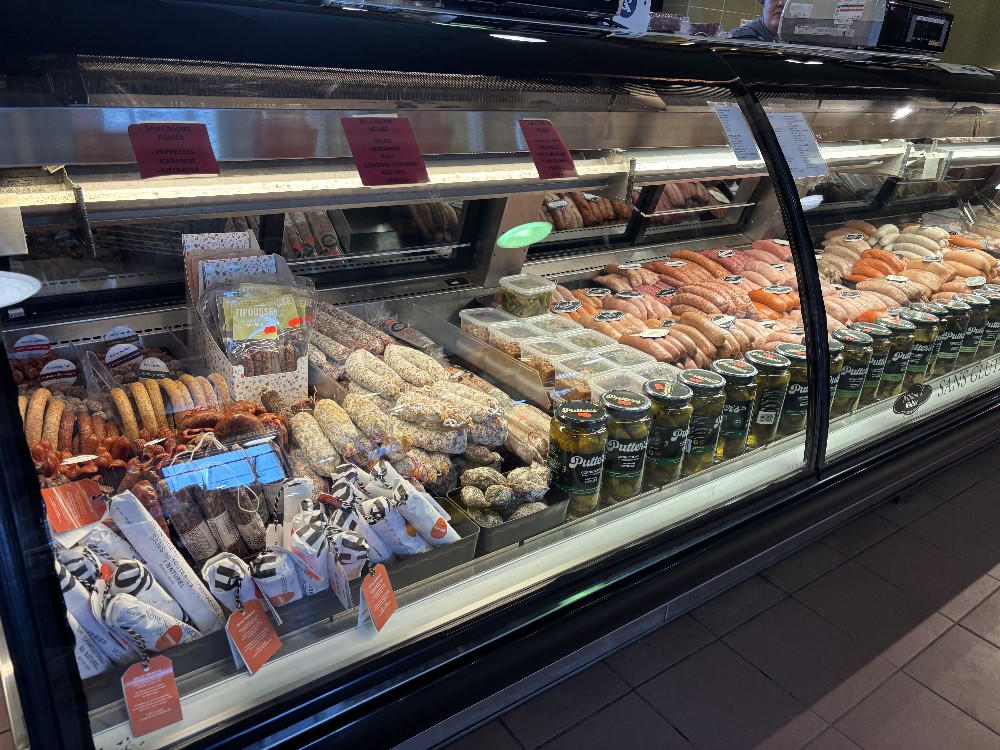
There. I achieved my second goal this week. After buying sausages at Atwater Market, that is. I largely avoided mentioning the new assets added to the Tilray portfolio, the second strangest story involved those assets after… you know.  From this point on, it is all now officially just a boring story at least in my office. So with that until next week, please check out Boak and Bailey who are posting every Saturday and adding to their fabulously entertaining footnotes week after week at Patreon. And look out for more of Stan’s new “One Link, One Paragraph” format. Then hunt out something in someone’s archives! Leave oblique comments on someone’s post from 2009!! Listen to a few of Lew’s podcasts and get your emailed issue of Episodes of my Pub Life by David Jesudason on certain Fridays. And Phil Mellows is at the BritishBeerBreaks. Once a month, as noted, Will Hawkes issues his London Beer City newsletter and do sign up for Katie’s wonderful self-governing totes autonomous website featuring The Gulp, too.  Ben’s Beer and Badword seems to be on pause since November but there is reading at The Glass which is going back to being a blog. Any more? We have Ontario’s own A Quick Beer and All About Beer is still offering a range of podcasts – and there’s also Mike Seay’s The Perfect Pour. Plus follow the venerable Full Pint podcast! And there’s the Craft Beer Channel on Youtube. Check out the archives of the Beer Ladies Podcast.
*He also shared his thoguhts on the weird we have witnessed over the last two decades.

Two Weeks?!? It’s The “TWOOOO WEEEEEEEKSSSS TO GO!!!!” So Excited Dontcha Know Edition Of Your Beery News Notes

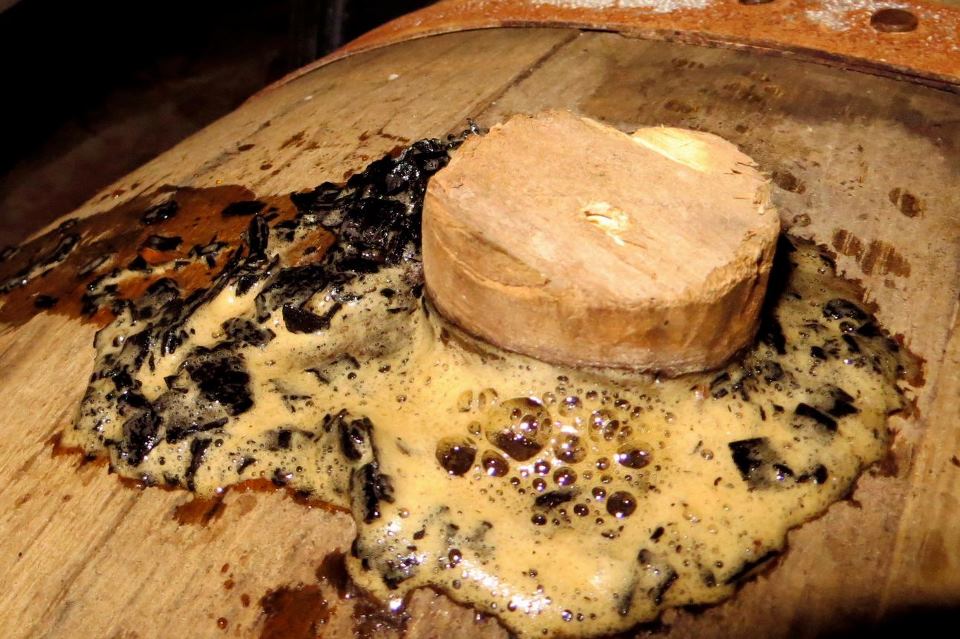
As I mentioned last week, I am sharing some past submissions from the Yuletide Christmas Boxing Day Hanukka Kwanza New Years Eve and Hogmanay Beery Photo Contests that have been sitting in my email folders from all those years years gone by. This week a photo from 2012’s bare knuckle brawl sent in by Jeff Wayne of Tampa, FL. Not necessarily the prettiest image but that there is the leaky bung of a fermenting barrel aged chocolate stout, a celebration of a full range of browns. I like it. Just hope someone spooned up that excess chocolate.

Yes, here we are two weeks from the big day. The day I drink sherry at 8 am and have cake for breakfast. Excitement builds. Also building is Eoghan‘s Advent calendar of things seen in about the 19 communes of Brussels, including at the bewilderingly queter edges of the town:

The streets were so big, wide plains of asphalt, fringed by large standalone houses between was too much air. And the air too was different, smoky and rich but not in an oppressive, attack-your-throat sense, more luxurious. The topography too, big dips and vertiginous climbs with houses and apartment blocks ranged on their slopes, not at all like the slow and steady – but just as taxing – hills I’m more used to traversing in downtown Brussels. I didn’t even know if I was in Watermael or Boitsfort… The bar was, when I finally found it, comfortingly familiar. A Brussels that was recognisable to me however far from the centre I might have strayed, with beer in the fridges I knew and breweries on the taps I trusted. I was at last on terra firma…

Also out wandering, ATJ captured something of the essence of being ATJ in this passage from his travel diary this week:

The soundtrack on this late morning in a Bamberg pub is of laughter and calls and joy growls in the main bar, alongside the clatter and bang of cutlery and plates in the kitchen. The aroma of roast meat, intense in its intimacy, flits through the room, an escape from the kitchen, like a spirit from its long locked stronghold. I sense, or perhaps create, a Friday midday feeling, the joviality of the approaching weekend, though for me, having left home the previous Sunday and perambulated through Prague, nuzzled myself into Nuremberg’s hidden corners and currently based for a day in Bamberg, there is no conception of a weekend, time is just drifting by with the conscience of a cloud.

Not unlike Willie W., when one weighs the words. Anthony Gladman has also being weighing the situation, in this case for cask, and finds that something is lacking:

Cask ale’s slow drift away from relevance saddens me. I fear we seem set to lose it altogether, and shall be culturally diminished as a result. And the worst thing about it is this: the younger drinkers who choose not to drink cask ale are doing nothing wrong. It simply isn’t relevant to them. Nor is this their failing; it is the beer’s and the brewers’ and the pub landlords’. And perhaps partly also mine, as a drinks writer, for failing to make its case often enough, loudly enough, or persuasively enough.

Bingo. I have never understood writers complaining how folk don’t understand this thing or that. It is the job of the writer to make it compelling. Has cask suffered solely on that basis? Nope. But it hasn’t helped.

Well, conversely, this news either means it is no longer a fad or the shark has jumped on no-lo beer as, according to The Guardian, AB InBev is created the world’s largest alcohol-free brewing facility in Wales:

A “de-alcoholisation facility” sounds like somewhere to check in after a boozy Christmas, but in the new annexe of a brewery in south Wales they are extracting hangovers from beer. With demand for no-alcohol and low-alcohol (“nolo”) beer taking off in the UK, the hi-tech brewing apparatus enables the plant at Magor, which produces more than 1bn pints of Budweiser, Corona and Stella Artois a year, to make the increasingly popular teetotal versions too… The availability of alcohol-free beers on tap in pubs is expected to further normalise the choice.

We are assured that “the machine treats the beer very sensitively and delivers a fantastic taste”. Normally I would laugh, say things like “….riiiiight…” and move on but… I just had my first four pack of Guinness 0 and will definitely buy another. What happened? Maybe I got normalized. Try it with port. But no-lo’s not quite as socially acceptable everywhere as The Times notes this amongst its list of conversation topics you will be annoyed by at parties this holiday season:

At every party there are now soooo many men with soooo many helpful tips and advice on the great alcohol-free beers they know all about and which they are categorically not drinking tonight. For some reason it’s always the most sloshed blokes who have the most to say about sober alternatives. It’s like getting nutrition advice from the morbidly obese.

Don’t be the beer bore. Ever. Never one to be that, Alistair shared a happy memory of the time he helped brew, :

This Thursday is the 15th anniversary of the day I spent at Devils Backbone Basecamp brewing the first ever batch of Morana, a Czech style dark lager that I designed for them. I had spent the previous months diving into archives, emailing with multiple brewers, and beer experts, in various languages – English, German, Czech, and Slovak – to learn everything I could about a family of beers that at the time only consisted of about 5% of Czech beer production. Obviously, having only fairly recently decamped from Prague to Virginia, I was also relying on my own remembrances of beers that I had got a taste for in the last couple of years there, when I moved beyond the realms of Gambrinus, Staropramen, and Velkopopovivký Kozel.

Alistair says that the beer that was “the first authentic Czech style dark lager brewed in the modern American craft brewing industry” which is a decent claim to fame. Perhaps also decent was the stout presented to The Beer Nut whose analysis went deep into the dark:

Unsurprising given the froth, it’s quite fizzy: a little too much for the style, I think, giving it a thin and sharp quality that doesn’t suit strong stout. The rum element is present in the flavour, but subtle. I tend not to like rum-aged beers, finding the spirit cloyingly sweet, but that isn’t the case here. Instead, the barrels add more of that fruitcake or Christmas pudding quality I found in the aroma, as well as a rawer oaken sappiness. None of this overrules the base beer, which is a no-nonsense, properly bitter, grown-up stout: dark toast, a molasses sweet side and then a finish of punchy spinach and green cabbage leaf. The can says it’s 48 IBUs; it tastes like considerably more. This is quality stuff, and I’m always happy to find a modern stout that goes big without resorting to silliness. The fizz is its one flaw, and I found myself doing a lot of swirling to try and knock that out. It only reached an acceptable level of smoothness around the time I finished it.

I wish I had one flaw. Not quite indecent is the focus of this article on how to win back the disinterested youth of today:

“Because craft beer sales skew towards older consumers, it’s vital to keep nurturing the next generations of buyers. Gen Zers can be hard to reach and their sentiments are shifting but responding to their needs can help brewers grow share”… Gen Z prefers different drinking environments from older groups. Experiential bars and high-energy venues hold much higher appeal and may offer the strongest opportunity to introduce them to craft. While casual dining restaurants, neighbourhood bars and sports bars remain important to the wider craft drinker base, Gen Z is markedly less likely to visit taprooms and brew pubs, which limits the impact of traditional brewery-led spaces.”

That’s not good. Not only are they not interested in your product but it appears they have no interest in your product. Is there an issue with seeing to bring back the relationship? Even though the sins of the father haven’t been visited on the generation that followed? It all sounds like an earlier 1970s slow slow dance classic, perhaps a little Hall and Oates:

She’s gone (she’s gone)Oh I, oh I, I better learn how to face itShe’s gone (she’s gone)Oh I, oh I, I’d pay the devil to replace herShe’s gone (she’s gone), oh IWhat went wrong?

Pay the devil indeed. Or the invoicing consultant offering solutions. Solutions… yup, that’s what they are. Conversely, being straight with what has really gone on is part of the story for Anaïs Lecoq this week in Pellicle who writes about the Franco-fascists fascination with wine:

Tradition is a lie. And it’s the same lie, fuelled by carefully curated storytelling, that the far-right is trying to feed us now. They wear black berets, big mustaches, and suspenders. They hang up French flags, and talk about meat and wine as the epitome of French food, not missing the opportunity to ridicule vegans and mock people who don’t drink alcohol. They’re terroir influencers, born out of the rise of conservatism and general backlash against social progress. What they’re doing has a name: gastronationalism, or culinary nationalism, which refers to the way food—its history, production and consumption—is used to promote nationalism and define national identity.

It does make sense in that wine requires landowners’ estates as much as beer requires peace. And serfs or their facsimile to do the work. A hotter bed for the old goosesteppers that other spots… perhaps. Next up… a palate clenser with some cheater quick notes:

Note #1: The practice of “faire chabrot” can easily be added to your Yuletide feast traditions;
Note #2: A review of Martyn Cornell’s Porter & Stout: A Complete History by The Beer Nut;*
Note #3: “If there’s ever been a bellwether to the state of the crafts beer industry, it’s Mitch freaking Steele job hunting“;
Note #4: Wine drinking as resistence; and
Note #5: Beer drinking as obedience.

Back on the endtimes beat, Dave Infante neatly summarized the evidence he’s uncovered of a wobbly situation at Pabst:

…the company is quietly looking for a subletter to take over its headquarters in San Antonio. A listing I reviewed for the sleek space—into which Pabst just moved in 2023—was last updated just two days before the pink slips started flying this past Thursday. Between the layoffs, the listing, and a whole lot of reshuffling in Pabst’s c-suite (including the replacement of both chief executive and chief financial officers earlier this year, and the exit of a former chief sales officer just last month), former Pabst employees I spoke with fear the legacy firm might be on the brink.

Yikes. Somewhat relatedly, The Mirror in the UK ran an article on the cost of all aspects of the price of a UK pint and came to a curious conclusion:

Citing figures from the British Beer and Pub Association, Michael said this means pubs are making a total gross profit per pint of £3.69. However… “That’s before VAT, which is another 83 pence – and we have to factor in staff wages, which is another £1.17 per pint…” duty paid to the brewer equates to another 56 pence, as well as business rates of 35 pence, and employment tax for all pub staff at 29 pence…. pub overheads and utilities at 36 pence per pint, which leaves just 13 pence of net profit per pint sold – and this why around 30 pubs are closing every month.” As a percentage this profit equates to just 2.5 per cent.

I find these sorts of supposedly accurate breakdowns useless.** What wasn’t made clear is why pubs which make a 2.5% profit are closing. Is that why they close? Or unidentified expenses were left out or that level of income after expenses is not satisfactory. Which may be the case. But it wasn’t what was argued.*** Time for something more compelling? You got it!

Note #6: HOT PICKLED PORTER!!!

Much more seriously, Boak and Bailey‘s footnotes last week pointed me to the newsletter from Jen Blair on influencers in beer and their choice of appearance:

A few months ago, I was at a beer festival talking with some people I had just met. At one point, one of the men in the group stated that he thinks it’s shameful when women post “provocative” beer photos on social media. Provocative is in quotes because it doesn’t take much for a woman who is simply existing to be denigrated based on her appearance. Another woman in the group and I made eye contact after his comment. This is not the first time someone has said something like this to me, but I am still surprised when it happens. I guess I shouldn’t be, but every time I think “…we’re still saying things like this? To women? About women?”

It’s an excellent piece and reminded me that (whether it is a question of presentation… or self-initiated claims to expertise… or offers of special savings for anyone one applying the one-time super secret code at their website) the only thing that matters is whether the writing has substance.

And finally, over the weekend we received the sad news of the passing of Peter Edwardson who wrote about beer as “The Pub Curmugeon” after a short illness. His last post included this characteristic passage, one that summarizes his approach to beer as well as his understanding of what made it a simple pleasure worth appreciating:

Alcohol content is a vital element in the flavour make-up of beer, adding body, warmth, richness and sweetness. Make anything more than a trivial tweak, and it will significantly change the character of the beer. It is one thing to specifically set out to brew a low-strength beer, but something entirely different to reduce the strength of an existing beer that was designed for a higher strength. You may not have thought much of Fosters even when it was 4%. But now it is 3.4%, a 15% strength reduction, it is not the same product and, I would suggest, an inferior one.

I checked my notes and see that in the last five years or so these weekly digests of the news in beer included well over forty references to “Mudgie”. The sad loss of a singular voice.

So a couple of serious notes to end the week. Hopefully happier news next time. It’s Christmas day the week after that on Thursday… whatever shall I do? As you consider that and send in recommendations, please also check out, Boak and Bailey on this and every Saturday and then sign up for their entertaining footnotes, too. Look out for Stan when he feels the urge (now that he’s “retired” from beery news posts) from Budapest or wherever – as he is getting active again. Then listen to a few of Lew’s podcasts and get your emailed issue of Episodes of my Pub Life by David Jesudason on certain Fridays. And Phil Mellows is at the BritishBeerBreaks. Once a month, as noted, Will Hawkes issues his London Beer City newsletter and do sign up for Katie’s wonderful self-governing totes autonomous website featuring The Gulp, too.  Ben’s Beer and Badword has returned from his break since April so you can embrace the sweary Mary! There is reading at The Glass which is going back to being a blog. Any more? We have Ontario’s own A Quick Beer and All About Beer is still offering a range of podcasts – and there’s also Mike Seay’s The Perfect Pour. Plus follow the venerable Full Pint podcast! And there’s the Craft Beer Channel on Youtube. Check out the archives of the Beer Ladies Podcast.
*Update: as noted for the double!
**A variation is the trade writer who still believes sorta circa 2011 that everyone is one off-flavour seminar from connoisseurship, like Mr. B on LinkedIn this week: “…what you’re getting in up-front money or equipment ultimately pales beside the loss in credibility (especially for places which claim culinary, cocktail, or oenological expertise!), disappointed customers, and ultimately, lost sales. Taking placement fees for a percentage of your taps is one thing — although trust me, more than a few people are going to be able to spot them! — but turning over most or all of them speaks to laziness, desperation, or simple disinterest.” Why, then, do these places continue to operate as craft beer bars shut? Serving their customers’ demands? 
***Yet the math is right there – at 13p profit you would have to sell 500 pints an hour to clear £65. If that was your sole source of income. But then the article would be much shorter. Or is it that the ones at the bottom of the Bell curve no where near a 2.5% profit are the ones that close. Which is irrelevant to the analysis. But then, again, the article would be much shorter. 

The “But… He’s Just Mailing It In From Vacation!!!” Edition Of The Thursday Beery News Notes

Yup. Big news this week? I am trying to nap in as many spots in the house or out in the yard as I can. I’ve yet to try that awkward chair in the back rec room but I still have my eye on it. It’s all so pleasant. The evening air is now cool enough that you can hear the crickets across the backyard fences over because no one is running an air conditioner anymore. Fact is I haven’t had a week off with nothing to do for quite a while and, I gotta say, I am liking it. Regular readers may tell you that I am good at doing nothing but I just don’t get to do it… or, rather, not do it… enough. So far I’ve dozed to baseball on half the waking hours, “worked” on cleaning up the garden and exhausting myself planting a few more seeds in a few more pots with something to eat before the frosts close in, gawked at a double rainbow – and even put on a belt to hit a BBQ place on a Monday night where I found a shot of Makers Mark to sit next to my pint.

Speaking of bourbon in Canada, Jeff did some solid inquiring into the effects of the chill in Canadian-US relations as it applies to booze. As I have mentioned a few times, up here our provincially run booze systems (other than the Randians in charge of Failberta and Assbackchawan) have taken all US booze off the shelves. Jeff shared what that looks likes from the south:

California Cabernets, Oregon IPAs, and Kentucky bourbons are all world-class beverages, but they’re not irreplaceable. Companies spend years or decades building the reputation for these categories and promoting their own brands. Trump’s tariffs have interrupted the work of these industries, and now Canadians are playing the field and experimenting with other products—ones they may enjoy as much or more than the American ones they’re replacing. That’s the first dynamic at play. The second is that now that those shelves are being filled by products elsewhere (whether domestic or imported), the U.S. companies will be forced to win them back should Canadians allow that, which as of this week they have agreed to do.

I am not sure that last comment is correct. This week our Prime Minister agreed to drop reciprocal tariffs on most goods covered by the existing pre-Orange free trade deal. But it’s the provincial premiers (other than those in Alber’duh and Sassblotchawhere) like Uncle Dougie who have taken all US booze off the shelves. And it matters. Ontario’s LCBO alone is the biggest booze buyer in the world. It’s also important to note that bourbon drinking up here is far behind our local rye – while much of the US wine (down 97.5% year over year) is bulk gak that’s been easily replaced by our own damn bulk gak sub-sector thanks very much. But the big point, as Jeff puts more nicely, is the Canadian “fuck ’em” factor. We don’t care to buy their booze (… or fresh veg… or BBQ sauce… or… anything) if we can find better friendlier sources. My Manhattan had Crown Royal in it. But, yes, I did have a Makers Mark on Monday after the staff checked that there still was some to be had. So there is that.

Next up… hey – did Stan just lay down another rule?

In my mind, more pounds of hops trumps more acres.

Because I am watching baseball all week, I am immersed in the stats and have to agree that units of production always is superior to quantity of resources. The Mets, for example, are up nere the top in terms of payroll in MLB but are fighting the Phillies this week just to make the playoffs. By contrast the Brewers – every one of youse’s favourite team, natch – have the most wins (as of last Sunday) but are #23 in the spending. This is why the stats over the last 20 years about brewery openings or other measurements* have never made much sense given they equate tiny taproom spots with production facilities. Not to mention how they were fueled by a certain level of fantasy.** Is more beer by volume being brewed and consumed? That’s the stat that matters.

And, putting together the right data as well, Merryn is “putting together papers for a bibliography on evidence for malt and ale” from early civilization – which is a great idea. But apparently an uphill battle:

I suppose, once you accept that spent grain aka draff aka brewer’s grains could have been fed to animals (eg cattle and pigs) in the Neolithic then it follows that you must accept that they were making malt and ale. And that is something that quite a few archaeologists do not want to accept

Merryn also gets the h/t to a story in The Scotsman about archaeological finds at a housing development in Fife which has revealed how far back housing developed at the site and perhaps what they were up to:

Co-author Thomas Muir added: “The archaeological evidence gathered at Guardbridge demonstrates that the site was occupied for almost all of the Bronze Age period, between 2200 and 800 BC. ‘The occupants crafted intricate metalwork and processed wool into yarn. From the porch of one of the roundhouses was found evidence that one of its occupants had once sat there knapping flint for tools.’ Earlier, Neolithic farmers of Fife left many pits across this site which contained burnt cereal grains, saddle querns and pottery sherds. No traces of their homes were found.

Burnt cereal grains in pits?!?! Par-tay over here… well, way back then. Also into the sciences, Ray performed an experiment on Jess and they published the results over at B+B, measuring the almost subjective “Punk IPA: piss not piss” consideration, utilising a methodology approximating objectivity based upon the excitement scale*** as applied upon locally available examples. Their thesis entering into their study was this:

“I never liked the beer anyway” or “It tastes like piss” are standard responses to stories about BrewDog, as if the company’s ethics or culture can be tasted in the product. We suppose that is a logical extension of the idea that the products of virtuous breweries – those that are small, independent, craft, or whatever words you choose to use – taste better. We’re not sure it’s very helpful to dismiss specific beers because of politics, though, even if you might decide for other reasons not to buy or drink them. The idea of objectivity in beer tasting is pretty much a myth unless you go to extreme lengths but we should at least try to be honest and get close to the truth.

Punk IPA showed up in my Ontario marketplace back in 2009 at a moderately modest $2.60 – but they were advertisers back then so I really can’t say how I felt about it then, looking back from so many years later.*****  I am pretty sure that I liked the early strong stouts that they sent, back when their location still had “unit” in the address. But one thing I know I can depend on is Jess’s scientific findings. Punk IPA does not taste like piss.

Note: Katie has found a way to consolidate her archives.

Climate change driven news from Bordeaux as reported by Decanter:

The seismic decision, communicated in a letter from the Guinaudeau family on 24 August, was described as a necessary response to accelerating climate change and the increasing restrictions posed by the appellation system. ‘The vintages 2015, 2019, and above all 2022, were all strong evidence of [climate change]. 2025 goes a step further. We must think, readapt, act,’ the family wrote… Lafleur is the first of Bordeaux’s top tier, with six highly sought-after wines, to break with the AOC system – a move that underscores both the estate’s singular vision and the mounting pressures of climate change on traditional models.

My notes tell me I had a bottle of their accessible Chateau Grand Village 2020 in November 2022 and am pretty sure I was pretty pleased. As with “style” in beer these things ultimately get you only so far.

Not speaking German very much at all and not being an amateur statistician methodology protester with aspirations of being the voice of the brewing… err… hard drinks… err… fluid beverage marketplace,***** I was struck by this bit of Cento-Euro news as reported in The Times worthy of an extended quotation :

…a generation of unprecedentedly abstemious young Germans is causing serious trouble for the nation’s breweries. The market has been shrinking for some time at a relatively sedate pace of between 2 and 3 per cent a year, dragging even venerable brands such as Erdinger and Paulaner into a cut-throat price war that has brought retail prices as low as €0.80 for a half-litre. This year, however, the decline has accelerated. In the first six months, the German beer industry’s sales slumped by 6.3 per cent compared with the same period last year, excluding non-alcoholic products. It was the first time brewers had sold less than four billion litres in any six-month period since 1993… Today only 38 per cent of men under the age of 25 drink at least once a week, compared with 55 per cent a generation earlier and 85 per cent of young men in the mid-1970s. 

That last bit is a bit of a stunner. 62% of German young men not having a drink at least once a week. I poured myself another double Manhattan to take in these and other broader implications.* Will the great-grandkids hear stories about how Grandpa drank stuff with this weird chemical solvent in it and then wrote about it publicly? As if it made me happy? Will it be like when our kids heard about how my father as a 1930s kid was sent to the pharmacist to fill the glass box with acid to bring home to make the radio run? Could be. Maybe. You know, it could be a bit comforting to be an evolutionary dead ender clinky-clink-wise.

Speaking of end times, the nueuws in gueuze is not going to ameuese:

AB InBev has announced that it will no longer brew Belle-Vue Gueuze because demand for the beer has dwindled. A company spokesperson confirmed the news on Monday following a report by De Tijd, adding that production of Belle-Vue Kriek at the Sint-Pieters-Leeuw brewery will continue. Belle-Vue Gueuze was originally created by Constant Vanden Stock, a brewer who later became chairman of football club RSC Anderlecht. After taking over his family’s brewery post-World War II, he introduced a sweeter gueuze to the market. Traditionally, gueuze beer was known for its sour taste and often served with sugar cubes. 

Me, I checked the archives and I don’t think I ever wrote about this beer – but the obit is not really the points. It’s that line “…often served with sugar cubes…” Does anyone ever do that? I mean in the drive for authenticity that has, you know, ushered good beer to an early retirement, has / does anyone drink traditional dry gueuzes and lambics like they were consumed… traditionally?

And, finally, the Pellicle feature comes from the Auld Country and is all about what was so well stated by author and fellow Strathclyde alumni Rob MacKay***** “…one of several national drinks…” Tennent’s:

“There’s an omnipresence to Tennent’s,” says David Freer, managing director of O Street, a Glasgow-based design agency. “People like it because it’s an institution; Tennent’s is always there,” David tells me. “I remember—and we’ve all done this in Scotland—driving into a weird town or village you’ve not been before, not knowing where to go, and seeing the glowing red T.” These illuminated signs can be found from the farthest reaches of the Highlands and Islands, all the way down to the borders, poking out above the door of hundreds of pubs along the way. They provide a comforting reassurance that even in an unfamiliar drinking spot, you’re going to know at least one thing on the menu.

You can get that at the LCBO, you know. Might have to find me some. And… that’s it for now. I am, after all, on vacation this last week of August. While you practice your Labour Day carols, please also check out Boak and Bailey every Saturday and sign up for their entertaining footnotes, too. Look out for Stan when he feels the urge now that he’s retired from Monday slot… maybe … maybe not. Then listen to a few of that now newly refreshed Lew’s podcasts and get your emailed issue of Episodes of my Pub Life by David Jesudason on certain Fridays. And Phil Mellows is at the BritishBeerBreaks. Once a month, Will Hawkes issues his London Beer City newsletter and do sign up for Katie’s wonderful self-governing totes autonomous website featuring The Gulp, too.  Ben’s Beer and Badword is out there with the all the sweary Mary! And check out the Atlantic Canada Beer Blog‘s weekly roundup. There is new reading at The Glass which is going back to being a blog. Any more? We have Ontario’s own A Quick Beer featuring visits to places like… MichiganAll About Beer offers a range of podcasts and there’s also The Perfect Pour. Plus follow the venerable Full Pint podcast! And there’s the Craft Beer Channel on Youtube. Check out the archives of the Beer Ladies Podcast. That’s quite good and after a break they may well be are back every month! Such is life. Such is beer podcasting and newslettering… which, as Ray says, are blogs! And he’s right.
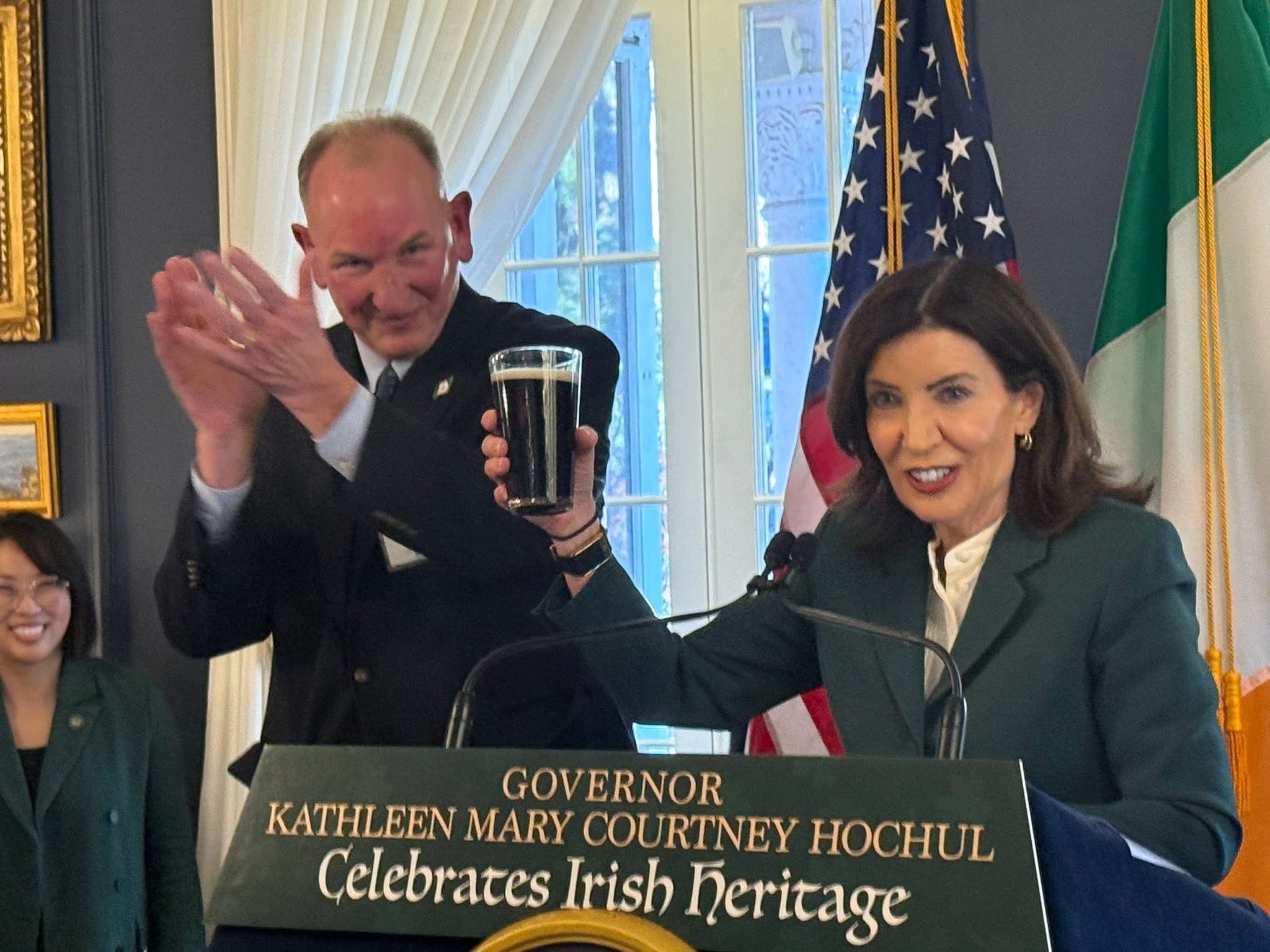
*See BMI this week, for example: “…Craft $$ (excluding non-alc) declined 3.4% with volume down 5.8% for 4 wks compared to total beer $$ down just 1.6%, volume down 3.3%. So craft shed 0.17 share of beer $$ and 0.13 share of volume. But both FMBs and hard seltzer $$ sales were down at a steeper rate following FMB’s more recent twist of fate. FMB $$ dipped 3.6%, -0.21 share, while hard seltzer was down 3.7%, -0.15 pts. Craft continues to lose far less share at retail than (combined) FMB/seltzer category lately. Especially when factoring in craft NAs. Premium segment still lost biggest chunk of beer share, -0.8 pts, as $$ sales slipped 5% for 4 wks…” Share… jeesh. 
**Looking for reference to the late Dr Patrick McGovern, whose work I found a bit sus but classic for the times, I came across this glorius bit of 2012 era bullshit about not towing the line from a now long sold out brewery owner: “…The more often the Beer Advocate community becomes a soap box for outing breweries for daring to grow beyond its insider ranks the more it will be marginalized in the movement to support, promote, and protect independent American craft breweries…
***Utilizing an excite-o-meter… or is it an excitometer… the result was “quite pleasant without being earth-shattering” or a 63 out of 87 or, for those of you working with the old scale, a 1.43. 
****I also really can’t figure out, after all this time, why the heck people paid me to run ads on this blog!
*****Too many to mention – but extra points for shoehorning in phrases like “among other shortcomings” and “preposterous”. See also the “BREAKING!” news that the MAGA right includes a significant segment of tea totaler social engineers, not to mention is led by one. I recall a decade and a half ago suggesting to the nearby NPR station that I am involved with that we might sponsor a craft beer and bluegrass event. Blank stares and shaking heads were followed by “you really are from Canada, aren’t you!”
******Question: does that rhyme with “ye bastard, yev gone a pit yer thumb in ma eye!“?

The Much Abbreviated But Apparently Almost Drought Resistant Beery News Notes For A Thursday

Welcome to August. No rain to speak of. Not for weeks. Lawns look like Nabisco Shredded Wheat testing plots. I’ve spent days and days schlepping the garden hose and watering can all over the estate. Which has reminded me  of how wise it was to buy 6,500 square feet of land back in 2006. Once upon a time I had four acres to take care. Now? No mow no mo… practically speaking. As a result, I have barely looked at the beer news which is good as there is barely any beer news these days. That up there? A very nice ferry last Saturday night, a side trip I took on 87 seconds notice after a desperate call from across the waters. A very pleasant inconvenience.

First up… is there history in North America?  I ask this as a writer, if lapsed, of history. So first, consider this unexpectly deep and oddly twisty history of the word “dude“:

“They were young. They were vacuous. They were effeminate — and they were drawing a bit of attention from the humorists and the cartoonists,” Cohen told NPR. He says this crowd had a certain way of dressing — usually over-the-top and fancy — and leaned into an Anglophile lifestyle that was often perceived by many as fake or trying-too-hard. Eventually, these men became known as “dudes,” likely in reference to Yankee Doodle, who, as the old war song goes, was an unsophisticated American who “stuck a feather in his cap” in an attempt to parade as a kind of European “dandy” in high society.

The very next paragraph or two takes you through cowboy dude ranches and then on to slacker dudes of today, each phase of the word’s meaning being largely unrelated to the last. None of which is retained culturally knowledge. Which makes one wonder about one’s awareness of such things. I raise this in relation to beer by way of intro to Jeff’s lamentations on the state of US brewing history:

“Craft breweries” were a peculiarly American kind of thing. If you don’t have a past, you’re not bound by it. Lacking a native beer tradition—domestic lagers were functionally German beers—Americans were freed up to do what they do. We made beer styles from elsewhere, borrowing and almost immediately riffing on them. This improvisational style would become hugely influential, and it was never going to start the way it did in a traditional brewing country like Germany or Britain. Much like Americans were never going to found a club that merely venerated an old brand of beer.

What is weird is that the land mass that is now the United States has over 400 years of brewing history but, as Jeff says, has no sense of brewing tradition. So it is possible to speak of IPAs being new even though they have been brewed for coming up on a couple of hundred years, winning awards overseas in the early 1900s and at least as good a continuity as Belgian strong ales. Why does no one care? Because no one cares. It’s that deep. A tradition of amnesia.

Speaking of forgetting, someone in Dalton, England has been breaking the law and the neighbours aren’t having it:

People living near a pub have claimed that their privacy is “under threat” after the business began expanding its beer garden without permission. Residents of Dalton, near Huddersfield, have complained to Kirklees Council after the Brooks Arms began extending its garden towards the pavement, including erecting fencing and 10ft poles with fairy lights. Stonegate Group, which owns the pub, said it was in contact with the council and contractors had paused work while they “reviewed the next steps”. Kirklees Council confirmed there was no planning permission in place for the works.

Interestingly, the property owners have claimed the “works undertaken relate to fencing and posts to hang festoon lighting” which leads to that important legal question – are they fairy or festoon lights?

Do you stand up against bigots in pubs or elsewhere? I am lucky because I am such an ox that I’ve always been able to grunt some version of fuck off and people generally, you know, fuck off. But I am older now so paid attention when noted thoughtful folk who may well be less ox-like than me considered this the other day. I admired this exchange:

DJ: “The idea of challenging someone being anti-inclusionary is really interesting. A friend was in a Kent pub and a landlord used a racist slur about an East Asian in conversation. He said you ‘can’t say that’ and left it at that. That’s all that’s needed tbh to make sure it’s not ever unchallenged”

B+B: “We would certainly be quicker to do it if we were actually in conversation with the person. We’ve had some practice at that. When it’s happening on the other side of the pub, getting up and going over to have a word with a stranger takes some nerve.”

Speaking of standing up, Anaïs Lecoq wrote on the poor conditions brewery workers in France can find themselves working under. There is a paywall on this one but, especially as I am working on my French, I thougt it worth noting in case any of you lot have a work around:*

Quand je dis que je suis brasseur, tout le monde trouve ça stylé, mais quand je rentre dans le détail, beaucoup ne se rendent pas compte de ce qu’implique le métier », déplore Sam*. En 2022, le trentenaire a quitté un travail de bureau dans lequel il ne trouvait plus de sens pour une brasserie située en Île-de-France.

Update!! Paywall begone! Here is the full story care of the author herself.

Question #1: did craft try to be champagne? Above a beer?

Question #2: Ron’s been in Australia… did he try the beer?

Question #3: was the GBBF really as dead on trade day as Will Hawkes felt it was? (Another Update: correction on my assumption from Will received vai Bluesky!)  Some were doing their part, according to Bluesky after the trade day events…

Forget the adults… what is up with teens today? Apparently not levels of drinking of Beer Marketer’s Insights is to be believed:

The largest federal survey on alcohol consumption confirmed continued declines in underage drinking alongside relatively consistent levels of adult use. The National Survey on Drug Use and Health, fielded to tens of thousands of Americans aged 12 and up, once again found a substantial decline in the prevalence of past month alcohol consumption by 12-20 year olds. Reports of any past month alcohol consumption by 12-20 year olds steadily declined from 15.6% in 2021 to 13.3% in 2024.

That’s crazy. I mean it’s not a crisis and it’s probably good but, speaking as one who drive the kids to Quebec to drink legally at 18, it’s still a bit crazy.

Who will take our empties? That’s the question in Ontario these days as the expansion of the retail market to grocery stores has left the good old Brewers Retail aka The Beer Store rapidly shutting down locations. Will charities benefit?

With more and more Beer Stores closing across Ontario, charities and non-profits that rely on bottle collection are hoping to cash in on your empties. The Beer Store currently processes about 1.6 billion empty alcohol containers per year. But it has closed dozens of locations across the province since the arrival of beer in convenience stores, and plans to shutter still more this September. At least five of the actual or planned closures are in Ottawa, including one in the Glebe, where Operation Come Home runs a bottle drive as part of its BottleWorks social enterprise. Executive director John Heckbert hasn’t noticed any impact yet — but he’s hoping more residents will call on BottleWorks to collect their empties.

Hockey? Who the hell talks about NHL hockey in August?  The Athletic, that’s who. And the talk is about beer:

Charlie Coyle had yet to be drafted when Tony Amonte, his cousin, concluded his NHL career in 2007. But what the veteran of 1,174 NHL games shared years ago with Chuck Coyle, the center’s father, left an impression. “You go out, you drink, you have a good time, you won’t be the same for a month. That’s what I always remember him saying when I was younger,” the Columbus Blue Jackets forward recalled his dad’s telling of Amonte’s belief. “Maybe that’s an exaggeration. Maybe not. But I have that in my head.” Amonte’s formula may not be scientific. But part of the reason the 33-year-old Coyle rarely drinks during the season is that he wants to avoid, whenever possible, any disruption to a key part of his life as an athlete: sleep.

Bad sleep for a month?!? Who do they think they are? Gordie Howe?

Martin came across an odd scene in Stannington, a district of Sheffield when he was hunting out new spots:

Of the 3 Stannington pubs, this looks the smartest, like an M & B all day diner, and perhaps at 3:30pm the lunch trade has gone home, as it’s empty. Completely empty, bar me. Two bars, no-one behind them, or any sound at all. If I was still ticking the GBG I’d have been panicking, but “finishing a Sheffield suburb” isn’t that important, and after five minutes I consider starting the 40 minute walk home. But then I notice the bell. And ring it, instinctively deadening the noise almost immediately like I do in my Waterbeach local. Nothing. I walked out, stared into the distance, then returned, unwilling to be beaten. Oooh, they’re out of Guinness. And Moretti. That’s worrying. And at that moment, a young man emerged from the kitchen, replete with tales of minor injuries I probably shouldn’t trouble you with. He puts on Aerosmith “Love In An Elevator“, then turns it down. Good lad.

Speaking of finding oneself in a pub, Jess aka the B in B+B returned to their former home of Cornwall to report on the role that popular new brewers Verdant have changed the scene and in doing so made a confession:

Now close observers of our blog and social media, or subscribers to our Patreon, will know that I have a particular aversion to beers with mosaic hops and similar. At best, I find they taste of onions and, at worst, something I can only describe as rank armpit. And that’s all I can taste, with none of the juicy tropical fruit flavours that people talk about. I get that this is a me problem, that other people don’t taste these hops this way, and that Verdant are an extremely popular and rated brewery. However, they do tend to like using these hops and as a result I’ve never really got on with them. And the first evening, I’m afraid, did little to convince me otherwise. That the beers looked like water that had been used to clean paintbrushes didn’t help.

And Pellicle‘s feature this week is an interesting story by Mike Clarke of a pub that was lost and reborn, demoished and rebuilt – the Vulcan of Cardiff in Wales:

Until 2012, this building housed a pub in Cardiff City centre—a very ordinary pub that had stood for over 150 years serving an eclectic urban community. Its interior, crammed full with fruit machines, a jukebox and an outsize ship’s wheel on the wall, was a sanctuary from the relentless redevelopment and expansion of the capital city—development that eventually forced its demolition… The Vulcan Hotel reopened in May 2024, having been demolished, transported, and rebuilt brick-by-brick in the museum, restored to its appearance a century ago within the curated historic village. Even though rebuilding it took just over a decade, the Vulcan still holds fresh memories. Many visitors around me point out familiar architectural features, like the two front doors or the two-room layout, and remark that it feels like “only yesterday” since they last visited.

It’s an interesting approach to pub preservation but has led to questions about whether the urinals are correctly glazed (yes) and what beer should be sold (Ron sticks his toe in… not in the beer, in the topic) and whether it is still a pub or has that changed.

Well that is it. Not as short as I feared and there was plenty of reading once I had a look. While there is a lot up there, please also check out Boak and Bailey every Saturday and sign up for their entertaining footnotes, too. Look out for Stan when he feels the urge now that he’s retired from Monday slot… maybemaybe not. Then listen to a few of the now rarely refreshed Lew’s podcasts and get your emailed issue of Episodes of my Pub Life by David Jesudason on the (sometimes even but never) odd Fridays. And Phil Mellows is at the BritishBeerBreaks. Once a month, Will Hawkes issues his London Beer City newsletter and do sign up for Katie’s wonderful self-governing totes autonomous website featuring The Gulp, too.  Ben’s Beer and Badword is out there with the all the sweary Mary! And check out the Atlantic Canada Beer Blog‘s weekly roundup. There is new reading at The Glass which is going back to being a blog. Any more? We have Ontario’s own A Quick Beer featuring visits to places like… MichiganAll About Beer has given space to some trade possy podcasts and there’s also The Perfect Pour. Plus follow the venerable Full Pint podcast with an episode three weeks ago!. And there’s the Craft Beer Channel on Youtube. Check out the archives of the Beer Ladies Podcast. That’s quite good and after a break they are back every month! Such is life. Such is beer podcasting and newlettering… which, as Ray says, are blogs! And he’s right.

*Here’s the blurb in English: “Precarious and dangerous working conditions, unpaid overtime and exploitation: the daily lives of employees producing artisanal beer are sometimes at odds with the values conveyed by the sector and the positive image it enjoys.”

Your Highly Organic Beery News Notes From The Backyard Raspberry Patch

Raspberries. I’ve let them run a bit wild but for about one week you get a pint or so every second day or so, coming in waves as long as the squirrels stay away… which they seem to be, thanks to the foxes. Speaking of pints, I bought beer last weekend. No, really. I haven’t really had much laying about time but I added to my tariff transition coping mechanism by buying a few cans of Miller High Life. Unlike Maker’s Mark and all the other bourbons*, you can actually buy Ontario-brewed Miller HIgh Life at the LCBO here without any accompanying pangs of disloyalty. An old pal, it was sorta not good on the first drink last Saturday afternoon but then – magically – it was quite quickly sorta not bad. I felt connected to something bigger.** Small pleasures.

Speaking of small pleasures, it’s also been a bit quiet on the beer writing scene. Very quiet. Is this what’s happening out there?

“Why are you banging your head against the wall?” asked Frog. “I hope that if I bang my head against the wall, it will help me to think of a story,” said Toad.

Never fear. It’s the end of the month this weekend so The Session is here. Hosted this month by David Jesudason who enticed and encouraged us all with his tale of an entirely foreign business model around my town:

I want to examine the growth of Yard Sale Pizza in London and what it says about the state of pubs in 2025. For those who have never experienced this recent phenomenon Yard Sale delivers to taprooms, pubs and bars around the capital in spaces that often don’t have a kitchen or can’t make selling food economical… The list of venues where you can use an app to get a pizza handed to your table is huge; I counted that Yard Sale is the only food option at a staggering 128 places. All of these 128 spaces tend to be indie and/or crafty…

Pubs with no kitchens meet a pizza chain with no retail face. Is that it? Me, I haven’t started writing but if I am honest I would likely fall into the equivalent of what looks like a gastropub as Laura discussed this week for What’s Brewing:

Since the term was coined in the mid-nineties, and popularised from the 2010s, I have sought to find the unicorn – a great pub with excellent beer and an uncommonly high level of food quality. There’s nothing wrong with standard pub grub, I enjoy it regularly, but sometimes I like a little bit of fancy. But finding a genuinely excellent example has been next to impossible, because I care about my beer. While there are many venues out there who offer an elevated menu, I have almost universally found their beer lists are distinctly lacking. You can have all of the locally foraged ingredients and nose-to-tail eating you want, but if you can’t choose a quality pint or bottle to pair with it, disappointment ensues. 

That is actually not a problem we face over here as what were once probably called craft beer bars have often had a side of good food to meet the exactly need that Laura has identified.

What else is going on? Sticking with that fair city, Will Hawkes shared the August edition of London Beer City and included the news about another angle on selling good beer that I really hadn’t considered:

Stephen O’Connor, co-owner of the Green Goddess beer cafe and microbrewery in Blackheath, chuckles down the line as he discusses the significant intersection of beer and bus enthusiasm. “There should be a Venn Diagram of people who are into buses, people who are into beer, and people who turn up to events like the one we’re running this Saturday…”  But isn’t it stressful driving a bus in London, anyway? “Well technically driving a bus is no harder than driving a car,” Stephen says, which may be true but I remain to be convinced. “The ones I drive are 30, 40, 50 years old, so they do tend to be a bit more challenging. But because you’re that bit higher, you can see what’s going on.”

I had never considered catering to bus enthusiasts. Mainly because I have never considered bus enthusiasm. We also learn from himself that the Dulwich Woodhouse has “unbelievably grumpy staff” and is expensive while The Alleyn’s Head is “a good-value option with a slightly oppressive atmosphere.

Possible related complaint driven note from 1898: “… he is not likely to waste his time mixing freak drinks with flashy names…” Zing!!

Esquire magazine published a history of events leading to the collapse of Schlitz, the brewer careful readers will recall, which was still the #1 US brewery with 6.92% of the national market in 1956 before much changed.***

The year is 1965. Thirty-four-year-old Bob Martin relaxes in his high-backed leather chair and exhales with satisfaction. His office, perched within the imposing headquarters of the Joseph Schlitz Brewing Company in downtown Milwaukee, hums with the quiet authority of power. As well it should for the guy who’s running the marketing department for “the Beer That Made Milwaukee Famous.” Schlitz is the second-largest beer empire in the world behind only Anheuser-Busch. And it is Martin’s playground, his kingdom to control. A secretary’s voice crackles through the intercom. “Mr. Martin, there’s an unidentified caller on the line. Won’t give a name. Says it’s urgent.” Martin frowns as he picks up the phone. A voice on the other end—flat, emotionless—says, “The baby has arrived and is doing nicely.”

The tale goes on to explain “It wouldn’t be the last time Martin used a fat stack of cash to cut a deal.” Hmm… in brewing? Whoever saw that coming?

Do you waste years of your life on social media reels watching people wander about Japan and finding cool places to eat? Me neither. But… I was moderately amused by this photo essay of the hunt for a beer garden on the roof of a multi-story car park in Tokyo:

He thought he might be imagining things, but once he got to the garage, there was indeed a giant banner advertising the “Tachikawa in the Sky Beer Garden.” He also spotted a few signs on the ground level doubly confirming the fact that beer and yummy things were just an elevator ride away… Next to the rooftop level button was a small visual for the beer garden. What exactly would be waiting for him when the door opened…? There was a particularly good-looking deal called the “Cheers! All-you-can-eat and all-you-can-drink course.” For 90 minutes, you can have unlimited alcoholic drinks, soft drinks, and five kinds of food, all for only 2,580 yen (US$17) per person.

WIse choice. Probably. Not utterly dissimilar, as part of the response to tariffs, Canada is taking on the task of reorganizing the economy with new vigour, including removing interprovincial obstacles to the beer trade. Careful readers will recall the Supreme Court upholding their legality in 2018 but, now, even if they pass muster they aren’t passing the smell test according to CTV News:

All but one province, Newfoundland and Labrador, as well as the Yukon are on board. Some brewers, however, say the trouble of moving beer across borders outweighs the benefits. “It’s probably not something that we would look to offer in the near future, based on the logistical challenges and the costs of shipping,” said Jared Murphy, co-owner of Lone Oak Brewing Co. in P.E.I. Beer is heavy, shipping in bulk is pricey and ideally it should be kept cold. For small producers, those are bigger problems, Murphy said. However, the plan could create opportunities for transport companies, said Christine Comeau, executive director of the Canadian Craft Brewers Association. She doubts it will move the needle if costs stay high. “I don’t think that it’s going to be a huge kind of market opportunity for us,” she added.

An in their footnotes to their Saturday news update – a feature to which you really need to subscribe – Boak and Bailey admitted a very clear admission:

Oh, good – Pellicle has an article about beer this week, rather than wine or cider or sausages or something. To be clear, we applaud the range of stuff they cover, but we’re really only interested in beer for the purposes of the weekly round up.****

What!!! Sausages or something?!? How focused. I have never been accused of being particularly focused myself. So happy am I to see that Pellicle is well into the something zone care of Anaïs Lecoq with something of an almost eponymous topic:

Daniel Price thought the same the first time he tried Brets in London, and ultimately decided to stock it when he opened Two Sevens Deli in the Suffolk market town of Sudbury. “We have chicken and beef crisps here [in the UK], of course we do,” he says. “But there is something about Brets poulet braisé that tastes just like the crispy chicken skin, and it’s amazing. Even the côte de bœuf has got a slight char to it, a sweetness and a savoury quality. It tastes like it should.” If the chicken flavour actually tastes like chicken, a simple look at the ingredient list will tell you why: potatoes, sunflower oil, flavoring, salt, chicken meat powder. 

Yum. I grew up in Nova Scotia where Roast Chicken chips which are forbidden to all other Canadians for some reason. If you are there and arriving here you will be packing Roast Chicken chips.

And there was some great reporting at the end of last week in the Financial Times on the financial mess that’s BrewDog which illustrates what I have long written about the idea of “independent” needs to dig into the debt obligations of breweries. Just look at the clarity concisely offered by the piece’s author, Dan McCrum, showing how BrewDog doesn’t really own BrewDog like you own that cat over there, given the 2017 deal with private equity outfit TSG Consumer Partners:

TSG ended up with 22.3 per cent of the company at an enterprise value of £895mn or, in dollar terms, a round unicorn billion… The change highlights the effect of the prefs’ entitlement to a compound annual return of 18 per cent at the moment of any sale, initial public offering, or liquidation, ahead of the other shareholders. BrewDog’s equity value had fallen to about £900mn, but TSG could then claim £520mn of that amount. The value of everyone else’s equity had fallen by three quarters. The theoretical value of the £213mn spent by TSG in 2017 has continued to grow at 18 per cent, passing the £800mn ($1.1bn) mark in April.

Eighteen Percent! Who borrows at eighteen percent??? I’ve had credit cards with lower rates of interest. Hmm… but in brewing? Whoever saw that coming? Relatedly perhaps… most likely I mean, Pub & Bar Magazine reports as follows:

Brewery and pub chain BrewDog has announced plans to close 10 of its bars as part of a strategic review of the business.  In a note sent to staff today (22 July), CEO James Taylor says the decision was made to outline a more focused strategy, including the rationalisation of its bar footprint to focus on “destination hubs” (large-format, high-impact immersive venues) and “community bars” to drive long-term, profitable growth.  “As part of this strategic review, we have made the decision to close 10 bars,” adds Taylor. “This includes some venues that are woven into our history, including Aberdeen, which was our first ever bar, and Camden, the first bar we opened in London….

And so it goes… while we wait on others to write more about the brewing trade, please check out Boak and Bailey every Saturday. Look out for Stan when he feels the urge now that he’s retired from Monday slot… maybe. Then listen to a few of the now rarely refreshed Lew’s podcasts and get your emailed issue of Episodes of my Pub Life by David Jesudason on the (sometimes even but never) odd Fridays. And Phil Mellows is at the BritishBeerBreaks. Once a month, Will Hawkes issues his London Beer City newsletter and do sign up for Katie’s wonderful newsletterThe Gulp, too.  Ben’s Beer and Badword is out there with the all the sweary Mary! And check out the Atlantic Canada Beer Blog‘s weekly roundup. There is new reading at The Glass which is going back to being a blog. Any more? We have Ontario’s own A Quick Beer featuring visits to places like… MichiganAll About Beer has given space to some trade possy podcasts and there’s also The Perfect Pour. Plus follow the venerable Full Pint podcast with an episode three weeks ago!. And there’s the Craft Beer Channel on Youtube. Check out the archives of the Beer Ladies Podcast. That’s quite good and after a break they are back every month! Such is life. Such is beer podcasting and newlettering… which, as Ray says, are blogs! And he’s right.

*From time to time I find myself being a little sad about the whole bourbon thing and then ask myself “who the hell gets sad about booze!?!
**… and got to once again laugh at the idea circa 2011 of “Toronto beer celebrities“!
***Tremblay and Tremblay, page 69, table 4.2.
****What’s that? You think I am stretching for content this week? Me? And adding unnecessary footnotes, too? How dare you!!! At least I did’nt mention this.

Some Brief Beery News Notes For A Thursday From The Road

As you know, in Canada we like a politician who drinks a beer. It’s practically mandatory of you are going to win an election to show that you know how to pour, how to drink and how to sit in a tavern as time trips along. So it was good this week to see recently elected Canadian PM Carney put less recently elected British PM Starmer to the test in an Ottawa tavern:

Keir Starmer has delivered a veiled swipe at Donald Trump by hailing ‘independent, sovereign’ Canada. The PM gave his strongest response yet to the president’s push to turn Canada into a US state as he met counterpart Mark Carney in Ottawa. Sir Keir and the former Bank of England governor enjoyed a beer in a bar and also talked up the prospect of reviving a stalled trade deal. 

Good to see. A little less rarified but, still, exceedingly pleasant by all account was the weekend enjoyed by Chris at Real Ale, Real Music who took us along on a trip to Manchester where he went to undergrad and later worked, a city that serves as the exotic elsewhere of his youth. It’s an extended piece of memory work with a gentle pace:

…my Grandad would take me there sometimes as a young lad in the 1960’s. He was the head of the local Co-op and sometimes he had to visit the head office in the city for important business, the details of which we were never to know, but it never took him long. We would catch the train from Sowerby Bridge station on a Wednesday afternoon which was early-closing day for the Co-op and most of the shops in town back when that was a part of the weekly routine. In those days, the station had the presence of somewhere important, a grand facade with a booking office within, waiting rooms, and the like, now long gone of course. When we arrived in this distant land at the other side of the Pennines, it was a short walk from Victoria Station, across Corporation Street with its huge and daunting buildings and we were there, then left abandoned for a short time in an imposing wood-panelled reception with a noisily ticking clock and a sharp-featured, unsmiling receptionist keeping a stern watch over me and my younger brother as Grandad disappeared into the mysterious world beyond the door.

As a person who walks through many doors into mysterious worlds, Martin on his never ending travels has shared his thoughts on what I would take to be a pretty noxious brew:

2 weeks ago, in Derby, I’d been dissuaded from the Caramel Custard Doughnut Milk Stout by a rascal from Worcester, and regretted my hesitancy ever since. I’d offered Stafford Paul a pint if he could correctly guess what I had in the Alex, but sadly (?) for him he got it wrong, so I’m having to drink the Pentrich Soul Doughnut myself. The Broadfield is a decent bet for your non-threatening craft picks, a Brunning and Price for the under-50s (though the soundtrack is relentlessly late ’70s AOR). The dregs of the Sunday lunch trade are yet to clear, sticky tables a bit of a downer though the Soul Doughnut itself is rather gorgeous, a cool and rich NBSS 3.5. Not as weird as feared, and scarily drinkable…

And ATJ shared an experience that is common in a pub – overhearing. Not prying. In fact, trying not to overhear even though what you hear is worth remembering… and sharing:

The couple’s voices were not foghorn-like in their loudness, but they still carried over to me whether I liked it or not. I switched off, but it was hard not to continue hearing their conversation. ‘I have been happy at times in my life,’ said the man, who I also learned lived locally but that the two of them would be moving back to Essex the following year. ‘The day of my marriage for instance,’ though given the lack of a remark from his companion, I guessed it wasn’t to her. ‘The births of my three kids, and I tell you that you can buy anything you want in the world — cars, houses, travel — but you cannot buy back the times you lost being with your kids when they were growing up.’

Boak and Bailey were also in the pub in their monthly newsletter opened up the question of what beer is the beer you see on offer that makes you want to stick around:

We recently turned up at The King’s Head in Bristol intending to have one last beer on the way home but the range of breweries on the bar made us say, “Ooh!” and stay a bit longer than planned. We have experiences like this from time to time – not as often as we’d like! – and it struck us as an interesting way of gauging the reputation of breweries. It’s not that they’re necessarily ‘the best’, whatever that means. Only that we’ve had enough good beer from them over the years, and especially in recent years, that we’re excited to drink whatever happens to be on offer.

They provided their ten suggestions. For me… here in Canada? Has to be St-Ambroise Oatmeal Stout from Montreal. Seeing as I am there… err, here… maybe I will find me some.

From the “things ain’t what they used to be” file, Henry Jeffreys at Drinking Culture wrote about the now frowned upon mid-1900s English taste in wines and how those tastes were achieved:

The Victorian wine expert Cyrus Redding wrote: “it has been thought necessary to give pure Bordeaux growths a resemblance to the wines of Portugal… Bordeaux wine in England and in Bordeaux scarcely resemble each other.” If you were lucky, your Château Palmer might contain a good dose of Hermitage from the Rhône and if not, brandy and elderberries. You can actually buy a wine today from Château Palmer called “Historical XIXth Century” which contains 10% Hermitage. It turns out that Australian cabernet-shiraz has a noble parentage. When we laugh at how Australians or Americans used to call their robust grenache and other Southern grape-dominated wines Burgundy, we are missing the point—this is the sort of Burgundy they were used to.

And The Beer Nut decided to find out more directly what things tasted like in the past… as long as you wait long enough he leared when he popped the cork of a bottle of HORAL Megablend 2015:

It’s old enough to still bear the name of 3 Fonteinen on the label’s list of nine producers who created it, a lambic house which left the HORAL group not long after. It finished up at 7% ABV and was a deep amber colour in the glass, suggesting that oxidation may have taken place. The aroma has a mineral sharpness mixed with a heavier, richer, cereal side. To taste, it’s not very sour but does have acres of gunpowder and Szechuan pepper spice, which I adore. Usually, you get your spice with a sterner sour acidity and sometimes a rub of waxy green bitterness (if you’re lucky), but here that seems to have mellowed away, leaving a smooth and friendly fellow. Oxidation? Yes, a touch, but it’s more pale sherry than wet cardboard, and confines itself to the finish, so that’s OK.

Speaking of hints from the past, Lars shared this saying this week:

One Norwegian way of saying “he’s a bit slow in the head” used to be “he comes after, like the oat malts.” Back then, everyone knew that oats take longer to germinate when malting than barley does, so at the time it was an apt expression.

Will Hawkes circulated this month’s edition of his newsletter London Beer City and I particularly like this passage about possible trend he may have spotted in pub naming:

The Craft Beer Co, one of the key drivers of London’s craft beer culture a decade back, had decided to rename its E14 pub the Clement Attlee, celebrating the Labour Prime Minister who was Limehouse MP between 1922 and 1950 (when the constituency was abolished)… If you, like me, detect a subtle shift towards a more traditional pub naming model, you might be right, although Hayes rejects the notion that his pubs are following a trend towards “geezer-core” (“I am not sure I buy into all that jazz”). The group’s last opening, The Bear in Paddington, was also more traditionally named – but Craft Beer Co pubs have always looked fairly traditional, with brewery mirrors, handpumps, and comfortable bench seating.

Note #1: not really.

Note #2: could have told you.

Once again, the news from Beer Marketer’s Insights is not great but at least they had the decency to blame the weather:

It’s still cool and rainy in the Northeast and many other parts of US. Natl beer sales reflect that and several other persistent challenges. Volume continued down 5.3% for 4 weeks thru 5/31 in NIQ data, including Memorial Day and the week just after (slightly worse than 4 week trend thru 5/24). So peak selling season began with a whimper. Premium lights (-10%) and beer-centric seltzers (-12.7%) down double digits for 4 weeks. Craft down 8.8%.

There should be a beer consumption forecast opportunity if it’s that tied to the climatic conditions! A great pal who’s long gone would call out on a sunny summer day “it’s a drinker!” And so it was. Things, however, have reached a higher level of weather induced concern, at least in one part of India:

Liquor warehouse owners in Kaushambi, Uttar Pradesh, are requesting police protection due to retailers causing disturbances. Retailers are aggressively demanding specific beer brands amidst rising summer consumption, exacerbating existing supply chain issues. Warehouse owners like Jagjeet Singh report licensees creating undue pressure and refusing to acknowledge distribution challenges, leading to potential shortages.

Far less argumentative is the piece in Pellicle this week, one that warms the heart of any solution oriented lawyer, as Gavin Cleaver tells the story of the Peticolas Brewing Company of Dallas Texas:

…I had to educate them about what it was that we were doing, what we were manufacturing. Took a bit of time ’cause they didn’t fully grasp it. In fact, they had initially said ‘Yeah, you need to do it in this zone’. Every area around town is zoned different, in a different manner. So I found a place in a light industrial zone. And then just before I signed a lease,” he continues, “I found a provision in the Dallas Property Code that made it clear to me I couldn’t manufacture alcohol in that kind of zone.” City Hall were unaware of any of these laws. Eventually, Michael’s work resulted in the statute book being updated—just for him—and a deluge of breweries sprung up in Dallas in his wake.

And finally, another sad loss for the beer world with the passing of Sir Geoff Palmer, Professor Emeritus and OBE. His career was sumarized in the Jamaican Gleaner:

Palmer was born in the parish of St Elizabeth, but raised in Kingston. At 14 years old, he moved to London with his mother. Scotland would become the stomping ground for the Jamaican during much of his adult life. He initially moved to Edinburgh in 1964, to complete a Doctor of Philosophy (PhD) in grain science and technology. By 1969 Palmer had developed the barley abrasion process, an innovation that enhanced the efficiency, sustainability, and cost-effectiveness of malting across the global industry. In 1989 the Jamaican became Scotland’s first black professor, as he began a teaching role at Heriot-Watt University, which continued until 2005. The academic returned to the institution as a professor emeritus and later as chancellor in 2021.

He was also a dedicated advocate who, as reported in The Scotsman:

…articulately, eloquently, and inspiringly reminded us over and over again that we must remember the lived experience of individuals whose courage and perseverance have greatly contributed to our society…

We chatted a little over the years but more about the legacy of slavery in Scotland than the brewing trade. His work on Dundas got me thinking about more local place names – like Picton. Yikes!

A shorter grouping this week. I am on the road …please check out Boak and Bailey every Saturday. Look out for Stan as he is posting more now that he’s retired from Monday slot. Then listen to a few of the now rarely refreshed Lew’s podcasts and get your emailed issue of Episodes of my Pub Life by David Jesudason on the (sometimes even but never) odd Fridays with the new addition of his Desi Food Guide now on Tuesdays. And maybe The British Food History Podcast. Maybe? And Phil Mellows is at the BritishBeerBreaks. Once a month, Will Hawkes issues his London Beer City newsletter and do sign up for Katie’s wonderful newsletter, The Gulp, too, now relocated to her own website, Katie Mather Writes.  Ben’s monthly Beer and Badword is on its summer break but there’s plenty to catch up on! And check out the Atlantic Canada Beer Blog‘s weekly roundup. There is new reading at The Glass which is going back to being a blog. Any more? We have Ontario’s own A Quick Beer featuring visits to places like… MichiganAll About Beer has given space to some trade possy podcasts and there’s also The Perfect Pour. Plus follow the venerable Full Pint podcast with an episode just last month!. And there’s the Craft Beer Channel on Youtube. Check out the archives of the Beer Ladies Podcast. That’s quite good but, hmm, they’ve also gone a bit quiet this year. The rest of these are largely dead. And the long standing Beervana podcast …except they have now stood down.  As has We Are Beer People. The Share looked to be back with a revival but now its gone quiet. And the Boys Are From Märzen podcast appears suspended as does BeerEdge, too. VinePair packed in Taplines as well. All dead and gone.  There is more from the DaftAboutCraft podcast, too. Nope – that ended a year ago.   The Moon Under Water is gone – which is not surprising as the ask was $10 a month. Pete Brown’s one cost a fifth of that – but only had the one post. Such is life. Such is beer podcasting and newlettering!
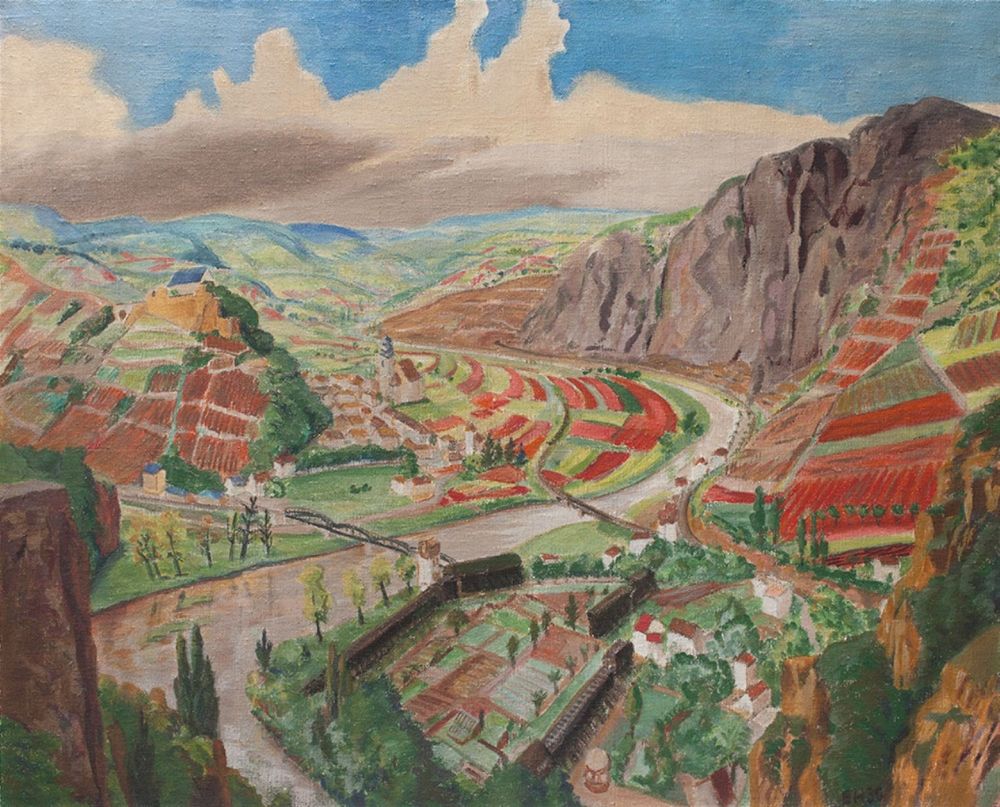
The Beery News Notes For The Week We Lost Martyn Cornell

I learned the very sad news on Sunday that Martyn Cornell of Zythophile and many other things had died. Within minutes the tributes started being shared. Martyn was a veteran journalist and news editor, beer writer and historian. And a traveller, whether for newspaper work in Hong Kong or in Chile as a recent hotel breakfast buffet partner for Ron. I first met him in the comments left at this here blog twenty-two years ago when he left a note on my review of Pete Brown’s first book. We soon chatted again when, as invited, I reviewed Martyn’s first book a few month later and the conversation pretty much continued for over two decades after that.

As many have shared, he was fun and clever company. He’d get mad at me – usually quite deservedly – and yet would kindly share tips and ask for leads. Now a decade and a half ago, we had a great time on the wiki project reviewing the OCB. As I wrote to Alistair on Facebook after the news of his passing was shared, Maryn had such a singular presence, both impatiently crotchety and entirely encouraging at the same time. It was all one thing. He just wanted more of us to be writing more, all building the body of knowledge. In the running to do list I keep there was a task I had left for myself: “dig up note for Martyn.” More about the 1600s English strong ales named after their cities. I never around got to it. Craig had some particularly fine words:

I’m not sure beer history writers count as celebrities. But if they do, there must be a pantheon of the mild-mannered—and surely at the top of that list was Martyn Cornell. I don’t get starstruck often, but sharing a pint with him in Colonial Williamsburg came pretty close. Before that, our conversations had been limited to late-night emails—questions, thoughts, rabbit holes. He always replied. And his replies always led me deeper down the trail. Martyn was whip-smart, a bit shy, and deeply committed to facts. He had no patience for myths or baloney—not out of pedantry, but because he believed the truth was always more interesting than the fiction. He was my friend, and I will miss him.

He always replied. That was Martyn. Very sad news.

——————————

I am going to post a few news items this week but perhaps not at much as one a normal one. Starting with one that certainly in line for Martyn’s wish for us all, Phil Cook hosted another excellent edition of The Session in which many beer who like to write about beer wrote this month about beer in art. Plenty of good entries and the annoucement that we need someont to continue the relay as Phil summed up:

Massive thanks to everyone who contributed; it’s a great collection of observations. No one has, as yet, put up their hand to volunteer for the June edition so if you have an idea, let me know. It’s a little work, but a lot of fun.

And, speaking of travels, Matt Gross shared a detailed portrait of Q Bar in Ho Chi Minh City, Vietnam, a hidden hotspot he frequented in the 1990s:

Eventually, I realized I had been regularly flying right past it on my 70cc moped, and I understood why I’d overlooked it: Q Bar was tucked into the side of the Saigon opera house. Of all places! This Beaux-Arts edifice, built by the French colonial powers and opened in 1900, this 500-seat hulk that anchored key streets at the core of District 1, had a warren of dark little rooms off to the right, and a tiny patio and a strip of grass. This was Q Bar. I simply had never passed by at the correct hour to note that, as the sun began to descend, this small patch began to fill up with expatriates, with returning Vietnamese from France, Canada, the United States, and beyond, and even with some locals who, perhaps earlier than others, understood that Q Bar was not just the best bar in Saigon but among the best bars in the world.

And Lars has been travelling east – very east in fact – on journey to discover all he can about farmhouse ales. He was in Alsunga, Latvia meeting with a Suiti brewer who had some pretty rustic techniques leading to a good drink:

Visiting a brewer in Alsunga today, belonging to the Suiti minority, which is Catholic. He’s brewing for midsummer. He ties rye straw around the pole for the lauter tun. In the lauter tun is juniper (usually), rye straw, and birch twigs. Lovely raw ale, soft and mild, with notes of juniper and also honey. Could drink this all day. Cooling the wort in the local pond across the road.

Transporting you elsewhere, David Jesudason is transporting us further with his first installment of Just A Bite, to a carpark in England to eat Kenyan influenced fare from a van:

…to land here in Denmark Hill is odd. It’s bizarre that in such a bleak, concrete location – literally everywhere you look is brick, tarmac or truck wheels, despite being so near Ruskin Park – you can have such transcendent food. Now I’m not saying something as hyperbolic as one bite whisks you to the Kenya savannahs of Bharat’s childhood but the spicing is so balanced that it offsets the heat of the chili; and tastes far more regal than you’d expect food to be at a polluted business park just off a forgotten part of Coldharbour Lane. The tikka pieces are almost burnt, crispy on the outside but delicately soft in the middle, while masala chips have a zesty coating of ginger and cumin. I’m a complete fan boy for the mint chutney that doesn’t scrimp on the fire.

Laura Hadland in another of her regular contributions to The Telegraph wrote about what beers can be found at local Lidl, the grocery chain, and she was looking for bargains:

I put Lidl’s beer range through a rigorous taste test to mine for quality bargains. This included a selection of Lidl’s own-label products as well as some of the well-known brands it offers… Examining the range as a whole, I quickly noticed that almost every bottle is labelled “premium”. To paraphrase The Incredibles, if everything is super then nothing is – the descriptor loses all meaning. I therefore tasted the range blind, to prevent undue influence from the packaging or my own personal bias.

Relatedly perhaps on the point of budgeting, in The New York Times there was an interesting story on the demise of something not done so much in Canada unless you are in a restopub sort of place: running a tab:

It’s unclear when younger drinkers started souring on bar tabs, but there’s a through line between the Covid-19 pandemic and shifting bar habits. “During and after the pandemic, more people started using cards,” said Doug Kantor, an executive committee member of the Merchants Payments Coalition, a retailers group. Coupled with Gen Z’s distaste for carrying around cash (or a physical wallet, for that matter), the ubiquity of mobile payment options, such as Apple Pay, has contributed to the decline of bar tabs among 20-somethings.

Also speaking perhaps of budgeting in another sense, over there on the US west coast, the much heralded sale of Anchor Brewing to Chobani yogurt billionaire Hamdi Ulukaya of a year ago has led to questions today, as reported by Truong and Kane in The San Francisco Standard:

Through fencing at the old Anchor Brewing taproom in Potrero Hill, passersby can spot a branded, baby-blue, 1940s-era GMC truck at one end of a lot overgrown with weeds. Since July 2023, when Japanese beer giant Sapporo vacated the complex, both the monolithic off-white Art Deco headquarters at 1705 Mariposa St. and the taproom across the street have remained idle. Now, vines and delicate purple flowers snake through the truck’s rusting grille — and San Francisco beer drinkers continue to go without longtime favorites Anchor Steam, Liberty Ale, and the annual Christmas Ale. It wasn’t supposed to be this way. Exactly one year ago, billionaire Hamdi Ulukaya posted a video on social media in which he sports an Anchor baseball cap and explains that he’d purchased the defunct company and was eager to take on the responsibility of reviving the country’s oldest craft brewery.

Similarly perhaps, Rob Sterowski of I Might Have A Glass of Beer… wrote about the sale of the last remaining family-owned Kölsch breweries, Malzmühle, to one of the others, Gaffel:

The puzzling thing about all this is that Malzmühle, just a couple of years ago, itself took over another of the remaining independent breweries, Sünner. And that is staying open – so they say at the moment, at least. So they still have a brewery where they could produce Mühlen Kölsch. Can they really buy in beer from a competitor more cheaply than they can brew it themselves? Even if Gaffel is substantially bigger than Sünner? One can only speculate that the contracts being signed commit Gaffel to supplying the Malzmühle with beer at a very favourable price.

I liked Gary‘s piece about a study by a futurist of the past, Dr. Leonard Kent of the advertising agency Needham Lewis & Broby, projecting his 1960s desire for a better beer – something that he may have to wait for a couple of decades to try:

The solitary drinking experience, as he called it, sounds oninous in our neo-prohibitionist 2025. He meant, thought, at least in part, brewers should make a higher quality product. A product reflecting romance and mystery v. the bulk “sameness” of American beer as it was then. Beer that could be enjoyed more in a wine setting, outside that of the popular image of tronged tavern consumption.

And in Pellicle, the fabulous Rachel Hendry and the fabulous Anaïs Lecoq tag teamed to tell the tale of the litre bottle of Cidre Breton from their respective points of view:

The rustic, rural nature of Cidre Breton’s style, the farmyard imagery and the simplistic label design that speaks to a small scale cider operation that no longer exists, the uncomplicated bottle shape that signals to milk and soft drinks as opposed to high end fine wine all work to put a consumer at ease. There is no trace of poshness or pretentiousness here, all are welcome. Cidre Breton is a cider from the people for the people, that extra 250ml a gesture of diplomatic goodwill. To Britain, Cidre Breton becomes an emblem of an accessible France, something attainable to most, regardless of finances and status. A franco-take on a British heritage—orchards and cider are intrinsic to rural, working class stereotypes of Britain after all—allowing us, litre by litre, to drink exactly as the French do.

That’s it for this dimmed week. Looking back, sifting through emails and posts, I had forgotten that I invited Martyn to my fantasy dinner in 2007. I suggested we have a “good thick 1700s West Country white beer as a stand alone first course” to get the conversation going. He accepted. Sad stuff. Until we meet again in a happier moment, please check out Boak and Bailey every Saturday (…as long as all their holiday fun doesn’t get in the way…) and Stan (….back again this  Monday and very nice of him to notice what I wrote). Then listen to a few of the now rarely refreshed Lew’s podcasts and get your emailed issue of Episodes of my Pub Life by David Jesudason on the (sometimes even but never) odd Fridays. And maybe The British Food History Podcast. Maybe? And Phil Mellows is at the BritishBeerBreaks. Once a month, Will Hawkes issues his London Beer City newsletter and do sign up for Katie’s wonderful newsletterThe Gulp, too.  Ben’s Beer and Badword is out there with the all the sweary Mary! And check out the Atlantic Canada Beer Blog‘s weekly roundup. There is new reading at The Glass which is going back to being a blog. Any more? We have Ontario’s own A Quick Beer featuring visits to places like… MichiganAll About Beer has given space to some trade possy podcasts and there’s also The Perfect Pour. Plus follow the venerable Full Pint podcast with an episode just last month!. And there’s the Craft Beer Channel on Youtube. Check out the archives of the Beer Ladies Podcast. That’s quite good but, hmm, they’ve also gone quiet this year. The rest of these are largely dead. And the long standing Beervana podcast …except they have now stood down.  As has We Are Beer People. The Share looked to be back with a revival but now its gone quiet. And the Boys Are From Märzen podcast appears suspended as does BeerEdge, too. VinePair packed in Taplines as well. All dead and gone.  There is more from the DaftAboutCraft podcast, too. Nope – that ended a year ago.   The Moon Under Water is gone – which is not surprising as the ask was $10 a month. Pete Brown’s one cost a fifth of that – but only had the one post. Such is life. Such is beer podcasting and newlettering!