Welcome To 2026 And To The Exciting New Format Of The Thursday Beery News Notes!!

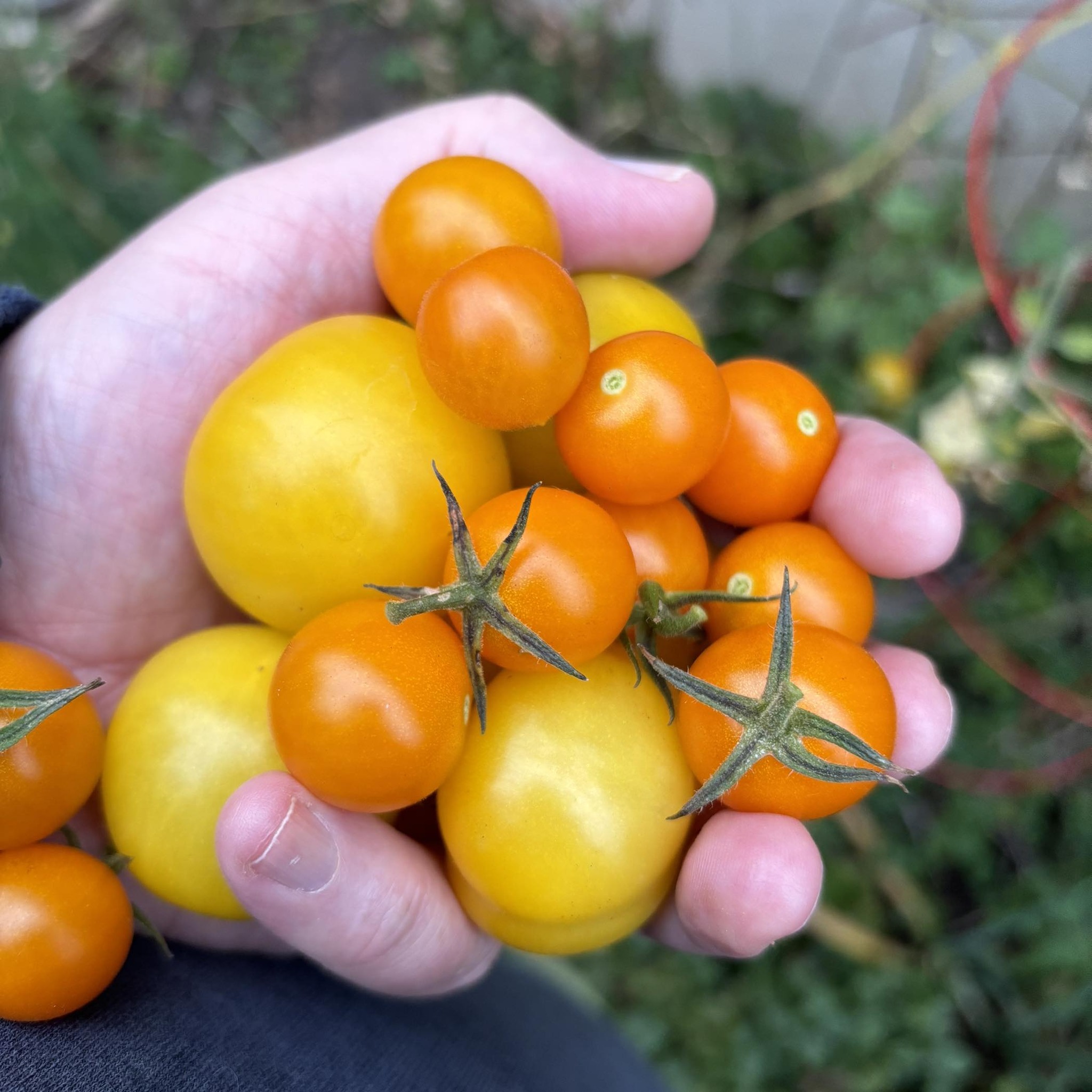
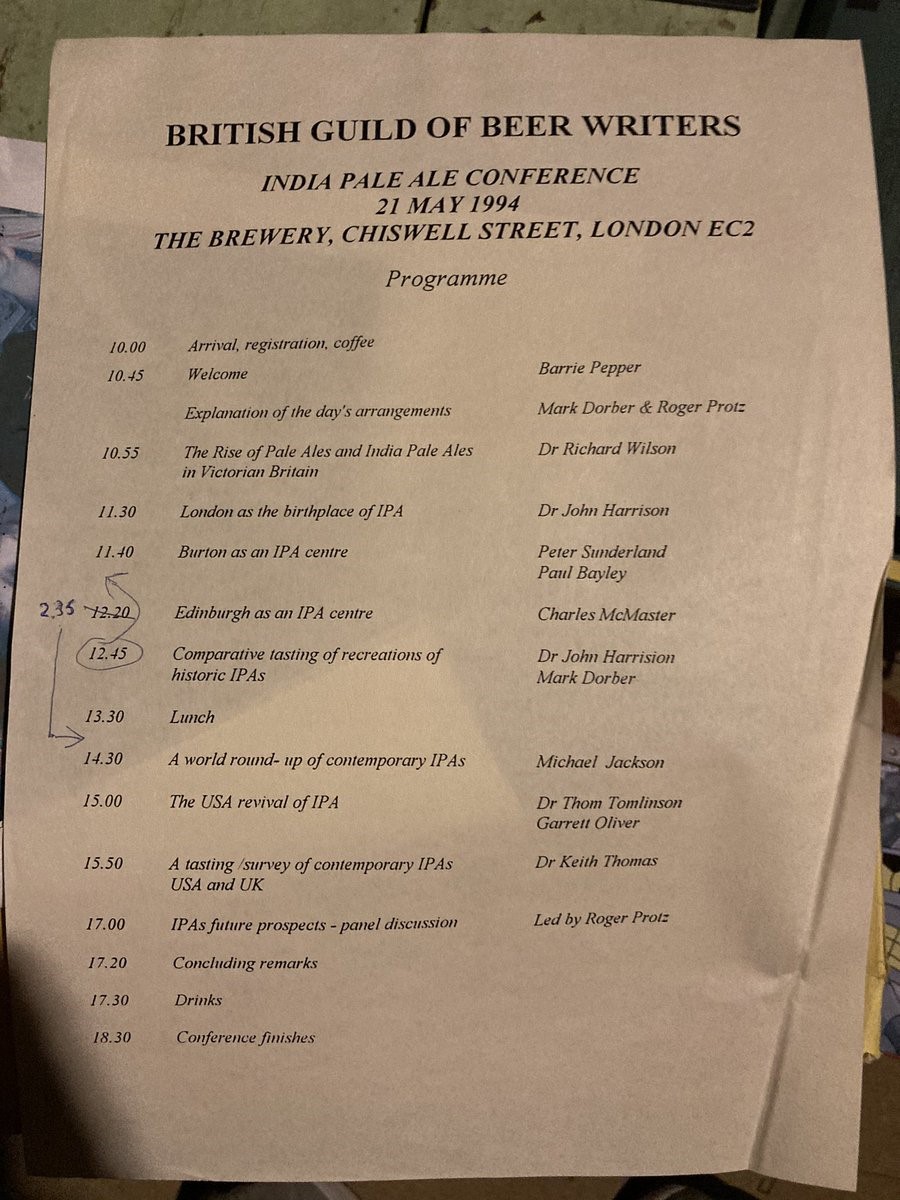
How’s your skull this New Year’s Day? Are you OK? Are you ready for some questions? Questions like: “is this the optimum alignment of the holidays?” Seem to me that a Wednesday New Year’s Eve pretty much guarantees that this week and last are a total write off work-wise. Unless you are in hospitality, of course. I am sure, by the way, that Sunday Christmas Day is the worst. Gotta put some sort of effort in the week before and you just get Monday off the week after. Glad I won’t have to deal with one of those weeks, when it’ll next shows up in 2033 when I will be long retired. That photo up there? A submission for the 2014 Holiday Beery Photo context received from Aaron Stein of Oregon. Aaron won the “Surprise Twist” award that year.*

First up, as we put 2025 on the shelf, it’s good to carefully consider your “best of” lists. It’s a tricky business finding the best of “best of” with plenty of the dubious. There are great ones like the Golden Pint Awards like this quite expansive one from Lisa Grimm that shares some happy news along with the useful insights:

… half of the family now Irish citizens (delighted!), and the rest midway through the naturalisation process, plus a book manuscript finished and in the production pipeline (finally!), as well as some exciting news on the employment…

Fabulous! And not just because of the heads up to my old hometown’s Garrison Brewing. And it doesn’t have to be all good news. Jeff posted his thoughts on 2025 and declared it “the worst year in my lifetime” with solid evidence supporting that view, before he moved on to the upsides, including:

The blog has been relatively healthy as well. Thanks to AI, online media sites are in real trouble. Google’s new AI summary means people don’t click through to websites, and traffic at some sites has fallen up to 50%. Traffic here, thanks to a strong finish to the year, has been basically flat—which is a lot better than I expected. Moreover, comments on the blog are way up, and it feels a lot more interactive these days. Thanks so much for contributing to the site!

But all lists aren’t all great. And there’s one category of useless which demands a PSA: the list of the unattainable. Not the luxurious as once in a while everyone can get their hands on something rather nice. No, I mean the sort of lists exemplified (but by no means limited to) by the beer writers’ short-run sample gift packs. Someone made 100 gallons of inguana poop stout and then couriered them to the gullible / needy / starving? Who cares. But this next sort of list, this here list of the 35 best pubs in Edinburgh? The best. Accessible. Useful. Helpful, even. And should be prepared by every topic hobbiest out there for their fair city or region.** Just look at the common sense info succinctly provided:

4. The Holyrood 9A – Round the corner at the bottom of St Mary’s Street towards the parliament building, a surprisingly bustling beer and burger den, with impressive selections of both. Food is prepared in the tiniest kitchen somewhere downstairs and served in the packed backroom or bar itself. Huge range of draught beers but also wines by the glass. An all-round good pub. Details: 9a Holyrood Road, theholyrood.co.uk

I know this is correct as I’ve been there, the cousins being just a route 128 bus ride away. One of my great regrets is not getting a photo of that kitchen as I walked out. I know, I let you down. But it is so small that you’d have to have the camera in their face. Little more than a cloakroom by the front door.

Another great format for the best of is the “stashkiller” mode, this week deployed by Barry Masterson in Cider Review:

There’s nothing new about this, we’ve all been there. You get a nice bottle of cider, or maybe it’s a beer or wine, and you think to yourself “yeah, I’ll keep that for a special occasion”. And this happens again and again, ad nauseam, until you’ve got a stash of special bottles built up that you’re almost afraid to dip into it as that special occasion just never came. It’s a funny thing, really, that with some things we think we need an excuse, when the fact is they have been made to be consumed, enjoyed, shared. In my case, when prowling the cellar for a drink at the end of a day’s work, I usually end up just reaching for a bottle of pils from the stack of crates because I feel I should be sharing the large bottles of cider, or if I open one I must be making notes, and that sometimes feels like work. It’s a terrible attitude when you have a cellar full of cider; it’s made to be drunk!

JD TBN has shared his extensive Golden Pint Awards, with characteristically  impressive level of detail in the 25 categories including ten related to specific beers as well as others such as:

Best Beer Blog or Website: The Drunken Destrier – I had this flagged for greatness since the spring, but the flurry of entertaining beer reviews petered out in late May. In the hope of some revived activity — I mean, how hard is it to drink a beer and write down what it tastes like? — I’m slinging a Golden Pint in Kill’s direction.

Simon Johnson Award for Best Beer Twitterer: barmas.bsky.social – Yeah, it’s mostly for the dog pictures, but you knew that.

I think Simon would have accepted the broader application of the otherwise tightly defined term “Twitterer”.  In DC, Jake Berg of DC Beer published his annual top beer and top music of 2025 – in not that order at all:

How this works: I pretty much only use the blog for this yearly post. I’ve got a bunch of music I liked this year with pithy comments that may or may not make sense to outside readers, interspersed with some songs I liked. Then I’ve got beer. You like beer, don’t you? This year there’s a pretty clear top two for me; both of these are excellent. After that I’m less sure, but tried to settle on an order because ranking things is fun. 

On thing we see less of in these annual lists (that itself needs a comeback) is the the in and out list or what is hot and what is not, like the one suggested at Everyday Drinking. But maybe that’s because I know what black currant tastes like. And here’s another sort of handy guide, particularly useful on this New Year’s Day. Lew Bryson on his podcast “Seen Through A Glass” on all your coffee booze options:

So I’m here with a whole bunch of coffee drinks to get going this morning!  I didn’t know what to do for a relaxed post-Christmas episode, and then I remembered this interview with John Mleziva of State Line Distillery. They make a great coffee liqueur, and we talked about that. I knew we’d be just sitting around drinking coffee on that morning after Christmas, so I made that into an episode.  Then I told you more about the press trip to Mexico I took back in 2011 to see how Kahlua is made, with all the feels, and all the delicioso, and the extra-special cocktail we learned how to make. And the donkey herb moonshine we had. Yeah, not a typo. 

For what it’s worth, get a nice winey coffee blend, add 10% cream and a splash of Chambord. Or maybe Cointreau but that’s sorta a regular Saturday thing if you ask me. Black coffee though the week, by the way.

Boak and Bailey helped put things in order in a different sense with their post on what beers for Christmas mean to them now:

There were a couple of factors behind our decision. For a start, there’s the question of what’s easiest for non-beer-geek family members to acquire and look after. We don’t want to be pains in the arse. We also find ourselves thinking about relatives might also actually enjoy drinking with us. Normalish ale and normalish lager are easy sells to almost anyone, and stay out of the way of conversation, board games, or Lethal Weapon II on the telly. Maybe nostalgia and sentiment kicked in a bit, too. Ray’s dad got quite into Cheddar Gorge Best in his final years and it was nice to feel that, in a way, we were still able to share a beer with him. We raised our glasses in the direction of his photo.

I am with them. I saw someone recommend a beer store somewhere where the cheapest offering was two and a half times the price of a very good Belgian ale and, being in the holiday mood, though to myself… WTF!! I think there may be a bit of embarassment about the sucker juice era but rather than knaw at one’s innards about the waste of a decade, do what B+B did and think of what the company you’ll be in. That’s what actual beer as social lubricant means, after all. Now… some quick notes:

Note #1: Ron pointed to a news item on the end of corked Guinness.
Note #2: Liam then explained the news item on the end of corked Guinness.
Note #3: read Bounded by Buns by the noted beerman… as, frankly, you really need to add some solid food to your diet.
Note #4: needing something to do on Jan 11th? Tune into Desi Pubs.

More news out of Britain on the relaxation of concern related to drinking and driving. In The Times this week we read:

A survey of more than 2,000 adults, including 1,300 drivers, found that 37 per cent of Generation Z believed it was more socially acceptable to drive when marginally over the legal limit, compared with 9 per cent of baby boomers. Across the population as a whole, only 21 per cent of people agree… The survey showed that more than a third of young drivers believed driving while slightly over the limit was acceptable, but also that they were twice as likely to think that alcohol did not impair their judgment. [Ed.: thankfully…] The number of young drivers obtaining their licence is at its lowest level for generations, partly because of the cost of lessons and the difficulties in getting a test.

Much is made of the lowering of the blood alcohol limit in England to match the rest of Europe but that last stat up there may indicate a truth – there might also be a general level of ignorance related to the risks of driving itself at play. And now… some more quick notes:

Note #5: a collab on the bit heading to the recycling bin?
Note #6: “RESIGN!!!
Note #7: “…number of pubs in England and Wales… fell to 38,623 from 38,989 a year earlier…”

Not at all related, the business resource The Street has chosen “the craft beer apocalypse” as its descriptor for 2025, illustrating that claim with a couple of non-bankruptcies:

One of the most recent closings was Miamisburg, Ohio, craft brewery Entropy Brewing Company, which revealed on social media that it would close down its business permanently on Dec. 27, 2025, with no plans yet to file for bankruptcy… And now, New Mexico-based Bosque Brewing Company is closing down all of its taproom locations and ending its business after a federal judge dismissed the brewer’s Chapter 11 bankruptcy case on Dec. 22 because it had too much debt to reorganize, KOB-TV 4 in Albuquerque reported. The dismissal of the Chapter 11 case will likely prompt the brewery company to file for Chapter 7 bankruptcy liquidation unless it can settle all of its debts with its creditors out of court.

AKA no hope of resuscitation. It seems to me that there might be a role for a bit of bankruptcy trustee advice for breweries in trouble at an earlier point in the downward cycle than “too much debt” but there seems to be a bit of a theme if we consider how late Rogue played along.  Before perhaps hitting the intersection of economics and ethics. Perhaps related (but only if you glean more from this passage than I do) is this offering from Gunnar Rundgren at countercurrents.org:

…society, human expression and technology develop in tandem. And in order to be strong they need to reinforce each other. And one technology assumes, or dictates, that many other technologies are in place and that society is organised in certain ways. Even something basic as beer assumes agriculture, and agriculture assumes and requires a sedentary culture. Sedentism, in turn, implies a lot of things, even though I don’t subscribe to the idea that agriculture and sedentism is the fall of man, the cradle of tyranny or the broken link between humans and nature. Some claim that beer preceded or even initiated agriculture and sedentism in that case means that it is beer that is the culprit, quite an entertaining thought….

So… if beer created civilization*** then beer is also complicit with the end of civilization. Perhaps. Shifting gears and in sensible rejection of last week’s sharing of bad advice about Dry January, this article in the New York Times may illustrate how dry does not need to mean no customers if there’s an application of a little planning to serve those cutting back:

Given that drinking — on the slopes, at the pool, or at the hotel bar — is for many people a staple while on holiday, forgoing the ritual leaves time for other activities. Here are six hotels that have devised alternatives to drinking, from snowshoeing to aerial stretching; from making mocktails to simply sipping them… The 54 rooms and suites spread across seven lodges are light-filled, with neutral-colored linens, Hästens beds and natural oak wood floors… A sustainable ethos guides the vision for the property, including its three restaurants. The extensive mocktail menu, which features zero-proof counterparts of its signature cocktails, leverages local ingredients and scraps from the kitchen. A mocktail called Too Hot to Handle, for example, is a umami-forward mix of Rebels Botanical Dry, a nonalcoholic gin; lemon; bell peppers; tomato and smoky housemade bitters.

Horsehair beds? Kitchen scraps in the drinks?!? OK… fine… maybe not so much… Speaking of retreats, like you, I read the Luxembourg Times. Where else can I catch up with the regional news of the Trappists fame… republished from Bloomberg… including some interesting technical insights from Westmalle:

The idea is to hold profit and production stable, to provide for the abbey, give to charity, and reinvest where necessary in the business. Westmalle’s bottling plant hums and crashes with life during the day as bottles are washed, labeled, filled and prepared for delivery. At maximum capacity, 45,000 are processed per minute. But the production line lies idle outside its one day shift, and doesn’t operate on weekends, as the monks want the staff to work sociable hours. It’s set to be replaced by 2030 with a new modernized facility through a major, self-funded investment in the brewery.

Mod-ren. That’s what the future will be. Mod-ren. Speaking of which… that is it for this first update of 2025.  Frig. I forgot to use the new format. Oh well. Have a great New Years Eve and Hogmanay, too! Excitement builds as it’s not yest been announced if Boak and Bailey are posting this Saturday but make it your New Year’s resolution to sign up for their fabulously entertaining footnotes at Patreon. And look out for more of Stan’s new “One Link, One Paragraph” format. Then hunt out something in someone’s archives! Leave oblique comments on someone’s post from 2007!! Listen to a few of Lew’s podcasts and get your emailed issue of Episodes of my Pub Life by David Jesudason on certain Fridays. And Phil Mellows is at the BritishBeerBreaks. Once a month, as noted, Will Hawkes issues his London Beer City newsletter and do sign up for Katie’s wonderful self-governing totes autonomous website featuring The Gulp, too.  Ben’s Beer and Badword has returned from his break since April so you can embrace the sweary Mary! There is reading at The Glass which is going back to being a blog. Any more? We have Ontario’s own A Quick Beer and All About Beer is still offering a range of podcasts – and there’s also Mike Seay’s The Perfect Pour. Plus follow the venerable Full Pint podcast! And there’s the Craft Beer Channel on Youtube. Check out the archives of the Beer Ladies Podcast.

*From the Wayback archives, here is the explanation of the Surprise Twist: “I feel a 1980s power ballad coming on. I can’t fight this feeling anymore. Maybe I was just so damn tired. I was checking out all the entries and just like that I heard a voice. It said: “Hello, is it me you’re looking for?” I dunno. This time I wanna be sure. Suddenly, it’s touching the very part of me. It’s making my soul sing. It says the words that I can’t say. Maybe little things I should have said and done. I guess I just never took the time. When it was thinking about prize giving this was always on my mind… always on my mind. I’m never gonna dance again if I don’t make this right. Aaron Stein of Portland, Oregon wins. Not sure what he wins. But he wins the book I need to dig out award for the overlooked image of 2014.” That’s… a lot. Wow. Was I drunk?
**Consider B+B’s Bristol or (for the double!) Lisa’s Dublin.
***Didn’t.

Your Fascinating But Still A Bit Sticky And Humid Mid-July Beery News Notes

Summer. Heat waves. Heat warnings. Smoke warnings. Drought. We got it all. Including sugar snap peas. I’ve adoped the Canadian old fart posture this week, when facing a comment on the blistering sun, as I just reply “at least I ain’t shoveling it!” Which is, of course, hilarious. Roar! Tape me ribs! No wonder all of comedy in Hollywood is run by Canucks! The heat in England heat has even driven Boak and Bailey off the beer, according to themselves in their monthly supplement:

…we had some beer at home, so it wouldn’t be too bad, right? Except however much we chilled it, it never quite seemed to refresh us. After a couple of lagers we gave up and switched to iced water. Apparently our bodies were telling us to hydrate and beer, unfortunately, has very much the opposite effect. When we have made it to the pub during heatwaves, we’ve often found cask ale to be a write off. Partly because not all pub cellars are capable of withstanding extreme heat, and partly because people switch to lager leaving ale to lose its sparkle.

Reporting from a land more used to the stinking heat, Pellicle‘s feature this week is a feature by Ruvani de Silva on the Green Bench Brewery in St. Petersburg, Florida. Which is, of course, another part of American utterly infested with we Canadians including, twenty years ago, by my late parents who would occassionally lunch at the welcoming Don CeSar with other welcomed snowbirds from all over. Wasn’t always like that:

Rewind seventy years or so, however, and our experience of St Pete’s would have been very different. The Sunshine City might have been a holidaymakers’ paradise, but only if you were the right kind of visitor. The city’s unwritten law that people of colour were not permitted to sit on its famous green benches evidenced how St Pete’s did not escape Florida’s vicious segregationist policies of the time. This unofficial ordinance was more than simply a physical imposition—it was a restriction that entrenched systemic racism for generations of Black Floridians. It’s for the memory of this injustice that Khris Johnson, founding brewer and co-owner of Green Bench Brewing and Florida’s first Black brewery owner, chose to name his business.

Speaking of establishments, one of the swellest images that passed before my eyeballs this week was this one to the right. At first I thought it was a fire insurance map but there isn’t enough detail.  It’s was posted at a local history group over on FB, Woodlesford and Oulton History, and seems to be a diagram that accompaned a 1933 planning application to update the New Masons in Oulton:

In October 1933 Fred applied to the Hunslet Rural District Council to make major alterations to the layout of the pub and add a new frontage and windows. The work involved knocking down part of the old front wall and fitting a rolled steel joist to support the upper floor. The new layout was then much the same as it remains today.

And here is the pub, still there. The photos help explain the map including the location of the fireplaces, the scale of the room. But the one thing I don’t understand is why the bar is in the passageway. Did you go there from one of the three rooms, get your pint and go back in to find your chair or was the passageway itself a drinking area? These are the things that haunt me.

In more somber news, we have received the sad news the passing of Jack McAuliffe. In remembrance, John Holl has republished a tribute from All About Beer from 2017 to the founder of the New Albion Brewery Company in California which opened in 1977.  And Maureen‘s comment on BlueSky is a wonderful tribute that tells a lot about the man:

Ah. This saddens me. Not unexpected, but I’m sad i won’t see him again. He was hilarious, among other things. I was humbled by the fact that I was one of the very few people Jack likes and respected. That meant a lot to me. Godspeed, Jack. 

Just two weeks ago, Gary shared an anecdote from the earliest days of Jack’s brewery which is worth revisiting to get a sense of how this brewer helped start the change that led on to micro and craft brewing working with very basic resources.

Stan has shared the latest edition of his Hop Queries and explained the dire situation facing hop growers in the Tasman region of New Zealand, including Brent McGlashen of Mac Hops:

“Statistically and visually, we hit above the 1 in 100-year flood level, with also highest ever recorded river flows in a number of parts in the Motueka river… Both our farms have water everywhere, fences with damage and some debris scattered around, but we are fortunate compared to others who have had significant damage and loss due to the flooding. Was this predicted, well yes it was. Forecasters said over 200mm and we sure got that. We have had a wet winter and the ground can’t absorb more so it has to go somewhere.” One hop farmer died as a result of the storm. Peter Lines was clearing flood damage from his property in Wai-iti, southwest of Nelson, when he was hit by a tree.

Rain came again the next week “leaving fields under water and dumping mud, gravel and sand on facilities that had just been cleaned up…” 

Writing about disasters of the unnatural sort, The Beer Nut brought his lucidity to a review of an unknown Dutch brewery, to which he added a key question on BlueSky: “how long can a brewery keep up a sequence of nautical-themed beers flavoured with fruit syrup?” The answer is apparently “too long“:

My report card for Stadshaven says “must try harder”. A sampler pack of fruit syrup does not make for a vibrant range of modern beers, for one thing. I sense an ability to do plain-spoken beers quite well, testified by the red and blonde in particular. Whether the decision not to steer that course is a creative one or a management one, I cannot say. The low price point is very much in these beers’ favour, though I’m still not sure I got my money’s worth from them. 

Speaking of the low, Matty C wrote for What’s Brewing on the most obnoxious retort around: “stick to…” with the line filled in by the obnoxious. In this case, it was about the position being taken him and by many other drinkers in the UK on the Palestinian-Israel war – and in doing so makes this very lucid argument:

In modern political discourse it’s perhaps the first approach to go out the window when things get a little spicy. But it is because of compassion, not malice or spite, that the volunteers of Trafford and Hulme CAMRA opted to have the donation box in the first place, and it is compassion that motivated attendees to make a donation as they leave. It is compassion that triggered the response from customers when they found out beer from breweries they admired were selling beer into a market they didn’t. And it is because of compassion that you’ll struggle to find Moor Beer on tap in Bristol at this very moment. It would be far easier, surely, to stick to beer, and leave the politics to the politicians. But in fact, sometimes the most compassionate thing you can do is stick your head above the parapet and say, “I don’t think this is okay.”

Politics is for the people. All the people. No matter what the cause or the position, being active and acting on compassion is a good thing.

You know what also gets people losing their composure, their perspective? Beer glassware. Do you have a go to glass for beer? I do… well, one for inside and one for the yard. Kevin at Casket Beer advocated in favour of simplicity and recommended a basic four:

…while the shaker isn’t as bad as many make it out to be, it really shouldn’t be a major player either at a beer bar or your home bar. But having a respectable selection of glassware doesn’t need to break the bank or become unmanageable. There are four widely available glass styles that are affordable, cover a wide array of styles, and will satisfy the most discerning beer drinker. Here they are.

You can go see which four they were. Jeff then picked up the theme and advocated for one fewer: “Give me a mug, a goblet, and either a snifter or tulip—both is overly fussy…  I like a handle, and I find a beer looks great when it’s in a wide vessel—the clarity and color is easier to see. Facets bedazzle and please me (recall, I am one of the few fans of glitter beer).” Wow. I was with him there until those two last words. Just… wow.

And staying with the wow,* Alistair has been staying (practically) true to his promise to bust his writer’s block by writing every day (almost) over at Fuggled. Wednesday’s story this week was about the Austrio-Hungarian schnitt of 1900:

The writer continues to berate their fellow German Austrians that a single “schnitt” fewer every day wouldn’t be so bad and that the savings would build up to a sizeable fund for civic associations tied to the ethnically German population of the Empire. And here we have again an example of the cross pollination of cultures that was Bohemia and Moravia in the 19th century, evidenced today through the use of a transliteration of “schnitt” into Czech, “šnyt” as the name for effectively a half pour of beer and lots of foam. “Schnitt”, if you know your German means “cut”, because it is a cut down pour of beer, that is “better than nothing”, at least according to Bohumil Hrabal, or was it Karel Čapek, when he wasn’t inventing the word “robot”?

And the colonial history of the beer gardens of Bulawayo, Zimbabwe was the subject of research for Prof Maurice Hutton of the Global Development Institute, University of Manchester who shared some findings for The Conversation:

The more picturesque beer gardens began to emerge in the 1950s, reflecting the developmental idealism of Hugh Ashton. The Lesotho-born anthropologist was educated at the Universities of Oxford, London and Cape Town, and took up the new directorship of African administration in Bulawayo in 1949. He was tuned into new anthropological ideas about social change, as well as developmental ideas spreading through postwar colonial administrations – about “stabilising” and “detribalising” African workers to create a more passive and productive urban working class. He saw a reformed municipal beer system as a key tool for achieving these goals. Ashton wanted to make the beer system more legitimate and the venues more community-building. He proposed constructing beer garden complexes with trees, rocks, games facilities, food stalls and events like “traditional dancing”. So the atmosphere would be convivial and respectable, but also controllable, enticing all classes and boosting profits to fund better social services. As we shall see, this strategy was full of contradictions…

Finally, like you, I am a regular reader of the Greenock Telegraph the newspaper of record of my paternal peeps. This week they publised an editorial from by the local member of the Scottish Parliament Stuart McMillan on alcohol in the workplace:

Too often there is a conception that people living with drink dependency can’t hold down a job – but when one in four people in the UK worry about their drinking, it’s clear this is a myth. I’m not suggesting 25 per cent of the adult population in the UK have an alcohol addiction. However, these figures indicate that increasing numbers of people are concerned about the impact alcohol has in their lives… For most of us, though, we don’t need specialist support. But we do need to be more open about how alcohol impacts us, and try to foster healthier habits. The popularity of alcohol-free products shows that many people are looking for alternatives – whether that’s alcohol-free beer, wine, spirits or mocktails. Locally, one idea that has been suggested to me is a ‘sober bar’ – which would give people a place to go that feels like a pub, but without the presence of alcohol.

I decided to include this piece not because I agree or disagree. Not even because health and booze is always a worthwhile conversation. But… I can’t imaging a Canadian politician writing this. Because I can think of many other alternatives to alcohol which include, say, playing a banjo or reading a book or going for a walk or staring at a bird in a tree or making a pot of tea – none of which need to simulate the drink or the pub. Which is one of my things about pricy NA not-booze. Just go for a soda. We even have a song about it.

So there you are. Staring at the little screen in your hand as the A/C hums. Until the weather breaks, please check out Boak and Bailey every Saturday. Look out for Stan when he feels the urge now that he’s retired from Monday slot… maybe. Then listen to a few of the now rarely refreshed Lew’s podcasts and get your emailed issue of Episodes of my Pub Life by David Jesudason on the (sometimes even but never) odd Fridays. And maybe The British Food History Podcast. Maybe? And Phil Mellows is at the BritishBeerBreaks. Once a month, Will Hawkes issues his London Beer City newsletter and do sign up for Katie’s wonderful newsletterThe Gulp, too.  Ben’s Beer and Badword is out there with the all the sweary Mary! And check out the Atlantic Canada Beer Blog‘s weekly roundup. There is new reading at The Glass which is going back to being a blog. Any more? We have Ontario’s own A Quick Beer featuring visits to places like… MichiganAll About Beer has given space to some trade possy podcasts and there’s also The Perfect Pour. Plus follow the venerable Full Pint podcast with an episode just last month!. And there’s the Craft Beer Channel on Youtube. Check out the archives of the Beer Ladies Podcast. That’s quite good and after a break they are back every month! The rest of these are largely dead. And the long standing Beervana podcast …except they have now stood down.  As has We Are Beer People. The Share looked to be back with a revival but now its gone quiet. And the Boys Are From Märzen podcast appears suspended as does BeerEdge, too. VinePair packed in Taplines as well. All dead and gone.  There is more from the DaftAboutCraft podcast, too. Nope – that ended a year ago.   The Moon Under Water is gone – which is not surprising as the ask was $10 a month. Pete Brown’s one cost a fifth of that – but only had the one post. Such is life. Such is beer podcasting and newlettering… which, as Ray says, are blogs!

*Forced, I know. I’ll try to do better. My footnote game isn’t the best either. It’s the heat. Well known fact. Asides suffer in the summer. Researchers are on it.

Beer. News. Notes. Phrases. Words. Selections. Pretentious. Minimalist. Heading. Formats.

What a week! I had no idea that I’d make it to this Wednesday evening when upon I do scribble out these notes. And it’s not even sun up before I’m out the door, although the moon apparently has a decent view up there looking east.  And the reading takes a bit more digging. But as B+B wrote:

…we embraced that: let’s focus on some smaller, more unusual pieces from old skool blogs and old-fashioned Web 1.0 hobby sites. That’s good stuff, too.*****

Agreed. Enough complaining. Let’s get at it. I do like this entry in Every Pub in Dublin if only for its lack of information:

I just walked in and looked for it. And found it relatively easily, as its basically just straight back from the front door, albeit well into the hotel. It’s quite a fancy hotel bar, but nothing incredibly special. I doubt many people ever go here just to drink, what with the Baggot Street and Haddington Road pubs nearby, but you *could*.

Even more of a deterrant to drinking in Dublin is this explanation by Lisa Grimm of the environs of her pub of the week, The Circular:

…the first stone bridge was built here over the Grand Canal in 1795, replacing an earlier wooden structure, and its resemblance to Venice’s Ponte Di Rialto gave the bridge, as well as the surrounding area, its better-known name. There are stories of a Black Shuck-type dog stalking the underside of the bridge, with some tales more specifically citing the devil himself appearing as a black dog in the area. Indeed, devilish attachments (literally) continued with a stone ‘devil’ head formerly being affixed to the bridge – though whether the stories or the sculpture came first is open to investigation. 

Satan himself! Yikes. [You know, I just thought it was a song by The Darkness.] On a more positive or at least not as terrifying note, there was a good bit of writing from Jessica Mason this week on a fairly singular business decision seeing one craft brewer and wine cidery to join up on distribution:

On-trade customers can now buy Red Fin cider products directly from Siren, packed in the brewery’s 30l stainless steel kegs. Two Red Fin ciders are available alongside Siren’s beers to help publicans consolidate their beer and cider deliveries. Further benefits include the option for pubs to take advantage of collaborative brand activations and events as well as custom installations. According to the business owners the new partnership isn’t financial and neither company has a stake in the other. However, the independent businesses describe it as “strategic”.

Sensible. E.P. Taylor would be pleased by the effort to cut what he would have called waste – the failure to find harmoneous deals on the non-profit making expenses. Seeing what is around you with fresh eyes was also the subject of a great interview early one morning this past weekend on CBC Ontario’s Fresh Air on a South African brewery working to support local traditional brewing:

Reitumetse Kholumo is the founder of Kwela Brews in South Africa. She recently won a pitch competition at Queen’s University for her venture.She told us how she is using the prize money to empower women and protect the Indigenous tradition of sorghum beer.

More here on Kwela Brews in this Forbes Africa article from last year. There were two other articles that caught my eye this week which touched on beer and colonialism. First, in New Zealand recently there has been controversy about the naming of a beer after a Māori navigator:

Te Aro Brewing named its Kupe New Zealand IPA after the Polynesian navigator as part of its Age of Discovery series – a limited range of beers showcasing historical explorers including Christopher Columbus and Ferdinand Magellan…  Both complaints argued the association of Kupe exploited, degraded, denigrated, and demeaned his mana and, therefore, that of his descendants and the people and places associated with him….”I’m really upset about it because our tupuna is being used as a platform for promoting alcohol, and his name being used on the [packaging] says we agree to this, and we don’t,” she said. “Culture should not be used in that form; whether it be Māori, whether it be other indigenous peoples, or whether it be our community – our babies are having to walk past that every single day… that advertising, that promotion… Peka said she wanted to acknowledge the people that had used their voice to make a difference for the whānau, community and cultures within Aotearoa.”  

I will leave it to you to look up the meaning of manu, tupuna and whānau like I did. The other story is the article this week in Pellicle by David Nilsen on the colonial and Indigenous legacies of brewing in Quito, Ecuador – that capital of a nation facing many serious issues. Elsewhere** we have seen how the perspectives from beer writers on a visit have posed, shall we say, challenges but this artlcle manages this well, if a bit obliquely:

…that rural connection has, sadly, not always helped chicha’s image in Quito as the city tries uncomfortably to balance its Indigenous heritage with its cosmopolitan aspirations. “A lot of people here grew up knowing about chicha, with their aunt or grandmother making it,” he says. “For many years, it had a stigma as a drink that was only for the lower classes living in the country. In Quito, as craft brewers became more knowledgeable about fermentation, they became more interested in reclaiming and revitalising this from their heritage.”

David sets it out for your consideration. We see the colonial hand moving in many ways in the article. The taprooms with the IPA.  The central presence of the monestary and the museum. The application of science upon an Indigenous practice without space for a voice speaking for the pre-contact and continuing original culture as we heard the Māori perspective above. There is much packed into this piece.

Building on the least serious or perhaps most recent form of those intrustions from abroad, in Britian apparently SIBA is sick of “craft beer”…  if only as a term:

Small breweries in the UK are ditching the term “craft beer” in favour of “indie beer”, warning that global corporations have bamboozled many drinkers into believing that formerly independent brands are still artisanal hidden gems. In a survey by YouGov that marks a new phase of the bitter war over what constitutes “craft beer”, consumers were asked to say whether 10 beer brands were made by “independent craft breweries”… More than three-quarters of those surveyed said they felt consumers were being “misled”…

CAMRA is in on the campaign as well. So is “craft” now a dirty word in Britain? Is it dead… again? Hmm… and there was also an interesting choice of words in an interesting paid advertorial this week in Politico, “sponsor generated content” it says. By Julia Leferman of the Brewers of Europe. Why is this bit of lobbyist comms interesting? Because of this passage:

Brewers are empowering consumers with the tools to take responsible decisions. This is about choice: if people don’t wish to, or simply shouldn’t, consume alcohol, they can still participate in the social experience of sharing a beer with friends and family. At the same time, brewers have pioneered initiatives in education and community engagement to encourage a better drinking culture and help reduce alcohol-related harm.

Could you imagine a North American trade organization place “alcohol” and “harm” that closely? Speaking of choice of words, Stan stood up for flavoured beer this week, building on the use of “beer flavoured beer” and admitting at least one of his sins:

I was wrong to use the term. It can be used to exclude, wielded as a weapon by drinkers who imply they know something others do not. “I can appreciate beer-flavored beer, the complex flavors that result from the interaction of malt and yeast in a simple helles. You are not worthy.” More obviously, it also excludes many, many, many flavors. In fact, some drinkers do not like the flavors in what they’ve come to know as beer-flavored beer. A survey of consumers in non-alcoholic beers in Northern California found they did not care for the “beer like” aroma, taste or mouthfeel they associate with non-alcoholic beers that were intended to mimic alcohol-containing lagers.

Let us be honest. Flavours that come from adjuncts are just not that interesting.  The infinity that four ingredients can provide is enough for me. That’s brewing skill enough to draw me in. To be fair,² Stan did mention that he “would not drink a peanut butter chocolate merlot, but I would like to try the peanut butter chocolate porter from Schell’s.” I wonder what it would taste like? Oh, I know. Peanut butter and chocolate! Brilliant. I am not going to judge – but masking the taste of beer by adding other things to it is in the fine tradition of alco-pops. Fine. I judged. But has any industry succeeded long term by focusing on newbie marketing? One – candy. And I get that it’s a business decision to chase that market but it does seem interesting to me how that trend has tracked in parallel in recent years with the stalling and contraction of interest in good beer. A curse. A pox. Jeff has more, much of what I don’t buy given the tone of sheer presentist congratulationism.**** Still, it’s not that far off my favourite version of the phrase is 1998’s “beer-flavoured water” to describe PBR.

Consider this as something of a contrapunct to all that, entirely thoughtful words from Rachel Hendry (h/t to KM) within her thoughts this week on “Wine and Cider”:

When trees are knocked down, when orchards are treated poorly in the name of higher yields, when cider is infantilised and drinks are manipulated and artificially mimicked in order to make more money for big brands, very few of us win. Where lack of care destroys, care itself transforms. Those who take the more romantic approach, who approach the trees and their fruit and the ecosystems around it with care, who make their drinks to showcase the amazing things that apples have to say once fermented, who pick and press and pour and produce with such ferocity of respect and reverence, well our lands and our lives are better for it. We owe them so much.

I like that. A lot. Romance as integrity. As opposed to infantilism. See above. Maybe. Perhaps quite conversely but still about the language, when they are not bored (at least according to a poll run by the imported and apparently not boring brand Kingfisher) British lager drinkers appear to be really angry with brewers:

One person described a 3.4 percent strength beer as a ‘f**king shandy’, while another lamented Grolsch as a ‘once decent’ tipple, and said he’d been a fan of the old five percent mix. He wondered who the 3.4 percent beer was aimed at, while a third declared: “Grolsch, now alternatively known as p**s.” Someone else said the downgrade made Grolsch into a ‘run of the mill session lager’ that was ‘certainly no longer premium’.

Another sort of infantilisation, I suppose. Potty mouth. Still… journalism FTW. Note: Britons are also livid over noisy upgraded beer gardens and ugly view blocking teepees in upgraded beer gardens.

Finally, Stan** went someway to answer my question when he indicated that the NAGBW attracted 269 submissions from 96 entrants this year. I wonder if that is an increase or decrease? As the scope of the focus narrowed to those who “cover” the beer industry, one can’t help make comparisons*** with the often seemingly more vibrant and ecclectic awards from the British Guild of Beer Writers. Where is the Hawkes? Where is the Jesudason? Yet… I was really pleased to see the first place wine for the fabulous Courtney Iseman for her “Secondary Fermentation — New York City’s Strong Rope Brewery and the East Coast Cask Revival” in Pellicle last December. A writer of fine strong words like “craft beer cringe” and “toxic fandom“, I remember when I saw the title of her winning piece I thoughtplease reference Gotham Imbiber… please oh please” and yup there is was. Proper job. Proper recognition.

That’s enough. How many links do you need? Until the boo-tastic edition next Thursday, for more beery news check out Boak and Bailey every Saturday and Stan going strong again each and every Monday. Then listen to Lew’s podcast (if he ever does one) and get your emailed issue of Episodes of my Pub Life by David Jesudason on the (now very) odd Fridays. And Phil Mellows is at the BritishBeerBreaks. Once a month, Will Hawkes issues his London Beer City newsletter and do sign up for Katie’s wonderful newsletterThe Gulp, too. Ben’s Beer and Badword is out there with the sweary Mary! And check out the Atlantic Canada Beer Blog‘s weekly roundup. There is new reading at The Glass which is going back to being a blog. Any more? Check out the Beer Ladies Podcast. That’s quite good and they are revving up for a new year. And the BOAS podcast for the bro-ly. And the long standing Beervana podcast …except they have now stood down.  Plus We Are Beer People. The Boys Are From Märzen podcast appears suspended as does BeerEdge, too. But not Ontario’s own A Quick Beer. There is more from DaftAboutCraft‘s podcast, too.  All About Beer has podcasts and there’s also The Perfect Pour. Plus follow the venerable Full Pint podcast. And the Craft Beer Channel on Youtube.  The Moon Under Water is gone which is not surprising as the ask was $10 a month. Pete Brown’s one cost a fifth of that but only had the one post.

*For example, the stunning white-washing of German atrocities in Brazil or the naive deflection of the genocide by American Revolutionaries against the Haudenosaunee in New York.
**For the double!
***Hmm… maybe “best in the world, if it is focused on the trade side, written in English, relevant to an American perspective and, yes, written by one who submitted“… perhaps?
****That’s a new one… I like it… BUT THESE FOOTNOTES AREN’T EVEN IN ORDER!!!!
*****Evanescent“!?!? Really???? At least it isn’t “quotidian”… if there were every a inflationary ten dollar word that is never needed and rarely used correctly it’s friggin’ “quotidian”… sheesh… yet also**. See also this sort of devaluation of a concept… no one at all is shocked by a beer trade fact… no one cares…
²Am I ever not?

Your Beery News Notes For Turning The Calendar Page From Zeptember to Rocktober

Happy autumn!  Did you find any September Ale yet? Nope, me neither. But as I probably say this time every year – it was a thing! Whatever it was.  Defo. A certain thing for a certain time:

Season of mists and mellow fruitfulness,
Close bosom-friend of the maturing sun;
Conspiring with him how to load and bless
With fruit the vines that round the thatch-eves run;
To bend with apples the moss’d cottage-trees,
And fill all fruit with ripeness to the core…

Ah, poetry. Autumn wasn’t all about Halloween candies and scaring the kiddies. It was the harvest – as Big Johnny K told us right there. To the core, baby! Just look at my meaty paw loaded with tamayddies. And just look at this bit of harvest Pr0n from Barry. And speaking of the arts poetic, I was listening to NPR’s Mountain Stage on Sunday as I usually do and heard a bit of a band by the name of The Brothers Comatose and these their lyrics:

You look at me like I’m crazy
But that stuff is bitter and gross (So gross)
I just wanna enjoy myself
I don’t wanna be comatose
Well, after a day of working hard
I’ll belly up at the bar
You can keep your hoppy IPA’s
I’ll be sipping on my PBR

The title of the song is “The IPA Song” which has some pretty clear messaging. The concerns are plainly stated: “When I drink a half dozen, I’ll be winking at my cousin…” And the ecomomics is addressed: “…you can keep your bitter brew / That costs you twice as much…” On that last point, Ron found a similar theory on why certain beers are trendy in an article from over fifty years ago:

Mr. Claude Smith, President of the Incorporated Brewers’ Guild, puts it down to cash. “It all down to people having more money,” he says. “At the bottom of the pile you get mild drinkers. When they get paid more, they drink bitter. When they get paid even more, they drink lager, It’s sort of fashionable and up-market. They want to prove they can afford it.”

All reasonable points. So, when people want to be seen they get that IPA.  While still on vacation Stan, however, argued to the contrary and even made the news as reported in Bloomberg praising that “bitter brew” with a focus on what really makes the most popular US hop so… popular:

“The popularity of Citra is directly linked to the popularity of IPA, and the proliferation of IPAs that were brewed with more hops than in the past, notably dry-hopped beers,” says Hieronymus, referencing the process by which even more hops are added late in brewing to boost aroma and flavor without increasing bitterness. “Citra thrived because it works well on its own, but also both compliments and complements the character of other varieties… IPAs are becoming less bitter,” says Hieronymus. “There are three types of hops: aroma hops, high-alpha hops that add bitterness, and now dual-purpose hops that can do both. Citra is the latter. The shift from the qualities of Cascade to those of Citra has led to interest in more expressive hops with higher impact.”

Still… there are so many stories out there about how to avoid beer when having beer. Is an “give me even less than a PBR!” movement? We’ve waded through the zero alcohol stories for a while now but the zero pints stuff is a new twist on how to get less for your beer buying bucks. In The Guardian Eleni Mantzari, a senior research associate from the Behaviour and Health Research Unit at the University of Cambridge, explained the logic behind the study that experimented with smaller portions to capture the reaction:

She explains that there is not a lot of evidence about the impact of serving sizes when it comes to alcohol, but there is lots of research into food portions. “Larger portion sizes are linked to obesity. When portion sizes are smaller, consumption is lower,” she says. Regarding beer, “we just wanted to get the evidence. It’s up to the people in charge what they do with it.” Mantzari spoke to managers and owners from the participating pubs at the end of the study to find out how customers had reacted. “People didn’t tend to order two halves on the spot,” she says. “Some venues got complaints – mostly those outside London and mostly from older men. The complaints subsided over time, whether because people got used to the two-thirds, or because they knew the pints were coming back.”

Yup, there’s a certain sensitivity there. [Was the loss of the Canadian stubby in the 1980s our cultural equivalent? They never really came back. Gary’s been checking for them in Owen Sound. None there. (But there used to be bootleggers.)] And, you know as I get back to the point, it’s not just the ability to have that pint, it’s about where to have one as the number of pubs keeps shrinking, as Jessica Mason summarized:

The analysis showed that number of pubs in England and Wales fell to 39,096 at the end of June with industry experts warning that tax rises in 2025 could result in further closures across the industry. The data additionally highlighted how the total figure also included pubs that currently stood vacant and were being offered to let, which meant that the number of operational pubs was in fact even lower… In the first half of 2023, 383 pubs also closed, the equivalent to 64 pubs closing every month, showing that the situation is dire.

And it is not about how much or where you have one – it’s also about when and how the pint is even pictured. There is a fixation with British beer writers about certain photos being used for certain purposes. David J. picked up the theme for CAMRA’s What’s Brewing but added an insider’s view:

Working as a sub editor at the Guardian around the time web stories started to become very popular – and the newspaper was losing £1m a week as print sales started to fade – was a quick education. The volume of work we had to publish was so punishing that very little attention was given to details that were vital to make a story appeal to a reader. Captions, headlines, and, crucially, photos were slapped on quickly because senior editors would shout and curse for us taking too long… Now 15 years later, I’d like to hope that things have changed, but when I read national health stories about alcohol abuse, I doubt it. This is because nearly every time a sub publishes a story that looks at the harm alcohol causes, or the impact abuse can have on our society… a photo of a pint is used.

He calls it “lazy caricaturing” which is fair enough but is beer really more beautiful to the eye than wine or spirits? Could the average British beer drinking person in an slightly, err, obsessive relationship? I am pretty sure that it is no more healthy or less heathy than other booze. They are just different outfits for the same paper dolls. But, yes, they could get about four more stock images to add to the three that get heavy rotation.*

Not unrelatedly in terms of how and why the beer is presented, The Conversation published an interview with Dr. Jordanna Matlon of American University on what is described as the exploitation of lower income men in Africa by Guinness through leveraged advertising:

Guinness needed to speak to the experiences of real consumers: men who had long abandoned the prospect of a job that would have required a tie and a briefcase… I borrow this idea of the “bottom billion” from the business world, where emerging markets are a final frontier for corporate profits. It is supposed to celebrate the wealth potential of the poorest people on Earth: as the argument goes, the minuscule “wealth” of a billion people is really a fortune. Of course if we pick this apart just a bit it is clear that the wealth belongs not to the poor but to the corporations that sell them things. There is no real “Africa Rising” in this vision, no plan for enlarging an African middle class. Reflecting a longer colonial legacy, wealth here is something to be extracted.

It’s the whole bonding thing. Does beer and other bonding agents get taken advantage of?  For example, I like this analysis, as discussed in TDB, of the cost of being an English football fan which not only compared the price of a pint at a game but added another six factors to come up with a more wholistic sense of how the fan is squeezed:

Ipswich Town came out top, with an average beer costing just £3.50. In second were Wolves and Brentford, where the average cost of a beer was £4 – although the overall second cheapest team including tickets and other goods was Southampton, where the price of a pint was £4.55. At the same time, bitter North London rivals Arsenal and Tottenham were the two most expensive teams to follow. A pint at Arsenal cost £6.30 and pies cost almost a fiver (£4.80). Spurs pint was considerably cheaper, at £5.10, but it performed poorly in other goods and ticket prices, with shirts costing £85.

I always like me a good methodology. Brings out considerations of integrity. In Pellicle, Anna Sulan Masing wrote about another sort of integrity, transparency in spirit making:

Are sustainable changes happening because of consumer demand, or because businesses think it is the right thing to do? I believe it should be a combination of political structure, business desire and consumers wanting to drink better. Wong thinks there is real change happening. “Since lockdown people have had a bit more time to think, consider what they buy, invest (time and money) as well as what they put into their bodies.” She says it is akin to eating organic, sustainable foods. “People are more curious.”  She sees a correlation with the growth in agave spirits—people are coming to the category with an interest and understanding about the growing process, and the farming and the farming community is very much a part of the narrative of understanding the quality of the liquid.

Are these things, as she wrote, “rich, white person’s badge of honour”? Why do we associate so strongly about these things? Speaking of which, Boak’s and Bailey’s emailed monthly newsletter is a goodie this time, with the interesting results of questions they had posed about the effect of change of management in pubs as well as this line which sort of summarizes the arc of their last twenty years of beer writing:

It’s easy to romanticise pubs. This makes clear how crap they can be while still, somehow, being enchanting…

Is that it? You’ve been enchanted?

In the health section this week, we revisit whether there is any aspect of alcohol drinking that legitimately is a boost to your health? Did I ever mention my 2012 kidney stone? What fun. Well, there may have been a reason it was not as bad as it might have been:

In a study that included 29,684 participants in the National Health and Nutrition Examination Survey 2007-2018, mean alcohol intake was significantly higher among non-stone formers compared with stone formers (42.7 vs 37.0 g/day). Beer-only and wine-only drinkers had significant 24% and 25% reduced odds of kidney stones compared with never drinkers or current drinkers who did not report alcohol intake by dietary recall, after adjusting for multiple variables, Jie Tang, MD, MPH, of Alpert Medical School of Brown University in Providence, Rhode Island, and colleagues reported in Nutrients. The investigators found no association with liquor-only intake.

Finally, if kidney stones weren’t uncomfortable enough for you to add to your worries of the week, Jeff posted an excellent and extended consideration of the implications of arguments made by a lobbyist group advocating for increased beer taxation in Oregon – with some interesting candor:

Beer tax proponents should be honest about their goals, which mirror anti-tobacco efforts to marginalize smoking by making it so expensive. That’s a fine goal! I would be completely happy to see cigarettes completely vanish from the earth, and I’ve supported taxes that make it so expensive that people have to be really committed to continue. Not everyone agrees with the position, but that’s the way of politics. Oregon Recovers wants to cripple the beer industry much as I wanted to cripple Philip Morris. I’d be happy to put it out of business and I’m willing to own that.

But if that is the case, if you have a certain understanding that alcohol is detrimental to health and to society… should we be listening or opposing?  Do you associate so deeply with the booze you drink that it is a political platform?

As you think about that… until next week for more beery news, check out Boak and Bailey every Saturday and let’s see if Stan cheats on his declared autumnal break on Mondays. Then listen to Lew’s podcast and get your emailed issue of Episodes of my Pub Life by David Jesudason on the odd Fridays. And Phil Mellows is at the BritishBeerBreaks. Once a month, Will Hawkes issues his London Beer City newsletter and do sign up for Katie’s wonderful newsletterThe Gulp, too. Ben’s Beer and Badword is thereback with the sweary Mary! And check out the Atlantic Canada Beer Blog‘s weekly roundup. There is new reading at The Glass which is going back to being a blog. Any more? Check out the Beer Ladies Podcast. That’s quite good. And the BOAS podcast for the bro-ly. And the long standing Beervana podcast …except they have now stood down.  Plus We Are Beer People. The Boys Are From Märzen podcast appears suspended as does BeerEdge, too. But not Ontario’s own A Quick Beer. There is more from DaftAboutCraft‘s podcast, too.  All About Beer has podcasts and there’s also The Perfect Pour. Plus follow the venerable Full Pint podcast. And the Craft Beer Channel on Youtube.  The Moon Under Water is gone which is not surprising as the ask was $10 a month. Pete Brown’s costs a fifth of that but is writing for 47 readers over there.

*Just click on that zero pints link up there for one of them.
*Just consider this on the two-third portion in their footnotes this week: “But what problem are they solving that half-pint glasses don’t? Well, half-a-pint does feel a bit too small sometimes – especially if the glassware is really nasty, like something you might find in a hotel bathroom. We used to love drinking Brooklyn Lager out of branded glass that was about two-thirds-of-a-pint. It felt nice in the hand, swiggable but not over facing. Again, more choice, by all means. Let’s have options.” I now want a t-shirt that says “swiggable but not over facing”! I don’t really know what it means – but I like it.
***Me, I’m all about the social medias. Facebook still in first (given especially as it is focused on my 300 closest friends and family) then we have BlueSky (185) rising up to maybe… probably… likely pass Mastodon (931) in value… then the seemingly doomed trashy Twex (4,455) hovering somewhere well above my largely ignored Instagram (153), crap Threads (52) with Substack Notes (1) really dragging up the rear.

A Most Thoroughly August Edition Of Your Beery News Notes

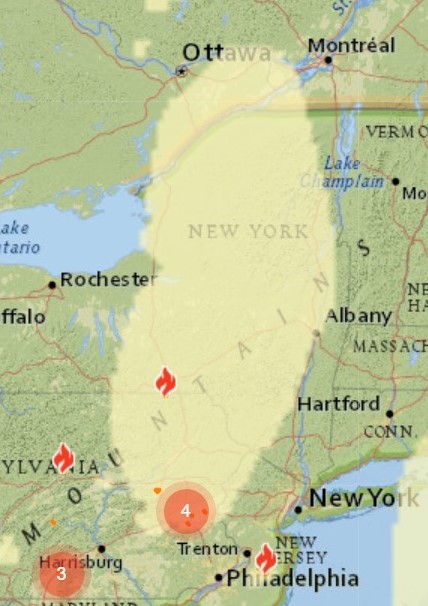
What can you say about August that we each haven’t thought in our hearts of hearts? We are now well into the downside of the year, four months and three weeks and a bit until Christmas. It’s always struck me as odd that the first half of the year has seven months while the second only has five. August. Hmm. Plus it all gets a bit endtimesy around now. The garden gets weedy and a bit tired in the corners. We even got forest fire smoke from Pennsylvania this week, for God’s sake! Looks!! Good thing there’s all those fit folk at the Olympics in Paris, over there throwing themselves against the track, against the ball, against ocean waves and against each others fists to give us all at home cheering on the sofa an endorphin boost. Speaking of the Olympics, how’s the beer?

Anyone who was planning on heading over to Paris for the 2024 Olympics and expected to be having a boozy jaunt in a stadium is going to be sorely disappointed. Almost everyone who has got tickets to see bits of the 2024 Olympics will not be allowed to buy alcohol at the venues where the sporting competitions are taking place… if you must drink beer inside the venues then you’ll have to stick with the non-alcoholic stuff. For half a litre of non-alcoholic beer you’ll need to be spending €8 (£6.74), while if you want a 400ml drink of zero alcohol beer with some lemon juice in it that’ll cost €6 (£5.05).

Whhhaaaaat?!?!? Really? I’d be tempted to get me a robot but I suppose that makes sense in the keeping the eye on the ball sense for spectators but, more importantly, what is the point of cutting NA beer with juice? Don’t worry, however, as the rich in catered VIP zones will be able to drink… because… France… or the Olympics… or…

Same as it ever was? Things go around and around. Consider this piece from Jessica Mason in TDB on salting your beer:

According to the reports via Parade, the trendsetters claimed that “adding a bit of salt to your inexpensive brew will enhance the flavour” and described how “some people add salt to certain beers, like sours or IPAs, to enhance the fruity notes and reduce the bitterness” and suggested that “for those ‘cheaper’ beers, it’s supposed to make the brew taste a bit more highbrow”. The report emphasised how “Texans take beer salt so seriously” and said that drinkers were “likely to find lots of flavoured beer salt options when you want to crack open a cold one”.

Taverns when I was a lad in Halifax, Nova Scotia in the 1980s had shakers of salt on the tables. It was an old guy thing even back then, used by the hard cases in the back corners, but soon a little rattle of the shaker was a habit at the Seahorse or the Lower Deck when the unpasturized generic draft was a little off. Definitely done at the Midtown.

More information has been released on experimentation with the hotest new brewing grain in town, fonio. Interesting news even if this was a rather silly statement from Carlsberg director of brewing science and technology Zoran Gojkovic apparently (but I hope incorrectly) recalling a past discussion with Garrett Oliver:

“The internet says it is millet, but there are lots of millet grains and this one comes from Africa. But, back then, I misunderstood was what it really was all about. If someone tells you something is beef, but really it is like a variety, like wagyu steak, then it can be more easily understood. What I didn’t know was that fonio, compared to other kinds of millet, is like the wagyu steak of grains. Millet, as a cereal could be quite boring, but this in its pure formula is not boring. It is elegant.”

I’m more comfortable with it being the warp drive of millets – but only because that is obviously even more silly. Or is it the warp drives of wagyu? Or the wagyu of warp? That’s the fonio beer name I want to see: Wagyu of Warp!

And, speaking of silly, we have yet another study that resulted from the study of studies that studied booze and, again, it has been determined that there has been a lack of studiouness about that J-Curve fibbery:

…a new analysis challenges the thinking and blames the rosy message on flawed research that compares drinkers with people who are sick and sober. Scientists in Canada delved into 107 published studies on people’s drinking habits and how long they lived. In most cases, they found that drinkers were compared with people who abstained or consumed very little alcohol, without taking into account that some had cut down or quit through ill health. The finding means that amid the abstainers and occasional drinkers are a significant number of sick people, bringing the group’s average health down, and making light to moderate drinkers look better off in comparison.

I mentioned how dodgy the concept was at least as far back in 2018 but this newer focus on the problem of including “people who had stopped or cut down their drinking for health reasons in the comparison group” is critical. Note: not drinking because you are sick is different that being sick due to not drinking.

Note too: “golloping beer with zest” was a thing. Gary explains.

In Pellicle, David Jesuason wrote about one of the the tougher aspects, the mental health implications, that can go along with setting out to run a small brewery. This is how he set the scene at McColl’s Brewery of Evenwood, County Durham before help arrived:

“I came here thinking all I have to do is 150 casks a week and it didn’t happen,” Danny says. “Because I did it [before] I thought I was capable of doing it and not even knowing it was the wrong [thing to do] as well.” Danny’s mental health suffered because there was no long-term strategy, just day-to-day drudgery. Graft instead of focus. “I couldn’t make good decisions,” he tells me. He was running the entire operation by himself: brewing, selling and even delivering the beer to customers. It was far too much to take on, his mental health suffered and Gemma, his wife, became worried about him having suffered from depression herself.

That piece reminded me of the life of a farmer, alone with their business subject to the whims of nature and the trade. Should brewing trade associations provide mental health support programs similar to those being set up for agriculture?

Also on the ag beat, Stan has given us something to chew on with his July 2024 edition of Hop Queries, Vol. 8, No. 3 for those who are trying to collect a full set. He mentions that harvest time has begun, triggering images of golden light on hedgerow graced horse plowed scenes, perhaps mixing with Beethoven’s 6th wafting quietly in from somewhere then – WHAMMO – the invasion of the lab-coated eggheads begins:

Scientists at Sapporo in Japan used headband sensors to measure the brainwaves of participants… The subjects reported feeling relaxed by the aromas of linalool and geraniol because they provided floral and green impressions… An increasing tendency in the rhythm regularities of the frequency fluctuations of the right frontal alpha-waves while drinking a European pilsner-type beer with aromas characterized by hops. 

HEADBAND SENSORS!!! And, for the double, Stan pointed to this number crunching post from Phil Cook on Monday but (even though I may risk breaking an unwritten weekly updating rule) I want to unpack this point in more detail – one key difference between Australian and other beer judging events:

Because there’s a list of every beer entered, not just those that win medals, we can calculate some ‘batting averages’ to better compare how each brewery fared. So, I’ve worked out each entrant’s medal percentage (MPC: how many of their beers won a medal, of any kind) and their points per entry (PPE: adding 3 for gold, 2 for silver, 1 for bronze, then dividing by number of entries submitted). Bigger numbers are better in both cases; overall about 74% of beers entered earned a medal,2 and if your PPE was 1.00 or higher your brewery was in the top half of the competition. 

This would be a huge step towards making the results of these events more meaningful that those of the moveable buffet of the international circle of they who judge. Being able to figure out brewery top rankings as well as those surprising disappointments would be a great benefit to consumers. But who in beer puts the buyer first?

Perhaps connected, Jeff shared his thoughts on the financial perils of being a freelancer writing about the brewing trade without separate income:

Writing is a terrible way to make a living. It’s why people end up going into marketing. You could spend your days scrambling after $600 articles, or you could get a job for $60k with benefits. This is why we bleed great writers, who take their services to companies who will pay what their work is worth. It’s not just that the money’s bad—it’s also hard to get. If you could somehow stack up your articles and get a couple in every week, you could make a decent living, maybe fifty, sixty grand a year before taxes… Trying to pitch stories, and then research, report, and write a hundred of them in a year? I’m not saying it’s impossible, but again, you’d be barely making more than working at McDonald’s if you somehow enjoyed that level of “success,” which perhaps 2-3% of working freelancers enjoy.

The best line was near the end: “If you have any other choice, don’t write.” What he means (of course… or rather I hope!) is don’t write for money but this isn’t news.* Still… write. Writing a free, joyful and easy experience of expression. Scribble, jot, draft, forget and rediscover – and, yes, even submit. Just don’t think you’re going to be buying the kiddies shoes with the income.

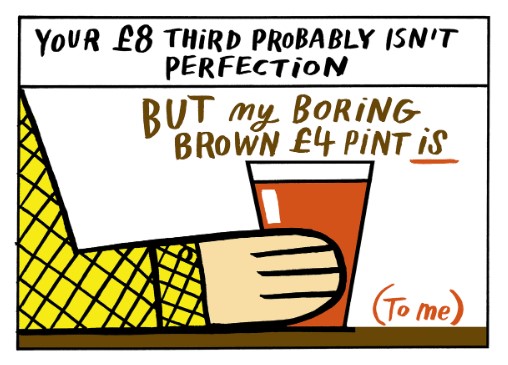
Joyful, too, is Dave “Still No Relation” Bailey’s cartooning, also in Pellicle, which this month explored the notion of perfection.  And if you want an example of writing for joy, ATJ has been working on one particular theme quite a bit over at his Substack, that being ATJ sitting in a pub and looking at the details of the scene around him. Second or third time I read one of his I thought “hmm…now, that sounds familiarBUT as this week’s edition testifies its his process being worked out before our eyes:

My eye was caught by a faded photo of the pub, sometime before World War I. Outside it, there stood a line of long dead regulars, mainly men, standing still, a couple smiling, the rest sombre and holding themselves stiffly as if on parade, which several years later many of them would be, ready to march off to war. A long ago day, the sun shining maybe, though given the quality of the photo it was hard to say. Bowler hats, cloth caps, none of them bareheaded for that was not how they presented themselves to the world then. I’d like to think that once the photographer finished, off the men went into the pub, glasses of ale and cider purchased and amid the hubbub there would have been little time for reflection.

Sharp stuff. And it sure beats the sort of cash-focused writing that has recently given us such gems as “deepest echelons of the industry” and “with demand being high, the category has continued to thrive, despite the sector struggling” and the astoundingly poorly thought out alleged expression of expertise “Liquids within the same ‘competitive set’ are not distinctive from one another as liquids.” Bring on the robots of A.I.! Viva Robots!!

No, I didn’t mean that. There are no robots of joy. It’s actually all around us already now if you look for joy. We see it in a long wandering piece about wandering at length. And we also see it at home as when Rachel Hendry in her emailed newsletter J’Adore Le Plonk shared some thoughts on the role and value of the leftover bottle of wine there in the kitchen that was opened a few days ago… and may have lost whatever finesse it had:

Service work should neither be seen nor paid, tends to be the general consensus and when my wine joins me in a position of domestic work I attach the same framework to it. Why add this beautiful, evocative glass of wine to my dish when I can reach for something leftover, or looked down on, fuck it, why not just add water instead? The recipe provides a role for a wine that is past its best, that may otherwise be retired down the drain and into the bin. It doesn’t, however, mean the wine isn’t important. Wine has many roles in our lives and contributor in the kitchen can be one of them. As I work through my hesitation and add a splash of my wine to the courgettes slowly melting into butter I notice I have not lost anything in the process. The wine is still mine to enjoy, I have placed value on an ingredient as I would like to be valued myself and the meal tastes better for it.

And I should have mentioned that Katie wrote a few weeks ago about trying Italian wines with any sorts of unexpected flavours to see what works for you. My tip? Chianti with roast turkey. It can have a swell cranberry vibe going on. Try a turkey and blue cheese sandwich with slices of pear and a cold glass of Chianti. Could sound weird but it works. Not this weird, mind you, but there that gets a lot going on.

That is it. Enough! Here are the credits, the stats the recommends and the footnotes and the many ways to find good reading about beer and similar stuff via any number of social media and other forms of comms connections.**** Want to keep up with the news before next Thursday? Check out Boak and Bailey every Saturday and Stan back each Monday… with a top drawer effort this week. Elsewhere go look at then listen to Lew’s podcast. And get your emailed issue of Episodes of my Pub Life by this year’s model citizen David Jesudason on the odd Fridays. And Phil Mellows is at the BritishBeerBreaks. Once a month, Will Hawkes issues his London Beer City newsletter and do sign up for Katie’s now revitalised and wonderful newsletterThe Gulp, too. Ben’s Beer and Badword is back with all the sweary Mary he can think of! And check out the Atlantic Canada Beer Blog‘s weekly roundup. There is new reading at The Glass which is going back to being a blog in this weeks best medium as message news. Any more? Yes! Check to see the highly recommended Beer Ladies Podcast. That’s quite good. And the BOAS podcast for the bro-ly. And the long standing Beervana podcast …except they have now stood down.  Plus We Are Beer People. The Boys Are From Märzen podcast appears suspended as does BeerEdge, too. But not Ontario’s own A Quick Beer. There is more from DaftAboutCraft‘s podcast, too.  All About Beer has introduced a few podcasts… but some may be losing steam… until… Lew’s interview! And there’s also The Perfect Pour. Plus follow the venerable Full Pint podcast. And the Craft Beer Channel on Youtube.  The Moon Under Water… is gone which is not surprising as the ask was $10 a month. Pete Brown’s costs a fifth of that but is writing for 47 readers over there. There was also the Beer O’clock Show but that was gone after a ten year run but returned renewed and here is the link! Errr… nope, it is gone again.

*My full sympathies (though I might have used the phrase “good writers” to convey a sense of realism.) I wrote this in an email to Max, now eleven years ago: “It is tough. There is no money in beer writing so if that is all you have to go on… I have met with pro writers over beer and always find them bagged out and drained from the nights of PR work in pubs to keep the wolf from the door. I complained once somewhere about how craft brewers should be supporting good beer writers directly without expectation of return and this was met with howls – even from writers. Earn your way as a freelancer, said the freelancers. Suck it up and take the junkets, said those on the junkets.” Is that the macho forehead + wall thinking part of the freelancing problem?
**This week’s update on my own emotional rankings? Facebook still in first (given especially as it is focused on my 300 closest friends and family) then we have BlueSky (132) rising up to maybe… probably… likely pass Mastodon (930) in value… then the seemingly doomed trashy Twex (4,483) hovering somewhere well above my largely ignored Instagram (160), crap Threads (52) with Substack Notes (1) really dragging up the rear.

The Last And Perhaps Best Yet Perhaps Slightly Timid Beery News Notes For May 2024

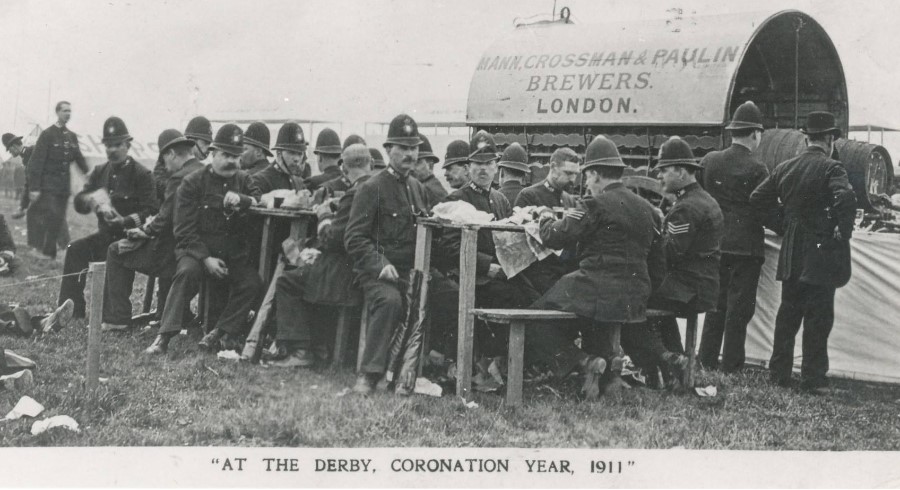
Well, that went fast. May. See ya. June backons. That image up there? It’s from the Facebook group for the Brewery History Society, a grand display of policing the Epsom Darby on May 31, 1911. Each having Mann London Ale. They would need it as thunderstorms later that day killed 17 people and 4 horses. Hopefully more peaceful, this year’s race will be on again this Saturday. And the French Open, the UEFA Euros, the NBA Finals, the Stanley Cup and World Cup of Cricket will be all on the go in June, too. Brought to you by Stella Atrois, Bitburger, Michelob ULTRA, Molson and Bira91 respectively.

First up, I have to say I really liked this portrait by Boak and Bailey of Dorset’s Square & Compass, a pub that took them back through a forest, even back through time in terms of the layout and service, a pub where they found themselves looking at a menu with three food items and maybe twice that many drink offerings before they went outside to sit next to a slab of rock:

Looking out from the garden is as magical as looking up at it from the lane. We had a view of the hills sloping down to the sea, fading into haziness beneath a big white sky. At one point an ancient blue Landini tractor passed by, its upright driver puffing on a pipe, like something from a 1950s British Transport documentary. In the hedgerows, on the telephone wires, and on freestanding stones, birds gathered and chattered.… Then, unbelievably, they came to visit.

Fabulous. And check out Martin’s review of The Harlequin in Sheffield for another sort of fabulous in an urban setting.

Back into the now, the big news here in Ontario is the debate over the costs of the Province’s move to finally get beer, wine and all the coolers into corner stores. Let me say from the outset that while I don’t plan to vote Tory, I can’t imagine a download of services (either to the private sector or another level of government) that does not include a transfer of revenues associated with those services. That being said…

“It’s a billion-dollar booze boondoggle,” Liberal Leader Bonnie Crombie said Monday during a news conference at Queen’s Park. Crombie and the Liberals base their $1 billion figure on these additional costs: (i) $74 million per year to the large grocery chains by giving the 10 per cent wholesale discount, (ii) $375 million to the Beer Store by rebating the LCBO’s cost-of-service fees and (iii) 300 million in foregone revenue by not charging retailers a licensing fee. Those amounts would be on top of the LCBO’s lost revenue from selling less alcohol through its own stores and on top of the $225 million payment to The Beer Store. *

See, if the gross revenues of the LCBO (wholesale and retail) were $7.41 billion generating a whopping $2.58 billion in dividends to the Province, according to the most recent annual report, then shifting significant services, fees and expenses away from the LCBO to the new players probably should be expected to cost more than the 3% of gross revenue. But, if the annual report in 2026 says that the gross has dipped to $6.41 billion with the dividend dropping to $1.58 billion, well, then there should be some questions asked. The main problem is the concept that the greater number of outlets will cause an expansion of sales covering those costs. Ain’t happening. Booze is retracting. Even pre-pandemic, there was no change in sales caused by partial deregulation. And we’ve already seen the retraction of sales in those 450 grocery store which were first permitted to sell beer wine and cider in 2015. This is all a great leap sideways.

I missed Jordan‘s post last week on the pleasures and pitfalls of brewing a collaboration including this unexpected turn towards what can only be called pronounced zippiness:

A funny thing happened on the way to the brewery. Adrianna, who had very kindly put aside some Agnus for our 20 hL batch, got in touch one day to say that it had accidentally shipped with someone else’s order. She offered to throw in some Saaz for the trouble, and I asked if there was anything else Czech in the warehouse. This is how we ended up with Vital hops. Vital isn’t a brewing hop. It’s pharmaceutical grade. They were originally grown for their antioxidant properties (xanthohumol and DMX), although I didn’t know that when I leapt at the opportunity to use them. What I saw, looking at materials online, was that it contained everything including Farnesene and Linalool in pretty high proportion. Farnesene is usually Saaz exclusive (gingery, snappy, peppery). Linalool is the monoterpenoid associated with lavender, lilac, and rose. In fact, the description of it said lavender, spice, plum, licorice.

Oddly, “Linalool” has been my private nickname for Jordan for years! Not apparently encountering any Linalool whatsoever, Stephanie Grant has still been on the move and reported from Belgium where she visited some auspicious breweries and perhaps experienced that other sort of hangover that lambics can offer:

Our last day in Belgium, we continued the Tour de Gueze, this time joining the bigger group of participants on one of the many buses taking drinkers around the region. We visited De Troch, Mort Subite, Eylenbosch, and Timmermans. I’ll be honest, after gorging myself on lambics the day before, I wasn’t as thrilled to do it all again the next day. Instead, I spent most of the day seeking out bottles to bring home and share with friends once I returned home…

Ah yes: that good old “I am sure it hates me” feeling. Also out and about, Katie has reported from the ferry to the Isle of Man… in fact from the ferry’s busy bar:

The bar on board the Manxman is just as bizarre and pleasant as I remember it, and I’m sat with a Guinness at a little round cabaret table surrounded by TT hats, jackets, and fleeces and the people they belong to. Almost everyone on board is travelling for the races, and we’ve already run out of Norseman lager, the local lager brewed by Bushy’s on the island. By the time we get to Douglas I’m sure we’ll be out of crisps too.

What else is going on? You know, I wasn’t going to go on about the Hazy Eeepah thing that took too much time in May BUT (i) Stan shared a great summary of where we have gotten so far** and (ii) ATJ shared a recollection of IPA studies past by sharing the agenda of a British Guild of Beer Writers from 1994. Click on the image. Notice something? Apparently three PhD recipients. Plus Jackson, Oliver and Protz. No mention of fruit sauce. And no cartoon infographics or can wrapper designers. When people backdate the term “craft” beer to anything before around 2007 when it passed microbrewing in popular usage, I think this primary sort of document is a helpful reminder that the terms of reference were quite different. Not, by the way, “dudes grumbling about the good old days” so much as a discussion before the adulteration of both the beer itself and the overall concept of IPA. We need more of that again. Because it is possible to discuss things being worse that other things. Not that it seems many “in craft” would understand.

Similar in the sense of things not appears to be what they are or rather appearing to be exactly what that are even if that is not admitted – and for the double… wheew… ahem, Martin came upon a scene at a beer festival in Cambridge, England that (in amongst the photos of dilapidated properties and sodden grounds) has got to be the aggreation of all the reasons I share his dislike of beer fests including: (i) “the students and groups of mates who make up the core attendance“; (ii) “Nice weather for newts” and (iii) that disappointing beer that “has a touch of sharpness about it that I can’t explain.” Let me spoil his conclusion for you:

I didn’t see anyone I knew, and (unlike in pubs) it’s on your own hard to strike up conversations with random strangers who have largely come with mates. In and out in 24 minutes. Time for a pub.

Also missed: the Historic Brewing Conference planned for August has been cancelled.

Pete Brown shared some refreshing comments on the old trope that craft brewers need to tell their story in his industry insights newsletter this week:

Firstly, every single one of them insisted on telling him their foundation story – where the founders met, what inspired their “dream”, and the modest circumstances in which they began dragging it into reality. Secondly, when they finally got to the shiny parcel of vats, every single one beamed, “And here’s where the magic happens.” Now, on the surface, this is far more interesting – there’s an actual story there for a start. But on the other, I get the sense that when he visited these businesses, Thom was given this spiel whether he wanted it or not. Once again, the pitch wasn’t tailored towards its audience. 

Short take: if it’s everyone’s story it’s no one’s story.

Elsewhere, The New York Times had a great article on the unique story of Eritrean and Ethiopian diaspora home brewing – and home barley malting – in Texas:

The thick brown liquid had been fermenting in the jug for three days, which meant it was time for Fatean Gojela to get it ready to serve for Orthodox Easter. With her granddaughter, Ava, at her side, she poured it little by little through a thin mesh sack. “Patience, Mama,” she said to Ava, showing her how to squeeze out the liquid from a doughy mix of grains and herbs. Ms. Gojela, 65, learned to make suwe, as the beerlike drink is called in the Tigrinya language, from her mother while growing up in Asmara, the capital of Eritrea. (Today, she lives in Fort Worth, where she works as a housekeeper for hospitals.) The beverage is primarily brewed for special occasions in Eritrea and Ethiopia, where Amharic-speakers call it tella.

In a far less celebratory frame of mind, Jessica Mason shared a depressing thought that really makes one wonder what all the efforts towards inclusion were really about:

If you’re wondering why fewer women think beer is for them, maybe just look at the comments I get on a daily basis when I share, write or question anything on the topic of beer. See how women are treated when they do take an interest in beer. It is no wonder we are where we are.

She shared that on Twex the day after having her piece on the suprisingly negative findings related to women and the UK beer market in the report “The Gender Pint Gap: Revisited” authored by Annabel Smith:

Speaking exclusively to the drinks business about the data, gathered by YouGov, report author and beer sommelier Annabel Smith said: “When we set out to conduct a further piece of research into women’s attitudes and behaviours towards beer in Great Britain, we were fairly optimistic that the dial would have moved in a positive direction since the first Gender Pint Gap”… Smith lamented that “there has been very little academic research done in this field, but we uncovered a wealth of anecdotal evidence perpetuating the ideology that beer is for men. And when this is in your face every single day, you start to believe it.”

Here is the full report by Smith.  There’s more at Beer Today too. Oddly, the Morning Advertiser chose to highlight the phrase “the dial doesn’t appear to have moved very much since” 2018 despite the report saying that the report indicates that female participation slipped from 17% to 14%. This is a 17.6% drop. Which is sorta huge given the efforts taken during the time to counteract disinterest in this group of consumers. But beer is bad at math, isn’t it. (Like when we read that a large facility closure is a sign of industry maturity. Subtraction. It’s tough to explain. Who knew?) Conversely, Rachel Auty also added her thoughts which were more comprehensive, including these comments related to beer advertising the in UK:

I believe we also need to address the connection between beer and sport, and move away from sport being treated like it’s something that only men like to do. The rise of the Lionesses – as one high-profile example – has given beer an opportunity to unlock a whole new type of customer, and it’s only going to continue in the same direction. Why would any brewery or venue turn that opportunity away? Ultimately, if more women work in breweries, bars and other beer industry roles, the advertising will shift. The problem is at the core – truly – and we have to get women into roles where they have leadership responsibilities and the autonomy to make key decisions and become role models that create and inspire positive change. This is still not happening anywhere near enough to shift the needle.

Preach. Why isn’t that as easy for everyone to see as seeing a mud filled beer fest in Cambridge and, you know, leaving?

And, just before deadline, we note the long form writing of Claire Bullen in BelgianSmack on Frank Boon and his beers:

From the park, the Zenne flows around the village, under bridges, and approaches Brouwerij Boon, where it meets the gaze of Frank Boon. He has paused for a moment on a small concrete bridge to regard it, to watch as ducks and moorhens paddle against the current. In its progression, the river bisects the brewery, one bank home to the brewhouse, coolship room, visitor centre, taproom, woodshop for foeder repairs, and an enormous warehouse of foeders and barrels; the other a rented warehouse space where additional foeders are stored.

The piece is Augustan***, displaying the arguably Tory nature of this part of brewing – a perfected stasis point where craft and nature sit in ordered balance. And, once achieve, will remain so. I was immediately taken back to my university class forty years ago where we studied the Olivers Goldsmith, the Irish one of the middle 1770s as well as his less successful great-nephew of early 1800s Nova Scotia and their two villages. Or that Boak and Bailey pub way up there, come to think of it.

Finally, Mudgie shared the sad news of the passing of one of his long time readers, Janet Hood a Scottish solicitor who was a member of the licensing bar. Her colleague Stephen McGowan shared his thoughts:

…as a new solicitor I was a recipient of her enthusiasm, passion, and I know she gave great encouragement to new solicitors and those on the journey into the profession. That was Janet. I first met her at a licensing conference when she was the deputy clerk to the Aberdeenshire Licensing Board and she made an immediate impression. What a character! Although I confess I can’t remember her precise topic I do recall no one was left unsinged – everyone got it in the neck! Other clerks, agents, the Government. She really rattled some cages and forced the conference to face the difficult questions. But that was Janet.

An inspiring life. I am adding her email sign off to my own: “niti pro regula legis – fight for the rule of law.”

That’s a lot of good reading and good thinking for one week. Next – the credits, the stats, the recommends and the footnotes and the many ways to find good reading about beer and similar stuff via any number of social media and other forms of comms connections.**** Want to keep up with the news before next Thursday? Check out Boak and Bailey every Saturday and Stan back each Monday. Elsewhere go look at then listen to Lew’s podcast. And get your emailed issue of Episodes of my Pub Life by this year’s model citizen David Jesudason on the odd Fridays. And Phil Mellows is at the BritishBeerBreaks. Once a month, Will Hawkes issues his London Beer City newsletter and do sign up for Katie’s now revitalised and wonderful newsletterThe Gulp, too. Ben’s Beer and Badword is back with all the sweary Mary he can think of! And check out the Atlantic Canada Beer Blog‘s weekly roundup. There is new reading at The Glass which is going back to being a blog in this weeks best medium as message news. Any more? Yes! Check to see the highly recommended Beer Ladies Podcast. That’s quite good. And the BOAS podcast for the bro-ly. And the long standing Beervana podcast …except they have now stood down.  Plus We Are Beer People. The Boys Are From Märzen podcast appears suspended as does BeerEdge, too. But not Ontario’s own A Quick Beer. There is more from DaftAboutCraft‘s podcast, too.  All About Beer has introduced a few podcasts… but some may be losing steam. And there’s also The Perfect Pour. Plus follow the venerable Full Pint podcast. And the Craft Beer Channel on Youtube.  The Moon Under Water… is gone which is not surprising as the ask was $10 a month. Pete Brown’s costs a fifth of that but is writing for 47 readers over there. There was also the Beer O’clock Show but that was gone after a ten year run but returned renewed and here is the link! Errr… nope, it is gone again.

*Edited to get rid of the stupid bullet points that the CBC seems to inordinately love.
**Notice in particular his coy statement “I do not agree every word in the paragraph” when referring to something, frankly, extremely insightful that I wrote last week… which made me realize something – there was a typo in the text he  quoted  that I needed to fix. Now he must agreed with every word, right? That’s what you meant, Stan, right?
***Ripely ornamented: “Our steps clang madly as we walk into the empty coolship. Outside, the wind makes the yellow wildflowers dance, a feast for pollinators. The river reveals nothing.”
****This week’s update on my own emotional rankings? Facebook still in first (given especially as it is focused on my 300 closest friends and family) then we have BlueSky (128) rising up to maybe… probably… likely pass Mastodon (913) in value… then the seemingly doomed trashy Twex (4,478) hovering somewhere high above or around my largely ignored Instagram (163), with sorta unexpectly crap Threads (43) and not at all unexpectedly bad Substack Notes (1) really dragging up the rear – and that deservedly dormant Patreon presence of mine just sitting there. 

The Week Baseball Starts Taking Over The TV Schedule Edition Of The Beery News Notes

Did you know that there are five Thursdays this February? FIVE!! I thought I was done for the month today – but I am not. It’s leapday Thursday next week. This will be only the third one in my lifetime, now in my 61st year having lived through this experience in 1968 and 1996. The fifth since the 1800s. The responsibilities for next week’s update have suddenly loomed ominously. Am I up to this rich and rare Thursdayness? The very first leap day Thursday since beer blogging began? Better put an effort in. A big effort. So… I can slack off this week and no one will notice. Excellent.

First up, Boak and Bailey are doing some clever things with their multi-media channels. For one thing, they are posting footnotes to their weekly beery news roundups on Patreon. As you can always see below, I like footnotes but rather than merely wallowing in snark like I do BB2 actually add a bit of context and discussion.* And, as you can see to the right, they play with the graphical display of information like with this table explaining their thought on what has been gained and lost over the last ten years of good beer in the UK. They published that in their monthly newsletter after gathering some thoughts from readers over at Bluesky. Which I received by email. Where do they find the time?

And I wrote something last week that caught even me by surprise: “could it be that beer might actually… be going out of style?” For years that was the quip – it’s not like its gonna go out of style. Did I mean it? I mean sure we all know that democracy and simple human decency are well on their way out… but beer?!?! It seems something it up… or, rather, quite a bit down. Stan posted another graph building on the graphs discussed seven days ago. I can’t just put the same graph at the top of my roundup this week (because that would break the weekly updaters Code of Conduct that B+B control with a ruthless efficency) but his point is worth repeating:

The pink on the right represents barrels of beer that would have been sold had sales simply gone flat in 2020, rather than declining, not completely recovering, then declining again. Obviously, that matters a lot to hop growers. When barrels aren’t brewed then hops aren’t used. In this case, about 20 million pounds of them. Two thoughts. First, indeed, little difference between production in 2015 and 2023. Second, if you draw an arrow from the top of the bar at 2015 to 2019 it looks much different than an arrow drawn from the top of 2019 to 2023. Production might be the same, but something different is going on.

One thing I do not believe is causing all this is the lack of detailed description of the offerings at taproom. Jim Vorel would beg to differ and does so at length:

Case in point: Not long ago, my wife was ordering at a large, well-funded and popular local brewery taproom. Looking at the electronic menu above the bar, she landed on a new beer labeled simply as “coffee stout.” She loves stout, and lightly adjuncted classic stouts such as coffee stouts, so she ordered one. The reality? The beer was actually a stout with “vanilla, caramel flavoring and cardamom” in addition to the coffee, which was the only thing mentioned by the sole source of information available to the consumer. Is that a valid concept for a “Turkish coffee stout,” or whatever? Absolutely it is, but the customer needs to know they’re ordering a stout with that kind of theming when they place the order. You can’t just surprise someone with “caramel, vanilla, cardamom” when they think they’re ordering a relatively dry beer. What if that person doesn’t really care for pastry stout concepts? Are they supposed to grill the bartender whenever they see “coffee stout,” to ask if there are any other adjuncts involved? Just how many questions are we expecting these busy taproom employees to answer?

Theming? I had no idea. Me? I just taste the stuff and make my own mind up. Now, let’s be clear. That graph showing US craft beer (including formerly recognized craft brewers kicked out of the BA) have slumped back to 2015 production levels** does not mean all beer is going out of favour, as Jessica Mason explained:

Molson Coors delivered six years of profit growth, six years of growth in just one year. That focus is a new baseline. We are ready for this moment”. To illustrate the size of the achievement, Hattersley explained: “In 2023, our top five brands around the world drove over two million more hectolitres than they did the prior year. This is like adding the entirety of Blue Moon’s global volume to our portfolio.” Looking at America, Molson Coors has seen a boost in both its distribution as well as its presence in supermarkets with more retailers listing its beers. In fact, this momentum and knock-on revenue spike is what has boosted the business to such great heights and reinforced distributor confidence in listing Molson Coors’ beers.

And Kirin is experiencing a bounce as well according to Eloise Feilden:

Kirin Holdings posted revenue of ¥2.1bn (£11.1m) in the year to 31 December 2023, representing a 7.3% rise year-on-year. Profit was up 4.6% on 2022, and operating profit rose 29.5% to ¥150.3bn (£79.4m). Revenue from the Kirin Brewery division was up 3.2% on 2022 to ¥685m. Kirin Brewery’s total beer sales increased 5.9% to 1.4bn litres. CEO Yoshinori Isozaki told analysts that price changes in October helped to boost beer sales “more than expected”, after the company dropped the price of beer brands including Kirin Ichiban. Kirin raised prices for its no-malt Honkirin and Kirin Nodogoshi Nama beers.

Interesting. So are people really just getting fed up with the craft beer nonsense? Remarkably, it’s been a decade since the cult classic The Unbearable Nonsense of Craft Beer by Max and Myself was published – and this remarkably visionary review (given the interveining rise and fall of craft) by Alistair popped up in my Facebook feed this week:

I’ve been slowly reading my way through The Unbearable Nonsense of Craft Beer by Alan and Max, and finding myself agreeing with most things, especially when it comes to tasting vs drinking.  I’ve been saying it for a while now, beer is for drinking, not standing around pontificating about the supposed terroir of the hops, the provenance of your peat-smoked 80/- (as in it has none), or worst of all thinking that Pilsners are just American Light Lager without the rice or corn (have heard that more than once). I guess that’s one reason why I love breweries that make classic styles, and make them well, rather than brewing every gimmick going – you know they can make good beer, worth drinking, instead of random shit to taste a thimbleful of and never want to touch again.

Point. And Alistair (as well as someone in the comments) made the analysis that is often made in tighter times – is home brew really cheaper? Why yes, yes it is:

Thankfully, I don’t have to pay myself to make beer, neither do I pay myself to serve the beer, and so the real cost for a half litre of my own beer at home is about $2. One thing though that is really clear to me from this little exercise is that ingredients are not the bulk of the cost of making the beer, it is a the people, equipment, and place to do so. Obviously I am also not able to take advantage of the economies of scale that a commercial brewer (sorry idealogues, if your favourite beer is made by a company that does so for a living it IS a commercial brewery), especially when it comes to non-linear increases such as the ingredients, and don’t forget to factor in that a single decoction brewday in my garage takes about as long as a single decoction brewday at a professional brewery with the appropriate kit. 

But… and I am a long lapsed home brewer… you don’t need the equipment and you don’t need the decoction. A nice pale ale or porter from scratch? Do it. Conversely, care of the BBC, here’s another reason I’ll steer clear of NA beer for the foreseeable future – unlisted ingredients:

UK-based brewer, Impossibrew, which specialises in non-alcoholic beers, uses a different means of arrested fermentation. “We brew it in such a way that we can cryogenically stop the fermentation process,” says founder, Mark Wong… Impossibrew also adds its “proprietary social blend”, a mix of nootropic herbs designed to imitate the feeling of relaxation induced by traditional beer. It is a precise blend developed in collaboration with Professor Paul Chazot at Durham University’s Biophysical Sciences Institute. Nootropics are natural compounds – billed as “smart drugs” – which improve cognitive functions.

Sweet. Playing with the psychological therapies. Here is a 2023 paper on nootropic herbs. Including a discussion of the allergies and side effects*** that one might encounter… if you knew what you had consumed.

Pellicle‘s offering this week is a portrait of Bristol, England’s Wiper and True taproom by Anthony Gladman.**** Spoiler – they have a dealcoholiser:

The second tool is a reverse osmosis dealcoholiser, which the brewery uses to remove the alcohol from beers like Tomorrow, and the low alcohol version of Kaleidoscope, which launched in January 2024. “That’s going to be a big push for us for the next… well, for a long time actually,” Michael says. “That’s what the whole business is galvanising around at the moment.” Installing a dealcoholiser is not something a brewery does lightly: the equipment is a huge expense, but so too is the floor space it requires, as well as the staff training, and the effort in recipe research and development to make owning one worthwhile.

Note: The Beer Ladies Podcast interviewed Lars this week. Have a listen.

Merryn has shifted to Bluesky and is still tracking the research on ancient grain residues. We learn that “interest in bread like, porridge like, lumps of charred cereal residues certainly has increased over the past decade.And quite a lot have been found” like in Ancient bread recipes: Archaeometric data on charred findings from the February 2024 issue of the Journal of Cultural Heritage:

This study examines charred bread-like samples found in several archaeological sites across northern Italy and dating from the Early Bronze Age to the Early Middle Ages, some of which are included amongst the UNESCO World Heritage Sites. The aim is to investigate differences and homogeneities in bread production processes in different eras and cultures. Bread was a staple food in many ancient societies, but has rarely been found amongst the materials that survive in archaeological sites. When it is found, it is usually because the bread was charred by accidental combustion (falling into the oven during baking) or deliberate combustion (for ritual purposes). The literature on the issue is not abundant, but has been growing over the past decade

It’s beer, isn’t it. Err… wasn’t it. Speaking of was, some bad news for beer drinkers in Nigeria:

The Chief Executive Officer of Nigerian Breweries Plc, Hans Essaadi, has said that the economic situation in Nigeria has deteriorated to the extent citizens can no longer afford to buy beer. Essaadi said this on Monday at the company’s investor call following the release of its 2023 results. “It has been unprecedented year for our business in Nigeria. We saw a significant decline in the mainstream lager market as a result of Nigerian consumers no longer able to afford a Goldberg after a hard day’s work,” Bloomberg quoted Essaadi as saying.

Note: no GBH Sightlines for five weeks. Done?

Like clockwork, Stan has posted his February edition of Hop Queries – which is not a quote from Shakespeare, by the way. He built upon that glut of hops mentioned above, twisting the knife just a bit:

My story about why farmers in the Northwest are ready to remove 10,000 acres (about 18 percent of what was harvested last year) from production in 2024 has posted at Brewing Industry Guide (subscription required). Short term, this means there are plenty of hops out there, often at bargain prices.  
Long term, think about how many times you have seen the term “soft landing” used when discussing the American economy. How does that usually work out? The market for hops has always been cyclical and landings have not often been soft. It will be a year or more before it is clear if this year is different. 

Finally and speaking of honesty, consider this exchange in the comments at Beervana and ponder whether

Reader: Jeff, big fan of your blog and content. That being said, I would hope that we don’t start bashing beers here. The battle for beer should not be within the community but outside of it against wine and spirits. If we bash our own, regardless of how “eye-rolling” the content is we will lose the long game.”

Jeff: “Mason, it’s not my job to promote the brewing industry here. I try to write honestly and entertainingly about beer, and that means I criticize things from time to time. My “clients” are my readers, not breweries. Beyond that, I would argue that anyone who did want to promote the brewing industry would not whitewash negative stories, bad beers, or disappointing news. Concealing faults doesn’t help in the long run.”

Very well said, Jeff. One wonders how much this sort of call to disengagement from reality based reality that craft beer too often promotes has contributred to the slide that we discussed up top. That we see all around us. Maybe that’s what “theming” is. By the way, has anyone brewed a samey Doubly Hazy NEIPA and called it “Self Inflicted Wound”?  As things change and interest in craft declines, it’s still good to watch how it falls if only to identify what stands the best chance of coming through the downturn.

OK. Mailed that one in. Didn’t even have to mention BrewDog. Or baseball now that I think of it. Fine… just roll the credits… well, the credits, the stats the recommends and the footnotes. There is a lot going on down here and, remember, ye who read this far down, look to see if I have edited these closing credits and endnotes (as I always do), you can check out the many ways to find good reading about beer and similar stuff via any number of social media and other forms of comms connections. This week’s update on my emotional rankings? Facebook still in first (given especially as it is focused on my 300 closest friends and family) then we have BlueSky (up again to 123) rising up to maybe… probably… likely pass Mastodon (913) in value… then the seemingly doomed trashy Twex (4,450) hovering somewhere above or around my largely ignored Instagram (up to 165), with sorta unexpectly crap Threads (43) and not at all unexpectedly bad Substack Notes (1) really dragging up the rear – and that deservedly dormant Patreon presence of mine just sitting there. I now have admitted my dispair for Mastodon in terms of beer chat, relocated the links and finally accept that BlueSky is the leader in “the race to replace” Twex even while way behind.

Fear not! While some apps perform better than other we can always check the blogs, newsletters and even podcasts to stay on top of things including the proud and public and certainly more weekly recommendations in the New Year from Boak and Bailey every Saturday and Stan really doing what needs to be done Mondays. Look at me – I forgot to link to Lew’s podcast. Fixed. Get your emailed issue of Episodes of my Pub Life by this year’s model citizen David Jesudason on the odd Fridays. And Phil Mellows is at the BritishBeerBreaks. Once a month, Will Hawkes issues his London Beer City newsletter and do sign up for Katie’s now revitalised and wonderful newsletterThe Gulp, too. Ben’s Beer and Badword is back with all the sweary Mary he can think of! And check out the Atlantic Canada Beer Blog‘s weekly roundup. There is new reading at The Glass which is going back to being a blog in this weeks best medium as message news. Any more? Yes! Check to see the highly recommended Beer Ladies Podcast. That’s quite good. And the long standing Beervana podcast . There is the Boys Are From Märzen podcast too and Ontario’s own A Quick Beer. There is more from DaftAboutCraft‘s podcast, too.  All About Beer has introduced a podcast… but also seems to be losing steam. And there’s also The Perfect Pour. Plus follow the venerable Full Pint podcast. And the Craft Beer Channel on Youtube and remember BeerEdge, too, and The Moon Under Water… if you have $10 a month for this sort of thing… I don’t. Pete Brown’s costs a fifth of that. There was also the Beer O’clock Show but that was gone after a ten year run but returned renewed and here is the link! Errr… nope, it is gone again according to Matty C.

*I mean consider this: “We have taken note of, and pre-ordered, Dr Christina Wade’s upcoming book The Devil’s in the Draught Lines about the history of women in British brewing. We nearly gave it a shout out (free advertisement) in this week’s round-up but decided to save that for next week. But, blimey, eh? CAMRA’s publishing strategy is interesting these days. You might call it public service publishing, doing what’s right for the good of the beer culture rather than what’s commercial (101 beers to drink before you die… again!). Except Desi Pubs seems to have been a substantial success.” That’s a proper bunch thoughts right there.
**IE: not actually “flat” at all.
***Note: “Plant nootropics are generally very well tolerated, but potential users should consider their overall health condition and consult a doctor about possible contraindications and drug interactions before trying a particular plant formulation.
****This piece serves as an interesting counterpoint to Boak and Bailey’s thoughts from last July whose words from them bear repeating: “It used to be a ‘beer garden’ – a bare yard full of tables. It felt like having a pint in the car park of ASDA. But now it is a Beer Garden, or at least heading well in that direction. Around the perimeter are tall plants providing a green shield. In the garden between tables, there are loaded beds and planters. Grasses, shrubs and young trees soften edges, dampen sound and create depth. This is now a pleasant place to be, like a park or botanical exhibition.

The Thrilling Week When I Got That Head Cold Edition Of The Thursday Beery News Notes

First cold after the pandemic started. Felt very weird. Runny nose. Sneezing. Pretty much gone. Or at least a new thing every day. But, you know, it’s sorta nice to have an ailment that doesn’t mean you are at great risk. And it’s all over the place here, half the folk at work are hit. (No, you’re right… I am struggling with the tie in to good beer, too. Got it!) It makes you appreciate the little things, perhaps. Things without DOOOOOOMMMM in the title. Like how the warm weather this year may see the maple sap running very early… oh, no that is a little doomy. Endtimesy even. Maybe more like this: Jeff, he of Rye, posted that a friend:

…bought an old Victorian frame a while ago. Opening it up, he’s discovered this old brewery advert used as a filler piece behind the print itself! Brewery wound up 1866 so it’s at least 160 years old!

Nice. Click on it. The image is amazingly crisp and colourful for something forgotten at least 158 years ago. A good way to start the week off.  Somewhat similarly, A London Inheritance has a great post this week on the history of the Lamb and Flag pub in Rose Street, near Covent Garden. The structure of the blog is updating older photos taken by the author’s father, contextualizing them with current images all to set up wee histories of the City’s hidden gems:

This is my father’s photo of the Lamb and Flag pub in Rose Street, near Covent Garden, taken in 1948. The name Lamb and Flag can be seen just above the entrance to the Saloon. On many London pubs of the time, the name of the brewery was given much greater prominence than the name of the pub. Barclay, Perkins & Co. Ltd were a major London brewery operating from the Anchor Brewery in Park Street, Southwark… The source of the name Lamb and Flag has a religious basis. The “lamb” is from the Gospel of St. John: “Behold the Lamb of God, which taketh away the sins of the world” and the flag being that of St. George. The pub was also once known as the Bucket of Blood due to links with prize fighting.

Delightful. I wonder if that was supposed to be an attraction back then? Speaking of which, Boak and Bailey discussed the modern equivalent (perhaps) this week when they inquired into what new trends make a pub attractive these days:

As well as the aforementioned board game cafes, we’ve also noticed in Bristol a growing number of (a) video game bars or grown-up amusement arcades and (b) dessert cafes. The video game places are interesting. In both of those we’ve visited there was draught beer but you were absolutely free to ignore it. You were paying your way by paying to play games with drinks as an additional amenity. And the desert cafes will sell you a disgustingly huge plate of ice cream and waffles, or whatever, and then let you and several friends spend hours picking at it. 

I like me a good video game bar. The particular preference is an Atari table to play Asteroids on. It’s apparently called a cocktail table. I usually had a beer when these things were more common. And finding one with wood paneling finish is a big bonus. Stepping back from that dailiance with the modern, Martin is back with a bit of a calculation on how much beer did a 1860s farmer brew for his operational needs:

Going back to Samuel, if he, or rather one of his servants, was brewing 96 barrels of beer a year, that works out at eight barrels a month. If he had a two-quarter brewery, that is, one capable of mashing two quarters, 650 pounds or so, of malt at a time (a reasonable assumption, I think, judging by the sizes of small commercial breweries in Hertfordshire in the 19th century), then he was brewing only once a month, at an average of four barrels to the quarter, to give a beer of six to seven per cent abv. Clearly it would not take much of a step up to increase output considerably: brew once a week, and you are now making almost 420 barrels a year, which you could retail for almost £1,000, at 48 shillings for a barrel of XXX. That’s a fairly staggering £110,000 a year in 2024 value, a healthy addition to a farm’s income.

I’ve just remembered something. I was never very good at math. Pellicle has published an excellent article and photo essay by Jemma Beedie on the The Horn Milk Bar, an old school cafe halfway between Perth and Dundee, Scotland which is preserved itself:

…we have time-travelled. This is the place my parents (and maybe yours) are longing for; the spaces they insist still exist. Instead of the cloying nostalgia of brand-new retro-styling, this place is visibly old. We were expecting the polished vintage world of the music videos by Autoheart and Logan’s Close—this is not that. Shades of brown and beige wash over us. Wipe-clean plastic chairs and tables surround us. Outside it is bright, one of the clearest, bluest skies we’ve had since May, but the sunlight struggling through the wall of windows does not penetrate the suffocating room of wood veneer. 

Again, wood veneer is good. I once lived in a town with a veneer factory. Unrolled big logs like they were paper towel rolls. Match factory too. Back to beer!  There was a bit of a kerfuffle (yes, I said it) after Jessica Mason‘s story on the revival of Black and Tan was published after last week’s deadline. She updated the story with grace and speed to include the connotations of the name in Ireland:

…in Ireland, the ‘black and tans’ referred to constables recruited into the Royal Irish Constabulary (RIC) during the Irish War of Independence. They were nicknamed so because of their uniforms being a mixture of dark green (which appeared black) and khaki. During that time, the ‘black and tans’ gained a reputation for brutality and as such exacerbated Irish opinion of the British. With these elements in mind, despite the beer serve being termed so due to its colouring, ordering a black and tan at an Irish bar could be viewed as a contentious move, especially by a British patron. However, taking a piece of history back, many Irish bars – especially in the US – are now beginning to offer the serve, sometimes with a nod to Irish history, but otherwise simply to upsell more Guinness.

There’s another form of the two level cocktail that you can also see in America in bottled form from venerable micros like Saranac as well as Yuegling. BeerAdvocate lists 77 examples of beers by that name, listed under the American Porter category. I wonder if this dates from the earlier post US Civil War usage as it related to the Republican Party, as summarized by Wikipedia:

Social pressure eventually forced most Scalawags to join the conservative/Democratic Redeemer coalition. A minority persisted and, starting in the 1870s, formed the “tan” half of the “Black and Tan” Republican Party, a minority in every Southern state after 1877. This divided the party into two factions: the lily-white faction, which was practically all-white; and the biracial black-and-tan faction. In several Southern states, the “Lily Whites”, who sought to recruit white Democrats to the Republican Party, attempted to purge the Black and Tan faction or at least to reduce its influence. 

Very interesting – or at least so said Artie Johnson. You know, I’ve said it before and I will say it again. Forecasting is a mug’s game, a fool’s errand, a… a… add your own analogy please… but, still, you gotta love how little credibility this sort of listicle entry conveys:

…there’s an expected 8.51% compound annual growth for the next three years, putting seltzers at the forefront of increasingly important alcoholic beverages.

Interesting, too, is how many in the list of trends in “craft” are as devoid of the word “beer” as the title to the article. Just dislocated “craft” is all there is left. And remember: hop water isn’t a style, it’s a recipe.

Allistair wrote at Fuggled about a brewery he wrote about in a Pellicle feature last summer, as we discussed,  on Virginia’s Black Narrows Brewing. An unfortunate update:

Yesterday, Josh Chapman, owner and brewer at Black Narrows Brewing on Chincoteague Island announced that they have decided to close their doors – their final weekend in operation will be February 16-18th… It was also just last year that their magnificent malted corn lager “How Bout It” was awarded a Good Food Award – the corn in the lager being an heirloom variety, grown on the Eastern Shore, malted by Murphy & Rude in Charlottesville, and fermented with a yeast strain derived from a Chincoteague oyster. Beer does not get much more local than that…  In announcing the closure, Josh noted that “we watched our ingredients, equipment and labor costs increase. It was all too much”. In the end, the finances of being a hyper local, community supporting brewery just couldn’t sustain the business…

Relatedly and perhaps conversely, it’s certainly daring to suggest that craft malt is “Central to Taking On Beer’s Industrial Complex” but it might have been nice if something backing that claim up was actually included in this GBH article.* It’s on new small scale malting barley trends methods by Don Tse. I think the nub of the tale is really this, that these new methods may help small farmers and small maltsters:

Farmers are more likely to grow whatever is most profitable, and since so much research has been invested in improving the yield of corn and other crops, old barley varieties cannot yield sufficient income to compete. Indeed, in a typical crop rotation, barley is likely to be the least profitable unless there is a premium buyer like a maltster… Thanks to new barley varieties bred for a broader range of environments and thanks to craft maltsters creating a market for these varieties, Heisel says he is witnessing regions that had been growing feed barley—Maryland and Delaware, for example—switching to malting barley…

Good. A perfectly acceptable point. Speaking of which, the next edition of Prohibitchin’ from Beth Demmon is out and this month’s focus is Rae Adams who works in a particularly challenging location:

Dry January is behind us, and Rae couldn’t be happier about it. “Dry January is a murderous thing,” she says, only half jokingly. “Let’s change it to Dry July.” A month of widespread sobriety during the slowest part of the year for many food and drink establishments is hard enough on its own. But Graham County, where Rae works as the director of sales for Wehrloom Honey & Meadery, is one of the four remaining dry counties in North Carolina. You can still find and purchase alcohol in dry counties, but not much, and not everywhere. Even on a good day, it’s challenging for producers and retailers.

Speaking of dry, a lack of imported beer to Zanzibar‘s spice islands tourist zone has thrown the industry into a mess:

“We are running short of beer at my bar, and I just have a stock of soft drinks,” he told the BBC. “The government has to take action. It is the high season now, it is very hot and these tourists need joy, they need cold beer on these beaches.” An American tourist, who did not want to be named, said: “I love Zanzibar and its beaches. The people are amazing and only challenge I feel now is I can’t get hard liquor. I want to have spirits or even whisky but nothing is found in the hotel – they instead advised me to order it from Stone Town.” The local manufacture of alcohol is banned in Zanzibar, whose population is largely Muslim.

Why? Permits!! And 90% of the regions income is from tourists and, as the Sex Pistols taught us, tourists are money. The BBC reports that Simai Mohammed Said resigned as tourism minister last week, citing “unfavourable and disruptive working conditions.” Heavens. Why can’t everything work as smoothly as in Poulton? And finally… oh dear:

No one really knows why it’s called a “cream ale” as it is more akin to an American lager and does not contain any cream at all.

That’s expertise for you!** And now… once again… roll the credits… well, the credits, the stats the recommends and the footnotes. There is a lot going on down here and, remember, ye who read this far down, look to see if I have edited these closing credits and endnotes (as I always do), you can check out the many ways to find good reading about beer and similar stuff via any number of social media and other forms of comms connections. This week’s update on my emotional rankings? Facebook still in first (given especially as it is focused on my 300 closest friends and family) then we have BlueSky (up again to 118 rising up to maybe… probably… likely pass Mastodon (stalled at 911) in value… then the seemingly doomed trashy Twex (4,442 – up again) hovering somewhere above or around my largely ignored Instagram (down to 163), with sorta unexpectly crap Threads (43) and not at all unexpectedly bad Substack Notes (1) really dragging up the rear – and that deservedly dormant Patreon presence of mine just sitting there. I now have admitted my dispair for Mastodon in terms of beer chat, relocated the links and finally accept that BlueSky is the leader in “the race to replace” Twex even while way behind.

Fear not! While some apps perform better than other we can always check the blogs, newsletters and even podcasts to stay on top of things including the proud and public and certainly more weekly recommendations in the New Year from Boak and Bailey every Saturday and Stan really doing what needs to be done Mondays. Look at me – I forgot to link to Lew’s podcast. Fixed. Get your emailed issue of Episodes of my Pub Life by this year’s model citizen David Jesudason on the odd Fridays. And Phil Mellows is at the BritishBeerBreaks. Once a month, Will Hawkes issues his London Beer City newsletter and do sign up for Katie’s now revitalised and wonderful newsletterThe Gulp, too. Ben’s Beer and Badword is back with all the sweary Mary he can think of! And check out the Atlantic Canada Beer Blog‘s weekly roundup. There is new reading at The Glass which is going back to being a blog in this weeks best medium as message news. Any more? Yes! Check to see the highly recommended Beer Ladies Podcast. That’s quite good. And the long standing Beervana podcast . There is the Boys Are From Märzen podcast too and Ontario’s own A Quick Beer. There is more from DaftAboutCraft‘s podcast, too.  All About Beer has introduced a podcast… but also seems to be losing steam. And there’s also The Perfect Pour. Plus follow the venerable Full Pint podcast. And the Craft Beer Channel on Youtube and remember BeerEdge, too, and The Moon Under Water… if you have $10 a month for this sort of thing… I don’t. Pete Brown’s costs a fifth of that. There was also the Beer O’clock Show but that was gone after a ten year run but returned renewed and here is the link!

*The whole idea of craft beer is taking on industrial beer like it’s, you know, 2011 or so, is sweet and nostagic and charming and all. And it also would be nice to know why “People were still growing it for feed, but any malting barley was going to Canada.” I mean I think I know why it goes to Canada but it need explaining or tightening. And, yes, there are native North American barleys. Conversely, wouldn’t have some publication wanted this piece for publication, Jeff‘s survey of change at Rogue? Neat and tidy and yes pretty trade positive. It’s a weird week. Check out the next footnote if you don’t believe me! [Update: Stan’s BlueSky comment was “There’s even treasure in the footnotes. “The whole idea of craft beer is taking on industrial beer like it’s, you know, 2011 or so, is sweet and nostagic and charming and all.” My first thought as well.” which is really nice but I just would point out as I know Stan agrees that headlines are not written by authors. I know a guy who inserts “bus plunge” in the headline whenever he can.]
**Want to know? Start here, then go here, then look here, then… 

The First And So Far Most Februariest Beery News Notes Of 2024

Here we are. The second month of the year. Even though it sorta sucks around here, February is at least proof that dreary January isn’t forever. Sky watcher Jordan noticed, too. Sky watcher. I saw this weird blinding light up there just yesterday afternoon. It was strange. Everyone I know is looking forward to this month, solely to put January behind them. Was it that bad? It was. It really was. TGIF, baby. You know, January’s taking on a certain societal pong. It’s now the crappiest month of the year, isn’t it. Why? Well, perhaps as a first bit of evidence, Cookie puts his foot down about Dry January:

Boozing is part of culture. December is culturally a month of excessive consumption. January is always quiet. This has been a seasonal norm for centuries. Imagine the guy renting deckchairs on the beach, moaning that it’s quiet in winter. Hospitality is seasonal.

That is a reasonable argument. At least a reasonable baseline. Do people believe it? There have been a number of unfortunate tales of businesses doing badly, blaming the times, blaming others and bad luck, blaming the general cutting back. Can we call these exuberance hangovers?* It is a now problem or a back then one? As this handy graph illustrates, there are even exuberences in some sorts of exuberence avoidance, like in the no/lo marketplace:

The pattern was similar for spirits, with people paying more for no/lo spirits, on average, than standard spirits. Again, the gap has narrowed over time, after an initial ‘noisier’ period when the no/lo spirits market was extremely small. There was relatively little difference between the prices paid for no/lo and standard ciders in pubs, bars, clubs, and nightclubs, with no/lo cider being 5% more expensive on average in 2021. Wine was notably different to the other categories, with prices paid for no/lo wine remaining consistently around 25% lower than standard wine.

You are going to have to read that article for the graph to make any sense. But it looks so good I am just leaving it there. I also thought of this question of inordinate enthusiam when I read Jessica Mason‘s piece on the response of certain minority shareholders of Black Sheep Brewing at the brewery’s  reorganization by new investor the private quity firm, Breal:

Regarding Breal’s interests in Black Sheep, Sturdy admitted in his letter that he was “glad that most of the jobs of the employees in the company were saved” despite news of redundancies and closures circulating, but queried “how the directors are fit and proper persons to run the new company”. Describing the issue, he highlighted… “most of us are not rich, but are hard working loyal people, including employees of the old company, farmers, licensees and local tradesmen”. He said: “Coincidentally the CEO owned no shares in the company at this time. The MD and export director owned 6,256 and 11,050 shares respectively” and added: “In my view these deals should be outlawed.”

I mean I get it – and there are the empty pocketed suppliers to think of too. A very January-ish story. The month of general public lament. I noticed that The New York Times published stories on the dangers to mental health by taking lots of things as well as on the various other dangers of cannabis however taken. Having given up on dope around 1981, I am a bit amazed that this is newsworthy because it is simply so. Not news. But then the same paper of record published something I found actually new and noteworthy: businesses responding to the challenges of these times head on, by undertaking all sorts of intentional narrowing in beer selection:

“I don’t need five pilsners,” said Olivier Rassinoux, the vice president of restaurant and bar at Patina Restaurant Group, which is headquartered in Buffalo. At Patina’s Banners Kitchen & Tap, a 72-tap sports bar in Boston, the bar turned two taps over to kegged margaritas last year and plans to add additional draft cocktails and wine. Max’s Taphouse, a Baltimore beer institution since 1986, is buying smaller kegs to fill its 113 taps and reducing its extensive cellar of large-format bottled beers. They’ve fallen out of fashion, and lingering bottles are “turning into nostalgic keepsakes,” said Jason Scheerer, the general manager.

Ahhh… Max’s.  Got the kid a sweet tee there in 2012. He was 12. Fits him now. Better to be clever and cautious than closed. Relatedly, in his newsletter Everyday Drinking, after describing another sort of exuberance  (his own recent training as a honey sommelier care of the American Honey Tasting Society) Jason Wilson posed the question that has parallel this era of gratification through certification:

…over the past decade, there’s been a creeping wine-ification in every realm of gourmet endeavor. Now, in our era of hyper-credentialism, there’s almost no sphere of connoisseurship without a knowledgeable, certified taste expert, someone who’s completed serious coursework and passed an exam. A two-day tea sommelier certification course (followed by eight weeks of home study) from the International Tea Masters Association costs $1,725. A five-day olive oil sommelier certification program in New York costs $2,800. A nine-day water sommelier certification program at the Doemens Academy in Germany costs more than $3,000 (travel not included). These programs prepare you to be a taste authority, a sensory expert, an arbiter and evangelist in the field, though you’re likely not producing anything.

That’s a lot. Was it also too much? Did we ever need all these niche claims to authority? Enthusiasts with paper. Is that also an exuberance passing out of fashion? Didn’t we have enough of authority when we decided to take a pass on the off-taste lessons and beer pairing dinners?  Speaking of excesses, Stan published his latest edititon of Hop Queries and gave a vivid picture of of the excess hop production facing the industry:

A surplus of hops continues to hang like a dark cloud over producers and suppliers in the Northwest. Last week at the American Hop Convention, John I. Haas CEO Tom Davis told growers that as a group they need to remove an additional 9,000 to 10,000 acres of aroma hops from of production. Idling about 6,000 acres (including approximately 9,000 acres of aroma hops) in 2023 had no meaningful impact on inventory reduction. The estimated 35-to-40-million-pound aroma hop surplus has not changed… In the Czech Republic, the third largest hop producing country in the world, growers harvest about 12,000 acres, almost all of them planted with aroma varieties. Eliminating 10,000 acres would be much like eliminating all Czech production. It would reduce acreage to not much more than farmers strung in 2015…

Very much conversely, Lucy Corne had an excellent piece published in GBH about a small, succinct and successful Ontario-Rwanda project which I knew a bit about when it was first started by Beau’s Brewing** in far eastern Ontario – but one which I had lost track before it took a distinct turn just about 17 words after this part of the story below:

Beauchesne thought it sounded like a good fit, though it would present obvious challenges. “It was so much more out of our comfort zone than we had intended,” he says. “We flew down to Rwanda to meet Fina and to check out the business climate. The last thing we wanted was to start a project that had no chance of succeeding. I came back inspired. And also scared shitless.” Burying his fears, Beauchesne dove into the project, launching a crowdfunding campaign which reached its $100,000 target within two months. Over the next year, locations were scouted around Kigali, business plans were drawn up, and the team at Beau’s started working on recipes using traditional Rwandan brewing ingredients, including cassava and bananas.

And the very epitome of a balanced approach, the Tand published a neat a tidy story of a beer crawl in London the highligth of which was his vignette of busy normality:

This is an Irish style pub – without the umpteen intrusive televisions – and was severely rammed with after work drinkers.  Nonetheless, the service was swift and cheerfully efficient, but it was so busy I could see little of the bar. I’m pretty sure there was no cask and I wouldn’t have had it anyway here, as everyone seemed to be guzzling Guinness.  If you can’t beat them, join them is sometimes not a bad motto.  The Guinness was the best I have ever had in London. Perhaps a tad cold, but certainly the best since I was last in Belfast, and at least a match for Mulligans in Manchester.   So we had another. Seemed the right thing to do, especially since the same barman who’d served me, when collecting glasses, saw us standing in a corner and shifted some office workers who’d purloined the table that should have been there.  Thus seated, we enjoyed the busy scene even more.

Note: one sort of beer, not 113 taps. And what a great heaving description. Balance was also a theme in Lily Waite‘s piece in Pellicle this week, a portrait of Ideal Day Family Brewery, a back to basics brewery situated in a rural English business cooperative:

Set in a central run of low-slung converted stone barns around a well-tended courtyard, and a number of other slightly less hashtag-aesthetic, more utilitarian farm buildings around the site, the various businesses work together in harmony. The hospitality centred ones all invariably use produce from the farm: the restaurant’s whole ethos is farm-to-table; the cafe uses and sells the produce; James uses wheat and barley grown on the farm and various miscellany from the kitchen garden in his beers. 

And in his newsletter Episodes of My Pub Life, David Jesudason reflected on being included in a Deutsche Welle broadcast to share his thoughts on speakin of how things really were, looking back with clarity through his studies of the imperial roots of IPA while giving us a bit of an insight into his process:

I’m really proud of this podcast put together by DW (the German equivalent of the BBC) on the thorny subject of the IPA’s colonial legacy. It came about after the producer Sam Baker stumbled upon my first piece for Good Beer Hunting, which changed how we looked at how IPAs were marketed. (I have mixed feelings about that article as none of my subsequent ones for GBH ever reached the same mass audience.) The Don’t Drink the Milk podcast seeks to explain a subject ubiquitous but misunderstood. The IPA episode had a huge scope with numerous recordings in different countries but is easily accessible for listeners new to the subject of empire. It placed mine and beer writer Pete Brown’s stories central to the narrative and even gave international listeners a flavour of what the Gladstone in Borough is like. It’s what I want Radio 4 to be when I switch it on – and then quickly turn off as I feel alienated by a lot of the subject matter...

Reality checked. Finally and as reported in December, Jeff was invited to speak at a beerfest in Budapest. In his reportage from the scene, he posted something like that chapter in the middle of Hobbes’ Leviathan that cuts so quickly to the point that the rest of the book is a bit unnecesary. In sum, it is a summary – but to my mind some bits might need a wee edit like this:

What’s different is the internet—now information moves far more quickly. In the U.S., it took brewers 15-30 years (depending on the region) to develop native beer. Brewers weren’t even making the beer they imitated properly because most had never been to Europe and they had no information about how to make those beers.

There’s a couple of things. First, the US has given birth to many beer styles that would please any nativist. The cream ales, cream beers, steam beers or (the most obvious winner of the race… if it were a race) macro lagers have each had their day just as Pete’s Wicked Ale and then extreme beers have more recently. And Albany, Kentucky and California have all sent their distinct offspring out into the world. Which is why I prefer “regional” to “national” as the adjective in these matter.

Second, even though there weren’t 100 microbreweries and brewpubs in the USA until around 1988 (making them an oddity for most of the decade) in the 1980s there is no question that US craft brewers had access to plenty of information about brewing the good beer they were imitating. There were imported books and magazines as well as beer supply stores and beers of the world bars as meeting places. We see from one document that there were festivals like the Great American Beer Festival in 1982 at Boulder Colorado where Fred Eckhardt, Michael Jackson, Ken Grossman, Michael Lewis, Bill Newman and Charlie Papazian met with British brewers who all spoke and no doubt spoke with each other and anyone else who cared to listen. We learn from another primary record from 1986 that Michael Jackson was delighted with the Winter Ale brewed by Bill Newman at Albany, New York. Newman had learned his stills during the months in 1979 he worked under the tutelage of the father of the British independent brewery movement, the recently departed Peter Austin, at his Ringwood Brewery in Hampshire England.  Alan Pugsley of Shipyard also trained under Austin and then trained others. Greg Noonan later of the Vermont Brewery was out there researching his first book “Brewing Lager Beer” before 1986, the same year the Buffalo Brewpub was opened by Kevin Townsell who “imports his malt from England via Canada, and gets hops, a fragrant vine that determines aroma and bitterness levels, from the Yakima Valley.” And, of course, Bert Grant had been in the brewing trade since the 1940s working his way up at E.P. Taylor’s Carling brewery in Toronto before later emigrating and opening Yakima Brewing in 1982. Suffice it to say, they all had the information. And shared it. And understood what they were doing.

That’s a lot. The clear and unclear. The plain and the cluttered. The unexpected and the shoulda seen coming. Ways that are fair while others are rough. Enough!! Once again… roll the credits… well, the credits, the stats the recommends and the footnotes. There is a lot going on down here and, remember, ye who read this far down, look to see if I have edited these closing credits and endnotes (as I always do), you can check out the many ways to find good reading about beer and similar stuff via any number of social media and other forms of comms connections. This week’s update on my emotional rankings? Facebook still in first (given especially as it is focused on my 300 closest friends and family) then we have BlueSky (up again to 116 rising up to maybe… probably… likely pass Mastodon (static at 911) in value… then the seemingly doomed trashy Twex (4,437 – down one) hovering somewhere above or around my largely ignored Instagram (down to 163), with sorta unexpectly crap Threads (43) and not at all unexpectedly bad Substack Notes (1) really dragging up the rear – and that deservedly dormant Patreon presence of mine just sitting there. I now have admitted my dispair for Mastodon in terms of beer chat, relocated the links and finally accept that BlueSky is the leader in “the race to replace” Twex even while way behind.

Fear not! While some apps perform better than other we can always check the blogs, newsletters and even podcasts (really? barely! This era’s 8-track tapes!)*** to stay on top of things including the proud and public and certainly more weekly recommendations in the New Year from Boak and Bailey every Saturday and Stan back at his spot for 2024 on Mondays. Look at me – I forgot to link to Lew’s podcast. Fixed. Get your emailed issue of Episodes of my Pub Life by this year’s model citizen David Jesudason on the odd Fridays. And Phil Mellows is at the BritishBeerBreaks. Once a month, Will Hawkes issues his London Beer City newsletter and do sign up for Katie’s now revitalised and wonderful newsletterThe Gulp, too. Ben’s Beer and Badword is back with all the sweary Mary he can think of! And check out the Atlantic Canada Beer Blog‘s weekly roundup. There is new reading at The Glass which is going back to being a blog in this weeks best medium as message news. Any more? Yes! Check to see the highly recommended Beer Ladies Podcast. That’s quite good. And the long standing Beervana podcast . There is the Boys Are From Märzen podcast too and Ontario’s own A Quick Beer. There is more from DaftAboutCraft‘s podcast, too.  All About Beer has introduced a podcast… but also seems to be losing steam. And there’s also The Perfect Pour. Plus follow the venerable Full Pint podcast. And the Craft Beer Channel on Youtube and remember BeerEdge, too, and The Moon Under Water… if you have $10 a month for this sort of thing… I don’t. Pete Brown’s costs a fifth of that. There was also the Beer O’clock Show but that was gone after a ten year run but returned renewed and here is the link!

*any number of the misheard lyrics of “Video Killed the Radio Star” may apply – we did country wine! Plus I knew a guy called Hubert. That explains everything.
**Disclosure: Steve B has been in my house at least twice and drank my beer…
***Thesis: podcasts and newsletters are a great way to minimize correction, criticism and citation by others so… playgrounds for affirmation. Antithesis: then why do I /you quote from them, numbskull?

The “Look Maw I’m A Futurist!” Edition Of These Beery News Notes

It takes a lot to be a really good futurist. First, a short memory so you forget all the failed claims you’ve made. Second, a globe and a flashlight. That’s it. Makes sense as every January, tryptophan-fuel prognostications by holiday break junior interns flood the media as we seek to live in an alternative reality. Beer is no different but just because the filla is flowin’ doesn’t mean it doesn’t mean there’s nothing interesting being said. I think of it as fan fiction. As we canvass those who took the time to mail in a “best of what’s never gonna happen” listicle, let’s just recall how we were promised in 2019 the best has yet begun for Brut IPA, in 2020 White Claw and Truly had established themselves as cool in a can and in 2021 more and more young drinkers would become fans of craft. Yup, there is a definite skill set behind the beer futurists.

UPDATE: despite the footnote below, GBH seems to have woken from its slumber and posted David Jesudason‘s piece (adding to a theme this week) on the traditional Belgian brewers of Hof ten Dormaal:

Since its founding in 2009, Hof ten Dormaal—located on a 12th-century farm in the village of Tildonk, deep in rural Flanders—has charted its own stubborn course and defied expectations. It’s not just that unusual founding story that defines it. The brewery’s perspective is informed by its owners’ strong opinions about what it means to make and sell “farmhouse” beer, and the beer they produce reflects their characters as well as their struggles.

First, however, a little tidying up with noting Ed posted his Golden Pints with a special nod to his final category for I suppose three distinct reasons:

Simon Johnson Award for Best Beer Twitterer: Sadly the decline of twitter is continuing but I think Jessica Mason has been best for news this year so @drinksmaven

And, speaking of tidying up afterwards, The New York Times posted a piece on the history of the word “toast” in the drinking sense:

The word came to us through the Middle English “tosten” in the 12th century. The noun, meaning bread that had been browned with heat, and the verb, “to brown bread,” may have derived from the Old French toster, “to roast or grill,” or the Latin torrere, “to burn”… But in the Middle Ages, toast was used to flavor a drink… the practice of “toasting” someone stemmed from the days when people would put “pieces of spiced toast into your mead or your wine.” Toasting a person, he said, is like “putting their name in your glass,” as if they add spice or sweetness.

And Martin posted his awards for the best experiences and the best pubs of 2023 including this transporting revelation:

The rail companies are my Villains of the Year. Which is a shame, as I’ve used rail a lot this year, as relentlessly slogging up and down the A1 to see parents has taken its toll on my desire to drive much at all after taking the campervan round the UK to complete the Guide last year. I wondered if I’d get a bit bored of this blog after finishing the GBG, but it started as a travel diary and I still love the writing, and your comments, and the views from (nearly) all over the globe. 813 posts this year, scarily that’s 3 less than 2022.

So… unless I have missed anything else that is soooooo last year… what is the story of 2024 for the perspective of all we all standing here in week one? First, Matthew shared his thoughts for the newsletter of homebrey supply shop Get ‘Er Brewed including this theme I’d be rooting for personally – a Belgian beer revival:

Purists may argue that these sorts of beers haven’t gone anywhere, and they’re probably right. But I don’t think the excitement around Belgian beer is what it was five or ten years ago. In my early days as a beer blogger, I’d enthusiastically take trips to Brussels and Bruges, merrily sipping away on strong beers inside the country’s famous brown cafés. I don’t quite have that same spark at the moment. Although, the other week I got myself a bottle of Oerbier from De Dolle brewery, and thought to myself “I need to start drinking more of this again.”

And Eoghan Walsh shared some thoughts actually from Belgium as well:

A crunch looks to be coming, and soon. It’s not a radical prediction to suggest that some of the first places to go will be the zombie businesses – those that have survived the post-pandemic recovery in a sort of a limbo with their base motor functions intact but without much prospect of a meaningful revival. In 2024, expect the definitive blow to arrive for more of these kinds of bars of cafés. For some of these, time was already called in 2023. The Old Hack, in Brussels’ European quarter, was one such zombie put out of its misery for good.

Sweet anecdotes about needy Nigel Farag hovering included! And Richard Preiss of Escarpment Labratories, perhaps a bit of a cheat given his access to commercial orders and in house R+D, presented his own set of predictions including one that fully deserves the label – “rent beer”:

The idea here is to ensure that your brewery’s lineup has a “rent beer”, a beer that helps pay the rent bill (or mortgage, or glycol chiller maintenance bill). It might not be the top seller, but it’s beer you can produce and sell in volume, with low production costs. This means it shouldn’t be aggressively full of hops or malt, shouldn’t take 10 weeks to ferment and condition, and shouldn’t require any excessively complex processing methods. Luckily, a lot of styles fit into this mold. And luckily, there’s probably not a “go to” option in your local market for all of these styles, so you can carve out a new niche.

Next, WineEnthusiast finally broke with what I had long presumed was largely a dour Scots Presbyterian base with this prediction:

Saturdays traditionally have accounted for 28% of the total weekly value in the market. However, Fridays, Saturdays, Wednesdays and Thursdays are all losing their share to Sundays. In other words, more people work from home on Fridays and Mondays, returning to the office during the middle of the week. “People seem to be more inclined to enjoy themselves on Sundays—perhaps because they don’t have to worry about work the next day…”

And Michigan business writer Abby Poirier nibbled around the idea that chasing the tail of a new flavour every week is no longer going to be enough:

“We’re finally getting around to that where (craft beer is) not introductory to people anymore,” said Jonathan Ward, who works as the “experience warden” at Brewery Vivant, production planning at Broad Leaf Brewery and Spirits, and at Speciation Artisan, where he does social media and event planning. “It’s not something that people are actively seeking out just to come in and try different beverages.”

And finally the Tand has forecast something very exciting for the next 12 months – more Tand!

The blog will certainly be back a little more often, and I’ll be returning to short sharp posts like I used to. I’ve been reading a lot of my previous stuff, and you know, it isn’t that bad. I recommend particularly my stuff on Sam Smiths, and I’ll be resuming my trek round the ones here and those I visit in London. I’ll also tackle the issue of what might be called “opening hours deficit”.  I note quite a few pubs here, have simply closed for parts of January, and while understandable, it isn’t really a healthy sign.

Is any of that going to happen? Some of it will… some won’t… but none of it not one bit of it is going to happen if you all take January off from your boozing!!! Dryuary or whatever it is called is reliably the biggest threat to the world of beer again this first week of the year. Aspects of post holiday season return to common sense sobriety include: (i) CAMRA asking “charities running challenges or fundraising: please ensure your messaging doesn’t encourage people to avoid pubs and social clubs altogether” because it is not “responsible or evidence-based“, (ii) Mudgie proclaming “it’s a deliberate, calculated attack on the pub trade“, (iii) from the Irish Independent: “I don’t know anyone planning to drink more in 2024 than they did in 2023” with “planning” doing a lot of lifting there, (iv) And on TwexNot January! It’s dark and cold and this is when we NEED alcohol!” which is probably the most honest response.  Always the voice or reason  – or close enough to one for jazz – Jeff suggests an alternative:

Make this month #PubJanuary. Stop in for a quiet pint, grab dinner out, spend the afternoon playing a board game. It doesn’t really matter what you do—you don’t even have to drink alcohol—but if people kept up their July pace of pub-going, it would make a big difference. We’re not talking the salt mines, either; going out is fun! Consider it a vacation in an evening. In fact, January is typically the deadest time of the year—a perfect opportunity to connect with friends. Enjoying other humans is good for your soul.

Perhaps indicating that there might be another reasons for the problems breweries may be facing, venerable Mid-Atlantic craft brewer Flying Fish seems to be going under weighed down by an incredible level of debt compared to the value of its assets:

Flying Fish Brewing Co., a Pennsylvania brewery that operates in South Jersey, has filed for Chapter 11 bankruptcy protection after a deal fell apart that would have seen the company sold to Cape May Brewing Co. Flying Fish “listed $1.3 million in assets and $9.3 million in liabilities in its Chapter 11 petition, which was filed in late December in U.S. Bankruptcy Court in New Jersey. The company is owned by Elk Lake Capital, a capital investment firm in Scranton that acquired Flying Fish in 2016,” the Philadelphia Inquirer reported.

Wow.  Now that is an assets to liability ratio! Never one for the liable, the award for the first best bit of beer writing of 2024* goes to Katie Mather in Pellicle:

Clouds hang low in the grey of March midweek, obscuring the peaks of New Mills’ surrounding cloughs when we arrive. Through a hollow of rich black soil and slippery rocks is a barely-contained river, pouring its peat-bronzed waters white over weirs, down past the Victorian mills that gave this town its name. Across this gully is where the monsters of Torrside dwell, by the still channels of the canal marina, restless and glimmering in the gloom. The owners of Torrside—a brewery founded here in Derbyshire’s High Peak in 2015—are also its brewers, a team of best friends and their partners. .

From our overseas desk, we learn from Uganda that one form of traditional beer is under threat:

At least once a week, Girino Ndyanabo’s family converges around a pit in which bananas have been left to ripen. The bananas are peeled and thrown into a wooden vat carved like a boat, and the patriarch steps in with bare feet. The sweet juice he presses out is filtered and sprinkled with grains of sorghum, which converts the juice into ethanol, and left to ferment for up to a day. The result is a beverage Ugandans call tonto, or tontomera, a word in the Luganda language that alludes to drinkers’ poor coordination… But its production is under threat as cheap bottled beer becomes more attractive to drinkers and as authorities move to curb the production of what are considered illicit home brews, which have the risk of sometimes deadly contamination. And because tonto production takes place outside official purview, authorities are unable to collect revenue from its sale.

Errr… drinking like Mummy and Daddy is exactly what the pub manager said it is – whether you care or not is another question:

Dr Renée Hoenderkamp, the television doctor, was dining in the restaurant at the Old Bull & Bush in Hampstead, north London, on New Year’s Eve with her husband and daughter when she made a request for all three of them to clink their glasses. She and her husband were drinking wine in champagne glasses, so they asked a waiter for apple juice to be served in one too so their daughter could join in the celebrations at around 7pm. But Dr Hoenderkamp, an NHS doctor who hosts a show on TalkTV, says that a manager at the gastropub told her “it could encourage her to drink alcohol and it’s not a great look” and served it in a tumbler instead.

Of course giving a kid something in a wine glass is mimicking wine drinking. Me, I actually thought the parents should have then ordered Manhattans and let that kid something something in a similar tumbler, too.

There. I said it. Time to get real. Get a move on. The darkest month of the year are now past us. Yes, the days are already really getting longer. And remember, ye who read this far down to see if I have edited these closing credits and endnotes (as I always do), you can check out the many ways to find good reading about beer and similar stuff via any number of social media and other forms of comms connections. This week’s update on my emotional rankings? Facebook still in first (given especially as it is focused on my 300 closest friends and family) then we have BlueSky (up three to 104) rising up to maybe… probably… likely pass Mastodon (910 – down another one) in value… then the seemingly doomed trashy Twex (4,430 – one more week with a gain!) hovering somewhere above or around my largely ignored Instagram (creeping – literally – up to 165), with sorta unexpectly crap Threads (43) and not at all unexpectedly bad Substack Notes (1) really dragging up the rear – and that deservedly dormant Patreon presence of mine just sitting there. All in all I now have to admit my dispair for Mastodon in terms of beer chat and accept that BlueSky is the place in “the race to replace.” Even so and all in all, it is #Gardening Mastodon that still wins but here are a few of the folk there perhaps only waiting to discuss beer:

Alan McLeod | A Good Beer Blog (… me…)
Stan Hieronymus | The Man!
Boak & Bailey | The B² experience
Curmudgeon Ale Works | Jonathon is Brewing
Katie Mather | Shiny Biscuit and Corto
David Jesudason | “Desi Pubs” (2023) author
BeoirFest | They say “Let’s Talk Beer”
Ron Pattinson | The RonAlongAThon Himself
Al Reece AKA Velky Al | Fuggled
Jennifer Jordan | US hops historian
Andreas Krennmair | Vienna beer and lager historian
Beer Ladies Podcast | Lisa Grimm and colleagues
The Bar Towel | Toronto’s chat zone for beer lovers
Chicago Beer Society | Folk in Chicago getting social over beer
Jay Brooks | Brookston Beer Bulletin
Joe Stange | Belgian beer expert, beer magazine editor
Cider Bar | Barry makes Kertelreiter cider
Laura Hadland | CAMRA historian and beer writer
Brian Alberts | US beer historian
Jon Abernathy | The Beer Site
Maureen Ogle | US Beer Historian
Lars Garshol | Norwegian Beer Historian and Kveik Hunter
James Beeson | Beeson on Beer
Carla Jean | MAINER!!!
Thandi Guilherme | Beer Ladies Podcast Co-host
Lisa Grimm | Beer Ladies Podcast Co-host
Roy of Quare Swally | Beery ramblings from Northern Ireland
Rob Talksbeer | Podcaster and Youtuber
Anthony Gladman | UK Drinks Writer
Jeff Alworth | Manna Of Beervana
Northwest Beer Guide | Fairly self explanatory… but not NW Latvia…
Evan Rail | Prague based GBH editor, freelance writer, NYT etc.
Todd Alström | 50% of the Alströms
Jacob Berg | Beer talking librarian

And remember to check the blogs, newsletters and even podcasts (really? barely! This era’s 8-track tapes!) to stay on top of things including the proud and public and certainly more weekly recommendations in the New Year from Boak and Bailey every Saturday and Stan at his spot on those Mondays when he is not SLACKING OFF! Look at me – I forgot to link to Lew’s podcast. Fixed. Get your emailed issue of Episodes of my Pub Life by this year’s model citizen David Jesudason on the odd Fridays. And Phil Mellows is at the BritishBeerBreaks. Once a month, Will Hawkes issues his London Beer City newsletter and do sign up for Katie’s now much less occassional but always wonderful newsletterThe Gulp, too. Ben’s Beer and Badword is back with all the sweary Mary he can think of! And check out the Atlantic Canada Beer Blog‘s weekly roundup. There is new reading at The Glass. Any more? Yes! Check to see the highly recommended Beer Ladies Podcast. That’s quite good. And the long standing Beervana podcast . There is the Boys Are From Märzen podcast too and Ontario’s own A Quick Beer. There is more from DaftAboutCraft‘s podcast, too.  All About Beer has introduced a podcast… but also seems to be losing steam. And there’s also The Perfect Pour. Plus follow the venerable Full Pint podcast. And the Craft Beer Channel on Youtube and remember BeerEdge, too, and The Moon Under Water… if you have $10 a month for this sort of thing… I don’t. Pete Brown’s costs a fifth of that. There was also the Beer O’clock Show but that was gone after a ten year run but returned renewed and here is the link!

*Perhaps it would be more of a contest had GBH not apparently taken all those weeks off (and still not updating the home page from the Signifiers of 2022 by January 3, 2024 even though the 2023 version was posted over ten days ago.)