Your Beery News Notes That Entirely Capitivate… Yet Offer No Real Clues To Get Outta Here… Not Even A Key Or Nuttin’

August planting is underway. With any luck there will be peas in late September and October. And maybe baby carrots. You always think that the plantin’ is done once you are in full pickin’ mode… but no. No way. Still ten weeks to a frost that kills. Or more. Plenty of time for peas. By the way, I learned something through the month and a half of drought, humidity and heat that now seem to have finally broken. Tomatoes do not turn colour until it cools a bit. So while the peas are doing there bit it’s now also time to hit the sauce… no, not that sort of sauce. Sauce sauce!

OK – fine. What else is going on around here. Oh, yes – one of the main differentiations between beer drinking cultures found in nation to nation is the local tipping habit. Here in Canada we tip but we are left to our own decision as to how much. But, more generally, it’s not just the tip but the markups added on. I could be a tax or two, a mandatory service tip but… an administrative fee? That’s what seems to have started in the UK where, as reported in The Times, one pub is adding 4% to the price of a beer for the premium service of giving the beer to you:

The Well & Boot is banking on customers not noticing the difference between £7.65 for a pint of beer and £7.96 for a pint of beer, and it’s a safe bet. Once you’ve paid £7.65 for a pint your subconscious is already doing everything it can to suppress the pain, just to allow you to enjoy it…  Is it a rip-off? I don’t know. Pint number two — all in the name of research, obviously, was a Guinness — and that one was brought to the table, at which point a 4 per cent charge for table service is quite good value. All the other customers were having a lunchtime meal, ordered and brought to the table, so 4 per cent for that sort of service is extremely cheap.

The pub is in London as I understand in a transit hub Waterloo Station. So you are already dealing with captive audience pricing of a sort. But that base price is nuts.* You know, if I were you… I would walk a few steps to Mamuska! which, yes I disclose, is run by a college pal but also the beer is a little cheaper – but you can order a Placki Ziemniaczane to go with it!  Ask for Ian, say you know Big Al and you may get a slap on the back, too. There. You’re set.

What else… well, some bad news for those of you rootin’ for booze. The NYT reports that US drinking has hit an all time low – and its not just the kiddies this time:

The Gallup poll found an especially pronounced drop in drinking among middle-aged respondents: Just 56 percent of respondents 35 to 54 said they drank alcohol, falling from 70 percent in 2024. That “suggests the message is sinking in across the board, not just with young people,” said Johannes Thrul, an associate professor at the Johns Hopkins Bloomberg School of Public Health. The share of adults 55 and older who said they consumed alcohol increased slightly from 2024 to 2025, but is still lower than in 2023. Only 50 percent of those aged 18 to 34 said they drank alcohol, the same as in 2024 and down from 59 percent in 2023.

Jeff has his own thoughts but clearly people are not doing their part. Perhaps relatedly, Mr. Mudge wrote about the planned drop in acceptable blood alcohol limit from .08 to .05 in England and he argues against it:

Whatever the safety implications, such a policy would inevitably have a significant effect on the pub trade. While those who inhabit an urban bubble may be reluctant to acknowledge it, nationwide there are a very large number of pubs to which a majority of customers travel by car. There will be several thousand where that accounts for over 90% of their trade. Every week, hundreds of thousands of people drive to pubs and consume alcohol within the legal limit. Yes. a few customers do break the law, as people still will with a lower limit. But, given the severe potential consequences, the vast majority of drivers abide by it, and indeed generally leave a wide margin below it. 

Sadly, having practiced criminal law including as duty counsel, I can report that deaths from drunk drivers aren’t statistical matters. Neither is crime. We can as easily say “every week, hundreds of thousands of people go about and and all aspects of their lives within legal limits.” In all cases, crime is perpetrated by the few and upon the not quite so few but in each case the act and loss is a singular event. As a result, deterrence is one of the greatest benefits of criminal law. So making driving under the influence itself a crime deters many – indeed by a wide margin – from taking the step that, yes, only sometimes leads to tragedy just because some asshole decided to take the chance.

And, as reported in the Morning Advertiser, BrewDog has pushed back on the story that is has lost access to customers at about 2,000 pubs with industry voices speaking out from both sides of the fence:

“Wetherspoon trades with Brewdog on the basis of a long-term contract, which is the normal case for our regular suppliers. “BrewDog has always been a reliable trading partner and draught Punk IPA, available in almost all of our pubs, continues to be a popular craft beer, as do their bottled products; Hazy Jane, Elvis Juice and Punk AF.” All pubs within the Tim Martin-chaired business serve one BrewDog product on draught and a number of BrewDog bottled drinks too. Meanwhile, a spokesperson for Star Pubs said: “We have not supplied BrewDog products to our pubs since the end of 2023.”

PR v PR. On this side of the Atlantic but not dissimilarly, there were two interesting stories last week from Beer Marketers’ Insights, the first one being about an outreach from a group of AM distributors saying without at all be coaxed that AB is great. Then, in summary from the weekly newsletters, the response from other AB distributors:

None echoed the endorsements so pervasive on the call. Most saw this as an AB-directed initiative. “This has AB written all over it,” said one AB distrib. Another remarked: “This reminds me of the current state of politics. Everyone is scared to say something negative, knowing they will be attacked by a party at some point. If you praise your allegiance to the party, then you will be rewarded.” Some responses were angry and disbelieving that so many distribs espoused a party line. “I can’t believe what’s occurring,” said one long-term observer. “I was just appalled.”  

A free press is a wonderful thing. Speaking of appalled, have you seen the prices of things?  Sam Tierney wrote this very week thusly:

Mexican 2-row seemed mildly interesting until I saw that it was 30% more expensive than domestic or Canadian. In this economy!?! I can get German pils for that price.

And aluminum is, again, a topic at the check out this week. The Brewers Association issued a notice on the addition of beer can tops to the list of things subject to US tariffs this week noting “The Brewers Association continues to monitor developments around aluminum trade policy…” Hurrah! My two cents were these:

Consider us. Canada exports 88% of bulk aluminum the US uses. It’s sent south, gets hit with a 50% US tariff, turned into packaging, cans come back north and get another 25% tariff from Canada. So the 75% tariff will see us redevelop our can factories. Not sure the US can replace our bulk aluminum.

So, US consumers should not expect any relief soon unless someone gets into the bauxite smelting game and can replicate Quebec’s cheap hydro power to fuel the industrial process at scale. Up here, we just need to retool the manufacturing line.**

Speaking about shopping, Lew Bryson has announced that this week’s offering at Seen Through a Glass is going to be about…

Next episode will be about the great local grocery stores in central PA, everything from four aisle markets to ten-store chains with full-service butcher shops and fresh seafood. They aren’t Whole Foods or Wegmans, but they’re not 7-11s either, and they’re out here where central PA actually lives. Let’s go shopping!

Excitement reigns! Back when people published (and bought) books about beer, Lew’s guides were great support of family trips when the kids were little. Not because I would drink my face off but he included shopping and side trip hints that kept everyone happy. How else would I have learned about the garbage plate?

Note: traditional German naked ass wine. Not sure I want naked ass wine but now I know I could if I would even if I won’t.

Luxembourg! How many of you have clamoured in the comments and emails for more Luxembourgian news. Well, Jessica M found a way this week to fill that need:

Brasserie Nationale de Luxembourg, the country’s largest brewing company, has told bar operators that they will soon be able to stock beers from craft brewers without violating their contracts. While leading breweries Brasserie Nationale de Luxembourg and the AB InBev-owned Diekirch currently own many of the venues and the attached alcohol licences, it gives them exclusivity rights for stock, but things may change in the coming months. According to Finance Ministry, the country’s two largest breweries hold about a third of the nearly 3,300 bar licences and 40% of the alcohol licenses in use.

Freedom!!! Sorta. For the double, Jeff raised an eyebrow to the first list of entrants into the Craft Beer Hall of Fame:

I dunno. A “landmark” anything is always going to be a semantic/definitional category. If I were to consider American brewing in the past half century, I’d be looking at where we are and how we got here. Only one of the beers on this list played a role in that. Steam beer is a basically defunct 19th century style. Witbier is a commercial success, no thanks to Celis (Blue Moon and Allagash get the credit there.) Boston Lager was another commercial success, but the beer was also just an all-malt European-style lager (as the brewery has always proudly proclaimed).

I would add backdating to any lucid notion of “craft”, a term only widely adopted a bit over 20 years ago. If it is anything, Boston Lager is a micro… even if it’s now a macro micro.  It reflects the 1980s intention to mimic imports, not to take on big beer. But, also, where is Pete’s Wicked Ale, a top seller until it wasn’t? Does “fame” in this case really speak more to the identifiability of the brewery owners who survived?  If so, that’s craft for you.

Finally, in the weekly feature, Rachel Hendry brings it all back to where it matters, the individual experience. And she frames it with one of the most humble aspects of the beer fan’s joys – the beer mat:

A small pile sits on my desk whilst I write: vintage Double Diamond and Babycham given to me as gifts by friends—‘I saw these and thought of you’—a Beamish emblem from a trip to see family in Ireland; another of a brewery I associate with a recent romantic encounter. When I am nervous I trace their cardboard circumferences with my finger. They punctuate the bar I work in, propping up tables, ripped into shreds by skittish or destructive hands, knocked to the floor, stolen as mementos. They see so much, these beer mats. They suffer for it. It wasn’t always like this.

What a lovely bit of writing. For more of that, please also check out Boak and Bailey every Saturday and sign up for their entertaining footnotes, too. Look out for Stan when he feels the urge now that he’s retired from Monday slot… maybe … maybe not. Then listen to a few of that now newly refreshed Lew’s podcasts and get your emailed issue of Episodes of my Pub Life by David Jesudason on certain Fridays. And Phil Mellows is at the BritishBeerBreaks. Once a month, Will Hawkes issues his London Beer City newsletter and do sign up for Katie’s wonderful self-governing totes autonomous website featuring The Gulp, too.  Ben’s Beer and Badword is out there with the all the sweary Mary! And check out the Atlantic Canada Beer Blog‘s weekly roundup. There is new reading at The Glass which is going back to being a blog. Any more? We have Ontario’s own A Quick Beer featuring visits to places like… MichiganAll About Beer offers a range of podcasts and there’s also The Perfect Pour. Plus follow the venerable Full Pint podcast! And there’s the Craft Beer Channel on Youtube. Check out the archives of the Beer Ladies Podcast. That’s quite good and after a break they may well be are back every month! Such is life. Such is beer podcasting and newslettering… which, as Ray says, are blogs! And he’s right.

*Yet, I wouldn’t notice at all if the pint was served at this gem Martin visited in Edinburgh.
**Did you know that 25% of the world’s bauxite comes from Guinea? Me neither. Trump has, it is worth noting, not tariffed Guinea. 15% for New Guinea. 15% for Equitorial Guinea. None for Guinea. Perhaps he thinks he did.

Your Fascinating But Still A Bit Sticky And Humid Mid-July Beery News Notes

Summer. Heat waves. Heat warnings. Smoke warnings. Drought. We got it all. Including sugar snap peas. I’ve adoped the Canadian old fart posture this week, when facing a comment on the blistering sun, as I just reply “at least I ain’t shoveling it!” Which is, of course, hilarious. Roar! Tape me ribs! No wonder all of comedy in Hollywood is run by Canucks! The heat in England heat has even driven Boak and Bailey off the beer, according to themselves in their monthly supplement:

…we had some beer at home, so it wouldn’t be too bad, right? Except however much we chilled it, it never quite seemed to refresh us. After a couple of lagers we gave up and switched to iced water. Apparently our bodies were telling us to hydrate and beer, unfortunately, has very much the opposite effect. When we have made it to the pub during heatwaves, we’ve often found cask ale to be a write off. Partly because not all pub cellars are capable of withstanding extreme heat, and partly because people switch to lager leaving ale to lose its sparkle.

Reporting from a land more used to the stinking heat, Pellicle‘s feature this week is a feature by Ruvani de Silva on the Green Bench Brewery in St. Petersburg, Florida. Which is, of course, another part of American utterly infested with we Canadians including, twenty years ago, by my late parents who would occassionally lunch at the welcoming Don CeSar with other welcomed snowbirds from all over. Wasn’t always like that:

Rewind seventy years or so, however, and our experience of St Pete’s would have been very different. The Sunshine City might have been a holidaymakers’ paradise, but only if you were the right kind of visitor. The city’s unwritten law that people of colour were not permitted to sit on its famous green benches evidenced how St Pete’s did not escape Florida’s vicious segregationist policies of the time. This unofficial ordinance was more than simply a physical imposition—it was a restriction that entrenched systemic racism for generations of Black Floridians. It’s for the memory of this injustice that Khris Johnson, founding brewer and co-owner of Green Bench Brewing and Florida’s first Black brewery owner, chose to name his business.

Speaking of establishments, one of the swellest images that passed before my eyeballs this week was this one to the right. At first I thought it was a fire insurance map but there isn’t enough detail.  It’s was posted at a local history group over on FB, Woodlesford and Oulton History, and seems to be a diagram that accompaned a 1933 planning application to update the New Masons in Oulton:

In October 1933 Fred applied to the Hunslet Rural District Council to make major alterations to the layout of the pub and add a new frontage and windows. The work involved knocking down part of the old front wall and fitting a rolled steel joist to support the upper floor. The new layout was then much the same as it remains today.

And here is the pub, still there. The photos help explain the map including the location of the fireplaces, the scale of the room. But the one thing I don’t understand is why the bar is in the passageway. Did you go there from one of the three rooms, get your pint and go back in to find your chair or was the passageway itself a drinking area? These are the things that haunt me.

In more somber news, we have received the sad news the passing of Jack McAuliffe. In remembrance, John Holl has republished a tribute from All About Beer from 2017 to the founder of the New Albion Brewery Company in California which opened in 1977.  And Maureen‘s comment on BlueSky is a wonderful tribute that tells a lot about the man:

Ah. This saddens me. Not unexpected, but I’m sad i won’t see him again. He was hilarious, among other things. I was humbled by the fact that I was one of the very few people Jack likes and respected. That meant a lot to me. Godspeed, Jack. 

Just two weeks ago, Gary shared an anecdote from the earliest days of Jack’s brewery which is worth revisiting to get a sense of how this brewer helped start the change that led on to micro and craft brewing working with very basic resources.

Stan has shared the latest edition of his Hop Queries and explained the dire situation facing hop growers in the Tasman region of New Zealand, including Brent McGlashen of Mac Hops:

“Statistically and visually, we hit above the 1 in 100-year flood level, with also highest ever recorded river flows in a number of parts in the Motueka river… Both our farms have water everywhere, fences with damage and some debris scattered around, but we are fortunate compared to others who have had significant damage and loss due to the flooding. Was this predicted, well yes it was. Forecasters said over 200mm and we sure got that. We have had a wet winter and the ground can’t absorb more so it has to go somewhere.” One hop farmer died as a result of the storm. Peter Lines was clearing flood damage from his property in Wai-iti, southwest of Nelson, when he was hit by a tree.

Rain came again the next week “leaving fields under water and dumping mud, gravel and sand on facilities that had just been cleaned up…” 

Writing about disasters of the unnatural sort, The Beer Nut brought his lucidity to a review of an unknown Dutch brewery, to which he added a key question on BlueSky: “how long can a brewery keep up a sequence of nautical-themed beers flavoured with fruit syrup?” The answer is apparently “too long“:

My report card for Stadshaven says “must try harder”. A sampler pack of fruit syrup does not make for a vibrant range of modern beers, for one thing. I sense an ability to do plain-spoken beers quite well, testified by the red and blonde in particular. Whether the decision not to steer that course is a creative one or a management one, I cannot say. The low price point is very much in these beers’ favour, though I’m still not sure I got my money’s worth from them. 

Speaking of the low, Matty C wrote for What’s Brewing on the most obnoxious retort around: “stick to…” with the line filled in by the obnoxious. In this case, it was about the position being taken him and by many other drinkers in the UK on the Palestinian-Israel war – and in doing so makes this very lucid argument:

In modern political discourse it’s perhaps the first approach to go out the window when things get a little spicy. But it is because of compassion, not malice or spite, that the volunteers of Trafford and Hulme CAMRA opted to have the donation box in the first place, and it is compassion that motivated attendees to make a donation as they leave. It is compassion that triggered the response from customers when they found out beer from breweries they admired were selling beer into a market they didn’t. And it is because of compassion that you’ll struggle to find Moor Beer on tap in Bristol at this very moment. It would be far easier, surely, to stick to beer, and leave the politics to the politicians. But in fact, sometimes the most compassionate thing you can do is stick your head above the parapet and say, “I don’t think this is okay.”

Politics is for the people. All the people. No matter what the cause or the position, being active and acting on compassion is a good thing.

You know what also gets people losing their composure, their perspective? Beer glassware. Do you have a go to glass for beer? I do… well, one for inside and one for the yard. Kevin at Casket Beer advocated in favour of simplicity and recommended a basic four:

…while the shaker isn’t as bad as many make it out to be, it really shouldn’t be a major player either at a beer bar or your home bar. But having a respectable selection of glassware doesn’t need to break the bank or become unmanageable. There are four widely available glass styles that are affordable, cover a wide array of styles, and will satisfy the most discerning beer drinker. Here they are.

You can go see which four they were. Jeff then picked up the theme and advocated for one fewer: “Give me a mug, a goblet, and either a snifter or tulip—both is overly fussy…  I like a handle, and I find a beer looks great when it’s in a wide vessel—the clarity and color is easier to see. Facets bedazzle and please me (recall, I am one of the few fans of glitter beer).” Wow. I was with him there until those two last words. Just… wow.

And staying with the wow,* Alistair has been staying (practically) true to his promise to bust his writer’s block by writing every day (almost) over at Fuggled. Wednesday’s story this week was about the Austrio-Hungarian schnitt of 1900:

The writer continues to berate their fellow German Austrians that a single “schnitt” fewer every day wouldn’t be so bad and that the savings would build up to a sizeable fund for civic associations tied to the ethnically German population of the Empire. And here we have again an example of the cross pollination of cultures that was Bohemia and Moravia in the 19th century, evidenced today through the use of a transliteration of “schnitt” into Czech, “šnyt” as the name for effectively a half pour of beer and lots of foam. “Schnitt”, if you know your German means “cut”, because it is a cut down pour of beer, that is “better than nothing”, at least according to Bohumil Hrabal, or was it Karel Čapek, when he wasn’t inventing the word “robot”?

And the colonial history of the beer gardens of Bulawayo, Zimbabwe was the subject of research for Prof Maurice Hutton of the Global Development Institute, University of Manchester who shared some findings for The Conversation:

The more picturesque beer gardens began to emerge in the 1950s, reflecting the developmental idealism of Hugh Ashton. The Lesotho-born anthropologist was educated at the Universities of Oxford, London and Cape Town, and took up the new directorship of African administration in Bulawayo in 1949. He was tuned into new anthropological ideas about social change, as well as developmental ideas spreading through postwar colonial administrations – about “stabilising” and “detribalising” African workers to create a more passive and productive urban working class. He saw a reformed municipal beer system as a key tool for achieving these goals. Ashton wanted to make the beer system more legitimate and the venues more community-building. He proposed constructing beer garden complexes with trees, rocks, games facilities, food stalls and events like “traditional dancing”. So the atmosphere would be convivial and respectable, but also controllable, enticing all classes and boosting profits to fund better social services. As we shall see, this strategy was full of contradictions…

Finally, like you, I am a regular reader of the Greenock Telegraph the newspaper of record of my paternal peeps. This week they publised an editorial from by the local member of the Scottish Parliament Stuart McMillan on alcohol in the workplace:

Too often there is a conception that people living with drink dependency can’t hold down a job – but when one in four people in the UK worry about their drinking, it’s clear this is a myth. I’m not suggesting 25 per cent of the adult population in the UK have an alcohol addiction. However, these figures indicate that increasing numbers of people are concerned about the impact alcohol has in their lives… For most of us, though, we don’t need specialist support. But we do need to be more open about how alcohol impacts us, and try to foster healthier habits. The popularity of alcohol-free products shows that many people are looking for alternatives – whether that’s alcohol-free beer, wine, spirits or mocktails. Locally, one idea that has been suggested to me is a ‘sober bar’ – which would give people a place to go that feels like a pub, but without the presence of alcohol.

I decided to include this piece not because I agree or disagree. Not even because health and booze is always a worthwhile conversation. But… I can’t imaging a Canadian politician writing this. Because I can think of many other alternatives to alcohol which include, say, playing a banjo or reading a book or going for a walk or staring at a bird in a tree or making a pot of tea – none of which need to simulate the drink or the pub. Which is one of my things about pricy NA not-booze. Just go for a soda. We even have a song about it.

So there you are. Staring at the little screen in your hand as the A/C hums. Until the weather breaks, please check out Boak and Bailey every Saturday. Look out for Stan when he feels the urge now that he’s retired from Monday slot… maybe. Then listen to a few of the now rarely refreshed Lew’s podcasts and get your emailed issue of Episodes of my Pub Life by David Jesudason on the (sometimes even but never) odd Fridays. And maybe The British Food History Podcast. Maybe? And Phil Mellows is at the BritishBeerBreaks. Once a month, Will Hawkes issues his London Beer City newsletter and do sign up for Katie’s wonderful newsletterThe Gulp, too.  Ben’s Beer and Badword is out there with the all the sweary Mary! And check out the Atlantic Canada Beer Blog‘s weekly roundup. There is new reading at The Glass which is going back to being a blog. Any more? We have Ontario’s own A Quick Beer featuring visits to places like… MichiganAll About Beer has given space to some trade possy podcasts and there’s also The Perfect Pour. Plus follow the venerable Full Pint podcast with an episode just last month!. And there’s the Craft Beer Channel on Youtube. Check out the archives of the Beer Ladies Podcast. That’s quite good and after a break they are back every month! The rest of these are largely dead. And the long standing Beervana podcast …except they have now stood down.  As has We Are Beer People. The Share looked to be back with a revival but now its gone quiet. And the Boys Are From Märzen podcast appears suspended as does BeerEdge, too. VinePair packed in Taplines as well. All dead and gone.  There is more from the DaftAboutCraft podcast, too. Nope – that ended a year ago.   The Moon Under Water is gone – which is not surprising as the ask was $10 a month. Pete Brown’s one cost a fifth of that – but only had the one post. Such is life. Such is beer podcasting and newlettering… which, as Ray says, are blogs!

*Forced, I know. I’ll try to do better. My footnote game isn’t the best either. It’s the heat. Well known fact. Asides suffer in the summer. Researchers are on it.

Your Sum-Sum-Summah-time Beery News Notes For The Last Thursday Of June 2025

Who knew? See, I now do all those NYT puzzles now, along with my 6:37 am big black coffee, as I try to wake up my brain cells first thing in the morning. This was never my thing. Ever. Until I joined the Wordle covid coping crew. Yet there it is – a clever observation in a Connections solution this week. Those who head out and those who stick around are both the left. Leavers v. leavings. I suppose you knew that one. I spot some sneaky things in this life but miss plenty of the obvious. We all do, I suppose. Just not the same things. We are all framed by our own individual gaps. Which I was thinking about this week when I noticed something this week, bits of writing about writing. Not meta blogging. Just a few little observations. Like Phil Cook who wrote this comment on Boak and Bailey’s on them not spilling all the beans:

I’ve been fascinated by that piece. I guess I still don’t understand why you’d keep those concerns as subtext — or cover them at all, if you didn’t feel you could be more plain about them. The rise and fall of Fox Friday in Australia (rapidly expanding, slickly designed, all that) when the law finally caught up with their shady financier haunts me as a comparison. Lots of people got burned in that collapse. In that case, there wasn’t a Wikipedia page full of priors to point to that might encourage people to be more on guard. But when there is, why not highlight it?

My two cents is that their habit of keeping a few things back helps make their writing so good. A polite but informed reticence. It’s part of their tone that, frankly, keeps you connected as a reader. Conversely, have you ever get a PR email like I did this week – and you know they’ve never read your beer related website?  One that says…

We thought a roundup story of Canadian long weekend brew pairings could be of interest to your audiences…

Lordy. I never though I would have multiple audences. Sweet! Identify yourselves!! Their client will go unnamed. It’s not their fault. (See I can do it, too. I can be restrained.) Somewhat similarly and adopting a stream of consciousness fantasy futurist approach, Dave Infante thinks someone somewhere is willing to pay for a generic PR media campaign for draft beer because it worked for milk a few decades back:

…a cold glass of beer? Normal. Better than normal: aspirational. Colorful in the glass; dynamic with an effervescent head. Emphatically not weirdo sh*t. “Got Milk?” was brilliant because the dairy industry — the f*cking dairy industry — was able to harness the power of marketing to convince the American drinking public that milk — f*cking milk — was glamorous. That was a very deep hole to climb out of! And “Got Milk?” did it. With such a built-in advantage, don’t you think a beer-industry analogue boosting draft beer, which people already like, might be able to generate sales in addition to goodwill?

Lordy Lordy. Who’s paying for that? Not quite as unrestrained this week – yet perhaps also a tad wild eyed – was one Mr. Beeson on the beery business story of the splitting of the UK’s Signature Brew, they now putting the debt in one half and the assets in another to see if some part of the overall thing survives. He posted his story in The Grocer with a 23 June dateline, as he announced on BlueSky as an exclusive, which included a quote from co-founder of said division in progress, Tom Bott, that the “restructure allows us to finally put the challenges of the past behind us and focus on building the future we know Signature Brew is capable of…” mentioning the need to address the “legacy debt” – aka debt. But then on the very same day, Jessica Mason had her story on the same subject published in The Drinks Business:

Speaking exclusively to db about the ordeal that the company has faced to stay afloat, Bott explained: “This restructure allows us to finally put the challenges of the past behind us and focus on building the future we know Signature Brew is capable of. We have built a business that is profitable, resilient and unique, blending great beer with incredible live music experiences. By addressing legacy debt in a controlled way, we are…

Much of the quoted wording attributed to the same Mr. Bott in each story is identical to the other.* Now, we can’t find fault that part of the team guiding Bott and Co. through insolvency restructuring includes a PR / comms specialist who handed out very firm speaking points – but why give both Beeson and Mason the expectation that these were exclusive interviews when they simply were not? No need to leave that hanging implication.

But there is more. The beating that truth and good sense get even worse in this brave new world – as Lars found out this week:

I’ve been preparing for our upcoming holiday in Georgia, and was looking for beer places in Kutaisi. Georgia still has farmhouse brewing, but it’s not 100% clear where, so I was really excited to read this on a site about tourism in Georgia. So excited, in fact, I emailed a woman in Kutaisi who… wrote a bar guide. She’d never heard of it, and suggested it might be AI hallucinations. The moment I read that my doubts about this photo (that’s not a traditional Georgian cauldron) came back with full force. Looking at the page again I see that the whole thing is AI garbage… It’s depressing really. It used to be that you could be fooled by people deliberately lying to you, but now you can even be fooled by a bunch of numbers employed by lazy assholes. They’re not even trying to fool you, just randomly bullshitting.

Wow. Yet, if we reflect upon this, it is even less than bullshitting, too, as there is no intention behind the formation of the falsehood. No thinking mind. It’s less than a lie, less than even the PR fluff stuff we choke upon every week. It all reminded me of something Jordan wrote me a few weeks back:

Do you realize how lucky we were to get into the sweet spot of the internet with Ontario Beer? You couldn’t research it now. The AI has gummed up the works.

Truuf. There was a golden era but this ain’t it. Speaking of modernity induced head scratchers, this set of 1967 interviews on the introduction of drunk driving laws in the UK includes a few suprememly nut-so arguments:

The pedestrian could have too much to drink. He could cause an accident. He doesn’t get tested. It’s the driver who gets tested, and I think that’s unfair… For many many years, I’ve drove with far more liquor in me than I have now…

Would one name and shame now? Or just fondly remember: “… and right there – that’s your great aunt Peggy right there, son, after she came back from Africa and before she went to jail.” Personally, I may not have driven in Kenya or Uganda but I remember working with a guy in 1982-ish Nova Scotia who had cut a hole in the floor of his truck’s cab just below his steering wheel that let him drop the beer cans down to the road at the end of the work day. The past is a foreign land. Or is it?

Moving to the same sort of themes today, Reuters reports that it’s going to be yesterday once more for the US when it comes to the government’s recommendations for healthy drinking:

The U.S. government is expected to eliminate from its dietary guidelines the long-standing recommendation that adults limit alcohol consumption to one or two drinks per day, according to three sources familiar with the matter, in what could be a major win for an industry threatened by heightened scrutiny of alcohol’s health effects. The updated Dietary Guidelines for Americans, which could be released as early as this month, are expected to include a brief statement encouraging Americans to drink in moderation or limit alcohol intake due to associated health risks…

Is that so wrong? We may not have to concern ourselves with the counting of fingers and who’s wiser than who if the focus moves to the results rather than how many got you there. After all, no one argued that this or than number of ciggies or cheese burgers shorten your life… it was just confirmed that they did.

Speaking of science, I really liked this post by Jeff and the woodland secrets of yeasty studies by two brewers in Oregon including Ferment Brewing’s Dan Peterson:

…he started tinkering. He started by putting the microbes he collected in an incubator, and then growing up little colonies.

“Then, some of them you could start identifying like, yep, these are bacterial colonies, these are yeast colonies. And then there’s always mold at that point, trying cover everything. So as they’re growing, it’s a a race to get colonies [established] before the mold takes over. But once those are split up and on their own petri plates, they’re free of mold and completely isolated from each other.”

Speaking of yeast coated containers, Chimay is selling cans of the good stuff:

The Chimay Dorée, Rouge and Triple – ranging in alcohol content from 4.8% to 8% – are now available in 33cl cans. The heavier Bleue and Verte varieties will remain bottled for the time being. “You don’t drink those in just a few gulps,” said CEO Pierre-Louis Dhaeyer. The abbey has been developing the canned versions for over three years, and has already conducted initial market trials in the United States and Japan, where canned craft beer is far more common.

Can o’ Triple? Mmmm… refreshing. That’s not going to lead to any problems, no sir-ee!

And speaking of the fine arts, this week’s feature in Pellicle has many good paragraphs but this one by Robin Vliebergen in her piece “The Apples of Limburg”  is among the finest paragraphs on the drink I have read this year:

The older they are, the higher these trees grow, and therefore it becomes more difficult to pick their fruit. As their owners also grow older, this creates a very practical problem: the trees become too difficult for them to harvest. They are left with a glut of high-quality local apples, in need of young fit people to pick them. Reinier mentioned this problem to Bonne and Job, and so the first vintage of Cidre Sauvage was born.

Fabulous. The only tweek I might have added would be somehow weaving in “high quality on high limbs” but, as you know, I am a bit of a wag. And finally remember – speaking of waggery – this very weekend is the exact time to post your thoughts in response to Laura Hadland‘s question for The Session this month:

It doesn’t matter whether you have hosted a pub quiz, or just attended one. Or maybe you’re vaguely aware that pub quizzes exist, but you’ve made it your mission to steer clear. What is the best, most entertaining set of questions or challenges that can be posed to the punter? What single topic has engaged you the most? What is it that makes a great pub quiz stand out head and shoulders above the rest? What might tempt you into attending if trivia night is something you usually swerve?

I know what I’m going to say… but I’m not saying it yet! And it isn’t “name that smell!”  You. You should submit something. Do it? Tell your grandchildren when you are old that you did, too. They will be both flatout amazed and rippling with pride.

That’s it. I am settled in for summer now. Canada’s next week. Brace yourselves. In the meantime, please check out Boak and Bailey every Saturday. Look out for Stan as he is posting irregularly now that he’s retired from Monday slot. Then listen to a few of the now rarely refreshed Lew’s podcasts and get your emailed issue of Episodes of my Pub Life by David Jesudason on the (sometimes even but never) odd Fridays with the new addition of his Desi Food Guide now on Tuesdays. And maybe The British Food History Podcast. Maybe? And Phil Mellows is at the BritishBeerBreaks. Once a month, Will Hawkes issues his London Beer City newsletter and do sign up for Katie’s wonderful newsletter, The Gulp, too, now relocated to her own website, Katie Mather Writes.  Ben’s monthly Beer and Badword is on its summer break but there’s plenty to catch up on! And check out the Atlantic Canada Beer Blog‘s weekly roundup. There is new reading at The Glass which is going back to being a blog. Any more? We have Ontario’s own A Quick Beer featuring visits to places like… MichiganAll About Beer has given space to some trade possy podcasts and there’s also The Perfect Pour. Plus follow the venerable Full Pint podcast with an episode just last month!. And there’s the Craft Beer Channel on Youtube. Check out the archives of the Beer Ladies Podcast. That’s quite good but, hmm, they’ve also gone a bit quiet this year. The rest of these are largely dead. And the long standing Beervana podcast …except they have now stood down.  As has We Are Beer People. The Share looked to be back with a revival but now its gone quiet. And the Boys Are From Märzen podcast appears suspended as does BeerEdge, too. VinePair packed in Taplines as well. All dead and gone.  There is more from the DaftAboutCraft podcast, too. Nope – that ended a year ago.   The Moon Under Water is gone – which is not surprising as the ask was $10 a month. Pete Brown’s one cost a fifth of that – but only had the one post. Such is life. Such is beer podcasting and newlettering!

*Far more obvious than the big news in rice v. the big news in rice, right?

The Goodbye May And Hello Temperatures Over 68F Edition Of The Beery News Notes

It’s always good to find a new extension to a hobby. I have kept a birding life list for decades but, you know, I’m am pretty lazy about adding to it in any organized way. Because you have to go out there and look. Out into the world. Into the woods and fields. Just look that that chaos! What a pain in the ass. So happy was I that I was advised by eldest to add the free Merlin app from Cornell University to my phone. Not only does it identify the birds you can hear around you but it records and archives the sounds with a handy graph that looks like a seismic chart. Did you know I had a Swainson’s Thrush in the tree by my house or Magnolia Warblers down the street? I didn’t. But now I do. All very exciting – especially as all that is required of me is to find a spot and stand still. The Kingbirds come to you. I can even doze off as the device gathers the data. Excellent. I bet it pairs well with the backyard and a beer.

Speaking of the high sciences, I always like to report on the Beeronomics Society news when I get an email update on their doings. Rather than the usual sort of beer experts, they are a group of global academics with (get this) credentials from peer reviewed institutions!  They don’t get together all that often but they have announced a meeting in Bordeaux, France tentatively set for June 24 to 27, 2026. Please support my funding drive to send me to that event – with, yes, a two week lead up climatization prep there ahead of time and, yes a two week cool down afterwards… also there. Ahhhh… Bordeaux. Their website may be tremendously out of date in terms of form and content, but their newsletter I got by email this week did mention a new book to find out there on your travels, The Brew Deal: How Beer Helped Battle the Great Depression by Jason Taylor of Cntreal Michgan University who discussed it on YouTube:

During the final stages of Prohibition, the US government allowed the consumption and sale of “non-intoxicating” beer, which was at or below 3.2% alcohol-by-weight. Beer’s return—permitted with an eye toward job creation during the Great Depression—was one of President Franklin D. Roosevelt’s earliest New Deal policies. In this book, economic historian Jason E. Taylor takes readers through the rapid resurgence of American breweries and shows how beer helped spark a sharp recovery in the spring of 1933.

And continuing with their sociological studies, Boak and Bailey wrote this week about finding themselves in a culture over twenty years behind in terms of the interior public smoking scene:

We’d assumed that smoking bans had come into place in most countries in the orbit of the EU, or that are tentatively working their way towards membership. In Serbia, though, it turns out that the smoking ban introduced in 2010 exempted bars, cafes and restaurants. Small establishments can choose to ban smoking if they want to. But based on our observations in the past week, very few opt for anything but ashtrays on every table… If you’re someone who spends a bit too much time hanging around outside taprooms and craft beer bars, puffing away in the cold and the drizzle, you might want to consider Belgrade for your next holiday.

I grew up with smoking in bars until my early 40s but have absolutely no interest in going back. Elsewhere, Katie has been in Spain and I am, you know, really frikkin’ jealous:

I love Spain. Every region is so different but so familiar, the same searing hot sun shining down in golden waves, touching everything with a little magic. I particularly love Spanish ham, and last night at a bar in a tiny alleyway I was served some of the most delicious acorn-fed lomo I’ve ever had in my life. Salty, melting, rich, served on paper.

Ahhh… Spain. Very very jealous. OK, back to the eggheads in lab coats, in this week’s “Hey That Sucks” news in the medical sciences, the New York Post has reported on a study published in “Environmental Science & Technology” found that 95% of 23 tested beers across the US contain cancer causing forever chemicals – and there are more in someplaces than others:

The study found a strong correlation between PFAS concentrations in municipal drinking water and levels in locally brewed beer — a phenomenon that has not previously been researched. While the study did not disclose specific beer brands, it identified that beers brewed near the Cape Fear River Basin in North Carolina exhibited the highest levels and most diverse mix of PFAS. Beers from St. Louis County, Missouri, also showed significant PFAS presence. The findings suggest that standard water filtration systems used in breweries may not effectively remove forever chemicals, highlighting the need for improved water treatment strategies at both brewing facilities and municipal treatment plants.

And it was the week for Stan’s monthly Hop Queries report and of note this time was the agri-science horticultural news of great crops from Australia and New Zealand. He also shared a secret about the frankly anti-terrioristic efforts behind one old pal of mine, Bell’s Two Hearted Ale:

…for Bell’s, the quality of the Centennial is quite important. But a few years ago, I learned that when you drink a Two Hearted you can’t say, “Yes, that’s Centennial from Crosby Hops.” Or from Segal Ranch, or CLS Farms. Or other farms that supply Centennial to Bell’s. The team at Creature Comforts Brewing in Georgia was excited in 2022 when they were brewing a collaboration beer with Bell’s, because that beer was to include “Centennial from Bell’s selected hops” along with five other varieties. Bell’s vice president in charge of operations John Mallett, since retired, explained what that means. After carefully selecting 500,000 pounds of Centennial each year from multiple farms, Bell’s creates a master blend that does not smell or taste of a single farm.

There. Now… let’s take a pause here so we don’t forget to consider the arts, too. And don’t forget that at the end of the month for now and forever, we have The Session. Phil Cook is hosting this week who explains the topic:

I’d like to take us out of the ‘real world’ for a moment to share the beers and pubs in art and fiction that have grabbed our attention, whether they were sublime, surprising, moving, amusing, somehow significant, or symbolic of something — or awkward and out of place, if you like. Gather your thoughts, or keep an eye out over the next few weeks, and let’s enjoy them together at the end of the month.

Fine. Art. Got it? Done with that? Now… back to the grim reality of today. Remember those tariffs? We’ve heard about their effect on aluminum cans and glass bottles, but Utah’s KUER radio reported on the effect of tariffs on brewers who rely on rare ingredients like Kiitos Brewing which relies on fonio*:

“It’s the most expensive grain we’ve ever purchased, because it is coming from West Africa,” Dasenbrock said. “They’ve already kind of signaled that the price that we had been quoted will not likely be the price when it arrives.” That price swing is because of the Trump administration’s tariffs. In April, the president slapped tariffs on about 90 countries. Since then, some products have been exempted while other tariffs have been postponed…  For Dasenbrock, the rapidly changing landscape makes it difficult to pinpoint what his expenses will be. “Day by day, it’s 10%, it’s 50%, it’s 1,000%. Oh, no, wait, just kidding, it’s 10%,” he said. “It’s virtually impossible to predict what your costs are going to be in an environment like that.”

Ahhh… Utah. [Nope. That just doesn’t work in the same way.] And where the tariffs aren’t hitting hard, breweries continue to close and, in Germany, brewers are even – sounds a bit exotic in these times – going on strike as Jessica Mason reports:

…the growing concern among beer fans is that, without resolution, beer production at Krombacher could also be cut during the summer months… Isabell Mura, deputy NRW regional chair of the NGG and managing director of the NGG South Westphalia explained that the strike falls just before the beer-hungry holidays of Ascension Day and Pentecost and warned that summer thirst could also suffer since reduced beer production would then also make barbecues and summer festivals drier.

And speaking of both the moo as well as the lah, Jeff wrote about how one economic development agency – a concept rife with chin rubbing questions – in his home state of Oregon helps and perhaps fails to help industries, like brewing, there:

It’s possible Travel Oregon is killing it with other industries; the state is also famous for its wine, coffee, cuisine, and agricultural and natural resource plenty, not to mention its non-industrial and amazing outdoor activities. Neff quoted folks who said it was great, and I have no reason to argue with them. In terms of making the case that Oregon is a unique and special place for beer in the US, with a deeper culture and history than you’ll find anywhere else, not so much. Travel Oregon’s brewery information is out of date and sparse, and the map is even more out of date and inaccurate. Those deficits are a big part of the reason I wanted to create Celebrate Oregon Beer. Since I was really the main critic, I just wanted to heavily caveat my comments to say they only applied to beer.

And David J himself has a new project on the go, the Desi Food Guide that builds upon his work to date inclusing hs book Desi Pubs and his newsletter Episodes of My Pub Life:

Although the question of where serves the best mixed grill is very important, explaining the reasons why desi pubs were set up in the face of racism, segregation and hostility seemed far more pressing. The book resonated with readers because it wasn’t a shallow interaction with desi culture but a deep dive into modern British-Asian history. Desi Food Guide will continue where the book left off and delve into the stories behind dishes made by those often overlooked or superficially covered by online influencers. I will use my many decades as a journalist to tell their stories and interview those who may be shy but have a special tale to tell. I will visit restaurants, cafes, food trucks and, of course, pubs to detail one dish a week that you have to experience.

That sounds very interesting. You can sign up here. Finally, Pellicle took us to Pigalle Beer Bar in Tokyo where the selection is the owners’ personal collection more than the result of curation. The work this week is provided care of author Reece Hugill, where he found an old friend on offer :

I, too, was a bit taken aback by this. Memories of warm bottles drunk in my youth, often a misguided Christmas present, are not positive. Forced-down, tepid pints in suburban chain pubs with dirty lines are even worse. It took me two visits to Pigalle before I overcame this, and plucked up the courage to join the locals in their favourite beverage… the Old Speckled Hen is their “toriaezu biru” which means that it’s the initial beer you order to start yourself off, without thinking, or looking at the menu, before diving into whatever you fancy next. Something to shrug off the world with. 

What a great idea. Baselining as opposed to mainlining. Well, that is it for now. A bit of a quiet week. The King visited. I didn’t drive to Ottawa to see him. Next time maybe. And until you and I meet again, please check out Boak and Bailey every Saturday (…as long as all their holiday fun doesn’t get in the way…) and Stan (….back again this  Monday and very nice of him to notice what I wrote). Then listen to a few of the now rarely refreshed Lew’s podcasts and get your emailed issue of Episodes of my Pub Life by David Jesudason on the (sometimes even but never) odd Fridays. And maybe The British Food History Podcast. Maybe? And Phil Mellows is at the BritishBeerBreaks. Once a month, Will Hawkes issues his London Beer City newsletter and do sign up for Katie’s wonderful newsletterThe Gulp, too.  Ben’s Beer and Badword is out there with the all the sweary Mary! And check out the Atlantic Canada Beer Blog‘s weekly roundup. There is new reading at The Glass which is going back to being a blog. Any more? We have Ontario’s own A Quick Beer featuring visits to places like… MichiganAll About Beer has given space to some trade possy podcasts and there’s also The Perfect Pour. Plus follow the venerable Full Pint podcast with an episode just last month!. And there’s the Craft Beer Channel on Youtube. Check out the archives of the Beer Ladies Podcast. That’s quite good but, hmm, they’ve also gone quiet this year. The rest of these are largely dead. And the long standing Beervana podcast …except they have now stood down.  As has We Are Beer People. The Share looked to be back with a revival but now its gone quiet. And the Boys Are From Märzen podcast appears suspended as does BeerEdge, too. VinePair packed in Taplines as well. All dead and gone.  There is more from the DaftAboutCraft podcast, too. Nope – that ended a year ago.   The Moon Under Water is gone – which is not surprising as the ask was $10 a month. Pete Brown’s one cost a fifth of that – but only had the one post. Such is life. Such is beer podcasting and newlettering!

*Fonio.

Your Beery News Notes For The Week That I Start To Watch The Maple Leafs Again

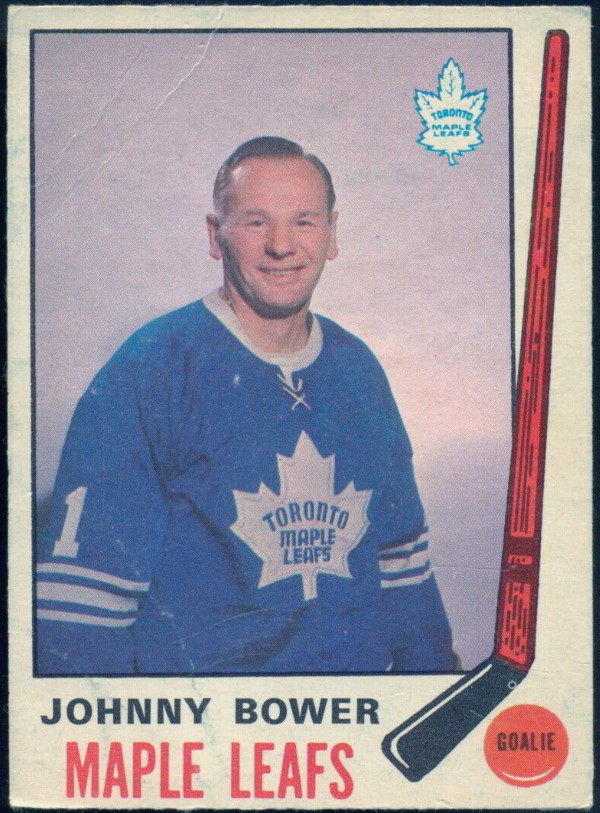
I have a little rule. I have been a Toronto Maple Leafs fan since the 1960s. I know that because I still have most of my 1969-70 O-Pee-Chee hockey cards. I also know that they have sucked for most of the 55 years since I bought them. Oh, there was Darryl and there was Wendle but in the last decade they’ve only won one playoff series – until this season. So my rule is obvious. I won’t watch them unless they win a series. Which they now have. And they won the next series’s game one too. Update: and game two.

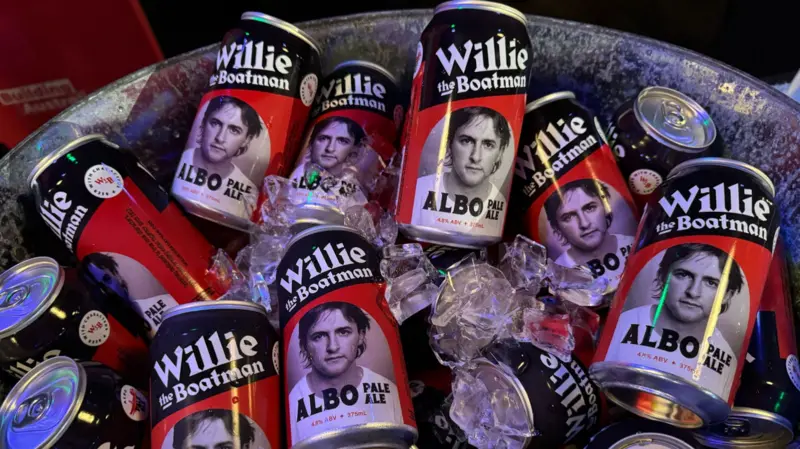
Speaking of victory, I noticed an interesting sidenote to the Australian election last weekend with the after party for the winner Anthony Albanese being fueled by Albo Pale Ale. Albo? Albo:

…you might have heard of Albo. When this beer was brewed, he was simply the brewery’s local Member of Parliament who was known for his support of the craft beer industry, trains and the ocassional spot of DJing. He went on to be the 31st Prime Minister of Australia and his younger self will forever be immortalised in this beer, which sure beats a toilet.

BTW – that toilet. Speaking of objects holding liquids, Kevin K commented an interesting comment this week: “always seems there’s a strong lack of editing for glassware articles.” Is that a lack of strong editing? And is “strong lack” related to Strong Bad? Whatever it is… I fully agree. What was the object of his disappointment?

Cusack gave a thumbs-down to two common beer glasses. “Pints and mugs are fine for a quick pour, but they do nothing to highlight what makes an IPA good. Too open, too wide, they lose aroma fast,” Cusack told The Takeout. “Steins are worse — thick glass insulates the beer too much and dulls your senses.” Pints and mugs don’t actually do much to enhance any beer’s flavor (not just IPAs), but mugs and glass steins, with their thick walls and side handle, will do the job well when keeping your beer cold is a priority.

Me, I drink pretty much everything from the same hefeweizen glass if I am wanting to pay attention. Lots of schozz space to get right in there for a sniff. And it holds the temperature well. And it allows me to compare one experience with another a neutral yet effective context. Otherwise, anything will do. What’s up with a glass per beer anyway? It’s like audiophiles who have different stereo speakers for different sorts of music.* Who can afford that? Do you really want to be like audiophiles? It all sounds connected to hyperflavor related status anxiety.

On a similar theme, I was really impressed with one aspect of the announcement from the World Beer Cup.** Transparency. For such an overblown title,*** it was interesting to see that the relatively low number of entries competing in most categories. An average of 73 entries per category. No doubt most were perfectly swell but doesn’t that mean it’s pretty likely that any winner is actually not going to be the best out there? And, with only 53 entries, they found a way to discover that SNPA is an ESB! Mucho guffaw resulted.

Mike Seay may have caught the moment both neatly and tidily with this comment this week:

I need to start asking for tasters before ordering an IPA or even a Pale. You see, sometimes they end up being hazy when there was no indication of it on the menu description. And I am over hazzies…for now. Yes I could always ask for a taster before, but I like to just go for it. Give me a pint and I’ll drink it, even if it ends up sucking. But I am getting too many New Englands when I was wanting a West Coast, so I gotta start asking, I guess.

Hazzies? Is that what we call a grouping of badly thought out hazies now? Maybe huzzies or hizzies even? And exactly how many beer educators did it take to get us to the place where you can’t order a beer and have a clue what you’re about to drink? And is that part of what Jeff meant by the wallpaper phase? Or perhaps what led us to this point:

Craft beer isn’t new and exciting anymore, and almost everyone has heard of it, and the vast majority of potential future customers have experimented with it. What breweries have to do now is sell their product to people who are already familiar with it—but also blasé about it. Craft beer is part of the wallpaper of alcoholic beverages now—present, but in the background, familiar and easy to ignore. Selling a product like that is very different than selling beer in 2000.

And Matthew C perhaps spoke to a similar idea with another sector of the beer trade in his note on Bluesky introducting this week’s feature at Pellicle:

Top stuff from Emmie Harrison-West on the site today about a really interesting no and low alcohol brewery near Edinburgh. It might be our last no and low piece, at least for now, as despite lots of (apparent) interest in what is often cited as the fastest growing sector in beer, the pieces we’ve published to date have struggled to gain traction with our audience.

What to make of all that? Perhaps conversely but definitely offering a ray of hope in this, Jamie Goode wrote an interesting article on standardization and balance (for the lyrically named WineMag.Co.Za) which easily applies to a lot of good beer:

This is the problem with the concept of balance. It can lead to a certain stylistic homogeneity; to boring wines that tick all the boxes, but which fail to thrill. Alongside this concept of balance, we have the problematic notion that we always want to drink the same sort of wine. There are even people who peddle protocols for matching consumers with the right wine for them. The truth is that we want to drink different wines on different occasions. I have lots of wines at home, but it’s not easy finding the right wine for the right moment, even though I have only wines that I like to hand. I think the concept of balance in wine is next to useless. It should be about whether or not a wine has personality, and whether or not that wine, with its personality, is the right wine for this particular drinking occasion. I want my wines to be interesting…

Me too. And my beers. But what is it to be interesting… and what makes it so? (And, he thought to himself, if we just left these clinky drinky things to individuals and their own interests, well, what would we do with all the experts and, horrors, the editors?) Hmm…  Drew Starr has an idea that perhaps may help frame the concept:

I think we discussed my theory of cognition for quirky regional food I conjured after Nick Tahou’s. Anyone can appreciate it, but you have to try it before your brain matures at 26 to have a love that defies objectivity. You always love it more when older, because the memory of youth is delicious… Ask me or anyone who grew up in Western MA who makes the world’s best burger, we’ll say White Hut, an objectively incorrect answer that we are incapable of being made to believe otherwise.

So… the things that are interesting are things that relate to the person by whom… in which… that interesting thing is / was experienced. Radical.  Matty himself, for the double, had a similar sort of tingly sensation this week, not from a recollection of youth but from being in the audience for a performance of Hamlet:

Such was the intensity and physicality of the performance as a whole that I can’t stop thinking about it. Samuel Blenkin, playing the titular role, was gripping. The way music and dance was weaved throughout meant I couldn’t look away for the whole 90 minutes. It was dark and visceral and unrelenting and sad and funny. Of course, I had to go for a pint and sit down afterwards, to help myself come down. But as I did so I realised in witnessing such a brilliant act of creativity my very soul itself felt nourished. I was full to the brim. There are moments in life, sometimes major, sometimes fleeting, but they leave a permanent mark on you. My first sip of IPA at Odell Brewery, devilled kidneys on toast at St. John, Mills Foxbic at Hereford Beer House, the reuben on rye at Choice City Deli. These are experiences that helped shape my worldview.

Is that what Goode meant by interesting? Probs. As one who is perpetually in that condition, when they prepare the syllabus for the Master degree seminar on The Beer Nut this will be one of the key passages the class will have to study:

…I didn’t think it worked very well, but I’m told by Kev the brewer and owner that I’m wrong, which is fair enough…

Returning to that piece in Pellicle, the not wrong and definitely interesting Emmie Harrison-West offered up a portrait of Jump Ship Brewing, low-no alcohol brewers near Edinburgh, and unpacked the background:

Like many of us as we age, Sonja found that her tolerance for booze had dropped. She was becoming irritable after drinking and dreaded the day after. “I was drinking less, but it was that Tuesday night beer that I was really craving. You know, when you’re finally sitting down, the kids are in bed, you’re tired and up early for work,” she says. Sonja discovered that an NA beer really scratched that itch, but she still felt like something was missing: choice. Sure, she was making better choices for herself, but found her options in terms of the variety of NA beers available were woefully limited. “That’s when I thought, ‘why don’t I just do it?’,” she tells me.

Swtiching a bit abruptly to the Health News Desk: the recent flurry of discussion about Savory IPA got me thinking again about the need to label the ingredients on beer. See, like a lot of people I am allergic to MSG – the key additive apparent miracle that transforms a humdrum beer into an amazing new style! It’d be nice to have informed decision making so I can know if my respiratory equiment is going to seize up or not.

And, perhaps taking a breather from all that above, I really liked David Jesudason‘s piece**** on the Alehouse in Reading where he found people ready to just have a chat:

It never was my plan to travel 50-odd miles in a four-hour round trip for this specific chat but that’s where my day took me. I had a vague idea to visit the Alehouse for the second time because, inspired by The Shiralee, I wanted somewhere a bit rough and ready where I knew there would be people drinking in the day despite the broad sunshine outside. The pub is covered head to toe in pump clips, has a queue of pickled egg jars at the bar and various hair rock songs being played through the speakers – the only tune I could place was Queen’s Fat Bottomed Girls, and it’s been a long time since these women made the rocking world go round.

All of which, coming full circle, brings me to the thought that Boak and Bailey shared on their Patreon back channel last weekend and gave us all the “oomph” of the year in beer, YTD-wise:

Jeff Alworth’s wallpaper post got us thinking about lots of things, but mostly that time passes quickly before you notice it. It’s easy to feel as if craft beer is a thing that just landed, beloved of fresh-faced hipsters. But even in its most recent form – IPAs and punks and skulls – it’s been around for several decades. Thornbridge Jaipur, an especially significant beer in British craft beer, turns 20 this year. There are people at university now who have never lived in a Jaipurless world – who don’t remember a time before BrewDog, or Beavertown.

Me: “I’m not 62! That old guy over there is!!!” What is it we want from all this anyway? Being part of Club Craft? Nope. A nice chat sound perfectly nice, if I am being honest. And a nice beer in any frikkin’ glass I feel like using. See, the failings of craft now so evident in 2025 – especially the failure to reign victorious as was clearly promised a decade or more ago – reminds me of what I recently read in that grab bag of convenient quips for we the aged alumni with the BAs, The New Yorker, on the translation of Catullus:

Precisely what makes much of Catullus’ work so appealing and “relatable” to modern audiences—the offhand charm, the impish vulgarity, the jazzy colloquialisms—makes him that much more difficult to bring into modern English. Ordinary language, after all, has a far shorter shelf life than does the elevated language of high literature; translations of Catullus that are barely twenty years old already feel dated. Peter Green’s “Wretched Catullus, stop this stupid tomfool stuff” sounds positively Victorian next to Mitchell’s “Wretched Catullus, stop this crazy longing.”

It lives in the past tense, does craft. It is, to my adult chidren, exactly that: stupid tomfool stuff.  Not beer, mind you, which is good. Beer remains interesting.

That’s it for this week. I am on a train later today so may be delayed in responding to all your emails and DMs and stuff. Bear with me. Until we meet again, please check out Boak and Bailey every Saturday (…as long as all their holiday fun doesn’t get in the way…) and Stan (….not quite…) each and every Monday. Then listen to a few of the now rarely refreshed Lew’s podcasts and get your emailed issue of Episodes of my Pub Life by David Jesudason on the (sometimes even but never) odd Fridays. And maybe The British Food History Podcast. Maybe? And Phil Mellows is at the BritishBeerBreaks. Once a month, Will Hawkes issues his London Beer City newsletter and do sign up for Katie’s wonderful newsletterThe Gulp, too.  Ben’s Beer and Badword is out there with the all the sweary Mary! And check out the Atlantic Canada Beer Blog‘s weekly roundup. There is new reading at The Glass which is going back to being a blog. Any more? We have Ontario’s own A Quick Beer featuring visits to places like… MichiganAll About Beer has given space to some trade possy podcasts and there’s also The Perfect Pour. Plus follow the venerable Full Pint podcast with an episode just last month!. And there’s the Craft Beer Channel on Youtube. Check out the archives of the Beer Ladies Podcast. That’s quite good but, hmm, they’ve also gone quiet this year. The rest of these are largely dead. And the long standing Beervana podcast …except they have now stood down.  As has We Are Beer People. The Share looked to be back with a revival but now its gone quiet. And the Boys Are From Märzen podcast appears suspended as does BeerEdge, too. VinePair packed in Taplines as well. All dead and gone.  There is more from the DaftAboutCraft podcast, too. Nope – that ended a year ago.   The Moon Under Water is gone – which is not surprising as the ask was $10 a month. Pete Brown’s one cost a fifth of that – but only had the one post. Such is life. Such is beer podcasting and newlettering!

*“Disco Woofer” would be a great name for an DIPA. Or a speaker.
**No doubt intended to be confused with the equally grandiosely World Beer Awards. Not to mention the World Awards of Beer.
***Olympics? That all? Surely it’s the Mount Olympus of Beer! Even as the BA continues its logical retraction, the fawning seems to be enhanced.
****His writing in which reminded me of another passage from another article in that same issue of The New Yorker from March 30 2025: “Much of the art of “Encounters with the Archdruid” lies in the way that McPhee manages to be both there and not there. He bathes his aching feet in the water. He recalls other trips he has taken with Brower and, separately, with Park. He searches for copper-bearing rocks, and, when he finds them, gets excited. But he never reveals whose side he is on. When it comes to the great question of the piece—to mine or not to mine—he gets out of the way.

A Brief Yet Utterly Fascinating First Beery News Notes For May 2025

Brief? I am on the road as you read this. At a Holiday Inn out by the airport if you have to know. Just a brief trip but that is going to mean a brief update. Why? Why??? Stop screaming that word into your pillow. It will be OK. Why do we know it will be OK? Because… as The Beer Nut has proven by hitting another milestone as he enters his third decade of beer blogging. Meaning we can never stop. Never. Ever. Another thing that never stops is the cycle of life that marks the work from planting seed to harvest time and, again, to planting again. Just to make you beer. As my near neighbours, the farmers and brewers at MacKinnon Brothers, showed when they shared this photo and these thoughts below on FB:

First planting of the year—no-till malting barley into soybean stubble. We’re testing new aftermarket firming and closing wheels on 6 of the 32 rows to see if they improve seed placement over the factory setup.

Martin, sitting in a pub enjoying a pint of Bass, has no doubt thought of that sort of thing from time to time but this week he raised another excellent question on the tension between the campaign to get UNESCO recognition for cask and the campaign to get CAMRA members to stick to “indie” beer:

I watched as a succession of unapologetic young folk arrived at the bar, went “ooh” and pointed at the red triangle. Yes, a national is finally putting a bit of money behind Bass, though frankly only pints this good will keep the pumps flowing and make sure it stays on the bar. Not everyone is delighted by this enthusiasm for Bass, whether because of ideology… CAMRA’s Conference instructed the NE to “ensure that all relevant CAMRA publications and communications pledge preferential support to beer producers and suppliers that are independent of the influence of the multinational brewers, and to make the case persistently for this stance.”

So, is the UNESCO campaign “Bass Inclusive” (BI) but the CAMRA one is Bass exclusionary” (BE) ?  A report in The Guardian, while setting out what I had thought would be pretty well known information, adds a twist:

In its annual independent beer report, parts of which have been shared with the Guardian, the trade body for British indie brewers said tough conditions were exacerbated by difficulty selling to local pubs… Siba members told a survey that 60% of the pubs within 40 miles were inaccessible to them, choking off potential sources of revenue and reducing choice for consumers thirsty for more interesting options at the bar. They blamed conditions imposed by large breweries and some pub chains, including financial agreements that impose conditions on what beers pubs can sell.

So if Bass is brewed by a large multinational and it is engaging in practices which are detrimental to small brewers who, among other things, brew fine cask ales… is the UNESCO designation application going to be BI or BE? WIll it carve out those fine cask ales which are made by the faceless nasties of international capitalism? Asking for a friend.

Speaking of machines, Boak and Bailey continue on their travels and have considered the role of well choreographed hospitality:

In the past week, we found ourselves in two such machines in Bucharest, the capital of Romania. Both drew us in with beautiful, historic buildings and the promise of decent mainstream beer… We really wanted to see inside the building, though, and also really wanted to drink a decent lager in vaguely trad surroundings, so we made our booking and braced ourselves. On arrival, we were intercepted by a member of staff whose only job was to assign people to free tables and escort them to their seats. She wasn’t exactly cheerful, but she was certainly efficient. She handed us off to a waitress controlling a section of about 10 or 15 tables who was just as friendly as she needed to be to avoid making us feel totally unwelcome. When we took a little too long to decide what to drink she got, perhaps, a touch impatient. But, like in the beer halls of Cologne, or The Dog & Bell in Deptford, once you accept that you’re not there to make friends with the staff, this brusqueness becomes part of the offer.

You know, I have played such a role in this life from time to time. As an usher, a waiter and to be honest a lawyer. I’ve said “right this way” as I led then to their seat, a table or… umm… the dock. Yes, standardized impersonal presentation in hospitality are efficient and reliable yet also impersonal and distant. You are being served but, in turn, so is the operation in a reciprocal sense. And sometimes even mentioning your past experience can open up a bit of conversation – but in other situations, you know, it can be taken as an insult. Govern yourselves accordingly. They don’t really care about the time you too failed to put in that order.

Speaking of touchy situations… would you drink out of a skull… have you?

Of course nobody wants to end up as a wine cup, but it must be a consolation to know that some very distinguished historical figures lived on in the drinks cabinet. One outstanding example was the Byzantine emperor Nicephorus I, who ruled in Constantinople from 802 to 811. After the emperor was ambushed by the Bulgars in a mountain pass and slaughtered alongside his army, his head was delivered to the splendidly named Bulgar khan, Krum the Fearsome. According to a Byzantine chronicler, Krum “hung it on a pole so as to exhibit it to the tribes that came before him and to dishonour us. After that, he laid bare the skull, riveted it on the outside with silver and, in his pride, made the chieftains of the Slavs drink from it.”

The article in question being from The Times and the facts that led to the question being newsworthy cause Dr. Alice Roberts to comment “I can’t believe this isn’t a spoof article. It seems to be supporting a very questionable approach to human remains.” The facts in questions being some Oxford dons doing it based on an ancient tradition going back to … err… 1946.

Glut news:

The Scotch Whisky Association (SWA) shares export figures annually. For several years, Michael Kravitz of the Diving for Pearls blog published an excellent analysis of this data, predicting in 2017: “If volume sales don’t increase [significantly], then we’re going to start seeing A TON of well-aged malt whisky within 5 years. If this continues further, there is going to be an embarrassment of oversupply in 10 years. Even if industry-wide production is cut in half in 2017, it would be too late to stop The Loch.”

Similarly perhaps, good play-by-play from CBC by Dave Infante, highlighting the potentially irrational exuberence in the pep rally:

Matt Gacioch of the Brewers Association notes that U.S. craft brewing’s -4% volume drop in 2024 was the largest since the trade org started tracking that metric. “Consumers feel much worse than they’re acting.” Even as sentiment tanks, people are still spending on-trend for now. Doesn’t explain why they’re spending less on craft beer, but hey, listen, silver linings!

There was a similar theme in the Beer Insider Insights newsletter this week:

… in 2012-2013, households led by folks under 30 spent more like 1.1% of their disposable income on alcohol. That dropped to 0.74% a decade later, about 1/3 less. Households run by younger folks will generally have less income, disposable or otherwise, Bourcard reminds. But the fact that Gen Z is already spending less on alcohol could stick around. Then too, the most cited reasons of “health and vanity” are “greatly overblown,” in his view.

I love how “greatly overblown” gets something of the rimshot treatment after those sorts of stats. Silver linings! More serious in terms of the inquiry, David Jesudason wrote this week about a puzzle:

Dennis Morris took a series of photos of life in Southall in the 1970s after apparently driving past the West London suburb on the way to a Bob Marley gig. This one was sent to me by a friend visiting an exhibition of his in Paris. I’ve asked people if this is the legendary Glassy Junction… but none can confirm. All I know is this is a Sikh pub landlord photographed in Southall in 1976. So if anyone has any idea what pub this is or the name of the man pictured, please get in touch!

I don’t know anything about that. Do you? No? Well, did you know, if you are not sufficiently disappointed in the beer in front of you, that there’s an app for that?

…a new experimental measurement tool, created by scientists assessing the concentration of DMS in beer through “smartphone-based colorimetry” uses a “paper-based analytical device (PAD)” which was made using an “immobilising a chromogenic reagent phase consisting of alkaline nitroprusside in a gelatin hydrogel”. Breweries and beer judges analyse the DMS content of products to ensure consistent flavour quality and consumer satisfaction.

Lordy. I am loving this “off-flavour” studies revival. Remember last week? That was excellent. Feels all 2012. Is that unkind? You know what’ll perk this conversation up? Rice malt, that’s what:

The rice malt can also reduce crop-growing acreage needs by half or more, because the research shows it produces more grain per acre than barley, while having an equivalent or greater sugar extract potential… The study, which is derived from the University of Arkansas, also identified how malting has the potential to decrease time and energy costs and make using rice more feasible for more small-scale craft brewers — especially when creating gluten-free beers. Since rice is cultivated globally, the analysis highlighted how it also has the benefit of serving as a viable malting grain for tropical and subtropical countries that would otherwise need to rely on barley imports for brewing.

You know… I wonder about the arsenic. Any mention of the arsenic? Not sure. Hmm… and that’s it. Not much this week. It’ll get bettter. Next week for sure. Let me check my calendar. No, away briefly again. Until then, please check out Boak and Bailey every Saturday (…as long as all their holiday fun doesn’t get in the way…) and Stan (….who is also going on his own holiday break so may not be there…) each and every Monday. Then listen to a few of the now rarely refreshed Lew’s podcasts and get your emailed issue of Episodes of my Pub Life by David Jesudason on the (sometimes even but never) odd Fridays. And maybe The British Food History Podcast. Maybe? And Phil Mellows is at the BritishBeerBreaks. Once a month, Will Hawkes issues his London Beer City newsletter and do sign up for Katie’s wonderful newsletterThe Gulp, too.  Ben’s Beer and Badword is out there with the all the sweary Mary! And check out the Atlantic Canada Beer Blog‘s weekly roundup. There is new reading at The Glass which is going back to being a blog. Any more? We have Ontario’s own A Quick Beer featuring visits to places like… MichiganAll About Beer has given space to some trade possy podcasts and there’s also The Perfect Pour. Plus follow the venerable Full Pint podcast with an episode just last month!. And there’s the Craft Beer Channel on Youtube. Check out the archives of the Beer Ladies Podcast. That’s quite good but, hmm, they’ve also gone quiet this year. The rest of these are largely dead. And the long standing Beervana podcast …except they have now stood down.  As has We Are Beer People. The Share looked to be back with a revival but now its gone quiet. And the Boys Are From Märzen podcast appears suspended as does BeerEdge, too. VinePair packed in Taplines as well. All dead and gone.  There is more from the DaftAboutCraft podcast, too. Nope – that ended a year ago.   The Moon Under Water is gone – which is not surprising as the ask was $10 a month. Pete Brown’s one cost a fifth of that – but only had the one post. Such is life. Such is beer podcasting and newlettering!

These Be Your Mid-April Mid-Life And Perhaps Even Fairly Mid Beery News Notes

Easter week! You’d be right in thinking it was a month ago with all the talk this week of of green beer here and green beer there. But no, it is the time of the bunny who lays eggs which happen to be made of chocolate. Christ! And each Easter is also reason to revisit this 2008 post of mine on the lack of Easter beers – which included, as illustrated, perhaps the oddest thing I have ever published on this here blog of mine. But, of course, the main event of the long weekend is the old man’s birthday, me being the old man in question. Thank you for all the cards! Sixty-two. Whaaaaa Hoooooo! Said no one never. This very evening I am celebrating by going to a ukelele orchestra concert. I have authorized myself to slip out early just in case. Still, I do hope it is silly enough to justify the price of admission.

Enough about me! First off this week, have I mentioned the global economic mood?  The CEO of Mexico’s Constellation Brands Bill Newlands has:

About half of Constellation’s beer sales are from Hispanic consumers… with the demographic accounting for 78% of its total revenue last quarter. The Wall Street Journal report noted that many immigrants in Southern California and Texas have begun avoiding liquor stores, where they are often forced to show identification. Many people have stopped shopping at supermarkets after 6 p.m., hoping to avoid immigration raids… While Modelo, Corona and Pacifico are exempt from the Trump administration’s 25% tariff on Mexican imports, the company is not able to dodge the 25% tariff on aluminum when it comes to their canned beer imports.

Being from somewhere matters apparently. And speaking of tariffs,* James Beeson posed an interesting question in The Grocer: is local a liability in these trade war times? And then he helpfully explored the implications:

These liquids command a hefty price premium thanks to protected geographical indicators (PGIs) which guard the product’s name from misuse or imitation… PGI status offers “clear authenticity and product differentiation in consumers’ eyes”, and plays “a crucial role in premiumisation”… Tariffs certainly look like bad news for Rémy, which generated 38% of its sales in FY24 from the Americas. Thanks to its overexposure to cognac, it also sells 62% of its PGI spirits outside the market in which they enjoy this status.

So being from somewhere can be quite damaging. Plus… never thought over exposure to cognac could be a good thing but there you are.  But then in TDB, David Jesudason was arguing that things should be more clearly from somewhere:

It’s especially concerning because most drinkers cringe at the thought of Madri – the supposed soul of Madrid – being brewed in the UK by Coors – while this unnamed beer is actually being brewed at a renowned British craft brewery. The type of brewery that brews a lot of award-winning tipples that define modern British beer for discerning drinkers prepared to pay premium prices. And this beer is no exception. Which shows there’s no need to lie. But here’s the payoff: by claiming a beer is brewed in Germany not Great Britain what exactly is a British beer company saying? Bavaria has better water than Burton? Hamburg has better brewing techniques than London? Perhaps all British brands will proudly say where their beer is brewed if cask were to become UNESCO recognised and we took our heritage seriously.

THEN… Will Hawkes considered in his latest London Beer City monthly how beer from somewhere might not really be about that somewhere at all and this might not be very good in these times:

American influence – and, more specifically, American hop flavour – has fuelled London’s brewing renaissance over the past few decades. From Neck Oil to Pale Fire, London brewers have paraded their passion for (and understanding of) Obama-era American craft brewing. American Pale Ales on London bars have become legion. Wham bam thank you Uncle Sam. The world, though, has changed. To paraphrase Oscar Wilde, to elect Donald Trump once might be regarded as misfortune; to do it twice is just fucking stupid. Trump’s introduction of tariffs, the bovine threats to Canada and Denmark, the increasingly aggressive way in which visitors to the USA are being treated: this points in one direction and one direction only. America acknowledges and wants no allies, and that includes Britain. MAGA is unleashed and obnoxious.

Interesting. Will the world reject US craft just as it’s rejecting the Tesla? It is also interesting that making booze under licence was one of the solutions mentioned by Mr. Beeson while is the problem for Mr. Jesudason. Hmm… Speaking of critical thinking, Katie M. took immediate and visceral objection to this article in The Guardian:

Is the editorial team all on holiday leave or something? There are SO many talented writers out there looking for an opportunity like this, and so many editors who do their jobs with skill. How can a national paper be so careless as to publish something so unpolished. The writer isn’t even to blame here, the whole process is, from commission to upload.

There was a lot of unhappiness in the susequent BluesGuy comments all of which confused me a bit until I got to this one that shared a correction to the online edition: “This article was amended on 13 April 2025 to replace some words that were omitted during the editing process.” Yikes!  The post repair job was still a bit much. As ripe with superlatives as the worst of beer writing. Very much overly rouged, as the kids might say. So much unhappiness. Good thing, then, that Gary shared the good news – the Clark’sroast beef sandwich is back in Syracuse NY!

For longtime locals, the main event is the return of a Syracuse bar legend: the Clark’s Ale House roast beef sandwich. Clark’s Ale House, which operated in two locations from 1992 to 2016, was famous for its roast beef sandwich. It was simple — just medium-rare top round, thinly-sliced red onions, cold cheddar cheese between an onion roll from Di Lauro’s Bakery — but it was legendary. And when Clark’s closed for good, its devoted fans were left craving. “We’ve missed this sandwich so much,” Beach said, standing in the Crooked Cattle’s kitchen earlier this week. ”But now it’s back.”

That artisic rendering up there is the sandwich I ate at Clark’s over twenty years ago. Now… if they can just bring back the house ale and the pub’s layout.

Note #1: Katie Mather has returned to owner operated blogging.

Note #2: do you like salt in beer. People have. Since at least 1835.

Stan also spoke of an ingredient this week – specifically the hop – in his Hop Queries edition 8.12 and shared this about the return to work of two US government employees:

Two USDA-ARS employees involved with public hop research were among thousands of probationary employees who went back at work after the Merit Systems Protection Board (MSPB) issued a 45-day stay on their termination (see Hop Queries Vol. 8, No. 10). Francisco Gonzalez, a hop horticulturist, is one of four scientists central to the public hop research program. Brandon Sandoval is a technician assisting Gonzalez… That’s not to say that things are “back to normal” at research facilities in Oregon and Washington. Not all support staff has returned to work and what happens after a hiring freeze lifted is not clear. Also, the USDA has warned employees that a significant reduction in force is likely.

Some chat this week about what was micro then craft now independent. As exhibit A we have Pete of The Times* who gave a quite reasonable explanation how craft was lost to bigger interests… just as, I suppose, micro fell to the avarice of big craft:

To my palate, Beavertown’s Neck Oil and Gamma Ray, and Camden Hells — now owned by corporations that brew as cost-effectively as they can — don’t taste as good as they did. Quality hops are costly. And proper lagering means storing beers in chilled vats for weeks. So what are drinkers to do if they want beer that’s well made by small players? Trade bodies such as Siba, which once promoted craft beer, now champion “indie” beer instead. Siba defines an indie brewer as one that’s UK-based, has less than 1 per cent of the UK beer market and is not connected with any other business bigger than that size. It issued a logo for breweries such as Fyne Ales, Vocation and Five Points to use on packaging and pump clips.

Then, as exhibit B, consider Phil Cook who gave what can only be described as commentary from a view from (Ed.: *…checks map…*) well below my feet:

‘Independent’ remains the adjective of choice in promoting and organising the many Australian breweries that might otherwise be grouped under ‘craft’ or (in earlier times) ‘micro’. But companies who persist in waving it around as they take part in the recent string of mergers, consolidations, and various other entanglements are straining the word to breaking point. It’s too much like someone insisting “being single is really important to me, that’s why I married another bachelor!”

Does it matter? Well, “it” isn’t any one thing. First, locally the word “independent” never really took off in Canada. Even well past “craft” we are… still craft. And if we look at the UK standard of 1% of the market that has little use for the US trade where the small guys got co-opted long ago to falling into line helpfully to support the aspirations of the large ones. These things, too, will not save craft beer. And does any of this matter so much as we continue on the human race’s continued shift away from the bottle? Consider this startling news from The Guardian on the state of the global wine trade:

The OIV said the consumer was now paying about 30% more for a bottle now than in 2019-20 and overall consumption had fallen by 12% since then. In the United States, the world’s top wine market, consumption fell 5.8% to 33.3m hectolitres. Delgrosso said tariffs ordered by the US president, Donald Trump could become “another bomb” for the wine industry. Sales in China remain below pre-Covid levels. In Europe, which accounts for nearly half of worldwide sales, consumption fell 2.8% last year. In France, one of the key global producers, 3.6% less wine was consumed last year. Spain and Portugal were among the rare markets where consumption increased.

Still on the holiday in Romania and pushing back against that trend by all accounts, Boak and Bailey took time to send out their monthly newsletter in which they shared thoughts on one way the pub trade can respond – reduce the congnitive load:

In the context of a holiday, a slight increase in cognitive load can be pleasurable, and part of the fun. It’s about the line between stress and stimulus… How can pubs and breweries reduce cognitive load? The experience of a Wetherspoon will rarely be thrilling but at least (kliche Klaxon) “You know where you are with a ‘Spoons”. All sorts of venues could, and can do, do some of the same things… the single greatest way to reduce the cognitive load of any experience is to keep doing it. However weird and complicated your local pub might be, by the time it is your local, you’ll know how it works and won’t find it weird at all.***

Does a gay bar at a zoo convey significant cognitive load? David Jesudason explains how you might have found that out if you visited the Hotham Park Zoo in Bognor Regis, West Sussex in the 1980s:

…this magical and enchanting period spawned the Safari Bar, a gay bar playing high NRG music, hosting drag queens and causing merriment that could be heard from considerable distances. The night was the idea of DJs Barrie Appleyard and Ian Harding, who had met at a club in Littlehampton. Ian knew the manager of the zoo and Ian phoned Barrie saying “shall we try something with the zoo, you know, gay nights or something?” They found a cafeteria (originally built as a small mammal house) that was tucked away in the back of the zoo and transformed this functional space into a jungle-themed gay bar on Wednesday, Friday and Saturday nights.

What went on each Thursday? Hmm. Speaking more or less on whether less is maybe more or maybe not, at the beginning of the month Retired Martin shared his thoughts on coming changes to the Good Beer Guide based on this motion that was before the gathering last weekend:

“MOTION 7 : This Conference instructs the National Executive to reduce the number of pubs in the Good Beer Guide from the 2027 edition onwards, to ensure only quality pubs are featured.“

Have the results been published beyond the shadowy membership cabal? I don’t see any reference on the so-me’s.  What the heck could “quality” mean in such a context? By total contrast, I give you the best line written about beer of the week – if not to this point in the month – must be this one:

The best location for a beer, by far, was at the sausage stand near the city incinerator plant.

And, perhaps relatedly, Tom Morton, who I met through his former BBC Scotland radio show, shared a story of a dubious newpaper restaurant reviews which is… detailed:

The worst meal I’ve ever had was at a café I’ll call Les Vomiteurs in the then seriously untrendy, ungentrified, occasionally unsafe area of Glasgow called Finnieston. This was 1979 and the late Jack House was still writing restaurant reviews in the Evening Times. He’d recommended the tripe at Les Vom and as I’d never tried this intestinal delight, and fancied myself an adventurous junior gourmand, I thought I’d have a go… The formica tables of Les Vomiteurs matched the unwelcoming hardness off the proprietor, who served me up a bowl of white gunge. Boiled tatties and slimy tendrils of cow gut in milk. It was unchewable, the bits of stomach slipping about my mouth like frisky tapeworms. I swallowed, inhaled the potatoes and just made it out of the door in time to throw up the entirety of my lunch in the Argyle Street gutter. So much for acting on restaurant reviews.

I don’t know what to say about that… other than my folks grew up on the Clyde and that is the sort of keen tales of humanity that I grew up with.  And speaking of the unexpected, Jeff wrote an intersting exposé of a bootleg beer he injested in Oregon named Corona Mega – and also provided some details on a resulting lawsuit:

The mystery deepened the more I dug into it. Whatever I bought that night was definitely not regular Corona. For one thing, it was a vastly superior beer. It was a tenth of a point weaker in strength at 4.5%…  The label listed Oz Trading Group of Hidalgo, Texas as the importer, which was an oddly bold move for, to quote the economist Stringer Bell, “a criminal [expletive] enterprise.” (As a spicy aside, the apparent owner of Oz Trading is Oziel Treviño, a Hidalgo city councilperson who was found to have committed voter fraud in 2016.) Curiouser and curiouser, in other words.

And, finally, Pellicle published a piece by David Nilsen on depression and loss,  a tough read that carries the disclaimer that “this article makes frequent and detailed references to suicide and severe depression, therefore reader discretion is advised.” The essay is primarily about the life and the passing of a brewer, Brad Etheridge, at age 43 based on conversations with his wife, Julie Etheridge but it also speaks to the broader context. It also contains this passage:

Cindy Parsons is a psychiatric nurse practitioner and an associate professor of nursing at the University of Tampa in Florida. In 2019, she and colleague Jacqueline Warner Garman (who co-owns Hidden Springs Ale Works in Tampa and is a psychotherapist) gave a presentation at the Craft Brewers Conference, held that year in Denver, on addressing mental health issues in the craft beer industry. She thinks the image of craft beer can make its workers and supporters reluctant to acknowledge the complications of mixing mental health issues and alcohol. “We’re supposed to be the happy people,” she tells me. “Do we really want to address this in our industry?”

My profession, lawyering, also has a significant mix of mental health issues and alcohol and much of what’s written by David rings true. Only by way of one example among many I’ve met, the family friend who was my first articling principal now thirty-three years ago quickly upon my arrival revealed themselves to be drinking a quart of rum to get them through each day. Drank to the death. Grim.

There you have it. A huge range of reading this week. Take your time and until next time when I will be, I promise, older and wise… please check out Boak and Bailey every Saturday (…as long as all their holiday fun doesn’t get in the way…) and Stan going strong again each and every Monday. Then listen to a few of the now rarely refreshed Lew’s podcasts and get your emailed issue of Episodes of my Pub Life by David Jesudason on the (sometimes even but never) odd Fridays. And maybe The British Food History Podcast. Maybe? And Phil Mellows is at the BritishBeerBreaks. Once a month, Will Hawkes issues his London Beer City newsletter and do sign up for Katie’s wonderful newsletterThe Gulp, too.  Ben’s Beer and Badword is out there with the all the sweary Mary! And check out the Atlantic Canada Beer Blog‘s weekly roundup. There is new reading at The Glass which is going back to being a blog. Any more? We have Ontario’s own A Quick Beer featuring visits to places like… MichiganAll About Beer has given space to some trade possy podcasts and there’s also The Perfect Pour. Plus follow the venerable Full Pint podcast with an episode just last month!. And there’s the Craft Beer Channel on Youtube. Check out the archives of the Beer Ladies Podcast. That’s quite good but hmm they’ve also gone quiet this year. The rest of these are largely dead. And the long standing Beervana podcast …except they have now stood down.  As has We Are Beer People. The Share looked to be back with a revival but now its gone quiet. And the Boys Are From Märzen podcast appears suspended as does BeerEdge, too. VinePair packed in Taplines as well. All dead and gone.  There is more from the DaftAboutCraft podcast, too. Nope – that ended a year ago.   The Moon Under Water is gone – which is not surprising as the ask was $10 a month. Pete Brown’s one cost a fifth of that – but only had the one post. Such is life. Such is beer podcasting and newlettering!

*Did I? Was I?
**I forgot this: I knew him and apparently drew him way back when.
***Pardon all the ellipsises… ellipsi… but the point was worth making.

Those Humdrum Work Week Beery News Notes For When Someone Else Is Having More Fun Than You

So, the election is halfway through and the pending arse kicking three weeks from now seems to be still on track.  As fans of beer, we are familiar with the concept of attenuation and yeast efficiency. Right? Well, the Tories in Canada have a history of voter inefficiency – which means they have too many of their voters lodged in too few ridings*. You get my point, right? Anyway, no new pictures of beer being poured on the campaign trail to share this week – but to be fair in 2021’s campaign, Bloc quebecois leader Yves-François Blanchet hit a beerfest as illustrated. I am hoping we get more poliiticans at the tap before this all ends on April 28th. Interesting to note that there is at least one Rhinocéros Party** candidates this time around and that at least one candidate is a beer fan:

Anthony Mitchell, a retired elementary school principal running for the Rhinoceros Party in Sarnia-Lambton-Bkejwanong, says he has no campaign budget, just a red nose and a slogan… Mitchell, who grew up in Sarnia, said he’s married, though “my wife doesn’t admit that she’s married to me during the election,” he said. He has two children and six grandchildren. “My hobbies are going to concerts and festivals,” he said. “I brew my own beer in my garage.”

Otherwise… all the news is bad. Still bad. And you all fell bad. And you should. So… it is no surprise that some folk are actually having more fun than you. Much more fun. There they are, off on their holly jollidays saying things like “yipee!!” and “wheeeeeee!!!” And there they are, in Timișoara Romania having more fun than you. Birthplace of the 1989 revolution. Wow. Less happy recently (but probably still happier than you) was The Beer Nut who wrote this upon the consideration of one beer’s branding as compared to the experience of its consumption:

The badge implies that it’s one in a series called “Modern Classics” and that it’s a “celebration stout”. Celebrating what, and how do the whiskey and coffee enter the picture? Not in the flavour, anyway. This tastes very plain indeed, and though it’s not powerhouse-strength, 5.5% ABV is plenty to give a stout character. Here, the extent of the coffee is no more than you’d find in any typical dry stout. There’s nothing resembling whiskey at all, so I doubt it’s barrel-aged. Whisky-soaked oak chips, maybe? Sorry, there are more questions than answers with this one. I was a bit bored by it, not to mention confused.

So many questions, had he. Similarly, question-raising-wise, Lars shared some research on BlueSky, how he came across information from Jutland, Denmark where there were stories related to:

their “gammeltøl”, strong farmhouse ale brewed in spring and drunk in autumn, that they laid an egg in the barrel. This was common. She adds that “from this egg there might come a basilisk.” That’s not common. Decided to search for “basilisk” and found another mention. She says they believed that if the gammeltøl became too old a basilisk might come into it, and it had eyes everywhere. If it looked at anyone, they died. She’d heard that one place they’d heard the basilisks in the barrel, and then the barrel and the beer were both buried in the ground out of fear of the basilisks.

Creepy.*** Almost as disturbing is this article in The Guardian about how a character in an upcoming film prefers an odd beer cocktail:

“Coke and beer.” Coke and beer. Coke – and beer? Coke and beer! Who is she, this Lucy? And why is she not like other girls? I have rarely been so taken by a trailer. Is this where I’ve been going wrong, I wonder, in dating and in life? I’ve always liked the idea of having a signature drink order. It seems to mark you out as a person of taste and distinction – someone with a history, who knows things. Medium house red says basic, cheap, vaguely health-conscious. Coke and beer, on the other hand, feels provocative, intriguing and a bit peevish, maybe in a sexy way. 

Maybe. Or maybe batshit nutso. Anthony Gladman wrote about perhaps a more sensible drink but perhaps one had at a less sensible time – the nightcap:

As the first drink of the night is different to those that follow, so is the nightcap a drink apart. It is not simply the last drink of the night but the one you sneak in after that — perhaps on your own, but more likely with someone special, someone to whom you’re not quite ready to say goodbye or goodnight. A nightcap is both the drink and the occasion that surrounds it. All we have in life, ultimately, is time. So to opt for a nightcap is to place extra weight on the time spent drinking it and, retrospectively, on the time that led up to it. A nightcap means the evening was so good you can’t allow it to end just yet — or so bad you need to put it right immediately.

That’s one of those things that brings back memories, yes, good and bad. Mainly bad, frankly. Why did I drink that?  Why did I do that? But back to the now and the real and as noted at the end of last week‘s update, the US plunked a tariff on beer and left EU brewers confused as to what exactly was covered by this executive:

The tariff’s scope has left companies uncertain whether to ship — or sit tight and hope for clarification. Belgian brewers, already operating on tight margins, fear a prolonged standoff. “We don’t know how long the measure will be in effect, and that uncertainty is already damaging,” Raf De Jonghe, head of Belgian brewers’ group BEER, told Belgian daily Nieuwsblad. As confusion mounted, the U.S. Commerce Department clarified that the tariff is not intended to apply to the beer itself. “Tariffs on imported beer only apply to the value of the aluminum content of the beer can, and not to the beer itself,” a Commerce Department spokesperson said in a statement emailed to POLITICO. “Imports of the empty aluminum cans will be tariffed for their full value.”

Mexico was confused by the news as well. Everyone‘s confused. It wasn’t just me. What else is going on?  Well, there was one more stake in the heart of “That Craft Thing What Was” is in this note from Beer Marketer’s Insights:

Sunset Distributing, a subsidiary of Hand Family Companies of TN (led by JR Hand) will buy 2 distribs, craft-centric Stone Distributing and NA-bev oriented Classic Dist. Both in one fell swoop. They total about 15 mil cases, about one third NA. Deal expected to close in about 60 days

What was “a key piece of Stone Brewing” is now just a branch of a big beer distributor.  Speaking of big money, according to Craft Brewing Business:

…a rare Chief Oshkosh Crowntainer beer can fetched an eye-popping $111,150 at Morean Auctions. The early 1950s can, believed to be the only one of its kind… It was likely held in a safe at Oshkosh Brewing Co. for years. After the brewery shuttered, the can passed through a series of passionate collectors — from a mailman-car-bartering deal in the ‘70s to a wooden replica carved by a regretful ex-owner. Over the decades, it changed hands through legends of the hobby: Paul Esslinger, Dave Peck, Bob McCoy, and more. Each trade layered mystique, and when it hit the Morean stage in 2025, collectors knew: this was *the* can.

Relatively speaking, Youngs Brewing is doing less well than that old beer can… at least and perhaps only on the stock market:

We regret to report that long term Young & Co.’s Brewery, P.L.C. (LON:YNGA) shareholders have had that experience, with the share price dropping 48% in three years, versus a market decline of about 7.0%. And over the last year the share price fell 23%, so we doubt many shareholders are delighted. Shareholders have had an even rougher run lately, with the share price down 15% in the last 90 days… Young’s Brewery became profitable within the last five years. We would usually expect to see the share price rise as a result. So it’s worth looking at other metrics to try to understand the share price move. Revenue is actually up 19% over the three years, so the share price drop doesn’t seem to hinge on revenue, either.

Why? Similarly with the why, Mike Kanach alerted us all to the fight between two US law firms over, what, a slogan? We don’t do this in the law trade over here in dull old Ontario – which probably helps avoid this sorta stuff:

Raleigh-based Matheson & Associates PLLC filed trademark infringement claims April 2 in the U.S. District Court for the Eastern District of North Carolina, saying that Denver law firm Whitcomb Selinsky PC is causing confusion by using the name “Beer Law HQ.” Matheson attorney John R. Szymankiewicz has used the “Beer Law Center” moniker to promote his legal services at brewers’ conferences since 2013, according to the suit. In 2015, Szymankiewicz federally registered the first of several “Beer Law Center” trademarks in the category of “attorney services.” Szymankiewicz is the founder and managing partner of Beer Law Center, one of Matheson’s subsidiaries along with the firm’s Vice Law Center…

Question: will both Czech beer culture and British cask ale be recognized under the 2003 UNESCO Convention for the Safeguarding of Intangible Cultural Heritage?  Given that one has the backing of two web-based beer influencers**** and the other is being promoted by the Czech Beer and Malt Association with, umm, government support, err, I know where my money is going… when I am not saving up for that beer can:

If Czech beer culture gets listed by UNESCO, it would be the second after Belgium, listed in 2016 — which Slunecko said “really boosted the reputation of local beer-making, not only inside Belgium, but also abroad.” The Czech Ministry of Culture already put it on the national list in January — a necessary condition for international recognition — while Slunecko and others are embarking on promoting their bid. 

Note: “Jeremy Clarkson’s beers recalled because of “possible health risk” ” !!!

Finally, in Pellicle, Vince Raison introduced his story of The Green Goddess in Blackheath, London with some refreshingly honest personal reflections on facing the year he turns 64:

The doctor gently suggested some lifestyle changes. More (or some) exercise. Improved diet. The usual stuff. Then she proposed I take three consecutive days off alcohol a week to avoid gout attacks and otherwise unnecessary medication.  “I’ll do you one,” I said, not terribly wisely. She reminded me that it was for my benefit, that I was the only one in this ‘negotiation’ that had any skin in the game, as it were. Not just skin, but actual organs. I have friends who have gone sober and are very happy about it, but that’s not for me, despite their increased vim and vigour. I needed a Third Way. A strategy for survival that still involves my beloved local pub.

That is it for now. While you consider your own actual organs or even holly jollidays, please check out Boak and Bailey every Saturday (…as long as all their holiday fun doesn’t get in the way…) and Stan going strong again each and every Monday. Then listen to a few of the now rarely refreshed Lew’s podcasts and get your emailed issue of Episodes of my Pub Life by David Jesudason on the (sometimes even but never) odd Fridays. And maybe The British Food History Podcast. Maybe? And Phil Mellows is at the BritishBeerBreaks. Once a month, Will Hawkes issues his London Beer City newsletter and do sign up for Katie’s wonderful newsletterThe Gulp, too.  Ben’s Beer and Badword is out there with the all the sweary Mary! And check out the Atlantic Canada Beer Blog‘s weekly roundup. There is new reading at The Glass which is going back to being a blog. Any more? We have Ontario’s own A Quick Beer featuring visits to places like… Michigan! All About Beer has given space to some trade possy podcasts and there’s also The Perfect Pour. Plus follow the venerable Full Pint podcast with an episode just last month!. And there’s the Craft Beer Channel on Youtube. Check out the archives of the Beer Ladies Podcast. That’s quite good but hmm they’ve also gone quiet this year. The rest of these are largely dead. And the long standing Beervana podcast …except they have now stood down.  As has We Are Beer People. The Share looked to be back with a revival but now its gone quiet. And the Boys Are From Märzen podcast appears suspended as does BeerEdge, too. VinePair packed in Taplines as well. All dead and gone.  There is more from the DaftAboutCraft podcast, too. Nope – that ended a year ago.   The Moon Under Water is gone – which is not surprising as the ask was $10 a month. Pete Brown’s one cost a fifth of that – but only had the one post. Such is life. Such is beer podcasting and newlettering!

*Yes, we have ridings… not districts or wards or constituencies. Like Nicky Nicky Nine Door and good aged cheddar cheese, its part of the cultural heritage of being settled in significant part by West Country folk two centuries ago. And in this situation so many rural ridings vote Tory, that they can actually lose elections while still getting the most votes nationally. Arse kicking enhancement factor #1.
**And here is their platform of #1 promises
***To offset that, here is a second, more charming Bluesky thread from Lars.
****Didn’t they try this in 2021?

Your First Beery News Notes For That Dull Gap Between The NFL And MLB

The gap. It’s not going to be too bad this year with a boooorrrinnnnng Superbowl* coming a bit later in the shortened month. At least there was a nice ad for Bud. But, even with that, this gap between the end of the last football game and the start of baseball’s spring training games is a thing. A dull thing. As is the realization that I am looking past sports fandom at a trade war. Aluminum and steel this week. Am I looking like the guy to the left in the image above pushing from French-Algerian wine from the 1930s. Why does the water drinker look so worried? Why is his hair less stylish?

Yet… what does colonization teach us? Is the dodgy promise of that wine a century ago so unlike what we are like today? I was out buying a magazine last Friday evening in an actual bookstore (because, you know, I had a hankering for buy a magazine like it was 1999) and I looked at all their titles… mainly American… then looked at all the biographies of Americans intersperced with a few semi-royals at the other end of the bookstore… boy oh boy… have we up here taken on a lot of the culture developed down there. Look, I’m not part of the not a real country set but I need something to fill the hours other than lingering angst. Something will level out somewhere. Spring training may do the trick. Maybe that’s it. Down in, you know, Florida.

Speaking of gaps, have you any interest in NA wine or spirits?  Me, I can’t imagine paying non-proxy payment for these sorts of proxies for booze. But if you are interested in NA beer, keep keeping an eye on Polk. He is back with some very interesting observations on one Canadian discount dark ale. And he wrote about where is at** this week, too:

I am incredibly lucky that I still can maintain an online community, despite my switch to mostly non alcoholic options, people in craft beer can be very kind when the road gets bumpy for one of our own and this helps a whole lot. But if I was one who went out and was deeply involved, I wonder how I’d be feeling every weekend when my new normal didn’t include those aforementioned activities. It would be a little overwhelming and would only add to an already stressful time I would imagine. It’s part of why it’s so difficult to go sober, to separate yourself from the good times that feel warm and boozy because you can’t be that person anymore. Change isn’t easy, but letting go of alcohol seems particularly difficult, addiction or not.

I will allow myself more bit of one tariff news item this week from one of my regular reading outlets, mining.com, on the uselessness of tariffs but the benefits of something else:

While US steel imports account for 23% of the country’s consumption, the ratio is much higher at 47% for aluminum, according to the US Geological Survey. The US is particularly reliant on imports of primary aluminum from Canada, which supplies more than two million tonnes each year… Just under half of all cans are thrown away to be land-filled or trashed. More metal is lost through improper sorting at recycling facilities, with losses assessed at roughly one third… Roll out more deposit return schemes and some of that one million tonnes of landfill could be returned to the supply chain.

On our side of the wiggly then very straight line, somewhat similarly, the inter-provincial restrictions are being rethought. New Brunswick’s Premier Susan Holt is revisting the province’s trade barriers on booze from other parts of Canada and Ontario‘s smaller breweries are looking forward to market opportunities across the country if we ditch the current rules:

Ontario breweries, distilleries and wineries can’t sell their product directly to customers in other provinces, something David Reed, owner of Forked River Brewing Company, says limits their sales opportunities… Because laws around alcohol are up to each province, rules about transporting vary nationwide. In Ontario, the province lifted interprovincial personal exemption limits in 2019 when it comes to alcohol for personal use, the LCBO says. In comparison, SAQ, Quebec’s alcohol board, says any alcohol coming into Quebec, including donations, gifts, and souvenirs, must be reported.

Note: Following up on last week’s news, one Beer Store outlet in my fair city is closing. But… but… me being able to buy my longed for Oland Ex in a corner store? Where do the loyalties lie?

How to pass the time? Cards. Katie plays cards and wrote a bit about it:

We play Rummy. I have no memory for any of the other rules, despite my father in law trying to teach me Stop The Cab every few months. At high school, I used to play a game called shithead in the common room, we doubled the pack so the games would last forever, dragging on into lessons we should have gone to. These are some of my favourite school memories.

Japan has an issue hiring people and then coaxing people back to work in the office but one firm has a solution that perhaps might suit you:

…for new graduates in Japan, one small IT company is offering Gen-Z staff the option to take special ‘hangover leave’ in a fierce recruitment drive being dubbed ‘golden eggs for graduates’. Trust Ring Co Ltd is a tech company in Osaka with roughly 60 employees and is one of many companies combatting Japan’s declining birthrate with quirky incentives as a way to attract new employees…. employees at Trust Ring Co are even encouraged to help themselves to the draught beer machine or a selection of spirits to drink on the job in their Midoribashi offices.

Lordy. And next? What next?!? Beer sludge? Beer sludge!!! Seems “beer sludge” is now a proper term according to the headline to this BBC story:

…nutrition isn’t the only area where spent grain could make an impact. Brett Cotten concedes that early efforts by his young London-based company, Arda Biomaterials, to create leather-alternatives from brewers’ spent grain resulted in something more akin to a flapjack.  But the start-up has since successfully used supramolecular chemistry to make several proteins from brewers’ spent grain that mimic the animal proteins in leather, resulting in a strong and supple alternative. The colour reflects the spent grain used, he says. “Guinness and stouts make for a naturally black material, IPAs and lagers more mid-browns.” 

I shall recommend that to my tailor. If I had one. And I like this understanding in Jeff’s piece on NEIPAs which is one way of explaining the phenomenon:

I would argue an IPA wave was never going to wash over New England before it came along. The region’s preference toward fuller beers with sweet malts and fruity English yeasts, and they have never really embraced the bitterness and spikiness of Centennial or Chinook IPAs. The development of New England IPAs was not unusual: breweries adjusted their process to draw out those incredible flavors and aromas Citra (and successor hops) had.

Careful readers will recall my habit of going to Maine back when the Canadian dollar was worth 95 cents US or more. In 2013, the good beers on offer at Fenway were Long Trail pale ale, Harpoon IPA and Wachusett Green Monster.  New England had plenty of IPA love before NEIPAs… they just weren’t those IPAs.

Speaking of good explanations, in the emailed announcement on Pellicle‘s piece on independent brewing in Thailand, the editorial board of that there publication made an excellent statement on these sorts of things:

About a year ago I received and subsequently rejected a pitch from a writer called Joey Leskin, who writes a great newsletter about beer in London called Beer in the City. I turned it down because I am overtly aware that stories written by British writers about beer culture in other countries can come across as voyeuristic, and often don’t let the voices of the people involved in that scene shine through as they should. Fast forward six months and I was invited to become a mentor by the British Guild of Beer Writers. I agreed, and by coincidence was subsequently assigned Joey as my mentee.

This is a much nicer way of explaining and dealing with what I call “drive-by expertise.” It’s nice that you got to visit. Very nice. But I’ll usually  turn to the local for understanding, thanks.

People who are very much on the scene if not in the scene are Boak and Bailey and this week the scene is very much where they are or at least were – at the Central Library in their own fair city of Bristol, England. There, they came upon what is definitely a scene:

A few weeks ago a special exhibition was laid on at the library on the subject of beer and pubs. Items from the reference collection were put on display in an ornate wood-panelled room and visitors were invited to shuffle round and have a nose about. We visited and were drawn at once to a hefty hardback volume collecting together editions of The Golden Cockerel, the house magazine of Courage, Barclay & Simonds, formed in 1960 when Courage acquired Simonds of Reading. These particular issues of the magazine were from 1962 to 1964 and seemed to include a remarkable number of pub openings.

What follows can only be decribed as remarkable, too. An unpacking of the story of many of those pubs while guiding one to an explanation of the name for “a youth paid to collect dry sand from coastal caves to spread on saloon bar floors.” Fabulous. And a welcome break from the news about those running pubs dealing with the rising costs of running a pub.

And Laura Hadland has updated the story of the Crooked House and the legal battle which has ensued since its demolition:

11th February – And the appeal hearing has been delayed. ATE Farms lodged a High Court challenge against “the Planning Inspectorate’s refusal to postpone the Planning Enforcement Public Inquiry” according to a statement from South Staffordshire Council This means that the public enquiry will now not go ahead as scheduled on 11th March and is unlikely to occur before the criminal investigation is concluded. You can read updates from the Council on their website. According to the Times & Star, the police work continues – “Staffordshire Police said in July last year that six people arrested in connection with the fire have been released from their bail, but remain under investigation.”

N’oubliez pas!!!

There. It’s been a bit of a busy week outside of these readings again. I worry that I am not entertaining enough. I actually don’t but I wonder. That’s a better way of putting it. Enough to worry about out there in the real world, isn’t there. Until when we meet next, please check out Boak and Bailey every Saturday and Stan going strong again each and every Monday. Then listen to Lew’s podcast and get your emailed issue of Episodes of my Pub Life by David Jesudason on the (sometimes even but never) odd Fridays. And maybe The British Food History Podcast. And Phil Mellows is at the BritishBeerBreaks. Once a month, Will Hawkes issues his London Beer City newsletter and do sign up for Katie’s wonderful newsletterThe Gulp, too. The Share looks to be back with a revival. Ben’s Beer and Badword is out there with the all the sweary Mary! And check out the Atlantic Canada Beer Blog‘s weekly roundup. There is new reading at The Glass which is going back to being a blog. Any more? Check out the Beer Ladies Podcast. That’s quite good and they are revving up for a new year. And the BOAS podcast for the bro-ly. And the long standing Beervana podcast …except they have now stood down.  Plus We Are Beer People. The Boys Are From Märzen podcast appears suspended as does BeerEdge, too. VinePair packed in Taplines as well. All gone. But not Ontario’s own A Quick Beer featuring… Michigan! There is more from the DaftAboutCraft podcast, too.  All About Beer has sponsored trade possy podcasts and there’s also The Perfect Pour. Plus follow the venerable Full Pint podcast. And the Craft Beer Channel on Youtube.  The Moon Under Water is gone which is not surprising as the ask was $10 a month. Pete Brown’s one cost a fifth of that but only had the one post. Such is life.

*What wasn’t boring was the after game celebrations in Philadelphia according to the police scanner: “we lost all the barricades!!!” and especially ““i now have seven or eight people on horses, the fireworks are spooking them and they’re rearing up….they’re civilian horses”!!! And there were some other ads. BeerBoard added some very particularly fine detail on who was drinking what before, you know, the barricades were lost: “Coming off two years of decline for the Big Game, Light Lager saw an increase of +5.6% on the day. Lagers, the #2 style, saw a noted decline of -6.5% in share. IPAs, the third-ranked style, decreased for the second straight year, down -7.9% over 2024. Michelob Ultra was again the top-poured brand nationally on the day, and was up a noted +11.9%. Bud Light, the #2 brand on the day, was -3.0% versus 2024. Miller Lite (+5.4%), Modelo Especiál (+9.6%) and Coors Light (+3.4%) rounded out the Top 5 for draft.” That is very spedific stuff for two days later…
**Or as translated for Maritimers: “where he’s to, too.

The Beery News Notes For The Week Tariffs Were Punted Down The Road

Because I am a lawyer, my job includes dealing with a bit of mayhem. I even get a bit immune to it, frankly. Not so much in those early bottom feeding days. Remember that? Yeesh.* Anyway, is it back? I dunno. We’ve reviewed all the graphs and charts like this one up there** and now that everyone and their dog calculated the percentage of the US beer market*** made up of the combo of Canadian malt and aluminum as well as Mexican imports, well, it got delayed. Fine. The big bourbon ban was shelved and then restocked. It all got a bit whiplashed and likely will again. As Jeff wrote, this is all getting somewhere between real and unreal:

Enormous changes are underway, and the stability of the U.S. government is no longer a given. Barley prices may seem like an incredibly mundane detail (picayune, even) to pluck out of this hurricane of news. But they are representative of the effects these disruptions will have. The price of barley is directly tied to the health of US businesses, jobs, and lives.

Well, it’s all for the best right? It’s must be. And, between you and me, a closer economic union wouldn’t be all that bad. I sure liked when the Canadian dollar was close to par, gotta tell ya. Stash wantes to stash. Anyway, now that we have a whole 28 days left in the reprieve, I can get on to the important business of worrying about snacks and beers for Superb Owl Sunday. And, for the 47th year in a row, a bunch of people have written about what you should eat and drink. You can find your own damn links for that stuff.

Somewhat relatedly, speaking of large bodies of water that suddenly need to be renamed:

People don’t buy “domestic” cars or salute the “domestic” flag, so they shouldn’t drink “domestic” beer. At least, that’s what Anheuser-Busch’s CEO thinks. Brendan Whitworth, the beermaker’s chief executive, says he  wants to change the term that describes his US-made beers, which includes Budweiser, Michelob Ultra and Busch Light, to “American”… “The pride we take in this great country should also be properly and accurately applied to our great American beers,” Whitworth wrote. “They are brewed by American workers who receive American wages. They rely on American farmers and on American raw material suppliers. They support American causes like the military and first responders. They pay American taxes.”

Speaking of legal mayhem, here’s a story out of Washington state on one brewery’s fight against the local municipality care of WBB:

Although Dominique Torgerson just wants to operate a brewery, she is now well-versed in this kind of legal battle and knows way more about these issues than any brewery owner should ever need to know.  “With the recent overturning of the Chevron Deference doctrine at the U.S. Supreme Court, agencies should no longer have unchecked power to interpret ambiguous laws in their favor,” she explains. “Our petition to the Superior Court cites extensive case law, and we are prepared to take this battle to the U.S. Supreme Court if necessary.” “Additionally, these zoning restrictions violate Washington State RCW 66.08.120, which explicitly prevents municipalities from regulating alcohol businesses in ANY manner,” she adds.

Boom!  Fight!! Speaking of a good fight, I am really struggling on Pellicle‘s English Premier League fantasy league this season – but unlike one pub’s owners, I did well when I picked the striker for Nottingham Forest the other week:

It had seemed like the perfect promotion to get a few more punters through the door on a Saturday afternoon – give away a free pint for every goal scored by Nottingham Forest that day. But seven goals and £1,500 worth of pints later, Nottinghamshire pub landlady Beccy Webster realised she might have scored a spectacular own goal. “It got to half-time and I thought: ‘Oh my gosh, I don’t know if I can carry this on.’ But I decided I was sticking to my word,” she said. “This is what I’ve said I’m going to do. Whether it’s four, five, six, seven, 10 goals, I’m seeing it through now. We ended up giving away 300 pints.”

Keeping with the only beer mag that matters, we received another bit of biting commentary about the craft-bro rut from David Bailey (no relation) over there last Friday. He neatly acknowledges the line between what may and may not be said about good beer culture and then crashed through it. In this episode, he mocks the desperate lengths some brewers got to in order to extend their seasonals line up.  I like how these pieces are effectively political cartooning.

With his even more unreserved and thorough approach, David Jesudason has reported on the misogyny that ruled at one imaginatively named London wine bar in the 1970s and how it served as one launching point of an anti-discrimination campaign:

“El Vino stood as a symbol of an ordinary drinking place,” Anna Coote tells me, “that wasn’t a private club and they were not letting women buy drinks at the bar which was very petty of them. But at the time the men were hanging on to their control over how their favourite pub was being run… [Anna and and Tess Gill] used the El Vino as a way to change the law and they didn’t see themselves as patrons of the bar. Anna says they went to El Vino with a couple of male lawyers and were refused service and this was all the proof they needed. “It was to get the law enforced not to get drinks at the bar,” Anna tells me. “It was purely a matter of principle. Neither Tess nor I wanted to spend a minute inside El Vino’s drinking wine or buying drinks!

And we read… well, I read some interesting reporting from Phoebe Knight in BlogTO on the effects being already felt by the big brewer’s retailer, The Beer Store, following Ontario’s expansion of retail beer sales to corner stores last year:

While 23 stores out of over 350 across the province seems like small potatoes now, John tells blogTO that there could be a far larger crash coming in the near future if no further agreements to maintain the stability of The Beer Store against competition are made. “According to the early implementation agreement The Beer Store must keep 300 stores open until the end of 2025,” John tells blogTO. “After that there is no limit on closures.”

Further news on the calls for change in beer retailing out of Korea too:

Liquors registered as traditional products in Korea, such as “makgeolli” (rice wine) and Andong soju, are exempt from the online sales ban, allowing them to be delivered directly to consumers’ doorsteps. In contrast, domestic soju and beer products are only accessible via offline stores and restaurants. Major local producers argue that lifting the ban would expand their distribution channels and improve market competitiveness. Korea and Poland are the only member states of the Organisation for Economic Co-operation and Development, or OECD, where an online liquor sales ban remains in effect.

In our weekly (it seems) report on contradictions in medical advice, we focus today on the mind. First up, this study published in the American Journal of Psychiatry on “the real-time subjective effects of alcohol in individuals with alcohol use disorder”:

This study aimed to investigate the real-time subjective effects of alcohol in individuals with alcohol use disorder (AUD) and those prone to negative affect by virtue of having comorbid depressive disorder (DEP)… The AUD group, regardless of comorbid DEP, reported increases in stimulation and rewarding effects that persisted throughout most of the alcohol episode relative to the non-alcohol episode. To a lesser extent, alcohol relieved negative affect but this was not specific to AUD or DEP groups.

The news is what you’ve wanted to have confirmed: “…researchers found that alcohol consumption reduced negative feelings…” Conversely, in The New York Times, we read:

… if you become physically dependent on alcohol — after years of drinking heavily, for example — the constant ramping up of GABA can cause the brain to produce less of it, and glutamate becomes more dominant. The brain then becomes “hyperexcitable,” which can lead to symptoms like panic attacks, said Dr. Kathleen Brady, an addiction expert and professor of psychiatry at the Medical University of South Carolina.

As always, good luck making those two stories fit in with each other! Speaking of best wishes, The Beer Nut has seen of Dutch brewery De Molen with a review of a last collaboration before its expiration:

This is a beer to shut me up about nitro for a minute or two: there is plenty of flavour, and while it may have turned out quite cloying if carbonated, I can’t complain when nitrogen’s deadening effect successfully balances the beer. Observation two is that a bit of barley wine energy really suits the Irish red style. Boost that gravity and hold back on the aroma hops: there’s a niche available somewhere adjacent to the strong Scottish ale genre. Thanks to both breweries for showing the way, and with an extra poignancy now that the permanent closure of De Molen has been announced for later this year.

And Boak and Bailey have found an even loftier pint – a perfect ESB:

Our perfect pints on Friday were served this way, as towers of autumnal mahogany topped with loose but steady foam.The aroma was of marzipan and fresh woodland sap. And it tasted like the inevitability of one pint too many, like the Holy Grail, like the White Whale, like a miracle in progress, like being 25 again learning for the first time what beer could really be. It was so good that it made Jess switch from Titanic Plum Porter. It was so good that she didn’t even resent the inevitable day after headache. It was so good that, even with the headache, she co-wrote a blog post about it.

Lovely bit of writing right there.

In 2006, I released the results on an experiment involving Burton Bridge Porter and the passage of time. I am not sure reading back on my notes now that I understand what happened.  Far more lyrical is Pete Brown in his up to date study of that same brewery published in that place that really should be named which is already named above:

Burton Bridge Beers are still Burton Bridge, and Heritage are still Heritage, but both brands are owned by the same company and brewed in the same place, by two stellar alumni from the craft beer world.  Two dying embers rekindled, with new fuel feeding the flame. It’s a misty, drizzly day when I visit Burton Bridge. The flagstones in the yard are slick and shiny, like they always seem to be. The brewing team are wrapped up against the chill as they wash casks, their breath misting the air. After a quick tour of the kit—including the parts that are over a century old and look like they’re  held together by willpower alone—Emma and I retreat to the cosiness of the pub.

Again, some lovely writing right there.

Finally, what was old is new again, as we read in this week’s dispatches from the eggheads:

Do you long for that tart fruity flavor of a sour beer but wish the complicated brewing process were faster? Norwegian scientists might have the answer: field peas, as well as beans and lentils. According to a new paper published in the Journal of Agricultural and Food Chemistry, experimental beers made with the sugars found in these foods had similar flavor profiles to your average Belgian-style sour beer, yet the brewing process was shorter with simpler steps. “Sour beer is the beer enthusiast’s alternative to champagne,” said co-author Bjørge Westereng of the Norwegian University of Life Science.

Oh, Bjørge. You ever notice those times when it is clear someone has never had champagne? But… pea beer was a thing. At least beer made with pea shoot kilned malt was. And Japanese third-category beer.

Thanks again for everyone who participated in first edition of The Session Revived. Here’s the round up.  As Stan was kind enough to say, “Much of the best reading last week was on Friday, when The Session revival was pretty dang successful.” Join in next time we gather! In the interim, please check out Boak and Bailey every Saturday and Stan going strong again each and every Monday. Then listen to Lew’s podcast and get your emailed issue of Episodes of my Pub Life by David Jesudason on the (sometimes even but never) odd Fridays. And maybe The British Food History Podcast. And Phil Mellows is at the BritishBeerBreaks. Once a month, Will Hawkes issues his London Beer City newsletter and do sign up for Katie’s wonderful newsletterThe Gulp, too. The Share looks to be back with a revival. Ben’s Beer and Badword is out there with the all the sweary Mary! And check out the Atlantic Canada Beer Blog‘s weekly roundup. There is new reading at The Glass which is going back to being a blog. Any more? Check out the Beer Ladies Podcast. That’s quite good and they are revving up for a new year. And the BOAS podcast for the bro-ly. And the long standing Beervana podcast …except they have now stood down.  Plus We Are Beer People. The Boys Are From Märzen podcast appears suspended as does BeerEdge, too. VinePair packed in Taplines as well. All gone. But not Ontario’s own A Quick Beer featuring… Michigan! There is more from the DaftAboutCraft podcast, too.  All About Beer has sponsored trade possy podcasts and there’s also The Perfect Pour. Plus follow the venerable Full Pint podcast. And the Craft Beer Channel on Youtube.  The Moon Under Water is gone which is not surprising as the ask was $10 a month. Pete Brown’s one cost a fifth of that but only had the one post. Such is life.

*Though the mass firings are very old school Atlantic Canadian. Maybe we do fit in culturally speaking! Note: these things also happen in beer
**No, it really is an actual chart!!
***We also learned that 88% of all beer consumed last year made by Canadian workers in Canadian breweries.