Vermont: Ravell Porter, Magic Hat, South Burlington

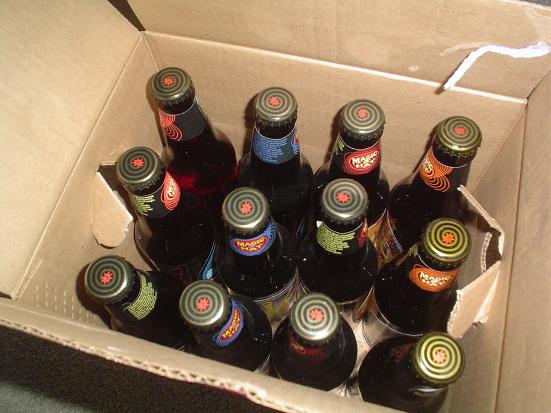
I had such high hopes for this post, comparing four of the brews in the South Burlington Vermont’s Magic Hat Winter mixed 12 pack. Then the holidays hit, then the guests arrived, then the defence of the bottles began. Right now I have maybe 30 singles of beer stuck away for later comment at a measured pace. Enough to get me into February easy – as long as I can keep the hands of others off of them. Eleven of the Magic Hats were sacrificed to that cause. All except one of their porters named Ravell.

Porter has become one of my favorite styles, if only due to the uncertainly brewers have facing the problem of what it is supposed to taste like. Porter was one of the earliest industrial products and led to a capacity war from say 1790s to 1820s London which had a great effect on mass production of other goods as well as the local production of beer. By the mid-1800s, it had been replaced by other beers due to two discoveries – lagering and true pale malting. As always, when technologies change, tastes shift and the demand for this dark and sharp style faded to be replaced for a while by mild in England, followed by pale ales and then by the ubiquitous industrial lager-pop most drink today.

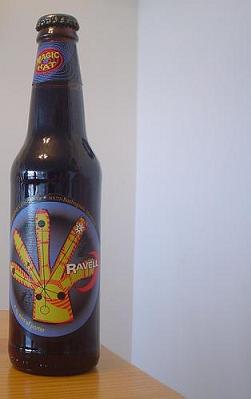
Due to the trade secrecy surrounding brewing, there is not a great deal of information about what porter actually tasted like in its heyday. Was the yeast sour or mellow? Were the hops or roast malt more pronounced? Approaching opening a porter like Magic Hat’s Ravell, then, is all about paying attention to what the particular brewer considered the answer to those questions were. The beer pours brown rather than black like an oatmeal stout or deep garnet like Guinness. Its head resolves to a thinish beige foam. The taste is definitely built around a soft water profile. One of the things that makes a local beer local is the expression of the water table’s mineral count. Dublin is chalky soft, Plzen is neutral and Burton-on-Trent is incredibly hard.

From my recollection of the others in the 12 pack, Magic Hat is a largely soft brewing firm. [Sleeman, by comparison, is a fairly hard brewing firm.] The yeast of the Ravell, sour and fruity, is in the front of the palate, framed by chocolate malt and then some hop bitterness. I would not call this a balanced or rich example of a porter but originally porters from what we know were not round and balanced. They should not be confused with nut brown ales anymore than with oatmeal stouts. They were from an era that saw brewing and storage occur in wood and that would impart sourness like we see today in many Belgian brews. Here are the stats on the brew from Magic Hat:

Our Odd Porter. A porter brewed with whole vanilla beans. Available whenever young William and father John deem it so.
Yeast: English Ale.
Malts: Pale, Crystal & Chocolate.
Hops: Warrior & Fuggles
Alcohol by Volume: 5.60%
Original Gravity: 1.056
Bitterness Units: 22
SRM: 63.6

The vanilla bean note is evident once noted but really creates as many issues as it resolves. It lies under the chocolate and hops bitterness and may feed the impression that the yeast is fruity. It is not, however, an overwhelmingly vanilla-esque ale. The effect is somewhat like the use of licorice in other dark ales, as in the Sinebrychoff Porter from Finland reviewed a few weeks ago. One beer advocatonian says it is too thin, which is fair comment.
Not the first porter I would grab but certainly worth discussing.
Irene’s, Bank St., Ottawa, Canada

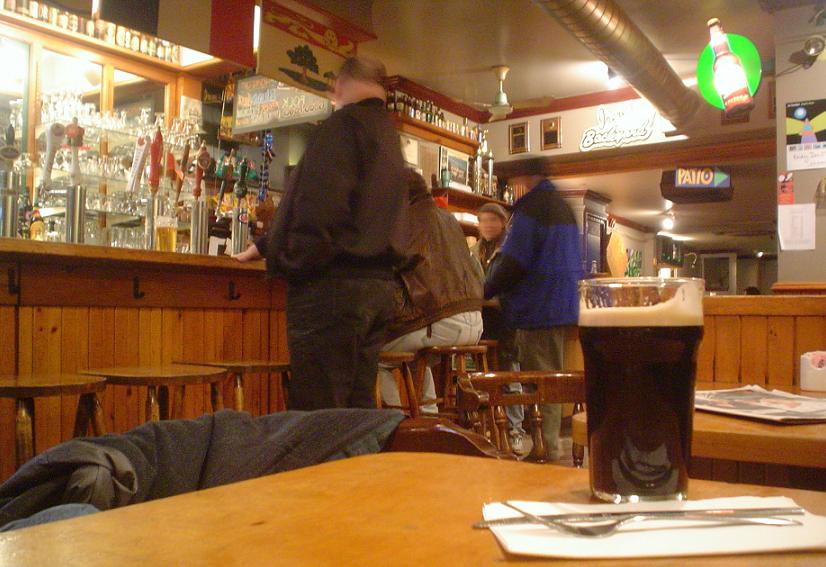
Last night before going to see the Pixies, the siblings and I took advantage of the moment to visit an old friend, Irene’s pub in Ottawa’s Glebe district. Irene’s is a neighbourhood bar which means it is not necessarily the place to take someone on a first date unless you are on a serious testing night-out. If she agrees to go to Irene’s again, she wins. If she suggests going to Irene’s again, you win.

Opened in 1985 as a sort of Maritime Canadian bar in Upper Canada, its almost 20 years of experience shows in the honeying pine of the wainscoting and the furniture, the colour of good real pale ale. I have seen bands play there, ended work weeks there with pals, had dinner parties collapse into it and wished often I lived nearer to it. People there can be loud. They can also be worse for wear for the night – or even for the decade. A little harder than the Pilot House in Kingston but the same idea. The beer selection is pretty good but not great. The Guinness moves well, however, meaning it is always fresh. Upper Canada Dark on tap is also a good choice. I was driving so those were the brother’s choices.

Book Review: Terry Foster, Beer Writer

Terry Foster is one of my favorite beer writers and the most interesting thing about him as a beer writer these days is he does not have a website. I don’t know how you can exist without a website these days. How else will all the Google bots be able to share your daily musings. Google bots…bots…Google…[Ed.: Giving author a good shake] Oh, right…there is no money and no audience in a website and others are doing it already so why bother. Good point.

I encountered Terry Foster as a home brewer. He is the author titles #1 and #5 in the Classic Beer Style Series published by the Association of Brewers, a US company promoting the homebrew industry. Pale Ale is the first in the series and Poer the fifth. These books are now over a decade old but recently I noticed that Foster has been writing articles for Brew Your Own magazine regularly as well. These sorts of writings as well as my years of one hundred gallons of output have convinced me that the appreaciation of beer is uniquely advanced by learning about and undertaking its production.

A number of the early homebrewing authors started me on that path and it would be my suggestion that Terry Foster is a continuation of that line of thinkers and writers about beer. In April 1963, month of my birth, the British Government ended the taxation of homebrewing under the Inland Revenue Act of 1880 which required records to be kept and a one ound license to be paid. As W.H.T. Tayleur states in his text Home Brewing & Wine-Making (Penguin, 1973) at page 15:

This legislation reminaed in force for eighty-three years, but although at first many thousands of private brewing licences were taken out the number of home brewers steadily declined over the years until by the middle of this century, and after shortages of the necessary ingredients caused by two world wars, hardly any of the few that were left bothered to take out licences.

By removing the need to license, the government created an industry and changed brewing, to my mind, for two reasons. First, self-trained home brewers became self-trained micro-brewers as the opportunities to make money with the skill became apparent. Second, consumers gained access to well-made home brews which were much cheaper and much tastier than the standardized industrial kegged beer the 1960s were foisting upon people. Without men like the 1960s authors C.J.J. Berry and Ken Shales as well as David Line in the 1970s, all writing primarily through Amateur Winemaker Publications, many a brew-pub or craft brewery on both sides of the atlantic would simply not exist.

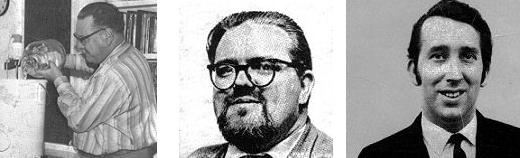
C.J.J. Berry, Ken Shales and David Line

Foster is perhaps the last of this tradition of British home brewing writers – and not just because his slicked back hair, styled in common cause with them. His two books, Pale Ale and Porter each provide a history of the style, a description of the elements, a guide to making them and a discussion of the commercial examples. Like those earlier authors he provides the context of the style and also deconstructs the mystery of how the brews can be made. Context and technique are two things modern industrial commercial brewers would like to shield from their customers – they more they were to know about what is out there and what it costs, the less likely the concept of brand loyalty might hold the customer.

Foster’s recent articles in Brew Your Own magazine continue this tradition. I have copies of the following articles:

“Pale Ale”, BYO September 2003, page 30.
“Old Ales”, BYO, September 2004, page 27.
“Anchors Away – A History of Malt Extract: Part 1”, BYO October 2004, page 30.
“Let’s Get Rid of the Water – A History of Malt Extract: Part 2”, BYO, November 2004, page 34.

As is the mandate of the magazine, Foster provides context and technique, showing how historical styles can be recreated with confidence. For example, in the third article he discusses how the British Navy invented malt extract in an effort to provide beer to sailors as a necessary food while in the fourth he describes how later extracts were used to avoid the stupidities of prohibition.

Foster’s style is attractive in that he is a plain speaker. In a world of where reputation and brand is all important, he can write of Yuengling’s Pottsville Porter:

…this is in some sense a classic porter, although it is bottom-fermented. Unfortunately, although it has many adherents, I am not one of them as I find it a little disappointing.

Not only is he not looking for the next PR opportunity when he writes, he is a bit folksy while also well researched. He is a trained chemist and has been a professional brewer for over 40 years, according to his BYO bio. He is interested and as a result interesting.

Lew Bryson on Beer

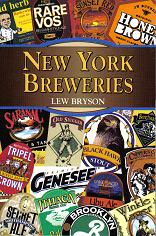
I like the books of Lew Bryson and have relied on them during a few family trips we have taken into the States this year. Before you call the Chidren’s Aid, one thing Lew does in his guides which make them valuable from the get go is his focus on the practical so the entry in New York Breweries for beautiful Ommegang nears Cooperstown also lets you know about the Howe Caverns nearby as well as other family friendly attractions, places to eat and places to stay. If a brewery also makes pop…or is it soda… he tells you which ones are good.

He is also fairly prudent in his reviews. If a beer is not the best, he lets you know without running the place down. His two books and, I trust, the pending third, Virginia, Maryland & Delaware Breweries, take a comprehensive approach rather than just telling you about his favorites. As a result, it tracks the state of the industry while also letting you know the highlights, right down to facts like the one on page 13 of Pennsylvania Breweries, Vol. 2 about the Eternal Tap at the Straub in St. Mary’s, a family operation since the 1870s. Anyone can got to the keg washing room and pour a couple of beers. No asking. Free.

Lew also runs a web site which adds dimension to his paperbacks. First, he posts updates to the books. When doing this, he adds updates rather than replaces them so that if a brewery has notes needing adding every few months they are all still there. Breweries which closed are not deleted. Again, we get a sense of the industry as it grows and changes. Next, he gives you a sense of his upcoming work with excerpts on his mid-Atlantic breweries page – he knows that the book that is scheduled for May 2005 is one that people want to know about now. [I am hoping he goes north for the Breweries of New England next.] Then, he maintains both a monthly web column and links to some of his published work in magazines and newspapers. Have a look around, there’s lots more there.

All in all, a comprehensive vision of one man’s relationship with malt, hops and yeast. Friendly, positive and well researched. And he answers emails.

New York: Post Road Pumpkin Ale, Brooklyn Brewery

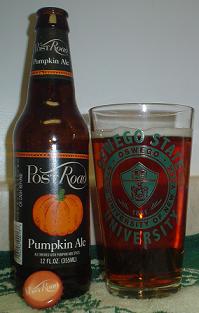
Now that the Yankees are out of the playoffs, I can admit again to my enjoyment of things New York…more upstate than anything but, as the City and upstate have a mutually vestigal relationship, there is much of the City to be found upstate. One great thing is the New York Times, another is the effect of the Brooklyn Brewery and its range on intellegent challenging beers. I reviewed the Brooklyn Brown in August and, when last in Syracuse, I picked up a six each of the two fall specials, Octoberfest marzen and Post Road Pumpkin Ale. Such is the integrity of the head brewer of Brooklyn, Garrett Oliver, that he has started a line of historic beers of the US. One is Post Road Light Dinner Ale, a remembrance of a late 1800s middle class urban style. The other is Post Road Pumpkin Ale, a tribute to earlier colonial pioneer brewers.

The aroma is pumpkin patch, autumn frost. The taste, pumpkin pie spices. Its light body makes it an easy drink but the nutmeg backed with cinnamon makes it a bit dry for a quaffable, sipping or session beer, compared to say a rich spicy thang like a Belgian dubble say Unibroue’s Maudite. Brooklyn’s web site says:

Post Road Pumpkin Ale is a revival of a beer brewed by the early American colonists. Pumpkins were plentiful, flavorful and nutritious and they blended nicely with barley malt. Hundreds of pumpkins are blended into each batch of Post Road Pumpkin Ale, creating a beer with an orange amber color, warm pumpkin aroma, biscuity malt center and crisp finish. Post Road Pumpkin Ale is spiced with cinnamon and nutmeg.

The other day I roasted a lamb’s leg and basted it with half dark maple syrup and half this ale. It was good, candied up over 4 1/2 hours. I used to make a roasted pumpkin porter with Ringwood yeast. While this is a much lighter take, the idea is there – the summer’s work saved in the celler. Advocatonians have their say.

The Royal Tavern, Kingston, Ontario

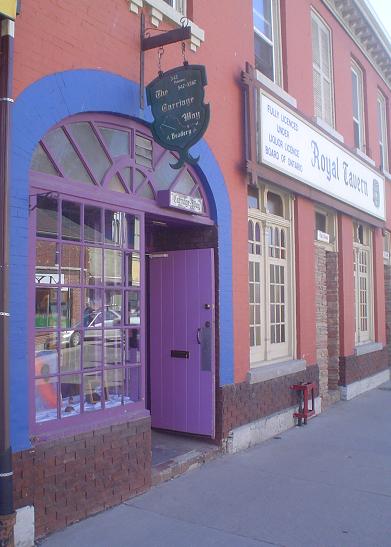
My days of bar hopping are long past. The five and a half years of rural life which wrapped up a year ago did its best to kill the habit geographically as did the advent of kids. There are, however, things that are habits and things that are personality traits and I think that the architecture of bars will always interest me. One class could be called the hard little place, that is not a sports bar, not a pub, not a road house. It might be a neighbourhood bar if you didn’t like the neighbours. The old Victory Lounge, formerly in the Lord Nelson Hotel in Halifax, Nova Scotia, or The Green Dory in the Halifax Shopping Centre come to mind as examples as does The Hillsborough Hotel (aka “the hug and slug”) in Pembroke, Ontario. I may, with such an introduction, be slandering the Royal Tavern on Princess street on one particularly non-gentrified block but the place simply does not invite. I would be interested in being proven wrong.


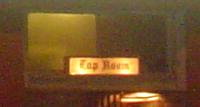
I thought that the adjective “Royal” was not permitted except with government permission. Indeed, as no doubt you all shouted as one at the screen ust now, look up section 10(1)(a) of Ont. Reg 122/91 which makes implying a connection to the Crown a dodgy matter. Did the Queen Mum put in a good word? Maybe she stopped there once in 1937. Most likely the name is saved by section 12(1) and the grandfathering clause for pre 1991 uses. Glad we cleared that up. The phoney Dickensian touches on the exterior, like the Ye Oldie font illuminated “Tap Room” sign over the door, are intriguing but you can bet the inside will disappoint, that the only thing on tap might be Labatt Blue. Actually it kind of looks like a location for a meeting of toughs on Canada’s first coroner TV drama from the late 60’s, Wojeck. The mock ecclesiastical glass and angled door, detailed below, are interesting but somewhat weird touches. I will have to look again but it appears that to the left of the building there is a filled in carriage arch which would have led to a back stable. There are still a number of these arches around the town. There is one great one in Charlottetown, PEI in a wooden house on one of the streets behind the former The Harp and Thistle.


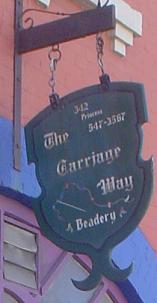
Later: The carriage way is confirmed and even advertised. Apparently the place is very old on the inside even having cobbled or stone floors.

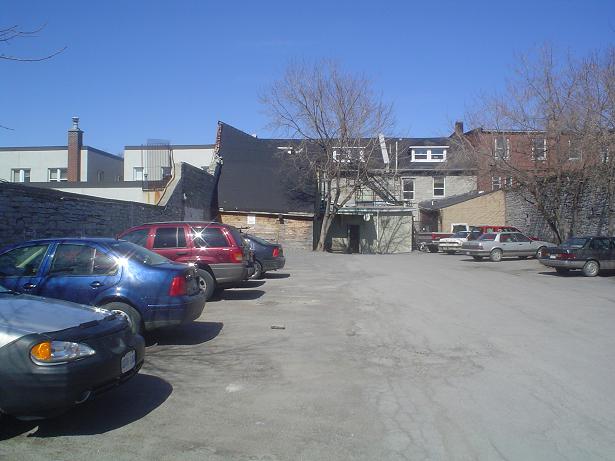
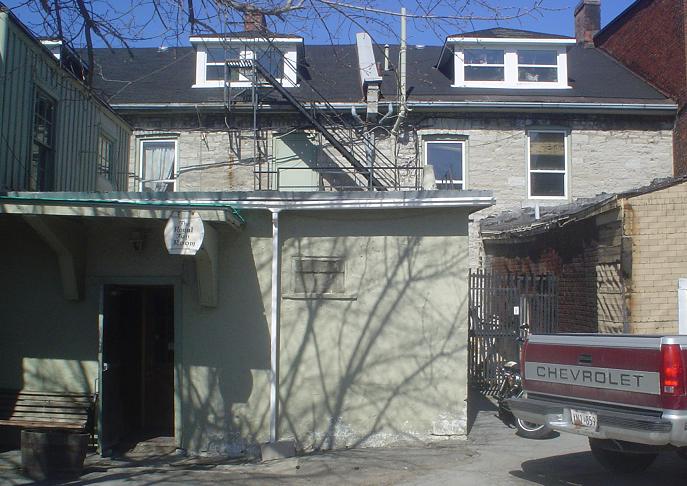
The other day I went back to get the exterior of the rear and was glad to see that the old limestone and double dormers are still there. At City Hall, there is a framed 1875 business directory map of the downtown which shows the building as having the twin dormers and an enclosed walled space out back. From the view below of the inelegant car park you can see reminants of the old walls to both sides of the property with the capping of the wall to the left apparently still intact. Likely it was for horse barns and other out buildings, it is kind of nice to imagine a walled ale garden circa 1840. Come to think of it, though, it is three dormers I am looking at with the one to the right being over the carriageway. The carriageway now feeds into the lean-to like addition to the right of the picture.


Three Winter Ales

These are three great candidates for the best have-one-bottle beer.

Nothing for the faint hearted, though: Young’s Double Chocolate Stout ($3.10 for 500 ml at 5.2%) from London, UK; Victory Storm King Imperial Stout ($2.40 for 355 ml at 9.1%) from Pennsylvania; and Anchor Liberty Ale ($3.55 for 650 ml at 6.2%) from San Francisco and all at the LCBO these days.

Each one is big in its own way – Liberty is massively hopped, Youngs has chocolate malt as well as real chocolate and the Victory is like licking the coffee grinds out of the percolator. Maybe you have to brew to like beers this big but I have so I do. Snazzy labels, too.