
Your “The Thaw Cometh! The Thaw Cometh!!” Mid-February Edition Of These Beery News Notes

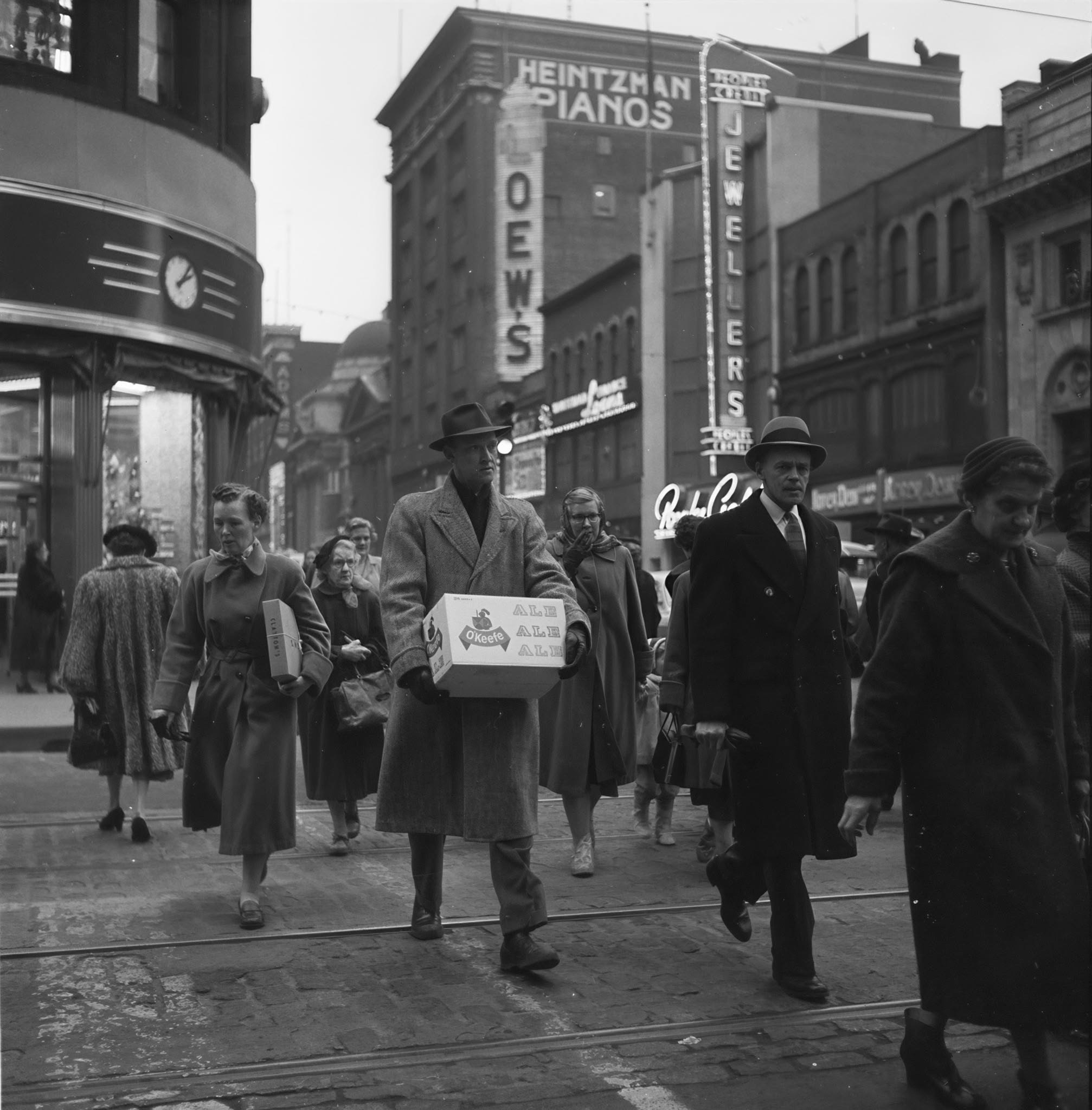
Now that the temperatures have moderated from -30C at dawn way up to -3C, the nation asks itself what the hell was all that? There is no answer to the question. Fortunately, there is a second question: how to still look dapper in a Canadian winter while lugging a lot of beer? Well, this gent can help. First, walk around in one of Toronto’s well loved black and white neighbourhoods where people must wear vintage clothing. Then, bottle your homebrewed beer only in second hand O’Keefe quarts you have nicked from the upper bric-a-brac shelves of old taverns. Finally, invest in an industrial quality paper packaging printing press you keep in the basement solely for the recreation of 1950s brewery boxes. Easy! Speaking of being on one’s feet, Boak and Bailey have written about how they didn’t do a Dry January so much as a very mobile one, a habit that has continued well into February:

We didn’t set out to make a mission of this, but we realised about halfway through January that, as it happened, we hadn’t yet made a repeat visit. That made us wonder if we could keep it up for the remaining few weeks. We were particularly conscious that we’d tended to stick to tried and trusted favourites last year. In fact, in 2025, over a quarter of our logged Bristol pub visits were to just two pubs – The King’s Head and The Swan with Two Necks. You might have noticed the word ‘logged’ and be wondering exactly what that means. Well, Jess, an accountant and spreadsheet nerd, of course keeps track of every pub we visit.

What a good realization! We have nothing like that possiblity here so much replicate 1950s Toronto to amuse ourselves but this comes a very good second. In the US of A, something else appears to be amuse or perhaps console according to BMI :

Beer posted positive $$ growth in 4 of the last 5 wks, and Jan 2026 is on track to be beer’s best monthly trend in years, at least in these channels. Including wine & spirit RTDs in the mix brightens the picture even more; broader beer + RTD category $$ grew more than 5% with wine & spirit RTDs adding close to 2 full pts in scans. 

Booze up! And somewhat similarly Ed stood up for the honour of Guinness this week with a response to what he called a a hatchet job on the Guinness’ Open Gate brewery in London published by The Guardian:

For some reason restaurant critics put the boot in more than any other type of reviewer… I was going to the brewery as part of the CIBD Southern section’s AGM, but first we had to do the business part to do at Diageo’s HQ.  I don’t know what deal the CIBD had done with Diageo or if we were subsidised, but we paid a tenner. This gave us pie and mash, which was nice, and a pint of Guinness (brewed in Dublin). I was keen to have somethng brewed on site though, so I had a hazy IPA next, which was nice enough. I think the ABV was a bit hefty, as on top of the three pints of Guinness I’d had I was defintely feeling pissed by the time I’d fininished it. So there you have it. The Guardian journo’s main complaint seemed to be that you had to take a lift to the toilets.

For others, the trip to the pub and then to the toilet is even easier. They are visiting the pub virtually from home, a remote non-work arrangement of sorts:

The 24-year-old from Yeovil, Somerset, regularly tunes into the feed from Morgan’s Arcade Bar in Carlisle, Cumbria – despite never having been there or anywhere near. What hooks Katie in is seeing different people come and go: the women enjoying a work party, the couple singing along with the musician, the young lad trying to chat up a girl at the bar… On some nights Morgan’s Arcade Bar, which can only fit around 60 people in it, has up to 5,000 viewers on its livestream at any one time. But like other bar streams, it has been subject to bans and restrictions for reasons they don’t quite understand. Bar owner Morgan Taylor has been streaming for nearly nine months. He noticed a huge rise in viewers over Christmas, then a few weeks ago his account was deleted.

Cass Enright got out of the house and on the road in his latest installment of A Quick Beer takes us to Montreal – a favourite destination of mine – and revisits some of the great brewpubs there in a video with this intro:

Join us on a step back in time as we have A Quick Beer at three of Montreal’s original brewpubs! Discover the enduring charms of Dieu du Ciel!, L’amère à boire, and Le Cheval Blanc, three spots that have been serving up delicious beer for decades. Although Montreal offers many modern breweries and taprooms nowadays, some of our fondest beery memories over the years have been here, and they’re all still going strong.

For me, it’s L’Barouf on rue St-Denis. If you are ever looking for me, check there. Also all about winnowing the better and the best, Pete shared some firm thoughts in his column in The Times this week, always welcome sight:

My beef is not with hazy pales — those original examples were pretty good. But if you don’t need to worry about balance or clarity in the beer, and you’re throwing in enough hops to cover up any off-flavours from brewing mistakes, a hazy IPA is very easy for a mediocre brewer to make. From a drinker’s point of view, if you grew up with soft drinks and don’t like the taste of actual beer, it’s perfect. It’s also great for Instagram — everyone can see you’re not drinking a boring, mainstream beer. But instead you’re drinking a boring craft beer. A boring, one-dimensional alcoholic fruit smoothie in a gaudy can with hop monsters or skeletons on it. If I wanted to drink sour grapefruit juice, I’d buy some Tropicana and leave it in the sun for a bit. 

The many botches of “craft” is a venerable topic which even comes with its own primodrial gospel but it is true that for all its eager keener passion craft never seems to fail to find a way to fail.  Nice to see that we have a paper of record confirming what Pete called the “sustained decline.” Viva crystal malt! Viva!! Viva!!! And Phil Mellows guided me to this article in The Caterer on the why to Pete’s what including this suggested impetus:

“…we are beginning to see the movement of some younger adult drinkers towards nostalgia brands, and given our history and heritage, we feel well-placed to meet this trend through some marketing and awareness driving activity.” Brookfield Drinks has launched a trial bringing long-established premium Scottish lager Kestrel back on draught. Brookfield managing director Nigel McNally says: “We’ve shown that a brand that’s nostalgic, like Kestrel, can be repositioned and revitalised. “Most pubs are serving the same products, and the trade’s been guilty of allowing brands which aren’t authentic onto the bar. Alcohol by volume (abv) have also come down, and I think overall customers feel they’ve been short-changed. A return to brands with heritage and nostalgia is offering customers a point of difference.”

Nostalgia and getting short changed? One must be on one’s toes. Which is related to Lars’ new maxim: “if you don’t know how the beer is made then, no matter what the beer is named, you have no idea what kind of beer it is.

Speaking of no knowing, The Beer Nut made a confession this week that I suspect is made on behalf of many of us:

Anyone who pays attention to trends within microbrewing will have noticed in recent years the explosion in variety of proprietary hop products. I don’t think these assorted extracts and powders and boosters were ever meant to have a consumer-facing role, but brewers seem to love them, and love letting us know that they’ve used them. Does that get them a discount from the supplier? I wouldn’t be surprised. For my part, I can’t help wondering if these enhancers actually enhance the beers in any real way. I’ve certainly never identified any pattern among them: which ones to look out for and which ones aren’t worth the paper their patents were filed on.

Note #1: Ludlow prices!!!
Note #2: Laura’s top tap rooms.
Note #3: Jeff doxxed.
Note #4: Burton Union Pr0n!
Note #5: Actually, no you can’t. You’d die.

The British Royal Navy has recently announced it is cutting booze rations in the service, limiting intake to 14 unit per week while on board. The Telegraph in its emailed newsletter presented a few responses to the news from readers:

Jenny Jones, however, recalled an age of largesse: “Many years ago in Malta, my husband and I were invited on board a Royal Navy ship that was giving a party. The atmosphere was convivial and, thanks to attentive stewards, I was able to enjoy several gin and tonics before dinner. “On departing, it seemed to me that the gangway had become a lot steeper. Back on dry land, our host asked how many drinks I’d had. When I said three, he told me that in fact I’d had nine, as naval tots are about triple the size of what one would get in a pub.”

Ah, Jenny Jones… what’s that? Not the same one? Fine. Me, I was once invited with a gang up the plank and onto a Canadian navy ship helpfully docked a walk from the Halifax taverns by a pal’s navy boyfriend. Among the minty green paid we worked our way though a number of 25 cent beers. I expect that sort of service is no longer offered.

The feature this week at Pellicle was written by Newt Albiston who shares his thoughts on drinking in Epping, just north of Greater London the tough town where he grew up which lives with division:

The day I return to Epping, my first trip home in some time, I can feel the tension, and the hesitance. The high street is pretty quiet, and there are lingering looks as I make my way past the various coffee chains and charity shops. Signs of the change in mood are everywhere: Union flags fly at half-mast on lamp posts, as if to declare the death of Britain as she once was, shadowed by the residue of torn-off patriotic stickers. Although I am instantly greeted by familiar faces when I walk into The Duke, the tension is still present in the quietness of the venue.

I like this: “…no fancy ginger beer or small-batch kombuch…” Perhaps related to The Duke, Stan guided us to a question this week – “what’s that smell?” Or rather…

“Olfaction helps shape our cultures, although it often does so unknowingly or without us noticing,” says (Inger) Leemans, who led the Odeuropa project. “When we talk about cultural heritage, we can think about religious rituals, but we can also think about specific scents that we’ve been cherishing and living with for a long time.”

Cherish. Hmm… I spent a good chunk of my teens in Truro, NS where the smell wasn’t always cherished and I am mindful of that reference The Breweries of Kingston & The St. Lawrence Valley by Steve Gates to a brewery a couple hundred years ago near my current place of work at City Hall which doubled as a pig sty. The next brewery to the north itself had a manure pit.  My point is that there were no scents without the full sensory array around it. Did 1890s Mild pair well with coal dust? Did Porter marry well with the pong of streets filled with horses? Perhaps we can never know.

And Charlotte Cook, brewer and scribbler, at took us along to Asturias, Spain for Everyday Drinking and shared her thoughts on the food and the cider:

When you taste the intensely rich stew, you can understand why cider rather than wine prevails in the north—the sour and fizzy is needed to cut through, cleanse the palate, and prepare you to dive in again. Cider is omnipresent in Asturias. As you walk around the town center of Oviedo on a Sunday morning, as families returning from church mix with football fans heading to an entirely different type of cathedra, cider is everywhere. Before 11 am, people will be drinking a bottle of cider for the table. Spaniards are famed for their ability to drink until the wee hours and still make it to work, school, or church as if nothing has happened. And having a little tipple of cider in the morning isn’t seen as such a stain on your character as it is at home.

Finally, some very heartfelt tributes were shared after the news of the death of beer writer Des de Moor like this from David J:

I think a lot about the pints we had one night in South London where he held court, sang songs and was so warm to everyone.

Pete also remembered Des the singer:

Des was a man of many layers. Years after the event, I discover my first interaction with him was buying the 12” remix of Charlton Heston by Stump – that was him, as half of the Irresistible Force. He made the Popbitch newsletter as Secretary of the Ramblers Association (moor, geddit?)… He was a great singer, a walking encylopedia. An absolute stalwart of judging the World Beer Awards. Never once heard him angry, pissed off, or anything other than kind and decent.

There are many more. His Wikipedia bio explains his musical side. Here he is singing Bowie and, here, an earlier solo album. By all accounts a wonderful guy. A sad loss.

Until next time, please check out Boak and Bailey who are posting every Saturday and adding to their fabulously entertaining footnotes week after week at Patreon. And look out for more of Stan’s new “One Link, One Paragraph” format. Then hunt out something in someone’s archives! Leave oblique comments on someone’s post from 2009!! Listen to a few of Lew’s podcasts and get your emailed issue of Episodes of my Pub Life by David Jesudason on certain Fridays. And Phil Mellows is at the BritishBeerBreaks. Once a month, as noted, Will Hawkes issues his London Beer City newsletter and do sign up for Katie’s wonderful self-governing totes autonomous website featuring The Gulp, too.  Ben’s Beer and Badword seems to be on pause since November but there is reading at The Glass which is going back to being a blog. Any more? We have Ontario’s own A Quick Beer and All About Beer is still offering a range of podcasts – and there’s also Mike Seay’s The Perfect Pour. Plus follow the venerable Full Pint podcast! And there’s the Craft Beer Channel on Youtube. Check out the archives of the Beer Ladies Podcast.
Your Sunny Yet Still Cold But Not Standoffish Beery News Notes For Early February

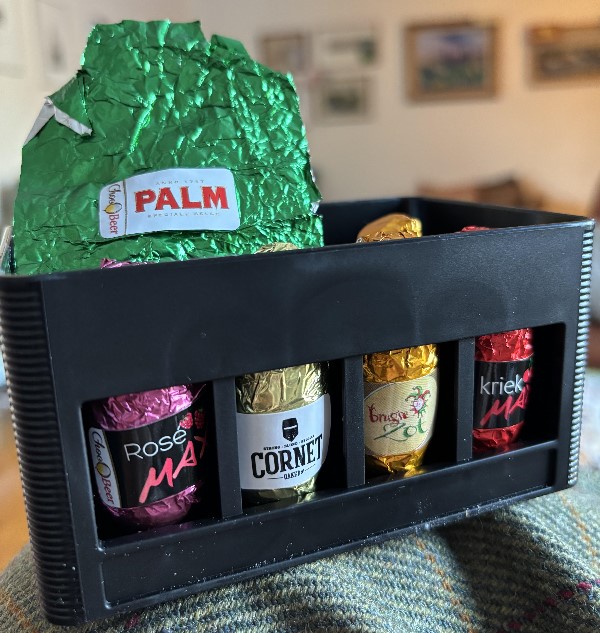
February flies by. That’s just the way it is. Good time to take stock. Good time to eat the little chocolates filled with beer brought by a visitor from Belgium. Early review: the “…chocolate is dry and dark so a lack of sweetness in the kriek left it a bit stark but the Palm was that bit richer.” Not sure I am chowing down on these outside of a winter like this but all quite a bit better than expected. Paid endorsements welcome. Winter was also on the mind and under the feet of Jordan as he wrote about the weather at the end of last month or perhaps just his efforts to get about in it:

Monday, Jan 26th: The deep freeze is well and truly upon us, and looking at the forecast for the next couple of weeks, it looks like we’re in four-layer territory. If your primary mode of transport and exercise is walking, then -25 with the wind chill does you no favours. Besides, the sidewalks are not shovelled in any meaningful way. Dry and cold is a great combination to ensure you’re reminded of the various injuries you’ve had over the years. Sometimes I get the unprompted sense memory of an ankle ligament rolling.

Also looking at the world as it exists below the knee, Stan shared some research he has done on the word Hopfenstopfen and its relation to a certain pair of boots:

The shoes were worn by a worker processing hops. When a bag was filled, a worked would jump into it, stomping down the hops to make sure the bag was full. When I dug this out, I wondered if these could have been called Hopfenstopgen boots. That’s because in Hop Queries Vol. 4, No. 6, I wrote about dry hopping in Germany in the 19th century. That was called Hopfenstopfen, which can be translated at hop plug. Simon Moosleitner, a subscriber in Germany, suggested there is more to think about…

I won’t spoil the fun but speaking of getting the boot in, late last week in VinePair, Dave Infante wrote about the effect of the homicidal ICE intrusion into Minneapolis on the beer trade in the city including this from Drew Hurst of Bauhaus Brew Labs:

You can see it in the firm’s sales figures. Taproom sales are down 40 percent compared to January 2025. “It’s a wildly unsustainable thing,” says Hurst. “None of us signed up to have to live through a federal occupation and figure out how to run a business at the same time.” Not that it was easy before the onslaught: Bauhaus wrapped this month last year down around 30 percent from January 2024. Craft brewers have been struggling to find their way for years in the face of shifting demand, new competition, and rising costs. In Minneapolis and Saint Paul, they’re doing all that with the MAGA jackboot on their necks.

At first I thought it was an odd angle but then realized it illustrates the principle that beer prefers peace as well as how quickly that peace can be lost. Dave also shared in his email updates that he was told to “stick to beer” and that some paying subscribers to his newsletter Fingers canceled their subscriptions. Perhaps if those folk didn’t “stick to” amateur neo-fascism it might be better. Funny how the “stay in your lane” crowd don’t show up for this sort of politicization within the pub:

A beer tap labelled “Rachel Thieves” has appeared on the bar of a Hertfordshire pub protesting Chancellor of the Exchequer Rachel Reeves introducing crippling tax hikes. Anyone ordering the beer will receive only water. The Green Dragon in Flaunden, which is run by publican Chris Ghazarian, has added the spoof cask ale pump badge as a protest – telling customers that pints of this particular beer are “very bitter” and cost more than anything else on the bar and anyone ordering it will receive only water. Speaking to the British national press, Ghazarian said: “They find it hilarious. I obviously don’t make them pay for it.” 

On the other side of the planet, a very difference approach has been taken in Australia:

The Albanese government is seeking to put a hold on increases to the beer excise for the first time in 40 years. The Customs Tariff Amendment (Draught Beer) Bill 2025 seeks to pause the indexation of customs duty rates for draught beer for two years from August 1, 2025. Currently, the beer excise is indexed twice yearly to stay in line with the consumer price index, with Australian beer, wine, and spirit importers and producers saddled with some of the highest rates in the world…  Addressing the House of Representatives, Anthony Albanese said he was “proud” to introduce the Bill, “one of the most popular commitments that we took to the election”.

Boak and Bailey also wrote about another sort of pressure to conform but the context was less confrontational – just writing about their thoughts on a craft brewery:

Maybe that post was a bit too snarky, with hindsight, but it certainly didn’t warrant trolling impersonation accounts on Twitter, general abuse that last for months, or a stalking campaign. That was, as you might imagine, quite traumatising, and probably did make us nervous about being critical of breweries in the supposedly cuddly craft brewing sector. It didn’t stop us, but it had a ‘chilling effect’ on how freely and frequently we felt able to express ourselves. It’s easy to say “Don’t mince your words” but minced words are less likely to lead to sleepless nights. We can totally see why some people might decide it’s not worth the trouble, and certainly wouldn’t judge them.

On reflection, I have probably benefitted from folk starting with the assumption that I am a bit of an arsehole. I lose my sleep over other things.

Note #1: Take a news event and ram it like a square peg in a round hole.
Note #2: Martin at another fabulous pub, this time inordinately bright.

Ron TV continues to impress. This week he’s been presenting an extended interview with Mitch Steele and, like the comment maker Oscar, I am drawn to the brief introductory electro-thrash almost as much as the subjects of these interviews. Part 1 of the interview is over thirty-seven minutes long with Part 2 clocking in at thirty-three. Set aside an hour or so of your time. More if, like me, you keep replaying the first six seconds and that mesmerizing theme music over and over and over.  Good multi-media breakout for Ron – even if it likely doesn’t pay the bills. One a similar note, Ray of B+B on the prospects of a career in writing:

This is excellent. Depressing, but excellent. My response has been to give up, basically, and accept that writing is a thing I do on the side, while something else pays the bills. I also like that thing, so it’s fine, but I get sad thinking what I could have achieved if writing was my full-time job.

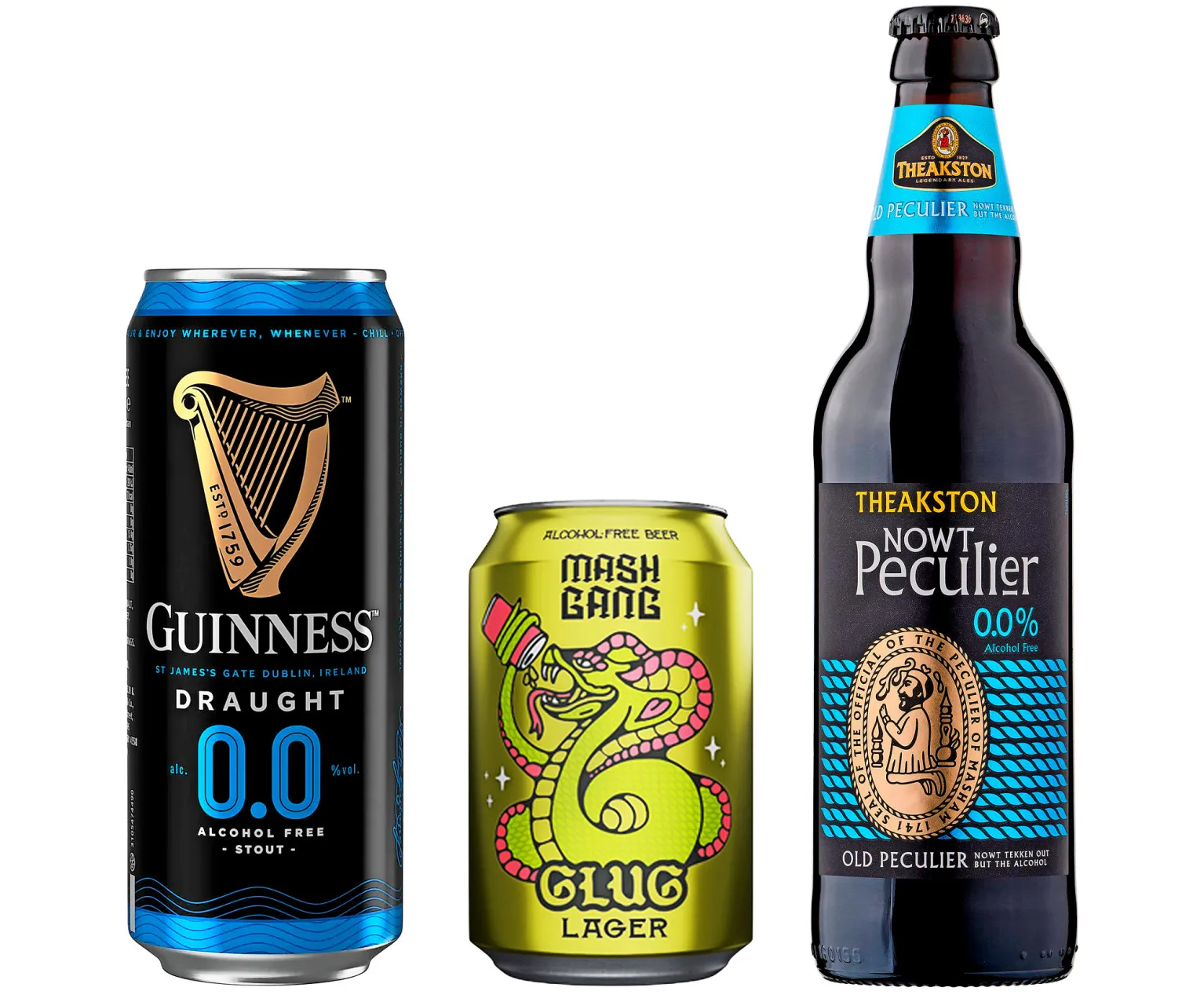
Perhaps also on the theme of less is more, Guinness 0 also continues to impress me and Pete‘s brief review does not surprise:

There are many great 0.5 per cent stouts from small indie brewers, but Guinness 0.0, which took years to develop, is indistinguishable from the real thing.

I noticed one thing when writing this. It is branded as “Guinness 0” in Canada but “Guinness 0.0” in the UK. Why? Is it a different formulation here and there? Whatever it is, I am finally seeing a point to NA beers. But things will be going in a slightly different direction in UK neighbourhood if one permit applicant has their way:

The shop also sought an amendment to the condition currently imposed on the licence… to “No super-strength beer, lagers or ciders of 6.5% ABV (alcohol by volume) or above shall be sold at the premises with the exception of Dragon Stout and Guinness Export beers.” The applicant’s agent, Frank Fender, told Bedford Borough Council’s licensing sub-committee (Thursday, January 29), that these “super strength” beers are not usually the “street drinkers’ choice of drink”. “They are they are widely consumed by members of the Afro-Caribbean community, and obviously this shop wants to be inclusive,” he said. This claim was backed up by Chris Hawks, the council’s licensing compliance and enforcement officer. He said: “What Frank says about Dragon Stout and Guinness Export is spot on.

For years, the word authentic was bounced around in the face of glitter and haze. That plan in Bedford sounds like authenticity to me. Similarly perhaps, crossing the Atlantic, Matty C has written some notes on the US beer scene for the supplier Get ‘Er Brewed‘s webpage and found something of a revivial going on:

Nostalgia is one play many breweries seem to be using. During my time in both Portland and in Colorado, (the latter of which I visit regularly to see family,) I noticed that many drinkers seem to be choosing the classics made by more established breweries. Allagash White, the Belgian style witbier from the brewery of the same name wasn’t just on tap everywhere in Portland, but it felt like everyone was drinking it too. The beer carries the kind of hushed reverence that money can’t buy, and demonstrated to me why establishing a core beer as part of your brewery’s identity is essential for longevity.

This is quite a reversal as, you will recall, in 2019 flagships were considered a dead concept: the “concept of a flagship in almost all ways maps to an earlier and obsolete way of thinking.” Futurisms rarely stand up to audit but it’s good to know, in an era too concerned with branding and other misinformations, that identity in the form of what is in the glass has made a come back. One never knows what is really going on otherwise. As with the news about the bills left unpaid and the suppliers left in the lurch by Rogue, James Beeson in The Grocer shared that the level of insolvency at failed Keystone Brewing had hit almost £15 million. Heavens! Remember when we all spoke of community?

Sticking with things in the USA, the feature in Pellicle is a portrait of Eckhart Beer Co. in NYC by Ariana DiValentino with its focus on central Euro lagers and foods that share the same theme:

The menu focuses primarily on Central European dishes that match the beers’ origins. There is a brat plate, and spaetzle gratin, and kartoffelpuffer (German-style potato pancakes), which you can order fried in oil or beef tallow. But there’s also a falafel dog, an Italian cold cuts sandwich, and a Moroccan-spiced ratatouille with vegan lemon yogurt. The variety of cultural influences feels very reflective of the brewery’s New York City context. “I wanted to offer food that supports the beer. It didn’t have to be Central European per se, but that felt like a natural foundation,”

Sounds like a great place for all. Not so in Japan where one establishment has embraced ageism:

The concept of age restrictions and minimum requirements is commonplace around the world. But have you ever heard of an establishment imposing a maximum age limit? Now, a Tokyo chain pub has set a ban on older customers – in order to try to maintain the raucous, fun atmosphere for which it is known. Tori Yaro Dogenzaka is an izakaya (an affordable Japanese pub) situated in Japan’s capital city. This year, the establishment propped up a sign outside the entrance, informing customers of the new rules. The sign said: ‘Entrance limited to customers between the ages of 29 and 39. This is an izakaya for younger generations. Pub for under 40s only.’

I wasn’t wanting to go there anyway. Screw them. That’s it. As as I sulk in a mode Japonais, please check out Boak and Bailey who continue to post every Saturday. adding to their fabulously entertaining footnotes week after week at Patreon. And look out for more of Stan’s new “One Link, One Paragraph” format. Then hunt out something in someone’s archives! Leave oblique comments on someone’s post from 2009!! Listen to a few of Lew’s podcasts and get your emailed issue of Episodes of my Pub Life by David Jesudason on certain Fridays. And Phil Mellows is at the BritishBeerBreaks. Once a month, as noted, Will Hawkes issues his London Beer City newsletter and do sign up for Katie’s wonderful self-governing totes autonomous website featuring The Gulp, too.  Ben’s Beer and Badword seems to be on pause since November but there is reading at The Glass which is going back to being a blog. Any more? We have Ontario’s own A Quick Beer and All About Beer is still offering a range of podcasts – and there’s also Mike Seay’s The Perfect Pour. Plus follow the venerable Full Pint podcast! And there’s the Craft Beer Channel on Youtube. Check out the archives of the Beer Ladies Podcast.

Your Happy Merry And Even Supportive Beery News Notes For The Week Of Blue Monday

How does it feel? That’s what Blue Monday asks of you. Katie was particularly aggrieved as last Monday was her birthday. So first of all –  happy birthday! Apparently, Blue Monday is perhaps a floater with not 100% agreement on which date it is.* Like Easter but without the medieval calculation to give some assurance as with the death date of Jesus. So you have options and need advice. Fortunately I am full of good advice on this topic. Me, I prefer to celebrate what I call “Bleu Monday” on which I eat a lot of cheese. Also, it seems to also have been originally a term that in Germany was “der blaue Montag.” and then United States when workers told the boss to shove it, as we read in 1838:

Drink till all is blue. Cracking bottles till all is blue.

Blue meant the haze apparently. Or perhaps the slightly wicked as in “blue laws.” I dunno. But I like that it also has it’s own anthem, even if it’s a wee bit Dieter Sprockets.

Beer Marketers’ Insights have a note about a little blip that could be the beginning of a bit of a bump for beer:

Pretty much everything was comin’ up roses in beer and beyond for the first week of the new year in Circana multi-outlet + convenience channels. Beer, wine and spirits all grew for latest week thru Jan 4, 2026 (including Dec 29-31). Can’t glean much from just one week, but interestingly, craft beer’s 4.4% $$ gain outpaced total beer (+2.9%) for period. Multiple top craft fams saw sales pop for the week including New Belgium, Sierra Nevada and Elysian each up low double-digits by $$, Lagunitas up 8.5% and Bell’s (+5%), Shiner (+4%) and Blue Moon (+3%) up low-to-mid singles.

And these US market numbers exclude non-alcoholic beers so it’s more beery than we often seen in the booster stats announcements. But they could also indicate that fine spirit of “fuck it!” that one finds in a time of crisis. Speaking of which, can you write about the crisis in US hard liquor sales without mentioning the tariffs that have effectively cut out a massive share of your customer bases? VinePair seems to think so:

And though distilleries share similarities with other business closures — from layoffs to managing creditors — there’s uniquely challenging inventory to deal with: barrels of aging whiskey. “They’re a little bit of a problematic asset because they can only be sold to someone who has the license to hold them,” says Will Schragis, managing partner at WellSpun Consulting. “Barrels are in-bond, so they’re non-tax paid. There are only certain licensees and other companies that can acquire them.”

No mention of, you know, lobbying for free trade as a recourse makes me wonder if there is a ex-nay on the t-word going on, lest one draw wrathful attention away from Greenland. H/T to Jeff. It’s all about getting the spend in country it seems and Americans are doing their part:

Surveys have shown that consumers feel pessimistic about the economy as they worry about tariffs and the jobs market. More than half of voters believe President Trump is “losing the battle against inflation”, according to a Harvard Caps/Harris poll of 2,204 registered voters released last month. Yet despite the economic gloom, data suggests that spending has risen across all income groups.

Mikey Seay shared a few thoughts that are not unrelated to this moment:

It’s the price. I struggle with the price of NA and low ABV beers. This is my Dry January issue. I can get behind drying out for a month. Or (what I am trying) focusing on drinking lower ABV beers. But there is a hidden suck. Low alcohol/no alcs are priced the same as regular beers, sometimes even double. It’s hard for me to get over that. It’s like, I am getting ripped off, and I have a hard time shaking that. But I must. I know it costs a brewery close to the same to make a NA or low beer, so they gotta charge the same. And that cost trickles down to the stores and bars. So I gotta get over myself there..  Enjoy my low ABV beer, and don’t be a baby about what I am paying for it. I must do this for myself and the business of beer.

One must spend. Do one’s part. Think of England and all that. One of things I appreciate locally is that Guinness 0 is $11.95 at the LCBO and the regular draught is $13.50. Trouble is… no Guinness 0 to be found in the province these days. Guinness is experiencing a height of fame and fortune – and there are good reasons for that, according to Jeff:

The world is unstable, especially for young drinkers who spend half their paychecks on small apartments. Young people are threatened by more dangers than any generation in decades: huge college debt, a machine-learning era that may eliminate entire sectors of jobs, climate change, political instability, the corruption of media and the vitriol that marks society. This is not a time for risk-taking. It’s a moment when people are taking refuge in safe ports and reliable brands. Guinness isn’t alone in this appeal—the popularity of old Mexican brands follows the same script—but it has the advantage of being a 4.2% black ale that comes with a helping of theatricality and a creamy head. It is both safe and also different from other global brands.

I think some of this turns on that 4.2%. And low calories. Theme shift. Did you know you can watch RonTV?  He’s got a YouTube channel going:

You might have noticed that I’ve posted a few videos on YouTube over the last couple of days. There will be more to follow. It’s part of my drive to document and preserve. Initially, it’s mostly material that I acquired for my book on the 1970s, “Keg!”. I conducted several Zoom interviews Which I think are worth making public. Especially as the interviewees are all past retirement age. And won’t be around forever. I’m particularly keen on recording Derek Prentice’s recollections of more than half a century in brewing. Despite my urging, Derek shows no interest in writing his memoirs. But he’s happy to be interviewed and share his memories. I already have around two hours of video. And plan to record several more. Covering his time at Youngs and Fullers.

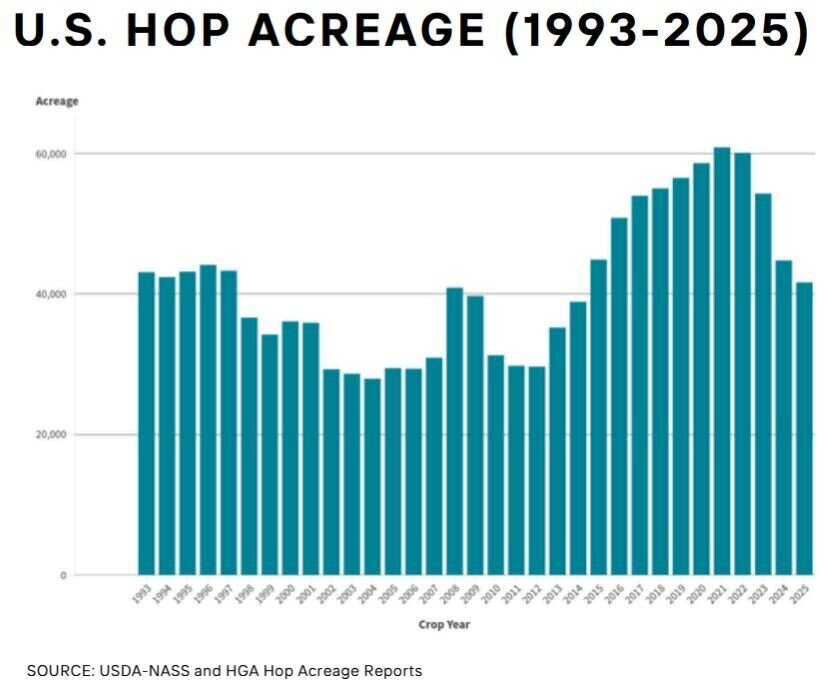
Next, Stan has published his newest edition of his monthly Hop Queries newsletter and there is much to consider. For one thing, he shared that chart of total US hop acreage which indicates the plantings of 2025 roughly match those of both 1997 and 2008, both years before further drastic drops. He also explained what BLP flash frozen hops are:

The idea began with hop farmer Jim Schlichting, who upon retiring bought 40 acres of land next to his home and began growing hops… Basically, he freezes the hops fresh off the bines and ships them in vacuum sealed packages along with reusable ice packs. The cones should remain frozen until brew day. After thawing them, brewers may use them as they would unkilned hops, replacing each pound of pellets in a recipe with four pounds of cones. Blue Lake markets the hops to both homebrewers and commercial breweries.

Whenever I read that some blog or newsletter on beer won some award or another I always think to myself “looks like Stan didn’t apply again this year.

Note #1: to bar or to not bar ICE.
Note #2: medical thoughts from amateurs.
Note #3: the Magnus Lounge on the ferry to Orkney.
Note #4: are people outside of the beer echo chamber aware that many many others have quite happily active social lives… without beer?**

And Jordan continues to diarize*** his weeks in detail, appointments in pub and breweries plus the scribbling for magazines and books along with the totalling up of spreadsheets. He’s found that the current bottom line in Ontario is not good news:

Among the various hats I wear, I’m historian for the Ontario Craft Brewers and I get to update their timeline on a yearly basis. Since I’m updating the spreadsheet with news throughout the year, this gives me the opportunity to get paid something for the information I’m collating. …the end of the year has been brutal on breweries. Both Goose Island and Blue Moon have decided Toronto has beaten them. If the corporate guys are out, you know things are bad. It looks like 30 physical breweries closed in Ontario in 2025 and something like four contract breweries, but who cares? Some physical breweries switched to contract status and some ownership structures are more or less impossible to parse. Can you really say Indie isn’t a contract brand because of Birroteca at Eataly? 

Can you really? Shifting from the crunch of numbers to the stream of consciousness, it’s a good thing ATJ prepared us with the subtitle of his piece this week – “an amiable ramble” – as this letter of love to beer culture touches on every corner of the pub and glass experience other than the variations on paper towel dispensers one might encounter, such as:

It is about the rattling bus snaking through the countryside with a pub at the end of the journey, the train skirting the wave battered coast with a pub at the next station, or maybe two or three, the walk through the rain, the nature of the game; under the hill all of us go at the final stage of our life but beer can be used to celebrate that passing, reconnect your memory with a swig and another swig, raise a full glass to the memory of dear old matey they all chorused, may he be never forgotten, but as soon as the rain stopped they walked out of the pub never to think of their dead friend ever again, for they were alive and he wasn’t.

Poor old matey! Gone and soon forgotten. Interesting legal news if you are into doing your own thing, a category of which I appreciate many of you fall into according to your own tumble of choice. The news is that the US District Court in Northern Texas assessed submissions in a case and last Saturday (odd date for a ruling to be issued) held:

…these documents reflect a shared First Amendment vision: Free Speech, Press, Petition, and Assembly rights combine to protect and elevate the public discourse necessary to self-government—not self-expression in all forms, and certainly not the libertine “expressive conduct” absolutism envisioned by
Plaintiff Spectrum WT… Spectrum failed to enforce its intended “PG-13” format during a drag show held off campus, as professional and student performers tasked with “breaking” and “destabilizing” sexual norms engaged in sexualized conduct more akin to a striptease…

Libertines! Libertines at a university?!? Now, keep in mind what “WT stands for: West Texas A&M University. The students of which the court determined included minors. Perhaps in Amarillo the age of majority is 35. Who knows. But it did remind me of the 2003 ruling of the Supreme Court of Canada in in the case R. v. Clay:

…the liberty right within s. 7 is thought to touch the core of what it means to be an autonomous human being blessed with dignity and independence in “matters that can properly be characterized as fundamentally or inherently personal”. With respect, there is nothing “inherently personal” or “inherently private” about smoking marihuana for recreation. The appellant says that users almost always smoke in the privacy of their homes, but that is a function of lifestyle preference and is not “inherent” in the activity of smoking itself. 

Lifestyle! Thankfully, the old wack-tabac is now legal in these parts. But these matters, in case you ever wondered, one has to be on top of one’s right to have fun as one wishes. The law of the libertines’ lifestyles may need more research.

Finally, Pellicle has a short survey out about their next steps:

It’s one thing to run a magazine based on the things we like most, but to grow and bloom into something bigger, we need our readers’ insights and support. That’s why we’ve created this survey: We want to hear what you want from Pellicle in 2026, and use your input to plan our next moves. For the next two weeks, we’re opening up the floor to learn what Pellicle means to you, and where you’d like to see it go next. The 2026 Pellicle Reader Survey is just a seven-to-10-minute task, and you can easily complete it on your phone. Plus, you can opt in to win one of three prizes…

As you know, I would pay to take a survey so the whole idea of prizes is just insane!  While you are busy with that, please check out Boak and Bailey who are posting every Saturday and adding to their fabulously entertaining footnotes week after week at Patreon. And look out for more of Stan’s new “One Link, One Paragraph” format. Then hunt out something in someone’s archives! Leave oblique comments on someone’s post from 2009!! Listen to a few of Lew’s podcasts and get your emailed issue of Episodes of my Pub Life by David Jesudason on certain Fridays. And Phil Mellows is at the BritishBeerBreaks. Once a month, as noted, Will Hawkes issues his London Beer City newsletter and do sign up for Katie’s wonderful self-governing totes autonomous website featuring The Gulp, too.  Ben’s Beer and Badword seems to be on pause since November but there is reading at The Glass which is going back to being a blog. Any more? We have Ontario’s own A Quick Beer and All About Beer is still offering a range of podcasts – and there’s also Mike Seay’s The Perfect Pour. Plus follow the venerable Full Pint podcast! And there’s the Craft Beer Channel on Youtube. Check out the archives of the Beer Ladies Podcast.
*It is, however, reliably closer to the start of 2027 than the end of 2025.
**I find this eager rush to shimmy right up next to the nutster RFK Jr somewhere between bizarre and disgusting: “…In explaining that approach, officials pointed to the social context in which alcohol is often consumed – its role in bringing people together to bond and socialize, while creating shared experiences – summed up by the idea that ‘there’s probably nothing healthier than having a good time with friends in a safe way.’ ” That’s two possible bits of bootlickery this week. A better take on the moment.
***Boak and Bailey do something along a similar line with their regular beers of the week posts on Patreon: “Running with Spectres was also on excellent form, much to Jess’s regret the following day.

The Even More Fabulous Yet Slightly Chill Mid-January 2026 Beery News Notes

“CORK HEAD! CORK HEAD!!

There really is no need for any further update this week is there. Andreas Krennmair posted an image of the “old interior of Schneider Weißbierbrauerei, presumably from before the rebuild 1901-1903” and this scene above was one of the tiny vignettes sitting in the back of the overall bar scene.  I can’t figure out if these gents are playing that old favourite, a game of “I’m a doggie, cork my brainpan!” or… the means by which this particular men’s club informed a candidate that they did not pass the initiation process. I find the physics involved problemative but, you know, art.

First off, some excellent reporting out of The Soo on pricing after Ontario’s expansion of beer sales to corner stores compared to grocery stores, the big brewery owned TBS as well as the government’s own booze agency the LCBO;

The editorial team bought two beers, a mass produced lager and a craft beer, as well as two bottles of wine from several locations around the city to find the best – and worst – deals in Sault Ste. Marie… A tall can of Molson Canadian will run you $3 at the LCBO, compared to progressively worse deals of $3.03 at Rome’s Independent, $3.14 at the Beer Store, and $3.81 at Circle K. For a can of Great Lakes Brewery’s Octopus Wants to Fight, the results are tighter – coming in at $3.75 at all locations but Circle K, where the surly octopus comes out to $4.04 per can. All told, a Canadian is 21.2 per cent cheaper at the LCBO than at Circle K, and Octopus Wants to Fight is 7 per cent cheaper everywhere other than Circle K.

I would point out something about that otherwise excellent research. Circle K sometimes has a nutty nutty sale price for a few pretty decent Ontario craft brews. I pop in once in a while when I am picking up a tank of gas just to check in.

And while I have been known to hover in and about the snack aisle of corner stores, I am not a taproom devotee. Too often they strike me as car dealership showrooms – “would you like to see the latest model except (in a fourdoor / with even more Citra)?” – but it was interesting to see Stan consider B+B’s thoughts on the key underlying principle involved;

It appears I may regularly come across taprooms with personalities than Boak & Bailey, but I wouldn’t argue cookie cutter establishments aren’t abundant in the US. Also, B&B tend to write short paragaphs and I try to stick to one. Their following words zero in on what I value in drinking establishments, that they are “run by human beings.” The others, without personality, I tend to forget. I acknowledge they exist, but I don’t have to think about them.

Speaking of places run by human beings, we have a new beer blogger alert. Colston Crawford, the recently retired pub and beer columnist with the Derby Telegraph has decided to continue sharing his thoughts on the topic including how the notion came to him:

It was a lunch at The Crispin in Great Longstone, in the Peak District, a week after I finished which firmed up the idea in my head. The food, the drink, the service, the ambience, was so good. I sat there thinking, if I still wrote a beer column, this one would be easy. I could dash it off right now. I’ve made two more visits to The Crispin since, the first to confirm that the previous one wasn’t a fluke, then the second was unplanned. I was with friends in a party of five, walking on New Year’s Eve morning, but the venue they’d fancied for lunch wasn’t open. The Crispin was five minutes away and a superb lunch followed.

There’s a lot of good advice in there. It is easy to keep a low pressure blog about something you have a general interest in. A striking experience will make for a good story. And it’s good to review the experience a couple of times to get the facts straight, too.

And Boak and Bailey shared an extended thread of thoughts on why people in the UK have cut back their visits to the pub with plenty their own interesting thoughts and those of others who joined in. I agree with their thought #7:

7. Basically, we’re not convinced the pub crisis is especially acute *right now*. In 20 years of blogging, and nearly half a century of being alive, we’ve never really known a time when pubs weren’t doomed and in decline. 

One of the things that concerns me about that form of doomsaying is that it always seems to be decontextualized as if pubs closing is the only difference since 1976.  Fewer are also going to church, too, over that same 50 years of existence. Many more play video games than before that point and I would expect more tofu is sold in the NATO countries. Preserving past practices as opposed to preparing to guide them through change is a bit of a fool’s errand.

Note #1: only available in Alberta, Saskatchewan, and Manitoba.
Note #2: Beer’s “Santa Claus Rally”.

Me, I’ve never developed a taste for collaboration beers but apparently the revenue authorities in Finland have, as The Beer Nut noted.  The EBCU has taken a position on the matter:

Finland is currently considering new excise-tax guidance that would effectively make many collaboration beers impossible for small breweries. Under the draft interpretation, if a beer shows more than one brewery’s name or logo (as collaborations typically do), it could be treated as “licensed production” and the breweries could lose their small-brewery tax relief for the entire year. This would impact not only Finnish breweries, but also imports and international collaborations—ultimately reducing choice for beer consumers.

This is an excellent example of the sorts of issues related to identity that can pop up in law. Obviously, if the non-brewing collaborator (let’s call them “the collaborator”) insists on putting their intellectual property in the form of a logo on a product, they are saying to some degree that the product is their work. Yet, for taxation categorization, that logo placement is argued to not indicate that the work is theirs but, instead, only the work of the brewer (let’s call them the collaboratee”.) I have no stake in the matter and have no idea how Finnish taxation policy plays out in term of brewers compared to cheesemakers or lumber yards – but I do have one raised eyebrow when I see these sorts of statements as part of the EBCU’s argument:

Collaboration beers are one of the joys of modern beer culture…  we believe consumers deserve choice, diversity and fairness. Collaboration beers enrich the beer landscape, strengthen friendships across borders and introduce consumers to new styles and tastes…

Wouldn’t the better argument be that collaboration beers are just a fun reciprocal staff training exercises for brewers that is only, for tax purposes, a businees expense and a burden upon revenue that is of little interest to consumers? After all, if one cannot detect the taste of collaboration beer… does it really actually exist?

Jeff had some interesting thoughts this week on hopeful hints he might be seeing in the US hop market and what it may mean about how breweries are reacting to the retraction, concluding:

…a last comment from me. As we exit the period of craft beer’s novelty era, when breweries made dozens of IPAs every year, it looks like it’s impacting not just the amount of hops brewers are buying, but the diversity. When I talk to brewers about new hop varieties, they are often hazy about them and most are not sampling every new one that comes out. Brewers seem to be more interested in hop products as a way of enhancing their beer. These products focus on the most popular hop varieties, which increases the “stickiness” of the major varieties.

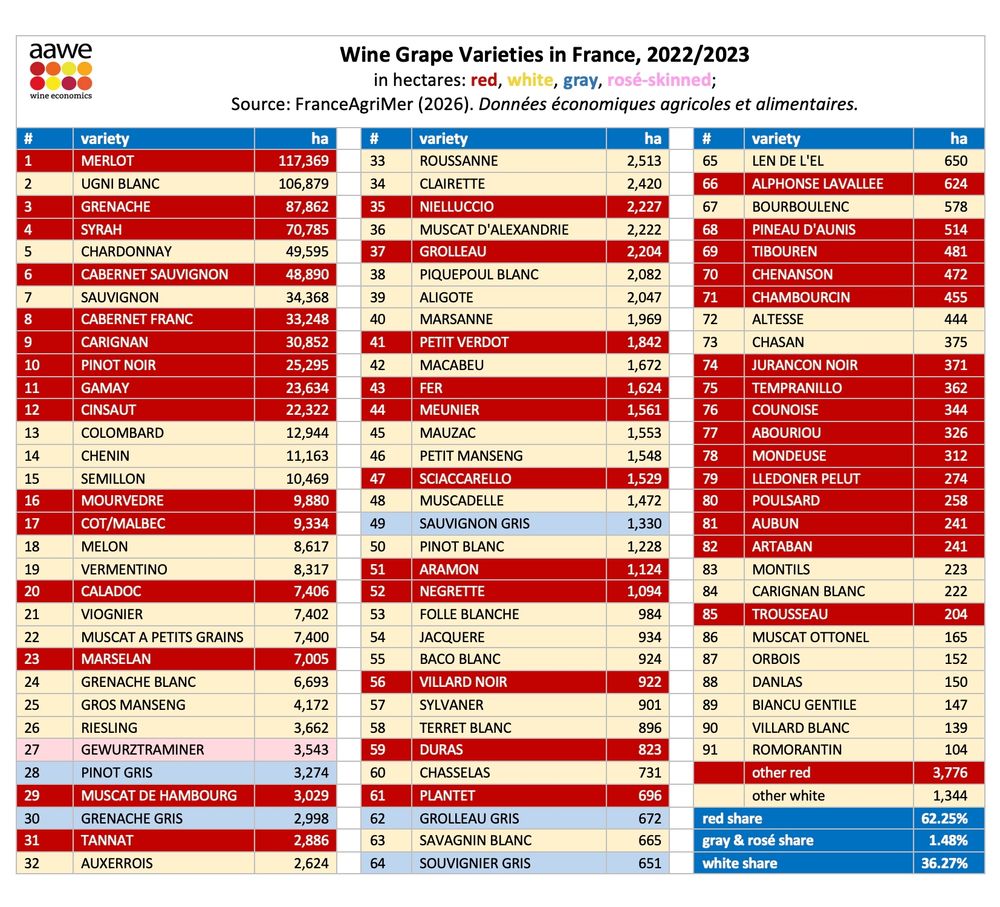
Speaking of varieties, have a click on that image to the right. It’s a list of the top 100 plantings of France grapes posted by the American Association of Wine Economists the other day drawn from an agency of France’s agriculture ministry. I don’t have much comment about it other than to note, despite the pop culture slur, how much good old merlot* is still grown as mentioned by E. Asimov the other day in his discussion of wines you may want to explore.

Good news for cideries and brewers of New York. In this week’s “State of the State” speech, Governor Hochul announced support for local producers, as noted by KK in related to cider makers:

New York is the country’s leading hard cider producer, boasting more active cideries than any other state. Our cider industry has grown substantially over the last ten years, generating over a billion dollars in total economic impact for New York, yet there still remains untapped agri-tourism potential to explore. To support the industry and tap into the robust agri-tourism opportunity that cider presents, Governor Hochul will work with the New York Cider Association to establish New York as the State of Cider, marketing the orchards, tasting rooms, and food experiences that could become anchor destinations for visitors across the country. These actions will strengthen rural economies, uplift the exceptional work of local businesses, and establish New York as the foremost destination for American hard cider.

The Governor also indicated the “need for modernizing licensing across the board, from sports bars and cafes to airport lounges, hotels, and movie theaters.

Conversely perhaps, Pellicle‘s feature this week is a post mortem by William Georgi of the Dutch brewery Nevel Wild Ales which had lofty and noble goals linked with but quite experimental standards:

“We were doing two expensive and time-consuming things at the same time,” he says. “Making a complex product that only a small selection of people actually like, while trying to set up a network of local farmers. A food forest like this is wonderful, but you can’t use it to make beer, as it doesn’t host perennial one-year crops”… Social sustainability was equally important for Nevel. The network of local producers Mattias established for sourcing ingredients—from hops and barley to chestnuts and kiwi fruit—showed him the challenges of farming at a small scale. “It isn’t economically viable at all,” he says. “Even if there’s a living wage being paid, the price doesn’t take into account the fact that most people harvesting the crop are volunteers. 

It’s pretty clear that the plan was not designed to pay its own way. Volunteer labour and crowdfunding plus unbudgeted expenses like organic certification were certainly signed that the business as a business was build on a weak foundation but I like one conclusion that was drawn from the experience: “…I don’t think Nevel failed. I hope I planted a lot of seeds in people’s minds about how things can be made differently.

There was an excellent example of the old visual display of quantitative information** in A.G.’s post this week on Dry January. He shares my interest in maintaining data:

I find it helpful to keep a tally of days I drink alcohol and days I don’t. Nothing complicated, just a binary yes or no, and an aim to have at least three days off the booze each week. That’s all it takes for me to stay within healthy limits, despite working in an industry that can normalise and encourage dangerous levels of consumption. (If you recognise yourself here, check out The Drinks Trust.) Anyway… it’s Friday evening. The first one of the year. I’ve not had any booze since New Year’s Eve. Soon I will go downstairs, crack open a bottle of something nice, and have one or two drinks with some pizza while I stream a crappy-but-entertaining film – January be damned.

However sweet that bar graph, I am more a percentages guy, currently at a total of 52% dry days and 63% one or nones over the years since early November 2021 when I started keeping track. My booze budget this year is also set at around 1.33 a day, an average I beat by a few last year. Checking on that number from time to time – as well as your AST blood test numbers – are great ways to manage the hobby.

While we think on that, think on this. In the northern hemisphere, the darkest ten weeks of the year are already behind us. Soon be planting those tomato seeds. While we wait for that, Boak and Bailey are posting every Saturday and adding to their fabulously entertaining footnotes week after week at Patreon. And look out for more of Stan’s new “One Link, One Paragraph” format. Then hunt out something in someone’s archives! Leave oblique comments on someone’s post from 2009!! Listen to a few of Lew’s podcasts and get your emailed issue of Episodes of my Pub Life by David Jesudason on certain Fridays. And Phil Mellows is at the BritishBeerBreaks. Once a month, as noted, Will Hawkes issues his London Beer City newsletter and do sign up for Katie’s wonderful self-governing totes autonomous website featuring The Gulp, too.  Ben’s Beer and Badword seems to be on pause since November but there is reading at The Glass which is going back to being a blog. Any more? We have Ontario’s own A Quick Beer and All About Beer is still offering a range of podcasts – and there’s also Mike Seay’s The Perfect Pour. Plus follow the venerable Full Pint podcast! And there’s the Craft Beer Channel on Youtube. Check out the archives of the Beer Ladies Podcast.

*Once upon a time, the LCBO here in Ontario stocked Millbrook Merlot from a Hudson Valley, NY winery. Then Rufus Wainwright sang about the area. Went to the winery once around a decade ago. This is been this week’s edition of “wandering thoughts with Al”.
**I couldn’t live with anyone missing the reference.

Yes, It’s Here – The Tryptophan Thursday Edition Of The Beery News Notes

Four Weeks to Christmas Day!!! O.M.G.  I have bought nothing. For nobody. Nada. Not Nuttin’. Crap. For some it is too late! Speaking of Christmas, Laura H. has some very interesting art for sale that might be perfect for your favourite beer nerd… err… expert. I invite any one of you to buy me*  this her lovely representation of barley to the right. Far more less fleeting than a newsletter subsciption yet fewer calories than a beer. I should be in marketing.

And Eoghan shared another seasonal idea, a beer advent calendar on his newsletter:

Starting tomorrow – Tuesday 25 November – and running every weekday from now until 19 December, this newsletter will become its own kind of advent calendar of a kind, with me sending a short missive each morning from one of Brussels’ 19 municipal communes. As this newsletter’s tagline goes, these will be short observations on life in Brussels, trying to capture the feel of each of these areas, and/or my relationship with them.

A great discussion erupted on BlueSky when the news broke that heled explained many of the details related to the move of America’s oldest brewing school, the Siebel Institute, from Chicago to Montreal:

The Siebel Institute of Technology, the oldest brewing school in the Americas (established in 1872), is officially relocating its operations from Chicago, Illinois (USA) to Montreal, Québec (Canada) effective January 1, 2026. The new location address will be 3035 rue Sainte-Catherine E, Montréal (Québec), near Molson’s original brewery site (1786), the oldest brewery in North America. Siebel will be co-located with the new Lallemand Baking Academy and Application Technology Training Facility. 

Siebel has been owned by Lallemand Inc. of Montreal for about 25 years so it makes sense.  The press release also explained that “[r]ecent regulatory changes in the U.S. have made it much more challenging for many of our international students, who have become the majority of our student body, to attend classes in person.” Recent grad Drew indicated that about a third of his teachers there were not U.S. citizens. Two administrative staff – the program’s “heart and soul” – may lose their positions.

Speaking of good discussion, Jeff had a talk with himself on the question of Jeff Past and Jeff Future and the question of taste:

If only we could give those pour souls in 1975 a cup of Coava coffee, or in this example a Fresh west to 1995 drinkers, it would change their lives. But that’s not how things work. Beer has evolved partly because we have evolved along with it. All you have to do is look at different beer regions to see that the process of evolution can lead to very different places. It’s quite possible that for 1995 Jeff, the clouds wouldn’t have parted upon drinking a can of Fresh West. I might have found it off-putting in any number of ways. I liked bitterness then, and body, and just a bit of cheese grater that came from the bitterness/hop-matter synergy. It was like being slapped across the face, but with the flavor of caramel malt, and I liked it. I might have thought Fresh West was a cop-out beer, all candy aromas and no punch, not like a proper beer. I’m not sure there will be a 2055 Jeff or that he’ll be drinking beer (I’ll be 87), but I wonder what he’ll be drinking? It might be something I’d find distasteful today. Hmmm…

As we ponder those thoughts here is some straight up filler:

Note #1: David caught some late autumn light at the pub.
Note #2: Another David posted some sweet photos from a recent visit to a  lambic bar, the Grote Dorst, including a Girardin eye view.**
Note #3: The Boot Inn is still there.
Note #4: Is an influencer with only 24,000 followers actually an influencer? Or just a deadbeat?

But not cheap filler*** as there was plenty to quote from under each of those links. Think of it more as “make your own Thursday beery news notes!” Invite your friends to play along!

Back to the deets as Hop Queries version 9.07 came out this week and Stan shared an interesting observation about Nelson Sauvin that sorta parallels the changes you can notice through each spring’s maple syrup production:

The Nelson Sauvin character (in a normal season) goes through a progression from i) somewhat vegetal and dominated by green fruit character (gooseberry, etc.) to ii) brighter citrus-y with grapefruit-like notes to iii) bright, wine-y and complex with passion fruit notes to iv) building tropical complexity with brighter citrus fading to v) super tropical with sweeter citrus notes to vi) tropical with light dank and solvent-y notes to vii) fading tropical with lots of weird, random characters ranging from O/G to berry fruit. Extremely late Nelson Sauvin tends to vary quite a bit from season to season and can express a wide array of characters, including appealing and un-appealing ones.

A wide array of character? Something like myself. Speaking of deets, this week’s feature in Pellicle by Fred Garratt-Stanley goes where too few stories dig into – back of house at The Fat Cat:

Only when you walk through The Fat Cat’s cellars can you truly appreciate the size of the operation. Underneath the bar there’s a well-stocked keg cellar with four cask lines, but it’s out back where the magic happens. There are two gleaming, air-conditioned cellar rooms lined with stillages, each of which holds somewhere between 30 and 40 firkins and pins that are either tapped up or settling down. Beyond the glass washers are multiple store rooms and an additional cellar, where a handful of the pub’s biggest-selling beers are racked up in huge, 18-gallon vessels. The site is vast, responding to a level of turnover established over decades spent serving reliable, perfectly conditioned cask beer. 

I have worked back of house in a playhouse, bars and restaurants, on election nights and, of course, have seen the backs of many things through law. It is all very good interviewing an owner in the front and hearing the stories but digging into the back and underneath of things where the unpretty can be found tells you what is really what. Are the corners clean? Is the staff sullen? That’s great work up there.

And The New York Times ran a story this week on Germany’s waning interest in beer:

Germans are drinking a lot less beer. “In recent years it was always 46 percent, 47 percent, 48 percent who said, ‘Yes, I drink beer,’” said Marc Kerger, president of Einbecker, referring to consumer surveys. “And this year just 41 percent. Forty-one percent is dramatic.” Alcohol consumption in Germany has been sliding for decades. But the sudden, accelerating drop has caught brewers and bar owners by surprise.

Twist in the tale from Jörg Biebernick, the chief executive of Paulaner: “Half of our sales in Germany are actually non-beer…” What are people doing if they aren’t out on the big binge? According to The Guardian, at certain exclusive clubs they may be on the little one:

For all the talk of generation Z eschewing alcohol, drinking shows no sign of dying out. There are indicators of restraint – the Manchester dessert menu features a two-sip, 60ml mini-version of an espresso martini, for £7, if you prefer an alternative to stodge – and there is “a pocket, from 26- to 30-year-olds” who drink less, says Carnie. But the bigger trend is toward “clean” cocktails, with fewer ingredients and less sugar. The multicoloured, juice-laden, bafflingly named cocktail is old hat. “I get it, because if I go to a bar, and I don’t understand the menu, it annoys me,” the barman tells me. “A cocktail isn’t cheap. If I’m spending money on a cocktail, I want to know I’m going to like it.”

And Katie illustrated another aspect of what’s been going on it terms of culture change at a personal level:

…sometimes I don’t drink because of my MH, sometimes I don’t drink because I don’t feel like it, sometimes I don’t drink because I’m training the next day and want to sleep properly. Don’t raise eyebrows, don’t make it seem like I’m pregnant. Don’t be a dick. Just say okay.

Sleep. Sleeeeeeeep. Katie is spot on in many ways. But still, also in the NYT, there are still people experiencing this sort of night:

Through the window of a dark restaurant we saw a man illuminated by a disco ball who was singing from his chest. He waved at us. We waved back. He unlocked the door and invited us in. Over a bucket of cold Singha, we sang “Happy Birthday.” The owner brought out a brownie topped with a blazing flare on the house. I apologized for the intrusion. “Please kick us out any time,” I said. He smiled and handed me Post-its and a pen. “Just make a list of songs,” he said. Another bucket of beer appeared, along with some peanuts. It was a beautiful night, and we had found something dumb to do.

I have made a point of excelling at finding something dumb to do. To the contrary, Jordan visited a tiny brewery in TO that’s won Best New Brewery in Canada in the 2025 Canadian Brewing Awards.:

At Bickford, what you see is what they have. The space, whose colour palette includes a lot of orange, can’t sit more than 30 people at a time and one assumes that on nights when Dungeons and Dragons groups come in, the only place for drinkers must be at the bar. The main space is not quite as large as a midtown one bedroom, but has been retrofitted as one of Toronto’s smallest breweries. Usually I have to guess at the size of brewing equipment, but everything is labeled. Andrew is brewing 250 litres at a time.

And David J. has shared the background story of another desi pub, the The Century Club in the Forest Gate section of East London which was born from 1970s bigotry as owner Peter Patel recalled:

“We went to the Wheatsheaf,” he recalls. “We didn’t know that in the evening it used to get bikers coming in and they chased us out.” Peter faced similar prejudice in those days when he visited a pub with friends in Lewisham, South London, where I now live.  A racist purposely spilt his drink on him, claiming Peter had tripped him up and demanded more than another drink. The atmosphere turned rancorous, the publican sided with the attacker and the Asians were kicked out despite already spending about £40 (the equivalent of £300 today). “It was a lot of money as a pint used to be under a pound then,” he says. “We did nothing at all. That’s when I decided we needed something for Asian people.”

What else? Well, the ISBFX declared an ending**** and Ed noted another sort of end of things, the end of CAMRBG:

…when a heresiarch founded a protestant beer sect called the Campaign for Really Good Beer (CAMRGB) in opposition to our mother church I was not filled with pleasure that I get from say, reading about nestorianism. I must confess that in my arrogance I had come dangerously close to advocating for something similar to the CAMRGB in the early days of beer blogging. Back then whinging about CAMRA was something we all enjoyed…until I realised some of the people were not whinging about the home team but were in fact the opposition. I repented my sins then, and despite my occasional confusion over theological matters and distaste for modernism, my faith has not been shaken.

Fine, one or three more notes:

Note #6: “This is the cheeriest Norfolk pub I’ve ever been in…
Note #7: Rogue left $16.7 million owing to others after earning only $19.7 gross revenue in 2024.
Note #8: Pink Gin in Interwar China.

Lastly, we talk a lot about beer and monks but Kathleen Willcox reminds us in DB that they established much of what we understand about wine classification, too:

After Rome fell and the Early Middle Ages ushered in intellectual decline and infrastructural decay, monastic orders did not just preserve wine culture; they elevated it. Monks across Europe, particularly Benedictines, Cistercians and Cluniacs, planted vineyards, documented practices and sustained international wine trade. Burgundy became ground zero for evolution and innovation. The observant Cistercians, who owned vast vineyard holdings, first noted how separate vineyard blocks produced different results. They were the first to record these observations, linking differences in wine to soil, climate and elevation. Their careful mapping of micro parcels on the Côte d’Or laid the foundation for the cru system and the modern concept of terroir.

There. That’s it for this week. The United States is in a gravy soaked reverie that may well last into early December. As they/you recover, please also check out, Boak and Bailey on this and every Saturday and then sign up for their entertaining footnotes, too. Look out for Stan when he feels the urge now that he’s retired from Monday slot… maybe … maybe not. Then listen to a few of Lew’s podcasts and get your emailed issue of Episodes of my Pub Life by David Jesudason on certain Fridays. And Phil Mellows is at the BritishBeerBreaks. Once a month, as noted, Will Hawkes issues his London Beer City newsletter and do sign up for Katie’s wonderful self-governing totes autonomous website featuring The Gulp, too.  Ben’s Beer and Badword has returned from his break since April so you can embrace the sweary Mary! There is reading at The Glass which is going back to being a blog. Any more? We have Ontario’s own A Quick Beer and All About Beer is still offering a range of podcasts – and there’s also Mike Seay’s The Perfect Pour. Plus follow the venerable Full Pint podcast! And there’s the Craft Beer Channel on Youtube. Check out the archives of the Beer Ladies Podcast. That’s quite good and after a break they may well be are back every month!
*…or, yes, anyone you care for than me… if that’s even possible!
**I got a couple of these well over a decade old, the remnants of the stash. probably should open one to check see.
***Or… actually… I don’t know what to think. Hope it was worth it.
****As in read to the ending…

The Mid-November Shock Of The First Real Freeze Runs Through These Beery News Notes

Remember all those sunny garden shots? Just a week ago?  The wonderful colours?  The ripening fruit?  Well, it’s now sky shit season and looks to stay that way for another four if not five months. Snow, winds off the lake, freezing rains. Commisserations welcome in the comments. It was also Remembrance Day on Tuesday so plenty to be solemn about for a stretch before the holiday season really begins. I took and posted that photo twenty years ago now,* of a Second World War RCN officer waiting for the service at Navy Memorial Park here by our waterfront.

We start with a look to the past. Boak and Bailey showed their stuff again this week with an excellent post seeking out the source of the beer with the branding “Rustic Ale“:

A slight surprise there might be that ‘rustic’ clearly did not indicate that the beer would be strong or rough, like Spingo. But at about 3.5% ABV, Rustic Ale would be considered at the lower end of session strength even today, never mind before the First World War. Elsewhere there are instances of the phrase ‘rustic ale’ being used not as a brand name but to describe the type of beer drunk in country inns, by country folk. The earliest of these references we could find is from 1855. Another, from 1909, suggests that healthy country girls (think Honoria Glossop) “will face her glass of rustic ale like a young farmer”.

Excellent. And Breandán Kearney wrote about lost Belgian styles for The Brussels Times Sunday magazine and the steps which have been taken to revive them:

Seef or Seefbier, for example, once the pride of Antwerp, vanished with the collapse of small urban breweries during the First World War. A decade ago, Johan Van Dyck claimed to have uncovered an old recipe for a seef beer which he reincarnated with a barley, wheat, and oat grainbill and a creamy, unfiltered profile. In recreating it, Van Dyck reignited city pride with a new generation of drinkers. In Lier, the brown-amber ale caves was revived by a local heritage guild, which commissioned it to be recreated from archival recipes (but only for serving in cafés within the town walls). And then there’s uitzet, a mixed fermentation brown ale from East Flanders that local brewers such as DOK Brewing Co, have tried to recreate in Ghent.

You know, I’ve been told I have a creamy unfiltered profile. Speaking of diligent research, Ron has pulled back the curtain and shared an update on his methodology:

I finally bit the bullet yesterday. Adding an extra column to my main beer gravity spreadsheet.  I’d been planning on doing it for a couple of years. And had started using a new format table for any gravities I harvest. But it was getting out of hand. It was over 2,000 lines. And when I wanted to look up beers from a specific brewery, I had to search in both tables. Time to merge the two. It itself, that wasn’t particularly difficult. Just add the column to the main table and tack the entries from the temporary table on the end. Except, most of the entries now had a blank column. Which I’ll have to add. Quite a palaver, in a table of 25,000 entries. I started the work yesterday. And have completed maybe 25%. It’s dull, tedious work. But it will be worth it, when I’m done. In case you’re wondering, the column is the town where the brewery is located…

A-HAH!! I knew it. I knew all these beers were from places. And, I understand, they are made… in ways. On that point, here we have first The Beer Nut  and then Stan noticing The Beer Nut on the effect of Thornbridge’s conservation of one part of Marston’s Burton Union brewing set.

TBN: “With luck, one of England’s many fine beer writers will be able to explain what difference the equipment actually makes to the product, beyond the press releases and collaborations.”

SH: “I’m inclined to believe the claims that using the system changes the beer. You might even be able to run a study which compares otherwise identical beers fermented in stainless steel and in the union. Or wood versus the union.”

Two of the best sets of tastebuds in the scribbling set right there. Perhaps the point is simply to continue the use of the way. Interesting notes from one commentator: “notoriously laborious to clean and have higher racking losses than other systems” but “they help in the maintenance of a healthy and regular pitching yeast.” So there may well be value in the way even if it isn’t necessarily translated to the glass.

Pellicle‘s feature this week sent shivers. Not because the piece by Joel Hart about the Mort Subite in Altrincham, a Manchester suburb, was anything but a great portrait of a well loved tavern. But because I had one of the worst drunks ever – followed by a two day hangover – drinking in a place by that name in Paris when I was young and stupid in 1986. Fortunately for me, the five guys from Gascony (spoilers) offering to throttle me did not realize I was with the pack of very large gents in the corner. Events ensued. To the contrary, on Manchester’s version we read:

…it’s quieter, broodier, and more intimate. “I’ve lost hours of time in there,” says Chris Bardsley, who runs Altrincham beer spots The Beacon on Shaw’s Road and Batch Bottlestore in King’s Court. “You’re in there, you don’t see the outside world, you’re just caught in it.”

Glad I wasn’t caught in it, if I am being honest. Back to the question of the tasty, photographer Sean McEmerson provided us with an fabulously detailed essay on the making of green hop beer from Hukins Hops in Tenterden, Kent:

At Hukins Hops, the team carefully assesses each variety across their sprawling, 50-acre farm, checking the hops’ ripeness before deciding when to harvest. Over the last few years, that process has only become more difficult as the UK’s climate has grown more unpredictable. This summer, Kent—one of the country’s key hop-growing regions—experienced record-breaking temperatures during a rolling series of heatwaves. The result was an earlier-than-expected harvest. “Lots of factors contribute to how long harvest takes—machine breakdowns, picking weather, staff, and drying capacity”, Glenn Whatman from Hukins tells me. “This year we had an average crop due to the drought in June, but the machine ran as smoothly as ever and the picking team persevered through torrid weather”.

I had no idea hop pickers’ hands became tarred with resin. Speaking of photo essays, Martin has returned to his winter quarters in Rye, England and took a stroll to see Jeff at the Ypres Castle Inn:

Jeff greets me at the bar, where I sit and watch the magic of a great pub unfold over the next hour. Louie (sp. ?) is the star today, another of Jeff’s great staff team, but all the customers seem lovely too. Not serving food helps. Children bring their empty glasses back to the bar and say “Thank you“. Their proud parents say “Well done“. I say “Well done“, too, perhaps a little enthusiastically. I’m not normally comfortable sitting at the bar, but watching a great pub like the Ypres in full flow on a Saturday evening is a thing of wonder.

Somewhat to the contrary – or perhaps in ignorance of the above – the stomp on craft continues. Auto scene reporter Ben Shimkus was in the The Daily Mail with his autopsy of US craft beer under a “hipster” inclusive headline, dipping heavily into the finger-pointy zingers bucket as he did:

America’s craft beer phase seems to be fizzling out. Expensive beers flavored with ‘notes of citrus and pine’ or brewed with an extra batch of hops are losing favor in US grocery stores and bars. Instead, giant beer brands featuring utilitarian flavors and low prices are all the rage. There might be a charming reason why: Millennial-aged craft beer fans have grown up… the lower-cost seeking has had a damaging impact on America’s microbrewery industry, which dominated younger parts of the US and attracted cornhole players. Dozens of sites have permanently shut down.

Is that tone really necessary? Well, besides “cornhole players” which has always been a self-inflicted wound as far as I can tell. No, the pile on is getting to feel like, you know, making fun of people who just really like their cats.** Perhaps the trade friendly euphemisms like “consolidation” and “mature market” are usefully kinder descriptors for the slump.

A saner explanation of the current situation has been provided by Ron Emler in The Drinks Business – with an particular focus on China:

For the past couple of years, it has been the group mantra from big booze bosses that the current downturn in sales is cyclical rather than structural. But the cracks in that corporate front are widening. No longer can the combined effects of squeezed wallets, the rise of cannabis-infused offerings, the increasing uptake of weight loss drugs which reduce the desire for alcohol and the lifestyle choices being taken by Gen Z be dismissed out of hand as inconsequential in the longer term… According to Morningstar senior analyst Jennifer Song, China’s younger generation rejects the “intense sensation of high-alcohol baijiu”. She said: “We believe expanding low-alcohol baijiu offerings is a long-term trend, driven by demographic change and rising health awareness.”

Jason Wilson takes the broader issue from another angle, the problem posed to premium categories when there is common access to things which have been formerly accepted as luxuries:

The problem right now is that “fancy goods are everywhere,” according to The Economist… I wonder if wine needs to try so hard to present itself as more of an experience than a thing. After all, simply opening a bottle of wine—on a sunny day in the park, during a late night conversation on a roof deck, on a lazy, decadent afternoon in bed—is the prelude to experience. The drinking of the wine in a place with people is the experience. We would do well to remember that. Perhaps it’s more a matter of shifting perspective, framing, and being open to more possibilities.

So do we need to – or should we – buy as much booze to still be interested in the stuff? If you’ve read the stuff posted around here very much over the years you will know that has been always been a question in my head. Do we consumers ally ourselves with producers at all costs? Or are we wanting a decent pint at a decent price? Or both? Should alcohol to play a smaller but healthier role in life or does one root for a business rebound back to the irrational exuberence of craft beer a decade ago? Or even further back even to the 1980s when understanding hard to find beer conveyed a certain status, as Boak and Bailey recently considered. Sometimes the enthusiasts’ approach to beer writing strikes me as similar to the unrequited yearning for the experience of being young again. Were there longings for Rustic Ale in the years after it faded, too?

Speaking of longings, Jeff is looking for an explanation of the price of NA beer building on last week’s note from hereabouts on the update from BMI on the price of the stuff:

In the past decade, non-alcoholic beer has gone through an important upgrade over the old Clausthaler era. Breweries started taking it seriously, and the quality, while still not as good as regular beer, is vastly better than it used to be. Athletic demonstrated that there was a market out there for N/A beer made in modern craft styles. The big question is how big that market will become in the U.S. Here I am a lot more bearish than the industry, for these reasons. It’s a premium-priced product that is inferior in taste to regular beer or other non-alc alternatives. The proliferation of N/A brands is hurting rather than helping, too. With the flood into the market, people are exposed to more of the poor examples. A novelty factor in being able to buy a N/A hazy buoyed the industry, but I have a real question if that’s sustainable.

Is any of it sustainable? And… what is it that would be sustained? Not a small question so we can leave it there for now. Until next week, I will be focusing all my energy at the Grey Cup game and shouting at the sky… and once again thanking my luck for the pack of gents in that corner of that bar. As I do, please also check out, Boak and Bailey on this and every Saturday and then sign up for their entertaining footnotes, too. Look out for Stan when he feels the urge now that he’s retired from Monday slot… maybe … maybe not. Then listen to a few of Lew’s podcasts and get your emailed issue of Episodes of my Pub Life by David Jesudason on certain Fridays. And Phil Mellows is at the BritishBeerBreaks. Once a month, as noted, Will Hawkes issues his London Beer City newsletter and do sign up for Katie’s wonderful self-governing totes autonomous website featuring The Gulp, too.  Ben’s Beer and Badword has returned from his break since April so you can embrace the sweary Mary! There is reading at The Glass which is going back to being a blog. Any more? We have Ontario’s own A Quick Beer and All About Beer is still offering a range of podcasts – and there’s also Mike Seay’s The Perfect Pour. Plus follow the venerable Full Pint podcast! And there’s the Craft Beer Channel on Youtube. Check out the archives of the Beer Ladies Podcast. That’s quite good and after a break they may well be are back every month!
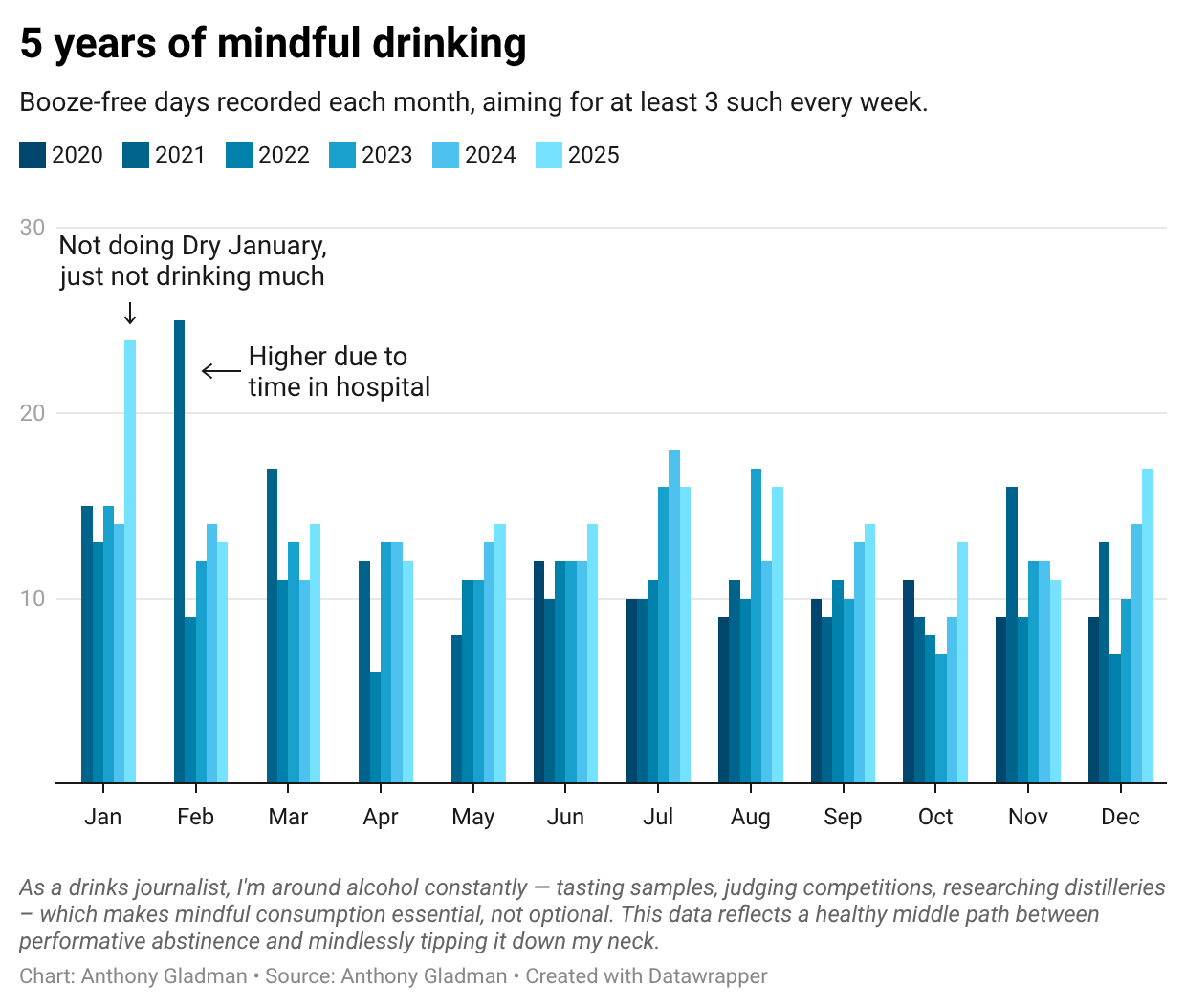
*Lordy…
**By the way, ours finally killed a goddamn mouse after over ten years so there was a smidge of respect – but it wasn’t like I ran to the grocery to buy kitty treats or anything. I have standarrds. I still keep a portrait of the late great slayer of mice Mrs. Beaton (1999-2012) on my office desk. Frobie got all the attention but Beaon was the killer.

Now That I Have My Back To School Corduroys Here’s The Thursday Beery News Notes

With the onset of September comes the offset of the the garden. I am still planting things that have a hope to give us a bit of return before the frosts – basil, peas, leaf lettuces – but the fact is it’s now about starting the long process of taking down the pole beans, filling up the composters and putting away pots for next year. I saw this image on the Brewery History Society’s FB page and immediately liked the scene. The sweater vest and long trousers in particlar are a good and fashionable reminder that there’s still lots needing done as autumn advances.

Speaking of the change of seasons, The Beer Nut is looking forward to summer being behind him if his reviews of warm weather drinks including something called Fruit Sundae Gelato Sour is anything to go by:

It’s lactose rather than Lactobacillus that drives the flavour, and indeed the smooth and heavy texture. Vanilla forms the base of the profile, to which is added a mish-mash of fruit concentrates (four are named on the ingredients) with strawberry and blackberry being the most apparent. And that’s it. While the mouthfeel reflects the high ABV, the flavour complexity doesn’t. The weight also means it doesn’t work as a summer refresher, and is more of a pudding substitute. This is simple and inoffensive stuff, so long as oodles of lactose and rivers of fruit gunk don’t bother you.

And Boak and Bailey were also feeling the last of the summer and looking forward to the coming change if we can judge by their last “beers of the week” note at Patreon:

This piece would be a lot longer if we listed all the duds we had. Hot weather and a quiet city make for some rough pints: cloudy, warm, chewy, as exhausted as the sweaty August insomniacs drinking them. But we always wanted this little write up to be more positive in tone. We don’t chicken out of giving negative reviews on the main blog – we’d have a lot more friends in the industry if we did! – but we don’t want this other thing to consist of us bitching behind closed doors. Anyway, it’s cooling now. The Swan With Two Necks will be resuming its usual opening hours and cask ale across the city will be dropping down from its rolling boil.

Perhaps they needed to add a little something to their ales? Should you? Would you? Could you? The Guardian has many questions along these lines:

The true number of icy beer fanatics is probably much higher. Why is that? Because another 10% said embarrassment was holding them back from requesting ice in their beer, and another 20% said that they had previously been told off by friends, family and bar staff for requesting it. Seriously, though, why is putting ice cubes in beer a bad thing? Because beer is already delicately flavoured enough as it is, so diluting it with melted ice risks rendering it tasteless. Plus, a lot of work went into crafting that flavour profile. Don’t just mess it all up because you like your glass to clink when you swirl it.*

Why not!?! As Gary pointed out this week, some have jumped through hoops to cool their beer. Back to question of the heat, reaching west we have one last “what I did on summer vacation” report from Glenn Hendry on a trip to grasslands of the Canadian Prairies where he found himself on a brewery tour:

The scenery was outstanding – if you’re into grasslands and rolling hills, which I am – but eventually I made the long drive in the rental car back to Regina for the rest of the Tuesday-to-Saturday trip. With my beer consumption in Toronto reduced to the odd social outing back in Oshawa and maybe a beer a week at home, a pub crawl in Regina, Saskatchewan was an unexpected addition to the itinerary, but when my server at Pile O’ Bones Brewery told me if I visited all six breweries on the city’s ‘Hop Circuit’ and had a pint at each I would score a beer glass, well, despite the ‘self-guided’ disclaimer/warning, the challenge is on, innit? To be entirely truthful, I hadn’t planned on hitting up all six – maybe three or four – on this steaming hot Thursday in the prairie city, but when the old legs get moving and the old mind stops making sound decisions, challenges are simply met.

Speaking of the Prairies, I am a bit more swayed by this comment from Suzanne Sexton on the closure of an Ontario Crown Royal whisky bottling plant than I am by Premier Ford pouring a bottle out over the loss of 200 jobs:

This is the Crown Royal production facility in Gimli, Manitoba. This is where Crown Royal is actually made on the shore of Lake Winnipeg. It runs 24 hrs a day, 365 days a year. It houses millions of barrels of Canadian Crown Royal, made and moved by Canadians. There are more barrels of Crown on-site than there are people in this province. The high quality barley, corn, and rye are grown by Canadian farmers. Please don’t follow people who don’t know these facts when they ask you to boycott Crown Royal because they moved one Ontario bottling plant to US to survive US tariffs. Buying Crown Royal still puts dinner on the table in hardworking Canadian households across the country.

It is the reality we live in that bulk booze is trafficked across the border. I seem to recall that Canadian good beers have been shipped south to the US for bottling and labeling there as grocery house brands in a way that avoids certain tax treatments in both countries. Nothing wrong with that.

Speaking of booze as business, Pellicle‘s feature this week is Phil Mellows’ portrait of David Bruce, owner of the Frikin pub chaing from 1979 to 1988, who explained the 1988 sale when he was bored, tired and facing debt:

The numbers were stacking up against him, too. “We still owned 90% of the business but that meant we had a massive level of debt, £3 million. I could see the Monopolies & Mergers report that led to the Beer Orders would mean more freehouses on the market and more competition. The banks were getting nervous. It was a matter of flog it or float it. We couldn’t carry on.” Finally free of money worries once the Firkins were sold, Bruce launched the charity providing barge holidays for disabled people that earned him his OBE, but it wasn’t long before he was back in beer and making an impact, this time on a global scale.

It’s interesting to see how Bruce also rolled his profits into the churn of further beer business projects including many US micro breweries which themselves were sold off in the great buyout era of a decade ago.

And studies were among things discussed these last seven days. Last Friday, Ed himself expressed himself on the topic of beer foam based on a study written by non-brewers:

The authors of the beer foam paper appear to be competent scientists, even if they are ignorant when it comes to brewing. They certainly seem to know a lot about the science of bubbles (Marangoni stresses is a new one to me!). And they correctly discuss Lipid Transfer Protein 1 as playing a key role in stabilising foam, though this nothing new to brewers. In fact last year I went to a talk by “The pope of foam” Charlie Bamforth where he discussed the role of Lipid Transfer Protein and Protein Z (40 kDa) in foam stability. He said research had shown this was not due to any particular property of the proteins, but rather that the partial denaturing of them during the boil (not during secondary fermentation!) exposed their hydrophobic interior which helps stabilise bubbles.

Didn’t know about Marangoni stresses?!? Reeeeallly? Hmm. Lordy. Err… umm… where were we… oh yes – and Lars commented on another study that sought to link the development of beer brewing with the onset of organzied societies:

Many researchers have suggested that alcohol may have been an important factor in developing early states. Basically, it’s supposed to have helped social cohesion, improved cooperation, and reduced friction among people living cramped together…. What they found was that in all models there was a positive correlation between alcohol and political complexity. It was 0.77 when the only factor was alcohol, and 0.19 in the weakest (model 4). Average 0.27 across all five models. In other words, the result appears pretty robust.

“Au contraire dit…” Jeff who pointed out that some of the assumptions were not well founded:

I’m not an archaeologist (though neither are the authors), but the data here seems abundant and clear. On the first highlighted quote, people made beer *millennia* before agriculture. On the second one, man, what a sweeping judgment. Let’s take the NW Coastal natives, where I live… They had incredibly complex societies. They had social stratification, organization, and hierarchy. Some of the peoples managed harvests, but whether you could call it agriculture is a very sticky question. They had such abundance they didn’t need agriculture. Cultures are very hard to characterize.

My thoughts are these: (i) the general “cradle of civilization” concept seems pretty middle eastern focused as there are many models of society, many without alcohol, (ii) the studies also rarely seem to compare the multiple other factors like seed storage techniques that would run parallel to booze production** and (iii) there often seems to be an inordinate wish to make booze the winner when, as in this case, it is also reasonable to assume that these early societies were slave based coercive hell holes.

Stan issued his latest edition of his Hop Queries newsletter (v.9.04) and shared how poor the crop was looking in England (“…shrunk to a level that this news won’t affect the world hop market…“) as well as in Germany:

Farmers are expected to produce 41,235 metric tons (about 90.7 million pounds and likely more than the U.S. crop), 11 percent fewer than 2024. Growers cut acreage by 6.5 percent and yields were adversely affected by a lack of rain until mid-July and further reduced by disease and pest pressure. A press release indicates that 44 farms ceased operations, meaning the number of growers has slipped below 1,000. It concludes: “Hop growers are reacting to poor prices and limited marketing opportunities by reducing acreage. The short-term outlook is not rosy: Given declining beer consumption, a further decline in hop demand is to be expected. The result will be continued pressure on prices and a further reduction in hop acreage until supply and demand are restored.”

Until demand is restored? Does anyone think that is happening? Not the stock market if this report in Beer Marketers’ Insights is to be trusted:

Bank of America analyst Peter Galbo downgraded Constellation [NYSE: STZ] to “Underperform” last Tue, reducing his price target from $182 to $150. “We see further downside potential as beer industry consumption remains soft creating risk to sales, margin and multiple,” Peter wrote. And there are “added risks” such as “core Hispanic demographic remains pressured” and “longer term alcohol consumption trends” remain soft. He now expects a -1.8% decline for Constellation in fiscal 26 (thru next Feb) compared to his previous estimate of -0.5%. CITI also put out tuff report noting “continued softness in both STZ’s beer trends and the broader beer category.”

The company itself seems to agree in their own disclosures issued Tuesday. To be fair, there are still believers and even at least one corner of Canada running out of beer:

“We saw it right from the beginning of June — it hit hard and fast,” Clark said. “Every day we talked to different tourists. It was a wide demographic this year … American, Canadians, from all over, young and old.”  Some days, he said the brewery was so busy it had to turn people away. “We have not been great at keeping up with demand this summer,” he said. “You always assume you might grow with a good summer, but we would have never expected this.”  Evermoore Brewing Co. was not the only local producer scrambling to meet a higher-than-normal demand. According to Jared Murphy, president of the P.E.I. Craft Brewers’ Alliance, some craft breweries had sales show a double-digit increase this summer.

There. We can end on an upbeat note this week.*** Somewhere there was an increased demand for beer. While you consider that before we meet next time, please also check out Boak and Bailey every Saturday and sign up for their entertaining footnotes, too. Look out for Stan when he feels the urge now that he’s retired from Monday slot… maybe … maybe not. Then listen to a few of that now newly refreshed Lew’s podcasts and get your emailed issue of Episodes of my Pub Life by David Jesudason on certain Fridays. And Phil Mellows is at the BritishBeerBreaks. Once a month, Will Hawkes issues his London Beer City newsletter and do sign up for Katie’s wonderful self-governing totes autonomous website featuring The Gulp, too.  Ben’s Beer and Badword is out there with the all the sweary Mary! And check out the Atlantic Canada Beer Blog‘s weekly roundup. There is new reading at The Glass which is going back to being a blog. Any more? We have Ontario’s own A Quick Beer featuring visits to places like… MichiganAll About Beer offers a range of podcasts and there’s also The Perfect Pour. Plus follow the venerable Full Pint podcast! And there’s the Craft Beer Channel on Youtube. Check out the archives of the Beer Ladies Podcast. That’s quite good and after a break they may well be are back every month! Such is life. Such is beer podcasting and newslettering… which, as Ray says, are blogs! And he’s right.

*That comment about “delicately flavoured” sound like it was provided by the wizard who told you that you can’t spit beer at a tasting!
**Consider how the introduction of the Swede Turnip in 1700s England led to year round beef production which in turn arguably led to the second British Empire. Just consider that, wouldja?
***[Ed.: “Really? Are you sure we can’t add just one more collapsing beer market story? No? Fine. Whatever.”]

The “But… He’s Just Mailing It In From Vacation!!!” Edition Of The Thursday Beery News Notes

Yup. Big news this week? I am trying to nap in as many spots in the house or out in the yard as I can. I’ve yet to try that awkward chair in the back rec room but I still have my eye on it. It’s all so pleasant. The evening air is now cool enough that you can hear the crickets across the backyard fences over because no one is running an air conditioner anymore. Fact is I haven’t had a week off with nothing to do for quite a while and, I gotta say, I am liking it. Regular readers may tell you that I am good at doing nothing but I just don’t get to do it… or, rather, not do it… enough. So far I’ve dozed to baseball on half the waking hours, “worked” on cleaning up the garden and exhausting myself planting a few more seeds in a few more pots with something to eat before the frosts close in, gawked at a double rainbow – and even put on a belt to hit a BBQ place on a Monday night where I found a shot of Makers Mark to sit next to my pint.

Speaking of bourbon in Canada, Jeff did some solid inquiring into the effects of the chill in Canadian-US relations as it applies to booze. As I have mentioned a few times, up here our provincially run booze systems (other than the Randians in charge of Failberta and Assbackchawan) have taken all US booze off the shelves. Jeff shared what that looks likes from the south:

California Cabernets, Oregon IPAs, and Kentucky bourbons are all world-class beverages, but they’re not irreplaceable. Companies spend years or decades building the reputation for these categories and promoting their own brands. Trump’s tariffs have interrupted the work of these industries, and now Canadians are playing the field and experimenting with other products—ones they may enjoy as much or more than the American ones they’re replacing. That’s the first dynamic at play. The second is that now that those shelves are being filled by products elsewhere (whether domestic or imported), the U.S. companies will be forced to win them back should Canadians allow that, which as of this week they have agreed to do.

I am not sure that last comment is correct. This week our Prime Minister agreed to drop reciprocal tariffs on most goods covered by the existing pre-Orange free trade deal. But it’s the provincial premiers (other than those in Alber’duh and Sassblotchawhere) like Uncle Dougie who have taken all US booze off the shelves. And it matters. Ontario’s LCBO alone is the biggest booze buyer in the world. It’s also important to note that bourbon drinking up here is far behind our local rye – while much of the US wine (down 97.5% year over year) is bulk gak that’s been easily replaced by our own damn bulk gak sub-sector thanks very much. But the big point, as Jeff puts more nicely, is the Canadian “fuck ’em” factor. We don’t care to buy their booze (… or fresh veg… or BBQ sauce… or… anything) if we can find better friendlier sources. My Manhattan had Crown Royal in it. But, yes, I did have a Makers Mark on Monday after the staff checked that there still was some to be had. So there is that.

Next up… hey – did Stan just lay down another rule?

In my mind, more pounds of hops trumps more acres.

Because I am watching baseball all week, I am immersed in the stats and have to agree that units of production always is superior to quantity of resources. The Mets, for example, are up nere the top in terms of payroll in MLB but are fighting the Phillies this week just to make the playoffs. By contrast the Brewers – every one of youse’s favourite team, natch – have the most wins (as of last Sunday) but are #23 in the spending. This is why the stats over the last 20 years about brewery openings or other measurements* have never made much sense given they equate tiny taproom spots with production facilities. Not to mention how they were fueled by a certain level of fantasy.** Is more beer by volume being brewed and consumed? That’s the stat that matters.

And, putting together the right data as well, Merryn is “putting together papers for a bibliography on evidence for malt and ale” from early civilization – which is a great idea. But apparently an uphill battle:

I suppose, once you accept that spent grain aka draff aka brewer’s grains could have been fed to animals (eg cattle and pigs) in the Neolithic then it follows that you must accept that they were making malt and ale. And that is something that quite a few archaeologists do not want to accept

Merryn also gets the h/t to a story in The Scotsman about archaeological finds at a housing development in Fife which has revealed how far back housing developed at the site and perhaps what they were up to:

Co-author Thomas Muir added: “The archaeological evidence gathered at Guardbridge demonstrates that the site was occupied for almost all of the Bronze Age period, between 2200 and 800 BC. ‘The occupants crafted intricate metalwork and processed wool into yarn. From the porch of one of the roundhouses was found evidence that one of its occupants had once sat there knapping flint for tools.’ Earlier, Neolithic farmers of Fife left many pits across this site which contained burnt cereal grains, saddle querns and pottery sherds. No traces of their homes were found.

Burnt cereal grains in pits?!?! Par-tay over here… well, way back then. Also into the sciences, Ray performed an experiment on Jess and they published the results over at B+B, measuring the almost subjective “Punk IPA: piss not piss” consideration, utilising a methodology approximating objectivity based upon the excitement scale*** as applied upon locally available examples. Their thesis entering into their study was this:

“I never liked the beer anyway” or “It tastes like piss” are standard responses to stories about BrewDog, as if the company’s ethics or culture can be tasted in the product. We suppose that is a logical extension of the idea that the products of virtuous breweries – those that are small, independent, craft, or whatever words you choose to use – taste better. We’re not sure it’s very helpful to dismiss specific beers because of politics, though, even if you might decide for other reasons not to buy or drink them. The idea of objectivity in beer tasting is pretty much a myth unless you go to extreme lengths but we should at least try to be honest and get close to the truth.

Punk IPA showed up in my Ontario marketplace back in 2009 at a moderately modest $2.60 – but they were advertisers back then so I really can’t say how I felt about it then, looking back from so many years later.*****  I am pretty sure that I liked the early strong stouts that they sent, back when their location still had “unit” in the address. But one thing I know I can depend on is Jess’s scientific findings. Punk IPA does not taste like piss.

Note: Katie has found a way to consolidate her archives.

Climate change driven news from Bordeaux as reported by Decanter:

The seismic decision, communicated in a letter from the Guinaudeau family on 24 August, was described as a necessary response to accelerating climate change and the increasing restrictions posed by the appellation system. ‘The vintages 2015, 2019, and above all 2022, were all strong evidence of [climate change]. 2025 goes a step further. We must think, readapt, act,’ the family wrote… Lafleur is the first of Bordeaux’s top tier, with six highly sought-after wines, to break with the AOC system – a move that underscores both the estate’s singular vision and the mounting pressures of climate change on traditional models.

My notes tell me I had a bottle of their accessible Chateau Grand Village 2020 in November 2022 and am pretty sure I was pretty pleased. As with “style” in beer these things ultimately get you only so far.

Not speaking German very much at all and not being an amateur statistician methodology protester with aspirations of being the voice of the brewing… err… hard drinks… err… fluid beverage marketplace,***** I was struck by this bit of Cento-Euro news as reported in The Times worthy of an extended quotation :

…a generation of unprecedentedly abstemious young Germans is causing serious trouble for the nation’s breweries. The market has been shrinking for some time at a relatively sedate pace of between 2 and 3 per cent a year, dragging even venerable brands such as Erdinger and Paulaner into a cut-throat price war that has brought retail prices as low as €0.80 for a half-litre. This year, however, the decline has accelerated. In the first six months, the German beer industry’s sales slumped by 6.3 per cent compared with the same period last year, excluding non-alcoholic products. It was the first time brewers had sold less than four billion litres in any six-month period since 1993… Today only 38 per cent of men under the age of 25 drink at least once a week, compared with 55 per cent a generation earlier and 85 per cent of young men in the mid-1970s. 

That last bit is a bit of a stunner. 62% of German young men not having a drink at least once a week. I poured myself another double Manhattan to take in these and other broader implications.* Will the great-grandkids hear stories about how Grandpa drank stuff with this weird chemical solvent in it and then wrote about it publicly? As if it made me happy? Will it be like when our kids heard about how my father as a 1930s kid was sent to the pharmacist to fill the glass box with acid to bring home to make the radio run? Could be. Maybe. You know, it could be a bit comforting to be an evolutionary dead ender clinky-clink-wise.

Speaking of end times, the nueuws in gueuze is not going to ameuese:

AB InBev has announced that it will no longer brew Belle-Vue Gueuze because demand for the beer has dwindled. A company spokesperson confirmed the news on Monday following a report by De Tijd, adding that production of Belle-Vue Kriek at the Sint-Pieters-Leeuw brewery will continue. Belle-Vue Gueuze was originally created by Constant Vanden Stock, a brewer who later became chairman of football club RSC Anderlecht. After taking over his family’s brewery post-World War II, he introduced a sweeter gueuze to the market. Traditionally, gueuze beer was known for its sour taste and often served with sugar cubes. 

Me, I checked the archives and I don’t think I ever wrote about this beer – but the obit is not really the points. It’s that line “…often served with sugar cubes…” Does anyone ever do that? I mean in the drive for authenticity that has, you know, ushered good beer to an early retirement, has / does anyone drink traditional dry gueuzes and lambics like they were consumed… traditionally?

And, finally, the Pellicle feature comes from the Auld Country and is all about what was so well stated by author and fellow Strathclyde alumni Rob MacKay***** “…one of several national drinks…” Tennent’s:

“There’s an omnipresence to Tennent’s,” says David Freer, managing director of O Street, a Glasgow-based design agency. “People like it because it’s an institution; Tennent’s is always there,” David tells me. “I remember—and we’ve all done this in Scotland—driving into a weird town or village you’ve not been before, not knowing where to go, and seeing the glowing red T.” These illuminated signs can be found from the farthest reaches of the Highlands and Islands, all the way down to the borders, poking out above the door of hundreds of pubs along the way. They provide a comforting reassurance that even in an unfamiliar drinking spot, you’re going to know at least one thing on the menu.

You can get that at the LCBO, you know. Might have to find me some. And… that’s it for now. I am, after all, on vacation this last week of August. While you practice your Labour Day carols, please also check out Boak and Bailey every Saturday and sign up for their entertaining footnotes, too. Look out for Stan when he feels the urge now that he’s retired from Monday slot… maybe … maybe not. Then listen to a few of that now newly refreshed Lew’s podcasts and get your emailed issue of Episodes of my Pub Life by David Jesudason on certain Fridays. And Phil Mellows is at the BritishBeerBreaks. Once a month, Will Hawkes issues his London Beer City newsletter and do sign up for Katie’s wonderful self-governing totes autonomous website featuring The Gulp, too.  Ben’s Beer and Badword is out there with the all the sweary Mary! And check out the Atlantic Canada Beer Blog‘s weekly roundup. There is new reading at The Glass which is going back to being a blog. Any more? We have Ontario’s own A Quick Beer featuring visits to places like… MichiganAll About Beer offers a range of podcasts and there’s also The Perfect Pour. Plus follow the venerable Full Pint podcast! And there’s the Craft Beer Channel on Youtube. Check out the archives of the Beer Ladies Podcast. That’s quite good and after a break they may well be are back every month! Such is life. Such is beer podcasting and newslettering… which, as Ray says, are blogs! And he’s right.

*See BMI this week, for example: “…Craft $$ (excluding non-alc) declined 3.4% with volume down 5.8% for 4 wks compared to total beer $$ down just 1.6%, volume down 3.3%. So craft shed 0.17 share of beer $$ and 0.13 share of volume. But both FMBs and hard seltzer $$ sales were down at a steeper rate following FMB’s more recent twist of fate. FMB $$ dipped 3.6%, -0.21 share, while hard seltzer was down 3.7%, -0.15 pts. Craft continues to lose far less share at retail than (combined) FMB/seltzer category lately. Especially when factoring in craft NAs. Premium segment still lost biggest chunk of beer share, -0.8 pts, as $$ sales slipped 5% for 4 wks…” Share… jeesh. 
**Looking for reference to the late Dr Patrick McGovern, whose work I found a bit sus but classic for the times, I came across this glorius bit of 2012 era bullshit about not towing the line from a now long sold out brewery owner: “…The more often the Beer Advocate community becomes a soap box for outing breweries for daring to grow beyond its insider ranks the more it will be marginalized in the movement to support, promote, and protect independent American craft breweries…
***Utilizing an excite-o-meter… or is it an excitometer… the result was “quite pleasant without being earth-shattering” or a 63 out of 87 or, for those of you working with the old scale, a 1.43. 
****I also really can’t figure out, after all this time, why the heck people paid me to run ads on this blog!
*****Too many to mention – but extra points for shoehorning in phrases like “among other shortcomings” and “preposterous”. See also the “BREAKING!” news that the MAGA right includes a significant segment of tea totaler social engineers, not to mention is led by one. I recall a decade and a half ago suggesting to the nearby NPR station that I am involved with that we might sponsor a craft beer and bluegrass event. Blank stares and shaking heads were followed by “you really are from Canada, aren’t you!”
******Question: does that rhyme with “ye bastard, yev gone a pit yer thumb in ma eye!“?

Your Fascinating But Still A Bit Sticky And Humid Mid-July Beery News Notes

Summer. Heat waves. Heat warnings. Smoke warnings. Drought. We got it all. Including sugar snap peas. I’ve adoped the Canadian old fart posture this week, when facing a comment on the blistering sun, as I just reply “at least I ain’t shoveling it!” Which is, of course, hilarious. Roar! Tape me ribs! No wonder all of comedy in Hollywood is run by Canucks! The heat in England heat has even driven Boak and Bailey off the beer, according to themselves in their monthly supplement:

…we had some beer at home, so it wouldn’t be too bad, right? Except however much we chilled it, it never quite seemed to refresh us. After a couple of lagers we gave up and switched to iced water. Apparently our bodies were telling us to hydrate and beer, unfortunately, has very much the opposite effect. When we have made it to the pub during heatwaves, we’ve often found cask ale to be a write off. Partly because not all pub cellars are capable of withstanding extreme heat, and partly because people switch to lager leaving ale to lose its sparkle.

Reporting from a land more used to the stinking heat, Pellicle‘s feature this week is a feature by Ruvani de Silva on the Green Bench Brewery in St. Petersburg, Florida. Which is, of course, another part of American utterly infested with we Canadians including, twenty years ago, by my late parents who would occassionally lunch at the welcoming Don CeSar with other welcomed snowbirds from all over. Wasn’t always like that:

Rewind seventy years or so, however, and our experience of St Pete’s would have been very different. The Sunshine City might have been a holidaymakers’ paradise, but only if you were the right kind of visitor. The city’s unwritten law that people of colour were not permitted to sit on its famous green benches evidenced how St Pete’s did not escape Florida’s vicious segregationist policies of the time. This unofficial ordinance was more than simply a physical imposition—it was a restriction that entrenched systemic racism for generations of Black Floridians. It’s for the memory of this injustice that Khris Johnson, founding brewer and co-owner of Green Bench Brewing and Florida’s first Black brewery owner, chose to name his business.

Speaking of establishments, one of the swellest images that passed before my eyeballs this week was this one to the right. At first I thought it was a fire insurance map but there isn’t enough detail.  It’s was posted at a local history group over on FB, Woodlesford and Oulton History, and seems to be a diagram that accompaned a 1933 planning application to update the New Masons in Oulton:

In October 1933 Fred applied to the Hunslet Rural District Council to make major alterations to the layout of the pub and add a new frontage and windows. The work involved knocking down part of the old front wall and fitting a rolled steel joist to support the upper floor. The new layout was then much the same as it remains today.

And here is the pub, still there. The photos help explain the map including the location of the fireplaces, the scale of the room. But the one thing I don’t understand is why the bar is in the passageway. Did you go there from one of the three rooms, get your pint and go back in to find your chair or was the passageway itself a drinking area? These are the things that haunt me.

In more somber news, we have received the sad news the passing of Jack McAuliffe. In remembrance, John Holl has republished a tribute from All About Beer from 2017 to the founder of the New Albion Brewery Company in California which opened in 1977.  And Maureen‘s comment on BlueSky is a wonderful tribute that tells a lot about the man:

Ah. This saddens me. Not unexpected, but I’m sad i won’t see him again. He was hilarious, among other things. I was humbled by the fact that I was one of the very few people Jack likes and respected. That meant a lot to me. Godspeed, Jack. 

Just two weeks ago, Gary shared an anecdote from the earliest days of Jack’s brewery which is worth revisiting to get a sense of how this brewer helped start the change that led on to micro and craft brewing working with very basic resources.

Stan has shared the latest edition of his Hop Queries and explained the dire situation facing hop growers in the Tasman region of New Zealand, including Brent McGlashen of Mac Hops:

“Statistically and visually, we hit above the 1 in 100-year flood level, with also highest ever recorded river flows in a number of parts in the Motueka river… Both our farms have water everywhere, fences with damage and some debris scattered around, but we are fortunate compared to others who have had significant damage and loss due to the flooding. Was this predicted, well yes it was. Forecasters said over 200mm and we sure got that. We have had a wet winter and the ground can’t absorb more so it has to go somewhere.” One hop farmer died as a result of the storm. Peter Lines was clearing flood damage from his property in Wai-iti, southwest of Nelson, when he was hit by a tree.

Rain came again the next week “leaving fields under water and dumping mud, gravel and sand on facilities that had just been cleaned up…” 

Writing about disasters of the unnatural sort, The Beer Nut brought his lucidity to a review of an unknown Dutch brewery, to which he added a key question on BlueSky: “how long can a brewery keep up a sequence of nautical-themed beers flavoured with fruit syrup?” The answer is apparently “too long“:

My report card for Stadshaven says “must try harder”. A sampler pack of fruit syrup does not make for a vibrant range of modern beers, for one thing. I sense an ability to do plain-spoken beers quite well, testified by the red and blonde in particular. Whether the decision not to steer that course is a creative one or a management one, I cannot say. The low price point is very much in these beers’ favour, though I’m still not sure I got my money’s worth from them. 

Speaking of the low, Matty C wrote for What’s Brewing on the most obnoxious retort around: “stick to…” with the line filled in by the obnoxious. In this case, it was about the position being taken him and by many other drinkers in the UK on the Palestinian-Israel war – and in doing so makes this very lucid argument:

In modern political discourse it’s perhaps the first approach to go out the window when things get a little spicy. But it is because of compassion, not malice or spite, that the volunteers of Trafford and Hulme CAMRA opted to have the donation box in the first place, and it is compassion that motivated attendees to make a donation as they leave. It is compassion that triggered the response from customers when they found out beer from breweries they admired were selling beer into a market they didn’t. And it is because of compassion that you’ll struggle to find Moor Beer on tap in Bristol at this very moment. It would be far easier, surely, to stick to beer, and leave the politics to the politicians. But in fact, sometimes the most compassionate thing you can do is stick your head above the parapet and say, “I don’t think this is okay.”

Politics is for the people. All the people. No matter what the cause or the position, being active and acting on compassion is a good thing.

You know what also gets people losing their composure, their perspective? Beer glassware. Do you have a go to glass for beer? I do… well, one for inside and one for the yard. Kevin at Casket Beer advocated in favour of simplicity and recommended a basic four:

…while the shaker isn’t as bad as many make it out to be, it really shouldn’t be a major player either at a beer bar or your home bar. But having a respectable selection of glassware doesn’t need to break the bank or become unmanageable. There are four widely available glass styles that are affordable, cover a wide array of styles, and will satisfy the most discerning beer drinker. Here they are.

You can go see which four they were. Jeff then picked up the theme and advocated for one fewer: “Give me a mug, a goblet, and either a snifter or tulip—both is overly fussy…  I like a handle, and I find a beer looks great when it’s in a wide vessel—the clarity and color is easier to see. Facets bedazzle and please me (recall, I am one of the few fans of glitter beer).” Wow. I was with him there until those two last words. Just… wow.

And staying with the wow,* Alistair has been staying (practically) true to his promise to bust his writer’s block by writing every day (almost) over at Fuggled. Wednesday’s story this week was about the Austrio-Hungarian schnitt of 1900:

The writer continues to berate their fellow German Austrians that a single “schnitt” fewer every day wouldn’t be so bad and that the savings would build up to a sizeable fund for civic associations tied to the ethnically German population of the Empire. And here we have again an example of the cross pollination of cultures that was Bohemia and Moravia in the 19th century, evidenced today through the use of a transliteration of “schnitt” into Czech, “šnyt” as the name for effectively a half pour of beer and lots of foam. “Schnitt”, if you know your German means “cut”, because it is a cut down pour of beer, that is “better than nothing”, at least according to Bohumil Hrabal, or was it Karel Čapek, when he wasn’t inventing the word “robot”?

And the colonial history of the beer gardens of Bulawayo, Zimbabwe was the subject of research for Prof Maurice Hutton of the Global Development Institute, University of Manchester who shared some findings for The Conversation:

The more picturesque beer gardens began to emerge in the 1950s, reflecting the developmental idealism of Hugh Ashton. The Lesotho-born anthropologist was educated at the Universities of Oxford, London and Cape Town, and took up the new directorship of African administration in Bulawayo in 1949. He was tuned into new anthropological ideas about social change, as well as developmental ideas spreading through postwar colonial administrations – about “stabilising” and “detribalising” African workers to create a more passive and productive urban working class. He saw a reformed municipal beer system as a key tool for achieving these goals. Ashton wanted to make the beer system more legitimate and the venues more community-building. He proposed constructing beer garden complexes with trees, rocks, games facilities, food stalls and events like “traditional dancing”. So the atmosphere would be convivial and respectable, but also controllable, enticing all classes and boosting profits to fund better social services. As we shall see, this strategy was full of contradictions…

Finally, like you, I am a regular reader of the Greenock Telegraph the newspaper of record of my paternal peeps. This week they publised an editorial from by the local member of the Scottish Parliament Stuart McMillan on alcohol in the workplace:

Too often there is a conception that people living with drink dependency can’t hold down a job – but when one in four people in the UK worry about their drinking, it’s clear this is a myth. I’m not suggesting 25 per cent of the adult population in the UK have an alcohol addiction. However, these figures indicate that increasing numbers of people are concerned about the impact alcohol has in their lives… For most of us, though, we don’t need specialist support. But we do need to be more open about how alcohol impacts us, and try to foster healthier habits. The popularity of alcohol-free products shows that many people are looking for alternatives – whether that’s alcohol-free beer, wine, spirits or mocktails. Locally, one idea that has been suggested to me is a ‘sober bar’ – which would give people a place to go that feels like a pub, but without the presence of alcohol.

I decided to include this piece not because I agree or disagree. Not even because health and booze is always a worthwhile conversation. But… I can’t imaging a Canadian politician writing this. Because I can think of many other alternatives to alcohol which include, say, playing a banjo or reading a book or going for a walk or staring at a bird in a tree or making a pot of tea – none of which need to simulate the drink or the pub. Which is one of my things about pricy NA not-booze. Just go for a soda. We even have a song about it.

So there you are. Staring at the little screen in your hand as the A/C hums. Until the weather breaks, please check out Boak and Bailey every Saturday. Look out for Stan when he feels the urge now that he’s retired from Monday slot… maybe. Then listen to a few of the now rarely refreshed Lew’s podcasts and get your emailed issue of Episodes of my Pub Life by David Jesudason on the (sometimes even but never) odd Fridays. And maybe The British Food History Podcast. Maybe? And Phil Mellows is at the BritishBeerBreaks. Once a month, Will Hawkes issues his London Beer City newsletter and do sign up for Katie’s wonderful newsletterThe Gulp, too.  Ben’s Beer and Badword is out there with the all the sweary Mary! And check out the Atlantic Canada Beer Blog‘s weekly roundup. There is new reading at The Glass which is going back to being a blog. Any more? We have Ontario’s own A Quick Beer featuring visits to places like… MichiganAll About Beer has given space to some trade possy podcasts and there’s also The Perfect Pour. Plus follow the venerable Full Pint podcast with an episode just last month!. And there’s the Craft Beer Channel on Youtube. Check out the archives of the Beer Ladies Podcast. That’s quite good and after a break they are back every month! The rest of these are largely dead. And the long standing Beervana podcast …except they have now stood down.  As has We Are Beer People. The Share looked to be back with a revival but now its gone quiet. And the Boys Are From Märzen podcast appears suspended as does BeerEdge, too. VinePair packed in Taplines as well. All dead and gone.  There is more from the DaftAboutCraft podcast, too. Nope – that ended a year ago.   The Moon Under Water is gone – which is not surprising as the ask was $10 a month. Pete Brown’s one cost a fifth of that – but only had the one post. Such is life. Such is beer podcasting and newlettering… which, as Ray says, are blogs!
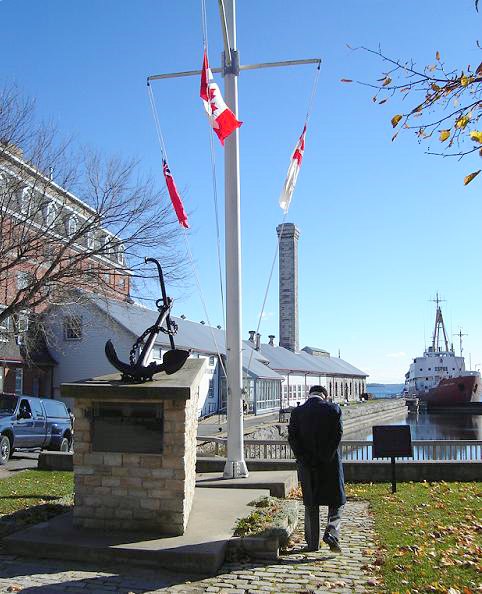
*Forced, I know. I’ll try to do better. My footnote game isn’t the best either. It’s the heat. Well known fact. Asides suffer in the summer. Researchers are on it.

The Goodbye May And Hello Temperatures Over 68F Edition Of The Beery News Notes

It’s always good to find a new extension to a hobby. I have kept a birding life list for decades but, you know, I’m am pretty lazy about adding to it in any organized way. Because you have to go out there and look. Out into the world. Into the woods and fields. Just look that that chaos! What a pain in the ass. So happy was I that I was advised by eldest to add the free Merlin app from Cornell University to my phone. Not only does it identify the birds you can hear around you but it records and archives the sounds with a handy graph that looks like a seismic chart. Did you know I had a Swainson’s Thrush in the tree by my house or Magnolia Warblers down the street? I didn’t. But now I do. All very exciting – especially as all that is required of me is to find a spot and stand still. The Kingbirds come to you. I can even doze off as the device gathers the data. Excellent. I bet it pairs well with the backyard and a beer.

Speaking of the high sciences, I always like to report on the Beeronomics Society news when I get an email update on their doings. Rather than the usual sort of beer experts, they are a group of global academics with (get this) credentials from peer reviewed institutions!  They don’t get together all that often but they have announced a meeting in Bordeaux, France tentatively set for June 24 to 27, 2026. Please support my funding drive to send me to that event – with, yes, a two week lead up climatization prep there ahead of time and, yes a two week cool down afterwards… also there. Ahhhh… Bordeaux. Their website may be tremendously out of date in terms of form and content, but their newsletter I got by email this week did mention a new book to find out there on your travels, The Brew Deal: How Beer Helped Battle the Great Depression by Jason Taylor of Cntreal Michgan University who discussed it on YouTube:

During the final stages of Prohibition, the US government allowed the consumption and sale of “non-intoxicating” beer, which was at or below 3.2% alcohol-by-weight. Beer’s return—permitted with an eye toward job creation during the Great Depression—was one of President Franklin D. Roosevelt’s earliest New Deal policies. In this book, economic historian Jason E. Taylor takes readers through the rapid resurgence of American breweries and shows how beer helped spark a sharp recovery in the spring of 1933.

And continuing with their sociological studies, Boak and Bailey wrote this week about finding themselves in a culture over twenty years behind in terms of the interior public smoking scene:

We’d assumed that smoking bans had come into place in most countries in the orbit of the EU, or that are tentatively working their way towards membership. In Serbia, though, it turns out that the smoking ban introduced in 2010 exempted bars, cafes and restaurants. Small establishments can choose to ban smoking if they want to. But based on our observations in the past week, very few opt for anything but ashtrays on every table… If you’re someone who spends a bit too much time hanging around outside taprooms and craft beer bars, puffing away in the cold and the drizzle, you might want to consider Belgrade for your next holiday.

I grew up with smoking in bars until my early 40s but have absolutely no interest in going back. Elsewhere, Katie has been in Spain and I am, you know, really frikkin’ jealous:

I love Spain. Every region is so different but so familiar, the same searing hot sun shining down in golden waves, touching everything with a little magic. I particularly love Spanish ham, and last night at a bar in a tiny alleyway I was served some of the most delicious acorn-fed lomo I’ve ever had in my life. Salty, melting, rich, served on paper.

Ahhh… Spain. Very very jealous. OK, back to the eggheads in lab coats, in this week’s “Hey That Sucks” news in the medical sciences, the New York Post has reported on a study published in “Environmental Science & Technology” found that 95% of 23 tested beers across the US contain cancer causing forever chemicals – and there are more in someplaces than others:

The study found a strong correlation between PFAS concentrations in municipal drinking water and levels in locally brewed beer — a phenomenon that has not previously been researched. While the study did not disclose specific beer brands, it identified that beers brewed near the Cape Fear River Basin in North Carolina exhibited the highest levels and most diverse mix of PFAS. Beers from St. Louis County, Missouri, also showed significant PFAS presence. The findings suggest that standard water filtration systems used in breweries may not effectively remove forever chemicals, highlighting the need for improved water treatment strategies at both brewing facilities and municipal treatment plants.

And it was the week for Stan’s monthly Hop Queries report and of note this time was the agri-science horticultural news of great crops from Australia and New Zealand. He also shared a secret about the frankly anti-terrioristic efforts behind one old pal of mine, Bell’s Two Hearted Ale:

…for Bell’s, the quality of the Centennial is quite important. But a few years ago, I learned that when you drink a Two Hearted you can’t say, “Yes, that’s Centennial from Crosby Hops.” Or from Segal Ranch, or CLS Farms. Or other farms that supply Centennial to Bell’s. The team at Creature Comforts Brewing in Georgia was excited in 2022 when they were brewing a collaboration beer with Bell’s, because that beer was to include “Centennial from Bell’s selected hops” along with five other varieties. Bell’s vice president in charge of operations John Mallett, since retired, explained what that means. After carefully selecting 500,000 pounds of Centennial each year from multiple farms, Bell’s creates a master blend that does not smell or taste of a single farm.

There. Now… let’s take a pause here so we don’t forget to consider the arts, too. And don’t forget that at the end of the month for now and forever, we have The Session. Phil Cook is hosting this week who explains the topic:

I’d like to take us out of the ‘real world’ for a moment to share the beers and pubs in art and fiction that have grabbed our attention, whether they were sublime, surprising, moving, amusing, somehow significant, or symbolic of something — or awkward and out of place, if you like. Gather your thoughts, or keep an eye out over the next few weeks, and let’s enjoy them together at the end of the month.

Fine. Art. Got it? Done with that? Now… back to the grim reality of today. Remember those tariffs? We’ve heard about their effect on aluminum cans and glass bottles, but Utah’s KUER radio reported on the effect of tariffs on brewers who rely on rare ingredients like Kiitos Brewing which relies on fonio*:

“It’s the most expensive grain we’ve ever purchased, because it is coming from West Africa,” Dasenbrock said. “They’ve already kind of signaled that the price that we had been quoted will not likely be the price when it arrives.” That price swing is because of the Trump administration’s tariffs. In April, the president slapped tariffs on about 90 countries. Since then, some products have been exempted while other tariffs have been postponed…  For Dasenbrock, the rapidly changing landscape makes it difficult to pinpoint what his expenses will be. “Day by day, it’s 10%, it’s 50%, it’s 1,000%. Oh, no, wait, just kidding, it’s 10%,” he said. “It’s virtually impossible to predict what your costs are going to be in an environment like that.”

Ahhh… Utah. [Nope. That just doesn’t work in the same way.] And where the tariffs aren’t hitting hard, breweries continue to close and, in Germany, brewers are even – sounds a bit exotic in these times – going on strike as Jessica Mason reports:

…the growing concern among beer fans is that, without resolution, beer production at Krombacher could also be cut during the summer months… Isabell Mura, deputy NRW regional chair of the NGG and managing director of the NGG South Westphalia explained that the strike falls just before the beer-hungry holidays of Ascension Day and Pentecost and warned that summer thirst could also suffer since reduced beer production would then also make barbecues and summer festivals drier.

And speaking of both the moo as well as the lah, Jeff wrote about how one economic development agency – a concept rife with chin rubbing questions – in his home state of Oregon helps and perhaps fails to help industries, like brewing, there:

It’s possible Travel Oregon is killing it with other industries; the state is also famous for its wine, coffee, cuisine, and agricultural and natural resource plenty, not to mention its non-industrial and amazing outdoor activities. Neff quoted folks who said it was great, and I have no reason to argue with them. In terms of making the case that Oregon is a unique and special place for beer in the US, with a deeper culture and history than you’ll find anywhere else, not so much. Travel Oregon’s brewery information is out of date and sparse, and the map is even more out of date and inaccurate. Those deficits are a big part of the reason I wanted to create Celebrate Oregon Beer. Since I was really the main critic, I just wanted to heavily caveat my comments to say they only applied to beer.

And David J himself has a new project on the go, the Desi Food Guide that builds upon his work to date inclusing hs book Desi Pubs and his newsletter Episodes of My Pub Life:

Although the question of where serves the best mixed grill is very important, explaining the reasons why desi pubs were set up in the face of racism, segregation and hostility seemed far more pressing. The book resonated with readers because it wasn’t a shallow interaction with desi culture but a deep dive into modern British-Asian history. Desi Food Guide will continue where the book left off and delve into the stories behind dishes made by those often overlooked or superficially covered by online influencers. I will use my many decades as a journalist to tell their stories and interview those who may be shy but have a special tale to tell. I will visit restaurants, cafes, food trucks and, of course, pubs to detail one dish a week that you have to experience.

That sounds very interesting. You can sign up here. Finally, Pellicle took us to Pigalle Beer Bar in Tokyo where the selection is the owners’ personal collection more than the result of curation. The work this week is provided care of author Reece Hugill, where he found an old friend on offer :

I, too, was a bit taken aback by this. Memories of warm bottles drunk in my youth, often a misguided Christmas present, are not positive. Forced-down, tepid pints in suburban chain pubs with dirty lines are even worse. It took me two visits to Pigalle before I overcame this, and plucked up the courage to join the locals in their favourite beverage… the Old Speckled Hen is their “toriaezu biru” which means that it’s the initial beer you order to start yourself off, without thinking, or looking at the menu, before diving into whatever you fancy next. Something to shrug off the world with. 

What a great idea. Baselining as opposed to mainlining. Well, that is it for now. A bit of a quiet week. The King visited. I didn’t drive to Ottawa to see him. Next time maybe. And until you and I meet again, please check out Boak and Bailey every Saturday (…as long as all their holiday fun doesn’t get in the way…) and Stan (….back again this  Monday and very nice of him to notice what I wrote). Then listen to a few of the now rarely refreshed Lew’s podcasts and get your emailed issue of Episodes of my Pub Life by David Jesudason on the (sometimes even but never) odd Fridays. And maybe The British Food History Podcast. Maybe? And Phil Mellows is at the BritishBeerBreaks. Once a month, Will Hawkes issues his London Beer City newsletter and do sign up for Katie’s wonderful newsletterThe Gulp, too.  Ben’s Beer and Badword is out there with the all the sweary Mary! And check out the Atlantic Canada Beer Blog‘s weekly roundup. There is new reading at The Glass which is going back to being a blog. Any more? We have Ontario’s own A Quick Beer featuring visits to places like… MichiganAll About Beer has given space to some trade possy podcasts and there’s also The Perfect Pour. Plus follow the venerable Full Pint podcast with an episode just last month!. And there’s the Craft Beer Channel on Youtube. Check out the archives of the Beer Ladies Podcast. That’s quite good but, hmm, they’ve also gone quiet this year. The rest of these are largely dead. And the long standing Beervana podcast …except they have now stood down.  As has We Are Beer People. The Share looked to be back with a revival but now its gone quiet. And the Boys Are From Märzen podcast appears suspended as does BeerEdge, too. VinePair packed in Taplines as well. All dead and gone.  There is more from the DaftAboutCraft podcast, too. Nope – that ended a year ago.   The Moon Under Water is gone – which is not surprising as the ask was $10 a month. Pete Brown’s one cost a fifth of that – but only had the one post. Such is life. Such is beer podcasting and newlettering!

*Fonio.