
And… Finally… Here’s “The Baseball Is Back!!” Edition Of Your Beery News Notes

I mean, let’s face it. The Winter Olympics are all well and good. And the World Cup will fill that gap in June, sure. But… baseball. Baseball: the sport that demands the best in athletes and then asks them to sit around for half the game. When they aren’t standing around in the field. It’s great, isn’t it!  Though, we should also take this moment to remember one of the great Olympic moments from, what, sixteen years ago now when Canada’s gold medal winners took the opportunity to turn the hockey rink into a tavern. And on that topic, here’s a Winter Olympics fact I hadn’t heard before and one that isn’t apparently winning any medals:

The only beer available for purchase at the 2026 Olympic Games is Corona Extra, a Mexican pale lager. This is due to the Olympics only allowing one company to sell its products at the Games, and this time it was Corona who was able to secure a deal. It’s a controversy that may hit closer to home for a lot of Olympic spectators, more so than a few foul-mouthed curlers ever could. It’s fair to say that Corona may not be the most popular beer for fans in Europe, as a photo of a Czech hockey fan went viral last week for his disappointed look while holding his Corona beer.

What a great choice. For the five athletes at the games representing Mexico, I suppose. What else is going on? Plenty to read out there on the chop-shop job coming for BrewDog but The Guardian had a good angle on the pending effect on those who each gave a bit when a lot was needed (or at least wanted with little or now strings attached) early on:
BrewDog’s army of “punk” shareholders have voiced anger and frustration after the Scottish brewer confirmed plans for a possible sale that could render their investments worthless. So-called “equity punks” who spoke to the Guardian or posted on BrewDog’s shareholder forum expressed disappointment and accused the company, which has traded on its upstart ethos, of treatment “bordering on contempt”. One said the plan showed that the small investors, who helped to kickstart BrewDog’s growth after it was founded in 2007, meant nothing to the company.

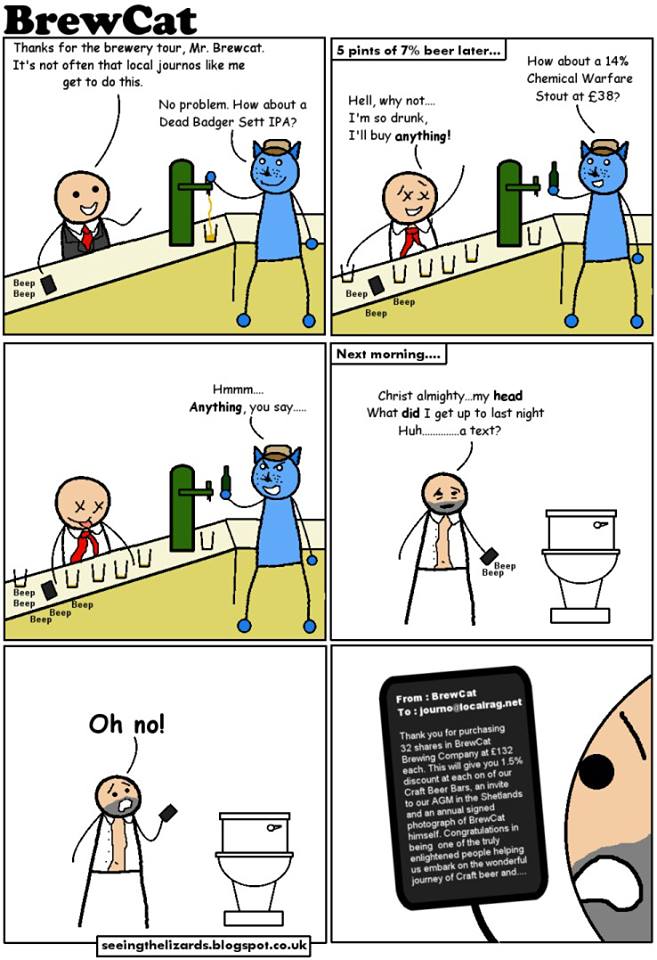
While the effect on individual EP investors can be quite significant, I mention this mainly as a pretext for posting that 2013 parody up there of the plan from one M. Lawrence at Seeing the Lizards.  Speaking of just saying no, The New York Times has run a four-part series by Pete Wells on getting your consumption back to a healthier level and finished off with a back at life with alcohol as well as a look forward:

Sometimes it seemed to me that I had a richer, more rewarding relationship with alcohol than I did with all but a handful of humans. It was an inexhaustible field of study, an incandescent companion during great meals, a reliable consolation on dull ones. And it brought me close to my real friends, at least some of them, some of the time. Over time, though, the rewards had become more equivocal and harder to justify. It wasn’t just the weight I gained, a predictable result of having a cocktail each night followed by about three glasses of wine or beer. They were, by this point, undeniable signs that my liver was overworked. I slept badly with all that alcohol in my system, too, and it got worse as time went on. …

You may be happy to know that he still enjoys his martinis – even if there are fewer of them: “…feeling the hair on the back of my neck stand up as the first sip takes hold, I feel like I’ve been reunited with an old friend…” Another old friend, Liam, reached back just a few decades for his post on the earlier trendy years for NA beer in Ireland, Smithwick’s Alcohol Free Bitter:

The launch was accompanied by newspaper competitions plus promotions, and a strange and repeated focus on how the beer, at 0.5% abv, contained less alcohol than orange juice! Reviews of the product at the time varied a little but it seems to have been generally well received for what it was, with reviewers commenting on how it (ironically) ‘packed a real bite and had good flavour’ and how they could drink it in a pub all night,  although it was also said to be ‘quite gassy and sweet.’ Others said it was ‘pretty good. Smells right and tastes of hops. Quite rich and smooth to drink.’

AKA gak. More positively, Matty C shared his thoughts on some upsides he’s seen in the brewing trade so far in 2026:

A couple of years ago, conversations in beer often centred around the idea that there’s “light at the end of the tunnel”. In reality, I don’t think that chance of daylight is coming anytime soon. Instead, we’ve got to admire the glimmers that are somehow managing to shine through the cracks in the walls around us when we can. Good beer is still being made, and good pubs are still open to sell it in – I’ve seen the proof! 

One of his examples was the tenacity of Jaipur: “… beer, packed with flavour and served at a high strength – seemingly the antithesis of what you would expect to succeed….” Which reminded me of how, in response to recent racist comment from an English oligarch, in The Times Sathnam Sanghera wrote about one of the foundations of the Britain of today:

…the fact that it ran the biggest empire in human history explains lots about Britain beyond its multiculturalism. It explains the popularity of curry. A significant amount of the mahogany furniture, ivory and jewels in our stately homes and royal palaces. Our propensity to travel. A certain amount of our wealth. Our political posturing on the international scene. Our national drink in the form of tea, and our national tipples in the form of pale ale, rum and the gin and tonic. The fact that we don’t feel the need to learn foreign languages because we encouraged/forced large parts of the world to take up English.

Empire of booze! Which, in turn, reminds me of Manitoba’s fabulous Premier Wab Kinew and his cheery fight for my right to Crown Royal after a bit of internal trade tension with Ontario’s Uncle Doug:

Cheers to you Doug Ford for keeping Crown Royal on LCBO shelves . Thanks for doing the right thing. Just like Canadian whiskey, good results take a little bit of time. This is a good day for folks in Gimli, Manitoba and a good day for people in Ontario too. Standing up for workers together is always a big win for Team Canada.

PWK won a lot of support with this bit of good humoured social media savvy. Crown Royal also got about 5,783 times the value of yet another newsletter by email telling breweries about the importance of storytelling.

Note #1: a desperate plea for beer based salad dressings.
Note #2: pairing beer and cussing.
Note #3: democracy in inaction?

Speaking of newsletters by email about storytelling, Will Hawkes was back at the end of last week with his February edition of London Beer City in which he considered the concept of the Irish Pub as illustrated by one new spot, Moylett’s in Clapton:

…I’m confused. What’s Irish about it? According to a report in Broadsheet, the focus is on what owner Moylett calls “the holy trinity of food, music and socialising” – a worthy list, no doubt, although it does seem to be leaving out something quite important (Guinness is £5.50 a pint, btw). As a term, “Irish Pub” is surprisingly hard to define, and particularly in London (and other British cities, arguably, but we’ll put them to one side for now). In much of the rest of the world – indeed, even in London, particularly its once O’Neills-heavy suburbs – the Irish pub is a 1990s phenomenon: flat-packed dark wood decor, pints of Guinness and food options that are often only very vaguely Irish (satay sticks, curry, chicken wings of varying heat levels; Spice Bags are less common, although you can get them at Moylett’s). But Irish pubs in London are, historically at least, quite different, and much less easy to pin down. 

Similarly but further afield, ATJ shared his thoughts on Cologne/Köln, the river there and its crossers:

…leaving Hauptbahnhof I crossed the Rhine, slow-moving, the colour of mud, upon which an elongated, snub-nosed barge was slowly making its way downstream. I stopped and took a photo, a snapshot of slothfulness perhaps and continued along the historic Hohenzollern Bridge. It was crammed with people through which bicycles and the occasional skateboarder cleaved their way, imperious and ‘get out of my way’ seemingly stamped on their features. Some people, were in groups whose colours defined their tribal affiliations — red and white for FC Köln, black and white for Eintracht Frankfurt. Sporting rivals presumably…

And here’s a new insult for craft beer.  If Jeff’s exhaustive listicle is correct, IPA is what it is all about and what it says is “meh, new money..“:

When it comes to beer, the etiquette guru revealed that “new money” consumers “don’t touch the more traditional ales or stouts – it’s all about IPAs that set you back at least £5 a pint. Anything involving the word ‘traditional’ simply doesn’t feature in your vocabulary. “If it doesn’t sound trendy, artisanal, limited-edition, or come with a deliberately obscure name, you simply aren’t interested.”

I actually find it really funny that anyone thinks anything related to beer is about new or old money… other than owning the brewery that great-grandpa built I suppose.  Almost as good as if grandpa owned a country… which is a seque to the next tale of skulduggery – perhaps – in China’s Jilin province:

The marketing materials identify the beer as produced by Rason Ryongson General Processing Factory in the Rason Special Economic Zone, located near North Korea’s borders with China and Russia. …[T]he Chinese distributor is Yanbian Xinyuequan Trading Co., Ltd. The company is based in Yanbian Korean Autonomous Prefecture in Jilin Province, a key gateway for cross-border trade with North Korea. Additional social media posts show boxes bearing the Pado label being unloaded from trucks and delivered to local restaurants in Jilin Province, indicating the beer has entered local distribution channels “…[N]ame changes are largely driven by export considerations, particularly to reduce the risk of sanctions-related flagging when the product circulates in Chinese wholesale or grey market channels…”

Mmmm… grey market North Korean Pado beer…  Quite the opposite in every way are Boak and Bailey who asked about what a drinker wants from a pub’s internet presence.

… we want to know what beer the pub is serving today, right now. Working that out can be surprisingly tricky. Again, Instagram or Facebook can help, but it’s often more reliable to snoop on Untappd and see what’s been logged in the past 24 hours. Pub websites are rarely of any use for this at all, presumably because updating a website feels like a big job, and a job for the Big Computer at that, so it just doesn’t happen.

Great comments followed… but I wonder if the easier solution is a camera aimed at the chalk board at the bar which is already updated daily… all sorta a la last week‘s remote pub experience story. It worked for the Cambridge coffee pot cam. The best way to get a job done is to find a way to make it a not-a-job job.

Finally, the Pellicle feature this week is accompanied by many photos with many many strings of bunting. It’s a story about Steam Machine Brewing of  County Durham – but without saying the word it’s really all about the bunting. Not including reflections in the windows (which would be unethical, of course) I counted thirty-six strings of bunting. That’s a significant contribution.

That’s it! That is all for now. But we are one step closer to spring. Pre-season Grapefruit League baseball on the TV time. Huh. Zah. Until next week, please check out Boak and Bailey who are posting every Saturday and adding to their fabulously entertaining footnotes week after week at Patreon. And look out for more of Stan’s new “One Link, One Paragraph” format. Then hunt out something in someone’s archives! Leave oblique comments on someone’s post from 2009!! Listen to a few of Lew’s podcasts and get your emailed issue of Episodes of my Pub Life by David Jesudason on certain Fridays. And Phil Mellows is at the BritishBeerBreaks. Once a month, as noted, Will Hawkes issues his London Beer City newsletter and do sign up for Katie’s wonderful self-governing totes autonomous website featuring The Gulp, too.  Ben’s Beer and Badword seems to be on pause since November but there is reading at The Glass which is going back to being a blog. Any more? We have Ontario’s own A Quick Beer and All About Beer is still offering a range of podcasts – and there’s also Mike Seay’s The Perfect Pour. Plus follow the venerable Full Pint podcast! And there’s the Craft Beer Channel on Youtube. Check out the archives of the Beer Ladies Podcast.
Your Sunny Yet Still Cold But Not Standoffish Beery News Notes For Early February

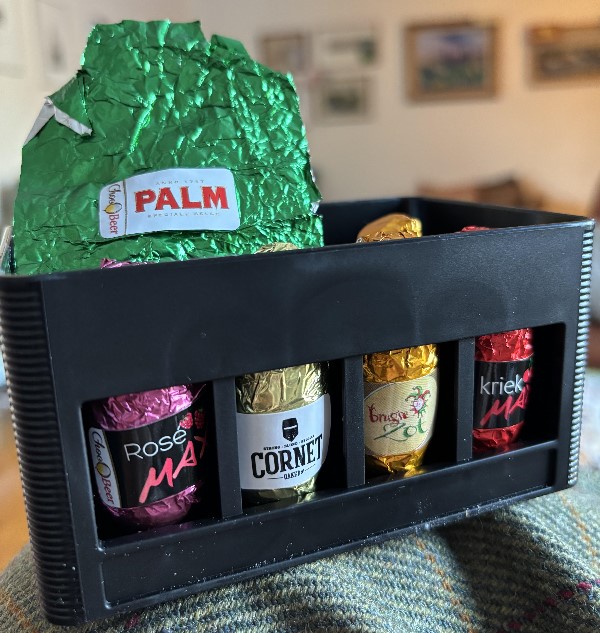
February flies by. That’s just the way it is. Good time to take stock. Good time to eat the little chocolates filled with beer brought by a visitor from Belgium. Early review: the “…chocolate is dry and dark so a lack of sweetness in the kriek left it a bit stark but the Palm was that bit richer.” Not sure I am chowing down on these outside of a winter like this but all quite a bit better than expected. Paid endorsements welcome. Winter was also on the mind and under the feet of Jordan as he wrote about the weather at the end of last month or perhaps just his efforts to get about in it:

Monday, Jan 26th: The deep freeze is well and truly upon us, and looking at the forecast for the next couple of weeks, it looks like we’re in four-layer territory. If your primary mode of transport and exercise is walking, then -25 with the wind chill does you no favours. Besides, the sidewalks are not shovelled in any meaningful way. Dry and cold is a great combination to ensure you’re reminded of the various injuries you’ve had over the years. Sometimes I get the unprompted sense memory of an ankle ligament rolling.

Also looking at the world as it exists below the knee, Stan shared some research he has done on the word Hopfenstopfen and its relation to a certain pair of boots:

The shoes were worn by a worker processing hops. When a bag was filled, a worked would jump into it, stomping down the hops to make sure the bag was full. When I dug this out, I wondered if these could have been called Hopfenstopgen boots. That’s because in Hop Queries Vol. 4, No. 6, I wrote about dry hopping in Germany in the 19th century. That was called Hopfenstopfen, which can be translated at hop plug. Simon Moosleitner, a subscriber in Germany, suggested there is more to think about…

I won’t spoil the fun but speaking of getting the boot in, late last week in VinePair, Dave Infante wrote about the effect of the homicidal ICE intrusion into Minneapolis on the beer trade in the city including this from Drew Hurst of Bauhaus Brew Labs:

You can see it in the firm’s sales figures. Taproom sales are down 40 percent compared to January 2025. “It’s a wildly unsustainable thing,” says Hurst. “None of us signed up to have to live through a federal occupation and figure out how to run a business at the same time.” Not that it was easy before the onslaught: Bauhaus wrapped this month last year down around 30 percent from January 2024. Craft brewers have been struggling to find their way for years in the face of shifting demand, new competition, and rising costs. In Minneapolis and Saint Paul, they’re doing all that with the MAGA jackboot on their necks.

At first I thought it was an odd angle but then realized it illustrates the principle that beer prefers peace as well as how quickly that peace can be lost. Dave also shared in his email updates that he was told to “stick to beer” and that some paying subscribers to his newsletter Fingers canceled their subscriptions. Perhaps if those folk didn’t “stick to” amateur neo-fascism it might be better. Funny how the “stay in your lane” crowd don’t show up for this sort of politicization within the pub:

A beer tap labelled “Rachel Thieves” has appeared on the bar of a Hertfordshire pub protesting Chancellor of the Exchequer Rachel Reeves introducing crippling tax hikes. Anyone ordering the beer will receive only water. The Green Dragon in Flaunden, which is run by publican Chris Ghazarian, has added the spoof cask ale pump badge as a protest – telling customers that pints of this particular beer are “very bitter” and cost more than anything else on the bar and anyone ordering it will receive only water. Speaking to the British national press, Ghazarian said: “They find it hilarious. I obviously don’t make them pay for it.” 

On the other side of the planet, a very difference approach has been taken in Australia:

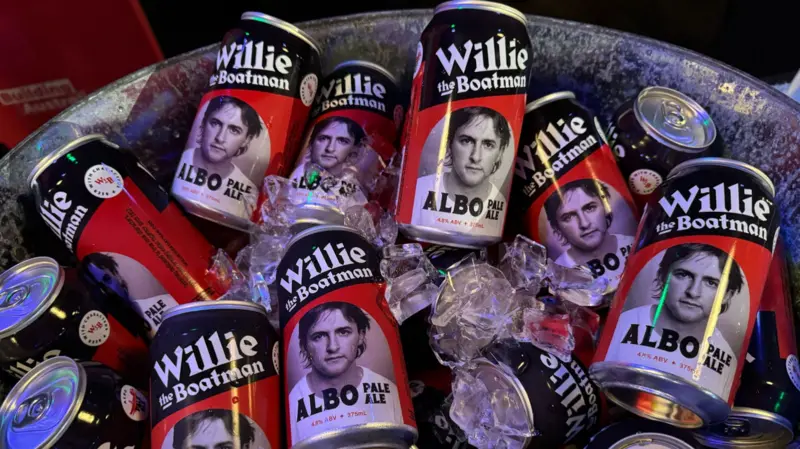
The Albanese government is seeking to put a hold on increases to the beer excise for the first time in 40 years. The Customs Tariff Amendment (Draught Beer) Bill 2025 seeks to pause the indexation of customs duty rates for draught beer for two years from August 1, 2025. Currently, the beer excise is indexed twice yearly to stay in line with the consumer price index, with Australian beer, wine, and spirit importers and producers saddled with some of the highest rates in the world…  Addressing the House of Representatives, Anthony Albanese said he was “proud” to introduce the Bill, “one of the most popular commitments that we took to the election”.

Boak and Bailey also wrote about another sort of pressure to conform but the context was less confrontational – just writing about their thoughts on a craft brewery:

Maybe that post was a bit too snarky, with hindsight, but it certainly didn’t warrant trolling impersonation accounts on Twitter, general abuse that last for months, or a stalking campaign. That was, as you might imagine, quite traumatising, and probably did make us nervous about being critical of breweries in the supposedly cuddly craft brewing sector. It didn’t stop us, but it had a ‘chilling effect’ on how freely and frequently we felt able to express ourselves. It’s easy to say “Don’t mince your words” but minced words are less likely to lead to sleepless nights. We can totally see why some people might decide it’s not worth the trouble, and certainly wouldn’t judge them.

On reflection, I have probably benefitted from folk starting with the assumption that I am a bit of an arsehole. I lose my sleep over other things.

Note #1: Take a news event and ram it like a square peg in a round hole.
Note #2: Martin at another fabulous pub, this time inordinately bright.

Ron TV continues to impress. This week he’s been presenting an extended interview with Mitch Steele and, like the comment maker Oscar, I am drawn to the brief introductory electro-thrash almost as much as the subjects of these interviews. Part 1 of the interview is over thirty-seven minutes long with Part 2 clocking in at thirty-three. Set aside an hour or so of your time. More if, like me, you keep replaying the first six seconds and that mesmerizing theme music over and over and over.  Good multi-media breakout for Ron – even if it likely doesn’t pay the bills. One a similar note, Ray of B+B on the prospects of a career in writing:

This is excellent. Depressing, but excellent. My response has been to give up, basically, and accept that writing is a thing I do on the side, while something else pays the bills. I also like that thing, so it’s fine, but I get sad thinking what I could have achieved if writing was my full-time job.

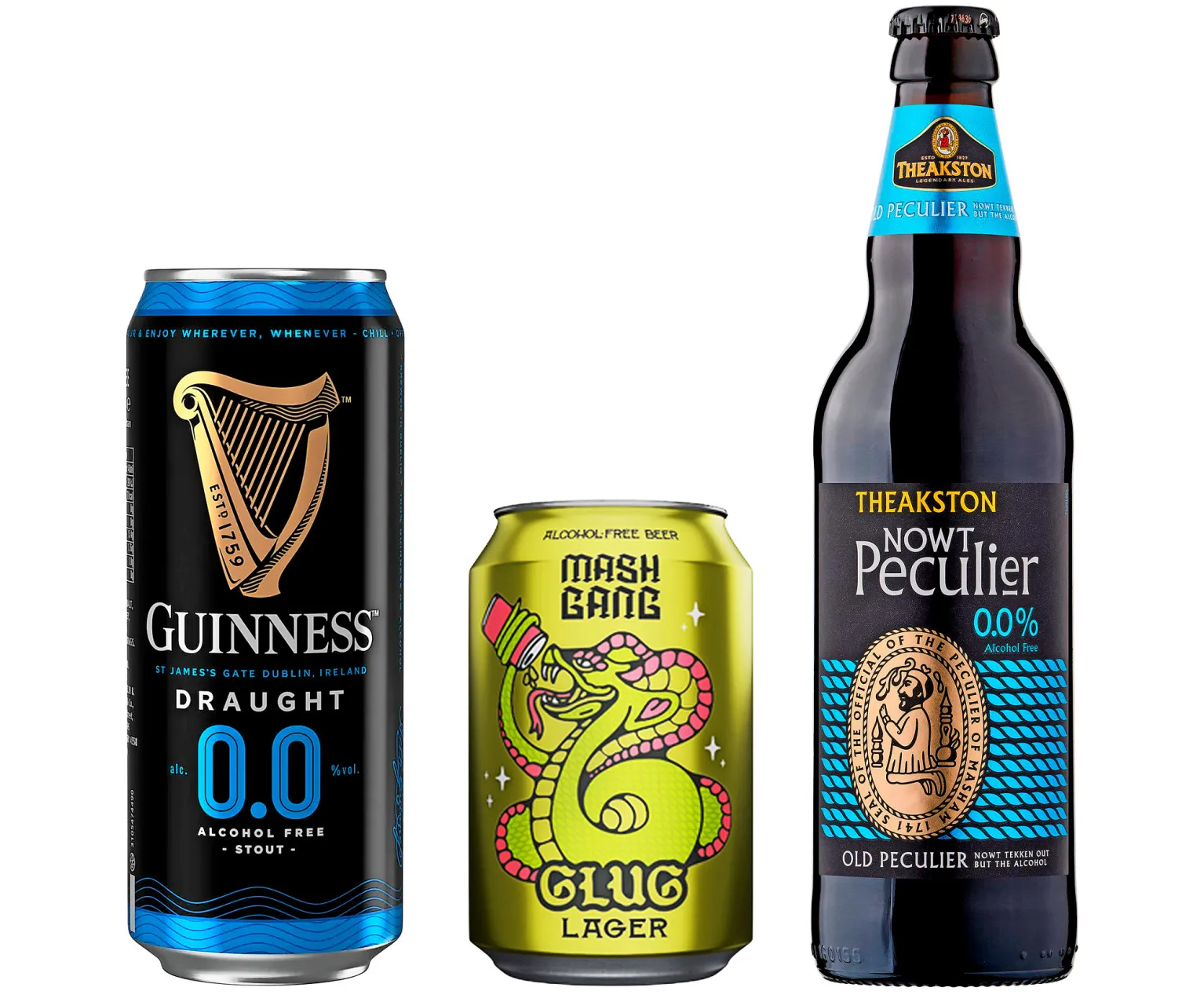
Perhaps also on the theme of less is more, Guinness 0 also continues to impress me and Pete‘s brief review does not surprise:

There are many great 0.5 per cent stouts from small indie brewers, but Guinness 0.0, which took years to develop, is indistinguishable from the real thing.

I noticed one thing when writing this. It is branded as “Guinness 0” in Canada but “Guinness 0.0” in the UK. Why? Is it a different formulation here and there? Whatever it is, I am finally seeing a point to NA beers. But things will be going in a slightly different direction in UK neighbourhood if one permit applicant has their way:

The shop also sought an amendment to the condition currently imposed on the licence… to “No super-strength beer, lagers or ciders of 6.5% ABV (alcohol by volume) or above shall be sold at the premises with the exception of Dragon Stout and Guinness Export beers.” The applicant’s agent, Frank Fender, told Bedford Borough Council’s licensing sub-committee (Thursday, January 29), that these “super strength” beers are not usually the “street drinkers’ choice of drink”. “They are they are widely consumed by members of the Afro-Caribbean community, and obviously this shop wants to be inclusive,” he said. This claim was backed up by Chris Hawks, the council’s licensing compliance and enforcement officer. He said: “What Frank says about Dragon Stout and Guinness Export is spot on.

For years, the word authentic was bounced around in the face of glitter and haze. That plan in Bedford sounds like authenticity to me. Similarly perhaps, crossing the Atlantic, Matty C has written some notes on the US beer scene for the supplier Get ‘Er Brewed‘s webpage and found something of a revivial going on:

Nostalgia is one play many breweries seem to be using. During my time in both Portland and in Colorado, (the latter of which I visit regularly to see family,) I noticed that many drinkers seem to be choosing the classics made by more established breweries. Allagash White, the Belgian style witbier from the brewery of the same name wasn’t just on tap everywhere in Portland, but it felt like everyone was drinking it too. The beer carries the kind of hushed reverence that money can’t buy, and demonstrated to me why establishing a core beer as part of your brewery’s identity is essential for longevity.

This is quite a reversal as, you will recall, in 2019 flagships were considered a dead concept: the “concept of a flagship in almost all ways maps to an earlier and obsolete way of thinking.” Futurisms rarely stand up to audit but it’s good to know, in an era too concerned with branding and other misinformations, that identity in the form of what is in the glass has made a come back. One never knows what is really going on otherwise. As with the news about the bills left unpaid and the suppliers left in the lurch by Rogue, James Beeson in The Grocer shared that the level of insolvency at failed Keystone Brewing had hit almost £15 million. Heavens! Remember when we all spoke of community?

Sticking with things in the USA, the feature in Pellicle is a portrait of Eckhart Beer Co. in NYC by Ariana DiValentino with its focus on central Euro lagers and foods that share the same theme:

The menu focuses primarily on Central European dishes that match the beers’ origins. There is a brat plate, and spaetzle gratin, and kartoffelpuffer (German-style potato pancakes), which you can order fried in oil or beef tallow. But there’s also a falafel dog, an Italian cold cuts sandwich, and a Moroccan-spiced ratatouille with vegan lemon yogurt. The variety of cultural influences feels very reflective of the brewery’s New York City context. “I wanted to offer food that supports the beer. It didn’t have to be Central European per se, but that felt like a natural foundation,”

Sounds like a great place for all. Not so in Japan where one establishment has embraced ageism:

The concept of age restrictions and minimum requirements is commonplace around the world. But have you ever heard of an establishment imposing a maximum age limit? Now, a Tokyo chain pub has set a ban on older customers – in order to try to maintain the raucous, fun atmosphere for which it is known. Tori Yaro Dogenzaka is an izakaya (an affordable Japanese pub) situated in Japan’s capital city. This year, the establishment propped up a sign outside the entrance, informing customers of the new rules. The sign said: ‘Entrance limited to customers between the ages of 29 and 39. This is an izakaya for younger generations. Pub for under 40s only.’

I wasn’t wanting to go there anyway. Screw them. That’s it. As as I sulk in a mode Japonais, please check out Boak and Bailey who continue to post every Saturday. adding to their fabulously entertaining footnotes week after week at Patreon. And look out for more of Stan’s new “One Link, One Paragraph” format. Then hunt out something in someone’s archives! Leave oblique comments on someone’s post from 2009!! Listen to a few of Lew’s podcasts and get your emailed issue of Episodes of my Pub Life by David Jesudason on certain Fridays. And Phil Mellows is at the BritishBeerBreaks. Once a month, as noted, Will Hawkes issues his London Beer City newsletter and do sign up for Katie’s wonderful self-governing totes autonomous website featuring The Gulp, too.  Ben’s Beer and Badword seems to be on pause since November but there is reading at The Glass which is going back to being a blog. Any more? We have Ontario’s own A Quick Beer and All About Beer is still offering a range of podcasts – and there’s also Mike Seay’s The Perfect Pour. Plus follow the venerable Full Pint podcast! And there’s the Craft Beer Channel on Youtube. Check out the archives of the Beer Ladies Podcast.

Your Happy Merry And Even Supportive Beery News Notes For The Week Of Blue Monday

How does it feel? That’s what Blue Monday asks of you. Katie was particularly aggrieved as last Monday was her birthday. So first of all –  happy birthday! Apparently, Blue Monday is perhaps a floater with not 100% agreement on which date it is.* Like Easter but without the medieval calculation to give some assurance as with the death date of Jesus. So you have options and need advice. Fortunately I am full of good advice on this topic. Me, I prefer to celebrate what I call “Bleu Monday” on which I eat a lot of cheese. Also, it seems to also have been originally a term that in Germany was “der blaue Montag.” and then United States when workers told the boss to shove it, as we read in 1838:

Drink till all is blue. Cracking bottles till all is blue.

Blue meant the haze apparently. Or perhaps the slightly wicked as in “blue laws.” I dunno. But I like that it also has it’s own anthem, even if it’s a wee bit Dieter Sprockets.

Beer Marketers’ Insights have a note about a little blip that could be the beginning of a bit of a bump for beer:

Pretty much everything was comin’ up roses in beer and beyond for the first week of the new year in Circana multi-outlet + convenience channels. Beer, wine and spirits all grew for latest week thru Jan 4, 2026 (including Dec 29-31). Can’t glean much from just one week, but interestingly, craft beer’s 4.4% $$ gain outpaced total beer (+2.9%) for period. Multiple top craft fams saw sales pop for the week including New Belgium, Sierra Nevada and Elysian each up low double-digits by $$, Lagunitas up 8.5% and Bell’s (+5%), Shiner (+4%) and Blue Moon (+3%) up low-to-mid singles.

And these US market numbers exclude non-alcoholic beers so it’s more beery than we often seen in the booster stats announcements. But they could also indicate that fine spirit of “fuck it!” that one finds in a time of crisis. Speaking of which, can you write about the crisis in US hard liquor sales without mentioning the tariffs that have effectively cut out a massive share of your customer bases? VinePair seems to think so:

And though distilleries share similarities with other business closures — from layoffs to managing creditors — there’s uniquely challenging inventory to deal with: barrels of aging whiskey. “They’re a little bit of a problematic asset because they can only be sold to someone who has the license to hold them,” says Will Schragis, managing partner at WellSpun Consulting. “Barrels are in-bond, so they’re non-tax paid. There are only certain licensees and other companies that can acquire them.”

No mention of, you know, lobbying for free trade as a recourse makes me wonder if there is a ex-nay on the t-word going on, lest one draw wrathful attention away from Greenland. H/T to Jeff. It’s all about getting the spend in country it seems and Americans are doing their part:

Surveys have shown that consumers feel pessimistic about the economy as they worry about tariffs and the jobs market. More than half of voters believe President Trump is “losing the battle against inflation”, according to a Harvard Caps/Harris poll of 2,204 registered voters released last month. Yet despite the economic gloom, data suggests that spending has risen across all income groups.

Mikey Seay shared a few thoughts that are not unrelated to this moment:

It’s the price. I struggle with the price of NA and low ABV beers. This is my Dry January issue. I can get behind drying out for a month. Or (what I am trying) focusing on drinking lower ABV beers. But there is a hidden suck. Low alcohol/no alcs are priced the same as regular beers, sometimes even double. It’s hard for me to get over that. It’s like, I am getting ripped off, and I have a hard time shaking that. But I must. I know it costs a brewery close to the same to make a NA or low beer, so they gotta charge the same. And that cost trickles down to the stores and bars. So I gotta get over myself there..  Enjoy my low ABV beer, and don’t be a baby about what I am paying for it. I must do this for myself and the business of beer.

One must spend. Do one’s part. Think of England and all that. One of things I appreciate locally is that Guinness 0 is $11.95 at the LCBO and the regular draught is $13.50. Trouble is… no Guinness 0 to be found in the province these days. Guinness is experiencing a height of fame and fortune – and there are good reasons for that, according to Jeff:

The world is unstable, especially for young drinkers who spend half their paychecks on small apartments. Young people are threatened by more dangers than any generation in decades: huge college debt, a machine-learning era that may eliminate entire sectors of jobs, climate change, political instability, the corruption of media and the vitriol that marks society. This is not a time for risk-taking. It’s a moment when people are taking refuge in safe ports and reliable brands. Guinness isn’t alone in this appeal—the popularity of old Mexican brands follows the same script—but it has the advantage of being a 4.2% black ale that comes with a helping of theatricality and a creamy head. It is both safe and also different from other global brands.

I think some of this turns on that 4.2%. And low calories. Theme shift. Did you know you can watch RonTV?  He’s got a YouTube channel going:

You might have noticed that I’ve posted a few videos on YouTube over the last couple of days. There will be more to follow. It’s part of my drive to document and preserve. Initially, it’s mostly material that I acquired for my book on the 1970s, “Keg!”. I conducted several Zoom interviews Which I think are worth making public. Especially as the interviewees are all past retirement age. And won’t be around forever. I’m particularly keen on recording Derek Prentice’s recollections of more than half a century in brewing. Despite my urging, Derek shows no interest in writing his memoirs. But he’s happy to be interviewed and share his memories. I already have around two hours of video. And plan to record several more. Covering his time at Youngs and Fullers.

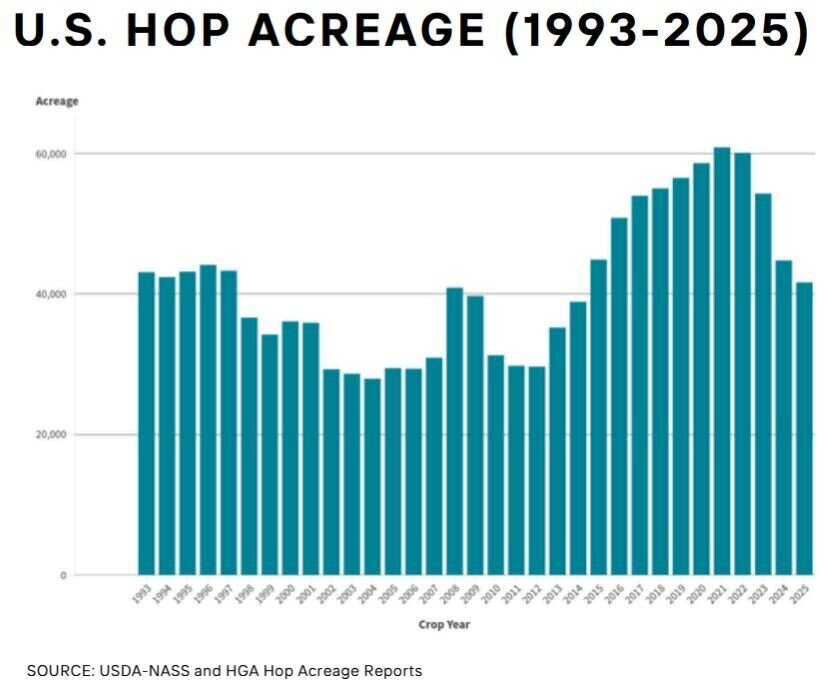
Next, Stan has published his newest edition of his monthly Hop Queries newsletter and there is much to consider. For one thing, he shared that chart of total US hop acreage which indicates the plantings of 2025 roughly match those of both 1997 and 2008, both years before further drastic drops. He also explained what BLP flash frozen hops are:

The idea began with hop farmer Jim Schlichting, who upon retiring bought 40 acres of land next to his home and began growing hops… Basically, he freezes the hops fresh off the bines and ships them in vacuum sealed packages along with reusable ice packs. The cones should remain frozen until brew day. After thawing them, brewers may use them as they would unkilned hops, replacing each pound of pellets in a recipe with four pounds of cones. Blue Lake markets the hops to both homebrewers and commercial breweries.

Whenever I read that some blog or newsletter on beer won some award or another I always think to myself “looks like Stan didn’t apply again this year.

Note #1: to bar or to not bar ICE.
Note #2: medical thoughts from amateurs.
Note #3: the Magnus Lounge on the ferry to Orkney.
Note #4: are people outside of the beer echo chamber aware that many many others have quite happily active social lives… without beer?**

And Jordan continues to diarize*** his weeks in detail, appointments in pub and breweries plus the scribbling for magazines and books along with the totalling up of spreadsheets. He’s found that the current bottom line in Ontario is not good news:

Among the various hats I wear, I’m historian for the Ontario Craft Brewers and I get to update their timeline on a yearly basis. Since I’m updating the spreadsheet with news throughout the year, this gives me the opportunity to get paid something for the information I’m collating. …the end of the year has been brutal on breweries. Both Goose Island and Blue Moon have decided Toronto has beaten them. If the corporate guys are out, you know things are bad. It looks like 30 physical breweries closed in Ontario in 2025 and something like four contract breweries, but who cares? Some physical breweries switched to contract status and some ownership structures are more or less impossible to parse. Can you really say Indie isn’t a contract brand because of Birroteca at Eataly? 

Can you really? Shifting from the crunch of numbers to the stream of consciousness, it’s a good thing ATJ prepared us with the subtitle of his piece this week – “an amiable ramble” – as this letter of love to beer culture touches on every corner of the pub and glass experience other than the variations on paper towel dispensers one might encounter, such as:

It is about the rattling bus snaking through the countryside with a pub at the end of the journey, the train skirting the wave battered coast with a pub at the next station, or maybe two or three, the walk through the rain, the nature of the game; under the hill all of us go at the final stage of our life but beer can be used to celebrate that passing, reconnect your memory with a swig and another swig, raise a full glass to the memory of dear old matey they all chorused, may he be never forgotten, but as soon as the rain stopped they walked out of the pub never to think of their dead friend ever again, for they were alive and he wasn’t.

Poor old matey! Gone and soon forgotten. Interesting legal news if you are into doing your own thing, a category of which I appreciate many of you fall into according to your own tumble of choice. The news is that the US District Court in Northern Texas assessed submissions in a case and last Saturday (odd date for a ruling to be issued) held:

…these documents reflect a shared First Amendment vision: Free Speech, Press, Petition, and Assembly rights combine to protect and elevate the public discourse necessary to self-government—not self-expression in all forms, and certainly not the libertine “expressive conduct” absolutism envisioned by
Plaintiff Spectrum WT… Spectrum failed to enforce its intended “PG-13” format during a drag show held off campus, as professional and student performers tasked with “breaking” and “destabilizing” sexual norms engaged in sexualized conduct more akin to a striptease…

Libertines! Libertines at a university?!? Now, keep in mind what “WT stands for: West Texas A&M University. The students of which the court determined included minors. Perhaps in Amarillo the age of majority is 35. Who knows. But it did remind me of the 2003 ruling of the Supreme Court of Canada in in the case R. v. Clay:

…the liberty right within s. 7 is thought to touch the core of what it means to be an autonomous human being blessed with dignity and independence in “matters that can properly be characterized as fundamentally or inherently personal”. With respect, there is nothing “inherently personal” or “inherently private” about smoking marihuana for recreation. The appellant says that users almost always smoke in the privacy of their homes, but that is a function of lifestyle preference and is not “inherent” in the activity of smoking itself. 

Lifestyle! Thankfully, the old wack-tabac is now legal in these parts. But these matters, in case you ever wondered, one has to be on top of one’s right to have fun as one wishes. The law of the libertines’ lifestyles may need more research.

Finally, Pellicle has a short survey out about their next steps:

It’s one thing to run a magazine based on the things we like most, but to grow and bloom into something bigger, we need our readers’ insights and support. That’s why we’ve created this survey: We want to hear what you want from Pellicle in 2026, and use your input to plan our next moves. For the next two weeks, we’re opening up the floor to learn what Pellicle means to you, and where you’d like to see it go next. The 2026 Pellicle Reader Survey is just a seven-to-10-minute task, and you can easily complete it on your phone. Plus, you can opt in to win one of three prizes…

As you know, I would pay to take a survey so the whole idea of prizes is just insane!  While you are busy with that, please check out Boak and Bailey who are posting every Saturday and adding to their fabulously entertaining footnotes week after week at Patreon. And look out for more of Stan’s new “One Link, One Paragraph” format. Then hunt out something in someone’s archives! Leave oblique comments on someone’s post from 2009!! Listen to a few of Lew’s podcasts and get your emailed issue of Episodes of my Pub Life by David Jesudason on certain Fridays. And Phil Mellows is at the BritishBeerBreaks. Once a month, as noted, Will Hawkes issues his London Beer City newsletter and do sign up for Katie’s wonderful self-governing totes autonomous website featuring The Gulp, too.  Ben’s Beer and Badword seems to be on pause since November but there is reading at The Glass which is going back to being a blog. Any more? We have Ontario’s own A Quick Beer and All About Beer is still offering a range of podcasts – and there’s also Mike Seay’s The Perfect Pour. Plus follow the venerable Full Pint podcast! And there’s the Craft Beer Channel on Youtube. Check out the archives of the Beer Ladies Podcast.
*It is, however, reliably closer to the start of 2027 than the end of 2025.
**I find this eager rush to shimmy right up next to the nutster RFK Jr somewhere between bizarre and disgusting: “…In explaining that approach, officials pointed to the social context in which alcohol is often consumed – its role in bringing people together to bond and socialize, while creating shared experiences – summed up by the idea that ‘there’s probably nothing healthier than having a good time with friends in a safe way.’ ” That’s two possible bits of bootlickery this week. A better take on the moment.
***Boak and Bailey do something along a similar line with their regular beers of the week posts on Patreon: “Running with Spectres was also on excellent form, much to Jess’s regret the following day.

Your Thrilling Thursday Beery News Update For The First 1/48th Of 2026

We are in the lull. Not a lot of beer news out there. Well, there are other things going on, aren’t there. Grim things. In case you didn’t realize it, we are already 1/48th into 2026. It’s practically 2027 already. (Ah, 2027… impeachment proceedings… or Greenland ablaze… err…. best not look too far into the future.) That there photo to the right? A contest submission from 2009 sent in by Jeremy Craigs of North York, Ontar-iar-iar-io. It’s a view from within the Heineken Keg Yard in Cork, Ireland. Click for the full experience.

Yes, despite the lack of beer news we all know that the first week of January has a lot to offer. You can do some looking back, like Barry did. Or looking back to a number of futures like Stan did. Or patching together what really happened on New Year’s Eve like Cookie did. Proclaiming resolutions that are bound to fail by next week… or maybe not. And, ahhhh, Dry January. Dry. January. There are those who are praising it. Others offer alternatives like Jeff who asks us to remember the pub. Alistair finds his own path:

 I am 50 years old and as might be reflected in the paucity of posts on Fuggled over the last several years, my drinking is slowing down… it was as a result of my annual physical that it became clear that certain lifestyle choices needed to be changed. I need to get healthier in order to get certain numbers more on target than they were in October. To that end, I have already lost about 22lbs/10kg, which brings me back to my justification for taking a month off away from alcohol, it being the best way to lose the festive season weight gain…  I was sat pondering the shopping trip to World Market to stock up on the German Christmas treats that transport me back to my childhood in Celle – pfeffernuss, lebkuchen, stollen – when a thought popped into my head. How about just not gaining as much weight over the holidays, and not bothering with Dry January?

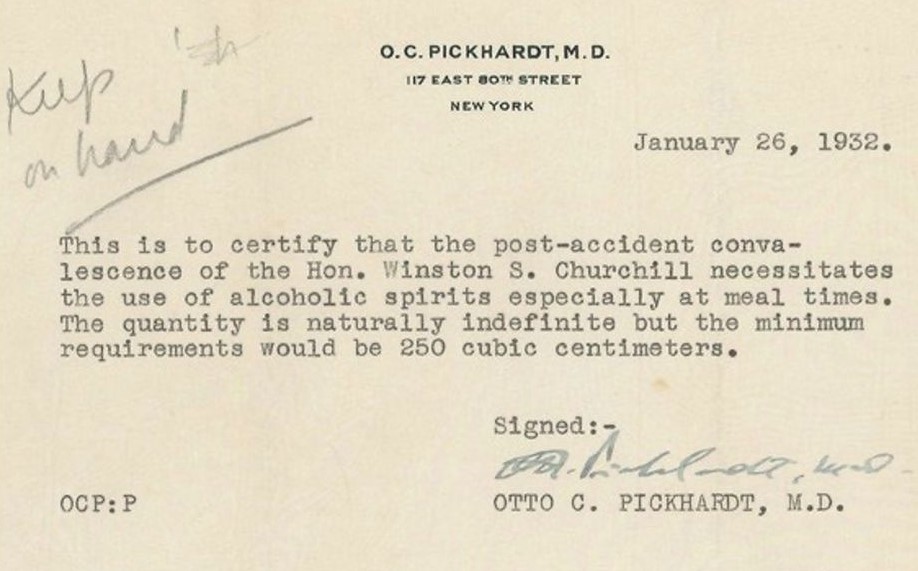
Our little Alistair is growing up!  I am myself over four years into intermittent fasting and a more and more robust approach to my health, too, so I get it. Beer is not so much like cake as like icing. Mmm… a pint of icing please. No wonder it once required a doctor’s note. And it’s not even that old a thing, Dry January:

Dry January started with the group’s former deputy CEO, Emily Robinson in 2011. At the time, she was reading more about the harms of alcohol consumption – at the same time as her half marathon training. Piper says Robinson “wondered what would happen if she had a whole month not drinking” and how it could benefit her running. “Spoiler alert: It really improved her running performance, but she gained other benefits as well,” Piper adds. In 20313 Alcohol Change UK made its Dry January challenge official and trademarked the name. 

What I like about Dry January is just that. When people take a break from anything they come back to it with fresh perspective. Or they never comeback to it, preferring just that fresh new thing. ATJ takes another tack on the whole idea as he looked back on looking back with Bowie and Bing:

I have a vague memory of it and ponder on the weirdness of the Thin White Duke doing a duo with the Old Groaner. I take a brief pause from the beer but then another mouthful is embarked on, followed by more crisp coldness that refreshes the mouth and wakes up the somnambulant parts of the palate, wake up, sound the reveille! The alarm clock shock to the palate continues as I pass down the glass. Mindful drinking? I’m focusing on the beer and how comfortable I am in my chair and how it has just passed 3pm. As the glass reaches the state of emptiness, a slight suggestion of melancholia flits through my mind, Christmas and its thoughts, memories of those no longer with us, grandparents, parents, friends, dogs, health, but the crispness is still there as I come to the end of the glass and decide to head out into the gleaming lights that bring on the emerging city night. Mindful drinking.

Mindful. My mind full. Me, I am a sober daydreamer myself. And I am not doing Dry January. I just haven’t had a drink since 2025. Might have one or two this weekend. Might not. Speaking of one or two, my fellow public service lawyer Teddy Pasketti of Baltimore shared one of the best “I am an idiot” story the other day:

I’ll tell it again. Once in law school I was 23 and really drunk and obnoxious and the owner cut me off and the bouncer told me I needed to go, and I told him, “I’m going to be a lawyer and you’re always going to be a bouncer,” and that bouncer was Mike Tomlin.

Perhaps for those in other continents, this is Mr. Tomlin. Note time!

Note #1: A defiant stand against the slump in Colorado.
Note #2: While one might blame the neo-temperate for the slump one needs to consider the family, too.
Note #3: Is this the greatest example of a lovely interior within a plain pub exterior?
Note #4: A strengthening of the team at Brewery History as Dr Christina Wade joins the editorial board.

We have had a new euphemism appear!  The years’ long decline in the booze trade has been called many things (other than, you know, a decline) so as to distract folk from the fact of, you know, the decline. That old chestnut from years ago – “cyclical” – is still used a lot by boosters and believers.  Then in 2025 we got the mystifying “maturing” market as well as the sometimes even appropriately applied  “consolidation“. And now we have plain old “burnout” and even that new entrant – a “cleansing“:

A well-publicised surplus in the global wine trade is causing a ‘cleansing’ of the sector – but consumers won’t ever mark major celebrations with soft drinks, believes industry veteran and Joseph Phelps CEO David Pearson… Beginning his answer, he admitted that “the market is oversupplied” before commenting that while this is undesirable, it’s not new. “We’ve had oversupply situations before,” he stated, referring particularly to the Californian wine industry, before drawing attention to reasons for their disappearance.

I think I am waiting for “the cull” to come into fashion.* What will save the industry?  Fitba!

“The volume of beer and the increase in revenues from World Cups have consistently driven a strong increase in beer consumption in host cities, far exceeding pre-tournament trends,” Barclays strategists wrote. The tournament’s summer timing in high-consumption months adds to the opportunity. “This is a clear signal of the scale and opportunity this event represents,” they added. North American hosts rank among the Top 15 global beer consumers per capita. Of the 20 leading per capita consumers, 14 have qualified, potentially rising to 16 with Poland and Italy by March 2026. “The combination of large venues, regulatory boosts and greater fan participation creates a perfect context for beer sales growth,” the strategists stated.

You ever feel… forecast to be used? Me, I am looking forward to the actual soccer and, you know, the hairy tartaned folk.

You know how people used to try to explain good beer to wine people they write really insightful things like “lager is like white wine“? It’s a good thing for us all that that dumber era – let’s call it the reign of terroir – is well and truly over. Still, information is power and, well, Eric Asimov of the NYT has some hints for new wines to try in 2026, including this hint that I would suggest should work better for a beer fan:

Stereotypes are not the problem with port and Madeira so much as how and when to drink them. The era of cigars and after-dinner drinks is long gone. The French enjoy white port as an aperitif, but I prefer vermouth or fino sherry. Occasionally, though, it’s worth having a glass with cheese as a reminder of how glorious sweet fortified wines can be. Of the various types, I will recommend aged tawny port and bual Madeira. If you store an open bottle of tawny port in a cool, dark place, it will last a couple of months, while an open bottle of Madeira will last forever.

If you like grapefruit tang in your IPA, try Madiera. Sweet, oaky and white grapefruit pith. I worked my way though a bottle of Blandy’s Duke of Clarence Rich Madeira over the holidays and if I was a cashew I would consider this stuff Enemy #1. But, perhaps for Boak and Bailey, something else is Enemy #1:

On a recent trip to an otherwise peaceful pub we were treated to squawking phones by two separate groups. First, a pair of men in their forties decided to share some ‘funny videos’ they’d found, at full volume. This sent scratchy, distorted noises and bursts of music echoing through the pub, which they further enhanced with their own loud live commentary. Then, a little later, a party of couples in their sixties took the table next to ours. When a friend phoned one of them, he immediately said: “I’ll put you on speaker, mate.” For a full five minutes, the phone shouted at them, and they all shouted at the phone, and we gave up on trying to have a quiet conversation between ourselves.

It’s a cry for help! Is this ever acceptable? Alistair drew his line slightly to the side: “[p]ubs should never become monastic scriptoria.“** Happily, B+B also discovered a possible new form of pub this week, too.In The New Statesman, we have a description of the perfect pub

Most of all, a pub must be what Hemingway described as a “clean, well-lighted place”. It is not a bar. It is not a club. It is not a hotel. It should comfort, relax, lift the spirits and loosen the tongue. A place to settle in. As at home, TV is allowed, and so too music, so long as they do not intrude. The landlord must guide the atmosphere towards homeliness. Think of Mr Banks in Mary Poppins: “A firm but gentle hand, noblesse oblige.” Publicans are to England what head waiters are to France: respected members of the social order.

Hmm: “…so long as they do no intrude…” As you think on that… more notes!

Note #5: Duffman done.
Note #6: Big Sale at ‘Spoons.
Note #7: Soon be time to Wassail.
Note #8: Craig the Elephant and Tusker’s icon passes.

Maybe my problem finding enough to write about is me including all these notes. I could stretch out the beery news notes if I just cut and past every story linked uner a note.*** As I ponder that opportunity, let me ask you thing: how are your telomeres? “My whatsits!?!Telomeres:

“Telomeres are the ends of your chromosomes,” explains Topiwala. “Our DNA is organised into chromosomes, and when our cells divide, these chromosomes are copied. But the copying is incomplete at the ends of the telomeres. “So, over time, these telomeres get progressively shorter. When they reach a critical shortening, the cell dies.” That means scientists can measure the length of someone’s telomeres to work out how many times their cells have divided and thereby estimate how old they might be – biologically speaking. Back in 2022, Topiwala and her team at the University of Oxford researched the link between alcohol and telomere length in more than 245,000 UK adults. “We found that the more people drank, the shorter their telomeres,” says Topiwala. “The drinkers had accelerated their biological ageing.”

Yikes. I don’t think I needed that level of detail, frankly.  As I said, it’s a slow week in beer so… we get to add telemere shortness anxiety to all the other grim anxieties of this age. Fabulous.

STOP THE PRESSES UPDATE 7:48 am Eastern: well worth the wait, Pellicle published Courtney Iseman‘s piece on New Orleans a day later than normal. The story is about taking a break from a drinks conference to explore the city:

It’s my third day at the annual Tales of the Cocktail bar and beverage alcohol industry convention; it’s exhilarating but exhausting, day after day of back-to-back seminars, tastings, and parties where the booze flows can make any introvert like myself feel their battery depleting. My head is spinning with the information and socialisation overload of the day, my bones are tired, my skin is melting into the thick air. I need to cool off, to decompress. I know exactly where I’m going: Brieux Carré.

Good stuff. Another bit of good news is that Boak and Bailey are back posting every Saturday but, still, remember to fulfill make it your New Year’s resolution to sign up for their fabulously entertaining footnotes at Patreon. And look out for more of Stan’s new “One Link, One Paragraph” format. Then hunt out something in someone’s archives! Leave oblique comments on someone’s post from 2007!! Listen to a few of Lew’s podcasts and get your emailed issue of Episodes of my Pub Life by David Jesudason on certain Fridays. And Phil Mellows is at the BritishBeerBreaks. Once a month, as noted, Will Hawkes issues his London Beer City newsletter and do sign up for Katie’s wonderful self-governing totes autonomous website featuring The Gulp, too.  Ben’s Beer and Badword seems to be on pause since November but there is reading at The Glass which is going back to being a blog. Any more? We have Ontario’s own A Quick Beer and All About Beer is still offering a range of podcasts – and there’s also Mike Seay’s The Perfect Pour. Plus follow the venerable Full Pint podcast! And there’s the Craft Beer Channel on Youtube. Check out the archives of the Beer Ladies Podcast.

*To be fair, it’s not only breweries that are suffering, as Dave Infante pointed out: “A quarter-century ago, there were 40 journalists for every 100,000 people in this country, compared to just eight journalists for every 100,000 people today, per a 2025 report by MuckRack and Rebuild Local News. Maybe the reason I’m not overly sentimental about the brewers, winemakers, and distillers struggling against and succumbing to stiffening headwinds in the beverage-alcohol industry is because doom and gloom has been my own professional milieu for virtually my entire career and I’ve grown inured to it. What a cool and normal thought!
**Let me assist you with that.
***Or just add more gratuitous footnotes, I suppose…

Your Merriest Of Merry Christmas Day Beery News Notes For 2025

Stan has been worried. Very worried. Either worried that there would not be any beery news notes this Chrismas Day or worried that there would be beery news notes today and that I really should be doing something else. I am deeply appreciative of the concern but as I usually farm this all out to the team of sleep deprived unpaid interns there is no question whatsoever of the news getting to each of you, my gentle and today hopefully mildly hungover while turkey and stuffing compromised readers. So… the show goes on! Speaking of which, todays photo above from the Yuletide photo contest was submitted by Zak Rotello of the Olympic Tavern of Rockford Illinois, a long time pal of this here beer blog. Click on it for a bigger version. It’s an image of a member of the brewer staff cleaning open fermenters at Anchor Brewing in San Francisco, the brewery that will now never reopen. Like the sleep deprived unpaid interns, we remember those who are working today to keep the holidays jolly.

So what news is actually out there this week? We might have slim pickin’s but there shall be pickin’s. First up, what days are your local party days? As mentioned last year, Tuesday was Tibb’s Eve in Newfoundland last Tuesday. And this is the first year I saw a lot of references to “Black Friday” for the last Friday before Christmas as opposed to the first Friday after U.S. Thanksgiving. Here, for example, is the new coverage from Wales.  Mainly photos of the dressed up and drunk yuff today. It also seems to be referred to as “Mad Friday” in Scotland but maybe it’s a phrase able to be swapped out. I share the thumbnail attached as evidence that such stuff happens in Canada but perhaps with a little more grace as well as perhaps a bit more grit. By the way, one assumes (given the obviously strong ankles) that such natty folk might also be hockey players so… a misplaces comment might receive an brisk elbow right to the Chiclets… if you know what I mean.

What else? The best booze stories of the year according to the Drinks Business included beer news including the high price of a pint in the UK, BrewDog ditching pubs and the suggestion that NA beer should be “a functional drink rather than a compromise…” whatever that means. Pellicle offered up its top tales of their very good year. And Ron has been posting about the best of his personal year including:

I did a bit of judging this year. Mostly in South America, obviously. That’s where I prefer to judge. The Blumenau contest was fun this year. And not in Blumenau. Instead, it was on the coast at Balneario Camboriu. Literally on the coast, as the judging location was on the seafront. Meaning you could have a stroll down the beach at lunchtime. So civilised. And I managed to dodge judging Best of Show. That’s always a win. In Santiago, judging was in the same hotel as we were staying. Which is always good.

Also good was his news that he’s been cutting back.  On a related note, the* Beer Nut on the expansion of NA beers that don’t suck:

Non-alcoholic beer gets the occasional bit of coverage on here, though I tend to find very few which perform the role required of a beer. Pale ales, wheat beers and lagers seem to be the preferred styles, which may be the problem. I’ve often said that dark styles make for better alcohol-free beer, my favourite to date being Švyturys Go Juodas, and the Guinness one is pretty decent too. The latter’s success has provided an opportunity for other breweries to get in on the 0.0 stout racket, and the first I’ve seen locally is Dundalk Bay’s Zero Zero Nitro Stout, available in Aldi.

I’ve recently bought into the “Guinness 0” thing so good news that other smaller operations are able to similarly pass muster. Speaking of news, Stan also had newsy news in his Hop Queries in the state of the US supply of hops:

Farmers in the Northwest reduced acreage 7% in 2025 and harvested 5% percent fewer hops, according to the USDA National Hop Report. Average yield per acre was the highest since 2011, when higher yielding hops appreciated more for their alpha made up a larger percentage of acres planted. The 2025 value of production was $447 million, up slightly from 2024, but significantly less than $662 million in 2021. That shouldn’t be a surprise, given that acreage has shrunk 31% since 2021 and production 28%. Perhaps as important, in September the USDA reported that the inventory of hops held by growers, dealers and brewers was 116 million pounds, down 15 percent from the previous year. That’s the largest contraction in 15 years and suggests the market is getting closer to being in balance. Still, it is a significant amount, and almost 40 percent higher than it was through much of the teens.

Me, I was higher in my teens. That’s the main difference between me and the US hops trade.

Note#1: “Stephen Beaumont once gave me some good advice: don’t.
Note #2: “Scroll at your leisure…
Note #3: Women in public bars over fifty years or so ago.
Note #4: Continental had a pub in the sky.
Note #5: Short pours in Milton Keynes!

Speaking of controversy, a debate threatened to break out in the comments at Boak and Bailey but it appeared to just be a slightly paranoid complainer intent on playing one handed ping pong, the prattling lad being handled firmly by the administration. Much more interesting were the comments confirming reality behind the sale of Bristol’s Moors, including:

I now have had a chance to dig into their structure and, in short, they were not employee-owned in the recognised sense of being owned by an employee ownership trust or being a co-op, etc – it was just that all of the owners were also employees (i.e. no external investors). Justin owned 85% of the business. It looks like he has now sold that stake to Albatronic Arcades Ltd, a company registered on 5 August 2025 and owned solely by Bruce Gray. So I feel less unnerved about the boycott! But still hope they can turn Moor around.

Another set of comments were helpful in building upon Jeff‘s thoughts on the shutting down of three of ABInBev’s megabreweries in the U.S. of A.:

At a macro level, overcapacity normally drives prices down, which is always hard on producers. It’s especially bad for breweries right now, which face a host of financial challenges. Craft and big beer function largely in separate realms, though, and it’s seemed like big beer has been able to replace lost beer volumes with flavored-malt beverages and the like. This news suggests otherwise. Further, for anyone who has followed the beer industry over the past fifty years or so, this is a shocking development for a financial and logistical juggernaut.

Not as shocking to one Karl “the Commentron”** Ockert who shared his understanding:

I worked at the Newark brewery, then a 9 million bbl per year plant, in the early 90’s. I (half) jokingly tell people that I earned my Masters at the university of AB, Newark campus. While I learned a lot of the science of brewing at UC Davis with Dr Lewis, at Newark I learned even more about production and process discipline which I was able to use at the BridgePort and Deschutes Breweries. Last year Newark was down to a rate of 500,000 bbls per year and brewing less than a week per month. Along with Fairfield and Merrimack, it fell victim to the changing beer market. I’m sure it was a painful decision to close all 3 breweries at once, and I’m sorry to see it finally happen.

One wonders what it was that kept the facilities hanging on for so long. Wasn’t money. Somewhat similarly was the concern raised by Ron about the loss this year of Martyn Cornell and state of Martyn’s now 404 website:

What did Martyn leave unfinished? I can’t believe that he wasn’t working on another book. (He asked me about self-publishing because he was so pissed off with how long it took to get a book published.) Not to go all fanboy, but (meaning I am doing) how much material is there that hasn’t been published? Including stuff chopped from Porter. I’d buy a book with that in. Niche, made possible by self-publishing.  A compilation of his, often very long, always hugely informative, blogposts would make a great book. And preserve them in print. As Zythophile is no longer there. Fuck. This material really needs to be saved. Maybe I should get in touch with his brother. 

Happy was I then to confirm that the contents of the entirely excellent Zythophile has been preserved at the Wayback Machine, a service which I have been in love with since the great blog server shift of 2016. Think something has been lost on the internet? Check the Wayback Machine first.

There was intrigue in England as we wondered if Mrs RM could walk past  one of the great conversational pubs:

Walking back from the Sun to Faversham Premier Inn on the eve of Mrs RM’s birthday I suddenly realised we’d taken a different route into town that afternoon and missed its most famous pub. Would she be able to resist the lure of the Elephant on first sight. No. “We’re going in there“. I was happy to skip it, honest. A year ago it was packed on Sunday folk afternoon, a bit quieter on Tuesday night but there still weren’t a lot of spare tables.

A pub full of chatters. Not always what one wants but good to see someone get their way.  In other situations, choosing beer can be the wrong move as this personal injury workers compensation claim denial illustrates:

The claimant’s business required them to purchase and transport bulk quantities, and as the pain apparently intensified the claimant was awarded income replacement benefits, the release says. Surveillance by investigators found the claimant was seen regularly transporting beer for seven to 10 hours every day, often loading up to 20 cases of beer into their vehicle without assistance or any evidence of pain. The benefits were terminated…

All this leads to one fact – beer is not always kosher. No, really. Not kosher:

In November, three of America’s largest kosher certifying organizations came together to release new guidance regarding the status of beer, which has long been considered kosher by default. Due to the proliferation of flavorings brought on by craft brewing and other industry changes, however, the rabbis who declare whether food products are in line with Jewish dietary laws now say the label must be checked before drinking. “We’ve discovered that companies use many flavors, different flavors, to enhance even the simple beers that they manufacture. Those flavors need to be kosherly supervised,” said Rabbi Moshe Elefant, the head of kosher operations at the Orthodox Union, who released the guidance along with Star-K and OK Kosher. “We’ve seen more than one situation… that some beers have dairy in them. They add lactose, they add milk, so a beer could be dairy, which has very serious kosher ramifications.”

Knew it. Gak. Yet some of the stuff that can be crammed into beer other than via the “craft” of the fruit sauce hose might actually be useful:

Buck isn’t just a home brewer dabbling in drug-making. He is a virologist at the National Cancer Institute in Bethesda, Md., where he studies polyomaviruses, which have been linked to various cancers and to serious health problems for people with weakened immune systems. He discovered four of the 13 polyomaviruses known to infect humans. The vaccine beer experiment grew out of research Buck and colleagues have been doing to develop a traditional vaccine against polyomavirus.

As I mentioned last week, I am pro-line in the pub. Better, table service. Each to their own, I suppose, but is there any bore are boring as the “don’t queue” bore in a ‘Spoons?

Believing it’s an ‘unwritten rule’ that you don’t queue at a bar, the 24-year-old barman was stunned to spot ten people in an orderly line waiting for their drinks. Jack refused to join the queues, instead ‘standing his ground’, claiming he propped up the bar for 10 minutes until he was served. Baffled Jack, shared a snap of the queue on X, slamming it as a ‘disgusting and uncouth disregard for sacred tradition’… Jack, who lives in Birkenhead, Merseyside, said: “It’s going against British tradition and it’s just wrong. It’s not like they’re doing anything inherently bad but it’s an unwritten rule you don’t queue at a bar.

Finally – and looking forward to New Year’s resolution suggestions – a word on usage if I might. Please stop writing “I don’t understand” as it means… you are admitting you don’t understand. And if you are a professional writer and you use the phrase “trust me” it only shows you can’t clearly explain your views which means your views are likely not trustworthy. And ask yourself before hitting “publish” if it is wise to write “… an unimaginable amount of work goes into…” when not only was it imaginable but it was accomplished as imagined. And if you as a beer business person want to want to display your ignorance of the times and market conditions of your trade as it exists today, feel free to post something like this on LinkedIn:

Given the current state of the industry, I think it’s about time we rally together and finally retire “Dry January.” Honestly, hasn’t it taken up more spotlight than anything that fun-free should? Let’s change the narrative and remind people what beer actually is……. a simple, natural combination of water, malted grains, hops, and yeast. Four ingredients. Zero mystery. This is our heritage. It’s real, it’s straightforward, and frankly, it deserves a comeback tour. Let’s make it happen and get things moving in the right direction!!!

Seeing as the “industry” didn’t start Dry January how exactly the hell does this person propose that it retire the concept. Plus… “a simple natural combination“? Yes, let’s go out in nature and find some beer, shall we? Displaying further ignorance on the brewing processing is another not strong move.

And that’s it! Stan will either be satisfied or concerned. The interns are using all resources to seek further clarifications on the question. No Christmas for them! And as we enter deeper into the holiday week lull, please also remember that Boak and Bailey are not posting this Saturday so we also will do without their fabulously entertaining footnotes, too. Sitll, look out for Stan’s new “One Link, One Paragraph” format. Then hunt out something in someone’s archives! Leave oblique comments on someone’s post from 2007!! Listen to a few of Lew’s podcasts and get your emailed issue of Episodes of my Pub Life by David Jesudason on certain Fridays. And Phil Mellows is at the BritishBeerBreaks. Once a month, as noted, Will Hawkes issues his London Beer City newsletter and do sign up for Katie’s wonderful self-governing totes autonomous website featuring The Gulp, too.  Ben’s Beer and Badword has returned from his break since April so you can embrace the sweary Mary! There is reading at The Glass which is going back to being a blog. Any more? We have Ontario’s own A Quick Beer and All About Beer is still offering a range of podcasts – and there’s also Mike Seay’s The Perfect Pour. Plus follow the venerable Full Pint podcast! And there’s the Craft Beer Channel on Youtube. Check out the archives of the Beer Ladies Podcast.

*I am always torn. Sweat forms on the brow. Does one capitalize the “t”?
**The title reserved only for the most experienced of comment makers.

Two Weeks?!? It’s The “TWOOOO WEEEEEEEKSSSS TO GO!!!!” So Excited Dontcha Know Edition Of Your Beery News Notes

As I mentioned last week, I am sharing some past submissions from the Yuletide Christmas Boxing Day Hanukka Kwanza New Years Eve and Hogmanay Beery Photo Contests that have been sitting in my email folders from all those years years gone by. This week a photo from 2012’s bare knuckle brawl sent in by Jeff Wayne of Tampa, FL. Not necessarily the prettiest image but that there is the leaky bung of a fermenting barrel aged chocolate stout, a celebration of a full range of browns. I like it. Just hope someone spooned up that excess chocolate.

Yes, here we are two weeks from the big day. The day I drink sherry at 8 am and have cake for breakfast. Excitement builds. Also building is Eoghan‘s Advent calendar of things seen in about the 19 communes of Brussels, including at the bewilderingly queter edges of the town:

The streets were so big, wide plains of asphalt, fringed by large standalone houses between was too much air. And the air too was different, smoky and rich but not in an oppressive, attack-your-throat sense, more luxurious. The topography too, big dips and vertiginous climbs with houses and apartment blocks ranged on their slopes, not at all like the slow and steady – but just as taxing – hills I’m more used to traversing in downtown Brussels. I didn’t even know if I was in Watermael or Boitsfort… The bar was, when I finally found it, comfortingly familiar. A Brussels that was recognisable to me however far from the centre I might have strayed, with beer in the fridges I knew and breweries on the taps I trusted. I was at last on terra firma…

Also out wandering, ATJ captured something of the essence of being ATJ in this passage from his travel diary this week:

The soundtrack on this late morning in a Bamberg pub is of laughter and calls and joy growls in the main bar, alongside the clatter and bang of cutlery and plates in the kitchen. The aroma of roast meat, intense in its intimacy, flits through the room, an escape from the kitchen, like a spirit from its long locked stronghold. I sense, or perhaps create, a Friday midday feeling, the joviality of the approaching weekend, though for me, having left home the previous Sunday and perambulated through Prague, nuzzled myself into Nuremberg’s hidden corners and currently based for a day in Bamberg, there is no conception of a weekend, time is just drifting by with the conscience of a cloud.

Not unlike Willie W., when one weighs the words. Anthony Gladman has also being weighing the situation, in this case for cask, and finds that something is lacking:

Cask ale’s slow drift away from relevance saddens me. I fear we seem set to lose it altogether, and shall be culturally diminished as a result. And the worst thing about it is this: the younger drinkers who choose not to drink cask ale are doing nothing wrong. It simply isn’t relevant to them. Nor is this their failing; it is the beer’s and the brewers’ and the pub landlords’. And perhaps partly also mine, as a drinks writer, for failing to make its case often enough, loudly enough, or persuasively enough.

Bingo. I have never understood writers complaining how folk don’t understand this thing or that. It is the job of the writer to make it compelling. Has cask suffered solely on that basis? Nope. But it hasn’t helped.

Well, conversely, this news either means it is no longer a fad or the shark has jumped on no-lo beer as, according to The Guardian, AB InBev is created the world’s largest alcohol-free brewing facility in Wales:

A “de-alcoholisation facility” sounds like somewhere to check in after a boozy Christmas, but in the new annexe of a brewery in south Wales they are extracting hangovers from beer. With demand for no-alcohol and low-alcohol (“nolo”) beer taking off in the UK, the hi-tech brewing apparatus enables the plant at Magor, which produces more than 1bn pints of Budweiser, Corona and Stella Artois a year, to make the increasingly popular teetotal versions too… The availability of alcohol-free beers on tap in pubs is expected to further normalise the choice.

We are assured that “the machine treats the beer very sensitively and delivers a fantastic taste”. Normally I would laugh, say things like “….riiiiight…” and move on but… I just had my first four pack of Guinness 0 and will definitely buy another. What happened? Maybe I got normalized. Try it with port. But no-lo’s not quite as socially acceptable everywhere as The Times notes this amongst its list of conversation topics you will be annoyed by at parties this holiday season:

At every party there are now soooo many men with soooo many helpful tips and advice on the great alcohol-free beers they know all about and which they are categorically not drinking tonight. For some reason it’s always the most sloshed blokes who have the most to say about sober alternatives. It’s like getting nutrition advice from the morbidly obese.

Don’t be the beer bore. Ever. Never one to be that, Alistair shared a happy memory of the time he helped brew, :

This Thursday is the 15th anniversary of the day I spent at Devils Backbone Basecamp brewing the first ever batch of Morana, a Czech style dark lager that I designed for them. I had spent the previous months diving into archives, emailing with multiple brewers, and beer experts, in various languages – English, German, Czech, and Slovak – to learn everything I could about a family of beers that at the time only consisted of about 5% of Czech beer production. Obviously, having only fairly recently decamped from Prague to Virginia, I was also relying on my own remembrances of beers that I had got a taste for in the last couple of years there, when I moved beyond the realms of Gambrinus, Staropramen, and Velkopopovivký Kozel.

Alistair says that the beer that was “the first authentic Czech style dark lager brewed in the modern American craft brewing industry” which is a decent claim to fame. Perhaps also decent was the stout presented to The Beer Nut whose analysis went deep into the dark:

Unsurprising given the froth, it’s quite fizzy: a little too much for the style, I think, giving it a thin and sharp quality that doesn’t suit strong stout. The rum element is present in the flavour, but subtle. I tend not to like rum-aged beers, finding the spirit cloyingly sweet, but that isn’t the case here. Instead, the barrels add more of that fruitcake or Christmas pudding quality I found in the aroma, as well as a rawer oaken sappiness. None of this overrules the base beer, which is a no-nonsense, properly bitter, grown-up stout: dark toast, a molasses sweet side and then a finish of punchy spinach and green cabbage leaf. The can says it’s 48 IBUs; it tastes like considerably more. This is quality stuff, and I’m always happy to find a modern stout that goes big without resorting to silliness. The fizz is its one flaw, and I found myself doing a lot of swirling to try and knock that out. It only reached an acceptable level of smoothness around the time I finished it.

I wish I had one flaw. Not quite indecent is the focus of this article on how to win back the disinterested youth of today:

“Because craft beer sales skew towards older consumers, it’s vital to keep nurturing the next generations of buyers. Gen Zers can be hard to reach and their sentiments are shifting but responding to their needs can help brewers grow share”… Gen Z prefers different drinking environments from older groups. Experiential bars and high-energy venues hold much higher appeal and may offer the strongest opportunity to introduce them to craft. While casual dining restaurants, neighbourhood bars and sports bars remain important to the wider craft drinker base, Gen Z is markedly less likely to visit taprooms and brew pubs, which limits the impact of traditional brewery-led spaces.”

That’s not good. Not only are they not interested in your product but it appears they have no interest in your product. Is there an issue with seeing to bring back the relationship? Even though the sins of the father haven’t been visited on the generation that followed? It all sounds like an earlier 1970s slow slow dance classic, perhaps a little Hall and Oates:

She’s gone (she’s gone)Oh I, oh I, I better learn how to face itShe’s gone (she’s gone)Oh I, oh I, I’d pay the devil to replace herShe’s gone (she’s gone), oh IWhat went wrong?

Pay the devil indeed. Or the invoicing consultant offering solutions. Solutions… yup, that’s what they are. Conversely, being straight with what has really gone on is part of the story for Anaïs Lecoq this week in Pellicle who writes about the Franco-fascists fascination with wine:

Tradition is a lie. And it’s the same lie, fuelled by carefully curated storytelling, that the far-right is trying to feed us now. They wear black berets, big mustaches, and suspenders. They hang up French flags, and talk about meat and wine as the epitome of French food, not missing the opportunity to ridicule vegans and mock people who don’t drink alcohol. They’re terroir influencers, born out of the rise of conservatism and general backlash against social progress. What they’re doing has a name: gastronationalism, or culinary nationalism, which refers to the way food—its history, production and consumption—is used to promote nationalism and define national identity.

It does make sense in that wine requires landowners’ estates as much as beer requires peace. And serfs or their facsimile to do the work. A hotter bed for the old goosesteppers that other spots… perhaps. Next up… a palate clenser with some cheater quick notes:

Note #1: The practice of “faire chabrot” can easily be added to your Yuletide feast traditions;
Note #2: A review of Martyn Cornell’s Porter & Stout: A Complete History by The Beer Nut;*
Note #3: “If there’s ever been a bellwether to the state of the crafts beer industry, it’s Mitch freaking Steele job hunting“;
Note #4: Wine drinking as resistence; and
Note #5: Beer drinking as obedience.

Back on the endtimes beat, Dave Infante neatly summarized the evidence he’s uncovered of a wobbly situation at Pabst:

…the company is quietly looking for a subletter to take over its headquarters in San Antonio. A listing I reviewed for the sleek space—into which Pabst just moved in 2023—was last updated just two days before the pink slips started flying this past Thursday. Between the layoffs, the listing, and a whole lot of reshuffling in Pabst’s c-suite (including the replacement of both chief executive and chief financial officers earlier this year, and the exit of a former chief sales officer just last month), former Pabst employees I spoke with fear the legacy firm might be on the brink.

Yikes. Somewhat relatedly, The Mirror in the UK ran an article on the cost of all aspects of the price of a UK pint and came to a curious conclusion:

Citing figures from the British Beer and Pub Association, Michael said this means pubs are making a total gross profit per pint of £3.69. However… “That’s before VAT, which is another 83 pence – and we have to factor in staff wages, which is another £1.17 per pint…” duty paid to the brewer equates to another 56 pence, as well as business rates of 35 pence, and employment tax for all pub staff at 29 pence…. pub overheads and utilities at 36 pence per pint, which leaves just 13 pence of net profit per pint sold – and this why around 30 pubs are closing every month.” As a percentage this profit equates to just 2.5 per cent.

I find these sorts of supposedly accurate breakdowns useless.** What wasn’t made clear is why pubs which make a 2.5% profit are closing. Is that why they close? Or unidentified expenses were left out or that level of income after expenses is not satisfactory. Which may be the case. But it wasn’t what was argued.*** Time for something more compelling? You got it!

Note #6: HOT PICKLED PORTER!!!

Much more seriously, Boak and Bailey‘s footnotes last week pointed me to the newsletter from Jen Blair on influencers in beer and their choice of appearance:

A few months ago, I was at a beer festival talking with some people I had just met. At one point, one of the men in the group stated that he thinks it’s shameful when women post “provocative” beer photos on social media. Provocative is in quotes because it doesn’t take much for a woman who is simply existing to be denigrated based on her appearance. Another woman in the group and I made eye contact after his comment. This is not the first time someone has said something like this to me, but I am still surprised when it happens. I guess I shouldn’t be, but every time I think “…we’re still saying things like this? To women? About women?”

It’s an excellent piece and reminded me that (whether it is a question of presentation… or self-initiated claims to expertise… or offers of special savings for anyone one applying the one-time super secret code at their website) the only thing that matters is whether the writing has substance.

And finally, over the weekend we received the sad news of the passing of Peter Edwardson who wrote about beer as “The Pub Curmugeon” after a short illness. His last post included this characteristic passage, one that summarizes his approach to beer as well as his understanding of what made it a simple pleasure worth appreciating:

Alcohol content is a vital element in the flavour make-up of beer, adding body, warmth, richness and sweetness. Make anything more than a trivial tweak, and it will significantly change the character of the beer. It is one thing to specifically set out to brew a low-strength beer, but something entirely different to reduce the strength of an existing beer that was designed for a higher strength. You may not have thought much of Fosters even when it was 4%. But now it is 3.4%, a 15% strength reduction, it is not the same product and, I would suggest, an inferior one.

I checked my notes and see that in the last five years or so these weekly digests of the news in beer included well over forty references to “Mudgie”. The sad loss of a singular voice.

So a couple of serious notes to end the week. Hopefully happier news next time. It’s Christmas day the week after that on Thursday… whatever shall I do? As you consider that and send in recommendations, please also check out, Boak and Bailey on this and every Saturday and then sign up for their entertaining footnotes, too. Look out for Stan when he feels the urge (now that he’s “retired” from beery news posts) from Budapest or wherever – as he is getting active again. Then listen to a few of Lew’s podcasts and get your emailed issue of Episodes of my Pub Life by David Jesudason on certain Fridays. And Phil Mellows is at the BritishBeerBreaks. Once a month, as noted, Will Hawkes issues his London Beer City newsletter and do sign up for Katie’s wonderful self-governing totes autonomous website featuring The Gulp, too.  Ben’s Beer and Badword has returned from his break since April so you can embrace the sweary Mary! There is reading at The Glass which is going back to being a blog. Any more? We have Ontario’s own A Quick Beer and All About Beer is still offering a range of podcasts – and there’s also Mike Seay’s The Perfect Pour. Plus follow the venerable Full Pint podcast! And there’s the Craft Beer Channel on Youtube. Check out the archives of the Beer Ladies Podcast.

*Update: as noted for the double!
**A variation is the trade writer who still believes sorta circa 2011 that everyone is one off-flavour seminar from connoisseurship, like Mr. B on LinkedIn this week: “…what you’re getting in up-front money or equipment ultimately pales beside the loss in credibility (especially for places which claim culinary, cocktail, or oenological expertise!), disappointed customers, and ultimately, lost sales. Taking placement fees for a percentage of your taps is one thing — although trust me, more than a few people are going to be able to spot them! — but turning over most or all of them speaks to laziness, desperation, or simple disinterest.” Why, then, do these places continue to operate as craft beer bars shut? Serving their customers’ demands? 
***Yet the math is right there – at 13p profit you would have to sell 500 pints an hour to clear £65. If that was your sole source of income. But then the article would be much shorter. Or is it that the ones at the bottom of the Bell curve no where near a 2.5% profit are the ones that close. Which is irrelevant to the analysis. But then, again, the article would be much shorter. 

The Mid-November Shock Of The First Real Freeze Runs Through These Beery News Notes

Remember all those sunny garden shots? Just a week ago?  The wonderful colours?  The ripening fruit?  Well, it’s now sky shit season and looks to stay that way for another four if not five months. Snow, winds off the lake, freezing rains. Commisserations welcome in the comments. It was also Remembrance Day on Tuesday so plenty to be solemn about for a stretch before the holiday season really begins. I took and posted that photo twenty years ago now,* of a Second World War RCN officer waiting for the service at Navy Memorial Park here by our waterfront.

We start with a look to the past. Boak and Bailey showed their stuff again this week with an excellent post seeking out the source of the beer with the branding “Rustic Ale“:

A slight surprise there might be that ‘rustic’ clearly did not indicate that the beer would be strong or rough, like Spingo. But at about 3.5% ABV, Rustic Ale would be considered at the lower end of session strength even today, never mind before the First World War. Elsewhere there are instances of the phrase ‘rustic ale’ being used not as a brand name but to describe the type of beer drunk in country inns, by country folk. The earliest of these references we could find is from 1855. Another, from 1909, suggests that healthy country girls (think Honoria Glossop) “will face her glass of rustic ale like a young farmer”.

Excellent. And Breandán Kearney wrote about lost Belgian styles for The Brussels Times Sunday magazine and the steps which have been taken to revive them:

Seef or Seefbier, for example, once the pride of Antwerp, vanished with the collapse of small urban breweries during the First World War. A decade ago, Johan Van Dyck claimed to have uncovered an old recipe for a seef beer which he reincarnated with a barley, wheat, and oat grainbill and a creamy, unfiltered profile. In recreating it, Van Dyck reignited city pride with a new generation of drinkers. In Lier, the brown-amber ale caves was revived by a local heritage guild, which commissioned it to be recreated from archival recipes (but only for serving in cafés within the town walls). And then there’s uitzet, a mixed fermentation brown ale from East Flanders that local brewers such as DOK Brewing Co, have tried to recreate in Ghent.

You know, I’ve been told I have a creamy unfiltered profile. Speaking of diligent research, Ron has pulled back the curtain and shared an update on his methodology:

I finally bit the bullet yesterday. Adding an extra column to my main beer gravity spreadsheet.  I’d been planning on doing it for a couple of years. And had started using a new format table for any gravities I harvest. But it was getting out of hand. It was over 2,000 lines. And when I wanted to look up beers from a specific brewery, I had to search in both tables. Time to merge the two. It itself, that wasn’t particularly difficult. Just add the column to the main table and tack the entries from the temporary table on the end. Except, most of the entries now had a blank column. Which I’ll have to add. Quite a palaver, in a table of 25,000 entries. I started the work yesterday. And have completed maybe 25%. It’s dull, tedious work. But it will be worth it, when I’m done. In case you’re wondering, the column is the town where the brewery is located…

A-HAH!! I knew it. I knew all these beers were from places. And, I understand, they are made… in ways. On that point, here we have first The Beer Nut  and then Stan noticing The Beer Nut on the effect of Thornbridge’s conservation of one part of Marston’s Burton Union brewing set.

TBN: “With luck, one of England’s many fine beer writers will be able to explain what difference the equipment actually makes to the product, beyond the press releases and collaborations.”

SH: “I’m inclined to believe the claims that using the system changes the beer. You might even be able to run a study which compares otherwise identical beers fermented in stainless steel and in the union. Or wood versus the union.”

Two of the best sets of tastebuds in the scribbling set right there. Perhaps the point is simply to continue the use of the way. Interesting notes from one commentator: “notoriously laborious to clean and have higher racking losses than other systems” but “they help in the maintenance of a healthy and regular pitching yeast.” So there may well be value in the way even if it isn’t necessarily translated to the glass.

Pellicle‘s feature this week sent shivers. Not because the piece by Joel Hart about the Mort Subite in Altrincham, a Manchester suburb, was anything but a great portrait of a well loved tavern. But because I had one of the worst drunks ever – followed by a two day hangover – drinking in a place by that name in Paris when I was young and stupid in 1986. Fortunately for me, the five guys from Gascony (spoilers) offering to throttle me did not realize I was with the pack of very large gents in the corner. Events ensued. To the contrary, on Manchester’s version we read:

…it’s quieter, broodier, and more intimate. “I’ve lost hours of time in there,” says Chris Bardsley, who runs Altrincham beer spots The Beacon on Shaw’s Road and Batch Bottlestore in King’s Court. “You’re in there, you don’t see the outside world, you’re just caught in it.”

Glad I wasn’t caught in it, if I am being honest. Back to the question of the tasty, photographer Sean McEmerson provided us with an fabulously detailed essay on the making of green hop beer from Hukins Hops in Tenterden, Kent:

At Hukins Hops, the team carefully assesses each variety across their sprawling, 50-acre farm, checking the hops’ ripeness before deciding when to harvest. Over the last few years, that process has only become more difficult as the UK’s climate has grown more unpredictable. This summer, Kent—one of the country’s key hop-growing regions—experienced record-breaking temperatures during a rolling series of heatwaves. The result was an earlier-than-expected harvest. “Lots of factors contribute to how long harvest takes—machine breakdowns, picking weather, staff, and drying capacity”, Glenn Whatman from Hukins tells me. “This year we had an average crop due to the drought in June, but the machine ran as smoothly as ever and the picking team persevered through torrid weather”.

I had no idea hop pickers’ hands became tarred with resin. Speaking of photo essays, Martin has returned to his winter quarters in Rye, England and took a stroll to see Jeff at the Ypres Castle Inn:

Jeff greets me at the bar, where I sit and watch the magic of a great pub unfold over the next hour. Louie (sp. ?) is the star today, another of Jeff’s great staff team, but all the customers seem lovely too. Not serving food helps. Children bring their empty glasses back to the bar and say “Thank you“. Their proud parents say “Well done“. I say “Well done“, too, perhaps a little enthusiastically. I’m not normally comfortable sitting at the bar, but watching a great pub like the Ypres in full flow on a Saturday evening is a thing of wonder.

Somewhat to the contrary – or perhaps in ignorance of the above – the stomp on craft continues. Auto scene reporter Ben Shimkus was in the The Daily Mail with his autopsy of US craft beer under a “hipster” inclusive headline, dipping heavily into the finger-pointy zingers bucket as he did:

America’s craft beer phase seems to be fizzling out. Expensive beers flavored with ‘notes of citrus and pine’ or brewed with an extra batch of hops are losing favor in US grocery stores and bars. Instead, giant beer brands featuring utilitarian flavors and low prices are all the rage. There might be a charming reason why: Millennial-aged craft beer fans have grown up… the lower-cost seeking has had a damaging impact on America’s microbrewery industry, which dominated younger parts of the US and attracted cornhole players. Dozens of sites have permanently shut down.

Is that tone really necessary? Well, besides “cornhole players” which has always been a self-inflicted wound as far as I can tell. No, the pile on is getting to feel like, you know, making fun of people who just really like their cats.** Perhaps the trade friendly euphemisms like “consolidation” and “mature market” are usefully kinder descriptors for the slump.

A saner explanation of the current situation has been provided by Ron Emler in The Drinks Business – with an particular focus on China:

For the past couple of years, it has been the group mantra from big booze bosses that the current downturn in sales is cyclical rather than structural. But the cracks in that corporate front are widening. No longer can the combined effects of squeezed wallets, the rise of cannabis-infused offerings, the increasing uptake of weight loss drugs which reduce the desire for alcohol and the lifestyle choices being taken by Gen Z be dismissed out of hand as inconsequential in the longer term… According to Morningstar senior analyst Jennifer Song, China’s younger generation rejects the “intense sensation of high-alcohol baijiu”. She said: “We believe expanding low-alcohol baijiu offerings is a long-term trend, driven by demographic change and rising health awareness.”

Jason Wilson takes the broader issue from another angle, the problem posed to premium categories when there is common access to things which have been formerly accepted as luxuries:

The problem right now is that “fancy goods are everywhere,” according to The Economist… I wonder if wine needs to try so hard to present itself as more of an experience than a thing. After all, simply opening a bottle of wine—on a sunny day in the park, during a late night conversation on a roof deck, on a lazy, decadent afternoon in bed—is the prelude to experience. The drinking of the wine in a place with people is the experience. We would do well to remember that. Perhaps it’s more a matter of shifting perspective, framing, and being open to more possibilities.

So do we need to – or should we – buy as much booze to still be interested in the stuff? If you’ve read the stuff posted around here very much over the years you will know that has been always been a question in my head. Do we consumers ally ourselves with producers at all costs? Or are we wanting a decent pint at a decent price? Or both? Should alcohol to play a smaller but healthier role in life or does one root for a business rebound back to the irrational exuberence of craft beer a decade ago? Or even further back even to the 1980s when understanding hard to find beer conveyed a certain status, as Boak and Bailey recently considered. Sometimes the enthusiasts’ approach to beer writing strikes me as similar to the unrequited yearning for the experience of being young again. Were there longings for Rustic Ale in the years after it faded, too?

Speaking of longings, Jeff is looking for an explanation of the price of NA beer building on last week’s note from hereabouts on the update from BMI on the price of the stuff:

In the past decade, non-alcoholic beer has gone through an important upgrade over the old Clausthaler era. Breweries started taking it seriously, and the quality, while still not as good as regular beer, is vastly better than it used to be. Athletic demonstrated that there was a market out there for N/A beer made in modern craft styles. The big question is how big that market will become in the U.S. Here I am a lot more bearish than the industry, for these reasons. It’s a premium-priced product that is inferior in taste to regular beer or other non-alc alternatives. The proliferation of N/A brands is hurting rather than helping, too. With the flood into the market, people are exposed to more of the poor examples. A novelty factor in being able to buy a N/A hazy buoyed the industry, but I have a real question if that’s sustainable.

Is any of it sustainable? And… what is it that would be sustained? Not a small question so we can leave it there for now. Until next week, I will be focusing all my energy at the Grey Cup game and shouting at the sky… and once again thanking my luck for the pack of gents in that corner of that bar. As I do, please also check out, Boak and Bailey on this and every Saturday and then sign up for their entertaining footnotes, too. Look out for Stan when he feels the urge now that he’s retired from Monday slot… maybe … maybe not. Then listen to a few of Lew’s podcasts and get your emailed issue of Episodes of my Pub Life by David Jesudason on certain Fridays. And Phil Mellows is at the BritishBeerBreaks. Once a month, as noted, Will Hawkes issues his London Beer City newsletter and do sign up for Katie’s wonderful self-governing totes autonomous website featuring The Gulp, too.  Ben’s Beer and Badword has returned from his break since April so you can embrace the sweary Mary! There is reading at The Glass which is going back to being a blog. Any more? We have Ontario’s own A Quick Beer and All About Beer is still offering a range of podcasts – and there’s also Mike Seay’s The Perfect Pour. Plus follow the venerable Full Pint podcast! And there’s the Craft Beer Channel on Youtube. Check out the archives of the Beer Ladies Podcast. That’s quite good and after a break they may well be are back every month!
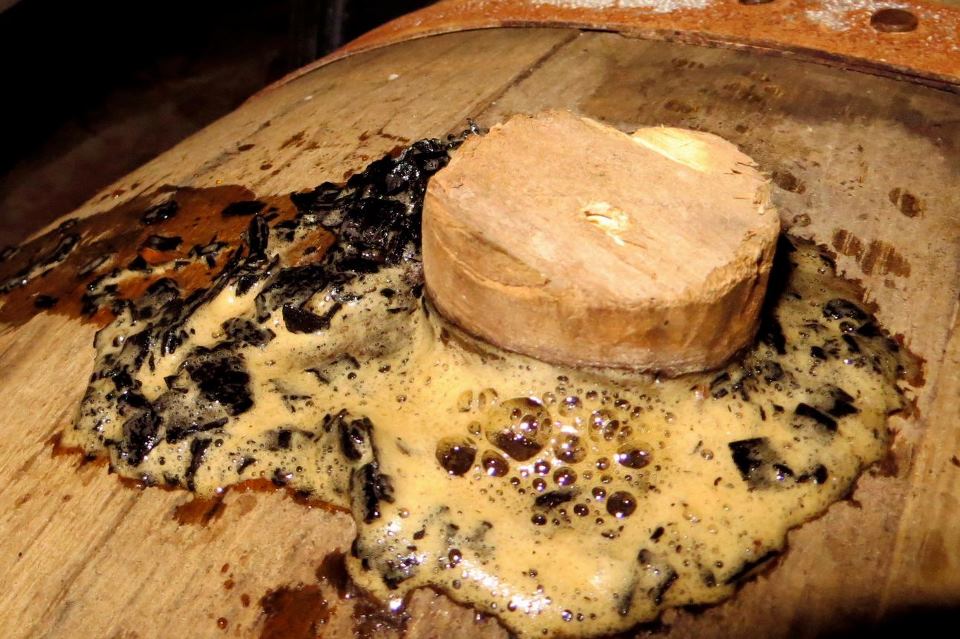
*Lordy…
**By the way, ours finally killed a goddamn mouse after over ten years so there was a smidge of respect – but it wasn’t like I ran to the grocery to buy kitty treats or anything. I have standarrds. I still keep a portrait of the late great slayer of mice Mrs. Beaton (1999-2012) on my office desk. Frobie got all the attention but Beaon was the killer.

The Beery News Notes For The November Lull Marking The Five-Sixths Mark of 2025

It’s Canada up here and I gotta tell you we have entered the lull.  Pals who work in the hospitality trade in these parts know that between Halloween last week and Remembrance Day next week there is a bit of a drop as we perhaps contemplate some bigger things. Like tightening up the house before the snow flies. Like those final chores to put the garden to bed. Like finding about 35 pounds of tomatoes under just one frikkin’ tarp. Holy smokes. Any recipe suggestions for green tomato chutney can be left in the comments and will be seriously considered… given the circumstances.

First up, I liked this recent brief New Yorker review of Barcade, a joint video game and craft beer bar:

If you play it right, a visit to the new, FiDi outpost of Barcade—the hybrid arcade and craft-beer bar that originated in Williamsburg twenty-one years ago—leads to a quasi-inter-dimensional portal. Your first move, after entering, is to advance to the stone countertop on your left. Survey the chalkboard menu, rich in I.P.A.s, and choose according to your mettle. If that means the Evil Twin Pink Pineapple, prepare for a goblet of roseate brew whose tartness zaps the mouth like a laser. Explore your surroundings. 

I particularly like how the intergallactic laser theme is the tie between the beer and the games. Ten years ago, the same bar was featured in a Jack Black vignette in the same mag but the only the food was mentioned:

He took a bite of his burger, and his eyebrows soared imperatively: “Dude, this Barcade burger? Awesome!” 

Reaching even further back, Liam shared the results of some recent research on efforts by Guinness in 1896 to exert control over the Irish stout market:

This appears to be a damning (if clunkily written*) indictment of a new policy by the Guinness brewery to force those who choose to use the Guinness label to only bottle their stout porter and no other. These days this might be dismissed by many with a shrug and a comment about Guinness just being Guinness but it appears that at the time the other breweries in the city were rather incensed by this behaviour to the point where they issued what could be seen as a full page proclamation under the title ‘Protest of the Dublin brewing Trade Against the New Guinness Label’ where they called out Guinness on what the claimed to be its attempt to establish a monopoly under the guise of wishing to stop adulteration, plus the mislabelling of others’ product as their own.

And The Beer Nut was also sharing this week, this from BlueSky: “What psychopath thought jackfruit Maibock was a good idea?” Indeed. The perils of judging. Possibly relatedly but quite possibly not, David Jesudason pointed me to another peril related to beer scribbling under UK law that I had not been aware of – the taxman cometh:

In news that will have seen some beer writers crying into their gifted Fuller’s Vintage Ales, HMRC has recently clarified that content creators must declare all donations as income on their self-assessment tax return. That’s right. Those crates of beer, jets to foreign breweries and VIP festival passes will now have to be taxed at their market value. (Disclaimer: this is HMRC so some of the guidelines are as muddy as a drain pour smoothie IPA.) It’s caused a few privileged writers to heroically proclaim that they are now refusing unpaid press trips and goodie bags. These virtuous announcements can only mean that a period of austerity will have to be endured; if you see a downtrodden freelance scribe at the bar, maybe buy them a half.

Yup, tax dodging is a serious thing as the makers of Campari have recently found out:

The Italian authorities allege that the holding company, Lagfin, which is controlled by the Garavoglia family, committed tax fraud. The value of the shares seized equates to the tax in question. They will be held until the case is resolved. Lagfin controls 51.3% of the shares in Campari and 38.8% of the voting rights of Davide Campari Milano NV, which is now registered in the Netherlands. The drinks group moved its formal registration to Amsterdam in 2020 to benefit from advantageous tax laws and to exercise tighter control of the company through Dutch company law.

Oopsies!! I have to admit, this next story has me a bit confused. It appears to be an assertion that the British Beer and Pubs Association (BBPA) that the sum total of Britons’ feelings of loneliness relate to the closure of pubs, relying on numbers which appear to exceed perceptions of societal isolation during the pandemic lockdowns:

Research, gathered from new polling by the British Beer and Pubs Association (BBPA) has shown that two out of three (67%) people see pubs as “vital” in the fight against isolation. According to the results, one in three (33%) revealed that they, or someone they know, have experienced increased loneliness as a direct result of losing their local pub… According to the most recent Office of National Statistics (ONS) figures from October 2025, it was discovered that 26% of Brits report feeling lonely at least some of the time, a figure that has remained consistently high since records began in 2020, during the Covid pandemic.

CAMRA presented the same line. I suppose the pandemic is far enough in the past now that co-opting it for commercial purposes isn’t seen as an appropriation of, you know… death. What an odd way to present the poll. Surely, then, it was just coincidence that the NYT had a story on the dangers of placing trust in single issue poll results:

Policy proposals very often overperform in issue polls, according to a recent study that looked at available polling and ballot measure data across 11 topics from 1958 to 2020. The findings apply to both liberal and conservative causes. The more popular a policy is in polls, data showed, the more likely it is to underperform on Election Day. These polls distort our democracy in important ways. Political parties shape their agendas and priorities based on polls that appear to overestimate support for these ideas in the real world. This can make politicians more extreme; if they believe their causes have public support, they will be less likely to moderate.

[You know, I should quote from “a recent study” more often. They’re great.] Still… loneliness for the pub of youth? Makes sense. Was all this the reason that Matty L came out of cryo-hiberation (literarily speaking) and wrote a portrait of a particular Preston pub in peril? Probably not:

The sole survivor of a Victorian terrace, it’s on the side of of a Y-junction, surrounded by sketchy-to-cross roads and large retail units,  There’s very little chance a bog-standard pub with a bog standard drink selection would survive long there, and indeed the vast majority of pubs in the area have closed down in the last 30 years.  Luckily, at this time the whole “craft beer” thing was taking off.  Rich duly installed microbrewed cask ales on the pump, and probably Preston’s first ever “craft keg” selection on the taps.  It duly opened in May 2014, to so much local publicity that even I went there for the opening… I assume keeping all these balls in the air must get exhausting after a decade or so, and a couple of days ago Rich announced he was moving on from The Moorbrook in January.  As such, the future of the pub is up in the air…  

And Boak and Bailey also had a honest evaluation of – and even a yearning for – one former favourite pub near them in Bristol, the Swan with Two Necks:

The bogs at the Swan aren’t its best feature (soap and water on this visit, but no dryer) and the roast potatoes aren’t exhibition quality. But who cares when (a) the atmosphere and (b) the beer list are so bloody good? We think there was certainly a wobble over the summer when punters were thin on the ground and the management was having to disentangle itself from a reliance on beers from Moor. But, yeah, it’s still a great pub, and it’s definitely going to be in our 2026 Bristol pub guide.

No dryer? Me, I take an old fashioned handkerchief for such moments. Because I am old. On a similar theme in terms of noticing the details, ATJ also wrote of a moment at anthother pub past:

The fluffy cockerpoo wagged its tail as it looked at me, while I noticed a couple sitting at the bar; meanwhile a bulky man in Irish rugby shirt rushed past to the gents, disturbing the dog. The music had changed and it was now an almost electro version of (Don’t Fear) The Reaper. Outside the light continued its fall from grace and it was time for me to go to the Albion.

I could quite easily be lonely for those sorts of things, too, I suppose. Maybe. The cockerpoo. A bulky man?!? Speaking of one’s local, Jeff shared a recollection of running into both Evan and diacetyl in Prague:

Typical for any immigrant who lives in an adopted city long enough, Evan long ago absorbed the preferences of Czech drinkers. One of these was an indifference to diacetyl. Or perhaps more accurately, an agnosticism to it. He explained it to me as we sipped buttery pale lagers at his local. Czechs don’t take a position on diacetyl. Like any drinking public, Czechs have certain considerations about what makes a good beer. It should have some meat on its bones, some hop bite in the finish. It should be crystal clear. Above all, it should encourage another sip, another half-liter, and another after that. Diacetyl is just not one of the things it must have or must exclude.

Exactly. What is accepted is real but real is such a cultural construct. For example, we see that Pellicle published a set of top tips for the English pub goer from the good crew that gathers at the magazine – but a few of these have me scratching the old brain bucket. First, the intro in which the scene is set:

….a certain level of pub decorum must also be preserved. All good pubs have unwritten codes of conduct that, over time, become instilled in the people who use them regularly. It is the responsibility of those who live by these codes to pass them on to others. Pubs are for everyone—but not everyone who visits a pub is aware of the particulars that make it hospitable for patrons and staff alike.

I think it is important that we are talking about “codes” rather than a code as a few of the rules the article suggest seem to be particularly placed – and some even may contradict each other. We see that it is important not to shush (“…what possesses people to enter lively social spaces and insist on monastic silence?“) yet don’t take that lively noise too far (“…put your device on silent…“)  Also, know what you want to drink based on the menu (“…the majority of your questions may be dispensed by the clearly legible and reasonably sized board directly in your line of sight…“) but don’t order a cocktail even if it’s on the menu (“…but some pubs have a cocktail menu,” I hear you whimper. It doesn’t matter…“) . Further, I’ve worked in pubs and, yes, dropped many glasses and even a full case of beer bottles and still clap a little bit when a glass smashes. Sorry David. The article is very helpful in many ways, including a warning that there is a minefield awaiting just past the pub door for those unlucky enough to be unfamiliar with the particular local variant of the code.

See, we each have all our ways, we tribes. For further example of this, I would suggest that “fake wine” is such a dirty phrase for that regulatory cultural wonder that is “Canadian wine“:

Free Trade? California, Washington and Oregon are out of the wine business in Canada. They were taken off the shelves because of President Trump’s trade war.  Yet becuase of a series of past trade agreements, more than fifty million gallons of quote, “Canadian wine” is shipped into the U.S. each year that isn’t made with grapes – it’s made with grain alcohol at a cost of $1.08 a gallon. This so-called ‘Canadian wine’ is shipped into the U.S. and is blended into spirits products. It’s a cheap alcohol base used with vermouth, some port-style wines, wine-based cocktails, wine-based margaritas, and wine-based spirits replacements. It’s blended into distilled spirits products “with natural flavors.”

What is it? Seems to be the base for RTD alcopops and crap like Fireball and Southern Comfort. The stuff my kids snuck and chugged in high school. Also seems to fit right in with “Canadian bacon” and “Canadian tuxedo.” Bulk base booze. Vino del Norte! Viva!!

Speaking of “what is it?” Beer Marketers’ Insights has an interesting observation on the NA* beer market – the price at retail is dropping:

…it’s notable that biggest change is in hottest segment. Avg NA beer prices down 72 cents, almost 2% for 4 weeks, while category $$ sales still up 15% and volume up 17% in this data set. That includes a nearly $1 per case drop for Athletic and almost a $4 per case drop for Heineken 0.0. Athletic is still almost $42 per case and Heineken NA is at almost $39 per case. So they ain’t exactly cheap. Corona NA down a couple bucks per case too. Some of that’s due to mix shifts toward larger pack sizes. Some due to recent promo activity on brands like Heineken 0.0. But could some of these price cuts also be because of pressure created by Michelob Ultra Zero, avg price of $32.36 in last 4 weeks?

Finally, an update on a story I posted in 2010.** A story wherein I included these very quoted words: “Allsopp. That name will live for ages in the recollection of all Polars…” Recollect no more, Polars:

A brewer plans to open up a 150-year-old bottle of beer, made for an Arctic expedition, so a modern version can be created. The original Allsopp’s Arctic Ale was bottled in Burton-upon-Trent for Sir George Nares, when he set out to reach the North Pole in 1875. It was later discovered in a box in a garage in Gobowen, Shropshire, and sold at auction for £3,300 in 2015. The buyer was Dougal Gunn Sharp, founder and master brewer of Edinburgh-based Innis & Gunn, and he now plans to use the ale to seed a new limited-edition beer.

What will it be? Will they also rely on their Sylvester warming apparatus as part of the brewing process? Merryn noted another attempted recreation has already occurred. One may have to wait to find out this time to learn if it is reasonably authentic or “inspired by.” God save us from the beers labled  as “inspired by.

That is it. Next time, the post-lull madness begins. In the meantime, please also check out, Boak and Bailey on this and every Saturday and then sign up for their entertaining footnotes, too. Look out for Stan when he feels the urge now that he’s retired from Monday slot… maybe … maybe not. Then listen to a few of Lew’s podcasts and get your emailed issue of Episodes of my Pub Life by David Jesudason on certain Fridays. And Phil Mellows is at the BritishBeerBreaks. Once a month, as noted, Will Hawkes issues his London Beer City newsletter and do sign up for Katie’s wonderful self-governing totes autonomous website featuring The Gulp, too.  Ben’s Beer and Badword has returned from his break since April so you can embrace the sweary Mary! There is reading at The Glass which is going back to being a blog. Any more? We have Ontario’s own A Quick Beer and All About Beer is still offering a range of podcasts – and there’s also Mike Seay’s The Perfect Pour. Plus follow the venerable Full Pint podcast! And there’s the Craft Beer Channel on Youtube. Check out the archives of the Beer Ladies Podcast. That’s quite good and after a break they may well be are back every month!
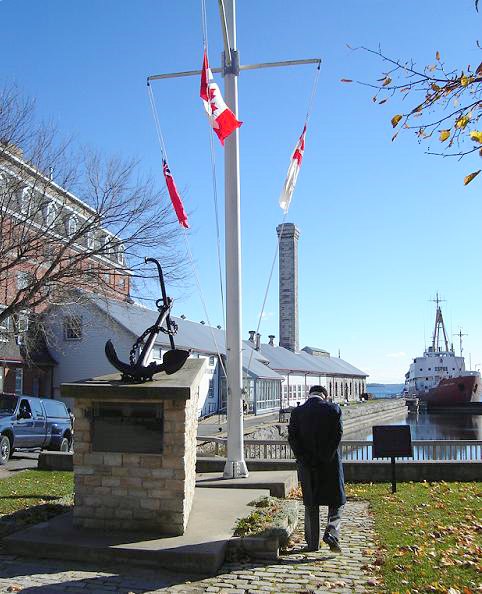
*Not Actually?
**Notable also was this recent news item about 1890s brewing in Margate that pairs well with my 2016 story of Margage brewing in the 17th and 18th centuries: “This town much consists of brewers of a certain heady ale, and they deal much in malt…

This Week’s Fantastically Even Dramatically Encouraging Beery News Notes For W3Oct25

Usually I have something to share at the outset. Something cheery. But as the garden is on its last legs, as the month slips toward Halloween and then we deal with the changing of the clocks, it seems that any pretense that the year isn’t beginning the final act is fading fast. But… but… before all that, there is one more bit of baseball. One of the most exciting ALCS runs ever now turns into the World Series between a startlingly strong Blue Jays against the defending Dodgers led by the semi-deity known as Mr. Ohtani.  Look at him!  He’s the perfect player. Kyusung Gong of the AP took it and it sums up Ohtani neatly. He barely looks like he’s putting in any effort. His batting is the same. Yet… the Jays look good. So, even though neither of the two are my team, I will be feet up this Friday evening for game one. If you have never watched baseball you may want to watch this. One more thing. The Jays celebrate with US beer brewed under license in Canada. Lordy:

The Toronto Blue Jays are sponsored by Labatt Brewing Company, the Canadian-headquartered brewery that represents big-name booze brands like Corona, Stella Artois, Palm Bay and, yes, Budweiser. That’s why, upon the win, you could see an icy barrel stocked to the brim with bottles and cans of Budweiser within an arm’s reach of every Blue Jays player at any given time.

As I say, not my team. Next, some beery news from the world of British fitba. First up, we have Jessica Mason’s report on the new brewery being build at second tier Wrexham, Wales care of those struggling team owners Reynolds and McElhenney:

Since the duo bought Wrexham AFC five years ago, the club has risen up the ranks from the non-league to England’s second tier. Added to this, the brand has also found fame via a Disney+ documentary Welcome to Wrexham, which followed the club’s story and focused global attention on the area, also boosting tourist numbers. Then, last year, Reynolds and McElhenney acquired a majority stake in local brewery Wrexham Lager…. now there are plans afoot for other drinks brands, including Wrexham Lager to have a boosted presence with the proximity of the new brewery being developed nearby. The application reads: ‘The Wrexham Lager proposals, consisting a brewery and associated taproom and museum, will utilise existing buildings on the site.’

But then we read of the news out of England’s seventh tier as reported by Phil Hay of the newsletter, The Athletic FC:

The club were Bracknell Town, based 35 miles to the west of London. Their video drew attention because in it, their coach — the recently-appointed Matt Saunders — hammered a number of his senior players, criticising their conditioning, their attitude and their tendency towards alcohol. “I’m not going to let this football club be dragged down by people that can’t run, can’t look after their body, want to go and drink after games,” he said. “It ain’t happening.” Bracknell are having a time of it. They’re bottom of the Southern League Premier South with six points from 11 matches, and Saunders’ arrival hasn’t picked them up. 

Difference? Maybe five tiers? Boak and Bailey have also made a call via an alert on Patreon, asking for a boost to the next level:*

It’s been a while since we tackled a big question like where did lager louts come from, what’s the deal with nitrokeg beers or when did video games in pubs become a thing? We’ve got an idea to write something about The Prospect of Whitby but beyond that, what are some other questions we might tackle? We like to add the sum of collective knowledge – to pull facts together into one place where they can be found. Suggestions welcome.

In a time when some other voices have gone a bit silent or seem a little discouraged, this reminder of the need to add to the sum of collective knowledge is encouraging. Solidarity friends! Send then your ideas or even scribble your own somewhere and let us know. Similarly, The Pellicle feature this week is by Lily Waite-Marsden, a portrait of Macintosh Ales of London which, at the outset, does not offer an initial encouraging prospect:

There’s a small yard a moment away from Stoke Newington Church Street in North East London. At its entrance an entirely perfunctory and heavily battered railing protects the square of overgrown cobbles from the pavement beyond. On the first floor of the old stable buildings on three sides, four green doors lead to nothing but a 10-foot drop; the yard is hemmed with various shades of green paint—faded and flaking patchwork grass, darker, glossier army-surplus vehicle paint. But for a hand-painted sign and a number of planters giving the game away, passing on a quiet morning or late at night it might look a little tired, unloved.

But then… it was encouraging. And, turning to brewing history, Andreas Krennmair wrote about a favourite topic of mine, Schenkbier. Except when I looked at the stuff it was from the perspective of what was brewed by German speaking immigrants to the USA. Schenk was referenced regularly descriptions of the brewing trade in the third quarter of the 1800s and was described as one of three species of German beer which had crossed the ocean: lager, bock and schenk.  Andreas found some information from a few decadeds earlier that helped him unpack what was in the glass:

What’s surprising is how different the beers were in terms of original gravity and attenuation. OGs between 11 and 12.6 °P are absolutely solid, and while some of these beers didn’t have nearly as much alcohol as modern lager beers, they’d still be alright to drink, although probably on sweeter side for modern tastes. Especially the beer from Heller stands out, with a respectable 11.5 °P but only 2.9% ABV and a very high residual extract. Doing the calculation, the real attenuation was less than 40%, so this beer must have been a sweet mess. Compare this with modern lager beer, with real attenuation around 65%.

Perhaps syrupy low kick gak is the next big thing. It could be already. There is going to be a next big thing, right? Maybe not. North America’s oldest brewer, Molson, is laying off staff. And not just any staff – the white collar staff of MCBC:

Beer maker Molson Coors Beverage Company said on Monday it would cut about 400 jobs, or nine per cent of its salaried workforce in the Americas by year end as part of a corporate restructuring plan. The company’s Americas workforce consists of employees in the U.S., Canada and certain countries in Latin America. A spokesperson for the company told CBC News in an email that the restructuring “only applies to salaried non-union employees across the Americas.” The company is not providing a breakdown by country or province at this stage, and no offices or breweries will shut down as part of the restructuring, the spokesperson added.

It’s always the suits who suffer. The trends in beer are not comforting. Last week’s noting that craft might need saving** not only got some chatter going but I played Mr Smil and dipped my toe into the math that we are living with seeking to compare those apples to apples:

Interesting to note that 2024, Athletic NA beer alone was 400,000 bbl. Is NA beer a comparable to other booze? Is it booze? We should probably compare alcohol sector to alcohol sector. Take just that one brewery’s production out, the drop is more like 14%…  Worse news if we believe Beer Marketers Insights (Oct 1): “Craft beer trends (ex non-alc) steepened over the summer to volume -8.4% and $$ -6.4%; several pts below total beer volume -5.6% and $$ down 5.1% for 18 wks thru Sep 20 vs yr ago.” So 2019-24 at -14% (non-NA) could be down -20% for 2019-25.

Or more *** The Guardian wrote about another aspect of the retraction from alcohol – the loss of a cornerstone element of overall profitability for restaurants:

The industry standard markup on alcohol in a high-end restaurant is anywhere from 150% upwards, making it one of, perhaps the only, high-margin products on the menu. As people drink less, it could leave restaurants in a precarious position. For every restaurateur willing to go on the record to discuss the shifting tide, there were an equal number who refused to be interviewed for this story. Some because they say they’ve witnessed no change in customer behaviour, and others because the subject matter is at odds with promoting a hospitality business. While it doesn’t necessarily do wonders for the bottom line, diners drinking less at the table does create a more harmonious environment for restaurant workers. Fewer drunk bodies means less risk overall.

Me, I usually just have water but still try to tip like I’ve had a bit of booze. Where will this all lead?  What can be relied upon to get the attention of the public. Innovation? The Beer Nut himself spent last weekend in Warsaw and spotted one of the more innovative cultural expressions of beer culture – a sausage randall as illustrated in thumbnail format… in consideration of some of your delicate constitutions. Much consternation was found in the comments which followed his Bluesky post – but I really can’t see the difference between a lager washed through sausages and sausages washed down with lager. Much depending of course on the quality of the sausage.

Speaking of quality, Matty C. has written about the return of Boddingtons for CAMRA’s What’s Brewing and has placed it in the moment:

Being honest for a second, this beer is not reinventing the wheel – there are far more interesting and flavourful pints available, even from JW Lees itself. But I consider the resurgence of Boddingtons is about more than flavour. Reports are already coming in from Manchester venues that are not able to keep up with demand, turning away disappointed drinkers who want to be seen with a pint of it in hand. This is significant, because those who are drinking it are young, fashionable, and about as far away from the cask beer stereotype as you can possibly get. This can only be considered a positive. For many drinkers, especially younger ones, a row of handpulls featuring a range of products they’ve never heard of can be incredibly intimidating. In Boddingtons, a brand has been revived that people can easily trust.

Heritage as maybe heritage? Maybe. Speaking of maybe, there is always the potential for maybe not – as one liquor dome in Northern Ireland found out recently:

Planners order the business to remove shipping containers used as a bar and storage, as well as a takeaway food cabin with a serving hatch on a Skipper Street – a side road that runs past the beer garden. Also to go are steel boundaries with wood covering that include an access gate and windows, an enclosed walkway entrance, a “tent structure”, boundary fencing in excess of two metres in height not adjacent to a road, and storage areas for bins and beer kegs. City planners say they’ve reached their verdict as “it appears there has been a breach of planning control” on the site.

Finally and probably relatedly, here is an interesting snippet of an unlocked article from the Financial Times written by Charles Spencer (Princess Di’s brother) on the question of authenticity which includes this:

When, in 1992, I inherited Althorp, my family’s ancestral home, I felt a responsibility to return it to how it had been for much of its 500-year history. For, over the previous decade and a half, the interior had been lavishly redecorated by my stepmother, Raine, whose taste and palette were inherited from her flamboyant mother, romantic novelist Barbara Cartland… I turned to John Cornforth, perhaps the leading British architectural historian of the time, to help me return things to how they should be. We toured Althorp’s principal rooms, assessing them for Raine damage. Cornforth’s kind reassurances dwindled as we went. Finally, on entering the South Drawing Room — a cacophony of clashing pinks (on the walls, on the floor, in the curtains) — Cornforth rocked back in his tightly drawn lace-ups. “Goodness,” he mused. “I really can’t help you here .  As he departed Althorp that afternoon, he lobbed me a catch-all mantra that he hoped might help: “Good taste is authenticity — and authenticity is good taste.”

The point is excellently made. But what does this have to do with beer? Only on the idea of how his hunt for authenticity based on that saying became for Spencer a no-doubt very expensive exercise in conformity. Realizing that, he argues for a balance between respect for what has come before with a realization that you need to live in the present, too. Can we compare the return of Boddingtons or the sweet mess that was historic schenk or that sausage randall with the clashing pinks of a devotee Barbara Cartland’s fashion sense?  Obviously even the “don’t yuk their yum” level of junior beer expert might balk at the more garish, the most lurid of these pleasures. But where to draw the line?

While we consider that over the week ahead, please also check out, Boak and Bailey on this and every Saturday and then sign up for their entertaining footnotes, too. Look out for Stan when he feels the urge now that he’s retired from Monday slot… maybe … maybe not. Then listen to a few of that now newly refreshed Lew’s podcasts and get your emailed issue of Episodes of my Pub Life by David Jesudason on certain Fridays. And Phil Mellows is at the BritishBeerBreaks. Once a month, as noted, Will Hawkes issues his London Beer City newsletter and do sign up for Katie’s wonderful self-governing totes autonomous website featuring The Gulp, too.  Ben’s Beer and Badword has been on hiatus since April but the archives are out there with the all the sweary Mary! There is new reading at The Glass which is going back to being a blog. Any more? We have Ontario’s own A Quick Beer and All About Beer is still offering a range of podcasts – and there’s also Mike Seay’s The Perfect Pour. Plus follow the venerable Full Pint podcast! And there’s the Craft Beer Channel on Youtube. Check out the archives of the Beer Ladies Podcast. That’s quite good and after a break they may well be are back every month!

*Formatted to fit, to protect the innocent perhaps but mainly to fit.
**Jeff updated his thoughts, by the way, but it did make me wonder why what one wants should be limited to what some producers feel they can provide. Perhaps the former suits of Molson now share that feeling.
***A bear of beer! 

Your Beery News Notes For The Week That I Start To Watch The Maple Leafs Again

I have a little rule. I have been a Toronto Maple Leafs fan since the 1960s. I know that because I still have most of my 1969-70 O-Pee-Chee hockey cards. I also know that they have sucked for most of the 55 years since I bought them. Oh, there was Darryl and there was Wendle but in the last decade they’ve only won one playoff series – until this season. So my rule is obvious. I won’t watch them unless they win a series. Which they now have. And they won the next series’s game one too. Update: and game two.

Speaking of victory, I noticed an interesting sidenote to the Australian election last weekend with the after party for the winner Anthony Albanese being fueled by Albo Pale Ale. Albo? Albo:

…you might have heard of Albo. When this beer was brewed, he was simply the brewery’s local Member of Parliament who was known for his support of the craft beer industry, trains and the ocassional spot of DJing. He went on to be the 31st Prime Minister of Australia and his younger self will forever be immortalised in this beer, which sure beats a toilet.

BTW – that toilet. Speaking of objects holding liquids, Kevin K commented an interesting comment this week: “always seems there’s a strong lack of editing for glassware articles.” Is that a lack of strong editing? And is “strong lack” related to Strong Bad? Whatever it is… I fully agree. What was the object of his disappointment?

Cusack gave a thumbs-down to two common beer glasses. “Pints and mugs are fine for a quick pour, but they do nothing to highlight what makes an IPA good. Too open, too wide, they lose aroma fast,” Cusack told The Takeout. “Steins are worse — thick glass insulates the beer too much and dulls your senses.” Pints and mugs don’t actually do much to enhance any beer’s flavor (not just IPAs), but mugs and glass steins, with their thick walls and side handle, will do the job well when keeping your beer cold is a priority.

Me, I drink pretty much everything from the same hefeweizen glass if I am wanting to pay attention. Lots of schozz space to get right in there for a sniff. And it holds the temperature well. And it allows me to compare one experience with another a neutral yet effective context. Otherwise, anything will do. What’s up with a glass per beer anyway? It’s like audiophiles who have different stereo speakers for different sorts of music.* Who can afford that? Do you really want to be like audiophiles? It all sounds connected to hyperflavor related status anxiety.

On a similar theme, I was really impressed with one aspect of the announcement from the World Beer Cup.** Transparency. For such an overblown title,*** it was interesting to see that the relatively low number of entries competing in most categories. An average of 73 entries per category. No doubt most were perfectly swell but doesn’t that mean it’s pretty likely that any winner is actually not going to be the best out there? And, with only 53 entries, they found a way to discover that SNPA is an ESB! Mucho guffaw resulted.

Mike Seay may have caught the moment both neatly and tidily with this comment this week:

I need to start asking for tasters before ordering an IPA or even a Pale. You see, sometimes they end up being hazy when there was no indication of it on the menu description. And I am over hazzies…for now. Yes I could always ask for a taster before, but I like to just go for it. Give me a pint and I’ll drink it, even if it ends up sucking. But I am getting too many New Englands when I was wanting a West Coast, so I gotta start asking, I guess.

Hazzies? Is that what we call a grouping of badly thought out hazies now? Maybe huzzies or hizzies even? And exactly how many beer educators did it take to get us to the place where you can’t order a beer and have a clue what you’re about to drink? And is that part of what Jeff meant by the wallpaper phase? Or perhaps what led us to this point:

Craft beer isn’t new and exciting anymore, and almost everyone has heard of it, and the vast majority of potential future customers have experimented with it. What breweries have to do now is sell their product to people who are already familiar with it—but also blasé about it. Craft beer is part of the wallpaper of alcoholic beverages now—present, but in the background, familiar and easy to ignore. Selling a product like that is very different than selling beer in 2000.

And Matthew C perhaps spoke to a similar idea with another sector of the beer trade in his note on Bluesky introducting this week’s feature at Pellicle:

Top stuff from Emmie Harrison-West on the site today about a really interesting no and low alcohol brewery near Edinburgh. It might be our last no and low piece, at least for now, as despite lots of (apparent) interest in what is often cited as the fastest growing sector in beer, the pieces we’ve published to date have struggled to gain traction with our audience.

What to make of all that? Perhaps conversely but definitely offering a ray of hope in this, Jamie Goode wrote an interesting article on standardization and balance (for the lyrically named WineMag.Co.Za) which easily applies to a lot of good beer:

This is the problem with the concept of balance. It can lead to a certain stylistic homogeneity; to boring wines that tick all the boxes, but which fail to thrill. Alongside this concept of balance, we have the problematic notion that we always want to drink the same sort of wine. There are even people who peddle protocols for matching consumers with the right wine for them. The truth is that we want to drink different wines on different occasions. I have lots of wines at home, but it’s not easy finding the right wine for the right moment, even though I have only wines that I like to hand. I think the concept of balance in wine is next to useless. It should be about whether or not a wine has personality, and whether or not that wine, with its personality, is the right wine for this particular drinking occasion. I want my wines to be interesting…

Me too. And my beers. But what is it to be interesting… and what makes it so? (And, he thought to himself, if we just left these clinky drinky things to individuals and their own interests, well, what would we do with all the experts and, horrors, the editors?) Hmm…  Drew Starr has an idea that perhaps may help frame the concept:

I think we discussed my theory of cognition for quirky regional food I conjured after Nick Tahou’s. Anyone can appreciate it, but you have to try it before your brain matures at 26 to have a love that defies objectivity. You always love it more when older, because the memory of youth is delicious… Ask me or anyone who grew up in Western MA who makes the world’s best burger, we’ll say White Hut, an objectively incorrect answer that we are incapable of being made to believe otherwise.

So… the things that are interesting are things that relate to the person by whom… in which… that interesting thing is / was experienced. Radical.  Matty himself, for the double, had a similar sort of tingly sensation this week, not from a recollection of youth but from being in the audience for a performance of Hamlet:

Such was the intensity and physicality of the performance as a whole that I can’t stop thinking about it. Samuel Blenkin, playing the titular role, was gripping. The way music and dance was weaved throughout meant I couldn’t look away for the whole 90 minutes. It was dark and visceral and unrelenting and sad and funny. Of course, I had to go for a pint and sit down afterwards, to help myself come down. But as I did so I realised in witnessing such a brilliant act of creativity my very soul itself felt nourished. I was full to the brim. There are moments in life, sometimes major, sometimes fleeting, but they leave a permanent mark on you. My first sip of IPA at Odell Brewery, devilled kidneys on toast at St. John, Mills Foxbic at Hereford Beer House, the reuben on rye at Choice City Deli. These are experiences that helped shape my worldview.

Is that what Goode meant by interesting? Probs. As one who is perpetually in that condition, when they prepare the syllabus for the Master degree seminar on The Beer Nut this will be one of the key passages the class will have to study:

…I didn’t think it worked very well, but I’m told by Kev the brewer and owner that I’m wrong, which is fair enough…

Returning to that piece in Pellicle, the not wrong and definitely interesting Emmie Harrison-West offered up a portrait of Jump Ship Brewing, low-no alcohol brewers near Edinburgh, and unpacked the background:

Like many of us as we age, Sonja found that her tolerance for booze had dropped. She was becoming irritable after drinking and dreaded the day after. “I was drinking less, but it was that Tuesday night beer that I was really craving. You know, when you’re finally sitting down, the kids are in bed, you’re tired and up early for work,” she says. Sonja discovered that an NA beer really scratched that itch, but she still felt like something was missing: choice. Sure, she was making better choices for herself, but found her options in terms of the variety of NA beers available were woefully limited. “That’s when I thought, ‘why don’t I just do it?’,” she tells me.

Swtiching a bit abruptly to the Health News Desk: the recent flurry of discussion about Savory IPA got me thinking again about the need to label the ingredients on beer. See, like a lot of people I am allergic to MSG – the key additive apparent miracle that transforms a humdrum beer into an amazing new style! It’d be nice to have informed decision making so I can know if my respiratory equiment is going to seize up or not.

And, perhaps taking a breather from all that above, I really liked David Jesudason‘s piece**** on the Alehouse in Reading where he found people ready to just have a chat:

It never was my plan to travel 50-odd miles in a four-hour round trip for this specific chat but that’s where my day took me. I had a vague idea to visit the Alehouse for the second time because, inspired by The Shiralee, I wanted somewhere a bit rough and ready where I knew there would be people drinking in the day despite the broad sunshine outside. The pub is covered head to toe in pump clips, has a queue of pickled egg jars at the bar and various hair rock songs being played through the speakers – the only tune I could place was Queen’s Fat Bottomed Girls, and it’s been a long time since these women made the rocking world go round.

All of which, coming full circle, brings me to the thought that Boak and Bailey shared on their Patreon back channel last weekend and gave us all the “oomph” of the year in beer, YTD-wise:

Jeff Alworth’s wallpaper post got us thinking about lots of things, but mostly that time passes quickly before you notice it. It’s easy to feel as if craft beer is a thing that just landed, beloved of fresh-faced hipsters. But even in its most recent form – IPAs and punks and skulls – it’s been around for several decades. Thornbridge Jaipur, an especially significant beer in British craft beer, turns 20 this year. There are people at university now who have never lived in a Jaipurless world – who don’t remember a time before BrewDog, or Beavertown.

Me: “I’m not 62! That old guy over there is!!!” What is it we want from all this anyway? Being part of Club Craft? Nope. A nice chat sound perfectly nice, if I am being honest. And a nice beer in any frikkin’ glass I feel like using. See, the failings of craft now so evident in 2025 – especially the failure to reign victorious as was clearly promised a decade or more ago – reminds me of what I recently read in that grab bag of convenient quips for we the aged alumni with the BAs, The New Yorker, on the translation of Catullus:

Precisely what makes much of Catullus’ work so appealing and “relatable” to modern audiences—the offhand charm, the impish vulgarity, the jazzy colloquialisms—makes him that much more difficult to bring into modern English. Ordinary language, after all, has a far shorter shelf life than does the elevated language of high literature; translations of Catullus that are barely twenty years old already feel dated. Peter Green’s “Wretched Catullus, stop this stupid tomfool stuff” sounds positively Victorian next to Mitchell’s “Wretched Catullus, stop this crazy longing.”

It lives in the past tense, does craft. It is, to my adult chidren, exactly that: stupid tomfool stuff.  Not beer, mind you, which is good. Beer remains interesting.

That’s it for this week. I am on a train later today so may be delayed in responding to all your emails and DMs and stuff. Bear with me. Until we meet again, please check out Boak and Bailey every Saturday (…as long as all their holiday fun doesn’t get in the way…) and Stan (….not quite…) each and every Monday. Then listen to a few of the now rarely refreshed Lew’s podcasts and get your emailed issue of Episodes of my Pub Life by David Jesudason on the (sometimes even but never) odd Fridays. And maybe The British Food History Podcast. Maybe? And Phil Mellows is at the BritishBeerBreaks. Once a month, Will Hawkes issues his London Beer City newsletter and do sign up for Katie’s wonderful newsletterThe Gulp, too.  Ben’s Beer and Badword is out there with the all the sweary Mary! And check out the Atlantic Canada Beer Blog‘s weekly roundup. There is new reading at The Glass which is going back to being a blog. Any more? We have Ontario’s own A Quick Beer featuring visits to places like… MichiganAll About Beer has given space to some trade possy podcasts and there’s also The Perfect Pour. Plus follow the venerable Full Pint podcast with an episode just last month!. And there’s the Craft Beer Channel on Youtube. Check out the archives of the Beer Ladies Podcast. That’s quite good but, hmm, they’ve also gone quiet this year. The rest of these are largely dead. And the long standing Beervana podcast …except they have now stood down.  As has We Are Beer People. The Share looked to be back with a revival but now its gone quiet. And the Boys Are From Märzen podcast appears suspended as does BeerEdge, too. VinePair packed in Taplines as well. All dead and gone.  There is more from the DaftAboutCraft podcast, too. Nope – that ended a year ago.   The Moon Under Water is gone – which is not surprising as the ask was $10 a month. Pete Brown’s one cost a fifth of that – but only had the one post. Such is life. Such is beer podcasting and newlettering!

*“Disco Woofer” would be a great name for an DIPA. Or a speaker.
**No doubt intended to be confused with the equally grandiosely World Beer Awards. Not to mention the World Awards of Beer.
***Olympics? That all? Surely it’s the Mount Olympus of Beer! Even as the BA continues its logical retraction, the fawning seems to be enhanced.
****His writing in which reminded me of another passage from another article in that same issue of The New Yorker from March 30 2025: “Much of the art of “Encounters with the Archdruid” lies in the way that McPhee manages to be both there and not there. He bathes his aching feet in the water. He recalls other trips he has taken with Brower and, separately, with Park. He searches for copper-bearing rocks, and, when he finds them, gets excited. But he never reveals whose side he is on. When it comes to the great question of the piece—to mine or not to mine—he gets out of the way.