More Vital Information On Third-Category Beer

I suppose that if I ever tried it or if it had a name that did not sound like something out of Blade Runner I would have less of a fascination with that fluid in Japan that is called “third category beer.” This article in the The The Daily Yomiuri, however, is full of tidbits that make me wonder what this stuff is really like:

“Faced with gasoline and food price hikes, consumers are looking for better deals on some products. Third-category beer, which is often made from soybeans, corn and peas, is priced cheaper than regular beer and happoshu low-malt beer. Beverage makers are fiercely competing to keep prices low, while trying to produce tastes close to that of regular beer. The key to third-category beer’s success is the low price, and shipments surpassed those of happoshu beer in May. A 350-milliliter can of third-category beer sells for about 140 yen at convenience stores, about 20 yen less than happoshu and 75 yen less than regular beer.”

How excellent: “…close to that of regular beer.” Yum. Wouldn’t it be nice if we had similar clarity in our macro-brewing? How many beers would have to call themselves happoshu that now hold themselves out to be beer from barley?

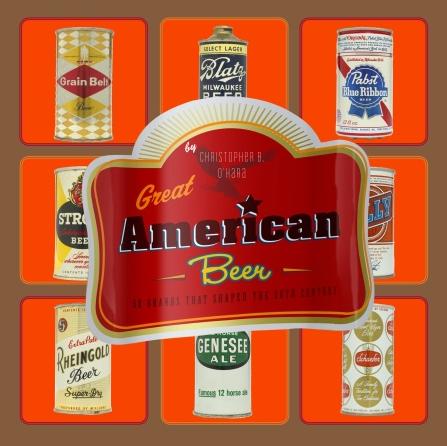
Book Review: Great American Beer. Christopher O’Hara

This is a handy neat smaller format hardcover that the publisher was kind enough to FedEx me this week. And I am glad they did as this is a dandy guide to its exact topic: post WWII, pre-micro revolution pre-branding US beer. The author gladly admits this in the introduction:

The antithesis of the recent microbrewery revolution in America, this was a time when the major beer powerhouses took control of the brewing industry and, in the grand spirit of American industry, relentlessly quashed the small, independent producers that relied upon local support. This story is about the Americanization of beer, where homogenized brands – grown through a mixture of political clout, industrialization, and marketing might – became the best loved, and most heavily consumed beer brands in the world.

This is an unapologetic book in a time of review and perhaps revision. As Ken Wells discussed in Travels With Barley, despite all the efforts and successes in the craft brewing revival, this is a continent of lovers of beer-flavoured water making that still the primary cultural phenonmena to be grappled with when considering beer.

This book tells the story not so much of how that occured as who was involved. And it does so with style and wit. It is a primarily a series of fifty 500 to 200 word essays on the individual brands that made up the wave of oneness that is macrobrewing, from Bud to Blatz to Utica Club. Because this is as much pre-brand as pre-craft, there are no discussions of those “Bud Draft Dry Light Ice” sorts of beers that popped their heads up starting in the late 1970s – the word Light…or rather Lite…does not appear in the table of contents. This is a book that argues for a golden age and makes a pretty good argument for it. Even with the eighteen page history, this is not academic tome or a deep dive into the culture but, as you can expect, that could be an issue which, once raised, might be legitimately greeted with a shout of “academic, schmacademic.”

The book heavily relies upon images of the collection of beer stuff collector Erik Amundson, which you can see at the web site www.taverntrove.com. This is good and well handled as the advertising, packaging and other flotsom and jetsom of the brewers played such a huge role in differentiating a homogenized product. It is presented attractively along with well-written, informative text providing a book for the beer fan not scared to be presented with the phrases like “trendy imports” and “craft snobbery”. I’d say get it.

Beer Science: Pabst Against Pabst

pabst2

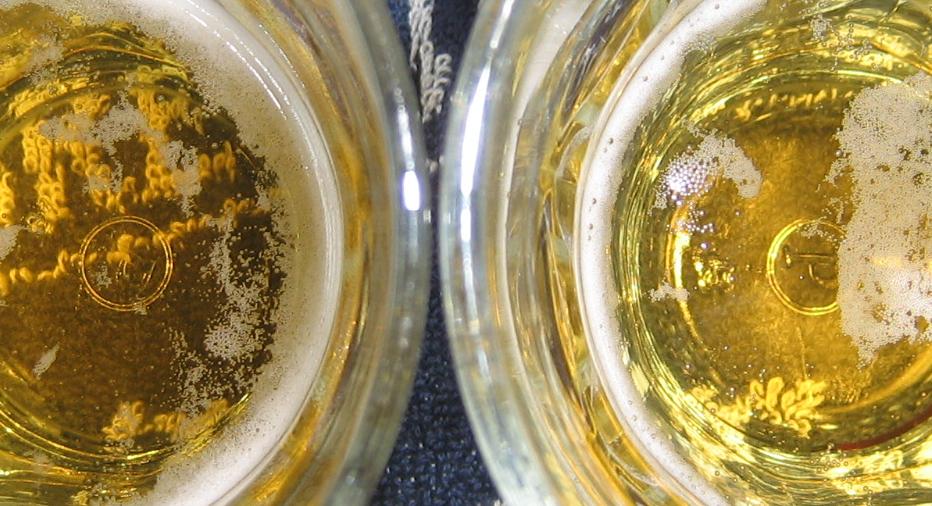
Ever since my pal portland came up with the phrase beer-tasting water, I have been a little too obsessed with Pabst Blue Ribbon. But then I realized I had a unique opportunity to perform my sort of science experiment: a side-by-side comparison of a PBR from the US against one brewed under license in Canada by Sleeman of Guelph. Even though any possible outcome of this project will not advance the human condition one bit, I took on the challenge.

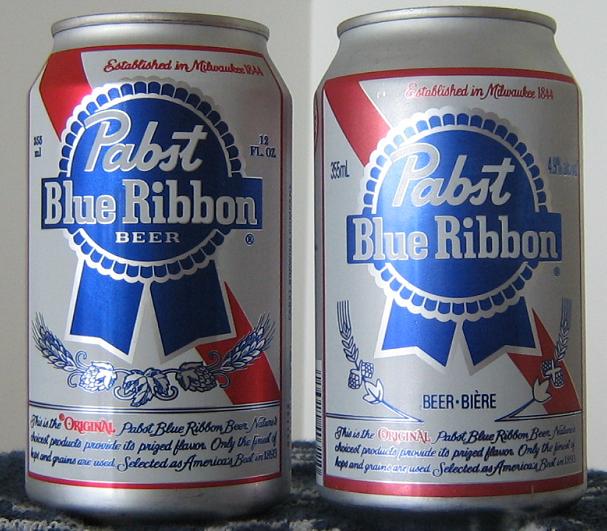
pabst1First, I noticed the price. A six of Canadian PBR is $7.50 at the LCBO. The US version was $4.60 at a gas station on 12E, east of Watertown, NY. I knew I was getting ripped off, too, as I had seen $3.29 for the six at another place that was sold out. Then I noticed the cans. There is clearly more blue ribbon on the PBR stateside. Does this matter? I suppose not. Both also have the River Plate red sash which is quite natty.

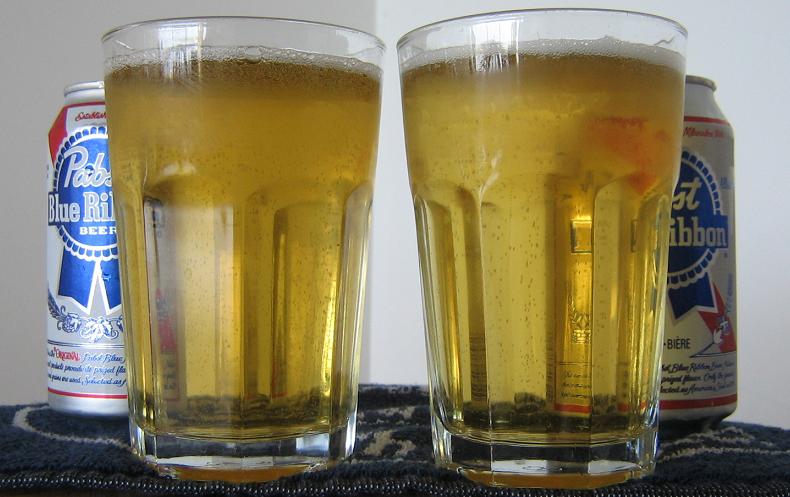
pabst3To be honest, the beers taste pretty much the same – sort of bland, the pablum of beers yet without off flavours and somehow comforting. Like pablum, no self respecting adult would look forward to the taste but, once presented with it (like a new father feeding pablum to his little baby for the first time and scraping it off his hands knees and forehead), one is less turned off than one might expect. Yet the Canadian version, right in all pictures, is clearly a notch lighter and by the end of the glass as it warms and the bubbles die away it maybe even more watery.

What have we learned? Not much. Except I have ten more in the fridge.

Boycott!!!

The exceptionally well-named Yates on the States, the tale of a family man from Manchester, England living in Minnesota, has raised this banner. It leads to an interesting consideration of the global brewing industry.

Yates’s complaint is that cask conditioned Boddington’s ale will no longer be made as the Manchester, England factory – the Strangeways Brewery – that makes it is being shut by its Belgium based parent, Interbrew. For 200 years, Boddingtons has only been made at Strangeways. From what I read, I understand what is at risk is the cask conditioned version of the brew, the real ale with live yeast in it, as opposed to the industrial kegged or canned versions with forced C02 carbonization we see on our shelves around the world. As a general rule, real ales take time to make, do not travel well and, if they do travel, they are expensive, like the six bucks Canadian I pay for a quart of Rogue. Kegged and canned beer is built for the tractor trailer ride.

If my reading on the brewing industry has taught me anything it is that mergers and consolidations have been the stock in trade for brewers for ever. I noted this as a complaint in my review of Martyn Cornell’s excellent Beer: The Story of the Pint but now I see it as simple reality, the nature of the flux in one end, the industrial end, of the industry. Consider this. I go to check the Interbrew website and the company itself has consolidated and is now called InBev, which is about as imaginative as LiqCo or HoochInc. It brews 13% of the world’s beer. It owns the Keiths I drank as a kid but which now gives me the willies when I smell it, the Rolling Rock in portland’s fridge, and the Hoegaarden and Leffe which have both been praised here. On the one hand, if it were not for the efforts of Interbrew, I would never have tried brews like Boddingtons or Leffe. In fact, the LCBO shelves are stocked with many InBev products, making the purchaser’s job an easy one. On the other hand, I would have had a chance to try other smaller brands since killed off in the churning mill that is the merger game – but only if I travelled to where those products are made. So, when brewery mergers kill off your local favorite, either an entire brand or a real ale version of it, it is an actual but local crisis; when it adds a great new style to your shop, it is a blessing but, really, only as a start to new hunting when travelling.

The conundrum of standardization and globalization. I will leave it to you to consider Yate’s call when deciding what you reach for when you reach for a beer.ill leave it to you to consider Yate’s call when deciding what you reach for when you reach for a beer.