The League Of Diastatic Brown Kilnfolk

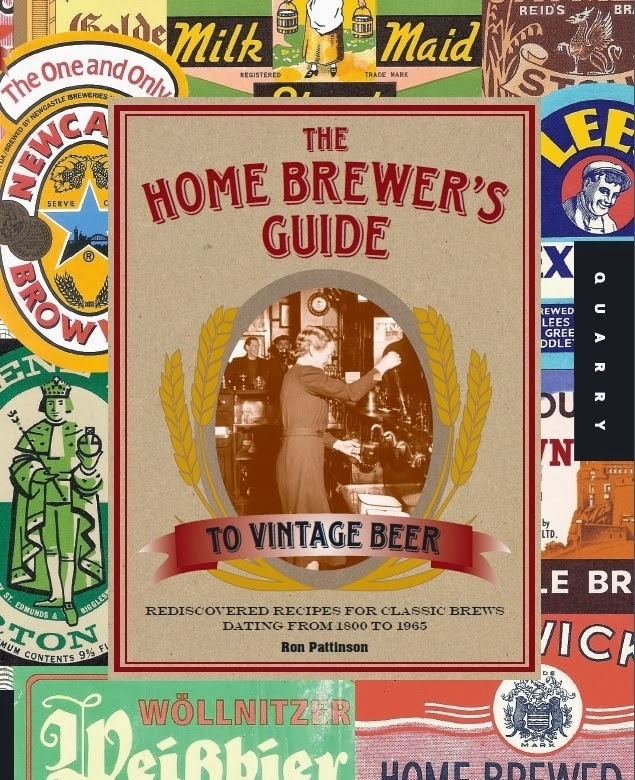
I need a new project. The writing and working and new kitten stuff is simply not enough. So when I was reading Ron Pattinson‘s new book The Home Brewers Guide To Vintage Beer yesterday as the six year old did not do much during a kids’ basketball practice at the Y, I was struck by this passage on page 11:

The earliest porters and stouts were brewed from 100 percent brown malt… It was custom to use straw as a fuel in the final stage of the kilning, where the temperature was increased dramatically.

See, in these hop-crazed times we worship a false idol, a flavouring agent. That error has spawned a thousand flavoured beers posing as craft. But we know that adding watermelon or lye or New Zealand hops to a beer only succeeds in making the beer taste of the adulteration. It is time that the focus of brewing returned to the making of better beer. And that means paying attention to the malt.

Which is the point of the LDBK. See, when I was a bad home brewer I liked to manipulate the malt, I would toast it immediately before mashing to make the oils more volatile and available. I used to let some malts soak for days in cold water in the fridge and pour the resulting tea into the boil right at the end. It worked. It was easy. But ever since I tried the 1855 collaboration porter brewed by Pretty Things and Ron, I have wanted to taste what should be considered the holy grail of brewing: pre-1800s beer made with proper diastatic brown malts.

That is where the LDBK comes in. See, what needs to be determined is how diastatic brown malt is made. What we know is that it was made of malt and that it was made by kilning. What has been forgotten is how the malt got darkened without destroying the enzymic properties of pale malt that allows the grains’ natural starches to convert to fermentable sugars. This conversion is something that can and should happen in every home every second week. Through collective experimentation and statistical analysis of results, it may be possible to establish the practical point at which pale malt may be toasted and darkened to create brown malt as well as the manner in which it might be done to protect the enzymic action. That in fact is the motto of the LDBK. Protect the Enzymic Action. What is the Latin for that?

So, start kilning and mashing. It takes a kilo of pale malt, pots and pans, graph paper and curiosity. While it may be that the critical feature is pre-kiln, that mention of the use of straw and flash heating may be key. The trick might be to darken the outside so fast that the inside is not fully heated. Then mash it in small batches to see if the resulting 66C porridge goes sweet. Like a rare steak on the grill, the point might be to preserve both characteristics through the process. Just a theory. But that’s where all great advances in human understanding begin. With a theory. And some graph paper. You in?
Best thing is that others are trying.

Oh, For A Mug O’ Fern Ale To Keep Strangers Away

Ron got me thinking. He was making fun of something written by Horst Dornbusch today, the “man of a million unfounded claims,” when I noticed something about pale ale coming into being around 1800 when coke was first used. I knew that was wrong so I started digging around for references to straw dried pale malts. There is something about the lack of industrialization that makes for a lack of a record of things and I thought the Coke Makers Association of The English Midlands may well have diddled the books, created history around their own inventions. And there it was… sorta… in The London and Country Brewer from 1737:

Next to the Coak-dryed Malt, the Straw-dryed is the sweetest and best tasted: This I must own is sometimes well malted, where the Barley, Wheat, Straw, Conveniences, and the Maker’s Skill are good; but as the the fire of the Straw is not so regular as the Coak, the Malt is attended with more uncertainty in its making, because it is difficult to keep it to a moderate and equal Heat, and also exposes the Malt in some degree to the Taste of the smoak.

OK, the pro-coke lobby is firmly entrenched but the quotation is from 63 years before Horst so that is worth noting. But then I notice this comment further down page 14:

The Fern-dryed Malt is also attended with a rank disagreeable Taste from the smoak of this Vegetable, with which many Quarters of Malt are dryed, as appears by the great Quantities annually cut by Malsters on our Commons, for the two prevalent Reasons of cheapness and plenty.

Interesting. Commonly used and rank. The author likes his descriptors of bad tasting: “rank disagreeable Taste” is joined by “most unnatural” and, my favorite, “ill relish.” Yet there is it – fern beer. What was fern ale like? We spend so much time hybridizing a new hop or injecting a new chili pepper extract into our beers we have forgotten the humble fern, maker of widely consumed if rank ales. In 1758’s Volume 3 of A Compleat Body of Husbandry by Thomas Hale, a bit more hope is given to the prospects for the taste of a fern ale:

The amber may be straw dried, but ’tis not nearly so well. As to wood and fern they are used in some parts of the kingdom, and custom makes the people relish the beer brewed from such malt; but to a stranger there is a most nauseous taste of smoak in it.

At least the locals liked it.

Lord Goog in the end gave up what I was looking for. In an edition of A Way to Get Wealth by Gervase Markham from 1668, a book first published in 1615 or about 200 years before the start date picked by Horst, we have an opinion on the preference for straw… and not just any straw:

…our Maltster by all means must have an especial care with what fewel she dryeth the malt; for commonly, according to that it ever receiveth and keepeth the taste, if by some especial art in the Kiln that annoyance be not taken away. To speak then of fewels in general, there are of divers kinds according to the natures of soyls,and the accommodation of places-in which men live; yet the best and most principal fewel for the Kilns, (both tor sweetness, gentle heat and perfect drying) is either good Wheat-straw, Rye-straw, Barley-straw or Oaten-straw; and of these the Wheat-straw is the best, because it is most substantial, longest lasting, makes the sharpest fire, and yields the least flame…

Look at that. We are in a different world compared to both today as well as the mid-1700s. Back to an agricultural age. “She” is the maltster. And the specific qualities amongst four classes of straw are known and ranked. After these light grain straws come fen-rushes, then straws of peas, fetches, lupins and tares. Then beans, furs, gorse, whins and small brush-wood. Then bracken, ling and broom. Then wood of all sorts. Then and only then coal, turf and peat but only of the kiln is structured to keep the smoke out of the malt.

Why? The whiz kids at Wikipedia tell us that:

In 1603, Sir Henry Platt suggested that coal might be charred in a manner analogous to the way charcoal is produced from wood. This process was not put into practice until 1642, when coke was used for roasting malt in Derbyshire.

So, coking turns out an early industrial practice that only first considered halfway through the life of Gervase Markham who lived from 1568 to 1637 and only applied to malt after his death. Coke is used to perfect – but not create – pale malts.

Pale malts and pale ales would have been around for some time well before 1600 even if in the effort to make them some became, as Markham writes at page 166, “fire-fanged.” I am sure that a fern fire-fanged ale may well have been an ill relish. But what of those whose custom made them love them all the same? Right? It’s a style just waiting to be reborn. Right? Markham would have none of it. At page 181 he states:

To speak then of Beer, although there be divers kinds of tasts and strength thereof, according to the allowance of Malt, hops, and age given unto-the fame; yet indeed there can be truly said to be but two kinds thereof, namely, Ordinary beer and March beer, all other beers being derived from them.

Got it? Fern ale is not a kind of beer, just a taste. There are two kinds of beer, ordinary and March. Everything else is showing off.

National Six-Pack VIII: Raftman, Unibroue, Quebec

You think it is February. Nothing will surprise you in February when you are as many weeks from Yule as you are to spring. Month o’ the rut. Then, you try a brew that you have never gotten around to trying and the world is all sunshine and love…or at least has one more good brew to tell folks about.

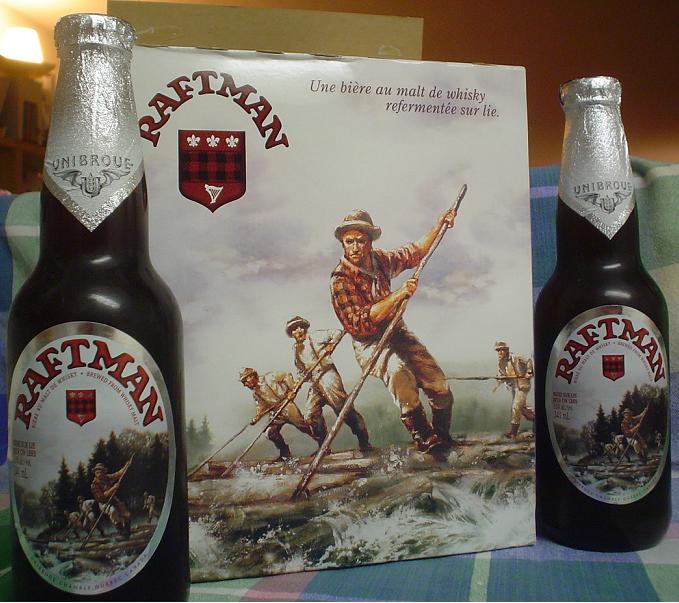
I really like this ale. Likes it, I do. 5.5% at a pretty basic price at the Beer Store. It is like a cross between a great Belgian witte and a great Canadian pale ale. A bit spicy, gingery orangey/lemony but also a big husky grainy profile as well. There is a yeast deposit that tastes decidedly spice-a-lee Belgian but a careful pour leaves the ale bright in the glass. The colour is more deep dark straw than amber – no red to my eye. The head stays around in a nice lively fine foam. It is the kind of beer you could smell for an hour, sticking half your face in the glass – you could if your wife or pals or children would not laugh at you for being a dork.

The brewery, Unibroue says of one of its lighter offering Raftman:

Launched in March 1995, Raftman is a beer with a coral sheen that is slightly robust. It contains 5.5 percent alcohol and combines the character of whisky malt with the smooth flavours of choice yeast. It has a subtle and exceptional bouquet that creates a persistent smooth feel. Raftman complements fish, smoked meat and spicy dishes. It is brewed to commemorate the legendary courage of the forest workers. These hard working men knew when to settle their differences and share their joie de vivre with a beer and a whisky.

The brewer twice notes “smoked whisky malt” as a part of the mash but it is a pretty subtle smoke if it is there at all. Still, it is Big Joe Mufferaw ale. Ale for men in plaid. Beer for lumber bars like Fred’s in Chapeau or the Silver Maple back of Shawville. Click on the photo for a plaidly scale version. The beer advocates do not go all rang-dang-do ever it but lots like it.So far, tied best of the National Six-Packs along with St-Ambrose Pale. Two Quebecers leading the pack. Who knew?