
And Just Like That Here Are The Quite Frosty And Fully Final Beery News Notes For January 2026

It’s been a quiet week in the beer world with distractions aplenty in my real world. Like the Arctic vortex. To be honest, I’ve always preferred the Caribbean vortex whenever it pays a visit.  Thankfully, once upon a time I lived up in the upper Ottawa and have experienced the refreshing zing of -53C so knew enough to break out the heavy tweed and  big boots. Dashing yet completely unable to dash. Elsewhere people are embracing the deep chill as well.  Will Cleveland reporting from Rochester, NY has news of the return a winter beerfest this weekend;

This isn’t a gimmick festival chasing the beer-du-jour; it’s a gathering rooted in the style that got a lot of people into craft beer in the first place—before haze became a default setting and before “imperial” stopped feeling like a warning label… DiCesare remembers the first year clearly, mostly because it was about 10 degrees outside. This year, the ask is similar but the hope is different: dress for the weather, embrace the winter, and lean into the fact that January beer festivals are better when they stop pretending they’re outdoor concerts. Fire pits and outdoor heaters will again be part of the setup, encouraging that specific Rochester ritual of standing outside, beer in hand, nodding knowingly at strangers like, yes, this is happening, and yes, we chose it.

What else has been going on? Well, it was Rrrrrrrabbie Burrrrrns night last Sunday and all around the world folk reacted to the plate of haggis, neeps and tatties set before them. Unless, as Katie M explored in Guts magazine, it perhaps wasn’t really haggis:

Learning how important lungs are to the recipe of a traditional haggis, a vegetarian version seems like sacrilege. The whole point of haggis is that it’s offal, a sausage or boiled pudding made with waste-not, want-not diligence to keep Scots fed throughout the winter and leaner times. The very idea of a vegan haggis is deeply inauthentic—offensive too, if you were to read the comment sections on any clickbait story about the dish. But if you’re appalled, you’re forgetting the accommodating nature of the Scottish people. Do you think my Grandma would have anyone going hungry in her house? The very origins of vegetarian haggis was borne from hospitality…

As the good author noted, the very prayer one prays before we got to the “O what a glorious sight, Warm-reekin, rich!“* includes the line “some hae meat an canna eat…” so there is some authority for this. Is there another dish that so inspires? Speaking of how others live, in the Globe and Mail, Drew Shannon wrote about finding a beer in Kazakhstan:

I broke up with craft beer a long time ago – back when small-brand breweries went from niche and interesting to eye-rollingly ubiquitous. Of all places, I didn’t think I’d run into my beverage-ex in Kazakhstan. I assumed either big conglomerate brands would still dominate the former Soviet state or there’d be no beer at all. Finding a pint in some parts of the Islamic world can lead even the most well-travelled tourist on a fruitless quest. It turns out, I was dead wrong. My impromptu evening of bar-hopping around Almaty, the country’s largest city, started after a long day of trekking the Turgen gorge. On the way back to my hotel, I noticed Privychki Bar. I pushed open the front door to find a gaggle of young Kazakhs perched on vintage armchairs, sipping cloudy pints. 

Mmm… cloudy pints. Never less than clear, Stan, in his concise one paragraph way, directed me to a bit of resurrectionist thinking over the cool corpse that one was Rogue Brewing. How in its haydays it didn’t have managers, it had ambassadors: “That is why Rogue was kicking ass in those days is that felt that they were ambassadors to craft beer.” Yikes. I had a sudden unsettling flashback to the bad old irrational – if not greedy – days of craft and reminded myself of this from 2012:

To hell with that. Passion is that employer of the young who saps their joy for life. Passion offers periodic Google ad cheques in return. It asks you to be the unpaid brand ambassador. On Wednesday night, a intelligent and eager young person suggested to me that my interest in good beer was pure passion with a certain honest excitement. I took the time to gently crush that moment like a mouse under my heel. It was information, I said. Information and interest. Passion? I have children for that. 

The children? They are 14 years older now and each of an age when they might be expected to buy the beer as much as have it bought for them. I trust that now not-so-young person has found another moe successful career – and that’s probably for the best for all.

Note #1: Twenty years of Ron!
Note #2: Maureen asks … in the end… is a brewery just its trademark?
Note #3: Stout-flation strikes.

Heavens! I missed the news when The Beer Nut issued a new beer style alert right around when the update when to the presses last week. He was reporting from the front lines of recent holidaying where and when he encountered:

… the rarely-seen style of imperial sweet potato amber, and I had no idea what that was likely to mean. Beniaka is 7% ABV and a cola brown colour in the glass. Although fizzy, it’s plenty thick and feels luxuriously “imperial”. Can’t say I tasted much potato, but there’s a pleasant woody spice: nutmeg, sassafras and liquorice. It’s fairly sweet with it, showing a little Scotch-ale-style toffee, with the herbs helping balance it. This is interesting, with lots happening, but it’s not a daft novelty, and makes for a very civilised digestif.

Not at all in response, Sophie Arundel was given a fun topic over at the Drinks Business – the dead end trends of 2025:

Several alcohol formats once framed around lighter, functional or lifestyle-led positioning are now in sharp decline. Hard kombucha now holds a 0% share of social discussion, down 29.8% year on year. Hard tea has slipped to a 0.01% share, falling 33.79%, while hard seltzer sits at 0.02% share, down 33.67%. The contraction extends beyond these formats. Craft beer, often seen as culturally resilient, is down 16.52% year on year with a 0.84% share, while generic IPA beer has fallen 17.28% to a 0.38% share. Tastewise’s data suggests the broader “better-for-you drinking” narrative is losing attention. Products that relied heavily on pseudo-functional positioning are struggling to maintain relevance, pointing to a need for clearer occasions, flavour-led propositions and tighter ranges.

(“Pseudo-functional” was the name of my folk-punk band back in ’93.) At least craft beer fans can take comfort that their drug of choice is going better than hard kombucha. There are still some hangers on that are telling craft to repeat its errors… but it is true, isn’t it – when things are going down the proverbial shitter, not one really is working to improve so much as find themselves quite happy to tread water.** Perhaps coversely, BMIs seems to be seeing at least a stall in the slide when it comes to US beer:

NBWA released its Beer Purchaser’s Index reading for Jan early touting a “significant bump” from December. After 5 mos in a row of readings below 30 (including several lowest ever around 25), BPI jumped to 39 in January. Not exactly great shakes, and 9 points below Jan 25, but still 14 points better than Dec 25. (Recall, BPI below 50 suggests beer distrib orders are contracting, while above 50 signals expansion.) 

So less of the lessening perhaps. But in western Canada, there was actually an increase in beer sales through 2025. So who knows! Well, at least we know one thing. I think we have established that not being very profitable at all is actually not a good business plan:

BrewDog has announced that it is closing down its Aberdeenshire distillery and ceasing production on all spirits. The craft beer company said it had decided to abandon its state-of-the-art distillery, which opened in 2016, and axe the brands after “careful consideration”. The move comes after the company posted losses of £37m in 2024 and announced job cuts across the business, including at its head office and brewery in Ellon.

Conversely (at least in San Francisco) not doing well enough to even attract a proper buyer can have its advantages:

During that massive blackout on December 20, every business but one in the Lower Haight had to shut its doors because they had no power. That one would be Toronado, which still uses an old-timey, non-electrical cash register with punch buttons and a hand crank, still takes only cash, and beer taps don’t require electricity. Cheers to ancient technologies. The story was left hanging last summer after a new crypto-bro owner had stepped in looking to take over the bar — and launch a Toronado-themed coin! — and after that deal appeared to be in jeopardy once longtime owner Dave Keene discovered these details and looked to cancel the deal. But SFist can confirm now that the deal was, indeed, canceled, and everything remains as it was at the bar.

That’s nice. Unless the owners really hate the place and want to move on I suppose. Can you own an iconic institution that people flock to and really hate it?  If someone does something well I would hope that there is joy in the doing.

Note #4: The many beards of Polk.
Note #5
: What friends of beer writers think they do…
Note #6: …all day long…

Joy in doing? That’s a bit like this week’s feature in Pellicle by Imran Rahman-Jones about the making of liquor from what’s to be found right there in Edinburgh’s urban orchard:

As Chris continued to tweak his distillations, and source new apples for each batch, he began to reflect on the fruit’s beguiling quality. “[There’s] something quite magic about an apple tree in the street,” he says. Neighbours will leave out boxes of fruit for one another, or swap recipes. “It tends to pull the whole street together at a certain time of year.” What Chris didn’t know when he started the process of developing Pochle was that he was tapping into a lineage going back centuries in Scotland. The enchanting ability of an apple tree to gather and unify in fact has deep roots in the country’s traditions and folklore. 

Lots to like there. And just look at the people working to get that bit of writing onto your screen. The fine folk keeping Pellicle going, the author Imran Rahman-Jones, the semi-sticky handed Chris Miles who gathers and also those who let the foragers be – not to mention those who planted and tended to the apple trees. Doing is a wonderful thing.***

And on that very subject – the doing of things – Boak and Bailey were out there again in their monthly newsletter for January doing a great job encouraging more writing about beer. What to write about:

There are local drinking customs and cultures that probably seem unremarkable to people who know them but which would interest people like us. Flat Bristol Bass is one that fascinates us but there must be others all round the country, and certainly around the world. Alex, our favourite beer blogger of 2025, goes to three pubs and writes about what he sees going on there. Adrian Tierney-Jones (a pro, not a blogger) takes a similar approach. Now, you could write tasting notes of every beer you drink but, honestly, that’s probably the hardest thing to make interesting – unless you are a skilled, creative, and/or amusing writer like The Beer Nut. It can still work if your tasting notes find a theme or tell a story, though.

Do it! I like it – but do note that “blogger” and “pro” are not comparable categories and neither term speaks all that much to the quality of the writing. “Pro” is code for paid writing which can be compromised even just by editorial restrictions**** though, more to the point, too often not all that good. And “blogger” is a reference to a class of medium, not a sign of quality of the writing and not necessarily code for an amateur though some of the best beer writing is actually provided by people who earn their living otherwise. Ray and Jess themselves are proof of that. Better to think of adjectives like interesting, inventive or even valuable when weighing the cred. Then notice where they don’t apply!

I would also add, don’t worry too much… unlike Mikey Seay who has shared what strikes me as quite an odd thought:

I always shy away from reviewing beers for two reasons:
– Lack of skill to do it properly.
– Beers can be too regional to make a review relevant to a global newsletter audience.
That said, I feel a new beer from Sierra Nevada is available enough in most places to make it worthwhile to mention.

Seeing as thinking and writing about your taste perceptions takes about as much skill as running a vacuum cleaner, I don’t think this is a particularly useful standard. But then again you may be crap at vacuuming, too. Do you worry about that? Just type. Be patient and get those keyboards clicking. It’s a lot like planting a seed and also, if nothing else, it’s good for the knuckles.

Where will it take you, all this clickery? Well, as we wrap up this week on the note of the haute in beer writing, this is your final call for a fully self-funded trip to Bordeaux in June:

This is the FINAL REMINDER about the 2026 Beeronomics Conference, which will take place at ESSCA School of Management, Bordeaux, France, 24-27 June. Main panels and sessions will be held at the ESSCA Bordeaux Campus. The Conference Organising Committee, led by Gabriel Weber and Maik Huettinger, welcomes all high-quality research on the economics of beer and brewing. 

The deadline for submissing an abstract is Sunday. Send me a card. Fine. Fin. As I said, a bit of a quiet week. please check out Boak and Bailey who are posting every Saturday and adding to their fabulously entertaining footnotes week after week at Patreon. And look out for more of Stan’s new “One Link, One Paragraph” format. Then hunt out something in someone’s archives! Leave oblique comments on someone’s post from 2009!! Listen to a few of Lew’s podcasts and get your emailed issue of Episodes of my Pub Life by David Jesudason on certain Fridays. And Phil Mellows is at the BritishBeerBreaks. Once a month, as noted, Will Hawkes issues his London Beer City newsletter and do sign up for Katie’s wonderful self-governing totes autonomous website featuring The Gulp, too.  Ben’s Beer and Badword seems to be on pause since November but there is reading at The Glass which is going back to being a blog. Any more? We have Ontario’s own A Quick Beer and All About Beer is still offering a range of podcasts – and there’s also Mike Seay’s The Perfect Pour. Plus follow the venerable Full Pint podcast! And there’s the Craft Beer Channel on Youtube. Check out the archives of the Beer Ladies Podcast.

*Just in case someone out there never had a tea towel.
**No, smoothies will not save brewing.
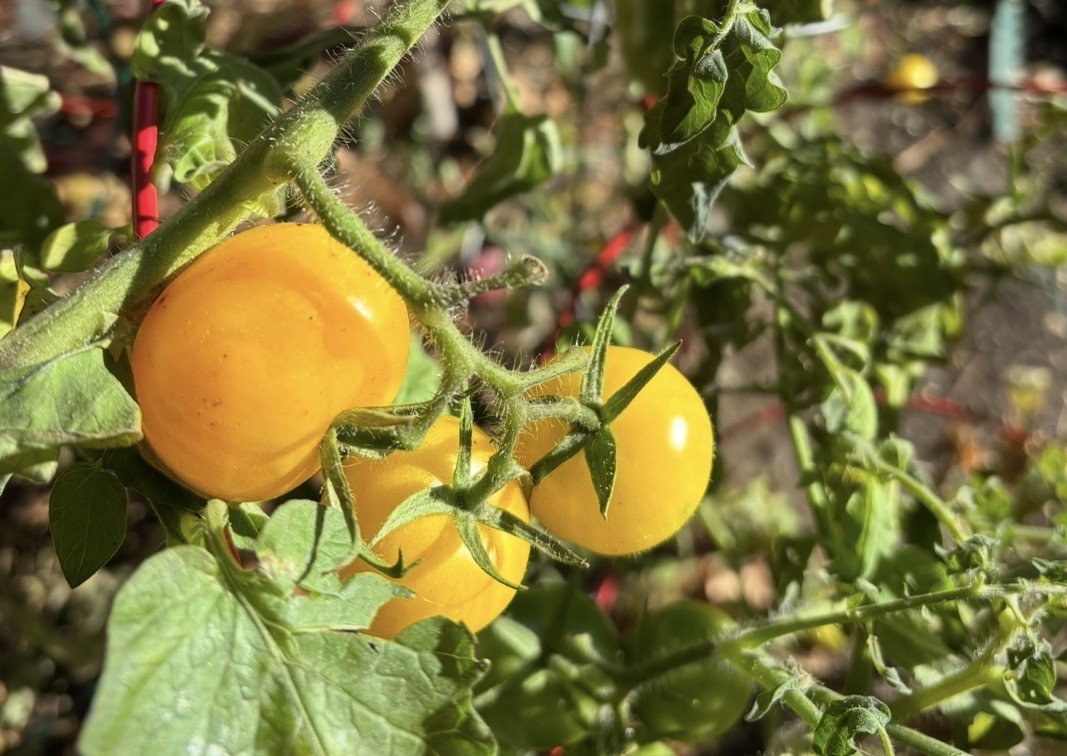
***This is your reminder that now is the time to start planting those seeds for your own garden. Seeds and soil and time. Have a go. This tomato from last November’s final harvest was from a seed planted in my basement in February. Easy. Almost as easy as typing. 
****“It’s only a trade mag article…” is as often much the case.

The Even More Fabulous Yet Slightly Chill Mid-January 2026 Beery News Notes

“CORK HEAD! CORK HEAD!!

There really is no need for any further update this week is there. Andreas Krennmair posted an image of the “old interior of Schneider Weißbierbrauerei, presumably from before the rebuild 1901-1903” and this scene above was one of the tiny vignettes sitting in the back of the overall bar scene.  I can’t figure out if these gents are playing that old favourite, a game of “I’m a doggie, cork my brainpan!” or… the means by which this particular men’s club informed a candidate that they did not pass the initiation process. I find the physics involved problemative but, you know, art.

First off, some excellent reporting out of The Soo on pricing after Ontario’s expansion of beer sales to corner stores compared to grocery stores, the big brewery owned TBS as well as the government’s own booze agency the LCBO;

The editorial team bought two beers, a mass produced lager and a craft beer, as well as two bottles of wine from several locations around the city to find the best – and worst – deals in Sault Ste. Marie… A tall can of Molson Canadian will run you $3 at the LCBO, compared to progressively worse deals of $3.03 at Rome’s Independent, $3.14 at the Beer Store, and $3.81 at Circle K. For a can of Great Lakes Brewery’s Octopus Wants to Fight, the results are tighter – coming in at $3.75 at all locations but Circle K, where the surly octopus comes out to $4.04 per can. All told, a Canadian is 21.2 per cent cheaper at the LCBO than at Circle K, and Octopus Wants to Fight is 7 per cent cheaper everywhere other than Circle K.

I would point out something about that otherwise excellent research. Circle K sometimes has a nutty nutty sale price for a few pretty decent Ontario craft brews. I pop in once in a while when I am picking up a tank of gas just to check in.

And while I have been known to hover in and about the snack aisle of corner stores, I am not a taproom devotee. Too often they strike me as car dealership showrooms – “would you like to see the latest model except (in a fourdoor / with even more Citra)?” – but it was interesting to see Stan consider B+B’s thoughts on the key underlying principle involved;

It appears I may regularly come across taprooms with personalities than Boak & Bailey, but I wouldn’t argue cookie cutter establishments aren’t abundant in the US. Also, B&B tend to write short paragaphs and I try to stick to one. Their following words zero in on what I value in drinking establishments, that they are “run by human beings.” The others, without personality, I tend to forget. I acknowledge they exist, but I don’t have to think about them.

Speaking of places run by human beings, we have a new beer blogger alert. Colston Crawford, the recently retired pub and beer columnist with the Derby Telegraph has decided to continue sharing his thoughts on the topic including how the notion came to him:

It was a lunch at The Crispin in Great Longstone, in the Peak District, a week after I finished which firmed up the idea in my head. The food, the drink, the service, the ambience, was so good. I sat there thinking, if I still wrote a beer column, this one would be easy. I could dash it off right now. I’ve made two more visits to The Crispin since, the first to confirm that the previous one wasn’t a fluke, then the second was unplanned. I was with friends in a party of five, walking on New Year’s Eve morning, but the venue they’d fancied for lunch wasn’t open. The Crispin was five minutes away and a superb lunch followed.

There’s a lot of good advice in there. It is easy to keep a low pressure blog about something you have a general interest in. A striking experience will make for a good story. And it’s good to review the experience a couple of times to get the facts straight, too.

And Boak and Bailey shared an extended thread of thoughts on why people in the UK have cut back their visits to the pub with plenty their own interesting thoughts and those of others who joined in. I agree with their thought #7:

7. Basically, we’re not convinced the pub crisis is especially acute *right now*. In 20 years of blogging, and nearly half a century of being alive, we’ve never really known a time when pubs weren’t doomed and in decline. 

One of the things that concerns me about that form of doomsaying is that it always seems to be decontextualized as if pubs closing is the only difference since 1976.  Fewer are also going to church, too, over that same 50 years of existence. Many more play video games than before that point and I would expect more tofu is sold in the NATO countries. Preserving past practices as opposed to preparing to guide them through change is a bit of a fool’s errand.

Note #1: only available in Alberta, Saskatchewan, and Manitoba.
Note #2: Beer’s “Santa Claus Rally”.

Me, I’ve never developed a taste for collaboration beers but apparently the revenue authorities in Finland have, as The Beer Nut noted.  The EBCU has taken a position on the matter:

Finland is currently considering new excise-tax guidance that would effectively make many collaboration beers impossible for small breweries. Under the draft interpretation, if a beer shows more than one brewery’s name or logo (as collaborations typically do), it could be treated as “licensed production” and the breweries could lose their small-brewery tax relief for the entire year. This would impact not only Finnish breweries, but also imports and international collaborations—ultimately reducing choice for beer consumers.

This is an excellent example of the sorts of issues related to identity that can pop up in law. Obviously, if the non-brewing collaborator (let’s call them “the collaborator”) insists on putting their intellectual property in the form of a logo on a product, they are saying to some degree that the product is their work. Yet, for taxation categorization, that logo placement is argued to not indicate that the work is theirs but, instead, only the work of the brewer (let’s call them the collaboratee”.) I have no stake in the matter and have no idea how Finnish taxation policy plays out in term of brewers compared to cheesemakers or lumber yards – but I do have one raised eyebrow when I see these sorts of statements as part of the EBCU’s argument:

Collaboration beers are one of the joys of modern beer culture…  we believe consumers deserve choice, diversity and fairness. Collaboration beers enrich the beer landscape, strengthen friendships across borders and introduce consumers to new styles and tastes…

Wouldn’t the better argument be that collaboration beers are just a fun reciprocal staff training exercises for brewers that is only, for tax purposes, a businees expense and a burden upon revenue that is of little interest to consumers? After all, if one cannot detect the taste of collaboration beer… does it really actually exist?

Jeff had some interesting thoughts this week on hopeful hints he might be seeing in the US hop market and what it may mean about how breweries are reacting to the retraction, concluding:

…a last comment from me. As we exit the period of craft beer’s novelty era, when breweries made dozens of IPAs every year, it looks like it’s impacting not just the amount of hops brewers are buying, but the diversity. When I talk to brewers about new hop varieties, they are often hazy about them and most are not sampling every new one that comes out. Brewers seem to be more interested in hop products as a way of enhancing their beer. These products focus on the most popular hop varieties, which increases the “stickiness” of the major varieties.

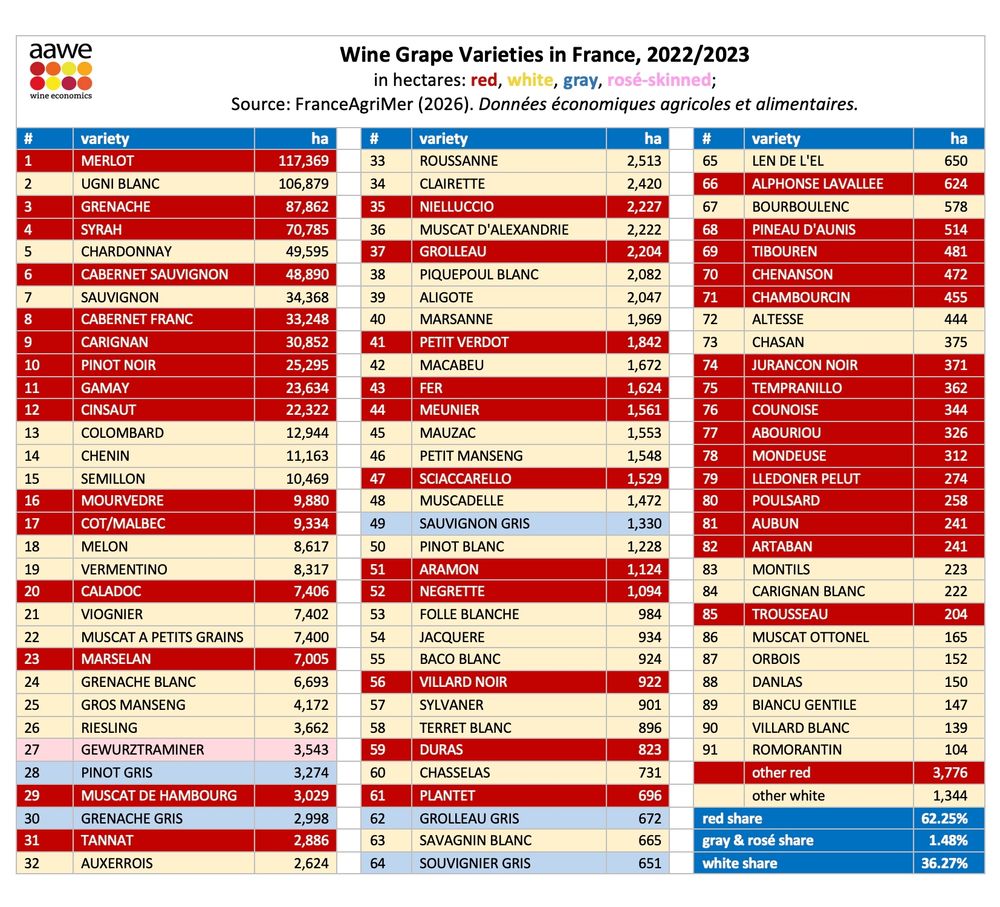
Speaking of varieties, have a click on that image to the right. It’s a list of the top 100 plantings of France grapes posted by the American Association of Wine Economists the other day drawn from an agency of France’s agriculture ministry. I don’t have much comment about it other than to note, despite the pop culture slur, how much good old merlot* is still grown as mentioned by E. Asimov the other day in his discussion of wines you may want to explore.

Good news for cideries and brewers of New York. In this week’s “State of the State” speech, Governor Hochul announced support for local producers, as noted by KK in related to cider makers:

New York is the country’s leading hard cider producer, boasting more active cideries than any other state. Our cider industry has grown substantially over the last ten years, generating over a billion dollars in total economic impact for New York, yet there still remains untapped agri-tourism potential to explore. To support the industry and tap into the robust agri-tourism opportunity that cider presents, Governor Hochul will work with the New York Cider Association to establish New York as the State of Cider, marketing the orchards, tasting rooms, and food experiences that could become anchor destinations for visitors across the country. These actions will strengthen rural economies, uplift the exceptional work of local businesses, and establish New York as the foremost destination for American hard cider.

The Governor also indicated the “need for modernizing licensing across the board, from sports bars and cafes to airport lounges, hotels, and movie theaters.

Conversely perhaps, Pellicle‘s feature this week is a post mortem by William Georgi of the Dutch brewery Nevel Wild Ales which had lofty and noble goals linked with but quite experimental standards:

“We were doing two expensive and time-consuming things at the same time,” he says. “Making a complex product that only a small selection of people actually like, while trying to set up a network of local farmers. A food forest like this is wonderful, but you can’t use it to make beer, as it doesn’t host perennial one-year crops”… Social sustainability was equally important for Nevel. The network of local producers Mattias established for sourcing ingredients—from hops and barley to chestnuts and kiwi fruit—showed him the challenges of farming at a small scale. “It isn’t economically viable at all,” he says. “Even if there’s a living wage being paid, the price doesn’t take into account the fact that most people harvesting the crop are volunteers. 

It’s pretty clear that the plan was not designed to pay its own way. Volunteer labour and crowdfunding plus unbudgeted expenses like organic certification were certainly signed that the business as a business was build on a weak foundation but I like one conclusion that was drawn from the experience: “…I don’t think Nevel failed. I hope I planted a lot of seeds in people’s minds about how things can be made differently.

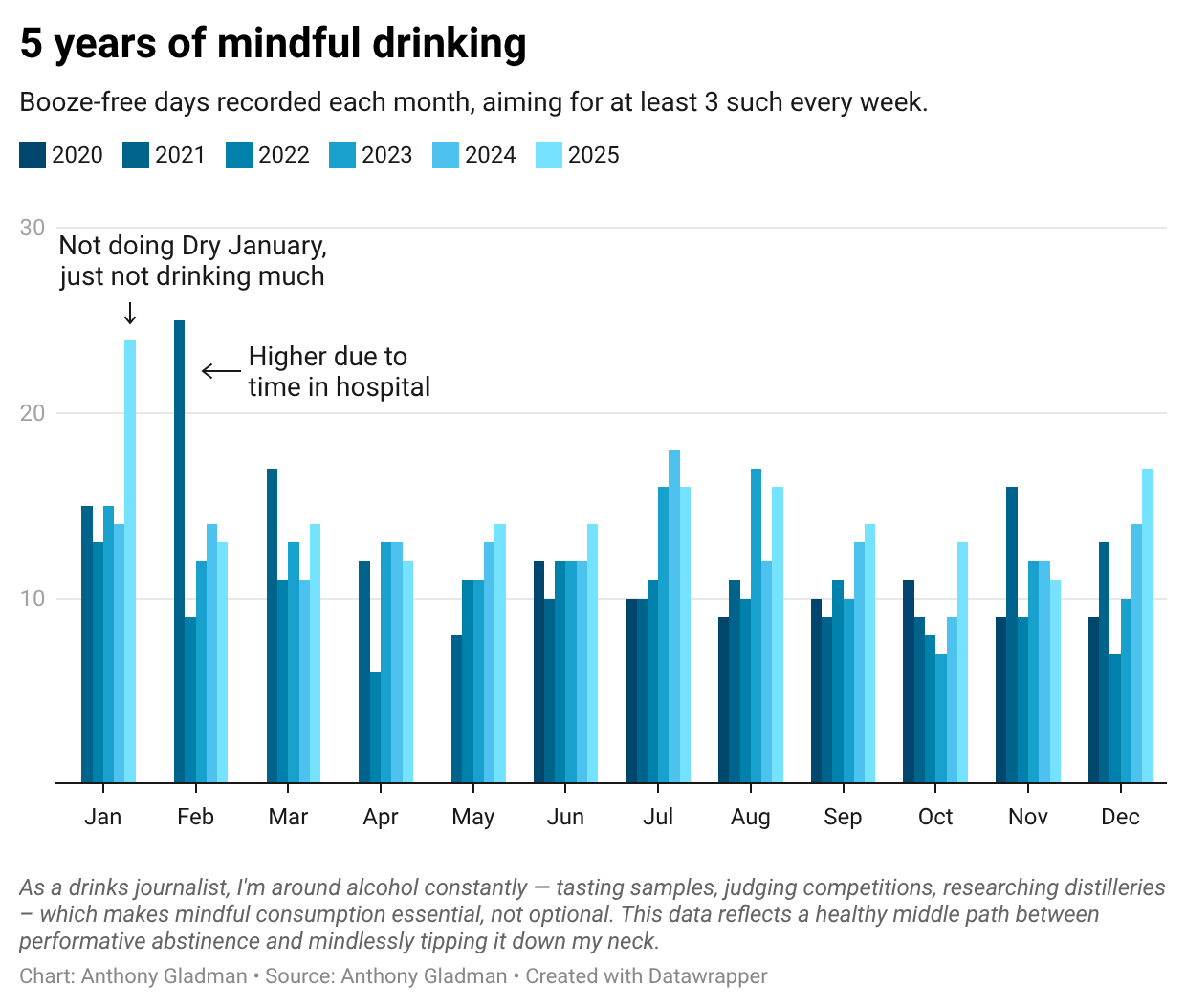
There was an excellent example of the old visual display of quantitative information** in A.G.’s post this week on Dry January. He shares my interest in maintaining data:

I find it helpful to keep a tally of days I drink alcohol and days I don’t. Nothing complicated, just a binary yes or no, and an aim to have at least three days off the booze each week. That’s all it takes for me to stay within healthy limits, despite working in an industry that can normalise and encourage dangerous levels of consumption. (If you recognise yourself here, check out The Drinks Trust.) Anyway… it’s Friday evening. The first one of the year. I’ve not had any booze since New Year’s Eve. Soon I will go downstairs, crack open a bottle of something nice, and have one or two drinks with some pizza while I stream a crappy-but-entertaining film – January be damned.

However sweet that bar graph, I am more a percentages guy, currently at a total of 52% dry days and 63% one or nones over the years since early November 2021 when I started keeping track. My booze budget this year is also set at around 1.33 a day, an average I beat by a few last year. Checking on that number from time to time – as well as your AST blood test numbers – are great ways to manage the hobby.

While we think on that, think on this. In the northern hemisphere, the darkest ten weeks of the year are already behind us. Soon be planting those tomato seeds. While we wait for that, Boak and Bailey are posting every Saturday and adding to their fabulously entertaining footnotes week after week at Patreon. And look out for more of Stan’s new “One Link, One Paragraph” format. Then hunt out something in someone’s archives! Leave oblique comments on someone’s post from 2009!! Listen to a few of Lew’s podcasts and get your emailed issue of Episodes of my Pub Life by David Jesudason on certain Fridays. And Phil Mellows is at the BritishBeerBreaks. Once a month, as noted, Will Hawkes issues his London Beer City newsletter and do sign up for Katie’s wonderful self-governing totes autonomous website featuring The Gulp, too.  Ben’s Beer and Badword seems to be on pause since November but there is reading at The Glass which is going back to being a blog. Any more? We have Ontario’s own A Quick Beer and All About Beer is still offering a range of podcasts – and there’s also Mike Seay’s The Perfect Pour. Plus follow the venerable Full Pint podcast! And there’s the Craft Beer Channel on Youtube. Check out the archives of the Beer Ladies Podcast.

*Once upon a time, the LCBO here in Ontario stocked Millbrook Merlot from a Hudson Valley, NY winery. Then Rufus Wainwright sang about the area. Went to the winery once around a decade ago. This is been this week’s edition of “wandering thoughts with Al”.
**I couldn’t live with anyone missing the reference.

The Beery News Notes For The November Lull Marking The Five-Sixths Mark of 2025

It’s Canada up here and I gotta tell you we have entered the lull.  Pals who work in the hospitality trade in these parts know that between Halloween last week and Remembrance Day next week there is a bit of a drop as we perhaps contemplate some bigger things. Like tightening up the house before the snow flies. Like those final chores to put the garden to bed. Like finding about 35 pounds of tomatoes under just one frikkin’ tarp. Holy smokes. Any recipe suggestions for green tomato chutney can be left in the comments and will be seriously considered… given the circumstances.

First up, I liked this recent brief New Yorker review of Barcade, a joint video game and craft beer bar:

If you play it right, a visit to the new, FiDi outpost of Barcade—the hybrid arcade and craft-beer bar that originated in Williamsburg twenty-one years ago—leads to a quasi-inter-dimensional portal. Your first move, after entering, is to advance to the stone countertop on your left. Survey the chalkboard menu, rich in I.P.A.s, and choose according to your mettle. If that means the Evil Twin Pink Pineapple, prepare for a goblet of roseate brew whose tartness zaps the mouth like a laser. Explore your surroundings. 

I particularly like how the intergallactic laser theme is the tie between the beer and the games. Ten years ago, the same bar was featured in a Jack Black vignette in the same mag but the only the food was mentioned:

He took a bite of his burger, and his eyebrows soared imperatively: “Dude, this Barcade burger? Awesome!” 

Reaching even further back, Liam shared the results of some recent research on efforts by Guinness in 1896 to exert control over the Irish stout market:

This appears to be a damning (if clunkily written*) indictment of a new policy by the Guinness brewery to force those who choose to use the Guinness label to only bottle their stout porter and no other. These days this might be dismissed by many with a shrug and a comment about Guinness just being Guinness but it appears that at the time the other breweries in the city were rather incensed by this behaviour to the point where they issued what could be seen as a full page proclamation under the title ‘Protest of the Dublin brewing Trade Against the New Guinness Label’ where they called out Guinness on what the claimed to be its attempt to establish a monopoly under the guise of wishing to stop adulteration, plus the mislabelling of others’ product as their own.

And The Beer Nut was also sharing this week, this from BlueSky: “What psychopath thought jackfruit Maibock was a good idea?” Indeed. The perils of judging. Possibly relatedly but quite possibly not, David Jesudason pointed me to another peril related to beer scribbling under UK law that I had not been aware of – the taxman cometh:

In news that will have seen some beer writers crying into their gifted Fuller’s Vintage Ales, HMRC has recently clarified that content creators must declare all donations as income on their self-assessment tax return. That’s right. Those crates of beer, jets to foreign breweries and VIP festival passes will now have to be taxed at their market value. (Disclaimer: this is HMRC so some of the guidelines are as muddy as a drain pour smoothie IPA.) It’s caused a few privileged writers to heroically proclaim that they are now refusing unpaid press trips and goodie bags. These virtuous announcements can only mean that a period of austerity will have to be endured; if you see a downtrodden freelance scribe at the bar, maybe buy them a half.

Yup, tax dodging is a serious thing as the makers of Campari have recently found out:

The Italian authorities allege that the holding company, Lagfin, which is controlled by the Garavoglia family, committed tax fraud. The value of the shares seized equates to the tax in question. They will be held until the case is resolved. Lagfin controls 51.3% of the shares in Campari and 38.8% of the voting rights of Davide Campari Milano NV, which is now registered in the Netherlands. The drinks group moved its formal registration to Amsterdam in 2020 to benefit from advantageous tax laws and to exercise tighter control of the company through Dutch company law.

Oopsies!! I have to admit, this next story has me a bit confused. It appears to be an assertion that the British Beer and Pubs Association (BBPA) that the sum total of Britons’ feelings of loneliness relate to the closure of pubs, relying on numbers which appear to exceed perceptions of societal isolation during the pandemic lockdowns:

Research, gathered from new polling by the British Beer and Pubs Association (BBPA) has shown that two out of three (67%) people see pubs as “vital” in the fight against isolation. According to the results, one in three (33%) revealed that they, or someone they know, have experienced increased loneliness as a direct result of losing their local pub… According to the most recent Office of National Statistics (ONS) figures from October 2025, it was discovered that 26% of Brits report feeling lonely at least some of the time, a figure that has remained consistently high since records began in 2020, during the Covid pandemic.

CAMRA presented the same line. I suppose the pandemic is far enough in the past now that co-opting it for commercial purposes isn’t seen as an appropriation of, you know… death. What an odd way to present the poll. Surely, then, it was just coincidence that the NYT had a story on the dangers of placing trust in single issue poll results:

Policy proposals very often overperform in issue polls, according to a recent study that looked at available polling and ballot measure data across 11 topics from 1958 to 2020. The findings apply to both liberal and conservative causes. The more popular a policy is in polls, data showed, the more likely it is to underperform on Election Day. These polls distort our democracy in important ways. Political parties shape their agendas and priorities based on polls that appear to overestimate support for these ideas in the real world. This can make politicians more extreme; if they believe their causes have public support, they will be less likely to moderate.

[You know, I should quote from “a recent study” more often. They’re great.] Still… loneliness for the pub of youth? Makes sense. Was all this the reason that Matty L came out of cryo-hiberation (literarily speaking) and wrote a portrait of a particular Preston pub in peril? Probably not:

The sole survivor of a Victorian terrace, it’s on the side of of a Y-junction, surrounded by sketchy-to-cross roads and large retail units,  There’s very little chance a bog-standard pub with a bog standard drink selection would survive long there, and indeed the vast majority of pubs in the area have closed down in the last 30 years.  Luckily, at this time the whole “craft beer” thing was taking off.  Rich duly installed microbrewed cask ales on the pump, and probably Preston’s first ever “craft keg” selection on the taps.  It duly opened in May 2014, to so much local publicity that even I went there for the opening… I assume keeping all these balls in the air must get exhausting after a decade or so, and a couple of days ago Rich announced he was moving on from The Moorbrook in January.  As such, the future of the pub is up in the air…  

And Boak and Bailey also had a honest evaluation of – and even a yearning for – one former favourite pub near them in Bristol, the Swan with Two Necks:

The bogs at the Swan aren’t its best feature (soap and water on this visit, but no dryer) and the roast potatoes aren’t exhibition quality. But who cares when (a) the atmosphere and (b) the beer list are so bloody good? We think there was certainly a wobble over the summer when punters were thin on the ground and the management was having to disentangle itself from a reliance on beers from Moor. But, yeah, it’s still a great pub, and it’s definitely going to be in our 2026 Bristol pub guide.

No dryer? Me, I take an old fashioned handkerchief for such moments. Because I am old. On a similar theme in terms of noticing the details, ATJ also wrote of a moment at anthother pub past:

The fluffy cockerpoo wagged its tail as it looked at me, while I noticed a couple sitting at the bar; meanwhile a bulky man in Irish rugby shirt rushed past to the gents, disturbing the dog. The music had changed and it was now an almost electro version of (Don’t Fear) The Reaper. Outside the light continued its fall from grace and it was time for me to go to the Albion.

I could quite easily be lonely for those sorts of things, too, I suppose. Maybe. The cockerpoo. A bulky man?!? Speaking of one’s local, Jeff shared a recollection of running into both Evan and diacetyl in Prague:

Typical for any immigrant who lives in an adopted city long enough, Evan long ago absorbed the preferences of Czech drinkers. One of these was an indifference to diacetyl. Or perhaps more accurately, an agnosticism to it. He explained it to me as we sipped buttery pale lagers at his local. Czechs don’t take a position on diacetyl. Like any drinking public, Czechs have certain considerations about what makes a good beer. It should have some meat on its bones, some hop bite in the finish. It should be crystal clear. Above all, it should encourage another sip, another half-liter, and another after that. Diacetyl is just not one of the things it must have or must exclude.

Exactly. What is accepted is real but real is such a cultural construct. For example, we see that Pellicle published a set of top tips for the English pub goer from the good crew that gathers at the magazine – but a few of these have me scratching the old brain bucket. First, the intro in which the scene is set:

….a certain level of pub decorum must also be preserved. All good pubs have unwritten codes of conduct that, over time, become instilled in the people who use them regularly. It is the responsibility of those who live by these codes to pass them on to others. Pubs are for everyone—but not everyone who visits a pub is aware of the particulars that make it hospitable for patrons and staff alike.

I think it is important that we are talking about “codes” rather than a code as a few of the rules the article suggest seem to be particularly placed – and some even may contradict each other. We see that it is important not to shush (“…what possesses people to enter lively social spaces and insist on monastic silence?“) yet don’t take that lively noise too far (“…put your device on silent…“)  Also, know what you want to drink based on the menu (“…the majority of your questions may be dispensed by the clearly legible and reasonably sized board directly in your line of sight…“) but don’t order a cocktail even if it’s on the menu (“…but some pubs have a cocktail menu,” I hear you whimper. It doesn’t matter…“) . Further, I’ve worked in pubs and, yes, dropped many glasses and even a full case of beer bottles and still clap a little bit when a glass smashes. Sorry David. The article is very helpful in many ways, including a warning that there is a minefield awaiting just past the pub door for those unlucky enough to be unfamiliar with the particular local variant of the code.

See, we each have all our ways, we tribes. For further example of this, I would suggest that “fake wine” is such a dirty phrase for that regulatory cultural wonder that is “Canadian wine“:

Free Trade? California, Washington and Oregon are out of the wine business in Canada. They were taken off the shelves because of President Trump’s trade war.  Yet becuase of a series of past trade agreements, more than fifty million gallons of quote, “Canadian wine” is shipped into the U.S. each year that isn’t made with grapes – it’s made with grain alcohol at a cost of $1.08 a gallon. This so-called ‘Canadian wine’ is shipped into the U.S. and is blended into spirits products. It’s a cheap alcohol base used with vermouth, some port-style wines, wine-based cocktails, wine-based margaritas, and wine-based spirits replacements. It’s blended into distilled spirits products “with natural flavors.”

What is it? Seems to be the base for RTD alcopops and crap like Fireball and Southern Comfort. The stuff my kids snuck and chugged in high school. Also seems to fit right in with “Canadian bacon” and “Canadian tuxedo.” Bulk base booze. Vino del Norte! Viva!!

Speaking of “what is it?” Beer Marketers’ Insights has an interesting observation on the NA* beer market – the price at retail is dropping:

…it’s notable that biggest change is in hottest segment. Avg NA beer prices down 72 cents, almost 2% for 4 weeks, while category $$ sales still up 15% and volume up 17% in this data set. That includes a nearly $1 per case drop for Athletic and almost a $4 per case drop for Heineken 0.0. Athletic is still almost $42 per case and Heineken NA is at almost $39 per case. So they ain’t exactly cheap. Corona NA down a couple bucks per case too. Some of that’s due to mix shifts toward larger pack sizes. Some due to recent promo activity on brands like Heineken 0.0. But could some of these price cuts also be because of pressure created by Michelob Ultra Zero, avg price of $32.36 in last 4 weeks?

Finally, an update on a story I posted in 2010.** A story wherein I included these very quoted words: “Allsopp. That name will live for ages in the recollection of all Polars…” Recollect no more, Polars:

A brewer plans to open up a 150-year-old bottle of beer, made for an Arctic expedition, so a modern version can be created. The original Allsopp’s Arctic Ale was bottled in Burton-upon-Trent for Sir George Nares, when he set out to reach the North Pole in 1875. It was later discovered in a box in a garage in Gobowen, Shropshire, and sold at auction for £3,300 in 2015. The buyer was Dougal Gunn Sharp, founder and master brewer of Edinburgh-based Innis & Gunn, and he now plans to use the ale to seed a new limited-edition beer.

What will it be? Will they also rely on their Sylvester warming apparatus as part of the brewing process? Merryn noted another attempted recreation has already occurred. One may have to wait to find out this time to learn if it is reasonably authentic or “inspired by.” God save us from the beers labled  as “inspired by.

That is it. Next time, the post-lull madness begins. In the meantime, please also check out, Boak and Bailey on this and every Saturday and then sign up for their entertaining footnotes, too. Look out for Stan when he feels the urge now that he’s retired from Monday slot… maybe … maybe not. Then listen to a few of Lew’s podcasts and get your emailed issue of Episodes of my Pub Life by David Jesudason on certain Fridays. And Phil Mellows is at the BritishBeerBreaks. Once a month, as noted, Will Hawkes issues his London Beer City newsletter and do sign up for Katie’s wonderful self-governing totes autonomous website featuring The Gulp, too.  Ben’s Beer and Badword has returned from his break since April so you can embrace the sweary Mary! There is reading at The Glass which is going back to being a blog. Any more? We have Ontario’s own A Quick Beer and All About Beer is still offering a range of podcasts – and there’s also Mike Seay’s The Perfect Pour. Plus follow the venerable Full Pint podcast! And there’s the Craft Beer Channel on Youtube. Check out the archives of the Beer Ladies Podcast. That’s quite good and after a break they may well be are back every month!

*Not Actually?
**Notable also was this recent news item about 1890s brewing in Margate that pairs well with my 2016 story of Margage brewing in the 17th and 18th centuries: “This town much consists of brewers of a certain heady ale, and they deal much in malt…

The Much Abbreviated But Apparently Almost Drought Resistant Beery News Notes For A Thursday

Welcome to August. No rain to speak of. Not for weeks. Lawns look like Nabisco Shredded Wheat testing plots. I’ve spent days and days schlepping the garden hose and watering can all over the estate. Which has reminded me  of how wise it was to buy 6,500 square feet of land back in 2006. Once upon a time I had four acres to take care. Now? No mow no mo… practically speaking. As a result, I have barely looked at the beer news which is good as there is barely any beer news these days. That up there? A very nice ferry last Saturday night, a side trip I took on 87 seconds notice after a desperate call from across the waters. A very pleasant inconvenience.

First up… is there history in North America?  I ask this as a writer, if lapsed, of history. So first, consider this unexpectly deep and oddly twisty history of the word “dude“:

“They were young. They were vacuous. They were effeminate — and they were drawing a bit of attention from the humorists and the cartoonists,” Cohen told NPR. He says this crowd had a certain way of dressing — usually over-the-top and fancy — and leaned into an Anglophile lifestyle that was often perceived by many as fake or trying-too-hard. Eventually, these men became known as “dudes,” likely in reference to Yankee Doodle, who, as the old war song goes, was an unsophisticated American who “stuck a feather in his cap” in an attempt to parade as a kind of European “dandy” in high society.

The very next paragraph or two takes you through cowboy dude ranches and then on to slacker dudes of today, each phase of the word’s meaning being largely unrelated to the last. None of which is retained culturally knowledge. Which makes one wonder about one’s awareness of such things. I raise this in relation to beer by way of intro to Jeff’s lamentations on the state of US brewing history:

“Craft breweries” were a peculiarly American kind of thing. If you don’t have a past, you’re not bound by it. Lacking a native beer tradition—domestic lagers were functionally German beers—Americans were freed up to do what they do. We made beer styles from elsewhere, borrowing and almost immediately riffing on them. This improvisational style would become hugely influential, and it was never going to start the way it did in a traditional brewing country like Germany or Britain. Much like Americans were never going to found a club that merely venerated an old brand of beer.

What is weird is that the land mass that is now the United States has over 400 years of brewing history but, as Jeff says, has no sense of brewing tradition. So it is possible to speak of IPAs being new even though they have been brewed for coming up on a couple of hundred years, winning awards overseas in the early 1900s and at least as good a continuity as Belgian strong ales. Why does no one care? Because no one cares. It’s that deep. A tradition of amnesia.

Speaking of forgetting, someone in Dalton, England has been breaking the law and the neighbours aren’t having it:

People living near a pub have claimed that their privacy is “under threat” after the business began expanding its beer garden without permission. Residents of Dalton, near Huddersfield, have complained to Kirklees Council after the Brooks Arms began extending its garden towards the pavement, including erecting fencing and 10ft poles with fairy lights. Stonegate Group, which owns the pub, said it was in contact with the council and contractors had paused work while they “reviewed the next steps”. Kirklees Council confirmed there was no planning permission in place for the works.

Interestingly, the property owners have claimed the “works undertaken relate to fencing and posts to hang festoon lighting” which leads to that important legal question – are they fairy or festoon lights?

Do you stand up against bigots in pubs or elsewhere? I am lucky because I am such an ox that I’ve always been able to grunt some version of fuck off and people generally, you know, fuck off. But I am older now so paid attention when noted thoughtful folk who may well be less ox-like than me considered this the other day. I admired this exchange:

DJ: “The idea of challenging someone being anti-inclusionary is really interesting. A friend was in a Kent pub and a landlord used a racist slur about an East Asian in conversation. He said you ‘can’t say that’ and left it at that. That’s all that’s needed tbh to make sure it’s not ever unchallenged”

B+B: “We would certainly be quicker to do it if we were actually in conversation with the person. We’ve had some practice at that. When it’s happening on the other side of the pub, getting up and going over to have a word with a stranger takes some nerve.”

Speaking of standing up, Anaïs Lecoq wrote on the poor conditions brewery workers in France can find themselves working under. There is a paywall on this one but, especially as I am working on my French, I thougt it worth noting in case any of you lot have a work around:*

Quand je dis que je suis brasseur, tout le monde trouve ça stylé, mais quand je rentre dans le détail, beaucoup ne se rendent pas compte de ce qu’implique le métier », déplore Sam*. En 2022, le trentenaire a quitté un travail de bureau dans lequel il ne trouvait plus de sens pour une brasserie située en Île-de-France.

Update!! Paywall begone! Here is the full story care of the author herself.

Question #1: did craft try to be champagne? Above a beer?

Question #2: Ron’s been in Australia… did he try the beer?

Question #3: was the GBBF really as dead on trade day as Will Hawkes felt it was? (Another Update: correction on my assumption from Will received vai Bluesky!)  Some were doing their part, according to Bluesky after the trade day events…

Forget the adults… what is up with teens today? Apparently not levels of drinking of Beer Marketer’s Insights is to be believed:

The largest federal survey on alcohol consumption confirmed continued declines in underage drinking alongside relatively consistent levels of adult use. The National Survey on Drug Use and Health, fielded to tens of thousands of Americans aged 12 and up, once again found a substantial decline in the prevalence of past month alcohol consumption by 12-20 year olds. Reports of any past month alcohol consumption by 12-20 year olds steadily declined from 15.6% in 2021 to 13.3% in 2024.

That’s crazy. I mean it’s not a crisis and it’s probably good but, speaking as one who drive the kids to Quebec to drink legally at 18, it’s still a bit crazy.

Who will take our empties? That’s the question in Ontario these days as the expansion of the retail market to grocery stores has left the good old Brewers Retail aka The Beer Store rapidly shutting down locations. Will charities benefit?

With more and more Beer Stores closing across Ontario, charities and non-profits that rely on bottle collection are hoping to cash in on your empties. The Beer Store currently processes about 1.6 billion empty alcohol containers per year. But it has closed dozens of locations across the province since the arrival of beer in convenience stores, and plans to shutter still more this September. At least five of the actual or planned closures are in Ottawa, including one in the Glebe, where Operation Come Home runs a bottle drive as part of its BottleWorks social enterprise. Executive director John Heckbert hasn’t noticed any impact yet — but he’s hoping more residents will call on BottleWorks to collect their empties.

Hockey? Who the hell talks about NHL hockey in August?  The Athletic, that’s who. And the talk is about beer:

Charlie Coyle had yet to be drafted when Tony Amonte, his cousin, concluded his NHL career in 2007. But what the veteran of 1,174 NHL games shared years ago with Chuck Coyle, the center’s father, left an impression. “You go out, you drink, you have a good time, you won’t be the same for a month. That’s what I always remember him saying when I was younger,” the Columbus Blue Jackets forward recalled his dad’s telling of Amonte’s belief. “Maybe that’s an exaggeration. Maybe not. But I have that in my head.” Amonte’s formula may not be scientific. But part of the reason the 33-year-old Coyle rarely drinks during the season is that he wants to avoid, whenever possible, any disruption to a key part of his life as an athlete: sleep.

Bad sleep for a month?!? Who do they think they are? Gordie Howe?

Martin came across an odd scene in Stannington, a district of Sheffield when he was hunting out new spots:

Of the 3 Stannington pubs, this looks the smartest, like an M & B all day diner, and perhaps at 3:30pm the lunch trade has gone home, as it’s empty. Completely empty, bar me. Two bars, no-one behind them, or any sound at all. If I was still ticking the GBG I’d have been panicking, but “finishing a Sheffield suburb” isn’t that important, and after five minutes I consider starting the 40 minute walk home. But then I notice the bell. And ring it, instinctively deadening the noise almost immediately like I do in my Waterbeach local. Nothing. I walked out, stared into the distance, then returned, unwilling to be beaten. Oooh, they’re out of Guinness. And Moretti. That’s worrying. And at that moment, a young man emerged from the kitchen, replete with tales of minor injuries I probably shouldn’t trouble you with. He puts on Aerosmith “Love In An Elevator“, then turns it down. Good lad.

Speaking of finding oneself in a pub, Jess aka the B in B+B returned to their former home of Cornwall to report on the role that popular new brewers Verdant have changed the scene and in doing so made a confession:

Now close observers of our blog and social media, or subscribers to our Patreon, will know that I have a particular aversion to beers with mosaic hops and similar. At best, I find they taste of onions and, at worst, something I can only describe as rank armpit. And that’s all I can taste, with none of the juicy tropical fruit flavours that people talk about. I get that this is a me problem, that other people don’t taste these hops this way, and that Verdant are an extremely popular and rated brewery. However, they do tend to like using these hops and as a result I’ve never really got on with them. And the first evening, I’m afraid, did little to convince me otherwise. That the beers looked like water that had been used to clean paintbrushes didn’t help.

And Pellicle‘s feature this week is an interesting story by Mike Clarke of a pub that was lost and reborn, demoished and rebuilt – the Vulcan of Cardiff in Wales:

Until 2012, this building housed a pub in Cardiff City centre—a very ordinary pub that had stood for over 150 years serving an eclectic urban community. Its interior, crammed full with fruit machines, a jukebox and an outsize ship’s wheel on the wall, was a sanctuary from the relentless redevelopment and expansion of the capital city—development that eventually forced its demolition… The Vulcan Hotel reopened in May 2024, having been demolished, transported, and rebuilt brick-by-brick in the museum, restored to its appearance a century ago within the curated historic village. Even though rebuilding it took just over a decade, the Vulcan still holds fresh memories. Many visitors around me point out familiar architectural features, like the two front doors or the two-room layout, and remark that it feels like “only yesterday” since they last visited.

It’s an interesting approach to pub preservation but has led to questions about whether the urinals are correctly glazed (yes) and what beer should be sold (Ron sticks his toe in… not in the beer, in the topic) and whether it is still a pub or has that changed.

Well that is it. Not as short as I feared and there was plenty of reading once I had a look. While there is a lot up there, please also check out Boak and Bailey every Saturday and sign up for their entertaining footnotes, too. Look out for Stan when he feels the urge now that he’s retired from Monday slot… maybemaybe not. Then listen to a few of the now rarely refreshed Lew’s podcasts and get your emailed issue of Episodes of my Pub Life by David Jesudason on the (sometimes even but never) odd Fridays. And Phil Mellows is at the BritishBeerBreaks. Once a month, Will Hawkes issues his London Beer City newsletter and do sign up for Katie’s wonderful self-governing totes autonomous website featuring The Gulp, too.  Ben’s Beer and Badword is out there with the all the sweary Mary! And check out the Atlantic Canada Beer Blog‘s weekly roundup. There is new reading at The Glass which is going back to being a blog. Any more? We have Ontario’s own A Quick Beer featuring visits to places like… MichiganAll About Beer has given space to some trade possy podcasts and there’s also The Perfect Pour. Plus follow the venerable Full Pint podcast with an episode three weeks ago!. And there’s the Craft Beer Channel on Youtube. Check out the archives of the Beer Ladies Podcast. That’s quite good and after a break they are back every month! Such is life. Such is beer podcasting and newlettering… which, as Ray says, are blogs! And he’s right.

*Here’s the blurb in English: “Precarious and dangerous working conditions, unpaid overtime and exploitation: the daily lives of employees producing artisanal beer are sometimes at odds with the values conveyed by the sector and the positive image it enjoys.”

Your Beery News Notes For The End Of July And The Beginning Of The Back To School Ads

The last day of July. It’s one of the first endings of the year. Well, there is the end of winter but no one regrets that. And the switch from late spring to early summer never really leaves a ripple. But… July. Spent the other evening watching dusk arrive at a nearby conservation area, listening for bobolinks and kingbirds as they snabbed a few last bugs out over the field. Saw a raven. Heard it croak.  Mr. Nature. That’s me. Five Saturdays to Labour Day. But even that date’s lost its sting as it’s the first September that not one kid is in the public school system for twenty-three years. What milestone is left? Last day of July.

First up, David J. announced the roundup for the July edition of The Session with a pretty interesting set of submissions this month, interruping his reguarly scheduled broadcasting:

Today’s Substack is ‘free to air’ – like Test cricket and Premier League football should be – so that the people who have contributed can gain the widest readership possible. (Also a desi publican I was going to interview suffered a bad injury and had to postpone. He’s fine, though, and I’ll be bringing his story soon.) On July 11, I asked various participants to write a blog, web post, newsletter (like this one) or even a SM thread on the subject of food in pubs. I’ve rounded up their work and at the bottom have written about the dangers of being a go-to voice on pub food.

Go have a look. Plenty of good reading. Also well worth a read, Ruvani de Silva has announced the launch of her course hosted by CAMRA on American Heirloom Cider Apples and it is good to see the historical context at the forefront:

Settlers, noticing the tribes’ bountiful orchards and the quality of the land they were cultivating on, were keen to claim it for themselves, unafraid to use violent displacement to do so. In one particularly horrific example, future President George Washington took a break from fighting the British in 1779 to send Generals Clinton and Sullivan to implement a scorched-earth policy across the Six Nations of the Iroquois’ beautiful, fertile Fingers Lake land in upstate New York, burning their flourishing orchards to the ground.

This lines up from some of what I found when researching upstate New York history over a decade ago including Lord Selkirk’s 1803 description of apple orchards around Geneva NY from before the Sullivan raids as well as this description from 1797:

…a person from Scotland has established, at Geneva, a very respectable brewery, which promises to destroy in the neighbourhood, the baneful use of spirituous liquors. The apple and peach orchards, left by the Indians, yield every year abundance of fruit, for the use of the inhabitants, besides making considerable cyder; so much so, that one farmer near Geneva sold cyder, this year, to the amount of one thousand two hundred dollars.*

Speaking of solid research, after last Saturday’s news update was posted by Boak and Bailey, I rushed to their footnotes at Patreon which included this tidbit:

…we’re entering the era of ‘normalism’. People want to drink normal beer, in normal pubs or bars, while eating normal food, and wearing normal clothes… Perhaps because they don’t have the headspace to cultivate less mainstream tastes, or maybe because standing out as an individual feels like a dangerous business in 2025. Or just pointless. We keep seeing young couples dressed head to toe in formless matching beige. 

I thought of that Monday evening when I saw a young man waiting for the lights to change, standing at an intersection in beige Sperry Top Sider clones. They had to be clones, right? I also thought of this when I read Jessica Mason‘s news about the recent rise  in Heineken’s fortunes:

Speaking about the results, Heineken CEO and chairman Dolf van den Brink said: “In the first half, we delivered solid results as organic operating profit grew 7.4% as the operating margin expanded by 26 bps and net revenue increased 2.1%…” Highlighting the strides the business has made, van den Brink pointed out how Heineken’s “volume performance improved across all regions in the second quarter and continued to be of high quality…  Describing how the company has achieved this, van den Brink explained: “Our advantaged geographical footprint helped us to adapt to ongoing macro-economic challenges which impacted consumer sentiment and expenditures.**

Is that so bad? Perhaps green is as much the new beige as beige is. Normal. Makes more sense than spinning in your sheets over and over thinking of all the coulda woulda shouldas. The trend is evident in the US craft scene as summarized by Keith Gribbins at Craft Brewing Business the other day:

The Brewers Association’s 2025 Midyear Report shows an industry still facing strong headwinds. Yet, pockets of growth remain — especially for the smallest on-site brewers. As of June 2025, 9,269 craft breweries were operating in the U.S. — down 1% from a year ago. Closures continue to outpace openings, led by a 3% decline in microbreweries. Taprooms dipped 1%, while brewpub and regional brewery counts remained flat. Craft beer volume also shrank. The BA estimates a 5% year-over-year decline in production. 

Five percent cut in production in the last 12 months is not a “maturing” or any sort of “sideways” something. As one would say in my youth, the arse is out of it. Doug Veliky shared some thoughts about where those buyer might be heading and why the trip isn’t that difficult:

Low-dose THC beverages offer the same qualities that have made light beers, spritzes, and canned cocktails so popular. They are social, easy to enjoy, and deliver a consistent experience every time. Because these drinks are made to be consumed more than once in a sitting, they help establish rituals that lead to frequent, repeat purchases. Instead of being one-and-done, the format allows consumers to stack their way toward their preferred level of buzz.

So, craft may have lost its hook. By which I mean that idea of the ritual habitual. People are still doing things, sure. They’re just not doing those things because they now have the option to do these other things. Or is that the new habit? Being what B+B call normal. It might actually just mean not needlessly complex. Manufactured difficulty. Life’s hard enough without made up difficulties.

Note: not only do the top 40 breweries in the world not include much that can be called craft, onely one and a half seem to be American.

By way of comparison but really only as juxtaposition, Jeff continued his explorations into what makes a saison a saison, following up on his article on the style in Craft Beer & Brewing, illustrating once again that blogging about beer is always superior to the store bought stuff. I particularly liked how he moved the discussion from the romantic (ie lazy / fibby) explanation that saison is “something you feel” to getting to the elements of they stuff including the importance of a coarseness of character to the grains, as decoratively mentioned by Alex Ganum of Upright Brewing of Portland, Oregon:

Not sure if I ever shared this story, but back when we were running Old Salt, our hog rancher kept bugging me about using his triticale, which was the animal feed. He grew it himself and was proud of the quality, but I dismissed it early on thinking, ‘How good can animal feed be? ‘Well, that was dumb, because he eventually just dropped off a bag and it turned out to be incredible (which probably explained part of why his pork was delicious). So we asked him for a pallet and worked it into the Five for about a year or so.

Sixteen years ago, when I had the time to do so, when the kids were little enough that they couldn’t get too far, I grappled with the idea of these sorts of beers and their cousins, back when I could take a Saturday to contemplate such things in the shed. But that right there is as good an explanation as ever I’ve seen: beer made from bits fit for the livestock. Farm yard as much as farm house. Normal may not have time for farm yard.

Speaking of simple pleasures, Katie shared a lovely bit of recollection, a remembrance of Wetherspoons past involving herself and her staff access to discount chips:

When I worked at Wetherspoons many thousands of years ago, the one redeeming feature of the job other than the wage was access to a staff menu, off which we could also take a 50% staff discount. My favourite shift tea from this reduced selection of kitchen scraps was sausage and chips. It was not served with vegetables of any kind. A person can talk shit about Wetherspoons all day, and I will join in, but their chips have always been godly, the best of all the frozen chips. I am certain they are coated in semolina for extra crunch, leaving the centres fluffy and light. With mayonnaise, this dish, which cost me around £1.30 in 2008, was my favourite food. It didn’t make the pub I worked in any better, however. You can’t judge a pub by its chips—sometimes they are simply angels sent to soften the blow.

Normal likes chips and especially good discount chips. Quite right, too. Also alarmingly normal is Martin who has admitted to falling behind in his pub reporting and is trying to catch up which some of the highlights (*ahem*) of his continued touring:

Admit it, you’ve never heard of Cockerton, have you? Neither had I, even though this small Durham village is virtually contiguous (great word) with Darlington and only a few minutes from Piercebridge and my best-read blog post. And it’s got a free space for my campervan from which I can finish Durham’s Guide entries for another year. What Cockerton doesn’t appear to have is much actual character. though it does have excellent podiatry.

Note: at the Vytopna in Prague a little train set delivers your beer…

Finally and for the double, David Jesudason wrote the feature in Pellicle this week, the story of a thriving community pub at the edge of London that makes room for many and much:

Artist Neal Vaughan believes my snap judgment about Carshalton being a bit of a sleepy backwater is wrong. He explains how it’s a hub of creativity, which the Hope is at the centre of. Citing a memory from 2016, Neal recalls when Rodger encouraged him to set up Carshalton Artists’ Open Studios with all meetings and post-event drinks held in the pub. Tuesdays are described as a sacred weekday at the pub by Neal. It’s when folk musicians play an open session, board-game enthusiasts battle against each other at Scrabble, chess and Magic: The Gathering, and on occasion a leather maker taps away while seated on a chair. The pub even has a sailing crew that charters yachts, and when I visit they’re off for 10 days in the Adriatic.

There we are.  The end of trends, the end of a week’s news and the end of the month. It’s sorta normal. And as the sands trickle on down in your personal hourglasses, please check out Boak and Bailey every Saturday. Look out for Stan when he feels the urge now that he’s retired from Monday slot… maybe. Then listen to a few of the now rarely refreshed Lew’s podcasts and get your emailed issue of Episodes of my Pub Life by David Jesudason on the (sometimes even but never) odd Fridays. And Phil Mellows is at the BritishBeerBreaks. Once a month, Will Hawkes issues his London Beer City newsletter and do sign up for Katie’s wonderful newsletterThe Gulp, too.  Ben’s Beer and Badword is out there with the all the sweary Mary! And check out the Atlantic Canada Beer Blog‘s weekly roundup. There is new reading at The Glass which is going back to being a blog. Any more? We have Ontario’s own A Quick Beer featuring visits to places like… MichiganAll About Beer has given space to some trade possy podcasts and there’s also The Perfect Pour. Plus follow the venerable Full Pint podcast with an episode three weeks ago!. And there’s the Craft Beer Channel on Youtube. Check out the archives of the Beer Ladies Podcast. That’s quite good and after a break they are back every month! Such is life. Such is beer podcasting and newlettering… which, as Ray says, are blogs! And he’s right.

*See also History of Tioga, Chemung, Tompkins and Schuyler counties, New York. With illustrations and biographical sketches of some of its prominent men and pioneers at page 13: “The army was to march from their winter quarters on the Hudson to Wyoming; thence up the Susquehanna to Tioga, where another division, under General James Clinton, marching via Otsego Lake, after a diversion into the Onondagas country was to effect a junction, when the combined army, consisting of four brigades of infantry and riflemen, and a park of artillery, was to proceed through the valley of the Chemung; thence northward to Genesee River, destroying crops and houses and everything of value to the Indian as far as could be reached on either side of the trail of the army. The success of the expedition was most complete. Forty towns and more than 200,000 bushels of corn were destroyed, besides vast quantities of pumpkins, beans, melons, and other vegetables, and peach and apple orchards, and a most desolating march executed through the richest portion of the enemy’s country, with small loss to the invaders. Washington was afterwards called by the Indians Hano- dogarear, ” the town destroyer.”
**Oddly, The Independent reports Heineken has suffered losses in the first half of 2025. Who can you trust these days? Other than, you know, me.

The Last Thoughtful Yet Wistful Beery News Notes For The Election 2025

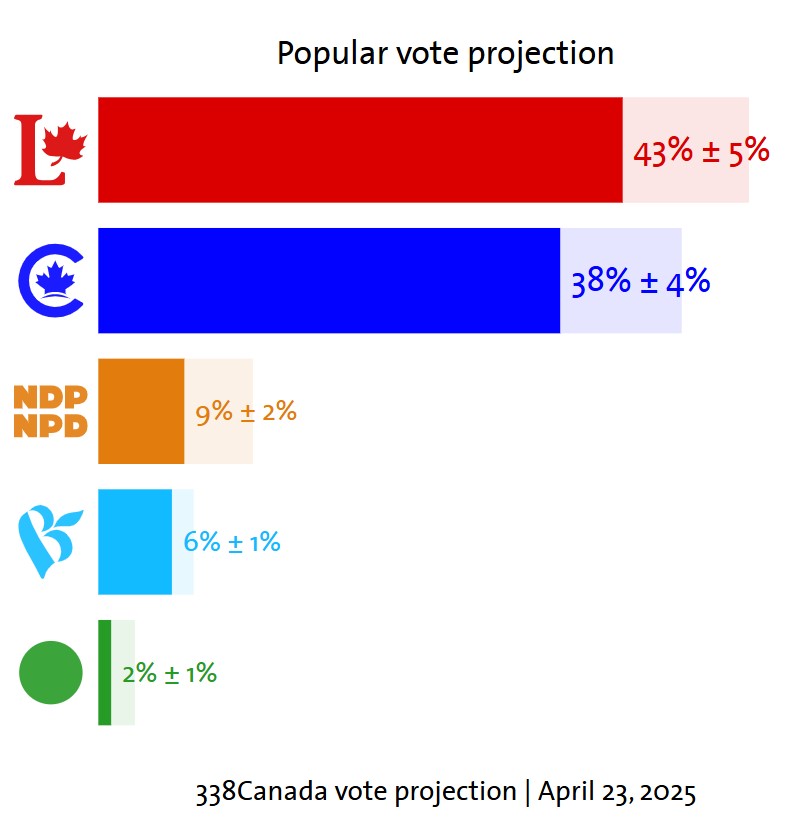
Well, it has been fun. Most of the polls remain to lean towards the non-politician globally recognized economist as opposed to the guy who’s been mostly a grievence mongering backbench MP since he was 24. I make no comment otherwise. As you can understand in my position, I must remain strictly neutral in these matters as a member of the media. And how could I not be, given the vital vegemite v. plastic straw level of fundamental policy divide we are faced with as a nation.

No, we need to set that aside. Let’s start off with something pleasant. Travel is always nice. Getting away. We all like to get away. Yet traveling can be difficult. You may want to find something new but the new has to be sufficiently familiar to fit into if not expectations at least your range of capacity to enjoy it. I’ve been following Boak and Bailey’s travels east with interest and have some sympathy for their experience in two pubs in Sibiu, a Romanian city I had never heard of, the first being…

…an odd place called Butoiul de aur, which had a bit of a middle class suburban lounge-bar feel. Then the karaoke started and it began to feel more like a party pub. Local beer Nembeer is either not very good or was not well cared for there. It all tasted rather like our first forays into home brewing. The best of the options was Amarilla (5.2%) which had a promising aroma and some good flavours among the off ones. We were initially excited to discover Kombinat, which appeared to be a Czech inspired Brewpub. But it turned out to be mostly a Staropramen outlet. Their eponymous house beer was fine – vaguely Czech in its maltiness, but not particularly distinguished.

Not particularly distinguished. Something like myself, I am told. You know, I am not sure I could write “some good flavours among the off ones” let alone be patient enough to unravel the threads to discern the difference. Me, I’d be the last one to sign up for anything called an “off-taste seminar” given that it’s basically the beery equivalent of a college course on shitty paintings. No, once I encounter the gak, all thoughts stop.

Also on the road but just a bit to the northwest of B+B, ATJ shared thoughts on things Bambergian… Bambergese… Bamberger:**

Beer to me is an open book about travel, people, friendships, memories, family, history, architecture, bars and pubs, breweries and the harmonic nature of the liquid in your glass. It is about how a landscape can shape the beers that people drink and about how it can be something more than refreshment, and even provide a guide to life and living as thorough as literature, poetry, music or meditation. This was why returning to Bamberg once more unleashed a surge of joy within, a feeling that I also experience when I go to the lagerlands of Bohemia and Bavaria, or drink beer in a brown cafe in Flanders, walk into a rural pub in England or spend time searching for soul-shaking beer in somewhere like Bologna or Barcelona.

Ripe words yet they capture a mood I very much recognize. Twenty years ago, I would have such a surge of joy walking into Finger Lake Beverages in Ithaca, New York that I made myself walk the aisles for five minutes before I could stop and touch any of the offerings.

And furtherer wester still, two feature writers with The Daily Star took themselves on a trip to four east end London’s dubbed roughest pub crawl:

The Manor Arms was empty, with a smell of must and TCP hanging in the air. One bloke sat down at the end of the bar chatting away to a gruff man in a cap pulling the pints. ‘“F*** this, f*** that. It’s the f****** credit union,” said the bartender. “Oh that thing you said would never happen?” “Yeah that f****** thing, hahahahah.” Spurs were on the telly, we both loved that, watching our beloved, beleaguered club fight against Hoffenheim to the soundtrack of Danny Dyre-esque ‘awwwiiiittte’s… The barman, it turns out, was a Spurs fan too. “Typical Germans, if that’s a penalty, my d***s a goldfish,” he said as a Hoffenheim player fell in the box. Men kept walking in with bags of vodka and salmon. “Not for me mate,” our new companion, Graham, behind the bar would say. “Know wot mean?” We didn’t really, but we loved him. Out the blokes would walk with their bags of salmon, deflated, venturing back into the inky blackness to find a more willing buyer. It couldn’t have been more relaxed, more comfortable. Neither of us had had a chat with a barman this good in months.

I know that feeling, too, having once been offered tantalizing beef steaks, discretely offered by a long  coated gent who pulled them from the front of his trousers, all wrapped and labeled and clearly freshly stolen from the grocery store near to the formerly named Ladies Beverage Room in my Halifax of the 1980s.

But forget all that. If one is to believe Reuters, the next big beer tourism destination is going to be Sweden – certainly once news of these changes to the drinking laws get better known:

Under current rules, shops in the Nordic country can only sell drinks with up to 3.5 percent alcohol. For stronger drinks, consumers must head to Systembolaget, the state-run alcohol chain which operates 450 outlets across Sweden. The stores have limited opening hours, don’t advertise alcohol or discount drinks. The government’s so-called “farm sale” law for alcoholic beverages of all strengths takes effect in June and runs for six years before a mandatory evaluation. The law states visitors must have paid, can buy only small “souvenir-style” amounts and have to listen to “a lecture” with an educational element.

Party Party!! Ja! Ja!! Jaaaa!!! What else is going on? Did you hear about these tariff things? No really, they’re a thing now and apparently the wine makers of Bordeaux have had to face some facts this year with the threats and realities:

Trump’s threat of 200 percent tariffs caused dismay in Bordeaux. “Châteaux will close,” said one proprietor. “Négociants will close.” And of course it would cause chaos in the US wine market as well, with many casualties. That was why few believed that he would do it: the damage to US commerce would be too great. And there was a lot of lobbying against tariffs, too: restaurants, sommeliers and retailers had got together to explain the problem. In the end, the tariff on the EU was set at 20 percent – for now. On a practical level, Bordeaux has also been shipping a lot of wine to the US recently. Most leading châteaux have ensured that they have somewhere between six months and a year’s stock already there.

Speaking of managing traditions in times of the new, The Mudge posted a good piece on Thornbridge’s use of one of the Union sets to create some premium and tradititonal ales:

…in a world of heavily-hopped New World IPAs, the question must be asked whether these relatively understated beers in a classic English style will make a mark. Ordering online, these beers came to almost £4 a bottle, so they are probably something better regarded as an occasional treat rather than a regular drink, especially when Jaipur can be obtained from Morrisons at 4 for £7.

Can an occasional treat sustain itself? Even the new has been losing its sheen more and more it seems. Beer Business Insider sends out a cryptically condensed email every week with some pretty frank comment including a ticker tape style summary of fairly recent movements in the US booze trade, in this case to mid-April:

Wine volume down double digits, 9.6% for 4 weeks, several points worse than 26 weeks (-6%) or 52 weeks (-5%). Craft volume down 9% for 4 weeks, $$ down 8%. Craft down 5% for 26 weeks. And volume of spirits-centric seltzers suddenly dropped 6.8% last 4 weeks. Down 3% for 12 weeks. Recall, High Noon is two-thirds of spirits-centric seltzers. It fell 6.6% and 12.8% last 2 weeks. What’s going on?

Yikes… I think. That many numbers makes me all woozy and giggly. Perhaps relatedly, The New York Times had an interesting story about how, for a city that claims to never sleep, it is getting harder to get a license to sell booze late at night:

…some bar owners say closing times have trended earlier in recent years, with lively venues like Carousel, which opened in 2023, shutting down at 2 a.m. Most operators agree that today’s customers are drinking less than previous generations, and that they’re going out earlier… Late-night liquor licenses, once an expectation in nightlife-heavy neighborhoods, have become increasingly difficult to obtain, especially in areas where bars bump up against brownstones. Early birds and night owls have already clashed over outdoor dining programs and summer concerts. “The 4 a.m., seven-days-a-week license is becoming ararer commodity,” said Terrence Flynn, a liquor licensing attorney who has represented hundreds of bar owners in New York City since 1985.

Next up, Jeff posted a post called “Convergence” but I might have called it “Overlap” given, you know, how I see these things: there are no neat and tidy boxes of styles. Yet the drive to be the first to label something as a thing is a real thing but it is not a good thing. But that’s just me. Let’s see what Jeff had to say:

Until I poured out a can of Pure Project’s Neon Bloom, however, it hadn’t occurred to me that pilsners and pales were converging. We’ve had a nice run of warm, sunny weather in Portland, and midway through the first can I enjoyed—thanks to a four-pack sent from San Diego—I realized I was having an experience shift. The beer smelled and tasted like a hoppy ale, but I was slugging it down like a lager. I paused to give it some attention and realize, purely from the sensory experience, that it drank very much like a WC pilsner.

OK, that makes sense. But, and this gets a little ranty and a little tedious, this is not a new issue or even one about pale v. lager so much as continuation of, how should I put it, hmm…  the downward spiral. See, if style means anything, pale ale should lead with grainy texture framed or even cut by the hopping. Lagers should speak one way or another to roundness of malt, again framed to various degrees by hops and even other malts. IPAs are supposed to be where the hops shine but, instead, they suck all the oxygen out of the room.** But, given IPA sells, well here we are. I would also note Stan’s comment:

Bob Kunz and Tim McDonnell of Highland Park Brewery may or may not have invented West Coast Pilsner, but it appears that Kunz was the first to give it a name. Their Timbo Pils pretty much embodies the style. Last October, Timbo won a gold medal at the Great American Beer Festival . . . in the American-style Pale Ale competition.

Clearly an evil roams upon the land and it’s name is style. Interestingly, this had coincided with the collapse of actual independence in US craft.

Finally, I really liked this article in Pellicle if only for the early inclusion seven lines in of the word Coreff, a word I encountered last January when the same author, Anaïs Lecoq, wrote about that beer of Breton.  Rather than a straight up Part II, this week we have a next chapter on the guide to the beer culture of that part of France:

Strolling effortlessly behind the massive wooden bar, Élise is the first thing you’ll notice when pushing the door of Tavarn Ty Élise—Élise’s house if you translate it into English—in Plouyé, a small village in Central Brittany, France.  Her pub has been a staple for the community since 1978. That’s when Élise’s mum, Anna, bought the place for her daughter after the owner retired. “I was 21 and had no intention of tending a bar,” Élise says. “I was a seasonal worker and I liked my freedom, but I still said yes.” Watching her doing her thing, you would think she’s been there her whole life. She hasn’t.

WIll there be further chapters, a three and even a four? I hope so. One last thing – tomorrow is the next edition of The Session, hosted by Ding and on the question of value. Value?

Value most certainly does not necessarily correlate with cheap either (although it could), rather it means when I part with the cash, no matter how large or small the amount, does what I receive in return meet or exceed the value of said cash? Subjective? Sure, but we all have our own sense of value.

Value! Oh, I am digging into the archives for that one. That’s all for this week. Until we meet in May after all the votes are counted net Monday and after all the taxes are submitted next Wednesday, please check out Boak and Bailey every Saturday (…as long as all their holiday fun doesn’t get in the way…) and Stan (….who is also going on his own holiday break so may not be there…) each and every Monday.*** Then listen to a few of the now rarely refreshed Lew’s podcasts and get your emailed issue of Episodes of my Pub Life by David Jesudason on the (sometimes even but never) odd Fridays. And maybe The British Food History Podcast. Maybe? And Phil Mellows is at the BritishBeerBreaks. Once a month, Will Hawkes issues his London Beer City newsletter and do sign up for Katie’s wonderful newsletterThe Gulp, too.  Ben’s Beer and Badword is out there with the all the sweary Mary! And check out the Atlantic Canada Beer Blog‘s weekly roundup. There is new reading at The Glass which is going back to being a blog. Any more? We have Ontario’s own A Quick Beer featuring visits to places like… MichiganAll About Beer has given space to some trade possy podcasts and there’s also The Perfect Pour. Plus follow the venerable Full Pint podcast with an episode just last month!. And there’s the Craft Beer Channel on Youtube. Check out the archives of the Beer Ladies Podcast. That’s quite good but, hmm, they’ve also gone quiet this year. The rest of these are largely dead. And the long standing Beervana podcast …except they have now stood down.  As has We Are Beer People. The Share looked to be back with a revival but now its gone quiet. And the Boys Are From Märzen podcast appears suspended as does BeerEdge, too. VinePair packed in Taplines as well. All dead and gone.  There is more from the DaftAboutCraft podcast, too. Nope – that ended a year ago.   The Moon Under Water is gone – which is not surprising as the ask was $10 a month. Pete Brown’s one cost a fifth of that – but only had the one post. Such is life. Such is beer podcasting and newlettering!

*Bamberger would be a good name for a smash burger place.
**That is why the label “IPA” is both meaningless and helpful as it gets slapped on anything that wants to hide yet still sell. From candy coated Willy Wonka nightmares to innocence of light lagers and simple pales ales it’s all IPA.
***I heard Stan as well as Boak and Bailey held a vote in secret and decided I could hold the fort, that I really didn’t need a holiday. O. M. G.

These Be Your Mid-April Mid-Life And Perhaps Even Fairly Mid Beery News Notes

Easter week! You’d be right in thinking it was a month ago with all the talk this week of of green beer here and green beer there. But no, it is the time of the bunny who lays eggs which happen to be made of chocolate. Christ! And each Easter is also reason to revisit this 2008 post of mine on the lack of Easter beers – which included, as illustrated, perhaps the oddest thing I have ever published on this here blog of mine. But, of course, the main event of the long weekend is the old man’s birthday, me being the old man in question. Thank you for all the cards! Sixty-two. Whaaaaa Hoooooo! Said no one never. This very evening I am celebrating by going to a ukelele orchestra concert. I have authorized myself to slip out early just in case. Still, I do hope it is silly enough to justify the price of admission.

Enough about me! First off this week, have I mentioned the global economic mood?  The CEO of Mexico’s Constellation Brands Bill Newlands has:

About half of Constellation’s beer sales are from Hispanic consumers… with the demographic accounting for 78% of its total revenue last quarter. The Wall Street Journal report noted that many immigrants in Southern California and Texas have begun avoiding liquor stores, where they are often forced to show identification. Many people have stopped shopping at supermarkets after 6 p.m., hoping to avoid immigration raids… While Modelo, Corona and Pacifico are exempt from the Trump administration’s 25% tariff on Mexican imports, the company is not able to dodge the 25% tariff on aluminum when it comes to their canned beer imports.

Being from somewhere matters apparently. And speaking of tariffs,* James Beeson posed an interesting question in The Grocer: is local a liability in these trade war times? And then he helpfully explored the implications:

These liquids command a hefty price premium thanks to protected geographical indicators (PGIs) which guard the product’s name from misuse or imitation… PGI status offers “clear authenticity and product differentiation in consumers’ eyes”, and plays “a crucial role in premiumisation”… Tariffs certainly look like bad news for Rémy, which generated 38% of its sales in FY24 from the Americas. Thanks to its overexposure to cognac, it also sells 62% of its PGI spirits outside the market in which they enjoy this status.

So being from somewhere can be quite damaging. Plus… never thought over exposure to cognac could be a good thing but there you are.  But then in TDB, David Jesudason was arguing that things should be more clearly from somewhere:

It’s especially concerning because most drinkers cringe at the thought of Madri – the supposed soul of Madrid – being brewed in the UK by Coors – while this unnamed beer is actually being brewed at a renowned British craft brewery. The type of brewery that brews a lot of award-winning tipples that define modern British beer for discerning drinkers prepared to pay premium prices. And this beer is no exception. Which shows there’s no need to lie. But here’s the payoff: by claiming a beer is brewed in Germany not Great Britain what exactly is a British beer company saying? Bavaria has better water than Burton? Hamburg has better brewing techniques than London? Perhaps all British brands will proudly say where their beer is brewed if cask were to become UNESCO recognised and we took our heritage seriously.

THEN… Will Hawkes considered in his latest London Beer City monthly how beer from somewhere might not really be about that somewhere at all and this might not be very good in these times:

American influence – and, more specifically, American hop flavour – has fuelled London’s brewing renaissance over the past few decades. From Neck Oil to Pale Fire, London brewers have paraded their passion for (and understanding of) Obama-era American craft brewing. American Pale Ales on London bars have become legion. Wham bam thank you Uncle Sam. The world, though, has changed. To paraphrase Oscar Wilde, to elect Donald Trump once might be regarded as misfortune; to do it twice is just fucking stupid. Trump’s introduction of tariffs, the bovine threats to Canada and Denmark, the increasingly aggressive way in which visitors to the USA are being treated: this points in one direction and one direction only. America acknowledges and wants no allies, and that includes Britain. MAGA is unleashed and obnoxious.

Interesting. Will the world reject US craft just as it’s rejecting the Tesla? It is also interesting that making booze under licence was one of the solutions mentioned by Mr. Beeson while is the problem for Mr. Jesudason. Hmm… Speaking of critical thinking, Katie M. took immediate and visceral objection to this article in The Guardian:

Is the editorial team all on holiday leave or something? There are SO many talented writers out there looking for an opportunity like this, and so many editors who do their jobs with skill. How can a national paper be so careless as to publish something so unpolished. The writer isn’t even to blame here, the whole process is, from commission to upload.

There was a lot of unhappiness in the susequent BluesGuy comments all of which confused me a bit until I got to this one that shared a correction to the online edition: “This article was amended on 13 April 2025 to replace some words that were omitted during the editing process.” Yikes!  The post repair job was still a bit much. As ripe with superlatives as the worst of beer writing. Very much overly rouged, as the kids might say. So much unhappiness. Good thing, then, that Gary shared the good news – the Clark’sroast beef sandwich is back in Syracuse NY!

For longtime locals, the main event is the return of a Syracuse bar legend: the Clark’s Ale House roast beef sandwich. Clark’s Ale House, which operated in two locations from 1992 to 2016, was famous for its roast beef sandwich. It was simple — just medium-rare top round, thinly-sliced red onions, cold cheddar cheese between an onion roll from Di Lauro’s Bakery — but it was legendary. And when Clark’s closed for good, its devoted fans were left craving. “We’ve missed this sandwich so much,” Beach said, standing in the Crooked Cattle’s kitchen earlier this week. ”But now it’s back.”

That artisic rendering up there is the sandwich I ate at Clark’s over twenty years ago. Now… if they can just bring back the house ale and the pub’s layout.

Note #1: Katie Mather has returned to owner operated blogging.

Note #2: do you like salt in beer. People have. Since at least 1835.

Stan also spoke of an ingredient this week – specifically the hop – in his Hop Queries edition 8.12 and shared this about the return to work of two US government employees:

Two USDA-ARS employees involved with public hop research were among thousands of probationary employees who went back at work after the Merit Systems Protection Board (MSPB) issued a 45-day stay on their termination (see Hop Queries Vol. 8, No. 10). Francisco Gonzalez, a hop horticulturist, is one of four scientists central to the public hop research program. Brandon Sandoval is a technician assisting Gonzalez… That’s not to say that things are “back to normal” at research facilities in Oregon and Washington. Not all support staff has returned to work and what happens after a hiring freeze lifted is not clear. Also, the USDA has warned employees that a significant reduction in force is likely.

Some chat this week about what was micro then craft now independent. As exhibit A we have Pete of The Times* who gave a quite reasonable explanation how craft was lost to bigger interests… just as, I suppose, micro fell to the avarice of big craft:

To my palate, Beavertown’s Neck Oil and Gamma Ray, and Camden Hells — now owned by corporations that brew as cost-effectively as they can — don’t taste as good as they did. Quality hops are costly. And proper lagering means storing beers in chilled vats for weeks. So what are drinkers to do if they want beer that’s well made by small players? Trade bodies such as Siba, which once promoted craft beer, now champion “indie” beer instead. Siba defines an indie brewer as one that’s UK-based, has less than 1 per cent of the UK beer market and is not connected with any other business bigger than that size. It issued a logo for breweries such as Fyne Ales, Vocation and Five Points to use on packaging and pump clips.

Then, as exhibit B, consider Phil Cook who gave what can only be described as commentary from a view from (Ed.: *…checks map…*) well below my feet:

‘Independent’ remains the adjective of choice in promoting and organising the many Australian breweries that might otherwise be grouped under ‘craft’ or (in earlier times) ‘micro’. But companies who persist in waving it around as they take part in the recent string of mergers, consolidations, and various other entanglements are straining the word to breaking point. It’s too much like someone insisting “being single is really important to me, that’s why I married another bachelor!”

Does it matter? Well, “it” isn’t any one thing. First, locally the word “independent” never really took off in Canada. Even well past “craft” we are… still craft. And if we look at the UK standard of 1% of the market that has little use for the US trade where the small guys got co-opted long ago to falling into line helpfully to support the aspirations of the large ones. These things, too, will not save craft beer. And does any of this matter so much as we continue on the human race’s continued shift away from the bottle? Consider this startling news from The Guardian on the state of the global wine trade:

The OIV said the consumer was now paying about 30% more for a bottle now than in 2019-20 and overall consumption had fallen by 12% since then. In the United States, the world’s top wine market, consumption fell 5.8% to 33.3m hectolitres. Delgrosso said tariffs ordered by the US president, Donald Trump could become “another bomb” for the wine industry. Sales in China remain below pre-Covid levels. In Europe, which accounts for nearly half of worldwide sales, consumption fell 2.8% last year. In France, one of the key global producers, 3.6% less wine was consumed last year. Spain and Portugal were among the rare markets where consumption increased.

Still on the holiday in Romania and pushing back against that trend by all accounts, Boak and Bailey took time to send out their monthly newsletter in which they shared thoughts on one way the pub trade can respond – reduce the congnitive load:

In the context of a holiday, a slight increase in cognitive load can be pleasurable, and part of the fun. It’s about the line between stress and stimulus… How can pubs and breweries reduce cognitive load? The experience of a Wetherspoon will rarely be thrilling but at least (kliche Klaxon) “You know where you are with a ‘Spoons”. All sorts of venues could, and can do, do some of the same things… the single greatest way to reduce the cognitive load of any experience is to keep doing it. However weird and complicated your local pub might be, by the time it is your local, you’ll know how it works and won’t find it weird at all.***

Does a gay bar at a zoo convey significant cognitive load? David Jesudason explains how you might have found that out if you visited the Hotham Park Zoo in Bognor Regis, West Sussex in the 1980s:

…this magical and enchanting period spawned the Safari Bar, a gay bar playing high NRG music, hosting drag queens and causing merriment that could be heard from considerable distances. The night was the idea of DJs Barrie Appleyard and Ian Harding, who had met at a club in Littlehampton. Ian knew the manager of the zoo and Ian phoned Barrie saying “shall we try something with the zoo, you know, gay nights or something?” They found a cafeteria (originally built as a small mammal house) that was tucked away in the back of the zoo and transformed this functional space into a jungle-themed gay bar on Wednesday, Friday and Saturday nights.

What went on each Thursday? Hmm. Speaking more or less on whether less is maybe more or maybe not, at the beginning of the month Retired Martin shared his thoughts on coming changes to the Good Beer Guide based on this motion that was before the gathering last weekend:

“MOTION 7 : This Conference instructs the National Executive to reduce the number of pubs in the Good Beer Guide from the 2027 edition onwards, to ensure only quality pubs are featured.“

Have the results been published beyond the shadowy membership cabal? I don’t see any reference on the so-me’s.  What the heck could “quality” mean in such a context? By total contrast, I give you the best line written about beer of the week – if not to this point in the month – must be this one:

The best location for a beer, by far, was at the sausage stand near the city incinerator plant.

And, perhaps relatedly, Tom Morton, who I met through his former BBC Scotland radio show, shared a story of a dubious newpaper restaurant reviews which is… detailed:

The worst meal I’ve ever had was at a café I’ll call Les Vomiteurs in the then seriously untrendy, ungentrified, occasionally unsafe area of Glasgow called Finnieston. This was 1979 and the late Jack House was still writing restaurant reviews in the Evening Times. He’d recommended the tripe at Les Vom and as I’d never tried this intestinal delight, and fancied myself an adventurous junior gourmand, I thought I’d have a go… The formica tables of Les Vomiteurs matched the unwelcoming hardness off the proprietor, who served me up a bowl of white gunge. Boiled tatties and slimy tendrils of cow gut in milk. It was unchewable, the bits of stomach slipping about my mouth like frisky tapeworms. I swallowed, inhaled the potatoes and just made it out of the door in time to throw up the entirety of my lunch in the Argyle Street gutter. So much for acting on restaurant reviews.

I don’t know what to say about that… other than my folks grew up on the Clyde and that is the sort of keen tales of humanity that I grew up with.  And speaking of the unexpected, Jeff wrote an intersting exposé of a bootleg beer he injested in Oregon named Corona Mega – and also provided some details on a resulting lawsuit:

The mystery deepened the more I dug into it. Whatever I bought that night was definitely not regular Corona. For one thing, it was a vastly superior beer. It was a tenth of a point weaker in strength at 4.5%…  The label listed Oz Trading Group of Hidalgo, Texas as the importer, which was an oddly bold move for, to quote the economist Stringer Bell, “a criminal [expletive] enterprise.” (As a spicy aside, the apparent owner of Oz Trading is Oziel Treviño, a Hidalgo city councilperson who was found to have committed voter fraud in 2016.) Curiouser and curiouser, in other words.

And, finally, Pellicle published a piece by David Nilsen on depression and loss,  a tough read that carries the disclaimer that “this article makes frequent and detailed references to suicide and severe depression, therefore reader discretion is advised.” The essay is primarily about the life and the passing of a brewer, Brad Etheridge, at age 43 based on conversations with his wife, Julie Etheridge but it also speaks to the broader context. It also contains this passage:

Cindy Parsons is a psychiatric nurse practitioner and an associate professor of nursing at the University of Tampa in Florida. In 2019, she and colleague Jacqueline Warner Garman (who co-owns Hidden Springs Ale Works in Tampa and is a psychotherapist) gave a presentation at the Craft Brewers Conference, held that year in Denver, on addressing mental health issues in the craft beer industry. She thinks the image of craft beer can make its workers and supporters reluctant to acknowledge the complications of mixing mental health issues and alcohol. “We’re supposed to be the happy people,” she tells me. “Do we really want to address this in our industry?”

My profession, lawyering, also has a significant mix of mental health issues and alcohol and much of what’s written by David rings true. Only by way of one example among many I’ve met, the family friend who was my first articling principal now thirty-three years ago quickly upon my arrival revealed themselves to be drinking a quart of rum to get them through each day. Drank to the death. Grim.

There you have it. A huge range of reading this week. Take your time and until next time when I will be, I promise, older and wise… please check out Boak and Bailey every Saturday (…as long as all their holiday fun doesn’t get in the way…) and Stan going strong again each and every Monday. Then listen to a few of the now rarely refreshed Lew’s podcasts and get your emailed issue of Episodes of my Pub Life by David Jesudason on the (sometimes even but never) odd Fridays. And maybe The British Food History Podcast. Maybe? And Phil Mellows is at the BritishBeerBreaks. Once a month, Will Hawkes issues his London Beer City newsletter and do sign up for Katie’s wonderful newsletterThe Gulp, too.  Ben’s Beer and Badword is out there with the all the sweary Mary! And check out the Atlantic Canada Beer Blog‘s weekly roundup. There is new reading at The Glass which is going back to being a blog. Any more? We have Ontario’s own A Quick Beer featuring visits to places like… MichiganAll About Beer has given space to some trade possy podcasts and there’s also The Perfect Pour. Plus follow the venerable Full Pint podcast with an episode just last month!. And there’s the Craft Beer Channel on Youtube. Check out the archives of the Beer Ladies Podcast. That’s quite good but hmm they’ve also gone quiet this year. The rest of these are largely dead. And the long standing Beervana podcast …except they have now stood down.  As has We Are Beer People. The Share looked to be back with a revival but now its gone quiet. And the Boys Are From Märzen podcast appears suspended as does BeerEdge, too. VinePair packed in Taplines as well. All dead and gone.  There is more from the DaftAboutCraft podcast, too. Nope – that ended a year ago.   The Moon Under Water is gone – which is not surprising as the ask was $10 a month. Pete Brown’s one cost a fifth of that – but only had the one post. Such is life. Such is beer podcasting and newlettering!

*Did I? Was I?
**I forgot this: I knew him and apparently drew him way back when.
***Pardon all the ellipsises… ellipsi… but the point was worth making.

Your Thursday Beery News Notes For The First Fabulous Harvest Of The Year

Here we are. Scape pesto to the left of me. Scape pesto to the right. OK, fine. Not really. But the mid-June plucking of the 435 or so scapes and zipping them into a small bucket of goo with a litre of olive oil is a good thing. Martha Stewart circa 1998 good. Free food. And there’s more. I’ll lift the whole plants in three or four weeks to be bundled and dried in the shed before they are sorted and replanted in October. You get the 450 seed cloves for planting in the fall for next year’s harvest, more than 1000 second best cloves for eating, the three litres of scape pesto and – who knew? – the scape tips and dried garlic straw for anti-bug mulching around the tomato patch. All from a 5 x 11’s worth of raised bed. Highly recommended.  Start your own tiny garlic ranch come the autumn.

The biggest bestest reading this week was from Katie at The Gulp and her piece “Beer Has A Sex Problem.” It’s a theme that is admittedly well explored but perhaps not as well – dare I say as radically – argued as this:

…in a conversation with drinks writer Rachel Hendry, we both agreed on something: women who don’t drink beer want something that matches their mood. A drink that accentuates their style and punctuates their sentences. A drink that makes them feel how they want to feel. When I go out and choose not to drink beer—and I’m reminding you here, I’m a woman—it’s because I want something chic like a martini, or sexy and flirty like a spicy margarita. Easy-breezy like a vodka tonic. Beer is seriously unsexy. Is that why women who don’t love beer for all its flavours and styles and aromas don’t drink it? I don’t know. Has anyone asked them? What do women want? As Rachel says: “To feel sexy! And strong! And smart! And sensual! Give me a champagne coupe!”

Question: is that just an approach exclusively for women?  Beer trade writers will tell you that a beer suits all situations… but does really?  Don’t you feel like a bit of a dork with your brown tall neck brewski when everyone is having wine and talking intelligently about it? Wouldn’t you feel dumb having a beer chaser when there is a dram of good whisky in the other paw?

Speaking of social situations, Boak and Bailey linked to this great article in Esquire on ceremony of buying a round:

Maybe six people took me up on the offer. To my left, a pair of guys who were visiting from Atlanta told me one of them was a doctor, and he could tell I’d just had a baby because of the hospital bracelet on my wrist. They drank beers, and as one of them took a sip, I heard him say, “This is why I love New York.” The guy sitting next to me was only there for a burger, but he congratulated me and asked if he could pick up my personal bar tab. I thanked him but told him it wasn’t necessary. Another guy, about sixty-five or seventy, who looked ready for a long day of golf, opted for a shot of whiskey. He walked over to me, put his hand on my shoulder, and asked what we’d had. When I told him a daughter, he smiled and said, “A blessing. Daughters are truly a blessing. I’ve got three kids, and the oldest is a girl. She’s my world.”

Memories rushed in. I’ve been in pubs and bars with naval connections, like my dear old college tav, that made it simple. Ring the bell by the end of the bar and you buy for everyone. And don’t touch the damn bell if you don’t intend to! In 1986, in the Rose Street brewpub in Edinburgh I was on the receiving end of the most subtle buying a round ever seen. A gent in a group who came in and placed an elbow at the bar just waggled his index finger ever so slightly. There was less energy in that wagging digit than in a rural Nova Scotian passing pickup driver’s hello. I was asked by the barman “what will you have?” even though I had a pint in front of me. I had to have the whole thing explained to me. Which led to me spenting an hour chatting with the group and having a great old time.

In Pellicle, Ruvani de Silva presented a scathing report on the failure of craft beer to participate in equity, diversity and inclusion in any practical or meaningful way and the resulting burnout banging their heads against walls:

I could go on about how bad things in beer really are, and I will, because we need to address the inconvenient truth that these problems have not been solved and things are not okay… As belts tighten and global attention moves to new disasters, DEI is being left behind across the board. “Breweries and venues [are] desperately trying to survive, so are not putting the time and energy and resources into this kind of work…

Read the whole thing. Best line is the first one: “DEI is so 2021.” I would add one thing. Craft beer awarded itself a gold star for achieving top marks in all matters from day one. It tells itself it has been a success story people enter after the victory was achieved. Everyone is great. A cause fed by passion propped up by trade writing. It’s a big fib. But a profitable even cultural foundation for craft beer. As a result, there is less concern with the performative nod to the bigotries and botches because, you know, it’s craft! Govern yourselves accordingly.

Slightly on that theme, I like this anti-sucker juice statement from Marcel Haas in the Netherlands from his website Tasting Craft Beer:

I should have ignored this advertisement. I should have bought local. Buying locally helps the local bottle shops to survive. They are the ones who make sure that interesting, high quality offering is found around the corner from my house. Another selection around the other corner. When everybody starts buying the same small box from the same (inter-)national importer, then all variety in the beer landscape will cease to exist. I should have reconsidered, and I should have taken my bike to my local bottle shop. And I will.

Speaking of regrets, this story in the NYT by Susan Dominus is a great bit of thinking about drinking which is all about… thinking about your drinking:

No amount of alcohol is good for you — that much is clear. But one might reasonably ask: Just how bad is it? The information we receive on health risks often glide over the specifics of how much actual risk a person faces, as if those were not details worth knowing. These days, when I contemplate a drink with dinner, I find myself wondering about how much to adjust my behavior in light of this new research. Over the years, we’ve been told so many things are either very good or very bad for us — drinking coffee, running, running barefoot, restricting calories, eating all protein, eating all carbs. The conversation in my head goes something like this: “Should I worry? Clearly, to some degree, yes. But how much, exactly?”

ATJ wrote a fine bit of reflection on life as a pub goer:

Another sip of my beer, a long glance at the road outside, and then I think about the Venerable Bede’s parable of the sparrow flying through the mead hall and about how my time in this pub is akin to the flight of the small bird on a cold winter’s night, which takes it briefly through the warmth and the light of the hall. Life. Yet there is nothing sad about my feelings. It could be worse. Remembering some of the most dire pubs I have had to spend time in over the years I imagine the purgatory in which the same dismal pub is visited night after night and the same dismal beer is drunk and the same dismal conversations are had, the purgatory of a failed life, the collapsed star of the only pub in town.

And The Mudge wrote about less finer things said about pubs, election promises never fulfilled:

It’s noticeable how, when an election comes around, politicians suddenly discover an interest in pubs that had been notably lacking in the preceding years. The latest example of this comes from the Labour Party, who have proposed a policy to “give communities a new ‘right to buy’ shuttered pubs.” It must be said that this is a bit rich coming from the party responsible for the smoking ban and the alcohol duty escalator… However, setting that to one side, what would such a plan involve? 

Here is an excellent illustration of an explanation of terroir which should serve you well should you encounter someone insisting that Hazy IPA have, you know, terroir:

The current clos is 99.6% owned by Lambrays. It is triangular in shape and has a difference in elevation of 60 m from the top to the bottom. It is east-facing but far from uniform, with undulations, and some parts with red clay, other parts with brown, and different sized limestone stones in different areas. Unusually, the rows are perpendicular to the slope, to help fight erosion. This row orientation also helps protect the developing bunches from direct sun.

Speaking of wine, as the breweries are plumping up their prices, at least one wine writer is helping with your budget. Here is Eric Asimov from The New York Times with his best summer wines under $20 with this caveat on value:

Despite the seemingly endless climb of wine prices, it’s still not difficult to find intriguing bottles in the $20 and under category. Most will not be familiar producers or grapes, nor will they come from well-known areas in great demand. But that’s why they don’t cost very much. Still, inflation has had an effect. A 20 Under $20 column from 10 or 12 years ago will look quite different. Those bottles remain great, but they cost quite a bit more nowadays. So, we make way for other terrific values.

And in their monthly supplementary newsletter, the media-multiplex of B+B shared thoughts on the concept of psychogeography:

To understand pubs and their place in the landscape you also need to understand how towns develop. Old town, new town, ring road, slum clearances, tower blocks, estates, railways, canals… pubs either stud these spaces, or are noticeably absent from them. Some notable psychogeography practitioners also happen to be keen on pubs. John Rogers, a YouTuber and the author of This Other London, often pauses to look at pubs on his rambles, and often finishes his walk in the pub. And many beer writers and bloggers take a psychogeographic approach, whether consciously or not. Martin Taylor’s posts often include details of the journey to the pub with wry and sometimes snarky commentary on the towns he visits.

I like this idea. One of my roles at work is supporting the built heritage team and as a result of a couple of decades of looking at buildings and street layouts, I see the town in decade by decade layers. One good start is to notice every date carved in the facade of a building. Why do they date buildings anyway?  B+B also mentioned the streetscapery of Will Hawks’ London Beer City which this month included coverage of an event at the massive Downham Tavern in 1931 where a memory and fact entertainer put on a show… and also coverage of those who covered it:

Among the crowd is Daily Herald journalist Hannen Swaffer, who tracks down landlord Fred Johnson. “That Irishman’s a stranger,” he insists. “He doesn’t come from around here. The Downham people all behave themselves.” Swaffer (…according to the British Journalism Review, he was remembered after his death for “little more than the mixture of dandruff and cigarette ash on his velvet collar”) is much taken with the show. He likes the acts. He likes the crowd. He likes the notion that a music-hall revival might be on the cards, even if its real glory days are a few decades in the past.  What Swaffer, boozer-turned-teetotaler, really likes though is the attitude to alcohol. “Alcohol is dying out naturally,” he tells his Daily Herald readers.  

Excellent. And Stan published his Hop Queries this past week with more details on the continuing decline in production:

…the US hop industry has 35-to-40-million-pound aroma hop surplus. Nobody disagrees. In the last six years, farms in the Northwest have produced an average of 1,848 pounds for hops per acres. Across 9,775 acres (this year’s reduction), that would amount to about 18 million pounds of hops. It would, and should, put a serious dent the surplus. Still, it will take much longer for supply and demand to return to balance. You are going to see flash sales like this recent one from Yakima Chief Hops for a while. Although eliminating those pounds is necessary, it also is painful. The average farm gate price last year was $5.40, so we are talking about almost $100 million pounds of hops.

Question: so it, as Stan also says, 2023 is really the twin of 2015 for US craft beer… will 2025 be 2010? That surplus isn’t being used up over one growing season. As you consider that, also consider the post Jeff put up – replete with graphical presentation of data – on the growth in excess brewing capacity:

American breweries are currently at about half their capacity. That’s not good! But it’s actually worse that in looks because growth has been dead flat for three years. Were the industry growing, it would need headspace, so to speak, for future expansion.

Heavens. Tettering. Could deflation be next? One thing is practically for certain. DEI isn’t the next big thing in these conditions.

And with that… now we roll the credits… well, the credits, the stats the recommends and the footnotes and the many ways to find good reading about beer and similar stuff via any number of social media and other forms of comms connections.* Want to keep up with the news before next Thursday? Check out Boak and Bailey every Saturday and Stan back each Monday. Elsewhere go look at then listen to Lew’s podcast. And get your emailed issue of Episodes of my Pub Life by this year’s model citizen David Jesudason on the odd Fridays. And Phil Mellows is at the BritishBeerBreaks. Once a month, Will Hawkes issues his London Beer City newsletter and do sign up for Katie’s now revitalised and wonderful newsletterThe Gulp, too. Ben’s Beer and Badword is back with all the sweary Mary he can think of! And check out the Atlantic Canada Beer Blog‘s weekly roundup. There is new reading at The Glass which is going back to being a blog in this weeks best medium as message news. Any more? Yes! Check to see the highly recommended Beer Ladies Podcast. That’s quite good. And the BOAS podcast for the bro-ly. And the long standing Beervana podcast …except they have now stood down.  Plus We Are Beer People. The Boys Are From Märzen podcast appears suspended as does BeerEdge, too. But not Ontario’s own A Quick Beer. There is more from DaftAboutCraft‘s podcast, too.  All About Beer has introduced a few podcasts… but some may be losing steam. And there’s also The Perfect Pour. Plus follow the venerable Full Pint podcast. And the Craft Beer Channel on Youtube.  The Moon Under Water… is gone which is not surprising as the ask was $10 a month. Pete Brown’s costs a fifth of that but is writing for 47 readers over there. There was also the Beer O’clock Show but that was gone after a ten year run but returned renewed and here is the link! Errr… nope, it is gone again.**

*This week’s update on my own emotional rankings? Facebook still in first (given especially as it is focused on my 300 closest friends and family) then we have BlueSky (133) rising up to maybe… probably… likely pass Mastodon (915) in value… then the seemingly doomed trashy Twex (4,479) hovering somewhere well above my largely ignored Instagram (162), crap Threads (43) with Substack Notes (1) really dragging up the rear. 
**Not that many footnotes really this week. Look at this one. An out and out joke really. Sad.

Your See Ya Later Frikkin’ Winter 2024 Edition Of The Beery News Notes

This is it! I know… I know. It’s like a weather bore blog around here with some news items Scotched taped on – but really is there any better day to see coming than the first of spring? Or is that too hemispheric of me! It’s the last day of summer in our nether regions… southern… southern. That’s where Scottish crime writer Ian Rankin found himself this week, photographing these bush beer barrels from the Cook Islands in the national museum. As the tiny print says, the beer they made was based on oranges and honey. Yah-ummm.

First up, beer writer and big city crime beat journalist Norm Miller celebrated the third anniversary of his not dying this week with some great advice :

Three years ago today I nearly died. Still alive. Don’t be like me, go to the doctors, don’t ignore what your body is telling you and move.

Good advice. Thanks for being there, Norm. And in the latest edition of Prohibitchin’ Beth Demmon wrote this week about Ellen Cavalli who is both an established cider maker and now a non-drinker thanks to her own health scare:

“I want to be alive,” says Ellen simply. “I don’t want it to be like I chose alcohol over a longer life with my family.” Not drinking was the easy part. Feeling disconnected from the community and industry she helped build was the hard part. She had to make a choice. “Do I want to continue living with constant anxiety, sorrow, grief, depression, no joy and faking it?” she asked herself. “What do I want my life to be?” She told Scott something had to change for her to find meaning in her life’s work once again. For her to feel joy. For her to feel hope. If she couldn’t drink alcohol, then the choice was clear—make a non-alcoholic cider. After a few months of expedited trials, Ellie’s Non-Alcoholic Gravenstein became the first commercially available dealcoholized cider in the United States…

I like the sound of that drink, coming from Nova Scotia which is one of the other places like part of California where Gravensteins are grown. Speaking of sounding good, Pellicle this week ran a feature on the Lacada Cooperative Brewery in Portrush, Northern Ireland by Ewan Friar featuring a great set of photos, including one of a Mr. Whippy van and oceanside scene Pr0n:

Portrush lies on a mile long basalt peninsula jutting out into the Atlantic off Ireland’s North Coast. Two gorgeous, golden sand beaches flank the base of the peninsula to the east and west, while the northern tip rises to the dramatic cragginess of Ramore Head. It evolved from what was originally a small fishing port into one of Ireland’s major tourist towns in the 19th Century. With its colourful town houses, pleasant promenades and the world famous Royal Portrush Golf Club, the town became an all out Victorian pleasure resort, and much of that character still exists today.

Perhaps less on jolly holiday – but totes Irelandish, too – Eoghan has told a tale that he has called proof that has has “reached my boring era” but I think it has a certain charm:

Every Friday evening during the school year, I cajole the children into the bike by 18.40. I cycle them up the hill to the local municipal swimming pool and wave them through the door by 18.50. By 18.55 I’m sitting in the pub around the corner with a beer in front of me and a book in my hand. By 19.45, I’ll have finished the second of two beers, made no headway in the book, paid up at the bar, and be out the door so I’m back at the pool for the end of class at 20.00. Then it’s pile them back in the bike, and cycle them home where my Friday night routine ends and their bedtime routine begins. Lather, rinse, and repeat the following Friday.

Jessica Mason apparently needed to explain what for me was understood as the clear meaning of the word “however” in her story on Black Sheep’s rather sudden rebranding soon after being takeover and the seemingly complete corporate amnesia over a rather similar effort in 2014:

According to the Yorkshire brewery, this is its “biggest rebrand since it was founded over 31 years ago” and the “sleek new design will feature across all Black Sheep Brewery beers, included keg, cask, and bottles, as well as online merchandise” however the makeover both echoes its previous attempts to modernise the brand, uses similar terminology used by its new owners and also comes amidst the brewery’s restructuring causing a stir across the industry in what has been questioned as a means of diverting attention away from other media.

Ah, the end times. Another country, another end to a good beer landmark. This time, it is New York’s Spuyten Duyvil as reports in the NY Eater:

“No bar in the city pays more loving and thorough homage to beer.” That’s how New York Magazine once described Spuyten Duyvil, but after two decades, the craft beer bar is shutting down. “Craft beer’s current ubiquity combined with rising rents have made operating Spuyten Duyvil unsustainable,” said owners, Joe and Kim Carroll, who also run nearby restaurants Fette Sau and St. Anselm. When Spuyten Duyvil opened in Williamsburg in 2003, it stood out for its selection of imported European beers — “the beer you couldn’t find anywhere else,” says Joe Carroll. “Now you’d be hard pressed to find any place without it.” The last day at 359 Metropolitan Avenue, near Havemeyer Street, is April 21.

I get but don’t get the “fresh ale” thing as also reported upon by Jessica Mason. It just appear to be a new mid-lower end of market dispense. Is it simply the use of the handle? Liam add this:

Not *quite* the same, but I’m sure many people would-if-they-could have mocked and derided Michael Ash’s invention too, but look at them all slobbering over Guinness Draught now ..!

Elsewhere and to the upper left of the map, Jeff is fighting the neg by creating a non-profit to promote beer in Oregon which is an excellent idea:

It’s a story that deserves to be told, and visitors and locals alike should be aware of its special place in American brewing. So, on Monday, I signed articles of incorporation to create Celebrate Oregon Beer, a nonprofit 501(c)(6) that will do just that. It has the backing of both the Oregon Brewers Guild and Oregon Hop Commission, as well as 26 breweries, growers, and allied groups (and counting) that have pledged donations to launch the project. I’ve convened a Board of Directors, and soon we’ll get started. In the meantime, let me tell you a bit more—and borrow your wisdom as I do.

I like that. Put your time and effort in where your interests lie. Me, I am on and have been on community radio station boards, one in the US for a decade and now another closer to home. Good to get involved. As corporate secretary, my minute taking skills are right up there. And, speaking of radio, one of my weekly listens is CBC Radio’s show Now or Never who this week interviewed Don Tse – who also happens to have a wide selection of beers – as part of an episode dedicated to dream job:

There aren’t many jobs that have “drinking beer” as the first requirement. Calgary’s Don Tse, also known as the Don of Beer, left behind a successful law career to pursue his ultimate dream job — tasting, judging and writing about the bubbly brew.   

You can hear the episode by clicking on that link. Utterly conversely, as Boak and Bailey shared on their Patreon footnotes,  I’m also “a bit sick of hearing and reading and talking about BrewDog” but Will Hawkes had a great piece in VinePair on the dull faux punks:

…many Britons have had enough of Brewdog’s schtick. Even as the company continues to expand — and as rumors of a forthcoming IPO circulate — it remains a lightning rod for criticism, most recently when complaints it made about a BBC documentary were rejected by Ofcom, Britain’s television regulator. The response from online commentators was not sympathetic. So how did Britain’s most important modern brewery accumulate so many, to use Watt’s own term, haters?

Err… no, not Watt’s term. People actually do hate them. Speaking of  growing or not growning up, Boak and Bailey wrote about a really interesting topic for one like me who had, many years ago, served as a bouncer and faced the overly rouged and wobbly high-heel  vision of fifteen year olds with fake IDs:

When did you last see underage drinkers even try to get served in a pub? It’s what you might call a dying tradition. Ray’s dad says he started drinking in a pub on the Somerset Levels when he was 12, surrounded by adults who made sure he and his brothers (mostly) behaved themselves. And in the mid-1990s, Jess went to East London pubs from 16 hiding behind her tall friend, though nobody ever got asked for ID.

Some great comments followed up on that post. They also pondered the nature of the American cheese slice on Bluesky this week:

Discussing American cheese AKA ‘cheesy singles’ with my other half. “It works so well in some sandwiches but you’d never eat one on its own, would you?” I say. “No, because it’s actually a semi-solid sauce,” she replies. My god. This is exactly right.

Pete Brown also seems to have gotten things right when he and his left London for Norwich, which sounds very nice according to his emailed newsletter:

If we leave the house and drive left, the heart of the Norfolk Broads is ten minutes drive away, and a choice of excellent beaches, some home to seal colonies, is twenty minutes beyond that. If we leave the house and turn right, it’s twenty minutes walk to the heart of a culturally vibrant city, with eleven of the best pubs I’ve ever been in punctuating the route. (The pic above is from the nearest one, the Rosebery.) Cask ale is £4.50 a pint and always in excellent condition. People speak to each other. It’s all rather lovely, and I’m losing weight, the bags under my eyes are no longer grey and lined, and the persistent cough I’ve had for years has disappeared. 

ATJ share a less idylic scene as he made his way to a pub in Devon recently:

…outside an east wind blew, a persistent hangnail of gloom. The year had shifted and it was spring, but the weather hadn’t budged one bit and winter had left a dastardly booby-trap of an easterly that gusted through these western lands with a dismal stretch of the soul — however, bundled up like a parcel of joy I had cycled five miles to this pub so that I could have my first pint of the year outside. 

And Stephane Grant shared a few thoughts about another sort of unpleasant beer drinking experience at last years CBC as she plans her plans to avoid the downside this year is Vegas:

It’s no surprise that craft beer has a problematic relationship with drinking. Last year, I found myself drinking too much and even when I tried to slow down, someone was pushing another beer in my hands. The situation sucked, and my plan to avoid it this year is to keep hop water on deck. A little hydration, a little smoke and mirrors—it’s pretty much a win/win. 

Sensible. And just after I published the update last week my “YOU GOT MAIL” notice sounded off, echoing through the house – and there was Katie Mather in her newsletter The Gulp sharing her love of running, a thing which I have never enjoyed as it appears to including running but not include 21 other people chasing a ball… and it is not limited to a modestly sized rectangle:

The day matters. The haze clears. I never get bored of my usual run through the lanes. I am in love with a certain dip in the road where an old woodland congregates either side of a humpback bridge. I feel Pendle behind me and watch as its western flanks follow my course. I spot siskins and chiff chaffs, and robins eye me suspiciously from inside hawthorn hedges. The first blossom is out now, white and frothy high up on tall Serviceberry trees. I pretend, after the first mile, that I’m nowhere near home, that I’m in the middle of the countryside and I’m just running, and running, for no reason, just for the joy of it. This is my lane, and I feel like I can tell it’s happy I’m back.

Finally, from Mastodon and Emergence magazine, some ancient thoughts on aging well which seems to require a rather large capacity for drinking, even larger than perhaps at the CBC:

Now that I’m old with shaved hair and thin clothing, I feel
a vastness inside of me.
Let me pour empty the River West as wine, use the Big Dipper as ladle and invite all worldly things as my guests.
The world is but a passing guest of my mind.
Alone I strum my zither and sing, forgetting what year it is,
while time keeps passing through my body, so time lives.

Zhang Xiaoxiang 1132–1170, Southern Song Dynasty

Mr. Deep. That is what they call me. Cause I post poetry. And with that… that’s it! Again … we roll the credits… well, the credits, the stats the recommends and the footnotes. There is a lot going on down here and, remember, ye who read this far down, look to see if I have edited these closing credits and endnotes (as I always do), you can check out the many ways to find good reading about beer and similar stuff via any number of social media and other forms of comms connections. I saw this comment on Mastodon this week that is worth applying to all social media… and perhaps craft beer too:

Business Insider has written about how much TikTok’s growth rate has collapsed. I think it’s a combination of a few things: (i) Law of large numbers. Almost every eligible user is already on it. (ii) Every major competitor has added similar features and (iii) Attention is a zero sum game. There are no more available entertainment minutes in the day. So it has to compete with streaming shows, gaming, other apps, etc.

Interesting. And check out the collapse of Twex in the graph! Me? This week’s update on my own emotional rankings? Facebook still in first (given especially as it is focused on my 300 closest friends and family) then we have BlueSky (125) rising up to maybe… probably… likely pass Mastodon (914) in value… then the seemingly doomed trashy Twex (still climbing up to 4,465) hovering somewhere above or around my largely ignored Instagram (165), with sorta unexpectly crap Threads (43) and not at all unexpectedly bad Substack Notes (1) really dragging up the rear – and that deservedly dormant Patreon presence of mine just sitting there. I now have admitted my dispair for Mastodon in terms of beer chat, relocated the links and finally accept that BlueSky is the leader in “the race to replace” Twex even while way behind.

Fear not! While some apps perform better than other we can always check the blogs, newsletters and even podcasts to stay on top of things including the proud and public and certainly more weekly recommendations in the New Year from Boak and Bailey every Saturday and Stan promises to be back next Monday. Look at me – I forgot to link to Lew’s podcast. Fixed. Get your emailed issue of Episodes of my Pub Life by this year’s model citizen David Jesudason on the odd Fridays. And Phil Mellows is at the BritishBeerBreaks. Once a month, Will Hawkes issues his London Beer City newsletter and do sign up for Katie’s now revitalised and wonderful newsletterThe Gulp, too. Ben’s Beer and Badword is back with all the sweary Mary he can think of! And check out the Atlantic Canada Beer Blog‘s weekly roundup. There is new reading at The Glass which is going back to being a blog in this weeks best medium as message news. Any more? Yes! Check to see the highly recommended Beer Ladies Podcast. That’s quite good. And the long standing Beervana podcast . Plus We Are Beer People. There is the Boys Are From Märzen podcast too and Ontario’s own A Quick Beer. There is more from DaftAboutCraft‘s podcast, too.  All About Beer has introduced a few podcasts… but some may be losing steam. And there’s also The Perfect Pour. Plus follow the venerable Full Pint podcast. And the Craft Beer Channel on Youtube and remember BeerEdge, too, and The Moon Under Water… if you have $10 a month for this sort of thing… I don’t. Pete Brown’s costs a fifth of that. There was also the Beer O’clock Show but that was gone after a ten year run but returned renewed and here is the link! Errr… nope, it is gone again according to Matty C.


The Almost Sweater Weather Edition of Beery News Notes

See that up there? That’s the news of the week. Maybe news of the week last week but are you really the news of the week if you don’t stretch it out to two weeks? That’s a crop from Kat Sewell‘s image from Les Twits and it is one of many out there. Everyone is fascinated in the UK with blue and white cardboard suitcases apparently. On BlueSky, it’s the easy-to-carry box that makes the deal according to B+B… but then we learned of this sad take from one unhappy Pete:

You’re quite possibly right. However by contrast, the box I picked up was damaged and required two hands to carry it. I then had to transport it on my push bike. I ditched the box in the store bin and carried all 10 bottles (loose) in my back pack. It was quite heavy.

Update: there was a yesterday post on Belgian Smaak by Eoghan that Jordan pronounced “It’s some of the best writing I’ve read this year on any subject” so I better include a link here. It’s on the Belgian tram line I believe I mentioned a few months back. But Eoghan has way more  detail in his story “Flavour Track — A Culinary Crawl On Belgium’s Coastal Tram“:

…my early morning train from my home in Brussels—skating past wet, flat polder fields with pitched roof village steeples occluded by an early morning mist—terminates in the village of Adinkerke and its well-proportioned brick train station. From here, the sea is a 45 minute walk through corn fields and acorn-strewn dunes, where the entrance to Belgium is marked by a Leonidas chocolate shop housed in a former customs station. By the time the train pulls into the sidings at Adinkerke the mist has congealed into a fine rain. Fortunately, there are already two trams waiting to start their journeys up the coast. 

Nice! What else is making folks happ-happ-happy? Kids in pubs? Really? This spot near Manchester apparently hopes so:

It’s wonderful to head out to a countryside pub for a cool drink on a sunny day – but for those without a car, public transport options are often quite limited in getting to some of the region’s prettiest villages. But it’s not something you have to worry about when heading to Mobberley in Cheshire – where there’s a brilliant village pub right next to the train stop. The Railway Inn (in a nod to its convenient location) has been widely acclaimed with both CAMRA beer awards in recent years, as well as with rave reviews from visitors on Tripadvisor. Reviews from this year hail it as a “hidden gem” with its huge beer garden and brilliant play areas for kids. The pub also boasts its own bowling green.

Seems like a huge investment on the pub’s part. To make youg families happy. Kids are great. Right? Not always if the news out of New York City is to be believed:

A crime tale straight out of Charles Dickens is unfolding in the Big Apple — with adults “directing” children who appear no older than 10 to steal from unsuspecting businesses, witnesses told The Post. The chubby-cheeked crooks have terrorized bars on the east and west side of Manhattan and Brooklyn for months, graduating from snatching money in unattended bags to stealing cash from open safes in at least two watering holes in the last few weeks, according to workers and owners. In many cases, the kids at first try to solicit money to raise money for their “basketball team,” and then run amok.

OK, what else… is this a bad idea or a good one? Announcing you are raising pub prices to deal with those times of the week with busier workloads?

Britain’s biggest pub chain has started charging its customers 20p extra for a pint during busy trading periods. Stonegate Group, which owns more than 4,500 pubs across the UK, has begun adding a surcharge at peak times at 800 of its sites across the country. A ‘polite notice’ in one Stonegate pub said ‘dynamic pricing is currently live in this venue during this peak trading session’. The sign says the surcharges will pay for extra staff, extra cleaning, plastic pint glasses, and ‘satisfying and complying with licensing requirements’. The notice explains that ‘any increase in our pricing today is to cover these additional requirements.’ 

It’s referred to as dynamic pricing and it is not receiving a warm welcome: “Tom Stainer, chief executive of the Campaign for Real Ale, a consumer group, called the move troubling…” Wow, there’s a strong statement. The proprietor of the Ypres Castle himself is not clear on the point at all and goes even further: “It’s utterly weird, isn’t it. Surely the thing to have done was to raise prices overall but introduce long happy hours, achieving the same thing but spinning it positively.”  Wetherspoon pubs are doing the opposite – lowering the price – but just for one day:

It’s that time of year again when all Wetherspoon pubs slash all food and drink by 7.5 per cent. The annual move is to highlight the benefit of a permanent VAT reduction in the hospitality industry. And that means that if you pop into a Wetherspoon’s on Thursday, September 14, then, to mark Tax Equality Day, you will get some money knocked off. That means a customer who spends a tenner will only pay £9.25 for example. Wetherspoon’s founder and chairman, Tim Martin, said: “The biggest threat to the hospitality industry is the vast disparity in tax treatment among pubs, restaurants and supermarkets.

And while you are out there looking for bargains, just be clear about the rules:

This is incredible. A Wisconsin bar offered free drinks if the Jets lost. After Rodgers went down, they started running up their tabs. The news was live when the jets won in overtime and everyone realized they had to pay.
Finally on the question of value (and by the way is it is so great to have gotten to the era that we can talk about value without some semi-pro consulto-journo beer writer jumping in to play the broken record “you can’t put a price on experience!!!“) – finally on the question of value… Boak and Bailey asked about the linger legacy of value pricing at Sam Smith’s:

When people on Trip Advisor are still advising tourists to go to Samuel Smith pubs for good value food and beer, however, there’s clearly a mismatch between reality and reputation. We might also be more relaxed about these prices if we felt they were covering the costs of a good pub experience but… Dirty glassware. Glum service. Grim atmosphere. Evidence of a death spiral, perhaps?

Spicy!!! But enough of your obsessions with filthy lucre. Time to go all ag and to that end Stan has reported in from the hopyards on the effects of climate change before taking a bit of a break over the next few weeks:

The photos at the top and bottom were taken in USDA research fields near Prosser, Washington. The babies in the seedling field (top) are cute, don’t you think? The odds are very much against them ending up with a name and being used to brew beer. But if that happens, farmers will know they are agronomically prepared to survive in a climate wild hop plants in Mongolia did not know five million years ago. A constant topic of discussion last week was the Great Centennial Disaster. In recent years, farmers in the Yakima Valley have harvested about seven to eight bales of Centennial per acre planted. This year, some fields produced only two-plus bales per acre. Not every field was such a disaster, but when the USDA releases harvest data in December the results will not be pretty.

More on this phenomenon in The New York Times where Catie Edmondson providing extended coverage from the hop fields of Spalt, Germany:

The plant is so central to the town’s culture that signs advertising “Spalter Bier” can be found on nearly every street, many of them hanging from the half-timbered, red-roof houses that were built hundreds of years ago to store and dry hops. But the crop and those timeworn traditions are being threatened like never before. The culprit is climate change. The promise of a warming, drier climate has dealt a brutal hand to the hops industry across Europe. But it has been especially ruthless to Spalter, a crop that has sustained this tidy town of 5,000 in southern Germany for centuries.

And Martin continues his quest for pubs but took a break to go to a rainy music fest where he and herself still found their way down country lanes to a pub:

One of the annual traditions at End of the Road, along with watching Mrs RM put the day tent up while we watch and spilling curry down our new T-shirts, is a half hour walk along the narrow lanes to the Museum for a pint of Sixpenny’s 6d Best in a proper glass. Yes, missing last food orders (which seem earlier each year) is also a Retired Martin tradition. So this time we earmarked Saturday lunchtime for a visit, and with the promise of morning WiFi we set off at 10:30 on the “jumping into hedge to duck incoming lorries” routine. It’s worth it for the thatch.

Nice. Similarly but without all the hassles of the actual travel, Gary continued his wanderings around the pubs of the UK in the mid-1900s with this post about a 1940 exhibition of paintings at the National Gallery in Britain on the Blitz including this scene from Wales:

Perhaps, then, the pub next to theh Masonic Hall was St. Ives, also known as St. Ives Inn. Or if not it was presumably one of the other four known to have traded on Caer Street before 1939. Whichever pub it was, one can only hope that it wasn’t occupied when Hitler’s bomb fell. The Masonic Hall, for its part was not occupied; Swansea Masons had shut its doors a few years earlier when they moved to a new location.

It reminds me of how common “getting blitzed” is for slang among my pals. Speaking of which, Cookie wrote a post this week, about the Hillgate Mile pub crawl in and around Stockport:

The hillgate mile was many years ago an iconic pub crawl in and around Stockport. A strip with a high density of pubs that had come about to service high density housing and factories in the area. Much of that housing had become flats and many factories closed and with it the need for so many pubs. The area and its pubs was in decline when I first encountered it and whilst now there has been a revitalisation of the area with new build nicer looking flats there will never be demand for that number of pubs again. It was noted not only for the number of pubs but the variety of brewers that owned pubs under the tied system. 

His remembrances about these sorts of endings are worth the read. And reminded me that a few weeks ago, I cast doubts upon the notion that in Britain “Cask is the only beer poured beneath the bar where you can’t see what’s going on and this greatly adds to the uncertainty around it.” Is it really about the show that draws people into pubs, that they are now missing out on? Well, a form of that notion appears to have maybe crossed an ocean if this observation in GBH is to be believed as a major factor in the continuing decline of draft… something that has been on the steady decline for decades:

Draft beer, even when brewed by a multinational beer company, absorbs context from its setting: the bartender who poured it, the adjacent guest on the barstool, the glassware in which it’s served. Adding a humble orange slice to a glass of Blue Moon elevated the way millions of U.S. drinkers thought about beer. In packaged form, beer has fewer tools to pitch itself to drinkers. It works with the same set of variables as any other beverage in a can or bottle, whether wine or pre-made cocktails or hop water.

I am pretty sure that is not the problem, people no longer hankering for an orange slice and a stranger on the next barstool. Again, its only about the relative value proposition and, as with cask lovers in the UK, dive bar beer drinkers are just not as big a part of the population, maybe just because they have found something else to do. Sober up. Collect stamps. Get a happier family life. Netflix. Something. I am also very mindful of the frank words of Katie Mather in her newsletter The Gulp! this week on the closing of her bar Corto:

I want to be clear about the reality of opening a bar like Corto in a small, rural town—even one as permanently lauded in the national press as being the “ideal beer staycation destination”. Last week we opened and drank three bottles of Riesling worth £100 because after three attempts to drum up interest in a tasting event (which we have been repeatedly told by well-meaning folks that we should do more of) only two people came along. The world of premium and craft drinks is not what it was, or what we believe it to be. I sell three times as much basic organic Tempranillo as I do orange wine or sour beers.

In another sort of ending, Andrew Cusack in The Spectator considers the  his low alcohol coping mechanism in his remembrances of Sam Smith’s now departed, his beloved Alpine Lager:

Sam Smith’s Brewery has sadly failed to realise the strength of Alpine’s weakness. There has been a downward trend of the main lagers, such as Carlsberg which has reached 3.8 (and which has announced they will move down to 3.4 this year as well) and Fosters at 3.7 per cent. But almost nothing exists in the peak quaffable-but-still-tasty range of 2 to 3 per cent. Many of Sam Smith’s loyal customers will mourn the passing of the Alpine decade and hope that some other brewery might take note of the open territory before them.

Over at Pellicle, Ruvani de Silva has written about a lager in England which is dedicated to the Windrush generation as well as the people and the process behind its development:

If that sounds like a lot to pack into one beer, that’s because it is. Robyn, however, talks passionately about how immigration has shaped her, her family, and her community, consolidating and distilling her thoughts and feelings into brewing a beer that she wants to speak for those experiences, and to resonate with those both inside and outside the Caribbean diaspora.

On this side of the Atlantic, the hippytown of Guelph, Ontario has announced one of the more attractive beer bus deals as Jordan explains:

Running September 16, October 14, November 18, and December 16, the beer bus is a great solution to the logistical problems behind your next afternoon pub crawl… Five breweries, more than five dozen beers on tap, two full food menus to choose from, buses running once an hour, and the best part is that it’s free! Donations are accepted on the bus and proceeds go to a scholarship fund at the Niagara College Brewing program. If you can think of something better to do with your Saturday afternoon than go to Guelph, I’d like to hear about it.

Free! Free is good. Except free runnings. Unexpectely free. Which leads us, finally, to the saddest drinky clinky video of the week: “Streets flooded with wine after tanks burst at Levira, Portugal distillery.” Here is the background:

This is the moment a flood of red wine surged down a street in Portugal after two massive tanks with enough booze to fill a swimming pool burst. Winemakers Levira Distillery were due to bottle the 2.2 million litres when the giant tanks suddenly gave way in Sao Lourenco do Bairro on September 10. Video footage showed a huge, fast-moving river of red wine flowing down a hill and around a bend as baffled locals look on.

Yikes! And that is that. Done. Still no drunk elephant stories this week. I looked again. I really tried, Stan. Still, as per always and forever, you can check out the many ways to find good reading about beer and similar stuff via social media and other forms of comms to connect – even including at my somewhat quieter than expected Threads presence @agoodbeerblog. Got on BlueSky this week and added it to my IG, FB, X, Mastodon, Threads, Substack Notes and a deservedly dormant Patreaon presence. I am multi! I am legion!! Yet totally sub. All in all, I still am preferring the voices on Mastodon, like these ones discussing beer:

Alan McLeod | A Good Beer Blog (… me…)
Stan Hieronymus | The Man!
Boak & Bailey | The B² experience
Curmudgeon Ale Works | Jonathon is Brewing
Katie Mather | Shiny Biscuit and Corto
David Jesudason | “Desi Pubs” (2023) author
BeoirFest | They say “Let’s Talk Beer”
Ron Pattinson | The RonAlongAThon Himself
Al Reece AKA Velky Al | Fuggled
Jennifer Jordan | US hops historian
Andreas Krennmair | Vienna beer and lager historian
Beer Ladies Podcast | Lisa Grimm and colleagues
The Bar Towel | Toronto’s chat zone for beer lovers
Chicago Beer Society | Folk in Chicago getting social over beer
Jay Brooks | Brookston Beer Bulletin
Joe Stange | Belgian beer expert, beer magazine editor
Cider Bar | Barry makes Kertelreiter cider
Laura Hadland | CAMRA historian and beer writer
Brian Alberts | US beer historian
Jon Abernathy | The Beer Site
Maureen Ogle | US Beer Historian
Lars Garshol | Norwegian Beer Historian and Kveik Hunter
James Beeson | Beeson on Beer
Carla Jean | MAINER!!!
Thandi Guilherme | Beer Ladies Podcast Co-host
Lisa Grimm | Beer Ladies Podcast Co-host
Roy of Quare Swally | Beery ramblings from Northern Ireland
Rob Talksbeer | Podcaster and Youtuber
Anthony Gladman | UK Drinks Writer
Jeff Alworth | Manna Of Beervana
Northwest Beer Guide | Fairly self explanatory… but not NW Latvia…
Evan Rail | Prague based GBH editor, freelance writer, NYT etc.
Todd Alström | 50% of the Alströms
Jacob Berg | Beer talking librarian

Anyone else? And, yes, we also check the blogs, podcasts and newsletters to stay on top of things (though those things called “newsletters” where 1995 email lists meet the blogs of 2005 may be coming to an end of value if the trend with so many towards the dull dull dull means anything) including more weekly recommendations from Boak and Bailey every Saturday and Stan at his spot on those Mondays! Get your emailed issue of Episodes of my Pub Life by David Jesudason on many Fridays. And Phil Mellows is at the BritishBeerBreaks. Once a month, Will Hawkes issues his London Beer City newsletter and do sign up for Katie’s now much more occassional but always wonderful newsletterThe Gulp, too. Ben’s Beer and Badword is back! And check out the Atlantic Canada Beer Blog‘s weekly roundup. There is new reading at The Glass. Any more? Yes! Check to see the highly recommended Beer Ladies Podcast. And the long standing Beervana podcast . There is the Boys Are From Märzen podcast too and check out the travel vids at Ontario’s own A Quick Beer. There is more from DaftAboutCraft‘s podcast, too.  All About Beer has introduced a podcast.  There’s also The Perfect Pour. Plus follow the venerable Full Pint podcast. And the Craft Beer Channel on Youtube soon celebrating a decade of vids.   And remember BeerEdge, too, and The Moon Under Water… if you have $10 a month for this sort of thing… I don’t. Pete Brown’s costs a fifth of that. There was also the Beer O’clock Show but that was gone after a ten year run but returned renewed and here is the link!