Lew Bryson on Beer

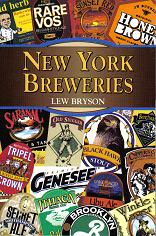
I like the books of Lew Bryson and have relied on them during a few family trips we have taken into the States this year. Before you call the Chidren’s Aid, one thing Lew does in his guides which make them valuable from the get go is his focus on the practical so the entry in New York Breweries for beautiful Ommegang nears Cooperstown also lets you know about the Howe Caverns nearby as well as other family friendly attractions, places to eat and places to stay. If a brewery also makes pop…or is it soda… he tells you which ones are good.

He is also fairly prudent in his reviews. If a beer is not the best, he lets you know without running the place down. His two books and, I trust, the pending third, Virginia, Maryland & Delaware Breweries, take a comprehensive approach rather than just telling you about his favorites. As a result, it tracks the state of the industry while also letting you know the highlights, right down to facts like the one on page 13 of Pennsylvania Breweries, Vol. 2 about the Eternal Tap at the Straub in St. Mary’s, a family operation since the 1870s. Anyone can got to the keg washing room and pour a couple of beers. No asking. Free.

Lew also runs a web site which adds dimension to his paperbacks. First, he posts updates to the books. When doing this, he adds updates rather than replaces them so that if a brewery has notes needing adding every few months they are all still there. Breweries which closed are not deleted. Again, we get a sense of the industry as it grows and changes. Next, he gives you a sense of his upcoming work with excerpts on his mid-Atlantic breweries page – he knows that the book that is scheduled for May 2005 is one that people want to know about now. [I am hoping he goes north for the Breweries of New England next.] Then, he maintains both a monthly web column and links to some of his published work in magazines and newspapers. Have a look around, there’s lots more there.

All in all, a comprehensive vision of one man’s relationship with malt, hops and yeast. Friendly, positive and well researched. And he answers emails.

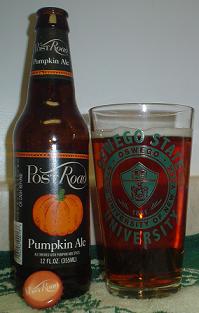
New York: Post Road Pumpkin Ale, Brooklyn Brewery

Now that the Yankees are out of the playoffs, I can admit again to my enjoyment of things New York…more upstate than anything but, as the City and upstate have a mutually vestigal relationship, there is much of the City to be found upstate. One great thing is the New York Times, another is the effect of the Brooklyn Brewery and its range on intellegent challenging beers. I reviewed the Brooklyn Brown in August and, when last in Syracuse, I picked up a six each of the two fall specials, Octoberfest marzen and Post Road Pumpkin Ale. Such is the integrity of the head brewer of Brooklyn, Garrett Oliver, that he has started a line of historic beers of the US. One is Post Road Light Dinner Ale, a remembrance of a late 1800s middle class urban style. The other is Post Road Pumpkin Ale, a tribute to earlier colonial pioneer brewers.

The aroma is pumpkin patch, autumn frost. The taste, pumpkin pie spices. Its light body makes it an easy drink but the nutmeg backed with cinnamon makes it a bit dry for a quaffable, sipping or session beer, compared to say a rich spicy thang like a Belgian dubble say Unibroue’s Maudite. Brooklyn’s web site says:

Post Road Pumpkin Ale is a revival of a beer brewed by the early American colonists. Pumpkins were plentiful, flavorful and nutritious and they blended nicely with barley malt. Hundreds of pumpkins are blended into each batch of Post Road Pumpkin Ale, creating a beer with an orange amber color, warm pumpkin aroma, biscuity malt center and crisp finish. Post Road Pumpkin Ale is spiced with cinnamon and nutmeg.

The other day I roasted a lamb’s leg and basted it with half dark maple syrup and half this ale. It was good, candied up over 4 1/2 hours. I used to make a roasted pumpkin porter with Ringwood yeast. While this is a much lighter take, the idea is there – the summer’s work saved in the celler. Advocatonians have their say.

Four North East IPAs

4ipa

PA’s Tröegs Hopback, southwest NY’s Southern Tier,
Ithaca’s Flower Power and Maine’s Shipyard.
 

Porter lost out to India Pale Ale somewhere in the mid-1800s. The style came out of the export trade to the British soldiers in the Empire – by brewing double strength and double hopped, the ale travelled better and was expected to be diluted when it got there. Plan B was rapidly brought into play. In the revival of beer making that has occurred over the last twenty years, big hops and big body have been something of a flagship for each brewer. Sometimes it works and sometimes it doesn’t. These suds are all in the game. You’ve seen the Ithacan before but now it is with compadres.

As an aside, this is something that has not taken off in Canada in the same way. If there is a great hopped ale it is more in the English style like the excellent Propeller ESB out of Halifax. The micro-micro brewery at Rogue’s Roost also in Halifax made small batches of wonderful IPAs but they were not a hit with the crowd and ended up dry-hopped in corny kegs (ie soda pop canisters) for the select crowd of Lorne’s pals. I have not had a micro in Ontario that went anywhere near where either Nova Scotian went – even they are “IPA lite” compared to any number of available brews from below the border. Can enyone suggest a rival for these four?

Southern Tier IPA:This beer is not so complex as either the Ithaca or Tröegs examples but that is not necessarily a bad thing. At the end there is a bit of alcohol heat which is expected at 6.5%. Woodsy hopping feels more like Fuggles than Goldings but there is a bit of the orange peel of the latter as well. Not real green or minty, either. Spicy, however, and with the extra body it is not unlike or perhaps a good compliment to a Sussex Golden Ginger Ale. A bit heavy to be a session beer. The Beer Advocate reviews are positive and I will buy biscuity but I am not finding the hops grapefruity. That all does go to the problem of describing taste as no one is really wrong to a certain point. Located at the very south western corner of New York, the Southern Tier Brewery is a worthy new find for me.

Ithaca Flower Power IPA: I wrote about this one before but it is good to be a standard. In fact, of the ales tested, Ithaca Flower Power IPA and Brooklyn Brown are real winners so far. This time I am impressed by the balance of the Flower Power without recourse to a particularly heavy or heady body. The brewery tells us:

Available April 1 – September 31. Elegantly traditional and rich in its hop character, this India Pale Ale is thirst-quenching and soul-satisfying. Each sip delivers a bounty of herbal and floral hop character, balanced by the fruity signature of our house yeast. Cheers! This seasonal product is available only on draft, 1/4 bbl keg, or 1/2 bbl keg.

The website is a bit behind as I am clearly drinking a bottle. The lads at the Beer Advocate think it may be a session beer but that would be like eating arugula all evening instead of dill pickle chips. I like this opinion:

It kind of sneaks up on you, through the easy going, crunchy, jam band listening feel. The oak is very distinct, meeting a walnut yeast flavor and balancing biscuity grain. A lingering woody hop flavor, with a bit of grainy malt sticking to the back of the tongue. Medium bodied, with soft but steady carbonation. A bit of a rough-hewn mouthfeel, with all the earth, wood and grain going on.

I like it. A very earthy, natural feel. The graininess is somewhat like an organic ale, and the oak flavor really conjures up a cask feel. It’s a nice enough IPA, but perhaps a little more bite would make it better. Some of that herbal, piney oiliness. Regardless, I like the woody, earthy feel, it creates character and makes the brew distinct.That is it! Arugula. The beer has that bit of black pepper zing with vegetative green in the hops that is like the green aka roquette. Damn good beer.

Tröegs Hopback Amber Ale: far left, this beer is pretty fine, a notch above medium body, a fresh hops profile, fairly sweet from crystal malts with a light citrus edge through it. The brewer says:

Tröegs HopBack Amber gets its unique name and taste from the HopBack Vessel in our brewhouse. Packed full of whole flavor hops, each batch circulates through the vessel, creating a fresh hoppy aroma, spicy taste and rich caramel note that defines this signature amber ale.

It is rich, mellow, satisfying and quite morish and the Beer advoates approve. It is not as molar janglingly hopped as other pale ales or IPAs US brewers will throw at you but sometimes the hopping can go too far if you are looking for something to have more than one bottle of. At 6% it is not a session beer but you could fool yourself despite the warming. Like the other ales I have been happy with, the challenge they place on the Canadian bigotry against US brews is definitely on.

Shipyard IPA: I have a sectret that is no secret and that is I love Shipyard’s ales. I have crawled all over the brewery on a ad hoc tour by the brew master one Saturday with portland at Portland. I have t-shirts and a ball cap. I have (briefly) abandoned my family on visits immediately upon dropping them off at the home being visited to rush to DiPietro’s around the corner – the great pizza maker, beer and wine store, corner grocery of South Portland – to pick up a captain’s case, the variety packs US micro-brewers put out of three bottles of four styles that make such sense. It sums up much of what is great about Maine – quality, tradition and independence. (In fact, the current polling in Maine giving Bush the lead give me the expectation that Kerry will win nationally…they go their own way to that degree.)

At the brewery I was stunned to find open top modern square fermenters, like found at the excellent Samuel Smith’s brewery of Yorkshire, England. Ale fans and even Ale-fan will know that the open square is a form of fermentation that requires the yeast head to effectively seal the fluid forming in to beer below it. No gauges and pipes up top, just a burbling crops of foam. That foam replicates itself when the bottle purs into a big rocky head that leaves a venerous lightly beiged lace on the glass as it settles. It is very mich alive. It also, again like sherry, arguably allows for a certain respiration, which when your Brewery is by the seashore in Casco Bay, can be argued to add a sea saltiness aspect to the brew – sort of like certain Islay malts.

The brew itself [Ed.: click on IPA on the java-ed frame] is fruity and fuggley which makes it fairly close to the orange juice of ales. The beer used to be called Fuggles IPA according to one of my t-shirts and is fairly brave in its selection of a single hop. Fuggles is the oldest variety of hops still used and has a twiggy edge not present in the more noble hops like Goldings with its fine candy cane, citrus characteristics. The website uses the word spicy but that is a little general in the sense that I like to use that word for either Christmas pudding flavours you can get in darks or peppery nutmegy clovey flavours you can get in hefeweissens. At 5.8%, there is a little bit of heat to Shipyard IPA there but it is well-framed in the hops and medium bodied malt. The beer advocatonians are mixed on this brew, 13% giving it a thumbs down for the properties that the square fermenation and use of Fuggles actually intends. They are not a mistakes so much as decisions. I also have noted that Shipyard’s flagship Export had been described as a Canadian ale in some quarters. The grainy roughness of the brews certainly is familiar to me in that regard. Consider this review:

Certainly bitter, though so many IPAs are made with one of the hops that starts with a “C” that this one seems unique despite its blandness. Well carbonated and lively, it’s certainly refreshing. Bits of lemon and berry tart drizzled in caramel. But then it’s really just hops. You get the hint of complexity, but dry, grainy, hop oily intensity takes over. Hops is the word of the day. They’re all over the backend of this beer. No harshness or alcohol to slow consumption. Goes down well.

In a sense this beer is a pinnacle of former glory Maritime brewing style which I grew up with out of the Olands and Moosehead breweries. It is like the beer Oland’s Export might be were it brewed as a real ale rather than a beer replicant containing mainly corn sugar and irish moss. If I were Mike in Halifax, I would load up a rental van with non-drinkers, drive the eight hours to the brewery, buy their share of the border crossing allowance with taxes paid and have a very happy winter.

There you have it. All my USA summer brews are extinguished, supped, downed and the reviews are complete. Good thing I have a week off after Canadian Thanksgiving and am planning a day trip two hours south to the Galeville Grocery and even perhaps the Party Source in Syracuse.

Assorted Darks

Three New Yorkers and one each from England, Quebec and Ontario
 

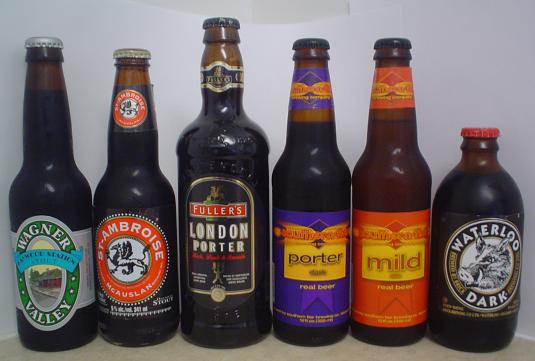
Here are six dark ales which I have stuck away over the last while to describe some of the differences. This is a special message to Nils who I think can start his hunt for a beer he likes with some of these.

If you were buying beer in 1880, these might appear ranked on a brewer’s list they are degrees of the same thing. On the light side in the latter part of the 19th century, pale ales ranges from light (dinner ales) through bitter/pale ale, extra special bitters, India pale ales to barley wine. Similarly we have the dark range from mild, dark, porter, stout (porter), extra stout, Russian/Baltic/Imperial stout. Gradations were marked by combinations of capital letters the most well known of which would be of the “XXX” label which would be a fairly strong pale. On top of that, just as browns are not all the same, neither are stouts. There are dry dry stouts like draft Guinness, extra stouts like Guinness in the bottle, strong stouts like Trinidad’s 7% Lion Extra Stout, milk stouts like Lancaster Brewing produces and Sweet Stouts which can be a light and 2.9%. Oatmeal stout, like these, is a sub-class all its own.

McAuslan’s St-Ambrose Oatmeal Stout: second from the left. When I see adds that make fun of American beer I think – what Canadian beer do I actually drink? This is it. From Montreal, St. Ambrose from McAuslan is on tap here in town at the Queen’s Grad House and at the Kingston Brew Pub, this stout had big body and the velvet touch. Tied with the products of Unibroue, also from Quebec, I cannot think of a finer Canuck brew. Licorice, coffee and chocolate in a sip that approaches thick and textured like espresso. McAuslan says:

At the World Beer Championship in 1994, St-Ambroise Oatmeal Stout received the second highest rating of the over 200 beers in the competition and won one of only nine platinum medals awarded. Brewed from 40 percent dark malts and roasted barley, this intensely black ale carries strong hints of espresso and chocolate. Oatmeal contributes body and a long-lasting mocha-colored head to this well-hopped beer.

Paddock Wood reminds us that rolled oats are added pre-gelatinized directly to mash. It “improves head retention, body, adds grainy flavour” all of which is on display with the McAuslan – very highly rated here, too.

Wagner Valley Caywood Station Oatmeal Stout: far left. This beer from Lodi New York in the Finger Lake district makes for a great comparator with the St-Ambrose as it also an oatmeal stout – which is really not a very popular style. The brewery says of the beer:

This robust, full-bodied oatmeal stout is rich in highly roasted malt flavor, rounded off by a touch of oats, caramel malt and Fuggles and Willamette hops… This robust, full-bodied oatmeal stout is rich in highly roasted malt flavor, rounded off by a touch of oats, caramel malt and Fuggles and Willamette hops.

Comments here include “like a mouthful of dirty pennies” and “silky smooth and sumptuous”. This stout is a little less carbonated than the St-Ambrose, which is good. Carbonation, along with acidic water, is a way of creating mouthfeel without spending money on hops or grain. If I have a complaint with the St-Ambrose, it is the carbonation level in the bottle that is not present in the draft. Wagner Valley does not have that. Not as death by mocha chocolate rich, it is nonetheless a fine example of the style.

Fuller’s London Porter: third from the left. A full pint sets you back $3.20 at the LCBO but it is worth it as there are few real porters going around and this one is one. Porter brewing was the vanguard of early industrial standardized production capturing much of the English speaking world’s beery imagination from around 1720 to about 1840. Just one London brewer in 1820 produced 300,000 barrels – nine million US gallons in a city of around 2 million. In 1814 one single vat of porter burst flooding local streets and drowning eight people.So when you drink porter, you are drinking history. As stated above, stout was originally stout porter and side by side it is clear. Where stouts rely on the darkest malts, the burnt flavors of black malt and roast barley, porters use chocolate malts and brown malts to provide a similarly big but more mellow flavour. As a result, hopping is also lighter than, say, Guinness Extra Stout which is one of the most highly hopped common traditional beers there is. It is still a mouthful, however, as Fuller’s example shows. Coffee with a hint of licorice, unsweetened cocoa, pumpernickel. Fullers says:

Fuller’s London Porter is a superb, award-winning beer. We’re proud to have won gold and silver medals at the 1999, 2000 and 2002 International Beer & Cider Competitions. The origins of Porter date back to London in the early nineteenth century, when it was popular to mix two or three beers, usually an old, well-vatted or ‘stale’ brown ale, with a new brown ale and a pale ale. It was time consuming for the publican to pull from three casks for one pint, and so brewers in London tested and produced a new beer, known as ‘entire’, to match the tastes of such mixtures. Using high roasted malts, ‘entire’ was dark, cloudy and hoppy. It was also easily produced in bulk and ideally suited to the soft well-water of London. Very quickly, it became popular amongst the porters working in Billingsgate and Smithfield markets, and gradually, the beer took on the name ‘Porter’, in recognition of its main consumers. Fuller’s London Porter captures the flavours of those brews perfectly, although you won’t find a cloudy pint these days! Smooth, rich, and strong (5.4% a.b.v.), our London Porter is brewed from a blend of brown, crystal and chocolate malts for a creamy delivery balanced by traditional Fuggles hops.

These guys like it – here is a good comment:

The mouth feel at the end is water which leads to a high drink ability, smooth and almost creamy. They way that all the flavors blend smoothly and subtly together in this beer is what makes it great. One that will fool people who don’t know that dark beer doesn’t necessarily mean strong and bold flavors. This is what I would call a perfect intro to porters.

I used to brew a pumpkin porter that needed a few pounds of roasted mashed pulp to show up in the flavour profile rather than just add body – bodacious it were, by the way. If you want to try a dark beer and like a good black coffee, you can’t go wrong with Fuller’s London Porter. A standard in the fridge around my place.

Southern Tier Mild: second from the right. Well I never expected this. A pale mild. So it is definitely the far end of the scale of darks. Why so? Because it is soft, it is lightly hopped and it is built for a session. Other pale milds I can think of are Manchester’s Boddingtons and Newfoundland’s Black Arse Horse. All look like a pale ale but are so recessed in flavour you would think you were drinking a light ale. Then you notice it taste good. Then you realize that your beer is not largely made up of Irish Moss and other seaweeds. Then you think mild is interesting after all. Maybe there’s a hint of orange peel and a little honey and a little sugar cookie – but only a little of each.The brewer, Southern Tier (of the very lower corner of western New York) says it is a beer that “deserves to be imbibed often”. As it had a little sweet, a little hop, a little grain, low carbonization and a soft water background that is a pretty good recommendation. These guys talk about its biscuit malt, doughy, bready. A small beer but that is what it wants to be.

Waterloo Dark Ale: far right. This is a beer I have liked but, like most Canadian micro-brews, is lighter in taste than the US brewers would make. How odd given our mass produced stuff holds itself out as being stronger than our southern cousins. Brewed by the Brick Brewing Company of Waterloo Ontario, who says:

A dark beer can be a very scary thought to some people. Surprise, surprise. There’s no other beer quite like Waterloo Dark, refreshingly light and delicate in taste but rich in colour. Don’t be afraid of the dark. surprise yourself.

Hmm. Not very hope instilling. Well, it is a dark…but a dark lager. I would have thought it was a dark ale, a little brewed style that is way less than a porter but bigger than a brown. No hop imprint like a US brown would have. A little molassas and a little brown sugar and a little lighter mahogony in hue than a cola: “After seeing this dark colour, I expected quite a bold, rich taste…” was a particlarly prophetic comment. Beer advocate gives it a 74% thumbs down. Yikes. They also categorize it as a Munich Dunkle lager, not something I would say I have had a large acquaintance with. I think that is actually pushing it. As I think this is really a pale ale with some caramel and maybe some other malts added. Watery end with a sour tang left in your mouth. I can leave it with this wag’s comment:

I’ve come to the conclusion that from my experience their beers seem to be very lacking in flavour and body. I do however love the stubbies though.

I do like stubbies, too, but from now on I will stick to Brick’s original Red Cap revival in the little tubby bottles.

Southern Tier Porter: The last of the set. It has sat for weeks in the back of the fridge, the ur-porter incarnate…or at least the ur-porter of the back of my fridge. Smelly of coffee and licorice. Tastey of coffee and blackberry and cocoa and tobacco. Easy-peasy good beer. Big and fresh. We like that on the committee. I did tell you there is a committee behind me, right. Anyway, the advocatonians say this, including the following:

After a hard pour, beer produces little to no head, and is not quite as dark brown/ruby as is to be expected by the style. Too much light gets through this one. Sweet roasted malt and chocolate are the predominant odors. More reminiscent of a milk stout than porter. Smokey in character, with a definitely sweet malt presence on the tongue. Not as complex and chewy as I like my porters, but thoroughly drinkable.

I have had smoked porter and smoked herring and smoked cheese so I am a wee bit surprised by the call that this is a smokey beer. A wee bit less than smokey but the faintest hint might be there. I do not know why a call can be made that something is more milk porter yet also smokey but go figure. The brewery talks about “overtones of chocolate ans espresso beans” – a bit blabalonian for me. It is bigish and yupping. Eat steak, drink this, live long.
Digger Dance

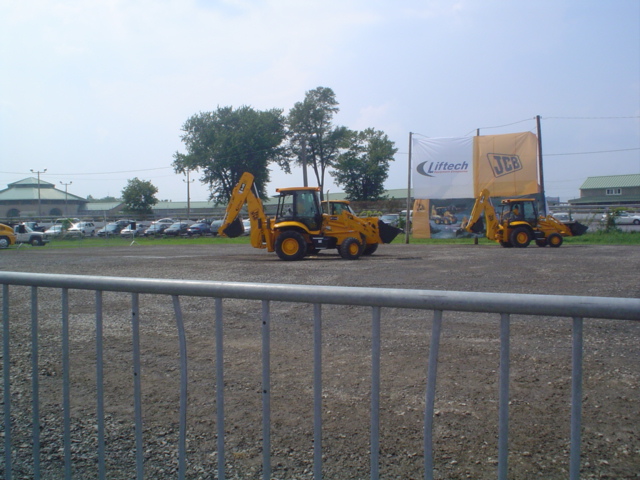
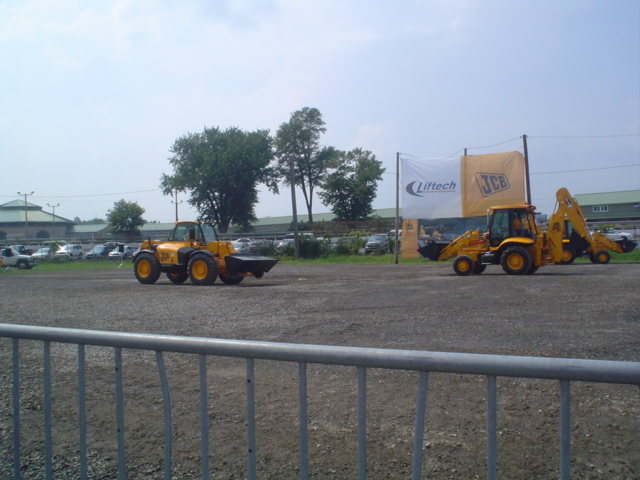
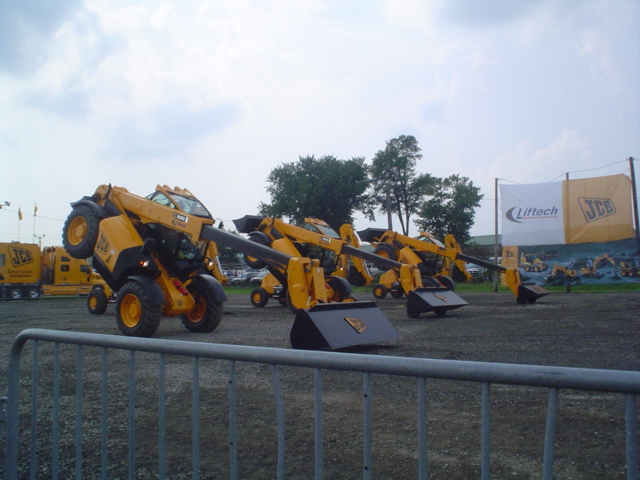
The last thing we stuck around the New York State Fair yesterday afternoon for was the JCB digger dance. Basically, six heavy construction vehicles are run around a parking lot to music doing a sort of Ed Sullivan era pop ballet. Here are some short short movies:

Here are a whack of photos:

Sunday At The NYS Fair

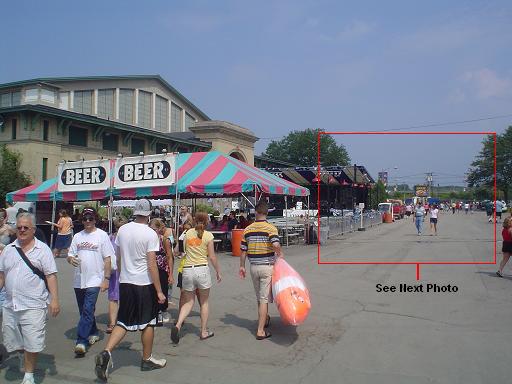
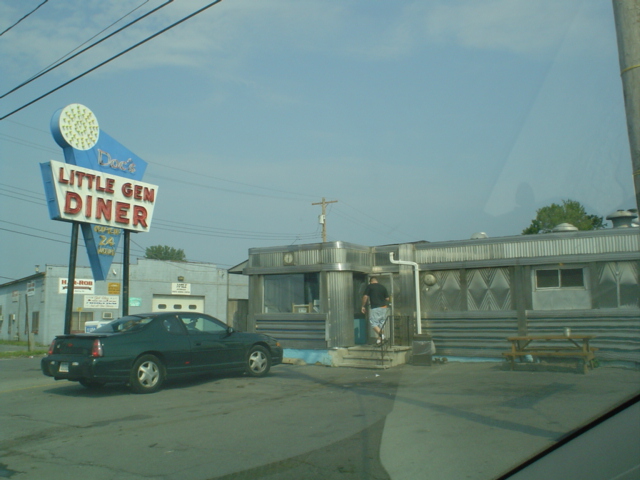
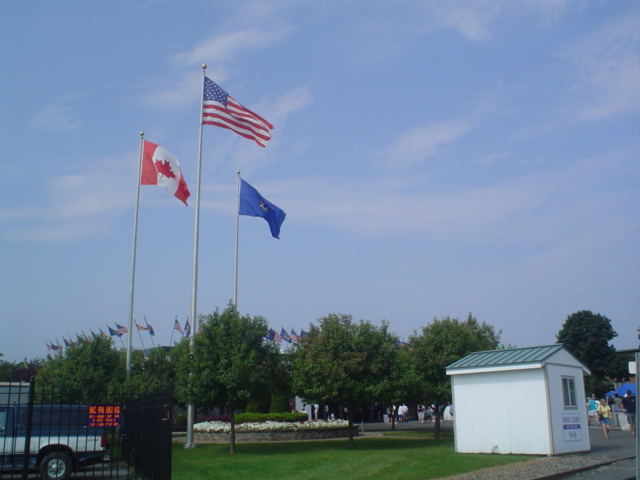
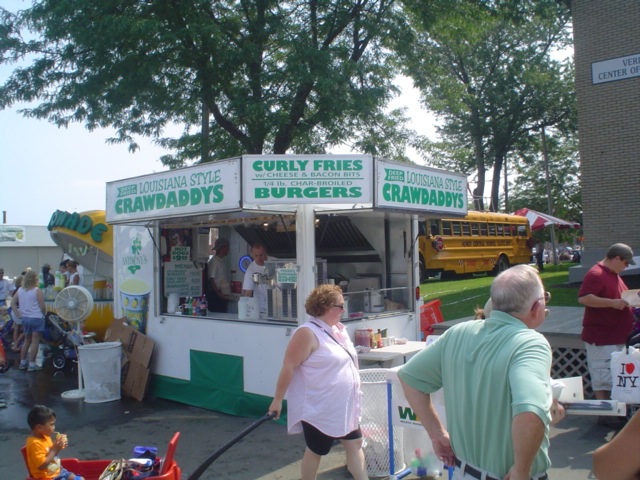
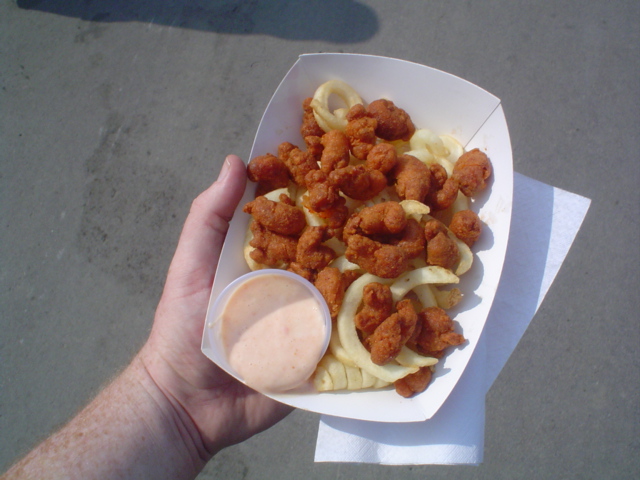
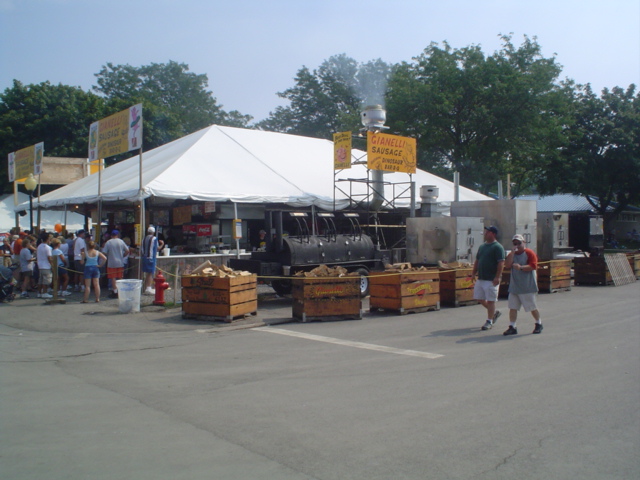
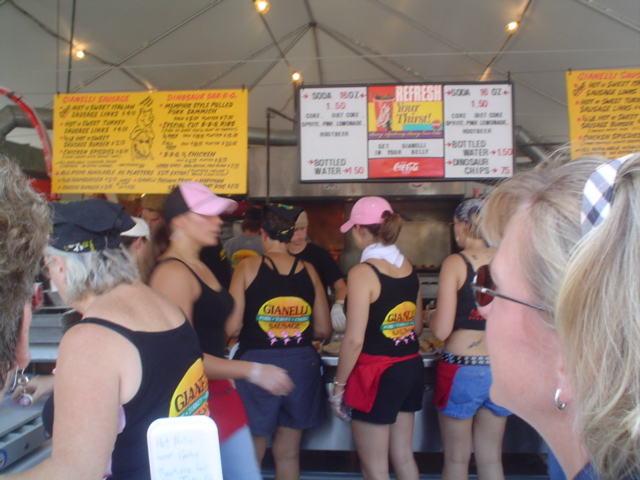
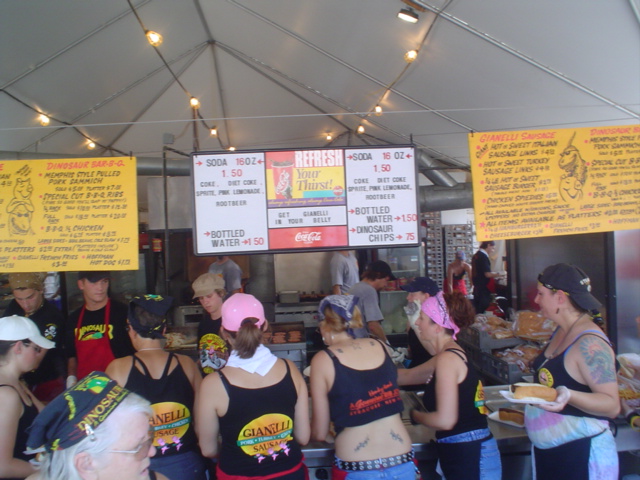
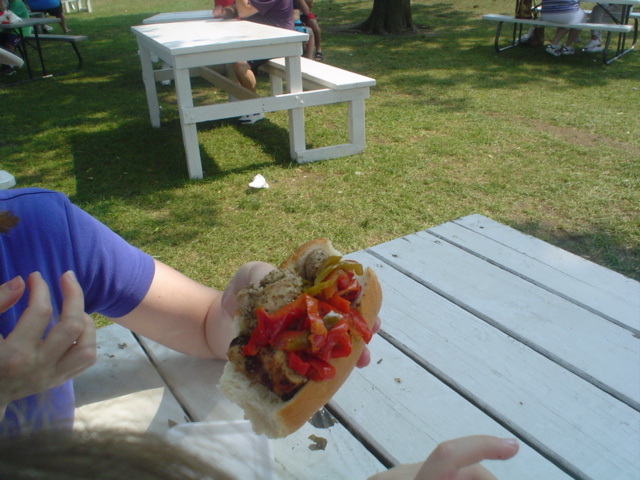
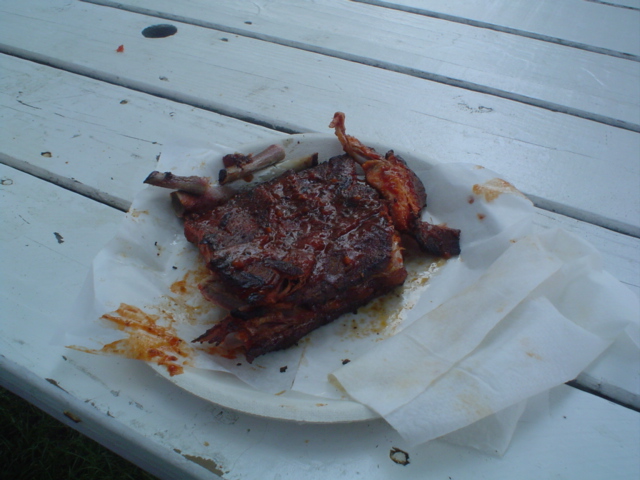
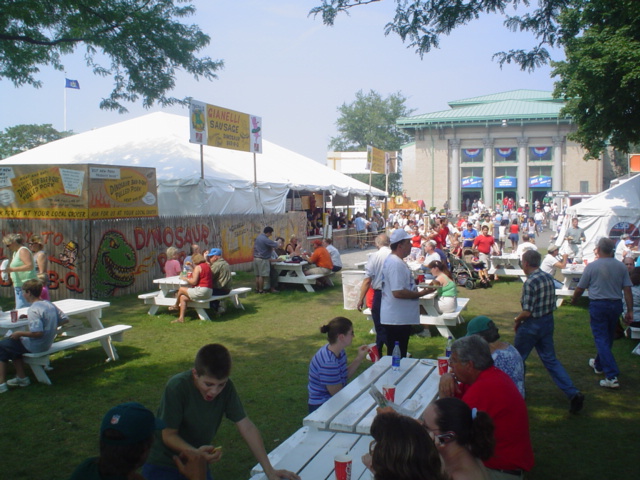
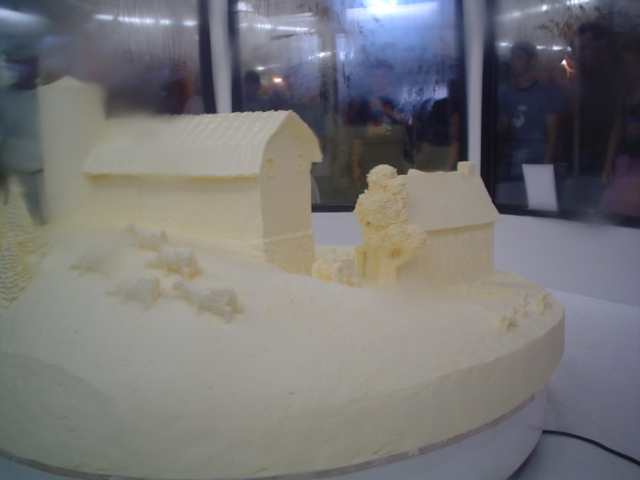
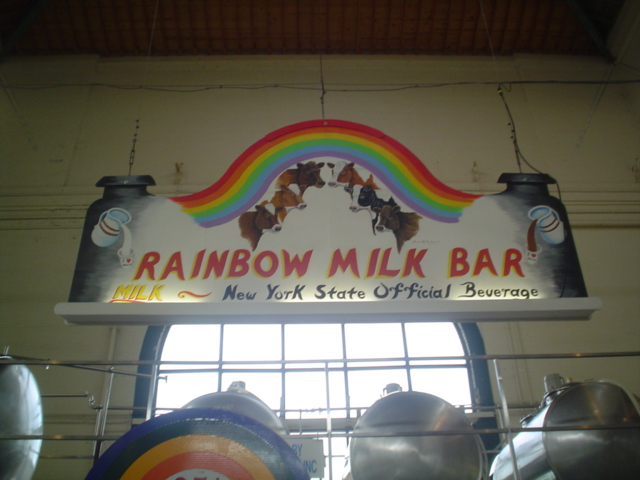
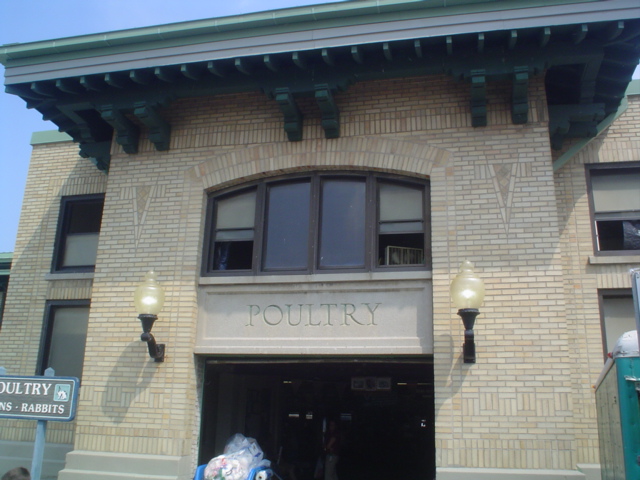
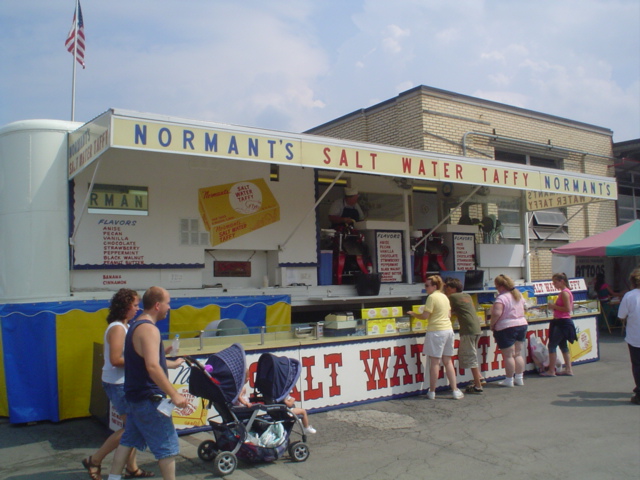
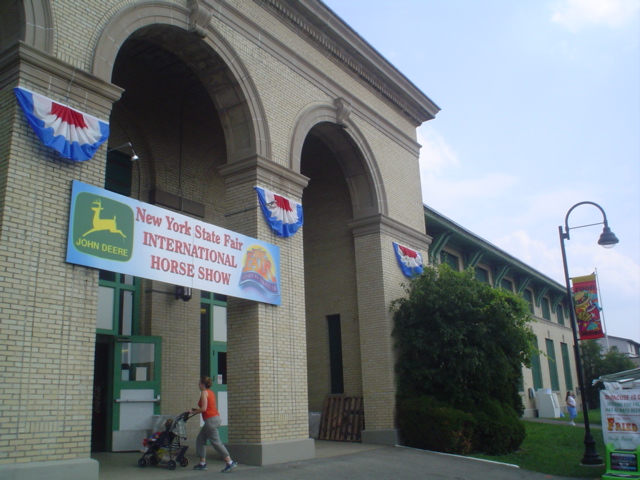
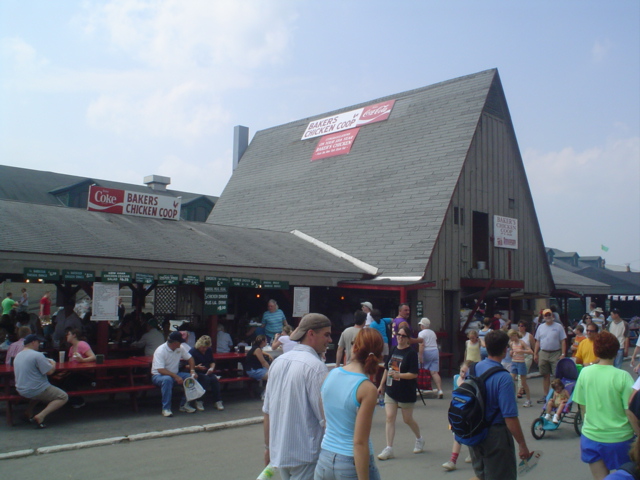
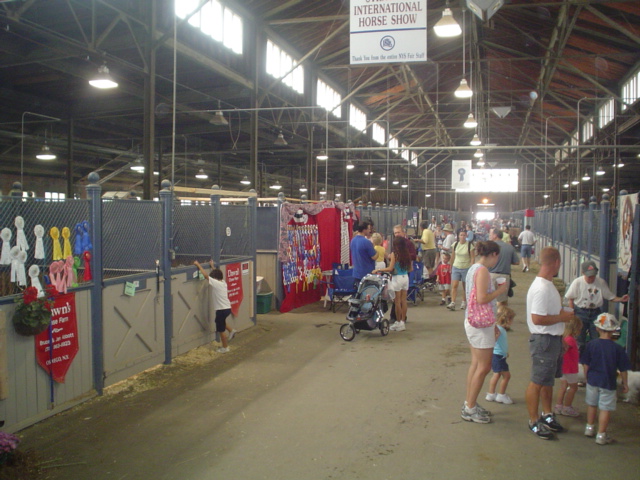
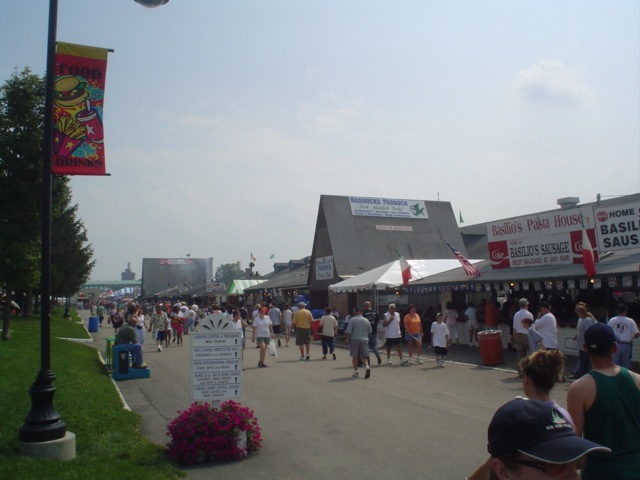
Here are some pictures from the New York State Fair. The first is actually a diner we passed half lost but near the fairgrounds. You’ll see crawdads, spiedies and dinosaur ribs. Maybe I have not gone to many fairs, but the amazing thing to me about the place was how there were more food booths than carnies. The butter sculpture was amazing…well…interesting enough…I guess. Clean, civilized, packed and stinkin’ hot when the weather was calling for cloudy with rainy spells. Excellent.

Here are two short short movies, the first of a crowd scene [1.5 MB] and the second of the two-seater ride I will never take [2.1 MB].


Beer Shop: Galeville Grocery, Liverpool, NY


galeville

Directions to Galeville Grocery

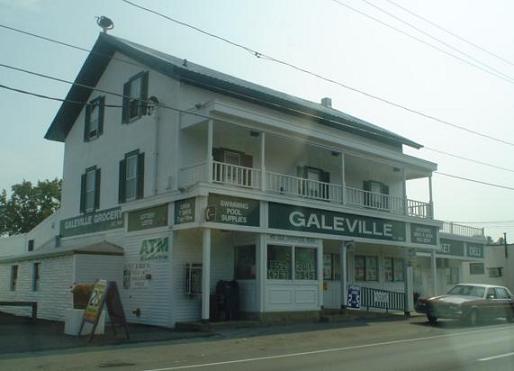
So we hit the road at 8:00 am and were at the fair at 10:30 am after a few stops – one of which was the Galeville Grocery. Unlike Pennsylvania and its restrictive distributor system, New Yorkers have some of the most civilized laws relating to the purchasing of ales. As in Quebec, any corner store can pretty much be one of the best sources you will find. Thanks to a tip from the Homebrewers Digest, we turned off I-81 at the Liverpool turn-off and hunted for the 116 year old shop.
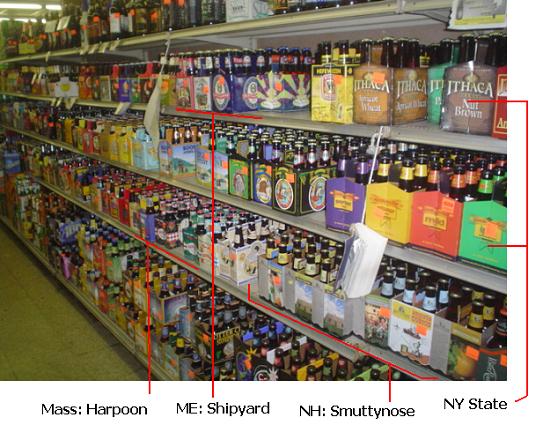
As the photo below shows, it was a small trip into a pretty nice selection of micros. Lots of Ithaca, Brooklyn and other New Yorkers plus a good selection from across the land. They even had sixes of Sleeman’s honey brown for 4.99 which is about 6.50 CND – or 4 bucks less than it costs here in Ontario where it is made. I picked up a variety pack from both Ithaca and Southern Tier as well as a six from each of Brooklyn, Wagner Valley and, because I could, one of Shipyard IPA from Portland Maine. Expect a few comparing and contrasting reviews over the next week weeks including much reference to the works of Lew Bryson.

galeville1

It was a bit of a lesson in surcharges. The beer cost me $50.45 USD or $67.10 CND. I then paid $2.10 USD New York State bottle return, $3.66 USD New York state tax, $4.00 CND federal duty, $9.64 Ontario Liquor Commission mark-up, $5.44 Canadian Federal Goods and Services Tax, $10.48 Ontario Provincial Sales Tax. Total was $103.78 CND. If I had spent 48 hours in the states it would have only been the $78.20 as there are no border charges but I am not exactly going to plan a three day holiday around saving 29 bucks.

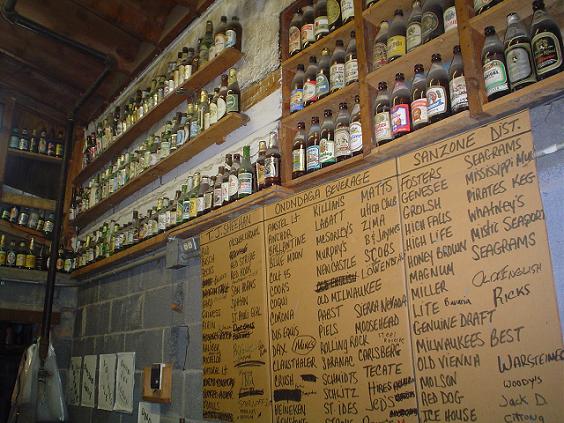
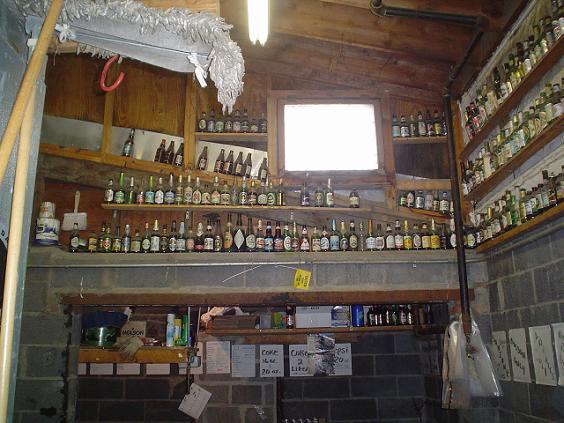
Later: Visited again today and noticed the returns sorting room at the back and its impressive dusty collection of unreturnables. Spot any favorites?

galeville2

galeville3

Zooming South

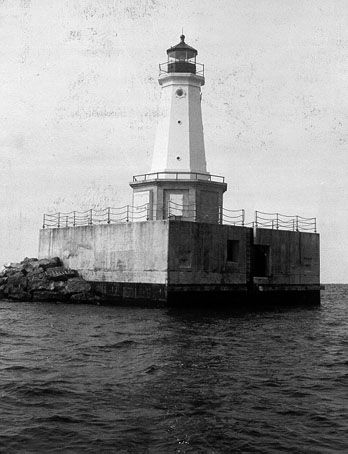
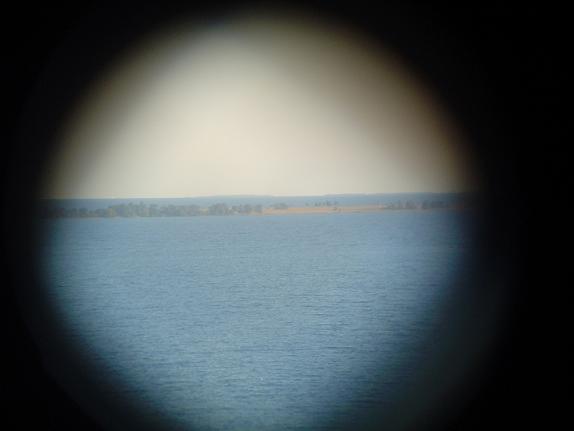
It being an exceptionally clear evening, I went up to the roof and did the binocular trick looking south and this is some of what I caught. Above, over Simcoe Island, a laker and a lighthouse. The light may well be the East Charity Shoals Light I saw from Cape Vincent facing fairly straight west from there. Correction: This is a lighthouse on Pigeon Island about 4 miles south west of the nearest tip of Wolfe Island and 4 miles northwest of the East Charity Light. The Laker route is quite far south as well, staying beyond the US boundary. I’d estimate the Pigeon Island Light would be about 20 km from here and that Laker about 25 km. Here is the entire photo taken through the binoculars.

Above, over Simcoe Island, the plume at Nine Mile Pt, NY, near Oswego. The nuclear plant would be about 75 km straight south of here. See this article on the search for the plume. Here is the entire photo taken through the binoculars. You’ll notice that the actual 543 cooling tower is under the horizon.

Above: this view again over the west tip of Simcoe shows islands on the horizon which may well be Main Duck Island and its neighbour to the left whose name I do not know yet. The gap between the islands is about 35 km south south west of here. Here is the entire photo taken through the binoculars.

Above: One more. I think the white thing is the East Charity Shoals Light which would be about 22 km south south east of here. Below is a blow-up of that portion of the photo.

And below is a US Coast Guard image. I need to get out the compass one clear day to check all these guesses.

Local TV Dies A Little More

It had been getting a bit crappier than I was comfortable with lately due to cuts but Clear Channel affiliate WWTI ABC announced today that it was cutting its 6 pm and 11 pm news broadcasts to focus on hourly updates and weather…oh, and the internet. [I think they will be investing in the use of technology – wizards!]   Just a year and a bit ago, they had an hour and a half of local Watertown, NY news and sports every evening at 6 pm and more at 11 pm with a special Friday night high school sportscast called the Sportsblitz…or rather the Sportsblitz.

Now, the best source of corny local sports is gone. How will I know how Lafargeville or Pulaski do in high school lacrosse next spring?  How will I follow Sackets in the Class K, Division XXIV NY state boys basketball regionals?   Why do I care? Through my life, local TV news has going the way of other slowly dying things. In the good old days, CBC Halifax TV in the ’70’s had the resources to do news broadcasts from Tomaso’s pizza and other wacky places and WLBZ Bangor brought Dick Stacey’s Country Jamboree to the Maritimes via cable TV (blogged about here…it even made The Christian Science Monitor), Wingham Ontario’s CKNX-TV in the 1980’s did a feature on my brother in law and his chicken that would ride on his bike handlebars, Pembroke CHRO-TV in the ’90’s, now an Ottawa station, covered the local court scene I was working in. It is not entirely over as Kingston still has an hour of local CKWS news at 6 pm and another half hour at 11 pm and Watertown NY still has one local TV newscast on WWNY-TV but they are affiliates using a lot of national feeds and the local hokey sportscasts are the first to go.

Sad.  We’ll all eat the same cheese from squeeze tubes by the time I am 83.

BBQ

One thing about growing up Canadian, you have a sneaking suspicion that you have missed out big time on the whole BBQ ribs thing. You can brag about Canadian beer, about how its a dry cold so you should suck it up or how watching hockey is sooooo much better than any other team sport but then you remember how all those things would be improved by a pile o ‘ribs and you know something is missing. In this morning’s New York Times there is a description of New Yorkers lining up at a ribs-fest:

In New York, demand for great barbecue tends to outstrip supply. A few weekends ago, thousands of ‘cue-seekers descended on Madison Square Park for the Second Annual Big Apple Barbecue Block Party, hoping for a shot at Mike Mills’s Memphis baby backs and Ed Mitchell’s North Carolina ribs. The lines were epic. Some waited it out. Many fled to nearby Blue Smoke, figuring that New York barbecue is better than no barbecue at all. And quite a few — present company included — hopped on the subway to Chinatown and sated the craving with a huge pile of Cantonese spareribs.

I know that fever, BBQ rib fever.   Apparently, I live 2 and a half hours north of a very legitimate ribs joint, the Dinosaur BBQ in Syracuse but it  looks too bikerish for the kiddie set.  Regardless, we are not going that far south this weekend, heading for Oswego checking out the canal, Fort Ontario and Rudy’s, more of a fish joint on the beach, an inland Bill’s. The Kingston Brewpub does a very nice smoked ribs but they are not cheap and not plenty. My ideals would be like the lobster feeds of youth, picnic table covered with newspapers and piled with red sea spiders. Does such a ribs place exist in Canada?