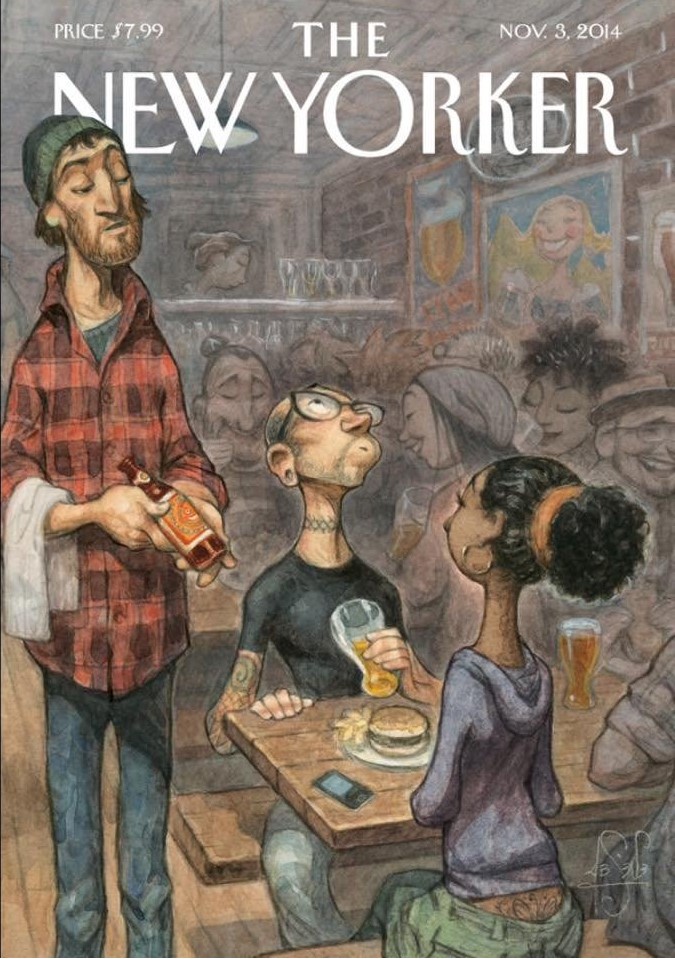
Your Merriest Of Merry Christmas Day Beery News Notes For 2025

Stan has been worried. Very worried. Either worried that there would not be any beery news notes this Chrismas Day or worried that there would be beery news notes today and that I really should be doing something else. I am deeply appreciative of the concern but as I usually farm this all out to the team of sleep deprived unpaid interns there is no question whatsoever of the news getting to each of you, my gentle and today hopefully mildly hungover while turkey and stuffing compromised readers. So… the show goes on! Speaking of which, todays photo above from the Yuletide photo contest was submitted by Zak Rotello of the Olympic Tavern of Rockford Illinois, a long time pal of this here beer blog. Click on it for a bigger version. It’s an image of a member of the brewer staff cleaning open fermenters at Anchor Brewing in San Francisco, the brewery that will now never reopen. Like the sleep deprived unpaid interns, we remember those who are working today to keep the holidays jolly.

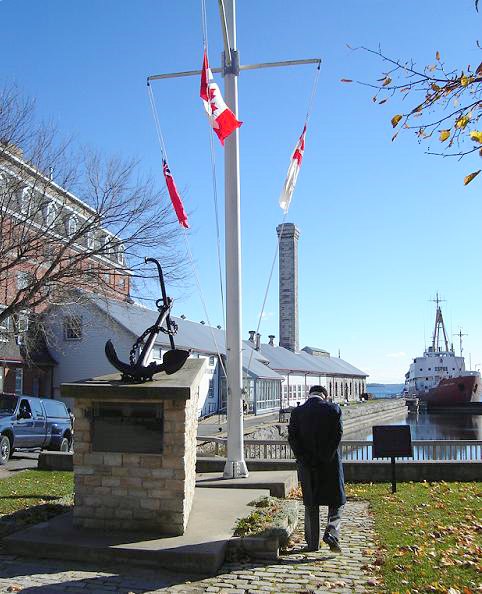
So what news is actually out there this week? We might have slim pickin’s but there shall be pickin’s. First up, what days are your local party days? As mentioned last year, Tuesday was Tibb’s Eve in Newfoundland last Tuesday. And this is the first year I saw a lot of references to “Black Friday” for the last Friday before Christmas as opposed to the first Friday after U.S. Thanksgiving. Here, for example, is the new coverage from Wales.  Mainly photos of the dressed up and drunk yuff today. It also seems to be referred to as “Mad Friday” in Scotland but maybe it’s a phrase able to be swapped out. I share the thumbnail attached as evidence that such stuff happens in Canada but perhaps with a little more grace as well as perhaps a bit more grit. By the way, one assumes (given the obviously strong ankles) that such natty folk might also be hockey players so… a misplaces comment might receive an brisk elbow right to the Chiclets… if you know what I mean.

What else? The best booze stories of the year according to the Drinks Business included beer news including the high price of a pint in the UK, BrewDog ditching pubs and the suggestion that NA beer should be “a functional drink rather than a compromise…” whatever that means. Pellicle offered up its top tales of their very good year. And Ron has been posting about the best of his personal year including:

I did a bit of judging this year. Mostly in South America, obviously. That’s where I prefer to judge. The Blumenau contest was fun this year. And not in Blumenau. Instead, it was on the coast at Balneario Camboriu. Literally on the coast, as the judging location was on the seafront. Meaning you could have a stroll down the beach at lunchtime. So civilised. And I managed to dodge judging Best of Show. That’s always a win. In Santiago, judging was in the same hotel as we were staying. Which is always good.

Also good was his news that he’s been cutting back.  On a related note, the* Beer Nut on the expansion of NA beers that don’t suck:

Non-alcoholic beer gets the occasional bit of coverage on here, though I tend to find very few which perform the role required of a beer. Pale ales, wheat beers and lagers seem to be the preferred styles, which may be the problem. I’ve often said that dark styles make for better alcohol-free beer, my favourite to date being Švyturys Go Juodas, and the Guinness one is pretty decent too. The latter’s success has provided an opportunity for other breweries to get in on the 0.0 stout racket, and the first I’ve seen locally is Dundalk Bay’s Zero Zero Nitro Stout, available in Aldi.

I’ve recently bought into the “Guinness 0” thing so good news that other smaller operations are able to similarly pass muster. Speaking of news, Stan also had newsy news in his Hop Queries in the state of the US supply of hops:

Farmers in the Northwest reduced acreage 7% in 2025 and harvested 5% percent fewer hops, according to the USDA National Hop Report. Average yield per acre was the highest since 2011, when higher yielding hops appreciated more for their alpha made up a larger percentage of acres planted. The 2025 value of production was $447 million, up slightly from 2024, but significantly less than $662 million in 2021. That shouldn’t be a surprise, given that acreage has shrunk 31% since 2021 and production 28%. Perhaps as important, in September the USDA reported that the inventory of hops held by growers, dealers and brewers was 116 million pounds, down 15 percent from the previous year. That’s the largest contraction in 15 years and suggests the market is getting closer to being in balance. Still, it is a significant amount, and almost 40 percent higher than it was through much of the teens.

Me, I was higher in my teens. That’s the main difference between me and the US hops trade.

Note#1: “Stephen Beaumont once gave me some good advice: don’t.
Note #2: “Scroll at your leisure…
Note #3: Women in public bars over fifty years or so ago.
Note #4: Continental had a pub in the sky.
Note #5: Short pours in Milton Keynes!

Speaking of controversy, a debate threatened to break out in the comments at Boak and Bailey but it appeared to just be a slightly paranoid complainer intent on playing one handed ping pong, the prattling lad being handled firmly by the administration. Much more interesting were the comments confirming reality behind the sale of Bristol’s Moors, including:

I now have had a chance to dig into their structure and, in short, they were not employee-owned in the recognised sense of being owned by an employee ownership trust or being a co-op, etc – it was just that all of the owners were also employees (i.e. no external investors). Justin owned 85% of the business. It looks like he has now sold that stake to Albatronic Arcades Ltd, a company registered on 5 August 2025 and owned solely by Bruce Gray. So I feel less unnerved about the boycott! But still hope they can turn Moor around.

Another set of comments were helpful in building upon Jeff‘s thoughts on the shutting down of three of ABInBev’s megabreweries in the U.S. of A.:

At a macro level, overcapacity normally drives prices down, which is always hard on producers. It’s especially bad for breweries right now, which face a host of financial challenges. Craft and big beer function largely in separate realms, though, and it’s seemed like big beer has been able to replace lost beer volumes with flavored-malt beverages and the like. This news suggests otherwise. Further, for anyone who has followed the beer industry over the past fifty years or so, this is a shocking development for a financial and logistical juggernaut.

Not as shocking to one Karl “the Commentron”** Ockert who shared his understanding:

I worked at the Newark brewery, then a 9 million bbl per year plant, in the early 90’s. I (half) jokingly tell people that I earned my Masters at the university of AB, Newark campus. While I learned a lot of the science of brewing at UC Davis with Dr Lewis, at Newark I learned even more about production and process discipline which I was able to use at the BridgePort and Deschutes Breweries. Last year Newark was down to a rate of 500,000 bbls per year and brewing less than a week per month. Along with Fairfield and Merrimack, it fell victim to the changing beer market. I’m sure it was a painful decision to close all 3 breweries at once, and I’m sorry to see it finally happen.

One wonders what it was that kept the facilities hanging on for so long. Wasn’t money. Somewhat similarly was the concern raised by Ron about the loss this year of Martyn Cornell and state of Martyn’s now 404 website:

What did Martyn leave unfinished? I can’t believe that he wasn’t working on another book. (He asked me about self-publishing because he was so pissed off with how long it took to get a book published.) Not to go all fanboy, but (meaning I am doing) how much material is there that hasn’t been published? Including stuff chopped from Porter. I’d buy a book with that in. Niche, made possible by self-publishing.  A compilation of his, often very long, always hugely informative, blogposts would make a great book. And preserve them in print. As Zythophile is no longer there. Fuck. This material really needs to be saved. Maybe I should get in touch with his brother. 

Happy was I then to confirm that the contents of the entirely excellent Zythophile has been preserved at the Wayback Machine, a service which I have been in love with since the great blog server shift of 2016. Think something has been lost on the internet? Check the Wayback Machine first.

There was intrigue in England as we wondered if Mrs RM could walk past  one of the great conversational pubs:

Walking back from the Sun to Faversham Premier Inn on the eve of Mrs RM’s birthday I suddenly realised we’d taken a different route into town that afternoon and missed its most famous pub. Would she be able to resist the lure of the Elephant on first sight. No. “We’re going in there“. I was happy to skip it, honest. A year ago it was packed on Sunday folk afternoon, a bit quieter on Tuesday night but there still weren’t a lot of spare tables.

A pub full of chatters. Not always what one wants but good to see someone get their way.  In other situations, choosing beer can be the wrong move as this personal injury workers compensation claim denial illustrates:

The claimant’s business required them to purchase and transport bulk quantities, and as the pain apparently intensified the claimant was awarded income replacement benefits, the release says. Surveillance by investigators found the claimant was seen regularly transporting beer for seven to 10 hours every day, often loading up to 20 cases of beer into their vehicle without assistance or any evidence of pain. The benefits were terminated…

All this leads to one fact – beer is not always kosher. No, really. Not kosher:

In November, three of America’s largest kosher certifying organizations came together to release new guidance regarding the status of beer, which has long been considered kosher by default. Due to the proliferation of flavorings brought on by craft brewing and other industry changes, however, the rabbis who declare whether food products are in line with Jewish dietary laws now say the label must be checked before drinking. “We’ve discovered that companies use many flavors, different flavors, to enhance even the simple beers that they manufacture. Those flavors need to be kosherly supervised,” said Rabbi Moshe Elefant, the head of kosher operations at the Orthodox Union, who released the guidance along with Star-K and OK Kosher. “We’ve seen more than one situation… that some beers have dairy in them. They add lactose, they add milk, so a beer could be dairy, which has very serious kosher ramifications.”

Knew it. Gak. Yet some of the stuff that can be crammed into beer other than via the “craft” of the fruit sauce hose might actually be useful:

Buck isn’t just a home brewer dabbling in drug-making. He is a virologist at the National Cancer Institute in Bethesda, Md., where he studies polyomaviruses, which have been linked to various cancers and to serious health problems for people with weakened immune systems. He discovered four of the 13 polyomaviruses known to infect humans. The vaccine beer experiment grew out of research Buck and colleagues have been doing to develop a traditional vaccine against polyomavirus.

As I mentioned last week, I am pro-line in the pub. Better, table service. Each to their own, I suppose, but is there any bore are boring as the “don’t queue” bore in a ‘Spoons?

Believing it’s an ‘unwritten rule’ that you don’t queue at a bar, the 24-year-old barman was stunned to spot ten people in an orderly line waiting for their drinks. Jack refused to join the queues, instead ‘standing his ground’, claiming he propped up the bar for 10 minutes until he was served. Baffled Jack, shared a snap of the queue on X, slamming it as a ‘disgusting and uncouth disregard for sacred tradition’… Jack, who lives in Birkenhead, Merseyside, said: “It’s going against British tradition and it’s just wrong. It’s not like they’re doing anything inherently bad but it’s an unwritten rule you don’t queue at a bar.

Finally – and looking forward to New Year’s resolution suggestions – a word on usage if I might. Please stop writing “I don’t understand” as it means… you are admitting you don’t understand. And if you are a professional writer and you use the phrase “trust me” it only shows you can’t clearly explain your views which means your views are likely not trustworthy. And ask yourself before hitting “publish” if it is wise to write “… an unimaginable amount of work goes into…” when not only was it imaginable but it was accomplished as imagined. And if you as a beer business person want to want to display your ignorance of the times and market conditions of your trade as it exists today, feel free to post something like this on LinkedIn:

Given the current state of the industry, I think it’s about time we rally together and finally retire “Dry January.” Honestly, hasn’t it taken up more spotlight than anything that fun-free should? Let’s change the narrative and remind people what beer actually is……. a simple, natural combination of water, malted grains, hops, and yeast. Four ingredients. Zero mystery. This is our heritage. It’s real, it’s straightforward, and frankly, it deserves a comeback tour. Let’s make it happen and get things moving in the right direction!!!

Seeing as the “industry” didn’t start Dry January how exactly the hell does this person propose that it retire the concept. Plus… “a simple natural combination“? Yes, let’s go out in nature and find some beer, shall we? Displaying further ignorance on the brewing processing is another not strong move.

And that’s it! Stan will either be satisfied or concerned. The interns are using all resources to seek further clarifications on the question. No Christmas for them! And as we enter deeper into the holiday week lull, please also remember that Boak and Bailey are not posting this Saturday so we also will do without their fabulously entertaining footnotes, too. Sitll, look out for Stan’s new “One Link, One Paragraph” format. Then hunt out something in someone’s archives! Leave oblique comments on someone’s post from 2007!! Listen to a few of Lew’s podcasts and get your emailed issue of Episodes of my Pub Life by David Jesudason on certain Fridays. And Phil Mellows is at the BritishBeerBreaks. Once a month, as noted, Will Hawkes issues his London Beer City newsletter and do sign up for Katie’s wonderful self-governing totes autonomous website featuring The Gulp, too.  Ben’s Beer and Badword has returned from his break since April so you can embrace the sweary Mary! There is reading at The Glass which is going back to being a blog. Any more? We have Ontario’s own A Quick Beer and All About Beer is still offering a range of podcasts – and there’s also Mike Seay’s The Perfect Pour. Plus follow the venerable Full Pint podcast! And there’s the Craft Beer Channel on Youtube. Check out the archives of the Beer Ladies Podcast.

*I am always torn. Sweat forms on the brow. Does one capitalize the “t”?
**The title reserved only for the most experienced of comment makers.
Your Festive Beery News Notes For A Blursday In This Jolly Hollifest

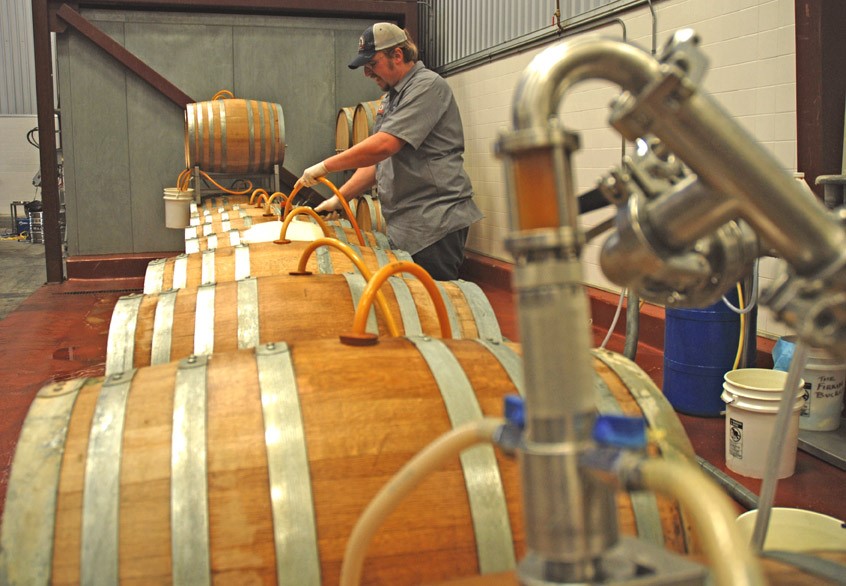
What day is it? I think I can still recall. It’s definitely somewhere between the last parcel being mailed and 2026. I know that much. I also know that in 2009 one Stan Hieronymus, possibly barely out of his teens at the time, submitted this photo above as one of his entries in the Christmas photo context. I will say one thing about a beer photo contest – if you don’t like your range of browns you might as well admit that you should never run one. Like the other contest submissions I have been posting out of the archives the last few weeks, I am pretty sure this one didn’t win a prize – but have you ever seen a better placement of a five gallon white food service bucket? No. Come to think of it, do you ever give a second thought for the glorious role of the five gallon food service bucket in all of brewing? Stan did. For one beautiful moment, he sure did.

Let’s get to the beer news. First up, another controversy related to booze and the ticker:

…the American Heart Association has revived the idea in a scientific review that is drawing intense criticism, setting off a new round of debate about alcohol consumption. The paper, which sought to summarize the latest research and was aimed at practicing cardiologists, concluded that light drinking — one to two drinks a day — posed no risk for coronary disease, stroke, sudden death and possibly heart failure, and may even reduce the risk of developing these conditions.

Before you go off to the Christmas office party with the thought that it’s really not all that far off a visit to a health spa, remember the critics’ warnings about the quality of all these sorts of studies: “Some are clearly horrible, some are good, but a lot are in the gray zone, and people may just cherry-pick and select those that agree more with their narrative.” Hah! So there…

Speaking of the office party at this time of year, the very same authoritative organ shared a bit of advice about conduct at office parties for the supervisory set:

It’s a good idea to stop after two drinks. Sure, you could have three drinks — or six! — and enjoy the social leveling and bonhomie that accompanies lowered inhibition and decreased cognitive capacity. But it’s hard to command respect in the office when people have seen you red-faced and trying to light a cigarette from the filter. 

Is it unfair to compare today to forty or so years ago? The (other) Times did this week when they republished a guide called “How to Survive Christmas” from 1986:

Commuting in the run-up to Christmas is absolute murder. On the way home from a hard day’s work you are liable to find everyone either festively drunk or helping someone else to be sick. Then there’s the office party. People will drink far too much, lunge at one another, tell the managing director he’s a twerp and pour the office vegan’s sprout wine down the word processor to cackles of mirth. How do susceptible males stay out of trouble at the office party? One friend suggests that offices should introduce Tube straps hanging from the ceiling. Thus you could remain vertical however much you knocked back, but with one hand in the strap and the other clutching your glass, both would be kept out of mischief.

Good idea. While it appears that thirty-nine years have passed since that was published, it’s clear ther are still bad behaviours that need to be stamped out at this Holly Jolly time of year, as Pete reports from the pub:

Black Friday has a different meaning in the hospitality industry. It’s not the consumer frenzy of late November, it’s the last Friday before Christmas. This is the night when post-work drinks climax in a frenzy of ill-advised shots and poorly judged flirting. For pubs, it’s one of the busiest nights of the year.

And then he gives ten rules, many of which would be enough to deter me from going to the pub. No line? Never have liked that when visting the fam. How un-Canadian! Give me a good line any day. But “no ordering a round of cocktails“? Perfect sense. No playing your crap music off your phone? Automatic ejection, I say.

Speaking of bad behaviour, I missed this tale of sticky fingers a few weeks ago but I will share it now as this could end up being quite the thing… perhaps quite the thing indeed:

Molson Canada has accused former managers of embezzling millions of dollars in an intricate fraud scheme allegedly involving fake vendors, shell companies, the president of a major pub chain and a pair of married couples. In documents filed Wednesday in Ontario Superior Court, the brewing giant claimed that former Molson Canada sales director Frank Ivankovic oversaw “a complex scheme to defraud the company of many millions of dollars” that later involved two subordinates.

Holy crap! Gotta watch that story. You may scoff at the very thought but I will share a fact that is actually true – I had a personal banking representative many years ago who made a very tidy sums on false mortgage accounts until the scam was uncovered. As this situation at Molson is reportedly both complex and intricate, I am spellbound and await further disclosures from any and all court processes.

Speaking of people who can’t tell their left pocket from their right one, in the land of Vinho Verde the police have had to get involved:

Those arrested from the trade body, which is responsible for quality control and official certification of Vinho Verde wines, belong to its Inspection and Control Division, with the individuals arrested for allegedly warning wineries of upcoming inspections and accepting bribes of meals, wine and event tickets. According to Portuguese newspaper Jornal de Notícias, the officials also allegedly turned a blind eye to wine producers failing to meet the requirements to obtain designation of origin (DO) or geographical indication (IG) certification to be able to label their bottles as Vinho Verde…  Meanwhile, a further four “business owners involved in the distribution and production of Vinho Verde” – have also been arrested, charged with “active and passive corruption, falsification of documents and abuse of power”.

Doce mãe de deus!!!  Fiddling with the Vinho Verde!?! That has been a mainstay in my life for around forty-five years, starting with my mother’s micro-obsession with the plonky version. Not unrelatedly as it turns out, Lars found some dirt about law scoff doing a little farmhouse brewing in Japan, news that he shared on BlueSky:

The Japanese are less law-abiding than I thought: farmhouse sake brewing continued despite the legal ban. In 1941 folklorists surveyed 85 localities, finding home brewing in 44 of them…  In 1895 there were 1 million home brewing licenses in total. So Japan definitely had farmhouse brewing of sake. Then in 1886 the gov’t banned home brewing entirely. Probably killed the farmhouse brewing. Home brewing is still illegal in Japan (gov’t wants its alcohol taxes), but in 2003 one exception was made: farms using their own rice are allowed to brew. This kind of sake is called “doburoku”. There are now 100 designated doburoku districts where this style exists.

That could make for something very interesting, a doburoku tour… doburoku tour… doburoku… WAKE UP!!! Sorry. Now… some notes:

Note #1: “only 37 percent of craft breweries in Canada are profitable”? Really? That’s a lot of subsidization.
Note #2: Who the hell pours Bailey’s down the sink?
Note#3: A.I. designed beer? Nope, couldn’t care less…

Aaaaannnnnd… the BA issued a somewhat delicately drafted “year in review” type press release suited to both address and deflect the industry’s annus horribilis and, I gotta tell ya, I sorta choked on what is stated to be the top trend:

This year, there was a continued democratization and expansion of what it means to be a “brewer.” With acquisitions, mergers, and collaborations, the stainless tanks in the background may not be as important as the brand story.

As one who has never given a shit about the story someone is telling about a brewery, I think if I were an actual brewer I might consider this statement slightly, you know, treachery if not treasonous. But it is nice to know that, finally, years after the BA’s abandoning the need to be small or traditional or independent it’s now not even necessary to be an actual brewer.

Much more reliable was the annual release of the Golden Pints 2025 awards from Boak and Bailey which starts with this introduction to the concept.

What can we say? Hardly anybody else bothers doing this anymore but we’re creatures of habit. We first took part in the Golden Pints back in 2011 and find it a pleasingly reassuring ritual. It’s also good to have in mind throughout the year as we roam from town to town, and from pub to pub. It makes us look at the beer we’re drinking and ask: “Could this be a contender?” Before we get down to business, a bit of encouragement: nobody owns the Golden Pints thing; anyone can join in; you don’t even need a blog to take part. Post your own list on social media as a thread, or even in the comments on this post if you like.

I won’t ruin the announcement of their winners – but what I like about the whole Golden Pints idea is that it celebrates their winners. Was it started by the late great Simon Johnson? He posted his thoughts in 2010, 2011 and 2012 but perhaps it goes back further. Yes, Mark Dredge awarded them in 2009 and even cited his own pre-GP “best of” post of 2008. Who was his best beer Twitterer of 2009? Simon Johnson! Who else? Anyway, you can check out the examples new and old and figure out your own summary of the year according to your own standards.

In another annual year end tradition, Alistair has begun to announce his beers of the year, style by style. His first post celebrates the pale based on three footprints – state, national and imports:

It’s that time of the year, the Winter Solstice is upon us, and what better to do than to review a year’s worth of drinking? As has become my own tradition, I will break this down into multiple posts, one for pale beer, one for BOAB (“between orange and brown”, and dark, and then an overall beer of the year, as well as one for Virginia cider of the year. As I have done for several years now, I will highlight beers from Virginia, the rest of the US, and the rest of the world before crowning each category winner, so on with the show…

I liked this comment: “Spoolboy, the most perfect desítka imaginable, and one that I wish I could sit and drink with Evan, Max, and co back in Prague.” That would be a good table to join.

Over at Pellicle, Robyn Gilmour shared the story of an innovation in Dublin’s beer scene:

…the beer that’s consumed in the majority of Irish pubs isn’t even Irish, with the exception, perhaps, of Guinness, Murphy’s, Beamish, and a handful of other outliers that are brewed locally but owned by foreign multinationals. While treasured in Ireland, these brands do not represent the full spectrum of the country’s beer, which is far more nuanced and varied than most pub offerings would suggest. Speak to anyone working in the independent Irish brewing sector and they’ll soon tell you about the savage competition for taps in Ireland—primarily between Diageo, Heineken, and Molson Coors. As someone who’s worked with many of these smaller breweries, I’ll admit I never had prior reason to question where publicans fitted into this dynamic. That was until 2024, when 16 of Dublin’s most cherished pubs banded together to form a brewery of their own—the aptly named Changing Times.

Finally, David shared his thoughts on language and alcohol promotion, thoughts based on serious personal experience:

…this kind of communication is terrible in the run up to Christmas when more people are tempted into drink driving despite the messaging. Recalling the trauma caused by my dad drink driving was bad enough but only days later I was forced into recollecting my flatmate’s attempted suicide when BrewDog ran an advertising campaign with the slogan “tastes like commercial suicide”. 

As I mentioned a few weeks ago, much of my experience with drunk driving was from an earlier stage in my professional career as a duty criminal defence counsel processing those passing before the court for judgement. But I also lost a client of our office every year to a drunk driver in those years, too. And I probably have to admit that up to a certain point growing up in Nova Scotia in the 1970s and 80s, drunk driving was so common there was an inevitable even blasé attititude to the tragic harms done. There were so many Mondays that someone was not at their locker. So I don’t buy arguments that there is a risk reward sweet spot in these matters. The vast sums that the booze trade offers do not offset the loss.

And that may sound like a bummer of a way to end the news notes for the lead up to Christmas but this is a high danger zone within the calendar for drunk driving and other forms of harmful behaviours. So be thoughtful and be safe as you do about the holiday partying in these next few weeks. Maybe think of what else can be done that is as helpful as a London Underground strap hanging from the ceiling to make sure the season actually remains jolly.

As you contemplate that, please also check out, Boak and Bailey on this and every Saturday and then sign up for their entertaining footnotes, too. Look out for Stan when he feels the urge (now that he’s “retired” from beery news posts) from Budapest or wherever – as he is getting active again. Then listen to a few of Lew’s podcasts and get your emailed issue of Episodes of my Pub Life by David Jesudason on certain Fridays. And Phil Mellows is at the BritishBeerBreaks. Once a month, as noted, Will Hawkes issues his London Beer City newsletter and do sign up for Katie’s wonderful self-governing totes autonomous website featuring The Gulp, too.  Ben’s Beer and Badword has returned from his break since April so you can embrace the sweary Mary! There is reading at The Glass which is going back to being a blog. Any more? We have Ontario’s own A Quick Beer and All About Beer is still offering a range of podcasts – and there’s also Mike Seay’s The Perfect Pour. Plus follow the venerable Full Pint podcast! And there’s the Craft Beer Channel on Youtube. Check out the archives of the Beer Ladies Podcast.


Two Weeks?!? It’s The “TWOOOO WEEEEEEEKSSSS TO GO!!!!” So Excited Dontcha Know Edition Of Your Beery News Notes

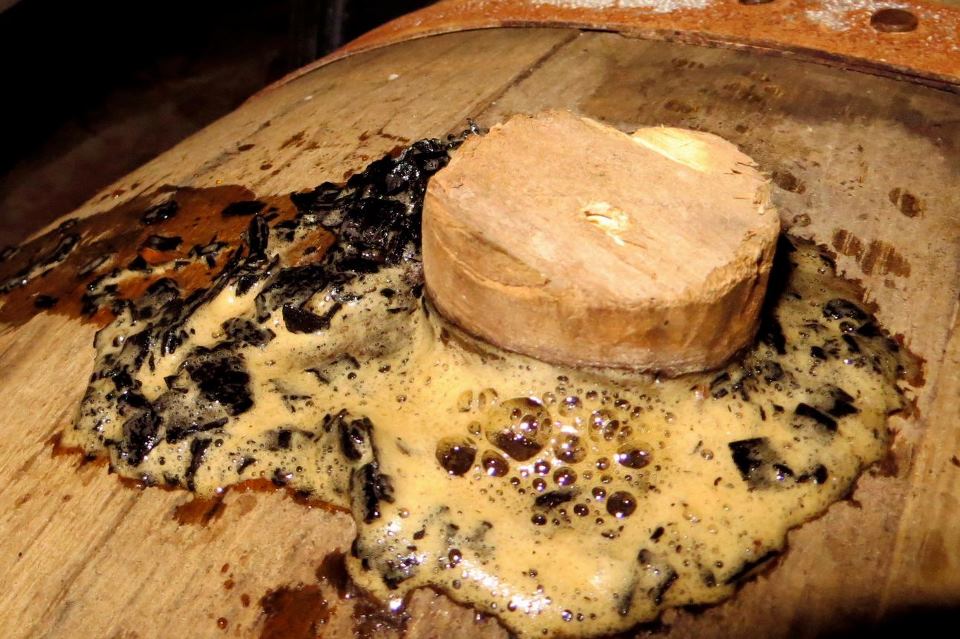
As I mentioned last week, I am sharing some past submissions from the Yuletide Christmas Boxing Day Hanukka Kwanza New Years Eve and Hogmanay Beery Photo Contests that have been sitting in my email folders from all those years years gone by. This week a photo from 2012’s bare knuckle brawl sent in by Jeff Wayne of Tampa, FL. Not necessarily the prettiest image but that there is the leaky bung of a fermenting barrel aged chocolate stout, a celebration of a full range of browns. I like it. Just hope someone spooned up that excess chocolate.

Yes, here we are two weeks from the big day. The day I drink sherry at 8 am and have cake for breakfast. Excitement builds. Also building is Eoghan‘s Advent calendar of things seen in about the 19 communes of Brussels, including at the bewilderingly queter edges of the town:

The streets were so big, wide plains of asphalt, fringed by large standalone houses between was too much air. And the air too was different, smoky and rich but not in an oppressive, attack-your-throat sense, more luxurious. The topography too, big dips and vertiginous climbs with houses and apartment blocks ranged on their slopes, not at all like the slow and steady – but just as taxing – hills I’m more used to traversing in downtown Brussels. I didn’t even know if I was in Watermael or Boitsfort… The bar was, when I finally found it, comfortingly familiar. A Brussels that was recognisable to me however far from the centre I might have strayed, with beer in the fridges I knew and breweries on the taps I trusted. I was at last on terra firma…

Also out wandering, ATJ captured something of the essence of being ATJ in this passage from his travel diary this week:

The soundtrack on this late morning in a Bamberg pub is of laughter and calls and joy growls in the main bar, alongside the clatter and bang of cutlery and plates in the kitchen. The aroma of roast meat, intense in its intimacy, flits through the room, an escape from the kitchen, like a spirit from its long locked stronghold. I sense, or perhaps create, a Friday midday feeling, the joviality of the approaching weekend, though for me, having left home the previous Sunday and perambulated through Prague, nuzzled myself into Nuremberg’s hidden corners and currently based for a day in Bamberg, there is no conception of a weekend, time is just drifting by with the conscience of a cloud.

Not unlike Willie W., when one weighs the words. Anthony Gladman has also being weighing the situation, in this case for cask, and finds that something is lacking:

Cask ale’s slow drift away from relevance saddens me. I fear we seem set to lose it altogether, and shall be culturally diminished as a result. And the worst thing about it is this: the younger drinkers who choose not to drink cask ale are doing nothing wrong. It simply isn’t relevant to them. Nor is this their failing; it is the beer’s and the brewers’ and the pub landlords’. And perhaps partly also mine, as a drinks writer, for failing to make its case often enough, loudly enough, or persuasively enough.

Bingo. I have never understood writers complaining how folk don’t understand this thing or that. It is the job of the writer to make it compelling. Has cask suffered solely on that basis? Nope. But it hasn’t helped.

Well, conversely, this news either means it is no longer a fad or the shark has jumped on no-lo beer as, according to The Guardian, AB InBev is created the world’s largest alcohol-free brewing facility in Wales:

A “de-alcoholisation facility” sounds like somewhere to check in after a boozy Christmas, but in the new annexe of a brewery in south Wales they are extracting hangovers from beer. With demand for no-alcohol and low-alcohol (“nolo”) beer taking off in the UK, the hi-tech brewing apparatus enables the plant at Magor, which produces more than 1bn pints of Budweiser, Corona and Stella Artois a year, to make the increasingly popular teetotal versions too… The availability of alcohol-free beers on tap in pubs is expected to further normalise the choice.

We are assured that “the machine treats the beer very sensitively and delivers a fantastic taste”. Normally I would laugh, say things like “….riiiiight…” and move on but… I just had my first four pack of Guinness 0 and will definitely buy another. What happened? Maybe I got normalized. Try it with port. But no-lo’s not quite as socially acceptable everywhere as The Times notes this amongst its list of conversation topics you will be annoyed by at parties this holiday season:

At every party there are now soooo many men with soooo many helpful tips and advice on the great alcohol-free beers they know all about and which they are categorically not drinking tonight. For some reason it’s always the most sloshed blokes who have the most to say about sober alternatives. It’s like getting nutrition advice from the morbidly obese.

Don’t be the beer bore. Ever. Never one to be that, Alistair shared a happy memory of the time he helped brew, :

This Thursday is the 15th anniversary of the day I spent at Devils Backbone Basecamp brewing the first ever batch of Morana, a Czech style dark lager that I designed for them. I had spent the previous months diving into archives, emailing with multiple brewers, and beer experts, in various languages – English, German, Czech, and Slovak – to learn everything I could about a family of beers that at the time only consisted of about 5% of Czech beer production. Obviously, having only fairly recently decamped from Prague to Virginia, I was also relying on my own remembrances of beers that I had got a taste for in the last couple of years there, when I moved beyond the realms of Gambrinus, Staropramen, and Velkopopovivký Kozel.

Alistair says that the beer that was “the first authentic Czech style dark lager brewed in the modern American craft brewing industry” which is a decent claim to fame. Perhaps also decent was the stout presented to The Beer Nut whose analysis went deep into the dark:

Unsurprising given the froth, it’s quite fizzy: a little too much for the style, I think, giving it a thin and sharp quality that doesn’t suit strong stout. The rum element is present in the flavour, but subtle. I tend not to like rum-aged beers, finding the spirit cloyingly sweet, but that isn’t the case here. Instead, the barrels add more of that fruitcake or Christmas pudding quality I found in the aroma, as well as a rawer oaken sappiness. None of this overrules the base beer, which is a no-nonsense, properly bitter, grown-up stout: dark toast, a molasses sweet side and then a finish of punchy spinach and green cabbage leaf. The can says it’s 48 IBUs; it tastes like considerably more. This is quality stuff, and I’m always happy to find a modern stout that goes big without resorting to silliness. The fizz is its one flaw, and I found myself doing a lot of swirling to try and knock that out. It only reached an acceptable level of smoothness around the time I finished it.

I wish I had one flaw. Not quite indecent is the focus of this article on how to win back the disinterested youth of today:

“Because craft beer sales skew towards older consumers, it’s vital to keep nurturing the next generations of buyers. Gen Zers can be hard to reach and their sentiments are shifting but responding to their needs can help brewers grow share”… Gen Z prefers different drinking environments from older groups. Experiential bars and high-energy venues hold much higher appeal and may offer the strongest opportunity to introduce them to craft. While casual dining restaurants, neighbourhood bars and sports bars remain important to the wider craft drinker base, Gen Z is markedly less likely to visit taprooms and brew pubs, which limits the impact of traditional brewery-led spaces.”

That’s not good. Not only are they not interested in your product but it appears they have no interest in your product. Is there an issue with seeing to bring back the relationship? Even though the sins of the father haven’t been visited on the generation that followed? It all sounds like an earlier 1970s slow slow dance classic, perhaps a little Hall and Oates:

She’s gone (she’s gone)Oh I, oh I, I better learn how to face itShe’s gone (she’s gone)Oh I, oh I, I’d pay the devil to replace herShe’s gone (she’s gone), oh IWhat went wrong?

Pay the devil indeed. Or the invoicing consultant offering solutions. Solutions… yup, that’s what they are. Conversely, being straight with what has really gone on is part of the story for Anaïs Lecoq this week in Pellicle who writes about the Franco-fascists fascination with wine:

Tradition is a lie. And it’s the same lie, fuelled by carefully curated storytelling, that the far-right is trying to feed us now. They wear black berets, big mustaches, and suspenders. They hang up French flags, and talk about meat and wine as the epitome of French food, not missing the opportunity to ridicule vegans and mock people who don’t drink alcohol. They’re terroir influencers, born out of the rise of conservatism and general backlash against social progress. What they’re doing has a name: gastronationalism, or culinary nationalism, which refers to the way food—its history, production and consumption—is used to promote nationalism and define national identity.

It does make sense in that wine requires landowners’ estates as much as beer requires peace. And serfs or their facsimile to do the work. A hotter bed for the old goosesteppers that other spots… perhaps. Next up… a palate clenser with some cheater quick notes:

Note #1: The practice of “faire chabrot” can easily be added to your Yuletide feast traditions;
Note #2: A review of Martyn Cornell’s Porter & Stout: A Complete History by The Beer Nut;*
Note #3: “If there’s ever been a bellwether to the state of the crafts beer industry, it’s Mitch freaking Steele job hunting“;
Note #4: Wine drinking as resistence; and
Note #5: Beer drinking as obedience.

Back on the endtimes beat, Dave Infante neatly summarized the evidence he’s uncovered of a wobbly situation at Pabst:

…the company is quietly looking for a subletter to take over its headquarters in San Antonio. A listing I reviewed for the sleek space—into which Pabst just moved in 2023—was last updated just two days before the pink slips started flying this past Thursday. Between the layoffs, the listing, and a whole lot of reshuffling in Pabst’s c-suite (including the replacement of both chief executive and chief financial officers earlier this year, and the exit of a former chief sales officer just last month), former Pabst employees I spoke with fear the legacy firm might be on the brink.

Yikes. Somewhat relatedly, The Mirror in the UK ran an article on the cost of all aspects of the price of a UK pint and came to a curious conclusion:

Citing figures from the British Beer and Pub Association, Michael said this means pubs are making a total gross profit per pint of £3.69. However… “That’s before VAT, which is another 83 pence – and we have to factor in staff wages, which is another £1.17 per pint…” duty paid to the brewer equates to another 56 pence, as well as business rates of 35 pence, and employment tax for all pub staff at 29 pence…. pub overheads and utilities at 36 pence per pint, which leaves just 13 pence of net profit per pint sold – and this why around 30 pubs are closing every month.” As a percentage this profit equates to just 2.5 per cent.

I find these sorts of supposedly accurate breakdowns useless.** What wasn’t made clear is why pubs which make a 2.5% profit are closing. Is that why they close? Or unidentified expenses were left out or that level of income after expenses is not satisfactory. Which may be the case. But it wasn’t what was argued.*** Time for something more compelling? You got it!

Note #6: HOT PICKLED PORTER!!!

Much more seriously, Boak and Bailey‘s footnotes last week pointed me to the newsletter from Jen Blair on influencers in beer and their choice of appearance:

A few months ago, I was at a beer festival talking with some people I had just met. At one point, one of the men in the group stated that he thinks it’s shameful when women post “provocative” beer photos on social media. Provocative is in quotes because it doesn’t take much for a woman who is simply existing to be denigrated based on her appearance. Another woman in the group and I made eye contact after his comment. This is not the first time someone has said something like this to me, but I am still surprised when it happens. I guess I shouldn’t be, but every time I think “…we’re still saying things like this? To women? About women?”

It’s an excellent piece and reminded me that (whether it is a question of presentation… or self-initiated claims to expertise… or offers of special savings for anyone one applying the one-time super secret code at their website) the only thing that matters is whether the writing has substance.

And finally, over the weekend we received the sad news of the passing of Peter Edwardson who wrote about beer as “The Pub Curmugeon” after a short illness. His last post included this characteristic passage, one that summarizes his approach to beer as well as his understanding of what made it a simple pleasure worth appreciating:

Alcohol content is a vital element in the flavour make-up of beer, adding body, warmth, richness and sweetness. Make anything more than a trivial tweak, and it will significantly change the character of the beer. It is one thing to specifically set out to brew a low-strength beer, but something entirely different to reduce the strength of an existing beer that was designed for a higher strength. You may not have thought much of Fosters even when it was 4%. But now it is 3.4%, a 15% strength reduction, it is not the same product and, I would suggest, an inferior one.

I checked my notes and see that in the last five years or so these weekly digests of the news in beer included well over forty references to “Mudgie”. The sad loss of a singular voice.

So a couple of serious notes to end the week. Hopefully happier news next time. It’s Christmas day the week after that on Thursday… whatever shall I do? As you consider that and send in recommendations, please also check out, Boak and Bailey on this and every Saturday and then sign up for their entertaining footnotes, too. Look out for Stan when he feels the urge (now that he’s “retired” from beery news posts) from Budapest or wherever – as he is getting active again. Then listen to a few of Lew’s podcasts and get your emailed issue of Episodes of my Pub Life by David Jesudason on certain Fridays. And Phil Mellows is at the BritishBeerBreaks. Once a month, as noted, Will Hawkes issues his London Beer City newsletter and do sign up for Katie’s wonderful self-governing totes autonomous website featuring The Gulp, too.  Ben’s Beer and Badword has returned from his break since April so you can embrace the sweary Mary! There is reading at The Glass which is going back to being a blog. Any more? We have Ontario’s own A Quick Beer and All About Beer is still offering a range of podcasts – and there’s also Mike Seay’s The Perfect Pour. Plus follow the venerable Full Pint podcast! And there’s the Craft Beer Channel on Youtube. Check out the archives of the Beer Ladies Podcast.

*Update: as noted for the double!
**A variation is the trade writer who still believes sorta circa 2011 that everyone is one off-flavour seminar from connoisseurship, like Mr. B on LinkedIn this week: “…what you’re getting in up-front money or equipment ultimately pales beside the loss in credibility (especially for places which claim culinary, cocktail, or oenological expertise!), disappointed customers, and ultimately, lost sales. Taking placement fees for a percentage of your taps is one thing — although trust me, more than a few people are going to be able to spot them! — but turning over most or all of them speaks to laziness, desperation, or simple disinterest.” Why, then, do these places continue to operate as craft beer bars shut? Serving their customers’ demands? 
***Yet the math is right there – at 13p profit you would have to sell 500 pints an hour to clear £65. If that was your sole source of income. But then the article would be much shorter. Or is it that the ones at the bottom of the Bell curve no where near a 2.5% profit are the ones that close. Which is irrelevant to the analysis. But then, again, the article would be much shorter. 

The Over 50% Off Super Holiday Sales Saving Edition Of The Beery News Notes

You may need to turn your phone sideways to make this image fit. Or I could just center it. There. That’s better. For a long time, these weeks at the end of the year at the beer blog were a bit crazy. The Christmas photo contest (circa 2006-16) was on and I was sifting through a huge number of emails with multiple entries. Hundreds came in each Yuletide. Thinking back on that this week, I had a look through the 2010 submissions and found this lovely image sent in by Brian Stechschulte of San Francisco.  Here’s his birthday bio on Jay’s site. Another one of his enties won the contest that year. That image is of Rod Widmer among the quipment at the brewery. In what Brian described as Widmer’s cathedral. I like the glow. I’ll dip into the emails and old posts to see what else I can find to adorn these news notes throughout December.

Back to today’s news, first up the question of cash and how the UK budget reaction lead to something of a counter reaction. Sayeth Matty C.:

The worst thing about this week’s budget for me was seeing prominent figures in hospitality bemoaning the minimum wage increase because god forbid your staff should earn enough to actually afford, barely, the cost of living. For me it just demonstrates why all of this lobbying for a VAT cut isn’t so much about supporting a “dying” industry, put propping up profits for the people at the top. But no, it’s paying wages that’s the problem.

And their weekend footnotes to the weekend news, Boak and Bailey shared a similar sentiment:

Every budget goes the same: CAMRA and industry bodies lobby the Chancellor to do something to help pubs; the Chancellor does very little, if anything, to help pubs; CAMRA and industry bodies criticise the Chancellor’s failure to act and foretell doom for the hospitality industry. It’s been this way basically forever and yet, somehow, pubs continue to exist and beer continues to be manufactured and consumed.

As a person who takes home a tax based pay cheque, I have to be somewhat respectful of those lobbying for restraint.* But I am also aware that government can positively participate in economic growth and greater social good. So… and here’s the point for me… after years of ideological restraint hit by a global crisis or two there are times when the bite shared by all is for the longer term good.  As long as there is an identifiable long term good and it is shared by all.

Speaking of the burdens of the state, Drew Starr has shared thoughts on an excellent way of fighting back against authoritarianism – ban the lackies from your bar:

The kid who proudly called ICE on a carwash. Print this shit everywhere. Hell yeah, Sil! For those not from here: this is The Silhouette (nobody calls it that), one of Boston’s last remaining dive bars. For a college kid living in the area, it’s the last place you want to get banned from

We understandThe Sil” has barred a university student who called ICE on a car-wash and men in in balaclava abducted a group of nine workers. Perhaps more establishments might introduce a life-time ban.  Shaming down authoritarianism is a top drawer move.

How to cope? How to deal with the pressures of the day?  “Mulled beer!” sayeth Jessica M. seasonally through an interview with Sam Millard of Bevertown :

“The secret to making a great DIY mulled beer is in choosing the right base. The best results will come from a rich, malty profile or a sweet brown ale,” suggested Millard, who explained that “just like when mulling wine or cider, you need a base that is already really rich, full-flavoured and most importantly, not at all bitter. You ideally want something with a bit of body too, so ensure your beer is not too thin.” According to Millard: “While you may be tempted to use a super-hoppy IPA, keep in mind that its bitterness could overpower your chosen spices and throw everything off balance.

Now, keeping in mind that this is all a bit of an adver-informo piece, I still would recommend you try it. Jessica B herself was curious about this stuff a whole eighteen years ago. Me, I like to use Chimay Première, the red labeled dubbel, as the base. Tasty, strong and relatively cheap as dubbels go these days. And skip the idea of “DYI” and just go traditional with a Lambswool made with strong ale apples, sugar and ginger spice. Or, along with a lot of other options at this link, try to make Caudle if you are even more adventurous. If that is too complex, just go for try a pint of stout and port. It’s Christmas so you can just do that and even say you did.

Speaking of Yuletide, in the news from Newfoundland we read that more folks are going to get stoned for Christmas!

CEO Bruce Keating says net earnings rang in at $56.3M, a decrease of about $3.7M, mainly due to the removal of U.S products and decline in beer commissions.  Alcohol sales totalled $84.2M, down 1.5 percent however, cannabis sales are up 10.6 percent at $28.5M. Keating says those numbers could start to slow since that market is maturing. He says they’re optimistic that the Christmas season will boost sales numbers. 

Baby Jesus would no doubt approve. Speaking of which, Barry M has driven down to a depth I’ve never considered necessary over a controversy I had never heard of – are “cider” and “cyder” the same thing? Or categories of rerlated things? As a lifelong poor speller, I am gratified that the problem arises from puritans who insist every difference in spelling requires a difference in meaning:

Within English literature, early texts seem to use mostly ‘sider’, though it would appear that by the end of the 16th Century literature was generally split between ‘sider’ and ‘cider’. Both with an ‘i’. But there were exceptions of course, an dit has to be said, it was a bit like the Wild West when it came to spelling convention, with cyder, cider, sider, cidar, cicer and pommage featuring in texts of the time (thank you Elizabeth!). But let’s look at some of the cyders…

As we all know, standardization is the best friend of Satan or at least authoritarians. The minute hand, a tool for atronomers, was later added to the clock to steal time from Indistrial Age factory workers. The dictionary of Dr. Sammy J of 1755 helped create the idea of misspelling and therefore a resulting intellectual failure. And now we have this consequence, a finger pointy crisis in taxonomy which apparently turns on the factual regular but uncategorical past practice of adding water to cider now and then** which has led, hundreds of years later, to a backdating by someone deciding that the spelling must follow a practice. Sad. Distinctions can be without a difference. Let us rather embrace our negative capabilities.

Did you see what David J did? He just went and wrote the history of Wychwood for Pellicle:

“BrewDog is a modern interpretation of Hobgoblin,” says James Coyle, who was sales director at its parent brewery, Wychwood. “[The Hobgoblin identity] was built on motorbikes, grunge, and tattoos—this was the escapism of the brand.” Established by Paddy Glenny as The Glenny Brewery Company in Witney, Oxfordshire in 1983, it was renamed the Wychwood Brewery in 1990. Somehow, this small brewery in rural Oxfordshire went from selling to a few freehouses to producing a beer so iconic that it shifted 100,000 barrels a year, changed pub culture, and eventually became a global brand in the Carlsberg portfolio. Thanks to breweries like BrewDog, today we’re used to shock marketing tactics from beer firms. Many of the people I spoke to while researching this article repeated James’ sentiment about Hobgoblin being akin to the often-controversial Scottish brewery, including the fact that its initial success was driven by word of mouth rather than a huge marketing budget.

Over twenty years ago, Wychwood was on the shelves on Ontario and I posted reviews of their Fiddler’s Elbow in 2004 and Duchy Original Pale Ale in 2006. I didn’t love the bad Baggins branding of Wychwood – though not as deeply as the stupid “you’re not worthy” stuff from Stone.  I am please to say, however, that now I added a bit of info which may have assisted David in one paragraph in there – but what a beast of research. And all for you.

Speaking less of you and more of me, I am 62. When I was a teen, I worked with older seniors. People 62 were rye drinking Dads of pals who were vets of the Second World War. They were still up on ladders to fix something on the roof. Some could dress a deer. Me? Fitter than I was at 52.*** So I found this New York Times piece a bit odd. Frankly, if I was 42 around now I’d worry much more about 52 than 62.

On the theme of worry, James Beeson in The Grocer wrote about the financial troubles facing the BKeystone / Breal, a UK consolidator of brewers:

Breal bought a slew of unloved brands and then engaged in a damaging race to the bottom. This was the inevitable conclusion and the only surprise is that it has taken this long. My thoughts are with the blameless employees that will be affected by their failure. 

Breality strikes!**** He followed it up with an investigation over the legal steps being taken and their denial that they are going bust. Jessica M in DB on the same story shares that they have:

… reached out to Keystone for an update on its situation and its prediction of plans and sales for each of its brewery assets as well as asked about the fate of its brewery workers at each of its currently-owned sites. The group has, however, remained silent aside from its statements on social media assuring Black Sheep beer fans that it is “still here”.

And there have been more twists to the news of the suddenly “not here no more” Rogue including this from Doug Veliky:

It also surprised key partners including US Beverage (USB), with whom Rogue had just signed a national sales partnership, and who learned through the news and social media just like the rest of us. As part of their agreement announced on August 1, 2025 to represent the brand in the trade, members of Rogue’s national sales team transitioned their employment to the new partner company in an effort to ensure continuity and relationships. Now, without warning, USB is left with employees who were crucial to the partnership’s formation, but without a brand to sell or an understanding of its future.

Lordy. That’s not good. Clearly on August 1, 2025 the writing was on the wall in the offices of Rogue. Probably on dry erase boards all over their office walls. Did that continuity also include those employees’ accrued termination benefits rights?

Time for notes:

Note #1: “Hoolie” is a word. My late Dad was very entertained by the news that my new boss 28 years ago was so named.

Note #2: “Drunk Racoon in the Hardware Store!” I know this item is just for Stan… as he sent me the link… as if I didn’t already have the link to the story ready… just for Stan.*****

Definitely not on the hoolie, A. Gladman shared thoughts on a private spot at his parents’ home, a place to have a beer on a summer day:

There’s a spot where I like to sit and have a quiet beer when I visit them in the summer. I try to manage it at least once during each trip. It’s on a balcony, or a raised deck I suppose you might call it, that overlooks their small back garden. Wooden steps run down into the garden from one corner, and at the back a door takes you into their kitchen dining room. I like to sit there in a white plastic chair with my back to the wall, and look out to the sea, just a hundred or so yards away. Pale in the distance, the Isle of Wight rises like a cloud bank on the horizon. The wind blows; it’s always windy. The noise of waves breaking on the shingle echoes all around. Gulls and far-off wind chimes punctuate its ceaseless murmur. Somewhere nearby a rope slaps against a metal pole. 

More into this moment, Tyler Maas in the Milwaukee Record shared thoughts on his own sort of idyllic prospect, one that popped into his mind after the first major snowfall of the season:

Days like last Saturday are the closest thing we get to a “Snow Day” as adults. Any plans you made before weather became a factor are probably no more. The idea of driving anywhere seems unwise and borderline dangerous. Once you shovel the snow that’s already accumulated, all that’s left to do is wait to do it again when the flurries are through. So why not embrace the situation, put on some boots, and trudge to the nearest bar?… With driving and other aspects of everyday life temporarily removed from the equation, why not stay a while? You’ll surely burn off the calories from that extra round (or two) on the stroll home. Not to mention the energy you’ll expend during the second/third round of shoveling and when you inevitably dust off your car as the responsibilities of “real life” eventually come back into view.

Nice. Now, finally and with the greatest respect, I have to say that I can’t agree with the position taken by Laura H in The Telegraph last week on the issue of lowering the drink driving standards in England:

A recent survey has found that 58% of adult consider driving after drinking, even if the driver is within legal limits, to be “socially unacceptable.” This has inevitably emboldened the anti-alcohol lobby: already police chiefs and the British Medical Association have called for the rules to be made harsher – their proposals would push drivers who have a single pint over the limit. This is framed as a question of public safety, but in reality it’s yet another example of overzealous campaigners blaming all of society’s ills on the demon drink, without giving cause or justification.

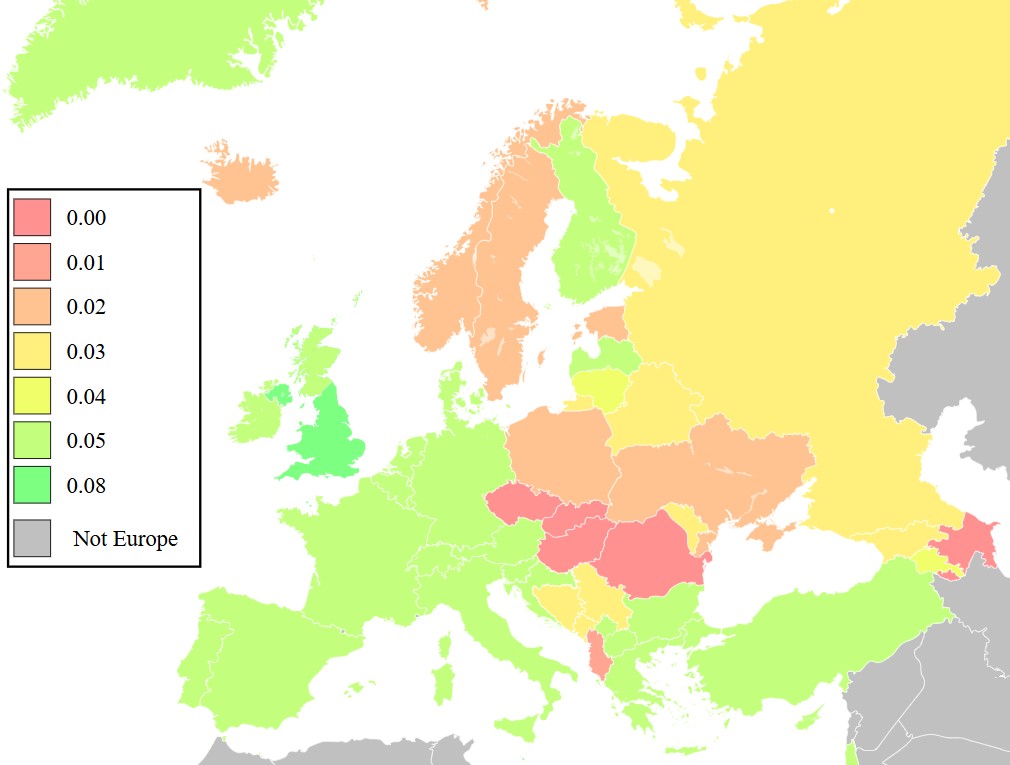
I suppose my first issue is the language. Not sure the embolding was inevitable given those bold beings described have already been on their mission for years and years, according to the anti-anti-alcohol lobby. And not sure the campaigners are necessarily more than zealous. Can one be?****** But the real issue is without justification. This is particularly the case as the first observation is a justification: a majority of Britons are against the current scheme. So, too, the second observation: the police and doctors want stricter rules. We can disagree on the quality of these justifications but that’s what they are.  It’s also worth noting that context poses an obvious issue too. England, Wales and NI have the highest permitted levels of alcohol in all of what was once known as Europe. By over 50%. Check it out. It’s simply a fact that the criminalization of drinking and driving is a reasonable response to the harm it causes. As a lawyer, thirty years ago I spoke to an appeal of a driver who blew 0.082 so these things can be close. But the bottom line is no one is being forced to stop you from drinking. Just stop driving. Maybe try walking. Or get a cab. Or a bus. Or a bike. Or a designated driver. Or another place to drink.

And with that, I am done. It is Yule and I am off to maybe have a beer or maybe shovel or just fret about being late in getting the lights up and having note bought the pressies and what about the tree and … well… as I do that please also check out, Boak and Bailey on this and every Saturday and then sign up for their entertaining footnotes, too. Look out for Stan when he feels the urge (now that he’s “retired” from beery news posts) from Budapest or wherever – as he is getting active again. Then listen to a few of Lew’s podcasts and get your emailed issue of Episodes of my Pub Life by David Jesudason on certain Fridays. And Phil Mellows is at the BritishBeerBreaks. Once a month, as noted, Will Hawkes issues his London Beer City newsletter and do sign up for Katie’s wonderful self-governing totes autonomous website featuring The Gulp, too.  Ben’s Beer and Badword has returned from his break since April so you can embrace the sweary Mary! There is reading at The Glass which is going back to being a blog. Any more? We have Ontario’s own A Quick Beer and All About Beer is still offering a range of podcasts – and there’s also Mike Seay’s The Perfect Pour. Plus follow the venerable Full Pint podcast! And there’s the Craft Beer Channel on Youtube. Check out the archives of the Beer Ladies Podcast. That’s quite good and after a break they may well be are back every month!

*But also as one who has a list of gains and savings for more than two decades that I have influenced to the point that I am effectively appellata free resource…
**But bring back the word “ciderkin” by the way.
***I have just passed the fourth anniversary of slowly getting back from a point which same me using a cane after badly wrenching a knee weeding a zucchini patch. Why? Life stressors resolved, sure. Daily small steps like stretching and exercises, yes. But most of all daily recording the data related to more and more of what I do: intermittent fasting goals (+/-17 hours a day); hours and quality slept (one mid-week sucky sleep does not make for a medical issue); drinks intake (down to 1.27 per day ave) and to do list daily chores achieved (done… next?). But by the way that whole life expectancy shift stuff has little to do with aging and much more to do with infant mortality. So relying on that to discuss the difference between retiring at 60, 65 or 70 means zippo.
****Sorry…
*****Stan also advised he will be reading these new notes from a train between Amsterdam and Budapest so everyone wave in that direction, please.
******Do Zealots look over at the overzealous and think “Jim’s over doing it a wee bit tonight… giving zeal a bad name…”

Yes, It’s Here – The Tryptophan Thursday Edition Of The Beery News Notes

Four Weeks to Christmas Day!!! O.M.G.  I have bought nothing. For nobody. Nada. Not Nuttin’. Crap. For some it is too late! Speaking of Christmas, Laura H. has some very interesting art for sale that might be perfect for your favourite beer nerd… err… expert. I invite any one of you to buy me*  this her lovely representation of barley to the right. Far more less fleeting than a newsletter subsciption yet fewer calories than a beer. I should be in marketing.

And Eoghan shared another seasonal idea, a beer advent calendar on his newsletter:

Starting tomorrow – Tuesday 25 November – and running every weekday from now until 19 December, this newsletter will become its own kind of advent calendar of a kind, with me sending a short missive each morning from one of Brussels’ 19 municipal communes. As this newsletter’s tagline goes, these will be short observations on life in Brussels, trying to capture the feel of each of these areas, and/or my relationship with them.

A great discussion erupted on BlueSky when the news broke that heled explained many of the details related to the move of America’s oldest brewing school, the Siebel Institute, from Chicago to Montreal:

The Siebel Institute of Technology, the oldest brewing school in the Americas (established in 1872), is officially relocating its operations from Chicago, Illinois (USA) to Montreal, Québec (Canada) effective January 1, 2026. The new location address will be 3035 rue Sainte-Catherine E, Montréal (Québec), near Molson’s original brewery site (1786), the oldest brewery in North America. Siebel will be co-located with the new Lallemand Baking Academy and Application Technology Training Facility. 

Siebel has been owned by Lallemand Inc. of Montreal for about 25 years so it makes sense.  The press release also explained that “[r]ecent regulatory changes in the U.S. have made it much more challenging for many of our international students, who have become the majority of our student body, to attend classes in person.” Recent grad Drew indicated that about a third of his teachers there were not U.S. citizens. Two administrative staff – the program’s “heart and soul” – may lose their positions.

Speaking of good discussion, Jeff had a talk with himself on the question of Jeff Past and Jeff Future and the question of taste:

If only we could give those pour souls in 1975 a cup of Coava coffee, or in this example a Fresh west to 1995 drinkers, it would change their lives. But that’s not how things work. Beer has evolved partly because we have evolved along with it. All you have to do is look at different beer regions to see that the process of evolution can lead to very different places. It’s quite possible that for 1995 Jeff, the clouds wouldn’t have parted upon drinking a can of Fresh West. I might have found it off-putting in any number of ways. I liked bitterness then, and body, and just a bit of cheese grater that came from the bitterness/hop-matter synergy. It was like being slapped across the face, but with the flavor of caramel malt, and I liked it. I might have thought Fresh West was a cop-out beer, all candy aromas and no punch, not like a proper beer. I’m not sure there will be a 2055 Jeff or that he’ll be drinking beer (I’ll be 87), but I wonder what he’ll be drinking? It might be something I’d find distasteful today. Hmmm…

As we ponder those thoughts here is some straight up filler:

Note #1: David caught some late autumn light at the pub.
Note #2: Another David posted some sweet photos from a recent visit to a  lambic bar, the Grote Dorst, including a Girardin eye view.**
Note #3: The Boot Inn is still there.
Note #4: Is an influencer with only 24,000 followers actually an influencer? Or just a deadbeat?

But not cheap filler*** as there was plenty to quote from under each of those links. Think of it more as “make your own Thursday beery news notes!” Invite your friends to play along!

Back to the deets as Hop Queries version 9.07 came out this week and Stan shared an interesting observation about Nelson Sauvin that sorta parallels the changes you can notice through each spring’s maple syrup production:

The Nelson Sauvin character (in a normal season) goes through a progression from i) somewhat vegetal and dominated by green fruit character (gooseberry, etc.) to ii) brighter citrus-y with grapefruit-like notes to iii) bright, wine-y and complex with passion fruit notes to iv) building tropical complexity with brighter citrus fading to v) super tropical with sweeter citrus notes to vi) tropical with light dank and solvent-y notes to vii) fading tropical with lots of weird, random characters ranging from O/G to berry fruit. Extremely late Nelson Sauvin tends to vary quite a bit from season to season and can express a wide array of characters, including appealing and un-appealing ones.

A wide array of character? Something like myself. Speaking of deets, this week’s feature in Pellicle by Fred Garratt-Stanley goes where too few stories dig into – back of house at The Fat Cat:

Only when you walk through The Fat Cat’s cellars can you truly appreciate the size of the operation. Underneath the bar there’s a well-stocked keg cellar with four cask lines, but it’s out back where the magic happens. There are two gleaming, air-conditioned cellar rooms lined with stillages, each of which holds somewhere between 30 and 40 firkins and pins that are either tapped up or settling down. Beyond the glass washers are multiple store rooms and an additional cellar, where a handful of the pub’s biggest-selling beers are racked up in huge, 18-gallon vessels. The site is vast, responding to a level of turnover established over decades spent serving reliable, perfectly conditioned cask beer. 

I have worked back of house in a playhouse, bars and restaurants, on election nights and, of course, have seen the backs of many things through law. It is all very good interviewing an owner in the front and hearing the stories but digging into the back and underneath of things where the unpretty can be found tells you what is really what. Are the corners clean? Is the staff sullen? That’s great work up there.

And The New York Times ran a story this week on Germany’s waning interest in beer:

Germans are drinking a lot less beer. “In recent years it was always 46 percent, 47 percent, 48 percent who said, ‘Yes, I drink beer,’” said Marc Kerger, president of Einbecker, referring to consumer surveys. “And this year just 41 percent. Forty-one percent is dramatic.” Alcohol consumption in Germany has been sliding for decades. But the sudden, accelerating drop has caught brewers and bar owners by surprise.

Twist in the tale from Jörg Biebernick, the chief executive of Paulaner: “Half of our sales in Germany are actually non-beer…” What are people doing if they aren’t out on the big binge? According to The Guardian, at certain exclusive clubs they may be on the little one:

For all the talk of generation Z eschewing alcohol, drinking shows no sign of dying out. There are indicators of restraint – the Manchester dessert menu features a two-sip, 60ml mini-version of an espresso martini, for £7, if you prefer an alternative to stodge – and there is “a pocket, from 26- to 30-year-olds” who drink less, says Carnie. But the bigger trend is toward “clean” cocktails, with fewer ingredients and less sugar. The multicoloured, juice-laden, bafflingly named cocktail is old hat. “I get it, because if I go to a bar, and I don’t understand the menu, it annoys me,” the barman tells me. “A cocktail isn’t cheap. If I’m spending money on a cocktail, I want to know I’m going to like it.”

And Katie illustrated another aspect of what’s been going on it terms of culture change at a personal level:

…sometimes I don’t drink because of my MH, sometimes I don’t drink because I don’t feel like it, sometimes I don’t drink because I’m training the next day and want to sleep properly. Don’t raise eyebrows, don’t make it seem like I’m pregnant. Don’t be a dick. Just say okay.

Sleep. Sleeeeeeeep. Katie is spot on in many ways. But still, also in the NYT, there are still people experiencing this sort of night:

Through the window of a dark restaurant we saw a man illuminated by a disco ball who was singing from his chest. He waved at us. We waved back. He unlocked the door and invited us in. Over a bucket of cold Singha, we sang “Happy Birthday.” The owner brought out a brownie topped with a blazing flare on the house. I apologized for the intrusion. “Please kick us out any time,” I said. He smiled and handed me Post-its and a pen. “Just make a list of songs,” he said. Another bucket of beer appeared, along with some peanuts. It was a beautiful night, and we had found something dumb to do.

I have made a point of excelling at finding something dumb to do. To the contrary, Jordan visited a tiny brewery in TO that’s won Best New Brewery in Canada in the 2025 Canadian Brewing Awards.:

At Bickford, what you see is what they have. The space, whose colour palette includes a lot of orange, can’t sit more than 30 people at a time and one assumes that on nights when Dungeons and Dragons groups come in, the only place for drinkers must be at the bar. The main space is not quite as large as a midtown one bedroom, but has been retrofitted as one of Toronto’s smallest breweries. Usually I have to guess at the size of brewing equipment, but everything is labeled. Andrew is brewing 250 litres at a time.

And David J. has shared the background story of another desi pub, the The Century Club in the Forest Gate section of East London which was born from 1970s bigotry as owner Peter Patel recalled:

“We went to the Wheatsheaf,” he recalls. “We didn’t know that in the evening it used to get bikers coming in and they chased us out.” Peter faced similar prejudice in those days when he visited a pub with friends in Lewisham, South London, where I now live.  A racist purposely spilt his drink on him, claiming Peter had tripped him up and demanded more than another drink. The atmosphere turned rancorous, the publican sided with the attacker and the Asians were kicked out despite already spending about £40 (the equivalent of £300 today). “It was a lot of money as a pint used to be under a pound then,” he says. “We did nothing at all. That’s when I decided we needed something for Asian people.”

What else? Well, the ISBFX declared an ending**** and Ed noted another sort of end of things, the end of CAMRBG:

…when a heresiarch founded a protestant beer sect called the Campaign for Really Good Beer (CAMRGB) in opposition to our mother church I was not filled with pleasure that I get from say, reading about nestorianism. I must confess that in my arrogance I had come dangerously close to advocating for something similar to the CAMRGB in the early days of beer blogging. Back then whinging about CAMRA was something we all enjoyed…until I realised some of the people were not whinging about the home team but were in fact the opposition. I repented my sins then, and despite my occasional confusion over theological matters and distaste for modernism, my faith has not been shaken.

Fine, one or three more notes:

Note #6: “This is the cheeriest Norfolk pub I’ve ever been in…
Note #7: Rogue left $16.7 million owing to others after earning only $19.7 gross revenue in 2024.
Note #8: Pink Gin in Interwar China.

Lastly, we talk a lot about beer and monks but Kathleen Willcox reminds us in DB that they established much of what we understand about wine classification, too:

After Rome fell and the Early Middle Ages ushered in intellectual decline and infrastructural decay, monastic orders did not just preserve wine culture; they elevated it. Monks across Europe, particularly Benedictines, Cistercians and Cluniacs, planted vineyards, documented practices and sustained international wine trade. Burgundy became ground zero for evolution and innovation. The observant Cistercians, who owned vast vineyard holdings, first noted how separate vineyard blocks produced different results. They were the first to record these observations, linking differences in wine to soil, climate and elevation. Their careful mapping of micro parcels on the Côte d’Or laid the foundation for the cru system and the modern concept of terroir.

There. That’s it for this week. The United States is in a gravy soaked reverie that may well last into early December. As they/you recover, please also check out, Boak and Bailey on this and every Saturday and then sign up for their entertaining footnotes, too. Look out for Stan when he feels the urge now that he’s retired from Monday slot… maybe … maybe not. Then listen to a few of Lew’s podcasts and get your emailed issue of Episodes of my Pub Life by David Jesudason on certain Fridays. And Phil Mellows is at the BritishBeerBreaks. Once a month, as noted, Will Hawkes issues his London Beer City newsletter and do sign up for Katie’s wonderful self-governing totes autonomous website featuring The Gulp, too.  Ben’s Beer and Badword has returned from his break since April so you can embrace the sweary Mary! There is reading at The Glass which is going back to being a blog. Any more? We have Ontario’s own A Quick Beer and All About Beer is still offering a range of podcasts – and there’s also Mike Seay’s The Perfect Pour. Plus follow the venerable Full Pint podcast! And there’s the Craft Beer Channel on Youtube. Check out the archives of the Beer Ladies Podcast. That’s quite good and after a break they may well be are back every month!

*…or, yes, anyone you care for than me… if that’s even possible!
**I got a couple of these well over a decade old, the remnants of the stash. probably should open one to check see.
***Or… actually… I don’t know what to think. Hope it was worth it.
****As in read to the ending…

The “Happy False Thanksgiving Week !” Edition Of The Thursday Beery News Notes

We started watching the Ken Burns documentary on The American Revolution – which is a bit of a weird experience for someone living in a city settled by Loyalists. To be fair, regular mention is made of the experience of people enslaved in the third quarter of the 1700s as well as the fact that Indigenous nations were facing further dislocation. But the usual balance of one-third Revolutionary/Patriot, one-third Loyalist/Tory and one third just wanting the whole thing to go away doesn’t yet seem to be the guiding principle.* We’ll wait for further review after the next few episodes but seeing as we are (i) seven weeks after True Thanksgiving and (ii) a week out from “The Day before Black Friday” – aka the true start of the holiday madness – we’ll still raise a glass and wish you readers to the south a happy turkey day next week. The results of my own micro-colonial style dried bean harvest picked this very week is offered in solidarity.

Plenty of good reading this week. Let’s start a bit further back in history. Merryn gave the heads up that there was report published on the making of malt in the Paleolithic including at archaeological sites in Greece and Iraq:

The authors concluded that there was diversity and complexity of plant preparation at both sites, based upon the condition of the plant macrofossils that they found. People were processing wild pulses, nuts, grasses and cereals using several techniques, including crushing, pounding and grinding as well as soaking, steeping and mashing. Although many were made from pulses and nuts, some of the carbonised food fragments resembled charred bread-like foods or finely ground cereal meals, similar to those found at Neolithic and later prehistoric sites.

More recently – though personally it feels about as long ago – once upon a time about twenty years ago, Rogue had good representation on the shelves of Ontario’s LCBO with their reviews** being a regular topic around here. From 2004 to 2012 or so it was personal favourite, then a nation and then it was, for folk like me and Ed, a bit of a disappointment that lost my patonage. And now it is gone, as Jeff records in yet another brewery obit.

The news that Rogue had suddenly slammed shut the doors on all their pubs and breweries is growing more shocking the longer we have to consider it. As recently as last year, Rogue was still one of the largest breweries in the US—50th, according to the Brewers Association’s most recent report. It had been declining a bit in relative numbers on that list, but apparently still selling quite a bit of beer. It wasn’t a new start-up managing risky gambles, either. Rogue has been around 37 years, over three decades of them in their large brewery in Newport… These kinds of breweries don’t just close up in the dark of night. And the way the announcement was handled, with nary a word to the press and crudely-scrawled “closed” signs on the doors of their properties made it all the more surreal.

Interesting. “Crudely Scrawled” was the name of my punk ban in high school back in ’79. Little known fact.*** Chronologically speaking, Ben wrotes about the next stage in Ontario’s beer retailing history tightly following the entry of Rogue into the market – the era of the chosen of Toronto:

We – and by we I mean the brewers, the sales reps, the owners and the collective, foaming-at-the-mouth weirdos on the fringes — we beer writers and nerdy zealots with ink-stained tasting note Moleskins and Untappd obsessions — were a tribe of rabid gatekeepers. We knew what craft beer meant and, brother, if you were trying to fake it, you’d get fucked six ways to the weekend.  Pretenders were roughly shown the door — given a tongue-lashing by a frothy-mouthed and petulant Jordan St John at a beer festival, thoroughly trounced in posts on that esteemed journal of record, blogTO, or – worse – eviscerated in the merciless hellscape that was bartowel. Authenticity was the only currency worth a damn, and it was guarded and fawned over like a dusty six-pack of Westvleteren purchased from Brock Shepherd when he closed Burger Bar. Many a contract brewer was sent packing, red ink on their balance sheet, a case of Hogtown Brewery glassware rattling under their arms and their tail between their legs. But every revolution devours its children. And the fever broke. 

Then came fruit flavouring, then kettle sours and then it all went to fruity IPA Hell. And then… we’re here! The end. And where is here now – and what level of Hell is this now? According to Mudge, it’s Malebolge Level 3.4:

…the latest domino to fall is Fosters Lager, whose makers Heineken have announced that its strength will be reduced from 3.7% ABV to 3.4% with effect from February next year. It’s perhaps surprising to remember that it was 4.0% as recently as early 2023. Heineken claim that this is due to the drinking public demanding lower-strength beers, but in reality that is totally disingenuous, and the underlying reason is obviously the immense saving in beer duty. The British beer market was once dominated by what were regarded as “ordinary strength” session beers in the 3.6-4.0% strength range. But, over the past couple of years, since the duty cut-off at 3.4% was introduced, this entire sector has been pretty much wiped out, at least as far as keg beers are concerned. Carlsberg, Fosters, John Smith’s, Worthington, Boddingtons and Tetley have all been cut, leaving Carling as the last mass-market beer standing at 4.0%.

And in addition to the increasing weakness of the stuff, Pete asked us to consider the increasing price:

By March 2020 the average price of a pint of lager in the UK, according to the Office for National Statistics, had hit £3.75. In January 2025 it reached £4.83 and soon breached £5. Maybe those men in Stockport aren’t going to the pub any more. But what about everyone else? How much is too much for a pint? “I think we’re already through the barrier,” says Kate Nicholls, who chairs the trade organisation UKHospitality. “The £5 pint was a watershed for a lot of people. It’s different around the country, of course — it’s already more than £10 a pint at some London venues — but people everywhere are staying at home and pubs are closing. Our main competition is the sofa.”

And he shared a follow up cartoon in The Guardian on the same theme. Being a great indoorsman myself, the sofa has been a big part of my life so, yes, a night it the pub has been a rarer sort of event even for me. Drinks on top of meals while looking across the table at kids who all are card carrying drinking adults does put a chill on the thrill of a night out. Special occasions only. Miself out and about, reporting from the entertainments, Ed says “Quarts are Back!”:

I have been delighted to see the return of beer served in quart measures, albeit in plastic skiffs at concert venues. But sadly the word quart has become archaic in British English, and there was some confusion when I asked for two pints at the bar. Did I want two separate pints or two pints in one container? If we bring back the work quart this wouldn’t be a problem.  The quarts were advertised by a sign behind the bar encouraging people to “Upgrade to a two pint cup”. My humble suggestion is that they could start the re-education by simply adding “(quart)” to the sign after “two pint”. I’m sure people would soon catch on, after all we’ve managed to get by a random mix of metric and imperial measurements for decades.

That’s the whole post! As he is named, so he writes. Briefly. And as with sofas, so too I am with quarts. Though it has been a few years since I pulled my 1850s pewter pot down from the shelf. In the upper Ottawa Valley of the 1990s, one could refer a night out in the pub (before there ever were any kids!) as “going pinting” which led to uproarious laughter one day when I said I was “going quarting” as a lot of plain old beers like 50 or Laurentide could be bought just over the river in Quebec at a dep by the box of six… or was it by twelves?

So quarts are back… but you know who isn’t coming back? “Billy No Mates” sure ain’t – if it’s later than 9 pm and he’s trying to get into the Alibi in the suburbs of Manchester:

In an Instagram post founder and owner Carl Peter said the policy is in place ‘for the safety of guests’ and to prevent groups being ‘mithered’ by solo drinkers and to protect them from a ‘nightmare’ should ‘something happen to them’. After then citing an example where a hopeful customer described the policy as ‘discrimination’ and a disagreement about ‘being woke’, Carl said: “Sorry mate, you’re very easily offended. Are you single? Do you mean it’s because you’re single? Is that what you think this is saying?” The clip also shows an image of the bar’s entrance policy sign, which reads: “No single entry. After 9pm, Alibi does not permit single entry. If you are with guests already inside the venue, please contact them in advance of entry. This is for the safety of all guests.”

Seems like a nice spot, a cocktails bar featuring karaoke. Sounds like a simple “no arseholes” policy to me. Conversely but also in Greater Manchester, look who they did let in… pub quiz cheats!!!

Huddled around their tables, locals poured into The Barking Dog each week to take on a pub quiz – but one thing was amiss. The same team kept winning the prize of a £30 bar tab, leaving regulars scratching their heads and some stopped turning up in protest. Then, a twist. Bosses at the pub in Urmston, Greater Manchester, said they received an anonymous tip-off and caught the team “cheating red-handed” when players were spotted whispering into their smartwatches to get answers.

Along with the barred cheats, the union sets of Marston are now wandering around and may have even gone into hiding, as Laura Hadland illustrates in her report from Glasgow:

The business experienced significant financial distress, despite its recent injection of crowdsourced funds. Gareth Young, the brewery’s founder, has confirmed that Epochal has ceased trading, as efforts over the last six months to find a brewery partner to help revive the brand, have been unsuccessful. The company from which Epochal rented their Payne Street location, Cairn Business Solutions, reclaimed the unit in April 2025, taking back the keys and claiming ownership of the goods and equipment inside – including the historic union – due to a significant accrual of unpaid rent. The union itself remains safe inside the warehouse. 

Safe inside. That’s me. Man of the sofa. Which reminds me – the bumper crop this week now means I have to offer a few quick notes:

Note #1: pro-level whisky tasting.
Note #2: pro-level tariff fighting.
Note #3: “The Generosity of Beer People at the Bar“.
Note #4: “Eating and drinking in South Tyrol“.

Pellicle‘s feature this week is also about one sort of pub, the much mentioned often at the receiving end of comment – but perhaps not so fully unpacked thing, the micropub… specifically The Dodo in London operated by Lucy Do all as portrayed by Joey Leskin:

What makes a micropub? Lucy defines it clearly: “Micropubs are fiercely independent, supporting not only breweries but producers from graphic designers to crisp makers.” They have limited capacity and typically reject TVs and loud music, prizing conversation as the main form of entertainment. The forming of community is inherent and inevitable, with patrons unlikely to sit in isolated silence because—simply put—everyone is physically close. Over time, a community of ambassadors for The Dodo has emerged, calling themselves (with some irony) The Hanwell Massive. They’re easy to spot: Donning Dodo T-shirts at every beer festival, they span age, race and gender, and represent an almost cult-like following. Lucy laughs at the cult comparison, but knows it’s not that inaccurate.

A pretty attractive concept. Totally foreign to these parts. As foreign as those backstreet Tokyo ramen dives on TikTok. As foreign… as a very foreign thing.

While I am a fully signed up member of the Flag Institute,**** Boak and Bailey’s observations at Patreon about the English flag as poltical symbol in pubs was a good reminder that some foreign things are not as charming but it may be something that is undergoing change:

One of our local establishments has been flying several such flags as long as we’ve known it. Then, in around September, the management chose to take them down. Whatever was going on nationally they wanted no part of. The George on the Isle of Dogs wasn’t flying its own flag either, and The Alex in Canning Town was also unadorned. In reality, we’ve seen very little flag flying anywhere, except in the occasional outlying Bristol suburb. Even on the Isle of Dogs it seemed to be emanating from a single house with the concentration of flags reaching a bizarre intensity in and around its back yard. Presumbaly just one slightly odd person who really ought to get out more.

You want to get out? You should – and when you do you should take the advice that was a starling revelation within seven seconds of me reading the following words of Courtney Iseman at Hugging the Bar after two seconds of an intial mindless “yeah right… pfft!” reaction:

Just this past month or so, I’ve been upstate New York; in New Hope, Pennsylvania and nearby areas in New Jersey; and around New England—western to eastern Massachusetts, New Hampshire, and Portland, Maine. At 90 percent of those bars, you’re much more likely to find vanilla appearing in more than one cocktail, and an overall menu so loaded with fruit that it’s clear the alcohol is supposed to be all but hidden. As a drinks writer, it’s an important reminder of how small our scopes can get when they should be sprawling—sure, savory cocktails are absolutely a trend, but it’s important to remember it’s not what the average Joe is sipping on. As a savory cocktail lover who involuntarily gags at the mere thought of a sweet drink, I wish this trend were indeed to grow further.

Why my strong reaction? My dream of a global savory porridge industry.**** Cheddar cheese with rosemary tips mixed in a steaming bowl of Quaker Oats. Bacony Red River cereal with brie and basil. Why not? Why is this not a thing? Something to have with a savory cocktail. Something… to pair…

That’s it. Another week goes by. As you contemplate my unfortunate sharing of thoughts on the Loyalists, sofa dwellers, flag collecting and savory oats,**** please also check out, Boak and Bailey on this and every Saturday and then sign up for their entertaining footnotes, too. Look out for Stan when he feels the urge now that he’s retired from Monday slot… maybe … maybe not. Then listen to a few of Lew’s podcasts and get your emailed issue of Episodes of my Pub Life by David Jesudason on certain Fridays. And Phil Mellows is at the BritishBeerBreaks. Once a month, as noted, Will Hawkes issues his London Beer City newsletter and do sign up for Katie’s wonderful self-governing totes autonomous website featuring The Gulp, too.  Ben’s Beer and Badword has returned from his break since April so you can embrace the sweary Mary! There is reading at The Glass which is going back to being a blog. Any more? We have Ontario’s own A Quick Beer and All About Beer is still offering a range of podcasts – and there’s also Mike Seay’s The Perfect Pour. Plus follow the venerable Full Pint podcast! And there’s the Craft Beer Channel on Youtube. Check out the archives of the Beer Ladies Podcast. That’s quite good and after a break they may well be are back every month!

*One of my American cousins is making fun of me for this position.
**Remember reviews?  Like “the ten imperial stouts I had this weekend“? Lordy!
***Because the logo was so hard to read! Total lie. Totes fibafibironies.
****Neeeeeeeeeeeeeeeeeeeeeeeeeeeeeerd!!!

The Mid-November Shock Of The First Real Freeze Runs Through These Beery News Notes

Remember all those sunny garden shots? Just a week ago?  The wonderful colours?  The ripening fruit?  Well, it’s now sky shit season and looks to stay that way for another four if not five months. Snow, winds off the lake, freezing rains. Commisserations welcome in the comments. It was also Remembrance Day on Tuesday so plenty to be solemn about for a stretch before the holiday season really begins. I took and posted that photo twenty years ago now,* of a Second World War RCN officer waiting for the service at Navy Memorial Park here by our waterfront.

We start with a look to the past. Boak and Bailey showed their stuff again this week with an excellent post seeking out the source of the beer with the branding “Rustic Ale“:

A slight surprise there might be that ‘rustic’ clearly did not indicate that the beer would be strong or rough, like Spingo. But at about 3.5% ABV, Rustic Ale would be considered at the lower end of session strength even today, never mind before the First World War. Elsewhere there are instances of the phrase ‘rustic ale’ being used not as a brand name but to describe the type of beer drunk in country inns, by country folk. The earliest of these references we could find is from 1855. Another, from 1909, suggests that healthy country girls (think Honoria Glossop) “will face her glass of rustic ale like a young farmer”.

Excellent. And Breandán Kearney wrote about lost Belgian styles for The Brussels Times Sunday magazine and the steps which have been taken to revive them:

Seef or Seefbier, for example, once the pride of Antwerp, vanished with the collapse of small urban breweries during the First World War. A decade ago, Johan Van Dyck claimed to have uncovered an old recipe for a seef beer which he reincarnated with a barley, wheat, and oat grainbill and a creamy, unfiltered profile. In recreating it, Van Dyck reignited city pride with a new generation of drinkers. In Lier, the brown-amber ale caves was revived by a local heritage guild, which commissioned it to be recreated from archival recipes (but only for serving in cafés within the town walls). And then there’s uitzet, a mixed fermentation brown ale from East Flanders that local brewers such as DOK Brewing Co, have tried to recreate in Ghent.

You know, I’ve been told I have a creamy unfiltered profile. Speaking of diligent research, Ron has pulled back the curtain and shared an update on his methodology:

I finally bit the bullet yesterday. Adding an extra column to my main beer gravity spreadsheet.  I’d been planning on doing it for a couple of years. And had started using a new format table for any gravities I harvest. But it was getting out of hand. It was over 2,000 lines. And when I wanted to look up beers from a specific brewery, I had to search in both tables. Time to merge the two. It itself, that wasn’t particularly difficult. Just add the column to the main table and tack the entries from the temporary table on the end. Except, most of the entries now had a blank column. Which I’ll have to add. Quite a palaver, in a table of 25,000 entries. I started the work yesterday. And have completed maybe 25%. It’s dull, tedious work. But it will be worth it, when I’m done. In case you’re wondering, the column is the town where the brewery is located…

A-HAH!! I knew it. I knew all these beers were from places. And, I understand, they are made… in ways. On that point, here we have first The Beer Nut  and then Stan noticing The Beer Nut on the effect of Thornbridge’s conservation of one part of Marston’s Burton Union brewing set.

TBN: “With luck, one of England’s many fine beer writers will be able to explain what difference the equipment actually makes to the product, beyond the press releases and collaborations.”

SH: “I’m inclined to believe the claims that using the system changes the beer. You might even be able to run a study which compares otherwise identical beers fermented in stainless steel and in the union. Or wood versus the union.”

Two of the best sets of tastebuds in the scribbling set right there. Perhaps the point is simply to continue the use of the way. Interesting notes from one commentator: “notoriously laborious to clean and have higher racking losses than other systems” but “they help in the maintenance of a healthy and regular pitching yeast.” So there may well be value in the way even if it isn’t necessarily translated to the glass.

Pellicle‘s feature this week sent shivers. Not because the piece by Joel Hart about the Mort Subite in Altrincham, a Manchester suburb, was anything but a great portrait of a well loved tavern. But because I had one of the worst drunks ever – followed by a two day hangover – drinking in a place by that name in Paris when I was young and stupid in 1986. Fortunately for me, the five guys from Gascony (spoilers) offering to throttle me did not realize I was with the pack of very large gents in the corner. Events ensued. To the contrary, on Manchester’s version we read:

…it’s quieter, broodier, and more intimate. “I’ve lost hours of time in there,” says Chris Bardsley, who runs Altrincham beer spots The Beacon on Shaw’s Road and Batch Bottlestore in King’s Court. “You’re in there, you don’t see the outside world, you’re just caught in it.”

Glad I wasn’t caught in it, if I am being honest. Back to the question of the tasty, photographer Sean McEmerson provided us with an fabulously detailed essay on the making of green hop beer from Hukins Hops in Tenterden, Kent:

At Hukins Hops, the team carefully assesses each variety across their sprawling, 50-acre farm, checking the hops’ ripeness before deciding when to harvest. Over the last few years, that process has only become more difficult as the UK’s climate has grown more unpredictable. This summer, Kent—one of the country’s key hop-growing regions—experienced record-breaking temperatures during a rolling series of heatwaves. The result was an earlier-than-expected harvest. “Lots of factors contribute to how long harvest takes—machine breakdowns, picking weather, staff, and drying capacity”, Glenn Whatman from Hukins tells me. “This year we had an average crop due to the drought in June, but the machine ran as smoothly as ever and the picking team persevered through torrid weather”.

I had no idea hop pickers’ hands became tarred with resin. Speaking of photo essays, Martin has returned to his winter quarters in Rye, England and took a stroll to see Jeff at the Ypres Castle Inn:

Jeff greets me at the bar, where I sit and watch the magic of a great pub unfold over the next hour. Louie (sp. ?) is the star today, another of Jeff’s great staff team, but all the customers seem lovely too. Not serving food helps. Children bring their empty glasses back to the bar and say “Thank you“. Their proud parents say “Well done“. I say “Well done“, too, perhaps a little enthusiastically. I’m not normally comfortable sitting at the bar, but watching a great pub like the Ypres in full flow on a Saturday evening is a thing of wonder.

Somewhat to the contrary – or perhaps in ignorance of the above – the stomp on craft continues. Auto scene reporter Ben Shimkus was in the The Daily Mail with his autopsy of US craft beer under a “hipster” inclusive headline, dipping heavily into the finger-pointy zingers bucket as he did:

America’s craft beer phase seems to be fizzling out. Expensive beers flavored with ‘notes of citrus and pine’ or brewed with an extra batch of hops are losing favor in US grocery stores and bars. Instead, giant beer brands featuring utilitarian flavors and low prices are all the rage. There might be a charming reason why: Millennial-aged craft beer fans have grown up… the lower-cost seeking has had a damaging impact on America’s microbrewery industry, which dominated younger parts of the US and attracted cornhole players. Dozens of sites have permanently shut down.

Is that tone really necessary? Well, besides “cornhole players” which has always been a self-inflicted wound as far as I can tell. No, the pile on is getting to feel like, you know, making fun of people who just really like their cats.** Perhaps the trade friendly euphemisms like “consolidation” and “mature market” are usefully kinder descriptors for the slump.

A saner explanation of the current situation has been provided by Ron Emler in The Drinks Business – with an particular focus on China:

For the past couple of years, it has been the group mantra from big booze bosses that the current downturn in sales is cyclical rather than structural. But the cracks in that corporate front are widening. No longer can the combined effects of squeezed wallets, the rise of cannabis-infused offerings, the increasing uptake of weight loss drugs which reduce the desire for alcohol and the lifestyle choices being taken by Gen Z be dismissed out of hand as inconsequential in the longer term… According to Morningstar senior analyst Jennifer Song, China’s younger generation rejects the “intense sensation of high-alcohol baijiu”. She said: “We believe expanding low-alcohol baijiu offerings is a long-term trend, driven by demographic change and rising health awareness.”

Jason Wilson takes the broader issue from another angle, the problem posed to premium categories when there is common access to things which have been formerly accepted as luxuries:

The problem right now is that “fancy goods are everywhere,” according to The Economist… I wonder if wine needs to try so hard to present itself as more of an experience than a thing. After all, simply opening a bottle of wine—on a sunny day in the park, during a late night conversation on a roof deck, on a lazy, decadent afternoon in bed—is the prelude to experience. The drinking of the wine in a place with people is the experience. We would do well to remember that. Perhaps it’s more a matter of shifting perspective, framing, and being open to more possibilities.

So do we need to – or should we – buy as much booze to still be interested in the stuff? If you’ve read the stuff posted around here very much over the years you will know that has been always been a question in my head. Do we consumers ally ourselves with producers at all costs? Or are we wanting a decent pint at a decent price? Or both? Should alcohol to play a smaller but healthier role in life or does one root for a business rebound back to the irrational exuberence of craft beer a decade ago? Or even further back even to the 1980s when understanding hard to find beer conveyed a certain status, as Boak and Bailey recently considered. Sometimes the enthusiasts’ approach to beer writing strikes me as similar to the unrequited yearning for the experience of being young again. Were there longings for Rustic Ale in the years after it faded, too?

Speaking of longings, Jeff is looking for an explanation of the price of NA beer building on last week’s note from hereabouts on the update from BMI on the price of the stuff:

In the past decade, non-alcoholic beer has gone through an important upgrade over the old Clausthaler era. Breweries started taking it seriously, and the quality, while still not as good as regular beer, is vastly better than it used to be. Athletic demonstrated that there was a market out there for N/A beer made in modern craft styles. The big question is how big that market will become in the U.S. Here I am a lot more bearish than the industry, for these reasons. It’s a premium-priced product that is inferior in taste to regular beer or other non-alc alternatives. The proliferation of N/A brands is hurting rather than helping, too. With the flood into the market, people are exposed to more of the poor examples. A novelty factor in being able to buy a N/A hazy buoyed the industry, but I have a real question if that’s sustainable.

Is any of it sustainable? And… what is it that would be sustained? Not a small question so we can leave it there for now. Until next week, I will be focusing all my energy at the Grey Cup game and shouting at the sky… and once again thanking my luck for the pack of gents in that corner of that bar. As I do, please also check out, Boak and Bailey on this and every Saturday and then sign up for their entertaining footnotes, too. Look out for Stan when he feels the urge now that he’s retired from Monday slot… maybe … maybe not. Then listen to a few of Lew’s podcasts and get your emailed issue of Episodes of my Pub Life by David Jesudason on certain Fridays. And Phil Mellows is at the BritishBeerBreaks. Once a month, as noted, Will Hawkes issues his London Beer City newsletter and do sign up for Katie’s wonderful self-governing totes autonomous website featuring The Gulp, too.  Ben’s Beer and Badword has returned from his break since April so you can embrace the sweary Mary! There is reading at The Glass which is going back to being a blog. Any more? We have Ontario’s own A Quick Beer and All About Beer is still offering a range of podcasts – and there’s also Mike Seay’s The Perfect Pour. Plus follow the venerable Full Pint podcast! And there’s the Craft Beer Channel on Youtube. Check out the archives of the Beer Ladies Podcast. That’s quite good and after a break they may well be are back every month!

*Lordy…
**By the way, ours finally killed a goddamn mouse after over ten years so there was a smidge of respect – but it wasn’t like I ran to the grocery to buy kitty treats or anything. I have standarrds. I still keep a portrait of the late great slayer of mice Mrs. Beaton (1999-2012) on my office desk. Frobie got all the attention but Beaon was the killer.

The Beery News Notes For The November Lull Marking The Five-Sixths Mark of 2025

It’s Canada up here and I gotta tell you we have entered the lull.  Pals who work in the hospitality trade in these parts know that between Halloween last week and Remembrance Day next week there is a bit of a drop as we perhaps contemplate some bigger things. Like tightening up the house before the snow flies. Like those final chores to put the garden to bed. Like finding about 35 pounds of tomatoes under just one frikkin’ tarp. Holy smokes. Any recipe suggestions for green tomato chutney can be left in the comments and will be seriously considered… given the circumstances.

First up, I liked this recent brief New Yorker review of Barcade, a joint video game and craft beer bar:

If you play it right, a visit to the new, FiDi outpost of Barcade—the hybrid arcade and craft-beer bar that originated in Williamsburg twenty-one years ago—leads to a quasi-inter-dimensional portal. Your first move, after entering, is to advance to the stone countertop on your left. Survey the chalkboard menu, rich in I.P.A.s, and choose according to your mettle. If that means the Evil Twin Pink Pineapple, prepare for a goblet of roseate brew whose tartness zaps the mouth like a laser. Explore your surroundings. 

I particularly like how the intergallactic laser theme is the tie between the beer and the games. Ten years ago, the same bar was featured in a Jack Black vignette in the same mag but the only the food was mentioned:

He took a bite of his burger, and his eyebrows soared imperatively: “Dude, this Barcade burger? Awesome!” 

Reaching even further back, Liam shared the results of some recent research on efforts by Guinness in 1896 to exert control over the Irish stout market:

This appears to be a damning (if clunkily written*) indictment of a new policy by the Guinness brewery to force those who choose to use the Guinness label to only bottle their stout porter and no other. These days this might be dismissed by many with a shrug and a comment about Guinness just being Guinness but it appears that at the time the other breweries in the city were rather incensed by this behaviour to the point where they issued what could be seen as a full page proclamation under the title ‘Protest of the Dublin brewing Trade Against the New Guinness Label’ where they called out Guinness on what the claimed to be its attempt to establish a monopoly under the guise of wishing to stop adulteration, plus the mislabelling of others’ product as their own.

And The Beer Nut was also sharing this week, this from BlueSky: “What psychopath thought jackfruit Maibock was a good idea?” Indeed. The perils of judging. Possibly relatedly but quite possibly not, David Jesudason pointed me to another peril related to beer scribbling under UK law that I had not been aware of – the taxman cometh:

In news that will have seen some beer writers crying into their gifted Fuller’s Vintage Ales, HMRC has recently clarified that content creators must declare all donations as income on their self-assessment tax return. That’s right. Those crates of beer, jets to foreign breweries and VIP festival passes will now have to be taxed at their market value. (Disclaimer: this is HMRC so some of the guidelines are as muddy as a drain pour smoothie IPA.) It’s caused a few privileged writers to heroically proclaim that they are now refusing unpaid press trips and goodie bags. These virtuous announcements can only mean that a period of austerity will have to be endured; if you see a downtrodden freelance scribe at the bar, maybe buy them a half.

Yup, tax dodging is a serious thing as the makers of Campari have recently found out:

The Italian authorities allege that the holding company, Lagfin, which is controlled by the Garavoglia family, committed tax fraud. The value of the shares seized equates to the tax in question. They will be held until the case is resolved. Lagfin controls 51.3% of the shares in Campari and 38.8% of the voting rights of Davide Campari Milano NV, which is now registered in the Netherlands. The drinks group moved its formal registration to Amsterdam in 2020 to benefit from advantageous tax laws and to exercise tighter control of the company through Dutch company law.

Oopsies!! I have to admit, this next story has me a bit confused. It appears to be an assertion that the British Beer and Pubs Association (BBPA) that the sum total of Britons’ feelings of loneliness relate to the closure of pubs, relying on numbers which appear to exceed perceptions of societal isolation during the pandemic lockdowns:

Research, gathered from new polling by the British Beer and Pubs Association (BBPA) has shown that two out of three (67%) people see pubs as “vital” in the fight against isolation. According to the results, one in three (33%) revealed that they, or someone they know, have experienced increased loneliness as a direct result of losing their local pub… According to the most recent Office of National Statistics (ONS) figures from October 2025, it was discovered that 26% of Brits report feeling lonely at least some of the time, a figure that has remained consistently high since records began in 2020, during the Covid pandemic.

CAMRA presented the same line. I suppose the pandemic is far enough in the past now that co-opting it for commercial purposes isn’t seen as an appropriation of, you know… death. What an odd way to present the poll. Surely, then, it was just coincidence that the NYT had a story on the dangers of placing trust in single issue poll results:

Policy proposals very often overperform in issue polls, according to a recent study that looked at available polling and ballot measure data across 11 topics from 1958 to 2020. The findings apply to both liberal and conservative causes. The more popular a policy is in polls, data showed, the more likely it is to underperform on Election Day. These polls distort our democracy in important ways. Political parties shape their agendas and priorities based on polls that appear to overestimate support for these ideas in the real world. This can make politicians more extreme; if they believe their causes have public support, they will be less likely to moderate.

[You know, I should quote from “a recent study” more often. They’re great.] Still… loneliness for the pub of youth? Makes sense. Was all this the reason that Matty L came out of cryo-hiberation (literarily speaking) and wrote a portrait of a particular Preston pub in peril? Probably not:

The sole survivor of a Victorian terrace, it’s on the side of of a Y-junction, surrounded by sketchy-to-cross roads and large retail units,  There’s very little chance a bog-standard pub with a bog standard drink selection would survive long there, and indeed the vast majority of pubs in the area have closed down in the last 30 years.  Luckily, at this time the whole “craft beer” thing was taking off.  Rich duly installed microbrewed cask ales on the pump, and probably Preston’s first ever “craft keg” selection on the taps.  It duly opened in May 2014, to so much local publicity that even I went there for the opening… I assume keeping all these balls in the air must get exhausting after a decade or so, and a couple of days ago Rich announced he was moving on from The Moorbrook in January.  As such, the future of the pub is up in the air…  

And Boak and Bailey also had a honest evaluation of – and even a yearning for – one former favourite pub near them in Bristol, the Swan with Two Necks:

The bogs at the Swan aren’t its best feature (soap and water on this visit, but no dryer) and the roast potatoes aren’t exhibition quality. But who cares when (a) the atmosphere and (b) the beer list are so bloody good? We think there was certainly a wobble over the summer when punters were thin on the ground and the management was having to disentangle itself from a reliance on beers from Moor. But, yeah, it’s still a great pub, and it’s definitely going to be in our 2026 Bristol pub guide.

No dryer? Me, I take an old fashioned handkerchief for such moments. Because I am old. On a similar theme in terms of noticing the details, ATJ also wrote of a moment at anthother pub past:

The fluffy cockerpoo wagged its tail as it looked at me, while I noticed a couple sitting at the bar; meanwhile a bulky man in Irish rugby shirt rushed past to the gents, disturbing the dog. The music had changed and it was now an almost electro version of (Don’t Fear) The Reaper. Outside the light continued its fall from grace and it was time for me to go to the Albion.

I could quite easily be lonely for those sorts of things, too, I suppose. Maybe. The cockerpoo. A bulky man?!? Speaking of one’s local, Jeff shared a recollection of running into both Evan and diacetyl in Prague:

Typical for any immigrant who lives in an adopted city long enough, Evan long ago absorbed the preferences of Czech drinkers. One of these was an indifference to diacetyl. Or perhaps more accurately, an agnosticism to it. He explained it to me as we sipped buttery pale lagers at his local. Czechs don’t take a position on diacetyl. Like any drinking public, Czechs have certain considerations about what makes a good beer. It should have some meat on its bones, some hop bite in the finish. It should be crystal clear. Above all, it should encourage another sip, another half-liter, and another after that. Diacetyl is just not one of the things it must have or must exclude.

Exactly. What is accepted is real but real is such a cultural construct. For example, we see that Pellicle published a set of top tips for the English pub goer from the good crew that gathers at the magazine – but a few of these have me scratching the old brain bucket. First, the intro in which the scene is set:

….a certain level of pub decorum must also be preserved. All good pubs have unwritten codes of conduct that, over time, become instilled in the people who use them regularly. It is the responsibility of those who live by these codes to pass them on to others. Pubs are for everyone—but not everyone who visits a pub is aware of the particulars that make it hospitable for patrons and staff alike.

I think it is important that we are talking about “codes” rather than a code as a few of the rules the article suggest seem to be particularly placed – and some even may contradict each other. We see that it is important not to shush (“…what possesses people to enter lively social spaces and insist on monastic silence?“) yet don’t take that lively noise too far (“…put your device on silent…“)  Also, know what you want to drink based on the menu (“…the majority of your questions may be dispensed by the clearly legible and reasonably sized board directly in your line of sight…“) but don’t order a cocktail even if it’s on the menu (“…but some pubs have a cocktail menu,” I hear you whimper. It doesn’t matter…“) . Further, I’ve worked in pubs and, yes, dropped many glasses and even a full case of beer bottles and still clap a little bit when a glass smashes. Sorry David. The article is very helpful in many ways, including a warning that there is a minefield awaiting just past the pub door for those unlucky enough to be unfamiliar with the particular local variant of the code.

See, we each have all our ways, we tribes. For further example of this, I would suggest that “fake wine” is such a dirty phrase for that regulatory cultural wonder that is “Canadian wine“:

Free Trade? California, Washington and Oregon are out of the wine business in Canada. They were taken off the shelves because of President Trump’s trade war.  Yet becuase of a series of past trade agreements, more than fifty million gallons of quote, “Canadian wine” is shipped into the U.S. each year that isn’t made with grapes – it’s made with grain alcohol at a cost of $1.08 a gallon. This so-called ‘Canadian wine’ is shipped into the U.S. and is blended into spirits products. It’s a cheap alcohol base used with vermouth, some port-style wines, wine-based cocktails, wine-based margaritas, and wine-based spirits replacements. It’s blended into distilled spirits products “with natural flavors.”

What is it? Seems to be the base for RTD alcopops and crap like Fireball and Southern Comfort. The stuff my kids snuck and chugged in high school. Also seems to fit right in with “Canadian bacon” and “Canadian tuxedo.” Bulk base booze. Vino del Norte! Viva!!

Speaking of “what is it?” Beer Marketers’ Insights has an interesting observation on the NA* beer market – the price at retail is dropping:

…it’s notable that biggest change is in hottest segment. Avg NA beer prices down 72 cents, almost 2% for 4 weeks, while category $$ sales still up 15% and volume up 17% in this data set. That includes a nearly $1 per case drop for Athletic and almost a $4 per case drop for Heineken 0.0. Athletic is still almost $42 per case and Heineken NA is at almost $39 per case. So they ain’t exactly cheap. Corona NA down a couple bucks per case too. Some of that’s due to mix shifts toward larger pack sizes. Some due to recent promo activity on brands like Heineken 0.0. But could some of these price cuts also be because of pressure created by Michelob Ultra Zero, avg price of $32.36 in last 4 weeks?

Finally, an update on a story I posted in 2010.** A story wherein I included these very quoted words: “Allsopp. That name will live for ages in the recollection of all Polars…” Recollect no more, Polars:

A brewer plans to open up a 150-year-old bottle of beer, made for an Arctic expedition, so a modern version can be created. The original Allsopp’s Arctic Ale was bottled in Burton-upon-Trent for Sir George Nares, when he set out to reach the North Pole in 1875. It was later discovered in a box in a garage in Gobowen, Shropshire, and sold at auction for £3,300 in 2015. The buyer was Dougal Gunn Sharp, founder and master brewer of Edinburgh-based Innis & Gunn, and he now plans to use the ale to seed a new limited-edition beer.

What will it be? Will they also rely on their Sylvester warming apparatus as part of the brewing process? Merryn noted another attempted recreation has already occurred. One may have to wait to find out this time to learn if it is reasonably authentic or “inspired by.” God save us from the beers labled  as “inspired by.

That is it. Next time, the post-lull madness begins. In the meantime, please also check out, Boak and Bailey on this and every Saturday and then sign up for their entertaining footnotes, too. Look out for Stan when he feels the urge now that he’s retired from Monday slot… maybe … maybe not. Then listen to a few of Lew’s podcasts and get your emailed issue of Episodes of my Pub Life by David Jesudason on certain Fridays. And Phil Mellows is at the BritishBeerBreaks. Once a month, as noted, Will Hawkes issues his London Beer City newsletter and do sign up for Katie’s wonderful self-governing totes autonomous website featuring The Gulp, too.  Ben’s Beer and Badword has returned from his break since April so you can embrace the sweary Mary! There is reading at The Glass which is going back to being a blog. Any more? We have Ontario’s own A Quick Beer and All About Beer is still offering a range of podcasts – and there’s also Mike Seay’s The Perfect Pour. Plus follow the venerable Full Pint podcast! And there’s the Craft Beer Channel on Youtube. Check out the archives of the Beer Ladies Podcast. That’s quite good and after a break they may well be are back every month!

*Not Actually?
**Notable also was this recent news item about 1890s brewing in Margate that pairs well with my 2016 story of Margage brewing in the 17th and 18th centuries: “This town much consists of brewers of a certain heady ale, and they deal much in malt…

Your Super (Not All That Scary) Boo-tastic (But Without Any Fake Blood Splatters) Halloween Week Beery New Notes

Frosts? Yup. Green tomatoes brought in? Check. Furnace? On. It’s that time of year. Darker beers. Browner liquors. Higher natural gas bills. I feel a bit like the unnamed gent in the painting, “A Man with a Pint” from 1932 by Fred Elwell. Layered clothes. Sitting in a lower light. Pointing at things in newspapers and telling the person across the table about it. I feel badly for the lad. He just missed out on the first wave of beer blogging by about seventy years so, given that, all he could do was sit in pubs, pointing at things in newspapers and telling the folk who were with him about it.

Before we get into the newsy news, perhaps speaking of him… and even maybe me, The Guardian shared a story this week on hangovers and aging and what’s going on:

The liver breaks down alcohol with the help of enzymes, but as we get older it produces fewer of them, meaning toxic byproducts such as acetaldehyde – the compound responsible for many hangover symptoms – linger in the body. It’s not just the liver. The body’s water content drops by about 5% after the age of 55, partly because levels of muscle, where a lot of it is stored, decrease. Less water means alcohol is more concentrated in the bloodstream, and dehydration caused by its diuretic qualities – a key culprit behind hangover headaches and grogginess – hits harder. Kidney function also declines with age, slowing the removal of waste products. “You get this buildup of waste products in the body that have a longer circulating time to exert their effects…”

Tell me about it! Scary. Getting back to with the ghosts and ghouls theme, The Beer Nut has put on his STASH KILLER! costume this week and has put together an exploding can special post:

I don’t know why I even had these. It certainly wasn’t with the intention of seeing if they improved with age: the styles involved aren’t really built for that. This summer’s warm weather resulted in some warped cans, and I lost a few which ruptured, so I took that as a signal to try these out before they explode completely… For the most part, these were better than I expected. While of course I don’t recommend that anyone age pale ales or hoppy lagers in the hope of improving them, not least because of the risk of explosion, it seems it takes a lot to properly ruin a beer once it’s in its aluminium jacket.

BREAKING PERRY NEWS!!! A solid rebuttal from Barry Masterson this week in Cider Review on a statement by cidermakers Westons declaring that perry is dead!! and using the term “pear cider” instead:

One would think it is incumbent upon established (and let’s admit, pretty large) producers like Westons to protect and promote the uniqueness of perry, not wash it away for the sake of a quick sales boost. The move is especially troubling coming from a company that touts its family history and traditional production methods. You cannot claim authenticity while simultaneously erasing the very tradition that underpins your reputation. Rather than declare perry “dead,” Westons should lead the way in educating new drinkers about its heritage and distinctiveness. Younger consumers are curious, discerning, and increasingly interested in authenticity and provenance.

Quite right. We can’t even get perry in Ontario – but I wouldn’t be buying anything called “pear cider” if it was for sale here. Strikes me, like “Canadian Sherry” or “California Burgundy”, as a sign… and a sign that says “beware!“* By the way, James Beeson wrote the story in The Grocer about Weston’s decision to change the name and dumbdown the drink – and is now getting grief from a key trade association which seems to be a bit confused about the difference between publishing a story and being the topic of a story:

In response to the article “Perry is ‘dead’ declares cidermaker Westons” published by The Grocer on the 21st October 2025, the Three Counties Cider and Perry Association (TCCPA) launch their Perry is Alive campaign. Westons’ justification for their removal of perry from their labelling is to increase their sales figures. The TCCPA believe this dismissal and removal of language to be damaging and a danger to the relationship drinkers have with the rich history and heritage of perry, pears and the land they come from.

And it’s all about the orchards this week as Pellicle‘s feature is a portrait of Virginia’s Diane Flynt of Foggy Ridge Orchards penned by my fellow Tartan Army follower, Alistair Reece:**

Sitting on the patio overlooking the lush verdant slopes of the orchards, the creek—from which mist rises in the morning, the inspiration for the cidery’s name—in the distance, Diane and I talk about apples, farming, and the making of cider. “It’s not just apple cider varieties—that’s one thing—it’s apples grown for cider,” she tells me. “When I bought Goldrush, I paid in advance for my apples and said ‘I will buy every apple on that tree, but I do not want you to pick them until they are falling off the tree.’ That’s growing apples for cider—they have to be dead ripe on the tree.”

That right there is a nice nugget of knowledge. And, speaking of the sensible, there was a measurably more reasonable response*** to that NYT item was this by Tom Dietrich in Craft Brewing Business on the four steps to “save” craft including one approach to improving the branding:

A big reason “wacky” beer names exist is because the beer trademark landscape is more crazy and crowded than a New Found Glory mosh pit (millennial reference alert!). If you’re applying to register a beer mark, your mark can’t be the same as or similar to any other mark for (a) beers and breweries, (b) wine and wineries, (c) any other spirits or alcoholic beverages or mixers, and (d) bar and restaurant services… In a crowded industry where creative names are increasingly hard to come by, understanding how to lawfully identify, clear, and acquire abandoned trademarks can be a competitive edge. 

Another sensible nugget of knowledge. And, continuing the theme, while the periodic column from Pete Brown in The Times can be a bit structured given its tight bit of space some weeks, this time his theme of twelve great London pubs with £5 pints provided for a bit more leeway for neatly balanced comment:

This reinvention of the happy hour is surprisingly widespread. Every pub in the Brewhouse & Kitchen chain has its own on-site brewery. The two currently open in London, at Hoxton and Highbury Corner, fill up in the evenings, when pints cost £6-8. But to get people in during the day, the pubs sell their own cask ales — usually a best bitter and a session IPA — for £3.50 before 6pm…  “We have to recognise what session drinkers can afford.” Most pubs aren’t trying to rip you off. They know that cheaper pints mean more customers. It’s far easier to find the £5-ish pint in north, east, and southeast London than in the west… But if you explore, especially via Overground rather than Tube, you’ll find pints in London at prices that make even a Yorkshireman happy.

Good advice. See also Ruvani at Beer Professor and her sensible recommendations for everyday beers. Exercise your right to choose when to drink. And what! Or where!! Like Martin who enjoyed himself at the posh confines of Ye Olde Bell in Nottinghamshire: “You need to walk past several interception points where you feel you might be asked “Can I HELP you Sir…” Or like Katie who was in Koblenz, studying the scenery:

I stare into the shiny window of a cigar cellar for quite a while before turning down a side street to find Spritz Atelier, a brand new bar specialising in fancy cocktails. I order one made with a local quince liquor called Kowelenzer Schängelche and watch from the window as a man finishes his workday with a take-out spritz of his own. He sips from the straw as he pushes his bike down the cobbled street, before disappearing out of sight.

You don’t even have to be there to choose whether you would want to be there. Consider Boak and Bailey‘s thoughts on the Prospect of Whitby as genius loci:

A few weeks ago, Ray visited The Prospect of Whitby with friends and had the usual experience of too many tourists crammed sharing a generally uninspiring chain pub atmosphere. Even in that context, though, there’s something magical about drinking a pint of Old Peculier while looking out over the water while the novelty noose set up for the amusement of visitors swings in your peripheral vision. It gets better again when you detour up the side of the pub, pass through a gate, down some hazardous steps, and onto the beach at low tide. There, the full power of The Prospect really hits you. Not least because you’ve seen this view a thousand times.

Changing themes with wanton abandon, I am enjoying this year’s continuing strained arguments about youth today. Like this in The Morning Adverstiser, taking the “drinking differently” approach:

While younger consumers remain less likely to drink than older age groups Lumina’s data shows more 18- to 24- year olds now describe themselves as drinking ‘often’ or ‘sometimes’ and fewer arre opting out completely. The long term fall in alcohol participation has plateaued.

The article goes on to then describe how younger people are, you know, still less drinking of alcohol. Don’t get me wrong. It’s obvious that turning social settings like pubs and tavs into something other than boozers is healthier and economically beneficial. I am all for skittles. But drinking low to no alcohol beers is not maintaining “alcohol participation.“**** It’s reducing it while maintaining social participation which, as I say, is really good. Anyone who actually believe the clinky-clinky is a fundamental social bond or, you know, builds community as the wise said in 2014 is fantasizing.

Which reminds me of something else. Over on FB, a memory from twelve whole years popped up in my feed this week and it gave me some perspective on that whole “the young folk ain’t drinking craft no more” story. Look at the brown graph in the lower left. It was created with data from the British food and marketing trade associations. In 2013 I was irritated by the incompetent bar lengths in the graph. In 2025, I am more interested in the percentages.  Keeping in mind these are UK figures, they indicated that two-thirds of craft beer drinkers at the time were over 35. Those people are all over 47 now.  Only just over 5% of people who were 21 to 25 at the time admitted to drinking craft beer. So when was this time when “the young folk drinking craft“?***** (This diagram from 2014 might suggest the same was not the case in the New York of the very next year. Maybe.)****** But whatever it was then, Stan is wondering if a key aspect of what made craft interesting back then has disappeared:

Will Curtin said the brewing landscape has changed significantly over the years, and believes that the traditional “garage brewery” model may be waning. “I think sort of the age of a garage brewery is sort of, if not gone, going,” he said.

I wonder if the cause of the going is not so much the loss as the lack of a compelling replacement. Whatever happened to the shock of the new? Well, unless you are in Spain next year, when drivers may get a shock:

Tourists, be warned:  Spain is proposing stricter drink-driving laws, and they could be enforced by the end of the year. The country’s Dirección General de Tráfico (DGT) wants to introduce new alcohol rules for all drivers — including those on bicycles and e-scooters — by the end of the year. The aim is for a universal alcohol limit of 0.2g per litre in the blood or 0.1mg per litre in breath. That would mean almost zero alcohol consumption before getting behind the wheel. Even a small glass of wine or beer could put you over the threshold.

That’d be one-quarter of the limit we face here in Canada. Be prepared. You can practice the pronunciation of these handy phrases for your next trip to Spain: “Propietario! ¿Duermo en tu cobertizo? Hmm ¿Tal vez debajo de tu árbol?

One last thing before we go. There was a call for papers from the people of Beeronomics:

The 2026 Beeronomics Conference will take place at ESSCA School of Management, Bordeaux, France, 24-27 June. Main panels and sessions will be held at the ESSCA Bordeaux Campus. The Conference Organising Committee, led by Gabriel Weber and Maik Huettinger, welcomes all high-quality research on the economics of beer and brewing. With a strong interest in interdisciplinary research, we are looking for submissions covering topics including…*******

Check it out, people. And with that, we are done. Adios and farewell to October! Next week the World Series will be over, Halloween will be in the past and I probably will have ripped up and rammed all the tomato plants in the compost bin. In the meantime, please also check out, Boak and Bailey on this and every Saturday and then sign up for their entertaining footnotes, too. Look out for Stan when he feels the urge now that he’s retired from Monday slot… maybe … maybe not. Then listen to a few of Lew’s podcasts and get your emailed issue of Episodes of my Pub Life by David Jesudason on certain Fridays. And Phil Mellows is at the BritishBeerBreaks. Once a month, as noted, Will Hawkes issues his London Beer City newsletter and do sign up for Katie’s wonderful self-governing totes autonomous website featuring The Gulp, too.  Ben’s Beer and Badword has returned from his break since April so you can embrace the sweary Mary! There is reading at The Glass which is going back to being a blog. Any more? We have Ontario’s own A Quick Beer and All About Beer is still offering a range of podcasts – and there’s also Mike Seay’s The Perfect Pour. Plus follow the venerable Full Pint podcast! And there’s the Craft Beer Channel on Youtube. Check out the archives of the Beer Ladies Podcast. That’s quite good and after a break they may well be are back every month!

*See: Perth Pink.
**Note: not aka Alice DuRiz!
***Just for example, see same publication in 2023 making the pretty much the same point but in 2025: “HOW DARE THEY!!!
****Customer: “I’d like to participate in some alcohol please” Bartender: “I shall be delighted to perloin you said chemical…” (Mutual winkies) CURTAIN!!!
*****By the way, New Buffalo seems to have stopped brewing a year after they published the diagram before getting caught into a legal dispute.
******You know, sometimes a parenthetical sentence is a good as a footnote. No, it really is.
*******… topics including (i) trends and driving forces in local and global beer production, consumption, and distribution; (ii) management, marketing, market structure and industrial dynamics, individual beer choice, health and well-being; (iii) policy and regulations related to the beer brewing industry; (iv) impact of beer on society and culture (v) environmental issues affecting beer and brewing and (vi) other stuff like food industry and alternatives to beer. You could write something about one of those. Birdeaux is nice in June. Why not? Give it a go.

This Week’s Fantastically Even Dramatically Encouraging Beery News Notes For W3Oct25

Usually I have something to share at the outset. Something cheery. But as the garden is on its last legs, as the month slips toward Halloween and then we deal with the changing of the clocks, it seems that any pretense that the year isn’t beginning the final act is fading fast. But… but… before all that, there is one more bit of baseball. One of the most exciting ALCS runs ever now turns into the World Series between a startlingly strong Blue Jays against the defending Dodgers led by the semi-deity known as Mr. Ohtani.  Look at him!  He’s the perfect player. Kyusung Gong of the AP took it and it sums up Ohtani neatly. He barely looks like he’s putting in any effort. His batting is the same. Yet… the Jays look good. So, even though neither of the two are my team, I will be feet up this Friday evening for game one. If you have never watched baseball you may want to watch this. One more thing. The Jays celebrate with US beer brewed under license in Canada. Lordy:

The Toronto Blue Jays are sponsored by Labatt Brewing Company, the Canadian-headquartered brewery that represents big-name booze brands like Corona, Stella Artois, Palm Bay and, yes, Budweiser. That’s why, upon the win, you could see an icy barrel stocked to the brim with bottles and cans of Budweiser within an arm’s reach of every Blue Jays player at any given time.

As I say, not my team. Next, some beery news from the world of British fitba. First up, we have Jessica Mason’s report on the new brewery being build at second tier Wrexham, Wales care of those struggling team owners Reynolds and McElhenney:

Since the duo bought Wrexham AFC five years ago, the club has risen up the ranks from the non-league to England’s second tier. Added to this, the brand has also found fame via a Disney+ documentary Welcome to Wrexham, which followed the club’s story and focused global attention on the area, also boosting tourist numbers. Then, last year, Reynolds and McElhenney acquired a majority stake in local brewery Wrexham Lager…. now there are plans afoot for other drinks brands, including Wrexham Lager to have a boosted presence with the proximity of the new brewery being developed nearby. The application reads: ‘The Wrexham Lager proposals, consisting a brewery and associated taproom and museum, will utilise existing buildings on the site.’

But then we read of the news out of England’s seventh tier as reported by Phil Hay of the newsletter, The Athletic FC:

The club were Bracknell Town, based 35 miles to the west of London. Their video drew attention because in it, their coach — the recently-appointed Matt Saunders — hammered a number of his senior players, criticising their conditioning, their attitude and their tendency towards alcohol. “I’m not going to let this football club be dragged down by people that can’t run, can’t look after their body, want to go and drink after games,” he said. “It ain’t happening.” Bracknell are having a time of it. They’re bottom of the Southern League Premier South with six points from 11 matches, and Saunders’ arrival hasn’t picked them up. 

Difference? Maybe five tiers? Boak and Bailey have also made a call via an alert on Patreon, asking for a boost to the next level:*

It’s been a while since we tackled a big question like where did lager louts come from, what’s the deal with nitrokeg beers or when did video games in pubs become a thing? We’ve got an idea to write something about The Prospect of Whitby but beyond that, what are some other questions we might tackle? We like to add the sum of collective knowledge – to pull facts together into one place where they can be found. Suggestions welcome.

In a time when some other voices have gone a bit silent or seem a little discouraged, this reminder of the need to add to the sum of collective knowledge is encouraging. Solidarity friends! Send then your ideas or even scribble your own somewhere and let us know. Similarly, The Pellicle feature this week is by Lily Waite-Marsden, a portrait of Macintosh Ales of London which, at the outset, does not offer an initial encouraging prospect:

There’s a small yard a moment away from Stoke Newington Church Street in North East London. At its entrance an entirely perfunctory and heavily battered railing protects the square of overgrown cobbles from the pavement beyond. On the first floor of the old stable buildings on three sides, four green doors lead to nothing but a 10-foot drop; the yard is hemmed with various shades of green paint—faded and flaking patchwork grass, darker, glossier army-surplus vehicle paint. But for a hand-painted sign and a number of planters giving the game away, passing on a quiet morning or late at night it might look a little tired, unloved.

But then… it was encouraging. And, turning to brewing history, Andreas Krennmair wrote about a favourite topic of mine, Schenkbier. Except when I looked at the stuff it was from the perspective of what was brewed by German speaking immigrants to the USA. Schenk was referenced regularly descriptions of the brewing trade in the third quarter of the 1800s and was described as one of three species of German beer which had crossed the ocean: lager, bock and schenk.  Andreas found some information from a few decadeds earlier that helped him unpack what was in the glass:

What’s surprising is how different the beers were in terms of original gravity and attenuation. OGs between 11 and 12.6 °P are absolutely solid, and while some of these beers didn’t have nearly as much alcohol as modern lager beers, they’d still be alright to drink, although probably on sweeter side for modern tastes. Especially the beer from Heller stands out, with a respectable 11.5 °P but only 2.9% ABV and a very high residual extract. Doing the calculation, the real attenuation was less than 40%, so this beer must have been a sweet mess. Compare this with modern lager beer, with real attenuation around 65%.

Perhaps syrupy low kick gak is the next big thing. It could be already. There is going to be a next big thing, right? Maybe not. North America’s oldest brewer, Molson, is laying off staff. And not just any staff – the white collar staff of MCBC:

Beer maker Molson Coors Beverage Company said on Monday it would cut about 400 jobs, or nine per cent of its salaried workforce in the Americas by year end as part of a corporate restructuring plan. The company’s Americas workforce consists of employees in the U.S., Canada and certain countries in Latin America. A spokesperson for the company told CBC News in an email that the restructuring “only applies to salaried non-union employees across the Americas.” The company is not providing a breakdown by country or province at this stage, and no offices or breweries will shut down as part of the restructuring, the spokesperson added.

It’s always the suits who suffer. The trends in beer are not comforting. Last week’s noting that craft might need saving** not only got some chatter going but I played Mr Smil and dipped my toe into the math that we are living with seeking to compare those apples to apples:

Interesting to note that 2024, Athletic NA beer alone was 400,000 bbl. Is NA beer a comparable to other booze? Is it booze? We should probably compare alcohol sector to alcohol sector. Take just that one brewery’s production out, the drop is more like 14%…  Worse news if we believe Beer Marketers Insights (Oct 1): “Craft beer trends (ex non-alc) steepened over the summer to volume -8.4% and $$ -6.4%; several pts below total beer volume -5.6% and $$ down 5.1% for 18 wks thru Sep 20 vs yr ago.” So 2019-24 at -14% (non-NA) could be down -20% for 2019-25.

Or more *** The Guardian wrote about another aspect of the retraction from alcohol – the loss of a cornerstone element of overall profitability for restaurants:

The industry standard markup on alcohol in a high-end restaurant is anywhere from 150% upwards, making it one of, perhaps the only, high-margin products on the menu. As people drink less, it could leave restaurants in a precarious position. For every restaurateur willing to go on the record to discuss the shifting tide, there were an equal number who refused to be interviewed for this story. Some because they say they’ve witnessed no change in customer behaviour, and others because the subject matter is at odds with promoting a hospitality business. While it doesn’t necessarily do wonders for the bottom line, diners drinking less at the table does create a more harmonious environment for restaurant workers. Fewer drunk bodies means less risk overall.

Me, I usually just have water but still try to tip like I’ve had a bit of booze. Where will this all lead?  What can be relied upon to get the attention of the public. Innovation? The Beer Nut himself spent last weekend in Warsaw and spotted one of the more innovative cultural expressions of beer culture – a sausage randall as illustrated in thumbnail format… in consideration of some of your delicate constitutions. Much consternation was found in the comments which followed his Bluesky post – but I really can’t see the difference between a lager washed through sausages and sausages washed down with lager. Much depending of course on the quality of the sausage.

Speaking of quality, Matty C. has written about the return of Boddingtons for CAMRA’s What’s Brewing and has placed it in the moment:

Being honest for a second, this beer is not reinventing the wheel – there are far more interesting and flavourful pints available, even from JW Lees itself. But I consider the resurgence of Boddingtons is about more than flavour. Reports are already coming in from Manchester venues that are not able to keep up with demand, turning away disappointed drinkers who want to be seen with a pint of it in hand. This is significant, because those who are drinking it are young, fashionable, and about as far away from the cask beer stereotype as you can possibly get. This can only be considered a positive. For many drinkers, especially younger ones, a row of handpulls featuring a range of products they’ve never heard of can be incredibly intimidating. In Boddingtons, a brand has been revived that people can easily trust.

Heritage as maybe heritage? Maybe. Speaking of maybe, there is always the potential for maybe not – as one liquor dome in Northern Ireland found out recently:

Planners order the business to remove shipping containers used as a bar and storage, as well as a takeaway food cabin with a serving hatch on a Skipper Street – a side road that runs past the beer garden. Also to go are steel boundaries with wood covering that include an access gate and windows, an enclosed walkway entrance, a “tent structure”, boundary fencing in excess of two metres in height not adjacent to a road, and storage areas for bins and beer kegs. City planners say they’ve reached their verdict as “it appears there has been a breach of planning control” on the site.

Finally and probably relatedly, here is an interesting snippet of an unlocked article from the Financial Times written by Charles Spencer (Princess Di’s brother) on the question of authenticity which includes this:

When, in 1992, I inherited Althorp, my family’s ancestral home, I felt a responsibility to return it to how it had been for much of its 500-year history. For, over the previous decade and a half, the interior had been lavishly redecorated by my stepmother, Raine, whose taste and palette were inherited from her flamboyant mother, romantic novelist Barbara Cartland… I turned to John Cornforth, perhaps the leading British architectural historian of the time, to help me return things to how they should be. We toured Althorp’s principal rooms, assessing them for Raine damage. Cornforth’s kind reassurances dwindled as we went. Finally, on entering the South Drawing Room — a cacophony of clashing pinks (on the walls, on the floor, in the curtains) — Cornforth rocked back in his tightly drawn lace-ups. “Goodness,” he mused. “I really can’t help you here .  As he departed Althorp that afternoon, he lobbed me a catch-all mantra that he hoped might help: “Good taste is authenticity — and authenticity is good taste.”

The point is excellently made. But what does this have to do with beer? Only on the idea of how his hunt for authenticity based on that saying became for Spencer a no-doubt very expensive exercise in conformity. Realizing that, he argues for a balance between respect for what has come before with a realization that you need to live in the present, too. Can we compare the return of Boddingtons or the sweet mess that was historic schenk or that sausage randall with the clashing pinks of a devotee Barbara Cartland’s fashion sense?  Obviously even the “don’t yuk their yum” level of junior beer expert might balk at the more garish, the most lurid of these pleasures. But where to draw the line?

While we consider that over the week ahead, please also check out, Boak and Bailey on this and every Saturday and then sign up for their entertaining footnotes, too. Look out for Stan when he feels the urge now that he’s retired from Monday slot… maybe … maybe not. Then listen to a few of that now newly refreshed Lew’s podcasts and get your emailed issue of Episodes of my Pub Life by David Jesudason on certain Fridays. And Phil Mellows is at the BritishBeerBreaks. Once a month, as noted, Will Hawkes issues his London Beer City newsletter and do sign up for Katie’s wonderful self-governing totes autonomous website featuring The Gulp, too.  Ben’s Beer and Badword has been on hiatus since April but the archives are out there with the all the sweary Mary! There is new reading at The Glass which is going back to being a blog. Any more? We have Ontario’s own A Quick Beer and All About Beer is still offering a range of podcasts – and there’s also Mike Seay’s The Perfect Pour. Plus follow the venerable Full Pint podcast! And there’s the Craft Beer Channel on Youtube. Check out the archives of the Beer Ladies Podcast. That’s quite good and after a break they may well be are back every month!

*Formatted to fit, to protect the innocent perhaps but mainly to fit.
**Jeff updated his thoughts, by the way, but it did make me wonder why what one wants should be limited to what some producers feel they can provide. Perhaps the former suits of Molson now share that feeling.
***A bear of beer!