
April showers bring May flowers yet they are at the heart of what makes the most cruel month. I don’t get it. It’s good that we can put the whole thing behind us. Along with the payment of what was dues on the taxes. Done. And stuff like will it be a blizzard warning or one for a tornado? Now it’s time to put the feet up a bit. Check out what’s going on, like seeing who is passing through in the migration. Saw these Red-breasted Mergansers down at the shore this week. Bet they’ve dealt with their tax filings. Yup, best to tra-la for th new month starting tomorrow. Tra-la-ing is not to be dismissed. Shout it out or even sing aloud. Try it as an excuse on your boss in a meeting, for that particularly difficult clerk at a store or even on your in-laws! An all purpose response to any situation. Until, of course – WHAMMO – June shows up. Back to the grindstone in June.
Speaking of the seasons, Knut got a bit poetic in his wanderings around the hopyards of Poperinge in Western Belgium:
It’s springtime, even in northern Europe. I have harvested the first edible plants of the season, aromatic wild garlic. German restaurants are preparing for the Spargelzeit, when fresh asparagus dominate the menus. But beer ingredients also follow the seasons. From a beer perspective, the fields of barley are turning from gray to green. And in a belt from the English Home Counties via Flanders and Bavaria to Bohemia, the hop fields are showing their first shoots.
I had no idea that hops grow 20 centimeters per day. He’s got even more facts and figures on the start of the hop ag year. Jen Blair was in a different place but, still, also full of the revelations when she considered the airport Cheez-it which led to some interesting thoughts about sensory perception:
You can imagine my delight when I boarded another flight a few months later to discover that Delta now offered Cheez-Its as an in-flight snack. A few years ago, Delta partnered with the then Atlanta-based SweetWater Brewing Company to create an IPA specifically formulated for flight, with reduced bitterness and increased perceived hop aroma. I wondered if they had done the same with Cheez-It. And here we have arrived at the Cheez-It sensory experiment. I had an upcoming flight to Colorado for World Beer Cup judging, and so did another friend flying in from Montana. I texted her to buy a bag of Cheez-Its at the airport, but not to open them because they were for Cheez-It sensory when we met up in Colorado.
She even proposed the identification of a “Cheez-It equilibrium” point in the atmosphere which is, obviously, quite excellent. I am tagging this under the “Science” category. More science now… but with a political twist… out of the UK with the news… with a sports twists… that the country is running out of carbon dioxide… cause by a global crisis twist:
Fans of the beautiful game shouldn’t panic about the beer running out during this year’s World Cup — yet. Business Secretary Peter Kyle tried to reassure Brits Thursday that they’ll be able to enjoy a pint during this summer’s football tournament. It comes amid reports officials are drawing up contingency plans for a shortage of the carbon dioxide used to make fizzy drinks as the Strait of Hormuz closure bites. Directly questioned about whether Brits will be able to get a beer during the summer World Cup, which starts on June 11, Kyle said: “At this moment, this is not a concern for our economy, okay? I can reassure people of that.”
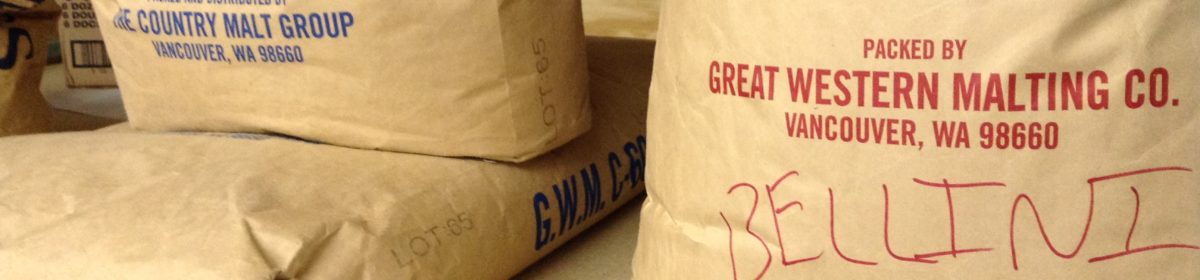
He “…tried to reassure…” Hmm… Not a concern “…at this moment…” Hmm… Commercial CO2 appears to be a by-product of gas and oil production so we up and over here have a bunch. Still sticking with the serious objective stuff, The Western Producer recently shared an update on the market for Canadian malt barley exports:
… about a year ago, Canadian barley prices started to fall as China resumed purchases from Australia after a lengthy trade spat. That pushed a lot of Canadian barley out of the Chinese market. And then Canada harvested a bumper crop of barley in 2025. Farmers produced 9.73 million tonnes, a 19 per cent improvement over the previous year, putting even more downward pressure on prices. “Prices have been a lot more competitive in the global market,” said Watts. At the same time, French malting barley prices climbed higher due to a short crop in that key exporting nation. Those events, combined with years of continued market development work, encouraged Colombia to reconsider Canadian supplies, and they were happy with that decision.
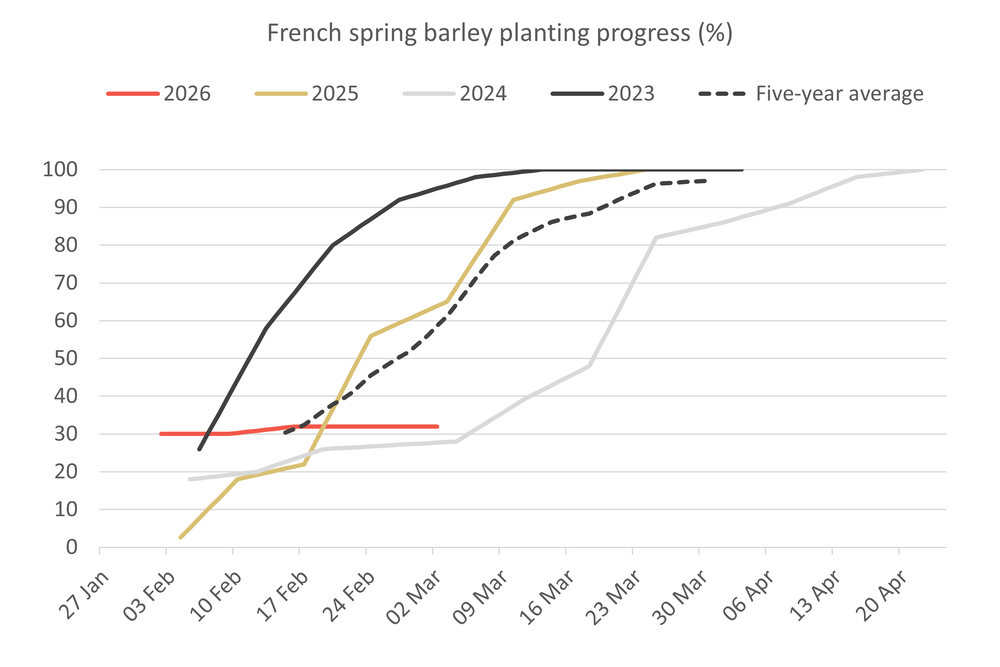 International harvest intrigue reigns. France is looking at another rough spring 2026 as far as barley planting goes, too. That flat red line on that graph under the thumbnail tells the tale. And the competition is ahead of French farmers. On the other side of the planet, the Austrialian 2025/26 crop is “23 percent higher than last year and 21 percent above the five-year average.” Meanwhile… geopolitics can get one into some very odd places. As you think on that, here are some notes:
Note #1: Bun photography.
Note #2: “Rub my Dad’s bottom….”
Note #3: “…surprising health benefit…”
You know, I think the craft beer recovery needs to be measured in the returned of a staffed up BA because I really don’t get where anyone is going with the “return to 2012” narrative. But Dave Infante reporting from the Craft Brewers Conference for VinePair gives another angle on the boost to mood:
Survivorship bias dictates that the brewers that made it to CBC 2026 are likely to seem the most bullish; after all, if they weren’t, they may have stayed home to save money and manpower. At the risk of sounding indelicate here, I also suspect that the segment’s years of closures have helped cull the herd of both excess numbers and outsized negativity. A dying brewery can only die once, after all, and with outfits that were never built for this market getting pushed out of it, those that remain stand to benefit from more focus and less vicarious angst.
We are told that history is written by the victors but, I guess, we have to ask in this market what is “victory” when overall US craft production is down 9% over the last two years and down 17%* since hitting a peak in 2019? Speaking of questions… is the use of “lifestyle” as a descriptor ever not a red flag? Consider this PR blurb about a new beer-like substance:
Carlsberg Britvic premium beer marketing controller Rebecca Allen revealed that the 4.5% ABV beer is strategic in answering the trends of the moment and admitted that “the timing reflects a broader shift in drinking culture, where boundaries between categories are increasingly blurred and consumers are more open to hybrid, lifestyle led propositions”. Allen told db: “1664 Rosé takes its name from its distinctive flavour profile, a refreshing berry flavoured beer. The ‘rosé’ cue reflects both its taste and its visual appeal, positioning it as a lighter, fruit-forward beer.”
What style of life is being referenced? And where has that style led the life of the consumer in question? Speaking of style, Ron has given us a few background insider sorta notes on his presentation flow while on the road, working it in Chile:
For my talk, I speak a couple of sentences and then the interpreter translates them into Spanish. It interrupts my flow a bit. But does give me a chance to drink some beer while the interpreter is taking. My talk is about Irish Porter and Stout. I should probably update it. I wrote it a while ago and have since got hold of a lot more Irish brewing records. In particular, examples of heading, the sort of Kräusen used in Ireland. I get through my beer so quickly, I have to request a refill. That’s a first. Just making sure my throat doesn’t get too dry. Wouldn’t want to get hoarse. Usually, I only get to take a sip or two, as I keep rattling away. When I’m done, I sell a few more books. Which is good. I’m nicely building up dosh in my PayPal account. Dolores will be so happy. Why have I never brought books with me to sell before? Because I’m an idiot. That’s why.
When Dolores is happy, I am happy. Conversely, there’s bad news out of the other end of Lake Ontario as the Toronto Festival of Beer has gone under** and has left creditors and suppliers holding the bag according to CTV News:
Applying to work for the festival was costly, Kowalik noted, as she and her partner spent $1,000 on the entry fee and an additional $200 on liability insurance. She says they both took time off from their day jobs to work since the festival started on Friday. Over the course of the weekend, Kowalik said they went through all 20 cases of beer that they brought up, amounting to a total of just over $2,000.
The story shares a twist on beer fest tokens. Because the festival sells them and not the breweries, the money paid for the beer tokens does not go to the brewers. Kiss it goodbye. Anyone owed money can call into to the bankruptcy meeting this afternoon at 3 pm. But seeing who else is on that list of creditors, the news may not be good. For $2,000,000 in liabilities there’s only $8,000 in assets.
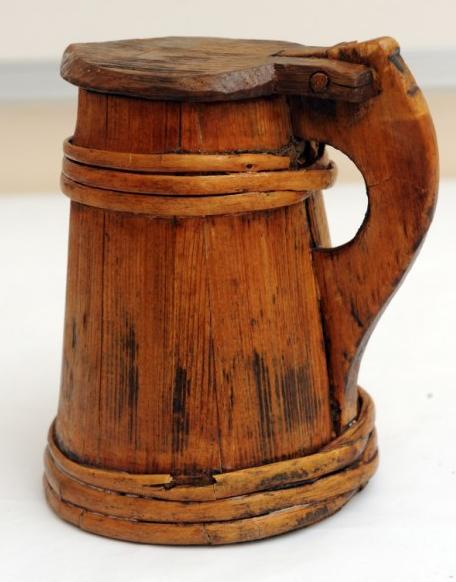
On the Burton Union question, we have had Laura H in (t)DB on challenges posed to the survival of the Marston brewing kit and also providing CAMRA with a backgrounder on the history of the system. Now, a Mr. M. Curtis has visited the part of the whole which became lodged at Thornbridge and reported back:
Fixed to the head of each oak barrel is a large, cast iron “X”, painted black. If this seems familiar it’s because, for a time, an illustration of three such barrels, stacked in a triangle formation, formed the logo of Marston’s Brewing Company in Burton-upon-Trent, Staffordshire. Still in operation, today Marston’s brewery is owned and operated by British-Danish conglomerate, Carlsberg Britvic. In January 2024 Carlsberg Britvic—then known as the Carlsberg Marston’s Brewing Company—decided to retire the remaining four working union sets at Marston’s. Once used to brew what was once some of the most well-known ale brands in the country, including Marston’s Pedigree and Owd Roger, the brewery’s website famously used to state: “No Burton Unions, No Pedigree. End of.” Now, it seemed certain this storied piece of British brewing history, first invented in 1838, was due to be consigned to the dustbin of time and memory.
I was going to say that it is too bad that the United States has little similar interest in its brewing history as we could see the mid -1800s pontoon room of Taylor of Albany recreated even if in part but then was saddened to see that the link in my post of 2016 to Martyn’s at Zythophile failed. It’s all there at the Wayback Machine site. But the key word search does not seem to work and Martyn did not use a URL system that included the date. 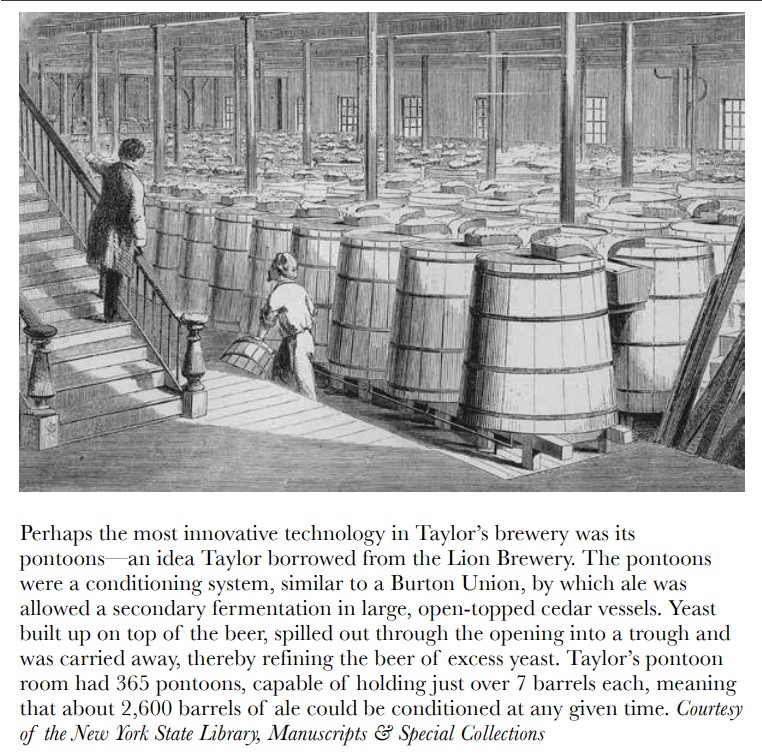 So you can hunt out his post at your leisure. In the alternative, I can only direct you to the work of a couple of rough sorts, Messers Gravina and McLeod, at page 80 of their opus on, in and abouts Albany which you can review under that thumbnail to the right… well, your right my left.
Lastly, following up on observations on the word “critic” in beer writing a couple of weeks ago, The Times also appears to be confused as the sub-header for one story this week describes Pete Brown as “our critic” and then he himself states as follows:
Of all the arguments the beer world loves to have, there can’t be many topics more divisive than JD Wetherspoon pubs. Critics attack them as a refuge for those too old and/or drunk to mind the harsh lighting. Supporters say this is just snobbery, and what’s wrong with cheap beer? Critics believe the beer is cheap because it’s bought “short-dated”, or about to go off. Supporters ask where else can you get a meal and a pint for under a tenner now? The thing is, both sides are right. Except that the beer isn’t short-dated and never has been.
“Critic” is not a synonym for detractor. Pete isn’t the one who created this. But as Stan reminded us, the “…critic’s job, nine-tenths of it, is to make way for the good by demolishing the bad” as it was put by Kenneth Tynan. What is it about general beer culture that is uncomfortable with the common form of two handed discussion and intelligent criticism with a bit of peer review thrown in for good measure? Oh well.
That’s it for now. Report upon your tra-la-ing in the comments if you like. Until we meet again, please check out Boak and Bailey who are posting every Saturday and adding to their fabulously entertaining footnotes week after week at Patreon. And look out for more of Stan’s new “One Link, One Paragraph” format. Then hunt out something in someone’s archives! Leave oblique comments on someone’s post from 2009!! Listen to a few of Lew’s podcasts and get your emailed issue of Episodes of my Pub Life by David Jesudason on certain Fridays. And Phil Mellows is at the BritishBeerBreaks. Once a month, as noted, Will Hawkes issues his London Beer City newsletter and do sign up for Katie’s wonderful self-governing totes autonomous website featuring The Gulp, too. Ben’s Beer and Badword seems to be on pause since November but there is reading at The Glass which is going back to being a blog. Any more? We have Ontario’s own A Quick Beer and All About Beer is still offering a range of podcasts – and there’s also Mike Seay’s The Perfect Pour. Plus follow the venerable Full Pint podcast! And there’s the Craft Beer Channel on Youtube. Check out the archives of the Beer Ladies Podcast. See you in May!
*26.3 bbls in 2019 compared to 21.9 bbls in 2025. What’s the degree of collapse that will send a message to the PR trade, one wonders.
**Sixteen years ago, Jordan shared his thoughts on the unappetizing event.