
The Thursday Beery News Notes For The End Of Summer 2025

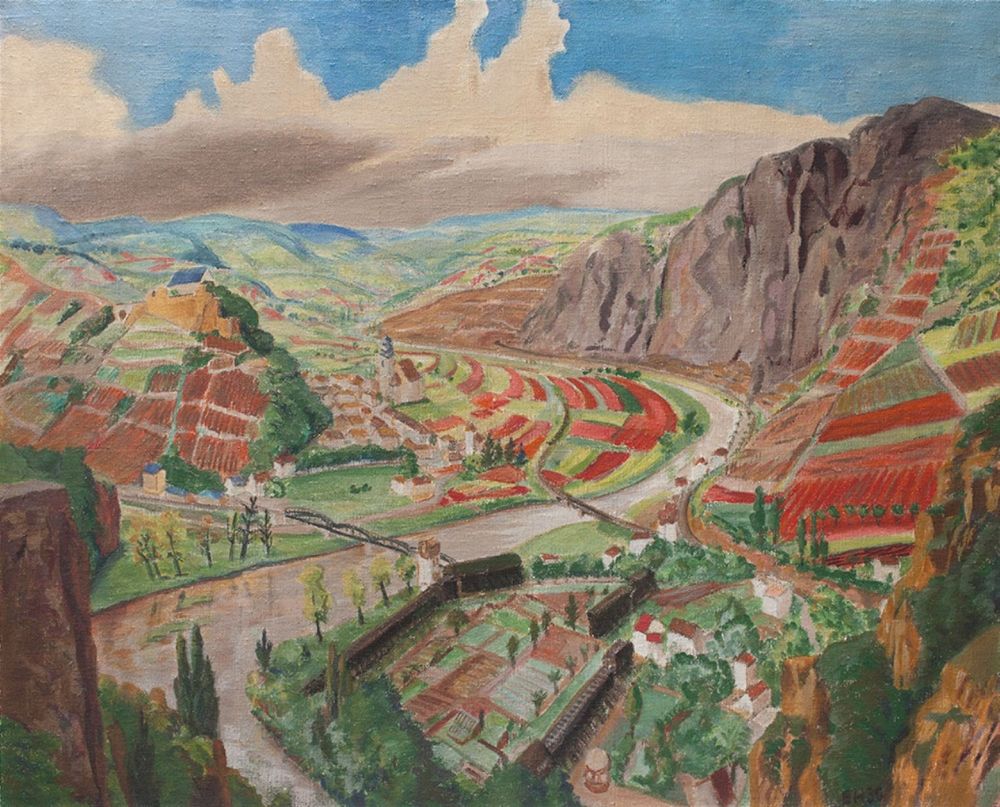
There are good views out there. Lots of golden hour sunlight finishing up the days as we face the reality that, yes, winter is coming. Out and about that evening, I saw a frog and a hedge of jewelweed – but you’d expect that, wouldn’t you. I like how the angle of the shadow makes something of a right angle with the tree. I didn’t notice that when I took the photo. But even saying that makes it too artsie, less just see-ie. Similarly, writing about hops, Jeff wrote about a limitation but its really about two limitations. And it’s all a bit like dancing about architecture… but what isn’t:

The thing about adding more is at a certain point you don’t get more. We learned this when breweries were putting eight pounds per barrel of hops in their beers and making them taste like lawn clippings. To get more, you have to add different. And here I give you fresh hop beers. They offer a dimension of flavor that is different from regular kilned hops. Trying to describe them is hard because rather than just reaching for another adjective, we grope toward different realms of experience. Drinking a very good fresh hop beer is to experience synesthesia and encounter the taste of iridescent green.

Conversely yet still on the question of different, not as charming an experience was an airport sandwich sold to Matt Gross under the presumably personally seductive name “the Matthew”, it of the 10 slices of prosciutto:

…laid flat, one on the other, with no space between them, to form a dense, unchewable mound of salty protein. Look, sandwiches are all about architecture, and the meat, especially a powerfully flavored one like prosciutto, needs air. Each slice, thick or thin, should be separated from its brethren, folded gently and laid haphazardly (within reason) upon the bread. You want to feel the texture of the slices, the regular irregularity of the bite as your teeth pass through the layers. That sandwich needs to breathe. If it can’t breathe, it’s dead on the plate, limp and heavy, boring. R.I.P. Matthew. The great thing about this approach is that you can actually use less prosciutto per sandwich and at the same time make the sandwich taste better.

It’s funny. As I go through the week’s saved links I can get interested about someone writing about a crappy sandwich but, for example, can’t be bothered with anything anyone is writing about THC drinks. What could it be? Bad writing? Maybe.* Compare how, for CAMRA’s What’s Brewing, yet another Matthew wrote about beer pubs and heritage in the nearby local layered landscape under development in Manchester’s core, writting in a way which contextualizes more than lobbies:

“We believe regeneration should enhance, not diminish, the city’s heritage. The Marble Arch deserves to be protected as part of Manchester’s future, not pushed aside by it.” On the subject of heritage, one brand looking to capitalise on the city being the national centre of attention this summer is the iconic Boddingtons. Brand owner AB-InBev has decided to return the brand to cask production after it was discontinued in 2012. The news follows hot on the heels of reported investment in another of its heritage beers, Bass…

I like the tone. While one can get numbed by the beating of a drum, an invitation to think about survival and revival in face of modernity is instructive. Speaking of which, maintaining an interest in more than listicles, Laura Hadland‘s** (slightly paywalled) column in The Telegraph takes on a useful discussion for those with a modest to moderate interest in beer – serving temperature:

… some people adore the sharp thrill of bitter flavours. If that’s you, West Coast IPAs should scratch the itch. This US style of beer is hop-led. Citrus and pine flavours are underpinned by intense bitterness, balanced with a light touch of malt… An American brewer may be horrified to see this beer style served any other way but well chilled. However, there is an argument that they could be served fractionally warmer: research shows that as temperature rises, our perceptions of bitterness usually increase. The real connoisseur of bitter flavours should consider ordering a West Coast IPA (such as Elusive Brewing’s Oregon Trail) on cask, served at a cellar temperature of 11-13C, as opposed to the keg-dispensed version that will be around 5-8C.

While there is a reference to the dubious tale of the hyper-efficient expectorating wine judge, this is exactly the sort of writing that there should be more of. An explanation of an idea. An invitation to try something out. Which may be why the comments are not (entirely) focused on slagging the author. Speaking of context and understanding, I like this piece by Jason Wilson about old vines and the disasterous 2025 harvest in Rioja and what keeps the winemakers… making:

I asked Oxer why he thinks people can be so skeptical about the concept of old vines. “In some way,” he said, “we’ve lost our connection with the old world, the spiritual world. We think too much about the scientific world rather than the spiritual world, but we should join both worlds.” He added, cryptically as always: “Soil is darkness, but always in the darkness, there’s light. Soil is a world we don’t really understand. It’s mix of magic and microbiology.” As we finished our meal with a Basque style cheesecake, Oxer told me that 2025 will be a different story than 2024. He’d lost at least 60 percent of this year’s grapes to the summer hailstorms.

Note: if you think you are dedicated to the drink, consider Big Jim. Talk about pacing your drinks. Conversely, The New York Times ran an (somewhat paywalled) article this week that had me shaking my head over the level of alcoholism being decribed and the introduction of a new concept:

Withdrawal from alcohol, though, felt like a direct hit. I looked to my bedside table and saw the glass of “bed wine” from the night before. “Bed wine” is something I promised myself I would quit this year. It’s the last glass of wine I bring with me as I climb into bed to watch TV or do the crossword puzzle. I tell people that my relationship with alcohol is “complicated,” but it’s not. I love drinking wine and a good cocktail, but booze is horrible to me. In my world, there’s always an excuse to drink: celebration, disappointment, stress.

A habit of “bed booze” seems to me to be a pretty alarming cry for help. Which the piece sorta admits it is. But still… Lordy. What’s so wrong with warm milk?  But things could be worse… maybe. Last Friday, Will Hawkes circulated his latest edition of London Beer City and included this gem of remembrance of a shit pub past:

In 1998/99 I lived about two minutes’ walk from the Finn and Firkin, an imposing 19th-century boozer on the Pershore Road in Birmingham. I remember Dogbolter, a beer I avoided because it was too strong. I remember the L-shaped bar, and the smelly loos next to one entrance. I remember the huge dance hall/concert venue attached to the back. And I remember, for reasons I still can’t truly understand, being unnecessarily rude to a Stoke-supporting friend when he entered the pub one Saturday evening having just watched his team lose 3-0 (although, checking Stoke’s results, they didn’t actually lose 3-0 in 1997-98. Maybe it was 4-0? Or 4-1).  (The pub stopped being a Firkin soon after and is fully shut now).

Nice. Exactly what one looks for in every establishment. Or is it? Some Americans go to Italy in search of an English dispense system… well, at least one did:

Today, from my count, there are at least fifteen locations in Rome serving beer via handpump. And while a number of British breweries send their casks here, there are a several Italian breweries like Hilltop Brewery, Shire Brewing, and Linfa Brewery that are regularly cranking out casks for the pubs. Beyond Rome, you can find handpumps in most Italian city at establishments with an interest in selling anything beyond the standard Peroni or Moretti. Even in Sicily. However, I suspect most of these are serving kegged beer hooked up to a handpump (i.e., they’re not serving cask conditioned beer). To my knowledge, I didn’t have any of that on this trip.

Massimo Internazionalismo!! And perhaps being a bit massimo medievalismo, the feature in Pellicle this week by Thomas Soden is on the topic of gale, the herb that hops destroyed. AKA myrica gale scientifically or sweet gale, sweet bayberry, dutch myrtle or sweet willow.  Or even bog myrtle like when I had a beer brewed with it back in 2008 brewed by Beau’s right here in eastern Ontario. Soden shared:

A wild plant, it often featured in the herbal gruit which flavoured beers from low countries before hops became commonplace in brewing. The shrubs require the specific soil acidity of bogland areas, which although once abundant, are increasingly scarce today. Nothing, however, is stopping modern British brewers from utilising gale as a flavouring agent. In an age in which ‘natural’ beers and wines, and fermented drinks like kombucha are gaining popularity, this seems like it has potential. In 2017, the now sadly defunct Treboom brewery in Shipton-by-Beningbrough near York made a wheat beer flavoured with Gale named “Myricale,” and acknowledged it was a homage to the style. So why has it died out?

Hmm… might I suggest the whole “tastes like a bog” thing?

And for Stan because we share the love of such things, a story of how much alcohol chimps consume:

Someone have a word with the chimps? Observations of the apes in the wild show them imbibing the alcoholic equivalent of a half pint of beer a day through the vast amount of fermented fruit in their diet. Researchers arrived at the first estimates of wild chimp daily alcohol intake after measuring ethanol levels in fallen fruit that the apes gather from the forest floor in Kibale national park in Uganda and in Taï national park in Ivory Coast. While individual fruits contained less than 0.5% alcohol, the chimps’ daily intake swelled as they devoured the ripe fruit pulp. The apes were particularly fond of figs, which contained some of the highest levels of alcohol the team recorded.

Speaking of the pre-hop universe of gale and chimps and… stuff… to conclude this week I am going to try a new weekly feature, featuring old stuff every week. I realized the other day that not only had I been writing this… whatever this is… for over two decades but a lot of my history writings are well down the lastest posts lists. So I am going to try to give a nod to a few things that you might find interesting and perhaps new to you if you weren’t reading this sort of beer stuff back then. Let’s start off with a few links to posts under the 1400s tag:

a. from 2016, check out The Steelyard, Stillyard, Stylyard and Spelling about the Hanseatic League’s foothold in central London
b. from 2015, read all about the brewing dynasty of The Hillars Of Golden Lane, Cripplesgate Without and
c. from 2019, a survey of England’s Increasing Concern Over Beer Brewing, 1430s to 1580s.

That is it for now. Enjoy these last days and golden hours of this summer and as you do please also check out the below mentioned Boak and Bailey every Saturday and sign up for their entertaining footnotes, too. Look out for Stan when he feels the urge now that he’s retired from Monday slot… maybe … maybe not. Then listen to a few of that now newly refreshed Lew’s podcasts and get your emailed issue of Episodes of my Pub Life by David Jesudason on certain Fridays. And Phil Mellows is at the BritishBeerBreaks. Once a month, as noted, Will Hawkes issues his London Beer City newsletter and do sign up for Katie’s wonderful self-governing totes autonomous website featuring The Gulp, too.  Ben’s Beer and Badword has been on hiatus since April but the archives are out there with the all the sweary Mary! There is new reading at The Glass which is going back to being a blog. Any more? We have Ontario’s own A Quick Beer and All About Beer is still offering a range of podcasts – and there’s also Mike Seay’s The Perfect Pour. Plus follow the venerable Full Pint podcast! And there’s the Craft Beer Channel on Youtube. Check out the archives of the Beer Ladies Podcast. That’s quite good and after a break they may well be are back every month! Such is life. Such is beer podcasting and newslettering… which, as Ray says, are blogs! And he’s right.

*Yet we do recall the wise words of Boak and Bailey in last weekend’s footnotes: ” “Beer fandom is infested with know-all-ism.” To expand on that briefly, it’s the tendency to respond to any post or article with something like “Old news, already knew this” or “And of course, [supplementary fact]…” Worrying about whether what they’re saying adds anything new to the conversation is one thing that inhibits people from writing and sharing. Yes, there are certain topics that have been hashed out a million times. But when you write about it, it’ll be different because you have a different perspective, and because new evidence has emerged, or things have changed, since it was last written about. Don’t write for the know-alls, because you can’t please them. Write for yourself, and for people who like what you do.” “
**For the double, Laura on pockets at the Beeb.

The Delightful Yet Pensively Penultimate Beery News Notes On A Summer’s Thursday For 2025

It’s been a busy week but not really in the beery sense. Guests and heirs have come and gone – and even bought a $14.99 beer on the way out via an airport bar at Montreal, as illustrated sub-wonderfully perhaps. A last bit of summer visting and the shedding of the last loonies and twoonies. Which means the home is quieter here at this end of the week compated to the other. Which is good. But quieter. At least I have my tomatoes. Did I mention my tomatoes? Definitely illustrated sub-wonderfully, that yellow one in the upper left weighed in a 1.7 pounds. And I did nothing to make it happen. Which is my favourite and most common form of success. Six varieties left to right ish clockwise: Chiltern’s Blue Bayou, Baker Creek’s True Black Brandywine, Chiltern’s Golden Sunshine, Baker Creek’s Kentucky Beefsteak, Chiltern’s Beefsteak and Baker Creek’s Orange Icicle. Picked from the catelog based on the “pin tail on donkey” method. All started from seed last winter and soon getting turned into sauce. That True Black Barleywine is the best tasting tomato ever – like it has built in balsamic vinegar. Thanks for tuning in to Tomato News Today!

First up in the world of beer, the Tand himself has also been out and about on travels and has reported back on the scene in Munich – and found out that certain things were not to be found:

Sadly, you can’t find Pils on draught anywhere, and for reasons best known only to themselves, Spaten insist on offering the dreadful Beck’s as their bottled pils in their most prestigious outlets. It appears Spaten Pils, which I recall was a lovely beer, is no longer brewed. A real shame.  In fact, Spaten it seems, only brew Helles in both normal and alcohol-free forms and, of course, an Oktoberfest. It gets worse. The whole shooting match of Spaten-Franziskaner-Löwenbräu-Gruppe is owned by AB InBev, who presumably have streamlined the brands available, though under the Franziskaner brand you’ll also find weissbier and a kellerbier.  Like Spaten, the rather delightful Löwenbräu  Pils has been dropped. It is a pretty grim picture as the odd hoppy pils provided an alternative to Helles, which in its Munich iteration, can be a little sweet, and dare I say, bland? (The locals call it “süffig”, meaning “easy to drink”. And, in fairness, it is.

And over at Pellicle, Matthew assumed the role of player / manager and reported on his travels to the French & Jupps Maltings in Hertfordshire where he found a hidden truth:

Its long history stretches back to 1689, and for more than a century the maltster has been based in the twin Hertfordshire towns of Stanstead St. Margarets and Stanstead Abbots, bisected by the aforementioned Lea, some 30 miles north of London as the crow flies. There are a few reasons for its relative anonymity—I myself hadn’t heard of them until I was invited for a visit in February 2024. One is due to the fact its malt was (and often still is) bought in bulk and rebagged by various distributors before being shipped out to breweries. And so, it might bear the name of a competitor—although in this context it’s perhaps more accurate to refer to them as partners—in the US, for example, the malt is typically sold under the William Crisp banner.

Sneaky sneaksters! Did you know? (Did I? Never mind that… let’s make this about you.) Did you??? Speaking of hidden truths, Pete Brown had a has retrospective on BrewDog, now well in to the post-Watt era and even into the post-Dickie, published in The Morning Advertiser that he unpacked into something of an obit:

To me, they always felt more like a band than a brand – not least because they wanted to be seen as punks. Bands are different. When none of the original members remain, many former fans insist that it’s simply not the same band any more, and that the newcomers who have taken over, singing songs they never wrote or had hits with, are no better than a covers band. The departure of Martin Dickie feels like the last member of the original line-up has left the building. The entity that remains may own the rights and assets of BrewDog, but it has lost the spirit and soul that once defined it… Dickie remained silent throughout. The initial allegations referred to a “cult of personality” built around both men, but specific personal allegations were focused on Watt’s behaviour. After Dickie’s departure, some former employees took to social media to say that he was “part of the problem.” 

Wonderful. I have never understood how Dickie, co-exec past and board member still, has had the teflon wrapper that he has enjoyed through downturn after downturn on what must be one of the most note worthy financial flops in recent brewing history. But perhaps it’s been a case of not noticing that scratch on your hand due to the nail in your foot.

Speaking of endings, Ed the Beer Father has shared his thoughts on the closing of Banks of Wolverhampton, mapping a fairly complex set of international bobs and weave that led to the end:

Eleven years ago the two companies with rights to San Miguel beer, San Miguel Brewery (Philippines) and Mahou San Miguel (Spain) signed a cooperation agreement to promote their international businesses and position San Miguel as a global brand. To further its growth they had already partnered with Carlsberg to contract brew it in Britain, and it was a large part of the output of the Northampton brewery. But for a brand with global ambitions partnering with the world’s biggest brewery seems like an obvious match… So, as what I believe is part of a global realignment, last year San Miguel moved its contract brewing in the UK from Carlsberg to ABInBev. Losing the San Miguel contract left Carlsberg in the UK, which owned one giant factory and two large regional breweries, with a lot of surplus capacity. The giant factory wasn’t going to go and Marston’s has the small pack facilities, which left Banks’s. So a contract change for a Spain and Philippines based international lager brand closed a 150 year old brewery in Wolverhampton that didn’t even brew it. 

Lordy. Speaking of things making one’s head spin, I totally missed Stan‘s post before the Labour Day weekend on the nature of beer bubbles so I will correct that error now:

There is more to monitoring beer foam than counting bubbles, although they are the foundation. They result from nucleation, and as those bubbles climb to first form or then replenish the foam head, proteins and bitter substances are carried into the bubble wall, forming a matrix that holds the skeleton together. In his doctoral thesis, “Beer Foam Physics,” A. D. Ronteltap calculated that a foam 3 centimeters high (a bit less than 2 fingers) in a glass 6 centimeters wide (a bit less than a Willi Becher) made up of bubbles with an initial radius of .2 mm (twice the width of a human hair) would contain 1.5 million bubbles distributed over about 100 layers.

Over a million bubbles! Not quite millions and millions but more than one million. And, while the numbers aren’t quite confimed yet, Jessica Mason pulled out the stats as she reported on the question “Can Gen Z save cask ale from extinction?” for Drinks Business:

Statistics from YouGov for the Society of Independent Brewers and Associates (SIBA) have shown 25% of 18 – 24-year-old beer drinkers regularly order cask ale. The figures mark an increase of more than 50% on the previous year… Digging deeper into the SIBA figures, there are also statistics that support the opportunity that women present in the future of cask ale’s revival. For instance, the data revealed how 22% of female beer drinkers regularly order cask ale, compared to 43% of men. But, as Corbett-Collins noted: “It would be great to see even higher numbers, but the glass half full fact is that men and women of all ages are enjoying cask beer.

Out and About Update: Max mapped a 29 km(!) pub crawl he took through the Czech countryside to plant himself in front of a beer at Únětický pivovar, Zdibský pivovar and Polepšovna ducha as well as a few other spots. I marched about a tenth of that the other weekend and my left knee let me know about it for more than one day. Good thing Max kept up a good pace because apparently, according to the white coated eggheads in the Netherlands, beer drinkers are a prime target for mosquitos:

To find out why the blood-sucking critters prefer some people over others, a research team led by Felix Hol of Radboud University Nijmegen took thousands of female Anopheles mosquitoes to Lowlands, an annual music festival held in the Netherlands… Participants who drank beer were 1.35 times more attractive to mosquitoes than those who didn’t. The tiny vampires were also more likely to target people who had slept with someone the previous night. The study also revealed that recent showering and sunscreen make people less attractive to the buzzing menace. “We found that mosquitoes are drawn to those who avoid sunscreen, drink beer, and share their bed…”

Speaking of getting bled, I received the alert from Will Hawkes: “Sorry to be right about this. No GBBF next year as it made ‘a substantial loss’, according to CAMRA.” As per usual and FOR THE DOUBLE!!!… Jessica Mason has more detail:

CAMRA chairman Ash Corbett-Collins explained how “at Members’ Weekend earlier this year, the national executive presented finances that painted a stark picture. As your chairman I was open with you; we were facing significant challenges… Corbett-Collins lamented: “Sadly, this means I must tell you that: The Great British Beer Festival and its Winter counterpart did not attract enough visitors to cover the cost of holding them, resulting in a substantial loss.” Added to this, he revealed that CAMRA’s membership figures “are simply not growing” and confessed that “the hard truth is we are unlikely to return to pre-2020 levels”… and noted how “the cost of running a membership organisation and business is also increasing”.

This is a pretty serious situation as it really looks like a broader issue than just the fests. The organization itself seems to be at risk. I expect more information to be flowing in the coming days.

In the “WAR ON SCIENCE” folder, we read the news out of The New York Times that everyone’s favourite slowly exploding head in charge of the Department of Health and Human Services has pulled the US government’s pending report on alcohol as part of a healthy diet:

Mike Marshall, chief executive of the U.S. Alcohol Policy Alliance, a nonprofit that aims to reduce the harms of alcohol, said H.H.S. was “doing the work of the alcohol industry.” “They’re burying the report so the information about the health consequences is not widely known,” Mr. Marshall said. Health Secretary Robert F. Kennedy Jr. has decried a “chronic disease epidemic” sweeping the country. But he has said little about alcohol’s impact on American health since taking office. Consumption of both alcohol and tobacco was absent from the first Make America Healthy Again report released in May. Mr. Kennedy (like his boss, President Trump) has said he does not drink.

It’s important to note that Mr. Kennedy, unlike his boss,  does not wear makeup preferring to gain his particular rusty orange hue through a natural process.

Finally, just before this organ went to press, the dynamic duo B+B posted a piece under the fabulous title “Customers Have Always Been a Problem for Pubs” which illustrates the truth based on a sppech given in 1933 by one Lieutenant Colonel E.N. Buxton, director of the East London brewery Truman, Hanbury & Buxton:

The talk finishes with a few more rebukes for the drinkers. First, the reason pubs often look so ugly, and are so sturdily built, is because “you do not treat them so kindly”. “Walls and furniture are roughly treated”, he says. “As for the outside of public-houses, I agree that some of the houses in London look perfectly ghastly. Hard wear, however, had to be the first consideration.” This was addressed, remember, to a room full of people from Bethnal Green. We’re picturing the crowd when Bertie Wooster sings ‘Sonny Boy’.

Fabulous. There. That’s a lot for a busy week but probably less than all the stuff our there to read so please also check out the afore mentioned Boak and Bailey every Saturday and sign up for their entertaining footnotes, too. Look out for Stan when he feels the urge now that he’s retired from Monday slot… maybe … maybe not. Then listen to a few of that now newly refreshed Lew’s podcasts and get your emailed issue of Episodes of my Pub Life by David Jesudason on certain Fridays. And Phil Mellows is at the BritishBeerBreaks. Once a month, Will Hawkes issues his London Beer City newsletter and do sign up for Katie’s wonderful self-governing totes autonomous website featuring The Gulp, too.  Ben’s Beer and Badword is out there with the all the sweary Mary! And check out the Atlantic Canada Beer Blog‘s weekly roundup. There is new reading at The Glass which is going back to being a blog. Any more? We have Ontario’s own A Quick Beer featuring visits to places like… MichiganAll About Beer offers a range of podcasts and there’s also The Perfect Pour. Plus follow the venerable Full Pint podcast! And there’s the Craft Beer Channel on Youtube. Check out the archives of the Beer Ladies Podcast. That’s quite good and after a break they may well be are back every month! Such is life. Such is beer podcasting and newslettering… which, as Ray says, are blogs! And he’s right.

Now That I Have My Back To School Corduroys Here’s The Thursday Beery News Notes

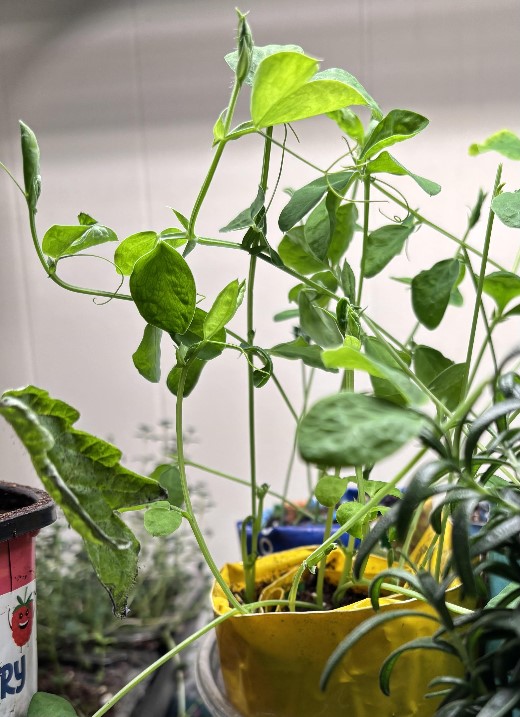
With the onset of September comes the offset of the the garden. I am still planting things that have a hope to give us a bit of return before the frosts – basil, peas, leaf lettuces – but the fact is it’s now about starting the long process of taking down the pole beans, filling up the composters and putting away pots for next year. I saw this image on the Brewery History Society’s FB page and immediately liked the scene. The sweater vest and long trousers in particlar are a good and fashionable reminder that there’s still lots needing done as autumn advances.

Speaking of the change of seasons, The Beer Nut is looking forward to summer being behind him if his reviews of warm weather drinks including something called Fruit Sundae Gelato Sour is anything to go by:

It’s lactose rather than Lactobacillus that drives the flavour, and indeed the smooth and heavy texture. Vanilla forms the base of the profile, to which is added a mish-mash of fruit concentrates (four are named on the ingredients) with strawberry and blackberry being the most apparent. And that’s it. While the mouthfeel reflects the high ABV, the flavour complexity doesn’t. The weight also means it doesn’t work as a summer refresher, and is more of a pudding substitute. This is simple and inoffensive stuff, so long as oodles of lactose and rivers of fruit gunk don’t bother you.

And Boak and Bailey were also feeling the last of the summer and looking forward to the coming change if we can judge by their last “beers of the week” note at Patreon:

This piece would be a lot longer if we listed all the duds we had. Hot weather and a quiet city make for some rough pints: cloudy, warm, chewy, as exhausted as the sweaty August insomniacs drinking them. But we always wanted this little write up to be more positive in tone. We don’t chicken out of giving negative reviews on the main blog – we’d have a lot more friends in the industry if we did! – but we don’t want this other thing to consist of us bitching behind closed doors. Anyway, it’s cooling now. The Swan With Two Necks will be resuming its usual opening hours and cask ale across the city will be dropping down from its rolling boil.

Perhaps they needed to add a little something to their ales? Should you? Would you? Could you? The Guardian has many questions along these lines:

The true number of icy beer fanatics is probably much higher. Why is that? Because another 10% said embarrassment was holding them back from requesting ice in their beer, and another 20% said that they had previously been told off by friends, family and bar staff for requesting it. Seriously, though, why is putting ice cubes in beer a bad thing? Because beer is already delicately flavoured enough as it is, so diluting it with melted ice risks rendering it tasteless. Plus, a lot of work went into crafting that flavour profile. Don’t just mess it all up because you like your glass to clink when you swirl it.*

Why not!?! As Gary pointed out this week, some have jumped through hoops to cool their beer. Back to question of the heat, reaching west we have one last “what I did on summer vacation” report from Glenn Hendry on a trip to grasslands of the Canadian Prairies where he found himself on a brewery tour:

The scenery was outstanding – if you’re into grasslands and rolling hills, which I am – but eventually I made the long drive in the rental car back to Regina for the rest of the Tuesday-to-Saturday trip. With my beer consumption in Toronto reduced to the odd social outing back in Oshawa and maybe a beer a week at home, a pub crawl in Regina, Saskatchewan was an unexpected addition to the itinerary, but when my server at Pile O’ Bones Brewery told me if I visited all six breweries on the city’s ‘Hop Circuit’ and had a pint at each I would score a beer glass, well, despite the ‘self-guided’ disclaimer/warning, the challenge is on, innit? To be entirely truthful, I hadn’t planned on hitting up all six – maybe three or four – on this steaming hot Thursday in the prairie city, but when the old legs get moving and the old mind stops making sound decisions, challenges are simply met.

Speaking of the Prairies, I am a bit more swayed by this comment from Suzanne Sexton on the closure of an Ontario Crown Royal whisky bottling plant than I am by Premier Ford pouring a bottle out over the loss of 200 jobs:

This is the Crown Royal production facility in Gimli, Manitoba. This is where Crown Royal is actually made on the shore of Lake Winnipeg. It runs 24 hrs a day, 365 days a year. It houses millions of barrels of Canadian Crown Royal, made and moved by Canadians. There are more barrels of Crown on-site than there are people in this province. The high quality barley, corn, and rye are grown by Canadian farmers. Please don’t follow people who don’t know these facts when they ask you to boycott Crown Royal because they moved one Ontario bottling plant to US to survive US tariffs. Buying Crown Royal still puts dinner on the table in hardworking Canadian households across the country.

It is the reality we live in that bulk booze is trafficked across the border. I seem to recall that Canadian good beers have been shipped south to the US for bottling and labeling there as grocery house brands in a way that avoids certain tax treatments in both countries. Nothing wrong with that.

Speaking of booze as business, Pellicle‘s feature this week is Phil Mellows’ portrait of David Bruce, owner of the Frikin pub chaing from 1979 to 1988, who explained the 1988 sale when he was bored, tired and facing debt:

The numbers were stacking up against him, too. “We still owned 90% of the business but that meant we had a massive level of debt, £3 million. I could see the Monopolies & Mergers report that led to the Beer Orders would mean more freehouses on the market and more competition. The banks were getting nervous. It was a matter of flog it or float it. We couldn’t carry on.” Finally free of money worries once the Firkins were sold, Bruce launched the charity providing barge holidays for disabled people that earned him his OBE, but it wasn’t long before he was back in beer and making an impact, this time on a global scale.

It’s interesting to see how Bruce also rolled his profits into the churn of further beer business projects including many US micro breweries which themselves were sold off in the great buyout era of a decade ago.

And studies were among things discussed these last seven days. Last Friday, Ed himself expressed himself on the topic of beer foam based on a study written by non-brewers:

The authors of the beer foam paper appear to be competent scientists, even if they are ignorant when it comes to brewing. They certainly seem to know a lot about the science of bubbles (Marangoni stresses is a new one to me!). And they correctly discuss Lipid Transfer Protein 1 as playing a key role in stabilising foam, though this nothing new to brewers. In fact last year I went to a talk by “The pope of foam” Charlie Bamforth where he discussed the role of Lipid Transfer Protein and Protein Z (40 kDa) in foam stability. He said research had shown this was not due to any particular property of the proteins, but rather that the partial denaturing of them during the boil (not during secondary fermentation!) exposed their hydrophobic interior which helps stabilise bubbles.

Didn’t know about Marangoni stresses?!? Reeeeallly? Hmm. Lordy. Err… umm… where were we… oh yes – and Lars commented on another study that sought to link the development of beer brewing with the onset of organzied societies:

Many researchers have suggested that alcohol may have been an important factor in developing early states. Basically, it’s supposed to have helped social cohesion, improved cooperation, and reduced friction among people living cramped together…. What they found was that in all models there was a positive correlation between alcohol and political complexity. It was 0.77 when the only factor was alcohol, and 0.19 in the weakest (model 4). Average 0.27 across all five models. In other words, the result appears pretty robust.

“Au contraire dit…” Jeff who pointed out that some of the assumptions were not well founded:

I’m not an archaeologist (though neither are the authors), but the data here seems abundant and clear. On the first highlighted quote, people made beer *millennia* before agriculture. On the second one, man, what a sweeping judgment. Let’s take the NW Coastal natives, where I live… They had incredibly complex societies. They had social stratification, organization, and hierarchy. Some of the peoples managed harvests, but whether you could call it agriculture is a very sticky question. They had such abundance they didn’t need agriculture. Cultures are very hard to characterize.

My thoughts are these: (i) the general “cradle of civilization” concept seems pretty middle eastern focused as there are many models of society, many without alcohol, (ii) the studies also rarely seem to compare the multiple other factors like seed storage techniques that would run parallel to booze production** and (iii) there often seems to be an inordinate wish to make booze the winner when, as in this case, it is also reasonable to assume that these early societies were slave based coercive hell holes.

Stan issued his latest edition of his Hop Queries newsletter (v.9.04) and shared how poor the crop was looking in England (“…shrunk to a level that this news won’t affect the world hop market…“) as well as in Germany:

Farmers are expected to produce 41,235 metric tons (about 90.7 million pounds and likely more than the U.S. crop), 11 percent fewer than 2024. Growers cut acreage by 6.5 percent and yields were adversely affected by a lack of rain until mid-July and further reduced by disease and pest pressure. A press release indicates that 44 farms ceased operations, meaning the number of growers has slipped below 1,000. It concludes: “Hop growers are reacting to poor prices and limited marketing opportunities by reducing acreage. The short-term outlook is not rosy: Given declining beer consumption, a further decline in hop demand is to be expected. The result will be continued pressure on prices and a further reduction in hop acreage until supply and demand are restored.”

Until demand is restored? Does anyone think that is happening? Not the stock market if this report in Beer Marketers’ Insights is to be trusted:

Bank of America analyst Peter Galbo downgraded Constellation [NYSE: STZ] to “Underperform” last Tue, reducing his price target from $182 to $150. “We see further downside potential as beer industry consumption remains soft creating risk to sales, margin and multiple,” Peter wrote. And there are “added risks” such as “core Hispanic demographic remains pressured” and “longer term alcohol consumption trends” remain soft. He now expects a -1.8% decline for Constellation in fiscal 26 (thru next Feb) compared to his previous estimate of -0.5%. CITI also put out tuff report noting “continued softness in both STZ’s beer trends and the broader beer category.”

The company itself seems to agree in their own disclosures issued Tuesday. To be fair, there are still believers and even at least one corner of Canada running out of beer:

“We saw it right from the beginning of June — it hit hard and fast,” Clark said. “Every day we talked to different tourists. It was a wide demographic this year … American, Canadians, from all over, young and old.”  Some days, he said the brewery was so busy it had to turn people away. “We have not been great at keeping up with demand this summer,” he said. “You always assume you might grow with a good summer, but we would have never expected this.”  Evermoore Brewing Co. was not the only local producer scrambling to meet a higher-than-normal demand. According to Jared Murphy, president of the P.E.I. Craft Brewers’ Alliance, some craft breweries had sales show a double-digit increase this summer.

There. We can end on an upbeat note this week.*** Somewhere there was an increased demand for beer. While you consider that before we meet next time, please also check out Boak and Bailey every Saturday and sign up for their entertaining footnotes, too. Look out for Stan when he feels the urge now that he’s retired from Monday slot… maybe … maybe not. Then listen to a few of that now newly refreshed Lew’s podcasts and get your emailed issue of Episodes of my Pub Life by David Jesudason on certain Fridays. And Phil Mellows is at the BritishBeerBreaks. Once a month, Will Hawkes issues his London Beer City newsletter and do sign up for Katie’s wonderful self-governing totes autonomous website featuring The Gulp, too.  Ben’s Beer and Badword is out there with the all the sweary Mary! And check out the Atlantic Canada Beer Blog‘s weekly roundup. There is new reading at The Glass which is going back to being a blog. Any more? We have Ontario’s own A Quick Beer featuring visits to places like… MichiganAll About Beer offers a range of podcasts and there’s also The Perfect Pour. Plus follow the venerable Full Pint podcast! And there’s the Craft Beer Channel on Youtube. Check out the archives of the Beer Ladies Podcast. That’s quite good and after a break they may well be are back every month! Such is life. Such is beer podcasting and newslettering… which, as Ray says, are blogs! And he’s right.

*That comment about “delicately flavoured” sound like it was provided by the wizard who told you that you can’t spit beer at a tasting!
**Consider how the introduction of the Swede Turnip in 1700s England led to year round beef production which in turn arguably led to the second British Empire. Just consider that, wouldja?
***[Ed.: “Really? Are you sure we can’t add just one more collapsing beer market story? No? Fine. Whatever.”]

The “But… He’s Just Mailing It In From Vacation!!!” Edition Of The Thursday Beery News Notes

Yup. Big news this week? I am trying to nap in as many spots in the house or out in the yard as I can. I’ve yet to try that awkward chair in the back rec room but I still have my eye on it. It’s all so pleasant. The evening air is now cool enough that you can hear the crickets across the backyard fences over because no one is running an air conditioner anymore. Fact is I haven’t had a week off with nothing to do for quite a while and, I gotta say, I am liking it. Regular readers may tell you that I am good at doing nothing but I just don’t get to do it… or, rather, not do it… enough. So far I’ve dozed to baseball on half the waking hours, “worked” on cleaning up the garden and exhausting myself planting a few more seeds in a few more pots with something to eat before the frosts close in, gawked at a double rainbow – and even put on a belt to hit a BBQ place on a Monday night where I found a shot of Makers Mark to sit next to my pint.

Speaking of bourbon in Canada, Jeff did some solid inquiring into the effects of the chill in Canadian-US relations as it applies to booze. As I have mentioned a few times, up here our provincially run booze systems (other than the Randians in charge of Failberta and Assbackchawan) have taken all US booze off the shelves. Jeff shared what that looks likes from the south:

California Cabernets, Oregon IPAs, and Kentucky bourbons are all world-class beverages, but they’re not irreplaceable. Companies spend years or decades building the reputation for these categories and promoting their own brands. Trump’s tariffs have interrupted the work of these industries, and now Canadians are playing the field and experimenting with other products—ones they may enjoy as much or more than the American ones they’re replacing. That’s the first dynamic at play. The second is that now that those shelves are being filled by products elsewhere (whether domestic or imported), the U.S. companies will be forced to win them back should Canadians allow that, which as of this week they have agreed to do.

I am not sure that last comment is correct. This week our Prime Minister agreed to drop reciprocal tariffs on most goods covered by the existing pre-Orange free trade deal. But it’s the provincial premiers (other than those in Alber’duh and Sassblotchawhere) like Uncle Dougie who have taken all US booze off the shelves. And it matters. Ontario’s LCBO alone is the biggest booze buyer in the world. It’s also important to note that bourbon drinking up here is far behind our local rye – while much of the US wine (down 97.5% year over year) is bulk gak that’s been easily replaced by our own damn bulk gak sub-sector thanks very much. But the big point, as Jeff puts more nicely, is the Canadian “fuck ’em” factor. We don’t care to buy their booze (… or fresh veg… or BBQ sauce… or… anything) if we can find better friendlier sources. My Manhattan had Crown Royal in it. But, yes, I did have a Makers Mark on Monday after the staff checked that there still was some to be had. So there is that.

Next up… hey – did Stan just lay down another rule?

In my mind, more pounds of hops trumps more acres.

Because I am watching baseball all week, I am immersed in the stats and have to agree that units of production always is superior to quantity of resources. The Mets, for example, are up nere the top in terms of payroll in MLB but are fighting the Phillies this week just to make the playoffs. By contrast the Brewers – every one of youse’s favourite team, natch – have the most wins (as of last Sunday) but are #23 in the spending. This is why the stats over the last 20 years about brewery openings or other measurements* have never made much sense given they equate tiny taproom spots with production facilities. Not to mention how they were fueled by a certain level of fantasy.** Is more beer by volume being brewed and consumed? That’s the stat that matters.

And, putting together the right data as well, Merryn is “putting together papers for a bibliography on evidence for malt and ale” from early civilization – which is a great idea. But apparently an uphill battle:

I suppose, once you accept that spent grain aka draff aka brewer’s grains could have been fed to animals (eg cattle and pigs) in the Neolithic then it follows that you must accept that they were making malt and ale. And that is something that quite a few archaeologists do not want to accept

Merryn also gets the h/t to a story in The Scotsman about archaeological finds at a housing development in Fife which has revealed how far back housing developed at the site and perhaps what they were up to:

Co-author Thomas Muir added: “The archaeological evidence gathered at Guardbridge demonstrates that the site was occupied for almost all of the Bronze Age period, between 2200 and 800 BC. ‘The occupants crafted intricate metalwork and processed wool into yarn. From the porch of one of the roundhouses was found evidence that one of its occupants had once sat there knapping flint for tools.’ Earlier, Neolithic farmers of Fife left many pits across this site which contained burnt cereal grains, saddle querns and pottery sherds. No traces of their homes were found.

Burnt cereal grains in pits?!?! Par-tay over here… well, way back then. Also into the sciences, Ray performed an experiment on Jess and they published the results over at B+B, measuring the almost subjective “Punk IPA: piss not piss” consideration, utilising a methodology approximating objectivity based upon the excitement scale*** as applied upon locally available examples. Their thesis entering into their study was this:

“I never liked the beer anyway” or “It tastes like piss” are standard responses to stories about BrewDog, as if the company’s ethics or culture can be tasted in the product. We suppose that is a logical extension of the idea that the products of virtuous breweries – those that are small, independent, craft, or whatever words you choose to use – taste better. We’re not sure it’s very helpful to dismiss specific beers because of politics, though, even if you might decide for other reasons not to buy or drink them. The idea of objectivity in beer tasting is pretty much a myth unless you go to extreme lengths but we should at least try to be honest and get close to the truth.

Punk IPA showed up in my Ontario marketplace back in 2009 at a moderately modest $2.60 – but they were advertisers back then so I really can’t say how I felt about it then, looking back from so many years later.*****  I am pretty sure that I liked the early strong stouts that they sent, back when their location still had “unit” in the address. But one thing I know I can depend on is Jess’s scientific findings. Punk IPA does not taste like piss.

Note: Katie has found a way to consolidate her archives.

Climate change driven news from Bordeaux as reported by Decanter:

The seismic decision, communicated in a letter from the Guinaudeau family on 24 August, was described as a necessary response to accelerating climate change and the increasing restrictions posed by the appellation system. ‘The vintages 2015, 2019, and above all 2022, were all strong evidence of [climate change]. 2025 goes a step further. We must think, readapt, act,’ the family wrote… Lafleur is the first of Bordeaux’s top tier, with six highly sought-after wines, to break with the AOC system – a move that underscores both the estate’s singular vision and the mounting pressures of climate change on traditional models.

My notes tell me I had a bottle of their accessible Chateau Grand Village 2020 in November 2022 and am pretty sure I was pretty pleased. As with “style” in beer these things ultimately get you only so far.

Not speaking German very much at all and not being an amateur statistician methodology protester with aspirations of being the voice of the brewing… err… hard drinks… err… fluid beverage marketplace,***** I was struck by this bit of Cento-Euro news as reported in The Times worthy of an extended quotation :

…a generation of unprecedentedly abstemious young Germans is causing serious trouble for the nation’s breweries. The market has been shrinking for some time at a relatively sedate pace of between 2 and 3 per cent a year, dragging even venerable brands such as Erdinger and Paulaner into a cut-throat price war that has brought retail prices as low as €0.80 for a half-litre. This year, however, the decline has accelerated. In the first six months, the German beer industry’s sales slumped by 6.3 per cent compared with the same period last year, excluding non-alcoholic products. It was the first time brewers had sold less than four billion litres in any six-month period since 1993… Today only 38 per cent of men under the age of 25 drink at least once a week, compared with 55 per cent a generation earlier and 85 per cent of young men in the mid-1970s. 

That last bit is a bit of a stunner. 62% of German young men not having a drink at least once a week. I poured myself another double Manhattan to take in these and other broader implications.* Will the great-grandkids hear stories about how Grandpa drank stuff with this weird chemical solvent in it and then wrote about it publicly? As if it made me happy? Will it be like when our kids heard about how my father as a 1930s kid was sent to the pharmacist to fill the glass box with acid to bring home to make the radio run? Could be. Maybe. You know, it could be a bit comforting to be an evolutionary dead ender clinky-clink-wise.

Speaking of end times, the nueuws in gueuze is not going to ameuese:

AB InBev has announced that it will no longer brew Belle-Vue Gueuze because demand for the beer has dwindled. A company spokesperson confirmed the news on Monday following a report by De Tijd, adding that production of Belle-Vue Kriek at the Sint-Pieters-Leeuw brewery will continue. Belle-Vue Gueuze was originally created by Constant Vanden Stock, a brewer who later became chairman of football club RSC Anderlecht. After taking over his family’s brewery post-World War II, he introduced a sweeter gueuze to the market. Traditionally, gueuze beer was known for its sour taste and often served with sugar cubes. 

Me, I checked the archives and I don’t think I ever wrote about this beer – but the obit is not really the points. It’s that line “…often served with sugar cubes…” Does anyone ever do that? I mean in the drive for authenticity that has, you know, ushered good beer to an early retirement, has / does anyone drink traditional dry gueuzes and lambics like they were consumed… traditionally?

And, finally, the Pellicle feature comes from the Auld Country and is all about what was so well stated by author and fellow Strathclyde alumni Rob MacKay***** “…one of several national drinks…” Tennent’s:

“There’s an omnipresence to Tennent’s,” says David Freer, managing director of O Street, a Glasgow-based design agency. “People like it because it’s an institution; Tennent’s is always there,” David tells me. “I remember—and we’ve all done this in Scotland—driving into a weird town or village you’ve not been before, not knowing where to go, and seeing the glowing red T.” These illuminated signs can be found from the farthest reaches of the Highlands and Islands, all the way down to the borders, poking out above the door of hundreds of pubs along the way. They provide a comforting reassurance that even in an unfamiliar drinking spot, you’re going to know at least one thing on the menu.

You can get that at the LCBO, you know. Might have to find me some. And… that’s it for now. I am, after all, on vacation this last week of August. While you practice your Labour Day carols, please also check out Boak and Bailey every Saturday and sign up for their entertaining footnotes, too. Look out for Stan when he feels the urge now that he’s retired from Monday slot… maybe … maybe not. Then listen to a few of that now newly refreshed Lew’s podcasts and get your emailed issue of Episodes of my Pub Life by David Jesudason on certain Fridays. And Phil Mellows is at the BritishBeerBreaks. Once a month, Will Hawkes issues his London Beer City newsletter and do sign up for Katie’s wonderful self-governing totes autonomous website featuring The Gulp, too.  Ben’s Beer and Badword is out there with the all the sweary Mary! And check out the Atlantic Canada Beer Blog‘s weekly roundup. There is new reading at The Glass which is going back to being a blog. Any more? We have Ontario’s own A Quick Beer featuring visits to places like… MichiganAll About Beer offers a range of podcasts and there’s also The Perfect Pour. Plus follow the venerable Full Pint podcast! And there’s the Craft Beer Channel on Youtube. Check out the archives of the Beer Ladies Podcast. That’s quite good and after a break they may well be are back every month! Such is life. Such is beer podcasting and newslettering… which, as Ray says, are blogs! And he’s right.

*See BMI this week, for example: “…Craft $$ (excluding non-alc) declined 3.4% with volume down 5.8% for 4 wks compared to total beer $$ down just 1.6%, volume down 3.3%. So craft shed 0.17 share of beer $$ and 0.13 share of volume. But both FMBs and hard seltzer $$ sales were down at a steeper rate following FMB’s more recent twist of fate. FMB $$ dipped 3.6%, -0.21 share, while hard seltzer was down 3.7%, -0.15 pts. Craft continues to lose far less share at retail than (combined) FMB/seltzer category lately. Especially when factoring in craft NAs. Premium segment still lost biggest chunk of beer share, -0.8 pts, as $$ sales slipped 5% for 4 wks…” Share… jeesh. 
**Looking for reference to the late Dr Patrick McGovern, whose work I found a bit sus but classic for the times, I came across this glorius bit of 2012 era bullshit about not towing the line from a now long sold out brewery owner: “…The more often the Beer Advocate community becomes a soap box for outing breweries for daring to grow beyond its insider ranks the more it will be marginalized in the movement to support, promote, and protect independent American craft breweries…
***Utilizing an excite-o-meter… or is it an excitometer… the result was “quite pleasant without being earth-shattering” or a 63 out of 87 or, for those of you working with the old scale, a 1.43. 
****I also really can’t figure out, after all this time, why the heck people paid me to run ads on this blog!
*****Too many to mention – but extra points for shoehorning in phrases like “among other shortcomings” and “preposterous”. See also the “BREAKING!” news that the MAGA right includes a significant segment of tea totaler social engineers, not to mention is led by one. I recall a decade and a half ago suggesting to the nearby NPR station that I am involved with that we might sponsor a craft beer and bluegrass event. Blank stares and shaking heads were followed by “you really are from Canada, aren’t you!”
******Question: does that rhyme with “ye bastard, yev gone a pit yer thumb in ma eye!“?

Your Beery News Notes That Entirely Capitivate… Yet Offer No Real Clues To Get Outta Here… Not Even A Key Or Nuttin’

August planting is underway. With any luck there will be peas in late September and October. And maybe baby carrots. You always think that the plantin’ is done once you are in full pickin’ mode… but no. No way. Still ten weeks to a frost that kills. Or more. Plenty of time for peas. By the way, I learned something through the month and a half of drought, humidity and heat that now seem to have finally broken. Tomatoes do not turn colour until it cools a bit. So while the peas are doing there bit it’s now also time to hit the sauce… no, not that sort of sauce. Sauce sauce!

OK – fine. What else is going on around here. Oh, yes – one of the main differentiations between beer drinking cultures found in nation to nation is the local tipping habit. Here in Canada we tip but we are left to our own decision as to how much. But, more generally, it’s not just the tip but the markups added on. I could be a tax or two, a mandatory service tip but… an administrative fee? That’s what seems to have started in the UK where, as reported in The Times, one pub is adding 4% to the price of a beer for the premium service of giving the beer to you:

The Well & Boot is banking on customers not noticing the difference between £7.65 for a pint of beer and £7.96 for a pint of beer, and it’s a safe bet. Once you’ve paid £7.65 for a pint your subconscious is already doing everything it can to suppress the pain, just to allow you to enjoy it…  Is it a rip-off? I don’t know. Pint number two — all in the name of research, obviously, was a Guinness — and that one was brought to the table, at which point a 4 per cent charge for table service is quite good value. All the other customers were having a lunchtime meal, ordered and brought to the table, so 4 per cent for that sort of service is extremely cheap.

The pub is in London as I understand in a transit hub Waterloo Station. So you are already dealing with captive audience pricing of a sort. But that base price is nuts.* You know, if I were you… I would walk a few steps to Mamuska! which, yes I disclose, is run by a college pal but also the beer is a little cheaper – but you can order a Placki Ziemniaczane to go with it!  Ask for Ian, say you know Big Al and you may get a slap on the back, too. There. You’re set.

What else… well, some bad news for those of you rootin’ for booze. The NYT reports that US drinking has hit an all time low – and its not just the kiddies this time:

The Gallup poll found an especially pronounced drop in drinking among middle-aged respondents: Just 56 percent of respondents 35 to 54 said they drank alcohol, falling from 70 percent in 2024. That “suggests the message is sinking in across the board, not just with young people,” said Johannes Thrul, an associate professor at the Johns Hopkins Bloomberg School of Public Health. The share of adults 55 and older who said they consumed alcohol increased slightly from 2024 to 2025, but is still lower than in 2023. Only 50 percent of those aged 18 to 34 said they drank alcohol, the same as in 2024 and down from 59 percent in 2023.

Jeff has his own thoughts but clearly people are not doing their part. Perhaps relatedly, Mr. Mudge wrote about the planned drop in acceptable blood alcohol limit from .08 to .05 in England and he argues against it:

Whatever the safety implications, such a policy would inevitably have a significant effect on the pub trade. While those who inhabit an urban bubble may be reluctant to acknowledge it, nationwide there are a very large number of pubs to which a majority of customers travel by car. There will be several thousand where that accounts for over 90% of their trade. Every week, hundreds of thousands of people drive to pubs and consume alcohol within the legal limit. Yes. a few customers do break the law, as people still will with a lower limit. But, given the severe potential consequences, the vast majority of drivers abide by it, and indeed generally leave a wide margin below it. 

Sadly, having practiced criminal law including as duty counsel, I can report that deaths from drunk drivers aren’t statistical matters. Neither is crime. We can as easily say “every week, hundreds of thousands of people go about and and all aspects of their lives within legal limits.” In all cases, crime is perpetrated by the few and upon the not quite so few but in each case the act and loss is a singular event. As a result, deterrence is one of the greatest benefits of criminal law. So making driving under the influence itself a crime deters many – indeed by a wide margin – from taking the step that, yes, only sometimes leads to tragedy just because some asshole decided to take the chance.

And, as reported in the Morning Advertiser, BrewDog has pushed back on the story that is has lost access to customers at about 2,000 pubs with industry voices speaking out from both sides of the fence:

“Wetherspoon trades with Brewdog on the basis of a long-term contract, which is the normal case for our regular suppliers. “BrewDog has always been a reliable trading partner and draught Punk IPA, available in almost all of our pubs, continues to be a popular craft beer, as do their bottled products; Hazy Jane, Elvis Juice and Punk AF.” All pubs within the Tim Martin-chaired business serve one BrewDog product on draught and a number of BrewDog bottled drinks too. Meanwhile, a spokesperson for Star Pubs said: “We have not supplied BrewDog products to our pubs since the end of 2023.”

PR v PR. On this side of the Atlantic but not dissimilarly, there were two interesting stories last week from Beer Marketers’ Insights, the first one being about an outreach from a group of AM distributors saying without at all be coaxed that AB is great. Then, in summary from the weekly newsletters, the response from other AB distributors:

None echoed the endorsements so pervasive on the call. Most saw this as an AB-directed initiative. “This has AB written all over it,” said one AB distrib. Another remarked: “This reminds me of the current state of politics. Everyone is scared to say something negative, knowing they will be attacked by a party at some point. If you praise your allegiance to the party, then you will be rewarded.” Some responses were angry and disbelieving that so many distribs espoused a party line. “I can’t believe what’s occurring,” said one long-term observer. “I was just appalled.”  

A free press is a wonderful thing. Speaking of appalled, have you seen the prices of things?  Sam Tierney wrote this very week thusly:

Mexican 2-row seemed mildly interesting until I saw that it was 30% more expensive than domestic or Canadian. In this economy!?! I can get German pils for that price.

And aluminum is, again, a topic at the check out this week. The Brewers Association issued a notice on the addition of beer can tops to the list of things subject to US tariffs this week noting “The Brewers Association continues to monitor developments around aluminum trade policy…” Hurrah! My two cents were these:

Consider us. Canada exports 88% of bulk aluminum the US uses. It’s sent south, gets hit with a 50% US tariff, turned into packaging, cans come back north and get another 25% tariff from Canada. So the 75% tariff will see us redevelop our can factories. Not sure the US can replace our bulk aluminum.

So, US consumers should not expect any relief soon unless someone gets into the bauxite smelting game and can replicate Quebec’s cheap hydro power to fuel the industrial process at scale. Up here, we just need to retool the manufacturing line.**

Speaking about shopping, Lew Bryson has announced that this week’s offering at Seen Through a Glass is going to be about…

Next episode will be about the great local grocery stores in central PA, everything from four aisle markets to ten-store chains with full-service butcher shops and fresh seafood. They aren’t Whole Foods or Wegmans, but they’re not 7-11s either, and they’re out here where central PA actually lives. Let’s go shopping!

Excitement reigns! Back when people published (and bought) books about beer, Lew’s guides were great support of family trips when the kids were little. Not because I would drink my face off but he included shopping and side trip hints that kept everyone happy. How else would I have learned about the garbage plate?

Note: traditional German naked ass wine. Not sure I want naked ass wine but now I know I could if I would even if I won’t.

Luxembourg! How many of you have clamoured in the comments and emails for more Luxembourgian news. Well, Jessica M found a way this week to fill that need:

Brasserie Nationale de Luxembourg, the country’s largest brewing company, has told bar operators that they will soon be able to stock beers from craft brewers without violating their contracts. While leading breweries Brasserie Nationale de Luxembourg and the AB InBev-owned Diekirch currently own many of the venues and the attached alcohol licences, it gives them exclusivity rights for stock, but things may change in the coming months. According to Finance Ministry, the country’s two largest breweries hold about a third of the nearly 3,300 bar licences and 40% of the alcohol licenses in use.

Freedom!!! Sorta. For the double, Jeff raised an eyebrow to the first list of entrants into the Craft Beer Hall of Fame:

I dunno. A “landmark” anything is always going to be a semantic/definitional category. If I were to consider American brewing in the past half century, I’d be looking at where we are and how we got here. Only one of the beers on this list played a role in that. Steam beer is a basically defunct 19th century style. Witbier is a commercial success, no thanks to Celis (Blue Moon and Allagash get the credit there.) Boston Lager was another commercial success, but the beer was also just an all-malt European-style lager (as the brewery has always proudly proclaimed).

I would add backdating to any lucid notion of “craft”, a term only widely adopted a bit over 20 years ago. If it is anything, Boston Lager is a micro… even if it’s now a macro micro.  It reflects the 1980s intention to mimic imports, not to take on big beer. But, also, where is Pete’s Wicked Ale, a top seller until it wasn’t? Does “fame” in this case really speak more to the identifiability of the brewery owners who survived?  If so, that’s craft for you.

Finally, in the weekly feature, Rachel Hendry brings it all back to where it matters, the individual experience. And she frames it with one of the most humble aspects of the beer fan’s joys – the beer mat:

A small pile sits on my desk whilst I write: vintage Double Diamond and Babycham given to me as gifts by friends—‘I saw these and thought of you’—a Beamish emblem from a trip to see family in Ireland; another of a brewery I associate with a recent romantic encounter. When I am nervous I trace their cardboard circumferences with my finger. They punctuate the bar I work in, propping up tables, ripped into shreds by skittish or destructive hands, knocked to the floor, stolen as mementos. They see so much, these beer mats. They suffer for it. It wasn’t always like this.

What a lovely bit of writing. For more of that, please also check out Boak and Bailey every Saturday and sign up for their entertaining footnotes, too. Look out for Stan when he feels the urge now that he’s retired from Monday slot… maybe … maybe not. Then listen to a few of that now newly refreshed Lew’s podcasts and get your emailed issue of Episodes of my Pub Life by David Jesudason on certain Fridays. And Phil Mellows is at the BritishBeerBreaks. Once a month, Will Hawkes issues his London Beer City newsletter and do sign up for Katie’s wonderful self-governing totes autonomous website featuring The Gulp, too.  Ben’s Beer and Badword is out there with the all the sweary Mary! And check out the Atlantic Canada Beer Blog‘s weekly roundup. There is new reading at The Glass which is going back to being a blog. Any more? We have Ontario’s own A Quick Beer featuring visits to places like… MichiganAll About Beer offers a range of podcasts and there’s also The Perfect Pour. Plus follow the venerable Full Pint podcast! And there’s the Craft Beer Channel on Youtube. Check out the archives of the Beer Ladies Podcast. That’s quite good and after a break they may well be are back every month! Such is life. Such is beer podcasting and newslettering… which, as Ray says, are blogs! And he’s right.

*Yet, I wouldn’t notice at all if the pint was served at this gem Martin visited in Edinburgh.
**Did you know that 25% of the world’s bauxite comes from Guinea? Me neither. Trump has, it is worth noting, not tariffed Guinea. 15% for New Guinea. 15% for Equitorial Guinea. None for Guinea. Perhaps he thinks he did.

Your Beery News Notes For A Thursday When The Deep Dark Recesses Get Examined

What does that headline mean? More BrewDog financial disclosures? Another exposé of some distasteful behavious be a well known brewer. Nope. Not this week. No, the real news is it’s my regular quinquennial colonoscopy day! Today!! When I got the call I laughed “YES!” into the phone much to the clinics receptionist’s surprise. This’ll be my fifth. Or maybe sixth. Lost count. It’s good to have your innards examined, folks. And trimmed by the little clippers that show up on screen once in a while. Like a good dental cleaning… just at the other end. I wish you all your own happy colonoscopy days.

Note: up there in other health news, in 1936, tonic wines work for smokers too! I’ll take the c-scope, thanks.

Not at all related, Barry filed an article for Cider Review with himself on the Kemker Kultuur ciders of Münsterland:

Rather than emulating mass-produced, filtered and sweetened ciders that would probably sell more easily in northern Germany, the Kemkers draw inspiration from the rustic ciders of northern and central Europe: dry, unfiltered, with a sense of place in every bottle. Each batch is a reflection of that year’s harvest, the varieties of apples available, and the unpredictable beauty of wild yeast. And it is this that is perhaps the most defining aspect of Brauerei Kemker’s cider, their commitment to spontaneous fermentation. This wild process takes time, and the results are never entirely predictable, which is exactly as intended. Wild fermentation can yield ciders that are complex, dry, sometimes funky, with layers of flavour that reveal themselves gradually, though it is not without risk.

This is no puff piece. Barry’s ensuing notes include “…luscious yet arrestingly bitter…” and “…Like engine oil, so, so dark, like undiluted Ribena…” and “…an astringent, tannic grip hits the throat on the swallow, and does not release easily…” not to mention “…ciders that are reminders of what is possible when nature is allowed to lead…” And ATJ also shared a nice bit of honest observation this week:

On another table I spotted a man in a suit who still had his bicycle clips on. He was humming and then stopped to talk to a woman sitting on a stool at the bar. A man at the fruit machine next to the bar joined in. By the time I left, the man at the fruit machine was standing at the bar next to the woman on the stool and had swapped his half-pint for a pint. Walking back up the hill I wonder how their evening progressed. I never saw them again. A pub is nothing without people

In other international news, Auntie Beeb has reported on the collapse of the bourbon market which warmed my heart – almost as neatly as a glass of Makers Mark:

…most provinces in Canada have stopped importing American alcoholic beverages in retaliation. The country accounts for about 10% of Kentucky’s $9bn (£6.7bn) whiskey and bourbon business. “That’s worse than a tariff, because it’s literally taking your sales away, completely removing our products from the shelves … that’s a very disproportionate response,” Lawson Whiting, the CEO of Brown-Forman… said back in March when Canadian provinces announced their plan to stop buying US booze… In Canada, where bourbon imports have slowed to a trickle, local distilleries have started experimenting with bourbon-making methods to give Canadian whiskey a similar taste. “The tariff war has really done a positive for the Canadian spirits business…”

And, perhaps relatedly, from the ever reliable Beer Marketer’s Insight weekly newsletter, there was this interesting info during the time of tariffs:

Leading aluminum packaging supplier Ball Corp posted one of its strongest qtrs in yrs with high rev growth and solid volume growth vs yr ago across all regions in Q2 2025. Global net revs jumped nearly 13% to $3.3 bil for the qtr off of 4.1% volume increase in aluminum packaging shipments, benefitting from a sizable price increase. North & Central America region revs rose 9.5% to $1.61 bil in Q2 and volume up “mid-single digit percent” vs yr ago. Tho oper margin in the region slipped 140 bps as oper profit dipped to $208 mil vs $210 mil yr ago, “primarily” due to price/mix and higher costs.

One thing we have learned in 2025 is that Canada supplies most of North America’s aluminum much of which is shipped south to be turned in to cans to be sent back to Canada to be filled with beer. Which makes me wonder if the unexpected bump in revenue described above which was twinned with a drop in operating margin is a sign of the two sides of an increased tariff regime. We are now buiding the tin can factories of liberty.

Speaking of freedom, over at Pellicle, Eoghan Walsh has given us a bit of treat just as the European fitba seasons take off with a story of good local beer at good local matches in Ireland:

Dublin’s breweries and its football clubs would have been successful without their respective collaborations, but that they’ve experienced their twin revivals in parallel but interconnected journeys like a double helix speaks to a more fundamental change in Irish attitudes, a renewed self-confidence and a reaction to the flattening impulses of globalisation, that encompassed not just sport but also the creative arts and the wider culture.  “I wouldn’t call it a cultural reawakening,” says Barry Crossan, friend of Donnchadh, fellow ‘Riversider,’ and editor of club fanzine Red Inc. “But there is a bit of a feeling of, ‘These are our bands, these are our clubs.’ It’s phenomenal.”

Sports can define identity. Which sorta reminds me of Big Pappy.  And along the lines of language usage, Mikey Seay asks us all the question “Are you a Private Brewer?” and in doing so coins a handy phrase:

Home Brewer sounds too much like just a hobby – a goof in a garage. PRIVATE Brewer sounds more legit. It puts you, the home brewer, and the person who drinks beer from home brewers, in a more sophisticated space. Same as Private Chefs. Home Chef doesn’t sound all that cool. But PRIVATE Chef does. I want to commission a Private Brewer. A Home Brewer? Not so much. Do Home Brewers sell their beer under the table? I am sure they must, I have just never heard of it. Home Brewers are always too eager to have you try their beer and end up giving it to you.

And, speaking of laying down the law, Phil Mellows brought a recent ruling by the shadowy Portman Group on, of all things, Radler can branding:

The Panel assessed the front label of the drink which included the word ‘Radler’ in a prominent large font. The Panel discussed that while the term ‘Radler’ may be recognised by some consumers as a citrus-based beer, this was not a universally recognised term to denote alcohol in the UK.  The Panel acknowledged that the term was better known with a younger drinking demographic but noted that it had not been understood by the underage person who had accidentally consumed the drink. Therefore, the Panel considered that ‘Radler’ on its own did not sufficiently communicate the product’s alcoholic nature.

As usual, the ruling is weird. The complainant is identified as “underaged” but no actual age is provided. It is a very diferent thing if the person was nine years old and drank a radler as opposed to someone who is seventeen. The label clearly indicated the alcoholic strenth of 3.4% and also had the words “beer” as well as “brewing” – but the shadowy panel found the label “was predominantly focused on fruit-flavours and bore resemblance to a soft drink.” Most oddly, the panel did not consider the absence of indicia that the drink was a soft drink as they claimed. The ruling lacks obvious evidentiary foundations. The British Soft Drinks Association, for example, has a code related to labeling of their products. Food Standards Scotland also offers guidance. The SPG’s failure to consider these obvious sorts of rules for what they consider the packaging looked like leaves one scratching the old hockey helmet holder. But, you know, I’m just a lawyer so…

And, finally, there was a lot of response to a greasy pervy tone found at the Great British Beer Festival this year, including from Kimberley in her piece “It’s a nice day for a beer festival (if you’re a man)“:

As soon as I got my festival glass I made a beeline for a bar that didn’t look crowded, so I could get my back against a nearby table/bar so I didn’t feel so vulnerable. The vast open space and the weird “welcome” got me off to a ropey start. I didn’t even feel comfortable making the long walk to the bathroom in that wide open space.  I knew I needed a gameplan to get through the trade session and because I was late, I wanted to stay a few more hours after because there were breweries I wanted to connect with and support. I’ll provide more context on why I was late to GBBF later – it’s relevant to give a whole picture of the day.  In the first hour of being there I had several interactions that made me feel uncomfortable. I nearly left after just one hour – a friend reassured me I’d be ok staying.

Fests. David J. also says he avoids them for similar reasons. I do not go to beer fests. I’ve hit a few where the transportation failed the amount of drinking by shitfaced strangers. Rachel H. is really ticked that there was no outreach to people who actually know how to plan for bad behaviours and role out anti-sexist strategies. Hopefully more useful than the admittedly successful “designated boyfriend” role I sometimes happily played in bars in the 1980s. Boak and Bailey asked “what can be done?” given “the easy fixes have been tried.” Lillput at What’ll You Have might be on to something as explained in her piece “Don’t Be A Dick” at :

I work with young people – mostly young men, most of whom are socially somewhat awkward and at risk of missing social cues.  We have an extensive “Code of Conduct” which everyone has to read and understand.  “So what you’re saying is – don’t be a dick – in essence”?  Said one lad.  Yeah, that’s it – and everyone knows really what it means – they don’t really need a list.  I don’t believe any poor behaviour is because they don’t understand the rules.  They understand, but they choose – for whatever reason – to ignore or flout them.

Lordy. Which is one reason why I avoid fests. The arseholes.

Well, I am going to leave it there this week. Alpha-ed and Omega-ed, I did. Being Wednesday as this is writ, I now need a drink. No, not that sort of drink, this sort of drink.  Friday? Friday I may drink. As you ponder these inevitables, please also check out Boak and Bailey every Saturday and sign up for their entertaining footnotes, too. Look out for Stan when he feels the urge now that he’s retired from Monday slot… maybe … maybe not. Then listen to a few of the now rarely refreshed Lew’s podcasts and get your emailed issue of Episodes of my Pub Life by David Jesudason on the (sometimes even but never) odd Fridays. And Phil Mellows is at the BritishBeerBreaks. Once a month, Will Hawkes issues his London Beer City newsletter and do sign up for Katie’s wonderful self-governing totes autonomous website featuring The Gulp, too.  Ben’s Beer and Badword is out there with the all the sweary Mary! And check out the Atlantic Canada Beer Blog‘s weekly roundup. There is new reading at The Glass which is going back to being a blog. Any more? We have Ontario’s own A Quick Beer featuring visits to places like… MichiganAll About Beer has given space to some trade possy podcasts and there’s also The Perfect Pour. Plus follow the venerable Full Pint podcast with an episode three weeks ago!. And there’s the Craft Beer Channel on Youtube. Check out the archives of the Beer Ladies Podcast. That’s quite good and after a break they are back every month! Such is life. Such is beer podcasting and newlettering… which, as Ray says, are blogs! And he’s right.

The Much Abbreviated But Apparently Almost Drought Resistant Beery News Notes For A Thursday

Welcome to August. No rain to speak of. Not for weeks. Lawns look like Nabisco Shredded Wheat testing plots. I’ve spent days and days schlepping the garden hose and watering can all over the estate. Which has reminded me  of how wise it was to buy 6,500 square feet of land back in 2006. Once upon a time I had four acres to take care. Now? No mow no mo… practically speaking. As a result, I have barely looked at the beer news which is good as there is barely any beer news these days. That up there? A very nice ferry last Saturday night, a side trip I took on 87 seconds notice after a desperate call from across the waters. A very pleasant inconvenience.

First up… is there history in North America?  I ask this as a writer, if lapsed, of history. So first, consider this unexpectly deep and oddly twisty history of the word “dude“:

“They were young. They were vacuous. They were effeminate — and they were drawing a bit of attention from the humorists and the cartoonists,” Cohen told NPR. He says this crowd had a certain way of dressing — usually over-the-top and fancy — and leaned into an Anglophile lifestyle that was often perceived by many as fake or trying-too-hard. Eventually, these men became known as “dudes,” likely in reference to Yankee Doodle, who, as the old war song goes, was an unsophisticated American who “stuck a feather in his cap” in an attempt to parade as a kind of European “dandy” in high society.

The very next paragraph or two takes you through cowboy dude ranches and then on to slacker dudes of today, each phase of the word’s meaning being largely unrelated to the last. None of which is retained culturally knowledge. Which makes one wonder about one’s awareness of such things. I raise this in relation to beer by way of intro to Jeff’s lamentations on the state of US brewing history:

“Craft breweries” were a peculiarly American kind of thing. If you don’t have a past, you’re not bound by it. Lacking a native beer tradition—domestic lagers were functionally German beers—Americans were freed up to do what they do. We made beer styles from elsewhere, borrowing and almost immediately riffing on them. This improvisational style would become hugely influential, and it was never going to start the way it did in a traditional brewing country like Germany or Britain. Much like Americans were never going to found a club that merely venerated an old brand of beer.

What is weird is that the land mass that is now the United States has over 400 years of brewing history but, as Jeff says, has no sense of brewing tradition. So it is possible to speak of IPAs being new even though they have been brewed for coming up on a couple of hundred years, winning awards overseas in the early 1900s and at least as good a continuity as Belgian strong ales. Why does no one care? Because no one cares. It’s that deep. A tradition of amnesia.

Speaking of forgetting, someone in Dalton, England has been breaking the law and the neighbours aren’t having it:

People living near a pub have claimed that their privacy is “under threat” after the business began expanding its beer garden without permission. Residents of Dalton, near Huddersfield, have complained to Kirklees Council after the Brooks Arms began extending its garden towards the pavement, including erecting fencing and 10ft poles with fairy lights. Stonegate Group, which owns the pub, said it was in contact with the council and contractors had paused work while they “reviewed the next steps”. Kirklees Council confirmed there was no planning permission in place for the works.

Interestingly, the property owners have claimed the “works undertaken relate to fencing and posts to hang festoon lighting” which leads to that important legal question – are they fairy or festoon lights?

Do you stand up against bigots in pubs or elsewhere? I am lucky because I am such an ox that I’ve always been able to grunt some version of fuck off and people generally, you know, fuck off. But I am older now so paid attention when noted thoughtful folk who may well be less ox-like than me considered this the other day. I admired this exchange:

DJ: “The idea of challenging someone being anti-inclusionary is really interesting. A friend was in a Kent pub and a landlord used a racist slur about an East Asian in conversation. He said you ‘can’t say that’ and left it at that. That’s all that’s needed tbh to make sure it’s not ever unchallenged”

B+B: “We would certainly be quicker to do it if we were actually in conversation with the person. We’ve had some practice at that. When it’s happening on the other side of the pub, getting up and going over to have a word with a stranger takes some nerve.”

Speaking of standing up, Anaïs Lecoq wrote on the poor conditions brewery workers in France can find themselves working under. There is a paywall on this one but, especially as I am working on my French, I thougt it worth noting in case any of you lot have a work around:*

Quand je dis que je suis brasseur, tout le monde trouve ça stylé, mais quand je rentre dans le détail, beaucoup ne se rendent pas compte de ce qu’implique le métier », déplore Sam*. En 2022, le trentenaire a quitté un travail de bureau dans lequel il ne trouvait plus de sens pour une brasserie située en Île-de-France.

Update!! Paywall begone! Here is the full story care of the author herself.

Question #1: did craft try to be champagne? Above a beer?

Question #2: Ron’s been in Australia… did he try the beer?

Question #3: was the GBBF really as dead on trade day as Will Hawkes felt it was? (Another Update: correction on my assumption from Will received vai Bluesky!)  Some were doing their part, according to Bluesky after the trade day events…

Forget the adults… what is up with teens today? Apparently not levels of drinking of Beer Marketer’s Insights is to be believed:

The largest federal survey on alcohol consumption confirmed continued declines in underage drinking alongside relatively consistent levels of adult use. The National Survey on Drug Use and Health, fielded to tens of thousands of Americans aged 12 and up, once again found a substantial decline in the prevalence of past month alcohol consumption by 12-20 year olds. Reports of any past month alcohol consumption by 12-20 year olds steadily declined from 15.6% in 2021 to 13.3% in 2024.

That’s crazy. I mean it’s not a crisis and it’s probably good but, speaking as one who drive the kids to Quebec to drink legally at 18, it’s still a bit crazy.

Who will take our empties? That’s the question in Ontario these days as the expansion of the retail market to grocery stores has left the good old Brewers Retail aka The Beer Store rapidly shutting down locations. Will charities benefit?

With more and more Beer Stores closing across Ontario, charities and non-profits that rely on bottle collection are hoping to cash in on your empties. The Beer Store currently processes about 1.6 billion empty alcohol containers per year. But it has closed dozens of locations across the province since the arrival of beer in convenience stores, and plans to shutter still more this September. At least five of the actual or planned closures are in Ottawa, including one in the Glebe, where Operation Come Home runs a bottle drive as part of its BottleWorks social enterprise. Executive director John Heckbert hasn’t noticed any impact yet — but he’s hoping more residents will call on BottleWorks to collect their empties.

Hockey? Who the hell talks about NHL hockey in August?  The Athletic, that’s who. And the talk is about beer:

Charlie Coyle had yet to be drafted when Tony Amonte, his cousin, concluded his NHL career in 2007. But what the veteran of 1,174 NHL games shared years ago with Chuck Coyle, the center’s father, left an impression. “You go out, you drink, you have a good time, you won’t be the same for a month. That’s what I always remember him saying when I was younger,” the Columbus Blue Jackets forward recalled his dad’s telling of Amonte’s belief. “Maybe that’s an exaggeration. Maybe not. But I have that in my head.” Amonte’s formula may not be scientific. But part of the reason the 33-year-old Coyle rarely drinks during the season is that he wants to avoid, whenever possible, any disruption to a key part of his life as an athlete: sleep.

Bad sleep for a month?!? Who do they think they are? Gordie Howe?

Martin came across an odd scene in Stannington, a district of Sheffield when he was hunting out new spots:

Of the 3 Stannington pubs, this looks the smartest, like an M & B all day diner, and perhaps at 3:30pm the lunch trade has gone home, as it’s empty. Completely empty, bar me. Two bars, no-one behind them, or any sound at all. If I was still ticking the GBG I’d have been panicking, but “finishing a Sheffield suburb” isn’t that important, and after five minutes I consider starting the 40 minute walk home. But then I notice the bell. And ring it, instinctively deadening the noise almost immediately like I do in my Waterbeach local. Nothing. I walked out, stared into the distance, then returned, unwilling to be beaten. Oooh, they’re out of Guinness. And Moretti. That’s worrying. And at that moment, a young man emerged from the kitchen, replete with tales of minor injuries I probably shouldn’t trouble you with. He puts on Aerosmith “Love In An Elevator“, then turns it down. Good lad.

Speaking of finding oneself in a pub, Jess aka the B in B+B returned to their former home of Cornwall to report on the role that popular new brewers Verdant have changed the scene and in doing so made a confession:

Now close observers of our blog and social media, or subscribers to our Patreon, will know that I have a particular aversion to beers with mosaic hops and similar. At best, I find they taste of onions and, at worst, something I can only describe as rank armpit. And that’s all I can taste, with none of the juicy tropical fruit flavours that people talk about. I get that this is a me problem, that other people don’t taste these hops this way, and that Verdant are an extremely popular and rated brewery. However, they do tend to like using these hops and as a result I’ve never really got on with them. And the first evening, I’m afraid, did little to convince me otherwise. That the beers looked like water that had been used to clean paintbrushes didn’t help.

And Pellicle‘s feature this week is an interesting story by Mike Clarke of a pub that was lost and reborn, demoished and rebuilt – the Vulcan of Cardiff in Wales:

Until 2012, this building housed a pub in Cardiff City centre—a very ordinary pub that had stood for over 150 years serving an eclectic urban community. Its interior, crammed full with fruit machines, a jukebox and an outsize ship’s wheel on the wall, was a sanctuary from the relentless redevelopment and expansion of the capital city—development that eventually forced its demolition… The Vulcan Hotel reopened in May 2024, having been demolished, transported, and rebuilt brick-by-brick in the museum, restored to its appearance a century ago within the curated historic village. Even though rebuilding it took just over a decade, the Vulcan still holds fresh memories. Many visitors around me point out familiar architectural features, like the two front doors or the two-room layout, and remark that it feels like “only yesterday” since they last visited.

It’s an interesting approach to pub preservation but has led to questions about whether the urinals are correctly glazed (yes) and what beer should be sold (Ron sticks his toe in… not in the beer, in the topic) and whether it is still a pub or has that changed.

Well that is it. Not as short as I feared and there was plenty of reading once I had a look. While there is a lot up there, please also check out Boak and Bailey every Saturday and sign up for their entertaining footnotes, too. Look out for Stan when he feels the urge now that he’s retired from Monday slot… maybemaybe not. Then listen to a few of the now rarely refreshed Lew’s podcasts and get your emailed issue of Episodes of my Pub Life by David Jesudason on the (sometimes even but never) odd Fridays. And Phil Mellows is at the BritishBeerBreaks. Once a month, Will Hawkes issues his London Beer City newsletter and do sign up for Katie’s wonderful self-governing totes autonomous website featuring The Gulp, too.  Ben’s Beer and Badword is out there with the all the sweary Mary! And check out the Atlantic Canada Beer Blog‘s weekly roundup. There is new reading at The Glass which is going back to being a blog. Any more? We have Ontario’s own A Quick Beer featuring visits to places like… MichiganAll About Beer has given space to some trade possy podcasts and there’s also The Perfect Pour. Plus follow the venerable Full Pint podcast with an episode three weeks ago!. And there’s the Craft Beer Channel on Youtube. Check out the archives of the Beer Ladies Podcast. That’s quite good and after a break they are back every month! Such is life. Such is beer podcasting and newlettering… which, as Ray says, are blogs! And he’s right.

*Here’s the blurb in English: “Precarious and dangerous working conditions, unpaid overtime and exploitation: the daily lives of employees producing artisanal beer are sometimes at odds with the values conveyed by the sector and the positive image it enjoys.”

Your Beery News Notes For The End Of July And The Beginning Of The Back To School Ads

The last day of July. It’s one of the first endings of the year. Well, there is the end of winter but no one regrets that. And the switch from late spring to early summer never really leaves a ripple. But… July. Spent the other evening watching dusk arrive at a nearby conservation area, listening for bobolinks and kingbirds as they snabbed a few last bugs out over the field. Saw a raven. Heard it croak.  Mr. Nature. That’s me. Five Saturdays to Labour Day. But even that date’s lost its sting as it’s the first September that not one kid is in the public school system for twenty-three years. What milestone is left? Last day of July.

First up, David J. announced the roundup for the July edition of The Session with a pretty interesting set of submissions this month, interruping his reguarly scheduled broadcasting:

Today’s Substack is ‘free to air’ – like Test cricket and Premier League football should be – so that the people who have contributed can gain the widest readership possible. (Also a desi publican I was going to interview suffered a bad injury and had to postpone. He’s fine, though, and I’ll be bringing his story soon.) On July 11, I asked various participants to write a blog, web post, newsletter (like this one) or even a SM thread on the subject of food in pubs. I’ve rounded up their work and at the bottom have written about the dangers of being a go-to voice on pub food.

Go have a look. Plenty of good reading. Also well worth a read, Ruvani de Silva has announced the launch of her course hosted by CAMRA on American Heirloom Cider Apples and it is good to see the historical context at the forefront:

Settlers, noticing the tribes’ bountiful orchards and the quality of the land they were cultivating on, were keen to claim it for themselves, unafraid to use violent displacement to do so. In one particularly horrific example, future President George Washington took a break from fighting the British in 1779 to send Generals Clinton and Sullivan to implement a scorched-earth policy across the Six Nations of the Iroquois’ beautiful, fertile Fingers Lake land in upstate New York, burning their flourishing orchards to the ground.

This lines up from some of what I found when researching upstate New York history over a decade ago including Lord Selkirk’s 1803 description of apple orchards around Geneva NY from before the Sullivan raids as well as this description from 1797:

…a person from Scotland has established, at Geneva, a very respectable brewery, which promises to destroy in the neighbourhood, the baneful use of spirituous liquors. The apple and peach orchards, left by the Indians, yield every year abundance of fruit, for the use of the inhabitants, besides making considerable cyder; so much so, that one farmer near Geneva sold cyder, this year, to the amount of one thousand two hundred dollars.*

Speaking of solid research, after last Saturday’s news update was posted by Boak and Bailey, I rushed to their footnotes at Patreon which included this tidbit:

…we’re entering the era of ‘normalism’. People want to drink normal beer, in normal pubs or bars, while eating normal food, and wearing normal clothes… Perhaps because they don’t have the headspace to cultivate less mainstream tastes, or maybe because standing out as an individual feels like a dangerous business in 2025. Or just pointless. We keep seeing young couples dressed head to toe in formless matching beige. 

I thought of that Monday evening when I saw a young man waiting for the lights to change, standing at an intersection in beige Sperry Top Sider clones. They had to be clones, right? I also thought of this when I read Jessica Mason‘s news about the recent rise  in Heineken’s fortunes:

Speaking about the results, Heineken CEO and chairman Dolf van den Brink said: “In the first half, we delivered solid results as organic operating profit grew 7.4% as the operating margin expanded by 26 bps and net revenue increased 2.1%…” Highlighting the strides the business has made, van den Brink pointed out how Heineken’s “volume performance improved across all regions in the second quarter and continued to be of high quality…  Describing how the company has achieved this, van den Brink explained: “Our advantaged geographical footprint helped us to adapt to ongoing macro-economic challenges which impacted consumer sentiment and expenditures.**

Is that so bad? Perhaps green is as much the new beige as beige is. Normal. Makes more sense than spinning in your sheets over and over thinking of all the coulda woulda shouldas. The trend is evident in the US craft scene as summarized by Keith Gribbins at Craft Brewing Business the other day:

The Brewers Association’s 2025 Midyear Report shows an industry still facing strong headwinds. Yet, pockets of growth remain — especially for the smallest on-site brewers. As of June 2025, 9,269 craft breweries were operating in the U.S. — down 1% from a year ago. Closures continue to outpace openings, led by a 3% decline in microbreweries. Taprooms dipped 1%, while brewpub and regional brewery counts remained flat. Craft beer volume also shrank. The BA estimates a 5% year-over-year decline in production. 

Five percent cut in production in the last 12 months is not a “maturing” or any sort of “sideways” something. As one would say in my youth, the arse is out of it. Doug Veliky shared some thoughts about where those buyer might be heading and why the trip isn’t that difficult:

Low-dose THC beverages offer the same qualities that have made light beers, spritzes, and canned cocktails so popular. They are social, easy to enjoy, and deliver a consistent experience every time. Because these drinks are made to be consumed more than once in a sitting, they help establish rituals that lead to frequent, repeat purchases. Instead of being one-and-done, the format allows consumers to stack their way toward their preferred level of buzz.

So, craft may have lost its hook. By which I mean that idea of the ritual habitual. People are still doing things, sure. They’re just not doing those things because they now have the option to do these other things. Or is that the new habit? Being what B+B call normal. It might actually just mean not needlessly complex. Manufactured difficulty. Life’s hard enough without made up difficulties.

Note: not only do the top 40 breweries in the world not include much that can be called craft, onely one and a half seem to be American.

By way of comparison but really only as juxtaposition, Jeff continued his explorations into what makes a saison a saison, following up on his article on the style in Craft Beer & Brewing, illustrating once again that blogging about beer is always superior to the store bought stuff. I particularly liked how he moved the discussion from the romantic (ie lazy / fibby) explanation that saison is “something you feel” to getting to the elements of they stuff including the importance of a coarseness of character to the grains, as decoratively mentioned by Alex Ganum of Upright Brewing of Portland, Oregon:

Not sure if I ever shared this story, but back when we were running Old Salt, our hog rancher kept bugging me about using his triticale, which was the animal feed. He grew it himself and was proud of the quality, but I dismissed it early on thinking, ‘How good can animal feed be? ‘Well, that was dumb, because he eventually just dropped off a bag and it turned out to be incredible (which probably explained part of why his pork was delicious). So we asked him for a pallet and worked it into the Five for about a year or so.

Sixteen years ago, when I had the time to do so, when the kids were little enough that they couldn’t get too far, I grappled with the idea of these sorts of beers and their cousins, back when I could take a Saturday to contemplate such things in the shed. But that right there is as good an explanation as ever I’ve seen: beer made from bits fit for the livestock. Farm yard as much as farm house. Normal may not have time for farm yard.

Speaking of simple pleasures, Katie shared a lovely bit of recollection, a remembrance of Wetherspoons past involving herself and her staff access to discount chips:

When I worked at Wetherspoons many thousands of years ago, the one redeeming feature of the job other than the wage was access to a staff menu, off which we could also take a 50% staff discount. My favourite shift tea from this reduced selection of kitchen scraps was sausage and chips. It was not served with vegetables of any kind. A person can talk shit about Wetherspoons all day, and I will join in, but their chips have always been godly, the best of all the frozen chips. I am certain they are coated in semolina for extra crunch, leaving the centres fluffy and light. With mayonnaise, this dish, which cost me around £1.30 in 2008, was my favourite food. It didn’t make the pub I worked in any better, however. You can’t judge a pub by its chips—sometimes they are simply angels sent to soften the blow.

Normal likes chips and especially good discount chips. Quite right, too. Also alarmingly normal is Martin who has admitted to falling behind in his pub reporting and is trying to catch up which some of the highlights (*ahem*) of his continued touring:

Admit it, you’ve never heard of Cockerton, have you? Neither had I, even though this small Durham village is virtually contiguous (great word) with Darlington and only a few minutes from Piercebridge and my best-read blog post. And it’s got a free space for my campervan from which I can finish Durham’s Guide entries for another year. What Cockerton doesn’t appear to have is much actual character. though it does have excellent podiatry.

Note: at the Vytopna in Prague a little train set delivers your beer…

Finally and for the double, David Jesudason wrote the feature in Pellicle this week, the story of a thriving community pub at the edge of London that makes room for many and much:

Artist Neal Vaughan believes my snap judgment about Carshalton being a bit of a sleepy backwater is wrong. He explains how it’s a hub of creativity, which the Hope is at the centre of. Citing a memory from 2016, Neal recalls when Rodger encouraged him to set up Carshalton Artists’ Open Studios with all meetings and post-event drinks held in the pub. Tuesdays are described as a sacred weekday at the pub by Neal. It’s when folk musicians play an open session, board-game enthusiasts battle against each other at Scrabble, chess and Magic: The Gathering, and on occasion a leather maker taps away while seated on a chair. The pub even has a sailing crew that charters yachts, and when I visit they’re off for 10 days in the Adriatic.

There we are.  The end of trends, the end of a week’s news and the end of the month. It’s sorta normal. And as the sands trickle on down in your personal hourglasses, please check out Boak and Bailey every Saturday. Look out for Stan when he feels the urge now that he’s retired from Monday slot… maybe. Then listen to a few of the now rarely refreshed Lew’s podcasts and get your emailed issue of Episodes of my Pub Life by David Jesudason on the (sometimes even but never) odd Fridays. And Phil Mellows is at the BritishBeerBreaks. Once a month, Will Hawkes issues his London Beer City newsletter and do sign up for Katie’s wonderful newsletterThe Gulp, too.  Ben’s Beer and Badword is out there with the all the sweary Mary! And check out the Atlantic Canada Beer Blog‘s weekly roundup. There is new reading at The Glass which is going back to being a blog. Any more? We have Ontario’s own A Quick Beer featuring visits to places like… MichiganAll About Beer has given space to some trade possy podcasts and there’s also The Perfect Pour. Plus follow the venerable Full Pint podcast with an episode three weeks ago!. And there’s the Craft Beer Channel on Youtube. Check out the archives of the Beer Ladies Podcast. That’s quite good and after a break they are back every month! Such is life. Such is beer podcasting and newlettering… which, as Ray says, are blogs! And he’s right.

*See also History of Tioga, Chemung, Tompkins and Schuyler counties, New York. With illustrations and biographical sketches of some of its prominent men and pioneers at page 13: “The army was to march from their winter quarters on the Hudson to Wyoming; thence up the Susquehanna to Tioga, where another division, under General James Clinton, marching via Otsego Lake, after a diversion into the Onondagas country was to effect a junction, when the combined army, consisting of four brigades of infantry and riflemen, and a park of artillery, was to proceed through the valley of the Chemung; thence northward to Genesee River, destroying crops and houses and everything of value to the Indian as far as could be reached on either side of the trail of the army. The success of the expedition was most complete. Forty towns and more than 200,000 bushels of corn were destroyed, besides vast quantities of pumpkins, beans, melons, and other vegetables, and peach and apple orchards, and a most desolating march executed through the richest portion of the enemy’s country, with small loss to the invaders. Washington was afterwards called by the Indians Hano- dogarear, ” the town destroyer.”
**Oddly, The Independent reports Heineken has suffered losses in the first half of 2025. Who can you trust these days? Other than, you know, me.

The Session #149: Does Pub Food Exist For Me?

Don’t get me wrong. There are pubs in Canada. And there is food. But are the pubs and the food “pub food” in the same sense that David Jesudason has asked about for this month’s edition of The Session?

For the July edition of The Session I’m asking participants to write a blog, web post, newsletter (like this one) or even a SM thread on the subject of food in pubs. At the end of the month I’ll post a list of all the various links…. I encourage people to be critical, whimsical or celebratory. In fact, I hope they will be inspired by today’s format which will take one subject and then recommend a few good pub food options.

In Canada, you can find things called pubs but the function that pubs play in the UK is more often sucked up here by neighbourhood diners or a Tim Hortons, the coffee chain that sells hot brown liquid plus a sugary treat or quick sandwich. Despite their best efforts to redesign their spaces as grab and goes, Timmies and their competition are where people go to sit around and take a break. Without any booze.

What we do have are many sorts of places to write off an hour or an afternoon, place like bars that lean towards drinks other than beer, small town hotels and Legion branches with a few regulars, old school taverns that are focused on macro draft, craft brewery tap rooms and a version of a gastropub – which would never call itself that but which do have the telltale pricey menus and good beer. Sure, there are the rare places that are run by ex-pat Brits along with a few pre-packaged forumula pretendy pubs with a few Union Jacks and that one jar of Branston pickle that’s been in the fridge since 2012 but they aren’t really part of our actual culture.

Any one of these places just might have good food but, let’s be honest, that’s more the exception than the rule. You want good fish and chips? You go to a fish and chips place. You want a curry? You go to a restaurant run by newcomers who share the fabulous family food from their region back home. You may find a bottle Molson Canadian in the fridge or even one tap of a local small brewer’s most popular ale at any one of the sorts of spot but only if you are lucky. The best burger joint in my fair city doesn’t even have a liquor license.

My point? In large swaths of Canada there is still a distance between good beer and good food. Sure there are bright spots. The taverns of my Nova Scotian youth still seem to offer local offerings like steamed mussles or boiled dinner instead of french fries or a burger as a snack. And, pre-pandemic, some craft beer bars did move to adding a better sort of food service like a BBQ smoker, maybe on a trailer out in the parking lot. But these are not necessarily cheaper options. Not what I think of as pub food.

Which is the point for me. Pub food – food that hopefully isn’t microwaved gak that was a frozen brick seven minutes ago – should either be almost loss leader to keep the beers pouring or at least be priced below dining out. If you have one of those in your neighbourhood, lucky you. Otherwise, when you are out and about, your beer stops and you grub stops tend to be separate dots on the map.

Your Highly Organic Beery News Notes From The Backyard Raspberry Patch

Raspberries. I’ve let them run a bit wild but for about one week you get a pint or so every second day or so, coming in waves as long as the squirrels stay away… which they seem to be, thanks to the foxes. Speaking of pints, I bought beer last weekend. No, really. I haven’t really had much laying about time but I added to my tariff transition coping mechanism by buying a few cans of Miller High Life. Unlike Maker’s Mark and all the other bourbons*, you can actually buy Ontario-brewed Miller HIgh Life at the LCBO here without any accompanying pangs of disloyalty. An old pal, it was sorta not good on the first drink last Saturday afternoon but then – magically – it was quite quickly sorta not bad. I felt connected to something bigger.** Small pleasures.

Speaking of small pleasures, it’s also been a bit quiet on the beer writing scene. Very quiet. Is this what’s happening out there?

“Why are you banging your head against the wall?” asked Frog. “I hope that if I bang my head against the wall, it will help me to think of a story,” said Toad.

Never fear. It’s the end of the month this weekend so The Session is here. Hosted this month by David Jesudason who enticed and encouraged us all with his tale of an entirely foreign business model around my town:

I want to examine the growth of Yard Sale Pizza in London and what it says about the state of pubs in 2025. For those who have never experienced this recent phenomenon Yard Sale delivers to taprooms, pubs and bars around the capital in spaces that often don’t have a kitchen or can’t make selling food economical… The list of venues where you can use an app to get a pizza handed to your table is huge; I counted that Yard Sale is the only food option at a staggering 128 places. All of these 128 spaces tend to be indie and/or crafty…

Pubs with no kitchens meet a pizza chain with no retail face. Is that it? Me, I haven’t started writing but if I am honest I would likely fall into the equivalent of what looks like a gastropub as Laura discussed this week for What’s Brewing:

Since the term was coined in the mid-nineties, and popularised from the 2010s, I have sought to find the unicorn – a great pub with excellent beer and an uncommonly high level of food quality. There’s nothing wrong with standard pub grub, I enjoy it regularly, but sometimes I like a little bit of fancy. But finding a genuinely excellent example has been next to impossible, because I care about my beer. While there are many venues out there who offer an elevated menu, I have almost universally found their beer lists are distinctly lacking. You can have all of the locally foraged ingredients and nose-to-tail eating you want, but if you can’t choose a quality pint or bottle to pair with it, disappointment ensues. 

That is actually not a problem we face over here as what were once probably called craft beer bars have often had a side of good food to meet the exactly need that Laura has identified.

What else is going on? Sticking with that fair city, Will Hawkes shared the August edition of London Beer City and included the news about another angle on selling good beer that I really hadn’t considered:

Stephen O’Connor, co-owner of the Green Goddess beer cafe and microbrewery in Blackheath, chuckles down the line as he discusses the significant intersection of beer and bus enthusiasm. “There should be a Venn Diagram of people who are into buses, people who are into beer, and people who turn up to events like the one we’re running this Saturday…”  But isn’t it stressful driving a bus in London, anyway? “Well technically driving a bus is no harder than driving a car,” Stephen says, which may be true but I remain to be convinced. “The ones I drive are 30, 40, 50 years old, so they do tend to be a bit more challenging. But because you’re that bit higher, you can see what’s going on.”

I had never considered catering to bus enthusiasts. Mainly because I have never considered bus enthusiasm. We also learn from himself that the Dulwich Woodhouse has “unbelievably grumpy staff” and is expensive while The Alleyn’s Head is “a good-value option with a slightly oppressive atmosphere.

Possible related complaint driven note from 1898: “… he is not likely to waste his time mixing freak drinks with flashy names…” Zing!!

Esquire magazine published a history of events leading to the collapse of Schlitz, the brewer careful readers will recall, which was still the #1 US brewery with 6.92% of the national market in 1956 before much changed.***

The year is 1965. Thirty-four-year-old Bob Martin relaxes in his high-backed leather chair and exhales with satisfaction. His office, perched within the imposing headquarters of the Joseph Schlitz Brewing Company in downtown Milwaukee, hums with the quiet authority of power. As well it should for the guy who’s running the marketing department for “the Beer That Made Milwaukee Famous.” Schlitz is the second-largest beer empire in the world behind only Anheuser-Busch. And it is Martin’s playground, his kingdom to control. A secretary’s voice crackles through the intercom. “Mr. Martin, there’s an unidentified caller on the line. Won’t give a name. Says it’s urgent.” Martin frowns as he picks up the phone. A voice on the other end—flat, emotionless—says, “The baby has arrived and is doing nicely.”

The tale goes on to explain “It wouldn’t be the last time Martin used a fat stack of cash to cut a deal.” Hmm… in brewing? Whoever saw that coming?

Do you waste years of your life on social media reels watching people wander about Japan and finding cool places to eat? Me neither. But… I was moderately amused by this photo essay of the hunt for a beer garden on the roof of a multi-story car park in Tokyo:

He thought he might be imagining things, but once he got to the garage, there was indeed a giant banner advertising the “Tachikawa in the Sky Beer Garden.” He also spotted a few signs on the ground level doubly confirming the fact that beer and yummy things were just an elevator ride away… Next to the rooftop level button was a small visual for the beer garden. What exactly would be waiting for him when the door opened…? There was a particularly good-looking deal called the “Cheers! All-you-can-eat and all-you-can-drink course.” For 90 minutes, you can have unlimited alcoholic drinks, soft drinks, and five kinds of food, all for only 2,580 yen (US$17) per person.

WIse choice. Probably. Not utterly dissimilar, as part of the response to tariffs, Canada is taking on the task of reorganizing the economy with new vigour, including removing interprovincial obstacles to the beer trade. Careful readers will recall the Supreme Court upholding their legality in 2018 but, now, even if they pass muster they aren’t passing the smell test according to CTV News:

All but one province, Newfoundland and Labrador, as well as the Yukon are on board. Some brewers, however, say the trouble of moving beer across borders outweighs the benefits. “It’s probably not something that we would look to offer in the near future, based on the logistical challenges and the costs of shipping,” said Jared Murphy, co-owner of Lone Oak Brewing Co. in P.E.I. Beer is heavy, shipping in bulk is pricey and ideally it should be kept cold. For small producers, those are bigger problems, Murphy said. However, the plan could create opportunities for transport companies, said Christine Comeau, executive director of the Canadian Craft Brewers Association. She doubts it will move the needle if costs stay high. “I don’t think that it’s going to be a huge kind of market opportunity for us,” she added.

An in their footnotes to their Saturday news update – a feature to which you really need to subscribe – Boak and Bailey admitted a very clear admission:

Oh, good – Pellicle has an article about beer this week, rather than wine or cider or sausages or something. To be clear, we applaud the range of stuff they cover, but we’re really only interested in beer for the purposes of the weekly round up.****

What!!! Sausages or something?!? How focused. I have never been accused of being particularly focused myself. So happy am I to see that Pellicle is well into the something zone care of Anaïs Lecoq with something of an almost eponymous topic:

Daniel Price thought the same the first time he tried Brets in London, and ultimately decided to stock it when he opened Two Sevens Deli in the Suffolk market town of Sudbury. “We have chicken and beef crisps here [in the UK], of course we do,” he says. “But there is something about Brets poulet braisé that tastes just like the crispy chicken skin, and it’s amazing. Even the côte de bœuf has got a slight char to it, a sweetness and a savoury quality. It tastes like it should.” If the chicken flavour actually tastes like chicken, a simple look at the ingredient list will tell you why: potatoes, sunflower oil, flavoring, salt, chicken meat powder. 

Yum. I grew up in Nova Scotia where Roast Chicken chips which are forbidden to all other Canadians for some reason. If you are there and arriving here you will be packing Roast Chicken chips.

And there was some great reporting at the end of last week in the Financial Times on the financial mess that’s BrewDog which illustrates what I have long written about the idea of “independent” needs to dig into the debt obligations of breweries. Just look at the clarity concisely offered by the piece’s author, Dan McCrum, showing how BrewDog doesn’t really own BrewDog like you own that cat over there, given the 2017 deal with private equity outfit TSG Consumer Partners:

TSG ended up with 22.3 per cent of the company at an enterprise value of £895mn or, in dollar terms, a round unicorn billion… The change highlights the effect of the prefs’ entitlement to a compound annual return of 18 per cent at the moment of any sale, initial public offering, or liquidation, ahead of the other shareholders. BrewDog’s equity value had fallen to about £900mn, but TSG could then claim £520mn of that amount. The value of everyone else’s equity had fallen by three quarters. The theoretical value of the £213mn spent by TSG in 2017 has continued to grow at 18 per cent, passing the £800mn ($1.1bn) mark in April.

Eighteen Percent! Who borrows at eighteen percent??? I’ve had credit cards with lower rates of interest. Hmm… but in brewing? Whoever saw that coming? Relatedly perhaps… most likely I mean, Pub & Bar Magazine reports as follows:

Brewery and pub chain BrewDog has announced plans to close 10 of its bars as part of a strategic review of the business.  In a note sent to staff today (22 July), CEO James Taylor says the decision was made to outline a more focused strategy, including the rationalisation of its bar footprint to focus on “destination hubs” (large-format, high-impact immersive venues) and “community bars” to drive long-term, profitable growth.  “As part of this strategic review, we have made the decision to close 10 bars,” adds Taylor. “This includes some venues that are woven into our history, including Aberdeen, which was our first ever bar, and Camden, the first bar we opened in London….

And so it goes… while we wait on others to write more about the brewing trade, please check out Boak and Bailey every Saturday. Look out for Stan when he feels the urge now that he’s retired from Monday slot… maybe. Then listen to a few of the now rarely refreshed Lew’s podcasts and get your emailed issue of Episodes of my Pub Life by David Jesudason on the (sometimes even but never) odd Fridays. And Phil Mellows is at the BritishBeerBreaks. Once a month, Will Hawkes issues his London Beer City newsletter and do sign up for Katie’s wonderful newsletterThe Gulp, too.  Ben’s Beer and Badword is out there with the all the sweary Mary! And check out the Atlantic Canada Beer Blog‘s weekly roundup. There is new reading at The Glass which is going back to being a blog. Any more? We have Ontario’s own A Quick Beer featuring visits to places like… MichiganAll About Beer has given space to some trade possy podcasts and there’s also The Perfect Pour. Plus follow the venerable Full Pint podcast with an episode three weeks ago!. And there’s the Craft Beer Channel on Youtube. Check out the archives of the Beer Ladies Podcast. That’s quite good and after a break they are back every month! Such is life. Such is beer podcasting and newlettering… which, as Ray says, are blogs! And he’s right.

*From time to time I find myself being a little sad about the whole bourbon thing and then ask myself “who the hell gets sad about booze!?!
**… and got to once again laugh at the idea circa 2011 of “Toronto beer celebrities“!
***Tremblay and Tremblay, page 69, table 4.2.
****What’s that? You think I am stretching for content this week? Me? And adding unnecessary footnotes, too? How dare you!!! At least I did’nt mention this.