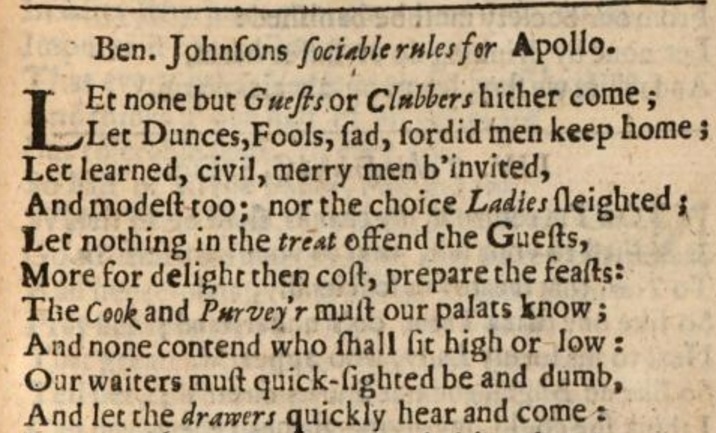
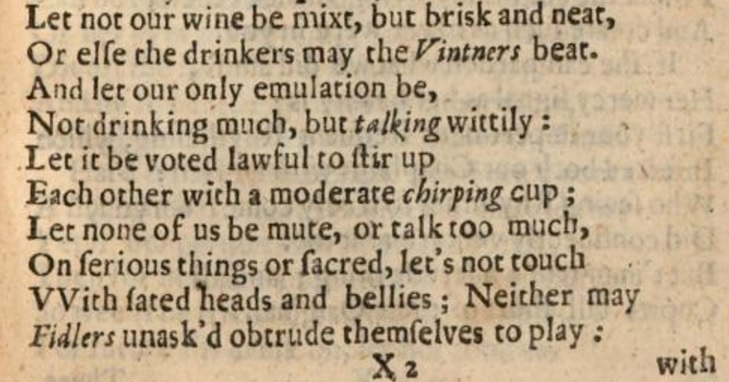
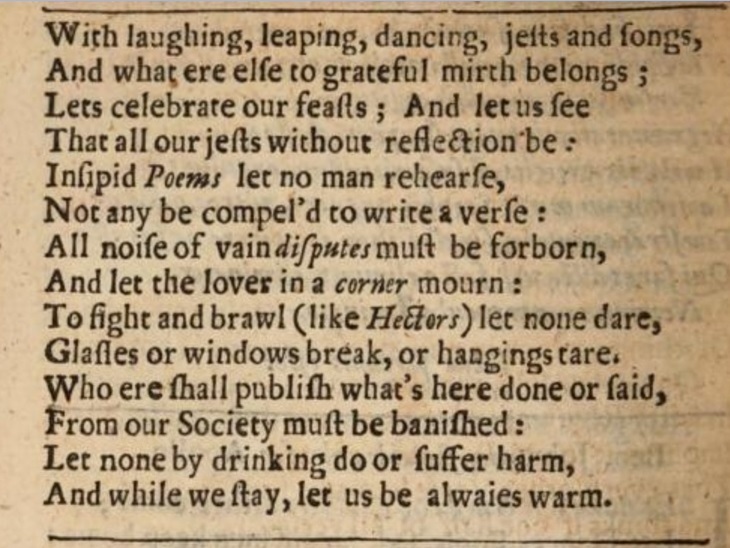
Ben Jonson And The Devil Tavern Rules, 1624

In 1939, Percy Simpson published his article “Ben Jonson and the Devil Tavern” in The Modern Language Review, Vol. 34, No. 3. Jonson lived from 1572 to 1637, a poet and playwright whose early career overlapped with Shakespeare. The Apollo was the room at the Devil and Saint Dunstan tavern near the north end of Middle Temple Lane in London, on Fleet Street near Temple Bar – the City gate of the Knights Templar. You can see the location on this map from Jonson’s time.

The Devil was where Jonson and his literary contemporaries Herrick, Carew and others met, subject to this code that Jonson wrote. They are described as Leges Convivales by Simpson – the laws of conviviality.The name of the room itself is an allusion from Plutarch, a reference to an excellent room of hospitality. Excellent. The more saintly congregation of St. Dunstans still gather, though a bit back from the road since the 1830s.

bj1bj2bj3

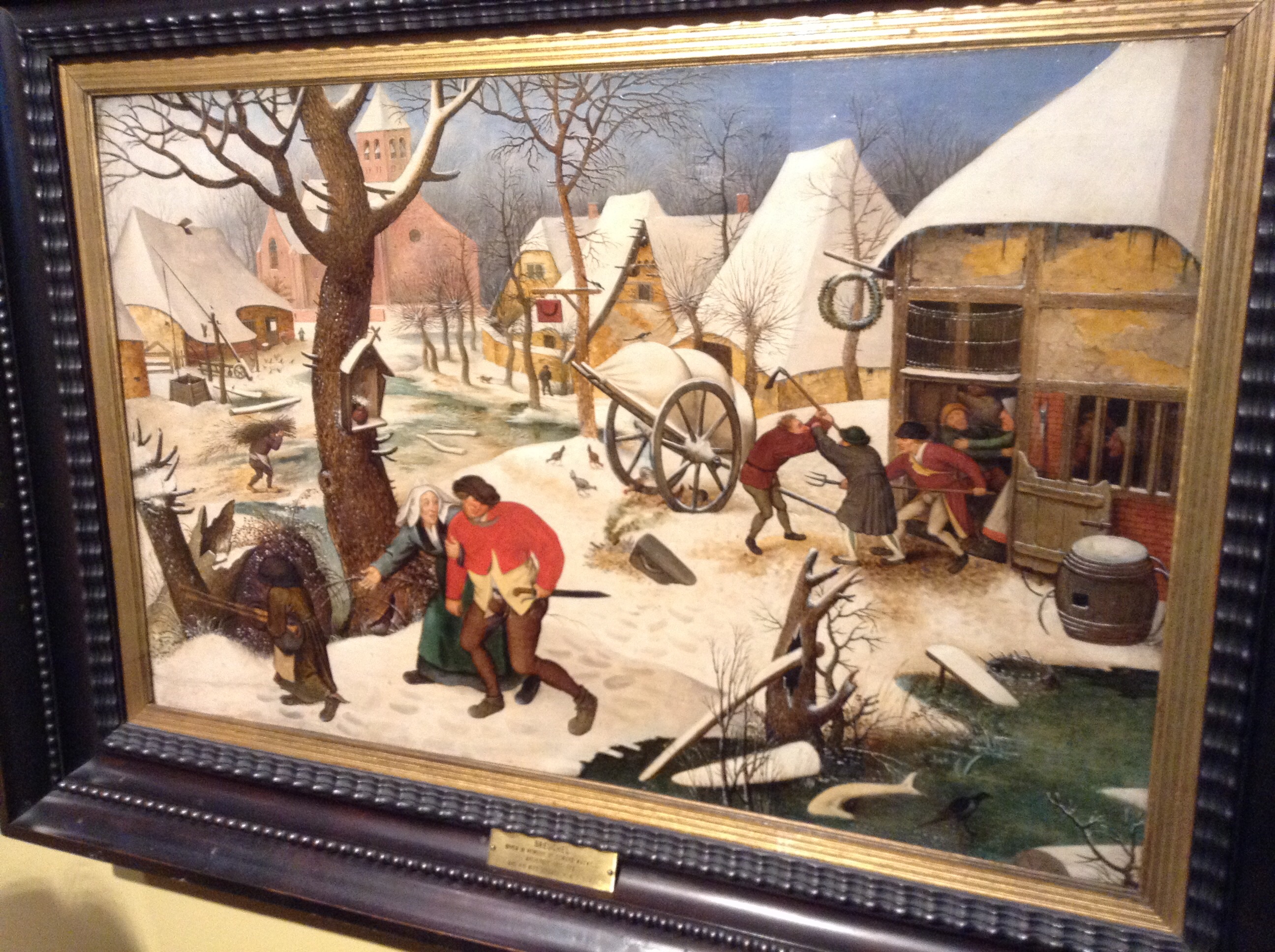
Beer And Art: Bruegel’s “Return From The Inn”

image275

A couple nights in Montreal leads to a lot of good things. A number of forced marches for the family through an alarmingly frigid city to this meal or that shop. Buying beer in a grocery store. Five new pairs of Converse sneakers for distribution across the clan. And a stop at the Montreal Museum of Fine Arts where I saw this, “Return from the Inn” by Pieter Bruegel the Younger (again with the PBtY) … or is it Return from the Inn? Such things elude me. It’s not the greatest image in terms of sharpness but a larger scale image is clickably before you if you want a closer look.

Aside from all the allegorical stuff, I noticed the two items related to brewing right away: the massive sacks of grain on the untended cart as well as the sign of the wreath indicating, I understand, that strong drink is on offer within. I would expect the birds pecking away at the spilled grain which has fallen to the ground would be a sign of decadent waste to someone 400 years ago. Not sure if the load has been left by carters now inside filling their bellies with ale or whethers it’s the inn’s own supply. Lot of snow on those wheel spokes.

I suggest you ignore all the brawling gifts swinging agricultural tools and the steamy suggestions of sexual faithless. Reminds me too much of the final half hour of a craft beer fest. A rather snazzy explanation of the whole thing can be found here. The image is from around 1620 or just when various European nations are setting up colonies in what are now Quebec, New York, Delaware and Boston. This would be what normal would look like to those earliest colonists, the way they would have approached – or avoided – this sort of inn if out looking for a beer of an afternoon.

My Place Of Work About 160 Years Ago

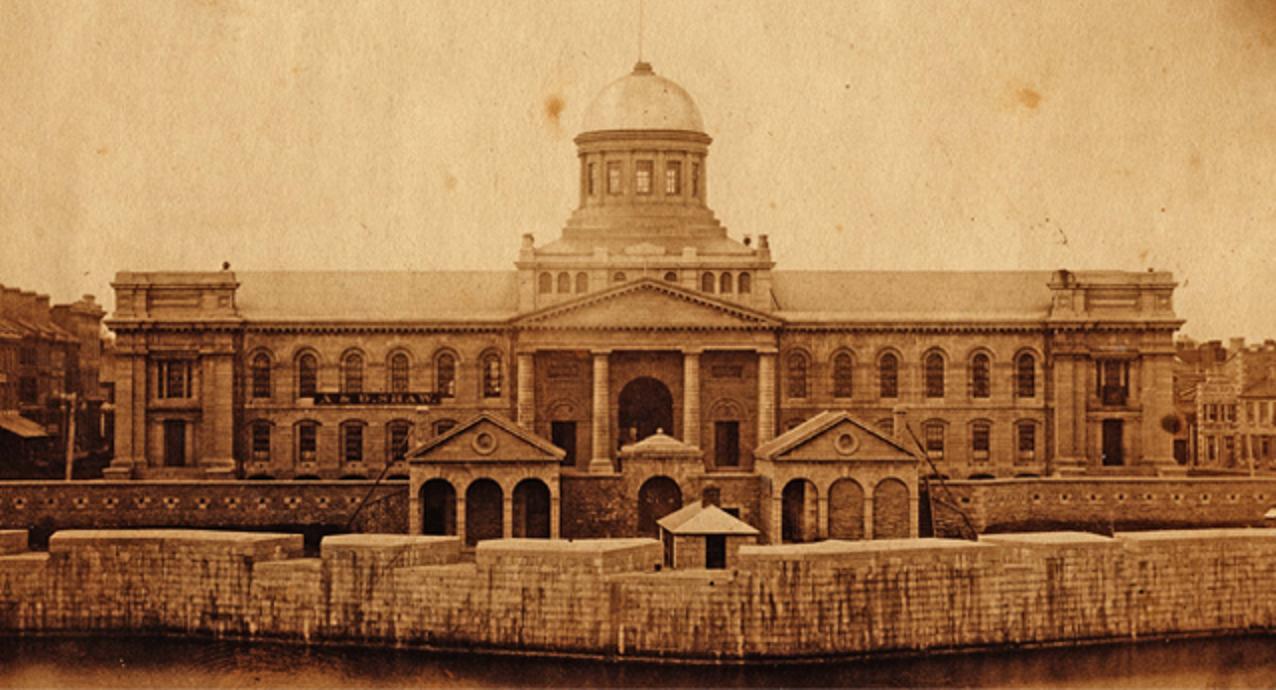
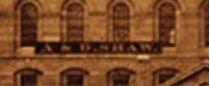
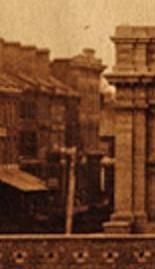
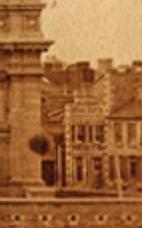
My place of work in the 1850s when the waters lapped up to the stone wall of the market battery. As in a battery of cannon that protected the market. Because City Hall was built in the 1840s on part of the market square that he been there for decades before that. If you click on the picture you will see more detail. Like these bits:


To the left, you see the sign for “A & D Shaw” but I am not sure why there was a sign like that on the front of a government building. Were there businesses in the building, too? In the middle there is the detail to the left, a week glimpse up Market Street. To the right there is the same thing up Brock. The Market Street buildings are still there but there is no awning or porch on the south side as there was back then. An one of the buildings on Brock could be Sipps or Casa Domenico.

Mmm… What I Need Is A Big Bowl Of Thick Beer!

flemish1I knew this. I think I knew this anyway:

“This process is much like how you would do in a fourth-grade germination science project, where the grains would be soaked in water for about 24 hours, drained and then laid between sheets of cloth until they sprouted,” said Amanda Mummert, an anthropology graduate student helping Armelagos with his research. After germination, the grains were dried and then milled into a flour used to make bread. Streptomyces bacteria most likely entered the beer-making process either during the storage or drying of the grain or when the bread dough was left to rise. Nubian brewers would take the dough and bake it until it developed a tough crust, but retained an almost raw center. The bread was broken into a vat containing tea made from the unmilled grains. The mixture was then fermented, turning it into beer. The final product didn’t look much like the pint of amber you sip at your local watering hole. “When we talk about this ancient Egyptian beer, we’re not talking about Pabst Blue Ribbon,” Armelagos said. “What we’re talking about is a kind of cereal gruel.”

I knew that. Not that bacteria stuff. No, not that. Forget all that medical properties stuff. Look at that word “gruel”! I think there was reference to the thickness of 1500s gruel beer back in Martyn’s Beer: The Story of The Pint which I am surprised to now read that I blogged about seven and a half years ago. There is stuff in Hornsey about beer as gruel as well. Boozy porridge. So, how is it when we are presented with these supposedly authentic ancient beers, well, they pours like water or least an IPA?

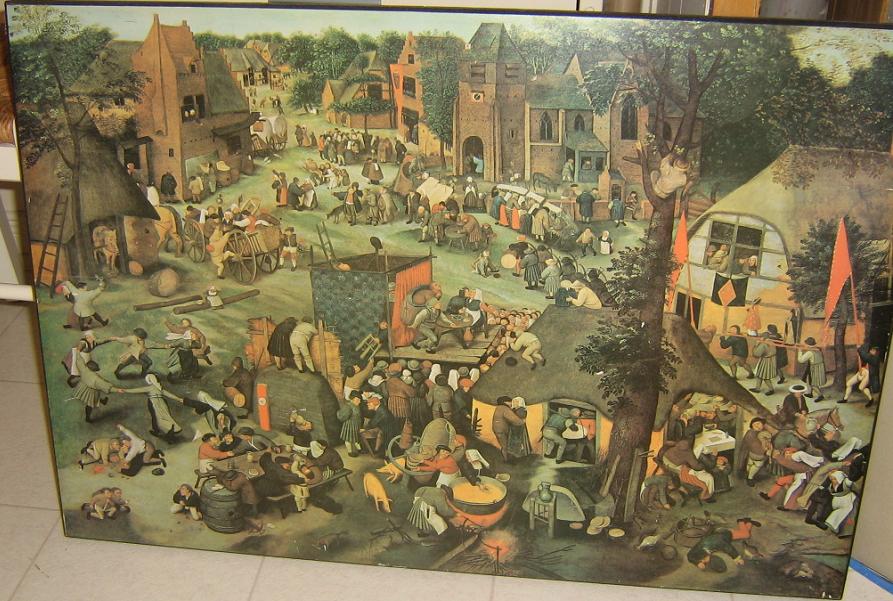
More to the point, don’t you want to try some breakfast gruel beer? Couldn’t we make it like it was enjoyed back then? Not the contemporary southern African version for 12 to 20 but the big vat whole dang community serving sized pot o’ Quaker Oats meets Budweiser. If we look again at “Village Kermis With Theater and Procession” by Pieter Bruegel the Younger (discussed in in 2007 in terms of the pub game in the lower left) we see in the lower center the making of a big mess of something being sucked back by the crowd, right across the street from the joint I’d guess was the tavern. Have a look at the painting Bruegel maybe ripped off and the detail is even better. I am not suggesting we need to get all deep about this stuff but does anyone do a village kermis with gruel booze anymore – other than, say, in rural Romanian where I am pretty sure I will never find myself? Would people folk to such a legitimate recreation as much as for another thinly veiled faux stab at brand buffing? Apparently the children’s games scholars are already at it.

Day 15: War, Xmas Photos And Roger Freaks Out!

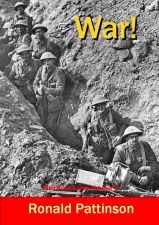
I got a great gift in the mail today. Copy 8 of 10 of Ron Pattinson’s new book, WAR! He wrote about the book’s release this very morning from his home in The Netherlands and by suppertime a copy was in my mailbox here in Canada. Compiling his studies to date on the years of World War I and World War II, it is a great example of the work he is doing to bringing actual detailed primary research to the question of the history of beer.

One wishes all beer writers were so concerned with the facts as we witnessed today from Roger Protz who went all freaky handbags over BrewDog’s new and insanely strong beer. He’s received a number of head shaking responses, deservedly so given his use of language like “over-inflated egos and naked ambition” and “the wild buckeroos” and “what were you smoking last night, chaps?” and “this bunch of ego-maniacs” and “anxious to give beer a bad name.” The oddest thing is that he goes off on his own ice flow all the while misunderstanding the technical process used for actually making the beer, baldly claiming it had wine yeast in it… not that wine yeast would get you a 32% beer. One wonders what Protz was thinking or, in fact, had been smoking himself when he wrote such a blurt. He has certainly gone a long way to discredit his own opinions on experimental beer generally. For a more measured response, you may want to read Pete Brown’s post on the new and insanely strong beer from last Thursday…you know, when it was news.

Now with the Xmas 2009 Beer Blog Yuletide Photo Contest Extravaganza. First, a couple of solo entries from Canada.

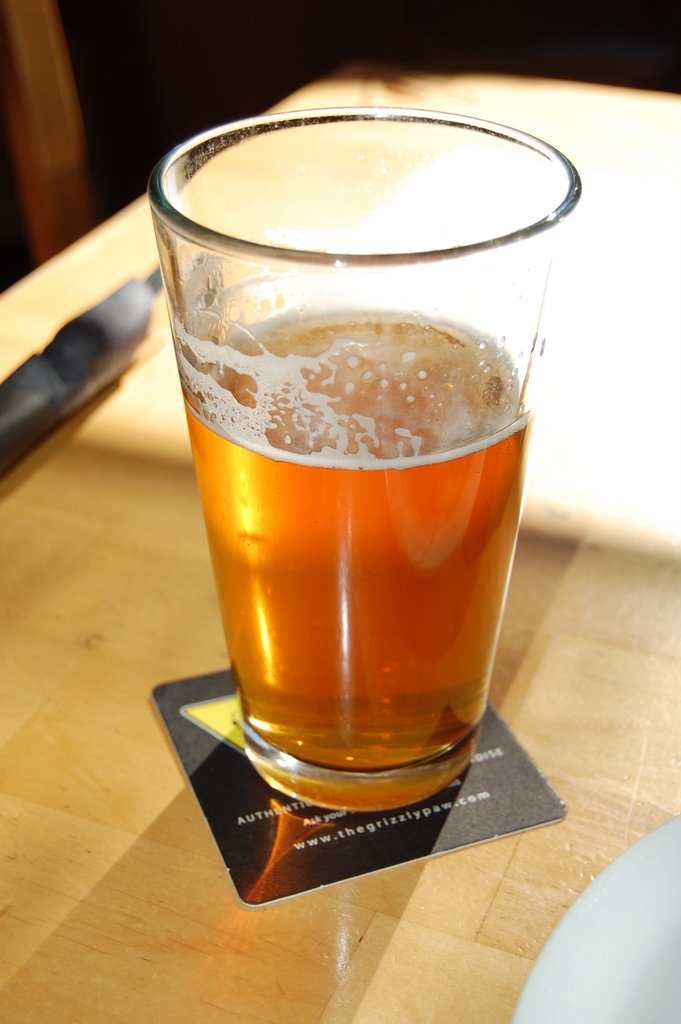
Chris Berry of Kanata, Ontario sent this one picture to the right which sorta looks normal… until you have a good look at the baby’s face. Frank MacDonald of Torbay Newfoundland kept the kids out of the photo to the left. It was taken at the Grizzly Paw Brewpub in Canmore Alberta.

Next, Jeff Alworth of Portland, Oregon has sent in some photos from the scene there. I have no idea how he got to put in 8 entries but never having been to Oregon I can’t be sure this is not some sort of cultural thing, some sort of secret message to us all. Maybe he can’t count. Better not mess with the photo set just in case:


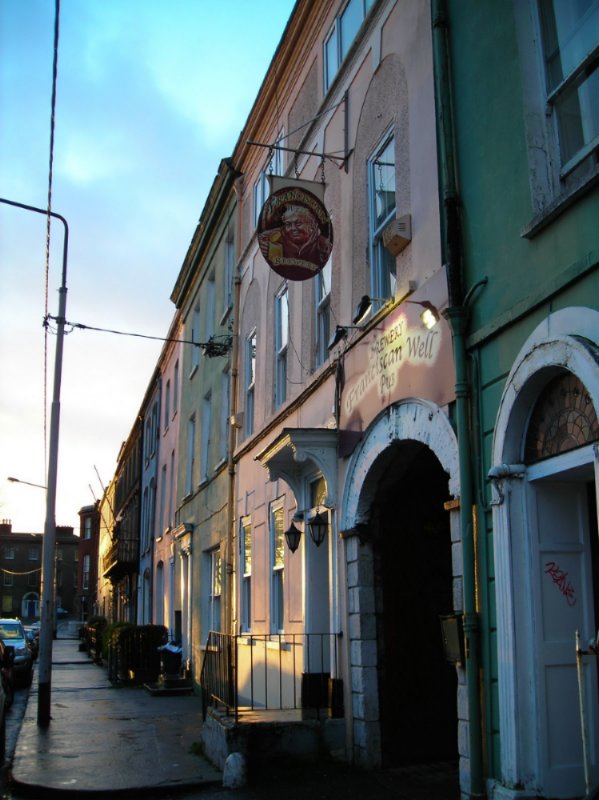
Finally Tim Connelly of Cambridge Massachusetts sent in these pictures which are entitled “Inside Cantillon,” “In a Galway pub,” “Outside of a Galway pub,” “The Franciscan Well Brewery Pub, Cork’ and “Brooklyn Brewery”:


Four more great entries. I better starting beating the bush for more prizes. Here I go. Off to email brewers until all I have are bloody stumps for hands. Why? I don’t do it for you. I do it for Santa.

Another Day, Another Opportunity To Write A Beer Poem

Yes, I do go on…poems, poems, poems. But I really need to have these tickets for free beer at TAP NY 2007 in the hands of those who will use them to drink free beer. Is that so wrong? Listen. I am the one around here who put in four good years of my life to get a BA in English Literature and I better get some action on this contest or I will think of them as lost years. Lost. Which is kind of appropriate as my quick survey of some of the better known pub and beer sorts of poems out there is kind of depressing. Let’s review them, shall we? Because that is what four years of B-grades in English Lit got me, the power to review.

The comment by Captain Hops of Beer Haiku Daily is exactly right. “At The Quinte Hotel,” posted yesterday, is a fantastic poem. Likely the best you will ever read or at least the best I have read so far.¹ Yet there is a melancholy about the respective place of beer and poetry that is at the core of the poem.

Back in the Enlightenment, things were not so cheery as that. In April 1737, Aaron Hill penned “Alone, in an Inn, at Southhampton” which is about as dreary a sentiment as any I have come across. Mind you, 1737 wasn’t any sort of non-stop party generally but really:

Scarce can a passion start, (we change so fast)
E’re new lights strike us, and the old are past.
Schemes following schemes, so long life’s taste explore,
That, e’er we learn to live, we live no more.

Perhaps one less drink for Aaron next time, bartender. A generation later, Thomas Warton wrote “Solitude at an Inn” and at least recognized the opportunity to stay away from the outside world and even the others at the inn as something of a positive:

No poetic being here
Strikes with airy sounds mine ear;
No converse here to fancy cold
With many a fleeting form I hold,
Here all inelegant and rude
Thy presence is, sweet Solitude.

Inelegant and rude! Sounds like a snob out for some slumming to me. Warton’s contemporary, William Shenstone, on the other hand gets his values right in his poem “Written At An Inn“:

Here, waiter! take my sordid ore,
Which lackeys else might hope to win;
It buys what courts have not in store,
It buys me Freedom, at an inn.

Fabulous. While Hill, Warton and Shenstone all provide that personal reflection that foreshadowed romanticism, only the latter was not a total drip and might have actually been someone you might have enjoyed meeting at the pub.

Another generation on and we have “Original Elegy on a Country Alehouse” by Thomas Dermody which loses me somewhat as to who is the subject of any given line, leading me to think I am suppose to mourn the passing of a poetic ale-swigging cat. Flash forward to the late Victorian era and consider he-of-the-ale Thomas Hardy‘s 1898 poem “At an Inn” from Wessex Poems and Other Verses. Please consider it yourself as I have really no idea what is going on except perhaps a Victorian version of “Day Time Friends, Night time Lovers” or some other 1970s new country crap.

Finally – for now – we see that contemporary tavern poetry is well exemplified by “In The Black Rock Tavern” by Judith Slater, published in 2004. Like Purdy’s work, it wells you why the comfort of the pub is important without discussing the point. No tryst gone wrong, no nose turned up at the company. Just a place and a moment where you are taken for you are.

So enter now and enter often. I set the limit at 50 words minimum or three stanzas of thematically connected haiku. More about the contest here. I had said that you should post your poem in the comments before the deadline of 4 pm EDT, Tuesday 10 April 2007 but lets extend that to the 12th. I need time to make sure the prizes are in hand but want as many entries as possible. After all – free craft beer. Not bad.

¹For someone with a B-grade in English Lit from over 20 years ago these two concepts merge.
Painted Wall


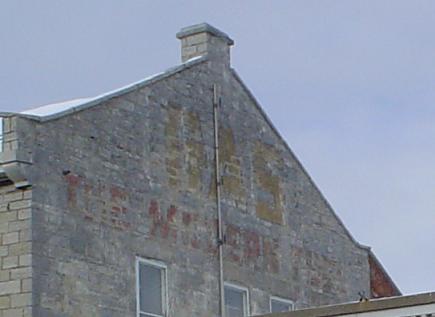
It reads “GAS THE MODERN FUEL” and I noticed this near the foot of Queen Street by Ontario, seen from behind S&R. It is pretty faded but a really nice font. The municipality has run natural gas distribution since the 1800s. This is near the old gas works site. Here is some info on city gas works in Canada. There is still one last gas street lamp lit dating from 1847 on King Street East near William.

Michael Flanagan, Esq.


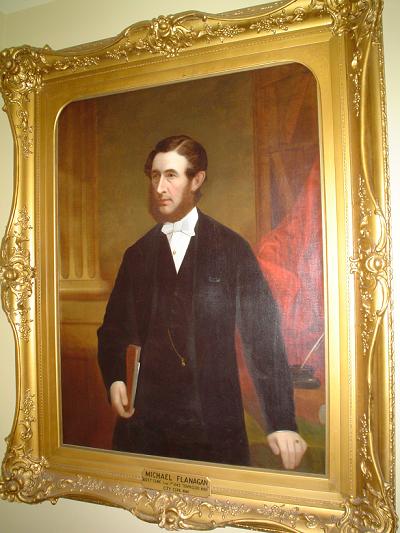
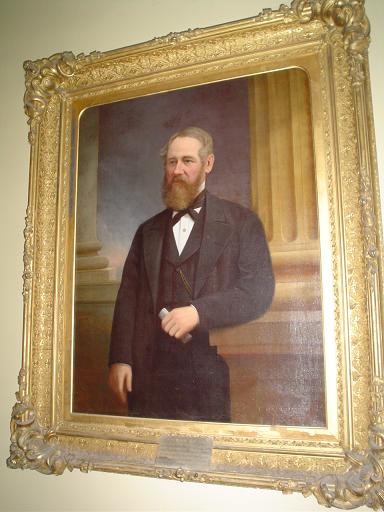
More civic art. I noticed this week these two frames on the walls of the third floor. They are not side by side but they relate to the same man, Michael Flanagan, Esq. who was City clerk from 1846 to 1893 and after – and a junior clerk before that position was his. The painting is from 1846. The certificate below is from 1893. An amazing span of time in a working life of a Canadian, he would have been a perhaps a teen when Kingston was the capital of Canada in 1841, would have watched the building of City Hall and the fortifications at the harbour mouth protecting the Rideau canal and also during his career would have seen the electronic and instant messaging era of telegraph and telephone.

If you click on the certificate you will see a large version which may be readable despite the nutty font and my browser’s automatic reduction of the scale. At about two-thirds of the way down, there is a passage which any of you can feel free to apply to me:

Those of our citizens who have had the privilege of meeting him in private life will not soon forget the attraction of his genial society and the charm of his vivacious conversation enlivened as it is by unfailing anecdote and suggestive reminiscences brought forth from the treasury of a singular retentive memory and all pervaded by a spirit of kindest sympathy for his fellowmen.

Most interesting is the fact that this is not a retirement document as he is wished many years of good health to continue serving his fellow citizens.

Civic Art


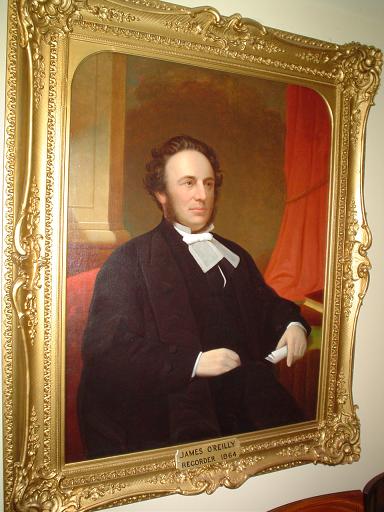
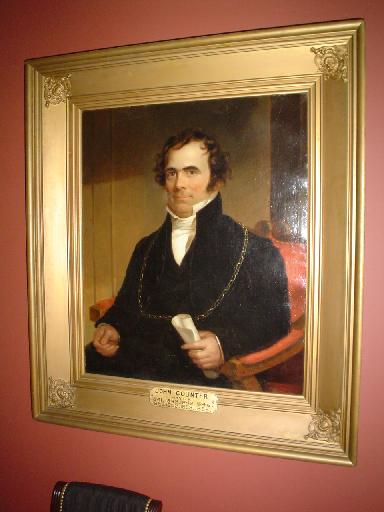
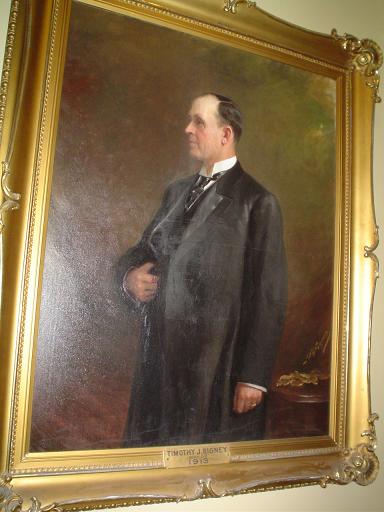
Four Portraits in Kingston City Hall.

Click on image for larger scale, details on alt tag.

Not only is the building itself a work of art, but City Hall has a collection of around thirty or so portraits of past civic leaders of the City. The upper left of John Counter is interesting for a bunch of reasons, one of which is the form of the chain of office – a simple metal chain. Over the second half of the 1800s the chain gets medals added and transforms into gold. In the earliest state, the chain is only a symbol of obligation.

My understanding of the history of Kingston is limited but it appears that the City, like Halifax, was under military government to a certain point, then civil. The City celebrated its 325 anniversary of settlement in 2003 but only about 160 years of civil goverment.