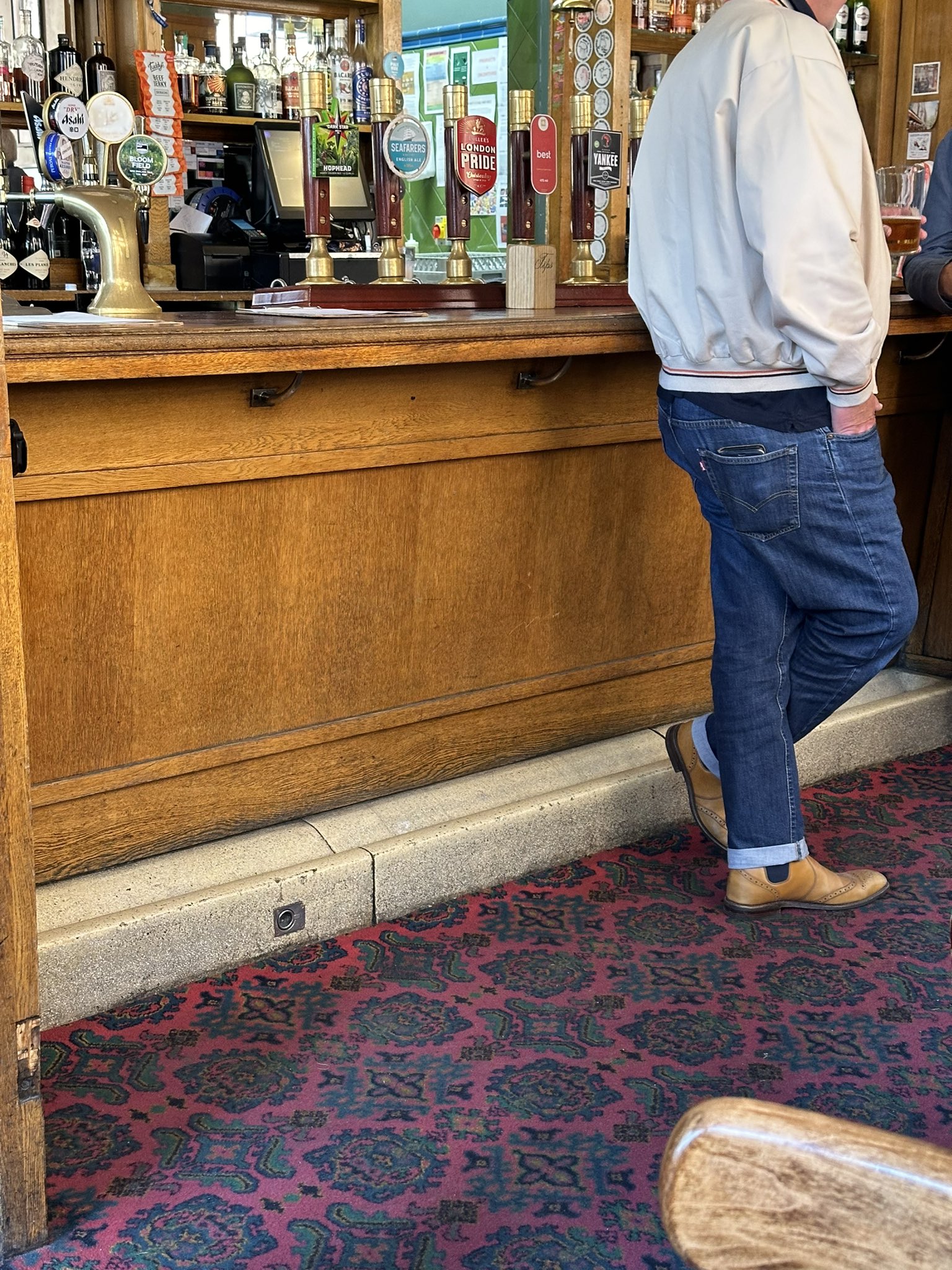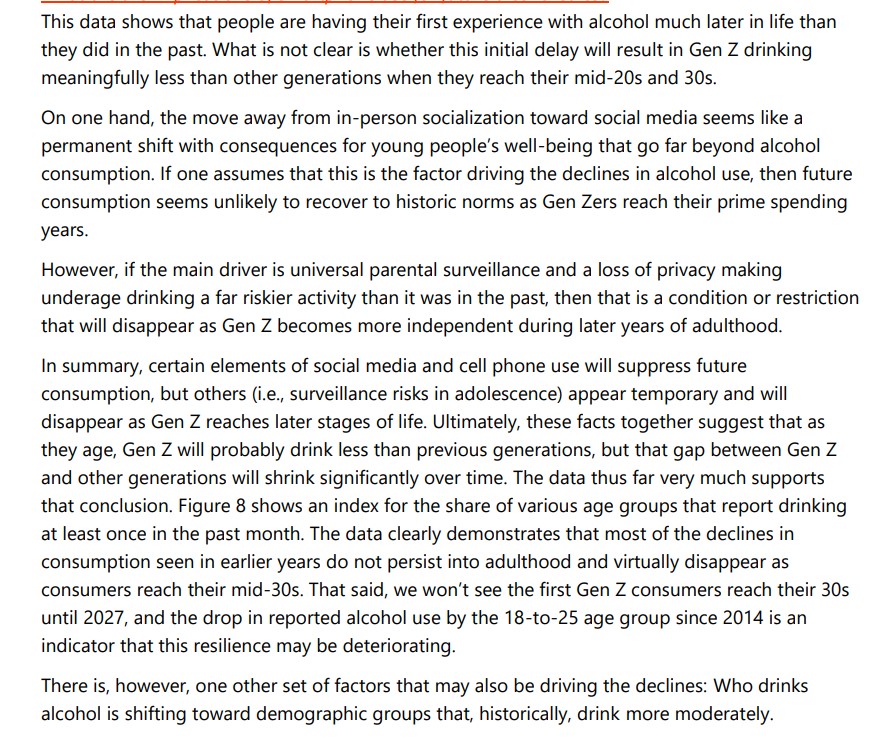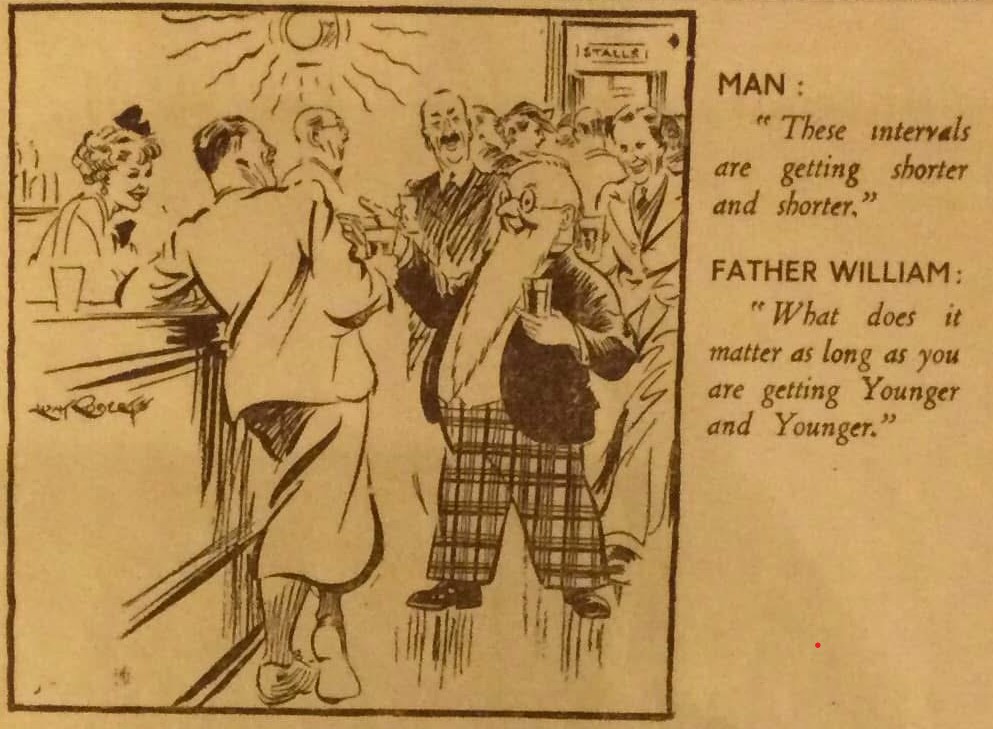
The Even More Fabulous Yet Slightly Chill Mid-January 2026 Beery News Notes

“CORK HEAD! CORK HEAD!!

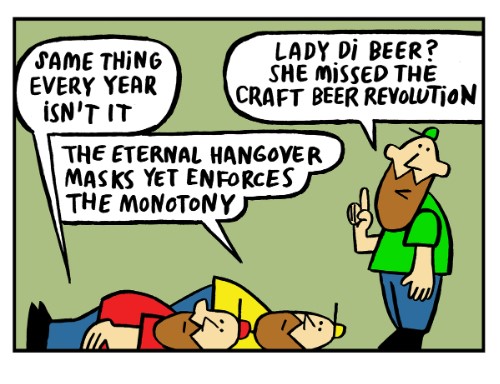
There really is no need for any further update this week is there. Andreas Krennmair posted an image of the “old interior of Schneider Weißbierbrauerei, presumably from before the rebuild 1901-1903” and this scene above was one of the tiny vignettes sitting in the back of the overall bar scene.  I can’t figure out if these gents are playing that old favourite, a game of “I’m a doggie, cork my brainpan!” or… the means by which this particular men’s club informed a candidate that they did not pass the initiation process. I find the physics involved problemative but, you know, art.

First off, some excellent reporting out of The Soo on pricing after Ontario’s expansion of beer sales to corner stores compared to grocery stores, the big brewery owned TBS as well as the government’s own booze agency the LCBO;

The editorial team bought two beers, a mass produced lager and a craft beer, as well as two bottles of wine from several locations around the city to find the best – and worst – deals in Sault Ste. Marie… A tall can of Molson Canadian will run you $3 at the LCBO, compared to progressively worse deals of $3.03 at Rome’s Independent, $3.14 at the Beer Store, and $3.81 at Circle K. For a can of Great Lakes Brewery’s Octopus Wants to Fight, the results are tighter – coming in at $3.75 at all locations but Circle K, where the surly octopus comes out to $4.04 per can. All told, a Canadian is 21.2 per cent cheaper at the LCBO than at Circle K, and Octopus Wants to Fight is 7 per cent cheaper everywhere other than Circle K.

I would point out something about that otherwise excellent research. Circle K sometimes has a nutty nutty sale price for a few pretty decent Ontario craft brews. I pop in once in a while when I am picking up a tank of gas just to check in.

And while I have been known to hover in and about the snack aisle of corner stores, I am not a taproom devotee. Too often they strike me as car dealership showrooms – “would you like to see the latest model except (in a fourdoor / with even more Citra)?” – but it was interesting to see Stan consider B+B’s thoughts on the key underlying principle involved;

It appears I may regularly come across taprooms with personalities than Boak & Bailey, but I wouldn’t argue cookie cutter establishments aren’t abundant in the US. Also, B&B tend to write short paragaphs and I try to stick to one. Their following words zero in on what I value in drinking establishments, that they are “run by human beings.” The others, without personality, I tend to forget. I acknowledge they exist, but I don’t have to think about them.

Speaking of places run by human beings, we have a new beer blogger alert. Colston Crawford, the recently retired pub and beer columnist with the Derby Telegraph has decided to continue sharing his thoughts on the topic including how the notion came to him:

It was a lunch at The Crispin in Great Longstone, in the Peak District, a week after I finished which firmed up the idea in my head. The food, the drink, the service, the ambience, was so good. I sat there thinking, if I still wrote a beer column, this one would be easy. I could dash it off right now. I’ve made two more visits to The Crispin since, the first to confirm that the previous one wasn’t a fluke, then the second was unplanned. I was with friends in a party of five, walking on New Year’s Eve morning, but the venue they’d fancied for lunch wasn’t open. The Crispin was five minutes away and a superb lunch followed.

There’s a lot of good advice in there. It is easy to keep a low pressure blog about something you have a general interest in. A striking experience will make for a good story. And it’s good to review the experience a couple of times to get the facts straight, too.

And Boak and Bailey shared an extended thread of thoughts on why people in the UK have cut back their visits to the pub with plenty their own interesting thoughts and those of others who joined in. I agree with their thought #7:

7. Basically, we’re not convinced the pub crisis is especially acute *right now*. In 20 years of blogging, and nearly half a century of being alive, we’ve never really known a time when pubs weren’t doomed and in decline. 

One of the things that concerns me about that form of doomsaying is that it always seems to be decontextualized as if pubs closing is the only difference since 1976.  Fewer are also going to church, too, over that same 50 years of existence. Many more play video games than before that point and I would expect more tofu is sold in the NATO countries. Preserving past practices as opposed to preparing to guide them through change is a bit of a fool’s errand.

Note #1: only available in Alberta, Saskatchewan, and Manitoba.
Note #2: Beer’s “Santa Claus Rally”.

Me, I’ve never developed a taste for collaboration beers but apparently the revenue authorities in Finland have, as The Beer Nut noted.  The EBCU has taken a position on the matter:

Finland is currently considering new excise-tax guidance that would effectively make many collaboration beers impossible for small breweries. Under the draft interpretation, if a beer shows more than one brewery’s name or logo (as collaborations typically do), it could be treated as “licensed production” and the breweries could lose their small-brewery tax relief for the entire year. This would impact not only Finnish breweries, but also imports and international collaborations—ultimately reducing choice for beer consumers.

This is an excellent example of the sorts of issues related to identity that can pop up in law. Obviously, if the non-brewing collaborator (let’s call them “the collaborator”) insists on putting their intellectual property in the form of a logo on a product, they are saying to some degree that the product is their work. Yet, for taxation categorization, that logo placement is argued to not indicate that the work is theirs but, instead, only the work of the brewer (let’s call them the collaboratee”.) I have no stake in the matter and have no idea how Finnish taxation policy plays out in term of brewers compared to cheesemakers or lumber yards – but I do have one raised eyebrow when I see these sorts of statements as part of the EBCU’s argument:

Collaboration beers are one of the joys of modern beer culture…  we believe consumers deserve choice, diversity and fairness. Collaboration beers enrich the beer landscape, strengthen friendships across borders and introduce consumers to new styles and tastes…

Wouldn’t the better argument be that collaboration beers are just a fun reciprocal staff training exercises for brewers that is only, for tax purposes, a businees expense and a burden upon revenue that is of little interest to consumers? After all, if one cannot detect the taste of collaboration beer… does it really actually exist?

Jeff had some interesting thoughts this week on hopeful hints he might be seeing in the US hop market and what it may mean about how breweries are reacting to the retraction, concluding:

…a last comment from me. As we exit the period of craft beer’s novelty era, when breweries made dozens of IPAs every year, it looks like it’s impacting not just the amount of hops brewers are buying, but the diversity. When I talk to brewers about new hop varieties, they are often hazy about them and most are not sampling every new one that comes out. Brewers seem to be more interested in hop products as a way of enhancing their beer. These products focus on the most popular hop varieties, which increases the “stickiness” of the major varieties.
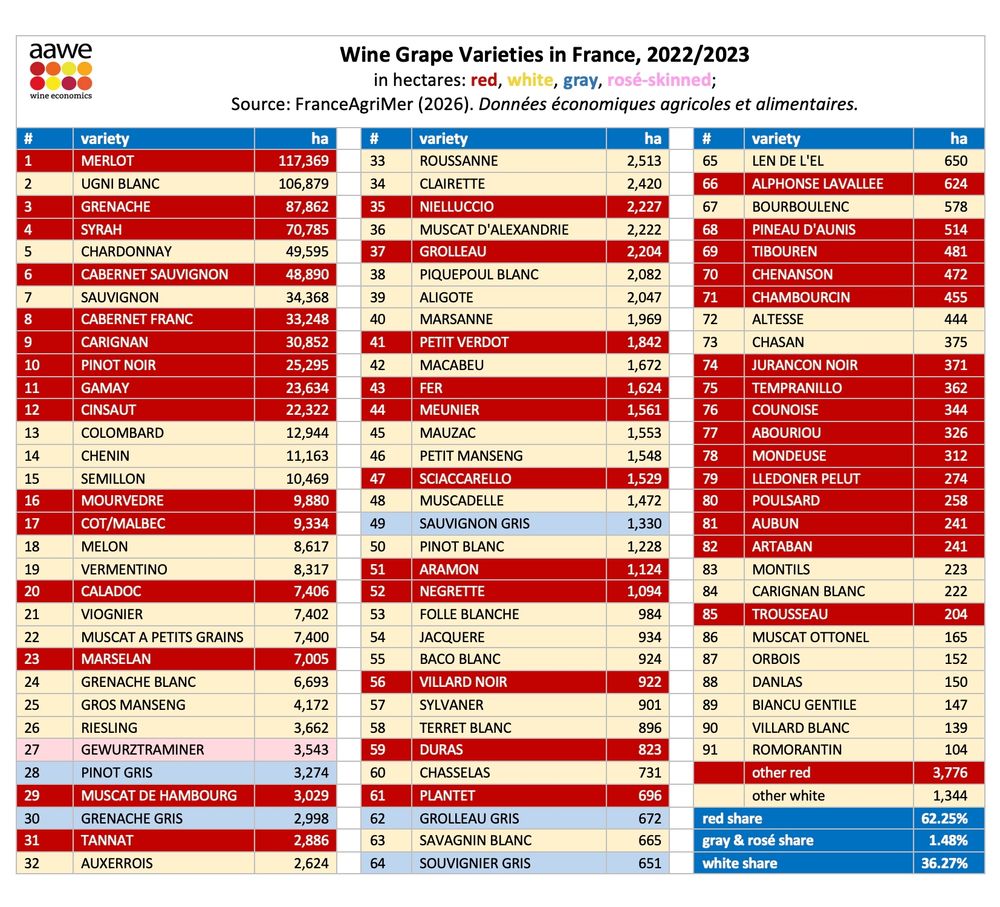
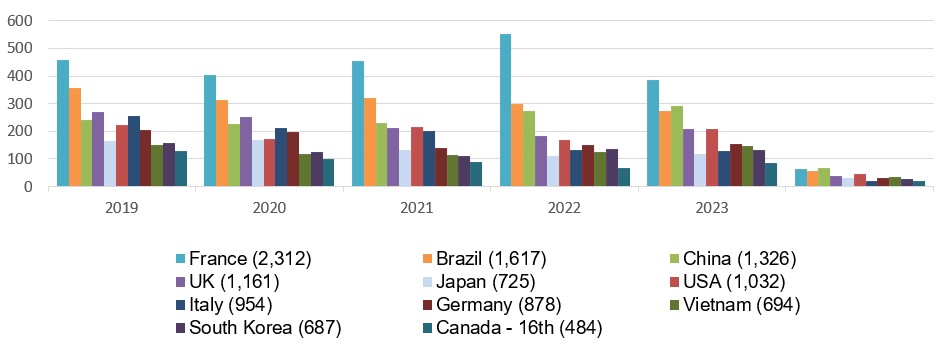
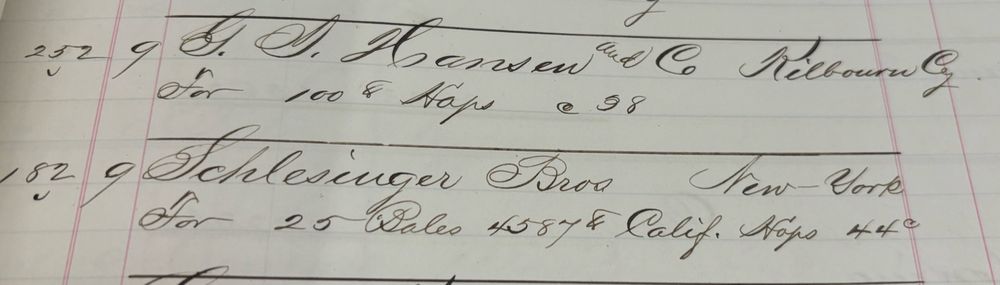
Speaking of varieties, have a click on that image to the right. It’s a list of the top 100 plantings of France grapes posted by the American Association of Wine Economists the other day drawn from an agency of France’s agriculture ministry. I don’t have much comment about it other than to note, despite the pop culture slur, how much good old merlot* is still grown as mentioned by E. Asimov the other day in his discussion of wines you may want to explore.

Good news for cideries and brewers of New York. In this week’s “State of the State” speech, Governor Hochul announced support for local producers, as noted by KK in related to cider makers:

New York is the country’s leading hard cider producer, boasting more active cideries than any other state. Our cider industry has grown substantially over the last ten years, generating over a billion dollars in total economic impact for New York, yet there still remains untapped agri-tourism potential to explore. To support the industry and tap into the robust agri-tourism opportunity that cider presents, Governor Hochul will work with the New York Cider Association to establish New York as the State of Cider, marketing the orchards, tasting rooms, and food experiences that could become anchor destinations for visitors across the country. These actions will strengthen rural economies, uplift the exceptional work of local businesses, and establish New York as the foremost destination for American hard cider.

The Governor also indicated the “need for modernizing licensing across the board, from sports bars and cafes to airport lounges, hotels, and movie theaters.

Conversely perhaps, Pellicle‘s feature this week is a post mortem by William Georgi of the Dutch brewery Nevel Wild Ales which had lofty and noble goals linked with but quite experimental standards:

“We were doing two expensive and time-consuming things at the same time,” he says. “Making a complex product that only a small selection of people actually like, while trying to set up a network of local farmers. A food forest like this is wonderful, but you can’t use it to make beer, as it doesn’t host perennial one-year crops”… Social sustainability was equally important for Nevel. The network of local producers Mattias established for sourcing ingredients—from hops and barley to chestnuts and kiwi fruit—showed him the challenges of farming at a small scale. “It isn’t economically viable at all,” he says. “Even if there’s a living wage being paid, the price doesn’t take into account the fact that most people harvesting the crop are volunteers. 

It’s pretty clear that the plan was not designed to pay its own way. Volunteer labour and crowdfunding plus unbudgeted expenses like organic certification were certainly signed that the business as a business was build on a weak foundation but I like one conclusion that was drawn from the experience: “…I don’t think Nevel failed. I hope I planted a lot of seeds in people’s minds about how things can be made differently.

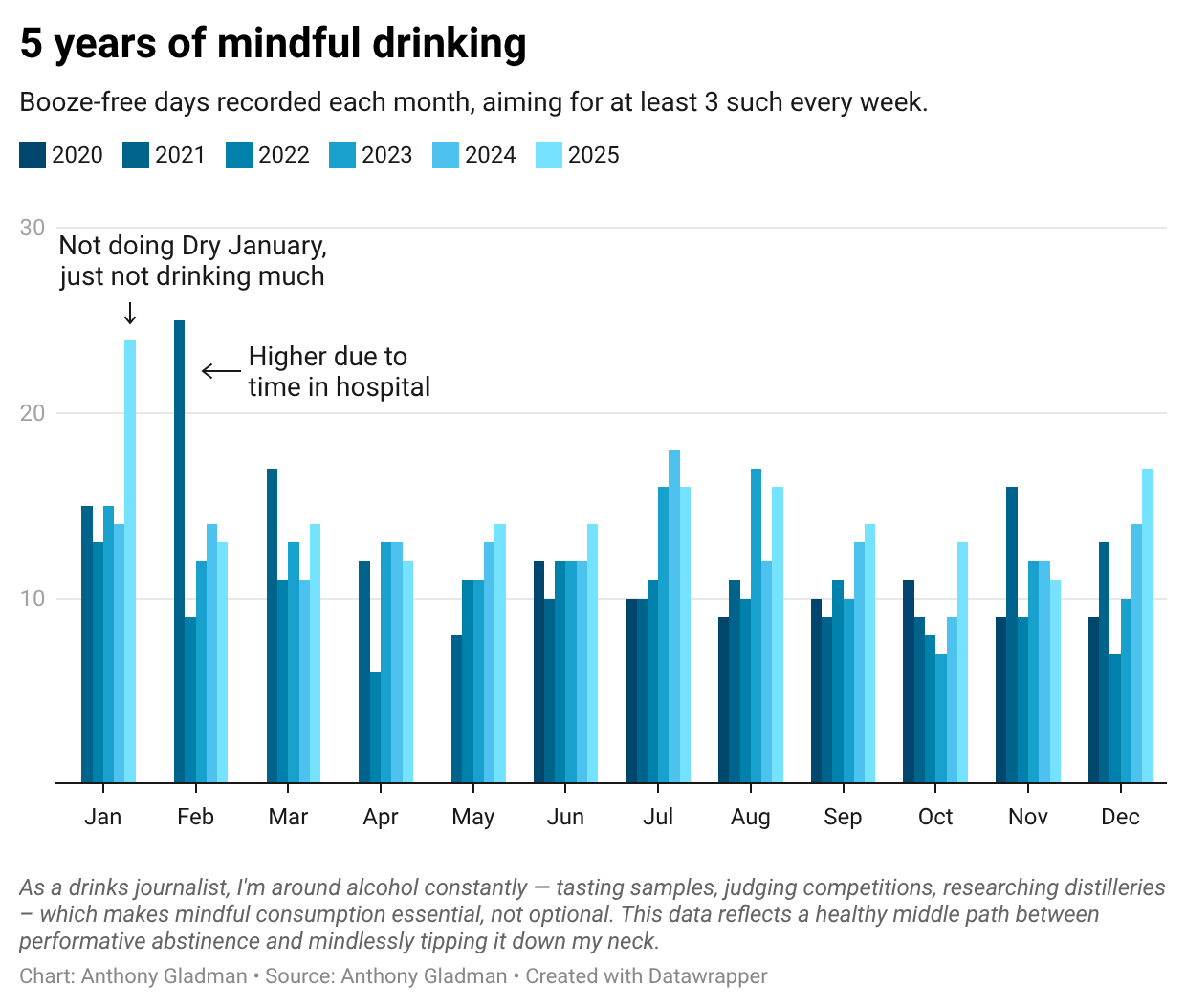
There was an excellent example of the old visual display of quantitative information** in A.G.’s post this week on Dry January. He shares my interest in maintaining data:

I find it helpful to keep a tally of days I drink alcohol and days I don’t. Nothing complicated, just a binary yes or no, and an aim to have at least three days off the booze each week. That’s all it takes for me to stay within healthy limits, despite working in an industry that can normalise and encourage dangerous levels of consumption. (If you recognise yourself here, check out The Drinks Trust.) Anyway… it’s Friday evening. The first one of the year. I’ve not had any booze since New Year’s Eve. Soon I will go downstairs, crack open a bottle of something nice, and have one or two drinks with some pizza while I stream a crappy-but-entertaining film – January be damned.

However sweet that bar graph, I am more a percentages guy, currently at a total of 52% dry days and 63% one or nones over the years since early November 2021 when I started keeping track. My booze budget this year is also set at around 1.33 a day, an average I beat by a few last year. Checking on that number from time to time – as well as your AST blood test numbers – are great ways to manage the hobby.

While we think on that, think on this. In the northern hemisphere, the darkest ten weeks of the year are already behind us. Soon be planting those tomato seeds. While we wait for that, Boak and Bailey are posting every Saturday and adding to their fabulously entertaining footnotes week after week at Patreon. And look out for more of Stan’s new “One Link, One Paragraph” format. Then hunt out something in someone’s archives! Leave oblique comments on someone’s post from 2009!! Listen to a few of Lew’s podcasts and get your emailed issue of Episodes of my Pub Life by David Jesudason on certain Fridays. And Phil Mellows is at the BritishBeerBreaks. Once a month, as noted, Will Hawkes issues his London Beer City newsletter and do sign up for Katie’s wonderful self-governing totes autonomous website featuring The Gulp, too.  Ben’s Beer and Badword seems to be on pause since November but there is reading at The Glass which is going back to being a blog. Any more? We have Ontario’s own A Quick Beer and All About Beer is still offering a range of podcasts – and there’s also Mike Seay’s The Perfect Pour. Plus follow the venerable Full Pint podcast! And there’s the Craft Beer Channel on Youtube. Check out the archives of the Beer Ladies Podcast.

*Once upon a time, the LCBO here in Ontario stocked Millbrook Merlot from a Hudson Valley, NY winery. Then Rufus Wainwright sang about the area. Went to the winery once around a decade ago. This is been this week’s edition of “wandering thoughts with Al”.
**I couldn’t live with anyone missing the reference.

Your Beery News Notes That Entirely Capitivate… Yet Offer No Real Clues To Get Outta Here… Not Even A Key Or Nuttin’

August planting is underway. With any luck there will be peas in late September and October. And maybe baby carrots. You always think that the plantin’ is done once you are in full pickin’ mode… but no. No way. Still ten weeks to a frost that kills. Or more. Plenty of time for peas. By the way, I learned something through the month and a half of drought, humidity and heat that now seem to have finally broken. Tomatoes do not turn colour until it cools a bit. So while the peas are doing there bit it’s now also time to hit the sauce… no, not that sort of sauce. Sauce sauce!

OK – fine. What else is going on around here. Oh, yes – one of the main differentiations between beer drinking cultures found in nation to nation is the local tipping habit. Here in Canada we tip but we are left to our own decision as to how much. But, more generally, it’s not just the tip but the markups added on. I could be a tax or two, a mandatory service tip but… an administrative fee? That’s what seems to have started in the UK where, as reported in The Times, one pub is adding 4% to the price of a beer for the premium service of giving the beer to you:

The Well & Boot is banking on customers not noticing the difference between £7.65 for a pint of beer and £7.96 for a pint of beer, and it’s a safe bet. Once you’ve paid £7.65 for a pint your subconscious is already doing everything it can to suppress the pain, just to allow you to enjoy it…  Is it a rip-off? I don’t know. Pint number two — all in the name of research, obviously, was a Guinness — and that one was brought to the table, at which point a 4 per cent charge for table service is quite good value. All the other customers were having a lunchtime meal, ordered and brought to the table, so 4 per cent for that sort of service is extremely cheap.

The pub is in London as I understand in a transit hub Waterloo Station. So you are already dealing with captive audience pricing of a sort. But that base price is nuts.* You know, if I were you… I would walk a few steps to Mamuska! which, yes I disclose, is run by a college pal but also the beer is a little cheaper – but you can order a Placki Ziemniaczane to go with it!  Ask for Ian, say you know Big Al and you may get a slap on the back, too. There. You’re set.

What else… well, some bad news for those of you rootin’ for booze. The NYT reports that US drinking has hit an all time low – and its not just the kiddies this time:

The Gallup poll found an especially pronounced drop in drinking among middle-aged respondents: Just 56 percent of respondents 35 to 54 said they drank alcohol, falling from 70 percent in 2024. That “suggests the message is sinking in across the board, not just with young people,” said Johannes Thrul, an associate professor at the Johns Hopkins Bloomberg School of Public Health. The share of adults 55 and older who said they consumed alcohol increased slightly from 2024 to 2025, but is still lower than in 2023. Only 50 percent of those aged 18 to 34 said they drank alcohol, the same as in 2024 and down from 59 percent in 2023.

Jeff has his own thoughts but clearly people are not doing their part. Perhaps relatedly, Mr. Mudge wrote about the planned drop in acceptable blood alcohol limit from .08 to .05 in England and he argues against it:

Whatever the safety implications, such a policy would inevitably have a significant effect on the pub trade. While those who inhabit an urban bubble may be reluctant to acknowledge it, nationwide there are a very large number of pubs to which a majority of customers travel by car. There will be several thousand where that accounts for over 90% of their trade. Every week, hundreds of thousands of people drive to pubs and consume alcohol within the legal limit. Yes. a few customers do break the law, as people still will with a lower limit. But, given the severe potential consequences, the vast majority of drivers abide by it, and indeed generally leave a wide margin below it. 

Sadly, having practiced criminal law including as duty counsel, I can report that deaths from drunk drivers aren’t statistical matters. Neither is crime. We can as easily say “every week, hundreds of thousands of people go about and and all aspects of their lives within legal limits.” In all cases, crime is perpetrated by the few and upon the not quite so few but in each case the act and loss is a singular event. As a result, deterrence is one of the greatest benefits of criminal law. So making driving under the influence itself a crime deters many – indeed by a wide margin – from taking the step that, yes, only sometimes leads to tragedy just because some asshole decided to take the chance.

And, as reported in the Morning Advertiser, BrewDog has pushed back on the story that is has lost access to customers at about 2,000 pubs with industry voices speaking out from both sides of the fence:

“Wetherspoon trades with Brewdog on the basis of a long-term contract, which is the normal case for our regular suppliers. “BrewDog has always been a reliable trading partner and draught Punk IPA, available in almost all of our pubs, continues to be a popular craft beer, as do their bottled products; Hazy Jane, Elvis Juice and Punk AF.” All pubs within the Tim Martin-chaired business serve one BrewDog product on draught and a number of BrewDog bottled drinks too. Meanwhile, a spokesperson for Star Pubs said: “We have not supplied BrewDog products to our pubs since the end of 2023.”

PR v PR. On this side of the Atlantic but not dissimilarly, there were two interesting stories last week from Beer Marketers’ Insights, the first one being about an outreach from a group of AM distributors saying without at all be coaxed that AB is great. Then, in summary from the weekly newsletters, the response from other AB distributors:

None echoed the endorsements so pervasive on the call. Most saw this as an AB-directed initiative. “This has AB written all over it,” said one AB distrib. Another remarked: “This reminds me of the current state of politics. Everyone is scared to say something negative, knowing they will be attacked by a party at some point. If you praise your allegiance to the party, then you will be rewarded.” Some responses were angry and disbelieving that so many distribs espoused a party line. “I can’t believe what’s occurring,” said one long-term observer. “I was just appalled.”  

A free press is a wonderful thing. Speaking of appalled, have you seen the prices of things?  Sam Tierney wrote this very week thusly:

Mexican 2-row seemed mildly interesting until I saw that it was 30% more expensive than domestic or Canadian. In this economy!?! I can get German pils for that price.

And aluminum is, again, a topic at the check out this week. The Brewers Association issued a notice on the addition of beer can tops to the list of things subject to US tariffs this week noting “The Brewers Association continues to monitor developments around aluminum trade policy…” Hurrah! My two cents were these:

Consider us. Canada exports 88% of bulk aluminum the US uses. It’s sent south, gets hit with a 50% US tariff, turned into packaging, cans come back north and get another 25% tariff from Canada. So the 75% tariff will see us redevelop our can factories. Not sure the US can replace our bulk aluminum.

So, US consumers should not expect any relief soon unless someone gets into the bauxite smelting game and can replicate Quebec’s cheap hydro power to fuel the industrial process at scale. Up here, we just need to retool the manufacturing line.**

Speaking about shopping, Lew Bryson has announced that this week’s offering at Seen Through a Glass is going to be about…

Next episode will be about the great local grocery stores in central PA, everything from four aisle markets to ten-store chains with full-service butcher shops and fresh seafood. They aren’t Whole Foods or Wegmans, but they’re not 7-11s either, and they’re out here where central PA actually lives. Let’s go shopping!

Excitement reigns! Back when people published (and bought) books about beer, Lew’s guides were great support of family trips when the kids were little. Not because I would drink my face off but he included shopping and side trip hints that kept everyone happy. How else would I have learned about the garbage plate?

Note: traditional German naked ass wine. Not sure I want naked ass wine but now I know I could if I would even if I won’t.

Luxembourg! How many of you have clamoured in the comments and emails for more Luxembourgian news. Well, Jessica M found a way this week to fill that need:

Brasserie Nationale de Luxembourg, the country’s largest brewing company, has told bar operators that they will soon be able to stock beers from craft brewers without violating their contracts. While leading breweries Brasserie Nationale de Luxembourg and the AB InBev-owned Diekirch currently own many of the venues and the attached alcohol licences, it gives them exclusivity rights for stock, but things may change in the coming months. According to Finance Ministry, the country’s two largest breweries hold about a third of the nearly 3,300 bar licences and 40% of the alcohol licenses in use.

Freedom!!! Sorta. For the double, Jeff raised an eyebrow to the first list of entrants into the Craft Beer Hall of Fame:

I dunno. A “landmark” anything is always going to be a semantic/definitional category. If I were to consider American brewing in the past half century, I’d be looking at where we are and how we got here. Only one of the beers on this list played a role in that. Steam beer is a basically defunct 19th century style. Witbier is a commercial success, no thanks to Celis (Blue Moon and Allagash get the credit there.) Boston Lager was another commercial success, but the beer was also just an all-malt European-style lager (as the brewery has always proudly proclaimed).

I would add backdating to any lucid notion of “craft”, a term only widely adopted a bit over 20 years ago. If it is anything, Boston Lager is a micro… even if it’s now a macro micro.  It reflects the 1980s intention to mimic imports, not to take on big beer. But, also, where is Pete’s Wicked Ale, a top seller until it wasn’t? Does “fame” in this case really speak more to the identifiability of the brewery owners who survived?  If so, that’s craft for you.

Finally, in the weekly feature, Rachel Hendry brings it all back to where it matters, the individual experience. And she frames it with one of the most humble aspects of the beer fan’s joys – the beer mat:

A small pile sits on my desk whilst I write: vintage Double Diamond and Babycham given to me as gifts by friends—‘I saw these and thought of you’—a Beamish emblem from a trip to see family in Ireland; another of a brewery I associate with a recent romantic encounter. When I am nervous I trace their cardboard circumferences with my finger. They punctuate the bar I work in, propping up tables, ripped into shreds by skittish or destructive hands, knocked to the floor, stolen as mementos. They see so much, these beer mats. They suffer for it. It wasn’t always like this.

What a lovely bit of writing. For more of that, please also check out Boak and Bailey every Saturday and sign up for their entertaining footnotes, too. Look out for Stan when he feels the urge now that he’s retired from Monday slot… maybe … maybe not. Then listen to a few of that now newly refreshed Lew’s podcasts and get your emailed issue of Episodes of my Pub Life by David Jesudason on certain Fridays. And Phil Mellows is at the BritishBeerBreaks. Once a month, Will Hawkes issues his London Beer City newsletter and do sign up for Katie’s wonderful self-governing totes autonomous website featuring The Gulp, too.  Ben’s Beer and Badword is out there with the all the sweary Mary! And check out the Atlantic Canada Beer Blog‘s weekly roundup. There is new reading at The Glass which is going back to being a blog. Any more? We have Ontario’s own A Quick Beer featuring visits to places like… MichiganAll About Beer offers a range of podcasts and there’s also The Perfect Pour. Plus follow the venerable Full Pint podcast! And there’s the Craft Beer Channel on Youtube. Check out the archives of the Beer Ladies Podcast. That’s quite good and after a break they may well be are back every month! Such is life. Such is beer podcasting and newslettering… which, as Ray says, are blogs! And he’s right.

*Yet, I wouldn’t notice at all if the pint was served at this gem Martin visited in Edinburgh.
**Did you know that 25% of the world’s bauxite comes from Guinea? Me neither. Trump has, it is worth noting, not tariffed Guinea. 15% for New Guinea. 15% for Equitorial Guinea. None for Guinea. Perhaps he thinks he did.

The Beery News Notes You Need To Get You Through Victoria Day Weekend

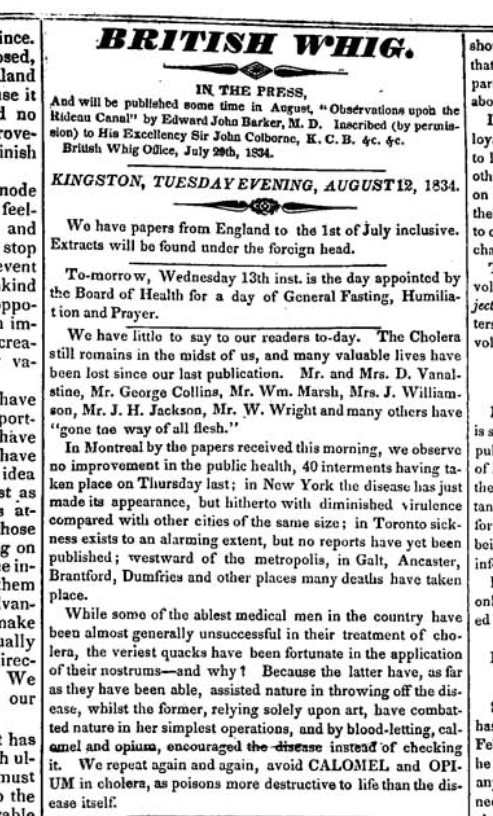
If we are honest, we should celebrate the Georges as much as Queen Victoria.* Sure she invented the fifth version of Canada but it was the Georgians who made us, they being the people (and, yes, their red clad dutiful doers) who kept us from being just another slice of Americana. Timely thoughts, you will agree. Some call this coming long weekend not Victoria Day but May Two Four – my greatest gift to Linguista Canadiana being the alt, May Too Far. When the Georgians were running the place, the birthday of the monarch was one of the greatest spectacles in the year as the account of 12 and, I suppose, 13 August 1827 at Guelph, Ontario on the celebration of the King’s birthday bears witness:

…all sat down and enjoyed a hearty meal. “After the cloth was removed,” toasts were drunk to everybody and every conceivable thing, the liquors, of all imaginable descriptions, being passed round in buckets, from which each man helped himself by means of tin cups, about two hundred of which had been supplied for the occasion… those who remained continued to celebrate the day in an exceedingly hilarious manner, most of them, who had not succumbed to an overpowering somnolency, celebrating the night too, many of them being found next morning reposing on the ground in the market place, in loving proximity to the liquor pails, in which conveniently floated the tin cups…

Always solid advice. By the way, the 200th anniversary of that event on the Guelph frontier is just two years and three months away. We need to recognize that boozy bicentennial! Time to apply for those government grant to celebreate our great heritage for celebration. I just hope the application form has a space for indicating the number of tiny tin cups required for the event. By the way, just seven years later, as explained up there in the Kingston Whig newpaper of 12 August 1834, not so much fun. None at all. But the advice still stands today: lay off the opium, buster.

Enough of then! What of the now? First up, Rebecca Crowe shared some of her love for her local, the The Little Taproom on Aigburth Road in Liverpool in Pellicle this week, a place of cheery activity and welcoming hosts, Si and Aggie:

If you’re in the Tap on a Wednesday night, you’ll be greeted by groups of people staring at their phones. However, this isn’t an unsociable act—it’s the Big Quiz in the Little Taproom. When you look around the regular teams, you see couples, groups, solo players, university-aged friends, alongside seasoned quiz addicts, and people just looking for some time out of the house. Si mentions how quickly the quiz has grown as a regular pub fixture. “At first, it was just a regular event to increase revenue on an otherwise relatively quiet Wednesday night,” he says, with his trademark full-hearted honesty.

Next, and perhaps quite conversely,  a bit of disappointing news for the efforts being undertaken to have cask ale and pubs recognized as Intangible Cultural Heritage by UNESCO as explained in Pellicle by lobbying leader Jonny Garrett:

During brief discussions with the civil servant in charge of the project, I was told there would be a “relatively low bar of entry” to the national list, but that there was no intention to put any submissions to UNESCO for the first few years. The reasoning was that the government was not certain how to select which cultures should be submitted, but it also feels like they are reluctant to do so until they fully comprehend the implications for governance of any that make the grade.

Seems that as the UK is late to ratifying the underlying treaty, the government has to determine how to prioritize the many claims to being awarded the designation. So cask beer is up against things like all of Scotch Whisky (a good bet to beat out cask), Welsh mens’ choirs (obvs ahead of cask) and all those charming English fetes on the village green on lovely summer Saturdays that we see on TV, the ones  where half the upper middle class villagers who live there are murdered – and it was the church choir master, jilted by school teacher all those years ago, who was to blame after all!!

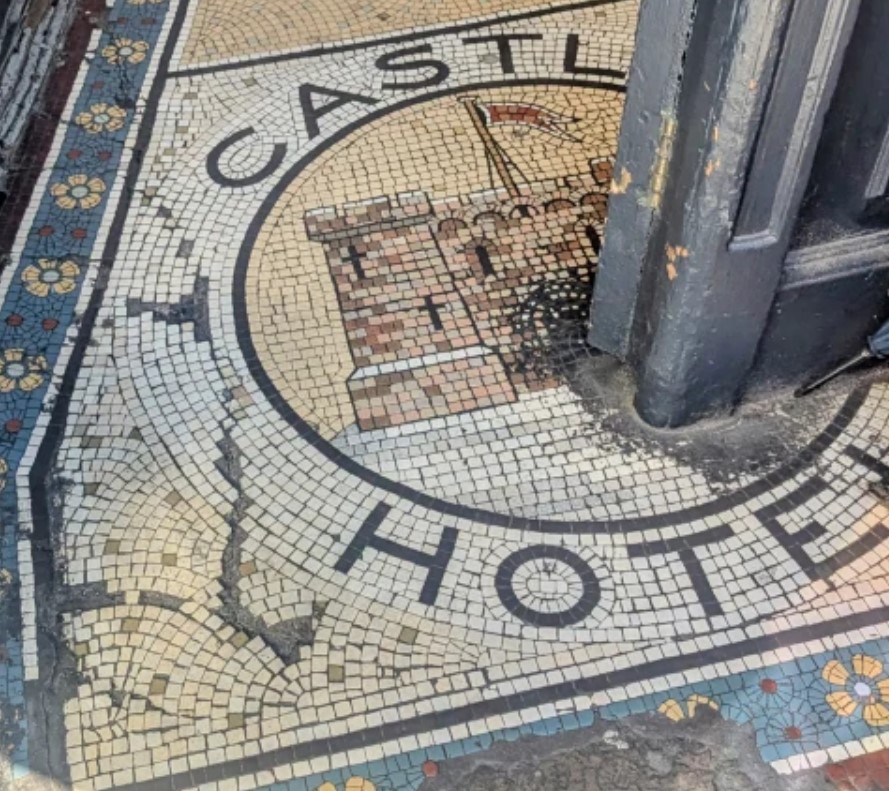
If, however, any evidence of the vibrant Life on Cask is required for  governmental purposes, the entirity of reportage from Martin is right there for the taking. Just this week he visited wrote about his recent trip to The Castle Hotel of Manchester providing us with a lovely photo essay – including this image of the entry way like something from one of those episodes of Time Team where they uncover a Roman mosaic in a farmer’s field. Heritage.

More bad news for the US booze and craft trade. BeerBoard reported that “total alcohol sales declined -7.3% year-over-year across same-store locations during the May 2–5 weekend” as Beer Marketer’s Insights shared:

Craft beer sales continue to soften in tracked retail channels thru first few wks of April. As total beer sales “improved” a bit to $$ down 2.2%, craft beer softened to $$ down 6.3% for latest 4 wks thru Apr 20 in Circana multi-outlet + convenience channels. Keep in mind, that’s excluding non-alc craft brands tracked in separate NA segment by Circana.

It’s interesting how heavily those still wishing on that star rely on non-alcohol beer stats to prop up the decline while also squeezing that Bourcard report** dismissing the demographics hard. If all the energy to ignore the trend was employed in addressing the trend… would the outcome change? Speaking of tinier trends, has anyone actually noticed the rise of Thai beer in America?

According to reports via The Manual, Group B USA has claimed to be the first and only Thai craft beer distributor in America and now it has also started brewing stateside too. Beer lovers and Thai cuisine connoisseurs have previously only been familiar with Singha and Chang beer brands, but in a deep dive interview with Group B CEO Bamee Prapavee Hematat there is now a growing Thai craft beer movement featuring IPAs and beers flavoured with dried bananas.

Despite all those Thai beers coming it, less is still more for the rest of the US beer trade, as Evan Rail reported in VinePair this week:

“That was the height of craft beer—it was easy to keep 28 handles on tap,” says Zak Rotello, the bar’s third-generation owner. “Now, fast-forward 10 years and I have less beer on tap than ever: 21 beers out of a total of 30 handles. The others are wine and spirits.” It’s not just Rockford. Across the country, a number of bar owners are moving away from the massive tap lists of the craft era. Back in the days of what Rotello calls “rotation nation,” enthusiastic beer drinkers were always hoping to find something new on tap—and bars were happy to oblige. Instead, many bars today are offering fewer draft beers, often using those same lines for pre-mixed cocktails, bulk-packaged wine or other beverages.

And Alistair shared some related thoughts over at Fuggled, too, as he bimbled in his dotage:

Maybe I am just entering my curmudgeonly dotage as I creep ever closer to my 50th birthday later this year, but I have found little joy of late browsing the aisles and shelves of the beer retailing world, whether supermarket or specialist. Of course there are beers, usually seasonally available lagers such as Tröeg’s Little Nator, that I happily stock up on when they are available, but usually my little bimbles are more a ritual performed through a misplaced sense of duty, with a hint maybe of self-flagellating hope of something other than yet another “innovation” in the form of an IPA.

Getting a bit legal for a moment, I came across some excellent discussion of  an important topic in the hospitality trade from a team of Australian academics, thoughts about the alleged “perks” in the tavern and grub trade and how they undermine hospitality workers’ rights:

As one chef put it: “Free steak dinners don’t pay my rent or stop my boss docking pay for smoke breaks.” Our data also show that workers with formal agreements were significantly more likely to receive their legal entitlements, including proper rest breaks and overtime pay, compared to those without. Why does this matter? Because protecting rights is not just about fairness. It is about safeguarding the sustainability of an industry we all rely on. Research shows when businesses rely on unpaid labour or ignore basic entitlements, they undercut fair competition, contribute to worker burnout and drive talent out of the sector.

Remember when craft brewing workers were expected to be more interested in passion than pay? What? Still?!?! Boak and Bailey (much to the contrary being unfailingly fair competators in the weekly beer new update scene***) have taken time out from their eastern European sojourns to discuss the source of skull iconography in the craft beer scenic landscape:

David Ensmiger, quoted above, suggests that in the context of punk music and skateboarding, skulls and skeletons represent a certain ‘apartness’ from mainstream culture. To paraphrase his argument, skaters, punks and bikers are monsters created by society, who delight in horrifying and repulsing ‘normies’. There’s also a more obvious sense in which skull imagery is about confronting death, and embracing life. People who fly skull flags see themselves as fearless risk takers, in both physical terms (skateboarding accidents hurt) and in terms of their cultural status. Again, this is exactly the kind of attitude craft beer producers either wanted to tap into (appropriate) or which actually reflected their lifestyles.

Fabulous stuff from they themselves, as is so often the case. I added my two cents that there was an association of the imagery with the Motörhead influenced X-treme beer era which picked up 1980s Mad Max post apocalyptic cool. Rock. On.

Speaking of the 1980s, I had no idea that stubbies were a thing outside of Canada before 40 years ago but here were are… or rather there we are according to Anthony Gladman:

The area around Fressin, known as Les Sept Vallées, is nice enough in a damp kind of way, but it’s not exactly what you picture when you hear ‘holiday house in France’. It soon became clear Dad had chosen it just to be close to the Wine Society’s outpost in nearby Hesdin. Still, when I think back to my visits there — which took me from callow teen to knackered young dad myself — what I remember drinking with Dad was beer. Or stubbies, to be precise: little 250 ml bottles of Kronenbourg, bought dirt cheap by the slab from the local hypermarché.

Are you a curious person? I know I sure am and I also know you probably are because you are here reading this very sentence. This one too. Well, in order to compensate for your undoubtedly regular sense of disappointment founded here week after week, Eoghan Walsh has a plan designed just for you – and for you and especially just for you:

Before the big announcement, a slightly smaller one – Brussels Notes turns 100 next week! That’s 100 newsletters from me to you since I first started sending them out over four years ago, and since I revived the format at the beginning of last year. A huge thank you to every one of you who’ve signed up to get them in your inbox, and to everyone who’s reading this or has read an article in the past. To mark the occasion, I thought I’d do an Ask Me Anything edition for newsletter #100. What’s my favourite bar? My favourite building? Best beer? Worst beer? The worst thing about Brussels? The best thing? Weirdest thing that’s ever happened to me in the city? Oddest thing I’ve ever seen. Best sandwich? How I actually pronounce my name?

My bet it’s pronounced “Ewan”, right? Jason Wilson is actually also possibly pronounced “Ewan” but that is entirely not the point. The point is he made a very interesting observation on US wine buying habits these days as it relates to place:

These days, in the middle of a worldwide wine crisis, it’s never been tougher to sell wine based on place. In fact, over the past couple of years, I’ve observed that a certain type of wine influencer/educator has begun to steer completely clear of talk about terroir. At the low end, the focus is on a certain populism focused on, say, wine in cans or alternative packaging. But much of the higher-end natural wine chatter also avoids a deep discussion of place. While the best natural-wine producers are committed terroirists, a lot of the derivative, middling natty wine talk is way more about winemaking technique and philosophy…

The comments are in the context of the risks inherent in the German legal wine standards adding concepts equivalent premier cru and grand cru to the labels of their bottles. The risks being that the promise better be fulfilled. Does this relate to good beer? “Local” in terms of a beer made of things from this or that “here” (or even a “there” for that matter) has never really taken off even when the best examples ring true. In a trade where popular populisit “IPA” branding has devolved to a euphemism for “maybe better” how could that little old charmer “local” have ever hoped to rise to the top?

Question: is there value in Vittles?

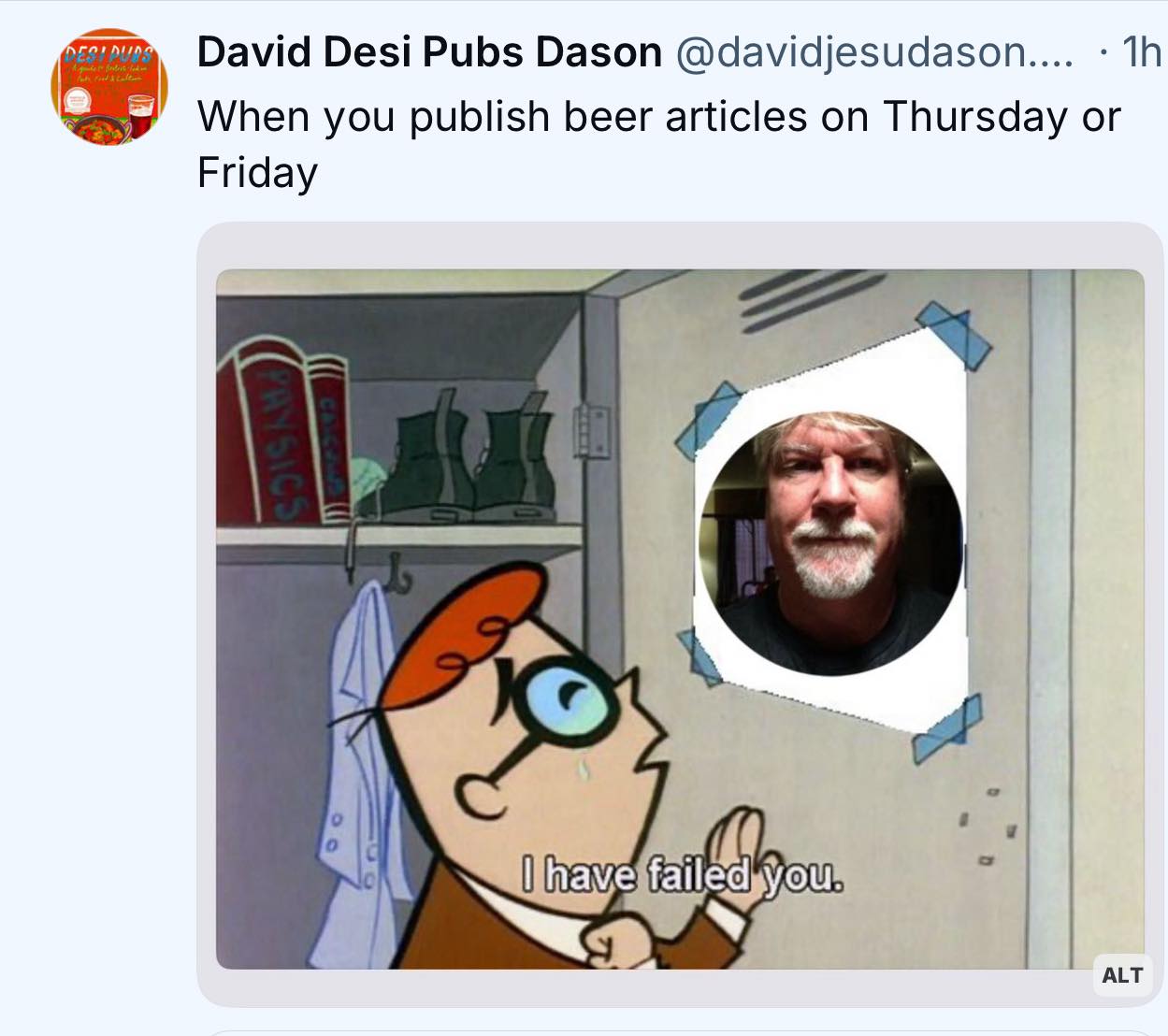
Finally, as you can see to the right, Mr. DJ made all my dreams come true with this post on BlueSky.  And that is it! Until we meet again, please check out Boak and Bailey every Saturday (…as long as all their holiday fun doesn’t get in the way…) and Stan (….not quite…) each and every Monday. Then listen to a few of the now rarely refreshed Lew’s podcasts and get your emailed issue of Episodes of my Pub Life by David Jesudason on the (sometimes even but never) odd Fridays. And maybe The British Food History Podcast. Maybe? And Phil Mellows is at the BritishBeerBreaks. Once a month, Will Hawkes issues his London Beer City newsletter and do sign up for Katie’s wonderful newsletterThe Gulp, too.  Ben’s Beer and Badword is out there with the all the sweary Mary! And check out the Atlantic Canada Beer Blog‘s weekly roundup. There is new reading at The Glass which is going back to being a blog. Any more? We have Ontario’s own A Quick Beer featuring visits to places like… MichiganAll About Beer has given space to some trade possy podcasts and there’s also The Perfect Pour. Plus follow the venerable Full Pint podcast with an episode just last month!. And there’s the Craft Beer Channel on Youtube. Check out the archives of the Beer Ladies Podcast. That’s quite good but, hmm, they’ve also gone quiet this year. The rest of these are largely dead. And the long standing Beervana podcast …except they have now stood down.  As has We Are Beer People. The Share looked to be back with a revival but now its gone quiet. And the Boys Are From Märzen podcast appears suspended as does BeerEdge, too. VinePair packed in Taplines as well. All dead and gone.  There is more from the DaftAboutCraft podcast, too. Nope – that ended a year ago.   The Moon Under Water is gone – which is not surprising as the ask was $10 a month. Pete Brown’s one cost a fifth of that – but only had the one post. Such is life. Such is beer podcasting and newlettering!

*See also 2024, 2019 and 2008 for more Vicky Vicky fun fun fun.
**It’s terrible sweet how, in part, Bourcard relies on a theory that it’s cell phone photos and tracking by parents that has deterred youth drinking – but that they will snap back to act and drink like good boomers as soon as they get their own iPhone accounts.
***According to an unsolicited report authored by something called BB Consulting Associates International that I received by email spam filter in, umm, June 2024.

Now That We’ve Cleared Up The “St. Paddy’s / St. Patty’s” Day Confusion, Here’s The Beery News Notes

I like a good breakfast sandwich as much as the next guy but I have to say I have never elevated a disk shaped sausage to sainthood. For me, Peanuts sort of established who Patty is before she grew up to be the bassist of The Bangles under an alias. So the whole “Patty v. Paddy” thing flies by me and, anyway, I tend to use the long form.  Which is fine because, you know, we ourselves are Scottish. Which is what we told pals who invited us out to drink on a Monday night when we took a pass. Our new PM probably better knew what to do when celebrating that I did. But I think Liam, however, he of Ireland, has established an alternative answer to the puzzle of how to deal with the day. That’s a hop shoot omlette right there:

I’ve experimented with cooking hop shoots before, but this is my first time to force them in the dark. Blanched and lightly fried, and served on an omelette with pecorino and black pepper. Great texture, like asparagus but more of a delicate mangetout or green bean flavour. I’m impressed …

For a more traditional tribute to Patrick, check out The Loop for a true Americana dive bar version. I wonder what the equivalent elsewhere could be? I know who we could ask. Perhaps Retired Martin who advised on the question of what one can do when there’s a spare 25 minutes to be spent at the train station in Doncaster, all by way of very tightly focused photo essay:

I would buy a book called “What Would Paul Mudge Do ?”. He certainly wouldn’t get his beer in a takeaway milk bottle to drink on the 18:22, oh no. He’d have a pint from one of Sheffield’s cask champions. But a man doesn’t travel from South Yorkshire to South Yorkshire to drink South Yorkshire beers, so I had a pint from Tallinn. And admired the seating in what is a lovely, but slightly too small, station pub.

Admittedly, you need to go back to link each sentence to an image but it’s a nice tidy narrative if you ask me. Speaking of tidy narratives, Pete Brown‘s latest column for The Times has taken a step up, using the space so far dedicated to a newbie guide to share, instead, a vignette on a player in the trade – the beer buyer:

The Waitrose beer buyer Jourdan Gabbini, 31, from Wokingham in Berkshire, genuinely loves beer and obviously enjoys his job. His ambition is to create “a bottle shop within a shop” that doesn’t just stack up the beer but helps people engage with and explore it, in part by highlighting brewers that are local to each store. This can be frustrating when a beer you like isn’t available in your manor. But that means another local brewer is getting the benefit. Gabbini has the freedom to develop real relationships with brewers. Last year he even co-created a new beer with the Lost and Grounded brewery in Bristol and Caravan Coffee Roasters — a coffee pale ale that was exclusive to Waitrose.

Speaking of booze sales, Lew dipped his toe into the tariff dispute and examined the Canadian response when it comes to the policies implimented up here by our government run liquor trade:

The most common reaction has been pure Canada: a non-smiling “Elbows up!”, echoing Mr. Hockey, Saskatchewan-born Gordie Howe, a player who took no shit off anyone. Anyone who tried to slash Howe was getting a fast elbow to the head. Canada’s ready for this, and they’re not kidding. The angry Americans are right about one thing. The Canadian response of taking everything off the shelves, leaving only blank space behind, is disproportionate and goes further than the American tariffs. This doesn’t just affect day-to-day, month-on-month sales. This kind of action also attacks something much more valuable: the brand. Raise the price while leaving the bottles on the shelf, and you paradoxically make people think about the brand more, maybe even realize how much they ARE willing to spend to get it. But take the bottles away, leaving an empty shelf with a “BUY CANADIAN INSTEAD” sign, and the American product becomes invisible.

Lew says, quite reasonably, that this degree of response is because Canada is facing an existential crisis. I don’t actually think that’s the full story. I have loads of pals and more blood family in the USA than here in Canada but, you know, gotta tell you… we’re not going anywhere. And we’re not some sort of jilted pal. Trump just fucking pissed us off. When I played soccer in university, my Scottish father (a much better player in his own youth) would say “don’t wake the sleeping dog.” Well, we’re up now.  And we are drinking our own damn rye. Even the cheap stuff that tastes like gasoline.

Speaking of these the finer things, Nigel Sadler pointed me to an interesting 1991 Belgian beer rating guide posted by the beer importers James Clay and Sons on Bluesky:

This clever guide evaluated beers based on ABV, Sourness, Sweetness, Bitterness, and predominant flavour, which then generated a five digit code that could easily give a picture of the key characteristics.

Here are the five images (1,2,3,4,5) in case your are not part of the Bluesky way of life. I add them not just to scrape the data but to illustrate a couple of points. First, I have long thought the overbearing BJCP system was clumsy and created poorly transferrable information in a simple but meaningful way. This does that. Second, being a real nerd, I immediately recognized that this five digit system mirrors the SINPO code used by long distance radio listener nerds. The SINPO code not only succinctly frames the transient quality of a radio transmission heard well beyond the intended broadcast range but it is also understood across cultural and language gaps. Simple, neutral and still data rich. So it’s gold when you are sending your QSL reception report looking for a postcard, right? What? No! No, it’s really cool. It really is. No, you’re the big fat loser.

Getting back to where we started, Ron has been to Brazil again and, much to my delight, has posted a photo essay – a montage if you will – of many of his breakfasts as well as what it is like to be an Englishman in Rio for Carnaval:

Many not so much lightly-dressed as slightly-dressed partygoers walk by. I’ve never seen so many men in fishnet tights and tutus. It has a bit of a Gay Pride air about it. Some of the party people pause to pick up Pils. Always the Pils. There’s a merry buzz. Everyone is going to a party. I can feel their crackling anticipation as they laugh and drink their way down the road. Anticipation of a good time. A really good time. I’m starting to quite like this Carnaval thing. Everyone is in a really good mood. Even a miserable old git like me.

Over at VinePair, Joshua M. Bernstein told the tale of the rise and fall of Magic Hat #9, a once hudely popular beer out of Vermont:

Johnson built a moderate-strength pale ale infused with apricot essence, and the mysteriously named #9 hit Burlington taps in summer 1995. The beer was designed to disappear come fall, but calls from angry bar owners threatening to stop carrying Magic Hat beers led Newman to turn #9 into a year-round release. “It was never intended to do anything,” Newman says. “We were just trying to find a way to sell beer.” The beer thrived on neglect and even disdain. “Beer geeks at the time f(u)cking hated it, but the more they hated it, the better the sales were,” Newman says, adding that #9 was nobody’s favorite beer at the brewery. Magic Hat initially spent scant dollars to support #9. “I could argue that we spent the first two years doing absolutely nothing to help it grow, almost working to kill it,” Newman says. “And then one day we went, ‘What the f(u)ck are we thinking here?’ And so we got on the bandwagon and it just kept growing.”

There was a time when Magic Hat was way ahead of its time and attracted the dollars of border crossing beer nerds like me over a decade and a half ago, looking for their latest Odd Notion seasonals. I seem to have had some on New Years Eve 2004. In October 2005, I review another mixed case of their and… I mentioned that I didn’t exactly love the #9. I thought it was supposed to be peach but Oskar in the comments said “No. 9 used to be much higher quality, with a REAL apricot taste” so I wasn’t wrong wrong. Just wrong.

Speaking of travel, Katie spent a week on the Isle of Man. She didn’t mention seeing Kelly… but she did write a lovely piece at her space The Glug about solo dining at The Boat Yard in the town of Peel:

The menu is as fishy as I dreamed it would be, and while I’d normally order something picky or snacky or fried for a starter, I couldn’t think of anything nicer on such a cold night than a bowl of chowder. It came hot and creamy, filled with Manx kipper and mussels, and a healthy incorporation of curly parsley. Slurping it felt like warmth and health and happiness. To drink, I had a glass of champagne. And then another. How incredibly off-putting of me, to ignore wine tasting regulations and all common decency, but I wanted some Champagne, so I had some. End of story. If you want to fight me about it, I‘ll meet you outside. Doing champagne by the glass is not ideal for any hospitality venue, and I apologised for being so awkward. Then I apologised for apologising. My lovely host was gregarious: “You deserve to have what you like,” she said. I wondered if had I been with other people she might not have added life coaching to my menu free of charge, but I appreciated it nonetheless. And anyway, I did like it very much, because it was rich and biscuity, with a squeeze of lemon sherbet.

Smoky kipper chowder and glasses of champagne. That’s it right there. Yup.

Note: Martyn captured on the audio talking about the porter. And the book. The book that launches very soon.

And David Jesudason has managed to make me homesick for a place I have never been.  Much of my family lives along the 128 bus route east of Edinburgh and I worked in Poland for a while when I was in my twenties. So this portrait of the The Persevere in Edinburgh’s historic port of Leith has me longing… and (again) hungry:

…it retains those born and bred in Edinburgh’s historically working class Leith district, especially sports lovers who might glance at the horse racing before a match. While it also serves as a home away from home for many of the Polish diaspora who have been linked to the port since 1939. This is seen in the pub’s owners, Lublin-born Dorota Czerniec-Radowska and her husband Konrad Rochowski, and the kitchen they have run since 2015 which pumps out delicacies, such as plate-sized schnitzels and comforting white sausage (Żurek) soup. You can eat these in the pub or the restaurant-style section, known as the Percy (also the affectionate nickname given to the pub by its regulars,) where paintings of Dorota and Konrad’s hometown are displayed.

One of the pleasures of Poland was learning how useful my childhood training in the rolling of an “r” and the roughening of a “ch” were.* And, as with the Korean food, the reassembling of similar ingredients was also a welcome surprise. Next time I am there, I should make of point of being here… there… at this pub.

Note: a reminder for next week. It’s another end of the month edition of The Session… and Gary jumped the gun but gives us a good example as we prepare. Matty C is hosting:

For the March 2025 edition of The Session I’m asking participants to produce a piece of critical writing about beer or pubs. This could be a review of a beer you’ve enjoyed, or perhaps one you haven’t. A pub you’re fond of, or maybe one that has room for improvement. You could write about a beer experience (or lack of) in a setting such as a restaurant, or even produce a critique that focuses on a particular aspect of beer or pub culture. The aim is not to be judgemental, subjective or to showcase any particular bias; this is not some finger-wagging exercise. Whereas criticism involves building an argument about why you think something is simply good or bad, critique involves taking a more holistic approach, using carefully researched and considered analysis to build a reasoned, objective, and possibly even entertaining take that benefits readers by giving them good quality information to consider.

I am still working out how this isn’t a distinction without a difference as building a good argument always requires considered analysis. But I look forward to the submissions.

Did you now that some common foods do not qualify as no-alc? Well you will now thanks to the exceedingly tenuous argument placed into the discourse by the lobbyists of the The British Beer and Pub Association:

Advocates argue that the current limit not only confuses consumers but also restricts the development of innovative alcohol-free products. According to the BBPA, raising the threshold would help the UK’s brewing sector thrive in the rapidly growing no and low alcohol market, while providing consumers with more clarity and choice. The BBPA’s findings highlight that burger rolls can contain up to 1.2% ABV, while malt loaf can reach 0.7%, and ripe bananas can hit 0.5%. These levels are considered negligible and occur naturally due to fermentation, yet remain higher than the current 0.05% threshold for alcohol-free beer. The government’s consultation is set to conclude later this year, with the industry eagerly awaiting the outcome.

Eagerly. Not “patiently” or even simply “awaiting” but eagerly.

That’s it. Lots of interesting stuff to read as it turned out. While you await eagerly for more next week, please check out Boak and Bailey every Saturday (WHILE YOU CAN!!! They are holidaying in April and May) and Stan going strong again each and every Monday. Then listen to Lew’s podcast and get your emailed issue of Episodes of my Pub Life by David Jesudason on the (sometimes even but never) odd Fridays. And maybe The British Food History Podcast. And Phil Mellows is at the BritishBeerBreaks. Once a month, Will Hawkes issues his London Beer City newsletter and do sign up for Katie’s wonderful newsletterThe Gulp, too. The Share looks to be back with a revival. Ben’s Beer and Badword is out there with the all the sweary Mary! And check out the Atlantic Canada Beer Blog‘s weekly roundup. There is new reading at The Glass which is going back to being a blog. Any more? Check out the Beer Ladies Podcast. That’s quite good and they are revving up for a new year. And the BOAS podcast for the bro-ly. And the long standing Beervana podcast …except they have now stood down.  Plus We Are Beer People. The Boys Are From Märzen podcast appears suspended as does BeerEdge, too. VinePair packed in Taplines as well. All gone. But not Ontario’s own A Quick Beer featuring… Michigan! There is more from the DaftAboutCraft podcast, too.  All About Beer has sponsored trade possy podcasts and there’s also The Perfect Pour. Plus follow the venerable Full Pint podcast. And the Craft Beer Channel on Youtube.  The Moon Under Water is gone which is not surprising as the ask was $10 a month. Pete Brown’s one cost a fifth of that – but only had the one post. Such is life.

*My late toddler trauma includes being told “Whales and Wales are not homonyms!!!” as a parent’s hand was placed before my mouth to catch the whisp of an “h” that was so critical to the continuation of the culture. 

Your First Beery News Notes For That Dull Gap Between The NFL And MLB

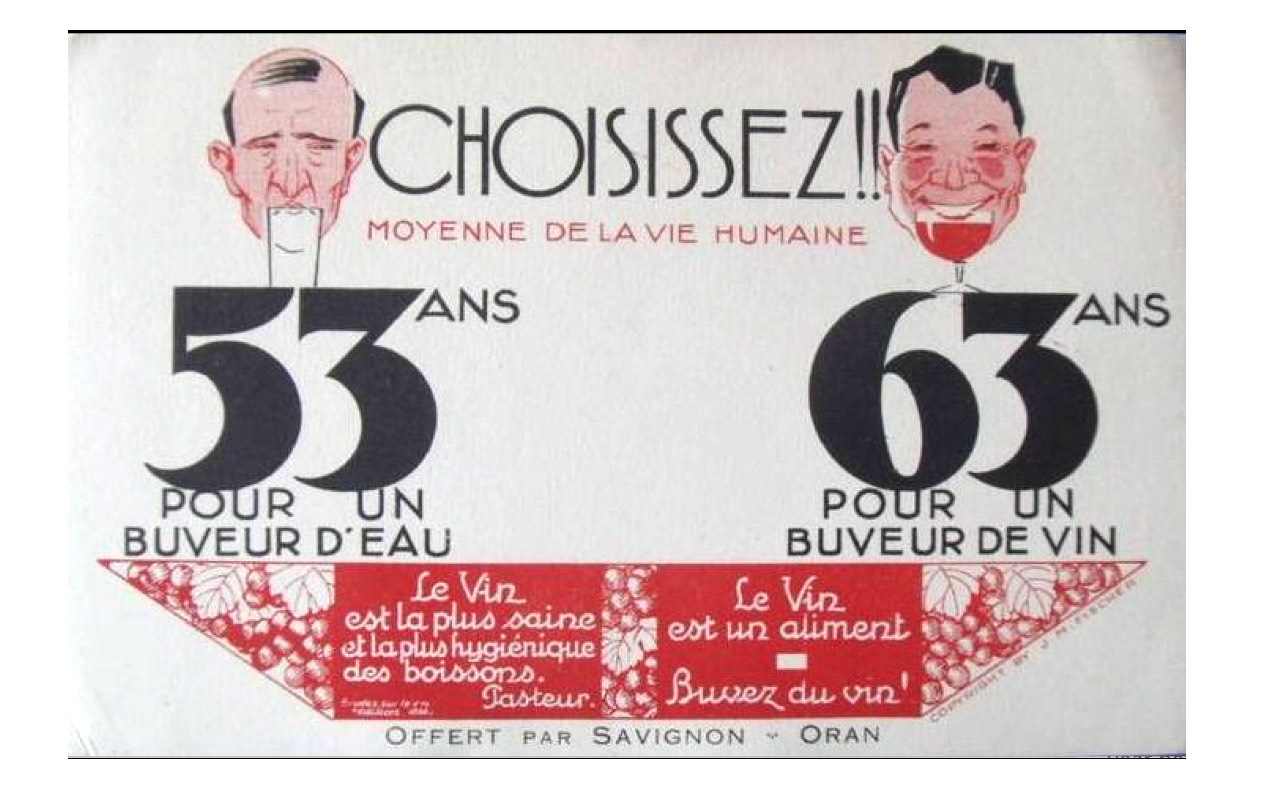
The gap. It’s not going to be too bad this year with a boooorrrinnnnng Superbowl* coming a bit later in the shortened month. At least there was a nice ad for Bud. But, even with that, this gap between the end of the last football game and the start of baseball’s spring training games is a thing. A dull thing. As is the realization that I am looking past sports fandom at a trade war. Aluminum and steel this week. Am I looking like the guy to the left in the image above pushing from French-Algerian wine from the 1930s. Why does the water drinker look so worried? Why is his hair less stylish?

Yet… what does colonization teach us? Is the dodgy promise of that wine a century ago so unlike what we are like today? I was out buying a magazine last Friday evening in an actual bookstore (because, you know, I had a hankering for buy a magazine like it was 1999) and I looked at all their titles… mainly American… then looked at all the biographies of Americans intersperced with a few semi-royals at the other end of the bookstore… boy oh boy… have we up here taken on a lot of the culture developed down there. Look, I’m not part of the not a real country set but I need something to fill the hours other than lingering angst. Something will level out somewhere. Spring training may do the trick. Maybe that’s it. Down in, you know, Florida.

Speaking of gaps, have you any interest in NA wine or spirits?  Me, I can’t imagine paying non-proxy payment for these sorts of proxies for booze. But if you are interested in NA beer, keep keeping an eye on Polk. He is back with some very interesting observations on one Canadian discount dark ale. And he wrote about where is at** this week, too:

I am incredibly lucky that I still can maintain an online community, despite my switch to mostly non alcoholic options, people in craft beer can be very kind when the road gets bumpy for one of our own and this helps a whole lot. But if I was one who went out and was deeply involved, I wonder how I’d be feeling every weekend when my new normal didn’t include those aforementioned activities. It would be a little overwhelming and would only add to an already stressful time I would imagine. It’s part of why it’s so difficult to go sober, to separate yourself from the good times that feel warm and boozy because you can’t be that person anymore. Change isn’t easy, but letting go of alcohol seems particularly difficult, addiction or not.

I will allow myself more bit of one tariff news item this week from one of my regular reading outlets, mining.com, on the uselessness of tariffs but the benefits of something else:

While US steel imports account for 23% of the country’s consumption, the ratio is much higher at 47% for aluminum, according to the US Geological Survey. The US is particularly reliant on imports of primary aluminum from Canada, which supplies more than two million tonnes each year… Just under half of all cans are thrown away to be land-filled or trashed. More metal is lost through improper sorting at recycling facilities, with losses assessed at roughly one third… Roll out more deposit return schemes and some of that one million tonnes of landfill could be returned to the supply chain.

On our side of the wiggly then very straight line, somewhat similarly, the inter-provincial restrictions are being rethought. New Brunswick’s Premier Susan Holt is revisting the province’s trade barriers on booze from other parts of Canada and Ontario‘s smaller breweries are looking forward to market opportunities across the country if we ditch the current rules:

Ontario breweries, distilleries and wineries can’t sell their product directly to customers in other provinces, something David Reed, owner of Forked River Brewing Company, says limits their sales opportunities… Because laws around alcohol are up to each province, rules about transporting vary nationwide. In Ontario, the province lifted interprovincial personal exemption limits in 2019 when it comes to alcohol for personal use, the LCBO says. In comparison, SAQ, Quebec’s alcohol board, says any alcohol coming into Quebec, including donations, gifts, and souvenirs, must be reported.

Note: Following up on last week’s news, one Beer Store outlet in my fair city is closing. But… but… me being able to buy my longed for Oland Ex in a corner store? Where do the loyalties lie?

How to pass the time? Cards. Katie plays cards and wrote a bit about it:

We play Rummy. I have no memory for any of the other rules, despite my father in law trying to teach me Stop The Cab every few months. At high school, I used to play a game called shithead in the common room, we doubled the pack so the games would last forever, dragging on into lessons we should have gone to. These are some of my favourite school memories.

Japan has an issue hiring people and then coaxing people back to work in the office but one firm has a solution that perhaps might suit you:

…for new graduates in Japan, one small IT company is offering Gen-Z staff the option to take special ‘hangover leave’ in a fierce recruitment drive being dubbed ‘golden eggs for graduates’. Trust Ring Co Ltd is a tech company in Osaka with roughly 60 employees and is one of many companies combatting Japan’s declining birthrate with quirky incentives as a way to attract new employees…. employees at Trust Ring Co are even encouraged to help themselves to the draught beer machine or a selection of spirits to drink on the job in their Midoribashi offices.

Lordy. And next? What next?!? Beer sludge? Beer sludge!!! Seems “beer sludge” is now a proper term according to the headline to this BBC story:

…nutrition isn’t the only area where spent grain could make an impact. Brett Cotten concedes that early efforts by his young London-based company, Arda Biomaterials, to create leather-alternatives from brewers’ spent grain resulted in something more akin to a flapjack.  But the start-up has since successfully used supramolecular chemistry to make several proteins from brewers’ spent grain that mimic the animal proteins in leather, resulting in a strong and supple alternative. The colour reflects the spent grain used, he says. “Guinness and stouts make for a naturally black material, IPAs and lagers more mid-browns.” 

I shall recommend that to my tailor. If I had one. And I like this understanding in Jeff’s piece on NEIPAs which is one way of explaining the phenomenon:

I would argue an IPA wave was never going to wash over New England before it came along. The region’s preference toward fuller beers with sweet malts and fruity English yeasts, and they have never really embraced the bitterness and spikiness of Centennial or Chinook IPAs. The development of New England IPAs was not unusual: breweries adjusted their process to draw out those incredible flavors and aromas Citra (and successor hops) had.

Careful readers will recall my habit of going to Maine back when the Canadian dollar was worth 95 cents US or more. In 2013, the good beers on offer at Fenway were Long Trail pale ale, Harpoon IPA and Wachusett Green Monster.  New England had plenty of IPA love before NEIPAs… they just weren’t those IPAs.

Speaking of good explanations, in the emailed announcement on Pellicle‘s piece on independent brewing in Thailand, the editorial board of that there publication made an excellent statement on these sorts of things:

About a year ago I received and subsequently rejected a pitch from a writer called Joey Leskin, who writes a great newsletter about beer in London called Beer in the City. I turned it down because I am overtly aware that stories written by British writers about beer culture in other countries can come across as voyeuristic, and often don’t let the voices of the people involved in that scene shine through as they should. Fast forward six months and I was invited to become a mentor by the British Guild of Beer Writers. I agreed, and by coincidence was subsequently assigned Joey as my mentee.

This is a much nicer way of explaining and dealing with what I call “drive-by expertise.” It’s nice that you got to visit. Very nice. But I’ll usually  turn to the local for understanding, thanks.

People who are very much on the scene if not in the scene are Boak and Bailey and this week the scene is very much where they are or at least were – at the Central Library in their own fair city of Bristol, England. There, they came upon what is definitely a scene:

A few weeks ago a special exhibition was laid on at the library on the subject of beer and pubs. Items from the reference collection were put on display in an ornate wood-panelled room and visitors were invited to shuffle round and have a nose about. We visited and were drawn at once to a hefty hardback volume collecting together editions of The Golden Cockerel, the house magazine of Courage, Barclay & Simonds, formed in 1960 when Courage acquired Simonds of Reading. These particular issues of the magazine were from 1962 to 1964 and seemed to include a remarkable number of pub openings.

What follows can only be decribed as remarkable, too. An unpacking of the story of many of those pubs while guiding one to an explanation of the name for “a youth paid to collect dry sand from coastal caves to spread on saloon bar floors.” Fabulous. And a welcome break from the news about those running pubs dealing with the rising costs of running a pub.

And Laura Hadland has updated the story of the Crooked House and the legal battle which has ensued since its demolition:

11th February – And the appeal hearing has been delayed. ATE Farms lodged a High Court challenge against “the Planning Inspectorate’s refusal to postpone the Planning Enforcement Public Inquiry” according to a statement from South Staffordshire Council This means that the public enquiry will now not go ahead as scheduled on 11th March and is unlikely to occur before the criminal investigation is concluded. You can read updates from the Council on their website. According to the Times & Star, the police work continues – “Staffordshire Police said in July last year that six people arrested in connection with the fire have been released from their bail, but remain under investigation.”

N’oubliez pas!!!

There. It’s been a bit of a busy week outside of these readings again. I worry that I am not entertaining enough. I actually don’t but I wonder. That’s a better way of putting it. Enough to worry about out there in the real world, isn’t there. Until when we meet next, please check out Boak and Bailey every Saturday and Stan going strong again each and every Monday. Then listen to Lew’s podcast and get your emailed issue of Episodes of my Pub Life by David Jesudason on the (sometimes even but never) odd Fridays. And maybe The British Food History Podcast. And Phil Mellows is at the BritishBeerBreaks. Once a month, Will Hawkes issues his London Beer City newsletter and do sign up for Katie’s wonderful newsletterThe Gulp, too. The Share looks to be back with a revival. Ben’s Beer and Badword is out there with the all the sweary Mary! And check out the Atlantic Canada Beer Blog‘s weekly roundup. There is new reading at The Glass which is going back to being a blog. Any more? Check out the Beer Ladies Podcast. That’s quite good and they are revving up for a new year. And the BOAS podcast for the bro-ly. And the long standing Beervana podcast …except they have now stood down.  Plus We Are Beer People. The Boys Are From Märzen podcast appears suspended as does BeerEdge, too. VinePair packed in Taplines as well. All gone. But not Ontario’s own A Quick Beer featuring… Michigan! There is more from the DaftAboutCraft podcast, too.  All About Beer has sponsored trade possy podcasts and there’s also The Perfect Pour. Plus follow the venerable Full Pint podcast. And the Craft Beer Channel on Youtube.  The Moon Under Water is gone which is not surprising as the ask was $10 a month. Pete Brown’s one cost a fifth of that but only had the one post. Such is life.

*What wasn’t boring was the after game celebrations in Philadelphia according to the police scanner: “we lost all the barricades!!!” and especially ““i now have seven or eight people on horses, the fireworks are spooking them and they’re rearing up….they’re civilian horses”!!! And there were some other ads. BeerBoard added some very particularly fine detail on who was drinking what before, you know, the barricades were lost: “Coming off two years of decline for the Big Game, Light Lager saw an increase of +5.6% on the day. Lagers, the #2 style, saw a noted decline of -6.5% in share. IPAs, the third-ranked style, decreased for the second straight year, down -7.9% over 2024. Michelob Ultra was again the top-poured brand nationally on the day, and was up a noted +11.9%. Bud Light, the #2 brand on the day, was -3.0% versus 2024. Miller Lite (+5.4%), Modelo Especiál (+9.6%) and Coors Light (+3.4%) rounded out the Top 5 for draft.” That is very spedific stuff for two days later…
**Or as translated for Maritimers: “where he’s to, too.

The Beery News Notes For The Week Tariffs Were Punted Down The Road

Because I am a lawyer, my job includes dealing with a bit of mayhem. I even get a bit immune to it, frankly. Not so much in those early bottom feeding days. Remember that? Yeesh.* Anyway, is it back? I dunno. We’ve reviewed all the graphs and charts like this one up there** and now that everyone and their dog calculated the percentage of the US beer market*** made up of the combo of Canadian malt and aluminum as well as Mexican imports, well, it got delayed. Fine. The big bourbon ban was shelved and then restocked. It all got a bit whiplashed and likely will again. As Jeff wrote, this is all getting somewhere between real and unreal:

Enormous changes are underway, and the stability of the U.S. government is no longer a given. Barley prices may seem like an incredibly mundane detail (picayune, even) to pluck out of this hurricane of news. But they are representative of the effects these disruptions will have. The price of barley is directly tied to the health of US businesses, jobs, and lives.

Well, it’s all for the best right? It’s must be. And, between you and me, a closer economic union wouldn’t be all that bad. I sure liked when the Canadian dollar was close to par, gotta tell ya. Stash wantes to stash. Anyway, now that we have a whole 28 days left in the reprieve, I can get on to the important business of worrying about snacks and beers for Superb Owl Sunday. And, for the 47th year in a row, a bunch of people have written about what you should eat and drink. You can find your own damn links for that stuff.

Somewhat relatedly, speaking of large bodies of water that suddenly need to be renamed:

People don’t buy “domestic” cars or salute the “domestic” flag, so they shouldn’t drink “domestic” beer. At least, that’s what Anheuser-Busch’s CEO thinks. Brendan Whitworth, the beermaker’s chief executive, says he  wants to change the term that describes his US-made beers, which includes Budweiser, Michelob Ultra and Busch Light, to “American”… “The pride we take in this great country should also be properly and accurately applied to our great American beers,” Whitworth wrote. “They are brewed by American workers who receive American wages. They rely on American farmers and on American raw material suppliers. They support American causes like the military and first responders. They pay American taxes.”

Speaking of legal mayhem, here’s a story out of Washington state on one brewery’s fight against the local municipality care of WBB:

Although Dominique Torgerson just wants to operate a brewery, she is now well-versed in this kind of legal battle and knows way more about these issues than any brewery owner should ever need to know.  “With the recent overturning of the Chevron Deference doctrine at the U.S. Supreme Court, agencies should no longer have unchecked power to interpret ambiguous laws in their favor,” she explains. “Our petition to the Superior Court cites extensive case law, and we are prepared to take this battle to the U.S. Supreme Court if necessary.” “Additionally, these zoning restrictions violate Washington State RCW 66.08.120, which explicitly prevents municipalities from regulating alcohol businesses in ANY manner,” she adds.

Boom!  Fight!! Speaking of a good fight, I am really struggling on Pellicle‘s English Premier League fantasy league this season – but unlike one pub’s owners, I did well when I picked the striker for Nottingham Forest the other week:

It had seemed like the perfect promotion to get a few more punters through the door on a Saturday afternoon – give away a free pint for every goal scored by Nottingham Forest that day. But seven goals and £1,500 worth of pints later, Nottinghamshire pub landlady Beccy Webster realised she might have scored a spectacular own goal. “It got to half-time and I thought: ‘Oh my gosh, I don’t know if I can carry this on.’ But I decided I was sticking to my word,” she said. “This is what I’ve said I’m going to do. Whether it’s four, five, six, seven, 10 goals, I’m seeing it through now. We ended up giving away 300 pints.”

Keeping with the only beer mag that matters, we received another bit of biting commentary about the craft-bro rut from David Bailey (no relation) over there last Friday. He neatly acknowledges the line between what may and may not be said about good beer culture and then crashed through it. In this episode, he mocks the desperate lengths some brewers got to in order to extend their seasonals line up.  I like how these pieces are effectively political cartooning.

With his even more unreserved and thorough approach, David Jesudason has reported on the misogyny that ruled at one imaginatively named London wine bar in the 1970s and how it served as one launching point of an anti-discrimination campaign:

“El Vino stood as a symbol of an ordinary drinking place,” Anna Coote tells me, “that wasn’t a private club and they were not letting women buy drinks at the bar which was very petty of them. But at the time the men were hanging on to their control over how their favourite pub was being run… [Anna and and Tess Gill] used the El Vino as a way to change the law and they didn’t see themselves as patrons of the bar. Anna says they went to El Vino with a couple of male lawyers and were refused service and this was all the proof they needed. “It was to get the law enforced not to get drinks at the bar,” Anna tells me. “It was purely a matter of principle. Neither Tess nor I wanted to spend a minute inside El Vino’s drinking wine or buying drinks!

And we read… well, I read some interesting reporting from Phoebe Knight in BlogTO on the effects being already felt by the big brewer’s retailer, The Beer Store, following Ontario’s expansion of retail beer sales to corner stores last year:

While 23 stores out of over 350 across the province seems like small potatoes now, John tells blogTO that there could be a far larger crash coming in the near future if no further agreements to maintain the stability of The Beer Store against competition are made. “According to the early implementation agreement The Beer Store must keep 300 stores open until the end of 2025,” John tells blogTO. “After that there is no limit on closures.”

Further news on the calls for change in beer retailing out of Korea too:

Liquors registered as traditional products in Korea, such as “makgeolli” (rice wine) and Andong soju, are exempt from the online sales ban, allowing them to be delivered directly to consumers’ doorsteps. In contrast, domestic soju and beer products are only accessible via offline stores and restaurants. Major local producers argue that lifting the ban would expand their distribution channels and improve market competitiveness. Korea and Poland are the only member states of the Organisation for Economic Co-operation and Development, or OECD, where an online liquor sales ban remains in effect.

In our weekly (it seems) report on contradictions in medical advice, we focus today on the mind. First up, this study published in the American Journal of Psychiatry on “the real-time subjective effects of alcohol in individuals with alcohol use disorder”:

This study aimed to investigate the real-time subjective effects of alcohol in individuals with alcohol use disorder (AUD) and those prone to negative affect by virtue of having comorbid depressive disorder (DEP)… The AUD group, regardless of comorbid DEP, reported increases in stimulation and rewarding effects that persisted throughout most of the alcohol episode relative to the non-alcohol episode. To a lesser extent, alcohol relieved negative affect but this was not specific to AUD or DEP groups.

The news is what you’ve wanted to have confirmed: “…researchers found that alcohol consumption reduced negative feelings…” Conversely, in The New York Times, we read:

… if you become physically dependent on alcohol — after years of drinking heavily, for example — the constant ramping up of GABA can cause the brain to produce less of it, and glutamate becomes more dominant. The brain then becomes “hyperexcitable,” which can lead to symptoms like panic attacks, said Dr. Kathleen Brady, an addiction expert and professor of psychiatry at the Medical University of South Carolina.

As always, good luck making those two stories fit in with each other! Speaking of best wishes, The Beer Nut has seen of Dutch brewery De Molen with a review of a last collaboration before its expiration:

This is a beer to shut me up about nitro for a minute or two: there is plenty of flavour, and while it may have turned out quite cloying if carbonated, I can’t complain when nitrogen’s deadening effect successfully balances the beer. Observation two is that a bit of barley wine energy really suits the Irish red style. Boost that gravity and hold back on the aroma hops: there’s a niche available somewhere adjacent to the strong Scottish ale genre. Thanks to both breweries for showing the way, and with an extra poignancy now that the permanent closure of De Molen has been announced for later this year.

And Boak and Bailey have found an even loftier pint – a perfect ESB:

Our perfect pints on Friday were served this way, as towers of autumnal mahogany topped with loose but steady foam.The aroma was of marzipan and fresh woodland sap. And it tasted like the inevitability of one pint too many, like the Holy Grail, like the White Whale, like a miracle in progress, like being 25 again learning for the first time what beer could really be. It was so good that it made Jess switch from Titanic Plum Porter. It was so good that she didn’t even resent the inevitable day after headache. It was so good that, even with the headache, she co-wrote a blog post about it.

Lovely bit of writing right there.

In 2006, I released the results on an experiment involving Burton Bridge Porter and the passage of time. I am not sure reading back on my notes now that I understand what happened.  Far more lyrical is Pete Brown in his up to date study of that same brewery published in that place that really should be named which is already named above:

Burton Bridge Beers are still Burton Bridge, and Heritage are still Heritage, but both brands are owned by the same company and brewed in the same place, by two stellar alumni from the craft beer world.  Two dying embers rekindled, with new fuel feeding the flame. It’s a misty, drizzly day when I visit Burton Bridge. The flagstones in the yard are slick and shiny, like they always seem to be. The brewing team are wrapped up against the chill as they wash casks, their breath misting the air. After a quick tour of the kit—including the parts that are over a century old and look like they’re  held together by willpower alone—Emma and I retreat to the cosiness of the pub.

Again, some lovely writing right there.

Finally, what was old is new again, as we read in this week’s dispatches from the eggheads:

Do you long for that tart fruity flavor of a sour beer but wish the complicated brewing process were faster? Norwegian scientists might have the answer: field peas, as well as beans and lentils. According to a new paper published in the Journal of Agricultural and Food Chemistry, experimental beers made with the sugars found in these foods had similar flavor profiles to your average Belgian-style sour beer, yet the brewing process was shorter with simpler steps. “Sour beer is the beer enthusiast’s alternative to champagne,” said co-author Bjørge Westereng of the Norwegian University of Life Science.

Oh, Bjørge. You ever notice those times when it is clear someone has never had champagne? But… pea beer was a thing. At least beer made with pea shoot kilned malt was. And Japanese third-category beer.

Thanks again for everyone who participated in first edition of The Session Revived. Here’s the round up.  As Stan was kind enough to say, “Much of the best reading last week was on Friday, when The Session revival was pretty dang successful.” Join in next time we gather! In the interim, please check out Boak and Bailey every Saturday and Stan going strong again each and every Monday. Then listen to Lew’s podcast and get your emailed issue of Episodes of my Pub Life by David Jesudason on the (sometimes even but never) odd Fridays. And maybe The British Food History Podcast. And Phil Mellows is at the BritishBeerBreaks. Once a month, Will Hawkes issues his London Beer City newsletter and do sign up for Katie’s wonderful newsletterThe Gulp, too. The Share looks to be back with a revival. Ben’s Beer and Badword is out there with the all the sweary Mary! And check out the Atlantic Canada Beer Blog‘s weekly roundup. There is new reading at The Glass which is going back to being a blog. Any more? Check out the Beer Ladies Podcast. That’s quite good and they are revving up for a new year. And the BOAS podcast for the bro-ly. And the long standing Beervana podcast …except they have now stood down.  Plus We Are Beer People. The Boys Are From Märzen podcast appears suspended as does BeerEdge, too. VinePair packed in Taplines as well. All gone. But not Ontario’s own A Quick Beer featuring… Michigan! There is more from the DaftAboutCraft podcast, too.  All About Beer has sponsored trade possy podcasts and there’s also The Perfect Pour. Plus follow the venerable Full Pint podcast. And the Craft Beer Channel on Youtube.  The Moon Under Water is gone which is not surprising as the ask was $10 a month. Pete Brown’s one cost a fifth of that but only had the one post. Such is life.

*Though the mass firings are very old school Atlantic Canadian. Maybe we do fit in culturally speaking! Note: these things also happen in beer
**No, it really is an actual chart!!
***We also learned that 88% of all beer consumed last year made by Canadian workers in Canadian breweries.

Your First Beery News Update For 2025, My 2024 Golden Pints And An Homage To The Session

The now, the year now past and the eternal. That’s what it’s all about this week. You, kind reader, may consider this too much as task for one person but let us not forget my capacity to do a very poor job.  Yet. How about my find of the year or rather my daughter’s find when on the old country visiting family last April. That’s my grandfather up there outside the pub with buddies about 100 years ago. Second from the right.

How have others found the year and summed up 2024? First, Matt looked back with some positive personal thoughts:

One of the reasons I feel like I’ve managed to produce more work this year is because I’ve figured out what I like to call my work-work-life balance. I use the term work-work because, essentially, I have two jobs. In fact it would be better to say I run two separate businesses. Pellicle being one, and my freelance writing, photography and whatever else hopefully comes my way being the other. Not only have I managed to split my time equally between the two, but I’ve also got a lot better at switching off and taking time for myself.

And Jeff looked back, too, but found the big picture less cheery:

You always want to write an annual retrospective in such a way that a through-line connects the points—a ribbon, if you will—so that when you come to the end, you can tie it up in a nice bow, presenting a clear picture of the year just deceased. Well, there is no through-line, no way to tie the whole thing up. We are in a transitional phase and mixed signals are the rule of the day. This applies as much to the larger world as to the beer industry, and I suppose those two are connected.

Yup. I’m also not really looking forward to 2025 in the bigger picture. But, still, I planted my first vegetable seeds of the year yesterday so I am not without a certain level of optimism.

So… let’s go. First up some beery news.

A. The Weekly News Notes

Will I keep these brief? Let’s see. First up, we have Alistair at Fuggled declaring his best beer of the year: Selvedge and Coat Czech 12° pale lager.

Ah…the glories of Czech style pale lager, the second best thing to actual Czech pale lager. When a brewery makes an absolute banger of a Czech style pale lager, they are always going to appear in my end of year review…. This especially true when said Czech style pale lager is either a 10° or 12° I could wax lyrical for days when it comes to Selvedge Brewing’s stunning Coat Czech that came out in the middle of spring this year. Absolutely reeking with Saaz hops, with a rock solid bitterness that scrapes the palate clean with every mouthful – again a reminder of our friend Mr Swiveller’s maxim that “it can’t be tasted in a sip”.

Elsewhere, I had an interesting experience which again affirmed my love of auto-archiving whether by blog or email. Over on BlueSky, Kevin of Casket Beer, asked if anyone had ever had a Scotch Ale out of a thistle glass. I knew that I had had one in my hand at sometime and it set me off on scrolling through images I posted from around twenty years ago looking at the pub glassware incidentally included. Which then took me to a side-by-side study of great upstate NY beef sandwiches from the years prior to the Obama administration.  Which then reminded me of the value of taking photos of anything and everything. That image there? A view of Gritty McDuff’s Freeport location’s bar in 2005. Not particularly pretty but loads of information. Look at the range of booze on offer! But not a thistle glass in sight.

This month’s comic in Pellicle from David Bailey (no relation) has moved another step along the path of questioning and abandonment of the stereotypes of craft fandom. This frame particularly strike me, it’s something of an indictment. There’s not a lot charming about this person, this same person in the New Yorker cover of a decade ago. But times have changed. Along with the losses of breweries and the closings of beer bars that mark the end of an era, this character is now just an object of mockery. A clown. Where’s that going to go in 2025?

Mikey Seay alerted me this week to an issue that I had no idea existed:

There is an old beer-head at the taproom I’m at right now. He is in his 60s (probably), all by himself. He’s not hanging out waiting for someone to show up, he is by himself, he’s this for the duration. And this is fine. I am by myself too. There are several dudes by themselves here. Two of them are reading a book. The other is me, sitting on a stool, on a phone, writing into it. So I am not here to shame him for being alone. I am here to shame him for walking around, no agenda. He is just staring off into the abyss, holding his tulip glass, meandering. Non. Stop. Dude, you’re making the rest of us look bad, GO SIT THE FUCK DOWN!

I had no idea. But my eyesight isn’t what it was. And there are all those interesting things on the walls. And those tall barstool chairs set around small wobbly tables are so uncomfortable. But, that being said, as Jeff reminds us, you do not have to drink to get your butt out the door. This month, try #PubJanuary:

Breweries have also been keen on offering nonalcoholic options, and will be happy to support their patrons’ Dry January goals. It’s increasingly common for breweries to make their own NA beer, many make a hop water or NA seltzer, and of course, they all have soda and coffee, too. It may not occur to people, but pubs are pretty good places to go during Dry January.

I would add – meals. If I go for lunch at a pub, half the time I don’t drink much or any alcohol. But I do love me some pub food.

Investing in Russia? Why?

Russian President Vladimir Putin on December 30 signed a decree transferring shares of the foreign brewing company AB InBev Efes Russia to the temporary management of the Russia’s Vmeste group of companies. The move places all the shares of AB InBev Efes Russia, a joint venture between the Belgian brewer and Anadolu Efes of Turkey that launched in 2018, under the temporary control of the Vmeste group, created in August.

Forget Guinness’s manufactured tight supply, there’s an actual beer shortage in Ghana:

…a shortage of Mini Club beer in parts of the Ashanti Region over the past two months. Many of them have gradually become accustomed to seeing empty shelves in their bars. According to local vendors, the shortage was especially hard hit in areas known for their vibrant nightlife, including Krofrom, Ashanti Bantama, Adum, Maxima, Asafo, Kwadaso, and other surrounding communities. Some observers attributed the surge in demand to the mood of residents, particularly supporters of the ruling New Patriotic Party (NPP) and the main opposition National Democratic Congress (NDC), who make up a significant portion of the region’s population

And, something from another time popped up this week, as Molson Coors lot its appeal of the trademark ruling brought and won by Stone… whatever that is now:

Molson Coors Beverage Co. can’t nullify Stone Brewing Co.’s $56 million trademark win over its Keystone Light beer packaging predominantly featuring “STONE,” the Ninth Circuit said. Molson Coors failed to establish a jury or the lower court made reversible error leading to the trademark verdict for the craft brewer, the US Court of Appeals for the Ninth Circuit said in an opinion issued Monday.

Here’s the full ruling if you want to read it for yourself.

OK, that’s the news for this week. On to the Golden Pints of 2024.

B. The Golden Pints

Wot’s a Golden Pint? Ask The Beer Nut or Ed or Rob or Boak and Bailey or Stan! It’s really whatever you like but you need a template that is your own but also not so far off THE template that you look like you don’t understand the template. Tem. Plate. I think it’s from the Dutch for template. Basically, it is a means to dash off a number of very short passages which add up to the appearance of a large piece of work. Just like most books on beer. See? Anyway, here is my take on it all.

Best Beer on Tap: Wild Stout by MacKinnon Brothers, taproom, Bath Ontario. At a gathering of friends and family in early December, I spied this tap and made my way over to the barn cellar’s bar. Thick without being uncious, mint flavoured without that flavouring feel, a perfect roasty stout with an extra touch of local given the mint grew on fence row on the farm.

Best Beer at Home: going strictly but purchases, it has to be Světlý Ležák 12° from Toronto’s Godspeed.  I probably had at least 24 cans of this beer in 2024. Precise simplicity with thoughtful depth while also being refreshing enough for post-lawnmowing relaxation. I have a hard time thinking of anything else I would want in a lager. In fact, I just ordered more. On sale and the PMTJ tax waiver applies. Has Alistair tried it?

Oddest Beer Experience: Rochefort 8 at home. I really didn’t like it. Much to my surprise as it is a favourite. I hadn’t had a lot of beer in the autumn before opening this one as a great big treat. And I didn’t like it. At all. I know it was a me thing. But it reminded me of the realization from years ago that I can go through wine stretches and through beer stretches but I really  can’t go through beer and wine stretched. 2024 was pretty wine centric.

Best Beer Website: I don’t care for the artificial distinction between blogs and semi-pro beer writing so I would include it all in this category. Newletters. Blogs. Webmags. It’s all just writing on my screen. Winner? Has to be Pellicle. They’ve told the tale. The great success of Pellicle‘s continuing ascent occuring in the year GBH shut up shop after wandering a bit lost for a while is noteworthy, too. But be clear – their success is not relative. Sticking to the topic, employing good humour, steering away from the temptations of pure PR or (worse) lifestyle, aiming for a standard of written excellence as well as a transparent financial self-awareness all work together to earn Pellicle the praise it richly deserves.

Best Individual Bit of Writing: the best written thing? Things abound! How could I possibly choose? Well, let’s start off by saying you beer poets really let us down in 2024. I accept that it is well over a decade since Beer Haiku Daily packed it in but that there is a gap waiting to be filled, all you poetic people. But, seriously… the best bit of beer writing in 2024 is this short sentence: “DEI is so 2021.” Ruvani de Silva’s essay “Apathy Has Rained On Me — On DEI Burnout in the Beer Industry” in Pellicle back in June teaches us a lot of things. Craft beer is loaded with posers. Beer people are not all good people. But most of all she teaches us that is right and proper to write analytical condemnations of the bad things in the beer trade with the hope, foolish or otherwise, that things just might improve.  Took a lot of years and a lot of self-annointed beer experts to convince a lot of people that craft beer culture was just great right across the board. Had they not done that, had they not propped it up* but instead acted more like journalists as claimed and written like Ruvani has… would craft beer been in as much of the mess it is today?

Best Climatic Break for the Beer Industry: the end of California’s drought perhaps?

Simon Johnson Award for Best Beer Twitterer: Now, this is a hard one as Simon has been gone and missed for almost 12 years now and the landscape is so different. Just a few months before he passed I asked whether there was anyone more interesting than Simon H Johnson. So we take this selection quite seriously even if Simon wasn’t always that way… or even that other way. Now, we recognize the migration to BlueSky when we calculate these things but there has to be constancy and wit of John Duffy, the Beer Nut. He takes us places that certainly I will likely not see. Like this week a view looking across from a balcony in Brazil or a view looking down from a Balcony in Brazil. And, along with his blog, the most beer focused of all the beery thingies focused.

Best Beery Newsletter: Gotta be The Gulp. The wide range of topics Katie Mather weaves into her writing makes it the one I first go to in my inbox.

Best Local Focus: Fuggled is not as busy a site as it has been in the past (who is?) but if I ever find myself lost and thirsty in Virginia, Alistair is going to find me a way to that good glass of a little something.

Best Book about Beer: Echoing Boak and Bailey, I also have to go with Dr. Christina Wade’s The Devil’s in the Draught Lines: 1,000 years of women in Britain’s beer history. From the first page, you have confidence in the research underlying the writing while also enjoying the pace of the text. As B+B wrote in their review from last April: “It feels effortless, too, and natural.” I particularly liked how Welsh and Scottish history was separated out from the English experience as well as topical comparisons between past practices and current experience of women in British brewing. Her discussion of Elynour Rummyng got my mind going again just like the Lady Eboshi did in Princess Mononoke. Who really was this person… this character… this characature… this political allegory? Got me thinking. Which is exactly what a good book – not just a good beer book – should do.

Final Thoughts: For a bad year in beer, it was a good year for things to read about beer and brewing. Focus and analysis is making headway against the bland boosterism that has hogged too much of the available space for too long. Hoping for more of the same in 2025.

C. The Session

An homage? Of course! Let’s be honest. The Session was the greatest invention in all of beer writing and also a gargantuan effort which ran from 2007 to 2018 led by Jay Brooks which earned him the eternal gratitude of us all. Wuzza sizzon? Here is how Jay described the process:

…It couldn’t be easier. The topic for each month is announced shortly after the previous month’s Session, meaning you have about three weeks to consider what you want to write about within the topic. And as long as it has something to do with the theme, you can pretty much do whatever you feel is appropriate for you. Then on the first Friday of the month, write your post. Usually, you then just let the host know what the URL (the specific web address or permalink to your post, not your home page) is so he can include it in his or her roundup. Each host does it slightly differently, but usually it’s just by sending an e-mail or posting a comment…

I had to move my posts from a former platform to this here one back in 2016 and manually moved about 1000 posts here over the course of a month or so. As a result, I have only shifted a few of my entries over but they will give you a sense of my take on the project – but heed Jay’s words: “you can pretty much do whatever you feel is appropriate for you.” I am also reminded on Alistair’s preferred alt title: “Wee Stampy Feet Time“! But you don’t need to be outraged. You can be quietly satisfied, facinated and/or nerdy. You be you. So, on 31 January 2025 please write a post of anything on the topic of…

What is the best thing to happen in good beer since 2018?

Look at me – being all positive! And exceedingly general. In my defense, I think this could be a great way to catch up if we get a decent level of response. Please post your thoughts – via blog, newsletter, social media… anything – on the last Friday in January and then email me the link at beerblog@gmail.com! I have also proposed hosts of the February 2025, the form of which I will leave in their good hands along with this wise advice emailed from Stan: “I will support in any way that does not require too much work ;>)“!!!

D. Conclusions

Well, that was a bit of thinking. More than I am comfortable with, frankly. But one last thing, a resolution and perhaps suggestion. I had a bad 2021. I got so out of shape that I really screwed up my knee when I was out gardening. Wrenched a ligament when weeding the zucchini. Put me on a cane for at least a year back then. So… I decided to be healthier for my 60s. Stretching. Squats. Intermittent fasting. And tracking it all. Counting it all. Logging it all daily. Including the number of my drinks. And it all worked. Happy blood tests, looser clothes and I can chuck a 30 lb sack of soil on my shoulder without buckling. And soon I also realized that just by counting I was cutting back on both the clinky and the drinky. Not a lot but enough. In 2021 I figured I averaged 2 drinks a day, maybe a bit more. My StatsMaster ways had yet to fully kick in. Then in 2022 it was 1.95. And down to 1.78 in 2023 and, for 2024, 1.39 a day or 81.4% of my originally budget of 625 for the year. I have now set the budget for 2025 at 550 which is kinda 1.5 a day. Sounds like a lot. My real goal is to get it under under 500. Shifting the fasting from 17.4 to 16.5 hours a day, too, cause I’m getting sick of the 6.6 hour window. Reading this paragraph again I realize you probably don’t care – and rightly so.

So that’s it. Here we are. Welcome to 2025. As you contemplate the sands of time slipping buy, please check out Boak and Bailey every Saturday and Stan going strong again each and every Monday. Then listen to Lew’s podcast and get your emailed issue of Episodes of my Pub Life by David Jesudason on the (sometimes even but never) odd Fridays. And Phil Mellows is at the BritishBeerBreaks. Once a month, Will Hawkes issues his London Beer City newsletter and do sign up for Katie’s wonderful newsletterThe Gulp, too. The Share looks to be back with a revival. Ben’s Beer and Badword is out there with the all the sweary Mary! And check out the Atlantic Canada Beer Blog‘s weekly roundup. There is new reading at The Glass which is going back to being a blog. Any more? Check out the Beer Ladies Podcast. That’s quite good and they are revving up for a new year. And the BOAS podcast for the bro-ly. And the long standing Beervana podcast …except they have now stood down.  Plus We Are Beer People. The Boys Are From Märzen podcast appears suspended as does BeerEdge, too. But not Ontario’s own A Quick Beer. There is more from the DaftAboutCraft podcast, too.  All About Beer has podcasts and there’s also The Perfect Pour. Plus follow the venerable Full Pint podcast. And the Craft Beer Channel on Youtube.  The Moon Under Water is gone which is not surprising as the ask was $10 a month. Pete Brown’s one cost a fifth of that but only had the one post. Such is life.

*I do appreciate that much may have been guided by the words of J. Alfred Prufrock:
And indeed there will be time
To wonder, “Do I dare?” and, “Do I dare?”
Time to turn back and descend the stair,
With a bald spot in the middle of my hair…

Festive But Still Pensive Are These Beery News Notes Now Two Weeks Out From Boxing Day

Well, there’s nothing like the fall of a murderous dictator to make the season bright. Sadly, no Nicky Ceaușescu moment but, still, it’s all good news. For now. Almost as cheery was this ad for Younger’s shared at the FB page of the Brewery History Society, It isn’t dated but I am thinking it’s 1920s if we are going by the plus fours of the gent leaning at the bar. They might even be plus eights!

Speaking of the happy jollies, Kate has posted some holiday gifting suggestions over at her site The Gulp with a note of sympathy for anyone needing the advice:

It sounds like an impossible job, buying presents for ungrateful bastard beer people, and honestly, it’d be understandable if you didn’t bother. However, if you’re still dead-set on making your favourite beer lover happy, here are some bolt-from-the-blue ideas you’ve still got time to work on before Christmas comes.

I like the reasonably budget conscious Guinness toque idea. Speaking of getting in the holiday mood, Lars has a tale of ales of yore in Craft Beer & Brewing that starts with a timely reminder for you and you and especially you:

One Christmas Eve in the late 19th century, the family on the Hovland farm in Hardanger, Norway, was sitting down for a festive dinner. The food was on the table, the candles were lit, and the big wooden mug was full of beer. Then, suddenly, enormous hands appeared between the logs from which their house was built, tilting one side of the house into the air. In the gap between the logs, they could see giant eyes staring at them, glittering in the candlelight. The farmer didn’t panic. He immediately knew what the problem was. He grabbed the mug of beer from the table and ran out the door to the burial mound, just beyond the farmyard, and he poured the beer on the roots of the tree growing on top.

Feed the frikkin’ tree, wouldja?

Note #1: I could write this every week as opposed to every third week but Martin has another wonderful photo essay of a corner of Britain. This week he adds another twist as he’s in Rye daydreaming in a wonderful pub without really explaining how he is daydreaming in a wonderful pub:

And as you’ll know, has one of the UK’s top pubs on its doorstep. But even more than that, it has working WiFi.

Speaking of pub life, two more good discussions of the effect the cancellation of a number of British cask brands by megabrewers and ultimate licence holders Carlsberg UK and Marston’s PLC will have. First, Phil Mellows in British Beer Breaks shares how one of the beers being cut is a vital part of pub life at The Royal Oak, Chapel Ash:

“It’s tradition. It’s like waking up and seeing the time on a clock. Walking into the pub and not seeing Banks’s Mild in the bar will be very weird. It has been the milk of Wolverhampton for decades and so many people are upset about it going. I am a very proud Wulfrunian and Banks’s Mild has been here all my life. It feels like CMBC has ripped out our hearts.”

And David Jesudason found a similar loss at The Pelton Arms, Greenwich where Bombardier set the tone:

I served the bitter at the first pub I worked in – three cask pumps, always Pride, always Bombardier, the other rotated – and it wasn’t seen as fashionable even then in the late 90s. Which is perhaps to do with its branding – St George’s Cross etc – but the drink is actually quite subtle with a soft finish with hints of toffee, fudge and fruity tones of raisin and sultana. And this is the pint the locals go for here. Or went for, because of a decision made in a far off office they’re having it taken away just at a time when a pub needs to keep its drinkers – its regulars – who may think it’s not worth it after all and not make the trip to the pub.

I’ve seen a bit of a blip in the craft beer code recently, like this from Doug Velky:

Craft beer is currently in a cycle where nostalgia is playing the role that innovation was driving for so long. The pendulum will eventually swing back the other way, but it’s a great time to revisit and remind fans of their favorites that got us here. Despite the added stress we’re all under, here is still an awesome place, so let’s not forget that.

Nostalgia. That’s this week’s word. For what? What was he talking about? Black IPA. Yup, the only beer trend so disappointing it made us forget that the candle wax goodness of White IPA was even worse. Thankfully, it isn’t coming back. We just live in time times when manufactured positivity needs to grasp at straws. See also.

Speaking of what is in the bottle as opposed to what is pasted on the outsides… did I?… was I?… one scribbler I follow but don’t often mention is Mikey Seay of The Perfect Pour. This week he shared his thoughts about the process of bying Kirkland beer, Costco’s house brand:

We have been talking regularly on the Perfect Pour about Costco’s store brand beer Kirkland. Joking about it mostly, but it’s also making me want to try it. Especially since I am told that the fine Oregon brewer, Deschutes, makes it I am not a member of Costco, and it’s a member-only kind of place. But there is an alcohol loophole. Costco can’t put alcohol exclusively behind the membership-only wall. So I/you as a non-member can go in and buy some Kirkland beer and whatever else ones they have.

I don’t think that applies in Canada… yet… but it terms of quality it reminds me of the Bon Appetit episode on the Kirkland range of wines. And by range I do mean range.

Looking over at perhaps the other side of the season too often not acknowledged, Ray posted some thoughts about loss at B+B this week which were both personally heartfelt but also an exploration of what many go through as we demand happiness and joy this time of year:

I’d always got the impression Dad didn’t like the pub much but Mum told me that wasn’t the case at all. In fact, after their first visit, he said he was worried that, in retirement, it might be a bit too easy to end up there every lunchtime spending money they didn’t have on booze that wouldn’t do them any good. So he avoided it altogether. Mum and I had been there a while, one round in, before we noticed that both of us were bopping along to the jukebox. It was non-stop blues music – not exactly the kind of songs Dad would have chosen himself, but not far off. We shivered. It felt spooky.

Far less seriously, in Australia where it is summer a beer snake interrupted an international cricket match:

The beer-snake-wielding cricket fan who ran through a roped-off area of the Adelaide Oval on Friday night has revealed what was going through his head when he interrupted play in the second Test.  Lachie Burtt, now better known as “beer snake man”, hoisted his pile of beer cups above the sight screen just as India’s Mohammed Siraj was about to bowl to Marnus Labuschagne late on day one. “In my head at that time, I just wanted to get away from the guard, so I saw the space and hopped over the tiny white rope,” he told 9News.

The Times of India was less amused. And also not fully amused, Stan had a great round up this week – many new thoughts on the state of things here and there – including this on some of the questionable writing we have to put up with:

If you somehow didn’t see one of the gazillion stories about the role social media stars played in the recent election, one of them was Joe Rogan. Before I grew weary of reading the same story over and over, and wondered to myself who the Joe Rogan of beer might be.

Spill!  The comments are open.

Speaking of something even more dubious, the story of Carlsberg’s somewhat reluctant exit from its Baltika brand and the Russian beer market appears to be coming to its conclusion:

The management buy-out, announced today (3 December), sees a company established by two Baltika employees become controlling shareholder of the subsidiary, which reportedly has eight breweries in Russia, including one in St. Petersburg, and produces more than 50 brands… According to documents seen by Reuters, the deal, which has been approved by both the Russian and Danish states, is worth a reported 30.4 billion rubles (£226.4 million at the time of writing)… A press release from Carlsberg Group also revealed that, as part of the deal, Baltika Breweries will transfer all of its shareholdings in Carlsberg Azerbaijan and Carlsberg Kazakhstan to the Carlsberg Group.

“At the time of writing” is doing a lot of heavy lifting in that passage, although the load is lightening by the hour.

Note #2: samples are not gifts.

In Pellicle, Claire Bullen takes us along to Mikulov, Moravia in the Czech Republic where we meet Jitka Ilčíková, the founder of Wild Creatures brewery:

The brewery now occupies an expansive industrial unit just north of Mikulov, in the village of Dolní Dunajovice. The space itself is nondescript and utilitarian, all concrete surfaces that echo with the zap of electric fly killers. Outside, its riches are more apparent. The land here is almost laughably lush, with its orchards and vineyards and fields of nodding sunflowers. At one point, we pass a plum tree whose fruits are still green and hard. But when they are ripe, Jitka says, they taste like honey… Wild Creatures today owns several vineyards, which contain multiple varieties of wine grapes, as well as two apricot orchards and part of a sour cherry orchard. The rest of the fruit comes from friends or partner suppliers.

Last week, we discussed (you and I… we did!) Christmas office parties and how they were dying off. This week we read in The Times of how some are fighting for being included in the inviting:

The Public and Commercial Services Union, the largest civil service union, told its members that if they were not invited to festive dos — and they suspected it may be because of their age, gender, religion or ethnicity — they could have an employment tribunal claim. The union told civil servants that sexual harassment and inappropriate behaviour are “just as unacceptable at social events as they are in the workplace”…  They also warned: “Excluding someone from a work social event due to a protected characteristic such as gender, age, religion, or ethnicity, could also constitute discrimination.”

It is an excellent point. Which is another good reason to not have this sort of horrible event and do something else instead. And finally, also following up on the final news item of last week and proving one again that if you have to explain that something was a joke then it wasn’t a joke or at least it wasn’t a good joke, we have this retort care of one K M Flett:

The beer writer Pete Brown had a lengthy Q&A about all matters beer in the Sunday Times magazine on 1st December. It was of course well informed and entertaining. He posed, to give one example, the question ‘does anyone drink mild anymore’ to which he answered simply ‘no’. I’m not sure whether this was a joke (fair enough) or a personal view but either way it is of course not true. Mild has long been characterised as an old man’s drink, and I am an old man (well 68 anyway) so I would say that. Except I’ve been drinking mild for decades even when I was younger, so much younger than today etc.

Zing Not Zing? Oh well. Still, an opportunity to use the rather dusty “Mild” category tag. PS: Matty C also drinks mild.

Note #3: can an introduction really also be a masterclass?

Whew. That is it!  Counting down the days rather than the weeks from here on out. Work will be busy up to the bell for me but hopefully you will start seeing things lighten up soon. Until next Thursday, please check out Boak and Bailey every Saturday and Stan going strong again each and every Monday. Then listen to Lew’s podcast and get your emailed issue of Episodes of my Pub Life by David Jesudason on the (never ever) odd Fridays. And Phil Mellows is at the BritishBeerBreaks. Once a month, Will Hawkes issues his London Beer City newsletter and do sign up for Katie’s wonderful newsletterThe Gulp, too. The Share looks to be back with a revival. Ben’s Beer and Badword is out there with the all the sweary Mary! And check out the Atlantic Canada Beer Blog‘s weekly roundup. There is new reading at The Glass which is going back to being a blog. Any more? Check out the Beer Ladies Podcast. That’s quite good and they are revving up for a new year. And the BOAS podcast for the bro-ly. And the long standing Beervana podcast …except they have now stood down.  Plus We Are Beer People. The Boys Are From Märzen podcast appears suspended as does BeerEdge, too. But not Ontario’s own A Quick Beer. There is more from the DaftAboutCraft podcast, too.  All About Beer has podcasts and there’s also The Perfect Pour. Plus follow the venerable Full Pint podcast. And the Craft Beer Channel on Youtube.  The Moon Under Water is gone which is not surprising as the ask was $10 a month. Pete Brown’s one cost a fifth of that but only had the one post. Such is life.

The “It’s Not Funny At All Out There” Edition Of The Beery News Notes…

Wow. I am going to leave it at that. Because there ain’t much of the big issue sorta news I want to be reading, I suppose. Not now, not this week. Nope. I am definitely having 9/12 waves myself. Not good. But 150 years ago? Well, Jennifer Jordan on BlueSky has been discussing the 1874 business ledgers of Milwalkee Valentin Blatz and there is plenty of news. Price fluxtuations, losses at sea… but for me… just look at that penmanship!  That upper case K is out of this world! You can practically hear the pen tip scratching across the page. Whatever the coming years have in store for us – and it may not be pretty – we can at least look back at the hand of Blatz for a lesson in confidence and verve.

Where are we? Starting with some beery beer news, Andreas Krennmair shared a re-creation of a much forgotten German beer style, Adam:

Dortmunder Adambier, apparently often also just called “Adam”, was a very strong dark wheat beer, often aged for years, and thus very clear, with a dark-red-brown colour. The malt made to brew it was kilned to only a pale colour, and no additional dark malts were used, so any colour of the beer came from “browned proteins”, as the article says it, basically from the long, intense boil the wort undergoes. When Adambier was poured, it poured like oil, but without any foam, and had a sweet taste and vinous taste to it.

Sounds a bit like a beer Boak and Bailey wrote about this week after spending some time in Gdansk, Gdinya and Sopot Poland recently – Danziger Jopenbier:

It’s a historic style associated with the city, brewed to some kind of original recipe, and selling at 16 Polish złoty  (£3) for a 50ml shot. In presentation, it was treated much like a liqueur or a sherry and reminded us of both Riga Balsam and Pedro Ximinez fortified wine. It was extremely sweet and sticky, completely flat, with a funky, leathery, pipe tobacco stink. A curiosity, then, rather than something to session on.

This is just a bit of their an excellent and extended piece about their merry trip, there just a few kilometres across the waters from Putin’s own nuclear navy yards at Kaliningrad. I taught English along those same Baltic shores of Poland in 1991-92 so it’s interesting to read what’s new and what’s the same:

The city itself is a war memorial. At the end of World War II it was 90% destroyed, an apocalyptic rubblescape. The new Soviet-controlled authorities debated what to do and, at one point, someone suggested leaving the city centre as a vast ruin, to remind the Germans of what they’d done… Gdańsk was rebuilt not as it was in 1939, but instead to recall the days before 1793 when it was part of the Kingdom of Poland.

Yup. I remember being in a large church in Gdansk where a tank battle had happened in 1945… within the church.* I mentioned in the comments that that I recalled there being no pubby pubs back then either – except a rougher sort of stand up tavern for men just off work that the guide I bought suggested “are best avoided.” I mainly drank my Gdanskie at home.

David Jesudason published another pub profile last Friday and discussed a feature installed in the 1950s, a snob screen:

“They could have privacy not just from the other side of the pub,” says Ralph, “but from the bar staff as well. You open it to order your drink.” The pub had a revamp in 1956 when Young’s took it over, previously it was a cider house, and Ralph reckons the snob screens are from them and still have the original 70-plus-year glass.  Ralph finds it amusing that as a gay person he’s living and working among all this archaic segregationana.

I like that word. Perhaps we might also suggest “segregitus” Or is it “segregitis“? Or did the “segregitus” leave us with a case of “segregitis“? Such questions I have.

You know what is weird? Finding out that Canada exports the fifth most bulk wine of all the nations of the world. More than much larger producing countries like France or South Africa. And what’s weirder? Canada also exports by far the cheapest bulk wine of any nation in the world, at just 29 cents US a litre. What’s that about? What is bulk?** Where is all the dirt cheap wine being consumed?

You know what is also weird?  Chaos packaging. Like putting gravy in beer cans or, perhaps, as the ultimate end game for a certain sort of craft, the next step after NA hop water perhaps:

…the decision to market the cans of air came from marketing specialist Davide Abagnale, who initially saw an opportunity when he started with selling Lake Como posters online. Explaining more about the initiative to can the air from the area, a spokesperson for the business told CNN, that Abagnale wanted to offer “something original, fun and even provocative” as well as “create a souvenir that could be easily transported in a suitcase for tourists”. Abagnale explained how the cans, which rather than contain any liquid, subvert the norm and give people something closer to a “memory” rather than a “product”.

So, not so much about the experience but the illusion of experience. I’d gladly pay with a photograph of some money.

Have you ever wondered what something extreeeemely tannic tastes like but don’t want to taste it?  Wonder no more as, for free, Barry himself guides you through the physical convulsions that are part of the experience.

And Stan thanked me for a link to a story that I think is actually far more interesting that its initial interestingness might suggest. The initially interesting point is how pervasive alcohol is in nature and how common it is for animals, bird and bugs to consume it. I’m not surprised. In high school, we watched out the front window each autumn as tipsy starlings drunk on over ripe rowen berries flipped 360° loop-de-loops on the telephone wire – or just flopped to the ground unable to fly until they sobered up.  Interesting.  But check your mailboxes for your own copy of the latest edition of Trends in Ecology & Evolution wherein we can read the original study which also states:

…the ancestor of humans, chimpanzees, and gorillas possessed a single amino acid change (from alanine to valine at site 294, denoted ‘A294V’) that dramatically increased its catalytic efficiency for ethanol. This arose approximately 10 Mya, following the Mid-Miocene Climatic Transition when African forests were gradually replaced by savannah. Around this time, our ancestors adopted a more terrestrial lifestyle and were possibly more likely to encounter fermented fruits on the ground…

That means the question may not be when humans first had alcohol. It may be about when they first learned to make it or store it or otherwise control it enough to have it year round and not just when the fruit was juiced laying about their feet. When did it start? One Million Years BC?

Perhaps relatedly, one of the things that makes The Beer Nut the world’s top reviewer of beer (other than his incessant reviewings of beer) is his egalitarian approach to all venues and all beers, high and low. This is especially evident in his periodic coverage of Wetherspoon beer festivals – which I take to be a sort of in-pub promotion across the chain rather than a fest in the GBBF sense. He treats this event with both respect and reality as he dropped in at a number of outlets recently. I share the alpha and the omega of his most recent thoughts on the topic:

The JD Wetherspoon Autumn Beer Festival arrived in mid-October. I managed to spend some time at it, both in the central Dublin pubs, and abroad… Unsurprisingly, stout and porter were the standouts. The cask format shines brightest in the dark. Plodding through all the cheap, samey bitters to find them is worthwhile to find the good stuff.

And speaking of which, Pellicle‘s article this week is by Gabe Toth, a profile of the cask specialists at Hogshead Brewery in Denver, Colorado including this bold admission:

“Cask beer, at least in America, has that reputation of being an older person’s beer, like your grandfather’s beer, versus the hip young thing, seltzer or whatever. Beer in general is suffering a little bit of that—I feel like younger people in general are turning more toward other beverages and losing interest in craft beer.”

Jordan did some thinking about loss of interest, too, this week as he assessed the Ontario good beer scene and declared the beginning of a new era – based on the new retail modalities and associated realities:

Does the world really need Carling Light when Keystone Light exists? Does Old Vienna mean anything to people outside Chatham-Kent and Windsor? Does Labatt regret sending one REALLY EFFECTIVE sales rep to Thunder Bay in the 1990’s to sell Crystal? Whoever that was, they’re legend.  You’re going to get consolidation of products. You’re going to get less choice, at least initially. The convenience and grocery and big box retail situation has less patience for variety and more desire for expedience than The Beer Store did. The new paradigm is about choice, but it’s largely about choosing how much you’re going to pay for a single product.

Finally, before the regular list of more alt-news about alts and other beers, I would note the suspension of operations at The Share from Stephanie Grant. Looking forward to an energized return. Also, congratulations to those shortlisted with the BGBW Awards.

Otherwise, a shorter post this week. Such the way of this point in time. Other things on the mind. Still, with all that has happened and will happen… for more beery news check out Boak and Bailey every Saturday and Stan going strong again each and every Monday. Then listen to Lew’s podcast (maybe he’ll do one again) and get your emailed issue of Episodes of my Pub Life by David Jesudason on the (now hardly at all) odd Fridays. And Phil Mellows is at the BritishBeerBreaks. Once a month, Will Hawkes issues his London Beer City newsletter and do sign up for Katie’s wonderful newsletterThe Gulp, too.  Ben’s Beer and Badword is out there with the sweary Mary! And check out the Atlantic Canada Beer Blog‘s weekly roundup. There is new reading at The Glass which is going back to being a blog. Any more? Check out the Beer Ladies Podcast. That’s quite good and they are revving up for a new year. And the BOAS podcast for the bro-ly. And the long standing Beervana podcast …except they have now stood down.  Plus We Are Beer People. The Boys Are From Märzen podcast appears suspended as does BeerEdge, too. But not Ontario’s own A Quick Beer. There is more from DaftAboutCraft‘s podcast, too.  All About Beer has podcasts and there’s also The Perfect Pour. Plus follow the venerable Full Pint podcast. And the Craft Beer Channel on Youtube.  The Moon Under Water is gone which is not surprising as the ask was $10 a month. Pete Brown’s one cost a fifth of that but only had the one post.

**From this 2017 report on the British Columbian wine industry: “Nationally, it is important to note that Canadian exports totalled 72.9 million litres in 2015. Of this, only 1.8 million litres was premium wine (non-bulk), representing $32.8 million of the total $73.9 million of all Canadian wine exports. It is impressive that premium wine accounted for only 2.5 percent of wine exports, but represented 44 percent of the total value of all wine exports…” More here.
*Our beach side resort city, Kołobrzeg, on the other side of Kaszubia, was also destroyed and rebuilt as it was where the Nazis attempted a Dunkirk as the Soviets encircled them. They stuck around and the sounds of maching gun firing range welcomed one of my first late summer balcony beers when I got there.

Your Definitely Final And Last Chance End Of Summer 2024 Beery News Notes

The next time we meet it will be autumn. Who submitted the requistion for that? Thanks. A lot. At least we get one more Saturday in. We’ve had a good run of weather to see us out, picking a couple of pounds of tomatoes a day.  I’ll need a new hobby once the garden slows down. Maybe I could join a men’s pie making groups or something. The American Association of Wine Economists is one of my favourite BlueSky feeds to follow. They seem interesting. That up there? Germany 1920s. Men with a hobby. Comparatively speaking, a better sort of marching in those times.

Speaking of weird, Stan’s monthly newsletter Hop Queries is out for another month and, under the surprising heading “Bitterness and Attitude”, he wrote:

When we moved from the low-altitude flatlands of Illinois 700 feet) to New Mexico (5,320 feet), a professional brewer told me to just throw in a few more pellets when I brewed an IPA. I hope the information in the archives is more useful.

Oh!  Altitude. He wrote altitude.  That makes waaaaay more sense. Note: rumours of Stan O’Eire. Another bit of a puzzle was encountered in this story of the passing of a venerable Mancunian:

…for ten years straddling both decades there was one constant on the streets of Moss Side and Old Trafford – George Powell, the self-syled Ginger Beer Man. He became a legend too selling his home made brew from his bike. George has died, aged 97, and later this month 500 people from all over the country and abroad are expected to pay their respects and attend his funeral. And his son Glen is going to ensure he will get the send-off the big family man deserves after his perfectly timed win at bookies Betfred. Self-employed handyman Glen won £20,000 from a £4 wager… much of his winnings will be spent on George’s funeral at the Church of God of Prophesy in Moss Side, burial at Southern Cemetery followed by the wake at Bowden Rugby Club.

Would that have been an alcoholic ginger beer? I used to brew one based on the CloneBrew recipe. This January 1978 edition local CAMRA newsletter “Whats Doing?” from Manchester suggests (at page 9) that the Salford brewers Walker & Holmfreys brewed a ginger beer along side ale brewing.

Staying there about, you know some things are worth repeating. This same passage in Katie’s edition of The Gulp at the end of last week was quoted in the Boak and Bailey Saturday update but I have to note this fabulous bit of stream of consciousness too:

…I have to check myself before I wreck myself. Tonight is going to be a late one. But it’s just so delicious, so perfect in this moment. Savour it, I tell myself, knowing that I can’t. I’m not a savourer. I eat in big bites, drink in big gulps. I want the best things all in one go, now.

There go I, too. Back here at home, Ontario’s new booze sales in corner stores have attracted all sorts of attention… including the independent accountants:

When the Ford government expanded sales of beer, wine, cider, and ready-to-drink cocktails into Ontario convenience stores and gas stations on Sept. 5, it did so ahead of schedule. A master framework agreement (MFA) signed under the Liberal government in 2015 gave the privately run Beer Store exclusive rights to sell 12—and 24-packs of beer. It was set to expire in 2026, but the government’s expedited plan involves an “early implementation agreement” with the beer retailer that will see the province pay the company up to $225 million. The FAO report will estimate the financial costs and benefits of accelerated expansion “and compare these fiscal impacts to a scenario where the Province expanded alcohol access at the expiration of the MFA on Dec. 31, 2025.”

Listening to CBC Radio 1’s Ontario Morning the other day, they played an audio reworking of this story including interviews with convenience store clerks and customers about the new rules and heard some interest points of view. Shop owners have not been informed about expired product returns so many only place small orders. And a portion of product has to come from small producers – 20 per cent for beer, ciders, and ready-to-drink cocktails, and 10 per cent for wines. Which is not a bad guaranteed return. But there are supply chain issues getting all the stores stocked up. Me, I have not taken advantage of the new world order yet.

Conversely, over on FB, Max has been out and about posted a brief report on his trip to Vorkloster, a brewery in Predklasteri, Czechia… using many words I do not know:

Vorkloster’s pivnice is cute and friendly, it does feel like part of a monastery, and many of the punters are locals dropping by for a pifko. The kulajda was just luvly. The Výčepní tasted jaded, like the feeling of an afternoon after a couple of very rough days at work. Jantarový Ležák is like an otherwise very good sauce that’s just not thick enough. Tmavý ležák has the right balance of coffee and milk chocolate.

Breaking news out of Albany, NY:

Free pizza is almost dead at the City Beer Hall! Long live pizza at CBH! A promotion in place since the City Beer Hall opened in spring 2011 at Howard and Lodge streets downtown provided a small individual cheese pizza for free with every pint of beer sold. The practice is being sharply curtailed, now available only after 10 p.m. on Friday and Saturday.

I will have to check in with Craig to find out of I was ever there. Over at Pellicle, Katie (for the double) wrote about a beer that I used to cross provincial borders* to buy, Theakstons’ Old Peculier:

If it wasn’t for the Steel’s Masher, Old Peculier would not be the beer it is today. The way that the malt is hydrated and mashed by the machine is incredibly efficient, releasing enzymes and raking through the grist before it can form dry-centred clumps. This machine makes short work of stiff mashes. It was invented in Scotland by James Steel, a brewer who, like many of his peers in industry, was making a lot of Scotch Strong and Wee Heavy beers—high malt content, low water content mashes. Getting the paddles around a mash like that is like stirring six tons of day-old porridge, in intense steam heat, in cramped conditions.

Speaking of the good stuff, Matty C wrote about cask ale for What’s Brewing (apparently a play on words of the 1978 Mancester journal of note mentitoned above, What’s Doing) and makes a very good point about the enjoyment of things in the abstract:

I tend to find that foreign visitors who appreciate their beer genuinely revere the cultural significance of cask dispense. But they also find only disappointment when, after months of anticipation, they arrive at last only to be served a tired pint of London Pride that is, well, warm and flat. We’re responsible for that reputation because in so many places where cask beer is served it’s not treated with the care it deserves. I don’t believe in the notion that cask should be some sort of protected appellation though. For me, the problem exists because advocates too often tend to raise cask beer on a pedestal, when really it should be treated like the most normal thing in the world. Yes, it’s a wonderful way to drink beer, but it’s not that special, really, it’s just beer, after all. Care and reverence are not the same thing.

On the topic of keeping the beer cool, one award winning pub has a related issue on its hands with the authorities due to a noisy fan:

Mr Bull took over the listed corner boozer in Gosport, Hants, in 2022. The previous landlady had the cooling unit located in a door cavity close to the beer cellar but after receiving safety advice, he moved it into the courtyard. Following a complaint, he was visited by a planning department enforcement officer last summer and later informed he would need planning permission for the unit. As part of the application, Mr Bull spent £1,500 on a sound survey as part of this in order to prove that the unit was not noisy. However, the survey found that the unit was loud enough that “it would cause sleep disturbance” to someone sleeping on the ground floor of the house next door, and ‘may’ do so for someone sleeping in the upstairs room.

Speaking of a proper pub, I have seen such things in histories of Victorian saloon hellholes… but never in real life:

…see that trough in the pub? That was so blokes didn’t have to leave the bar to relieve themselves. People in London are posh now though; they go to the gents for a piss.

Want a job in beer? Perhaps an open position with the Anderson County Beer Board is for you!

The three members would serve a three-year term expiring in September 2027. The Beer Board was established for the purpose of licensing, regulating and controlling the transportation, storage, sale, distribution, possession, receipt and/or manufacture of beer, according to a county government information. Interested residents can send a resume or pick up a request-to-serve form at the County Commission Office, 100 N. Main Street, Room 118, Clinton, TN, posted outside the office door. 

Will Hawkes is doing an excellent job in London Beer City with his extended series on the history of the biggest pub in London from the 1930s to the 1990s, reminding us that the past is a foreign country and that includes the fairly recent past including the era of the rave:

…Fascination at the Downham Tavern took place on Sunday afternoons, taking in not only DJs but also live bands like Natural Life. These all-dayers quickly became a huge thing, according to Wilson, who always played the last three hours, and who played at Bonnie’s on Saturday nights.  “We had the best laser show, we had the first gyroscope in [a dance] venue,” says Wilson. “When we first started [in 1988] we had 300, 400 people but it just took off. It got to stage where we had ticket touts … the build-up was massive, ‘I can’t wait, I can’t wait!’” Unusually for a pub, all this excitement was not fuelled by beer. Ecstasy arrived in the UK in a big way in the late 1980s, and it’s fairly safe to assume it was a key part of the Fascination experience. “Oh yeah,” says Wilson with a chuckle. “That was flying about.” The Downham Tavern all-dayers ended in 1990. By that stage, media hysteria about rave culture had reached fever pitch, and policing had become much stricter…

There was a good piece in the Manitowoc Herald Times on a 71 year old ship that has helped make that fine community the “Specialty Malt Capital of the World”, the self-unloading freighter SAGINAW:

The name was changed to SAGINAW on Nov. 20, 1999, in honor of Michigan’s Saginaw River. By 2008, the vessel was repowered from steam propulsion to diesel. Today, the 14,000-ton SAGINAW routinely transits between the ports of western Lake Superior and the Port of Manitowoc at least twice a year. Briess confirmed we can expect to see one more shipments of grain this year aboard SAGINAW. With up to 25 million pounds of raw barley in each delivery, that equates to about 40 million 12-ounce bottles of beer.

Finally, word of two more passings. Many remembrances followed up the announcement of the passing of drinks writer and cider maker, Susanna Forbes:

Forbes, whose long fight with cancer had been known by those close to her, had not faltered over the past few years in her dedication to the industry she loved. Speaking to db last year, she outlined how much she “appreciated people and cherished the perspective that treatment and its challenges had uncovered”. Her generosity of spirit showcased by her constant reminder that “in times of hardship you recognise the people who go out of their way to really make a difference”. Friends and colleagues have come from far and wide to pay their tributes to Forbes for her personality and kindness being at the forefront of their descriptions.

And there was another passing this week of particular note for me, of a craft beer pioneer in my old hometown of Halifax NS, Kevin Keefe of the Granite Brewery:

When Keefe opened the Granite Brewery, it was the second microbrewery in Canada — and first east of the Rockies. That’s a far cry from today as there are dozens in Nova Scotia alone. Keefe first became interested in craft brewing after reading an article about it. In 1984, he went to the U.K. and learned how to do it at a brewery. Not only was Keefe a brewer, he was a savvy businessman. “If I retailed it to the liquor commission, I’d get 50 cents a bottle, but if I sold it in a glass to you, I’d get almost two bucks a bottle, so it didn’t take very much for me to figure out, well, what I want to do is sell it to you,” Keefe told the reporter in a 2017 interview for Halifax Magazine. And thus the Granite Brewery operated out of Ginger’s Tavern.

The Granite of Halifax was a big part of my good beer education. I was a bar rat there in my early twenties as soon as he opened the place. I can smell the Ringwood yeast in my mind’s schnozz this very minute.

There. Until next week, check out Boak and Bailey every Saturday and let’s all see if Stan cheats on his declared early autumnal break from his updates on Mondays. Then listen to Lew’s podcast and get your emailed issue of Episodes of my Pub Life by David Jesudason on the odd Fridays. And Phil Mellows is at the BritishBeerBreaks. Once a month, Will Hawkes issues his London Beer City newsletter and do sign up for Katie’s wonderful newsletterThe Gulp, too. Ben’s Beer and Badword is thereback with the sweary Mary! And check out the Atlantic Canada Beer Blog‘s weekly roundup. There is new reading at The Glass which is going back to being a blog. Any more? Check out the Beer Ladies Podcast. That’s quite good. And the BOAS podcast for the bro-ly. And the long standing Beervana podcast …except they have now stood down.  Plus We Are Beer People. The Boys Are From Märzen podcast appears suspended as does BeerEdge, too. But not Ontario’s own A Quick Beer. There is more from DaftAboutCraft‘s podcast, too.  All About Beer has podcasts and there’s also The Perfect Pour. Plus follow the venerable Full Pint podcast. And the Craft Beer Channel on Youtube.  The Moon Under Water is gone which is not surprising as the ask was $10 a month. Pete Brown’s costs a fifth of that but is writing for 47 readers over there.

*When we lived in PEI in eastern Canada, I would stop in Sackville NB when returning from Halifax NS just to grab a few Peculiers.
**Me, I’m all about the social medias. Facebook still in first (given especially as it is focused on my 300 closest friends and family) then we have BlueSky (183) rising up to maybe… probably… likely pass Mastodon (932) in value… then the seemingly doomed trashy Twex (4,457) hovering somewhere well above my largely ignored Instagram (152), crap Threads (52) with Substack Notes (1) really dragging up the rear.