
This Week’s Beery News Notes Are Fraught With All That A Thursday Might Entail

What a week. I spend the week’s few forecasted dry sunny hours on Tuesday evening hands on knees with this newly acquired handy friend indeed clearing out a patch invaded by raspberries and catnip about seven by ten foot to move some of the tomato plants into. I wanted to lay down and weep by the end me being an old guy and all but it’s got to be done. It’s really getting out of hand out there. I have a pot problem. Bought another six to fill Monday night just in case. “Just in case of what exactly?” I later thought. Seventeen zucchini seeds hit the soil on Saturday and pole beans were added on Sunday too, as illustrated. Who is going to eat all this other than the bugs and birds?

Where to begin this week? There’s a lot so perhaps at the outset just a summary of the endsy timesy news of the week. The spokesperson for the BA actually used the phrase “craft slowdown” this week. Mirrors perhaps the excellently honest new B+B tag for these times: “the age of divestment“! We learned this week, as Stan noted, “stunning is the news” that Anchor‘s beer will be far less common a sight. We also heard (as I dutifully discussed back in late April) that things are not going so well financially at BrewDog as the Morning Advertiser shared:

BrewDog has reported an operating loss of £24m in its latest trading update… which BrewDog founder James Watt attributes to the cost of investing in the brand, its people and its bars, alongside the “devistating” increase in input costs.

All of which unnervingly indicates that the losses were due to making less money than they spending on, you know, their core activities. All of which leads me to wonder if an ebbing tide lowers all boats. Not yet here in Canada where there was a very sensible bit of consolidation as reported by the clever folk behind the Canadian National Beer News Service, a branch of the Department of The North:

Corby Spirit and Wine Limited has announced that it is set to purchase Ace Beverage Group, parent company of Ace Hill Beer and several other beverage alcohol brands, including Cottage Springs and Cabana Coast ready-to-drink cocktails, Liberty Village cider, and Good Vines wine spritzers. The transaction will see Corby acquiring 90% of Ace’s shares for $148.5 million, with call options on the remaining shares that can be exercised in 2025 and 2028.

That’s real money but apparently the beer assets is one of the least attractive part of the deal. Despite its ongoing move to be about less beer hunting, there was an similar tale told about Ninkasi Brewing in GBH. More good beer settling in as just a part of a portfolio.

Settling. Phil of the excellently named Oh Good Ale in a post also excellently named as “Toil and Trouble“* wrote about a survey retaken after ten years, a repeated of a 2013 census of sorts studying pubs, breweries and cask ale in one part of Manchester England, Chorlton, and had surprising results:

What’s changed? Well, many things have changed – I’m comparing April with June, apart from anything else, so it may possibly be that some of those bars were running dry due to warm-weather demand. Other than that, I was expecting to see little change among the (seven) bars of 2013 – six of them still are bars, after all – and carnage among the (22) breweries, but if anything it was the other way round. As far as I can make out, only three of the 22 breweries have closed outright…

What he found had changed was in the pubs, that the range of service had retracted leading him to state that “the cask bubble in Chorlton and environs has pretty well burst” leading in turn the Tand himself to comment:

…leaving cask to those that handle it well is good policy and the points about addressing a mixture of beer expert and cheapskate are well made.

So perhaps not so much a burst bubble as enthusiasms becoming cammed doon. No, craft is not to blame as it is retracting too. It’s all just a bit of balancing out.

Lisa is not settling. She has scouted out another weird pub for her guide to Dublin starting with this appealing intro:

I must admit, the immediate vicinity of this week’s pub is something I typically speed through as quickly as possibly – the visual clutter from its side of Westmoreland Street is not the most inviting vista, featuring, as it does, the National Wax Museum (NATIONAL WAX MUSEUM), lots of plastic major-brand logos, and CCT Dublin’s building in that block must be one of the worst insults to architecture in any European capital (and I have a soft spot for a lot of ‘ugly’ kinda-Brutalist buildings, but this…is not that). 

Beet beer is in the news care of Pellicle (and it’s a favourite of mine given we have year round access to my nearby neighbours’ MacKinnon Bros Red Fox Ale which is made with good Ontario root veg):

Given all these strengths, I asked the brewers why they thought beets weren’t a more common beer addition, especially given the great diversity of fruits and other adjunct ingredients brewers are experimenting with these days. Part of it, of course, is that beets are just a contentious food. Todd, for his part, doesn’t find it terribly surprising that so few brewers have touched beetroot. “I recently saw a meme about fast food variety, and it just showed fried chicken sammies from every chain. That is basically craft beer right now, but sub in hazy IPA/kettle sour. Yes, there is a lot being added to beer these days but I would say that it isn’t really experimental, or very courageous,” Todd says. “For real, no shade over here, but the ingredients people are using could be mistaken for a candy shop or ice cream parlour.”

I like that… because if ye’ve no eaten your veg you cannie hae any puddin!

A fitting obituary for a great rugby player and beer man, Paul Rendall:

He would often proclaim Nunc est bibendum. For those old team-mates who had not studied Latin, he would explain, in the bar, of course, that now it is time to drink.

Drinks Business had a great piece this week unpacking more about that waste water beer building that I mentioned a month ago in San Fran:

In an experiment, Epic fed wastewater from a large San Francisco apartment block through “ultrafiltration membranes” 100 times thinner than a human air. They filter out impurities and the cleaned water is then disinfected by using ultra-violet light. Tartakovsky told CNBC this process is comparable with the biology that takes place in the human stomach. And seemingly it works. He claimed that independent testing of Epic’s cleaned water shows it meets US Federal standards for drinking water and often exceeds them. Cleaned water was passed to Devil’s Canyon Brewing Co in San Carlos California, which produced the Epic OneWater Brew.

What else is out there in the world? Well, The Beer Nut continued his wandering ways and has reported on a trip in May to Haarlem in The Netherlands and found a lack of wallop:

While I’m used to the Dutch people’s effortless fluency in English, I’m not sure that Black It Up! was a great name for the beer. Echoes of Zwarte Piet linger there. I liked the tarry bitterness in the aroma here, presented with a little black pepper spice. It was unfortunately rather more ordinary to taste: dry and roasty with only a token treacle effect to thicken and sweeten it, and no proper hop wallop. I feel that something of this nature should be delivering wallop aplenty; instead this is calm, restrained and frankly a bit boring. Oh well.

Sounds a bit like me. Anyway, speaking of The Netherlands, Ron has been in Vietnam revealing all on the breakfasts to be found near the lobby among other things. And, elsewhere, Stan is reporting from the hop fields again, with his jam packed June 2023 edition of Hop Queries now out. This month we learn that:

Friday the USDA forecast hop acreage strung for harvest in 2023 in the Northwest will be down 8%, or 5,067 acres, from 2023. That’s only about half of the reduction John I. Haas CEO Alex Barth told those attending the American Hop Convention is necessary to begin to get American hop supply and demand back in balance. More likely will be needed… Because general agreement is that the alpha market is in balance, that means the reduction must come from varieties valued first for their aroma and flavor. In fact, farmers added more than 2,500 alpha acres (primarily +1,960 CTZ and +555 Pahto), and aroma acreage was down more than 7,500.

The fabulousness that Stan brings is rooted in the shameless presentation of hop production as agriculture. Fact fact factity fact. You might as well be reading reports from an early US ag societies studying barley growth over 200 years ago. It is all a continuum of knowledge development that sits as a counterpoint to the sorts of approaches to appreciation that startle one with their admitted limitations:

…there’s nothing wrong with mystery, I try to use it when I can for if you stuck to the plain facts with beer you would have writing on a par with that covering the drainage industry or the world of pallets

Speaking of facts, we had a wonderful bit of pushback published this week by a very unhappy investor in the now restructuring Black Sheep Brewery, one of England’s longest serving micros. See, as noted in my May 4th editon of these my scribbles, when everyone cheered Hooray! at the idea it was not shutting so much as getting its affairs in better order we must remember that one of the realities when a firm goes into administration is that the necessary new money may well have to bump away a lot of the old. As we are told is happening in this case:

Long before Covid, when interest rates were at all-time lows and trading conditions were relatively benign, I clearly identified the coming apocalypse, and tried to spell out to those few of you who would listen that “The End was nigh”. Back then, there was still an opportunity to raise new equity, properly invest in our brand, arrange for regulatory accreditation of the packaging plant, smell the coffee, or rather understand where national beer consumption, and indeed alcohol, trends were heading, and to truly “Build a better Black Sheep”. My prescient web-site spelled it all out for you.

The piece goes on to name names and point pointed fingers. I expect the law will be applied appropriately.

Not dissimilarly in terms of a daring do done, I was surprised in a very familiar way by the wild eyed responses to the excellent opinion piece published by Pellicle this week. An editorial. Now, right up front we have to be clear – good beer is no place for forming and certainly no place for sharing opinions or editorials so it is fair that it created a sort of confusion in the hearts of many. Don’t worry. It’s just like that feeling you felt when you saw a small dog in bright yellow rain boots for the first time. Odd but it actually works.

And what was the problem? What upset the universe? Well, if you really want to know, this is the sort of vile sprew that society faced when it woke on Monday morning:

I respect the importance of linking beer back to its agriculture—in fact this is something I feel personally invested in—but this is not the same thing as terroir. Beer is not merely a representation of the land from where its ingredients came, and to advertise it as such underplays the significance inherent to the production of both beer itself, and its individual raw materials.

Good Lord! The gall of the man!! See… see… err… well, that actually all makes fairly perfect sense doesn’t it. Hardly an opinion at all. Most agreed. It’s practically cheery out there. Yet… we are faced with three sorts of minor rebuke (aside from the usual scoffy self-satisfied crab bucketeers in the corner): (i) “Wrong!” (ii) “Clickbait!!” and (iii) you have to appreciate that to be an expert you need to understand that nothing means anything so trying to explain stuff is pointless…  as well as combinations of that trio of top notch beer writing principles right there. We are, as always, formed and framed by our weaknesses more than our strengths.

Stan shared a well considerd counterpiece supporting the use of terrior in relation to beer. Read the whole thing but here is the nub:

I became more comfortable with the word as I researched “For the Love of Hops” and continued with “Brewing Local,” although I continue to prefer “taste of place.” Amy Trubek concludes “The Taste of Place: A Cultural Journey Into Terroir,” an absolutely terrific book, by writing “ . . . the taste of place exists, as long as it matters.” To repeat myself, I’m more inclined to use the words taste of place opposed to terroir, but I’m fine with “beer terroir exists, as long as it matters.” Both matter to me.

That works, too. For me? A bit of this has always been the way. There is a simmering desire in beer writing for the shortcutting convenience that making X mean Y brings. The extrapolation slipped in here or there. And there is no X that is more attractive to beer culture as a Y construct than a well grounded principle from the much more established world of wine. So, we have a slightly wonky beer styles construct because wine has naturally developed styles. And we have mildly informative beer atlases mainly because wine legend Hugh Johnson made an excellent one about wine that has been regularly updated.** Just recently  Garrett Oliver illustrated this tension (and perhaps even envy) recently when he wrote:

We sometimes forget that the projection of meaning is WORK. Hard work. The wine industry does that work. The beer industry, by and large, does not. This is one reason why wine and spirits are eating our lunch, especially in the US.

And the results and the dear are real. At least here in Canada, where we have moved from a marketplace where (i) in 2002, beer had a market share of 50 per cent by dollar value, while wine had 24 per cent to one (ii) to 2012, to one with a 44 per cent beer to 31 percent wine ratio and (iii) by 2022, we have a 34.9% beer to 31.3% wine. There is cause for concern.

Hmm.  What does it mean and where does it all take us? I like this take by T-Rex to my left, your right. And little while ago, Jeff wrote very sensibly how a technique is not a style. Similarly, things can only bend so far and we need to agree that terroir is not defined by a technique. Technique is not terroir. A yeast strain that’s been transported world wide as terroir? Nope. That’s all square-holery-round peggishness to me. Works for you? Fine… but it’s  utterly unnecessary and may undermine things. Don’t get me wrong. I have been into good wine for as long or longer than I have liked good beer. I have even tended to my own vineyards in two provinces, mainly to the delight of birds. For my money, the two trades deserve to return to their largely separate and well-defined lexicons if anything is to be understood in itself. Ditch the code and, as Matt wrote, all that it is covering up. Clarity avoids confusion. Get at that, please. Yes, you. The problem is… I am not sure how much of beer writing is meant to do that, if it is meant to make things clearer to the beer buying public.*** There is comfort in mystery apparently. And, in a world where some of the expertise is based on hanging out one’s own shingle or … where one has little else, well… one has to protect one’s reputation. Doesn’t one.

Finally and just perhaps unrelatedly, I have a hard time getting my head around the idea that the Nigerian non-alcoholic beer market is worth 6.2 billion USD when the same article states:

BusinessDay’s findings showed the firm incurred a loss of N10.72 billion in the first quarter of 2023 from N13.61 billion in the same period of 2022. The firm’s net revenue amounted to N123.31 billion in the first quarter of 2023, a 10.5 percent decline from N137.77 billion in the comparable period. “Despite challenges, the opportunities in the coming decades for non-alcoholic beers are quite as substantial. That is a prospect worth drinking to,” John said.

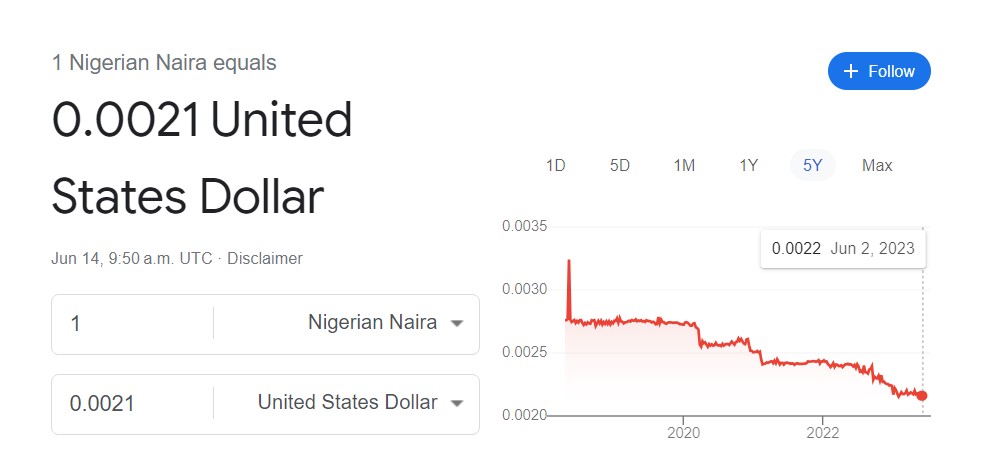
Worth nothing that the collapsing Nigerian Naira is currently worth 0.0021 USD and, as the same article states, roughly 50 percent of Nigeria’s brewing input costs is imported.

That’s it! That’s enough from me. I need to save my strength for the allotment my house now sits in. Back to you for now as always. And as per, you can check out the many ways to connect including these voices on Mastodon, the newer ones noted in bold:

Stan Hieronymus | The Man!
Boak & Bailey | The B² experience
Curmudgeon Ale Works | Jonathon is Brewing
Katie Mather | Shiny Biscuit and Corto
David Jesudason | “Desi Pubs” (2023) author
BeoirFest | They say “Let’s Talk Beer”
Ron Pattinson | The RonAlongAThon Himself
Al Reece AKA Velky Al | Fuggled
Jennifer Jordan | US hops historian
Alan McLeod | A Good Beer Blog (… me…)
Andreas Krennmair | Vienna beer and lager historian
Beer Ladies Podcast | Lisa Grimm and colleagues
The Bar Towel | Toronto’s chat zone for beer lovers
Chicago Beer Society | Folk in Chicago getting social over beer
Jay Brooks | Brookston Beer Bulletin
Joe Stange | Belgian beer expert, beer magazine editor
Cider Bar | Barry makes Kertelreiter cider
Laura Hadland | CAMRA historian and beer writer
Brian Alberts | US beer historian
Jon Abernathy | The Beer Site
Maureen Ogle | US Beer Historian
Lars Garshol | Norwegian Beer Historian and Kveik Hunter
James Beeson | Beeson on Beer
Carla Jean | MAINER!!!
Thandi Guilherme | Beer Ladies Podcast Co-host
Lisa Grimm | Beer Ladies Podcast Co-host
Roy of Quare Swally | Beery ramblings from Northern Ireland
Rob Talksbeer | Podcaster and Youtuber
Anthony Gladman | UK Drinks Writer
Jeff Alworth | Manna Of Beervana
Northwest Beer Guide | Fairly self explanatory… but not NW Latvia…
Evan Rail | Prague based GBH editor, freelance writer, NYT etc.
Todd Alström | 50% of the Alströms
Jacob Berg | Beer talking librarian

Anyone else? And, yes, we also check the blogs, podcasts and newsletters to stay on top of things – including more weekly recommendations from Boak and Bailey every Saturday and Stan at his spot on those  Mondays! Get your emailed issue of Episodes of my Pub Life by David Jesudason on many Fridays. Once a month, Will Hawkes issues his London Beer City newsletter and do sign up for Katie’s now more occassional but always wonderful newsletterThe Gulp, too. Ben’s Beer and Badword is back! And check out the Atlantic Canada Beer Blog‘s weekly roundup. There is new reading at The Glass. Any more? Yes! Check to see the highly recommended Beer Ladies Podcast. And the long standing Beervana podcast . There is the Boys Are From Märzen podcast too and check out the travel vids at Ontario’s own A Quick Beer. There is more from DaftAboutCraft‘s podcast, too.  All About Beer has introduced a podcast.  There’s also The Perfect Pour. Plus follow the venerable Full Pint podcast. And the Craft Beer Channel on Youtube soon celebrating a decade of vids.   And remember BeerEdge, too, and The Moon Under Water… if you have $10 a month for this sort of thing… I don’t. Pete Brown’s costs a fifth of that. There was also the Beer O’clock Show but that was gone after a ten year run but returned renewed and here is the link!****

*Here you go. Here’s the reference.
**When the fam says “What? Why?” when I pull out a bottle of something tasty, I pull out my atlas, point at a patch of a few hundred square metres and say “From that field right there!
***See, if you see nuance or complex or subtle being used to point at things that are merely specific or one part of a long list, just as with “mystery” as cited above, you might be in the doldrums of such conditions. Hanging out with engineers taught me this. Engineers are the heroes of the lengthy sensible to do list. Put things on it when you think of them and strike them off when they get done. Build a few bridges and you learn this sort of thing. 
****And finally the list of the departed newsletters and podcasts or those in purgatory. Looks like  both Brewsround and Cabin Fever died in 2020, . We appreciate that the OCBG Podcast is on a very quiet schedule these days – but it’s been there now and again.  The Fizz died in 2019.  Plus Fermentation Radio with Emma Inch seems done and the AfroBeerChick podcast is gone as well! The Fingers Podcast packed it in citing, umm, lack of success… as might have been anticipated, honestly. Did they suffer a common fate? Who knows?

The Gloriously Reduced Redacted And A Bit Recycled Thursday Beery News Notes For Mid-February

A plague upon ye, poor internet services. A plague I say! My Wednesday was rooon’d by bad internet service. Not something I usually suffer from. No, it’s usually a clear path for these my cranks. Not this week. I’ve had to set up antennae, hot spots and coaxial cables just to get this week’s beery news notes to you. It’s tragic. To be so modern yet soooo dependent. Thank God for my AM radio and old New Yorkers, I say, too. Anyway, if this week feels like less value for your hard earned dollars, write Mr. Internets of Internetsville. Ah, the critic’s life is full of troubles. (Update: RIP Mr 2017 Modem.)

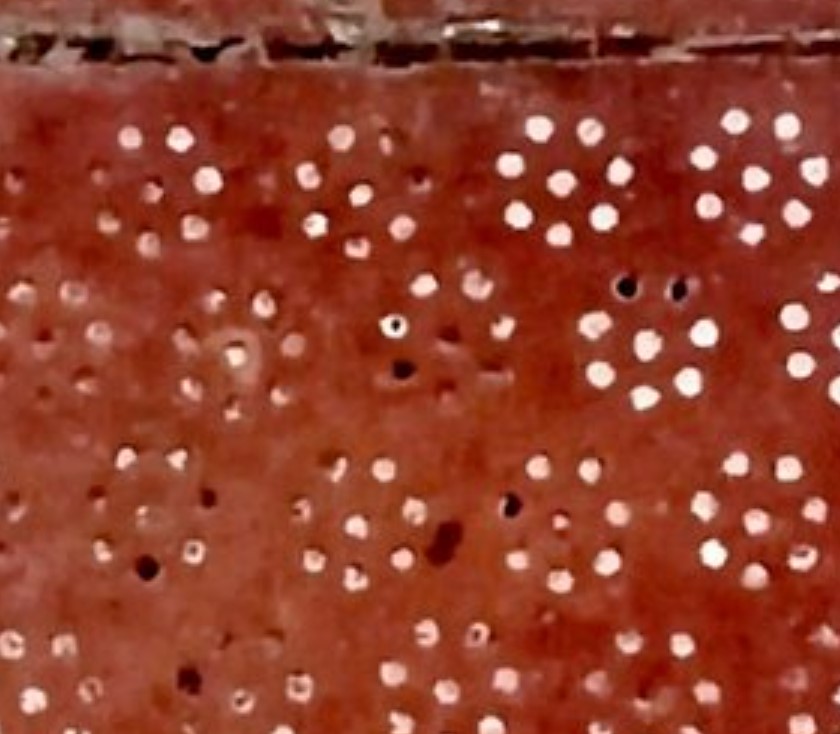
But when it does work, this is why the internet was created: a photo that answers questions:

Repurposed malt kiln tiles at St Andrew’s, Foxton. Over time the air holes have ended up being filled in which has created a rather attractive pattern of tiny flowers.

Check out the deets. Tiny wee holes for the warm air to waft up and amongst not quite so tiny malt. And that’d be in a church not a pub, by the way. Tiles were made in the parish near the church as recently as 225 years ago.

Not quite so ancient of days but I also loved the book report submitted by Boak and Bailey this week, extracting lots of pubby goodness from Winter in England by Nicholas Wollaston, published in 1966. This is a sort of thoughtful post on both the book and the genre that makes it worth opening the laptop each week. Genre!  Genre:

Wollaston’s idea was not especially original. We’ve got quite a collection of similar books in which a university-educated writer, academic or journalist hits the road to take the temperature of the nation. There’s sometimes an angle, such as a focus on a particular region, or on small towns, or social problems. More often than not, though, they feel quite random and organic – the record of a kind of purposeful drifting. And because they’re supposed to record reality, taking middle and upper class readers to places they perhaps wouldn’t go themselves, pubs feature more frequently than in other types of writing.

I might again recommend Ronald Blythe’s Akenfield for a less perfumed view of 1960s England, one where many farm workers remembered never having enough for the pub – or even shoes – even though they worked upon the land of the wealthy.

Speaking of tight times, Beth gave us the heads up on this story of the SoCal craft scene. Note: cyphers and code abound so please remove your rose coloured craft glasses first to read what is really being said:

Highland Park Brewery near Dodger Stadium emerged from the pandemic in relatively good shape. But Marketing Director James Sullivan says times are tough for a number of local craft brewers. “I think it’s going to be a difficult year,” he says. “I feel like we’re going to see a lot more closures. I feel like we’re going to see a lot more turnover.” Sullivan says the thirsty local market may not yet have hit peak craft. But that day is coming. “I think we’re getting there,” he told me. “I think, you know, starting this year, we’re going to see a lot of our locals unfortunately closing, and it’s tough to see.”

Lisa’s been out and about in Dublin and has set the scene in a very comfortable and not at all closed familiar spot:

The White Hag’s Little Fawn is another excellent go-to, and I had a wander around the entire space, eventually settling in one of the snugs, which now has not only a sofa and comfy chairs, but books of an especially eclectic thrift-shop selection – something I am very much here for. Some may find the upcycled church fittings in this part of the pub a little too ‘hipster’ for them, but I’ve always had a soft spot for that kind of thing, so I am a fan. They are now definitely ticking all the boxes for ‘great spot for solo pint and book’ and as they are mere steps from my door, I am not remotely mad about this.

Not sure – but also not remotely mad – but is a lager is a lager when it isn’t lagered even if the yeast is what it is:

As lager brewing became more popular, ale and porter brewers reacted to the new competition with beers such as cream ales—essentially, pale lagers made with ale yeast. That brings us to an example of where things got mixed up: Once this style became established with consumers, some brewers began making them by blending beers made with ale and lager yeast. Others who were used to brewing lagers also wanted in on this trendy style—so they simply brewed it with lager yeast.

Probably the better argument is that as Germanic immigrants, especially those who came to North America before that tragic rebellion, brought their yeast and continued to use it in all conditions, with or without cold storage.  And it did the job, lingered and took on many names.

Jeff (when not thinking about AI aka “Eh? Why?”) has explained a very odd mirrored arrangement by Pacific shores:

The US Department of Justice decided that the deal would create too much consolidation in Hawaii, and demanded that ABI spin off the Kona brewery before they’d approve the CBA acquisition. ABI complied, and the result is a very weird situation in which there are two separate businesses selling the same beer. They use the same branding. Google one and you might find yourself on the webpage of the other. Yet the beer they make is sequestered—with help from the Pacific Ocean—one brewery serving just Hawaii, the other everywhere else.

Speaking of AI, interesting to see that it has now also relieved beer writers from personally participating directly in the standardized but still quite hyperventilated circle of praise.

Breaking and conversely: GBH has added to its random ramblings of reshaping press releases mixed with fan fiction beer travelogues seemingly funded by a shadowy global backwater tourist bureau association** by branching out into an orphaned essay on sports journalism. The word “beer” appears twice so…

Finally, I do hope this is the end of this part of the story. I fear that this sort of salvation might have sidetracked folk from available recourse, maybe made things worse or unnecessarily muddled.  The lack of much interest* in the finale was neatly in contrast to the conclusion’s self-assessment:

Our work with the platform has highlighted the shortcomings and systematic failures of labour law in Scotland, the UK and internationally, leaving many affected workers with no legal protection or recourse. These learnings have informed our positive action petition and campaign, called “Retaliation Legislation Reform” which stands as a positive legacy.

That’s it! Now… what to do… with these lists… They are getting to be almost 600 words each week and I am not sure how useful they are. Still… Stan joined Mastodon this week so it must be useful. I mini-ized the list for greater dynamism. Sweet move, right? So what song this week? What would I play if this were a movie and these were the scrolling credits? Could it be this? I’m reading the startlingly excellent autobiography of Nile Rodgers so that works just fine…

Stan Hieronymus | The Man!
Boak & Bailey | The B² experience
Katie Mather | Shiny Biscuit and Corto
David Jesudason | “Desi Pubs” (2023) author
Ron Pattinson | The RonAlongAThon Himself
Al Reece AKA Velky Al | Fuggled
Jennifer Jordan | US hops historian
Alan McLeod | A Good Beer Blog (… me…)
Andreas Krennmair | Vienna beer and lager historian
Beer Ladies Podcast | Lisa Grimm and colleagues
Jay Brooks | Brookston Beer Bulletin
Joe Stange | Belgian beer expert, beer magazine editor
Cider Bar | Barry makes Kertelreiter cider
Laura Hadland | CAMRA historian and beer writer
Brian Alberts | US beer historian
Jon Abernathy | The Beer Site
Maureen Ogle | US Beer Historian
Lars Garshol | Norwegian Beer Historian and Kveik Hunter
James Beeson | Beeson on Beer
Carla Jean | MAINER!!!
Thandi Guilherme | Beer Ladies Podcast Co-host
Lisa Grimm | Beer Ladies Podcast Co-host
Rob Talksbeer | Podcaster and Youtuber
Anthony Gladman | UK Drinks Writer
Jeff Alworth | Manna Of Beervana
Northwest Beer Guide | Fairly self explanatory… but not NW Latvia…
Evan Rail | Prague based GBH editor, freelance writer, NYT etc.
Todd Alström | 50% of the Alströms
Jacob Berg | Beer talking librarian

You still need to check out Mastodon. It’s so nice. You need to take the time and have the patience as regular posting attracts the audience as per usual. While you are at it, check the blogs, podcasts and newsletters for more weekly recommendations from Boak and Bailey every Saturday and sometimes from Stan at his spot on those  Mondays, you know, when he can. And, yes, also gather ye all the podcasts and newsletters. Check to see the highly recommended Beer Ladies Podcast. We appreciate that the OCBG Podcast is on a very quiet schedule these days – but it’s been there now and again. See also sometimes, on a Friday, posts at The Fizz as well (Ed.: we are told ‘tis gone to 404 bloggy podcast heaven… gone to the 404 bloggy podcast farm to play with other puppies.) And the long standing Beervana podcast but it might be on a month off (Ed.: which I have missed from this list for some unknown reason.) There is the Boys Are From Märzen podcast too and check out the travel vids at Ontario’s own A Quick Beer. There is a monthly sort of round up at The Glass. (Ed.: that seems to be dead now… nope, there was a post on July 25th… in 2022 even.) There is more from DaftAboutCraft‘s podcast, too. And sign up for Katie’s (Ed.: now very much less) irregular newsletterThe Gulp, too. And check out the Atlantic Canada Beer Blog‘s weekly roundup. Still gearing  up, the recently revived All About Beer has introduced a podcast, too. (Ed.: still giving it a few more weeks to settle in and not be as agreeable…) Plus follow the venerable Full Pint podcast. And the Craft Beer Channel this week on Youtube. Plus Fermentation Radio with Emma Inch. The AfroBeerChick podcast as well! And also look at Brewsround and Cabin Fever. And Ben has had his own podcast, Beer and Badword (Ed.: …notice of revival of which has been given… still not on the radio dial…)  And remember BeerEdge, too, and The Moon Under Water. There was also the Beer O’clock Show but that’s now gone after a ten year run… no, it is back and here is the linkThe Fingers Podcast has fully packed it in citing, umm, lack of success… as might have been anticipated, honestly.

*A single person really shouldn’t be an “it” should they?
**It’s still a thing – even if the glory days of Catalonian sausages are no longer with us!!!

The December Is Almost Here Edition Of The Beery News Notes

And… that was November. or it will be soon. From mowing the lawn to frozen ground in a mere 30 days. World Series to free agency. Stout sales go from “?” to “!” It’s good like that, November. Knows it’s place. The saddest month. Not cold enough to be bracing and clear like January. Look, I’ve already started to move on. Christmas pressies have been bought. Just have to see if they arrive before January. What else might arrive by then? A Christmas photo contest entry pro photographer Peter B. Collins in 2011 might give you some idea.

Now then… first up, a nice bit of work from Retired Martin this week, a photo essay on Whitelock’s in Leeds interspersed with witty tidbits:

All tables taken, but obviously I’d brought the fine weather with me oop north and you don’t get much better outside seating than this, watching life amble by and end up in the loos for the Turks Head, wondering where you are.

Note: I am pro-deposit for reservations.

Not to overload you with pub observations, Life After Football shared some thoughts on one funny gaffer in “Pickled in Branston“:

The Gaffer had a glint in his eye and when I said, “Can I have a pint of Bass?” He replied with “No you can’t – it’s all mine!” Clearly, a man after my own heart and with four other people in there at about 12.05 he has a base of local punters happy to roll in on a Monday. “I’ll get you that pint young man,” he said and when I said I’d not been called that very often, quick as a flash he replied “I’ve been known to lie!”

Har-har… har… And Boak and Bailey asked a couple of good questions this week, one in their newsletter but first, in a variation on the theme, this about memories of past pubs perfect:

We’ve been struck down by nostalgia lately and find ourselves yearning for a particular experience of the pub. Maybe it’s birthdays. Maybe it’s the emotional impact of the two weirdest years we’ve ever lived through. Or perhaps it was just that excellent pint of Young’s Special at The Railway in Fishponds in Bristol.

They were again a bit nostalgic in the monthly newsletter, this time for beer blogging days.

…in the UK at least, the growth in professional (ish) outlets has sucked up a lot of content that would previously have been on blogs. That’s great news for writers – they get paid! They get proper photography and illustrations to accompany their piece! And it gets promoted properly, too. A few years ago, everyone was fretting about the death of beer media, meaning print magazines. But we wanted that and blogs, not one or the other, right?

Well, no. Print writing can be narrow and often by commission. My take? It may not be so much about the death of blogs as the ascent of a duller sort of paid writing. Don’t get me wrong. Some is great but commissioning editors with creditors set parameters.* People with just an interest have gotten to project themselves as people with authority without the decades of Stan‘s experience or the miles Jeff puts in. Others writers – sometimes the better ones – got jobs, moved on or just ran out of imaginative takes on a limited niche topic.  

Yes, that is where we are. It happens. And when things are slow like they have been in 2021, we tend to move backwards hoping we are staying in place.  This year of almost entirely updated next editions is almost over but not until we have, tah-da, the personalized beer flavour wheel. Beer flavour wheels have been around for decades. I am not sure why I need someone else’s different beer flavour wheel. Never bothered with one yet. But beer flavour wheels have been around for decades so someone must have. Schmelzle‘s dates from 2009. Dr. Morten Meilgaard seems to invented them in the 1970s. I asked a related question a decade ago and still have no idea what the answer is.

Speaking of flogging, this year’s version of the GIBC advertorial in the Chicago Tribune has led to some astounding information, not least of which is this:

The “reserve” package is the one the beer nerds want — 9 Bourbon County beers, including the most limited brands aged in the fancy barrels, for $259.99.

Bizarre. Takes some convincing folk that these prices (and I suppose the advice itself) aren’t suspect – if not grand larceny.

And speaking of the more than a bit weird, the US magazine Esquire published a short opinion piece that led to a long list of complaints:

The first half of a beer is why we drink beer. The second half is an afterthought at best, backwash at worst. If you were to watch all the beer commercials from the beginning of time, you’d hear the words cold and refreshing over and over and over. That’s because marketing people aren’t that creative, and also because that’s what sells beer. No one drinks beer for the tepid second half….

Comments included: (i) No one in their right mind would say this about another foodstuff. “Feel free to toss that second half of cold pizza in the garbage…”; (ii) “You know you can order smaller pours if you want beer to stay cold the whole time?”; and (iii) “Like she had to meet a word count quota before she left for Holiday break.” Esquire has apparently claimed that this is a stab at satire which, if it is true, suggests that it is not actual good satire.

PS: never heard of him either. But it appears the status you are desperately wanting to achieve is so incoherent that it requires outside intervention. And tricks.**

That’s a bit of negativity right there. For a bit right up there. What caused that? Nostalgia? Getting away from the pubs? We need to get grounded. Beth Demmon takes us to the hear and now with the first in a series on the state of the water supply in Southern California where the ground is dry and how the San Diego brewing scene may be facing change:

In such a water-thirsty region, it’s imperative for beverage companies like AleSmith to maximize their materials through sustainability initiatives. Cronin says AleSmith is on a two-year track to become Pure Water compliant through the city of San Diego, which aims to provide one-third of the city’s water supply locally by 2035 by purifying recycled water. Considering that Cronin estimates AleSmith rinses 7,000 – 10,000 gallons of wastewater into the municipal system every day, that’s millions of gallons available for reuse.

I brushed against this topic in 2015 in my superficial way but this is seven levels better. Excellent described detailed research. Additionally and also in the present and the positive, Jordan wrote about himself and what he is doing in beer these days – and this time it all makes utter sense:

I would guess that I probably try somewhere between 500-1000 beers every year, not counting repetition. Beyond a certain point, professionally speaking, beer is content. It’s informational. My fridge is more than half full of obligational beverages that people have sent for review and which might end up on instagram or in an article. I probably won’t finish more than about half of any of them, because the point isn’t drinking them; the point is knowing about them. Beer contains calories, as the new pair of jeans remind me.

Good advice. And look! More good advice. Three ingredient cocktails. Sensible simple tasty booze. That’s positive.

What next? History? History is good. Edd the BHB on 1910 Nottinghamshire ales, the Warwicks & Richardsons range. Did they still sing the song 120 years later? More history? Graham Dineley posed the question of beer stone and prehistoric pottery and found fatal flaws in the research to date:

Many scholarly academic beer “experts” have never actually made beer, and so have no experience or expertise. Brewing beer is a particularly experiential process, where the subtleties and nuances are necessary and essential for the full understanding. Many of these “experts” confuse beerstone with calcium oxalate. 

Finally but not happily, this tweet got my attention from Ren:

The irony of being written out of beer history by women hoping to change beer history…

Reality again. I do wish folk would get out of the way. I was also disheartened this week to see another part of Black experience filtered (again) by GBH through the inclusion of the hand of someone from outside. This is a bit of the opposite of my recent experience with the Beer Culture Summit 2021 produced by the Chicago Brewseum. Hand over the keyboard and get out of the way. No amount of time or miles can replace the unfiltered voice of one who has been there and has something to say.

That’s it. A tough one for good pics this week. A bit of a hard row to hoe if we are looking for the captivating in beer writing. Every week can’t be thrilling. I suppose, that’s the way it goes. Still, check out the updates from Boak and Bailey mostly every Saturday and from Stan every Monday, plus more with the weekly Beer Ladies Podcast, and at the weekly OCBG Podcast on Tuesday and sometimes on a Friday posts at The Fizz as well. There is a monthly sort of round up at The Glass. (Or is that dead now?) There is more from the DaftAboutCraft podcast, too. And the Beervana podcast. And sign up for Katie’s weekly newsletterThe Gulp, too. (That’s a bit now and then now.) And check out the Atlantic Canada Beer Blog‘s weekly roundup. Plus follow the venerable Full Pint podcast. And Fermentation Radio with Emma Inch. The AfroBeerChick podcast as well! And also look at Brewsround and Cabin Fever. And Ben has his own podcast, Beer and Badword (which he may revive some day…)  And remember BeerEdge, too, and The Moon Under Water.

*Very tempted to go all Ogden Nash and spell it “paramitors.”!
**If your studies include flash cards and tricks… maybe you are not actually studying something at all.

The Two-Thirds Into Spring 2020 Edition Of Thursday Beery News Notes

I am having trouble with time. I thought it would drag but it’s racing for me. I thought it was maybe May 9th when I woke up. 11:45 am comes at an alarming pace each day. Things are opening up here. Tennis but no football. Playing catch as long as no one get tagged out at home. It’s sensible as we have done a good job locking the damn bug down… but then what. Society is temporarily reorganizing to maximize activity safely. I want to get a beer at a patio but so far it’s still my own patio in my own backyard. Just grateful that this isn’t happening in any November I’ve known.

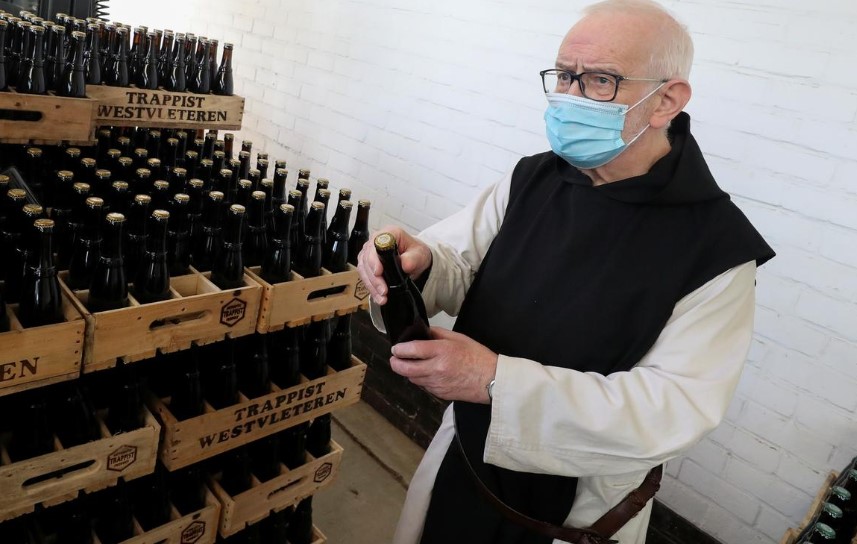
As excellently illustrated above by Yves Harman, Reuters reported that the Mons of the Saint-Sixtus abbey are up and at’em:

The Saint-Sixtus abbey, home to 19 monks, launched an online sale on Thursday evening of 6,000 crates, with pick-ups starting Friday. Exceptionally, customers can buy three crates. Normally it is just two. Customers can come as usual by car, but are told not to leave their vehicles while queuing until they pass a newly installed traffic light before the pick-up point. There, a lay worker in mask and gloves passes their 24-bottle crates through a small gap in a plastic screen. 

Good for them. I am not obsessive about the stuff but nice to see money flowing. Beer Ritz is opening, too, and Buckfast is back – buct Cookie wants more. You know, it’ll be interesting in the post-mortem if we learn that Covid-19 can actually be transmitted though small gaps in plastic screens.

Matthew has gotten his game going, too, as illustrated by this post on how beer bloggers are coping with Covid-19. I must be losing my touch as all the targets are not obvious to me (but interesting to see Tandyman disappointed in being left out):

Any kind of pub-type experience is at least ten weeks away at this point, so at best we’re not even halfway through this yet.  But if you, dear reader, think that you are suffering, imagine the travails of those most affected by this ordeal – the pub and beer bloggers of the UK.  As this particular blog is among those that are most well-regarded and connected, we at Seeing The Lizards have asked a select group of other bloggers on how they’re coping while cut off from their usual stimuli.  And, importantly, how much they’re drinking as a result.

Dr. J. J.-B. tweeted some excellent thoughts about her role in the overall construct of social justice advocacy within craft brewing and lessons learned from both Covid-19 and her carpentry skills:

Keynote speaking, workshops, and intensive on-site consulting are simply not tools that we can rely upon in a post-COVID world. And those tools had severe limitations that I am enthusiastically addressing over these weeks of physical distancing.

Good. She has shared hints of this before and I have to admit I am pleased. I have had at times a role in advocating for indigenous rights among legal circles as well as the importance of records related privacy rights and the public speaking role can seem to trigger a easy nod from the audience rather than a revivalist’s commitment. I am rooting for her. Fight!

Gary has posted a very good discussion on California Steam Beer which I like most of all because it aligns with my own thoughts on the matter while going into more detail:

The one area I do not necessarily agree with these authorities, contemporary as they are, is their assignment of steam beer as solely bottom-fermented. Clearly they state this, indeed Wahl & Henius state that lager yeast is a special type of bottom yeast. Kummerlander simply states that steam beer yeast is “a bottom-fermenting yeast”, but that’s clear enough. Buchner ditto. I find the area much less clear. To scientists and technical brewers after about 1900, classification was increasingly important, as of course today. Between 1850 and 1900 when steam beer was in ascendancy in California and still often made in rude conditions, e.g., without mechanical cooling of wort, such distinctions would have been less important.

It also serves as a good companion to Jeff’s post on Anchor Steam of a few weeks ago. It is settled. “Steam” was just useful techno-branding.

Speaking of early 1900s brewing, Ron posted an interesting piece on German WWI brewing constraints:

I’ve seen UK brewing records where ther’s (sic) the odd much stronger version brewed, which is then blended with weaker beers post-fermentation. The point being to get healthy yeast to be pitched into later brews. And that was when worts were in the 1020ºs, considerably higher than the 3º Plato (1012º) they had been forced down to in Germany.

And in more brewerio-historique news, Martyn has made a plea for today’s brewers to record what is happening during this pandemic for the future Rons out there:

…even though brewers have plenty and more to do just to try to survive right now, I have a request, as a historian: when this IS all over, or even before, if you have a moment, please, take time to record what you did, what you’re doing, to survive, what strategies you adopted, what changes you made, from organising home deliveries to turning your beer into hand-sanitizer. Because in ten, 20, 50 years’ time, people will be looking back at this and saying: “Wow – what must it have been like to have lived through that, to have tried to run a company, keep it going, while all that was going on?” And you can let them know.

Katie is taking sensible breaks.

For the double and as part of the Twitter discussion on the utility and limits of style as a construct, Ron has posted a challenge to identify which late 1930s British ales were branded at IPAs:

To emphasise the difficulty, nay, impossibility of splitting apart UK Pale Ale and IPA in the 20th century, I thought up a little game. It’s called spot the IPA. The table is of various beer brewed in 1938 and 1939. Some were called as Pale Ale and some were called IPA. Can you tell which is which? The IBU value is my calculation, based on the recipe. Got gospel, but at least a general indication of the bitterness level.

I am of the “style = branding” school of grump but many other well stated views are in the thread which may have started back here with Jeff (double) on May 10th… (who cites Ron which may make for a treble.)

And, if you squint, you can read Beth‘s contribution to Craft Beer & Brewing mag on the situation in Oakland. Excellent.

That’s it for now. Might have a couple of beer after work tomorrow. Now that the blood pressure is back down. Gotta watch out for bad habits in these times of stress. Keep writing and reading and keeping up with the chin uppitry. Check in with Boak and Bailey most Saturdays, plus more at the OCBG Podcast on Tuesdays and sometimes on a Friday posts at The Fizz as well. And sign up for Katie’s weekly newsletter, too. Plus the venerable Full Pint podcast. And Fermentation Radio with Emma Inch. There’s the AfroBeerChick  podcast as well! And have a look at Brewsround‘s take on the beer writing of the week. Not to mention Cabin Fever. Thanks for stopping by while not leaving the house.


It’s Mid-May And Here’s The Thursday Beery New Notes

Here’s the real news since last week. I had to get the car battery jump started. Things have gotten so idle around here that the battery went flat. In spring. Not that you would have known it was spring with the temperatures but that is not my point. The point is the second biggest investment in my life is sitting there entering an entropic state, proving the one or more of the laws of thermodynamics. Or something. Fords. Go figure. Plus the other real news is that Max went to a bar and drank a beer. In Prague. Really. I think it is going to be alright after all. I did that last on the 6th of March. Seventy days ago or so.

What else has been going on? Work has been busy and drinks few so there has been a wee bit of a slide in my reading this week. Zoom meetings. All the zooming… who knew? One thing that’s being going on is that Robin and Jordan hit a one year anniversary of their podcast. Note: a word which is not about dealing with the residue left after a good pea shelling session.  I listened to the first at a ball diamond parking lot up north in Sydenham, Ontario. I’m listening to broadcast #52 as I type. This week, they discuss the local new world order of home delivery direct from breweries which reminded me of this news from California‘s Department of Alcoholic Beverage Control:

The investigation’s findings, posted as an industry advisory to the ABC’s website, say “the Department’s recent enforcement actions have revealed that third-party delivery services are routinely delivering alcoholic beverages to minors,” and that “many licensees, and the delivery services they use, are failing to adhere to a variety of other legal obligations.” The situation is being exacerbated by the pandemic because of “a marked increase in deliveries” once the state began allowing the sale and delivery of to-go cocktails and other forms of liquor in March.

Also in Toronto, Mr. B commented on the fiscal prospects a beer writer faces these days when contemplating a new book project:

HAHAHHAHAHAHAHAHAHAHAHAHAHAHAHAHAHAHAHAHAHAHAHAHAHAHAHAHAHAHAHAHAHAHAHAHAHAHAHAHAHAHAHAHAHAHAHAHAHAHAHAHAHAHAHAHAHAHAHA… (breathes)… HAHAHAHAHAHAHAHA HAHAHAHAHAHA

Not unrelated, please tip more.

Conversely, there was a great splash out on the typewriter ink ribbon for Boak and Bailey’s #BeeryLongRead2020 fest-a-bration earlier this week and they posted a handy round up of seven of the submissions. A prize in the form of a bundle of books was sent to the best entry, Josh Farrington for his essay “Something in the Water“:

Some of my first memories of drinking come from those summer holidays. Sips of pungent sea-dark wine, acidic and overwhelming; a sample of gin and tonic, bitter and medicinal with a gasping clarity; and of course, beer – not ale, nothing my grandfather would touch – but lager, cold and crisp and gassy, a fleeting glimpse of adulthood.

Ah, the pleasure of the amateur pen. But if that were not enough to dissuade you from a career path, there was big news on the sensational front reported this week:

 To test this, we first compared a group of wine experts to yoked novices using a battery of questionnaires. We show for the first time that experts report greater vividness of wine imagery, with no difference in vividness across sensory modalities. In contrast, novices had more vivid color imagery than taste or odor imagery for wines. Experts and novices did not differ on other vividness of imagery measures, suggesting a domain‐specific effect of expertise. 

Modalities. Again with the modalities. Frankly, I have long suspected there was no difference in vividness across sensory modalities. You doubted me but there it is.

“How to Bottle Condition Beer” by Stephanie Brindley for the brewery tech services firm, Murphy and Son. Just the one. In case you wanted to know.

@oldmudgie offered a wonderfully reactionary, counter-reformation laced  call to turn back the clock by arguing that the pub smoking ban should now be reversed as part of the new world order:

It should be remembered that smoking continued to be permitted in outdoor areas because it was felt that there was little or no risk to others from environmental tobacco smoke. (The same is true indoors, of course, but that’s another matter). If people don’t like it, that’s up to then, but it seems a warped sense of priorities to be more worried about the risk from second-hand smoke than from coronavirus.

He also added that there is evidence that heavy smokers may actually offer some protection against Da Vid.  It is an evil disease that prompts you to save yourself by killing yourself.

Conversely, the anti-neo-prohibitionist Straw Man Society will no doubt have frothed at the mouth  over this interesting BBC bit on why you might be drinking too much during lockdown:

“In the moment, it feels like relief and we feel better,” explains Annie Grace, author of This Naked Mind: Control Alcohol. “Our blood alcohol level rises and things feel slower; our mind relaxes and there’s some disorientation and euphoria.” But the relief is transient, she says, as “20-30 minutes later the body starts to purge the alcohol, because that’s what the body does with toxins, and as the alcohol leaves our blood we start feeling uncomfortable and even more stressed”.

Not me. I’m off the bottle. Largely. Me, I am pumping up my immune system as fast as I can… and maybe now taking up a two-pack of smokes habit a day.

Care of Cookie, we learn that the scholars of the UK’s newspaper The Sun have taken a different tack on the issue of health and drinking and offered this regulatory suggestion from local Tourism Alliance Director, Kurt Janson :

“The urgency of the situation should let shops look at having outdoor seating areas – which is a permitted development – meaning you can just do it. Or you could change planning rules to shut down streets in the evenings. He also explained how pubs in less-populated areas could reopen: “Pubs could open back onto fields, especially in rural areas, and use farmer’s fields to increase the footfall.”

Farmers fields! Filled with newly heavy smokers trying to cope with their new smoking habit as well as their new habit of sitting out in a farmer’s field.  Better than out behind a disused railway line, I suppose.

Rather than such neverlands of past and/or future, Jeff has been writing more about the now:

One of the challenges of this moment is uncertainty: we have no idea—we can’t know—how long this will last. It’s impossible to guess when I’ll be able to sit down for my next pint of draft beer. Those two months feel simultaneously like ten years and also ten minutes. It’s a disorienting time, made all the more so because we don’t know how long it will last.

That’s all for now. Is it still now? Now. And in seven days it will be a week from now. And now again.* Meantime, keep writing and reading and keeping up with the chin. Check in with Boak and Bailey most Saturdays, plus more at the OCBG Podcast on Tuesdays and sometimes on a Friday posts at The Fizz as well. And sign up for Katie’s weekly newsletter, too. Plus the venerable Full Pint podcast. And Fermentation Radio with Emma Inch. There’s the AfroBeerChick  podcast as well! And have a look at Brewsround‘s take on the beer writing of the week. Thanks for stopping by.

*Being early Gen X, this all makes perfect sense to me.


The Thursday Beer News For The Best Week Ever!

What a week. A good week, right? As weeks go, I suppose. If you are into the whole “week” thing. This is the week that we learned Aaron Rodgers can’t chug a beer. That is pretty big news, right? His team of choice, the Bucks lost. Canada said hoo and then said ray. Now… maybe we get our national butts kicked by Golden State.

Just in time for this past week’s European Parliamentary elections, Ed decided to go all nationalist and rate a few sovereign brewing traditions:

…let’s face it, the beer in some countries is better and the four First Class Beer Countries have great beer cultures too. I have carried out extensive research into them and have just come back from a study tour of Germany which confirmed my findings, so for those of you who are still unclear on this matter here’s the ranking…

Aside from the stunning lack of objectivity and the narrow research tools applied to an alarmingly thin data set, I like it! Of course, each of his named top four nations of beer have many horrendous examples of garbage brew and, of course, many other nations have fabulous beers and, of course, his four choices actually have dubious claims to being actual singular nations as opposed to nineteen century splinters or, worse, aggregations of pre-Victorian political convenience but… I like it!!!

A study of Lars studying Kveik. Larsology. Larsologically speaking, quite likeable.

One of the odder bits of news this week was finding out that the Morning Advertiser, the UK brewing trade newspaper, takes money from brewers to take the brewers data, create an advertorial and then hires freelancers to  write it up – then publishes it under the sub-header “in association with” the brewer. No word on how much money changed hands for the the advertorial services. Bizarre? Perhaps.

Scone => rhymes with dawn! Exactly.

Martyn chose this week to write a large number of excellently placed words on malting and maltings:

What I wasn’t expecting on the joint Brewery History Society/Guild of Beer Writers trip to Crisp’s maltings in Great Ryburgh in Norfolk was to be allowed inside the kiln, where the malt, once it has germinated enough, is dried off. These pyramidal structures, often topped with cowls that turn with the prevailing wind, are again familiar to anyone who has ever visited Ware in Hertfordshire, once the greatest malting town in the country, or Burton upon Trent, where multitudes of breweries had their own maltings.

I have no idea what he was talking about as if I am not inside a malting kiln within seven minutes of being on site I feel utterly… ripped… off. Otherwise, some extremely violent news about how Maris Otter is kept from becoming Maris Notter.

More self-consciously uncomfortable and leery than straight sexist but I’ll take alternate views on that any time all day long. Note: the past is a foreign land.

For this week’s headline in beer IP law, Josh Noel reported in the Chicago Trib on an odd clash between one big and one small brewer on the use of a name. Unfortunately, you have to swim a bit through the story to get to the only actual point in law:

…without a federal trademark, Palfreyman said, No-Li’s recourse may be limited, at least in Chicago. It could conceivably have common law rights to the name in places where the beer is already sold, he said. That means Goose Island may have established rights to the name in Chicago. But Ahsmann said he wouldn’t oppose No-Li from expanding distribution here.

This news based on the leak of the week is a bit disconcerting… in a way – but I must note I thought it was odd that a local disaster in a time of many local disasters was the one chosen for this initiative:

Over 1,400 brewers around the country signed up to make the beer in their own taprooms—nearly a quarter of all the breweries in the United States. But more than half of those brewers have yet to send any money raised from the beer to Sierra Nevada… The brewer, however, says it has been in contact with many of the brewers and, while the numbers are “concerning,” it expects them to honor their commitment. They just need more time.

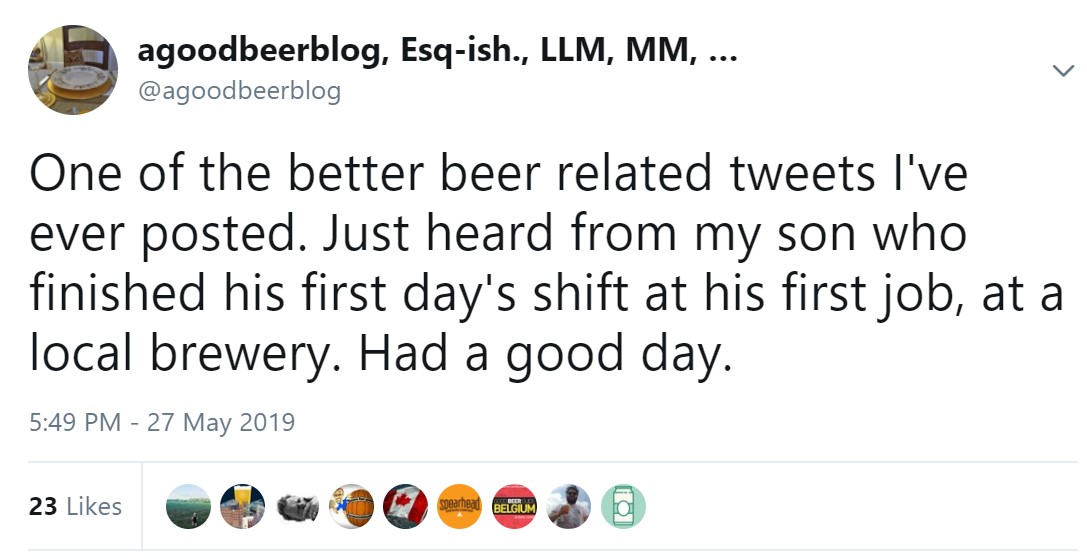
And it was a big week in beer news around our house as the I shared on Twitter the other day. Helping with the canning by day two. Kegging lessons started on day three. Good gang, good work and an actual trade if the long hours are put in. Jordan put it best: “Finally after all these years, a conflict of interest“!

Otherwise, it’s been a little quiet on the beer news front this week. Is that why Stan flies somewhere exotic every once in a while? To hide from these uncomfortable pauses where folk have nothing to talk about but beer can wrappers and… well… that’s about it. Please check out Boak and Bailey this Saturday… but that guy Stan? I am betting he calls in sick again this this Monday. Again.

When Steam Was King… It Was Common

Two years ago – well, 23 months ago, I wrote a brief passing thing about the concept of “steam” beer in a post about another thing, cream ale, but given this week’s sale of Anchor, makers of steam beer who proudly proclaim they are San Francisco Craft brewers since 1896,  to an evil dark star in the evil dark galaxy of international globalist beverage corporations, I thought it worth repeating and expanding slightly. Here is what I wrote:

Adjectives from another time. How irritating. I mentioned this the other day somewhere folk were discussing steam beer. One theory of the meaning is it’s a reference to the vapor from opening the bottle. Another says something else. Me, I think it’s the trendy word of the year of some point in the latter half of the 1800s. Don’t believe me? Just as there were steam trains and steamships, there were steam publishers. In 1870 there was a steam printer in New Bedford, Massachusetts. A steam printer was progress. Steam for a while there just meant “technologically advanced” or “the latest thing” in the Gilded Age. So steam beer is just neato beer. At a point in time. In a place. And the name stuck. That’s my theory.

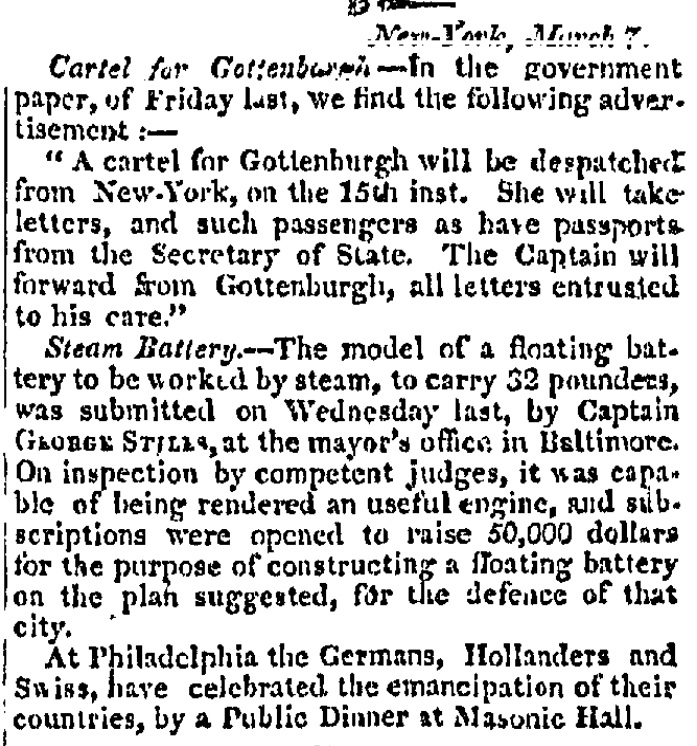
And here is what I would like to add. To the right is a news item from the Albany Gazette of 10 March 1814. As I have looked around records from the 18o0s for example of the use of “steam” I describe above, I found this one describing a steam battery both early and entertaining. I assumed on first glance that this was some sort of power storage system. In fact it is for a barge loaded with cannon. 32 pounder cannon which are rather large cannon indeed. Well, all cannon are large if they are pointed at you I suppose but in this case they are significant. For the nationalist vexiologists amongst you, I can confirm that the proposed autonomously propelled barge system of cannon delivery was reported six months before the Battle of Baltimore. Were they part of the sea fencibles? Suffice it to say, as with steam publishing and steam train engines you had steam based warfare by battle barge.

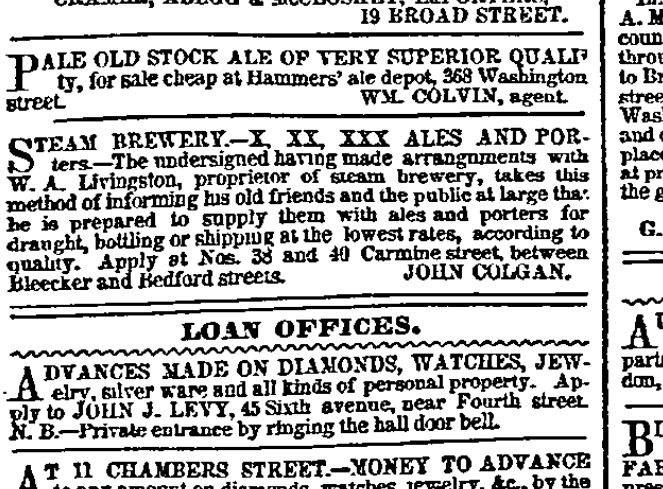
Next – and again to the right – is a notice placed in the New York Herald on 11 September 1859 indicating that John Colgan was selling three grades of ale and perhaps three grades of porter after “having made arrangements with W.A. Livingston, proprietor of steam brewery…” This appears to be an example of contract brewing where Livingston owns the brewery and contract brews for the beer vendor, Colgan. Aside from that, it is a steam brewery. Livingston’s operation was listed in the 1860 Trow’s New York City Directory along with a number of other familiar great regional names in brewing such as Vassar, Taylor and Ballantine. And it lists over two pages a total of four steam breweries, including Livingston’s. Which makes it a common form of industry marketing.

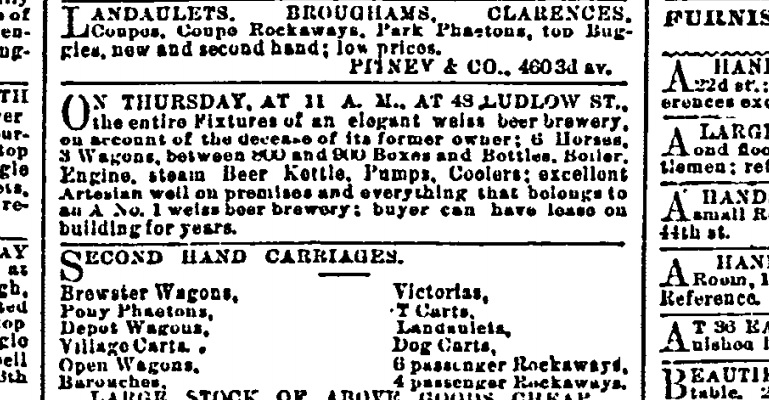
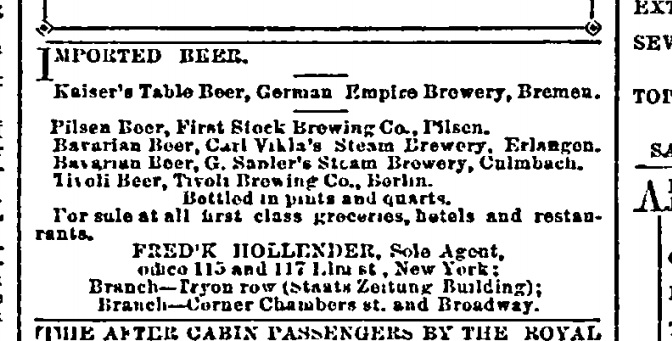
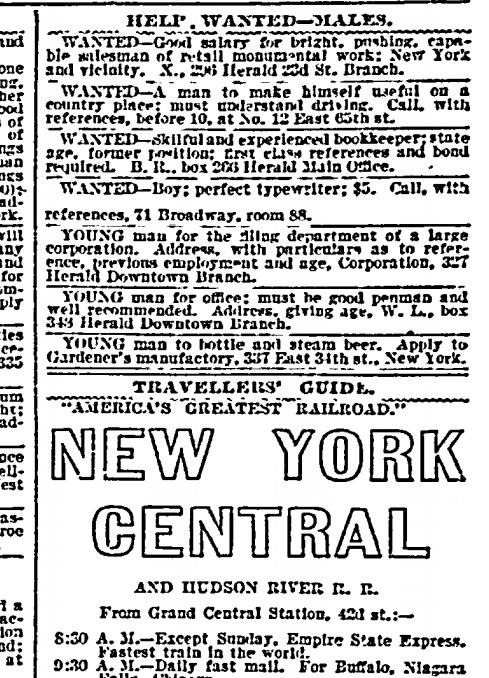
“Steam” is quite venerable as a descriptor of technology. If you squint very closely at this full page of the Albany Register from 29 January 1798 you will see steam-jacks for sale. It is also a term that moved internationally. In the New York Herald for 15 September 1882, you see two German breweries named as steam breweries. And again in the Herald, in the 10 August 1880 edition to the right, we see the sale of the weiss brewery at 48 Ludlow Street details of which included a “steam Beer Kettle” amongst other things. One last one. An odd one. If you look at this notice from the Herald from 14 June 1894 you will see a help wanted ad seeking a “young man to bottle and steam beer.” Curious.

What does any of it mean? Well, steam beer and common might have a lot more to do with each other than the just the name of a style.


Is The Western US Drought 2015’s Top Beer Story

4877We all drink dinosaur pee. Or at least the water we drink was also in the bladders of dinosaurs. Things come and go but the supply of water on the planet is stable. We have as much as there has ever been. But while stable it is also mobile. The water that may have fallen as snow on west coast mountain ranges a few years ago might now be blanketing east coast cities. Which got me thinking the other week when I tweeted:

So are Cali brewers actually setting up avaricious branch plants elsewhere or just setting up their escape routes?

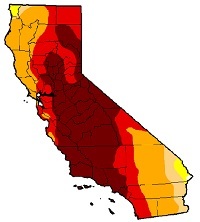
As is usually the case, I didn’t really put much thought into that tweet… or any other. It’s just tweeting… and it’s just beer. But ever since that clever man Stan got me thinking about the impending ceiling on the capacity to grow more barley and hops, the story playing out as California brewers seek second homes elsewhere in the United States and elsewhere in the world as me wondering if water supply is as much or more a danger to the expansion of good beer. Has the water moved away? A long way away? Last summer, the Los Angeles Times quoted the state’s brewers association’s executive director as saying if the drought “continues for two, three more years, that could greatly impact the production and growth of our breweries…” Earlier this month, an op-ed piece in the same paper said there was now one year’s worth reserves left. It’s not just bans on new swimming pools. Farms are in trouble.

Last week, the state government indicated how serious the issue was when it voted to spend $1,000,000,000 of water infrastructure. In emails back in February, Stan and I talked about the cost of creating the agricultural infrastructure to provide the over 100% increase in hop production – the extra 28 million pounds of hops – required for the US craft industry to hit the 20% in 2020 goal set by the brewers association. Is it 1,000 acres at $10,000 to buy and upgrade the acre? Or is it 2,500 acres at $20,000 to buy and upgrade? Whatever it is, it is not a billion dollars. But if the state invests that much money in securing new water supplies, who will get to use it and for what? Do breweries come ahead of playground water fountains?

I know. These are really broad and maybe dumb questions. Well, maybe not dumb as unrefined. Fortunately, others are smarter including at UC Davis where they have a California Drought Watch program which includes considerations for the brewing industry. And, yes, breweries are taking steps to help conservation efforts but will it be enough? Or is the best strategy to move with the water, to diversity through relocating? I guess all we can do it watch. Each brewery is going to have to make decisions about the long term and whether its more about stability or mobility.

Did Hipsters In The 1850s Like Adulterated Beer, Too?

uhvb1aThis is a pretty interesting bit of news in the New York Post:

The scientists discovered the glass “California Pop Beer” bottle on Bowery Street near Canal Street, where a popular beer hall, Atlantic Garden, bustled in the 1850s, scientists said. “It’s a light summer drink, slightly minty and refreshing” said Alyssa Loorya, 44, president of Chrysalis Archaeology, which headed the project. The beer is infused with ginger root, sarsaparilla and wintergreen oil, and other herbs, giving it a one-of-a-kind kick, Loorya said.

If the beer bottle collector nerds are to be trusted, California Pop Beer was produced as Haley & Co. Celebrated California Pop Beer out of Newark, New Jersey… but apparently sometimes in New York as well. The archaeologists reproduced the beer based on research that led to finding a patent for the stuff. I suspect that. I suspect something about it all. I am suspicious. Seems a bit weird that you would get a patent for a beer when every other brewery in the world relies on and has relied on trade secrecy as opposed to a patent telling the whole world about what goes into the bottle. Fortunately, someone in the Google Borg decided we should all have access to patents so we can have a look at what went into this stuff at least in 1872. Hmm…. not really beer. A yeast and an extract of wintergreen, sassafras and spruce are prepared and then, if I read correctly, they are combined with “ten gallons of water one hour, after which seventy pounds of granulated sugar”. Or maybe 105 gallons. Yum? Does it matter?

What is most interesting to me is that this is an example of a second half of the 1800s popular beverage. It relies upon the word “beer” but really is more like a an alcopop or cooler. It comes from a time when, like today, purity is less important than flavour. It also plays upon California in the branding right about when Quinn & and Nolan in Albany, New York were advertising their California Pale XX and XXX Ales. Maybe California was just neato right about then. I like the idea that spruce is part of the taste profile. An old regional favorite flavor that you can learn more about if you BUY THIS BOOK. Oh. That was a bit gratuitous, wasn’t it.

Never mind that. The point remains. The past is a foreign land and so were their drinks.

So Do We Now View Good Beer Drinkers As The Rock Stars?

Fortunately, the brewer as “rock star” stuff appears to have passed after much well deserved pointing at laughing at those who suggest it or, worse, accept it. But apparently the beer drinker might be legitimately treated like one if KISS bassist Gene Simmons has his way:

…when the bar officially opens Friday evening, it will offer more than 50 taps dedicated to craft beer and a menu overseen by Michael Zislis of Rock’n Fish. Ultimately, Simmons has other visions. “I’m such a blessed guy, and for the rest of the people in the world, they may not actually be able to be a rock star, but we can make them feel it,” Simmons said. “This is the experience of being a rock star. You will be waited on hand and foot. If we can arrange it — and this is not a bad idea — we’ll have the most beautiful girls peeling grapes for you, your highness. It’s the idea that you’re special and should be treated that way.” Rock & Brews, a partnership of Simmons, Zislis and former rock promoter Dave Furano, opened in 2010 but has undergone a massive overhaul. Its bar comes complete with the ability to pour beer at two different temperatures and is framed under track lighting to give it the feel of an arena stage.

While the prospect of taking advice from the man with evil boots is a bit weird, placing the customer first is something that good beer struggles with for some reason. In a market where PR is labeled evangelism and concepts as simple as “community” or even just “we” get confusing, it is nice to see the proper order of things being given a priority.

Would I go? Likely not. Not my thing, rock memorabilia palaces. But do I like being treated well in return for my money spent of the brewer’s product? Who wouldn’t? I expect no less at the corner store. Sort of a foundational principle, when you think of it.