Your Festive Beery News Notes For A Blursday In This Jolly Hollifest

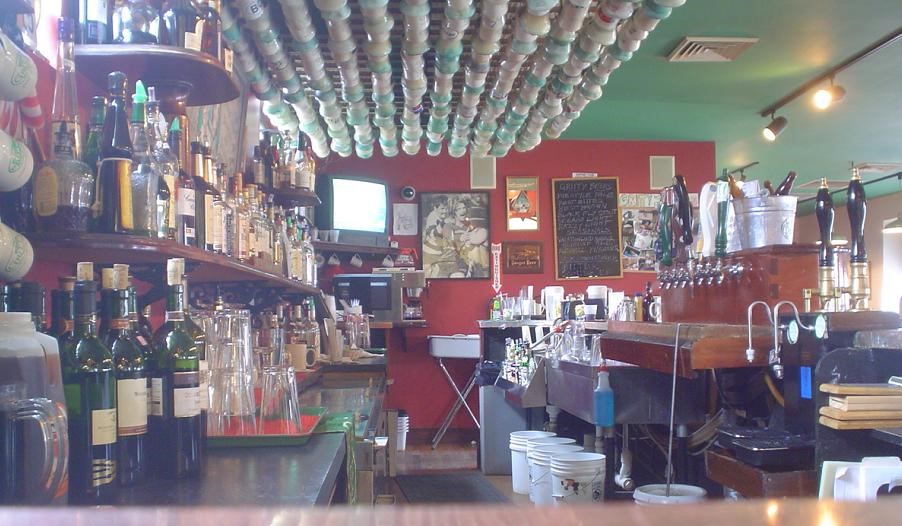
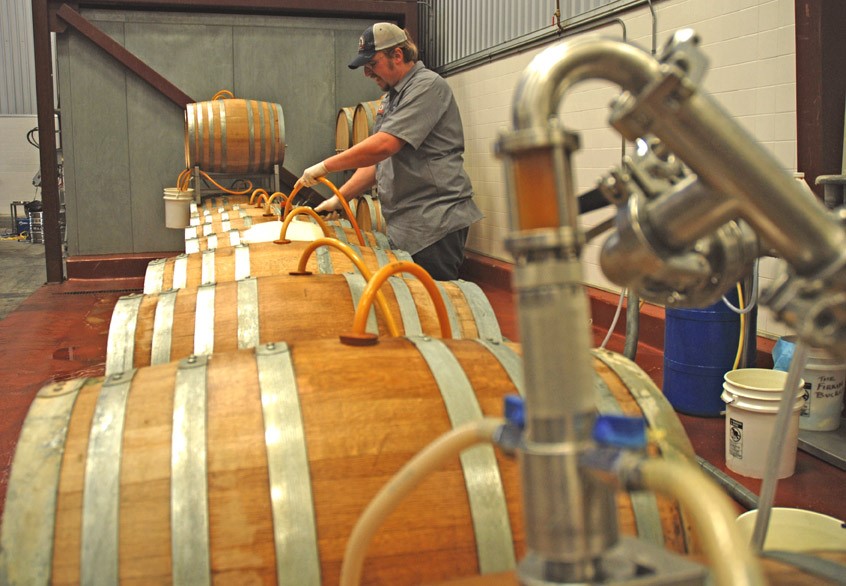
What day is it? I think I can still recall. It’s definitely somewhere between the last parcel being mailed and 2026. I know that much. I also know that in 2009 one Stan Hieronymus, possibly barely out of his teens at the time, submitted this photo above as one of his entries in the Christmas photo context. I will say one thing about a beer photo contest – if you don’t like your range of browns you might as well admit that you should never run one. Like the other contest submissions I have been posting out of the archives the last few weeks, I am pretty sure this one didn’t win a prize – but have you ever seen a better placement of a five gallon white food service bucket? No. Come to think of it, do you ever give a second thought for the glorious role of the five gallon food service bucket in all of brewing? Stan did. For one beautiful moment, he sure did.

Let’s get to the beer news. First up, another controversy related to booze and the ticker:

…the American Heart Association has revived the idea in a scientific review that is drawing intense criticism, setting off a new round of debate about alcohol consumption. The paper, which sought to summarize the latest research and was aimed at practicing cardiologists, concluded that light drinking — one to two drinks a day — posed no risk for coronary disease, stroke, sudden death and possibly heart failure, and may even reduce the risk of developing these conditions.

Before you go off to the Christmas office party with the thought that it’s really not all that far off a visit to a health spa, remember the critics’ warnings about the quality of all these sorts of studies: “Some are clearly horrible, some are good, but a lot are in the gray zone, and people may just cherry-pick and select those that agree more with their narrative.” Hah! So there…

Speaking of the office party at this time of year, the very same authoritative organ shared a bit of advice about conduct at office parties for the supervisory set:

It’s a good idea to stop after two drinks. Sure, you could have three drinks — or six! — and enjoy the social leveling and bonhomie that accompanies lowered inhibition and decreased cognitive capacity. But it’s hard to command respect in the office when people have seen you red-faced and trying to light a cigarette from the filter. 

Is it unfair to compare today to forty or so years ago? The (other) Times did this week when they republished a guide called “How to Survive Christmas” from 1986:

Commuting in the run-up to Christmas is absolute murder. On the way home from a hard day’s work you are liable to find everyone either festively drunk or helping someone else to be sick. Then there’s the office party. People will drink far too much, lunge at one another, tell the managing director he’s a twerp and pour the office vegan’s sprout wine down the word processor to cackles of mirth. How do susceptible males stay out of trouble at the office party? One friend suggests that offices should introduce Tube straps hanging from the ceiling. Thus you could remain vertical however much you knocked back, but with one hand in the strap and the other clutching your glass, both would be kept out of mischief.

Good idea. While it appears that thirty-nine years have passed since that was published, it’s clear ther are still bad behaviours that need to be stamped out at this Holly Jolly time of year, as Pete reports from the pub:

Black Friday has a different meaning in the hospitality industry. It’s not the consumer frenzy of late November, it’s the last Friday before Christmas. This is the night when post-work drinks climax in a frenzy of ill-advised shots and poorly judged flirting. For pubs, it’s one of the busiest nights of the year.

And then he gives ten rules, many of which would be enough to deter me from going to the pub. No line? Never have liked that when visting the fam. How un-Canadian! Give me a good line any day. But “no ordering a round of cocktails“? Perfect sense. No playing your crap music off your phone? Automatic ejection, I say.

Speaking of bad behaviour, I missed this tale of sticky fingers a few weeks ago but I will share it now as this could end up being quite the thing… perhaps quite the thing indeed:

Molson Canada has accused former managers of embezzling millions of dollars in an intricate fraud scheme allegedly involving fake vendors, shell companies, the president of a major pub chain and a pair of married couples. In documents filed Wednesday in Ontario Superior Court, the brewing giant claimed that former Molson Canada sales director Frank Ivankovic oversaw “a complex scheme to defraud the company of many millions of dollars” that later involved two subordinates.

Holy crap! Gotta watch that story. You may scoff at the very thought but I will share a fact that is actually true – I had a personal banking representative many years ago who made a very tidy sums on false mortgage accounts until the scam was uncovered. As this situation at Molson is reportedly both complex and intricate, I am spellbound and await further disclosures from any and all court processes.

Speaking of people who can’t tell their left pocket from their right one, in the land of Vinho Verde the police have had to get involved:

Those arrested from the trade body, which is responsible for quality control and official certification of Vinho Verde wines, belong to its Inspection and Control Division, with the individuals arrested for allegedly warning wineries of upcoming inspections and accepting bribes of meals, wine and event tickets. According to Portuguese newspaper Jornal de Notícias, the officials also allegedly turned a blind eye to wine producers failing to meet the requirements to obtain designation of origin (DO) or geographical indication (IG) certification to be able to label their bottles as Vinho Verde…  Meanwhile, a further four “business owners involved in the distribution and production of Vinho Verde” – have also been arrested, charged with “active and passive corruption, falsification of documents and abuse of power”.

Doce mãe de deus!!!  Fiddling with the Vinho Verde!?! That has been a mainstay in my life for around forty-five years, starting with my mother’s micro-obsession with the plonky version. Not unrelatedly as it turns out, Lars found some dirt about law scoff doing a little farmhouse brewing in Japan, news that he shared on BlueSky:

The Japanese are less law-abiding than I thought: farmhouse sake brewing continued despite the legal ban. In 1941 folklorists surveyed 85 localities, finding home brewing in 44 of them…  In 1895 there were 1 million home brewing licenses in total. So Japan definitely had farmhouse brewing of sake. Then in 1886 the gov’t banned home brewing entirely. Probably killed the farmhouse brewing. Home brewing is still illegal in Japan (gov’t wants its alcohol taxes), but in 2003 one exception was made: farms using their own rice are allowed to brew. This kind of sake is called “doburoku”. There are now 100 designated doburoku districts where this style exists.

That could make for something very interesting, a doburoku tour… doburoku tour… doburoku… WAKE UP!!! Sorry. Now… some notes:

Note #1: “only 37 percent of craft breweries in Canada are profitable”? Really? That’s a lot of subsidization.
Note #2: Who the hell pours Bailey’s down the sink?
Note#3: A.I. designed beer? Nope, couldn’t care less…

Aaaaannnnnd… the BA issued a somewhat delicately drafted “year in review” type press release suited to both address and deflect the industry’s annus horribilis and, I gotta tell ya, I sorta choked on what is stated to be the top trend:

This year, there was a continued democratization and expansion of what it means to be a “brewer.” With acquisitions, mergers, and collaborations, the stainless tanks in the background may not be as important as the brand story.

As one who has never given a shit about the story someone is telling about a brewery, I think if I were an actual brewer I might consider this statement slightly, you know, treachery if not treasonous. But it is nice to know that, finally, years after the BA’s abandoning the need to be small or traditional or independent it’s now not even necessary to be an actual brewer.

Much more reliable was the annual release of the Golden Pints 2025 awards from Boak and Bailey which starts with this introduction to the concept.

What can we say? Hardly anybody else bothers doing this anymore but we’re creatures of habit. We first took part in the Golden Pints back in 2011 and find it a pleasingly reassuring ritual. It’s also good to have in mind throughout the year as we roam from town to town, and from pub to pub. It makes us look at the beer we’re drinking and ask: “Could this be a contender?” Before we get down to business, a bit of encouragement: nobody owns the Golden Pints thing; anyone can join in; you don’t even need a blog to take part. Post your own list on social media as a thread, or even in the comments on this post if you like.

I won’t ruin the announcement of their winners – but what I like about the whole Golden Pints idea is that it celebrates their winners. Was it started by the late great Simon Johnson? He posted his thoughts in 2010, 2011 and 2012 but perhaps it goes back further. Yes, Mark Dredge awarded them in 2009 and even cited his own pre-GP “best of” post of 2008. Who was his best beer Twitterer of 2009? Simon Johnson! Who else? Anyway, you can check out the examples new and old and figure out your own summary of the year according to your own standards.

In another annual year end tradition, Alistair has begun to announce his beers of the year, style by style. His first post celebrates the pale based on three footprints – state, national and imports:

It’s that time of the year, the Winter Solstice is upon us, and what better to do than to review a year’s worth of drinking? As has become my own tradition, I will break this down into multiple posts, one for pale beer, one for BOAB (“between orange and brown”, and dark, and then an overall beer of the year, as well as one for Virginia cider of the year. As I have done for several years now, I will highlight beers from Virginia, the rest of the US, and the rest of the world before crowning each category winner, so on with the show…

I liked this comment: “Spoolboy, the most perfect desítka imaginable, and one that I wish I could sit and drink with Evan, Max, and co back in Prague.” That would be a good table to join.

Over at Pellicle, Robyn Gilmour shared the story of an innovation in Dublin’s beer scene:

…the beer that’s consumed in the majority of Irish pubs isn’t even Irish, with the exception, perhaps, of Guinness, Murphy’s, Beamish, and a handful of other outliers that are brewed locally but owned by foreign multinationals. While treasured in Ireland, these brands do not represent the full spectrum of the country’s beer, which is far more nuanced and varied than most pub offerings would suggest. Speak to anyone working in the independent Irish brewing sector and they’ll soon tell you about the savage competition for taps in Ireland—primarily between Diageo, Heineken, and Molson Coors. As someone who’s worked with many of these smaller breweries, I’ll admit I never had prior reason to question where publicans fitted into this dynamic. That was until 2024, when 16 of Dublin’s most cherished pubs banded together to form a brewery of their own—the aptly named Changing Times.

Finally, David shared his thoughts on language and alcohol promotion, thoughts based on serious personal experience:

…this kind of communication is terrible in the run up to Christmas when more people are tempted into drink driving despite the messaging. Recalling the trauma caused by my dad drink driving was bad enough but only days later I was forced into recollecting my flatmate’s attempted suicide when BrewDog ran an advertising campaign with the slogan “tastes like commercial suicide”. 

As I mentioned a few weeks ago, much of my experience with drunk driving was from an earlier stage in my professional career as a duty criminal defence counsel processing those passing before the court for judgement. But I also lost a client of our office every year to a drunk driver in those years, too. And I probably have to admit that up to a certain point growing up in Nova Scotia in the 1970s and 80s, drunk driving was so common there was an inevitable even blasé attititude to the tragic harms done. There were so many Mondays that someone was not at their locker. So I don’t buy arguments that there is a risk reward sweet spot in these matters. The vast sums that the booze trade offers do not offset the loss.

And that may sound like a bummer of a way to end the news notes for the lead up to Christmas but this is a high danger zone within the calendar for drunk driving and other forms of harmful behaviours. So be thoughtful and be safe as you do about the holiday partying in these next few weeks. Maybe think of what else can be done that is as helpful as a London Underground strap hanging from the ceiling to make sure the season actually remains jolly.

As you contemplate that, please also check out, Boak and Bailey on this and every Saturday and then sign up for their entertaining footnotes, too. Look out for Stan when he feels the urge (now that he’s “retired” from beery news posts) from Budapest or wherever – as he is getting active again. Then listen to a few of Lew’s podcasts and get your emailed issue of Episodes of my Pub Life by David Jesudason on certain Fridays. And Phil Mellows is at the BritishBeerBreaks. Once a month, as noted, Will Hawkes issues his London Beer City newsletter and do sign up for Katie’s wonderful self-governing totes autonomous website featuring The Gulp, too.  Ben’s Beer and Badword has returned from his break since April so you can embrace the sweary Mary! There is reading at The Glass which is going back to being a blog. Any more? We have Ontario’s own A Quick Beer and All About Beer is still offering a range of podcasts – and there’s also Mike Seay’s The Perfect Pour. Plus follow the venerable Full Pint podcast! And there’s the Craft Beer Channel on Youtube. Check out the archives of the Beer Ladies Podcast.
 

Two Weeks?!? It’s The “TWOOOO WEEEEEEEKSSSS TO GO!!!!” So Excited Dontcha Know Edition Of Your Beery News Notes

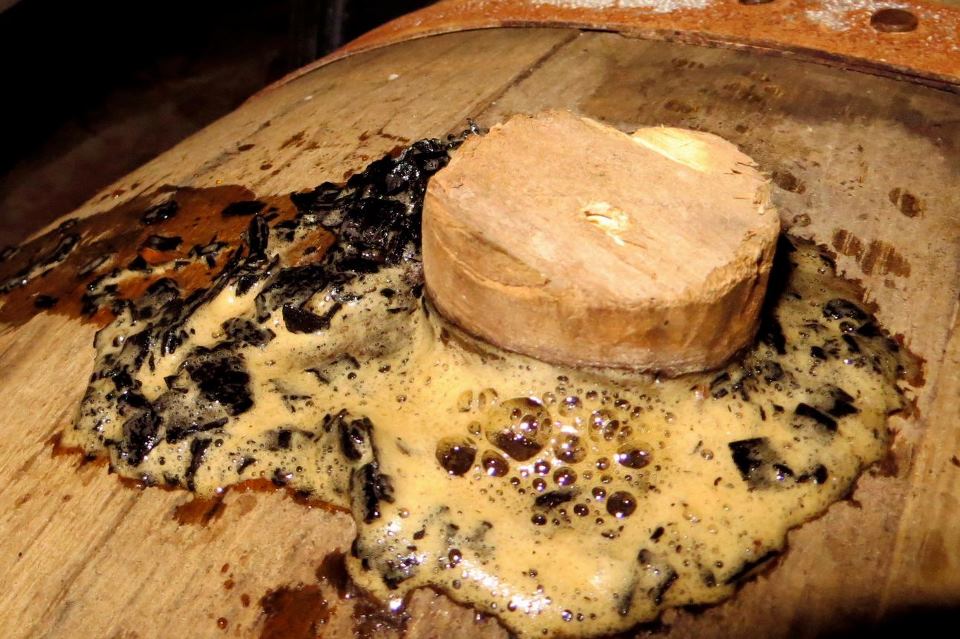
As I mentioned last week, I am sharing some past submissions from the Yuletide Christmas Boxing Day Hanukka Kwanza New Years Eve and Hogmanay Beery Photo Contests that have been sitting in my email folders from all those years years gone by. This week a photo from 2012’s bare knuckle brawl sent in by Jeff Wayne of Tampa, FL. Not necessarily the prettiest image but that there is the leaky bung of a fermenting barrel aged chocolate stout, a celebration of a full range of browns. I like it. Just hope someone spooned up that excess chocolate.

Yes, here we are two weeks from the big day. The day I drink sherry at 8 am and have cake for breakfast. Excitement builds. Also building is Eoghan‘s Advent calendar of things seen in about the 19 communes of Brussels, including at the bewilderingly queter edges of the town:

The streets were so big, wide plains of asphalt, fringed by large standalone houses between was too much air. And the air too was different, smoky and rich but not in an oppressive, attack-your-throat sense, more luxurious. The topography too, big dips and vertiginous climbs with houses and apartment blocks ranged on their slopes, not at all like the slow and steady – but just as taxing – hills I’m more used to traversing in downtown Brussels. I didn’t even know if I was in Watermael or Boitsfort… The bar was, when I finally found it, comfortingly familiar. A Brussels that was recognisable to me however far from the centre I might have strayed, with beer in the fridges I knew and breweries on the taps I trusted. I was at last on terra firma…

Also out wandering, ATJ captured something of the essence of being ATJ in this passage from his travel diary this week:

The soundtrack on this late morning in a Bamberg pub is of laughter and calls and joy growls in the main bar, alongside the clatter and bang of cutlery and plates in the kitchen. The aroma of roast meat, intense in its intimacy, flits through the room, an escape from the kitchen, like a spirit from its long locked stronghold. I sense, or perhaps create, a Friday midday feeling, the joviality of the approaching weekend, though for me, having left home the previous Sunday and perambulated through Prague, nuzzled myself into Nuremberg’s hidden corners and currently based for a day in Bamberg, there is no conception of a weekend, time is just drifting by with the conscience of a cloud.

Not unlike Willie W., when one weighs the words. Anthony Gladman has also being weighing the situation, in this case for cask, and finds that something is lacking:

Cask ale’s slow drift away from relevance saddens me. I fear we seem set to lose it altogether, and shall be culturally diminished as a result. And the worst thing about it is this: the younger drinkers who choose not to drink cask ale are doing nothing wrong. It simply isn’t relevant to them. Nor is this their failing; it is the beer’s and the brewers’ and the pub landlords’. And perhaps partly also mine, as a drinks writer, for failing to make its case often enough, loudly enough, or persuasively enough.

Bingo. I have never understood writers complaining how folk don’t understand this thing or that. It is the job of the writer to make it compelling. Has cask suffered solely on that basis? Nope. But it hasn’t helped.

Well, conversely, this news either means it is no longer a fad or the shark has jumped on no-lo beer as, according to The Guardian, AB InBev is created the world’s largest alcohol-free brewing facility in Wales:

A “de-alcoholisation facility” sounds like somewhere to check in after a boozy Christmas, but in the new annexe of a brewery in south Wales they are extracting hangovers from beer. With demand for no-alcohol and low-alcohol (“nolo”) beer taking off in the UK, the hi-tech brewing apparatus enables the plant at Magor, which produces more than 1bn pints of Budweiser, Corona and Stella Artois a year, to make the increasingly popular teetotal versions too… The availability of alcohol-free beers on tap in pubs is expected to further normalise the choice.

We are assured that “the machine treats the beer very sensitively and delivers a fantastic taste”. Normally I would laugh, say things like “….riiiiight…” and move on but… I just had my first four pack of Guinness 0 and will definitely buy another. What happened? Maybe I got normalized. Try it with port. But no-lo’s not quite as socially acceptable everywhere as The Times notes this amongst its list of conversation topics you will be annoyed by at parties this holiday season:

At every party there are now soooo many men with soooo many helpful tips and advice on the great alcohol-free beers they know all about and which they are categorically not drinking tonight. For some reason it’s always the most sloshed blokes who have the most to say about sober alternatives. It’s like getting nutrition advice from the morbidly obese.

Don’t be the beer bore. Ever. Never one to be that, Alistair shared a happy memory of the time he helped brew, :

This Thursday is the 15th anniversary of the day I spent at Devils Backbone Basecamp brewing the first ever batch of Morana, a Czech style dark lager that I designed for them. I had spent the previous months diving into archives, emailing with multiple brewers, and beer experts, in various languages – English, German, Czech, and Slovak – to learn everything I could about a family of beers that at the time only consisted of about 5% of Czech beer production. Obviously, having only fairly recently decamped from Prague to Virginia, I was also relying on my own remembrances of beers that I had got a taste for in the last couple of years there, when I moved beyond the realms of Gambrinus, Staropramen, and Velkopopovivký Kozel.

Alistair says that the beer that was “the first authentic Czech style dark lager brewed in the modern American craft brewing industry” which is a decent claim to fame. Perhaps also decent was the stout presented to The Beer Nut whose analysis went deep into the dark:

Unsurprising given the froth, it’s quite fizzy: a little too much for the style, I think, giving it a thin and sharp quality that doesn’t suit strong stout. The rum element is present in the flavour, but subtle. I tend not to like rum-aged beers, finding the spirit cloyingly sweet, but that isn’t the case here. Instead, the barrels add more of that fruitcake or Christmas pudding quality I found in the aroma, as well as a rawer oaken sappiness. None of this overrules the base beer, which is a no-nonsense, properly bitter, grown-up stout: dark toast, a molasses sweet side and then a finish of punchy spinach and green cabbage leaf. The can says it’s 48 IBUs; it tastes like considerably more. This is quality stuff, and I’m always happy to find a modern stout that goes big without resorting to silliness. The fizz is its one flaw, and I found myself doing a lot of swirling to try and knock that out. It only reached an acceptable level of smoothness around the time I finished it.

I wish I had one flaw. Not quite indecent is the focus of this article on how to win back the disinterested youth of today:

“Because craft beer sales skew towards older consumers, it’s vital to keep nurturing the next generations of buyers. Gen Zers can be hard to reach and their sentiments are shifting but responding to their needs can help brewers grow share”… Gen Z prefers different drinking environments from older groups. Experiential bars and high-energy venues hold much higher appeal and may offer the strongest opportunity to introduce them to craft. While casual dining restaurants, neighbourhood bars and sports bars remain important to the wider craft drinker base, Gen Z is markedly less likely to visit taprooms and brew pubs, which limits the impact of traditional brewery-led spaces.”

That’s not good. Not only are they not interested in your product but it appears they have no interest in your product. Is there an issue with seeing to bring back the relationship? Even though the sins of the father haven’t been visited on the generation that followed? It all sounds like an earlier 1970s slow slow dance classic, perhaps a little Hall and Oates:

She’s gone (she’s gone)Oh I, oh I, I better learn how to face itShe’s gone (she’s gone)Oh I, oh I, I’d pay the devil to replace herShe’s gone (she’s gone), oh IWhat went wrong?

Pay the devil indeed. Or the invoicing consultant offering solutions. Solutions… yup, that’s what they are. Conversely, being straight with what has really gone on is part of the story for Anaïs Lecoq this week in Pellicle who writes about the Franco-fascists fascination with wine:

Tradition is a lie. And it’s the same lie, fuelled by carefully curated storytelling, that the far-right is trying to feed us now. They wear black berets, big mustaches, and suspenders. They hang up French flags, and talk about meat and wine as the epitome of French food, not missing the opportunity to ridicule vegans and mock people who don’t drink alcohol. They’re terroir influencers, born out of the rise of conservatism and general backlash against social progress. What they’re doing has a name: gastronationalism, or culinary nationalism, which refers to the way food—its history, production and consumption—is used to promote nationalism and define national identity.

It does make sense in that wine requires landowners’ estates as much as beer requires peace. And serfs or their facsimile to do the work. A hotter bed for the old goosesteppers that other spots… perhaps. Next up… a palate clenser with some cheater quick notes:

Note #1: The practice of “faire chabrot” can easily be added to your Yuletide feast traditions;
Note #2: A review of Martyn Cornell’s Porter & Stout: A Complete History by The Beer Nut;*
Note #3: “If there’s ever been a bellwether to the state of the crafts beer industry, it’s Mitch freaking Steele job hunting“;
Note #4: Wine drinking as resistence; and
Note #5: Beer drinking as obedience.

Back on the endtimes beat, Dave Infante neatly summarized the evidence he’s uncovered of a wobbly situation at Pabst:

…the company is quietly looking for a subletter to take over its headquarters in San Antonio. A listing I reviewed for the sleek space—into which Pabst just moved in 2023—was last updated just two days before the pink slips started flying this past Thursday. Between the layoffs, the listing, and a whole lot of reshuffling in Pabst’s c-suite (including the replacement of both chief executive and chief financial officers earlier this year, and the exit of a former chief sales officer just last month), former Pabst employees I spoke with fear the legacy firm might be on the brink.

Yikes. Somewhat relatedly, The Mirror in the UK ran an article on the cost of all aspects of the price of a UK pint and came to a curious conclusion:

Citing figures from the British Beer and Pub Association, Michael said this means pubs are making a total gross profit per pint of £3.69. However… “That’s before VAT, which is another 83 pence – and we have to factor in staff wages, which is another £1.17 per pint…” duty paid to the brewer equates to another 56 pence, as well as business rates of 35 pence, and employment tax for all pub staff at 29 pence…. pub overheads and utilities at 36 pence per pint, which leaves just 13 pence of net profit per pint sold – and this why around 30 pubs are closing every month.” As a percentage this profit equates to just 2.5 per cent.

I find these sorts of supposedly accurate breakdowns useless.** What wasn’t made clear is why pubs which make a 2.5% profit are closing. Is that why they close? Or unidentified expenses were left out or that level of income after expenses is not satisfactory. Which may be the case. But it wasn’t what was argued.*** Time for something more compelling? You got it!

Note #6: HOT PICKLED PORTER!!!

Much more seriously, Boak and Bailey‘s footnotes last week pointed me to the newsletter from Jen Blair on influencers in beer and their choice of appearance:

A few months ago, I was at a beer festival talking with some people I had just met. At one point, one of the men in the group stated that he thinks it’s shameful when women post “provocative” beer photos on social media. Provocative is in quotes because it doesn’t take much for a woman who is simply existing to be denigrated based on her appearance. Another woman in the group and I made eye contact after his comment. This is not the first time someone has said something like this to me, but I am still surprised when it happens. I guess I shouldn’t be, but every time I think “…we’re still saying things like this? To women? About women?”

It’s an excellent piece and reminded me that (whether it is a question of presentation… or self-initiated claims to expertise… or offers of special savings for anyone one applying the one-time super secret code at their website) the only thing that matters is whether the writing has substance.

And finally, over the weekend we received the sad news of the passing of Peter Edwardson who wrote about beer as “The Pub Curmugeon” after a short illness. His last post included this characteristic passage, one that summarizes his approach to beer as well as his understanding of what made it a simple pleasure worth appreciating:

Alcohol content is a vital element in the flavour make-up of beer, adding body, warmth, richness and sweetness. Make anything more than a trivial tweak, and it will significantly change the character of the beer. It is one thing to specifically set out to brew a low-strength beer, but something entirely different to reduce the strength of an existing beer that was designed for a higher strength. You may not have thought much of Fosters even when it was 4%. But now it is 3.4%, a 15% strength reduction, it is not the same product and, I would suggest, an inferior one.

I checked my notes and see that in the last five years or so these weekly digests of the news in beer included well over forty references to “Mudgie”. The sad loss of a singular voice.

So a couple of serious notes to end the week. Hopefully happier news next time. It’s Christmas day the week after that on Thursday… whatever shall I do? As you consider that and send in recommendations, please also check out, Boak and Bailey on this and every Saturday and then sign up for their entertaining footnotes, too. Look out for Stan when he feels the urge (now that he’s “retired” from beery news posts) from Budapest or wherever – as he is getting active again. Then listen to a few of Lew’s podcasts and get your emailed issue of Episodes of my Pub Life by David Jesudason on certain Fridays. And Phil Mellows is at the BritishBeerBreaks. Once a month, as noted, Will Hawkes issues his London Beer City newsletter and do sign up for Katie’s wonderful self-governing totes autonomous website featuring The Gulp, too.  Ben’s Beer and Badword has returned from his break since April so you can embrace the sweary Mary! There is reading at The Glass which is going back to being a blog. Any more? We have Ontario’s own A Quick Beer and All About Beer is still offering a range of podcasts – and there’s also Mike Seay’s The Perfect Pour. Plus follow the venerable Full Pint podcast! And there’s the Craft Beer Channel on Youtube. Check out the archives of the Beer Ladies Podcast.

*Update: as noted for the double!
**A variation is the trade writer who still believes sorta circa 2011 that everyone is one off-flavour seminar from connoisseurship, like Mr. B on LinkedIn this week: “…what you’re getting in up-front money or equipment ultimately pales beside the loss in credibility (especially for places which claim culinary, cocktail, or oenological expertise!), disappointed customers, and ultimately, lost sales. Taking placement fees for a percentage of your taps is one thing — although trust me, more than a few people are going to be able to spot them! — but turning over most or all of them speaks to laziness, desperation, or simple disinterest.” Why, then, do these places continue to operate as craft beer bars shut? Serving their customers’ demands? 
***Yet the math is right there – at 13p profit you would have to sell 500 pints an hour to clear £65. If that was your sole source of income. But then the article would be much shorter. Or is it that the ones at the bottom of the Bell curve no where near a 2.5% profit are the ones that close. Which is irrelevant to the analysis. But then, again, the article would be much shorter. 

The Very First And Initial And Even Inaugural Beery News Notes For Autumn 2025

Once again, take a moment to consider the words recommended this time every year, the words of Mr. J.Keats first posted to blog twenty-two years ago:

Season of mists and mellow fruitfulness,
Close bosom-friend of the maturing sun;
Conspiring with him how to load and bless
With fruit the vines that round the thatch-eves run…

Load and bless! I like that. People fret about autumn coming. As if, you know, it’s February. But you get both loaded and blessed these days. I have been blessed with a load of produce including the tomatoes discussed a few weeks ago. But there’s also the easiest and laziest crop of green onion to be brought in. All winter we save the bottoms of the onion bunches and keep the roots going in jars of water. Come spring, plunk them in a pot or in the ground and you have a perpetual green onion crop to be saved in the freezer. Free free free. Never abandon your roots.

Speaking of free, Dr Christina Wade is doing a free online talk about her book Filthy Queens and the history of Beer in Ireland for the Dublin Festival of History on Sept 30th from 5pm Irish time. Here is the link to sign up. Unrelated, I give you drinking with Brian Eno, circa 2015:

My best wine experiences have been with French wines, so I think the best French wines are the best wines. But there are also so many bad French wines – there’s such a range. A long time ago I wrote an essay called “Wines Classified According To Their Effects” because I was convinced there was a different type of drunkenness from each kind of wine. That was the reason I got into Burgundy, because I noticed Aloxe-Corton in particular made people laugh. Bordeaux is a bad drunk for me. I think Bordeaux wines are largely responsible for the decline in French philosophy in the last fifty years. I think the problem is that Bordeaux makes you think that everything you are saying is really quite important.

Is there an alcohol that doesn’t? Perhaps we should do a survey of our significant others. Speaking of studies, suddenly the stats on the lower levels of drinking by the kids in America* is to be relied upon after yoinks of denials. I dunno what happened – but Kate B reports on the numbers:

The kids are alright. New federal data shows young people ages 12-18 showed statistically significant decreases in alcohol use, cannabis use, major depressive episodes, and suicidality compared to four years ago. Why? Changes to the way kids socialize… It’s partially a COVID ripple effect: With kids more isolated, teens’ reported use of almost all measured substances decreased dramatically between 2020 and 2021. Notable: Teen drinking and drug use have remained low—or continued to decrease—since the pandemic, even as public spaces have reopened.

It’s all about the damn numbers, isn’t it. [See also Mr. Gladman on the grasphical representation of data as it relates to matcha: “The green bar makes it look like we’re gulping down matcha-flavoured fluids by the bucketful…“] And David J is also on the question of “youth ‘n’ booze” for CAMRA’s What’s Brewing with a focus on cask ale and who is interpreting the numbers:

I’m very sceptical when anyone speaks about Gen Z or any demographic cohort with seeming authority. Usually the characteristics of each generation seem very similar to the previous one and a lot of these supposed behaviour patterns could be just attributed to anyone who is lucky enough to be young… So when I read that Gen Z could save cask beer from extinction, I raised an eyebrow. I then raised the other eyebrow – a unique skill – when I read in the same article an industry grandee being quoted as saying Gen Z want variety when they drink, like they’re one homogeneous person tapping their beer order into the app on their phone to avoid the queue.

It would have been better if Mel in Braveheart had shouted “METHDOLOGY! METHODOLOGY!!!” wouldn’t it.

Changing topics with abandon, we see that Boak and Bailey posted their thoughts on holding Oktoberfests in England and added a few more in a footnote that was in addition to their weekly footnotes. Therein, they offered five observations but I was caught on the fourth:

Fourthly, we recall someone suggesting that Oktoberfest events in the UK were a form of cultural appropriation. This is a fair challenge although we tend to think that countries or cultures which had empires and colonies probably don’t get to complain about that.

I shared that I wondered where the limit of cultural appropriation should sit. Here in Canada, it’s mainly illustrated by people pretending to be Indigenous for advantage. So if Germans are selling a welcome product into Britain as they have been (as your excellent book proved) why not celebrate it? If you have seen 1983’s Strange Brew you will know that Ontario’s twin cities of Kitchener-Waterloo, the former once named Berlin, has the second biggest Oktoberfest in the world. Because we had many German-speaking immigrants in the 1800s. And as the Bs wrote about in their Gambrinus Waltz there was also heavy marketing of German lager into the UK at around the same time along with the rest of the globe. Cultural expansion can’t then be relabled as an appropriation. That’s a bit too colonial for me.

Merryn linked to another archaeological report that seems to be bending backwards to not find evidence of brewing in pre-historic Britain:

An early Neolithic settlement on the small island of Wyre, Orkney, where a huge amount of carbonised grain on a clay floor was discovered. Interpreted by the excavators as a granary. But I reckon it could’ve been a malting floor and a grain barn.

Here is the report on the study referred to. Note the passage: “But why would a drain begin under a hearth? We can find no logical explanation.” Because maybe it had a log gutter sat in the stone channel drawing off the wort? In my work I am aware that as late as the 1970s pipes made of wood were found in the oldest serviced areas of my fair City. So that could be it. Beats the heck out of “no logical explanation.”

Speaking of science and explanation, Lars took the “monkey fruit booze” story mentioned by me last week as a goof and disassembled the story to create some serious observations on the nature of the human beast itself… ourselves:

…about 10 million years ago, a mutation made that gene much more efficient at breaking down ethanol, the ordinary alcohol that makes us intoxicated. This suggests that we started consuming alcohol already then… the story that our relationship with alcohol began before we were human, at the time we came down from the trees, seems to hold up very well. We have other adaptations against alcohol as well, some of which seem to have appeared when agriculture began, but that’s another story.

As a practicing lawyer, one is never surprised by the news about what hasn’t been pulled off by other lawyers:

Cole Palmer rarely tastes defeat on-the-field, but the Chelsea and England star has lost a bizarre battle off-the-pitch with a French vineyard. The tussle in question has been over his attempts to trademark his ‘Cold Palmer’ nickname and using that to launch his own wine company under that moniker. Last year, Palmer made a move to trademark both his ‘ice cold’ celebration and the name ‘Cold Palmer’, in the hope of using it to sell a number of different products. These include clothes, food, toys, toiletries, razor blades, diet drinks and alcohol. However, the latter was opposed by a revered vineyard in the south west of France. Chateau Palmer, which is in the Margaux region in Bordeaux, believed a trademark of the name would be a threat to its own image.

Having distanced myself from Mr. Palmer in the Pellicle-run FPL league I can take issue with the first proposition set out above but, even having distanced myself from Ch. Palmer economically, I can’t disagree with the outcome. Palmer is to Bordeaux as Mcdonalds is to fast food in terms of notariety. What were they thinking?

Evan has suggested what might be the hot new thing is Czech beer service – řezané pivo:

Roughly translated as “cut beer,” řezané pivo includes both dark lager and pale lager, often (though not always) poured in two separate layers, giving each glass plenty of visual appeal, just like mlíko. (Starting with the famously difficult Ř sound, the full name sounds a lot like “rzhez-on-eh pee-voh,” depending on how many of them you’ve ordered.) As with the all-foam pour, řezané fits perfectly into the burgeoning craft lager movement. But unlike mlíko, řezané is more clearly rooted in Czech tradition, feeling less like a parlor trick, at least for some locals.

I no more have a stash of Chateau Palmer than I have what would be called a “parlor” but, really, wouldn’t that be the best place for a good trick? And a somewhat familiar one as I recall seeing – both in Scotland with a cousin as well as in my old hometown of Halifax, NS – bartenders who could float Guinness on a lighter ale. As Even notes, a half and half is a fun thing.

And on the theme of things formerly sipped gingerly, Alistair wrote about and old fabourite beer, Leffe Blonde. I won’t ruin his findings but his remembrance of the ale past starts out very specifically:

Back in the days when I was a college student in Birmingham, I got the train from New Street early one Saturday morning to go to Esher in Surrey. The main purpose for the trip was to spend the day at the Sandown races with my eldest brother, who lived down that way back then. Having spent the day frittering money away on thoroughbreds of varying uselessness, we headed into central London for dinner at a non-descript curry house, non-descript in the sense that I don’t have the foggiest as to what I ate, but weirdly 2 beers are lodged in my memory, the Żywiec I was drinking and the Leffe Blonde that was my brother’s choice that night.

I got a similar heads up about the state of Cantillon sales from Jeff who directed me to an article in VinePair by Aaron Goldfarb in which he speak of the blip in time when lambic was really cool:

…by 2013, everything had changed and the U.S. beer landscape was now ready for such challenging flavors. By then, Beer Advocate’s top 250 beers list included 11 Cantillon beers. highlighted by Fou’ Foune at #11, the brewery’s Lou Pepe – Kriek at #28, Saint Lamvinus at #36, and the European-only release Blåbær Lambik at #39. Today, it seems hard to imagine a time when Belgian lambic was possibly so hot. If you’re in your 20s or early 30s, it’s possible you’ve never even tasted one. And it wasn’t just Cantillon. Among a list then dominated, as it still is today, by IPAs and big, boozy stouts, a shocking number of sours beers — mostly Belgian lambic but also American wild ales — dot the top 250.

I was definitely into sours in the sense that I created a category for sour beer studies in around 2005 but I wasn’t always a big fan. From the archives, I see that I really liked Lindemans Gueuze in 2005, Kriek De Ranke in 2007 and loved Girardin Gueuze in 2008 but, man, I really really didn’t like Bruocsella 1900 Grand Cru by Cantillon in 2006:

Quite plainly watery at the outset then acid and more acid…then one note of poo. Not refreshing to slightly sub-Cromwellian stridency. Annoying. Then at the end a hint of apple cider. Foul. I wonder if this is an example of mass reputation piercing the veil of reality – mob craftism. I cannot hate it. Yet I am sure it hates me.

Check the comments to that post! By 2012, I had coined the phrase “to be Shelted” once my studies had gotten into the economics of what was going on.

Finally, Jeff also announced that he is taking a bit of a  well earned break. He explain a bit about the moment he finds himself as he does so in through this post:

Journalists cover a broad range of topics, and reporting about the actions of their elected leaders and government officials is an important load-bearing wall in any democracy. It’s why, during democratic backsliding, one of the first things the aspiring autocrat does is taking control of the media. I write about beer, and to a small, niche audience, so there’s little worry the government would come after me. (Trump, famously, is not a drinker, so my hot takes about icy beer is unlikely to draw his ire.) Yet as a citizen and as a freelancer, all of this feels very personal. Written speech is not just my livelihood, but it has been a central part of my life. I wasn’t surprised to see these developments, but they did cut me deeply.

Something to think on for all of us. And that’s it for now. A bit shorter this week but I have been hammered with a late winter cold for over a week now and I just want to go to bed. Can I please just go to bed ?!?!?  As you consider Jeff’s decision and my simple request over the next few days, please also check out the below mentioned Boak and Bailey every Saturday and sign up for their entertaining footnotes, too. Look out for Stan when he feels the urge now that he’s retired from Monday slot… maybe … maybe not. Then listen to a few of that now newly refreshed Lew’s podcasts and get your emailed issue of Episodes of my Pub Life by David Jesudason on certain Fridays. And Phil Mellows is at the BritishBeerBreaks. Once a month, as noted, Will Hawkes issues his London Beer City newsletter and do sign up for Katie’s wonderful self-governing totes autonomous website featuring The Gulp, too.  Ben’s Beer and Badword has been on hiatus since April but the archives are out there with the all the sweary Mary! There is new reading at The Glass which is going back to being a blog. Any more? We have Ontario’s own A Quick Beer and All About Beer is still offering a range of podcasts – and there’s also Mike Seay’s The Perfect Pour. Plus follow the venerable Full Pint podcast! And there’s the Craft Beer Channel on Youtube. Check out the archives of the Beer Ladies Podcast. That’s quite good and after a break they may well be are back every month! Such is life. Such is beer podcasting and newslettering… which, as Ray says, are blogs! And he’s right.

*Not these Kids in America… that was me and mine. It probably was suppose to be “We’re the Kids In North America” but, you know, the suits…

The Delightful Yet Pensively Penultimate Beery News Notes On A Summer’s Thursday For 2025

It’s been a busy week but not really in the beery sense. Guests and heirs have come and gone – and even bought a $14.99 beer on the way out via an airport bar at Montreal, as illustrated sub-wonderfully perhaps. A last bit of summer visting and the shedding of the last loonies and twoonies. Which means the home is quieter here at this end of the week compated to the other. Which is good. But quieter. At least I have my tomatoes. Did I mention my tomatoes? Definitely illustrated sub-wonderfully, that yellow one in the upper left weighed in a 1.7 pounds. And I did nothing to make it happen. Which is my favourite and most common form of success. Six varieties left to right ish clockwise: Chiltern’s Blue Bayou, Baker Creek’s True Black Brandywine, Chiltern’s Golden Sunshine, Baker Creek’s Kentucky Beefsteak, Chiltern’s Beefsteak and Baker Creek’s Orange Icicle. Picked from the catelog based on the “pin tail on donkey” method. All started from seed last winter and soon getting turned into sauce. That True Black Barleywine is the best tasting tomato ever – like it has built in balsamic vinegar. Thanks for tuning in to Tomato News Today!

First up in the world of beer, the Tand himself has also been out and about on travels and has reported back on the scene in Munich – and found out that certain things were not to be found:

Sadly, you can’t find Pils on draught anywhere, and for reasons best known only to themselves, Spaten insist on offering the dreadful Beck’s as their bottled pils in their most prestigious outlets. It appears Spaten Pils, which I recall was a lovely beer, is no longer brewed. A real shame.  In fact, Spaten it seems, only brew Helles in both normal and alcohol-free forms and, of course, an Oktoberfest. It gets worse. The whole shooting match of Spaten-Franziskaner-Löwenbräu-Gruppe is owned by AB InBev, who presumably have streamlined the brands available, though under the Franziskaner brand you’ll also find weissbier and a kellerbier.  Like Spaten, the rather delightful Löwenbräu  Pils has been dropped. It is a pretty grim picture as the odd hoppy pils provided an alternative to Helles, which in its Munich iteration, can be a little sweet, and dare I say, bland? (The locals call it “süffig”, meaning “easy to drink”. And, in fairness, it is.

And over at Pellicle, Matthew assumed the role of player / manager and reported on his travels to the French & Jupps Maltings in Hertfordshire where he found a hidden truth:

Its long history stretches back to 1689, and for more than a century the maltster has been based in the twin Hertfordshire towns of Stanstead St. Margarets and Stanstead Abbots, bisected by the aforementioned Lea, some 30 miles north of London as the crow flies. There are a few reasons for its relative anonymity—I myself hadn’t heard of them until I was invited for a visit in February 2024. One is due to the fact its malt was (and often still is) bought in bulk and rebagged by various distributors before being shipped out to breweries. And so, it might bear the name of a competitor—although in this context it’s perhaps more accurate to refer to them as partners—in the US, for example, the malt is typically sold under the William Crisp banner.

Sneaky sneaksters! Did you know? (Did I? Never mind that… let’s make this about you.) Did you??? Speaking of hidden truths, Pete Brown had a has retrospective on BrewDog, now well in to the post-Watt era and even into the post-Dickie, published in The Morning Advertiser that he unpacked into something of an obit:

To me, they always felt more like a band than a brand – not least because they wanted to be seen as punks. Bands are different. When none of the original members remain, many former fans insist that it’s simply not the same band any more, and that the newcomers who have taken over, singing songs they never wrote or had hits with, are no better than a covers band. The departure of Martin Dickie feels like the last member of the original line-up has left the building. The entity that remains may own the rights and assets of BrewDog, but it has lost the spirit and soul that once defined it… Dickie remained silent throughout. The initial allegations referred to a “cult of personality” built around both men, but specific personal allegations were focused on Watt’s behaviour. After Dickie’s departure, some former employees took to social media to say that he was “part of the problem.” 

Wonderful. I have never understood how Dickie, co-exec past and board member still, has had the teflon wrapper that he has enjoyed through downturn after downturn on what must be one of the most note worthy financial flops in recent brewing history. But perhaps it’s been a case of not noticing that scratch on your hand due to the nail in your foot.

Speaking of endings, Ed the Beer Father has shared his thoughts on the closing of Banks of Wolverhampton, mapping a fairly complex set of international bobs and weave that led to the end:

Eleven years ago the two companies with rights to San Miguel beer, San Miguel Brewery (Philippines) and Mahou San Miguel (Spain) signed a cooperation agreement to promote their international businesses and position San Miguel as a global brand. To further its growth they had already partnered with Carlsberg to contract brew it in Britain, and it was a large part of the output of the Northampton brewery. But for a brand with global ambitions partnering with the world’s biggest brewery seems like an obvious match… So, as what I believe is part of a global realignment, last year San Miguel moved its contract brewing in the UK from Carlsberg to ABInBev. Losing the San Miguel contract left Carlsberg in the UK, which owned one giant factory and two large regional breweries, with a lot of surplus capacity. The giant factory wasn’t going to go and Marston’s has the small pack facilities, which left Banks’s. So a contract change for a Spain and Philippines based international lager brand closed a 150 year old brewery in Wolverhampton that didn’t even brew it. 

Lordy. Speaking of things making one’s head spin, I totally missed Stan‘s post before the Labour Day weekend on the nature of beer bubbles so I will correct that error now:

There is more to monitoring beer foam than counting bubbles, although they are the foundation. They result from nucleation, and as those bubbles climb to first form or then replenish the foam head, proteins and bitter substances are carried into the bubble wall, forming a matrix that holds the skeleton together. In his doctoral thesis, “Beer Foam Physics,” A. D. Ronteltap calculated that a foam 3 centimeters high (a bit less than 2 fingers) in a glass 6 centimeters wide (a bit less than a Willi Becher) made up of bubbles with an initial radius of .2 mm (twice the width of a human hair) would contain 1.5 million bubbles distributed over about 100 layers.

Over a million bubbles! Not quite millions and millions but more than one million. And, while the numbers aren’t quite confimed yet, Jessica Mason pulled out the stats as she reported on the question “Can Gen Z save cask ale from extinction?” for Drinks Business:

Statistics from YouGov for the Society of Independent Brewers and Associates (SIBA) have shown 25% of 18 – 24-year-old beer drinkers regularly order cask ale. The figures mark an increase of more than 50% on the previous year… Digging deeper into the SIBA figures, there are also statistics that support the opportunity that women present in the future of cask ale’s revival. For instance, the data revealed how 22% of female beer drinkers regularly order cask ale, compared to 43% of men. But, as Corbett-Collins noted: “It would be great to see even higher numbers, but the glass half full fact is that men and women of all ages are enjoying cask beer.

Out and About Update: Max mapped a 29 km(!) pub crawl he took through the Czech countryside to plant himself in front of a beer at Únětický pivovar, Zdibský pivovar and Polepšovna ducha as well as a few other spots. I marched about a tenth of that the other weekend and my left knee let me know about it for more than one day. Good thing Max kept up a good pace because apparently, according to the white coated eggheads in the Netherlands, beer drinkers are a prime target for mosquitos:

To find out why the blood-sucking critters prefer some people over others, a research team led by Felix Hol of Radboud University Nijmegen took thousands of female Anopheles mosquitoes to Lowlands, an annual music festival held in the Netherlands… Participants who drank beer were 1.35 times more attractive to mosquitoes than those who didn’t. The tiny vampires were also more likely to target people who had slept with someone the previous night. The study also revealed that recent showering and sunscreen make people less attractive to the buzzing menace. “We found that mosquitoes are drawn to those who avoid sunscreen, drink beer, and share their bed…”

Speaking of getting bled, I received the alert from Will Hawkes: “Sorry to be right about this. No GBBF next year as it made ‘a substantial loss’, according to CAMRA.” As per usual and FOR THE DOUBLE!!!… Jessica Mason has more detail:

CAMRA chairman Ash Corbett-Collins explained how “at Members’ Weekend earlier this year, the national executive presented finances that painted a stark picture. As your chairman I was open with you; we were facing significant challenges… Corbett-Collins lamented: “Sadly, this means I must tell you that: The Great British Beer Festival and its Winter counterpart did not attract enough visitors to cover the cost of holding them, resulting in a substantial loss.” Added to this, he revealed that CAMRA’s membership figures “are simply not growing” and confessed that “the hard truth is we are unlikely to return to pre-2020 levels”… and noted how “the cost of running a membership organisation and business is also increasing”.

This is a pretty serious situation as it really looks like a broader issue than just the fests. The organization itself seems to be at risk. I expect more information to be flowing in the coming days.

In the “WAR ON SCIENCE” folder, we read the news out of The New York Times that everyone’s favourite slowly exploding head in charge of the Department of Health and Human Services has pulled the US government’s pending report on alcohol as part of a healthy diet:

Mike Marshall, chief executive of the U.S. Alcohol Policy Alliance, a nonprofit that aims to reduce the harms of alcohol, said H.H.S. was “doing the work of the alcohol industry.” “They’re burying the report so the information about the health consequences is not widely known,” Mr. Marshall said. Health Secretary Robert F. Kennedy Jr. has decried a “chronic disease epidemic” sweeping the country. But he has said little about alcohol’s impact on American health since taking office. Consumption of both alcohol and tobacco was absent from the first Make America Healthy Again report released in May. Mr. Kennedy (like his boss, President Trump) has said he does not drink.

It’s important to note that Mr. Kennedy, unlike his boss,  does not wear makeup preferring to gain his particular rusty orange hue through a natural process.

Finally, just before this organ went to press, the dynamic duo B+B posted a piece under the fabulous title “Customers Have Always Been a Problem for Pubs” which illustrates the truth based on a sppech given in 1933 by one Lieutenant Colonel E.N. Buxton, director of the East London brewery Truman, Hanbury & Buxton:

The talk finishes with a few more rebukes for the drinkers. First, the reason pubs often look so ugly, and are so sturdily built, is because “you do not treat them so kindly”. “Walls and furniture are roughly treated”, he says. “As for the outside of public-houses, I agree that some of the houses in London look perfectly ghastly. Hard wear, however, had to be the first consideration.” This was addressed, remember, to a room full of people from Bethnal Green. We’re picturing the crowd when Bertie Wooster sings ‘Sonny Boy’.

Fabulous. There. That’s a lot for a busy week but probably less than all the stuff our there to read so please also check out the afore mentioned Boak and Bailey every Saturday and sign up for their entertaining footnotes, too. Look out for Stan when he feels the urge now that he’s retired from Monday slot… maybe … maybe not. Then listen to a few of that now newly refreshed Lew’s podcasts and get your emailed issue of Episodes of my Pub Life by David Jesudason on certain Fridays. And Phil Mellows is at the BritishBeerBreaks. Once a month, Will Hawkes issues his London Beer City newsletter and do sign up for Katie’s wonderful self-governing totes autonomous website featuring The Gulp, too.  Ben’s Beer and Badword is out there with the all the sweary Mary! And check out the Atlantic Canada Beer Blog‘s weekly roundup. There is new reading at The Glass which is going back to being a blog. Any more? We have Ontario’s own A Quick Beer featuring visits to places like… MichiganAll About Beer offers a range of podcasts and there’s also The Perfect Pour. Plus follow the venerable Full Pint podcast! And there’s the Craft Beer Channel on Youtube. Check out the archives of the Beer Ladies Podcast. That’s quite good and after a break they may well be are back every month! Such is life. Such is beer podcasting and newslettering… which, as Ray says, are blogs! And he’s right.

Your Beery News Notes For The End Of July And The Beginning Of The Back To School Ads

The last day of July. It’s one of the first endings of the year. Well, there is the end of winter but no one regrets that. And the switch from late spring to early summer never really leaves a ripple. But… July. Spent the other evening watching dusk arrive at a nearby conservation area, listening for bobolinks and kingbirds as they snabbed a few last bugs out over the field. Saw a raven. Heard it croak.  Mr. Nature. That’s me. Five Saturdays to Labour Day. But even that date’s lost its sting as it’s the first September that not one kid is in the public school system for twenty-three years. What milestone is left? Last day of July.

First up, David J. announced the roundup for the July edition of The Session with a pretty interesting set of submissions this month, interruping his reguarly scheduled broadcasting:

Today’s Substack is ‘free to air’ – like Test cricket and Premier League football should be – so that the people who have contributed can gain the widest readership possible. (Also a desi publican I was going to interview suffered a bad injury and had to postpone. He’s fine, though, and I’ll be bringing his story soon.) On July 11, I asked various participants to write a blog, web post, newsletter (like this one) or even a SM thread on the subject of food in pubs. I’ve rounded up their work and at the bottom have written about the dangers of being a go-to voice on pub food.

Go have a look. Plenty of good reading. Also well worth a read, Ruvani de Silva has announced the launch of her course hosted by CAMRA on American Heirloom Cider Apples and it is good to see the historical context at the forefront:

Settlers, noticing the tribes’ bountiful orchards and the quality of the land they were cultivating on, were keen to claim it for themselves, unafraid to use violent displacement to do so. In one particularly horrific example, future President George Washington took a break from fighting the British in 1779 to send Generals Clinton and Sullivan to implement a scorched-earth policy across the Six Nations of the Iroquois’ beautiful, fertile Fingers Lake land in upstate New York, burning their flourishing orchards to the ground.

This lines up from some of what I found when researching upstate New York history over a decade ago including Lord Selkirk’s 1803 description of apple orchards around Geneva NY from before the Sullivan raids as well as this description from 1797:

…a person from Scotland has established, at Geneva, a very respectable brewery, which promises to destroy in the neighbourhood, the baneful use of spirituous liquors. The apple and peach orchards, left by the Indians, yield every year abundance of fruit, for the use of the inhabitants, besides making considerable cyder; so much so, that one farmer near Geneva sold cyder, this year, to the amount of one thousand two hundred dollars.*

Speaking of solid research, after last Saturday’s news update was posted by Boak and Bailey, I rushed to their footnotes at Patreon which included this tidbit:

…we’re entering the era of ‘normalism’. People want to drink normal beer, in normal pubs or bars, while eating normal food, and wearing normal clothes… Perhaps because they don’t have the headspace to cultivate less mainstream tastes, or maybe because standing out as an individual feels like a dangerous business in 2025. Or just pointless. We keep seeing young couples dressed head to toe in formless matching beige. 

I thought of that Monday evening when I saw a young man waiting for the lights to change, standing at an intersection in beige Sperry Top Sider clones. They had to be clones, right? I also thought of this when I read Jessica Mason‘s news about the recent rise  in Heineken’s fortunes:

Speaking about the results, Heineken CEO and chairman Dolf van den Brink said: “In the first half, we delivered solid results as organic operating profit grew 7.4% as the operating margin expanded by 26 bps and net revenue increased 2.1%…” Highlighting the strides the business has made, van den Brink pointed out how Heineken’s “volume performance improved across all regions in the second quarter and continued to be of high quality…  Describing how the company has achieved this, van den Brink explained: “Our advantaged geographical footprint helped us to adapt to ongoing macro-economic challenges which impacted consumer sentiment and expenditures.**

Is that so bad? Perhaps green is as much the new beige as beige is. Normal. Makes more sense than spinning in your sheets over and over thinking of all the coulda woulda shouldas. The trend is evident in the US craft scene as summarized by Keith Gribbins at Craft Brewing Business the other day:

The Brewers Association’s 2025 Midyear Report shows an industry still facing strong headwinds. Yet, pockets of growth remain — especially for the smallest on-site brewers. As of June 2025, 9,269 craft breweries were operating in the U.S. — down 1% from a year ago. Closures continue to outpace openings, led by a 3% decline in microbreweries. Taprooms dipped 1%, while brewpub and regional brewery counts remained flat. Craft beer volume also shrank. The BA estimates a 5% year-over-year decline in production. 

Five percent cut in production in the last 12 months is not a “maturing” or any sort of “sideways” something. As one would say in my youth, the arse is out of it. Doug Veliky shared some thoughts about where those buyer might be heading and why the trip isn’t that difficult:

Low-dose THC beverages offer the same qualities that have made light beers, spritzes, and canned cocktails so popular. They are social, easy to enjoy, and deliver a consistent experience every time. Because these drinks are made to be consumed more than once in a sitting, they help establish rituals that lead to frequent, repeat purchases. Instead of being one-and-done, the format allows consumers to stack their way toward their preferred level of buzz.

So, craft may have lost its hook. By which I mean that idea of the ritual habitual. People are still doing things, sure. They’re just not doing those things because they now have the option to do these other things. Or is that the new habit? Being what B+B call normal. It might actually just mean not needlessly complex. Manufactured difficulty. Life’s hard enough without made up difficulties.

Note: not only do the top 40 breweries in the world not include much that can be called craft, onely one and a half seem to be American.

By way of comparison but really only as juxtaposition, Jeff continued his explorations into what makes a saison a saison, following up on his article on the style in Craft Beer & Brewing, illustrating once again that blogging about beer is always superior to the store bought stuff. I particularly liked how he moved the discussion from the romantic (ie lazy / fibby) explanation that saison is “something you feel” to getting to the elements of they stuff including the importance of a coarseness of character to the grains, as decoratively mentioned by Alex Ganum of Upright Brewing of Portland, Oregon:

Not sure if I ever shared this story, but back when we were running Old Salt, our hog rancher kept bugging me about using his triticale, which was the animal feed. He grew it himself and was proud of the quality, but I dismissed it early on thinking, ‘How good can animal feed be? ‘Well, that was dumb, because he eventually just dropped off a bag and it turned out to be incredible (which probably explained part of why his pork was delicious). So we asked him for a pallet and worked it into the Five for about a year or so.

Sixteen years ago, when I had the time to do so, when the kids were little enough that they couldn’t get too far, I grappled with the idea of these sorts of beers and their cousins, back when I could take a Saturday to contemplate such things in the shed. But that right there is as good an explanation as ever I’ve seen: beer made from bits fit for the livestock. Farm yard as much as farm house. Normal may not have time for farm yard.

Speaking of simple pleasures, Katie shared a lovely bit of recollection, a remembrance of Wetherspoons past involving herself and her staff access to discount chips:

When I worked at Wetherspoons many thousands of years ago, the one redeeming feature of the job other than the wage was access to a staff menu, off which we could also take a 50% staff discount. My favourite shift tea from this reduced selection of kitchen scraps was sausage and chips. It was not served with vegetables of any kind. A person can talk shit about Wetherspoons all day, and I will join in, but their chips have always been godly, the best of all the frozen chips. I am certain they are coated in semolina for extra crunch, leaving the centres fluffy and light. With mayonnaise, this dish, which cost me around £1.30 in 2008, was my favourite food. It didn’t make the pub I worked in any better, however. You can’t judge a pub by its chips—sometimes they are simply angels sent to soften the blow.

Normal likes chips and especially good discount chips. Quite right, too. Also alarmingly normal is Martin who has admitted to falling behind in his pub reporting and is trying to catch up which some of the highlights (*ahem*) of his continued touring:

Admit it, you’ve never heard of Cockerton, have you? Neither had I, even though this small Durham village is virtually contiguous (great word) with Darlington and only a few minutes from Piercebridge and my best-read blog post. And it’s got a free space for my campervan from which I can finish Durham’s Guide entries for another year. What Cockerton doesn’t appear to have is much actual character. though it does have excellent podiatry.

Note: at the Vytopna in Prague a little train set delivers your beer…

Finally and for the double, David Jesudason wrote the feature in Pellicle this week, the story of a thriving community pub at the edge of London that makes room for many and much:

Artist Neal Vaughan believes my snap judgment about Carshalton being a bit of a sleepy backwater is wrong. He explains how it’s a hub of creativity, which the Hope is at the centre of. Citing a memory from 2016, Neal recalls when Rodger encouraged him to set up Carshalton Artists’ Open Studios with all meetings and post-event drinks held in the pub. Tuesdays are described as a sacred weekday at the pub by Neal. It’s when folk musicians play an open session, board-game enthusiasts battle against each other at Scrabble, chess and Magic: The Gathering, and on occasion a leather maker taps away while seated on a chair. The pub even has a sailing crew that charters yachts, and when I visit they’re off for 10 days in the Adriatic.

There we are.  The end of trends, the end of a week’s news and the end of the month. It’s sorta normal. And as the sands trickle on down in your personal hourglasses, please check out Boak and Bailey every Saturday. Look out for Stan when he feels the urge now that he’s retired from Monday slot… maybe. Then listen to a few of the now rarely refreshed Lew’s podcasts and get your emailed issue of Episodes of my Pub Life by David Jesudason on the (sometimes even but never) odd Fridays. And Phil Mellows is at the BritishBeerBreaks. Once a month, Will Hawkes issues his London Beer City newsletter and do sign up for Katie’s wonderful newsletterThe Gulp, too.  Ben’s Beer and Badword is out there with the all the sweary Mary! And check out the Atlantic Canada Beer Blog‘s weekly roundup. There is new reading at The Glass which is going back to being a blog. Any more? We have Ontario’s own A Quick Beer featuring visits to places like… MichiganAll About Beer has given space to some trade possy podcasts and there’s also The Perfect Pour. Plus follow the venerable Full Pint podcast with an episode three weeks ago!. And there’s the Craft Beer Channel on Youtube. Check out the archives of the Beer Ladies Podcast. That’s quite good and after a break they are back every month! Such is life. Such is beer podcasting and newlettering… which, as Ray says, are blogs! And he’s right.

*See also History of Tioga, Chemung, Tompkins and Schuyler counties, New York. With illustrations and biographical sketches of some of its prominent men and pioneers at page 13: “The army was to march from their winter quarters on the Hudson to Wyoming; thence up the Susquehanna to Tioga, where another division, under General James Clinton, marching via Otsego Lake, after a diversion into the Onondagas country was to effect a junction, when the combined army, consisting of four brigades of infantry and riflemen, and a park of artillery, was to proceed through the valley of the Chemung; thence northward to Genesee River, destroying crops and houses and everything of value to the Indian as far as could be reached on either side of the trail of the army. The success of the expedition was most complete. Forty towns and more than 200,000 bushels of corn were destroyed, besides vast quantities of pumpkins, beans, melons, and other vegetables, and peach and apple orchards, and a most desolating march executed through the richest portion of the enemy’s country, with small loss to the invaders. Washington was afterwards called by the Indians Hano- dogarear, ” the town destroyer.”
**Oddly, The Independent reports Heineken has suffered losses in the first half of 2025. Who can you trust these days? Other than, you know, me.

Your Fascinating But Still A Bit Sticky And Humid Mid-July Beery News Notes

Summer. Heat waves. Heat warnings. Smoke warnings. Drought. We got it all. Including sugar snap peas. I’ve adoped the Canadian old fart posture this week, when facing a comment on the blistering sun, as I just reply “at least I ain’t shoveling it!” Which is, of course, hilarious. Roar! Tape me ribs! No wonder all of comedy in Hollywood is run by Canucks! The heat in England heat has even driven Boak and Bailey off the beer, according to themselves in their monthly supplement:

…we had some beer at home, so it wouldn’t be too bad, right? Except however much we chilled it, it never quite seemed to refresh us. After a couple of lagers we gave up and switched to iced water. Apparently our bodies were telling us to hydrate and beer, unfortunately, has very much the opposite effect. When we have made it to the pub during heatwaves, we’ve often found cask ale to be a write off. Partly because not all pub cellars are capable of withstanding extreme heat, and partly because people switch to lager leaving ale to lose its sparkle.

Reporting from a land more used to the stinking heat, Pellicle‘s feature this week is a feature by Ruvani de Silva on the Green Bench Brewery in St. Petersburg, Florida. Which is, of course, another part of American utterly infested with we Canadians including, twenty years ago, by my late parents who would occassionally lunch at the welcoming Don CeSar with other welcomed snowbirds from all over. Wasn’t always like that:

Rewind seventy years or so, however, and our experience of St Pete’s would have been very different. The Sunshine City might have been a holidaymakers’ paradise, but only if you were the right kind of visitor. The city’s unwritten law that people of colour were not permitted to sit on its famous green benches evidenced how St Pete’s did not escape Florida’s vicious segregationist policies of the time. This unofficial ordinance was more than simply a physical imposition—it was a restriction that entrenched systemic racism for generations of Black Floridians. It’s for the memory of this injustice that Khris Johnson, founding brewer and co-owner of Green Bench Brewing and Florida’s first Black brewery owner, chose to name his business.

Speaking of establishments, one of the swellest images that passed before my eyeballs this week was this one to the right. At first I thought it was a fire insurance map but there isn’t enough detail.  It’s was posted at a local history group over on FB, Woodlesford and Oulton History, and seems to be a diagram that accompaned a 1933 planning application to update the New Masons in Oulton:

In October 1933 Fred applied to the Hunslet Rural District Council to make major alterations to the layout of the pub and add a new frontage and windows. The work involved knocking down part of the old front wall and fitting a rolled steel joist to support the upper floor. The new layout was then much the same as it remains today.

And here is the pub, still there. The photos help explain the map including the location of the fireplaces, the scale of the room. But the one thing I don’t understand is why the bar is in the passageway. Did you go there from one of the three rooms, get your pint and go back in to find your chair or was the passageway itself a drinking area? These are the things that haunt me.

In more somber news, we have received the sad news the passing of Jack McAuliffe. In remembrance, John Holl has republished a tribute from All About Beer from 2017 to the founder of the New Albion Brewery Company in California which opened in 1977.  And Maureen‘s comment on BlueSky is a wonderful tribute that tells a lot about the man:

Ah. This saddens me. Not unexpected, but I’m sad i won’t see him again. He was hilarious, among other things. I was humbled by the fact that I was one of the very few people Jack likes and respected. That meant a lot to me. Godspeed, Jack. 

Just two weeks ago, Gary shared an anecdote from the earliest days of Jack’s brewery which is worth revisiting to get a sense of how this brewer helped start the change that led on to micro and craft brewing working with very basic resources.

Stan has shared the latest edition of his Hop Queries and explained the dire situation facing hop growers in the Tasman region of New Zealand, including Brent McGlashen of Mac Hops:

“Statistically and visually, we hit above the 1 in 100-year flood level, with also highest ever recorded river flows in a number of parts in the Motueka river… Both our farms have water everywhere, fences with damage and some debris scattered around, but we are fortunate compared to others who have had significant damage and loss due to the flooding. Was this predicted, well yes it was. Forecasters said over 200mm and we sure got that. We have had a wet winter and the ground can’t absorb more so it has to go somewhere.” One hop farmer died as a result of the storm. Peter Lines was clearing flood damage from his property in Wai-iti, southwest of Nelson, when he was hit by a tree.

Rain came again the next week “leaving fields under water and dumping mud, gravel and sand on facilities that had just been cleaned up…” 

Writing about disasters of the unnatural sort, The Beer Nut brought his lucidity to a review of an unknown Dutch brewery, to which he added a key question on BlueSky: “how long can a brewery keep up a sequence of nautical-themed beers flavoured with fruit syrup?” The answer is apparently “too long“:

My report card for Stadshaven says “must try harder”. A sampler pack of fruit syrup does not make for a vibrant range of modern beers, for one thing. I sense an ability to do plain-spoken beers quite well, testified by the red and blonde in particular. Whether the decision not to steer that course is a creative one or a management one, I cannot say. The low price point is very much in these beers’ favour, though I’m still not sure I got my money’s worth from them. 

Speaking of the low, Matty C wrote for What’s Brewing on the most obnoxious retort around: “stick to…” with the line filled in by the obnoxious. In this case, it was about the position being taken him and by many other drinkers in the UK on the Palestinian-Israel war – and in doing so makes this very lucid argument:

In modern political discourse it’s perhaps the first approach to go out the window when things get a little spicy. But it is because of compassion, not malice or spite, that the volunteers of Trafford and Hulme CAMRA opted to have the donation box in the first place, and it is compassion that motivated attendees to make a donation as they leave. It is compassion that triggered the response from customers when they found out beer from breweries they admired were selling beer into a market they didn’t. And it is because of compassion that you’ll struggle to find Moor Beer on tap in Bristol at this very moment. It would be far easier, surely, to stick to beer, and leave the politics to the politicians. But in fact, sometimes the most compassionate thing you can do is stick your head above the parapet and say, “I don’t think this is okay.”

Politics is for the people. All the people. No matter what the cause or the position, being active and acting on compassion is a good thing.

You know what also gets people losing their composure, their perspective? Beer glassware. Do you have a go to glass for beer? I do… well, one for inside and one for the yard. Kevin at Casket Beer advocated in favour of simplicity and recommended a basic four:

…while the shaker isn’t as bad as many make it out to be, it really shouldn’t be a major player either at a beer bar or your home bar. But having a respectable selection of glassware doesn’t need to break the bank or become unmanageable. There are four widely available glass styles that are affordable, cover a wide array of styles, and will satisfy the most discerning beer drinker. Here they are.

You can go see which four they were. Jeff then picked up the theme and advocated for one fewer: “Give me a mug, a goblet, and either a snifter or tulip—both is overly fussy…  I like a handle, and I find a beer looks great when it’s in a wide vessel—the clarity and color is easier to see. Facets bedazzle and please me (recall, I am one of the few fans of glitter beer).” Wow. I was with him there until those two last words. Just… wow.

And staying with the wow,* Alistair has been staying (practically) true to his promise to bust his writer’s block by writing every day (almost) over at Fuggled. Wednesday’s story this week was about the Austrio-Hungarian schnitt of 1900:

The writer continues to berate their fellow German Austrians that a single “schnitt” fewer every day wouldn’t be so bad and that the savings would build up to a sizeable fund for civic associations tied to the ethnically German population of the Empire. And here we have again an example of the cross pollination of cultures that was Bohemia and Moravia in the 19th century, evidenced today through the use of a transliteration of “schnitt” into Czech, “šnyt” as the name for effectively a half pour of beer and lots of foam. “Schnitt”, if you know your German means “cut”, because it is a cut down pour of beer, that is “better than nothing”, at least according to Bohumil Hrabal, or was it Karel Čapek, when he wasn’t inventing the word “robot”?

And the colonial history of the beer gardens of Bulawayo, Zimbabwe was the subject of research for Prof Maurice Hutton of the Global Development Institute, University of Manchester who shared some findings for The Conversation:

The more picturesque beer gardens began to emerge in the 1950s, reflecting the developmental idealism of Hugh Ashton. The Lesotho-born anthropologist was educated at the Universities of Oxford, London and Cape Town, and took up the new directorship of African administration in Bulawayo in 1949. He was tuned into new anthropological ideas about social change, as well as developmental ideas spreading through postwar colonial administrations – about “stabilising” and “detribalising” African workers to create a more passive and productive urban working class. He saw a reformed municipal beer system as a key tool for achieving these goals. Ashton wanted to make the beer system more legitimate and the venues more community-building. He proposed constructing beer garden complexes with trees, rocks, games facilities, food stalls and events like “traditional dancing”. So the atmosphere would be convivial and respectable, but also controllable, enticing all classes and boosting profits to fund better social services. As we shall see, this strategy was full of contradictions…

Finally, like you, I am a regular reader of the Greenock Telegraph the newspaper of record of my paternal peeps. This week they publised an editorial from by the local member of the Scottish Parliament Stuart McMillan on alcohol in the workplace:

Too often there is a conception that people living with drink dependency can’t hold down a job – but when one in four people in the UK worry about their drinking, it’s clear this is a myth. I’m not suggesting 25 per cent of the adult population in the UK have an alcohol addiction. However, these figures indicate that increasing numbers of people are concerned about the impact alcohol has in their lives… For most of us, though, we don’t need specialist support. But we do need to be more open about how alcohol impacts us, and try to foster healthier habits. The popularity of alcohol-free products shows that many people are looking for alternatives – whether that’s alcohol-free beer, wine, spirits or mocktails. Locally, one idea that has been suggested to me is a ‘sober bar’ – which would give people a place to go that feels like a pub, but without the presence of alcohol.

I decided to include this piece not because I agree or disagree. Not even because health and booze is always a worthwhile conversation. But… I can’t imaging a Canadian politician writing this. Because I can think of many other alternatives to alcohol which include, say, playing a banjo or reading a book or going for a walk or staring at a bird in a tree or making a pot of tea – none of which need to simulate the drink or the pub. Which is one of my things about pricy NA not-booze. Just go for a soda. We even have a song about it.

So there you are. Staring at the little screen in your hand as the A/C hums. Until the weather breaks, please check out Boak and Bailey every Saturday. Look out for Stan when he feels the urge now that he’s retired from Monday slot… maybe. Then listen to a few of the now rarely refreshed Lew’s podcasts and get your emailed issue of Episodes of my Pub Life by David Jesudason on the (sometimes even but never) odd Fridays. And maybe The British Food History Podcast. Maybe? And Phil Mellows is at the BritishBeerBreaks. Once a month, Will Hawkes issues his London Beer City newsletter and do sign up for Katie’s wonderful newsletterThe Gulp, too.  Ben’s Beer and Badword is out there with the all the sweary Mary! And check out the Atlantic Canada Beer Blog‘s weekly roundup. There is new reading at The Glass which is going back to being a blog. Any more? We have Ontario’s own A Quick Beer featuring visits to places like… MichiganAll About Beer has given space to some trade possy podcasts and there’s also The Perfect Pour. Plus follow the venerable Full Pint podcast with an episode just last month!. And there’s the Craft Beer Channel on Youtube. Check out the archives of the Beer Ladies Podcast. That’s quite good and after a break they are back every month! The rest of these are largely dead. And the long standing Beervana podcast …except they have now stood down.  As has We Are Beer People. The Share looked to be back with a revival but now its gone quiet. And the Boys Are From Märzen podcast appears suspended as does BeerEdge, too. VinePair packed in Taplines as well. All dead and gone.  There is more from the DaftAboutCraft podcast, too. Nope – that ended a year ago.   The Moon Under Water is gone – which is not surprising as the ask was $10 a month. Pete Brown’s one cost a fifth of that – but only had the one post. Such is life. Such is beer podcasting and newlettering… which, as Ray says, are blogs!

*Forced, I know. I’ll try to do better. My footnote game isn’t the best either. It’s the heat. Well known fact. Asides suffer in the summer. Researchers are on it.

Those Humdrum Work Week Beery News Notes For When Someone Else Is Having More Fun Than You

So, the election is halfway through and the pending arse kicking three weeks from now seems to be still on track.  As fans of beer, we are familiar with the concept of attenuation and yeast efficiency. Right? Well, the Tories in Canada have a history of voter inefficiency – which means they have too many of their voters lodged in too few ridings*. You get my point, right? Anyway, no new pictures of beer being poured on the campaign trail to share this week – but to be fair in 2021’s campaign, Bloc quebecois leader Yves-François Blanchet hit a beerfest as illustrated. I am hoping we get more poliiticans at the tap before this all ends on April 28th. Interesting to note that there is at least one Rhinocéros Party** candidates this time around and that at least one candidate is a beer fan:

Anthony Mitchell, a retired elementary school principal running for the Rhinoceros Party in Sarnia-Lambton-Bkejwanong, says he has no campaign budget, just a red nose and a slogan… Mitchell, who grew up in Sarnia, said he’s married, though “my wife doesn’t admit that she’s married to me during the election,” he said. He has two children and six grandchildren. “My hobbies are going to concerts and festivals,” he said. “I brew my own beer in my garage.”

Otherwise… all the news is bad. Still bad. And you all fell bad. And you should. So… it is no surprise that some folk are actually having more fun than you. Much more fun. There they are, off on their holly jollidays saying things like “yipee!!” and “wheeeeeee!!!” And there they are, in Timișoara Romania having more fun than you. Birthplace of the 1989 revolution. Wow. Less happy recently (but probably still happier than you) was The Beer Nut who wrote this upon the consideration of one beer’s branding as compared to the experience of its consumption:

The badge implies that it’s one in a series called “Modern Classics” and that it’s a “celebration stout”. Celebrating what, and how do the whiskey and coffee enter the picture? Not in the flavour, anyway. This tastes very plain indeed, and though it’s not powerhouse-strength, 5.5% ABV is plenty to give a stout character. Here, the extent of the coffee is no more than you’d find in any typical dry stout. There’s nothing resembling whiskey at all, so I doubt it’s barrel-aged. Whisky-soaked oak chips, maybe? Sorry, there are more questions than answers with this one. I was a bit bored by it, not to mention confused.

So many questions, had he. Similarly, question-raising-wise, Lars shared some research on BlueSky, how he came across information from Jutland, Denmark where there were stories related to:

their “gammeltøl”, strong farmhouse ale brewed in spring and drunk in autumn, that they laid an egg in the barrel. This was common. She adds that “from this egg there might come a basilisk.” That’s not common. Decided to search for “basilisk” and found another mention. She says they believed that if the gammeltøl became too old a basilisk might come into it, and it had eyes everywhere. If it looked at anyone, they died. She’d heard that one place they’d heard the basilisks in the barrel, and then the barrel and the beer were both buried in the ground out of fear of the basilisks.

Creepy.*** Almost as disturbing is this article in The Guardian about how a character in an upcoming film prefers an odd beer cocktail:

“Coke and beer.” Coke and beer. Coke – and beer? Coke and beer! Who is she, this Lucy? And why is she not like other girls? I have rarely been so taken by a trailer. Is this where I’ve been going wrong, I wonder, in dating and in life? I’ve always liked the idea of having a signature drink order. It seems to mark you out as a person of taste and distinction – someone with a history, who knows things. Medium house red says basic, cheap, vaguely health-conscious. Coke and beer, on the other hand, feels provocative, intriguing and a bit peevish, maybe in a sexy way. 

Maybe. Or maybe batshit nutso. Anthony Gladman wrote about perhaps a more sensible drink but perhaps one had at a less sensible time – the nightcap:

As the first drink of the night is different to those that follow, so is the nightcap a drink apart. It is not simply the last drink of the night but the one you sneak in after that — perhaps on your own, but more likely with someone special, someone to whom you’re not quite ready to say goodbye or goodnight. A nightcap is both the drink and the occasion that surrounds it. All we have in life, ultimately, is time. So to opt for a nightcap is to place extra weight on the time spent drinking it and, retrospectively, on the time that led up to it. A nightcap means the evening was so good you can’t allow it to end just yet — or so bad you need to put it right immediately.

That’s one of those things that brings back memories, yes, good and bad. Mainly bad, frankly. Why did I drink that?  Why did I do that? But back to the now and the real and as noted at the end of last week‘s update, the US plunked a tariff on beer and left EU brewers confused as to what exactly was covered by this executive:

The tariff’s scope has left companies uncertain whether to ship — or sit tight and hope for clarification. Belgian brewers, already operating on tight margins, fear a prolonged standoff. “We don’t know how long the measure will be in effect, and that uncertainty is already damaging,” Raf De Jonghe, head of Belgian brewers’ group BEER, told Belgian daily Nieuwsblad. As confusion mounted, the U.S. Commerce Department clarified that the tariff is not intended to apply to the beer itself. “Tariffs on imported beer only apply to the value of the aluminum content of the beer can, and not to the beer itself,” a Commerce Department spokesperson said in a statement emailed to POLITICO. “Imports of the empty aluminum cans will be tariffed for their full value.”

Mexico was confused by the news as well. Everyone‘s confused. It wasn’t just me. What else is going on?  Well, there was one more stake in the heart of “That Craft Thing What Was” is in this note from Beer Marketer’s Insights:

Sunset Distributing, a subsidiary of Hand Family Companies of TN (led by JR Hand) will buy 2 distribs, craft-centric Stone Distributing and NA-bev oriented Classic Dist. Both in one fell swoop. They total about 15 mil cases, about one third NA. Deal expected to close in about 60 days

What was “a key piece of Stone Brewing” is now just a branch of a big beer distributor.  Speaking of big money, according to Craft Brewing Business:

…a rare Chief Oshkosh Crowntainer beer can fetched an eye-popping $111,150 at Morean Auctions. The early 1950s can, believed to be the only one of its kind… It was likely held in a safe at Oshkosh Brewing Co. for years. After the brewery shuttered, the can passed through a series of passionate collectors — from a mailman-car-bartering deal in the ‘70s to a wooden replica carved by a regretful ex-owner. Over the decades, it changed hands through legends of the hobby: Paul Esslinger, Dave Peck, Bob McCoy, and more. Each trade layered mystique, and when it hit the Morean stage in 2025, collectors knew: this was *the* can.

Relatively speaking, Youngs Brewing is doing less well than that old beer can… at least and perhaps only on the stock market:

We regret to report that long term Young & Co.’s Brewery, P.L.C. (LON:YNGA) shareholders have had that experience, with the share price dropping 48% in three years, versus a market decline of about 7.0%. And over the last year the share price fell 23%, so we doubt many shareholders are delighted. Shareholders have had an even rougher run lately, with the share price down 15% in the last 90 days… Young’s Brewery became profitable within the last five years. We would usually expect to see the share price rise as a result. So it’s worth looking at other metrics to try to understand the share price move. Revenue is actually up 19% over the three years, so the share price drop doesn’t seem to hinge on revenue, either.

Why? Similarly with the why, Mike Kanach alerted us all to the fight between two US law firms over, what, a slogan? We don’t do this in the law trade over here in dull old Ontario – which probably helps avoid this sorta stuff:

Raleigh-based Matheson & Associates PLLC filed trademark infringement claims April 2 in the U.S. District Court for the Eastern District of North Carolina, saying that Denver law firm Whitcomb Selinsky PC is causing confusion by using the name “Beer Law HQ.” Matheson attorney John R. Szymankiewicz has used the “Beer Law Center” moniker to promote his legal services at brewers’ conferences since 2013, according to the suit. In 2015, Szymankiewicz federally registered the first of several “Beer Law Center” trademarks in the category of “attorney services.” Szymankiewicz is the founder and managing partner of Beer Law Center, one of Matheson’s subsidiaries along with the firm’s Vice Law Center…

Question: will both Czech beer culture and British cask ale be recognized under the 2003 UNESCO Convention for the Safeguarding of Intangible Cultural Heritage?  Given that one has the backing of two web-based beer influencers**** and the other is being promoted by the Czech Beer and Malt Association with, umm, government support, err, I know where my money is going… when I am not saving up for that beer can:

If Czech beer culture gets listed by UNESCO, it would be the second after Belgium, listed in 2016 — which Slunecko said “really boosted the reputation of local beer-making, not only inside Belgium, but also abroad.” The Czech Ministry of Culture already put it on the national list in January — a necessary condition for international recognition — while Slunecko and others are embarking on promoting their bid. 

Note: “Jeremy Clarkson’s beers recalled because of “possible health risk” ” !!!

Finally, in Pellicle, Vince Raison introduced his story of The Green Goddess in Blackheath, London with some refreshingly honest personal reflections on facing the year he turns 64:

The doctor gently suggested some lifestyle changes. More (or some) exercise. Improved diet. The usual stuff. Then she proposed I take three consecutive days off alcohol a week to avoid gout attacks and otherwise unnecessary medication.  “I’ll do you one,” I said, not terribly wisely. She reminded me that it was for my benefit, that I was the only one in this ‘negotiation’ that had any skin in the game, as it were. Not just skin, but actual organs. I have friends who have gone sober and are very happy about it, but that’s not for me, despite their increased vim and vigour. I needed a Third Way. A strategy for survival that still involves my beloved local pub.

That is it for now. While you consider your own actual organs or even holly jollidays, please check out Boak and Bailey every Saturday (…as long as all their holiday fun doesn’t get in the way…) and Stan going strong again each and every Monday. Then listen to a few of the now rarely refreshed Lew’s podcasts and get your emailed issue of Episodes of my Pub Life by David Jesudason on the (sometimes even but never) odd Fridays. And maybe The British Food History Podcast. Maybe? And Phil Mellows is at the BritishBeerBreaks. Once a month, Will Hawkes issues his London Beer City newsletter and do sign up for Katie’s wonderful newsletterThe Gulp, too.  Ben’s Beer and Badword is out there with the all the sweary Mary! And check out the Atlantic Canada Beer Blog‘s weekly roundup. There is new reading at The Glass which is going back to being a blog. Any more? We have Ontario’s own A Quick Beer featuring visits to places like… Michigan! All About Beer has given space to some trade possy podcasts and there’s also The Perfect Pour. Plus follow the venerable Full Pint podcast with an episode just last month!. And there’s the Craft Beer Channel on Youtube. Check out the archives of the Beer Ladies Podcast. That’s quite good but hmm they’ve also gone quiet this year. The rest of these are largely dead. And the long standing Beervana podcast …except they have now stood down.  As has We Are Beer People. The Share looked to be back with a revival but now its gone quiet. And the Boys Are From Märzen podcast appears suspended as does BeerEdge, too. VinePair packed in Taplines as well. All dead and gone.  There is more from the DaftAboutCraft podcast, too. Nope – that ended a year ago.   The Moon Under Water is gone – which is not surprising as the ask was $10 a month. Pete Brown’s one cost a fifth of that – but only had the one post. Such is life. Such is beer podcasting and newlettering!

*Yes, we have ridings… not districts or wards or constituencies. Like Nicky Nicky Nine Door and good aged cheddar cheese, its part of the cultural heritage of being settled in significant part by West Country folk two centuries ago. And in this situation so many rural ridings vote Tory, that they can actually lose elections while still getting the most votes nationally. Arse kicking enhancement factor #1.
**And here is their platform of #1 promises
***To offset that, here is a second, more charming Bluesky thread from Lars.
****Didn’t they try this in 2021?

Session #144: What’s That Down There Back There In The Stash?


What’s that down there, back there in the stash? Why it’s a beer. Beer. Mmmm… But what beer? Depends. Is it 2005 or 2006? It is tidy and well stocked? Or is it a bit of a mess? In last month’s contribution for The Session, I wrote about how the best thing in beer since 2018 was the advent of home delivery, brought on by the pandemic but carried on due to an inordinate amount of bureucratic common sense. Once it’s delivered, it gets stored down in the stash.

Currently, the shelves of the stash are loaded down with wine. Having a good rest, waiting perhaps for a Christmas dinner in my retirement. Another change of habits brought on during the pandemic. Was it all those chips in those vaccines that made me do that? Can’t tell you. But it’s not all wine down there. One thing that always seems to have a home in the stash is the Světlý Ležák from Godspeed of Toronto. $3.55 a can plus shipping plus tax. Except this one came during the holiday sales tax holiday. Sweet. A credible beer. My beer of 2024. When I reorder my box from Godspeed it’s usually half full of this one beer.

Over the two decades that I have been scribbing here about beer, I have taught myself plenty. I lined up and knocked back IPAs before they were what they became. And I studied sour before there were sours. You watched me learn. In August 2016, my contribution to The Session was about how I knew nothings about good pilsners, concluding:

You know, in 2006 I made something of an admission when I wrote “I just can’t imagine when I am supposed to crave steely stoney dry grassiness.” Is that it? It’s just not my thing?

And by pilsners, let’s face it, I really meant all sorts of lagers. Max responded by saying that Světlý Ležák was one of his favourite types of beer. “What the heck was that?” thought I at the time. Now, thanks to Godspeed of Toronto and a handy global pandemic, it’s one of my favourite types, too. Now I’m going to go have one.

Your Beery News Notes For The Week That The Session Will Be Resuscitated

It will! Will it? Will it take? Will it last?  Errr… will it even happen? Hmm… as I mentioned, we are going to try to see if there is any interest in having a go at reviving The SessionStan‘s excited as are Matty and Alistair. Maureen is Sessio-curious. We’ll find out tomorrow. More about that later – but it does seem to be a reasonable thing to try as January fades while February looms. Does it loom? At least it’s shorter than January. Thirty days to March, baby. As of today. That’s all that matters to me now.
That image to the right (to your right, to the left to me) is from Newcastle’s Evening Chronicle of 24th May 1927, as reposted on FB by the Brewing History Society. That’s apparently about a month after the beer was first sold. Me, I myself too only drink it from a large labratory test tub while waxing my head with Brylcreem. Big news in beer the week was the recall of certain bottlings of the old Newkie Broon due to glass fragment contamination in some 550 ml bottles:

Ale drinkers who have purchased a bottle of Newcastle Brown Ale with the best before date November 30, 2025, as well as the correct batch code, should return their beer for a full refund. The affected batches are: L4321, L4322, L4323, L4324, L4325, L4326, according to the Food Standards Agency.

Further shocking news coming so soon after the UK market collapse of Brylcreem and large home use test tube sales is the story that gin sales are slumping as reported in The Times:

…on the chilly November day that I visit Sipsmith it is remarkably quiet. The distilling hall is empty and I spot about three workers in the large office at the back. Then there is the cold. “If we’re distilling, it’s usually lovely and warm in here,” Fairfax Hall, 50, one of three co-founders says as we sit down with our coats on. For they are not distilling: in fact they have already finished for the year. “Volumes fell more than we anticipated. We stopped distilling a couple of weeks ago [mid-November]. The industry has definitely slowed down. I mean, if you look at the numbers it is way off the peak.”

There are reasons for this, ranging from adherence traditional religious practices to social media’s influence on pop culture. Elsewhere, some continue to see rainbows and maybe even a unicorn or two.

Following up on the story that emerged last week, Stan has the background on the split between the BA and the AHA going all the way back to the tensions which played out in the corporate structuring and restructuring.

Many of the packaging brewers questioned the participation of homebrewers, Hindy wrote. “What role could a bunch of hobbyists play in a brewing industry trade association? Complicating the discussion was that the AHA was losing money. The AOB was subsidizing it. Mosher and (Rogue Ales founder Jack) Joyce argued that the homebrewers were the biggest fans of craft brewers, the first line of defense in any attack on the industry.” In the agreement that eventually followed, the membership would elect seven packaging brewery board members, four brewpub members, and the AHA would choose two board members.

Jeff gave a hopeful forecast: “…homebrewing is a wonderful hobby that satisfies our wholesome human creative urges…

BREAKING: In British Columbia there is no drinking and bowling! Stop it!!

“The inspectors observed the patron do this – carry what appeared to be a glass of beer into the bowling alley area and consume the beer in that area – three times in eight minutes,” reads the decision by Dianne Flood, delegate to the general manager of the regulation branch. Inspectors reported the infraction was in “plain view and sight for any observer” and that a staff member working near the bowling alley should have noticed and spoken to the customer.

Three times! Entirely justifies the tens of thousands of dollars allocated from the public purse to prosecute these dastards.

Speaking of violations, is the Mliko pour an imposter? A new trend posing as tradition!?! Alistair never saw it when he lived in Czechia in the 2000s and Ron argues it was non-existent in the 1980s:

Something which never seems to get mentioned nowadays is the serving method. People go on about crap like “mlíko” pours – something I never came across in the 1980s and which I suspect was just made up recently. But not the reason why Czech beer was so drinkable: air pressure. Rather than CO2, air pressure was used to pump up beer from the celaar. Much like tall fonts in Scotland. The resulting half litre had a wonderful creamy head, but wasn’t overly fizzy. Being more like beer served through a sparkler in texture. Why does no-one lament the loss of this wonderful practice?

Why? Whhhhyyyyyyy??? Because no one cares, I suppose.  Except Ron. And it is to be expected as there is one constant in beer [Greek Chorus (interjecting): “… well, two after money…“] and that is change. Face it. Breweries open and shut. Get build and get sold. Such is life. But apparently one regional, the makers of a gas station shandy and other more ancient if less than universally loved beers is now a focal point of complaint [Greek Chorus (interjecting): “…or perhaps just content creation…“] as owners of 36 years Molson Coors has announced it is shutting its Leinenkugel  brewery in Chippewa Falls, Wisconsin:

Given that the firm would announce its plans to end Leinenkugel’s century-and-a-half-long streak of brewing in Chippewa Falls (interrupted only by Prohibition, which it survived by making soda water and near beer) just three months later, St. Jacques could have been a little more clear. Sure, the Leinie brand will technically live on, even though the brewhouse from whence it came, Chippewa Falls’ longest continuously operated business, has been relieved of its production duties. But MC’s move to shutter what was the seventh-oldest still-operating brewery in America is clearly a change in its commitment to Leinenkugel — and not for the better.

I mean I get it but Molson Coors and its big beer predecessors in title have owned this northern brewery for about a quarter of its existence. That’s a pretty good run for a relationship between a middling regional and its multinational owners. What do you want?

You know what I want? More articles like this from Anaïs Lecoq in Pellicle on Coreff, a real ale… the first real ale from France which has an interesting origin story:

Brewing nothing but real ale at the time, Coreff came to life with the help of a person that will mean nothing to the vast majority of French people, even the beer drinking type. Yet he’s considered a legend on the other side of the English Channel: Peter Austin, founder of Ringwood Brewery in Hampshire. “If some dare to call me the pope of microbreweries, today, I can claim the right to appoint Jean-François Malgorn and Christian Blanchard as my disciples,” Austin wrote in a 1988’s commercial leaflet recalling his partnership with the brewery.

It’s excellent and in a way struck me as a sidebar essay that pairs neatly with Brew Britannia by Boak and Bailey. Brew Bretonia?

Learning once again that there is no topic which can’t be slathered with the dumbness of “woke!!” protesters, one brewery in Australia has learned that protecting nature is now “woke!!” too:

Aussies have voiced their outrage at a popular beer company by running over cans of the liquor, in a boycott of the company’s recent charity campaign which has been slammed as “woke”. The Great Northern Brewing Company came under intense fire following a recent campaign — Outdoors for a Cause — which aimed to raise money to buy and protect land to add to national parks in support of the non-profit organisation Foundation for National Parks and Wildlife, according to Yahoo News. However many moved to boycott the company, which typically uses imagery of people outdoors to market their beer, following the campaign’s announcement. Facebook group 4wd TV lashed out at the move in fear the money raised would be used to turn state parks into national parks.

Because the particular colour of the uniforms of the government park rangers… matters? No, turns out you can’t fish, camp or hunt in an Australian National Park. So they are “helping to stop bush users using the bush.” All sounds pretty unCanadian if you ask me. Don’t they have Crown land?

I missed this info when it came out earlier in the month but this article in GrainNews is an excellent primer on the issues facing a barley farmer dealing with the reality that a $1 million malt barley crop can turn into $600,000 of feed:

“We need to know what that whole field looks like,” he says. “I’m looking at one kilogram to make a million-dollar deal, so that sample you give me better be what you’re actually going to deliver.” Also, if the grain sits for an extended period, it can degrade, so he cautions farmers to re-sample the bin every six to eight weeks. If a sample meets the specifications in late summer but a load’s not delivered until the following spring, a lot can go wrong. “Somewhere along the way, it heated, got bugs in it, or the germ dropped off,” he says. “We want to see that so we know for ourselves that you still have the malt that you said you had for us.”

And on the health beat, there was a helpful interview this week with Otis Brawley, Johns Hopkins Bloomberg Distinguished Professor of oncology and other things, unpacking current findings and recommendations:

An estimated 741,300 cancer cases in 2020 were linked to alcohol consumption. It is ranked the third leading preventable cause of cancer. Research shows that alcohol can cause cancer by breaking down into a metabolite that ultimately damages your DNA, which can lead to the formation of tumors. And the effects of alcohol seem to compound. 

Which sorta does lead to the understanding that there isn’t a net offset by taking on other good behaviours. Jogging isn’t exactly buulding a wall around your DNA. But there was also this intereting nugget: “We have evidence that drinking increases the risk of this cancer. We don’t have as strong evidence that to stop drinking reduces the risk.” So you may be screwed already. And by “you” I mean me.

Finally, something in life where plumpness is a plus! And… want to become an instant hero in the world of good beer? Buy San Fransico’s beer bar Toronado. Buying the building, business and inventory for only $1,750,000 actually sounds like a bit of a deal:

For sale is a 2900 sq ft 2 unit commercial building and business for sale together. A small restaurant space with Type 1 hood, and bathroom in approximately 500 square feet, (delivered vacant). The remainder of the building is occupied by the time honored and award winning Toronado Pub… you can’t design this vibe; you can only nurture it over decades. Yet the main attraction remains the beer: The 50 taps, three cask handpulls, and 90-plus cans and bottles celebrate the best of California and around the world, including hits from Allagash, Alvarado Street, Cellarmaker, Monkish, North Park, and Russian River, and on to Cantillon, Schneider, Tilquin, and more.

Last Friday, David Jesudason handed the keys for his newsletter over to EU citizen and brewer Noora Koskinen-Dini who has recently been dismissed by an English brewery, which may be the sort of story retold in greater numbers soon over here given the new immigration policies in the USA:

They told me on these pre-employment calls they wanted me to manage the bar and then take over the brewing side… When I arrived there was a general manager who worked with me to show me how things were run in the taproom – it didn’t include the brewery because this was Paul’s domain. I worked mainly at the taproom, there was no brewery work, not even shadowing. I was summoned to another meeting where Paul told me ‘because you’re unhappy and you can’t buy the brewery I’m going to let you go’. I felt this was rambling nonsense and not how you do things. After all this time, after all this love and passion, my employment was terminated because someone thought I was unhappy? I tried to explain the consequences of this decision that it would affect my whole family and it meant I would have to ultimately leave the UK.

The brewery in question was given equal time by David. With some startlingly conflicting factual statements. Is this what’s meant by selling experiences?

Finally and once again, a reminder to all you scribblers and wannabe scribblers.  The Session is breaking out the tabbourines and a big tent for a revival of the greatest thing to ever happen in beer writing. From 2007 to 2018, there were 142 editions easily tiggering the writing of one billion words. So tomorrow on Friday January 31, 2025 please post your thoughts – via blog, newsletter, social media… anything – on the topic:

What is the best thing to happen in good beer since 2018?

Then once you have done that, leave a note here in a comment or even email me the link at beerblog@gmail.com! Or let us know some other way. I will aggregate and report back. Try using #TheSession, too, even if there are others in that information superhighway lane.

While we wait for the results, please check out Boak and Bailey every Saturday and Stan going strong again each and every Monday. Then listen to Lew’s podcast and get your emailed issue of Episodes of my Pub Life by David Jesudason on the (sometimes even but never) odd Fridays. And maybe The British Food History Podcast. And Phil Mellows is at the BritishBeerBreaks. Once a month, Will Hawkes issues his London Beer City newsletter and do sign up for Katie’s wonderful newsletterThe Gulp, too. The Share looks to be back with a revival. Ben’s Beer and Badword is out there with the all the sweary Mary! And check out the Atlantic Canada Beer Blog‘s weekly roundup. There is new reading at The Glass which is going back to being a blog. Any more? Check out the Beer Ladies Podcast. That’s quite good and they are revving up for a new year. And the BOAS podcast for the bro-ly. And the long standing Beervana podcast …except they have now stood down.  Plus We Are Beer People. The Boys Are From Märzen podcast appears suspended as does BeerEdge, too. VinePair packed in Taplines as well. All gone. But not Ontario’s own A Quick Beer featuring… Michigan! There is more from the DaftAboutCraft podcast, too.  All About Beer has sponsored trade possy podcasts and there’s also The Perfect Pour. Plus follow the venerable Full Pint podcast. And the Craft Beer Channel on Youtube.  The Moon Under Water is gone which is not surprising as the ask was $10 a month. Pete Brown’s one cost a fifth of that but only had the one post. Such is life.

Your First Beery News Update For 2025, My 2024 Golden Pints And An Homage To The Session

The now, the year now past and the eternal. That’s what it’s all about this week. You, kind reader, may consider this too much as task for one person but let us not forget my capacity to do a very poor job.  Yet. How about my find of the year or rather my daughter’s find when on the old country visiting family last April. That’s my grandfather up there outside the pub with buddies about 100 years ago. Second from the right.

How have others found the year and summed up 2024? First, Matt looked back with some positive personal thoughts:

One of the reasons I feel like I’ve managed to produce more work this year is because I’ve figured out what I like to call my work-work-life balance. I use the term work-work because, essentially, I have two jobs. In fact it would be better to say I run two separate businesses. Pellicle being one, and my freelance writing, photography and whatever else hopefully comes my way being the other. Not only have I managed to split my time equally between the two, but I’ve also got a lot better at switching off and taking time for myself.

And Jeff looked back, too, but found the big picture less cheery:

You always want to write an annual retrospective in such a way that a through-line connects the points—a ribbon, if you will—so that when you come to the end, you can tie it up in a nice bow, presenting a clear picture of the year just deceased. Well, there is no through-line, no way to tie the whole thing up. We are in a transitional phase and mixed signals are the rule of the day. This applies as much to the larger world as to the beer industry, and I suppose those two are connected.

Yup. I’m also not really looking forward to 2025 in the bigger picture. But, still, I planted my first vegetable seeds of the year yesterday so I am not without a certain level of optimism.

So… let’s go. First up some beery news.

A. The Weekly News Notes

Will I keep these brief? Let’s see. First up, we have Alistair at Fuggled declaring his best beer of the year: Selvedge and Coat Czech 12° pale lager.

Ah…the glories of Czech style pale lager, the second best thing to actual Czech pale lager. When a brewery makes an absolute banger of a Czech style pale lager, they are always going to appear in my end of year review…. This especially true when said Czech style pale lager is either a 10° or 12° I could wax lyrical for days when it comes to Selvedge Brewing’s stunning Coat Czech that came out in the middle of spring this year. Absolutely reeking with Saaz hops, with a rock solid bitterness that scrapes the palate clean with every mouthful – again a reminder of our friend Mr Swiveller’s maxim that “it can’t be tasted in a sip”.

Elsewhere, I had an interesting experience which again affirmed my love of auto-archiving whether by blog or email. Over on BlueSky, Kevin of Casket Beer, asked if anyone had ever had a Scotch Ale out of a thistle glass. I knew that I had had one in my hand at sometime and it set me off on scrolling through images I posted from around twenty years ago looking at the pub glassware incidentally included. Which then took me to a side-by-side study of great upstate NY beef sandwiches from the years prior to the Obama administration.  Which then reminded me of the value of taking photos of anything and everything. That image there? A view of Gritty McDuff’s Freeport location’s bar in 2005. Not particularly pretty but loads of information. Look at the range of booze on offer! But not a thistle glass in sight.

This month’s comic in Pellicle from David Bailey (no relation) has moved another step along the path of questioning and abandonment of the stereotypes of craft fandom. This frame particularly strike me, it’s something of an indictment. There’s not a lot charming about this person, this same person in the New Yorker cover of a decade ago. But times have changed. Along with the losses of breweries and the closings of beer bars that mark the end of an era, this character is now just an object of mockery. A clown. Where’s that going to go in 2025?

Mikey Seay alerted me this week to an issue that I had no idea existed:

There is an old beer-head at the taproom I’m at right now. He is in his 60s (probably), all by himself. He’s not hanging out waiting for someone to show up, he is by himself, he’s this for the duration. And this is fine. I am by myself too. There are several dudes by themselves here. Two of them are reading a book. The other is me, sitting on a stool, on a phone, writing into it. So I am not here to shame him for being alone. I am here to shame him for walking around, no agenda. He is just staring off into the abyss, holding his tulip glass, meandering. Non. Stop. Dude, you’re making the rest of us look bad, GO SIT THE FUCK DOWN!

I had no idea. But my eyesight isn’t what it was. And there are all those interesting things on the walls. And those tall barstool chairs set around small wobbly tables are so uncomfortable. But, that being said, as Jeff reminds us, you do not have to drink to get your butt out the door. This month, try #PubJanuary:

Breweries have also been keen on offering nonalcoholic options, and will be happy to support their patrons’ Dry January goals. It’s increasingly common for breweries to make their own NA beer, many make a hop water or NA seltzer, and of course, they all have soda and coffee, too. It may not occur to people, but pubs are pretty good places to go during Dry January.

I would add – meals. If I go for lunch at a pub, half the time I don’t drink much or any alcohol. But I do love me some pub food.

Investing in Russia? Why?

Russian President Vladimir Putin on December 30 signed a decree transferring shares of the foreign brewing company AB InBev Efes Russia to the temporary management of the Russia’s Vmeste group of companies. The move places all the shares of AB InBev Efes Russia, a joint venture between the Belgian brewer and Anadolu Efes of Turkey that launched in 2018, under the temporary control of the Vmeste group, created in August.

Forget Guinness’s manufactured tight supply, there’s an actual beer shortage in Ghana:

…a shortage of Mini Club beer in parts of the Ashanti Region over the past two months. Many of them have gradually become accustomed to seeing empty shelves in their bars. According to local vendors, the shortage was especially hard hit in areas known for their vibrant nightlife, including Krofrom, Ashanti Bantama, Adum, Maxima, Asafo, Kwadaso, and other surrounding communities. Some observers attributed the surge in demand to the mood of residents, particularly supporters of the ruling New Patriotic Party (NPP) and the main opposition National Democratic Congress (NDC), who make up a significant portion of the region’s population

And, something from another time popped up this week, as Molson Coors lot its appeal of the trademark ruling brought and won by Stone… whatever that is now:

Molson Coors Beverage Co. can’t nullify Stone Brewing Co.’s $56 million trademark win over its Keystone Light beer packaging predominantly featuring “STONE,” the Ninth Circuit said. Molson Coors failed to establish a jury or the lower court made reversible error leading to the trademark verdict for the craft brewer, the US Court of Appeals for the Ninth Circuit said in an opinion issued Monday.

Here’s the full ruling if you want to read it for yourself.

OK, that’s the news for this week. On to the Golden Pints of 2024.

B. The Golden Pints

Wot’s a Golden Pint? Ask The Beer Nut or Ed or Rob or Boak and Bailey or Stan! It’s really whatever you like but you need a template that is your own but also not so far off THE template that you look like you don’t understand the template. Tem. Plate. I think it’s from the Dutch for template. Basically, it is a means to dash off a number of very short passages which add up to the appearance of a large piece of work. Just like most books on beer. See? Anyway, here is my take on it all.

Best Beer on Tap: Wild Stout by MacKinnon Brothers, taproom, Bath Ontario. At a gathering of friends and family in early December, I spied this tap and made my way over to the barn cellar’s bar. Thick without being uncious, mint flavoured without that flavouring feel, a perfect roasty stout with an extra touch of local given the mint grew on fence row on the farm.

Best Beer at Home: going strictly but purchases, it has to be Světlý Ležák 12° from Toronto’s Godspeed.  I probably had at least 24 cans of this beer in 2024. Precise simplicity with thoughtful depth while also being refreshing enough for post-lawnmowing relaxation. I have a hard time thinking of anything else I would want in a lager. In fact, I just ordered more. On sale and the PMTJ tax waiver applies. Has Alistair tried it?

Oddest Beer Experience: Rochefort 8 at home. I really didn’t like it. Much to my surprise as it is a favourite. I hadn’t had a lot of beer in the autumn before opening this one as a great big treat. And I didn’t like it. At all. I know it was a me thing. But it reminded me of the realization from years ago that I can go through wine stretches and through beer stretches but I really  can’t go through beer and wine stretched. 2024 was pretty wine centric.

Best Beer Website: I don’t care for the artificial distinction between blogs and semi-pro beer writing so I would include it all in this category. Newletters. Blogs. Webmags. It’s all just writing on my screen. Winner? Has to be Pellicle. They’ve told the tale. The great success of Pellicle‘s continuing ascent occuring in the year GBH shut up shop after wandering a bit lost for a while is noteworthy, too. But be clear – their success is not relative. Sticking to the topic, employing good humour, steering away from the temptations of pure PR or (worse) lifestyle, aiming for a standard of written excellence as well as a transparent financial self-awareness all work together to earn Pellicle the praise it richly deserves.

Best Individual Bit of Writing: the best written thing? Things abound! How could I possibly choose? Well, let’s start off by saying you beer poets really let us down in 2024. I accept that it is well over a decade since Beer Haiku Daily packed it in but that there is a gap waiting to be filled, all you poetic people. But, seriously… the best bit of beer writing in 2024 is this short sentence: “DEI is so 2021.” Ruvani de Silva’s essay “Apathy Has Rained On Me — On DEI Burnout in the Beer Industry” in Pellicle back in June teaches us a lot of things. Craft beer is loaded with posers. Beer people are not all good people. But most of all she teaches us that is right and proper to write analytical condemnations of the bad things in the beer trade with the hope, foolish or otherwise, that things just might improve.  Took a lot of years and a lot of self-annointed beer experts to convince a lot of people that craft beer culture was just great right across the board. Had they not done that, had they not propped it up* but instead acted more like journalists as claimed and written like Ruvani has… would craft beer been in as much of the mess it is today?

Best Climatic Break for the Beer Industry: the end of California’s drought perhaps?

Simon Johnson Award for Best Beer Twitterer: Now, this is a hard one as Simon has been gone and missed for almost 12 years now and the landscape is so different. Just a few months before he passed I asked whether there was anyone more interesting than Simon H Johnson. So we take this selection quite seriously even if Simon wasn’t always that way… or even that other way. Now, we recognize the migration to BlueSky when we calculate these things but there has to be constancy and wit of John Duffy, the Beer Nut. He takes us places that certainly I will likely not see. Like this week a view looking across from a balcony in Brazil or a view looking down from a Balcony in Brazil. And, along with his blog, the most beer focused of all the beery thingies focused.

Best Beery Newsletter: Gotta be The Gulp. The wide range of topics Katie Mather weaves into her writing makes it the one I first go to in my inbox.

Best Local Focus: Fuggled is not as busy a site as it has been in the past (who is?) but if I ever find myself lost and thirsty in Virginia, Alistair is going to find me a way to that good glass of a little something.

Best Book about Beer: Echoing Boak and Bailey, I also have to go with Dr. Christina Wade’s The Devil’s in the Draught Lines: 1,000 years of women in Britain’s beer history. From the first page, you have confidence in the research underlying the writing while also enjoying the pace of the text. As B+B wrote in their review from last April: “It feels effortless, too, and natural.” I particularly liked how Welsh and Scottish history was separated out from the English experience as well as topical comparisons between past practices and current experience of women in British brewing. Her discussion of Elynour Rummyng got my mind going again just like the Lady Eboshi did in Princess Mononoke. Who really was this person… this character… this characature… this political allegory? Got me thinking. Which is exactly what a good book – not just a good beer book – should do.

Final Thoughts: For a bad year in beer, it was a good year for things to read about beer and brewing. Focus and analysis is making headway against the bland boosterism that has hogged too much of the available space for too long. Hoping for more of the same in 2025.

C. The Session

An homage? Of course! Let’s be honest. The Session was the greatest invention in all of beer writing and also a gargantuan effort which ran from 2007 to 2018 led by Jay Brooks which earned him the eternal gratitude of us all. Wuzza sizzon? Here is how Jay described the process:

…It couldn’t be easier. The topic for each month is announced shortly after the previous month’s Session, meaning you have about three weeks to consider what you want to write about within the topic. And as long as it has something to do with the theme, you can pretty much do whatever you feel is appropriate for you. Then on the first Friday of the month, write your post. Usually, you then just let the host know what the URL (the specific web address or permalink to your post, not your home page) is so he can include it in his or her roundup. Each host does it slightly differently, but usually it’s just by sending an e-mail or posting a comment…

I had to move my posts from a former platform to this here one back in 2016 and manually moved about 1000 posts here over the course of a month or so. As a result, I have only shifted a few of my entries over but they will give you a sense of my take on the project – but heed Jay’s words: “you can pretty much do whatever you feel is appropriate for you.” I am also reminded on Alistair’s preferred alt title: “Wee Stampy Feet Time“! But you don’t need to be outraged. You can be quietly satisfied, facinated and/or nerdy. You be you. So, on 31 January 2025 please write a post of anything on the topic of…

What is the best thing to happen in good beer since 2018?

Look at me – being all positive! And exceedingly general. In my defense, I think this could be a great way to catch up if we get a decent level of response. Please post your thoughts – via blog, newsletter, social media… anything – on the last Friday in January and then email me the link at beerblog@gmail.com! I have also proposed hosts of the February 2025, the form of which I will leave in their good hands along with this wise advice emailed from Stan: “I will support in any way that does not require too much work ;>)“!!!

D. Conclusions

Well, that was a bit of thinking. More than I am comfortable with, frankly. But one last thing, a resolution and perhaps suggestion. I had a bad 2021. I got so out of shape that I really screwed up my knee when I was out gardening. Wrenched a ligament when weeding the zucchini. Put me on a cane for at least a year back then. So… I decided to be healthier for my 60s. Stretching. Squats. Intermittent fasting. And tracking it all. Counting it all. Logging it all daily. Including the number of my drinks. And it all worked. Happy blood tests, looser clothes and I can chuck a 30 lb sack of soil on my shoulder without buckling. And soon I also realized that just by counting I was cutting back on both the clinky and the drinky. Not a lot but enough. In 2021 I figured I averaged 2 drinks a day, maybe a bit more. My StatsMaster ways had yet to fully kick in. Then in 2022 it was 1.95. And down to 1.78 in 2023 and, for 2024, 1.39 a day or 81.4% of my originally budget of 625 for the year. I have now set the budget for 2025 at 550 which is kinda 1.5 a day. Sounds like a lot. My real goal is to get it under under 500. Shifting the fasting from 17.4 to 16.5 hours a day, too, cause I’m getting sick of the 6.6 hour window. Reading this paragraph again I realize you probably don’t care – and rightly so.

So that’s it. Here we are. Welcome to 2025. As you contemplate the sands of time slipping buy, please check out Boak and Bailey every Saturday and Stan going strong again each and every Monday. Then listen to Lew’s podcast and get your emailed issue of Episodes of my Pub Life by David Jesudason on the (sometimes even but never) odd Fridays. And Phil Mellows is at the BritishBeerBreaks. Once a month, Will Hawkes issues his London Beer City newsletter and do sign up for Katie’s wonderful newsletterThe Gulp, too. The Share looks to be back with a revival. Ben’s Beer and Badword is out there with the all the sweary Mary! And check out the Atlantic Canada Beer Blog‘s weekly roundup. There is new reading at The Glass which is going back to being a blog. Any more? Check out the Beer Ladies Podcast. That’s quite good and they are revving up for a new year. And the BOAS podcast for the bro-ly. And the long standing Beervana podcast …except they have now stood down.  Plus We Are Beer People. The Boys Are From Märzen podcast appears suspended as does BeerEdge, too. But not Ontario’s own A Quick Beer. There is more from the DaftAboutCraft podcast, too.  All About Beer has podcasts and there’s also The Perfect Pour. Plus follow the venerable Full Pint podcast. And the Craft Beer Channel on Youtube.  The Moon Under Water is gone which is not surprising as the ask was $10 a month. Pete Brown’s one cost a fifth of that but only had the one post. Such is life.

*I do appreciate that much may have been guided by the words of J. Alfred Prufrock:
And indeed there will be time
To wonder, “Do I dare?” and, “Do I dare?”
Time to turn back and descend the stair,
With a bald spot in the middle of my hair…