Your Thursday Beery News Notes For The First Thaw

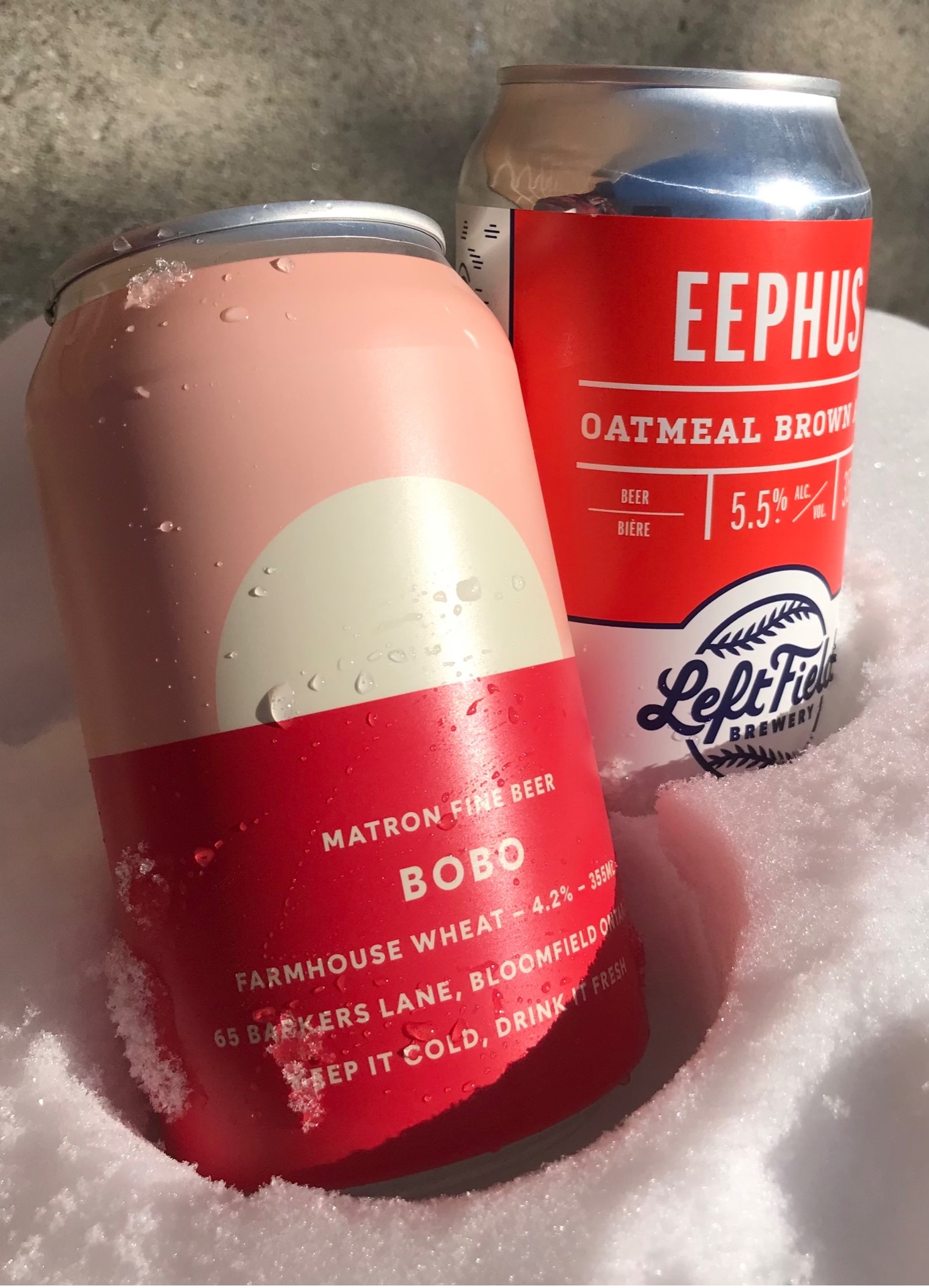
Not the big thaw, the ice jam busting thaw. Just the small thaw that tells you a big thaw is not that far off. The thaw that tells you you probably don’t need to buy more bird feed for, basically, the squirrels. The bastardly squirrels. You can sit out now. In the sun. With your Bobo and you Eephus. Yup, it’s a time when your mind starts to look forward to spring. And outdoor unpaid labour followed by a nice cold beer. That’s where it all started, right? As the old Temperance Society hymn told us, yardwork is the root of all evil. Soon coming. Get ready.

But for now, first up is The Beer Nut who found a bit of an expensive dud this week and it does make one wonder how much silent regret there is out there for this sort of thing:

Clearly this has been designed, and priced, for the special-occasion market. Anyone new to big barrel-aged stout and apprehensive about what it brings may find themselves enjoying how accessible it is. I couldn’t shake the feeling that it’s rather bland given the specs. I don’t want a sickly bourbon bomb but I do want more substance and more character than this displays. Perhaps releasing it fresh would have been the better move.

So not a drain pour but, still, not necessarily a beer you want to share with pals who know what’s what – or the price with thems who might not. Is there a word for that? There has to be a word. And what would our man in the EU think of this: blue beer in France: “Question?” “Yes, is it a shitty beer? “Quoi?” “Votre bier… c’est un biere du merde bleu, monsieur?” Peut etre.

Elsewhere, on a day out in Kent (are there ever days not out for Martin?) we gained another bit of knowledge on the rules of pub snacks as they relate to the odd hairy bits:

The Larkins was a lovely cool pint; that ramekin of scratchings a tad let down by the inclusion of pork crackling, which really ought to be outlawed. Unless scratchings have hairs on them, they have no right to that name.

There was a bit of a bittersweet tale posted by Boak and Bailey this week, a story of something found in a pub which starts:

On Saturday 8 March 1975, a 16-year-old boy wrote an autobiographical note on a piece of thin chipboard and concealed it in the skittle alley at The Lord Nelson pub in Barton Hill, Bristol.

Hey look! It’s Ren Navarro appearing on CTV discussing dessert beers nationally. A great public education public service.

Jeff wrote about what he called “malt consciousness” this week and I think he is partially, almost entirely quite right:

I had to spent eight days in Bavaria before something magical happened in my appreciation of beer. Because the main difference among the beers I drank (and drank and drank) came from the malt, I was able to tune into that wavelength. For the first time, I developed “malt consciousness.” I understood the role malt played—something many American brewers and most American drinkers still lack. Brewers are a lot more sophisticated now, and they understand that you’re not going to make a very interesting helles from generic two-row pale. Yet I’m not sure we’ve quite arrived at full malt consciousness.

If you go back to the brewing recipe books of twenty years ago, you will see much more interest in a range of malts that you do today. One of my first posted beer reviews eighteen years ago included the faded but one time most important US micro, Pete’s Wicked Ale. Before the new millennium, ales were malt and lagers hop focused. They really weren’t so binary but that was the story, as we see in this 1991 article about the Buffalo brewing scene or this one from 1987. Full bodied dark ales. Malt was the main event before craft appropriated and reframed micro in the early 2000s preparing us for the everything is IPA world we now want to leave behind. The present malt revival is great and adds another dimension to local brewing for sure. But it’s not new. We are remembering.

The big theme went off in another direction this week, a few more indications of the continuing death… or perhaps these are the zombie years… of craft like this:

Observation: There’s a LOT of confusion right now among wholesalers, trying to get a bead on the current direction of the craft beer industry. A general feeling of “something has fundamentally changed, but we aren’t quite sure what” going around. It’s creating some paralysis.

And Chris Loring of Massachusetts’ Notch Brewing shared this thought:

US brewers can take anything of value and tradition and make it a gimmick before beer drinkers experience the real thing. When was it decided we’d be clowns instead of professionals? I’m done, this is embarrassing.

Then… we learn again that a portion of CAMRA is populated by pigs. Then there was the end-timsey news about contract brewing no alcohol beer being a thing with the unskilled… and, of course, the Flagship February dead cat bounce. It is all flounder or founder? Whatever, I presume it all is the sort of cleansing we would expect after a pandemic… or a recession… or a competing innovation that draws attention elsewhere. Sorta facing all three makes for a guaranteed shift. M. Lawrenson had some interesting thoughts about the perhaps associated irritability of drinking establishments with social media observations:

Unfortunately, some places don’t see it this way.  Apparently, they live and die by their Google rating.  I gave 4/5 to somewhere last week.  On Sunday afternoon, they sent me a message saying “Hi, is there we can do to get you to change your rating to a 5?”  I struggled to think of a reply, as I’ve been to this place twice a week for the last 6 months and it’s been pretty much the same every time.  They could make it perfect for ME, I suppose.  But what’s perfect for me ain’t gonna be perfect for everyone.   Perhaps they recognised my name and imagined I’m some kind of “influencer” in the pub world.

Also, relatedly, I think this is one opinion that is about 180 degrees wrong about the nature of change we are seeing:

As someone who’s covered the seething angst and vexing contradictions of America’s craft beer industry and culture for over a decade, I find this a remarkable development. Where have all the hate tourists gone? Or, to put it another way: How did a craft beer industry and community so opposed to selling out become so inert in the face of their beloved breweries getting sold off?

Umm… maybe the development of small local breweries with no chance of ever being in a buyout maybe? The hate stop hating big craft and just moved on to a more interesting experience. That’s only the main story in history of good beer circa 2015-2022. Sweet status-based self-citation, however.

Note: “not Britain’s oldest boozer.”
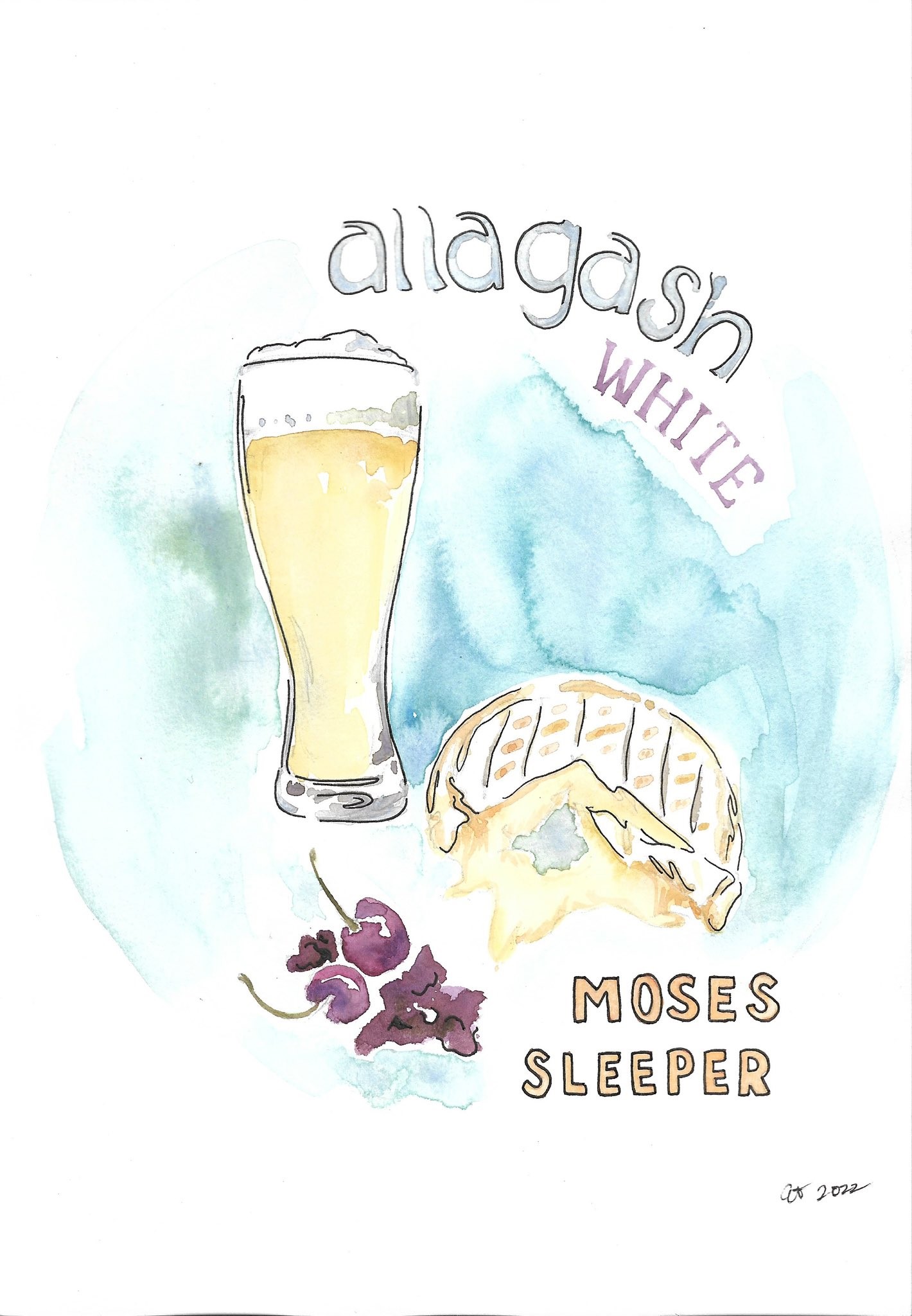
I really dislike most beer culture cartoons as they are… umm… not all that likeable* but I do like the more deftly drawn ones by Emily Thee Cannibal, possibly a proctologist, like this one about a pairing of Allagash White with a soft cheese… except I can’t stop feeling that the cheese looks like a dying PacMan. It’s a slower more dignified death for sure… but still.

Finally and weirdly, odd news from (i) the folks fighting against the bad actors and powers of BrewDog and (ii) the folk rooting for Mikkeller despite the bad actors and powers. Both groups seem to have engaged the same consultants to deal with their respective complaints. I hadn’t appreciated that in January there was an announcement that@PunksWPurpose had acquired a “platform to affected Brewdog workers to assist [them]… in their core mission of tackling Brewdog’s cultural issues” but saw today that the same consultancy was hired by Mikkeller to provide provide  a “Workplace Reconciliation Program.” This is a little confusing for me, being a lawyer who dabbles in areas of owner v. contractor, employer v employee issues, as you are either on one side or the other in my profession. Do you really want to share your experience to be used against an allegedly overbearing employer with someone hired by another allegedly overbearing employer to smooth the waters?**

Perhaps it is just as one correspondent wrote privately, “folks might be more interested in catharsis than anything else” regardless of the outcome in terms of justice. The display may be enough. Me, I’d say don’t rely on a consultant, get your own legal advice (especially when the consultant does not seem to understand independent legal advice means) or go to a tribunal (usually free). Whatever you do, be especially careful to not create a record of any complaint that ends up owned by the party against which you are making a complaint. You will see it next in your cross-examination when you do end up making that legal complaint: “… but didn’t you say in Feb 2022 the following…“***.

There. Done. For more check out the updates from Boak and Bailey mostly every Saturday and from Stan every Monday, plus more with the weekly Beer Ladies Podcast, and at the weekly OCBG Podcast on Tuesday and sometimes on a Friday posts at The Fizz as well. There is a monthly sort of round up at The Glass. (Or is that dead now?) There is more from the DaftAboutCraft podcast, too. And the Beervana podcast. And sign up for Katie’s irregular newsletterThe Gulp, too (… back this week!) And check out the Atlantic Canada Beer Blog‘s weekly roundup. Plus follow the venerable Full Pint podcast. And Fermentation Radio with Emma Inch. The AfroBeerChick podcast as well! And also look at Brewsround and Cabin Fever. And Ben has his own podcast, Beer and Badword (which I hope is  revived soon…)  And remember BeerEdge, too, and The Moon Under Water.

*rahrah, craft is great, comes in brown and other colours…kittens!
**Then the odd news turned into an odd thread when the consultancy lead jumped at the tail end of a chat I was having with DSL, wanting a discussion with me about Mikkeller, then suggested I was aggressive (no), directed me to the FAQs (no thanks) and sought to get me off Twitter and speak on the phone (really, no thanks). Crisis management deflection stuff. Frankly, I think I find most offensive thing is the use of “reconciliation” which is appropriate when talking about bringing a fundamentally divided nation together, not helping a frigging contract brewer cope with its self-inflicted crisis.
***But, then again, I pretty much did the same thing spilling my beans such as they are, a bearing of witness to a hired investigator about my tangential involvement in a similar issue… which was where the discussion with DSL started – and should have ended. Go figure.

These Be The Beery News Notes For Mid-January 2022

We are already at a mid-point. But there are plenty of them to do around. Pick one point and then another? You’ve created a mid-point. I saw this image from a late 1960s airport or train station waiting area. I remember these at the Halifax airport, coin operated TV chairs. Some sort of mid-point going on. With ashtrays. We are at another now. Mid-January.

This bit of beer business news has every member of the semi-pro beer chattering class without experience in business* scratching their heads:

Molson Coors Beverage Company said today it will stop production of its Saint Archer brand and sell its San Diego-based brewery and taproom to Kings & Convicts Brewing Co., which owns the Ballast Point brand.  

As I reported… relayed… poached from Josh Noel in the Chicago Tribune, back in December 2019 Kings & Convicts, an apparently tiny craft brewery in Illinois bought one time mega-brand Ballast Point. The purchase was made with a bucket of moolah earned from a hospitality asset sale by K&C principal Brendan Watters in 2015  along with input from other friendly and wealthy investors including wine magnate Richard Mahoney. These brewery buys at pennies on the dollar are no doubt a doddle for folk at that level.

In another sector aimed at making the moolah, the sad news has been reported by Jaime Jurado that something called the Adult Non-Alcoholic Beverage Association has been created. A concept which seems to put the moron in oxymoron. As it is not about beer, it shall never be referenced again – except when someone mentions “neo-prohibitionists” again. Then I can say:

What? You mean the ANBA?

Best NA-NF quote of the week? This:

Price is an issue. Not sure how I’ll feel about that once work isn’t paying for the beers.

What? Govern the opening of your wallet accordingly, I suppose. Spare a measure of salt when reading review by those who get the freebies. Next fad to return? Temperance bars. As noted by Martin, the mastheadless blog Evo Boozy Scribbler discussed a variation on that theme:

I have nothing but disdain for booze free curry houses. Having a pint of Cobra is part of the experience. I don’t take my own roast potatoes to a carvery.

Well, it’s part of your experience. Why can’t people on the beer imagine that there is a world where being people on the beer is not considered the height of civilization’s progress? I rarely have been with my curry but, then again, I equate it with family meals, not piss ups.

Speaking of food and beer, this is an interesting argument from Zambia related to food security:

Well, if we are talking about food security, perhaps we could start by checking the quantity of maize going into beer before we think of suspending meagre exports of less than a million tonnes because if this info could be true, it could mean us who drink chibuku, ‘eat’ more mealie meal in three months than what the whole country uses in a year! Mwaimvela kanongobilitina skopodicious, ka? But not everything is bad about opaque beer, “…it gives you 13.1% of body energy when you drink,” my friend told me.

Changing course, a high honour and one I agree with entirely was bestowed by Garrett Oliver this week after listening to Matt Curtis interviewed by the two folk at BeerEdge recently:

I don’t really follow the beer press; as a producer it sometimes feels grubby and unseemly to do so. But I will say that this interview put a lump in my throat more than once and made me switch my mental hat to “writer/journo”. We do need actual journalists. Glad of these folks.

Through this troubled world of everything from PR puff to academic research, it is good to note how much quality there actually is – as I get to do each week. While a sort of drinks writing is a narrative with no greater arc, writing attracted to novelty (or even whatever it is that has briefly twitched… right over there, do you see it?) we see another relatively recent aspect of this is how good beer writing is developing and unfolding is the phenomenon of people writing about serious issues faced in life – from humanity’s injustices to the  deeply personal – seen through the lens of something somehow related to beer. On excellent example this week was provided by Jonathon Hamilton in Pellicle:

This time last year I wrote my first essay for Pellicle. It was, like this, a self-reflective piece about the beginnings of the magazine, alongside my own struggles with mental health, imposter syndrome and a sense of belonging. Putting myself out there in such a way was one of the most difficult things I’d ever had to do, and I would love to tell you all how it immediately changed me for the better. Unfortunately, it did not.

Similarly, note bene the bene noted:

It’s true that the total number of blogs has declined over the past decade, but the number of good blogs has never been higher. Moreover, they fill a role that would otherwise be left vacant. Beer is little-covered by newspapers and magazines, and often merely superficially. No one is going to print one of Ron Pattinson’s lists of 19th century grists in the Wall Street Journal. Social media is great for opinion and linking, but not much else. Imagine Lars trying to present one of his enthnographies on Twitter. Larger, more ambitious projects like Craft Beer & Brewing and Good Beer Hunting are doing fantastic work and I don’t want to diminish their effort. But blogs are still critical in the media ecosystem—and, given the anemic state of print journalism and the increasingly toxic nature of social media, more important than ever.

Hooray and happy sixteenth beer bloggaversary, Jeff!

There was a sad sighting of another of a bit of a failed PR initiatives this week: Tryannuary. How 2015. How could they have known that a global pandemic would raise general concerns about personal health?

In Scotland a wonderful protest was seen this week in Dundee, where the King of Islington, a Dundee pub was suddenly closed without warning and then suddenly reopened without warning:

Staff at a Dundee bar at the centre of Covid-19 cover-up claims have been told to return to work this week following a sudden closure. The King of Islington pub shut on Saturday with upper management blaming “massively reduced trade levels” due to the “promotion of unsubstantiated claims” in a union-backed grievance letter from staff. Kieron Kelleher, assistant manager at the Union Street venue, accused pub chain operators Macmerry300 of victimising staff who spoke out.

Protests had also been held at pubs owned by the same chain in Glasgow as events unfolded. As a child of a child of the Red Clyde, I got all verklempt.

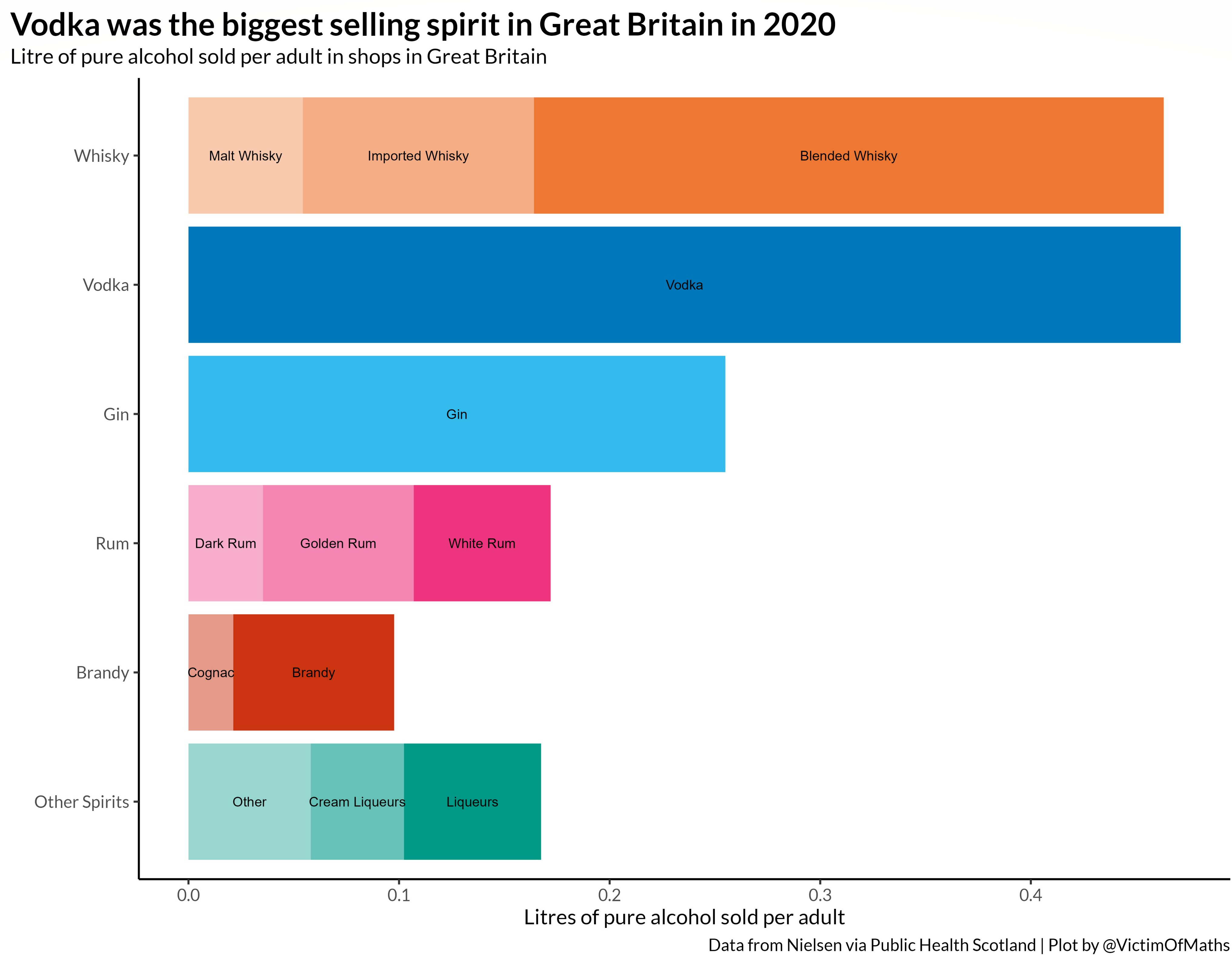
This week’s Tufte Award for Best Visual Display of Quantitative Information goes to… a chart that explains what we know as “hard liquor” in Canada but described as spirits in the Old Country. It is from Colin Angus using data from Public Health Scotland who first ran a poll, most people guessing gin would be #1 rather than the bronze medal winner. Well down the list but still – who is drinking all that brandy?

The Canadian Beer Cup is off. Now… calm down. Breathe. I am sure it was a big deal in your household, too, but the reason  for the cancellation is… singular and real:

…guidelines announced last week by the Ontario Government in response to the rapid surge in cases of the Omicron variant limit indoor gatherings to a maximum of five people, making it impossible for in-person judging to take place at this time. “One of the goals of The Canada Beer Cup is to showcase the greatness of Canadian breweries to the world,” said Rick Dalmazzi, Executive Director of the Canadian Craft Brewing Association, in a statement. “With all due respect to the many fine Toronto and Southern Ontario judges who will be involved, we want to do everything in our power to also include the many international and cross-Canada judges who have committed to our event.”

In plain language, there was clearly a large aspect of this that was a Toronto tourism event bringing in judges who were also newspaper columnists and consultants to retailer, etc.** (One need not take that statement above in the cancellation notice to suggest that while Canadian beer may be underrated, well, our own Ontarian beer judges are somehow overrated.) Now… how to transition and stay within the overall goals. As happened in the World Beer Cup (whatever that is when it is not the World Beer Awards), beer submissions will be poured. What does a next step look like? Apparently the Greek Cup of Beer or the Greek Beer Cup or the Greek Beer Awards was not so needy of auslander praise as they also just mailed out the samples to the usuals. As did the World Beer Awards. Something will occur. I just hope that there are government grants that buffer all this, that cover the unexpected stranded costs that demobilization and remobilization incurs. Stranded costs are a killer.

Non-beer recommendation of the week:  follow AndyBTravels. He’s train fan who runs a Travel Architect Service. He also wanders around remote parts of places like rural Romania where this week he captured some desolate spots and also some gorgeous moments.

That’s it for now. For more check out the updates from Boak and Bailey mostly every Saturday and from Stan every Monday, plus more with the weekly Beer Ladies Podcast, and at the weekly OCBG Podcast on Tuesday and sometimes on a Friday posts at The Fizz as well. There is a monthly sort of round up at The Glass. (Or is that dead now?) There is more from the DaftAboutCraft podcast, too. And the Beervana podcast. And sign up for Katie’s irregular newsletterThe Gulp, too (… back this week!) And check out the Atlantic Canada Beer Blog‘s weekly roundup. Plus follow the venerable Full Pint podcast. And Fermentation Radio with Emma Inch. The AfroBeerChick podcast as well! And also look at Brewsround and Cabin Fever. And Ben has his own podcast, Beer and Badword (which I hope is  revived soon…)  And remember BeerEdge, too, and The Moon Under Water.

*pretty much all of them.
**we should be honest about how these things really work.

Your Thursday Beery News Notes For A Oddly Green Mid-October

It’s an odd autumn, isn’t it. Not just the pandemic that is no longer as scary but not resolved either. At least in the privileged bits of the planet. It’s also odd on the longer game scale too. The leaves aren’t turning colour here. Weeks behind schedule. Took the national harvest time short week off with the expectation of cleaning up the yard and there is still mowing to do. The last grapes still on the vine. Potatoes to pull from the ground. Shorts weather at least still today.

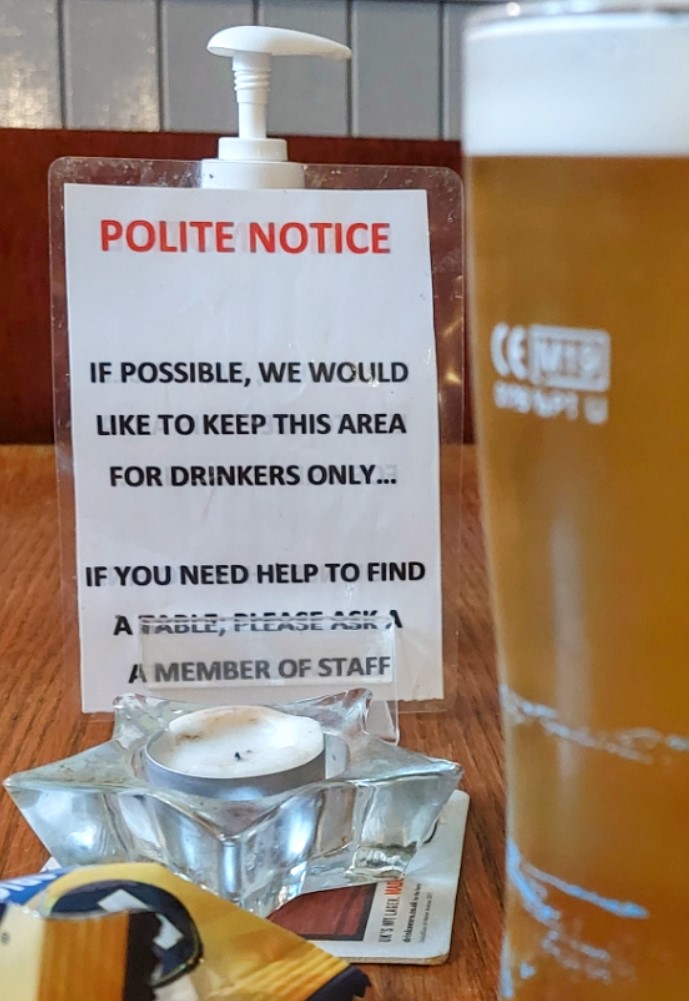
What else is going on? First with the positive. Gently manic blogger Retired Martin posted no less than 15 tales over the last week, each with quite attractive photos and a decent measure of wit as he, among other things, defines both cosy and comfy. The aggregation of his writings provide more than a list of taverns ticked off a list. His eye for detail as above (“For Drinkers Only”!) and brief observations on the places he visits are perhaps deceptively rich, adding up to something of an ethos:

Bill the fisherman came in for his late pint, the girls night out were laughing at a boy called Mark who I felt sorry for, and it felt like a happy pub.

Staying in the UK, I was linked to a story by an author this week so I thought it only polite to read rather dedicated fitba and beer blogger Jane Stuart‘s story about the scene around the Blackpool v Blackburn Rovers match on 2 October:

…I now felt hurried because I’d arranged to meet Wilf (of Yorkshire Seasiders fame) in Cask & Tap, which opened at noon. This left me no time for breakfast (not that I can face food first thing anyway) and meant that I was pretty much getting up and going straight to the pub. We did make a pit stop at the ticket office en route to collect around £350 worth of tickets for the next four away games at Forest, Reading, Sheff U and Swansea (there is a Swansea!). Clubs in general have been coy to release away tickets more than 7-10 days in advance this season so it was a bit of a shock (not least financially) to have all these tickets on sale – including one for a match at the end of November.

Supply chain news: beer bottle shortages hit tiny Prince Edward Island.

As Jordan noted, a favorite brewery of mine, Half Hours On Earth of rural Seaforth, Ontario and Canada’s first online retail beer store is shutting down and selling off its brewery gear:

As we wind down the brewery (see full post on Instagram), we’ll be putting our parts and equipment up for sale here on the webshop. This is the first lot, and there will be more listed as equipment becomes out of use. Sign up for our newsletter to be first notified. If anything goes unsold, prices will be reduced until gone. When an item is sold, the listing will be removed. All items are in used condition unless stated otherwise.

As they shared on Instagram, the owners are transitioning to a new focus and a new business, Worldlet, offering sustainable healthy household products:

We opened an eco-shop two years ago, and have plans for something new on the horizon that we hope will be the most impactful of all. It will require more of our attention going forward, and unfortunately, there’s simply not enough hours in the day.

Good. A doubly sensible approach if you ask me. And net positive.

Thing never said in beer: “…and certainly thanks to all those who nominated the winners…” Oh… ***

Speaking of positive news in with a first tiny appearance of neg, it appears that the US hospitality work force has gotten fed up with being low rung on the ladder with millions quitting their dead end jobs:

Quits hit a new series high going back to December 2000, as 4.3 million workers left their jobs. The quits rate rose to 2.9%, an increase of 242,000 from the previous month, which saw a rate of 2.7%, according to the department’s Job Openings and Labor Turnover Survey. The rate, which is measured against total employment, is the highest in a data series that goes back to December 2000.

Good! Want my advice? Don’t make these jobs suck. Support your staff or soon you will understand that not only are they the ones who make the money but they are also customers of the next place down the road. Create careers for those you hire.

[Q: “bin fire“? You do know you can just not follow unpleasant people, right?]

Stan on the state of beer writing or at least one form:

In the 13 or so years I’ve intermittently posted links on Monday I’ve always looked beyond blogs, and beyond beer stories for that matter, for interesting items to pass along. If you are disappointed that I don’t point to more beer blogs, well, so am I. But let’s face it. Beer blogs are dead. That is why you are not reading this.

I know what he means but we have to be honest. As we wallow in newbie guides and second editions and other ways people in financial need find to get by, we have to remember that many narrower focused web periodicals are just blogs repainted and rebranded.** And similar content is created daily in Twitter threads and Instagram posts with great effect. And newsletters arrive regularly, sent from those gentle wee souls who fear the comments blogs receive, sent by people correcting claims in the content. I see plenty of writing is out there even if the deck chairs have been rearranged due to fiscal anxieties and dreams of monetization.

Maybe really probably bad is the news reported by Canada’s ag new source The Western Producer coming out of China that its insane residential construction boom meeting no identifiable demand for residential construction may hit the world’s food commodity markets:

Companies like Evergrande have fuelled themselves with debt while building millions of homes that stand empty, leaving China with an array of ghost cities and neighbourhoods. If Evergrande goes bust the whole industry, which more and more seems like a house of cards, could collapse. That would be bad for demand for steel, coal, copper and other industrial commodities used in construction.

Why mention that in a beer blog? Global prices for hops and barley depend on demand forecasts. As commodities drop, niche markets like hop growing and malt barley get hammered. As WP states: “It’s a potential killer of general demand — around the world.” Massive supplier Russia is also jerking around its own grain farmers with an export tax causing farmers to “abandon wheat, corn and barley in favour of soybeans, rapeseed, flax, lentils, peas and summer fallow.” Put that on your horizon.

Finally and certainly now very negative, the big news this week I suppose… if you can call it news anymore… relates to the continuing implications of sexist behaviors in craft, this time related to the Danish beer brand but not quite a brewery Mikkeller which has seen presumed acolytes ditch a fest being put on in Copenhagen, all rather late in the day as one Toronto brewery staffer noted:

I find it hard to believe these breweries didn’t know about the Mikkeller allegations. Working in the industry it was all anybody talked about for months. It took public shaming for them to pull out, which is a form of pressure.

Another observer tied events to the call for unionizing what really needs to be differentiated as the legacy big craft beer industry.

What’s really interesting is the continuing greater reticence to engage with the boycott by trade voices who may have invested in the brand too deeply as part of craft’s tight circle of reciprocal praise narrative.  Something called The Drinks Business reports on the response to allegations but puts as much effort into polishing Mikkeller’s brand than inquiring into the problem. We read that the fest is “renowned for featuring some of the most highly sought-after breweries in the world” before, in a classic example of beer trade writing reporting on beer trade writing, repeating the GBH praise that Mikkeller is a “tastemaker within the beer world.

Even with some pretty strong observations on the allegations in past posts including the statement “founder… Mikkel Borg Bjergsø… actively participated in bullying and harassment…” GBH itself still took the time (as if to meet an editorial requirement) to label (if not slur) those rejecting sexist environments in brewing as “activists” and implying a level of ineffectiveness in quite a remarkably dismissive paragraph:

The reversal for these breweries and potentially others is a response to continuing pressure activists have exerted on these companies, urging them not to participate in collaborations or festivals with global beer company Mikkeller, which is based in Copenhagen. Nearly 100 breweries from across the world are still listed on the event’s Facebook page as attending. 

Not necessary. Not every issue has two sides with equal merit. Matt of Pellicle was much more to the point:

I do think that breweries attending this festival in light of ongoing, unresolved issues, paints the entire craft beer industry in a bad light. It feels like a “fuck you” to the victims who’ve shared their stories these past months.

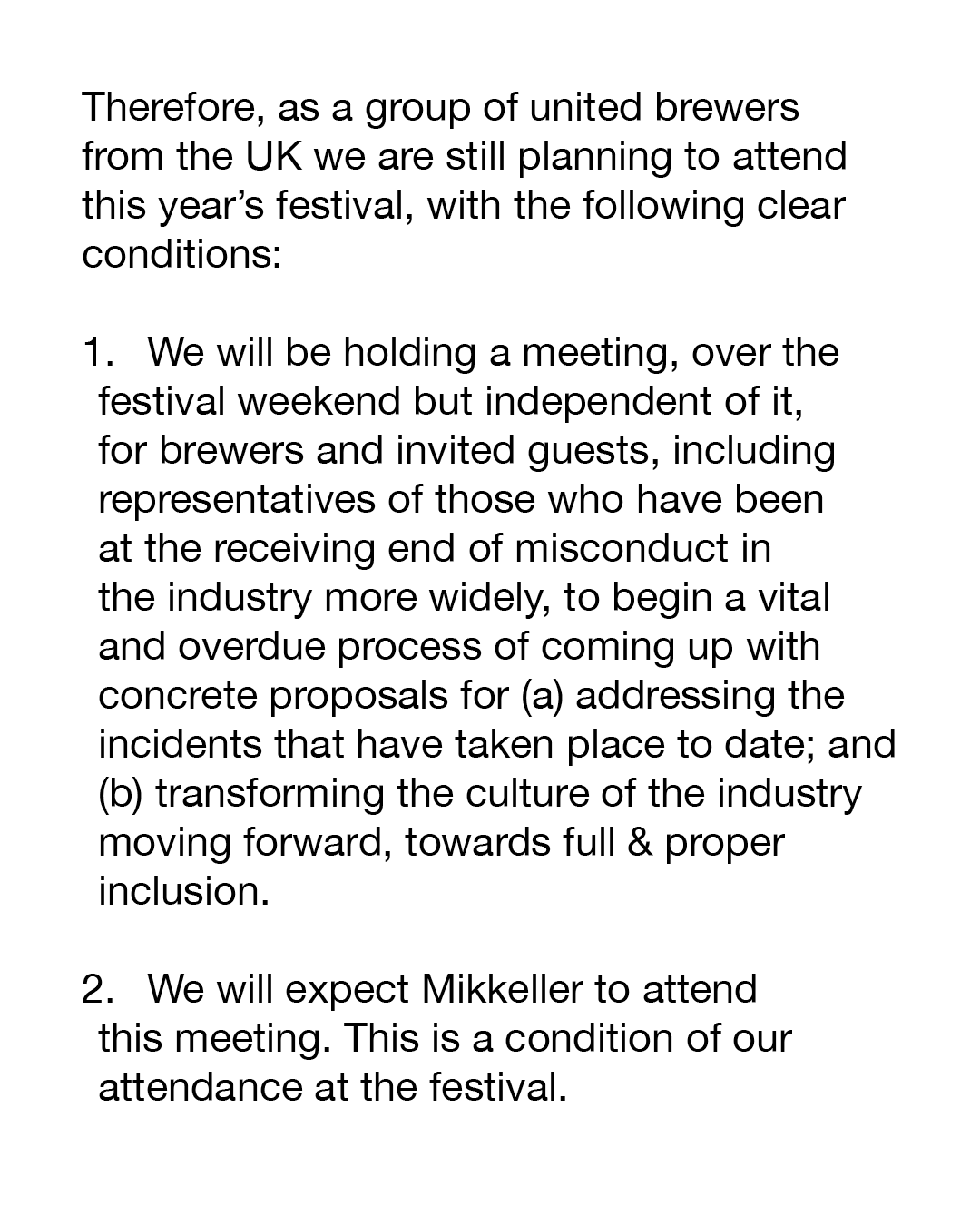
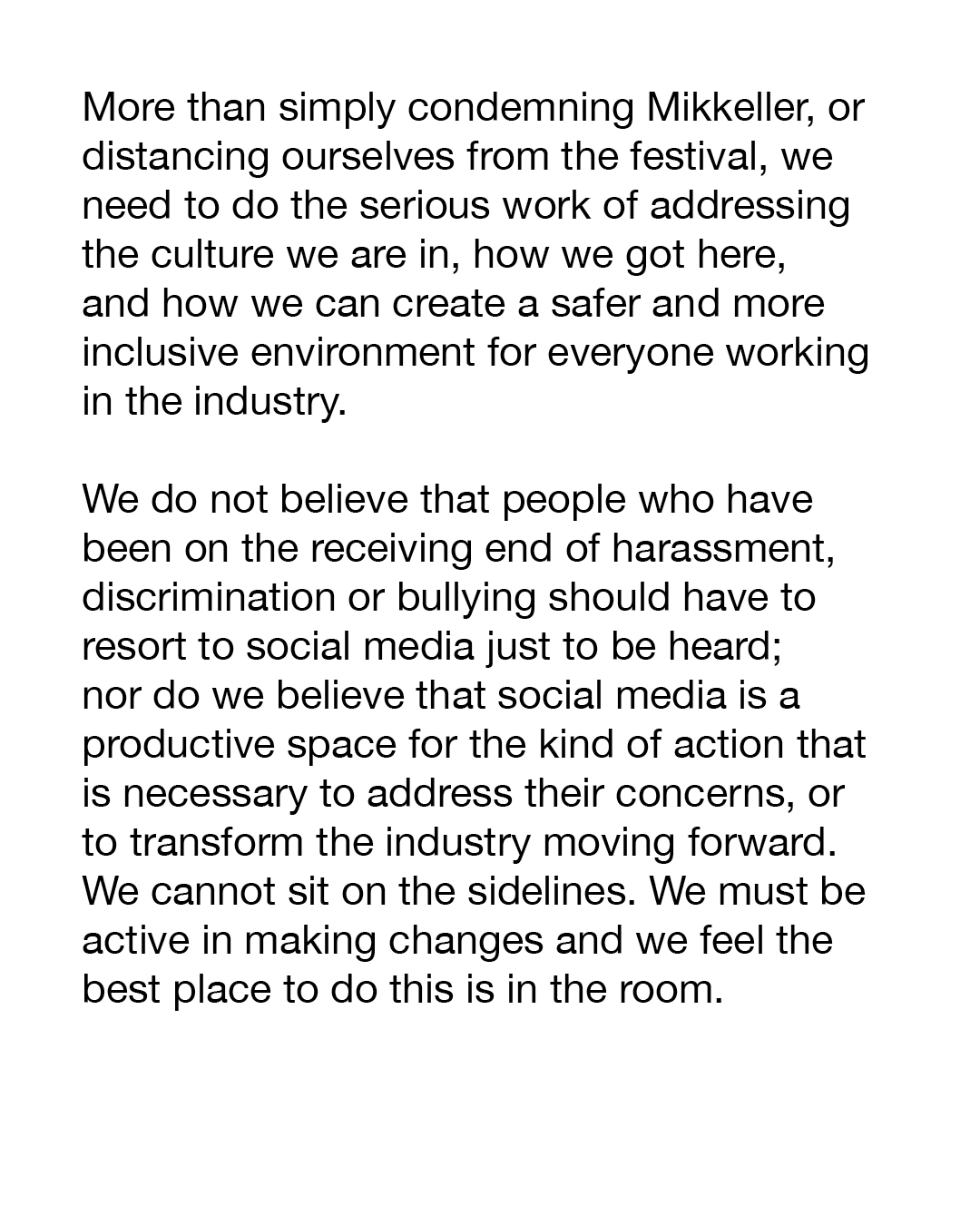
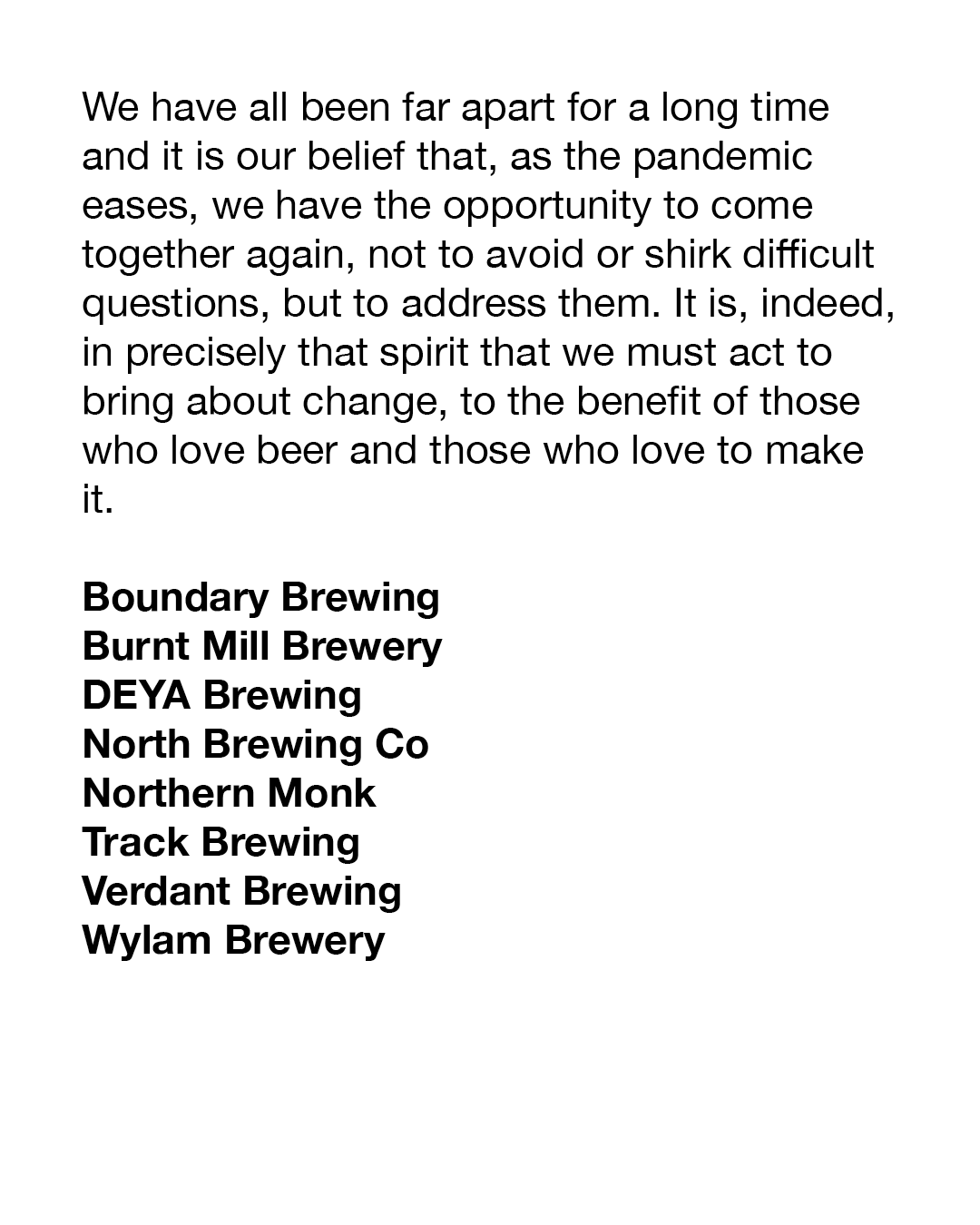
Indeed.* The beer brand owner at the centre of all this has continued to make some astounding statements as Kate Bernot has helpfully shared. But if all that wasn’t enough, what is really unbelievable (but for this being craft beer sucking up and sucking out loud) is how eight UK breweries responded on Wednesday took the time to issue a bit of absolute PR hari-kari of a note explaining their continued participation on certain  “conditions” including:

a. They state (as Matt points out) that they demand a meeting will be held – including other brewers, the abusive and also the victims of abuse (presumably not asked about this kaka meme process at the time of the press release) to move the industry forward;

b. They state that social media (the prime medium for applying ethical pressuring in this case) “is not a productive space” presumably meaning best to keep these things quiet or at least behind closed doors; and

c. They are still attending the event because… why? And each brewery has aligned themselves with the mainly unmoved Mikkeller and each have taken the time to sign on – and openly identify themselves as doing so making it easier for customers to buy somewhere else.

Un. Buh. Lievable. Except… you know… craft.

Positive and negative. Personal experience as opposed to scale and ambition and shameful behaviour. As always, for more check out the updates from Boak and Bailey mostly every Saturday and from Stan now on a regular basis again every Monday, plus more with the weekly Beer Ladies Podcast, and at the weekly OCBG Podcast on Tuesday and sometimes on a Friday posts at The Fizz as well. There is a monthly sort of round up at The Glass. There is more from the DaftAboutCraft podcast, too. And the Beervana podcast. And sign up for Katie’s weekly newsletterThe Gulp, too. And check out the Atlantic Canada Beer Blog‘s weekly roundup. Plus follow the venerable Full Pint podcast. And Fermentation Radio with Emma Inch. The AfroBeerChick podcast as well! And also look at Brewsround and Cabin Fever. And Ben has his own podcast, Beer and Badword And remember BeerEdge, too, and The Moon Under Water.

*And this weeks gold winning use of an obscenity nudging out this tweet by Evan Rail.
**Filled (he unkindly said) with tales that I pass on mentioning every week even if they win a hubcap in the tight circle of reciprocal praise awards.
***By the way, where did those Flemish farmers in England in the early 1500s come from. You know, when aliens were subject to residency licenses and other severe controls in England. Oh, by “farmers” is it “traders” that was meant… like almost one hundred years before that? Or was it the elite English access to hopped beer in the 1300s or perhaps 1200s? Such a muddle.

The Last Of August’s Thursday Beery News Notes

What was that? Summer 2021? Done? It’s still going on here as I am on an actual holiday and doing fun stuff like getting new spectacles for my face and a new electrical panel for the basement. Wooot! This is the dream and I am livin’ it. I even had 330 ml of a 3.8% beer yesterday and watched a Netflix show about the Korean buckwheat noodle dish naengmyeon, as recommended by DSL.* Both a drinking and then hangover dish apparently. Now I know why my buckwheat noodles suck. I didn’t immediately rinse and rub them in ice water. And, yes, a hundred other reasons. Never again. Probably. Maybe.

First off, it was good to read “The Ancient Magic of Malt: Making Malt Sugars and Ale from Grain Using Traditional Techniques” by sometimes reader Merryn Dineley in the journal EXARC.net,* 2021 (vol 2) who set the record straight:

This paper is presented as a historical narrative as well as being an explanation of basic ‘mashing in’ techniques. I aim to tell the story of the development of my understanding of how to make malt and malt sugars from the grain. I have learned from other experimental archaeologists, from ancient technologists and brewing scientists as well as from ethnographic research and the study of traditional style malting, mashing and fermentation techniques. One of the common myths about the origins of beer thousands of years ago is that grain was perhaps left in a container, it got wet and, somehow, turned into beer. This is impossible. The conditions for making malt and malt sugars do not exist in this situation. 

A bit later in time but still in the past, Rob Sterowski at “I Might Have a Glass of Beer” wrote about Epochal Barrel Fermented Ales, a brewery intent of brewing the old fashioned way:

Possibly the most erudite of Scottish brewers, Young deserted the world of academic philosophy to devote himself to a study of eighteenth- and nineteenth-century brewing literature instead, and Epochal Barrel Fermented Ales is the result. A skilled home brewer, he has set up his small brewery in Port Dundas to make beers influenced by the way it was done two hundred years ago. His beer is fermented with a multi-strain yeast, cleansed to rid them of excess yeast and then allowed to mature to completion in oak barrels with a handful of whole-cone hops. The finished product is naturally carbonated in the bottle.

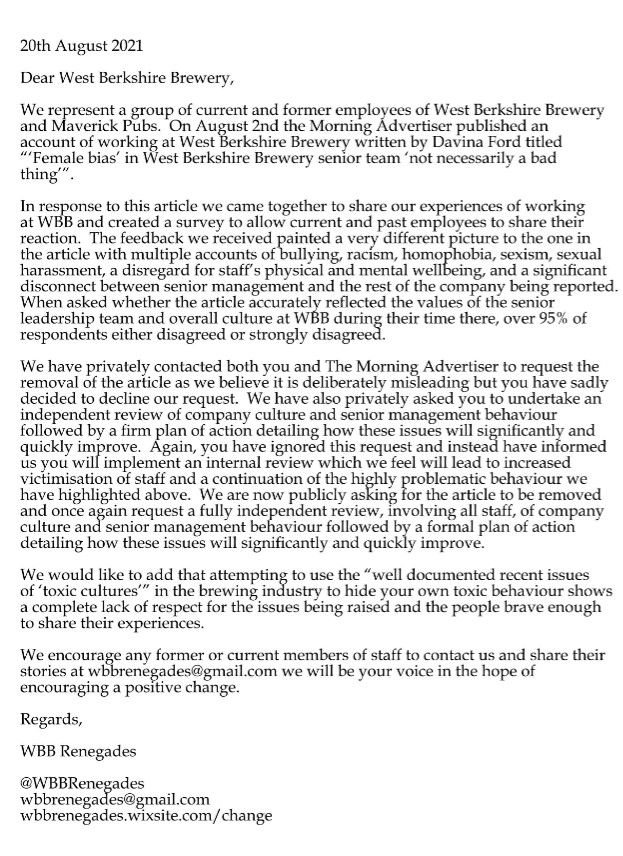
As Boak and Bailey noted, suggestions that the #MeToo and #BLM movements’ efforts to expose craft beer’s ugly side have faded were found wanting with the news of an open letter to England’s West Berkshire Brewery. You can click on the image to the right to read the complaints yourself. It is certainly one of the long failings of the drinking entertainment pleasure trade to address the piggish attitudes that go along with booze. So it is good to read that folk won’t be bullied to keep quiet when it comes to bigotry and harassment even if a lot of the privileged voices have wandered away.

I wasn’t familiar with English comedian Sean Lock. He passed away this past week but I am glad to know he had a hobby.

Update: I failed in not mentioning “Empire State of Mind” by David Jesudason published in GBH (thereby upping their average significantly) who looks at IPA from the point of view of the “I” as in India:

My father’s love of empire, and his belief that Britain was a civilizing force, was mirrored in the drink he called his own: the India Pale Ale. Of all of his beliefs, this one was particularly confused. His friends were Lager drinkers, and his adoption of IPA was a way of pretending to be refined in the days before the craft revolution had taken hold. But where he saw a drink that was emblematic of genteel, colonial India, I see something very different: Owing to the beer style’s association with the East India Company and its brutality, I can’t help but think of bloodshed, oppression, and enslavement.

I noted that it was an parallel to “Britain’s Idyllic Country Houses Reveal a Darker History“, the recent NYer piece on England’s National Trust but also cause for reflection on my own family’s path. One side included servants at big houses like that of the Collins publishing family as well as a great-grandfather who was a Sgt Mjr British army out in the empire while the other side, displaced highlanders in Greenock, built the ships that shifted the sugar that came out of the colonial system. Many died young, many had lives of if not poverty then at best modesty – with much drink caused troubles in industrial towns before many emigrated the hell out of there. If you have any doubt as to the way that IPA is code for empire consider this from that NYer article:

“At the end of the day, we went to a very, very, very rich country and transferred a lot of its wealth to this country, by trade, entrepreneurship, and looting,” Dalrymple said. In 2003, Angus Maddison, a British economist, calculated that India’s share of the global G.D.P. went from 24.4 per cent to 4.2 per cent during two and a half centuries of colonial rule. In 1884, the British state had a total income of two hundred and three million pounds, of which more than half came from its overseas territories, including seventy-four million pounds from India. Taxes were levied across the world and sent to burnish the metropole.

Good for someone to finally point out in depth the obvious issue with IPA as a placeholder for good beer.  Might as well brand US craft lager Berghof.

Note: craft.

One of Canada’s few pre-Confederations tavern/inns/hotels, the Queen’s Inn, is up for sale in my fair town. I wrote about it in 2004 when it was just 165 years old and I was only 41: and is ripe with history and charm:

…he remembers one particular customer who continued coming in until he was in his 80s. The gentleman, Mitchell recalled, was blind and had a booming voice. “Give him two drafts,” the bartender told the younger Mitchell. “We just put the price up to 50 cents. Have fun.” “I didn’t know what he meant. I put the two beers down and said, ‘That’ll be 50 cents.’” “Forty-five is all you’re getting,” the man bellowed back.

Another pandemic affected business. And, on that theme, Josh Noel pointed me in the direction of the tale of overzealous expansion which ended in the collapse  of Ale Asylum of Madison, Wisconsin:

Dilba said the pandemic “didn’t help” the business but added, “there were other extraneous factors, which I won’t get into, but the pressure applied by the pandemic was significant. And we’re not alone in that. Everybody in this world is in this fight together that really made moving forward very difficult.”

Factors cited elsewhere in the article include too many local beers, too many out of state beers in local bars and rent increases. Maybe also it’s because Americans are just drinking less, according to VinePair or, rather, the authors of the polling study they echo:***

Sixty percent is down nearly five percent from 2019. It’s down even more compared to 2010, when 67 percent of U.S. adults replied “yes” to the survey. There seemed to be a shift in drinking habits from 2019 until now. The average number of drinks per week (3.6) dropped to its lowest since 2001. Additionally, men (63 percent) reported drinking at a higher rate than women (57 percent).

Good reason to find another career than drinks writing! One person who does not care is likely Sister Doris Engelhard, the brewing nun in Germany whose story as told by NPR was the retweeted topic of the week:

“I only brew beer that I drink myself, so if the other sisters want to drink a wheat beer, they’ll have to buy it themselves,” she says. She also waves away any question about the intersection of her faith and her beer. “Beer is part of the Bavarian soul. If you’re not happy with yourself, you won’t be happy in a cloister,” she says. “And eating and drinking are part of that life. It’s not about being pious. All I need to do is believe in a higher power that accepts me as I am.”

Speaking of good stories about good outcomes, the BBC reported this week on the life of Cesar Kimbirima, a child soldier in Angola who found himself left for dead, now running a Wetherspoons pub:

…as the sky started spinning, and his consciousness faded to black, he thought it was over. His life would end in the long grass, while his blood poured into the dry Angolan earth. More than 20 years later, that dying soldier pours pints at the pub he manages in south London. As he chats to punters, and waves to babies in prams, there is no hint of Cesar Kimbirima’s former life.

There. That is it for now. Not sure if there will be an edition next week as I am driving to the sea. We will see. During these last lazy days, for more check out the updates from Boak and Bailey mostly every Saturday and (if I dare say) from Stan mostly every Monday, plus more with the weekly Beer Ladies Podcast, at the weekly OCBG Podcast on Tuesday and sometimes on a Friday posts at The Fizz as well. There is a monthly sort of round up at The Glass. There is more from the DaftAboutCraft podcast, too. And the Beervana podcast. And sign up for Katie’s weekly newsletterThe Gulp, too. And check out the Atlantic Canada Beer Blog‘s weekly roundup. Plus follow the venerable Full Pint podcast. And Fermentation Radio with Emma Inch. The AfroBeerChick podcast as well! And also look at Brewsround and Cabin Fever. And Ben has his own podcast, Beer and Badword – when he isn’t in hiatus as at the mo, more like timeout for rudeness! And remember BeerEdge, too, and The Moon Under Water.

*who once posed as me just to be nearer Lars.
**an archaeological foundation of some sort out of The Netherland with an address on the fabulous street, Frambozenweg!
***Hah! I’m one to talk.

These Be The Thursday Beery News Notes For The Summer Doldrums

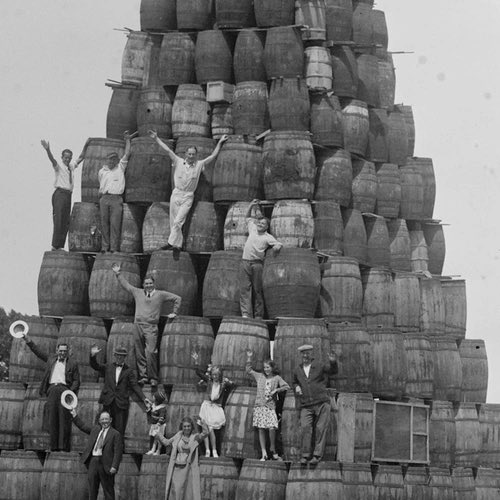
A nautical theme this week. Or at least one at the outset that will soon wander away, off on its own, finding another purpose in life. It is dead out there. But you know what they say: no news is beer news. Beer is good like that. It’s the people related to beer that get in the way. Things got fully into or out of swing with the Fourth of July, remembered by Ottawa historian Andrew King in his description of bonfires made of old barrels… perhaps even boozy barrels… ka… boomski!

First off, the way of the world. One beer blog dies as another is revived with the publication of “News in Brief #62” at Seeing the Lizards including an analysis of a recent botch mentioned a few weeks back:

“You just have to look at history.” pontificated dubious scholar Sophie Aubergine-Pickle “They just got a handful of whatever grain they quite literally had to hand, threw it in some water. And left it.” “It stands to reason, doesn’t it? The human hand has all kinds of stuff on it. Bacteria. Wild yeast. Skin flakes. That stuff beneath your fingernails. If you leave it long enough, of course fermentation will spontaneously commence. And people back then would drink anything.”

Entirely conversely, I really liked this piece at GBH by Jamaal Lemon on the Charleston Schützenfest – a post US Civil War meeting space with beer and rifles, the sort of thing that developed in NYC a decade earlier in the mid-1850s. The story carries the combo of lived experience and scholarship that is too often lacking in these days. It also avoids another problem – the suspect helpful hand of the privileged. Since #BLM, #MeToo and even back to #Occupy we see too much of what we used to call the good South African Liberal* efforts to speak in support turning into taking on a heavy role in defining then steering the discourse. An allegedly helpful listing here gathered by those not on the list, a intervening pasty editor there. None of that in this piece – as it ought to be:

The beneficiaries of Charleston’s antebellum society have long manipulated virtually all local industries for generational gain, in an effort to maintain that established hierarchy. Just as it could happen in high school athletics, so it could in the local brewing industry, whose skewed diversity statistics serve as a testament to that longstanding inequity. This isn’t anything new: Systems of oppression constructed during Charlestown’s slave era were disrupted at the end of the Civil War, only to be violently reintroduced after the collapse of Reconstruction.

As you know, I have a very soft spot in my heart for brother Stonch but through these last few months he has done us all a service by sharing experience of being a pub owner during this pandemic with an independent eye, as in this tweet:

Our Ellie often spouts some absolute jarg lyrics, but I agree with her here. There’s danger of hospitality looking looking like, as my friend @jwestjourno put it, “the catering wing of the covid-denier corps”… Also, the problems of hospitality staff having to self-isolate after contact with infected – already crippling the industry (or even worse, becoming ill) – is only going to get worse without any degree of social distancing or mask wearing being adhered to in the workplace.

Excellent points. And remember this, too, next time you read some stumbling voice tell you his or her idea is too “nuanced” for Twitter. That’s just the hymn of the illiterati.

Some people have a blog on the side, about a bit of bun.

Boak and Bailey published an interesting post, sensibly and practically describing their thoughts on the success of Camden Town Brewery’s Hell lager. And, as we see often, received some feedback antagonistic to diverting off the single path of craft-thought or, in the German, KrafphtÜberlegen:

Helles means ‘light’. Beers badged as such tend to be very pale, light-bodied and with relatively low alcohol content. It’s got broad commercial appeal, as Camden Hells has proved, because that basically describes most mainstream lagers. Calling your lager a Helles is a great way to have your cake and eat it: it’s simultaneously (a) a normal, non-scary lager that people will actually want to drink and (b) a craft beer with heritage worth an extra pound a pint.

Apparently “helles” (like every word ever) has a variety of related meanings and (like every word ever) slightly different usages and different degrees of usage in slightly different contexts and cultures so be prepared for the wisdom of the self-certified in the comments. Yawn.

A PSA: if you see bad behaviour, call out bad behaviour. Whether it is bigotry or unfair employment standards or dangerous quality control only bad practices at breweries are assisted by saying “…[t]he responsibility to the consumer lies directly with them…” Nope. If you hold yourself out as a knowledge holder, withholding information is on you.

A fabulous story about a fabulous bar:

My dad said we could do something special for my 6th birthday. ‘Anything you want,’ he told me. I think he thought I was going to say ‘ice cream.’ But I said I wanted to go to New York City, and two weeks later we were on a plane. We spent the morning of my birthday shopping…

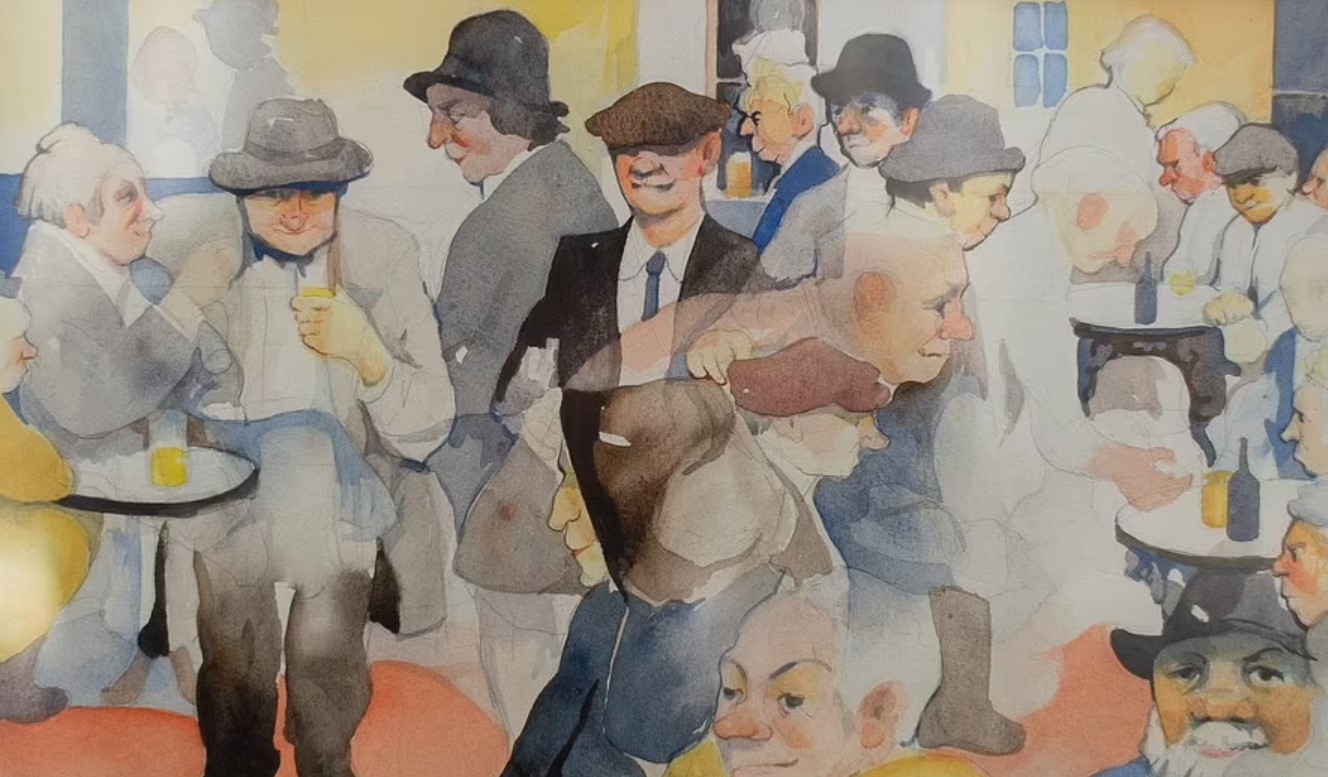
Here’s an interesting story in the Daily Mail about the late Eric Tucker, a pub man who painted what he saw:

Most of the pictures feature Lowry-type scenes from smoky pubs, tumbledown terraced streets and factories and showing flat capped locals with their wives… Now the former professional boxer – whose paintings were rejected by the art establishment while he was alive – is finally to have his talent celebrated after the unexpected discovery led critics to laud him as ‘the secret Lowry’. 

Finally, frankly a sad bit of apologia found at The Glass, describing the natural state of beer judging due to the ridiculous macho requirement that beer judges not spit unlike wine, spirits, tea and every other taster of fluids:

Of course that’s not the same as drinking that many beers in a day. A judge might take just a handful of small mouthfuls in the course of assessing a beer. But still, you have to swallow in order to get the aftertaste, unlike wine and spirits where you spit. At the end of the day you’re not drunk, but I certainly wouldn’t want to drive. And there’s an element of having drunk… that weariness and woolliness that can creep in after a spot of day-drinking.

Note: you’re drunk.

That’s all for this week. For more, don’t forget to check out those weekly updates from Boak and Bailey mostly every Saturday, plus more with the weekly Beer Ladies Podcast, at the weekly OCBG Podcast on Tuesday  (a particularly good one this week) and sometimes on a Friday posts at The Fizz as well. There is a monthly sort of round up at The Glass. There is more from the DaftAboutCraft podcast, too. And the Beervana podcast. And sign up for Katie’s weekly newsletterThe Gulp, too. And check out the Atlantic Canada Beer Blog‘s weekly roundup. Plus follow the venerable Full Pint podcast. And Fermentation Radio with Emma Inch. There’s the AfroBeerChick podcast as well! And also look at Brewsround and Cabin Fever. And Ben has his own podcast, Beer and Badword – when he isn’t in hiatus as at the mo, more like timeout for rudeness. And remember BeerEdge, too, where this week they ask the question if Sam Calgione is the dullest man in beer – and they get an answer. Plus a newcomer located by B+B: The Moon Under Water.

*Related to some so don’t bother…

The “Buh Bye February” Edition Of Beery News Notes

Oh, to be in England now that April’s (almost) there

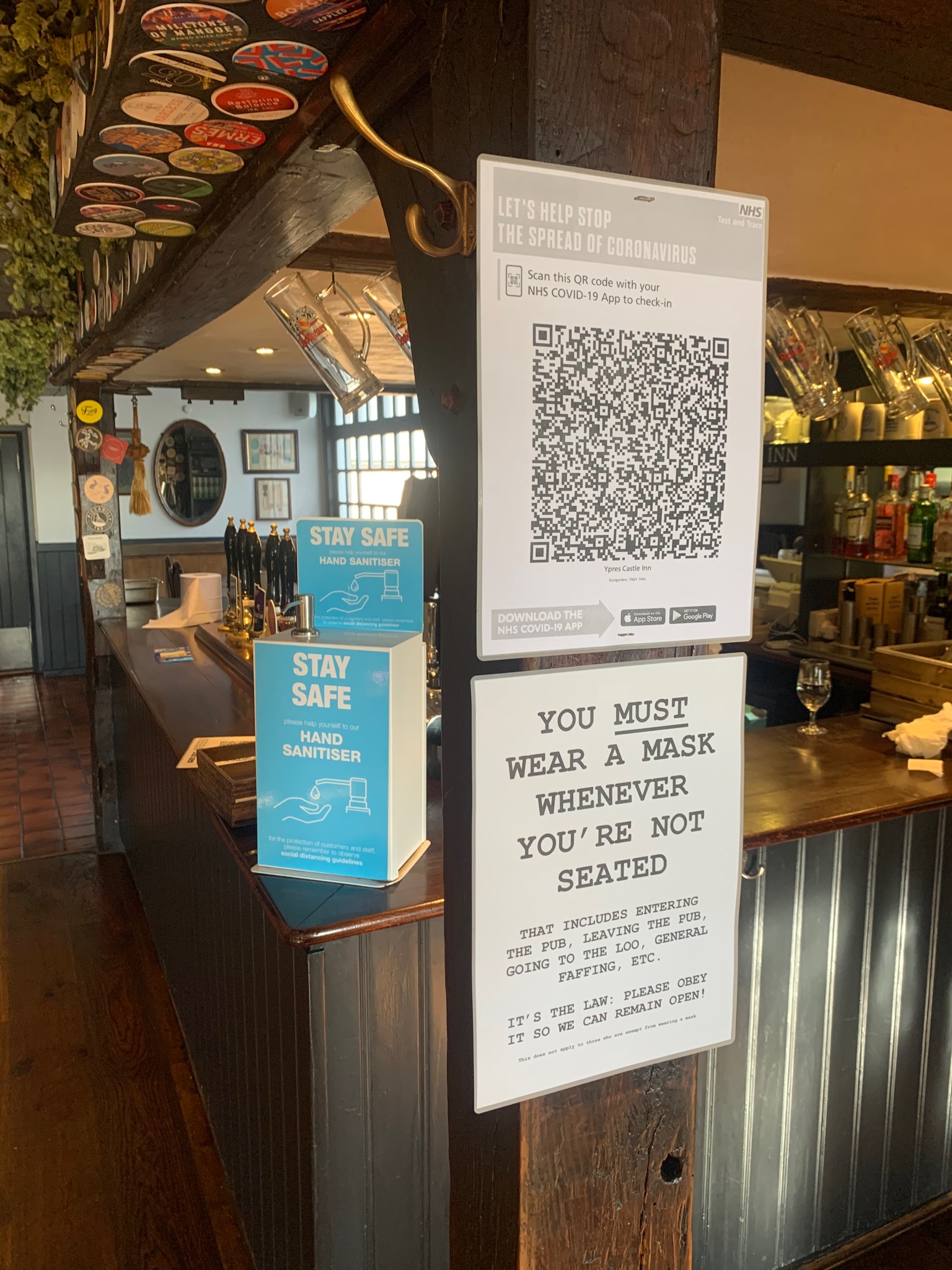
Well, that was great. February, the last month in the pandemic year around these parts. March is the bestest of the months anyway so I am just moving on, planning on getting some seeds in the ground within the next few weeks. The hard frozen ground. Not like in Ypres where Stonch waits upon the law to let his garden, above, grow.

First, an interesting comment from David Frum on the duration of the shock of the new:

It’s like when distilled alcohol arrived in Europe after 1400. Human beings had long experience of wine and beer. But distilled liquor spread carnage through unprepared societies. Took a long time to learn to cope with it. Broadcast media => social media an almost equal shock

That works. Speaking of culture shock, I can’t say I agree with the idea that the folk in their early twenties are a wave of future beer drinkers just waiting to hit the beer stores for the next forty or fifty years but Matt makes an argument:

What I’m interested in flipping here is the narrative that runs through all of these stories: that under 25’s are not interested in drinking alcohol. That craft beer, specifically, is not cool to them. While the youngest bracket within the above data might be drinking less, I believe they are almost certainly drinking better. Case in point: In putting out a tweet asking for 18-24 year olds to reach out to me about their beer preferences, my inbox was overwhelmed with a flood of positivity. 

That right there? The choir. My kindly response – avuncular even – was that my kids and their pals have little or no interest being tediously focused on building a healthy and productive future. Does it matter if they like what i like?

UK Covid Pubwatch 2021 continues. Are you a little more worried each month about the role the pub and lashings of booze have on British culture? Folk are fretting. On Thursday, Emma McClarkin of the British Beer & Pub Association forewarned of Boris’s newest announcement with this:

Outdoor opening -as we told Gov- not viable option. More support will be needed to survive prolonged closure, but what we really need is to be opened fully inside & out as soon as possible.

Stonch was more realistic and more humane:

Business owners in hospitality / leisure / retail (of which I am one) will understandably feel bitter disappointment about the glacial pace of re-opening about to be set out. However we need to be realistic and remember this is how most of the public want things to go.

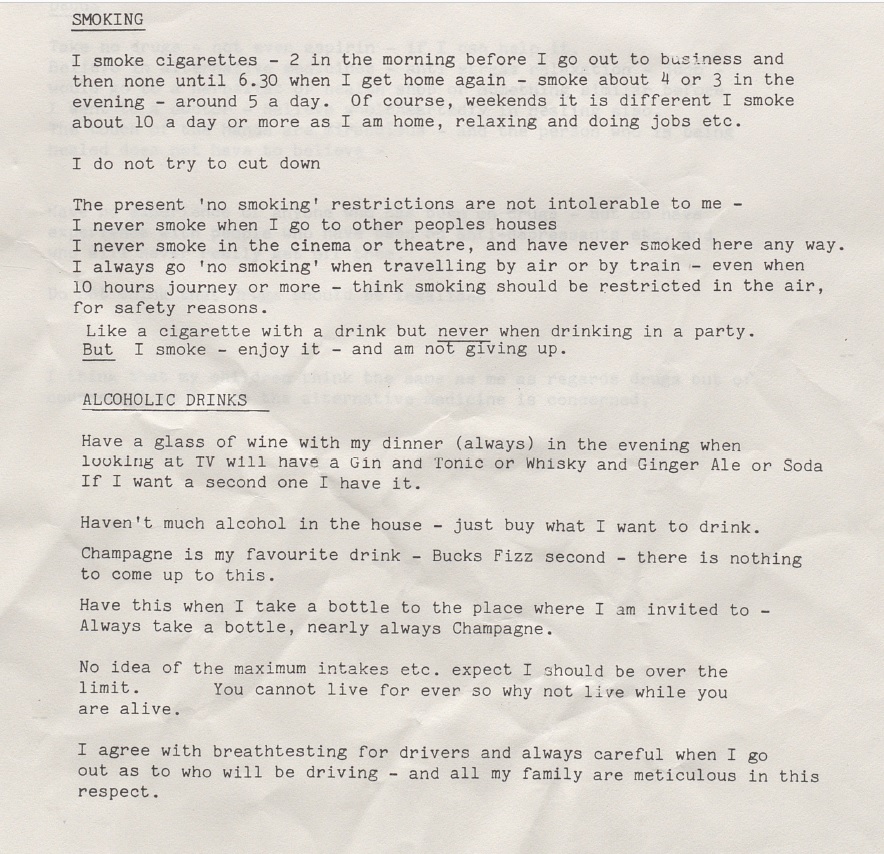
This was cool. A 1989 record from Mass Observation. Typed. Might as well have been 1949.  Reminds me. I knew a guy called Bob in the mid-90s who went on about enjoying life, smoking and drinking. Died from smoking and drinking in the mid-90s. More to enjoying life than stubbing it out like a butt in an ashtray.

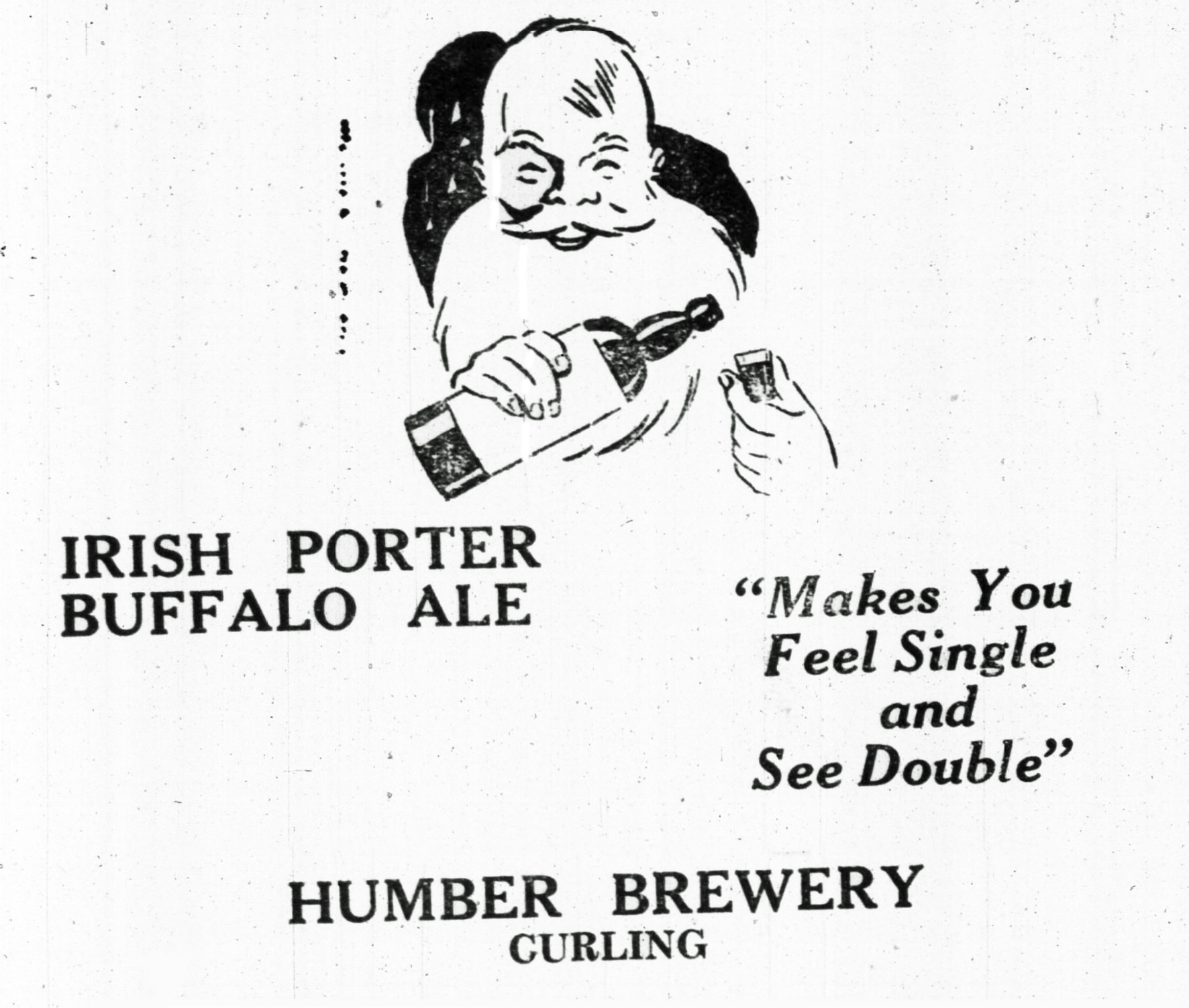
And Martyn added Curling, Newfoundland to my understanding. Now part of Corner Brook. I don’t actually think it’s the worst slogan ever. We’d do well to have a lot more “Alcohol: makes you an idiot” reminders. So, more like a public service announcement. Might’ve helped Bob.

An old link but an interesting one – Ottawa’s first tavern unearthed.

Here’s a lengthy post from Martyn which has little to do with beer but a lot to do with the state of understanding of beer:

Of course, having a “gut instinct” that something is or is not true, after our subconscious minds have reviewed the evidence and decided whether the arguments hold up, does not absolve us of the need to muster the evidence for others to review, because other people cannot interrogate our subconsciouses. The evidence for the two sides of the “porter name origins” argument is pretty easy to line up.

My first response was unkind as it the question was not the origins of the name of porter but the ethics of going on and writing about junkets rather than spreading one’s attention more equitably, well, facts and standards would not have such sway. But I am intrigued by the fact that “Daniel Defoe wrote in 1724 of porter being a working-class, alehouse drink” so I can overlook such things.

Elsewhere in taxonomy, Katie wrote extensively about small bready lumps in the UK.*

It’s a first date question. It’s something to debate over pints and a cheese and coleslaw bap. It’s an argument in the kebab shop at 1 a.m. It’s a reason to fall out with a favourite baker when they revise their packaging. It’s a clichéd social media meme and an easy engagement win. People queue up to die on the already heavily-bodied hill that is the true and rightful name of their favoured handheld breadstuff. We love to claim the naming rights of our daily bread. It’s personal. It’s tribal.

This article reminded me of when in 1991 as a ESL teacher in Kołobrzeg, Poland I invented a game of twenty questions for my adult evening class. They found posing oneself as an object to be asked questions was a very odd process. Apparently it was not something Stalin had mentioned might assist in expanding understanding. They also found it very odd when I proclaimed the correct answer: “jestem buka!” Or “I am a bun!”

And Stan waxed taxonomically when he picked up the “what was craft?” theme rather helpfully – in the sense that it is now a past tense discussion even if five years after the real endy times struck:

If we are going to “use 2020-’21 as a convenient place to divide the ‘craft era’ with whatever we’re about to inherit” who is in charge of coming up with a title for the next chapter?

Stan (for the double) also wrote of Kentucky Common, which I semi-secretly consider likely an echo of schenk.

And finally, over at the Beeb, the plight of the most remote pub on the mainland of Britain was discussed:

Locals have launched a bid to bring Britain’s remotest mainland pub into community ownership. The Old Forge in Inverie sits on the Knoydart Peninsula in Lochaber. The only way of reaching the village – and its pub – is by walking 18 miles (29km) or making a seven-mile (11km) sea crossing. The pub’s owner told residents in January of their intention to sell up, and following a consultation locals say they are keen to buy it.

Keeners. There. Soon it will be March. Feel free to dream of planting seeds. Peas and lettuce can take a frost. And while you are, for more good reading, check out the weekly updates from Boak and Bailey, back now mostly every Saturday, plus more at the OCBG Podcast on Tuesday (Jordan weights apology as opposed to apologia over beer cocktails this week!) and sometimes on a Friday posts at The Fizz as well.  We have a new entry from the DaftAboutCraft  podcast. And sign up for Katie’s weekly newsletter, The Gulp, too. Plus the venerable Full Pint podcast. And Fermentation Radio with Emma Inch. There’s the AfroBeerChick  podcast as well! And also look at Brewsround and Cabin Fever. And Ben has his own podcast, Beer and Badword (explaining the reason for his irregular 1970s-esque TV dramedy season finale. Bellissimo!!!) And remember BeerEdge, too.

*I have to admit the current trend in illustration – the slightly out of focus or cartoony drawing – let the story down. When reading about differentiations amongst various  sorts of brown lumps of dough it is good to not be presented with a diagram of brown lumps.

The Thursday Beery News Notes For The Week Before The Neighbour’s Holiday Season Begins

A quiet week. Not surprising in mid-November, I suppose. Being next to the United States and, even more to the point, being within the FM broadcast range of local US based heavy metal FM radio station, it is difficult not to be aware that something is starting. Their unending holiday season is upon us. In Canada, the holiday season is really, say, December 10th… maybe… until the last of the bought-once-annually Grand Marnier is shaken into a coffee sometime in early January. Weeks, not months. In the US, the future is now. Which means we have turkey and beer pairing blurts clogging up the news. Do these really affect beer sales… or turkey sales for that matter? Get back to me on that.

What’s really going on? Max got out and about. That’s nice. And real. While we are locked down in one way or another, it’s good to find some outdoors. I’ve taken up staring at the sky at night myself. I have really fallen for Epsilon Lyrae myself, which makes sense for a Canadian seeing as it is a double double. I even bought a 20x to 60x scope, the sort of thing also used to bird watch or be a creepy neighbour. The Pleiades alone at 20X are worth the price of admission. And you can drink a beer as you gawk. If you have to. Just sayin’.

Whatever you are experiencing, it could be worse. You could be caught up in the Tomsk Beer Company scandal in Siberia:

The Investigative Committee said earlier that Ivan Klyain is suspected of using his official post to illegally prevent the construction of a building in 2016-2017 on territory close to the Tomsk Beer company, which he controls. The 61-year-old Klyain has served as the mayor of Tomsk since 2013. Before being appointed to the post, he had been the director-general of the Tomsk Beer company, one of the largest breweries in the region, since 1994. After becoming mayor, his wife was elected by Tomsk Beer’s board of directors as the facility’s director-general.

Bad. Bad bad. But the good news is that beer in stadiums is coming back in Tatarstan!

Elsewhere and for the great indoorsmen amongst us, Pete Brown and a few others commented on the  four episode BBC2 TV broadcast Saving Britain’s Pubs hosted by someone named Tom Kerridge. Now, if we are lucky this will show up as a cheap filler on Sunday afternoon on PBS or TVO sometime in 2023 so I have time. Maybe. Rather than a documentary followed by panel format on UK licensing policy, it actually sounds like just a restaurant refit sorta show that pre-dates, you know, the pandemic:

If there’s a common theme running through all four pubs in the series, it’s that the people running them need to add a keener, shrewder business eye to the the long list of talents they already display in running pubs that are popular but not profitable. The things a pub needs to do to survive may not always got down well with the regulars: The first thing Tom tells the Prince Albert to do is put up the beer prices. The domino players nursing one beer all night in the Golden Anchor are shifted to the back room to make way for the craft beer-drinking hipsters who are gentrifying the area.

Yeah, get those happy regulars the hell out of here! But… remember people shifting spots in a bar? Remember people in bars? 2019 was great, wasn’t it? Maybe it’s really just to be taken as a show about the before times. But talking about beer has a notoriously poor track record when it comes to TV… and radio… and newspapers… and so Mudgie also shared his thoughts:

People still like the idea of pubs in theory, but in practice they visit them less and less. Of course it is still possible to do well in a declining market, but that should not be allowed to obscure the wider picture. By and large, the reason so many pubs have closed is not because they haven’t been run as well as they could have been. And it was disappointing, if not entirely surprising, that an entire hour discussing the decline of the pub trade passed by without a single mention of the legendary Elephant in the Room…

Good point. There was a slow death well underway before the more rapid form came along. Speaking of which and on the smaller small screen… is it just me or did Craft Beer Web Event replace Beer e-Publication Editor** as the odd new thing of 2020? Seems like that to me based on the barrage of beery things to watch on line for the last week or two’s worth of Thursdays to Sundays. Not that I watched any. It’s getting like those 47 global beer awards things. Too Organic, if you know what I mean.*** I felt particularly badly seeing as two of my own co-authors were presenting at two of these web events – but they spoke at the same time, I simply could not in good conscience choose one over the other.

Speaking of webby things podcasts, Beer with Ben* finds someone called Ben with interesting things to say about beer and its beginnings:

I’m back for a second series and this time we will be taking a journey through history, as well as beer. 2020 will see us finding out how our earliest counterparts would have made those first brews, look to the local environment to forage and find some of the ingredients and, of course, see if it’s possible to do it ourselves.

Excellent. That sounds really real and not in decline even if likely… organic.***

And speaking of odd jobs sort of in beer, I have no idea what this is if it is not a overly fancified web intern in the ABev macro construct. Consider these strange but assigned tasks:

– Work cross-functionally to plan and manage the Organic Social content calendar which supports key activations across both brand and eCommerce.
– Manage the content creation process for both Paid and Organic Social, from brief to delivery.
– Upload and schedule Organic Social content.

Caught up with excitement by the prospect? Me neither. Nice to know the opposite of “paid” is “organic” which is perhaps a comment on what is left of you and your span of years when you go unpaid too long.

Somewhat to the right on the scale of things that are cryptic was ATJ in Pellicle wandering on and about lagers this week. I wonder if he might benefit from a backyard telescope. The over ripe prose is pungent:

I am both mystified and enthralled whenever I think of the deep sleep of lagering, the process that brings the raw ingredients of the beer into a sharper focus. Enchantment touches me like a spell when I consider the steampunk-like nature of some of the brewing techniques such as lautering and decoction mashing. Then, as if conjured up by some celestial agent, there is the aristocratic elegance of noble hops, which, when writing its entry for the Oxford Companion to Beer, I was surprised to discover that it was a marketing term from the 1970s instead of something from the days of Hansel and Gretel.

Heavens! All very prog. Fortunately, sensible Stan sent around his hops newsletter with it’s dedication to a plain speaking, staid and common sense outlook when it comes to hops – with an update on Hopfen and Stopfen:

The verb stopfen has a slightly different meaning. It is used when repairing clothes or to be more precise darning socks. But more importantly it’s the same word (potentially even etymologically) as to stuff. Whether you want to say one stuffs a pillow with feathers or food into oneself, the word stopfen can always be applied. Hopfenstopfen is therefore the act of stuffing beer with hops, which I guess is an even more fitting term now with all the hazy beers around.

Not at all organic, that. Pretty real, too.

That’s it. As I say, a quiet week. But don’t forget to read your weekly updates from Boak and Bailey mostly every Saturday, plus more at the OCBG Podcast on Tuesdays (this week Jordan speaks warmly of Tom Arnold) and sometimes on a Friday posts at The Fizz as well.  And sign up for Katie’s weekly newsletterThe Gulp, too. Plus the venerable Full Pint podcast. And Fermentation Radio with Emma Inch. There’s the AfroBeerChick  podcast as well! And have a look at Brewsround‘s take on the beer writing of the week. Not to mention Cabin Fever. And Ben has finally gone all 2009 and joined in with his own podcast, Beer and Badword. And remember BeerEdge, too. Go!

*h/t to Merryn. The podcast comes in multiples of series which is odd as Ben told me they come in multiples of seasons.  Note: Ben’s Beer Blog is not associated with Beer with Ben
**I actually saw some folk fawning over their favourtie best beer writing editors the other day. Tres Organique!
***Wait for it!


Some Thursday Beery News Notes For A Normal Mid-October Week

It’s normal now, right? All normal. Despite what we think and do, it’s definitely normal to get locked inside when the cold creeps in around the nooks and crannies in mid-October.  Yet people are still running around outside, the massive idiotsWear your masks! And don’t complain about sensible pandemic safety processes!! And write short sentences with many exclamation marks!!! Hmm… the only thing that has really ticked me off this week is I haven’t found any good images to plunk to the right of the first paragraph. Bet Max has something… let me check…  nope. Jeff? Yup. Wear your masks.

Now that that is clear, first up we have a post by Stan is always cause for some serious noting, especially as it relates to the sense of smell and does not advise that loss of the sense is tied to Covid-19:

Researchers at Kyushu University found that the olfactory sensory neurons can exhibit suppression or enhancement of response when odors are mixed, meaning that perception is not the simple sum of the odors. In their experiments, mice that were genetically modified to have their neurons emit green light depending on the amount of calcium ions in them — an indicator of activity — upon absorption of excitation light, the researchers were able to record the response of the neurons in the mice’s noses.

Mice. Noses. Little mousie noses. As with most things, I do not actually understand what is going on here but I trust and have a firm belief in science that gives me an abiding sense of comfort. I am also a good smeller. That sort of thing regularly appeared on my middle school report cards.

Aaaaannnd…. I also don’t understand this from an email received from Pellicle… exactly… which states they will be converting from $ to £:

With recent exchange rate fluctuations the amount getting paid to us has become an uncertain factor, and we’re aware that most of our supporters are UK-based, so this will also avoid any extra fees from your bank when you are paying in dollars. It means we’ll get stronger idea of what we’re receiving each month, and can build more concrete editorial plans in advance. 

Govern yourselves accordingly. I do hope they still take my money. And I hope they take yours once you sign up, if only for pieces like this drinky travel piece taking us to rural England by Kate published this week under the title “With Provenance to Guide Us — Visiting The Moorcock Inn, West Yorkshire“:

It’s late February and sleeting sideways; the sky is an impressive shade of gritstone. Smoke plumes diagonally from the restaurant’s brick ovens outside, which have been slowly roasting mutton all night. Hot roast potatoes will be pulled from them throughout the afternoon, served with aioli as the bar snack of your dreams.

Kate also made the news. News? Oh. News! Oh, well. Let’s see what’s going on. Parts of Britain are now shutting again. In Glasgow, bar and restaurant workers dumped piles of ice in the street as a hospitality shutdown came in and the work went away. The commentary by, I assume, Jimmay is fabulous. Pub man Stonch unpacked an interesting aspect of the laws that applied in his area: the meaning of a “substantial meal”:

… this means the Coronavirus regs on this can be interpreted using case law relating to the ‘64 Act. In Timmis v Millman (a 1965 case) “a substantial sandwich accompanied by beetroot and pickles was a table meal”. So there you go. Get your beetroots ready, publicans!

And Mr. Mudge wrote on the same worthwhile issue:

If you are not going to have an objective yardstick such as price, then you will need to resort to a more subjective definition. Government minister Robert Jenrick* tied himself up in knots by saying that a Cornish pasty on its own wasn’t a substantial meal, but put it on a plate and add chips or salad and it magically becomes one. Few would dispute that a burger and chips would qualify, and the health-conscious should surely be allowed to substitute a salad for the chips. If a burger, then surely also a steak ciabatta, which is in principle the same kind of thing. And a cheese or hummus one for the vegetarians. Before too long, you have a cheese toastie with a couple of lettuce leaves qualifying.

You know… I don’t actually know what a toastie is exactly, either. I assume a toasted sandwich. Or a sandwich made of toast. That was on my middle school report cards too: “..the child thinks a toastie is a toasted sandwich… no hope…

That’s pivoting. Everyone pivoting. Even though we are staying still. Here in Ontario, Ben has been writing upon his blog (taking a break from narrowcast poor radio impersonation) and decided that Covid-19 has been somewhat good for the Ontario booze trade or at least increased consumer access:

But there is an upside to this — if you’re the kind of person who can find the upside to a viral pandemic increasing our substance use – and it’s that the vigour with which we’ve all embraced the drink has actually had an affect on the availability, politics, and culture related to beer. Yes, this pandemic is a lot of things, most of them terrible, but it also might just be the best time to drink beer in Ontario.

Not necessarily a great deal for consumers medium or long term unless wholesale rates come down – but a good survival technique and good for us all to take part in now. New shops like Byward Market Wine Market (fine booze plus small takeaway meals) will be a next model… until the next next one comes.

In other good news here in eastern Ontario – as reported on Canadian Beer News and also discussed on OCBGTP Slake Brewing in nearby Prince Edward County (just south of the very questionably named county seat of Picton) has opened. I post to remind myself to go.

Pivoting #2. Or is it #3? Or #4? Something called the Drinking Studies Network (that also looks a lot like a blog) posted “Threat or Opportunity? COVID-19 and Working Men’s Clubs” by Ruth Cherrington:

The post-COVID future of clubs could lie to some extent in drawing upon their enduring ethos and ideals which include their not-for-profit status. The 21st century setting has brought new challenges but also some tools that can help such as social media. With the usual club experience and contact with members impossible, club committee members had to make more use of Facebook, Twitter and other platforms. Nearly 9% of those surveyed used social media to build up the club’s community and membership over lockdown. Facebook groups became more important for clubs’ committees, especially to let members know what was happening, when they would be reopening and how.

I’d go to an old farts club if they had them around here. Maybe. Would I? Dad peeling potatoes in Yorkshire during the Berlin Airlift might even qualify me for the Legion. But would I go during these the early dark ages? Do I go anywhere? Well, other than the used record shop…

Unrelatedly, this thread on the habits of those in sports and entertainment who passed through this person’s former job at a hotel bar is fun: “Bob Seeger: Honestly he looked like anybodys grandpa with his flannel and orthopedic shoes“; “Stevie Nicks …difficult.” Remember hotel bars?

Now, in this week’s History Comes Alive corner, Gary is finding the time and steam power to get some of the beer history researched and writ… the opposite of my efforts, a personal failing that gnaws within me. One of many. This week he posted about the first draught beer sold in bottles and began with a handy definition:

Pasteurization is used in brewing, including for most imports and mass-marketed beers, not to make it safe for consumption as in the case of milk, say, but to render it stable from a microbiological aspect –bar  to retard souring in particular. Thus, for modern, bright, bottled or canned beer that is not pasteurized, which is the first?* Coors beer is a notable early case, at least the domestic U.S. Coors.** Coors did not abandon pasteurization in bottles until 1959 though…

Elsewhere in space and time, Martin asked “where does Bristol end?” and found a pub that went all snug for Covid-19. BB2 replied: “One of our guidelines is unless there’s an open field separating it, it’s in Bristol.

Beer… should reference something beery… The proper brewing of lager was discussed in Craft Beer & Brewing through a piece by Steve Holle of the KC Bier Company in Kansas City, Missouri:

Traditional lager brewing requires “more” than a typical ale fermentation. Because the “more” requires additional costs and resources to achieve very subtle, small, and incremental enhancements to flavor, there is always the temptation to take shortcuts by buying cheaper ingredients, skipping decoction, pitching less yeast, raising the fermentation temperature, shortening the conditioning time, or using artificial carbonation.

This neatly illustrates nicely the need for a separation of traditional lager from macro gak conceptually. I was thinking of that when I was writing back and forth with Jeff yesterday about his excellent SNPA post. Others were also thinking of proper lager brewing. Alistair was asking about if decoction mashing was practiced in Victorian Britain.

And finally, Kate Bernot has written about Canada’s ice beers… though sorta missed the twin towers of the phenomenon, Maximum Ice and all the future goth TV ads especially the one with The Smiths*, in favour of something about… a penguin. Still, it is a handy primer and notes importantly that the ice beer boom never busted as it traveled south:

Ice beers are a Canadian invention dating back to the early 1990s; they’re essentially stronger versions of the domestic lagers North Americans had been drinking for decades. American beer companies swiftly copied this “innovative” idea and mass-produced their own versions including Milwaukee’s Best Ice, Keystone Ice, Bud Ice, Busch Ice, and Natural Ice. 

Why does it live on? It’s richer as well as stronger. So curlers dig the stuff. Goes with rye and K-Tel LPs.

There. Enough! I’m rating this a mid-grade week. Or maybe just a mid-grade post. Either way, another week has passed. Like the grains of sand passing through the hourglass, these are the days of our lives. Remember there’s  Boak and Bailey mostly every Saturday, plus more at the OCBG Podcast on Tuesdays (this week Jordan shits on tweens!!!) and sometimes on a Friday posts at The Fizz as well.  And sign up for Katie’s weekly newsletterThe Gulp, too. Plus the venerable Full Pint podcast. And Fermentation Radio with Emma Inch. There’s the AfroBeerChick  podcast as well! And have a look at Brewsround‘s take on the beer writing of the week. Not to mention Cabin Fever. And Ben has finally gone all 2009 and joined in with his own podcast, Beer and Badword. And remember BeerEdge, too. Plenty of good writing. Only a little journalism. Journalism. Yup. Apparently all writing is ultimately… journalism. Sorry Shakespeare. You aren’t in any give-away trade papers.

*Someone at the Labatt PR firm back then knew the value of good music in a beer ad.

The Days May Grow Short When You Reach September, Frank, But There’s Still Time For Beery New Notes

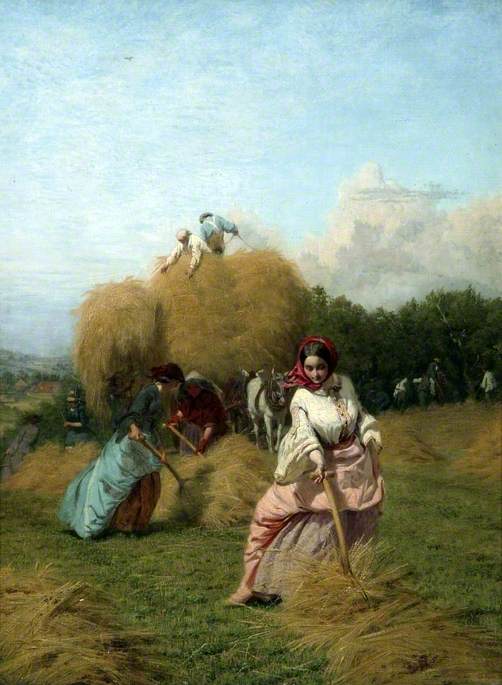
The summer has raced by. We only have a bit of lingering warmish things left. Then false summer comes, followed by the now doubly  questionable Indian summer, then lastly a few surprisingly cool rather than cold days. Harvest is coming in. Season of mellow fruitfullness and all that entails. For the ladies to the right it included rather nice dresses. I saw this image on the Twitter feed of The Georgian Lords but have no idea where it is from. I suppose it indicates all hands on a day where there were deck as it’s hardly The Gleaners of months later on in the cycle. But, perhaps surprisingly, not unlike The Harvesters of 1565.

First up and as an excellent introduction for an effort which seeks to separate from chaff from the grain, Stan wrote about an article about wine writers and junkets and other seductions. Like the author, the excellent Jamie Goode, he uses the word “satire” but, as is usually the case with satire, it is framed as such to make a point about a truth:

Good reading from an author who writes, “Personally, I’d rather drink beer than suffer these dull, dishonest, trick-about wines.” Not sure what alternative he’d suggest for dull, dishonest, tricked-about beer.

Is it the beer that is dishonest? In some cases, yes but not always.  Anyway, excellent thoughts as we seek out the good as well as… the Goode in what’s out there to read this week. A reasonable contrasty comparison is this article that Matt noticed by Alicia Kennedy which in part covered similar ground with less of a satirical veneer and more of a personal reflection:

When I was 31 and used my passport again, it was to go to Spain on a trip paid for by a winemaker. The next month, it was a two-week trip to Italy with family that completely drained my meager savings (until I moved to Puerto Rico, this was the longest I’d ever been out of New York), and the next, it was to Scotland for whisky tasting. From 2017 through my move in 2019, I traveled somewhere pretty much every month. These professional opportunities (some personal), about which the ethics were and are always dubious, suddenly began appearing in my inbox at just the right time: after my brother passed away at the end of 2016 and I needed not to wallow, not to continue having panic attacks. 

Staying at home, Martyn triggered a lot of arge and the barge when he himself wrote triggered about changes to the small brewery taxation laws of England and Wales.* It’s all the same to me in that I think reasonably healthy taxation of beer and other strong drinks is a perfectly normal thing to do but decide for yourself:

Much of the outrage seems to come from exaggerated claims of how many and how much brewers will be adversely affected by the proposed reforms, and allegations that the changes will mean large brewers gaining at the expense of small brewers, though the group that led the call for a change in SBR, the Small Brewers Duty Reform Coalition, includes a fair number of brewers making less than 5,000 hectolitres a year among its 60-plus members.

Plus, and I presume some brewers read this so I appreciate it’s not what everyone wants to hear, the idea that the outrage is “manufactured” is not necessarily an accusation. It’s a reality that the discourse is bent and pushed and pulled for any number of reasons and interests. This is one of them.

According to the NME, 99 metal bands have signed up for a ’99 Bottles Of Beer’ charity cover:

The idea for the cover was put together by The Boozehoundz, the moniker of Scour members Derek Engemann and John Jarvis alongside Robin Mazen of Gruesome. It sees 99 musicians all singing a single line of the song, amounting to a mammoth 23-minute song.

All of which is entirely excellent.

Speaking of music, the earlier Matt in my life on these information superhighways linked to an excellent remembrance of being a teen at raves in Preston 30 years ago:

There was an abundance of places to go out to in Preston in the early 90s. The country was in recession but everyone was partying hard. Friday was rave night at Lord Byrons and Saturday was indie/dance. After a grim experience at a club in town when I was 16, Saturday nights at Byrons became part of my life. Most Saturday nights from the beginning to the end of 1991 we were there, drinking cider and black, dancing to our favourite music and forging friendships that would continue for three decades and more.

Reads as true as a witness statement in a criminal proceeding.

Andreas K. wrote about Carinthian Steinbier this week, an Austrian beer that disappeared over 100 years ago, and in doing so gave us a great intro into the world of hot rocks in cauldrons:

Carinthian Steinbier is interesting because it survived for a fairly long time, until 1917 to be exact, despite repeated attempts to completely supplant it with what was called “kettle brewing”, i.e. brewing involving metal kettles. During other research, I recently stumbled upon a 1962 article that is probably the most detailed description of Carinthian Steinbier tradition that I’ve found so far.

Things You Gotta Try” on NPR’s Splendid Table included dipping Oreos in red wine. Oatmeal Walnut cookies in Imperial Stout anyone?

I have to admit, I have no interest in hard seltzer or hard soda or hard kombuchca and even little interest in most beer writing about cider but I do appreciate Beth’s argument that at least for the business of brewing, non-beer may be one of the ways forward:

They’re not the only San Diego brewery to fully embrace the seltzer craze. Mikkeller’s own line of hard seltzers—dubbed “Sally’s Seltzer” as a nod to one half of their iconic character duo Henry and Sally—launched in January 2020 in response to craft consumers’ changing demographic. “It’s a perfect change of pace for any type of drinker—and a cool opportunity for us to connect with a wide demographic,” explains founder/CEO Mikkel Borg Bjergsø. “It also fits with our desire to be inclusive and reach as many people as possible.”

Let’s be honest. They are end-times beverages, just the same coolers which have been with us for almost thirty years and just gak by another name. As relevant to an interest in good beer as the brand of bubble gum stuck under a pub’s table top. Mr. B. noted the latest abomination: “India pale hard seltzer.” FFS.

Finally, it was with great sadness that I heard the news about the death of Jack Curtin, dean of Philadelphia’s beer writing scene. He was a great supporter of this beer blog from day one and someone with whom I shared an interesting email relationship even if we never met. One of his greatest skills was ripping into his pal Lew Bryson, who I know will mark the loss deeply.

Enjoy the rest of your summer days. As you do, check in with Boak and Bailey most Saturdays, plus more at the OCBG Podcast on Tuesdays (where Jordan shits on church ladies and is dead wrong about coconut macaroons) and sometimes on a Friday posts at The Fizz as well.  And sign up for Katie’s weekly newsletter, too. Plus the venerable Full Pint podcast. And Fermentation Radio with Emma Inch. There’s the AfroBeerChick  podcast as well! And have a look at Brewsround‘s take on the beer writing of the week. Not to mention Cabin Fever. And Ben has finally gone all 2009 and joined in with his own podcast, Beer and Badword. And BeerEdge, too.


*Never sure when these things apply to the whole or the part.

Your Thursday Newsy Notes For The End Of July In Beerland

After last week’s mess of unified theory of a something or other, it would be nice to find some chat that is (i) about beer and (ii) not about other things. You know, those bits of the trivial dribble that attracted me to scribbling about beer in the first place. It’s not just that good beer got into sectarian schisms, then politics, then laced with the pandemic – it’s that it all got so real. Don’t get me wrong, the real is good and important. But sometimes I like to wallow in, the vital but unimportant things in life. Like that really sad BBQ pack, above, that my pal Brian saw at a Maritime Canadian grocery store this week. Pointless… yet strangely compelling.

As a means to hopefully show what I mean, consider this wonderful bit by Katie in Pellicle on the place of burger vans in her life:

This is where I draw the line between burger vans and food trucks. For me, food trucks bring me images of gourmet falafel wraps, jackfruit tacos, outrageous fried chicken and homemade sauces. They’re run by chefs and dreamers on enthusiasm and aspiration, passion and excitement. I enjoy them, but they are a different beast. A burger van might also be a grill on wheels, but that’s where the comparisons stop. A burger van is a means to an end. The owners are chipper, but brisk and efficient. The sauces are bulk-bought and sharp with vinegar and citric acid.

Lovely writing about what is basically… well, is “…what my mum would call “a waste of money.” I have especially enjoyed following her family’s obsession with Superbike, something which really does not exist in my imaginary North America, something British which I only know through staring at 1930s racing championship programs on offer at eBay.

Beer reviews. That is pretty old school straight forward beer blogging, right? Well, Alistair over at Fuggled has renewed his blogging activity and shared his thoughts on one old friend, London Pride:

There are times when I drink this that I really understand why American brewers and drinkers have such a hard time grasping the fact bitter should be, well, bitter. It’s not that it is terribly sweet, though the mouthfeel feels a little like undissolved jelly cubes, it’s that the hops are nudged out by the famous Fuller’s yeast character, as well as not being the same kind of citrus as folks are used to here. So many breweries here use very clean top fermenting yeasts that the character of the beer is so different, and I wonder if American breweries under hop the tyle as a result?

And when the conscientious beer blogger is not writing reviews, she or he should be discussing pubs like the Tand himself did this week when he wrote about one of his “…favourite pubs in the UK, the Coalbrookdale Inn in, well Coalbrookdale…” and included this fabulous paragraph:

After a few minutes – the pub has a more or less square bar – the landlord shouted “Phone call for Peter”.  We all ignored this. Now to explain to my younger reader, back in those days – pre mobile phone – it wasn’t at all unusual to call a pub and ask to speak to “whoever” if he is in.  Now nobody knew we were there we thought and therefore the call out in a busy pub could not possibly be for any of us and could be safely ignored. We carried on supping. Having got no response, the barman returned to the phone, presumably to relate the lack of success to the caller.  A few seconds later he appeared in front of us. “Any of you lads Peter Alexander?” quoth our hero. I stammered “Me” while we all looked on in astonishment. “Phone call for you” he said.

Do you like brewing history? Good news for all! The UK’s National Brewery Centre’s archives have gone online:

Two years ago a project began to produce a digital catalogue and this is what launches today. At a cost of £50,000, it was funded by generous grants from the likes of the Consolidated Charity of Burton on Trent, Staffordshire Community Foundation, the Campaign for Real Ale (CAMRA) and the Brewers’ Research Education Fund, additional funds were raised from corporate and individual donors as well as via a crowdfunding campaign. The archive system was designed and built by Shrewsbury-based digital heritage consultants Orangeleaf Systems, whose other projects include The Parliamentary Archives and the Royal Mail Archives.

More fabulousness!

Lars opened up a small can of worms in a very small pantry when he asked “What counts as a farmhouse ale?” in an actual blog post:

The most common question I get in interviews is “what do you consider to be a farmhouse ale?” and since the answer is a little involved I decided to write it up more fully. There is a fairly clear-cut definition, but it takes a little explaining.

I think the only issue is that Lars has to have one footnote to the first paragraph that reads “*supra, Lars” given he is both the reporter and the compiler of the information in the topic. I don’t necessarily agree with the idea that there is a thing called “farmhouse ales” which is an umbrella noun under which all styles fall. But I do like it as a process description that is identifying similar practices playing out in sheds and kitchens in disconnected locations. As a function of what the life of a farmhouse includes.  As Lars notes in his piece:

In the 18th and the 19th Centuries, you had plenty of farming treatises being published. In most if not all of them you have a chapter on brewing.

Brewing as a farming function as much as managing the manure pile or tilling the fields. Note: the wonderful Girardin grows its own grain and has done so for generations… but it may not be brewing farmhouse ale.

Perhaps less monumental that van burgers or les bieres des shed, is the story told by B+B of pubs collecting pennies for charity in post-war Britain:

Looking through old brewery in-house magazines from the 1950s and 60s, one recurring image is inescapable: a monstrous pile of pennies on a bar, in the process of being toppled by a celebrity.

Jeff wrote about losing his blog’s sponsorship to Covid (sorta like I did in the aftermath of the market crash of 2008) which is a very brave admission and not really fabulous at all:

The first question was whether I should even continue with the site. Most writers don’t maintain blogs. They would rather put their effort into procuring and writing paid gigs. It was kind of crazy that I hadn’t monetized the site at all for its first decade, and I realized I couldn’t put the hours of work into it for free anymore. Either ditch it or—sorry for the crass jargon—monetize it. I decided to try the latter before resorting to the former, and considered how to do so in the way that would minimize my conflict of interest while maximizing revenue.

Keep the blog. Writing gigs may make money but the writing is Dullsville.

And lastly, Stan went into the woods this week and he sure got a big surprise.

Enough unreality for you? Fine. OK…. here are the top real news items for the week:

1. JJB took a side on the small brewers’ tax credit reforms in England and Wales. Matt is angry over the same thing.

2. Jeff has split off his political writing from his beer blog to share what he is seeing on the front lines of the fight in the US’s pro-democracy movement in his hometown.

3. Alcohol use, especially heavy use, weakens the immune system and thus reduces the ability to cope with infectious diseases.

4. And today would be a great day to arrest those who killed Breonna Taylor.

Don’t forget it is real out there.  The cool sip of a mild legal intoxicant that is wearing down your internal organs prematurely should not distract you too much from the real. Beer isn’t real.*

There. Done. Some great pro-am and am beer writing for the week. A bit of a side show but, still, worthy in itself. For more, check in with Boak and Bailey most Saturdays, plus more at the OCBG Podcast on Tuesdays and sometimes on a Friday posts at The Fizz as well.  And sign up for Katie’s weekly newsletter, too. Plus the venerable Full Pint podcast. And Fermentation Radio with Emma Inch. There’s the AfroBeerChick  podcast as well! And have a look at Brewsround‘s take on the beer writing of the week. Not to mention Cabin Fever. And Ben has finally gone all 2009 and joined in with his own podcast, Beer and Badword.

*The latest blurt from Stone should be enough proof of that.