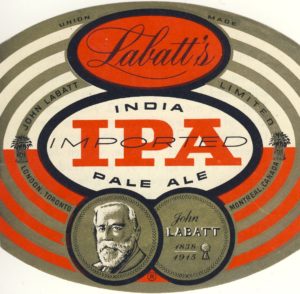
Ontario: In 1998 Did “IPA” Mean Macro Gak Or…?

image60This in interesting… well, to me at least. It is from the 1998 debate in the Ontario legislature on the imposition of regulation on the Brew On Premises trade. BOPs do not exist everywhere. In Ontario, they are sort of a hybrid between home brewing and macro brewing where you can go to a business and order a batch of beer from a menu, participate to a certain degree with the person running the place but get to use proper brewing set ups. In 1998, they fell under government regulation. But that’s not the interesting thing. This bit of the statement by MPP Mike Colle from 2 November 1998 is:

The appreciation of fine beer and fine Ontario wine has really exploded in Ontario in the last couple of decades. At one time, it was rare that you would go into a restaurant and see a bottle of wine on a table; you would see people having everything but wine. Now you can see Ontarians of all stripes enjoying good Ontario wine, and also they’re enjoying good beer. At one time it was just your basic beer that Ontarians were drinking. You remember the ones drinking old IPA? I call them the old IPA drinkers. Well, we’ve gone beyond the old IPA and we see people now appreciating fine-brewed micro-brews or speciality beers by the major manufacturers and brewers. It’s part of Ontario’s socioeconomic fibre that drinking beer and wine as part of your meal, in moderate, controlled fashion, is quite acceptable, It’s an industry that employs a lot of good, taxpaying Ontarians.

Apart from the weird idea that beer and wine are for mealtime, notice that reference to IPA. Likely what’s being referenced is a beer like Labatt IPA and that IPA from a point in our collective memory at its final days of popularity – before the lighter beers we all bear a certain responsibility apparently to dislike now, beers like Labatt Blue and 50. So, like now recalling the reputation of disco dancing in the age of New Wave, we are a few times removed from the beer in hand, the beer in the slur. In 1998, Colle is 53 so may be recalling the IPAs of the late 40s and early 50s. This could, in fact, be him visiting the brewery’s cask room in the 1940s. A beer with Victorian roots. The ales of his uncles perhaps.

Even just fifteen years on, it much be hard to fully appreciate the slur. What did IPA represent that was so different from “fine-brewed micro-brews”? Like Ten Penny to a Maritime kid, was it musty? Too grainy? It must have meant something to him as he referenced it three times in quick succession.
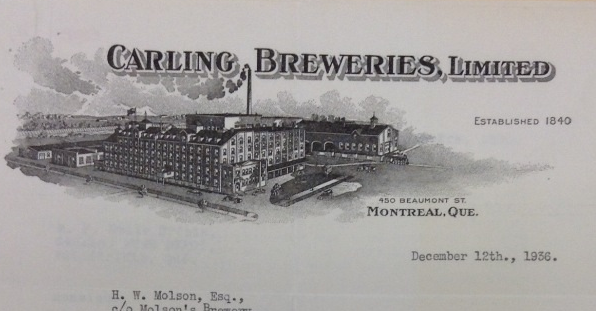
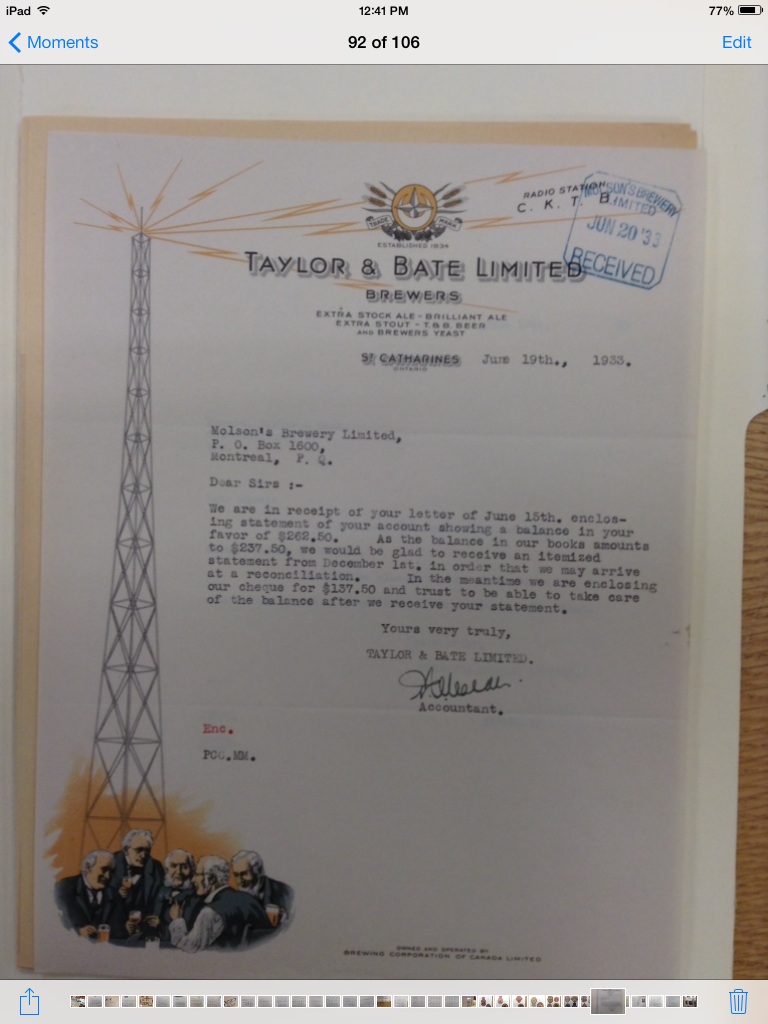
 

Incidental 1930s Brewing Letterhead Images

image50

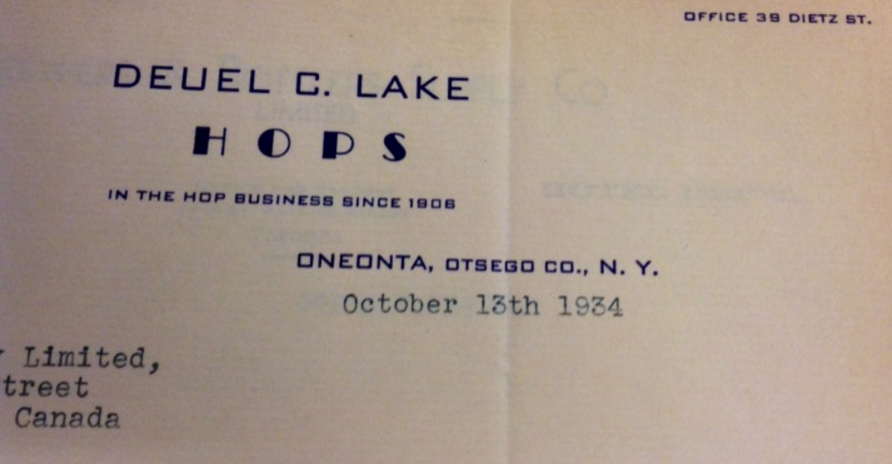
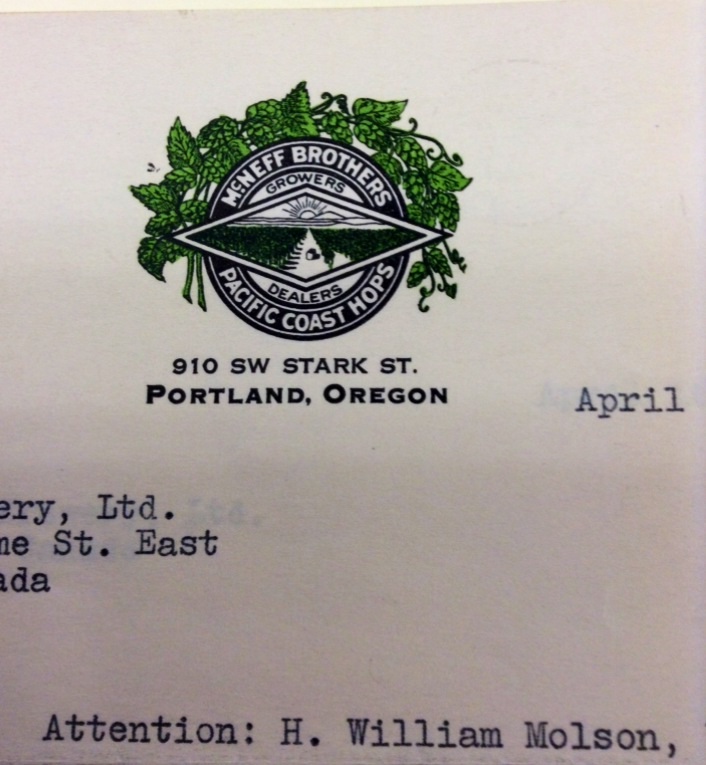
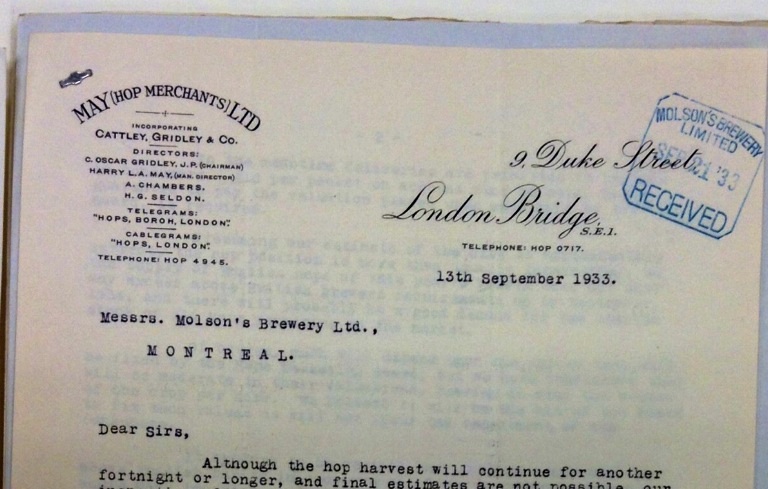
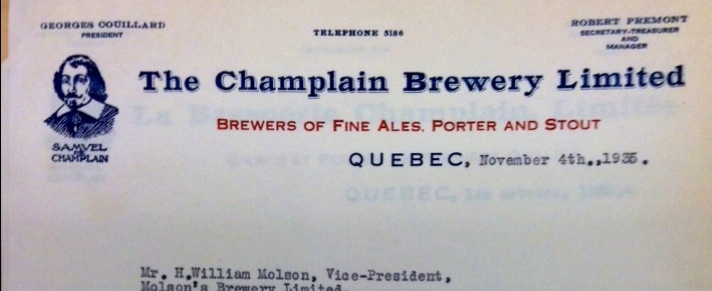
Now there’s a sexy title for a blog post. A real whooah-ish search engine optimization blog post title. Letterhead Pr0n. I should have paid more attention to the lighting when I was at the archives last week with Jordan in Ottawa. But, still, these are pretty sweet. It is amazing how elaborate the Taylor and Bates letterhead is. Rich old guys in suits drinking beer and having the time of their lives because they own a brewery and a radio station.

image53

image52

image51

image48

image47

image49

The Greatest Cease And Desist Letter Ever!!!

And just in time for Christmas…

Normally, one would not like a cease and desist letter claiming that one had breached someones intellectual property rights. I mean we as bloggers are supposed to get all hot and bothered about these things, right? We’re living in the post-legal mash up paradise promised by the Boingsters back when blogs were new, right?? Well, that all came crumbling down yesterday when the following love letter popped into my inbox:

The undersigned declares under penalty of perjury that I am authorized to act on behalf of the above referenced author, the owner of copyright in the Intellectual Property, and Hachette Book Group, Inc., the exclusive US publisher of the Intellectual Property, including without limitation, the cover and other art incorporated therein (collectively, the “IP Owner”). I have a good faith belief that the materials identified below are not authorized by the IP Owner, her agent, or the law and therefore infringe the IP Owner’s rights according to federal and state law. Accordingly, we hereby demand that you immediately remove and/or disable access of the infringing material identified below.

Frig, said I. I am a lawyer. I know when the jig is up. For a second, it was like the ending of “The Public Enemy” and I was Jimmy Cagney. But when I looked at the link I knew what was going on. See, six years ago, I posted about how great it was that I had found the text to a 1987 article in The Atlantic magazine called “A Glass of Handmade” by William Least Heat Moon, a bit of writing that was my introduction to thinking about good beer. And I tucked away a copy of the text in the articles section of this blog because I was sure it was fluke that I had found it and that I would never find it again, assuming all copies of that issue had long been sent to the dump or lodged in the back of a barbershop I would never visit. Flash forward six years and, once I realized what was going on, I removed the article from public view and, just like that, me and the lawyers at Hachette Book Group were at peace. In fact, they were quite nice about it and let me know what is going on and it is good news:

Thanks for removing the essay from your site. We appreciate it! And, yes, it is included in Here, There, Elsewhere which comes out on January 8th.

So, now no need to have the article squirreled away from fear it would disappear from knowledge. You can get your own copy of Here, There, Elsewhere: Stories from the Road by William Least Heat-Moon on discounted pre-order from Amazon right now. A little late for Christmas but as important an essay on early US craft beer as there is. I can’t encourage you to get your own copy enough.

And I can confirm that this endorsement is not part of any legal settlement!

More International Insurance Map Brewery Fun

insrurmap1insrurmap2insrurmap3insrurmap4insrurmap5


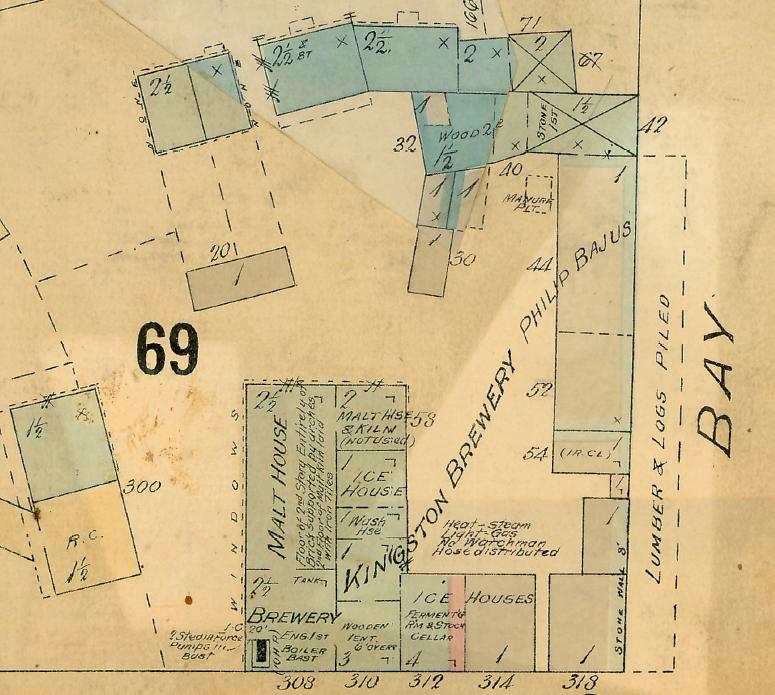
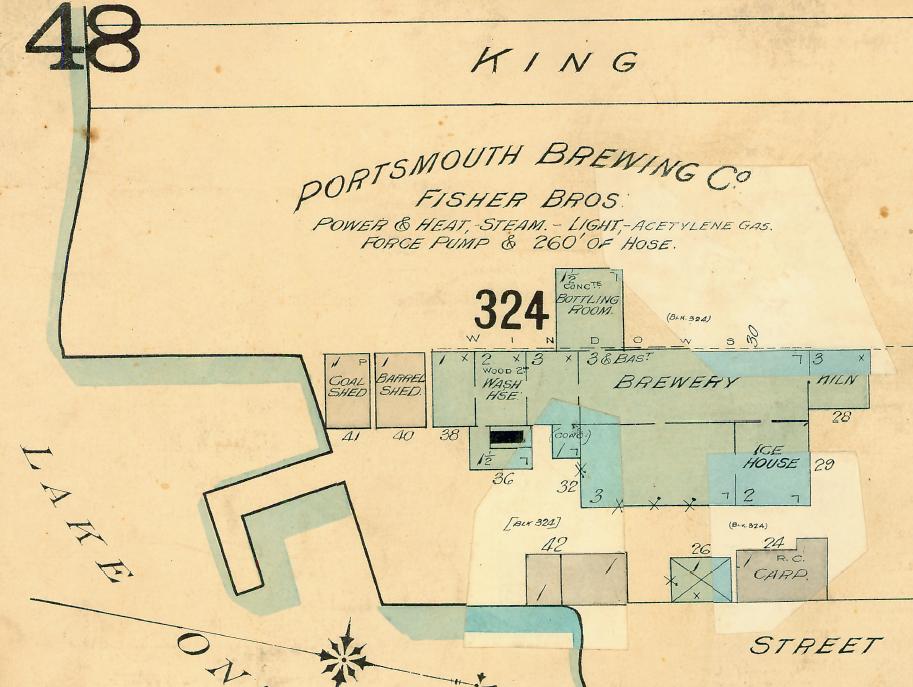
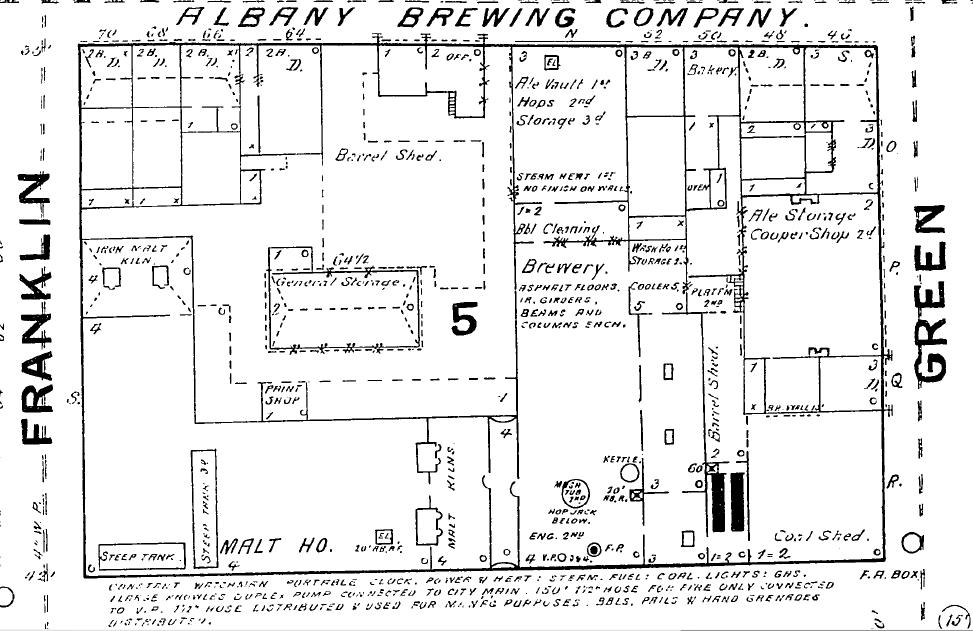
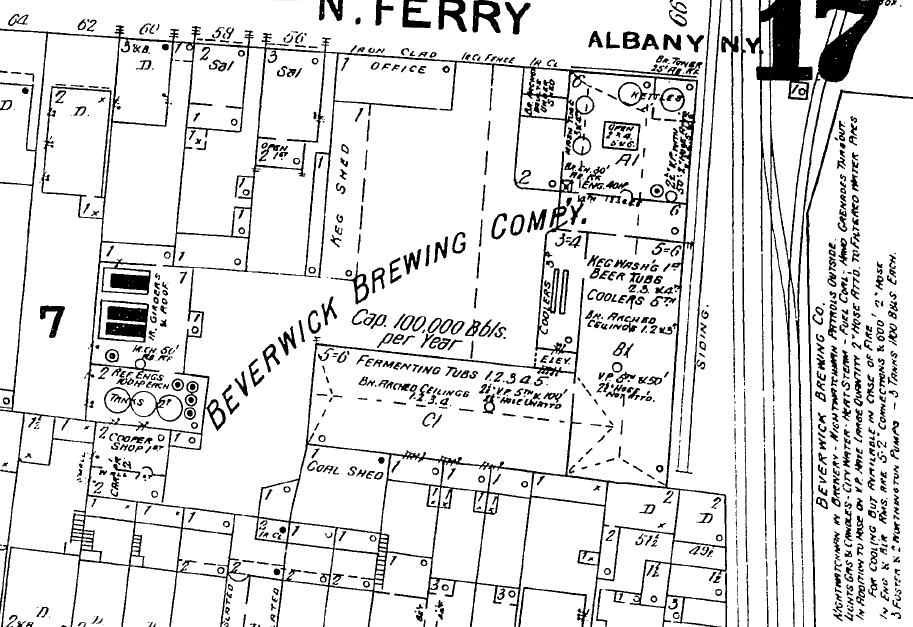
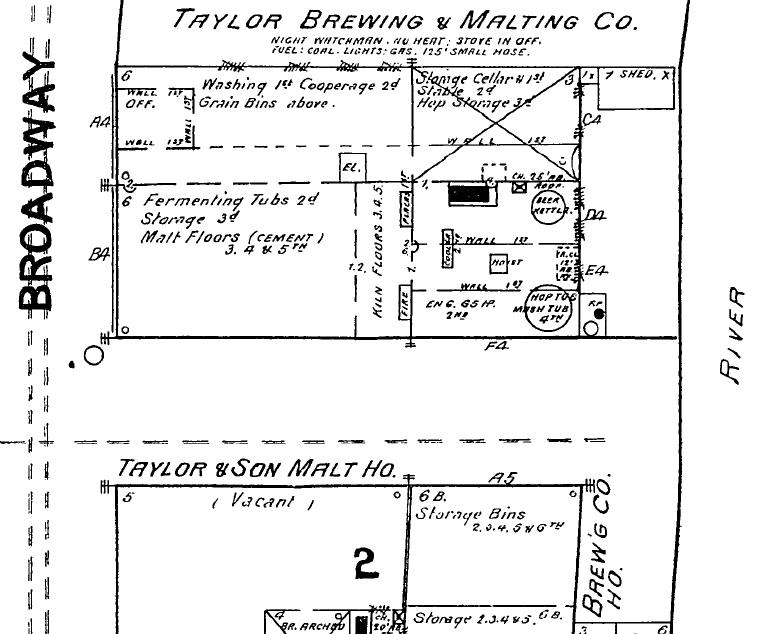
It was the best of times and insurance maps. It was the worst of times, you know, and… insurance maps. Errr. a tale of two cities of sorts, I suppose. From the upper left we have the Kingston Brewery as well as Portsmouth Brewing of my town from 1908 plus, to the upper right, the Albany Brewing Company, then below left Beverwick Brewing Company and, lower right, Taylor Brewing and Malting all of Albany in 1892. What can we learn from these images? Click on each image and find out for yourself. Here is what I see:

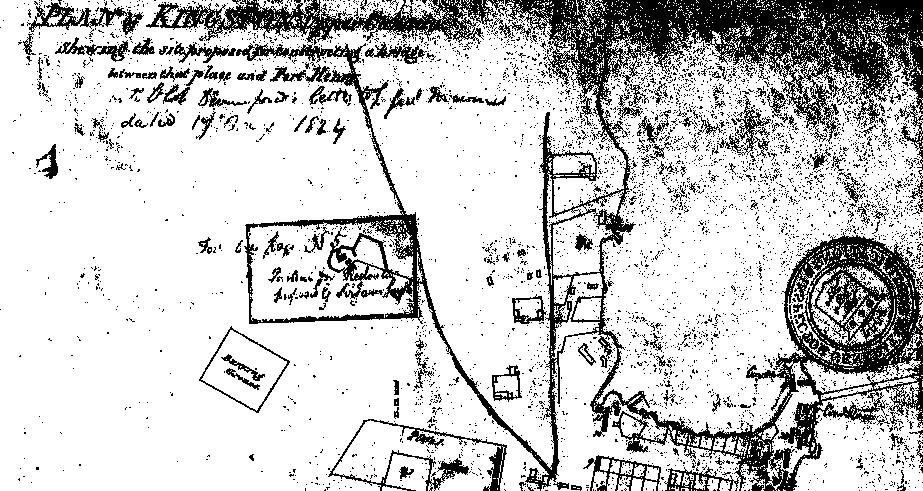
UL: As discussed last August, the Kingston Brewery dates from at least 1791. The badly digitized 1824 map shows a set of buildings on the inland side of the inner harbour road. The 1908 map shows much of the same complex built up overtime. The malt kiln, laid with iron tiles, is no longer used and a lot of space is dedicated to ice houses as part of the lager operations. And there is a manure pit. Dangers which might be faced by fire crews are noted. Where a boiler might be found or a pump. The notes state that hoses are distributed meaning there is water throughout. The basic set up is a courtyard. There is a four story tower as well as a basement with a fermentation room and a stock cellar.

UM: By comparison, Portsmouth Brewing in is more orderly. Based more about access to the lake than the older cross town competition. The kiln is on the land side of the property and leads into the brewery proper which leads to the bottling room. The coal and barrel sheds are separate. There is a basement and the main building is three stories high. Our commentator Steve Gates, author of The Breweries of Kingston and the St. Lawrence Valley has an excellent photo of the brewery from the next year taken from the vantage of someone under the letter “F” in “Fisher” as shown on the map. He also tells us that they had been brewing lager since 1872. Hence the ice house.

UR: Next, the Albany Brewing Company neatly fills a city block as this picture from the coal shed view of 1865 to 1870 shows. I am sure there is a very good reason that hand grenades were distributed throughout the brewery for fire fighting purposes but I am not sure what that might be. Unlike the Kingston breweries above or Taylor below, there is no access to waterfront. Unlike Beverwick below, there is no train spur leading to the building. To the right center, there is a five story tower where it appears the coolers are located. The office is across the street to the south and a police station to the north. It’s in the middle of things. Looks like there are horse stalls near the coal shed that open out on to Green Street to the left of the image.

LL: The Beverwick Brewing buildings appear to be more modern again. Founded in 1878, it has a rail siding… which apparently leads it to be suitable for a model railway set. The main building looks impressive. Five stories with a sixth in the attic. Brick arched ceilings on multiple floors frame fermenting tubs and beer tubs. Coolers are located in the fifth floor. A more compact footprint but, at 100,000 barrels a year, very productive and, therefore, famous. A very industrial set up compared to the others.

LR: Last, good old Taylor Brewing in its elder years. The neighbouring buildings have been left vacant with only the core brewery seemingly in operation. Six stories very much oriented towards the river. When I saw this and saw the images of de Hooch yesterday, its position by the water looked like Dutch breweries lined up along the shore in Haarlem in 17th century paintings. I think that’s the building to the middle right in the image at Craig’s post on the brewery, though that was almost half a century earlier.

What does that tell us? You tell me. I see a range of brewing systems laid showing about 120 years of technological advances. Still plenty of ale brewing going on but a range of transportation methods from horse carts to ships to trains. For the most part, the breweries are all still malting at the turn of the 20th century.

Now Twenty Years Since The Bosnian War Began

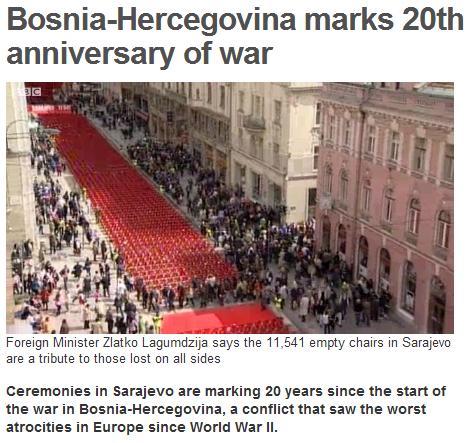
What a simple and strong tribute as reported on the BBC above. I have an odd three point connection to the Bosnian conflict as I lived in my former home of PEI when refugees were filtered through Canada’s smallest province to acclimatize them to a new home. In 1998, I played on a PEI soccer team with many Bosnians including one who had played first division football. And, years earlier, we were teaching in Poland when the former Yugoslavia began to fall apart in civil war. I saw TV twice in those months in late 1991. Once to see a soccer game and once to see the shelling of Dubrovnik. Also, in my former former home prior to PEI but after coming back from Poland in the mid-90s I met and even represented Canadian soldiers who were in the UN force that liberated Sarajevo with a proper vigor that the current Canadian government frankly seems to deny.

The stories from these three points in that decade combined giving me that sort of weighing awareness that made the news difficult to follow on one hand but saw me asking more. In the pre-pop-Internet world that meant maps and shortwave. Listening to the news fading in an out from Radio Belgrade, Croatian radio as well as B92 gave a sense. I remember when Arkan was killed a Bosnian friend inordinately connected came to my office to ask how that could have happened. I had to give him, a former Red Army soldier, a lesson on the SAS, vulnerability and other such things. He had no idea but told me much that taught me about the later NATO bombing of Serbia.

A red chair for each of the dead. Better than Yeats. Few signed up for a cause in the 90s.

None

Vermont: Craft Brewer Greg Noonan Passes Away

Very sad news this morning of the passing of Greg Noonan, founder of the Vermont Pub and Brewery as well as author of a number of important books on brewing. There is a thread of condolences over at BeerAdvocate with many sharing their memories of him.

Seven Barrel Brewery Brewer’s Handbook constantly during my former glory-ish days of home brewing. The idea of having one book showing the same recipe for extract, part mash and full mash implied a lot. It said that it was worth getting started and trying to excel. It also told me that it was a very reasonable goal to try and brew dozens and dozens of beer on your path. There was something of the tone of a patient teacher in that book as well as in his other book on my shelf, Scotch Ale, that set them apart and fit right in with the memories people are sharing today.

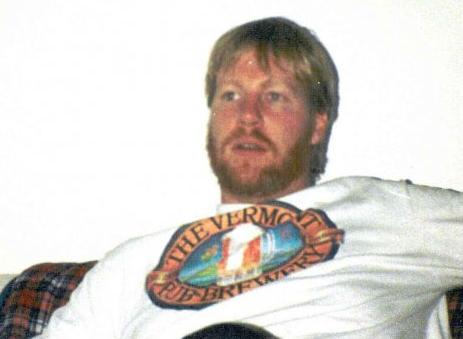
But it were my trips to the Vermont Pub and Brewery that I immediately recalled on hearing of his death. Almost two decades ago now, a pal of mine and I went on a tear of a road trip starting out in Ottawa, looping into NY state and ending up at the VPB on a Saturday night, trying whatever they had on tap. It was the summer of 1990 back when the beard was still red, the shirts not so tight. We were blown away by the way his place showed the range of possibilities after years of accepting what the Canadian market gave you – not to mention the realization that you could just have a small palace to the honour of good beer, good pub food and enjoying company in the corner of any town… your town, too. For the years since, it’s been a regular stop on the family’s trips from Ontario back to the east Coast. Think I will pull out that old VPB crow t-shirt today (if it still fits) and find me a Vermont beer no doubt born out of his great example and inspiration.

American Craft Beer Week = Hooray for Everything?

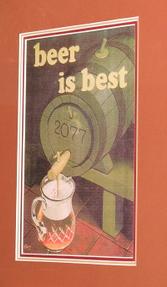
beerisbestNot being American in the national constitutional sense, though somewhat in the continental Vespucci sense, sometimes I find things like American Craft Beer Week and a Declaration of Beer Independence all seem a bit too hooray for everything for me. You remember “Hooray for Everything” don’tca? They were in one episode for about 17 seconds of the Simpsons fifteen years ago, a youth musical group of “clean-cut youngsters” who sing about “the dancingest hemisphere, the Western Hemisphere.” In this case, however, it’s apparently about the greatest “beverage of moderation” instead. And keep tea out of this, wiseguy!

Andy was wondering a bit about the promotion as well, especially the part in the Brewer’s Association material that states their members “want the week to inspire beer enthusiasts to declare their independence by supporting breweries that produce fewer than 2 million barrels of beer a year and are independently owned.” I don’t know about you but I would expect that beer made by an operation making 2.5 million barrels a year has a lot in common with those making say 1.25 million a year. Hardly a reason to distinguish one from another and, frankly, hardly the hallmark of “an artistic creation of living liquid history made from passionate innovators.”¹ But, to be fair, this is a PR effort that, like the recent craft brewer pep rally video, is really aimed at someone other than me. It seems to me that it’s aimed at the brewers themselves and the clients that have yet to commit to a relationship. Me, I just want a tasty beer. It could come from anywhere for all I care… or could it:

During the discussion portion of Beer Wars Live Greg Koch pointed out that Stone Brewing’s Arrogant Bastard Ale is the nation’s top-selling craft 22-ounce package. How’s that for a target? If Anheuser-Busch could brew that beer for less wouldn’t they? So to the line I’ve heard so often: “The big brewers could brew whatever they want if they chose to” I say “Poppycock.” I’m of the opinion they can’t brew the beer at any price. It’s not in their DNA.

beeril² I don’t know if it is about DNA but I get Stan’s point – it may be within their technical capacity but it is not in their business model. But is it really in the business model of the brewer that makes 1,999,999 barrels either? Does the recently released lists of both the top 50 brewers and top 50 craft brewers really provide that much of a distinction? And what about Yuengling anyway?

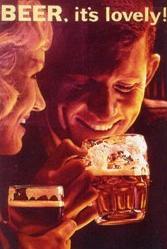
So, if you don’t buy into brewers as celebrity… or brewing as nationalistic jigno… or can see “not quite mass industrial” as being fundamentally different from “mass industrial”… well, it all makes for a yearning for the simpler approach to ads in the England of the 1930s like “Beer. It’s Lovely” or “Beer is Best.” Such short simple sentences. All the everything with a bit less of the hooray.

¹[Ed.: that’s rather plummy… a bit ripe… where is my cravat anyway?]
²[Ed.: image brazenly nicked from Pete’s blog. Buy his books. Now I feel better.]

Pre-Drinking: What Is Old Is New Again

I am not sure what it is about journalists these days but they seem to have entirely forgotten what life was like in the 1980s. People seem to think that, you know, the special friends relationship of hooking up was invented by those with a Blackberry and that facing economic tough times is something that no one has coped with before. Odder, however, than forgetting the lax ways of amore and getting together with pals over a pot of weak tea is the idea that “pre-drinking” as described by the Toronto Star this morning is new:

Young people are engaging in a “new culture of intoxication” that even has its own buzzwords – “pre-drinking” or “pre-gaming.” If you’re a confused parent looking for a simple definition, just click on YouTube, or on urbandictionary.com, where it’s described as the “act of drinking alcohol before you go out to the club to maximize your fun at the club while spending the least amount on extremely overpriced alcoholic beverages.” This new form of binge drinking goes far beyond a warm-up to a night out with friends, says a new report by Centre for Addiction and Mental Health researcher Samantha Wells and two colleagues at the University of Toronto and University of Western Ontario. It’s an “intense, ritualized and unsupervised” drinkfest, in many cases perfectly timed so that the booze hits the bloodstream within minutes of stepping inside the bar, Wells said in a telephone interview from London, Ont.

Wow. They are “unsupervised” when they do this?!?!? Imagine that.

Did anyone involved with these studies ask a Maritimer who was in university a quarter century ago? Frankly, I still find it odd to be in a pub before ten in the evening given that the Halifax social scene required picking up a case (Nova Scotian for 12 beer) on the way home, having something for supper like K-D or oven fries and then landing at one house or another to, frankly, pound them back until it was time to get the taxi downtown. But these days I get all snoozy well too early for this sort of thing. I hardly make it to the end Num-Three-Ers on Friday night at eleven now. Yet somewhere some part of me is happy that gangs of the young are still being safely dumb in fun packs within reasonable parametres, singing at the tops of their lungs, turning into bags of seat as they slam-dance or whatever the kids are up to today.

Session 15: How Did It All Start For You?

I want to say one thing. Where the heck did the days of whatchure fayvrit bock go? All these questions like who’s your beer friend, what’s your best beer place? I wish we’d get back to beer and a lot less about me…or you if you are another beer blogger. But at least this one is about me and beer.

There. Done. Off chest.

So, I was trying to thing of auspicious moments on my early years with good beer. I am a lucky guy who, at 45, started in my university years interest in beer in early 80’s Halifax, a seaport town, that was interested in beer and drink and donairs and whether Keith’s or Moosehead was better house draught. A place where one could say “it’s a drinker” on a lovely day and know by midnight you;d be amongst 50 pals in the taverns, pubs and beverage rooms of our fair city’s waterfront. I’ve written about the 1980s Halifax pub scene then in an earlier edition of The Session, but here are some notes:

In frosh week of 1982, my second year of undergrad, I decided unfortunately to drink a large amount of MacEwans Scotch Ale much to my later distress. Twice that night I noticed that it went down with the consistency of HP sauce and was quite different from the local Nova Scotian lagale I had been drinking.

The next year, 1983, the college bar had a “beers of world” weekend and we all drank Dortmunder Union which came in in very thin glassed bottles with light grey labels. Not too long after, Maxwell’s Plum, an imports bar opened in Halifax.

Soon after that on Christmas Eve 1985, I ran into my high school pal, Pete, at his new gig bartending at The Thirsty Duck put on a new keg of the recent novelty arrival Guinness. We went through a fair bit of that at that pub, too.

In 1986, the Halifax scene takes another jump with the Granite Brewery (now also of Toronto) at the old Gingers location on Lower Barrington, started up its experimental brewing with a variety of levels of success. About that time, the New Brunswick micro Hans Haus or Hanshaus started in Moncton and, according to Brewed in Canada, lasted five years. They brewed a lighter lager but also a beer that I recall as being like a marzen, darker and flavourful.

In 1985 I am in Holland working and traveling in France and the UK will college pals and, again at the end of 1986, I am to be found backpacking in the UK, in the pubs trying what’s ever going. The latter time I visit the Pitfield Beer Shop which Knut visited in 2005 and buy two homebrewing books, one by Dave Line and the other by Tayleur as well as some basic equipment I expect I can’t get back in Canada like polypins. I still use some of that stuff as well as those authors’ more basic brewing techniques.

But I think the real break came when I got the November 1987 issue of The Atlantic and read the article “A Glass of Handmade” – an article that gave me a sense there was something happening in North American outside of Halifax, that was maybe like the UK, that was maybe something to look forward to. I wrote about that back here and even sorted a copy of the article for posterity in my bloggy archives. Go read it again – it’s a great snapshot of where craft brewing was in 21 years ago and reminds me of what I was thinking about when I was first learning about what beer could be.

A Brewery, A Literary Tour And Another World All In One

hfxriot4
Her: I sure hope no one mentions this ever again.
Him: Me, too. How unlike us. Best to bottle it up. Pass me another.
 

An interesting combination of two of my interests may well come together in Nymburk, some 30 kilometers east of Prague, where a brewery, Postřižinský Pivovar, helps continue its story as a local brewery, how the brewery altered the life of an author – and how the brewery itself became a character in the life of the community through the author:

The brewery, operated by brewing firm Pivovar Nymburk, has strong historical and literary connections with Czech writer Bohumil Hrabal, who was raised in the brewery grounds and wrote “Postřižiny” (Cutting It Short) about his childhood encounters with the brewery workers. The book was made into a hugely successful film in 1981 by director Jiří Menzel, who recently adapted another Hrabal work, “Obsluhoval jsem anglického krále” (I Served the King of England). The brewery now uses the literary connection with Hrabal as a marketing tool, and the writer’s amused face stares out from the labels of most of the bottles of Postřižinské Pivo sold in the Czech Republic.

That speaks volumes for me…but sadly more over what is not than anything. We in the English speaking world are so concerned about avoiding making connections about beer and locality and community that we forget that our behavior must seem fairly bizarre to other cultures. Just from my own experience I can think of a bar owning pal who was barred by the local regulator from selling a drink he had come up with that referenced Anne of Green Gables. Recently we’ve seen some US states call out the lawyers and tribunals to keep Santa off beer bottles. Heck, in the chapter of the upcoming book Beer and Philosophy that I penned I noted that the law of New Brunswick barred representations of beer in family situations in advertising. We can’t make fun of fictional characters or even describe what actually is – because to do so we point out there is beer in our lives. Because that would be, I guess, dangerous.

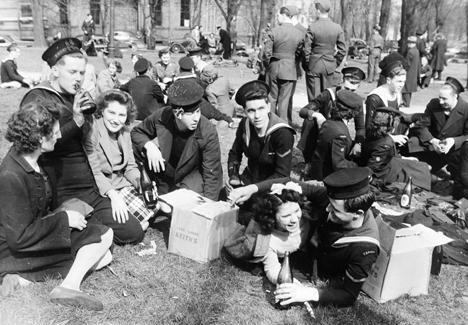
And yet we do all this despite knowing we all have tales of our own how beer characterized the community. I can only speak to my Maritime Canadian youth but we all heard how Moosehead’s Dartmouth brewery had the free tap for those working on the floor and wondered why we didn’t all drop out of undergrad and apply for a job. We knew teetotaling farmers with the case in the barn. We knew the ties between Halifax’s Keith brewery and the VE Day riots when the youth of the town invaded the place and drank the brewery dry, likely some knowing relatives – maybe those above – who had some stories. We even watched ads just a few years ago for Alpine beer and how it was not worth making a career for yourself away from home because you might not be able to get your brew…and probably knew people who likely took the advice.

In many ways, beer frames (or at least colours one corner of) what you are and what you could be expected to be….but you really shouldn’t talk about it. Beer is such an interesting touchstone for our collective denial of what we are. Far better to focus on what we think we should be. Somehow it exemplifies all the danger in life we were warned of – even though we happily live it with anyway. Weird stuff.