Was This The Earliest Brewing In English Canada?

3068

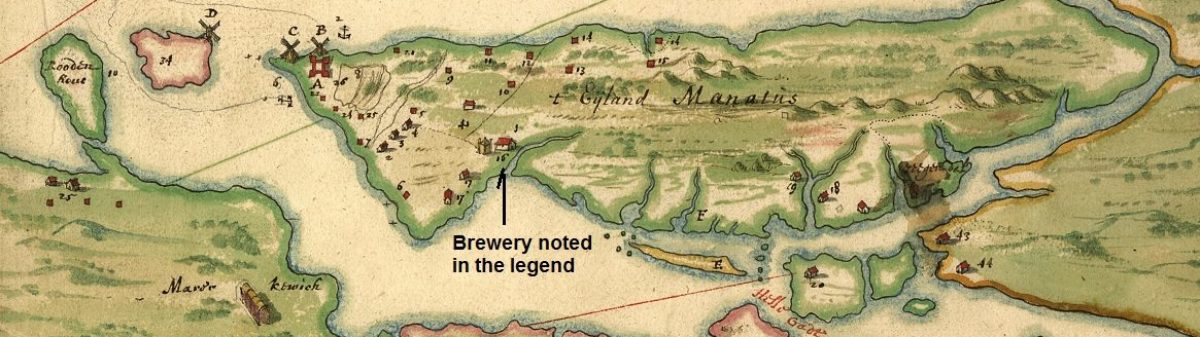
Sneath, Pashley and Rubin all mention the 1600s brewers of New France – Hebert (1617), Ambroise (1646) and Talon (1670). But I just came across this reference in a footnote in the Minutes of the Hudson’s Bay Company, 1671-1674, published by Toronto’s Champlain Society in 1942, describing payments being made on 16 February 1674 for goods supplied to the ships of the Hudson Bay company:

John Raymond, “By Severall quantities of Ship Beere at 40s p. Tonn Strong beere at 12s, 9d a barrell & Harbor Beere at 6s 6d p. barrell with Malt & Hopps dd. Capt. Gillam, Morris and Cole”, £ 79.

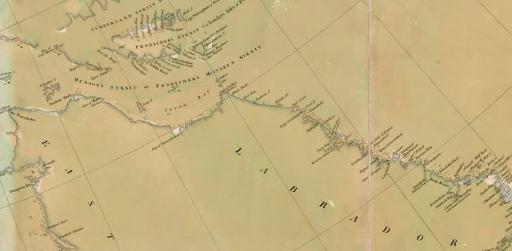
A few months later, a committee of the Hudson Bay Company on 6 July 1674 directed payment to the same John Raymond £ 30 on account of “”Beer and Malt. dd. on board the Prince Rupert.” These items appear among a long list of payments for other necessary goods for taking aboard the ships Prince Rupert, Messenger and Employ. You will see in footnote 2 to this post on a blog by Norma Hall subtitled “Northern Arc: the Significance of Seafaring to Western Canadian History” that these three ships were sailing between England and Hudson Bay in the first half of the 1670s. The Prince Rupert and Messenger, at least, over wintered.

There are loads of interesting questions and observations from these passages from the Minutes of the Hudson’s Bay Company, 1671-1674 including why are they shipping malt and hops separate from barrels of beer. If these ships overwintered and carried malt and hops it is pretty obvious that they must have been brewing. We know the British brewed on ships in the Arctic in 1852 so why not in 1674? But also – what is “harbor beer”? It costs about half of “strong beer” and we know from Gate’s work on Kingston that in 1825 “small or ship beer” was being sold in Kingston. But most of all the question is this – was this the first brewing of beer in English Canada? Or did other earlier over wintering ships brew, too?

Book Review: The Art And Mystery Of Brewing in Ontario

boweringWhile I stand by my statement:

“…brewing history can be a tool or route to understanding for some but is ultimately unimportant if you do not need to tap into it…”

… I have to admit that I do like dabbling in it – as long as I stay within the reach of my own capabilities. I especially like dabbling in it care of a stack of bedside books when I am, like today, on the third day of the treatment for a blip of pneumonia. And good thing, too, as it’s not like the weeks of cough medications leading to this stage have left me longing for a tart gueuze. But, while we are at it, would it kill big pharmacy to make a expectorant that tastes like an imperial stout?

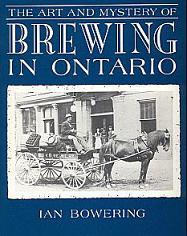
Anyway, one of the books recently added to the pile is 1988’s The Art And Mystery Of Brewing in Ontario by Ian Bowering. We suffer in Canada from a lack of understanding of ourselves and no where more than here in Ontario. Atlantic Canadians, Quebeckers and Western Canadians all are rightly proud of themselves even if it is largely based on how they have each been screwed in their own special way by that place to stand, place to grow, Ontar-i-ar-i-ar-i-o.

Bowering’s book helps with Ontario’s blandness. It sits in an important place with others on brewing in Canada and does one thing particularly well. It lists the breweries by town. Simple thing but it shows that brewing advanced across the province as the population advanced westerly from the early 1790s or before in eastern Kingston to the late 1890s in Rat Portage, over 2,000 km to the NW. It also shows that brewing was going on at a far larger scale, unexpected industrialization with far greater distribution earlier on than some might suggest. Brains Brewery in rural 1834 was producing 100 barrels a week. Lager was being made in Kitchener well before 1850 and even wee Huether Crystal Springs in little Neustadt delivered in a 70 km radius a few year later.

Information will advance and it is evident more information has come to light when we compare the listings for Kingston and compare them to the brand new book The Breweries of Kingston and The St. Lawrence Valley by Steve Gates which follows a similar structure. But as one wag recently stated:

…that there are others out there who will identify errata and offer corrections is something which will ultimately contribute to the further development and maturation of this particular field of study.

I might add that it is the only way it will further develop and mature. And not only through peer review and correction but building on the shoulders of others who have gone before. So Gates cites Bowering, Sneath cites Bowering, Mr. B cites Bowering, Pashley cites Mr. B and Sneath. It’s the way things work, the way we build the collective body of knowledge – if, that is, we are actually interested in presenting what actually was.

Why Did A Brewer In Kingston In 1815 Want Rye?

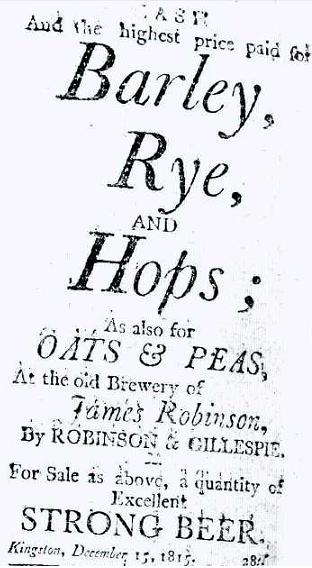
kgazkbrh1The ad is from page 4 of the Kingston Gazette, 6 January 1816. You can see at the bottom that it was placed on 15 December 1815. So many questions. What were Messrs Robinson and Gillespie up to? Why is rye placed between barley and hops in the large font while oats sit down there with the peas? Also, is “strong beer” something separate, something identifiable to the Kingstonian a year after the war with America? You will recall that a few months later in April, Albany strong beer is for sale. It also comes just a month after Richard Smith’s notice for plain “beer” – so was “strong beer” something they had the taste for still, almost 40 years after having to flee from their central NY homes at the beginning of the American Revolution? And why is it not “ale” when described in the Kingston papers?

I just finished The Lion, the Eagle and Upper Canada by Jane Errington, a historian over at Royal Military College – they of the old school base ball. The book is well reviewed here but, short form, it’s an interesting view of early Upper Canada (1790s to 1820s) based in large part by review of early newspapers. In it, Errington suggests something of a window between the end of the War of 1812 in 1815 and, a few years later, a clampdown in trade and other contacts with the US towards the end of the decade. But even with her level of detail about the community, trade and industry, there is not much about beer itself. Meaning I am left unsure if beer was being traded within months of the end of a war, perhaps as a stop gap until local product restarted… if it was interrupted by the war… which is another question.

So, I was very happy to read in the comments that Steve Gates has published his history of brewing in the city and in the region. I couldn’t get out of the door to go get a copy but will tomorrow. Hopefully it will shed some light on what Robinson and Gillespie were up to.

In Kingston In November 1815 There Was Beer!

asb2

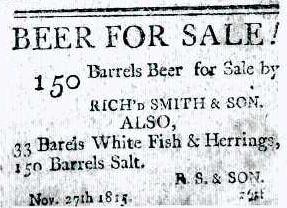
Beer for sale! Hallallujah!! BEER FOR SALE!!!

Remember what I suggested before? That where there is peace there is
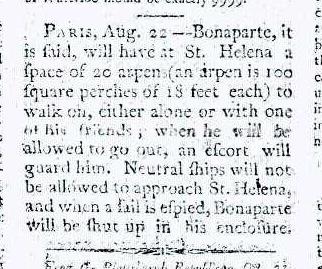
beer? Well, on 27 November 1815, my town of Kingston was just nine months past the ratification of the Treaty of Ghent and five past the Battle of Waterloo. The proposed terms of Napoleon’s incarceration at St. Helena are announced in the same edition of the Kingston Gazette as was the reprimand of Major-General Proctor – the news oddly received care of an American paper… care of one from Montreal. Funny information and trade routes in those early post war days.

Where did the malt come from? Sure, Kingston was a key outpost bastion in the Empire, the guardian of the Great Lakes, St. Lawrence and Rideau but, still, who grew the grain that made the malt that made the beer? Was it a local 1815 crop or was it shipped from Britain or America? Where was it brewed? Notice that Richard Smith only calls it “beer” where a few months later he calls what he is selling Albany strong beer. Also, I don’t see another ad in the paper for beer. There are many fine things – fancy goods even. The front page of the 2 December 1815 issue includes notices offering Turkish opium, spices and sugars, China teas and and Port wine. The town had its need and apparently some issues for which it had supplies. But there was no other beer for sale.

It makes one consider that this may have been the first or at least an early shipment to make it to the town after the war. There very likely were beers in taverns but not necessarily. More drinks can be made from spirits and if you are transporting them up a river filled with rapids between here and Montreal, there is more bucks in batteaux that way. We learn from Roberts that punches and cocktails was the fashion, too. Taverns were posh. Not sure. But what ever it was about, beer was for sale. And it was worth letting people know.

Your 1816 Albany Ale Update From My Home Town


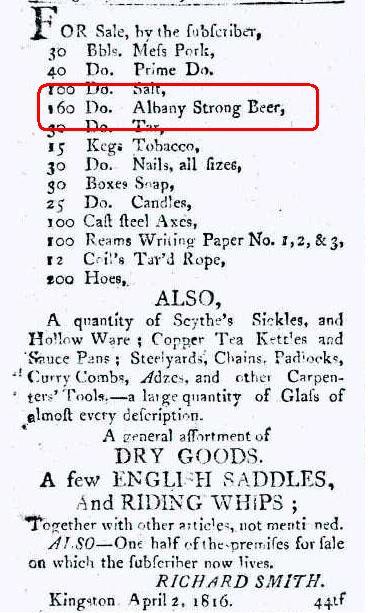
kingstonasb1816kWe have not found more Albany ale information for a while but this is your moment of zen. Just consider what it means. There is no Erie Canal. There are rapids on the St. Lawrence all the way to Montreal. There are about 4,000 people in this town. The War of 1812 ended one shipping season before… unless it was brought by sleigh. Oh, and “Do.” does not mean dozen. It means “ditto” so those are barrels. Amazing. From the Kingston Gazette on April 27th 1816.

Oh, For A Mug O’ Fern Ale To Keep Strangers Away

Ron got me thinking. He was making fun of something written by Horst Dornbusch today, the “man of a million unfounded claims,” when I noticed something about pale ale coming into being around 1800 when coke was first used. I knew that was wrong so I started digging around for references to straw dried pale malts. There is something about the lack of industrialization that makes for a lack of a record of things and I thought the Coke Makers Association of The English Midlands may well have diddled the books, created history around their own inventions. And there it was… sorta… in The London and Country Brewer from 1737:

Next to the Coak-dryed Malt, the Straw-dryed is the sweetest and best tasted: This I must own is sometimes well malted, where the Barley, Wheat, Straw, Conveniences, and the Maker’s Skill are good; but as the the fire of the Straw is not so regular as the Coak, the Malt is attended with more uncertainty in its making, because it is difficult to keep it to a moderate and equal Heat, and also exposes the Malt in some degree to the Taste of the smoak.

OK, the pro-coke lobby is firmly entrenched but the quotation is from 63 years before Horst so that is worth noting. But then I notice this comment further down page 14:

The Fern-dryed Malt is also attended with a rank disagreeable Taste from the smoak of this Vegetable, with which many Quarters of Malt are dryed, as appears by the great Quantities annually cut by Malsters on our Commons, for the two prevalent Reasons of cheapness and plenty.

Interesting. Commonly used and rank. The author likes his descriptors of bad tasting: “rank disagreeable Taste” is joined by “most unnatural” and, my favorite, “ill relish.” Yet there is it – fern beer. What was fern ale like? We spend so much time hybridizing a new hop or injecting a new chili pepper extract into our beers we have forgotten the humble fern, maker of widely consumed if rank ales. In 1758’s Volume 3 of A Compleat Body of Husbandry by Thomas Hale, a bit more hope is given to the prospects for the taste of a fern ale:

The amber may be straw dried, but ’tis not nearly so well. As to wood and fern they are used in some parts of the kingdom, and custom makes the people relish the beer brewed from such malt; but to a stranger there is a most nauseous taste of smoak in it.

At least the locals liked it.

Lord Goog in the end gave up what I was looking for. In an edition of A Way to Get Wealth by Gervase Markham from 1668, a book first published in 1615 or about 200 years before the start date picked by Horst, we have an opinion on the preference for straw… and not just any straw:

…our Maltster by all means must have an especial care with what fewel she dryeth the malt; for commonly, according to that it ever receiveth and keepeth the taste, if by some especial art in the Kiln that annoyance be not taken away. To speak then of fewels in general, there are of divers kinds according to the natures of soyls,and the accommodation of places-in which men live; yet the best and most principal fewel for the Kilns, (both tor sweetness, gentle heat and perfect drying) is either good Wheat-straw, Rye-straw, Barley-straw or Oaten-straw; and of these the Wheat-straw is the best, because it is most substantial, longest lasting, makes the sharpest fire, and yields the least flame…

Look at that. We are in a different world compared to both today as well as the mid-1700s. Back to an agricultural age. “She” is the maltster. And the specific qualities amongst four classes of straw are known and ranked. After these light grain straws come fen-rushes, then straws of peas, fetches, lupins and tares. Then beans, furs, gorse, whins and small brush-wood. Then bracken, ling and broom. Then wood of all sorts. Then and only then coal, turf and peat but only of the kiln is structured to keep the smoke out of the malt.

Why? The whiz kids at Wikipedia tell us that:

In 1603, Sir Henry Platt suggested that coal might be charred in a manner analogous to the way charcoal is produced from wood. This process was not put into practice until 1642, when coke was used for roasting malt in Derbyshire.

So, coking turns out an early industrial practice that only first considered halfway through the life of Gervase Markham who lived from 1568 to 1637 and only applied to malt after his death. Coke is used to perfect – but not create – pale malts.

Pale malts and pale ales would have been around for some time well before 1600 even if in the effort to make them some became, as Markham writes at page 166, “fire-fanged.” I am sure that a fern fire-fanged ale may well have been an ill relish. But what of those whose custom made them love them all the same? Right? It’s a style just waiting to be reborn. Right? Markham would have none of it. At page 181 he states:

To speak then of Beer, although there be divers kinds of tasts and strength thereof, according to the allowance of Malt, hops, and age given unto-the fame; yet indeed there can be truly said to be but two kinds thereof, namely, Ordinary beer and March beer, all other beers being derived from them.

Got it? Fern ale is not a kind of beer, just a taste. There are two kinds of beer, ordinary and March. Everything else is showing off.
Does Brewing History Really Matter To You?

monkey4There is an excellent post over at Des de Moor’s blog this morning entitled “Brewing’s Disputed Histories” in which he discusses an accepted inaccuracy about a point in the history of the Belgian brewers Lindemans around 200 years ago. He goes on to ask some questions including this one:

…does it matter? Are the details of brewery inheritance in an obscure part of the Low Countries at the turn of the 19th century, before today’s Kingdom of Belgium had even been created, really that important compared to, say, understanding the reasons why Lindemans abandoned traditional lambic production in favour of sweetened fruit beers in the more recent past? In my view, yes, it does very much matter. Heritage is a valuable asset in the world of brewing, and most breweries dating from before the resurgence of craft brewing are quick to boast of their lengthy pedigree. The authenticity thus sought is admittedly limited as a brewery’s history does not necessarily reflect on the way it operates today — many a family business has ruthlessly torn up the rule book — but history does help provide the context in which specific beers are appreciated, particularly if they come in a style as ancient and rare as lambic.

I am not quite sure what to make of this. I am a significant consumer of history both personally and professionally. I study the implications of the American Revolution on the settlement of Upper Canada so that I can understand and can help shape a growing narrative about our community. You may have guessed that something was up when I posted these sorts of things. For me, it is an important and interesting task.

So, it is not history that I question but its place. Des states “history does help provide the context in which specific beers are appreciated.” I have to slightly disagree with respect. I would prefer to say “history can help provide the context in which specific beers may be appreciated.” Not to be overly clever with the subjunctive, but it seems to me that brewing history can be a tool or route to understanding for some but is ultimately unimportant if you do not need to tap into it. And I am going to suggest that about 98% of beer drinkers do not.

First, consider this analysis of the meaning of saison from B+B today which does not really rely on history so much as experience. Then consider this post by Martyn this morning by way of illustration, a piece called “The gastropub is dead – official” which I actually might have preferred was headlined “The ‘gastropub’ is dead: Official” for no other reason than my slightly priggy concern (shared by Martyn in the footnote) for what makes something official (…or even historically true for that matter.) On the topic of the arc of this sort of establishment sunrise and sunset, Martyn traces the beginning of the idea in the 1990s to the banning of the term in the 2012 Good Food Guide. I am fairly sure I have never been to a gastropub but am more certain that I have been influenced by the idea. And, whatever CAMRA its authors suggest in the guide, I expect it to continue to do so as the tide of good food into beer drinking establishments will not recede any more than it will in the grocery store. The “gastropub” as an expression of good food and good beer is part of a general omnivoristic trajectory of in the pop culture of the UK as well as in North American. It ultimately matters not that the term came into being, has jumped the shark or even that relates to something. The 2012 Good Food Guide does not alter anything other than points out questions about what the editors were thinking when putting together previous editions. If the word was good then, it is good now.

Note: brewing history does not matter but it may interest some and interest a few deeply. But for me just as I really can’t get that excited about experimental hop variety note identification with my supping a pale ale – being satisfied as to the question of whether the beer is tasty – so, too, do I find brewing history nice to know but seldom as vital when compared to other practical applications of history. It’s like being good at table hockey. For me, it’s a fun skill that leads, well, somewhat close to nowhere. Brewing history is also unlike the analysis of Boak and Bailey above that confidently places personal experience in the center of their understanding. You may disagree and can illuminate me on aspects of brewing history that make the beer tastier for you. Let me know how that might work.

Sackets Harbor NY Vintage Base Ball Tournament 2011

sack2011

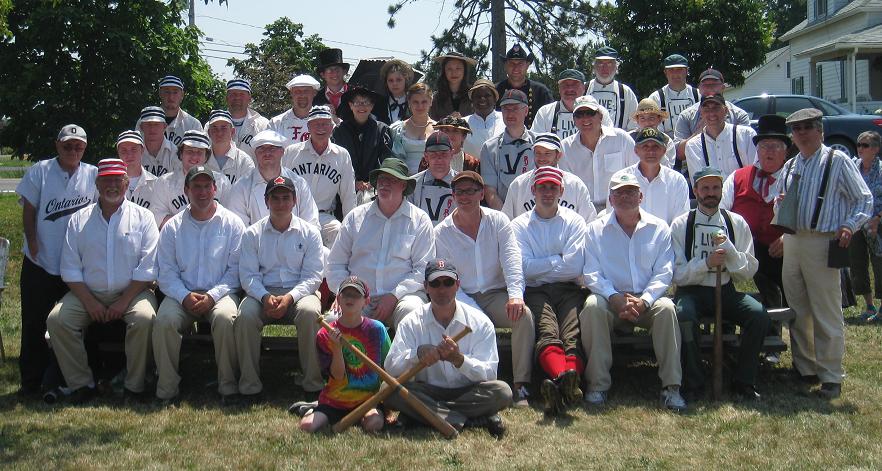
This year’s vintage base ball game was remarkable. The weather was so hot I thought that I was going to faint when I slowed into second on a couple of doubles. The team had a few new faces but was as keen as ever and took both games after never winning a single game in the USA in the four previous seasons. Well, there was 2008 when the game was rained out. We declared that we had not lost by default.

All That Base Ball Was Really About That Pitcher

vbbk20114

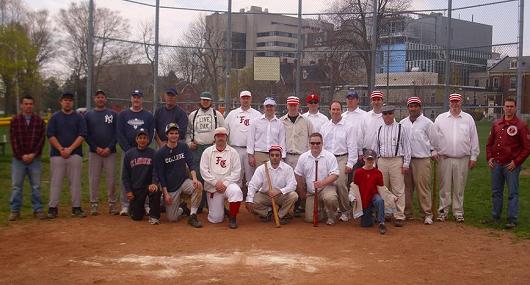
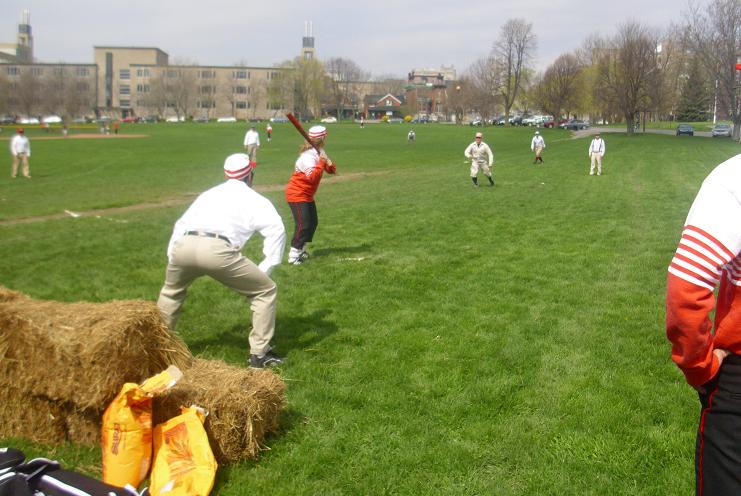
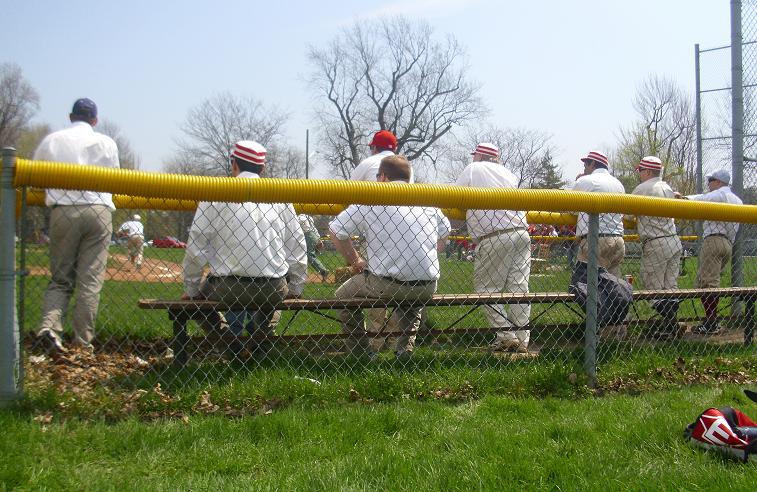
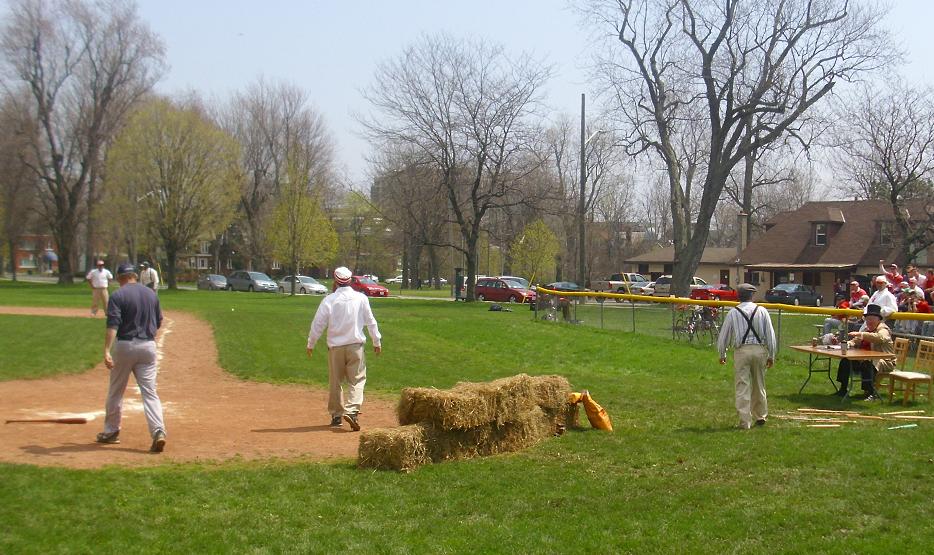
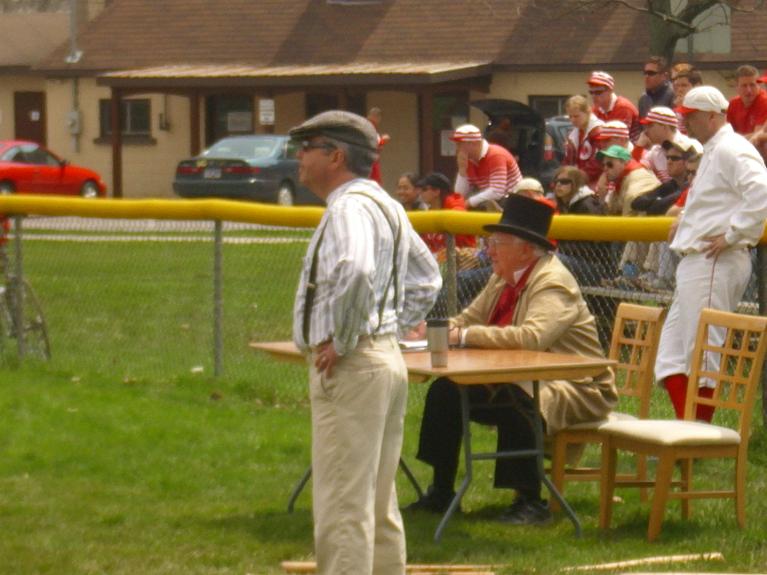
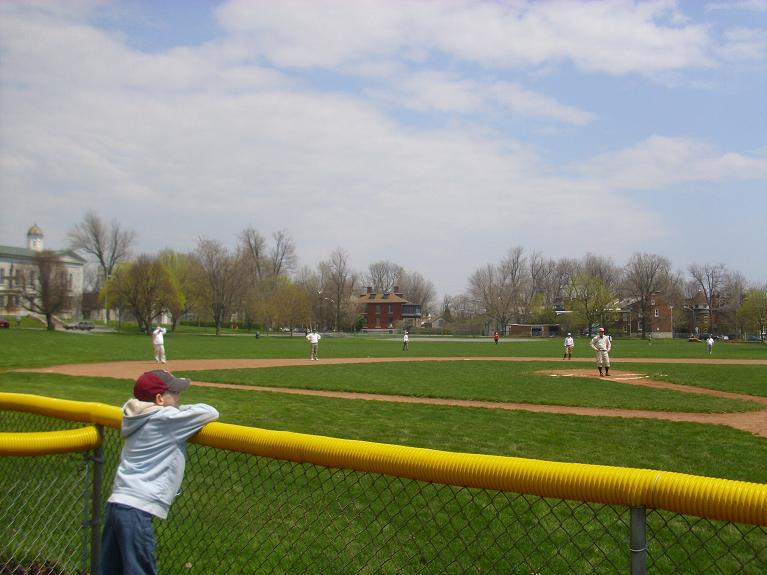
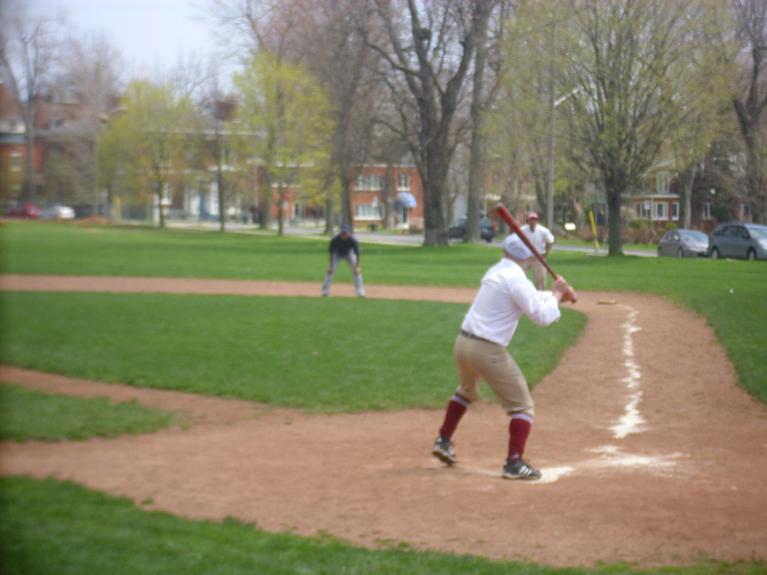
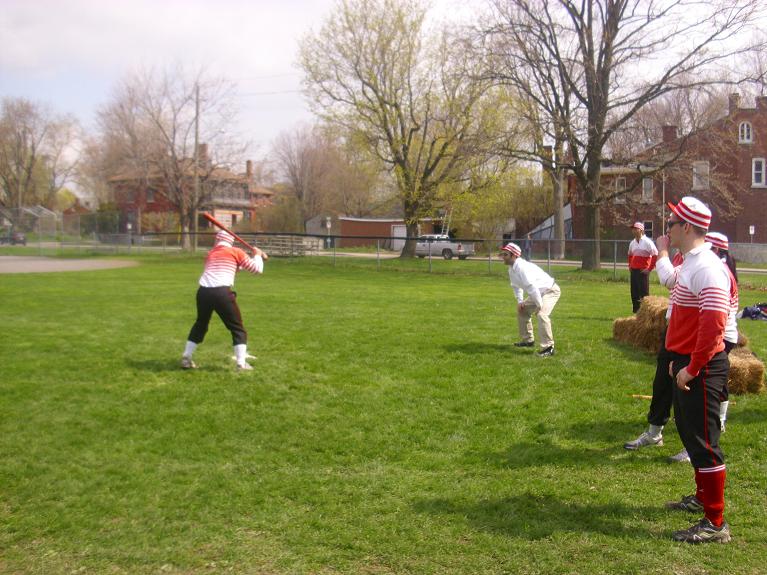
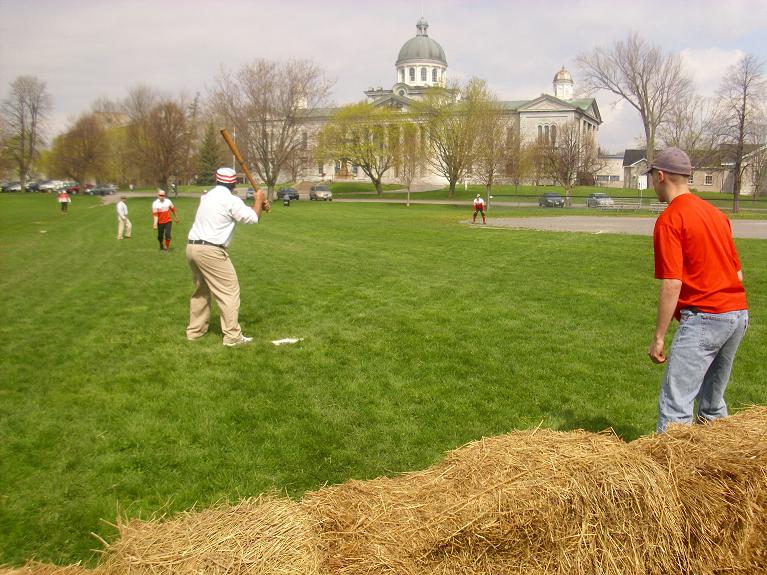
I indulged in my other odd hobby yesterday. 1860s – 70s base ball. Two words. No gloves. No sliding. The ball springs off the bat with about as much zip as an Edam cheese would. Underhand pitching and bats that are like swinging a 2 x 4 fresh from the lumber yard. I put the thing together with friends. We took on graduating cadets from our Royal Military College as well as a mixed team of upstate New Yorkers from Canton and Rochester NY. The final was a 3-2 victory for the Americans. The team that became the Atlanta Braves beat Kingston on the same field 138 years ago… by a slightly larger margin.

And after it all, we retired to the brew pub. There is only one in the City so that’s what we call it. Over twenty folk wanting to relax over a few beer and get to know each other. Lively talk about the sad state of regional teams like the Bills and the Leafs, discussions about the different gun law ending with the trump card of a cadet explaining the fire power he’s been trained to use. And the beer. I hadn’t realized that oatmeal stout was not available in pitchers so I had a pint and bought a pitcher to share of the pale ale, both brewed by Montreal’s McAuslan Brewing. I couldn’t remember the last time I had a pitcher. Sounds sad, doesn’t it but life with the many rug rats does have its realities. What did I like about having one? The conviviality. The vessel was meant for sharing. Slopping pours topped up this glass and that. As talk ebbed and flowed from the Bills to bazookas.

Easlakian Vintage Base Ball Madness Strikes!

A lovely day was had by all. Kingston St. Lawrence Vintage Base Ball Club loses 3-2 to a NY Selects team from Canton and Rochester NY in the final of the RMC tournament. RMC 1 lost to the Selects 7-6 in the first round while the KSL took RMC 2 by 17-3. I got a single.