Teach Your Children Well – BBQ Version

1956

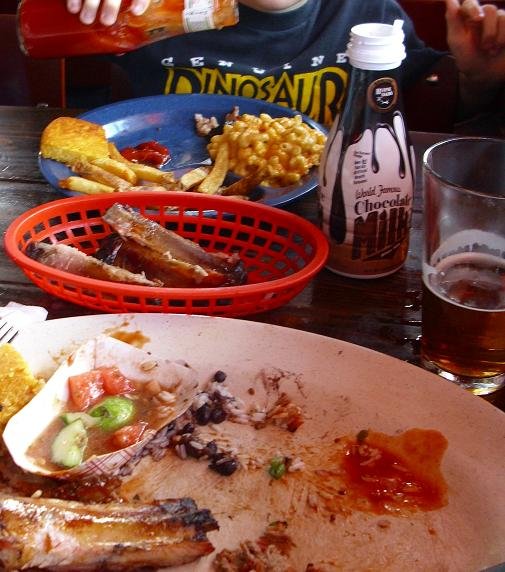
Every holiday should include a lunch at Syracuse’s Dinosaur BBQ. I had a Tres Hombre but as I I left meat (I’m embarrassed even thinking of it) I was not as hombre as I might have been. The beer is an Ape Hanger Ale that’s made, I am pretty sure, by Middle Ages as a special house brew. It followed a Syracuse Pale ale that I had standing out in the street waiting for a table. You go to hell and/or prison in Canada for standing in the street having a beer waiting for your table. That was the best Mac and Cheese I ever had, by the way. The lad knew enough to not leave any.

Sad News With The Passing Of Bernie Rivers

Beer fans in central New York are mourning the passing of Bernie Rivers who ran Galeville Grocery in Liverpool near Syracuse. The shop hails it self as “your complete historical neighborhood grocery store since 1888.” I met Bernie this past January on a beer run into Syracuse and enjoyed a few minutes with this cornerstone of the community as well as the CNY beer scene. I’ve been shopping at Galeville for almost six years so far and have always been struck how dependent we beer fans are on the passion and risk taking of the shop keepers like Bernie who stock the shelves, hoping the locals will support the decisions and selections they make. I’ve rarely been anything less but excited with my finds there.

Tributes can be found at the Facebook pages for his store.

The 2nd Annual RMC Vintage Base Ball Tournie Is On!

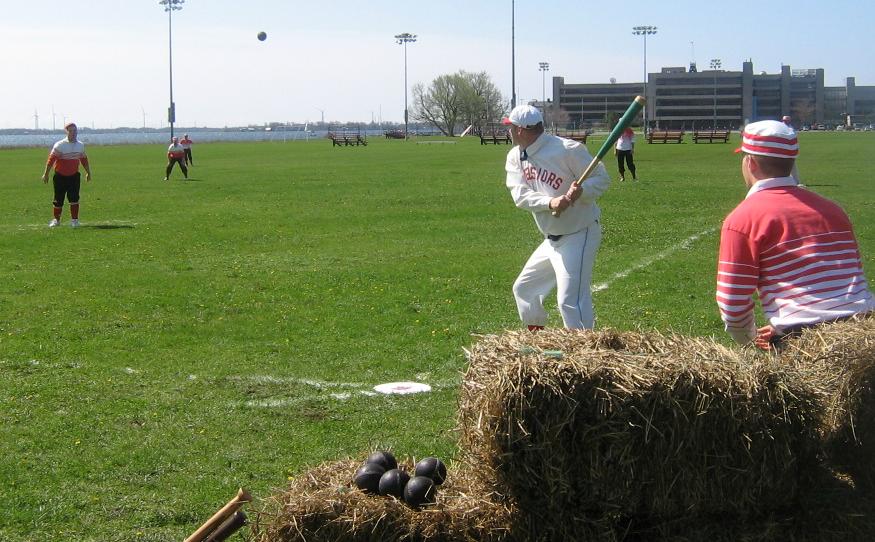
Big news just now as we have our second umpire for this Saturday’s vintage base ball tournament signed up. You have to get imports for these things, you know. One Rochestarian and one Sackets Harbor-on-ian. Dandy. Steve, up there with the bat, will be there, too. We should have two games this year and the weather is supposed to be fine on Navy Bay where we calm the ghosts of 1812 by mimicking the ghosts of 1872 for a few hours. And then go for beer dressed silly.

More Thoughts On That Pesky Albany Ale Question

albale3a

I have been thinking more about this pre-1850 invention called “Albany ale” and I am a bit surprised to find so many references to it of one sort and so few references of another. The stuff was made in volume, transported and traded over great distances but now seemingly forgotten to memory. As we will see [Ed.: building suspense!] when we discuss the quote above, it was the stuff of memory even at the end of the 1800s.

But what was it? As noted this morning by Robert in the comments, there is a brief description of Albany’s production of ale in the 1854 book The Progress of the United States of America by Richard Swainson Fisher at page 807:

The business of malting and brewing is carried on to a great extent In Albany; more than twenty of such establishments are now in operation, and Albany ale is found in every city of the Union, and not unfrequently in the cities of South America and the West Indies. The annual product is upward of 100,000 barrels of beer and ale.

Similar text was published in the Merchant’s Magazine in 1849 except it was 80,000 barrels. Interesting to see how far it traveled – California, West Indies and South American in addition to references to Newfoundland in yesterday’s post. There is also this passage in 1868’s A history of American manufactures from 1608 to 1860 Volume 1 by John Leander Bishop and a few others:

…Kuliu mentions, in his account of the Province in 1747, that he noticed large fields of barley near New York City, but that in the vicinity of Albany they did not think it a profitable crop, and were accustomed to make malt of wheat. One of the most prosperous brewers of Albany during the last century was Harman Gansevoort, who died in 1801, having acquired a large fortune in the business. His Brewery stood at the corner of Maiden Lane and Dean street, and was demolished in 1807. He found large profits in the manufacture of Beer, and as late as 1833, when the dome of Stanwix Hall was raised, the aged Dutchmen of the city compared it to the capacious brew kettle of old Harme Gansevoort, whose fume was fresh in their memories.’ [Note: Munsell’s Annals of Albany. Pleasentries at the expense of Albany Ale and its Brewers are not a recent thing. It was related by the old people sixty years ago of this wealthy Brewer, that when he wished to give a special flavor to a good brewing he would wash his old leathern breeches in it.]

Was Albany ale originally a wheat ale? It was obviously big stuff in the state’s capital for decades.

Reference to Albany ale also appears in an illustration of a principle in a book of proper English usage. In the 1886 edition of Every-day English: A Sequel to “Words and their Uses” by Richard Grant White where we read the following at page 490:

I cannot but regard a certain use of the plural, as “ales, wines, teas,” “woolens, silks, cottons,” as a sort of traders’ cant, and to many persons it is very offensive. What reason is there for a man who deals in malt liquor announcing that he has a fine stock of ales on hand, when what he has is a stock of ale of various kinds ? What he means is that he has Bass’s ale, and Burton ale, and Albany ale, and others; but these are only different kinds of one thing.

The fifth 1886 edition of Words and their Uses by the same Mr. White contains no reference to Albany ale but does indicate he was a prolific US author who lived from 1821-1885. Does the later use by White imply it was an easily understood example? Probably.
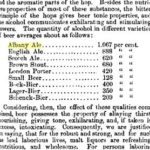
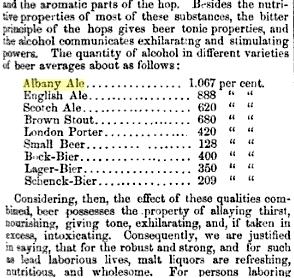
albale2In the New York journal The Medical Record of 1 March 1869, there is an article entitled “Malt Liquors and Their Theraputic Action” by Bradford S. Thompson, MD the table to the right is shown that clearly describes Albany ale as a sort of beer the equal to the readers understanding as London Porter or Lager-Bier. I am not sure what the table means from a medical point of view but it clearly suggest familiarity… at least amongst the medical set.

In 1875, it is described in a travel book called Our Next-door Neighbor: A Winter in Mexico by Gilbert Haven (who seems to not have been a lover of the drink himself) at page 81:

Here, too, we get not only our last look at Orizaba, but our first at a filthy habit of man. Old folks and children thrust into your noses, and would fain into your mouths, the villainous drink of the country – pulqui. It is the people’s chief beverage. It tastes like sour and bad-smelling buttermilk, is white like that, but thin. They crowd around the cars with it, selling a pint measure for three cents. I tasted it, and was satisfied. It is only not so villainous a drink as lager, and London porter, and Bavarian beer, and French vinegar-wine, and Albany ale. It is hard to tell which of these is “stinkingest of the stinking kind.” How abominable are the tastes which an appetite for strong drink creates! The nastiest things human beings take into their mouths are their favorite intoxicants.

So, along with grammarians and the drinking medical set, Albany ale was also a name known to the non-drinking traveling set in the post-Civil War United States. It was, as a result, something we might consider “popular” in its day.

Oddly, the story of Albany ale does not seem to make it deep into the 1900s. Without making an exhaustive study, I don’t see reference to “Albany ale” in Beer and brewing in America: an economic study” by Warren Milton Persons from 1940. It is not indexed in Beer in America: the early years, 1587-1840 by Gregg Smith. It does not seem to be in Ambitious Brew: The Story of American Beer by Maureen Ogle as it really starts with the the rise of lager is in the second half of the 1800s. Why did it fall so far so fast?

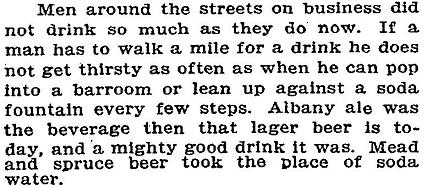
That quote way up there? The one at the top? It’s from an 1899 New York Times article entitled “Kicked 90 Years Ago Just the same as Now” in which a 96 year old New Yorker still employed as a municipal engineer who was interviewed about the City’s old days. Talking about his youth in the 1830s, he said “Albany ale was the beverage then that lager beer is today, and a mighty good drink it was.” So, lager likely killed it off but only after it had its day and was enjoyed widely in the days before rail transportation both within the United States and abroad.

2015 Update: came across book by Mr Haswell, the 96 year old New Yorker mentioned up there.
What The Heck Was “Albany Ale” In 1847… Or 1807?

albanyale

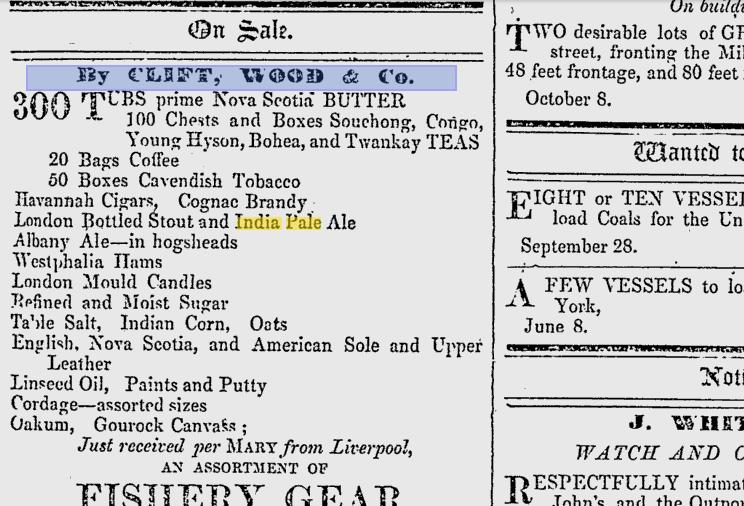
So I am nosing around looking for India pale ale references on Google news archives when I spot this one in a newspaper from 1847’s Newfoundland to something called Albany ale. In hogsheads no less.

What the heck is it? It is listed in the The Public Ledger of 12 Oct 1847 amongst other imported goods from around the world – even Gourock canvass from the Old Country. In 1853, there is notice again in The Public Ledger of Newfoundland as being “just arrived” in a 50 barrel lot. It looks like an import. Albany ale is listed in the Hartford Courant as far back as issues from 1806 and 1807. In 1846, its for sale in New Orleans and, in 1854, there was a fire at the agents of an Albany ale manufacturer in New York City according to The New York Times. It’s even a drink at a church supper in Adams County, Pennsylvania in 1850.

But what the heck is it? Is it a style? Or is it just an ale from Albany, NY? If so, why is that the pale ale that makes it all the way to Newfoundland?

CNY Roadtrip To Stock The Stash

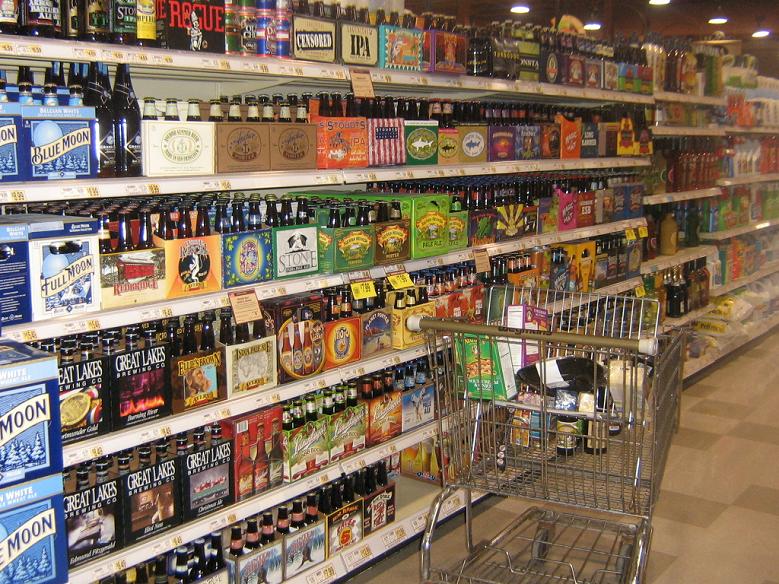
Back. I made it back. I hit four beer stores over around 500 km and nine and a half hours. Now, whereas Pretty Things was just a one time bottle that I passed in the night, now I have seven bottles representing three of their brews and any number of batches. Those canny little cap labels are mighty handy. Plenty of other good stuff, too.

cny1

cny2

cny3


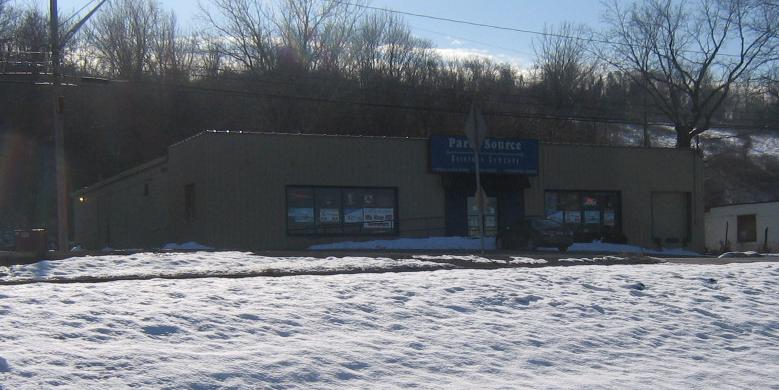
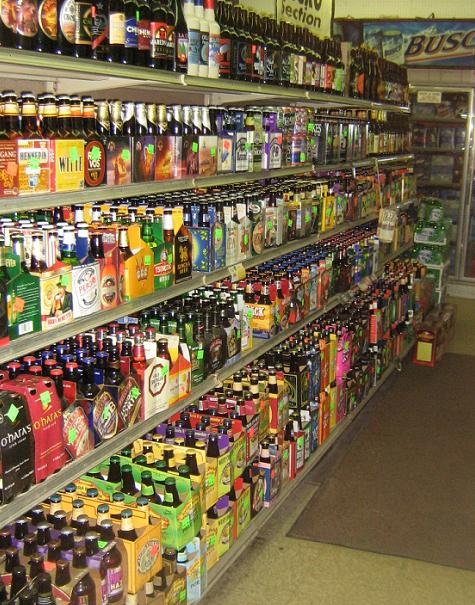
I hit a Wegmans in Cicero, Party Source on Erie Blvd., Galeville Grocery in Liverpool and then headed north via C’s Farm Market in Owsego. What did I learn? I had a good old chat with the guy who runs Party Source and finally met Bernie, the owner of Galeville Grocery. As is usually the case, talk is about other stuff as much as beer when they find out that I am from north of the border – health care and lucky Canada they say, taxes and unlucky Canada they say. The shops were all giving each other a run for the money with Party Source showing off its new siding less neon blue and green siding (as so poorly illustrated) as well as growler pours including a Rooster Fish. The other three were as packed with new and interesting beer as I have ever seen them.

Prices? I noticed that The LCBO sells Orval for about 60% of what it costs in Syracuse and that Rogue Yellow Snow is about a buck more there than here. Great deals… if you can find those beers on shelves in Ontario. Funny thing about a monopoly. But the real difference is selection. Over 90% of the beers are unavailable up here and are at prices that make a Canadian beer lover weep. Wegans grocery store wanted just $15.99 for a Great Lakes variety 12 pack and $9.49 for Brooklyn 1. Wegmans even had 750 ml bottles of Saison Dupont for 9.19 and St. Bernie Abt. for $10. 95. At the grocery. Made me think of Mel in Braveheartshouting “Freedom!”. Then it didn’t. Then I paid my duties and taxes at the border. Then I went home.

New York: Pumking, Southern Tier, Lakewood

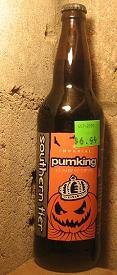
I hoard Christmas ales. Buying more than I open every year, building a surplus of aging 10% Yuletide bombs that I dip into after time does its job. Halloween beer? Not so much. There is something about Halloween that is less wistfully recalled, less of a build up and gone when it is done. Who plans for the pumpkin time?

The beer pours an orange amber with a whips of white froth and rim. On the nose there is a hearkening of clean barn from the malt and pumpkin flesh, the smell of carving the great damn gourd outside. It’s quite overwhelming of graham cracker, nutmeg, allspice and booze. In the mouth, there is more of that thick with cream. Rich. Rich enough to put you off but then it doesn’t cloy, its works its way in and then you wonder how it would age.

Plenty of BAer love.

Big Easlakia Base Ball News Circa 1874

While I was over hobnobbing with the shaken and moved of the southern part of our Easlakian neighbo(u)rhood, I have actual stuff to do. Base ball stuff as I wanted to research the Watertown tournament of 1874 given that there were references to it in the Kingston papers of the time. I had thought that they went to play but in fact it appears that they went to watch as they are not listed as a team in the schedule.

Kingston’s rivals of the day, the Guelph Maple Leaf, win the event held in late June and early July over eight days before pop up here after for a game on 7 July 1874. But there are other notes that make it very curious:

  • There is a first and second class tournaments being played side by side making for a total of 14 teams. I do not know why you would have seven teams per class but there you have it.
  • Being or rather not being “daunted” meant something in the mid-1870s as there is a second class team called “The Undaunted” of La Fargeville, NY and another second class team called “The Dauntless of Watertown, NY. Careful readers will know that there was also a team called Dauntless of Ogdensburg, NY which the Kingston St. Lawrence played on Friday 8 August 1874 in Ogdensburg as well as the Dauntless Club of Toronto that Kingston played in 1872 and 1873 .
  • One team in the first class group was the Ku-Klux of Oneida, NY described as “the acknowledged champion club of Northern and Central New York” in the 29 June issue of the The Daily Times of Watertown. You will be comforted to know that the Maples Leaf of Guelph thumped them 13-4 and that the team was slagged in the paper as “the negro haters” who scored a “usual whitewash,” a “goose egg, ” a “cipher” and “skunked” in various innings.
  • Certain players of the Nassaus of Brooklyn, NY and some Eastons of Easton, Pennsylvania were reported in the 6 July issue as having taken a wagon to Sackets Harbor on Sunday 4 July and returning in quite a state: “It would have been proper if the whole crowd could have been unloaded at the jail.” They apparently were driven through Public Square as they sand “Mulligan Guards” and kindred songs.

Thrilling stuff. Need to do a little cross referencing but it looks like the Eastons of the 1870s may have been a rival to the Philadelphia Athletics which are now the Oakland A’s.

If “Vermonster” Is Confusing – Isn’t “Monster” Worse?

Much is being made of a legal claim being brought against Rock Art, a small Vermont brewer, who makes “Vermonster” beer by a premium soda pop maker whose brands include “Monster” energy pop for confusing the brand – especially since the claim is being made in the name of the soda company’s plans to enter into the beer market. But not so much is being made on this point noted by one Green Mountain State publication:

Rock Art isn’t the only Vermonster out there. Ben & Jerry’s has long used the name for a massive tub of ice cream available at its shops. A spokeswoman for the company said she was not aware of any trademark issues with the name. “Vermonster” is also the name of a series of truck rallies in Bradford. Brooklyn Brewing Co. makes a barley wine called “Monster Ale.” A representative to the company declined to discuss whether Hansen had challenged its use of the name.

OK, that is a few points but you see my point, right. Good old Brooklyn Beer has had a beer called “Monster” on the shelf for quite a number of years. I have one in my stash right now. Simmering in its own wickedness, no doubt. There are others, too. Will they all get sued? The Bee-to-the-Ay lists 34 monstrous craft beers on the market already. What if all craft brewers shared in the idea and put out their own Monster and “-onster” branded beers, too?

We are only at the stage of the legal letter sent, we are told, by the specialist intellectual property law firm Knobb, Martens, Olsen & Bear. Which is good. There is still time to think of the big picture. It may well be that the negative reaction to the note may well lead the Hansen Beverage Company to reconsider their strategy. They look like they want to get along and have a happy name in the marketplace. Who doesn’t? Hard to overcome bad press.

In The International Monday Morning Papers…

Finally, I made it to the life of if not a jet setter, then, maybe a border hopper as this morning’s Watertown Daily News proves:

While heckling from the “cranks,” or fans, was not an official requirement of the game, there was certainly plenty directed toward all four teams. Mr. Drinkwater himself engaged in a fair amount of good-natured bantering as umpire and later as a player on the Rochesters, who won their first game against Kingston 9-2 but lost 12-4 in the championship round against the Ontarios… For Alan C. McLeod, organizer of the Kingston team, it was international collaboration that brought his players to the vintage games in the first place. “Obviously there’s a lot of camaraderie. Sackets Harbor got us interested in this two years ago,” Mr. McLeod said. According to the organizer, teams from Canada used to cross over into the States to play baseball with Americans as early as 1870.

Getting whupped 9-2 by the Rochester best nine is not exactly bad when you consider it was the fourth game for the Kingston St. Lawrence Brown Stockings and Rochester has run a weekly program for years. We got tagged for five in the sixth, too. We were down by just one before that. Have I made enough excuses? Need a lighter bat as well. And a bit more work on the fielding. And I shouldn’t have tried for second that one time but they did say that a ball that went into the bush was a double when they meant that a ball that went into the bush and stays in there was a double. I should have done a Billy Martin on those Rochestarians but I was way too out of breath.