
Well… Welcome To Your “It Is March And The Good Times Are Here Again!!!” Beery News Notes

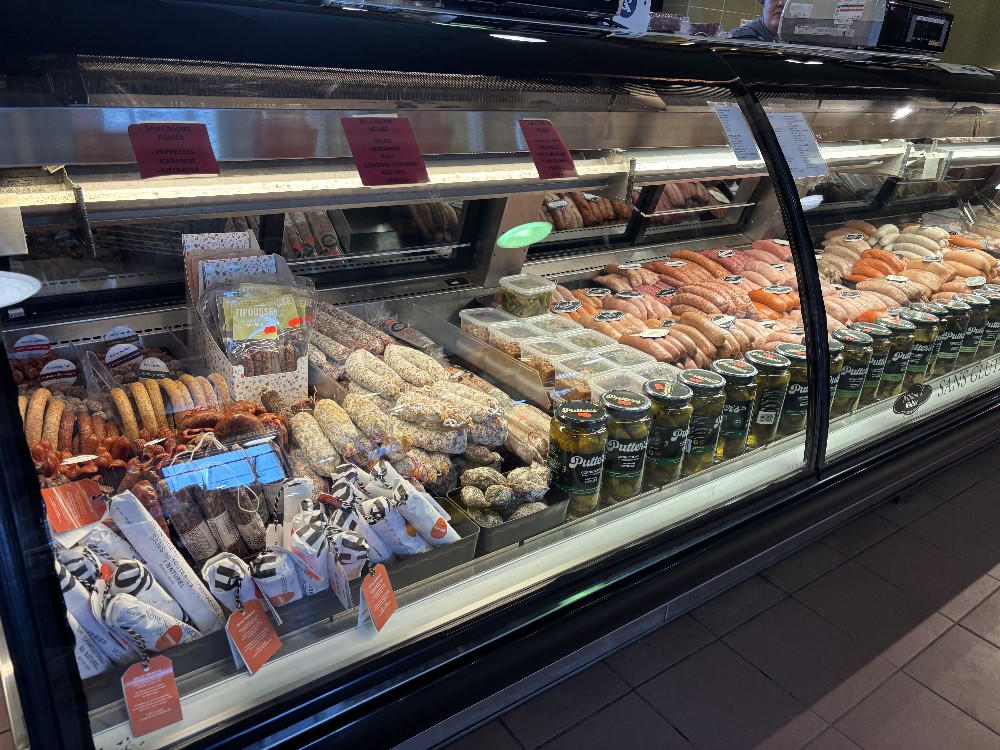
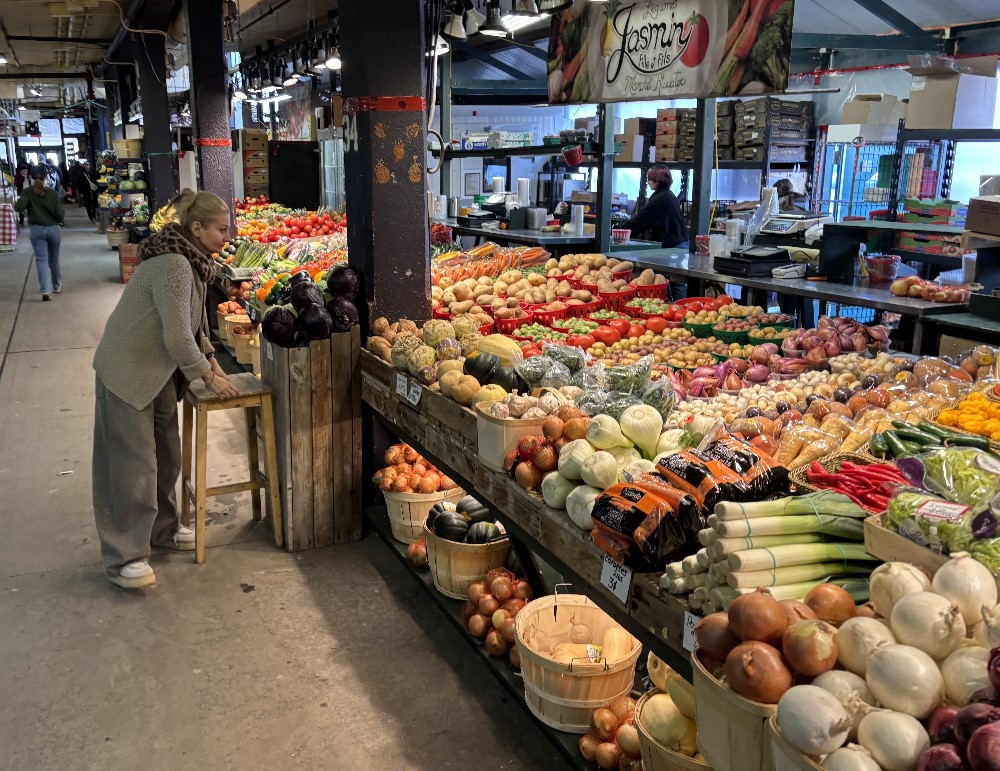
For well over 20 years, I have lost my marbles over March arriving as it did again last Sunday.   I may have created that image to the right in 2004. Such a clever boy! So well centered. Why do I love March, you ask? Not the green beer. Maybe not the green grass which might pop out soon. It’s the first seeds in the soil. The green green peas in loam. Soon, my precious. Soon. Otherwise, this is a bit of a scattered mix this week as I rush. See, I played taxi driver for folk going to a concert, spending about 21 hours in Montreal Tuesday to Wednesday. On the way out, hit Atwater Market as usual. Got my chicken cretons. Got my duck rillettes. The toast won’t know what hit it. And when toast wins, the beery news update suffers. Such is the way of the world.

Enough about me! First up, Jeff* has shared a retrospective on his writing career and how important blogging was to getting to the next step. Twenty years ago he started on a path (like Matty C a decade ago) towards  a number of leaps of faith. Leaps I avoided. I have my name on four modest books but didn’t see a future in that direction. Me, I can show you instead the bridge I had a large part in building. But they can show you publishing sales figures that put food on the table. It’s good to see that we were all right in our different choices.

Speaking of Matty C, for “Get ‘Er Brewed” he looked around his particular environment through the last holiday season and asked where the future may lie for a trade facing tough times:

I can face the hard facts and admit pubs are dealing with some of the worst trading conditions they’ve ever known. But I also believe that they will continue to persist, whether that’s through innovation and listening to what their customers want from them, or by sheer bloody-mindedness. Despite all the doomsaying I consider that there are still positives for pub owners. However, in order to extract these an equally optimistic outlook is required from publicans. Yes, prices are going to have to go up. Customers are going to have to get used to them and measure their spending accordingly. But I don’t think this will mean that people will stop using pubs, and that they’ll simply vanish off the face of the earth.

I tihnk that is a good baseline position to take. Beer does not go out of style even during an inflationary period… or even in a very localized deflationary one. The BBC had a story about another sort of good value care of one pub in Leeds:

A pub which was told selling a pint of beer for 25p during a promotion was “irresponsible” and a breach of its licence has instead begun giving them away. Leeds city centre pub Whitelocks offered customers their first pint of revived 1970s pale ale brand Double Diamond at the retro price as part of the four-day scheme, which began on Thursday. However publican Edward Mason said the council pulled the plug on the offer later the same day, saying it was in breach of mandatory licence conditions on minimum alcohol pricing. After seeking legal advice and discussing it with the local authority on Friday, the pub then commenced offering the initial pint for nothing. Unlike Scotland or Wales, England does not have a defined minimum price for alcohol.

A bit more scientifically we see that Kendall Jones at the Washington Beer Blog ran a very detailed survey on the place of IPA in his readership’s current mindset and had a significant response:

A few weeks ago, I posted a survey about IPA to gauge how people feel about craft beer’s most popular style. I was wondering if breweries are hitting the mark. Do the beers align with what people want? Have people’s preferences changed? Stuff like that. If you haven’t taken the survey, it’s still up there gathering data. I encourage you to participate! When the survey received 1,000 responses, I gathered the data. I will continue to do so as time moves on, but this report covers that first round of responses. Likely, this round of data comes from a pretty enthusiastic craft beer crowd, not the general beer-drinking public. Take that for what it is. In addition to the results, we also collected a large number of comments, which we rounded up at the end.

One of the particular results that surprised others is the result that Kendall noted: “Really? Nearly 80% of respondents say they understand the differences among IPA styles. I am not sure 80% of professional brewers understand the differences between IPA styles.”  This can certainly reflect the Washington marketplace as well as his readership but I do wonder if there is a difference between detecting the difference between styles and understanding them. I mean I can tell a Black IPA from a White IPA but I still left with questions like “why?” as well as “WHY????”  Go have a look and even add your responses as the survey is still open.  This is an excellent example of how a blog excels at some many sorts of beery writing that other formats can’t touch.

Speaking of excellence, Boak and Bailey placed another sort of question out into the ether – “Do you really want to visit the best pub in town?“:

Before Christmas we found ourselves in a pub surrounded by a group of people grumbling about the seating, the atmosphere, the beer, and everything else. It became apparent that a couple of members of the group had put together an itinerary for a crawl based on their preference for craft beer. We felt quite sorry for them as they tried to enjoy their pints while surrounded by moaning pals – but then what did they expect? What’s funny, we suppose, is that much of the discomfort and discontentment described in the various anecdotes above could be avoided if people just went to normal pubs, of which most towns and cities have plenty.

There is a lot to unpack in the phrase “the excellent is the enemy of the good” and this might be a very instructive context. I mean, I have sat myself in the Cafe Royal and it is utterly wonderful. But could it ever be as “mine” as many other pubs and tavs and dives have been over the years?
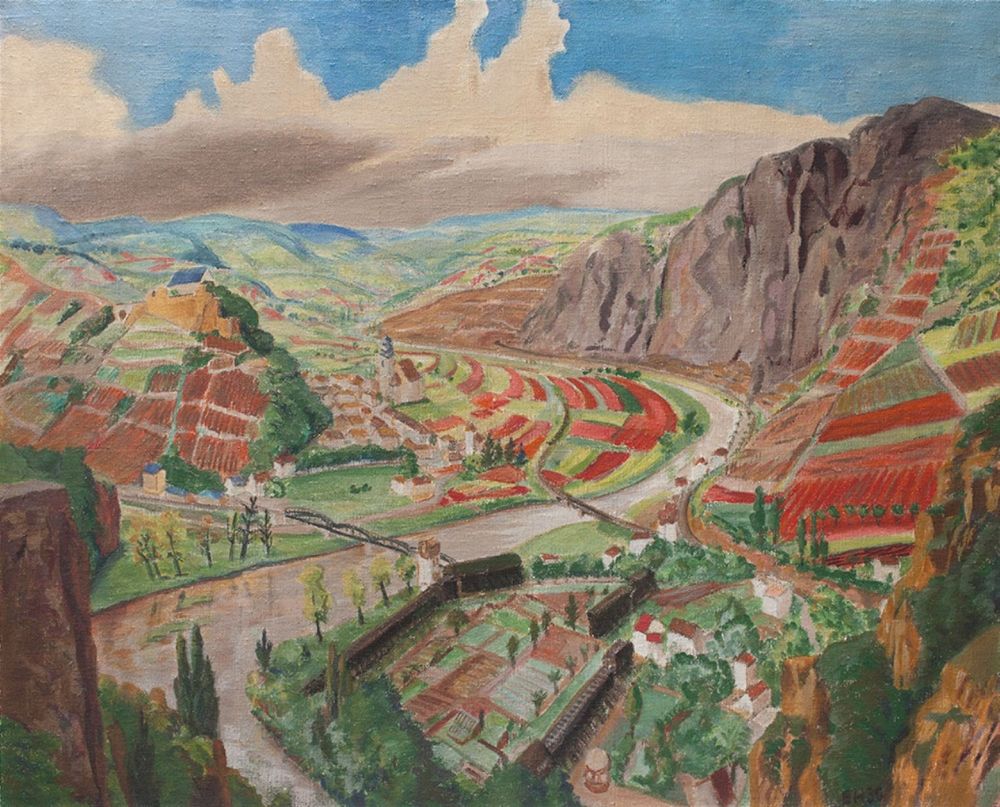
Also excellent and perhaps for Katie in particular, I saved this image of the Nahe Valley that pass by my eye this week. Shared by the AAWE, the no doubt authentic colours are surreal:

Erich Heckel (German 1883-1970), Landscape in the Nahe Valley, 1930. Many vineyards. Heckel was a painter and printmaker, and a founding member of the group “Die Brücke.”

According to the wikiborg, in 1937 the Nazi Party declared his work “degenerate” and confiscated his work, destroying much of it. Good to see one that was saved. Time for notes!

Note #1: Ottawa’s Kippisippi to close.
Note #2: BrewDog sale confused yet swift.
Note #3: 1690 brewing text restored.
Note #4: 1978 Joe Piscopo sighting.
Note #5: “Beer with Pals” is the best one.
Note #6: the A.I. bot that wrote this clearly has no idea what “craft beer” is or is it the guy interviewed who doesn’t.

What’s next? Well, I suppose the big news is the surprise takeover of a deadend business location:

A brewery has been allowed to open a new beer café in a former funeral directors site. West Suffolk councillors have given Charles O’Reilly planning permission to turn the former funeral directors at The Shutters, in St John’s Street, Bury St Edmunds, into a beer café and tap room, during a development control committee meeting earlier today… Jane Marjoram, a resident, recognised the importance of such establishments but told councillors the area was a ‘quiet, friendly community’.

 “Very quiet…” said Jane as they leaned forward winking at the committee members. What else? Oh. Yet another, yawn, tale of a forgotten wine cellar under a golf course (h/tKM):

“So we’re thinking it’s just a drain that needs digging out and clearing and repairing but as we dug deeper the chasm underneath just opened up.” Steve said he and his colleagues then noticed a brick structure. He was able to climb inside and look around with a torch and found dozens of empty glass wine bottles. “They’re all odd shapes and stuff so they’re obviously extremely old bottles,” he said.

Speaking of being under, similarly attractive are the summaries of the US beer market in 2025, as this from BMI:

US beer shipments were down more than 5% to ~183 mil bbls for full year 2025 vs 2024, Beer Inst, TTB and US Dept of Commerce data suggests. That amounts to a 10-mil-bbl drop in one year, the 2d tuffest decline in US beer history (post-prohibition) only behind brutal yr in 2023 when shipments sank 5.2%, 10.8 mil bbls. But unlike 2023, beer price increases didn’t come close to offsetting volume loss with CPI for beer at home up just 1.1% for the year, suggesting brewers’ collective revenue likely posted the largest drop ever in a single year post-prohibition.

And Stan raised shared an interesting observation that I suspect might well be connected to those stats:

“If it is beer flavored beer it comes from the brewing side. If it is not, it comes from the marketing side. (FW’s) Michelada did not come from the brewing side,” answered Firestone Walker brewmaster Matt Brynildson.

More grim news. Yet… here was have another trip to France care of Anaïs Lecoq in this week’s Pellicle which unpacks another cultural touchstone, the bar Pari Mutuel Urbain or PMU:

A rade was originally slang for a bar counter, though it’s come to define a popular neighbourhood bar with a somewhat dated look, but a warm and lively atmosphere. Do not imagine the brown-wood aesthetics of a British pub: Think mosaic tiles on the floor, flashy paint on the walls, a Formica bar dented by years of glasses sliding across it, and worn-out faux-leather booths. … The bar PMU is the epitome of the rade. These spaces will never be advertised as places worth visiting if you’re a tourist. You won’t find them listed as hotspots on the internet, because they don’t look good enough for an aesthetically pleasing Instagram feed. Their history, deeply rooted in the working class, labour struggles, and immigrant communities, is not designed for glossy consumption. 

And also yet yet… in this comparison of health effects in The Harvard Gazette at least beer does not find itself at the bottom of the beverage ladder:

The mixed picture for alcohol consumption was in contrast to what panelists agreed is a much clearer one for soda, energy drinks, and other sugar-sweetened beverages, including sugary fruit juices. A 12-ounce can of a popular soda brand has 10 teaspoons of sugar, an amount almost nobody would add to a cup of coffee or tea, Rimm said. Sugar-sweetened beverage consumption is linked to rising obesity, which itself raises cancer risk, and diabetes, which increases risk of heart attack and stroke. “When you compare a soda to water, or soda to coffee, or soda to tea, whatever you’re comparing it to always wins,” Rimm said.

Finally and… finally especially for me, one more inter-provincial trade barrier has fallen and, for me at least, an important one. Soon I will be able to directly buy Nova Scotian beer from the homeland of my youth and have it shipped to me here in Ontario the homeland of my… umm… post-youth:

Ontario and Nova Scotia have agreed to let their residents buy alcohol directly from the other’s province, part of the premiers’ ongoing work to bolster interprovincial trade. Producers of beer, wine and spirits can start applying Tuesday to the province’s liquor corporation for authorizations to do the direct-to-consumer sales, a process the premiers say will only take a matter of days. Ontario Premier Doug Ford says strengthening interprovincial trade is a way to counter the effects of U.S. President Donald Trump’s economic attacks on Canada. Nova Scotia Premier Tim Houston says… knocking down interprovincial trade barriers is “a bit like whack-a-mole,” but that direct alcohol sales is a great one to tackle because it is so visible for consumers and producers.

Please sign up every single Nova Scotian producer, please. Then I will be able to hover the fickle finger of fate over your webstores.

There. I achieved my second goal this week. After buying sausages at Atwater Market, that is. I largely avoided mentioning the new assets added to the Tilray portfolio, the second strangest story involved those assets after… you know.  From this point on, it is all now officially just a boring story at least in my office. So with that until next week, please check out Boak and Bailey who are posting every Saturday and adding to their fabulously entertaining footnotes week after week at Patreon. And look out for more of Stan’s new “One Link, One Paragraph” format. Then hunt out something in someone’s archives! Leave oblique comments on someone’s post from 2009!! Listen to a few of Lew’s podcasts and get your emailed issue of Episodes of my Pub Life by David Jesudason on certain Fridays. And Phil Mellows is at the BritishBeerBreaks. Once a month, as noted, Will Hawkes issues his London Beer City newsletter and do sign up for Katie’s wonderful self-governing totes autonomous website featuring The Gulp, too.  Ben’s Beer and Badword seems to be on pause since November but there is reading at The Glass which is going back to being a blog. Any more? We have Ontario’s own A Quick Beer and All About Beer is still offering a range of podcasts – and there’s also Mike Seay’s The Perfect Pour. Plus follow the venerable Full Pint podcast! And there’s the Craft Beer Channel on Youtube. Check out the archives of the Beer Ladies Podcast.

*He also shared his thoguhts on the weird we have witnessed over the last two decades.

Your “The Thaw Cometh! The Thaw Cometh!!” Mid-February Edition Of These Beery News Notes

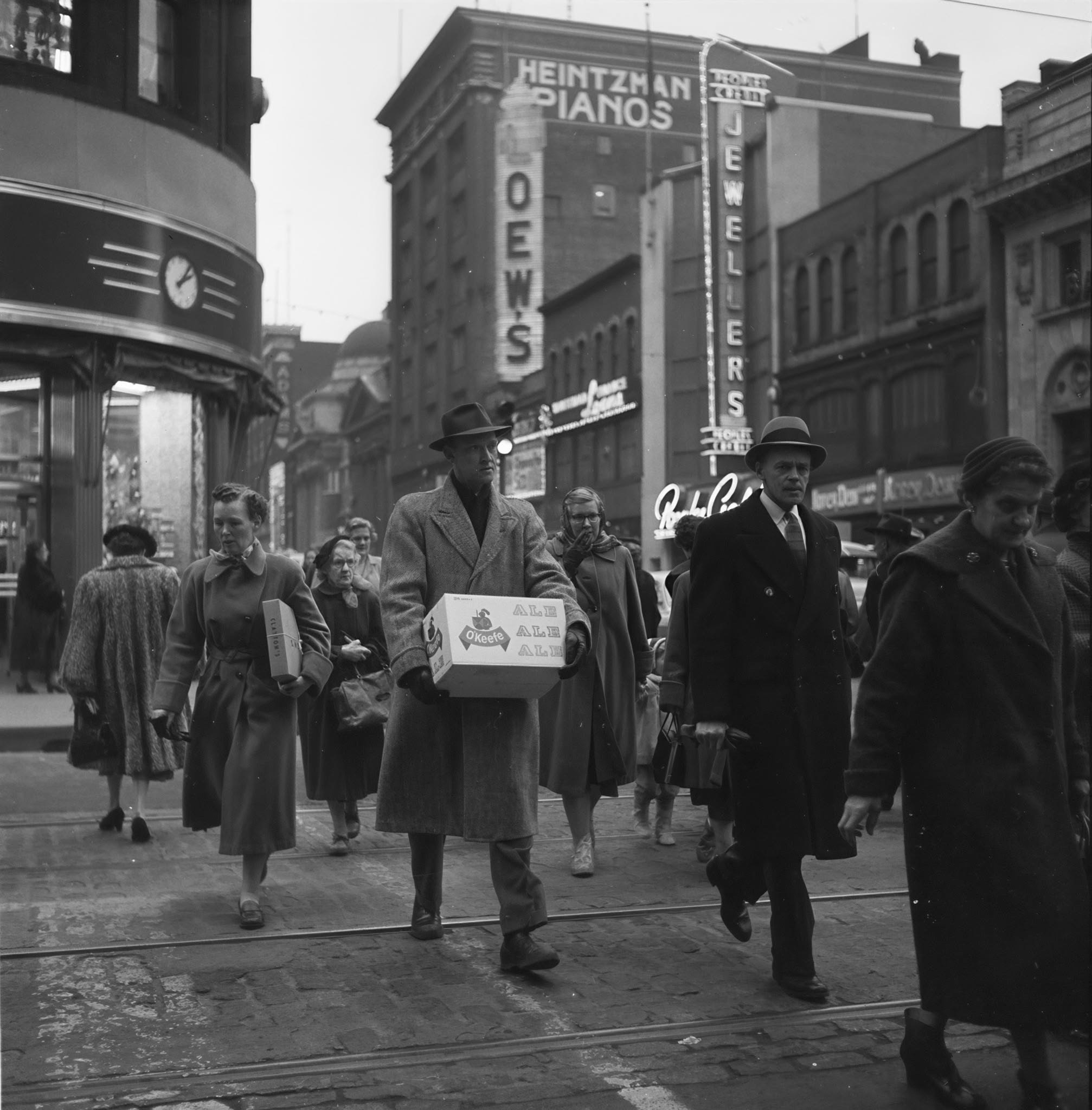
Now that the temperatures have moderated from -30C at dawn way up to -3C, the nation asks itself what the hell was all that? There is no answer to the question. Fortunately, there is a second question: how to still look dapper in a Canadian winter while lugging a lot of beer? Well, this gent can help. First, walk around in one of Toronto’s well loved black and white neighbourhoods where people must wear vintage clothing. Then, bottle your homebrewed beer only in second hand O’Keefe quarts you have nicked from the upper bric-a-brac shelves of old taverns. Finally, invest in an industrial quality paper packaging printing press you keep in the basement solely for the recreation of 1950s brewery boxes. Easy! Speaking of being on one’s feet, Boak and Bailey have written about how they didn’t do a Dry January so much as a very mobile one, a habit that has continued well into February:

We didn’t set out to make a mission of this, but we realised about halfway through January that, as it happened, we hadn’t yet made a repeat visit. That made us wonder if we could keep it up for the remaining few weeks. We were particularly conscious that we’d tended to stick to tried and trusted favourites last year. In fact, in 2025, over a quarter of our logged Bristol pub visits were to just two pubs – The King’s Head and The Swan with Two Necks. You might have noticed the word ‘logged’ and be wondering exactly what that means. Well, Jess, an accountant and spreadsheet nerd, of course keeps track of every pub we visit.

What a good realization! We have nothing like that possiblity here so much replicate 1950s Toronto to amuse ourselves but this comes a very good second. In the US of A, something else appears to be amuse or perhaps console according to BMI :

Beer posted positive $$ growth in 4 of the last 5 wks, and Jan 2026 is on track to be beer’s best monthly trend in years, at least in these channels. Including wine & spirit RTDs in the mix brightens the picture even more; broader beer + RTD category $$ grew more than 5% with wine & spirit RTDs adding close to 2 full pts in scans. 

Booze up! And somewhat similarly Ed stood up for the honour of Guinness this week with a response to what he called a a hatchet job on the Guinness’ Open Gate brewery in London published by The Guardian:

For some reason restaurant critics put the boot in more than any other type of reviewer… I was going to the brewery as part of the CIBD Southern section’s AGM, but first we had to do the business part to do at Diageo’s HQ.  I don’t know what deal the CIBD had done with Diageo or if we were subsidised, but we paid a tenner. This gave us pie and mash, which was nice, and a pint of Guinness (brewed in Dublin). I was keen to have somethng brewed on site though, so I had a hazy IPA next, which was nice enough. I think the ABV was a bit hefty, as on top of the three pints of Guinness I’d had I was defintely feeling pissed by the time I’d fininished it. So there you have it. The Guardian journo’s main complaint seemed to be that you had to take a lift to the toilets.

For others, the trip to the pub and then to the toilet is even easier. They are visiting the pub virtually from home, a remote non-work arrangement of sorts:

The 24-year-old from Yeovil, Somerset, regularly tunes into the feed from Morgan’s Arcade Bar in Carlisle, Cumbria – despite never having been there or anywhere near. What hooks Katie in is seeing different people come and go: the women enjoying a work party, the couple singing along with the musician, the young lad trying to chat up a girl at the bar… On some nights Morgan’s Arcade Bar, which can only fit around 60 people in it, has up to 5,000 viewers on its livestream at any one time. But like other bar streams, it has been subject to bans and restrictions for reasons they don’t quite understand. Bar owner Morgan Taylor has been streaming for nearly nine months. He noticed a huge rise in viewers over Christmas, then a few weeks ago his account was deleted.

Cass Enright got out of the house and on the road in his latest installment of A Quick Beer takes us to Montreal – a favourite destination of mine – and revisits some of the great brewpubs there in a video with this intro:

Join us on a step back in time as we have A Quick Beer at three of Montreal’s original brewpubs! Discover the enduring charms of Dieu du Ciel!, L’amère à boire, and Le Cheval Blanc, three spots that have been serving up delicious beer for decades. Although Montreal offers many modern breweries and taprooms nowadays, some of our fondest beery memories over the years have been here, and they’re all still going strong.

For me, it’s L’Barouf on rue St-Denis. If you are ever looking for me, check there. Also all about winnowing the better and the best, Pete shared some firm thoughts in his column in The Times this week, always welcome sight:

My beef is not with hazy pales — those original examples were pretty good. But if you don’t need to worry about balance or clarity in the beer, and you’re throwing in enough hops to cover up any off-flavours from brewing mistakes, a hazy IPA is very easy for a mediocre brewer to make. From a drinker’s point of view, if you grew up with soft drinks and don’t like the taste of actual beer, it’s perfect. It’s also great for Instagram — everyone can see you’re not drinking a boring, mainstream beer. But instead you’re drinking a boring craft beer. A boring, one-dimensional alcoholic fruit smoothie in a gaudy can with hop monsters or skeletons on it. If I wanted to drink sour grapefruit juice, I’d buy some Tropicana and leave it in the sun for a bit. 

The many botches of “craft” is a venerable topic which even comes with its own primodrial gospel but it is true that for all its eager keener passion craft never seems to fail to find a way to fail.  Nice to see that we have a paper of record confirming what Pete called the “sustained decline.” Viva crystal malt! Viva!! Viva!!! And Phil Mellows guided me to this article in The Caterer on the why to Pete’s what including this suggested impetus:

“…we are beginning to see the movement of some younger adult drinkers towards nostalgia brands, and given our history and heritage, we feel well-placed to meet this trend through some marketing and awareness driving activity.” Brookfield Drinks has launched a trial bringing long-established premium Scottish lager Kestrel back on draught. Brookfield managing director Nigel McNally says: “We’ve shown that a brand that’s nostalgic, like Kestrel, can be repositioned and revitalised. “Most pubs are serving the same products, and the trade’s been guilty of allowing brands which aren’t authentic onto the bar. Alcohol by volume (abv) have also come down, and I think overall customers feel they’ve been short-changed. A return to brands with heritage and nostalgia is offering customers a point of difference.”

Nostalgia and getting short changed? One must be on one’s toes. Which is related to Lars’ new maxim: “if you don’t know how the beer is made then, no matter what the beer is named, you have no idea what kind of beer it is.

Speaking of no knowing, The Beer Nut made a confession this week that I suspect is made on behalf of many of us:

Anyone who pays attention to trends within microbrewing will have noticed in recent years the explosion in variety of proprietary hop products. I don’t think these assorted extracts and powders and boosters were ever meant to have a consumer-facing role, but brewers seem to love them, and love letting us know that they’ve used them. Does that get them a discount from the supplier? I wouldn’t be surprised. For my part, I can’t help wondering if these enhancers actually enhance the beers in any real way. I’ve certainly never identified any pattern among them: which ones to look out for and which ones aren’t worth the paper their patents were filed on.

Note #1: Ludlow prices!!!
Note #2: Laura’s top tap rooms.
Note #3: Jeff doxxed.
Note #4: Burton Union Pr0n!
Note #5: Actually, no you can’t. You’d die.

The British Royal Navy has recently announced it is cutting booze rations in the service, limiting intake to 14 unit per week while on board. The Telegraph in its emailed newsletter presented a few responses to the news from readers:

Jenny Jones, however, recalled an age of largesse: “Many years ago in Malta, my husband and I were invited on board a Royal Navy ship that was giving a party. The atmosphere was convivial and, thanks to attentive stewards, I was able to enjoy several gin and tonics before dinner. “On departing, it seemed to me that the gangway had become a lot steeper. Back on dry land, our host asked how many drinks I’d had. When I said three, he told me that in fact I’d had nine, as naval tots are about triple the size of what one would get in a pub.”

Ah, Jenny Jones… what’s that? Not the same one? Fine. Me, I was once invited with a gang up the plank and onto a Canadian navy ship helpfully docked a walk from the Halifax taverns by a pal’s navy boyfriend. Among the minty green paid we worked our way though a number of 25 cent beers. I expect that sort of service is no longer offered.

The feature this week at Pellicle was written by Newt Albiston who shares his thoughts on drinking in Epping, just north of Greater London the tough town where he grew up which lives with division:

The day I return to Epping, my first trip home in some time, I can feel the tension, and the hesitance. The high street is pretty quiet, and there are lingering looks as I make my way past the various coffee chains and charity shops. Signs of the change in mood are everywhere: Union flags fly at half-mast on lamp posts, as if to declare the death of Britain as she once was, shadowed by the residue of torn-off patriotic stickers. Although I am instantly greeted by familiar faces when I walk into The Duke, the tension is still present in the quietness of the venue.

I like this: “…no fancy ginger beer or small-batch kombuch…” Perhaps related to The Duke, Stan guided us to a question this week – “what’s that smell?” Or rather…

“Olfaction helps shape our cultures, although it often does so unknowingly or without us noticing,” says (Inger) Leemans, who led the Odeuropa project. “When we talk about cultural heritage, we can think about religious rituals, but we can also think about specific scents that we’ve been cherishing and living with for a long time.”

Cherish. Hmm… I spent a good chunk of my teens in Truro, NS where the smell wasn’t always cherished and I am mindful of that reference The Breweries of Kingston & The St. Lawrence Valley by Steve Gates to a brewery a couple hundred years ago near my current place of work at City Hall which doubled as a pig sty. The next brewery to the north itself had a manure pit.  My point is that there were no scents without the full sensory array around it. Did 1890s Mild pair well with coal dust? Did Porter marry well with the pong of streets filled with horses? Perhaps we can never know.

And Charlotte Cook, brewer and scribbler, at took us along to Asturias, Spain for Everyday Drinking and shared her thoughts on the food and the cider:

When you taste the intensely rich stew, you can understand why cider rather than wine prevails in the north—the sour and fizzy is needed to cut through, cleanse the palate, and prepare you to dive in again. Cider is omnipresent in Asturias. As you walk around the town center of Oviedo on a Sunday morning, as families returning from church mix with football fans heading to an entirely different type of cathedra, cider is everywhere. Before 11 am, people will be drinking a bottle of cider for the table. Spaniards are famed for their ability to drink until the wee hours and still make it to work, school, or church as if nothing has happened. And having a little tipple of cider in the morning isn’t seen as such a stain on your character as it is at home.

Finally, some very heartfelt tributes were shared after the news of the death of beer writer Des de Moor like this from David J:

I think a lot about the pints we had one night in South London where he held court, sang songs and was so warm to everyone.

Pete also remembered Des the singer:

Des was a man of many layers. Years after the event, I discover my first interaction with him was buying the 12” remix of Charlton Heston by Stump – that was him, as half of the Irresistible Force. He made the Popbitch newsletter as Secretary of the Ramblers Association (moor, geddit?)… He was a great singer, a walking encylopedia. An absolute stalwart of judging the World Beer Awards. Never once heard him angry, pissed off, or anything other than kind and decent.

There are many more. His Wikipedia bio explains his musical side. Here he is singing Bowie and, here, an earlier solo album. By all accounts a wonderful guy. A sad loss.

Until next time, please check out Boak and Bailey who are posting every Saturday and adding to their fabulously entertaining footnotes week after week at Patreon. And look out for more of Stan’s new “One Link, One Paragraph” format. Then hunt out something in someone’s archives! Leave oblique comments on someone’s post from 2009!! Listen to a few of Lew’s podcasts and get your emailed issue of Episodes of my Pub Life by David Jesudason on certain Fridays. And Phil Mellows is at the BritishBeerBreaks. Once a month, as noted, Will Hawkes issues his London Beer City newsletter and do sign up for Katie’s wonderful self-governing totes autonomous website featuring The Gulp, too.  Ben’s Beer and Badword seems to be on pause since November but there is reading at The Glass which is going back to being a blog. Any more? We have Ontario’s own A Quick Beer and All About Beer is still offering a range of podcasts – and there’s also Mike Seay’s The Perfect Pour. Plus follow the venerable Full Pint podcast! And there’s the Craft Beer Channel on Youtube. Check out the archives of the Beer Ladies Podcast.

The Session #148: What Shall I Sing Thee?

It was a busy week. Youngest’s grad. Visitors with various ways. Kids setting out on adventures. Serious stuff at work. So Friday evening became a quite quiet and I found myself looking for some thing for something to do, dusting a little as I went along. I found a few things but not the thing I was looking for. Grandfather-in-law’s cufflink sets. An original 1977 Luke Skywalker Speeder toy. And I found a letter.

The letter was mailed by me in March 1986 from The Netherlands to a pal back home. Thirty-nine years ago. He gave it back to me at some point, we can’t remember when. And in the envelope, among other things, was a page written by a gang of us, starting out our backpacking trip together in the year after graduating undergrad. Before we split up and heading to our next stops, we passed the paper and pen around one Paris hotel room a few weeks before the letter was mailed. We wrote as we drank and told the friend back in Canada how he was missing out and how he was missed. Rude. Half-wasted. Stupid. Funny. Not funny. Juvenile. Here in my hand at 62, a window opened back to us all being in our early twenties. To be honest, I don’t miss being that young guy at loose ends even with all that freedom. But being with that gang of pals? It was great. Which brings me to my point.

We were a group of pub people in those years. Actually tavern people. A distinction. And we were a we. Seventeen years ago for the 15th edition of The Session I wrote a bit about it in response to the topic “How Did It All Start For You?“:

I was trying to think of auspicious moments on my early years with good beer. I am a lucky guy who, at 45, started in my university years interest in beer in early 80’s Halifax, a seaport town, that was interested in beer and drink and donairs and whether Keith’s or Moosehead was better house draught. A place where one could say “it’s a drinker” on a lovely day and know by midnight you’d be amongst 50 pals in the taverns, pubs and beverage rooms of our fair city’s waterfront.

And in those taverns… well, some of those taverns… there was singing. It’s one of the things I miss most about getting older and moving away. I have never encountered the same sort of tavern singing culture. I wrote about that in response to The Session #9. On a Saturday afternoon you could go to the Lower Deck or that other place nearby, Peddlers, where Kenny MacKay – whose Dad was a music teacher in my high school – led his band The All Stars. He led the crowd, too. A couple hundred people in a sing-a-long of folk songs and current pop hits. All while drinking pitchers.

And once in a while a sort of quiz broke out. Not the advertised organized thing that Laura may have had in mind when she posed the question for this month’s edition. But it was a quiz and it was a reasonably regular thing if you were at the right place at the right time: singing challenges. One challenge was to out sing Kenny. I was actually pretty good at this one, being a Minister’s kid who was in church and school choirs for, at that point, much of my life. It went like this. Kenny would be singing along and then he would stop and hold the note. And so would the whole room. Folk would drop away as they sputtered out their last breath. Once at the back of the Lower Deck I beat Kenny by a fair bit. I won. Hoorays and whoops before we sat and continued the serious business of draining our pitchers of draught.

So, yes, a challenge but not really a quiz. But there were quizzes even if those were rarer. Don’t get me wrong. We would regularly sit around and debate facts like “did that song come out before this song?” or “what exacly was the cubic centimeter size of that 1974 car your Dad owned?” The quiz master was always our brainy pal Jon as he sat (and still sits) somewhere affably on a spectrum or two. He could (and can) pull data out of the air better than anyone I have ever met. Pre-internet this was a vitally important presence in one’s life. Because it was always backed up with a “I remember how that particular song came out in June 1972 because we were in the station wagon going to Kitchener when I first heard it and Dad bought a new car in August.” He was our first computer.

Once on a rare night, the two tavern entertainments – singing and puzzling – came together. An example was the night the tavern became obsessed with TV show music and for half an hour or so it was a ping pong game of tables taking turns to sing and then counter-sing their best recollections of songs from The Flintstones. “There’s a place I know where the cool cats go call Bedrock.. twich twich.” Or The Wayouts song. We were getting near the end of the night when we realized the staff were all at the back watching us. We apologized for keeping them from closing but as it turned out they were having fun just listening. We tumbled out of the place, singing as we climbed the hill home.

So – singing trivia. That’s my perfect pub quiz. Could it be recreated? In the internet era? Maybe. If you put the phones away. And as long as you have your own Big Jonny in the room to pass judgement and point out the winners.

The Last Thoughtful Yet Wistful Beery News Notes For The Election 2025

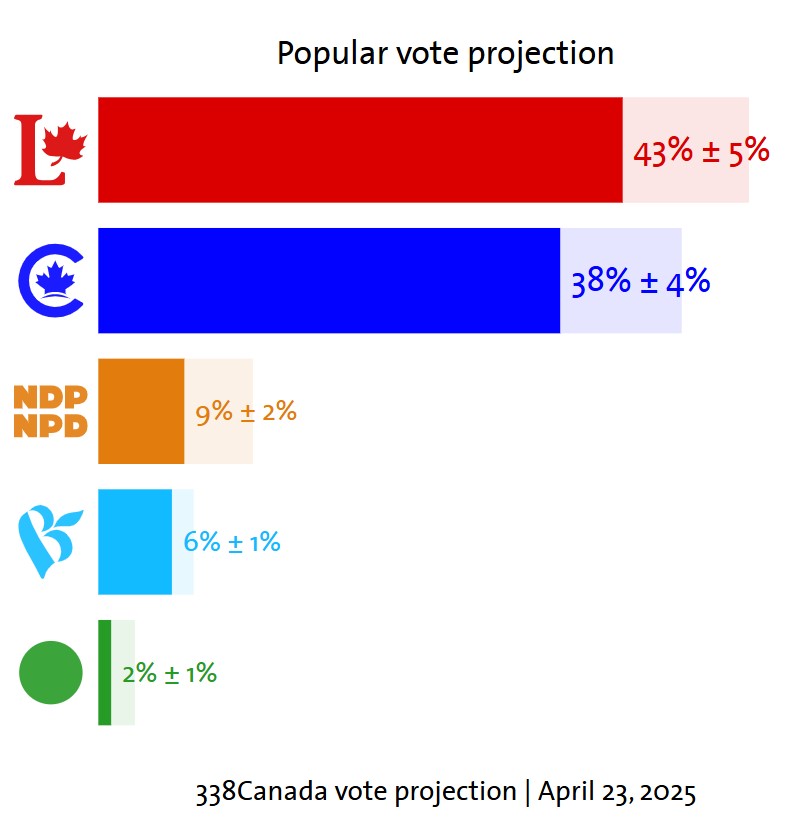
Well, it has been fun. Most of the polls remain to lean towards the non-politician globally recognized economist as opposed to the guy who’s been mostly a grievence mongering backbench MP since he was 24. I make no comment otherwise. As you can understand in my position, I must remain strictly neutral in these matters as a member of the media. And how could I not be, given the vital vegemite v. plastic straw level of fundamental policy divide we are faced with as a nation.

No, we need to set that aside. Let’s start off with something pleasant. Travel is always nice. Getting away. We all like to get away. Yet traveling can be difficult. You may want to find something new but the new has to be sufficiently familiar to fit into if not expectations at least your range of capacity to enjoy it. I’ve been following Boak and Bailey’s travels east with interest and have some sympathy for their experience in two pubs in Sibiu, a Romanian city I had never heard of, the first being…

…an odd place called Butoiul de aur, which had a bit of a middle class suburban lounge-bar feel. Then the karaoke started and it began to feel more like a party pub. Local beer Nembeer is either not very good or was not well cared for there. It all tasted rather like our first forays into home brewing. The best of the options was Amarilla (5.2%) which had a promising aroma and some good flavours among the off ones. We were initially excited to discover Kombinat, which appeared to be a Czech inspired Brewpub. But it turned out to be mostly a Staropramen outlet. Their eponymous house beer was fine – vaguely Czech in its maltiness, but not particularly distinguished.

Not particularly distinguished. Something like myself, I am told. You know, I am not sure I could write “some good flavours among the off ones” let alone be patient enough to unravel the threads to discern the difference. Me, I’d be the last one to sign up for anything called an “off-taste seminar” given that it’s basically the beery equivalent of a college course on shitty paintings. No, once I encounter the gak, all thoughts stop.

Also on the road but just a bit to the northwest of B+B, ATJ shared thoughts on things Bambergian… Bambergese… Bamberger:**

Beer to me is an open book about travel, people, friendships, memories, family, history, architecture, bars and pubs, breweries and the harmonic nature of the liquid in your glass. It is about how a landscape can shape the beers that people drink and about how it can be something more than refreshment, and even provide a guide to life and living as thorough as literature, poetry, music or meditation. This was why returning to Bamberg once more unleashed a surge of joy within, a feeling that I also experience when I go to the lagerlands of Bohemia and Bavaria, or drink beer in a brown cafe in Flanders, walk into a rural pub in England or spend time searching for soul-shaking beer in somewhere like Bologna or Barcelona.

Ripe words yet they capture a mood I very much recognize. Twenty years ago, I would have such a surge of joy walking into Finger Lake Beverages in Ithaca, New York that I made myself walk the aisles for five minutes before I could stop and touch any of the offerings.

And furtherer wester still, two feature writers with The Daily Star took themselves on a trip to four east end London’s dubbed roughest pub crawl:

The Manor Arms was empty, with a smell of must and TCP hanging in the air. One bloke sat down at the end of the bar chatting away to a gruff man in a cap pulling the pints. ‘“F*** this, f*** that. It’s the f****** credit union,” said the bartender. “Oh that thing you said would never happen?” “Yeah that f****** thing, hahahahah.” Spurs were on the telly, we both loved that, watching our beloved, beleaguered club fight against Hoffenheim to the soundtrack of Danny Dyre-esque ‘awwwiiiittte’s… The barman, it turns out, was a Spurs fan too. “Typical Germans, if that’s a penalty, my d***s a goldfish,” he said as a Hoffenheim player fell in the box. Men kept walking in with bags of vodka and salmon. “Not for me mate,” our new companion, Graham, behind the bar would say. “Know wot mean?” We didn’t really, but we loved him. Out the blokes would walk with their bags of salmon, deflated, venturing back into the inky blackness to find a more willing buyer. It couldn’t have been more relaxed, more comfortable. Neither of us had had a chat with a barman this good in months.

I know that feeling, too, having once been offered tantalizing beef steaks, discretely offered by a long  coated gent who pulled them from the front of his trousers, all wrapped and labeled and clearly freshly stolen from the grocery store near to the formerly named Ladies Beverage Room in my Halifax of the 1980s.

But forget all that. If one is to believe Reuters, the next big beer tourism destination is going to be Sweden – certainly once news of these changes to the drinking laws get better known:

Under current rules, shops in the Nordic country can only sell drinks with up to 3.5 percent alcohol. For stronger drinks, consumers must head to Systembolaget, the state-run alcohol chain which operates 450 outlets across Sweden. The stores have limited opening hours, don’t advertise alcohol or discount drinks. The government’s so-called “farm sale” law for alcoholic beverages of all strengths takes effect in June and runs for six years before a mandatory evaluation. The law states visitors must have paid, can buy only small “souvenir-style” amounts and have to listen to “a lecture” with an educational element.

Party Party!! Ja! Ja!! Jaaaa!!! What else is going on? Did you hear about these tariff things? No really, they’re a thing now and apparently the wine makers of Bordeaux have had to face some facts this year with the threats and realities:

Trump’s threat of 200 percent tariffs caused dismay in Bordeaux. “Châteaux will close,” said one proprietor. “Négociants will close.” And of course it would cause chaos in the US wine market as well, with many casualties. That was why few believed that he would do it: the damage to US commerce would be too great. And there was a lot of lobbying against tariffs, too: restaurants, sommeliers and retailers had got together to explain the problem. In the end, the tariff on the EU was set at 20 percent – for now. On a practical level, Bordeaux has also been shipping a lot of wine to the US recently. Most leading châteaux have ensured that they have somewhere between six months and a year’s stock already there.

Speaking of managing traditions in times of the new, The Mudge posted a good piece on Thornbridge’s use of one of the Union sets to create some premium and tradititonal ales:

…in a world of heavily-hopped New World IPAs, the question must be asked whether these relatively understated beers in a classic English style will make a mark. Ordering online, these beers came to almost £4 a bottle, so they are probably something better regarded as an occasional treat rather than a regular drink, especially when Jaipur can be obtained from Morrisons at 4 for £7.

Can an occasional treat sustain itself? Even the new has been losing its sheen more and more it seems. Beer Business Insider sends out a cryptically condensed email every week with some pretty frank comment including a ticker tape style summary of fairly recent movements in the US booze trade, in this case to mid-April:

Wine volume down double digits, 9.6% for 4 weeks, several points worse than 26 weeks (-6%) or 52 weeks (-5%). Craft volume down 9% for 4 weeks, $$ down 8%. Craft down 5% for 26 weeks. And volume of spirits-centric seltzers suddenly dropped 6.8% last 4 weeks. Down 3% for 12 weeks. Recall, High Noon is two-thirds of spirits-centric seltzers. It fell 6.6% and 12.8% last 2 weeks. What’s going on?

Yikes… I think. That many numbers makes me all woozy and giggly. Perhaps relatedly, The New York Times had an interesting story about how, for a city that claims to never sleep, it is getting harder to get a license to sell booze late at night:

…some bar owners say closing times have trended earlier in recent years, with lively venues like Carousel, which opened in 2023, shutting down at 2 a.m. Most operators agree that today’s customers are drinking less than previous generations, and that they’re going out earlier… Late-night liquor licenses, once an expectation in nightlife-heavy neighborhoods, have become increasingly difficult to obtain, especially in areas where bars bump up against brownstones. Early birds and night owls have already clashed over outdoor dining programs and summer concerts. “The 4 a.m., seven-days-a-week license is becoming ararer commodity,” said Terrence Flynn, a liquor licensing attorney who has represented hundreds of bar owners in New York City since 1985.

Next up, Jeff posted a post called “Convergence” but I might have called it “Overlap” given, you know, how I see these things: there are no neat and tidy boxes of styles. Yet the drive to be the first to label something as a thing is a real thing but it is not a good thing. But that’s just me. Let’s see what Jeff had to say:

Until I poured out a can of Pure Project’s Neon Bloom, however, it hadn’t occurred to me that pilsners and pales were converging. We’ve had a nice run of warm, sunny weather in Portland, and midway through the first can I enjoyed—thanks to a four-pack sent from San Diego—I realized I was having an experience shift. The beer smelled and tasted like a hoppy ale, but I was slugging it down like a lager. I paused to give it some attention and realize, purely from the sensory experience, that it drank very much like a WC pilsner.

OK, that makes sense. But, and this gets a little ranty and a little tedious, this is not a new issue or even one about pale v. lager so much as continuation of, how should I put it, hmm…  the downward spiral. See, if style means anything, pale ale should lead with grainy texture framed or even cut by the hopping. Lagers should speak one way or another to roundness of malt, again framed to various degrees by hops and even other malts. IPAs are supposed to be where the hops shine but, instead, they suck all the oxygen out of the room.** But, given IPA sells, well here we are. I would also note Stan’s comment:

Bob Kunz and Tim McDonnell of Highland Park Brewery may or may not have invented West Coast Pilsner, but it appears that Kunz was the first to give it a name. Their Timbo Pils pretty much embodies the style. Last October, Timbo won a gold medal at the Great American Beer Festival . . . in the American-style Pale Ale competition.

Clearly an evil roams upon the land and it’s name is style. Interestingly, this had coincided with the collapse of actual independence in US craft.

Finally, I really liked this article in Pellicle if only for the early inclusion seven lines in of the word Coreff, a word I encountered last January when the same author, Anaïs Lecoq, wrote about that beer of Breton.  Rather than a straight up Part II, this week we have a next chapter on the guide to the beer culture of that part of France:

Strolling effortlessly behind the massive wooden bar, Élise is the first thing you’ll notice when pushing the door of Tavarn Ty Élise—Élise’s house if you translate it into English—in Plouyé, a small village in Central Brittany, France.  Her pub has been a staple for the community since 1978. That’s when Élise’s mum, Anna, bought the place for her daughter after the owner retired. “I was 21 and had no intention of tending a bar,” Élise says. “I was a seasonal worker and I liked my freedom, but I still said yes.” Watching her doing her thing, you would think she’s been there her whole life. She hasn’t.

WIll there be further chapters, a three and even a four? I hope so. One last thing – tomorrow is the next edition of The Session, hosted by Ding and on the question of value. Value?

Value most certainly does not necessarily correlate with cheap either (although it could), rather it means when I part with the cash, no matter how large or small the amount, does what I receive in return meet or exceed the value of said cash? Subjective? Sure, but we all have our own sense of value.

Value! Oh, I am digging into the archives for that one. That’s all for this week. Until we meet in May after all the votes are counted net Monday and after all the taxes are submitted next Wednesday, please check out Boak and Bailey every Saturday (…as long as all their holiday fun doesn’t get in the way…) and Stan (….who is also going on his own holiday break so may not be there…) each and every Monday.*** Then listen to a few of the now rarely refreshed Lew’s podcasts and get your emailed issue of Episodes of my Pub Life by David Jesudason on the (sometimes even but never) odd Fridays. And maybe The British Food History Podcast. Maybe? And Phil Mellows is at the BritishBeerBreaks. Once a month, Will Hawkes issues his London Beer City newsletter and do sign up for Katie’s wonderful newsletterThe Gulp, too.  Ben’s Beer and Badword is out there with the all the sweary Mary! And check out the Atlantic Canada Beer Blog‘s weekly roundup. There is new reading at The Glass which is going back to being a blog. Any more? We have Ontario’s own A Quick Beer featuring visits to places like… MichiganAll About Beer has given space to some trade possy podcasts and there’s also The Perfect Pour. Plus follow the venerable Full Pint podcast with an episode just last month!. And there’s the Craft Beer Channel on Youtube. Check out the archives of the Beer Ladies Podcast. That’s quite good but, hmm, they’ve also gone quiet this year. The rest of these are largely dead. And the long standing Beervana podcast …except they have now stood down.  As has We Are Beer People. The Share looked to be back with a revival but now its gone quiet. And the Boys Are From Märzen podcast appears suspended as does BeerEdge, too. VinePair packed in Taplines as well. All dead and gone.  There is more from the DaftAboutCraft podcast, too. Nope – that ended a year ago.   The Moon Under Water is gone – which is not surprising as the ask was $10 a month. Pete Brown’s one cost a fifth of that – but only had the one post. Such is life. Such is beer podcasting and newlettering!

*Bamberger would be a good name for a smash burger place.
**That is why the label “IPA” is both meaningless and helpful as it gets slapped on anything that wants to hide yet still sell. From candy coated Willy Wonka nightmares to innocence of light lagers and simple pales ales it’s all IPA.
***I heard Stan as well as Boak and Bailey held a vote in secret and decided I could hold the fort, that I really didn’t need a holiday. O. M. G.

The First Beery News Notes For December 2024

The countdown is on! I already feel like Ed Grimley and it’s only the fifth of the month. I am too excited. That rotten cold I had is finally in the past and now I am seeing holiday things everywhere, like in the red and green scene at one pub’s outdoor washroom posted by Beer Nouveau. How cheery. Retired Martin* also included an exposé on the outside gents in one post this week:

No, I don’t know what “To the huts” means, either.

Speaking of cheer, are you having an office party?  The Times says they are in mortal danger from, frankly, sensible updates to the law. I say that as a lawyer given I have never been to such madly lavish and deeply souced Christmas parties as those put on by private law firms. But that was decades ago. Here is what is going on now:

Employers that are found to have failed to do so could face claims for unlimited compensation at tribunals. Lawyers are advising that financial services businesses in the City of London — renowned for alcohol-fuelled Christmas parties — “should be particularly mindful of the new rules”… Updated guidance published in September by the Equality and Human Rights Commission emphasised that workplaces must take an active approach to assessing risk. That translates to an obligation to identify any action to clamp down on possible sexual harassment and the requirement for regular reviews of systems.

This lines up with what is… or rather isn’t… happening in New Jersey whether because of cell phones and social media, workplace harassment, remote working arrangements or lower interest in excessive drinking. Did you know some offices bizarrely arrange for staff to buy holiday party gifts for ownership? And perhaps not oddly, given Russia’s foolishly and murderously self-inflicted economic collapse, but holiday office parties are being cancelled there too. Apparently, there are after effects of this sort of thing well beyond the office:

A new low-alcohol beer has been launched by a train operator in a bid to tackle the number of passengers having drunk accidents during the festive period. The Safety Thirst beer, at 0.5% alcohol, will be stocked onboard Avanti West Coast services, which run on the West Coast Main Line between London Euston and Scotland. The company said the pale ale will create a “more enjoyable travel experience” and help passengers “drink responsibly”. 

The Tand doesn’t need no stinkin’ office parties for his jolly holidays. Because he found his perfect beer:

…I probably don’t score beers as much as I ought to, but I regularly do. I am probably quite a strict scorer, given that I judge beer in competitions and also that over the years, I know what its what.  So, that’s a long winded way of saying, until now, I have never given a five. So let’s get to the point. It had to happen and last Friday, in an infrequent visit to our local Wetherspoons, I gave a beer a five. What was it I hear you scream? Well, perhaps not surprisingly given the quality of the brewer and the beer, it was Thornbridge Jaipur. Why a five? Well, this was perfectly brewed, clear and untainted with no off flavours, at a perfect temperature and was bursting with condition. The body and mouthfeel were perfect. The glass was spotless. In my mind I went over everything. Could it be improved in a normal pub environment? Not as far as I could tell. It was, simply, faultless.

Boom! What’s the news from the ag markets? Oh… as we have heard out of Oregon, the hops news coming out of Germany is not good:

Declining beer consumption worldwide is hurting German hops growers, who face lower prices and possible farm closures amid a dip in demand for the bitter crop. A strong hops harvest in 2024 means that Germany has regained the crown as the world’s top producer of hops, but prices have slid. According to the German Hop Industry Association, 2024 is the 11th year in a row in which more hops were produced than required.

And, speaking of not boom,  Canada’s barley supplies appear to be very close to a 25 year low:

With the 700,000-metric-ton (mt) projection being only slightly higher than 542,800 mt remaining after the devastating drought of 2021, there is little room for error…. Given the drought stress experienced and the lowering of yield estimates by provincial counterparts, it is widely anticipated that final production estimates from Statistics Canada will be lower on Dec. 5. The problem is, even a 3% cut in production would take 228,000 mt off the ending stocks (all else equal), leaving them below the 2021-22 level.

In addition to drought, prices and planted acreage of barley were both down in 2024, too. If you want to obsess over this on a regular basis, check out the tables and charts of the Canadian Grain Commission’s weekly stats.  And that’s all the malt news this week… NO IT ISN’T!! The Maltsters Association of Great Britain also issued an update on the 2024 numbers:

The UK malting barley harvest is now complete and the overall picture is one of reasonable quality and good supply. Winter malting barley can be summarised as variable with predominantly low nitrogen crops and grain retention levels similar to 2023. Winter barley yields are recorded at 10-15% less than the 5-year average. Conversely, the spring barley harvest in the UK has seen low nitrogen crops throughout all regions with good retention levels and yields described as better than average.

I’ve been described as better than average, too.  A step up from that but facing similar climate and market pressures, traditional sake makers in Japan are heartened by UNESCO intangible cultural heritage designation for their brewing techniques:

“It’s still quite warm, even though it’s almost December. The price of rice is high and the harvest is poor, which has made sake-brewing (this year) very challenging”… The centuries-old method of making sake is unique for its three-step preparation, or “San-Dan-Jikomi”, of allowing multiple fermentation processes to progress simultaneously in a single container… While sake has lost ground as a regular drink, Maesako said it remains impossible to separate from Japanese culture. “We have sake at celebrations, at New Year’s, and also on sad occasions, like funerals,” he said. “The culture of Japanese sake is the culture of Japan itself.” The brewing technique is expected to be formally endorsed at a UNESCO committee session in Paraguay this week.

More on San-Dan-Jikomi AKA Sandan Jikomi here. Reuters posted a photo essay on the process in addition to the story quoted from above.

Panic!! PANIC!!! They are running out of Guinness:

The BBC understands that Diageo is allocating supplies on a weekly basis to make sure it has enough stock to meet demand over Christmas. A Diageo spokesperson said: “Over the past month we have seen exceptional consumer demand for Guinness in Great Britain. “We have maximised supply and we are working proactively with our customers to manage the distribution to trade as efficiently as possible.”

You know things are going to hell when folk use “proactively” in a press release. Always the actively pro, I think it’s fair to say that The Beer Nut has not always enjoyed the Canadian craft beers that have passed his way. It was good, then, to read how a couple of brewers from my old home in Nova Scotia didn’t disappoint even if one offering didn’t necessarily thrill either:

This is solidly made and workmanlike, but don’t expect fireworks. While I’m not saying that breweries running since 1997 have a particular safe-and-steady way of making their beer, this IPA suggests that there might be something to the theory. It’s not an exciting beer, but I’d say it’s a dependable one.

Boak and Bailey followed up on the recent news of a number of cask brands being discontinued with a consideration of how many brands had existed. Turns out not all that long given a number of constantly moving factors:

When we think of cask ale brands that have been around longer than that a few contenders spring to mind. Hook Norton Old Hooky dates back only to 1977. Adnams Broadside was launched in 1972. Fuller’s London Pride came to the market in 1959. And Marston’s Pedigree was introduced in 1952. You might make an argument for Bass which is not only still available but also having something of a resurgence in popularity. But it’s also, really, just the name of a defunct brewery. And that famous ‘first trademark’ was actually for ‘Bass & Co’s Pale Ale’, which is not what’s on the pump clips today.

Years ago, I noodled around looking up when the first branding attached itself to brewing, when the dissassociation of what is on the label from what is in the glass began. I can’t find the links but if you spend a little time over at Ron’s, you pick up quickly that beers up to a certain point in the middle 1800s were identified as gradations of a brewery’s output like this, not the individually animated distinct personalities in themselves we know as brands. Walk back through time. Trademarks get legislative protection in the UK starting in the 1860s. In the US, we see in the 1820s that beer being shipped out of the local market gets named with adjectives like “cream” added to impress buyers with the superior qualities of the product. A generation before in New York City of the 1790s you see beers sold by style and city of origin much like you would have seen in Britain 120 years before that.  That all being the case, if you think you’ll miss the brand now maybe buy the t-shirt. You’ll probably be able to find a similar drink all the same. As the same B+B wrote in their footnotes:

Perhaps it’s studying beer history that does it – you get used to the idea that beers and brands come and go as tastes change. And if we ran a smaller brewery such as Butcombe or Cheddar Ales, we’d be rubbing our hands in glee, because this would seem to leave a gap in the market for beers which are trad, but not boring. Perhaps we’re being naive, though.

BREAKING!  I had no idea that you had to “stamp” a beer sold in a bar in Quebec. Soon it will be over:

According to the microbreweries, the obligation to affix stamps to their cans and glass bottles is both unnecessary and time-consuming… Since 1971, the law has required a duty stamp to be affixed to all beer sold in restaurants and bars. The original aim was to prevent smuggling and tax evasion. Some microbreweries have recently been visited by police officers who have come to check that the labelling on the stamps complies with the law. Microbreweries that contravene the current law face fines of between $500 and $7,500. The minister was at pains to reassure, saying that a fined business could be forgiven.

BREAKING! I have no idea who these people are:

But how did a ‘celebrity’ couple come to take over this regionally-renowned boutique bar? For that, you’d have to go right back to when it first opened, in 2016. “Katy kept saying she wanted to move somewhere in the countryside but where you can also get a gin and tonic,” Adam says. “So I said: ‘That’s Knutsford.’ I spent so long persuading her to move here. Eventually she agreed and the day we moved in was the day this place opened.”

For VinePair and without any reference to Knutsford, Kate Bernot has unpacked the potential damage Trump’s proposed tariffs will do to the clinky drinky markets in a welcome greater level of detail than we too often see:

The global supply chain means that U.S. companies are heavily reliant on imported materials. For the beverage industry, aluminum is the most significant. Canada exports 75 percent of its aluminum production to the U.S., and domestic production here simply can’t replace that volume. It would take years, Uhrich says, to even begin construction on new aluminum plants, let alone to supply what U.S. alcohol companies need. Beer is obviously the most vulnerable to rising aluminum costs: Two-thirds of U.S. beer is packaged in cans. There’s simply no way, Uhrich says, that further tariffs wouldn’t drive up the cost of domestic beer as a result of costlier materials.

Canadian malt in Canadian cans – US craft! Finally, for the double in The Times, Pete Brown gave a primer on some of the newbie questions that folk who don’t know much about beer are going to ask. It’s an interesting use of the space but the paper must be concerned that there are reader lacking superficial understandings of beer such as this:

Every single menu and every single recipe in the history of humanity is based on one simple truth: some flavours go together better on the palate than others. It would be absurd to think that beer is somehow an exception to this. Beer actually has a broader range of flavour than wine. The caramelisation in a pint of bitter goes perfectly with roast beef. A Belgian-style wheat beer works well with anything you might squeeze some lemon juice over. And stout with a gooey chocolate dessert is so good, so simple, that it’s almost cheating. Just remember to pair light with light and strong with strong, that there’s no right or wrong and that it’s supposed to be fun.

Well, I suppose Christmas is the time for merry chestnuts. At least it’s better than sucking up to your commissioning editor!

That’s it! It’s been a busy week in the real world and that is where I live. Until next Thursday, please check out Boak and Bailey every Saturday and Stan going strong again each and every Monday. Then listen to Lew’s podcast and get your emailed issue of Episodes of my Pub Life by David Jesudason on the (never ever) odd Fridays. And Phil Mellows is at the BritishBeerBreaks. Once a month, Will Hawkes issues his London Beer City newsletter and do sign up for Katie’s wonderful newsletterThe Gulp, too. Ben’s Beer and Badword is out there with the all the sweary Mary! And check out the Atlantic Canada Beer Blog‘s weekly roundup. There is new reading at The Glass which is going back to being a blog. Any more? Check out the Beer Ladies Podcast. That’s quite good and they are revving up for a new year. And the BOAS podcast for the bro-ly. And the long standing Beervana podcast …except they have now stood down.  Plus We Are Beer People. The Boys Are From Märzen podcast appears suspended as does BeerEdge, too. But not Ontario’s own A Quick Beer. There is more from the DaftAboutCraft podcast, too.  All About Beer has podcasts and there’s also The Perfect Pour. Plus follow the venerable Full Pint podcast. And the Craft Beer Channel on Youtube.  The Moon Under Water is gone which is not surprising as the ask was $10 a month. Pete Brown’s one cost a fifth of that but only had the one post. Such is life.

*Check out his walk aroung Rye too.

The “Happy Canadian Thanksgiving To You!” “Err… What????” Edition Of These Beery News Notes

Did you know that the entire meal is American. That’s the dirty secret of Canadian Thanksgiving. It’s not even ours. Roast Turkey. Mashed Potatoes. Stuffing and cranberry sauce. Pumpkin pie. Food as seen on cable TV. At least I will have my own damn carrots like those up there. And my own beets. Hmm… if the menu was really Canadian what would it be? I dunno. A big ass butter tart at the end maybe. And a roasted wild goose. Where I lived out east a couple of decades ago there were church hall community suppers serving hunter-shot local wild goose. They even created a special regulation to allow it. But only at church suppers. Fat chance with even that being allowed now. Frigging Ohio. Me, I’d have it with Fin du Monde. Suits the times these days.

What else is going on? I am pretty sure that when I were a lad no one cared about if me and the lads preferred beer or wine. I do find the obsession with Gen Z’s taste in booze a bit odd but let’s let the NYT explain their latest cultural findings as to why wine is doing well with them:

Farah Sheikh-Ogoe, who until August was a bartender at Moonflower, a wine bar in the West Village, said that many of the young customers she encountered were drinking, but drinking less. “It’s a little bit more of like, I’m going to be thoughtful about what I’m consuming,’” Ms. Sheikh said. Drinking wine isn’t like taking a shot of vodka or slamming a margarita, said Carson Bennett, a 24-year-old freelance writer and waiter in Brooklyn. “It’s something to sit and savor.” “I think of watching ‘Ratatouille’ and the way that they drink wine,” she continued. “It is a sort of event.”

Big H/T to the person I forgot to note who mentioned that reliance on a cartoon you saw as a child shaping your adult drinking preferences is all a bit heewhooheehaahaa.

And it is interesting to see some serious format changes coming to both the Great British Beer Festival (GBBF) next year and the Great American Beer Festival (GABF) next week. The first is run by CAMRA, a UK lobby group for the beer buying public, while the second is run by the Brewers Association, the USA trade association for brewers other than the really big brewers. The change coming to the GBBF is its move from London to new venue in the reasonably accessible city of Birmingham. The changes coming to the GABF were summarized this week by Andy Crouch who indicated in All About Beer that they were driven by the realities of “emptier aisles and far fewer attendees” in recent years:

Attendees at the 2024 festival will experience six distinct areas. They include “Prost!,” a German inspired biergarten featuring decor paying homage to Oktoberfest, live polka bands playing traditional Bavarian music, and a stein-holding contest. “Score!” is a sports-themed area that will host Lucha Libre Mexican Wrestling and Mechanical Bull Riding. “Fright” is a Halloween-themed area welcoming costumed festival attendees. “Blast Off” offers “liquid innovations and on-trend flavors from international and domestic breweries,” according to the BA. This includes the United Nations taproom, which hosts classic beers from around the globe. 

The event is held in the BA’s hometown of Denver, which makes for interesting logistical challenges. There would be three main classes of attendee: (i) locals, (ii) people in the trade one way or another using their expense accounts or tax write-offs and (iii) beer fans affluent enough to pay to attend. If you are heading any distance to Denver, you would need to have at least $1,000 to spend on the weekend – $220 for the pass, $250 for the plane, $400-600 for three nights at hotels and the balance for food, taxis and the after parties. By contrast, the GBBF pass to the new location in Birmingham costs £9.50 a day and there are four modestly priced trains an hour arriving from the old HQ in London. But even at that budget, the event still has B+B questioning whether to attend according to last week’s footnotes:

The news of the return of the Great British Beer Festival did somewhat gladden our hearts, even though we don’t really like beer festivals, and haven’t always had a great time at GBBF. It just felt as if something was missing from the calendar this year when it didn’t happen. All the old problems will no doubt still apply, however: how do you make a big, drafty conference centre feel anything like as pleasant as a pub?

Somehow I don’t believe they were thinking of “Lucha Libre Mexican Wrestling and Mechanical Bull Riding” as the solution to that conundrum. Yee. Haw. We shall wait on reports from these events before issuing our final condemnations… err… thoughts.

And, just as Hurricane Milton hits, the tough news continues to come out of the aftermath of Hurricane Helene but I was watching for this story:

As communities across the Southeast respond to the catastrophic damage of Hurricane Helene, Anheuser-Busch is actively supporting relief and recovery efforts across the region. Together with our wholesaler partners, we are working alongside the American Red Cross to provide clean, safe drinking water to communities impacted by the Category 4 hurricane… At the request of the American Red Cross, [for example] Anheuser-Busch and its wholesaler partner KW Associates LLC delivered three truckloads (150,000+ cans) of emergency drinking water to Greenville, South Carolina on Wednesday, October 3. 

Good stuff. Similarly, we read about this as well as this at a smaller scale from one craft brewery:

Workers at Holy City Brewing have temporarily shifted their focus from brewing beer to canning water, aiming to provide clean drinking water to those affected by Hurricane Helene in Western North Carolina. “We haven’t really canned water, so we’ll see how fast we can run it,” said Owner Chris Brown. “Water’s a little bit different from beer. So, we can run the pressures a little lower. We’re not worried about carbonation.” The brewery’s team quickly adapted to the new task, processing between 200 and 250 cases of water… “We kind of had to scrounge some cans together…” 

More will be needed in Florida no doubt.

On a happier topic, in their weekly newletter feature called “WHAHWEDRUNK!!!” (or maybe something else) B+B wrote about one beer that made for a neat and tidy tiny essay:

We spent last weekend in London, and honestly, we keep thinking we should go somewhere other than The Pembury Tavern and drink something other than Five Points Best. But really, when it’s become one of the best beers in the country, why bother? To be fair, both of us tried the Best at a couple of London pubs that weren’t The Pembury, and it was just as good. On the face of it, it’s a really traditional bitter, but there are a few tweaks that make it next level good. There’s a honeyed, biscuityness in the malt; and a slice of orange, Fuller’s style, alongside the hard bitterness. If we were going to make comparisons it would be something like Bathams, or the various Boddington’s clones we’ve had over the years. But like Bathams, it also tastes like its own thing.

(I wish I was known for my honeyed biscuityness.) Moving on briskly, at the end of last week there was this news from the world of art, an incident in the LAM museum in the Netherlands:

An elevator technician, filling in for a regular worker, mistakenly threw away Alexandre Lavet’s All the Good Times We Spent Together (2016), thinking it was trash. The artwork, two hand-painted beer cans meant to evoke memories of friendship, had been intentionally placed inside an elevator shaft to mimic something casually left behind. LAM, known for its food-themed art and unconventional displays, places pieces in unexpected locations to encourage visitors to view ordinary objects differently. “Our goal is to make people see the mundane in a new light,” said museum director Sietske van Zanten in a statement. The technician, unaware of the museum’s approach, discarded the piece in good faith.

Empty Can Performance Art Note: a Nova Scotian tradition continues – though in my day we would leave an empty there any old day of the year.

In the political realm, Kamala Harris had a beer on TV this week:

When they go low, she goes high. Miller High Life to be precise. Kamala Harris, the Democratic presidential nominee, took her election campaign to late night television on Tuesday by cracking open a can of the lager with host Stephen Colbert. The moment set her apart from Joe Biden and Donald Trump – both, famously, teetotallers.

Speaking again of the dry among us, apparently Canada’s game coming to Utah has triggered a Canadian response:

Not only did the Utah Hockey Club begin its tenure in Salt Lake City with a 5–2 win over the Chicago Blackhawks on Tuesday night, but also the NHL’s newest fan base arrived at the season opener with a thirst for hockey. And, well, good times. According to The Salt Lake Tribune, Delta Center sold a record-breaking number of beverages, with beer sales climbing over $120,000—more than any other previous NBA or NHL event in that venue, which has served as the home to the Utah Jazz since 1991. The beer prices weren’t cheap, either. A Michelob Ultra, which was $13 at the Jazz’s preseason tilt the night before, sold for $15 for the arena’s NHL debut.

I once had professional occassion to review the effect of the Belleville Bulls coming to town for a Friday night OHL game and I can assure you that the right crowd can sell a lot of beer.

Interesting that just as Ontario has opened up beer and wine sales in cornerstores the nanny state social engineering Tories posing as pretendy libertarians of Alberta have come out against the very same idea:

…the Smith government now says it’s not happening, in part, because they think most Albertans do not want beer and wine and ready-to-drink cocktails and coolers sold in convenience stores and grocery stores…  The minister for red tape reduction said those opposed felt there were already lots of liquor stores. “They weren’t being teetotallers in any way, suggesting we need less access to liquor. They seemed to feel we had good access”… There is a report on what the UCP politicians heard. It is not going to be made public.

Noooo… not them… not “in any way”… no way… not a chance…

Speaking conversely of “yes, yes, yes” David Jesudason had a great feature in Pellicle this week. I like that Wednesday publication deadling thing by the way. You can imagine why. Anyway, David wrote about the subtitled “Harcourt, Altrincham’s Hong Kong Inspired Pub”:

“Because we’ve got the traditional Chinese character outside [on the sign] the locals didn’t expect us to be a pub,” Priscilla says. “They thought we were a Chinese restaurant.” “Some people thought maybe we’re just a restaurant serving some beers.” When customers who were sceptical about the food smelt the dishes being brought through, however, it turns out they couldn’t resist temptation. Harcourt reminds me of a great desi pub in that it mixes an important aspect of Asian culture in a British bar setting, offering a unique welcome so that the visitor believes they are visiting a home away from home. The best of Britain. The best of Hong Kong. The best of Manchester.

And finally… well, eventually finally… Matty C wrote an opinion piece on the ongoing debate in the UK about the pint and the proper serving size:

Lets say, for argument’s sake, that legislation was introduced where the pint was scrapped and only third, half and two-third measures remained. If, as the study states, beer consumption was reduced by 10%, then so too would sales volumes, and indeed, revenues shrink by the same amount. The trend in pub closures already indicates how fine a line hospitality businesses are walking in terms of operating sustainably. Any reduction in revenue would surely only hasten the demise of those already teetering on the brink, which, as evidence suggests, is a high proportion of operators.

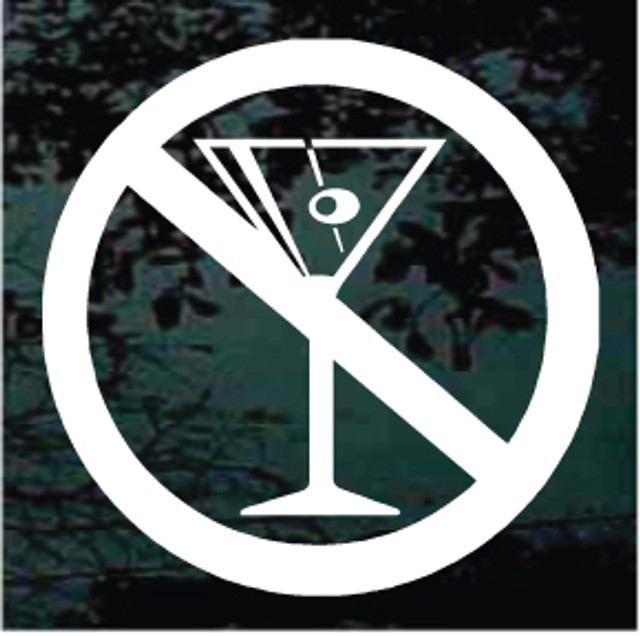
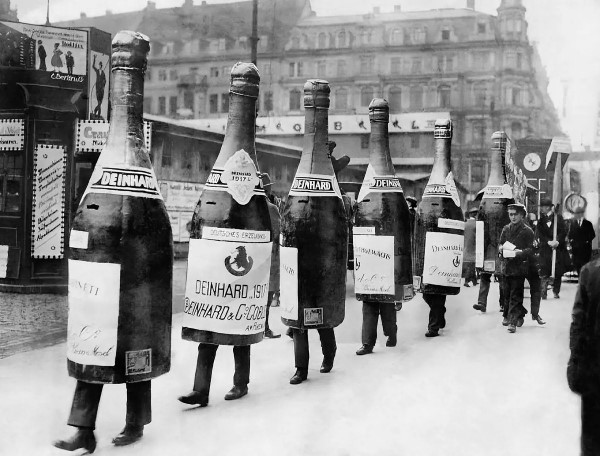
It is an opinion piece so must naturally invite response. So I shall. First, however, a couple of weeks ago, I shared (or at least I hope I shared) my thoughts that the conspiracy theory about the lazy use of the “guy drinks beer from pint glass” is a bit much. It’s like the North American use of a martini glass (olive and all) in the style of a “banned!” sign. Wine bottles are common here, too. I don’t take these as a slight against wine*… or olives for that matter. Stock images are what they are. They offer continuity and a clue to what’s been written. Even if you don’t agree with what’s been written.

The other arguments often trotted out against the rejecting pinting or quarting for that matter are also well known. Unfortunately. Too many of them are simply not winners. If your best argument is “NEO-PROHIBITION!!” you’ve pretty much wasted the readers time. Same about “things should still be like twenty years ago!“… or even like 1824. And sorry to break the news… again… but medical science advances and public health measures are simply a couple of of those undeniably good things modernity has gifted us.

There are, however, some other good arguments to be made. Try the tax burden. Try other regulatory burdens and the supply chain markups. Try discussing the freedom to choose to drink. Matt does that. And maybe add in a (coherent) relative risk argument. Matt approached that* but then veered towards study sample size and a methodology complaint.  The best of these pieces also address the reality that people have so many more options for their entertainment purchasing power than 40 or even 20 years ago. That isn’t changing. Folk are passing on the pub for many reasons but they are choosing to be elsewhere.

And, for me, the “save the pubs!” argument included in the passage quoted above is – frankly – wishery and honestly even slightly corporate if we unpack it a bit. First, my liver is not an cash cow for anyone’s business. See, it’s an argument that big doughnut makers and the ciggie trade can also make. “Save the sugary snack bakeries!!” No one wants those team mates on the bench. And then lastly there’s that tie of these sin trades to Matt’s bias against the working classes. I am not liking this one – even if in classist England it is a reality. Because isn’t that easily reframed as “working class people ought to compromise their health to ensure pub and brewery owners maintain profitability“? Is that the argument? How can’t it not be? Me no like.

But you may see things differently. Get blog and let your yap trap clap. There. That’s my opinion. If Matthew gets to hoist an opinion so can I! Cancel your subscriptions. See if I care. Why you look to see how in fact to cancel your subscription, for more beery news check out Boak and Bailey every Saturday and there is a promise that Stan may be back from his autumnal break starting (not last Monday but surely) this very Monday. Then listen to Lew’s podcast and get your emailed issue of Episodes of my Pub Life by David Jesudason on the odd Fridays. And Phil Mellows is at the BritishBeerBreaks. Once a month, Will Hawkes issues his London Beer City newsletter and do sign up for Katie’s wonderful newsletterThe Gulp, too. Ben’s Beer and Badword is thereback with the sweary Mary! And check out the Atlantic Canada Beer Blog‘s weekly roundup. There is new reading at The Glass which is going back to being a blog. Any more? Check out the Beer Ladies Podcast. That’s quite good. And the BOAS podcast for the bro-ly. And the long standing Beervana podcast …except they have now stood down.  Plus We Are Beer People. The Boys Are From Märzen podcast appears suspended as does BeerEdge, too. But not Ontario’s own A Quick Beer. There is more from DaftAboutCraft‘s podcast, too.  All About Beer has podcasts and there’s also The Perfect Pour. Plus follow the venerable Full Pint podcast. And the Craft Beer Channel on Youtube.  The Moon Under Water is gone which is not surprising as the ask was $10 a month. Pete Brown’s one cost a fifth of that but only had the one post.

*But, let’s all be honest, the 250 ml wine glass is a bit nuts. A third of a bottle. 30 ml of pure alcohol. Gulp. Gulp. Nudder plz. Standard wine bottles have five or six sensible servings.

Your Definitely Final And Last Chance End Of Summer 2024 Beery News Notes

The next time we meet it will be autumn. Who submitted the requistion for that? Thanks. A lot. At least we get one more Saturday in. We’ve had a good run of weather to see us out, picking a couple of pounds of tomatoes a day.  I’ll need a new hobby once the garden slows down. Maybe I could join a men’s pie making groups or something. The American Association of Wine Economists is one of my favourite BlueSky feeds to follow. They seem interesting. That up there? Germany 1920s. Men with a hobby. Comparatively speaking, a better sort of marching in those times.

Speaking of weird, Stan’s monthly newsletter Hop Queries is out for another month and, under the surprising heading “Bitterness and Attitude”, he wrote:

When we moved from the low-altitude flatlands of Illinois 700 feet) to New Mexico (5,320 feet), a professional brewer told me to just throw in a few more pellets when I brewed an IPA. I hope the information in the archives is more useful.

Oh!  Altitude. He wrote altitude.  That makes waaaaay more sense. Note: rumours of Stan O’Eire. Another bit of a puzzle was encountered in this story of the passing of a venerable Mancunian:

…for ten years straddling both decades there was one constant on the streets of Moss Side and Old Trafford – George Powell, the self-syled Ginger Beer Man. He became a legend too selling his home made brew from his bike. George has died, aged 97, and later this month 500 people from all over the country and abroad are expected to pay their respects and attend his funeral. And his son Glen is going to ensure he will get the send-off the big family man deserves after his perfectly timed win at bookies Betfred. Self-employed handyman Glen won £20,000 from a £4 wager… much of his winnings will be spent on George’s funeral at the Church of God of Prophesy in Moss Side, burial at Southern Cemetery followed by the wake at Bowden Rugby Club.

Would that have been an alcoholic ginger beer? I used to brew one based on the CloneBrew recipe. This January 1978 edition local CAMRA newsletter “Whats Doing?” from Manchester suggests (at page 9) that the Salford brewers Walker & Holmfreys brewed a ginger beer along side ale brewing.

Staying there about, you know some things are worth repeating. This same passage in Katie’s edition of The Gulp at the end of last week was quoted in the Boak and Bailey Saturday update but I have to note this fabulous bit of stream of consciousness too:

…I have to check myself before I wreck myself. Tonight is going to be a late one. But it’s just so delicious, so perfect in this moment. Savour it, I tell myself, knowing that I can’t. I’m not a savourer. I eat in big bites, drink in big gulps. I want the best things all in one go, now.

There go I, too. Back here at home, Ontario’s new booze sales in corner stores have attracted all sorts of attention… including the independent accountants:

When the Ford government expanded sales of beer, wine, cider, and ready-to-drink cocktails into Ontario convenience stores and gas stations on Sept. 5, it did so ahead of schedule. A master framework agreement (MFA) signed under the Liberal government in 2015 gave the privately run Beer Store exclusive rights to sell 12—and 24-packs of beer. It was set to expire in 2026, but the government’s expedited plan involves an “early implementation agreement” with the beer retailer that will see the province pay the company up to $225 million. The FAO report will estimate the financial costs and benefits of accelerated expansion “and compare these fiscal impacts to a scenario where the Province expanded alcohol access at the expiration of the MFA on Dec. 31, 2025.”

Listening to CBC Radio 1’s Ontario Morning the other day, they played an audio reworking of this story including interviews with convenience store clerks and customers about the new rules and heard some interest points of view. Shop owners have not been informed about expired product returns so many only place small orders. And a portion of product has to come from small producers – 20 per cent for beer, ciders, and ready-to-drink cocktails, and 10 per cent for wines. Which is not a bad guaranteed return. But there are supply chain issues getting all the stores stocked up. Me, I have not taken advantage of the new world order yet.

Conversely, over on FB, Max has been out and about posted a brief report on his trip to Vorkloster, a brewery in Predklasteri, Czechia… using many words I do not know:

Vorkloster’s pivnice is cute and friendly, it does feel like part of a monastery, and many of the punters are locals dropping by for a pifko. The kulajda was just luvly. The Výčepní tasted jaded, like the feeling of an afternoon after a couple of very rough days at work. Jantarový Ležák is like an otherwise very good sauce that’s just not thick enough. Tmavý ležák has the right balance of coffee and milk chocolate.

Breaking news out of Albany, NY:

Free pizza is almost dead at the City Beer Hall! Long live pizza at CBH! A promotion in place since the City Beer Hall opened in spring 2011 at Howard and Lodge streets downtown provided a small individual cheese pizza for free with every pint of beer sold. The practice is being sharply curtailed, now available only after 10 p.m. on Friday and Saturday.

I will have to check in with Craig to find out of I was ever there. Over at Pellicle, Katie (for the double) wrote about a beer that I used to cross provincial borders* to buy, Theakstons’ Old Peculier:

If it wasn’t for the Steel’s Masher, Old Peculier would not be the beer it is today. The way that the malt is hydrated and mashed by the machine is incredibly efficient, releasing enzymes and raking through the grist before it can form dry-centred clumps. This machine makes short work of stiff mashes. It was invented in Scotland by James Steel, a brewer who, like many of his peers in industry, was making a lot of Scotch Strong and Wee Heavy beers—high malt content, low water content mashes. Getting the paddles around a mash like that is like stirring six tons of day-old porridge, in intense steam heat, in cramped conditions.

Speaking of the good stuff, Matty C wrote about cask ale for What’s Brewing (apparently a play on words of the 1978 Mancester journal of note mentitoned above, What’s Doing) and makes a very good point about the enjoyment of things in the abstract:

I tend to find that foreign visitors who appreciate their beer genuinely revere the cultural significance of cask dispense. But they also find only disappointment when, after months of anticipation, they arrive at last only to be served a tired pint of London Pride that is, well, warm and flat. We’re responsible for that reputation because in so many places where cask beer is served it’s not treated with the care it deserves. I don’t believe in the notion that cask should be some sort of protected appellation though. For me, the problem exists because advocates too often tend to raise cask beer on a pedestal, when really it should be treated like the most normal thing in the world. Yes, it’s a wonderful way to drink beer, but it’s not that special, really, it’s just beer, after all. Care and reverence are not the same thing.

On the topic of keeping the beer cool, one award winning pub has a related issue on its hands with the authorities due to a noisy fan:

Mr Bull took over the listed corner boozer in Gosport, Hants, in 2022. The previous landlady had the cooling unit located in a door cavity close to the beer cellar but after receiving safety advice, he moved it into the courtyard. Following a complaint, he was visited by a planning department enforcement officer last summer and later informed he would need planning permission for the unit. As part of the application, Mr Bull spent £1,500 on a sound survey as part of this in order to prove that the unit was not noisy. However, the survey found that the unit was loud enough that “it would cause sleep disturbance” to someone sleeping on the ground floor of the house next door, and ‘may’ do so for someone sleeping in the upstairs room.

Speaking of a proper pub, I have seen such things in histories of Victorian saloon hellholes… but never in real life:

…see that trough in the pub? That was so blokes didn’t have to leave the bar to relieve themselves. People in London are posh now though; they go to the gents for a piss.

Want a job in beer? Perhaps an open position with the Anderson County Beer Board is for you!

The three members would serve a three-year term expiring in September 2027. The Beer Board was established for the purpose of licensing, regulating and controlling the transportation, storage, sale, distribution, possession, receipt and/or manufacture of beer, according to a county government information. Interested residents can send a resume or pick up a request-to-serve form at the County Commission Office, 100 N. Main Street, Room 118, Clinton, TN, posted outside the office door. 

Will Hawkes is doing an excellent job in London Beer City with his extended series on the history of the biggest pub in London from the 1930s to the 1990s, reminding us that the past is a foreign country and that includes the fairly recent past including the era of the rave:

…Fascination at the Downham Tavern took place on Sunday afternoons, taking in not only DJs but also live bands like Natural Life. These all-dayers quickly became a huge thing, according to Wilson, who always played the last three hours, and who played at Bonnie’s on Saturday nights.  “We had the best laser show, we had the first gyroscope in [a dance] venue,” says Wilson. “When we first started [in 1988] we had 300, 400 people but it just took off. It got to stage where we had ticket touts … the build-up was massive, ‘I can’t wait, I can’t wait!’” Unusually for a pub, all this excitement was not fuelled by beer. Ecstasy arrived in the UK in a big way in the late 1980s, and it’s fairly safe to assume it was a key part of the Fascination experience. “Oh yeah,” says Wilson with a chuckle. “That was flying about.” The Downham Tavern all-dayers ended in 1990. By that stage, media hysteria about rave culture had reached fever pitch, and policing had become much stricter…

There was a good piece in the Manitowoc Herald Times on a 71 year old ship that has helped make that fine community the “Specialty Malt Capital of the World”, the self-unloading freighter SAGINAW:

The name was changed to SAGINAW on Nov. 20, 1999, in honor of Michigan’s Saginaw River. By 2008, the vessel was repowered from steam propulsion to diesel. Today, the 14,000-ton SAGINAW routinely transits between the ports of western Lake Superior and the Port of Manitowoc at least twice a year. Briess confirmed we can expect to see one more shipments of grain this year aboard SAGINAW. With up to 25 million pounds of raw barley in each delivery, that equates to about 40 million 12-ounce bottles of beer.

Finally, word of two more passings. Many remembrances followed up the announcement of the passing of drinks writer and cider maker, Susanna Forbes:

Forbes, whose long fight with cancer had been known by those close to her, had not faltered over the past few years in her dedication to the industry she loved. Speaking to db last year, she outlined how much she “appreciated people and cherished the perspective that treatment and its challenges had uncovered”. Her generosity of spirit showcased by her constant reminder that “in times of hardship you recognise the people who go out of their way to really make a difference”. Friends and colleagues have come from far and wide to pay their tributes to Forbes for her personality and kindness being at the forefront of their descriptions.

And there was another passing this week of particular note for me, of a craft beer pioneer in my old hometown of Halifax NS, Kevin Keefe of the Granite Brewery:

When Keefe opened the Granite Brewery, it was the second microbrewery in Canada — and first east of the Rockies. That’s a far cry from today as there are dozens in Nova Scotia alone. Keefe first became interested in craft brewing after reading an article about it. In 1984, he went to the U.K. and learned how to do it at a brewery. Not only was Keefe a brewer, he was a savvy businessman. “If I retailed it to the liquor commission, I’d get 50 cents a bottle, but if I sold it in a glass to you, I’d get almost two bucks a bottle, so it didn’t take very much for me to figure out, well, what I want to do is sell it to you,” Keefe told the reporter in a 2017 interview for Halifax Magazine. And thus the Granite Brewery operated out of Ginger’s Tavern.

The Granite of Halifax was a big part of my good beer education. I was a bar rat there in my early twenties as soon as he opened the place. I can smell the Ringwood yeast in my mind’s schnozz this very minute.

There. Until next week, check out Boak and Bailey every Saturday and let’s all see if Stan cheats on his declared early autumnal break from his updates on Mondays. Then listen to Lew’s podcast and get your emailed issue of Episodes of my Pub Life by David Jesudason on the odd Fridays. And Phil Mellows is at the BritishBeerBreaks. Once a month, Will Hawkes issues his London Beer City newsletter and do sign up for Katie’s wonderful newsletterThe Gulp, too. Ben’s Beer and Badword is thereback with the sweary Mary! And check out the Atlantic Canada Beer Blog‘s weekly roundup. There is new reading at The Glass which is going back to being a blog. Any more? Check out the Beer Ladies Podcast. That’s quite good. And the BOAS podcast for the bro-ly. And the long standing Beervana podcast …except they have now stood down.  Plus We Are Beer People. The Boys Are From Märzen podcast appears suspended as does BeerEdge, too. But not Ontario’s own A Quick Beer. There is more from DaftAboutCraft‘s podcast, too.  All About Beer has podcasts and there’s also The Perfect Pour. Plus follow the venerable Full Pint podcast. And the Craft Beer Channel on Youtube.  The Moon Under Water is gone which is not surprising as the ask was $10 a month. Pete Brown’s costs a fifth of that but is writing for 47 readers over there.

*When we lived in PEI in eastern Canada, I would stop in Sackville NB when returning from Halifax NS just to grab a few Peculiers.
**Me, I’m all about the social medias. Facebook still in first (given especially as it is focused on my 300 closest friends and family) then we have BlueSky (183) rising up to maybe… probably… likely pass Mastodon (932) in value… then the seemingly doomed trashy Twex (4,457) hovering somewhere well above my largely ignored Instagram (152), crap Threads (52) with Substack Notes (1) really dragging up the rear.

A Most Thoroughly August Edition Of Your Beery News Notes

What can you say about August that we each haven’t thought in our hearts of hearts? We are now well into the downside of the year, four months and three weeks and a bit until Christmas. It’s always struck me as odd that the first half of the year has seven months while the second only has five. August. Hmm. Plus it all gets a bit endtimesy around now. The garden gets weedy and a bit tired in the corners. We even got forest fire smoke from Pennsylvania this week, for God’s sake! Looks!! Good thing there’s all those fit folk at the Olympics in Paris, over there throwing themselves against the track, against the ball, against ocean waves and against each others fists to give us all at home cheering on the sofa an endorphin boost. Speaking of the Olympics, how’s the beer?

Anyone who was planning on heading over to Paris for the 2024 Olympics and expected to be having a boozy jaunt in a stadium is going to be sorely disappointed. Almost everyone who has got tickets to see bits of the 2024 Olympics will not be allowed to buy alcohol at the venues where the sporting competitions are taking place… if you must drink beer inside the venues then you’ll have to stick with the non-alcoholic stuff. For half a litre of non-alcoholic beer you’ll need to be spending €8 (£6.74), while if you want a 400ml drink of zero alcohol beer with some lemon juice in it that’ll cost €6 (£5.05).

Whhhaaaaat?!?!? Really? I’d be tempted to get me a robot but I suppose that makes sense in the keeping the eye on the ball sense for spectators but, more importantly, what is the point of cutting NA beer with juice? Don’t worry, however, as the rich in catered VIP zones will be able to drink… because… France… or the Olympics… or…

Same as it ever was? Things go around and around. Consider this piece from Jessica Mason in TDB on salting your beer:

According to the reports via Parade, the trendsetters claimed that “adding a bit of salt to your inexpensive brew will enhance the flavour” and described how “some people add salt to certain beers, like sours or IPAs, to enhance the fruity notes and reduce the bitterness” and suggested that “for those ‘cheaper’ beers, it’s supposed to make the brew taste a bit more highbrow”. The report emphasised how “Texans take beer salt so seriously” and said that drinkers were “likely to find lots of flavoured beer salt options when you want to crack open a cold one”.

Taverns when I was a lad in Halifax, Nova Scotia in the 1980s had shakers of salt on the tables. It was an old guy thing even back then, used by the hard cases in the back corners, but soon a little rattle of the shaker was a habit at the Seahorse or the Lower Deck when the unpasturized generic draft was a little off. Definitely done at the Midtown.

More information has been released on experimentation with the hotest new brewing grain in town, fonio. Interesting news even if this was a rather silly statement from Carlsberg director of brewing science and technology Zoran Gojkovic apparently (but I hope incorrectly) recalling a past discussion with Garrett Oliver:

“The internet says it is millet, but there are lots of millet grains and this one comes from Africa. But, back then, I misunderstood was what it really was all about. If someone tells you something is beef, but really it is like a variety, like wagyu steak, then it can be more easily understood. What I didn’t know was that fonio, compared to other kinds of millet, is like the wagyu steak of grains. Millet, as a cereal could be quite boring, but this in its pure formula is not boring. It is elegant.”

I’m more comfortable with it being the warp drive of millets – but only because that is obviously even more silly. Or is it the warp drives of wagyu? Or the wagyu of warp? That’s the fonio beer name I want to see: Wagyu of Warp!

And, speaking of silly, we have yet another study that resulted from the study of studies that studied booze and, again, it has been determined that there has been a lack of studiouness about that J-Curve fibbery:

…a new analysis challenges the thinking and blames the rosy message on flawed research that compares drinkers with people who are sick and sober. Scientists in Canada delved into 107 published studies on people’s drinking habits and how long they lived. In most cases, they found that drinkers were compared with people who abstained or consumed very little alcohol, without taking into account that some had cut down or quit through ill health. The finding means that amid the abstainers and occasional drinkers are a significant number of sick people, bringing the group’s average health down, and making light to moderate drinkers look better off in comparison.

I mentioned how dodgy the concept was at least as far back in 2018 but this newer focus on the problem of including “people who had stopped or cut down their drinking for health reasons in the comparison group” is critical. Note: not drinking because you are sick is different that being sick due to not drinking.

Note too: “golloping beer with zest” was a thing. Gary explains.

In Pellicle, David Jesuason wrote about one of the the tougher aspects, the mental health implications, that can go along with setting out to run a small brewery. This is how he set the scene at McColl’s Brewery of Evenwood, County Durham before help arrived:

“I came here thinking all I have to do is 150 casks a week and it didn’t happen,” Danny says. “Because I did it [before] I thought I was capable of doing it and not even knowing it was the wrong [thing to do] as well.” Danny’s mental health suffered because there was no long-term strategy, just day-to-day drudgery. Graft instead of focus. “I couldn’t make good decisions,” he tells me. He was running the entire operation by himself: brewing, selling and even delivering the beer to customers. It was far too much to take on, his mental health suffered and Gemma, his wife, became worried about him having suffered from depression herself.

That piece reminded me of the life of a farmer, alone with their business subject to the whims of nature and the trade. Should brewing trade associations provide mental health support programs similar to those being set up for agriculture?

Also on the ag beat, Stan has given us something to chew on with his July 2024 edition of Hop Queries, Vol. 8, No. 3 for those who are trying to collect a full set. He mentions that harvest time has begun, triggering images of golden light on hedgerow graced horse plowed scenes, perhaps mixing with Beethoven’s 6th wafting quietly in from somewhere then – WHAMMO – the invasion of the lab-coated eggheads begins:

Scientists at Sapporo in Japan used headband sensors to measure the brainwaves of participants… The subjects reported feeling relaxed by the aromas of linalool and geraniol because they provided floral and green impressions… An increasing tendency in the rhythm regularities of the frequency fluctuations of the right frontal alpha-waves while drinking a European pilsner-type beer with aromas characterized by hops. 

HEADBAND SENSORS!!! And, for the double, Stan pointed to this number crunching post from Phil Cook on Monday but (even though I may risk breaking an unwritten weekly updating rule) I want to unpack this point in more detail – one key difference between Australian and other beer judging events:

Because there’s a list of every beer entered, not just those that win medals, we can calculate some ‘batting averages’ to better compare how each brewery fared. So, I’ve worked out each entrant’s medal percentage (MPC: how many of their beers won a medal, of any kind) and their points per entry (PPE: adding 3 for gold, 2 for silver, 1 for bronze, then dividing by number of entries submitted). Bigger numbers are better in both cases; overall about 74% of beers entered earned a medal,2 and if your PPE was 1.00 or higher your brewery was in the top half of the competition. 

This would be a huge step towards making the results of these events more meaningful that those of the moveable buffet of the international circle of they who judge. Being able to figure out brewery top rankings as well as those surprising disappointments would be a great benefit to consumers. But who in beer puts the buyer first?

Perhaps connected, Jeff shared his thoughts on the financial perils of being a freelancer writing about the brewing trade without separate income:

Writing is a terrible way to make a living. It’s why people end up going into marketing. You could spend your days scrambling after $600 articles, or you could get a job for $60k with benefits. This is why we bleed great writers, who take their services to companies who will pay what their work is worth. It’s not just that the money’s bad—it’s also hard to get. If you could somehow stack up your articles and get a couple in every week, you could make a decent living, maybe fifty, sixty grand a year before taxes… Trying to pitch stories, and then research, report, and write a hundred of them in a year? I’m not saying it’s impossible, but again, you’d be barely making more than working at McDonald’s if you somehow enjoyed that level of “success,” which perhaps 2-3% of working freelancers enjoy.

The best line was near the end: “If you have any other choice, don’t write.” What he means (of course… or rather I hope!) is don’t write for money but this isn’t news.* Still… write. Writing a free, joyful and easy experience of expression. Scribble, jot, draft, forget and rediscover – and, yes, even submit. Just don’t think you’re going to be buying the kiddies shoes with the income.

Joyful, too, is Dave “Still No Relation” Bailey’s cartooning, also in Pellicle, which this month explored the notion of perfection.  And if you want an example of writing for joy, ATJ has been working on one particular theme quite a bit over at his Substack, that being ATJ sitting in a pub and looking at the details of the scene around him. Second or third time I read one of his I thought “hmm…now, that sounds familiarBUT as this week’s edition testifies its his process being worked out before our eyes:

My eye was caught by a faded photo of the pub, sometime before World War I. Outside it, there stood a line of long dead regulars, mainly men, standing still, a couple smiling, the rest sombre and holding themselves stiffly as if on parade, which several years later many of them would be, ready to march off to war. A long ago day, the sun shining maybe, though given the quality of the photo it was hard to say. Bowler hats, cloth caps, none of them bareheaded for that was not how they presented themselves to the world then. I’d like to think that once the photographer finished, off the men went into the pub, glasses of ale and cider purchased and amid the hubbub there would have been little time for reflection.

Sharp stuff. And it sure beats the sort of cash-focused writing that has recently given us such gems as “deepest echelons of the industry” and “with demand being high, the category has continued to thrive, despite the sector struggling” and the astoundingly poorly thought out alleged expression of expertise “Liquids within the same ‘competitive set’ are not distinctive from one another as liquids.” Bring on the robots of A.I.! Viva Robots!!

No, I didn’t mean that. There are no robots of joy. It’s actually all around us already now if you look for joy. We see it in a long wandering piece about wandering at length. And we also see it at home as when Rachel Hendry in her emailed newsletter J’Adore Le Plonk shared some thoughts on the role and value of the leftover bottle of wine there in the kitchen that was opened a few days ago… and may have lost whatever finesse it had:

Service work should neither be seen nor paid, tends to be the general consensus and when my wine joins me in a position of domestic work I attach the same framework to it. Why add this beautiful, evocative glass of wine to my dish when I can reach for something leftover, or looked down on, fuck it, why not just add water instead? The recipe provides a role for a wine that is past its best, that may otherwise be retired down the drain and into the bin. It doesn’t, however, mean the wine isn’t important. Wine has many roles in our lives and contributor in the kitchen can be one of them. As I work through my hesitation and add a splash of my wine to the courgettes slowly melting into butter I notice I have not lost anything in the process. The wine is still mine to enjoy, I have placed value on an ingredient as I would like to be valued myself and the meal tastes better for it.

And I should have mentioned that Katie wrote a few weeks ago about trying Italian wines with any sorts of unexpected flavours to see what works for you. My tip? Chianti with roast turkey. It can have a swell cranberry vibe going on. Try a turkey and blue cheese sandwich with slices of pear and a cold glass of Chianti. Could sound weird but it works. Not this weird, mind you, but there that gets a lot going on.

That is it. Enough! Here are the credits, the stats the recommends and the footnotes and the many ways to find good reading about beer and similar stuff via any number of social media and other forms of comms connections.**** Want to keep up with the news before next Thursday? Check out Boak and Bailey every Saturday and Stan back each Monday… with a top drawer effort this week. Elsewhere go look at then listen to Lew’s podcast. And get your emailed issue of Episodes of my Pub Life by this year’s model citizen David Jesudason on the odd Fridays. And Phil Mellows is at the BritishBeerBreaks. Once a month, Will Hawkes issues his London Beer City newsletter and do sign up for Katie’s now revitalised and wonderful newsletterThe Gulp, too. Ben’s Beer and Badword is back with all the sweary Mary he can think of! And check out the Atlantic Canada Beer Blog‘s weekly roundup. There is new reading at The Glass which is going back to being a blog in this weeks best medium as message news. Any more? Yes! Check to see the highly recommended Beer Ladies Podcast. That’s quite good. And the BOAS podcast for the bro-ly. And the long standing Beervana podcast …except they have now stood down.  Plus We Are Beer People. The Boys Are From Märzen podcast appears suspended as does BeerEdge, too. But not Ontario’s own A Quick Beer. There is more from DaftAboutCraft‘s podcast, too.  All About Beer has introduced a few podcasts… but some may be losing steam… until… Lew’s interview! And there’s also The Perfect Pour. Plus follow the venerable Full Pint podcast. And the Craft Beer Channel on Youtube.  The Moon Under Water… is gone which is not surprising as the ask was $10 a month. Pete Brown’s costs a fifth of that but is writing for 47 readers over there. There was also the Beer O’clock Show but that was gone after a ten year run but returned renewed and here is the link! Errr… nope, it is gone again.

*My full sympathies (though I might have used the phrase “good writers” to convey a sense of realism.) I wrote this in an email to Max, now eleven years ago: “It is tough. There is no money in beer writing so if that is all you have to go on… I have met with pro writers over beer and always find them bagged out and drained from the nights of PR work in pubs to keep the wolf from the door. I complained once somewhere about how craft brewers should be supporting good beer writers directly without expectation of return and this was met with howls – even from writers. Earn your way as a freelancer, said the freelancers. Suck it up and take the junkets, said those on the junkets.” Is that the macho forehead + wall thinking part of the freelancing problem?
**This week’s update on my own emotional rankings? Facebook still in first (given especially as it is focused on my 300 closest friends and family) then we have BlueSky (132) rising up to maybe… probably… likely pass Mastodon (930) in value… then the seemingly doomed trashy Twex (4,483) hovering somewhere well above my largely ignored Instagram (160), crap Threads (52) with Substack Notes (1) really dragging up the rear.

The Mid-June 2022 Edition of Thursday Beery News Notes

Finally. I am now convinced we may not get snow again… probably… the crops are a’risin’ and they are getting noticed and even harvested by strangers new to the neighbourhood. I even sharpened the manual mower and dug up the now dead fig tree’s root. In fact, I was reminded just last Saturday how much better beer was than having a fat guy at 59 heart attack when, laying on the lawn sweaty and staring at that damn fig root once cut from the planet which gave it life, I chose to have a beer rather than a heart attack. Good call. Meantime, I got on the Dall-E app thingie to see what all the cool kids are up to. Apparently the AI for the app likes its beer writers fat, white and male. I don’t dare show you the other three panels. Still… quite extraordinarily perceptive.

First up, I love this image from the Mi’gmaw academic Robbie Richardson of Princeton – and his caption: “There was a two man band doing a mix of Pink Floyd and Louis Armstrong covers.” Fabulous. He was in a London working man’s pub and captured the spirit of the scene in this shot as well as a second photo. Note: not yet included in the listed, upgraded or relisted by the Department for Digital, Culture, Media and Sport on the advice of Historic England.

Speaking of pubs, there is pub ticking and there is speculative pub ticking that requires you to tick a pub just in case only to find out that the pub was not worth the tick! But in the tick that was not ticky there are also gems, like this beer right here, a Dulse Stout. I like the sound of that. But I grew up near the Bay of Fundy.

Evan demonstrated a deft use of social media on Wednesday with his multi-tweet, multi-media argument on the relationship between Czech culture and a state owned Czech brewery. Read it. It’s better than 87% of the paid beer writing this week. Here, let me start you off:

I keep seeing Czechs ask “Why shouldn’t we privatize Budvar?” aka “Why should the Czech Budweiser brewery remain under state ownership?” A few quick thoughts on the pros and cons.

A bit further out there, we have either apparently run out of gimmicks or have achieved master level gimmick:

A Scots brewery has joined forces with a company of professional musicians in a bid to discover whether playing piano to fermenting beer affects the taste… Sean Logan, a member of the company, is playing a wide selection of his music to two batches of new beer now in the fermentation tanks at Bellfield’s brew house. The two new beers – Resonancy IPA and Resonancy Pilsner- have been brewed specially for Pianodrome’s summer-long ‘Resonancy’ at their new, upcycled piano amphitheatre at the Old Royal High School.

And, never the gimmick, I missed this a month ago about the last Fred Fest coming and going:

This weekend marks the final Fred Fest, a rare beer charity event created to honor the birthday of legendary Portland beer journalist Fred Eckhardt. Later this summer venue host Hair of the Dog Brewing is closing, and this will be one of the last occasions to celebrate both owner Alan Sprints and Fred Eckhardt’s invaluable contributions to the industry in-person.

Boak and Bailey had somewhat positive experiences at three ‘Spoons and were pleasantly confused:

It was busy but peaceful with mostly older drinkers chatting in groups as diffuse sunlight warmed them through big windows. Ruddles was, again, surprisingly, delightful, this time at £1.49. Adnams’s Ghost Ship (£2.10) was good, too – a reminder of what a great beer this can be, full of citrus zest. The tables were spotless and polished and the in-house mag sat there looking harmless, with a cover feature about Curry Club rather than, say, DOES TRUTH MATTER? 

But what about goes into what is in the glass? A study is being undertaken by my old alma mater, Dalhousie, in combination with two local breweries, 2 Crows and Propeller. They are looking to see if they can solve an old issue with how malt is made:

Historically, malting involved soaking barley in water, laying it out on the floor to germinate, and then drying it. This is a process called floor malting. Today, pneumatic malting is automated with large maltsters spreading the barley out on a perforated floor and blowing air through that floor to precisely control temperature and humidity before drying the malt. Two concerns about floor malted barley have been hindering the growth of craft malting: the potential for higher levels of a flavour-altering compound called Dimethyl Sulphide (DMS), and a condition called premature yeast flocculation…

Big picture, brewing industry economic challenges continue. Belgian brewers face bottle shortages:

Companies like the historic Huyghe brewery in Flanders, for example, are starting to run out of bottles. The lifeline, for now, is the accumulated stocks of bottles that were purchased from a supplier company in Russia. These days, supply has been interrupted and finding alternative suppliers with the capacity to respond in Europe is anything but easy due to the strong concentration that has occurred in the industry in recent years.

Similar stories out of the UK and Germany. Plus not enough C02. Plus drought. Plus the hot sauce is disappearing. (Glad I have backup.) In Hawaii and in Asia, the brewing basics are not as easy to get your hands on:

All food prices are going through the roof in Singapore. “It’s getting harder and harder for us to get any supplies at all,” Jesemann said. Hops and malt, delivered by ship from Germany, are also becoming hard to come by. The pandemic and the Russian war have made everything more complicated.

Now… there was an interesting set of three separate posts this week which added up to a bit of an interesting conundrum or at least signs of change. Worth unpacking.  First, to set the scene, Jeff used all his fingers and toes and came to the correct conclusion that there are a lot of beer  brands out there:

I was doing that same back-of-the-envelope math recently, and things have changed just a smidge. American breweries are within spitting distance of making a million individual beers. Maybe they already do. Three changes account for this. (1) The US has seen a more than fivefold increase in breweries since 2010, to around 9,500. (2) The number of beers each brewery makes has skyrocketed. Partly that’s a function of a changing market that rewards churn. But partly it’s a result of the fact that (3) almost all those breweries have taprooms, and a a lot have multiple taprooms. People are in turn drawn to those retail sites to sample new beers and buy four-packs they can’t get at the store. 

I totally agree. We could also do a similar calculation of local bakery cookies, squares and other doodads. As things localize and multiply – as the dream of big national craft continues to fade – we have a splendidly mindboggling range of options… as long as you can be everywhere all the time. Which you can’t. Which leads me to Robin and Jordan writing in conversation as they do monthly for Good Food Revolution. This month they discuss the fragmentation of style over the same timeline that Jeff discusses his numerical ker’splosion:

J: It’s not just flavour, either. As part of the instruction at George Brown, I’m explaining to people about the Lovibond Company. They were stained glass manufacturers who came up with a standard colour spectrum for beer. Sort of pale straw down to deep brown, but in gentle gradation. One of the students asked, “So what happens when beer is suddenly pink?”

R: I do take your point. While styles have changed so much throughout the centuries, things do seem to be going pretty alarmingly fast in terms of flavour development, with everything but the kitchen sink being put into a beer. Sometimes the beer is even aged in a kitchen sink for that flavour.

It’s an interesting discussion – but, with respect, it does move a titch to the reactionary. In the sense that it depends on chestnuts like Garrett Oliver on wine (no, wines have a massive range of flavours) and dear old Michael Jackson (whose declaration of style as periodic table flopped way before the beer went pink.) But it serves as a great X axis to Jeff’s Y.*  Facing this shock of the new… well, newish… we (rejecting the 1880s Michelson and Morley approach) should not worry about preserving a conceptual status quo. In the million brand universe the idea that beers can “rise up above all of the nonsense” like hit songs may not recognize that (i) the hits were rarely the most interesting songs** and (ii) there are far too many beers now for it to mean anything when a tiny foil Sunday School gold star gets awarded. It is simply no longer meaningful. That centre no longer holds.

Which leads us to Ben Johnson who has rejoined the land of the beer writer and posted his first post since last he posted in over a year and a half, reminding us all to disclaim the freebie:

It’s pretty basic marketing. For the cost of beer and shipping, you can put your product into the hands of people who are happy to share news and images of that product with your target audience. Beer writers and influencers get beer, they write about it and photograph it, and then share their work with their beer-loving followers; and the brewery, at least in theory, sells more of that beer.

This, too, is now a bit of a read guard action. Not because people don’t let folk know when a freebie is being discussed. We see disclaimers all over the place now – and that is great. Problem got solved. But the new problem is… it’s also sorta useless. And sorta 2018. Think about it. What beer drinker is now so weak of will that they are influenced? Wanted to be subjected to marketing? Second, many of the more interesting breweries just do not send freebie samples just like they don’t submit beers to award competitions. They know their base and have no need of the TikyToky marketplace of ideas. Third, too many freebie opinions boiled down to generic praise. Worse, fingerwaggery may ensue. Me, I can buy the beer.*** I can take the risk with a few bucks that I might not like something once in a while. Frankly, I am much more likely to be attracted by a skillful brewery that also displays a bit of good humour and jokes with itself. I am also much more interested, like Mr. Lemon, in what is a short walk away.

All of which adds up to something. And its something very different from even just pre-pandemic. The pre-pan. There is now just too much in beer to be aware of all that much about all the beer. It has been foretold, of course. Over seven years ago it was clear that it was impossible to be a “beer expert” but we are also well past even that. With the explosion of brands and styles and influencers (not to mention the seemingly hundreds of beer award competitions – now including a prize for iconic supermarkets? FFS. Really?? Have things gotten that tight for the award fee gatherers?) the confusion isn’t fading, it’s now a bazillion times worse. Or maybe better. Is all that variety actually all that bad ?

What can the poor beer writer do? No problem. Keep it specific. Look for the details. Experience what is actually there and now what you’re told should be there. And maybe write about it. That’s what I say. By this I mean if you are someone with the knowledge of what is good right there in your local area write about it… or write about what London Cooper was or… what is interesting about trademark law as it affects brewing or… or even what Ron has been eating… well, then you have half a chance to still be interesting and informative or even just funny. Write – even if its probably not all actually journalism. Writing is good. I’ve said it before but it’s worth repeating. Write. It’s hopeful thing. The hope that we acknowledge the rich niches which have replaced outdated umbrellas and overarches and authority figures. THIS JUST IN: no one need read Michael Jackson ever again except for archival purposes.

Perhaps connectedly, Stephanie Grant thought about something like it and wrote an interesting piece at her space “The Share” comparing craft beer now to the downsides of dating, including the fork in the road at phase 3 :

This is the part of the relationship where you start questioning things. Should I stay or should I go? It’s a hard question when beer has become part of my identity. What happens when it’s not? I left my job at the brewery. I started freelancing full-time. Initially, I dreamt of writing for breweries, but I started questioning that. Did I even want to work in the industry anymore? During this stage, my beer fridge went mostly untouched. It had been months since I posted about beer and even longer since I purchased a six pack. Meanwhile, my cocktail bar GREW.

Did she ditch the dud at phase 4? You will have to go read.

The rut is real – and, let’s be honest, maybe its because just as we have this unwieldy explosion of beer brands and alleged styles, we also have a limited range of beer writing themes.**** So much writing has not caught up with the scene from the consumer’s seat. Why listen to drinkers when you can talk at brewery owners? Yet… I think the last few years’ worth of new writing on social justice through the lens of beer is invigorating and, like the niche and the local, points to the way. Focused as it is on their personal experience, it is a step forward exactly because it’s written by people who actually do “think about press freedoms or the politics of their readers” and then think about their experience in beer overall. These writers have had to work to be heard. And beer doesn’t traditionally have much time for the bad news. Commissioning editors get the yips about bad news but these writers now sometimes write uncomfortable personal things. Discomforting interesting things – unlike what that DALL·E mini app would have us believe as illustrated above. It is also interesting that it is occurring just as established news services also shine a brighter light on the little ways of brewing.  Again, I speak of hope. This is excellent. And it bodes well for a better future.

What’s it all add up to? In the million brand world, just don’t be a follower. Be the subject of the story of your own experience. We simply don’t have any use for the good old days when craft beer was the defined as the domain of the heroic great white male, whether brewer or writer. A past when perhaps, to channel Mr. Ahmir Thompson, we have been burdened by the achievers who kept down creatives. Someone should let the DALL·E mini app up there know we may be done with that. If we are lucky. It’s a needed change – because it was not all good and fun, whatever you were told.*****

There. Another long variation on a theme. But that’s what the beery news notes is for! Reading the writing. And for more, check out the updates from Boak and Bailey mostly every Saturday but not from Stan every Monday as he is on his summer holiday. Check out the weekly Beer Ladies Podcast, and at the weekly OCBG Podcast on Tuesday (Ed.: back again this week) and sometimes on a Friday posts at The Fizz as well. There is a monthly sort of round up at The Glass. (Ed.: that seems to be dead now.) There is more from DaftAboutCraft‘s podcast, too. And the Beervana podcast. And sign up for Katie’s irregular newsletterThe Gulp, too. And check out the Atlantic Canada Beer Blog‘s weekly roundup. Plus follow the venerable Full Pint podcast. And Fermentation Radio with Emma Inch. The AfroBeerChick podcast as well! And also look at Brewsround and Cabin Fever. And Ben has his own podcast, Beer and Badword (Ed.: …notice of revival of which has been given… still not on the radio dial…)  And remember BeerEdge, too, and The Moon Under Water. There has also been the Beer O’clock Show but that’s now winding up after ten years.

*Another interesting X and Y graph would be where one axis represented the collapse of  stylistic and branding certainty and the other axis represented the increase in card carrying Cicerones.
**Have you ever seen “Pina Colada Song” aka “Escape” lip sinc-ed vids? Big hit. In its fifth decade of existence. Shitty.
***This is my favorite line when a brewer offers me samples, that I am not one of that sort of writer. Brewery owner then laughs. Then I laugh. It’s a nice bonding time. Then I pay and go.
****They include: (i) social justice through the lens of beer, (ii) comforting praise for the rural brewery preferably founded by career changers… perhaps before they change back, (iii) beer writers interviewing beer writers and other circles of praise, (iv) possy spin over what arrived for free this week (yet… who could deny him this time?) and (v) affirmations of the abiding beer fibs through time like there is nothing to worry about the marketplace, temperance bad, puritans really bad, j-curve good ’cause beer is health food! (I often think of whether Gary Bredbenner so well remembered by Lew at the time now 13 years ago was affected by this… and Norm Miller as well.) Not to mention the crap that isn’t even beer. Fibs and lies, I say. Money in this case is the root of all evil, isn’t it… yet so is its absence.
*****Which is to say we are well past the day a decade ago when Melissa Cole could say that “brewing industry is not only booming and forward-thinking, it is also fabulously friendly” while James Watt was calling someone out by saying “…if we wanted advice from you, it would be about how to simultaneously patronise women and bastardize beer…” Quite the reversal! But it is a meaningful reversal of sorts as brewing is not and has not been a friendly place even if there are friendly faces to be found. And it’s good for us all to have grown up even if it means you leave behind those things of interest in youth.

The Beery News Notes For The End Of January And Perhaps Of BrewDog

What an odd week. Very bad stuff about craft beer in the UK then more about very bad things in Ontario craft beer. Didn’t help that I was reading Motherwell, a recent memoir about someone about my age whose family didn’t emigrate from the same bit of Scotland mine left behind for Canada in 1956. Grim pain and judgemental negativity pulsing through a hardscrabble family living through hard times in an industrial town near Glasgow. We dodged. Just a few phrases I heard growing up echoed. I hated “know your place” the most, especially as I didn’t have to. Why bother? Why should anyone? Why in craft beer now? Who are these assholes?

MindbogglIng. Let’s start somewhere else. Stan’s latest edition of Hop Queries came out this week with good news from the Czech Republic:

Czech farmers harvested 18.2 million pounds of hops (for perspective, that’s about as much as Americans grow of Citra alone), 40 percent more than 2020 and 34 percent more than the 10-year average. Average yield of 1,467 pounds per acre was an all-time high. (American farmers average 1,900.)

Gary updated a series of posts that he began in 2020 – who hasn’t been up to that sort of thing? – and included the image to the left. It’s not a super huge .jpg but worth a click. I love the name of the beer – PICNIC BEER. It needs an exclamation mark. It needs to be on every brewery’s list of brands. Anyway, Gary was actually not writing so much about PICNIC BEER out of Minnesota as the use of the term “sand porter” in Montreal brewing in days of yore – by which I mean the late 1800s aka The Gilded Era:

Until recently I felt the sand-topped lid idea made the most sense (some English brewers still practiced it into the next centuries, using “marl”, a similar idea). However, in studying recently the history of a Minnesota brewery, Fleckenstein, I now have a further idea what sand porter meant.

Speaking of yore, the free web service known as A London Inheritance included a post on the George Inn in Southwark which was, as we all recall, the subject of Pete Brown’s book Shakespear’s Local. Lots of unconventional photographic views and mapping, like this one to the right giving a very unromantic vision of what you actually see from across the street. It is actually a massive post. A data fest. Well worth reading. The post includes this astute observations about the value of certain second hand books:

Old books help as they provide information closer to the time they are recording. Some care must be taken to double check, but they are a good source of information. These books also have their own history as they pass from owner to owner over the years, accumulating a memory of their time with some of the owners of the book.

The post then goes on to highlight photos and even a letter relevant to the subject that had only been stuck in copies of books that he had found over the years. All fabulously illustrating the unique archival value blogs. Much praise to the author… whose name is not particularly highlighted on the site. Freddie?

On a similar theme but in a colonial context, I saw a reference on Facebook to Ten Mile House in Halifax, NS (my old home town) this week and wondered what shape that was in:

The house was located ten miles from Halifax on the Bedford Highway. It was built in the late 1700s for Colonel Joseph Scott on land granted to him in the 1760s. In 1798 it was called Scott’s Inn, and opened as a House of Entertainment by John Maddock. Joseph Scott died in 1800 and his widow Margaret conveyed property to John Lawlor. Who opened and operated Lawlor’s Inn from 1802- 1809, possibility later.

Nice image at the Nova Scotia Archives website. As you can see from the thumbnail it is now sitting well back of the main road, the Bedford Highway, but looks from photos on Google to be in very good shape right by The Chickenburger. There are plenty of these colonial taverns and inns out there if you know what you are looking for. Like a favourite of mine, the Fryfogle. Interesting note: at the time Ten Mile House was in operation as Scott’s Inn in the late 1790s, it was just down the road from the estate of Queen Victoria’s father, the Duke of Kent. The tavern not the Chickenburger. The Chickenburger is old but not that old. I will pay it a visit when I am back there in early March.

And in one last note about built heritage of pubs, taverns and inns this piece in Eater Chicago was interesting in terms of how one preservation project was undertaken:

While Lincoln Square reconfigures during the pandemic — across the street from the Brauhaus space, the Huettenbar has quietly closed (owners hold to hope that it could eventually reopen) — fans can take solace that the Brauhaus has returned in a slightly different format. The bar, at least in spirit, is now located on the second floor of the DANK Haus German American Cultural Center.

In a less physical form of preservation, Edd Mather posted this bit of video on facebook, a fabulous step back into the near past of Ireland and the question of corks v. crown caps which relies on any number of associated technologies:


OK – the bad news. I have mentioned this before so let’s be upfront. Once upon a time, BrewDog sponsored this blog. When they were tiny, not the £2 billion international corporation they are now. I still have that label from a sample they sent at the time and it was put on with Scotch Tape. Well before the stupid squirrel and certainly well before BBC Scotland News detailed what apparently everyone in the trade knew but too often was not willing to put into print. The main allegations so far:

a. James Watt owns a massive amount of shares in the global beer brand Heineken hypocritically contrary to his “big beer is bad” stance.
b. James Watt is accused of being a pervy boss;
c. BrewDog falsified paperwork submitted to allow it to import into the United States; and
d. BrewDog carefully structured the Equity for Pinks fundraising to benefit the brewery and not the investors.

This reaction to the first bit of news is gold. Deals between breweries started to come apart. Punks with Purpose said the fight goes on. There were also calls for a resignation. Also questions: “why the obsession?” I will leave it there* as you all know this – and my job is to root out the unknown and beery for your reading delight.** BrewDog has not been delightful for many many years. But we need to remind ourselves, while they are big they are just one of many – as @esbroadfoot helped remind us by inviting  and sharing stories of rotten treatment, largely in the Canadian craft scene.

Still, by Wednesday, it all seems to have put JJB/Stonch in a reflective mood:

Placing orders to fill an empty pub cellar has made me realise what an amazing choice of absolutely superb beer from independents I have. Yes, the craft beer industry has its bad sides, and faces daunting challenges this year, but let’s not forget how brilliant it is.

He’s always hated BrewDog pubs (“…Awful aesthetic, odd places….”) but appreciates how others feel cheated. He also reminds us to be kind to the good folk who distribute our beer. He also posted a link to a 15 year old post about the horrors of a pub crawl in St. Albans, home of CAMRA, for a fair and balanced set of thoughts.

Elsewhere in space and time, Ron has been exploring the colour of milds and has come across a new unit of measurement – tint!

The biggest problem is the lack of hard data. It’s tricky calculating the colour from the ingredients, especially when sugar is involved. As this is mostly only described very vaguely. There are very few records of beer colour before WW I. Occasionally chemical analyses will include a number for the colour, mostly in some weird scale that died out 100 plus years ago. Only a handful of Barclay Perkins records from the Edwardian period include the beer’s colour. At least that’s what I thought. Until I happened to notice that line in a Fullers brewing record. That “Tint” number looked like it was in an understandable scale. The type of Lovibond used before WW II.

Even further afield, does Syracuse have a low estimation of its own worth in the beer world? Like Toronto?  As bad as that? I spent a lot of time in Syracuse up to a certain point… the point at which the Canadian dollar collapsed from parity to 75 cents frankly. For AAA baseball. For the beer shopping day trips. For bars now long gone like The Blue Tusk and Clark’s Ale House. For Wegman’s. I love Syracuse. I used to cross sometimes just for the white hots. Je me souviens… but more to the south…

Finally, note: union made. Nova Scotian beer cases always said that too. Plus health tax included. So by drinking beer you knew were doing your part. I might do a bit of that when I head out east in March, too.

That’s it for now. Too much. For more check out the updates from Boak and Bailey mostly every Saturday and from Stan every Monday, plus more with the weekly Beer Ladies Podcast, and at the weekly OCBG Podcast on Tuesday and sometimes on a Friday posts at The Fizz as well. There is a monthly sort of round up at The Glass. (Or is that dead now?) There is more from the DaftAboutCraft podcast, too. And the Beervana podcast. And sign up for Katie’s irregular newsletterThe Gulp, too (… back this week!) And check out the Atlantic Canada Beer Blog‘s weekly roundup. Plus follow the venerable Full Pint podcast. And Fermentation Radio with Emma Inch. The AfroBeerChick podcast as well! And also look at Brewsround and Cabin Fever. And Ben has his own podcast, Beer and Badword (which I hope is  revived soon…)  And remember BeerEdge, too, and The Moon Under Water.

*But if this is correct and such acts are common in craft beer, well, we can all agree that anyone who knew this and is claiming to be reporting on the beer trade… is pretty much a fail, right? If not complicit… right?
**Plus I am aware of my own little realistic chance of not ending up in HELL!!!