Your Sunny Yet Still Cold But Not Standoffish Beery News Notes For Early February

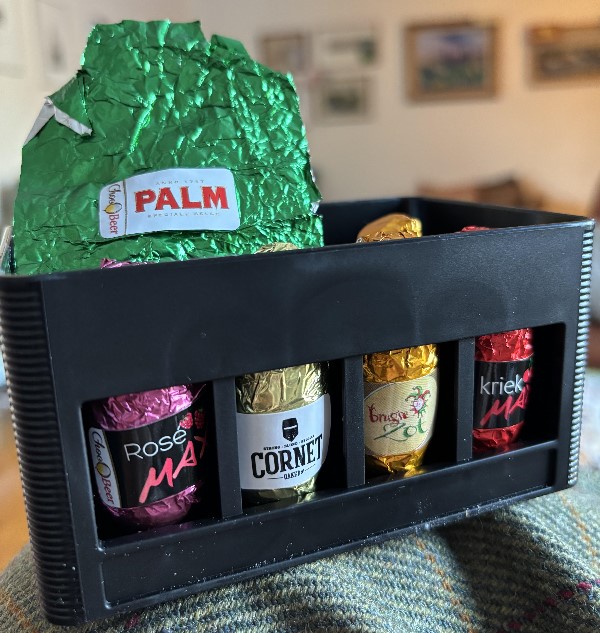
February flies by. That’s just the way it is. Good time to take stock. Good time to eat the little chocolates filled with beer brought by a visitor from Belgium. Early review: the “…chocolate is dry and dark so a lack of sweetness in the kriek left it a bit stark but the Palm was that bit richer.” Not sure I am chowing down on these outside of a winter like this but all quite a bit better than expected. Paid endorsements welcome. Winter was also on the mind and under the feet of Jordan as he wrote about the weather at the end of last month or perhaps just his efforts to get about in it:

Monday, Jan 26th: The deep freeze is well and truly upon us, and looking at the forecast for the next couple of weeks, it looks like we’re in four-layer territory. If your primary mode of transport and exercise is walking, then -25 with the wind chill does you no favours. Besides, the sidewalks are not shovelled in any meaningful way. Dry and cold is a great combination to ensure you’re reminded of the various injuries you’ve had over the years. Sometimes I get the unprompted sense memory of an ankle ligament rolling.

Also looking at the world as it exists below the knee, Stan shared some research he has done on the word Hopfenstopfen and its relation to a certain pair of boots:

The shoes were worn by a worker processing hops. When a bag was filled, a worked would jump into it, stomping down the hops to make sure the bag was full. When I dug this out, I wondered if these could have been called Hopfenstopgen boots. That’s because in Hop Queries Vol. 4, No. 6, I wrote about dry hopping in Germany in the 19th century. That was called Hopfenstopfen, which can be translated at hop plug. Simon Moosleitner, a subscriber in Germany, suggested there is more to think about…

I won’t spoil the fun but speaking of getting the boot in, late last week in VinePair, Dave Infante wrote about the effect of the homicidal ICE intrusion into Minneapolis on the beer trade in the city including this from Drew Hurst of Bauhaus Brew Labs:

You can see it in the firm’s sales figures. Taproom sales are down 40 percent compared to January 2025. “It’s a wildly unsustainable thing,” says Hurst. “None of us signed up to have to live through a federal occupation and figure out how to run a business at the same time.” Not that it was easy before the onslaught: Bauhaus wrapped this month last year down around 30 percent from January 2024. Craft brewers have been struggling to find their way for years in the face of shifting demand, new competition, and rising costs. In Minneapolis and Saint Paul, they’re doing all that with the MAGA jackboot on their necks.

At first I thought it was an odd angle but then realized it illustrates the principle that beer prefers peace as well as how quickly that peace can be lost. Dave also shared in his email updates that he was told to “stick to beer” and that some paying subscribers to his newsletter Fingers canceled their subscriptions. Perhaps if those folk didn’t “stick to” amateur neo-fascism it might be better. Funny how the “stay in your lane” crowd don’t show up for this sort of politicization within the pub:

A beer tap labelled “Rachel Thieves” has appeared on the bar of a Hertfordshire pub protesting Chancellor of the Exchequer Rachel Reeves introducing crippling tax hikes. Anyone ordering the beer will receive only water. The Green Dragon in Flaunden, which is run by publican Chris Ghazarian, has added the spoof cask ale pump badge as a protest – telling customers that pints of this particular beer are “very bitter” and cost more than anything else on the bar and anyone ordering it will receive only water. Speaking to the British national press, Ghazarian said: “They find it hilarious. I obviously don’t make them pay for it.” 

On the other side of the planet, a very difference approach has been taken in Australia:

The Albanese government is seeking to put a hold on increases to the beer excise for the first time in 40 years. The Customs Tariff Amendment (Draught Beer) Bill 2025 seeks to pause the indexation of customs duty rates for draught beer for two years from August 1, 2025. Currently, the beer excise is indexed twice yearly to stay in line with the consumer price index, with Australian beer, wine, and spirit importers and producers saddled with some of the highest rates in the world…  Addressing the House of Representatives, Anthony Albanese said he was “proud” to introduce the Bill, “one of the most popular commitments that we took to the election”.

Boak and Bailey also wrote about another sort of pressure to conform but the context was less confrontational – just writing about their thoughts on a craft brewery:

Maybe that post was a bit too snarky, with hindsight, but it certainly didn’t warrant trolling impersonation accounts on Twitter, general abuse that last for months, or a stalking campaign. That was, as you might imagine, quite traumatising, and probably did make us nervous about being critical of breweries in the supposedly cuddly craft brewing sector. It didn’t stop us, but it had a ‘chilling effect’ on how freely and frequently we felt able to express ourselves. It’s easy to say “Don’t mince your words” but minced words are less likely to lead to sleepless nights. We can totally see why some people might decide it’s not worth the trouble, and certainly wouldn’t judge them.

On reflection, I have probably benefitted from folk starting with the assumption that I am a bit of an arsehole. I lose my sleep over other things.

Note #1: Take a news event and ram it like a square peg in a round hole.
Note #2: Martin at another fabulous pub, this time inordinately bright.

Ron TV continues to impress. This week he’s been presenting an extended interview with Mitch Steele and, like the comment maker Oscar, I am drawn to the brief introductory electro-thrash almost as much as the subjects of these interviews. Part 1 of the interview is over thirty-seven minutes long with Part 2 clocking in at thirty-three. Set aside an hour or so of your time. More if, like me, you keep replaying the first six seconds and that mesmerizing theme music over and over and over.  Good multi-media breakout for Ron – even if it likely doesn’t pay the bills. One a similar note, Ray of B+B on the prospects of a career in writing:

This is excellent. Depressing, but excellent. My response has been to give up, basically, and accept that writing is a thing I do on the side, while something else pays the bills. I also like that thing, so it’s fine, but I get sad thinking what I could have achieved if writing was my full-time job.

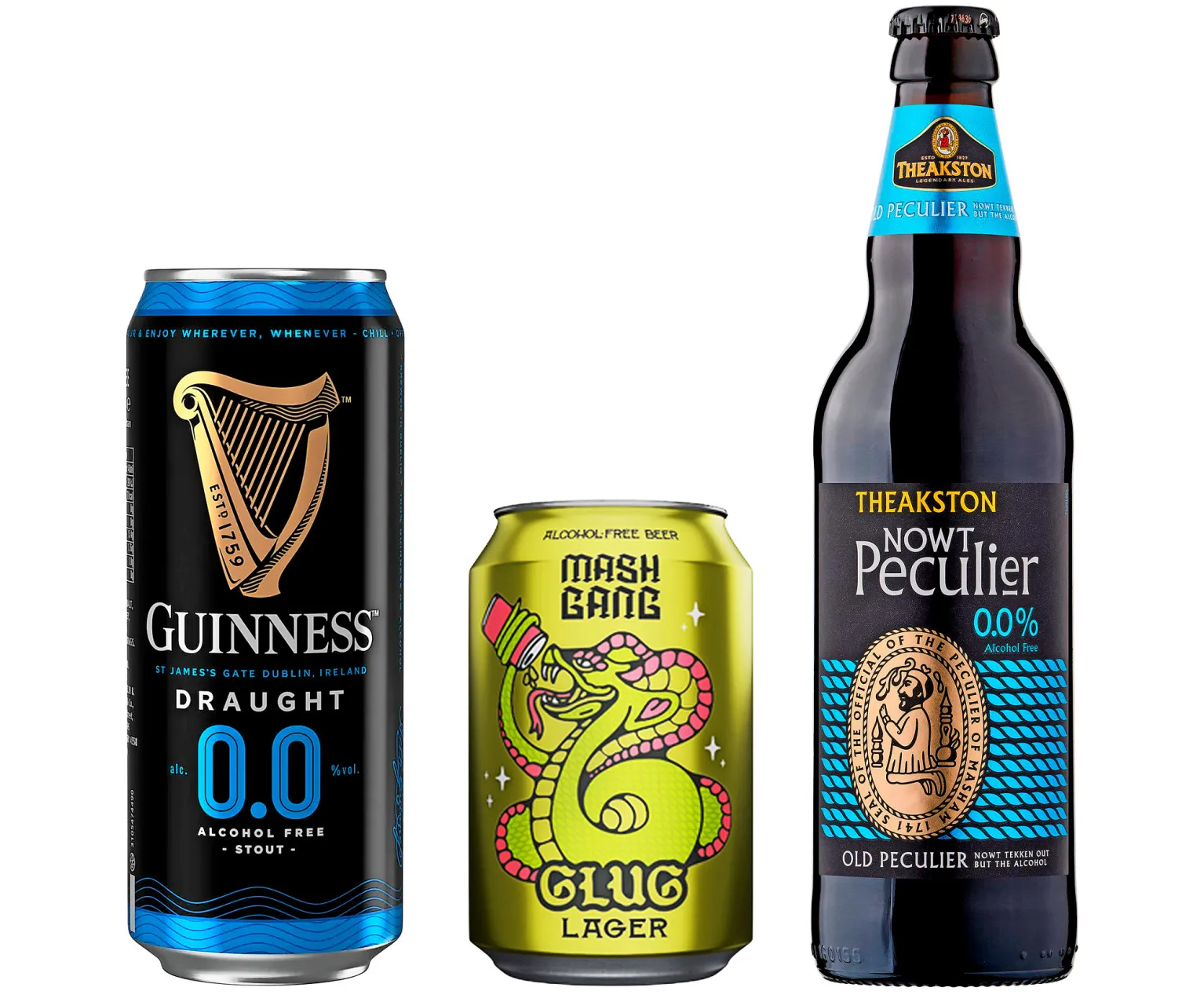
Perhaps also on the theme of less is more, Guinness 0 also continues to impress me and Pete‘s brief review does not surprise:

There are many great 0.5 per cent stouts from small indie brewers, but Guinness 0.0, which took years to develop, is indistinguishable from the real thing.

I noticed one thing when writing this. It is branded as “Guinness 0” in Canada but “Guinness 0.0” in the UK. Why? Is it a different formulation here and there? Whatever it is, I am finally seeing a point to NA beers. But things will be going in a slightly different direction in UK neighbourhood if one permit applicant has their way:

The shop also sought an amendment to the condition currently imposed on the licence… to “No super-strength beer, lagers or ciders of 6.5% ABV (alcohol by volume) or above shall be sold at the premises with the exception of Dragon Stout and Guinness Export beers.” The applicant’s agent, Frank Fender, told Bedford Borough Council’s licensing sub-committee (Thursday, January 29), that these “super strength” beers are not usually the “street drinkers’ choice of drink”. “They are they are widely consumed by members of the Afro-Caribbean community, and obviously this shop wants to be inclusive,” he said. This claim was backed up by Chris Hawks, the council’s licensing compliance and enforcement officer. He said: “What Frank says about Dragon Stout and Guinness Export is spot on.

For years, the word authentic was bounced around in the face of glitter and haze. That plan in Bedford sounds like authenticity to me. Similarly perhaps, crossing the Atlantic, Matty C has written some notes on the US beer scene for the supplier Get ‘Er Brewed‘s webpage and found something of a revivial going on:

Nostalgia is one play many breweries seem to be using. During my time in both Portland and in Colorado, (the latter of which I visit regularly to see family,) I noticed that many drinkers seem to be choosing the classics made by more established breweries. Allagash White, the Belgian style witbier from the brewery of the same name wasn’t just on tap everywhere in Portland, but it felt like everyone was drinking it too. The beer carries the kind of hushed reverence that money can’t buy, and demonstrated to me why establishing a core beer as part of your brewery’s identity is essential for longevity.

This is quite a reversal as, you will recall, in 2019 flagships were considered a dead concept: the “concept of a flagship in almost all ways maps to an earlier and obsolete way of thinking.” Futurisms rarely stand up to audit but it’s good to know, in an era too concerned with branding and other misinformations, that identity in the form of what is in the glass has made a come back. One never knows what is really going on otherwise. As with the news about the bills left unpaid and the suppliers left in the lurch by Rogue, James Beeson in The Grocer shared that the level of insolvency at failed Keystone Brewing had hit almost £15 million. Heavens! Remember when we all spoke of community?

Sticking with things in the USA, the feature in Pellicle is a portrait of Eckhart Beer Co. in NYC by Ariana DiValentino with its focus on central Euro lagers and foods that share the same theme:

The menu focuses primarily on Central European dishes that match the beers’ origins. There is a brat plate, and spaetzle gratin, and kartoffelpuffer (German-style potato pancakes), which you can order fried in oil or beef tallow. But there’s also a falafel dog, an Italian cold cuts sandwich, and a Moroccan-spiced ratatouille with vegan lemon yogurt. The variety of cultural influences feels very reflective of the brewery’s New York City context. “I wanted to offer food that supports the beer. It didn’t have to be Central European per se, but that felt like a natural foundation,”

Sounds like a great place for all. Not so in Japan where one establishment has embraced ageism:

The concept of age restrictions and minimum requirements is commonplace around the world. But have you ever heard of an establishment imposing a maximum age limit? Now, a Tokyo chain pub has set a ban on older customers – in order to try to maintain the raucous, fun atmosphere for which it is known. Tori Yaro Dogenzaka is an izakaya (an affordable Japanese pub) situated in Japan’s capital city. This year, the establishment propped up a sign outside the entrance, informing customers of the new rules. The sign said: ‘Entrance limited to customers between the ages of 29 and 39. This is an izakaya for younger generations. Pub for under 40s only.’

I wasn’t wanting to go there anyway. Screw them. That’s it. As as I sulk in a mode Japonais, please check out Boak and Bailey who continue to post every Saturday. adding to their fabulously entertaining footnotes week after week at Patreon. And look out for more of Stan’s new “One Link, One Paragraph” format. Then hunt out something in someone’s archives! Leave oblique comments on someone’s post from 2009!! Listen to a few of Lew’s podcasts and get your emailed issue of Episodes of my Pub Life by David Jesudason on certain Fridays. And Phil Mellows is at the BritishBeerBreaks. Once a month, as noted, Will Hawkes issues his London Beer City newsletter and do sign up for Katie’s wonderful self-governing totes autonomous website featuring The Gulp, too.  Ben’s Beer and Badword seems to be on pause since November but there is reading at The Glass which is going back to being a blog. Any more? We have Ontario’s own A Quick Beer and All About Beer is still offering a range of podcasts – and there’s also Mike Seay’s The Perfect Pour. Plus follow the venerable Full Pint podcast! And there’s the Craft Beer Channel on Youtube. Check out the archives of the Beer Ladies Podcast.

Your Fascinating But Still A Bit Sticky And Humid Mid-July Beery News Notes

Summer. Heat waves. Heat warnings. Smoke warnings. Drought. We got it all. Including sugar snap peas. I’ve adoped the Canadian old fart posture this week, when facing a comment on the blistering sun, as I just reply “at least I ain’t shoveling it!” Which is, of course, hilarious. Roar! Tape me ribs! No wonder all of comedy in Hollywood is run by Canucks! The heat in England heat has even driven Boak and Bailey off the beer, according to themselves in their monthly supplement:

…we had some beer at home, so it wouldn’t be too bad, right? Except however much we chilled it, it never quite seemed to refresh us. After a couple of lagers we gave up and switched to iced water. Apparently our bodies were telling us to hydrate and beer, unfortunately, has very much the opposite effect. When we have made it to the pub during heatwaves, we’ve often found cask ale to be a write off. Partly because not all pub cellars are capable of withstanding extreme heat, and partly because people switch to lager leaving ale to lose its sparkle.

Reporting from a land more used to the stinking heat, Pellicle‘s feature this week is a feature by Ruvani de Silva on the Green Bench Brewery in St. Petersburg, Florida. Which is, of course, another part of American utterly infested with we Canadians including, twenty years ago, by my late parents who would occassionally lunch at the welcoming Don CeSar with other welcomed snowbirds from all over. Wasn’t always like that:

Rewind seventy years or so, however, and our experience of St Pete’s would have been very different. The Sunshine City might have been a holidaymakers’ paradise, but only if you were the right kind of visitor. The city’s unwritten law that people of colour were not permitted to sit on its famous green benches evidenced how St Pete’s did not escape Florida’s vicious segregationist policies of the time. This unofficial ordinance was more than simply a physical imposition—it was a restriction that entrenched systemic racism for generations of Black Floridians. It’s for the memory of this injustice that Khris Johnson, founding brewer and co-owner of Green Bench Brewing and Florida’s first Black brewery owner, chose to name his business.

Speaking of establishments, one of the swellest images that passed before my eyeballs this week was this one to the right. At first I thought it was a fire insurance map but there isn’t enough detail.  It’s was posted at a local history group over on FB, Woodlesford and Oulton History, and seems to be a diagram that accompaned a 1933 planning application to update the New Masons in Oulton:

In October 1933 Fred applied to the Hunslet Rural District Council to make major alterations to the layout of the pub and add a new frontage and windows. The work involved knocking down part of the old front wall and fitting a rolled steel joist to support the upper floor. The new layout was then much the same as it remains today.

And here is the pub, still there. The photos help explain the map including the location of the fireplaces, the scale of the room. But the one thing I don’t understand is why the bar is in the passageway. Did you go there from one of the three rooms, get your pint and go back in to find your chair or was the passageway itself a drinking area? These are the things that haunt me.

In more somber news, we have received the sad news the passing of Jack McAuliffe. In remembrance, John Holl has republished a tribute from All About Beer from 2017 to the founder of the New Albion Brewery Company in California which opened in 1977.  And Maureen‘s comment on BlueSky is a wonderful tribute that tells a lot about the man:

Ah. This saddens me. Not unexpected, but I’m sad i won’t see him again. He was hilarious, among other things. I was humbled by the fact that I was one of the very few people Jack likes and respected. That meant a lot to me. Godspeed, Jack. 

Just two weeks ago, Gary shared an anecdote from the earliest days of Jack’s brewery which is worth revisiting to get a sense of how this brewer helped start the change that led on to micro and craft brewing working with very basic resources.

Stan has shared the latest edition of his Hop Queries and explained the dire situation facing hop growers in the Tasman region of New Zealand, including Brent McGlashen of Mac Hops:

“Statistically and visually, we hit above the 1 in 100-year flood level, with also highest ever recorded river flows in a number of parts in the Motueka river… Both our farms have water everywhere, fences with damage and some debris scattered around, but we are fortunate compared to others who have had significant damage and loss due to the flooding. Was this predicted, well yes it was. Forecasters said over 200mm and we sure got that. We have had a wet winter and the ground can’t absorb more so it has to go somewhere.” One hop farmer died as a result of the storm. Peter Lines was clearing flood damage from his property in Wai-iti, southwest of Nelson, when he was hit by a tree.

Rain came again the next week “leaving fields under water and dumping mud, gravel and sand on facilities that had just been cleaned up…” 

Writing about disasters of the unnatural sort, The Beer Nut brought his lucidity to a review of an unknown Dutch brewery, to which he added a key question on BlueSky: “how long can a brewery keep up a sequence of nautical-themed beers flavoured with fruit syrup?” The answer is apparently “too long“:

My report card for Stadshaven says “must try harder”. A sampler pack of fruit syrup does not make for a vibrant range of modern beers, for one thing. I sense an ability to do plain-spoken beers quite well, testified by the red and blonde in particular. Whether the decision not to steer that course is a creative one or a management one, I cannot say. The low price point is very much in these beers’ favour, though I’m still not sure I got my money’s worth from them. 

Speaking of the low, Matty C wrote for What’s Brewing on the most obnoxious retort around: “stick to…” with the line filled in by the obnoxious. In this case, it was about the position being taken him and by many other drinkers in the UK on the Palestinian-Israel war – and in doing so makes this very lucid argument:

In modern political discourse it’s perhaps the first approach to go out the window when things get a little spicy. But it is because of compassion, not malice or spite, that the volunteers of Trafford and Hulme CAMRA opted to have the donation box in the first place, and it is compassion that motivated attendees to make a donation as they leave. It is compassion that triggered the response from customers when they found out beer from breweries they admired were selling beer into a market they didn’t. And it is because of compassion that you’ll struggle to find Moor Beer on tap in Bristol at this very moment. It would be far easier, surely, to stick to beer, and leave the politics to the politicians. But in fact, sometimes the most compassionate thing you can do is stick your head above the parapet and say, “I don’t think this is okay.”

Politics is for the people. All the people. No matter what the cause or the position, being active and acting on compassion is a good thing.

You know what also gets people losing their composure, their perspective? Beer glassware. Do you have a go to glass for beer? I do… well, one for inside and one for the yard. Kevin at Casket Beer advocated in favour of simplicity and recommended a basic four:

…while the shaker isn’t as bad as many make it out to be, it really shouldn’t be a major player either at a beer bar or your home bar. But having a respectable selection of glassware doesn’t need to break the bank or become unmanageable. There are four widely available glass styles that are affordable, cover a wide array of styles, and will satisfy the most discerning beer drinker. Here they are.

You can go see which four they were. Jeff then picked up the theme and advocated for one fewer: “Give me a mug, a goblet, and either a snifter or tulip—both is overly fussy…  I like a handle, and I find a beer looks great when it’s in a wide vessel—the clarity and color is easier to see. Facets bedazzle and please me (recall, I am one of the few fans of glitter beer).” Wow. I was with him there until those two last words. Just… wow.

And staying with the wow,* Alistair has been staying (practically) true to his promise to bust his writer’s block by writing every day (almost) over at Fuggled. Wednesday’s story this week was about the Austrio-Hungarian schnitt of 1900:

The writer continues to berate their fellow German Austrians that a single “schnitt” fewer every day wouldn’t be so bad and that the savings would build up to a sizeable fund for civic associations tied to the ethnically German population of the Empire. And here we have again an example of the cross pollination of cultures that was Bohemia and Moravia in the 19th century, evidenced today through the use of a transliteration of “schnitt” into Czech, “šnyt” as the name for effectively a half pour of beer and lots of foam. “Schnitt”, if you know your German means “cut”, because it is a cut down pour of beer, that is “better than nothing”, at least according to Bohumil Hrabal, or was it Karel Čapek, when he wasn’t inventing the word “robot”?

And the colonial history of the beer gardens of Bulawayo, Zimbabwe was the subject of research for Prof Maurice Hutton of the Global Development Institute, University of Manchester who shared some findings for The Conversation:

The more picturesque beer gardens began to emerge in the 1950s, reflecting the developmental idealism of Hugh Ashton. The Lesotho-born anthropologist was educated at the Universities of Oxford, London and Cape Town, and took up the new directorship of African administration in Bulawayo in 1949. He was tuned into new anthropological ideas about social change, as well as developmental ideas spreading through postwar colonial administrations – about “stabilising” and “detribalising” African workers to create a more passive and productive urban working class. He saw a reformed municipal beer system as a key tool for achieving these goals. Ashton wanted to make the beer system more legitimate and the venues more community-building. He proposed constructing beer garden complexes with trees, rocks, games facilities, food stalls and events like “traditional dancing”. So the atmosphere would be convivial and respectable, but also controllable, enticing all classes and boosting profits to fund better social services. As we shall see, this strategy was full of contradictions…

Finally, like you, I am a regular reader of the Greenock Telegraph the newspaper of record of my paternal peeps. This week they publised an editorial from by the local member of the Scottish Parliament Stuart McMillan on alcohol in the workplace:

Too often there is a conception that people living with drink dependency can’t hold down a job – but when one in four people in the UK worry about their drinking, it’s clear this is a myth. I’m not suggesting 25 per cent of the adult population in the UK have an alcohol addiction. However, these figures indicate that increasing numbers of people are concerned about the impact alcohol has in their lives… For most of us, though, we don’t need specialist support. But we do need to be more open about how alcohol impacts us, and try to foster healthier habits. The popularity of alcohol-free products shows that many people are looking for alternatives – whether that’s alcohol-free beer, wine, spirits or mocktails. Locally, one idea that has been suggested to me is a ‘sober bar’ – which would give people a place to go that feels like a pub, but without the presence of alcohol.

I decided to include this piece not because I agree or disagree. Not even because health and booze is always a worthwhile conversation. But… I can’t imaging a Canadian politician writing this. Because I can think of many other alternatives to alcohol which include, say, playing a banjo or reading a book or going for a walk or staring at a bird in a tree or making a pot of tea – none of which need to simulate the drink or the pub. Which is one of my things about pricy NA not-booze. Just go for a soda. We even have a song about it.

So there you are. Staring at the little screen in your hand as the A/C hums. Until the weather breaks, please check out Boak and Bailey every Saturday. Look out for Stan when he feels the urge now that he’s retired from Monday slot… maybe. Then listen to a few of the now rarely refreshed Lew’s podcasts and get your emailed issue of Episodes of my Pub Life by David Jesudason on the (sometimes even but never) odd Fridays. And maybe The British Food History Podcast. Maybe? And Phil Mellows is at the BritishBeerBreaks. Once a month, Will Hawkes issues his London Beer City newsletter and do sign up for Katie’s wonderful newsletterThe Gulp, too.  Ben’s Beer and Badword is out there with the all the sweary Mary! And check out the Atlantic Canada Beer Blog‘s weekly roundup. There is new reading at The Glass which is going back to being a blog. Any more? We have Ontario’s own A Quick Beer featuring visits to places like… MichiganAll About Beer has given space to some trade possy podcasts and there’s also The Perfect Pour. Plus follow the venerable Full Pint podcast with an episode just last month!. And there’s the Craft Beer Channel on Youtube. Check out the archives of the Beer Ladies Podcast. That’s quite good and after a break they are back every month! The rest of these are largely dead. And the long standing Beervana podcast …except they have now stood down.  As has We Are Beer People. The Share looked to be back with a revival but now its gone quiet. And the Boys Are From Märzen podcast appears suspended as does BeerEdge, too. VinePair packed in Taplines as well. All dead and gone.  There is more from the DaftAboutCraft podcast, too. Nope – that ended a year ago.   The Moon Under Water is gone – which is not surprising as the ask was $10 a month. Pete Brown’s one cost a fifth of that – but only had the one post. Such is life. Such is beer podcasting and newlettering… which, as Ray says, are blogs!

*Forced, I know. I’ll try to do better. My footnote game isn’t the best either. It’s the heat. Well known fact. Asides suffer in the summer. Researchers are on it.

The Thursday Beery News Notes For That Lull Between Canada Day And The Fourth Of July

1780s Loyalist soldier reenactors at Bath Ontario Canada Day parade

Living on a border makes you aware of the similarities and differences. Even when the border gets more opaque than usual. As illustrated, we saw musketeers but in red and green not the more often seen blue. Most years, especially when the fourth of July falls on a Friday, I’d have gotten my butt down in a seat at the Syracuse Mets AAA stadium, eating a snappy griller white hot, watching the game then sticking around for the fireworks. Not this year. Due to… conditions. So maybe this Canada Day 2025 last Tuesday was a bit more noted and acted upon. We took in a parade even. One with reenactors with muskets. Then we made burgers.

Speaking of… conditions, I really like this bit of thought on meaning of the stubby and its effectiveness as an economic tool:

By 1962, the year after the stubby was introduced, Canada’s Big Three brewers controlled about 95 per cent of the Canadian beer market… When the stubby was made a packaging requirement for all beer sold at its stores in Ontario, Thompson argues, the Big Three effectively locked all foreign brewers out by creating an extra hurdle for entry into the market. “To bottle in the stubby, [American brewers] are going to have to make their own line at their plant to bottle specifically for Ontario,” she said, noting any cost savings for American brewers through the reusable stubby would be eaten up in transportation costs by first shipping the beer to Canada then shipping it back the U.S. for a refill. 

PS: a Caeser is better than a Bloody Mary. Fact.

image of text from Nov-Dec 1979 edition of the Beer Can Collectors New ReportGary shared a great record of the earliest days of US micro at the end of last week that he found in in the “Golden State Newsletter” column in the Nov-Dec 1979 edition of the Beer Can Collectors New Report found at the Internet Archive. That’s a snippet of the text to the right. I like the live action detail of the first encounter at New Albion:

Greg entered the barn and was surprisingly greeted by three bustling employees involved in 20th Century brewing efficiency: After labels were scraped off what appeared to be recycled Schlitz and Bud bottles, they were washed and singularly hand filled at one tap. The bottles were then hand capped and placed in cases. Boxes of Ale, Stout and Porter stood ready to be loaded onto a used Dodge pick-up truck and delivered world wide. Greg spoke to the Brewmaster (bottle filler). This informative fellow mumbled something about being retired from the Navy, liking to drink ale, and not having time to talk. Greg left.

Lovely vignette. And there’s an interesting note on the state of US drinking trends on the next page: “When color TV became a standard fixture in the home, beer drinking moved out of the bar and into the family room. Two-thirds of all beer is consumed at home—that’s 16 million six-packs a day.” This all speaks to the point made last week about the loss of reliable records – but also shows how there is still good stuff to be found.

What else is going on? Well, Laura published a great roundup from the June edition of The Session last weekend. Plenty of good reading there. David Jesudason is covering the editorial duties for July and Joey at Beer In The City is our host for August.

Line graph showing rise of wine consumption in China then a dramatic slumpYou think beer has it bad in terms of slumping sales? Look at this chart from the American Association of Wine Economists describing the rise and slump of wine consumption in China over the years 1994 to 2024. Consumption is now below 1995 levels. Mirrors the slump in new home sales there. Makes sense.  And that slump in beer has been described in a form worth sharing:

…the industry faces threats from ”sheep, parasites and wolves,” a reference to the way former Coca-Cola Co. Chief Executive Doug Ivester once described competition in the soft-drink industry in the early 1990s. “For the beer industry, spirits are wolves, winning share of throat and now pushing more directly into beer occasions with ready to drink,” the analysts said. “Energy drinks are parasites, successfully using beer distribution as a platform to sell to soft drink companies. Beer players are sheep, ceding customers and attention while beer consumption continues to decline.”

Note: lager larks. And another note about a visitor to a pub caught my eye this week, a visit in this case that took place in 1789* that still resonates today in a particular part of the world where my geneologicals place one quarter of my genomics:

When Scotland’s national bard stopped off for a drink in Sanquhar, there was only one place he found acceptable. Robert Burns liked the inn run by Edward Whigham so much that he immortalised it in verse, with At Whigham’s Inn, Sanquhar. The prominent property in the heart of the south of Scotland town has become much less welcoming in recent years and has fallen on hard times. However, the local community has now stepped in with the hope of bringing the building back into use – with a nod to the poet who found it such a pleasant hostelry.

I found this bit of social science interesting but not, to be honest, convincing. If, as we saw above, the new fangled colour TV was another nail on the coffin of the US neighbourhood bar circa 1979, are pub crawls in the UK really going to rescue of the industry today? Here’s a clip from the study’s abstract itself:

Pub crawls are a phenomenon which are part of the hospitality sector and contribute to consumer experiences within the Night Time Economy. We show the current state of knowledge in this immature field via a Systematic Literature Review methodology. Building on this we provide a novel theoretical typology of pub crawl classification based on levels of organisation, supervision/accompaniment and geography. Highlighting the processional nature of pub crawls, where consumers move through multiple individual contexts and as a spatially embedded hospitality experience, we delineate the experience into antecedents, processes and outcomes. Our analyses lay foundations for further fine-grained theorisation. 

So… more of an invitation for further investigations. Less compelling was the survey discussed in Decanter, another effort to explain away the younger set not being the boozers their parents were:

Gen Z is known for turning up its nose at alcohol, but more young adults in this group may now be enjoying a drink, according to an international survey by drinks industry research group IWSR. In March 2025, 73% of Gen Z adults said they had consumed alcohol in the previous six months, found the IWSR Bevtrac survey.  That’s up from 66% when the same question was posed two years ago. IWSR said its Bevtrac survey included legal-drinking-age adults in 15 markets and defined Gen Z as up to 27 years of age. In the 2025 survey, 70% of Gen Z respondents in the US said they had drunk alcohol in the past six months, up from 46% in 2023.

It would be very helpful if the methodology for these sorts of stats wasn’t (i) a self-declaration about (ii) something you did once maybe in the last half year. A generation that has a drink a few times a year is not going to be the savior for anything more than pub crawls could be. Aside from the “rootin’ for booze” bias, isn’t the real story still that this story isn’t really a story?

Speaking of non-story, Alistair is in a rut but he is going to work himself out of it:

…here is my crazy idea, I am just going to write whatever random boozy thoughts pop into my head each and every day for the rest of July, including when I am in Florida on vacation. Maybe I will find something new in the Austrian newspaper archive that I love to trawl, maybe it will be a few lines of total tosh that just needs someone to comment that I am completely wrong, or right, or that you’ve been feeling the same but unable to say it. Maybe I won’t stress myself out…

The story about Justin Hawke semi-formerly from Moor is odd and, I’m going to admit, made up of threads some of which are outside of my regular reading. But nothing was missed about the “intent” that was meant.  Apparently things were known for years but now ties have severed and attendees cancelled and it all reminds me, also oddly, of Rod Stewart… who also was at Glastonbury. UPDATE: see Boak and Bailey’s on the ground reporting.

And over at Pellicle, Katie has published a story on the wines of Tenerife, the largest of the Canary Islands:

I head across town to Vinoteca Con Pasión, which has the largest selection of Canarian wine in the region. Thankfully, most are available by the glass from the shop, or from the restaurant next door. It’s from here that I buy a bottle of Listán Blanco pét-nat, made by La Orotava winemaker Dolores Cabrera… Her wines named La Araucaria are her most expressive—bottles made exclusively with indigenous Listán Negro or Listán Blanco grapes, from vines between 50 and 100 years old. Her vines are also trained in the cordón trenzado method, trailing long, woven tails across the breadth of her personal sections of paradise.

This is interesting for anyone who has spent a part of their life poring over newpaper notices and other documents from the 1600s and 1700s looking for beer references as “Canary wine” is another product you see regularly referenced. The wines of those times could well have borne a strong resemblance to what Katie experienced today. Though there are clear suggestions of the old stuff being heavy and sweet and boozy.

The New York Times in its Wirecutter column presented a set reasonable arguments from reasonably well informed people for the Teku beer glass… with an interestingly blunt conclusion:

All that said—and as we found in our own tests — most people probably won’t be able to detect significantly more flavors and aromas when they drink a beer out of a Teku compared with other glassware. It takes years of experience and training to develop that much nuance in your senses of smell and taste. But you might notice some subtle improvements while appreciating the other benefits of the glass, such as its versatility and good looks.

So my Mason jar habit remains a solid option. Speaking not of which, was it in a biography of Vita Sackville West that I read the comment from some member of the English aristocracy that he didn’t understand the Great War given all the customers from Germany who were being killed. Are the Trump immigration orders causing an analogous effect?

“A lot of Hispanic consumers are apprehensive to leave their house or … deviate from their routine or go out,” Dave Williams of Bump Williams Consulting told Yahoo Finance. “That results in fewer opportunities and occasions where beer would slot into the mix.” “The abruptness of this slowdown … makes me feel like there’s a lot more of it tied to the cyclical aspect of these consumer behaviors due to the recent ICE raids or deportation scares, whether you’re legal or not … that’s on top of the other structural aspects that beer brands in general,” Williams added.

Well, there you go. We started at the northern end of the current… conditions and ended up at the south. These are the times. As you contemplate that… again… please check out Boak and Bailey every Saturday. Look out for Stan when he feels the urge now that he’s retired from Monday slot. Then listen to a few of the now rarely refreshed Lew’s podcasts and get your emailed issue of Episodes of my Pub Life by David Jesudason on the (sometimes even but never) odd Fridays. And maybe The British Food History Podcast. Maybe? And Phil Mellows is at the BritishBeerBreaks. Once a month, Will Hawkes issues his London Beer City newsletter and do sign up for Katie’s wonderful newsletterThe Gulp, too.  Ben’s Beer and Badword is out there with the all the sweary Mary! And check out the Atlantic Canada Beer Blog‘s weekly roundup. There is new reading at The Glass which is going back to being a blog. Any more? We have Ontario’s own A Quick Beer featuring visits to places like… MichiganAll About Beer has given space to some trade possy podcasts and there’s also The Perfect Pour. Plus follow the venerable Full Pint podcast with an episode just last month!. And there’s the Craft Beer Channel on Youtube. Check out the archives of the Beer Ladies Podcast. That’s quite good but, hmm, they’ve also gone quiet this year. The rest of these are largely dead. And the long standing Beervana podcast …except they have now stood down.  As has We Are Beer People. The Share looked to be back with a revival but now its gone quiet. And the Boys Are From Märzen podcast appears suspended as does BeerEdge, too. VinePair packed in Taplines as well. All dead and gone.  There is more from the DaftAboutCraft podcast, too. Nope – that ended a year ago.   The Moon Under Water is gone – which is not surprising as the ask was $10 a month. Pete Brown’s one cost a fifth of that – but only had the one post. Such is life. Such is beer podcasting and newlettering!

*That’s a nice bit of verse: Envy, if thy jaundiced eye / Through this window chance to spy / To thy sorrow thou shalt find / All that’s generous, all that’s kind / Friendship, virtue, every grace / Dwelling in this happy place.

E

Some Brief Beery News Notes For A Thursday From The Road

As you know, in Canada we like a politician who drinks a beer. It’s practically mandatory of you are going to win an election to show that you know how to pour, how to drink and how to sit in a tavern as time trips along. So it was good this week to see recently elected Canadian PM Carney put less recently elected British PM Starmer to the test in an Ottawa tavern:

Keir Starmer has delivered a veiled swipe at Donald Trump by hailing ‘independent, sovereign’ Canada. The PM gave his strongest response yet to the president’s push to turn Canada into a US state as he met counterpart Mark Carney in Ottawa. Sir Keir and the former Bank of England governor enjoyed a beer in a bar and also talked up the prospect of reviving a stalled trade deal. 

Good to see. A little less rarified but, still, exceedingly pleasant by all account was the weekend enjoyed by Chris at Real Ale, Real Music who took us along on a trip to Manchester where he went to undergrad and later worked, a city that serves as the exotic elsewhere of his youth. It’s an extended piece of memory work with a gentle pace:

…my Grandad would take me there sometimes as a young lad in the 1960’s. He was the head of the local Co-op and sometimes he had to visit the head office in the city for important business, the details of which we were never to know, but it never took him long. We would catch the train from Sowerby Bridge station on a Wednesday afternoon which was early-closing day for the Co-op and most of the shops in town back when that was a part of the weekly routine. In those days, the station had the presence of somewhere important, a grand facade with a booking office within, waiting rooms, and the like, now long gone of course. When we arrived in this distant land at the other side of the Pennines, it was a short walk from Victoria Station, across Corporation Street with its huge and daunting buildings and we were there, then left abandoned for a short time in an imposing wood-panelled reception with a noisily ticking clock and a sharp-featured, unsmiling receptionist keeping a stern watch over me and my younger brother as Grandad disappeared into the mysterious world beyond the door.

As a person who walks through many doors into mysterious worlds, Martin on his never ending travels has shared his thoughts on what I would take to be a pretty noxious brew:

2 weeks ago, in Derby, I’d been dissuaded from the Caramel Custard Doughnut Milk Stout by a rascal from Worcester, and regretted my hesitancy ever since. I’d offered Stafford Paul a pint if he could correctly guess what I had in the Alex, but sadly (?) for him he got it wrong, so I’m having to drink the Pentrich Soul Doughnut myself. The Broadfield is a decent bet for your non-threatening craft picks, a Brunning and Price for the under-50s (though the soundtrack is relentlessly late ’70s AOR). The dregs of the Sunday lunch trade are yet to clear, sticky tables a bit of a downer though the Soul Doughnut itself is rather gorgeous, a cool and rich NBSS 3.5. Not as weird as feared, and scarily drinkable…

And ATJ shared an experience that is common in a pub – overhearing. Not prying. In fact, trying not to overhear even though what you hear is worth remembering… and sharing:

The couple’s voices were not foghorn-like in their loudness, but they still carried over to me whether I liked it or not. I switched off, but it was hard not to continue hearing their conversation. ‘I have been happy at times in my life,’ said the man, who I also learned lived locally but that the two of them would be moving back to Essex the following year. ‘The day of my marriage for instance,’ though given the lack of a remark from his companion, I guessed it wasn’t to her. ‘The births of my three kids, and I tell you that you can buy anything you want in the world — cars, houses, travel — but you cannot buy back the times you lost being with your kids when they were growing up.’

Boak and Bailey were also in the pub in their monthly newsletter opened up the question of what beer is the beer you see on offer that makes you want to stick around:

We recently turned up at The King’s Head in Bristol intending to have one last beer on the way home but the range of breweries on the bar made us say, “Ooh!” and stay a bit longer than planned. We have experiences like this from time to time – not as often as we’d like! – and it struck us as an interesting way of gauging the reputation of breweries. It’s not that they’re necessarily ‘the best’, whatever that means. Only that we’ve had enough good beer from them over the years, and especially in recent years, that we’re excited to drink whatever happens to be on offer.

They provided their ten suggestions. For me… here in Canada? Has to be St-Ambroise Oatmeal Stout from Montreal. Seeing as I am there… err, here… maybe I will find me some.

From the “things ain’t what they used to be” file, Henry Jeffreys at Drinking Culture wrote about the now frowned upon mid-1900s English taste in wines and how those tastes were achieved:

The Victorian wine expert Cyrus Redding wrote: “it has been thought necessary to give pure Bordeaux growths a resemblance to the wines of Portugal… Bordeaux wine in England and in Bordeaux scarcely resemble each other.” If you were lucky, your Château Palmer might contain a good dose of Hermitage from the Rhône and if not, brandy and elderberries. You can actually buy a wine today from Château Palmer called “Historical XIXth Century” which contains 10% Hermitage. It turns out that Australian cabernet-shiraz has a noble parentage. When we laugh at how Australians or Americans used to call their robust grenache and other Southern grape-dominated wines Burgundy, we are missing the point—this is the sort of Burgundy they were used to.

And The Beer Nut decided to find out more directly what things tasted like in the past… as long as you wait long enough he leared when he popped the cork of a bottle of HORAL Megablend 2015:

It’s old enough to still bear the name of 3 Fonteinen on the label’s list of nine producers who created it, a lambic house which left the HORAL group not long after. It finished up at 7% ABV and was a deep amber colour in the glass, suggesting that oxidation may have taken place. The aroma has a mineral sharpness mixed with a heavier, richer, cereal side. To taste, it’s not very sour but does have acres of gunpowder and Szechuan pepper spice, which I adore. Usually, you get your spice with a sterner sour acidity and sometimes a rub of waxy green bitterness (if you’re lucky), but here that seems to have mellowed away, leaving a smooth and friendly fellow. Oxidation? Yes, a touch, but it’s more pale sherry than wet cardboard, and confines itself to the finish, so that’s OK.

Speaking of hints from the past, Lars shared this saying this week:

One Norwegian way of saying “he’s a bit slow in the head” used to be “he comes after, like the oat malts.” Back then, everyone knew that oats take longer to germinate when malting than barley does, so at the time it was an apt expression.

Will Hawkes circulated this month’s edition of his newsletter London Beer City and I particularly like this passage about possible trend he may have spotted in pub naming:

The Craft Beer Co, one of the key drivers of London’s craft beer culture a decade back, had decided to rename its E14 pub the Clement Attlee, celebrating the Labour Prime Minister who was Limehouse MP between 1922 and 1950 (when the constituency was abolished)… If you, like me, detect a subtle shift towards a more traditional pub naming model, you might be right, although Hayes rejects the notion that his pubs are following a trend towards “geezer-core” (“I am not sure I buy into all that jazz”). The group’s last opening, The Bear in Paddington, was also more traditionally named – but Craft Beer Co pubs have always looked fairly traditional, with brewery mirrors, handpumps, and comfortable bench seating.

Note #1: not really.

Note #2: could have told you.

Once again, the news from Beer Marketer’s Insights is not great but at least they had the decency to blame the weather:

It’s still cool and rainy in the Northeast and many other parts of US. Natl beer sales reflect that and several other persistent challenges. Volume continued down 5.3% for 4 weeks thru 5/31 in NIQ data, including Memorial Day and the week just after (slightly worse than 4 week trend thru 5/24). So peak selling season began with a whimper. Premium lights (-10%) and beer-centric seltzers (-12.7%) down double digits for 4 weeks. Craft down 8.8%.

There should be a beer consumption forecast opportunity if it’s that tied to the climatic conditions! A great pal who’s long gone would call out on a sunny summer day “it’s a drinker!” And so it was. Things, however, have reached a higher level of weather induced concern, at least in one part of India:

Liquor warehouse owners in Kaushambi, Uttar Pradesh, are requesting police protection due to retailers causing disturbances. Retailers are aggressively demanding specific beer brands amidst rising summer consumption, exacerbating existing supply chain issues. Warehouse owners like Jagjeet Singh report licensees creating undue pressure and refusing to acknowledge distribution challenges, leading to potential shortages.

Far less argumentative is the piece in Pellicle this week, one that warms the heart of any solution oriented lawyer, as Gavin Cleaver tells the story of the Peticolas Brewing Company of Dallas Texas:

…I had to educate them about what it was that we were doing, what we were manufacturing. Took a bit of time ’cause they didn’t fully grasp it. In fact, they had initially said ‘Yeah, you need to do it in this zone’. Every area around town is zoned different, in a different manner. So I found a place in a light industrial zone. And then just before I signed a lease,” he continues, “I found a provision in the Dallas Property Code that made it clear to me I couldn’t manufacture alcohol in that kind of zone.” City Hall were unaware of any of these laws. Eventually, Michael’s work resulted in the statute book being updated—just for him—and a deluge of breweries sprung up in Dallas in his wake.

And finally, another sad loss for the beer world with the passing of Sir Geoff Palmer, Professor Emeritus and OBE. His career was sumarized in the Jamaican Gleaner:

Palmer was born in the parish of St Elizabeth, but raised in Kingston. At 14 years old, he moved to London with his mother. Scotland would become the stomping ground for the Jamaican during much of his adult life. He initially moved to Edinburgh in 1964, to complete a Doctor of Philosophy (PhD) in grain science and technology. By 1969 Palmer had developed the barley abrasion process, an innovation that enhanced the efficiency, sustainability, and cost-effectiveness of malting across the global industry. In 1989 the Jamaican became Scotland’s first black professor, as he began a teaching role at Heriot-Watt University, which continued until 2005. The academic returned to the institution as a professor emeritus and later as chancellor in 2021.

He was also a dedicated advocate who, as reported in The Scotsman:

…articulately, eloquently, and inspiringly reminded us over and over again that we must remember the lived experience of individuals whose courage and perseverance have greatly contributed to our society…

We chatted a little over the years but more about the legacy of slavery in Scotland than the brewing trade. His work on Dundas got me thinking about more local place names – like Picton. Yikes!

A shorter grouping this week. I am on the road …please check out Boak and Bailey every Saturday. Look out for Stan as he is posting more now that he’s retired from Monday slot. Then listen to a few of the now rarely refreshed Lew’s podcasts and get your emailed issue of Episodes of my Pub Life by David Jesudason on the (sometimes even but never) odd Fridays with the new addition of his Desi Food Guide now on Tuesdays. And maybe The British Food History Podcast. Maybe? And Phil Mellows is at the BritishBeerBreaks. Once a month, Will Hawkes issues his London Beer City newsletter and do sign up for Katie’s wonderful newsletter, The Gulp, too, now relocated to her own website, Katie Mather Writes.  Ben’s monthly Beer and Badword is on its summer break but there’s plenty to catch up on! And check out the Atlantic Canada Beer Blog‘s weekly roundup. There is new reading at The Glass which is going back to being a blog. Any more? We have Ontario’s own A Quick Beer featuring visits to places like… MichiganAll About Beer has given space to some trade possy podcasts and there’s also The Perfect Pour. Plus follow the venerable Full Pint podcast with an episode just last month!. And there’s the Craft Beer Channel on Youtube. Check out the archives of the Beer Ladies Podcast. That’s quite good but, hmm, they’ve also gone a bit quiet this year. The rest of these are largely dead. And the long standing Beervana podcast …except they have now stood down.  As has We Are Beer People. The Share looked to be back with a revival but now its gone quiet. And the Boys Are From Märzen podcast appears suspended as does BeerEdge, too. VinePair packed in Taplines as well. All dead and gone.  There is more from the DaftAboutCraft podcast, too. Nope – that ended a year ago.   The Moon Under Water is gone – which is not surprising as the ask was $10 a month. Pete Brown’s one cost a fifth of that – but only had the one post. Such is life. Such is beer podcasting and newlettering!

Your Beery News Notes For The Week That I Start To Watch The Maple Leafs Again

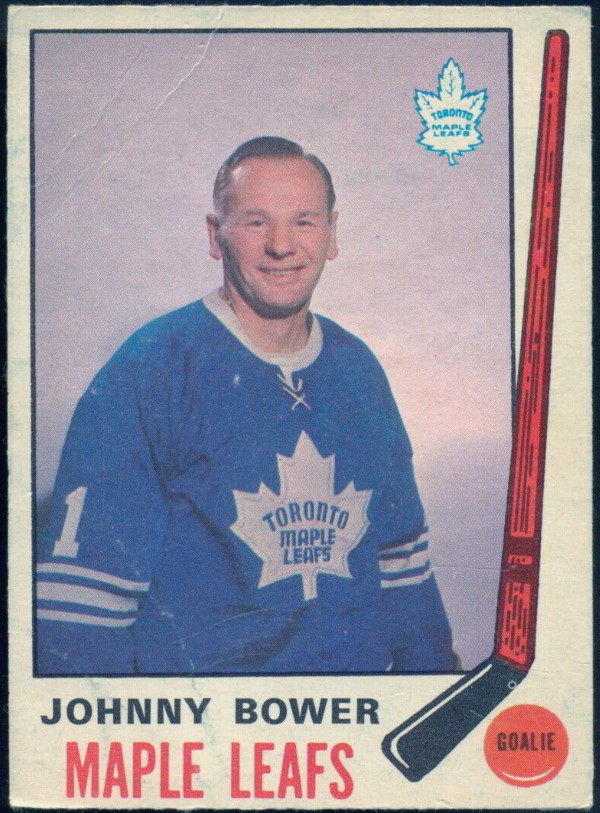
I have a little rule. I have been a Toronto Maple Leafs fan since the 1960s. I know that because I still have most of my 1969-70 O-Pee-Chee hockey cards. I also know that they have sucked for most of the 55 years since I bought them. Oh, there was Darryl and there was Wendle but in the last decade they’ve only won one playoff series – until this season. So my rule is obvious. I won’t watch them unless they win a series. Which they now have. And they won the next series’s game one too. Update: and game two.

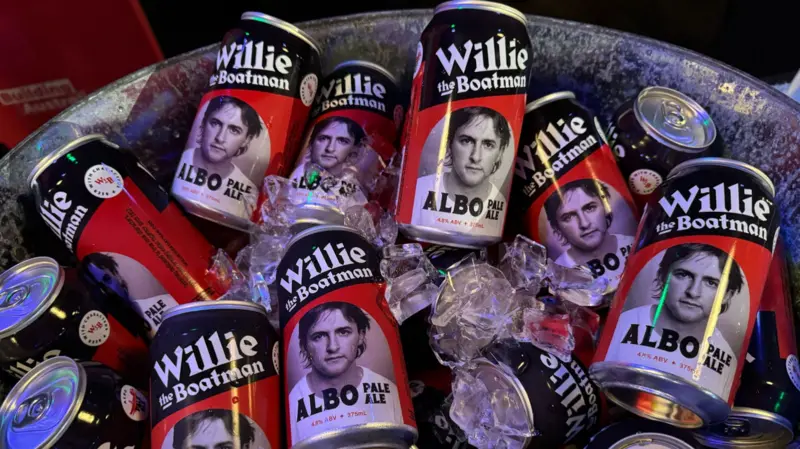
Speaking of victory, I noticed an interesting sidenote to the Australian election last weekend with the after party for the winner Anthony Albanese being fueled by Albo Pale Ale. Albo? Albo:

…you might have heard of Albo. When this beer was brewed, he was simply the brewery’s local Member of Parliament who was known for his support of the craft beer industry, trains and the ocassional spot of DJing. He went on to be the 31st Prime Minister of Australia and his younger self will forever be immortalised in this beer, which sure beats a toilet.

BTW – that toilet. Speaking of objects holding liquids, Kevin K commented an interesting comment this week: “always seems there’s a strong lack of editing for glassware articles.” Is that a lack of strong editing? And is “strong lack” related to Strong Bad? Whatever it is… I fully agree. What was the object of his disappointment?

Cusack gave a thumbs-down to two common beer glasses. “Pints and mugs are fine for a quick pour, but they do nothing to highlight what makes an IPA good. Too open, too wide, they lose aroma fast,” Cusack told The Takeout. “Steins are worse — thick glass insulates the beer too much and dulls your senses.” Pints and mugs don’t actually do much to enhance any beer’s flavor (not just IPAs), but mugs and glass steins, with their thick walls and side handle, will do the job well when keeping your beer cold is a priority.

Me, I drink pretty much everything from the same hefeweizen glass if I am wanting to pay attention. Lots of schozz space to get right in there for a sniff. And it holds the temperature well. And it allows me to compare one experience with another a neutral yet effective context. Otherwise, anything will do. What’s up with a glass per beer anyway? It’s like audiophiles who have different stereo speakers for different sorts of music.* Who can afford that? Do you really want to be like audiophiles? It all sounds connected to hyperflavor related status anxiety.

On a similar theme, I was really impressed with one aspect of the announcement from the World Beer Cup.** Transparency. For such an overblown title,*** it was interesting to see that the relatively low number of entries competing in most categories. An average of 73 entries per category. No doubt most were perfectly swell but doesn’t that mean it’s pretty likely that any winner is actually not going to be the best out there? And, with only 53 entries, they found a way to discover that SNPA is an ESB! Mucho guffaw resulted.

Mike Seay may have caught the moment both neatly and tidily with this comment this week:

I need to start asking for tasters before ordering an IPA or even a Pale. You see, sometimes they end up being hazy when there was no indication of it on the menu description. And I am over hazzies…for now. Yes I could always ask for a taster before, but I like to just go for it. Give me a pint and I’ll drink it, even if it ends up sucking. But I am getting too many New Englands when I was wanting a West Coast, so I gotta start asking, I guess.

Hazzies? Is that what we call a grouping of badly thought out hazies now? Maybe huzzies or hizzies even? And exactly how many beer educators did it take to get us to the place where you can’t order a beer and have a clue what you’re about to drink? And is that part of what Jeff meant by the wallpaper phase? Or perhaps what led us to this point:

Craft beer isn’t new and exciting anymore, and almost everyone has heard of it, and the vast majority of potential future customers have experimented with it. What breweries have to do now is sell their product to people who are already familiar with it—but also blasé about it. Craft beer is part of the wallpaper of alcoholic beverages now—present, but in the background, familiar and easy to ignore. Selling a product like that is very different than selling beer in 2000.

And Matthew C perhaps spoke to a similar idea with another sector of the beer trade in his note on Bluesky introducting this week’s feature at Pellicle:

Top stuff from Emmie Harrison-West on the site today about a really interesting no and low alcohol brewery near Edinburgh. It might be our last no and low piece, at least for now, as despite lots of (apparent) interest in what is often cited as the fastest growing sector in beer, the pieces we’ve published to date have struggled to gain traction with our audience.

What to make of all that? Perhaps conversely but definitely offering a ray of hope in this, Jamie Goode wrote an interesting article on standardization and balance (for the lyrically named WineMag.Co.Za) which easily applies to a lot of good beer:

This is the problem with the concept of balance. It can lead to a certain stylistic homogeneity; to boring wines that tick all the boxes, but which fail to thrill. Alongside this concept of balance, we have the problematic notion that we always want to drink the same sort of wine. There are even people who peddle protocols for matching consumers with the right wine for them. The truth is that we want to drink different wines on different occasions. I have lots of wines at home, but it’s not easy finding the right wine for the right moment, even though I have only wines that I like to hand. I think the concept of balance in wine is next to useless. It should be about whether or not a wine has personality, and whether or not that wine, with its personality, is the right wine for this particular drinking occasion. I want my wines to be interesting…

Me too. And my beers. But what is it to be interesting… and what makes it so? (And, he thought to himself, if we just left these clinky drinky things to individuals and their own interests, well, what would we do with all the experts and, horrors, the editors?) Hmm…  Drew Starr has an idea that perhaps may help frame the concept:

I think we discussed my theory of cognition for quirky regional food I conjured after Nick Tahou’s. Anyone can appreciate it, but you have to try it before your brain matures at 26 to have a love that defies objectivity. You always love it more when older, because the memory of youth is delicious… Ask me or anyone who grew up in Western MA who makes the world’s best burger, we’ll say White Hut, an objectively incorrect answer that we are incapable of being made to believe otherwise.

So… the things that are interesting are things that relate to the person by whom… in which… that interesting thing is / was experienced. Radical.  Matty himself, for the double, had a similar sort of tingly sensation this week, not from a recollection of youth but from being in the audience for a performance of Hamlet:

Such was the intensity and physicality of the performance as a whole that I can’t stop thinking about it. Samuel Blenkin, playing the titular role, was gripping. The way music and dance was weaved throughout meant I couldn’t look away for the whole 90 minutes. It was dark and visceral and unrelenting and sad and funny. Of course, I had to go for a pint and sit down afterwards, to help myself come down. But as I did so I realised in witnessing such a brilliant act of creativity my very soul itself felt nourished. I was full to the brim. There are moments in life, sometimes major, sometimes fleeting, but they leave a permanent mark on you. My first sip of IPA at Odell Brewery, devilled kidneys on toast at St. John, Mills Foxbic at Hereford Beer House, the reuben on rye at Choice City Deli. These are experiences that helped shape my worldview.

Is that what Goode meant by interesting? Probs. As one who is perpetually in that condition, when they prepare the syllabus for the Master degree seminar on The Beer Nut this will be one of the key passages the class will have to study:

…I didn’t think it worked very well, but I’m told by Kev the brewer and owner that I’m wrong, which is fair enough…

Returning to that piece in Pellicle, the not wrong and definitely interesting Emmie Harrison-West offered up a portrait of Jump Ship Brewing, low-no alcohol brewers near Edinburgh, and unpacked the background:

Like many of us as we age, Sonja found that her tolerance for booze had dropped. She was becoming irritable after drinking and dreaded the day after. “I was drinking less, but it was that Tuesday night beer that I was really craving. You know, when you’re finally sitting down, the kids are in bed, you’re tired and up early for work,” she says. Sonja discovered that an NA beer really scratched that itch, but she still felt like something was missing: choice. Sure, she was making better choices for herself, but found her options in terms of the variety of NA beers available were woefully limited. “That’s when I thought, ‘why don’t I just do it?’,” she tells me.

Swtiching a bit abruptly to the Health News Desk: the recent flurry of discussion about Savory IPA got me thinking again about the need to label the ingredients on beer. See, like a lot of people I am allergic to MSG – the key additive apparent miracle that transforms a humdrum beer into an amazing new style! It’d be nice to have informed decision making so I can know if my respiratory equiment is going to seize up or not.

And, perhaps taking a breather from all that above, I really liked David Jesudason‘s piece**** on the Alehouse in Reading where he found people ready to just have a chat:

It never was my plan to travel 50-odd miles in a four-hour round trip for this specific chat but that’s where my day took me. I had a vague idea to visit the Alehouse for the second time because, inspired by The Shiralee, I wanted somewhere a bit rough and ready where I knew there would be people drinking in the day despite the broad sunshine outside. The pub is covered head to toe in pump clips, has a queue of pickled egg jars at the bar and various hair rock songs being played through the speakers – the only tune I could place was Queen’s Fat Bottomed Girls, and it’s been a long time since these women made the rocking world go round.

All of which, coming full circle, brings me to the thought that Boak and Bailey shared on their Patreon back channel last weekend and gave us all the “oomph” of the year in beer, YTD-wise:

Jeff Alworth’s wallpaper post got us thinking about lots of things, but mostly that time passes quickly before you notice it. It’s easy to feel as if craft beer is a thing that just landed, beloved of fresh-faced hipsters. But even in its most recent form – IPAs and punks and skulls – it’s been around for several decades. Thornbridge Jaipur, an especially significant beer in British craft beer, turns 20 this year. There are people at university now who have never lived in a Jaipurless world – who don’t remember a time before BrewDog, or Beavertown.

Me: “I’m not 62! That old guy over there is!!!” What is it we want from all this anyway? Being part of Club Craft? Nope. A nice chat sound perfectly nice, if I am being honest. And a nice beer in any frikkin’ glass I feel like using. See, the failings of craft now so evident in 2025 – especially the failure to reign victorious as was clearly promised a decade or more ago – reminds me of what I recently read in that grab bag of convenient quips for we the aged alumni with the BAs, The New Yorker, on the translation of Catullus:

Precisely what makes much of Catullus’ work so appealing and “relatable” to modern audiences—the offhand charm, the impish vulgarity, the jazzy colloquialisms—makes him that much more difficult to bring into modern English. Ordinary language, after all, has a far shorter shelf life than does the elevated language of high literature; translations of Catullus that are barely twenty years old already feel dated. Peter Green’s “Wretched Catullus, stop this stupid tomfool stuff” sounds positively Victorian next to Mitchell’s “Wretched Catullus, stop this crazy longing.”

It lives in the past tense, does craft. It is, to my adult chidren, exactly that: stupid tomfool stuff.  Not beer, mind you, which is good. Beer remains interesting.

That’s it for this week. I am on a train later today so may be delayed in responding to all your emails and DMs and stuff. Bear with me. Until we meet again, please check out Boak and Bailey every Saturday (…as long as all their holiday fun doesn’t get in the way…) and Stan (….not quite…) each and every Monday. Then listen to a few of the now rarely refreshed Lew’s podcasts and get your emailed issue of Episodes of my Pub Life by David Jesudason on the (sometimes even but never) odd Fridays. And maybe The British Food History Podcast. Maybe? And Phil Mellows is at the BritishBeerBreaks. Once a month, Will Hawkes issues his London Beer City newsletter and do sign up for Katie’s wonderful newsletterThe Gulp, too.  Ben’s Beer and Badword is out there with the all the sweary Mary! And check out the Atlantic Canada Beer Blog‘s weekly roundup. There is new reading at The Glass which is going back to being a blog. Any more? We have Ontario’s own A Quick Beer featuring visits to places like… MichiganAll About Beer has given space to some trade possy podcasts and there’s also The Perfect Pour. Plus follow the venerable Full Pint podcast with an episode just last month!. And there’s the Craft Beer Channel on Youtube. Check out the archives of the Beer Ladies Podcast. That’s quite good but, hmm, they’ve also gone quiet this year. The rest of these are largely dead. And the long standing Beervana podcast …except they have now stood down.  As has We Are Beer People. The Share looked to be back with a revival but now its gone quiet. And the Boys Are From Märzen podcast appears suspended as does BeerEdge, too. VinePair packed in Taplines as well. All dead and gone.  There is more from the DaftAboutCraft podcast, too. Nope – that ended a year ago.   The Moon Under Water is gone – which is not surprising as the ask was $10 a month. Pete Brown’s one cost a fifth of that – but only had the one post. Such is life. Such is beer podcasting and newlettering!

*“Disco Woofer” would be a great name for an DIPA. Or a speaker.
**No doubt intended to be confused with the equally grandiosely World Beer Awards. Not to mention the World Awards of Beer.
***Olympics? That all? Surely it’s the Mount Olympus of Beer! Even as the BA continues its logical retraction, the fawning seems to be enhanced.
****His writing in which reminded me of another passage from another article in that same issue of The New Yorker from March 30 2025: “Much of the art of “Encounters with the Archdruid” lies in the way that McPhee manages to be both there and not there. He bathes his aching feet in the water. He recalls other trips he has taken with Brower and, separately, with Park. He searches for copper-bearing rocks, and, when he finds them, gets excited. But he never reveals whose side he is on. When it comes to the great question of the piece—to mine or not to mine—he gets out of the way.

The Uplifting And Inspiring Candidate For First Beery News Notes For Q2 of 2025

It’s April. Finally. Did you realize that today we are exactly the same length of time from this time last year as we are to this time next year? No? I was really hoping to start out with something profound this week… but that’s all I could come up with.* It’s got to be the election. I’m all a buzz about the election. And, as predicted last week, there has been an election beer pouring sighting this week as PM Carney took his Liberal party campaign bus to a bar in Georgetown, Ontario. He seems to have a pretty steady hand. Here’s a bit of a vid. More beer pouring please, candidates…

First up, Matthew shared the round up from the March edition of The Session with lots of good stuff. My submission was not as interesting as those of other folk* so go check out all the other entries – but also read Matthews own thoughts on why writing in this “sketching not sketchy” manner is important:

I’ve returned to blogging this year because I think getting the multitude of ideas I’ve been sitting on for months out in a way that is not bound to this process, or to the whims of a particular editor is really valuable. Writing is important, and it doesn’t matter if you’re an experienced journalist or you’re writing your first ever piece, the most important thing is that you get it done, and then move on to the next one. As I enter my 10th year as a full-time professional writer, I consider this blog to be the best place to try out ideas, and figure out what does and doesn’t work.

Next time, the host is Ding and the question is about value. Yes, there are plenty of venues and levels for we scribblers. For example, Rachel Hendry wrote a inner voice piece for the first issue of a new web mag – a wag? – called chlorophyll about a night out with the Gamay:

Tasting Beaujolais is where I learnt the term confected, a harsh word rhyming with infected and inferring the pick-and-mix stalls of the cinema complex and theatre foyer. Parma violets and foam bananas and sweet jellied cherries all manifesting in a glass that people infantilise and dismiss. Yet here, in my glass, a dismissal of an assumption takes place. A Gamay peppery and perfumed and proud. Spicy. Intoxicating. The presence of this spice allows the Gamay to take on a new meaning. A hierarchy rejected.

I like it. You can too. Just remember the scale: Beaujolais Nouveau, Beaujolais, Beaujolais Village and then the best stuff from any of the individual ten villages like Fleurie or St-Amore. From pretty silly fruit juice to age worthy complexity. Yet relatively cheap and cheery at each point up the ladder. Gamay is also pretty commonly grown for wine here in Ontario, too.

Also cheap and cheery seems to be traveling in eastern Europe but, with concerns for their safety, does one really go to Transnistra given it’s largely occupied by the post-Soviet / not-so-post-Soviets. Well, Mr. and Mrs. Retired Martin did:

…our guide Lily wasn’t much interested in facts and figures either. She showed us supermarkets, sturgeon, fridge magnet stores and the Sheriff Tiraspol ground, while changing the tour to squeeze in an unscheduled wine tasting that meant she wouldn’t get back in Chisinau in time to see Haaland and Ødegaard dismantle the Moldovan national team. What a trooper. It’s just as well Transnistrian is so quiet, hardly any traffic in the towns or on the highway, and we were able to stop at Bender’s Tighina Fortress on a promise that we “wouldn’t dawdle or attempt to read the descriptions in the torture museum” or something.

Another town with another fort is Rye in England where Pellicle took us this week where Fred Garratt-Stanley traced the history of some of the oldest pubs if you know where to look – including the chimney at The Mermaid :

Dr. Chris Moore’s research often centres around uncovering these stories by digging into architectural quirks. For example, when he learned that The Mermaid’s central chimney is made from Caen stone (a type of limestone quarried in northern France and usually shipped to England to construct religiously symbolic buildings like Canterbury Cathedral,) he was immediately intrigued. “Caen stone is basically a religious stone used to construct most of our big cathedrals, it would not have been used on a pub,” he explains. “So that’s probably Reformation stone from a dissolved monastery close to Rye that’s been reused. There’s symbolism to that; did the landlord make a conscious decision to go ‘It’s a shame that monastery’s been destroyed, let’s keep a bit of it in the pub’?”

Also keeping up with the past, Liam provided us with another slice of Irish beer history, an inquiry by the magistrates into the problem of the overpour:

…the publicans were summoned to appear in front of the local magistrates and as examples, a pair of half-gallon measures were produced belonging to two publicans, a Mr. McDonnell and a Mrs. Wafer. Both measures had been found to be correct six months previous but now held a naggin more than they previously did according to the inspector. This would equate to over 4% extra liquid per measure, which would amount to a moderate but notable loss to the publican over time. The magistrates were at a loss as to how this could happen, but the puzzle was solved when a tinman called Mr. Waters took to the stand and gave the following explanation…

There… you’re hooked! Go read the rest for yourself under that link. Not dissimilarly, Eoghan Walsh wrote a list of everything he ate outside of the home last month including but not limited to:

Half a packet of Yolloh strawberry marshmallow sweets I found hidden behind my phone at my desk. Four fruit Mentos I found in my dressing gown. A full pack of Yolloh strawberry marshmallow sweets I bought in a moment of weakness. A basket of fries at Brasserie de la Senne, shared. A portion of Boon Mariage Parfait cheese squares, with mustard, shared. Duyvis Crac-A-Nut Paprika nuts, three or four packets, the small ones from the vending machine.

And Laura Hadland wrote an excellent extended post script to a recent What’s Brewing article on sexism at British beerfests to explain the why calling out such bigotries  matter:

Why do something that you know might upset a few people when you can take a different route and try not to actively offend anyone? We all know that you can’t please all the people all of the time and no doubt whatever theme or image the St Albans committee chose, they would end up with detractors saying they didn’t like the decision. But not liking something for reasons of personal taste or preference is different from choosing to use an illustration that has sexist overtones. 

Gary has announced that he is done with X. (Me, I linger there still only for the inflamatory entertainment of the national election here, making any manner of political obsessive lose their marbles.) Speaking of smartening up, The Polk from The Hammer has been near dry for months now and is finding the loss of venue a continuing challenge:

I love a solid beer run and this last weekend was perhaps the worst, most depressing one I’ve ever taken and it illustrates a real problem the sober or non-alcoholic beer world has when it comes to helping folks crossover or drink a little less if that’s what they’re after… I must admit to longing for that jump in the car and head off down the road moment we used to have when it came to grabbing some new beers… There aren’t many options for a sober third space and while some breweries have NA offerings, good ones that aren’t more than a cheap knock-off of something they toss on the menu for the DD are not as easy to find. The culture of raising a glass with your friends is missing, the fluid conversation and excitement of new and returning beers, old favourites and solid stand-bys doesn’t exist…

Also over is April Fools Day. The best beer related prank was this announcement from Bill of It’s Pub Night:

I was surprised to see a local brewery — you can figure out which one — announce on Facebook that they will no longer be brewing their love-it-or-hate-it Donnie the Elder double gose flavored with muskmelon. Muskmelon — another word for cantaloupe — gave the beer its distinctive orange color, but the taste wasn’t for everyone.  The double gose (sometimes abbreviated “doge” on the blackboard) had a small but vocal minority who liked it, but wasn’t popular enough to keep in the rotation.  The brewers had briefly experimented with a lighter-bodied version that wasn’t as sharp, and not as pungent or orange-colored, that was called Donnie the Younger.  But it turned out no one liked that one, not even fans of Donnie the Elder.

Quote to the contrary, Jordan is seeking the real truthy truth and continuing his list of new beer rules and got so excited about #6 that he skipped past #4 and #5 to get at it – it being the lack of succession as he considers the end** of Mill Street:

We’ve had a lot of breweries open and close within a couple of years in Ontario. Sometimes their annual production wouldn’t fill a large Jacuzzi. Discounting those, let’s say you have shelf SKUs and you’re up around 2,000 hl a year. What’s your plan? Are you going to get big enough to sell to a large corporation? In this economy? Is your brand important enough to be consolidated? Will anyone miss it when it’s gone? According to my spreadsheet, which requires some updating, 119 physical brewing locations have closed in Ontario since 2017, just after Mill Street was purchased. Not many of them were purchased by larger companies.

Sticking with the Canadian scene, Mélissa Gélinas in the Aylmer Bulletin out of Quebec considers what the tariffs we face in Canada will mean for her local breweries:

Sébastien Gandy, head of sales, communications, and cultural affairs at La Dérive Brasserie Artisanale in Gatineau [notes, a]ccording to reports, the cost of a can could potentially increase by 10 to 30 cents. “If it were as simple as raising the price of a can and passing it on to customers, it wouldn’t be so complicated,” said Sébastien. “The real issue is that we’re already in a price war since there’s competition between microbreweries and macrobreweries, which always have the upper hand… Ultimately, we’re caught in a political war that makes no sense, where we don’t have the tools to achieve our goals,” he said. “I think we still feel a desire among the population to encourage smaller local players.

And elsewhere in the land, we see that desire play out with perhaps surprisingly patriotic themes:

In response to repeated threats to Canada’s sovereignty and a trade war, Newfoundland and Labrador breweries want you to grab a cold one in solidarity. On Wednesday Landwash Brewery in Mount Pearl unveiled On Guard, a Canadian pale ale made with only Canadian ingredients, like Quebec hops… In downtown St. John’s, Yellowbelly Brewery co-owner and publican Craig Flynn is individually rolling each label on to individual cans for a new brew called Elbows Up. “Sovereignty is a very big belief in Canada,” said Flynn. “If you want to come after us and try to bring us into the corner, we’re going to come back with our elbows up.”

We’re apparently so proud that we just might fight a bit dirty. Blame Gordie. We’re also just a bit weird. Well, it is a global economic crisis and election time so why not be weird? Speaking of the crisis, on Wednesday the US Department issued an addendum to the Trump Administration’s aluminum tariff that will cause some concern in the world of beer:

BIS in this notice revises Annex 1 to add the following two additional aluminum derivative products in Annex 1:

(1) beer; and
(2) empty aluminum cans.

There you have it. As of 12:01 am Eastern Time on Friday 4 April 2025 all canned beer imports will cost 25% more wholesale in the USA. So… that is it for this week. A reasonable set of reads. Nothing too exotic. But some looming panic. Still, remember that there wil be a special prize for pictures of politicians at the taproom. Was Poilievre pouring in Freddie’s Beach on Monday? I need to check that out.

Until next week, please check out Boak and Bailey every Saturday (WHILE YOU CAN!!! They are saying they are holidaying in April and May) and Stan going strong again each and every Monday. Then listen to Lew’s podcast and get your emailed issue of Episodes of my Pub Life by David Jesudason on the (sometimes even but never) odd Fridays. And maybe The British Food History Podcast. And Phil Mellows is at the BritishBeerBreaks. Once a month, Will Hawkes issues his London Beer City newsletter and do sign up for Katie’s wonderful newsletterThe Gulp, too. The Share looks to be back with a revival. Ben’s Beer and Badword is out there with the all the sweary Mary! And check out the Atlantic Canada Beer Blog‘s weekly roundup. There is new reading at The Glass which is going back to being a blog. Any more? Check out the Beer Ladies Podcast. That’s quite good and they are revving up for a new year. And the BOAS podcast for the bro-ly. And the long standing Beervana podcast …except they have now stood down.  Plus We Are Beer People. The Boys Are From Märzen podcast appears suspended as does BeerEdge, too. VinePair packed in Taplines as well. All gone. But not Ontario’s own A Quick Beer featuring… Michigan! There is more from the DaftAboutCraft podcast, too.  All About Beer has sponsored trade possy podcasts and there’s also The Perfect Pour. Plus follow the venerable Full Pint podcast. And the Craft Beer Channel on Youtube.  The Moon Under Water is gone which is not surprising as the ask was $10 a month. Pete Brown’s one cost a fifth of that – but only had the one post. Such is life.
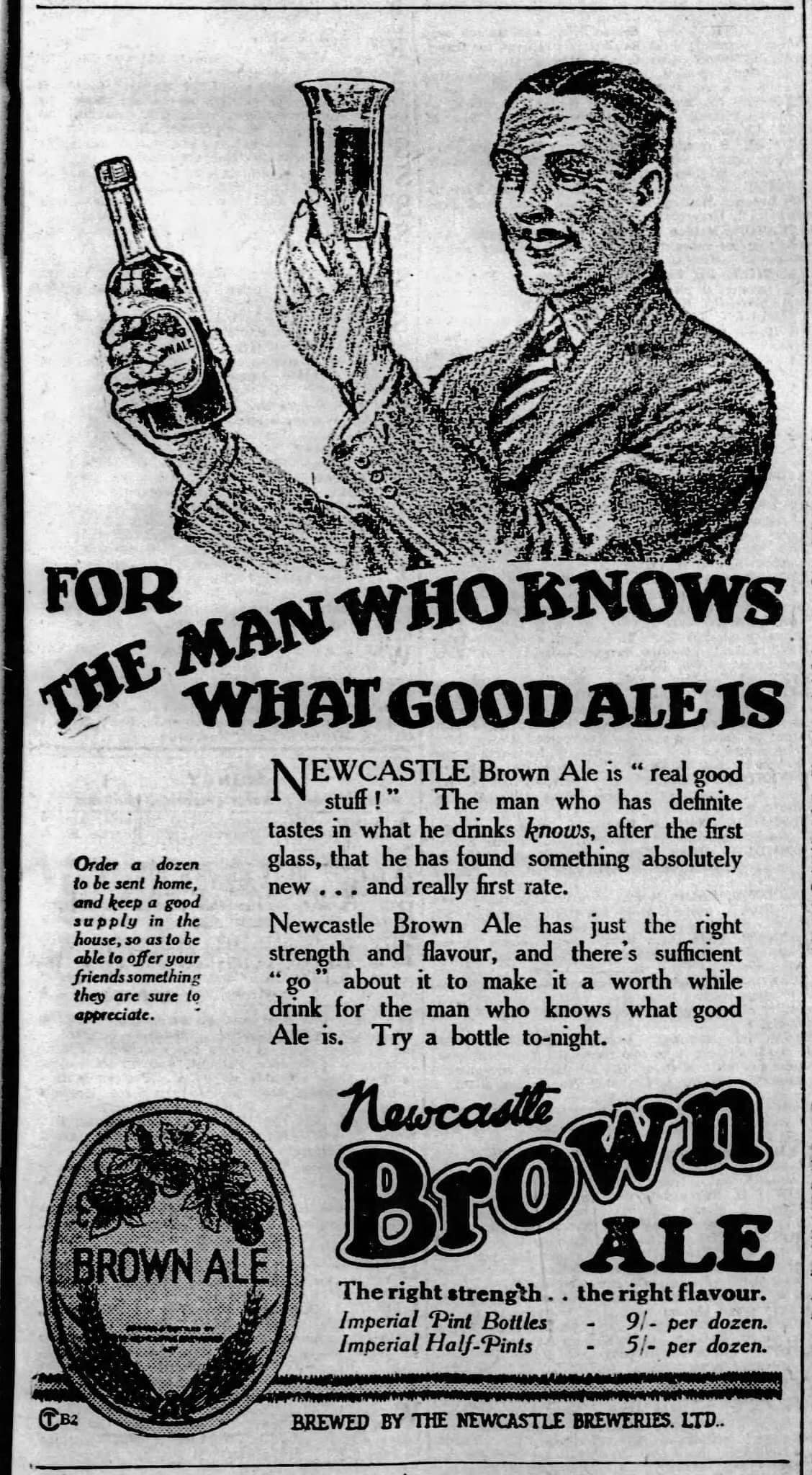
*I like to place the blame on someone other than myself for things like this but, if I am honest, it’s been a bit of a blur recently with two of us covering the work of eight for a few days, three for a bit more than that and four for longer. We hope to be up to five in a few weeks so, with any luck, I can get back to really goofing off now and then.
**Under that link, there’s an interesting comment from an officer of a megabrewer: “…but it’s not an insubstantial amount of liquid…

The Super Secret Thursday Beery News Notes That Even Hegseth Couldn’t Leak

What a week. A Canadian Federal election was called. The US government proved once again it is led by numpties. And the opening day for Major League Baseball is here. And… The Session. Who was the numbskull who decided that the return of The Session would also have a regular dedicated Friday deadline right after his beery news notes deadline? Me. Yup. That’s who. I know how Maureen feels. “What a moron you are Al,” she says. Maureen, by the way, was not only recreating the first moment she ever read my writing. She was out there fighting against the forces of darkness and her feelings were excellently captured by USA Today in her “holy fucking moley” mode at a townhall event with Senator Chuck Grassley.*  Anyway, Matthew is hosting this month’s edition and your are encouraged to get your fingertips a’tappin’** on the question of…

For the March 2025 edition of The Session I’m asking participants to produce a piece of critical writing about beer or pubs… The aim is not to be judgemental, subjective or to showcase any particular bias; this is not some finger-wagging exercise. Whereas criticism involves building an argument about why you think something is simply good or bad, critique involves taking a more holistic approach, using carefully researched and considered analysis to build a reasoned, objective, and possibly even entertaining take that benefits readers by giving them good quality information to consider.

Get at it!! What else is going on? No, not this… that’s got nothing to do with beer. Ah, yes… this! Ed has reported on a long awaited innovation in hoppetry:

…even more exciting than that is the news that a hop breeding mission going back at least 70 years has finally reached a successful conclusion: a wilt-tolerant Fuggle has been developed. Verticillium wilt is a fungal disease that can devastate hop crops and is difficult to treat… The need for a wilt-tolerant Fuggle is mentioned in a paper back in 1955 and in 2013 I heard the long quest might be only three years away from a successful conclusion. It’s taken considerably longer  that that but craft beer geeks everywhere will be delighted to learn that variety 15/10/23 has now completed its trials and it beer made with it no noticeable change of taste was detected compared to true Fuggle. The hop was released in late 2024 as Wye Fuggle.

Nice. Staying with hops, Stan released the new edition of Hop Queries at the end of last week and shared this tidbit:

Alex Barth, then president of John I. Haas, showed this chart at the 2015 American Hop Convention. It tracks hop usage since 1971. One hundred years ago brewers used the equivalent of 12.6 grams of alpha acids per hectoliter (26.4 gallons, or 85% of a 31-gallon barrel). That had fallen to 9.1 grams in 1971 and continued to drop regularly until it was just over 4 grams in 2011. It ticked up to 4.5 grams in 2011, climbed in the years that followed, and will be about 4.7 grams this year.

Which, once again, makes me want a recreated version of something like Dominion White Label to show what big ales from the early 1900s were really like. Similarly perhaps, The Beer Nut offered an explanation of “spice bag” to my eternal gratitude in case I want to undertake a recreation.

Stan also gave me plenty to poach… err… to consider in his weekly update on Monday, including this from Phil Cook on the appearance of beer related clues in The New York Times crossword puzzles:

Since noticing a reference to modern hazy IPA in the New York Times crossword and wondering what that “meant” in terms of beer’s currency in the popular culture, I’ve been keeping a tally of what else comes up. I recently realised I had a full calendar year worth of such records, and the urge to make a spreadsheet and go looking for patterns came on predictably strongly (for me) after that. The result: ninety-nine appearances, clumped around a few themes, with “ale” and “ipa” done to death, a few favoured brand names, some real clangers, and the occasional delight. I think I got all the beer-related clues and answers.

Speaking of games, did you hear Laura Hadland on BBC 4’s You and Yours talking about pub games this week?

Question: am I horrible for hating branded glassware? I mean I like a nice glass and even have a significant degree of sympathy for an anatomically correct drinking vessel for any certain sort of drink. But, as I consider these sensible thoughts from Boak and Bailey

This brings us to another problem: a glass of Budvar is much less enjoyable when it’s served in a bog standard British pint glass, with no foam, rather than in a branded mug with a good head. We don’t demand perfect Czech-style ‘pours’ and utter reverence – only an acknowledgement that it’s a bit more than a pint of lager. When that rep visited The Old Stillage, and The Swan, they apparently left behind boxes and boxes of pretty convincing Czech-style mugs. Round, ribbed, slightly squat. The beer looked and tasted great.

…I am all “yup… yup… sure… definitely…” as it all makes sense and then a whisper of a “nope” when there’s mention of a glass with a logo on it. No go the logo. See, I don’t like clothes with the manufacutures’ ads on them. I remember picking the embroidered polo player off the chest of a very nice shirt I once found in a vintage place. Too Heathers. Also – and probably more importantly – it buggers up the look of the beer. Does an apple need a wrapper? Nope. It’s an awkward imposition. Plus it’s a bit “oooh, look at me buying the good stuff” frankly. Branded glasses are the Tesla trucks of beer. There. I said it. Speaking of logos, here’s a question: can it ever be OK to have a representation of a young woman in a UK beerfest advertising:

Emily Ryans, sponsorship manager at St Albans Beer & Cider Festival, explained the reasoning behind the design in a statement: “Rather than adopting soulless corporate branding, we instead choose to highlight a different piece of local history each year, and on this occasion are marking the centenary of Ballito Hosiery Mill. In doing so, we’ve been inspired by Ballito’s 1950s advertising, exhibited by St Albans Museum”… “The character in our logo is a confident, empowering woman, designed to both celebrate the important history of a factory that employed hundreds of local women, as well as make the point that beer festivals – which have suffered from a traditionally male image – are open to all,” Ryans continued. 

Of course it is and this seems reasonable. Also being reasonable, here’s an interesting twist on the US tariffs and Canadian provinces’ booze ban response is how it has led to questions like when is a beer is a Canadian beer… even if the brand is American:

In wake of U.S. tariffs, the Saskatchewan Liquor and Gaming Authority (SLGA) said it notified beverage alcohol retailers, distributors and producers that American-branded products wouldn’t be sold or distributed in the province. The SLGA originally released a list of 54 American alcohol brands, including Bud Light, Blue Moon, Busch, Kirkland Wine and others… Labatt Breweries of Canada says it employs about 3,500 people in the country and brews brands like Bud Light, Busch and Budweiser in Canada… On Monday, the government walked back its decision. It said in a statement that the move aligned with other provinces and that it would focus on alcohol produced in the U.S.

Speaking of remote wastelands, if you ever need to get from Luton to Moldova, Martin has led the way – and done so in daring fashion seeing as the place is in the Kremlin‘s crosshairs.

Digging further into that map you’ll see not only how close Iaşi is to the Moldovan border, but how close you are to place names like Kherson and Zernov’s Phyllophora Field. 20 minutes after walking through the Arrivals door at Iaşi, we’re at central Piata Independentei and it’s all looking very Communist era. And a bit eerily quiet. “LOOK ! There’s a place saying BEER !” says Mrs RM, urgently.

Thrilling tales of discount holidays replicating The Third Man or what! Martin: “any chance of a slice of lime for the lager?” Bartender: “lime, sir? Harry Lime?

ADMISSION: here’s that surprise I mentioned above… I forgot to finished this week’s update. Wednesday got away from me. Work stuff. Home stuff. Dinner out. I woke up at 3:25 am and it was like being in a movie – snapping upright, close up on my horrified face, shouting “NNNNNOOOOoooooo!!!” Not really. So maybe I’ll fill in a few more items over the day in this penultimate space I leave for a few last stories.

Update at my 10:40 am ciggie break:*** I had actually bookmarked this piece from Mudgie-man on one retro pub move he liked:

… hang on a minute, isn’t this “unique concept” simply reverting back to how pubs used to be a couple of generations ago? Back in the 1960s, most pubs had, at the very least , two separate bars, a public bar with plainer furnishings and a more down-to-earth atmosphere, where drinkers in working clothes would be served, and a more comfortable, sedate and genteel lounge. Back in those days, the beer was usually a bit cheaper in the public bar as well. However, over the years, brewers steadily knocked their pubs through into a single room. This was in tune with the spirit of the age, being seen as more modern, inclusive and egalitarian. It also made supervision of the pub easier and, at a time when public bar prices were regulated by law, allowed the pub to charge the higher lounge prices throughout. It’s now relatively uncommon to find a pub with completely separate “sides” and, even where they do, the old price differential has disappeared.

And I had noticed one odd thing about this article in the NYT about rich brats and their spring break trips to the Bahamas – the price:

One student at each school is informally appointed a representative for GradCity, rounding up peers to book the trip and serving as a liaison with the company. At some schools, the position is handed down as an honor. The trips cost about $2,700 a person for five nights with four students sharing a room. An additional $250 “platinum pass” provides access to sunset cruises and other amenities. Longer stays and rooms with fewer students cost more. In exchange for their work, student representatives can qualify for a discounted or free trip. Sometimes, students raise funds or pool money to pay for peers who cannot afford the trips on their own.

That is pretty much the same price as a normal (if not taken by my kids) school grad trips. I understand teen participants from my part of the world go to Japan or Ireland, say, for around $5,000 a pop. Maybe more. Is the NTY concern the access to alcohol in nations where there isn’t a nutso ban on drinking under 21 years of age?

[Update over…]

One last thing. With the Federal election on up here, I need to get photos of the leaders of each party pouring a draft beer. They always have to pour a draft beer in at least one photo op during the campaign. Trudeau Jr. in 2021. Jack Layton in 2011. And, from the same year, even an unlikely backhander from Stephen Harper. It’s the law. I picked that fact up when I used to be a pundit. Send them in if you see ‘em.

Meanwhile, check out The Session and also please check out Boak and Bailey every Saturday (WHILE YOU CAN!!! They are saying they are holidaying in April and May) and Stan going strong again each and every Monday. Then listen to Lew’s podcast and get your emailed issue of Episodes of my Pub Life by David Jesudason on the (sometimes even but never) odd Fridays. And maybe The British Food History Podcast. And Phil Mellows is at the BritishBeerBreaks. Once a month, Will Hawkes issues his London Beer City newsletter and do sign up for Katie’s wonderful newsletterThe Gulp, too. The Share looks to be back with a revival. Ben’s Beer and Badword is out there with the all the sweary Mary! And check out the Atlantic Canada Beer Blog‘s weekly roundup. There is new reading at The Glass which is going back to being a blog. Any more? Check out the Beer Ladies Podcast. That’s quite good and they are revving up for a new year. And the BOAS podcast for the bro-ly. And the long standing Beervana podcast …except they have now stood down.  Plus We Are Beer People. The Boys Are From Märzen podcast appears suspended as does BeerEdge, too. VinePair packed in Taplines as well. All gone. But not Ontario’s own A Quick Beer featuring… Michigan! There is more from the DaftAboutCraft podcast, too.  All About Beer has sponsored trade possy podcasts and there’s also The Perfect Pour. Plus follow the venerable Full Pint podcast. And the Craft Beer Channel on Youtube.  The Moon Under Water is gone which is not surprising as the ask was $10 a month. Pete Brown’s one cost a fifth of that – but only had the one post. Such is life.

*Fight!!!
**Write!!!
***One need not smoke to have a ciggie break.

Your First Beery News Notes For That Dull Gap Between The NFL And MLB

The gap. It’s not going to be too bad this year with a boooorrrinnnnng Superbowl* coming a bit later in the shortened month. At least there was a nice ad for Bud. But, even with that, this gap between the end of the last football game and the start of baseball’s spring training games is a thing. A dull thing. As is the realization that I am looking past sports fandom at a trade war. Aluminum and steel this week. Am I looking like the guy to the left in the image above pushing from French-Algerian wine from the 1930s. Why does the water drinker look so worried? Why is his hair less stylish?

Yet… what does colonization teach us? Is the dodgy promise of that wine a century ago so unlike what we are like today? I was out buying a magazine last Friday evening in an actual bookstore (because, you know, I had a hankering for buy a magazine like it was 1999) and I looked at all their titles… mainly American… then looked at all the biographies of Americans intersperced with a few semi-royals at the other end of the bookstore… boy oh boy… have we up here taken on a lot of the culture developed down there. Look, I’m not part of the not a real country set but I need something to fill the hours other than lingering angst. Something will level out somewhere. Spring training may do the trick. Maybe that’s it. Down in, you know, Florida.

Speaking of gaps, have you any interest in NA wine or spirits?  Me, I can’t imagine paying non-proxy payment for these sorts of proxies for booze. But if you are interested in NA beer, keep keeping an eye on Polk. He is back with some very interesting observations on one Canadian discount dark ale. And he wrote about where is at** this week, too:

I am incredibly lucky that I still can maintain an online community, despite my switch to mostly non alcoholic options, people in craft beer can be very kind when the road gets bumpy for one of our own and this helps a whole lot. But if I was one who went out and was deeply involved, I wonder how I’d be feeling every weekend when my new normal didn’t include those aforementioned activities. It would be a little overwhelming and would only add to an already stressful time I would imagine. It’s part of why it’s so difficult to go sober, to separate yourself from the good times that feel warm and boozy because you can’t be that person anymore. Change isn’t easy, but letting go of alcohol seems particularly difficult, addiction or not.

I will allow myself more bit of one tariff news item this week from one of my regular reading outlets, mining.com, on the uselessness of tariffs but the benefits of something else:

While US steel imports account for 23% of the country’s consumption, the ratio is much higher at 47% for aluminum, according to the US Geological Survey. The US is particularly reliant on imports of primary aluminum from Canada, which supplies more than two million tonnes each year… Just under half of all cans are thrown away to be land-filled or trashed. More metal is lost through improper sorting at recycling facilities, with losses assessed at roughly one third… Roll out more deposit return schemes and some of that one million tonnes of landfill could be returned to the supply chain.

On our side of the wiggly then very straight line, somewhat similarly, the inter-provincial restrictions are being rethought. New Brunswick’s Premier Susan Holt is revisting the province’s trade barriers on booze from other parts of Canada and Ontario‘s smaller breweries are looking forward to market opportunities across the country if we ditch the current rules:

Ontario breweries, distilleries and wineries can’t sell their product directly to customers in other provinces, something David Reed, owner of Forked River Brewing Company, says limits their sales opportunities… Because laws around alcohol are up to each province, rules about transporting vary nationwide. In Ontario, the province lifted interprovincial personal exemption limits in 2019 when it comes to alcohol for personal use, the LCBO says. In comparison, SAQ, Quebec’s alcohol board, says any alcohol coming into Quebec, including donations, gifts, and souvenirs, must be reported.

Note: Following up on last week’s news, one Beer Store outlet in my fair city is closing. But… but… me being able to buy my longed for Oland Ex in a corner store? Where do the loyalties lie?

How to pass the time? Cards. Katie plays cards and wrote a bit about it:

We play Rummy. I have no memory for any of the other rules, despite my father in law trying to teach me Stop The Cab every few months. At high school, I used to play a game called shithead in the common room, we doubled the pack so the games would last forever, dragging on into lessons we should have gone to. These are some of my favourite school memories.

Japan has an issue hiring people and then coaxing people back to work in the office but one firm has a solution that perhaps might suit you:

…for new graduates in Japan, one small IT company is offering Gen-Z staff the option to take special ‘hangover leave’ in a fierce recruitment drive being dubbed ‘golden eggs for graduates’. Trust Ring Co Ltd is a tech company in Osaka with roughly 60 employees and is one of many companies combatting Japan’s declining birthrate with quirky incentives as a way to attract new employees…. employees at Trust Ring Co are even encouraged to help themselves to the draught beer machine or a selection of spirits to drink on the job in their Midoribashi offices.

Lordy. And next? What next?!? Beer sludge? Beer sludge!!! Seems “beer sludge” is now a proper term according to the headline to this BBC story:

…nutrition isn’t the only area where spent grain could make an impact. Brett Cotten concedes that early efforts by his young London-based company, Arda Biomaterials, to create leather-alternatives from brewers’ spent grain resulted in something more akin to a flapjack.  But the start-up has since successfully used supramolecular chemistry to make several proteins from brewers’ spent grain that mimic the animal proteins in leather, resulting in a strong and supple alternative. The colour reflects the spent grain used, he says. “Guinness and stouts make for a naturally black material, IPAs and lagers more mid-browns.” 

I shall recommend that to my tailor. If I had one. And I like this understanding in Jeff’s piece on NEIPAs which is one way of explaining the phenomenon:

I would argue an IPA wave was never going to wash over New England before it came along. The region’s preference toward fuller beers with sweet malts and fruity English yeasts, and they have never really embraced the bitterness and spikiness of Centennial or Chinook IPAs. The development of New England IPAs was not unusual: breweries adjusted their process to draw out those incredible flavors and aromas Citra (and successor hops) had.

Careful readers will recall my habit of going to Maine back when the Canadian dollar was worth 95 cents US or more. In 2013, the good beers on offer at Fenway were Long Trail pale ale, Harpoon IPA and Wachusett Green Monster.  New England had plenty of IPA love before NEIPAs… they just weren’t those IPAs.

Speaking of good explanations, in the emailed announcement on Pellicle‘s piece on independent brewing in Thailand, the editorial board of that there publication made an excellent statement on these sorts of things:

About a year ago I received and subsequently rejected a pitch from a writer called Joey Leskin, who writes a great newsletter about beer in London called Beer in the City. I turned it down because I am overtly aware that stories written by British writers about beer culture in other countries can come across as voyeuristic, and often don’t let the voices of the people involved in that scene shine through as they should. Fast forward six months and I was invited to become a mentor by the British Guild of Beer Writers. I agreed, and by coincidence was subsequently assigned Joey as my mentee.

This is a much nicer way of explaining and dealing with what I call “drive-by expertise.” It’s nice that you got to visit. Very nice. But I’ll usually  turn to the local for understanding, thanks.

People who are very much on the scene if not in the scene are Boak and Bailey and this week the scene is very much where they are or at least were – at the Central Library in their own fair city of Bristol, England. There, they came upon what is definitely a scene:

A few weeks ago a special exhibition was laid on at the library on the subject of beer and pubs. Items from the reference collection were put on display in an ornate wood-panelled room and visitors were invited to shuffle round and have a nose about. We visited and were drawn at once to a hefty hardback volume collecting together editions of The Golden Cockerel, the house magazine of Courage, Barclay & Simonds, formed in 1960 when Courage acquired Simonds of Reading. These particular issues of the magazine were from 1962 to 1964 and seemed to include a remarkable number of pub openings.

What follows can only be decribed as remarkable, too. An unpacking of the story of many of those pubs while guiding one to an explanation of the name for “a youth paid to collect dry sand from coastal caves to spread on saloon bar floors.” Fabulous. And a welcome break from the news about those running pubs dealing with the rising costs of running a pub.

And Laura Hadland has updated the story of the Crooked House and the legal battle which has ensued since its demolition:

11th February – And the appeal hearing has been delayed. ATE Farms lodged a High Court challenge against “the Planning Inspectorate’s refusal to postpone the Planning Enforcement Public Inquiry” according to a statement from South Staffordshire Council This means that the public enquiry will now not go ahead as scheduled on 11th March and is unlikely to occur before the criminal investigation is concluded. You can read updates from the Council on their website. According to the Times & Star, the police work continues – “Staffordshire Police said in July last year that six people arrested in connection with the fire have been released from their bail, but remain under investigation.”

N’oubliez pas!!!

There. It’s been a bit of a busy week outside of these readings again. I worry that I am not entertaining enough. I actually don’t but I wonder. That’s a better way of putting it. Enough to worry about out there in the real world, isn’t there. Until when we meet next, please check out Boak and Bailey every Saturday and Stan going strong again each and every Monday. Then listen to Lew’s podcast and get your emailed issue of Episodes of my Pub Life by David Jesudason on the (sometimes even but never) odd Fridays. And maybe The British Food History Podcast. And Phil Mellows is at the BritishBeerBreaks. Once a month, Will Hawkes issues his London Beer City newsletter and do sign up for Katie’s wonderful newsletterThe Gulp, too. The Share looks to be back with a revival. Ben’s Beer and Badword is out there with the all the sweary Mary! And check out the Atlantic Canada Beer Blog‘s weekly roundup. There is new reading at The Glass which is going back to being a blog. Any more? Check out the Beer Ladies Podcast. That’s quite good and they are revving up for a new year. And the BOAS podcast for the bro-ly. And the long standing Beervana podcast …except they have now stood down.  Plus We Are Beer People. The Boys Are From Märzen podcast appears suspended as does BeerEdge, too. VinePair packed in Taplines as well. All gone. But not Ontario’s own A Quick Beer featuring… Michigan! There is more from the DaftAboutCraft podcast, too.  All About Beer has sponsored trade possy podcasts and there’s also The Perfect Pour. Plus follow the venerable Full Pint podcast. And the Craft Beer Channel on Youtube.  The Moon Under Water is gone which is not surprising as the ask was $10 a month. Pete Brown’s one cost a fifth of that but only had the one post. Such is life.

*What wasn’t boring was the after game celebrations in Philadelphia according to the police scanner: “we lost all the barricades!!!” and especially ““i now have seven or eight people on horses, the fireworks are spooking them and they’re rearing up….they’re civilian horses”!!! And there were some other ads. BeerBoard added some very particularly fine detail on who was drinking what before, you know, the barricades were lost: “Coming off two years of decline for the Big Game, Light Lager saw an increase of +5.6% on the day. Lagers, the #2 style, saw a noted decline of -6.5% in share. IPAs, the third-ranked style, decreased for the second straight year, down -7.9% over 2024. Michelob Ultra was again the top-poured brand nationally on the day, and was up a noted +11.9%. Bud Light, the #2 brand on the day, was -3.0% versus 2024. Miller Lite (+5.4%), Modelo Especiál (+9.6%) and Coors Light (+3.4%) rounded out the Top 5 for draft.” That is very spedific stuff for two days later…
**Or as translated for Maritimers: “where he’s to, too.

The Beery News Notes For The Week Tariffs Were Punted Down The Road

Because I am a lawyer, my job includes dealing with a bit of mayhem. I even get a bit immune to it, frankly. Not so much in those early bottom feeding days. Remember that? Yeesh.* Anyway, is it back? I dunno. We’ve reviewed all the graphs and charts like this one up there** and now that everyone and their dog calculated the percentage of the US beer market*** made up of the combo of Canadian malt and aluminum as well as Mexican imports, well, it got delayed. Fine. The big bourbon ban was shelved and then restocked. It all got a bit whiplashed and likely will again. As Jeff wrote, this is all getting somewhere between real and unreal:

Enormous changes are underway, and the stability of the U.S. government is no longer a given. Barley prices may seem like an incredibly mundane detail (picayune, even) to pluck out of this hurricane of news. But they are representative of the effects these disruptions will have. The price of barley is directly tied to the health of US businesses, jobs, and lives.

Well, it’s all for the best right? It’s must be. And, between you and me, a closer economic union wouldn’t be all that bad. I sure liked when the Canadian dollar was close to par, gotta tell ya. Stash wantes to stash. Anyway, now that we have a whole 28 days left in the reprieve, I can get on to the important business of worrying about snacks and beers for Superb Owl Sunday. And, for the 47th year in a row, a bunch of people have written about what you should eat and drink. You can find your own damn links for that stuff.

Somewhat relatedly, speaking of large bodies of water that suddenly need to be renamed:

People don’t buy “domestic” cars or salute the “domestic” flag, so they shouldn’t drink “domestic” beer. At least, that’s what Anheuser-Busch’s CEO thinks. Brendan Whitworth, the beermaker’s chief executive, says he  wants to change the term that describes his US-made beers, which includes Budweiser, Michelob Ultra and Busch Light, to “American”… “The pride we take in this great country should also be properly and accurately applied to our great American beers,” Whitworth wrote. “They are brewed by American workers who receive American wages. They rely on American farmers and on American raw material suppliers. They support American causes like the military and first responders. They pay American taxes.”

Speaking of legal mayhem, here’s a story out of Washington state on one brewery’s fight against the local municipality care of WBB:

Although Dominique Torgerson just wants to operate a brewery, she is now well-versed in this kind of legal battle and knows way more about these issues than any brewery owner should ever need to know.  “With the recent overturning of the Chevron Deference doctrine at the U.S. Supreme Court, agencies should no longer have unchecked power to interpret ambiguous laws in their favor,” she explains. “Our petition to the Superior Court cites extensive case law, and we are prepared to take this battle to the U.S. Supreme Court if necessary.” “Additionally, these zoning restrictions violate Washington State RCW 66.08.120, which explicitly prevents municipalities from regulating alcohol businesses in ANY manner,” she adds.

Boom!  Fight!! Speaking of a good fight, I am really struggling on Pellicle‘s English Premier League fantasy league this season – but unlike one pub’s owners, I did well when I picked the striker for Nottingham Forest the other week:

It had seemed like the perfect promotion to get a few more punters through the door on a Saturday afternoon – give away a free pint for every goal scored by Nottingham Forest that day. But seven goals and £1,500 worth of pints later, Nottinghamshire pub landlady Beccy Webster realised she might have scored a spectacular own goal. “It got to half-time and I thought: ‘Oh my gosh, I don’t know if I can carry this on.’ But I decided I was sticking to my word,” she said. “This is what I’ve said I’m going to do. Whether it’s four, five, six, seven, 10 goals, I’m seeing it through now. We ended up giving away 300 pints.”

Keeping with the only beer mag that matters, we received another bit of biting commentary about the craft-bro rut from David Bailey (no relation) over there last Friday. He neatly acknowledges the line between what may and may not be said about good beer culture and then crashed through it. In this episode, he mocks the desperate lengths some brewers got to in order to extend their seasonals line up.  I like how these pieces are effectively political cartooning.

With his even more unreserved and thorough approach, David Jesudason has reported on the misogyny that ruled at one imaginatively named London wine bar in the 1970s and how it served as one launching point of an anti-discrimination campaign:

“El Vino stood as a symbol of an ordinary drinking place,” Anna Coote tells me, “that wasn’t a private club and they were not letting women buy drinks at the bar which was very petty of them. But at the time the men were hanging on to their control over how their favourite pub was being run… [Anna and and Tess Gill] used the El Vino as a way to change the law and they didn’t see themselves as patrons of the bar. Anna says they went to El Vino with a couple of male lawyers and were refused service and this was all the proof they needed. “It was to get the law enforced not to get drinks at the bar,” Anna tells me. “It was purely a matter of principle. Neither Tess nor I wanted to spend a minute inside El Vino’s drinking wine or buying drinks!

And we read… well, I read some interesting reporting from Phoebe Knight in BlogTO on the effects being already felt by the big brewer’s retailer, The Beer Store, following Ontario’s expansion of retail beer sales to corner stores last year:

While 23 stores out of over 350 across the province seems like small potatoes now, John tells blogTO that there could be a far larger crash coming in the near future if no further agreements to maintain the stability of The Beer Store against competition are made. “According to the early implementation agreement The Beer Store must keep 300 stores open until the end of 2025,” John tells blogTO. “After that there is no limit on closures.”

Further news on the calls for change in beer retailing out of Korea too:

Liquors registered as traditional products in Korea, such as “makgeolli” (rice wine) and Andong soju, are exempt from the online sales ban, allowing them to be delivered directly to consumers’ doorsteps. In contrast, domestic soju and beer products are only accessible via offline stores and restaurants. Major local producers argue that lifting the ban would expand their distribution channels and improve market competitiveness. Korea and Poland are the only member states of the Organisation for Economic Co-operation and Development, or OECD, where an online liquor sales ban remains in effect.

In our weekly (it seems) report on contradictions in medical advice, we focus today on the mind. First up, this study published in the American Journal of Psychiatry on “the real-time subjective effects of alcohol in individuals with alcohol use disorder”:

This study aimed to investigate the real-time subjective effects of alcohol in individuals with alcohol use disorder (AUD) and those prone to negative affect by virtue of having comorbid depressive disorder (DEP)… The AUD group, regardless of comorbid DEP, reported increases in stimulation and rewarding effects that persisted throughout most of the alcohol episode relative to the non-alcohol episode. To a lesser extent, alcohol relieved negative affect but this was not specific to AUD or DEP groups.

The news is what you’ve wanted to have confirmed: “…researchers found that alcohol consumption reduced negative feelings…” Conversely, in The New York Times, we read:

… if you become physically dependent on alcohol — after years of drinking heavily, for example — the constant ramping up of GABA can cause the brain to produce less of it, and glutamate becomes more dominant. The brain then becomes “hyperexcitable,” which can lead to symptoms like panic attacks, said Dr. Kathleen Brady, an addiction expert and professor of psychiatry at the Medical University of South Carolina.

As always, good luck making those two stories fit in with each other! Speaking of best wishes, The Beer Nut has seen of Dutch brewery De Molen with a review of a last collaboration before its expiration:

This is a beer to shut me up about nitro for a minute or two: there is plenty of flavour, and while it may have turned out quite cloying if carbonated, I can’t complain when nitrogen’s deadening effect successfully balances the beer. Observation two is that a bit of barley wine energy really suits the Irish red style. Boost that gravity and hold back on the aroma hops: there’s a niche available somewhere adjacent to the strong Scottish ale genre. Thanks to both breweries for showing the way, and with an extra poignancy now that the permanent closure of De Molen has been announced for later this year.

And Boak and Bailey have found an even loftier pint – a perfect ESB:

Our perfect pints on Friday were served this way, as towers of autumnal mahogany topped with loose but steady foam.The aroma was of marzipan and fresh woodland sap. And it tasted like the inevitability of one pint too many, like the Holy Grail, like the White Whale, like a miracle in progress, like being 25 again learning for the first time what beer could really be. It was so good that it made Jess switch from Titanic Plum Porter. It was so good that she didn’t even resent the inevitable day after headache. It was so good that, even with the headache, she co-wrote a blog post about it.

Lovely bit of writing right there.

In 2006, I released the results on an experiment involving Burton Bridge Porter and the passage of time. I am not sure reading back on my notes now that I understand what happened.  Far more lyrical is Pete Brown in his up to date study of that same brewery published in that place that really should be named which is already named above:

Burton Bridge Beers are still Burton Bridge, and Heritage are still Heritage, but both brands are owned by the same company and brewed in the same place, by two stellar alumni from the craft beer world.  Two dying embers rekindled, with new fuel feeding the flame. It’s a misty, drizzly day when I visit Burton Bridge. The flagstones in the yard are slick and shiny, like they always seem to be. The brewing team are wrapped up against the chill as they wash casks, their breath misting the air. After a quick tour of the kit—including the parts that are over a century old and look like they’re  held together by willpower alone—Emma and I retreat to the cosiness of the pub.

Again, some lovely writing right there.

Finally, what was old is new again, as we read in this week’s dispatches from the eggheads:

Do you long for that tart fruity flavor of a sour beer but wish the complicated brewing process were faster? Norwegian scientists might have the answer: field peas, as well as beans and lentils. According to a new paper published in the Journal of Agricultural and Food Chemistry, experimental beers made with the sugars found in these foods had similar flavor profiles to your average Belgian-style sour beer, yet the brewing process was shorter with simpler steps. “Sour beer is the beer enthusiast’s alternative to champagne,” said co-author Bjørge Westereng of the Norwegian University of Life Science.

Oh, Bjørge. You ever notice those times when it is clear someone has never had champagne? But… pea beer was a thing. At least beer made with pea shoot kilned malt was. And Japanese third-category beer.

Thanks again for everyone who participated in first edition of The Session Revived. Here’s the round up.  As Stan was kind enough to say, “Much of the best reading last week was on Friday, when The Session revival was pretty dang successful.” Join in next time we gather! In the interim, please check out Boak and Bailey every Saturday and Stan going strong again each and every Monday. Then listen to Lew’s podcast and get your emailed issue of Episodes of my Pub Life by David Jesudason on the (sometimes even but never) odd Fridays. And maybe The British Food History Podcast. And Phil Mellows is at the BritishBeerBreaks. Once a month, Will Hawkes issues his London Beer City newsletter and do sign up for Katie’s wonderful newsletterThe Gulp, too. The Share looks to be back with a revival. Ben’s Beer and Badword is out there with the all the sweary Mary! And check out the Atlantic Canada Beer Blog‘s weekly roundup. There is new reading at The Glass which is going back to being a blog. Any more? Check out the Beer Ladies Podcast. That’s quite good and they are revving up for a new year. And the BOAS podcast for the bro-ly. And the long standing Beervana podcast …except they have now stood down.  Plus We Are Beer People. The Boys Are From Märzen podcast appears suspended as does BeerEdge, too. VinePair packed in Taplines as well. All gone. But not Ontario’s own A Quick Beer featuring… Michigan! There is more from the DaftAboutCraft podcast, too.  All About Beer has sponsored trade possy podcasts and there’s also The Perfect Pour. Plus follow the venerable Full Pint podcast. And the Craft Beer Channel on Youtube.  The Moon Under Water is gone which is not surprising as the ask was $10 a month. Pete Brown’s one cost a fifth of that but only had the one post. Such is life.

*Though the mass firings are very old school Atlantic Canadian. Maybe we do fit in culturally speaking! Note: these things also happen in beer
**No, it really is an actual chart!!
***We also learned that 88% of all beer consumed last year made by Canadian workers in Canadian breweries.

Your Beery News Notes For The Week That The Session Will Be Resuscitated

It will! Will it? Will it take? Will it last?  Errr… will it even happen? Hmm… as I mentioned, we are going to try to see if there is any interest in having a go at reviving The SessionStan‘s excited as are Matty and Alistair. Maureen is Sessio-curious. We’ll find out tomorrow. More about that later – but it does seem to be a reasonable thing to try as January fades while February looms. Does it loom? At least it’s shorter than January. Thirty days to March, baby. As of today. That’s all that matters to me now.

That image to the right (to your right, to the left to me) is from Newcastle’s Evening Chronicle of 24th May 1927, as reposted on FB by the Brewing History Society. That’s apparently about a month after the beer was first sold. Me, I myself too only drink it from a large labratory test tub while waxing my head with Brylcreem. Big news in beer the week was the recall of certain bottlings of the old Newkie Broon due to glass fragment contamination in some 550 ml bottles:

Ale drinkers who have purchased a bottle of Newcastle Brown Ale with the best before date November 30, 2025, as well as the correct batch code, should return their beer for a full refund. The affected batches are: L4321, L4322, L4323, L4324, L4325, L4326, according to the Food Standards Agency.

Further shocking news coming so soon after the UK market collapse of Brylcreem and large home use test tube sales is the story that gin sales are slumping as reported in The Times:

…on the chilly November day that I visit Sipsmith it is remarkably quiet. The distilling hall is empty and I spot about three workers in the large office at the back. Then there is the cold. “If we’re distilling, it’s usually lovely and warm in here,” Fairfax Hall, 50, one of three co-founders says as we sit down with our coats on. For they are not distilling: in fact they have already finished for the year. “Volumes fell more than we anticipated. We stopped distilling a couple of weeks ago [mid-November]. The industry has definitely slowed down. I mean, if you look at the numbers it is way off the peak.”

There are reasons for this, ranging from adherence traditional religious practices to social media’s influence on pop culture. Elsewhere, some continue to see rainbows and maybe even a unicorn or two.

Following up on the story that emerged last week, Stan has the background on the split between the BA and the AHA going all the way back to the tensions which played out in the corporate structuring and restructuring.

Many of the packaging brewers questioned the participation of homebrewers, Hindy wrote. “What role could a bunch of hobbyists play in a brewing industry trade association? Complicating the discussion was that the AHA was losing money. The AOB was subsidizing it. Mosher and (Rogue Ales founder Jack) Joyce argued that the homebrewers were the biggest fans of craft brewers, the first line of defense in any attack on the industry.” In the agreement that eventually followed, the membership would elect seven packaging brewery board members, four brewpub members, and the AHA would choose two board members.

Jeff gave a hopeful forecast: “…homebrewing is a wonderful hobby that satisfies our wholesome human creative urges…

BREAKING: In British Columbia there is no drinking and bowling! Stop it!!

“The inspectors observed the patron do this – carry what appeared to be a glass of beer into the bowling alley area and consume the beer in that area – three times in eight minutes,” reads the decision by Dianne Flood, delegate to the general manager of the regulation branch. Inspectors reported the infraction was in “plain view and sight for any observer” and that a staff member working near the bowling alley should have noticed and spoken to the customer.

Three times! Entirely justifies the tens of thousands of dollars allocated from the public purse to prosecute these dastards.

Speaking of violations, is the Mliko pour an imposter? A new trend posing as tradition!?! Alistair never saw it when he lived in Czechia in the 2000s and Ron argues it was non-existent in the 1980s:

Something which never seems to get mentioned nowadays is the serving method. People go on about crap like “mlíko” pours – something I never came across in the 1980s and which I suspect was just made up recently. But not the reason why Czech beer was so drinkable: air pressure. Rather than CO2, air pressure was used to pump up beer from the celaar. Much like tall fonts in Scotland. The resulting half litre had a wonderful creamy head, but wasn’t overly fizzy. Being more like beer served through a sparkler in texture. Why does no-one lament the loss of this wonderful practice?

Why? Whhhhyyyyyyy??? Because no one cares, I suppose.  Except Ron. And it is to be expected as there is one constant in beer [Greek Chorus (interjecting): “… well, two after money…“] and that is change. Face it. Breweries open and shut. Get build and get sold. Such is life. But apparently one regional, the makers of a gas station shandy and other more ancient if less than universally loved beers is now a focal point of complaint [Greek Chorus (interjecting): “…or perhaps just content creation…“] as owners of 36 years Molson Coors has announced it is shutting its Leinenkugel  brewery in Chippewa Falls, Wisconsin:

Given that the firm would announce its plans to end Leinenkugel’s century-and-a-half-long streak of brewing in Chippewa Falls (interrupted only by Prohibition, which it survived by making soda water and near beer) just three months later, St. Jacques could have been a little more clear. Sure, the Leinie brand will technically live on, even though the brewhouse from whence it came, Chippewa Falls’ longest continuously operated business, has been relieved of its production duties. But MC’s move to shutter what was the seventh-oldest still-operating brewery in America is clearly a change in its commitment to Leinenkugel — and not for the better.

I mean I get it but Molson Coors and its big beer predecessors in title have owned this northern brewery for about a quarter of its existence. That’s a pretty good run for a relationship between a middling regional and its multinational owners. What do you want?

You know what I want? More articles like this from Anaïs Lecoq in Pellicle on Coreff, a real ale… the first real ale from France which has an interesting origin story:

Brewing nothing but real ale at the time, Coreff came to life with the help of a person that will mean nothing to the vast majority of French people, even the beer drinking type. Yet he’s considered a legend on the other side of the English Channel: Peter Austin, founder of Ringwood Brewery in Hampshire. “If some dare to call me the pope of microbreweries, today, I can claim the right to appoint Jean-François Malgorn and Christian Blanchard as my disciples,” Austin wrote in a 1988’s commercial leaflet recalling his partnership with the brewery.

It’s excellent and in a way struck me as a sidebar essay that pairs neatly with Brew Britannia by Boak and Bailey. Brew Bretonia?

Learning once again that there is no topic which can’t be slathered with the dumbness of “woke!!” protesters, one brewery in Australia has learned that protecting nature is now “woke!!” too:

Aussies have voiced their outrage at a popular beer company by running over cans of the liquor, in a boycott of the company’s recent charity campaign which has been slammed as “woke”. The Great Northern Brewing Company came under intense fire following a recent campaign — Outdoors for a Cause — which aimed to raise money to buy and protect land to add to national parks in support of the non-profit organisation Foundation for National Parks and Wildlife, according to Yahoo News. However many moved to boycott the company, which typically uses imagery of people outdoors to market their beer, following the campaign’s announcement. Facebook group 4wd TV lashed out at the move in fear the money raised would be used to turn state parks into national parks.

Because the particular colour of the uniforms of the government park rangers… matters? No, turns out you can’t fish, camp or hunt in an Australian National Park. So they are “helping to stop bush users using the bush.” All sounds pretty unCanadian if you ask me. Don’t they have Crown land?

I missed this info when it came out earlier in the month but this article in GrainNews is an excellent primer on the issues facing a barley farmer dealing with the reality that a $1 million malt barley crop can turn into $600,000 of feed:

“We need to know what that whole field looks like,” he says. “I’m looking at one kilogram to make a million-dollar deal, so that sample you give me better be what you’re actually going to deliver.” Also, if the grain sits for an extended period, it can degrade, so he cautions farmers to re-sample the bin every six to eight weeks. If a sample meets the specifications in late summer but a load’s not delivered until the following spring, a lot can go wrong. “Somewhere along the way, it heated, got bugs in it, or the germ dropped off,” he says. “We want to see that so we know for ourselves that you still have the malt that you said you had for us.”

And on the health beat, there was a helpful interview this week with Otis Brawley, Johns Hopkins Bloomberg Distinguished Professor of oncology and other things, unpacking current findings and recommendations:

An estimated 741,300 cancer cases in 2020 were linked to alcohol consumption. It is ranked the third leading preventable cause of cancer. Research shows that alcohol can cause cancer by breaking down into a metabolite that ultimately damages your DNA, which can lead to the formation of tumors. And the effects of alcohol seem to compound. 

Which sorta does lead to the understanding that there isn’t a net offset by taking on other good behaviours. Jogging isn’t exactly buulding a wall around your DNA. But there was also this intereting nugget: “We have evidence that drinking increases the risk of this cancer. We don’t have as strong evidence that to stop drinking reduces the risk.” So you may be screwed already. And by “you” I mean me.

Finally, something in life where plumpness is a plus! And… want to become an instant hero in the world of good beer? Buy San Fransico’s beer bar Toronado. Buying the building, business and inventory for only $1,750,000 actually sounds like a bit of a deal:

For sale is a 2900 sq ft 2 unit commercial building and business for sale together. A small restaurant space with Type 1 hood, and bathroom in approximately 500 square feet, (delivered vacant). The remainder of the building is occupied by the time honored and award winning Toronado Pub… you can’t design this vibe; you can only nurture it over decades. Yet the main attraction remains the beer: The 50 taps, three cask handpulls, and 90-plus cans and bottles celebrate the best of California and around the world, including hits from Allagash, Alvarado Street, Cellarmaker, Monkish, North Park, and Russian River, and on to Cantillon, Schneider, Tilquin, and more.

Last Friday, David Jesudason handed the keys for his newsletter over to EU citizen and brewer Noora Koskinen-Dini who has recently been dismissed by an English brewery, which may be the sort of story retold in greater numbers soon over here given the new immigration policies in the USA:

They told me on these pre-employment calls they wanted me to manage the bar and then take over the brewing side… When I arrived there was a general manager who worked with me to show me how things were run in the taproom – it didn’t include the brewery because this was Paul’s domain. I worked mainly at the taproom, there was no brewery work, not even shadowing. I was summoned to another meeting where Paul told me ‘because you’re unhappy and you can’t buy the brewery I’m going to let you go’. I felt this was rambling nonsense and not how you do things. After all this time, after all this love and passion, my employment was terminated because someone thought I was unhappy? I tried to explain the consequences of this decision that it would affect my whole family and it meant I would have to ultimately leave the UK.

The brewery in question was given equal time by David. With some startlingly conflicting factual statements. Is this what’s meant by selling experiences?

Finally and once again, a reminder to all you scribblers and wannabe scribblers.  The Session is breaking out the tabbourines and a big tent for a revival of the greatest thing to ever happen in beer writing. From 2007 to 2018, there were 142 editions easily tiggering the writing of one billion words. So tomorrow on Friday January 31, 2025 please post your thoughts – via blog, newsletter, social media… anything – on the topic:

What is the best thing to happen in good beer since 2018?

Then once you have done that, leave a note here in a comment or even email me the link at beerblog@gmail.com! Or let us know some other way. I will aggregate and report back. Try using #TheSession, too, even if there are others in that information superhighway lane.

While we wait for the results, please check out Boak and Bailey every Saturday and Stan going strong again each and every Monday. Then listen to Lew’s podcast and get your emailed issue of Episodes of my Pub Life by David Jesudason on the (sometimes even but never) odd Fridays. And maybe The British Food History Podcast. And Phil Mellows is at the BritishBeerBreaks. Once a month, Will Hawkes issues his London Beer City newsletter and do sign up for Katie’s wonderful newsletterThe Gulp, too. The Share looks to be back with a revival. Ben’s Beer and Badword is out there with the all the sweary Mary! And check out the Atlantic Canada Beer Blog‘s weekly roundup. There is new reading at The Glass which is going back to being a blog. Any more? Check out the Beer Ladies Podcast. That’s quite good and they are revving up for a new year. And the BOAS podcast for the bro-ly. And the long standing Beervana podcast …except they have now stood down.  Plus We Are Beer People. The Boys Are From Märzen podcast appears suspended as does BeerEdge, too. VinePair packed in Taplines as well. All gone. But not Ontario’s own A Quick Beer featuring… Michigan! There is more from the DaftAboutCraft podcast, too.  All About Beer has sponsored trade possy podcasts and there’s also The Perfect Pour. Plus follow the venerable Full Pint podcast. And the Craft Beer Channel on Youtube.  The Moon Under Water is gone which is not surprising as the ask was $10 a month. Pete Brown’s one cost a fifth of that but only had the one post. Such is life.