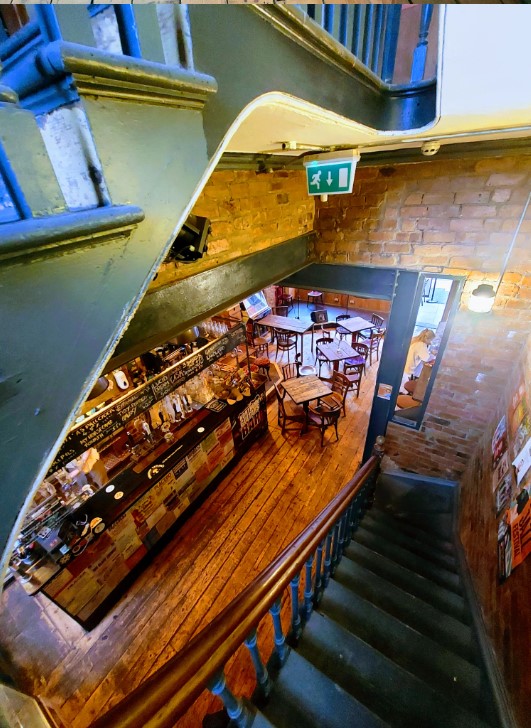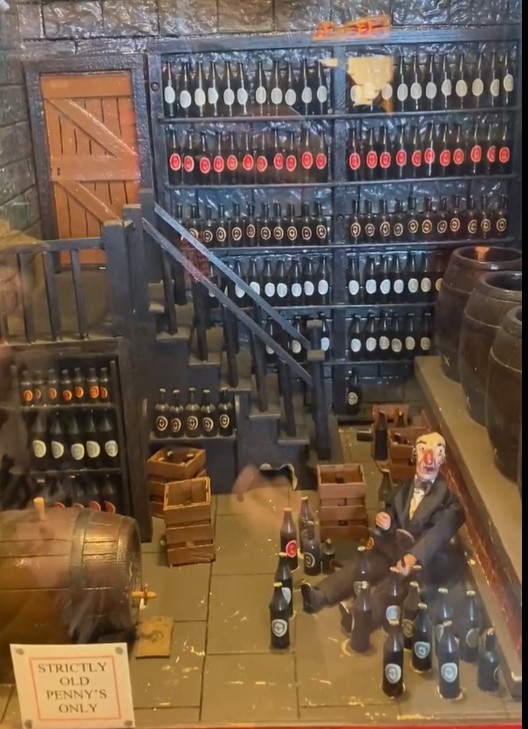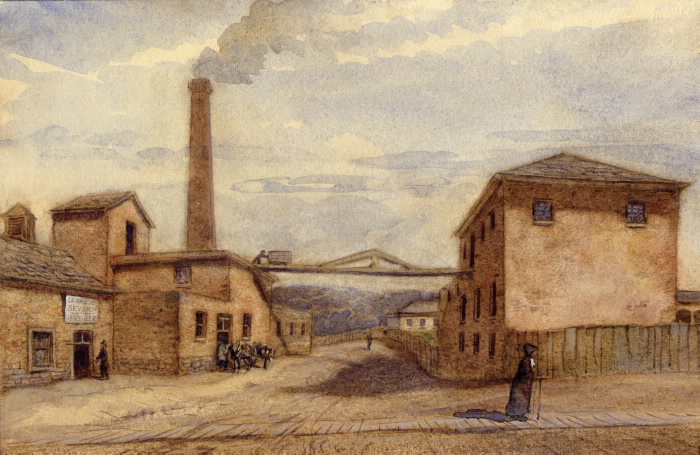
 With the onset of September comes the offset of the the garden. I am still planting things that have a hope to give us a bit of return before the frosts – basil, peas, leaf lettuces – but the fact is it’s now about starting the long process of taking down the pole beans, filling up the composters and putting away pots for next year. I saw this image on the Brewery History Society’s FB page and immediately liked the scene. The sweater vest and long trousers in particlar are a good and fashionable reminder that there’s still lots needing done as autumn advances.
Speaking of the change of seasons, The Beer Nut is looking forward to summer being behind him if his reviews of warm weather drinks including something called Fruit Sundae Gelato Sour is anything to go by:
It’s lactose rather than Lactobacillus that drives the flavour, and indeed the smooth and heavy texture. Vanilla forms the base of the profile, to which is added a mish-mash of fruit concentrates (four are named on the ingredients) with strawberry and blackberry being the most apparent. And that’s it. While the mouthfeel reflects the high ABV, the flavour complexity doesn’t. The weight also means it doesn’t work as a summer refresher, and is more of a pudding substitute. This is simple and inoffensive stuff, so long as oodles of lactose and rivers of fruit gunk don’t bother you.
And Boak and Bailey were also feeling the last of the summer and looking forward to the coming change if we can judge by their last “beers of the week” note at Patreon:
This piece would be a lot longer if we listed all the duds we had. Hot weather and a quiet city make for some rough pints: cloudy, warm, chewy, as exhausted as the sweaty August insomniacs drinking them. But we always wanted this little write up to be more positive in tone. We don’t chicken out of giving negative reviews on the main blog – we’d have a lot more friends in the industry if we did! – but we don’t want this other thing to consist of us bitching behind closed doors. Anyway, it’s cooling now. The Swan With Two Necks will be resuming its usual opening hours and cask ale across the city will be dropping down from its rolling boil.
Perhaps they needed to add a little something to their ales? Should you? Would you? Could you? The Guardian has many questions along these lines:
The true number of icy beer fanatics is probably much higher. Why is that? Because another 10% said embarrassment was holding them back from requesting ice in their beer, and another 20% said that they had previously been told off by friends, family and bar staff for requesting it. Seriously, though, why is putting ice cubes in beer a bad thing? Because beer is already delicately flavoured enough as it is, so diluting it with melted ice risks rendering it tasteless. Plus, a lot of work went into crafting that flavour profile. Don’t just mess it all up because you like your glass to clink when you swirl it.*
Why not!?! As Gary pointed out this week, some have jumped through hoops to cool their beer. Back to question of the heat, reaching west we have one last “what I did on summer vacation” report from Glenn Hendry on a trip to grasslands of the Canadian Prairies where he found himself on a brewery tour:
The scenery was outstanding – if you’re into grasslands and rolling hills, which I am – but eventually I made the long drive in the rental car back to Regina for the rest of the Tuesday-to-Saturday trip. With my beer consumption in Toronto reduced to the odd social outing back in Oshawa and maybe a beer a week at home, a pub crawl in Regina, Saskatchewan was an unexpected addition to the itinerary, but when my server at Pile O’ Bones Brewery told me if I visited all six breweries on the city’s ‘Hop Circuit’ and had a pint at each I would score a beer glass, well, despite the ‘self-guided’ disclaimer/warning, the challenge is on, innit? To be entirely truthful, I hadn’t planned on hitting up all six – maybe three or four – on this steaming hot Thursday in the prairie city, but when the old legs get moving and the old mind stops making sound decisions, challenges are simply met.
Speaking of the Prairies, I am a bit more swayed by this comment from Suzanne Sexton on the closure of an Ontario Crown Royal whisky bottling plant than I am by Premier Ford pouring a bottle out over the loss of 200 jobs:
This is the Crown Royal production facility in Gimli, Manitoba. This is where Crown Royal is actually made on the shore of Lake Winnipeg. It runs 24 hrs a day, 365 days a year. It houses millions of barrels of Canadian Crown Royal, made and moved by Canadians. There are more barrels of Crown on-site than there are people in this province. The high quality barley, corn, and rye are grown by Canadian farmers. Please don’t follow people who don’t know these facts when they ask you to boycott Crown Royal because they moved one Ontario bottling plant to US to survive US tariffs. Buying Crown Royal still puts dinner on the table in hardworking Canadian households across the country.
It is the reality we live in that bulk booze is trafficked across the border. I seem to recall that Canadian good beers have been shipped south to the US for bottling and labeling there as grocery house brands in a way that avoids certain tax treatments in both countries. Nothing wrong with that.
Speaking of booze as business, Pellicle‘s feature this week is Phil Mellows’ portrait of David Bruce, owner of the Frikin pub chaing from 1979 to 1988, who explained the 1988 sale when he was bored, tired and facing debt:
The numbers were stacking up against him, too. “We still owned 90% of the business but that meant we had a massive level of debt, £3 million. I could see the Monopolies & Mergers report that led to the Beer Orders would mean more freehouses on the market and more competition. The banks were getting nervous. It was a matter of flog it or float it. We couldn’t carry on.” Finally free of money worries once the Firkins were sold, Bruce launched the charity providing barge holidays for disabled people that earned him his OBE, but it wasn’t long before he was back in beer and making an impact, this time on a global scale.
It’s interesting to see how Bruce also rolled his profits into the churn of further beer business projects including many US micro breweries which themselves were sold off in the great buyout era of a decade ago.
And studies were among things discussed these last seven days. Last Friday, Ed himself expressed himself on the topic of beer foam based on a study written by non-brewers:
The authors of the beer foam paper appear to be competent scientists, even if they are ignorant when it comes to brewing. They certainly seem to know a lot about the science of bubbles (Marangoni stresses is a new one to me!). And they correctly discuss Lipid Transfer Protein 1 as playing a key role in stabilising foam, though this nothing new to brewers. In fact last year I went to a talk by “The pope of foam” Charlie Bamforth where he discussed the role of Lipid Transfer Protein and Protein Z (40 kDa) in foam stability. He said research had shown this was not due to any particular property of the proteins, but rather that the partial denaturing of them during the boil (not during secondary fermentation!) exposed their hydrophobic interior which helps stabilise bubbles.
Didn’t know about Marangoni stresses?!? Reeeeallly? Hmm. Lordy. Err… umm… where were we… oh yes – and Lars commented on another study that sought to link the development of beer brewing with the onset of organzied societies:
Many researchers have suggested that alcohol may have been an important factor in developing early states. Basically, it’s supposed to have helped social cohesion, improved cooperation, and reduced friction among people living cramped together…. What they found was that in all models there was a positive correlation between alcohol and political complexity. It was 0.77 when the only factor was alcohol, and 0.19 in the weakest (model 4). Average 0.27 across all five models. In other words, the result appears pretty robust.
“Au contraire dit…” Jeff who pointed out that some of the assumptions were not well founded:
I’m not an archaeologist (though neither are the authors), but the data here seems abundant and clear. On the first highlighted quote, people made beer *millennia* before agriculture. On the second one, man, what a sweeping judgment. Let’s take the NW Coastal natives, where I live… They had incredibly complex societies. They had social stratification, organization, and hierarchy. Some of the peoples managed harvests, but whether you could call it agriculture is a very sticky question. They had such abundance they didn’t need agriculture. Cultures are very hard to characterize.
My thoughts are these: (i) the general “cradle of civilization” concept seems pretty middle eastern focused as there are many models of society, many without alcohol, (ii) the studies also rarely seem to compare the multiple other factors like seed storage techniques that would run parallel to booze production** and (iii) there often seems to be an inordinate wish to make booze the winner when, as in this case, it is also reasonable to assume that these early societies were slave based coercive hell holes.
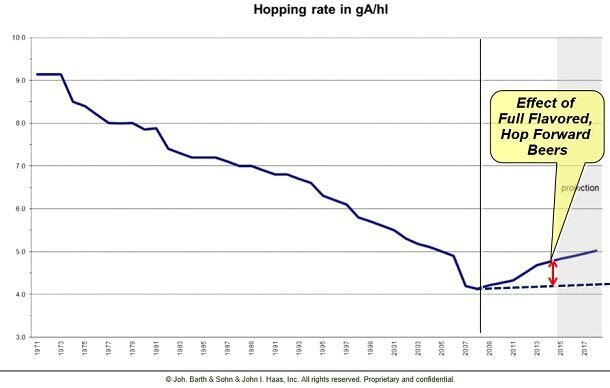
Stan issued his latest edition of his Hop Queries newsletter (v.9.04) and shared how poor the crop was looking in England (“…shrunk to a level that this news won’t affect the world hop market…“) as well as in Germany:
Farmers are expected to produce 41,235 metric tons (about 90.7 million pounds and likely more than the U.S. crop), 11 percent fewer than 2024. Growers cut acreage by 6.5 percent and yields were adversely affected by a lack of rain until mid-July and further reduced by disease and pest pressure. A press release indicates that 44 farms ceased operations, meaning the number of growers has slipped below 1,000. It concludes: “Hop growers are reacting to poor prices and limited marketing opportunities by reducing acreage. The short-term outlook is not rosy: Given declining beer consumption, a further decline in hop demand is to be expected. The result will be continued pressure on prices and a further reduction in hop acreage until supply and demand are restored.”
Until demand is restored? Does anyone think that is happening? Not the stock market if this report in Beer Marketers’ Insights is to be trusted:
Bank of America analyst Peter Galbo downgraded Constellation [NYSE: STZ] to “Underperform” last Tue, reducing his price target from $182 to $150. “We see further downside potential as beer industry consumption remains soft creating risk to sales, margin and multiple,” Peter wrote. And there are “added risks” such as “core Hispanic demographic remains pressured” and “longer term alcohol consumption trends” remain soft. He now expects a -1.8% decline for Constellation in fiscal 26 (thru next Feb) compared to his previous estimate of -0.5%. CITI also put out tuff report noting “continued softness in both STZ’s beer trends and the broader beer category.”
The company itself seems to agree in their own disclosures issued Tuesday. To be fair, there are still believers and even at least one corner of Canada running out of beer:
“We saw it right from the beginning of June — it hit hard and fast,” Clark said. “Every day we talked to different tourists. It was a wide demographic this year … American, Canadians, from all over, young and old.” Some days, he said the brewery was so busy it had to turn people away. “We have not been great at keeping up with demand this summer,” he said. “You always assume you might grow with a good summer, but we would have never expected this.” Evermoore Brewing Co. was not the only local producer scrambling to meet a higher-than-normal demand. According to Jared Murphy, president of the P.E.I. Craft Brewers’ Alliance, some craft breweries had sales show a double-digit increase this summer.
There. We can end on an upbeat note this week.*** Somewhere there was an increased demand for beer. While you consider that before we meet next time, please also check out Boak and Bailey every Saturday and sign up for their entertaining footnotes, too. Look out for Stan when he feels the urge now that he’s retired from Monday slot… maybe … maybe not. Then listen to a few of that now newly refreshed Lew’s podcasts and get your emailed issue of Episodes of my Pub Life by David Jesudason on certain Fridays. And Phil Mellows is at the BritishBeerBreaks. Once a month, Will Hawkes issues his London Beer City newsletter and do sign up for Katie’s wonderful self-governing totes autonomous website featuring The Gulp, too. Ben’s Beer and Badword is out there with the all the sweary Mary! And check out the Atlantic Canada Beer Blog‘s weekly roundup. There is new reading at The Glass which is going back to being a blog. Any more? We have Ontario’s own A Quick Beer featuring visits to places like… Michigan! All About Beer offers a range of podcasts and there’s also The Perfect Pour. Plus follow the venerable Full Pint podcast! And there’s the Craft Beer Channel on Youtube. Check out the archives of the Beer Ladies Podcast. That’s quite good and after a break they may well be are back every month! Such is life. Such is beer podcasting and newslettering… which, as Ray says, are blogs! And he’s right.
*That comment about “delicately flavoured” sound like it was provided by the wizard who told you that you can’t spit beer at a tasting!
**Consider how the introduction of the Swede Turnip in 1700s England led to year round beef production which in turn arguably led to the second British Empire. Just consider that, wouldja?
***[Ed.: “Really? Are you sure we can’t add just one more collapsing beer market story? No? Fine. Whatever.”]