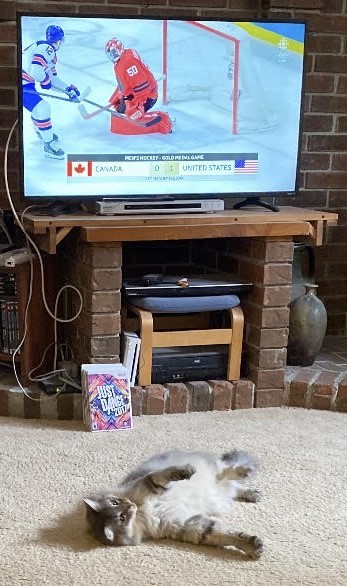
 February does one decent thing each year. It is short. We were also one goal short the other day. But that is a different thing. Canada is outraged to the point of almost saying something. In our house, the cat spoke for us all. Stunned disbelief twinned with a day dream about what was in the food bowl in the next room. I hope we get over it …soon. Even Trump was oddly gracious. In passing during the State of the Union he said of the gold medal win “…they beat a fantastic Canadian team in overtime, as everybody saw. ” Hardly triumpalist gloating. The cat’s reaction was the same: “…food bowl… food bowl…”
Let’s jump into it, shall we? Katie M has shared thoughts over at The Gulp on her return to a favourite spot, The Highland Laddie, in the perhaps less than loved city of Leeds. Being related to generations of Highland laddies and perhaps being accused of being one on occassion, I am won over by the headline. But there is more, a hidden elder gem amongst a brutalist landscape:
The room smells of the woodburning stove and warming comfort food, and as the rain sets in for the night outside, I get the distinct feeling I could spend the whole evening here. But it is 4.30pm and I have somewhere else to be. My evening plans end earlier than I expected them to, and so instead of heading back to my room at Leeds’ premier drag showbar directly, I pop into The Highland Laddie for another pint. I like to play-act at being a regular in pubs that make the effort to make me wish I was one. I order a pint, poured just as black and white as the last, and watch the pub slowly close down around me with the exercised ease of a team who have hospo work in their bones. The rush is over and the tables are free for all until closing; a small group of students are drinking cider on the table opposite and talking about current affairs in broken soundbites. I get my book out and settle into my corner banquet for a cosy hour before heading back.
Lovely. Bear with me. More on pubs. It’s a bit pub heavy this week. Frankly. Let’s move to a happy sort of seasonal note from Sean of Tom’s Tap in Crewe:
I must say the sun being out and being able to pay suppliers is infinitely preferable to it pissing down and having to ring them to say you can’t because it rained all weekend. Thanks to everyone who came in this weekend, you made a difference.
Sun’s out, sales up. Interestingly, the effects of the poor weather elsewhere in England had another decidedly opposite result:
After a record-breaking start to the year for rainfall, some businesses in Richmond, North Yorkshire, claim that rather than deter customers, the weather has encouraged them to spend time inside and open their wallets. Daniel Williams, landlord of The Town Hall pub said takings at the start of 2026 were up 20% compared to previous years. “The weather being as terrible as it is has really helped us – people are looking to escape the horrible weather, so we certainly can’t complain at the moment,” he said. “We’ll get massive groups in because they’ll have come out for a walk, got sick of the walk and then come into us, so it’s been very positive for business I’d say.”
Pouring rain? Sales… up. David J wrote excellently for CAMRA’s publication What’s Brewing about the theory of social cohesion and the British pub:
Alcohol has its many downsides as I can attest having a childhood punctuated by my father’s alcoholism, but it lowers people’s inhibitions making them willing to talk. It’s why you’re more likely to spark up a conversation over an interesting cask beer instead of waxing lyrical to the person next to you about the smooth flavour of an Arabica coffee bean… The other argument that “local shops perform similar functions” to pubs may have an element of truth. I do chat a lot with a friend who works in a deli near me and I’m very fortunate to do so. And fortunate is a key word because this is a rare gift that not many areas have: a thriving high street with varied shops.
Got the urge to chat? Go to the pub. But cultures differ. We still have towns with maybe fewer shops but there are some plus active bakers and butchers over here as well as a cultural cornerstone of a coffee chain. One unexplored question that always nags me about the argument is this: what’s with all the inhibition in Britain? I’ve never been more accosted by conversation sparkers than at a church supper – but maybe that’s because I was a minister’s kid and was an easy target. Outside of session, even court work was always a chatty chummy time when I was a young lawyer… even if the humour leaned towards the grim. I wonder if there is a causation question at play. Yet… David also recently wrote about the pub in a time of mourning and it may help answer it from a subtler point of view: it is the place, by choice or tradition, where such things happen so that is where they happen. See? I get my learning from my reading.
So… don’t know what to say? The pub helps. Yet, and perhaps again conversely, Pete B. wrote a great piece in The Times on the joy – and value – of cans of beer at home:
“The 4-pack pint can is most popular format for lager buyers in convenience stores, growing at 9.4 per cent over the last year. People in convenience stores are usually on-the-go. The pint can feels like good value, especially as they’re quite often price-marked packs.” This value deal seems important. We are spending less on alcohol, something which applies to our supermarket shopping too — beer sales at the supermarket were down £371 million to £7.37 billion last year. And drinkers know that beer in pubs is more expensive than in supermarkets. If you can see that four pints is costing you £6.95, it brings a pint in a pub — which in the UK costs on average about £5 — into much sharper perspective…
To review. Highland Laddie? Comfy. Sun’s out, sales up. Pouring rain? Sales… up. Got the urge to chat? Go to the pub. Don’t know what to say? The pub helps. If you have the means. If not? A tin at home. An antidote to funflation.
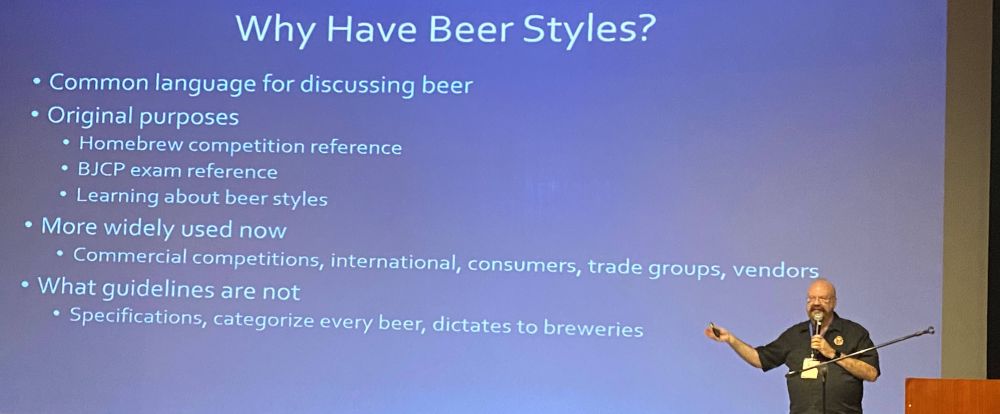
Note #1: Tune in later today for Jeff’s talk in US beer.
Note #2: Sharps Brewery in Corwall to close.
Note #3: “…disturbing accounts of industrial accidents…”
Terroir in cider? NO! There is clearly an “i” in the sentence. Not terror. Terrior. That’s the theme of the article what Barry himself guided us all to in Cider Review which wonderfully traces the history of the concept in depth, like in this passage which reveals the hidden truth:
Terroir as a term also took a sharp diversion through the 17th and 18th centuries. This is why, despite their veneer of modernity, a gulf of time and meaning separate early references to regionality in cider from the modern cider terroir conversation. To taste terroir – linguistically still a reference to land – was to experience a crude character shaped by natural setting. Even for Le Paulmier, it was often something inelegant or dirty; gôut de terroir, lauded by vintners today,was essentially a mouthful of soil. Provincial vineyards, at the mercy of their rural, unsophisticated settings, could only ever offer ‘terroir wines’ fit for the peasantry, themselves made rude and rough by that same land. By contrast, the carefully cultivated vineyards of the Île-de-France (the area around Paris) were free from terroir, producing elegant ‘cru wines’ reserved for the nobility.
Hah! Terroir meant dirty after all!! And, sticking with the agri, Laura Hadland wote about sustainability in the British vineyard for The Vinyard including this from Gary Smith, CEO of Silverhand Estate, the first UK vineyard to reach carbon-negative status, without the use of any carbon offsetting:
… we wanted to do more to ensure our land was at its absolute optimum. That meant going one step further and educating ourselves on regenerative farming. The sustainability aspect plays a huge part in this because through the work we do across both the vineyard and our arable lands we are acutely conscious of the impact each has upon the other. Learning how to work both business and land harmoniously has seen a huge benefit to our estate’s ecosystem. As a result the quality of all of our produce has improved – not just grapes, but our lamb, beef and estate-grown fruit and vegetables from our kitchen garden.
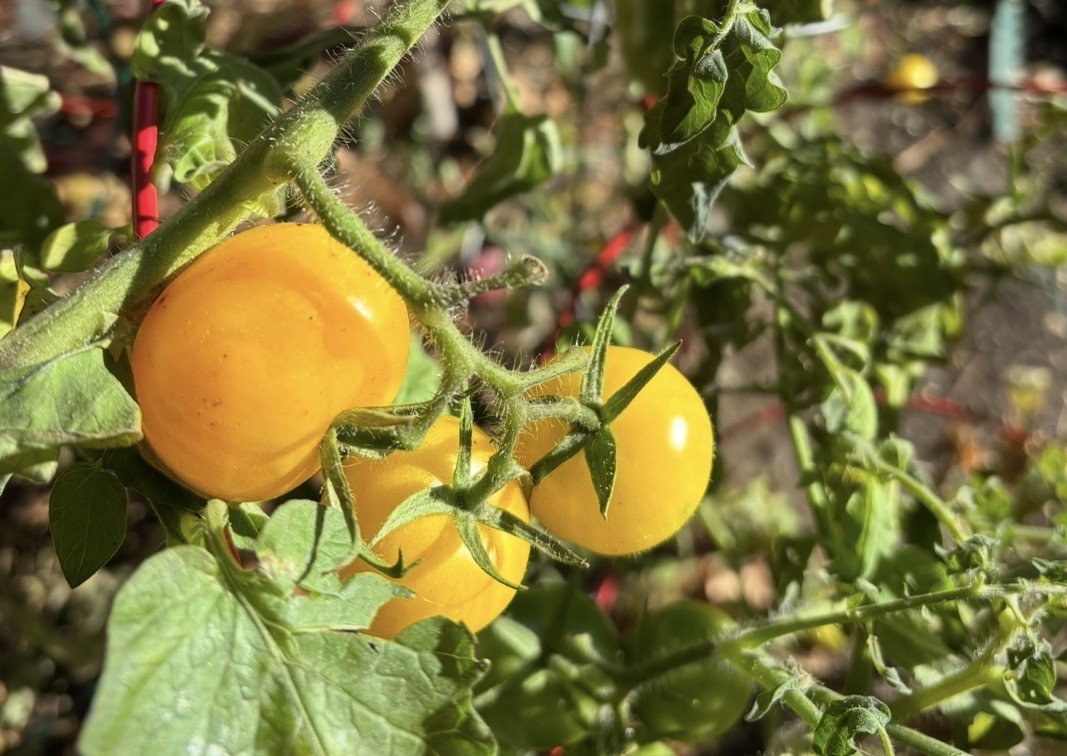
That’s how I run my 65 x 100 foot estate. Tomato seedlings are doing very well, thanks for asking!
Remember a few weeks ago when booze was back? Apparently, like the steady rains in Richmond mentioned above, things can change – if BMI is correct about the US beer market:
After a strong first 4 weeks of the year, with $$ up 3.5% and even volume up 2%, trends got considerably softer in the last 2 weeks in Circana multi-outlet + convenience data. Volume down 4.5% in latest week thru Feb 8, Super Bowl Sunday, following a 6% drop the week before. By 6 weeks in, sometimes trends for the year are already well established. But with these big early gyrations, that’s not the case so far in 2026.
In the follow up to the unendingly uninteresting story about the garage sale of the bits and pieces of BrewDog, there was a bit of a flitter on the social medias about (i) I told you so in 2011 and (ii) when was it exactly that the brewery defined itself as a den of arseholes? My candidate is this from July 2010:
Am I supposed to cheer along with the giving of the finger to 99.998% of customers for the sake of marketing? Or is this supposed to be Dada beer? Who cares. All I know is I am far less inclined to buy any BrewDog beer. Why? Because of this short sentence:
A response to the haters.
“Haters”? Good Lord. Are you twelve? This has to be the stupidest new usage of a word that has been imposed upon the language and there is far too much use of it in craft beer circles. It denies the right to disagree. It tells us to stop thinking and start following. You call in to question my freedom from being your sycophant, I call into question your business model.
While it is not important as to this moment, it is interesting to see how the co-opting of language was so contrived at the time… so curated. “Haters” as a term was a bit new to the mainstream. The comments in response noted the novelty. And a year and a half later, NPR wrote about how “haters” had become common, an appropriation from hiphop. Not quite a coining but planned. Probably triggering the criticism loop was itself the plan. Which led to the unhappy fanboys which led to the “investing” which led to the fat bank accounts for owners of what was in the end an unprofitable brewery. Quite a business model.
Speaking of my people, over on FB at the Scottish Rugby Family page which I have followed since seeing the tartaned ones thrash Canada in 2024 and meeting the admins in the pub, there was an important question asked of the group ahead of another Six Nations game away:
How’s the principality for getting a hip flask in?
I say important because not enough is written about sneeking booze in where it is not welcome. It’s part of the culture. Comments ranged “give it to your child to carry in” to a discussion on the various characteristics of the sporran. My favourite example is from 1977, I witnessed a gent in wide leg jeans semi-disrobe the there before we his neighbours at the goal end stand at Rugby Park in Kilmarnock. Concern was soon lifted once we realized he was not planning a career as a streaker but had duct taped two 1.5 litre bottles of Mateus to his calves. He soon drained the lot (which much impressed my Rev. Dad) and was arrested on the pitch early on in the second half – but that is beside the point. The point is we need a body of literature around this. An Oxford Companion to Sneaking In Booze.
Pellicle‘s feature this week is bay David Nilsen. It’s a visit to a Chicago landmark and homage to Belgium, Hopleaf Bar:
Michael didn’t want to recreate Cadieux Cafe exactly, but he did take it as proof that a bar cut from a different cloth could succeed if it found its audience. He took a design cue from European bars when laying out the space, a labyrinth of brick and burnished wood that’s adorned with signs from Belgian beer brands, both extant and erstwhile. He decided to install bookshelves rather than televisions. He subscribed the bar to periodicals like the New York Review of Books, Harper’s, the Atlantic, and London Review of Books. Essentially, he decided to create the anti-sports bar.
Finally, for Stan… a drunk chimps story:
There are many reasons why you might not want a wild chimpanzee to be operating heavy machinery. Now scientists have uncovered a new one: the ape may well fail a sobriety test. A study has shown that chimps living in the forests of Uganda regularly ingest enough naturally occurring alcohol to register levels that, in some workplaces, would trigger disciplinary action. The findings offer the strongest physiological evidence yet for the theory about why humans like alcohol, known as the “drunken monkey hypothesis”.
Having lived through two rounds of Planet of the Apes movies, I can confirm that I do not want chimpanzees on heavy machinery for any number or reasons. That it is for now. Until next week, please check out Boak and Bailey who are posting every Saturday and adding to their fabulously entertaining footnotes week after week at Patreon. And look out for more of Stan’s new “One Link, One Paragraph” format. Then hunt out something in someone’s archives! Leave oblique comments on someone’s post from 2009!! Listen to a few of Lew’s podcasts and get your emailed issue of Episodes of my Pub Life by David Jesudason on certain Fridays. And Phil Mellows is at the BritishBeerBreaks. Once a month, as noted, Will Hawkes issues his London Beer City newsletter and do sign up for Katie’s wonderful self-governing totes autonomous website featuring The Gulp, too. Ben’s Beer and Badword seems to be on pause since November but there is reading at The Glass which is going back to being a blog. Any more? We have Ontario’s own A Quick Beer and All About Beer is still offering a range of podcasts – and there’s also Mike Seay’s The Perfect Pour. Plus follow the venerable Full Pint podcast! And there’s the Craft Beer Channel on Youtube. Check out the archives of the Beer Ladies Podcast.