Sour Beer Studies: Kriek 100% Lambic, Cantillon, Brussels

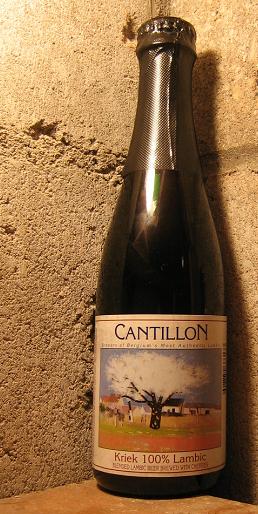
I shared with one to the shock and dismay of my guests two years ago but I’ve grown up so much since then I thought I would revisit it to see what I thought. Back then I use the word poo which seemed to tick off a crank. Apparently some who write “barnyard” have never been in a barnyard. Let’s see how this goes today when it’s just me and the glass and a sticker on top saying I spent nine bucks for the 375 ml of the 2006 bottling.

Pop. There it is. Gravenstein apple and beef cattle holding structure. You will have to excuse me as I grew up in the Annapolis Valley of Nova Scotia and actually recognize the scents. Yet they are not repulsive. Not at all. Rather they are evocative this time. It looks lovely – pouring a clear deep blush – the colour of rosé wine, with a fleeting white foam that disappears after a few seconds. In the mouth there is less harshness than I recall even with the strident acidity. I must be weakening.

In the first sip, there is that green apple acid, a general fruit berry thing that I can associate with cherry if I think about the idea of a mouthful of under ripe pin cherries grown on the unrelenting North Atlantic brushland. There is also a little cheesy, yogurty rich funky tang that needles at you a bit but is overshadowed by the snap of the sour. More than anything it reminds me of the austere dryness of the wine I made with my own vines and my own hands back in 2003. As I get into it, though, I get the sweet fresh cherry layer. It opens up ever so grudgingly. My teeth feel slightly stripped of enamel but with a fruit note in the mix of dissolving calcium.

What can I say? If it were not for the specific acidity that mimics one under ripe variety of Maritime Canadian apple that happened to grow where I grew, I would not know what to make of this stuff. A theory of fruit preservation put in stark action? BAers still approve but I am still disappointed with my understanding of why I need that much acid in my body.

Sour Beer Studies: Gueuze, Girardin, Sint-Ulkis-Kapelle, BE

gira1The 2006 edition of Great Beers of Belgium showed up today and I thought that I had better pop a cork in its honour. A Girardin Gueuze seemed just the thing. The “1882” on the label is the date when the current family took over the brewery and they brew comprehensively, perhaps still with no other staff. Jackson noted:

They grow their own wheat, brew Lambic in winter and produce a Pils in summer. The Girardins use 40 per cent wheat in their Lanic, and still have a mill that grinds the grain between stones, as well as a more modern one with metal cylinders. “We continue to use the stones for some of the grist,” Lousi told me, “in case it contributes to the character of the beer.”

I like that “in case” a fine expression of traditional conservatism. Jackson called it one of the most complex beers he had ever tasted. The black label (or in Flemish Zwart etiket) appears to indicate unfiltered [Ed.: ie fond] while a white label (or Wit etiket) would not [Ed.: ie filtré]…though neither Ed nor I quite know why “etiket” in Flemish means “label” in English. I bet Ron knows.

On the pour, the funk jumps out of the madly growing off white head that soon fall back at a leisure pace. Barnyard. Very evocative of poo and stall of a former neighbour’s beef cattle barn. Plus rice wine vinegar as well as Gravenstein apple. But it is all wrapped around a small core of sweet. Once in the mouth, the barnyard knows and takes its place letting other flavours come forward. Overall, this is a far less austere Lambic experience compared to the stridency of Cantillon, even their gueuze. Relatively (by which I mean relatively) soft as well as acidic – an odd combination to describe but think mandarine orange juice without any orange flavour and a good slug of rice wine vinegar. Plenty of grain, a little lemon and a lot white grapefruit citrus, a little wheat cream even. Grassiness in the middle which morphs a little into something that is like a hint of licorice. Dry and acid and moreish in the finish. Fabulous. Love it. I am going to buy this beer whenever I see it. I promise me so.

Plenty of BAer love. $7.99 for 37.5 cl from Bello Vino in Ann Arbor Michigan.

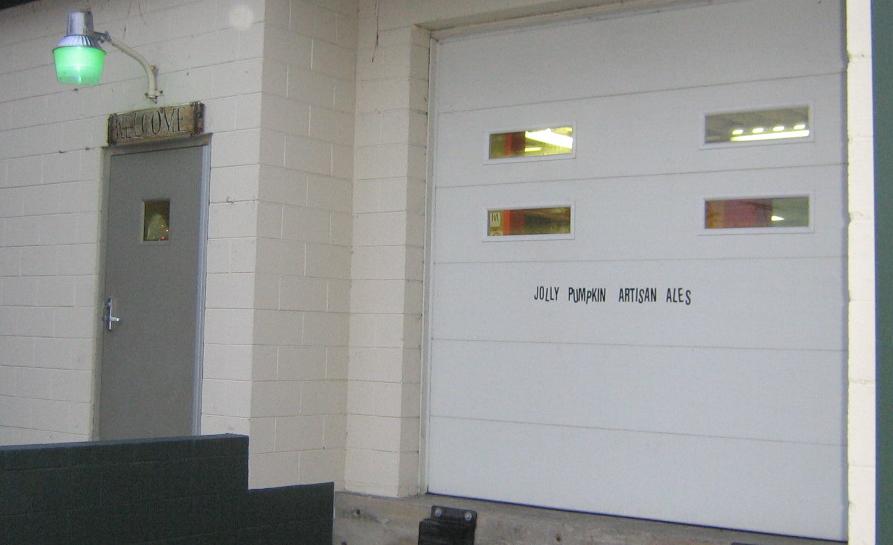
Photos From My Visit To Jolly Pumpkin, Dexter, Michigan

jp1Click any picture for a bigger view.
 
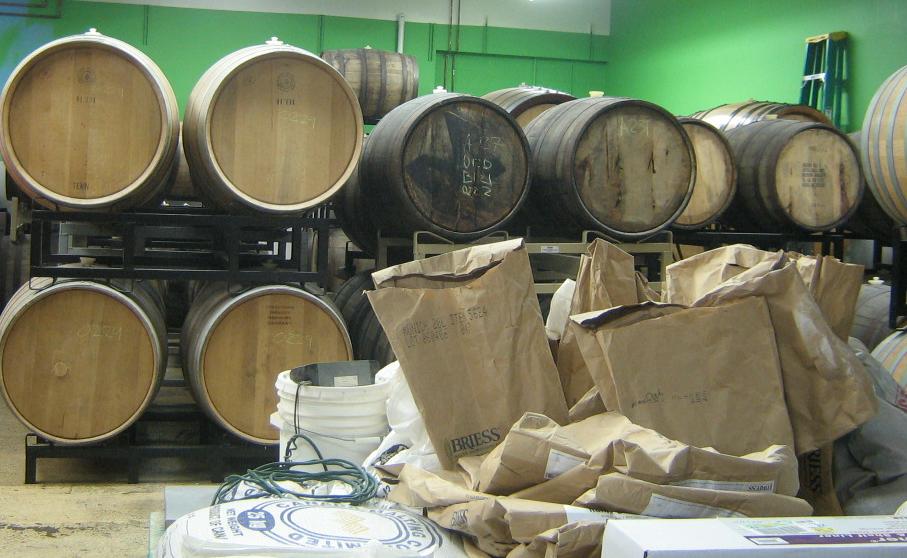
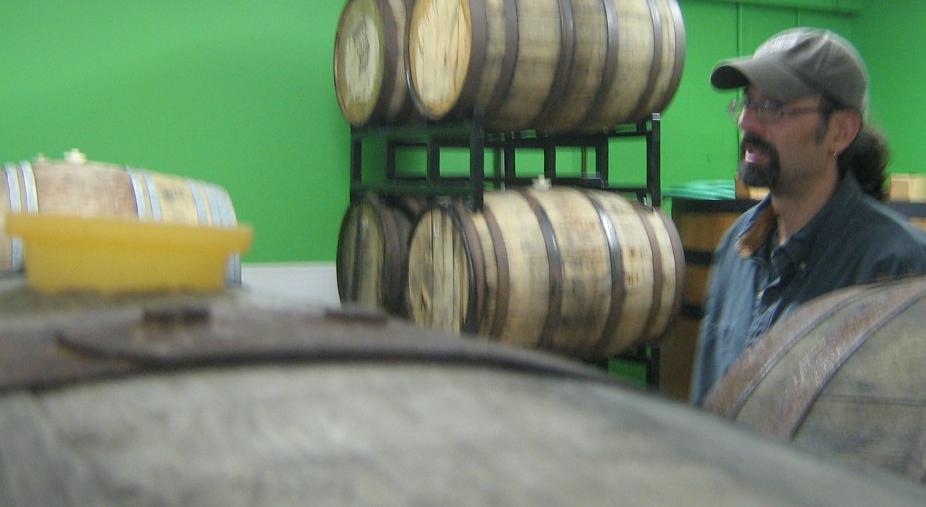
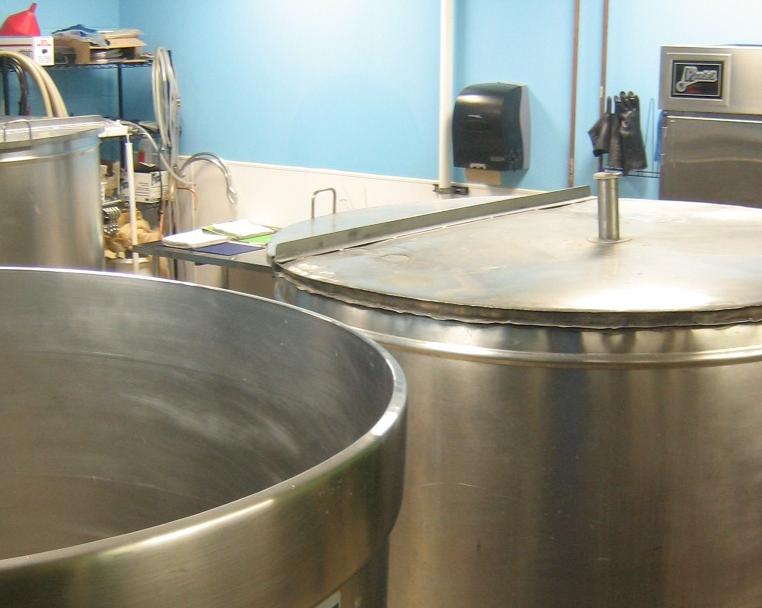
It was a Ron-a-thon last Friday at Jolly Pumpkin. After leaving London, Ontario, Canada at about 1 pm and we hit Dexter, Michigan at about 5 pm just as Ron Jeffries was finishing up a days work. He gave me an hour of his time and by the end of it I was thinking this had been one of the most intense hours of beer I have had without taking a drink. Being the doe-eyed schoolgirl that I was, perhaps a bit like Ron in Bamburg, in awe of the moment of course I did not take notes until I got to our hotel in Ann Arbor. But I did get a brain full.

jp2

jp3

jp4


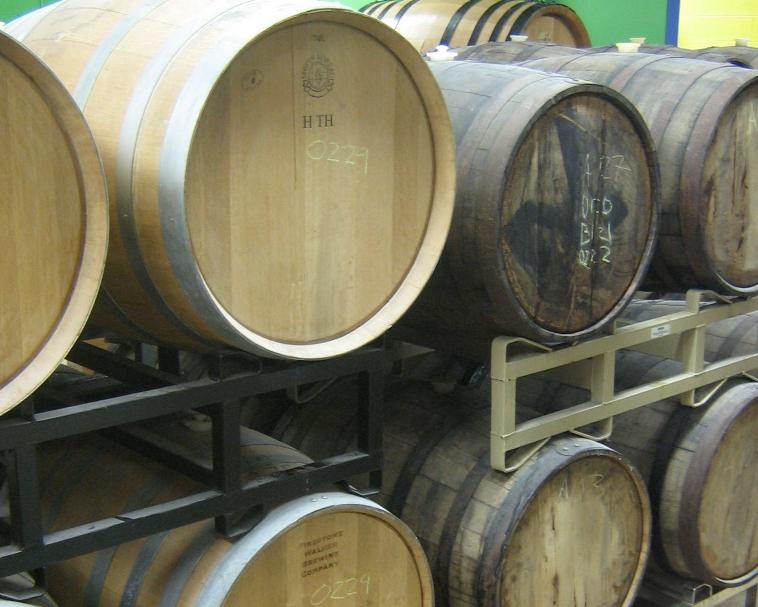
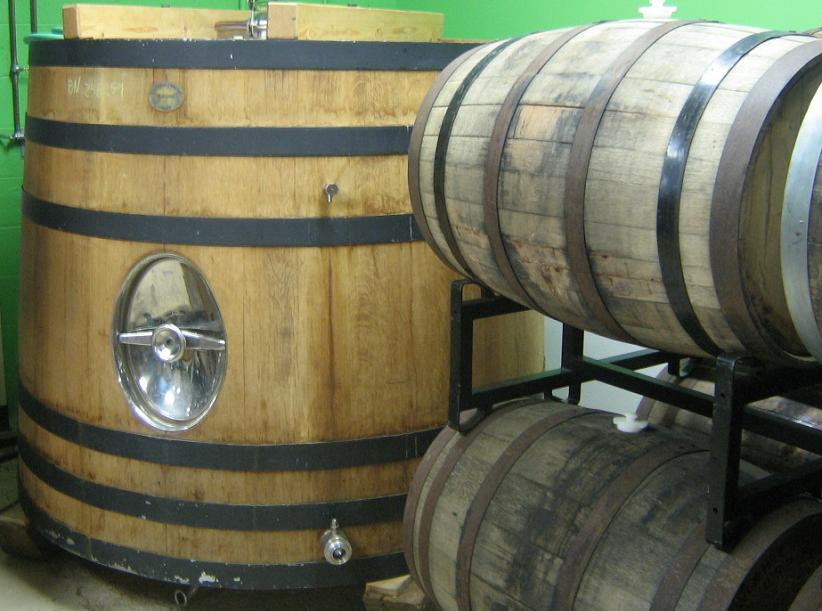
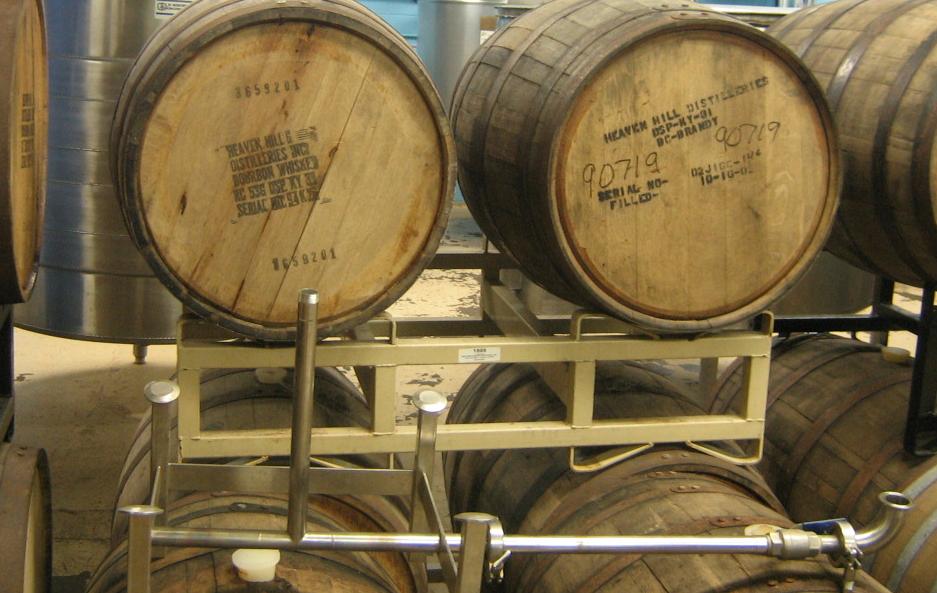
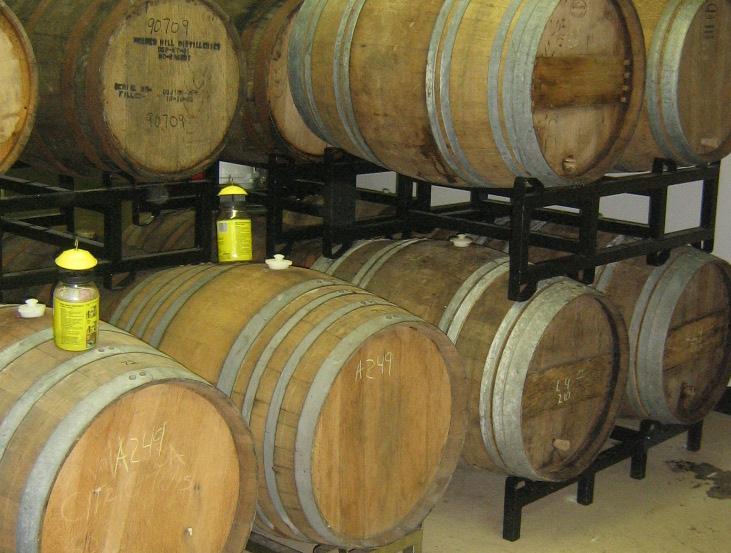
Barrels everywhere. Everything is aged in oak. Barrels from bourbon and brandy distillers. Barrels from Firestone and other brewers seeking vanilla where Ron seeks tang. A 2000 litre barrel newly in from France. Being in a room full of barrels of beer is an interesting experience. The feeling was much more like cheese making than other brewers with their steel conical fermenters and bright tanks. These was life around me and it was asleep, seeking slow funkiness. Lame? Deal with it.

jp5

jp6

jp7


I got an education. While Michigan has twice the brewers of Ohio, it has only 1% of the state’s market, compared to 6% nationwide. This means brewers have to seek markets out of state. I was happy to do my bit and introduce Ontario importers Roland and Russell to Jolly Pumpkin as was announced on Monday. Ron apologized when he explained the price would be high but I had to assure him that ten bucks for a 750 ml of some of the most thoughtful ale made on the continent was quite reasonable given what else we have to put up with.

jp8

jp9

jp10


Ron makes beers unlike others. Beers that have the dryness of oak with less of the vanilla than others impart. There is a lambic, the only true one in North America, that has been three years in the wood soon to be released on a six month cycle. When I asked about the source of the wild yeast strains, Ron said the make of Cantillon told him you can make lambic anywhere. I have particularly liked the Bam and Bam Noire which I think are up for the CAMWA beers of the year award for 2007. I did, by the way, share the concept of CAMWA and think it is now Jolly Pumpkin approved. They have done well with 50% expansion in each of the first two years and 30% for both 2006 and 2007.

jp11

fp13

jp12


The hour flew by and the generosity shared was quite the thing. We took a case of large format beers for just around 75 bucks and others to spare as well. Likely the best value in beverage that I can think of. A couple of hints. Ron recommends, as they age, chilling the beers before opening as they create be quite the fountain. I recommend leaving them to get to that age to get to this state as time enhances their complexity to a degree I have not experienced before with beer.

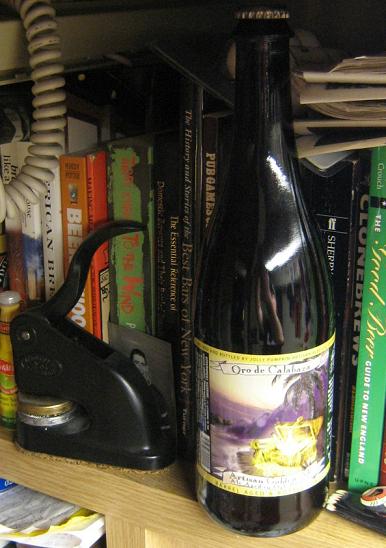
Sour Beer Studies: Oro De Calabaza, Jolly Pumpkin, MI, USA

A busy day today that will hopefully continue but the one point of agreement seems to be Jolly Pumpkin beers and – oh, happy day – I have one in the stash. I have been known to Bam and Oro de Calabaza is the strong golden ale by the same happy gourd of a brewer.

Wow. It’s like a cross between Duval and Fantome. Plenty of grain texture but a acidic, farm yard funk that leans towards a Flemish red. Plus, a whirlwind of fruit in the malt – yellow plum, pear, sultana. Black tea hops with a bit of white and black pepper. Fabulous. Golden light amber ale under a massive egg white head that keeps growing – it’s alive.

I am heading in two Fridays to get to Jolly Pumpkin after a morning presentation in London Ontario to learn more. 100% of BAers are stunned by the quality.

Sour Beer Studies: Sweet, Sour And… The Brewmaster’s Table

I have been a bad beer blogger. I just got a copy of Garrett Oliver’s The Brewmaster’s Table. One baaad beer blogger. And not bad like ManRam says either. The fact is, I thought it was really more like The Brewmaster’s “Kitchen” and had expected it was more like a recipe book. Not that there is anything wrong with that. Lucy Saunders obviously does a great job at telling us how to cook with beer. But I didn’t feel drawn to another similar one.

How wrong I was. How shallow the uninquisitive mind. This is a great and valuable text. No wonder everyone recommends it. Let me be a guest late to this party. It is well laid out with sections of the traditions of the great brewing nations, a discussion of the major styles found in each, examples and their properties as well as a description of the foods that go with each. It is the table because it is what a craft brewer would (and does) place place before himself in terms of food and drink. Good. Handy.

For present purposes, though, the book provides me with one thing that no one else in my meager span of attention had mention. Many traditional sour beers – and especially the sourest – were not intended to be consumed without sweetening. See, this is what has always bugged me about lambics and gueuze. We do the medievals and thems that followed a disservice when we say that the pure raw lip puckering drink is what they would have consumed. First of all, most of them would have consumed mostly unhopped ales bittered with gruit made and swallowed within a few days. Then, few would have had access to the resources required to buy aged ale, including any which might have been aged for souring. Additionally, those that were aged were likely aged within the annual cycle as is most every other agricultural product. These general observations seem both logical and consistent with the histories by Cornell, Haydon, Hornsey and Unger. Plus I have another pet theory – no one drinks extremely sour things without a certain purpose and sour in beer has long standing recognition as a failing in brewing.

But I have gone over that before in these sour beer studies. What is new is the mention made of one tradition of Belgian lambic drinkers – as opposed to its brewers – described in The Brewmaster’s Table. At page 71, comparing dry lambics to their sweet siblings, Oliver states:

Lambic afficiandos are given to frothing at the mouth when the latter versions are mentioned, but I feel both types have their place. Don’t forget that some people always sweetened their beers, when they could afford it – sugar was once a luxury.

Sadly, I can not longer wallow in vindication dancing the merry jig as these studies have given me both respect and a taste for the sour beers of Belgium. I still find Cantillon too stark but that is like saying Guinness is too dark. It simply is. And sour for me now holds an interesting and worthy place in the beery pantheon.

But, still, there is comfort knowing that now and likely in the past people did not suffer austere acidity except as a mild fetish or a consequence of poverty. Two traditional styles, neither of which I have tried as they are quite localized, confirm how sweetening may have been undertaken, Berliner weisse and faro. Berliner weisse is a German sour brew uniformly taken with a sweet fruity syrup and preserving sweets is entirely reasonable as a form of storage though the centuries. I would expect that facing another pitcher of dry lambic before him on the table, your average 16th centurian may well have had a spoon in the jelly or honey jar next to it. In addition to Berliner weisse, Belgian faro is described as a “low-alcohol, slightly sweet table beer made from lambic to which brown sugar has been added” – taken on draft, again, it is a reasonable approach to making a rather restrictive brew more approachable for the many.

Point? I am relieved to find this confirmation from somewhere that lambics were sweetened by drinkers in much the same way as the old guys shook the salt over their draft in the Nova Scotian taverns of my youth. People, as we learned from Depeche Mode, are people. Other point? Buy The Brewmaster’s Table.

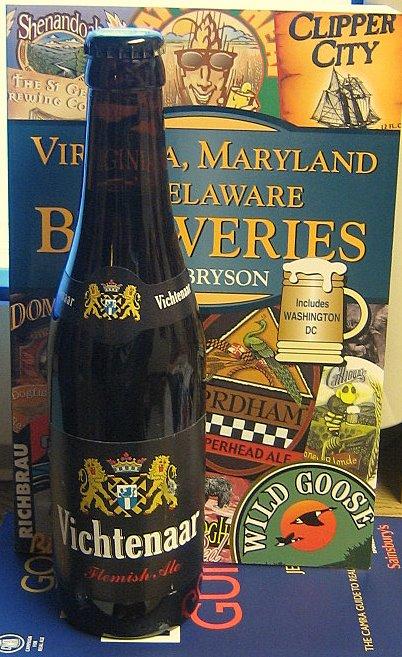
Sour Beer Studies: Vichtenaar, Verhaeghe, Belgium

Sibling to the more popular Duchesse De Bourgogne, I got this one at Beers of the World in Rochester at the beginning of August. Frankly, I can’t believe that it’s lasted this long as one thing I am learning from these sour beer studies is that I could be a wee bit obsessed with these Flemish ones.

At 5.1%, not a heavy-weight by any length but not many of these are. The brewery’s explanation of the beer is in Flemish but have a go, tell us what you think it says – this bit especially:

De smaak van de “Vichtenaar” kan men omschrijven als licht zurig en complex en dit door de lange gisting in eikenhouten vaten.

If you need a hint, I recall that “smaak” is taste, which you might have figured out yourself. “Omschrijven”? – not so sure.

Translucent mahogany ale under fine tan froth and foam, the aroma is sherry and nuts, vanilla and a little vinegar. Very soft water, as the website states, makes this very moreish – surprisingly so with one of this style. Initially I thought that this was less complex than other Flemish sours I had had but it’s just a bit less strident, the sour a bit recessed, the yeast milky, the malt all full of cherry and pear and maybe, just maybe, a tiny note of maple. Plenty of BAer respect.

Sour Beer Studies: Why Did Sour Arise In The First Place?

Writing about what is on other people’s beer blogs is a quick way to fill a day’s obligation to fill up one’s own sheet. But seeing as I have been trying to lead Ron Pattinson and his excellent library of brewing records into figuring out stuff that has piqued my idle sort of curiosity, I think it is well worth noting.

My questioning in these sour beer studies is triggered by one question – who the hell would drink sour beer over fresh? That question is packed with implications like “what is fresh?” and “what is sour?” and even “what is beer?” but it also is packed with the blindness of modernity, a fault that should be admitted from the outset as it is my question after all. It is reasonable to note that only recently that “fresh” was available to most people in the western world most of the time. For the most part food and drink were things that had intermediary storage periods by necessity of the annual cycles of nature. People were used to grain stores, bacon smoked above the fire, cheese with extra-tangy bits which would now see us deem the whole piece fit only for the garbage. So, too, people would have liked beer held for a time with a tang in addition to or instead of the fresh-made stuff.

But tang costs money. To hold beer long enough to gain a degree of souring, you need resources: enough space to store casks, enough money to buy the casks and even enough money not to sell the beer right away deferring the income to later. This is the thing that has niggled at the back of my mind in all this thinking about sourness and it brought me to thinking about cycles of beer storage. Beers like marzen or biere de garde are stored though a season once a year for an annual purpose whether it is to celebrate an event or fuel the harvest. And, like most of the present versions of the Trappist beers, these styles are recently framed, say, only since 1800.

So what gets a beer past its first anniversary? Ron points out one reason: “[i]f you have a good harvest one year, make beer with the surplus grain to be used in poor years. That seems to be the origin of Kriek: a way to preserve a glut of cherries.” And Martyn Cornell added a very useful comment to a recent thread at Ron’s about a very important record, Obadiah Poundage’s letter of 1760. Martyn kindly noted:

Alan, as Ron said, private brewers were storing their beers for a long time pretty soon after hops took off in England. William Harrison, a parson from Essex, writing in 1577, said the March beer served at noblemen’s tables “in their fixed and standing houses is commonly of a year old” and sometimes “of two years’ tunning or more.”

Luxury. Pure luxury. Only those who had the means to store could store. While it is as strange to us as a Victorian forcing house, those who could buy casks did as buying in bulk and cellaring was the only way really, as can be read in Julian Jeffs excellent book Sherry, that pre-mass marketed wines were acquired for the fitting out of the cellar of great house or (centuries fly by) an newly wealthy merchant – with the proper care and handling of the stored drink being part of the deal and expense and status. Martyn’s quote shows this applies to beer. With the industrial revolution, the earliest example of which industry is more than arguable brewing, references to the production and storage of beer by brokers for mass consumption seems to pop up in the records like Obadiah’s letter. Technology and more dispersed wealth make more general consumption of sour and tang possible, replacing the more modestly produced ales and brown beers that neighbourhood brewsters had been making for local consumption since Adam.

Keep in mind this is all sketchy, far too general and likely mostly wrong in that these are merely my own studies. But for now that is what I have come up with. And I would like to learn more about the available industrial archeology of, say, pre-1800 brewing. How much of production was stored for this quality if this quality cost more? And what part of the storage was stored for more that one annual cycle? Demand for sour had to be present such that the increased costs were overcome.

Any ideas where such stuff can be found? I should revisit Haydon, Unger, Hornsey and, of course, Cornell on the point. And pester Ron more. That’s likely the easiest thing to do

Session 7: Visiting The Brew Zoo

galt1It is the first Friday of the month and that means it is the day of The Session. Rick Lyke named it this time and chose “The Brew Zoo” demanding we all drink beers with animals on the labels. I forgot this earlier in the week when I popped a Struis with an ostrich on the front. That would have been perfect. A real shoe in for most exotic. Now I have to drink that beer with a goat on it. Do you know how many beers have goats on them? Good lord. It’s about as many as Belgian beers with monks or elves…or German lagers showing lassies with costume malfunctions. Goats…jeesh.

So I will have to see where I go with this month’s choice or choices for reviewing after work. I have to think about this and get back to you. The photo above has nothing to do with it. I just felt guilty after promising reviews of the growlers I brought back from Grand River the other week – but plans got hijacked last Friday evening after work when BR and Paul from Kingston showed up. Click on the picture. They were that good.

bam1

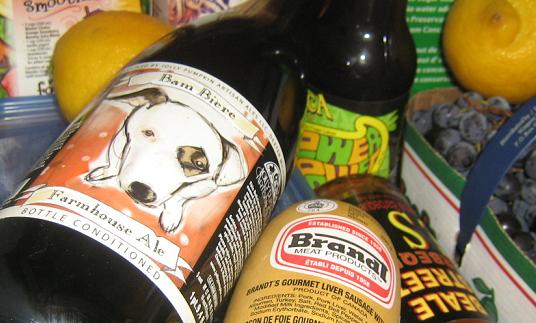
The Actual Beastie In Question: Bam Bière by Jolly Pumpkin. I have never had this one before or anything by this brewer but, as far as I am concerned, the lack of hordes of folks making tiny batches of farmhouse ale thoughout the villages and hamlets of North America is one of the faults of the culture.

Plenty of BAer love but is it a saison or bière de garde? Just farmhouse ale we are told…hmmm… The brewer says:

An artisan farmhouse ale that is golden, naturally cloudy, bottle conditioned and dry hopped for a perfectly refreshing balance of spicy malts, hops and yeast.

It’s only 4.5% and, ok, I admit it – dogs are rarely in the zoo. But who cares? I didn’t pick the topic. And what do I think?

[Ed.: give him a moment, would you?]

Well, this one could do with a cage or maybe just a shorter leash. An explosion of froth out of the 10.00 USD 750 ml bottle leaving me scrambling for a number of glasses to collect it all in. It was worth the scramble. In the mouth, this is like a subdued cousin of Fantome – white pepper and cream of wheat but also lemony like a Belgian white. Straw ale under a massively rocky white meringue head. Hoppy with astringent dried out hops leaving a lavendar. Dry with under ripe strawberry. The nose reminds me of poached haddock with only white pepper that I had as a child but that should mean nothing to you. Fabulous. A cross between straight-up Fantome saison and Orval?

Good doggie.

Holland: Struis, Brouwerij ‘t IJ, Amsterdam

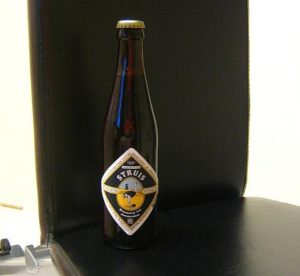
I have a sticker on my hand that says “$6.20” and on my desk I have a 330 ml bottle of Struis. In the US, that price gets the best part of a decent six pack of craft beer. In Ontario, it gets you half a six of Unibroue’s Trois Pistoles or a large Chimay Premiere. So, for my dollar, this beer from Brouwerij ‘t IJ has got some pretty good competition and really has some explaining to do.
Richly clinging pale pine lumber head over orange amber ale, much muddier after the final pour and yeasty shake. On the nose a hop basket – your Grannie’s knitting basket that is as these have a haunting waft of musty attic. On these mouth, it starts to make sense. This is like Orval taken up a notch or two with 9% alcohol and a bigger maltier profile. Rather than cover up the booze with malt, this one blends it in with the orange peel, twiggy and lavender hops giving a aged spicy effect. This sits over fig and raisin malt. Steely finish. My creaky Dutch tells me the label’s claim of biobeer as well as ongefiltered and ongepasteuriseerd refers to some organic status, unfiltered and unpasturised. Imported to the US by Shelton Brothers, there is strong but not universal BAer support.

Is a small bottle like this worth it? For a try, sure – go ahead. After a try, if you love it, why not buy more? But if it is not the beer you absolutely love, I see the price point as a real issue for this one when you consider it sells for the same price as a 330ml Chimay Premiere at the fine bottle shop Cracked Kettle in Amsterdam. Where’d that price difference come from in mid-Atlantic transit?

Sour Beer Studies: Grand Cru, Brouwerij Rodenbach, Belgium

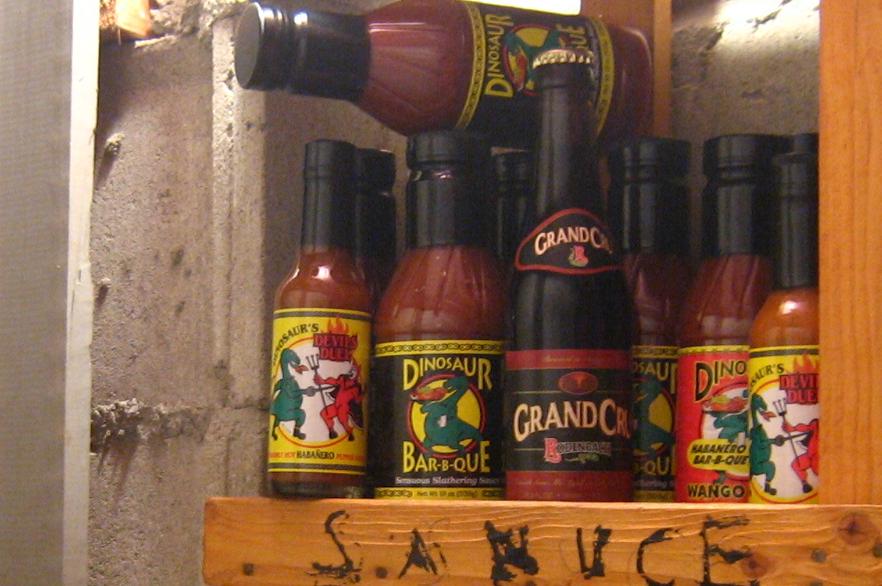
There’s plenty of good stuff down in the stash but I had to think hard about what was the right beer for the Sox and Yanks tonight. I settled on Rodenbach Grand Cru as it is a Flemish Red. I previously reviewed it but that was so 2004 when I thought it was over the top in tartness.

Ah…the innocence of youth. That was before the on-set of my relationship with Cantillon. Sure this one is acidic but there is plenty of bright vanilla, cherry – though there is still a sharp vinegary catch at the back of the throat. It pours a reddish mahogany with a thin roam and rim of off white. A little less rich than other Flems of recent sipppery but there is an interesting apple and beef thing in there if you rearrange the tastes. Refreshing and revitalizing. I will save the dry gueuze for the fish and chips now.

This one could soak a mean ribeye. Strong but not unanimous BA love.