
Your “The Thaw Cometh! The Thaw Cometh!!” Mid-February Edition Of These Beery News Notes

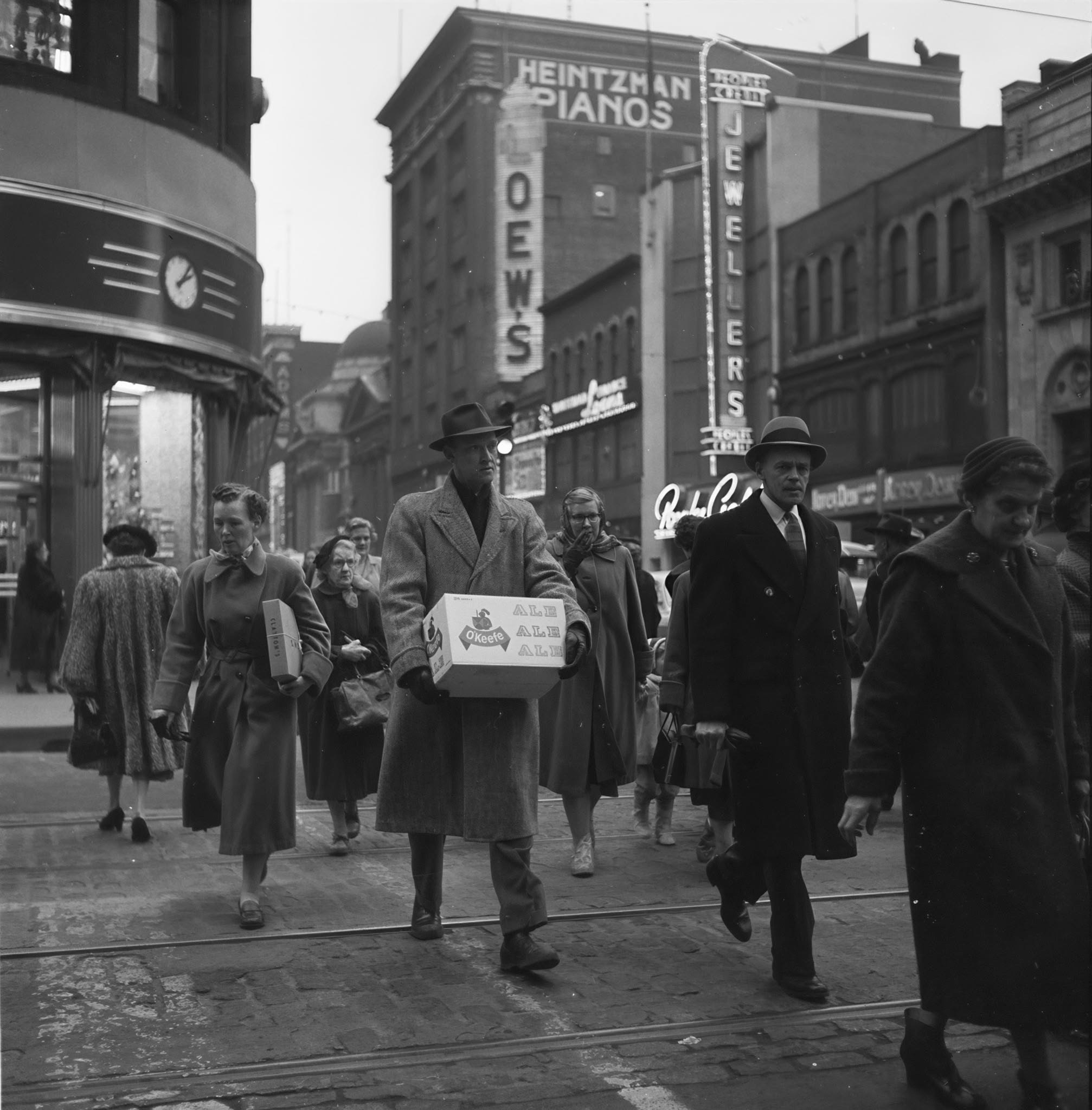
Now that the temperatures have moderated from -30C at dawn way up to -3C, the nation asks itself what the hell was all that? There is no answer to the question. Fortunately, there is a second question: how to still look dapper in a Canadian winter while lugging a lot of beer? Well, this gent can help. First, walk around in one of Toronto’s well loved black and white neighbourhoods where people must wear vintage clothing. Then, bottle your homebrewed beer only in second hand O’Keefe quarts you have nicked from the upper bric-a-brac shelves of old taverns. Finally, invest in an industrial quality paper packaging printing press you keep in the basement solely for the recreation of 1950s brewery boxes. Easy! Speaking of being on one’s feet, Boak and Bailey have written about how they didn’t do a Dry January so much as a very mobile one, a habit that has continued well into February:

We didn’t set out to make a mission of this, but we realised about halfway through January that, as it happened, we hadn’t yet made a repeat visit. That made us wonder if we could keep it up for the remaining few weeks. We were particularly conscious that we’d tended to stick to tried and trusted favourites last year. In fact, in 2025, over a quarter of our logged Bristol pub visits were to just two pubs – The King’s Head and The Swan with Two Necks. You might have noticed the word ‘logged’ and be wondering exactly what that means. Well, Jess, an accountant and spreadsheet nerd, of course keeps track of every pub we visit.

What a good realization! We have nothing like that possiblity here so much replicate 1950s Toronto to amuse ourselves but this comes a very good second. In the US of A, something else appears to be amuse or perhaps console according to BMI :

Beer posted positive $$ growth in 4 of the last 5 wks, and Jan 2026 is on track to be beer’s best monthly trend in years, at least in these channels. Including wine & spirit RTDs in the mix brightens the picture even more; broader beer + RTD category $$ grew more than 5% with wine & spirit RTDs adding close to 2 full pts in scans. 

Booze up! And somewhat similarly Ed stood up for the honour of Guinness this week with a response to what he called a a hatchet job on the Guinness’ Open Gate brewery in London published by The Guardian:

For some reason restaurant critics put the boot in more than any other type of reviewer… I was going to the brewery as part of the CIBD Southern section’s AGM, but first we had to do the business part to do at Diageo’s HQ.  I don’t know what deal the CIBD had done with Diageo or if we were subsidised, but we paid a tenner. This gave us pie and mash, which was nice, and a pint of Guinness (brewed in Dublin). I was keen to have somethng brewed on site though, so I had a hazy IPA next, which was nice enough. I think the ABV was a bit hefty, as on top of the three pints of Guinness I’d had I was defintely feeling pissed by the time I’d fininished it. So there you have it. The Guardian journo’s main complaint seemed to be that you had to take a lift to the toilets.

For others, the trip to the pub and then to the toilet is even easier. They are visiting the pub virtually from home, a remote non-work arrangement of sorts:

The 24-year-old from Yeovil, Somerset, regularly tunes into the feed from Morgan’s Arcade Bar in Carlisle, Cumbria – despite never having been there or anywhere near. What hooks Katie in is seeing different people come and go: the women enjoying a work party, the couple singing along with the musician, the young lad trying to chat up a girl at the bar… On some nights Morgan’s Arcade Bar, which can only fit around 60 people in it, has up to 5,000 viewers on its livestream at any one time. But like other bar streams, it has been subject to bans and restrictions for reasons they don’t quite understand. Bar owner Morgan Taylor has been streaming for nearly nine months. He noticed a huge rise in viewers over Christmas, then a few weeks ago his account was deleted.

Cass Enright got out of the house and on the road in his latest installment of A Quick Beer takes us to Montreal – a favourite destination of mine – and revisits some of the great brewpubs there in a video with this intro:

Join us on a step back in time as we have A Quick Beer at three of Montreal’s original brewpubs! Discover the enduring charms of Dieu du Ciel!, L’amère à boire, and Le Cheval Blanc, three spots that have been serving up delicious beer for decades. Although Montreal offers many modern breweries and taprooms nowadays, some of our fondest beery memories over the years have been here, and they’re all still going strong.

For me, it’s L’Barouf on rue St-Denis. If you are ever looking for me, check there. Also all about winnowing the better and the best, Pete shared some firm thoughts in his column in The Times this week, always welcome sight:

My beef is not with hazy pales — those original examples were pretty good. But if you don’t need to worry about balance or clarity in the beer, and you’re throwing in enough hops to cover up any off-flavours from brewing mistakes, a hazy IPA is very easy for a mediocre brewer to make. From a drinker’s point of view, if you grew up with soft drinks and don’t like the taste of actual beer, it’s perfect. It’s also great for Instagram — everyone can see you’re not drinking a boring, mainstream beer. But instead you’re drinking a boring craft beer. A boring, one-dimensional alcoholic fruit smoothie in a gaudy can with hop monsters or skeletons on it. If I wanted to drink sour grapefruit juice, I’d buy some Tropicana and leave it in the sun for a bit. 

The many botches of “craft” is a venerable topic which even comes with its own primodrial gospel but it is true that for all its eager keener passion craft never seems to fail to find a way to fail.  Nice to see that we have a paper of record confirming what Pete called the “sustained decline.” Viva crystal malt! Viva!! Viva!!! And Phil Mellows guided me to this article in The Caterer on the why to Pete’s what including this suggested impetus:

“…we are beginning to see the movement of some younger adult drinkers towards nostalgia brands, and given our history and heritage, we feel well-placed to meet this trend through some marketing and awareness driving activity.” Brookfield Drinks has launched a trial bringing long-established premium Scottish lager Kestrel back on draught. Brookfield managing director Nigel McNally says: “We’ve shown that a brand that’s nostalgic, like Kestrel, can be repositioned and revitalised. “Most pubs are serving the same products, and the trade’s been guilty of allowing brands which aren’t authentic onto the bar. Alcohol by volume (abv) have also come down, and I think overall customers feel they’ve been short-changed. A return to brands with heritage and nostalgia is offering customers a point of difference.”

Nostalgia and getting short changed? One must be on one’s toes. Which is related to Lars’ new maxim: “if you don’t know how the beer is made then, no matter what the beer is named, you have no idea what kind of beer it is.

Speaking of no knowing, The Beer Nut made a confession this week that I suspect is made on behalf of many of us:

Anyone who pays attention to trends within microbrewing will have noticed in recent years the explosion in variety of proprietary hop products. I don’t think these assorted extracts and powders and boosters were ever meant to have a consumer-facing role, but brewers seem to love them, and love letting us know that they’ve used them. Does that get them a discount from the supplier? I wouldn’t be surprised. For my part, I can’t help wondering if these enhancers actually enhance the beers in any real way. I’ve certainly never identified any pattern among them: which ones to look out for and which ones aren’t worth the paper their patents were filed on.

Note #1: Ludlow prices!!!
Note #2: Laura’s top tap rooms.
Note #3: Jeff doxxed.
Note #4: Burton Union Pr0n!
Note #5: Actually, no you can’t. You’d die.

The British Royal Navy has recently announced it is cutting booze rations in the service, limiting intake to 14 unit per week while on board. The Telegraph in its emailed newsletter presented a few responses to the news from readers:

Jenny Jones, however, recalled an age of largesse: “Many years ago in Malta, my husband and I were invited on board a Royal Navy ship that was giving a party. The atmosphere was convivial and, thanks to attentive stewards, I was able to enjoy several gin and tonics before dinner. “On departing, it seemed to me that the gangway had become a lot steeper. Back on dry land, our host asked how many drinks I’d had. When I said three, he told me that in fact I’d had nine, as naval tots are about triple the size of what one would get in a pub.”

Ah, Jenny Jones… what’s that? Not the same one? Fine. Me, I was once invited with a gang up the plank and onto a Canadian navy ship helpfully docked a walk from the Halifax taverns by a pal’s navy boyfriend. Among the minty green paid we worked our way though a number of 25 cent beers. I expect that sort of service is no longer offered.

The feature this week at Pellicle was written by Newt Albiston who shares his thoughts on drinking in Epping, just north of Greater London the tough town where he grew up which lives with division:

The day I return to Epping, my first trip home in some time, I can feel the tension, and the hesitance. The high street is pretty quiet, and there are lingering looks as I make my way past the various coffee chains and charity shops. Signs of the change in mood are everywhere: Union flags fly at half-mast on lamp posts, as if to declare the death of Britain as she once was, shadowed by the residue of torn-off patriotic stickers. Although I am instantly greeted by familiar faces when I walk into The Duke, the tension is still present in the quietness of the venue.

I like this: “…no fancy ginger beer or small-batch kombuch…” Perhaps related to The Duke, Stan guided us to a question this week – “what’s that smell?” Or rather…

“Olfaction helps shape our cultures, although it often does so unknowingly or without us noticing,” says (Inger) Leemans, who led the Odeuropa project. “When we talk about cultural heritage, we can think about religious rituals, but we can also think about specific scents that we’ve been cherishing and living with for a long time.”

Cherish. Hmm… I spent a good chunk of my teens in Truro, NS where the smell wasn’t always cherished and I am mindful of that reference The Breweries of Kingston & The St. Lawrence Valley by Steve Gates to a brewery a couple hundred years ago near my current place of work at City Hall which doubled as a pig sty. The next brewery to the north itself had a manure pit.  My point is that there were no scents without the full sensory array around it. Did 1890s Mild pair well with coal dust? Did Porter marry well with the pong of streets filled with horses? Perhaps we can never know.

And Charlotte Cook, brewer and scribbler, at took us along to Asturias, Spain for Everyday Drinking and shared her thoughts on the food and the cider:

When you taste the intensely rich stew, you can understand why cider rather than wine prevails in the north—the sour and fizzy is needed to cut through, cleanse the palate, and prepare you to dive in again. Cider is omnipresent in Asturias. As you walk around the town center of Oviedo on a Sunday morning, as families returning from church mix with football fans heading to an entirely different type of cathedra, cider is everywhere. Before 11 am, people will be drinking a bottle of cider for the table. Spaniards are famed for their ability to drink until the wee hours and still make it to work, school, or church as if nothing has happened. And having a little tipple of cider in the morning isn’t seen as such a stain on your character as it is at home.

Finally, some very heartfelt tributes were shared after the news of the death of beer writer Des de Moor like this from David J:

I think a lot about the pints we had one night in South London where he held court, sang songs and was so warm to everyone.

Pete also remembered Des the singer:

Des was a man of many layers. Years after the event, I discover my first interaction with him was buying the 12” remix of Charlton Heston by Stump – that was him, as half of the Irresistible Force. He made the Popbitch newsletter as Secretary of the Ramblers Association (moor, geddit?)… He was a great singer, a walking encylopedia. An absolute stalwart of judging the World Beer Awards. Never once heard him angry, pissed off, or anything other than kind and decent.

There are many more. His Wikipedia bio explains his musical side. Here he is singing Bowie and, here, an earlier solo album. By all accounts a wonderful guy. A sad loss.

Until next time, please check out Boak and Bailey who are posting every Saturday and adding to their fabulously entertaining footnotes week after week at Patreon. And look out for more of Stan’s new “One Link, One Paragraph” format. Then hunt out something in someone’s archives! Leave oblique comments on someone’s post from 2009!! Listen to a few of Lew’s podcasts and get your emailed issue of Episodes of my Pub Life by David Jesudason on certain Fridays. And Phil Mellows is at the BritishBeerBreaks. Once a month, as noted, Will Hawkes issues his London Beer City newsletter and do sign up for Katie’s wonderful self-governing totes autonomous website featuring The Gulp, too.  Ben’s Beer and Badword seems to be on pause since November but there is reading at The Glass which is going back to being a blog. Any more? We have Ontario’s own A Quick Beer and All About Beer is still offering a range of podcasts – and there’s also Mike Seay’s The Perfect Pour. Plus follow the venerable Full Pint podcast! And there’s the Craft Beer Channel on Youtube. Check out the archives of the Beer Ladies Podcast.
Your Sunny Yet Still Cold But Not Standoffish Beery News Notes For Early February

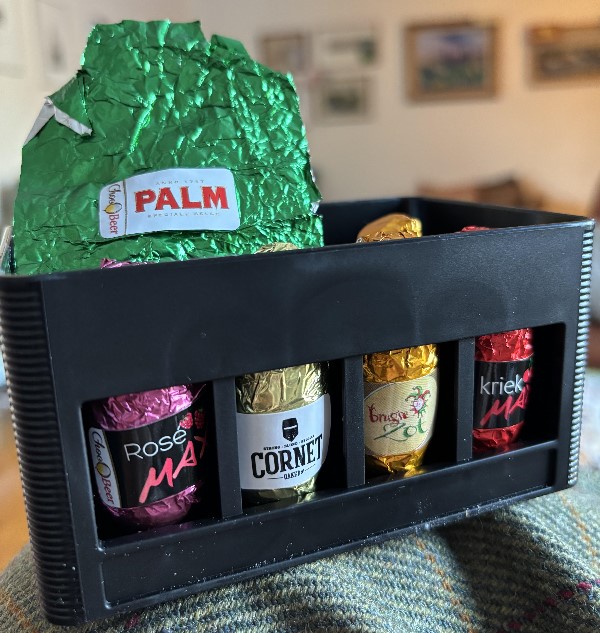
February flies by. That’s just the way it is. Good time to take stock. Good time to eat the little chocolates filled with beer brought by a visitor from Belgium. Early review: the “…chocolate is dry and dark so a lack of sweetness in the kriek left it a bit stark but the Palm was that bit richer.” Not sure I am chowing down on these outside of a winter like this but all quite a bit better than expected. Paid endorsements welcome. Winter was also on the mind and under the feet of Jordan as he wrote about the weather at the end of last month or perhaps just his efforts to get about in it:

Monday, Jan 26th: The deep freeze is well and truly upon us, and looking at the forecast for the next couple of weeks, it looks like we’re in four-layer territory. If your primary mode of transport and exercise is walking, then -25 with the wind chill does you no favours. Besides, the sidewalks are not shovelled in any meaningful way. Dry and cold is a great combination to ensure you’re reminded of the various injuries you’ve had over the years. Sometimes I get the unprompted sense memory of an ankle ligament rolling.

Also looking at the world as it exists below the knee, Stan shared some research he has done on the word Hopfenstopfen and its relation to a certain pair of boots:

The shoes were worn by a worker processing hops. When a bag was filled, a worked would jump into it, stomping down the hops to make sure the bag was full. When I dug this out, I wondered if these could have been called Hopfenstopgen boots. That’s because in Hop Queries Vol. 4, No. 6, I wrote about dry hopping in Germany in the 19th century. That was called Hopfenstopfen, which can be translated at hop plug. Simon Moosleitner, a subscriber in Germany, suggested there is more to think about…

I won’t spoil the fun but speaking of getting the boot in, late last week in VinePair, Dave Infante wrote about the effect of the homicidal ICE intrusion into Minneapolis on the beer trade in the city including this from Drew Hurst of Bauhaus Brew Labs:

You can see it in the firm’s sales figures. Taproom sales are down 40 percent compared to January 2025. “It’s a wildly unsustainable thing,” says Hurst. “None of us signed up to have to live through a federal occupation and figure out how to run a business at the same time.” Not that it was easy before the onslaught: Bauhaus wrapped this month last year down around 30 percent from January 2024. Craft brewers have been struggling to find their way for years in the face of shifting demand, new competition, and rising costs. In Minneapolis and Saint Paul, they’re doing all that with the MAGA jackboot on their necks.

At first I thought it was an odd angle but then realized it illustrates the principle that beer prefers peace as well as how quickly that peace can be lost. Dave also shared in his email updates that he was told to “stick to beer” and that some paying subscribers to his newsletter Fingers canceled their subscriptions. Perhaps if those folk didn’t “stick to” amateur neo-fascism it might be better. Funny how the “stay in your lane” crowd don’t show up for this sort of politicization within the pub:

A beer tap labelled “Rachel Thieves” has appeared on the bar of a Hertfordshire pub protesting Chancellor of the Exchequer Rachel Reeves introducing crippling tax hikes. Anyone ordering the beer will receive only water. The Green Dragon in Flaunden, which is run by publican Chris Ghazarian, has added the spoof cask ale pump badge as a protest – telling customers that pints of this particular beer are “very bitter” and cost more than anything else on the bar and anyone ordering it will receive only water. Speaking to the British national press, Ghazarian said: “They find it hilarious. I obviously don’t make them pay for it.” 

On the other side of the planet, a very difference approach has been taken in Australia:

The Albanese government is seeking to put a hold on increases to the beer excise for the first time in 40 years. The Customs Tariff Amendment (Draught Beer) Bill 2025 seeks to pause the indexation of customs duty rates for draught beer for two years from August 1, 2025. Currently, the beer excise is indexed twice yearly to stay in line with the consumer price index, with Australian beer, wine, and spirit importers and producers saddled with some of the highest rates in the world…  Addressing the House of Representatives, Anthony Albanese said he was “proud” to introduce the Bill, “one of the most popular commitments that we took to the election”.

Boak and Bailey also wrote about another sort of pressure to conform but the context was less confrontational – just writing about their thoughts on a craft brewery:

Maybe that post was a bit too snarky, with hindsight, but it certainly didn’t warrant trolling impersonation accounts on Twitter, general abuse that last for months, or a stalking campaign. That was, as you might imagine, quite traumatising, and probably did make us nervous about being critical of breweries in the supposedly cuddly craft brewing sector. It didn’t stop us, but it had a ‘chilling effect’ on how freely and frequently we felt able to express ourselves. It’s easy to say “Don’t mince your words” but minced words are less likely to lead to sleepless nights. We can totally see why some people might decide it’s not worth the trouble, and certainly wouldn’t judge them.

On reflection, I have probably benefitted from folk starting with the assumption that I am a bit of an arsehole. I lose my sleep over other things.

Note #1: Take a news event and ram it like a square peg in a round hole.
Note #2: Martin at another fabulous pub, this time inordinately bright.

Ron TV continues to impress. This week he’s been presenting an extended interview with Mitch Steele and, like the comment maker Oscar, I am drawn to the brief introductory electro-thrash almost as much as the subjects of these interviews. Part 1 of the interview is over thirty-seven minutes long with Part 2 clocking in at thirty-three. Set aside an hour or so of your time. More if, like me, you keep replaying the first six seconds and that mesmerizing theme music over and over and over.  Good multi-media breakout for Ron – even if it likely doesn’t pay the bills. One a similar note, Ray of B+B on the prospects of a career in writing:

This is excellent. Depressing, but excellent. My response has been to give up, basically, and accept that writing is a thing I do on the side, while something else pays the bills. I also like that thing, so it’s fine, but I get sad thinking what I could have achieved if writing was my full-time job.

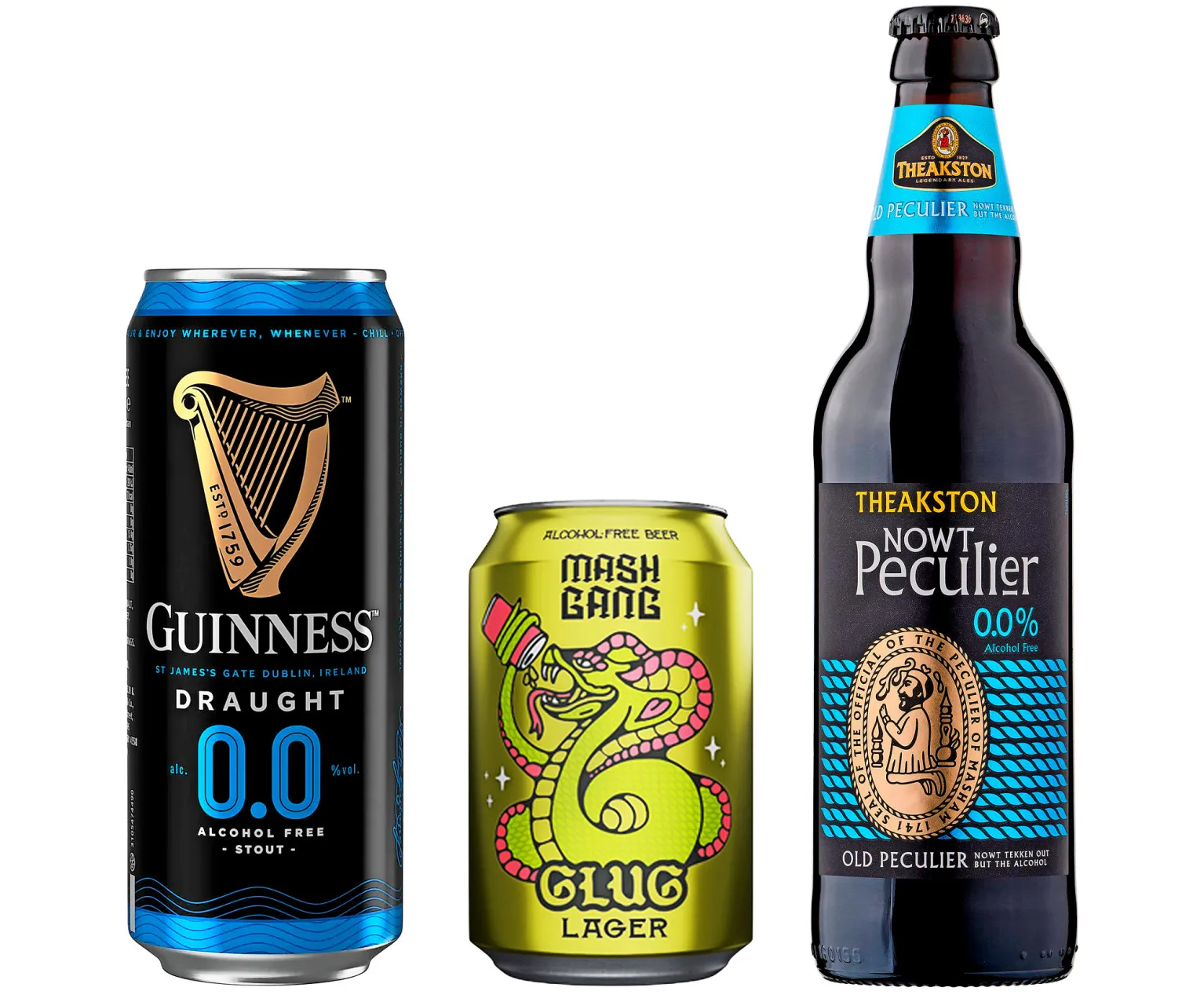
Perhaps also on the theme of less is more, Guinness 0 also continues to impress me and Pete‘s brief review does not surprise:

There are many great 0.5 per cent stouts from small indie brewers, but Guinness 0.0, which took years to develop, is indistinguishable from the real thing.

I noticed one thing when writing this. It is branded as “Guinness 0” in Canada but “Guinness 0.0” in the UK. Why? Is it a different formulation here and there? Whatever it is, I am finally seeing a point to NA beers. But things will be going in a slightly different direction in UK neighbourhood if one permit applicant has their way:

The shop also sought an amendment to the condition currently imposed on the licence… to “No super-strength beer, lagers or ciders of 6.5% ABV (alcohol by volume) or above shall be sold at the premises with the exception of Dragon Stout and Guinness Export beers.” The applicant’s agent, Frank Fender, told Bedford Borough Council’s licensing sub-committee (Thursday, January 29), that these “super strength” beers are not usually the “street drinkers’ choice of drink”. “They are they are widely consumed by members of the Afro-Caribbean community, and obviously this shop wants to be inclusive,” he said. This claim was backed up by Chris Hawks, the council’s licensing compliance and enforcement officer. He said: “What Frank says about Dragon Stout and Guinness Export is spot on.

For years, the word authentic was bounced around in the face of glitter and haze. That plan in Bedford sounds like authenticity to me. Similarly perhaps, crossing the Atlantic, Matty C has written some notes on the US beer scene for the supplier Get ‘Er Brewed‘s webpage and found something of a revivial going on:

Nostalgia is one play many breweries seem to be using. During my time in both Portland and in Colorado, (the latter of which I visit regularly to see family,) I noticed that many drinkers seem to be choosing the classics made by more established breweries. Allagash White, the Belgian style witbier from the brewery of the same name wasn’t just on tap everywhere in Portland, but it felt like everyone was drinking it too. The beer carries the kind of hushed reverence that money can’t buy, and demonstrated to me why establishing a core beer as part of your brewery’s identity is essential for longevity.

This is quite a reversal as, you will recall, in 2019 flagships were considered a dead concept: the “concept of a flagship in almost all ways maps to an earlier and obsolete way of thinking.” Futurisms rarely stand up to audit but it’s good to know, in an era too concerned with branding and other misinformations, that identity in the form of what is in the glass has made a come back. One never knows what is really going on otherwise. As with the news about the bills left unpaid and the suppliers left in the lurch by Rogue, James Beeson in The Grocer shared that the level of insolvency at failed Keystone Brewing had hit almost £15 million. Heavens! Remember when we all spoke of community?

Sticking with things in the USA, the feature in Pellicle is a portrait of Eckhart Beer Co. in NYC by Ariana DiValentino with its focus on central Euro lagers and foods that share the same theme:

The menu focuses primarily on Central European dishes that match the beers’ origins. There is a brat plate, and spaetzle gratin, and kartoffelpuffer (German-style potato pancakes), which you can order fried in oil or beef tallow. But there’s also a falafel dog, an Italian cold cuts sandwich, and a Moroccan-spiced ratatouille with vegan lemon yogurt. The variety of cultural influences feels very reflective of the brewery’s New York City context. “I wanted to offer food that supports the beer. It didn’t have to be Central European per se, but that felt like a natural foundation,”

Sounds like a great place for all. Not so in Japan where one establishment has embraced ageism:

The concept of age restrictions and minimum requirements is commonplace around the world. But have you ever heard of an establishment imposing a maximum age limit? Now, a Tokyo chain pub has set a ban on older customers – in order to try to maintain the raucous, fun atmosphere for which it is known. Tori Yaro Dogenzaka is an izakaya (an affordable Japanese pub) situated in Japan’s capital city. This year, the establishment propped up a sign outside the entrance, informing customers of the new rules. The sign said: ‘Entrance limited to customers between the ages of 29 and 39. This is an izakaya for younger generations. Pub for under 40s only.’

I wasn’t wanting to go there anyway. Screw them. That’s it. As as I sulk in a mode Japonais, please check out Boak and Bailey who continue to post every Saturday. adding to their fabulously entertaining footnotes week after week at Patreon. And look out for more of Stan’s new “One Link, One Paragraph” format. Then hunt out something in someone’s archives! Leave oblique comments on someone’s post from 2009!! Listen to a few of Lew’s podcasts and get your emailed issue of Episodes of my Pub Life by David Jesudason on certain Fridays. And Phil Mellows is at the BritishBeerBreaks. Once a month, as noted, Will Hawkes issues his London Beer City newsletter and do sign up for Katie’s wonderful self-governing totes autonomous website featuring The Gulp, too.  Ben’s Beer and Badword seems to be on pause since November but there is reading at The Glass which is going back to being a blog. Any more? We have Ontario’s own A Quick Beer and All About Beer is still offering a range of podcasts – and there’s also Mike Seay’s The Perfect Pour. Plus follow the venerable Full Pint podcast! And there’s the Craft Beer Channel on Youtube. Check out the archives of the Beer Ladies Podcast.

Your Merriest Of Merry Christmas Day Beery News Notes For 2025

Stan has been worried. Very worried. Either worried that there would not be any beery news notes this Chrismas Day or worried that there would be beery news notes today and that I really should be doing something else. I am deeply appreciative of the concern but as I usually farm this all out to the team of sleep deprived unpaid interns there is no question whatsoever of the news getting to each of you, my gentle and today hopefully mildly hungover while turkey and stuffing compromised readers. So… the show goes on! Speaking of which, todays photo above from the Yuletide photo contest was submitted by Zak Rotello of the Olympic Tavern of Rockford Illinois, a long time pal of this here beer blog. Click on it for a bigger version. It’s an image of a member of the brewer staff cleaning open fermenters at Anchor Brewing in San Francisco, the brewery that will now never reopen. Like the sleep deprived unpaid interns, we remember those who are working today to keep the holidays jolly.

So what news is actually out there this week? We might have slim pickin’s but there shall be pickin’s. First up, what days are your local party days? As mentioned last year, Tuesday was Tibb’s Eve in Newfoundland last Tuesday. And this is the first year I saw a lot of references to “Black Friday” for the last Friday before Christmas as opposed to the first Friday after U.S. Thanksgiving. Here, for example, is the new coverage from Wales.  Mainly photos of the dressed up and drunk yuff today. It also seems to be referred to as “Mad Friday” in Scotland but maybe it’s a phrase able to be swapped out. I share the thumbnail attached as evidence that such stuff happens in Canada but perhaps with a little more grace as well as perhaps a bit more grit. By the way, one assumes (given the obviously strong ankles) that such natty folk might also be hockey players so… a misplaces comment might receive an brisk elbow right to the Chiclets… if you know what I mean.

What else? The best booze stories of the year according to the Drinks Business included beer news including the high price of a pint in the UK, BrewDog ditching pubs and the suggestion that NA beer should be “a functional drink rather than a compromise…” whatever that means. Pellicle offered up its top tales of their very good year. And Ron has been posting about the best of his personal year including:

I did a bit of judging this year. Mostly in South America, obviously. That’s where I prefer to judge. The Blumenau contest was fun this year. And not in Blumenau. Instead, it was on the coast at Balneario Camboriu. Literally on the coast, as the judging location was on the seafront. Meaning you could have a stroll down the beach at lunchtime. So civilised. And I managed to dodge judging Best of Show. That’s always a win. In Santiago, judging was in the same hotel as we were staying. Which is always good.

Also good was his news that he’s been cutting back.  On a related note, the* Beer Nut on the expansion of NA beers that don’t suck:

Non-alcoholic beer gets the occasional bit of coverage on here, though I tend to find very few which perform the role required of a beer. Pale ales, wheat beers and lagers seem to be the preferred styles, which may be the problem. I’ve often said that dark styles make for better alcohol-free beer, my favourite to date being Švyturys Go Juodas, and the Guinness one is pretty decent too. The latter’s success has provided an opportunity for other breweries to get in on the 0.0 stout racket, and the first I’ve seen locally is Dundalk Bay’s Zero Zero Nitro Stout, available in Aldi.

I’ve recently bought into the “Guinness 0” thing so good news that other smaller operations are able to similarly pass muster. Speaking of news, Stan also had newsy news in his Hop Queries in the state of the US supply of hops:

Farmers in the Northwest reduced acreage 7% in 2025 and harvested 5% percent fewer hops, according to the USDA National Hop Report. Average yield per acre was the highest since 2011, when higher yielding hops appreciated more for their alpha made up a larger percentage of acres planted. The 2025 value of production was $447 million, up slightly from 2024, but significantly less than $662 million in 2021. That shouldn’t be a surprise, given that acreage has shrunk 31% since 2021 and production 28%. Perhaps as important, in September the USDA reported that the inventory of hops held by growers, dealers and brewers was 116 million pounds, down 15 percent from the previous year. That’s the largest contraction in 15 years and suggests the market is getting closer to being in balance. Still, it is a significant amount, and almost 40 percent higher than it was through much of the teens.

Me, I was higher in my teens. That’s the main difference between me and the US hops trade.

Note#1: “Stephen Beaumont once gave me some good advice: don’t.
Note #2: “Scroll at your leisure…
Note #3: Women in public bars over fifty years or so ago.
Note #4: Continental had a pub in the sky.
Note #5: Short pours in Milton Keynes!

Speaking of controversy, a debate threatened to break out in the comments at Boak and Bailey but it appeared to just be a slightly paranoid complainer intent on playing one handed ping pong, the prattling lad being handled firmly by the administration. Much more interesting were the comments confirming reality behind the sale of Bristol’s Moors, including:

I now have had a chance to dig into their structure and, in short, they were not employee-owned in the recognised sense of being owned by an employee ownership trust or being a co-op, etc – it was just that all of the owners were also employees (i.e. no external investors). Justin owned 85% of the business. It looks like he has now sold that stake to Albatronic Arcades Ltd, a company registered on 5 August 2025 and owned solely by Bruce Gray. So I feel less unnerved about the boycott! But still hope they can turn Moor around.

Another set of comments were helpful in building upon Jeff‘s thoughts on the shutting down of three of ABInBev’s megabreweries in the U.S. of A.:

At a macro level, overcapacity normally drives prices down, which is always hard on producers. It’s especially bad for breweries right now, which face a host of financial challenges. Craft and big beer function largely in separate realms, though, and it’s seemed like big beer has been able to replace lost beer volumes with flavored-malt beverages and the like. This news suggests otherwise. Further, for anyone who has followed the beer industry over the past fifty years or so, this is a shocking development for a financial and logistical juggernaut.

Not as shocking to one Karl “the Commentron”** Ockert who shared his understanding:

I worked at the Newark brewery, then a 9 million bbl per year plant, in the early 90’s. I (half) jokingly tell people that I earned my Masters at the university of AB, Newark campus. While I learned a lot of the science of brewing at UC Davis with Dr Lewis, at Newark I learned even more about production and process discipline which I was able to use at the BridgePort and Deschutes Breweries. Last year Newark was down to a rate of 500,000 bbls per year and brewing less than a week per month. Along with Fairfield and Merrimack, it fell victim to the changing beer market. I’m sure it was a painful decision to close all 3 breweries at once, and I’m sorry to see it finally happen.

One wonders what it was that kept the facilities hanging on for so long. Wasn’t money. Somewhat similarly was the concern raised by Ron about the loss this year of Martyn Cornell and state of Martyn’s now 404 website:

What did Martyn leave unfinished? I can’t believe that he wasn’t working on another book. (He asked me about self-publishing because he was so pissed off with how long it took to get a book published.) Not to go all fanboy, but (meaning I am doing) how much material is there that hasn’t been published? Including stuff chopped from Porter. I’d buy a book with that in. Niche, made possible by self-publishing.  A compilation of his, often very long, always hugely informative, blogposts would make a great book. And preserve them in print. As Zythophile is no longer there. Fuck. This material really needs to be saved. Maybe I should get in touch with his brother. 

Happy was I then to confirm that the contents of the entirely excellent Zythophile has been preserved at the Wayback Machine, a service which I have been in love with since the great blog server shift of 2016. Think something has been lost on the internet? Check the Wayback Machine first.

There was intrigue in England as we wondered if Mrs RM could walk past  one of the great conversational pubs:

Walking back from the Sun to Faversham Premier Inn on the eve of Mrs RM’s birthday I suddenly realised we’d taken a different route into town that afternoon and missed its most famous pub. Would she be able to resist the lure of the Elephant on first sight. No. “We’re going in there“. I was happy to skip it, honest. A year ago it was packed on Sunday folk afternoon, a bit quieter on Tuesday night but there still weren’t a lot of spare tables.

A pub full of chatters. Not always what one wants but good to see someone get their way.  In other situations, choosing beer can be the wrong move as this personal injury workers compensation claim denial illustrates:

The claimant’s business required them to purchase and transport bulk quantities, and as the pain apparently intensified the claimant was awarded income replacement benefits, the release says. Surveillance by investigators found the claimant was seen regularly transporting beer for seven to 10 hours every day, often loading up to 20 cases of beer into their vehicle without assistance or any evidence of pain. The benefits were terminated…

All this leads to one fact – beer is not always kosher. No, really. Not kosher:

In November, three of America’s largest kosher certifying organizations came together to release new guidance regarding the status of beer, which has long been considered kosher by default. Due to the proliferation of flavorings brought on by craft brewing and other industry changes, however, the rabbis who declare whether food products are in line with Jewish dietary laws now say the label must be checked before drinking. “We’ve discovered that companies use many flavors, different flavors, to enhance even the simple beers that they manufacture. Those flavors need to be kosherly supervised,” said Rabbi Moshe Elefant, the head of kosher operations at the Orthodox Union, who released the guidance along with Star-K and OK Kosher. “We’ve seen more than one situation… that some beers have dairy in them. They add lactose, they add milk, so a beer could be dairy, which has very serious kosher ramifications.”

Knew it. Gak. Yet some of the stuff that can be crammed into beer other than via the “craft” of the fruit sauce hose might actually be useful:

Buck isn’t just a home brewer dabbling in drug-making. He is a virologist at the National Cancer Institute in Bethesda, Md., where he studies polyomaviruses, which have been linked to various cancers and to serious health problems for people with weakened immune systems. He discovered four of the 13 polyomaviruses known to infect humans. The vaccine beer experiment grew out of research Buck and colleagues have been doing to develop a traditional vaccine against polyomavirus.

As I mentioned last week, I am pro-line in the pub. Better, table service. Each to their own, I suppose, but is there any bore are boring as the “don’t queue” bore in a ‘Spoons?

Believing it’s an ‘unwritten rule’ that you don’t queue at a bar, the 24-year-old barman was stunned to spot ten people in an orderly line waiting for their drinks. Jack refused to join the queues, instead ‘standing his ground’, claiming he propped up the bar for 10 minutes until he was served. Baffled Jack, shared a snap of the queue on X, slamming it as a ‘disgusting and uncouth disregard for sacred tradition’… Jack, who lives in Birkenhead, Merseyside, said: “It’s going against British tradition and it’s just wrong. It’s not like they’re doing anything inherently bad but it’s an unwritten rule you don’t queue at a bar.

Finally – and looking forward to New Year’s resolution suggestions – a word on usage if I might. Please stop writing “I don’t understand” as it means… you are admitting you don’t understand. And if you are a professional writer and you use the phrase “trust me” it only shows you can’t clearly explain your views which means your views are likely not trustworthy. And ask yourself before hitting “publish” if it is wise to write “… an unimaginable amount of work goes into…” when not only was it imaginable but it was accomplished as imagined. And if you as a beer business person want to want to display your ignorance of the times and market conditions of your trade as it exists today, feel free to post something like this on LinkedIn:

Given the current state of the industry, I think it’s about time we rally together and finally retire “Dry January.” Honestly, hasn’t it taken up more spotlight than anything that fun-free should? Let’s change the narrative and remind people what beer actually is……. a simple, natural combination of water, malted grains, hops, and yeast. Four ingredients. Zero mystery. This is our heritage. It’s real, it’s straightforward, and frankly, it deserves a comeback tour. Let’s make it happen and get things moving in the right direction!!!

Seeing as the “industry” didn’t start Dry January how exactly the hell does this person propose that it retire the concept. Plus… “a simple natural combination“? Yes, let’s go out in nature and find some beer, shall we? Displaying further ignorance on the brewing processing is another not strong move.

And that’s it! Stan will either be satisfied or concerned. The interns are using all resources to seek further clarifications on the question. No Christmas for them! And as we enter deeper into the holiday week lull, please also remember that Boak and Bailey are not posting this Saturday so we also will do without their fabulously entertaining footnotes, too. Sitll, look out for Stan’s new “One Link, One Paragraph” format. Then hunt out something in someone’s archives! Leave oblique comments on someone’s post from 2007!! Listen to a few of Lew’s podcasts and get your emailed issue of Episodes of my Pub Life by David Jesudason on certain Fridays. And Phil Mellows is at the BritishBeerBreaks. Once a month, as noted, Will Hawkes issues his London Beer City newsletter and do sign up for Katie’s wonderful self-governing totes autonomous website featuring The Gulp, too.  Ben’s Beer and Badword has returned from his break since April so you can embrace the sweary Mary! There is reading at The Glass which is going back to being a blog. Any more? We have Ontario’s own A Quick Beer and All About Beer is still offering a range of podcasts – and there’s also Mike Seay’s The Perfect Pour. Plus follow the venerable Full Pint podcast! And there’s the Craft Beer Channel on Youtube. Check out the archives of the Beer Ladies Podcast.

*I am always torn. Sweat forms on the brow. Does one capitalize the “t”?
**The title reserved only for the most experienced of comment makers.

Two Weeks?!? It’s The “TWOOOO WEEEEEEEKSSSS TO GO!!!!” So Excited Dontcha Know Edition Of Your Beery News Notes

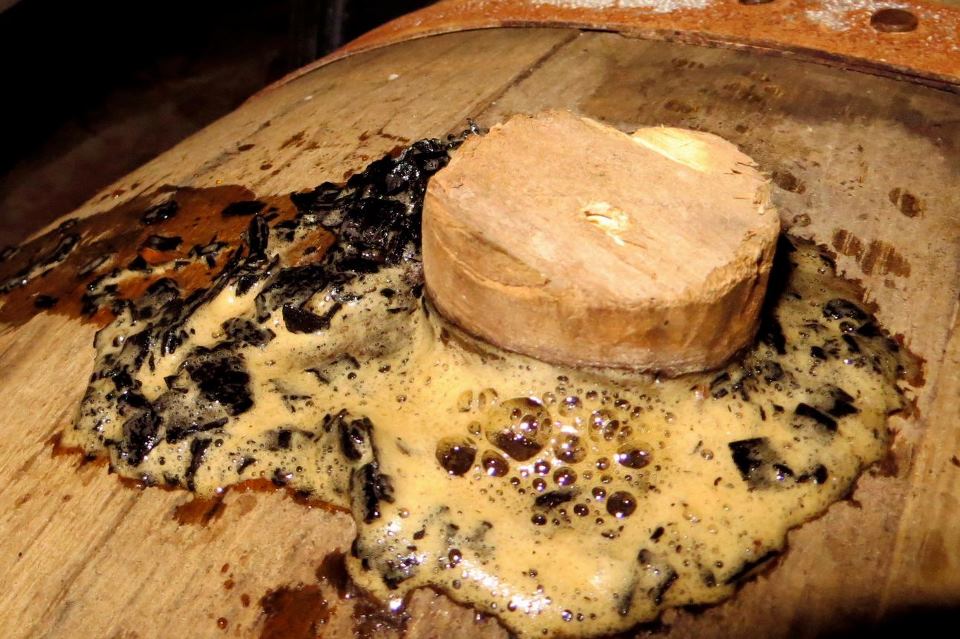
As I mentioned last week, I am sharing some past submissions from the Yuletide Christmas Boxing Day Hanukka Kwanza New Years Eve and Hogmanay Beery Photo Contests that have been sitting in my email folders from all those years years gone by. This week a photo from 2012’s bare knuckle brawl sent in by Jeff Wayne of Tampa, FL. Not necessarily the prettiest image but that there is the leaky bung of a fermenting barrel aged chocolate stout, a celebration of a full range of browns. I like it. Just hope someone spooned up that excess chocolate.

Yes, here we are two weeks from the big day. The day I drink sherry at 8 am and have cake for breakfast. Excitement builds. Also building is Eoghan‘s Advent calendar of things seen in about the 19 communes of Brussels, including at the bewilderingly queter edges of the town:

The streets were so big, wide plains of asphalt, fringed by large standalone houses between was too much air. And the air too was different, smoky and rich but not in an oppressive, attack-your-throat sense, more luxurious. The topography too, big dips and vertiginous climbs with houses and apartment blocks ranged on their slopes, not at all like the slow and steady – but just as taxing – hills I’m more used to traversing in downtown Brussels. I didn’t even know if I was in Watermael or Boitsfort… The bar was, when I finally found it, comfortingly familiar. A Brussels that was recognisable to me however far from the centre I might have strayed, with beer in the fridges I knew and breweries on the taps I trusted. I was at last on terra firma…

Also out wandering, ATJ captured something of the essence of being ATJ in this passage from his travel diary this week:

The soundtrack on this late morning in a Bamberg pub is of laughter and calls and joy growls in the main bar, alongside the clatter and bang of cutlery and plates in the kitchen. The aroma of roast meat, intense in its intimacy, flits through the room, an escape from the kitchen, like a spirit from its long locked stronghold. I sense, or perhaps create, a Friday midday feeling, the joviality of the approaching weekend, though for me, having left home the previous Sunday and perambulated through Prague, nuzzled myself into Nuremberg’s hidden corners and currently based for a day in Bamberg, there is no conception of a weekend, time is just drifting by with the conscience of a cloud.

Not unlike Willie W., when one weighs the words. Anthony Gladman has also being weighing the situation, in this case for cask, and finds that something is lacking:

Cask ale’s slow drift away from relevance saddens me. I fear we seem set to lose it altogether, and shall be culturally diminished as a result. And the worst thing about it is this: the younger drinkers who choose not to drink cask ale are doing nothing wrong. It simply isn’t relevant to them. Nor is this their failing; it is the beer’s and the brewers’ and the pub landlords’. And perhaps partly also mine, as a drinks writer, for failing to make its case often enough, loudly enough, or persuasively enough.

Bingo. I have never understood writers complaining how folk don’t understand this thing or that. It is the job of the writer to make it compelling. Has cask suffered solely on that basis? Nope. But it hasn’t helped.

Well, conversely, this news either means it is no longer a fad or the shark has jumped on no-lo beer as, according to The Guardian, AB InBev is created the world’s largest alcohol-free brewing facility in Wales:

A “de-alcoholisation facility” sounds like somewhere to check in after a boozy Christmas, but in the new annexe of a brewery in south Wales they are extracting hangovers from beer. With demand for no-alcohol and low-alcohol (“nolo”) beer taking off in the UK, the hi-tech brewing apparatus enables the plant at Magor, which produces more than 1bn pints of Budweiser, Corona and Stella Artois a year, to make the increasingly popular teetotal versions too… The availability of alcohol-free beers on tap in pubs is expected to further normalise the choice.

We are assured that “the machine treats the beer very sensitively and delivers a fantastic taste”. Normally I would laugh, say things like “….riiiiight…” and move on but… I just had my first four pack of Guinness 0 and will definitely buy another. What happened? Maybe I got normalized. Try it with port. But no-lo’s not quite as socially acceptable everywhere as The Times notes this amongst its list of conversation topics you will be annoyed by at parties this holiday season:

At every party there are now soooo many men with soooo many helpful tips and advice on the great alcohol-free beers they know all about and which they are categorically not drinking tonight. For some reason it’s always the most sloshed blokes who have the most to say about sober alternatives. It’s like getting nutrition advice from the morbidly obese.

Don’t be the beer bore. Ever. Never one to be that, Alistair shared a happy memory of the time he helped brew, :

This Thursday is the 15th anniversary of the day I spent at Devils Backbone Basecamp brewing the first ever batch of Morana, a Czech style dark lager that I designed for them. I had spent the previous months diving into archives, emailing with multiple brewers, and beer experts, in various languages – English, German, Czech, and Slovak – to learn everything I could about a family of beers that at the time only consisted of about 5% of Czech beer production. Obviously, having only fairly recently decamped from Prague to Virginia, I was also relying on my own remembrances of beers that I had got a taste for in the last couple of years there, when I moved beyond the realms of Gambrinus, Staropramen, and Velkopopovivký Kozel.

Alistair says that the beer that was “the first authentic Czech style dark lager brewed in the modern American craft brewing industry” which is a decent claim to fame. Perhaps also decent was the stout presented to The Beer Nut whose analysis went deep into the dark:

Unsurprising given the froth, it’s quite fizzy: a little too much for the style, I think, giving it a thin and sharp quality that doesn’t suit strong stout. The rum element is present in the flavour, but subtle. I tend not to like rum-aged beers, finding the spirit cloyingly sweet, but that isn’t the case here. Instead, the barrels add more of that fruitcake or Christmas pudding quality I found in the aroma, as well as a rawer oaken sappiness. None of this overrules the base beer, which is a no-nonsense, properly bitter, grown-up stout: dark toast, a molasses sweet side and then a finish of punchy spinach and green cabbage leaf. The can says it’s 48 IBUs; it tastes like considerably more. This is quality stuff, and I’m always happy to find a modern stout that goes big without resorting to silliness. The fizz is its one flaw, and I found myself doing a lot of swirling to try and knock that out. It only reached an acceptable level of smoothness around the time I finished it.

I wish I had one flaw. Not quite indecent is the focus of this article on how to win back the disinterested youth of today:

“Because craft beer sales skew towards older consumers, it’s vital to keep nurturing the next generations of buyers. Gen Zers can be hard to reach and their sentiments are shifting but responding to their needs can help brewers grow share”… Gen Z prefers different drinking environments from older groups. Experiential bars and high-energy venues hold much higher appeal and may offer the strongest opportunity to introduce them to craft. While casual dining restaurants, neighbourhood bars and sports bars remain important to the wider craft drinker base, Gen Z is markedly less likely to visit taprooms and brew pubs, which limits the impact of traditional brewery-led spaces.”

That’s not good. Not only are they not interested in your product but it appears they have no interest in your product. Is there an issue with seeing to bring back the relationship? Even though the sins of the father haven’t been visited on the generation that followed? It all sounds like an earlier 1970s slow slow dance classic, perhaps a little Hall and Oates:

She’s gone (she’s gone)Oh I, oh I, I better learn how to face itShe’s gone (she’s gone)Oh I, oh I, I’d pay the devil to replace herShe’s gone (she’s gone), oh IWhat went wrong?

Pay the devil indeed. Or the invoicing consultant offering solutions. Solutions… yup, that’s what they are. Conversely, being straight with what has really gone on is part of the story for Anaïs Lecoq this week in Pellicle who writes about the Franco-fascists fascination with wine:

Tradition is a lie. And it’s the same lie, fuelled by carefully curated storytelling, that the far-right is trying to feed us now. They wear black berets, big mustaches, and suspenders. They hang up French flags, and talk about meat and wine as the epitome of French food, not missing the opportunity to ridicule vegans and mock people who don’t drink alcohol. They’re terroir influencers, born out of the rise of conservatism and general backlash against social progress. What they’re doing has a name: gastronationalism, or culinary nationalism, which refers to the way food—its history, production and consumption—is used to promote nationalism and define national identity.

It does make sense in that wine requires landowners’ estates as much as beer requires peace. And serfs or their facsimile to do the work. A hotter bed for the old goosesteppers that other spots… perhaps. Next up… a palate clenser with some cheater quick notes:

Note #1: The practice of “faire chabrot” can easily be added to your Yuletide feast traditions;
Note #2: A review of Martyn Cornell’s Porter & Stout: A Complete History by The Beer Nut;*
Note #3: “If there’s ever been a bellwether to the state of the crafts beer industry, it’s Mitch freaking Steele job hunting“;
Note #4: Wine drinking as resistence; and
Note #5: Beer drinking as obedience.

Back on the endtimes beat, Dave Infante neatly summarized the evidence he’s uncovered of a wobbly situation at Pabst:

…the company is quietly looking for a subletter to take over its headquarters in San Antonio. A listing I reviewed for the sleek space—into which Pabst just moved in 2023—was last updated just two days before the pink slips started flying this past Thursday. Between the layoffs, the listing, and a whole lot of reshuffling in Pabst’s c-suite (including the replacement of both chief executive and chief financial officers earlier this year, and the exit of a former chief sales officer just last month), former Pabst employees I spoke with fear the legacy firm might be on the brink.

Yikes. Somewhat relatedly, The Mirror in the UK ran an article on the cost of all aspects of the price of a UK pint and came to a curious conclusion:

Citing figures from the British Beer and Pub Association, Michael said this means pubs are making a total gross profit per pint of £3.69. However… “That’s before VAT, which is another 83 pence – and we have to factor in staff wages, which is another £1.17 per pint…” duty paid to the brewer equates to another 56 pence, as well as business rates of 35 pence, and employment tax for all pub staff at 29 pence…. pub overheads and utilities at 36 pence per pint, which leaves just 13 pence of net profit per pint sold – and this why around 30 pubs are closing every month.” As a percentage this profit equates to just 2.5 per cent.

I find these sorts of supposedly accurate breakdowns useless.** What wasn’t made clear is why pubs which make a 2.5% profit are closing. Is that why they close? Or unidentified expenses were left out or that level of income after expenses is not satisfactory. Which may be the case. But it wasn’t what was argued.*** Time for something more compelling? You got it!

Note #6: HOT PICKLED PORTER!!!

Much more seriously, Boak and Bailey‘s footnotes last week pointed me to the newsletter from Jen Blair on influencers in beer and their choice of appearance:

A few months ago, I was at a beer festival talking with some people I had just met. At one point, one of the men in the group stated that he thinks it’s shameful when women post “provocative” beer photos on social media. Provocative is in quotes because it doesn’t take much for a woman who is simply existing to be denigrated based on her appearance. Another woman in the group and I made eye contact after his comment. This is not the first time someone has said something like this to me, but I am still surprised when it happens. I guess I shouldn’t be, but every time I think “…we’re still saying things like this? To women? About women?”

It’s an excellent piece and reminded me that (whether it is a question of presentation… or self-initiated claims to expertise… or offers of special savings for anyone one applying the one-time super secret code at their website) the only thing that matters is whether the writing has substance.

And finally, over the weekend we received the sad news of the passing of Peter Edwardson who wrote about beer as “The Pub Curmugeon” after a short illness. His last post included this characteristic passage, one that summarizes his approach to beer as well as his understanding of what made it a simple pleasure worth appreciating:

Alcohol content is a vital element in the flavour make-up of beer, adding body, warmth, richness and sweetness. Make anything more than a trivial tweak, and it will significantly change the character of the beer. It is one thing to specifically set out to brew a low-strength beer, but something entirely different to reduce the strength of an existing beer that was designed for a higher strength. You may not have thought much of Fosters even when it was 4%. But now it is 3.4%, a 15% strength reduction, it is not the same product and, I would suggest, an inferior one.

I checked my notes and see that in the last five years or so these weekly digests of the news in beer included well over forty references to “Mudgie”. The sad loss of a singular voice.

So a couple of serious notes to end the week. Hopefully happier news next time. It’s Christmas day the week after that on Thursday… whatever shall I do? As you consider that and send in recommendations, please also check out, Boak and Bailey on this and every Saturday and then sign up for their entertaining footnotes, too. Look out for Stan when he feels the urge (now that he’s “retired” from beery news posts) from Budapest or wherever – as he is getting active again. Then listen to a few of Lew’s podcasts and get your emailed issue of Episodes of my Pub Life by David Jesudason on certain Fridays. And Phil Mellows is at the BritishBeerBreaks. Once a month, as noted, Will Hawkes issues his London Beer City newsletter and do sign up for Katie’s wonderful self-governing totes autonomous website featuring The Gulp, too.  Ben’s Beer and Badword has returned from his break since April so you can embrace the sweary Mary! There is reading at The Glass which is going back to being a blog. Any more? We have Ontario’s own A Quick Beer and All About Beer is still offering a range of podcasts – and there’s also Mike Seay’s The Perfect Pour. Plus follow the venerable Full Pint podcast! And there’s the Craft Beer Channel on Youtube. Check out the archives of the Beer Ladies Podcast.
*Update: as noted for the double!
**A variation is the trade writer who still believes sorta circa 2011 that everyone is one off-flavour seminar from connoisseurship, like Mr. B on LinkedIn this week: “…what you’re getting in up-front money or equipment ultimately pales beside the loss in credibility (especially for places which claim culinary, cocktail, or oenological expertise!), disappointed customers, and ultimately, lost sales. Taking placement fees for a percentage of your taps is one thing — although trust me, more than a few people are going to be able to spot them! — but turning over most or all of them speaks to laziness, desperation, or simple disinterest.” Why, then, do these places continue to operate as craft beer bars shut? Serving their customers’ demands? 
***Yet the math is right there – at 13p profit you would have to sell 500 pints an hour to clear £65. If that was your sole source of income. But then the article would be much shorter. Or is it that the ones at the bottom of the Bell curve no where near a 2.5% profit are the ones that close. Which is irrelevant to the analysis. But then, again, the article would be much shorter. 

The “But… He’s Just Mailing It In From Vacation!!!” Edition Of The Thursday Beery News Notes

Yup. Big news this week? I am trying to nap in as many spots in the house or out in the yard as I can. I’ve yet to try that awkward chair in the back rec room but I still have my eye on it. It’s all so pleasant. The evening air is now cool enough that you can hear the crickets across the backyard fences over because no one is running an air conditioner anymore. Fact is I haven’t had a week off with nothing to do for quite a while and, I gotta say, I am liking it. Regular readers may tell you that I am good at doing nothing but I just don’t get to do it… or, rather, not do it… enough. So far I’ve dozed to baseball on half the waking hours, “worked” on cleaning up the garden and exhausting myself planting a few more seeds in a few more pots with something to eat before the frosts close in, gawked at a double rainbow – and even put on a belt to hit a BBQ place on a Monday night where I found a shot of Makers Mark to sit next to my pint.

Speaking of bourbon in Canada, Jeff did some solid inquiring into the effects of the chill in Canadian-US relations as it applies to booze. As I have mentioned a few times, up here our provincially run booze systems (other than the Randians in charge of Failberta and Assbackchawan) have taken all US booze off the shelves. Jeff shared what that looks likes from the south:

California Cabernets, Oregon IPAs, and Kentucky bourbons are all world-class beverages, but they’re not irreplaceable. Companies spend years or decades building the reputation for these categories and promoting their own brands. Trump’s tariffs have interrupted the work of these industries, and now Canadians are playing the field and experimenting with other products—ones they may enjoy as much or more than the American ones they’re replacing. That’s the first dynamic at play. The second is that now that those shelves are being filled by products elsewhere (whether domestic or imported), the U.S. companies will be forced to win them back should Canadians allow that, which as of this week they have agreed to do.

I am not sure that last comment is correct. This week our Prime Minister agreed to drop reciprocal tariffs on most goods covered by the existing pre-Orange free trade deal. But it’s the provincial premiers (other than those in Alber’duh and Sassblotchawhere) like Uncle Dougie who have taken all US booze off the shelves. And it matters. Ontario’s LCBO alone is the biggest booze buyer in the world. It’s also important to note that bourbon drinking up here is far behind our local rye – while much of the US wine (down 97.5% year over year) is bulk gak that’s been easily replaced by our own damn bulk gak sub-sector thanks very much. But the big point, as Jeff puts more nicely, is the Canadian “fuck ’em” factor. We don’t care to buy their booze (… or fresh veg… or BBQ sauce… or… anything) if we can find better friendlier sources. My Manhattan had Crown Royal in it. But, yes, I did have a Makers Mark on Monday after the staff checked that there still was some to be had. So there is that.

Next up… hey – did Stan just lay down another rule?

In my mind, more pounds of hops trumps more acres.

Because I am watching baseball all week, I am immersed in the stats and have to agree that units of production always is superior to quantity of resources. The Mets, for example, are up nere the top in terms of payroll in MLB but are fighting the Phillies this week just to make the playoffs. By contrast the Brewers – every one of youse’s favourite team, natch – have the most wins (as of last Sunday) but are #23 in the spending. This is why the stats over the last 20 years about brewery openings or other measurements* have never made much sense given they equate tiny taproom spots with production facilities. Not to mention how they were fueled by a certain level of fantasy.** Is more beer by volume being brewed and consumed? That’s the stat that matters.

And, putting together the right data as well, Merryn is “putting together papers for a bibliography on evidence for malt and ale” from early civilization – which is a great idea. But apparently an uphill battle:

I suppose, once you accept that spent grain aka draff aka brewer’s grains could have been fed to animals (eg cattle and pigs) in the Neolithic then it follows that you must accept that they were making malt and ale. And that is something that quite a few archaeologists do not want to accept

Merryn also gets the h/t to a story in The Scotsman about archaeological finds at a housing development in Fife which has revealed how far back housing developed at the site and perhaps what they were up to:

Co-author Thomas Muir added: “The archaeological evidence gathered at Guardbridge demonstrates that the site was occupied for almost all of the Bronze Age period, between 2200 and 800 BC. ‘The occupants crafted intricate metalwork and processed wool into yarn. From the porch of one of the roundhouses was found evidence that one of its occupants had once sat there knapping flint for tools.’ Earlier, Neolithic farmers of Fife left many pits across this site which contained burnt cereal grains, saddle querns and pottery sherds. No traces of their homes were found.

Burnt cereal grains in pits?!?! Par-tay over here… well, way back then. Also into the sciences, Ray performed an experiment on Jess and they published the results over at B+B, measuring the almost subjective “Punk IPA: piss not piss” consideration, utilising a methodology approximating objectivity based upon the excitement scale*** as applied upon locally available examples. Their thesis entering into their study was this:

“I never liked the beer anyway” or “It tastes like piss” are standard responses to stories about BrewDog, as if the company’s ethics or culture can be tasted in the product. We suppose that is a logical extension of the idea that the products of virtuous breweries – those that are small, independent, craft, or whatever words you choose to use – taste better. We’re not sure it’s very helpful to dismiss specific beers because of politics, though, even if you might decide for other reasons not to buy or drink them. The idea of objectivity in beer tasting is pretty much a myth unless you go to extreme lengths but we should at least try to be honest and get close to the truth.

Punk IPA showed up in my Ontario marketplace back in 2009 at a moderately modest $2.60 – but they were advertisers back then so I really can’t say how I felt about it then, looking back from so many years later.*****  I am pretty sure that I liked the early strong stouts that they sent, back when their location still had “unit” in the address. But one thing I know I can depend on is Jess’s scientific findings. Punk IPA does not taste like piss.

Note: Katie has found a way to consolidate her archives.

Climate change driven news from Bordeaux as reported by Decanter:

The seismic decision, communicated in a letter from the Guinaudeau family on 24 August, was described as a necessary response to accelerating climate change and the increasing restrictions posed by the appellation system. ‘The vintages 2015, 2019, and above all 2022, were all strong evidence of [climate change]. 2025 goes a step further. We must think, readapt, act,’ the family wrote… Lafleur is the first of Bordeaux’s top tier, with six highly sought-after wines, to break with the AOC system – a move that underscores both the estate’s singular vision and the mounting pressures of climate change on traditional models.

My notes tell me I had a bottle of their accessible Chateau Grand Village 2020 in November 2022 and am pretty sure I was pretty pleased. As with “style” in beer these things ultimately get you only so far.

Not speaking German very much at all and not being an amateur statistician methodology protester with aspirations of being the voice of the brewing… err… hard drinks… err… fluid beverage marketplace,***** I was struck by this bit of Cento-Euro news as reported in The Times worthy of an extended quotation :

…a generation of unprecedentedly abstemious young Germans is causing serious trouble for the nation’s breweries. The market has been shrinking for some time at a relatively sedate pace of between 2 and 3 per cent a year, dragging even venerable brands such as Erdinger and Paulaner into a cut-throat price war that has brought retail prices as low as €0.80 for a half-litre. This year, however, the decline has accelerated. In the first six months, the German beer industry’s sales slumped by 6.3 per cent compared with the same period last year, excluding non-alcoholic products. It was the first time brewers had sold less than four billion litres in any six-month period since 1993… Today only 38 per cent of men under the age of 25 drink at least once a week, compared with 55 per cent a generation earlier and 85 per cent of young men in the mid-1970s. 

That last bit is a bit of a stunner. 62% of German young men not having a drink at least once a week. I poured myself another double Manhattan to take in these and other broader implications.* Will the great-grandkids hear stories about how Grandpa drank stuff with this weird chemical solvent in it and then wrote about it publicly? As if it made me happy? Will it be like when our kids heard about how my father as a 1930s kid was sent to the pharmacist to fill the glass box with acid to bring home to make the radio run? Could be. Maybe. You know, it could be a bit comforting to be an evolutionary dead ender clinky-clink-wise.

Speaking of end times, the nueuws in gueuze is not going to ameuese:

AB InBev has announced that it will no longer brew Belle-Vue Gueuze because demand for the beer has dwindled. A company spokesperson confirmed the news on Monday following a report by De Tijd, adding that production of Belle-Vue Kriek at the Sint-Pieters-Leeuw brewery will continue. Belle-Vue Gueuze was originally created by Constant Vanden Stock, a brewer who later became chairman of football club RSC Anderlecht. After taking over his family’s brewery post-World War II, he introduced a sweeter gueuze to the market. Traditionally, gueuze beer was known for its sour taste and often served with sugar cubes. 

Me, I checked the archives and I don’t think I ever wrote about this beer – but the obit is not really the points. It’s that line “…often served with sugar cubes…” Does anyone ever do that? I mean in the drive for authenticity that has, you know, ushered good beer to an early retirement, has / does anyone drink traditional dry gueuzes and lambics like they were consumed… traditionally?

And, finally, the Pellicle feature comes from the Auld Country and is all about what was so well stated by author and fellow Strathclyde alumni Rob MacKay***** “…one of several national drinks…” Tennent’s:

“There’s an omnipresence to Tennent’s,” says David Freer, managing director of O Street, a Glasgow-based design agency. “People like it because it’s an institution; Tennent’s is always there,” David tells me. “I remember—and we’ve all done this in Scotland—driving into a weird town or village you’ve not been before, not knowing where to go, and seeing the glowing red T.” These illuminated signs can be found from the farthest reaches of the Highlands and Islands, all the way down to the borders, poking out above the door of hundreds of pubs along the way. They provide a comforting reassurance that even in an unfamiliar drinking spot, you’re going to know at least one thing on the menu.

You can get that at the LCBO, you know. Might have to find me some. And… that’s it for now. I am, after all, on vacation this last week of August. While you practice your Labour Day carols, please also check out Boak and Bailey every Saturday and sign up for their entertaining footnotes, too. Look out for Stan when he feels the urge now that he’s retired from Monday slot… maybe … maybe not. Then listen to a few of that now newly refreshed Lew’s podcasts and get your emailed issue of Episodes of my Pub Life by David Jesudason on certain Fridays. And Phil Mellows is at the BritishBeerBreaks. Once a month, Will Hawkes issues his London Beer City newsletter and do sign up for Katie’s wonderful self-governing totes autonomous website featuring The Gulp, too.  Ben’s Beer and Badword is out there with the all the sweary Mary! And check out the Atlantic Canada Beer Blog‘s weekly roundup. There is new reading at The Glass which is going back to being a blog. Any more? We have Ontario’s own A Quick Beer featuring visits to places like… MichiganAll About Beer offers a range of podcasts and there’s also The Perfect Pour. Plus follow the venerable Full Pint podcast! And there’s the Craft Beer Channel on Youtube. Check out the archives of the Beer Ladies Podcast. That’s quite good and after a break they may well be are back every month! Such is life. Such is beer podcasting and newslettering… which, as Ray says, are blogs! And he’s right.

*See BMI this week, for example: “…Craft $$ (excluding non-alc) declined 3.4% with volume down 5.8% for 4 wks compared to total beer $$ down just 1.6%, volume down 3.3%. So craft shed 0.17 share of beer $$ and 0.13 share of volume. But both FMBs and hard seltzer $$ sales were down at a steeper rate following FMB’s more recent twist of fate. FMB $$ dipped 3.6%, -0.21 share, while hard seltzer was down 3.7%, -0.15 pts. Craft continues to lose far less share at retail than (combined) FMB/seltzer category lately. Especially when factoring in craft NAs. Premium segment still lost biggest chunk of beer share, -0.8 pts, as $$ sales slipped 5% for 4 wks…” Share… jeesh. 
**Looking for reference to the late Dr Patrick McGovern, whose work I found a bit sus but classic for the times, I came across this glorius bit of 2012 era bullshit about not towing the line from a now long sold out brewery owner: “…The more often the Beer Advocate community becomes a soap box for outing breweries for daring to grow beyond its insider ranks the more it will be marginalized in the movement to support, promote, and protect independent American craft breweries…
***Utilizing an excite-o-meter… or is it an excitometer… the result was “quite pleasant without being earth-shattering” or a 63 out of 87 or, for those of you working with the old scale, a 1.43. 
****I also really can’t figure out, after all this time, why the heck people paid me to run ads on this blog!
*****Too many to mention – but extra points for shoehorning in phrases like “among other shortcomings” and “preposterous”. See also the “BREAKING!” news that the MAGA right includes a significant segment of tea totaler social engineers, not to mention is led by one. I recall a decade and a half ago suggesting to the nearby NPR station that I am involved with that we might sponsor a craft beer and bluegrass event. Blank stares and shaking heads were followed by “you really are from Canada, aren’t you!”
******Question: does that rhyme with “ye bastard, yev gone a pit yer thumb in ma eye!“?

Some Brief Beery News Notes For A Thursday From The Road

As you know, in Canada we like a politician who drinks a beer. It’s practically mandatory of you are going to win an election to show that you know how to pour, how to drink and how to sit in a tavern as time trips along. So it was good this week to see recently elected Canadian PM Carney put less recently elected British PM Starmer to the test in an Ottawa tavern:

Keir Starmer has delivered a veiled swipe at Donald Trump by hailing ‘independent, sovereign’ Canada. The PM gave his strongest response yet to the president’s push to turn Canada into a US state as he met counterpart Mark Carney in Ottawa. Sir Keir and the former Bank of England governor enjoyed a beer in a bar and also talked up the prospect of reviving a stalled trade deal. 

Good to see. A little less rarified but, still, exceedingly pleasant by all account was the weekend enjoyed by Chris at Real Ale, Real Music who took us along on a trip to Manchester where he went to undergrad and later worked, a city that serves as the exotic elsewhere of his youth. It’s an extended piece of memory work with a gentle pace:

…my Grandad would take me there sometimes as a young lad in the 1960’s. He was the head of the local Co-op and sometimes he had to visit the head office in the city for important business, the details of which we were never to know, but it never took him long. We would catch the train from Sowerby Bridge station on a Wednesday afternoon which was early-closing day for the Co-op and most of the shops in town back when that was a part of the weekly routine. In those days, the station had the presence of somewhere important, a grand facade with a booking office within, waiting rooms, and the like, now long gone of course. When we arrived in this distant land at the other side of the Pennines, it was a short walk from Victoria Station, across Corporation Street with its huge and daunting buildings and we were there, then left abandoned for a short time in an imposing wood-panelled reception with a noisily ticking clock and a sharp-featured, unsmiling receptionist keeping a stern watch over me and my younger brother as Grandad disappeared into the mysterious world beyond the door.

As a person who walks through many doors into mysterious worlds, Martin on his never ending travels has shared his thoughts on what I would take to be a pretty noxious brew:

2 weeks ago, in Derby, I’d been dissuaded from the Caramel Custard Doughnut Milk Stout by a rascal from Worcester, and regretted my hesitancy ever since. I’d offered Stafford Paul a pint if he could correctly guess what I had in the Alex, but sadly (?) for him he got it wrong, so I’m having to drink the Pentrich Soul Doughnut myself. The Broadfield is a decent bet for your non-threatening craft picks, a Brunning and Price for the under-50s (though the soundtrack is relentlessly late ’70s AOR). The dregs of the Sunday lunch trade are yet to clear, sticky tables a bit of a downer though the Soul Doughnut itself is rather gorgeous, a cool and rich NBSS 3.5. Not as weird as feared, and scarily drinkable…

And ATJ shared an experience that is common in a pub – overhearing. Not prying. In fact, trying not to overhear even though what you hear is worth remembering… and sharing:

The couple’s voices were not foghorn-like in their loudness, but they still carried over to me whether I liked it or not. I switched off, but it was hard not to continue hearing their conversation. ‘I have been happy at times in my life,’ said the man, who I also learned lived locally but that the two of them would be moving back to Essex the following year. ‘The day of my marriage for instance,’ though given the lack of a remark from his companion, I guessed it wasn’t to her. ‘The births of my three kids, and I tell you that you can buy anything you want in the world — cars, houses, travel — but you cannot buy back the times you lost being with your kids when they were growing up.’

Boak and Bailey were also in the pub in their monthly newsletter opened up the question of what beer is the beer you see on offer that makes you want to stick around:

We recently turned up at The King’s Head in Bristol intending to have one last beer on the way home but the range of breweries on the bar made us say, “Ooh!” and stay a bit longer than planned. We have experiences like this from time to time – not as often as we’d like! – and it struck us as an interesting way of gauging the reputation of breweries. It’s not that they’re necessarily ‘the best’, whatever that means. Only that we’ve had enough good beer from them over the years, and especially in recent years, that we’re excited to drink whatever happens to be on offer.

They provided their ten suggestions. For me… here in Canada? Has to be St-Ambroise Oatmeal Stout from Montreal. Seeing as I am there… err, here… maybe I will find me some.

From the “things ain’t what they used to be” file, Henry Jeffreys at Drinking Culture wrote about the now frowned upon mid-1900s English taste in wines and how those tastes were achieved:

The Victorian wine expert Cyrus Redding wrote: “it has been thought necessary to give pure Bordeaux growths a resemblance to the wines of Portugal… Bordeaux wine in England and in Bordeaux scarcely resemble each other.” If you were lucky, your Château Palmer might contain a good dose of Hermitage from the Rhône and if not, brandy and elderberries. You can actually buy a wine today from Château Palmer called “Historical XIXth Century” which contains 10% Hermitage. It turns out that Australian cabernet-shiraz has a noble parentage. When we laugh at how Australians or Americans used to call their robust grenache and other Southern grape-dominated wines Burgundy, we are missing the point—this is the sort of Burgundy they were used to.

And The Beer Nut decided to find out more directly what things tasted like in the past… as long as you wait long enough he leared when he popped the cork of a bottle of HORAL Megablend 2015:

It’s old enough to still bear the name of 3 Fonteinen on the label’s list of nine producers who created it, a lambic house which left the HORAL group not long after. It finished up at 7% ABV and was a deep amber colour in the glass, suggesting that oxidation may have taken place. The aroma has a mineral sharpness mixed with a heavier, richer, cereal side. To taste, it’s not very sour but does have acres of gunpowder and Szechuan pepper spice, which I adore. Usually, you get your spice with a sterner sour acidity and sometimes a rub of waxy green bitterness (if you’re lucky), but here that seems to have mellowed away, leaving a smooth and friendly fellow. Oxidation? Yes, a touch, but it’s more pale sherry than wet cardboard, and confines itself to the finish, so that’s OK.

Speaking of hints from the past, Lars shared this saying this week:

One Norwegian way of saying “he’s a bit slow in the head” used to be “he comes after, like the oat malts.” Back then, everyone knew that oats take longer to germinate when malting than barley does, so at the time it was an apt expression.

Will Hawkes circulated this month’s edition of his newsletter London Beer City and I particularly like this passage about possible trend he may have spotted in pub naming:

The Craft Beer Co, one of the key drivers of London’s craft beer culture a decade back, had decided to rename its E14 pub the Clement Attlee, celebrating the Labour Prime Minister who was Limehouse MP between 1922 and 1950 (when the constituency was abolished)… If you, like me, detect a subtle shift towards a more traditional pub naming model, you might be right, although Hayes rejects the notion that his pubs are following a trend towards “geezer-core” (“I am not sure I buy into all that jazz”). The group’s last opening, The Bear in Paddington, was also more traditionally named – but Craft Beer Co pubs have always looked fairly traditional, with brewery mirrors, handpumps, and comfortable bench seating.

Note #1: not really.

Note #2: could have told you.

Once again, the news from Beer Marketer’s Insights is not great but at least they had the decency to blame the weather:

It’s still cool and rainy in the Northeast and many other parts of US. Natl beer sales reflect that and several other persistent challenges. Volume continued down 5.3% for 4 weeks thru 5/31 in NIQ data, including Memorial Day and the week just after (slightly worse than 4 week trend thru 5/24). So peak selling season began with a whimper. Premium lights (-10%) and beer-centric seltzers (-12.7%) down double digits for 4 weeks. Craft down 8.8%.

There should be a beer consumption forecast opportunity if it’s that tied to the climatic conditions! A great pal who’s long gone would call out on a sunny summer day “it’s a drinker!” And so it was. Things, however, have reached a higher level of weather induced concern, at least in one part of India:

Liquor warehouse owners in Kaushambi, Uttar Pradesh, are requesting police protection due to retailers causing disturbances. Retailers are aggressively demanding specific beer brands amidst rising summer consumption, exacerbating existing supply chain issues. Warehouse owners like Jagjeet Singh report licensees creating undue pressure and refusing to acknowledge distribution challenges, leading to potential shortages.

Far less argumentative is the piece in Pellicle this week, one that warms the heart of any solution oriented lawyer, as Gavin Cleaver tells the story of the Peticolas Brewing Company of Dallas Texas:

…I had to educate them about what it was that we were doing, what we were manufacturing. Took a bit of time ’cause they didn’t fully grasp it. In fact, they had initially said ‘Yeah, you need to do it in this zone’. Every area around town is zoned different, in a different manner. So I found a place in a light industrial zone. And then just before I signed a lease,” he continues, “I found a provision in the Dallas Property Code that made it clear to me I couldn’t manufacture alcohol in that kind of zone.” City Hall were unaware of any of these laws. Eventually, Michael’s work resulted in the statute book being updated—just for him—and a deluge of breweries sprung up in Dallas in his wake.

And finally, another sad loss for the beer world with the passing of Sir Geoff Palmer, Professor Emeritus and OBE. His career was sumarized in the Jamaican Gleaner:

Palmer was born in the parish of St Elizabeth, but raised in Kingston. At 14 years old, he moved to London with his mother. Scotland would become the stomping ground for the Jamaican during much of his adult life. He initially moved to Edinburgh in 1964, to complete a Doctor of Philosophy (PhD) in grain science and technology. By 1969 Palmer had developed the barley abrasion process, an innovation that enhanced the efficiency, sustainability, and cost-effectiveness of malting across the global industry. In 1989 the Jamaican became Scotland’s first black professor, as he began a teaching role at Heriot-Watt University, which continued until 2005. The academic returned to the institution as a professor emeritus and later as chancellor in 2021.

He was also a dedicated advocate who, as reported in The Scotsman:

…articulately, eloquently, and inspiringly reminded us over and over again that we must remember the lived experience of individuals whose courage and perseverance have greatly contributed to our society…

We chatted a little over the years but more about the legacy of slavery in Scotland than the brewing trade. His work on Dundas got me thinking about more local place names – like Picton. Yikes!

A shorter grouping this week. I am on the road …please check out Boak and Bailey every Saturday. Look out for Stan as he is posting more now that he’s retired from Monday slot. Then listen to a few of the now rarely refreshed Lew’s podcasts and get your emailed issue of Episodes of my Pub Life by David Jesudason on the (sometimes even but never) odd Fridays with the new addition of his Desi Food Guide now on Tuesdays. And maybe The British Food History Podcast. Maybe? And Phil Mellows is at the BritishBeerBreaks. Once a month, Will Hawkes issues his London Beer City newsletter and do sign up for Katie’s wonderful newsletter, The Gulp, too, now relocated to her own website, Katie Mather Writes.  Ben’s monthly Beer and Badword is on its summer break but there’s plenty to catch up on! And check out the Atlantic Canada Beer Blog‘s weekly roundup. There is new reading at The Glass which is going back to being a blog. Any more? We have Ontario’s own A Quick Beer featuring visits to places like… MichiganAll About Beer has given space to some trade possy podcasts and there’s also The Perfect Pour. Plus follow the venerable Full Pint podcast with an episode just last month!. And there’s the Craft Beer Channel on Youtube. Check out the archives of the Beer Ladies Podcast. That’s quite good but, hmm, they’ve also gone a bit quiet this year. The rest of these are largely dead. And the long standing Beervana podcast …except they have now stood down.  As has We Are Beer People. The Share looked to be back with a revival but now its gone quiet. And the Boys Are From Märzen podcast appears suspended as does BeerEdge, too. VinePair packed in Taplines as well. All dead and gone.  There is more from the DaftAboutCraft podcast, too. Nope – that ended a year ago.   The Moon Under Water is gone – which is not surprising as the ask was $10 a month. Pete Brown’s one cost a fifth of that – but only had the one post. Such is life. Such is beer podcasting and newlettering!

Those Humdrum Work Week Beery News Notes For When Someone Else Is Having More Fun Than You

So, the election is halfway through and the pending arse kicking three weeks from now seems to be still on track.  As fans of beer, we are familiar with the concept of attenuation and yeast efficiency. Right? Well, the Tories in Canada have a history of voter inefficiency – which means they have too many of their voters lodged in too few ridings*. You get my point, right? Anyway, no new pictures of beer being poured on the campaign trail to share this week – but to be fair in 2021’s campaign, Bloc quebecois leader Yves-François Blanchet hit a beerfest as illustrated. I am hoping we get more poliiticans at the tap before this all ends on April 28th. Interesting to note that there is at least one Rhinocéros Party** candidates this time around and that at least one candidate is a beer fan:

Anthony Mitchell, a retired elementary school principal running for the Rhinoceros Party in Sarnia-Lambton-Bkejwanong, says he has no campaign budget, just a red nose and a slogan… Mitchell, who grew up in Sarnia, said he’s married, though “my wife doesn’t admit that she’s married to me during the election,” he said. He has two children and six grandchildren. “My hobbies are going to concerts and festivals,” he said. “I brew my own beer in my garage.”

Otherwise… all the news is bad. Still bad. And you all fell bad. And you should. So… it is no surprise that some folk are actually having more fun than you. Much more fun. There they are, off on their holly jollidays saying things like “yipee!!” and “wheeeeeee!!!” And there they are, in Timișoara Romania having more fun than you. Birthplace of the 1989 revolution. Wow. Less happy recently (but probably still happier than you) was The Beer Nut who wrote this upon the consideration of one beer’s branding as compared to the experience of its consumption:

The badge implies that it’s one in a series called “Modern Classics” and that it’s a “celebration stout”. Celebrating what, and how do the whiskey and coffee enter the picture? Not in the flavour, anyway. This tastes very plain indeed, and though it’s not powerhouse-strength, 5.5% ABV is plenty to give a stout character. Here, the extent of the coffee is no more than you’d find in any typical dry stout. There’s nothing resembling whiskey at all, so I doubt it’s barrel-aged. Whisky-soaked oak chips, maybe? Sorry, there are more questions than answers with this one. I was a bit bored by it, not to mention confused.

So many questions, had he. Similarly, question-raising-wise, Lars shared some research on BlueSky, how he came across information from Jutland, Denmark where there were stories related to:

their “gammeltøl”, strong farmhouse ale brewed in spring and drunk in autumn, that they laid an egg in the barrel. This was common. She adds that “from this egg there might come a basilisk.” That’s not common. Decided to search for “basilisk” and found another mention. She says they believed that if the gammeltøl became too old a basilisk might come into it, and it had eyes everywhere. If it looked at anyone, they died. She’d heard that one place they’d heard the basilisks in the barrel, and then the barrel and the beer were both buried in the ground out of fear of the basilisks.

Creepy.*** Almost as disturbing is this article in The Guardian about how a character in an upcoming film prefers an odd beer cocktail:

“Coke and beer.” Coke and beer. Coke – and beer? Coke and beer! Who is she, this Lucy? And why is she not like other girls? I have rarely been so taken by a trailer. Is this where I’ve been going wrong, I wonder, in dating and in life? I’ve always liked the idea of having a signature drink order. It seems to mark you out as a person of taste and distinction – someone with a history, who knows things. Medium house red says basic, cheap, vaguely health-conscious. Coke and beer, on the other hand, feels provocative, intriguing and a bit peevish, maybe in a sexy way. 

Maybe. Or maybe batshit nutso. Anthony Gladman wrote about perhaps a more sensible drink but perhaps one had at a less sensible time – the nightcap:

As the first drink of the night is different to those that follow, so is the nightcap a drink apart. It is not simply the last drink of the night but the one you sneak in after that — perhaps on your own, but more likely with someone special, someone to whom you’re not quite ready to say goodbye or goodnight. A nightcap is both the drink and the occasion that surrounds it. All we have in life, ultimately, is time. So to opt for a nightcap is to place extra weight on the time spent drinking it and, retrospectively, on the time that led up to it. A nightcap means the evening was so good you can’t allow it to end just yet — or so bad you need to put it right immediately.

That’s one of those things that brings back memories, yes, good and bad. Mainly bad, frankly. Why did I drink that?  Why did I do that? But back to the now and the real and as noted at the end of last week‘s update, the US plunked a tariff on beer and left EU brewers confused as to what exactly was covered by this executive:

The tariff’s scope has left companies uncertain whether to ship — or sit tight and hope for clarification. Belgian brewers, already operating on tight margins, fear a prolonged standoff. “We don’t know how long the measure will be in effect, and that uncertainty is already damaging,” Raf De Jonghe, head of Belgian brewers’ group BEER, told Belgian daily Nieuwsblad. As confusion mounted, the U.S. Commerce Department clarified that the tariff is not intended to apply to the beer itself. “Tariffs on imported beer only apply to the value of the aluminum content of the beer can, and not to the beer itself,” a Commerce Department spokesperson said in a statement emailed to POLITICO. “Imports of the empty aluminum cans will be tariffed for their full value.”

Mexico was confused by the news as well. Everyone‘s confused. It wasn’t just me. What else is going on?  Well, there was one more stake in the heart of “That Craft Thing What Was” is in this note from Beer Marketer’s Insights:

Sunset Distributing, a subsidiary of Hand Family Companies of TN (led by JR Hand) will buy 2 distribs, craft-centric Stone Distributing and NA-bev oriented Classic Dist. Both in one fell swoop. They total about 15 mil cases, about one third NA. Deal expected to close in about 60 days

What was “a key piece of Stone Brewing” is now just a branch of a big beer distributor.  Speaking of big money, according to Craft Brewing Business:

…a rare Chief Oshkosh Crowntainer beer can fetched an eye-popping $111,150 at Morean Auctions. The early 1950s can, believed to be the only one of its kind… It was likely held in a safe at Oshkosh Brewing Co. for years. After the brewery shuttered, the can passed through a series of passionate collectors — from a mailman-car-bartering deal in the ‘70s to a wooden replica carved by a regretful ex-owner. Over the decades, it changed hands through legends of the hobby: Paul Esslinger, Dave Peck, Bob McCoy, and more. Each trade layered mystique, and when it hit the Morean stage in 2025, collectors knew: this was *the* can.

Relatively speaking, Youngs Brewing is doing less well than that old beer can… at least and perhaps only on the stock market:

We regret to report that long term Young & Co.’s Brewery, P.L.C. (LON:YNGA) shareholders have had that experience, with the share price dropping 48% in three years, versus a market decline of about 7.0%. And over the last year the share price fell 23%, so we doubt many shareholders are delighted. Shareholders have had an even rougher run lately, with the share price down 15% in the last 90 days… Young’s Brewery became profitable within the last five years. We would usually expect to see the share price rise as a result. So it’s worth looking at other metrics to try to understand the share price move. Revenue is actually up 19% over the three years, so the share price drop doesn’t seem to hinge on revenue, either.

Why? Similarly with the why, Mike Kanach alerted us all to the fight between two US law firms over, what, a slogan? We don’t do this in the law trade over here in dull old Ontario – which probably helps avoid this sorta stuff:

Raleigh-based Matheson & Associates PLLC filed trademark infringement claims April 2 in the U.S. District Court for the Eastern District of North Carolina, saying that Denver law firm Whitcomb Selinsky PC is causing confusion by using the name “Beer Law HQ.” Matheson attorney John R. Szymankiewicz has used the “Beer Law Center” moniker to promote his legal services at brewers’ conferences since 2013, according to the suit. In 2015, Szymankiewicz federally registered the first of several “Beer Law Center” trademarks in the category of “attorney services.” Szymankiewicz is the founder and managing partner of Beer Law Center, one of Matheson’s subsidiaries along with the firm’s Vice Law Center…

Question: will both Czech beer culture and British cask ale be recognized under the 2003 UNESCO Convention for the Safeguarding of Intangible Cultural Heritage?  Given that one has the backing of two web-based beer influencers**** and the other is being promoted by the Czech Beer and Malt Association with, umm, government support, err, I know where my money is going… when I am not saving up for that beer can:

If Czech beer culture gets listed by UNESCO, it would be the second after Belgium, listed in 2016 — which Slunecko said “really boosted the reputation of local beer-making, not only inside Belgium, but also abroad.” The Czech Ministry of Culture already put it on the national list in January — a necessary condition for international recognition — while Slunecko and others are embarking on promoting their bid. 

Note: “Jeremy Clarkson’s beers recalled because of “possible health risk” ” !!!

Finally, in Pellicle, Vince Raison introduced his story of The Green Goddess in Blackheath, London with some refreshingly honest personal reflections on facing the year he turns 64:

The doctor gently suggested some lifestyle changes. More (or some) exercise. Improved diet. The usual stuff. Then she proposed I take three consecutive days off alcohol a week to avoid gout attacks and otherwise unnecessary medication.  “I’ll do you one,” I said, not terribly wisely. She reminded me that it was for my benefit, that I was the only one in this ‘negotiation’ that had any skin in the game, as it were. Not just skin, but actual organs. I have friends who have gone sober and are very happy about it, but that’s not for me, despite their increased vim and vigour. I needed a Third Way. A strategy for survival that still involves my beloved local pub.

That is it for now. While you consider your own actual organs or even holly jollidays, please check out Boak and Bailey every Saturday (…as long as all their holiday fun doesn’t get in the way…) and Stan going strong again each and every Monday. Then listen to a few of the now rarely refreshed Lew’s podcasts and get your emailed issue of Episodes of my Pub Life by David Jesudason on the (sometimes even but never) odd Fridays. And maybe The British Food History Podcast. Maybe? And Phil Mellows is at the BritishBeerBreaks. Once a month, Will Hawkes issues his London Beer City newsletter and do sign up for Katie’s wonderful newsletterThe Gulp, too.  Ben’s Beer and Badword is out there with the all the sweary Mary! And check out the Atlantic Canada Beer Blog‘s weekly roundup. There is new reading at The Glass which is going back to being a blog. Any more? We have Ontario’s own A Quick Beer featuring visits to places like… Michigan! All About Beer has given space to some trade possy podcasts and there’s also The Perfect Pour. Plus follow the venerable Full Pint podcast with an episode just last month!. And there’s the Craft Beer Channel on Youtube. Check out the archives of the Beer Ladies Podcast. That’s quite good but hmm they’ve also gone quiet this year. The rest of these are largely dead. And the long standing Beervana podcast …except they have now stood down.  As has We Are Beer People. The Share looked to be back with a revival but now its gone quiet. And the Boys Are From Märzen podcast appears suspended as does BeerEdge, too. VinePair packed in Taplines as well. All dead and gone.  There is more from the DaftAboutCraft podcast, too. Nope – that ended a year ago.   The Moon Under Water is gone – which is not surprising as the ask was $10 a month. Pete Brown’s one cost a fifth of that – but only had the one post. Such is life. Such is beer podcasting and newlettering!
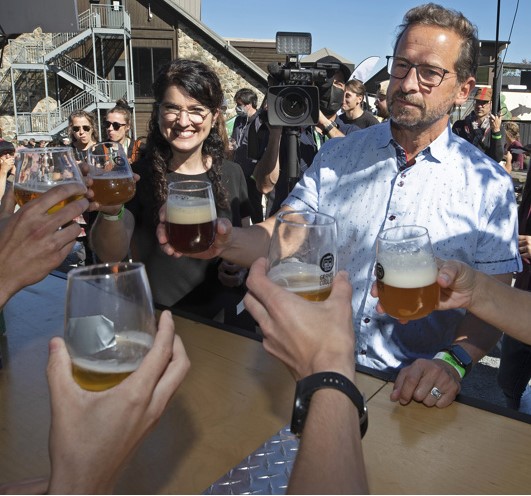
*Yes, we have ridings… not districts or wards or constituencies. Like Nicky Nicky Nine Door and good aged cheddar cheese, its part of the cultural heritage of being settled in significant part by West Country folk two centuries ago. And in this situation so many rural ridings vote Tory, that they can actually lose elections while still getting the most votes nationally. Arse kicking enhancement factor #1.
**And here is their platform of #1 promises
***To offset that, here is a second, more charming Bluesky thread from Lars.
****Didn’t they try this in 2021?

These Are The Beery News Notes For The Dump Of Snow Finally Showed Up

Well, what can you say. Moscow and Washington making kissy face as planes literally roll off the runway. We had a nasty dump of snow locally, the first it feel like in years, but elsewhere in the province we hear that the school kids are basically back on remote learning this winter. The green onions readying for the garden in a few weeks look out the window in horror. I know the feeling.
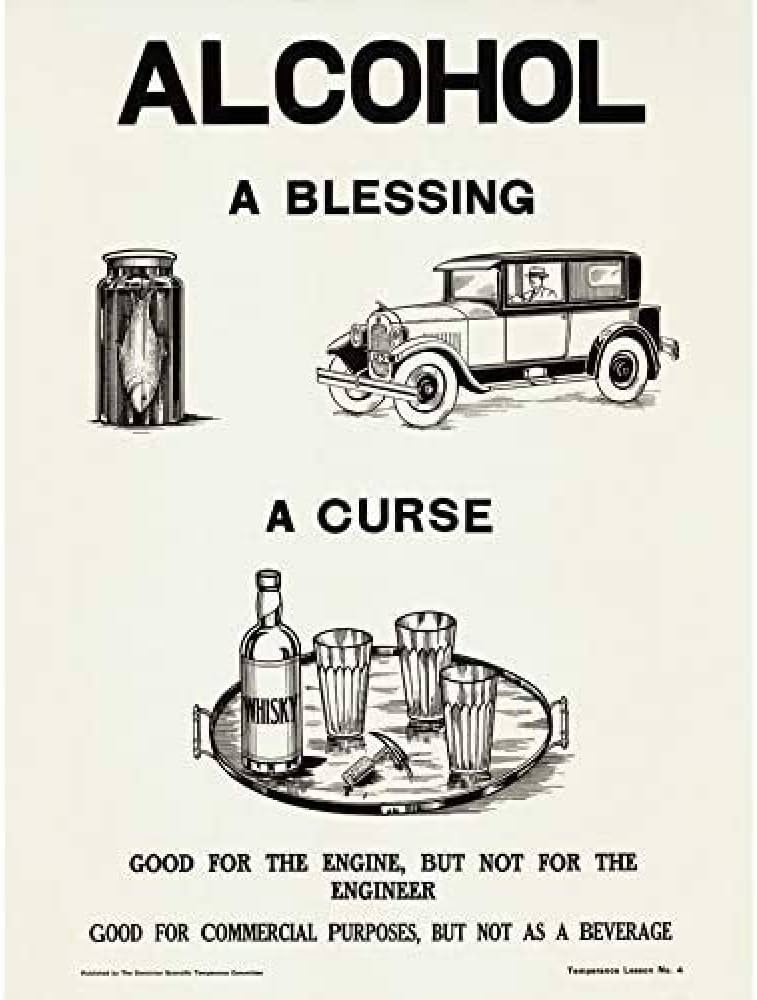
For all the change going on, at least we can take comfort that The Session continues! The hosts for this February are Boak and Bailey who announced the topic:

What’s the best beer you can drink at home right now? Not necessarily right now. You can go to the shops if you like. But you shouldn’t have to get on a train or a flight. Or travel back in time. If you like, you can choose a top 3, or top 5, or top 10. What makes it a good beer to drink at home? Is it brewed to be packaged? Does it pair well with your home cooking? Does it pair well with drinking in your pyjamas?

Get writing!  Your submissions are due on Friday, February 28th.  Andreas Krennmair has been writing. And wrote this week about the brewing tradition in the German state of Württemberg and the distinction between the “gewerbsmäßig” and the “Privatbrauereien” in that region in the 1800s:

Normally, “private breweries” at the time referred simply to privately owned breweries, as opposed to publicly owned breweries (of which people own shares) or communal breweries (owned e.g. by the citizens of one particular town or city by virtue of their citizenship). But in this case, the private breweries were strangely juxtaposed with commercial ones… so, were private breweries non-commercial? Turns out, yes: in parliamentary records of the local parliament of Württemberg from 1853, I found a description of what constituted private brewing: it was the non-commercial brewing by Upper Swabian farmers, where it was customary for all farmers who owned larger farms to also own a brewing kettle in order to brew beer for their own use, which included the house drink for the farm workers…

Speaking of unpacking things found in central European digital records, I missed last week when Alistair of Fuggled fame wrote about Josef Groll, the first brewmaster at the brewing company that today is generally known by the brand Pilsner Urquell. What caught my eye was this:

Another fact about the actual beer being produced in Plzeň also caught my eye – that there were 2 types of beer being brewed at Pilsner Urquell, the famed 12° lager and an 11° schankbier, which may have at some point become a 10° version that was known within living memory. The schankbier, the German equivalent of “výčepní”, would be sent out to beer halls to be stored for 2 or 3 weeks before being ready to be drunk, while the lagerbier left the brewery ready to be tapped on arrival, and was mainly consumed during the summer months.

Question: is this schankbier in late 1800s Germany the same as this schenk beer in late 1800s German immigrant community in America? Have a look at footnote #1: “A kind of mild German beer; German draught or pot beer, designed for Immediate use.” Hmmm…

Speaking of ready to be drunk, Laura Hadland wrote an excellent piece for CAMRA on the nature of small beer in English history… and, more importantly, the experience of hunting down that bit of history:

It  occurred to me that we are applying our modern sensibilities to the past. We can just about bend our heads around the idea of a weak beer being consumed in quantity throughout the day. It’s harder to accept that drinking anything approaching a strong beer from dawn til dusk could be the norm. It just sounds mad. But we know that beer drinking was unproblematic and socially acceptable in the early 18th century – consider the gentle serenity of Hogarth’s portrayal of Beer Street next to the debauched depravity of Gin Lane in his famous prints. At the time of the Beer Act in 1830, beer is referred to in the House of Commons as “the second necessary of life.”

Remember: small beer has always sorta made itself due to the nature of mashing. You can chuck away the spent malt after first runnings or make small beer.

Ashleigh Arnott got the nod in Pellicle this week with her portrait of a rather unpolished place, The Rutland Arms in Sheffield, Engerland. I quite liked this aspect of the pub’s weirdness:

The jukebox policy at the Rutty is notorious. Insert your pound but choose wisely, abiding by the rules on the chalkboard above. The ‘permabanned’ list features local acts—Arctic Monkeys, Pulp, Richard Hawley—and the sort of bands that Guardian readers know they should never admit to liking: U2, Frank Turner, Foo Fighters, et al. And Taylor Swift, she’s also permabanned, though I suspect it didn’t need saying. Staff decide what’s in the ‘Recommended’ and ‘Forbidden’ columns according to whims, mainly, with a hint of current affairs-based silliness. Even co-owner Chris Bamford can’t overrule it.

The photos that accompany the pice are also excellent, though I fear that the one of the solo pubgoer on a phone brought the phrase “lost in someone else’s thoughts” to mind. Do pubs not still stock newspapers? Are there newpapsers to be stocked? Who has money for that? Speaking of which… where’s all the money in the brewing industry going these days what with threats of tariffs floating all around ? Well…

…the most important new investment made by Berkshire Hathaway (NYSE:BRKa) is Constellation Brands (NYSE:STZ). Buffett acquired 5,624,324 shares, making this position account for 0.5% of the portfolio, with a total value of $1.24 billion.

And, at a lower level of investment, in the latest monthly edition of London Beer City Will Hawkes shared interesting feature on the return of what are described as “traditional” pubs with a measure, as is often the case in such matters, of what looks like gentrification in this discussion with pub developer, Adrian Kinsella:

His aim was to turn the pub around, to attract a more varied clientele, to combine traditional levels of comfort with the quality now typical among Britain’s best small breweries… “[It’s about] taking the best of the old-school hospitality and putting it with the best of the new service standards around beer, and the best of the food, the amazing small street-food operators,” he says. “If you marry that together, that’s the sweet spot.” There won’t be tables laid up for food at the Coach and Horses, though. Kinsella says he’s not chasing numbers; if someone wants to sit over a pint for a few hours, that’s fine. His or her glass won’t be cleared. Beer will cost what it costs. “We’re not gouging, but when [beer is] too cheap, someone is getting the rail and it’s normally the staff,” Kinsella says. “All our staff are on London living wage.”

Speaking of noises made in pubs, “The Baby of the Pub” was the title of Katie M’s piece in the December 2024 edition of Ferment, a UK beer vendor’s inhouse magaine, and it was shared this week via her newsletter The Glug to share with us all the story of one wee pub goer… who is one:

The baby of the pub is growing up in a world where the pub is a normal part of his life. It’s teaching him to treat the pub as a natural meeting place, rather than a posh restaurant or an illicit drinking den. He’s being taught to enjoy hanging out here. And why shouldn’t he? This was our favourite place long before he was born, and now it is his. It’s a pleasure and an honour to teach him the ways of our local pub, and as he grows we’ll have new milestones to celebrate — his first packet of Scampi Fries, his first lime and soda, the first time he flips a beermat. One day he’ll be getting the rounds in and teaching his friends how to properly order at the bar—what a thought! 

Back in Germany, news is breaking that would shock any law abiding Canadian… voters are being bribed with beer:

The city of Duisburg in western Germany has come up with an unorthodox way to lure reluctant voters to the polling station. Voters who cast absentee ballots in the city center by 2 p.m. local time (1300 GMT) on Saturday were given a voucher for a drink to spend at a beer cart next to the polling station… In the 2021 federal election, for example, only 63.3% of voters in the Duisburg II constituency turned up to vote, compared to a national average of 76.6%. “With this unusual campaign, our carnivalists are ensuring that the federal election is once again in the spotlight. It also appeals to citizens who are not persuaded to vote by the usual election posters or information campaigns,” Murrack said, describing it as “a clear benefit for voter turnout and therefore for our democracy!”

Huzzah! Isn’t that what was said in the 1890s? Liam of IrishBeerHistory has announced that he is going to pause doing his series 100 Years of Irish Brewing in 50 Objects half way along “but not writing – to assess my options. Still he did share one more story, a story about a button:

This small button measuring 3cm (1 3⁄16 inches) in diameter is made of a copper alloy – possibly brass – and shows some green patination where the gilding has worn away to expose the base metal. It is probably from the livery uniform of one of the draymen who worked for the Anchor Brewery of John D’Arcy & Son on Usher Street, not far from where those aforementioned other-uniformed squads lined up. It features the words ‘J. D’Arcy & Son Ltd. Brewery’ and a nicely embossed anchor whose pronged ends appear to resemble demons’ tails. 

And I liked this story about one way drinkers got around the restrictions imposed during US Prohibition:

The unnamed ship turned out to be a glamorous offshore bar. To get aboard the reporter paid a $5 cover charge (about $90 today), with another $5 for a stateroom. Once settled, he was ushered into a festive room with “a jazz orchestra, staff of busy bartenders and a party of sixty revelers who danced the night away.” They were young and old, men and women, but all quite wealthy with “polished manners and a democratic demeanor.” The crew was well dressed and spoke with cockney accents; from them one could order a scotch for $1 or a mint julep for $2.50. 

In Ontario, we had a number approaches to the drinking tourism brining Americans north but, of course, we should be proud of the fact that brewing itself never ceased up here – even during Canadian Temperance – to the point that Labatt sent so much beer south that it expanded its work force by over fifty percent.*

Finally, I found this piece in VinePair on the current Guinness situation odd, mainly I suppose as it tried to apply and drawn lessons for brewers in the US. Consider this:

Not to put too fine a point on it, but Guinness is that story. Its current success is the result of the sort of patient, holistic investment across the on- and off-premises that used to be the beer industry’s block and tackle. “The way that I’ve described this to people is, [Guinness] is a political movement,” says Roth. “It includes not just changing minds, but changing actual behaviors.” Its dominance in bars and restaurants has helped to influence consumers beyond their confines, too. That’s only grown more obvious as the beer aisle has grown more overwhelming. 

Nowhere in the story do the words “Baltimore” or “closed” pop up. Nor is there a suggestion of manufactured scarcity. Or a lucid consideration of the success of Guinness goes well beyond the beer rep, well beyond beer itself to a cultural fascination that has been in place for decades if not centuries based on the broader love of all things Irish** actual and faux from St. Patricks Day to The Clancey Brothers, from River Dance and to the identikit pubs. And that the beer itself has had these sorts of peaks upon peaks thoughout that time. The widget over 35 years ago. The Quiet Man over 75 years ago. Imported barrels over 165 years ago. Yes, it is good for the brewery to have existed for all that time but the presumption to make an association with Anchor Brewing or Leinenkugel’s or that it serves as an example and not a sui generis phenomenon is a bit telling.

Well, that is it. Another exercise in distraction from the news, I suppose. For more of the same, please check out Boak and Bailey every Saturday and Stan going strong again each and every Monday. Then listen to Lew’s podcast and get your emailed issue of Episodes of my Pub Life by David Jesudason on the (sometimes even but never) odd Fridays. And maybe The British Food History Podcast. And Phil Mellows is at the BritishBeerBreaks. Once a month, Will Hawkes issues his London Beer City newsletter and do sign up for Katie’s wonderful newsletterThe Gulp, too. The Share looks to be back with a revival. Ben’s Beer and Badword is out there with the all the sweary Mary! And check out the Atlantic Canada Beer Blog‘s weekly roundup. There is new reading at The Glass which is going back to being a blog. Any more? Check out the Beer Ladies Podcast. That’s quite good and they are revving up for a new year. And the BOAS podcast for the bro-ly. And the long standing Beervana podcast …except they have now stood down.  Plus We Are Beer People. The Boys Are From Märzen podcast appears suspended as does BeerEdge, too. VinePair packed in Taplines as well. All gone. But not Ontario’s own A Quick Beer featuring… Michigan! There is more from the DaftAboutCraft podcast, too.  All About Beer has sponsored trade possy podcasts and there’s also The Perfect Pour. Plus follow the venerable Full Pint podcast. And the Craft Beer Channel on Youtube.  The Moon Under Water is gone which is not surprising as the ask was $10 a month. Pete Brown’s one cost a fifth of that – but only had the one post. Such is life.

*What?? $43.99??? At that price, no doubt the authority on the matter.
**My late father born of Greenock called the equivalent “professional Scots” and you can read Billy Connolly’s autobiography Windswept & Interesting for more detail on that point.

Your Beery News Notes For – YIKES!!! – The 1/24th Mark For The Year 2024… Err… 2025

It’s really good, this whole passage of time thing. It really is. Isn’t it. It is… isn’t it? Fine. Face it. The holidays are over. OVER! But that doesn’t mean the celebrations are over. For example, in the U.S. of A. we hear that it’s Prohibition Remembrance Day celebrating the 106th anniversary of the ratification of the 18th Amendment to their Constitution. Whooo!!! If “neo-temp” was actually a real thing there’d be parades. I do love me a parade. But who needs parades when you have NA beer for $5 a can!

Speaking of fine traditions, at her  very clearly titled Braciatrix: The Newsletter, Dr Christina Wade shares her thoughts on the wassailing tradition which marks the eve of the Epiphany in Christianity. Or rather traditions:

Some versions of the tradition are known as apple howling, which is probably one of the most metal names I have ever heard. Excellent band name tbh. Regardless of exactly how people celebrated wassailing specifically, one thing does seem to often remain at the centre of these traditions- that is the alcoholic beverages. My favourite. So what exactly do we drink? We drink Lambswool or Lamb’s Wool. No, not the actual fuzzy stuff from the adorable creature better known for making sweaters. Nay. It’s a beverage made from ale, spices, sugar, and roasted apples. Some recipes also call for cream, eggs, or both.

That sounds pretty excellent if you ask me. Winterfestive. Speaking of the old Epiph’, we had a visitor who had spent much of 2024 in France over for the holidays and we had a galette des rois but I had no idea it was pagan and also no idea that it was causing another boring woke-trad political scandal in the old country due to its history:

Historians say French Epiphany cakes — called galette des rois (literally, galette of the kings) — can be traced to Roman festivals dedicated to Saturn and to the longer daylight hours after the winter solstice. The custom was to put a bean in cakes given to slaves, and to name the one who found it “king for the day”. In modern France, the bean has been replaced by a porcelain figure, but the finder still gets a paper crown. Over the centuries, the galette des rois merged with Epiphany and it became usual to start eating them after 12th night, at least until the French Revolution, when the cakes were banned in a drive to eradicate Christianity in the 1790s.

Matthew C, taking on the player-manager role this week, published his story on Roosters Brewery in Harrogate, England in which he does a few very unusal things. It is more than a B.O B.* Is that a B.B.O.B.? One thing is that he interviews other people to corroborate the story shared by a brewery owner. And he does background research to tell the tale of the brewery from older records than the recitals of the owner. This sort of thing gives the reader great confidence, especially as the main players seem a bit quiet:

Brew Britannia also speaks of Franklin’s reclusiveness (despite numerous attempts, I was not able to contact him for the purposes of this article) and his modesty. It’s apparent, speaking to those who knew him, that he does not consider himself to be a trailblazer, despite plenty of evidence to the contrary… “Sean was quite straightforward once we’d made contact. Mostly he was a bit embarrassed to be treated like a great authority or legendary figure. He was at great pains to credit others wherever he could,” Boak and Bailey tell me of their interactions with him, which took place in 2013. “He also described himself as an introvert and he was certainly fairly quiet and thoughtful in our conversations—although certainly passionate enough when he got down to actually talking about wine and beer.”

Such a good bit of investigation based writing, especially in a positive portrait.** Speaking of which, even with perhaps a finer focus. The Beer Nut – or rather his alt personality Stash Killer – released the results of his study on a six year old nitro can of Guinness:

It’s in the flavour where I think we’ve had some evolution. It’s definitely more flavoursome than when young, and I wish I had a fresh can to hand to compare. The tartness has both increased and become more rounded, adding a kind of classy balsamic vinegar effect. Conversely, that finishes on a sweeter note, with some chocolate, which is something in most stouts that I find missing in Guinness, and a little maraschino cherry. We’re back to regular programming with the quick finish and minimal aftertaste.

Detail. We meet that again. As mentioned a couple of weeks ago, over on BlueSky, Kevin of Casket Beer, asked if anyone had ever had a Scotch Ale out of a thistle glass. Let me ruin the punch line to one of his findings:

So where did we get the notion that the thistle glass was somehow an important part of Scottish beer culture? The Gordon glass may have played a role. However, the 1993 book, Scotch Ale, by Greg Noonan likely had a significant impact, at least in the United States. The cover prominently features a beer in a thistle glass. The book’s contents do not get into glassware or indicate an explanation for why the glass was used. Maybe it was influenced by Gordon. The influential book likely conveyed to a generation of brewers, homebrewers and enthusiasts, that the glass had some meaningful connection to Scottish Ale.

Read the rest for find more findings. It’s not all that precise, sadly. As far as lost goes, these days in all the seesaw back and forth about various recent studies of medical studies and statements resting more and more on labels and less on methodology,*** I found some relief in the transcript from a transcript from TVO’s news magazine The Agenda from almost seven years ago when Mr. B himself**** and three other drinks authors to discuss the question. And it is a civil discussion where views and differences were shared and considered. Firm view like this:

If you can decompress with one glass of wine and keep it at one glass of wine per day, that’s a very uncommon pattern, but if you can more power to you. But those who get into trouble with alcohol tend to find it’s progressive, and denial is a big part of it. So if you can stick to one, go for it.

Speaking of firm and even disagreeable views but, still, focused on the detailed examination… Boak and Bailey wrote about some of the disregarded pubs of the Easton district of Bristol. Then, more importantly, in their Patreon account wrote about a few of their toilets:

Last night, neither of us popped the cork until The Sugar Loaf. Despite having been cleaned up and made a little smarter, it’s still basically down-to-earth. That meant that the toilets had no soap but did have water hot enough to have made tea with. As in, dangerously, scaldingly, steaming hot. Not that the soap or the water mattered much because nobody was washing their hands. [Shudder.]

Not segueing on the notion of popping corks at all, I noticed an interesting idea in this column by Eric Asimov in the NYT on a trend in restaurant wine lists – focus:

The wine list at Smithereens, a new seafood restaurant in the East Village, is shocking to say the least. Of its 62 selections, more than half, 32, are rieslings. Twenty-nine more are various other whites. There’s only one red wine, a pinot noir from Shelter Winery in the Baden region of Germany. Some may criticize a list like that as self-indulgent, but I love it. I rarely see a wine list with such attitude or character… I’ve noticed more and more relatively short wine lists… Not all are as provocative as the Smithereens list, but they are incisive, chosen to convey a point of view and, as good lists ought to do, shape the character of the restaurant.

Sounds like the brewery in Maine that made six stouts twenty years ago. I also like how it is aimed at breaking assumptions. Iconoclasm. Sadly, we too often read of presumed and autonomously authorized ways, like how to achieve a “sensory worst“***** which, if we are honest, depends on learning from the pew and then walking out as an adherent to a form of authority – comforting maybe but that’s too close to the precious basement of speakers, amps and equalizers audiophile approach. If you understood this at all the levels I do, you’d agree.

There are limits to disagreeability, however. In The Times this week we read about one of those situations where two sorts of disagreeabilities clash as each is based on a human right:

Pubs could ban customers from speaking about contentious beliefs such as religious views or transgender rights over fears of falling foul of Labour’s workers rights reforms. The government has been warned by the equalities watchdog that rules could “disproportionately curtail” freedom of expression and be applied to “overheard conversations”. Ministers have proposed that employers must protect workers from being harassed at work by “third parties” such as customers or clients. If they fail to do so they could be sued. However, the Equality and Human Rights Commission (EHRC) said this was particularly challenging in cases involving a “philosophical belief”, such as people’s views on religion or women’s rights, because many business owners do not understand such topics are protected by equality law.

Now before any of you scream “WOKE!” like a ninnie (beside the fact J. Christ Himself ask us to be awake), I can share that I have dabbled in this sort of human rights and we need to know just as there are intersecting rights we can have competing rights.******  So these knots need unraveling. And, just to be clear, there is not obligation to allow the loud boorish bigot to remain in the pub. As JJB himself has stated:

…nobody in mine ever uses racist language like Farage’s Reform activists, and if they did they’d be told to leave and never return.

With that good word, a reminder of all you all needing to put down more good words.  The Session is trying a revival, a resuscitation even. On Friday January 31, 2025 please post your thoughts – via blog, newsletter, social media… anything – on the topic:

What is the best thing to happen in good beer since 2018?

Publish on last Friday in January and then leave a comment here on a comment or even email me the link at beerblog@gmail.com! I have also proposed hosts of the February 2025 (if there is breath in the old corpse) the form of which I will leave in their good hands along with this wise advice emailed from Stan: “I will support in any way that does not require too much work ;>)“!!! Do it!

That’s it. Mid-January is here and boy is it going by. As it flees, please check out Boak and Bailey every Saturday and Stan going strong again each and every Monday. Then listen to Lew’s podcast and get your emailed issue of Episodes of my Pub Life by David Jesudason on the (sometimes even but never) odd Fridays. And Phil Mellows is at the BritishBeerBreaks. Once a month, Will Hawkes issues his London Beer City newsletter and do sign up for Katie’s wonderful newsletterThe Gulp, too. The Share looks to be back with a revival. Ben’s Beer and Badword is out there with the all the sweary Mary! And check out the Atlantic Canada Beer Blog‘s weekly roundup. There is new reading at The Glass which is going back to being a blog. Any more? Check out the Beer Ladies Podcast. That’s quite good and they are revving up for a new year. And the BOAS podcast for the bro-ly. And the long standing Beervana podcast …except they have now stood down.  Plus We Are Beer People. The Boys Are From Märzen podcast appears suspended as does BeerEdge, too. VinePair packed in Taplines as well. All gone. But not Ontario’s own A Quick Beer. There is more from the DaftAboutCraft podcast, too.  All About Beer has sponsored trade possy podcasts and there’s also The Perfect Pour. Plus follow the venerable Full Pint podcast. And the Craft Beer Channel on Youtube.  The Moon Under Water is gone which is not surprising as the ask was $10 a month. Pete Brown’s one cost a fifth of that but only had the one post. Such is life.

*Better Brewery Owner Bio?
**Also positive, his piece which should be called “Gud Wee Coo!
***A new and damning report came out just this Tuesday according to the NYT: “Among both men and women, drinking just one alcoholic beverage a day increases the risk of liver cirrhosis, esophageal cancer, oral cancer and injuries of various kinds, according to a federal analysis issued on Tuesday. Women face a higher risk of developing liver cancer even at this modest level of drinking. Drinking two drinks a day — double the U.S. Dietary Guidelines’ recommendation for women but the current amount condoned for men — increases the odds of a death caused by alcohol for both men and women.” Expect outcry for booze boosters! Stan has a better way: “There is no denying the negative impact alcohol has on your body. It is stupid to claim otherwise. The rest I leave to Mary-Chapin Carpenter.
****A long standing TVO regular it seems from the available records from 1998 or so. Not the absence of references to “craft” in the lexicon. 
*****Has anyone figured out why craft experts were so good with all the flaws but so poor at the strengths?
******A plain example are those chevrons built into public sidewalk corner wheelchair ramps. When they first were installed, instances of people with limited vision walking into traffic increased. The chevons act as a warning to those using a white cane.

Your Beery News Notes For Finally… Finally… Settling Into 2025

Lordy. Is all the holiday cheese finally gone? Is 2024 gone? Really? Check the back of the bottom shelf. Me, I finished off the holidays with a Covid needle in my left arm and a flu shot in my right. I’d rather have had the cheese. So perhaps a short post today, given me with the low grade fever and insomnia and all you all getting over eating the Yuletide cheeses. We should declare this International Solid Dairy Hangover Week. Whatever it is, it’s all going to be OK as it’s just twenty-five days to Truck Day! Yup. Gonna be OK.

So… The Session. The toe in the water revival edition of The Session. Hmm… there has been a  wave of tremendous excitement over the experimental revival of The Session, as announced last week, after a seven year break. Stan, Maureen and Matthew are among the tremendously excited. What does it mean to you? Well, it is actually all about you – as you do all the work, you scribblers. You write, I list. That’s it! To aid you  in your thoughts, I offer this simple graph from 2021, an example of my excellent in thought organization. It was last featured in late 2021 and is an update of one from 2016 but, still, it is very much in the now. Clarity. That’s what it sets out. Clarity. Hopefully this will give you that extra push to set out your thoughts on 31 January on the question of the month: “What is the best thing to happen in good beer since 2018?“* Most any medium accepted. Subject to arbitrarty post-facto interventions, of course.

What else is going on? Just after the deadline last week, Jordan shared his thoughts on the brewing of beers under license and just how much, at least in Ontario, the beer that is licensed is the beer that is brewed:

It happened gradually. I can’t tell you the date, but I know that it was Jamie Drummond that brought it to my attention. He had been a lifelong Lowenbrau drinker, and a dedicated one at that. He got in touch one day to point out that it didn’t taste right. Of course it didn’t. It was being brewed in London, Ontario at Labatt.  Now, this was nothing new. They’d been brewing Stella Artois in London, Ontario for a while… Over time, I began to get the sense that the walls were pushing in on the import section. One year, maybe 2019, I added Spaten to the beer styles course at George Brown as the ur-example of Munich Helles, but as soon as I opened the can it was wrong. I hadn’t noticed that it was 473 ml, but I surely noticed the difference in aroma within seconds. You guessed it: London, Ontario.

Speaking of things not being what they were… is Facebook going the way of Twitter. I caught this mention of the uselessness of FB ads now for local audiences:

At least in the US, ads used to be excellent for small, local bars/restaurants. Affordable and very effective. I actually liked a lot of the ads I saw. Then they raised the prices and showed them to people from thousands of miles away. So now only shady crap merchants see any value in using them.

No shady crap in The Guardian‘s a great piece this week on getting snowed in, storm stayed, at Britian’s highest pub in most northern Yorkshire:

…the team are well prepared. Their electric power comes from a generator and there is enough food for about a month, “but hopefully it won’t come to that” says Nicole Hayes, one of the bar staff, who has done a number of phone interviews with local and national media in the run-up to the weather warning, such is the reputation of the pub… Word came through that the snow gates on the nearby A66 were being closed at 10.30pm, which meant anyone hoping to leave needed to make their attempt very soon or they were likely to be here for a couple of days, as the snow was forecast to only get worse.

Less placid is the battle being wage for the beer buck of America. Kathleen Willcox wrote these words that really one couldn’t imaging being puslished not that long ago:

…  lagers and traditional styles are often priced a dollar or two cheaper than competing styles,” Varda notes. “In a world of inflation and particularly among younger consumers who may have less financial stability, those dollars make a real difference.” Amid rising inflation, craft beer just doesn’t seem like a priority. Especially as brewers themselves grapple with ever-increasing prices for goods like packaging and transportation, and are forced to pass the increases on to customers….  Some brewers even wonder if craft beer is settling into a new, more permanent rut.

Permanent Rut!! Jings. But at least things are reasonably civil, right? What’s that?  How about the beer trade dispute, discussed in TDB, occurring in one of the new year’s potential hot spots:

Lawmakers have accused Chinese brewers exporting their products to Taiwan of engaging in unfair trade practices by receiving subsidies from the Chinese government, according to the Taipei Times. The Taiwan Brewers Association, made up of the country’s six biggest brewers, called on the government to launch an investigation into cheap beer imports from Mainland China. Finance Minister Chuang announced this week that the government is set to launch a probe into low-priced Chinese beer. The proportion of the Taiwanese beer market made up of Chinese beer brands has increased from just 8% in 2015 to a current market share of 34%.

Ron had an interesting post at the end of last week on the role of used beer in the 1970s. Used beer?

…pretty much everyone was up to blending in various types of rubbish. Even when brewing the beers I loved, like Tetley’s Mild. Which, according to the brewery’s Specifications Manual, could be up to 12.5% “stabilised beer”. Let’s not kid ourselves. There was a lot of recycled beer in the pints we so happily slurped back in the 1970s. Whether it happened at the pub or in the brewery, you were lucky if it was the first time around for all of the beer in your glass. In a Tetley’s pub with handpumps, it might be as little as 80%. And still I loved it.

Note #1: on the US Surgeon General’s advice, actually you can be advised to eat ice cream by medical specialists as one family member was so… not the same… at all. I mean I get that it’s those in the drinks trade posing as medical experts who doth protest but, let’s be honest, if you are going to mention alcohol’s positives of social interaction and relaxation and not weigh that against the negative like the social ills of drunk driving, violence and squandered family budgets you’re not really doing actual analysis. What is that sort of writing called?** Less suspect is this piece called “Why Drink?” by Matt Gross:

It’s not, of course, that alcohol has suddenly become dangerous. The scientific consensus, however, has evolved over the last several years, away from the idea that moderate drinking is harmless or can even have some health benefits, and toward the understanding that no amount of alcohol is helpful. This, too, is not necessarily new. As far back as I can remember, I’ve known alcohol was a poison: After all, that’s how it was described in 1980s X-Men comics by Wolverine, who drank copiously to almost no effect. And poison, as we all know, is bad for you.

Note #2: Matt still drinks regardless. And Kate Bernot forecasts much of the same sort of  non-decision decision making: “I don’t think we’re going to see population-level dramatic shifts in alcohol consumption.” But we read beer is on the decline in the US, even turning unpopular… though not in France. Still, CNN is projecting major alcohol firms will be betting otherwise, taking evasive action:

A December report from IWSR, a leading drinks analysis firm, said that the non-alcoholic drinks global market is “experiencing a transformative period of growth, driven by evolving consumer behaviors and the momentum of no-alcohol.” The trend, to be led by the United States, is expected to grow by $4 billion by 2028 in the firm’s forecast. Non-alcoholic drinks are even “skewing younger than the core buyer demographic across markets, and demonstrate higher frequency and intensity of consumption,” signaling that there’s a sustained thirst for booze-less beverages.

So how do we unpack all that up there. We enter 2025 to a cacophany of contrasting complaint. How does one sort through it all? I came across an interesting concept this week: “the asymmetry of journalism.” It was in an article in The Times about columnist Fraser Nelson in his early days as a business reporter:

Every day, companies release financial results and reporters write a report, perhaps interview them. Smaller firms are lucky to be sent anyone at all, so even a 22-year-old dogsbody is treated like a VIP. The CEO meets you; it’s his job to sell his story, yours to be sceptical.*** Yes, he runs a £100 million company and you’re a chancer with no expertise, but that’s the asymmetry of journalism.

So we need to rely on those voices who provide informed skepticism. Chancer or otherwise. Ms. Mather recommended a new writer to me, something I am also always going to follow up upon and take the chance. In Drinking in Strange Places at the and of last week,  Charlotte Cook wrote about Zoigling including this fundamental fact:

In these Zoigl towns, however, you can still turn up to a strangers house, sit in his living room, and for the very reasonable price of €2,40 per beer, have as many pints as you care to imbibe, often with the whole family chipping in to serve beer and small snacks

Never the chancer, Martin posted an interesting and rather old school set of thoughts on his blog’s stats:

844 posts last year, just a series of diary entries with a pub visit and a rummage around an unsung UK town, with the odd bit of tourism and weird stuff during lockdown. Despite COVID, the conclusion to the quest to complete the Beer Guide that dominated the diary, and a general sense that blogging is past its peak, visitor numbers have been oddly consistent.

Which means this. Blogging? Not in a permanent rut. Unless A.I. takes over. Maybe it has already. How can you be sure I am actual me? Is this “Al” or “A.I.”? The Beer Nut, still calling in from Brazil, can always tell:

I’ll spare you my usual rant about the bad AI-generated artwork on Third Barrel’s cans. Suffice it to say, they’re still at it, and it still looks cheap and terrible. I had built up quite a collection of their beers late last year, through no particular reason, and got to work on them last month.

And in Pellicle, we read that there is more stout going on in Ireland than we are reading about in the medias. In fact, there is cult stout as  Eoghan Walsh explains:

With less than 100 independent breweries now active in Ireland, it’s easy to forget the significance of this achievement, and just how different the beer scene was that leann Folláin debuted into in the late 2000s. John and Liam remember. They remember when spotting the bright green glow of an O’Hara’s tap badge through the window of a pub was like a lighthouse beacon in a storm. It’s too easy to underestimate the impact of that kind of durability in an industry where attention spans are increasingly short, and business plans not much longer. To paraphrase Stalin, sometimes longevity has a quality of its own.

Finally, in 2050 I will be 83… err… 87 years old so I do not give one shit as to what the beer trade will look like then.  I’ll just want to know that there will be Red Sox game on my screen and plenty of oxygen in the tank I wheel around behind me. Jeff, however, took up the challenge and postulated… sorta:

The title of this post is slightly misleading, I confess, because in thinking 25 years ahead, I immediately had to consider 25 years ago. What has changed? Depending on how you look at it, twenty-five years is both a huge amount of time and not much at all. We went from fighting wars with horses to dropping nuclear bombs in 25 years (more or less). On the other hand, Snoop Dogg released an album 25 years ago, and he’s still on 73% of the ads I see during football games. In other words, some things change a lot more than we think, and others far less.

I am not going to say that is a tremendouly robust analysis… but I am sitting in a chair next to a stack of my CDs and LPs so maybe there’s a point to where he’s going.

That big picture or the long game, for me, sums up the opportunity of any writer whether news, history or even poetry. But the key word up there is still “skeptical” as the quality of the good writing will be defined by something like Keats’ negative capability. Be neither booster or bland. That’s it. Maybe. Let’s see you roll some of that out for The Session, wudja?

There. Done. Now, please check out Boak and Bailey every Saturday and Stan going strong again each and every Monday. Then listen to Lew’s podcast and get your emailed issue of Episodes of my Pub Life by David Jesudason on the (sometimes even but never) odd Fridays. And Phil Mellows is at the BritishBeerBreaks. Once a month, Will Hawkes issues his London Beer City newsletter and do sign up for Katie’s wonderful newsletterThe Gulp, too. The Share looks to be back with a revival. Ben’s Beer and Badword is out there with the all the sweary Mary! And check out the Atlantic Canada Beer Blog‘s weekly roundup. There is new reading at The Glass which is going back to being a blog. Any more? Check out the Beer Ladies Podcast. That’s quite good and they are revving up for a new year. And the BOAS podcast for the bro-ly. And the long standing Beervana podcast …except they have now stood down.  Plus We Are Beer People. The Boys Are From Märzen podcast appears suspended as does BeerEdge, too. VinePair packed in Taplines as well. All gone. But not Ontario’s own A Quick Beer. There is more from the DaftAboutCraft podcast, too.  All About Beer has sponsored trade possy podcasts and there’s also The Perfect Pour. Plus follow the venerable Full Pint podcast. And the Craft Beer Channel on Youtube.  The Moon Under Water is gone which is not surprising as the ask was $10 a month. Pete Brown’s one cost a fifth of that but only had the one post. Such is life.

*Find a sunny happy tale even if, as Beer Marketers’s Insights noted, 2024 was unkind to craft: “Volume declined for the 3d year in a row and 4th year outta 5, CBN estimates, on track to finish ~4 mil bbls below its peak in 2019. This also marks the 6th straight year of share loss in off-premise scans. Craft beer held nearly 12 share of $$ in 2018 Circana multi-outlet + convenience channels. This year it’s down to just 10 share of $$ YTD thru Dec 1. The category’s taking hits from every angle. Distribs continue to shift attention toward other categories. Craft bottle sales remain one of the biggest drags on segment sales, down double digits again in 2024. Craft can growth slowed tho continues to gobble up share. Keg volume is declining again this year, disproportionately impacting craft. Taproom volume is on track to decline for the 2d year in a row, TTB data suggests. More breweries closed than opened this yr, Brewers Assn estimates.” Yikes.
**Up there with the scoffing while basically affirming sort of response.
***As opposed to kissing up to your commissioning editor… again!