What To Write About Now That There’s A Majority?

I have been writing this thing for over eight years now and, except for the beer stuff, it’s been largely driven by the facts and opinions surrounding the weakness of the Federal government. Way back then Paul Martin killed off the Liberal Party by slow drip poison starting almost a decade ago by dividing the party against Chretien and Harper declared the corpse cold with last week’s election. So, what to write about now? Doctor Who for starters. Just look at this statement today from the show’s top executive, Steven Moffat:

It’s heart-breaking in a way, because you try and tell a story, and stories depend on surprise, stories depend on shocking people, stories are the moments you didn’t see coming – those are what live in you and burn in you forever. If you are denied those, it’s vandalism. To have some twit who came to a press launch write up a story in the worst, most ham-fisted English you can imagine and put it on the Internet … I just hope that guy never watches my show again, because that’s a horrific thing to do. It is exactly like that boring man in the pub, who waits until you’re nearly finished your joke and jumps in with the punchline, and gets it slightly wrong. You hate that guy, you just hate those guys too – can you imagine how much I hate them? … It’s only fans who do this – or they call themselves fans – I wish they could go and be fans of something else!

What a bizarre thing to say. “My show”? “Vandals”? “Go and be fans of something else”? There is, of course, an underlying problem causing the need to discuss the show this year as it become more and more under Moffat’s control. It makes no sense. I made this point over at James Bow’s blog. James has sensibly been writing about centrist politics and pop culture for longer than I have – and done a far better job. I know. I have let the team down, falling into that trap of believing that Twitter and Facebook have made blogging irrelevant. Sure no one reads this stuff anymore but is that any reason to pack it in?

Anyway, less about me and more about Moffat. People are starting to compare the show with that disaster of the post-9/11 culture, Lost. Moffat seems to think convoluted is a fix all replacement for clever. Sadly, this is mostly the case with not only the long arc of the story he controls but the scripts he personally assigns to himself and the new characters he introduces. Most embarrassing is this thing “The Silence” which seems to feed Moffat’s need to one up the Daleks as the main baddies all time. But they make no sense. Other characters must have run into them over the past 48 years. Other baddies must be subservient to them. Oh, but all forget that they have seen them one they turn away… that’s a great fix. Hopefully, there is a Dallas solution at the end of this and the foreshadowed “it was all a dream” scenario plays out.

Confusion plus a general shift in all underlying premises developed over a 48 year run of a TV show. Yawn. Self-indulgence. A return to the slow death of the John Nathan-Turner years as far as I can tell. That was the last time someone decided to remake the show and move it from a fun relatively easily resolved romp.

None

Where There Is Beer There Is Peace Revisited

2832When I was growing up, Ethiopia was one of those nations with the hallmark of being incessantly near collapse. Civil war unending. The famine. Now there is beer:

The Beemnet bar is one of those places in Addis Ababa which attracts Ethiopians of all ages. Increasingly locals are going here for breakfast, lunch, dinner and drinks – a sign of the country’s increasing purchasing power. On Friday and Saturday nights, the terrace and bar is packed with people drinking beer and trying out their new dance moves before heading to a club after midnight. Beer is becoming increasingly popular among the growing Ethiopian middle class. In fact beer consumption in Ethiopia – Africa’s second-most populous country, is expected to grow by about 15 percent every year for the next five years. According to a report carried out last year by Access Capital, an Addis Ababa-based research group, this growth in consumption is very much in line with Ethiopian population levels and economic growth rates.

As in the Mid-east, in Sri Lanka and in the southern Sudan, this rise in beer production and consumption in Ethiopia is a hallmark of peace. Even as – or is it because – they seem to prefer the “jumbo” size glass.

A little oddly, the US Embassy did a study of the Ethiopian beer market in 1998 at the time the breweries were denationalized. It notes that it was the Czechs and Slovak Velvet Revolutionaries back in 1993 who created the Bedele brewery Heineken recently bought, outbidding Carlsberg. You can allegedly find the beer in Canada, a nation not known for its fondness of monkey gibbon… or lemur… well, it’s very likely a Coquerel Sifaka branded beer. [Update: unless the connection is about Zaboomafoo!]

All That Base Ball Was Really About That Pitcher

vbbk20114

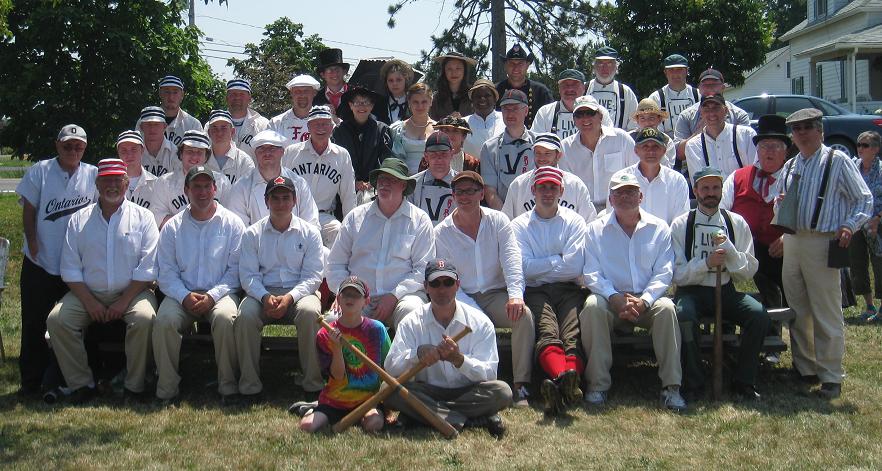
I indulged in my other odd hobby yesterday. 1860s – 70s base ball. Two words. No gloves. No sliding. The ball springs off the bat with about as much zip as an Edam cheese would. Underhand pitching and bats that are like swinging a 2 x 4 fresh from the lumber yard. I put the thing together with friends. We took on graduating cadets from our Royal Military College as well as a mixed team of upstate New Yorkers from Canton and Rochester NY. The final was a 3-2 victory for the Americans. The team that became the Atlanta Braves beat Kingston on the same field 138 years ago… by a slightly larger margin.

And after it all, we retired to the brew pub. There is only one in the City so that’s what we call it. Over twenty folk wanting to relax over a few beer and get to know each other. Lively talk about the sad state of regional teams like the Bills and the Leafs, discussions about the different gun law ending with the trump card of a cadet explaining the fire power he’s been trained to use. And the beer. I hadn’t realized that oatmeal stout was not available in pitchers so I had a pint and bought a pitcher to share of the pale ale, both brewed by Montreal’s McAuslan Brewing. I couldn’t remember the last time I had a pitcher. Sounds sad, doesn’t it but life with the many rug rats does have its realities. What did I like about having one? The conviviality. The vessel was meant for sharing. Slopping pours topped up this glass and that. As talk ebbed and flowed from the Bills to bazookas.

Easlakian Vintage Base Ball Madness Strikes!

A lovely day was had by all. Kingston St. Lawrence Vintage Base Ball Club loses 3-2 to a NY Selects team from Canton and Rochester NY in the final of the RMC tournament. RMC 1 lost to the Selects 7-6 in the first round while the KSL took RMC 2 by 17-3. I got a single.

Friday Bullets For The Big Ball Games

What a run of attention getters. Taxes due. Election. Royal wedding. Osama killed. And what is most on your mind? The Royal Military College annual vintage base ball games, of course. This year, the Kingston St. Lawrence takes on RMC at the historic Cricket Fields in Kingston, site of actual pre-vintaged base ball in the 1870s. After all the stuff going around, there is nothing like the prospect of playing ball without a glove, the smell of the grass and the anticipation of a beer after. Bought a new bat. Sweet.

  • – This guy could be Prime Minister in 40 years and still be considered young.
  • – Interesting insights to the events around the killing of Bin Laden over at Castle Argghhh!.
  • Here comes the left!
  • – Someone told me there was still a recession. I don’t think that’s really true anymore.
  • – A beer law Canadians are too backward to want.
  • – Has anyone noticed that the TSX has been collapsing since the Tories got a majority?

Gotta go. Going to take more of the day planning how to take this beard down to a long moustacheo. Don’t know whey I am having to make up manual bullets. Maybe it’s just Opera. Too lazy to check other browsers.

So, How Was That Beer George Made Anyway?

coneywashSome buzz around the beer news that the Coney Island / Shmaltz Brewing Company is brewing up a recipe of George Washington’s beer for a charity gig… and a cheater version with roasted malts for those who might want to pretend. Here is the recipe entitled “To Make Small Beer” as set out by the Gothamist:

Take a large Siffer [Sifter] full of Bran Hops to your Taste. Boil these 3 hours then strain out 30 Gall[ons] into a cooler put in 3 Gall[ons] Molasses while the Beer is Scalding hot or rather draw the Melasses (sic) into the cooler & St[r]ain the Beer on it while boiling Hot. let this stand till it is little more than Blood warm then put in a quart of Yea[s]t if the Weather is very Cold cover it over with a Blank[et] & let it Work in the Cooler 24 hours then put it into the Cask—leave the bung open till it is almost don[e] Working—Bottle it that day Week it was Brewed.

The recipe is in the New York Public Library‘s collection and dates from 1757 – when George was still a Loyalist and a couple of years before Jeffery Amherst’s spruce beer from a couple of colonies to the north. Interestingly, each uses 3 gallons of molasses to thirty gallons of brew. The real difference is that George says hop to taste while Jeff boils seven pounds of spruce until the bark comes off. Neither look all that appealing. And I am not sure what George meant by the “Bran Hops.” Is the sentence supposed to be “Take a large Siffer [Sifter] full of Bran Hops to your Taste” or is there a missing punctuation mark so that it would read “full of Bran – Hops to taste”? Or were “bran hops” something that meant something to someone somewhere?

This report suggested that the Washington beer would work out at 11%… hardly small beer. And Amherst states that his beer can be bottled to keep “a great while.” I dunno. Were these desperate beers for desperate times? In a way, maybe they were the predecessors of commodity beer – a means to an end.

Did Michael Jackson Actually Invent Our Beer “Styles”?

This week, I received Brewery History, No. 139, in the mail. A freebie. It was gratefully received as so few packets and packages come my way these days. Time was the mail brought cheques for ads, couriered samples of beer, love letters, job offers. It’s been too quiet lately. More mail would be good. But, ripping open the UK postmarked brown paper envelope, I had a sense that other things had arrived – ideas. No. 139 is the special issue of Brewery History dedicated to Michael Jackson. “Yow-za!” thought I. “This’ll be good.” And, as Hemingway and the God of the Old Testament have told us before, it was good.

Yet, something twigged. That bit of priggery I hate yet carry like a fault of DNA. That little desire to ask “is that really correct?” and, worse, to ask it out loud. Here is my problem:

…certain classical examples within each group, and some of them have given rise to generally accepted styles… If a brewer specifically has the intention of reproducing a classical beer, then he is working within a style. If his beer merely bears a general similarity to others, then it may be regarded as being of their type.

That is a quotation of Michael Jackson’s included in Martyn Cornell’s article “Michael Jackson and beer styles” found at pages 12 to 18 of good old No 139. The associated footnote states: “15. Jackson, M. (ed.)(1977) The World Guide to Beer. London: Mitchell Beazley, p. 14.” I have that book. You know, I don’t have all the books but I do have that one… albeit a Canadian first edition. Here is the whole quotation to a section of the book entitled “The classical beer-styles” (note that hyphen):

Beer fall into three broad categories: those which are top-fermented; those which are brewed with some wheat content (they are also top-fermented); and those which are bottom-fermented. There are certain classical examples within each group, and some of these have given rise to generally-accepted styles, whether regional or international. If a brewer specifically has the intention of reproducing a classical beer, then he is working within a style. If his beer merely bears a general similarity to others, then it may be regarded as being of their type. Such distinctions can never be definitive internationally, since the understandings of terminology varies between different parts of the world.

Now, let’s be clear. I am not suggesting Martyn has done something wrong. I am also really not saying that Jackson did not describe styles. I just think he has actually done something more than we have noticed. He has defined at least three classes: categories, styles andtypes. And, then, he organizes those classes. On pages 14 and 15 of his second book, Jackson goes on to describe 23 styles of beer under those three classes up there. Yet, has he really done what he says he has done? As far as I can see, he has not described “classical examples within each group, and some of them have given rise to generally-accepted styles.” He offers no examples. In fact, because he adds that fourth classifying word “group” out of which these “examples” come, well, it is not clear what he has done. And he includes definitions like “Ur-, Urtyp” that are not of the same class of concept (whether “type” or “style”) as the others. It’s all a bit of a mix.

It’s now thirty four years since Jackson’s paragraph was published. What it really represents, as Martyn’s article points out, is the beginning of a concept that he and others used to go on to define how we beer nerds think about beer. Yet, as far as I can tell, what we now call “styles” were really, in 1977, “types” to him. Consider this: these days the general convention is that 100% of beer brands need to fall into one style or another. There is no room left over for un-styled beer. Back then, by contrast, styles were not all the wedges on a pie graph. They were classic examples arising from groups. And groups related to types. For Jackson, at the outset, “styles” were still something of a hybrid idea somewhere between “type” and a further fifth category which he went on to call “classics” – which is an idea, from my reading, which leaned heavily towards the singular rather than the class. Perhaps archetypes. Or maybe just best beers ever. All very good ideas in itself to be sure. But ideas that were not yet fully formed.


Day 33: OK, Maybe It’s Not Quite So Over

Apparently I was channeling Paul Wells on Monday. Like him, I am now amazed:

Just about all the trends have changed. Nanos now has the Conservative top-line national vote down to essentially where it was in 2008; other national polls put that vote lower. In Ontario, Nanos has the NDP vote above its 2008 level on an upward trend. Other polls I’ve seen put Conservative vote in that province lower than Nanos does. The NDP vote is entering territory where it starts to endanger Conservatives in some place, where before it mostly helped them by splitting the anti-Conservative vote with the Liberals.

Who is to blame? Harper’s campaign advisors. As Ben frets, I noted that I have a lot of like for Harper but don’t get his presentation of himself. Backing asbestos exports? As I wrote in January, Canada’s role in this poison is disgusting, but as a campaign message it’s insane. The 2010 black quilted Canada jacket? Yawn. Put on a hockey jersey, you dope. The “just happen to be jamming in the living room” stuff. The kids will flock to that CCR stuff. Sure they will.

As a result, so far Harper is failing, Iggy is really failing and Gilles is failing big big time. But it call can change. And it can all turn on three-way splits. Who am I gonna vote for?

None

Wicked Beer Fan Related Finger Pointy Gossip Action!

I have to say I have no idea these sorts of things went on but, even though it is Easter and I should be nicer especially having attended an excellent morning service, I just can’t stop reading the comments after the post that contains this:

…I have had to explain, and apologize, for certain “Toronto beer celebrities” as if they are actualy goddamn relatives of mine, for their obnoxious, entitled behaviour in bars I have only been two once – like it’s my non-existent brother we’re talking about… I doubt if this gets through to anyone in particular, but PLEASE, do not ruin any more places in Ontario or upstate New York for me – I am tired of having to explain that “no, I am NOT associated with that dickhead” to servers, bartenders and pub/restaurant owners from central Ontario to south of Buffalo. I have tried to be nice, but frankly enough is enough.

Never have I been happier to have created the idea of Easlakia… OK, once but that was really really personal. But where in the world does the idea of “Toronto beer celebrities” (sic) come from?? I mean even the idea of “Toronto celebrities” alone bends the space time continuum a bit, right? No, this is weird. Yet honest. Yet a car crash. And makes me wonder what stamp collectors say behind each others backs.

I live in a bubble out here. If this is what beer nerds are, I don’t know. I am taking another good hard look at Miller High Life. Just saying. Add a slice of lime, it’s a Mill-rona. It works.

Why Is Britain Creating Beer Blogging Celebrities?

Pete’s post this morning had me wondering a bit about what exactly the hell is going on in the UK with beer bloggers. Consider this:

I’m not the first beer writer to brew at Otley – not by any means. I would have been higher up the list if I’d got my shit together when they first invited me to brew, but since then Melissa Cole, Adrian Tierney-Jones and Roger Protz have all been asked to come down and get their hands dirty – Glyn from the Rake, AKA @RabidBarFly, was here before any of us – his Motley Brew has become a regular addition to the range… I’ve been asked to brew before – several times. But on most of those occasions ‘brewing’ meant I dug out the mash tun and basically got in the way. The notable exception would, of course, be Avery Brown Dredge – and my write up of that experience is long overdue – but Zak and Mark had much more to do with both the recipe design and the labour than I did. Like our ABD experience, Otley ask writers to get stuck in.

We’ve had a long and thankfully dormant discussion about propriety and beer writing and I am not wanting to go there again… at least not directly. But it is interesting to observe an apparent difference in the marketplace of ideas. UK beer bloggers seem to have become writers and organizers and collaborators and consultants while North American bloggers were originally beer writers or have been and will always be mainly consumers. The CAMRA and festival effect is undeniable, giving venue at all levels for the aspiring to go from digital to ink on paper as well as a great opportunity to be a useful guide for hire. Nothing wrong with these things as they are all about education… except they are also starting to seem to be about the educator as much as the lesson.

Beer thinking has often suffered from a few controlling voices which, as Ron’s work has pretty much proven conclusively, had it pretty much all wrong. While having a fun day is great and making a buck from skill even greater, is there an issue with associating name with someone else’s product under the guise of collaboration, an issue with getting too close to the brewer? Consider if some brewery years ago had obtained the rights to make Jackson’s Stout or Protz’s Pale Ale. Would the marketplace be different from that stamp of authority? Would beer writing and thinking not be lessened? Don’t we all have enough examples on our book shelves displaying rushed claims to expertise?

No, beer has an egalitarian quality and, I would argue, inherently encourages it. And by inherently I mean inherently. Say what you like about Protz – and God knows I do – the focus on the commonality of the wonder of good beer may be his real gift to us all. Beer is in itself egalitarian because it is a leveler, not only because of sociability but due to its incredible complexities. Brewer’s yeast sets a very high standard for those who seek to understand its ways, a standard that exposes those who claim achievement as opposed to become its student. For me, Oregon appears to be my preferred model. So much good brewing and so much good thinking for so many years that no one really could really suggest they stand above the others without be cut down or, more likely, laughed back into their chair to share in the next round. This may create a conundrum for those with interest and opportunity in telling the story. I don’t deny it. There’re pitfalls a plenty for the unwary – and Pete and those he mentions are among the best. Yet those trip ups are out there. It is in the nature of beer. Look, I’m just telling you what it’s telling me. It’s in the nature of beer.