
Village Games

I was sent off on a YouTube adventure by a kind reader of note who last evening sent me emails with videos of cheese rolling attached like this one and all these.

That got me thinking that maybe there were videos of the ancient pre-football village games that happen at holidays. And there were. Like Royal Shrovetide Football you can watch here. Kind of weirdly but appropriately put to music. I think this is that game explained on wikipedia. Here is another – this from Orkney. Again set to music. Here is a web page on that game. Nothing on Winchester College Football on YouTube yet.

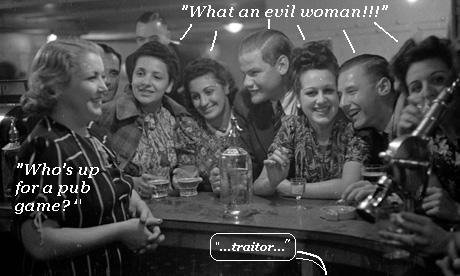
As we start moving from the recreational and civic holidays of the warm half of the year to the traditional holidays of the darker half, I am reminded that village and community are interesting things which are not like suburbs, workplaces or shopping malls or even families. The internet will only create real community when this sort of game starts up, including people you do not necessarily like doing things together you do not necessarily understand because you must. Maybe it has and maybe it hasn’t. Maybe that is what the Kingston Society for Playing Catch is to be. I will only know if anyone gets the hat and even then likely not.

Pete Brown: The Interview

pbboI like my non-job here at A Good Beer Blog. One thing I get to do – other than never have a second beer of the same type – is meet interesting people involved with beer over the internet. Consider this exchange about beer and language between me and beer book author Pete Brown:

Pete: Hi Alan, What’s a dink?
Alan: Hmm. A dink? A dink is a minor league jerk. A child’s word for penis. Actually it has a beer angle as in the Nova Scotia of my youth a six-pack was called “a dink pack” now that I think if it. A dink is a bore who is also a newbie.

Wow. Gripping linguistic drama. More to the point was the more thoughful exchange Pete provided to questions put to him by both me and guest writer Knut of Norway. Pete (no relation to the lead singer of the illustrated Pete Brown and his Battered Ornaments) has recently published a great book on his global beer travels called Three Sheets to the Wind and Knut and I thought it would be great if we could have a few questions answered in a three-way North Atlantic quiz as part of our review of his new work. You will recall I reviewed his last beer book Man Walks Into A Pub back in July 2003. In that book Pete considered some of the trends and brewing history of Britain. In this year’s book, he takes a stab at getting a hold of the global beer culture. I will review the book separately in a few days but for now, here is the interview.

+++++

Alan: You speak quite strongly about CAMRA. We do not have an equivalent in Canada though there are outposts. In “Three Sheets to the Wind” you visit Portland Oregon and experienced an expression of the North American real ale culture and appeared to love it. How would you compare the two?

Pete: I was so surprised by the US approach to craft beer – they’re really passionate about it, and the key thing is they want you to be passionate about it as well. The thing I always say about Portland is that if I was talking to a brewer about his beers and how much I liked them, he’d tell me six other beers from “competitive” brewers that I should also try. When I go to CAMRA events, I always get the sense that if you don’t already know what you like, there’s very little effort made to draw you in and help you. This is starting to change now, but there’s still an attitude about “I know more than you.” In North America, it’s more like, “I want you to know as much as me.”

Knut: Do you think CAMRA still could be used as a platform to fight for good beer, or have they painted themselves too much into a corner? Could an alternative be to start anew, based on a support for new and coming micro breweries instead of focusing on the techicalities of brewing?

Pete: Of the two alternatives, the one I’d like to see is that CAMRA reform themselves. They’ve got a terrible image problem, but they have so much stock in terms of public awareness, I still think they’re very powerful. As I’ve hung around the beer scene longer I’ve got to know more people. There are a great many executives within CAMRA who have exactly the right ideas, who know they need to reform in order to move forward – and they’re really nice people. But policy is dictated by committee and volunteers, and a lot of these guys are just professional activists – it’s not enough to be for something, you also have to be against something. I believe a lot of these guys couldn’t give a shit about getting more people into great-tasting beer; they simply enjoy the process of arguing about technicalities and being pissed off for a living. I’d like to believe the more sensible factions will eventually win the day, and we’re seeing some signs of CAMRA taking steps into the twenty first century, but there’s still a long way to go. The biggest problem is that CAMRA hardliners interpret any criticism of CAMRA as a criticism of cask ale, which is not only wrong, it’s breathtakingly arrogant, and kind of stops any really useful constructive debate from emerging.

Knut: After travelling the world, where do you see the best potential for beer tourism? I know Ireland has managed to do this based on one beer (!), and you have the mass hordes descending on Munich. But how about bicycling holidays in Bamberg and Denmark, micro breweries offering bed, breakfast and rare cask ales etc?

Pete: I’d love to see that in loads of countries. What I’m discovering now is that you can stick a pin in a map, and there’ll be interesting, often new, breweries not very far away. But I think in terms of holidays, you’d start with Belgium. I’ve been back a few times now since I went there for Three Sheets, and you can go from village to village, each with its own brewery, trying amazing beers, and it’s beautiful country – at least when the sun is shining!

Knut: Carlsberg is responding to the challenge of craft beers by a) trying to control the Danish import market and b) by setting up a micro of their own, putting a lot of prestige in it and linking it up with their brewery tours. Is this the way to go for the other big European brewers?

Pete: I think so. Big corporations in any market tend to play to the lowest common denominator with consumer tastes. You forget that to get a job as a brewer in a really big brewery, you have to be at the top of your game – the people who brew Budweiser are some of the best brewers in the world! What Carlsberg have done is give their brewers a bit of creative freedom and – surprise surprise – people can’t get enough of it. In the US, Anheuser Busch are responding to the growth of craft beers by launching some of their own, and much as I hate to say it, some of them are very good – they would be. The only thing that worries me is when big corporations react by simply trying to strangle interesting small breweries, denying them distribution and so on. This is very idealistic of me, but I wish brewers would simply let their beer do the talking – produce the best beer you can and try to sell more than your smaller competitors without resorting to dirty, underhand tactics.

Alan: I have been trying to figure out how you would approach Canadian beer culture. For me, so much about beer is centered on the kitchen party, the garage fridge or the cottage/camp as opposed to the pub or bar. In his book “Travels with Barley”, Ken Wells notes that bar bought beer in the US has gone from 75% of all sales to 25% over the last 20 years. This is a startling figure. Do you see this as a global trend? Do you also see that these sorts of home-based drinking is something that you ought to include if you extend you study to a “Son of Three Sheets to the Wind”?

Pete: That would be a great idea! An excuse to go and do the whole trip again. What we see now across the world is a consistent set of trends in markets that are “mature”, where beer has been around for ages, and a different pattern in new and emerging markets, such as Asia and Russia. In mature markets there’s a general thing about “staying in is the new going out” – we spend a greater portion of our money on interior design, big screen TVs, Playstations, cookbooks and so on – we invite friends over more than arranging to meet up with them. I think the pub or bar will always be the gold standard – you’re getting a whole experience, not just a beer. But we will all increasingly be doing more of our drinking at home.

Alan: Your references to cultures with respect for or even celebration of the three-beer buzz is really interesting to me. How, though, can an industry promote the idea that what I might call “getting a jag on” rather than “getting loaded” is the point of beer and one that we should all embrace? Doesn’t english-speaking puritanism somewhat snooker that opportunity leaving beer prone to being effectively represented as something you take to enter a fantasty land of TV advertised sports, pals and bikini-clad teens?

Pete: The reason people drink beer is to help social interaction – and you’re not allowed to say this, or even hint at it, in any promotion or advertising for beer – it’s one category where you are not allowed to tell the truth about the main product benefit. But I’ve done quite a bit of work in the UK on this subject. Many brewers now are pushing these “please drink responsibly” messages, which is fine, but a lot of people are drinking precisely because they want a break from behaving responsibly all the time. We need people to show that moderate drinking can actually be fun, rather than simply telling people not to drink as much. There’s a new campaign in the UK by Amstel that does a half-decent job of this. It ties the beer back to the laid-back attitude of the Dutch, and has lines like “drinking is just something we do between talking”, and “why rush your beer? The bar is open all night.” I think there’s a lot more that could be done along these lines. I’d like to see campaigns focusing on sentiments like “surely the best nights out are the ones you can remember.”

Again with the “Wow!” It is amazing no one is pouring big advertising money down upon my head with quality stuff like this. We remain open to offers.A big thanks to Pete for both his book and his time as well as to Knut who is one of the guys who make this beer writing stuff fun. As I said, a proper review of Three Sheets to the Wind will be up in a few days.

Quick Note: Shepherd Neame Goldings, England

We don’t get enough Shepherd Neame around here. Just Bishop’s Finger in the LCBO and I thought I had heard rumours that even its days might be numbered. And just like Spitfire was a seasonal release from the government store in 2004, so too this summer we had their Goldings Summer Hop Ale.

I have to re-adjust just my scale for English pale ale. Having much more access to the heavier hoppier US versions you have to gear back and think of these not as light ales but delicate ones. And delicate this one is indeed. Pure white pin-point foam and lace over amber ale. The aroma is floral and reserved. Not staid, though – more freesia than marigold. In the mouth there is a gush of fresh water, pale ale bread crust graininess, plenty of stone fruit – apple, pear, peach notes – and a nice lemony citric hop bite. A gentler pale but worthy.

The 17 BA reviewers are 12% unhappy. Restless. Some say too watery. Some say not enough hop. Even at 4.7%, I say this is a decent English best bitter and that is something you don’t get your hands on too much anymore in the international drive for big. I like.


Cyclops – Perhaps The Worst Idea Ever

Describing taste in words is funny business but making the effort is worthwhile as it provides you with a mechanism through which you can record your experiences with food and drink, and especially craft foods like real ale. We each take in the esters, phenols and other organic elements and recreate their interconnection in our own minds as we sip, sometimes discovering what the brewer intended and sometimes finding out new nuances never expected. Then you use your words to frame your experience. Do it often enough and you develop your own descriptors that make sense for your experience.

So it is inordinately shocking, then, to learn about what may be the worst idea in the craft beer movement I have ever heard of – a standardized system of beer description not unironically called Cyclops:

Cyclops, the new scheme launched today at the Great British Beer Festival at Earls Court in London, has the backing of 14 real ale breweries. Under the scheme, the brewers have agreed to follow a standardised template on all promotional material, describing the style, smell, look and taste of their beers. Bitterness and sweetness – the two main measures used to describe real ale’s characteristics – will also now be scored from one to five.

Cyclops follows a pilot scheme introduced by Leicester brewer Everards, which simplified the language used to describe real ales on promotional materials so customers knew exactly what to expect. A Campaign for Real Ale spokesman said: “Real ale is an incredibly complex drink with an enormous range of styles and tastes. Cyclops will demystify real ale so drinkers will know what a beer will look, smell and taste like before they part with their cash at the bar.”

This is tragic. And it is stunning that CAMRA supports such a thing. It is important at this moment in time that the most famous Cyclops, Homer’s Polyphemus, was blinded for life by drinking strong wine and ate people. This is hardly the making of a good brand. But even when he had one good eye he saw things…like he was born with one eye in the middle of his forehead – as in without particularly strong ability to see things from other perspectives. Plus, as man eating giant shepherds who get tricked a lot, they sort of fit the images of a rural rube caricature, kinda like in the satirical play by Euripides

And that is sort of what the program takes the craft beer lover for in presuming to tell you how to taste – it takes you for an ignorant oaf. It will create one recommended way to look at things and a snobby attitude to those who find their own way. Reject such mecho-branding systematic standards that will homogenize response patterns and trust yourself. If you think a beer tastes like the armpit Polyphemus after a long night in the cave (if you know what I mean) while the brewer tells you something like “it is a 5 (bitter), 3 (waterhardness), 3 (maltiness), 2 (mouthfeel) and 4 (overall) pale ale” then you just trust yourself and know that is likely tastes like that armpit.

¹…which would have been funnier if, instead of saying he was called “No man” thus leading to lots of punning hi-jinks that confused the big old dope, Odysseus had actually called himself “Norman” which would have led to a lot less confusion and likely the eating of Odysseus in the first few scenes thus saving thousands of undergrads the misery of figuring the whole thing out.

Four More English Pales Ales

I have done a couple of sets of tastings of English pale ales before and with a guest about this is another good opportunity. Here are four more English ales: a 4.3% best bitter from Somerset to the left, then a 5.5% pale ale from East Sussex, next a 7.5% Burtonian IPA and to the right an organic 5.0% ESB from Oxfordshire. What an excellent selection with which to consider the pale ale family as expressed from its homeland.

Pitchfork Bitter: White merenge stiff whipped head over medium straw ale with a light floral and grainy nose. The mouth feel is light, full of pale malt graininess, bright with pear and unripened peach fruit from the malt. Dryish with significant but not overwhelming hopped. Well balanced and refreshingly clean. A very attractive lighter pale ale. Here is what the brewery says. Here is what the BAers say.

Thomas Paine Original: white foam and rim over amber. Black china tea hops plus fruity malt with caramel and a hinty molasses note. The fruit is raisin and fall apple. Heavier again, clearly an ESB, some way to Chas. Wells Bombardier but just one wee step down that path. Yes, here is what the brewery says and, yes, here is what the BAers say.

Burton Bridge Empire India Pale Ale: Woah, Nelly! I had a Burton Bridge Porter in 2001 and this is its somewhat nicer twin cousin. White whipped egg white head over cloudy deep straw. Unique Burton Bridge hops along with that Burton Bridge unique tang. The hops are sharp, green and like a marigold-based drink from the blender. The only brewery’s hop profile which is beyond my descriptor of the smell and taste of driving a lawn mower into a patch of weeds in June. Tangier than that. So tangy it is tongy, like licking a cast iron pot coated with plain yogurt. [Not really but no other ale I have had could plausibly have that image in the review.] Yet underneath is grainy malt and creamy yeast. Black pepper at the dry finish. Again, here is what the brewery says and here is what the BAers say.

Duchy Originals Organic English Ale: Light tan foam over orange ale with no notable aroma. Soft water, quite flavourful watery water. Some sweetness but not yet up to raisiny. Some thought of orange marmalade but nowhere near Special London Ale. Hints – all hints. A tiny notch heavier than Pitchfork above, more tangy white grapefruit hoppy. This beer is brewed by Wychwood for Prince Charles:

When the Prince of Wales created Duchy Originals in 1990 it was because of his belief in the clear advantages of organic farming: the production of natural and healthy foods and sound husbandry which helps to regenerate and protect the countryside. Profits from sales of Duchy Originals products are donated to The Prince of Wales’s Charitable Foundation, which has to date raised more than £1.7 million.

Imagine that! It reminded me a bit of St. Peter’s organic. Finalissimo and once again, here is what this brewery says. Here is what the BAers say.

An excellent collection and instruction itself as to a portion of the English pale ale continuum.

Medieval Ale Drinking In London

An exhibit opens this week in London, England which provides evidence as to the drinking habits of the locals from around 1300 AD:

Experts have uncovered evidence that 12th century Londoners drank ale by the gallon, starting at breakfast time, due to poor quality drinking water. Exhibits at the Museum of London, including a selection of old Toby jugs, depict tubby men with beer bellies. London’s many drinking dens entertained ‘immoderate quaffing by fools’, according to a writer of the time.

Here is the website for the museum’s new exhibit. That would be an interesting place for a correspondent to visit. Any takers?

Two From Youngs, London, England

I do not appear to have provided much by the way of information about Young’s. Just Dirty Dick’s and their Double Chocolate Stout – and even that last one was just the barest note. How sad.

Young’s are a local brewer in London that has done very well in the export market. Not that long ago that were somewhat hard to find even in England. David Line in his early and important homebrewing guide from 1978 called Brewing Beers Like Those You Buy – a novel idea 27 years ago – says this about the Special Bitter:

Youngs has existed since 1831 but beer has been brewed on the site of its Ram brewery 1533. Even as recently as the late 1990s, the brewery’s history speaks of adding a bottling line to satisfy supermarket demand. This is still no macro-brewer despite its age and reach.

Special London Ale: This beer pours a quickly dissipating tan head over slightly russeted orange ale. There is a strong mineral rich aroma as soon as you open the top. Very distinct with orange apricot marmalade fruit, a tiny touch of black malt toastiness, a distinct yeast strain that is more dry cracker than biscuit and very twiggy hops with a sweet floral background. Very complex and pleasing. You know, I think that Mendocino’s Eye of the Hawk Select Ale is something of a respectful imitation. All BAers but few respect.

Oatmeal Stout: this is a fantastically good stout with a rare roast malt nuttiness. It pours a mocha cream head over black garnet stout. The yeast is rich chalky cream over which sits a halo of mint hop, Northern Brewer I would think. The black malt toastiness is subdued, balanced with a figgy note. Rich but not sweet. Perfectly balanced…and perfect. Almost sherry, a glass took me an hour and a half to sip. The 1% of BAers who say nay speak of a nitro-can version. This was not.

I promise to do better covering this brewery’s ales. I really do.

Boycott!!!

The exceptionally well-named Yates on the States, the tale of a family man from Manchester, England living in Minnesota, has raised this banner. It leads to an interesting consideration of the global brewing industry.

Yates’s complaint is that cask conditioned Boddington’s ale will no longer be made as the Manchester, England factory – the Strangeways Brewery – that makes it is being shut by its Belgium based parent, Interbrew. For 200 years, Boddingtons has only been made at Strangeways. From what I read, I understand what is at risk is the cask conditioned version of the brew, the real ale with live yeast in it, as opposed to the industrial kegged or canned versions with forced C02 carbonization we see on our shelves around the world. As a general rule, real ales take time to make, do not travel well and, if they do travel, they are expensive, like the six bucks Canadian I pay for a quart of Rogue. Kegged and canned beer is built for the tractor trailer ride.

If my reading on the brewing industry has taught me anything it is that mergers and consolidations have been the stock in trade for brewers for ever. I noted this as a complaint in my review of Martyn Cornell’s excellent Beer: The Story of the Pint but now I see it as simple reality, the nature of the flux in one end, the industrial end, of the industry. Consider this. I go to check the Interbrew website and the company itself has consolidated and is now called InBev, which is about as imaginative as LiqCo or HoochInc. It brews 13% of the world’s beer. It owns the Keiths I drank as a kid but which now gives me the willies when I smell it, the Rolling Rock in portland’s fridge, and the Hoegaarden and Leffe which have both been praised here. On the one hand, if it were not for the efforts of Interbrew, I would never have tried brews like Boddingtons or Leffe. In fact, the LCBO shelves are stocked with many InBev products, making the purchaser’s job an easy one. On the other hand, I would have had a chance to try other smaller brands since killed off in the churning mill that is the merger game – but only if I travelled to where those products are made. So, when brewery mergers kill off your local favorite, either an entire brand or a real ale version of it, it is an actual but local crisis; when it adds a great new style to your shop, it is a blessing but, really, only as a start to new hunting when travelling.

The conundrum of standardization and globalization. I will leave it to you to consider Yate’s call when deciding what you reach for when you reach for a beer.ill leave it to you to consider Yate’s call when deciding what you reach for when you reach for a beer.

Quick Note: St. Peter’s Old Style Porter

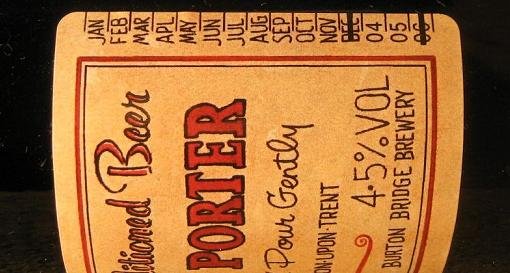
This beer from St. Peter’s is a ruby brown ale under an oddly ivory head. I’ve never seen an ivory head: tan plus hints of green-grey. This is old style, like Burton Bridge porter: barley candy plus molasses with lime and green hops. The yeast is sour cream or soured milk or something in between. Yet all well balanced.

Is this the holy grail? A 1750s porter? Likely not sour enough but colonial US farmers drank diluted vinegar so go figure.

A Norwegian Travels South-west

I was in London last week, which is pleasant during all seasons, but this has been the hottest July for 30 years, so there is an extra need to refill the body’s liquid reserves.

I first visited the splendid Pitfield Beer Shop, which sells both a number of bottle conditioned ales from its own micro and a broad selection of beers and ales from Britain and the rest of the world. Friendly staff that know their beers as well, so it is definitely woth seeking out, even if it is a bit out of the way for most visitors to London. I bought as many bottles I could reasonably carry, and walked back through the Clerkenwell area, where I decided to try the new golden ales on offer from Young’s and Fuller’s, the two independent London brewers which both own a number of pubs serving their beers.

Next stop was the Sekforde Arms, a friendly Young’s local on a side street. Young’s have Golden Zest as their seasonal ale this Summer. It is dark gold in color, but while it looks like a lager, it is certainly an ale. Light and refreshing, but not a groundbreaking brew. Served at the proper cellar temperature – what critics of British beer call “warm beer”, this could actually have been served colder on a hot day like this. It was nice to try the Golden Zest, but the next time I will return to their Special. The brewery blurb for this 100% malt brew: Maris Otter pale malt, lager malt, English Fuggle and Golding hops come together to produce a wonderfully light and refreshing golden beer. A few minutes walk to the Fuller’s pub City Retreat, a great place on a hot afternoon (or a cold Winter evening, as I’ve been there before). The new ale from Fuller’s is Discovery, and this was something else. An ale with a depth of flavour. It is fruity, with hints of apple and peach. A splendid summer beer, but I am not sure where it will fit in the market, as it is neither a lager nor a typical ale. According the Fuller’s, this is to be added to their year-round range of ales, along with London Pride and ESB. This was served chilled, and I found that suited the beer well. According to Fuller’s, this is “brewed using a unique blend of malted barley and wheat for a delicious malty taste bursting with rich, biscuity flavours. Liberty hops are added for a distinctive zesty character and fruity bite, whilst Saaz hops add a gentle bitter taste for a clean, refreshing finish.”

It seems like they have both aimed for the same type of beer, with “zesty” being a common denominator. It is worth mentioning that Young’s launced a beer a few years ago, the Triple A, which also aims at the drinkers who dont’t want the full flavour of their bitters. This is not a real ale, and it is served chilled, rather like a Kilkenny, but with a bit more taste. Purists frown on this, of course.

If you stay in the British Museum area of London, these two pubs are just a few minutes away by bus or taxi – if it’s not too hot they are within walking distance. They are much to be preferred to the more busy and touristy pubs in the Covent Garden/Soho area, being frequented by people who live or work in the area. You can look up their addresses on http://www.youngs.co.uk and http://www.fullers.co.uk, where there is plenty of information on their beer range, too. And, if you have more time on your hand, both breweries have tours of their premises and they have brewery taps and souvenir shops. Young’s even have published books on the history of the brewery and their pubs, see a review on my self-named Knut Albert’s Beer Blog.