Yes, It’s Here – The Tryptophan Thursday Edition Of The Beery News Notes

Four Weeks to Christmas Day!!! O.M.G.  I have bought nothing. For nobody. Nada. Not Nuttin’. Crap. For some it is too late! Speaking of Christmas, Laura H. has some very interesting art for sale that might be perfect for your favourite beer nerd… err… expert. I invite any one of you to buy me*  this her lovely representation of barley to the right. Far more less fleeting than a newsletter subsciption yet fewer calories than a beer. I should be in marketing.

And Eoghan shared another seasonal idea, a beer advent calendar on his newsletter:

Starting tomorrow – Tuesday 25 November – and running every weekday from now until 19 December, this newsletter will become its own kind of advent calendar of a kind, with me sending a short missive each morning from one of Brussels’ 19 municipal communes. As this newsletter’s tagline goes, these will be short observations on life in Brussels, trying to capture the feel of each of these areas, and/or my relationship with them.

A great discussion erupted on BlueSky when the news broke that heled explained many of the details related to the move of America’s oldest brewing school, the Siebel Institute, from Chicago to Montreal:

The Siebel Institute of Technology, the oldest brewing school in the Americas (established in 1872), is officially relocating its operations from Chicago, Illinois (USA) to Montreal, Québec (Canada) effective January 1, 2026. The new location address will be 3035 rue Sainte-Catherine E, Montréal (Québec), near Molson’s original brewery site (1786), the oldest brewery in North America. Siebel will be co-located with the new Lallemand Baking Academy and Application Technology Training Facility. 

Siebel has been owned by Lallemand Inc. of Montreal for about 25 years so it makes sense.  The press release also explained that “[r]ecent regulatory changes in the U.S. have made it much more challenging for many of our international students, who have become the majority of our student body, to attend classes in person.” Recent grad Drew indicated that about a third of his teachers there were not U.S. citizens. Two administrative staff – the program’s “heart and soul” – may lose their positions.

Speaking of good discussion, Jeff had a talk with himself on the question of Jeff Past and Jeff Future and the question of taste:

If only we could give those pour souls in 1975 a cup of Coava coffee, or in this example a Fresh west to 1995 drinkers, it would change their lives. But that’s not how things work. Beer has evolved partly because we have evolved along with it. All you have to do is look at different beer regions to see that the process of evolution can lead to very different places. It’s quite possible that for 1995 Jeff, the clouds wouldn’t have parted upon drinking a can of Fresh West. I might have found it off-putting in any number of ways. I liked bitterness then, and body, and just a bit of cheese grater that came from the bitterness/hop-matter synergy. It was like being slapped across the face, but with the flavor of caramel malt, and I liked it. I might have thought Fresh West was a cop-out beer, all candy aromas and no punch, not like a proper beer. I’m not sure there will be a 2055 Jeff or that he’ll be drinking beer (I’ll be 87), but I wonder what he’ll be drinking? It might be something I’d find distasteful today. Hmmm…

As we ponder those thoughts here is some straight up filler:

Note #1: David caught some late autumn light at the pub.
Note #2: Another David posted some sweet photos from a recent visit to a  lambic bar, the Grote Dorst, including a Girardin eye view.**
Note #3: The Boot Inn is still there.
Note #4: Is an influencer with only 24,000 followers actually an influencer? Or just a deadbeat?

But not cheap filler*** as there was plenty to quote from under each of those links. Think of it more as “make your own Thursday beery news notes!” Invite your friends to play along!

Back to the deets as Hop Queries version 9.07 came out this week and Stan shared an interesting observation about Nelson Sauvin that sorta parallels the changes you can notice through each spring’s maple syrup production:

The Nelson Sauvin character (in a normal season) goes through a progression from i) somewhat vegetal and dominated by green fruit character (gooseberry, etc.) to ii) brighter citrus-y with grapefruit-like notes to iii) bright, wine-y and complex with passion fruit notes to iv) building tropical complexity with brighter citrus fading to v) super tropical with sweeter citrus notes to vi) tropical with light dank and solvent-y notes to vii) fading tropical with lots of weird, random characters ranging from O/G to berry fruit. Extremely late Nelson Sauvin tends to vary quite a bit from season to season and can express a wide array of characters, including appealing and un-appealing ones.

A wide array of character? Something like myself. Speaking of deets, this week’s feature in Pellicle by Fred Garratt-Stanley goes where too few stories dig into – back of house at The Fat Cat:

Only when you walk through The Fat Cat’s cellars can you truly appreciate the size of the operation. Underneath the bar there’s a well-stocked keg cellar with four cask lines, but it’s out back where the magic happens. There are two gleaming, air-conditioned cellar rooms lined with stillages, each of which holds somewhere between 30 and 40 firkins and pins that are either tapped up or settling down. Beyond the glass washers are multiple store rooms and an additional cellar, where a handful of the pub’s biggest-selling beers are racked up in huge, 18-gallon vessels. The site is vast, responding to a level of turnover established over decades spent serving reliable, perfectly conditioned cask beer. 

I have worked back of house in a playhouse, bars and restaurants, on election nights and, of course, have seen the backs of many things through law. It is all very good interviewing an owner in the front and hearing the stories but digging into the back and underneath of things where the unpretty can be found tells you what is really what. Are the corners clean? Is the staff sullen? That’s great work up there.

And The New York Times ran a story this week on Germany’s waning interest in beer:

Germans are drinking a lot less beer. “In recent years it was always 46 percent, 47 percent, 48 percent who said, ‘Yes, I drink beer,’” said Marc Kerger, president of Einbecker, referring to consumer surveys. “And this year just 41 percent. Forty-one percent is dramatic.” Alcohol consumption in Germany has been sliding for decades. But the sudden, accelerating drop has caught brewers and bar owners by surprise.

Twist in the tale from Jörg Biebernick, the chief executive of Paulaner: “Half of our sales in Germany are actually non-beer…” What are people doing if they aren’t out on the big binge? According to The Guardian, at certain exclusive clubs they may be on the little one:

For all the talk of generation Z eschewing alcohol, drinking shows no sign of dying out. There are indicators of restraint – the Manchester dessert menu features a two-sip, 60ml mini-version of an espresso martini, for £7, if you prefer an alternative to stodge – and there is “a pocket, from 26- to 30-year-olds” who drink less, says Carnie. But the bigger trend is toward “clean” cocktails, with fewer ingredients and less sugar. The multicoloured, juice-laden, bafflingly named cocktail is old hat. “I get it, because if I go to a bar, and I don’t understand the menu, it annoys me,” the barman tells me. “A cocktail isn’t cheap. If I’m spending money on a cocktail, I want to know I’m going to like it.”

And Katie illustrated another aspect of what’s been going on it terms of culture change at a personal level:

…sometimes I don’t drink because of my MH, sometimes I don’t drink because I don’t feel like it, sometimes I don’t drink because I’m training the next day and want to sleep properly. Don’t raise eyebrows, don’t make it seem like I’m pregnant. Don’t be a dick. Just say okay.

Sleep. Sleeeeeeeep. Katie is spot on in many ways. But still, also in the NYT, there are still people experiencing this sort of night:

Through the window of a dark restaurant we saw a man illuminated by a disco ball who was singing from his chest. He waved at us. We waved back. He unlocked the door and invited us in. Over a bucket of cold Singha, we sang “Happy Birthday.” The owner brought out a brownie topped with a blazing flare on the house. I apologized for the intrusion. “Please kick us out any time,” I said. He smiled and handed me Post-its and a pen. “Just make a list of songs,” he said. Another bucket of beer appeared, along with some peanuts. It was a beautiful night, and we had found something dumb to do.

I have made a point of excelling at finding something dumb to do. To the contrary, Jordan visited a tiny brewery in TO that’s won Best New Brewery in Canada in the 2025 Canadian Brewing Awards.:

At Bickford, what you see is what they have. The space, whose colour palette includes a lot of orange, can’t sit more than 30 people at a time and one assumes that on nights when Dungeons and Dragons groups come in, the only place for drinkers must be at the bar. The main space is not quite as large as a midtown one bedroom, but has been retrofitted as one of Toronto’s smallest breweries. Usually I have to guess at the size of brewing equipment, but everything is labeled. Andrew is brewing 250 litres at a time.

And David J. has shared the background story of another desi pub, the The Century Club in the Forest Gate section of East London which was born from 1970s bigotry as owner Peter Patel recalled:

“We went to the Wheatsheaf,” he recalls. “We didn’t know that in the evening it used to get bikers coming in and they chased us out.” Peter faced similar prejudice in those days when he visited a pub with friends in Lewisham, South London, where I now live.  A racist purposely spilt his drink on him, claiming Peter had tripped him up and demanded more than another drink. The atmosphere turned rancorous, the publican sided with the attacker and the Asians were kicked out despite already spending about £40 (the equivalent of £300 today). “It was a lot of money as a pint used to be under a pound then,” he says. “We did nothing at all. That’s when I decided we needed something for Asian people.”

What else? Well, the ISBFX declared an ending**** and Ed noted another sort of end of things, the end of CAMRBG:

…when a heresiarch founded a protestant beer sect called the Campaign for Really Good Beer (CAMRGB) in opposition to our mother church I was not filled with pleasure that I get from say, reading about nestorianism. I must confess that in my arrogance I had come dangerously close to advocating for something similar to the CAMRGB in the early days of beer blogging. Back then whinging about CAMRA was something we all enjoyed…until I realised some of the people were not whinging about the home team but were in fact the opposition. I repented my sins then, and despite my occasional confusion over theological matters and distaste for modernism, my faith has not been shaken.

Fine, one or three more notes:

Note #6: “This is the cheeriest Norfolk pub I’ve ever been in…
Note #7: Rogue left $16.7 million owing to others after earning only $19.7 gross revenue in 2024.
Note #8: Pink Gin in Interwar China.

Lastly, we talk a lot about beer and monks but Kathleen Willcox reminds us in DB that they established much of what we understand about wine classification, too:

After Rome fell and the Early Middle Ages ushered in intellectual decline and infrastructural decay, monastic orders did not just preserve wine culture; they elevated it. Monks across Europe, particularly Benedictines, Cistercians and Cluniacs, planted vineyards, documented practices and sustained international wine trade. Burgundy became ground zero for evolution and innovation. The observant Cistercians, who owned vast vineyard holdings, first noted how separate vineyard blocks produced different results. They were the first to record these observations, linking differences in wine to soil, climate and elevation. Their careful mapping of micro parcels on the Côte d’Or laid the foundation for the cru system and the modern concept of terroir.

There. That’s it for this week. The United States is in a gravy soaked reverie that may well last into early December. As they/you recover, please also check out, Boak and Bailey on this and every Saturday and then sign up for their entertaining footnotes, too. Look out for Stan when he feels the urge now that he’s retired from Monday slot… maybe … maybe not. Then listen to a few of Lew’s podcasts and get your emailed issue of Episodes of my Pub Life by David Jesudason on certain Fridays. And Phil Mellows is at the BritishBeerBreaks. Once a month, as noted, Will Hawkes issues his London Beer City newsletter and do sign up for Katie’s wonderful self-governing totes autonomous website featuring The Gulp, too.  Ben’s Beer and Badword has returned from his break since April so you can embrace the sweary Mary! There is reading at The Glass which is going back to being a blog. Any more? We have Ontario’s own A Quick Beer and All About Beer is still offering a range of podcasts – and there’s also Mike Seay’s The Perfect Pour. Plus follow the venerable Full Pint podcast! And there’s the Craft Beer Channel on Youtube. Check out the archives of the Beer Ladies Podcast. That’s quite good and after a break they may well be are back every month!

*…or, yes, anyone you care for than me… if that’s even possible!
**I got a couple of these well over a decade old, the remnants of the stash. probably should open one to check see.
***Or… actually… I don’t know what to think. Hope it was worth it.
****As in read to the ending…
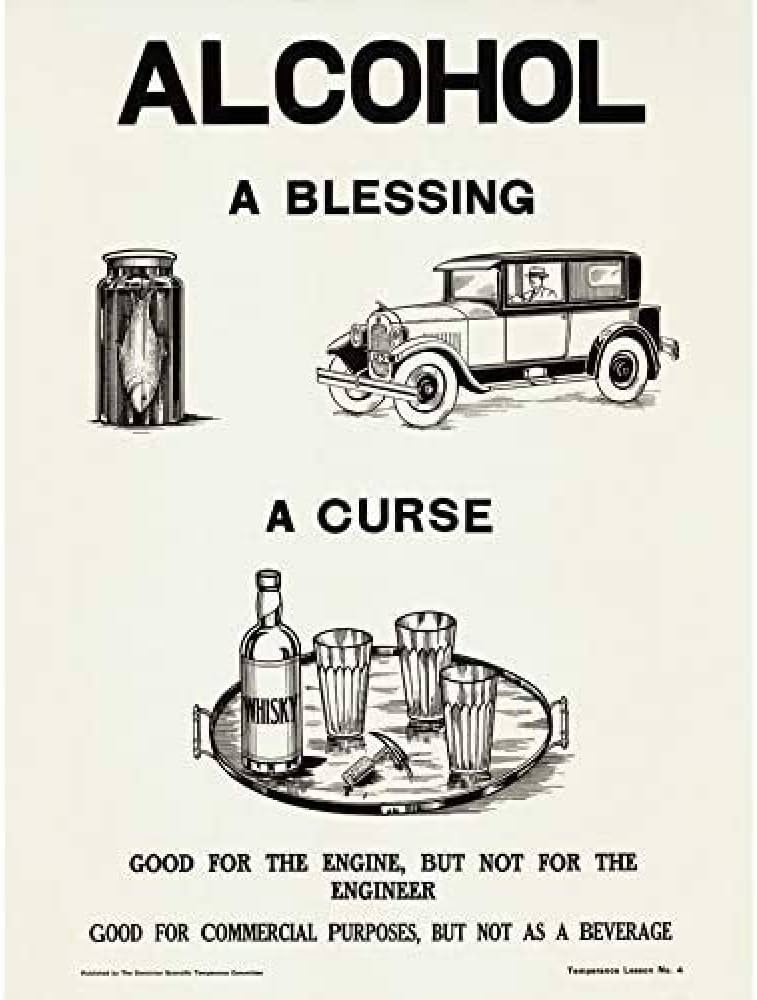
Your Beery News Notes For – YIKES!!! – The 1/24th Mark For The Year 2024… Err… 2025

It’s really good, this whole passage of time thing. It really is. Isn’t it. It is… isn’t it? Fine. Face it. The holidays are over. OVER! But that doesn’t mean the celebrations are over. For example, in the U.S. of A. we hear that it’s Prohibition Remembrance Day celebrating the 106th anniversary of the ratification of the 18th Amendment to their Constitution. Whooo!!! If “neo-temp” was actually a real thing there’d be parades. I do love me a parade. But who needs parades when you have NA beer for $5 a can!

Speaking of fine traditions, at her  very clearly titled Braciatrix: The Newsletter, Dr Christina Wade shares her thoughts on the wassailing tradition which marks the eve of the Epiphany in Christianity. Or rather traditions:

Some versions of the tradition are known as apple howling, which is probably one of the most metal names I have ever heard. Excellent band name tbh. Regardless of exactly how people celebrated wassailing specifically, one thing does seem to often remain at the centre of these traditions- that is the alcoholic beverages. My favourite. So what exactly do we drink? We drink Lambswool or Lamb’s Wool. No, not the actual fuzzy stuff from the adorable creature better known for making sweaters. Nay. It’s a beverage made from ale, spices, sugar, and roasted apples. Some recipes also call for cream, eggs, or both.

That sounds pretty excellent if you ask me. Winterfestive. Speaking of the old Epiph’, we had a visitor who had spent much of 2024 in France over for the holidays and we had a galette des rois but I had no idea it was pagan and also no idea that it was causing another boring woke-trad political scandal in the old country due to its history:

Historians say French Epiphany cakes — called galette des rois (literally, galette of the kings) — can be traced to Roman festivals dedicated to Saturn and to the longer daylight hours after the winter solstice. The custom was to put a bean in cakes given to slaves, and to name the one who found it “king for the day”. In modern France, the bean has been replaced by a porcelain figure, but the finder still gets a paper crown. Over the centuries, the galette des rois merged with Epiphany and it became usual to start eating them after 12th night, at least until the French Revolution, when the cakes were banned in a drive to eradicate Christianity in the 1790s.

Matthew C, taking on the player-manager role this week, published his story on Roosters Brewery in Harrogate, England in which he does a few very unusal things. It is more than a B.O B.* Is that a B.B.O.B.? One thing is that he interviews other people to corroborate the story shared by a brewery owner. And he does background research to tell the tale of the brewery from older records than the recitals of the owner. This sort of thing gives the reader great confidence, especially as the main players seem a bit quiet:

Brew Britannia also speaks of Franklin’s reclusiveness (despite numerous attempts, I was not able to contact him for the purposes of this article) and his modesty. It’s apparent, speaking to those who knew him, that he does not consider himself to be a trailblazer, despite plenty of evidence to the contrary… “Sean was quite straightforward once we’d made contact. Mostly he was a bit embarrassed to be treated like a great authority or legendary figure. He was at great pains to credit others wherever he could,” Boak and Bailey tell me of their interactions with him, which took place in 2013. “He also described himself as an introvert and he was certainly fairly quiet and thoughtful in our conversations—although certainly passionate enough when he got down to actually talking about wine and beer.”

Such a good bit of investigation based writing, especially in a positive portrait.** Speaking of which, even with perhaps a finer focus. The Beer Nut – or rather his alt personality Stash Killer – released the results of his study on a six year old nitro can of Guinness:

It’s in the flavour where I think we’ve had some evolution. It’s definitely more flavoursome than when young, and I wish I had a fresh can to hand to compare. The tartness has both increased and become more rounded, adding a kind of classy balsamic vinegar effect. Conversely, that finishes on a sweeter note, with some chocolate, which is something in most stouts that I find missing in Guinness, and a little maraschino cherry. We’re back to regular programming with the quick finish and minimal aftertaste.

Detail. We meet that again. As mentioned a couple of weeks ago, over on BlueSky, Kevin of Casket Beer, asked if anyone had ever had a Scotch Ale out of a thistle glass. Let me ruin the punch line to one of his findings:

So where did we get the notion that the thistle glass was somehow an important part of Scottish beer culture? The Gordon glass may have played a role. However, the 1993 book, Scotch Ale, by Greg Noonan likely had a significant impact, at least in the United States. The cover prominently features a beer in a thistle glass. The book’s contents do not get into glassware or indicate an explanation for why the glass was used. Maybe it was influenced by Gordon. The influential book likely conveyed to a generation of brewers, homebrewers and enthusiasts, that the glass had some meaningful connection to Scottish Ale.

Read the rest for find more findings. It’s not all that precise, sadly. As far as lost goes, these days in all the seesaw back and forth about various recent studies of medical studies and statements resting more and more on labels and less on methodology,*** I found some relief in the transcript from a transcript from TVO’s news magazine The Agenda from almost seven years ago when Mr. B himself**** and three other drinks authors to discuss the question. And it is a civil discussion where views and differences were shared and considered. Firm view like this:

If you can decompress with one glass of wine and keep it at one glass of wine per day, that’s a very uncommon pattern, but if you can more power to you. But those who get into trouble with alcohol tend to find it’s progressive, and denial is a big part of it. So if you can stick to one, go for it.

Speaking of firm and even disagreeable views but, still, focused on the detailed examination… Boak and Bailey wrote about some of the disregarded pubs of the Easton district of Bristol. Then, more importantly, in their Patreon account wrote about a few of their toilets:

Last night, neither of us popped the cork until The Sugar Loaf. Despite having been cleaned up and made a little smarter, it’s still basically down-to-earth. That meant that the toilets had no soap but did have water hot enough to have made tea with. As in, dangerously, scaldingly, steaming hot. Not that the soap or the water mattered much because nobody was washing their hands. [Shudder.]

Not segueing on the notion of popping corks at all, I noticed an interesting idea in this column by Eric Asimov in the NYT on a trend in restaurant wine lists – focus:

The wine list at Smithereens, a new seafood restaurant in the East Village, is shocking to say the least. Of its 62 selections, more than half, 32, are rieslings. Twenty-nine more are various other whites. There’s only one red wine, a pinot noir from Shelter Winery in the Baden region of Germany. Some may criticize a list like that as self-indulgent, but I love it. I rarely see a wine list with such attitude or character… I’ve noticed more and more relatively short wine lists… Not all are as provocative as the Smithereens list, but they are incisive, chosen to convey a point of view and, as good lists ought to do, shape the character of the restaurant.

Sounds like the brewery in Maine that made six stouts twenty years ago. I also like how it is aimed at breaking assumptions. Iconoclasm. Sadly, we too often read of presumed and autonomously authorized ways, like how to achieve a “sensory worst“***** which, if we are honest, depends on learning from the pew and then walking out as an adherent to a form of authority – comforting maybe but that’s too close to the precious basement of speakers, amps and equalizers audiophile approach. If you understood this at all the levels I do, you’d agree.

There are limits to disagreeability, however. In The Times this week we read about one of those situations where two sorts of disagreeabilities clash as each is based on a human right:

Pubs could ban customers from speaking about contentious beliefs such as religious views or transgender rights over fears of falling foul of Labour’s workers rights reforms. The government has been warned by the equalities watchdog that rules could “disproportionately curtail” freedom of expression and be applied to “overheard conversations”. Ministers have proposed that employers must protect workers from being harassed at work by “third parties” such as customers or clients. If they fail to do so they could be sued. However, the Equality and Human Rights Commission (EHRC) said this was particularly challenging in cases involving a “philosophical belief”, such as people’s views on religion or women’s rights, because many business owners do not understand such topics are protected by equality law.

Now before any of you scream “WOKE!” like a ninnie (beside the fact J. Christ Himself ask us to be awake), I can share that I have dabbled in this sort of human rights and we need to know just as there are intersecting rights we can have competing rights.******  So these knots need unraveling. And, just to be clear, there is not obligation to allow the loud boorish bigot to remain in the pub. As JJB himself has stated:

…nobody in mine ever uses racist language like Farage’s Reform activists, and if they did they’d be told to leave and never return.

With that good word, a reminder of all you all needing to put down more good words.  The Session is trying a revival, a resuscitation even. On Friday January 31, 2025 please post your thoughts – via blog, newsletter, social media… anything – on the topic:

What is the best thing to happen in good beer since 2018?

Publish on last Friday in January and then leave a comment here on a comment or even email me the link at beerblog@gmail.com! I have also proposed hosts of the February 2025 (if there is breath in the old corpse) the form of which I will leave in their good hands along with this wise advice emailed from Stan: “I will support in any way that does not require too much work ;>)“!!! Do it!

That’s it. Mid-January is here and boy is it going by. As it flees, please check out Boak and Bailey every Saturday and Stan going strong again each and every Monday. Then listen to Lew’s podcast and get your emailed issue of Episodes of my Pub Life by David Jesudason on the (sometimes even but never) odd Fridays. And Phil Mellows is at the BritishBeerBreaks. Once a month, Will Hawkes issues his London Beer City newsletter and do sign up for Katie’s wonderful newsletterThe Gulp, too. The Share looks to be back with a revival. Ben’s Beer and Badword is out there with the all the sweary Mary! And check out the Atlantic Canada Beer Blog‘s weekly roundup. There is new reading at The Glass which is going back to being a blog. Any more? Check out the Beer Ladies Podcast. That’s quite good and they are revving up for a new year. And the BOAS podcast for the bro-ly. And the long standing Beervana podcast …except they have now stood down.  Plus We Are Beer People. The Boys Are From Märzen podcast appears suspended as does BeerEdge, too. VinePair packed in Taplines as well. All gone. But not Ontario’s own A Quick Beer. There is more from the DaftAboutCraft podcast, too.  All About Beer has sponsored trade possy podcasts and there’s also The Perfect Pour. Plus follow the venerable Full Pint podcast. And the Craft Beer Channel on Youtube.  The Moon Under Water is gone which is not surprising as the ask was $10 a month. Pete Brown’s one cost a fifth of that but only had the one post. Such is life.

*Better Brewery Owner Bio?
**Also positive, his piece which should be called “Gud Wee Coo!
***A new and damning report came out just this Tuesday according to the NYT: “Among both men and women, drinking just one alcoholic beverage a day increases the risk of liver cirrhosis, esophageal cancer, oral cancer and injuries of various kinds, according to a federal analysis issued on Tuesday. Women face a higher risk of developing liver cancer even at this modest level of drinking. Drinking two drinks a day — double the U.S. Dietary Guidelines’ recommendation for women but the current amount condoned for men — increases the odds of a death caused by alcohol for both men and women.” Expect outcry for booze boosters! Stan has a better way: “There is no denying the negative impact alcohol has on your body. It is stupid to claim otherwise. The rest I leave to Mary-Chapin Carpenter.
****A long standing TVO regular it seems from the available records from 1998 or so. Not the absence of references to “craft” in the lexicon. 
*****Has anyone figured out why craft experts were so good with all the flaws but so poor at the strengths?
******A plain example are those chevrons built into public sidewalk corner wheelchair ramps. When they first were installed, instances of people with limited vision walking into traffic increased. The chevons act as a warning to those using a white cane.

These Be The Week Before Christmas Mailed In But Merry Beery News Notes

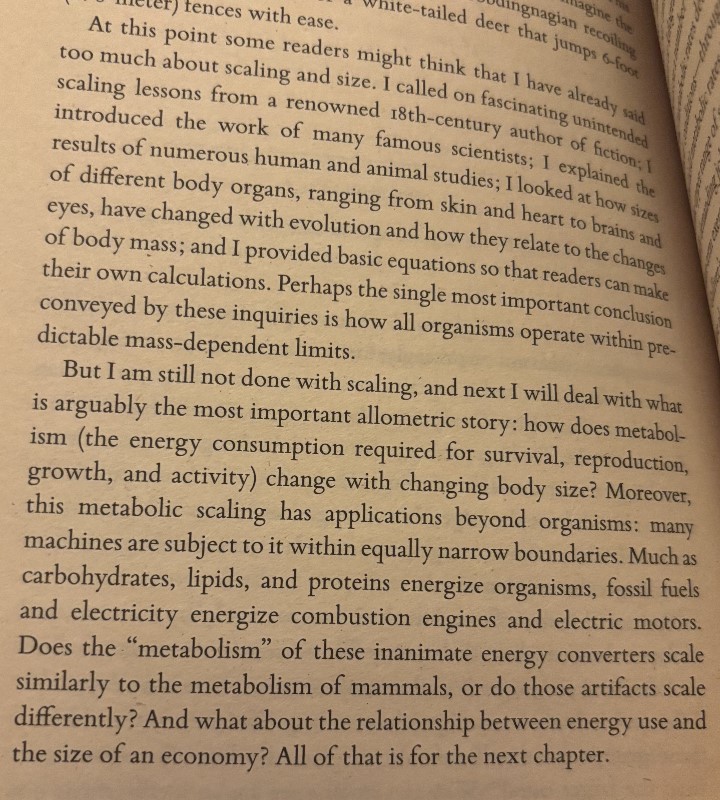
Well, they would be mailed-in if we hadn’t had a postal strike here in Canada. My Christmas cards are in limbo. Parcels replaced with e-cards. How unjolly. So I have had to find other things to fill my days. Like reading. I was up to a book a week during the pandemic. This year? Not even one a month. I was grateful, then, to read the passage to the right from Prof. Smil’s facinating but dense (not to mention tiny fonted) book Size which is something of an apology to the reader. It’s good to know that sometimes the feelings are mutual when it comes to these sorts of things. Which other writers should issue apologies?

What is up? ATJ starts us off whistfully today, daydreaming of the scene in a favourite pub on Christmas Day:

A pub I regularly visit, The Bridge Inn at Topsham, five miles from where I live, opens for a couple of hours and the landlady Caroline recently told me that hundreds of people turn up and that there was a separate bar to dispense Branoc, which is the pub’s popular session ale. Other beers poured from the wood are of a stronger cast, the kind of strength that would make a cat speak. I am sure that the mood is joyous and celebratory, a cacophony of voices and laughter, inside and outside the pub. The parlour to the left of the pub corridor I guess to be warmed by the well-lit fire and full of eager drinkers, as would I suspect to be the back bar, again with a well-warming fire and conversation ebbing and flowing like the tidal river just below the pub. One day I shall get there on Christmas Day.

Boak and Bailey also consider their actual visits to the pubs of Bristol during these holidays – first at (me being Nova Scotian) the most wonderfully named pub that I will likely never enter, The Nova Scotia, then moving on to The Merchant’s Arms:

The Bass was excellent. The Butcombe was excellent. The Christmas tree twinkled and was reflected in the chocolate brown paintwork. There were more lads in Christmas jumpers, more rugby boys… no, actually, the same ones from The Orchard, on the same trail as us. Again, we found it hard to leave, but The Merchants Arms was beckoning from across the water… We squeezed through the door and through the crowd to a spot within shouting distance of the bar. As we peered at the pumps we heard a voice shouting “Ray! Ray!” but ignored it because, frankly, The Merchants is the kind of pub where almost everyone is called Ray.

If I ever meet B+B, I hope I first see them from a distance so I too can shout “Ray! Ray!” but to be clear I will likely shout “Jess! Jess!” so as to be both cheery and nice while also sneaky and clever.

Also striking a holiday pose, in Foodism we see Will Hawkes wrote about Christmas ales as an echo of Victorian times:

Christmas meant stronger beer, often brewed in October and longer aged to soften the edges. In December 1888, for example, the Phillips Brewery advised readers of the Oxford Times not to miss out on their “Christmas Specialities”: a strong ale, a double [i.e. stronger than usual] stout and an ale aged for two years. These were powerfully flavoured beers designed to accompany the rich, fatty, indulgent dishes then central to, and still part of, a British Christmas: plum pudding, stilton and roast meat of various kinds – this was a time when most Britons did not drink wine. Beers were dark and heady, like liquid Christmas Pudding, and often stronger than 10% ABV.

Now… I would note that English strong ale is not a Victorian invention as careful readers will appreciate. But the point of the reformist middle class Victorian – really Albertan – homey Christmas is quite correct. Still, I do think the Georgians were more fun. Disgusting but fun.

Going further back while remaining ecclesiastical, Dr. Christina Wade shared some snazzy facts this week over on BlueSky about the work of a medieval Cellaress:

The pages of this late 13th-century manuscript, La Sainte Abbeye, detail what would make up a perfect abbey. & what would such an institution be without ale, or, perhaps more precisely, the nun in charge of it, the Cellaress… Pictured in this illustration, between the Abbess, singing nuns, and a small handful of deacons is the cellaress, the woman in charge of food and drink… In medieval monastic communities, ale was an important part of diet. It was critical to the running of many of these nunneries. And not only did they drink it, they often also brewed it on site.

Keeping up with this sort of academic wisdom is what makes this here blog what it is – but I have to admit I also love running across new favourite jargonese like “pseudo-targeted flavoromics” which is just fabulous. Whaaaaaaat does it even mean?

…a comprehensive flavoromics integrating untargeted, pseudo-targeted, and targeted analyses was employed to characterize volatile development across RTs with 14 annotated compounds. Notably, non-linear patterns have been observed in malt coloration, precursors consumption, and volatile development for the first time…

Fabulous. Super dooper fabulous. Speaking of which and yet giving me something of my own flashback, David Jesudason wrote about the experience about returning to the pub as a member of staff, something he had not done for 25 years:

…working in a pub gives you a rare gift of seeing the space for what it truly is even if that is amorphous – at first it went from being a slew of self-contained tables and then a communal mass with multiple conversations tied together with the love of beer. And, at times when I wasn’t part of the fun or the work, I had a vision of it being a high-street shop – the marvel of the micropub unwrapped. The most shameful confession is that for a few seconds when facing random customers I felt like I over-explained to somehow overcompensate that I was more than a bartender – maybe James’s intervention was warranted. That I had somehow failed in my career as a writer and become perma-frosted since 1999, which reveals how I may subconsciously view service industry jobs as somehow inferior to other pursuits.

My trick as a bartender?  Give change in dimes and nickels. You get it all back. Speaking of the jolly, did you see the 1975 BBC new item on the Guinness tanker ship posted at the FB page of the Brewery History Society? It’s not the ship itself that’s jolly but that turtleneck blazer combo… though the “draught” and other puns do strain the patience.

Tariff news update!  Did I mention that Ontario’s government booze store (retail and wholesale) is the biggest in the world? Well, apparently our provincial government is considering restricting the Liquor Control Board of Ontario from buying any American-made alcohol:

“We’ll use every tool in our toolbox, as we put a tariff on bourbon last time. The LCBO is the largest purchasers of alcohol in the entire world. But I’d prefer not to do any of this,” Ford said Friday. Earlier in the week, Ontario’s premier threatened to pull the plug on the electricity supply that powers 1.5-million homes in New York, Michigan and Wisconsin.

Looks like I’ll be sipping rye this winter. As Michigan grinds to a halt. And speaking of sipping, The Tand took himself and herself out for a walk recently to spend the day drinking cask ale in London and shared what he found:

I knew trouble was afoot when the server put my glass under the handpump and splashed beer into it while pouring a half of lager. It was the worst pint of Vocation Bread and Butter I’d ever had, but I supped it quietly and left most of it. I hadn’t the heart to pull this hard-working lass up about it. Someone should have trained her better. At our table we started talking with a couple of lads who’d lived locally for a few years, They too had started on cask and abandoned it so we enjoyed Hofmeister instead…

Somewhat speaking of which and before we get into the “craft rot” stories, they of Pellicle posted some thoughts on the year soon past and their plans for 2025:

While these features remain popular, in that they’re well read, we’ve come to realise that readers are often seeking more than simply a narrative piece about a brewery with a friendly owner who makes really tasty beer. There needs to be an angle, a hook, a proper story to dig your teeth into. We will continue to publish stories about beer and breweries in 2025, but with greater scrutiny and tighter angles focusing on what we feel really matters to our readers. Throughout this year we’ve been pausing to check ourselves and ask “who really cares about this, and why does it matter?” Two hugely important questions when you’re publishing content about any given subject.

This is good. Where ever they are published, brewery owner bios (herein “BOBs”) tend to be samey. Cavity inducing even. Where the reader can find investigative work like fact checking brewery owner assertions or interviewing former employees or business partners for alternative takes on official history these piece might have some hang time. But they are nice and have their place so keep them in there as long as they are matched with as many more analytical critical studies. Good move.

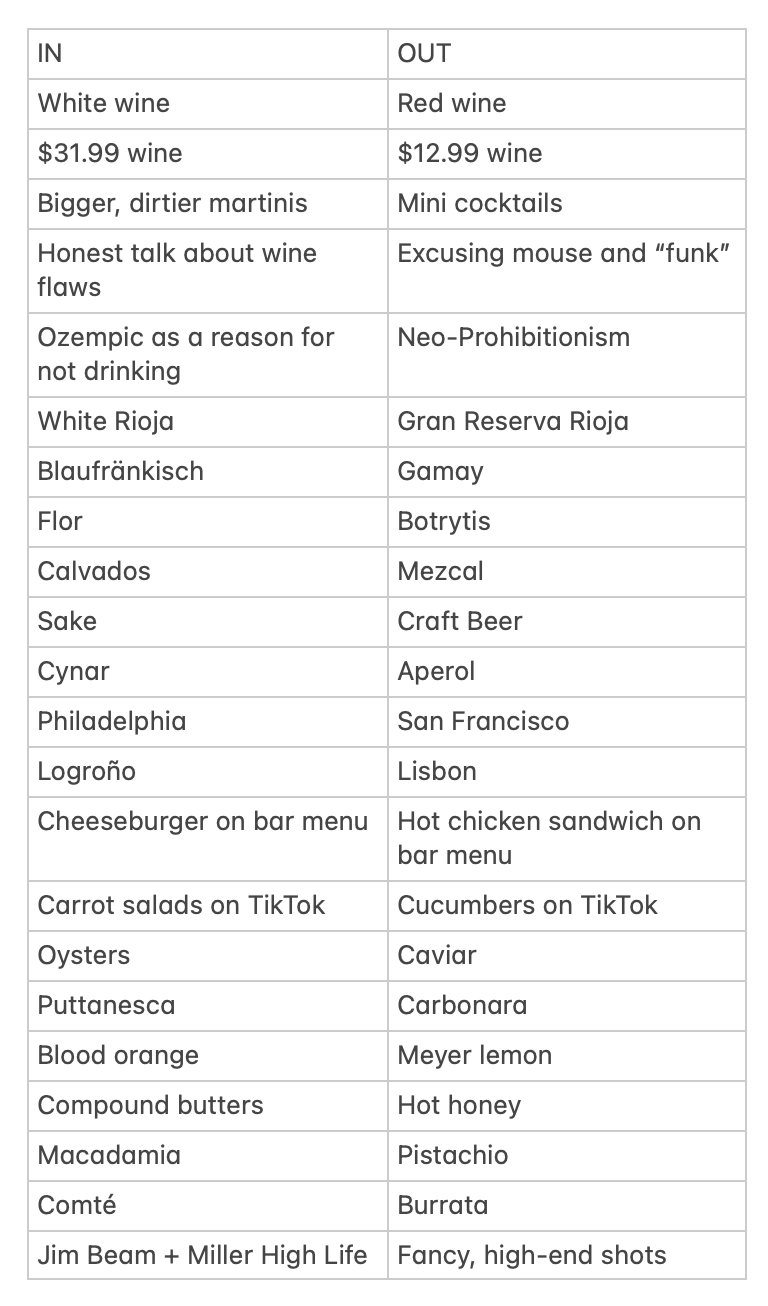
Also looking a bit forward as well, drinks writer Jason Wilson prepared a What’s In and What’s Out chart for the turn of the year. Click to the to the right for a larger version. The bad news that we all know has come to pass is that craft beer* is in the out column but has sake really given it the boot? As is often the case, there is an underlying argument that things that were a bit precious are being left behind so craft beer joins caviar, mini cocktails and Mezcal on the list making room for oysters, dirty martinis and calvados. Now, you can live the life that you think is right for you but I am always going to vote for oysters and calvados.

Note: BA Bart takes the shrinking ship’s helm as the foundering continues. And this is during the week when the frankly “long forgotten to many” RateBeer announced its own demise after five years of big beer ownership – and announced it with some very specific instructions:

Login to the RateBeer website and navigate to the My Profile page… In the right-hand column below “Beer Cellar” is the “My Account” section… In the “My Account” section, click “Compile My Ratings”.. The next page will provide options for downloading your ratings in CSV (comma-separated value) format…

Wow. It’s soon gonna to be gone gone gone goner than Hunter Biden is getting struck from the White House Christmas party list. Just to avoid the link-a-cide, I am connecting to the story at BeerAdvocate, too.

And Jordan noted another passing, of The Growler a beer magazine he edited. Print magazines about beer have never done well in Canada. Ontario had a section in Great Lakes Brewing News from 2009 to 2019 before… the scandal. And we had TAPS that folded its last print edition in 2016, then we had Mash which lasted a few issues the next year, then we had a Canadian edition of Original Gravity for a bit – and now we have The Growler‘s Ontario edition taking its leave in turn, though the BC edition seems to live on. In good times and bad, beer magazines have never seemed to be the thing. Will someone try again?

Speaking of which, interesting zing! from a former blog publisher over Google delisting the “unvetted and often bogus content” of Forbes’ contributor network where a few struggle down the mine axe in hand, hacking against the rock face, convincing others that beer is interesting.

Note: a list of 10 or 25 or 30 people naming their favourite beer or breweries of the year (or anything of the year) isn’t a list of the top 25 or 30. It’s just 25 or 30 lists each with only one listed. End of the year content filling season is here!**

Finally and in far better shape than that second half what was set out above, Drunk Polkaroo is back after 12 weeks off alcohol and counting for health reasons, the details of which he has shared. After a bit of a glum re-entry with a discount brand review, he is one his feet again with a cheery review of a NA beer from one of Canada’s finest brewers. Is this his new thing? It’s certainly a good thing.

That’s it! Happy holidays! Merry Christmas and all that!! Until next time when we will be gathered ’round the Boxing Day Box, please check out Boak and Bailey every Saturday and Stan going strong again each and every Monday. Then listen to Lew’s podcast and get your emailed issue of Episodes of my Pub Life by David Jesudason on the (sometimes even but never) odd Fridays. And Phil Mellows is at the BritishBeerBreaks. Once a month, Will Hawkes issues his London Beer City newsletter and do sign up for Katie’s wonderful newsletterThe Gulp, too. The Share looks to be back with a revival. Ben’s Beer and Badword is out there with the all the sweary Mary! And check out the Atlantic Canada Beer Blog‘s weekly roundup. There is new reading at The Glass which is going back to being a blog. Any more? Check out the Beer Ladies Podcast. That’s quite good and they are revving up for a new year. And the BOAS podcast for the bro-ly. And the long standing Beervana podcast …except they have now stood down.  Plus We Are Beer People. The Boys Are From Märzen podcast appears suspended as does BeerEdge, too. But not Ontario’s own A Quick Beer. There is more from the DaftAboutCraft podcast, too.  All About Beer has podcasts and there’s also The Perfect Pour. Plus follow the venerable Full Pint podcast. And the Craft Beer Channel on Youtube.  The Moon Under Water is gone which is not surprising as the ask was $10 a month. Pete Brown’s one cost a fifth of that but only had the one post. Such is life.

*As per Beer Insights: ‘ Whole Foods beer buyer Mary Guiver reflected on the theme of focus, resisting the urge “to do everything” and “chase everything”… Whole Foods “had to weather the storm of being a craft-centric retailer,” Mary said, and “it sucked.”
**Plus… “beer pros“!

A Perhaps Much Abbreviated Thursday Beery News Notes For My Big Week Off

Off. It’s not like I’m off doing very much but, you know, I have actual chores to do, a couple of nights in Montreal… and other day trips to take… and summer’s slipping away so maybe there won’t be so much in this week’s beery news notes.  And I am going to have limited access to scribbling time during the middle of this week so let’s see what I can come up with… no one wants someone to get that sad and lonely feeling if there isn’t something to read as they slurp down their Froot Loops early this Thursday morning. Hmm. How to cover up my half arsed effort? Perhaps another slightly different format will suffice. Let’s have a Q+A session!

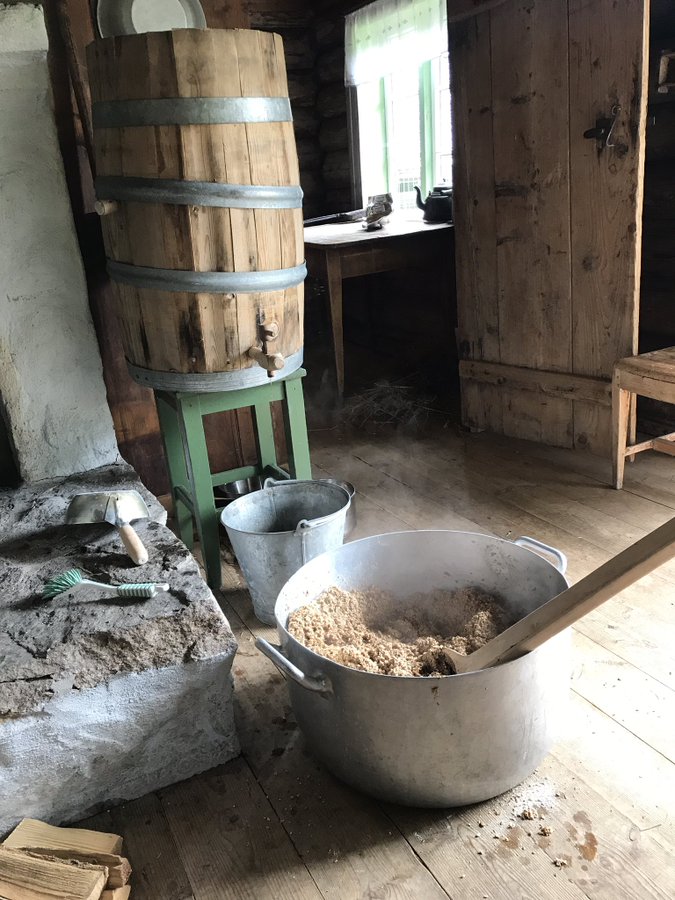
Question #1: Does anyone do social media as well as Lars does? It was on display in this week’s photo essay on a little historical brewing recreation he did last weekend at a museum:

Had to clean the inside of the rost (lauter tun, the wooden vessel), because it was mouldy. Hard to avoid with wooden gear… Foundation of the filter is alder sticks. For color, flavor, and to give the wort space to run underneath the real filter, which comes on top…

My observations: I hates me a mouldy rost.

Question #2: do we care if we use the original language’s grammar and spelling when referring to beer related things? I am disinclined to worry about this all that much but that is not a universal thing. There’s a thread:

Not to nitpick the thriving transatlantic linguistic exchange through l/Lager, but for anyone not writing bilingual #WhatsBrewing blurbs, what generally would be pro-copy guidelines for US-ENG capitalisation in writing keller, kellerbier, but: Kellerwald?[…] My remark goes beyond the basics of why other natural languages should/can drop German capitalisation when importing, trying to get at the desired branding (“auratic”) effects of opting back in when it creates perceived authenticity, say for Scandinavian or Czech diacritics.

My thought: be consistent but be prepared for people to think you are weird when you talk about Poland’s capital amongst English-speakers.

Question #3: why should I care about NA beer? NA beer to me is expensive fancy soda pop that is made in an unnecessarilily convoluted manner. I thought of that on Monday when Stan reported from the World Brewing Congress:

Today there will be three presentations related to making sure non-alcoholic beers are safe to drink. This is important and was already on my radar when I read “How Mash Gang is Breaking the Alcohol Free Mould.” That is not to imply that Mash Gang beers are not safe, or that the story should address what the company is doing to assure the beers are free of pathogens. It simply reflects my current fascination with what brewers might do to make non-alcoholic beer better without the many useful functions ethanol performs. One of those is making beer safer to drink.

My concerns: in addition to a swath of cheaper established competition, the idea that NA beer has not solved the sanitation issue is decidedly off-putting. And this may well explain in part last week’s omission. Plus it was a very bobby B.O.B.

Question #4: do you miss RSBS as much as I still do, all these years later?  Answer: well, we may have a form of this care of Boak and Bailey tinkering around at BlueSky. They have set up a list that allows you to follow all added on that list to effectively create a aggregator displaying those who sign up for those who follow. Have a look.

Question #5: do any of you not draw lines in the sand? I am 100% on board with Laura Hadland this week in The Drinks Business:

I have a personal blacklist of the companies I will not deal with because of their past actions. I don’t write about them, I don’t spend my money on them, I don’t visit them. This quiet boycott is a private affair. If I don’t agree with someone’s ethics, I don’t fan their flames. There are so many fantastic businesses out there that I do want to shout about, it’s rarely an issue. Last week, however, I was approached by a PR company offering me a spot on a very interesting project. I was feeling pretty excited as I scanned through the details. Until I spotted one of the toxic names from my blacklist. Deflated, I immediately replied to the email letting them know that I could not participate. I told them why too. That was that. It felt quite good for a minute.

My total concurrence: I won’t ruin the punchline but, again, go have a look.

Question #6: so if the CBHOF is using the Baseball Hall of Fame nomination process, will the “good character” rule also apply? That states:

Voting shall be based upon the player’s record, playing ability, integrity, sportsmanship, character, and contributions to the team(s) on which the player played.

So, given the recent years’ allegations of sexism, racism and a bunch of other serious -isms in craft beer… how will that be taken into account? See, working as I do in governance, I can assure you that there is always a set of process rules that run along side the substance rules in these things. You can have the greatest process in the world but they only affirm the substantive standards which have to be set out before any nominations are considered. Do we know what they are?

Question #7: does my national, regional and local construct for North American craft hold water? Jeff asked for more:

I think we should talk about local and regional, since you hinted at it and Stan picked it up but didn’t elaborate. I am hesitant to respond without understanding your fuller take.

My point: all those nice cans from the like of Sierra Nevada and Sam Adams fill grocery store and gas station shelf space where other distributed beers used to be found.  As I said, “basically I see that one of the tensions is framed by the economics of investment required for scale. Locals have done well. Turns out there was space for a few big grocery store national craft breweries but at the expense of those intercity / interstateers.” See, I think that the mob of ankle nipping locals can defend themselves from big craft in each market but regionals have found themselves, for a few years now, neither here nor there.

Question #8: Maybe related, is there any passing of a micro era brewery more shocking than the closing of Cambridge Brewing C0mpany which will serve its last beer on December 20th? The notice was on Instagram:

We were the first commercial brewery to produce a Belgian Style beer in this country and one of the first to embrace multiple yeast strains in-house and even to intentionally invite wild organisms into our brewery…. A heartfelt thank you to all who have participated in our dream. To our customers that have joined us time and again over the years, your support and friendship enabled our success. To all that are working or have worked here, you guys are what made this place so great. What an honor and a joy it has been to work alongside you! So please join us often over the next 4 months! We still have Patio Season, Festbier, Fall Menu and more coming. 35 years, one hell of a run. 

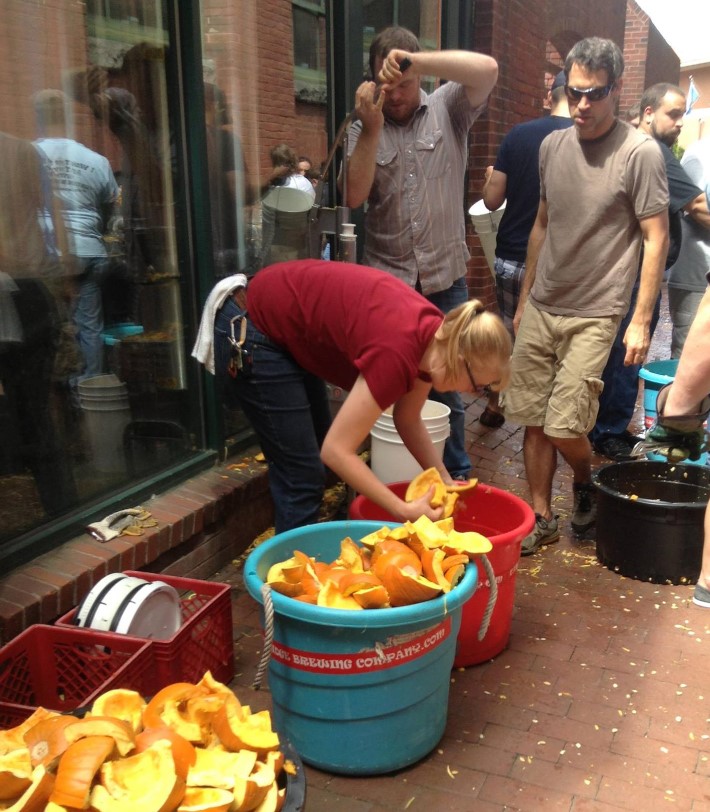
My thoughts: Perhaps it’s an east coast thing but I heard about CBC long before I had ever visited. Along with Shipyard and Gearys in Maine, it was a name I heard when I was a young beer fan in Nova Scotia, a name spoken with reverence by those coming back from the Boston states.  Then in 2013, we found ourselves right there and witnessed the making of pumpkin ale with the actual pumpkin harvest and made a bit of a photo montage over at FB.  Get over to CBC while you still can.

Question #9: What the heck is “hop preparedness” anyway?

Question #10: Has Ron out-Ronned himself with this dialogue? It’s a two-part play between father and son as they recall visiting Dad’s old home town:

“Marks and Woollies next door to each other and Boots over the road. Used to be typical of a UK high street.”
“But now they’re all gone. I’ve heard this story before.”
“They aren’t, though. Boots is still there and Marks has moved to by the old Warwicks brewery.”
“Loads of pub pictures coming up, I suppose.”
“There sure are, son. There sure are.”
“Don’t talk like John Wayne, Dad.”

My response to these things is always that Ron missed his calling as an author, getting sidetracked into a pub as he was at age twelve. Fabulous bit of writing.

Question #11: did you have any beer in Montreal? Yes, on Tuesday a cask brown ale at a funky fermented veg place called Poincaré and also a Mexican style lager at La Capital Tacos. Both were local beers but to be honest the food outshone them. Fish terrine at the first place before crossing St. Laurent to the other for Pastor tacos. We walk, we eat. We eat, we walk.

Last question, #12: why did it rain all Wednesday? We still saw the penguins and marched around town but I feel like moss is growing behind my ears. My nooks and crannies felt a certain alliance with the wild managed orchards of Cidrerie du Golfe in Brittany as featured in Pellicle this week which contained this excellent facts:

Their emphasis on nature is a way for them to preserve cider’s heritage, they say, strongly attached to rurality and peasantry. A tradition partially lost since the World Wars, when cider was relegated to second place in the region. “Soldiers were given red wine in the trenches while cider was distilled to be used in weaponry, it changed people’s habits,” Virginie says. “Before WWI, people in Rennes were drinking up to 400 litres per year!”

Used in weaponry! Heavens. Well, that’s it. Enough of this inquisition! I wrote half of this on an iPhone. So it is what it is and we all will simply have to live with that. Here are the credits, the stats the recommends and the footnotes and the many ways to find good reading about beer and similar stuff via any number of social media and other forms of comms connections.* Want to keep up with the news before next Thursday? Check out Boak and Bailey every Saturday and Stan back each Monday… with a top drawer effort this week. Elsewhere go look at then listen to Lew’s podcast. And get your emailed issue of Episodes of my Pub Life by this year’s model citizen David Jesudason on the odd Fridays. And Phil Mellows is at the BritishBeerBreaks. Once a month, Will Hawkes issues his London Beer City newsletter and do sign up for Katie’s now revitalised and wonderful newsletterThe Gulp, too. Ben’s Beer and Badword is back with all the sweary Mary he can think of! And check out the Atlantic Canada Beer Blog‘s weekly roundup. There is new reading at The Glass which is going back to being a blog in this weeks best medium as message news. Any more? Yes! Check to see the highly recommended Beer Ladies Podcast. That’s quite good. And the BOAS podcast for the bro-ly. And the long standing Beervana podcast …except they have now stood down.  Plus We Are Beer People. The Boys Are From Märzen podcast appears suspended as does BeerEdge, too. But not Ontario’s own A Quick Beer. There is more from DaftAboutCraft‘s podcast, too.  All About Beer has introduced a few podcasts… but some may be losing steam… until… Lew’s interview! And there’s also The Perfect Pour. Plus follow the venerable Full Pint podcast. And the Craft Beer Channel on Youtube.  The Moon Under Water… is gone which is not surprising as the ask was $10 a month. Pete Brown’s costs a fifth of that but is writing for 47 readers over there. There was also the Beer O’clock Show but that was gone after a ten year run but returned renewed and here is the link! Errr… nope, it is gone again.

*This week’s update on my own emotional rankings? Facebook still in first (given especially as it is focused on my 300 closest friends and family) then we have BlueSky (+13=146) rising up to maybe… probably… likely pass Mastodon (929) in value… then the seemingly doomed trashy Twex (-2=4,464) hovering somewhere well above my largely ignored Instagram (160), crap Threads (52) with Substack Notes (1) really dragging up the rear.

The Woooooooooo Scariest Hellbound Beery News Notes Ever Unleashed From The Bowels Of Hell!!!

Ha-ha!  I wrote bowels.  If you’re not born of Scots, that might not be daily dinner table language so I apologize as I refer you in the alternative to the basso loco of Dante’s Inferno for a clearer sense of the reason for the season. But if you are Canadian of a certain age, however, there is only one true representation of the hellscape of pure evil – SCTV’s Monster Chiller Horror Theatre from around forty years ago. Wooooohooo. Scary.  Lots of beer content on SCTV: Biller Hi-Lite, Moose Beer and twist off beer caps on American beer bottles. Not at all horrible is my new plan for Halloween… which I can’t believe I have not come up with before… a plan to buying candy I like, keep it to myself  and eating it as I hand out the crap candy I don’t like so much to the kids. Except I don’t like candy all that much. More extreme measures will not be necessary… unlike apparently in Japan:

In other news, Tokyo’s Shibuya district has banned public drinking, hiring 300 private security guards and urging local stores to stop selling alcohol to ward off revelers this Halloween.

What? That’s some sort of crazy. Are nutty Halloween pub crawls a thing where you live? They seem to be a thing in Buffalo, NY, Milwaukee, Wisconsin and Lexington, Kentucky. I like it. Pack the streets. We did a similar thing in the Halifax of my 1980s youth at Halloween – but we called it Mardi Gras for some reason. Tens of thousands of us. Once I went as junk mail (my best costume ever if I am going to be honest with you) with a buddy who went as a breakfast nook – that could actually toast toast. Out there. On the street. Street toast. Class.

Anyway, have you ever seen a lede buried as deep as this one was in GBH? In a neat and tidy piece on a rebranding at the Chicago Brewseum this little bomb is dropped in the middle of paragraph ten:

Theresa McCulla, curator of the American Brewing History Initiative at the Smithsonian’s National Museum of American History, will leave that post in early November, and the role will no longer exist after her exit.

The Smithsonian program, largely funded and framed in terms of narrative  by the Brewers Association’s involvement, started up in 2016. While I was disappointed in the periodic press releases highlighting things like Papazian’s paddle from the great white male hero era of craft, I trust that records and objects from throughout the over 435 years of brewing in the what are now the United States have been protected.  Wonder why the Brewers Association gave up on their affiliation? A special thanks to all those beer journalists getting on that story even as I type these very words.

Speaking of endings, Stan discussed the piece in VinePair on the declining influence of US craft beer in Europe, asking if “the story totally supports an assertion that beers from America aren’t influencing change” which I get but, still, I like the arguments set out in this well thought out piece by Will Hawkes:

California-founded Stone’s failure in Europe is symbolic of a wider issue. Craft beer has made a huge splash across the Atlantic, but American breweries, for the most part, have not prospered as they might have expected — and things don’t appear to be getting better. Extrapolating from Brewers Association (BA) figures published by the organization and in Forbes, the overall craft beer volume exported to Europe declined from 78,994 barrels in 2021 to 63,755 in 2022. The reasons for this are complex, but they get to the heart of Europe’s beer market and the limitations of American craft breweries in a place where their economic power has rarely matched their cultural cachet.

TL;DR? Reasons not so much complex as just numerous… BrewDog being everywhere, other Euro brewers holding branding rights,  uncompetative pricing and the botch by Stone diluting the value. Brutal line: “[at] this year’s Berlin Beer Week, Stone beers featured in a tap takeover at a pizzeria.” Perhaps relatedly, things are also not going well for brewers in New Zealand:

“I was talking to a brewer recently and he said: ‘It’s all just beer now.’ The problem with craft is it’s always been ill-defined. Does it mean small scale? Does it mean independent? Does it mean flavoursome?” Without that clear definition, the territory was ripe for major beer companies to step into – and all the big breweries have done exactly that. “You now have Lion with their Mac’s brand, DB with Monteith’s and Asahi with Boundary Road. Those are the three main ones in that area, and what they’re doing is just pumping up the flavour in those brands. They’re making great beer at a more affordable price.”

I know that this is all a bit of a downer – even though this is the “scary” season – but at least things are not as bad as they are in Rioja according to the newsletterist Jason Wilson of Everyday Drinking who includes this summary of recent findings:

I was shocked to read Tim Atkin’s piece about serious problems in Rioja — “Rioja on the Rocks” — a couple of weeks ago. I knew that Rioja had issues, but Atkin (the foremost English-language expert on Rioja) paints a dire picture of a region in crisis. As Atkin reports, the regional governments of La Rioja and the Basque Country plan to detroy 30 million liters of surplus wine to try to balance supply and demand. Another 150 million liters, unwanted by the market, is sitting in cellars. The 2023 harvest has been terrible, and grape prices are at unsustainable lows—in fact, many growers cannot sell their grapes. Reportedly, one major co-operative is on the verge of bankruptcy, two large bodegas are in administration, and Campo Viejo, Rioja’s largest winery, is allegedly up for sale. There are threats by large groups of growers and producers to leave the consortium altogether as they argue over whether to focus on quantity or quality.

Yikes! Just last year things were looking up.

Better news? How about the best big brewery marketing of the moment? Heineken making fun of its own name and using Plastic Bertrand for the soundtrack. That good. And The Brewnut has proven once again how he is the best commentator on what’s actually in the glass, illsustrated by this review of the offerings by Wicklow Wolf:

This year’s twist on the all-local ingredients spec is the inclusion of Kilmacanogue raspberries in a sour ale. Shame they didn’t have a go at spontaneously fermenting it, for extreme local character. Regardless, it’s very nice. The raspberries taste fresher and realer than they do in most raspberry beers, almost bursting on the tongue the way the fruit does. There’s no sugary, syrupy jam here, just a cleanly medium-pitched tartness, again similar to what you’d get from actual raspberries, building to a slightly puckering finish. While it’s only 4.2% ABV, I can’t see this working well as a refreshing summer beer — it’s too intense, with lots going on it. While I definitely liked it, I’m glad I waited until a dull day in October to drink it.

See that: not fawning, explains how it stands out, explains what might be done to improve. I’d buy that beer. Speaking of buying beer, David Nilsen wrote an homage to “Brouwerij Van Steenberge’s Tripel Van De Garre” in Pellicle this week and how it illustrates a few trends:

“In today’s market, imports are struggling against the locavore movement,” says Michael, noting the plethora of local options. “We have 97 breweries in the city limits [of Chicago].” Sara Levin, the package beer buyer for The Barrel House, a beloved beer bar and bottle shop in Dayton, Ohio, has been a professional beer buyer for close to a decade and says the current attitude toward Belgian beer among many American craft devotees had already begun to take shape when she started in the industry in 2014. “Before me it was a little different, but in my time I feel like Belgian beer has always been the old money craft beer,” Sara says. “It’s been the OG beer geeks who really respect the old school styles.”

That right there is one of the sadder things about the craft beer movement’s rush to chase the tale of novelty, the loss of interest in hounouring Belgian styles. Got an opinion on that? You can explain how you feel about such things if you take part in this week’s study on the habits of craft beer and real ale drinkers? Do you have habits?  They want to study you. In a similar note, Gary came across a study of real ale drinking in England from 1866… with some very and sadly familiar themes:

Less than one-half of it is drunk in perfection, or at its best condition, the larger percentage becoming more or less flat, hard [tart], and unpalatable, or even sour before it is consumed. From the day of the tapping of the cask, with the gradual entrance of atmospheric air, the liqour undergoes progressive deterioration, first becoming flat and unpalatable, from the loss of its carbonic acid, and then sour from having its spirit converted in acetic acid by the absorption of oxygen. In fact, day by day, as the palate unplesantly detects, it may be said to advance one step further on the road to vinegar.

Yik. Too much OG old school right there. And sorta samesies [h/t] at the blog run by Triskele Heritage, an archaeological consultancy, there was a sweet disassembling of the claim made by an Irish pub as to its status as the world’s oldest tavern:

The problem here is that the fabric of the building is claimed to date to the ninth century, and this is repeated from one website to another, but no archival or archaeological evidence is ever offered as the root source of the information. Instead, the listed entry for Sean’s Bar on the National Inventory of Architectural Heritage… notes that the current standing building was constructed c 1725 as a coaching inn which was known as The Three Blackamoors Heads by 1738. The record goes onto confirm that renovations were indeed carried out c 1970 but, instead of finding ““wattle and wicker” dating back to the ninth century”, the walls in question were dated to the seventeenth century. That is a potential exaggeration of at least seven centuries.

Speaking of even more not quite right, perhaps that green bottle of Tsingtao isn’t just skunky:

In the clip which appeared online on Thursday, a worker, dressed in uniform with a helmet on, can be seen climbing over a high wall and into the container before urinating inside it. The location tag of the clip reads “Tsingtao beer No.3 factory”, local news outlet The Paper reported on Friday. Business outlet “National Business Daily” later cited an internal source as saying both the person who took the video and the person appearing in it were not direct employees of the company… Shares in Tsingtao Brewery fell sharply when the Shanghai Stock Exchange opened on Monday morning but were trading broadly flat by the afternoon.

Boo-tastic. Now we have pee in the stuff. In other scary health news, the Time of Londinium shared a story on the problems with a certain sort of stress drinking and had this very interesting fact:

A recent study… found that women with high levels of cardiorespiratory fitness are between 1.5 to 2 times as likely to drink moderately or heavily as those who are sedentary. Charlotte considered herself to be healthy. “I’d go running on Saturday at 8am with my friends after drinking two bottles of wine on Friday. Parker tried all the right things to manage stress. “I went to a meditation teacher, I was looking at my diet, I ran a lot” — everything except quit drinking.”

That is interesting. Fact filled and interesting. And scary.

Enough!!! I leave you there for this week. As per always and forever, you can check out the many ways to find good reading about beer and similar stuff via any number of social media and other forms of comms connections. I have yet another update on the rankings. TweX is now really starting to drop in the standings. I am deleting follows there more and more in favour of mirroring accounts set up by favourite voices elsewhere. Now, for me Facebook is clearly first (given especially as it is focused on my 300 closest friends and family) then we have BlueSky (74) rising up to sit in a tie with Mastodon (899) then the seemingly doomed trashy Twex (4,344) hovering somewhere above or around Instagram (167) with Threads (41) and Substack Notes (1) really dragging – and that deservedly dormant Patreon presence of mine just sitting there. Seven apps plus this my blog! That makes sense. I may be multi and legion and all that but I do have priorities and seem to be keeping them in a proper row. All in all, I still am rooting for the voices on the elephant-like Mastodon, like these ones just below discussing beer, even though it is #Gardening Mastodon that really wins:

Alan McLeod | A Good Beer Blog (… me…)
Stan Hieronymus | The Man!
Boak & Bailey | The B² experience
Curmudgeon Ale Works | Jonathon is Brewing
Katie Mather | Shiny Biscuit and Corto
David Jesudason | “Desi Pubs” (2023) author
BeoirFest | They say “Let’s Talk Beer”
Ron Pattinson | The RonAlongAThon Himself
Al Reece AKA Velky Al | Fuggled
Jennifer Jordan | US hops historian
Andreas Krennmair | Vienna beer and lager historian
Beer Ladies Podcast | Lisa Grimm and colleagues
The Bar Towel | Toronto’s chat zone for beer lovers
Chicago Beer Society | Folk in Chicago getting social over beer
Jay Brooks | Brookston Beer Bulletin
Joe Stange | Belgian beer expert, beer magazine editor
Cider Bar | Barry makes Kertelreiter cider
Laura Hadland | CAMRA historian and beer writer
Brian Alberts | US beer historian
Jon Abernathy | The Beer Site
Maureen Ogle | US Beer Historian
Lars Garshol | Norwegian Beer Historian and Kveik Hunter
James Beeson | Beeson on Beer
Carla Jean | MAINER!!!
Thandi Guilherme | Beer Ladies Podcast Co-host
Lisa Grimm | Beer Ladies Podcast Co-host
Roy of Quare Swally | Beery ramblings from Northern Ireland
Rob Talksbeer | Podcaster and Youtuber
Anthony Gladman | UK Drinks Writer
Jeff Alworth | Manna Of Beervana
Northwest Beer Guide | Fairly self explanatory… but not NW Latvia…
Evan Rail | Prague based GBH editor, freelance writer, NYT etc.
Todd Alström | 50% of the Alströms
Jacob Berg | Beer talking librarian

Anyone else? And, yes, we also check the blogs, podcasts (barely!) and even newsletters to stay on top of things including the proud and public and certainly more weekly recommendations from Boak and Bailey every Saturday and Stan at his spot on those Mondays! Here’s a new newsletter recommendation: BeerCrunchers. And  get your emailed issue of Episodes of my Pub Life by David Jesudason on many Fridays. And Phil Mellows is at the BritishBeerBreaks. Once a month, Will Hawkes issues his London Beer City newsletter and do sign up for Katie’s now much more occassional but always wonderful newsletterThe Gulp, too. Ben’s Beer and Badword is back with all the sweary Mary he can think of! And check out the Atlantic Canada Beer Blog‘s weekly roundup. There is new reading at The Glass. Any more? Yes! Check to see the highly recommended Beer Ladies Podcast. That’s quite good. And the long standing Beervana podcast . There is the Boys Are From Märzen podcast too and Ontario’s own A Quick Beer. There is more from DaftAboutCraft‘s podcast, too.  All About Beer has introduced a podcast… but also seems to be losing steam. And there’s also The Perfect Pour. Plus follow the venerable Full Pint podcast. And the Craft Beer Channel on Youtube and remember BeerEdge, too, and The Moon Under Water… if you have $10 a month for this sort of thing… I don’t. Pete Brown’s costs a fifth of that. There was also the Beer O’clock Show but that was gone after a ten year run but returned renewed and here is the link!

The Near Mid-October 2023 Edition Of Your Beery News Notes

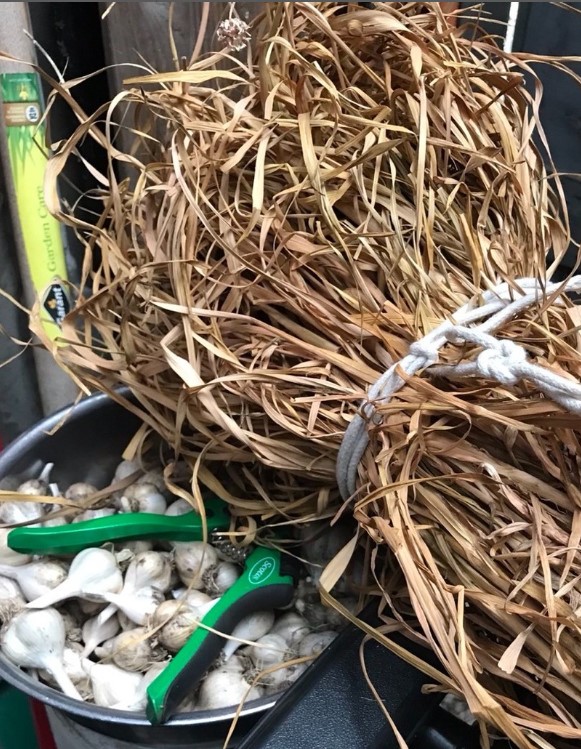
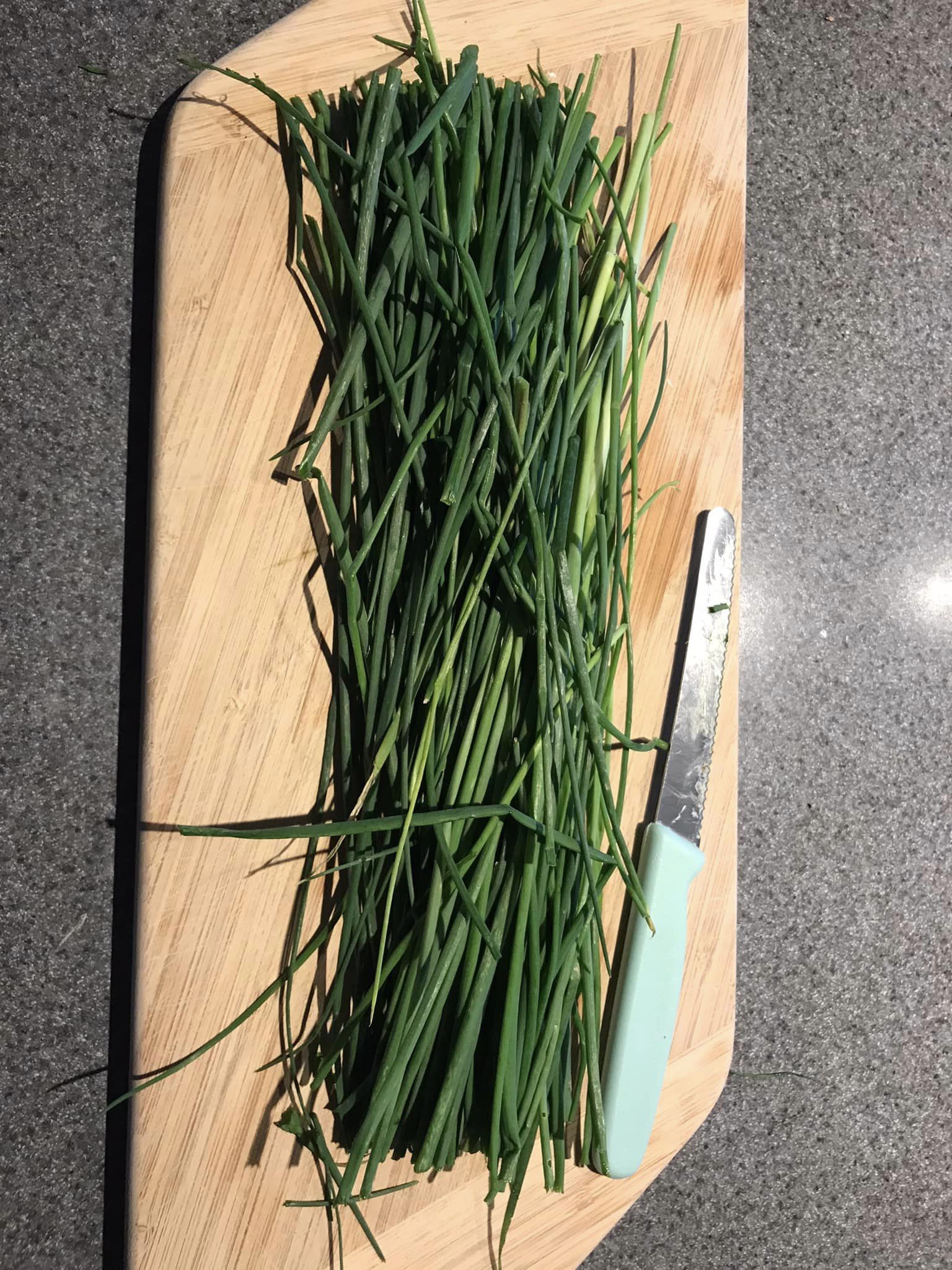
Took a week off this week just to make sure, you know, all the turkey leftovers were consumed and all the necessary prep chores were done well ahead of winter. To the right is half of the garlic crop as well as the bundle of garlic greens that will be tomato mulch next year. They get replanted soon. Haven’t noticed any particular theme this week but no doubt that quiet is due to the horrors in the Middle East piling upon the horrors in Ukraine. Facing uselessness in the presence of such evil, what do you do? Keep garden and scribbling? Yup.

First up, being October, Pellicle has a timely feature this week by Ariana DiValentino on one of the more venerable and more drinkable pumpkin ales out there, Pumking by Southern Tier of western New York State:

“Pumking should be the brewer’s target for a pumpkin beer,” he adds. Critics and craft beer fans alike echo this, crediting the balance between spicy, sweet, bold, and bitter. Personally, I think it manages to strike a balance in another way: the type of drinker it attracts. Though pumpkin ales are traditionally maligned, there’s something about taking one and turning the volume up to 11 that transforms it into a magnet for craft devotees. And yet, you don’t need to be a beer geek with an encyclopaedic knowledge of hop varieties to appreciate Pumking. You don’t even need to be a beer drinker, really; anyone who likes pie is likely to find the phrase “pumpkin pie in a glass” tempting. Drinkers come for the pie and stay for…also the pie, because in this case, there’s truth in advertising.

Southern Tier was a favourite of mine in the old cross border beer shopping days of ten to twenty years ago. I played a role in  bringing their beers into the Ontario market after years of enjoying their range of beers, especially the big ones that led up to Pumking. My first note on Pumking dates to 2009 when a bomber cost you $6.49, well after the after-party. My first pumpkin beer note goes back five years earlier to October 2004 when I bought Post Road by Brooklyn Brewing. But by 2011, unlike what the Pellicle article seems to suggest with the phrase “the nascent hype in the early 2010s“, cracks were already starting to show in the reputation of the long established style. Even the venerable The Atlantic in 2011 questioned their place:

Some beer styles are loved, some are ardently despised, but none is more divisive than pumpkin ales. Those who love them wait all year for their seasonal release; others can’t even broach the subject without foaming at the mouth. “I hate pumpkin beers,” wrote my friend and Washington City Paper beer writer Orr Stuhl. “Even picking a ‘favorite’ — say, Dogfish Head’s — is like picking a favorite airborne illness.”

Hah!! Good one. More timely and far less snippy, Jessica Mason has reported on some new solid data on inflation in the UK’s beer maket ‘Spoons sub-sector:

Using pricing data gathered at every Wetherspoons pub in October 2022 and October 2023 via the pub group’s app, the analysis identified how, currently, the average price of a pint of Carling in a Wetherspoons pub is £3.35. This has increased 11% since Oct 2022, when it was £3.02. According to the findings, 740 Wetherspoons pubs have seen inflation over the last year, 58 have seen deflation, and five saw no price change. Drilling down into the data, the Wetherspoons pubs with the highest inflation rates are The Rann Wartha, Cornwall (42.2%), and The John Francis Basset, Cornwall (42.2%) while the Wetherspoons pubs with the highest deflation rates are The Golden Beam, Leeds (-20.1%), and The Myrtle Grove, West Yorkshire (-19.7%).

I’ve always liked The Myrtle Grove… or at least I would have if I had ever heard of it. And it’s not just in the ‘Spoons. Sucker Juice is always right there begging for your attention:

Brewed independently by the artisans at Freetime Beer Co in Wales, Nothing Beer embraces a minimalist ingredient list; just water, rice, malted barley, hops, and yeast. “As a London-based tech company we are proud to have partnered with another independent British brand in Freetime Beer Co for this launch,” says Ryan Latham, Nothing’s Global Director Brand & Creative. While the limited-edition release (at £20 for a pack of six) is only available in the UK at the moment…

That’s $33 a six. Nuts. Everyone is on the take. Same as it ever was. Except it isn’t. Because inflation is also tied with contraction as Nickolaus Hines explains at the InsideHook:

“…beer as a whole [is] losing out to other alcohol categories, as well as the rise of people who abstain from alcohol altogether… “In plain English, the industry has lost about 30%, or 2.2 million, of its youngest LDA consumers in five years,” Purser said. “This is a pattern, and the current brand crisis has accelerated this broader category concern.”*

Somewhat relatedly in terms of the scramble, here’s a bit of a sad turn from the world of wine which I am quite aware of being replicated in a way in beer, a private financial exchange need to receive a tasting note back from a known beer writer – thus underlining any semblance of the writer’s independence. But in this case, it is the publisher limiting access to the notes issued by a group of critics to those out there who pay 160 Euros. Wine writer Jon Bonné considers the situation thusly:

The fascinating part: This is the first time I can recall anyone has taken a stab at putting a dollar figure (euro figure) on this specific bit of content generation. I won’t say it’s what the market has determined, but it’s what someone thinks the market will bear. It also cuts off at the knees one of the more wobbly arguments of recent years: that these tasting notes and scores are for consumers. Consumers are grabbing bottles from the aisle cap, or checking on the latest orange fad. These are for producers + their agents. If that’s so, then how much more ripping off of the fig leaf is this than the many existing shades of trade-writer clubbiness?

Speaking of wine, the Count Alexandre de Lur Saluces has died… which surely leads each of us to ask “who hasn’t been in this situation?”:

Unknown to the public at large, however, the count owned only 7 per cent of the estate with 48 per cent held by his elder brother and smaller amounts by other members of the extended family. They rebelled against his autocratic behaviour and lack of dividends, which led to an embarrassingly public fight,  when in 1996 they agreed to sell majority control to Bernard Arnault, the billionaire owner of the luxury goods conglomerate LVMH. Bitter words were spoken by all sides of the family, with the count declaring “Mr Arnault is financing [other family members] to get rid of me. If he gets hold of this château he will install his fashion models here and start producing a perfume called Yquem!’’

Indeed. And the no doubt well-perfumed Ron’s gone a bit further back, lingering in the early 1970s for a bit this month:

I’m just getting the mixture right between water and dirt to let me have a good old wallow in nostalgia. Or at least, casting a glance back at the past. And hoping no-one is returning my gaze. We were looking at Whitbread’s 1973 set of beers. Time now for the other fermentables: adjuncts and sugar. What should be remembered here is that Whitbread had long been a holdout in the use of adjuncts. Only starting to use them in 1965. Much later than most of their rival brewers. Other than wartime, of course, when they had no choice but to.

For Cider Review, Barry Masterson went a bit further back in time to the Middle Ages of Bavaria to tell the tale of perry’s hayday there:

A chance discovery I made while reading some older articles tracing the ancestry of Austrian perry pear varieties yielded one of the earliest definite mentions of perry in central Europe. The Bavarian-Austrian poet Neidhart von Reuental, probably one of the most famous Minnesänger or minstrels of the period, made a reference to perry in one song. Around 1240, after he had moved from Bavaria to the area near Melk in current day Austria, he added two verses to an existing song, written of course in Middle High German…

A great tale of daring do was set out in Twex this week, a story of inebriated public menace once upon a time in New York City:

In September 1956 after drinking heavily at a bar in New York City, Thomas Fitzpatrick made an intoxicated barroom bet that he could travel from New Jersey to New York City in 15 minutes. At 3 a.m. he stole a single-engine plane from the Teterboro and flew without any lights or radio before landing on St. Nicholas Avenue near 191st Street in front of the bar where the bet was made. The New York Times called it a “fine landing” and a “feat of aeronautics”. For his illegal flight, he was fined $100 after the plane’s owner refused to press charges.

For the double, we have another story of dissent from about the same time – but this time from Belgium:

Never forget how on Nov 16, 1949 a bunch of Belgian students from Ghent took over a fortress and attacked the police with fruit because the city had raised the price of beer. On November 16, 1949, 138 students (including one girl) entrenched themselves in the Gravensteen in Ghent. The battlements are adorned with playful student slogans, while the police and fire brigade are treated to overripe fruit and smoke bombs. The student-like violence can only be contained with the greatest difficulty by the police. The student joke is front-page news in the international press.

And you think you’re a beer evangelist. Pffft! Sadly, such clear-headed thinking, taking on issues head-on does not seem to exist in all quarters:

Paul Leone is the executive director of the New York Brewers Association, and he says craft beer simply isn’t a growing industry anymore. Before 2016, the growth of the industry was 10% year over year. “No doubt there are breweries that are looking to sell, there are breweries that are not going to make it for the long haul, unfortunately, but I would caution people and say that this is a business like any other business,” Leone said. “There are breweries that are no doubt struggling, and there are some that are expanding… We are not over-saturated and there is no bubble.”

I don’t know what to make of that… don’t worry be happy… whistling in the dark? Also not sure how homogenized craft beer culture is across North America. Can we even make generizations about the politics? I would note if pressed (contrary to Jeff’s suggestion that it identifies as left/liberal rather than right/conservative due to the Bud Lite botch of just a half a year ago) that in 2013 this was the results of a study involving a number of prominent breweries, mainly in Colorado – progressive as anything:

Craft beer drinkers tend to embrace healthier active lifestyles as well as exist on the fringe of conformity. This segment typically enjoys riding bikes, walking from place to place, hiking, camping and in general embraces an outdoor lifestyle. Consequently, they frequent places such as Whole Foods, Sprouts, local fresh markets, REI and national parks. Their choice of music is more generational than driven by their consumption of craft beer; most of the brew pubs we visited played indie-pop music like Dave Matthews, Mumford & Sons or Dawes. Our local observations revealed that many craft beer drinkers value independent thinking, counter-culture, progressive politics, creativity, intelligence, an appreciation of art and indie-rock, and witty banter.xxix  This definition matches the “hipster” sub-segment of the millennial generation. Craft beer drinkers did not appear to be lazy as they aspire to be accomplished and productive. Craft beer drinkers tend to be more professional than then the blue collar working-class.  

And remember: that New Yorker cover is coming up on its ninth anniversary. Still holds up… unlike Mumford & Sons. I am more in alignment with Jeff’s post this week, “The State of Beer Education” or at least the conclusion:

…as the everyman (everyperson) drink, most people feel comfortable ordering and drinking it without deep engagement. What makes it so popular is the very thing that leads to incuriosity. I have reconciled myself to this reality and, on balance, I think it’s a good thing. Beer is wonderful because its accessibility enables it to be the mass social beverage. That requires a simple, unfussy product.

I like that. But I don’t fully buy the route he gets there. Let’s be honest. Beer as a subject for an education just does not attract all that much actual independent study or scholarship other than perhaps in the bio department. Resulting titles are a bit overblown, newbie guides are praised as if they are a thesis while actual thoughtful writers are still refused footnotes by publishers. There isn’t even anything as detailed and complex as the popular annual guide for consumers published under Hugh Johnson‘s name but long overseen by Margaret Rand. [Get yourself a copy.] And too often beer courses are often proprietary, without a published syllabus or independent peer reviewing in any true academic sense. And beer (sorry to break it to you) is simply not “every bit as complex and nuanced as wine“* – especially in these days of adjunct focused, easy-to-please kettle sours and fruit sauce variants. But do you care? No! As Jeff says, the best of the many beer courses you can take online or at say a community college are very helpful entry points especially for ambitious brewery and bar staff but it is self guided study that creates the best education you can gain – whether with wine or with beer. On you way! Hit the books. If that’s your thing. If not, have a beer.

And… there are still no drunk elephants stories for Stan again this week. Just a drunk monkey on the loose in Indianapolis which… makes one wonder whether this is really news:

A monkey named Momo is on the loose in Indianapolis — and one neighbor reported seeing the simian sipping a beer. Indianapolis Metropolitan Police Department said Momo escaped from his owner’s home in the Ironridge Court area of the city’s east side on Wednesday and was subsequently spotted the Gate Drive neighborhood, about a quarter mile away. Police said they were unable to confirm whether Momo has bitten anyone while on the loose.

What the hell kind of good is a “monkey on the loose!” story if there isn’t any biting?!?! Fine. That’s it. As per always and forever, you can check out the many ways to find good reading about beer and similar stuff via social media and other forms of comms to connect. I have an update on the rankings. TwitterX is now really starting to drop in the standings. I am actually deleting follows there when I find strongly established mirroring accounts set up by favourite voices elsewhere. Now, for me Facebook is clearly first (given especially as it is focused on my friends and family) then we have BlueSky rising up to sit in a tie with Mastodon then the seemingly doomed trashy  Twex hovering somewhere above or around Instagram with Threads and Substack Notes really dragging – and that deservedly dormant Patreon presence just sitting there. Seven apps plus this my blog! I may be multi and legion but I do have priorities and am getting them in a row. All in all, I still am rooting for the voices on the elephant-like Mastodon, like these ones discussing beer, even though it is gardening Mastodon that really wins:

Alan McLeod | A Good Beer Blog (… me…)
Stan Hieronymus | The Man!
Boak & Bailey | The B² experience
Curmudgeon Ale Works | Jonathon is Brewing
Katie Mather | Shiny Biscuit and Corto
David Jesudason | “Desi Pubs” (2023) author
BeoirFest | They say “Let’s Talk Beer”
Ron Pattinson | The RonAlongAThon Himself
Al Reece AKA Velky Al | Fuggled
Jennifer Jordan | US hops historian
Andreas Krennmair | Vienna beer and lager historian
Beer Ladies Podcast | Lisa Grimm and colleagues
The Bar Towel | Toronto’s chat zone for beer lovers
Chicago Beer Society | Folk in Chicago getting social over beer
Jay Brooks | Brookston Beer Bulletin
Joe Stange | Belgian beer expert, beer magazine editor
Cider Bar | Barry makes Kertelreiter cider
Laura Hadland | CAMRA historian and beer writer
Brian Alberts | US beer historian
Jon Abernathy | The Beer Site
Maureen Ogle | US Beer Historian
Lars Garshol | Norwegian Beer Historian and Kveik Hunter
James Beeson | Beeson on Beer
Carla Jean | MAINER!!!
Thandi Guilherme | Beer Ladies Podcast Co-host
Lisa Grimm | Beer Ladies Podcast Co-host
Roy of Quare Swally | Beery ramblings from Northern Ireland
Rob Talksbeer | Podcaster and Youtuber
Anthony Gladman | UK Drinks Writer
Jeff Alworth | Manna Of Beervana
Northwest Beer Guide | Fairly self explanatory… but not NW Latvia…
Evan Rail | Prague based GBH editor, freelance writer, NYT etc.
Todd Alström | 50% of the Alströms
Jacob Berg | Beer talking librarian

Anyone else? And, yes, we also check the blogs, podcasts (barely!) and even newsletters to stay on top of things (though those things called “newsletters” where 1995 email lists meet the blogs of 2005 may be coming to an end of value… if the trend with so many towards the dull dull dull means anything… Lordy… it’s not my place to say but there’s at least two that seem think you still get paid by the word…) including the proud and public and certainly more weekly recommendations from Boak and Bailey every Saturday and Stan at his spot on those Mondays! Get your emailed issue of Episodes of my Pub Life by David Jesudason on many Fridays. And Phil Mellows is at the BritishBeerBreaks. Once a month, Will Hawkes issues his London Beer City newsletter and do sign up for Katie’s now much more occassional but always wonderful newsletterThe Gulp, too. Ben’s Beer and Badword is back with all the sweary Mary they can think of! And check out the Atlantic Canada Beer Blog‘s weekly roundup. There is new reading at The Glass. Any more? Yes! Check to see the highly recommended Beer Ladies Podcast. That’s good. And the long standing Beervana podcast . There is the Boys Are From Märzen podcast too and check out the travel vids at Ontario’s own A Quick Beer. There is more from DaftAboutCraft‘s podcast, too.  All About Beer has introduced a podcast…… but also seems to be losing steam. And there’s also The Perfect Pour. Plus follow the venerable Full Pint podcast. And the Craft Beer Channel on Youtube soon celebrating a decade of vids.   And remember BeerEdge, too, and The Moon Under Water… if you have $10 a month for this sort of thing… I don’t. Pete Brown’s costs a fifth of that. There was also the Beer O’clock Show but that was gone after a ten year run but returned renewed and here is the link!

*Phillies v. Braves fourth inning update!
**It is an observation often paired with “I don’t know much about wine…”  (Update: A point Jeff later sorta took pains to illustrate.) Sure, there are many excellent examples of fine and facinating beers but only a fraction of those found in good wine. Why? Vintages for one. In the twenty years since my first pumpkin ale, each decent winery has put out twenty versions of the same one wine and each winery puts out any number of wines. And then each one changes usually beneficially with understood time frames. There is so much to explore. Beer aging is now often sort of a joke – when it isn’t a source of familial accusation and humiliation!

The Pensive Beery News Notes For That Dull Gap Between US Thanksgiving And Christmas

Are US holidays the most liquor laced of all? Not sure. But they sure are the most extended. I get the sense that nowadays* they just go on and on, one meeting the next at some sort of transition overlap. We seem to have all been in the  HallowThanksChristEve zone for a while now and there are still weeks to go. Good thing I’m Canadian as we up here track time by following the sports calendar and the grain growing season cycles. Speaking of holidays, someone is not getting a bonus. Joe Stange shared an image of the aftermath of a disaster in Belgium. Look at that Westmalle, laughing at the Orval.

So what is going on out there? I liked this observation from The Beer Nut which could be applied to any number of things:

The best feature is the booze, delivering as it does a pleasant warming fuzziness, perfect for a miserable evening in mid-November. Overall, it’s fine, but not exactly high end, to my palate anyway.

And I came across a new mag worth checking out, Beer & Weed, out of area code 207 – aka the Great State of Maine aka the Canada of the USA. My favourite American second cousin in law Mike has an article in the December issue as does Carla Jean who offers some ideas for giving which go beyond the usual. Like taking a pal on a beer tour – or making an apple pie after soaking the apples in beer. I like that, a twist on mulled ale… or pastry stout. Think about that. Mmm…

Next – aside from my secret wondering whether it’s all an elaborate façade broadcast from a hidden Nordic mountain lair based on fantastic IT resources, access to private wealth and wicked sense of disruptive if extremely niche humour – Lars has once again produced an excellent thought provoking and well researched essay, this time pushing the history of hops back in northern Europe by more than a century or two, relying in large part on the unreliability of records:**

This, however, is the history you get from written documents, but hop usage began at a time when brewing was mostly something people did at home, for their own household, and almost none of what they did was ever recorded in writing. So we must expect that nearly all of the early history of hops has gone undocumented, and therefore we must turn to other sources of information to cast light on the early history of hops.

Personal note: this is exactly what my first beer experience in the late 70s were like. I’m a bit verklempt.***

I liked this very narrow study of Gary’s this week, a three piece article on something called Tipper Ale, a beer that relied on salt just as 1830s Albany Ale did. Except it wasn’t chucked into the barrel:

The key to the palate was use in brewing, or some use, of “brackish” water.  The brewery was at a crossing, originally a drawbridge, over River Ouse near its mouth with the English Channel. Hence the seawater story is plausible, given location and typography. I cited various sources to this effect and there were others I didn’t, as all concur in result. One of the last sources, in 1941, was the most interesting I thought as it stated both regular and sea water was used.

One of my favourite discussions in the comments has to be the time back in 2008 when yeast scientists including a Dr Dunn and a Dr Sherlock took offense at being called “eggheads” and then embraced it. Well, the eggheads of yeast science were at it again this week with release of the news building on their work to explain… something:

It has been known for some time that S. pastorianus is a hybrid of two parents, one of which is S. cerevisiae (de Barros Lopes et al. 2002, Dunn and Sherlock 2008). However, the second parent, Saccharomyces eubayanus, was not isolated until 2011, from the Patagonian Andes in South America (Libkind et al. 2011)….  Regardless of when the hybridization(s) between S. cerevisiae and S. eubayanus occurred, they are likely to have occurred in Europe, and possibly in Bavaria. It is, therefore, surprising that no European isolates of S. eubayanus have been described… Here, we describe the discovery of the first European isolates of S. eubayanus. They were isolated from a university campus in Dublin, Ireland.

Excellent. And hardly any Irish inside jokes followed at all.

Andy Crouch marked the passing in early December of a New England brewing original, his pal Ray McNeill of Brattleboro, Vermont whose cantankerous nature was summed up neatly:

Ray was also legendary for his dislike of homebrewers. During one extended rant, he told me, “I don’t care what anybody says, there’s a big difference between making beer a few times a year in your garage and reading thousands of pages of technical literature and then making thousands of beers. Beer is a weird thing. It doesn’t come with a scorecard. If you’re a golfer and you shoot 112, you know that you suck. But if you’re a homebrewer and you make a third-rate beer, you probably think it’s great. A lot of homebrewers think they’re a lot better than they really are.” With Ray, you just never knew what you were going to get. And the same could always be said for his beer. The beer at McNeill’s was legendary: it would either be among the best you’d ever tasted or the worst. Consistency was not something anyone expected from McNeill’s and that was oddly part of the place’s charm.

Beth Demmons issued another great edition of Prohibitchin’ with the focus on Amie Ward and her project to make drinking establishment safer places:

“We [employees behind the bar] are in a very unique position because we are everywhere all at the same time. We hear everything, we see everything, we’re touching tables… we are in a perfect position to become those bystanders that really help change that landscape.” With this eye-opening knowledge and experience, Amie realized many other people weren’t able to manage health, stress, or sharing the responsibility of community safety in the same ways she had been able to hone over the years. “I saw my peers not taking care of themselves [and] really developing poor habits that were not going to suit them for the long haul,” she says. “That’s how I came up with the idea for The Healthtender: melding those two worlds together of wellness and hospitality.”

Turning to the end times, I used to post various noodly noddlings under the heading “This Is How Craft Will Kill Itself” from time to time and, in these fading days, it’s interesting to see how some predictions came to pass and how other factors I couldn’t have imagined contributed to the fall. For example, lack of differentiation posing as critical differentiation is a fatal flaw, as illustrated by this article:

“It’s a pretty neat thing when you go to a place that has a lot of beer selection. You’ll notice a huge variety of beer labels, and it is something that craft beer people look to,” said Scot Yarnell, brewer and owner of the downtown Earnest Brew Works location at 25 S. St. Clair St., Toledo. “They want a unique beer, flavor wise, and they also want a beer that has a unique look to it.”

There’s of course nothing unique about the look of what’s on the beer shelves these days any more than the identi-craft beer in the cans. Fadism gave birth to herd mentality homogeneity. Like gaudy late 1990s web design, there is a certain sort of vomiting bubble gum machine tone to the confusingly cartoony look that signals the trade friendly “blinders on” approach is engaged. But how does this help encourage the consumer – especially when mixed in with the continuing trade narrative’s reliance on tales based on amnesia, flat out untruths and revisionist bullshit mixed with earnest finger wagging over supposed myths that serves the residual wisdom of haut craft culture?**** Even those seeking the solace of knowledge in an honest off-flavour course offers an affirmation in the negative, as Jordan was good enough to admit:

Framed the off flavour training for next week’s class as “Well, you’re never going to be able to turn that switch off, so next week I’m going to ruin fully a quarter of the beer you’ll ever drink….”

Downer. No wonder the value proposition has gone all a’wobbly now in the face of these broader harder times. And no wonder things are as down, as Pete Brown shared in The Times. It’s a good read… but I am not sure I can agree with the proposed treatment as it looks like more of the same:

Refocusing on the aspects of “craft” that big corporations will always struggle to replicate could be key. “Local, independent craft breweries do far more than just make great beer,” said Richard Naisby, acting chairman of the Society of Independent Brewers. “They embed themselves in local communities, create jobs, and add value to the local economies they call home.”

Maybe. Could be. If you get rid of the phony and the baloney – and the kiddie cartoon profiteering prophets – and I also suppose if these fine locals have each  paid their suppliers and the folk losing their jobs. Might be nice if enough of them just found a way to make great beer at a good price, frankly. Time to start talking about recession proofing, brewers. That might take a bit of change.

Speaking of which, an interesting and somewhat related call to arms crossed my eye in the course of me legal readings this week:

The Cannabis Council of Canada (C3) has called on the federal government to provide “immediate financial relief” for the legal cannabis industry and end the “stigmatization” of legal cannabis that allegedly limits progress on the key public health aims of legalization… According to C3, while the current framework has been “a financial success” for governments and provincial monopoly distributors who apply mark-ups, it has also been “a bloodbath” for investors of all sizes within Health Canada’s licensed producers and processors framework.

Hmm… dunno. Pretty sure I don’t want my tax dollars saving the less than half decade bubble economy of the Canadian grass trade. Think about it. Could it maybe just be that both craft and dope have to face the fact that there is no market for every investor who believed in a dream of easy cash from selling swanky new forms of intoxicants in each and every neighourhood? Is that what they mean by they “add value to the local economies they call home“?

I leave you there. That enough for now… you’ve had enough… take a break… when you’ve done that, please check out the updates from Boak and Bailey hopefully now again mostly every Saturday and also from Stan more now on a Monday than almost ever! Check out the weekly and highly recommented Beer Ladies Podcast. The OCBG Podcast is on a very quiet schedule these days – but it’s coming back soon.  See also sometimes, on a Friday, posts at The Fizz as well (Ed.: we are told ‘tis gone to 404 bloggy podcast heaven… gone to the 404 bloggy podcast farm to play with other puppies.) And the long standing Beervana podcast (Ed.: which I have missed from this list for some unknown reason.) There is the Boys Are From Märzen podcast too and check out the travel vids at Ontario’s own A Quick Beer. There is a monthly sort of round up at The Glass. (Ed.: that seems to be dead now… nope, there was a post on July 25th… in 2022 even.) There is more from DaftAboutCraft‘s podcast, too. And sign up for Katie’s (Ed.: now very) irregular newsletterThe Gulp, too. And check out the Atlantic Canada Beer Blog‘s weekly roundup. Still gearing  up, the recently revived All About Beer has introduced a podcast, too. (Ed.: give it a few weeks to settle in and not be as agreeable… not sure this went very far…) Plus follow the venerable Full Pint podcast. And the Craft Beer Channel this week on Youtube. Plus Fermentation Radio with Emma Inch. The AfroBeerChick podcast as well! And also look at Brewsround and Cabin Fever. And Ben has his own podcast, Beer and Badword (Ed.: …notice of revival of which has been given… still not on the radio dial…)  And remember BeerEdge, too, and The Moon Under Water. There was also the Beer O’clock Show but that’s now gone after a ten year run… no, it is back and here is the link!

*Excellent usage, no?
**See from the archives “One Brewery and the Problem with Records” from 2015. 
***h/t Cookie.
****Oxymoron.

The Tired Old Thursday Beery News Notes For The End of October

Tired and old? Not the notes! Just me. The municipal election was Tuesday and it was a long day at the coal face, pick and shovel in hand. My sixth election for work. I love it as I get to practice a very specific sort of thing that only applies one evening every four years. Like being good at Leap Year law. Well, at least good enough. I also crossed over to the nearby US of A this week for the first time in years. Didn’t buy any beer given how crummy the exchange rate is and how high the duties – but I did get a couple of boxes of Cracklin’ Oat Bran, one of the cereals our Canadian federal government denies us. The US port of entry at the bridge 35 miles or so from here has been rebuilt and looks like something out of Star Wars… or Red Dwarf maybe. It’s actually really an interesting bit of architectural design. Imposing. As it should be.

What else is going on?  Well, Jordan was in town last week – but I was tied to the desk and couldn’t make the twenty-three minute walk to Spearhead (led by Josh, himself a municipal candidate!) to watch the brewery’s rather ultra set up produce an ESB for an excellent charitable cause. The brewery is very good about offering support like that also producing a light lager for CJAI, the community radio station whose monthly minutes I take as secretary of the board.* Jordan shared a bit about the experience:

…we’ve got Maris Otter, a little Dark Crystal, and some Black Patent Malt for colour correction. We’ve got Challenger, Fuggles, and East Kent Goldings which should give it some verisimilitude… The brewing system at Spearhead is so advanced that there are not a huge number of pictures you can effectively take of the brew day. I have raked out enough mash tubs on camera over the years and I always feel I look a little silly doing it. I also felt silly posing next to the console with my finger over the transfer button so I made Jacob do it. I feel like I look a little silly most of the time.

For Punch, Courtney Iseman wrote an interesting piece on simmering backlash against the vague concept of IPA. I was particularly pleased to see it reached back and made the case for continuity even if it suffers from the amnesia that beer writer interviewing beer writer summations like this also offer:

IPA’s true history remains buried in England, and is all but unknown in the United States. From a 19th-century influx of German immigrants to post-Prohibition consolidation of American beer under just a few behemoth brands pumping out yellow, fizzy water, the United States was a longtime lager land. Peter Ballantine & Sons Brewing Co. made one of the country’s few IPAs from the late 1800s until 1971, which inspired Fritz Maytag to make, four years later, Anchor Brewing Co.’s Liberty Ale, a dry-hopped pale ale that motivated more U.S. brewers to follow suit.

Craig described the history of American IPA dating back to the early 1800s in 2013 – and at least 1852 in Canada – but at least that part of the chain from Ballantine to today has been acknowledged.
Speaking of improving the track of actual brewing history, the comments last week illustrated the need to be diligent. That responsibility led me to one particularly unique factor to include in considerations, suggested in 1933 by the British scientific journal Nature, a stick to medically measure how pervasive ale was in the medieval era:

The medieval publican had a bad reputation for fraud and dishonesty, while the tavern was often regarded as a place of ill-repute. Alcoholism during the Middle Ages in England, as elsewhere, resembled in many ways the alcoholism of classical antiquity…  Legislation dealing with drunkenness or control of the liquor trade was practically unknown in the ancient world, whereas taxation of drink, reduction in the hours of sale and the number of taverns and other restrictions were introduced in the Middle Ages. The absence of syphilis in both ages was noteworthy in view of the fact that alcohol was such a frequent incentive to exposure to infection and was liable to aggravate the disease when once it was acquired.

One more historical question – did this cleric actually first bottle a beer?

Pellicle sent out an update to subscribing supporters like me and the message is clear – the plan to have a self-sufficient quality beer writing without compromising dependence is possible:

…at the time of writing this we are at 296, which is the highest number of Patreon supporters we’ve ever had. We hope you feel your support is worthwhile, and if its not, please consider my inbox always open. We understand that circumstances change, and things aren’t simple for many of us at the moment, including ourselves. I want to ensure that the way we run Pellicle is transparent, and you can see where your donation goes… While we maintain our ethos is to celebrate the joy inherent within our favourite drinks cultures, we also believe that these spaces can only be truly joyful if they can be enjoyed by everyone. We’ll continue publishing articles in this vein in the future for this reason. 

The recent piece by Emmie Harrison-West on the failure of UK craft to support a call to end sexism is proof enough of that intention. Compare assurances elsewhere that a “critique on the beer industry itself” is best avoided. I also liked this week’s article on the folly of wine tourism and suggest they apply equally to beer tourism which, as one wag recently put it, is a euphemism for getting drunk in a city where no one knows you. If you think of it, that second Pellicle article as well as the one in Punch above also align a bit with the image to the right, a brewery advert aimed at a French colonial soldier in Algeria spotted on Twitter this week. Click for deets.

Stan in his newsletter Hopping MadThe Hoptician… err… Hop Queries included an extended bit on that thing I know nothing about called first wort hopping:

In 1995, the German brewing magazine Brauwelt reported on the “rediscovery of first wort hopping,” documenting that many German breweries implemented first wort hopping 100 years before. It is a technique where hops are added to the first runnings of wort from the lauter tun. This exposes hop material to wort at lower temperatures and an elevated pH for an extended period of time. Advocates for FWH claim it produces a beer with improved bitterness qualities that can be described as “smooth” and “harmonious.”

Sounds a bit like myself, smooth and harmonious.

Glynn Davis wrote about how interviewing one restauranteur who went alcohol free led to considerations of the overall value proposition:

Rather like Hussain has found at the Blue Naan, the adoption of non-alcoholic and low-alcoholic drinks is not going to help attract customers (quite the opposite could be the case, in fact), nor are they going to be some big money spinner for hospitality businesses. But that’s not to say they don’t have a place in helping companies achieve other aims that might be more focused on health, wellness and faith, rather than just being about hard cash.

One last thing? Was craft beer culture ever cool other than to the people with the buzz at the expensive beer bar? Or was the relatively dead air on social media after the results were released more the case?

Hmm… something to think about. As you do, please check out the updates from Boak and Bailey hopefully now again mostly every Saturday and also from Stan more now on a Monday than almost ever! Check out the weekly Beer Ladies Podcast. The  OCBG Podcast is on a quieter schedule these days – and also sometimes, on a Friday, posts at The Fizz as well (Ed.: we are told ‘tis gone to 404 bloggy podcast heaven… gone to the 404 bloggy podcast farm to play with other puppies.) And the long standing Beervana podcast (Ed.: which I have missed from this list for some unknown reason.) Check out the travel vids at Ontario’s own A Quick Beer. There is a monthly sort of round up at The Glass. (Ed.: that seems to be dead now… nope, there was a post on July 25th… in 2022 even.) There is more from DaftAboutCraft‘s podcast, too. And sign up for Katie’s (Ed.: now very) irregular newsletterThe Gulp, too. And check out the Atlantic Canada Beer Blog‘s weekly roundup. Still gearing  up, the recently revived All About Beer has introduced a podcast, too. (Ed.: give it a few weeks to settle in and not be as agreeable… not sure this went very far…) Plus follow the venerable Full Pint podcast. And Fermentation Radio with Emma Inch. The AfroBeerChick podcast as well! And also look at Brewsround and Cabin Fever. And Ben has his own podcast, Beer and Badword (Ed.: …notice of revival of which has been given… still not on the radio dial…)  And remember BeerEdge, too, and The Moon Under Water. There was also the Beer O’clock Show but that’s now gone after a ten year run… no, it is back and here is the link!

*I like to play both sides in radio land.

These Are The Brief But Tersely To The Point Beery News Notes For This Week

Mid-October. It is still pretty nice out there. Maples bursting with bright orange leaves around the neighbourhood. Still no frost in the forecast right up to the last days before November. It’s nutty. I have been more ant than grasshopper nonetheless and busily squirreling away preserved crops one way or another. Last night I was seen preserving ginger root in Sauternes. I have more to prepare and may do a batch soaked and submerged with bourbon. Not sure I would try this with beer… unless an imperial stout over 10% was nearby. That might be quite the tasty treat.

Back to the island, Boak and Bailey published a very impressionistic bit of writing about the experience of returning to hunting out beer in Germany after more than a decade. I say impressionistic primarily on the basis of the first word in the title of the bit is “impressions” so you can consider me a believer. And an exercise in an alternative approach it is very refreshing:*

A proper dodgy station, like all proper cities have, its plaza reeking of urine and scattered with beer bottles. Old hands rummaging in its bins, searching for treasure. Have fun in our city, the gateway says – have a drink or two, by all means – but don’t let it take you. Under the ring road, through the old city wall, and into a party on the move. Is it the last night of the year for a T-shirt, or the first for scarves and gloves? Wegbiers there and here. Döners here and there. Cream-coloured taxis nosing through crowds forced out into the street from hot bars with hot red lights.

Elsewhere, Jenny P posted some interesting images this week of South African Chibuku, a sorghum beer made by SABMiller and its competitors which are sold in cartons – some of which have rather direct if not graphic health warnings. We used to get A+W root beer in those containers. When I were a lad…

Lars posted a response to the thoughts of Martyn on the use of beer as the alternative to toxic water in the medieval period. As it is impossible to prove a negative, I lean away from arguments which include statements such as “I suggest that is impossible” and so I find Lars has the slightly more compelling argument:

Sweden and Denmark are further to the south, and a completely different story. In both countries the norm was to brew new beer every time the barrel was empty. Beer literally was the everyday drink against thirst to the point that in Denmark the most common name for the weaker beer was “dagligøl” (daily beer), while in Sweden beer was just known as “dricka” (drink) or “svagdricka” (weak drink). It’s difficult for people today to accept this as fact, but nevertheless people really did drink beer all day every day (where they could). Here’s a quote from a Danish farmer describing his own upbringing: “People drank a lot of beer, and only beer. Nobody would think of drinking water or milk.”

I would point out a couple of things that also guide me. Martyn bases his argument on reliable stats related to English grain production from 1275 to 1324 and holds that:

…to supply every adult in the country with three and a half  pints of ale a day, the minimum to keep hydrated if you are not drinking water, would have required 83 per cent of the country’s entire grain production to be used for brewing.

This is a rational observation. But it fails to take into account that the less noticed lives of poor and country folk would have found their alcohol through fermentables which were (i) not those recorded for national stats and (ii) likely included or even relied on plants other than wheat, rye, barley and oats. We see, for example, plenty of past references to pea and bean malt. Consider this from the very Martyn himself in 2012. Consider also a brewer in my fair city just 207 years ago seeking a supply of peas.  If these are added to the national supply, that 83 percent may drop, maybe even by double digits… say to 66% hypothetically. Also, he argues that “if the average is only one pint a day, that accounts for only 19% of total grain production.” But what else is it supposed grain production would go to in them there days other than bread and ale? Add to that Lars’ argument that we should not forget the poor simply died young as they were destitute. Perhaps destitute of ale. And perhaps exactly because they were destitute of ale. All in all, the jury should still be out on this one.

Back to the present, Jeff concludes his thoughts on a trip to Norway, so praised by clever people like me last week, with more excellent observations but perhaps a few affirmations which may be a wee but perhaps understandable mistake. See if you can see it… hint:

When I started learning about beer more than four decades ago, I made a common American mistake. I assumed brewing traditions and beer styles were permanent and fixed. Finding a small farmhouse brewery in the verdant fields of Wallonia was akin to discovering a new species of otter. You understood it could evolve and probably did, over the decades and centuries, but like otters this process was so slow you couldn’t observe it happening in real time. (This is why the early style descriptions were so rigidly prescriptive.) But once you actually met the brewers making traditional styles, you were reminded that they were people, creative and smart. The idea that they didn’t have the skill and curiosity to experiment was laughable. The preservation of tradition came from a deeper, spookier place.

News from Smithville:

A downtown property owner is taking issue with the City of Smithville’s Beer Ordinance. Todd Cantrell, who owns a building at 119 West Market Street, said the ordinance, as it stands does not permit him to be granted a city beer permit because the location is within 400 feet of a church. The problem, according to Cantrell, is that the city has granted beer permits to others in the past which are in violation of the existing beer ordinance including as it relates to places of public gatherings. City Attorney Vester Parsley said he is unaware of any illegally issued permits under the existing beer ordinance, which has been on the books since 2004.

And Finns are drinking less beer:

…sales of beer containing alcohol fell by 3.6 million litres, or 4 percent, compared to the same quarter last year… Cider sales also fell during the summer months, by 0.4 million litres or 7.4 percent, while sales of long drinks rose by 0.3 million litres or 1.6 percent. Federation CEO described the drop in beer sales as “dramatic,” noting that sales during July to September fell by 70 million litres compared to 10 years ago.

Finns just want to be healthier. Is that so wrong?

Bad idea. Don’t care. Don’t like it. Like calling seagulls an important part of the french fry industry.

Good idea. Pete asked on Twitter what people want from beer writing… which is sort of the question I answer here for myself (and perhaps some of you) every week. A wider range of answers, some of which are exactly the opposite of what I look for. Which is good as there is no one answer. I like Boak and Bailey’s list but even that one is partial – in that it is all positive. Me, I’m just happy reading something that doesn’t strike me as geared primarily towards pleasing the one who wrote the cheque… or perhaps not deterring the one who will write the next cheque.**

Finally and on a very different scale, the other week I mentioned generally speaking how “discussion of any troubles in beer culture or the trade never turn to considering how alcohol soaked the whole thing is” and received an odd snippy response that people were about people writing about craft beer and individual alcoholism,  including at GBH. I clarified the difference between that and this, in case it needed clarifying. Interesting then that there is now a podcast at GBH confirming both in the text and in the interview audio that these posts are not to be taken as “a critique on the beer industry itself“… which is also really odd. Is connecting reasonably common alcoholism to the craft industry’s troubles – like sexism and other bigotries as well as questionable HR standards – something of an untouchable subject?***

There. Not to much heavy this week.  Smithville? City Attorney Vester Parsley?? Really??? As I get a grip, please check out the updates from Boak and Bailey hopefully now again mostly every Saturday and also from Stan more now on a Monday than almost ever! Check out the weekly Beer Ladies Podcast. The  OCBG Podcast is on a quieter schedule these days – and also sometimes, on a Friday, posts at The Fizz as well (Ed.: we are told ‘tis gone to 404 bloggy podcast heaven… gone to the 404 bloggy podcast farm to play with other puppies.) And the long standing Beervana podcast (Ed.: which I have missed from this list for some unknown reason.) Check out the travel vids at Ontario’s own A Quick Beer. There is a monthly sort of round up at The Glass. (Ed.: that seems to be dead now… nope, there was a post on July 25th… in 2022 even.) There is more from DaftAboutCraft‘s podcast, too. And sign up for Katie’s (Ed.: now very) irregular newsletterThe Gulp, too. And check out the Atlantic Canada Beer Blog‘s weekly roundup. Still gearing  up, the recently revived All About Beer has introduced a podcast, too. (Ed.: give it a few weeks to settle in and not be as agreeable… not sure this went very far…) Plus follow the venerable Full Pint podcast. And Fermentation Radio with Emma Inch. The AfroBeerChick podcast as well! And also look at Brewsround and Cabin Fever. And Ben has his own podcast, Beer and Badword (Ed.: …notice of revival of which has been given… still not on the radio dial…)  And remember BeerEdge, too, and The Moon Under Water. There was also the Beer O’clock Show but that’s now gone after a ten year run… no, it is back and here is the link!

*The subtext of an obvious sort being what when it is too regularly done it is tedious. We all can name names.
**See for example the very next paragraph!
***But it may have been “don’t worry, be happy and drink up!” week at GBH, so there is that. One must after all have an understanding of the bread and the butter and which side is which.

The Last Lingering Beery News Notes For July 2022

What is up?!? Happy end of July! No one ever says that. I saw back to school ads this week. That sucked. Except the kid will be going back to school. And we had some wicked storms come through this week – a tornado even hit north of here – and now it’s almost sweater weather. Nice. Portents of autumn. Already. That sorta sucks. Like the Red Sox collapsing back to .500 after being ten games up. Also sucks. Thank God for my surrogate Expos, the Mets. And they showed good taste this week by having everyone’s favourite milliners’ client, ex cool band roadie and friend of this blog, Garrett Oliver, through out a first pitch! What a great thing to have experienced.

First news this week? Just a couple of weeks ago I mentioned the archeological digs at Sedgeford, England where medieval maltings are being uncovered. This week, beer person extraordinaire Nigel Sadler took his interest to the next level and has been participating in the dig, presumably as a volunteer. His Tweet-fest has been fabulous, including these two with their detailed observations:

The kilns are wattle and daub construction across the site. There is only evidence of one steep shown here. Likely this was used almost permanently despite the various kilns burning and being destroyed. I’m getting steep measurements later. Bags of grain were lowered in to soak…  A post hole has been discovered under the germination floor sited between Kiln 1 and the steep which raises questions as to whether an earlier kiln structure was here.

Locally, one of the best small breweries in Ontario, Stone City right here in my home town, is up for sale very much as a going proposition.*  Oh, to be 25 year younger and a bit wealthier.

Perhaps 25 younger and indubitably a bit wealthier in the ways of the world, The Beer Nut shared a “return to fests” story this week and included a few interesting observations about the format:

Three years after the inaugural event, Fidelity was back in the Round Room of the Mansion House a couple of weeks ago. It’s the only festival of its kind in Ireland, where punters pay up front and have free run of forty producers’ stands, each pouring two beers (with a handful of ciders and meads) per session. In a change to the previous iteration it was split across two days rather than having a daytime and evening session — I guess they get more people going to both that way. One for me was plenty and I rocked up on the Friday.

My experience of these beer buffets is that they are a bit of a disaster, encouraging bulk bevvying akin to the 1870s and 1960s here in Ontario. He also shared a follow up post on the same event and shared the best sort of takeaway anyone could hope for: “I’m sure a lot of effort goes into making sure it looks so effortless.

Oh, and about that bulk bevvying… I wrote another post this week myself, on Ontario’s mid-1900s attempt to provide a reasonably safe environment for beer drinkers of both genders:

Those of you alive to the information era we live in will know that a year or so ago I reposted a bit of research I did for our book Ontario Beer on licensing in this here province after temperance and the phenomenon of the ladies only license that was introduced in 1934 as part of that.  But I had not really considered the other side of the coin, the men’s only license.

I popped into work on Wednesday, too, and got the image up there of goold old Forms 8, 9 and 10 attached to Ont. Reg. 407 as set out in the R.R.O. 1960 which illustrates the gender based licenses. Click and gawk to your heart’s delight. I would love to find a description of a women’s only public house.

Why is the same beer book being published over and over?

Harvest time. Excellent! And another Goldthorpe sighting and at possible brewing scale. So exciting. I had thought that the grain would have migrated east. I had heard it might be around in central Asia but are there patches still in Ireland as there were in the late 1800s as this report at the time mentioned?

The next broad-eared variety is Goldthorpe, which was found in a field of Chevallier so recently as 1889. How it arose, or whether it has any connection with the Continental broad-eared forms, I cannot say.  Goldthorpe has a high grain-yielding potentiality, but it is characterized by a long ” neck.” and the ears are extremely liable to become detached from the straw, especially when the crop is allowed to become fully ripe, as it should be, to obtain the highest quality. The unfortunate bearing of this characteristic on the fortune of the variety will be appreciate; when I add that Goldthorpe was, and still is, one of the best quality barleys in existence.

Broad-eared certainly sounds like Battledore.

Someone who used to post a news update every Monday sent me the link to this post about the problems – for some – associated with IPA domination… not to mention hegemony illustrated succinctly thusly:

…think back to recent years, and the kinds of beers you may have sampled from Sierra Nevada in that time. Perhaps you loved the Nooner pilsner, or the seasonal Summerfest lager. Maybe you were a devotee of the annual Oktoberfest lager, even after the COVID-19 pandemic prevented it from being a yearly collaboration with a German brewery. Maybe your jam was the Otra Vez gose, or Ruthless Rye, or fall seasonal brown ale Tumbler, or Sierraveza Mexican lager. Maybe your first exposure to classic Belgian ales was Sierra’s Ovila series of abbey ales? Not a single one of those brands is referenced anywhere on the Sierra Nevada website today. Zero of them, in any capacity, are implied to still exist.

That’s not good. And it’s boring. Keep good beer boring, IPA. Way to go. Alistair is fighting the good fight against IPA tedium with his tenth(!) annual best beers of Virginia. Recommendations include an alt, a stout, a Rauch Märzen plus a few pils/pilsens.

Perhaps conversely, the Pubmeister wrote about Margate, a favourite of mine 350 years or so ago, and covered the face paced romance of a pub game I had not heard of before – carrom:

It’s like a table top type of pool, played with fingers, our new friend demonstrating a drag that would have had him drummed out of the German Subbuteo Championships before his bare feet could touch the ground. At Xylo we met two guys out celebrating a birthday who joined the carrom enthusiasts, and Vieve and Jess, two impressive young women who reappeared a little later in the Little Swift and joined us in the sort of free-ranging conversation that you only get in pubs.

Top headline news of the week: “Beer-drinking pony who lives in pub is made mayor“!  Tweet of the week? Photos and descriptions from Kitsault, a ghost town in British Columbia… but a ghost town not from the 1890s but from the 1980s that has been perfectly maintained:

In Kitsault’s community centre sits the Maple Leaf Pub. Lined with the crests of every province, it could be the pub of any small town in Canada. On the last night of the town’s existence, the remaining residents had a drink and signed a poster.

And finally… a couple of dishonourable mentions to finish up. First, I think this is one of the unkindest stunts I have ever seen – one’ arsehole’s attempt to trigger complaints about a Sam Smith’s pub. Don’t be like this:

As I went over to the bar, I pretended to search my pockets, and said “s***, I haven’t got any cash”. I asked if they took card or if a PayPal payment would be acceptable. The barmaid, who looked like a teenager, wrinkled her brow as she noticed the workspace I had created behind me. She said: “You can’t use those in here. If the owner Humphrey [Smith] were to come in and saw that, he’d tell us to shut and ask everyone to leave.” The barmaid did actually look genuinely worried. It felt as if she was being sincere. I asked her if I had to leave with my items, she said yes, that I had to go. As I was packing up, I decided to take one more selfie, to see what would happen.

Perhaps speaking of which, there is another class of arsehole that is unbearable – the “craft insider”** – the interview of one of whom, in a late sighting, illustrated the condition:

The people who care will be in the liminal space of barely knowing much about craft beer but who are usually very vocal about it.

Nice to know how folk think of others. And the superfluous abuse of “liminal” is also one of those benchmark for this sort of thing. Don’t be like that either.

That’s it for now. Long weekend coming up starting with my fourth Covid-19 shot at 4 pm Friday.  Pray to the gods of your choice on my behalf. See you next week when I will complain complain complain about whatever happens. In the meantime, for more, check out the updates from Boak and Bailey mostly every Saturday but not from Stan every Monday as he is on his summer holiday. Check out the weekly Beer Ladies Podcast, and the mostly weekly OCBG Podcast on Tuesday (Ed.: some crackle this week at about 20 mins.) and sometimes on a Friday posts at The Fizz as well. There is a monthly sort of round up at The Glass (Ed.: that seems to be dead now.) There is more from DaftAboutCraft‘s podcast, too. And the Beervana podcast. And sign up for Katie’s (Ed.: now very) irregular newsletterThe Gulp, too. And check out the Atlantic Canada Beer Blog‘s weekly roundup. Plus follow the venerable Full Pint podcast. And Fermentation Radio with Emma Inch. The AfroBeerChick podcast as well! And also look at Brewsround and Cabin Fever. And Ben has his own podcast, Beer and Badword (Ed.: …notice of revival of which has been given… still not on the radio dial…)  And remember BeerEdge, too, and The Moon Under Water. There has also been the Beer O’clock Show but that’s wound up now after ten years.

*Had to be told of this opportunity by the folks to the west end of the lake. Jeesh.
**Sometimes related to the “little did I know that Icelanders are mad for hotdogs” sort of expert… though, to be fair, this is an excellent confessional of a number of sins of omission. The “orange slice in wit” thing is old enough now that it is pretty hitting its own drinking age.