 Remember Albany ale? Last spring, I found a number of references to beer being shipped around the eastern seaboard from Newfoundland to New Orleans as well as references to it being sold in Texas and even California. Not sure what it was but there was plenty of evidence that it was something.
The other day I found something particularly helpful. In 1835, the Senate of the State of New York received the Report of the Select Committee… on the Memorial of Sundry Inhabitants of the City of Albany, in Regard to the Manufacture of Beer. Forty pages long, the Report consists of answers by brewers given in response to six questions posed by Senators intended to discover whether the brewers of Albany were brewing impure beer. Question 3 gets to the point:
3. Have coculus indicus, nux vomica, opium, laurel leaves, copperas, alum, sulphuric acid, salt of steel, aloes, capsicum, sulphate of iron, or copperas, or any other deleterious or poisonous drug or compound, or any or either of them, or any extract or essential property thereof, been, at any time, or in any quantity, directly or indirectly infused, mixed, put or used in beer, ale or porter, either when being manufactured or when preparing for market? If aye, at what time, in what quantities, and by whom?
Yikes. Yiks, too. Happy to report, however, the answers were a complete and fairly convincing denial of all charges, charges no doubt trumped up by some downstate faction. But in giving that answer, the brewers, brewery owners and staff give a lot of information about what was going on with brewing in and around the Hudson Valley at that time. I will return to this text on other topics but today, I want to look at what they say about hops and where that can lead us. Here are some of the comments:
– James D. Gardner of Vassar and Co., Poughkeepsie stated: “I do not know the cause of that flavor, which gives to some beer the taste of aloes, unless it is owing to the use of strong hops which may have become damaged by packing, before sufficiently cured, or to unskilfulness in the operator, or to both combined.”
– James Wallace of the firm of J+U Wallace, Troy, NY reported: “There is a great variety in the flavor of hops: some have a strong, others a more delicate flavor, which readily accounts for the different flavors perceptible in the ales of the same establishment.”
– Thomas Read of Thom. Read and Co., Troy NY confirms he used 2.5 to 5 pounds of hops to a barrel and that they looked for the palest bales of hops to use in their pale ale.
What does that tell us? Well, no one describes varieties of hops even if they come in different colours, different degrees of curing and damage as well as different degrees of delicacy. We can fall into a trap thinking people in the past were not as perceptive as we are. Well, it is clear the brewers are looking for differences in hop characteristics with a professional eye but do not see varieties or breeds of hops as something available to them.
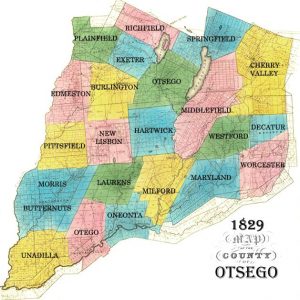 What were these hops? It is reasonable to suggest they were New York state hops. In Volume 50 of the American Journal of Pharmacy from 1877, there is an useful article setting out the importance of hop industry in central NY in the mid-1800s. In 1860, it states, each of four countries of central NY including Otsego produced more hops than all hops produced in the USA outside of New York state. Two varieties are mentioned by the pharmacists: “large and small cluster.” In another report, this time the 1860 Report of New York State Cheese Manufacturers’ Association, a trip to Otsego County is describe in which the hop plantings in every village are estimated. We are told at page 150 that at Richfield, about 75 miles west of Albany two varieties were grown:
Messrs. Allen & Hinds, the leading hop merchants of’ the town, informed us that the past winter had been unfavorable to hop plantations in this section, and many yards had been badly winter-killed, more especially the older yards. There had been greater losses from this cause than in any previous year, but a considerable number of new plantations had been set, and it was believed the new yards would more than supply the place of those winter-killed. Two varieties of the hop are generally cultivated in town, the Pompey and Cluster. The Golding hop of England had been tried but did not succeed well, being liable to rust . The Pompey is a large coarse variety, a vigorous grower, but inferior to the Cluster in strength and flavor, and does not keep its color so well as the latter variety.
While there is still a village of Pompey and even a modern day effort in the re-establishment of the central NY of the hop industry there, we are unfamiliar with that strain. We do know about Cluster, however. Cluster is still with us, often described as an old American cultivar which is, notably, a hybrid of Dutch strains and wild indigenous ones. Hmm… where did the Dutch meet the wild in the US? The Albany area, of course.
There is more to know about Cluster and the need to more closely locate it in the early 1800s in an Albany brewer’s log book but for now suffice it to say that when the brewers of Albany ale were talking about hops they were likely talking about the finest hops available locally, Cluster.
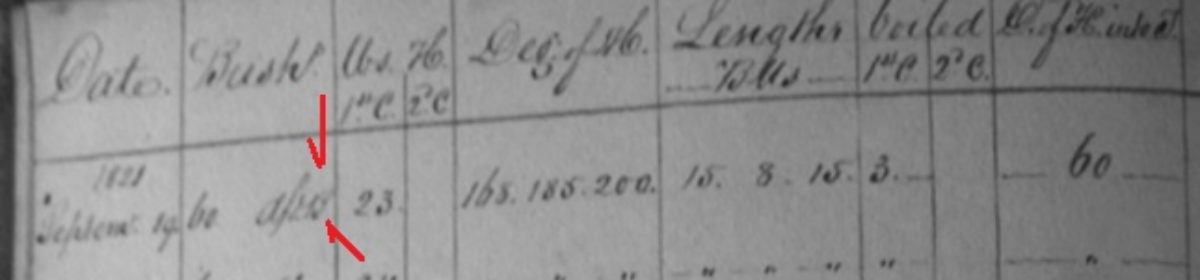
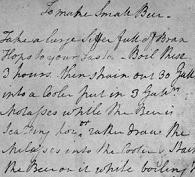 Some buzz around the beer news that the Coney Island / Shmaltz Brewing Company is brewing up a recipe of George Washington’s beer for a charity gig… and a cheater version with roasted malts for those who might want to pretend. Here is the recipe entitled “To Make Small Beer” as set out by the Gothamist:
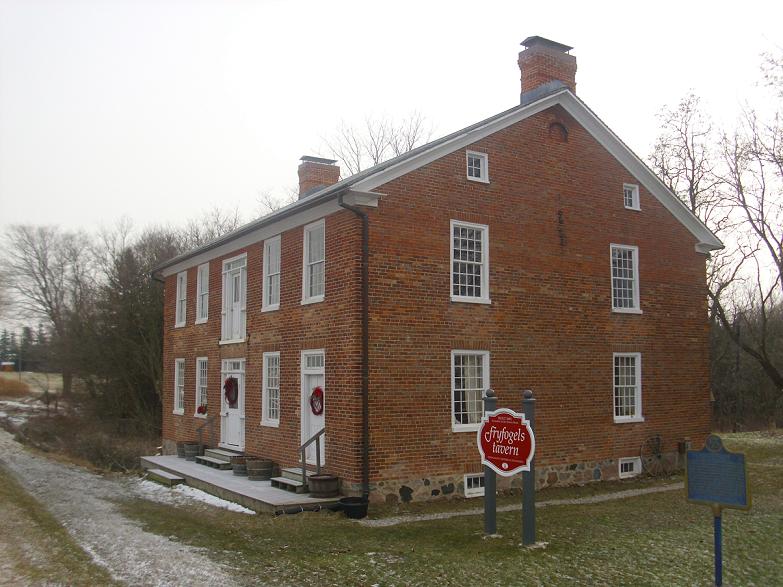

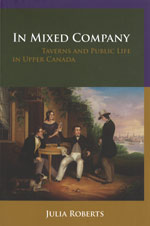 Anyone interested in beer in Canada – or even colonial North America – really ought to have this book on the shelf. 2009’s