The Royal Tavern, Kingston, Ontario

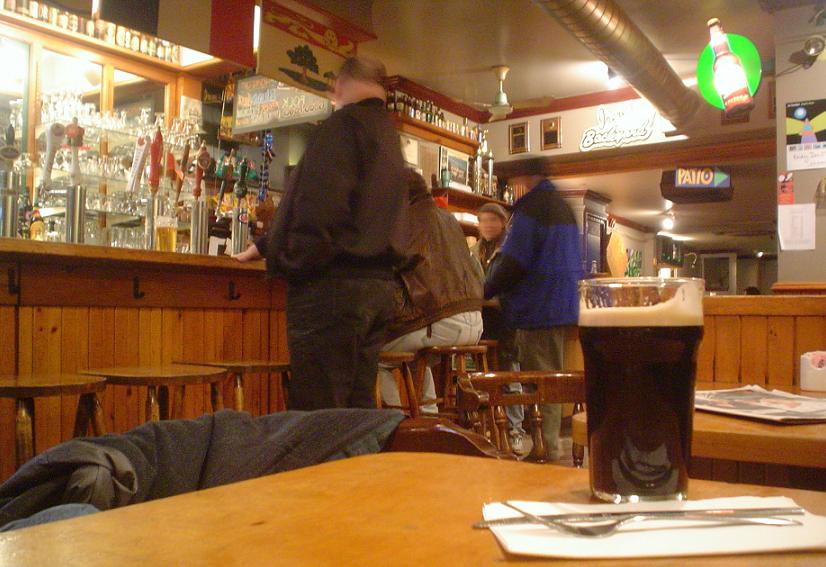
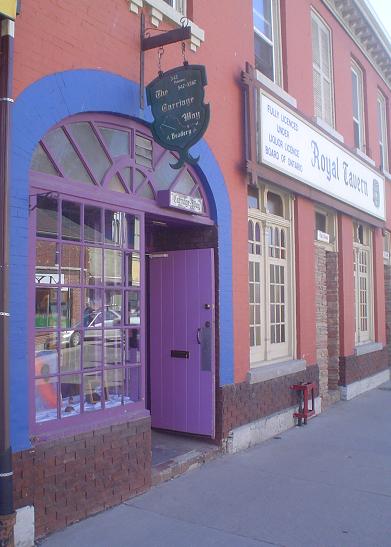
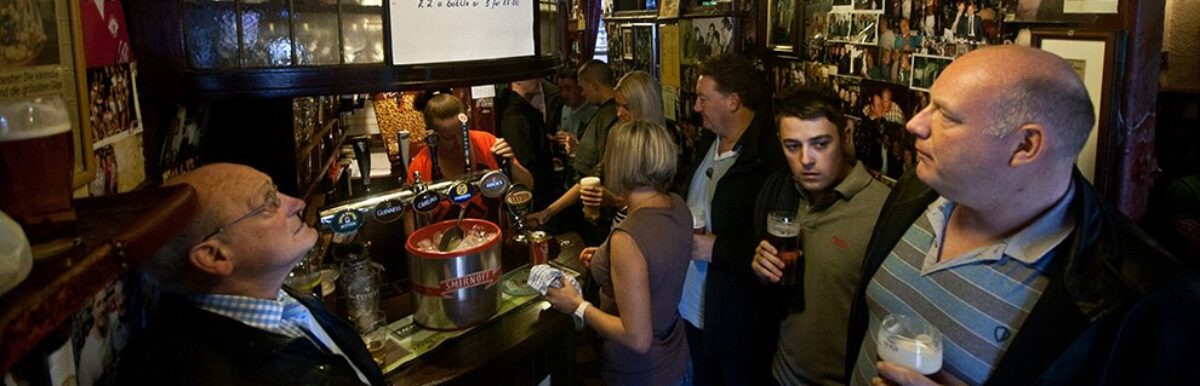
My days of bar hopping are long past. The five and a half years of rural life which wrapped up a year ago did its best to kill the habit geographically as did the advent of kids. There are, however, things that are habits and things that are personality traits and I think that the architecture of bars will always interest me. One class could be called the hard little place, that is not a sports bar, not a pub, not a road house. It might be a neighbourhood bar if you didn’t like the neighbours. The old Victory Lounge, formerly in the Lord Nelson Hotel in Halifax, Nova Scotia, or The Green Dory in the Halifax Shopping Centre come to mind as examples as does The Hillsborough Hotel (aka “the hug and slug”) in Pembroke, Ontario. I may, with such an introduction, be slandering the Royal Tavern on Princess street on one particularly non-gentrified block but the place simply does not invite. I would be interested in being proven wrong.


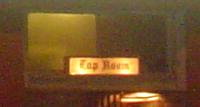
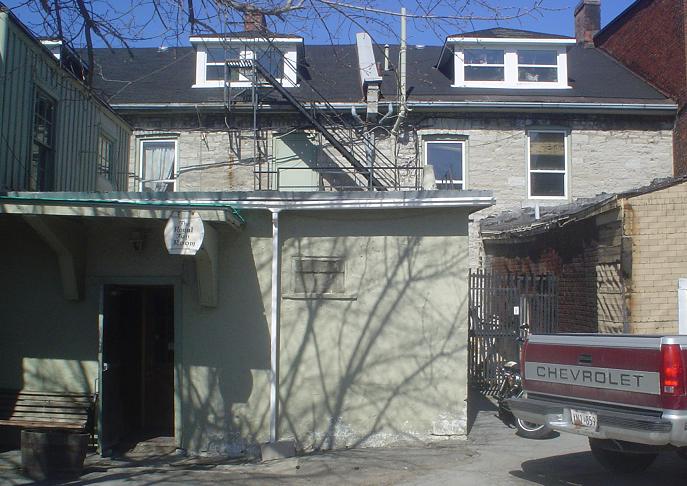
I thought that the adjective “Royal” was not permitted except with government permission. Indeed, as no doubt you all shouted as one at the screen ust now, look up section 10(1)(a) of Ont. Reg 122/91 which makes implying a connection to the Crown a dodgy matter. Did the Queen Mum put in a good word? Maybe she stopped there once in 1937. Most likely the name is saved by section 12(1) and the grandfathering clause for pre 1991 uses. Glad we cleared that up. The phoney Dickensian touches on the exterior, like the Ye Oldie font illuminated “Tap Room” sign over the door, are intriguing but you can bet the inside will disappoint, that the only thing on tap might be Labatt Blue. Actually it kind of looks like a location for a meeting of toughs on Canada’s first coroner TV drama from the late 60’s, Wojeck. The mock ecclesiastical glass and angled door, detailed below, are interesting but somewhat weird touches. I will have to look again but it appears that to the left of the building there is a filled in carriage arch which would have led to a back stable. There are still a number of these arches around the town. There is one great one in Charlottetown, PEI in a wooden house on one of the streets behind the former The Harp and Thistle.


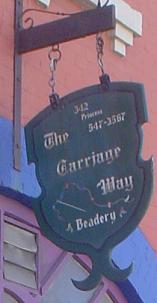
Later: The carriage way is confirmed and even advertised. Apparently the place is very old on the inside even having cobbled or stone floors.

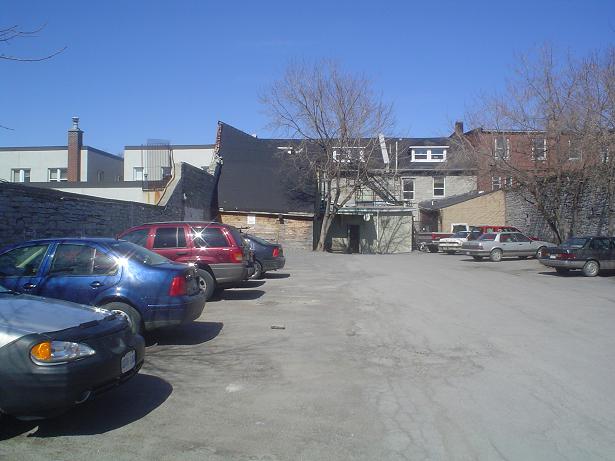
The other day I went back to get the exterior of the rear and was glad to see that the old limestone and double dormers are still there. At City Hall, there is a framed 1875 business directory map of the downtown which shows the building as having the twin dormers and an enclosed walled space out back. From the view below of the inelegant car park you can see reminants of the old walls to both sides of the property with the capping of the wall to the left apparently still intact. Likely it was for horse barns and other out buildings, it is kind of nice to imagine a walled ale garden circa 1840. Come to think of it, though, it is three dormers I am looking at with the one to the right being over the carriageway. The carriageway now feeds into the lean-to like addition to the right of the picture.


Rev. Whillans’s War

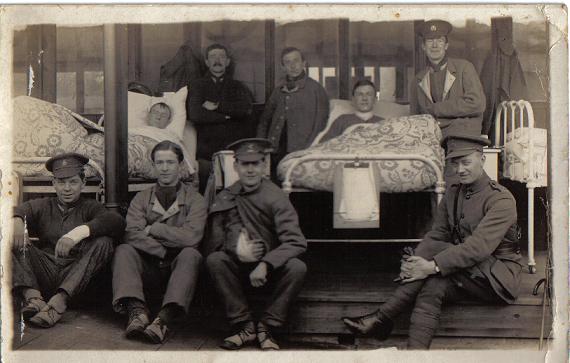
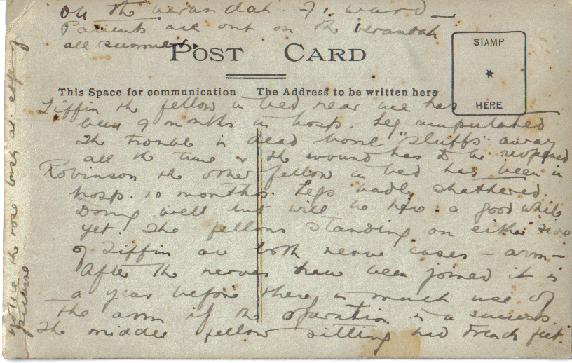
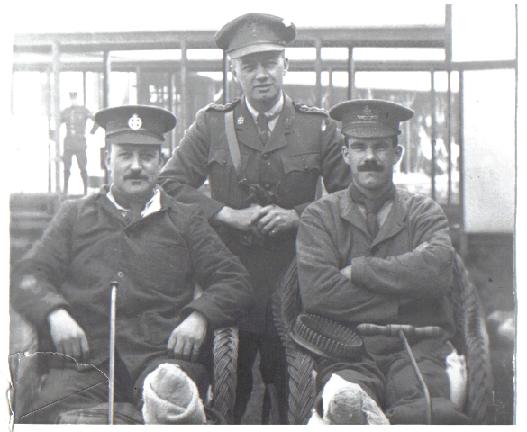
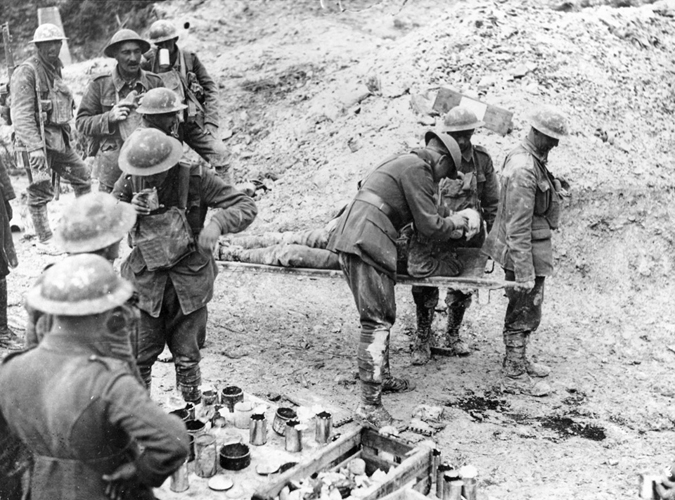
The father of my Owen Sound connection, my great-grandfather-in-law, was a chaplain in the First World War, Rev. William James Whillans of Winnipeg. This evening, hunting through photos, I came across a post card sent from the front as well as a few others. He is the jaunty gent in the lower right of the first photo.

This is an example of the postcards I discussed in an earlier post. As you can see from the photo below, he was involved with those doing the fighting.

…with a few of the saved from the trenches

…in the trenches… 

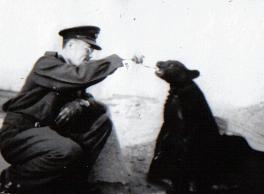
…and Rev. Whillans with one particular bear brought from Winnipeg during WWI.


Martello Towers

martellos

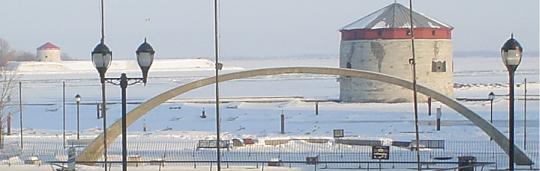
Martello towers guard the mouth of the Rideau. There are actually three in the picture, the third hidden by the trees to the left. It stands out in the mist better here. Built in the 1840s to protect the then high-tech canal technology of the Rideau accessed between the nearest two towers, the theory was similar to Halifax Harbour’s defences – a killing zone of miles deterring any thought of attack. One gun in the red roofed tower to the left had a range of 7 miles. Greater detail and a harbour map can be found here.

Battle of Ogdensburg

We are heading over to beautiful Ogdensburg, 100 km down river on the USA side, for the 14th. Beats the hell out of the Valentine’s Day when myself and herself were amazed at the easy access to the coin laundry machines before we remembered the date.

It is not the reopening of the cheese plant that attracts us. No. It’s the nutty recreationists dressing up like 1812 soldiers for the annual Battle of Ogdensburg re-enactment. Here is the contemporary British view of events. Apparently a group of Newfoundlanders were key to the victory. Here is an American perspective. Pretty big battle with 800 redcoats involved on a direct attack on a US village and fort. Here is a map of the battle. Canadian re-enactors as well as US take part. The area had a mid-1700s French presence and only became the USA in 1796 when the British retreated after the Jay Treaty.

Later St. Lawrence University will play host to Vermont at Canton in NCAA hockey – fewer guns but more real fights.

Men at Serious Play

So we went over to St. Lawrence County, New York, on Saturday to catch a War of 1812 re-enactment of the Battle of Ogdensburg organized by a local group, Forsyth’s Rifles Inc.. We were not disappointed. I had never been to one of these things before – other than being a mock soldier at Citidel Hill in Halifax for one day (I got sun stroke in the shade) – and so in had some pre-conceptions that, on one hand, it would be like a radio nerd convention and, on the other, a bit gungho.

It was neither. About 60 guys, who could very well have been all high school history from either side of the river/border, played out the actual battle with some authenticity for over about an hour. They were quite happy to answer all questions and made sure everyone kep a safe distance. The grey-coated British advanced over the ice in formation, cannons roared from both sides and fifes were played. It was quite cold and a couple guys said they were considering taking Walmart and holding it instead.

I wrote earlier this month on the events and provided links in that post. A year later in the War of 1812, the USA invaded Eastern Ontario and got hammered at Chrysler’s Farm where a much smaller force protected Montreal against 8000 soldiers (including the real Forsyth’s unit) coming up the river from Sackett’s Harbor. There is a bigger re-enactment in summer of that battle which we will likely take in. The Ogdensburg guys head over for that.

Some short movies of the action – all around 2 Mbs so expect some delay

The fifes play as the battle nears
The US forces march out to meet the Brits
a US cannon fires
The US musketmen are ordered to fire at will – note small Brit snowshoe unit coming up to the left in trees

Please give me a heads up if any of the links in the multi-media post do not work.

Three Winter Ales

These are three great candidates for the best have-one-bottle beer.

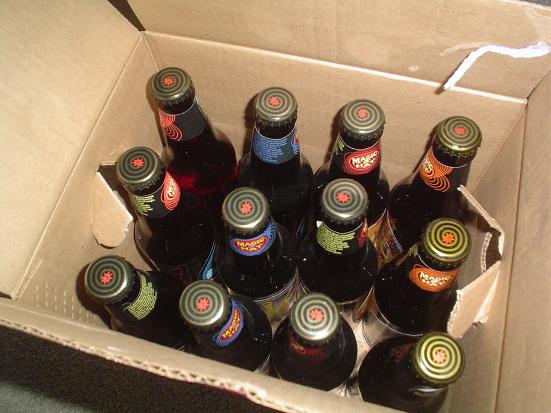
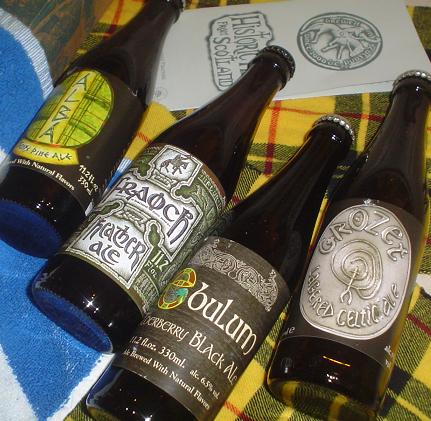
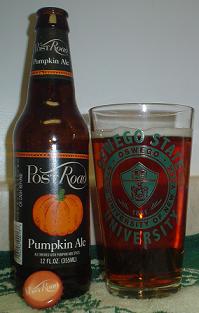
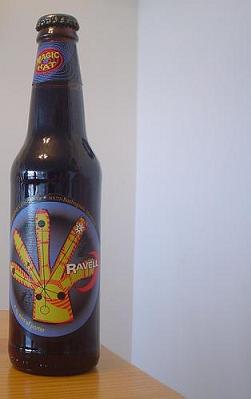
Nothing for the faint hearted, though: Young’s Double Chocolate Stout ($3.10 for 500 ml at 5.2%) from London, UK; Victory Storm King Imperial Stout ($2.40 for 355 ml at 9.1%) from Pennsylvania; and Anchor Liberty Ale ($3.55 for 650 ml at 6.2%) from San Francisco and all at the LCBO these days.

Each one is big in its own way – Liberty is massively hopped, Youngs has chocolate malt as well as real chocolate and the Victory is like licking the coffee grinds out of the percolator. Maybe you have to brew to like beers this big but I have so I do. Snazzy labels, too.

Five Hundred

Five hundred posts in around nine months. I received my congratulatory prizes from Portland the other day: a T-shirt from a deep sea fishing outfit from California and a wind-up radio that includes a warning not to wind up until the batteries have had 5 hours charge from a 12 volt adapter (not included). So in honour of the passage of time a side-by-side shot to the southwest from the dome.

Two images of the same view mid-19th century and early 21st


I noticed the older photo down a hallway at work, a view from the dome of City Hall which I have twinned with one of my own from a couple of weeks ago. According to the St. George’s Cathedral history, the older photo must be from between 1838 and 1862 as you can see the second larger dome built in the latter year is not present. So it is around 150 years older than my shot from the other day. The church’s predecessor, more on the actual market square the row of houses to the bottom of each photo face, is the location of the declaration of government in Ontario in 1792:

John Stuart, “Father of the Anglican Church in Upper Canada”, was the Rector. On July 8th, Lieutenant Governor John Simcoe, standing on the steps of St. George’s Church, took “the required oaths” of office and read the Royal Commissions, thus connecting St. George’s with the beginnings of provincial government in Ontario.

The actual date of the first European settlement in Kingston was 1673 by the French at Fort Frontenac. La Salle, the great explorer [after whom a car was named and referenced in the All in the Family theme sung by Archie and Edith Bunker] was the first seigneur and used the fort as a base for his explorations into the interior..which did not turn out all rosy. In 1758 Fort Frontenac was taken by the English. Ransacked and abandoned, it remained unoccupied for the next 25 years. [An interactive map of the entire St. Lawrence area starting with Fort Frontenac in the west from 1776 is here.] In 1783, Major Samuel Holland was sent to survey the condition of the fort, and in the same year temporary barrack facilities were constucted. Sammy is well known in PEI as its first surveyor (though it was only a part of his larger works) and the briefly celebrated namesake of Samuel Holland Institute of Technology (a joke since at least 1993 – scroll down page) which was soon renamed Holland Collage.

Nice Buildings I Like: II and III

kingstoncathDouble domed because they could

In the second of a continuing series, I appear to be working out issues I have with domed buildings. This is the head of the Anglican Church in Ontario which sits a couple blocks west of work. There are two parts to it each under its own dome and the foreground one facing King Street East has a dandy smaller dome – verging on cupola – whose gold on black clock faces are quite the thing.

kingbajus210 years of brewing and office rentals

Another great building is down by my parking lot on Wellington, north-east of work. This was a brewery – apparently second oldest in Canada according to a picture at the Kingston Brew Pub. The brewery as a company started in 1794 but there was a move back from the street when the public road when through so these buildings are more in the 150 year old area. You can see the tower used in high fallootin’ industrial production of ale in the later end of the 1800’s as it was easier to lift all the ingredients up at the start of production and move them down through mashing, sparging, fermenting, casking, etc.

Die Fax Die

The other day I got an email returned with a reply. Except it was a handwritten reply and the answerer had printed off my email, written his answer on it and faxed it back. It’s folks like that who are ensuring that fax machines continue to clog our lives – pushing up usage 40% in the last year alone.

When will the fax machines die off joining the Gestentner, mother of all ‘zines, itself now hiding its own toxic legacy.