The Beery News Notes For The Week We Lost Martyn Cornell

I learned the very sad news on Sunday that Martyn Cornell of Zythophile and many other things had died. Within minutes the tributes started being shared. Martyn was a veteran journalist and news editor, beer writer and historian. And a traveller, whether for newspaper work in Hong Kong or in Chile as a recent hotel breakfast buffet partner for Ron. I first met him in the comments left at this here blog twenty-two years ago when he left a note on my review of Pete Brown’s first book. We soon chatted again when, as invited, I reviewed Martyn’s first book a few month later and the conversation pretty much continued for over two decades after that.

As many have shared, he was fun and clever company. He’d get mad at me – usually quite deservedly – and yet would kindly share tips and ask for leads. Now a decade and a half ago, we had a great time on the wiki project reviewing the OCB. As I wrote to Alistair on Facebook after the news of his passing was shared, Maryn had such a singular presence, both impatiently crotchety and entirely encouraging at the same time. It was all one thing. He just wanted more of us to be writing more, all building the body of knowledge. In the running to do list I keep there was a task I had left for myself: “dig up note for Martyn.” More about the 1600s English strong ales named after their cities. I never around got to it. Craig had some particularly fine words:

I’m not sure beer history writers count as celebrities. But if they do, there must be a pantheon of the mild-mannered—and surely at the top of that list was Martyn Cornell. I don’t get starstruck often, but sharing a pint with him in Colonial Williamsburg came pretty close. Before that, our conversations had been limited to late-night emails—questions, thoughts, rabbit holes. He always replied. And his replies always led me deeper down the trail. Martyn was whip-smart, a bit shy, and deeply committed to facts. He had no patience for myths or baloney—not out of pedantry, but because he believed the truth was always more interesting than the fiction. He was my friend, and I will miss him.

He always replied. That was Martyn. Very sad news.

——————————

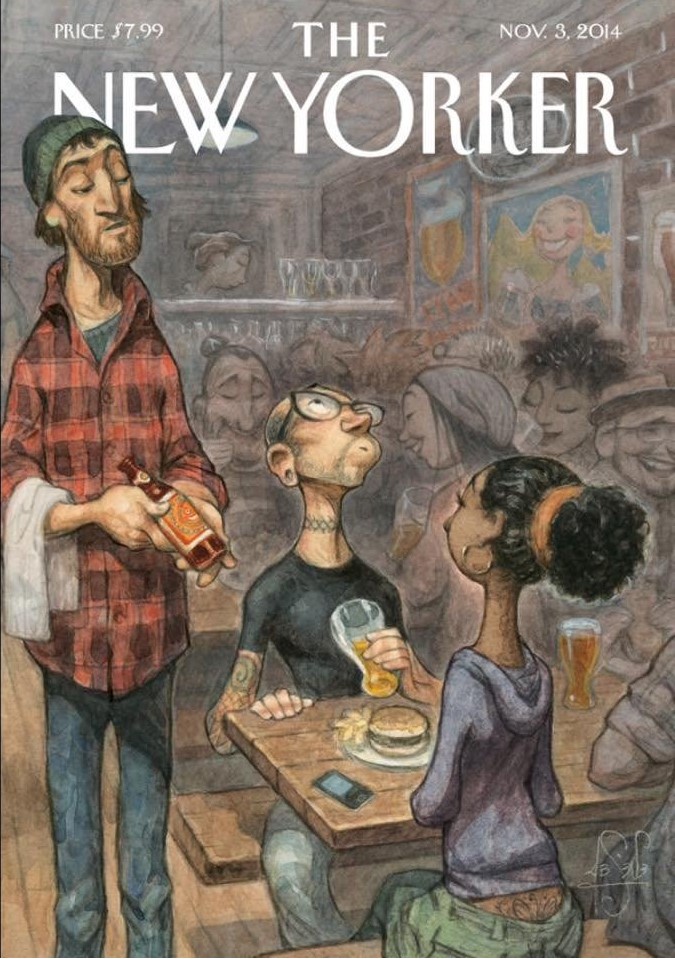
I am going to post a few news items this week but perhaps not at much as one a normal one. Starting with one that certainly in line for Martyn’s wish for us all, Phil Cook hosted another excellent edition of The Session in which many beer who like to write about beer wrote this month about beer in art. Plenty of good entries and the annoucement that we need someont to continue the relay as Phil summed up:

Massive thanks to everyone who contributed; it’s a great collection of observations. No one has, as yet, put up their hand to volunteer for the June edition so if you have an idea, let me know. It’s a little work, but a lot of fun.

And, speaking of travels, Matt Gross shared a detailed portrait of Q Bar in Ho Chi Minh City, Vietnam, a hidden hotspot he frequented in the 1990s:

Eventually, I realized I had been regularly flying right past it on my 70cc moped, and I understood why I’d overlooked it: Q Bar was tucked into the side of the Saigon opera house. Of all places! This Beaux-Arts edifice, built by the French colonial powers and opened in 1900, this 500-seat hulk that anchored key streets at the core of District 1, had a warren of dark little rooms off to the right, and a tiny patio and a strip of grass. This was Q Bar. I simply had never passed by at the correct hour to note that, as the sun began to descend, this small patch began to fill up with expatriates, with returning Vietnamese from France, Canada, the United States, and beyond, and even with some locals who, perhaps earlier than others, understood that Q Bar was not just the best bar in Saigon but among the best bars in the world.

And Lars has been travelling east – very east in fact – on journey to discover all he can about farmhouse ales. He was in Alsunga, Latvia meeting with a Suiti brewer who had some pretty rustic techniques leading to a good drink:

Visiting a brewer in Alsunga today, belonging to the Suiti minority, which is Catholic. He’s brewing for midsummer. He ties rye straw around the pole for the lauter tun. In the lauter tun is juniper (usually), rye straw, and birch twigs. Lovely raw ale, soft and mild, with notes of juniper and also honey. Could drink this all day. Cooling the wort in the local pond across the road.

Transporting you elsewhere, David Jesudason is transporting us further with his first installment of Just A Bite, to a carpark in England to eat Kenyan influenced fare from a van:

…to land here in Denmark Hill is odd. It’s bizarre that in such a bleak, concrete location – literally everywhere you look is brick, tarmac or truck wheels, despite being so near Ruskin Park – you can have such transcendent food. Now I’m not saying something as hyperbolic as one bite whisks you to the Kenya savannahs of Bharat’s childhood but the spicing is so balanced that it offsets the heat of the chili; and tastes far more regal than you’d expect food to be at a polluted business park just off a forgotten part of Coldharbour Lane. The tikka pieces are almost burnt, crispy on the outside but delicately soft in the middle, while masala chips have a zesty coating of ginger and cumin. I’m a complete fan boy for the mint chutney that doesn’t scrimp on the fire.

Laura Hadland in another of her regular contributions to The Telegraph wrote about what beers can be found at local Lidl, the grocery chain, and she was looking for bargains:

I put Lidl’s beer range through a rigorous taste test to mine for quality bargains. This included a selection of Lidl’s own-label products as well as some of the well-known brands it offers… Examining the range as a whole, I quickly noticed that almost every bottle is labelled “premium”. To paraphrase The Incredibles, if everything is super then nothing is – the descriptor loses all meaning. I therefore tasted the range blind, to prevent undue influence from the packaging or my own personal bias.

Relatedly perhaps on the point of budgeting, in The New York Times there was an interesting story on the demise of something not done so much in Canada unless you are in a restopub sort of place: running a tab:

It’s unclear when younger drinkers started souring on bar tabs, but there’s a through line between the Covid-19 pandemic and shifting bar habits. “During and after the pandemic, more people started using cards,” said Doug Kantor, an executive committee member of the Merchants Payments Coalition, a retailers group. Coupled with Gen Z’s distaste for carrying around cash (or a physical wallet, for that matter), the ubiquity of mobile payment options, such as Apple Pay, has contributed to the decline of bar tabs among 20-somethings.

Also speaking perhaps of budgeting in another sense, over there on the US west coast, the much heralded sale of Anchor Brewing to Chobani yogurt billionaire Hamdi Ulukaya of a year ago has led to questions today, as reported by Truong and Kane in The San Francisco Standard:

Through fencing at the old Anchor Brewing taproom in Potrero Hill, passersby can spot a branded, baby-blue, 1940s-era GMC truck at one end of a lot overgrown with weeds. Since July 2023, when Japanese beer giant Sapporo vacated the complex, both the monolithic off-white Art Deco headquarters at 1705 Mariposa St. and the taproom across the street have remained idle. Now, vines and delicate purple flowers snake through the truck’s rusting grille — and San Francisco beer drinkers continue to go without longtime favorites Anchor Steam, Liberty Ale, and the annual Christmas Ale. It wasn’t supposed to be this way. Exactly one year ago, billionaire Hamdi Ulukaya posted a video on social media in which he sports an Anchor baseball cap and explains that he’d purchased the defunct company and was eager to take on the responsibility of reviving the country’s oldest craft brewery.

Similarly perhaps, Rob Sterowski of I Might Have A Glass of Beer… wrote about the sale of the last remaining family-owned Kölsch breweries, Malzmühle, to one of the others, Gaffel:

The puzzling thing about all this is that Malzmühle, just a couple of years ago, itself took over another of the remaining independent breweries, Sünner. And that is staying open – so they say at the moment, at least. So they still have a brewery where they could produce Mühlen Kölsch. Can they really buy in beer from a competitor more cheaply than they can brew it themselves? Even if Gaffel is substantially bigger than Sünner? One can only speculate that the contracts being signed commit Gaffel to supplying the Malzmühle with beer at a very favourable price.

I liked Gary‘s piece about a study by a futurist of the past, Dr. Leonard Kent of the advertising agency Needham Lewis & Broby, projecting his 1960s desire for a better beer – something that he may have to wait for a couple of decades to try:

The solitary drinking experience, as he called it, sounds oninous in our neo-prohibitionist 2025. He meant, thought, at least in part, brewers should make a higher quality product. A product reflecting romance and mystery v. the bulk “sameness” of American beer as it was then. Beer that could be enjoyed more in a wine setting, outside that of the popular image of tronged tavern consumption.

And in Pellicle, the fabulous Rachel Hendry and the fabulous Anaïs Lecoq tag teamed to tell the tale of the litre bottle of Cidre Breton from their respective points of view:

The rustic, rural nature of Cidre Breton’s style, the farmyard imagery and the simplistic label design that speaks to a small scale cider operation that no longer exists, the uncomplicated bottle shape that signals to milk and soft drinks as opposed to high end fine wine all work to put a consumer at ease. There is no trace of poshness or pretentiousness here, all are welcome. Cidre Breton is a cider from the people for the people, that extra 250ml a gesture of diplomatic goodwill. To Britain, Cidre Breton becomes an emblem of an accessible France, something attainable to most, regardless of finances and status. A franco-take on a British heritage—orchards and cider are intrinsic to rural, working class stereotypes of Britain after all—allowing us, litre by litre, to drink exactly as the French do.

That’s it for this dimmed week. Looking back, sifting through emails and posts, I had forgotten that I invited Martyn to my fantasy dinner in 2007. I suggested we have a “good thick 1700s West Country white beer as a stand alone first course” to get the conversation going. He accepted. Sad stuff. Until we meet again in a happier moment, please check out Boak and Bailey every Saturday (…as long as all their holiday fun doesn’t get in the way…) and Stan (….back again this  Monday and very nice of him to notice what I wrote). Then listen to a few of the now rarely refreshed Lew’s podcasts and get your emailed issue of Episodes of my Pub Life by David Jesudason on the (sometimes even but never) odd Fridays. And maybe The British Food History Podcast. Maybe? And Phil Mellows is at the BritishBeerBreaks. Once a month, Will Hawkes issues his London Beer City newsletter and do sign up for Katie’s wonderful newsletterThe Gulp, too.  Ben’s Beer and Badword is out there with the all the sweary Mary! And check out the Atlantic Canada Beer Blog‘s weekly roundup. There is new reading at The Glass which is going back to being a blog. Any more? We have Ontario’s own A Quick Beer featuring visits to places like… MichiganAll About Beer has given space to some trade possy podcasts and there’s also The Perfect Pour. Plus follow the venerable Full Pint podcast with an episode just last month!. And there’s the Craft Beer Channel on Youtube. Check out the archives of the Beer Ladies Podcast. That’s quite good but, hmm, they’ve also gone quiet this year. The rest of these are largely dead. And the long standing Beervana podcast …except they have now stood down.  As has We Are Beer People. The Share looked to be back with a revival but now its gone quiet. And the Boys Are From Märzen podcast appears suspended as does BeerEdge, too. VinePair packed in Taplines as well. All dead and gone.  There is more from the DaftAboutCraft podcast, too. Nope – that ended a year ago.   The Moon Under Water is gone – which is not surprising as the ask was $10 a month. Pete Brown’s one cost a fifth of that – but only had the one post. Such is life. Such is beer podcasting and newlettering!

A Brief Yet Utterly Fascinating First Beery News Notes For May 2025

Brief? I am on the road as you read this. At a Holiday Inn out by the airport if you have to know. Just a brief trip but that is going to mean a brief update. Why? Why??? Stop screaming that word into your pillow. It will be OK. Why do we know it will be OK? Because… as The Beer Nut has proven by hitting another milestone as he enters his third decade of beer blogging. Meaning we can never stop. Never. Ever. Another thing that never stops is the cycle of life that marks the work from planting seed to harvest time and, again, to planting again. Just to make you beer. As my near neighbours, the farmers and brewers at MacKinnon Brothers, showed when they shared this photo and these thoughts below on FB:

First planting of the year—no-till malting barley into soybean stubble. We’re testing new aftermarket firming and closing wheels on 6 of the 32 rows to see if they improve seed placement over the factory setup.

Martin, sitting in a pub enjoying a pint of Bass, has no doubt thought of that sort of thing from time to time but this week he raised another excellent question on the tension between the campaign to get UNESCO recognition for cask and the campaign to get CAMRA members to stick to “indie” beer:

I watched as a succession of unapologetic young folk arrived at the bar, went “ooh” and pointed at the red triangle. Yes, a national is finally putting a bit of money behind Bass, though frankly only pints this good will keep the pumps flowing and make sure it stays on the bar. Not everyone is delighted by this enthusiasm for Bass, whether because of ideology… CAMRA’s Conference instructed the NE to “ensure that all relevant CAMRA publications and communications pledge preferential support to beer producers and suppliers that are independent of the influence of the multinational brewers, and to make the case persistently for this stance.”

So, is the UNESCO campaign “Bass Inclusive” (BI) but the CAMRA one is Bass exclusionary” (BE) ?  A report in The Guardian, while setting out what I had thought would be pretty well known information, adds a twist:

In its annual independent beer report, parts of which have been shared with the Guardian, the trade body for British indie brewers said tough conditions were exacerbated by difficulty selling to local pubs… Siba members told a survey that 60% of the pubs within 40 miles were inaccessible to them, choking off potential sources of revenue and reducing choice for consumers thirsty for more interesting options at the bar. They blamed conditions imposed by large breweries and some pub chains, including financial agreements that impose conditions on what beers pubs can sell.

So if Bass is brewed by a large multinational and it is engaging in practices which are detrimental to small brewers who, among other things, brew fine cask ales… is the UNESCO designation application going to be BI or BE? WIll it carve out those fine cask ales which are made by the faceless nasties of international capitalism? Asking for a friend.

Speaking of machines, Boak and Bailey continue on their travels and have considered the role of well choreographed hospitality:

In the past week, we found ourselves in two such machines in Bucharest, the capital of Romania. Both drew us in with beautiful, historic buildings and the promise of decent mainstream beer… We really wanted to see inside the building, though, and also really wanted to drink a decent lager in vaguely trad surroundings, so we made our booking and braced ourselves. On arrival, we were intercepted by a member of staff whose only job was to assign people to free tables and escort them to their seats. She wasn’t exactly cheerful, but she was certainly efficient. She handed us off to a waitress controlling a section of about 10 or 15 tables who was just as friendly as she needed to be to avoid making us feel totally unwelcome. When we took a little too long to decide what to drink she got, perhaps, a touch impatient. But, like in the beer halls of Cologne, or The Dog & Bell in Deptford, once you accept that you’re not there to make friends with the staff, this brusqueness becomes part of the offer.

You know, I have played such a role in this life from time to time. As an usher, a waiter and to be honest a lawyer. I’ve said “right this way” as I led then to their seat, a table or… umm… the dock. Yes, standardized impersonal presentation in hospitality are efficient and reliable yet also impersonal and distant. You are being served but, in turn, so is the operation in a reciprocal sense. And sometimes even mentioning your past experience can open up a bit of conversation – but in other situations, you know, it can be taken as an insult. Govern yourselves accordingly. They don’t really care about the time you too failed to put in that order.

Speaking of touchy situations… would you drink out of a skull… have you?

Of course nobody wants to end up as a wine cup, but it must be a consolation to know that some very distinguished historical figures lived on in the drinks cabinet. One outstanding example was the Byzantine emperor Nicephorus I, who ruled in Constantinople from 802 to 811. After the emperor was ambushed by the Bulgars in a mountain pass and slaughtered alongside his army, his head was delivered to the splendidly named Bulgar khan, Krum the Fearsome. According to a Byzantine chronicler, Krum “hung it on a pole so as to exhibit it to the tribes that came before him and to dishonour us. After that, he laid bare the skull, riveted it on the outside with silver and, in his pride, made the chieftains of the Slavs drink from it.”

The article in question being from The Times and the facts that led to the question being newsworthy cause Dr. Alice Roberts to comment “I can’t believe this isn’t a spoof article. It seems to be supporting a very questionable approach to human remains.” The facts in questions being some Oxford dons doing it based on an ancient tradition going back to … err… 1946.

Glut news:

The Scotch Whisky Association (SWA) shares export figures annually. For several years, Michael Kravitz of the Diving for Pearls blog published an excellent analysis of this data, predicting in 2017: “If volume sales don’t increase [significantly], then we’re going to start seeing A TON of well-aged malt whisky within 5 years. If this continues further, there is going to be an embarrassment of oversupply in 10 years. Even if industry-wide production is cut in half in 2017, it would be too late to stop The Loch.”

Similarly perhaps, good play-by-play from CBC by Dave Infante, highlighting the potentially irrational exuberence in the pep rally:

Matt Gacioch of the Brewers Association notes that U.S. craft brewing’s -4% volume drop in 2024 was the largest since the trade org started tracking that metric. “Consumers feel much worse than they’re acting.” Even as sentiment tanks, people are still spending on-trend for now. Doesn’t explain why they’re spending less on craft beer, but hey, listen, silver linings!

There was a similar theme in the Beer Insider Insights newsletter this week:

… in 2012-2013, households led by folks under 30 spent more like 1.1% of their disposable income on alcohol. That dropped to 0.74% a decade later, about 1/3 less. Households run by younger folks will generally have less income, disposable or otherwise, Bourcard reminds. But the fact that Gen Z is already spending less on alcohol could stick around. Then too, the most cited reasons of “health and vanity” are “greatly overblown,” in his view.

I love how “greatly overblown” gets something of the rimshot treatment after those sorts of stats. Silver linings! More serious in terms of the inquiry, David Jesudason wrote this week about a puzzle:

Dennis Morris took a series of photos of life in Southall in the 1970s after apparently driving past the West London suburb on the way to a Bob Marley gig. This one was sent to me by a friend visiting an exhibition of his in Paris. I’ve asked people if this is the legendary Glassy Junction… but none can confirm. All I know is this is a Sikh pub landlord photographed in Southall in 1976. So if anyone has any idea what pub this is or the name of the man pictured, please get in touch!

I don’t know anything about that. Do you? No? Well, did you know, if you are not sufficiently disappointed in the beer in front of you, that there’s an app for that?

…a new experimental measurement tool, created by scientists assessing the concentration of DMS in beer through “smartphone-based colorimetry” uses a “paper-based analytical device (PAD)” which was made using an “immobilising a chromogenic reagent phase consisting of alkaline nitroprusside in a gelatin hydrogel”. Breweries and beer judges analyse the DMS content of products to ensure consistent flavour quality and consumer satisfaction.

Lordy. I am loving this “off-flavour” studies revival. Remember last week? That was excellent. Feels all 2012. Is that unkind? You know what’ll perk this conversation up? Rice malt, that’s what:

The rice malt can also reduce crop-growing acreage needs by half or more, because the research shows it produces more grain per acre than barley, while having an equivalent or greater sugar extract potential… The study, which is derived from the University of Arkansas, also identified how malting has the potential to decrease time and energy costs and make using rice more feasible for more small-scale craft brewers — especially when creating gluten-free beers. Since rice is cultivated globally, the analysis highlighted how it also has the benefit of serving as a viable malting grain for tropical and subtropical countries that would otherwise need to rely on barley imports for brewing.

You know… I wonder about the arsenic. Any mention of the arsenic? Not sure. Hmm… and that’s it. Not much this week. It’ll get bettter. Next week for sure. Let me check my calendar. No, away briefly again. Until then, please check out Boak and Bailey every Saturday (…as long as all their holiday fun doesn’t get in the way…) and Stan (….who is also going on his own holiday break so may not be there…) each and every Monday. Then listen to a few of the now rarely refreshed Lew’s podcasts and get your emailed issue of Episodes of my Pub Life by David Jesudason on the (sometimes even but never) odd Fridays. And maybe The British Food History Podcast. Maybe? And Phil Mellows is at the BritishBeerBreaks. Once a month, Will Hawkes issues his London Beer City newsletter and do sign up for Katie’s wonderful newsletterThe Gulp, too.  Ben’s Beer and Badword is out there with the all the sweary Mary! And check out the Atlantic Canada Beer Blog‘s weekly roundup. There is new reading at The Glass which is going back to being a blog. Any more? We have Ontario’s own A Quick Beer featuring visits to places like… MichiganAll About Beer has given space to some trade possy podcasts and there’s also The Perfect Pour. Plus follow the venerable Full Pint podcast with an episode just last month!. And there’s the Craft Beer Channel on Youtube. Check out the archives of the Beer Ladies Podcast. That’s quite good but, hmm, they’ve also gone quiet this year. The rest of these are largely dead. And the long standing Beervana podcast …except they have now stood down.  As has We Are Beer People. The Share looked to be back with a revival but now its gone quiet. And the Boys Are From Märzen podcast appears suspended as does BeerEdge, too. VinePair packed in Taplines as well. All dead and gone.  There is more from the DaftAboutCraft podcast, too. Nope – that ended a year ago.   The Moon Under Water is gone – which is not surprising as the ask was $10 a month. Pete Brown’s one cost a fifth of that – but only had the one post. Such is life. Such is beer podcasting and newlettering!

The Last Thoughtful Yet Wistful Beery News Notes For The Election 2025

Well, it has been fun. Most of the polls remain to lean towards the non-politician globally recognized economist as opposed to the guy who’s been mostly a grievence mongering backbench MP since he was 24. I make no comment otherwise. As you can understand in my position, I must remain strictly neutral in these matters as a member of the media. And how could I not be, given the vital vegemite v. plastic straw level of fundamental policy divide we are faced with as a nation.

No, we need to set that aside. Let’s start off with something pleasant. Travel is always nice. Getting away. We all like to get away. Yet traveling can be difficult. You may want to find something new but the new has to be sufficiently familiar to fit into if not expectations at least your range of capacity to enjoy it. I’ve been following Boak and Bailey’s travels east with interest and have some sympathy for their experience in two pubs in Sibiu, a Romanian city I had never heard of, the first being…

…an odd place called Butoiul de aur, which had a bit of a middle class suburban lounge-bar feel. Then the karaoke started and it began to feel more like a party pub. Local beer Nembeer is either not very good or was not well cared for there. It all tasted rather like our first forays into home brewing. The best of the options was Amarilla (5.2%) which had a promising aroma and some good flavours among the off ones. We were initially excited to discover Kombinat, which appeared to be a Czech inspired Brewpub. But it turned out to be mostly a Staropramen outlet. Their eponymous house beer was fine – vaguely Czech in its maltiness, but not particularly distinguished.

Not particularly distinguished. Something like myself, I am told. You know, I am not sure I could write “some good flavours among the off ones” let alone be patient enough to unravel the threads to discern the difference. Me, I’d be the last one to sign up for anything called an “off-taste seminar” given that it’s basically the beery equivalent of a college course on shitty paintings. No, once I encounter the gak, all thoughts stop.

Also on the road but just a bit to the northwest of B+B, ATJ shared thoughts on things Bambergian… Bambergese… Bamberger:**

Beer to me is an open book about travel, people, friendships, memories, family, history, architecture, bars and pubs, breweries and the harmonic nature of the liquid in your glass. It is about how a landscape can shape the beers that people drink and about how it can be something more than refreshment, and even provide a guide to life and living as thorough as literature, poetry, music or meditation. This was why returning to Bamberg once more unleashed a surge of joy within, a feeling that I also experience when I go to the lagerlands of Bohemia and Bavaria, or drink beer in a brown cafe in Flanders, walk into a rural pub in England or spend time searching for soul-shaking beer in somewhere like Bologna or Barcelona.

Ripe words yet they capture a mood I very much recognize. Twenty years ago, I would have such a surge of joy walking into Finger Lake Beverages in Ithaca, New York that I made myself walk the aisles for five minutes before I could stop and touch any of the offerings.

And furtherer wester still, two feature writers with The Daily Star took themselves on a trip to four east end London’s dubbed roughest pub crawl:

The Manor Arms was empty, with a smell of must and TCP hanging in the air. One bloke sat down at the end of the bar chatting away to a gruff man in a cap pulling the pints. ‘“F*** this, f*** that. It’s the f****** credit union,” said the bartender. “Oh that thing you said would never happen?” “Yeah that f****** thing, hahahahah.” Spurs were on the telly, we both loved that, watching our beloved, beleaguered club fight against Hoffenheim to the soundtrack of Danny Dyre-esque ‘awwwiiiittte’s… The barman, it turns out, was a Spurs fan too. “Typical Germans, if that’s a penalty, my d***s a goldfish,” he said as a Hoffenheim player fell in the box. Men kept walking in with bags of vodka and salmon. “Not for me mate,” our new companion, Graham, behind the bar would say. “Know wot mean?” We didn’t really, but we loved him. Out the blokes would walk with their bags of salmon, deflated, venturing back into the inky blackness to find a more willing buyer. It couldn’t have been more relaxed, more comfortable. Neither of us had had a chat with a barman this good in months.

I know that feeling, too, having once been offered tantalizing beef steaks, discretely offered by a long  coated gent who pulled them from the front of his trousers, all wrapped and labeled and clearly freshly stolen from the grocery store near to the formerly named Ladies Beverage Room in my Halifax of the 1980s.

But forget all that. If one is to believe Reuters, the next big beer tourism destination is going to be Sweden – certainly once news of these changes to the drinking laws get better known:

Under current rules, shops in the Nordic country can only sell drinks with up to 3.5 percent alcohol. For stronger drinks, consumers must head to Systembolaget, the state-run alcohol chain which operates 450 outlets across Sweden. The stores have limited opening hours, don’t advertise alcohol or discount drinks. The government’s so-called “farm sale” law for alcoholic beverages of all strengths takes effect in June and runs for six years before a mandatory evaluation. The law states visitors must have paid, can buy only small “souvenir-style” amounts and have to listen to “a lecture” with an educational element.

Party Party!! Ja! Ja!! Jaaaa!!! What else is going on? Did you hear about these tariff things? No really, they’re a thing now and apparently the wine makers of Bordeaux have had to face some facts this year with the threats and realities:

Trump’s threat of 200 percent tariffs caused dismay in Bordeaux. “Châteaux will close,” said one proprietor. “Négociants will close.” And of course it would cause chaos in the US wine market as well, with many casualties. That was why few believed that he would do it: the damage to US commerce would be too great. And there was a lot of lobbying against tariffs, too: restaurants, sommeliers and retailers had got together to explain the problem. In the end, the tariff on the EU was set at 20 percent – for now. On a practical level, Bordeaux has also been shipping a lot of wine to the US recently. Most leading châteaux have ensured that they have somewhere between six months and a year’s stock already there.

Speaking of managing traditions in times of the new, The Mudge posted a good piece on Thornbridge’s use of one of the Union sets to create some premium and tradititonal ales:

…in a world of heavily-hopped New World IPAs, the question must be asked whether these relatively understated beers in a classic English style will make a mark. Ordering online, these beers came to almost £4 a bottle, so they are probably something better regarded as an occasional treat rather than a regular drink, especially when Jaipur can be obtained from Morrisons at 4 for £7.

Can an occasional treat sustain itself? Even the new has been losing its sheen more and more it seems. Beer Business Insider sends out a cryptically condensed email every week with some pretty frank comment including a ticker tape style summary of fairly recent movements in the US booze trade, in this case to mid-April:

Wine volume down double digits, 9.6% for 4 weeks, several points worse than 26 weeks (-6%) or 52 weeks (-5%). Craft volume down 9% for 4 weeks, $$ down 8%. Craft down 5% for 26 weeks. And volume of spirits-centric seltzers suddenly dropped 6.8% last 4 weeks. Down 3% for 12 weeks. Recall, High Noon is two-thirds of spirits-centric seltzers. It fell 6.6% and 12.8% last 2 weeks. What’s going on?

Yikes… I think. That many numbers makes me all woozy and giggly. Perhaps relatedly, The New York Times had an interesting story about how, for a city that claims to never sleep, it is getting harder to get a license to sell booze late at night:

…some bar owners say closing times have trended earlier in recent years, with lively venues like Carousel, which opened in 2023, shutting down at 2 a.m. Most operators agree that today’s customers are drinking less than previous generations, and that they’re going out earlier… Late-night liquor licenses, once an expectation in nightlife-heavy neighborhoods, have become increasingly difficult to obtain, especially in areas where bars bump up against brownstones. Early birds and night owls have already clashed over outdoor dining programs and summer concerts. “The 4 a.m., seven-days-a-week license is becoming ararer commodity,” said Terrence Flynn, a liquor licensing attorney who has represented hundreds of bar owners in New York City since 1985.

Next up, Jeff posted a post called “Convergence” but I might have called it “Overlap” given, you know, how I see these things: there are no neat and tidy boxes of styles. Yet the drive to be the first to label something as a thing is a real thing but it is not a good thing. But that’s just me. Let’s see what Jeff had to say:

Until I poured out a can of Pure Project’s Neon Bloom, however, it hadn’t occurred to me that pilsners and pales were converging. We’ve had a nice run of warm, sunny weather in Portland, and midway through the first can I enjoyed—thanks to a four-pack sent from San Diego—I realized I was having an experience shift. The beer smelled and tasted like a hoppy ale, but I was slugging it down like a lager. I paused to give it some attention and realize, purely from the sensory experience, that it drank very much like a WC pilsner.

OK, that makes sense. But, and this gets a little ranty and a little tedious, this is not a new issue or even one about pale v. lager so much as continuation of, how should I put it, hmm…  the downward spiral. See, if style means anything, pale ale should lead with grainy texture framed or even cut by the hopping. Lagers should speak one way or another to roundness of malt, again framed to various degrees by hops and even other malts. IPAs are supposed to be where the hops shine but, instead, they suck all the oxygen out of the room.** But, given IPA sells, well here we are. I would also note Stan’s comment:

Bob Kunz and Tim McDonnell of Highland Park Brewery may or may not have invented West Coast Pilsner, but it appears that Kunz was the first to give it a name. Their Timbo Pils pretty much embodies the style. Last October, Timbo won a gold medal at the Great American Beer Festival . . . in the American-style Pale Ale competition.

Clearly an evil roams upon the land and it’s name is style. Interestingly, this had coincided with the collapse of actual independence in US craft.

Finally, I really liked this article in Pellicle if only for the early inclusion seven lines in of the word Coreff, a word I encountered last January when the same author, Anaïs Lecoq, wrote about that beer of Breton.  Rather than a straight up Part II, this week we have a next chapter on the guide to the beer culture of that part of France:

Strolling effortlessly behind the massive wooden bar, Élise is the first thing you’ll notice when pushing the door of Tavarn Ty Élise—Élise’s house if you translate it into English—in Plouyé, a small village in Central Brittany, France.  Her pub has been a staple for the community since 1978. That’s when Élise’s mum, Anna, bought the place for her daughter after the owner retired. “I was 21 and had no intention of tending a bar,” Élise says. “I was a seasonal worker and I liked my freedom, but I still said yes.” Watching her doing her thing, you would think she’s been there her whole life. She hasn’t.

WIll there be further chapters, a three and even a four? I hope so. One last thing – tomorrow is the next edition of The Session, hosted by Ding and on the question of value. Value?

Value most certainly does not necessarily correlate with cheap either (although it could), rather it means when I part with the cash, no matter how large or small the amount, does what I receive in return meet or exceed the value of said cash? Subjective? Sure, but we all have our own sense of value.

Value! Oh, I am digging into the archives for that one. That’s all for this week. Until we meet in May after all the votes are counted net Monday and after all the taxes are submitted next Wednesday, please check out Boak and Bailey every Saturday (…as long as all their holiday fun doesn’t get in the way…) and Stan (….who is also going on his own holiday break so may not be there…) each and every Monday.*** Then listen to a few of the now rarely refreshed Lew’s podcasts and get your emailed issue of Episodes of my Pub Life by David Jesudason on the (sometimes even but never) odd Fridays. And maybe The British Food History Podcast. Maybe? And Phil Mellows is at the BritishBeerBreaks. Once a month, Will Hawkes issues his London Beer City newsletter and do sign up for Katie’s wonderful newsletterThe Gulp, too.  Ben’s Beer and Badword is out there with the all the sweary Mary! And check out the Atlantic Canada Beer Blog‘s weekly roundup. There is new reading at The Glass which is going back to being a blog. Any more? We have Ontario’s own A Quick Beer featuring visits to places like… MichiganAll About Beer has given space to some trade possy podcasts and there’s also The Perfect Pour. Plus follow the venerable Full Pint podcast with an episode just last month!. And there’s the Craft Beer Channel on Youtube. Check out the archives of the Beer Ladies Podcast. That’s quite good but, hmm, they’ve also gone quiet this year. The rest of these are largely dead. And the long standing Beervana podcast …except they have now stood down.  As has We Are Beer People. The Share looked to be back with a revival but now its gone quiet. And the Boys Are From Märzen podcast appears suspended as does BeerEdge, too. VinePair packed in Taplines as well. All dead and gone.  There is more from the DaftAboutCraft podcast, too. Nope – that ended a year ago.   The Moon Under Water is gone – which is not surprising as the ask was $10 a month. Pete Brown’s one cost a fifth of that – but only had the one post. Such is life. Such is beer podcasting and newlettering!

*Bamberger would be a good name for a smash burger place.
**That is why the label “IPA” is both meaningless and helpful as it gets slapped on anything that wants to hide yet still sell. From candy coated Willy Wonka nightmares to innocence of light lagers and simple pales ales it’s all IPA.
***I heard Stan as well as Boak and Bailey held a vote in secret and decided I could hold the fort, that I really didn’t need a holiday. O. M. G.

These Be Your Mid-April Mid-Life And Perhaps Even Fairly Mid Beery News Notes

Easter week! You’d be right in thinking it was a month ago with all the talk this week of of green beer here and green beer there. But no, it is the time of the bunny who lays eggs which happen to be made of chocolate. Christ! And each Easter is also reason to revisit this 2008 post of mine on the lack of Easter beers – which included, as illustrated, perhaps the oddest thing I have ever published on this here blog of mine. But, of course, the main event of the long weekend is the old man’s birthday, me being the old man in question. Thank you for all the cards! Sixty-two. Whaaaaa Hoooooo! Said no one never. This very evening I am celebrating by going to a ukelele orchestra concert. I have authorized myself to slip out early just in case. Still, I do hope it is silly enough to justify the price of admission.

Enough about me! First off this week, have I mentioned the global economic mood?  The CEO of Mexico’s Constellation Brands Bill Newlands has:

About half of Constellation’s beer sales are from Hispanic consumers… with the demographic accounting for 78% of its total revenue last quarter. The Wall Street Journal report noted that many immigrants in Southern California and Texas have begun avoiding liquor stores, where they are often forced to show identification. Many people have stopped shopping at supermarkets after 6 p.m., hoping to avoid immigration raids… While Modelo, Corona and Pacifico are exempt from the Trump administration’s 25% tariff on Mexican imports, the company is not able to dodge the 25% tariff on aluminum when it comes to their canned beer imports.

Being from somewhere matters apparently. And speaking of tariffs,* James Beeson posed an interesting question in The Grocer: is local a liability in these trade war times? And then he helpfully explored the implications:

These liquids command a hefty price premium thanks to protected geographical indicators (PGIs) which guard the product’s name from misuse or imitation… PGI status offers “clear authenticity and product differentiation in consumers’ eyes”, and plays “a crucial role in premiumisation”… Tariffs certainly look like bad news for Rémy, which generated 38% of its sales in FY24 from the Americas. Thanks to its overexposure to cognac, it also sells 62% of its PGI spirits outside the market in which they enjoy this status.

So being from somewhere can be quite damaging. Plus… never thought over exposure to cognac could be a good thing but there you are.  But then in TDB, David Jesudason was arguing that things should be more clearly from somewhere:

It’s especially concerning because most drinkers cringe at the thought of Madri – the supposed soul of Madrid – being brewed in the UK by Coors – while this unnamed beer is actually being brewed at a renowned British craft brewery. The type of brewery that brews a lot of award-winning tipples that define modern British beer for discerning drinkers prepared to pay premium prices. And this beer is no exception. Which shows there’s no need to lie. But here’s the payoff: by claiming a beer is brewed in Germany not Great Britain what exactly is a British beer company saying? Bavaria has better water than Burton? Hamburg has better brewing techniques than London? Perhaps all British brands will proudly say where their beer is brewed if cask were to become UNESCO recognised and we took our heritage seriously.

THEN… Will Hawkes considered in his latest London Beer City monthly how beer from somewhere might not really be about that somewhere at all and this might not be very good in these times:

American influence – and, more specifically, American hop flavour – has fuelled London’s brewing renaissance over the past few decades. From Neck Oil to Pale Fire, London brewers have paraded their passion for (and understanding of) Obama-era American craft brewing. American Pale Ales on London bars have become legion. Wham bam thank you Uncle Sam. The world, though, has changed. To paraphrase Oscar Wilde, to elect Donald Trump once might be regarded as misfortune; to do it twice is just fucking stupid. Trump’s introduction of tariffs, the bovine threats to Canada and Denmark, the increasingly aggressive way in which visitors to the USA are being treated: this points in one direction and one direction only. America acknowledges and wants no allies, and that includes Britain. MAGA is unleashed and obnoxious.

Interesting. Will the world reject US craft just as it’s rejecting the Tesla? It is also interesting that making booze under licence was one of the solutions mentioned by Mr. Beeson while is the problem for Mr. Jesudason. Hmm… Speaking of critical thinking, Katie M. took immediate and visceral objection to this article in The Guardian:

Is the editorial team all on holiday leave or something? There are SO many talented writers out there looking for an opportunity like this, and so many editors who do their jobs with skill. How can a national paper be so careless as to publish something so unpolished. The writer isn’t even to blame here, the whole process is, from commission to upload.

There was a lot of unhappiness in the susequent BluesGuy comments all of which confused me a bit until I got to this one that shared a correction to the online edition: “This article was amended on 13 April 2025 to replace some words that were omitted during the editing process.” Yikes!  The post repair job was still a bit much. As ripe with superlatives as the worst of beer writing. Very much overly rouged, as the kids might say. So much unhappiness. Good thing, then, that Gary shared the good news – the Clark’sroast beef sandwich is back in Syracuse NY!

For longtime locals, the main event is the return of a Syracuse bar legend: the Clark’s Ale House roast beef sandwich. Clark’s Ale House, which operated in two locations from 1992 to 2016, was famous for its roast beef sandwich. It was simple — just medium-rare top round, thinly-sliced red onions, cold cheddar cheese between an onion roll from Di Lauro’s Bakery — but it was legendary. And when Clark’s closed for good, its devoted fans were left craving. “We’ve missed this sandwich so much,” Beach said, standing in the Crooked Cattle’s kitchen earlier this week. ”But now it’s back.”

That artisic rendering up there is the sandwich I ate at Clark’s over twenty years ago. Now… if they can just bring back the house ale and the pub’s layout.

Note #1: Katie Mather has returned to owner operated blogging.

Note #2: do you like salt in beer. People have. Since at least 1835.

Stan also spoke of an ingredient this week – specifically the hop – in his Hop Queries edition 8.12 and shared this about the return to work of two US government employees:

Two USDA-ARS employees involved with public hop research were among thousands of probationary employees who went back at work after the Merit Systems Protection Board (MSPB) issued a 45-day stay on their termination (see Hop Queries Vol. 8, No. 10). Francisco Gonzalez, a hop horticulturist, is one of four scientists central to the public hop research program. Brandon Sandoval is a technician assisting Gonzalez… That’s not to say that things are “back to normal” at research facilities in Oregon and Washington. Not all support staff has returned to work and what happens after a hiring freeze lifted is not clear. Also, the USDA has warned employees that a significant reduction in force is likely.

Some chat this week about what was micro then craft now independent. As exhibit A we have Pete of The Times* who gave a quite reasonable explanation how craft was lost to bigger interests… just as, I suppose, micro fell to the avarice of big craft:

To my palate, Beavertown’s Neck Oil and Gamma Ray, and Camden Hells — now owned by corporations that brew as cost-effectively as they can — don’t taste as good as they did. Quality hops are costly. And proper lagering means storing beers in chilled vats for weeks. So what are drinkers to do if they want beer that’s well made by small players? Trade bodies such as Siba, which once promoted craft beer, now champion “indie” beer instead. Siba defines an indie brewer as one that’s UK-based, has less than 1 per cent of the UK beer market and is not connected with any other business bigger than that size. It issued a logo for breweries such as Fyne Ales, Vocation and Five Points to use on packaging and pump clips.

Then, as exhibit B, consider Phil Cook who gave what can only be described as commentary from a view from (Ed.: *…checks map…*) well below my feet:

‘Independent’ remains the adjective of choice in promoting and organising the many Australian breweries that might otherwise be grouped under ‘craft’ or (in earlier times) ‘micro’. But companies who persist in waving it around as they take part in the recent string of mergers, consolidations, and various other entanglements are straining the word to breaking point. It’s too much like someone insisting “being single is really important to me, that’s why I married another bachelor!”

Does it matter? Well, “it” isn’t any one thing. First, locally the word “independent” never really took off in Canada. Even well past “craft” we are… still craft. And if we look at the UK standard of 1% of the market that has little use for the US trade where the small guys got co-opted long ago to falling into line helpfully to support the aspirations of the large ones. These things, too, will not save craft beer. And does any of this matter so much as we continue on the human race’s continued shift away from the bottle? Consider this startling news from The Guardian on the state of the global wine trade:

The OIV said the consumer was now paying about 30% more for a bottle now than in 2019-20 and overall consumption had fallen by 12% since then. In the United States, the world’s top wine market, consumption fell 5.8% to 33.3m hectolitres. Delgrosso said tariffs ordered by the US president, Donald Trump could become “another bomb” for the wine industry. Sales in China remain below pre-Covid levels. In Europe, which accounts for nearly half of worldwide sales, consumption fell 2.8% last year. In France, one of the key global producers, 3.6% less wine was consumed last year. Spain and Portugal were among the rare markets where consumption increased.

Still on the holiday in Romania and pushing back against that trend by all accounts, Boak and Bailey took time to send out their monthly newsletter in which they shared thoughts on one way the pub trade can respond – reduce the congnitive load:

In the context of a holiday, a slight increase in cognitive load can be pleasurable, and part of the fun. It’s about the line between stress and stimulus… How can pubs and breweries reduce cognitive load? The experience of a Wetherspoon will rarely be thrilling but at least (kliche Klaxon) “You know where you are with a ‘Spoons”. All sorts of venues could, and can do, do some of the same things… the single greatest way to reduce the cognitive load of any experience is to keep doing it. However weird and complicated your local pub might be, by the time it is your local, you’ll know how it works and won’t find it weird at all.***

Does a gay bar at a zoo convey significant cognitive load? David Jesudason explains how you might have found that out if you visited the Hotham Park Zoo in Bognor Regis, West Sussex in the 1980s:

…this magical and enchanting period spawned the Safari Bar, a gay bar playing high NRG music, hosting drag queens and causing merriment that could be heard from considerable distances. The night was the idea of DJs Barrie Appleyard and Ian Harding, who had met at a club in Littlehampton. Ian knew the manager of the zoo and Ian phoned Barrie saying “shall we try something with the zoo, you know, gay nights or something?” They found a cafeteria (originally built as a small mammal house) that was tucked away in the back of the zoo and transformed this functional space into a jungle-themed gay bar on Wednesday, Friday and Saturday nights.

What went on each Thursday? Hmm. Speaking more or less on whether less is maybe more or maybe not, at the beginning of the month Retired Martin shared his thoughts on coming changes to the Good Beer Guide based on this motion that was before the gathering last weekend:

“MOTION 7 : This Conference instructs the National Executive to reduce the number of pubs in the Good Beer Guide from the 2027 edition onwards, to ensure only quality pubs are featured.“

Have the results been published beyond the shadowy membership cabal? I don’t see any reference on the so-me’s.  What the heck could “quality” mean in such a context? By total contrast, I give you the best line written about beer of the week – if not to this point in the month – must be this one:

The best location for a beer, by far, was at the sausage stand near the city incinerator plant.

And, perhaps relatedly, Tom Morton, who I met through his former BBC Scotland radio show, shared a story of a dubious newpaper restaurant reviews which is… detailed:

The worst meal I’ve ever had was at a café I’ll call Les Vomiteurs in the then seriously untrendy, ungentrified, occasionally unsafe area of Glasgow called Finnieston. This was 1979 and the late Jack House was still writing restaurant reviews in the Evening Times. He’d recommended the tripe at Les Vom and as I’d never tried this intestinal delight, and fancied myself an adventurous junior gourmand, I thought I’d have a go… The formica tables of Les Vomiteurs matched the unwelcoming hardness off the proprietor, who served me up a bowl of white gunge. Boiled tatties and slimy tendrils of cow gut in milk. It was unchewable, the bits of stomach slipping about my mouth like frisky tapeworms. I swallowed, inhaled the potatoes and just made it out of the door in time to throw up the entirety of my lunch in the Argyle Street gutter. So much for acting on restaurant reviews.

I don’t know what to say about that… other than my folks grew up on the Clyde and that is the sort of keen tales of humanity that I grew up with.  And speaking of the unexpected, Jeff wrote an intersting exposé of a bootleg beer he injested in Oregon named Corona Mega – and also provided some details on a resulting lawsuit:

The mystery deepened the more I dug into it. Whatever I bought that night was definitely not regular Corona. For one thing, it was a vastly superior beer. It was a tenth of a point weaker in strength at 4.5%…  The label listed Oz Trading Group of Hidalgo, Texas as the importer, which was an oddly bold move for, to quote the economist Stringer Bell, “a criminal [expletive] enterprise.” (As a spicy aside, the apparent owner of Oz Trading is Oziel Treviño, a Hidalgo city councilperson who was found to have committed voter fraud in 2016.) Curiouser and curiouser, in other words.

And, finally, Pellicle published a piece by David Nilsen on depression and loss,  a tough read that carries the disclaimer that “this article makes frequent and detailed references to suicide and severe depression, therefore reader discretion is advised.” The essay is primarily about the life and the passing of a brewer, Brad Etheridge, at age 43 based on conversations with his wife, Julie Etheridge but it also speaks to the broader context. It also contains this passage:

Cindy Parsons is a psychiatric nurse practitioner and an associate professor of nursing at the University of Tampa in Florida. In 2019, she and colleague Jacqueline Warner Garman (who co-owns Hidden Springs Ale Works in Tampa and is a psychotherapist) gave a presentation at the Craft Brewers Conference, held that year in Denver, on addressing mental health issues in the craft beer industry. She thinks the image of craft beer can make its workers and supporters reluctant to acknowledge the complications of mixing mental health issues and alcohol. “We’re supposed to be the happy people,” she tells me. “Do we really want to address this in our industry?”

My profession, lawyering, also has a significant mix of mental health issues and alcohol and much of what’s written by David rings true. Only by way of one example among many I’ve met, the family friend who was my first articling principal now thirty-three years ago quickly upon my arrival revealed themselves to be drinking a quart of rum to get them through each day. Drank to the death. Grim.

There you have it. A huge range of reading this week. Take your time and until next time when I will be, I promise, older and wise… please check out Boak and Bailey every Saturday (…as long as all their holiday fun doesn’t get in the way…) and Stan going strong again each and every Monday. Then listen to a few of the now rarely refreshed Lew’s podcasts and get your emailed issue of Episodes of my Pub Life by David Jesudason on the (sometimes even but never) odd Fridays. And maybe The British Food History Podcast. Maybe? And Phil Mellows is at the BritishBeerBreaks. Once a month, Will Hawkes issues his London Beer City newsletter and do sign up for Katie’s wonderful newsletterThe Gulp, too.  Ben’s Beer and Badword is out there with the all the sweary Mary! And check out the Atlantic Canada Beer Blog‘s weekly roundup. There is new reading at The Glass which is going back to being a blog. Any more? We have Ontario’s own A Quick Beer featuring visits to places like… MichiganAll About Beer has given space to some trade possy podcasts and there’s also The Perfect Pour. Plus follow the venerable Full Pint podcast with an episode just last month!. And there’s the Craft Beer Channel on Youtube. Check out the archives of the Beer Ladies Podcast. That’s quite good but hmm they’ve also gone quiet this year. The rest of these are largely dead. And the long standing Beervana podcast …except they have now stood down.  As has We Are Beer People. The Share looked to be back with a revival but now its gone quiet. And the Boys Are From Märzen podcast appears suspended as does BeerEdge, too. VinePair packed in Taplines as well. All dead and gone.  There is more from the DaftAboutCraft podcast, too. Nope – that ended a year ago.   The Moon Under Water is gone – which is not surprising as the ask was $10 a month. Pete Brown’s one cost a fifth of that – but only had the one post. Such is life. Such is beer podcasting and newlettering!

*Did I? Was I?
**I forgot this: I knew him and apparently drew him way back when.
***Pardon all the ellipsises… ellipsi… but the point was worth making.

Those Humdrum Work Week Beery News Notes For When Someone Else Is Having More Fun Than You

So, the election is halfway through and the pending arse kicking three weeks from now seems to be still on track.  As fans of beer, we are familiar with the concept of attenuation and yeast efficiency. Right? Well, the Tories in Canada have a history of voter inefficiency – which means they have too many of their voters lodged in too few ridings*. You get my point, right? Anyway, no new pictures of beer being poured on the campaign trail to share this week – but to be fair in 2021’s campaign, Bloc quebecois leader Yves-François Blanchet hit a beerfest as illustrated. I am hoping we get more poliiticans at the tap before this all ends on April 28th. Interesting to note that there is at least one Rhinocéros Party** candidates this time around and that at least one candidate is a beer fan:

Anthony Mitchell, a retired elementary school principal running for the Rhinoceros Party in Sarnia-Lambton-Bkejwanong, says he has no campaign budget, just a red nose and a slogan… Mitchell, who grew up in Sarnia, said he’s married, though “my wife doesn’t admit that she’s married to me during the election,” he said. He has two children and six grandchildren. “My hobbies are going to concerts and festivals,” he said. “I brew my own beer in my garage.”

Otherwise… all the news is bad. Still bad. And you all fell bad. And you should. So… it is no surprise that some folk are actually having more fun than you. Much more fun. There they are, off on their holly jollidays saying things like “yipee!!” and “wheeeeeee!!!” And there they are, in Timișoara Romania having more fun than you. Birthplace of the 1989 revolution. Wow. Less happy recently (but probably still happier than you) was The Beer Nut who wrote this upon the consideration of one beer’s branding as compared to the experience of its consumption:

The badge implies that it’s one in a series called “Modern Classics” and that it’s a “celebration stout”. Celebrating what, and how do the whiskey and coffee enter the picture? Not in the flavour, anyway. This tastes very plain indeed, and though it’s not powerhouse-strength, 5.5% ABV is plenty to give a stout character. Here, the extent of the coffee is no more than you’d find in any typical dry stout. There’s nothing resembling whiskey at all, so I doubt it’s barrel-aged. Whisky-soaked oak chips, maybe? Sorry, there are more questions than answers with this one. I was a bit bored by it, not to mention confused.

So many questions, had he. Similarly, question-raising-wise, Lars shared some research on BlueSky, how he came across information from Jutland, Denmark where there were stories related to:

their “gammeltøl”, strong farmhouse ale brewed in spring and drunk in autumn, that they laid an egg in the barrel. This was common. She adds that “from this egg there might come a basilisk.” That’s not common. Decided to search for “basilisk” and found another mention. She says they believed that if the gammeltøl became too old a basilisk might come into it, and it had eyes everywhere. If it looked at anyone, they died. She’d heard that one place they’d heard the basilisks in the barrel, and then the barrel and the beer were both buried in the ground out of fear of the basilisks.

Creepy.*** Almost as disturbing is this article in The Guardian about how a character in an upcoming film prefers an odd beer cocktail:

“Coke and beer.” Coke and beer. Coke – and beer? Coke and beer! Who is she, this Lucy? And why is she not like other girls? I have rarely been so taken by a trailer. Is this where I’ve been going wrong, I wonder, in dating and in life? I’ve always liked the idea of having a signature drink order. It seems to mark you out as a person of taste and distinction – someone with a history, who knows things. Medium house red says basic, cheap, vaguely health-conscious. Coke and beer, on the other hand, feels provocative, intriguing and a bit peevish, maybe in a sexy way. 

Maybe. Or maybe batshit nutso. Anthony Gladman wrote about perhaps a more sensible drink but perhaps one had at a less sensible time – the nightcap:

As the first drink of the night is different to those that follow, so is the nightcap a drink apart. It is not simply the last drink of the night but the one you sneak in after that — perhaps on your own, but more likely with someone special, someone to whom you’re not quite ready to say goodbye or goodnight. A nightcap is both the drink and the occasion that surrounds it. All we have in life, ultimately, is time. So to opt for a nightcap is to place extra weight on the time spent drinking it and, retrospectively, on the time that led up to it. A nightcap means the evening was so good you can’t allow it to end just yet — or so bad you need to put it right immediately.

That’s one of those things that brings back memories, yes, good and bad. Mainly bad, frankly. Why did I drink that?  Why did I do that? But back to the now and the real and as noted at the end of last week‘s update, the US plunked a tariff on beer and left EU brewers confused as to what exactly was covered by this executive:

The tariff’s scope has left companies uncertain whether to ship — or sit tight and hope for clarification. Belgian brewers, already operating on tight margins, fear a prolonged standoff. “We don’t know how long the measure will be in effect, and that uncertainty is already damaging,” Raf De Jonghe, head of Belgian brewers’ group BEER, told Belgian daily Nieuwsblad. As confusion mounted, the U.S. Commerce Department clarified that the tariff is not intended to apply to the beer itself. “Tariffs on imported beer only apply to the value of the aluminum content of the beer can, and not to the beer itself,” a Commerce Department spokesperson said in a statement emailed to POLITICO. “Imports of the empty aluminum cans will be tariffed for their full value.”

Mexico was confused by the news as well. Everyone‘s confused. It wasn’t just me. What else is going on?  Well, there was one more stake in the heart of “That Craft Thing What Was” is in this note from Beer Marketer’s Insights:

Sunset Distributing, a subsidiary of Hand Family Companies of TN (led by JR Hand) will buy 2 distribs, craft-centric Stone Distributing and NA-bev oriented Classic Dist. Both in one fell swoop. They total about 15 mil cases, about one third NA. Deal expected to close in about 60 days

What was “a key piece of Stone Brewing” is now just a branch of a big beer distributor.  Speaking of big money, according to Craft Brewing Business:

…a rare Chief Oshkosh Crowntainer beer can fetched an eye-popping $111,150 at Morean Auctions. The early 1950s can, believed to be the only one of its kind… It was likely held in a safe at Oshkosh Brewing Co. for years. After the brewery shuttered, the can passed through a series of passionate collectors — from a mailman-car-bartering deal in the ‘70s to a wooden replica carved by a regretful ex-owner. Over the decades, it changed hands through legends of the hobby: Paul Esslinger, Dave Peck, Bob McCoy, and more. Each trade layered mystique, and when it hit the Morean stage in 2025, collectors knew: this was *the* can.

Relatively speaking, Youngs Brewing is doing less well than that old beer can… at least and perhaps only on the stock market:

We regret to report that long term Young & Co.’s Brewery, P.L.C. (LON:YNGA) shareholders have had that experience, with the share price dropping 48% in three years, versus a market decline of about 7.0%. And over the last year the share price fell 23%, so we doubt many shareholders are delighted. Shareholders have had an even rougher run lately, with the share price down 15% in the last 90 days… Young’s Brewery became profitable within the last five years. We would usually expect to see the share price rise as a result. So it’s worth looking at other metrics to try to understand the share price move. Revenue is actually up 19% over the three years, so the share price drop doesn’t seem to hinge on revenue, either.

Why? Similarly with the why, Mike Kanach alerted us all to the fight between two US law firms over, what, a slogan? We don’t do this in the law trade over here in dull old Ontario – which probably helps avoid this sorta stuff:

Raleigh-based Matheson & Associates PLLC filed trademark infringement claims April 2 in the U.S. District Court for the Eastern District of North Carolina, saying that Denver law firm Whitcomb Selinsky PC is causing confusion by using the name “Beer Law HQ.” Matheson attorney John R. Szymankiewicz has used the “Beer Law Center” moniker to promote his legal services at brewers’ conferences since 2013, according to the suit. In 2015, Szymankiewicz federally registered the first of several “Beer Law Center” trademarks in the category of “attorney services.” Szymankiewicz is the founder and managing partner of Beer Law Center, one of Matheson’s subsidiaries along with the firm’s Vice Law Center…

Question: will both Czech beer culture and British cask ale be recognized under the 2003 UNESCO Convention for the Safeguarding of Intangible Cultural Heritage?  Given that one has the backing of two web-based beer influencers**** and the other is being promoted by the Czech Beer and Malt Association with, umm, government support, err, I know where my money is going… when I am not saving up for that beer can:

If Czech beer culture gets listed by UNESCO, it would be the second after Belgium, listed in 2016 — which Slunecko said “really boosted the reputation of local beer-making, not only inside Belgium, but also abroad.” The Czech Ministry of Culture already put it on the national list in January — a necessary condition for international recognition — while Slunecko and others are embarking on promoting their bid. 

Note: “Jeremy Clarkson’s beers recalled because of “possible health risk” ” !!!

Finally, in Pellicle, Vince Raison introduced his story of The Green Goddess in Blackheath, London with some refreshingly honest personal reflections on facing the year he turns 64:

The doctor gently suggested some lifestyle changes. More (or some) exercise. Improved diet. The usual stuff. Then she proposed I take three consecutive days off alcohol a week to avoid gout attacks and otherwise unnecessary medication.  “I’ll do you one,” I said, not terribly wisely. She reminded me that it was for my benefit, that I was the only one in this ‘negotiation’ that had any skin in the game, as it were. Not just skin, but actual organs. I have friends who have gone sober and are very happy about it, but that’s not for me, despite their increased vim and vigour. I needed a Third Way. A strategy for survival that still involves my beloved local pub.

That is it for now. While you consider your own actual organs or even holly jollidays, please check out Boak and Bailey every Saturday (…as long as all their holiday fun doesn’t get in the way…) and Stan going strong again each and every Monday. Then listen to a few of the now rarely refreshed Lew’s podcasts and get your emailed issue of Episodes of my Pub Life by David Jesudason on the (sometimes even but never) odd Fridays. And maybe The British Food History Podcast. Maybe? And Phil Mellows is at the BritishBeerBreaks. Once a month, Will Hawkes issues his London Beer City newsletter and do sign up for Katie’s wonderful newsletterThe Gulp, too.  Ben’s Beer and Badword is out there with the all the sweary Mary! And check out the Atlantic Canada Beer Blog‘s weekly roundup. There is new reading at The Glass which is going back to being a blog. Any more? We have Ontario’s own A Quick Beer featuring visits to places like… Michigan! All About Beer has given space to some trade possy podcasts and there’s also The Perfect Pour. Plus follow the venerable Full Pint podcast with an episode just last month!. And there’s the Craft Beer Channel on Youtube. Check out the archives of the Beer Ladies Podcast. That’s quite good but hmm they’ve also gone quiet this year. The rest of these are largely dead. And the long standing Beervana podcast …except they have now stood down.  As has We Are Beer People. The Share looked to be back with a revival but now its gone quiet. And the Boys Are From Märzen podcast appears suspended as does BeerEdge, too. VinePair packed in Taplines as well. All dead and gone.  There is more from the DaftAboutCraft podcast, too. Nope – that ended a year ago.   The Moon Under Water is gone – which is not surprising as the ask was $10 a month. Pete Brown’s one cost a fifth of that – but only had the one post. Such is life. Such is beer podcasting and newlettering!

*Yes, we have ridings… not districts or wards or constituencies. Like Nicky Nicky Nine Door and good aged cheddar cheese, its part of the cultural heritage of being settled in significant part by West Country folk two centuries ago. And in this situation so many rural ridings vote Tory, that they can actually lose elections while still getting the most votes nationally. Arse kicking enhancement factor #1.
**And here is their platform of #1 promises
***To offset that, here is a second, more charming Bluesky thread from Lars.
****Didn’t they try this in 2021?

The Super Secret Thursday Beery News Notes That Even Hegseth Couldn’t Leak

What a week. A Canadian Federal election was called. The US government proved once again it is led by numpties. And the opening day for Major League Baseball is here. And… The Session. Who was the numbskull who decided that the return of The Session would also have a regular dedicated Friday deadline right after his beery news notes deadline? Me. Yup. That’s who. I know how Maureen feels. “What a moron you are Al,” she says. Maureen, by the way, was not only recreating the first moment she ever read my writing. She was out there fighting against the forces of darkness and her feelings were excellently captured by USA Today in her “holy fucking moley” mode at a townhall event with Senator Chuck Grassley.*  Anyway, Matthew is hosting this month’s edition and your are encouraged to get your fingertips a’tappin’** on the question of…

For the March 2025 edition of The Session I’m asking participants to produce a piece of critical writing about beer or pubs… The aim is not to be judgemental, subjective or to showcase any particular bias; this is not some finger-wagging exercise. Whereas criticism involves building an argument about why you think something is simply good or bad, critique involves taking a more holistic approach, using carefully researched and considered analysis to build a reasoned, objective, and possibly even entertaining take that benefits readers by giving them good quality information to consider.

Get at it!! What else is going on? No, not this… that’s got nothing to do with beer. Ah, yes… this! Ed has reported on a long awaited innovation in hoppetry:

…even more exciting than that is the news that a hop breeding mission going back at least 70 years has finally reached a successful conclusion: a wilt-tolerant Fuggle has been developed. Verticillium wilt is a fungal disease that can devastate hop crops and is difficult to treat… The need for a wilt-tolerant Fuggle is mentioned in a paper back in 1955 and in 2013 I heard the long quest might be only three years away from a successful conclusion. It’s taken considerably longer  that that but craft beer geeks everywhere will be delighted to learn that variety 15/10/23 has now completed its trials and it beer made with it no noticeable change of taste was detected compared to true Fuggle. The hop was released in late 2024 as Wye Fuggle.

Nice. Staying with hops, Stan released the new edition of Hop Queries at the end of last week and shared this tidbit:

Alex Barth, then president of John I. Haas, showed this chart at the 2015 American Hop Convention. It tracks hop usage since 1971. One hundred years ago brewers used the equivalent of 12.6 grams of alpha acids per hectoliter (26.4 gallons, or 85% of a 31-gallon barrel). That had fallen to 9.1 grams in 1971 and continued to drop regularly until it was just over 4 grams in 2011. It ticked up to 4.5 grams in 2011, climbed in the years that followed, and will be about 4.7 grams this year.

Which, once again, makes me want a recreated version of something like Dominion White Label to show what big ales from the early 1900s were really like. Similarly perhaps, The Beer Nut offered an explanation of “spice bag” to my eternal gratitude in case I want to undertake a recreation.

Stan also gave me plenty to poach… err… to consider in his weekly update on Monday, including this from Phil Cook on the appearance of beer related clues in The New York Times crossword puzzles:

Since noticing a reference to modern hazy IPA in the New York Times crossword and wondering what that “meant” in terms of beer’s currency in the popular culture, I’ve been keeping a tally of what else comes up. I recently realised I had a full calendar year worth of such records, and the urge to make a spreadsheet and go looking for patterns came on predictably strongly (for me) after that. The result: ninety-nine appearances, clumped around a few themes, with “ale” and “ipa” done to death, a few favoured brand names, some real clangers, and the occasional delight. I think I got all the beer-related clues and answers.

Speaking of games, did you hear Laura Hadland on BBC 4’s You and Yours talking about pub games this week?

Question: am I horrible for hating branded glassware? I mean I like a nice glass and even have a significant degree of sympathy for an anatomically correct drinking vessel for any certain sort of drink. But, as I consider these sensible thoughts from Boak and Bailey

This brings us to another problem: a glass of Budvar is much less enjoyable when it’s served in a bog standard British pint glass, with no foam, rather than in a branded mug with a good head. We don’t demand perfect Czech-style ‘pours’ and utter reverence – only an acknowledgement that it’s a bit more than a pint of lager. When that rep visited The Old Stillage, and The Swan, they apparently left behind boxes and boxes of pretty convincing Czech-style mugs. Round, ribbed, slightly squat. The beer looked and tasted great.

…I am all “yup… yup… sure… definitely…” as it all makes sense and then a whisper of a “nope” when there’s mention of a glass with a logo on it. No go the logo. See, I don’t like clothes with the manufacutures’ ads on them. I remember picking the embroidered polo player off the chest of a very nice shirt I once found in a vintage place. Too Heathers. Also – and probably more importantly – it buggers up the look of the beer. Does an apple need a wrapper? Nope. It’s an awkward imposition. Plus it’s a bit “oooh, look at me buying the good stuff” frankly. Branded glasses are the Tesla trucks of beer. There. I said it. Speaking of logos, here’s a question: can it ever be OK to have a representation of a young woman in a UK beerfest advertising:

Emily Ryans, sponsorship manager at St Albans Beer & Cider Festival, explained the reasoning behind the design in a statement: “Rather than adopting soulless corporate branding, we instead choose to highlight a different piece of local history each year, and on this occasion are marking the centenary of Ballito Hosiery Mill. In doing so, we’ve been inspired by Ballito’s 1950s advertising, exhibited by St Albans Museum”… “The character in our logo is a confident, empowering woman, designed to both celebrate the important history of a factory that employed hundreds of local women, as well as make the point that beer festivals – which have suffered from a traditionally male image – are open to all,” Ryans continued. 

Of course it is and this seems reasonable. Also being reasonable, here’s an interesting twist on the US tariffs and Canadian provinces’ booze ban response is how it has led to questions like when is a beer is a Canadian beer… even if the brand is American:

In wake of U.S. tariffs, the Saskatchewan Liquor and Gaming Authority (SLGA) said it notified beverage alcohol retailers, distributors and producers that American-branded products wouldn’t be sold or distributed in the province. The SLGA originally released a list of 54 American alcohol brands, including Bud Light, Blue Moon, Busch, Kirkland Wine and others… Labatt Breweries of Canada says it employs about 3,500 people in the country and brews brands like Bud Light, Busch and Budweiser in Canada… On Monday, the government walked back its decision. It said in a statement that the move aligned with other provinces and that it would focus on alcohol produced in the U.S.

Speaking of remote wastelands, if you ever need to get from Luton to Moldova, Martin has led the way – and done so in daring fashion seeing as the place is in the Kremlin‘s crosshairs.

Digging further into that map you’ll see not only how close Iaşi is to the Moldovan border, but how close you are to place names like Kherson and Zernov’s Phyllophora Field. 20 minutes after walking through the Arrivals door at Iaşi, we’re at central Piata Independentei and it’s all looking very Communist era. And a bit eerily quiet. “LOOK ! There’s a place saying BEER !” says Mrs RM, urgently.

Thrilling tales of discount holidays replicating The Third Man or what! Martin: “any chance of a slice of lime for the lager?” Bartender: “lime, sir? Harry Lime?

ADMISSION: here’s that surprise I mentioned above… I forgot to finished this week’s update. Wednesday got away from me. Work stuff. Home stuff. Dinner out. I woke up at 3:25 am and it was like being in a movie – snapping upright, close up on my horrified face, shouting “NNNNNOOOOoooooo!!!” Not really. So maybe I’ll fill in a few more items over the day in this penultimate space I leave for a few last stories.

Update at my 10:40 am ciggie break:*** I had actually bookmarked this piece from Mudgie-man on one retro pub move he liked:

… hang on a minute, isn’t this “unique concept” simply reverting back to how pubs used to be a couple of generations ago? Back in the 1960s, most pubs had, at the very least , two separate bars, a public bar with plainer furnishings and a more down-to-earth atmosphere, where drinkers in working clothes would be served, and a more comfortable, sedate and genteel lounge. Back in those days, the beer was usually a bit cheaper in the public bar as well. However, over the years, brewers steadily knocked their pubs through into a single room. This was in tune with the spirit of the age, being seen as more modern, inclusive and egalitarian. It also made supervision of the pub easier and, at a time when public bar prices were regulated by law, allowed the pub to charge the higher lounge prices throughout. It’s now relatively uncommon to find a pub with completely separate “sides” and, even where they do, the old price differential has disappeared.

And I had noticed one odd thing about this article in the NYT about rich brats and their spring break trips to the Bahamas – the price:

One student at each school is informally appointed a representative for GradCity, rounding up peers to book the trip and serving as a liaison with the company. At some schools, the position is handed down as an honor. The trips cost about $2,700 a person for five nights with four students sharing a room. An additional $250 “platinum pass” provides access to sunset cruises and other amenities. Longer stays and rooms with fewer students cost more. In exchange for their work, student representatives can qualify for a discounted or free trip. Sometimes, students raise funds or pool money to pay for peers who cannot afford the trips on their own.

That is pretty much the same price as a normal (if not taken by my kids) school grad trips. I understand teen participants from my part of the world go to Japan or Ireland, say, for around $5,000 a pop. Maybe more. Is the NTY concern the access to alcohol in nations where there isn’t a nutso ban on drinking under 21 years of age?

[Update over…]

One last thing. With the Federal election on up here, I need to get photos of the leaders of each party pouring a draft beer. They always have to pour a draft beer in at least one photo op during the campaign. Trudeau Jr. in 2021. Jack Layton in 2011. And, from the same year, even an unlikely backhander from Stephen Harper. It’s the law. I picked that fact up when I used to be a pundit. Send them in if you see ‘em.

Meanwhile, check out The Session and also please check out Boak and Bailey every Saturday (WHILE YOU CAN!!! They are saying they are holidaying in April and May) and Stan going strong again each and every Monday. Then listen to Lew’s podcast and get your emailed issue of Episodes of my Pub Life by David Jesudason on the (sometimes even but never) odd Fridays. And maybe The British Food History Podcast. And Phil Mellows is at the BritishBeerBreaks. Once a month, Will Hawkes issues his London Beer City newsletter and do sign up for Katie’s wonderful newsletterThe Gulp, too. The Share looks to be back with a revival. Ben’s Beer and Badword is out there with the all the sweary Mary! And check out the Atlantic Canada Beer Blog‘s weekly roundup. There is new reading at The Glass which is going back to being a blog. Any more? Check out the Beer Ladies Podcast. That’s quite good and they are revving up for a new year. And the BOAS podcast for the bro-ly. And the long standing Beervana podcast …except they have now stood down.  Plus We Are Beer People. The Boys Are From Märzen podcast appears suspended as does BeerEdge, too. VinePair packed in Taplines as well. All gone. But not Ontario’s own A Quick Beer featuring… Michigan! There is more from the DaftAboutCraft podcast, too.  All About Beer has sponsored trade possy podcasts and there’s also The Perfect Pour. Plus follow the venerable Full Pint podcast. And the Craft Beer Channel on Youtube.  The Moon Under Water is gone which is not surprising as the ask was $10 a month. Pete Brown’s one cost a fifth of that – but only had the one post. Such is life.

*Fight!!!
**Write!!!
***One need not smoke to have a ciggie break.

Now That We’ve Cleared Up The “St. Paddy’s / St. Patty’s” Day Confusion, Here’s The Beery News Notes

I like a good breakfast sandwich as much as the next guy but I have to say I have never elevated a disk shaped sausage to sainthood. For me, Peanuts sort of established who Patty is before she grew up to be the bassist of The Bangles under an alias. So the whole “Patty v. Paddy” thing flies by me and, anyway, I tend to use the long form.  Which is fine because, you know, we ourselves are Scottish. Which is what we told pals who invited us out to drink on a Monday night when we took a pass. Our new PM probably better knew what to do when celebrating that I did. But I think Liam, however, he of Ireland, has established an alternative answer to the puzzle of how to deal with the day. That’s a hop shoot omlette right there:

I’ve experimented with cooking hop shoots before, but this is my first time to force them in the dark. Blanched and lightly fried, and served on an omelette with pecorino and black pepper. Great texture, like asparagus but more of a delicate mangetout or green bean flavour. I’m impressed …

For a more traditional tribute to Patrick, check out The Loop for a true Americana dive bar version. I wonder what the equivalent elsewhere could be? I know who we could ask. Perhaps Retired Martin who advised on the question of what one can do when there’s a spare 25 minutes to be spent at the train station in Doncaster, all by way of very tightly focused photo essay:

I would buy a book called “What Would Paul Mudge Do ?”. He certainly wouldn’t get his beer in a takeaway milk bottle to drink on the 18:22, oh no. He’d have a pint from one of Sheffield’s cask champions. But a man doesn’t travel from South Yorkshire to South Yorkshire to drink South Yorkshire beers, so I had a pint from Tallinn. And admired the seating in what is a lovely, but slightly too small, station pub.

Admittedly, you need to go back to link each sentence to an image but it’s a nice tidy narrative if you ask me. Speaking of tidy narratives, Pete Brown‘s latest column for The Times has taken a step up, using the space so far dedicated to a newbie guide to share, instead, a vignette on a player in the trade – the beer buyer:

The Waitrose beer buyer Jourdan Gabbini, 31, from Wokingham in Berkshire, genuinely loves beer and obviously enjoys his job. His ambition is to create “a bottle shop within a shop” that doesn’t just stack up the beer but helps people engage with and explore it, in part by highlighting brewers that are local to each store. This can be frustrating when a beer you like isn’t available in your manor. But that means another local brewer is getting the benefit. Gabbini has the freedom to develop real relationships with brewers. Last year he even co-created a new beer with the Lost and Grounded brewery in Bristol and Caravan Coffee Roasters — a coffee pale ale that was exclusive to Waitrose.

Speaking of booze sales, Lew dipped his toe into the tariff dispute and examined the Canadian response when it comes to the policies implimented up here by our government run liquor trade:

The most common reaction has been pure Canada: a non-smiling “Elbows up!”, echoing Mr. Hockey, Saskatchewan-born Gordie Howe, a player who took no shit off anyone. Anyone who tried to slash Howe was getting a fast elbow to the head. Canada’s ready for this, and they’re not kidding. The angry Americans are right about one thing. The Canadian response of taking everything off the shelves, leaving only blank space behind, is disproportionate and goes further than the American tariffs. This doesn’t just affect day-to-day, month-on-month sales. This kind of action also attacks something much more valuable: the brand. Raise the price while leaving the bottles on the shelf, and you paradoxically make people think about the brand more, maybe even realize how much they ARE willing to spend to get it. But take the bottles away, leaving an empty shelf with a “BUY CANADIAN INSTEAD” sign, and the American product becomes invisible.

Lew says, quite reasonably, that this degree of response is because Canada is facing an existential crisis. I don’t actually think that’s the full story. I have loads of pals and more blood family in the USA than here in Canada but, you know, gotta tell you… we’re not going anywhere. And we’re not some sort of jilted pal. Trump just fucking pissed us off. When I played soccer in university, my Scottish father (a much better player in his own youth) would say “don’t wake the sleeping dog.” Well, we’re up now.  And we are drinking our own damn rye. Even the cheap stuff that tastes like gasoline.

Speaking of these the finer things, Nigel Sadler pointed me to an interesting 1991 Belgian beer rating guide posted by the beer importers James Clay and Sons on Bluesky:

This clever guide evaluated beers based on ABV, Sourness, Sweetness, Bitterness, and predominant flavour, which then generated a five digit code that could easily give a picture of the key characteristics.

Here are the five images (1,2,3,4,5) in case your are not part of the Bluesky way of life. I add them not just to scrape the data but to illustrate a couple of points. First, I have long thought the overbearing BJCP system was clumsy and created poorly transferrable information in a simple but meaningful way. This does that. Second, being a real nerd, I immediately recognized that this five digit system mirrors the SINPO code used by long distance radio listener nerds. The SINPO code not only succinctly frames the transient quality of a radio transmission heard well beyond the intended broadcast range but it is also understood across cultural and language gaps. Simple, neutral and still data rich. So it’s gold when you are sending your QSL reception report looking for a postcard, right? What? No! No, it’s really cool. It really is. No, you’re the big fat loser.

Getting back to where we started, Ron has been to Brazil again and, much to my delight, has posted a photo essay – a montage if you will – of many of his breakfasts as well as what it is like to be an Englishman in Rio for Carnaval:

Many not so much lightly-dressed as slightly-dressed partygoers walk by. I’ve never seen so many men in fishnet tights and tutus. It has a bit of a Gay Pride air about it. Some of the party people pause to pick up Pils. Always the Pils. There’s a merry buzz. Everyone is going to a party. I can feel their crackling anticipation as they laugh and drink their way down the road. Anticipation of a good time. A really good time. I’m starting to quite like this Carnaval thing. Everyone is in a really good mood. Even a miserable old git like me.

Over at VinePair, Joshua M. Bernstein told the tale of the rise and fall of Magic Hat #9, a once hudely popular beer out of Vermont:

Johnson built a moderate-strength pale ale infused with apricot essence, and the mysteriously named #9 hit Burlington taps in summer 1995. The beer was designed to disappear come fall, but calls from angry bar owners threatening to stop carrying Magic Hat beers led Newman to turn #9 into a year-round release. “It was never intended to do anything,” Newman says. “We were just trying to find a way to sell beer.” The beer thrived on neglect and even disdain. “Beer geeks at the time f(u)cking hated it, but the more they hated it, the better the sales were,” Newman says, adding that #9 was nobody’s favorite beer at the brewery. Magic Hat initially spent scant dollars to support #9. “I could argue that we spent the first two years doing absolutely nothing to help it grow, almost working to kill it,” Newman says. “And then one day we went, ‘What the f(u)ck are we thinking here?’ And so we got on the bandwagon and it just kept growing.”

There was a time when Magic Hat was way ahead of its time and attracted the dollars of border crossing beer nerds like me over a decade and a half ago, looking for their latest Odd Notion seasonals. I seem to have had some on New Years Eve 2004. In October 2005, I review another mixed case of their and… I mentioned that I didn’t exactly love the #9. I thought it was supposed to be peach but Oskar in the comments said “No. 9 used to be much higher quality, with a REAL apricot taste” so I wasn’t wrong wrong. Just wrong.

Speaking of travel, Katie spent a week on the Isle of Man. She didn’t mention seeing Kelly… but she did write a lovely piece at her space The Glug about solo dining at The Boat Yard in the town of Peel:

The menu is as fishy as I dreamed it would be, and while I’d normally order something picky or snacky or fried for a starter, I couldn’t think of anything nicer on such a cold night than a bowl of chowder. It came hot and creamy, filled with Manx kipper and mussels, and a healthy incorporation of curly parsley. Slurping it felt like warmth and health and happiness. To drink, I had a glass of champagne. And then another. How incredibly off-putting of me, to ignore wine tasting regulations and all common decency, but I wanted some Champagne, so I had some. End of story. If you want to fight me about it, I‘ll meet you outside. Doing champagne by the glass is not ideal for any hospitality venue, and I apologised for being so awkward. Then I apologised for apologising. My lovely host was gregarious: “You deserve to have what you like,” she said. I wondered if had I been with other people she might not have added life coaching to my menu free of charge, but I appreciated it nonetheless. And anyway, I did like it very much, because it was rich and biscuity, with a squeeze of lemon sherbet.

Smoky kipper chowder and glasses of champagne. That’s it right there. Yup.

Note: Martyn captured on the audio talking about the porter. And the book. The book that launches very soon.

And David Jesudason has managed to make me homesick for a place I have never been.  Much of my family lives along the 128 bus route east of Edinburgh and I worked in Poland for a while when I was in my twenties. So this portrait of the The Persevere in Edinburgh’s historic port of Leith has me longing… and (again) hungry:

…it retains those born and bred in Edinburgh’s historically working class Leith district, especially sports lovers who might glance at the horse racing before a match. While it also serves as a home away from home for many of the Polish diaspora who have been linked to the port since 1939. This is seen in the pub’s owners, Lublin-born Dorota Czerniec-Radowska and her husband Konrad Rochowski, and the kitchen they have run since 2015 which pumps out delicacies, such as plate-sized schnitzels and comforting white sausage (Żurek) soup. You can eat these in the pub or the restaurant-style section, known as the Percy (also the affectionate nickname given to the pub by its regulars,) where paintings of Dorota and Konrad’s hometown are displayed.

One of the pleasures of Poland was learning how useful my childhood training in the rolling of an “r” and the roughening of a “ch” were.* And, as with the Korean food, the reassembling of similar ingredients was also a welcome surprise. Next time I am there, I should make of point of being here… there… at this pub.

Note: a reminder for next week. It’s another end of the month edition of The Session… and Gary jumped the gun but gives us a good example as we prepare. Matty C is hosting:

For the March 2025 edition of The Session I’m asking participants to produce a piece of critical writing about beer or pubs. This could be a review of a beer you’ve enjoyed, or perhaps one you haven’t. A pub you’re fond of, or maybe one that has room for improvement. You could write about a beer experience (or lack of) in a setting such as a restaurant, or even produce a critique that focuses on a particular aspect of beer or pub culture. The aim is not to be judgemental, subjective or to showcase any particular bias; this is not some finger-wagging exercise. Whereas criticism involves building an argument about why you think something is simply good or bad, critique involves taking a more holistic approach, using carefully researched and considered analysis to build a reasoned, objective, and possibly even entertaining take that benefits readers by giving them good quality information to consider.

I am still working out how this isn’t a distinction without a difference as building a good argument always requires considered analysis. But I look forward to the submissions.

Did you now that some common foods do not qualify as no-alc? Well you will now thanks to the exceedingly tenuous argument placed into the discourse by the lobbyists of the The British Beer and Pub Association:

Advocates argue that the current limit not only confuses consumers but also restricts the development of innovative alcohol-free products. According to the BBPA, raising the threshold would help the UK’s brewing sector thrive in the rapidly growing no and low alcohol market, while providing consumers with more clarity and choice. The BBPA’s findings highlight that burger rolls can contain up to 1.2% ABV, while malt loaf can reach 0.7%, and ripe bananas can hit 0.5%. These levels are considered negligible and occur naturally due to fermentation, yet remain higher than the current 0.05% threshold for alcohol-free beer. The government’s consultation is set to conclude later this year, with the industry eagerly awaiting the outcome.

Eagerly. Not “patiently” or even simply “awaiting” but eagerly.

That’s it. Lots of interesting stuff to read as it turned out. While you await eagerly for more next week, please check out Boak and Bailey every Saturday (WHILE YOU CAN!!! They are holidaying in April and May) and Stan going strong again each and every Monday. Then listen to Lew’s podcast and get your emailed issue of Episodes of my Pub Life by David Jesudason on the (sometimes even but never) odd Fridays. And maybe The British Food History Podcast. And Phil Mellows is at the BritishBeerBreaks. Once a month, Will Hawkes issues his London Beer City newsletter and do sign up for Katie’s wonderful newsletterThe Gulp, too. The Share looks to be back with a revival. Ben’s Beer and Badword is out there with the all the sweary Mary! And check out the Atlantic Canada Beer Blog‘s weekly roundup. There is new reading at The Glass which is going back to being a blog. Any more? Check out the Beer Ladies Podcast. That’s quite good and they are revving up for a new year. And the BOAS podcast for the bro-ly. And the long standing Beervana podcast …except they have now stood down.  Plus We Are Beer People. The Boys Are From Märzen podcast appears suspended as does BeerEdge, too. VinePair packed in Taplines as well. All gone. But not Ontario’s own A Quick Beer featuring… Michigan! There is more from the DaftAboutCraft podcast, too.  All About Beer has sponsored trade possy podcasts and there’s also The Perfect Pour. Plus follow the venerable Full Pint podcast. And the Craft Beer Channel on Youtube.  The Moon Under Water is gone which is not surprising as the ask was $10 a month. Pete Brown’s one cost a fifth of that – but only had the one post. Such is life.

*My late toddler trauma includes being told “Whales and Wales are not homonyms!!!” as a parent’s hand was placed before my mouth to catch the whisp of an “h” that was so critical to the continuation of the culture. 

Your Jam Packed Bundle Of Beery News Note Excitement For Mid-March 2025

Took a trip east to Gan on Monday. Yup. I was out there day-tripping as I decided a few years ago that the first work day after the clocks change is gonna be a day off from here on out. And what did I see in wonderful Gananoque aka Gan? Well, I observed the law, that’s what I did. Meaning I saw this nice municipally financed and authorized and even installed sign that says you can drink in public in a nice park with a lovely view. I’m bringing a foldy chair and a few tins next time. Because it is the Law of Gan. What else can you do in Gan on a Monday in late winter? Well, the amusements never end if we are going to be honest.*

Speaking about drinking in public, wine writer Jason Wilson wrote this about an evening out in Logroño, a small city in of Spain:

At Bar Soriano, I get grilled wild mushrooms in garlicky sauce and topped with a skewered shrimp. At Bar La Travesía, I eat amazing tortilla española topped with a spicy pepper sauce. At Bar Donosti, I order a bite-sized dish of quail egg, chorizo, and pepper called cojonudos (which means “ballsy,” which is a compliment) followed by grilled foie gras on a slice of bread. At Bar Lorenzo, I get the famed Tío Agus, a skewer of spicy grilled pork on a bun with a secret green herb sauce. At Bar Sebas, I get the pimiento relleno de carne. At Bar El Perchas, I get either pig’s ear in a spicy sauce, or a fried pig’s ear sandwich (the only two items on the menu). At Tastavin, I eat quail escabeche or rabo de toro wrapped in puff pastry. At Bar Garcia, there’s always a plate of cecina or panceta curada. All along Calle Laurel and Calle San Juan, there are endless small plates of paper-thin jamón ibérico or grilled piparra peppers or skewers of olives and tinned fish.

What he wrote about got me all Pavlovian but then – later in the article when he got to writing about writing about wine – I realized the best bit of the article didn’t really mention the wine at all. It was local simple wine that accompanied these lovely plates of tapas. He then discussed how he was asked this by a researcher: “why is most wine communication so bad?”   Go read his answer. Apply it to beer. Then ask yourself whether everyone is an actual expert.

Not unrelatedly, Eoghan provided a useful lexicon of words for being drunk that can be used in Brussels in Brusseleir, a Brabantian-Dutch dialect:

There are organisations that work to keep the language alive, and each year the non-profit Be.Brusseleir presents a “Brusseleirs van ‘t joêr” award to the best representative of the city. But it is a dying language, as native speakers either age out of the population or move outside Brussels in their retirement years. We may not be able to restore the language to its former glory, but that doesn’t mean we can’t still use it. So this weekend, instead of going to the pub drop into your local Stameneie. Not for a bière or a pintje, for a quiet Beeke. And if you stick around and have enough, you might even find yourself getting not drunk but a maybe a little bit Zat.

I quite like “Kousenband”! Never one to accept a kousenband, The Tand himself did spake this week and he spake unto ye and me of London, good and bad – including this lament:

My usual tactic here? Try the cask, pick the least bad one, then immediately wash it away with a pint of London Black. Works every time… Somewhat surprisingly, I feel, as mentioned above, you can trust the cask more in the one that isn’t called Craft, than the one that is, though that certainly wins as a pub.  (I’ll draw a veil over the appalling beer in Fullers Trinity Bell next door to Cask. You could have poached an egg in the beer and it was flat as a pancake. Just the sort of stuff that puts people off cask forever, and not at all what you expect from Fullers managed house.)

Even more disappointedly, Kendell Jones of the Washington Beer Blog shared some tough news from the hop yards of that state with the closing down of Brulotte Farms:

Brulotte Farms is one of over a dozen grower-owners who make up Yakima Chief Hops, one of the world’s premier hop suppliers. The Brulotte family has farmed hops for six generations. Today, Yakima Chief Hops announced that Brulotte Farms is closing its doors after 81 years. The family farm is located in Toppenish, just outside of Yakima. “Yakima Chief Hops expresses our heartfelt gratitude to Reggie Brulotte for her commitment and passion for growing quality hops for brewers worldwide,” said a press release from Yakima Chief Hops. “Reggie has been an industry leader throughout her career and continues to be dedicated to the hop industry. Her contributions have had a tremendous positive impact on both the hop and beer industry… 

Pete Brown posted another image of his weekly beer column in The Sunday Times and then applied some gently encouraging promotion for it on social media:

What’s wrong with mainstream? It’s a mainstream newspaper with a mainstream audience. But you know what? If I was writing a column for Craft Beer Wanker magazine, I’m not sure I’d change a single one. Sometimes, if they’re widely available, there’s a good reason for that.

Makes sense. He’s been sharing fairly newbie friendly primer level stuff so far – as it would have to be for a general audience. Perhaps at the other end of things, Pellicle‘s feature this week received high praise from David Jesudason:

This is brilliant. A fresh, journalistic approach to how a beer was ruined written in an authentic voice. Love it and you will too…

…which sorta laid on a bit of pressure, right?  Fortunately the tale of the end of the Ringwood Brewery by Imran Rahman-Jones was as good as promised, tracing and placing events in the overall arc of brewing better beer:

Alan says Peter Austin would have been “ so proud” that a cask ale brewer like Marston’s had bought the brewery he founded. After all, Marston’s had successfully kept other acquisitions running, including Wychwood, Banks’s and Jennings. My early memories of Ringwood are from after the Marston’s acquisition, and the quality was still exceptional. The decline was not immediate, but over time—Neil says the personal touch was lost in favour of a more corporate environment.  “Marston’s were more interested in selling you insurance, getting the price of your gas down and your rubbish disposal down than they were [selling] you beer,” he says.

The Guardian published a feature on Zahra Tabatabai’s Back Home Beer, an American of an Iranian background who is creating beers which reflect a samily tradition:

“My grandfather died when I was young, but my family always talked about him making beer and making wine,” said Tabatabai, 42, whose parents left Iran in order to attend university in Alabama with the intent to return home, just before the breakout of the Iranian revolution. Tabatabai’s parents ultimately settled in Georgia when she was five years old. Her Persian lager was specifically based on her family’s flavor memories. “I made a few batches of that beer, and they would give me feedback and then I’d go back and change the recipe,” she said.

The New York Times printed an interesting opinion piece this week on how one insider saw DEI initiatives failing at ABInBev:

I should have seen it coming. Many corporations were flexing their credentials in the growing diversity, equity and inclusion movement. But for me, the incident was a particularly telling example of what was going wrong with Anheuser-Busch — and an early sign that too many American corporations had forgotten who their customers were. To be clear, I believe that an employee base that has a diversity of thought — which is naturally associated with a diversity of ethnicities and backgrounds — is good for business. Different employees can better solve existing problems or identify new opportunities. But the massive corporate embrace of D.E.I. was always destined to fail, in large part because the movement was never well defined to begin with.

Some insta-grumbles about woke v. anti-woke but strikes me as this is a description of what was really playing out – and is still playing out – in heartless faceless corporate landscape. Even if it’s all fairly pathetic. Speaking of big beer, when is a beer Canadian? It’s an interesting question in these times of tariffs and retaliations:

Coors Light is an American brand. Molson Canadian is a Canadian one. But a can of either on the shelf in New Brunswick is produced in the same place: the MolsonCoors brewery in Moncton. MolsonCoors is headquartered in Chicago, but, as a publicly traded company, it has shareholders around the world.  When N.B. Liquor began taking Kentucky bourbon and California wines off the shelf in their corporate stores, brands like Coors and Budweiser remained.

Sorta similarly, from the US perspective, there is an eduction process occurring on what local means to the business of beer and other products in these tariffs times – as in this report from Colorado:

Beer prices have recently gone up. Feguson credits the increase to the price of aluminum rising. The beer vendors are spreading the cost out amongst all of their products. So, though Ferguson’s company only buys kegs, he is seeing a $5 to $10 increase on everything he buys. “As a small business, I would say a micro business, our margins are so tight anyways that it does sting. We understand the way the world works though, and I think one benefit for us is because we buy only local Colorado products,” Feguson said. The price of coffee beans has also surged since they are imported to America. However, Colorado Craft Coffee and Beer House has not seen an increase from their suppliers. Ferguson says this is because everything they buy is roasted and brewed in Colorado, so it does “soften the blow.”

Finally and perhaps by way of contrast in both scale and certainty, Jordan wrote about a beer he helped create but really he talked about a cookie or rather the greatest frikkin’ cookie in the history of humankind:

It was, at one point or another, the best selling cookie in Canada. It’s constructed similarly to the oreo, but the oatmeal biscuits have a ridged diamond pattern criss-crossing them, and a touch of honeyed sweetness balanced by a little salt. The peanut butter filling is remarkably temperature stable. It’s not hard to see the appeal. The little devils are moreish, I think mostly due to the combination of sweet and savory. Christie eventually had factories across the city, including one at the far end of the Queen Streetcar in southern Etobicoke and one on O’Connor that is now Peek Freans. The company was purchased by Nabisco and eventually by Mondelez International. The Pirate Cookie has fallen from favour, largely due to the proliferation of nut allergies in the general population. It has not yet disappeared.

The trick was to separate the cookie while leaving that diamond of sugary peanut butter peaking through the cookie back with the filling.  While you consider that, please check out Boak and Bailey every Saturday and Stan going strong again each and every Monday. Then listen to Lew’s podcast and get your emailed issue of Episodes of my Pub Life by David Jesudason on the (sometimes even but never) odd Fridays. And maybe The British Food History Podcast. And Phil Mellows is at the BritishBeerBreaks. Once a month, Will Hawkes issues his London Beer City newsletter and do sign up for Katie’s wonderful newsletterThe Gulp, too. The Share looks to be back with a revival. Ben’s Beer and Badword is out there with the all the sweary Mary! And check out the Atlantic Canada Beer Blog‘s weekly roundup. There is new reading at The Glass which is going back to being a blog. Any more? Check out the Beer Ladies Podcast. That’s quite good and they are revving up for a new year. And the BOAS podcast for the bro-ly. And the long standing Beervana podcast …except they have now stood down.  Plus We Are Beer People. The Boys Are From Märzen podcast appears suspended as does BeerEdge, too. VinePair packed in Taplines as well. All gone. But not Ontario’s own A Quick Beer featuring… Michigan! There is more from the DaftAboutCraft podcast, too.  All About Beer has sponsored trade possy podcasts and there’s also The Perfect Pour. Plus follow the venerable Full Pint podcast. And the Craft Beer Channel on Youtube.  The Moon Under Water is gone which is not surprising as the ask was $10 a month. Pete Brown’s one cost a fifth of that – but only had the one post. Such is life.

*There was a large pike out by the hole in the ice, flopping as it dealt with the situation.  And that is the USA in the background, by the way. Wellesley Island is there on the horizon.

The Last Thursday Beery News Notes For The Suckiest Part Of The Year

We have entered a short and ugly season. False spring. Dwindly wintery. The time of dirty snow. After last week’s -20C temps, high winds and back to back blizzards we got the first sense of spring. Not the reek of dog shit thawing out of snowbanks spring. But at least +5C and even a bit of drizzle. Under five weeks to the first of April. My own pea and carrot seeds will be planted in the cold dark soil by then. Not that bit of basil. No way. I am eating that plant. Soon.

First up? First up and speaking of eating, I have been looking for an angle on long time servant of good beer Jonathan Surratt‘s blog by email about sandwiches, Bound by Buns, and this week he provided in this week’s post:

I recently had the idea to see if I could incorporate beer into each of the main components of a sandwich… I met with Jenny Pfafflin from Dovetail Brewery (we call her JP) and she and I put our heads together to discuss the beer options for this sandwich. I had a rough concept for a beer braised short rib sandwich using a beer cheese spread and we talked through the other options. JP, a brewer who is also an Advanced Cicerone, was very helpful in being a second opinion and a knowledge expert on Dovetail’s line of beers and beer flavors in general.

Now, that is just the introduction to the intro. Take some time. His weekly posts often drill down deep into the details and then wallow with you in the goodness of sammy Pr0n.

Next… what a headline: “Heineken to make beer weaker“!!! Jessica Mason reports:

From 25 February, Heineken will reduce the alcohol of its Sol beer brand to just 3.4% ABV down from from 4.2% ABV. The beer, which was originally brewed in Mexico before it was acquired by Heineken from Fomento Economico Mexicana SAB (FEMSA) in 2010 in a deal worth £4.8 billion, is now produced in Zoeerwoude in the Netherlands. According to reports via The Sun, increased cost pressures facing the sector have also pushed the decision for beer companies to make the move to bring the strength down on some beers.

That’s 23.5% weaker according to my math. Yikes. At what point is that a near beer? Speaking of weak, we have this in from Beer Insights on the serious loss of interest in the darling of a decade ago, Stone, now owned by Sapporo:

…results were driven by strong growth of Sapporo brands offsetting softer Stone trends. Indeed, early in the yr, the co recorded a $90+-mil impairment charge on its Stone biz, it acknowledged while responding to critiques about its overseas investments from a Singapore-based investor with more than 19% stake in the co. Recall, Sapporo acquired Stone for a little less than $170 mil in 2022, then invested tens of mils of $$ in US production facilities.

A $90,000,000 loss on a two year old $170,000,000 investment is quite impressive. Somebody sure ain’t worthy. Conversely, Matty C got out his pen and his writing table and wrote about the end of things for CAMRA’s What’s Brewing:

Everything is finite, and all good things must come to an end. Most people understand this, even if only subconsciously, and it’s why I think we cling to nostalgia so tightly – it helps stop us worrying about that which we ultimately cannot control: change. Nostalgia plays a huge part in what we drink and enjoy. It’s largely why Guinness is so frustratingly popular at the moment (and I say frustratingly from the perspective of someone who feels like this is a missed opportunity to get more people drinking cask beer). But this phenomenon also extends to brands like Theakston’s Old Peculier and Timothy Taylor’s Landlord, even Bass remains popular among some enthusiasts.

Speaking  of institutions… what is a hall of fame for? The already famed? Consider Jeff‘s conclusion:

Elevating the less-heralded figures who shaped American brewing is certainly a worthy effort. Using the Hall to reshape the way we think about brewing (as well as craft brewing) would be a worthy effort. But at least after an initial round of inductees, it seems like the Hall has chosen to celebrate they already celebrated. Maybe this project isn’t for me, or the public generally, and that’s fine. Industries get to define whom they celebrate. But again, looking from the outside, it seems like a missed opportunity.

There isn’t a hall. Just a website. But… if there is no actual hall, does there even have to be actual fame? Or is it for sometinhg else? Consider Stan‘s thoughts:

For the record, I provided nominations and I voted in the election. I nominated Joe Owades (cited within the post), not because of the role he played in developing light beer, but because he was a key advisor to the early giants of microbrewing (even if the beer was not made a small breweries; goodness those were confusing times) such as Boston Beer and Pete’s Wicked Ale. As you will see when you read the entire post, people like to talk about this. 

Soooo… there is the talk. But does the talk get beyond the bubble? Still, it’s a bubbly bubble for sure. Frothy even. As you consider that, we move on a bit deeper into the recent past. Boak and Bailey linked to this one on Saturday but it is too good not to record for archival posterity – a 1977 BBC documentary on the state of the UK beer industry. As Nigel Sadler wrote “a nice old film“! But it was a broadcast to a nation wide public. Not a bubble Could beer still sustain that sort of viewership now?

Well someone* is trying as Pete Brown has been granted space in the Sunday Times in England to write about beer on a regular basis. It will be interesting to see if there will be any of the analysis you would see in wine or restaurant reviews. It would be even more interesting if a writer like A.A. Gill, Brown’s predecessor in those pages, could arise in good beer. Drink was something Gill left behind with good reason.  Similarly, could good beer generate this sort of academic standard we  see with the four newly announced Masters of Wine?  Consider these qualifications:

Jit Hang Jackie Ang MW holds a DPhil in Medical Sciences from the University of Oxford and a MA in Pharmacology from the University of Cambridge, said the IMW. He is director of Cherwell Wine and Spirits in Singapore, where he also heads the High Throughput Screening group at the Experimental Drug Development Centre. His research paper was: ‘Are Universal Glasses Truly Universal? — An investigation on whether glassware shape affects perceptions of red and white table wines made from international varieties.’

A brainiac! But there are many sorts of pursuits and pleasures, aren’t there. For example, B+B shared a tiny cheery… dare I say charming… travelogue on a recent weekend trip to Germany with Ray’s mother over at their Patreon page:

In Cologne, almost 24 hours later, we fell upon glasses of Päffgen Kölsch while surrounded by people in carnival costumes – minions, pirates, sequined suits, and so on. Our hypothesis was that Ray’s mum would love Kölsch and Kölsch culture. She’s a lager drinker by default, when she drinks beer rather than whisky, and is no longer keen on pints. Sure enough, she did like this crisp, bitter, incredibly fresh beer. Well, who wouldn’t? Truthfully, it was probably being surrounded by family, and having a fuss made of her, that made the beer taste particularly good.

Sounds ideal. No? Does for me. But maybe this is your ideal pub? Not mine but I am not an elderly emo. Really. I’m not. Others have other ideals… idles… iddles…

After the King pulled a pint called Gone For A Burton, a traditional mid-strength beer brewed by Tower, brewery owner John Mills cheekily asked him: “Going to have a slurp of that, sir?” The King replied that if he was not, he was in the “wrong place”.

Less regally, Doug Veliky has been asking some questions of brewers in these troubled times and Ottawa’s own Dominion City Brewing shared a high level of detail that they had actually shared with their customers along with a few notes:

…we’ve been refining our unique value proposition and have landed on the fact that we offer a high rate of sale and greater profit per pour than our peers. We’ve made up the attachment below [Ed.: err… above…] in a bid to educate our customers about the pricing elasticity they get with our brand (and about the true cost of their macro options once all the freebies and kickbacks are counted.) It’s made the difference in keeping our business with several accounts to date and we hope to use it as part of our pitch to accounts that might not look craft-accessible. So both a shield and sword strategy.

I like it. And I like their Town & Country, too. They are also fighting the tariff threat along with other Canadian brewers. More on the Glorious and Free initiative here. Speaking of Ontario, just days before today’s election, the liquor control agency controlled by current government of “Buck A Beer” Doug Ford slapped a new tax** on beer sales in the province:

The LCBO posted information about the fee increase on its website Monday within hours of Ontario PC Leader Doug Ford unveiling a new campaign promise to scrap the province’s mandatory minimum prices for alcohol.  The increase is set to take effect on April 1. It amounts to a 4.4 per cent jump in what the LCBO calls “cost of service,” a levy that applies to all beer products — whether imported or domestic — sold at retail outlets such as The Beer Store, supermarkets, convenience stores and brewery retail outlets, as well as on beer distributed to bars and restaurants. 

And finally Pellicle picked a spot for this week’s focus where I’ve actually been – but may not no longer – as author Gene Buonaccorsi got to crawl over and under the Cambridge Brewing Company, down the road from MIT and across the river from Fenway***:

With Phil off attending to customers, I asked Will to show me the notorious barrel cellar. For years, I’d heard of this nature-defying space—a small corner of a basement where some of the industry’s most mind-bending beers fermented and matured. We exit the dining room through a door towards the back and enter an industrial white-walled staircase with faded metal handrails. He leads me down to the lowest level, where we emerge into a low ceilinged room with fluorescent lights that (at first glance) illuminate a set of dry goods storage racks and the unmistakable shining silver door of a refrigerated keg room. “It’s a bit tricky from here,” he tells me. “You have to step up but also duck so you don’t hit your head.”

Duck or grouse. That’s the choice. Well, it’s a B.O.B., isn’t it.  That’s it for another week. Until we meet again in March, please check out Boak and Bailey every Saturday and Stan going strong again each and every Monday. Then listen to Lew’s podcast and get your emailed issue of Episodes of my Pub Life by David Jesudason on the (sometimes even but never) odd Fridays. And maybe The British Food History Podcast. And Phil Mellows is at the BritishBeerBreaks. Once a month, Will Hawkes issues his London Beer City newsletter and do sign up for Katie’s wonderful newsletterThe Gulp, too. The Share looks to be back with a revival. Ben’s Beer and Badword is out there with the all the sweary Mary! And check out the Atlantic Canada Beer Blog‘s weekly roundup. There is new reading at The Glass which is going back to being a blog. Any more? Check out the Beer Ladies Podcast. That’s quite good and they are revving up for a new year. And the BOAS podcast for the bro-ly. And the long standing Beervana podcast …except they have now stood down.  Plus We Are Beer People. The Boys Are From Märzen podcast appears suspended as does BeerEdge, too. VinePair packed in Taplines as well. All gone. But not Ontario’s own A Quick Beer featuring… Michigan! There is more from the DaftAboutCraft podcast, too.  All About Beer has sponsored trade possy podcasts and there’s also The Perfect Pour. Plus follow the venerable Full Pint podcast. And the Craft Beer Channel on Youtube.  The Moon Under Water is gone which is not surprising as the ask was $10 a month. Pete Brown’s one cost a fifth of that – but only had the one post. Such is life.

*Others too. For example, I had no idea there was a beer focused radio station broadcasting out of Sheffield: “Ale & Radio will celebrate its milestone on April 13, following a highly successful first year broadcasting beer-focused content alongside a diverse mix of music spanning multiple genres and generations. With a global audience, the station’s mission has always been to support independent breweries, bars, pubs, and beer retailers, while uniting beer enthusiasts through a variety of engaging content. Listeners can tune in for regular beer news, travel features, festival coverage, brewery interviews, and user-submitted audio beer reviews.” Here’s their webpage with a link to the audion stream. But is Pete’s as he postedthe ONLY regular beer column to run in a UK broadsheet newspaper or magazine, first one for over 20 years” or as he blogged “I’ve joined Adrian Tierney-Jones (Daily Star) in the exclusive ranks of people who have a regular beer column in a mainstream British media outlet.“? 
**fine… yes, it’s a fee increase and not a tax…  
***…and, once upon a time, deep down within an entertaining early pandemic freakout

These Are The Beery News Notes For The Dump Of Snow Finally Showed Up

Well, what can you say. Moscow and Washington making kissy face as planes literally roll off the runway. We had a nasty dump of snow locally, the first it feel like in years, but elsewhere in the province we hear that the school kids are basically back on remote learning this winter. The green onions readying for the garden in a few weeks look out the window in horror. I know the feeling.

For all the change going on, at least we can take comfort that The Session continues! The hosts for this February are Boak and Bailey who announced the topic:

What’s the best beer you can drink at home right now? Not necessarily right now. You can go to the shops if you like. But you shouldn’t have to get on a train or a flight. Or travel back in time. If you like, you can choose a top 3, or top 5, or top 10. What makes it a good beer to drink at home? Is it brewed to be packaged? Does it pair well with your home cooking? Does it pair well with drinking in your pyjamas?

Get writing!  Your submissions are due on Friday, February 28th.  Andreas Krennmair has been writing. And wrote this week about the brewing tradition in the German state of Württemberg and the distinction between the “gewerbsmäßig” and the “Privatbrauereien” in that region in the 1800s:

Normally, “private breweries” at the time referred simply to privately owned breweries, as opposed to publicly owned breweries (of which people own shares) or communal breweries (owned e.g. by the citizens of one particular town or city by virtue of their citizenship). But in this case, the private breweries were strangely juxtaposed with commercial ones… so, were private breweries non-commercial? Turns out, yes: in parliamentary records of the local parliament of Württemberg from 1853, I found a description of what constituted private brewing: it was the non-commercial brewing by Upper Swabian farmers, where it was customary for all farmers who owned larger farms to also own a brewing kettle in order to brew beer for their own use, which included the house drink for the farm workers…

Speaking of unpacking things found in central European digital records, I missed last week when Alistair of Fuggled fame wrote about Josef Groll, the first brewmaster at the brewing company that today is generally known by the brand Pilsner Urquell. What caught my eye was this:

Another fact about the actual beer being produced in Plzeň also caught my eye – that there were 2 types of beer being brewed at Pilsner Urquell, the famed 12° lager and an 11° schankbier, which may have at some point become a 10° version that was known within living memory. The schankbier, the German equivalent of “výčepní”, would be sent out to beer halls to be stored for 2 or 3 weeks before being ready to be drunk, while the lagerbier left the brewery ready to be tapped on arrival, and was mainly consumed during the summer months.

Question: is this schankbier in late 1800s Germany the same as this schenk beer in late 1800s German immigrant community in America? Have a look at footnote #1: “A kind of mild German beer; German draught or pot beer, designed for Immediate use.” Hmmm…

Speaking of ready to be drunk, Laura Hadland wrote an excellent piece for CAMRA on the nature of small beer in English history… and, more importantly, the experience of hunting down that bit of history:

It  occurred to me that we are applying our modern sensibilities to the past. We can just about bend our heads around the idea of a weak beer being consumed in quantity throughout the day. It’s harder to accept that drinking anything approaching a strong beer from dawn til dusk could be the norm. It just sounds mad. But we know that beer drinking was unproblematic and socially acceptable in the early 18th century – consider the gentle serenity of Hogarth’s portrayal of Beer Street next to the debauched depravity of Gin Lane in his famous prints. At the time of the Beer Act in 1830, beer is referred to in the House of Commons as “the second necessary of life.”

Remember: small beer has always sorta made itself due to the nature of mashing. You can chuck away the spent malt after first runnings or make small beer.

Ashleigh Arnott got the nod in Pellicle this week with her portrait of a rather unpolished place, The Rutland Arms in Sheffield, Engerland. I quite liked this aspect of the pub’s weirdness:

The jukebox policy at the Rutty is notorious. Insert your pound but choose wisely, abiding by the rules on the chalkboard above. The ‘permabanned’ list features local acts—Arctic Monkeys, Pulp, Richard Hawley—and the sort of bands that Guardian readers know they should never admit to liking: U2, Frank Turner, Foo Fighters, et al. And Taylor Swift, she’s also permabanned, though I suspect it didn’t need saying. Staff decide what’s in the ‘Recommended’ and ‘Forbidden’ columns according to whims, mainly, with a hint of current affairs-based silliness. Even co-owner Chris Bamford can’t overrule it.

The photos that accompany the pice are also excellent, though I fear that the one of the solo pubgoer on a phone brought the phrase “lost in someone else’s thoughts” to mind. Do pubs not still stock newspapers? Are there newpapsers to be stocked? Who has money for that? Speaking of which… where’s all the money in the brewing industry going these days what with threats of tariffs floating all around ? Well…

…the most important new investment made by Berkshire Hathaway (NYSE:BRKa) is Constellation Brands (NYSE:STZ). Buffett acquired 5,624,324 shares, making this position account for 0.5% of the portfolio, with a total value of $1.24 billion.

And, at a lower level of investment, in the latest monthly edition of London Beer City Will Hawkes shared interesting feature on the return of what are described as “traditional” pubs with a measure, as is often the case in such matters, of what looks like gentrification in this discussion with pub developer, Adrian Kinsella:

His aim was to turn the pub around, to attract a more varied clientele, to combine traditional levels of comfort with the quality now typical among Britain’s best small breweries… “[It’s about] taking the best of the old-school hospitality and putting it with the best of the new service standards around beer, and the best of the food, the amazing small street-food operators,” he says. “If you marry that together, that’s the sweet spot.” There won’t be tables laid up for food at the Coach and Horses, though. Kinsella says he’s not chasing numbers; if someone wants to sit over a pint for a few hours, that’s fine. His or her glass won’t be cleared. Beer will cost what it costs. “We’re not gouging, but when [beer is] too cheap, someone is getting the rail and it’s normally the staff,” Kinsella says. “All our staff are on London living wage.”

Speaking of noises made in pubs, “The Baby of the Pub” was the title of Katie M’s piece in the December 2024 edition of Ferment, a UK beer vendor’s inhouse magaine, and it was shared this week via her newsletter The Glug to share with us all the story of one wee pub goer… who is one:

The baby of the pub is growing up in a world where the pub is a normal part of his life. It’s teaching him to treat the pub as a natural meeting place, rather than a posh restaurant or an illicit drinking den. He’s being taught to enjoy hanging out here. And why shouldn’t he? This was our favourite place long before he was born, and now it is his. It’s a pleasure and an honour to teach him the ways of our local pub, and as he grows we’ll have new milestones to celebrate — his first packet of Scampi Fries, his first lime and soda, the first time he flips a beermat. One day he’ll be getting the rounds in and teaching his friends how to properly order at the bar—what a thought! 

Back in Germany, news is breaking that would shock any law abiding Canadian… voters are being bribed with beer:

The city of Duisburg in western Germany has come up with an unorthodox way to lure reluctant voters to the polling station. Voters who cast absentee ballots in the city center by 2 p.m. local time (1300 GMT) on Saturday were given a voucher for a drink to spend at a beer cart next to the polling station… In the 2021 federal election, for example, only 63.3% of voters in the Duisburg II constituency turned up to vote, compared to a national average of 76.6%. “With this unusual campaign, our carnivalists are ensuring that the federal election is once again in the spotlight. It also appeals to citizens who are not persuaded to vote by the usual election posters or information campaigns,” Murrack said, describing it as “a clear benefit for voter turnout and therefore for our democracy!”

Huzzah! Isn’t that what was said in the 1890s? Liam of IrishBeerHistory has announced that he is going to pause doing his series 100 Years of Irish Brewing in 50 Objects half way along “but not writing – to assess my options. Still he did share one more story, a story about a button:

This small button measuring 3cm (1 3⁄16 inches) in diameter is made of a copper alloy – possibly brass – and shows some green patination where the gilding has worn away to expose the base metal. It is probably from the livery uniform of one of the draymen who worked for the Anchor Brewery of John D’Arcy & Son on Usher Street, not far from where those aforementioned other-uniformed squads lined up. It features the words ‘J. D’Arcy & Son Ltd. Brewery’ and a nicely embossed anchor whose pronged ends appear to resemble demons’ tails. 

And I liked this story about one way drinkers got around the restrictions imposed during US Prohibition:

The unnamed ship turned out to be a glamorous offshore bar. To get aboard the reporter paid a $5 cover charge (about $90 today), with another $5 for a stateroom. Once settled, he was ushered into a festive room with “a jazz orchestra, staff of busy bartenders and a party of sixty revelers who danced the night away.” They were young and old, men and women, but all quite wealthy with “polished manners and a democratic demeanor.” The crew was well dressed and spoke with cockney accents; from them one could order a scotch for $1 or a mint julep for $2.50. 

In Ontario, we had a number approaches to the drinking tourism brining Americans north but, of course, we should be proud of the fact that brewing itself never ceased up here – even during Canadian Temperance – to the point that Labatt sent so much beer south that it expanded its work force by over fifty percent.*

Finally, I found this piece in VinePair on the current Guinness situation odd, mainly I suppose as it tried to apply and drawn lessons for brewers in the US. Consider this:

Not to put too fine a point on it, but Guinness is that story. Its current success is the result of the sort of patient, holistic investment across the on- and off-premises that used to be the beer industry’s block and tackle. “The way that I’ve described this to people is, [Guinness] is a political movement,” says Roth. “It includes not just changing minds, but changing actual behaviors.” Its dominance in bars and restaurants has helped to influence consumers beyond their confines, too. That’s only grown more obvious as the beer aisle has grown more overwhelming. 

Nowhere in the story do the words “Baltimore” or “closed” pop up. Nor is there a suggestion of manufactured scarcity. Or a lucid consideration of the success of Guinness goes well beyond the beer rep, well beyond beer itself to a cultural fascination that has been in place for decades if not centuries based on the broader love of all things Irish** actual and faux from St. Patricks Day to The Clancey Brothers, from River Dance and to the identikit pubs. And that the beer itself has had these sorts of peaks upon peaks thoughout that time. The widget over 35 years ago. The Quiet Man over 75 years ago. Imported barrels over 165 years ago. Yes, it is good for the brewery to have existed for all that time but the presumption to make an association with Anchor Brewing or Leinenkugel’s or that it serves as an example and not a sui generis phenomenon is a bit telling.

Well, that is it. Another exercise in distraction from the news, I suppose. For more of the same, please check out Boak and Bailey every Saturday and Stan going strong again each and every Monday. Then listen to Lew’s podcast and get your emailed issue of Episodes of my Pub Life by David Jesudason on the (sometimes even but never) odd Fridays. And maybe The British Food History Podcast. And Phil Mellows is at the BritishBeerBreaks. Once a month, Will Hawkes issues his London Beer City newsletter and do sign up for Katie’s wonderful newsletterThe Gulp, too. The Share looks to be back with a revival. Ben’s Beer and Badword is out there with the all the sweary Mary! And check out the Atlantic Canada Beer Blog‘s weekly roundup. There is new reading at The Glass which is going back to being a blog. Any more? Check out the Beer Ladies Podcast. That’s quite good and they are revving up for a new year. And the BOAS podcast for the bro-ly. And the long standing Beervana podcast …except they have now stood down.  Plus We Are Beer People. The Boys Are From Märzen podcast appears suspended as does BeerEdge, too. VinePair packed in Taplines as well. All gone. But not Ontario’s own A Quick Beer featuring… Michigan! There is more from the DaftAboutCraft podcast, too.  All About Beer has sponsored trade possy podcasts and there’s also The Perfect Pour. Plus follow the venerable Full Pint podcast. And the Craft Beer Channel on Youtube.  The Moon Under Water is gone which is not surprising as the ask was $10 a month. Pete Brown’s one cost a fifth of that – but only had the one post. Such is life.

*What?? $43.99??? At that price, no doubt the authority on the matter.
**My late father born of Greenock called the equivalent “professional Scots” and you can read Billy Connolly’s autobiography Windswept & Interesting for more detail on that point.