Reasonable Evidence The Older Stuff Was Quite Strong

An interesting tidbit from The New York Times of 6 February 1858 in an article entitled “An Important Question Decided“:

It has long been a disputed point whether lager bier can be properly classed among toxatious drinks, but yesterday, Judge Strong of Long Island, decided, in the case of Jacob Staats, who was indicted for selling intoxicating liquors on Sunday, that lager bier is not an intoxicating drink. If the question had been whether lager is a stupefying drink, or not, the decision would probably have been in the affirmative. The decision is a very important one, and it will have a decided effect upon the habits of a very large class of our population, to whom lager bier has become almost a necessary of life. There will be great rejoicing over the decision of Judge Strong by our German population, and the “saloons” where their favorite beverage is sold will be crowded to-morrow with thirsty devotees.

There some interesting things in there. Is “saloons” in quotation mark to challenge the use of the term? Were they then too lowly? There are certainly plenty of stories in the newspapers of the period of dark deeds done in the lager saloon. And on the scale of words for drunk wouldn’t “stupefying” represent a higher state of affairs than “intoxicating”? A reminder to be wary of familiar words arising in other eras. The ruling ended up not deciding the matter. More court cases would follow as the role of the new lighter German style beer was assessed. Not just drinking on the Sabbath but drinking after midnight. Theater owners complained about entertainments in beer gardens, not required to pay the same license fees. Evidence is given of astounding feats of consumption over and over, of drinking 30 quarts in two hours… without “intoxicating” effect.

The stories are laced with an undertone of cultural conflict and, as part of that, an understanding of what beer is. To those writing the laws and drinking older styles, beer is stronger and something that could not be downed in such volumes. Beers like the over 8% Albany ales needed legal regulation even before the full rise of the political power of the temperance movement. In the 1850s, “lager bier” is a new social technology that doesn’t fit and may threaten. By the 1870s, however, Germans are presented as the model immigrants, supporting savings banks and charities even if they still have their lager bier saloons. If there had been a culture war, they may well have won.

Ontario: In 1998 Did “IPA” Mean Macro Gak Or…?

image60This in interesting… well, to me at least. It is from the 1998 debate in the Ontario legislature on the imposition of regulation on the Brew On Premises trade. BOPs do not exist everywhere. In Ontario, they are sort of a hybrid between home brewing and macro brewing where you can go to a business and order a batch of beer from a menu, participate to a certain degree with the person running the place but get to use proper brewing set ups. In 1998, they fell under government regulation. But that’s not the interesting thing. This bit of the statement by MPP Mike Colle from 2 November 1998 is:

The appreciation of fine beer and fine Ontario wine has really exploded in Ontario in the last couple of decades. At one time, it was rare that you would go into a restaurant and see a bottle of wine on a table; you would see people having everything but wine. Now you can see Ontarians of all stripes enjoying good Ontario wine, and also they’re enjoying good beer. At one time it was just your basic beer that Ontarians were drinking. You remember the ones drinking old IPA? I call them the old IPA drinkers. Well, we’ve gone beyond the old IPA and we see people now appreciating fine-brewed micro-brews or speciality beers by the major manufacturers and brewers. It’s part of Ontario’s socioeconomic fibre that drinking beer and wine as part of your meal, in moderate, controlled fashion, is quite acceptable, It’s an industry that employs a lot of good, taxpaying Ontarians.

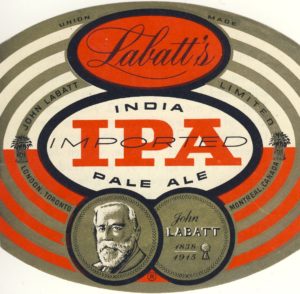
Apart from the weird idea that beer and wine are for mealtime, notice that reference to IPA. Likely what’s being referenced is a beer like Labatt IPA and that IPA from a point in our collective memory at its final days of popularity – before the lighter beers we all bear a certain responsibility apparently to dislike now, beers like Labatt Blue and 50. So, like now recalling the reputation of disco dancing in the age of New Wave, we are a few times removed from the beer in hand, the beer in the slur. In 1998, Colle is 53 so may be recalling the IPAs of the late 40s and early 50s. This could, in fact, be him visiting the brewery’s cask room in the 1940s. A beer with Victorian roots. The ales of his uncles perhaps.

Even just fifteen years on, it much be hard to fully appreciate the slur. What did IPA represent that was so different from “fine-brewed micro-brews”? Like Ten Penny to a Maritime kid, was it musty? Too grainy? It must have meant something to him as he referenced it three times in quick succession.


1749 Quebec Drinks Advice From Pehr Kalm

image56Home alone on a sick day, what else better to do but catch up with my old pal Pehr Kalm on his travels 264 years ago. Working on the Ontario beer history book in recent days, I am looking for references to brewing in New France to seek if I can established what might have been going on around here before it was even Upper Canada. See, what is now Ontario has been many things in the past, bits and pieces of many empires. Beer and other drinks hitch a ride with most of them. And until 1791, southern Ontario was part of the British colonial Province of Quebec and, before 1758-60, part of New France.

And we have some really swell tidbits of information. On 15 August 1749, Swedish botanist and diarist Pehr Kalm was at a reception for the newly arrived Governor General of New France, the Marquis de la Jonquiere, where he reports the “entertainment lasted very long and was as elegant as the occasion required.” All the greatest and the good of the colony were there but you get the sense that it was a wee bit laddish as this is the main topic he records of the conversation:

Many of the gentlemen, present at the entertainment, asserted that the following expedient had been successfully employed to keep wine, beer, and water, cool during the summer. The wine, or other liquor, is bottled; the bottles are well corked, hung up in the air, and wrapped in wet clouts. This cools the wine in the bottles, notwithstanding it was quite warm before. After a little while the clouts are again made wet, with the coldest water that is to be had, and this is always continued. The wine, or other liquor, in the bottles is then always colder than the water with which the clouts are made wet. And though the bottles should be hung up in the sunshine, the above way of proceeding will always have the same effect.

I need to try that one. We have to remember that Kalm was not an idle wanderer. As the Borgstates, he “was commissioned by the Royal Swedish Academy of Sciences to travel to the North American colonies and to bring back seeds and plants that might be useful to agriculture.” So, he is a scientist on the lookout for things… stuff… doings and goings-on.

He describes a pretty rich diet amongst the elite. Brandy, coffee and chocolate for breakfast. Red claret and spruce beer are in much use at the noontime dinner and again at supper at seven in the evening. He notes that people store their beer in their ice cellars beneath their houses to keep it cool in the summer and notes that it is customary to put ice in drinks to keep them cool. It is likely that the beer is spruce beer as “they make a kind of spruce beer of the top of the white fir” which is seldom taken by people of quality. He also notes that it is “not yet customary here to brew beer of malt” and also “nor do they sow much barley, except for the use of cattle.”

This last bit is interesting as one hundred years before the Jesuit records clearly show efforts to create local brewing capacity as part of the earlier economy of the colony. Kalm, however, describes a wealthier and less self-sufficient colony in the late 1740s at least among the elite. There is no longer a press so all books are imported from France. Large sums are spent on boat loads of wine. Cider and beer are so 1630s it would appear.

What does that mean for Ontario? Well, likely the forts by the end of the French empire were supplied with casks of wine rather than malt made beer. Yet, in the last quarter of the 1600s, that was not necessarily the case. When the likes of Lasalle and Frontenac ruled the spot where the Great Lakes meets the St. Lawrence River… who knows?

History, Consistency, Stability And Efficiency

The post at Jeff’s titled “A Better History of IPA“, written in response to a particularly poor piece of old school beer writing, led to comments and on of those comments led me to recall this:

From Schenectady to Albany, about twenty miles, the country is sandy and poor. We travelled at the rate of seven miles an hour, but what with our avalanche adventure, and some other detentions, it was long after midnight ere we reached the city. We had so far exceeded ordinary hours, that the Hotel was hushed in repose, and although we might certainly have raised the home, it was rather doubtful whether we should thereby have improved our condition. We found the porter dosing in the hall, and having committed our luggage to his charge, we agreed upon diving into a certain cellar, which we had observed to be still lighted up as we drove in. Here we found a good sample of low life in Albany. It was about three in the morning, and some of the party had evidently been indulging freely during the previous hours. Still there was no brutal drunkenness nor insolence of any kind, although we were certainly accosted with sufficient freedom. After partaking of some capital strong ale and biscuits, we returned to our baggage apartment, and wrapping ourselves in greatcoats and cloaks, we enjoyed a tolerably comfortable nap, until daylight again put us in motion.

The passage is at page 192 of a travel diary from 1832, Practical Notes Made During a Tour in Canada: And a Portion of the United States by a Scot named Adam Fergusson. I love it. Diving into a cellar to find a 3:00 am party with a feed of biscuits washed down by what was likely Albany Ale of the sort discussed a few years later by the New York State Senate in hearings over adulteration charges against Hudson Valley brewers. Jordan found the diary on line and shared as part of our research for the history of Ontario we are writing and then I shared it with Craig for the bits like this that relates to Albany brewing history we are writing.

What got me thinking about that cellar party in 1832 was not Jeff’s post so much – and certainly not the underlying butchering of both history and thought – but this comment:

And where is the evidence of brewers historically using modern dry-hopping techniques, pelletizing processes, refrigeration, CO2 purging/blanketing, and other techniques for maximizing hop aroma? Just because a historical brewing log says they added 10lb/BBL of hops doesn’t meant the beer was anything like many beers are today. And the hops today are just so different that it’s not even a comparison, though you’ve already written that off and I don’t think it matters anyway in the face of the rest of the process differences. Bottom line is beer today is substantially different from the past. I don’t agree completely with Charlie’s historical take, but your critique of him doesn’t really address or refute what he wrote.

The author of the comment is, I understand, Sam Tierney who is an excellent brewer of excellent beer at Firestone Walker. There is a lot in the string of comments so read the whole thing. The purpose of this post is not to refute or even debate Sam’s point so much as explain what I understand about the point as well as to elaborate where the point leads us. Perhaps a list of observations will help me in organizing those thoughts. In no particular order…

1. Beer is both basic and complex

One thing that is entirely correct in Sam’s observations is that technical advances have played a huge role in the present day boom in good beer. The variations and expansion of sales in IPA in particular has if not led this boom it is a key identifier. It is also the case, that those technical advances are not necessary for the creation of excellent beer. How can I say that? More that anything else I know that because I am a bad brewer. It has been some time since I brewed but today with little more than buckets, a stock pot and simple speciality equipment I could brew excellent beer. With those rudimentary tools, I have made many batches of all grain beer. It is beer of quality that have been received by pals with enthusiasm. I say, however, little more because there are two key items that go a long way to ensure that excellence is achieved. I have access to very good ingredients. The best malts, top notch hops and yeasts packaged by the suppliers to craft brewers. That is important. More important, however, is the StarSan. For me, cheap and effective sanitation is the actual miracle behind modern brewing, whether at the scale of the homebrewer or that of the industrial plant that puts out craft beer or macro gak.

That being said, there are at least three things that craft brewers do that I can’t. The good brewer of good beer achieves success though the three-fold benefits of consistency, stability and efficiency. Consistency I will define as sameness from batch to batch. Stability for me means sameness in the bottle or the cask for a reasonable period of time. Efficiency means making good beer from the least resources reasonably possible. For me, Sam’s comment reflects these achievements of modernity. And important ones they are. But they are not determinative on the question to the point he states. They certainly do not add up to beer today being substantially different from the past.

2. Beer has been basic and complex for centuries

While I am researching brewing history a lot these days and even been writing about brewing history for some time, I am not a historian. I am the amateur popinjay dipping a toe in the water at best. Yet… I have seen certain things. One is certainly that the history of brewing – and especially North American brewing before and beyond the advent of lager and all it has brought – is one of the most neglected topics I have ever come across. Being a lawyer, one is something of a generalist researcher and I have had to study topics are diverse as First Nations history of Ontario and New York, the properties of concrete and the intersection of strollers and dog parts from a human rights perspective. In each area, those who have gone before have laid down reliable grounding for those who follow. By law is like that. Like beer, it as old as culture.

From my research in brewing, however, I have learned that many accepted truths and well-known assumptions are incorrect. Pale ale in the English-speaking world is centuries old. There was a very good reason for the temperance movement to come along as the past of not that long ago was a stupefying drunken place. And the American love of highly hopped strong malt ales is as old as the nation. It is not just that there is nothing new under the sun so much as what was old never really leaves us so much as alters a little as culture around it alters a lot. So we forget. We forget that in the mid-1600s, skills of the good brewers were honed likely as sharp as they are now – it’s just that the tools were not what they are now. But beer is not special in that regard. The same is true of all aspects of our culture. So just as Shakespeare scratched on vellum with a quill pen to create masterpieces, so too the ancient brewer or brewster knew

…the best and most principal fewel for the Kilns, (both tor sweetness, gentle heat and perfect drying) is either good Wheat-straw, Rye-straw, Barley-straw or Oaten-straw; and of these the Wheat-straw is the best…

Of course they did. People did not sit about moaning about how they regret not living in the future. They achieved excellence in the world around them based on the resources around them. Including with beer.

3. IPA has separate centuries-old American roots

I tweeted a tight meaningful summary of this point just yesterday:

Taylor makes very strong hoppy beer, trains Ballentine, Terry Foster recalls Ballentine, trains US craft.

Every time from here on out you see someone pretend to retreat from Twitter discussions because 140 characters cannot contain their wisdom, please remember that tweet. Except not for the misspelling of Ballantine. Let’s unpack the idea a bit.

a. Taylor. Taylor is a key figure in mid-1800s Albany brewing. He owns what was likely the largest brewery in North America around 1850. When you see a listing anywhere in the hemi-sphere for Albany Ale from the 1830s to the 1880s it is likely Taylor’s being advertised from Newfoundland to Texas to California. Craig has more.

b. Ballantine. Craig has a lot of detail under that line but a key point is that Peter Ballantine trained under Taylor before he went off to brew on his own in Neward NJ, starting a line and legacy of beer that can still be consumed in some form today.

c. Terry Foster. I wrote the post under that link in November 2004, nine years ago. Foster, among other things is the author of Pale Ale, volume one of the Classic Beer Styles series issued by Brewers Publications. At page 1 of the 1990 edition of that book, he wrote:

An impressive and highly individualistic U.S. example of this beer is (was?) Ballantine India Pale Ale. Supposedly made from an authentic 19th century English recipe, brewed to a high gravity, heavily dry-hopped and aged in oak casks, this beer has a very intense, complex aromatic character (or did have until the last few years or so).

See? The only thing Foster may have wrong is that Ballantine used an English recipe. Or not. When Americans in the 1830s figure out how to do something they are likely relying on British brewing guides but, regardless, the apply that knowledge by brewing the beer in the US. And brewing a beer that was likely a lot like beer we are familiar with today. This is not to say that this is the only source but it is a key one and one that has been disregarded or unexplored. I have no idea why.

So, there you have it. I was up at 4:45 am thinking out this post and now, eight hours later, have hand cramps. Remember. The past is amongst us. North American brewers have innovated for hundreds of years. Craft brewing is continuing that tradition and, in doing so, make beers remarkably like their forefathers. Go figure.
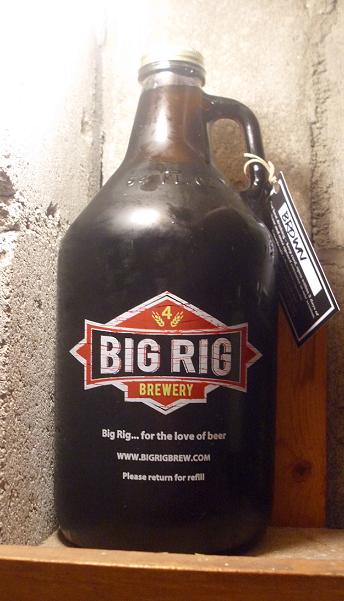
Ontario: Byward Brown, Big Rig Brewing, Ottawa

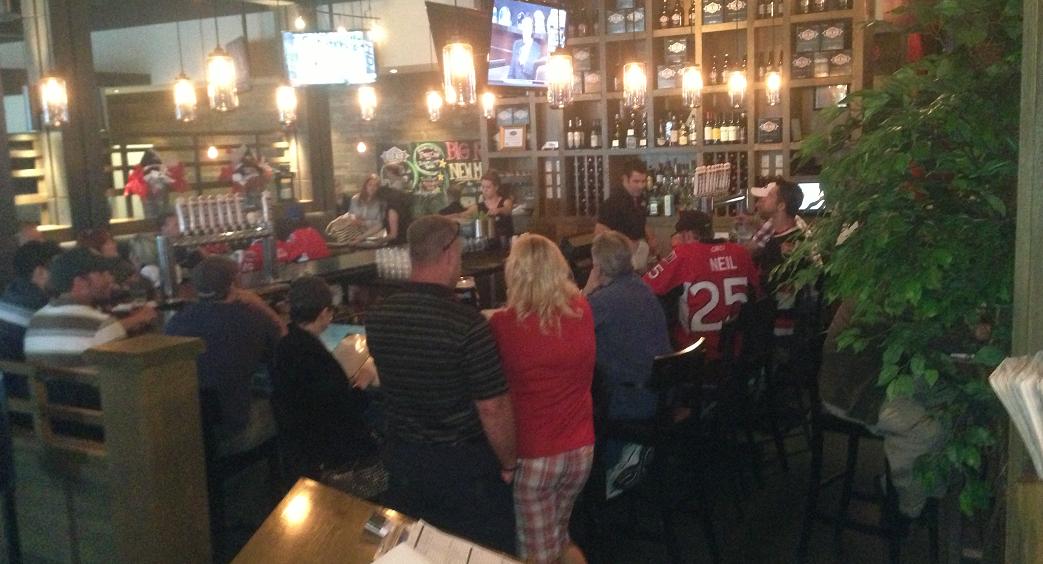
A mad half week on the road. Two business meetings, a ball game plus a 97th birthday party in the family saw me driving from Eganville to Ottawa to Toronto to Owen Sound and back. Good thing I picked up a growler of this nut brown ale as I was passing from highway 417 to the 416. Big Rig sits in a small mall in Ottawa’s east end next to the big Ikea and serves both local passing car traffic as well as nearby residential community. The on-site restaurant was packed when I stopped in with folk catching the NHL playoff game happening in another part of town that evening.

After a morning of gardening and, err, home organization this hits the spot. The beer pours an attractive reddish mahogany with a fine creamy off white head. Nuts and dried fruit on the nose. In the mouth, there is a good bracing jag of twiggy hopping paired with a minority vote from something adding some citrus rind. As the beer warms, the malts open up with flavours of cola, dark sugars, dates and other brown things. The level of hopping might have attracted an earlier craft era designation as a Texas brown ale but that’s a label that seems to have faded away, a style that wasn’t then might have been but now may not be anymore. A black tea dry finish highlights the hazelnut notes and grainy texture.

A reasonably drinkable 5.2%, not enough BAer reviews to warrant an average. I like.

As Pleasant A Snow Day Lunch As Ever I’ve Had

Ron as Švejk caught in a beam of angelic light.
My favorite place to have a beer is a block from work and two from my folk’s place. Today, during today’s Snowmageddon, I looked outside at noon, then looked at my workload and realized an impromptu declaration of a half day vacation was in order. Five minutes later saw me within minutes stomping my snowy boots and brushing off my coat in the vestibule of the Kingston Brew Pub. I’ve been going here for coming on 20 years and love the place. Owner Van was settled into the corner of the bar. I joined him to chat and also try Beau’s Dubbel Koyt released today. Helping them brew the 1500’s gruit beer was something of Ron Pattinson‘s, as illustrated on the day, gift to Beaus for bringing him over for last fall’s Oktoberfest as the Vassar was mine, Craig and Chad’s… and Ron’s.

Like their Vassar with it’s unexpected mango tastes, the Koyt was surprisingly moreish. Slick even to the point of glycerol, I have yet to have a gruit beer until today that managed to place the herbal counterpoint as neatly in the back as this did. Honey and mineral tones in the front end reminded me of Mosel in a way. Others at the bar took tasting glasses on offer, too. With a well hidden 6.8%, the beer went down well with a strip loin and arugula sandwich.

Towards the end of the pint, I was reminded by something that Anders Kissmeyer, traveling Dane about the fest, shouted out at the end of a seminar at the fest. He said that there was no chance that the Vassar tasted anything like a beer from the lower Hudson Valley in the 1830s. Likely true. The same is likely the case with the Dubbel Koyt as well. The techniques and equipment used by Beau’s are too fine. The malts and gruit employed too well made. It’s all phony fun after all. This age’s consistency and top quality are something of a curse to the culinary archaeologist whether looking back to 1830 or 1530. But what can you do?

But does it matter? Never had a pale beer made with 50% oat malt and 20% wheat malt before. If something in the past inspires that experiment, why not? After all, it’s just a bit of relief here in the deep end of winter.

What Caused Steam Beer To Be Low End Then Not?

A couple of reference to steam beer flitting around today. Anchor has a new web ad for a line of new beers leaning on its research of early California brewing. And it came up in the comments from Saturday’s post about… what was Saturday’s post about? I like the references cited at wikipedia from late 1800s writing, especially those in the book McTeague, showing how steam beer was low end stuff, drunk by the pitcher left behind for bottled beer as you moved up in life. Conceptually, it is funny stuff. It goes from being that drunkard’s brew to worth fighting a court case over to the stuff (or the cousin of the stuff in Anchor’s case) of dreamy web vid ads.

Is it because steam beer is really an idea and not really a beer at all? And an idea that has shifted to serve each era’s needs? At some point, labels can pretty much abstract themselves completely away from the substance upon which they are placed. Which make them both flexible and unreliable, prone to being pushed in one direction or another. I thought of that unreliability when I read about this announcement for a contest to brew the best 1812 era Toronto beer. The rules of the contest appear to bears little resemblance to any reading I have done about beer in this part of the world. Toronto – then called York – had a normal British empire style commercial brewing economy at that time. Water, yeast, malt and hops. That’s what brewers in old York likely mostly used 200 years ago. The British defended the right of even prisoners to not suffer unadulterated foods in these parts in the early 1800s.

What made steam beer rough then not? What now litters Toronto’s actual skillful brewing history with “herbs and root vegetables”?

Do New Beer Styles Just Reflect New Ways… And Stuff?

The other day I read one of the more interesting passages of beery thought that I had read in some time. It’s from a response to a post at Jeff’s Beervana about the wonky less than linear history of beer styles:

While it’s entirely possible that malt bills and hopping rates of many of craft brewing’s “new” styles might have had occurrences in the past for which records are poor, incomplete or just plain lost, historically brewers could NOT have brewed beers that we’d be able to directly compare to some of the popular craft brewing styles today. Why? Ingredients. There are simply varieties of malts and hops available to brewers today that are, in a word, new. These newer varieties are creating flavor profiles that weren’t really available to brewers of yore. Hell, the venerable Cascade hop only came into usage in the 1960’s I believe. Combinations of malt and hops in the way they are used today, but using instead the varieties (including malting techniques) of, say, a hundred years ago, would have yielded beers that are so dramatically different that we’d say that they were different styles. IPA is a simple example. One of the key characteristics of the “American IPA” is not just how much hops are used, but the fact that the bitterness, flavor and aromatic profile is centered around newer American varieties of hops.

I like this. It admits that the fashionable brewer is dependent on the new ideas of the maltster and the hop grower. And on new ways of doing things. But we know also the Albany Ale project has proven the opposite is quite true as well. Ingredients (aka stuff) which once were are no more. We have no idea what Cluster was like in 1838 any more than we know what hop will govern in 2038. We live on a river of time where the shock of the new is nothing compared to the disappearance of the past. And, if that all is true, are the style guidelines – like those updated as announced in a press release from the Brewers Association today – really as heinous as we might all quite comfortable suggest to each other? Or do they just express the today we happen to find ourselves facing? Put it this way – if new forms of ingredients and new ways of brewing should come into the market, why shouldn’t new names and concepts of classes be added to describe them as these are woven into our beer?

Let me illustrate the point.with an analogy to the strength of pale ales. The other day when I was doing my drinks free drinks dialogue I discussed how the range was both expanding and filling in. I suggested that I now needed a new word to be coined for me to describe US pale ales between 5.6%-ish and 7.4% or so. Something between a pale and an IPA that might itself be from 7.5% to about 8.5% where the double IPA may start to make merry up on up to 10% before they yield in turn to imperial IPAs. None of that really makes sense when compared to brewing heritage or even recent trendy trends… but if I am having a 6.5% brew, I have no illusions that I am in league with either a 4.9% or a 8%. I want to have words to describe this difference.

If that is the case, is difference based not on strength but on a change in methods or a novel ingredient so wrong? We all know that these style guides are not ultimately important let alone critical to understanding and appreciating beer. We admit that. But are they wrong? Consider the idea of “field beer” at page 30 of the new guidelines for example. Clearly deciding to disassociate itself from the downside of vegetable, it is a splintering off from fruit beer and herb beer. Fern ale might fit in here. Sure we would need someone to pick up and brew the style last described in 1668 but if it not only were brewed but then became the pervasive fashion totally replacing retro light lagers as the preferred drink for the hipsters of 2038 – why not describe it as its own separate style?

Can I Run A Beer Tasting Session Without Tasting?

Here’s the thing. I don’t like to drink all that much on Sunday and really like to avoid drinking on Monday. It’s not that I plan when I do but have always liked clear days. And, for other reasons, I have to stay clear anyway. But I was asked to present some IPAs to some good beery people tonight and, well, that’s usually too interesting to pass up. So, I am going to get thinking about the stink of beer. I was over in northern NY Friday, bought a bunch of strong if not stenchily aromatic IPAs and plan to do a few experiments in smell-o-logy. I hope to finally prove the speed of smell. I am planning to see if anyone shouts out the word “parsley!!!” without prompting. And I also plan to see if we can find out how long beer people can go without actually sipping.

Should be fun. More later when the results start coming in. Any other experiments you suggest I impose upon the lab rats?

Update: A fairly focused range of beers can still illustrate a wide range of concepts about beer. I brought Oskar Blues Dales Pale Ale, Sixpoint Bengali Tiger, Stone Arrogant Bastard, Firestone Walker Double Jack, Anderson Valley Imperial IPA and Stoudt Double IPA. Beau’s poured its Beaver River I.P.Eh. So here is some of what we thought about:

♦ Brand theme. Stone was compared to Sixpoint. Both have very iconic imagery but Stone conveys all that gargoyle content while Sixpoint is much more subtle… not hard while you think of it. Both identify but only one irritates. But does it matter as long as it identifies? Anderson Valley looked like a 70s album cover but we were unclear on Zep or Yes.
♦ Price point. The Sixpoint was the cheapest beer (at $5.00 per litre) but stood out with the Firestone Walker (at $12 per litre) as the more tasty two of the set. This got is us into a conversation about who is the market for beer that go from $12 to $20 per litre and beyond.
♦ Regionalist tastes. Stoudt at 10% had a butter note that got us into diacetyl while the Anderson Valley gave us hard water. I suggested this might be an east coast v. west coast phenomenon. We talked about some of the earthy notes in Quebec beers that you don’t see elsewhere, too.
♦ Speed of smell. I clocked it at about 4 inches a second.
♦ Memory and taste. I wondered how much of taste and memory is the mind triggering taste associations as much as tastes and smell takes us back to a former place. I thought we unpack the mix of flavours in a given beer – and one that is very similar to the last and next beers – and our brain seeks to differentiate through distinguishing associations.

Finally, what I really learned is that you can lead a tasting without tasting. You get to ask questions and listen. I find that usually much more interesting than hearing what I think.

Can A “Style” Ever Be More Than A Helpful Generality?

Levels of abstraction. That is what this style stuff is about. Not about what it is but how it can be grouped. I think. Two articles got me thinking about this today. In The New York Times, Eric Asimov talked about “sour” beer and got into a range of beers that I would never consider to fall under that adjective. And the great ATJ discussed the challenges posed by grappling with the idea of Abbey beer.

So I get back to the original question: what is an Abbey Ale? Is there such a thing? Trappist is an appellation — it covers dubbel and tripel and very strong dark beer. Abbey? It seems to be 5-6% (but then looking back at my notes I find Silly Brewery making a 9.5% one), sweetish, gold in colour with reddish hints, but then it could be a brighter gold or a darker gold. In one French brewery I was given one with rice in the mix, which gave it an almost ethereal lightness of touch, which didn’t work for me. So is it a marketing device? On the label the picture of a fat cheery monk or a sombre looking abbey and the promise of heaven in a bottle seems to be a popular device. Marketing then. That’s the way my thoughts are going.

One thing pops into my mind when I read that passage. And it is not intended to give the dim and greasy hope. But is it so bad to consider that marketing might have some actual work to do? Maybe the idea that you can find valid maltiness with a pinch of thoughtful Belgian yeasty spice is enough to be Abbey. Can’t we gather around that cause?

Yet Eric Asimov’s inclusion of Goose Island Sofie and Ithaca White Gold as sour? That goes further, doesn’t it? Does marketing need to make sour out of, you know, tang? I had that great CNY beer last year and mentioned “I had one the other night that had spent a long time in the stash and was gorgeous, showing lots of tangy beer gone bad quality.” Is tangy beer gone bad sour or is it something else? And is Sofie sour? Really? Stan wrote a great post this summer about the weird things we love in weird beer. But does that make for sour?

I’ve undertaken my sour beer studies and included a lot of things… but now I wished I called it “Acids I Drink” or some thing like that. Tangs, sours, twings and twangs? They all have their own worthy place. But by bundling them under “sour” are we not treating them like we treat Abbey beers, labeling them with a euphemism? And if we do – but do so to aid in understanding by adding an abstraction… is that so wrong?