Who Was Joseph Coppinger, Early 1800s US Beer Geek?

coppinger2The trouble with finding an old text in isolation like the one I wrote about yesterday is establishing some context. Without it, you are at the whim of the person’s claim to fame as opposed to his or her place. It’s as true today as it was in 1815 when Joseph Coppinger published his book on brewing. The context is totally dissimilar. Right now we are still in the era when folk can assert craft beer expertise, isolated from critical assessment due to the flux. We have to take comfort and grounding in the knowledge that few are. In the years leading up to 1815, America was similarly in a time uncertainty. The British were not yet allies again and the lands beyond the east coast’s highlands were not secured. Drifters abounded. I was thinking about this when I was thinking today about Coppinger. How the heck do I know he didn’t make up all that in his book? How can we establish he is reliable? So, I looked to see what I could find out about him. Fortunately, he liked to write letters to the famous and left a bit of a trail:

1800: claims in his 1810 letter to President Madison that, prior to emigrating from Ireland to the US, he published a paper in the reports of the Bath and West of England Society on an improved method of the drying of malt.

1802: Coppinger writes two letters to President Thomas Jefferson. He wrote from New York on the subject of naturalization and the need for him to become a citizen to patent an invention. He is an Irish Catholic recently arrived in the New World;

1802-04: Coppinger appears in Pittsburgh on the frontier partnering in a brewery operation located in and even made out of the former Fort Pitt known as Point Brewery;

1806: Coppinger enters into partnership to establish a brewery in Jessamine County, Kentucky. It never comes into operation and a law suit is begun. The dispute is settled through the intervention of the Rev. Stephen Theodore Badin, the first Roman Catholic priest ordained in the United States;

1807: Coppinger wrote from St. Louis a letter to Benjamin Rush, Revolutionary leader. Rush is a pre-Revolutionary anti-slavery activist and a medical doctor. The letter is not about beer so much as a scheme to use public resources to help raise employment levels;

1810: Coppinger wrote to President James Madison describing a list of inventions and also proposes the establishment of a national brewery at Washington. His inventions include an improved threshing machine and a better method of distilling. He gives his address as No 6, Cheapside Street, New York. Says he has been in the brewing trade for twenty years;

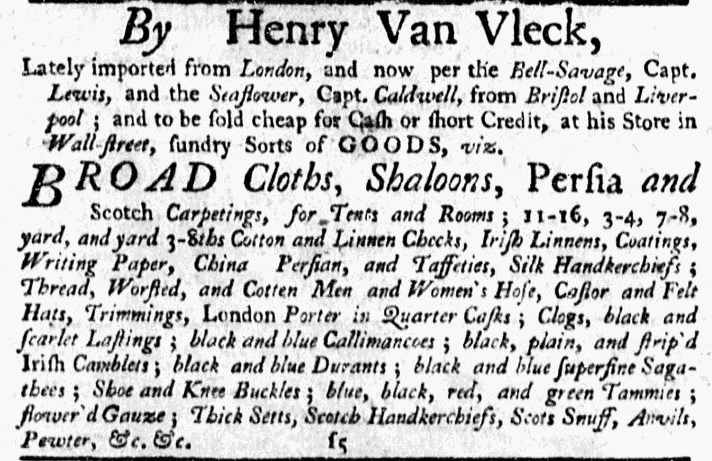
1813: An advertisement for Coppinger’s book is published in a Philadelphia newspaper, the Aurora General Advertiser; and

1815: Coppinger writes to former President Thomas Jefferson. He gives his address as 198 Duane St., New York. Jefferson wrote back a couple of week later quite interested in Coppinger’s ideas, noting “in my family brewing I have used wheat as we do not raise barley”.

1815: Coppinger’s publishers, Van Winkle and Wiley of New York, are quite respectable and at the leading edge of the first wave of homegrown American literature. In this same year they publish An Introductory Discourse delivered before the Literary and Philosophical Society of New York, on the fourth of May, 1814 by De Witt Clinton, then Mayor of New York, later state Governor. It is a treatise on the improvement of society.

A brief biography of Coppinger appears in the footnotes to this letter to Jefferson. In his later years he writes two more books: 1817’s Catholic Doctrines and Catholic Principles Explainedand in 1819 On the Construction of Flat Roofed Buildings, Whether of Stone, Brick, or Wood, and the Mode of Rendering Them Fire Proof. He passes away around 1825 after 23 years in the young United States of America. He looks good if a wee bit intense. But, then again, he is a participant in the making of the country, making the world anew. Does this mean he is to be trusted in his description of how to make Dorchester Ale? Not at all. But he has a very good chance of being trustworthy with a bit more digging.

Dorchester Ale: Esteemed When The Management Is Judicious


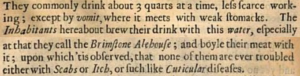
coppingerFabulous. I think my new best friend is Joseph Coppinger. Sure he published his book The American Practical Brewer and Tanner 200 years ago… but so few people come by these days I don’t care to notice such things. Like Velky Al did a couple of years ago, I came across an online copy of the book as I was looking for something entirely different. [No. No, not that.] And when I did I immediately – well, right after checking out the tanning section – noticed there were a number of recipes for beers. Styles of beers even. A listing of styles. In a two hundred year old book about beer. Odd. I thought that was invented in the 1970s by that Jack Michaelson chap. But, more importantly, he included this:

Dorchester Ale

This quality of ale is by many esteemed the best in England, when the materials are good, and the management judicious.

54 Bushels of the best Pale Malt.
50 lb. of the best Hops.
1 lb. of Ginger.
¼ of a lb. of Cinnamon, pounded.

Cleansed 14 Barrels, reserving enough for filling….This mode of brewing appears to be peculiarly adapted for shipping to warm climates; the fermentation being slowly and coolly conducted: it is also well calculated for bottling.

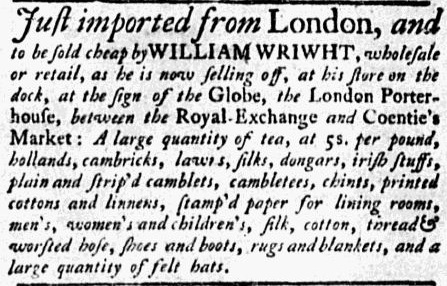
Yes, there is more. I just used those three dots to keep you focused. He goes on and on in fact. Over thirty sorts of beer and a few diagrams like the one above. A few things. First, it’s a description of how to make Dorchester Ale. The careful – or perhaps the caring – amongst you will recall that two years ago while waiting for Craig in Albany to go for a beer, I wandered into the New York State Library HQ and found a large number of mid-1700s newspaper notices for British ale coming into the new world. And a few of those ads referenced Dorchester ale. So there you have it. Dorchester was a top quality ale with a bit of ginger added. Sounds like quite nice stuff. Second, yes, the book was published in 1815. And it was published in that year by the firm of Van Winkle and Wiley located at No.3 on Wall Street. It is a guide aimed at the trade. Aimed at the trade that wants to know about shipping to the warmer climes. Which means exporting ale from New York state. Two hundred years ago. Third, he goes on. And on. The book has a lot of data. I need to get into it to find out what.

I believe this illustrates a point: the problem with records. Believing you know what things were once like based on the available records is a dodgy game. Things like (i) Gansevoort’s adin 1794 asking for barley for ale as the old state in the young nation was coming out out famine leading one to leap to (ii) a prosperous local brewery to the south in 1808 connecting you to (iii) this guide in 1815’s NYC on how to brew for export (iv) all might lead you to understanding that there was in fact a vibrant but little understood brewing trade waaay before the US Civil War and waaay before the advent of lager’s supremacy. But you have to watch that sort of thing. Because records are dodgy things. But at least we may well know what Dorcester ale was. Maybe. Sadly, no reference to Taunton. Maybe. Probably out of style by then in the New York market. That might be it. Maybe.

Massachusetts: Spencer, St. Joseph’s Abbey

Long time reader Brian was good enough to deliver this to me after having driven west for the 1780 Challenge back in May. The beer is brewed by the monastic community at Spencer, Massachusetts. Fortunately, they are a fairly prudent bunch as their beer comes in at just 6.5%. Every time I read some git saying big bottles are for sharing I think of this strength of beer. Mine.

The burnished gold ale sits under fine lace leaving egg white foam. Shoving the nose deep into the glass, there are aromas of burlap, dry twiggy herbs with pear and banana. A bit of sheddiness but very pleasantly so. The monks suggest there is a light hop bitterness. They are fibbing. On its trip by the gums, there’s plenty of bitter herb as well as a bit of menthol lingering at the end. More of the musty burlap. Underneath the pale malt is sweet and creamy but definitely playing a supporting role. A lightness shows up mid-mouth. There is a little smoke amongst the herbs making me think that this would go great with bacon and old cheddar. But, then again, so does life. There is even a wee bite that reminds me of those saisons which an edge from a bit of white pepper. Clove or very bitter orange maybe. I opened a bag of snapea crisps, the sort of snack monks may have sworn off. It works.

The BA bros rank it lower than the general BAer masses. I get their observation that “nothing really pops out to wow our palates” but I am not sure that’s always the reasonable expectation. This is one of the best beers of its sort that I have had, the flavours articulately placed. But it is not a show off. Instead, it shows restraint and balance. It shows thought. Thank God for that.

Beautica Club… Beautility Beer…

beauticaAh, Utica Club. Craig brought Utica Club. He brought a few other beers. Beers that even came in caged cork topped bottles. But he brought Utica Club. It’s a funny beer. An old school macro lager made by a regional craft brewery. Is it hidden craft? Faux macro? Whatever it is, it’s five bucks for three litres at central NY gas stations. Summertime beer. Maybe even a cure for the summertime blues. Maybe. We talked over a pint or two before turning to a few more complex beers. Sweetish with a well placed jagged edge. Everything in its proper place. Nothing off or awkward. A beer for craft’s endtimes. Both pure and XX. According to the label. We talked of these endtimes. I blame Boak and Bailey, writing that non-derivative book that no one else will match. Takes the wind from the sails, didn’t it. So much for no one ever going beyond what’s gone before, been done before. Things get confused once those sorts of things get going. Not knowing your place. Can’t tell heterodox from orthodox. Hard to find which side of the map is up. Things go round and round. The saison driving north from Virginia or the Carolinas was wonderful after the cork popped. But so many are in a similar way, aren’t they.

Clowes, Newbury and Maddox, Bermondsey, London, 1827

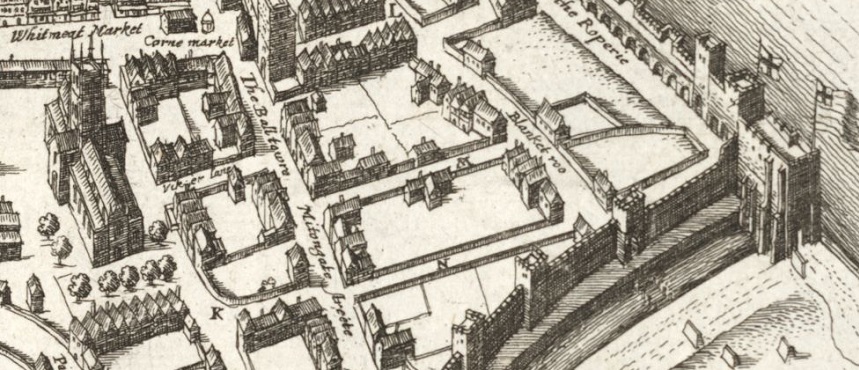
brew-house-stoney-lane-bermondseyThe brewery of Clowes, Newbury and Maddox sat on Stoney Lane in Bermondsey, London. The late Georgian artist John Chessell Buckler created a number of images from the district of Bermondsey. The watercolour of Clowes, Newbury and Maddox was painted in 1827. Charles Clowes, John Newbury and Erasmus Maddox that is. In 1868, the image was owned by the Corporation of London. I know nothing of Bermondsey other than what I read from Boak and Bailey or Stonch about the Bermondsey beer mile, something of last year’s model apparently. A place of rubbish-strewn industrial estates. Huge groups of lads getting pretty drunk, stag parties. Sounds fairly Georgian. Clowes, Newbury and Maddox were in operation in 1794. Charles Clowes was an admirable man, a lawyer turned brewer. He installed one of James Watt’s engines in 1796, even though he is reported to have refused the idea in 1785 after making inquiries. It is mentioned in a very interesting passage from 1805:

…the very capital malt distilleries at Vauxhall, Battersea, Wandsworth, and Kingston,. the large porter breweries of Messrs. Barclay, Clowes, Holcomb, &c. together with the infinity of pale beer breweries in the Borough of Southwark, and dispersed through every town and Tillage in the county, cannot be at a loss to account for the magnitude of the demand for this article.

Note. The infinity of pale beer breweries – not of households brewing pale beer – meeting the demand.

threetunsbermondsey

dukesheadsouthwark

kingsheadinn


The brewery of Clowes, Newbury and Maddox seems to fit into Buckler’s interest in interesting and dilapidated structures from the previous century or before. He was an architect who was the son, brother and father of architects. The images are largely lifeless or rather at least without human participants. Their effect is sometimes present. The ruts in the road. Idle carts. His views illustrate scenes from the mapping I have been poring over. The Three Tuns public house on Jacob Street, Bermondsey to the left. The Duke’s Head Public House in Red Cross Street in the middle. The King’s Head Inn on the East Side of the High Street, Southwark to the right. The places Buckler took and interest in can be found on Greenwood’s Map of London from 1827 if you nose around a bit. The Duke’s Head lasted until at least 1874.

How I Actually Taste Beer According To Me

graph1

Once I used the phrase “the theatre of the mouth” and Stan liked the idea. Or maybe just the sound of the phrase. I was thinking about it today for some reason and realized that I had never described what I meant when I thought about this to myself. Well, the phrase itself places one in the seat, the only place that ultimately matters. No one can taste for you anymore than someone can attend a play for you. I was a playhouse usher for years so the analogy works for me.

Having now drawn the graph at dusk by the window, I wonder if it really works sitting there in 2-D. Nine squares through which the sensations move. Tic-tac-toe. I’ll have to think about this more, flavours and textures flitting in and out in order as the grid is traversed from left to right. Spaces between indicating selectivity and articulation. Do I fill it in with coloured pencils? Emoticons? My Little Pony stickers? Or by using it would it become less useful as a concept, a conceit?

Considering The Badness Of Beer In 1800s Britain

4971
Hail, Beer!
In all thy forms of Porter, Stingo, Stout,
Swipes, Double-X, Ale, Heavy, Out-and-out,
Most dear,
Hail! thou that mak’st man’s heart as big as Jove’s!
Of Ceres’ gifts the best!
That furnishest
A cure for all our griefs: a barm for all our—loaves!
Oh! Sir John Barleycorn, thou glorious Knight of
Malt-a!
May thy fame never alter!
Great Britain’s Bacchus! pardon all our failings,
And with thy ale ease all our ailings!
 

That’s the first bit of “Ode to Beer” from the Comic Almanack for 1837. What a jolly bauble. Exactly what we largely like to tell ourselves about the merry merry world of the past. Dickens without all the bad bits. The view from outside the Bermondsey¹ public house, as above, in 1854. As we all rush about finding older records to share about beer and brewing in, mainly, the English speaking world, I have wondered about the difference between the official record and the actual experience. By official, I don’t mean governmental or even sanitized so much as the accepted. The approved version. One of the biggest problems leading to the approved version is the love of drawing conclusions or, more honestly perhaps, the use of records to justify comfortable conclusions. We want things to be explicable but we want to be comforted. For authority to be correct we want it to align with out needs. It rarely does. But authorities won’t tell you that. Authority has another interest. Consider this passage in a book entitled England as Seen by an American Banker: Notes of a Pedestrian Tour by Claudius Buchanan Patten published in 1885:

I was at some pains to get at the following authentic statement of methods of beer adulteration. A member of London’s committee on sewers —an eminent scientist — puts forth the declaration that “It is well known that the publicans, almost without exception, reduce their liquors with water after they are received from the brewer. The proportion in which this is added to the beer at the better class of houses is nine gallons per puncheon, and in second-rate establishments the quantity of water is doubled. This must be compensated for by the addition of ingredients which give the appearance of strength, and a mixture is openly sold for the purpose. The composition of it varies in different cases, for each expert has his own particular nostrum. The chief ingredients, however, are a saccharine body, as foots and licorice to sweeten it; a bitter principle, as gentian, quassia, sumach, and terra japonica, to give astringency; a thickening material, as linseed, to give body; a coloring matter, as burnt sugar, to darken it; cocculus indicus, to give a false strength; and common salt, capsicum, copperas, and Dantzic spruce, to produce a head, as well as to impart certain refinements of flavor. In the case of ale, its apparent strength is restored with bitters and sugar-candy.”

Now, this is interesting. And not because all the horrible gak was added to beer back then as it is being again added to beer now. But because it includes the admission of wide spread watering down at the pub. Watered down poisonous gak. Which leads to the question of what people were really experiencing as they looked down into the murky depths of a pewter quart pot a century and a half ago. It makes me wonder it might mean for all those records Ron has dug out of public libraries and brewery attics. The badness of beer by these sorts of additives appears to have arisen after legal changes in 1862 as The British Farmer’s Magazine advised in 1875. But there are other issues, more to do with quantity than quality. This passage from The Farmer’s Magazine of 1800 is simply depressing:

There are some persons who do not drink malt liquor at all; most people of fortune and fashion drink it very sparingly; while great numbers of the lower orders, particularly coalheavers, anchor-smiths, porters, &c. drink it to great excess, even, it Is supposed, to the amount of five hundred, or one thousand gallons a year each. Upon the whole, I apprehend the quantity of malt liquor consumed in the county, would almost average a hundred gallons per head of all ages and conditions. One thousand gallons per annum, is nearly, on an average, about 14 bottles of ale or porter per day, and is almost equal to what is passed through many drains, made to carry off the superabundant moisture from the earth… upwards of three millions of money are expended by the labouring people, upon ale, porter, gin, and compounds, which is 25I. per family of that description of persons. If wages, on an average, be 12s per week, the amount per ann. is 32I. 4s. which leaves only 7I. 4s. for purchasing bread, butcher meat, vegetables, and clothes!

Holy frig. Perhaps we might take a moment to thank our lucky stars that we are not living when our great-great-great-great-great-great-great-grandparents were scraping together their existence. When I tweeted the stats in that passage above, the good hearted Lars responded “I would guess a large proportion of that was small beer.” One does live in hope but, really, it’s unlikely isn’t it. The life of the industrial labourer and his family was simply horrible before the public health movement. In 1835, harvesting labourers required a gallon of beer every day for a month. In that same issue of The Farmer’s Magazine that that fact came from, there is a very interesting suggestion in an argument on why public houses were not going away despite their menace, why the labouring man had no choice:

…as to the temptation of company at the public-house or the beer-shop, would it not exist in precisely the same degree if the labourer had a cask of beer in his cellar brewed by himself, as if he had a cask purchased of the public brewer? If there were a disposition to avoid that temptation, and to drink his beer at home with his wife and family, what now prevents the labourer from purchasing a cask of beer and so consuming it? Nothing that would not equally apply to his purchasing malt and brewing his own beer. And if he had a cask, what security is there that his wife or children would not consume the greater part of it while he was absent at his daily labour? And would not he himself he likely to fall into the temptation of consuming it most improvidently either alone or with his companions?

We love to see things through rose coloured glasses. When we are not looking through amber coloured beer goggles ourselves. All but the first of the quotes and links are Georgian and pre-date temperance. When alcohol was so normal it was just a personal failing to let it affect your life as it washed over and through you. I honestly do not know what to make of it all. Have we simply forgotten the grim and bought into comforting fictions about the recent past? Accepted some sort of Jacksonian romance? My first reaction to it all is to praise the campaigners, to scribble a prohibition pamphlet – but then I remember that 1832 impromptu drinking party a traveler came upon in a cellar in Albany, NY:

…there was no brutal drunkenness nor insolence of any kind, although we were certainly accosted with sufficient freedom. After partaking of some capital strong ale and biscuits, we returned to our baggage apartment, and wrapping ourselves in greatcoats and cloaks…

The surprise of joy? Or a wallowing in the familiar? Or the land of liberty overlaid upon the event instead of the lives of those in the dark Satanic mills?

¹Yes, that one.

Three Mugs Of Beer For The Servant Girl

threemugsI’ve heard you. More tales of Cripplegate crime related to beer from the records of the Old Bailey. And why not? It’s good clean fun, in it? Let’s dissect the trial of Michael Martin and Hannah Farrington for grand larceny held on 15th October 1729. It starts out pretty clearly enough.

Michael Martin, and Hannah Farrington, of St. Giles’s Cripplegate were indicted for feloniously stealing two Gallons of strong Beer, value 2 s. the Property of John Ploughman, the 12th of May last.

Charged with a felony for two gallons of beer? What’s the prosecutor thinking?

It appear’d by the Evidence that the Prosecutor was a Brewer, and the Prisoner, Michael Martin, was his Servant…

Oh, that’s what’s going on. This is a private prosecution. The master, John Ploughman, has filed an information with the court against his own servant, Martin, for stealing the two gallons of beer. Breach of trust situation. The value is a bit of a side point if you think about it.

….that the Prosecutor having a Store-Cellar near Cripplegate , and Hannah Farrington being a Servant to a Customer of the Prosecutor’s, who dwelt hard-by this Store-Cellar…

Uh oh. Boy meets girl. Girl meets boy’s boss’s beer cellar. A story as old as love and beer cellars have been around.

…and having supplied the Prosecutor’s Servants with some Necessaries they wanted when at the Store-Cellar, the Prisoner, Michael Martin, or some other of the Prosecutor’s Servants, had at Times, in Return, given her three Mugs of Beer…

Had at times given her some beer! A bit imprecise for an alleged felony. Not only are the amounts of beer involved tiny but the dates of the supposed offences are sketchy. There must be more going on.

…and that the Prisoner Michael Martin , having given an Information to the Commissioners of the Excise of the Prosecutor’s using Molasses in his brewing Drink, did set on foot this Prosecution;

Ah ha! The truth will let itself be know, won’t it. Martin had ratted out his boss to the tax man for adulterating the beer and there by avoiding paying what was due. Malt tax was a pressing issue. A new tax in 1725 had led to riots in Scotland. Since 1697 In England, 6 pence was paid for every bushel of malt used in brewing. Folk were seeking ways around doing their duty. Bad folk were, that is. Folk like John Cheaterpants Ploughman. The case immediately begins to unravels rather quickly…

…giving the Drink not appearing in the Eye of the Law to be a Felony, and the Prosecution malicious, the Jury acquitted the Prisoners, and the Court granted them a Copy of their Indictment.

Freedom! Freeeeeedommmm! Well, no job and nothing but a piece of paper with the word acquitted on it but at least not transported or hanged by the neck until dead or anything. The latter prospect was cheerily and apparently popularly depicted in the background of that illustration up there showing the Old Bailey in 1735. Moral of the story? If you are going to cheat in 1725 cheat a bigger cheater who’s been cheating the Crown.

Ale Tunners And Tunner’s Ale in 1500s Leicester

beer1522People don’t give municipal records the respect they deserve. Where the rubber hits the road, that’s what a municipality is. Consider this from the Records of the Borough of Leicester Being a Series of Extracts from the Archives of the Corporation of Leicester, 1509-1603:

Aile tasters and sworne men within the towne of Leicester aforesaid to make inquiries there of the defaltes of tunners & typplers and especially to inquire and present the defaltes and trespaces of common dronckerdes that do vse to sitt typplynge at the aile houses all daye and all nyghte vnthryftely, and their wyves and children almost sterve at home for lacke of good releffe and sustentacion.

That cheery wee note from the Tudor world was entered into the records on November 18, 1569. Another dated April 7, 1592 just states “Ale 2\d. a gallon “as well strong ale as the tunner’s ale.” What’s a tunner? Or tunner’s ale? In the records of the municipal corporation of Boston, there may be a bit more information:

According to the Corporate records, the brewers in 1547 were ordered to sell good ale for 1¼d the gallon, double beer 1½d. the gallon, and single beer 1d. the gallon. In 1552 small ale was sold at three gallons for a penny, “till malt rise in price;” and good ale 2d. the gallon. In 1558 the brewers were to sell double beer at 20d. the firkin, and single beer for 10d. In 1575 certain persons were appointed ale-tunners to taste the ale and beer before it was sold. Brewers, before they “tunne their ale and beer, to send for the ale-tunners to taste the same to see that it is good wholesome drink:” prices to be regulated according to the price of malt.

That doesn’t look right. Muddies whether the ale tunner is an officer who is required to ensure that the beer is in good order or if they are someone who needs ordering about by an officer. The tunner seems to be consistently defined elsewhere as the cask filler, not the judge of anything. Hmm. This record from Nov. 16, 1520 also from Leicester helps a bit with the process:

Allso that no brewer within this towne sell forthe no ale tyll the allderman of that ward and too of ye XLVIll haue tasted their alls bothe the best and ye second in pene of forfeture the fyrst tyme iiij”. Wnd. and so to dowbyll as ofte as they make defawte; and yf the alderman of the ward be a brewer hymselfe or thos that [are] of the XLVIII, then to call the alderman of ye next ward to taste as aboweseyd for they that be brewers schallbe no tasters.

I love that “best and ye second” as the same was still going on in Vassar’s brewery in 1808 before things got too scientific. And there are a string of separate Tudor functions and trades all in those passages up there: the XLVIII, aldermen, brewers, tunners, typlers, tasters. The XLVIII or “the 48” appear to be members of a secondary level municipal council, beneath the one formed by the aldermen. A typler is a retailer as we can see the Leicester’s law of around that time provided “that no typler within this towne sell no ale with onlawfull mesures.”¹ It looks like the tunners and the typlers answer to the alderman and the tasters all to ensure thedronckerdes get their proper aile. If the aldermen and tasters are checking on on the tunners and typlers, they may be ensuring proper measures are sold at both the wholesale and retail levels and not just whether the stuff is foul or tasty. Quantity as well as quality control. Tasters were municipal officers who were otherwise titled better known as “ale conners” and lesser known as “ale founders” – the last of which lingers on as an especially obscure family last name. They also confirmed price. In 1853, of the 234 boroughs in England and Wales, 26 had officers titled “ale tasters”, six had an “ale founder” while only four officers were called “ale conners”. Martyn has explained that they did not sit in puddles of ale as part of their job despite modern sillinesses. Hornsey has more of both the law and the silly.

If all that is correct, the note about Boston is wrong and the tunner is not the taster as these were separate and separated tasks. Checks and balances. Still not sure what “tunner’s ale” was in 1500s Leicester… or any other place or time for that matter. Another day for that perhaps.

¹The named measures include “strykes”, gallons, “potell”, quarts, pintes. I can spot the pottle but not sure what a stryke is. By the way, I am not sure if that image is related to ale, is English or even from the 1500s. Looks swell, though.

Ontario: Skeleton Park Session Ale, Stone City Ales

scaspsa2

Minimalism. I like this sort of labeling. It’s all I really need to know. Even if the Skeleton Park thing seems to be some sort of out of season Halloween branding. It’s actually the name of a district here in Kingston with its own claim to a particular corner of our a rich history. They have an arts fest there every June, just a couple of blocks from the brewery.

scaspsa1Golden amber cloudy ale under a fine clingy whipped egg white foam. Wafts of orange juice and ginger aromas from the Frankenhops these kids are brewing with these days. In the mouth, fruit cocktail. By which I mean the canned fruit cocktail of the 1970s dinner table. Lots of pear, a little cherry and a base of orange – all with a frame of weedy herbal bittering. By Stonch’s law, it is not much different than a lime and lager. Not a barley sandwich. Yet, it’s really attractive at this strength. Flavours that you see a lot a 7% or more but better suited in this more watery form. Lush. I like.

One thin BAer rating but certainly CAMWA approved.