Incidental 1930s Brewing Letterhead Images

image50

Now there’s a sexy title for a blog post. A real whooah-ish search engine optimization blog post title. Letterhead Pr0n. I should have paid more attention to the lighting when I was at the archives last week with Jordan in Ottawa. But, still, these are pretty sweet. It is amazing how elaborate the Taylor and Bates letterhead is. Rich old guys in suits drinking beer and having the time of their lives because they own a brewery and a radio station.

image53

image52

image51

image48

image47

image49

Travel: A Trip Up To The National Archives

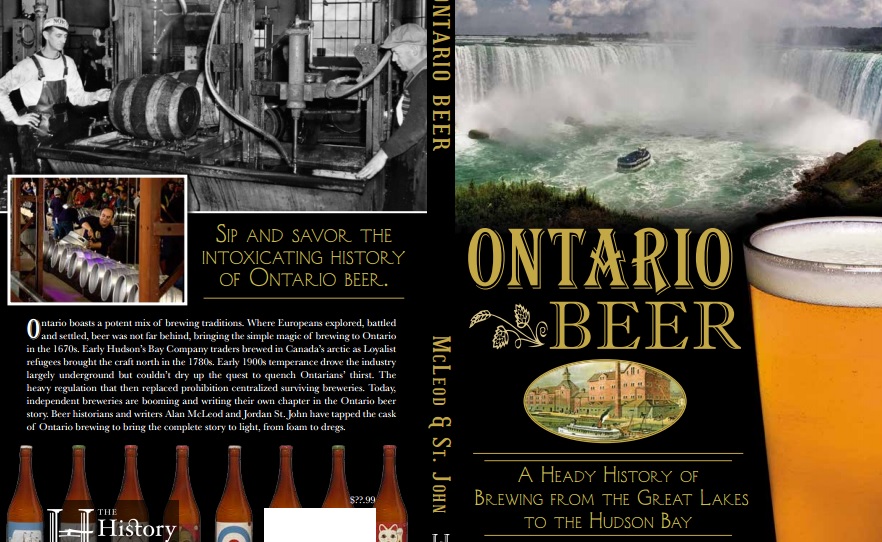
I made a quick trip to the Library and Archives of Canada as part of researching the book on Ontario beer history. Among the most interesting things seen was all the white with black veined marble throughout the place.

That’s the foyer up there. The Wellington Street building down the road from Parliament and the Supreme Court has an odd combination of the white marble, aged pine and brass fittings. It feels like the Earth HQ might have looked like on Space:1999. Apparently I failed to notice the Henry Moore down to my right when I took the picture.

A Trip With Jordan To Canada’s National Archives

image45It took four levels of security to get Jordan and I from the front door of the Library and Archives of Canada to a table with 20 neatly stacked boxes of brewery records to look through. The two hour drive north was fueled by caffeine. Finding a place to park was the biggest hassle. Once in the building we were issued ID, then signed in by security and then provided the access rights granted in writing before we were shown our table and provided with the boxes we had requested. We were assisted by at least seven by different staff members.

And such things we found. Correspondence between names which have altered the global beer markets. Early Victorian beer labels. Public opinion surveys from an era long gone. The cost of 100 lbs of brewers yeast in 1932. We’ll have to confirm what can be shared but suffice it to say that the book has been enriched.

Ontario: Toronto’s 1877 Temperance Debate

4303Working away last night on the history of Ontario beer and brewing while Jordan was dilly-dallying over beer in the 1980‘s, I was looking at issues related to the beginnings of temperance and specifically references to the “Dunkin Act” of the Province of Canada, named after politician Christopher Dunkin and repealed in 1878. See, before Canada became a country – sorta – in 1867, there was this other country called… Canada which existed under a constitution that lasted from 1841 to 1867. It was named after the upper end of New France, conquered in 1760 by the British which was named, you guessed it, Canada.

Anyway, the Dunkin Act was the short name for The Canada Temperance Act of 1864 under which municipalities could vote to declare themselves “dry” – meaning free from alcohol sales. When Toronto ran its vote in 1877, a committee of those working for the “no” side kept notes of the debates and, after they won the day, published them. The accounts are full of spicy Victorian rhetoric like the passage above spoken on 23 July 1877 at the Coliseum on Alice Street. Apparently the Sally Anne held meetings there, too. I shall endeavour to work the making of pants too tight to sit down in part of my daily patter from herein out.

And, as the rest of that passage illustrates, the temperance movement may have had quite a valid point in those times. Not only was there a mass of drinking going on but there were other things triggering the movement. The rise of mechanical workplaces needing greater sobriety, the development of a greater sense of individual responsibility compared to more carefree status-ridden Georgians of the first third of the century and, not least of all, the development of a mass middle class of skilled tradesmen and less affluent professionals. Concurrent with this was a pretty sharp u-turn in medical thought which shifted daily alcohol consumption from a principled part of a robust diet to a poison to the body and society. It is interesting to watch this shift happen in less than half a generation just as southern Ontario gets fully mapped out if not yet populated.

We are prone to associate ourselves with history’s winning sides but few of us would not side with the goals of the reformers at this stage of the debate. The are, after all, dreaming and fighting only for the lives we live today. In the story of Ontario beer takes something of a side seat in the debate at this point, the real enemy being whisky. In fact, just a few days before on the 10th of July one speaker, surely coincidentally named O’Keefe, got a big cheer from the crowd when he said he was pro-Temperance, though not in a legal imposed form, and also in favour of light wine and beer. Poorly made cheap rot gut? Who sides with that now?

Maureen, Trains, Meat And Beer

4302I do this every time, don’t I. I start reading a book and then start writing the review before I am a third of the way in. Why can’t I be a good little reviewer – especially when Maureen Ogle was good enough to make sure by email that I would be interested in a review copy of her new book In Meat We Trust. Once I got into the second chapter this morning at the YMCA as six year olds played, I knew I had made the right call even thought the book was about the history of the US meat industry.

See, in the history of brewing in Ontario that Jordan and I are working on, the second half of the 1800s was the only period throughout the 400 years of beer in the colony then Province that was without a pre-existing myth set out for us. You have your explorers and you have your New France. After 1783, you have your Loyalists, then pioneers and the expansion of settlement. Then in the early 1900s you have temperance, then prohibition followed by industrial macro gak with craft following up in the rear. That’s it, right?

Nope. As it turns out the good stuff we know as modernity pretty much occurs between the US Civil War and WW1. Mass communication and transportation. The shift from local to national markets. The vision to view the private marketplace in an imperial way just as Britain and her competitors had as nations for centuries. It’s when things scaled up. From our research, Jordan and I have identified a similar thing. And just as the names Swift and Armour have continued in the US food trade due to decisions made in the 1870s and 1880s, brewing names from Ontario at the time like Labatt and Carling are still known for the same reason.

Maureen shows that the train lines stretching westward across America brought, first, live cattle then chilled carcasses and finally butchered cuts of meat from Chicago to the cities of the US eastern seaboard. The new transportation technology allowed for the best quality finished product to be shipped for the least cost. So, too, with beer. While no one in their right mind loads cart for the pioneer edge of settlement with barrels of beer when whiskey is available, train cars of beer barrels sent by brewers with vision can crush a lot of local old school brewer hundreds of miles away. It’s so… modern.

No wonder the peak number of breweries was in the 1880s and not just before prohibition. Incorporations and collusions were just the thing for late Victorian brewing magnates with facilities located on railway spurs to ensure the beer and money flowed. And as with big brewing so too big butchery in the last years of the 1900s. I will keep reading In Meat We Trust to find out what happens next. You should be, too.

What’s With The Boxes For Cutting Straw?

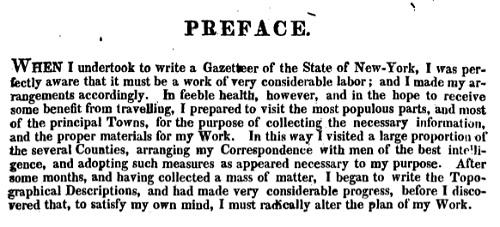
Again with Lord Selkirk’s diary of 1803-04, I noticed one thing on page 114 that sorta suck out. In his description of the set up of the kiln, there is a particular notation: “…small portable boxes for cutting straw are made for $9…” What the heck is that about? What is the function of the box? Why do you need a number of them? And what is the function of the straw?

Here is a very detailed discussion of the straw or chaff cutter. In that discussion, the tool is shown as going back centuries. The function of the cutter was to make the straw digestible by cutting it into small enough lengths to be mixed with the feed of a horse. And in this case, Selkirk’s note follows a reference to a horse run mill to grind the malt. So it could be just that.

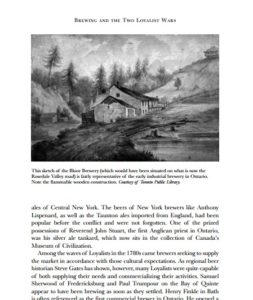
But there are two other uses for straw in this brewery. One was expressly mentioned the other day. Mr Grieve the brewer mixed straw into his mash to keep the wheat from gumming things up. Torrified or popped wheat can be used for that today. Cutting the straw would make sense to ensure it was evenly distributed through out the mash. Straw can be a multi-purpose resource in what I am starting to call if only to myself “vernacular” brewing. Brewing with the locally available resources. If, out of that, you make a unique beer maybe that is an “indigenous” form of beer.

But there is another possibility. Or is it an additional one? Maybe he was kilning with the straw. Attentive readers will recall the fern ale post of the fall of 2011. In that discussion, we see that in the 1600s and 1700s, while coke was growing as a kilning fuel for large operations, straw was still a reliable fuel to make the palest and least smokey malt. Good wheat straw, when used with skill, made the sweetest pale malt. Notice, too, that Grieve is kilning his malt in a place and at a scale where other desirable fuels are unlikely to be as readily and cheaply available. Wheat was the monoculture crop, the gold standard for sale and even export. There may have been plenty of wheat straw sitting around as the district filled with settling farmers. If so and as the beer had a high proportion of wheat, these strong ales of his my well have been quite pale despite their frontier origin.

Just a thought. Could be tasty stuff.

Albany Ale: An Actual Log Brew House In 1803

1803breweryOK, sure this is actually a brewer in Geneva, New York and not one on Albany… but it is an actual brewhouse from 210 years ago even if it was 190 miles or so to the west. And it is one described in quite a bit of detail in the 1803-04 travel diary of Lord Selkirk as he travelled through the lower Great Lakes preparing his settlement at Baldoon, Upper Canada. Having come from Boston, on November 9, 1803 Selkirk was moving west through the Finger Lakes heading towards the Niagara frontier and at Geneva met with a Mr Grieve who owned a distillery and a brewery. He took careful notes and even drew sketches like this diagram of the brew house. There is a fair amount of material here so let’s take it a bit at a time.

=> I am I think finally full redeemed! Well… redeemed ish. See, it is a wheat ale operation:

…half barley half wheat he uses about 500 Bushels of barley vis all that he can find to buy & pays the price of wheat – being very little cultivated… Wheat alone makes thick stuff & the liquor will not run of from the grain – sometimes by the assistance of a mixture of Chopt straw it can be done, but the wheat at any rate does not improve the quality of the beer…

See, I have been writing about indigenous strong wheat ale brewing in New York for over three years now but have never seen it described. Now I have an eyewitness account.

=> And it is strong ale. Grieve speaks of making stronger ale for storage through a summer but is brewing for present us an ale with 3.5 to 4 bushels of malt per barrel. Now check my math but when I tried to work out the strength of an 1835 Albany ale a few years ago I came up with a figure north of 8%. What would the strength of his proposed 5 bushel keeping beer be?

=> The brewing process is both described and illustrated. Click on the picture above and you will see a bigger image. The upper image is a top view of the brewery while the lower one sees that from the side. Why this detail? Selkirk is recording the scene just in case he wants to replicate it at his new settlement. The phases of brewing through the system are: (1) heat water in boiler; (2) mash malt with hot water dropped down from boiler; (3) draw wort off mash by gravity down into a jack tub; (4) pump or “jack” wort back up to boiler where it is boiled; (5) drop the hot wort into the first 10′ x 14′ cooler or coolship and, after some time, drop it again into the second coolship; (6) drop the cooled wort into the working tub where primary fermentation takes place; and (7) rack into barrels.

Perhaps as interesting as the idea that this might be that missing link between the Dutch wheat brewing in CNY before the Revolution and the more formal scientific brewing starting in the 1820s and ’30s is the last observation made by Selkirk. There is plenty of cider being made from trees which have re-sprouted from the roots of the orchards destroyed by the Sullivan Expedition in 1779, a very ugly campaign to eradicate the Iroquois allies of the British Crown. Their resilience then makes me wonder how long they had been growing and also if there are any descendants today.

Travel: A November Saturday Night In Albany


I finally figured out how to pronounce the name of the capital city of New York state. I knew “Ahhhlbany” was wrong but could not figure out “Awlbany” until I heard it was called “Smallbany” too. So it rhymes with small. There you go. We were there for an Albany Ale Project event at the Albany Institute of History and Art. It was a great event which I will likely write about over at the beer blog but wanted to note a few things for now about the travel aspects of the trip.


First, as illustrated, we had a great brunch at the Gateway Diner handy to the simply majestic Oliver’s Beverage. The place was big for a diner but the spaces were broken up so that you had a sense in each part of it that you were in a busy family diner. Service was fast and friendly. The coffee was good. I like having New York strip steak while in the Empire State. This was my first one with eggs. Poached. One must be careful these days.

The diner was not that far from where we were staying, the CrestHill Suites on outer Washington near the State Campus. We picked this up for 91 bucks on Hotwire. Clean. Generous room with a real kitchen that defied the use of nook. Armchair and sofa. Quite even if near the highway. We had room 312. We will book again. Best thing was the laundry basket in the bathroom. A $1.79 item that meant we did not have to leave damp used towels on the floor and, presumably, allowed the staff to clean up with a little more dignity than getting down on all fours to recover the last facecloth from under the sink. A simple smart thing that earned our respect.

Last, after the event three couples went for a Mexican dinner before heading for beers at the Lionheart Pub closer to downtown. The restaurant, El Mariachi, sits across the street from the Institute. Its one of those spots you go to in the States that reminds you that Canadians thing BBQ is a wiener on the hibachi. I won’t go into much detail except that supper for six was only a bit over $80 and that I had something that really rearranged my thoughts about Mexican food – chicken with pumpkin seed sauce. Fabulous. I am now going to make pumpkin seed sauce and pour it over everything. Generous portions. Great service and cozy small spaces.

So, as you can see, I have thought about something I want to write about in this space other than gardening. I mean I could write how the fence blew down on Friday but… really?

Ontario: Women And Beer Before Temperance

sessionlogosmThis month’s edition of The Session is about women and beer which, if you think about it, represents 50% of everything in our beery culture. Sure it does – as long as you have your methodology correctly aligned. So, there should be a wide range of topics. For me, I noticed a few things along the way as Jordan and I have been researching and writing the history of brewing in Ontario and especially things prior to 1860 that are well worth sharing. Why 1860? Temperance and trains, of course. The whole society changes when trains and temperance get a major foothold.

The thing is that – before temperance and trains – beer seems to be a townie drink, a drink that you get when you are within reach of a brewery or a transit point. Consider this as you consider that, as set out in the Oxford Symposium on Food and Cookery 1991: Public Eating Proceedings, in the chapter “Temperance Hotels and those ‘Damned Cold Water Drinking Societies’” Powers and Duncan describe at page 238 how Catherine Parr Trail:

… gave advice to immigrants in 1852 and included recipes for making beer, noting the absence of the ‘sweet well flavoured home brewed beer of the English farmhouses. Unfortunately, she said, “the taste for beer has often unhappily been superceded by that of whiskey.’ She provided recipes for treacle beer, beet beer and maple beer as an alternative to whiskey.

See, once you get anywhere away from town and a cartloads of hooch is heading your way, it is going to have the most concentrated form of the stuff on it unless there is a compelling reason not to do that. And until trains and temperance push to the forefront, there just isn’t a reason. And see Parr Trail missed the “sweet well-flavoured home brewed beer of the English farmhouse”? This backs another thing we suspect: that there was not a lot of surplus barley floating around Upper Canada even well into the middle third of the 1800s. One farmer interviewed in his old age recollected that he didn’t even see barley until he was in this twenties in the early 1840s. Which leads to beet beer on the frontier. You do what you can.

So, what was the place of women in such a culture. Fortunately, I have my copy of In Mixed Company by Julia Roberts reviewed back here in 2010. Roberts has a chapter in her book entitled “Public Life for Women in the Era of Separate Spheres” which discusses the experience of women in Upper Canadian taverns. And I have a handy copy of Wives and Mothers, School Mistresses and Scullery Maids: Working Women in Upper Canada 1790-1840 by Elizabeth Jane Errington, a historian who I have had the pleasure of meeting. Errington’s books has quite a number of observations of the intersection of women and alcohol in the colony during that period.

And what do we learn? One thing is that women were present in taverns as daughters, wives and widows working under or as licensee but also as travelers stopping at the inn and even local drinkers. Roberts indicates that as early as the 1830s inns were advertising special separate provisions for female customers. These provisions were further divided by class and included separate entrances, parlors and waiting rooms as well as balconies. And in some cases they are recorded as drinking alcohol including beer:

At Robinson’s tavern in Prescott, “Sarah” charged half a pint of beer in 1844… Widow Wilson lodged at Robinson’s for two and ah half weeks starting 31 October 1847. On her first day, she charged a glass of whisky, a glass of brandy and several pints of beer. She then stuck to beer and her tally on the last day of her stay was fifty-six pints, an average of three pints a day. Treating others accounted for part of the total.

As the title indicates, Errington’s book focuses on the working life of women. She notes that even when a couple ran a tavern together, as noted by one traveler in 1797, the husband ran the farm while the wife ran the tavern. As the post-Revolution economy evolved, wives were less involved in maid’s work and more often acted as hostesses especially in more established hotels. On the frontier, however, things were not as genteel. Errington quotes from Susanna Moodie on the preparations for a work bee when neighbours came to achieve some collective goal:

…our men worked well until dinner time, when, after washing in the lake they all sat down to the rude board which I had prepared for them, loaded up with the best fare that could be procured in the bush. Pea soup, legs of pork, venison, eel, and raspberry pie, garnished with plenty of potatoes and whisky to wash them down, besides a large iron kettle of tea.

Women and beer? Before the rise of temperance as a political force to be heeded and before the train when barrels of beer could be gotten in as far as the rail line went, it was a townie thing in Upper Canada. And women were there as they were everywhere.

History, Consistency, Stability And Efficiency

The post at Jeff’s titled “A Better History of IPA“, written in response to a particularly poor piece of old school beer writing, led to comments and on of those comments led me to recall this:

From Schenectady to Albany, about twenty miles, the country is sandy and poor. We travelled at the rate of seven miles an hour, but what with our avalanche adventure, and some other detentions, it was long after midnight ere we reached the city. We had so far exceeded ordinary hours, that the Hotel was hushed in repose, and although we might certainly have raised the home, it was rather doubtful whether we should thereby have improved our condition. We found the porter dosing in the hall, and having committed our luggage to his charge, we agreed upon diving into a certain cellar, which we had observed to be still lighted up as we drove in. Here we found a good sample of low life in Albany. It was about three in the morning, and some of the party had evidently been indulging freely during the previous hours. Still there was no brutal drunkenness nor insolence of any kind, although we were certainly accosted with sufficient freedom. After partaking of some capital strong ale and biscuits, we returned to our baggage apartment, and wrapping ourselves in greatcoats and cloaks, we enjoyed a tolerably comfortable nap, until daylight again put us in motion.

The passage is at page 192 of a travel diary from 1832, Practical Notes Made During a Tour in Canada: And a Portion of the United States by a Scot named Adam Fergusson. I love it. Diving into a cellar to find a 3:00 am party with a feed of biscuits washed down by what was likely Albany Ale of the sort discussed a few years later by the New York State Senate in hearings over adulteration charges against Hudson Valley brewers. Jordan found the diary on line and shared as part of our research for the history of Ontario we are writing and then I shared it with Craig for the bits like this that relates to Albany brewing history we are writing.

What got me thinking about that cellar party in 1832 was not Jeff’s post so much – and certainly not the underlying butchering of both history and thought – but this comment:

And where is the evidence of brewers historically using modern dry-hopping techniques, pelletizing processes, refrigeration, CO2 purging/blanketing, and other techniques for maximizing hop aroma? Just because a historical brewing log says they added 10lb/BBL of hops doesn’t meant the beer was anything like many beers are today. And the hops today are just so different that it’s not even a comparison, though you’ve already written that off and I don’t think it matters anyway in the face of the rest of the process differences. Bottom line is beer today is substantially different from the past. I don’t agree completely with Charlie’s historical take, but your critique of him doesn’t really address or refute what he wrote.

The author of the comment is, I understand, Sam Tierney who is an excellent brewer of excellent beer at Firestone Walker. There is a lot in the string of comments so read the whole thing. The purpose of this post is not to refute or even debate Sam’s point so much as explain what I understand about the point as well as to elaborate where the point leads us. Perhaps a list of observations will help me in organizing those thoughts. In no particular order…

1. Beer is both basic and complex

One thing that is entirely correct in Sam’s observations is that technical advances have played a huge role in the present day boom in good beer. The variations and expansion of sales in IPA in particular has if not led this boom it is a key identifier. It is also the case, that those technical advances are not necessary for the creation of excellent beer. How can I say that? More that anything else I know that because I am a bad brewer. It has been some time since I brewed but today with little more than buckets, a stock pot and simple speciality equipment I could brew excellent beer. With those rudimentary tools, I have made many batches of all grain beer. It is beer of quality that have been received by pals with enthusiasm. I say, however, little more because there are two key items that go a long way to ensure that excellence is achieved. I have access to very good ingredients. The best malts, top notch hops and yeasts packaged by the suppliers to craft brewers. That is important. More important, however, is the StarSan. For me, cheap and effective sanitation is the actual miracle behind modern brewing, whether at the scale of the homebrewer or that of the industrial plant that puts out craft beer or macro gak.

That being said, there are at least three things that craft brewers do that I can’t. The good brewer of good beer achieves success though the three-fold benefits of consistency, stability and efficiency. Consistency I will define as sameness from batch to batch. Stability for me means sameness in the bottle or the cask for a reasonable period of time. Efficiency means making good beer from the least resources reasonably possible. For me, Sam’s comment reflects these achievements of modernity. And important ones they are. But they are not determinative on the question to the point he states. They certainly do not add up to beer today being substantially different from the past.

2. Beer has been basic and complex for centuries

While I am researching brewing history a lot these days and even been writing about brewing history for some time, I am not a historian. I am the amateur popinjay dipping a toe in the water at best. Yet… I have seen certain things. One is certainly that the history of brewing – and especially North American brewing before and beyond the advent of lager and all it has brought – is one of the most neglected topics I have ever come across. Being a lawyer, one is something of a generalist researcher and I have had to study topics are diverse as First Nations history of Ontario and New York, the properties of concrete and the intersection of strollers and dog parts from a human rights perspective. In each area, those who have gone before have laid down reliable grounding for those who follow. By law is like that. Like beer, it as old as culture.

From my research in brewing, however, I have learned that many accepted truths and well-known assumptions are incorrect. Pale ale in the English-speaking world is centuries old. There was a very good reason for the temperance movement to come along as the past of not that long ago was a stupefying drunken place. And the American love of highly hopped strong malt ales is as old as the nation. It is not just that there is nothing new under the sun so much as what was old never really leaves us so much as alters a little as culture around it alters a lot. So we forget. We forget that in the mid-1600s, skills of the good brewers were honed likely as sharp as they are now – it’s just that the tools were not what they are now. But beer is not special in that regard. The same is true of all aspects of our culture. So just as Shakespeare scratched on vellum with a quill pen to create masterpieces, so too the ancient brewer or brewster knew

…the best and most principal fewel for the Kilns, (both tor sweetness, gentle heat and perfect drying) is either good Wheat-straw, Rye-straw, Barley-straw or Oaten-straw; and of these the Wheat-straw is the best…

Of course they did. People did not sit about moaning about how they regret not living in the future. They achieved excellence in the world around them based on the resources around them. Including with beer.

3. IPA has separate centuries-old American roots

I tweeted a tight meaningful summary of this point just yesterday:

Taylor makes very strong hoppy beer, trains Ballentine, Terry Foster recalls Ballentine, trains US craft.

Every time from here on out you see someone pretend to retreat from Twitter discussions because 140 characters cannot contain their wisdom, please remember that tweet. Except not for the misspelling of Ballantine. Let’s unpack the idea a bit.

a. Taylor. Taylor is a key figure in mid-1800s Albany brewing. He owns what was likely the largest brewery in North America around 1850. When you see a listing anywhere in the hemi-sphere for Albany Ale from the 1830s to the 1880s it is likely Taylor’s being advertised from Newfoundland to Texas to California. Craig has more.

b. Ballantine. Craig has a lot of detail under that line but a key point is that Peter Ballantine trained under Taylor before he went off to brew on his own in Neward NJ, starting a line and legacy of beer that can still be consumed in some form today.

c. Terry Foster. I wrote the post under that link in November 2004, nine years ago. Foster, among other things is the author of Pale Ale, volume one of the Classic Beer Styles series issued by Brewers Publications. At page 1 of the 1990 edition of that book, he wrote:

An impressive and highly individualistic U.S. example of this beer is (was?) Ballantine India Pale Ale. Supposedly made from an authentic 19th century English recipe, brewed to a high gravity, heavily dry-hopped and aged in oak casks, this beer has a very intense, complex aromatic character (or did have until the last few years or so).

See? The only thing Foster may have wrong is that Ballantine used an English recipe. Or not. When Americans in the 1830s figure out how to do something they are likely relying on British brewing guides but, regardless, the apply that knowledge by brewing the beer in the US. And brewing a beer that was likely a lot like beer we are familiar with today. This is not to say that this is the only source but it is a key one and one that has been disregarded or unexplored. I have no idea why.

So, there you have it. I was up at 4:45 am thinking out this post and now, eight hours later, have hand cramps. Remember. The past is amongst us. North American brewers have innovated for hundreds of years. Craft brewing is continuing that tradition and, in doing so, make beers remarkably like their forefathers. Go figure.