English-Speaking Atheists Lose Their Columnist Saint

I can’t say that I am particularly struck by the loss of Christopher Hitchens but its in the same way that I was not moved by the death of Steve Jobs. Like Jobs, Hitchens was something of a presentation of himself – not a bad thing in itself but it does distract from whether the output was as valuable as claimed. That being said, David Frum has an excellent memorial to the man in the National Post that captures bits of his appeal:

As the event broke up, a crowd of questioners formed around him. I created a diversion thinking it would help him escape for some needed rest. But Christopher declined the offer. He stood with them, as tired as I was, but ready to adjourn to a nearby bar and converse with total strangers till the bars closed. Hitchens was not one of those romantics who fetishized “dialogue.” Far from suffering fools gladly, he delighted in making fools suffer. When he heard that another friend, a professor, had a habit of seducing female students in his writing seminars, he shook his head pityingly. “It’s not worth it. Afterward, you have to read their short stories.”

Frum called him “a man of moral clarity.” I would have thought “amoral” or perhaps ethical was more the proper word. The man he most reminded me of was Mencken. Both had that sort of rhetorical skill that aligned well with their failure to actually meaningfully participate in anything that added to the public good. Both were keen observers and skilled reporters. The sort of person who can tell you what a poor job someone, anyone, yourself even has done but would not actually engage with the doing themselves. Both were famous drinkers.

I am sure that we benefit somewhat from these columnists, folk who can sharply report on the human condition. But they never really get to anything of value as to the why of it all. They have their own belief system which is immune to denting and judge all from that place on the orb with skill, charisma and something of an ultimate pointlessness. Humans already know life is hard and confused, that our leaders make many bad calls. Directing us to that obvious state of affairs, however insightfully or entertainingly, is not the stuff of heroes.

English-Speaking Atheists Lose Their Columnist Saint

I can’t say that I am particularly struck by the loss of Christopher Hitchens but its in the same way that I was not moved by the death of Steve Jobs. Like Jobs, Hitchens was something of a presentation of himself – not a bad thing in itself but it does distract from whether the output was as valuable as claimed. That being said, David Frum has an excellent memorial to the man in the National Post that captures bits of his appeal:

As the event broke up, a crowd of questioners formed around him. I created a diversion thinking it would help him escape for some needed rest. But Christopher declined the offer. He stood with them, as tired as I was, but ready to adjourn to a nearby bar and converse with total strangers till the bars closed. Hitchens was not one of those romantics who fetishized “dialogue.” Far from suffering fools gladly, he delighted in making fools suffer. When he heard that another friend, a professor, had a habit of seducing female students in his writing seminars, he shook his head pityingly. “It’s not worth it. Afterward, you have to read their short stories.”

Frum called him “a man of moral clarity.” I would have thought “amoral” or perhaps ethical was more the proper word. The man he most reminded me of was Mencken. Both had that sort of rhetorical skill that aligned well with their failure to actually meaningfully participate in anything that added to the public good. Both were keen observers and skilled reporters. The sort of person who can tell you what a poor job someone, anyone, yourself even has done but would not actually engage with the doing themselves. Both were famous drinkers.

I am sure that we benefit somewhat from these columnists, folk who can sharply report on the human condition. But they never really get to anything of value as to the why of it all. They have their own belief system which is immune to denting and judge all from that place on the orb with skill, charisma and something of an ultimate pointlessness. Humans already know life is hard and confused, that our leaders make many bad calls. Directing us to that obvious state of affairs, however insightfully or entertainingly, is not the stuff of heroes.

None

Your Weekend Links Of Note For A Day At The Hospital

Efficient. Kind. Relaxed. Excellent. It was a good day at the hospital helping the lad get through what turned out to be a far less onerous than feared experience of an eyeball straightening. More nip than tuck, I have spent longer stretches at the dentist. Shades of my two days long medical stays of my youth disappeared. Validated Kate’s observations, too. Realized that I have sat in small city hospital waiting rooms in Canada, the US and Poland and each time thought pretty good people go into this work. Today, a small “hooray” went up among the post-op nurses at one point. I gave the “what was that face” to one of them and was told “the babies are through.” Hooray for the babies, indeed.

♦ Good to see the students of Syracuse can tell pedophilia from hate crime.

♦ I really hope many of these citizenship investigations are linked to the PEI passport selling scandal. Good to know, by comparison, that some Spuds have some sense.

♦ Boys need this last line of defends. It’s like Cold War MAD – mutually assured destruction. I recall when the bag tag war of 1982 broke out at undergrad. We needed, after only two days, a formal truce.

♦ Seventeen century science is absolutely neato: this and this, too

There. Weekend is here. Tomorrow? A Montreal Gazette weekend edition and maybe an obscure mammal in form of sausage.

None

More Linky Weekend Goodness For Late Fall

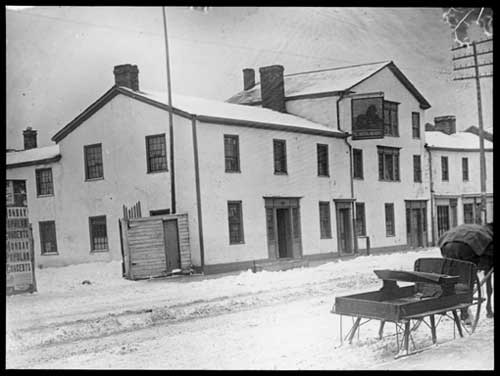
Where were we? Ah, yes. The great explosion of 1840:

Another huge fire erupted on 18 April 1840, this time on Counter’s wharf and, aided by the explosion of gunpowder stored in one of the warehouses, spread across much of the waterfront area. Strong winds helped it extend to the whole of the north block of the Market Square, and to most of the next block up to Store Street (now Princess Street)

Never heard of it until a month or so ago. You would think that the destruction of much of the town would be a folk tale, collective memory. Never understood why Ontario is not interested in its own past like other parts of Canada, the English speaking world.

Saturday night update: The Flea, mon cher, teaches how to KooDon’t.
Best thing ever on the internet: what is brown and sticky?

♦ I had no idea that, besides interest on debt, Italy was actually in the black. Canadian Conservatives everywhere must be hailing it as solvency as they do with Mulroney’s terms.

♦ Really? Do you think? Do you think a cabinet member gets attention from “foreign lady reporters” from nations run by totalitarian regimes because they find Tories hot?

♦ I had no idea that Harper has expanded the Federal public service by 13%. No wonder they think that Mulroney got us to solvency.

♦ What is it with all these odd Tory stories? I mean if they are going to be doing all the social engineering I really hope they know how to plug in the toaster first.

♦ Finally – a break from Ottawa’s amateur hour. A great story from Humblebub.

That’s enough of that. Check out the great series at NCPR on the state of the nations on the two sides of the Great Lakes.

None

More Linky Weekend Goodness For Late Fall

Where were we? Ah, yes. The great explosion of 1840:

Another huge fire erupted on 18 April 1840, this time on Counter’s wharf and, aided by the explosion of gunpowder stored in one of the warehouses, spread across much of the waterfront area. Strong winds helped it extend to the whole of the north block of the Market Square, and to most of the next block up to Store Street (now Princess Street)

Never heard of it until a month or so ago. You would think that the destruction of much of the town would be a folk tale, collective memory. Never understood why Ontario is not interested in its own past like other parts of Canada, the English speaking world.

Saturday night update: The Flea, mon cher, teaches how to KooDon’t.
Best thing ever on the internet: what is brown and sticky?
♦ I had no idea that, besides interest on debt, Italy was actually in the black. Canadian Conservatives everywhere must be hailing it as solvency as they do with Mulroney’s terms.
♦ Really? Do you think? Do you think a cabinet member gets attention from “foreign lady reporters” from nations run by totalitarian regimes because they find Tories hot?
♦ I had no idea that Harper has expanded the Federal public service by 13%. No wonder they think that Mulroney got us to solvency.
♦ What is it with all these odd Tory stories? I mean if they are going to be doing all the social engineering I really hope they know how to plug in the toaster first.
♦ Finally – a break from Ottawa’s amateur hour. A great story from Humblebub.

That’s enough of that. Check out the great series at NCPR on the state of the nations on the two sides of the Great Lakes.

An Update On The OCB And The Commentary Wiki

3014So, the forecast for the last four weeks over at the wiki that was set out in my Halloween post “And Quiet Flows the OCBeerCommentary Wiki” came to pass. This is going to be a longish process. But it advances. I just finished loading the Index of Articles by Author to the point Stan managed to get to, which was mid-“J”. I have gotten it to “L” and hope to fit in the rest before Christmas so we can cross reference commentary to the indexing. Oh, think of the data mining possibilities. Any volunteers want to load a letter or two? If you have email and a copy of the OCB, please let me know.

The biggest news related to The Oxford Companion to Beer is that it is hitting the top 50 on Amazon.com. It is sitting at #44 right now but has been as high as #15 that I have seen. This is good for beer. Don’t be confused like the deeply afflicted Protz. The wiki displays the parasitic nature of the beer nerd in nicest sort way. The OCB is the Wildebeest while we are the Oxpecker. And it’s only $26 bucks right now. Buy it. Right now.

And what have we found? Well, a month ago, Clay Risen in The Atlantic saw only 40 entries and considered the commentary mainly about interpretation. While he was fairly incorrect on the last point, we are now up to 62 entries and many have multiple comments and corrections. Just look at the entries for “ale”, “ale house” and “ale pole.” More interesting to me, however, is that some of the entries are mainly elaborations of the topic, building upon what is there. So, we can now see that Canada‘s brewing experience was years and perhaps decades older. We can see that the US state of New York had a rich post-Prohibition hop growing experience. Neato.

62 entries? That’s 5.63% of the book. By Christmas, maybe it’s 9% or 12%. Who knows? What is good is how information gets fine tuned through the wiki – not the scorecard. Join up. If you have a copy now or get one for Christmas, let me know if you’d like to add any thoughts by emailing me at beerblog@gmail.com.

Some Weekender Bullety Points For Yulesight

Yulesight. You can see the holidays coming but you are not quite connected emotionally yet. It was an interesting week. I was slagged in the British media. Beer magazine columnist with a chip on his tiny shoulders. Wrote a complaint to the publisher whose response was that they did not feel, that I in fact had been called a Nazi sympathizer. They did remove the article from the web but you can see it in Google cache all the same. Other than that, it snowed for the first time this winter.

Love the Starbucks coffee cup. We may not be the 1% but we do like 1% partly skimmed milk foam.

♦ The caribou were right where they were told they would be.

EU officials apparently had declared that you could not claim water helped with dehydration: “The euro is burning, the EU is falling apart and yet here they are: highly-paid, highly-pensioned officials worrying about the obvious qualities of water…”

♦ Sadly, more than enough bad to go around.

♦ Hey – there’s another bit of Canada’s national administration being dumped by the Feds – immigration policy: “While other provinces have fully embraced their provincial constitutional responsibility of selecting immigrants … Ontario has effectively abdicated its ability to engage in the immigration dossier in a serious way.”

There. Weekend. Scooby-Doo on the TV. Bailey’s in the coffee.

None

Can A “Style” Ever Be More Than A Helpful Generality?

Levels of abstraction. That is what this style stuff is about. Not about what it is but how it can be grouped. I think. Two articles got me thinking about this today. In The New York Times, Eric Asimov talked about “sour” beer and got into a range of beers that I would never consider to fall under that adjective. And the great ATJ discussed the challenges posed by grappling with the idea of Abbey beer.

So I get back to the original question: what is an Abbey Ale? Is there such a thing? Trappist is an appellation — it covers dubbel and tripel and very strong dark beer. Abbey? It seems to be 5-6% (but then looking back at my notes I find Silly Brewery making a 9.5% one), sweetish, gold in colour with reddish hints, but then it could be a brighter gold or a darker gold. In one French brewery I was given one with rice in the mix, which gave it an almost ethereal lightness of touch, which didn’t work for me. So is it a marketing device? On the label the picture of a fat cheery monk or a sombre looking abbey and the promise of heaven in a bottle seems to be a popular device. Marketing then. That’s the way my thoughts are going.

One thing pops into my mind when I read that passage. And it is not intended to give the dim and greasy hope. But is it so bad to consider that marketing might have some actual work to do? Maybe the idea that you can find valid maltiness with a pinch of thoughtful Belgian yeasty spice is enough to be Abbey. Can’t we gather around that cause?

Yet Eric Asimov’s inclusion of Goose Island Sofie and Ithaca White Gold as sour? That goes further, doesn’t it? Does marketing need to make sour out of, you know, tang? I had that great CNY beer last year and mentioned “I had one the other night that had spent a long time in the stash and was gorgeous, showing lots of tangy beer gone bad quality.” Is tangy beer gone bad sour or is it something else? And is Sofie sour? Really? Stan wrote a great post this summer about the weird things we love in weird beer. But does that make for sour?

I’ve undertaken my sour beer studies and included a lot of things… but now I wished I called it “Acids I Drink” or some thing like that. Tangs, sours, twings and twangs? They all have their own worthy place. But by bundling them under “sour” are we not treating them like we treat Abbey beers, labeling them with a euphemism? And if we do – but do so to aid in understanding by adding an abstraction… is that so wrong?

Book Review: The Economics Of Beer – Swinnen, ed.

oxeb1I bought this because Simon told me to. Simon said.

This book is a series of essays related to the 2009 conference of The Beeronomics Society. It says on its back cover that it “is the first economic analysis of the beer market and brewing industry” but that is just silly puffery. There have been loads of economic analysis of the beer market and brewing industry. Frankly we have been weighed down by them. Don’t make me review Tremblay and Trembaly again. Do you remember those graphs and tables?

This book is a lot like one of my favorite sets of essays, the papers from the “Cooperstown Symposium on Baseball and American Culture.” It is also a lot like Beer and Philosophy, a set of essays which included one from me on the underlying philosophy of beer regulation in Canada. What they all have in common is that they are a collection of papers tackling aspects of a general topic from various points of view. In the TEOB you will find 18 papers from the 2009 conference organized under the four topics of history, consumption, industrial organization and the new beer markets. With any luck, as with the annual baseball conference but unlike Beer and Philosophy, the followup second conference of The Beeronomics Society will issue another volume of essays reflective of the topics covered in September 2011.

So is it worth getting? For a book nerd like me, sure. I was a little uneasy with the superficiality of the first essay “A Brief Economic History of Beer” given it covered so much of time and culture so quickly. However, when I saw that there was an essay by Richard Unger, everyone’s favorite beery medievalist and Renaissance man, I was won over. And the essay “Recent Economic Developments in the Import and Craft Segments of the US Brewing Industry” by the manical graph-huggers¹ T+T may serve as something of an update of their 2005 book. Best of all, each submission comes with its own bibliography alerting folk like me to other papers and texts that might be out there just waiting to be added to the book shelf.

Published, too, by Oxford University Press, this book is another sign that we fans of beer and brewing live in lucky times. If I have more intelligent comment after reading a bit more, I will add it in the comments. But at this point this, too, looks like a good buy for the serious beer nerd.

¹ There are seven graphs and four table in just 18 pages!!!

Book Review: Great British Pubs, Adrian Tierney-Jones

3076I have to say that this book is a bit of a shock. I never knew you could mix so much porn with this degree of authoritative statement. How does one react? I have learned things I will share… yet I have wallowed in the depths of my deepest private imagination. AJT is good. He’s like a pusher. He’s feeding me what I want in the way that I want it – and not necessarily in a way that suits my best interests. As I was reading this just now I was imagining how we might place the kids – the five kids – and just take off for a week to cross an ocean to hang out, you know, in British pubs.

What else can I say? The book is a collection of, say, six to 14 pubs arranged in “best of” themes. Best of heritage pubs. Best of seaside pubs. 22 or so categories. Reasonable layout and mapping as we saw with the Edinburgh guide. And then those descriptions. These pubs are either simply compelling in their own right or AJT makes them so in the brief entry that accompanies each entry. Consider the entry for The Bell at page 118 in Saffron Walden in Essex, included in the best just off the motorway category. The Elizabethan property includes several acres of walking space. That makes me want to go there – even if I am not on a long highway drive passing by. And what about The King’s Head in Laxfield, visited by our pal Paul back in 2007. Paul gave us a great picture in words and photos of the place including the open room in the back where you get the beer instead of anything like a bar. Adrian tells us what it is like to walk through the place looking for the beer room. Gorgeous. And there are so many more descriptions of the sorts of bars you want to sit in, soak in. Be in. There’s even Jeff and The Gunmakers there on page 69 (dude!) I miss Stonch. Have I mentioned that?

Summing up? Bought this myself. Not a review copy. It’s the Christmas pressie you want. Big time. Buy it.