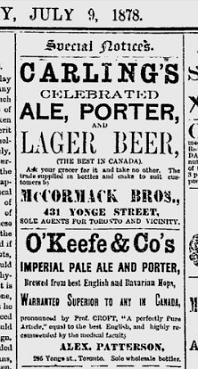
 In the 1868-69 edition of Sutherland’s City of Hamilton and County of Wentworth Directory there is listed a little listing that says “Eckhardt, August, brewer, Hamilton Lager Beer Brewery…” This corresponds with Sneath‘s first listing for a lager brewery in 1868 which states:
Edward Eckhardt opens the Hamilton Lager Brewery in Hamilton and it closed three years later.
The name is right as Albert is confirmed as the brewer and Edward the proprietor in another section of the directory. So they must have started lager beer there. No one else is listed even if the Spring Brewery established in 1868, makers of “ale, porter, beer, etc., in great quantities, either in wood or bottle” are working on “an addition is now being made for an ice house.” Except for one thing. In the same directory there are at least six listings under “lager beer saloon” with proprietors with the names Goering, Grell, Kerner, Mansfeld, Schaupp and Winckler. Maybe more. How could all those businesses get up and running selling lager beer in time to get printed in the directory in the same year that the brewery opens? Could it be that the saloons pre-dated this brewery? Oh, for a copy of the 1866-67 edition of Sutherland’s City of Hamilton and County of Wentworth Directory!
I dunno. I do know that the author of this travel piece about Kingston, Ontario published in The New York Times in 1890 states “in all my travels extending through hundreds of miles of Ontario, beginning at this place, [I] have seen the sign ‘lager beer’ displayed only once.” Ontarians were long time pale ale and stout hold outs when their southern mid-Atlantic and mid-western US neighbours were following their immigrant Teutonic ways and breaking out the lager, much to the chagrin of 90 year old Charles H. Haswell in 1899, as is discussed in Maureen Ogle’s book Ambitious Brew.
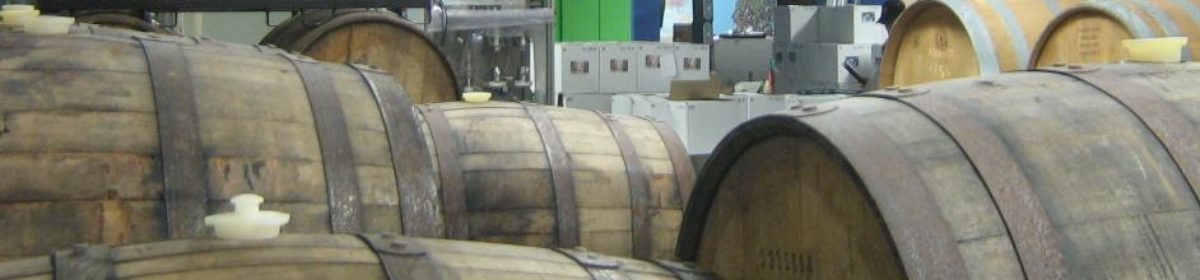
 There was another issue, of course, in that the rush of German immigrants was more of a late 1800s rather than mid-1800s event here. There needed to be cold. And the first refrigeration system in Canada is only turned on, according to Sneath, in 1886 in Montreal. So… we had ice houses… and folks doing what they could… figuring out the large investments required compared to the smaller population centres and… well, when you figure all that out… wouldn’t you really like a nice old fashioned trusty Ontario stock ale?
The King Brewery Pilsner clocks in at a sessionable 4.8%. It pours an actively carbonated burnished gold that supports a rich white froth and foam. On the nose, there is plenty of pale malt and graininess with Saaz hopping. In the mouth a jag of steely mentholated spicy herbal weedy hops but plenty of rich maltiness to back it up, more bread crust and biscuit that malteser. A complex beer with waves of flavours. Plenty of BAer respect.

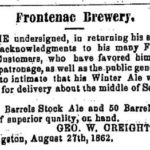 They had to make products that both reflected and appealed to their clients and the environment. The had to go with a shot of whisky – whether it was made with barley or rye.
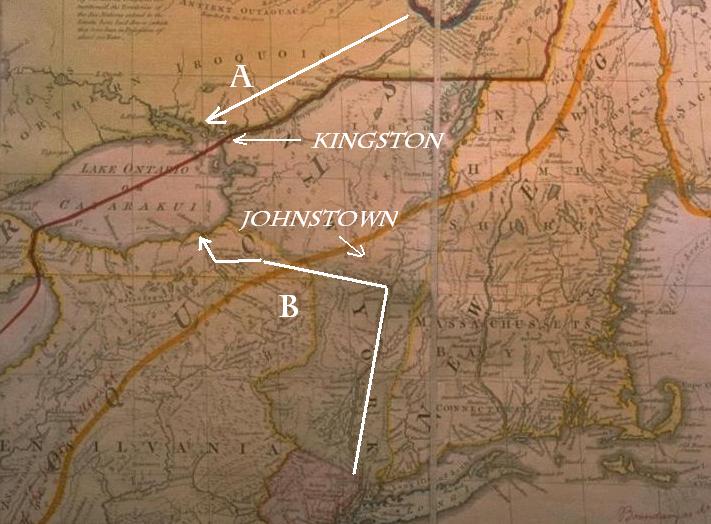
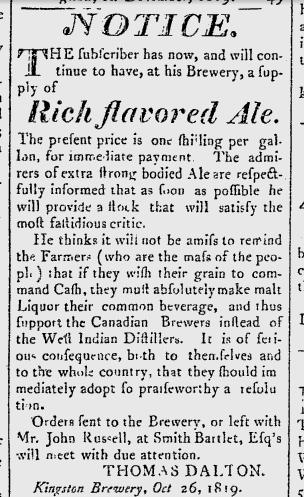 So, how to get beer to Kingston when one route is under constant risk of attack and the other is in enemy hands? Well, you don’t. You have to wait to grow crops and then you have to feed yourself, sell some off for cash and then sooner or later you get to the point that there is enough extra to make beer. Have a look at that ad we looked at

