Is It Even Possible To Be A Beer Expert?

monkey4Jeff wrote an article for All About Beer this week called “Why Beer Experts Matter”. I commented by Twitter that it set out a “good argument by @Beervana but expertise is key, not the “experts” – personifying a body of knowledge just limits it.” Discussion ensued. I meant it. Good. It was not snide code. It good – and good can be, you know, good. And it got me thinking about experts, expertise, professionalism, experience and interest… and interests while we are at it. And Lars asked for more detail. So, In this post, I am going to try to explain myself to myself, Jeff, Lars and to you if you care to follow along. It is, however, not mandatory reading, there will not be a test and it is Saturday.

Let’s think about what these words mean: experts, expertise, professionalism, experience, interest and interests. One way or another they are all about being clever. Having amassed a body of information. But then they represent doing different things with that information. It is interesting to separate the threads to discuss each but it is really important to keep in mind how much they overlap. Things like this are not neat and tidy. That being said, let’s have a look:

Professional: A professional is not someone paid to do something. A professional is someone whose opinion you can act upon as presented without interpretation. Lawyers, accountants and doctors are professionals. Engineers, too. They… we… carry errors and omissions insurance in case our opinions are wrong and cause harm to those who relied upon them. It is not to say that that those who are not professionals are highly skilled or deserving of significant pots of money. But every time I hear someone mention professional baseball players, I ask myself where fans can file the claim against the Chicago Cubs for undue emotional reliance. Similarly, I can’t see any brewers getting errors and omissions insurance to protect drinkers against negligent brewing, especially given the amount of that going around. Are there beer professionals? Not that many. Not most of the folk you might hear calling themselves professionals.

Expert: Not all professionals are experts and not all experts are professionals. As a professional lawyer, I hire experts and I challenge experts – both pros and not pros. People don’t like us for that. Lawyers don’t really care. It’s the job. No, it’s the profession. Me, I have done enough work in certain specific areas like history and heritage related matters that I peer review the work of experts myself. I challenge the content of their reports. Even reports by experts who are professionals which I am supposedly not required to go behind. Thankfully, it happens rarely. Mainly because (i) professionals who are not experts in a given field should be aware of their incapacity and do not tread beyond their specialty and (ii) true experts are so focused on the particulars of their particular topic. Because experts are experts in niche topics. Can there be a beer experts? Not in my opinion. Because, for one thing, “beer” is too big a topic and, for another, so much about beer and brewing is so self-evidently shallowly researched. So far. Example. Stan asked where Cicerones fit in. I responded that it was an example of “expert creep – trained as top notch wait staff they take on more status.” I should have written “some” take on more status. The niche training works in the niche. Beyond the niche… well, things get wonky.

Expertise: This I think is the most important point. The body of knowledge is collectively the “expertise” in that topic. It also means the skill of an expert. I am interested in the first meaning. “Canada’s expertise in coconut production is lacking” is something that can be said. Similarly, we can correctly say that the western worlds collective expertise in all aspects of beer and brewing is not as sophisticated as its collective expertise in public health or the economics of international trade. Beer and brewing is (i) not as complex topic to attract a body of expertise and (ii) where it is complex it is not well researched… yet. There are reasons for this lack of complexity that are obvious. It is only beer. But there are also reasons for the lack of detailed study that are not as obvious. I call these factors “interests” and they are not all alike.

Interests #1: This is where things get truly odd with beer. Dr. Johnson in the 1700s once stated, “We are not here to sell a parcel of boilers and vats, but the potentiality of growing rich beyond the dreams of avarice.” He was an executor of the brewer Henry Thrale and spoke the truth. There is a lot of money in beer. Micro and craft brewers work incredibly hard to avoid discussing that. In 2007, it was so shocking to point this out that one risked a playground pile on and perhaps a cherry belly, too. Many excellent points were made. Tomme Arthur and other brewers chimed in mainly defending price inflation. I think that time has passed. We are more realistic about brewers as Andy’s recent article about Jim Koch and the reaction showed. We are no longer “all in it together.” Financial interests are exposed and being discussed. Which is good. Many beer fans won’t be taken as suckers any more. AND brewers will be able to describe the well deserved rewards for their efforts… even if a well informed consumer base means the less than realistic brewers out there may end up paying for their own experiments and self-assigned artistic status from their own pocket, not mine. Money is good but we all benefit from real information as much as we want honest beer at an honest price.

Interests #2: There are other sorts of interests at play which put pressure on access to real information about the beer we like. In my 12 years of writing about beer nothing as stupid has ever been written as the article from 2009 “Sober Thoughts On Writing About Beer” in which it was suggested that fewer people ought to be writing about beer. I reacted strongly. I won’t repeat the discussion but point out that while Jeff did not say the same think, he could be taken for being in the same neighbourhood when he argued “[w]hy should you bother seeking out an expert? Because beer experts do some things even 900 laymen together can’t.” What he was not saying, however, is that the 900 lay folk should shut up. He made a different argument. But I still think it was flawed for the reasons about seeing as he based much of the argument on this idea he wrote “[a] good expert opinion will draw on several threads of information—science, process, history and culture—and bring all of that knowledge to the discussion of a beer.” The trouble is not the validity of the idea itself but its applicability. For two reasons: (i) the science, process, history and culture of beer is not yet well studied and (ii) those holding themselves out as experts in beer generally have self-evident disinterest and even disdain for knowledge about “science, process, history and culture of beer” not to mention the economics of it, the health implications of it, public policy related to it etc. These are the people who might tell you all English beer was smoky before the use of coke in beer. They say so because they have not bothered to do two hours of studying. We need to be honest. There is much greater interest in protecting the status of expert in many of those who suggest they or others are experts than there is an interest in gathering and building the collective expertise. Beer is money. And the shallow PR wading pond needs to be fed. But note I said “many”. To be abundantly clear, if I am looking for information about current trends in the global beer retail market, I seek out Mr. Beaumont‘s opinion. If I want to know as much as I can know about hops, I ask Stan. There are others with that sort of focused understanding who have not only earned but absolutely resonate with the necessarily broad, deep and detailed awareness to be respected as experts in their field. And each of these guys would also guide me and you to others of whom they might say are the expert’s experts. I would estimate them to total about 10% of those who have an interest in you thinking they are beer experts. Sorry to break the news.

Interest: we all have an interest in beer. I would not be writing on this keyboard if I did not. I would not be sketching out a number of alternative choices fourth book on beer if I did not. Everyone who wants to experience a greater variety of the deliciousness of beer, the exquisite comfort of pubs or the vast and particular history of brewing through time has an interest. It is lovely. It is worth doing. It’s participating in part of a bigger thing across culture and centuries. But the beer itself is experienced one person and one beer at a time. Beer is experienced only in the theatre of the mouth. With time and practice, anyone can hone their skills and create a deep body of experience which gives them greater and greater pleasure. Along with this they can write reviews of the beers they taste, write blog posts about the themes they see developing and a few can be lucky enough to be asked to write articles and books. Which leads to requests to be quoted. And called an expert. Hmm. It also leads to cherry syrup laced, bourbon barrel aged, sea salt infused gose. Which sucks. But the “expert” told you you should like it… except you just don’t understand. Sadly, you buy it and drink it and feel bad about yourself for (i) being not smart enough and (ii) having that crap in your mouth and (iii) having just dropped ten bucks to affirm you are not smart and to place crap in your mouth. This is a terrible thing for one simple reason. Beer should make you happy.

So you see how this works? It all relates the thoughts of Ivan Illich in fact. And do you see what I just did? I made you feel odd about the whole Ivan Illich thing. I just experted on you. I didn’t mean to. Sorry. This essay is in no way intended to be a sword of Zorro moment, a triumphal flourish in which the topic is summed up so completely you need not think further. That is not my point. I only propose the above. It is just something I have been thinking about. If I took more time, I would weave in more links with illustrations of the points I may be making. I’d add in Andy’s discussion here. But I didn’t. This is not a professional opinion. It’s not the statement of an expert. It’s just something I have an interest in triggered by the excellent thoughts of Jeff and Lars related to one corner of the whole body of knowledge related to beer and brewing.

What I May Think About When They Write About Beer

Jeff has written a good piece on the results to be drawn from the experience of being part of a NAGBW judging team:

We had 34 entries that were published in probably ten different publications, and they ranged from very short reviews to lengthy pieces on styles, equipment, or process. One entry on a bit of brewing history ran on for thirty pages. When you immerse yourself that deeply into something, you have a chance to see patterns and habit–not all of them good.

He gives four themes for better writing and then concludes that for “… those of you who read beer books, magazines, and blogs, what would you like to see change? Where do we need to go as we evolve?” Good thoughts. I know not who the “we” he speaks of are but the structures of his thinking are top drawer, spot on. I appreciate his experience as I was on the beer book judging panel. We reviewed more books than I have toes. While I have the normal number of toes I still consider that a reasonably sizable number so, as a tool for use in counting like books, I am sure you will agree it represents a fair quantity indeed. And while I won’t spill the beans on the jury room deliberations, it is fair to say that I also drew some lessons, like Jeff, from the experience. What shall they be? Let’s see:

=> Write something new: There are subject matter themes, structures and literary tricks that look awfully familiar. This may mean they are comforting. That also means they are ruts. Deep ruts. Want expend some intellectual value into the book? Don’t bother with the preface by the guy who once brewed but now plays, takes sabbaticals and owns a lot of shares in a big craft brewery. Want to write a “complete guide” to understanding beer? At least acknowledge all those who have written the same books before you. Better? Don’t write it. We have enough.

=> Do some reading. If you find you have used a whale analogy about over-priced beers but haven’t clued into that this might be a Moby Dick reference, you might want to do a bit more research to understand the implicit implications. And if you don’t know that much about beer history, don’t bother jabbing down that ale in America before lager brewing came along was sour, murky and foul. You will be wrong and look silly.

=> Don’t expect moolah: There is no money in beer writing. Few live on the stuff and many find a way to turn a large investment of resources into a very small return. Read this. See? Plus, a chunk of beer writing is aimed at placing a name in the media, getting the author to the next writing or leveraging the next, wow, collaboration opportunity. It shows. No one cares. Nothing dates a book more quickly than goals beyond the covers. Focus on the text. Don’t waste my time (… and I get review copies.)

=> Don’t write to be liked: Stan warmed my heart when he wrote “I’m not certain what sort of audience this… will reach” when he discussed The Unbearable Nonsense of Craft Beer at the beginning of this year. As I explained, it was written to express. It was also meant to challenge and offend and make people laugh. And it did. The two brewing histories – Albany and Ontario – have been more traditional in structure but have raised lots of interesting questions and solve some puzzles, too. They were itches that needed to be scratched.

Good lessons? Could be. Now, Jeff asked questions at the end. I won’t poach his questions. Answer those questions over there. If you need to respond, if you are dawn to react to me you might want to ask yourself things like “is Al nuts?” or “how bitter can he get?” Frankly, I don’t care what you think or do but if you are going to write don’t be fawning, boring, dumb or wrong. Be yourself. Unless you like to be fawning, boring, dumb or wrong. Then be someone else.

.

A Summer Sunday Beer News Roundup

Some Words For Beer In The NY Times Over Time

image223

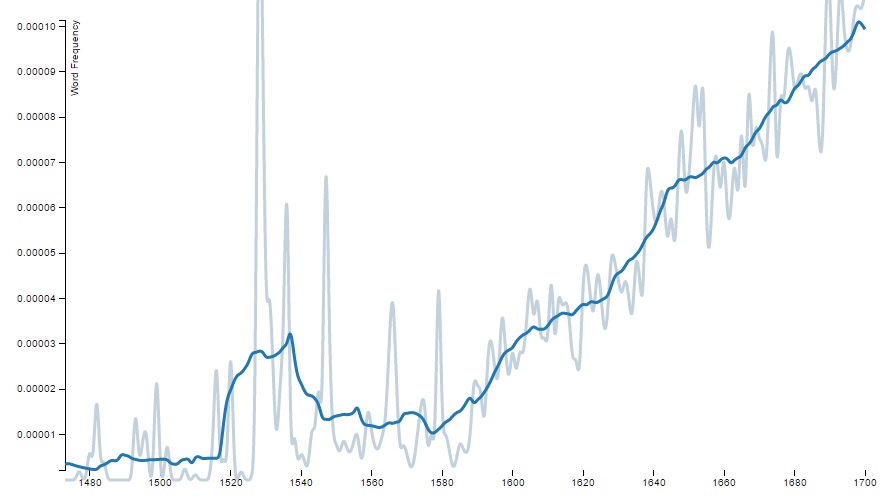
Interesting to see that “craft beer” is such a post-2007 term – and one that has never quote achieved the heights that “microbrewery” did in the late 90s. “Gourmet beer” never did nuttin’ for no one. Thank God. Glad to see “good beer” has the staying power that simplicity and accuracy assures. Play this game yourself.

Ontario: It’s Beer Book Page Proof Reading Time

obbpage21Even though I have been writing about beer for over a decade, I have not had the pleasure of the page proof experience before. It balances between sheer terror and giddy delight as I see that so much of what I hoped for the book Jordan and I have been working on since last summer has come into being – while at the same time I am still correcting myself on a few last tiny things. Oh. Me. Nerves.
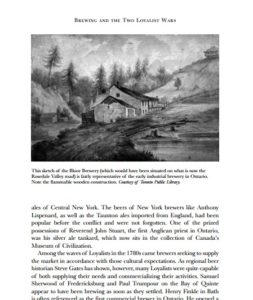
The best stuff frankly relates to things beyond my doing. That is the top of page 21 over there. Jordan selected the photo and wrote the caption. The good folk at History Press chose the font and prepared the layout. And, as noted, even a major concept at that point of the story was provided by sometimes comment maker around here Steve Gates. The bibliography sets out a selection of the sources relied upon but it still runs for three and a half pages. I just wrote the text at that bit. I wrote it before Christmas. Rereading your own work at page proof time confirms the adage that the past is a foreign land.

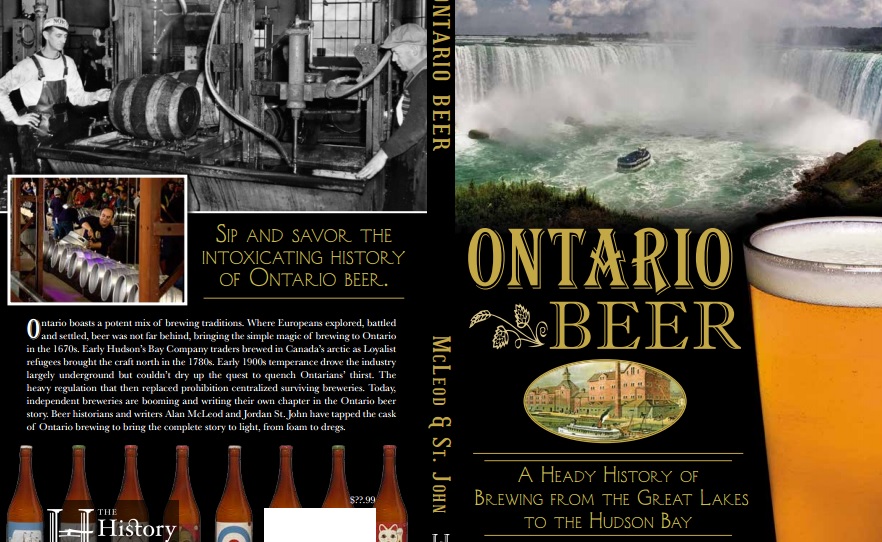
I like the cover, too. Didn’t know I would. Someone else took care of it. It’s odd. There are so many people involved. I had no idea. Blog writing is so private by comparison.

The Lower Left Of My Favorite Ontario Beer Picture

prescottdetail1

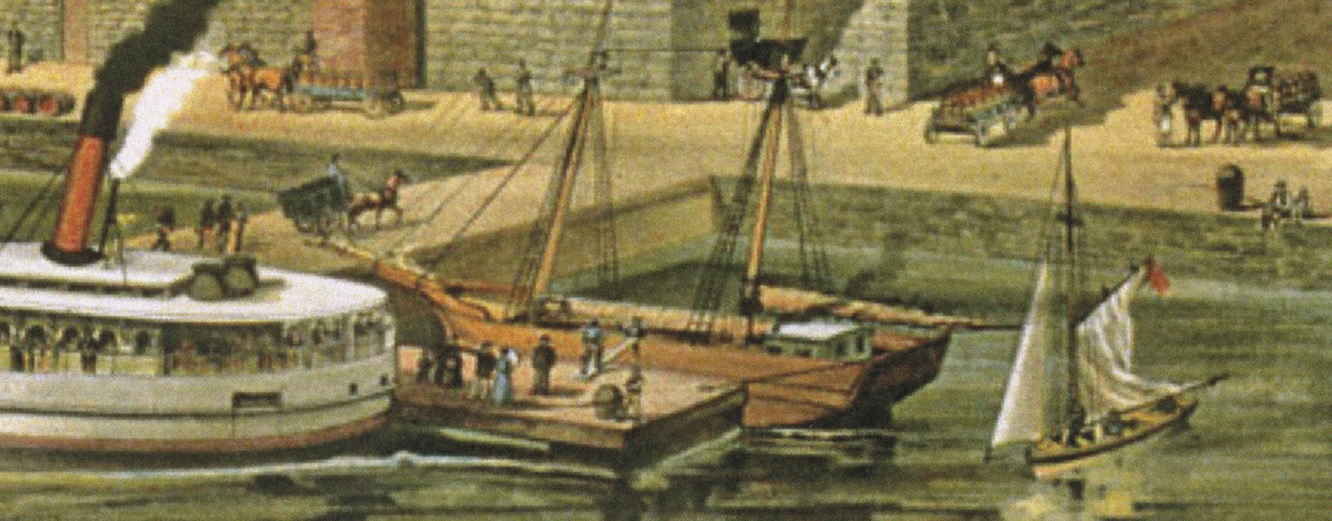
As we now move from writing to editing and proofing the Ontario book, the question of my understanding of things related to publishing has come to the forefront of my brain. But, just when one’s brain is melting, you see a lovely thing like the lower left corner of a Victoria image of the Grenville Brewery in Prescott. Click on the picture above for a wildly large version of this corner of the image. It’s from the Library and Archives of Canada, part of the Molson Collection.

Your Sunday Morning 1940s Ontario Beer Update

4501

As Jordan and I wrap up the writing and rewriting of our book on the history of beer in Ontario, it is interesting to go back and revisit stretches I wrote a couple of months ago. Of all the bits in the book from 1610 to today, I had not expected the mid-1900s to be all that thrilling when we signed the publishing contract. Not the case. The pace of social change in the second quarter of the century alone occurring along with the advance of modernity could give you whiplash. Certainly at the heart of that time is the massive fact of World War II but the flow of cultural change was only accelerated by the war. This was reflected in both commercial restructuring of the beer market and shifts in public perception of the role of beer in the community.

Boak and Bailey invited us all to post some long writing this weekend so, in support of an increase in new long writing related to beer and brewing – including new forms of writing – I give you excerpts from a late draft of Ontario Beer: A Heady History of Brewing from the Great Lakes to the Hudson Bay. Final tweeks continue…

**************
In 1927, at the close of the Province’s dalliance with prohibition, Brewers Warehousing Co. Ltd. was founded as a brewers’ distribution co-operative. The provincial government retained control of the sale of wine and spirits through the LCBO, but beer, with its lower alcohol content, could be distributed by the hundreds of mom-and-pop stores. Initially, the brewers were involved only in wholesale operations, jointly warehousing and distributing their product to stores operated by private contractors. But in 1940, the brewers bought out the contractors and took over the stores, changing their name to Brewers Retail Inc. The stores were later renamed, creatively, The Beer Store…

Labatt also took its place in the war effort. In 1943, it was reported that not only were patriotic efforts such as war bond drives undertaken but trucked shipments were moved back to railroads while a trade school for army motor mechanics was operated out of the brewery’s garage. The brewery also ran a series of weekly panel cartoons on good citizenship standards under the title “Isn’t It The Truth by TI-Jos”. Topics included household prudence, supporting price controls, rumour mongering as treason as well as the evils of the black market. In doing so, the brewery clearly was associating itself with middle class as well as patriotic values…

Wartime on the home front changed social attitudes to public beer drinking. Higher employment and earning levels increased disposable income. Hotels serving beer to men and women no longer carried a dangerous air so much as a patriotic one. Increased accommodation for beer sales also served the financial interests of business and governments during the war. Beer sales more than doubled during the war years and the Federal excise tax on each gallon of beer brewed increased by 36%. Further, a difference in the relative level of taxation in Ontario caused a significant shift in drinking patterns to beer from spirits.

Two forces combined to impose upon the expansion of beer sales in the second half of the war: a renewed temperance movement and resource scarcity. Under direction of the Prime Minister Mackenzie King, temperance as a countervailing patriotic theme was promoted causing a public clash between King and EP Taylor. At the same time, the national Wartime Prices and Trade Board imposed a quota system to distribute beer as it would other commodities which created shortages. In March 1943, when Kingston received an increased allocation to reflect troops being stationed there, other communities received a reduction in their share. Overall, a 90% reduction was imposed on beer distribution, beverage room hours were restricted and, as a result, the beer casks were dry when the night shift at the factory ended. Some took to wearing “No Beer – No Bonds” buttons.

After victory was won, the topic in one of the last editions of Labatt’s “Isn’t It The Truth” series was the return of the young soldier to the family home. When mother tells him there’s no rush to get a job, he replies “I’ve been doing a man’s job for four years. Now I am all ready to get going here at home.” Now, Labatt was associating itself with the sort of moral productivity that continued into the post war boom. Life in Ontario was a worth working hard for as well as fighting for. The brewery continued that theme in 1946 in a series of ads asking Ontarians to do all try can to make tourists from the United States feel welcome with hints from “a well-known Ontario hotelman” including that in business dealings, Canada’s reputation for courtesy and fairness “depends on you!”

The new economic opportunities led to changes in Ontario’s brewing industry addressing the need for consolidation and succession in light of financial success. In 1945, Canadian Breweries falls under Argus, E.P. Taylor’s larger holding company. After spending the first years of the war at the top levels of the British effort to maximize production, Taylor had returned home in 1942 exhausted to focus on Canada’s war efforts a member of National boards as well as to prepare for the future of his brewing empire. Well before the war had ended, he had given instructions to have modernization and expansion plans in place for facilities to be ready for brewing in Waterloo, Toronto and Ottawa as soon as the fighting ended. He also moved to secure assets in the malting industry as well as in an American brewery to reduce his exposure to Canadian government policies as he took steps to meet what he believed was a post war boom market for beer.

In December 1945, something happened in Ontario that had not occurred for over 30 years. A new brewery opened. The Peller Brewing Company in Hamilton. It was founded by Andrew Peller, a former brewer with the Cosgrove brewery who was backed by Hamilton businessmen. Although it operated independently for only eight years, the bricks and mortar brewing facility he built shows up a few more times in the province’s brewing history. Peller went on to open a daily newspaper in Hamilton that soon failed but moved on to create one of Canada’s first large scale wineries, makers of Baby Duck and Peller Estates brands. In brewing, he is perhaps best remembered for getting around the restriction on advertising by opening an ice company and plastering the brewery’s trucks and ads “Don’t Forget The Peller’s Ice” with the emphasis on the Peller.

The new Liquor Control laws of 1944 and 1947 divided the administrative functions of retailing alcohol from licensing. These changes created the fourth legal regime beer drinking Ontarians had to live with since the beginning of 1927. They represented a further unraveling of the temperance web of control but not an elimination. The LCBO was still able to announce in a publication in that year that there was no reason Ontarians should not be able to buy what they wished if they were law abiding and financially able. It was still the role of authorities to sift who was who. Changes to the law were brought in by another change in provincial government with the Liberals being replaced by the Conservatives of George Drew in 1943. The new laws brought in by Premier Drew sought to distance it from allegations of political patronage in the distribution of licenses and also to respond to public attitudes. In April 1944, a Gallup poll indicated that 73% of Ontarians now rejected any steps toward prohibition.

The brewing industry was interested in public opinion as well. In a private polling undertaken in 1946 and 1947, attitudes of Ontarians were measured related to beer ads in the media as well as the management of breweries and retail outlets for beer. The polling, conducted on behalf of Quebec brewers Molson, captured post war perceptions at a time of further changes to the province’s Liquor Control Act. A drop was noted from 90% to 80% on the question of whether beer was an intoxicating beverage. The shift was even bigger drop for those under 30. A great one-year jump of 40% to 88% was recorded for support for Brewers’ Retail stores with far higher marks for their management compared to hotel beverage rooms.

These opinion polls capture not only post war changes in public attitudes but also changes to the system of selling beer in Ontario which came into force on 1 January 1947. Announced the new further relaxed regulations, Attorney General Leslie Blackwell confirmed that throughout the war years beer consumption more than doubled from 24,000,000 gallons in 1939 to 51,000,000 in 1946. The old rules were described as restrictions which amounted to partial prohibition which were being “disobeyed by increasingly large numbers of otherwise law-abiding citizens.” Apparently the generation that wanted to get to work after fighting the war wanted a beer as well.

The changes in attitudes behind the polling reflects the social leveling that occurred through the years of economic depression followed by years of war. The hand of political influence was no longer an accepted norm. Nor was the moral superiority of your dry betters. Brewers were involved. Labatt was staking a claim for beer as a normal part of life by placing ads in newspapers asking for public support of the St. John’s Ambulance Society, sponsoring events like a UK food drive and organizing safe driving demonstrations at small town Legions…

At the end of the first half of the 20th century, Ontario was undergoing social transition. It was just a few years from the first human rights legislation protecting against discrimination in employment and accommodation. The Progressive Conservative party was still in the early years of a forty-two year run of uninterrupted power. The population of the province expanded over 20% in the 1940s and the economy was booming. E.P. Taylor controlled 50% of the provincial beer market compared to 20% for Labatt. At the century half way point, Ontario’s brewing industry and beer itself was changing to keep up with the race forward.

Another Milestone In Writing Ontario’s Beer History

Milestone? Ramming over 400 years of history into the form of one book tends to make you forget milestones. Too many fly by. Jordan and I are coming to a final point with all the text placed in one spot with a real beginning, middle and end. With still a few weeks to go and without spilling too many beans… what have I learned?

=> An iPad mini is not unlike a shovel. Years ago, I kept an acre vegetable garden and dug it and turned it every year with just a shovel. One Saturday morning I said “to hell with this” to the sky and bought myself a bright red $1000 Toro rototiller that could be started on turf and, before moving forward, would straight drop down turning the ground to gorgeous fertile soil. I called it “Lil’ Shiva” for obvious reasons. Two days ago I bought the 15.6 inch laptop on sale that I am typing on now. Not squinting as much all of a sudden.

=> I am glad I shared in the writing of The Unbearable Nonsense of Craft Beer with Max first. It got a lot of mental content out of the way but also got me in the habit of sitting down and pounding out 400 or 800 words not as a stand alone thing like these paragraphs but as part of a bigger statement. I’ve started its sequel.

=> Ontario’s general history is far more interesting than folk would tell you. Huge chunks of the social and political story can’t fit into the narrative solely for reasons of scale. It is sad that there is no well known book simply called The History of Ontario as there are similar works in other, more self-aware jurisdictions. The story of the provinces brewing gives some hints as to why that book might not be on a bookshelf near you. You will have to wait, however, until June to see what I mean.

=> I have far more interest and even affection for big institutions like the Hudson’s Bay Company and big people like E.P. Taylor. Rather than being the massive faceless corporate monoliths they might be taken for today, they each were cutting empires out of the hinterlands in their way. Consolidation was inevitable in the brewing industry in its day just as much as it was in the automotive industry. Today, we don’t expect to buy cars made in our own local communities. Why would Ontarians of 1890 or 1949 care any more whether their beer was local? PS: Labatt > Carling even if it was smaller until their last competitive decades.

=> How about the beer? If Labatt were to bottle its Export IPA circa 1900, it might well blow more than half of the craft beers brewed today out of the water. The beer I would really like to try most, however, is early 1800s ship’s beer. Simply brewed with few ingredients and low alcohol, it is one of the lost brews that would have been an utterly common place thing in a shore town like mine two hundred years ago. Common as Kleenex or coffee in a paper cup.

So, there you go. An update or sorts. Still plenty of writing and editing to come but the end is near. Then another book. And maybe another if things work out.

1749 Quebec Drinks Advice From Pehr Kalm

image56Home alone on a sick day, what else better to do but catch up with my old pal Pehr Kalm on his travels 264 years ago. Working on the Ontario beer history book in recent days, I am looking for references to brewing in New France to seek if I can established what might have been going on around here before it was even Upper Canada. See, what is now Ontario has been many things in the past, bits and pieces of many empires. Beer and other drinks hitch a ride with most of them. And until 1791, southern Ontario was part of the British colonial Province of Quebec and, before 1758-60, part of New France.

And we have some really swell tidbits of information. On 15 August 1749, Swedish botanist and diarist Pehr Kalm was at a reception for the newly arrived Governor General of New France, the Marquis de la Jonquiere, where he reports the “entertainment lasted very long and was as elegant as the occasion required.” All the greatest and the good of the colony were there but you get the sense that it was a wee bit laddish as this is the main topic he records of the conversation:

Many of the gentlemen, present at the entertainment, asserted that the following expedient had been successfully employed to keep wine, beer, and water, cool during the summer. The wine, or other liquor, is bottled; the bottles are well corked, hung up in the air, and wrapped in wet clouts. This cools the wine in the bottles, notwithstanding it was quite warm before. After a little while the clouts are again made wet, with the coldest water that is to be had, and this is always continued. The wine, or other liquor, in the bottles is then always colder than the water with which the clouts are made wet. And though the bottles should be hung up in the sunshine, the above way of proceeding will always have the same effect.

I need to try that one. We have to remember that Kalm was not an idle wanderer. As the Borgstates, he “was commissioned by the Royal Swedish Academy of Sciences to travel to the North American colonies and to bring back seeds and plants that might be useful to agriculture.” So, he is a scientist on the lookout for things… stuff… doings and goings-on.

He describes a pretty rich diet amongst the elite. Brandy, coffee and chocolate for breakfast. Red claret and spruce beer are in much use at the noontime dinner and again at supper at seven in the evening. He notes that people store their beer in their ice cellars beneath their houses to keep it cool in the summer and notes that it is customary to put ice in drinks to keep them cool. It is likely that the beer is spruce beer as “they make a kind of spruce beer of the top of the white fir” which is seldom taken by people of quality. He also notes that it is “not yet customary here to brew beer of malt” and also “nor do they sow much barley, except for the use of cattle.”

This last bit is interesting as one hundred years before the Jesuit records clearly show efforts to create local brewing capacity as part of the earlier economy of the colony. Kalm, however, describes a wealthier and less self-sufficient colony in the late 1740s at least among the elite. There is no longer a press so all books are imported from France. Large sums are spent on boat loads of wine. Cider and beer are so 1630s it would appear.

What does that mean for Ontario? Well, likely the forts by the end of the French empire were supplied with casks of wine rather than malt made beer. Yet, in the last quarter of the 1600s, that was not necessarily the case. When the likes of Lasalle and Frontenac ruled the spot where the Great Lakes meets the St. Lawrence River… who knows?

Travel: A Trip Up To The National Archives

I made a quick trip to the Library and Archives of Canada as part of researching the book on Ontario beer history. Among the most interesting things seen was all the white with black veined marble throughout the place.

That’s the foyer up there. The Wellington Street building down the road from Parliament and the Supreme Court has an odd combination of the white marble, aged pine and brass fittings. It feels like the Earth HQ might have looked like on Space:1999. Apparently I failed to notice the Henry Moore down to my right when I took the picture.