Your Sunday Morning 1940s Ontario Beer Update

4501

As Jordan and I wrap up the writing and rewriting of our book on the history of beer in Ontario, it is interesting to go back and revisit stretches I wrote a couple of months ago. Of all the bits in the book from 1610 to today, I had not expected the mid-1900s to be all that thrilling when we signed the publishing contract. Not the case. The pace of social change in the second quarter of the century alone occurring along with the advance of modernity could give you whiplash. Certainly at the heart of that time is the massive fact of World War II but the flow of cultural change was only accelerated by the war. This was reflected in both commercial restructuring of the beer market and shifts in public perception of the role of beer in the community.

Boak and Bailey invited us all to post some long writing this weekend so, in support of an increase in new long writing related to beer and brewing – including new forms of writing – I give you excerpts from a late draft of Ontario Beer: A Heady History of Brewing from the Great Lakes to the Hudson Bay. Final tweeks continue…

**************
In 1927, at the close of the Province’s dalliance with prohibition, Brewers Warehousing Co. Ltd. was founded as a brewers’ distribution co-operative. The provincial government retained control of the sale of wine and spirits through the LCBO, but beer, with its lower alcohol content, could be distributed by the hundreds of mom-and-pop stores. Initially, the brewers were involved only in wholesale operations, jointly warehousing and distributing their product to stores operated by private contractors. But in 1940, the brewers bought out the contractors and took over the stores, changing their name to Brewers Retail Inc. The stores were later renamed, creatively, The Beer Store…

Labatt also took its place in the war effort. In 1943, it was reported that not only were patriotic efforts such as war bond drives undertaken but trucked shipments were moved back to railroads while a trade school for army motor mechanics was operated out of the brewery’s garage. The brewery also ran a series of weekly panel cartoons on good citizenship standards under the title “Isn’t It The Truth by TI-Jos”. Topics included household prudence, supporting price controls, rumour mongering as treason as well as the evils of the black market. In doing so, the brewery clearly was associating itself with middle class as well as patriotic values…

Wartime on the home front changed social attitudes to public beer drinking. Higher employment and earning levels increased disposable income. Hotels serving beer to men and women no longer carried a dangerous air so much as a patriotic one. Increased accommodation for beer sales also served the financial interests of business and governments during the war. Beer sales more than doubled during the war years and the Federal excise tax on each gallon of beer brewed increased by 36%. Further, a difference in the relative level of taxation in Ontario caused a significant shift in drinking patterns to beer from spirits.

Two forces combined to impose upon the expansion of beer sales in the second half of the war: a renewed temperance movement and resource scarcity. Under direction of the Prime Minister Mackenzie King, temperance as a countervailing patriotic theme was promoted causing a public clash between King and EP Taylor. At the same time, the national Wartime Prices and Trade Board imposed a quota system to distribute beer as it would other commodities which created shortages. In March 1943, when Kingston received an increased allocation to reflect troops being stationed there, other communities received a reduction in their share. Overall, a 90% reduction was imposed on beer distribution, beverage room hours were restricted and, as a result, the beer casks were dry when the night shift at the factory ended. Some took to wearing “No Beer – No Bonds” buttons.

After victory was won, the topic in one of the last editions of Labatt’s “Isn’t It The Truth” series was the return of the young soldier to the family home. When mother tells him there’s no rush to get a job, he replies “I’ve been doing a man’s job for four years. Now I am all ready to get going here at home.” Now, Labatt was associating itself with the sort of moral productivity that continued into the post war boom. Life in Ontario was a worth working hard for as well as fighting for. The brewery continued that theme in 1946 in a series of ads asking Ontarians to do all try can to make tourists from the United States feel welcome with hints from “a well-known Ontario hotelman” including that in business dealings, Canada’s reputation for courtesy and fairness “depends on you!”

The new economic opportunities led to changes in Ontario’s brewing industry addressing the need for consolidation and succession in light of financial success. In 1945, Canadian Breweries falls under Argus, E.P. Taylor’s larger holding company. After spending the first years of the war at the top levels of the British effort to maximize production, Taylor had returned home in 1942 exhausted to focus on Canada’s war efforts a member of National boards as well as to prepare for the future of his brewing empire. Well before the war had ended, he had given instructions to have modernization and expansion plans in place for facilities to be ready for brewing in Waterloo, Toronto and Ottawa as soon as the fighting ended. He also moved to secure assets in the malting industry as well as in an American brewery to reduce his exposure to Canadian government policies as he took steps to meet what he believed was a post war boom market for beer.

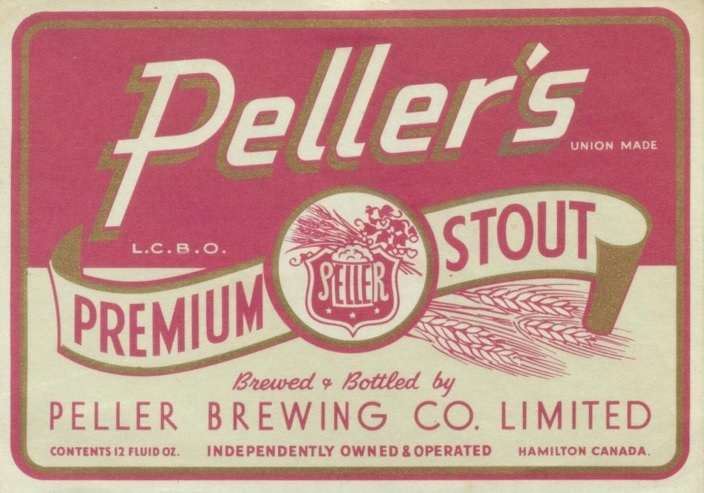
In December 1945, something happened in Ontario that had not occurred for over 30 years. A new brewery opened. The Peller Brewing Company in Hamilton. It was founded by Andrew Peller, a former brewer with the Cosgrove brewery who was backed by Hamilton businessmen. Although it operated independently for only eight years, the bricks and mortar brewing facility he built shows up a few more times in the province’s brewing history. Peller went on to open a daily newspaper in Hamilton that soon failed but moved on to create one of Canada’s first large scale wineries, makers of Baby Duck and Peller Estates brands. In brewing, he is perhaps best remembered for getting around the restriction on advertising by opening an ice company and plastering the brewery’s trucks and ads “Don’t Forget The Peller’s Ice” with the emphasis on the Peller.

The new Liquor Control laws of 1944 and 1947 divided the administrative functions of retailing alcohol from licensing. These changes created the fourth legal regime beer drinking Ontarians had to live with since the beginning of 1927. They represented a further unraveling of the temperance web of control but not an elimination. The LCBO was still able to announce in a publication in that year that there was no reason Ontarians should not be able to buy what they wished if they were law abiding and financially able. It was still the role of authorities to sift who was who. Changes to the law were brought in by another change in provincial government with the Liberals being replaced by the Conservatives of George Drew in 1943. The new laws brought in by Premier Drew sought to distance it from allegations of political patronage in the distribution of licenses and also to respond to public attitudes. In April 1944, a Gallup poll indicated that 73% of Ontarians now rejected any steps toward prohibition.

The brewing industry was interested in public opinion as well. In a private polling undertaken in 1946 and 1947, attitudes of Ontarians were measured related to beer ads in the media as well as the management of breweries and retail outlets for beer. The polling, conducted on behalf of Quebec brewers Molson, captured post war perceptions at a time of further changes to the province’s Liquor Control Act. A drop was noted from 90% to 80% on the question of whether beer was an intoxicating beverage. The shift was even bigger drop for those under 30. A great one-year jump of 40% to 88% was recorded for support for Brewers’ Retail stores with far higher marks for their management compared to hotel beverage rooms.

These opinion polls capture not only post war changes in public attitudes but also changes to the system of selling beer in Ontario which came into force on 1 January 1947. Announced the new further relaxed regulations, Attorney General Leslie Blackwell confirmed that throughout the war years beer consumption more than doubled from 24,000,000 gallons in 1939 to 51,000,000 in 1946. The old rules were described as restrictions which amounted to partial prohibition which were being “disobeyed by increasingly large numbers of otherwise law-abiding citizens.” Apparently the generation that wanted to get to work after fighting the war wanted a beer as well.

The changes in attitudes behind the polling reflects the social leveling that occurred through the years of economic depression followed by years of war. The hand of political influence was no longer an accepted norm. Nor was the moral superiority of your dry betters. Brewers were involved. Labatt was staking a claim for beer as a normal part of life by placing ads in newspapers asking for public support of the St. John’s Ambulance Society, sponsoring events like a UK food drive and organizing safe driving demonstrations at small town Legions…

At the end of the first half of the 20th century, Ontario was undergoing social transition. It was just a few years from the first human rights legislation protecting against discrimination in employment and accommodation. The Progressive Conservative party was still in the early years of a forty-two year run of uninterrupted power. The population of the province expanded over 20% in the 1940s and the economy was booming. E.P. Taylor controlled 50% of the provincial beer market compared to 20% for Labatt. At the century half way point, Ontario’s brewing industry and beer itself was changing to keep up with the race forward.

Another Milestone In Writing Ontario’s Beer History

Milestone? Ramming over 400 years of history into the form of one book tends to make you forget milestones. Too many fly by. Jordan and I are coming to a final point with all the text placed in one spot with a real beginning, middle and end. With still a few weeks to go and without spilling too many beans… what have I learned?

=> An iPad mini is not unlike a shovel. Years ago, I kept an acre vegetable garden and dug it and turned it every year with just a shovel. One Saturday morning I said “to hell with this” to the sky and bought myself a bright red $1000 Toro rototiller that could be started on turf and, before moving forward, would straight drop down turning the ground to gorgeous fertile soil. I called it “Lil’ Shiva” for obvious reasons. Two days ago I bought the 15.6 inch laptop on sale that I am typing on now. Not squinting as much all of a sudden.

=> I am glad I shared in the writing of The Unbearable Nonsense of Craft Beer with Max first. It got a lot of mental content out of the way but also got me in the habit of sitting down and pounding out 400 or 800 words not as a stand alone thing like these paragraphs but as part of a bigger statement. I’ve started its sequel.

=> Ontario’s general history is far more interesting than folk would tell you. Huge chunks of the social and political story can’t fit into the narrative solely for reasons of scale. It is sad that there is no well known book simply called The History of Ontario as there are similar works in other, more self-aware jurisdictions. The story of the provinces brewing gives some hints as to why that book might not be on a bookshelf near you. You will have to wait, however, until June to see what I mean.

=> I have far more interest and even affection for big institutions like the Hudson’s Bay Company and big people like E.P. Taylor. Rather than being the massive faceless corporate monoliths they might be taken for today, they each were cutting empires out of the hinterlands in their way. Consolidation was inevitable in the brewing industry in its day just as much as it was in the automotive industry. Today, we don’t expect to buy cars made in our own local communities. Why would Ontarians of 1890 or 1949 care any more whether their beer was local? PS: Labatt > Carling even if it was smaller until their last competitive decades.

=> How about the beer? If Labatt were to bottle its Export IPA circa 1900, it might well blow more than half of the craft beers brewed today out of the water. The beer I would really like to try most, however, is early 1800s ship’s beer. Simply brewed with few ingredients and low alcohol, it is one of the lost brews that would have been an utterly common place thing in a shore town like mine two hundred years ago. Common as Kleenex or coffee in a paper cup.

So, there you go. An update or sorts. Still plenty of writing and editing to come but the end is near. Then another book. And maybe another if things work out.

1749 Quebec Drinks Advice From Pehr Kalm

image56Home alone on a sick day, what else better to do but catch up with my old pal Pehr Kalm on his travels 264 years ago. Working on the Ontario beer history book in recent days, I am looking for references to brewing in New France to seek if I can established what might have been going on around here before it was even Upper Canada. See, what is now Ontario has been many things in the past, bits and pieces of many empires. Beer and other drinks hitch a ride with most of them. And until 1791, southern Ontario was part of the British colonial Province of Quebec and, before 1758-60, part of New France.

And we have some really swell tidbits of information. On 15 August 1749, Swedish botanist and diarist Pehr Kalm was at a reception for the newly arrived Governor General of New France, the Marquis de la Jonquiere, where he reports the “entertainment lasted very long and was as elegant as the occasion required.” All the greatest and the good of the colony were there but you get the sense that it was a wee bit laddish as this is the main topic he records of the conversation:

Many of the gentlemen, present at the entertainment, asserted that the following expedient had been successfully employed to keep wine, beer, and water, cool during the summer. The wine, or other liquor, is bottled; the bottles are well corked, hung up in the air, and wrapped in wet clouts. This cools the wine in the bottles, notwithstanding it was quite warm before. After a little while the clouts are again made wet, with the coldest water that is to be had, and this is always continued. The wine, or other liquor, in the bottles is then always colder than the water with which the clouts are made wet. And though the bottles should be hung up in the sunshine, the above way of proceeding will always have the same effect.

I need to try that one. We have to remember that Kalm was not an idle wanderer. As the Borgstates, he “was commissioned by the Royal Swedish Academy of Sciences to travel to the North American colonies and to bring back seeds and plants that might be useful to agriculture.” So, he is a scientist on the lookout for things… stuff… doings and goings-on.

He describes a pretty rich diet amongst the elite. Brandy, coffee and chocolate for breakfast. Red claret and spruce beer are in much use at the noontime dinner and again at supper at seven in the evening. He notes that people store their beer in their ice cellars beneath their houses to keep it cool in the summer and notes that it is customary to put ice in drinks to keep them cool. It is likely that the beer is spruce beer as “they make a kind of spruce beer of the top of the white fir” which is seldom taken by people of quality. He also notes that it is “not yet customary here to brew beer of malt” and also “nor do they sow much barley, except for the use of cattle.”

This last bit is interesting as one hundred years before the Jesuit records clearly show efforts to create local brewing capacity as part of the earlier economy of the colony. Kalm, however, describes a wealthier and less self-sufficient colony in the late 1740s at least among the elite. There is no longer a press so all books are imported from France. Large sums are spent on boat loads of wine. Cider and beer are so 1630s it would appear.

What does that mean for Ontario? Well, likely the forts by the end of the French empire were supplied with casks of wine rather than malt made beer. Yet, in the last quarter of the 1600s, that was not necessarily the case. When the likes of Lasalle and Frontenac ruled the spot where the Great Lakes meets the St. Lawrence River… who knows?

Travel: A Trip Up To The National Archives

I made a quick trip to the Library and Archives of Canada as part of researching the book on Ontario beer history. Among the most interesting things seen was all the white with black veined marble throughout the place.

That’s the foyer up there. The Wellington Street building down the road from Parliament and the Supreme Court has an odd combination of the white marble, aged pine and brass fittings. It feels like the Earth HQ might have looked like on Space:1999. Apparently I failed to notice the Henry Moore down to my right when I took the picture.

A Trip With Jordan To Canada’s National Archives

image45It took four levels of security to get Jordan and I from the front door of the Library and Archives of Canada to a table with 20 neatly stacked boxes of brewery records to look through. The two hour drive north was fueled by caffeine. Finding a place to park was the biggest hassle. Once in the building we were issued ID, then signed in by security and then provided the access rights granted in writing before we were shown our table and provided with the boxes we had requested. We were assisted by at least seven by different staff members.

And such things we found. Correspondence between names which have altered the global beer markets. Early Victorian beer labels. Public opinion surveys from an era long gone. The cost of 100 lbs of brewers yeast in 1932. We’ll have to confirm what can be shared but suffice it to say that the book has been enriched.

It’s Friday And What Have We Learned Beery?

image37It’s Friday. Friday evening. The Friday that is the end of the first full week after summer vacation. If it was undergrad this would be the weekend you show that you learned the lessons of frosh week. But it’s not frosh week, is it? No, instead of cheap ass beer or rot gut booze it’s a glass of the dessert wine after another milestone in the generation coming up behind. Cake and wrapping paper piles. Note to file for the 13,753rd time: beer does not go better with desserts. Give me a beer with noble rot and then maybe we can talk.

This week I discussed brewing with two groups that are thinking about opening that first production brewery in my town. For a few years a couple of times a year I have had the lunch or the cup of coffee, discuss what it might take and… still no brewery. These groups are different, however. Well funded and populated by folk who have run businesses, made decisions. People who understand that a sack of grain needs to be carried up that ladder. I hope one of them makes a go of it. At least one. If only for my sake.

The first draft of the Alan and Max Book was sent out to a few readers. It is so weird that I am not sure what to make of it other to suggest it’s a stark and incisive dialogue that bends time and space. I’ve been writing three things other than this blog for a few months now and, given I also have three co-writers, I am fairly pleased that I can even say even that much about this one. I am really worried the Ontario beer history will have a scene in which Ron Pattinson crawls out of my shed. The most honest assessment so far is the one from Craig. We’ll be hundredaires! And so shall we be.

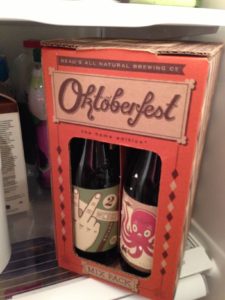
Now? Now there is an Oktoberfest mixed pack from Beau’s to consider. They were so rightly pleased with the design that the sample came with instructions on how to recreate the cardboard carry all. The results are shown above. Roggenbier, maibock, rauch weissbier and German porter. Think I am starting with the Oktobock.

So Now #JordanAndAlanBook Has A Name

Just so you can plan your Father’s Day shopping for 2014, the book contracts have been confirmed with the publisher History Press, aka our reputable publisher. Never thought I’d have one of those.

And, as befits a birthday, it has a name: Ontario Beer: A Heady History of Brewing from the Great Lakes to the Hudson Bay. I noticed something about the name. It goes against the regular direction of things. The general theory goes that Ontario grew east to west. But it really grew west to east after the last Ice Age, then later south to north with the Five Nations and their neighbours, then a blip in the east with Cartier… but then north to south-westish with Henry Hudson followed two generations later by the first outposts of the Hudson Bay Company, then a blip in the far east with Lasalle and Frontenac followed by then a little continuing action at the very southwest across from Detroit until the Loyalist surge south to west at Niagara along with south to north along the St. Lawrence, then very far east to west after the War of 1812 and west and west and north and north-west and west until… now.

Better get at it.

Father’s Day Tomorrow May Find Me Typing

There may come a time that beer and brewing will only mean writing to me. Not that I have any real issue with beer but right now I have three co-writing projects all of which add up to around 150,000 words. I realized just now that that’s a lot of words when I finish typing out all those zeroes. But I am, frankly, inspired by Boak and Bailey and their jump at long writing about post WWII UK beer culture. I notice, however, that they are each other’s sole co-writers and they are sensible enough to be writing one book. So, maybe an explanation of what the hell I am up to is in order.

=> The first, the Alan and Max book is the furthest ahead already at over 35,000 but I am not sure what to make of it. It’s intended to be funny and all about craft beer culture. It might be titled “Lies Craft Beer Taught Me” but probably not. Unlike the other two projects, it is largely creative writing, an exploration of good beer culture with little respect for space and time – let alone craft beer culture. Writing with Max has been a truly refreshing experience as we have completely different paths in life and come from different cultures yet have come to a very similar place in our thoughts about the good beer community and the pressures as well as interests imposing upon it. We are planning on a Kindle release when it is ready to go.

=> And, as you may well have suspected, Craig and I are writing about Albany Ale with a real return to focus. We are working on a series of article we were invited to write for Brewery History. The first, on the brewing scene in the upper Hudson in the 1600s is about 70% there. There have been spin-offs, too, which is to be expected after more than two and a half years. Craig has already done a presentation with more to come as well as some interviews with local media. Living five hours drive away from the subject matter is a bit of an issue for me but, well, you do what you can. We have spoken to a publisher about a proper book on the topic, too. We shall see what the future holds but we are very confident there is enough information there to justify two covers and an index.

=> Third project? Can’t tell you yet because papers are in transit. Jordan and I were invited to write it and we are all a giggle about the prospect. It may end up having aspects of the other two projects though I can confirm that, unlike Max, it will not include a description of a tube up Jordan’s butt. I can also confirm that we have a reputable publisher. I can tell you that because during a conference call I asked “so, can I confirm that I have a reputable publisher?” and was told that I could. More detail should be forthcoming in the near future but suffice it to say there shall be interviews, research and plenty of emails before the thing comes into the world.

All of which means I must like co-writing. I think I do even though I’ve been a solo operation for most of the ten years that I have been writing here. What I like about co-writing is the chance to see a large idea through the eyes of another. What is really interesting at the moment is seeing large and related ideas through the eyes of three others concurrently. Craig brings more zeal than I have as well as a greater capacity for detail. Jordan has an inordinately large vocabulary by far plus a wider vision. Max is more incisive and also not weighed down by presumptions about both beer and writing that I carry as part of my own personal baggage. Sounds like therapy when you put it that way. Which it might be. The overall effect is making sense of these past ten years writing in a basement, putting it all into some order. Which may leave little time for the drinking of beer due to the thinking about it.

Sad News Of The Loss Of A Great Guy

scoop1I have been on the road all day so am just seeing now that one of my favorite beer bloggers, Simon “Reluctant Scooper” Johnson of England, has passed away far too young. That’s my favorite of the portraits of himself he posted over the years. I never met Simon but we talked now and then through emails, tweets and blog comments. I completely enjoyed his writing. His optimism, bimbles and – perhaps more than anything else – his sheer interest and joy in so many things. And his humour. Here’s his bio:

A bloke who likes beer. What, you want to know more? OK. Ex face-painting clown, lives in the English Midlands, works with data, loves pork pie, hates couscous. Married with one barbecue. Knows some brewers and publicans. And politicians. And, ahem, “characters”. Has written for papery stuff like Beer (the CAMRA quarterly magazine), Gin & It (UK drinks journal) and Beeradvocate (US beer magazine) but is still holding out to be the pub reviewer for Country Gentleman’s Pig Fertilizer Gazette.

Not sure many others could have pulled off the craft rope post or levened it with a bit of meaning as he did. And he thought to give thanks, too. He loved Orval. He helped with the grunt work of the OCB wiki. A friend has posted photos of how he spent last Saturday with Simon, goofing around. His sense of infectious fun came through in everything he wrote. You know, were this rotten news today to turn out to be a massive wind up of us all on his part I would think it a classic. But it isn’t. It’s just rotten sad news.

His blog can be found here and responses to the sad news can be shared on Twitter under the hashtag #RIPscoop. My thoughts are with his family and friends.

Wednesday’s Beery Thoughts From The Sick Bed

Kidney stones, a CT scan of my innards, visits to the ER as well as my GP not to mention a bunch of blood tests with a whack of other acronyms have literally put me off my beer. And not just because I have been reminded to be careful as we all should with the effects of malty goodness on our internal health. Given that I have been given the big pills that one takes when that invisible knife digs in and twists, you sorta have to be abstaining just in care you need to hit the big red button and take one. So, I am taking a break which has led to a number of observations:

⇒ One belt buckle notch has been gained. Already. At this rate, I might have my burly boyish figure back by next autumn. It is tempting… yet slightly shocking. It’s not so much that I am losing weight as deflating. Drinking 20 litres of water a day doesn’t hurt with this either. Taking a break may be good even when it is forced upon me.

⇒ The stash is looking good, too. I have a quite separate joy in shopping for beer, you know. In fact, during one particular bout of, shall we say, moderate flank mega-noogie, there was nothing I found more comforting than a stroll amongst beer shelves picking out a few to stick away. That, too, can be one’s happy place.

⇒ And samples will come in. I got a phone call last night during a very bad zap from the nicest people in beer, the good folk behind the new beer from the new Bush Pilot Brewing telling me a sample was on its way. Between wincing, I had to tell them I had to tell them the bottle would have to sit. But, as my friend in beer shared the 25 ingredients (listed on the label by the way) , I realized what a hypocrite I was. It’s a collaboration with a traveling Nordic brewer, a contract brew, a brew filled with fancy non-beer ingredients, it will be likely past my normal price point and, when the sample came, I saw it had a dipped wax top. And yet I want it. It may need a new name – as metheglin is to mead. But I want it.

⇒ Beer writing also fills a space. I actually have two pieces on the go, not just the longer bit with Max but a medium scale one with Craig. Both footnote laden, one is formal and one is not. One on request and one on spec. But both are serious. So productive I am.

Funny. The imposition is not turning out to be an imposition. Not sure I am ready to take up swishing, spitting and pouring out the stuff in the stash. But there is a heck of a lot to explore about beer other than beer. I had no idea.