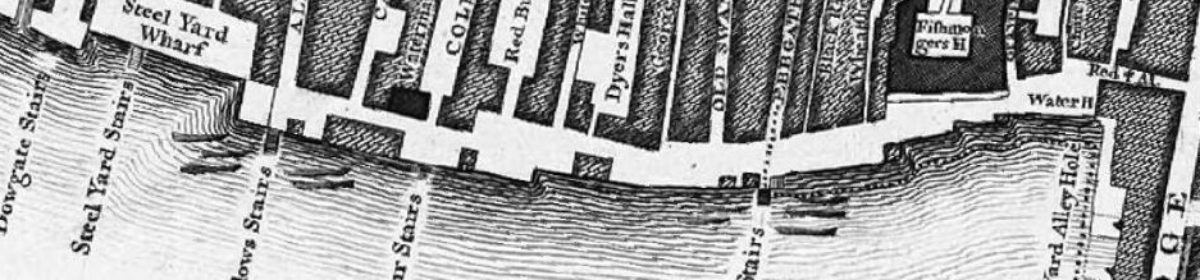
So… Were There Loyalist Brewer A-Holes, Too?

catar1783

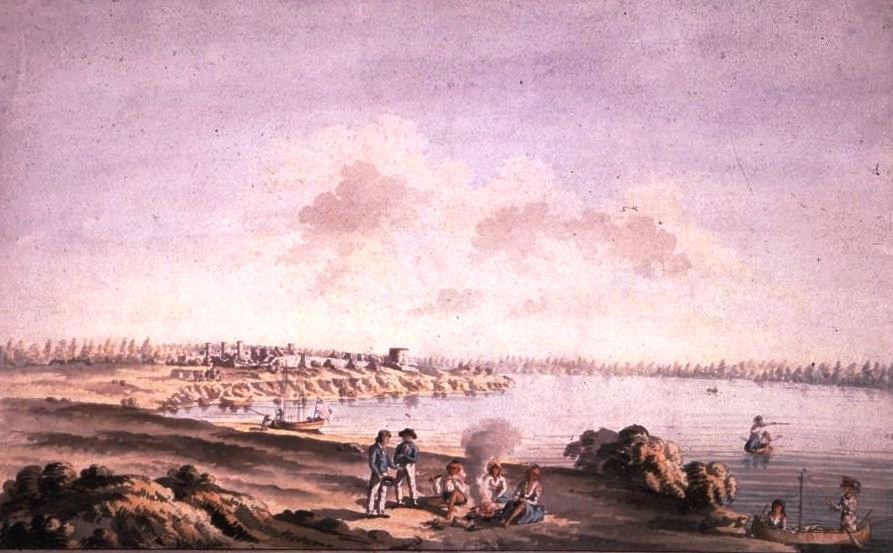
I have been putting my mind to the question of who was the first Loyalist brewer in what is now Ontario. Not the first brewer but the first Loyalist brewer. Which means there is a starting line that is fairly identifiable, the end of the American Revolution. The image above is by James Peachey, a war artist, of some of the first Loyalists settling in at Kingston next to the ruins of a French outpost last populated from 1673 to 1758 or so. The image is from June 1783 as the first Royalist Americans trickle in from the south, from places like Albany, NY. Their tents in the back by the ruins are just about where this place sits now.

The usual story is that the first brewer in Ontario was Forsythe at Kingston in 1793 or Finkle at Bath around 1786 or so at his tavern, the first between Kingston and what is now Toronto. Based on the records. Which is what is great about records and what sucks about them. See, in that picture above I see he beginnings of a wave, the fist few of a lot of displaced farmers and successful towns folk. Not a lot of them are going to be very much against having an ale. And not very many of them are going to have much to do at the moment, being displaced refugees given three years of supplies. It does not make much sense to me that such capable folk are going to wait years for investment in a fixed brewery or the opening of a tavern to get their beer. I have been looking for something that will back up my suspicions. Like this bit about Joel Stone, a Loyalist from Connecticut who in about 1787…

made the journey together up the St. Lawrence to the ramshackle refugee camp of New Johnstown (now Cornwall, Ontario). Ever reliant on his family, his half-brother Stephen came up to assist Joel. Along with him came eleven other men from Litchfield, all eager to take up lands in the new province. Stone once had high hopes in this new land, even petitioning Sir Guy Carleton to make him “Deputy Surveyor General.” Stone would receive no such government office upon arriving in Canada. Instead he wrote to his father, “I have begun making malt brewing beer and distilling spirituous liquors from wheat, barley, rye etc…”

See, one thing I see over and over is how easy beer is to make with the basic ingredients and a basic sense of the technique. And if I can do it what in God’s name would keep someone in the 1780s from doing it, too? Nothing. We see this today all around us. A surge of new and in progress breweries popping up, of many degrees of quality from any sort of brewer. A bucket or two of malt, heat, water and some herbs from the bushes and – voila – you’ve got your beer.

It’s the resilience of beer and the will to make it and drink it that impresses. Whether setting aside a portion of your supply of seed in the 1780s or, today, scraping enough to get the first growler out the door, there is a will to brew. Doesn’t mean you’ll last, be remembered or even be any good. Beer doesn’t really care. It just wants to be made, that’s all.
Ontario: Perhaps The First Upper Canadian Beer Ad

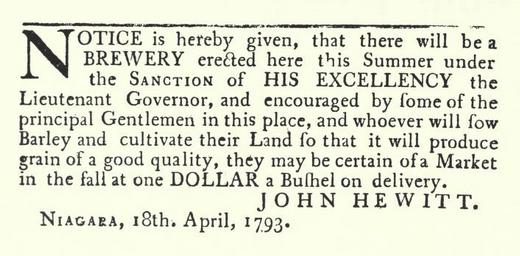
This isn’t an ad for the first brewery in Upper Canada but it is an ad for a brewery in the first edition of the Upper Canada Gazette issued the same date as stated in the ad. It is also not necessarily the first brewery in the colony but that might be a tight race. Steve Gates, sometimes comment maker around these parts, identifies Forsythe as building the Kingston Brewery in 1793, too. And, of course, it would post date the likely first brewing in what becomes Ontario by about 120 years given the Hudson’s Bay Company was packing malt in the hold on its first adventure in the 1670s. Plus, there was posssibly even commercially brewed beer in Niagara at least when the brewery was set up as the paper the first edition was printed on was from Albany NY meaning a cask or more of Albany ale may well have traveled the same journey as it had a habit of doing. It appeared on the lower right of the last page of the paper, the only ad in the whole first edition.

Ontario: Byward Brown, Big Rig Brewing, Ottawa

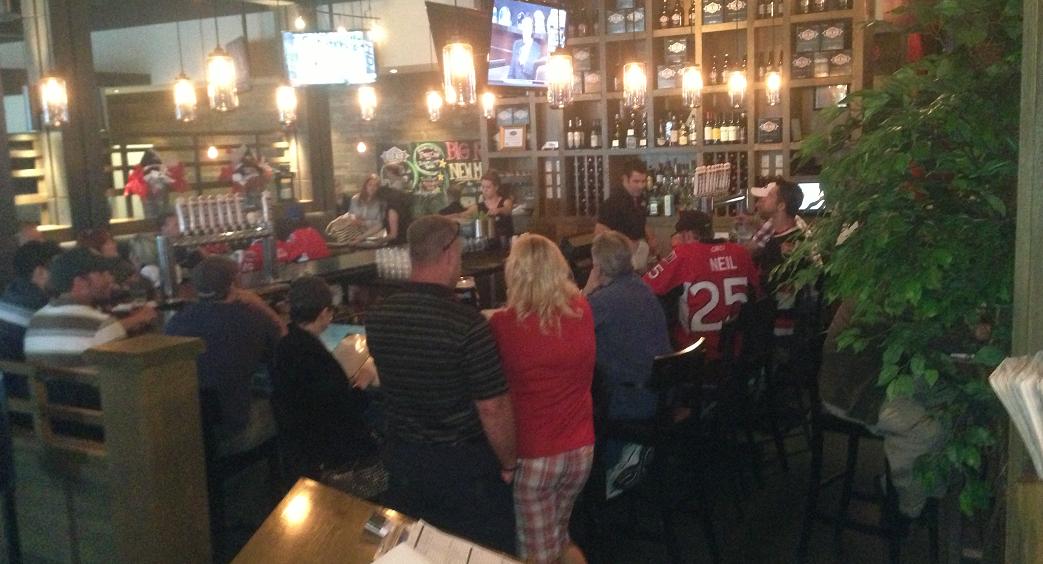
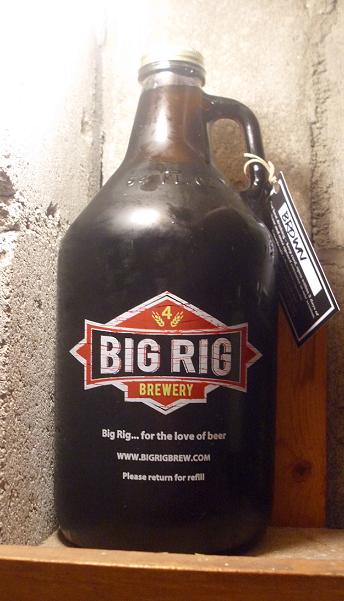
A mad half week on the road. Two business meetings, a ball game plus a 97th birthday party in the family saw me driving from Eganville to Ottawa to Toronto to Owen Sound and back. Good thing I picked up a growler of this nut brown ale as I was passing from highway 417 to the 416. Big Rig sits in a small mall in Ottawa’s east end next to the big Ikea and serves both local passing car traffic as well as nearby residential community. The on-site restaurant was packed when I stopped in with folk catching the NHL playoff game happening in another part of town that evening.

After a morning of gardening and, err, home organization this hits the spot. The beer pours an attractive reddish mahogany with a fine creamy off white head. Nuts and dried fruit on the nose. In the mouth, there is a good bracing jag of twiggy hopping paired with a minority vote from something adding some citrus rind. As the beer warms, the malts open up with flavours of cola, dark sugars, dates and other brown things. The level of hopping might have attracted an earlier craft era designation as a Texas brown ale but that’s a label that seems to have faded away, a style that wasn’t then might have been but now may not be anymore. A black tea dry finish highlights the hazelnut notes and grainy texture.

A reasonably drinkable 5.2%, not enough BAer reviews to warrant an average. I like.

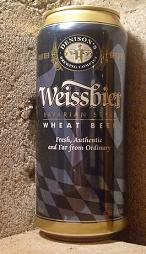
Ontario: Weissbier, Denison’s Brewing, Toronto

Brewed since 1990, this wheat beer is one of the best arguments against worrying at all about tenancy forms of brewing in principle. While one might unkindly point out the web 1.0 nature of the brewer’s web presence, it does give you what you need to know and, more to the point, sets the tone. Fairly focused small batch niche brewing at a high standard for the best part of the craft beer revolution. Quite Toronto-centric in business terms, the stuff never gets out here much, here in the rude and rustic hinterlands 200 km to the east. I get there so rarely but did share part of an evening with the brewer, Michael Hancock back in 2009. I recall him complaining or at least explaining the trials of keeping on top of quality control whether in the then new can or as served from taps watched by the eyes of others.

What about the beer? Deft as much as anything. Even from the can, creamy wheat. Then there’s banana, a bit of white pepper and a bit less clove than the other guys. Clouded gold under whipped egg white froth and foamy rim. Leans slightly towards coconut creamy aroma. Lightly soured and spiced in the finish. An insane $2.70 a can, probably the best value in Ontario beer. Would a younger brewer would ruin this with a tiny fleck of shrubbery root or the bark of a tree? It needs none of it. Not so much a vestige of brewing past as a reminder of the days of easy adulteration by adjunct or showboating by faddish hop.

Oddly, the BAers tell you how the RBers rate it #1 then rate it not as highly.

Session 75: Brewing Business In 157 Words

It’s Session time again. Or it was Friday and now it’s Sunday 8:02 am. See, there’s things to do. Gardening, smoking pork, napping, sitting. So, it was with deep regret that I realized I needed to post something for this the three quarter-ish of a century edition of these, Les Sessions. The question this month is a bit, err, specific:

Creating a commercial brewery consists of much more than making great beer, of course. It requires meticulous planning, careful study and a whole different set of skills from brewing beer. And even then, the best plan can still be torpedoed by unexpected obstacles. Making beer is the easy part, building a successful business is hard. In this Session, I’d like to invite comments and observations from bloggers and others who have first-hand knowledge of the complexities and pitfalls of starting a commercial brewery. What were the prescient decisions that saved the day or the errors of omission or commission that caused an otherwise promising enterprise to careen tragically off the rails?

Hmmm… a tad particular, no? A wee bit off the point of the plan. Seeking business advice from beer bloggers? Let’s see. What did Stan write? Oh, cheater pants. He inverted the question and pointed out how brewing the beer is not the easy part. Good thing that is true or I would have a real issue with Stan this month. A real issue.

So, …”first-hand knowledge of the complexities and pitfalls of starting a commercial brewery.” What can I say. You could do worse than read the blog How to Start a Brewery (in 1 million easy steps) from one of Canada’s more successful craft brewers, Beau’s. Go look at the beginning, 25 May 2006 when they were about 65 employees smaller. Here’s the first batch being brewed. Here’s when the yeast died at the customs office. Read on. You will likely find there were no prescient decisions. There was panic and scramble, beer and patience. And luck. Lots of luck. And good taste and humour. Brewers who lack the skills at those sorts of things, well, don’t make it.

Oh, I cheated as much as Stan did. Damn. I’ll have to have a word with myself.

Book Review: Alcohol and its Role in…, Ian Hornsey

That is Alcohol and its Role in the Evolution of Human Society by Ian S. Hornsey. I had no idea. In a work of beer writing that is still trying to find its way, seeking to evolve from fanboy gushing or trade focused boosterism or underdeveloped efforts at business journalism, Hornsey’s 2004 book A History of Beer and Brewing stands where few others do as a successful description of the broad scope beer and western society. So, it was a gigglefest when I put his name in the the hands of Lord Good to find out that there was this 2012 publication of the Royal Society of Chemistry exactly one credit card charge and international cross-Atlantic postal service away from me. Joy.
The index alone is enough to make you faint. The Taxonomy and Genetics of the Common Oat are described at pages 273 to 277. The Drunken Monkey hypothesis is described over five pages in the 540s. Interesting to note that, like the stylings of beer, I learn from page 164 that wheat classifications too have suffered from excessive splitting. And now, on page 223 to 224 I have a description of eight classes of sake. Excellent.

This is not really a review. It’s more like a plea for understanding. If you care about beer and don’t have the works of Horsey – and Unger for that matter – by your Laz-e-boy in the basement, you have a treats unimaginable awaiting. It may be a matter of $300 to have four or five of these sorts of books delivered but they form a strong shield against the woop and warp of propositions that may be posed these buffeting times. And they are a great natural source of footnotes.

Are Contract Brewers Posing As Gypsy Brewers?

Because we are having so much fun with terminology and meaning, I thought I would mention this:

As the name suggests, all the breweries involved, save for one (the host), are gypsy brewers. The Brewers Association (BA) defines this type of brewery as a contract brewing company—essentially a business that hires another brewery to produce its beer. The contract brewing company is often responsible for recipe development and handles the marketing, sales and distribution of the beer. “Not-owning a physical brewery doesn’t stop us [gypsy brewers] from being extremely passionate, innovative and community-minded,” notes Band of Gypsies ring leader, Ashley Routson of Bison Organic Beer. “Our mission is to work together to promote and celebrate each other, and educate the craft beer community on the world of gypsy brewing.”

Now call me goofy, but I do think words should have meaning and my understanding that a contract brewer hires someone else to make their beer while a gypsy brewer uses the surplus time on the brewing equipment of another to make a separate line of beer. In each case, the owner of the brewing equipment does not own the beer… unless that is part of the behind the scenes deal to get access to the equipment. The contract may or may not include marketing, shipping and the rest. Depends on the terms of the contract, doesn’t it. Pretty Things, for eastern North American example, does not own its own brewery but makes the decisions so it is an example of the gypsy. These BAers have been forming a shortish list of likely actual suspects. You can provide your thoughts and accusations on that as you feel appropriate in the comments.

But there is something else to note. The fudging of the idea is alleged in the article to be based on the brilliant linguists of the Brewers Association whose recent work has been noted. The two ideas are muddled here, too. I am not sure that is correct, however, from this BA webpage which clearly described contract brewing for what it is – despite some of the other head scratcher definitions in there. Why would one widen the definition of “gypsy brewer” to include anyone who hires someone else to make beer? Because “gypsy brewer” sounds neato and swell while the more accurate “contract brewer” is laden with… accuracy? The trend towards adulteration of the language in the name of good beer is a bit weird, isn’t it.

This is not a crack at all against the project which I suspect includes far more hands on involvement than a contract brewer would sully themselves with. But there is something unseemly even needy in all the slipperiness, isn’t there. Again, thoughts and accusations on that as you feel appropriate.

What Does A Critique Of Beer Culture Look Like?

I’ve been thinking more and more about the framework of the beery discourse and what has gotten us to this point. Still no comprehensive US history of beer. Still we live with the very language of beer controlled by organizations with middle managers, accountants and committees. And a growing trend such that, like things polysynthetic, the task of learning and describing the state of good beer appears to include a lot of creative writing – as in creation of the thing purported to be the subject of study. Not sure these are good things. There are stands being taken. I keep coming back to a post Jeff wrote a few weeks ago called “I Feel A Veto Coming On” in which he announced his rejection of a certain sort of beer:

…I must institute a similar policy with any experimental beer using crazy ingredients. I’m going to start from the position that anything that might plausibly be sold as a candy bar, salad, or entree is not worth drinking.

See that? That’s a position being taken. And one that makes sense. If you think about it, if the experimental beer is based on the adding of “not beer” to “beer” it is clearly a distancing of itself from beer. A dilution. A covering up. A distraction. One need not inaugurate the Protz Shield and Papazian Cup to point out the weakness in a trend or a shape shifting of the market. So, I take up Jeff’s policy and ask you to consider doing the same thing. Maybe 2013 is the year we can put the focus back on the beeriness of beer.

Can You Make Wild Beer In A Vineous Mono-culture?

3670

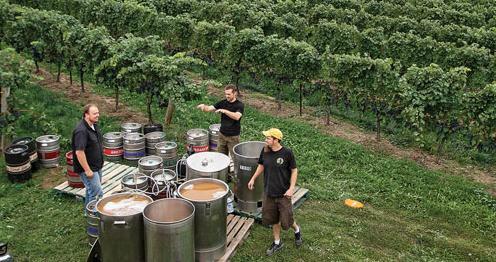
Like most things, Canadians are about half a decade behind so it is no surprise that a group of Ontario brewers have decided to take a kick at wild beer or that some in the Canadian media reacted to the invitation as if they had no idea what was going on in the wider world of good beer. Which is nothing against those directly involved. It’s a great idea. Hope it is yummy and not sold for twenty bucks a glass. Experiment on your own dime, brewers.

Wild indigenous wine yeasts are one of the current things. Like Citra hops. Craze that might be a fad. Here today and gone tomorrow. Yet the yeast is itself. From the photo up top from the Macleans magazine article, you can see the brewing is done in a vineyard, an agricultural monoculture. But is it a monoculture of yeast even if the plants are all clones? Apparently not. We learn that our mutual friend Saccharomyces cerevisiae is certainly on the grapes but only on about 1 in 1,000 berries. What else is in there? The beer will tell. Could be tasty. Hopefully.

PS: get a coolship, wouldja? Wild inoculation via narrow topped vessels might be less than optimum if the history of beer before a hundred or so years ago is anything to go by.

That Odd Tension: Wishing To Find Any Answer But Beer

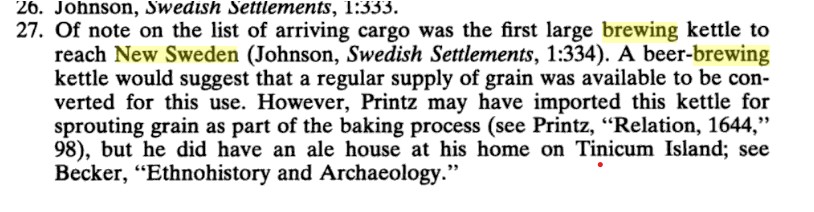
That’s footnote 27 at page 134 of New Sweden in America which is exhibiting something between a quibble and a theme. It’s actually in a chapter in that book, “Lenape Maize Sales to the Swedish Colonists: Cultural Stability during the Early Colonial Period” by Marshall Joseph Becker in which there is a lot of very interesting stuff. For example, in 1654, there was an effort to expand trade products with the Lenape, the local nation, from mainly corn to hops as well. Like the colony, it was a flop but who knew the colonial Swedes were gathering hops in the mid-17th century Delaware. There’s more. In another document, the same Becker shows that New Sweden’s outpost at Tinicum Island had a brewhouse: warning pgf and elsewhere we read that

Swedish women in Delaware made beer not only from pompions (pumpkins) and corn but persimmons and watermelons.

So, with all that evidence that there was plenty of beer and brewing in colonial New Sweden during its existence from 1638 to 1660 why is there a suspicion that the brew kettle was being used for something other than producing beer? I haven’t cataloged it but, just like a Shakespeare play presented in Victorian accent, there seems to be a tension over time, in this case a presumption that beer was not as pervasive in northern western culture prior to a certain point in industrialization as we also seem to know it was. It may be that we don’t want to know or that we can’t take on just how much was drunk by how many. The more I read about these earlier points, however, the more I think I should be surprised to find a sober official, a dry town.