Was This The Earliest Brewing In English Canada?

3068

Sneath, Pashley and Rubin all mention the 1600s brewers of New France – Hebert (1617), Ambroise (1646) and Talon (1670). But I just came across this reference in a footnote in the Minutes of the Hudson’s Bay Company, 1671-1674, published by Toronto’s Champlain Society in 1942, describing payments being made on 16 February 1674 for goods supplied to the ships of the Hudson Bay company:

John Raymond, “By Severall quantities of Ship Beere at 40s p. Tonn Strong beere at 12s, 9d a barrell & Harbor Beere at 6s 6d p. barrell with Malt & Hopps dd. Capt. Gillam, Morris and Cole”, £ 79.

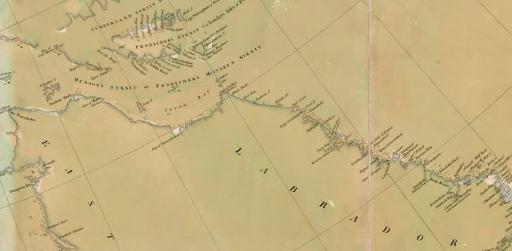
A few months later, a committee of the Hudson Bay Company on 6 July 1674 directed payment to the same John Raymond £ 30 on account of “”Beer and Malt. dd. on board the Prince Rupert.” These items appear among a long list of payments for other necessary goods for taking aboard the ships Prince Rupert, Messenger and Employ. You will see in footnote 2 to this post on a blog by Norma Hall subtitled “Northern Arc: the Significance of Seafaring to Western Canadian History” that these three ships were sailing between England and Hudson Bay in the first half of the 1670s. The Prince Rupert and Messenger, at least, over wintered.

There are loads of interesting questions and observations from these passages from the Minutes of the Hudson’s Bay Company, 1671-1674 including why are they shipping malt and hops separate from barrels of beer. If these ships overwintered and carried malt and hops it is pretty obvious that they must have been brewing. We know the British brewed on ships in the Arctic in 1852 so why not in 1674? But also – what is “harbor beer”? It costs about half of “strong beer” and we know from Gate’s work on Kingston that in 1825 “small or ship beer” was being sold in Kingston. But most of all the question is this – was this the first brewing of beer in English Canada? Or did other earlier over wintering ships brew, too?

Is This The Gold Standard Of Brewery Tours?

I have been on a lot of brewery tours. In Halifax in the early 1980s it was a euphemism for college kids being locked into a room at the brewery and given all the beer they could down in a Friday afternoon hour. More recently, it’s the chance to hear craft brewers explain their processes. At one Japanese brewery, however, it’s now a chance to test out their equipment and your own ideas:

Soon they called our group, and we entered the brewing room. Our brewmaster sat us at a picnic table and brought us more beer. She asked us to taste all of their standard brews and choose one to use as a base for our own beer. We chose an amber ale and increased the alcohol content by adding more sugar, in the form of grain, for fermentation. We also increased the amount of hops added to bring up the bitterness and add more flavor. The whole process took about four hours and we did all the important things ourselves. We measured out the grain, milled it, threw it in a pot and boiled it. There were even tasks — as our brewmaster warned us — that, if done incorrectly, would allow bacteria to contaminate our beer.

I like this concept – even if the cost of $235 for a delivery of 15 litres of beer seems a bit much. But for all I know that might be the cost of a donut and coffee there, too. The brewery in question is no dud – the Kiuchi Brewery in central Ibaraki Prefecture is the maker of the Hitachino Nest line of craft beer imported into North America like this stout and this wit I had a few years back.

Could it happen here? I don’t know. There are likely 15,387 regulations between here and there but what a great way to reach out to your customers and to let them know how your business works.

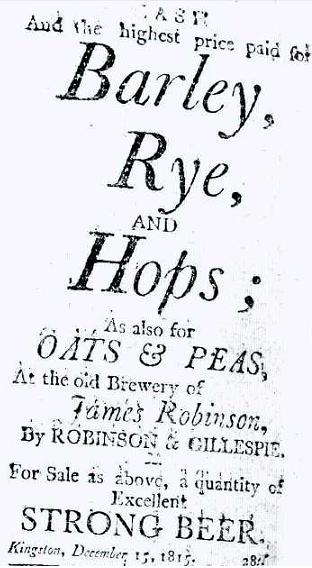
Why Did A Brewer In Kingston In 1815 Want Rye?

kgazkbrh1The ad is from page 4 of the Kingston Gazette, 6 January 1816. You can see at the bottom that it was placed on 15 December 1815. So many questions. What were Messrs Robinson and Gillespie up to? Why is rye placed between barley and hops in the large font while oats sit down there with the peas? Also, is “strong beer” something separate, something identifiable to the Kingstonian a year after the war with America? You will recall that a few months later in April, Albany strong beer is for sale. It also comes just a month after Richard Smith’s notice for plain “beer” – so was “strong beer” something they had the taste for still, almost 40 years after having to flee from their central NY homes at the beginning of the American Revolution? And why is it not “ale” when described in the Kingston papers?

I just finished The Lion, the Eagle and Upper Canada by Jane Errington, a historian over at Royal Military College – they of the old school base ball. The book is well reviewed here but, short form, it’s an interesting view of early Upper Canada (1790s to 1820s) based in large part by review of early newspapers. In it, Errington suggests something of a window between the end of the War of 1812 in 1815 and, a few years later, a clampdown in trade and other contacts with the US towards the end of the decade. But even with her level of detail about the community, trade and industry, there is not much about beer itself. Meaning I am left unsure if beer was being traded within months of the end of a war, perhaps as a stop gap until local product restarted… if it was interrupted by the war… which is another question.

So, I was very happy to read in the comments that Steve Gates has published his history of brewing in the city and in the region. I couldn’t get out of the door to go get a copy but will tomorrow. Hopefully it will shed some light on what Robinson and Gillespie were up to.

Where There Is Beer There Is Peace Revisited

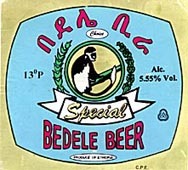
2832When I was growing up, Ethiopia was one of those nations with the hallmark of being incessantly near collapse. Civil war unending. The famine. Now there is beer:

The Beemnet bar is one of those places in Addis Ababa which attracts Ethiopians of all ages. Increasingly locals are going here for breakfast, lunch, dinner and drinks – a sign of the country’s increasing purchasing power. On Friday and Saturday nights, the terrace and bar is packed with people drinking beer and trying out their new dance moves before heading to a club after midnight. Beer is becoming increasingly popular among the growing Ethiopian middle class. In fact beer consumption in Ethiopia – Africa’s second-most populous country, is expected to grow by about 15 percent every year for the next five years. According to a report carried out last year by Access Capital, an Addis Ababa-based research group, this growth in consumption is very much in line with Ethiopian population levels and economic growth rates.

As in the Mid-east, in Sri Lanka and in the southern Sudan, this rise in beer production and consumption in Ethiopia is a hallmark of peace. Even as – or is it because – they seem to prefer the “jumbo” size glass.

A little oddly, the US Embassy did a study of the Ethiopian beer market in 1998 at the time the breweries were denationalized. It notes that it was the Czechs and Slovak Velvet Revolutionaries back in 1993 who created the Bedele brewery Heineken recently bought, outbidding Carlsberg. You can allegedly find the beer in Canada, a nation not known for its fondness of monkey gibbon… or lemur… well, it’s very likely a Coquerel Sifaka branded beer. [Update: unless the connection is about Zaboomafoo!]

So, How Was That Beer George Made Anyway?

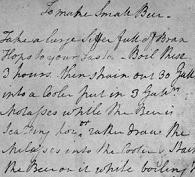
coneywashSome buzz around the beer news that the Coney Island / Shmaltz Brewing Company is brewing up a recipe of George Washington’s beer for a charity gig… and a cheater version with roasted malts for those who might want to pretend. Here is the recipe entitled “To Make Small Beer” as set out by the Gothamist:

Take a large Siffer [Sifter] full of Bran Hops to your Taste. Boil these 3 hours then strain out 30 Gall[ons] into a cooler put in 3 Gall[ons] Molasses while the Beer is Scalding hot or rather draw the Melasses (sic) into the cooler & St[r]ain the Beer on it while boiling Hot. let this stand till it is little more than Blood warm then put in a quart of Yea[s]t if the Weather is very Cold cover it over with a Blank[et] & let it Work in the Cooler 24 hours then put it into the Cask—leave the bung open till it is almost don[e] Working—Bottle it that day Week it was Brewed.

The recipe is in the New York Public Library‘s collection and dates from 1757 – when George was still a Loyalist and a couple of years before Jeffery Amherst’s spruce beer from a couple of colonies to the north. Interestingly, each uses 3 gallons of molasses to thirty gallons of brew. The real difference is that George says hop to taste while Jeff boils seven pounds of spruce until the bark comes off. Neither look all that appealing. And I am not sure what George meant by the “Bran Hops.” Is the sentence supposed to be “Take a large Siffer [Sifter] full of Bran Hops to your Taste” or is there a missing punctuation mark so that it would read “full of Bran – Hops to taste”? Or were “bran hops” something that meant something to someone somewhere?

This report suggested that the Washington beer would work out at 11%… hardly small beer. And Amherst states that his beer can be bottled to keep “a great while.” I dunno. Were these desperate beers for desperate times? In a way, maybe they were the predecessors of commodity beer – a means to an end.

Mmm… What I Need Is A Big Bowl Of Thick Beer!

flemish1I knew this. I think I knew this anyway:

“This process is much like how you would do in a fourth-grade germination science project, where the grains would be soaked in water for about 24 hours, drained and then laid between sheets of cloth until they sprouted,” said Amanda Mummert, an anthropology graduate student helping Armelagos with his research. After germination, the grains were dried and then milled into a flour used to make bread. Streptomyces bacteria most likely entered the beer-making process either during the storage or drying of the grain or when the bread dough was left to rise. Nubian brewers would take the dough and bake it until it developed a tough crust, but retained an almost raw center. The bread was broken into a vat containing tea made from the unmilled grains. The mixture was then fermented, turning it into beer. The final product didn’t look much like the pint of amber you sip at your local watering hole. “When we talk about this ancient Egyptian beer, we’re not talking about Pabst Blue Ribbon,” Armelagos said. “What we’re talking about is a kind of cereal gruel.”

I knew that. Not that bacteria stuff. No, not that. Forget all that medical properties stuff. Look at that word “gruel”! I think there was reference to the thickness of 1500s gruel beer back in Martyn’s Beer: The Story of The Pint which I am surprised to now read that I blogged about seven and a half years ago. There is stuff in Hornsey about beer as gruel as well. Boozy porridge. So, how is it when we are presented with these supposedly authentic ancient beers, well, they pours like water or least an IPA?

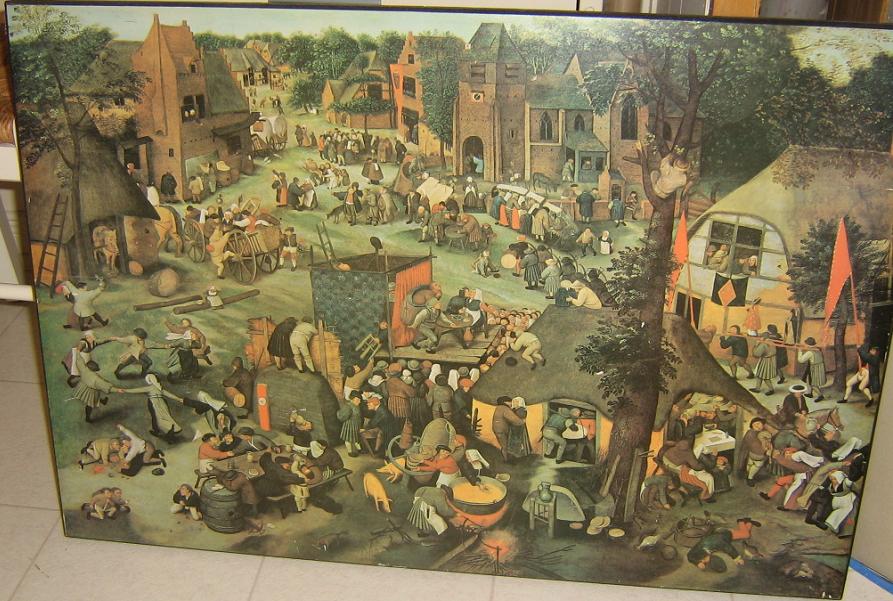
More to the point, don’t you want to try some breakfast gruel beer? Couldn’t we make it like it was enjoyed back then? Not the contemporary southern African version for 12 to 20 but the big vat whole dang community serving sized pot o’ Quaker Oats meets Budweiser. If we look again at “Village Kermis With Theater and Procession” by Pieter Bruegel the Younger (discussed in in 2007 in terms of the pub game in the lower left) we see in the lower center the making of a big mess of something being sucked back by the crowd, right across the street from the joint I’d guess was the tavern. Have a look at the painting Bruegel maybe ripped off and the detail is even better. I am not suggesting we need to get all deep about this stuff but does anyone do a village kermis with gruel booze anymore – other than, say, in rural Romanian where I am pretty sure I will never find myself? Would people folk to such a legitimate recreation as much as for another thinly veiled faux stab at brand buffing? Apparently the children’s games scholars are already at it.

What The Heck Was “Albany Ale” In 1847… Or 1807?

albanyale

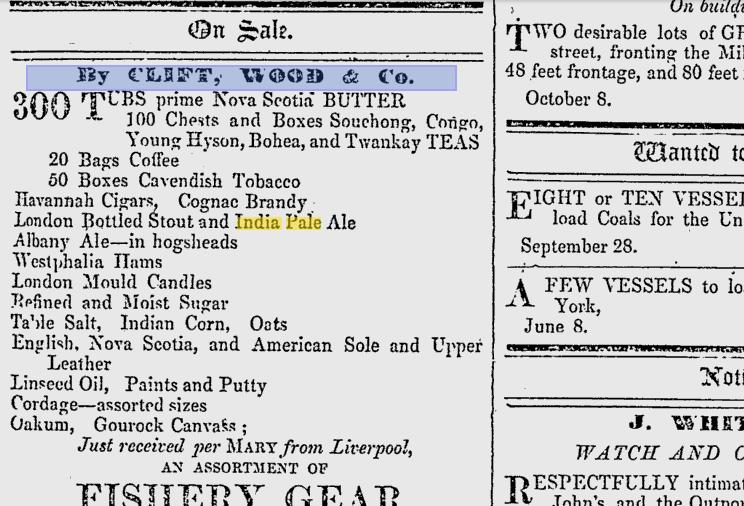
So I am nosing around looking for India pale ale references on Google news archives when I spot this one in a newspaper from 1847’s Newfoundland to something called Albany ale. In hogsheads no less.

What the heck is it? It is listed in the The Public Ledger of 12 Oct 1847 amongst other imported goods from around the world – even Gourock canvass from the Old Country. In 1853, there is notice again in The Public Ledger of Newfoundland as being “just arrived” in a 50 barrel lot. It looks like an import. Albany ale is listed in the Hartford Courant as far back as issues from 1806 and 1807. In 1846, its for sale in New Orleans and, in 1854, there was a fire at the agents of an Albany ale manufacturer in New York City according to The New York Times. It’s even a drink at a church supper in Adams County, Pennsylvania in 1850.

But what the heck is it? Is it a style? Or is it just an ale from Albany, NY? If so, why is that the pale ale that makes it all the way to Newfoundland?

Allsopp’s Arctic Ale And Arctic Homebrew In 1852

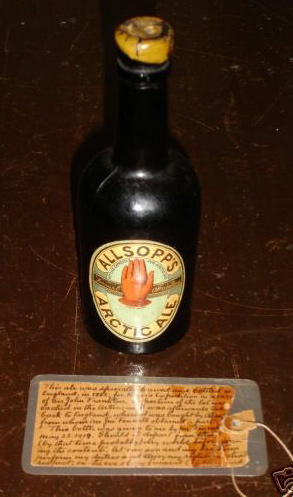
aaa1There is a bit of beery backroom buzz about plans to make a movie about the Allsopp’s Arctic Ale, the beer which accompanied a British navy expedition in the Canadian high Arctic in the mid-eighteenth century. The film maker’s website is not up yet but there is a Facebook page which reports:

Sir Edward Belcher failed on his journey, abandoned four of the five ships in the ice, and returned to England to be court-marshalled (some thanks… huh?). A few of the bottles of Allsopp’s Ale came back to England, where in 2007 a bottle came up on EBay, and reportedly sold for $503,000 (this is what caught my interest). To my knowledge, there are only two bottles left in the world from the 1852 expedition. I have researched this ale in the deepest of all journals and records, both here and abroad. I now have a recipe for this Ale and intend to brew it near the Belcher Islands of the Hudson Bay in the Canadian Arctic.

There is more information hanging about the internets about this stuff and not just pictures of that eBay bottle. Available Arcticky data includes the passage below from the book The Last of The Arctic Voyages by Captain Sir Edward Belcher, C.B. about the failed search for the expedition of Sir John Franklin from 1852 to 1854. The book can be found in its entirety at Google books. Belcher was a bit of a tool in an old school way but, as a fellow Nova Scotian, one has to give him some props but we can leave it at that as far as the admiration goes. He did have a thing for the beer apparently – at least when stuck in the ice – as he noted on 21 December 1852 after the presentation of a pantomime on board his firmly frozen ship: “Allsopp. That name will live for ages in the recollection of all Polars.”

It seems that in addition to filling the hull with Allsopp’s Arctic Ale, Belcher also brought along a home brewing system. Here is the report of the production of beer on board starting around page 339:

Brewing from essence of malt and hops had been practised as early as the 6th of August last season, but the general adoption of our “home-brewed” did not fairly commence until the end of October; with what success I shall leave my readers to judge from the following report of the officer who superintended. It was much esteemed, and at times mixed to dilute the excellent beer supplied by Messrs. Allsopp.

“Her Majesty’s Skip ‘Assistance,’ Wellington Channel,
October 31, 1853.
Sir,

“1. In compliance with your directions, I have the honour to report upon the beer brewed from the essence of malt and of hops on board this ship during the winter 1852-1853, as follows, viz.:—

“2. An experiment was made on the 6th of August, 1852, to brew with the proportions prescribed by the makers (Hudson and Co.). Eighty pounds of malt and three pounds of hops were mixed with boiling water, and then started into a fifty-six gallon cask (filling it), placed by the side of the galley-fire: when the temperature had fallen to 90° there was added half a pound of yeast, in a state of fermentation, made by mixing dried yeast, sugar, and flour, in hot water; but although signs of fermentation were occasionally apparent at the bunghole during the day, yet, from the low temperature that prevailed at night (consequent upon the absence of the galley-fire), it could not be got to work satisfactorily. The beer produced, although palatable and drunk by the ship’s company, was so weak, from the inadequacy of the quantity of ingredients used, and so flat, in consequence of the inability to raise sufficient fermentation, that it was scarcely equal to the smallest table beer.

“3. On the 23rd of October, 1852, the ship being fixed in winter quarters, and the Sylvester warming apparatus at work, maintaining a constant equal temperature, brewing operations were commenced, with the view of keeping up a periodical supply for the ship’s company.

“4. The proportions used were,—essence of malt, 120 lbs., and of hops 4 lbs., to fifty-four gallons of water: these were boiled together for two hours in the ship’s coppers, and then put into a fifty-six gallon cask, which was placed (for the purpose of obtaining the highest temperature in the ship, steady at about 70°) by the side of the funnel of the Sylvester warming apparatus. In about eighteen hours after, the temperature of the mixture had fallen to 90°, when yeast was added, and generally in a few minutes produced vigorous fermentation, which was maintained for seven or eight days, the froth being thrown off at the bung-hole and received from a leather spout, nailed on the side of the cask, into a tub placed on the deck, from which the cask was kept filled as it became necessary, for the first two days almost every hour, and afterwards at longer intervals, as fermentation slackened. As soon as it had ceased to work, the cask was bunged up and removed, to settle and fine for a fortnight; it was then broached for issue.

“5. The beer thus produced was highly prized, and I think I may venture to state that, both for strength and flavour, it was all that could be desired.

“6. From this time (October 23rd) until the end of the following April, a constant supply of this beer was maintained, at the rate of one pint for each person twice, and sometimes three times, a week, besides other occasional extra issues; for which purpose it was necessary to appropriate three fifty-six gallon casks,—one to issue from, the next to settle and fine, and the third in a state of fermentation.

“7. The total quantities of the essences consumed during this time were—of malt, 1620lbs.; hops, 44lbs.; and the beer produced was 702 gallons.

“8. Although the beer thus necessarily issued a fortnight after being brewed was of good quality, yet I would beg leave to remark, that had it been practicable to have allowed it to stand for a longer period (a3 in the case of beer brewed in England), there is good reason to suppose that it would have become scarcely inferior to English porter of the first quality.

“9. There now remain for brewing (to be commenced, in pursuance of your directions, as soon as the hold is cleared), essence of malt, 780lbs.; hops, 40lbs.

“I have the honour to be, Sir,
Your most obedient, humble servant,
James Lewis,
Clerk in charge.”

Captain Sir Edward Belcher, Kt., C.B.,
Her Majesty’s Ship ‘ Assistance,’ and Commanding
Arctic Searching Squadron.

Note Belcher actually calls it home brew. Other than that, I will leave interpretation and further explorations of the explorer’s libations to others who are, you know, cleverer than me. Suffice it to say thank God for what beer these poor bastards could get their hands on 158 years ago, two or three thousand miles to my north.
Day 15: War, Xmas Photos And Roger Freaks Out!

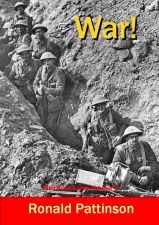
I got a great gift in the mail today. Copy 8 of 10 of Ron Pattinson’s new book, WAR! He wrote about the book’s release this very morning from his home in The Netherlands and by suppertime a copy was in my mailbox here in Canada. Compiling his studies to date on the years of World War I and World War II, it is a great example of the work he is doing to bringing actual detailed primary research to the question of the history of beer.

One wishes all beer writers were so concerned with the facts as we witnessed today from Roger Protz who went all freaky handbags over BrewDog’s new and insanely strong beer. He’s received a number of head shaking responses, deservedly so given his use of language like “over-inflated egos and naked ambition” and “the wild buckeroos” and “what were you smoking last night, chaps?” and “this bunch of ego-maniacs” and “anxious to give beer a bad name.” The oddest thing is that he goes off on his own ice flow all the while misunderstanding the technical process used for actually making the beer, baldly claiming it had wine yeast in it… not that wine yeast would get you a 32% beer. One wonders what Protz was thinking or, in fact, had been smoking himself when he wrote such a blurt. He has certainly gone a long way to discredit his own opinions on experimental beer generally. For a more measured response, you may want to read Pete Brown’s post on the new and insanely strong beer from last Thursday…you know, when it was news.

Now with the Xmas 2009 Beer Blog Yuletide Photo Contest Extravaganza. First, a couple of solo entries from Canada.

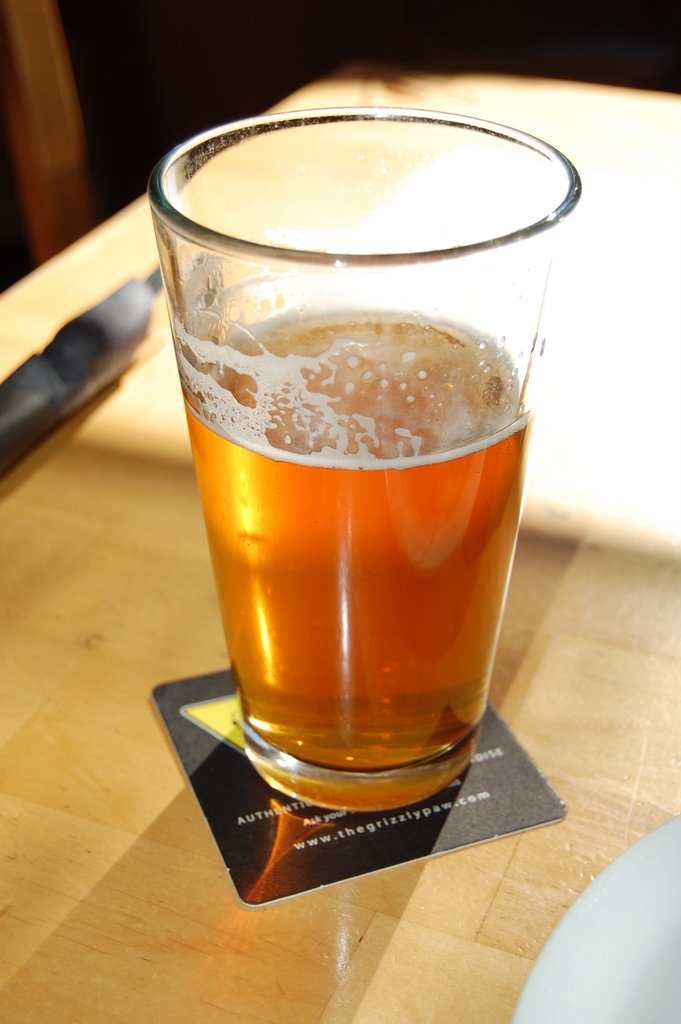
Chris Berry of Kanata, Ontario sent this one picture to the right which sorta looks normal… until you have a good look at the baby’s face. Frank MacDonald of Torbay Newfoundland kept the kids out of the photo to the left. It was taken at the Grizzly Paw Brewpub in Canmore Alberta.

Next, Jeff Alworth of Portland, Oregon has sent in some photos from the scene there. I have no idea how he got to put in 8 entries but never having been to Oregon I can’t be sure this is not some sort of cultural thing, some sort of secret message to us all. Maybe he can’t count. Better not mess with the photo set just in case:


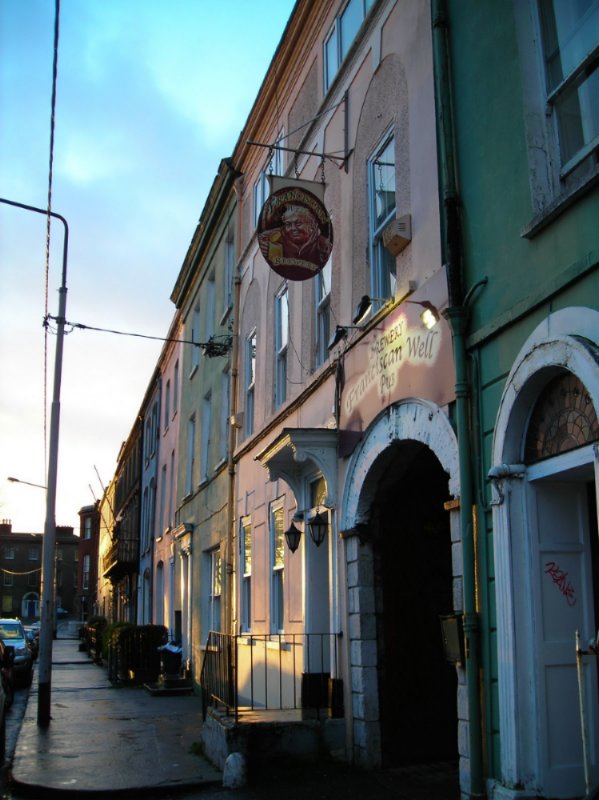
Finally Tim Connelly of Cambridge Massachusetts sent in these pictures which are entitled “Inside Cantillon,” “In a Galway pub,” “Outside of a Galway pub,” “The Franciscan Well Brewery Pub, Cork’ and “Brooklyn Brewery”:


Four more great entries. I better starting beating the bush for more prizes. Here I go. Off to email brewers until all I have are bloody stumps for hands. Why? I don’t do it for you. I do it for Santa.

Vermont: Craft Brewer Greg Noonan Passes Away

Very sad news this morning of the passing of Greg Noonan, founder of the Vermont Pub and Brewery as well as author of a number of important books on brewing. There is a thread of condolences over at BeerAdvocate with many sharing their memories of him.

Seven Barrel Brewery Brewer’s Handbook constantly during my former glory-ish days of home brewing. The idea of having one book showing the same recipe for extract, part mash and full mash implied a lot. It said that it was worth getting started and trying to excel. It also told me that it was a very reasonable goal to try and brew dozens and dozens of beer on your path. There was something of the tone of a patient teacher in that book as well as in his other book on my shelf, Scotch Ale, that set them apart and fit right in with the memories people are sharing today.

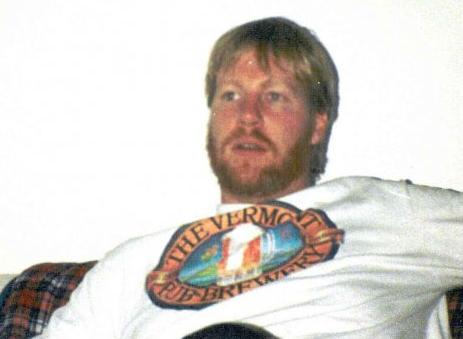
But it were my trips to the Vermont Pub and Brewery that I immediately recalled on hearing of his death. Almost two decades ago now, a pal of mine and I went on a tear of a road trip starting out in Ottawa, looping into NY state and ending up at the VPB on a Saturday night, trying whatever they had on tap. It was the summer of 1990 back when the beard was still red, the shirts not so tight. We were blown away by the way his place showed the range of possibilities after years of accepting what the Canadian market gave you – not to mention the realization that you could just have a small palace to the honour of good beer, good pub food and enjoying company in the corner of any town… your town, too. For the years since, it’s been a regular stop on the family’s trips from Ontario back to the east Coast. Think I will pull out that old VPB crow t-shirt today (if it still fits) and find me a Vermont beer no doubt born out of his great example and inspiration.