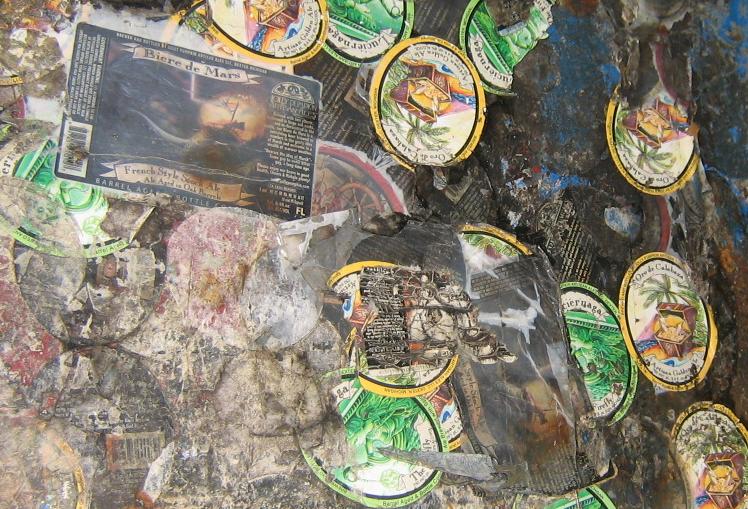

Day 15: War, Xmas Photos And Roger Freaks Out!

I got a great gift in the mail today. Copy 8 of 10 of Ron Pattinson’s new book, WAR! He wrote about the book’s release this very morning from his home in The Netherlands and by suppertime a copy was in my mailbox here in Canada. Compiling his studies to date on the years of World War I and World War II, it is a great example of the work he is doing to bringing actual detailed primary research to the question of the history of beer.

One wishes all beer writers were so concerned with the facts as we witnessed today from Roger Protz who went all freaky handbags over BrewDog’s new and insanely strong beer. He’s received a number of head shaking responses, deservedly so given his use of language like “over-inflated egos and naked ambition” and “the wild buckeroos” and “what were you smoking last night, chaps?” and “this bunch of ego-maniacs” and “anxious to give beer a bad name.” The oddest thing is that he goes off on his own ice flow all the while misunderstanding the technical process used for actually making the beer, baldly claiming it had wine yeast in it… not that wine yeast would get you a 32% beer. One wonders what Protz was thinking or, in fact, had been smoking himself when he wrote such a blurt. He has certainly gone a long way to discredit his own opinions on experimental beer generally. For a more measured response, you may want to read Pete Brown’s post on the new and insanely strong beer from last Thursday…you know, when it was news.

Now with the Xmas 2009 Beer Blog Yuletide Photo Contest Extravaganza. First, a couple of solo entries from Canada.
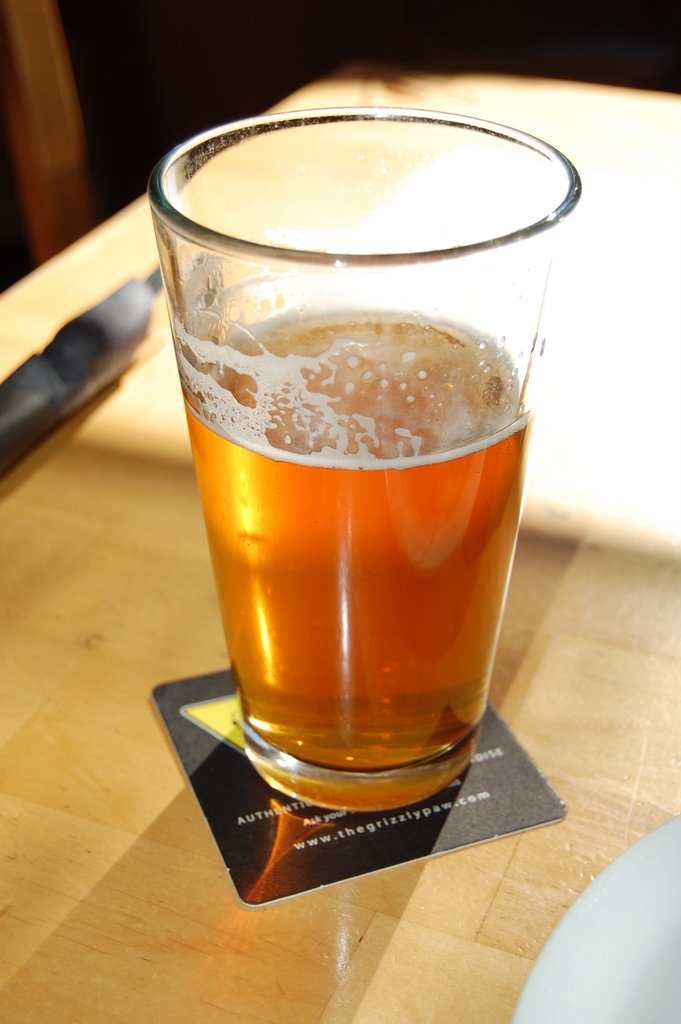
Chris Berry of Kanata, Ontario sent this one picture to the right which sorta looks normal… until you have a good look at the baby’s face. Frank MacDonald of Torbay Newfoundland kept the kids out of the photo to the left. It was taken at the Grizzly Paw Brewpub in Canmore Alberta.

Next, Jeff Alworth of Portland, Oregon has sent in some photos from the scene there. I have no idea how he got to put in 8 entries but never having been to Oregon I can’t be sure this is not some sort of cultural thing, some sort of secret message to us all. Maybe he can’t count. Better not mess with the photo set just in case:
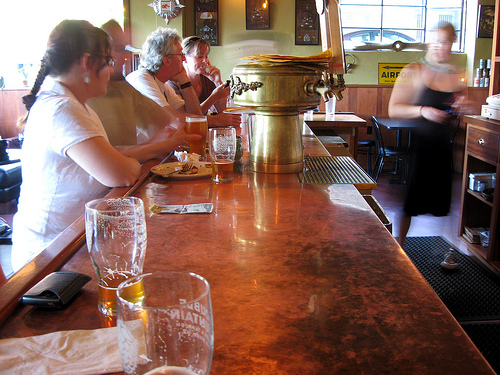


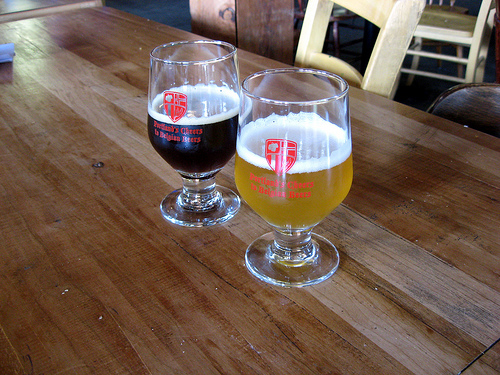
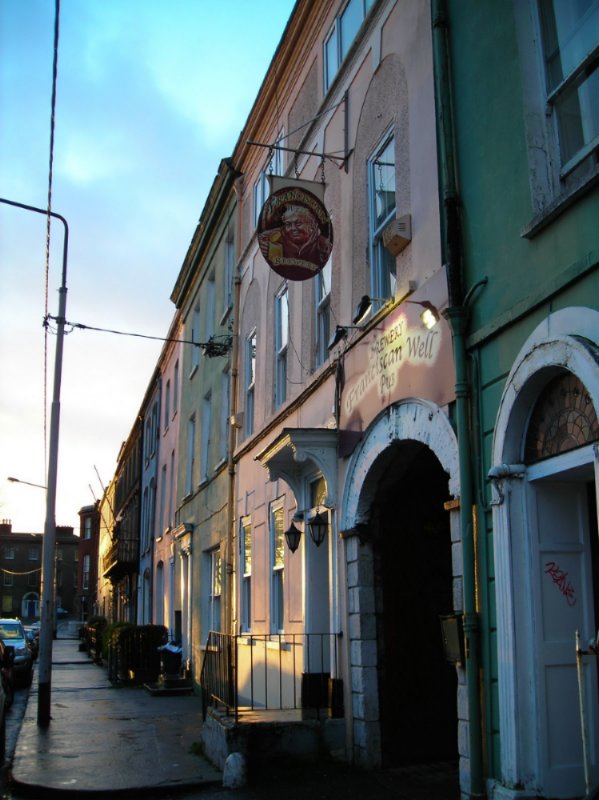
Finally Tim Connelly of Cambridge Massachusetts sent in these pictures which are entitled “Inside Cantillon,” “In a Galway pub,” “Outside of a Galway pub,” “The Franciscan Well Brewery Pub, Cork’ and “Brooklyn Brewery”:

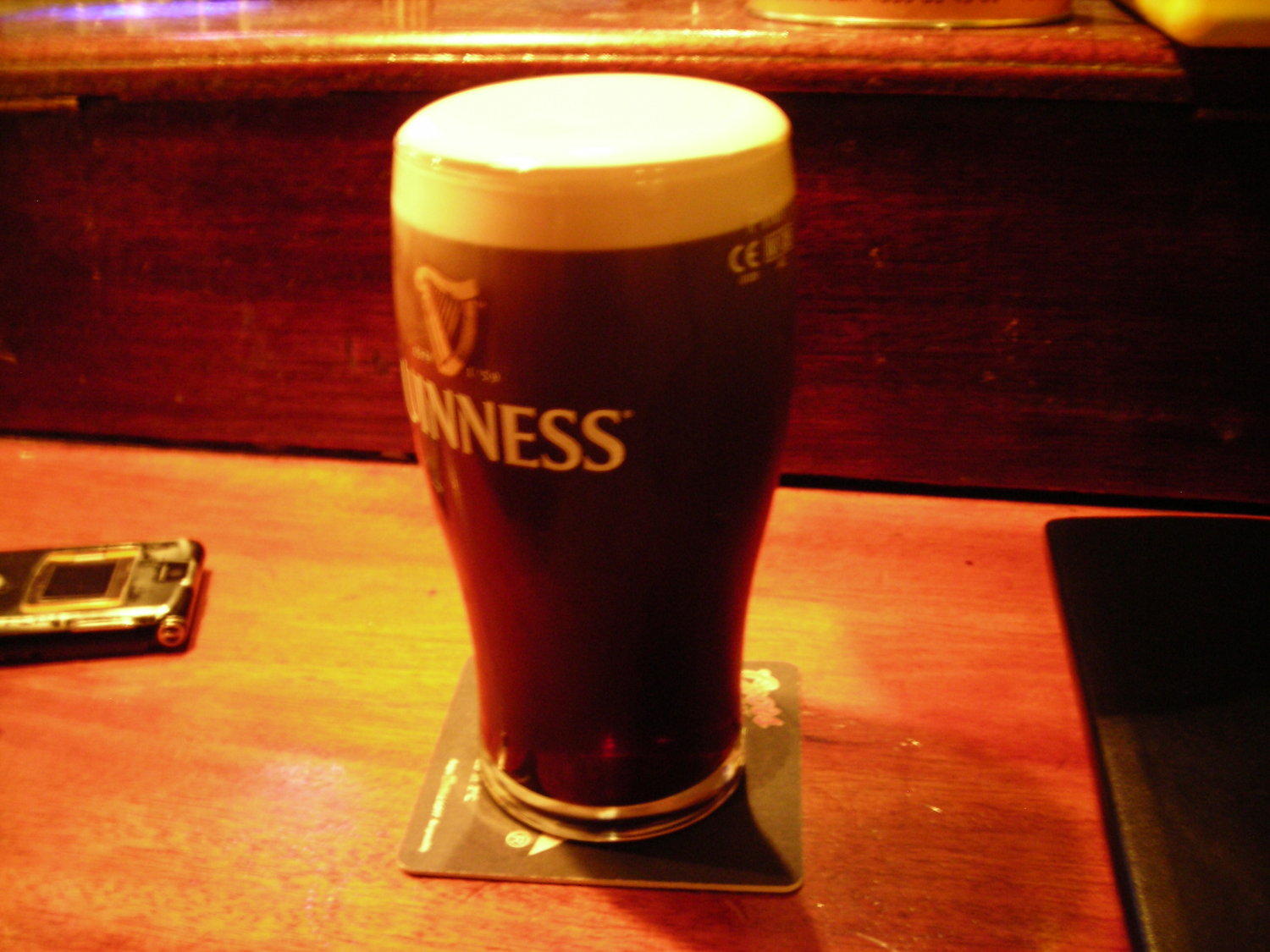


Four more great entries. I better starting beating the bush for more prizes. Here I go. Off to email brewers until all I have are bloody stumps for hands. Why? I don’t do it for you. I do it for Santa.
Vermont: Craft Brewer Greg Noonan Passes Away

Very sad news this morning of the passing of Greg Noonan, founder of the Vermont Pub and Brewery as well as author of a number of important books on brewing. There is a thread of condolences over at BeerAdvocate with many sharing their memories of him.

Seven Barrel Brewery Brewer’s Handbook constantly during my former glory-ish days of home brewing. The idea of having one book showing the same recipe for extract, part mash and full mash implied a lot. It said that it was worth getting started and trying to excel. It also told me that it was a very reasonable goal to try and brew dozens and dozens of beer on your path. There was something of the tone of a patient teacher in that book as well as in his other book on my shelf, Scotch Ale, that set them apart and fit right in with the memories people are sharing today.

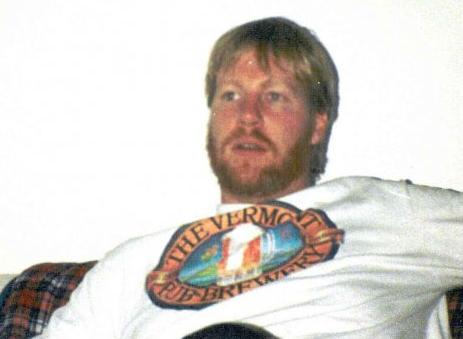
But it were my trips to the Vermont Pub and Brewery that I immediately recalled on hearing of his death. Almost two decades ago now, a pal of mine and I went on a tear of a road trip starting out in Ottawa, looping into NY state and ending up at the VPB on a Saturday night, trying whatever they had on tap. It was the summer of 1990 back when the beard was still red, the shirts not so tight. We were blown away by the way his place showed the range of possibilities after years of accepting what the Canadian market gave you – not to mention the realization that you could just have a small palace to the honour of good beer, good pub food and enjoying company in the corner of any town… your town, too. For the years since, it’s been a regular stop on the family’s trips from Ontario back to the east Coast. Think I will pull out that old VPB crow t-shirt today (if it still fits) and find me a Vermont beer no doubt born out of his great example and inspiration.

Jeffery Amherst’s Spruce Beer Circa 1759

amherstI am a bad home brewer. I have had supplies in for months to do a couple of all-grain batches but still they stiff wrapped and wrapped again in plastic in a cool, dark place. I did buy another mash pot yesterday but, given my failure to avoid napping and reading this afternoon, no beer again was made. Yet, beer knowledge expanded as I was reading The French and Indian War, a pretty good read by Walter R. Borneman, and came across this recipe for spruce beer from 1759, taken from an order by General Jeffery Amherst, to be supplied to the British troops moving to take the fort at Crown Point from the French:

Take 7 Pounds of good spruce and boil it well till the bark peels off, then take the spruce out and put three Gallons of Molasses to the Liquor and and boil it again, scum it well as it boils, then take it out the kettle and put it into a cooler, boil the remained of the water sufficient for a Barrel of thirty Gallons, if the kettle is not large enough to boil it together, when milk warm in the Cooler put a pint of Yest into it and mix well. Then put it into a Barrel and let it work for two or three days, keep filling it up as it works out. When done working, bung it up with a Tent Peg in the Barrel to give it vent every now and then. It may be used in up to two or three days after. If wanted to be bottled it should stand a fortnight in the Cask. It will keep a great while.

Yum. You see the key phrase, don’t you: “till the bark peels off”. The British army was using whole branches, not just needles and boughs. Again I say – yum. Google gives us that recipe, too, but give up has more on the brew – in the form of a digitized copy of the 1759 orderly book from Amherst’s expedition north up Lake Champlain, setting out how the army brewed:

Spruce Beer will be Brewed for the Health and Conveniency of the Troops, which will be ƒerved at prime Coƒt ; 5 Quarts of Mollaƒƒes will be put into every Barrel of Spruce Beer ; each Gallon coƒt nearly 3 Coppers. The Quarter-maƒters of the Regiments, Regulars and Provincials, are to give Notice to Lieut. Colo. Robiƒon of the Quantity each Corps are deƒirous to receive, for which they muƒt give Receipts and pay the Money before the Regiments marches. Each Regiment to ƒend a Man acquainted with Brewing, or that is beƒt capable of aƒƒifting the Brewers, to the Brewery to-morrow Morning at 6 o’clock, at the Rivulet on the Left of Montgomerys. Thoƒe Men are to Remain, and are to be paid at the Rate of 1 8 Pence Currency per Day. One Serjt. of the Regulars and one of the Provencials to ƒuper-intend the Brewery, who will be paid is 6d per Day. Spruce Beer will be deliverd to the Regiments on Thursday Evening or Friday morning.

Sweet use of the long “s” HTML, eh what? Let me know if you can’t see them and I will report back to The 1700s Typeface Open Source Beer Recipe Project.

More? OK, Borneman points that “rum and other spirituous liquors” were prohibited under his command but that spruce beer provided some protection against scurvy among other benefits…aka “conveniency”. Here is a 5 gallon clone of the beer for the inconvenienced homebrewer. But not me. I have those other beers I have yet to make lined up first.

Can’t We Just Admit We Like Corn Sometimes?

One of the things I don’t get about beer lovers is the seething disrespect of corn – aka maize for some of you. OK, maybe not seething but my comment the other day that I now craved New Glarus Spotted Cow was met with particular surprise by Jeffery Glazer of Wisconsin’s Madison Beer Review who wrote to say that “Spotted Cow is good, but to drive halfway across the country for it? I’d be really curious to hear what was said about it to cause such a reaction.” In response I wrote:

It’s the king o’corn, baby! I like the ur-cream ale Genesee Cream but I also like cream corn, corn chowder, corn on the cob and corn chips. I think the taste of corn gets a bum steer as far as corn and beer goes. Why praise other grains yet diss the maize? I have grown corn, have watched it grow and, I have to admit, admire it privately. Stan brought the Spotted Cow (as well as a few other New Glarus) and this corntastic beer made me love it. It is clean, has the raw chew-the-cob sweetness and is also balanced and without a tinge of chemical, the hallmark of modern corn-y brew…Did I mention it comes with corn?

I asked Stan when we were sipping his giftie if it had flaked corn and he thought maybe it was just corn sugar but was not in the know. I would be surprised if there is that much unfermentable corn in it from just a powder. Nonetheless, I am here to bear witness, bretheren and the real lesson here is that cream ale like Spotted Cow is corn ale and cream ale should be great! It is just a style, after all. Corn is, folks, and corn should be more than the flakes in your breakfast bowl. As I mentioned, I understand that there are two ways to get corn into beer. The most common is through glucose or corn sugar which is derided as an adjunct gone mad in American macro lagers but praised in Belgian tripels when, as I learned from Al Korzonas in his useful Homebrewing, Volume 1, simply combined with a little fructose to make candi sugar. This sort of addition of corn gets you a little more alcohol and a little less body but not much flavour – and certainly not the creamed corny goodness that is at the heart of Spotted Cow. Flaked maize is more like rolled barley or oats, a raw grain product that leaves plenty of unfermentables to add flavour. That is what I think I am tasting in that brew.

Maybe you know more than me but where are the rest of the corny adjuncts – the malted corn, the roasted corn or the crystal corn that some agronomist or another sort of lab-coated egghead should have developed by now? Surely a grain as versatile as corn could be subject to more treatments that might make for some other great beers. Surely there is a Department of Cornology in some Midwest US state working on coaxing more flavours from the humble yellow kernal. As far as may daydreams of future beer goes, I would think that the residual sweetness of corn could work in a roasty stout. The huskineess of a dried cob might also work when blended with a little rye malt. And Jeffery pointed out that it would also fit with the local and sustainable trends we are seeing becoming more and more important.

If corn can make a fine whiskey, why not a beer? And are there other fine corn beers out there, some modern chichas, that I do not know about?

Ontario: A Dry Visit To County Durham Brewing

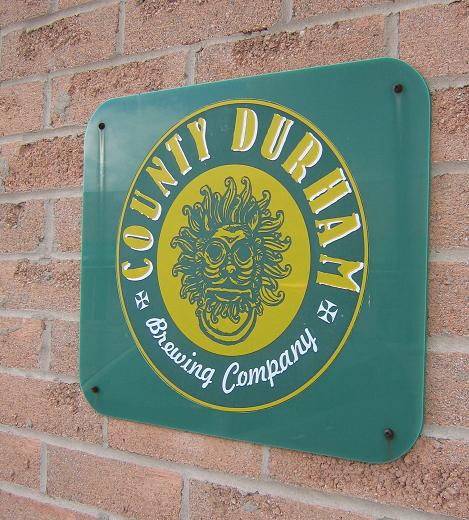
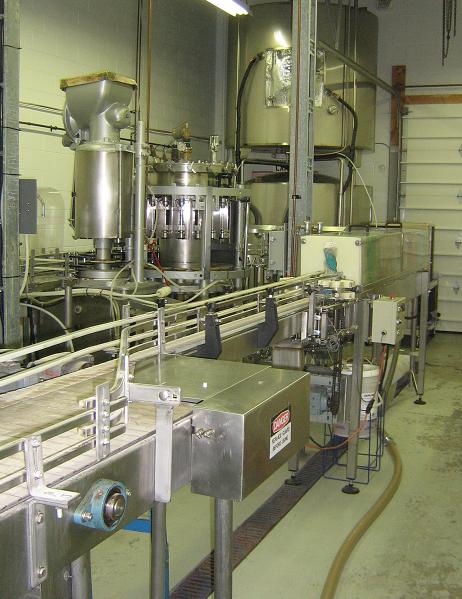
Spending the day with the kids at the Toronto Zoo on a field trip, I thought on the way back I would pop into County Durham Brewing in Pickering just to grab a few brew and have a chat with brewer, Bruce Halstead. Instead, I got a brief glimpse into the most trim and most successful small Canadian breweries I have ever seen.

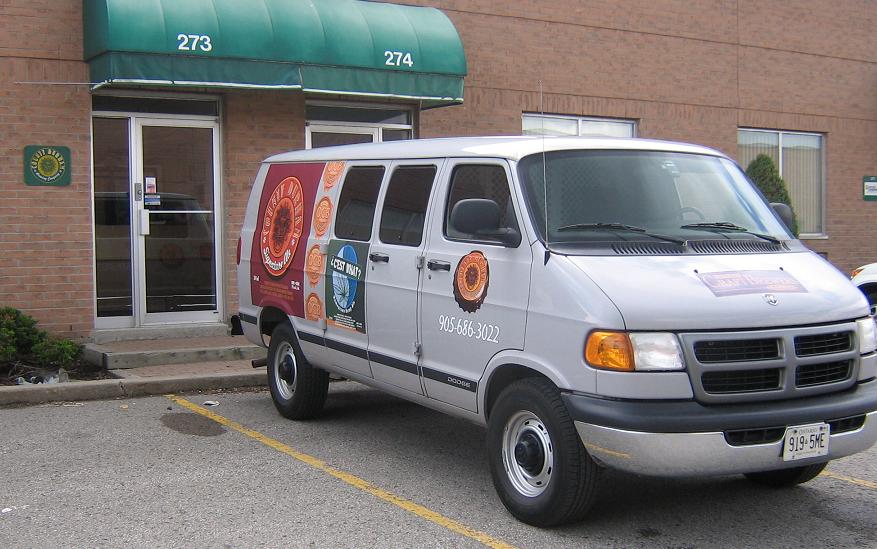
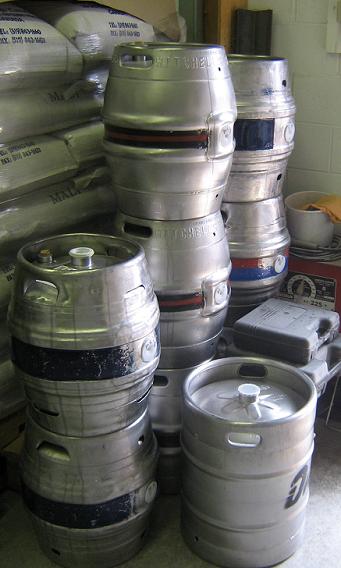
County Durham seems to be a one man operation – all Bruce all the time. When I got to the door he took a break from cleaning the place but had to explain that there wasn’t even any beer to buy as he is casking it all for pubs entirely within the downtown of Toronto, half an hour’s drive away. In the past he had been servicing accounts in St. Catherine’s and Hamilton but has found success supplying the high standards of the beer geekdom of Canada’s biggest city. He has a van but, unlike other regional brewers, doesn’t have to spend half his week delivering to spread out customers. It’s one van load a week, one trip into town. He did mention he need a bigger van.


Another thing that makes County Durham’s brews stand out is that they are the only brewery in Ontario – and perhaps further afield regionally – that uses only whole hops. Bruce works with one farmer in the US north-west and has developed a relationship that has provided him with the quality and supply that perfectly fits his needs. I wish I could have tried some. But it was all gone out the door or heading that way.

A niche market that overtime has evolved to suit a very profitable small brewery. What any community could do with. Bruce mentioned a number of pubs where I could get his fresh beer any time, like C’est What or Volo. Trouble is they were all in the community half an hour in the other direction to the one I was heading in. He does supply the LCBO with two ales, C’est What Homegrown Hemp Ale and County Durham Signature Ale, but he needs to replenish those stocks as well.

Busy enough to be right at the edge, County Durham has to be one of Ontario’s more interesting success stories.

The Anonymous Brewers Speak: Rating The Raters

anonbrew2aFrom Alan: Recently I was contacted by a brewer who wondered if he, too, could write for A Good Beer Blog. Sure, no problem I thought. If Knut and Travis can, why not a craft brewer? But the brewer wanted to do it under the cloak of anonymity. I wavered. I wondered. I let it go for a while. Brewers usually stay silent like the one to the right. Then, quite a while later, unbeknownst to the first, I got a message from another brewer a world away asking for exactly the same thing. I knew then that there was a venue needed. A way for brewers to share what they really felt. So, from time to time they, too, can post here and share their thoughts. This is the first, a message from someone I will call Brewer A.¹ Please feel free to comment as you would in response to any post.

Well, how to get started? Sites like R(H)atebeer.com are a thorn in the side for many brewers. They are dominated by a handful of posters that don’t reflect the opinion of the general public. As with most critics they go off half cocked and I think often fully pickled. They pretend to know grain and hop varieties that they feel were used in a certain beer. I have seen the same poster rate the same beer twice in the same day and give it very different reviews. Hiding behind the mask of anonymity (like I am now) instills false bravery into these fellas (mostly boys but not all.) I have witnessed raters backing up a certain opinion to follow later in the same paragraph with “but I have not tried it yet.”

These raters looking to increase their numbers will will gather at fests to collect single mouthfuls of a new beer in the same way they once collected mint condition action figures. No need to engage the brewer or enjoy the beer for the sake of it – just get “Han Solo in the original packaging” and never open it up.

This involves further discussion. Maybe nine RateBeer guys and I could split a six pack and talk.

¹Stan’s point is excellently made: it’s Secret Brewer XJ17 from now on.

My Night As A Guest Roadie For Beau’s All Natural Beer

beaus5The call came at 7:45 pm. For weeks I had been exchanging emails with Steve about Beau’s All Natural Brewing’s move into the Kingston market and the prospect of another great Ontario made craft beer showing up in my favorite pubs as well as the LCBO. Being the man of mortgage as well as offspring, I have certain restrictions around my beer blogging so I thought this was a perfect opportunity to get to say hello and maybe get a short story. Well, that isn’t how it turned out.

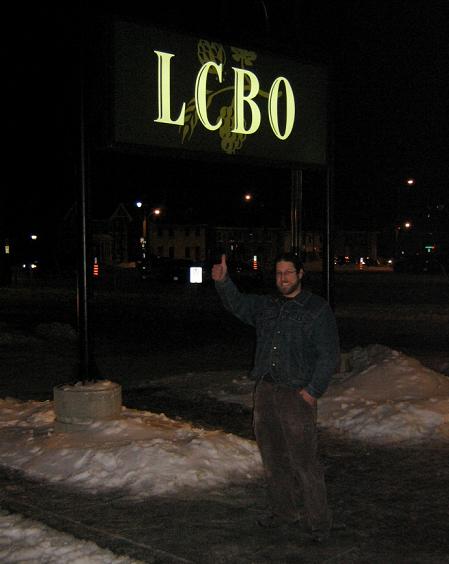
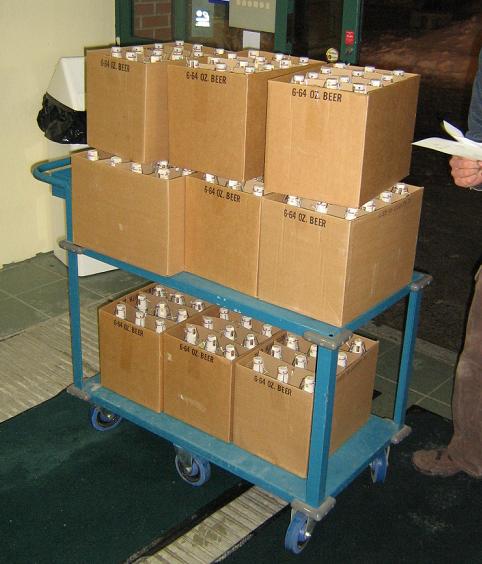
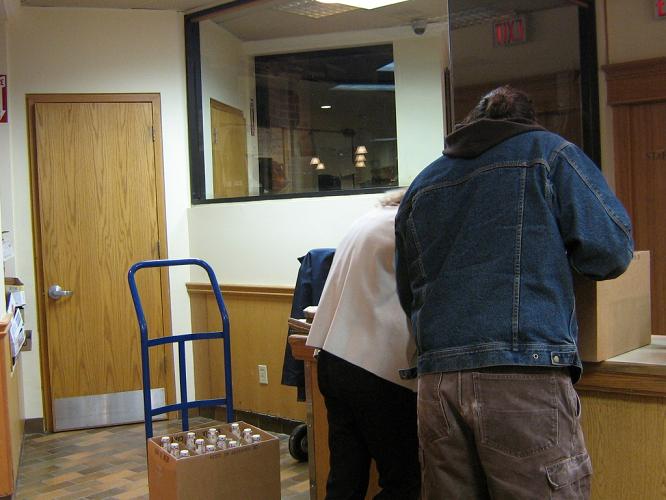
I arranged to meet Steve at the nearest LCBO to get some pictures of the delivery process. 8:00 comes and goes. 8:10. 8:20. Nuttin’. I’d seen this white van go by a few times until it roared into he parking lot at 8:25 pm. After a quick how do you do, I asked whether he was delivering to all the LCBOs and realized he had three stops in 35 minutes and a couple of miles of traveling to do. As a good beer fan, I had a job to do and that was guiding Steve though my city. We jip here and there, zigged and zagged in traffic and before you know it 18 cases of their new swing top bottles of kolsche were delivered just as the last shop was locking its doors. I got to watch Steve hunched over paperwork quite a bit. And chatting up those who were going to sell his brew.

beaus4

beaus3

beaus6


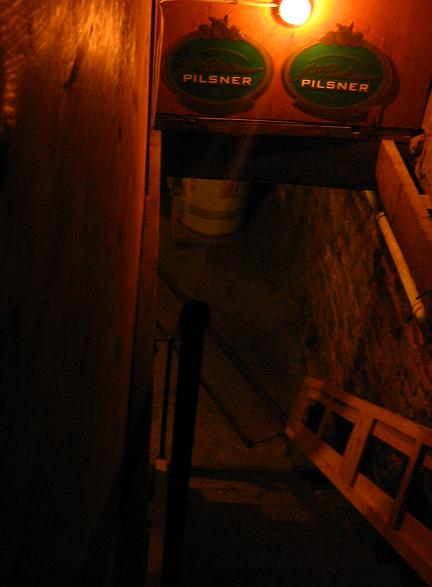
After delivering to the new Iron Duke on Wellington – which carries growlers – humping them down some very challenging stairs followed another chat about beer with the manager, we retired to the Kingston Brew Pub where their beer is on tap for a pint and a good old chin wag. beaus2I asked a lot of questions about how they started up, their plans and how they deal with materials. Steve described some of the fluctuations which they have to deal with – I had no idea that spring water is richer in minerals in winter – but mainly we talked about liking beer. One thing I always wonder about is how folks who are expert and committed to brewing put up with the cranks. “Cranks” is a good word for beer nerds as its one of the words that was used in the 1800s for baseball fans before “fanatics” got shortened. Steve was far kinder than me – as all brewers are when the question is asked – pointing out that their job as craft brewers in eastern Ontario was best described by John Graham as missionary work. Interestingly, we moved from a discussion on the pleasures of beer in which I wondered how it is that some could voice so much unhappiness with a chosen hobby when the subject matter itself is a pleasure and on into other things: the provincial trade association, thoughts about Beau’s philosophy of being a great regional brewer in touch with its customers, future plans.

Anyway, my night as a roadie was over before I knew it and Steve and the van were off into the night headed for his next destination. Energy and sleep deprivation and the zest that success brings seemed to be in the tank. I loaded up my growler of Beau’s new seasonal, Bog Water, that I’ll try for tomorrows next episode of The Session hosted over at Beer Activistwhere the theme is organic beer.

Mucho Big Doings At Ontario’s Church-Key Brewing

johngI was going to call this post “John Graham – He Cleans Up Pretty” but that might have been the right one had I not been the last to know just about everything going on at Church-Key Brewing in the rolling Northumberland Hills about an hour and a half to my west. See…he cleaned up that pretty ten months ago – though to be fair, I can’t be certain there’s a tie under all that beard.
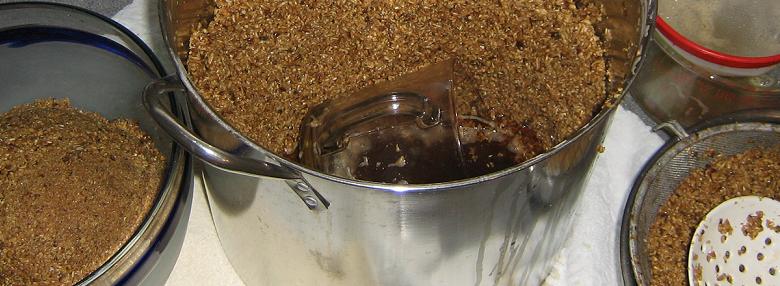
I dropped in today on my way back from Toronto where I gave a speech this morning. I have been popping in when coming heading home when traveling. Things look good, I think as I turn into the repurposed rural church parking lot. I walk towards the front door of the church when I realize there is a door at the other end of the building with a sign that says “Beer Store”. [This being eastern Ontario, I really think he should put up “In And Out Store” so people would really understand.] I said to the clerk “new store, eh?” to which I received a “yes, sort of…I guess.” I popped back into the brewery to see John and have a chat as he cleaned out a filter and when I mentioned the new shop he just “how long since you were in?” as he handed me a taste of the IPA he was making.

Too long as it turns out. Too long to know that they sell growlers of their excellent beer. [May I have a woot?] Too long to know he is bottling his special Heavy Weight Series in bombers – I picked up three including his Flemish sour. I had though they were all getting casked for the bar trade. Heck, you can buy some swag for yourself at the brewery’s on-line retail shop. And when I got home to look up something I wasn’t paying attention long enough to realize that last April John was nominated to run as a Federal Green Party candidate in the next election:

John provides a working example of how to maintain a healthy balance between environmentalism and entrepreneurship. As founder and President of Church-Key Brewing Company, John walks the talk in both his business and personal life. At Northumberland County’s only craft brewery, John puts his philosophies into action. Technologies such as solar hot water, bio-diesel, radiant floor heating, Bullfrog Power, and heat recovery units not only lower the carbon output of the award-winning brewery, they also improve the bottom line.

Hmmm – a small brewer controlling cost inputs though taking on responsibility for more aspects of their own operation. Who would have thought it was possible? I have got to stop by more often.

A Bad Brewer Asks: “What The Heck Is That I Made??”

badbrewer1

I am a bad brewer. I think it’s important to brew to make sure you have a hand on the paddle, a sense of what yeast might actually expect from you. That being said, though people have admired my beer greatly, I know the truth. I’m a bad brewer. It has a lot to do with the effort I put in compared to the output I get. I brewed from five to eleven last night to make a pre-boil 16 litres. Subtract from that some for evaporation, for trub, for that last bit the hose won’t reach, for the unintentional spilling while filling and all the other sources of wort loss. I’ll be lucky to end up with 12 litres. And look at that photo – what sort of technique is that suppose?

Not that this was unintentional. No, back in 2002 or so, I used to brew in a sort of parti-gyle way making multiple runnings that are later added back together again with a further gravity adjustment, making a strong syrup and cutting it with sterile water before the fermentation stage. That got me up to 40 litres per brewing session. That mean around 50 bottles and a keg. It also meant way to much drinking beer at hand even with those new friends that suddenly identify themselves to the home brewer. I’ll be doing sit-ups until about 2011 to make up for that little error in judgment. alive1Funny how I realized almost immediately that the skills I had gained to make my first four pound batch of the best cream cheese you’ll ever eat were going to be my downfall. I ended my cheese making career there and then. But I have brewed badly for yeast, off and on.

But what sort of 16…err, 12 litres of beer do I have. I started with an all grain ESB kit, brewed it a bit thick so that it came away with an OG of 1.055 rather than my usual 1.040 or so. And I threw in 350% of the suggested hops plus two star anise pods as well as 1/8th of a cup of molasses and then pitched Wyeast 1968 London ESB yeast. I think this might turn out to be Crazy Old Man Ale. Maybe it’ll turn out great, if the fermentation ever actually begins. Hopefully by Thursday morning, I’ll be watching a fierce roaring mass of yeast farts through the carboy’s glass wall giving off the first scents and sense of what the heck is growing in there.

Update: 6:00 pm, Wednesday. It is churning now! Given the rate of activity, the dry yeast was likely unnecessary but never a bad call to be safe and kick start the batch.

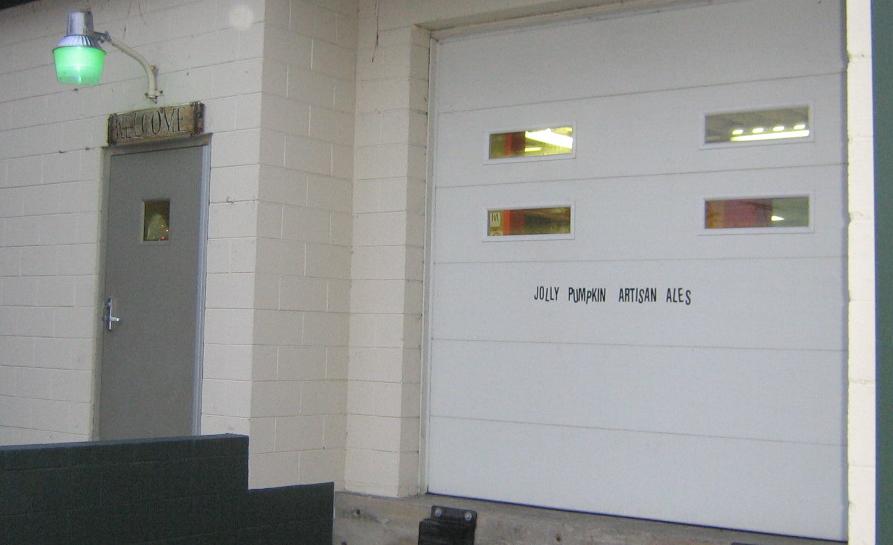
Photos From My Visit To Jolly Pumpkin, Dexter, Michigan

jp1Click any picture for a bigger view.
 
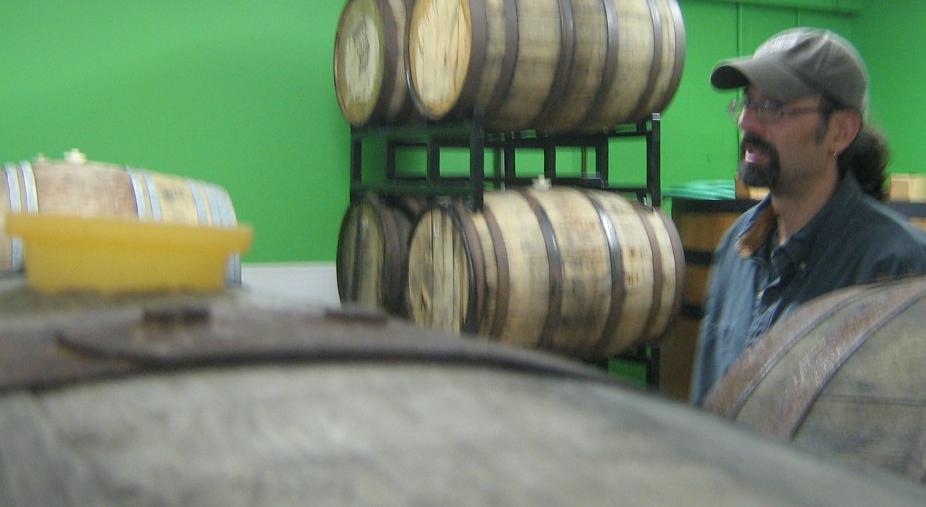
It was a Ron-a-thon last Friday at Jolly Pumpkin. After leaving London, Ontario, Canada at about 1 pm and we hit Dexter, Michigan at about 5 pm just as Ron Jeffries was finishing up a days work. He gave me an hour of his time and by the end of it I was thinking this had been one of the most intense hours of beer I have had without taking a drink. Being the doe-eyed schoolgirl that I was, perhaps a bit like Ron in Bamburg, in awe of the moment of course I did not take notes until I got to our hotel in Ann Arbor. But I did get a brain full.

jp2

jp3

jp4


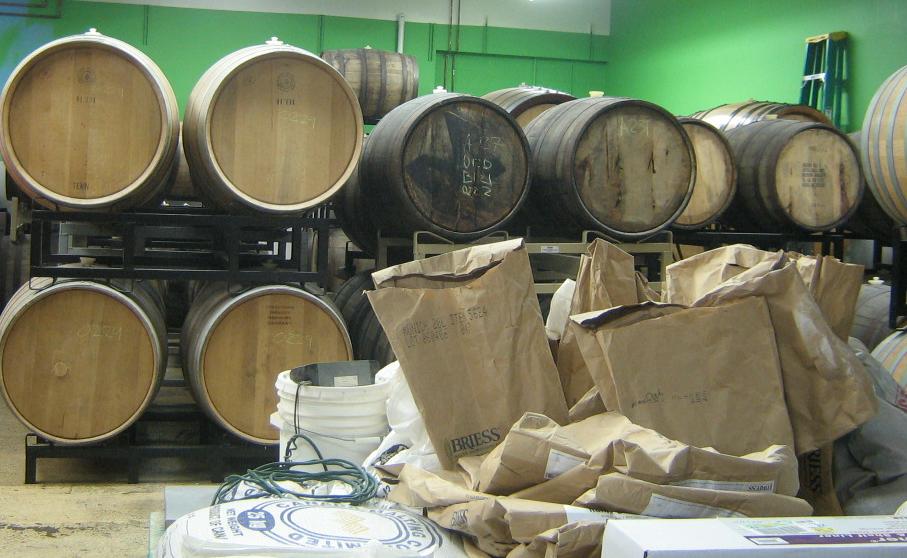
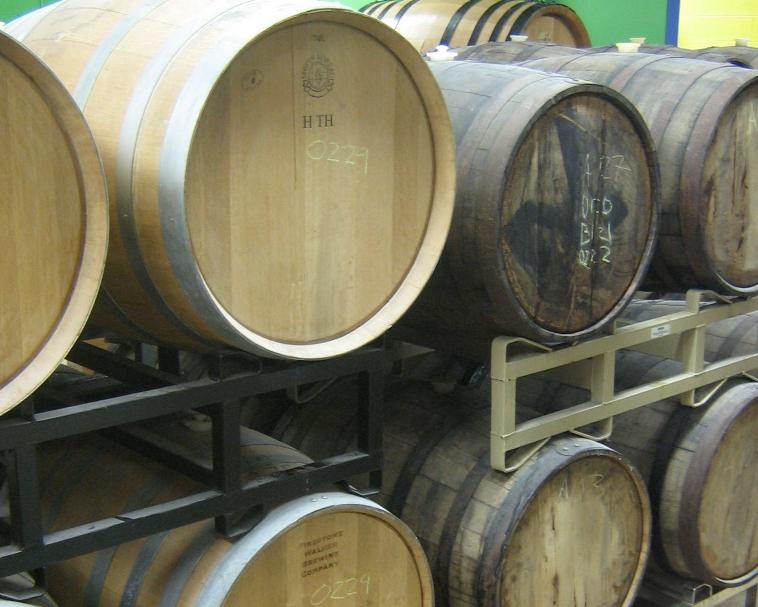
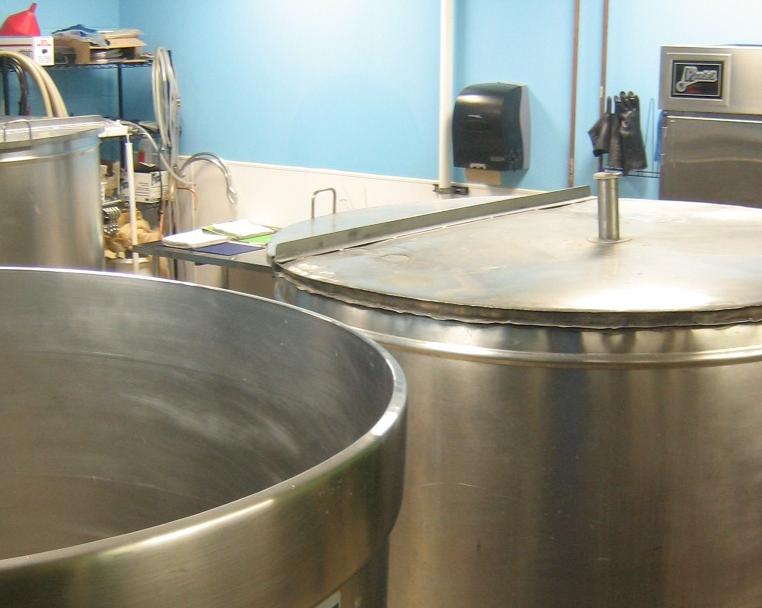
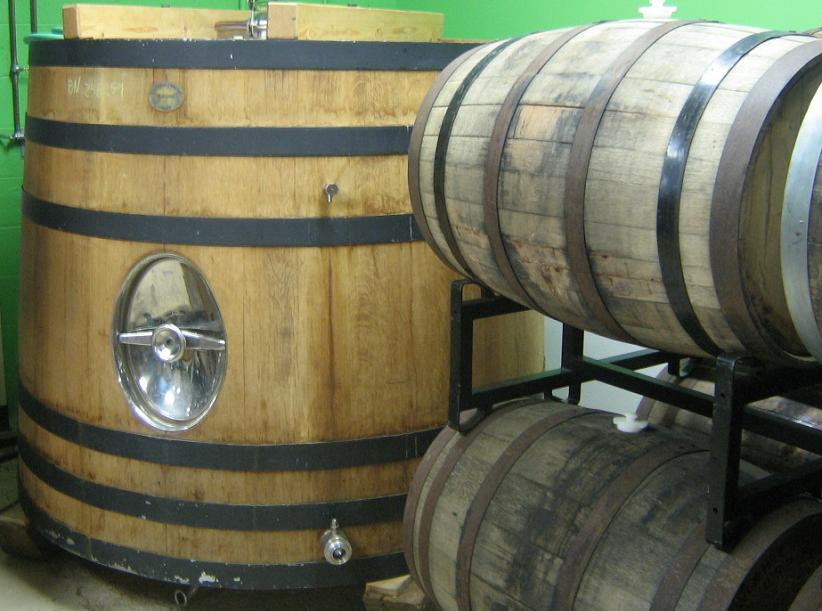
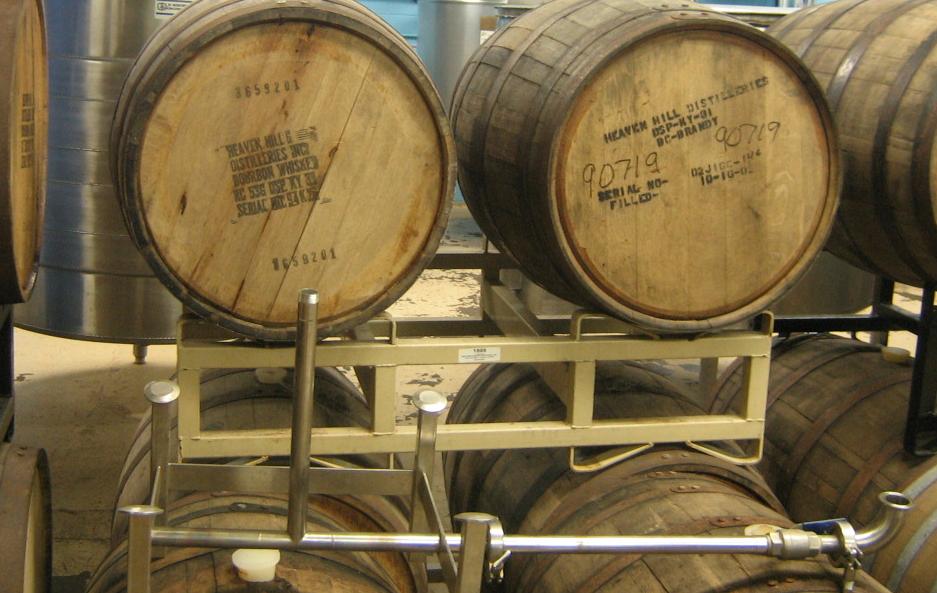
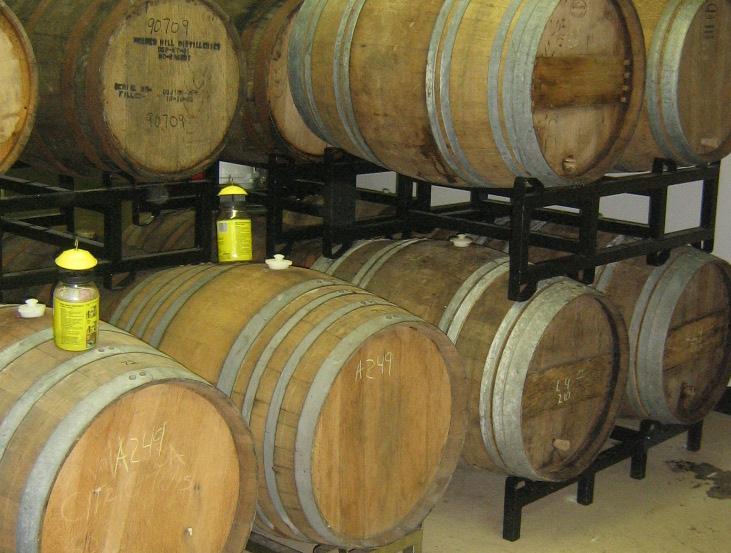
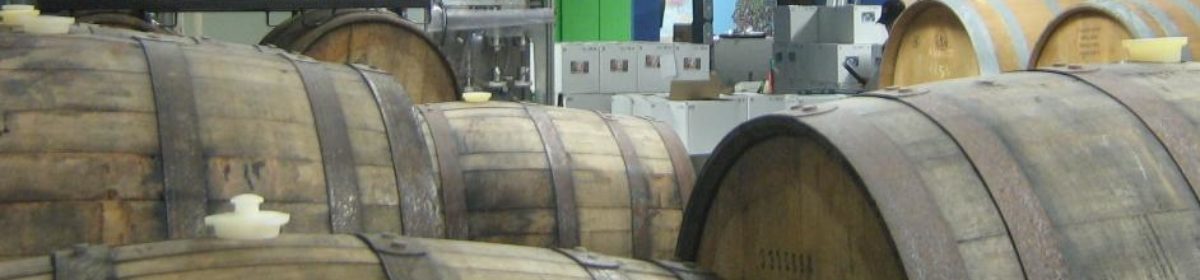
Barrels everywhere. Everything is aged in oak. Barrels from bourbon and brandy distillers. Barrels from Firestone and other brewers seeking vanilla where Ron seeks tang. A 2000 litre barrel newly in from France. Being in a room full of barrels of beer is an interesting experience. The feeling was much more like cheese making than other brewers with their steel conical fermenters and bright tanks. These was life around me and it was asleep, seeking slow funkiness. Lame? Deal with it.

jp5

jp6

jp7


I got an education. While Michigan has twice the brewers of Ohio, it has only 1% of the state’s market, compared to 6% nationwide. This means brewers have to seek markets out of state. I was happy to do my bit and introduce Ontario importers Roland and Russell to Jolly Pumpkin as was announced on Monday. Ron apologized when he explained the price would be high but I had to assure him that ten bucks for a 750 ml of some of the most thoughtful ale made on the continent was quite reasonable given what else we have to put up with.

jp8

jp9

jp10


Ron makes beers unlike others. Beers that have the dryness of oak with less of the vanilla than others impart. There is a lambic, the only true one in North America, that has been three years in the wood soon to be released on a six month cycle. When I asked about the source of the wild yeast strains, Ron said the make of Cantillon told him you can make lambic anywhere. I have particularly liked the Bam and Bam Noire which I think are up for the CAMWA beers of the year award for 2007. I did, by the way, share the concept of CAMWA and think it is now Jolly Pumpkin approved. They have done well with 50% expansion in each of the first two years and 30% for both 2006 and 2007.

jp11

fp13

jp12


The hour flew by and the generosity shared was quite the thing. We took a case of large format beers for just around 75 bucks and others to spare as well. Likely the best value in beverage that I can think of. A couple of hints. Ron recommends, as they age, chilling the beers before opening as they create be quite the fountain. I recommend leaving them to get to that age to get to this state as time enhances their complexity to a degree I have not experienced before with beer.